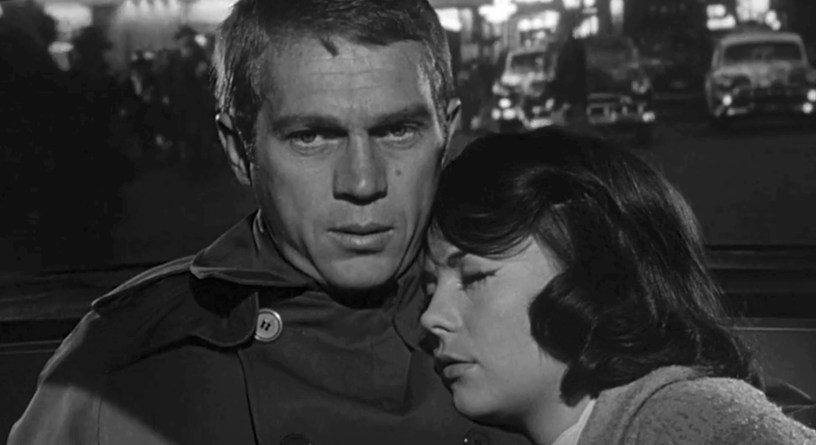
Robert Mulligan’s Love with the Proper Stranger is an interesting film, which was set up as a star-vehicle for Natalie Wood and Steve McQueen, who were trying to make the transition into serious drama. But clearly the studio was hesitant to launch these stars into a completely straight drama, and the result is a movie that is uneven and dramatically shifts tones about halfway through. But it does feature some good acting by the film’s leads, and showcases some fabulous New York locations, including the former Washington Market in lower Manhattan.
The story is about Angie (Wood), a Macy’s salesclerk who finds herself pregnant after a one-night stand with a musician named Rocky (McQueen), and asks him to help her find a doctor to perform an abortion. (A somewhat risqué subject for 1963.) The first half of the film is played as a straight drama, as they go through several hoops to find a doctor and raise the money to pay for the procedure. Then, after they decide to keep the baby, the tone shifts to one of a romantic comedy, with a rather silly climax outside of Macy’s that involves a banjo.
The Musicians’ Union Hiring Hall


I found this location by identifying the Hotel Commander, whose awning can be seen on the right side of the frame as Angie runs away at the end of the sequence.

Located at 240 W 73rd on the Upper West Side, the Hotel Commander replaced four row houses previously occupying the lots. When the sixteen-story hotel first opened in 1928, it offered over 300 rooms/suites of various sizes, with daily rates starting at $3.50 for both transient and permanent residents. This mixture of hotel and rental units continued for more than 70 years, until the building was converted full-time to rental apartments and was renamed the Tempo.

While the exteriors were confirmed for this sequence, I wasn’t certain whether the interiors were also filmed at 253 W 73rd Street.
When I visited the location, I asked a few residents as they entered or exited the building if there was a large ballroom/auditorium inside, and all of them said they didn’t believe there was. But after doing a little research, I discovered that even though it’s gone now, there used to be a large auditorium in the building when the property was home to the Level Club.

Built by a group of Freemasons in 1927, the Level Club was the first Masonic clubhouse/hotel of its kind in the country, with a structure that was designed to be awe-inspiring. Built in a medieval style, the building’s imposing stone-and-brick architecture was specifically made to resemble the Temple of Solomon.

To further distinguish the building from other clubhouses, the facade was enhanced with carvings of Masonic symbols, such as the all-seeing eye, the hourglass, the hexagram, and the Bible.
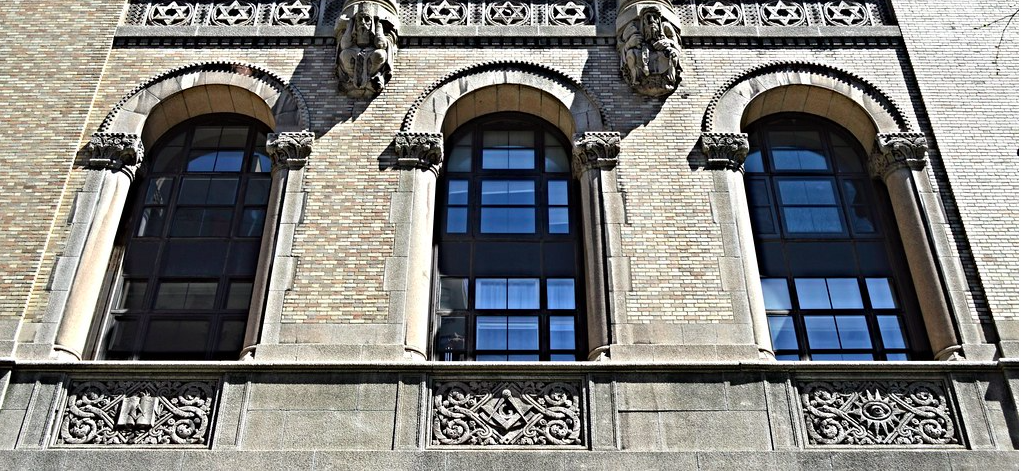
Along with residential rooms, the Level Club offered its members a fully equipped gym, handball courts, a billiards room, a swimming pool, Turkish baths, a bowling alley, a barber shop, lounges, dining rooms, a ballroom, a roof garden, and of course, an auditorium. This cavernous gathering space was so massive, it actually occupied the entire 3rd, 4th and 5th floors of the building, making it the second largest private auditorium in the city.
 But incredibly, the lavish fraternal club didn’t last very long. In 1931, with the onset of the Great Depression, the property was forced into foreclosure by the bank.
A few years after that, it became a weekly hotel for men and was eventually renamed Riverside Plaza, offering a lot of the same amenities that were available to Level Club members.
In the 1940s and 1950s the space became a kosher hotel, and by the time Love With the Proper Stranger was being made, it became a low-end, single-room-occupancy hotel with a bit of a dicey reputation. At that point, most of the building’s recreational rooms and facilities had been removed, but the auditorium survived, used occasionally for private banquets.
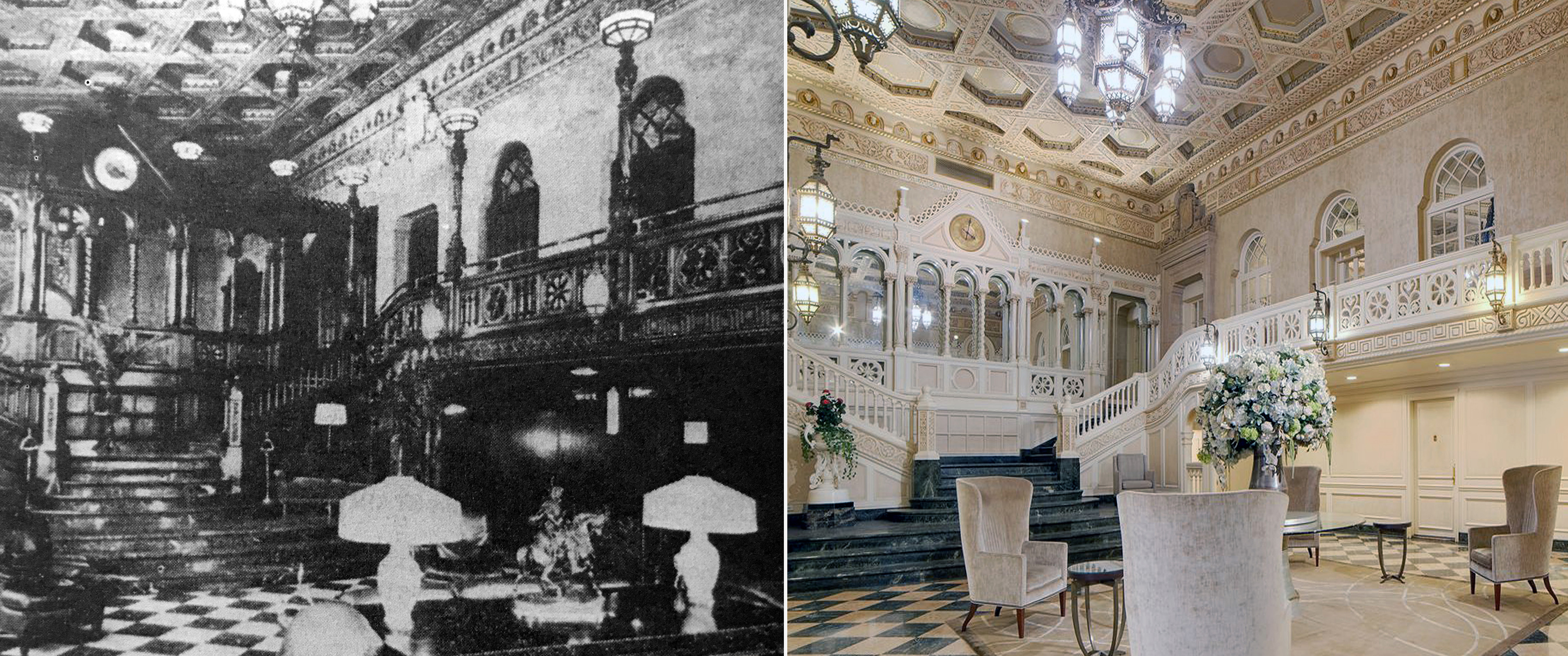
Once I learned the history of 253 W 73rd Street, I just assumed that its auditorium was the same one seen in the movie. But it wasn’t until I went to the 42nd Street Library and found a book about the Level Club, that I was able to see visual proof, finally confirming it.
By the 1970s, as the neighborhood became more dangerous and rundown, the Riverside Plaza Hotel’s premises became a drug and alcohol rehabilitation center operated by Phoenix House.
During this time, the auditorium briefly became a novelty nightclub called Erotic Circus. In addition to the usual flashing lights and blaring disco music, Erotic Circus had a roster of bizarre sexually-themed acts, including one that featured a lustful chimpanzee named Jiggs who’d reportedly scamper around the club pinching female customers’ rears.

As the decades rolled on, the Upper West Side became a more desirable place to live, and the building at 253 W 73rd Street eventually became an upscale condominium. And even though the auditorium is now gone —replaced by oddly-shaped, low-ceilinged apartments— the original two-story lobby is still intact and has been fully restored to its ornate beauty.
Macy’s Department Store


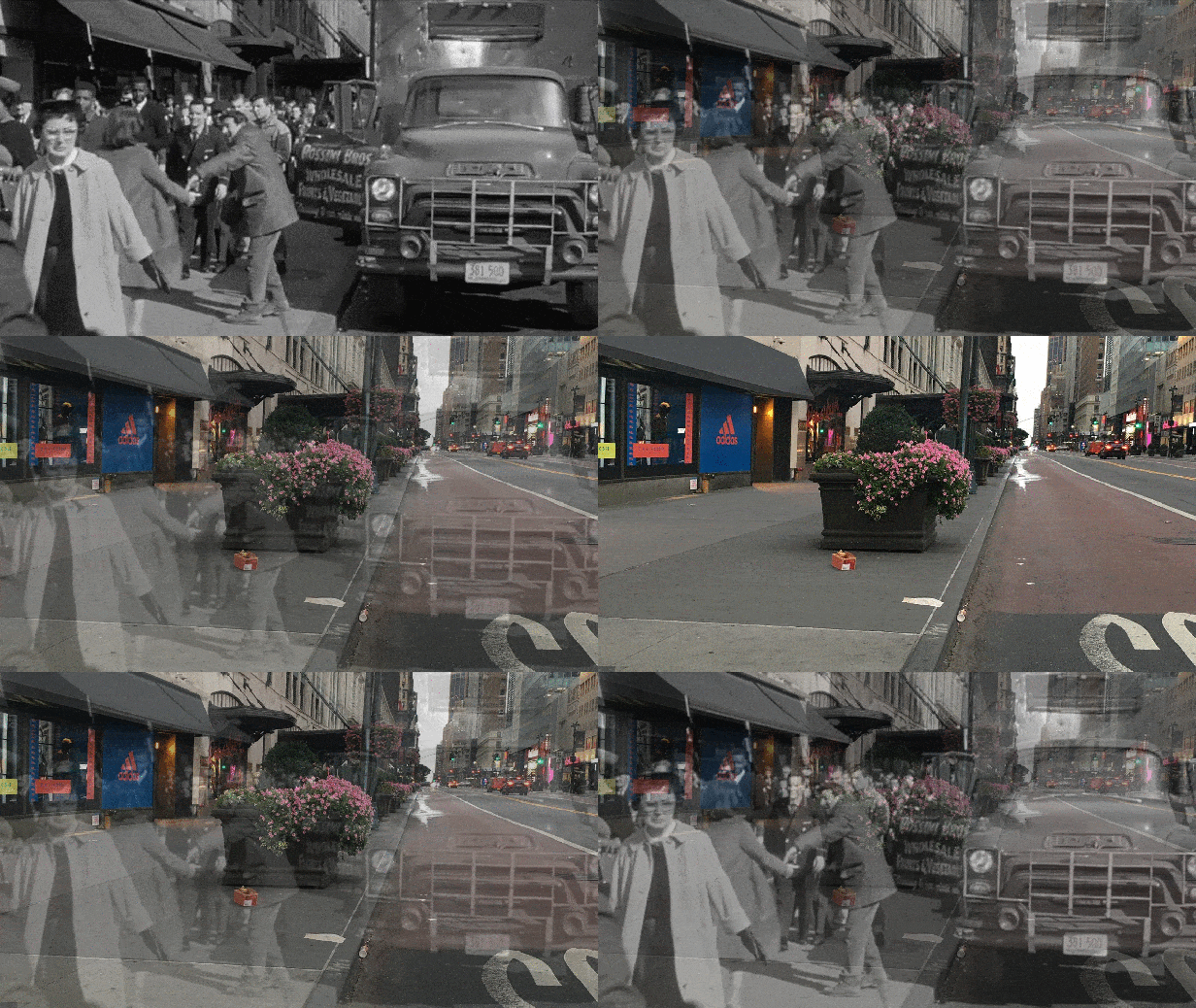
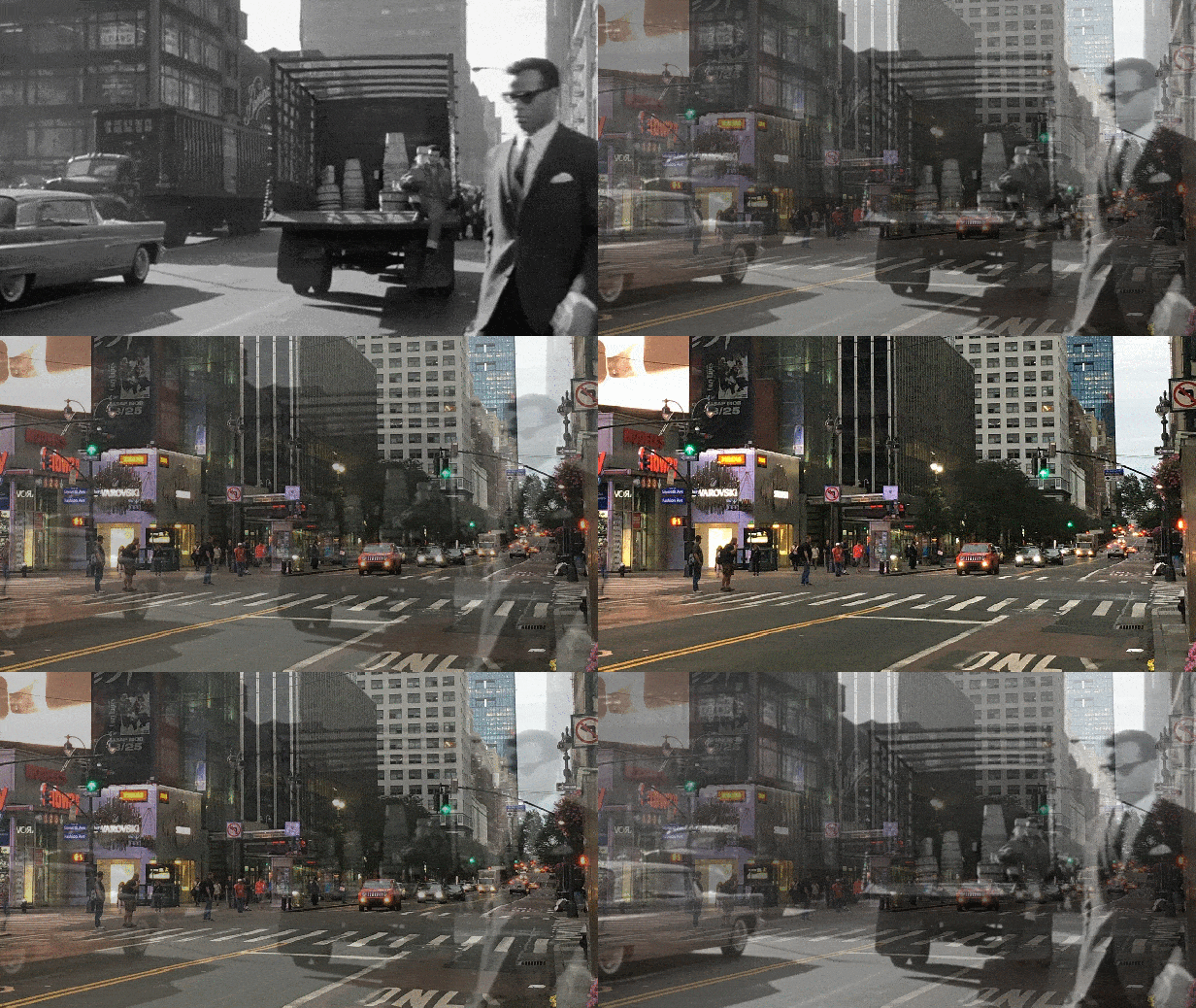
While it was patently obvious that this scene took place outside Macy’s flagship store on 34th Street, I did have to study the scene closely to figure out what set of doors Natalie Wood exited. Part of the problem was that the doors have since been eliminated and replaced with a display window. What helped me finally pinpoint the location was the subway entrance Wood passes before turning around. Fortunately, the entrance hasn’t changed much since 1963.

When it came to the interiors, it was pretty clear they weren’t filmed inside the actual store, but on a set. According to production records, Love with the Proper Stranger used Stages 1, 2 and 10 at Paramount Studios in Hollywood, although I’ve never figured out which sets were built on which stages.

As far as I can tell, most of the movie’s interiors were filmed on soundstages, which is shame, because it would’ve been fascinating to see what the inside of Macy’s looked like back in the 1960s. But if you want to see what the famed department store looked like in the 40s, you can see real interiors in another Natalie Wood movie — the holiday classic Miracle on 34th Street.
Meeting the Abortionist’s Broker


This was a tricky location to nail down when I first investigated this movie in 2017. There was very little information about Proper Stranger back then and the only website I could find that explored its filming locations was On the Set of New York. But the website erroneously identified this scene to be taking place in the Meatpacking District near Washington Street and W 14th Street, which I later assessed was incorrect.
The red flag was first raised when I noticed the website couldn’t specify an exact address. Generally speaking, the Meatpacking District has remained very much the same over the years, so the fact a matching building couldn’t be found made me think the scene was filmed somewhere else.

Fortunately, there were a few painted signs visible in some of the wide shots, giving me a few good clues to go on. The most clear sign was one for Costa & Harris. But when I did a general Google search for the company, I couldn’t find an address. I did manage to find a 1956 photo of its loading platform with caption indicating that it was taken at “Washington Market.”

At the time, I had never heard of the Washington Market, but after doing a little background research, I discovered that it was once the city’s biggest and most bustling food market. Located in what is now the Tribeca neighborhood, the market first opened in 1812 and was practically its own city within a city. made up of blocks and blocks of five-story cast-iron mercantile buildings. At the time this movie was being made, most of the market had been abandoned and by the 1970s, the entire swath of buildings were razed as part of a major redevelopment plan.
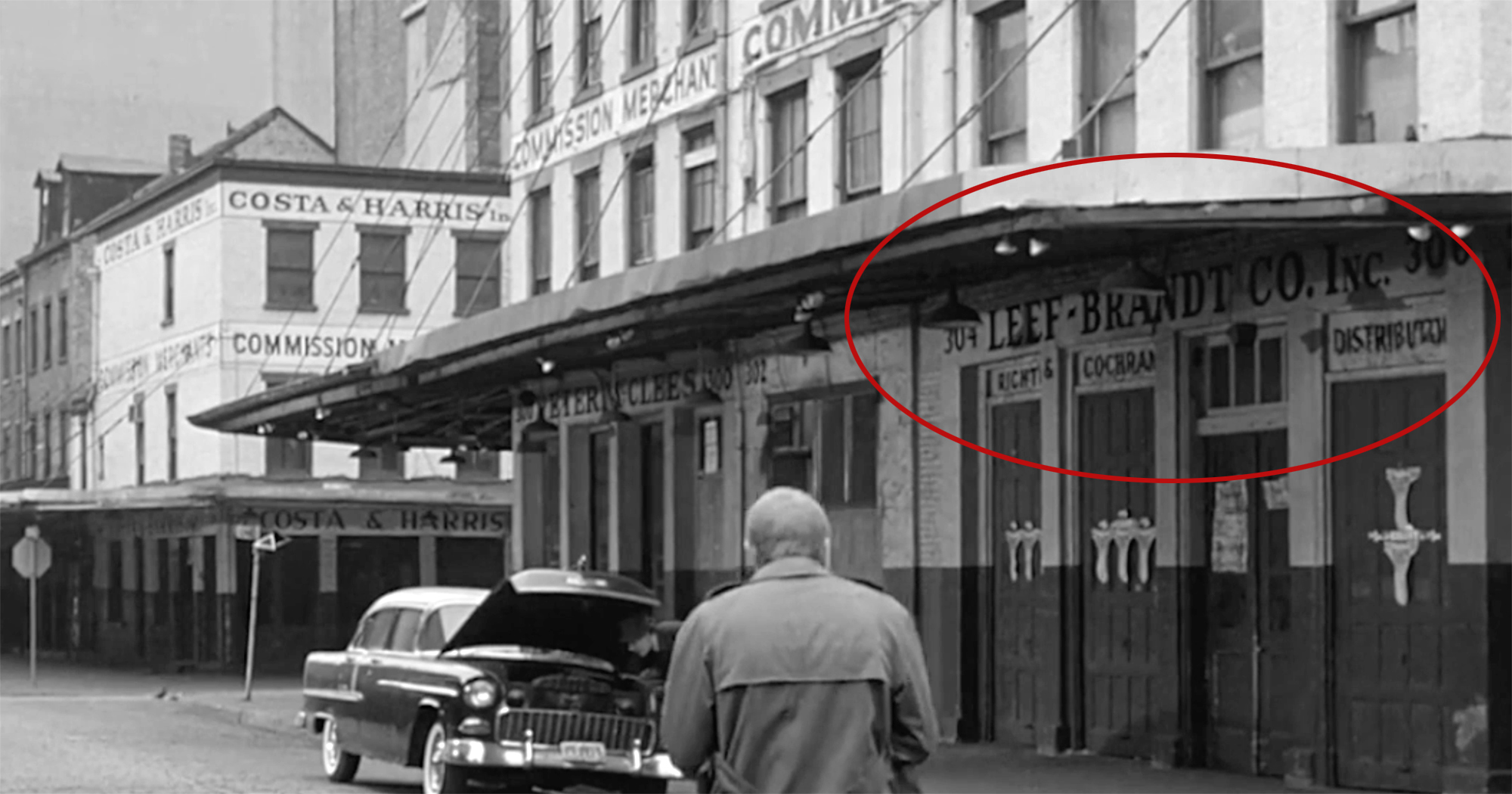
Once I got a general idea of where this scene took place, I did an internet search for a “Leef-Brandt” whose company name was painted on another building in the scene. Luckily, this netted me few more helpful hits, including a court filing that gave an address of 304 Washington Street, which turned out to be in the heart of the Washington Market.
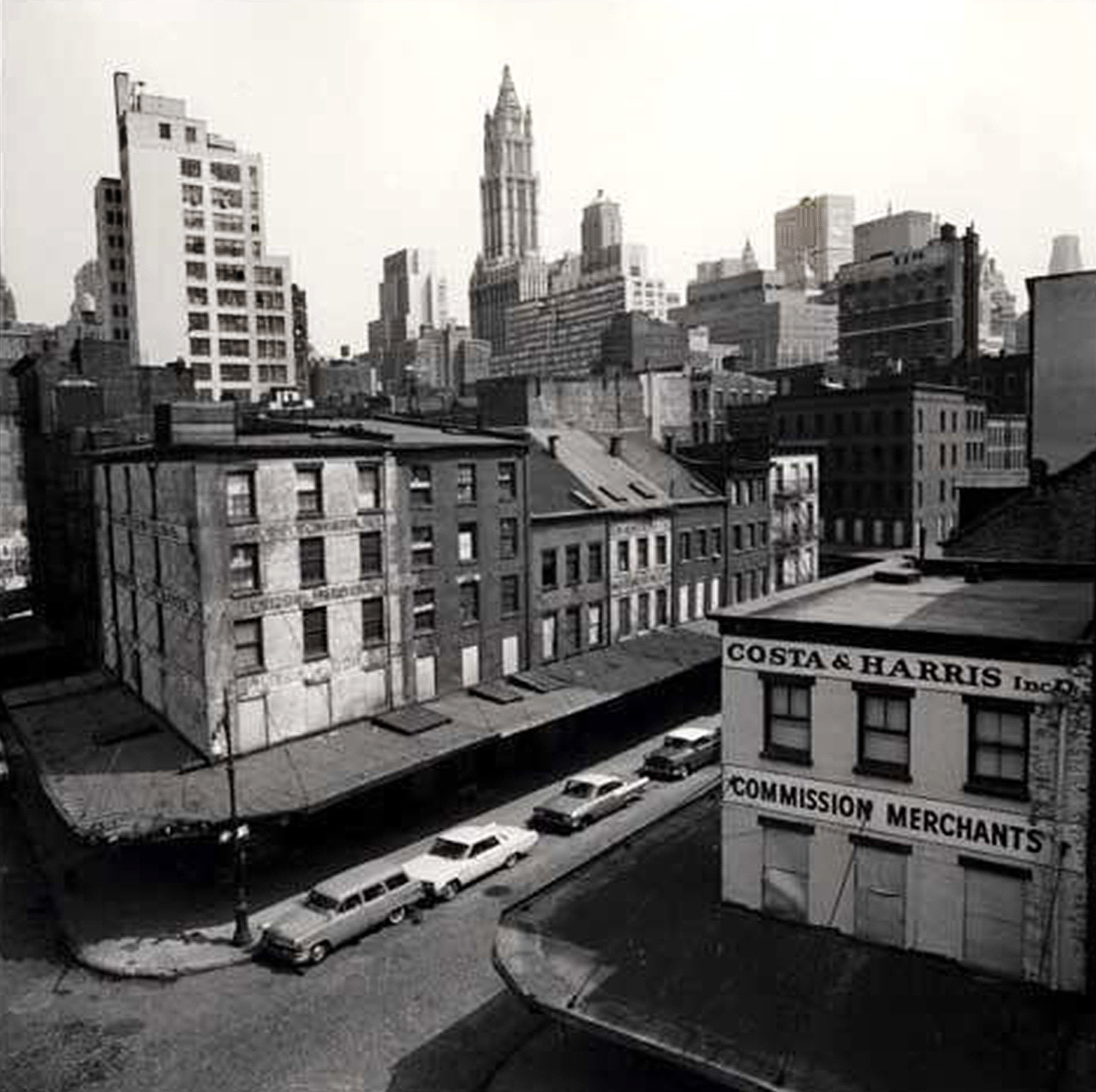
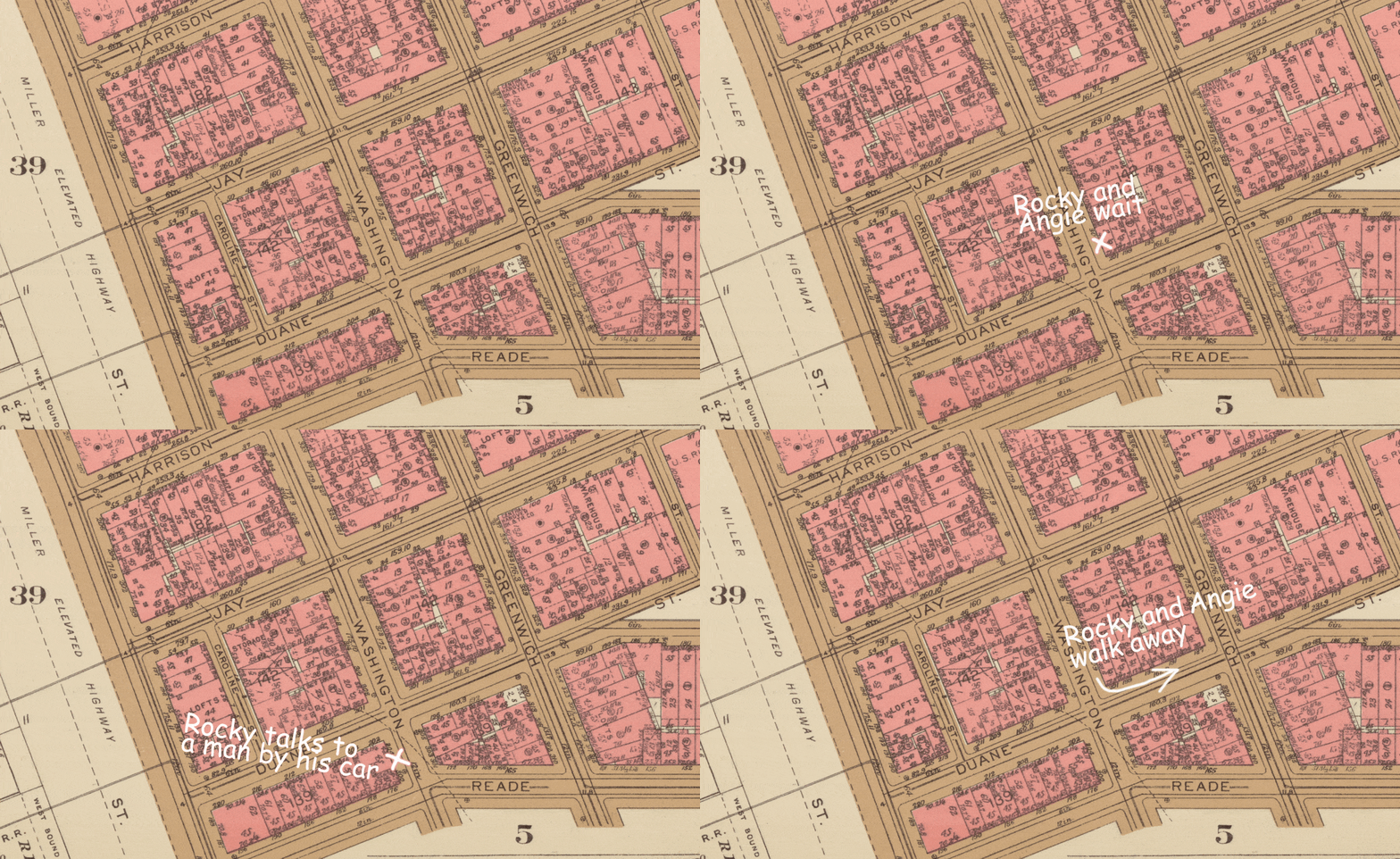
From that, I was able to deduce that Costa & Harris was at 177 Reade Street, and that the scene took place on Washington Street between Jay and Reade.
One thing, since none of the market buildings are still around today, it was a little hard getting the proper orientation when taking the modern photos of the location. But one helpful landmark was the gargantuan Verizon Building, peeking out in the background in one of the shots. You can see it in the first “before/after” image above, although a good portion of the structure is now obscured by a modern skyscraper.

As I was winding down my research of this scene, I was delighted to discover that a couple distant buildings that appear in the very last shot are still standing today. It’s always satisfying when something survives from an area I thought was completely wiped clean. Also, by finding those matching buildings, it was one last piece of evidence showing that my calculations of this scene’s locations were correct.
Visiting Parents at a Playground

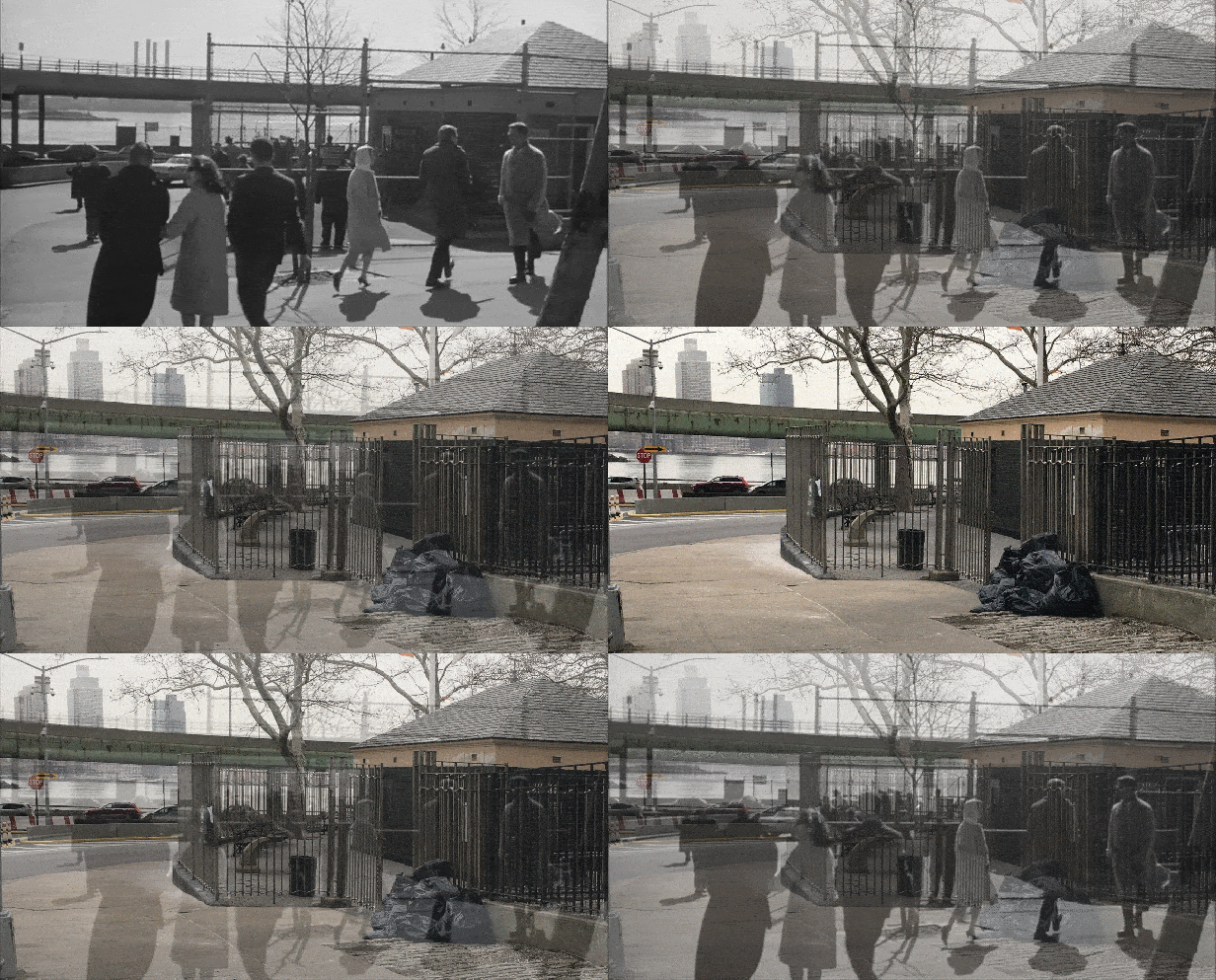


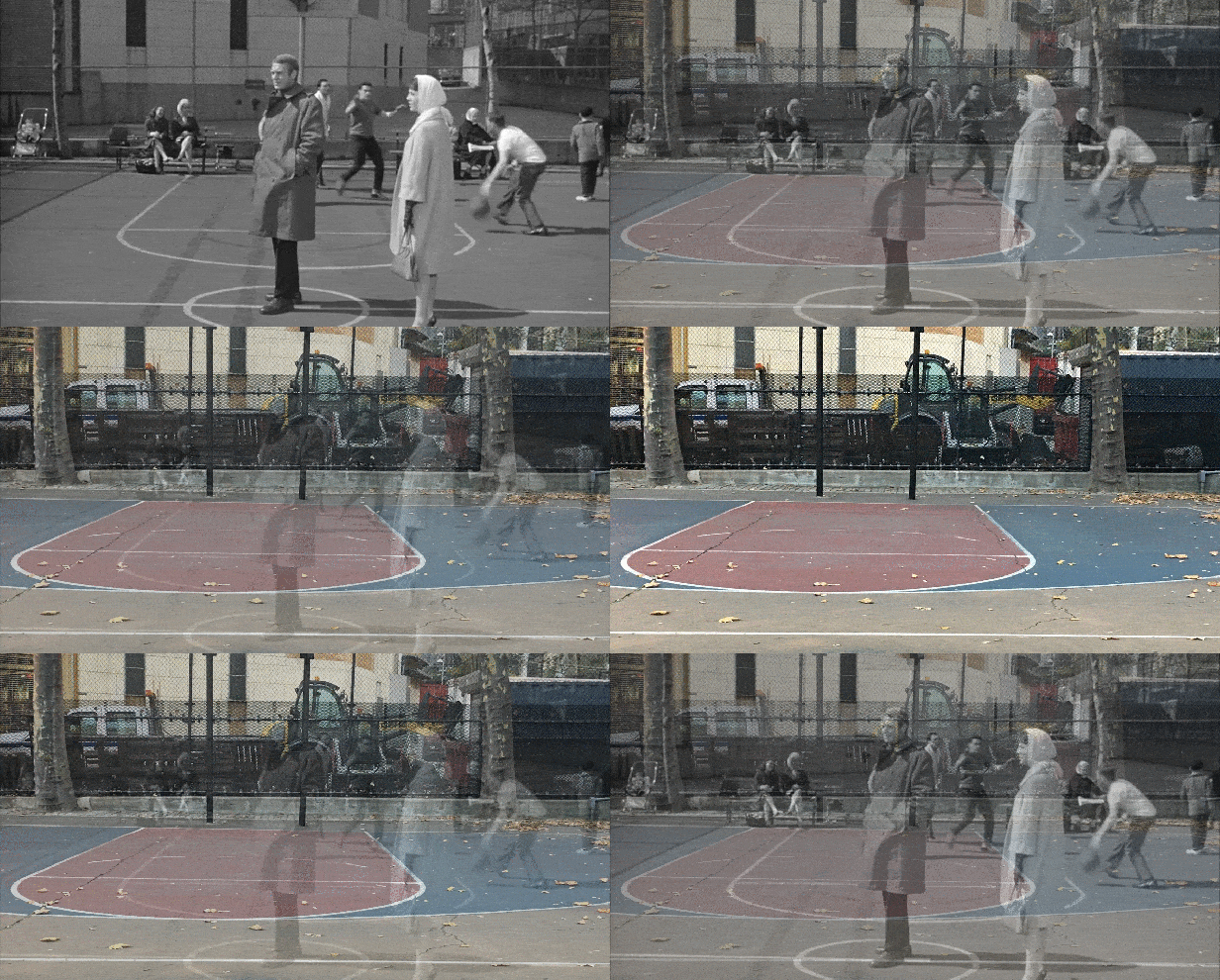


At the time I began researching this movie, there was no information on this park. But since the top of the scene showed the Chrysler building in the background, and the reverse angle showed what looked like FDR Drive, it didn’t take me too long to home in on the playground at 42nd Street and the East River.
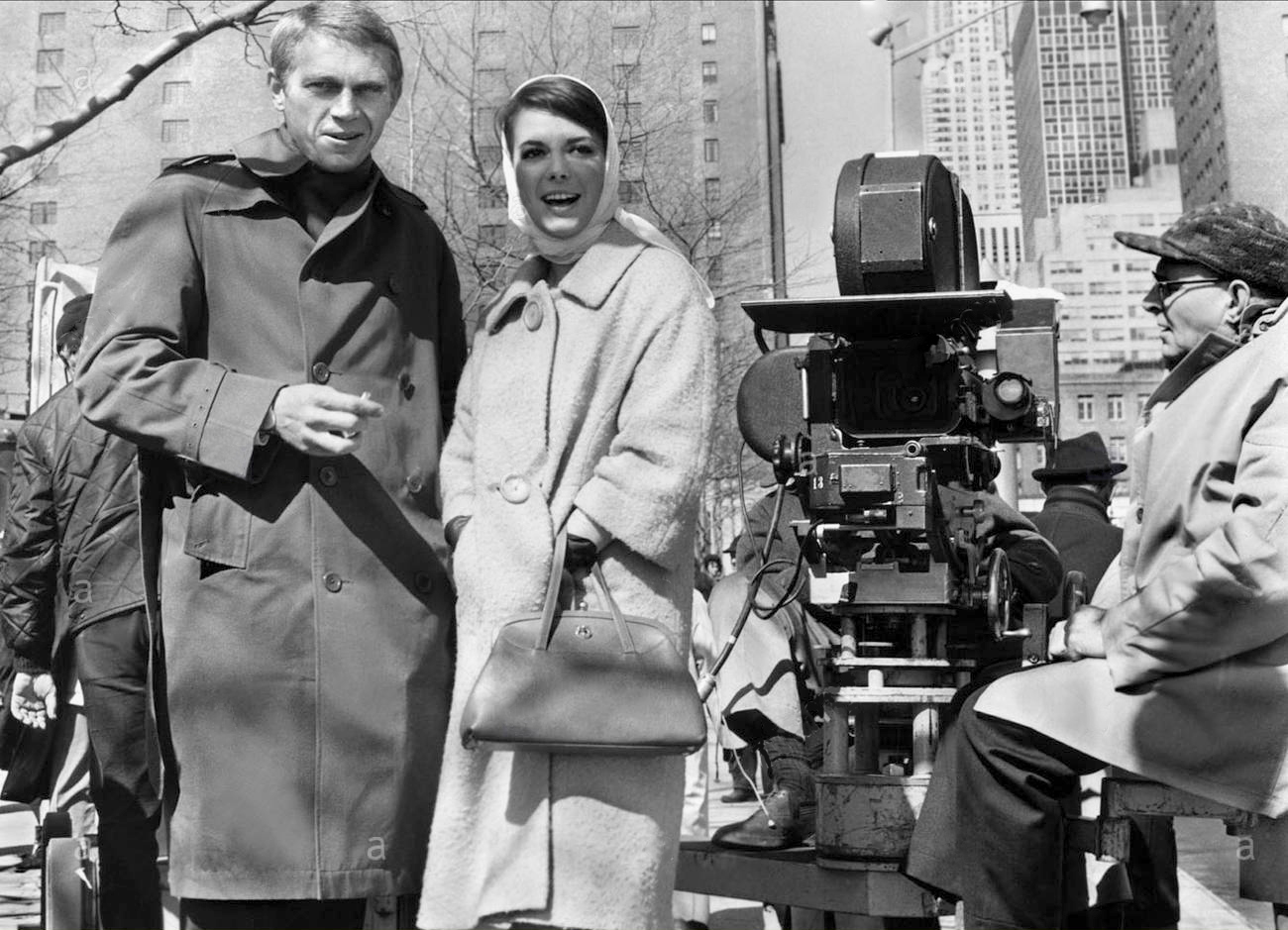
The 42nd Street Playground (renamed Robert Moses in 1982) was established in 1942, sharing its space with the large ventilation building for the Queens–Midtown Tunnel. It basically consists of a couple basketball and handball courts, as well as a large open space along First Avenue (where Angie and Rocky run through at the end of the scene). Pretty much ever since the park first opened, that open area has been a gathering place for roller hockey — in fact, it was one of the first places in the city to host the sport.

I’ve been to the Playground a few times, and every time, I ended up getting a weird vibe. It might be because it seems to be a place largely forgotten by the New York population, almost always bereft of any crowds. I think by being wedged between the United Nations, a large ventilation facility, and a busy elevated highway, the Robert Moses Playground doesn’t end up being a very poplar destination.

A lot of the park has remained the same over the years with the most most notable holdout being the brick restroom building (which is a popular stop for cabbies needing to quickly relieve their bladders). But a big change happened in the summer of 2021. After being covered by asphalt for nearly 80 years, the western half of Robert Moses Playground got covered with a synthetic turf field as part of the city’s East Side resiliency project.

While turning this area green is more pleasing to the eye, it has also effectively put an end to the long tradition of using it for roller hockey.
Running into a Church

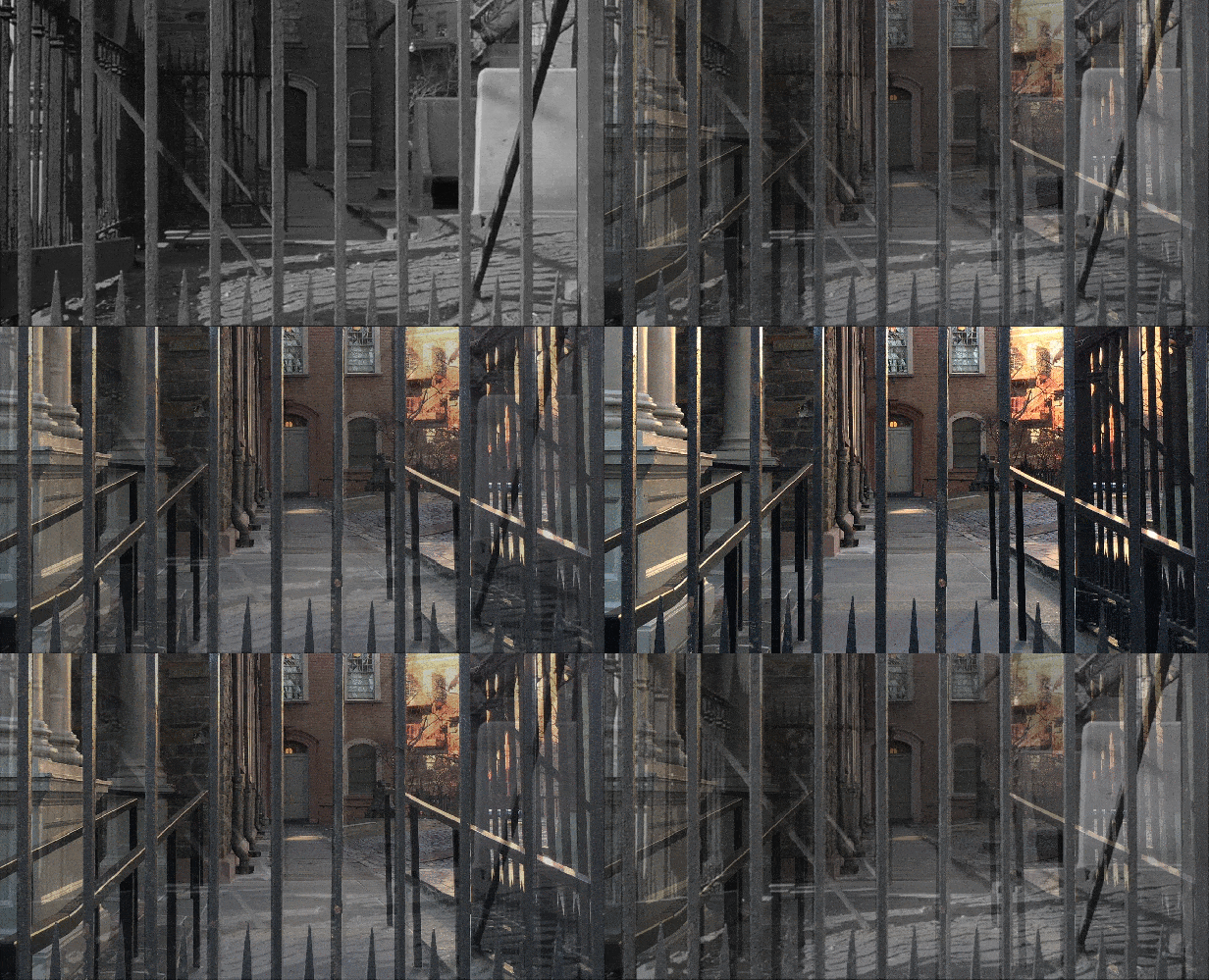
This church location was unidentified when I started researching Proper Stranger, but I was able to figure out it was St. Marks Church-in-the-Bowery on E 10th Street fairly quickly. The church is somewhat unique looking, as it’s on a different angle from the rest of the buildings on the block. (The church is actually aligned with Stuyvesant Street which is considered the only true east-west street in Manhattan, opposed to the somewhat askew orientation of the island’s grid system.)
Located in the East Village, St Marks Church-in-the-Bowery is a parish of the Episcopal Church and has been on the property since 1660. It is New York City’s oldest site of continuous religious practice and the church’s structure is the second-oldest in Manhattan, dating back to 1799.

The church has been featured in several other movies, including Sidney Lumet’s period drama, The Group, the Robert Mitchum/Shirley MacLaine romance, Two For the Seesaw, the Michael J Fox action-comedy, The Hard Way, as well as the Sandra Bullock romcom, Two Weeks Notice.
Getting the Abortion
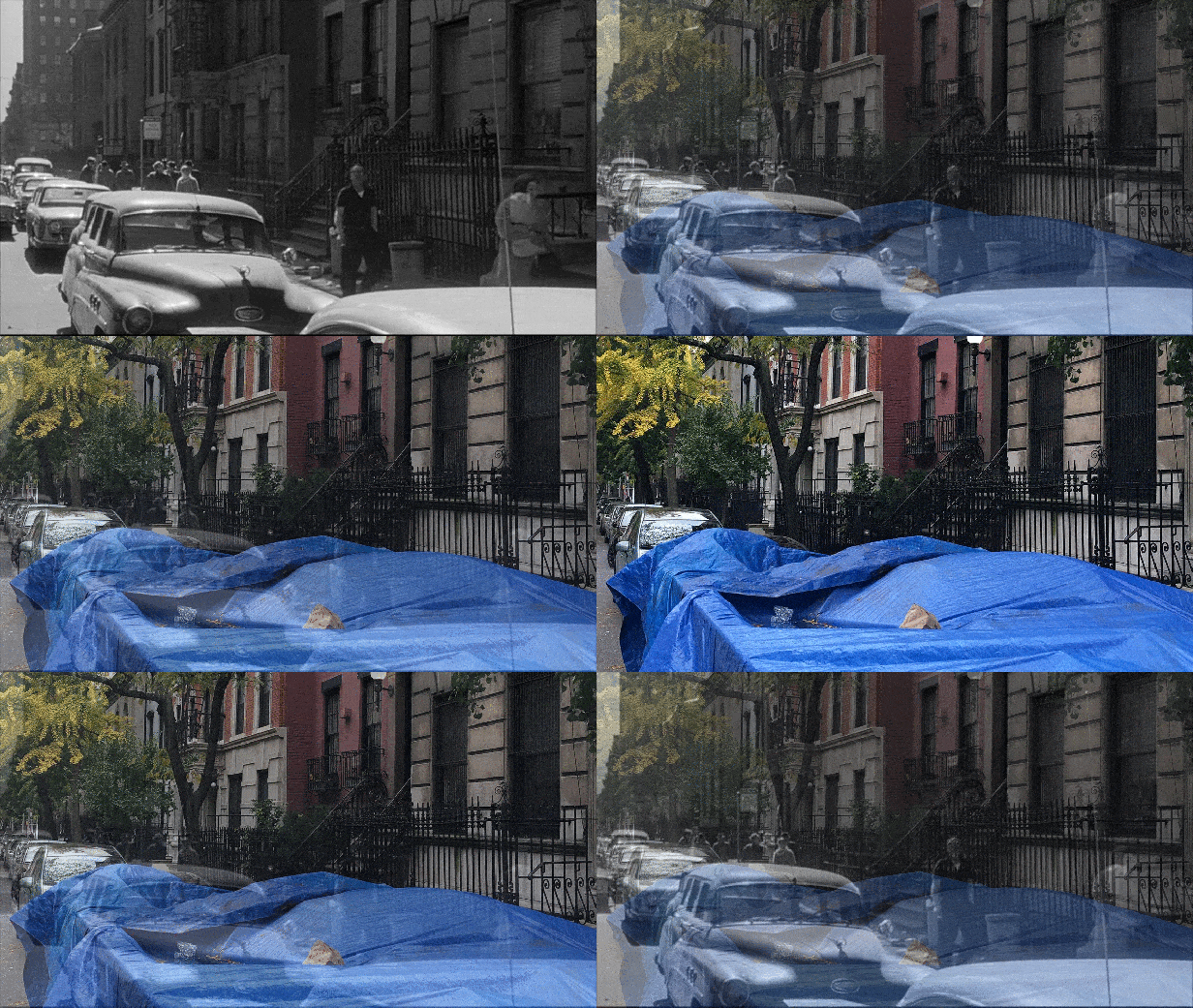


The big obvious clue in figuring out this scene’s location was the numbers 214-16 that appeared above the door, which I thought looked authentic. So it was just a matter of figuring out what street it was on.
When you have an address number without a street name, there are many long, arduous tasks you can go through to figure it out. However, since the previous scene took place at the church on E 10th Street, I hoped that maybe this scene was filmed nearby. After checking out 214 E 10th Street on Google Street View and seeing that it wasn’t a match, I jumped up to 11th Street and was surprised to discover that I had suddenly found the right place.

Normally, there’s no guarantee that two scenes that are supposed to take place near each other are actually filmed near each other, but thankfully that was the case with this film. Saved me a lot of time.

While I’m almost certain the apartment they go into for the abortion was a set at Paramount Studios, it’s possible the hallway was the real one on 11th Street. I need to return to the location and see if a kindly resident will let me in the building to take a quick look around.
Barbie’s Apartment
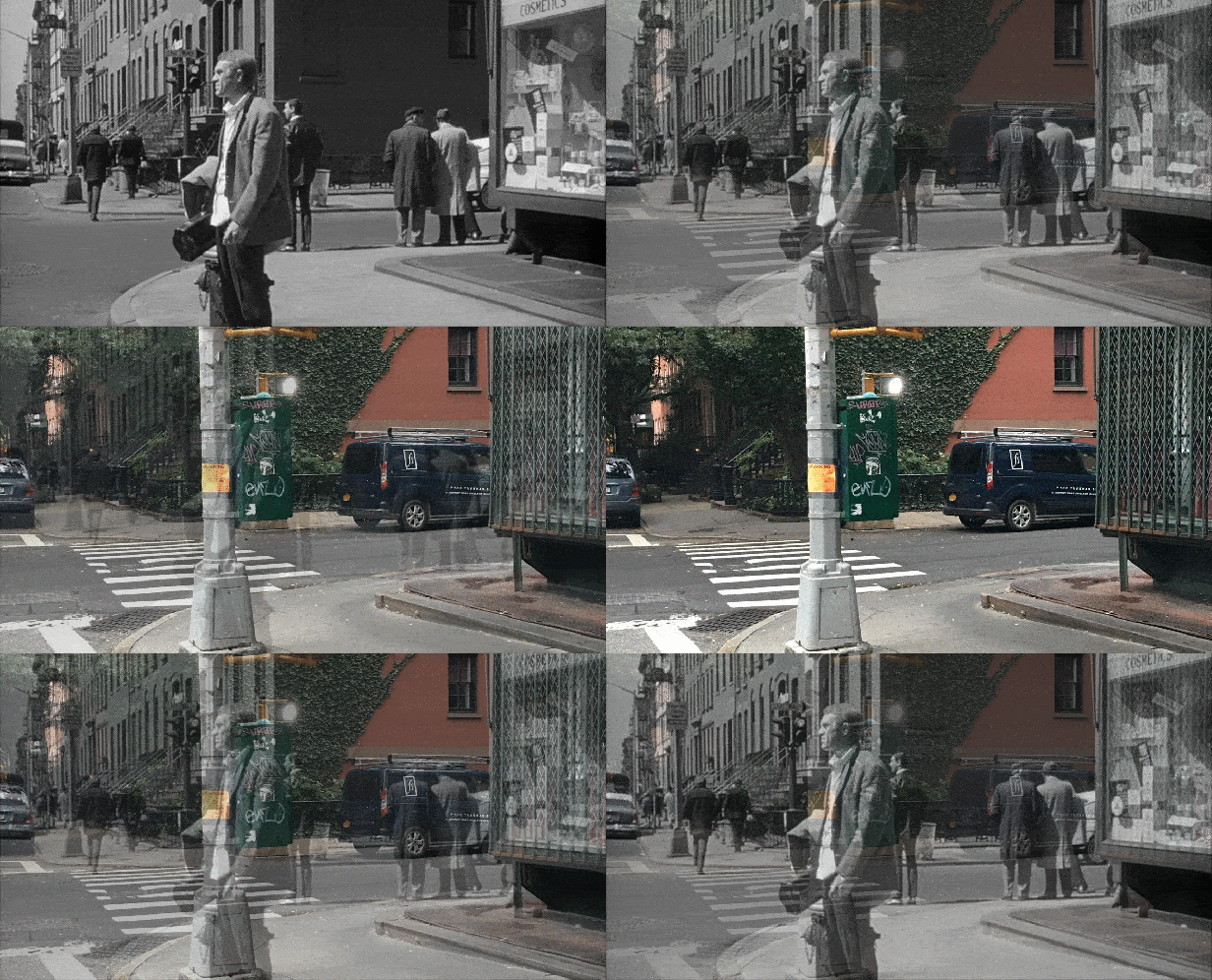
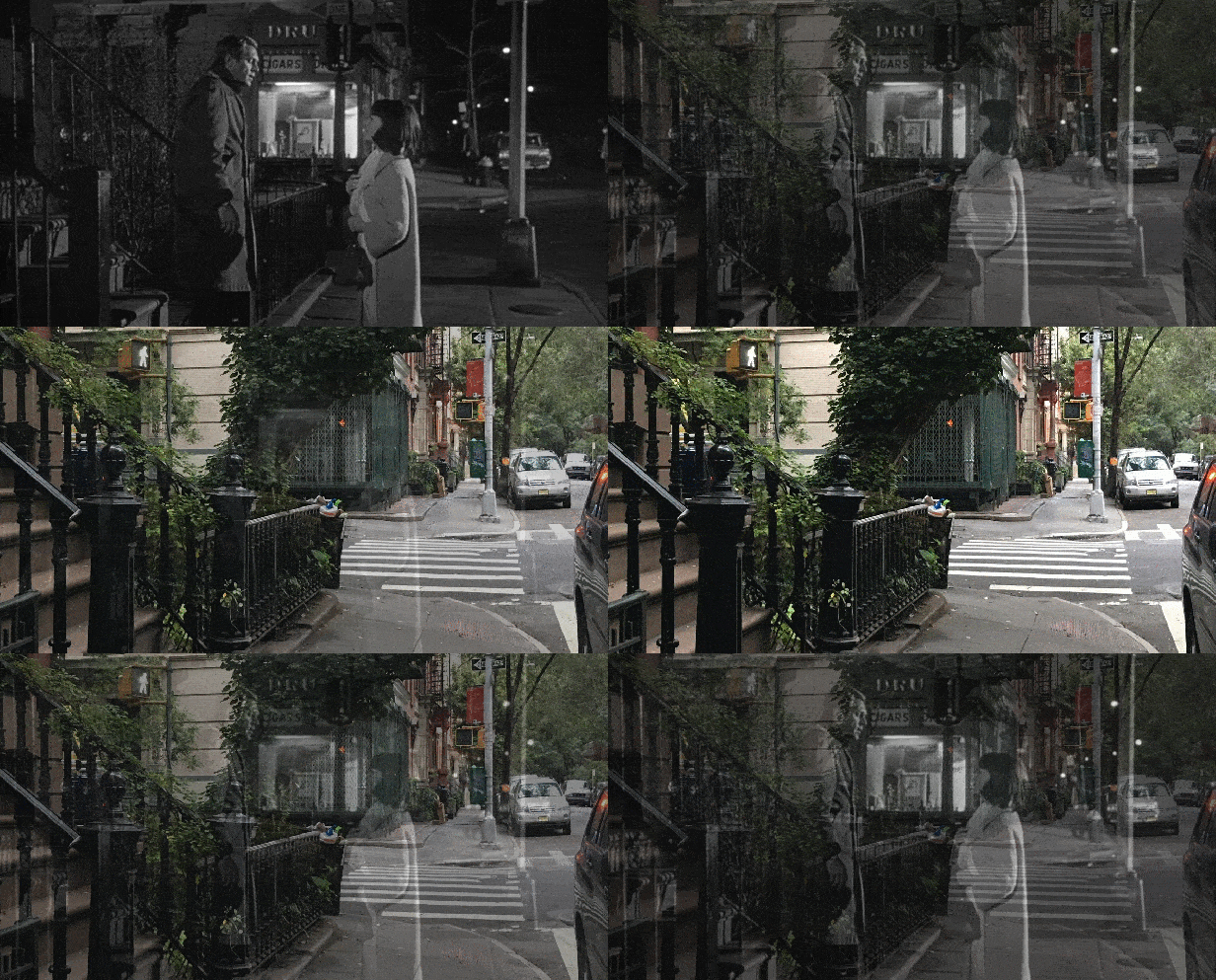


This was one of only a few locations that was already identified at the time I was researching Love with the Proper Stranger. I am pretty sure I found the info on the website, On the Set of New York. I’m not sure how it was found, but I later discovered a nice clue in a behind-the-scenes photo taken outside the apartment.

In the picture, you can see a small sign reading “W 4th St” on the building across the way. Also in the picture, you can see the street they’re on bends to the right a couple blocks away, That indicated that they were probably in the West Village which doesn’t follow the traditional grid layout and can be a little wacky. (Case in point, 11th street actually intersects 4th Street at this filming location!)
After confirming this location, I was a little surprised I didn’t immediately recognize it before since I used to walk through that intersection almost daily when I lived on the nearby Perry Street. I think one thing that threw me off was how little foliage there was on the street in the 60s compared to today. You can see in the first “before/after” image above how stark things looked back then.

But lack of trees aside, I should have recognized that corner drug store opposite Barbie’s apartment building, since it would eventually become a very familiar French bistro, Tartine.
A West Village staple since the early 90s, Tartine was one of those cute little eateries I’d pass all the time when I lived in that neighborhood, but for one reason or another, never bothered to patronize. But the same can’t be said for some of the neighborhood’s more famous residents, like Parker Posey and Liv Tyler — both of whom I spotted dining there within one week of each other in the spring of 2002.
Happily, Tartine is still in business today. So, maybe it’s time I finally stop in and grab a Perrier.
Angie has a Date


Angie’s Apartment


Angie’s apartment was another location that was already identified on at least one website when I first decided to tackle this film. I only assume the apartment building being across the street from Tompkins Square Park played a role in identifying its address.
There are still handball courts in the East Village park, as depicted in the movie, and that tree along the park’s fenceline is still standing today, although it’s gained a little weight since 1963. But who hasn’t put on a few pounds over the years?
Back at Macy’s


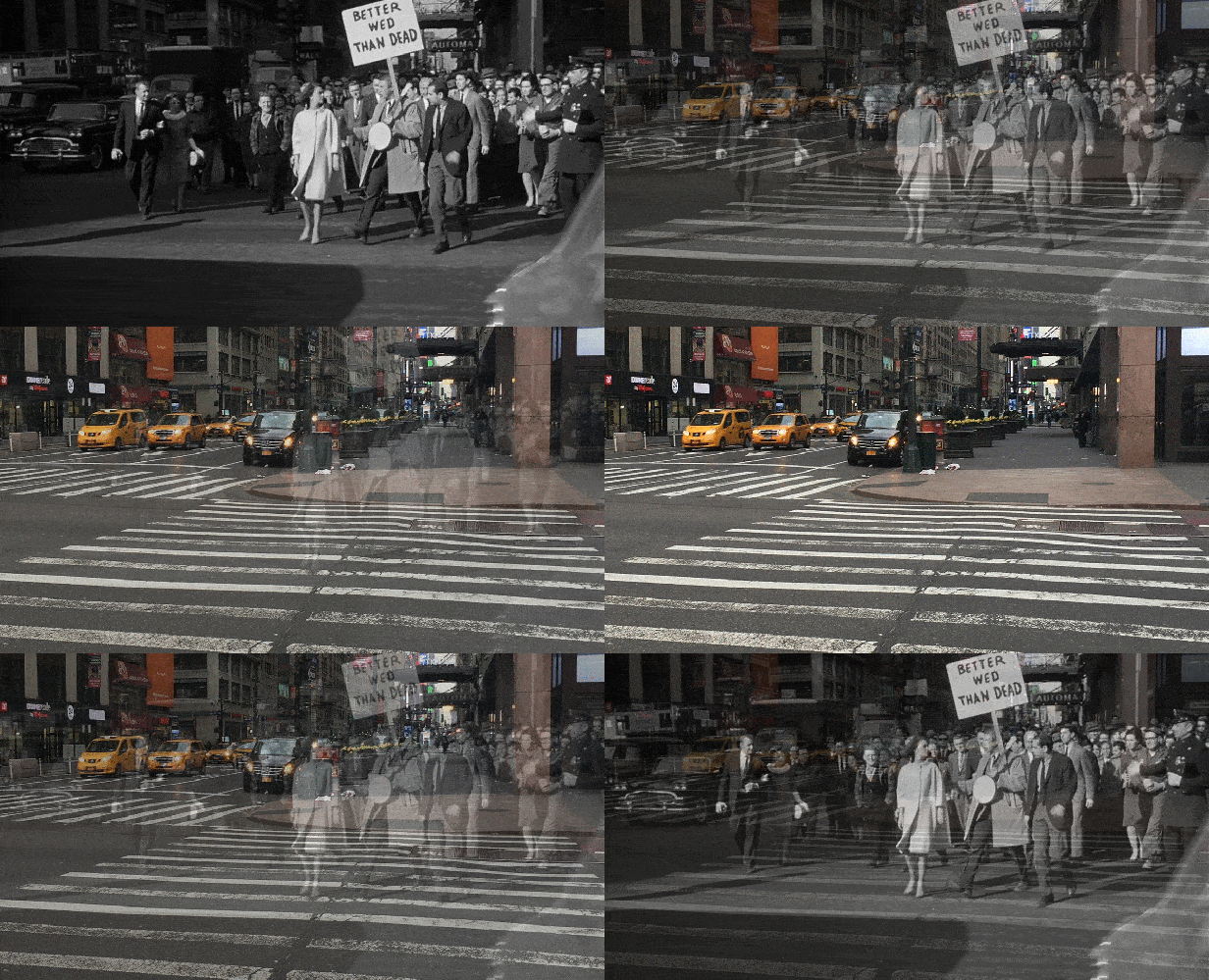
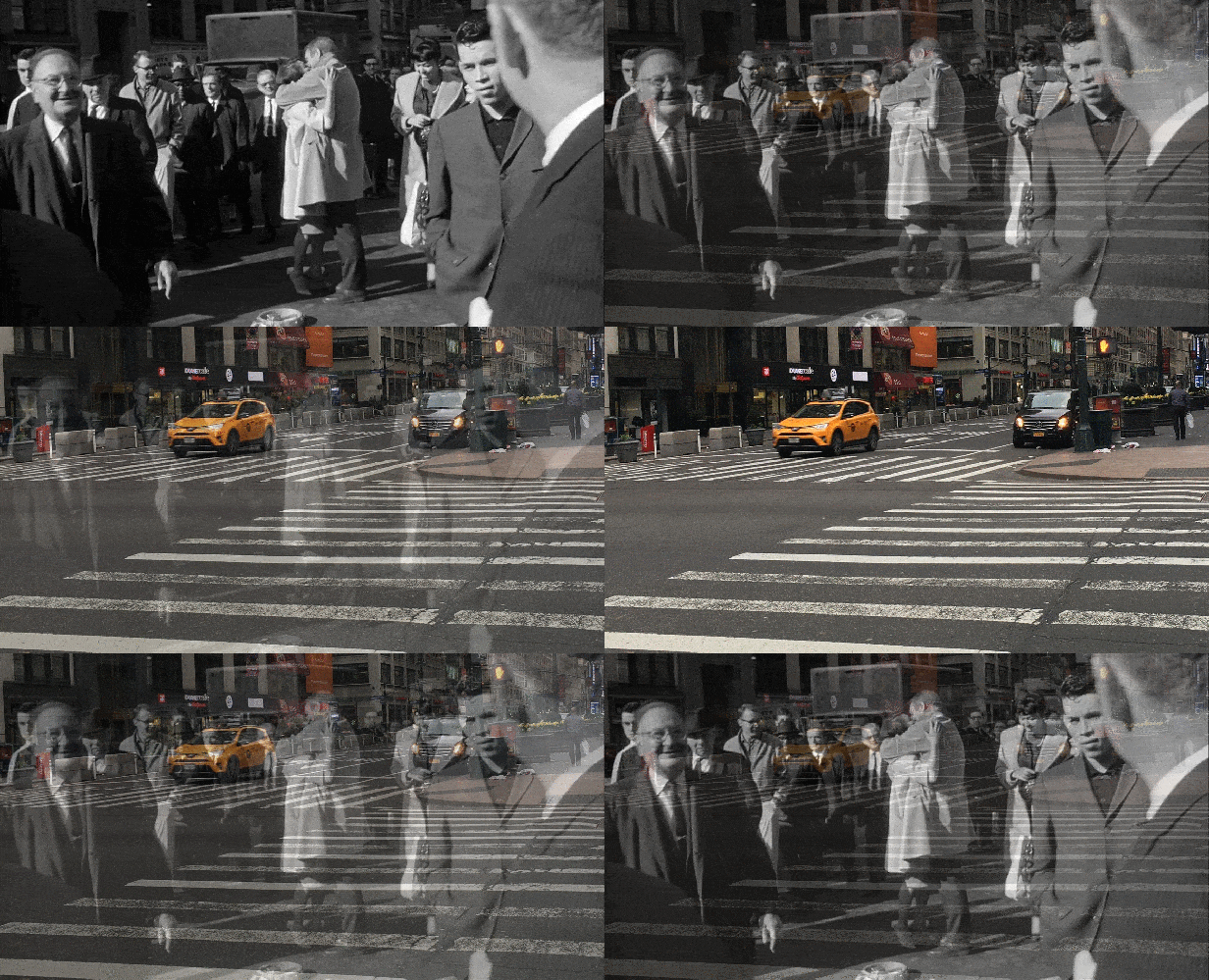
While this ending comes off as a little hokey (Natalie actually does a double-take when she spots Steve playing the banjo), the most interesting thing about it is the last shot where the two lovers kiss in the middle of the street. As they embrace in the crosswalk, a crowd of New Yorkers suddenly stampede their way through the shot. Most of them seem amused by the romantic spectacle, but a few look pissed that there’s a camera crew in their way.
Makes me almost certain none of them were paid extras.
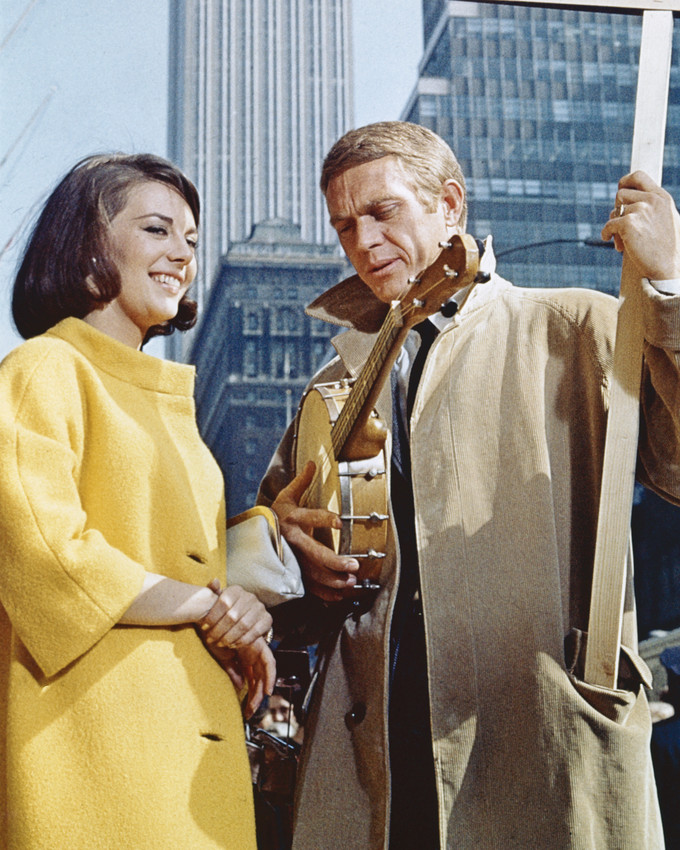
The handheld camerawork and perturbed Gothanmites making eye-contact with the camera lens sort of undermines the emotional impact of the movie’s climax, but makes an interesting sociological document of New York City life in the early 1960s.
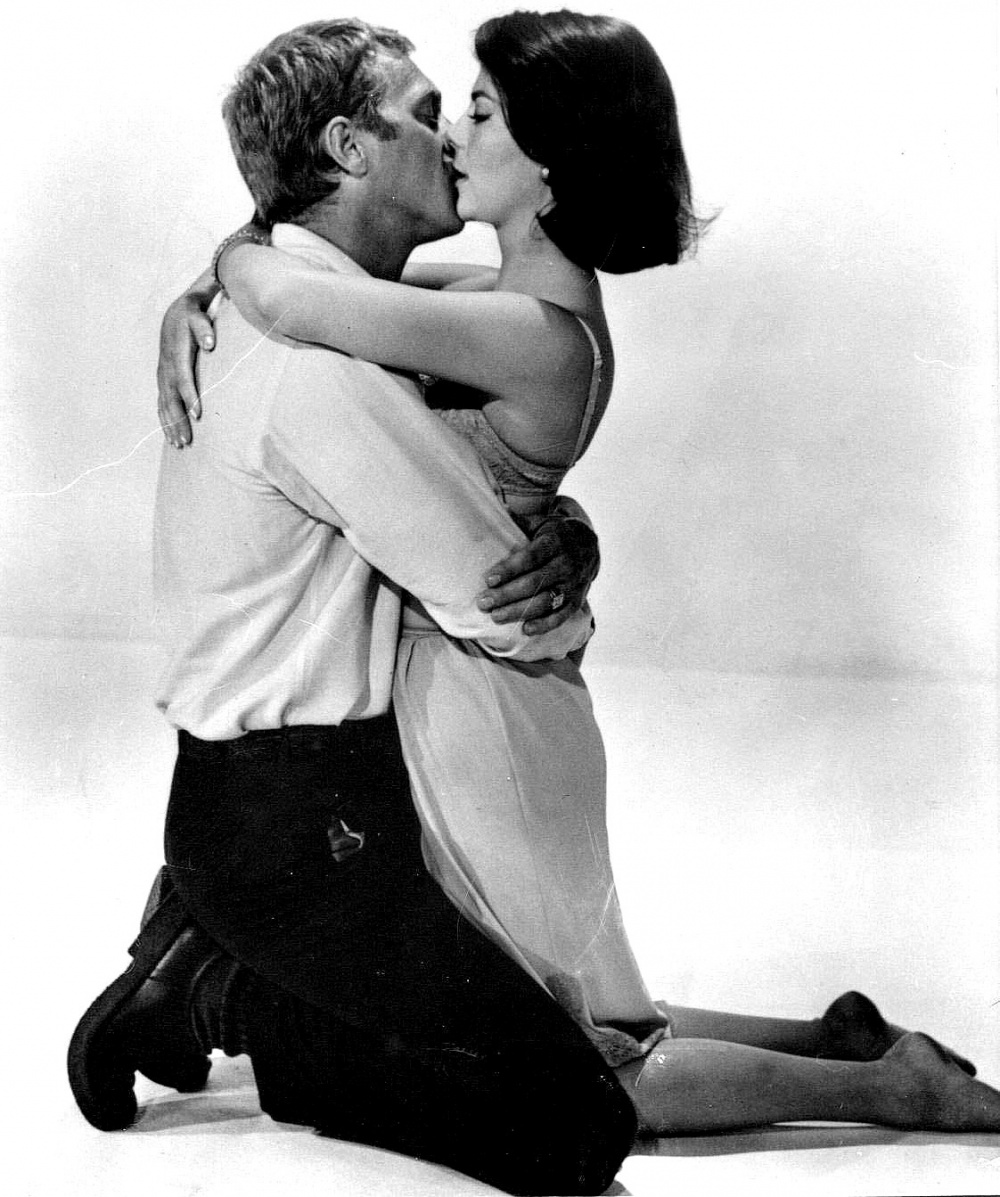
As I mentioned in the intro, Love with the Proper Stranger is basically two different movies — the first half being a serious drama about a very touchy subject, and the second half being an airy romantic-comedy. Both are executed pretty well on their own, but together they don’t quite mix.
That being said, the movie ends up being rather engaging, thanks in no small part to the charming two leads and a competent supporting cast (including Edie Adams as Rocky’s accommodating stripper girlfriend and Tom Bosley as Angie’s clumsy suitor). Even though I never entirely bought McQueen as a working-class New York Italian, his screen presence is palpable and it’s hard to take your eyes off him. And of course, Wood is undeniably adorable in all her scenes, playing a young woman who essentially has to grow up overnight.

Love with the Proper Stranger may not be the art film director Robert Mulligan and producer Alan J. Pakula wanted it to be, but it’s still a noteworthy addition to their resumes. For me, it’s a fascinating example of a New York movie caught in between two eras in cinema — the glamorous, technicolor world of 1950s Hollywood and the gritty, hard-edged world of 1970s indie filmmaking.

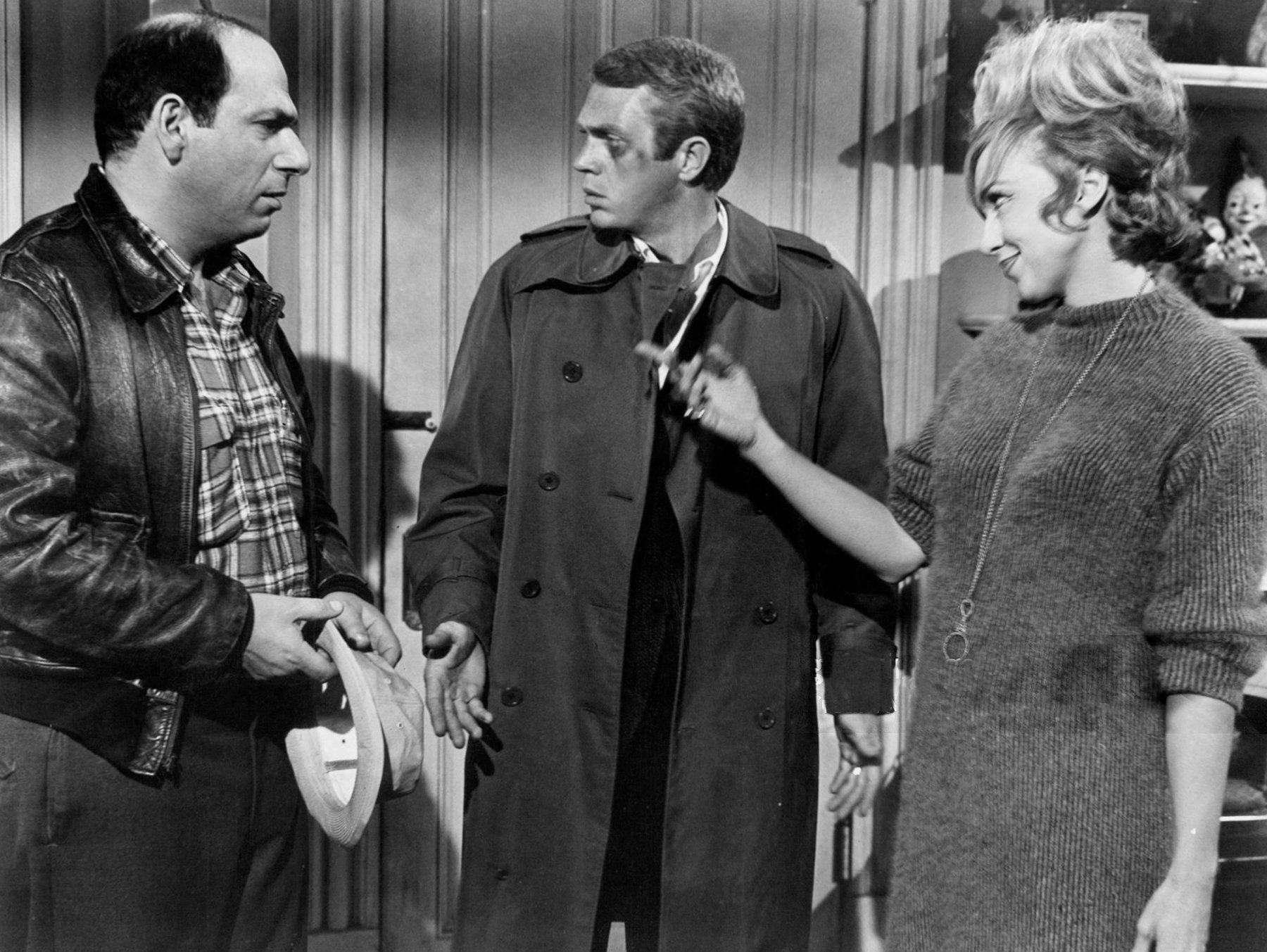
While a lot of the film was shot on Paramount’s soundstages (evoking a feeling of 1950s TV melodramas), the filmmakers thankfully didn’t shoot any of the exteriors on a Hollywood backlot, and instead chose to film on the actual streets of New York City.

It wasn’t necessarily unusual for a 1960s movie to engage in some on-location filming, but what makes Proper Stranger stand out from other contemporary productions is how much dialogue was recorded on the streets. In other New York films made at the time (like 1962’s Two for the Seesaw), almost all of the on-location footage is reduced to quick establishing shots or dialogue-free action scenes.
But in this film, we have at least two on-location sequences that are full of both action and extended conversations. And surprisingly, very little of the dialogue appears to have been dubbed, which I think can really help an actor’s performance.

In addition to a well-rounded cast, one the greatest assets of this film is its crisp, B&W photography of New York City. And of all the images taken, the most valuable are a handful of lingering shots of the former Washington Market, only a couple years before it would be forever wiped from existence.

So, for that alone, I give Love with the Proper Stranger high marks.
 NYC in Film
James Deans last NYC apartment was around the block from one of the Central Park West scenes, near the Dakota.
LikeLike
I was 18 at the time and worked at a bank steps away from the Macy’s location where the movie was being filmed. I stood on the street and watched Natalie and Steve. I was struck by the fact that she was so tiny and so wholesomely beautiful. He photographed better than he looked in real life and his hair was banana yellow, obviously died to look as blond as possible in black and white. His mannerisms and speech were not at all consistent with the tough-guy image he projected so effectively onscreen. He seemed to enjoy bantering between takes with Natalie. Both dead now. Sad.
LikeLiked by 1 person
Yes died a year apart he in 1980 she in 1981. About the film- wish lip reader could tell us conversation as he followed her with sign. Did he ever say I LOVE YOU or that’s our baby!
LikeLike
All I can make out is that he said Pop or Bop or Mop which of course is all wrong. But I just see one syllable with a a short o sound in it. What do you think he said…
LikeLike
My favorite movie of two beautiful actors in their prime. Steve ACTS in this movie down to the muscle twitch in his cheek when in Macy’s she invites him to new apt. Two great fight scenes Angie clobbers him in music hall and then shoves into wall outside apt. Cab scene overlaid with broadway lights my fav
LikeLike
Good sluthing, Mark. I especially like the photos around Washingon Market. It was gone before I came to town.
LikeLiked by 1 person
Mark, Thank you so much for going to such lengths to flesh out the scenes from this wonderful movie. I have tried to locate the areas on my own but failed , especially with all the changes to NYC over the years. I especially enjoyed when you showed the “then and now” photos. Mark, you did a masterful job. Thank you.
LikeLike
I just stumbled on this site and – WOW! – as the preceding comment indicated, awesome work Mark! LWTPS is my fav Natalie Wood movie and I am so glad that the petition many signed years ago to preserve Robert Moses Park prevailed. Among Nat’s NY films (and there are several), this one is easily my fav,. Thx for the painstaking work. I learned a lot!
Natasha Zacharenko 4ever!
LikeLike
Wow fantastic work. I’ve been a bit obsessed with this movie lately and this is so great to see these early and more recent images. Great sleuth work, you should be a PI and really cool how you interspersed the images with each other
LikeLike