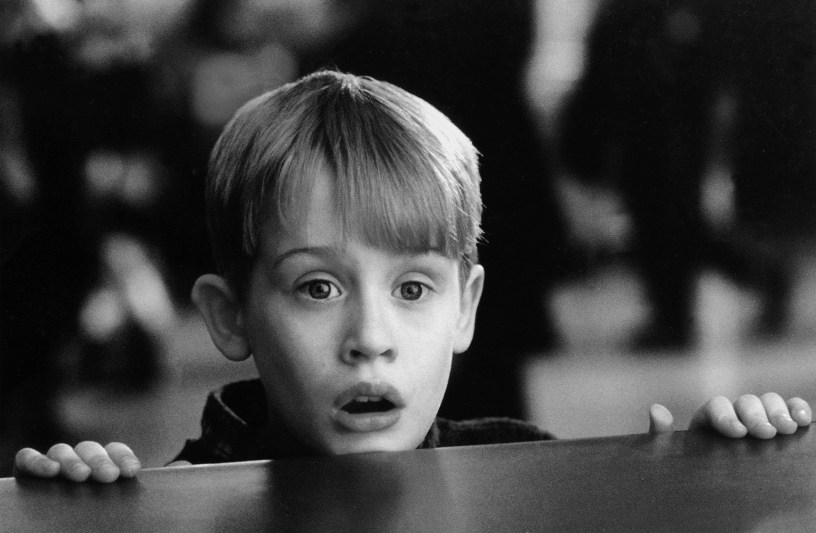
Riding the coattails of the wildly successful movie, Home Alone, this 1992 sequel is more or a less a carbon copy of its predecessor, only this time taking place primarily in New York City instead of Chicago. The entire main cast from the first movie returns for a second helping of the same holiday hijinks. Once again, the movie starts with Kevin’s forgetful parents leaving him behind, and ends with our sadistic little hero mercilessly destroying the familiar pair of dimwitted crooks while also befriending an eccentric, elderly solitudinarian.
While not a huge fan of the Home Alone franchise, I cannot deny that the first two movies have proven to be indelible hits, firmly holding a place in most Christmas classics lists. But my interest in Home Alone 2 is mainly for its on-location footage of New York, capturing several popular spots in the city during the holiday season of 1991.
Chicago
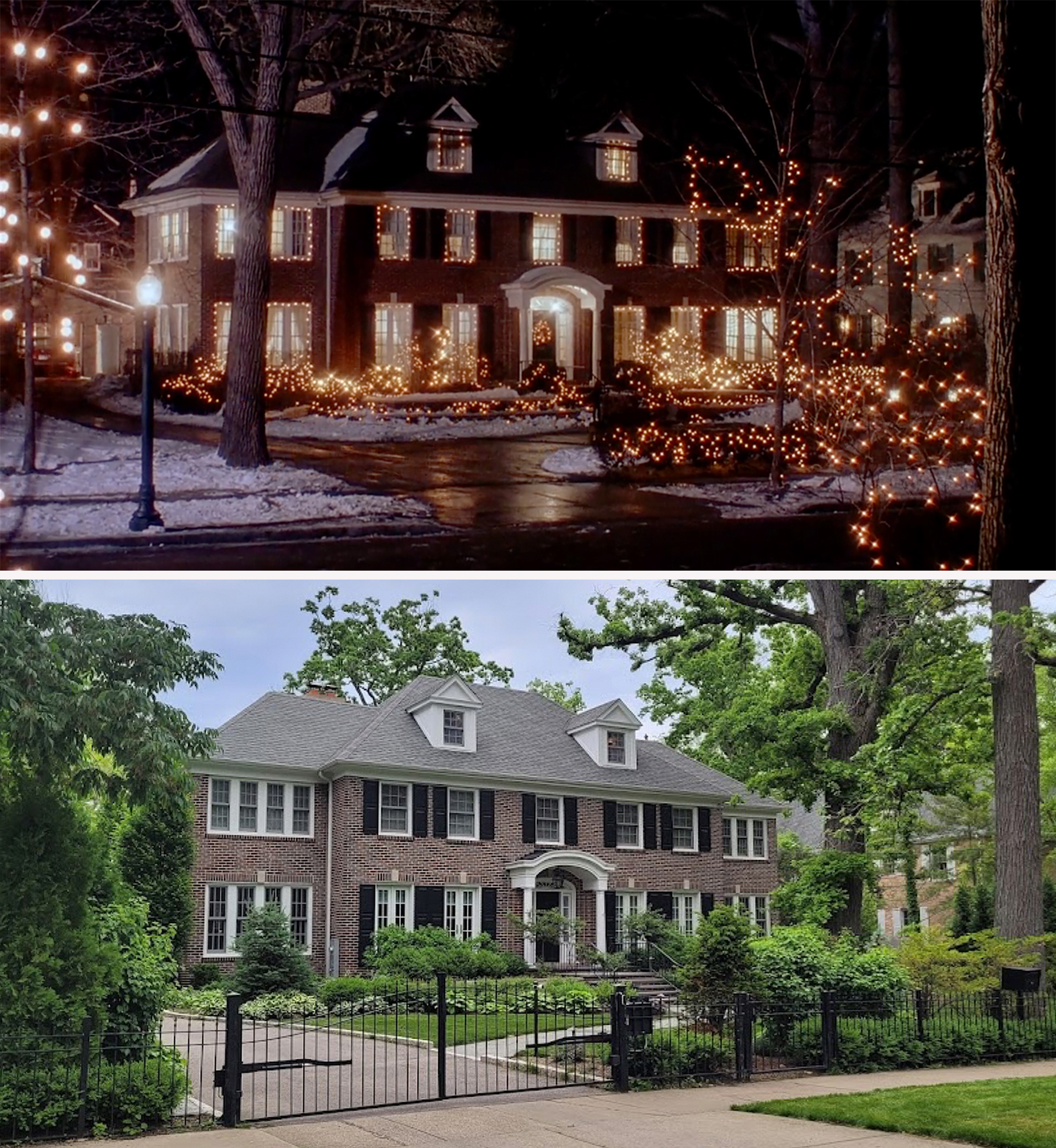
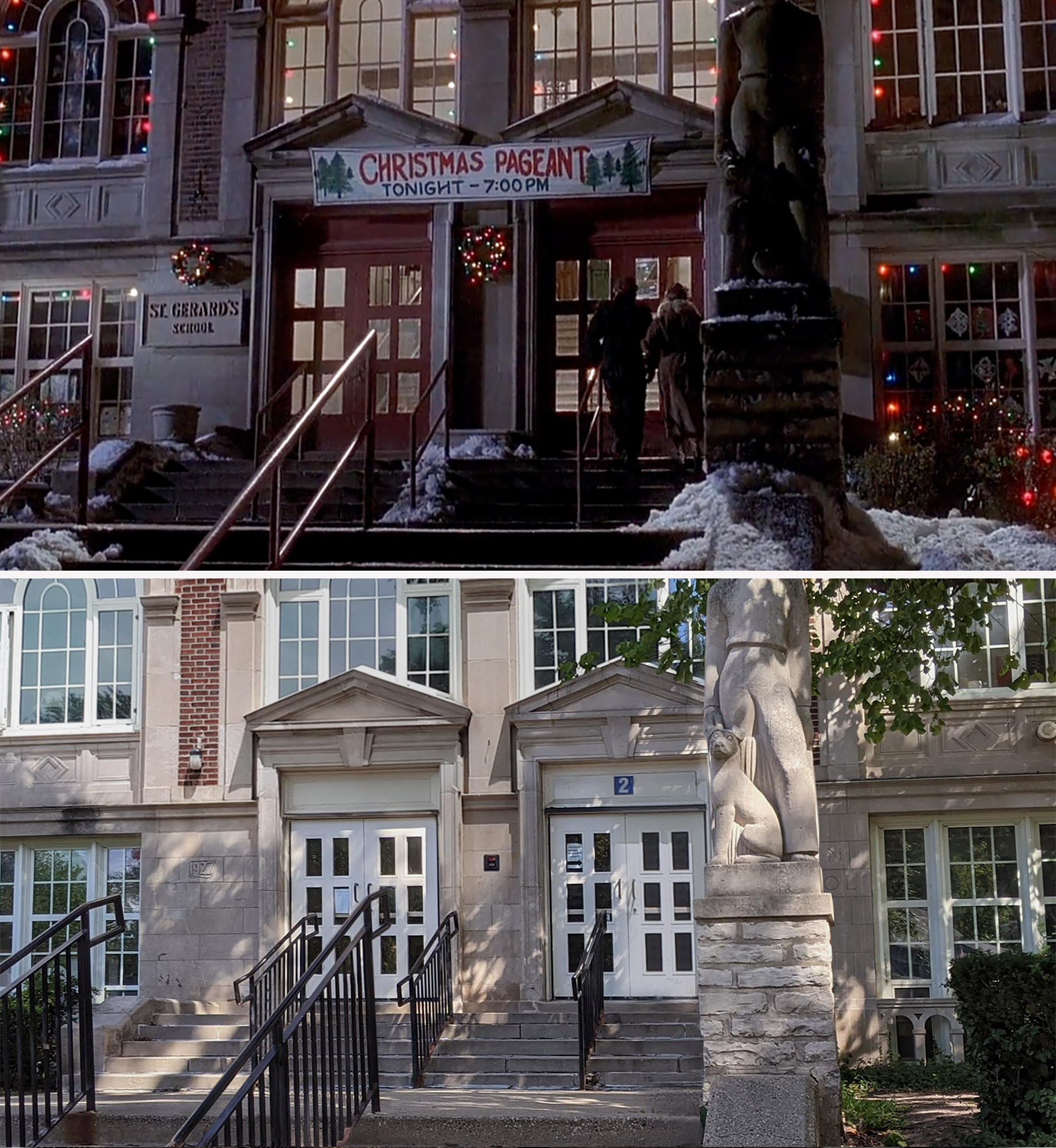
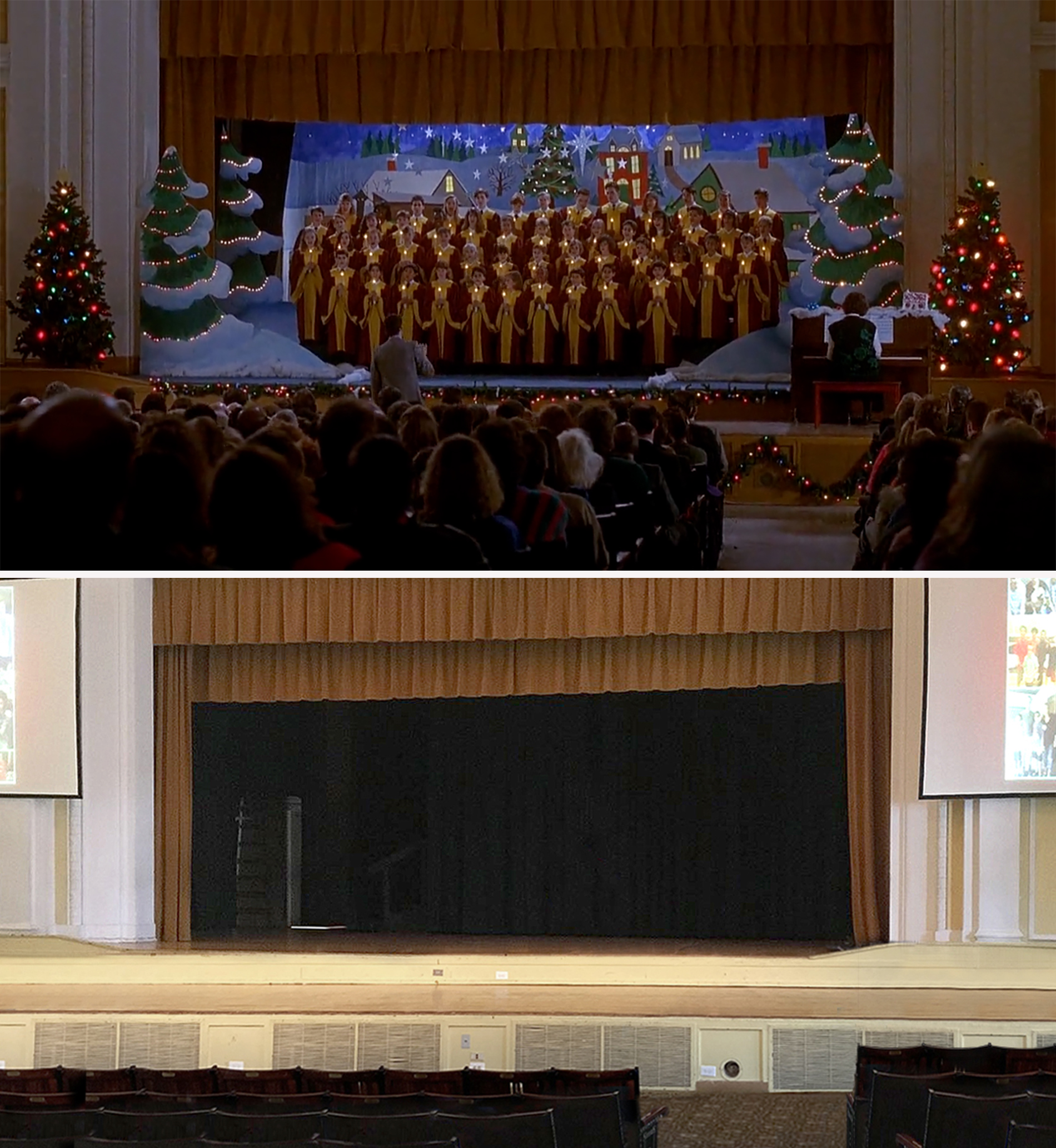
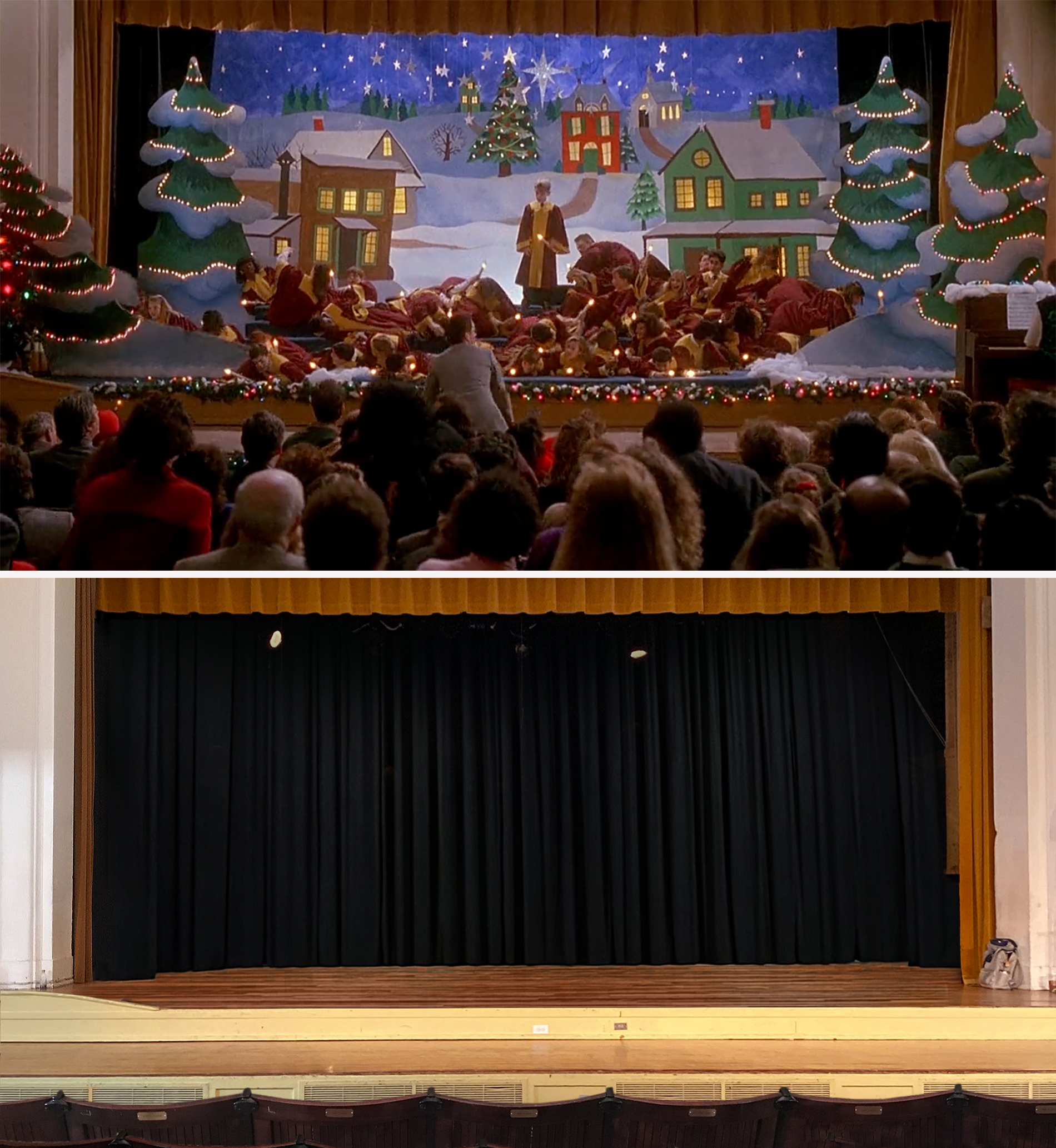
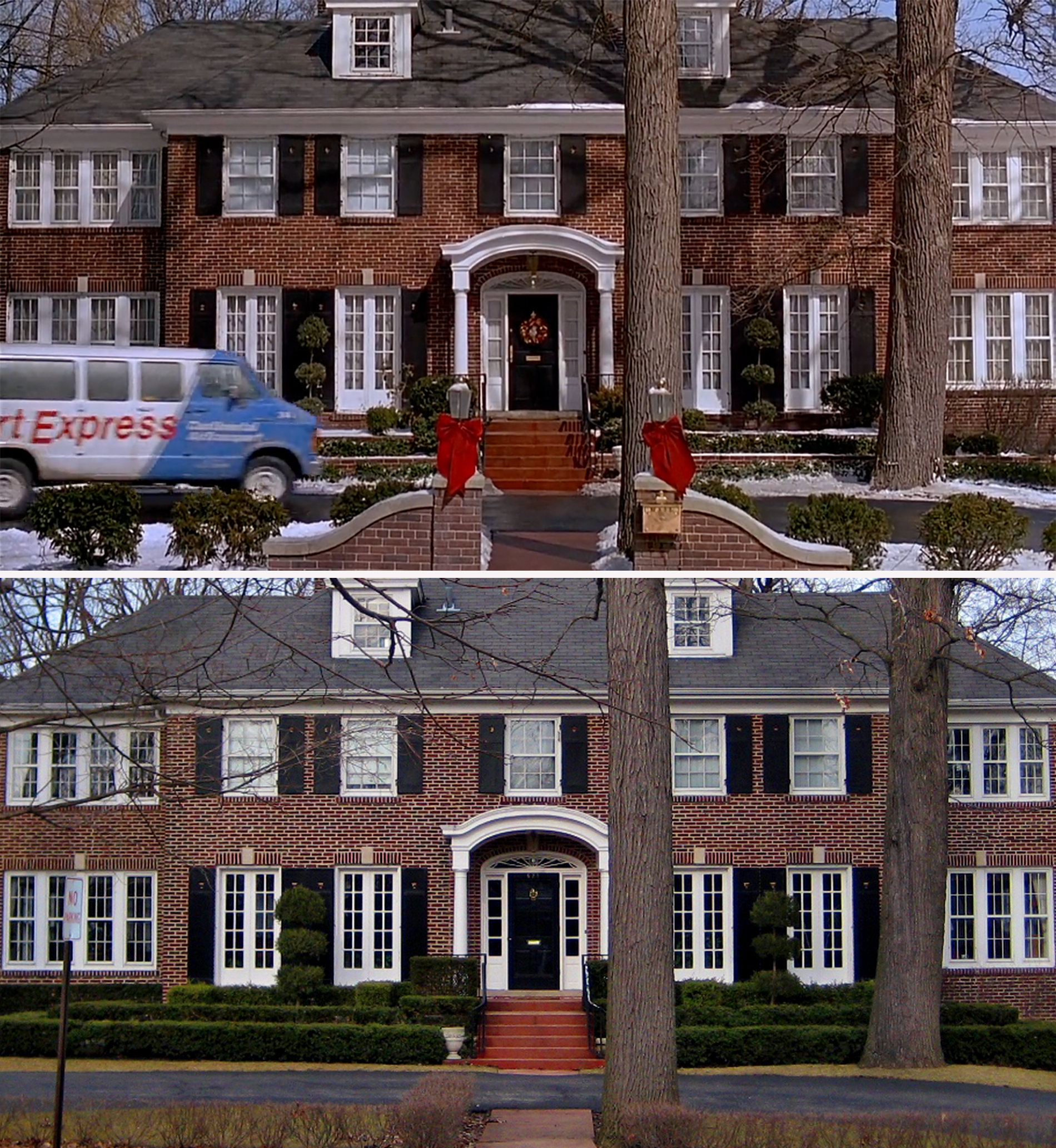
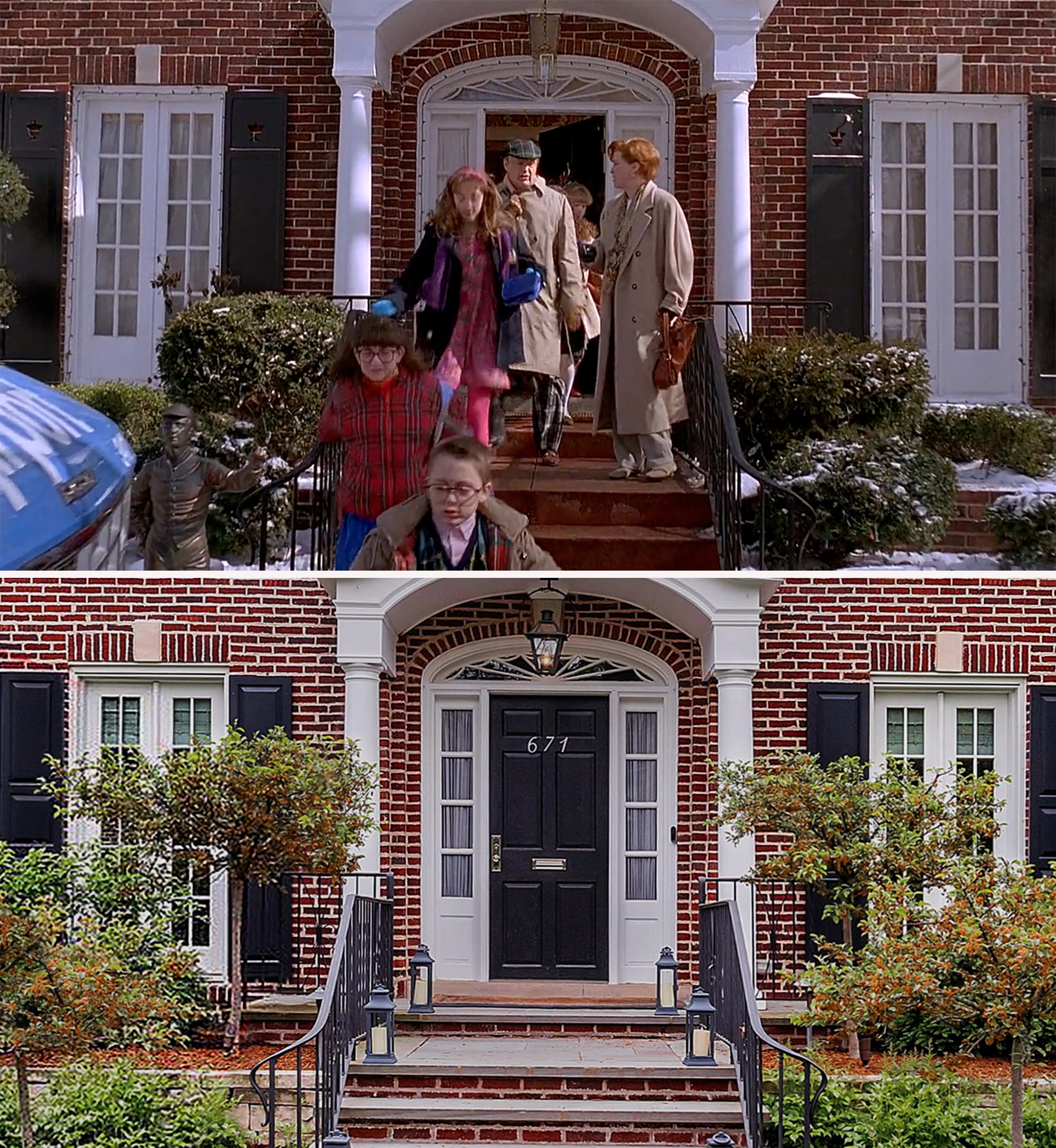
At this point in the evolution of film-location-identification on the web, most of the places used in this movie have been documented. The house, of course, was the same one used in the first movie, and the school exterior was identified as the Haven Middle School in Evanston, IL, by several sources.
The only place that wasn’t widely acknowledged was the school interior, which I figure many people assumed was also Haven Middle School. But as I looked into the matter more closely, I found a user comment on a movie website that mentioned the auditorium was from their old school — The Skokie (Middle) School at nearby Winnetka.
I have no idea why production used two different places, as neither of the school’s exteriors are particularly remarkable. Nonetheless, I’m glad I was able to decidedly disseminate the two Chicagoland schools used in this movie (even if this is primarily a NYC-focused website).
Airport
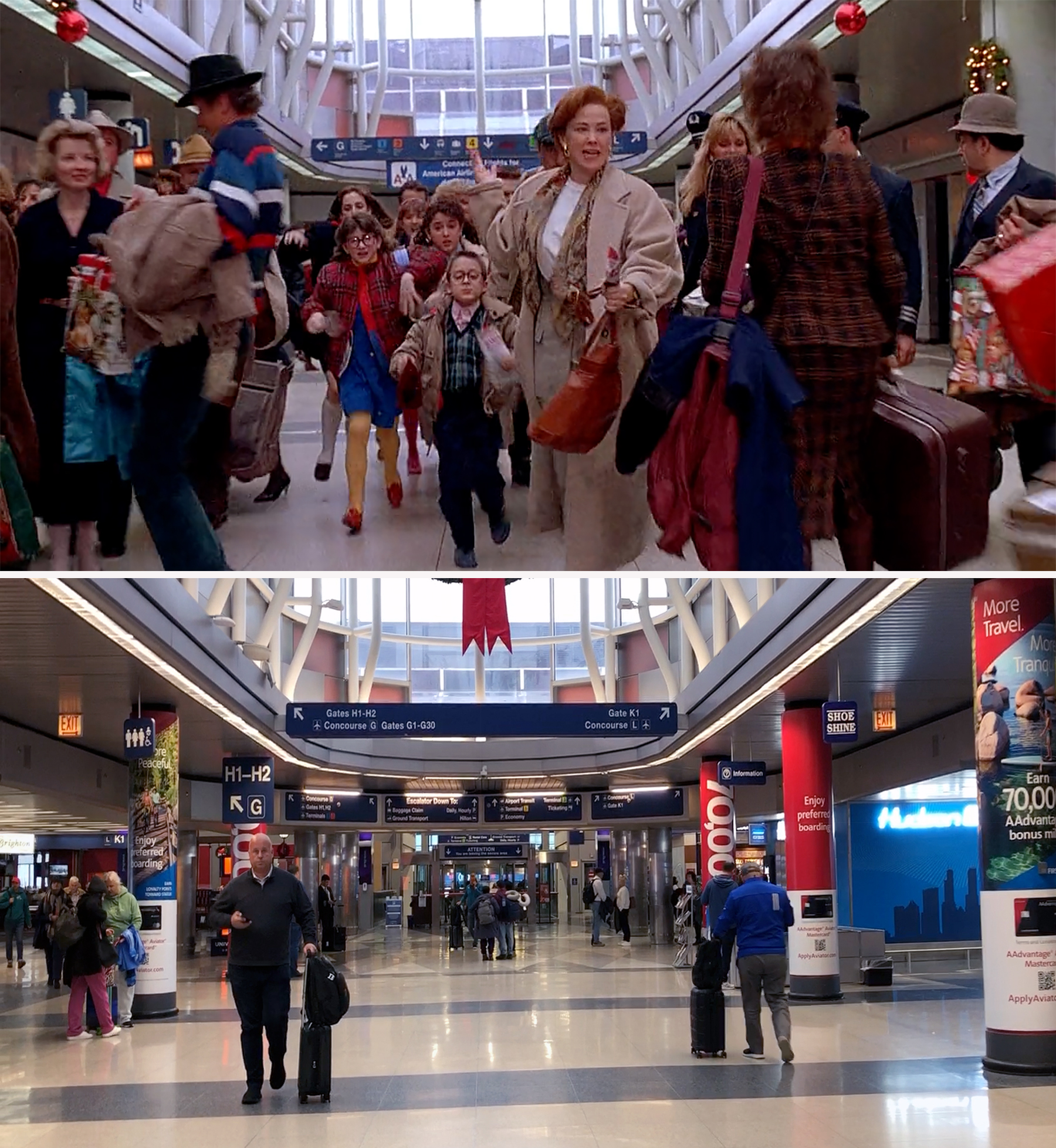
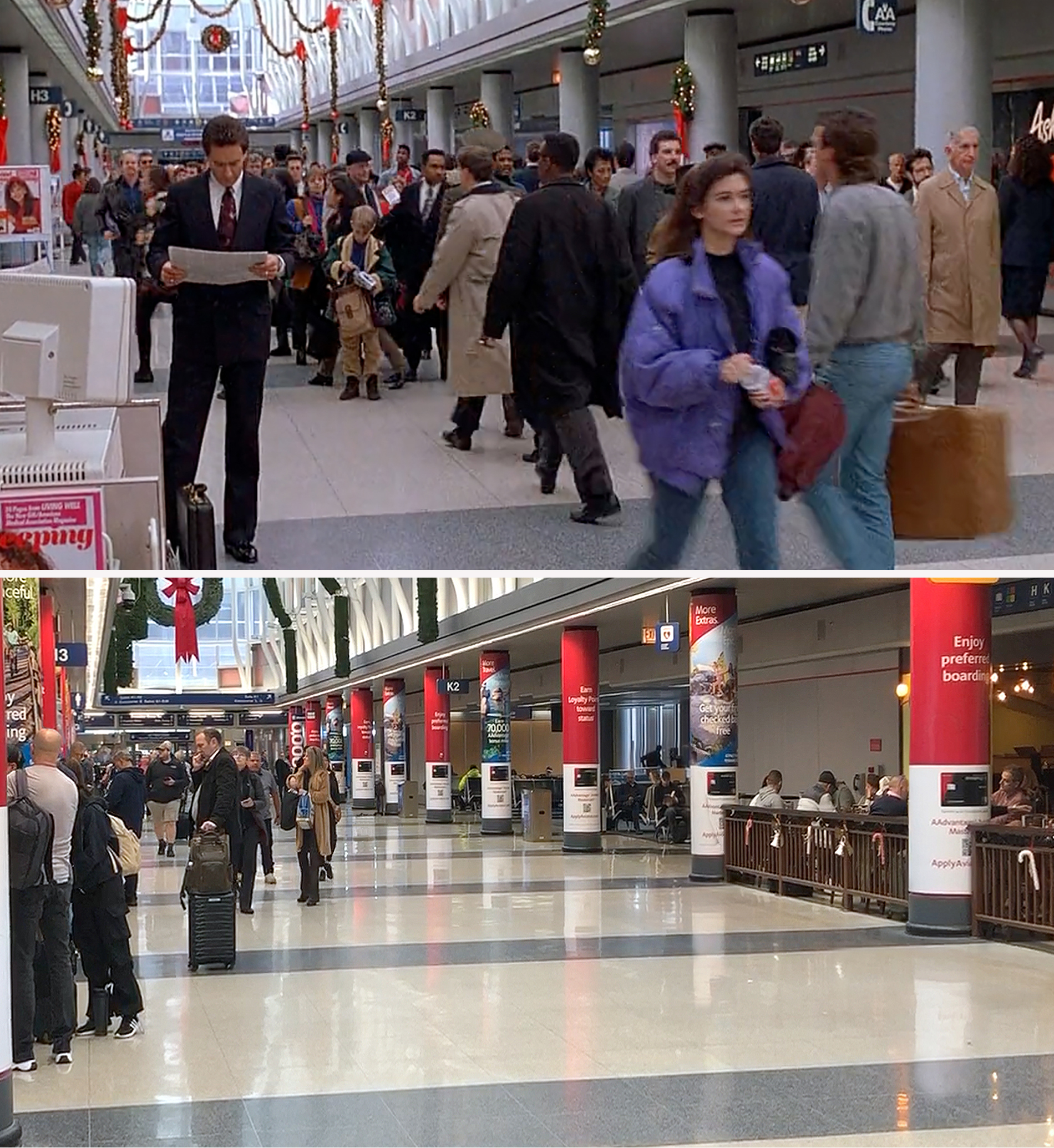
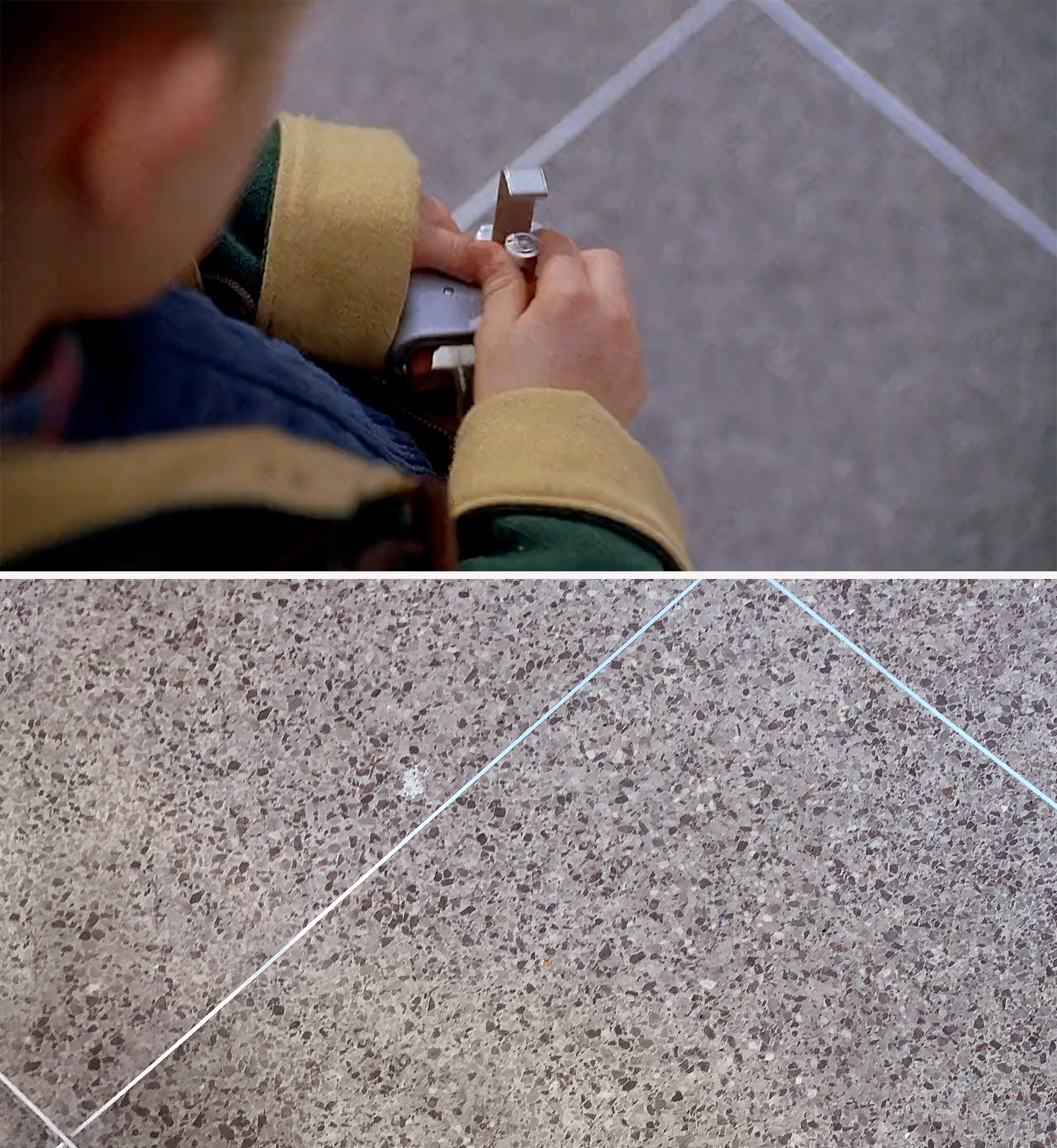
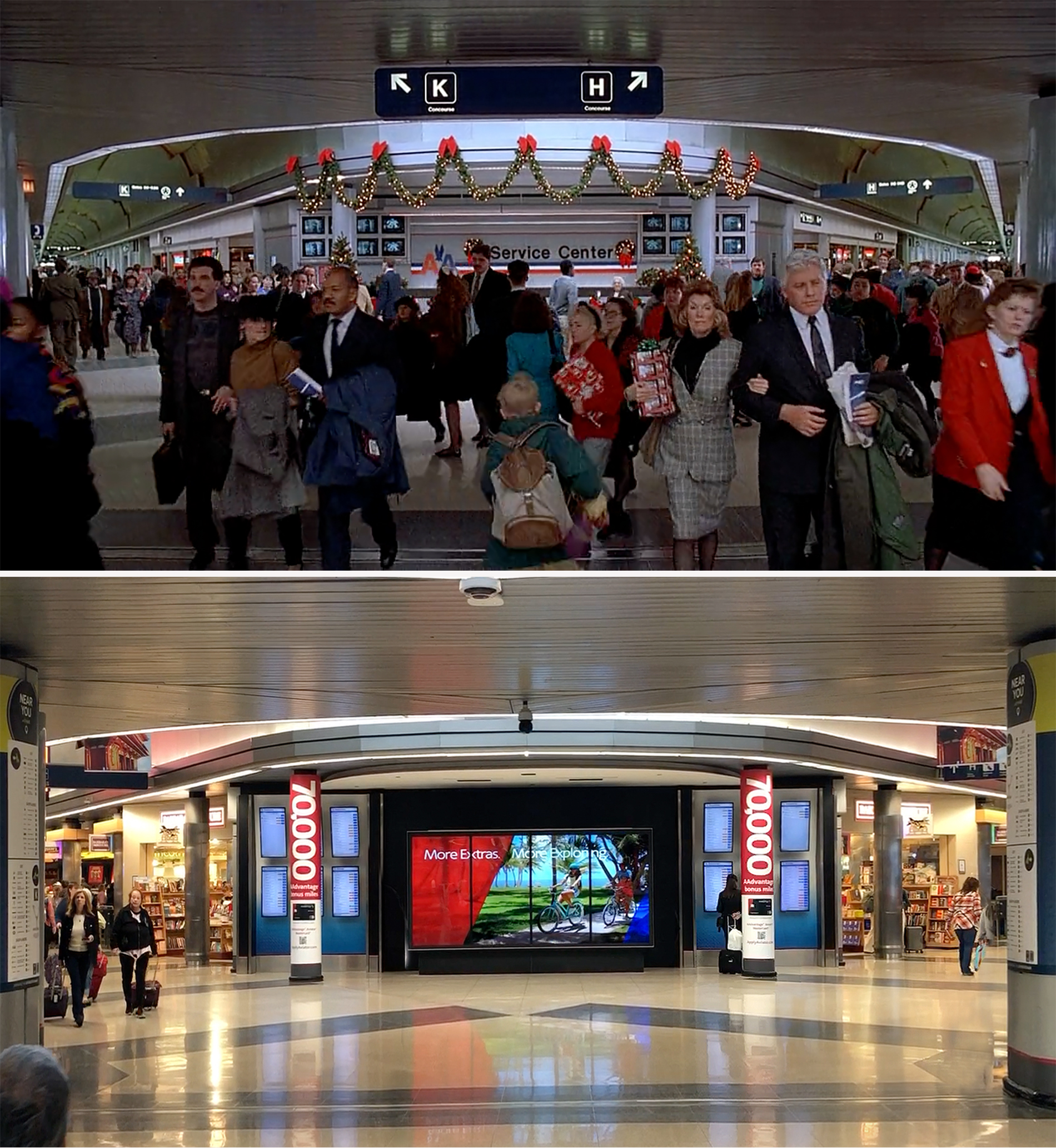
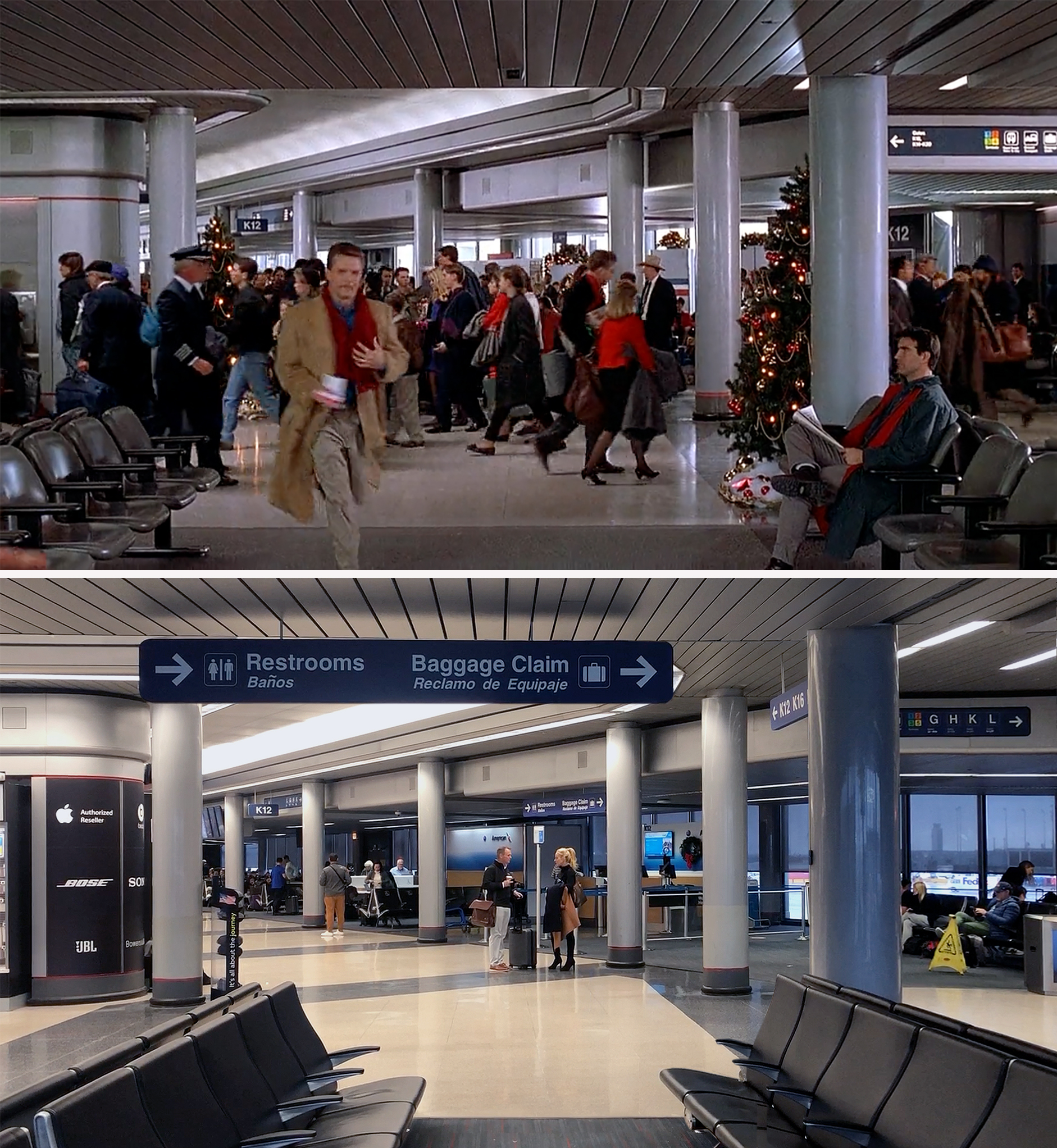
Most websites identified this airport as being O’Hare in Chicago, but no one really bothered to mention the gate and terminals used. Fortunately, the gate signs shown in the movie were the actual ones at the airport, so all that was a required was some minimal investigating.
Later in the movie, O’Hare also served as the double for LaGuardia Airport where Kevin was alerted that he had once again been separated from his family. The “Miami” airport scenes were shot at LAX in Los Angeles.
Queens, New York
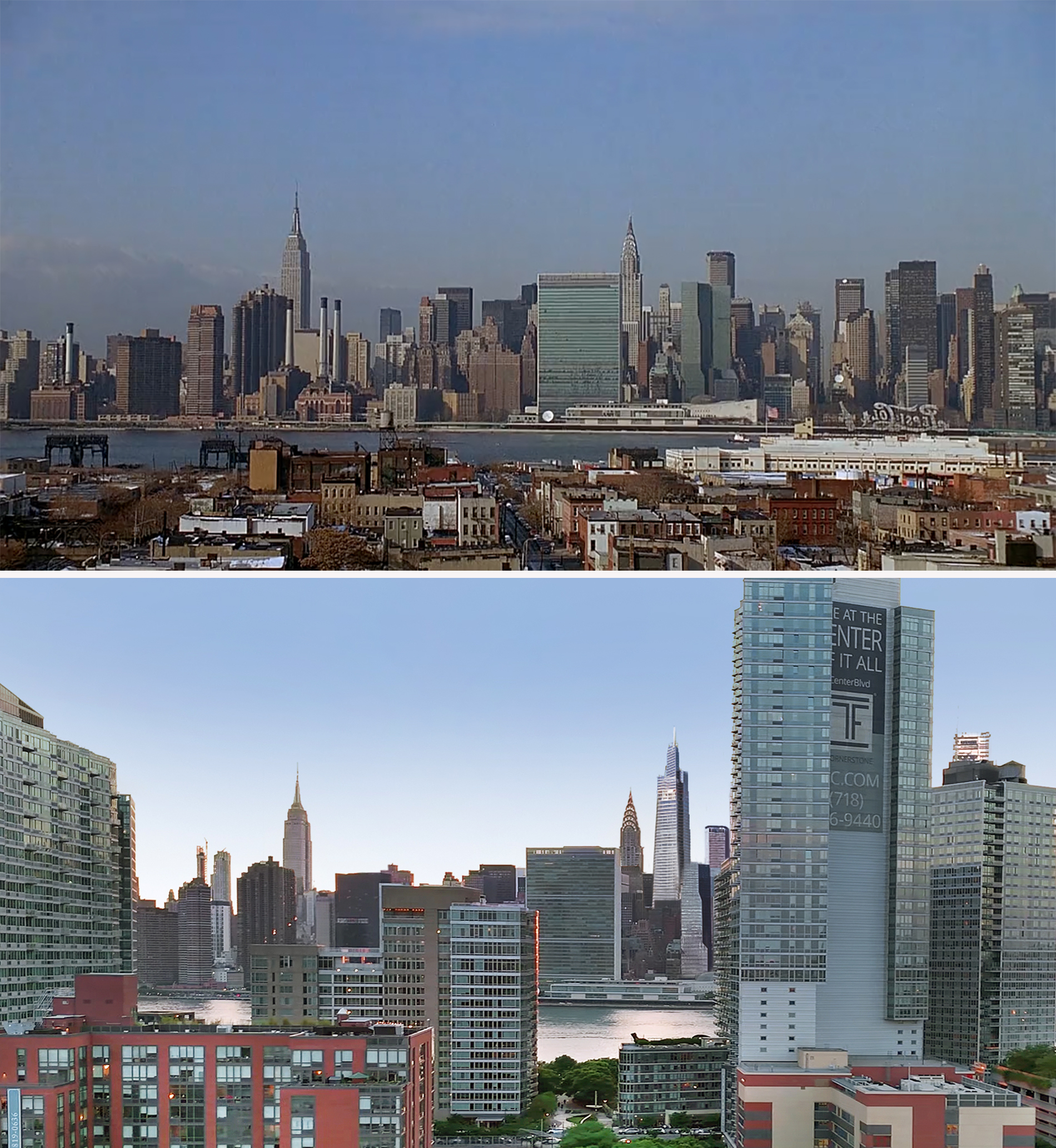

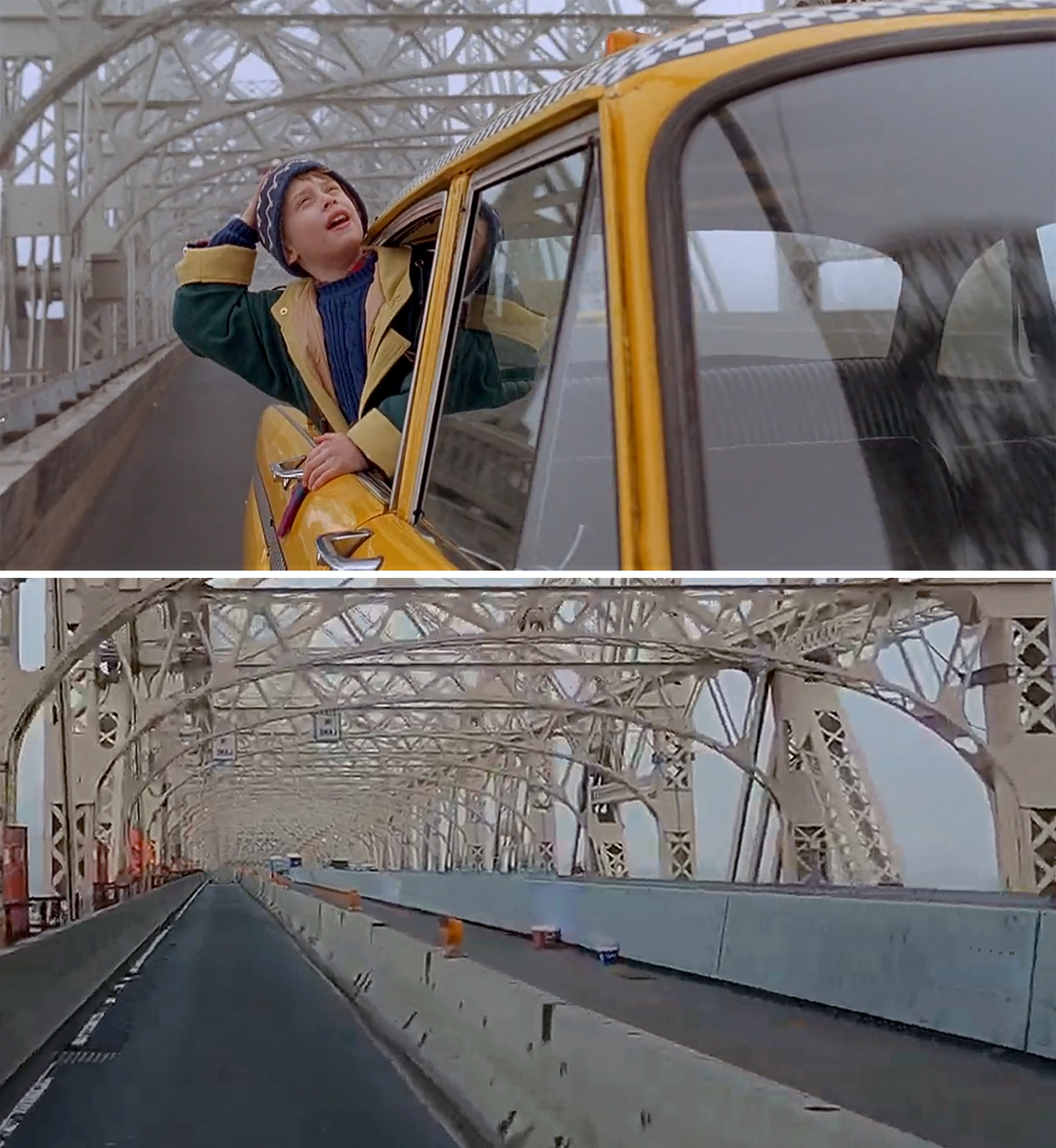
The bridge was easy to identify, but I had to do a little looking around to figure out where the crew filmed the skyline shots Kevin sees when he arrives at “LaGuardia Airport.”
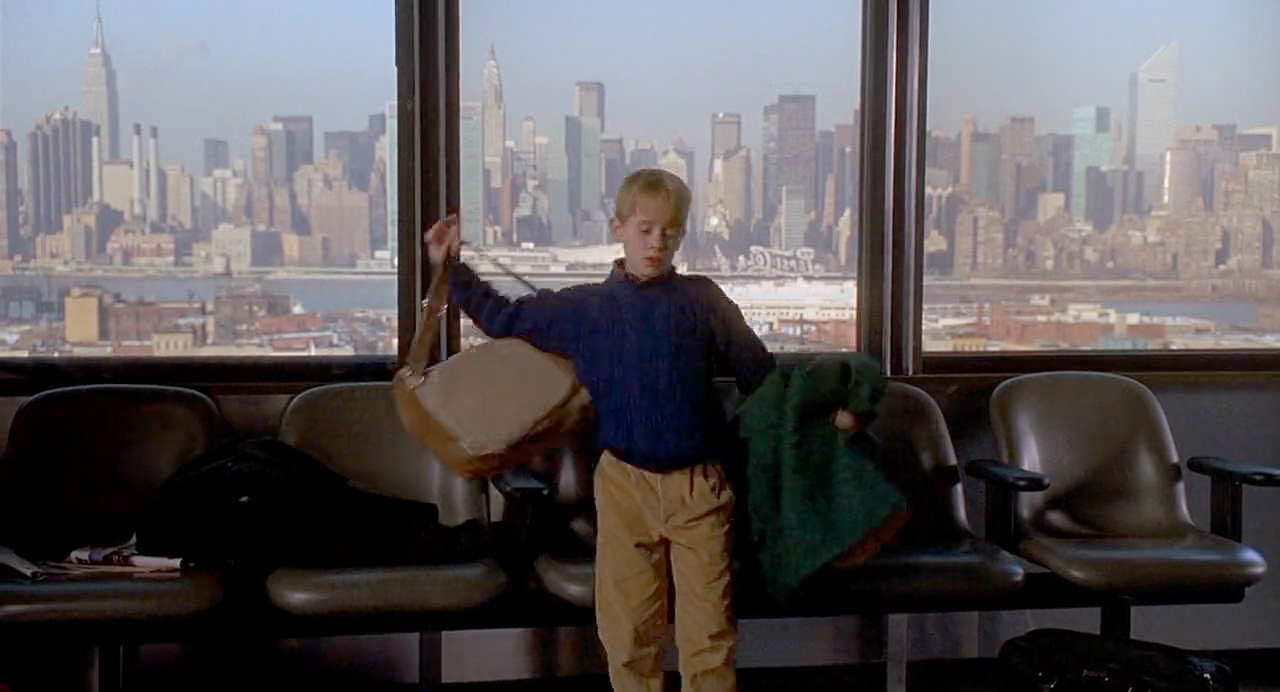
The window he sits in front of, with the Manhattan skyline in the background, was done with a little trickery. It was most likely a backdrop placed behind the window on a set, or perhaps it was done with a green screen. One thing’s for sure, it was not the view from LaGuardia in East Elmhurst, Queens. You can’t even see the skyline from the terminal.
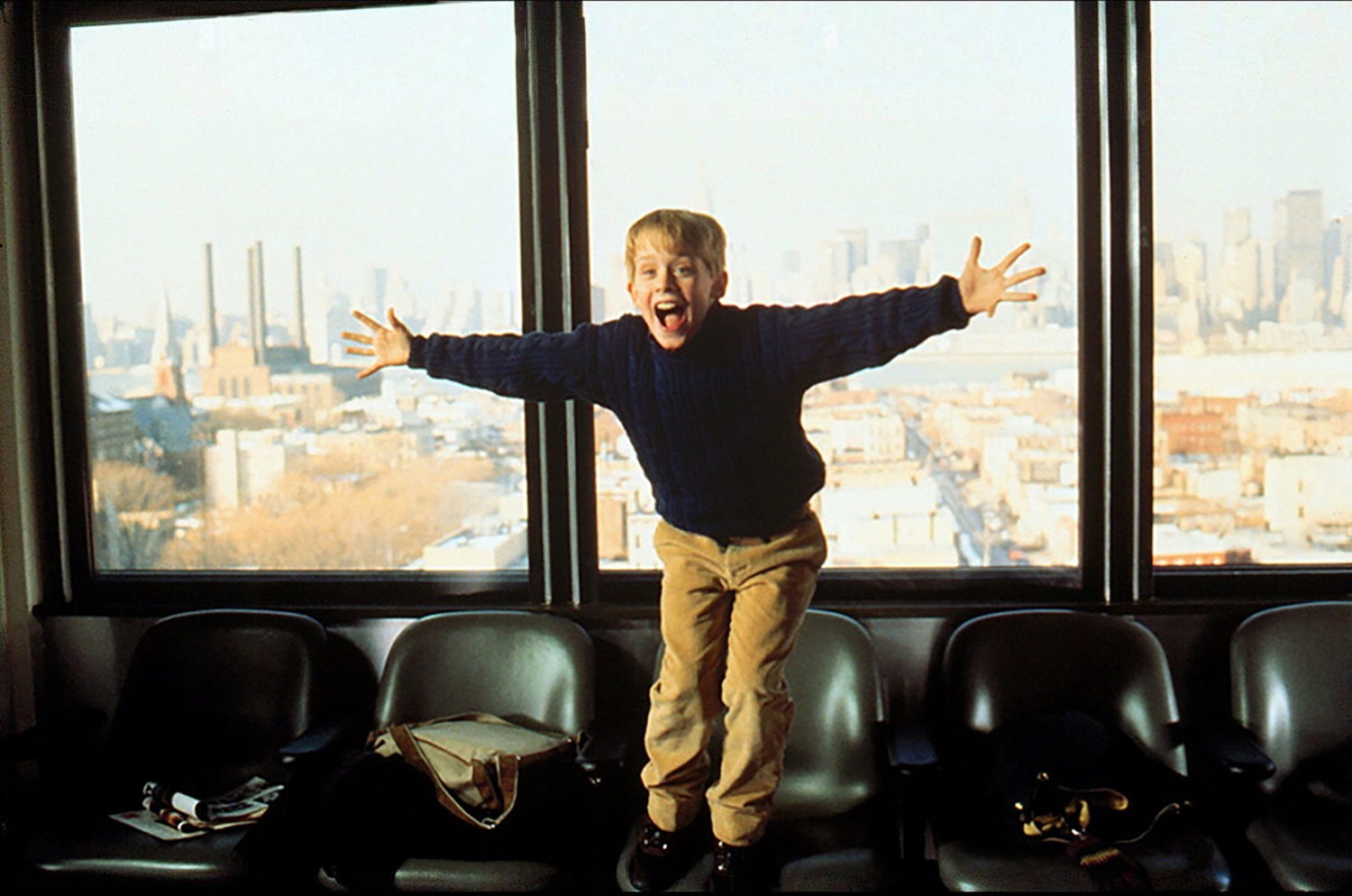
After studying the skyline images from the movie, I determined they were taken in Long Island City. One major clue was the old Smallpox Memorial Hospital on Roosevelt Island in the foreground.
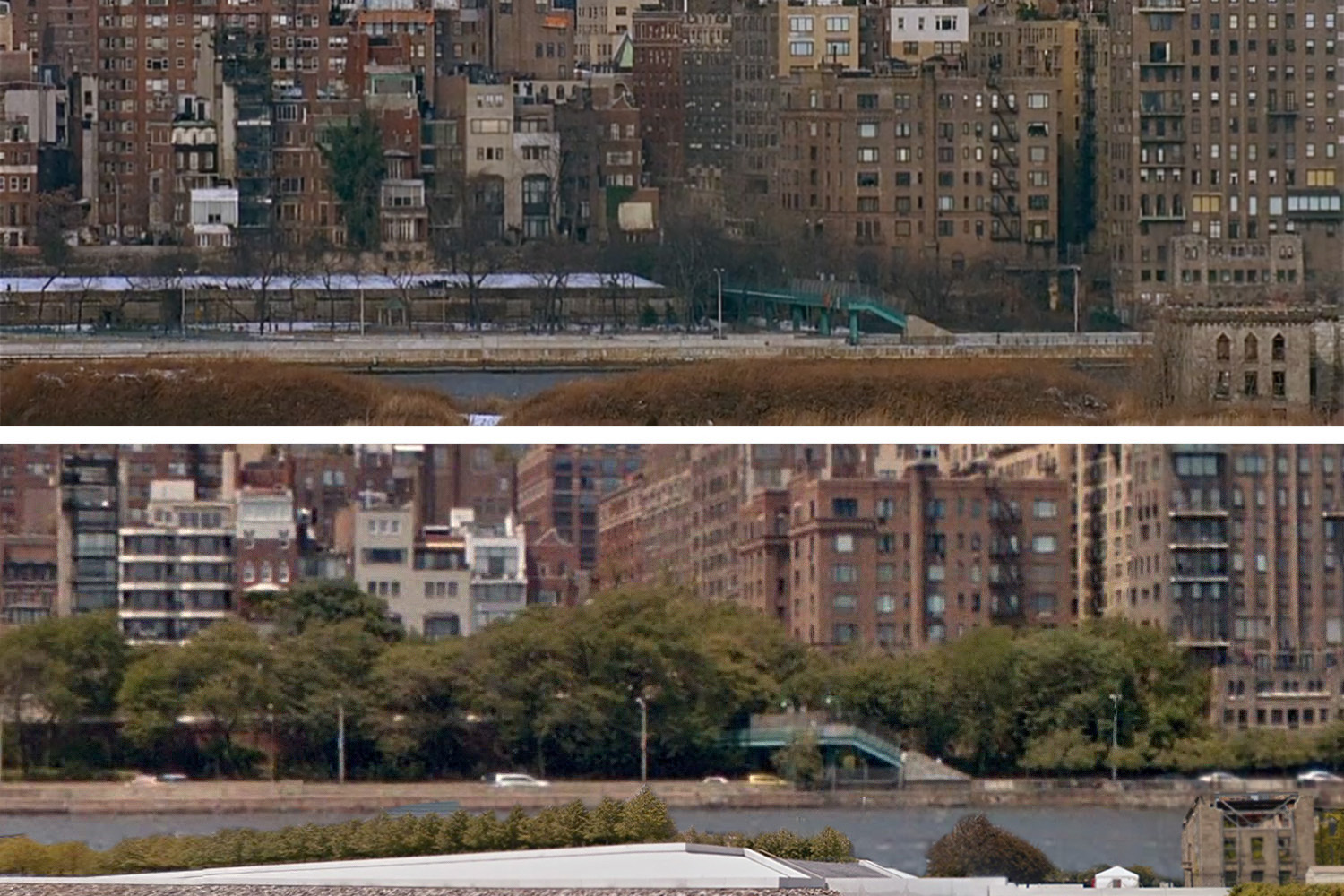
That meant we were down somewhere near the Brooklyn/Queens border, unlike the airport which is pretty much on the north shore.
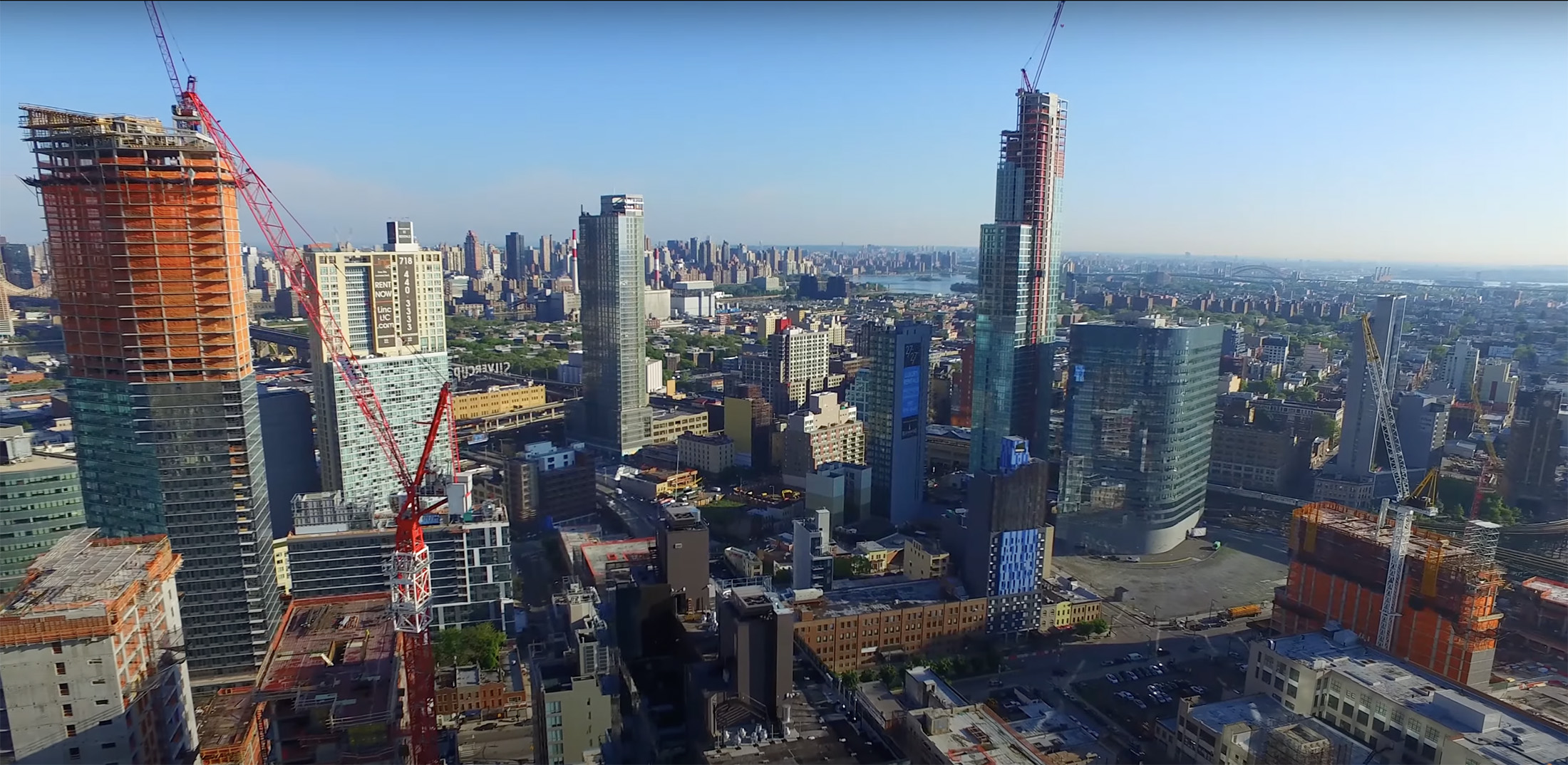
One very notable difference between then and now is how many tall luxury apartment buildings have spouted up along the Queens shore. Most of them were constructed in the last ten years or so, but I’m kind of surprised it took so long for real estate developers to snag what is certainly one of the best areas for majestic cityscape views.
Touring the City

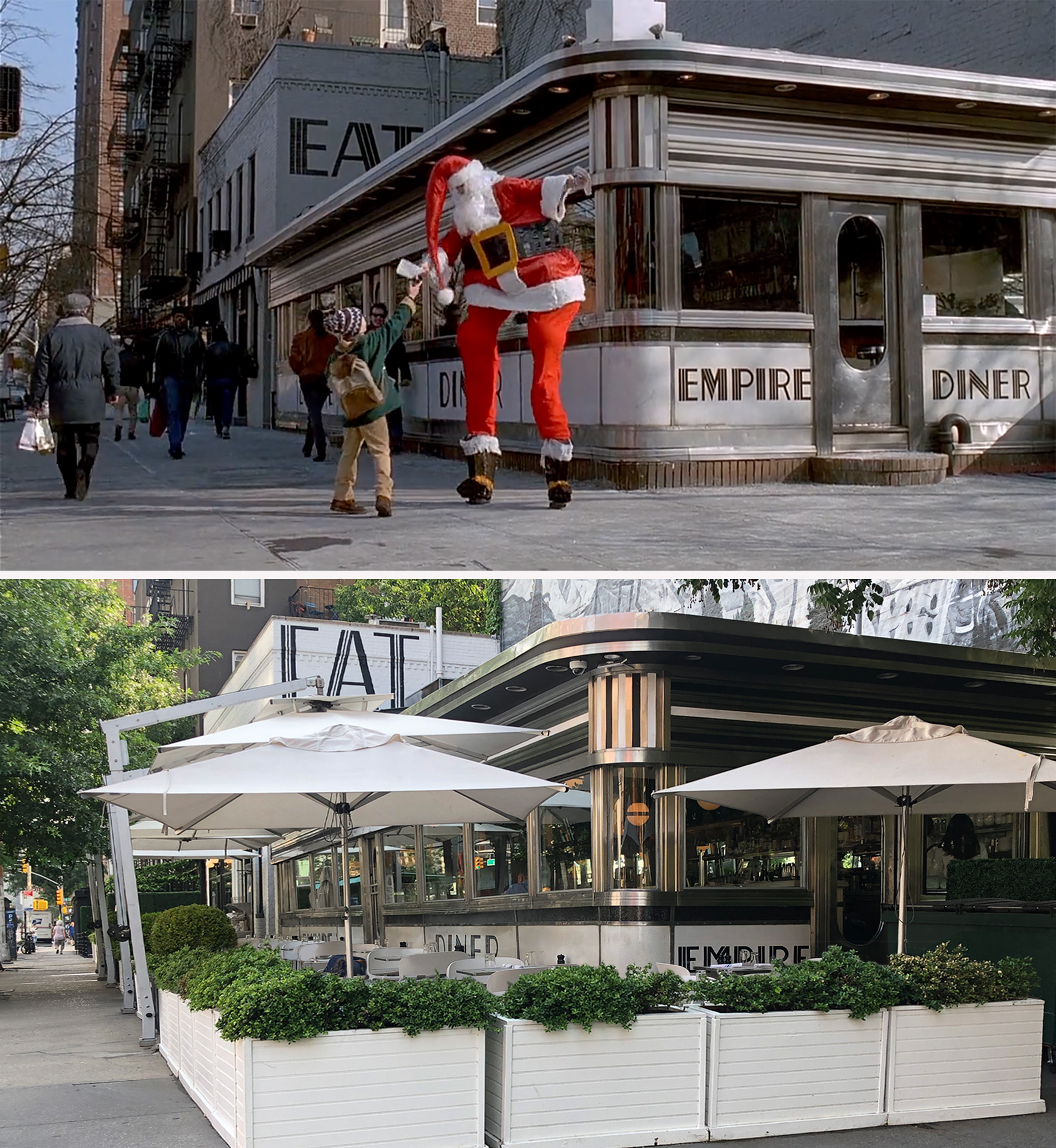
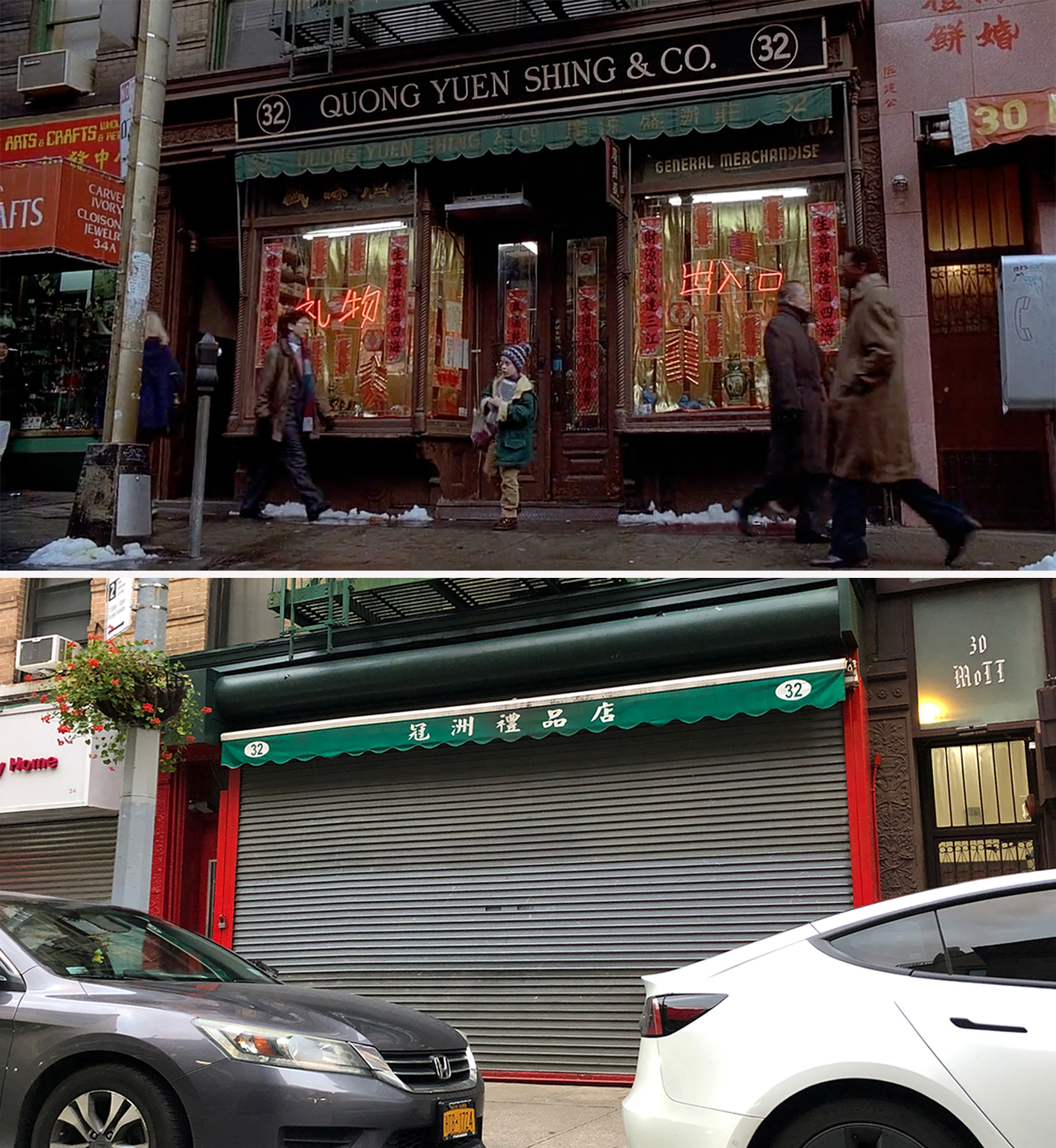

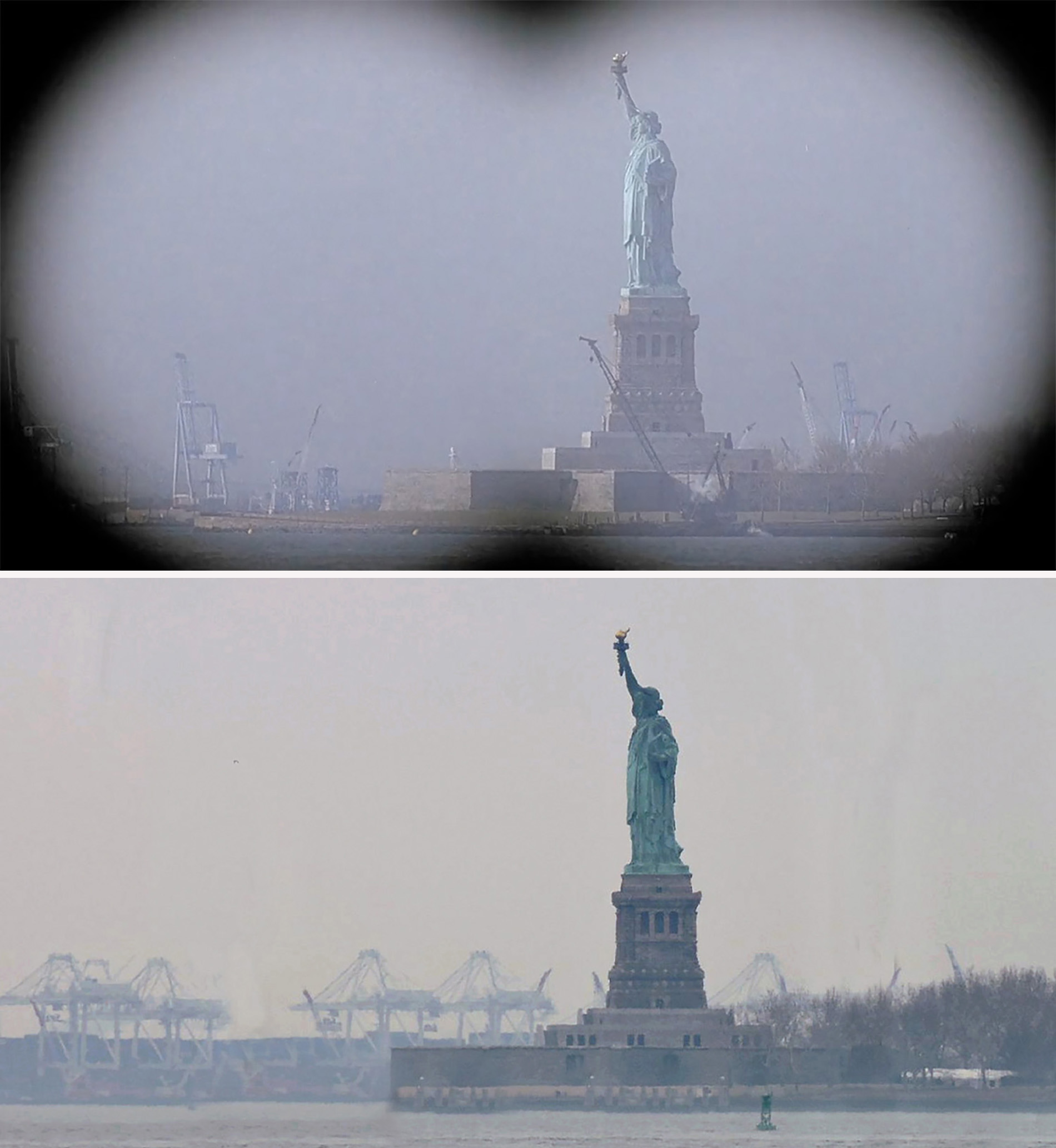
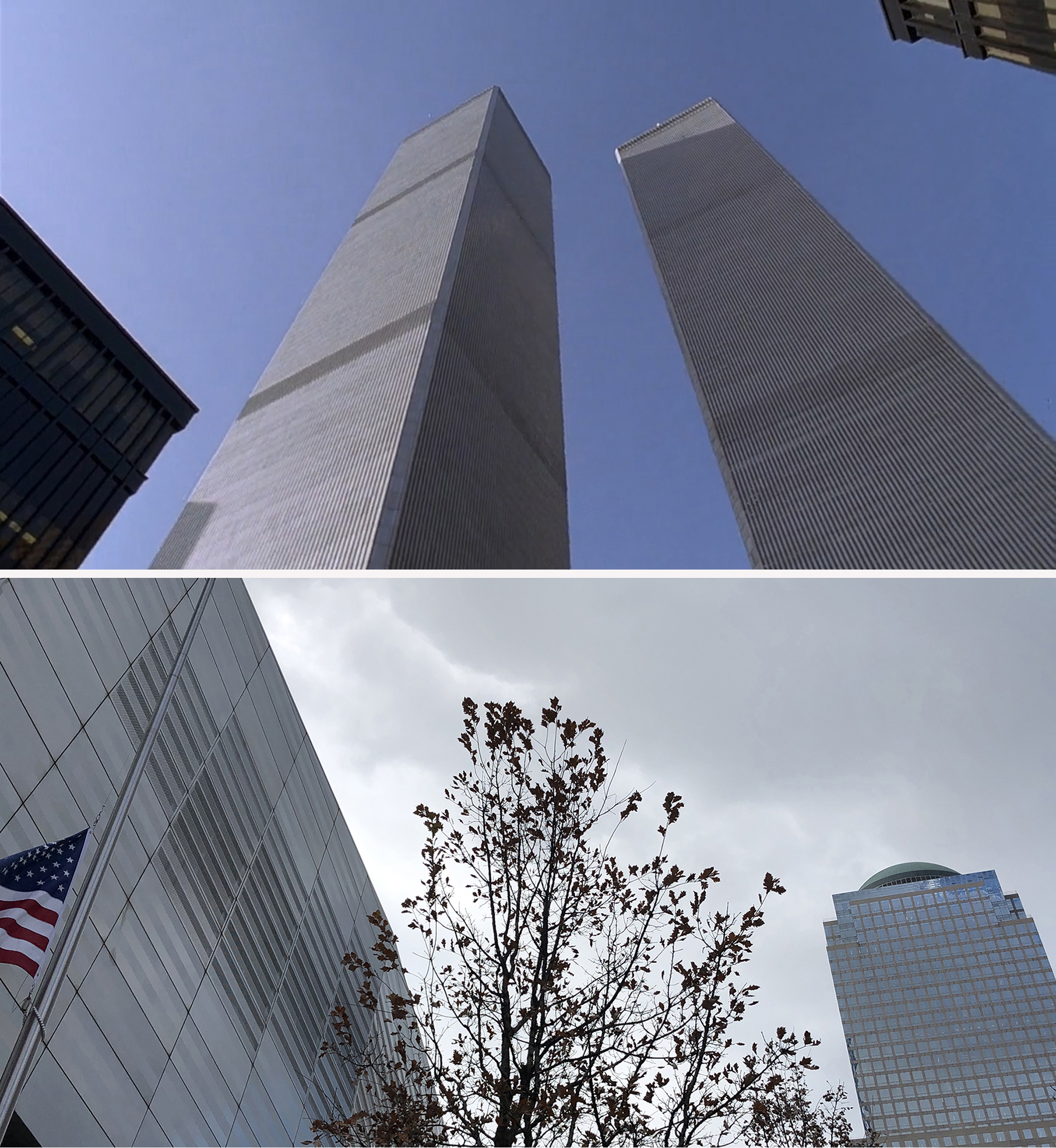
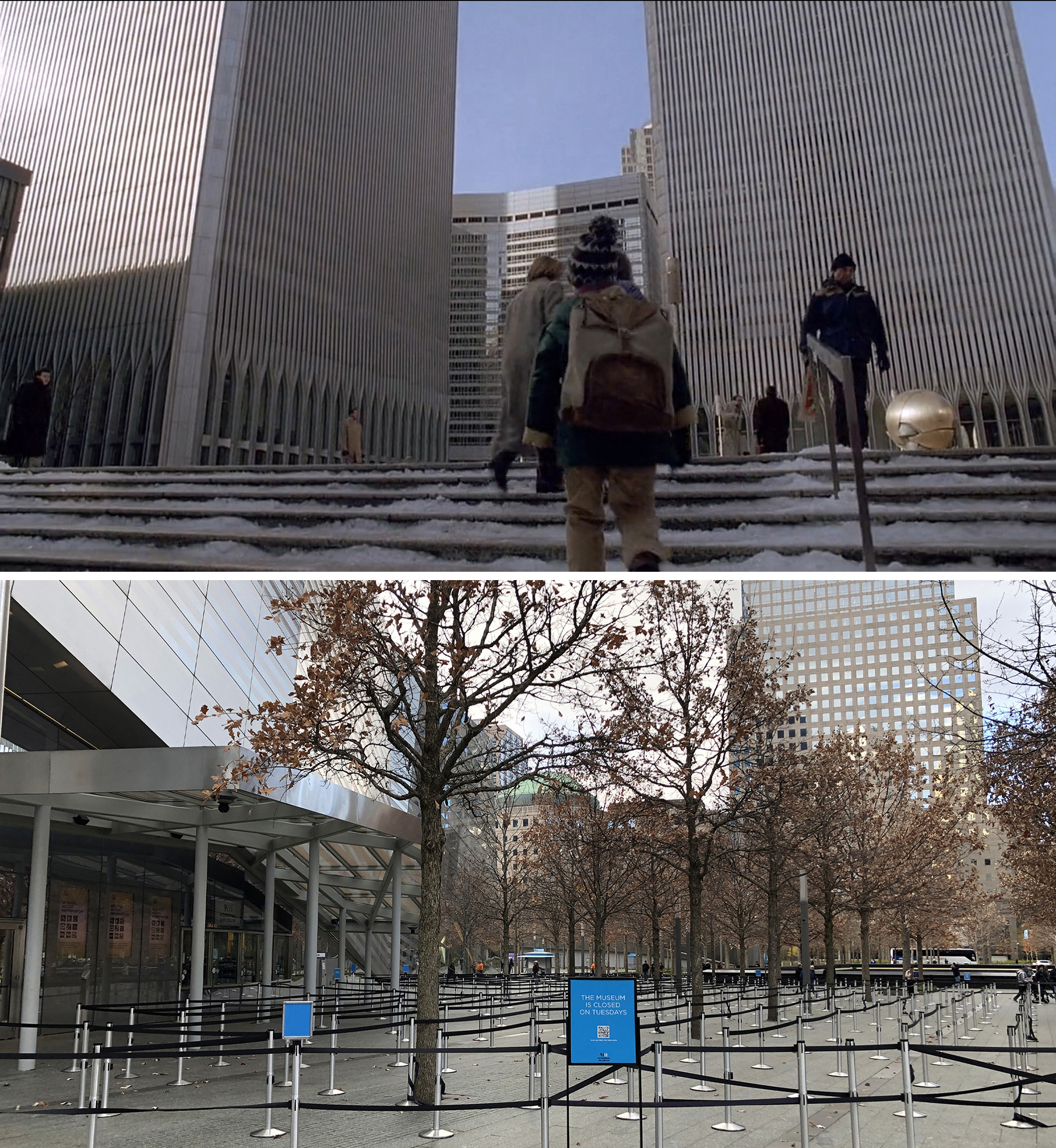
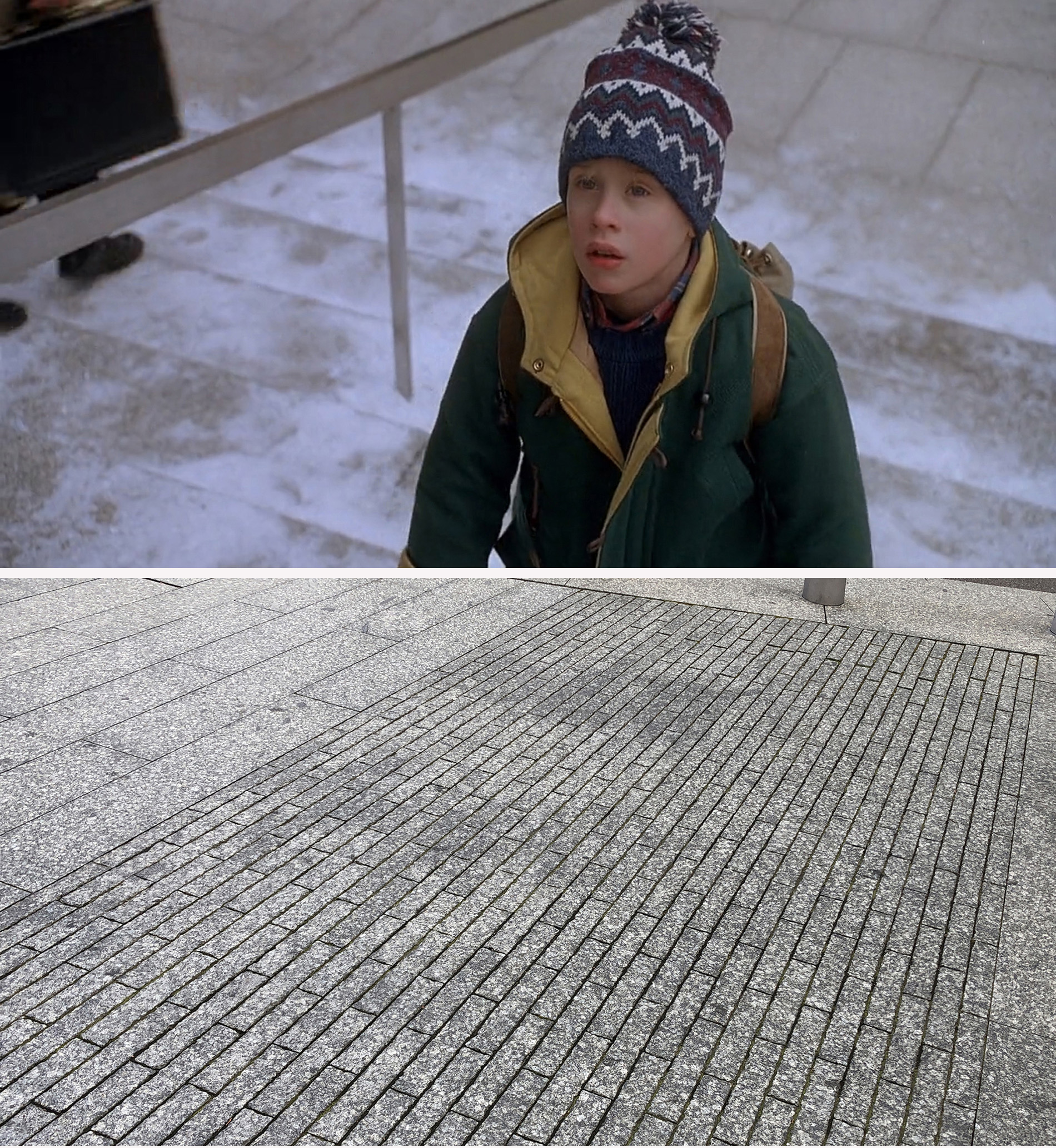
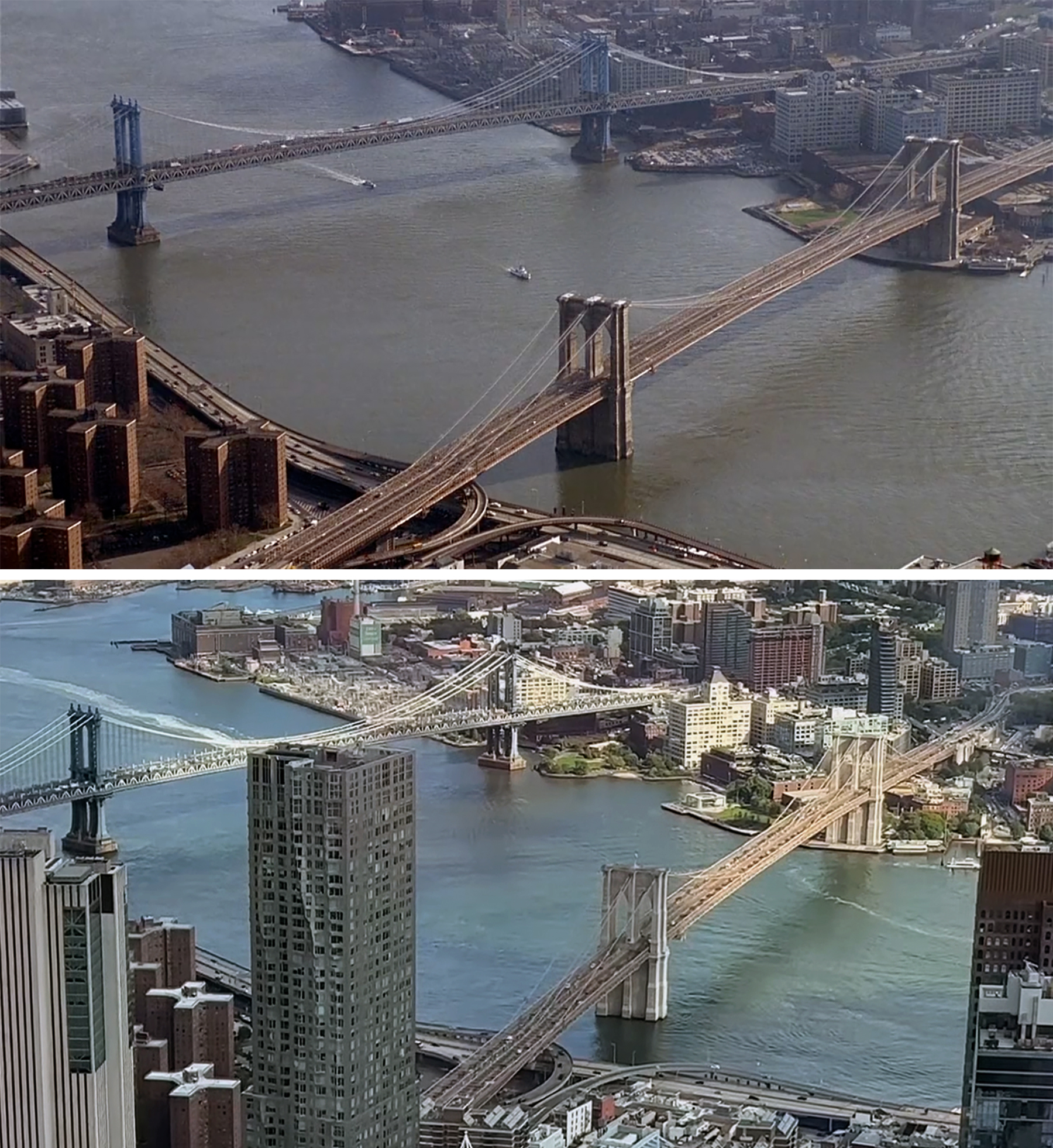
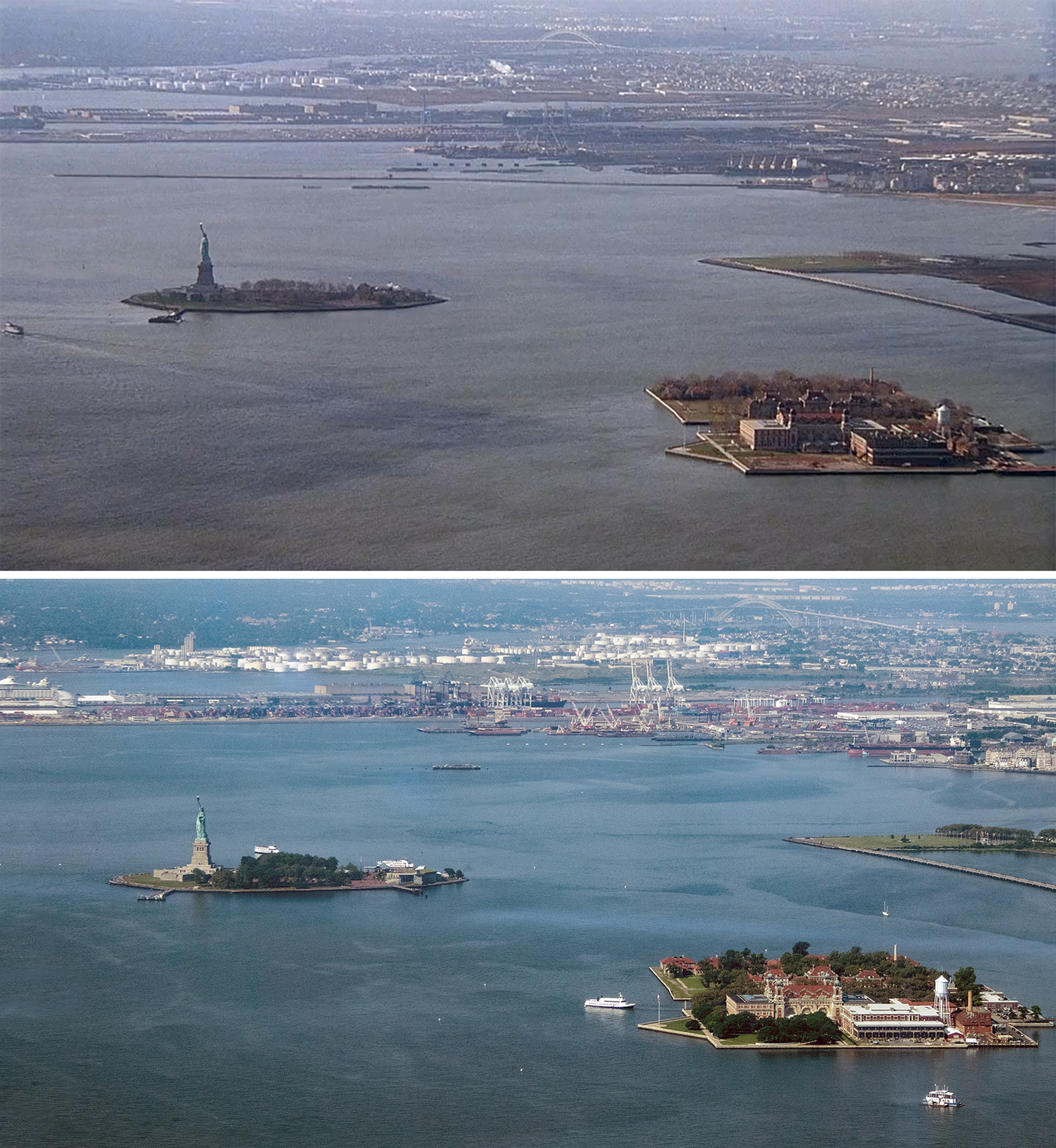

This sightseeing montage didn’t have too many mystery locations in it, as most of the shots contain obvious NYC landmarks. The only off-the-beaten-path spot used was the Chinatown shop where Kevin buys the firecrackers, but we get clear views of the store name and numbered address, so it was easily findable.
While it’s somewhat crazy imagining Kevin doing all this traveling in one afternoon, at least the geography is somewhat accurate. He generally goes from north to south — from Midtown Manhattan down to the southern tip. However, there were a few oddities along the way.
In the beginning, it makes perfect sense for Kevin to take a cab from LaGuardia, across the 59th Street Bridge and ending up at Radio City Music Hall on W 50th. What puzzles me is why would he be taking a picture of the buildings across the street from Radio City instead of the actual Hall itself?
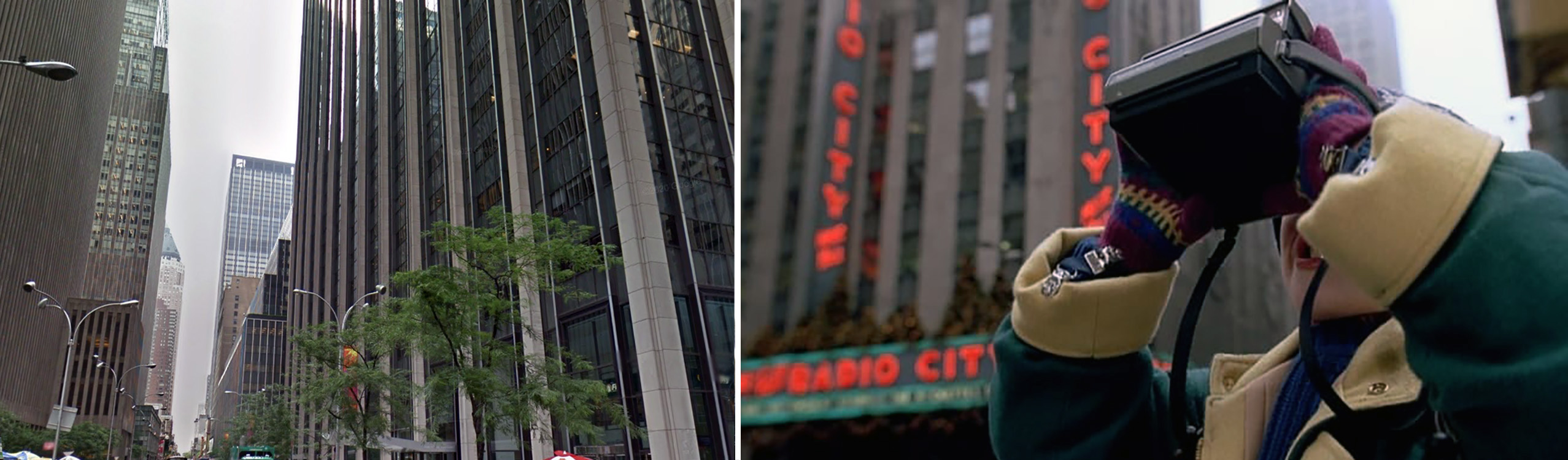
Of course, I know it was done because composition-wise, it looks better if the star is facing camera with a NYC landmark in the background. But it is a little silly if you think of him taking a polaroid of some boring, nondescript office buildings.
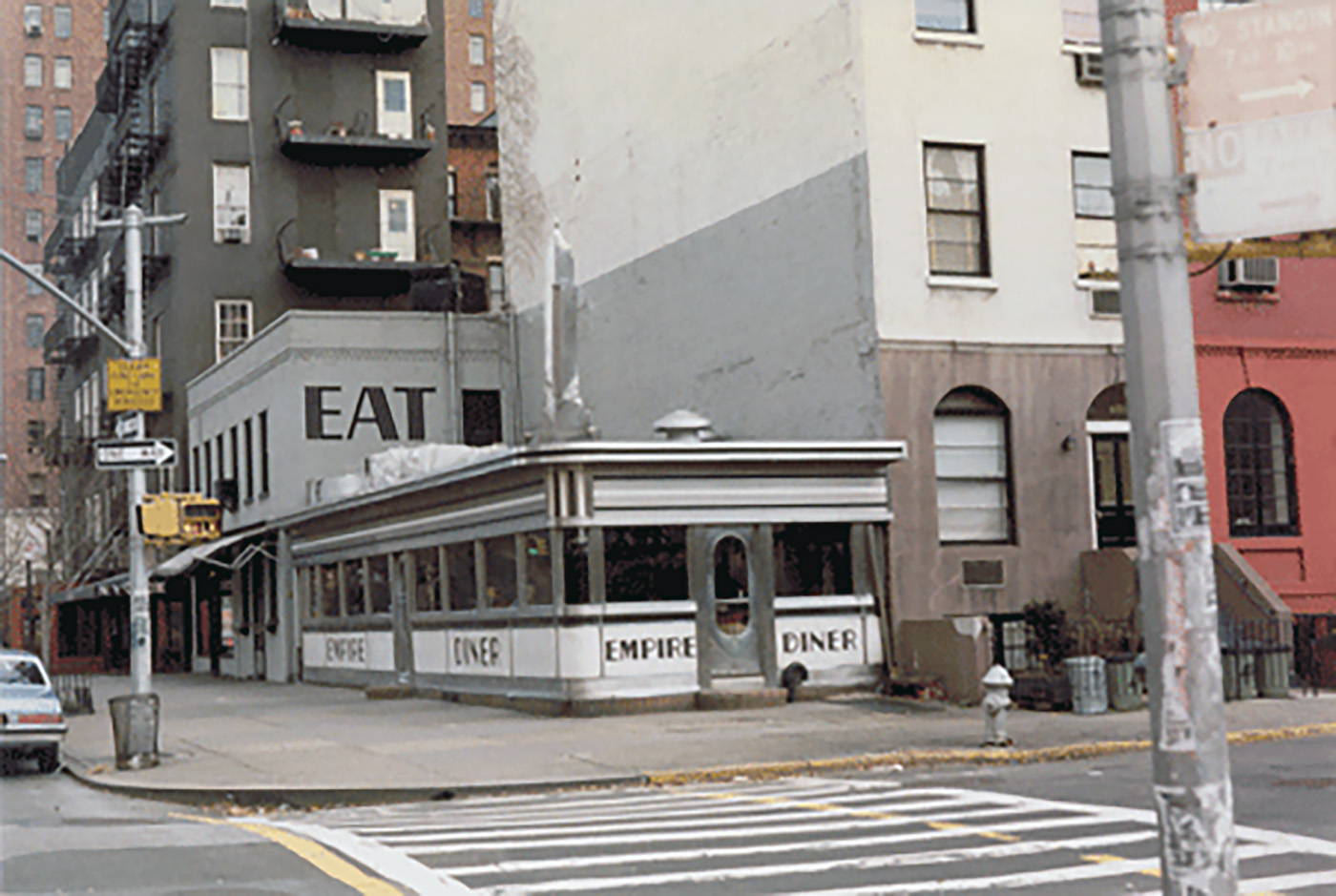
When Kevin next goes to Empire Diner, it’s somewhat logical, although it’s pretty much an out-of-the-way spot to visit if you’re heading for Chinatown (especially if walking). But it’s still on a general north-south path.
As might be expected, the filmmakers weren’t too worried about logic and most likely chose to film Kevin’s encounter with the Santa outside the Empire Diner to showcase its classic Art Deco design.
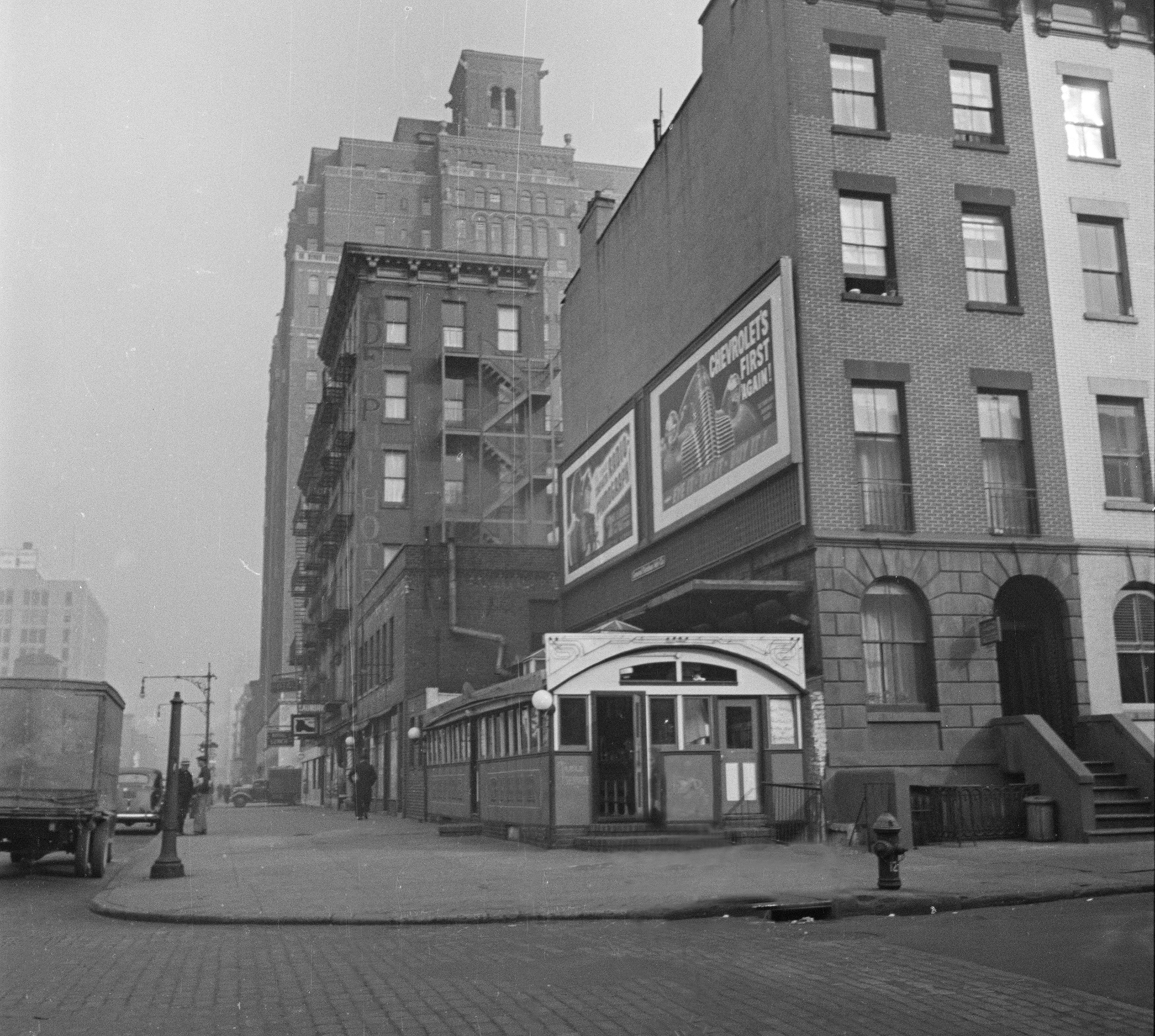
Constructed by the Fodero Dining Car Company in 1946, Empire operated as a blue-collar diner until the early 1970s when it was abandoned. A few years later, the chrome diner car was bought by a group of New York restaurateurs who were developing upscale eateries with old-school charm. The diner was then cleaned up and refurbished —which included the addition of a miniature Empire State Building on its roof— before opening its doors in February of 1976.
The Empire quickly became a city fixture for all types of nocturnal foodies, described by the management as a place for “Chelsea residents, actors, police commissioners, athletes, gangsters…and anyone carrying a New York City Guide Book” It was also frequented by such luminaries as Meryl Streep, Josh Brolin, Minnie Driver, Ethan Hawke, Madonna, Julia Roberts, Barbra Streisand, and Steven Spielberg. And according to his autobiography, singer Bruce Springsteen proposed to his girlfriend Patti Scialfa on a bench outside the chrome dining car.
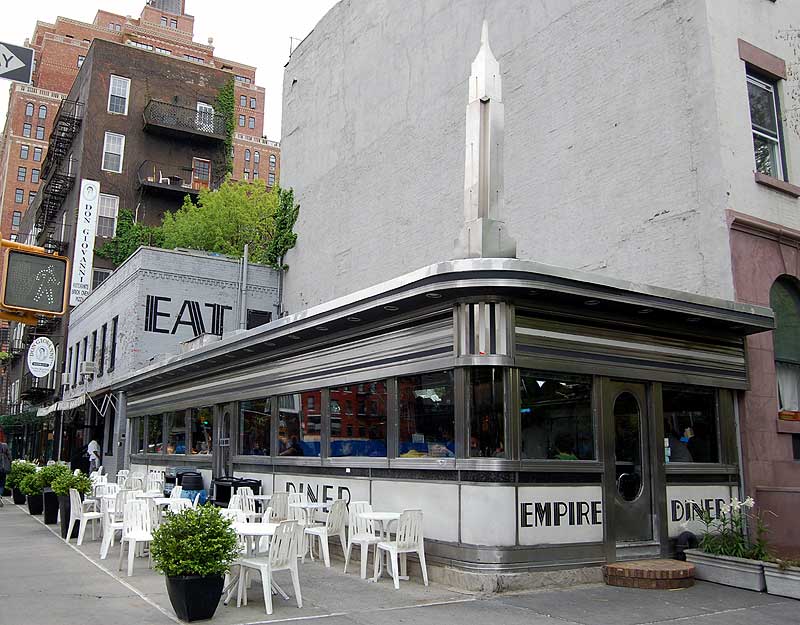
In 2010, the Empire closed after the operators were unable to renew their lease with the landlord, whose family owned the property since the 1930s. After briefly being occupied by the poorly-reviewed Highliner restaurant, Empire Diner re-opened in 2014 and as of his writing, is still in business.
In addition to Home Alone 2, this corner restaurant has been featured in a bunch of other productions, such as the 1973 musical, Godspell, an episode of Kojak, Woody Allen’s 1979 masterpiece, Manhattan, and 2002’s Men in Black II. It also briefly appeared in the opening credits to the ill-fated season 11 of Saturday Night Live.
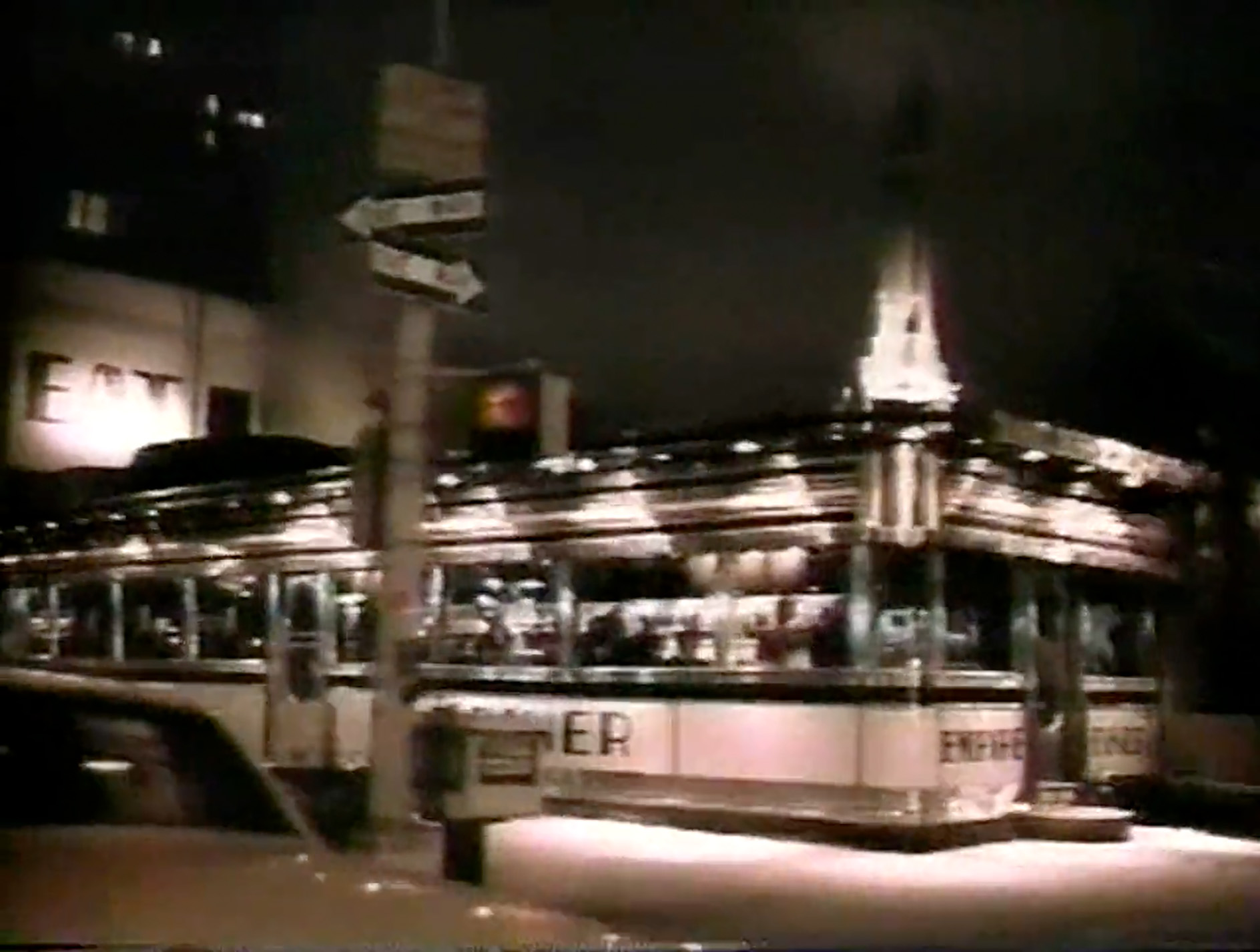
After getting a flyer from a Santa on stilts, Kevin (presumably) walks all the way to Chinatown to buy some illegal fireworks. (I did the same walk just the other day, but took a two hour break in the West Village along the way.)

As I mentioned above, the Chinatown location was found thanks to the signage above the storefront, identifying it as Quong Yuen Shing & Co, which was one of the longest continuously operating stores in NYC’s Chinatown.
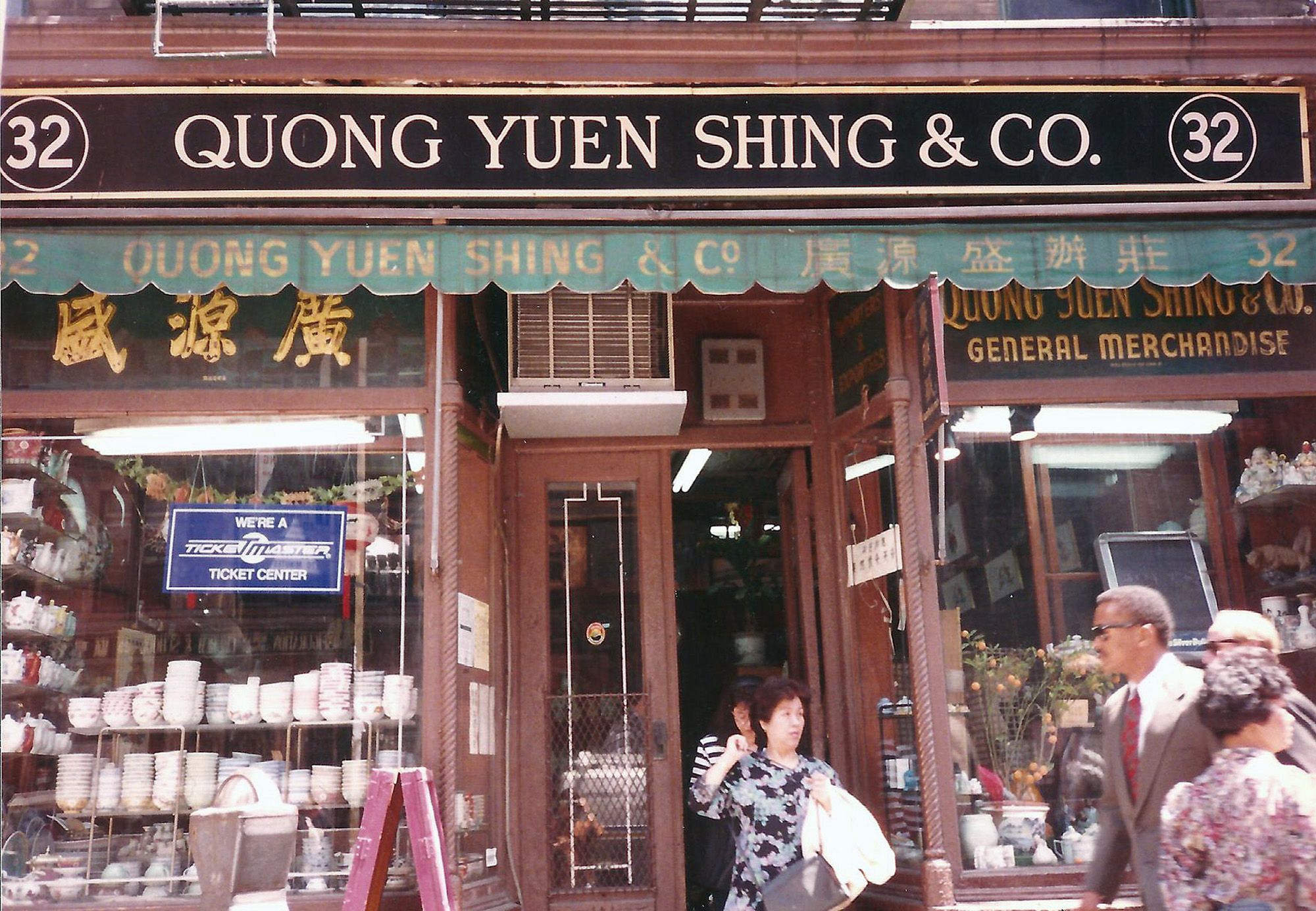
Also known as the 32 Mott Street General Store, Quong Yuen Shing & Co was founded in 1891, selling typical goods like herbs, groceries, and silks, while also functioning as a community post office and banking center for the Chinese population. Even though the products sold and the community functions changed over the decades, the store’s interior remained largely the same, making it a valuable historical artifact from the 19th century.
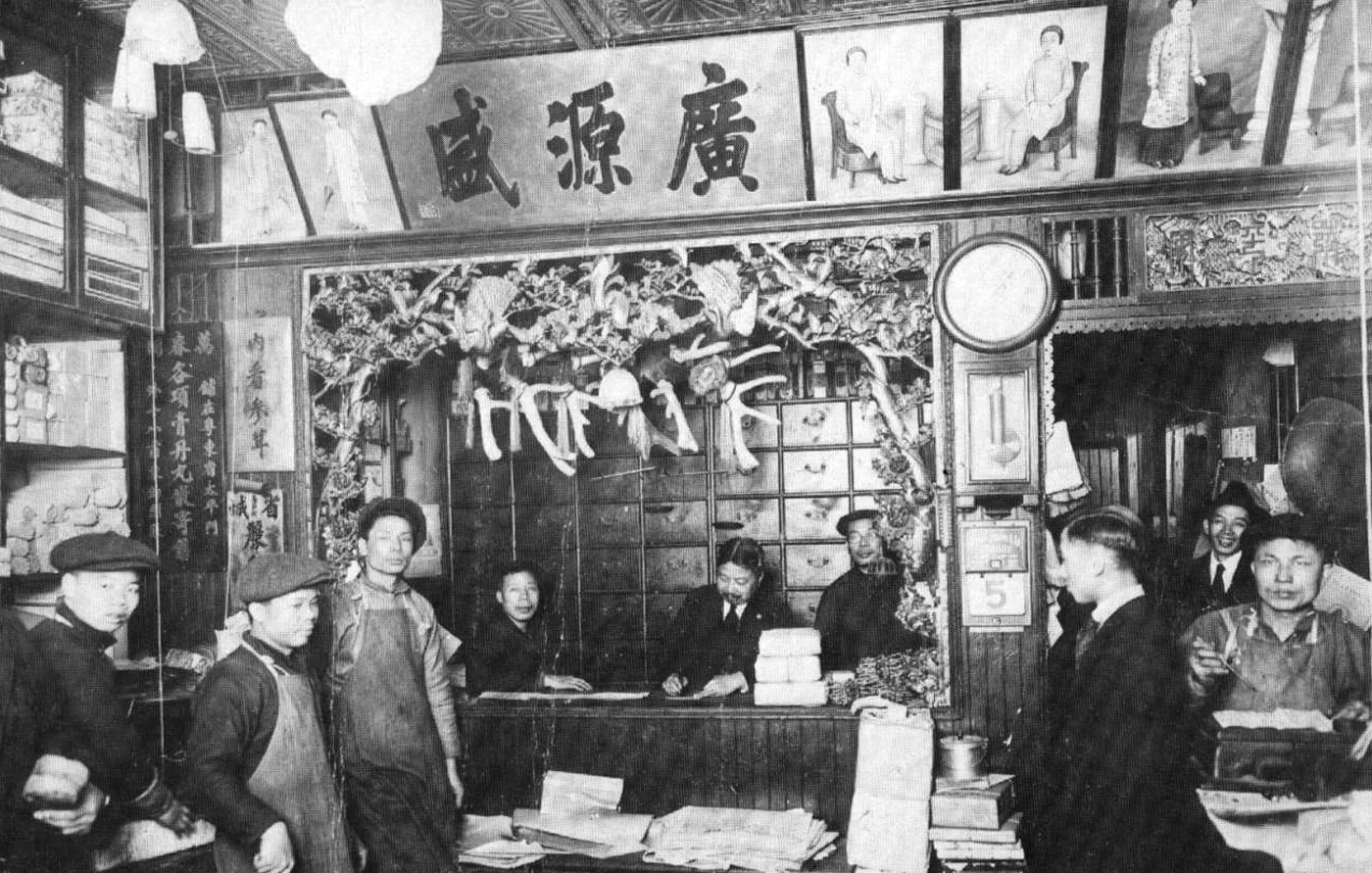
After 9/11, with Chinatown being so close to ground zero, many local businesses like Quong Yuen Shing began to fail. By 2003, owner Paul JQ Lee (grandson of the founder Lee Lok) was forced to close the family store after being served an eviction notice by marshals. After that, 32 Mott Street became a souvenir shop, managing to retain some of the original store’s cabinetry and shelves. But that business closed down around 2014 and the space has remained unused ever since.
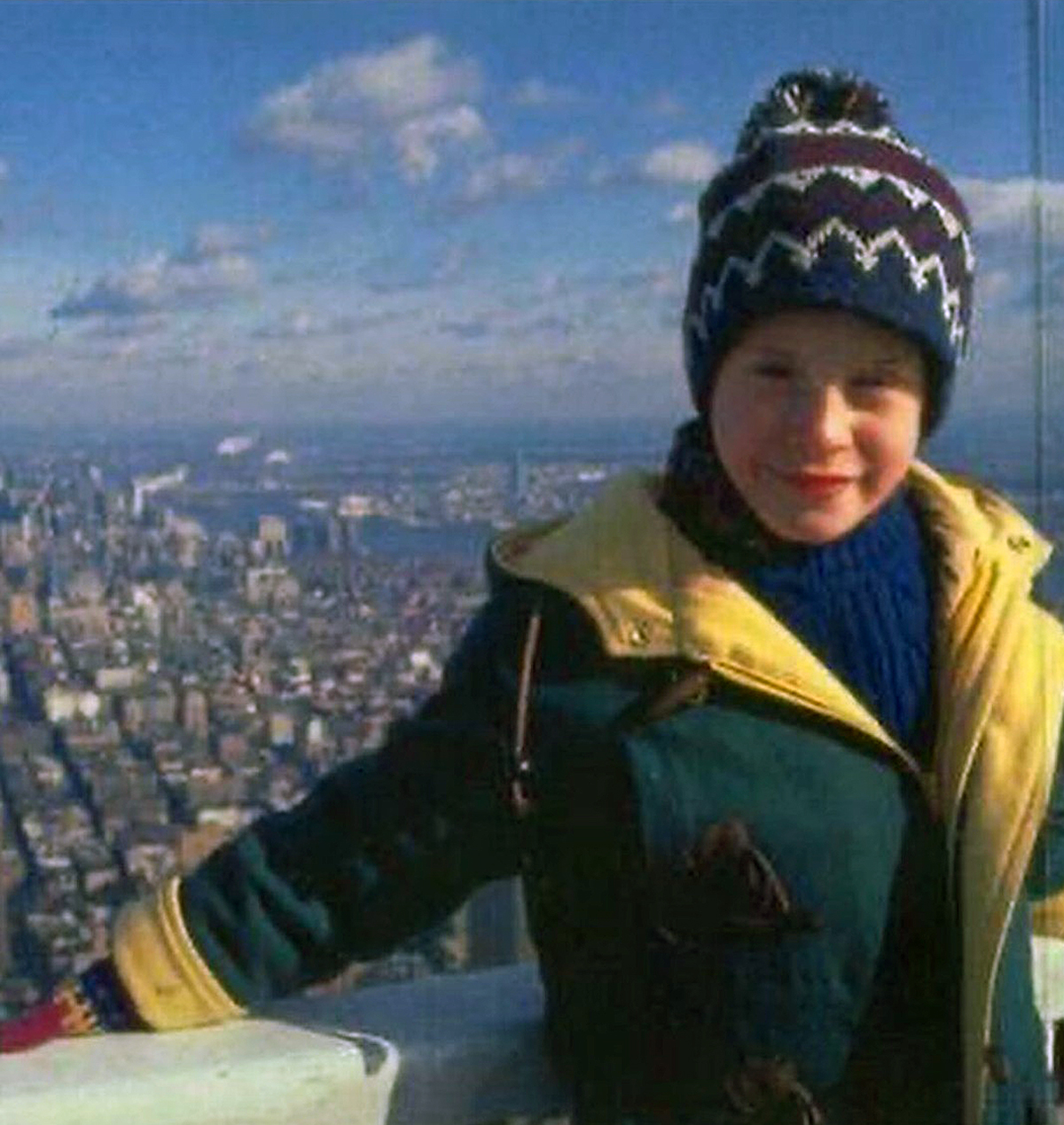
The last two spots Kevin checks out —Battery Park and the World Trade Center— are popular destinations for tourists, and both look different today from how they were in 1992. Obviously, the Twin Towers are no longer standing; and while the Statue of Liberty is still the same, Battery Park, where Kevin looks at the statue through some giant coin-operated binoculars, has been renovated quite bit since 1992.
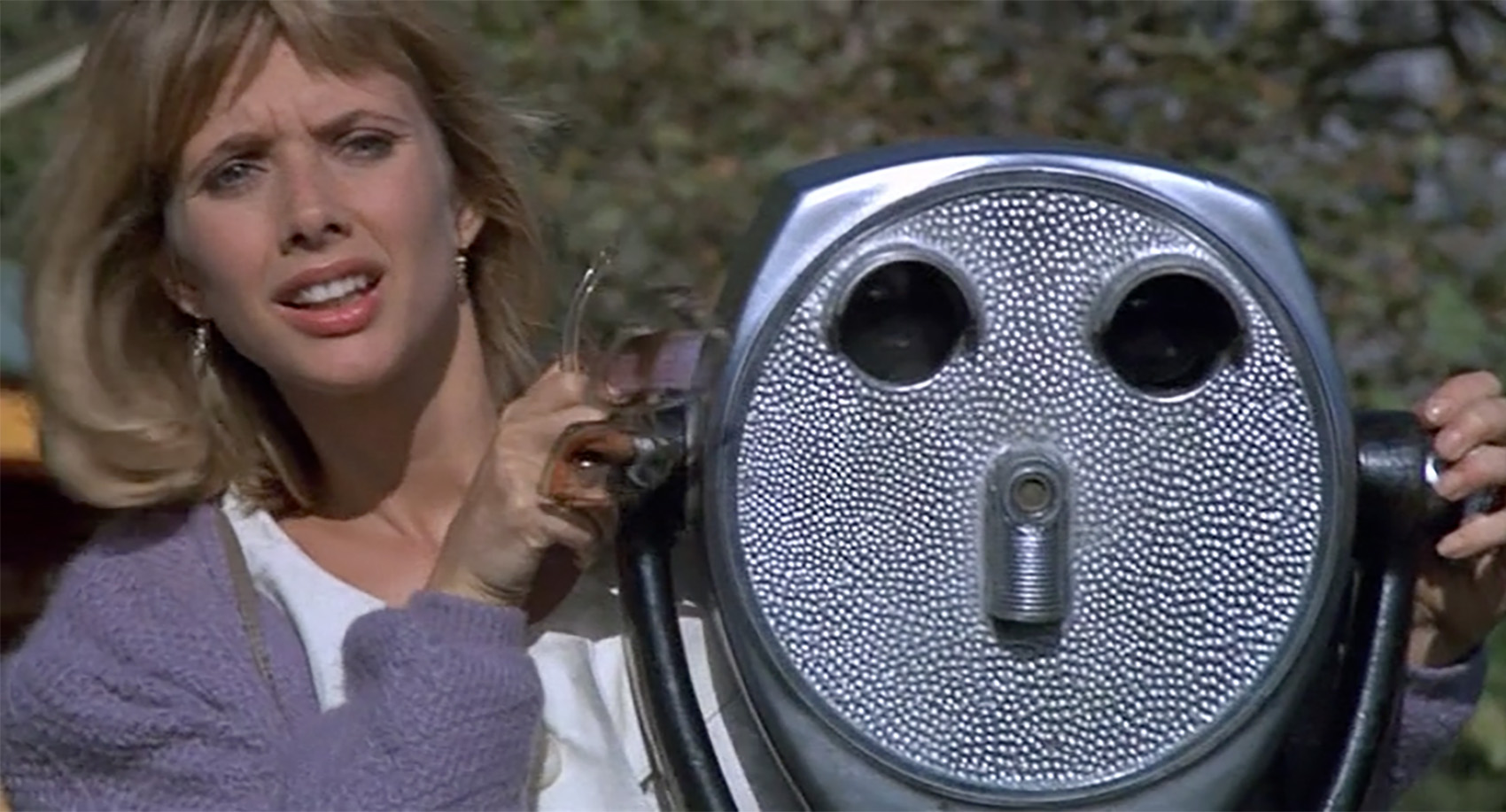
The railing has been replaced and those big, 25¢-per-view binoculars (also known as tower viewers) are long gone. Although, I’ll bet if they created a tower viewer that could be hooked up with your iPhone, it would be a popular item.
Fish Market

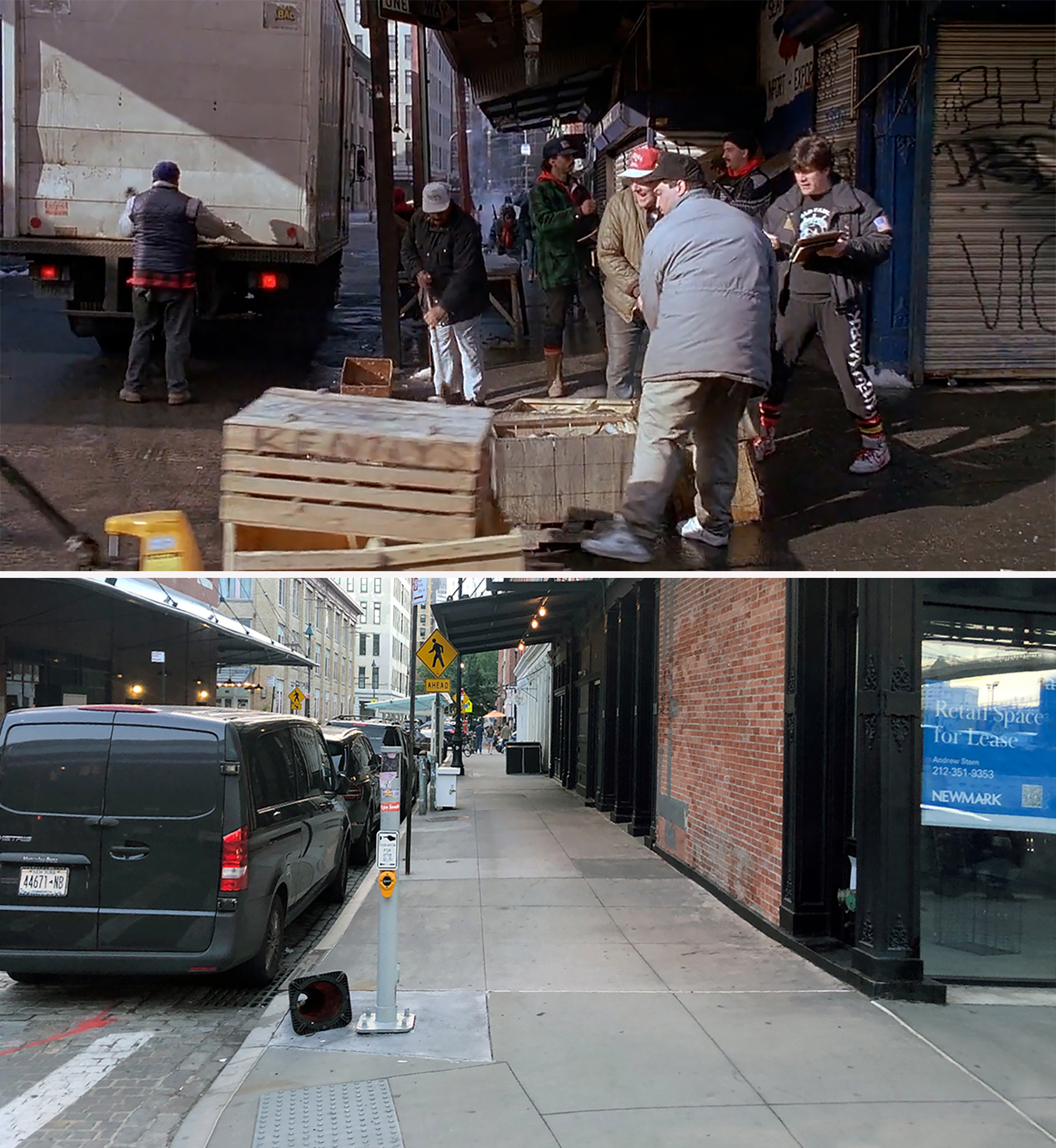
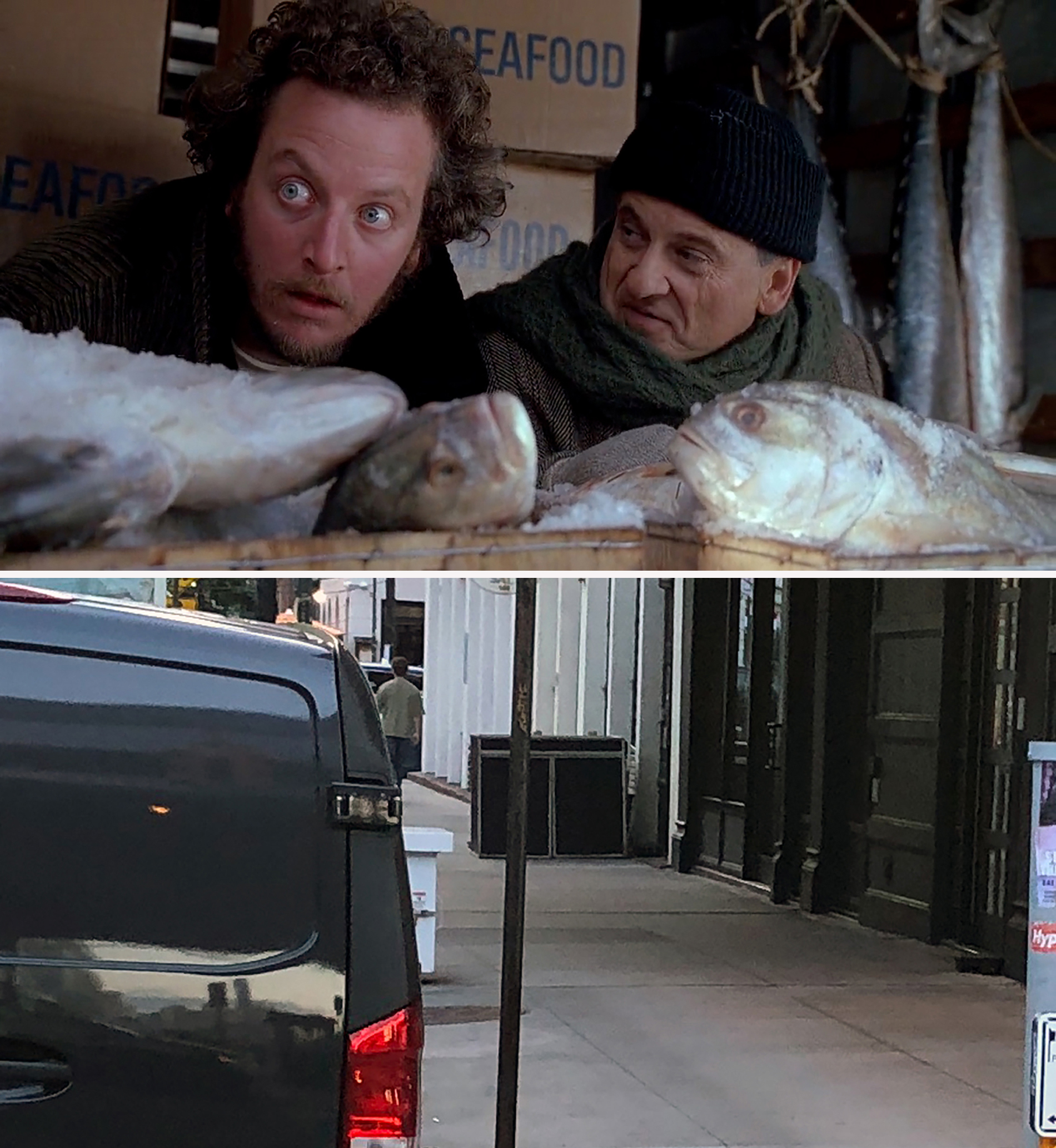
This is one of those locations that many websites gave a general identification to (namely, Fulton Fish Market) without giving specific details. The scene did take place near the Fulton Fish Market, but the action specifically took place across the street at 156 Beekman, a six-story tenement house dating back to 1823.
This fish market area can also be seen in the 1950 noir picture, Side Street.
Exiting the Subway
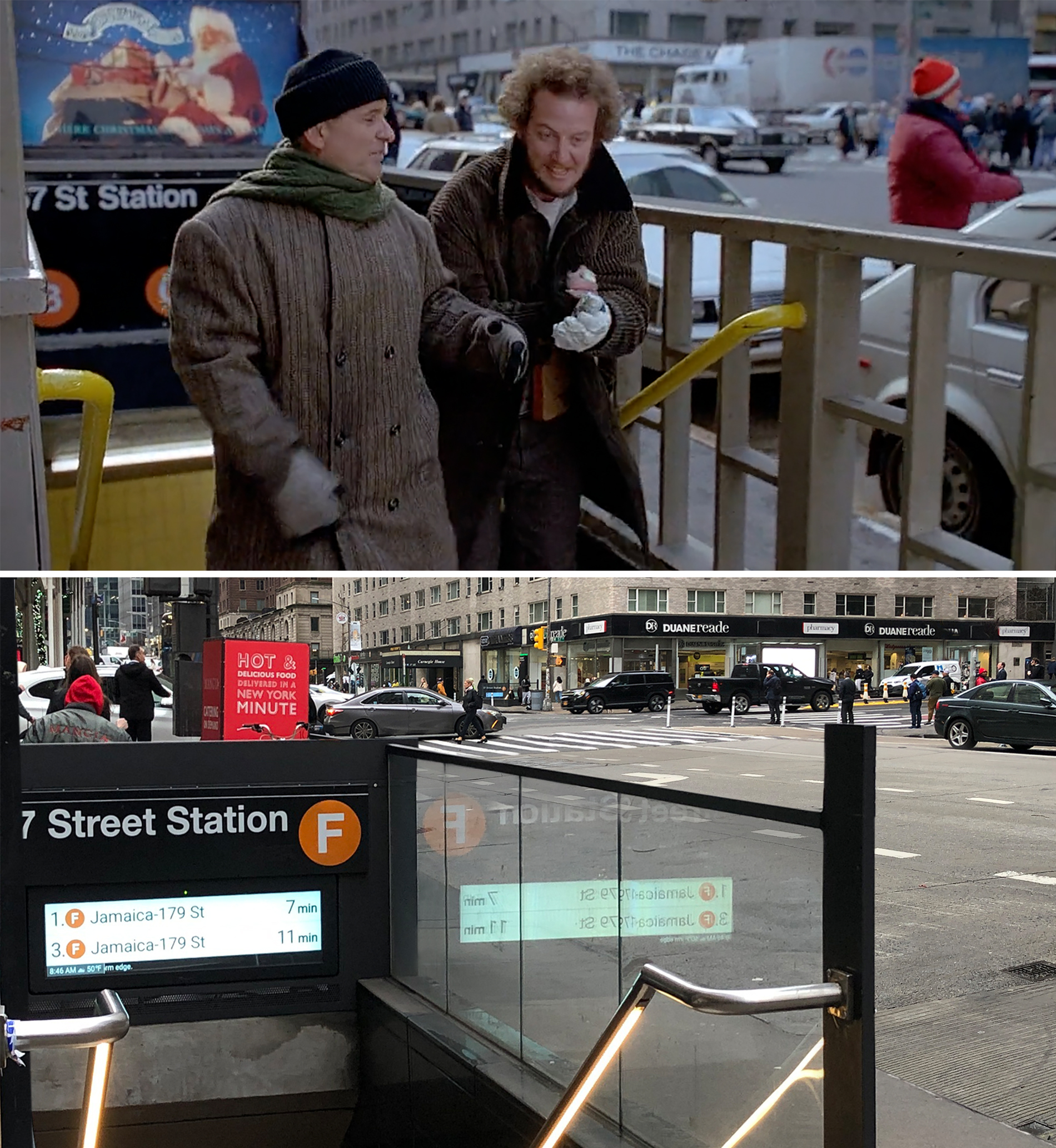
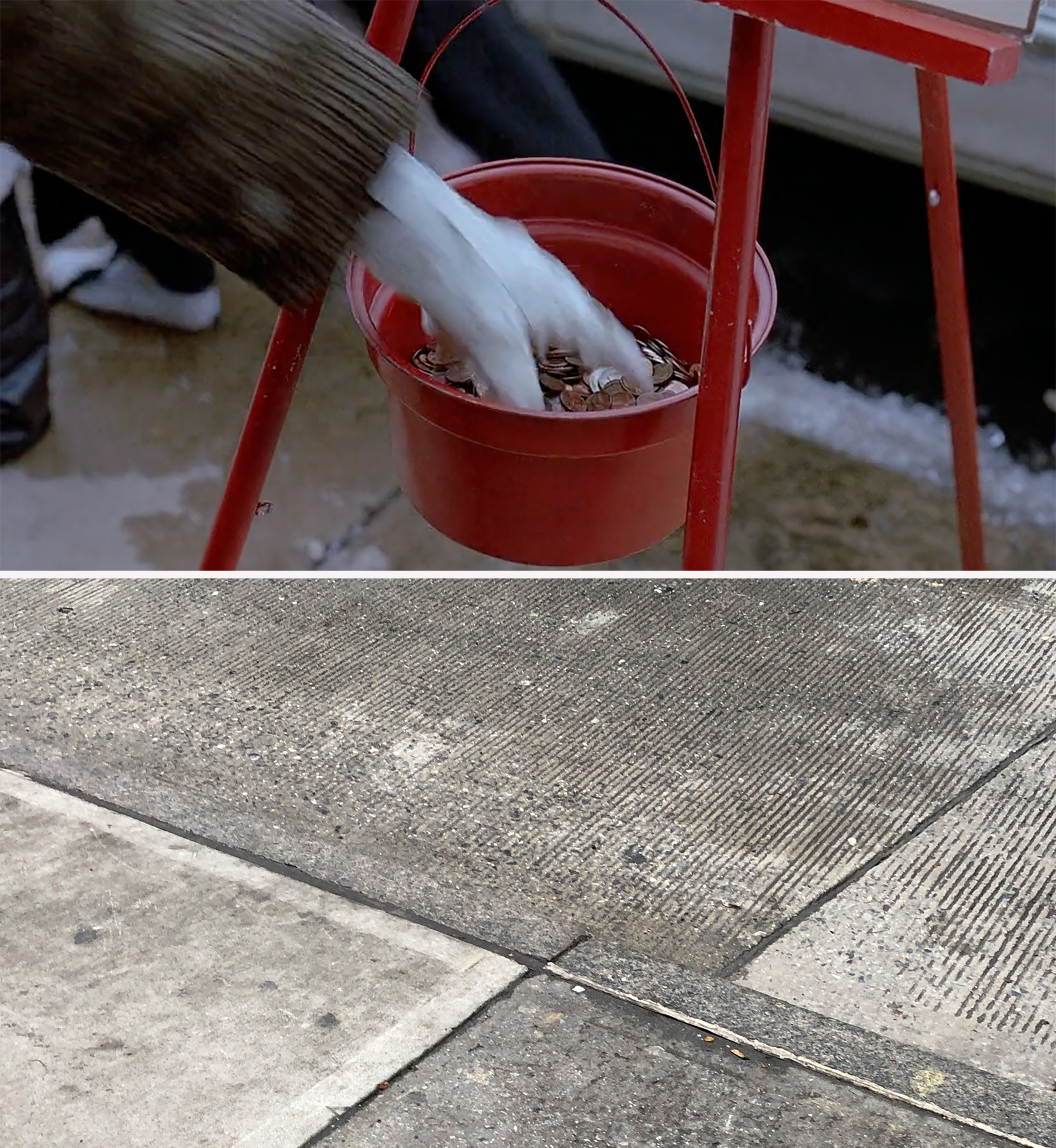
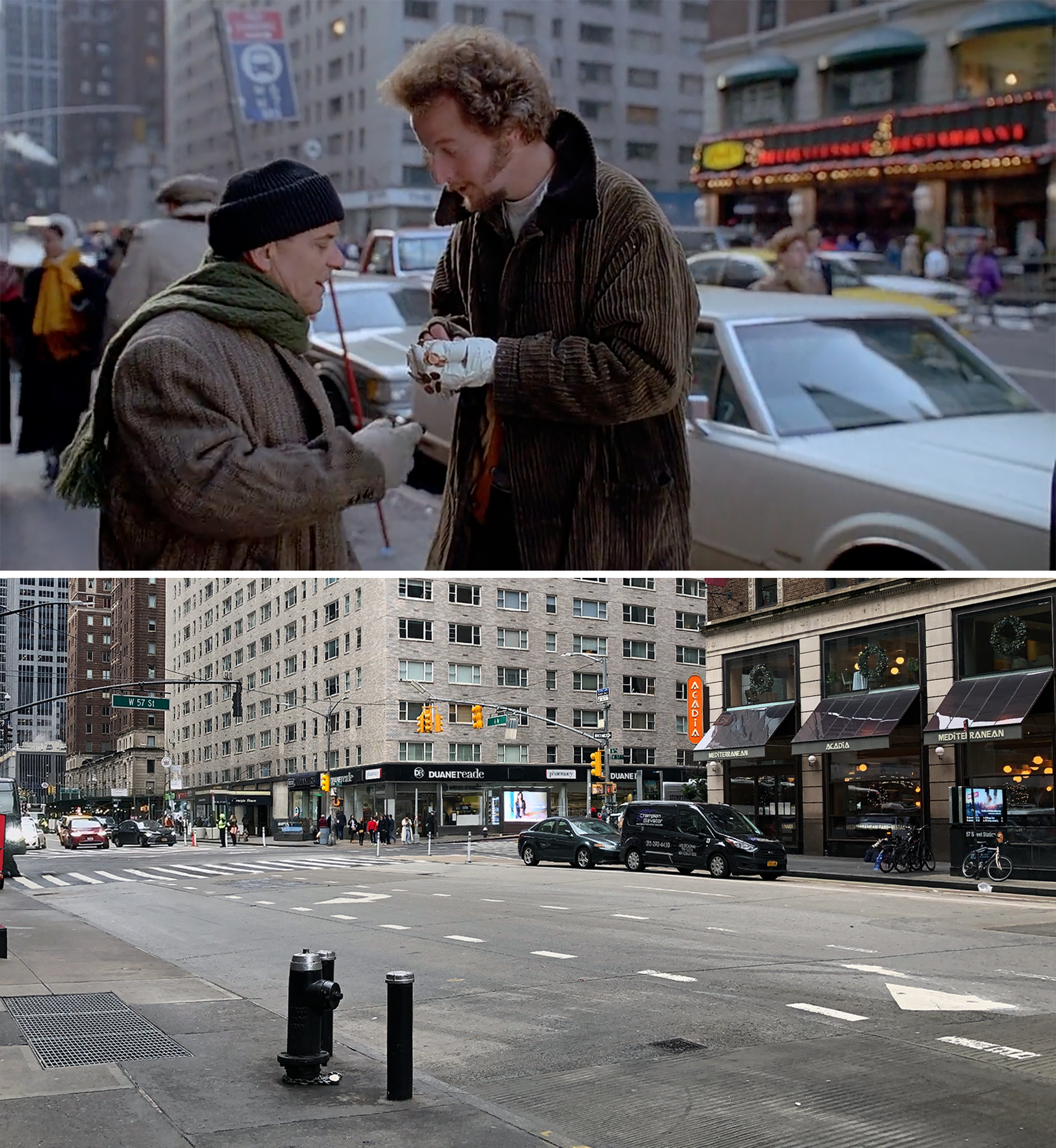
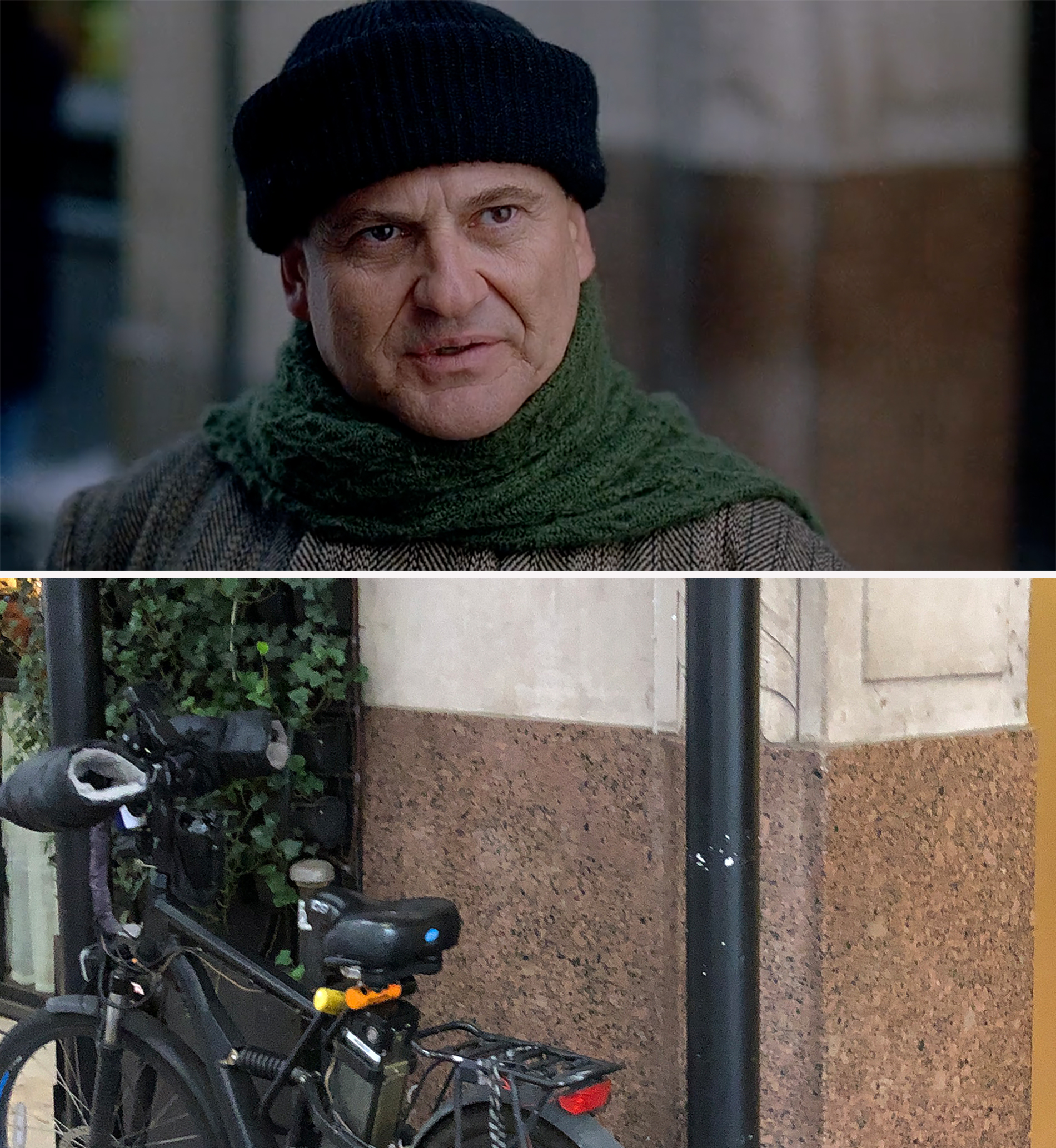
Not much to say about how this location was found since it takes place outside a clearly marked subway entrance.
The entrance has since been updated and the station below has also been given a makeover. But most of the buildings surrounding the two actors look about how they did in the 1990s.
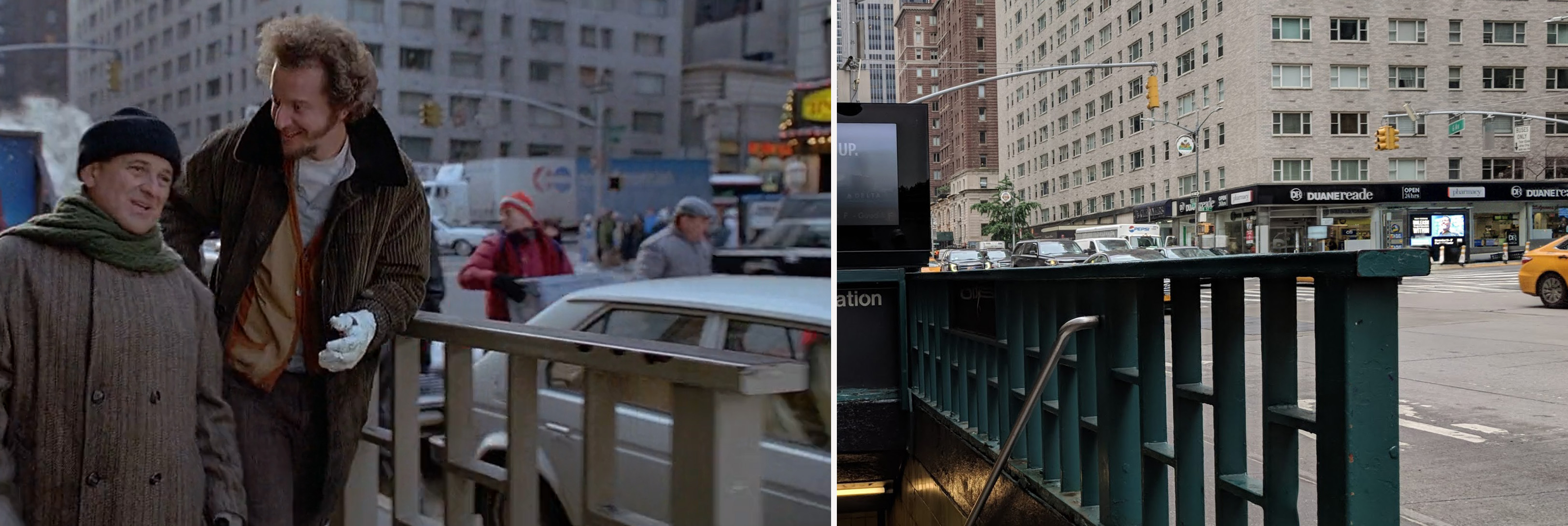
When I went to this spot about a month ago to take the modern pictures, I was disappointed to see that scaffolding was covering the entire sidewalk area used in the film, making for a lousy composition. But luckily enough, just a week ago, as I was walking up Sixth Avenue, I noticed all the scaffolding was gone. So I quickly pulled out my camera and grabbed some new (superior) shots.
It was a delightful, unexpected Christmas gift.
The Pigeon Lady
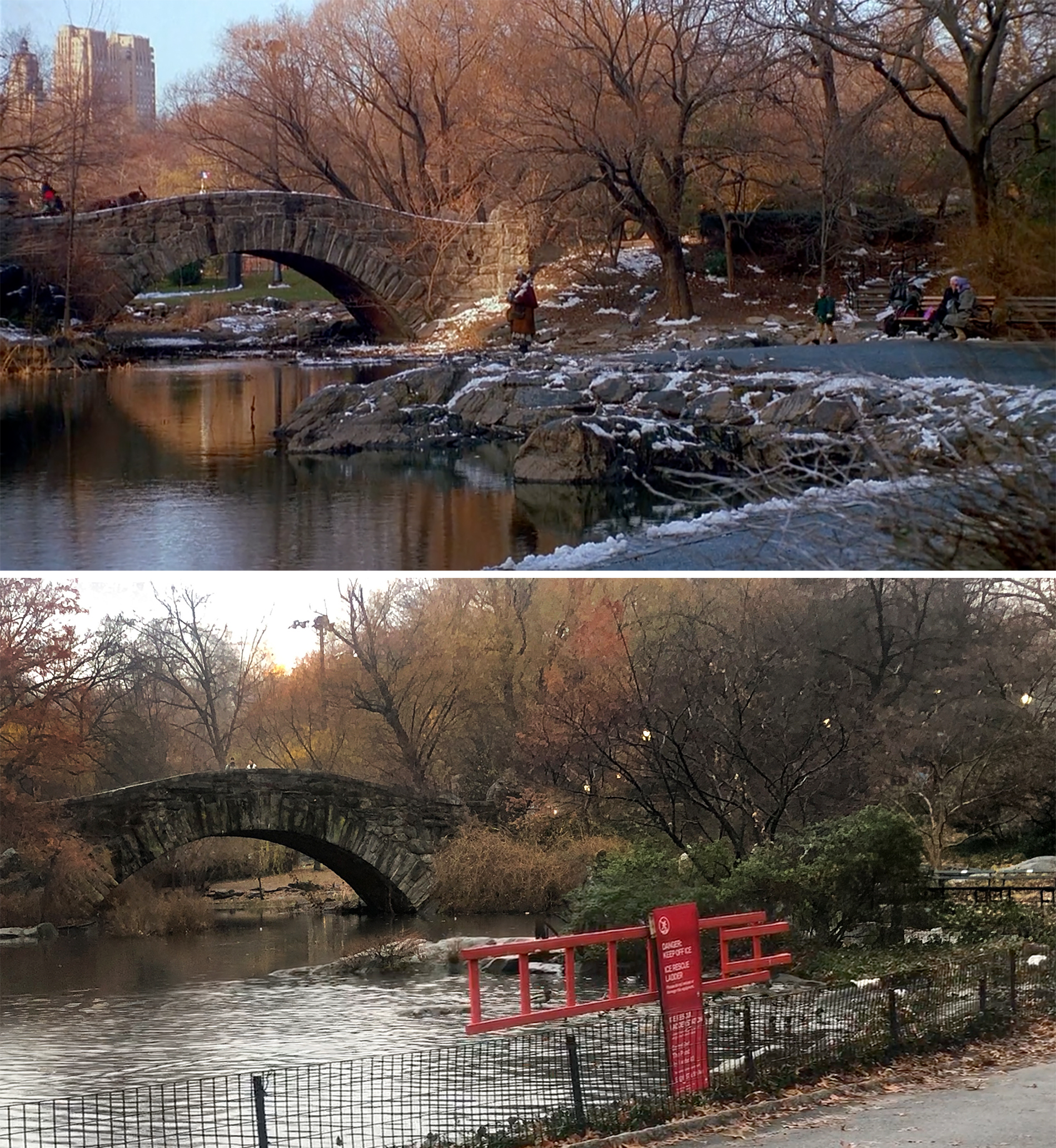
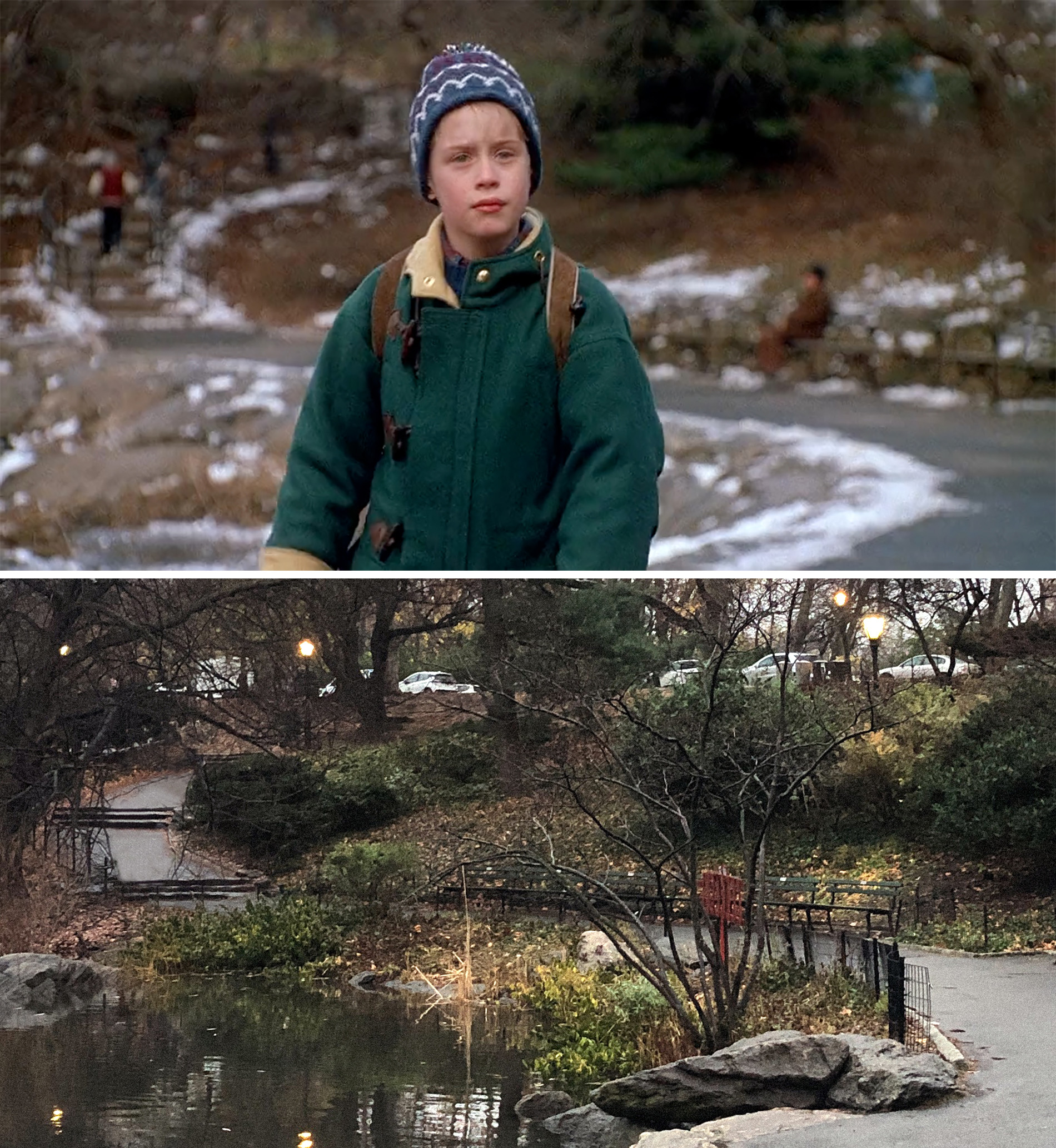
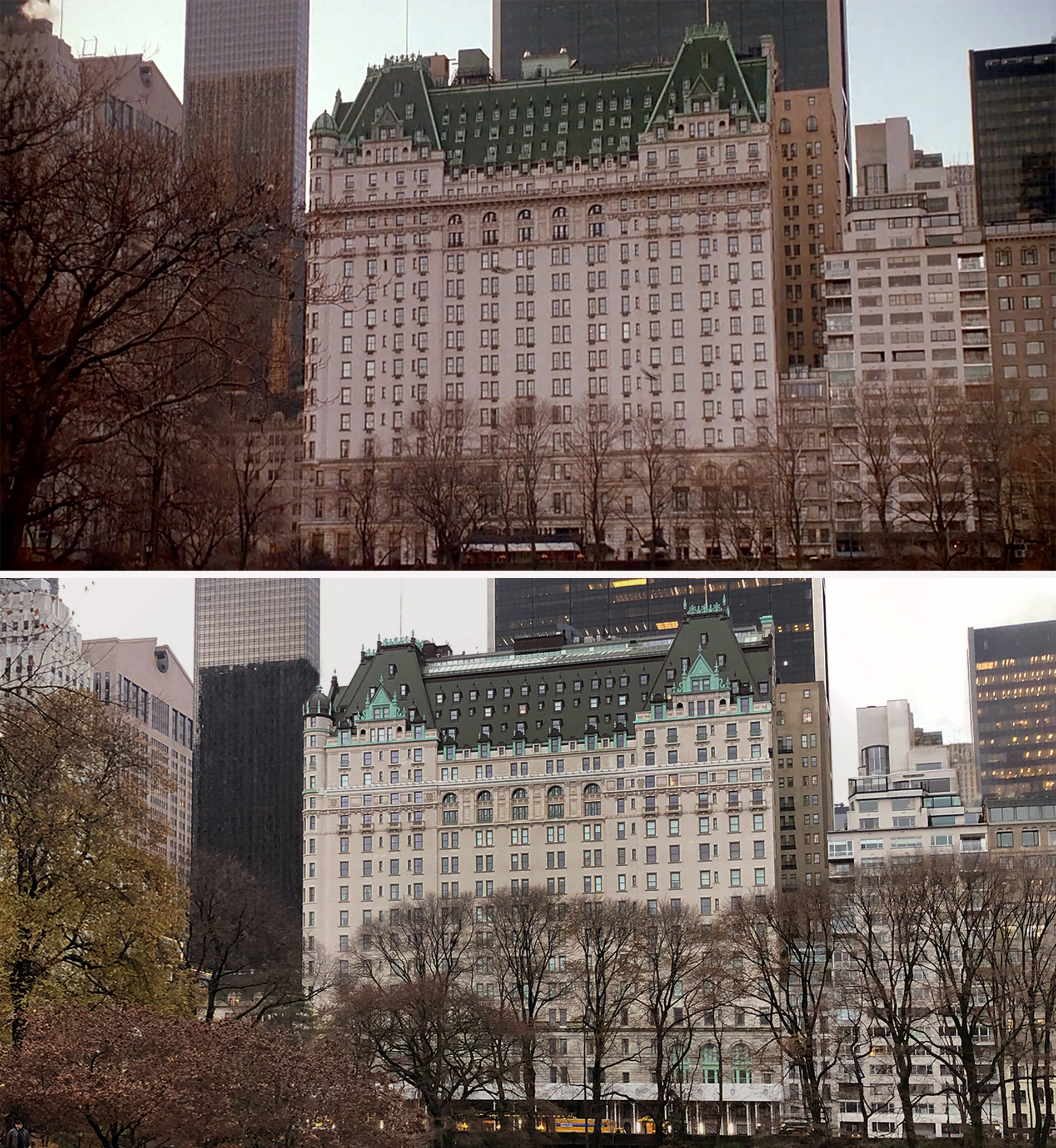
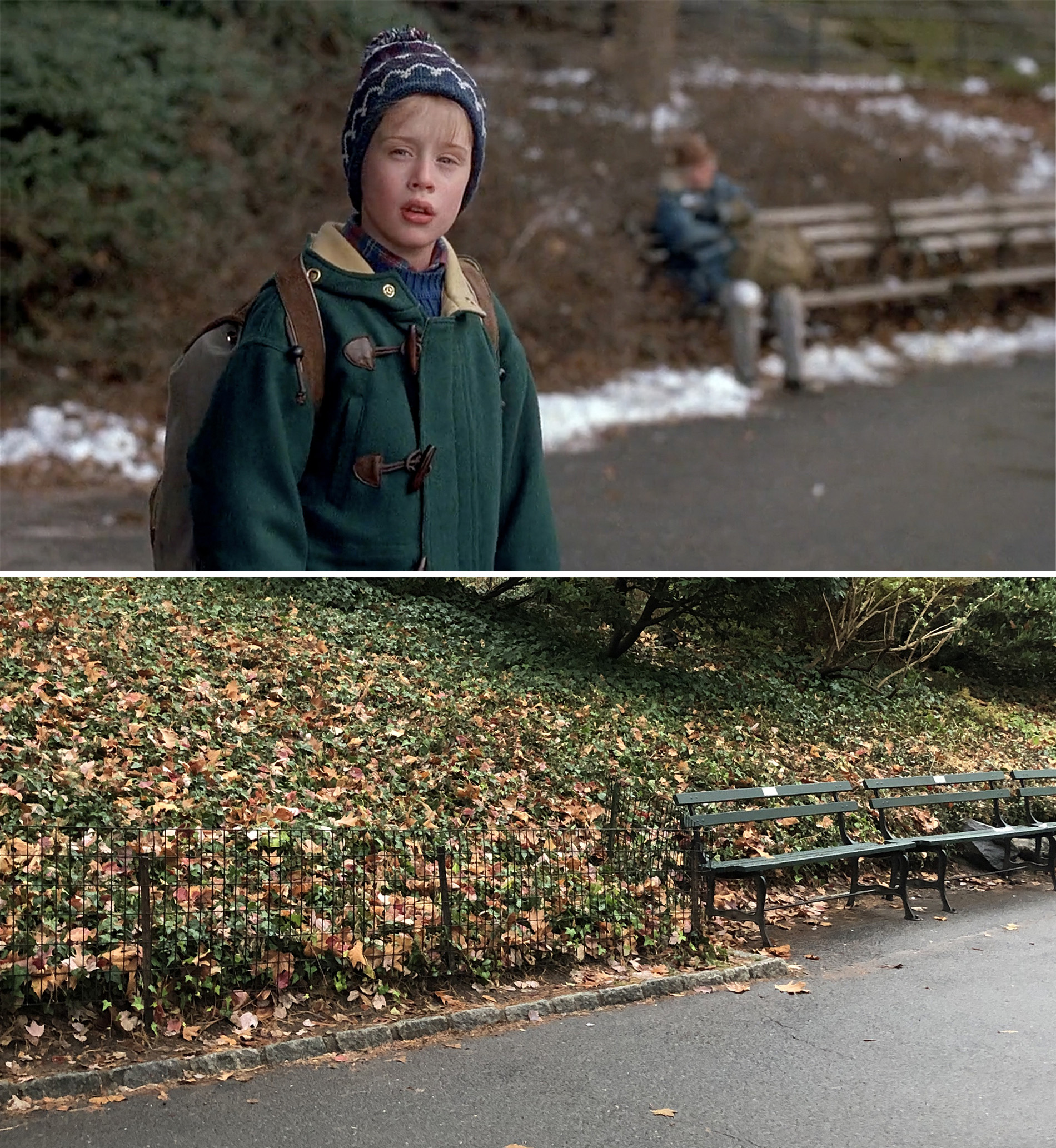

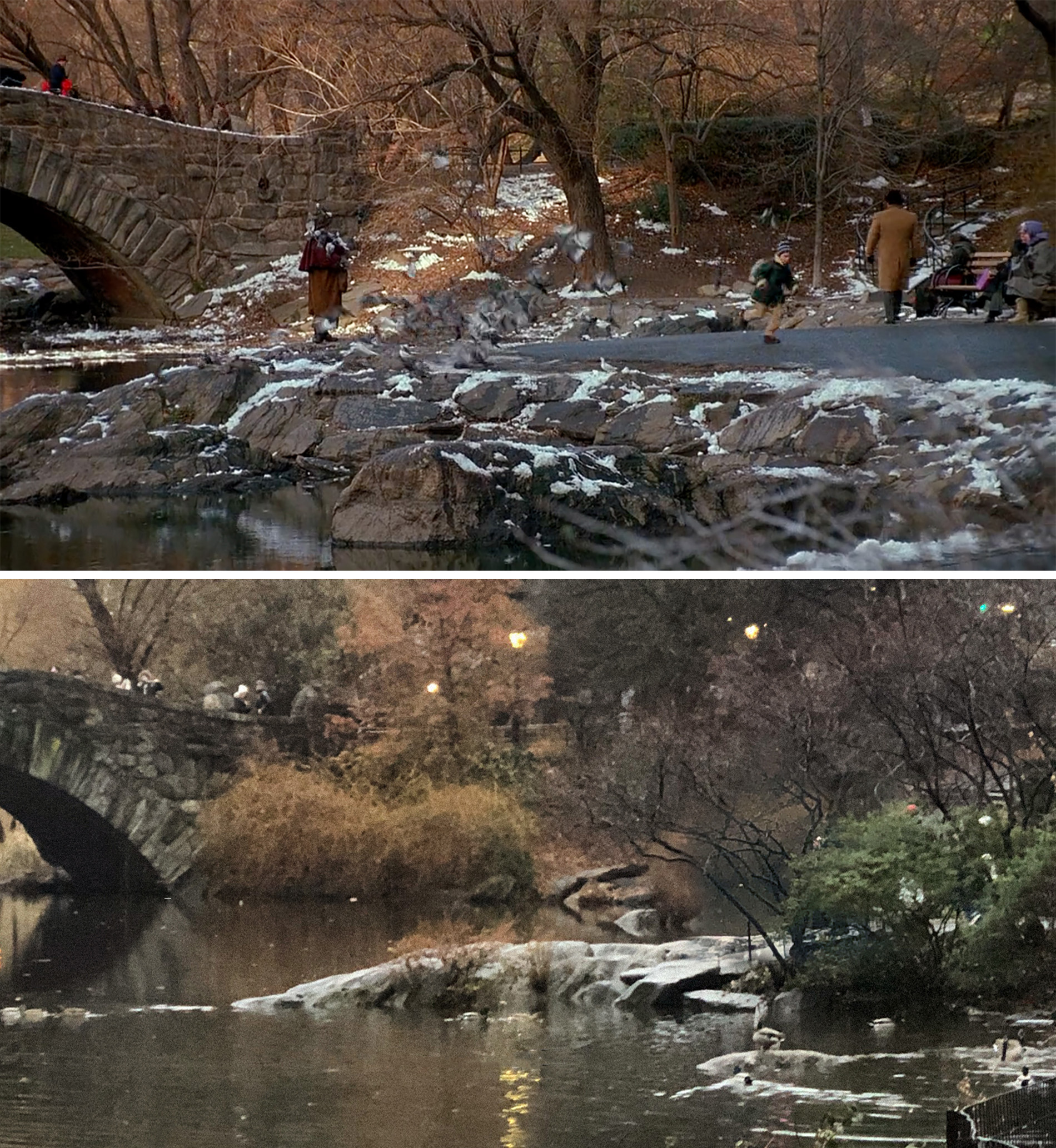
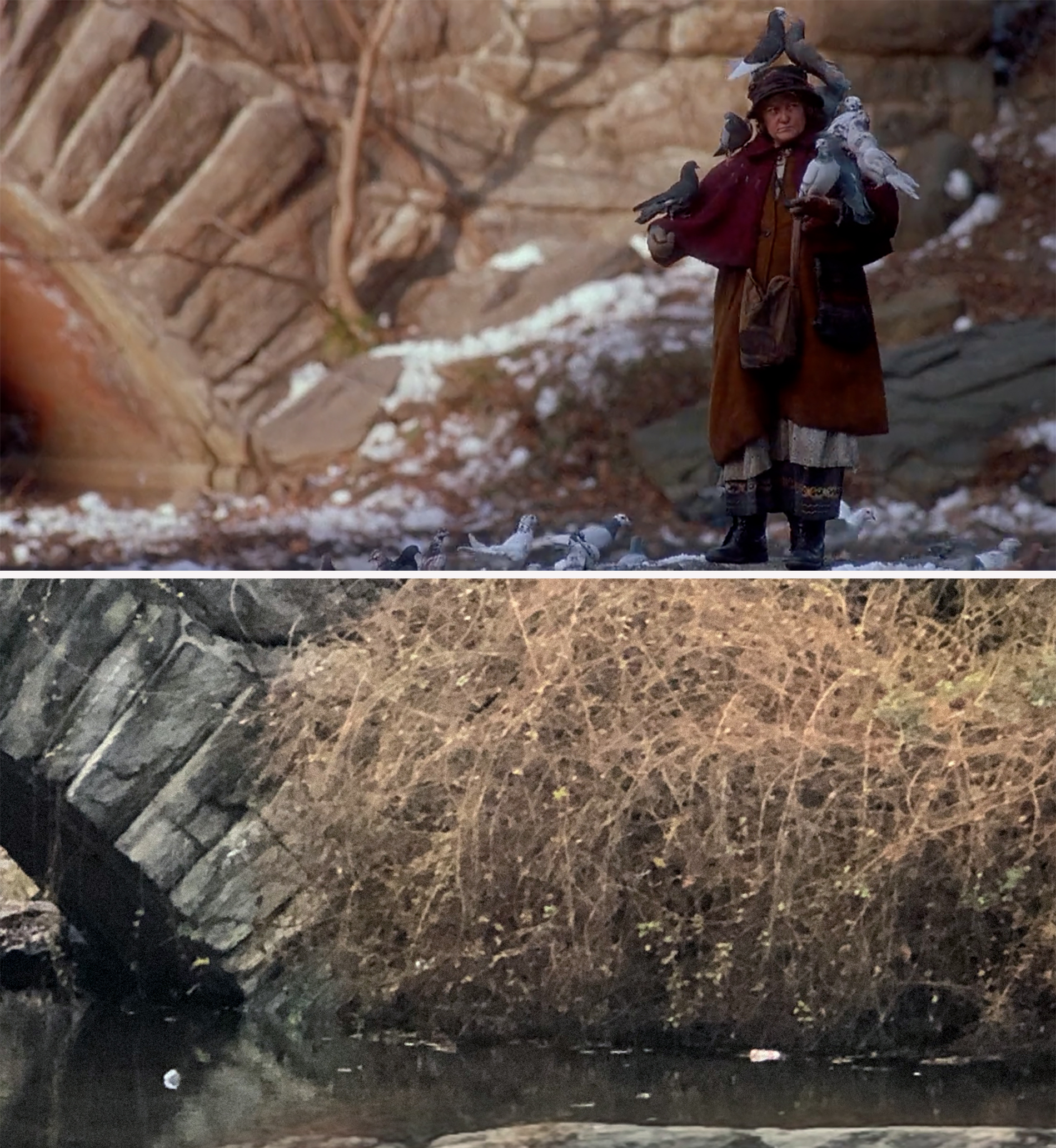
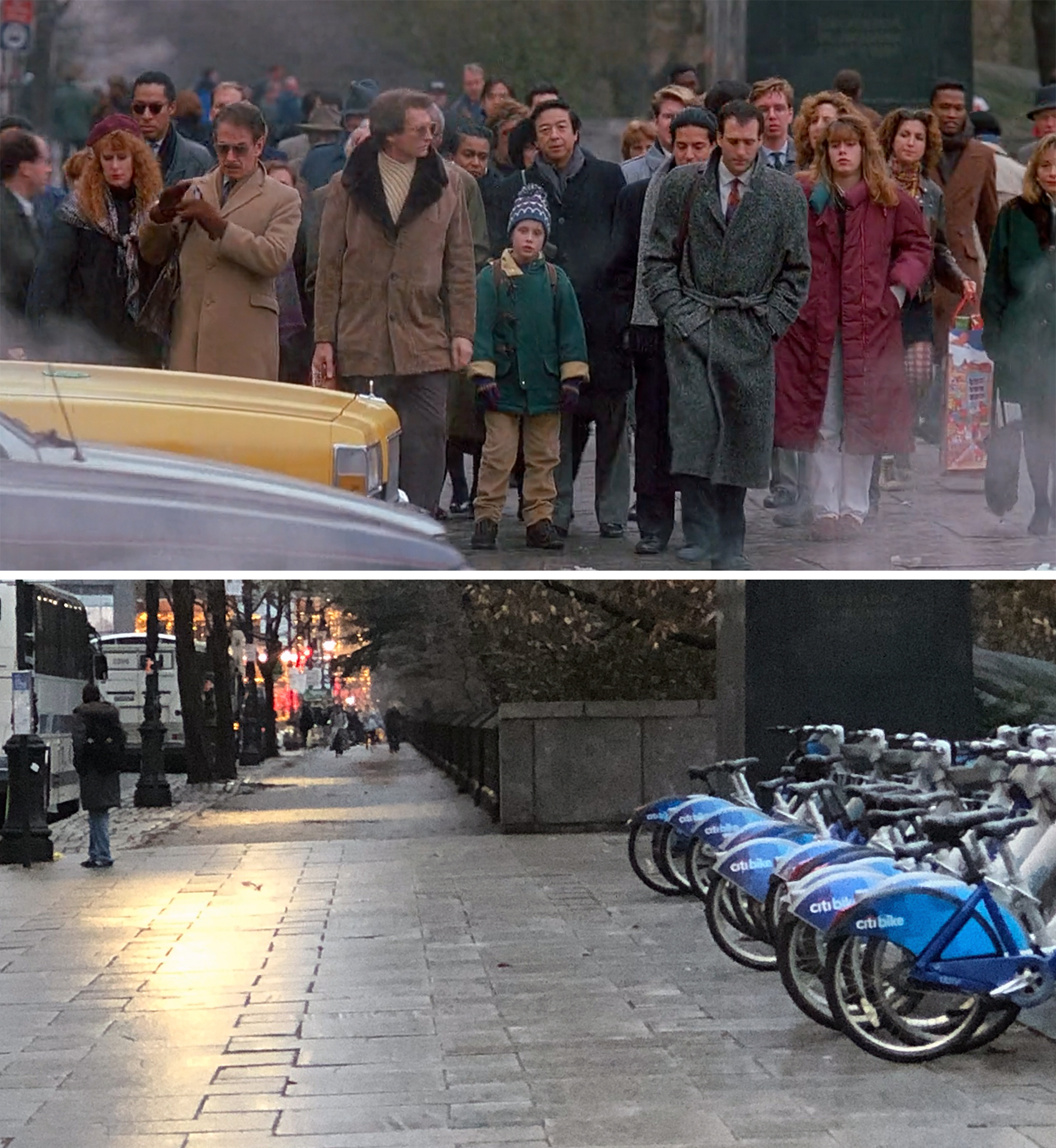
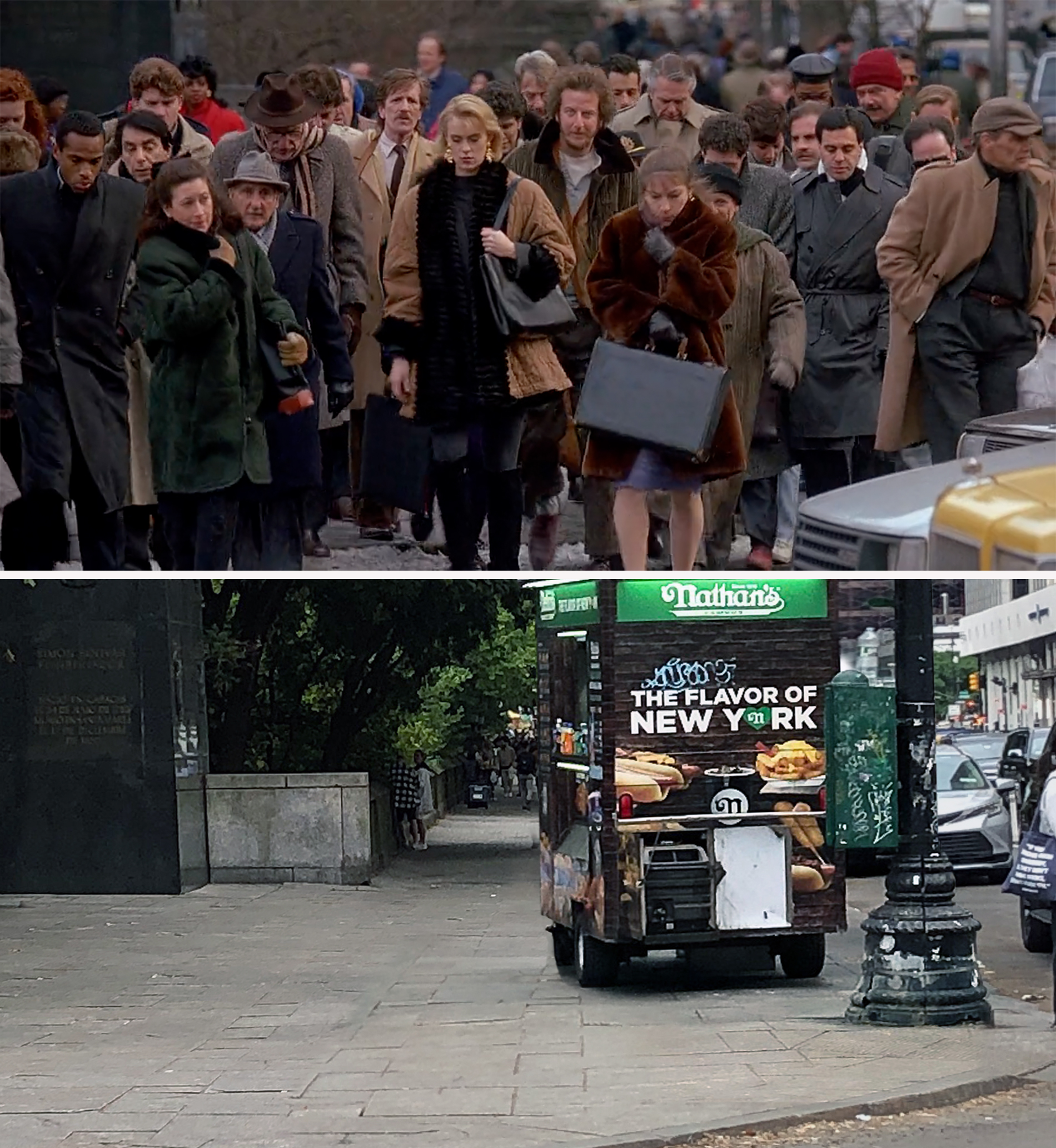
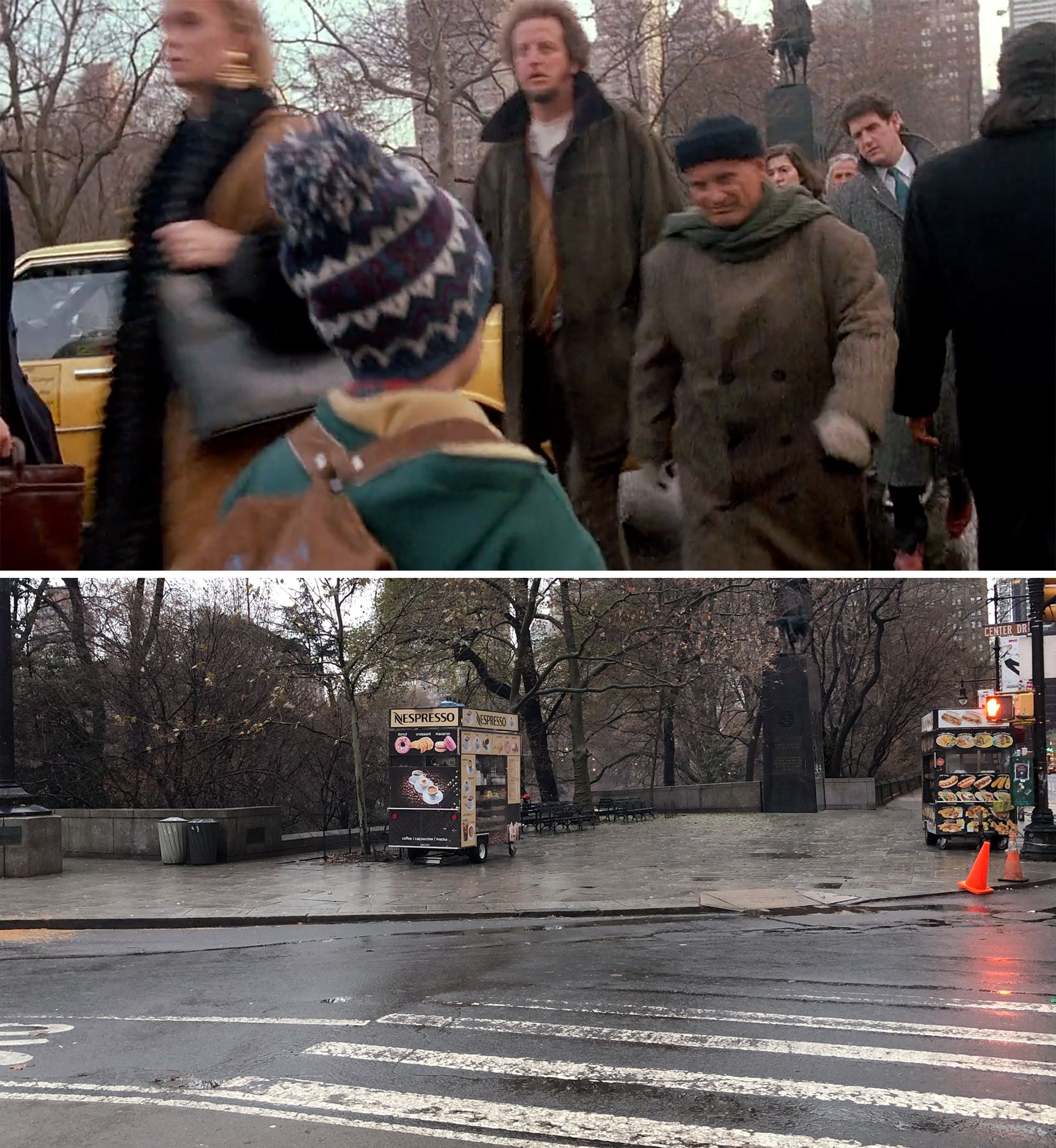
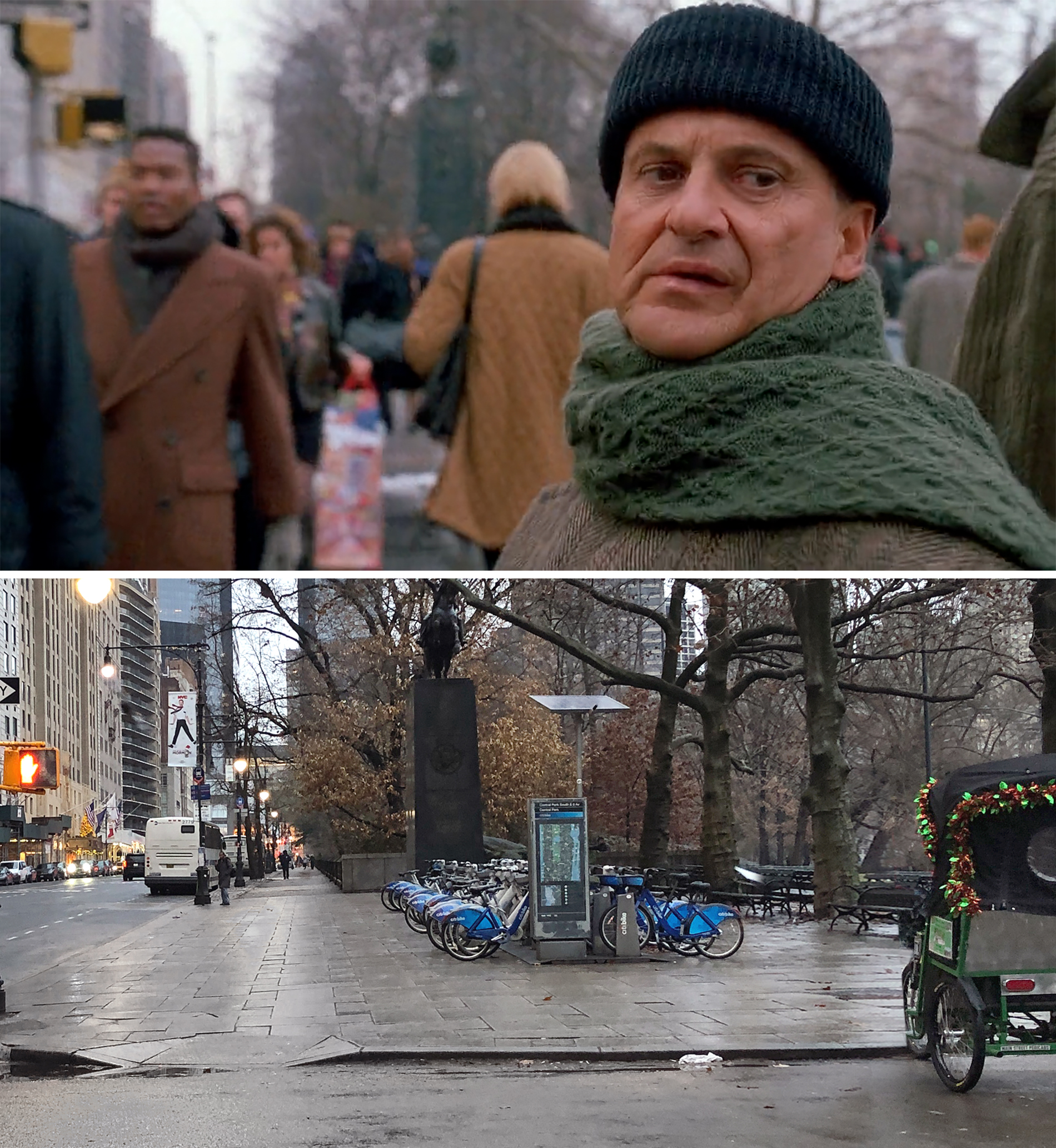
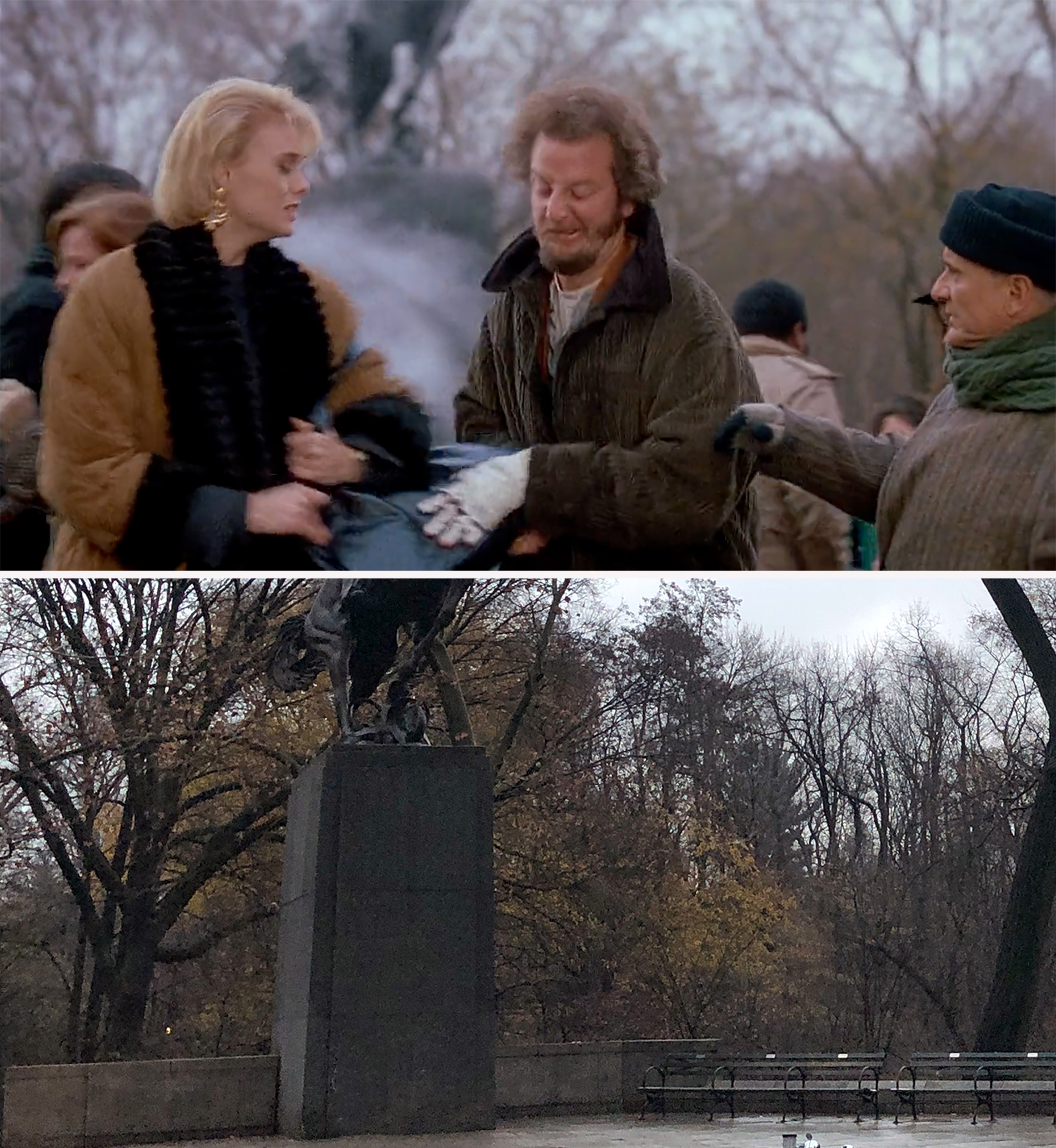
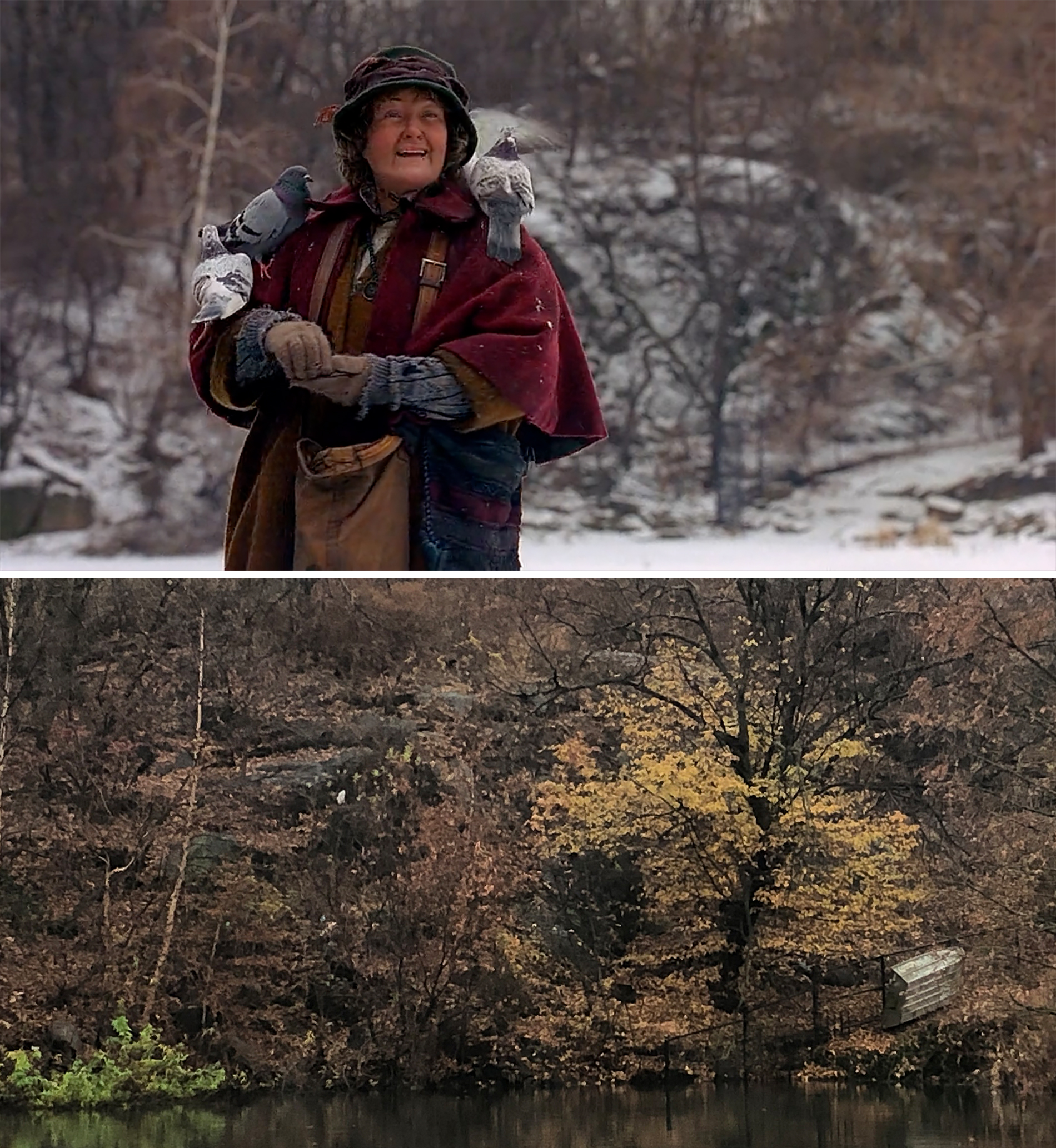
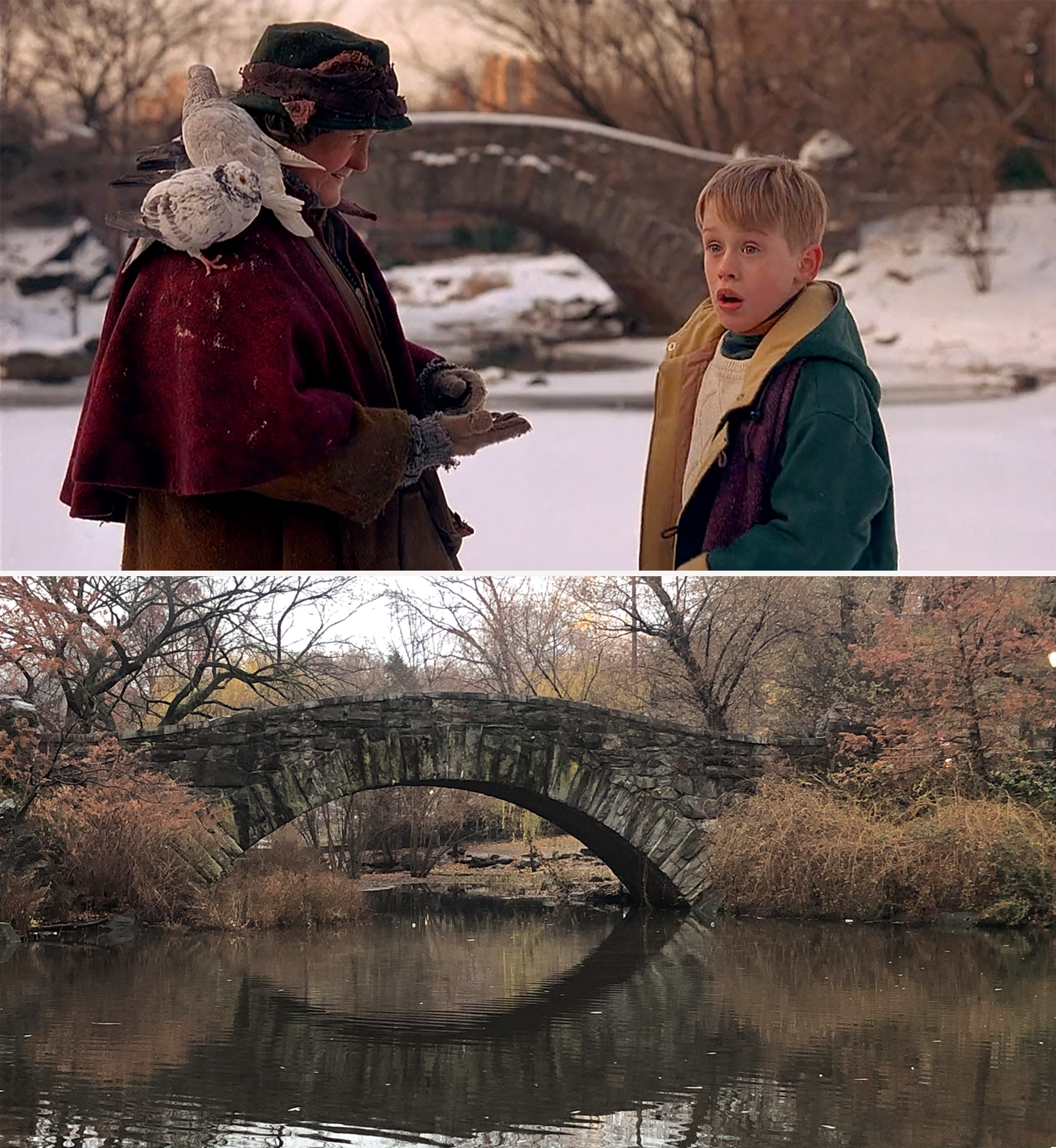
This and the Plaza Hotel are probably the most well-known locations from this movie. I’ve seen a ton of photos online of Home Alone fans posing in front of the rustic Gapstow Bridge.
While not one of the original 27 bridge and arches designed by Calvert Vaux, the Gapstow Bridge is still quite old, dating back to 1896. It replaced a more elaborate suspension-like bridge that used to sit on that narrow neck of the Pond.

This older bridge was built in 1874 to help control the increased foot traffic in the park. But it was made of wood and cast-iron elements that ultimately deteriorated, causing it to be replaced about twenty years later with the stone bridge that’s there today.
Crossing Paths

Plaza Hotel
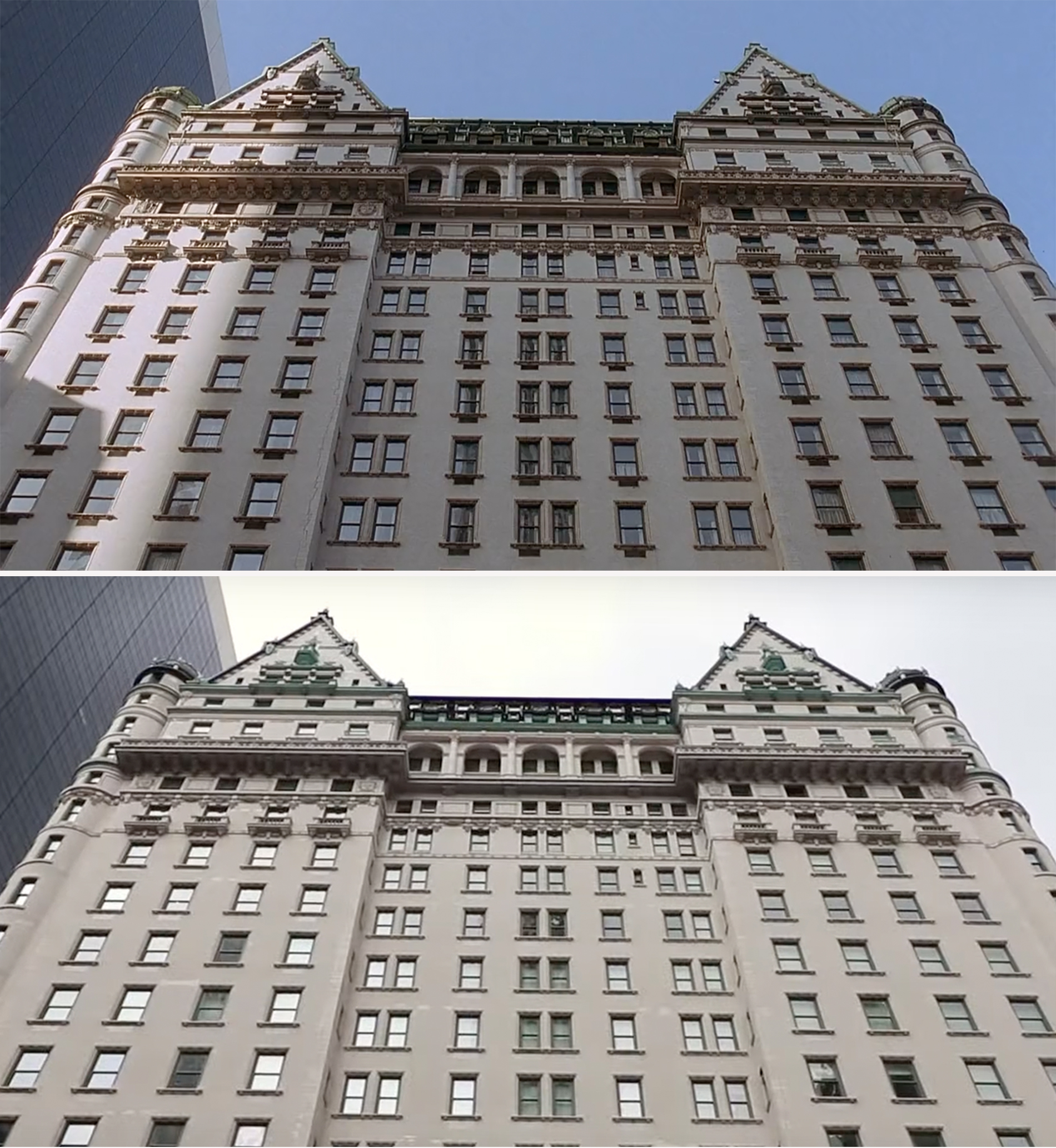
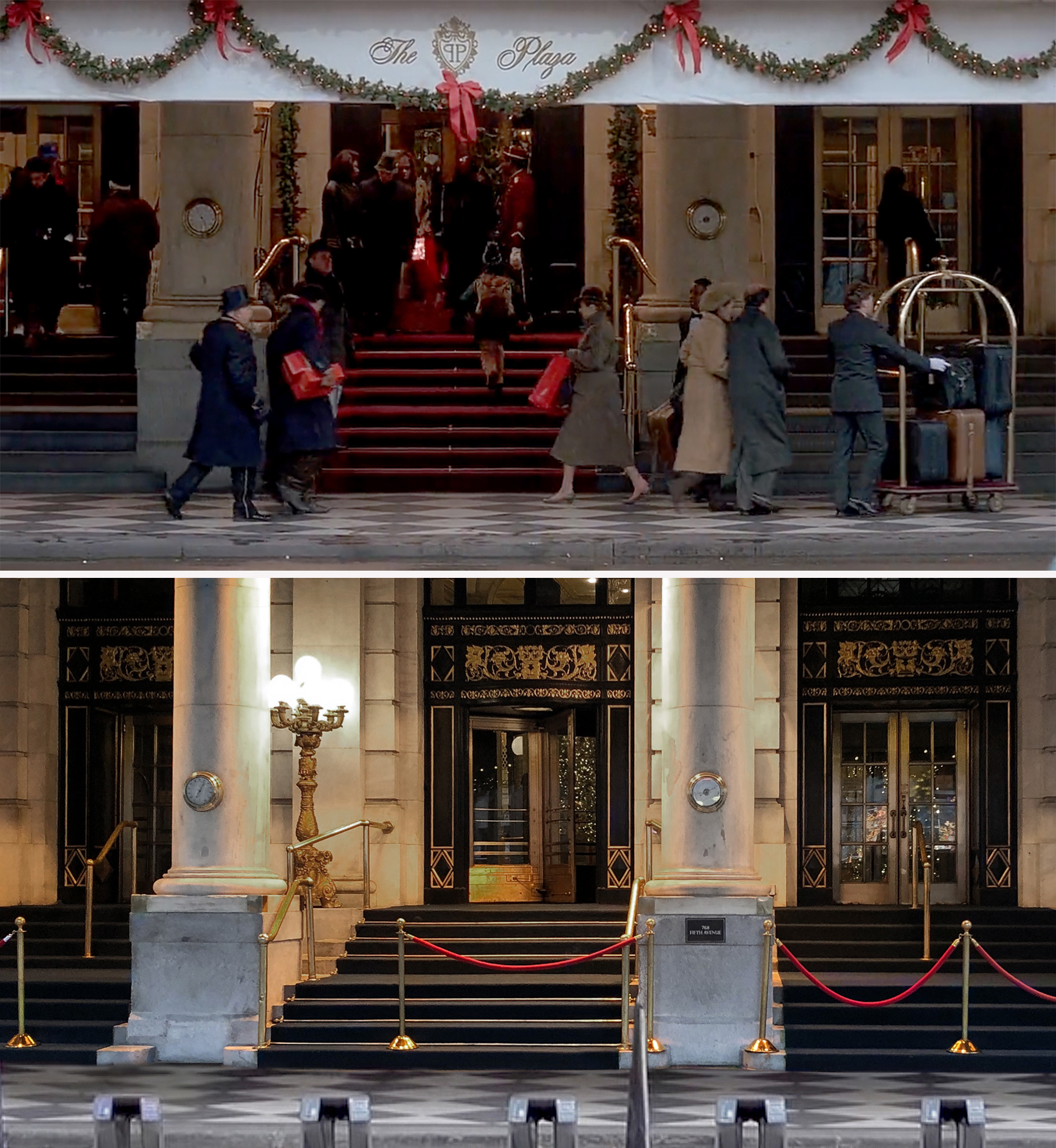
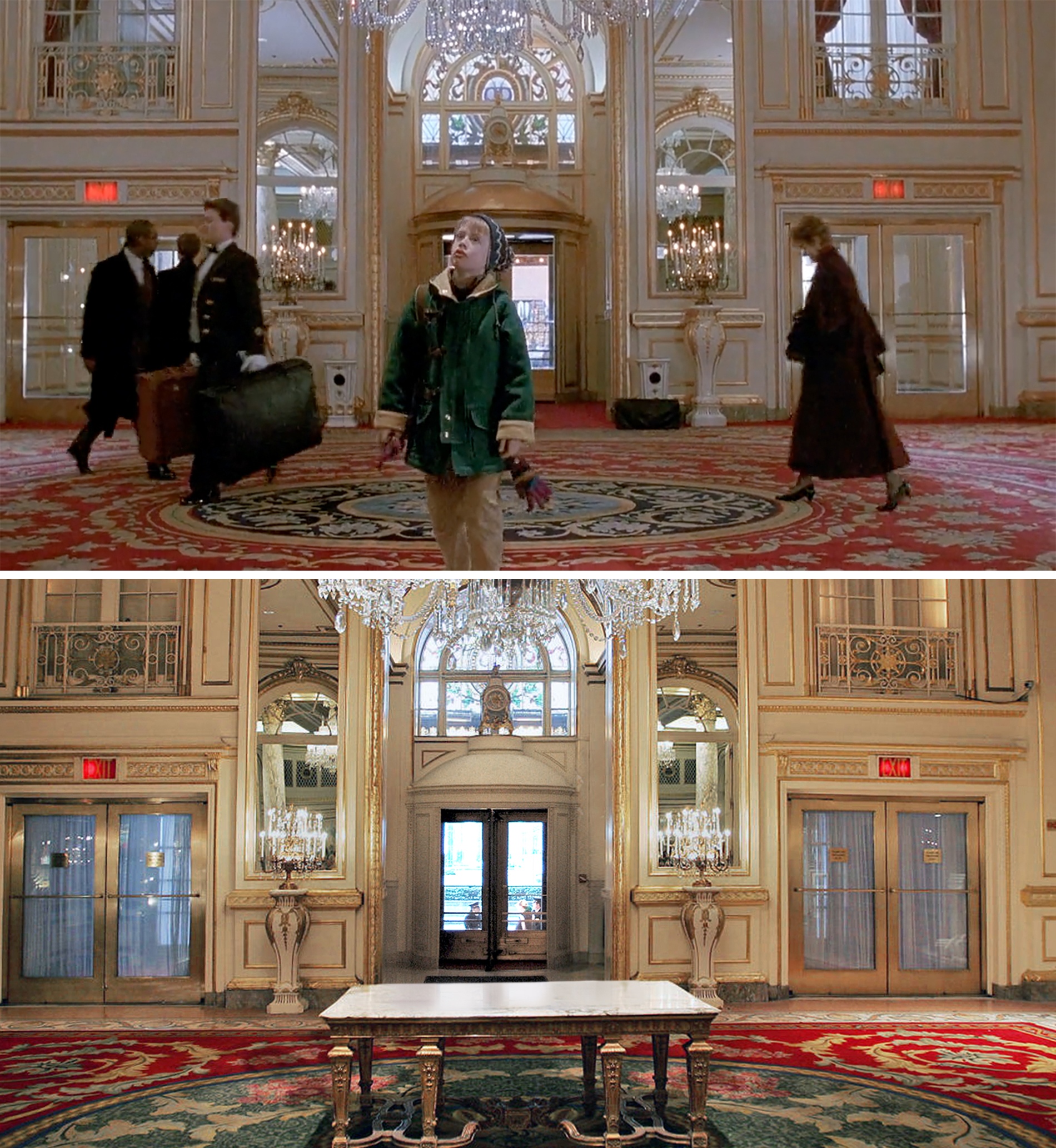


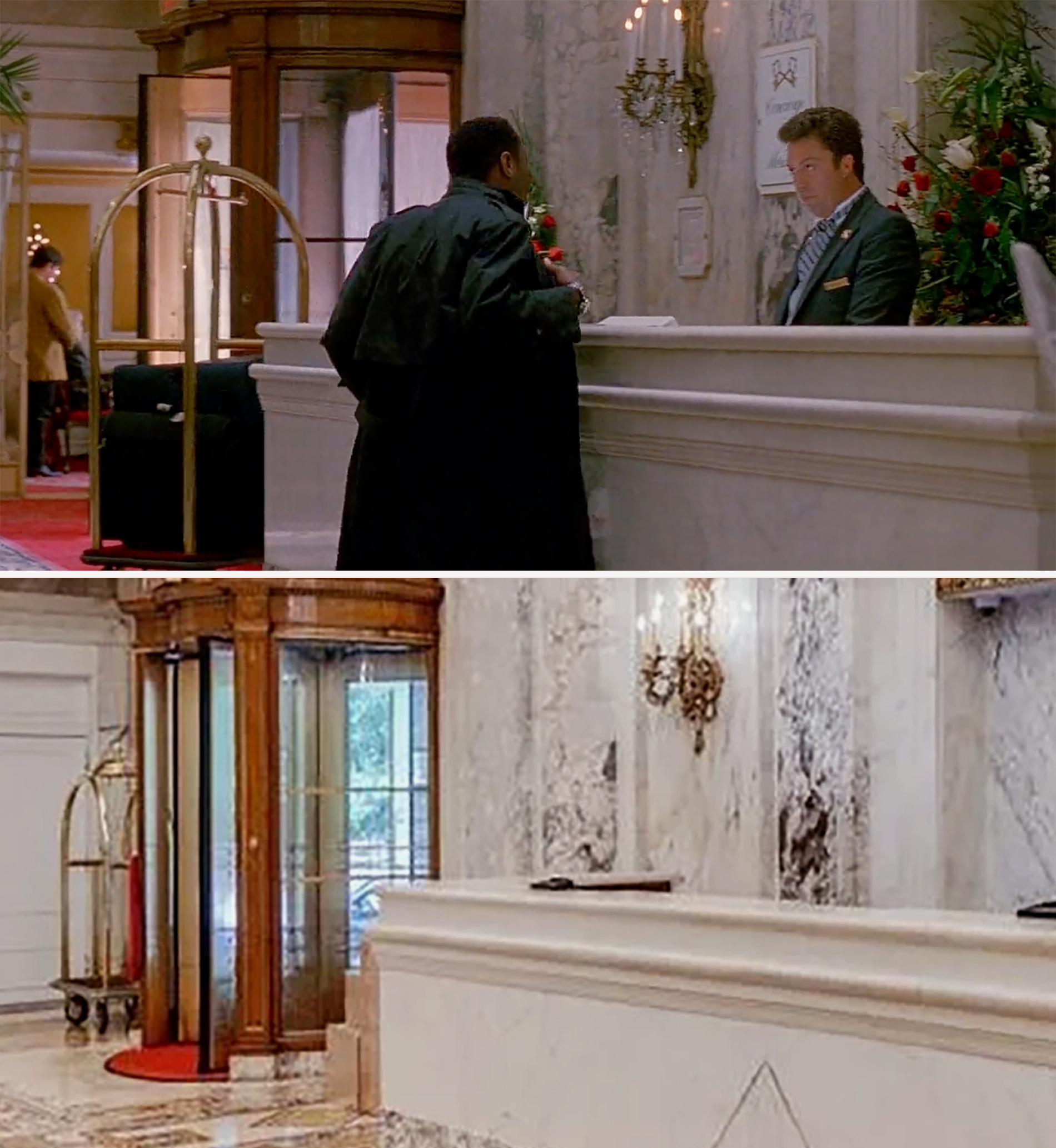

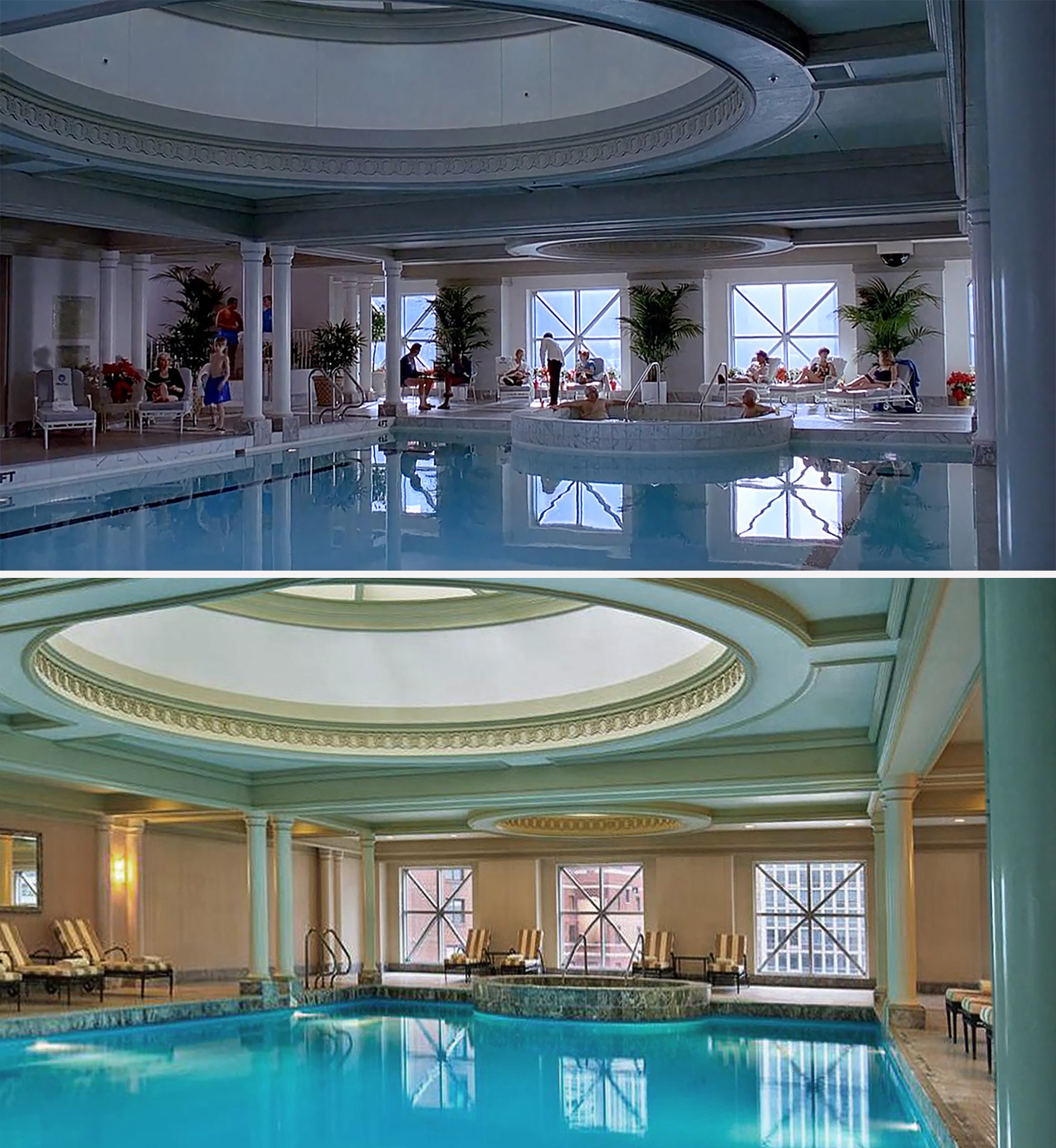
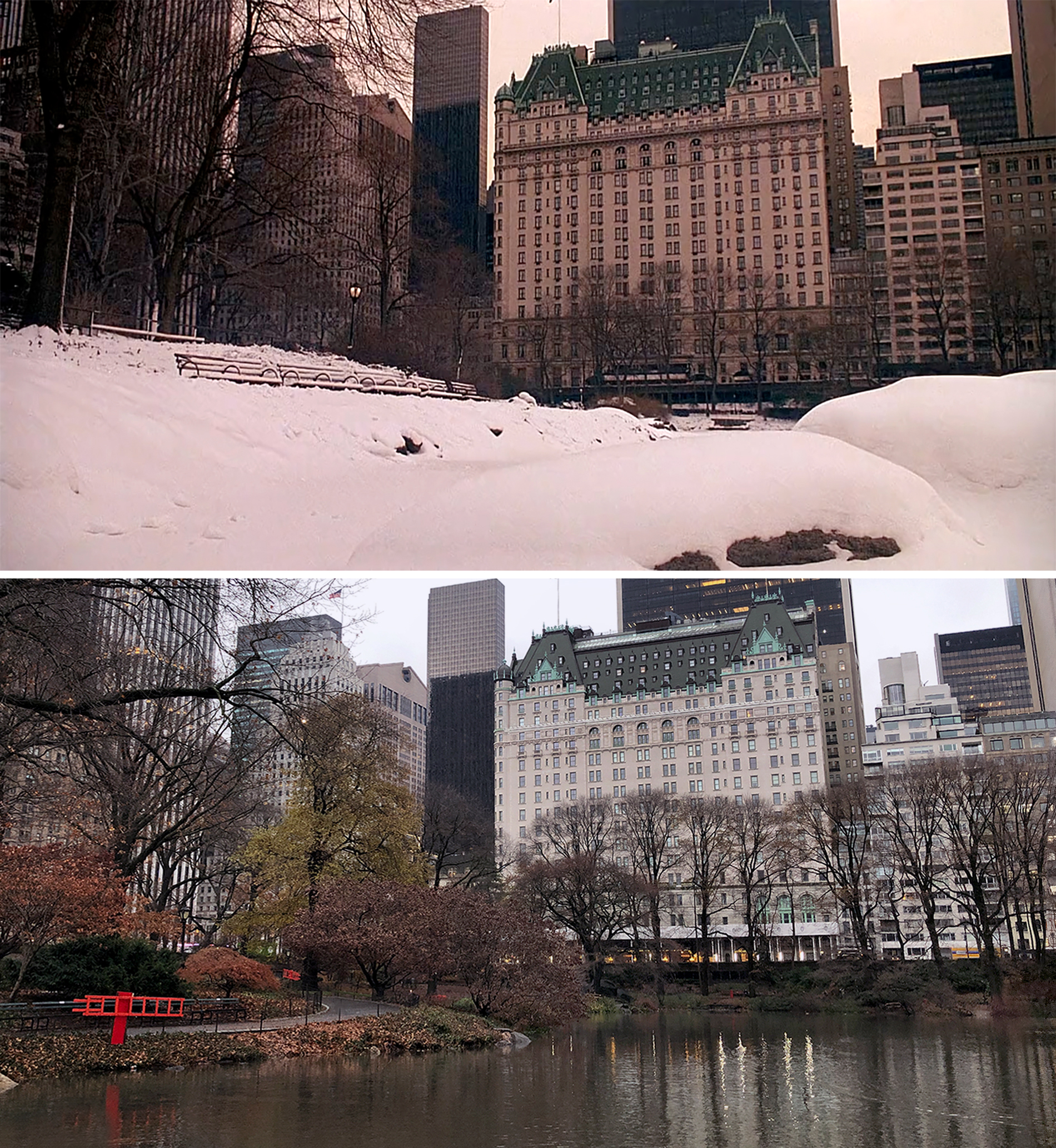
Most of this sequence was filmed at the world famous Plaza Hotel, which has been used in countless other movies over the years, including one of my favorite eighties comedies, Arthur.
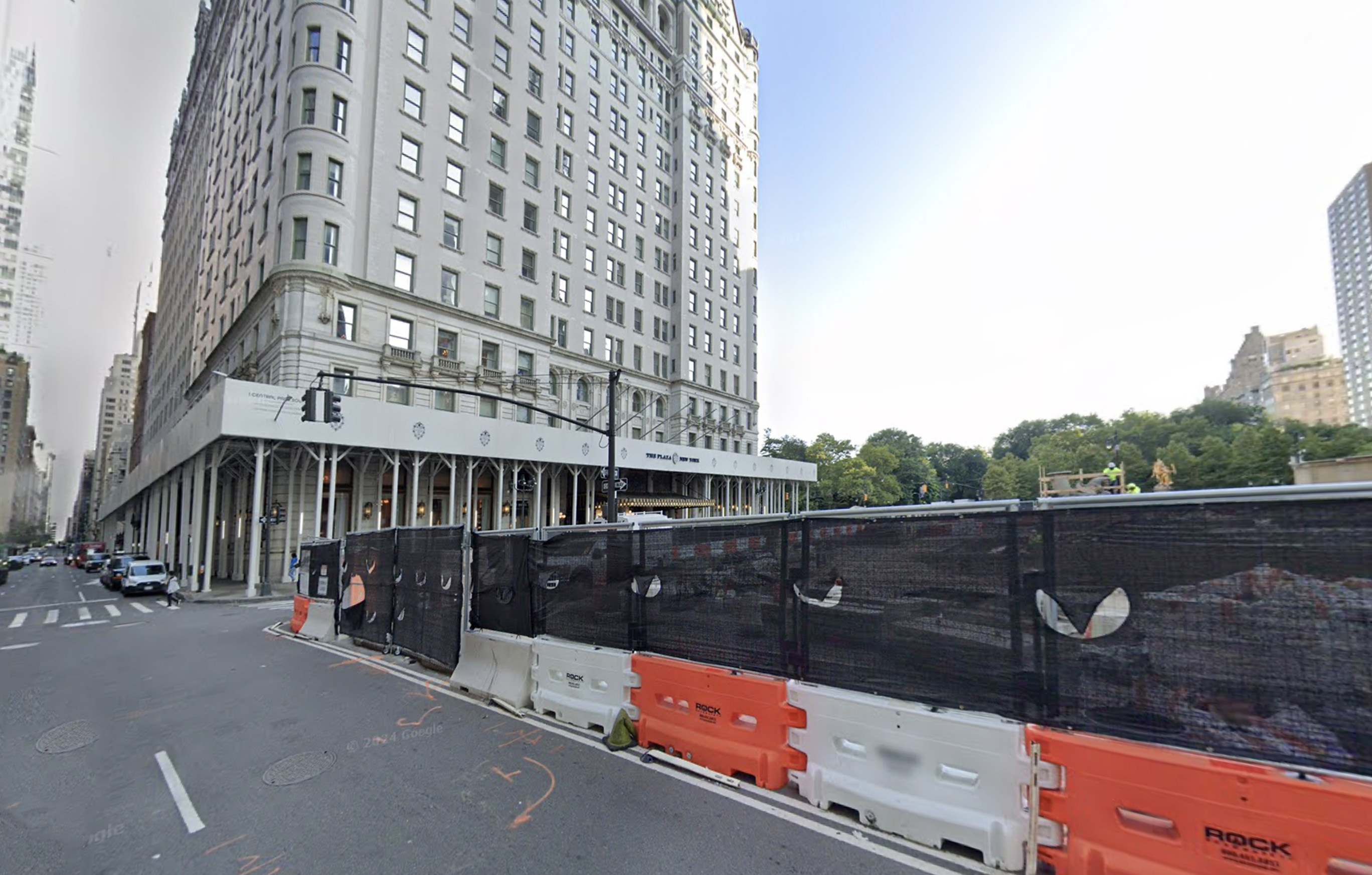
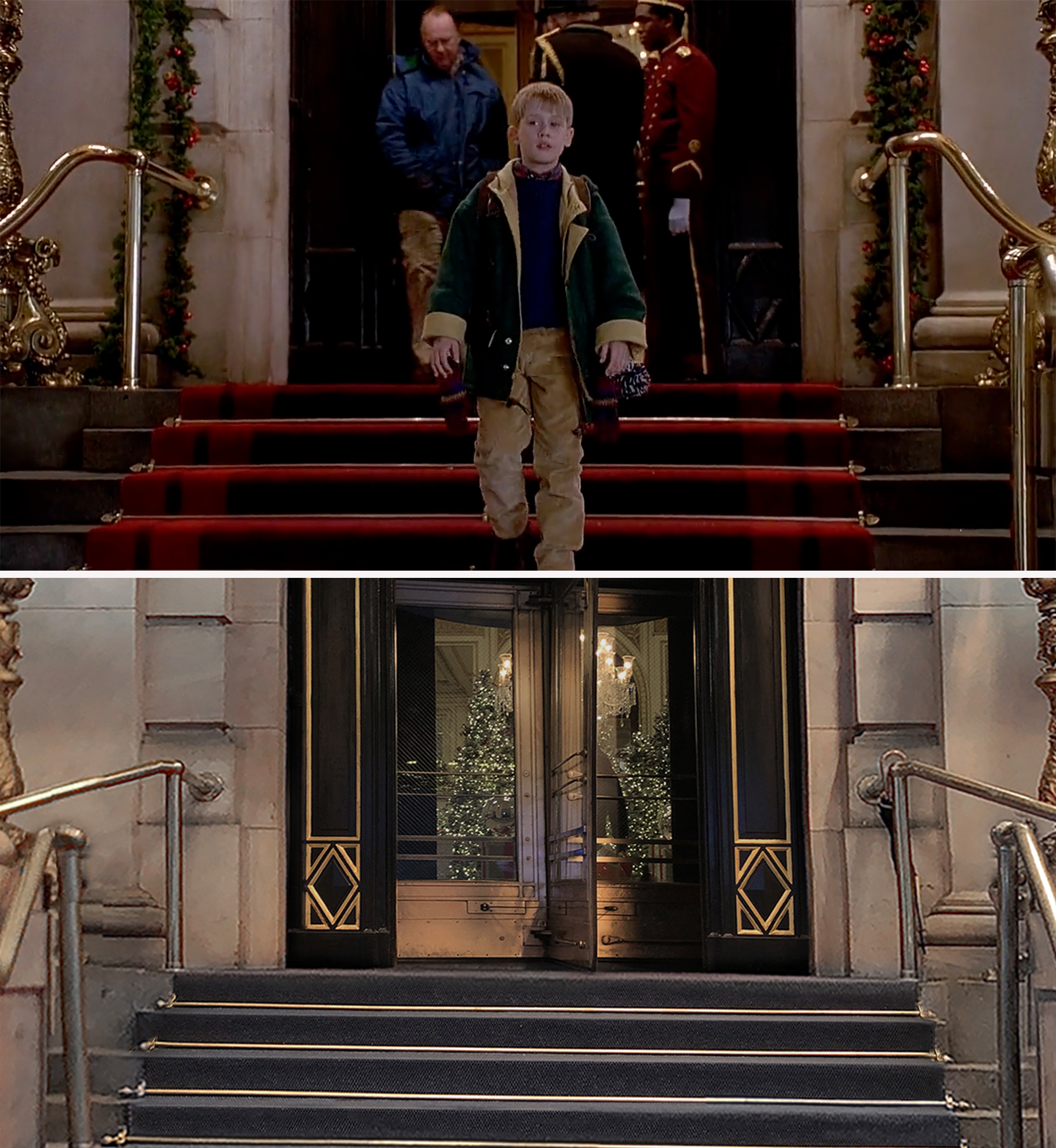
Right now, one problem with taking modern pictures of this midtown landmark is that for the last four or five years, the building has been surrounded by a sidewalk shed, cluttering things up with scaffolding and support beams.
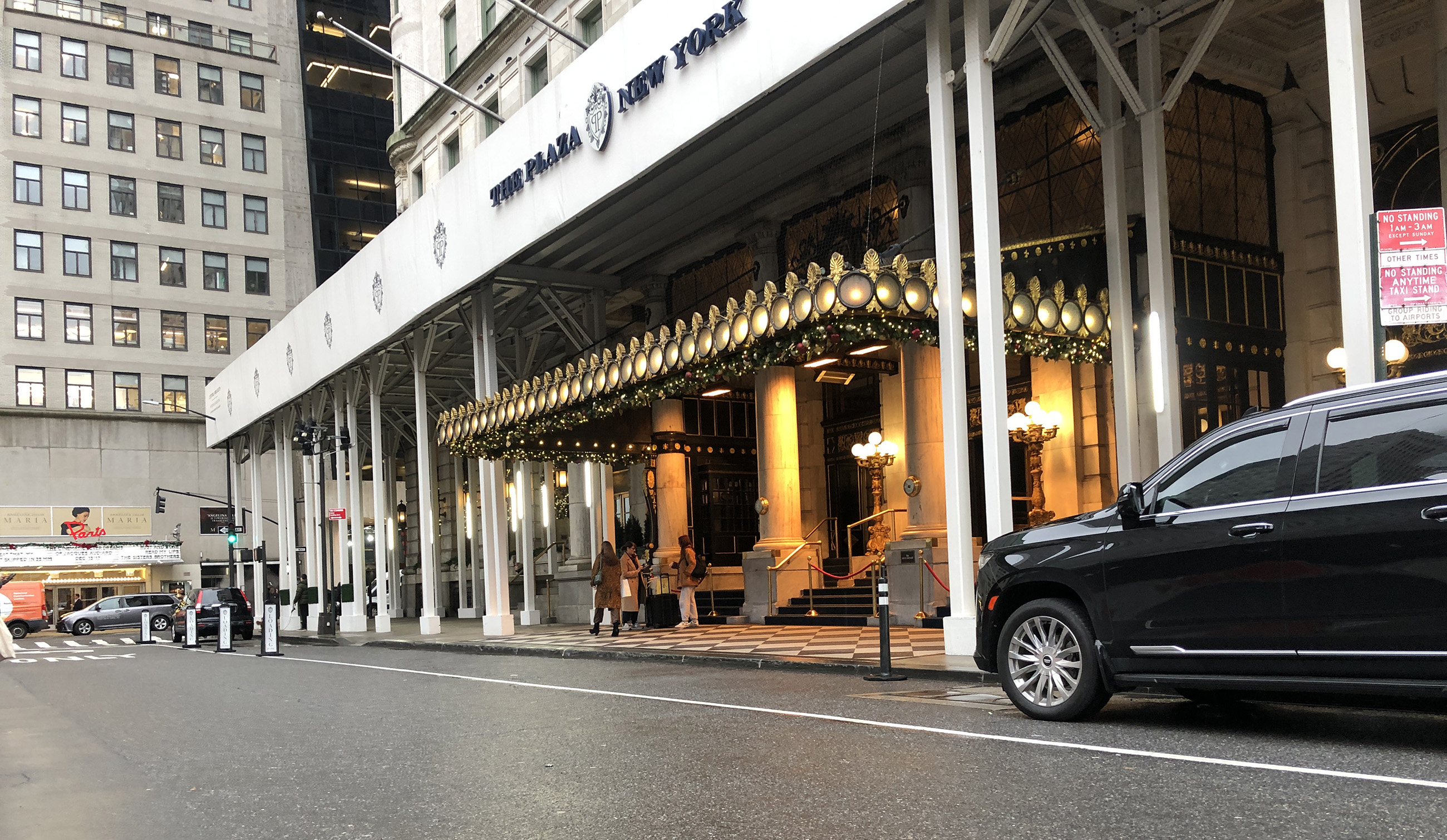
And just this past summer, the area became even more unsightly when renovations began being made to Grand Army Plaza, which is directly across from the hotel entrance. There’s now tall construction fencing blocking off the entire plot of land.
Consequently, I had to cheat a little with the modern images, using pics I took last year before the construction began. So they’re not completely up-to-date, but hopefully, someday, when the construction is done, I will add more accurate photos.
But all the pictures of the inside are current, taken just a week ago. I had to go super early in the morning to get the photos of the lobby, because apparently during the holidays, non-guests of the hotel aren’t allowed inside during peak hours. Management had velvet ropes put on the front steps and doormen guarding the entrance like bouncers at a fancy nightclub.
“Sorry, private party.”
Miami Hotel

For this location, as well as the location of the pool in the previous scene, I relied on other movie websites to identify them. Mostly because they were both non-New York places.
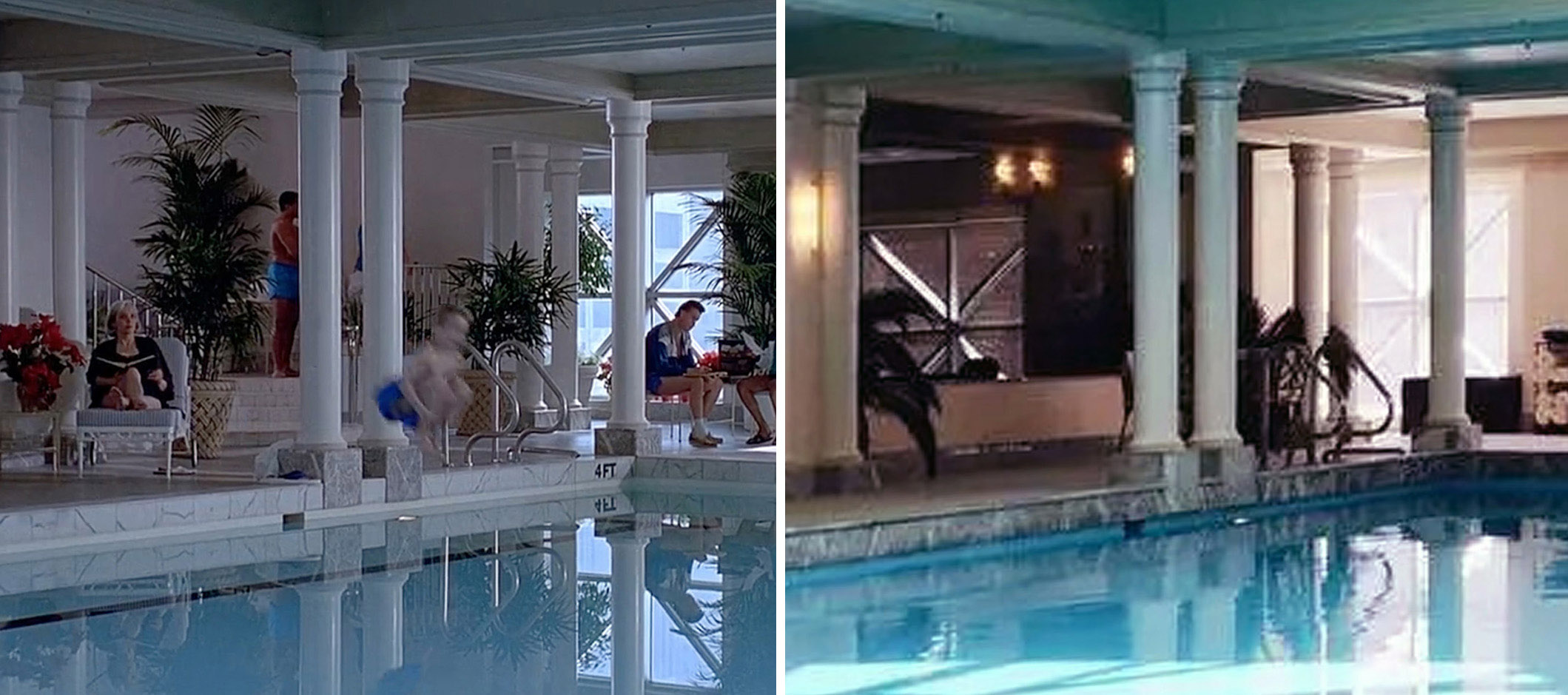
The pool was easy to confirm since it’s still inside the Four Seasons Hotel in Chicago and relatively unchanged, but this “Miami” hotel was a little tougher to confirm. The main reason is because the building seen in the movie has since been torn down and replaced with a parking area for the nearby Long Beach Airport.
According to the I Am Not a Stalker website, the property was originally home to a motel named the Landmark that opened around 1962.
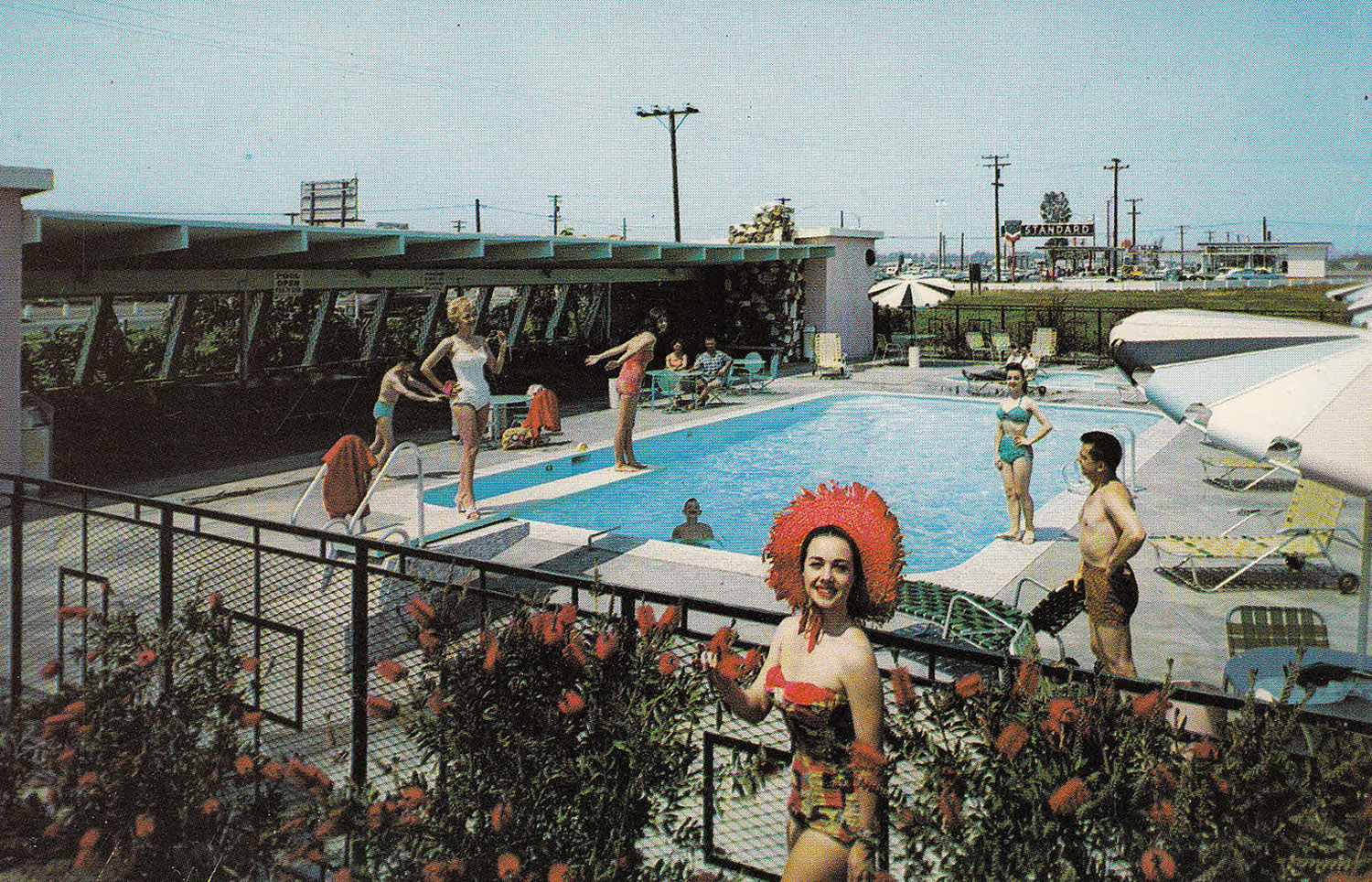
A few years later, the Landmark was either razed or significantly altered to make way for a new, larger hotel/convention center named Rochelle’s.
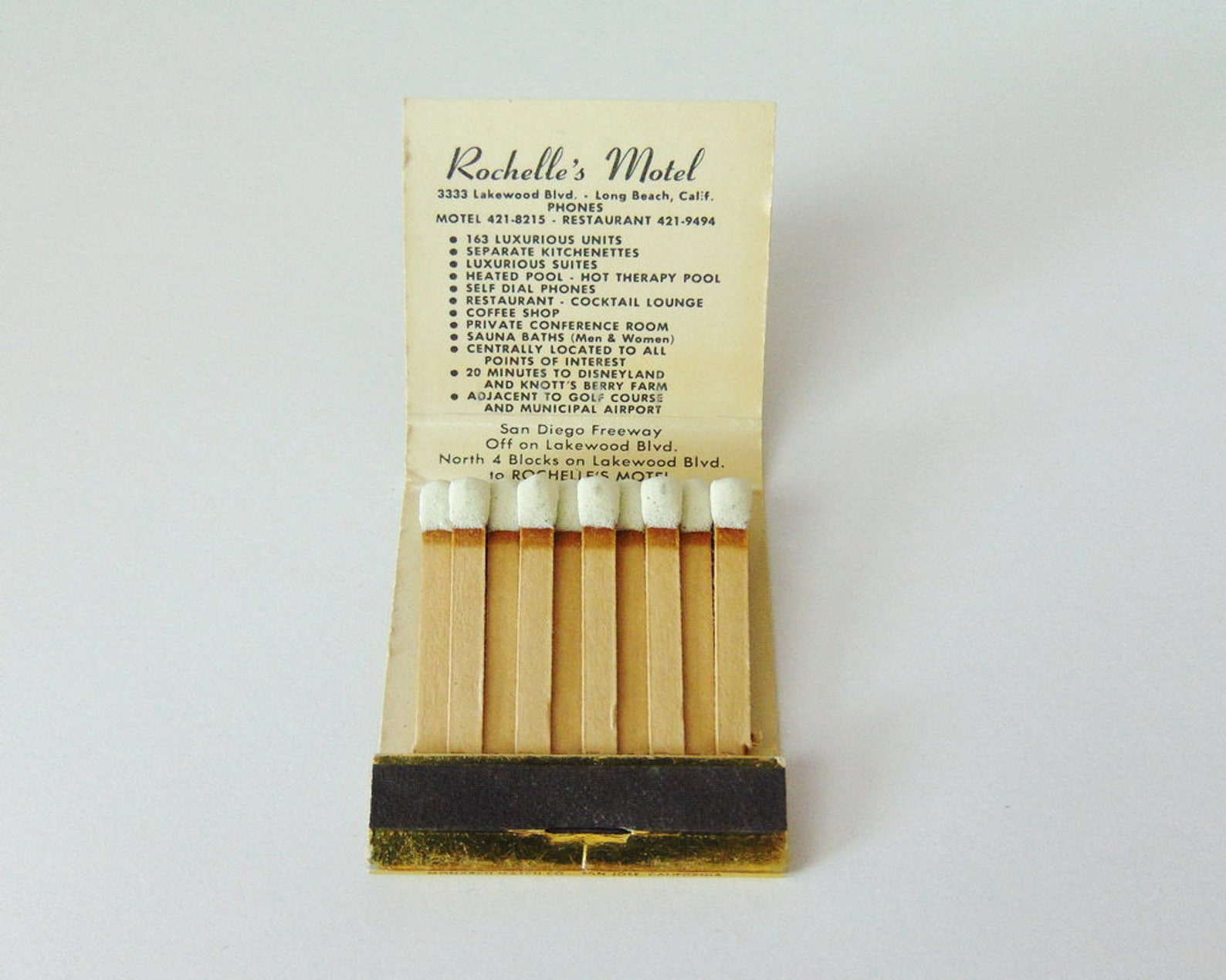 These new accommodations lasted until at least the late 1980s, but were most likely vacant when Home Alone 2 was filmed in early 1992. At some point after that, the motel was demolished and replaced with a parking structure.
Most of this information was confirmed by other independent sources, including a recollection by a former crew member who seemed to verify the Long Beach location. He also mentioned that these “Miami” hotel scenes were one of the last things to be shot for the movie.
All this being said, I still can’t call this location 100% solved, mostly because I couldn’t find a single photograph of the former Rochelle’s Motel anywhere online. All I could find was a pic of a vintage matchbook from the motel.
I am certain that Rochelle’s used to be at 3333 Lakewood Boulevard in Long Beach, and vintage aerial photos shows that its layout matches what appears in this movie. So, I’d give this filming location about a 92% certainty.
Going to the Toy Store

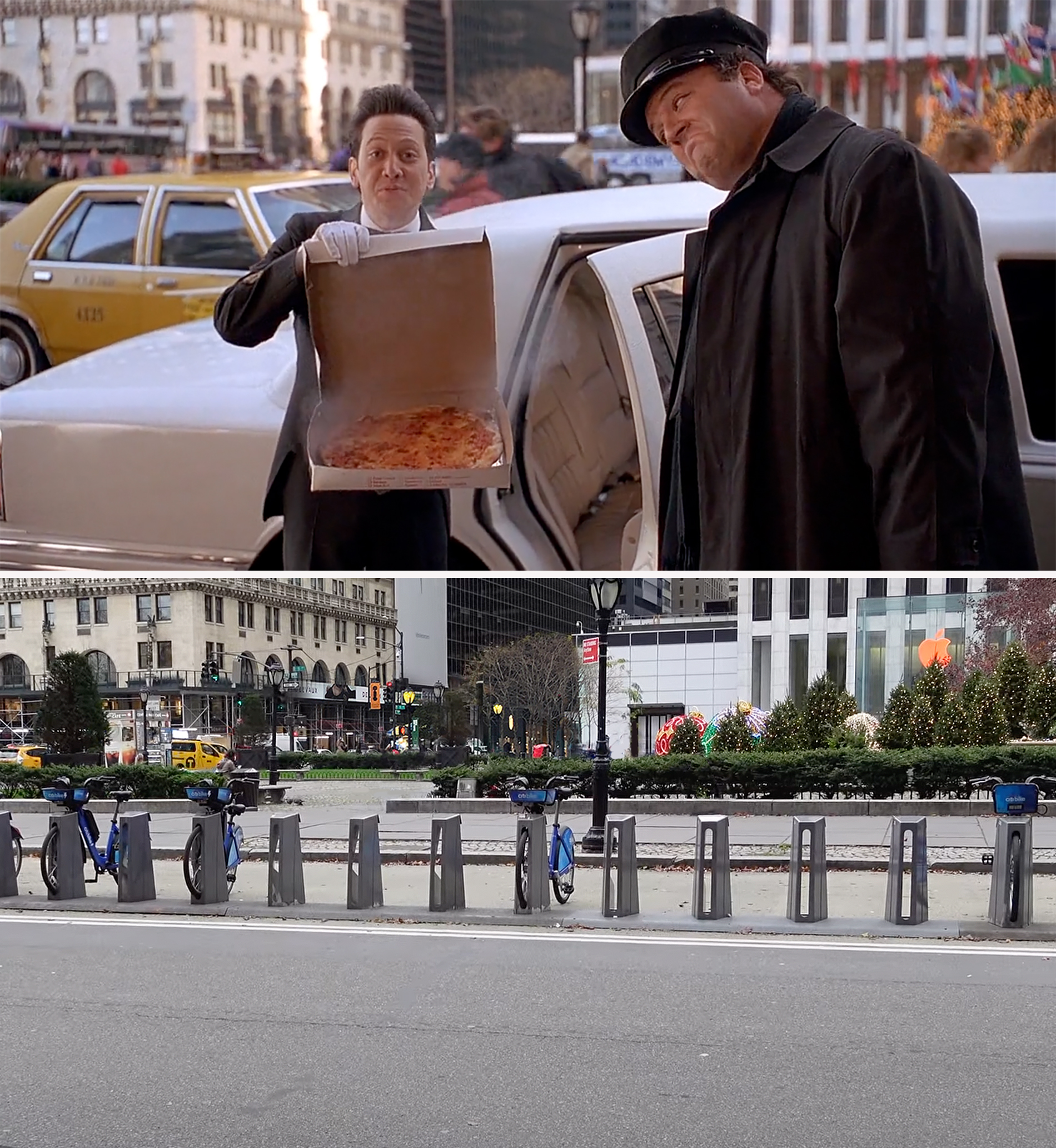
Ice Rink
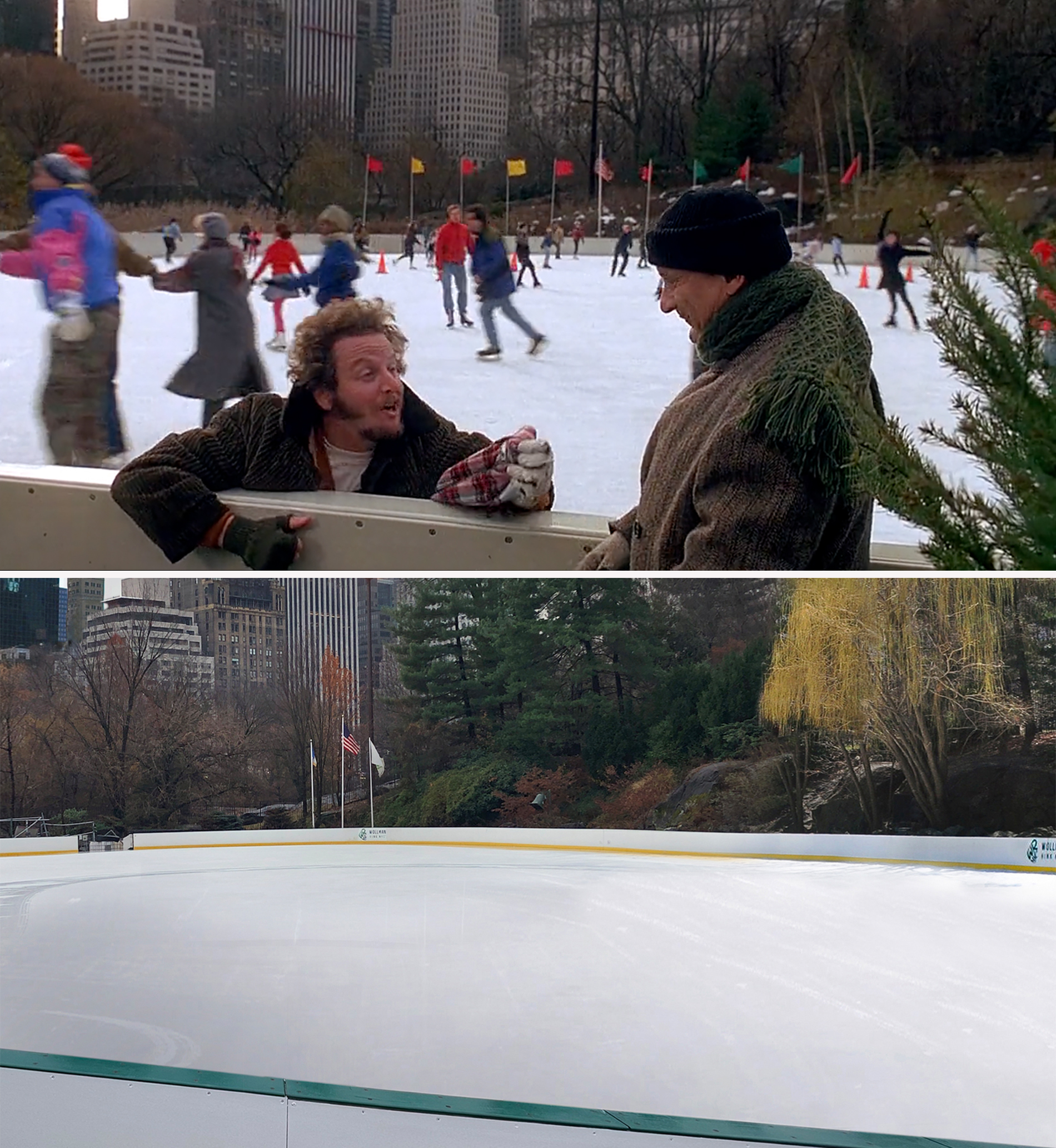
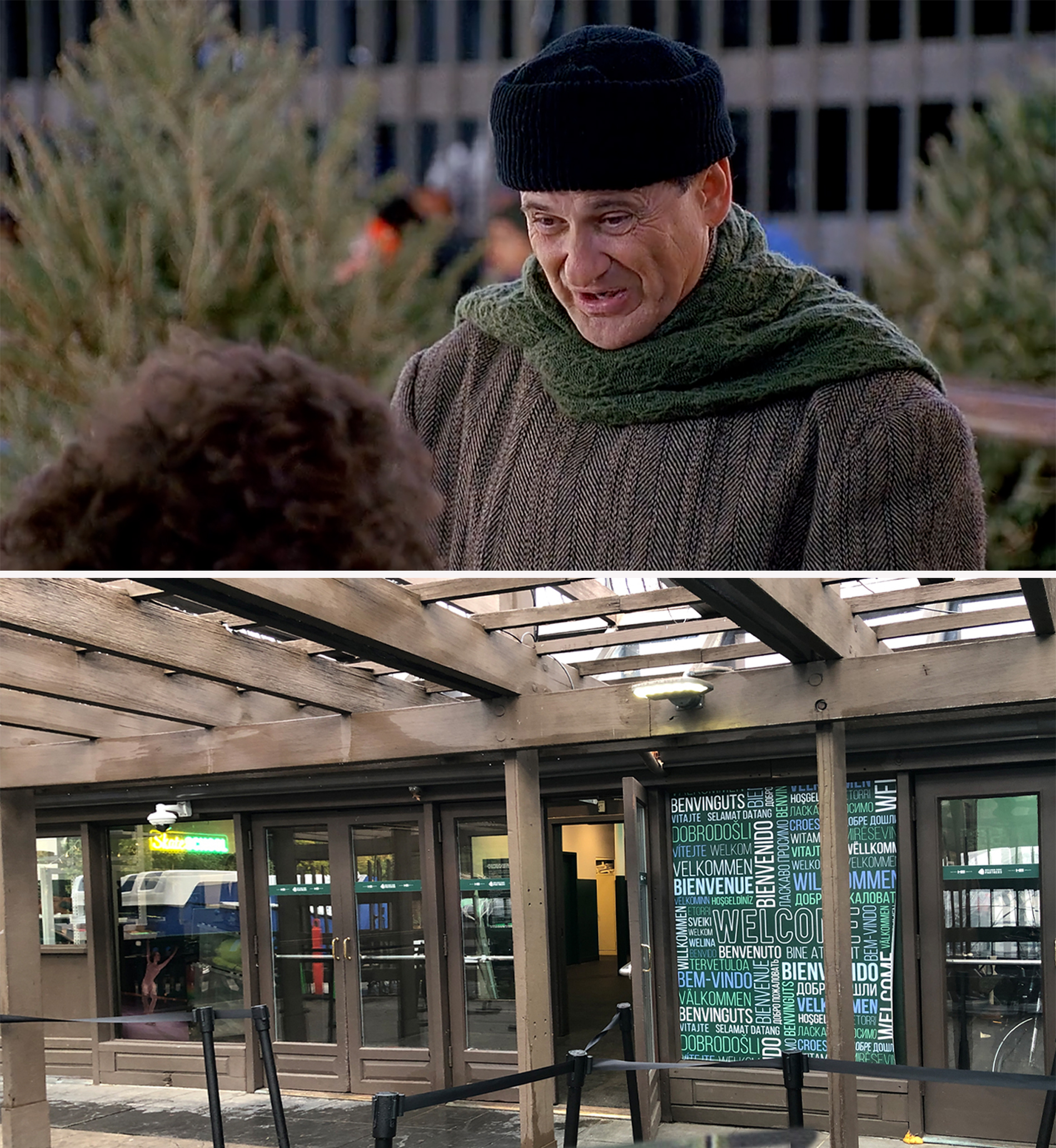
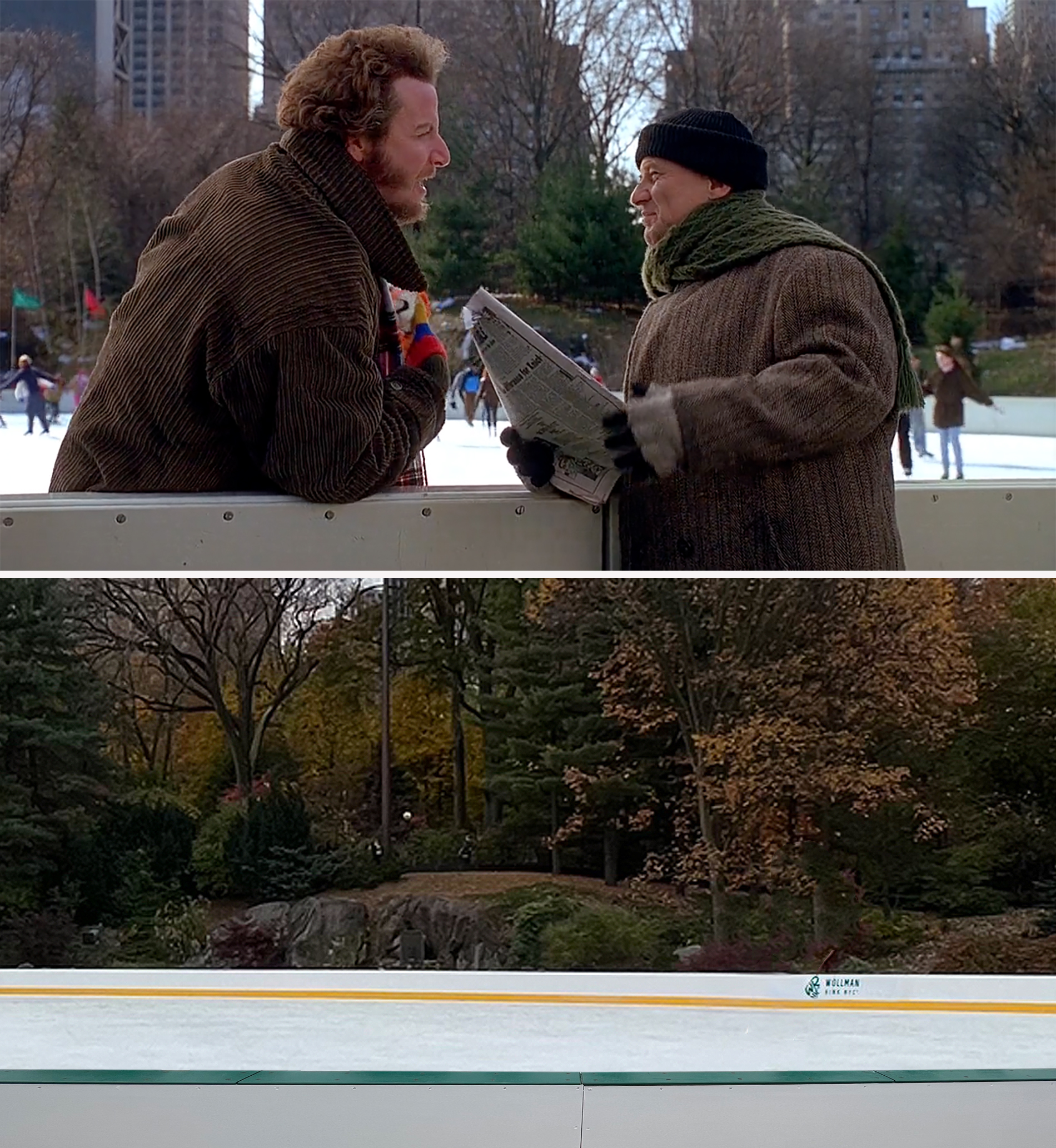
This location was already established by many folks years ago, but no one ever bothered to take pictures of the rink from the same vantage point used in the movie. I wanted to rectify that.
Only problem is, the Wollman Skating Rink is almost always super busy during this time of year, and also super expensive. I didn’t feel like shelling out forty-something bucks just to snap a few pics of a crowed rink, so I decided to go to Wollman a couple hours before it opened and see if I could maybe sneak onto the property.
It was around 8:30am when I arrived there, and I was surprised to see a group of young skaters on the ice. As I got closer, I could tell it was a private group, and I also saw the entrance gate was open, even though the admissions booth was closed. So I slipped inside the seating area just as the private group got off the ice. I figured this was my chance to grab a photo of the empty rink, but just then, one of the employees came up to me and said, “Can I help you?”
I could’ve told him about my project and asked if I could take 30 seconds to snap a few pictures, but instead, I inexplicably told him I was waiting for my girlfriend who was with the skating group. Amazingly, this answer seemed to satisfy the bearded young man, and he gave me the thumbs up to stick around.
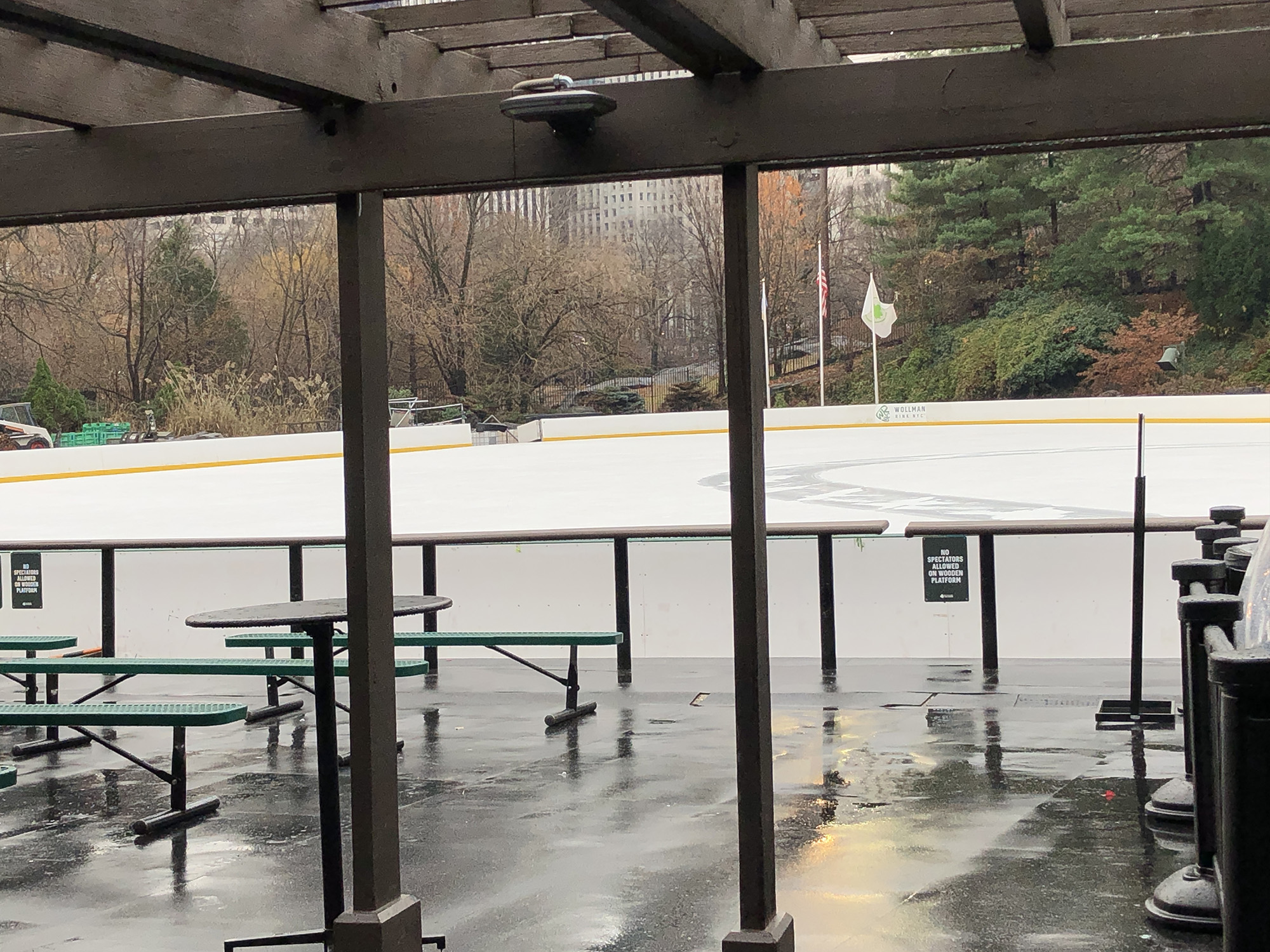
So I casually grabbed a few photos of the empty ice rink, then pretended to get a phone call to give me an excuse to leave the property.

I never know whether I should feel proud or ashamed of putting on these little charades just to get a few photographs for this website. You tell me.
Duncan’s Toy Chest
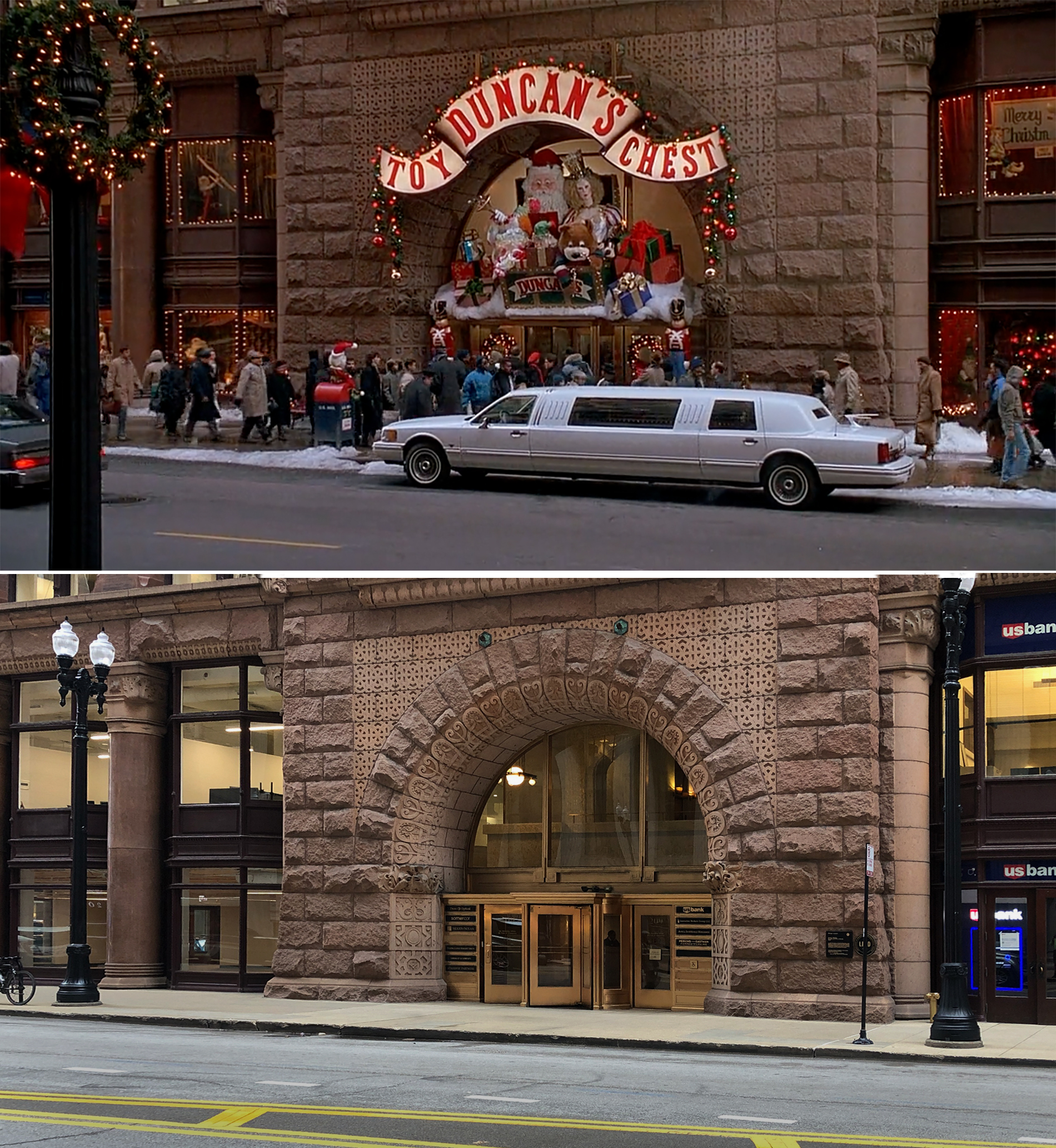
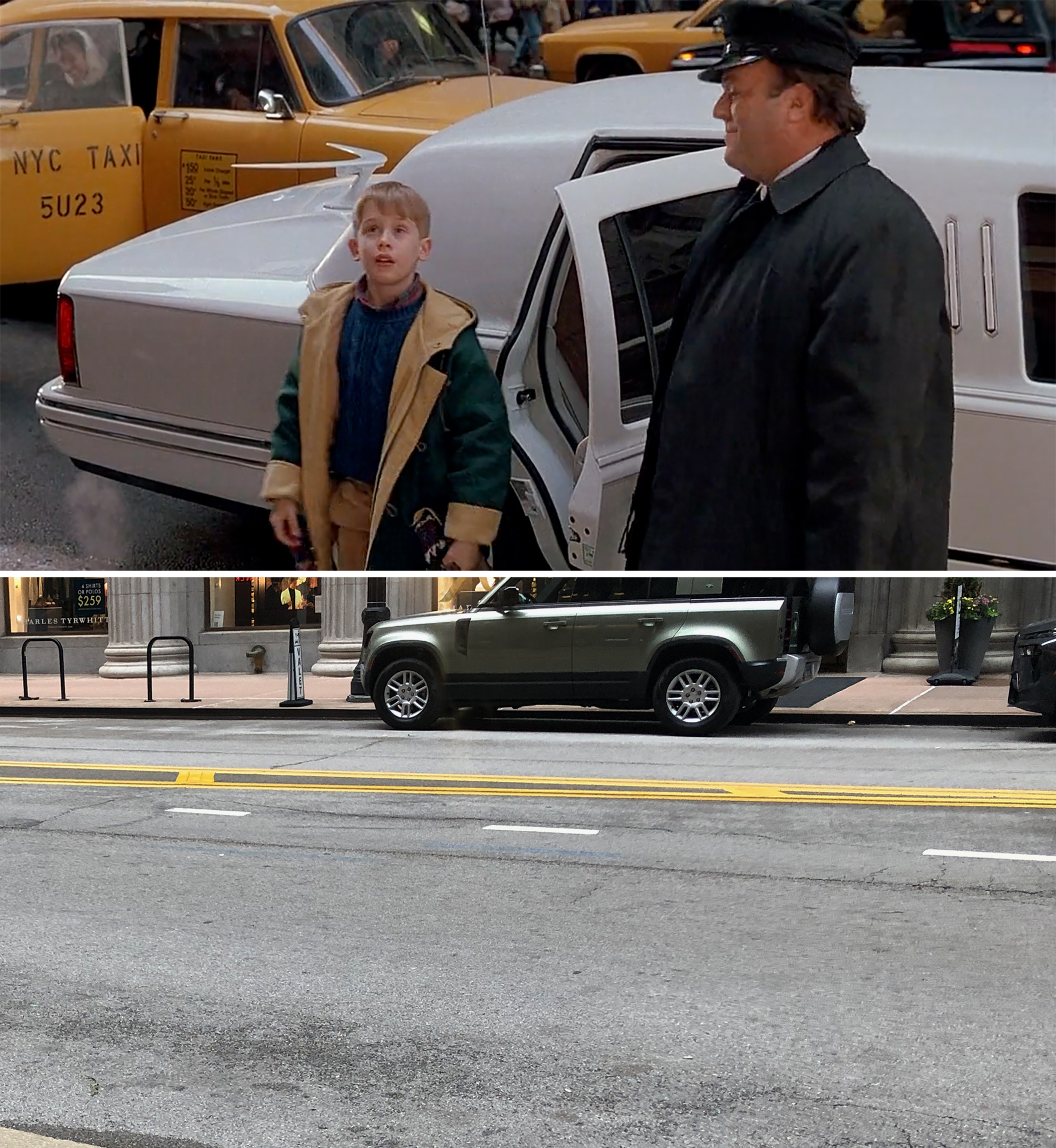
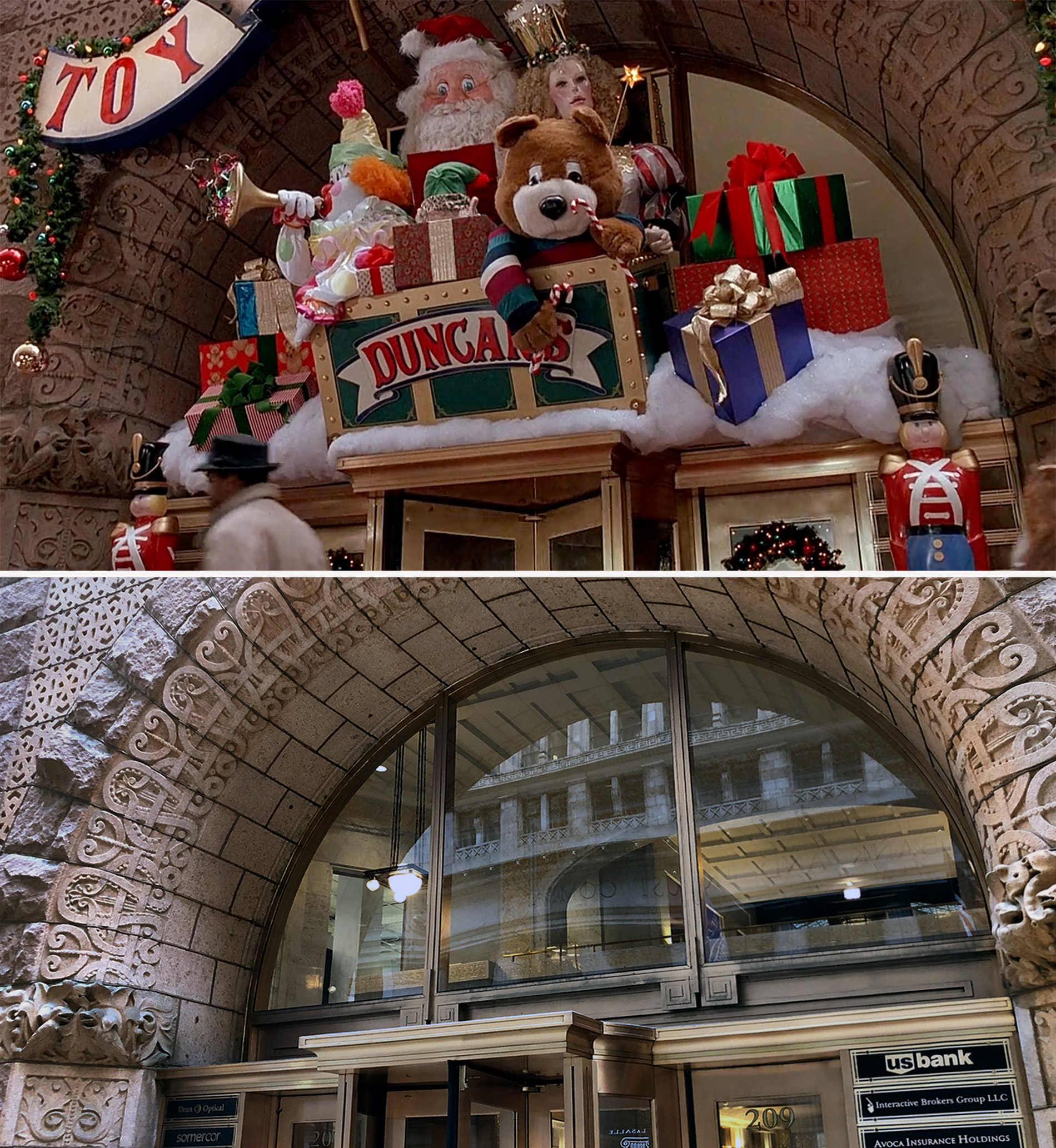
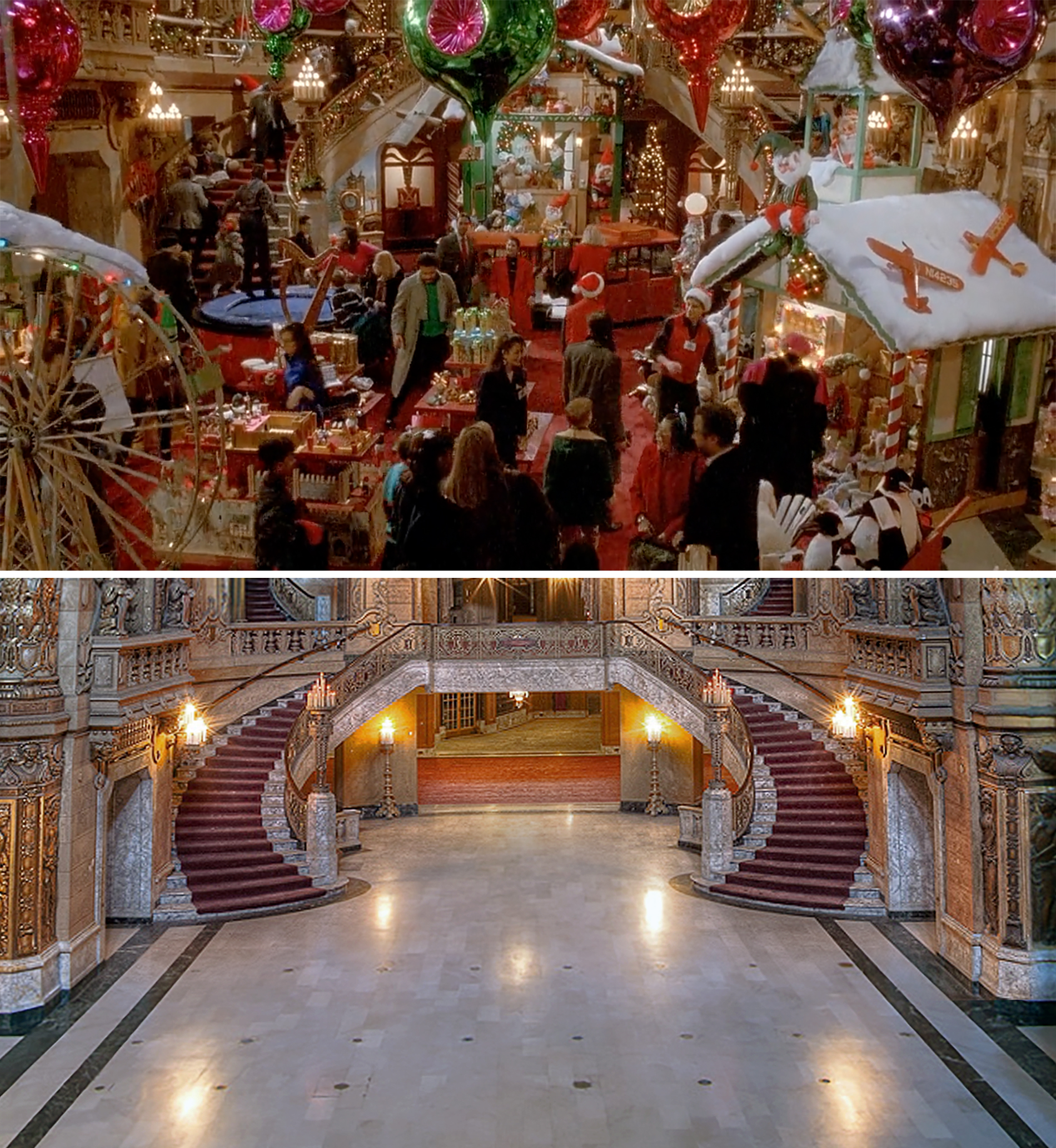
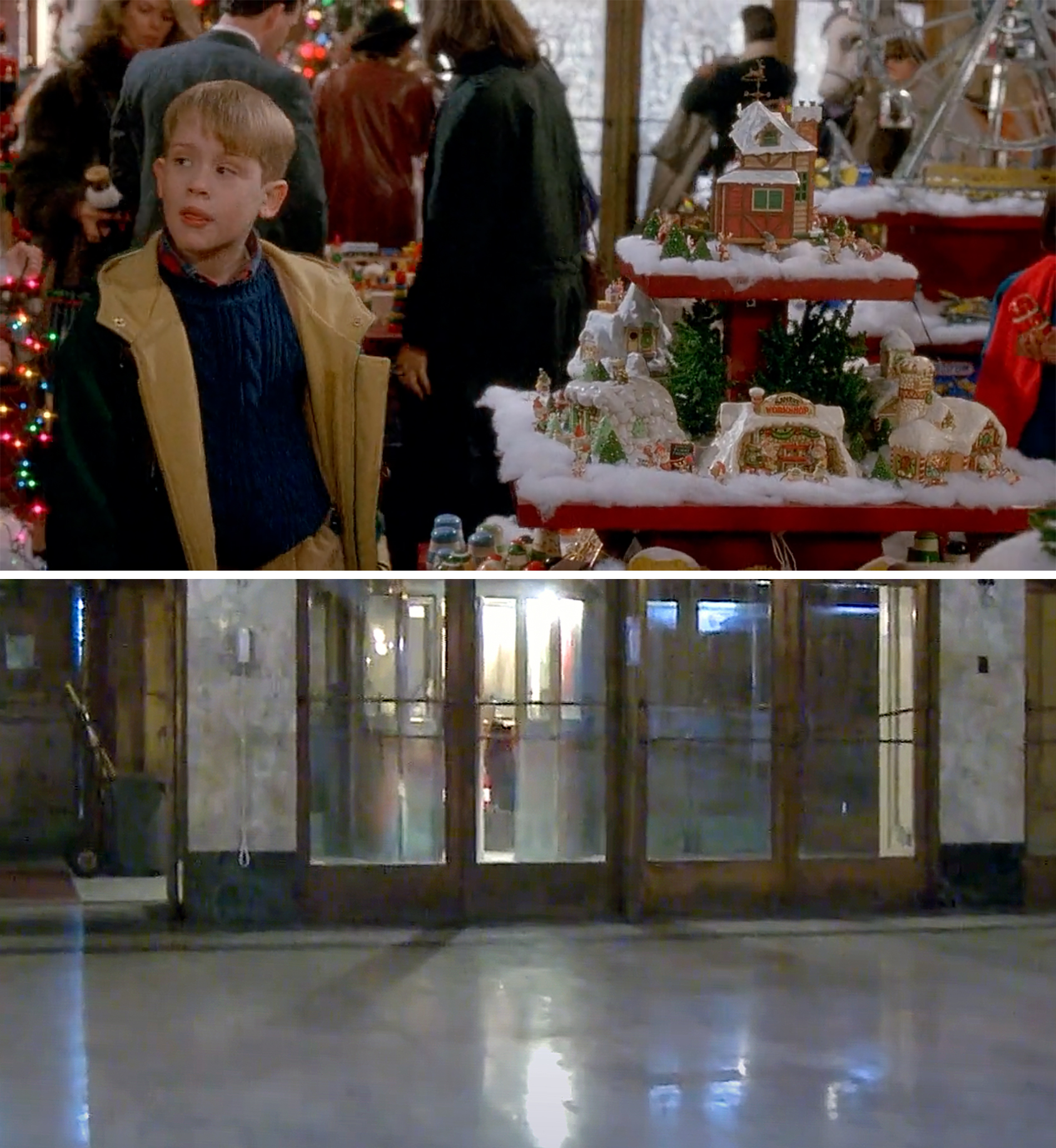
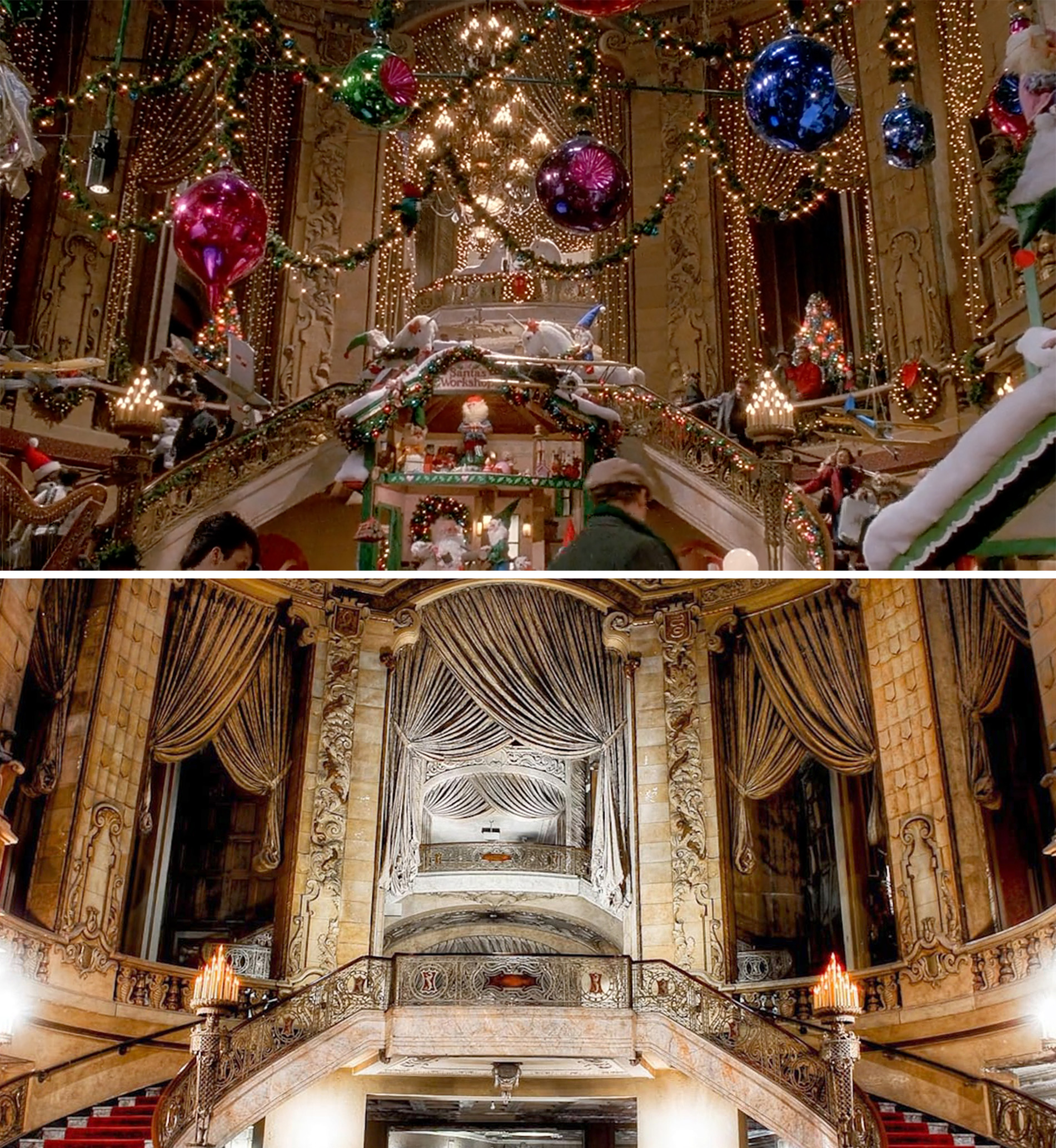
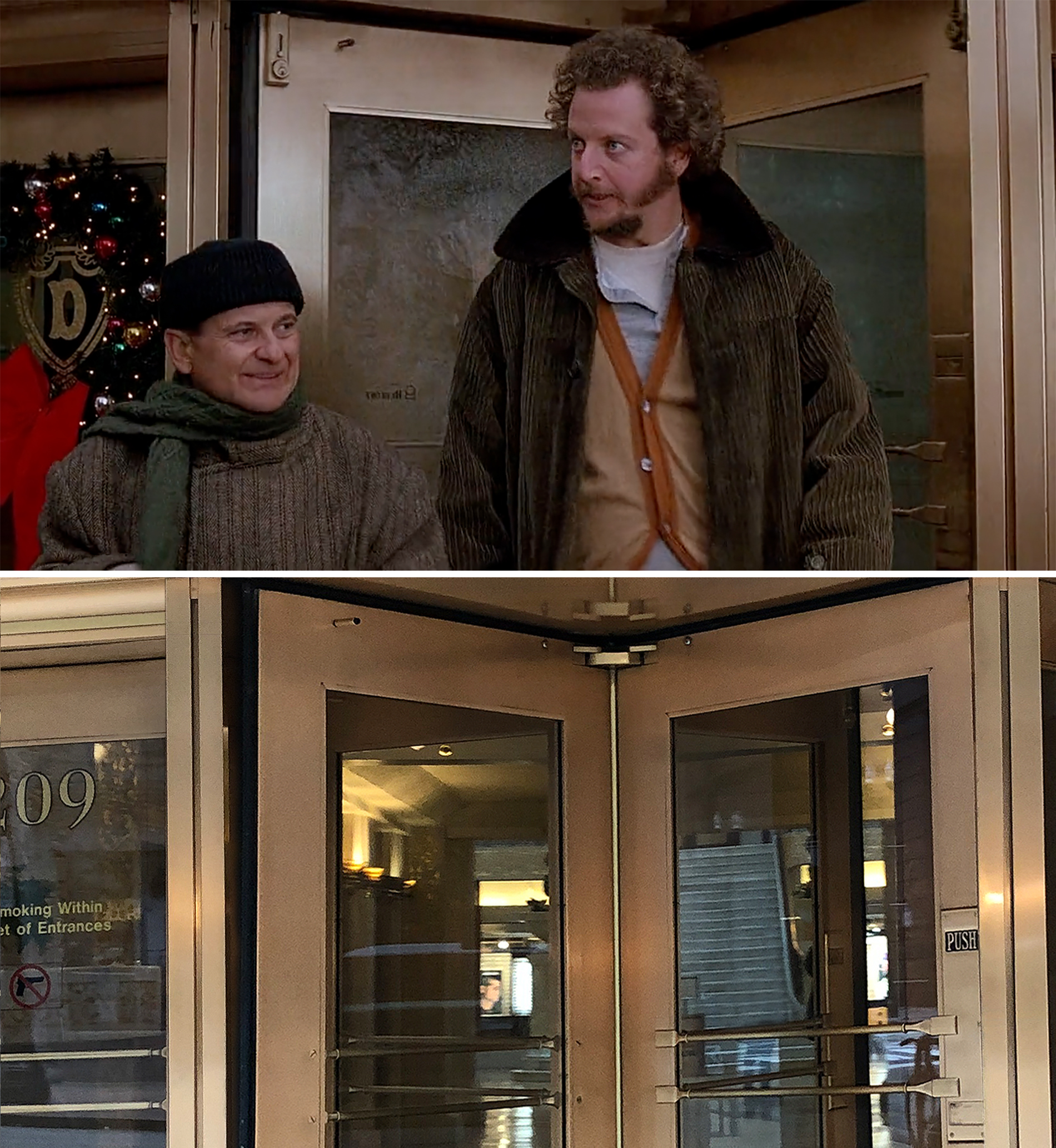

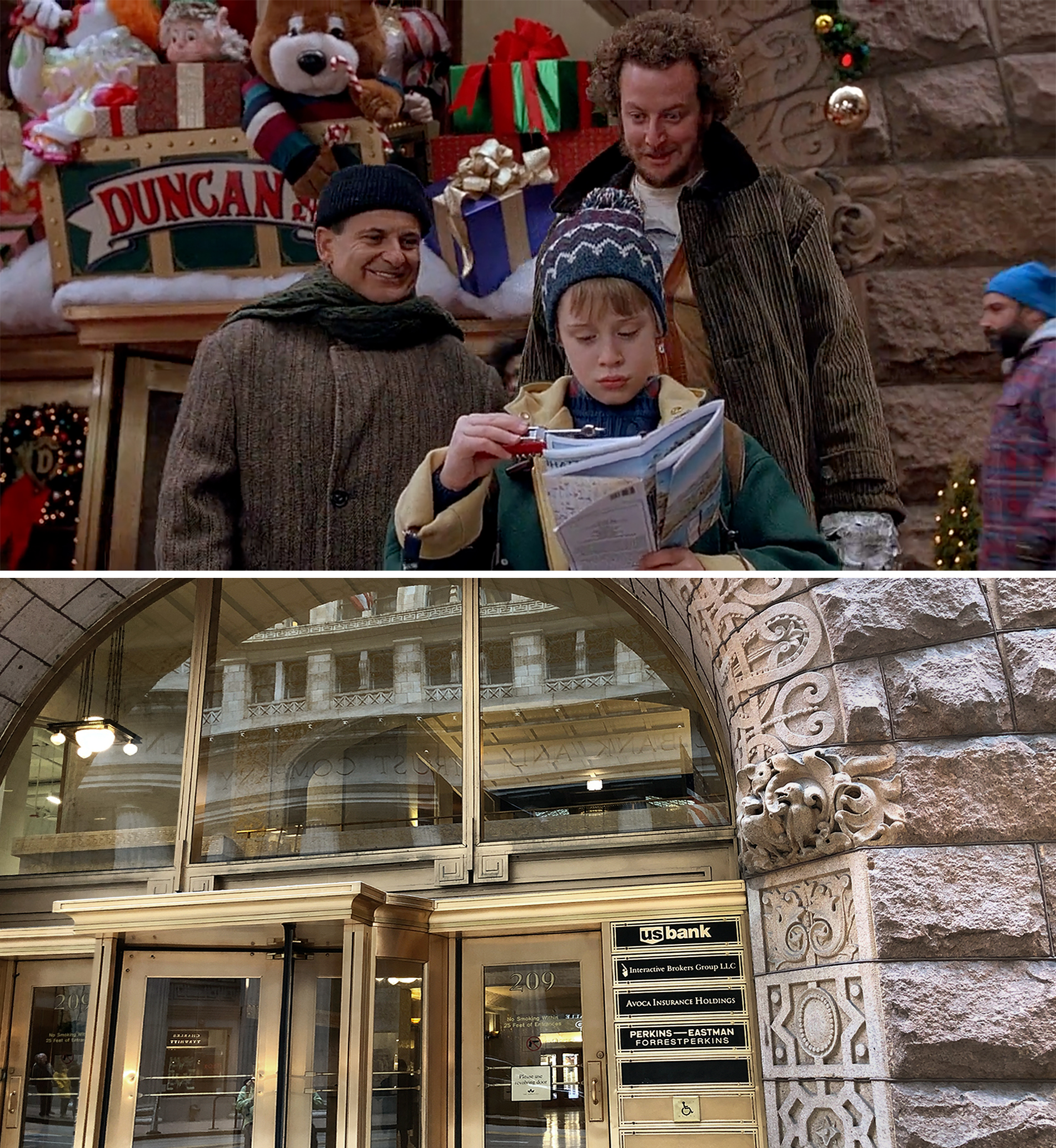
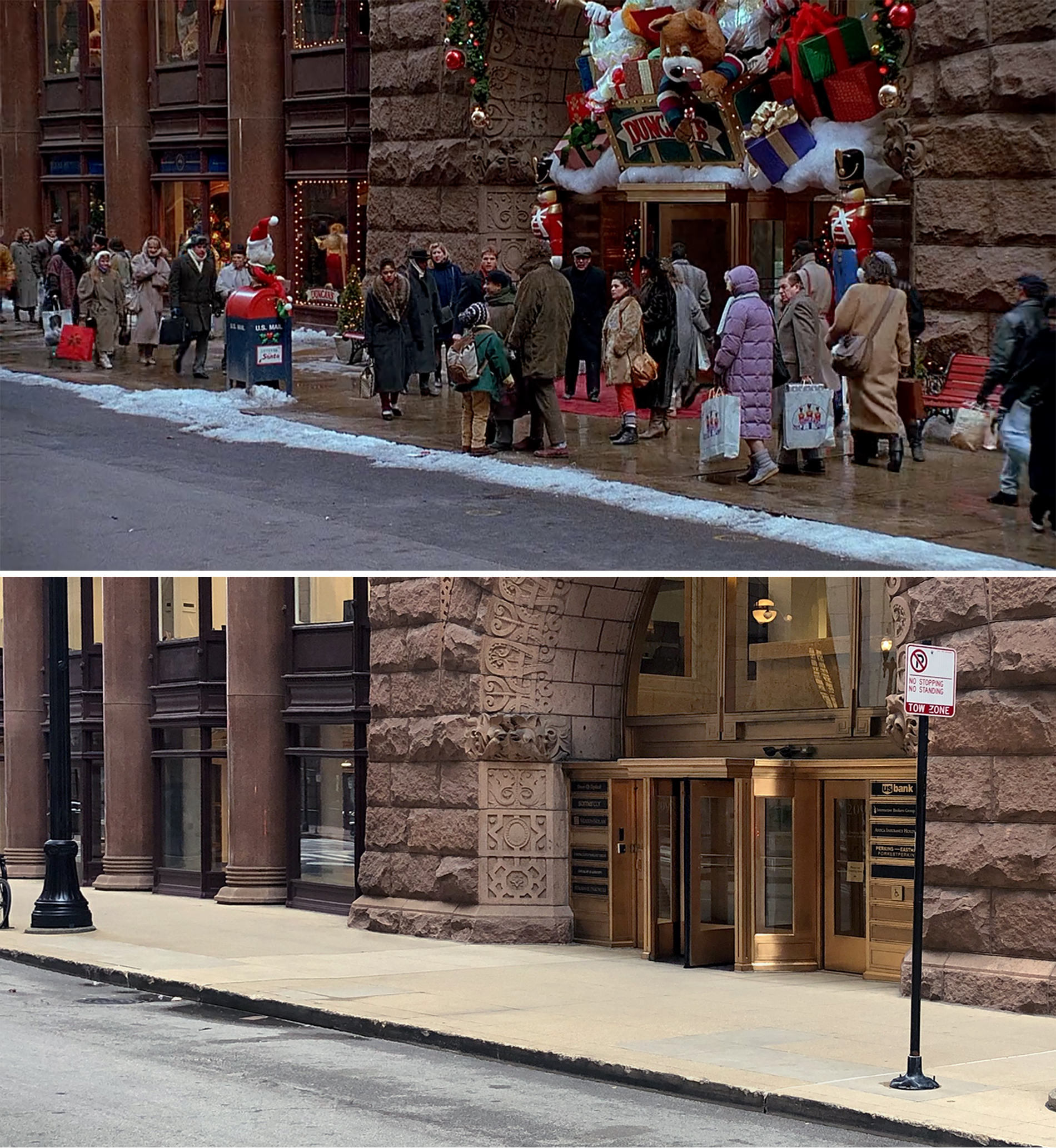
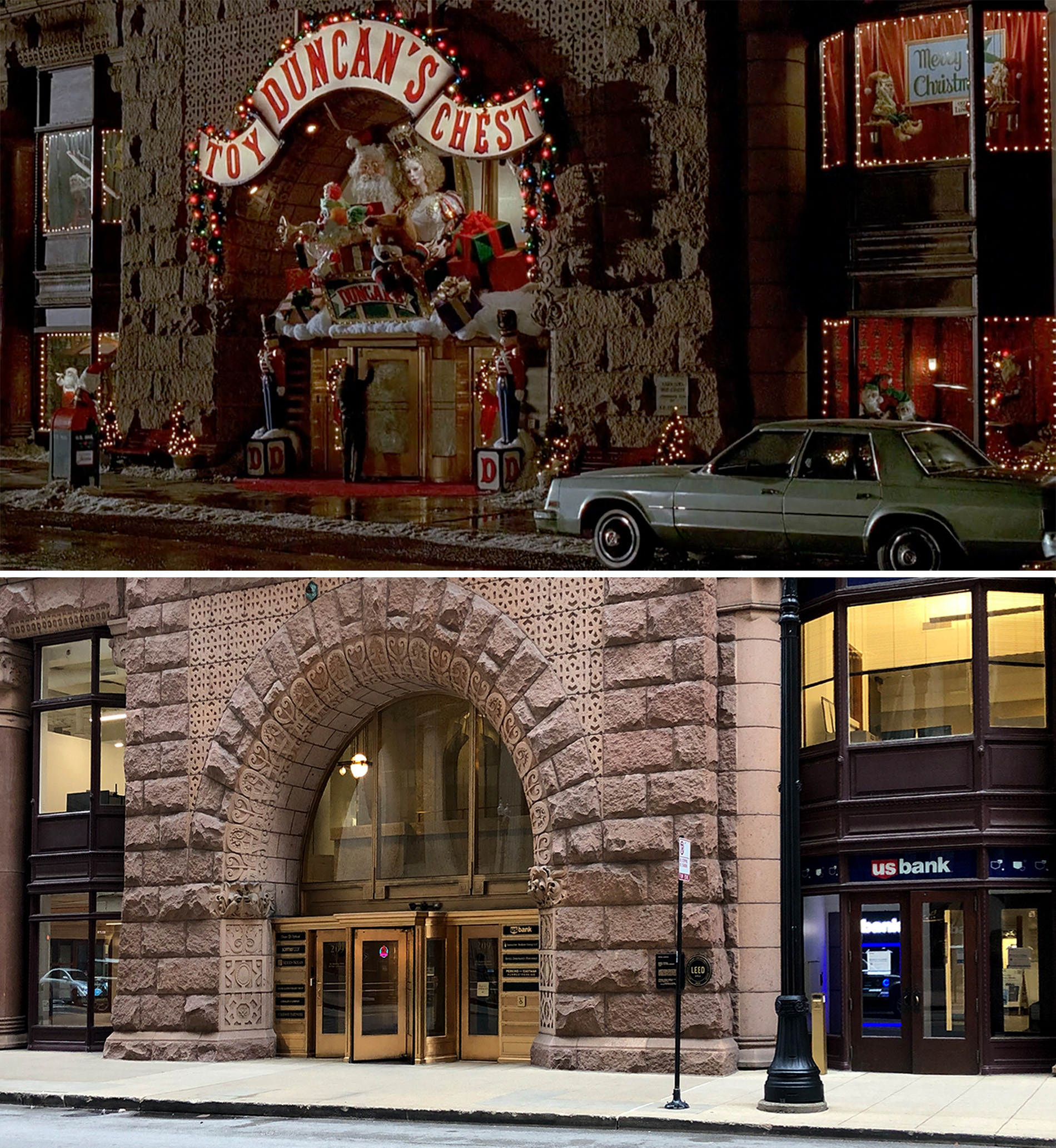
Once again, I relied on other websites to supply the information to where these Chicago scenes were filmed. The exterior was easy to confirm since there were plenty of photos of the building available online.
The interiors were also fairly easy to confirm since the Uptown Theatre, which doubled for the toy store, is a famous Chicago landmark that had several news articles written about it, offering up some nice photos of the lobby area. These news articles were mostly about the restoration plans being made for the Uptown Theatre, which had been vacant since 1981.
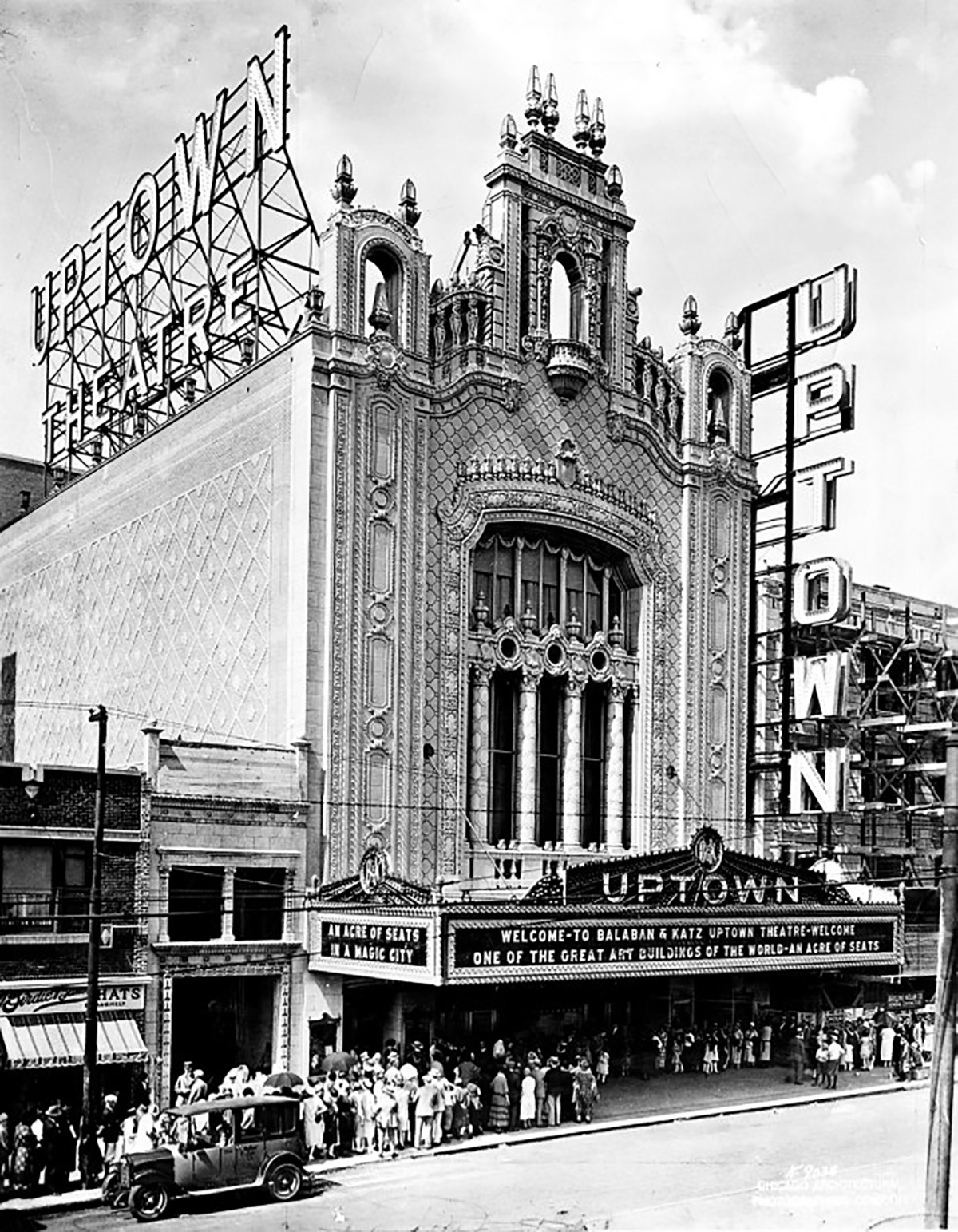
When the Uptown first opened in 1925, it was one of the largest movie palaces in the world, boasting a staggering 4,381 seat auditorium. In the 1970s, it was converted into a live concert venue, but after a burst water pipe caused extensive flooding, the theater shut down permanently. (The last group to play there was the J. Geils Band on Dec. 27, 1981.)
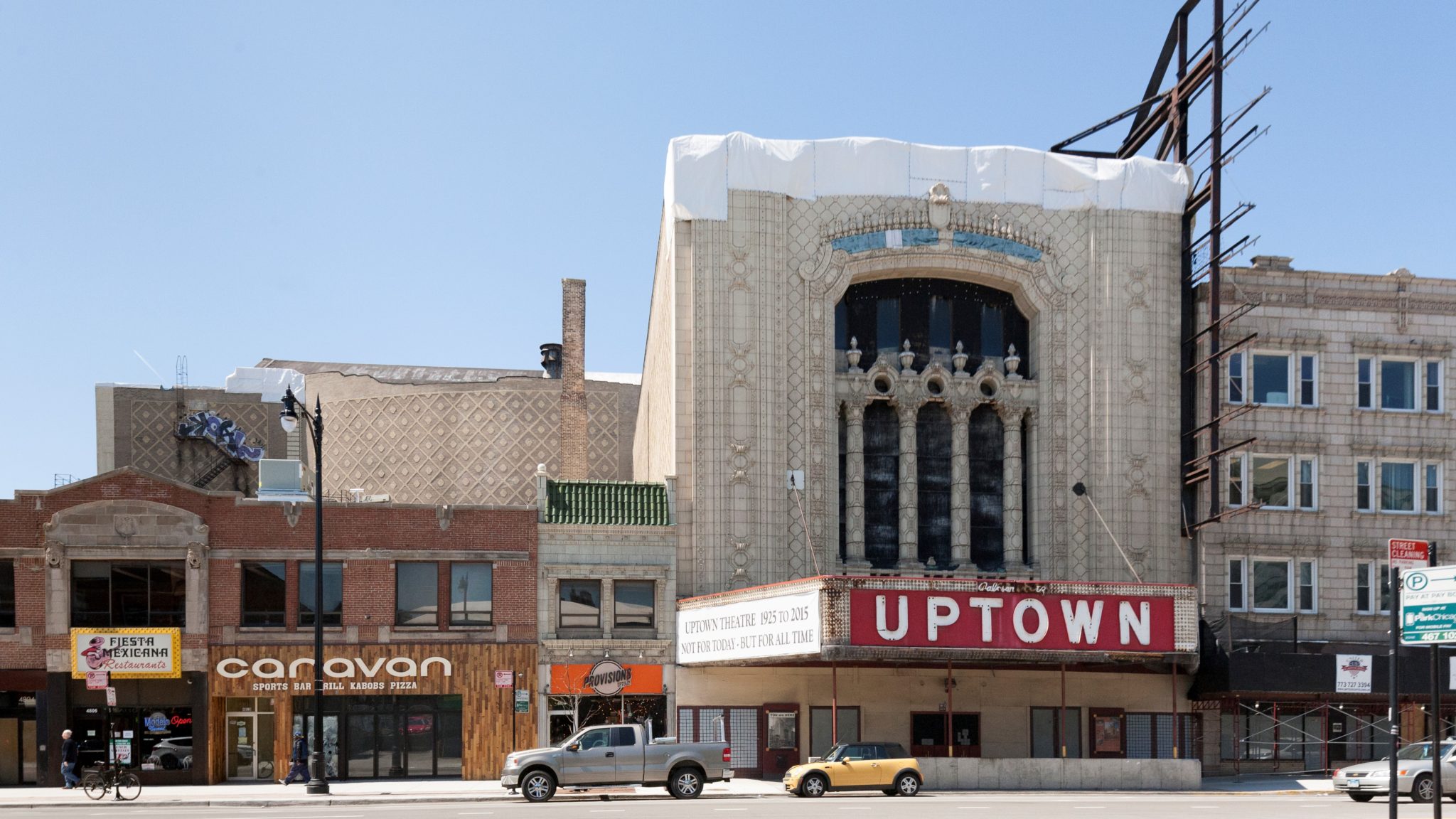
Forty years later, the fate of the Uptown remains uncertain, despite being added to the National Register of Historic Places. Over the last few decades, several restoration plans have been proposed and publicized, but none of them came to fruition, leaving the theater in a state of disrepair. Thankfully, a good portion of the opulent fixtures are still in place, keeping the community still interested in saving the venue.
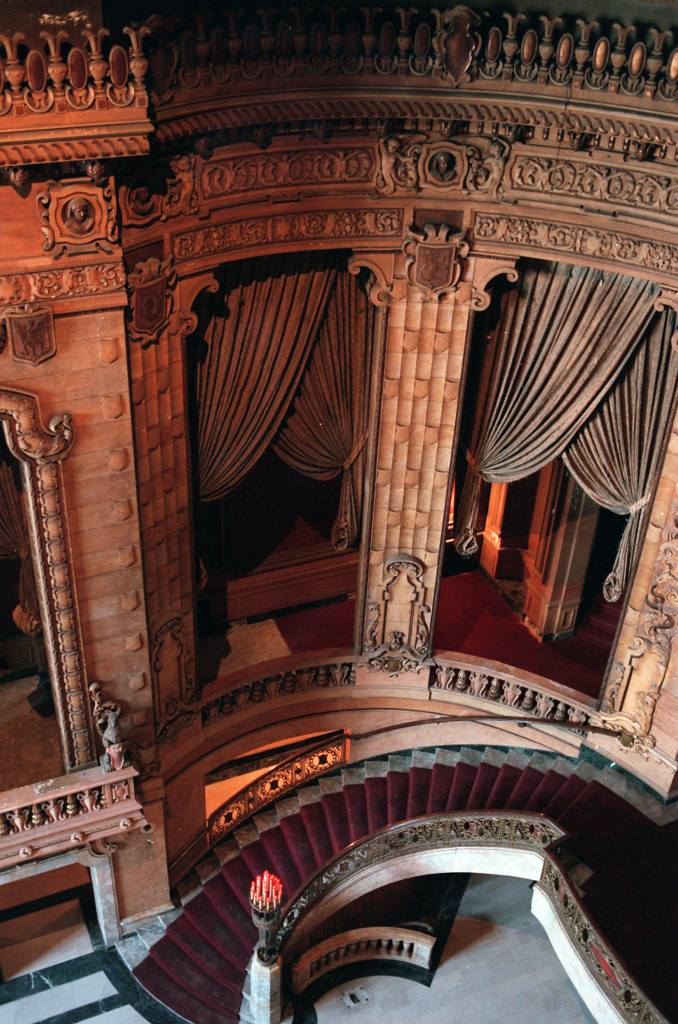
In 2018, plans to renovate the theatre were again announced, but those plans fell through in 2021. In the meanwhile, the property is being kept up by Dave Syfczak, the theater’s full-time caretaker, who took the job after retiring from the Chicago Police Department.
Running Back to the Plaza
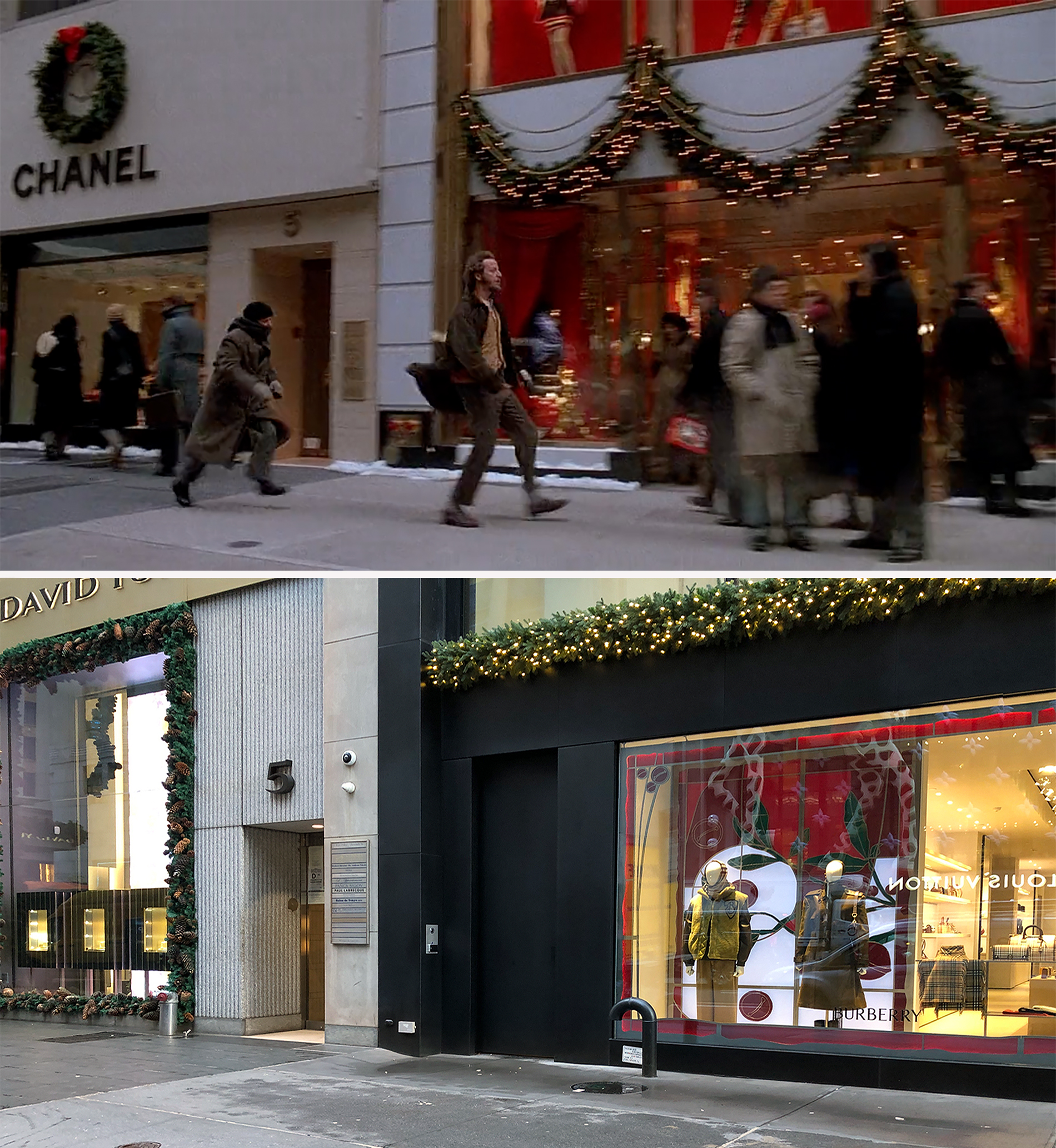
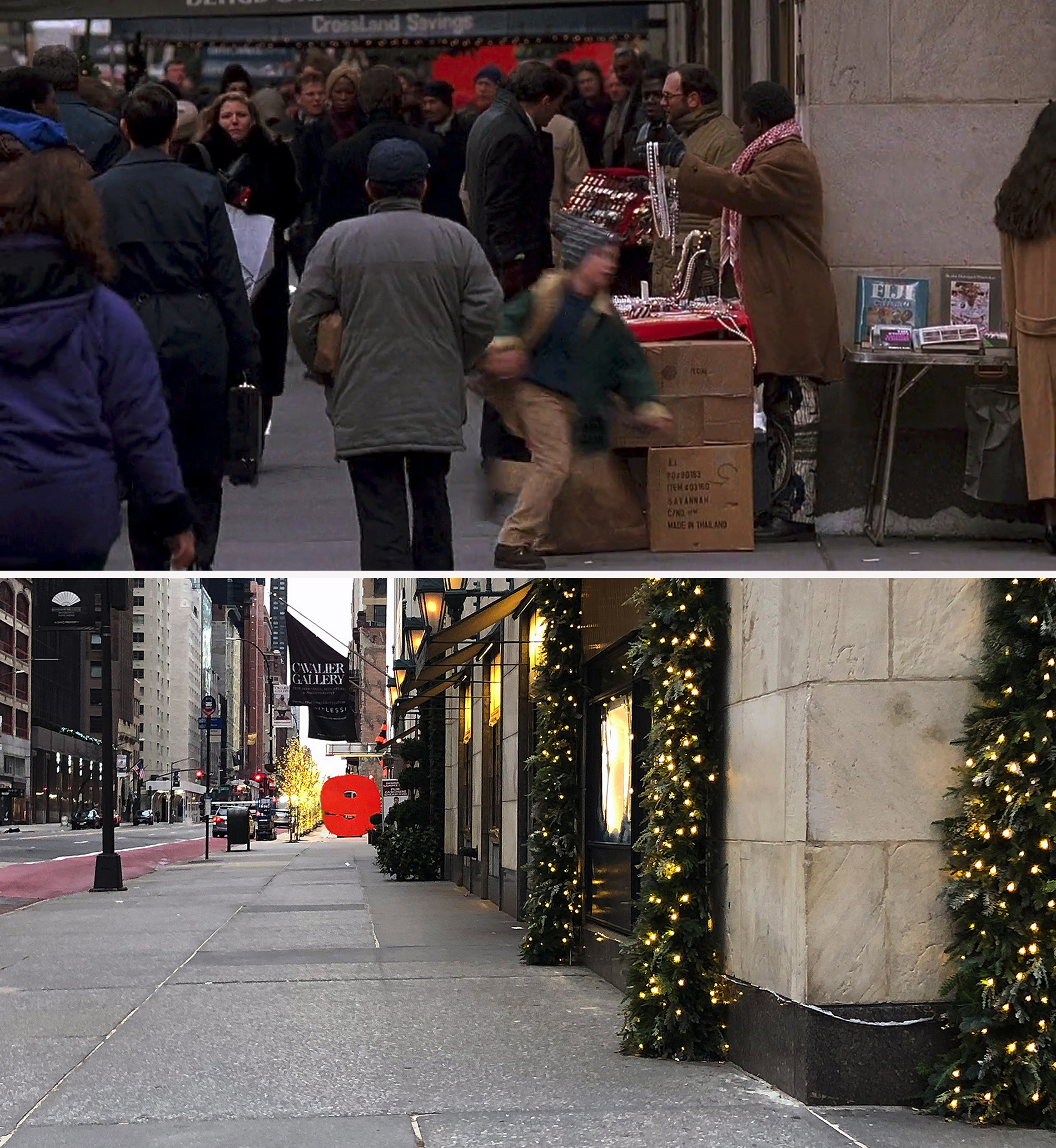
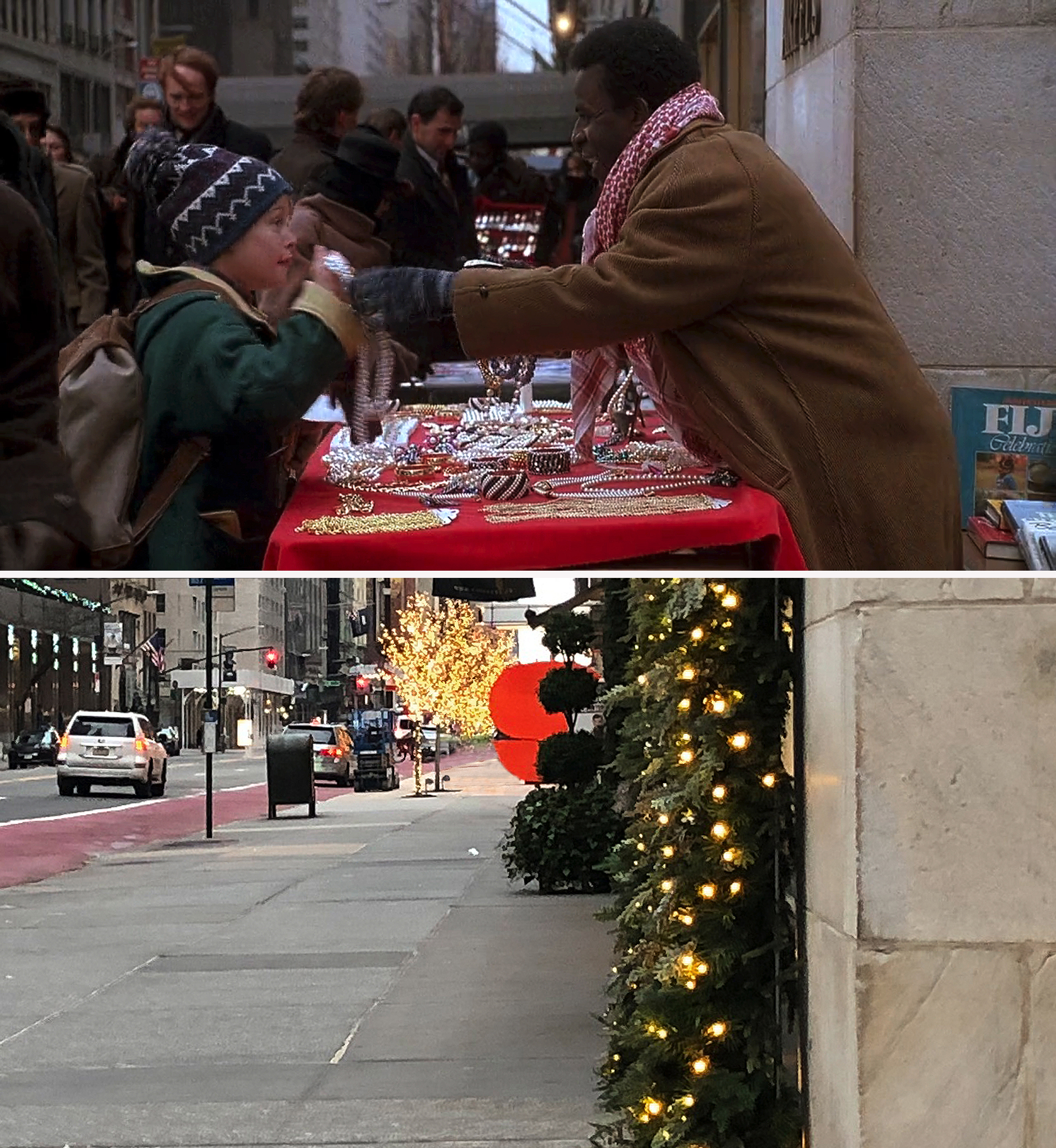
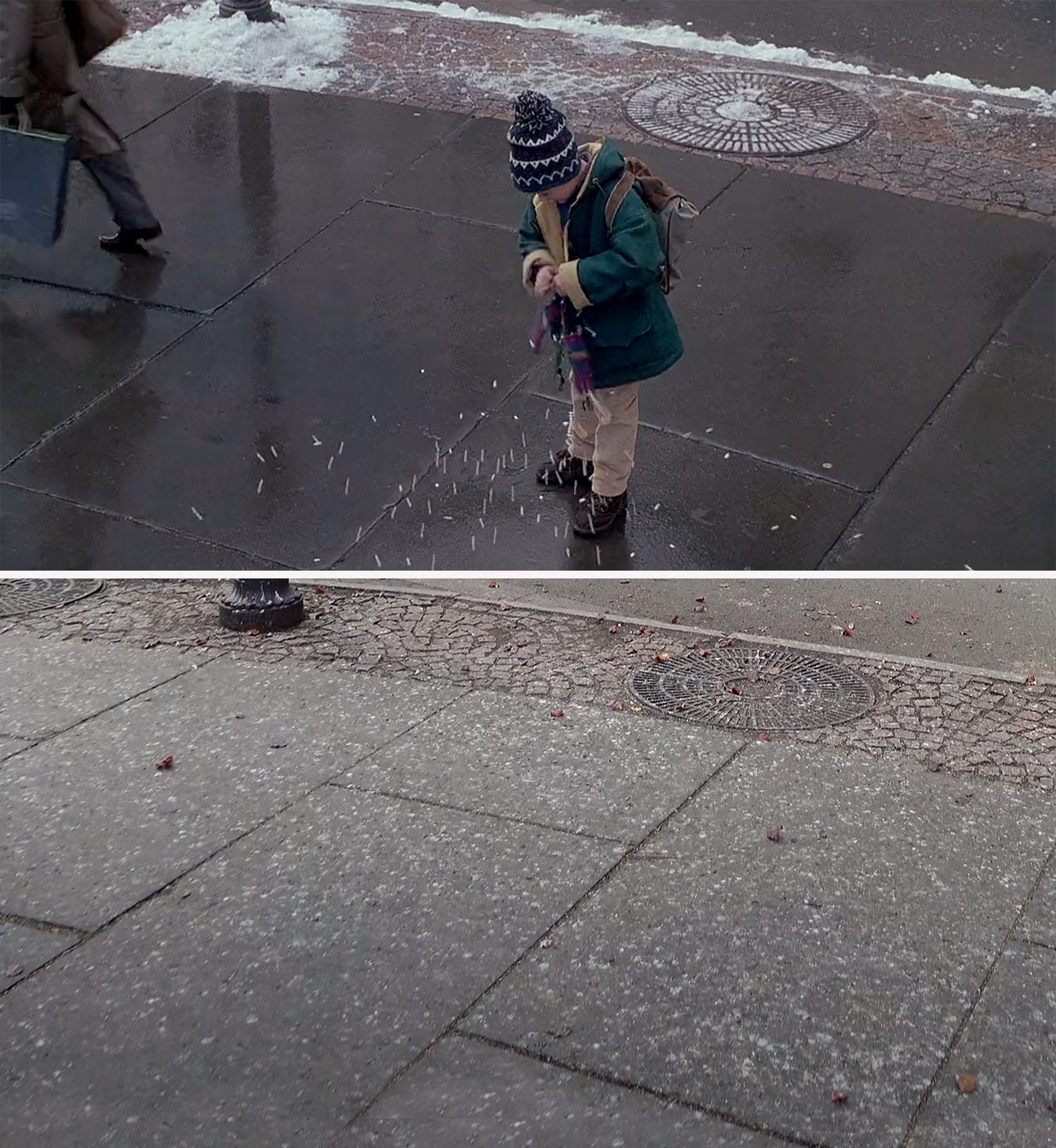
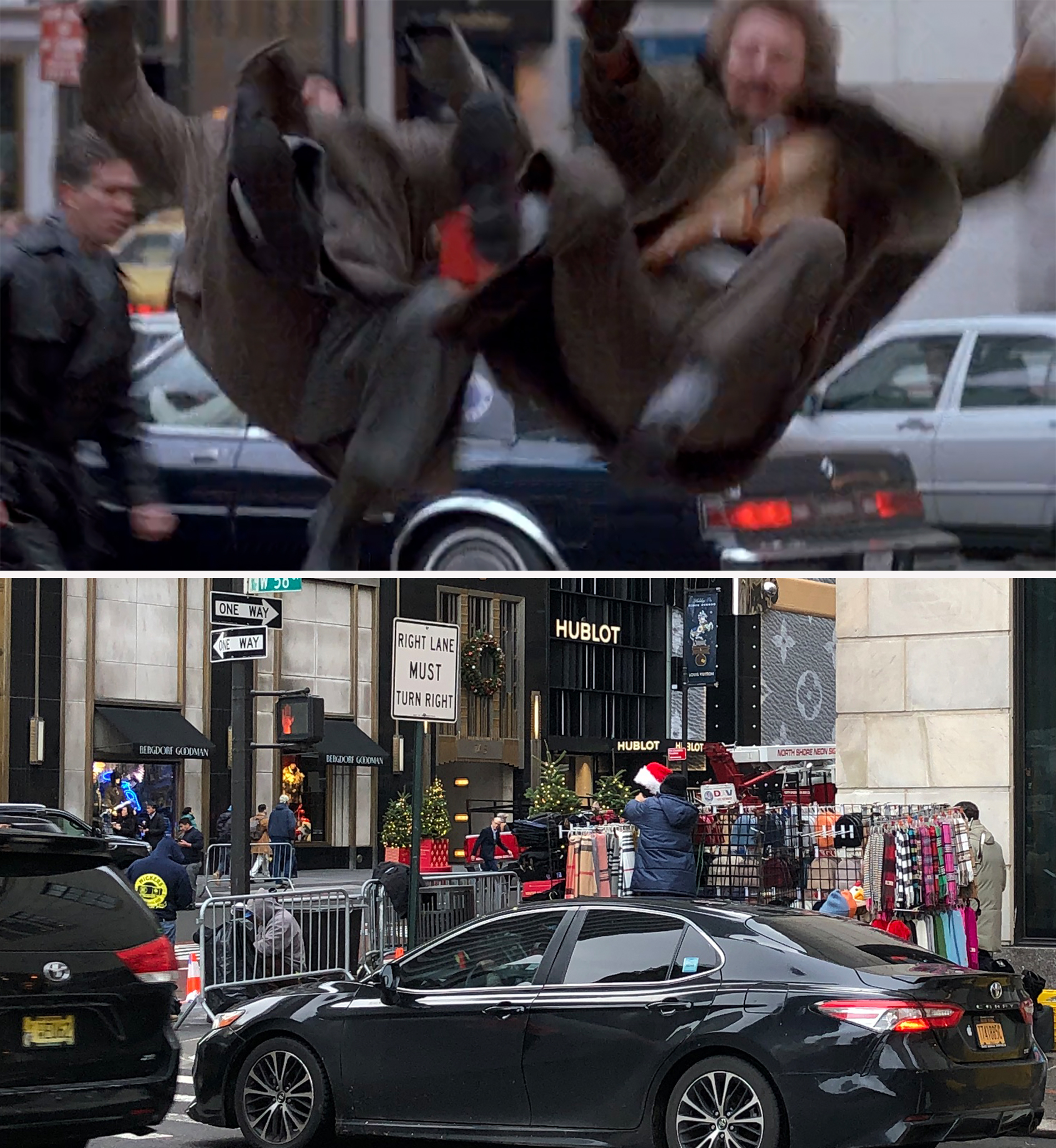

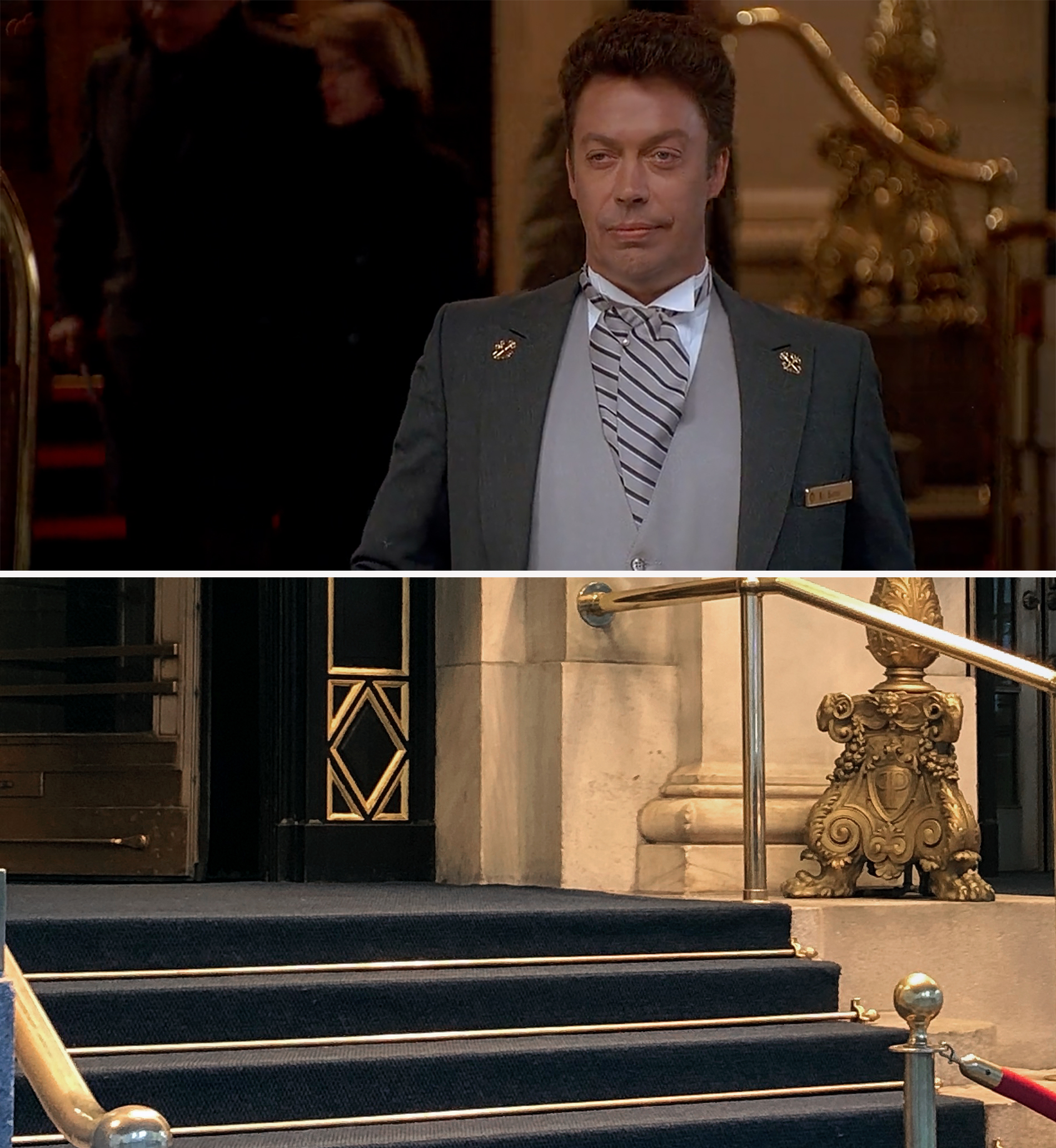
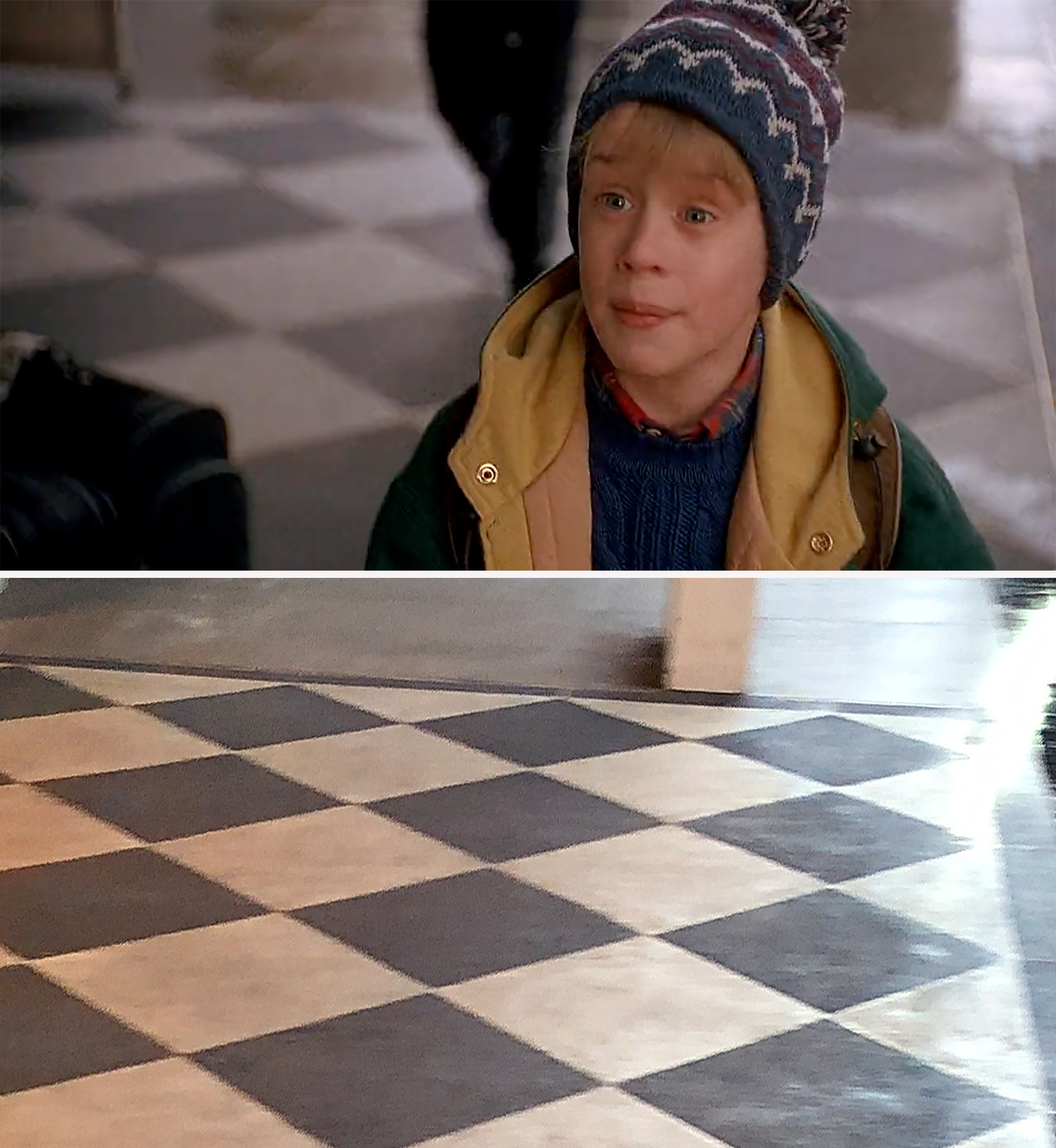

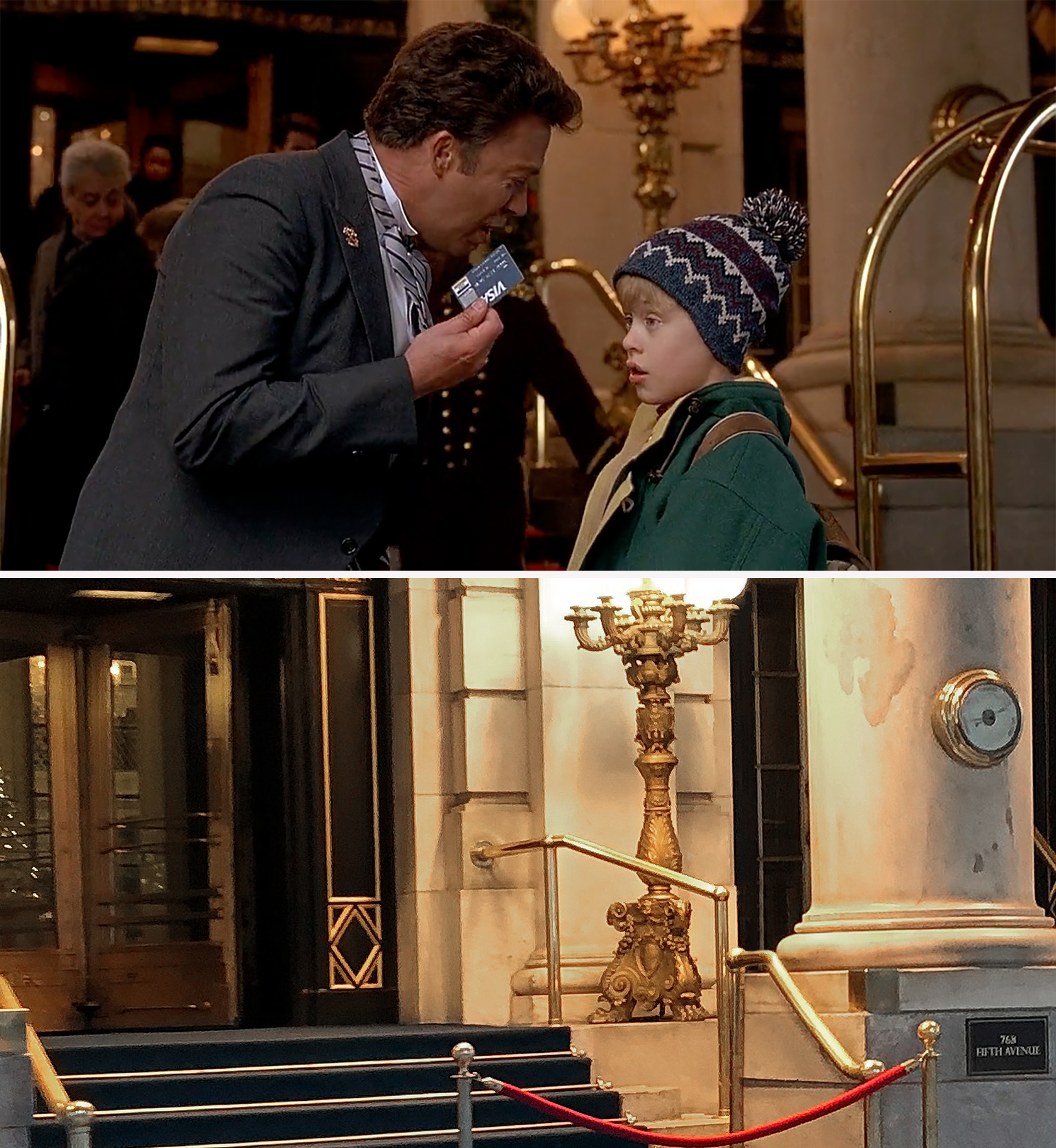
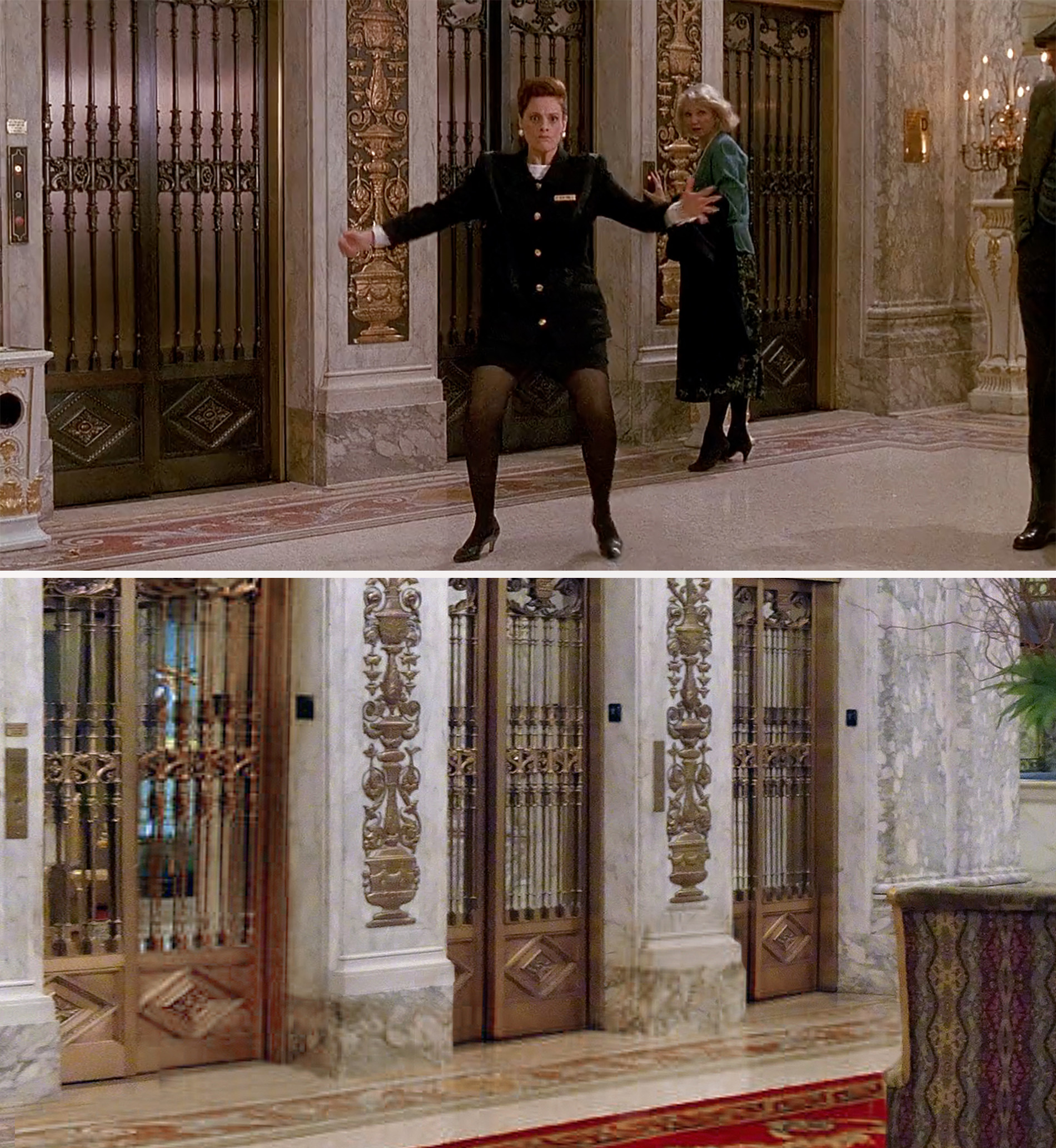
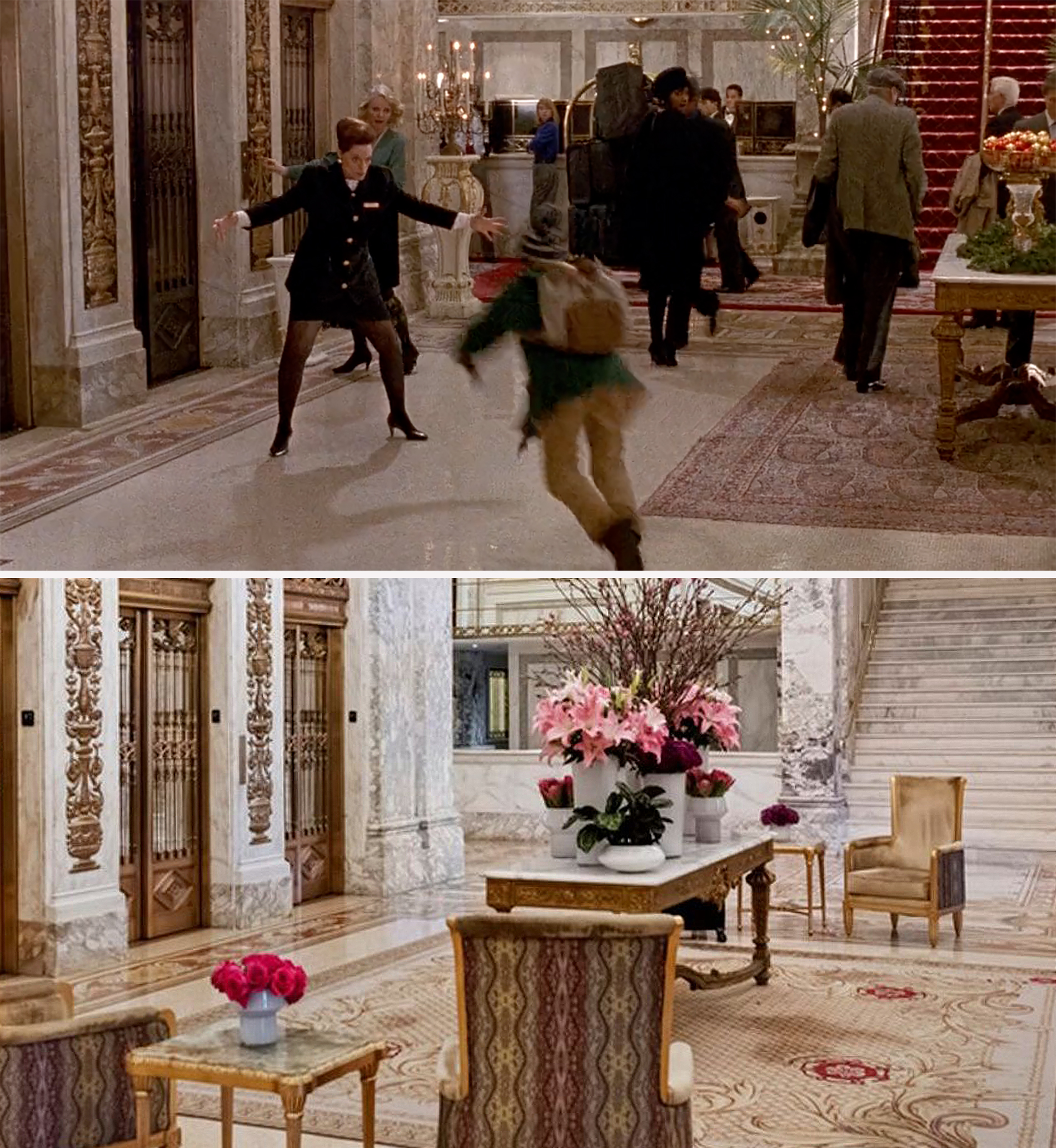
This extended sequence taking place after the characters leave the toy store was shot at and around the Plaza Hotel, with a little minor shuffling in geography.
I always assumed that the tracking shot of the crooks chasing Kevin was filmed just to the west of the corner of 57th and Fifth Avenue where Kevin buys the beads from a street vendor. But for some reason, they shot that stuff to the east of that corner, having the actors technically running in the wrong direction.
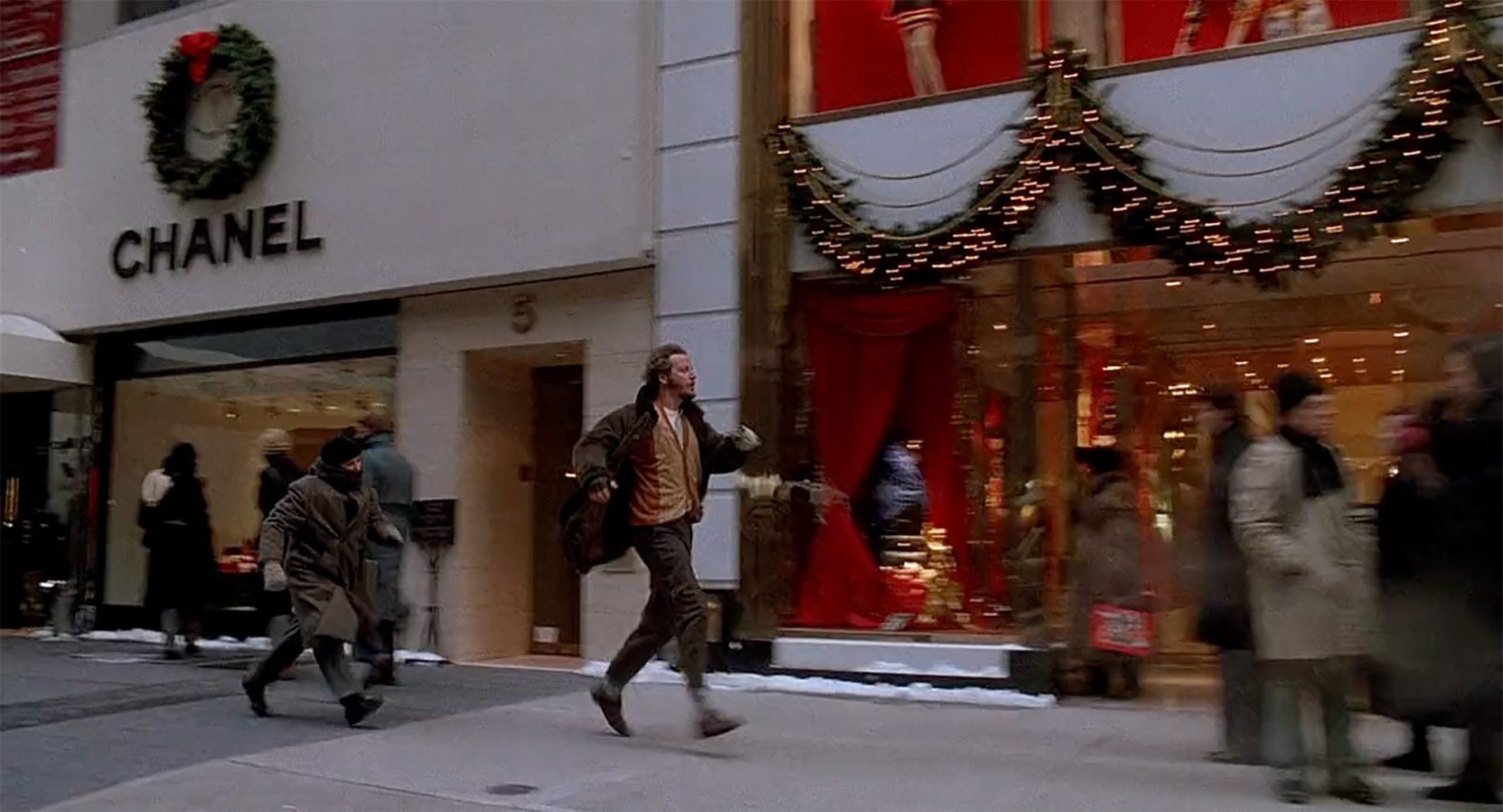
The buildings have changed quite a bit since 1991, but I was able to verify the location by looking up the old address of the Chanel store which was at 5 E 57th.
As to why the filmmakers decided to shoot on this block instead of the one where the street vendor was stationed, my guess is because the stores’s Christmas window displays were a little more dazzling. (Since they were filming during the holiday season in NYC, production utilized the Christmas decorations already on display, saving them time and money from putting up their own.)
Alleyway
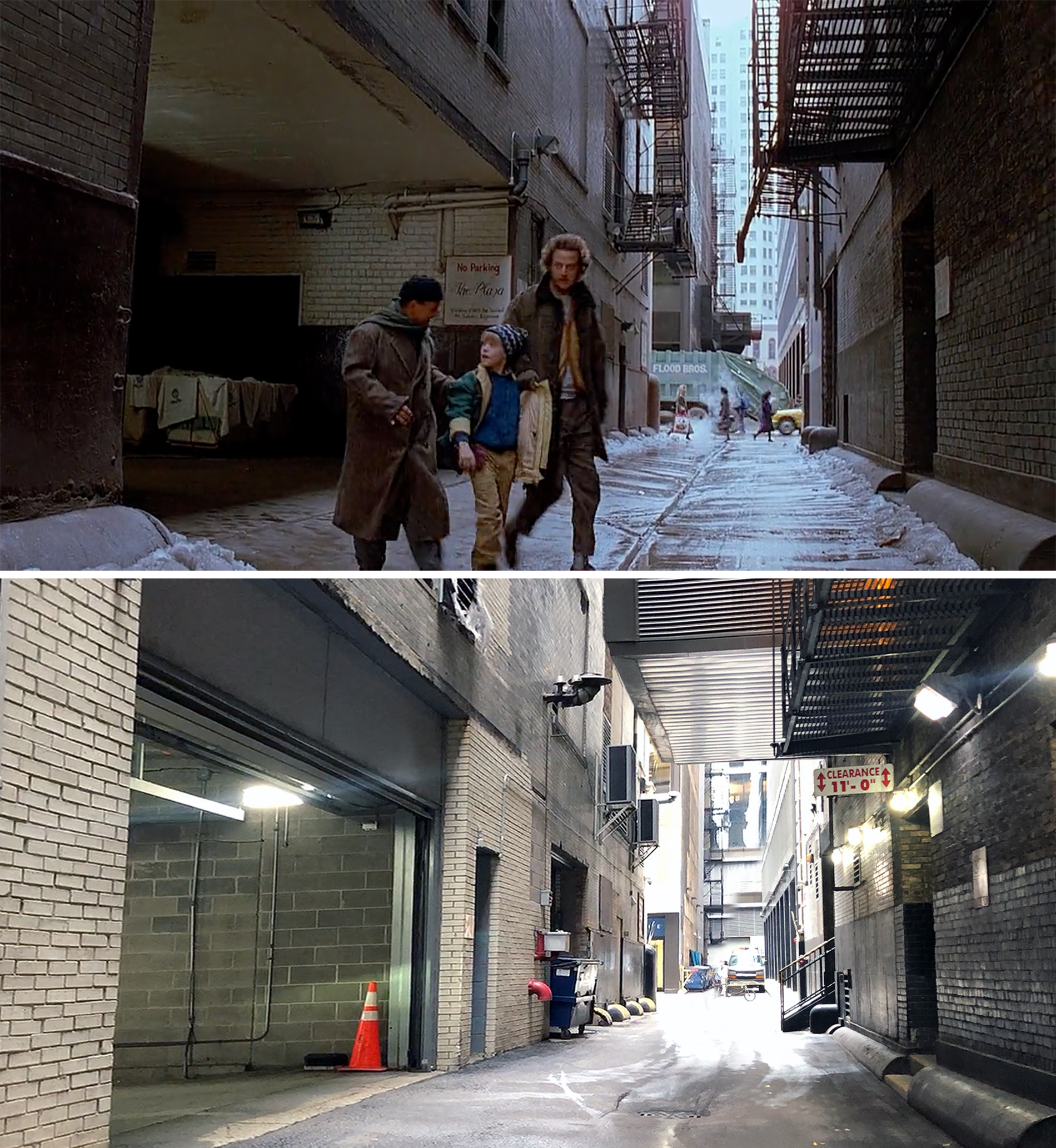
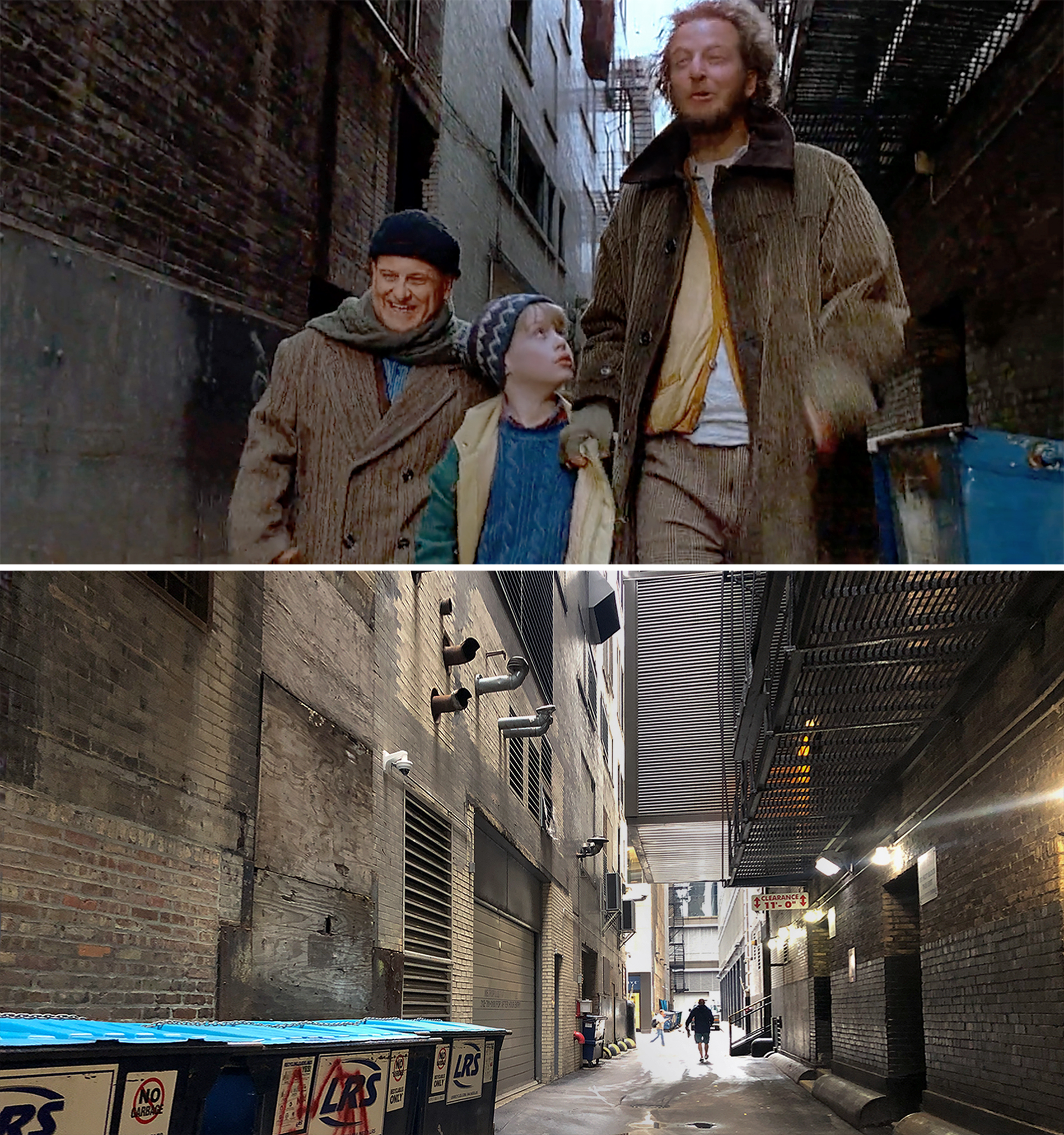
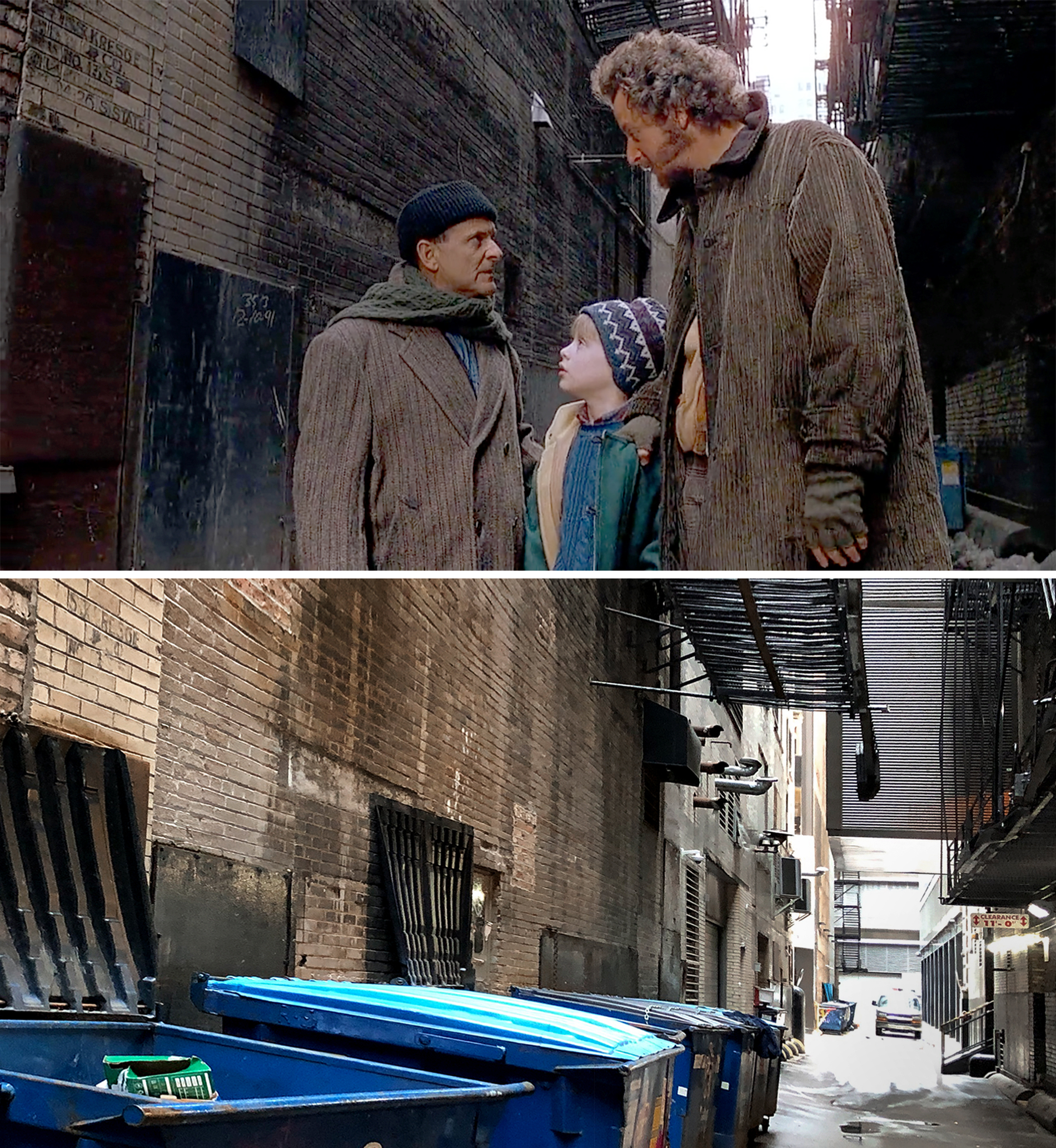
This alley was one of two major locations that hadn’t been identified by anyone before I decided to tackle this movie. And ironically enough, both of the locations were in Chicago, masquerading as New York.
I had a feeling this alleyway was in Chicago since New York actually has very few alleyways like this. Not to mention, I’m already pretty familiar with all the main alleys in Manhattan and I could tell none of them matched the one in this scene.
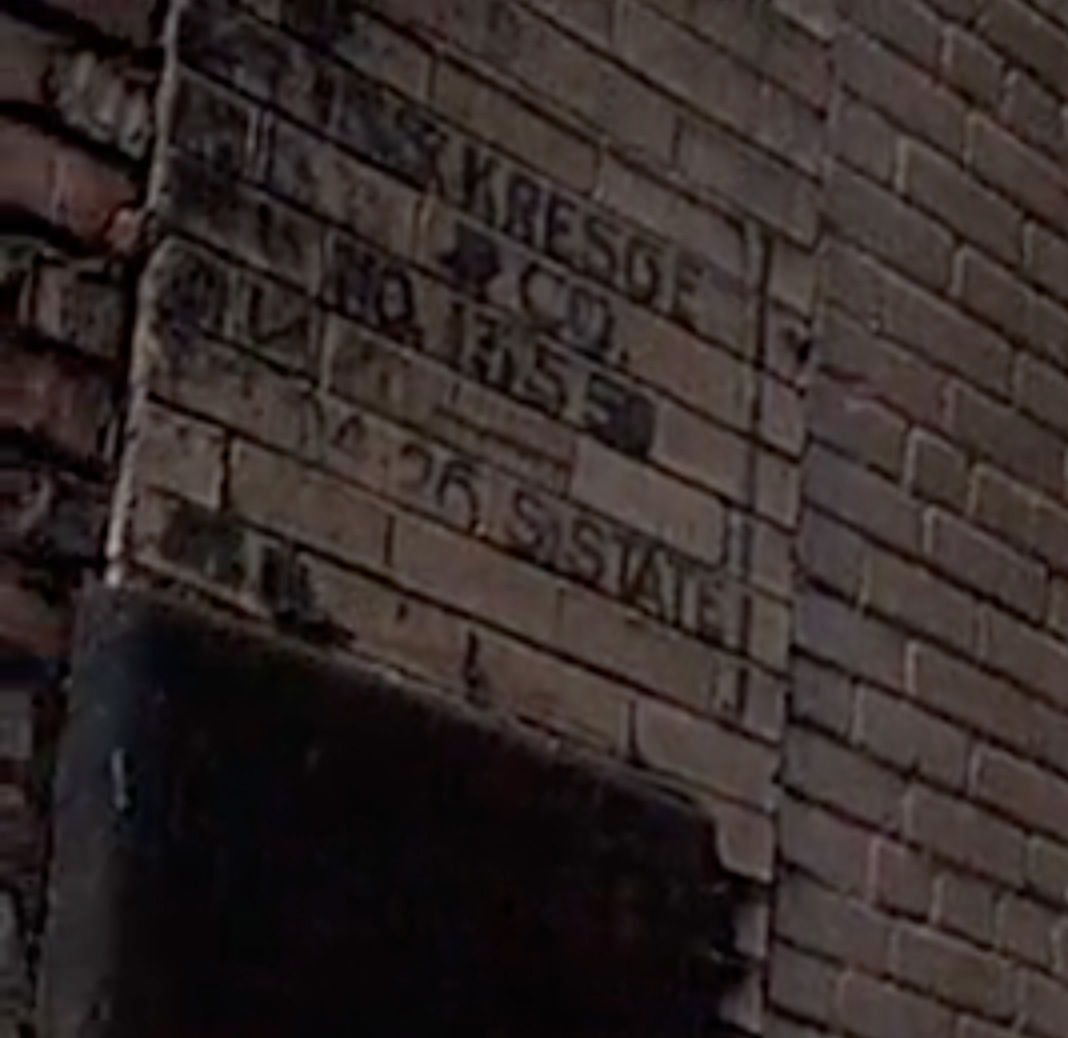
Needless to say, figuring out which alley was used could be a daunting task, especially since I’m not very familiar with the city of Chicago. But fortunately, I was able to spot a partial address stenciled on one of the brick walls, indicating they were in an alley behind State Street.
I then found an ad for the former Kresge’s dollar store —whose name was also stenciled on that wall— indicating that one of their outlets was located on S State Street.
From there, I just cruised up and down State Street in Google Maps, looking for any alleys that paralleled it, finally zeroing in on the block between Madison and Monroe Streets.
Unfortunately, Google didn’t have a street view of the actual passageway, but looking at it from above, the layout appeared correct. I eventually became pretty convinced I found the right spot when I was able to match up the corner of the CIBC Theatre building —which is at the southern opening to the alleyway— with the movie.

When I finally was able to see the alley in person during my visit to Chicago last month, I was excited to discover that the stenciled address that helped me figure out this location is still on the wall (albeit, a little more faded).
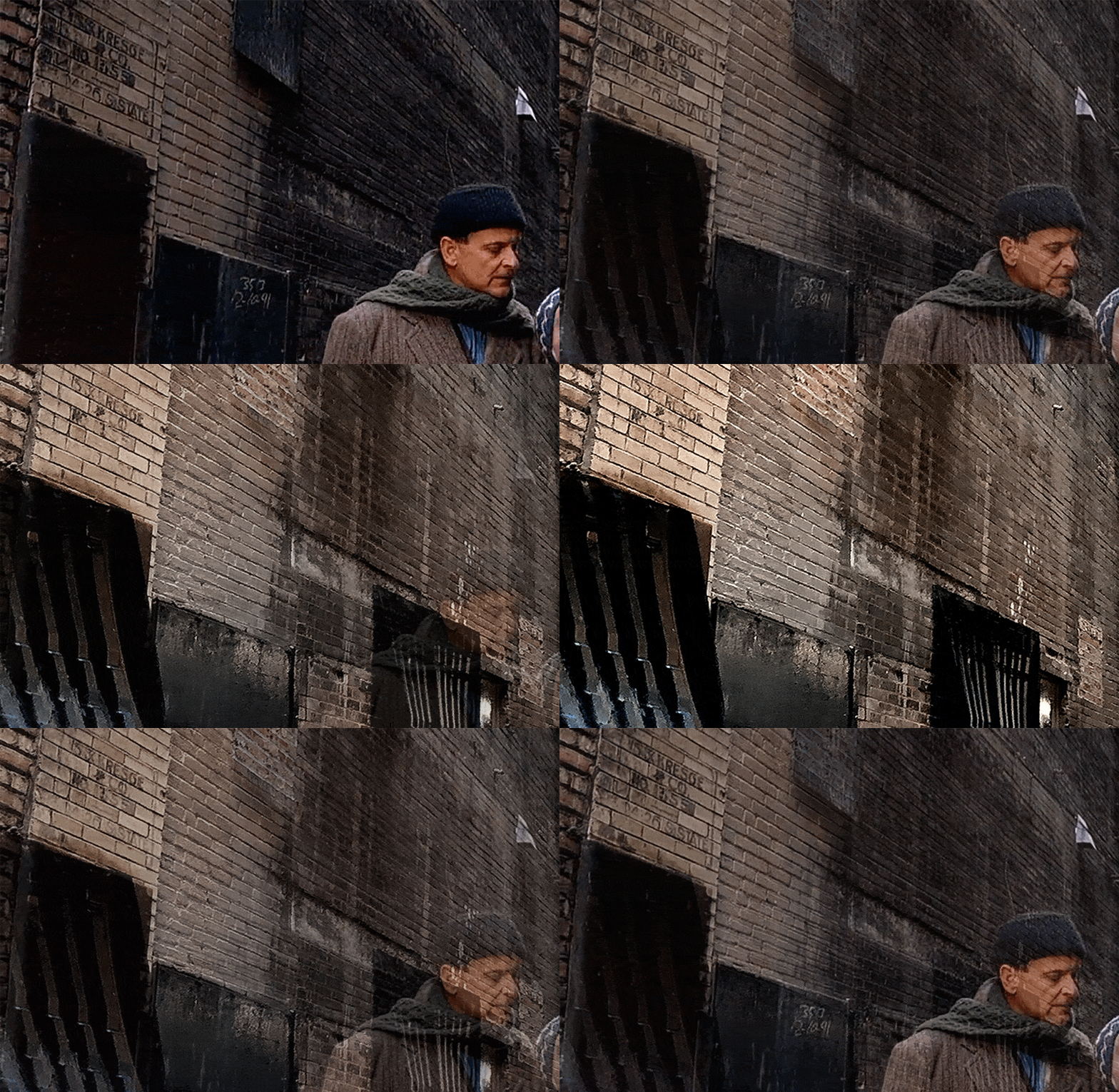
I also discovered that the little alcove area that posed as the service entrance to the Plaza Hotel is now an entrance to a parking garage and has been reconfigured a bit since the nineties. But a lot of the other doors and fixtures are still the same today, matching up nicely with the movie.
Kevin Breaks Free
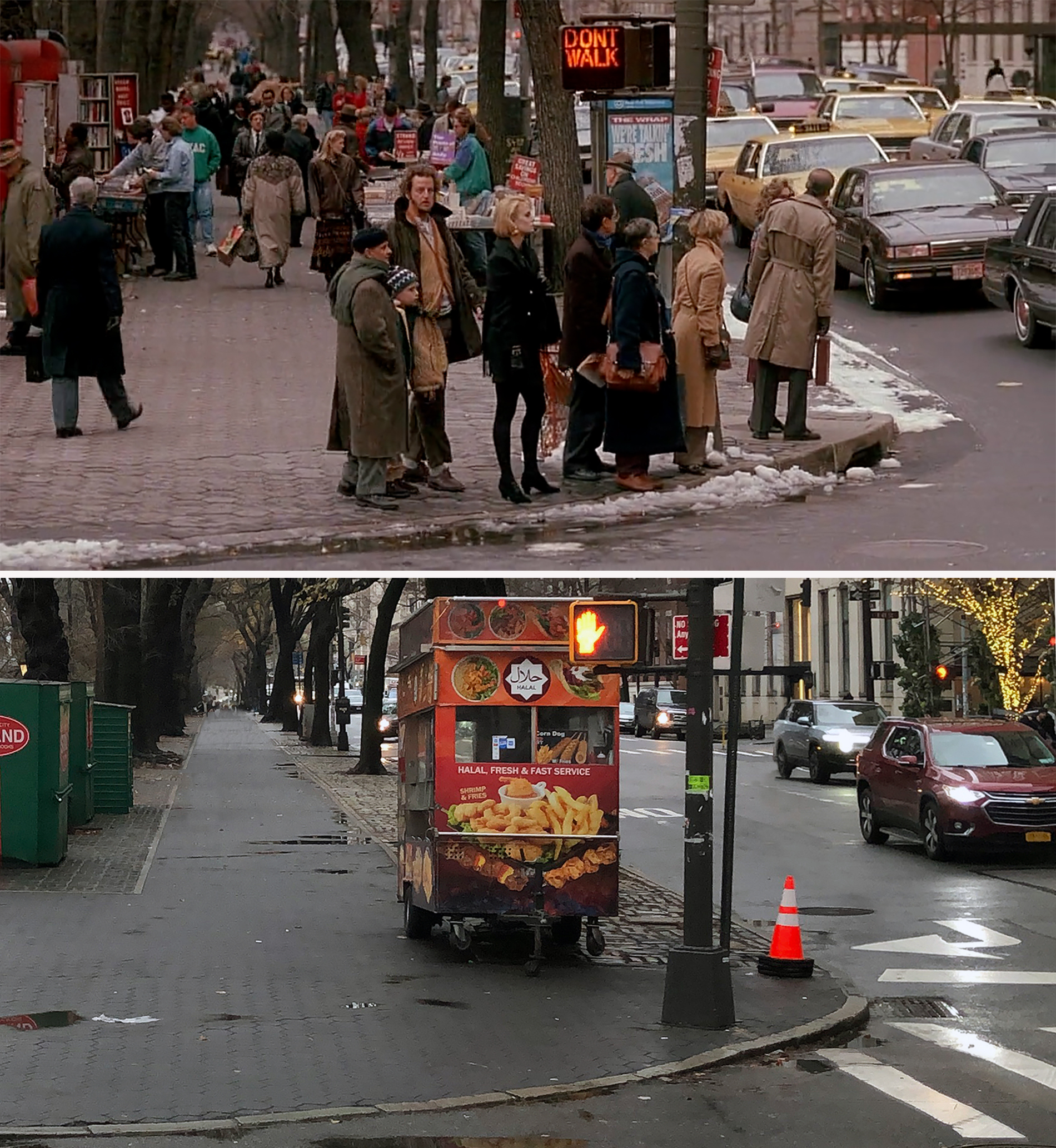

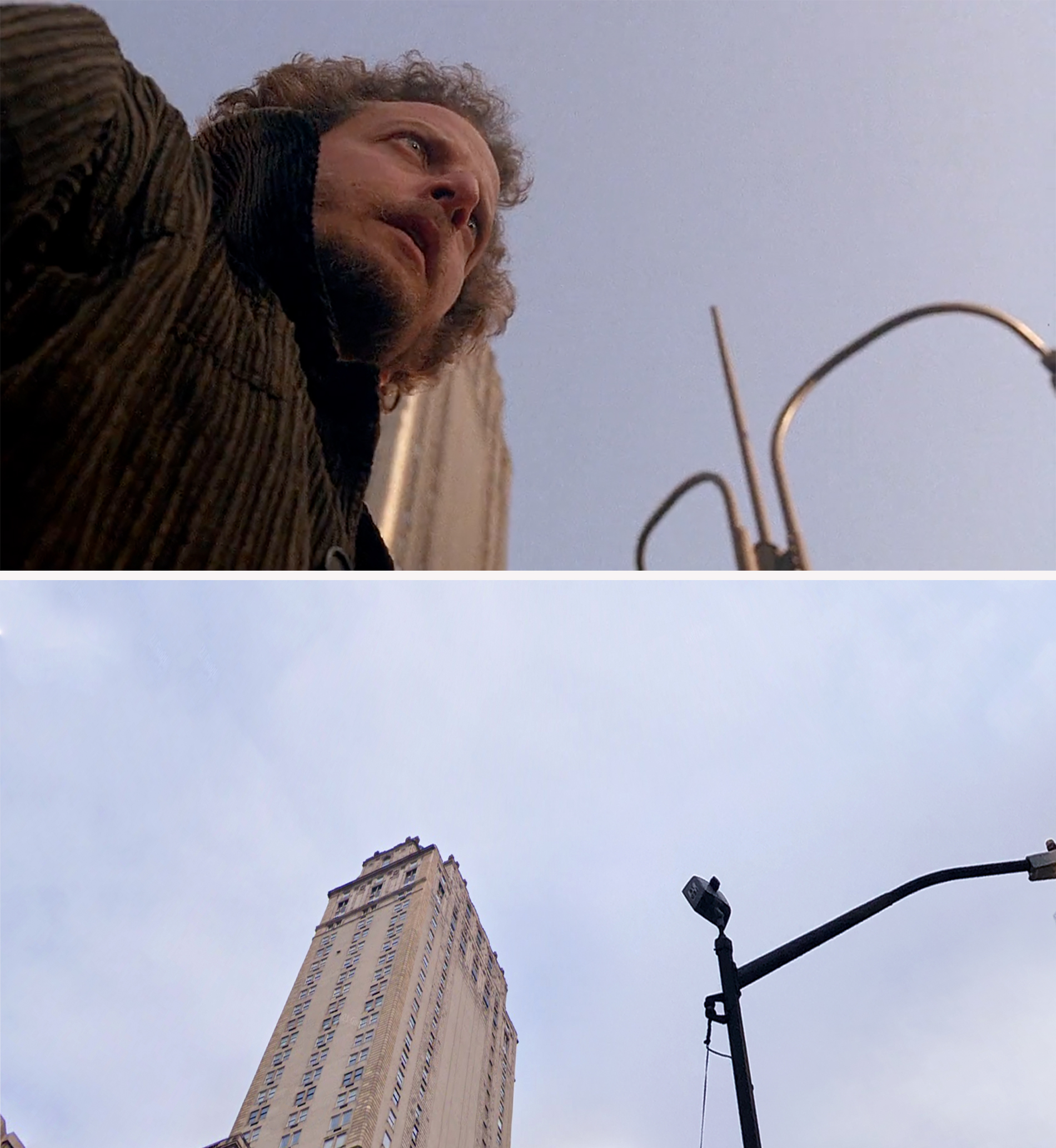
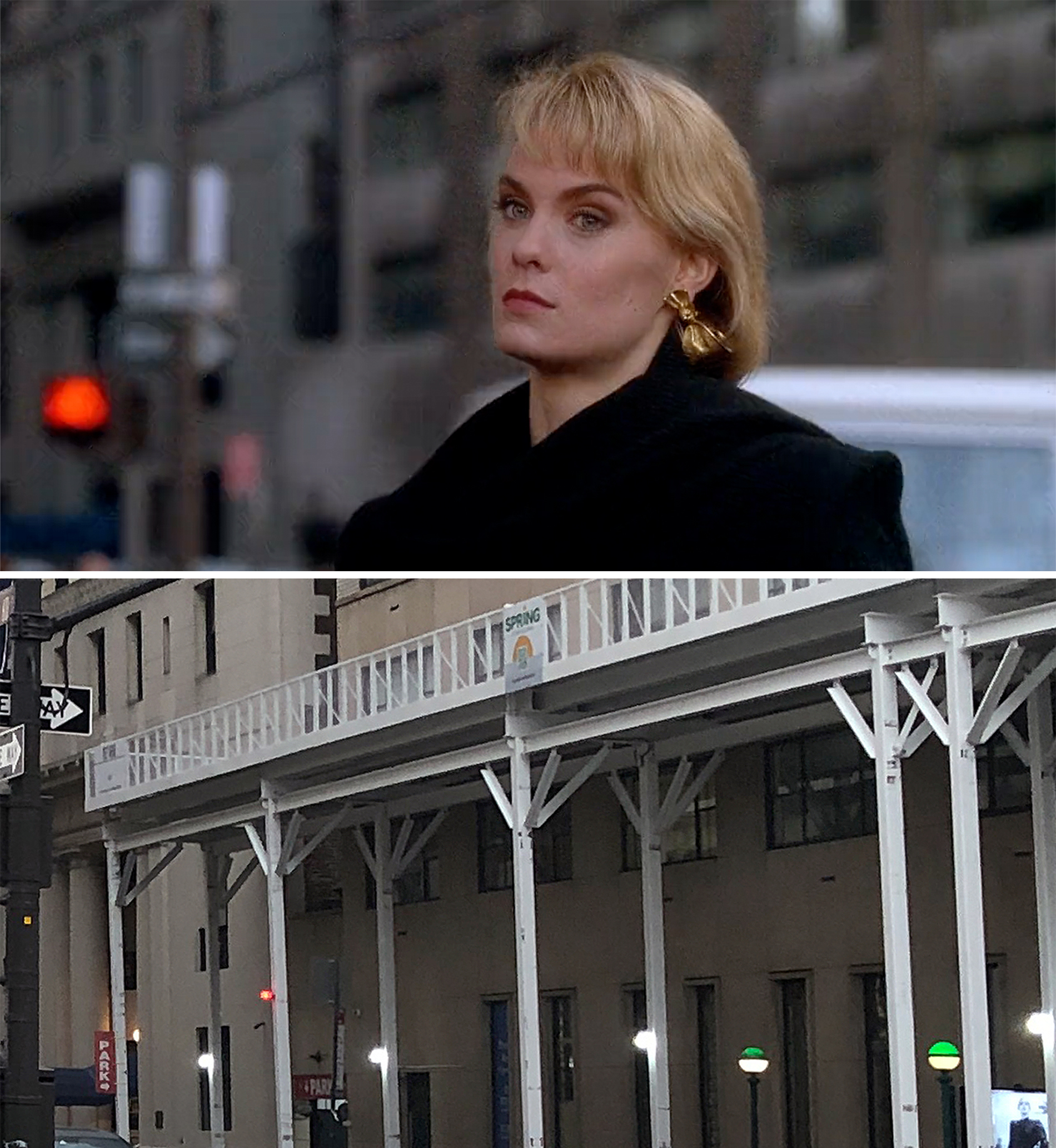
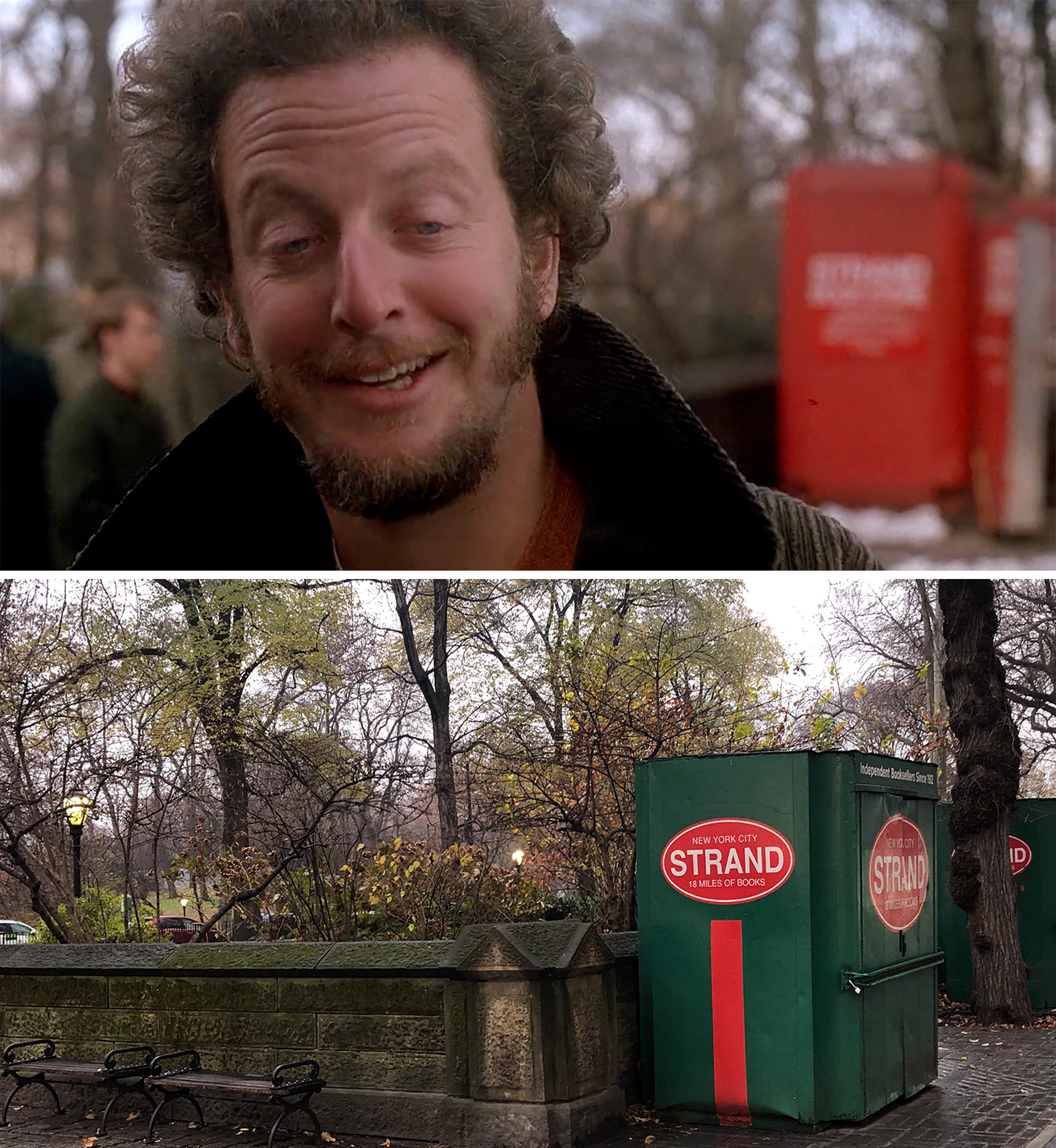

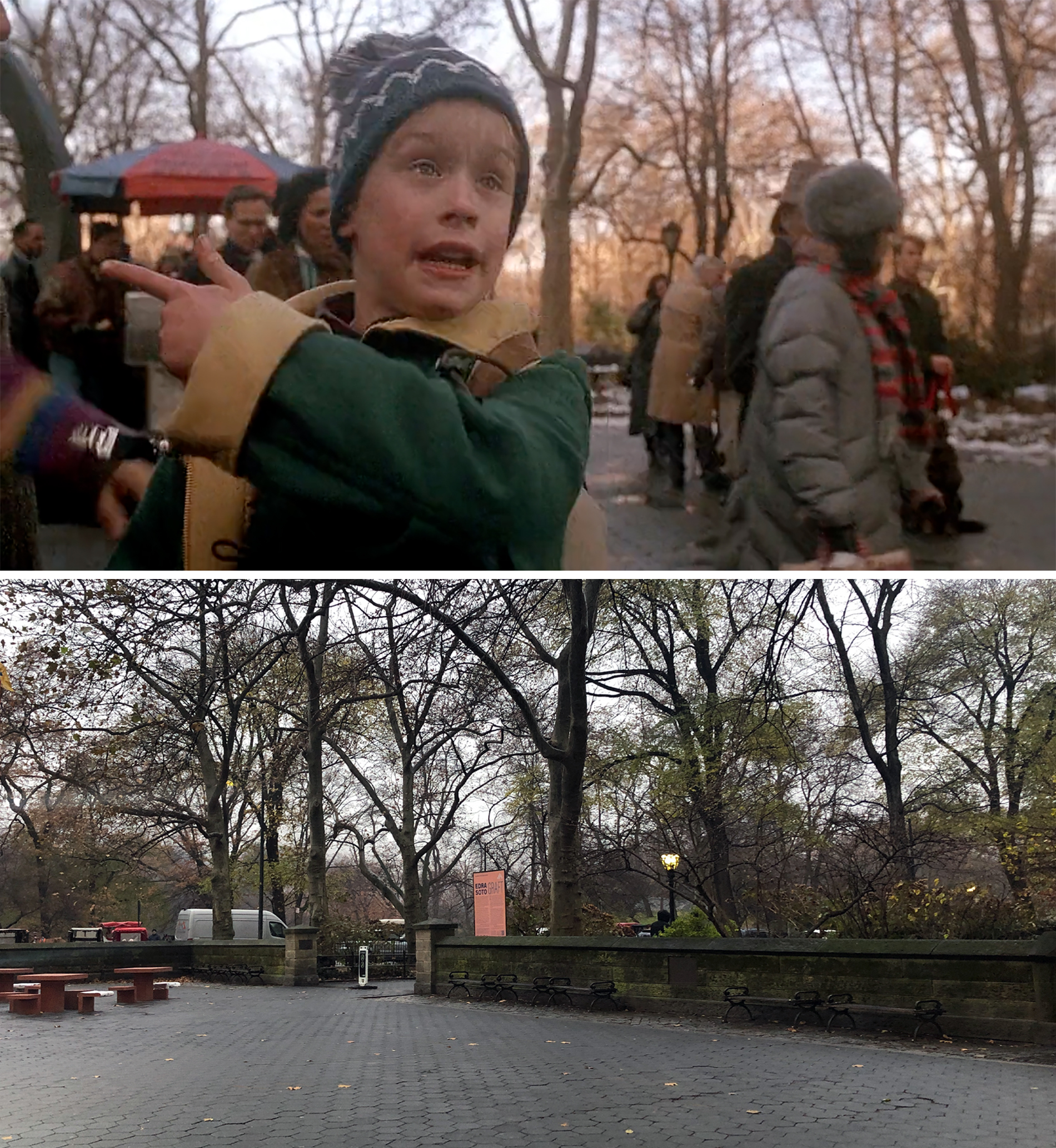
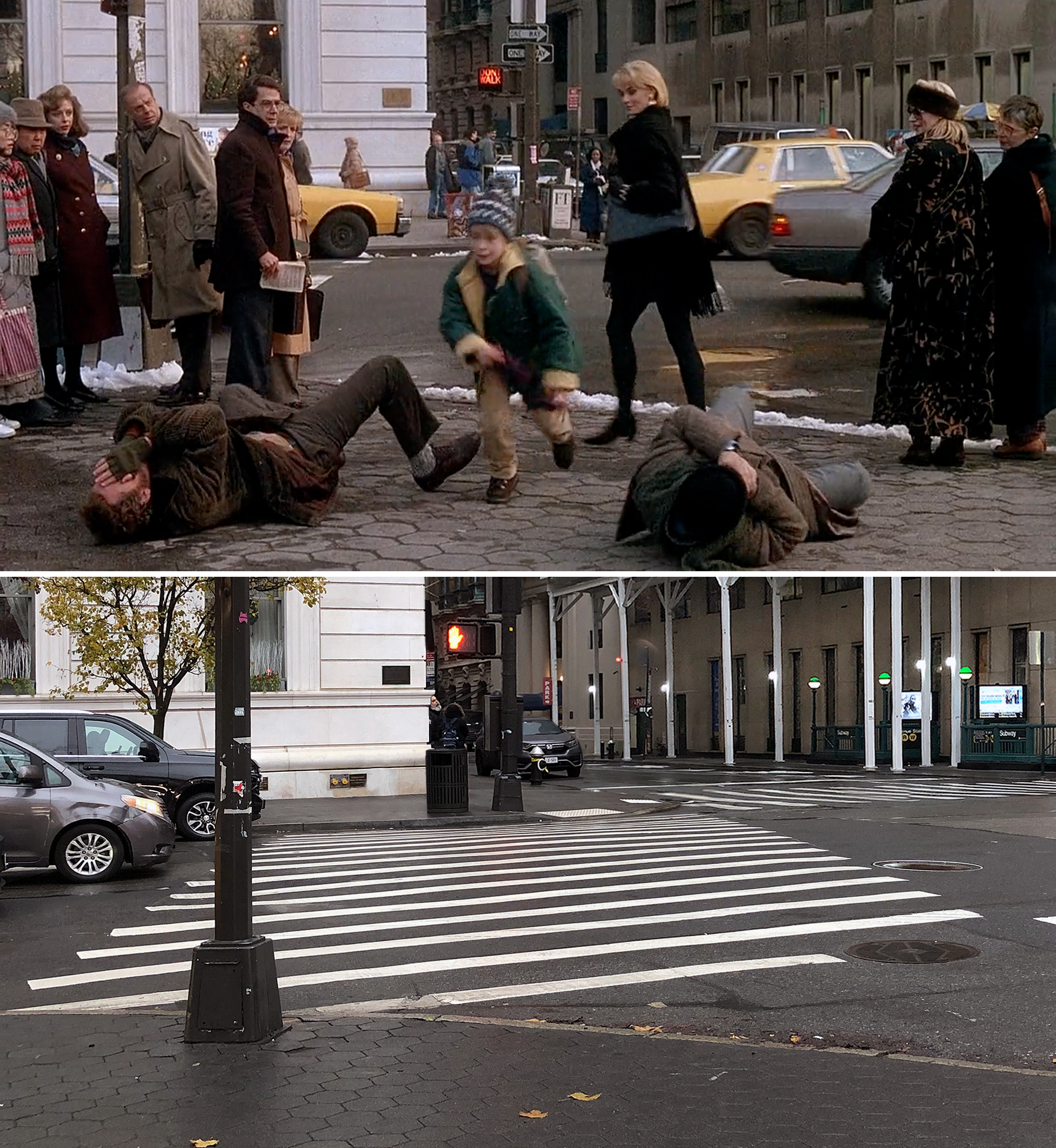

Lots of surrounding buildings helped me figure out what entrance to Central Park was used in this scene. Not the mention, the Strand book kiosks were a dead giveaway that we were on the corner of 60th and Fifth Avenue, which have been operating on that sidewalk since the 1960s.
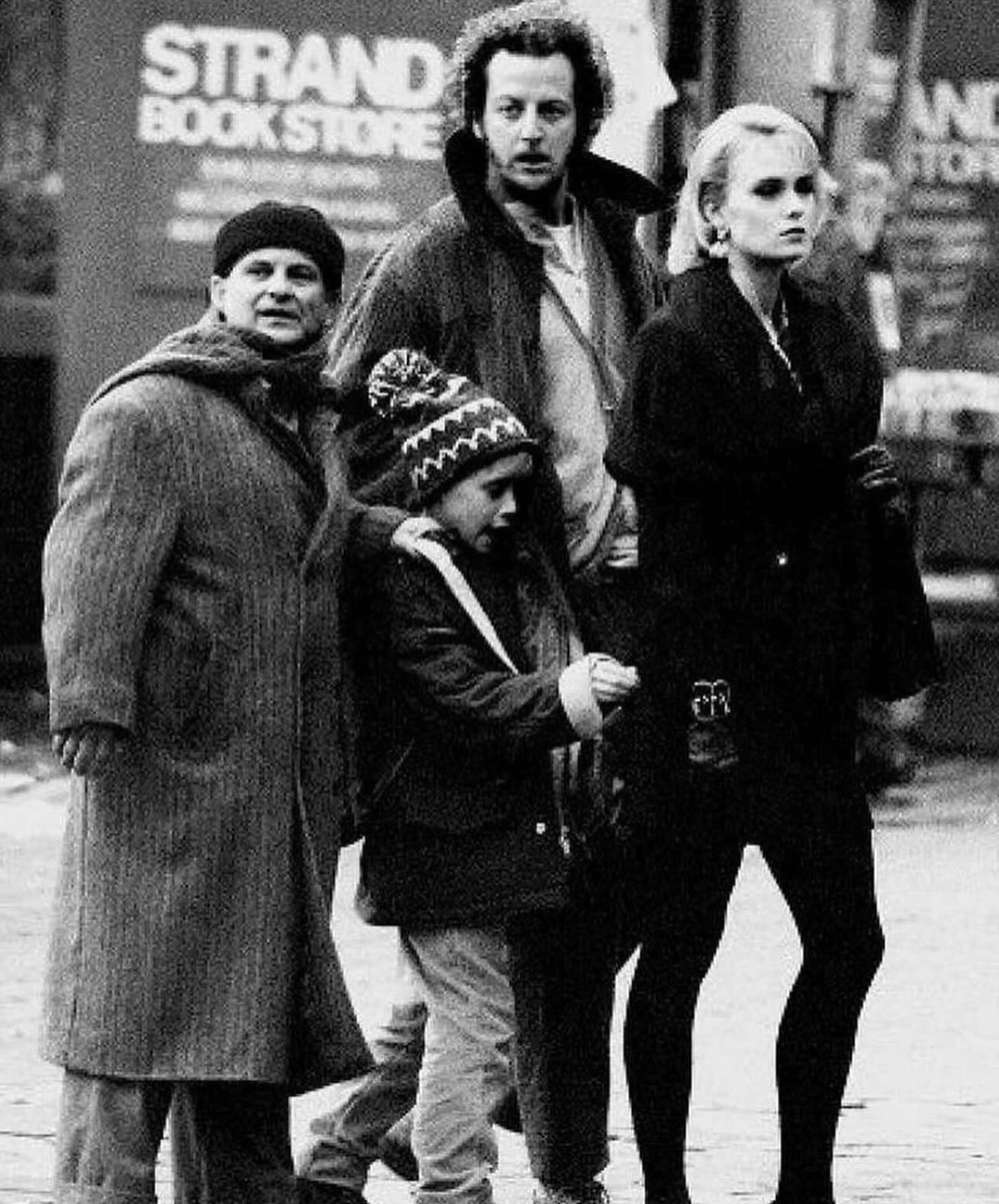
The only real peculiarity with the scene comes at the very end when Culkin runs into Central Park. He clearly used the entrance right at that corner (you can still match up several of the trees), entering at what is known as “Scholars Gate.”
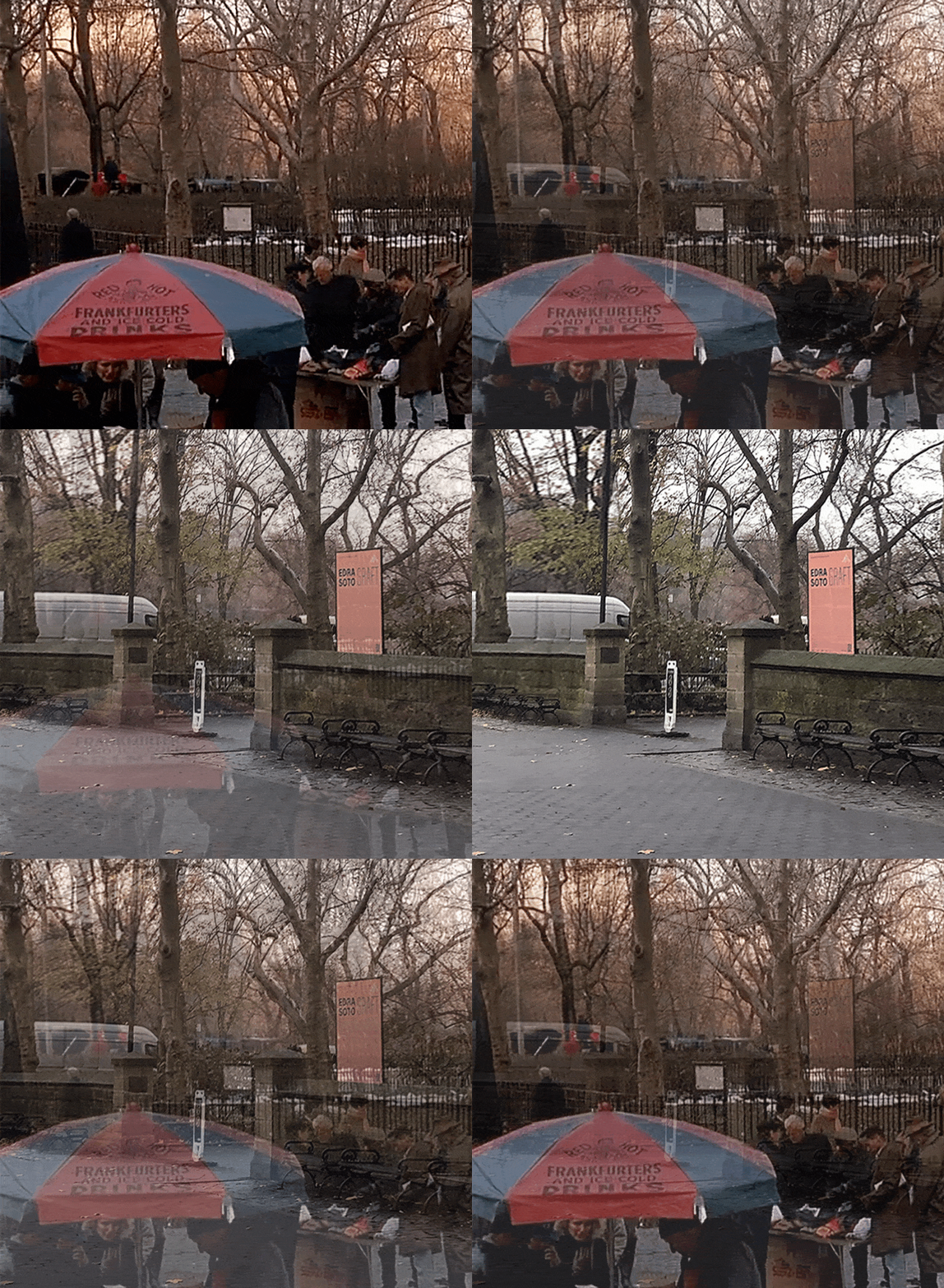
But here’s the strange thing, even though there’s a standard stone wall on the park border today, there didn’t appear to be one in the movie. As I researched the recent history of Central Park, I couldn’t find any records of a wall being removed or added anywhere along the perimeter. The only record of an update to the park I could find was the chiseling of the gate names, which were primarily added in the 1990s.
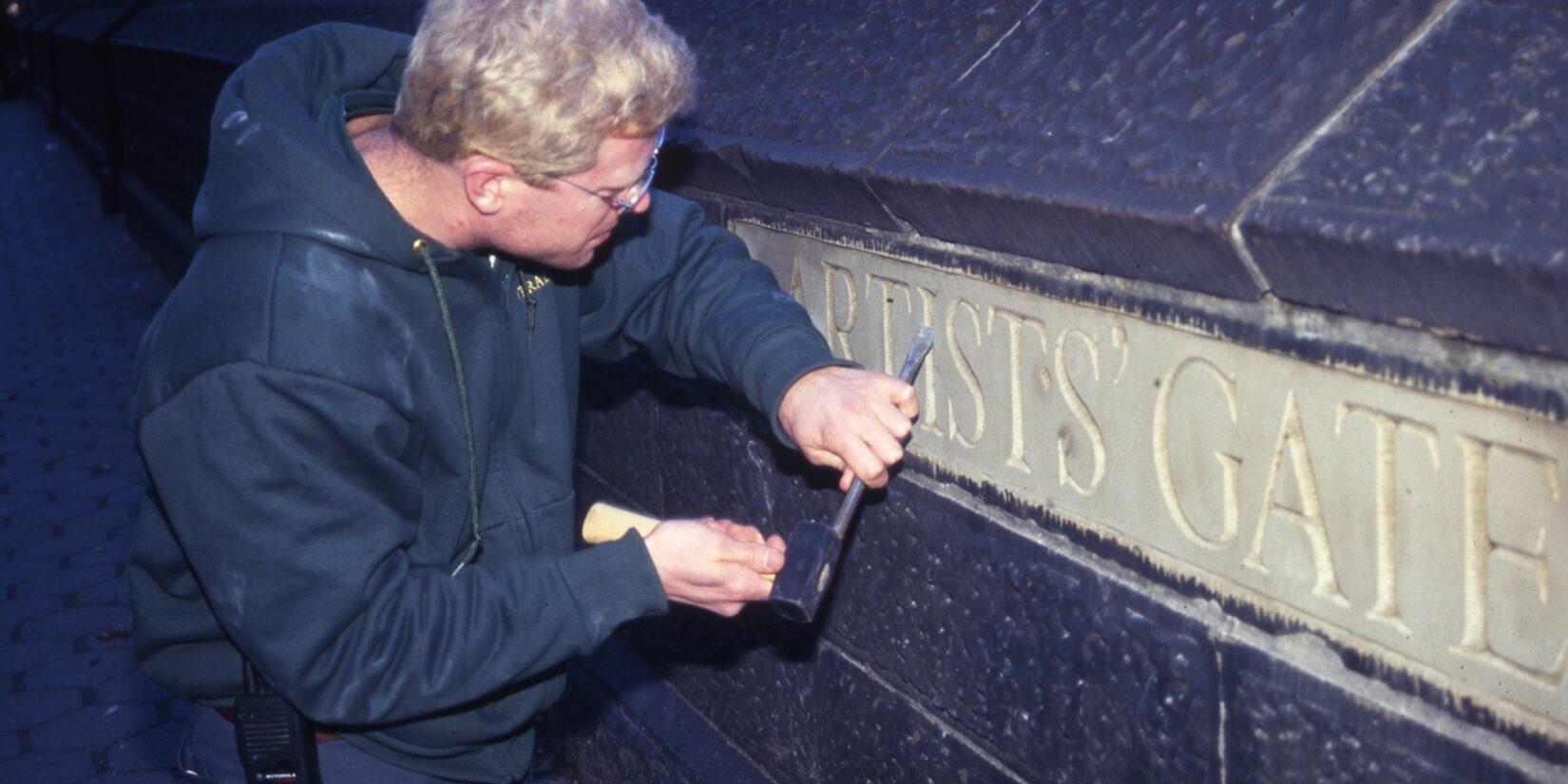
Central Park’s 20 entrances always had official names, but it took roughly 140 years before they were finally incorporated into the entryways.
It was back it 1862, when Central Park was still under construction, that the Board of Commissioners first decided to name the entry points, inspired by the diverse characteristics of the city’s denizens. Hence, we got names like Artisans’, Engineers’, Farmers’, Hunters’ and Scholars.’ But for the longest time, those gate names existed only on paper — in things like guide books and park maps. Turns out, the commissioners decided to leave the entrances blank with plans for them to be developed by private patrons, but that never materialized.
Flash forward to the early 1990s, when the city finally proposed that the Central Park Conservancy take on the task of inscribing all of the entryway names. But adding something new to the park wasn’t a common thing at that time, so the folks in charge of the project took great care to execute it using historical techniques, such as only using manual tools that were available in the 19th century.
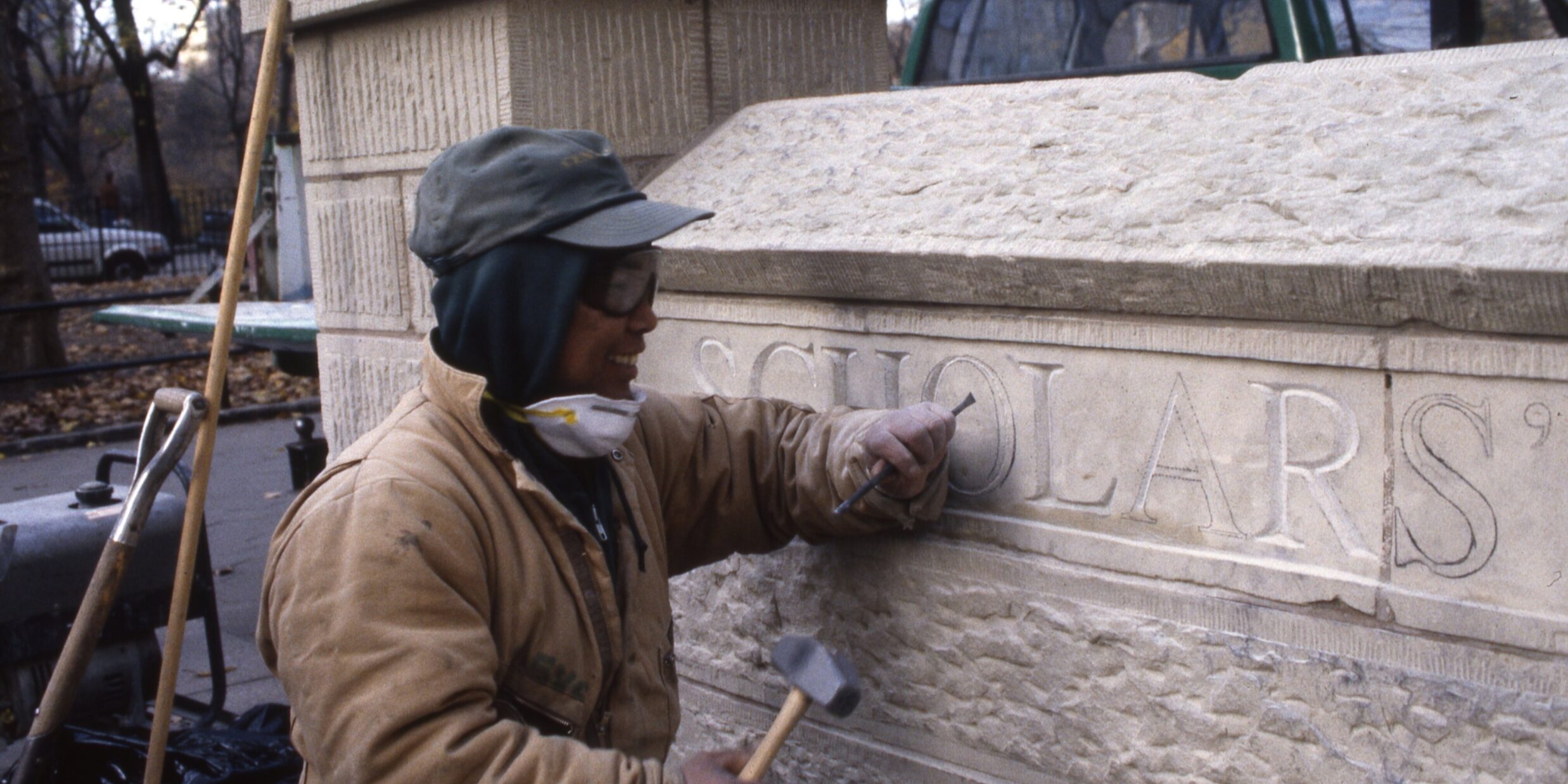
As to why there is no stone wall present in 1991 when they filmed this scene, it remains a bit of a mystery. You can see that the traditional stone wall was present along Fifth Avenue, as well as just to the west of the gate. I can only assume this small gap in the perimeter wall was some sort of error in the original development of the park that got rectified when it was decided to chisel in the gate names.
As you can see in the above image from 1993, when Scholars’ Gate was being made official, the stone wall looked awfully bright and clean. That makes me think a wall was added for the sole purpose of giving a place to chisel out the letters. Still, this is just conjecture. I’ll keep searching to see if I can find a definitive answer.
Bethesda Fountain
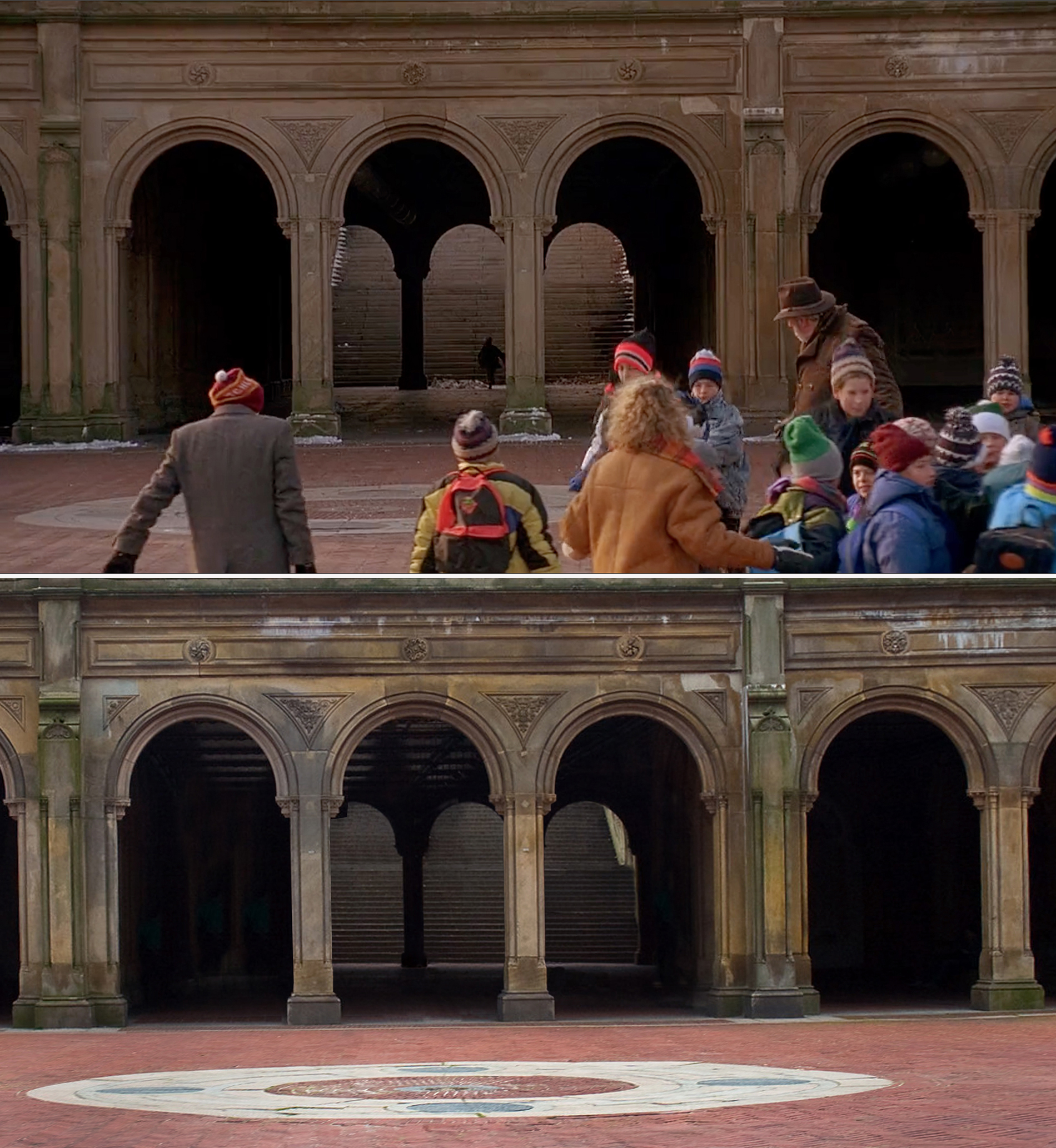
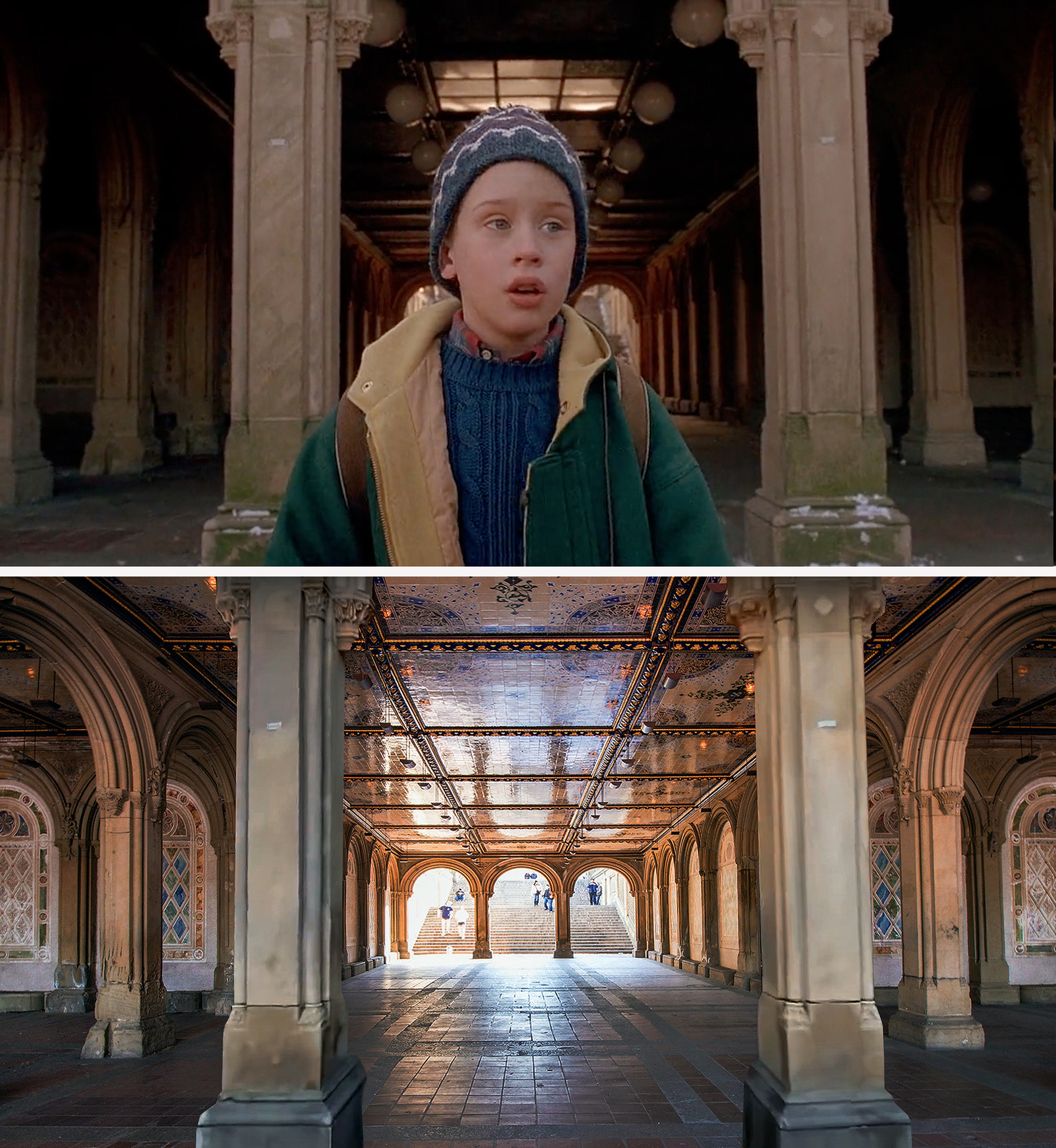
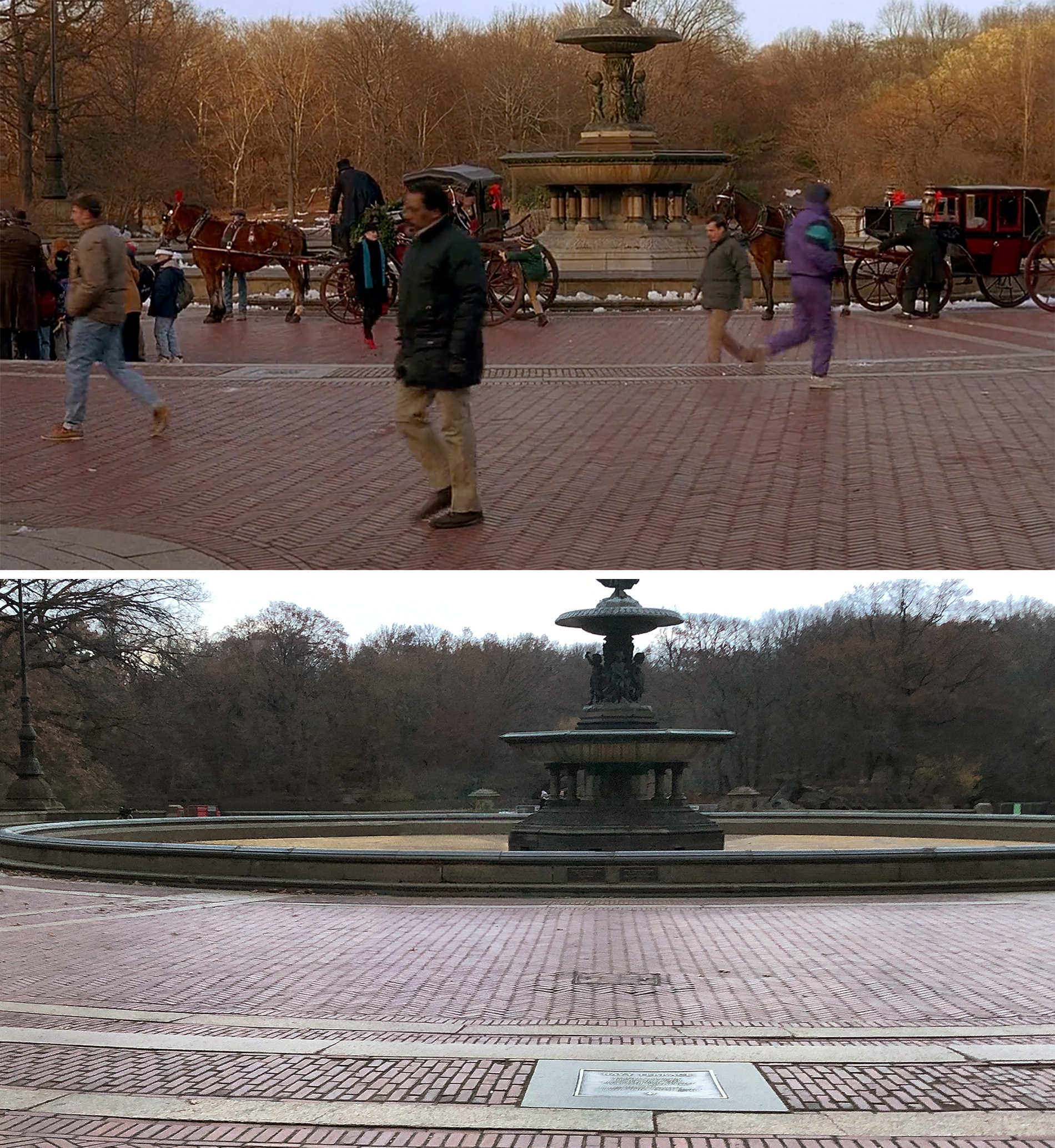
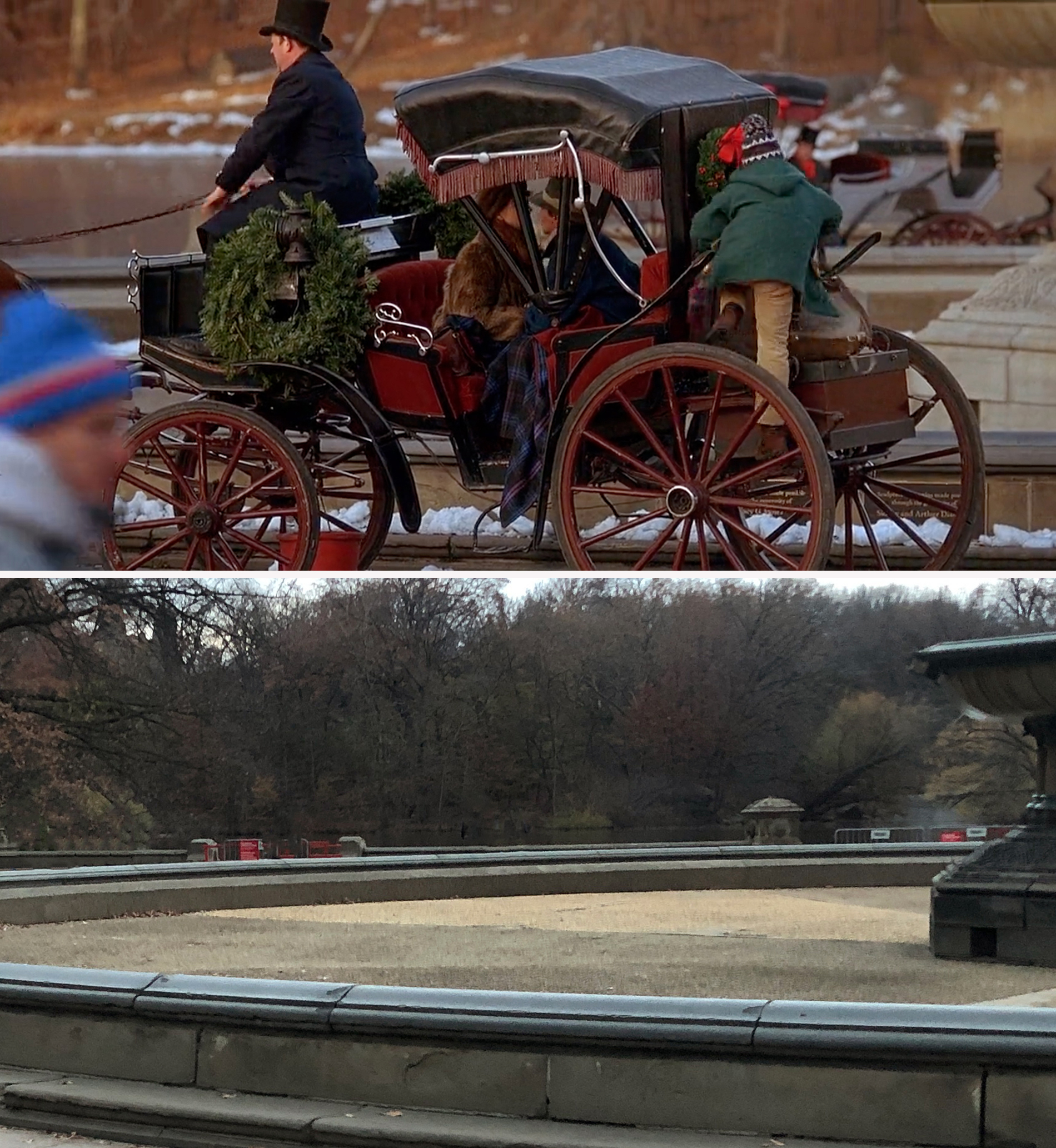
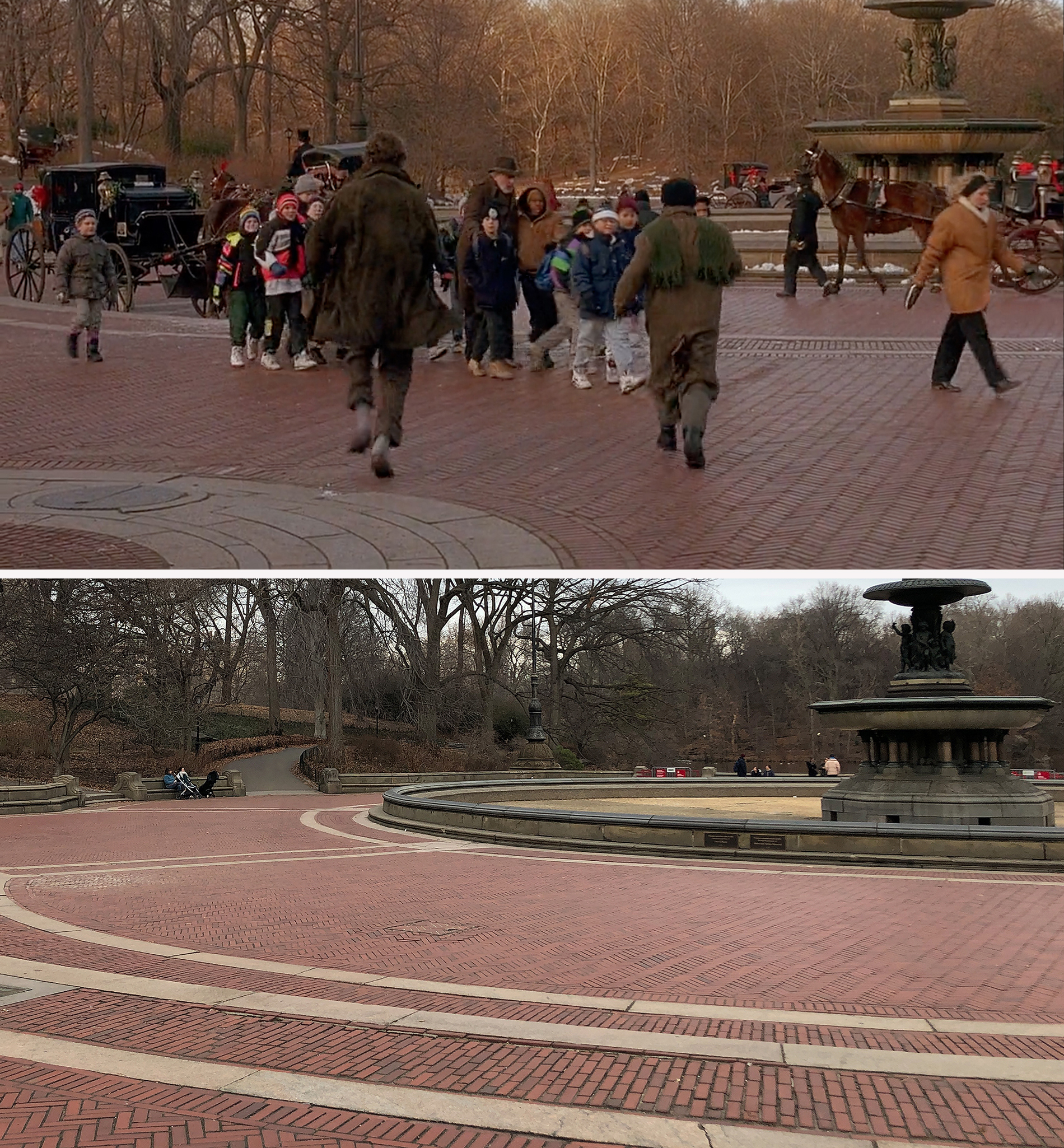

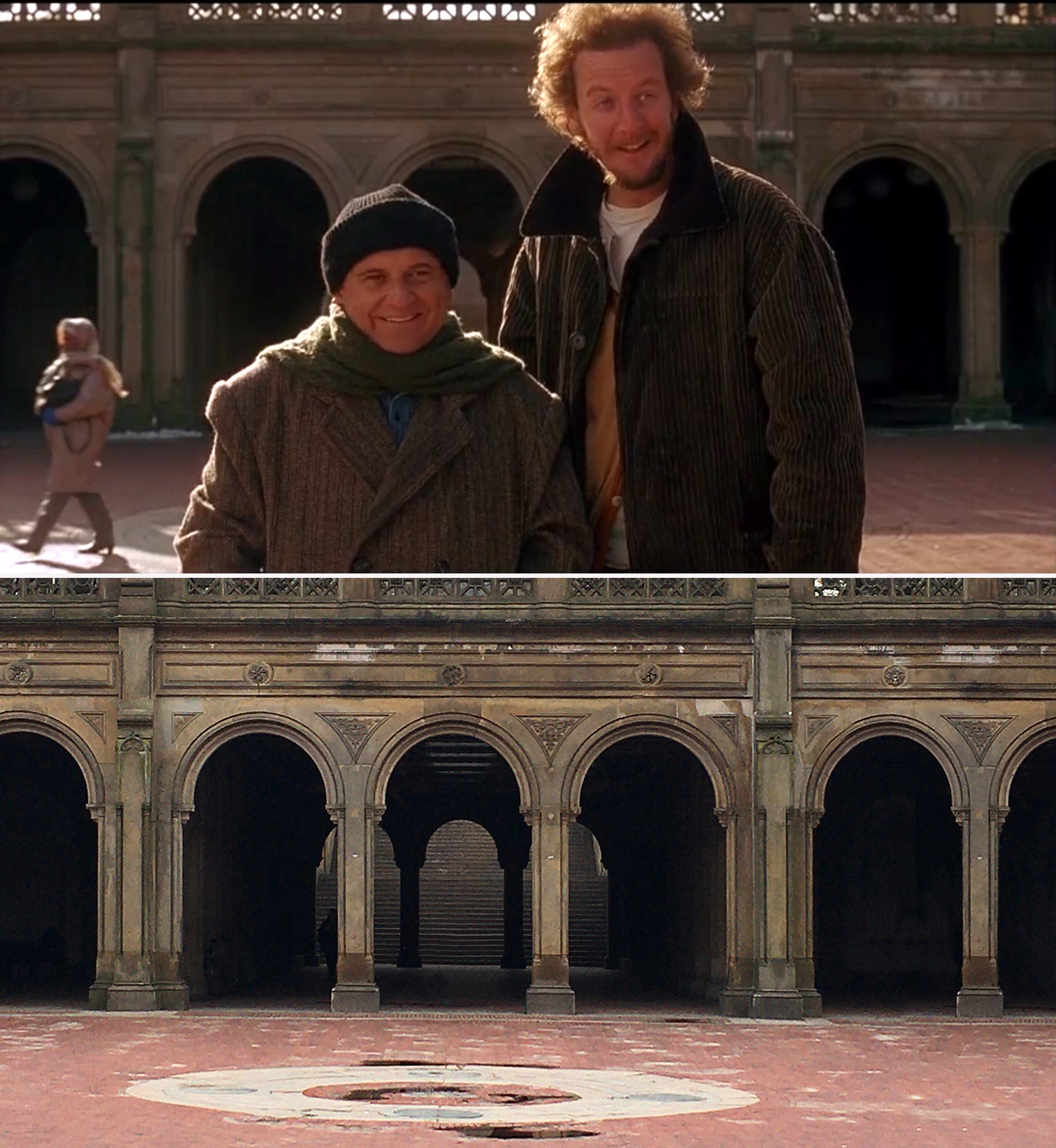
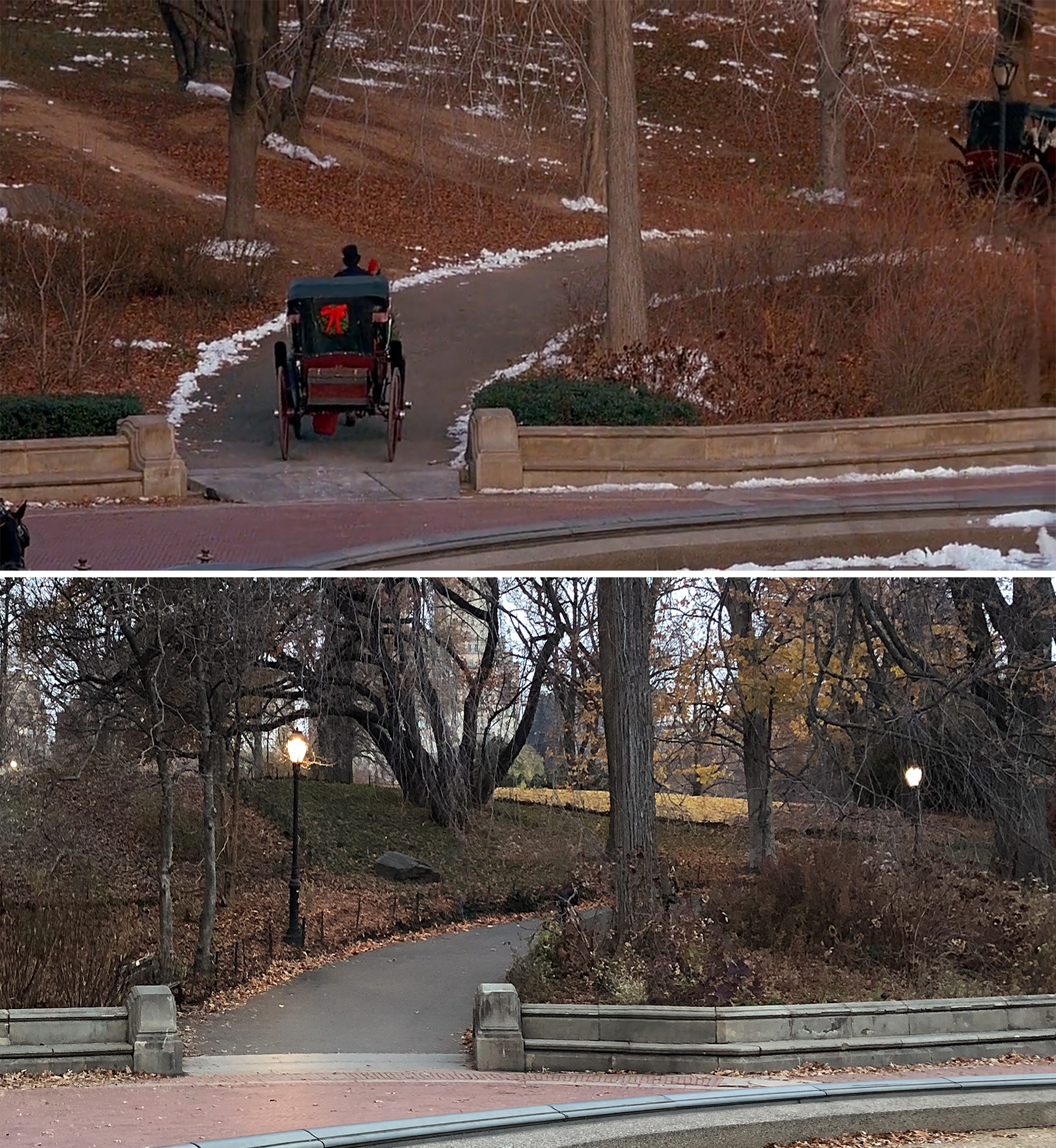
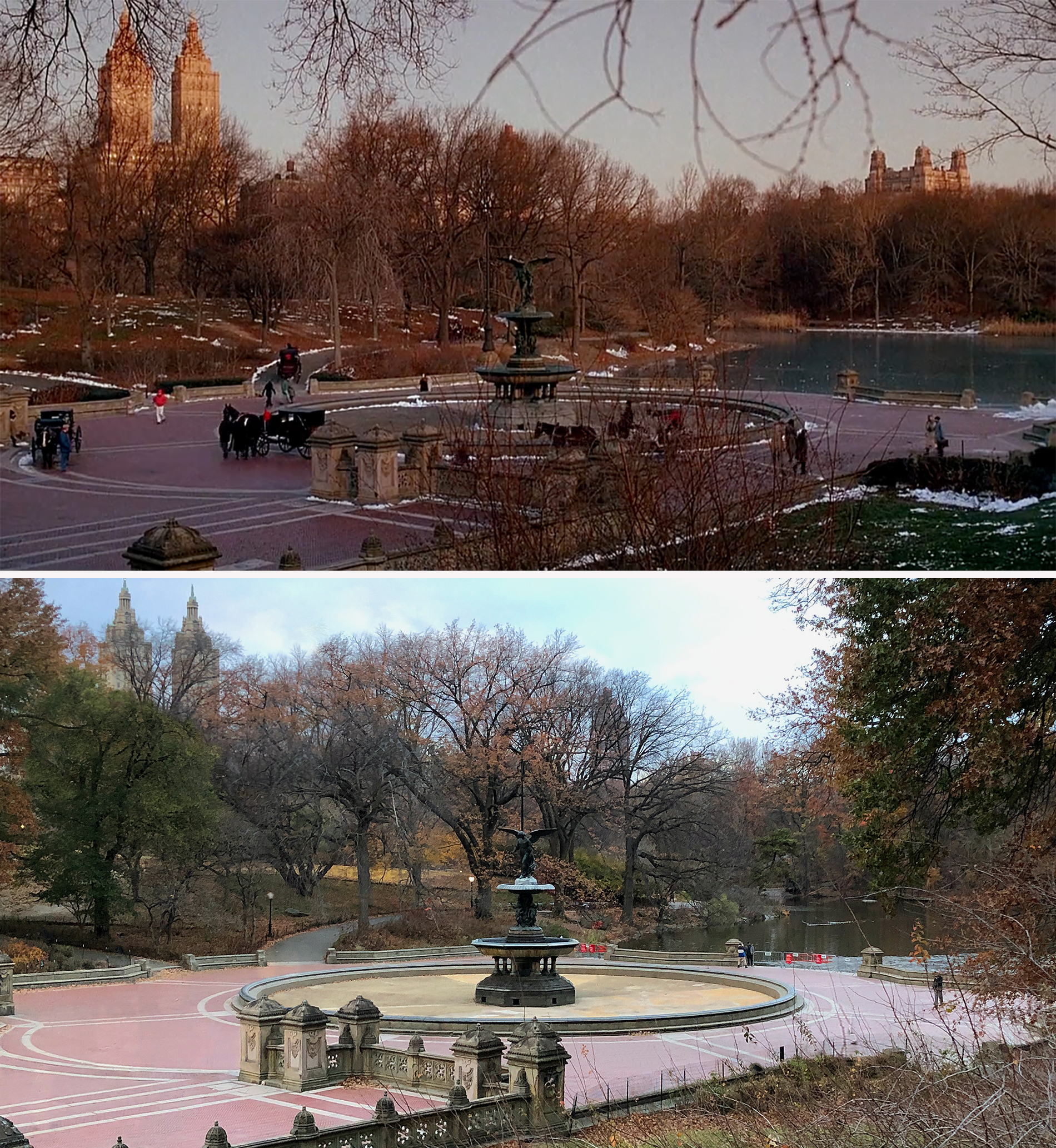
This was filmed at what is undoubtedly the most used section of Central Park in the entertainment world — Bethesda Terrace. This picturesque gathering spot has been seen in tons of films and TV shows (too many to list), starting back in 1932 with Warner Brothers’ aptly-named movie, Central Park.
Naturally, it being such a popular destination for tourists, Bethesda Terrace is almost always a crowed mess. In order to get some clean modern photos, I had to go there at the break of dawn on a rainy weekday.
Kevin’s Uncle’s Brownstone
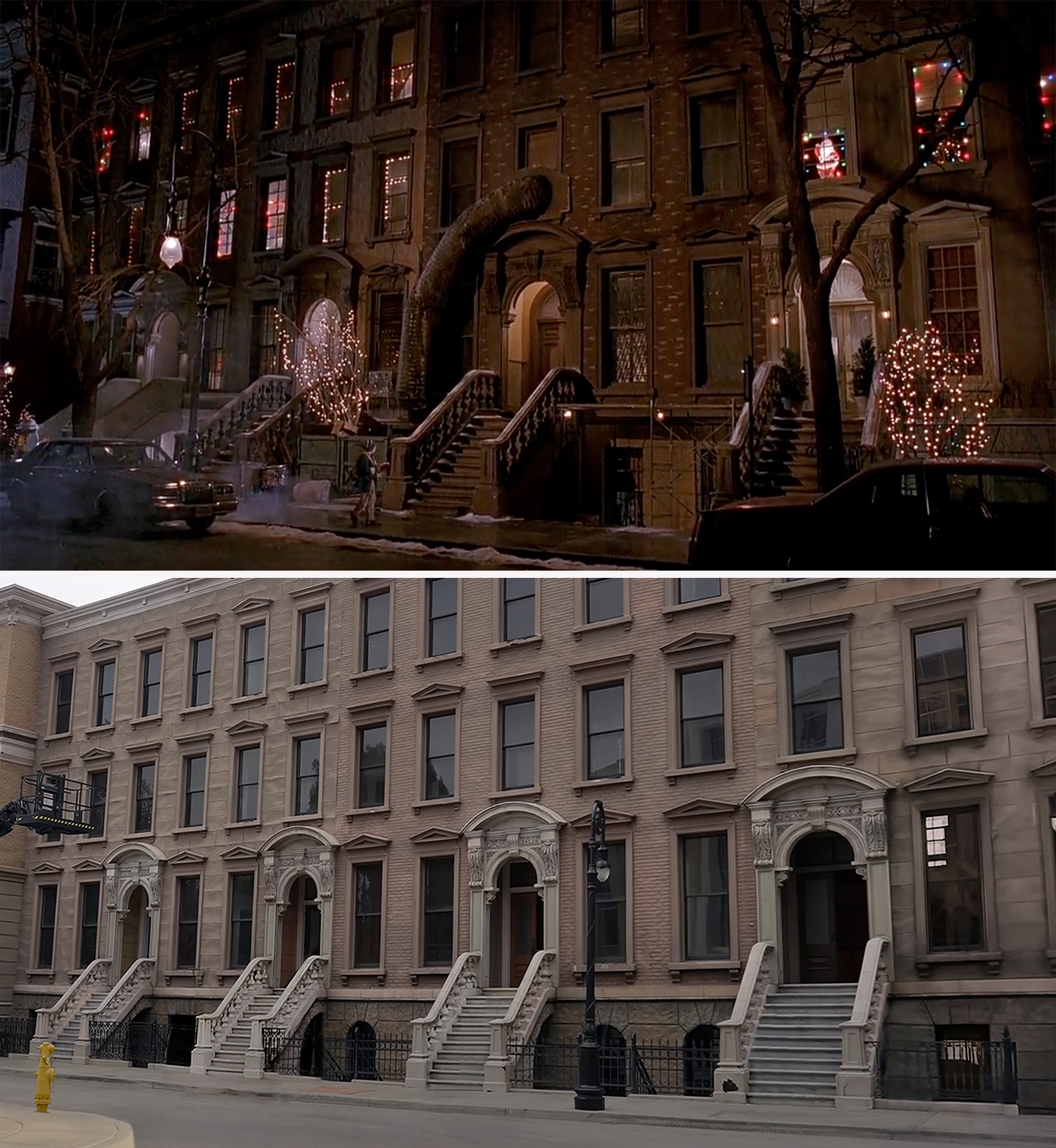
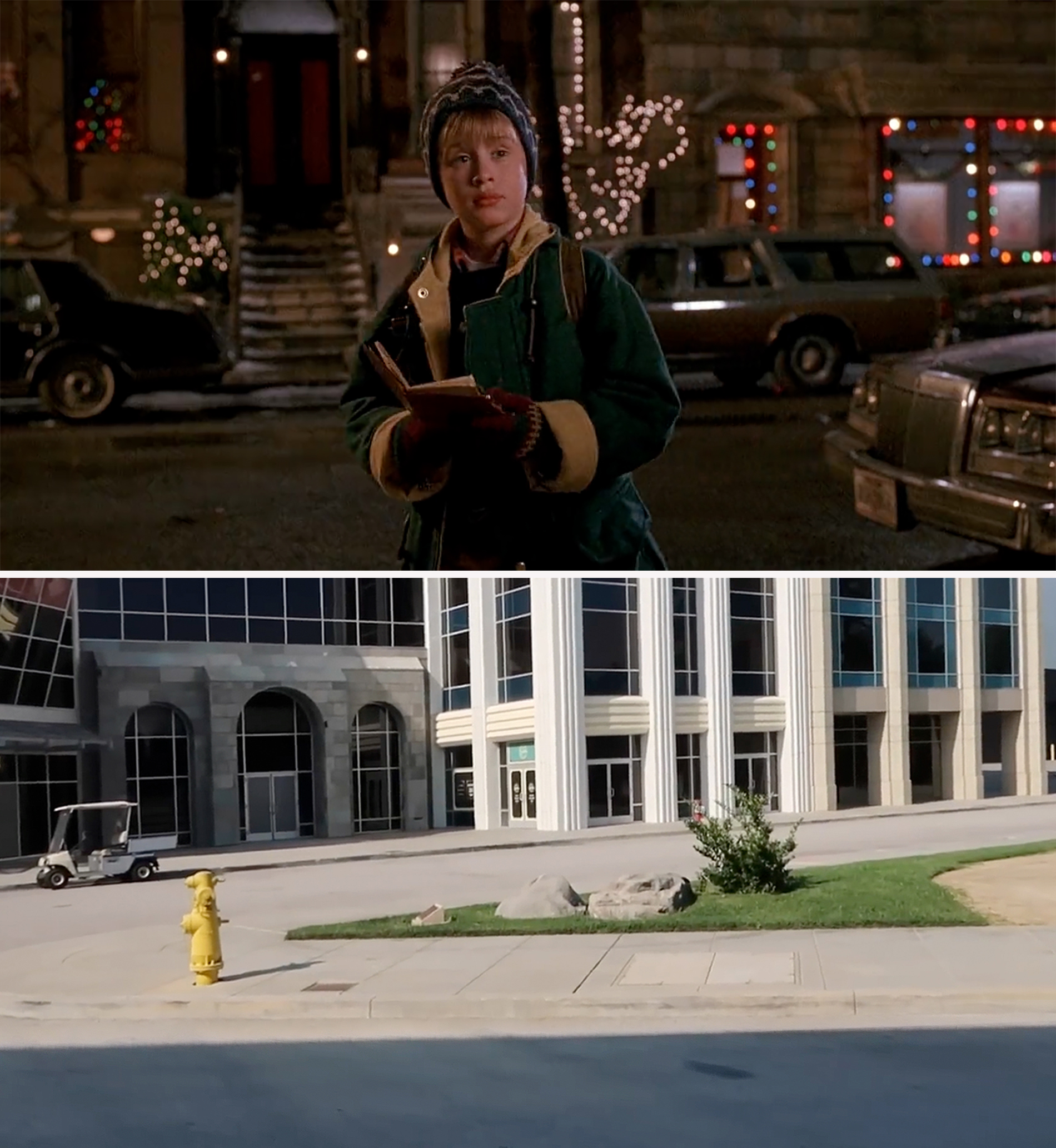
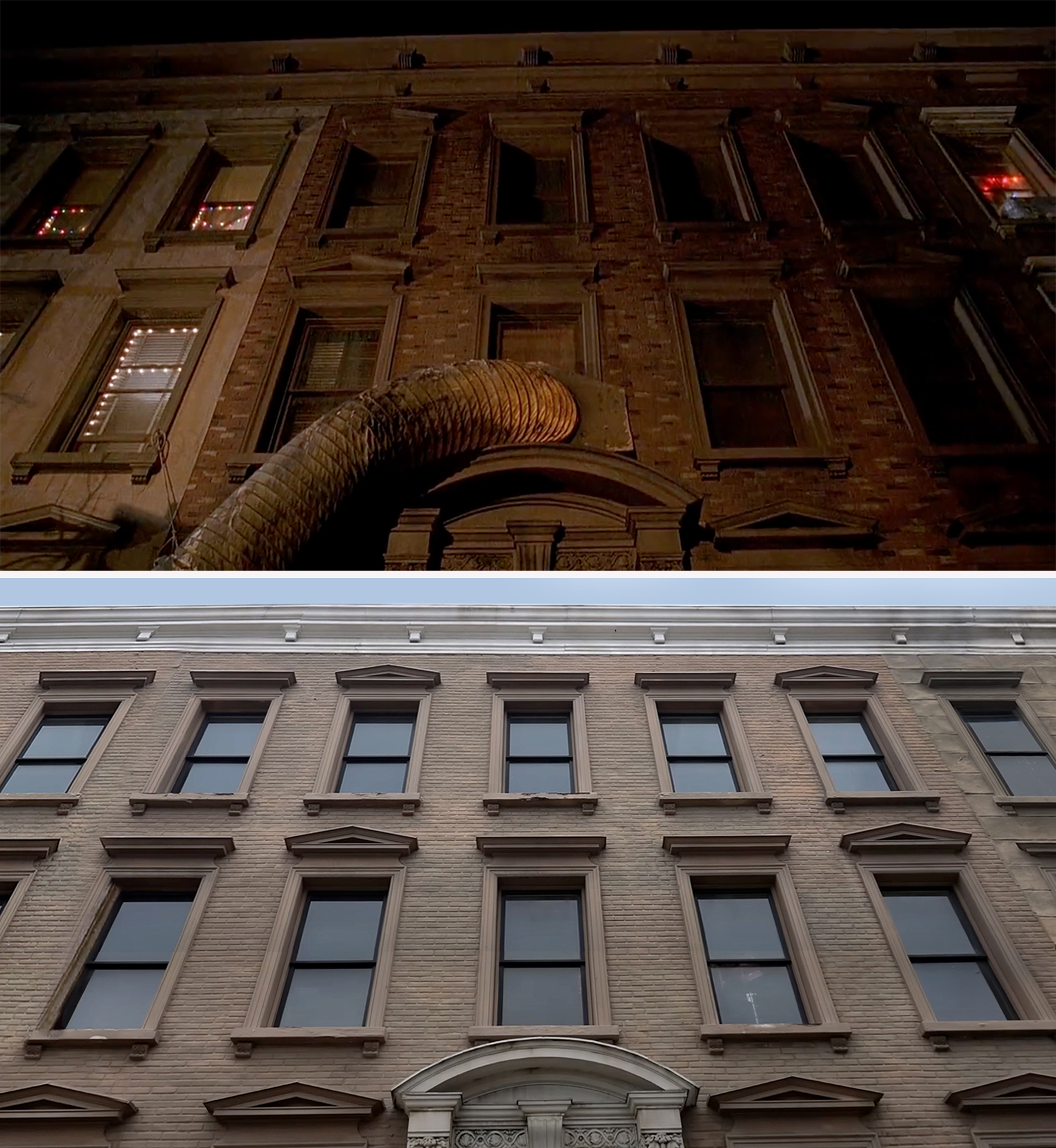

The fact that they shot these brownstone scenes on Universal’s backlot in Hollywood has been known even before Home Alone 2 was released in theaters. Leading up its world premiere, the studio aired a “behind the scenes” special on the FOX network, showing the backlot used for these brownstone scenes.
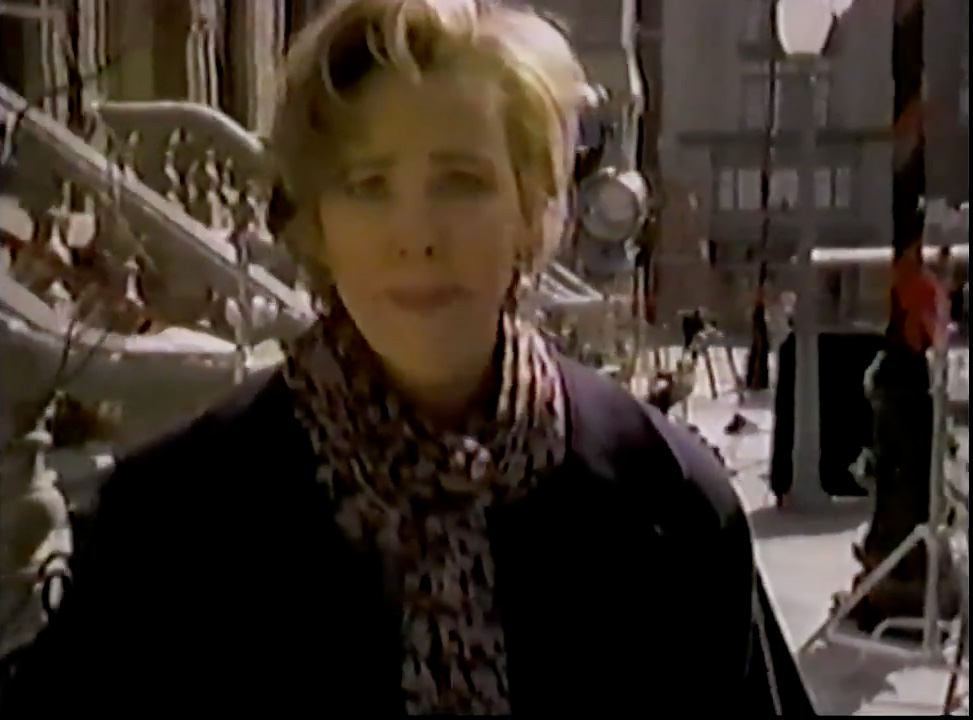
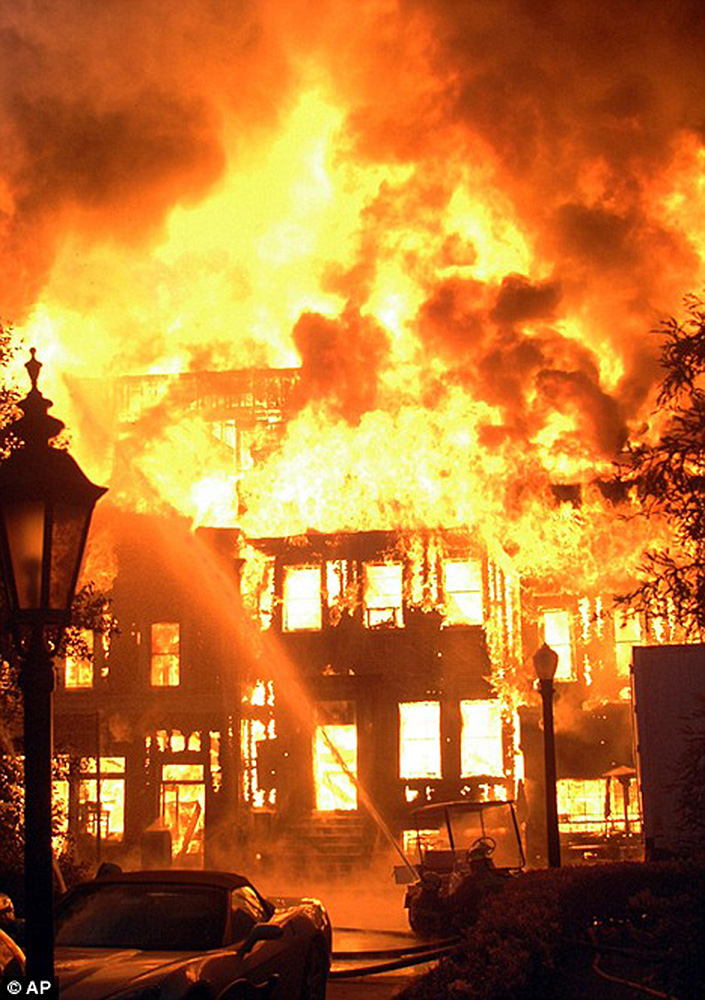
The apartment was on what’s known as “Brownstone Street” in the “New York” backlot at Universal Studios in California. This set of apartment buildings has been employed in an endless number of productions, but what’s there today is not exactly what was there when Home Alone 2 was made.
While it’s typical for backlot facades to get periodic facelifts and updates, almost everything in the “New York” area was completely rebuilt after a major fire broke out at Universal in 2008,
It’s hard to know what exactly survived the fire, but you can tell the brownstones that are there today look slightly different from what was in the movie.
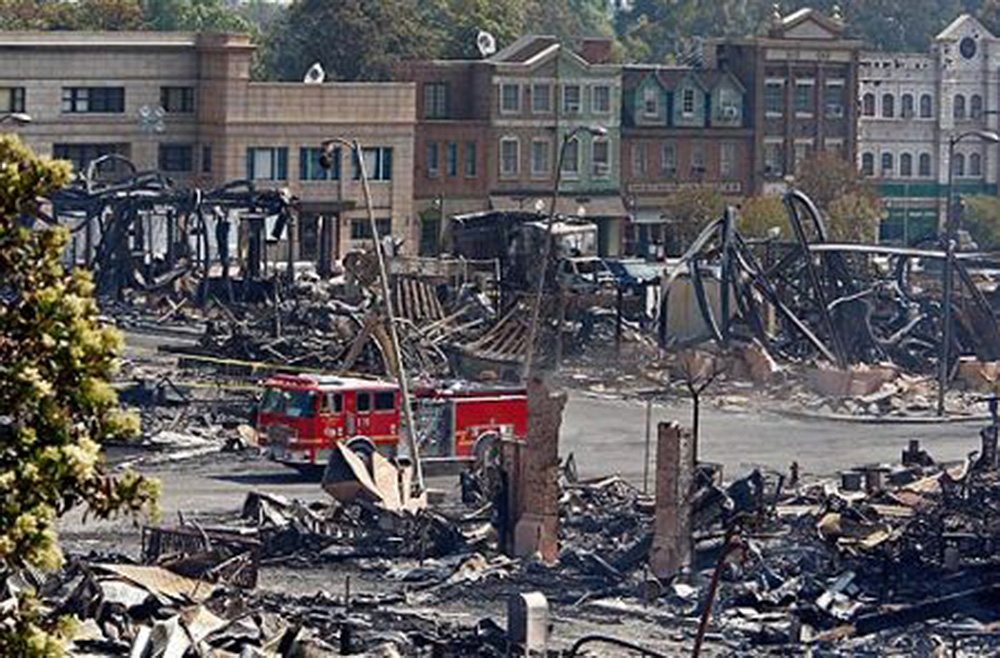
It’s possible some of the facades survived and they just fixed them up, but most likely they were rebuilt from scratch, using plans from the original ones built decades ago.
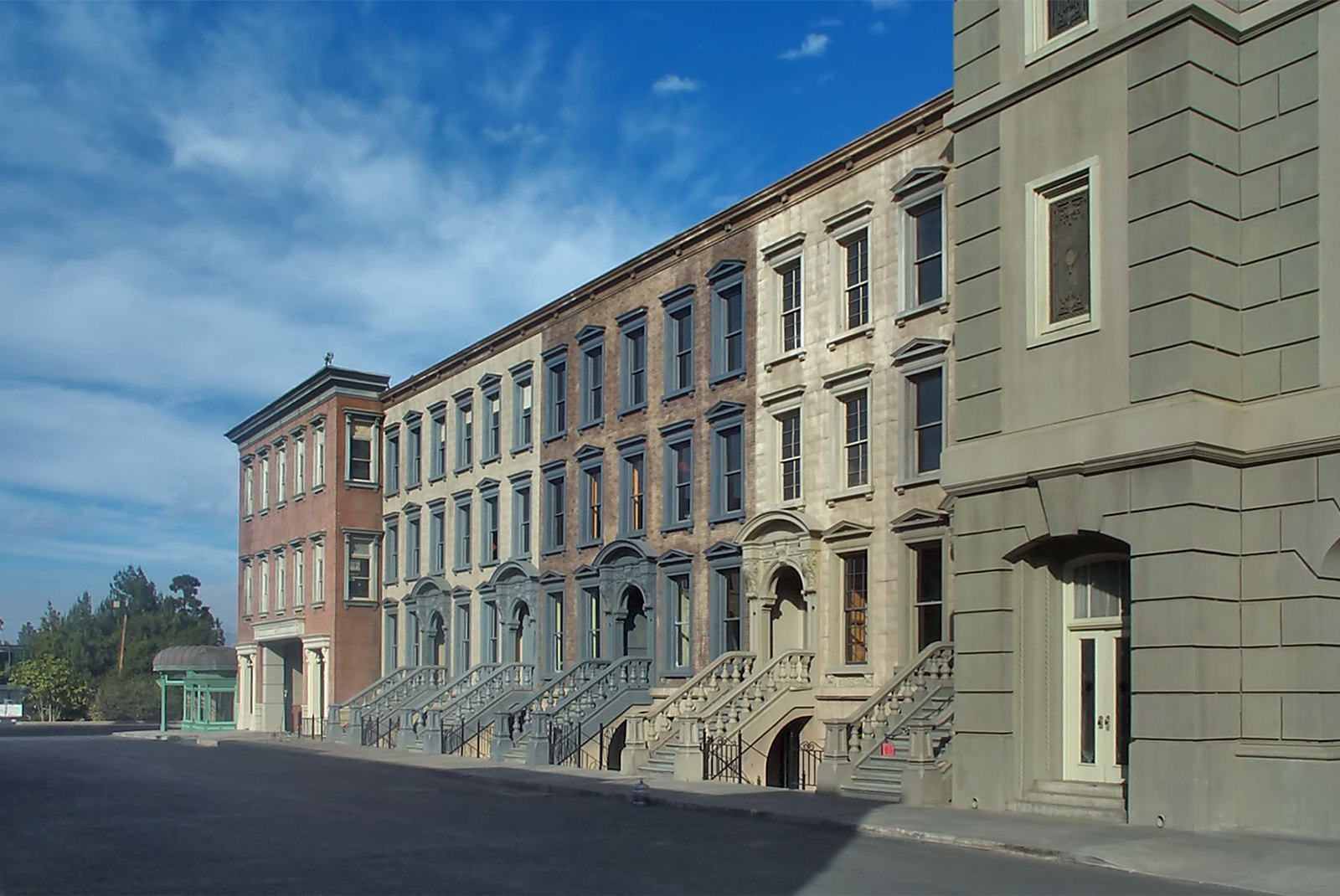
One thing’s for sure, the opposite side of Brownstone Street is completely different today. It used to be a mix of commercial and residential buildings, but it’s now a small park with a modern office-looking building behind it.
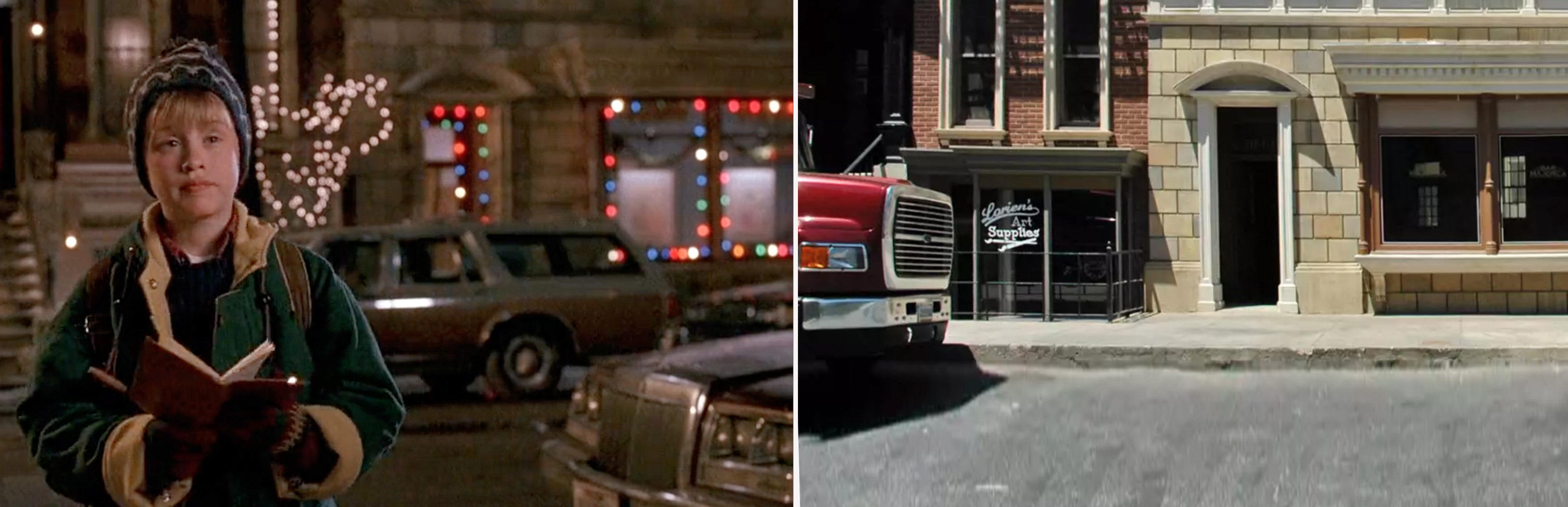
This reverse side of the street can also be seen in the Clint Eastwood movie, Coogan’s Bluff, and the Steve Martin comedy, The Lonely Guy.
Scary Streetscape
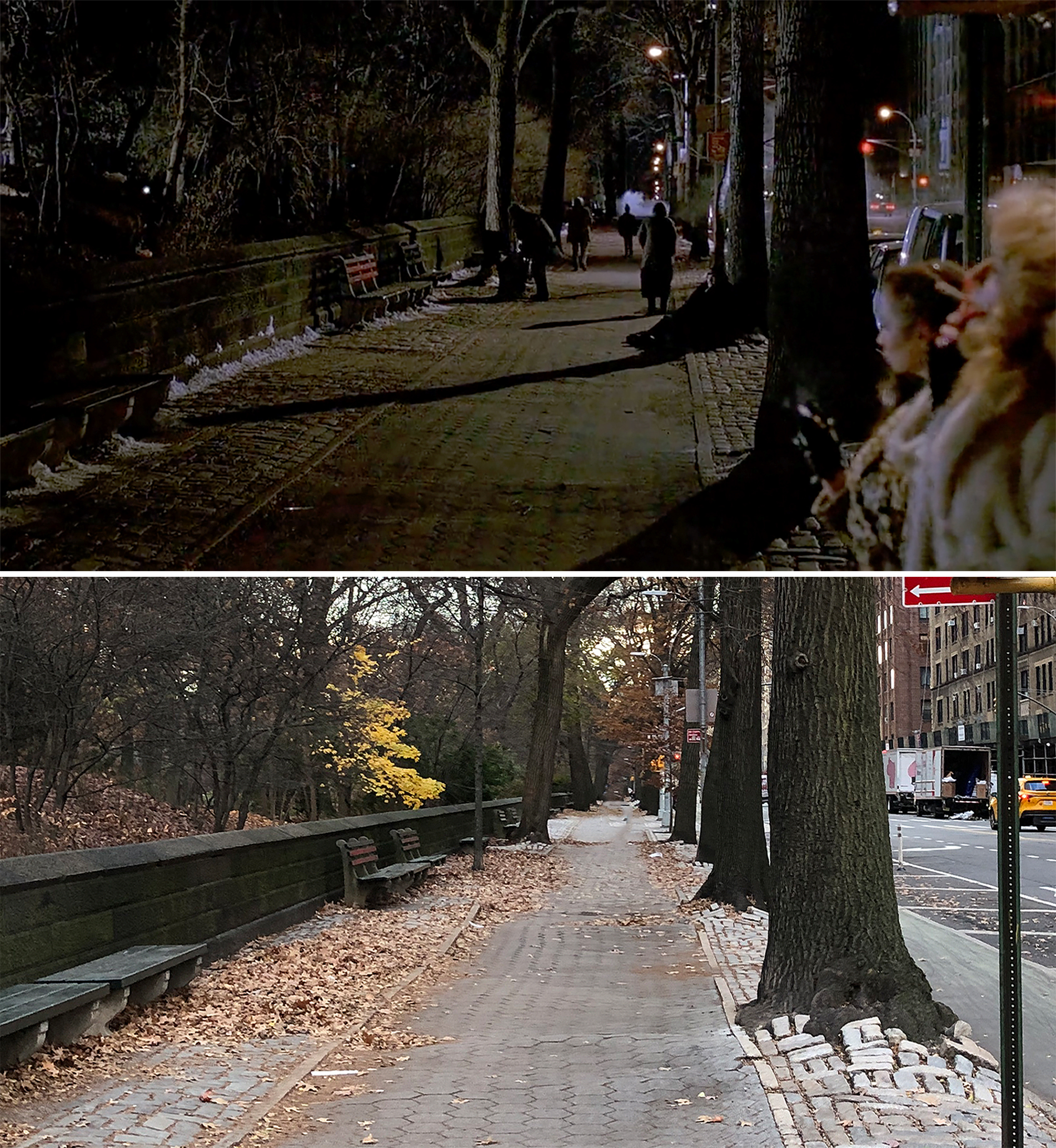

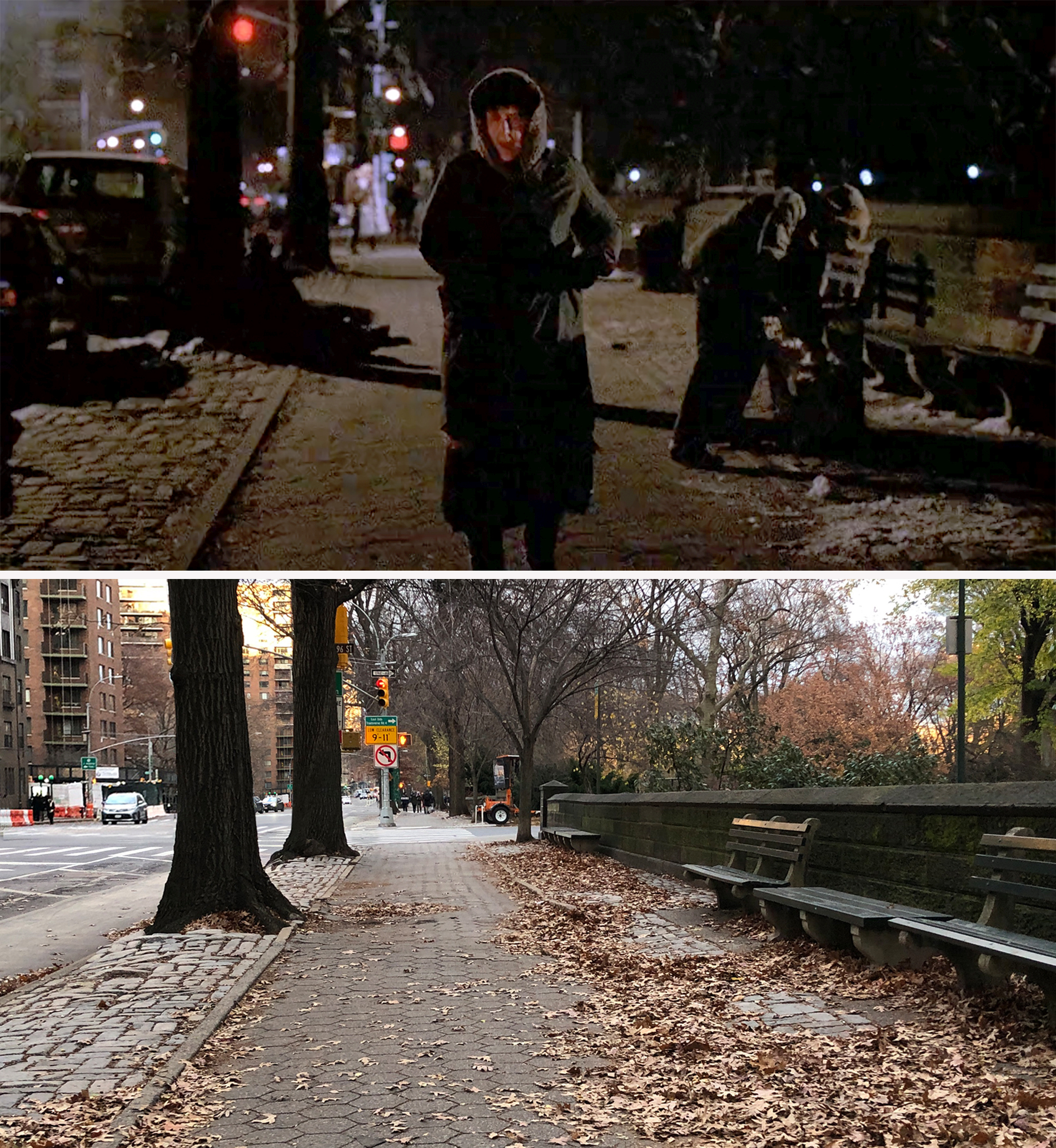
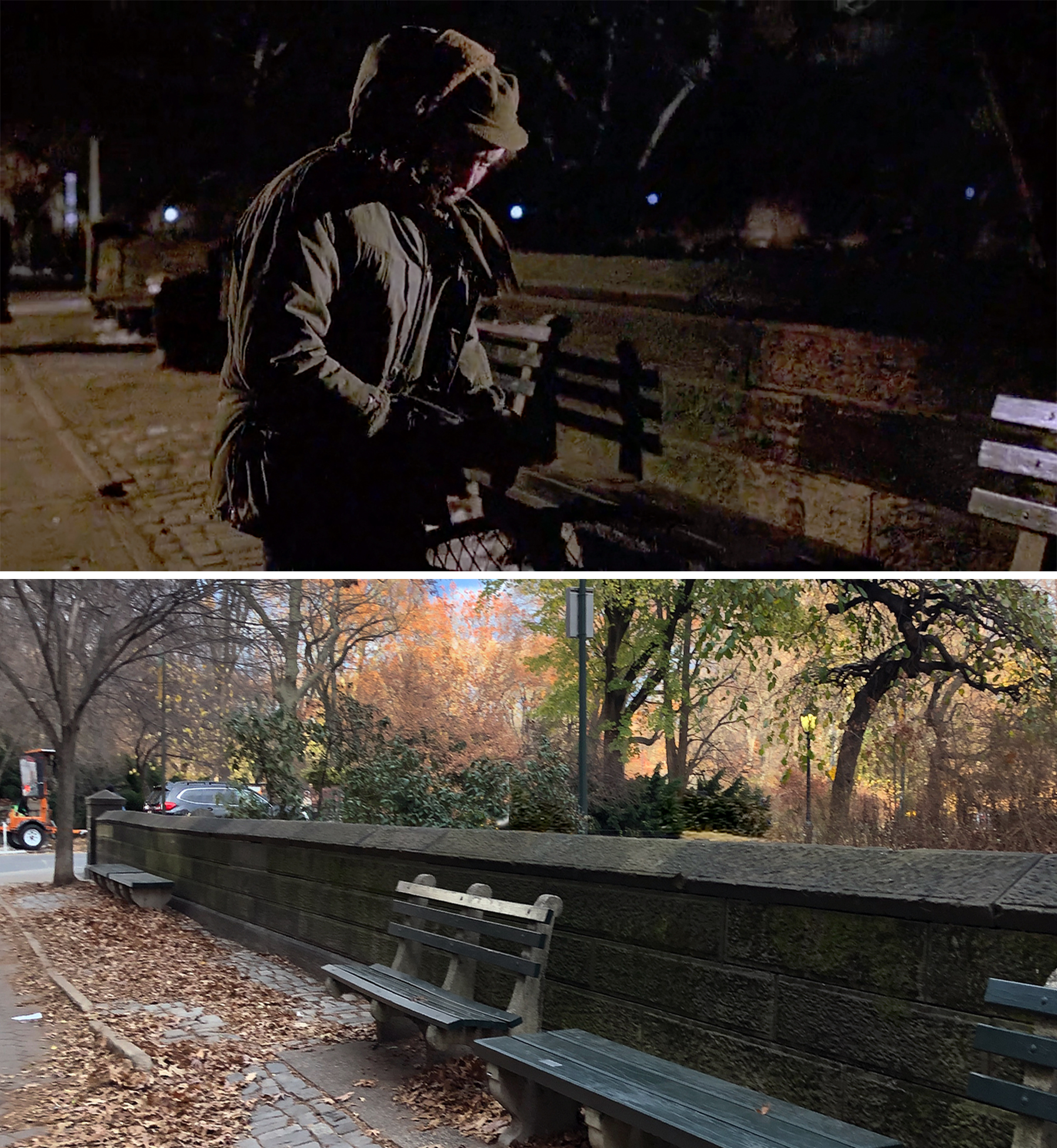
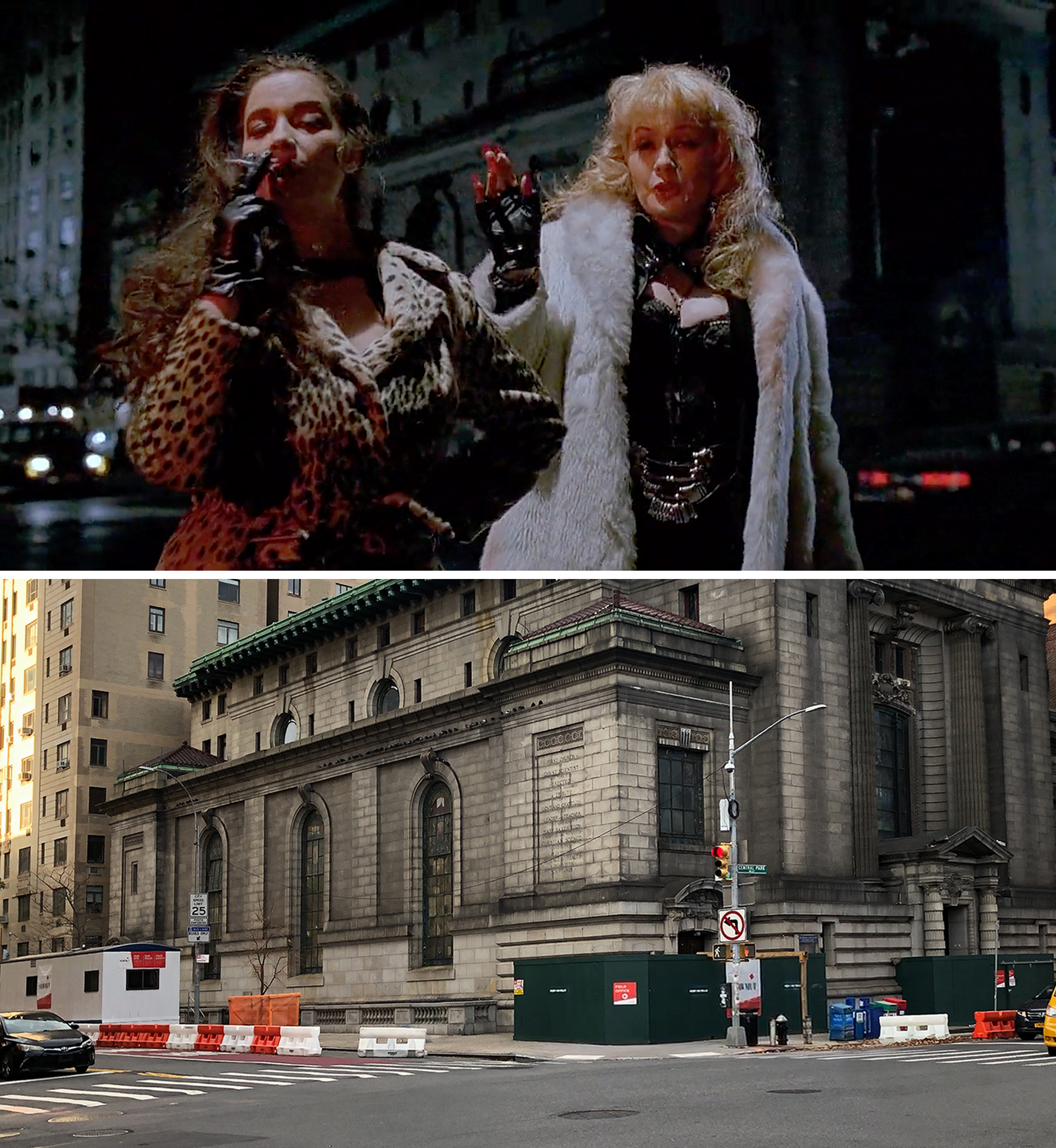
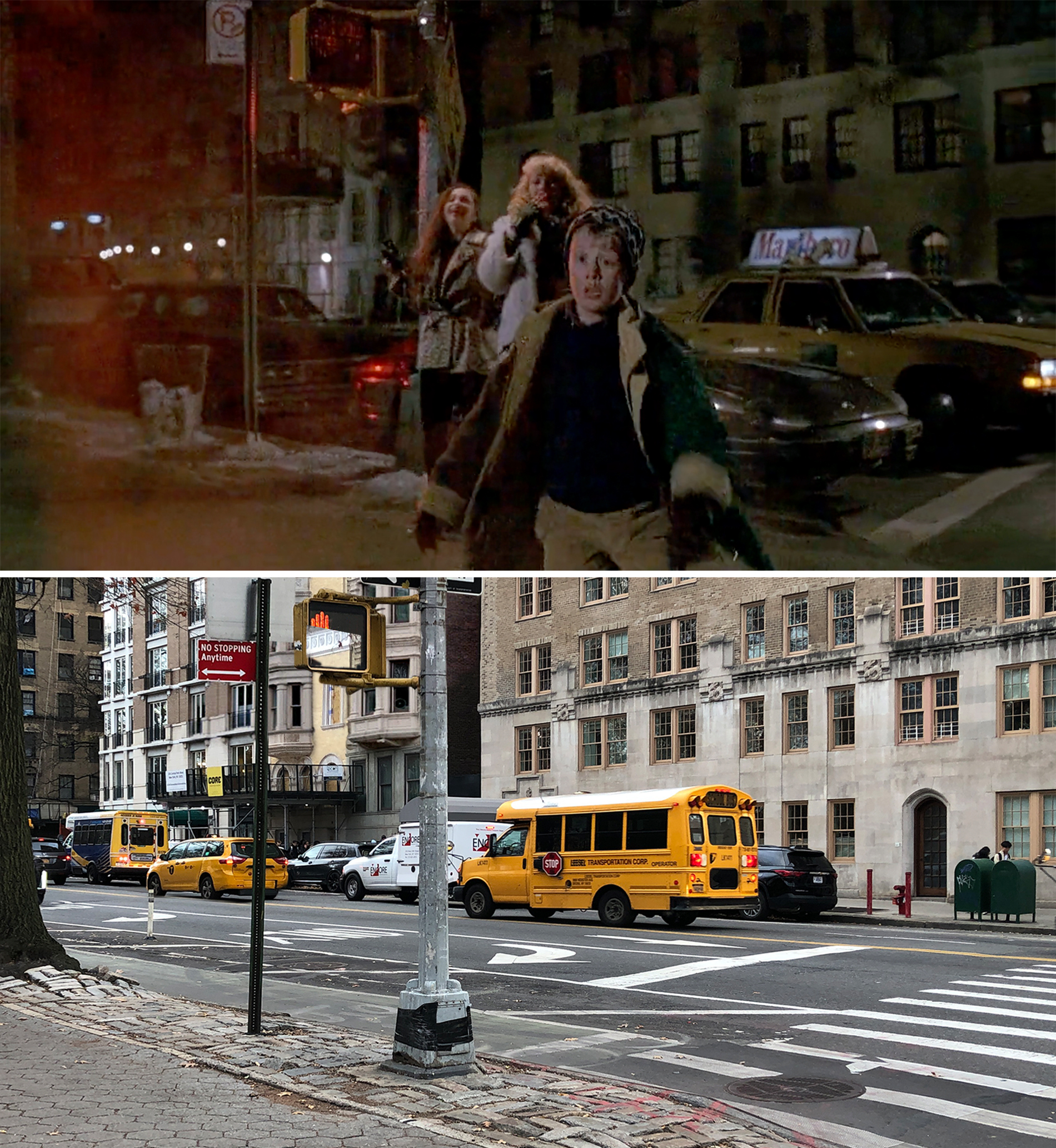
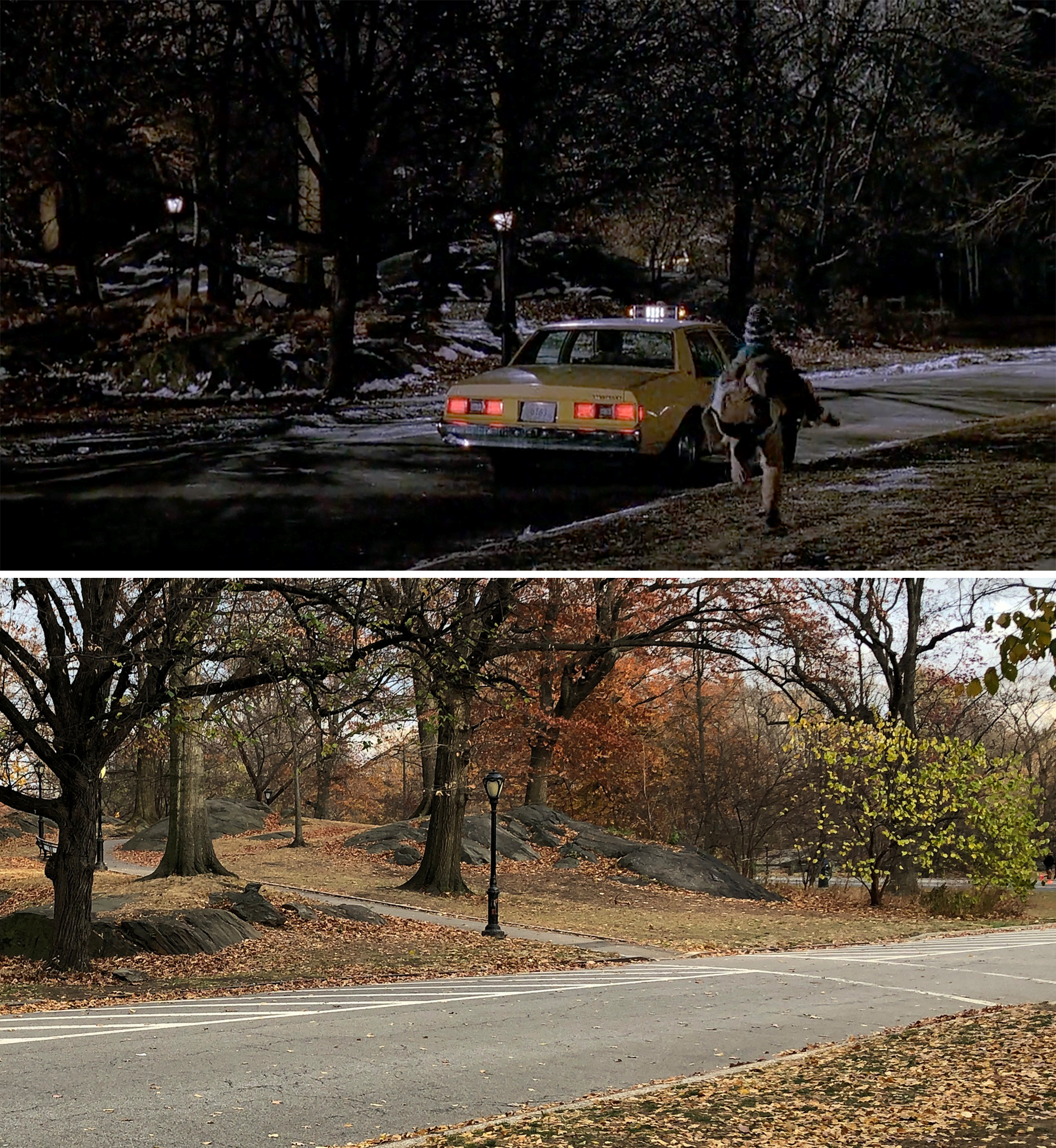
Anything along Central Park is usually pretty easy to identify, especially since most of the buildings have been the same since the early 20th century. And this scene was a piece of cake to find because they show a nice clear shot of a street sign, indicating they were near West 96th.
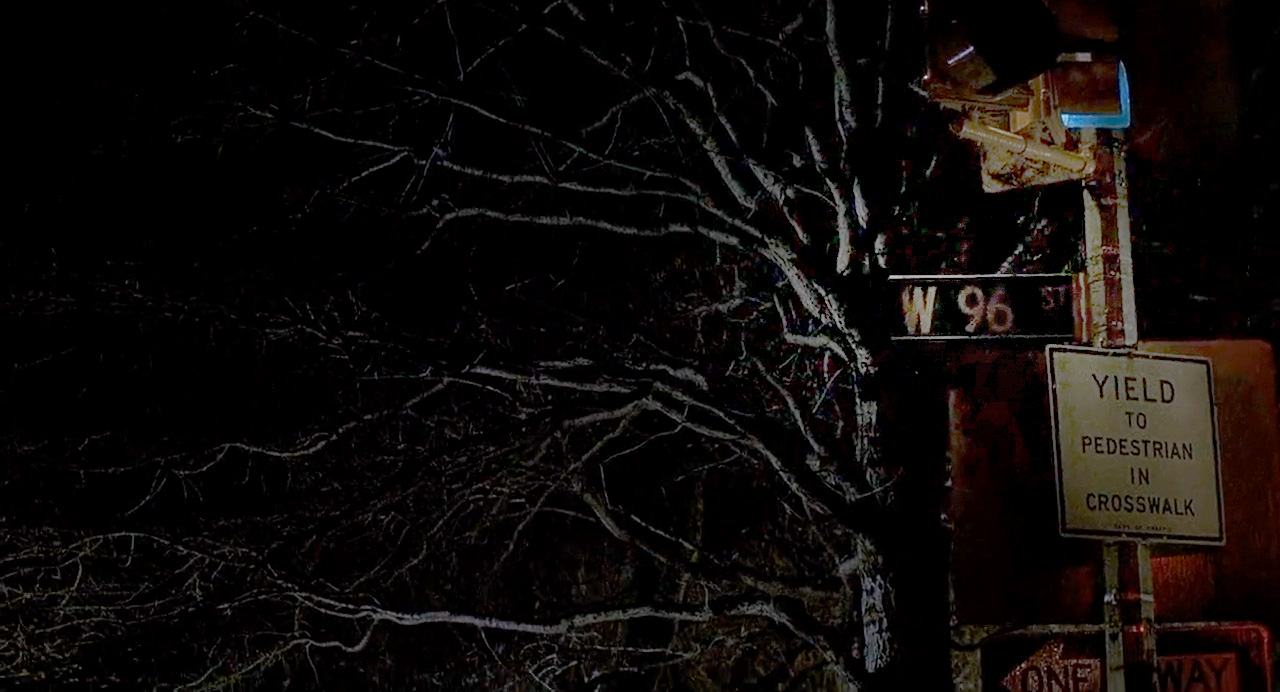
What’s funny is how they have the Upper West Side being depicted as a “bad part of town.” Now granted, the neighborhood was a bit sketchier in the 1970s and 80s, but by the 1990s, it was becoming a markedly desirable destination. It certainly wasn’t a place you’d see groups of homeless folks and bawdy streetwalkers congregating.
That being said, Central Park itself was still a pretty dangerous place to go to after dark back then. If you went there too late at night, you might run into some folks a little more menacing than a Pigeon Lady.
Concert Hall
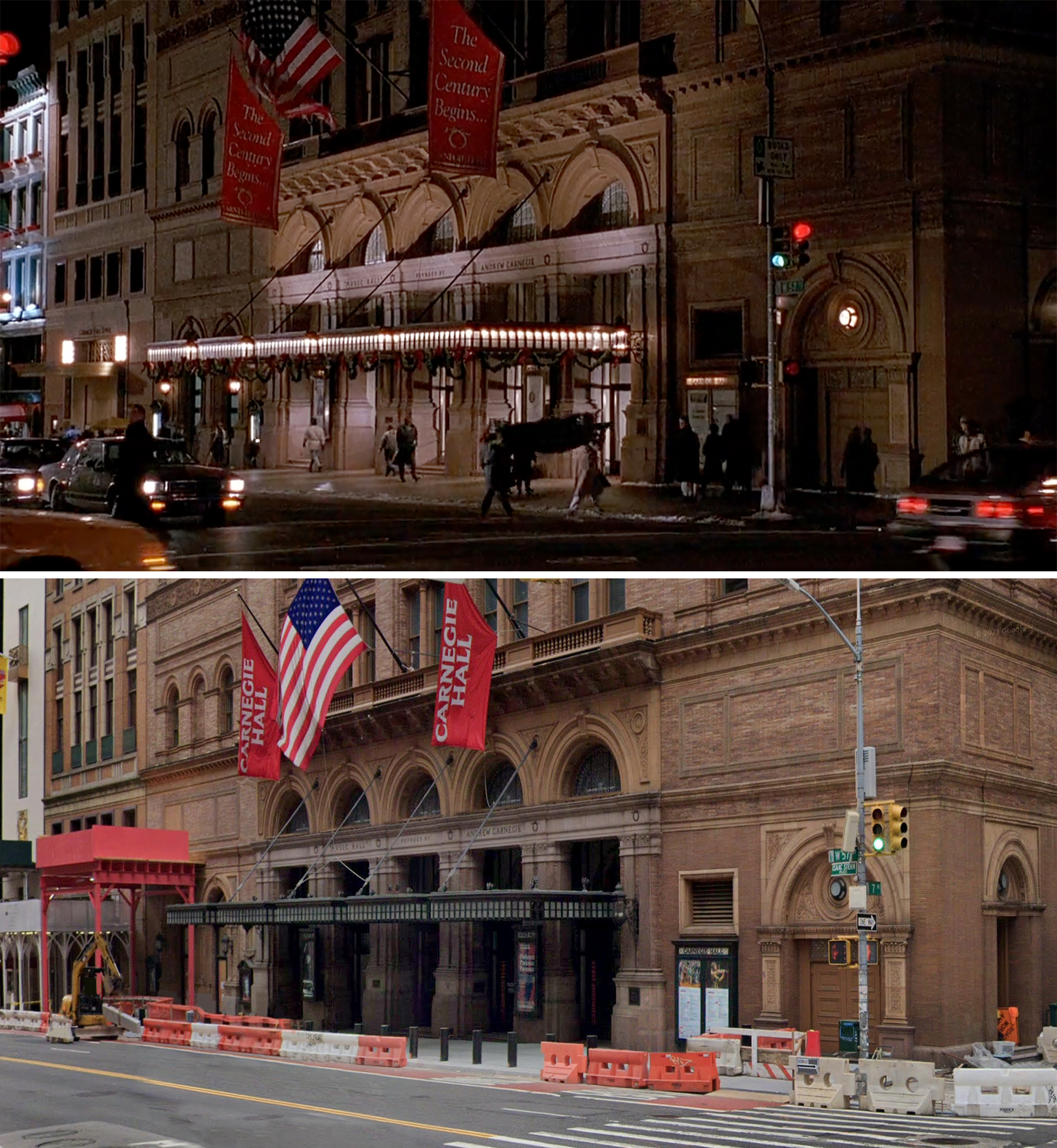


Plenty of books and websites identified this scene as taking place at Carnegie Hall, but they neglected to point out that the interior was shot at Chicago Symphony Center. My guess is, most of them just assumed both the inside and the outside were shot at the same place. But I could tell that wasn’t the case.
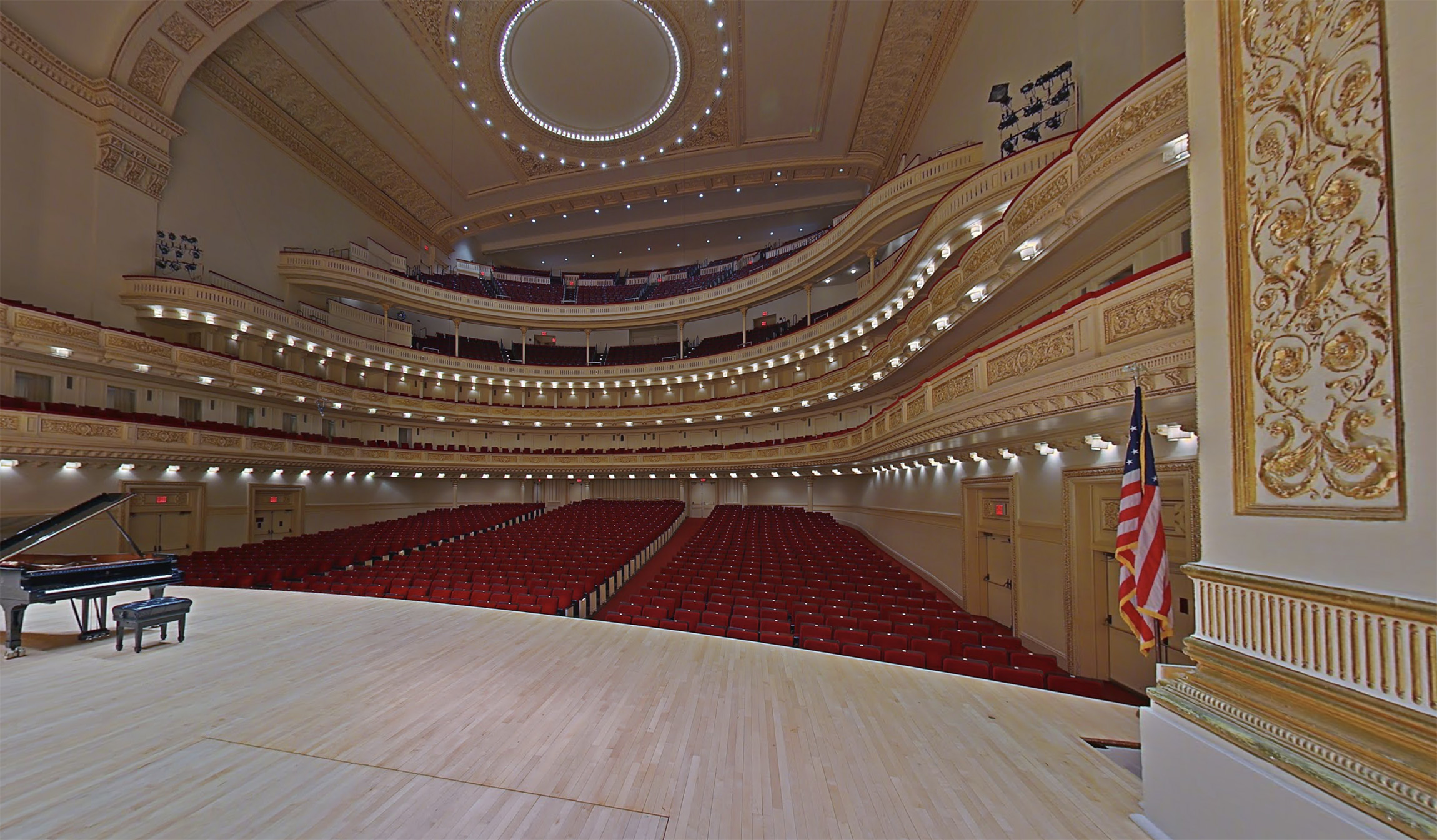
Years ago, I used to work for a touring company that organized singing events at Carnegie Hall, so I immediately could tell that the stage and ceiling in this scene were from someplace else. Luckily, I found a link to a Chicago history site that mentioned the Chicago Symphony Center at 220 S Michigan Avenue was used in Home Alone 2, so I didn’t have to sift through a ton of concert hall photos looking for a match.
The Children’s Hospital

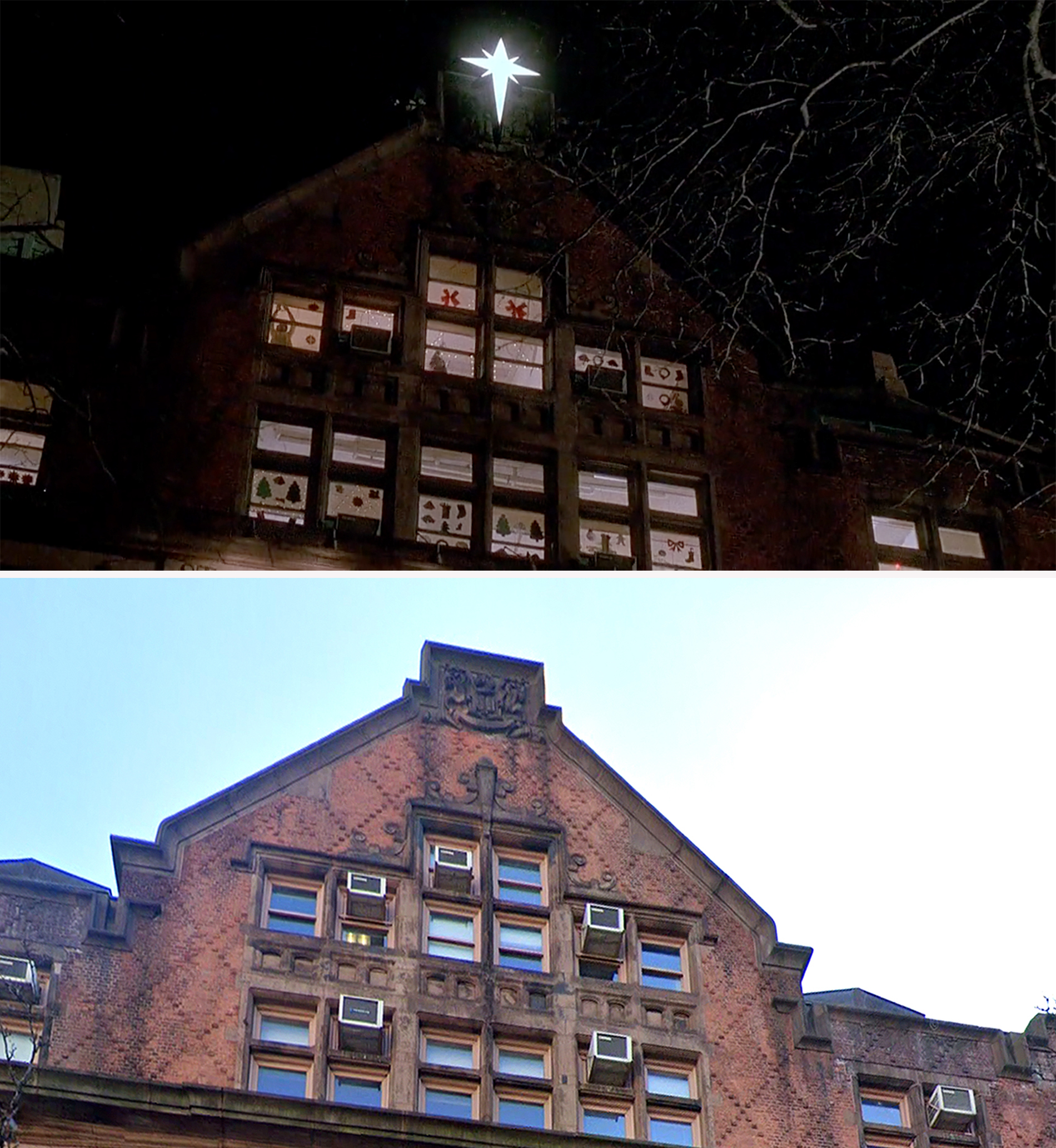
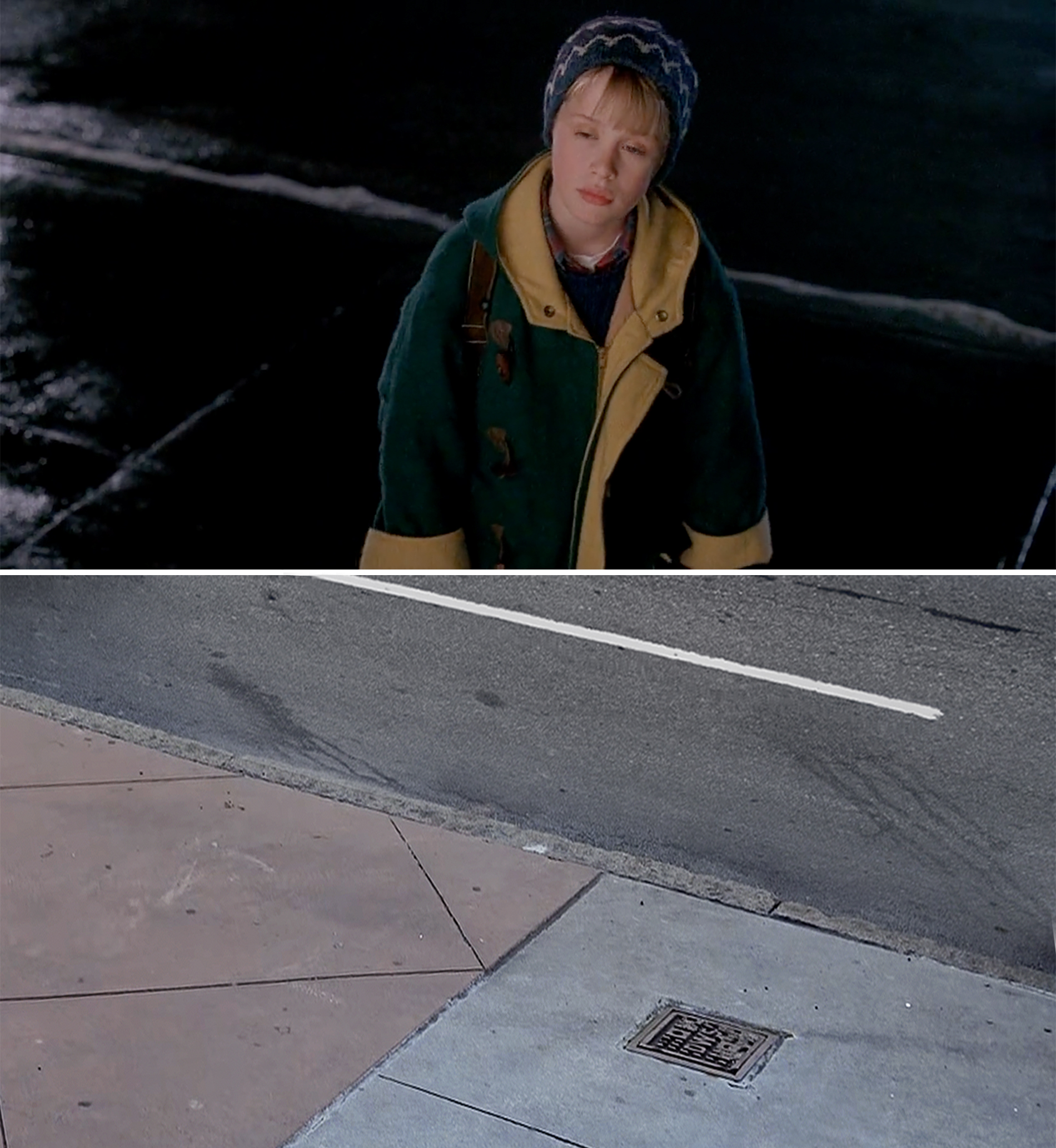
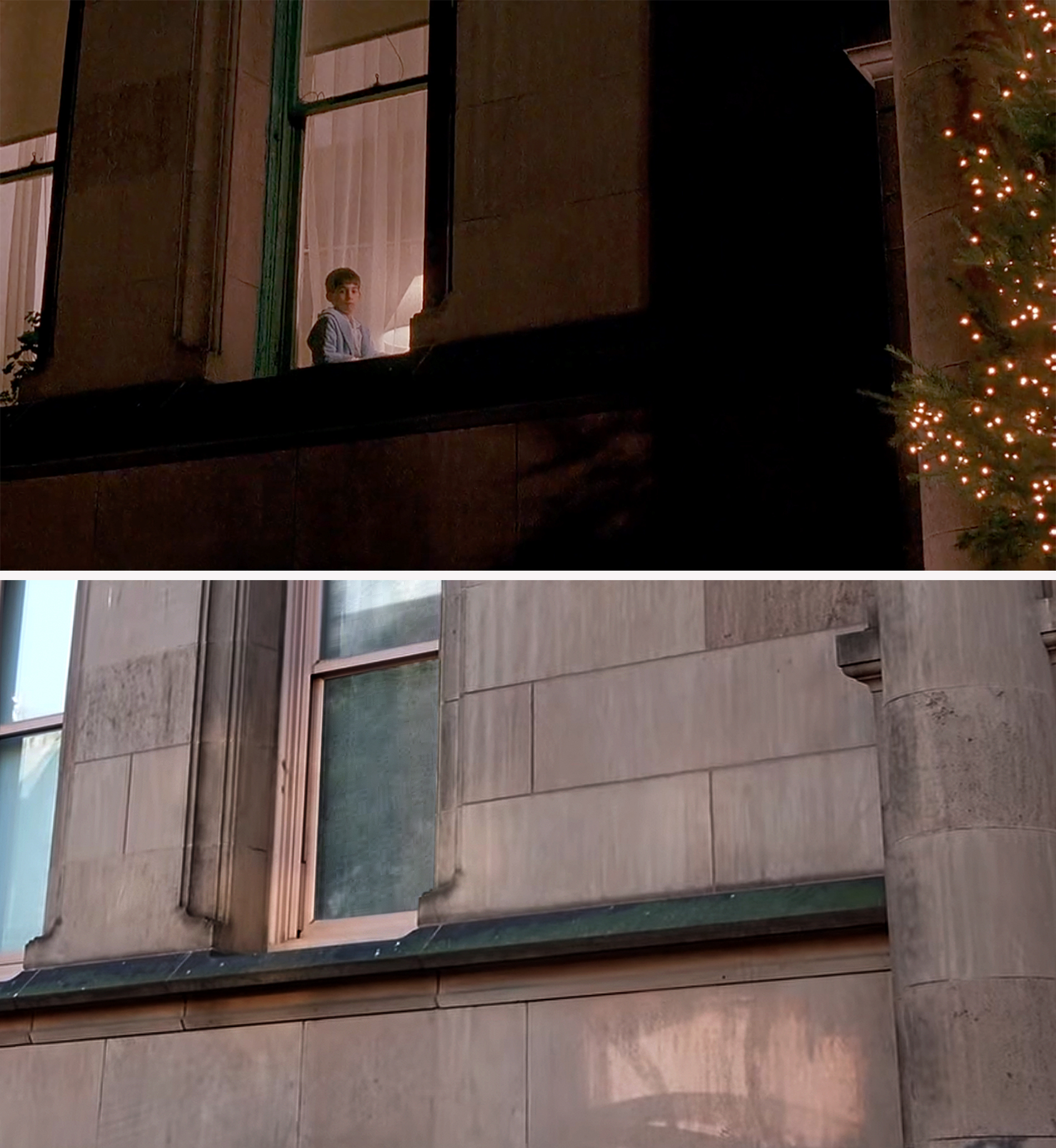
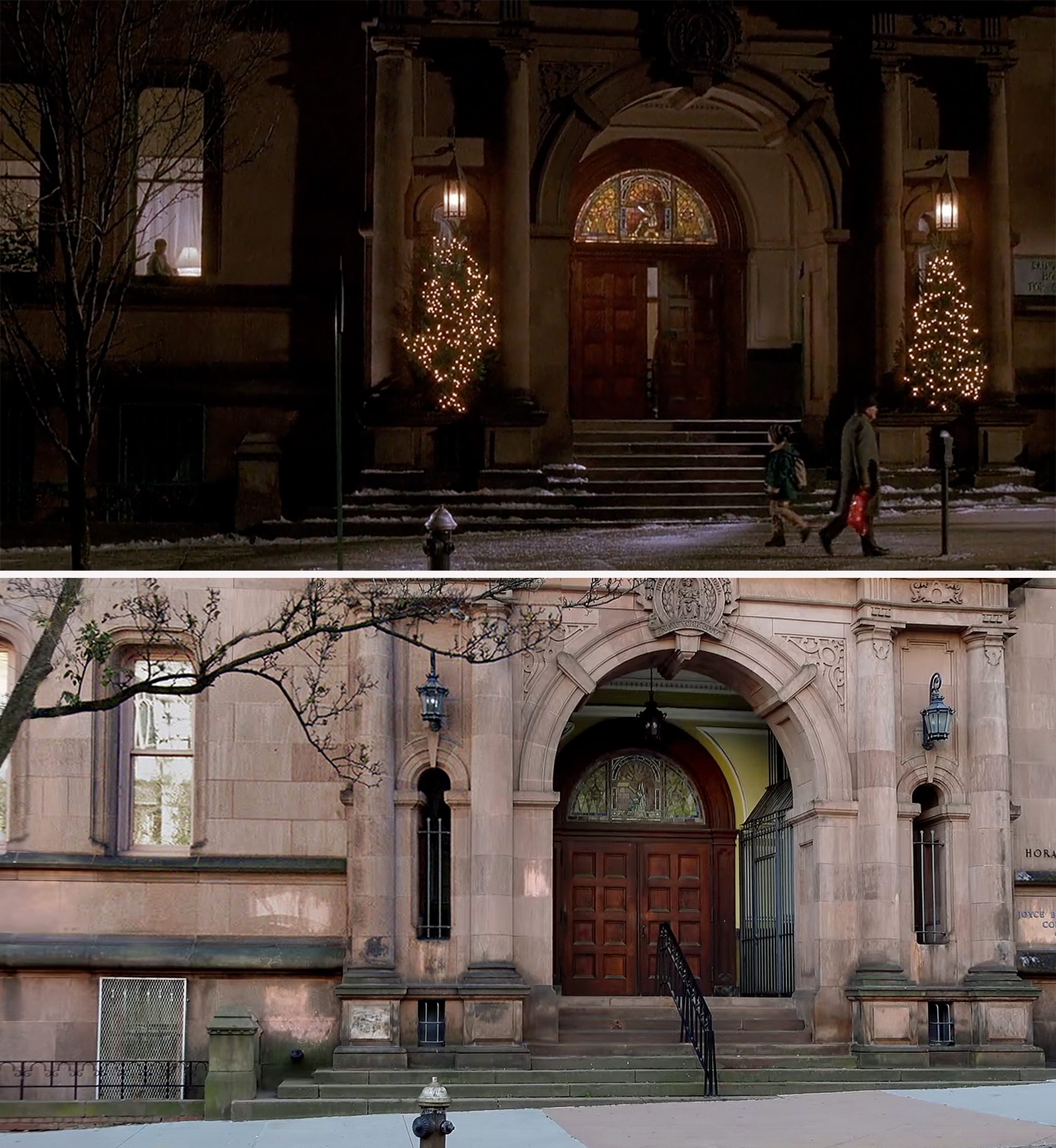
Not sure how this location was found, but when I decided to do an article on this movie, the children’s hospital location was already listed on IMDB. If it hadn’t, I’m sure I would have eventually found it, especially since it’s fairly distinct-looking.
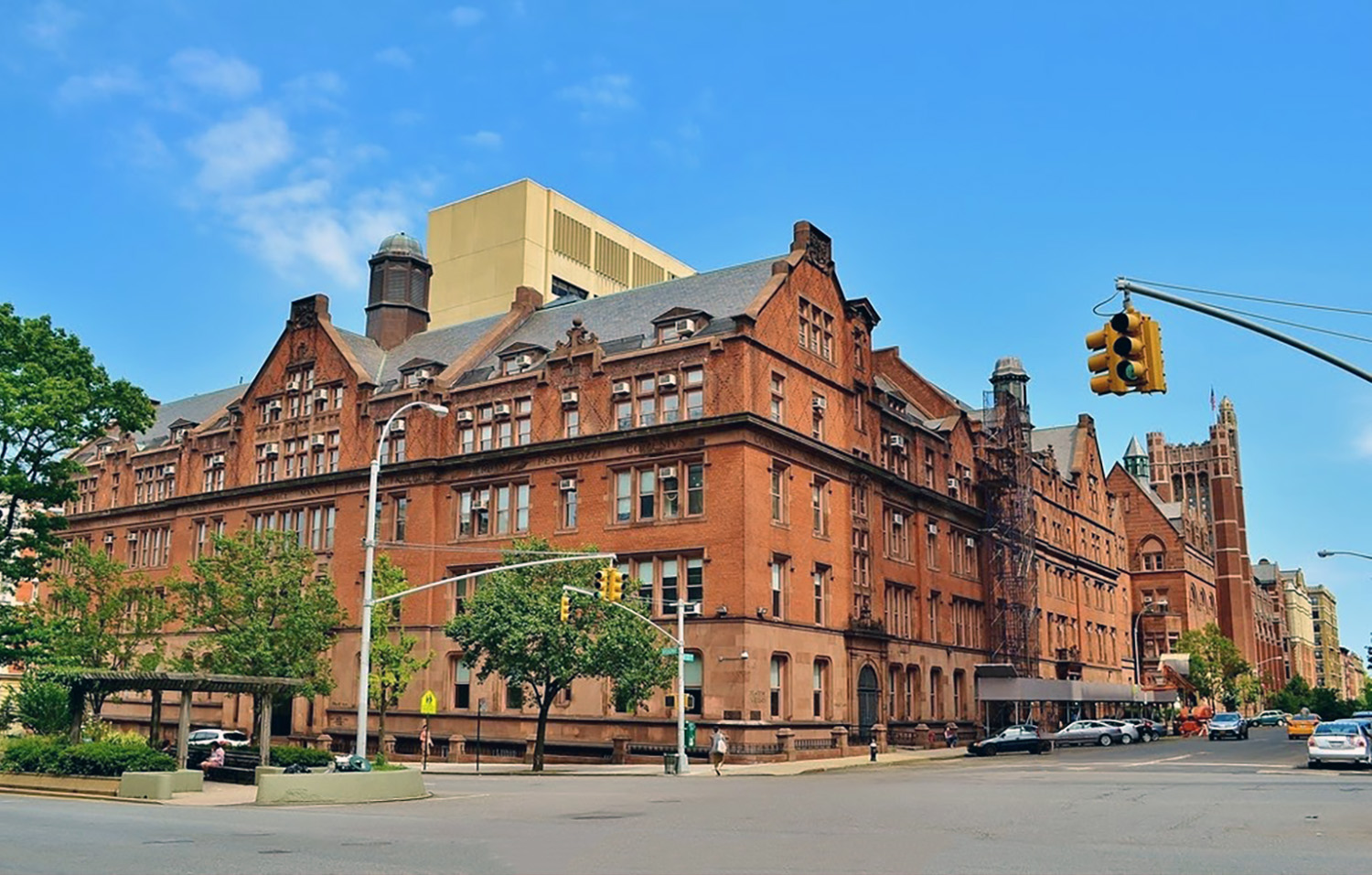
And that initial wide shot of the “hospital” wouldn’t have been any help, as it was just a matte painting placed near the Majestic apartment building, That would put the hospital down on W 72nd Street, instead of W 120th Street where the building really is.
The Family Arrives in NYC
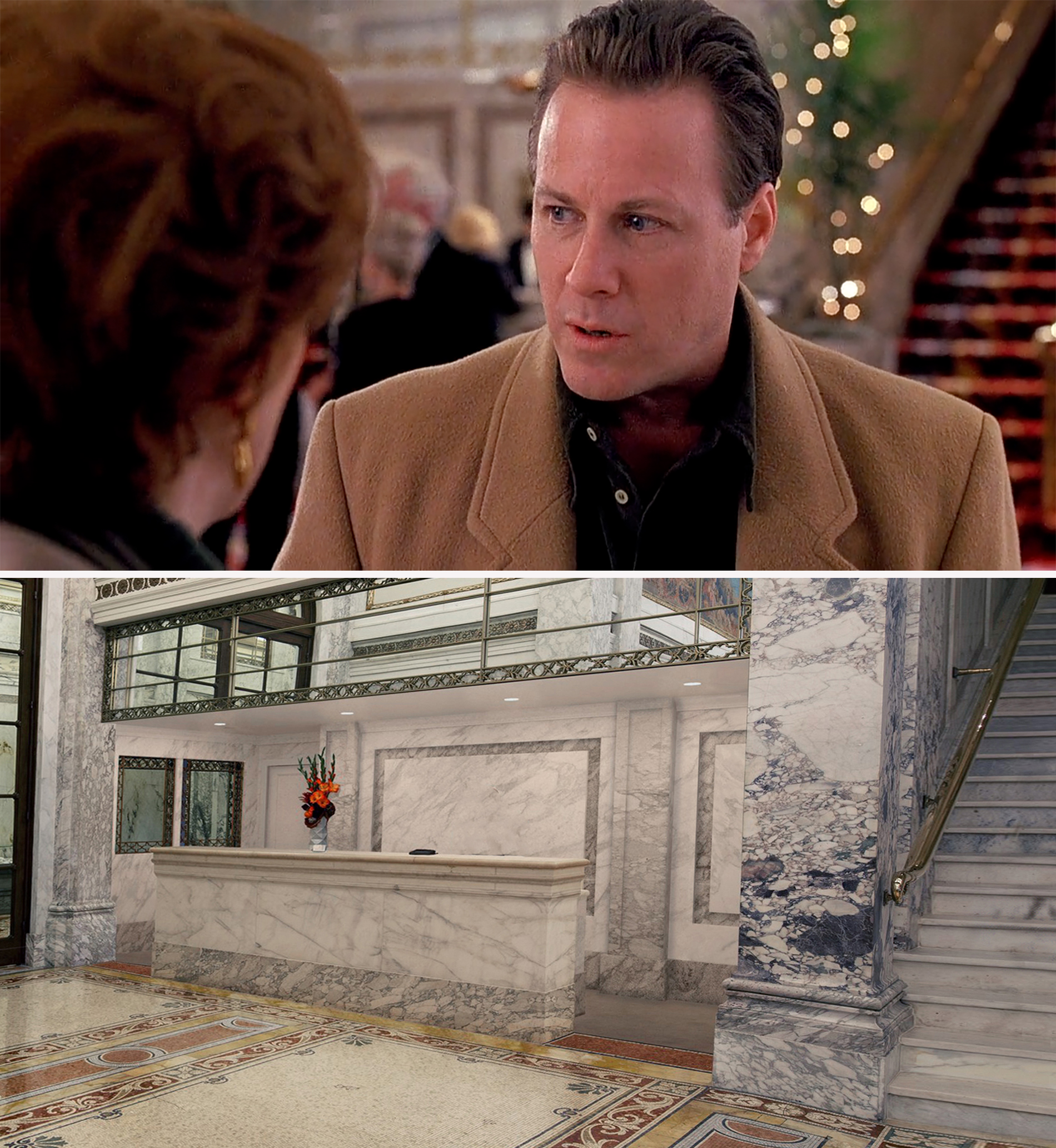
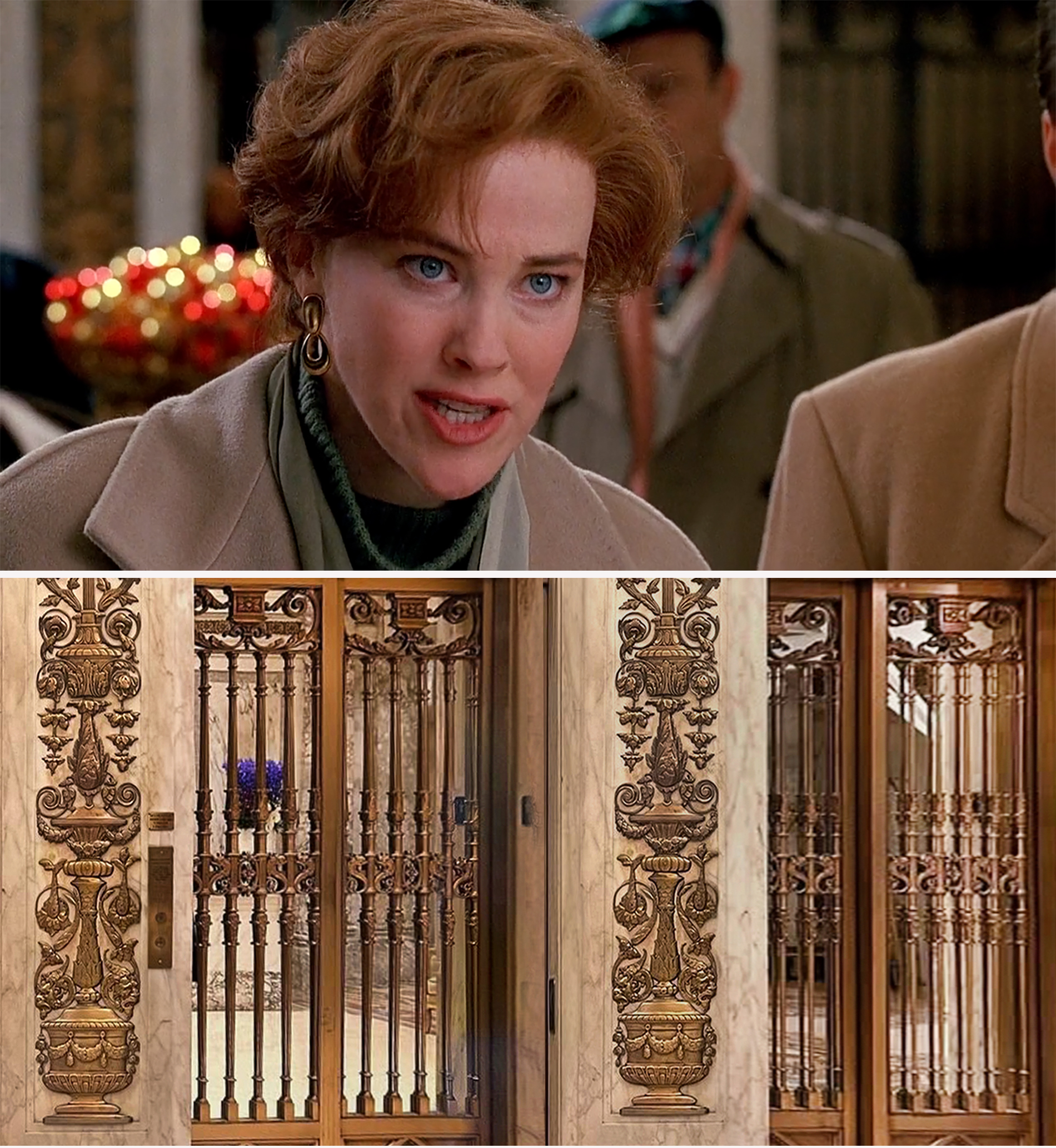
All of these Plaza lobby scenes were filmed in what is now a private entrance for long-term residents . This change happened during a 2005-08 update to the building, when a large chunk of the hotel rooms were converted into residential units.

Marketed as the Plaza Residences, there is now a total of 181 privately owned condominiums in the hotel, ranging in size from studios to expansive eight-bedroom homes.
Returning to Duncan’s

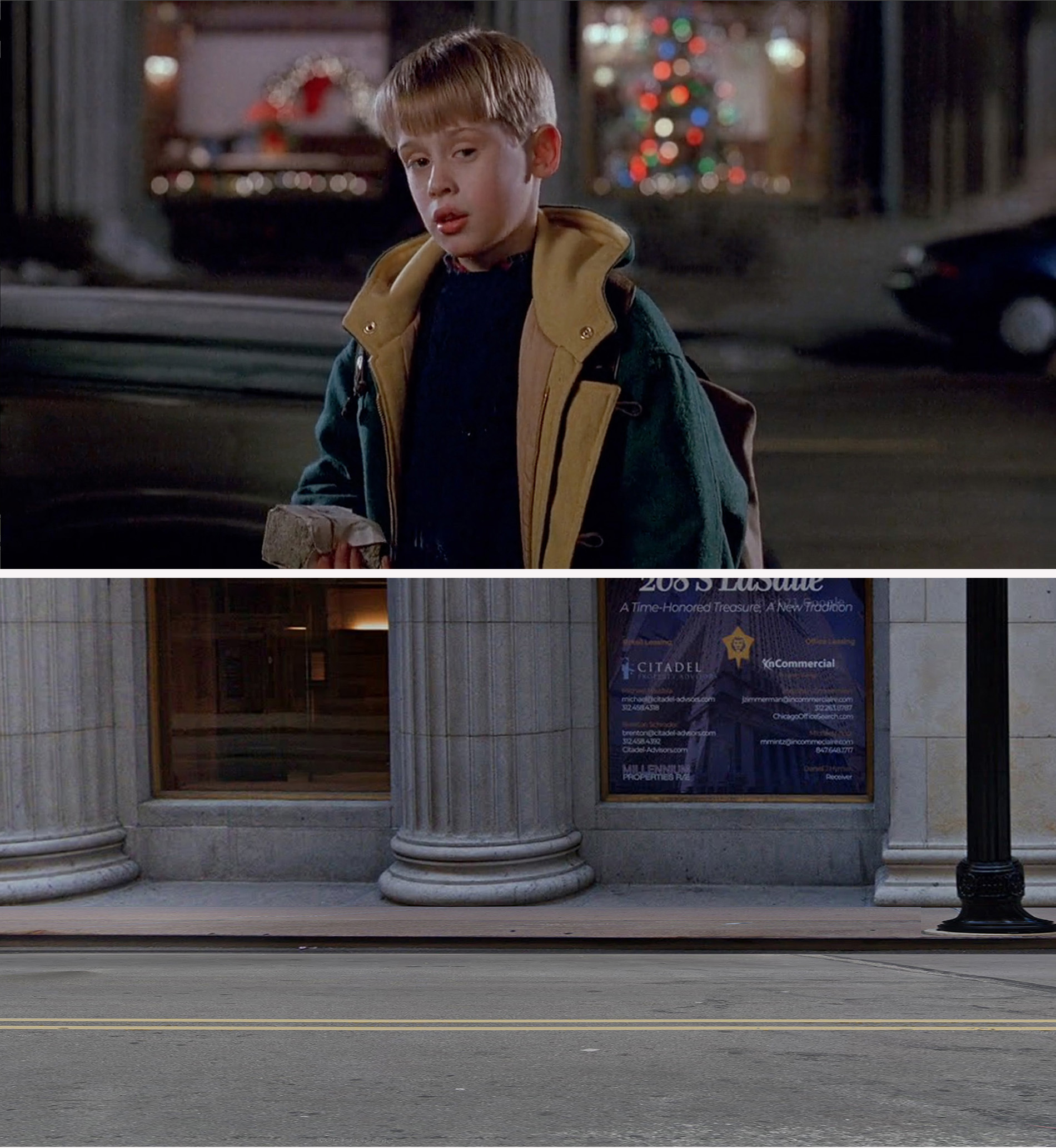

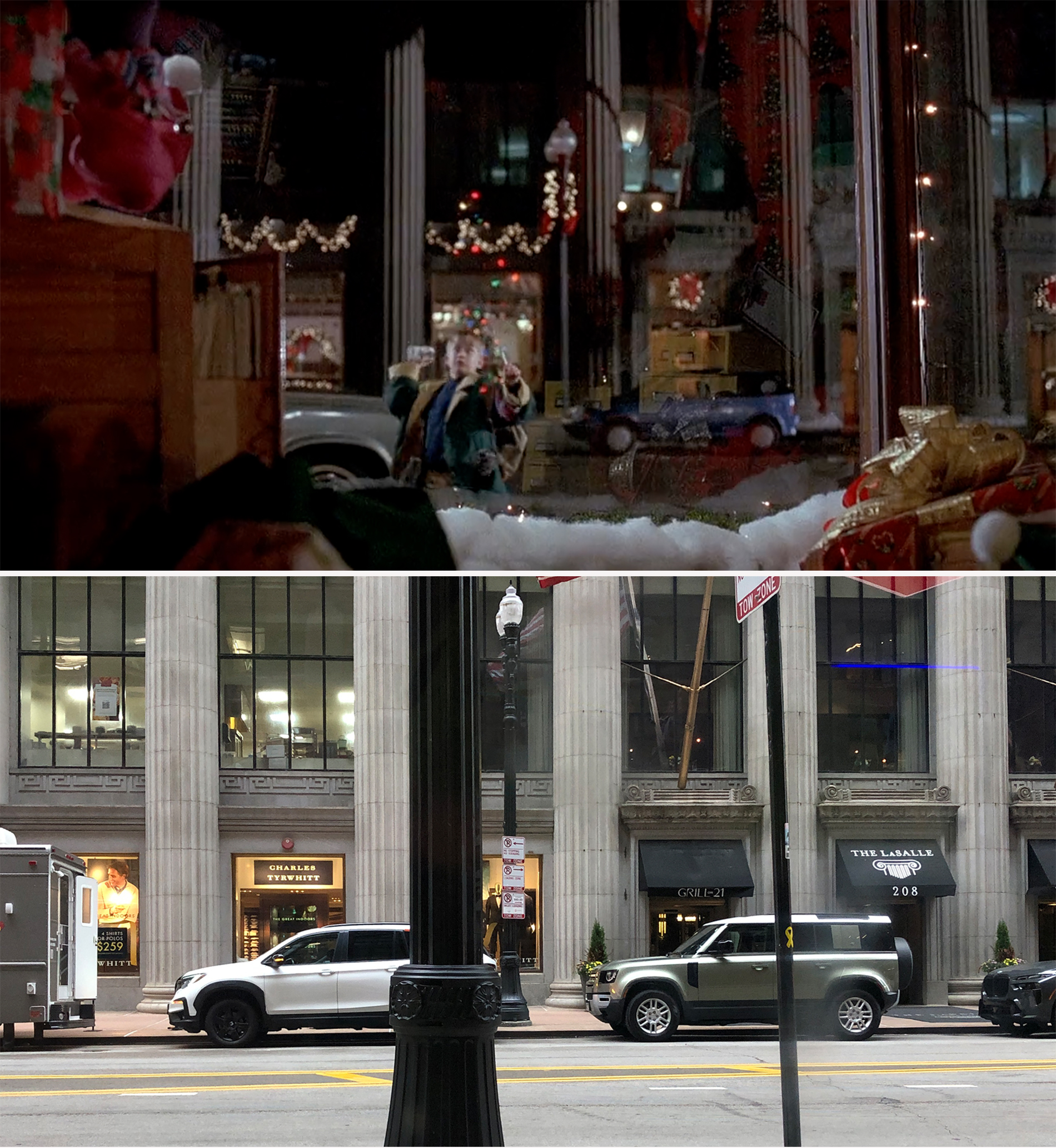


Back at the Brownstone
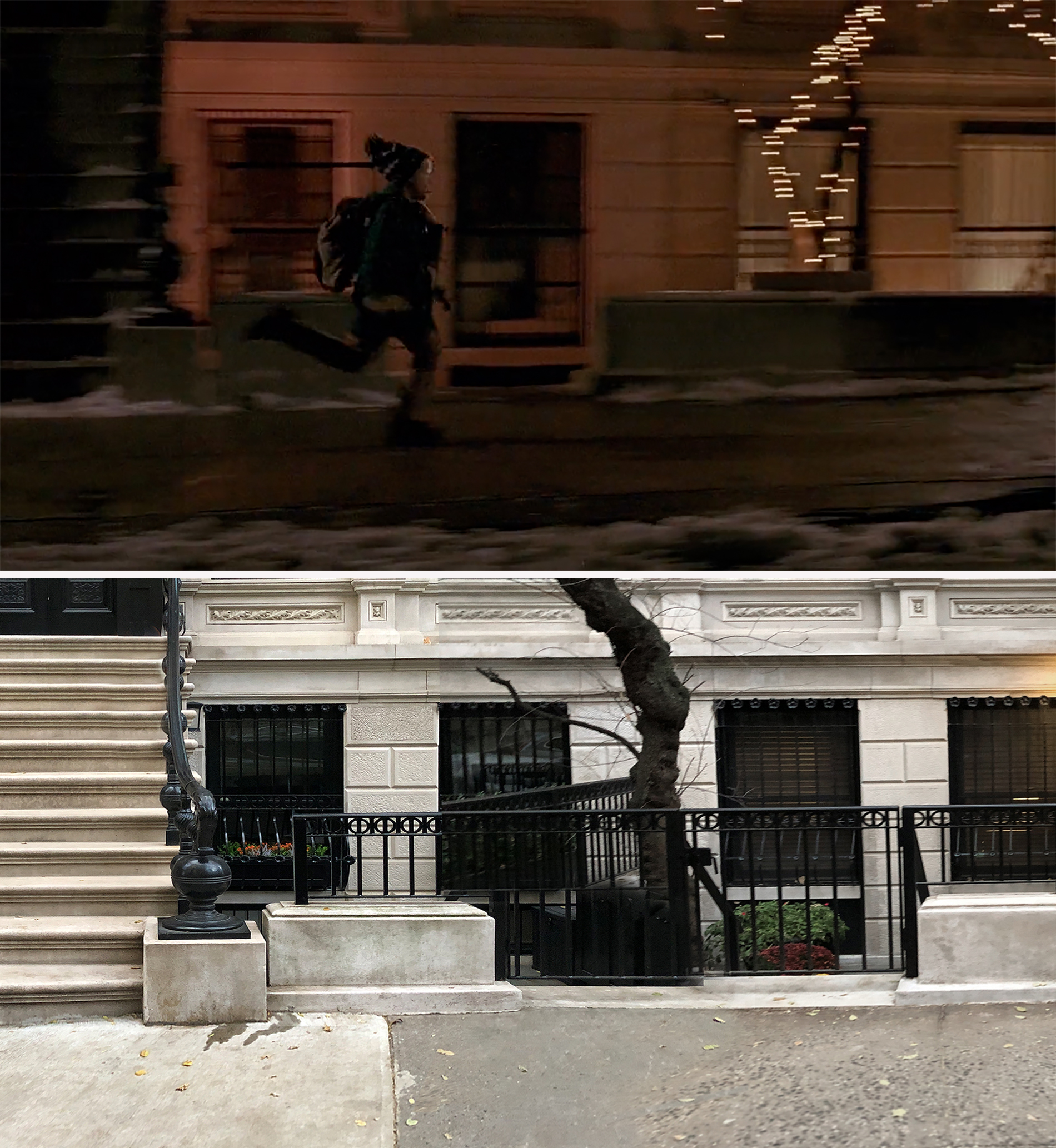

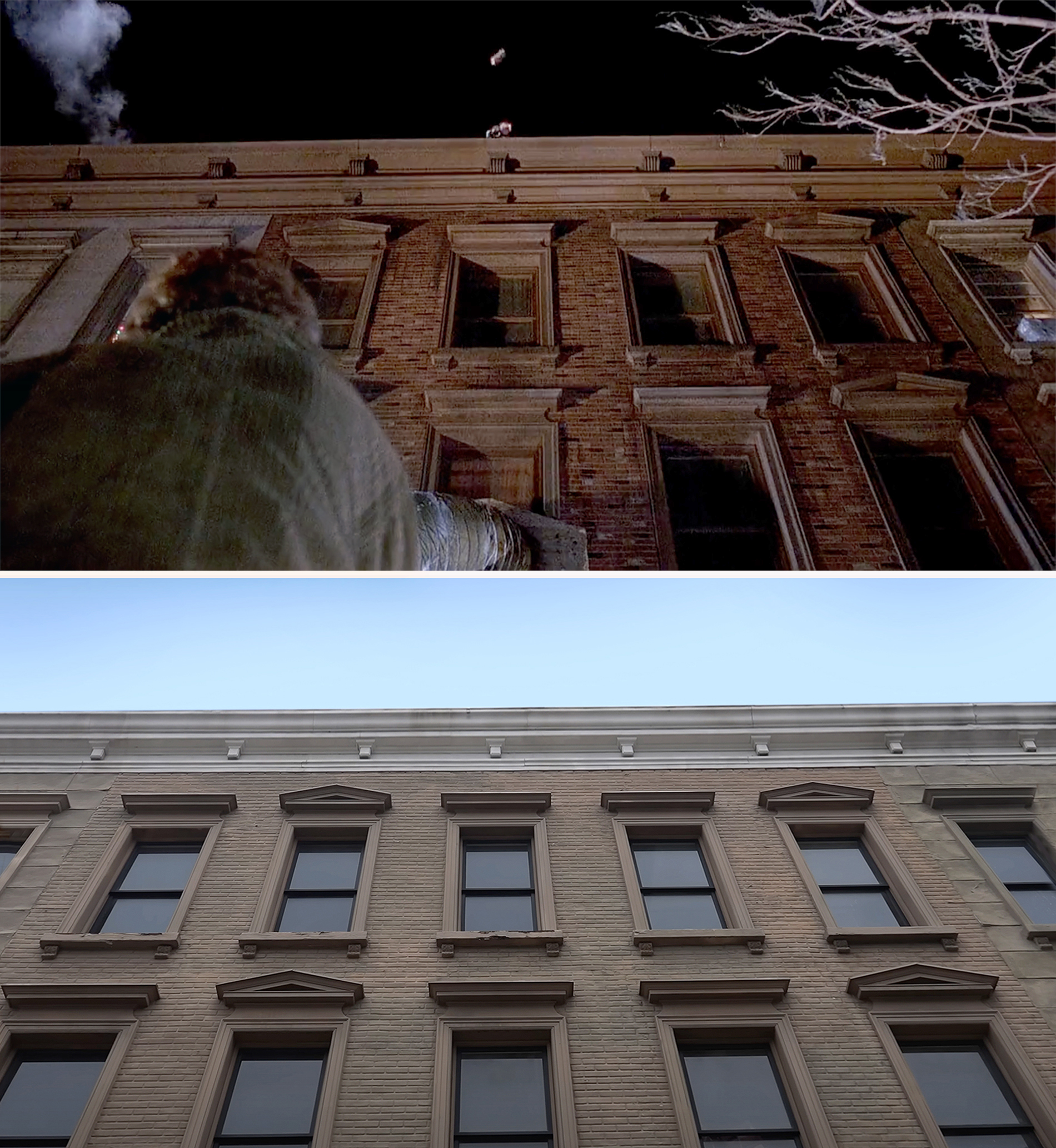
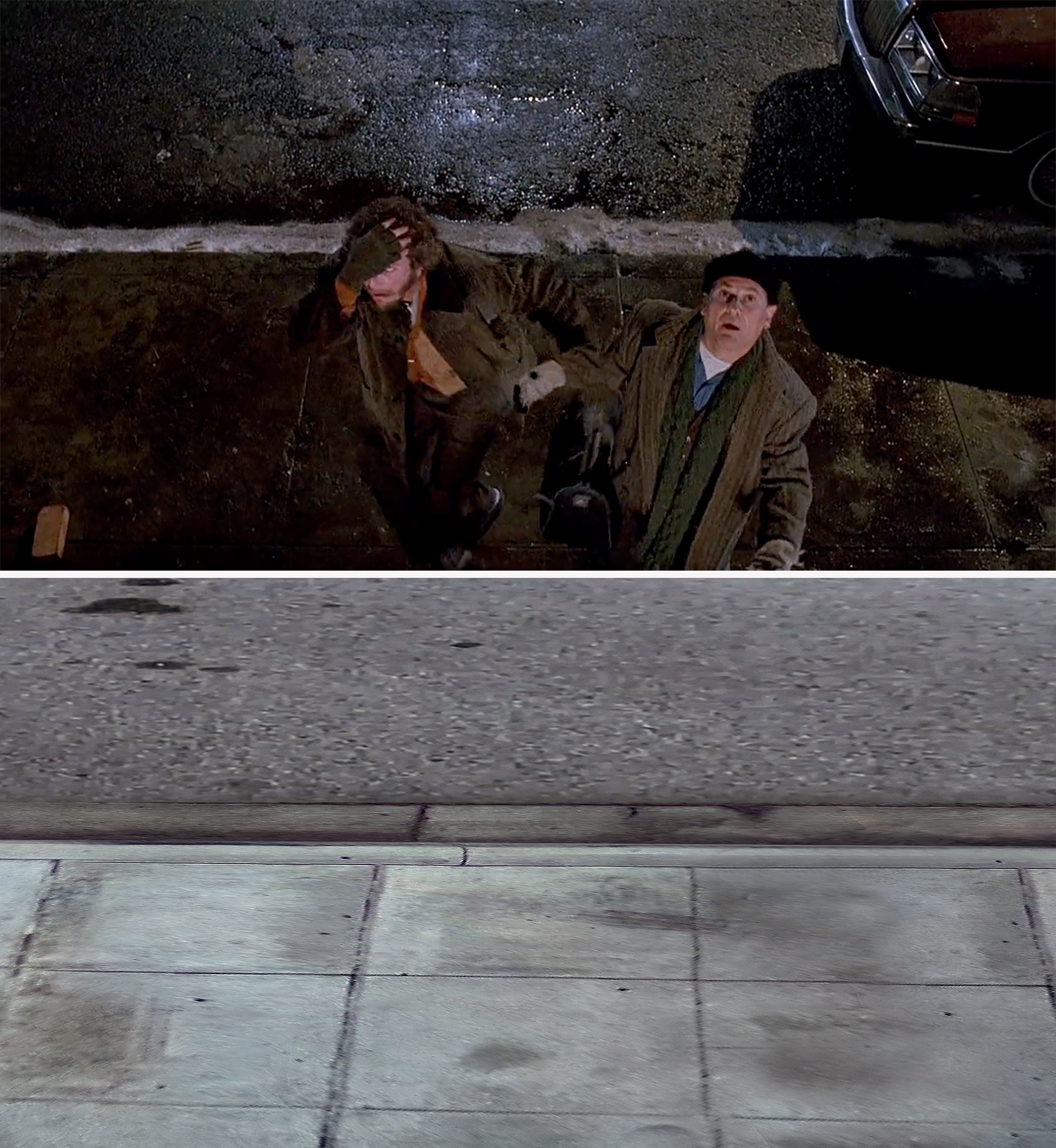
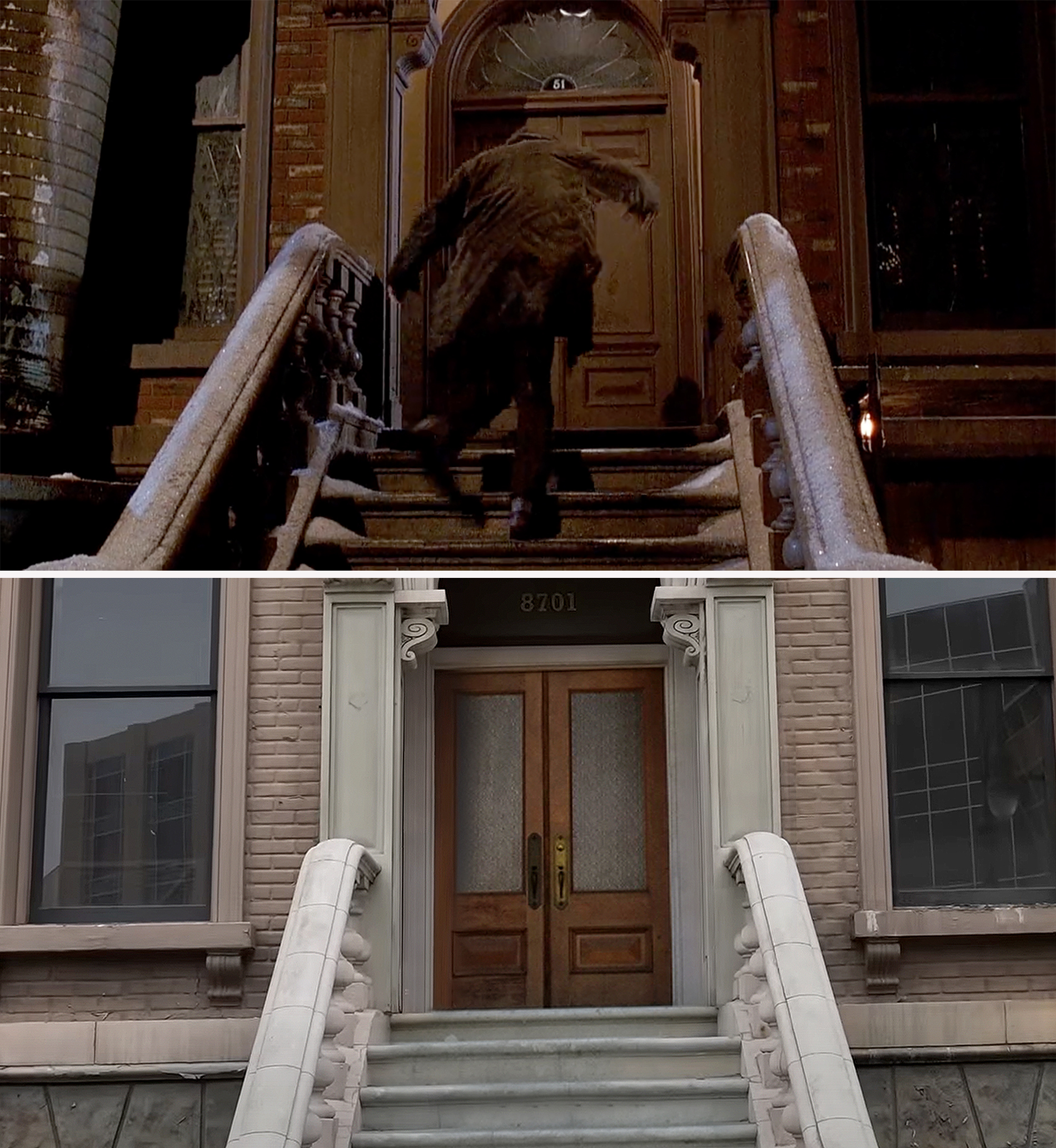
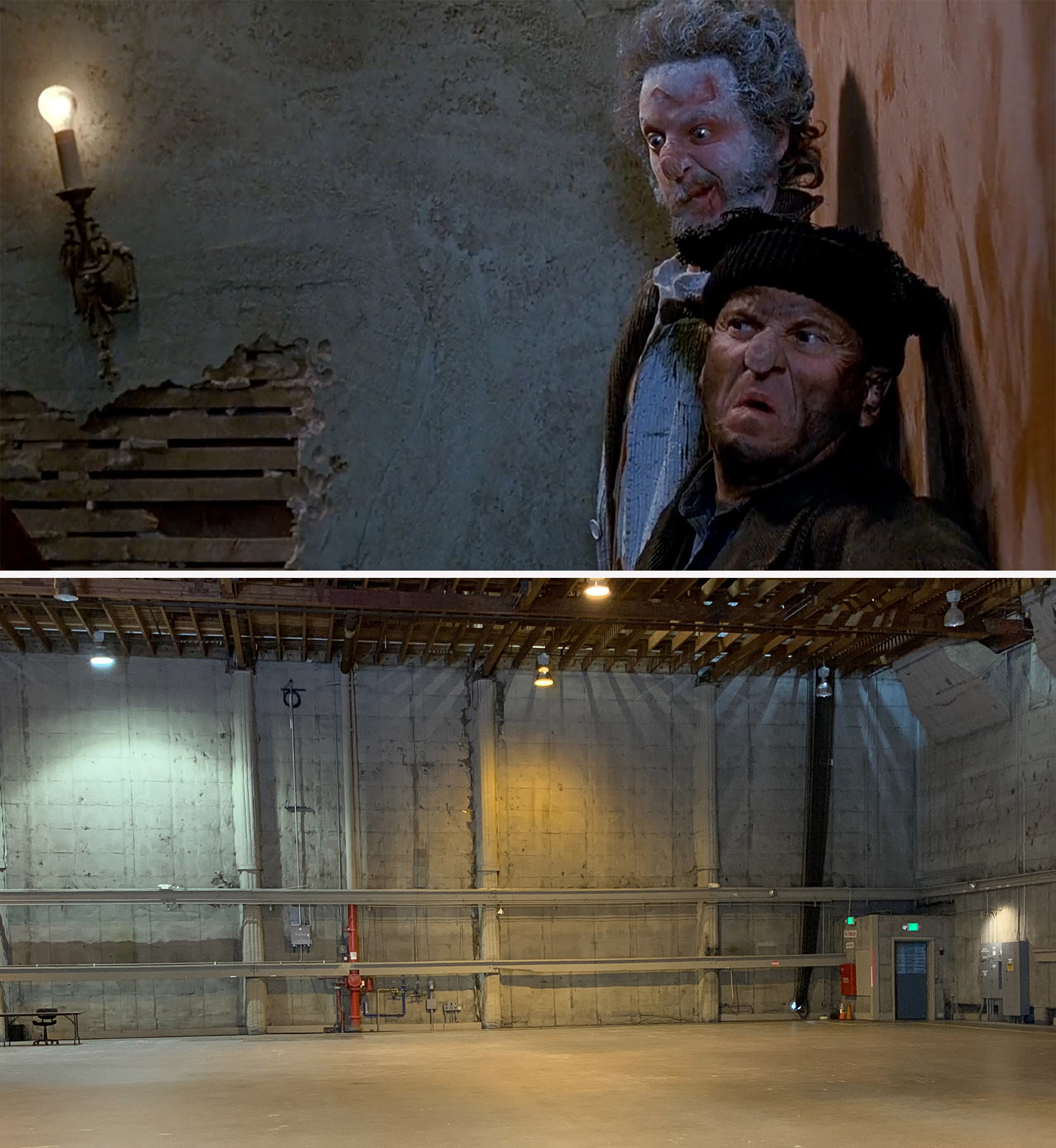
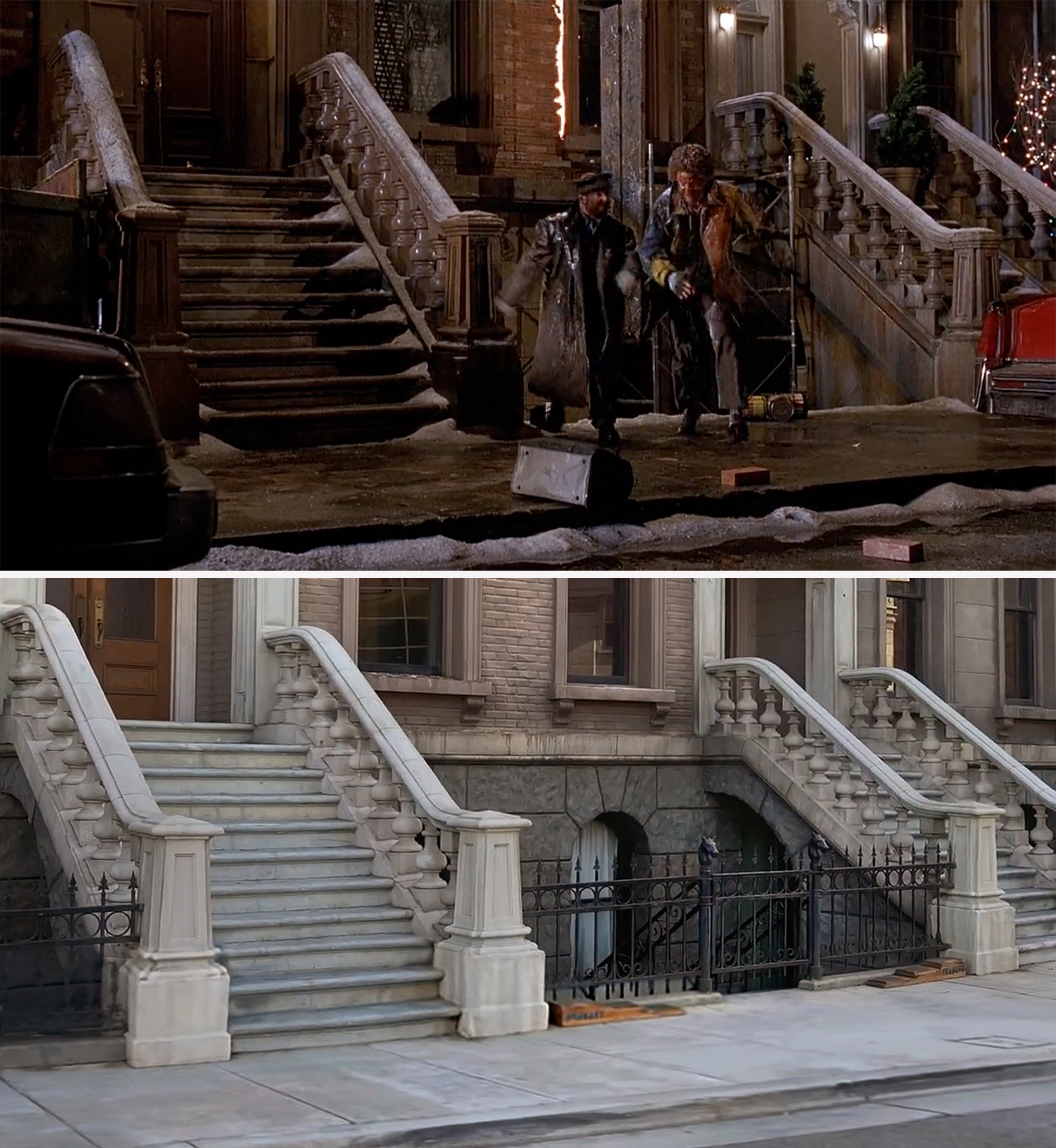
City streets on studio backlots generally look pretty fake, but I always found that when they’re photographed at night, they look a little more convincing. (This was also the credo of filmmaker, Robert Wise.)
What’s impressive about this movie is that they pretty much seamlessly mixed on-location footage on W 95th Street with the stuff shot at Universal. They bounce back and forth several times, and most viewers would be hard-pressed to notice the differences.
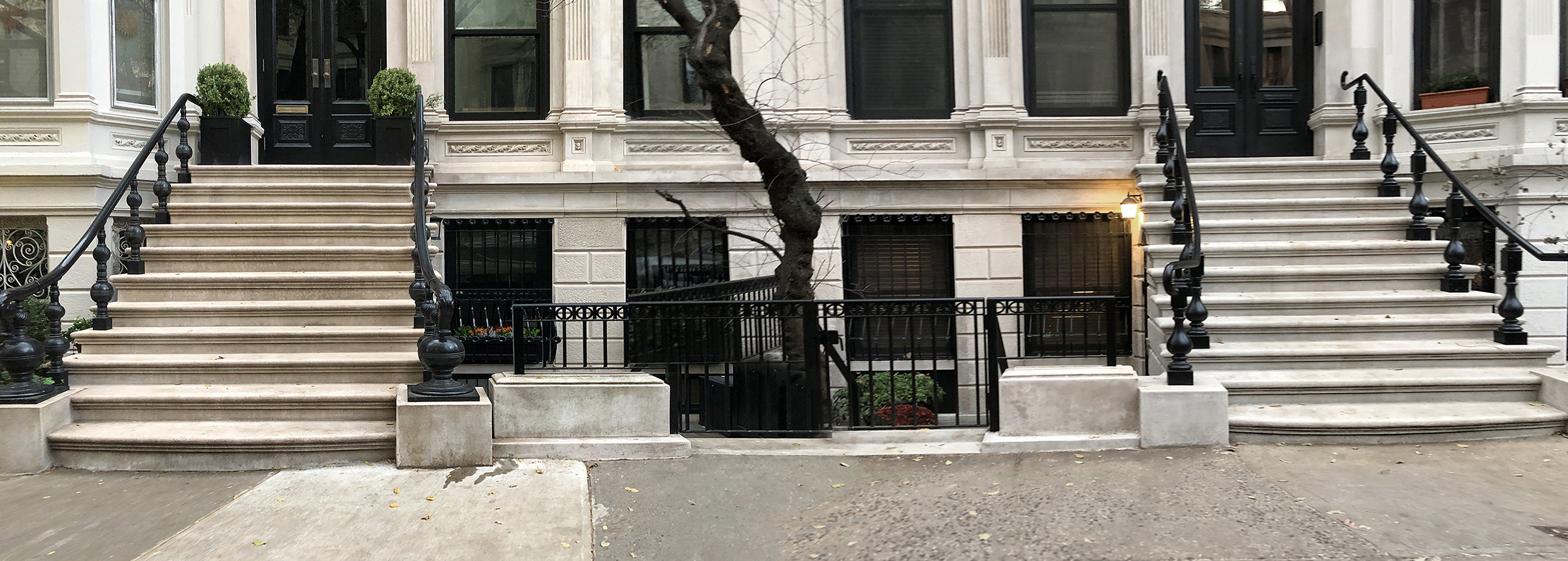
When it came to the interiors of Kevin’s uncle’s brownstone, it was most definitely done on a set, but I couldn’t find any references as to where these sets were built. Since they were using the Universal backlot, I can only assume they used the soundstages there, too. It is possible they built the sets back in Chicago, like they did in the first movie, but it seems unlikely.
Kevin Gets Caught
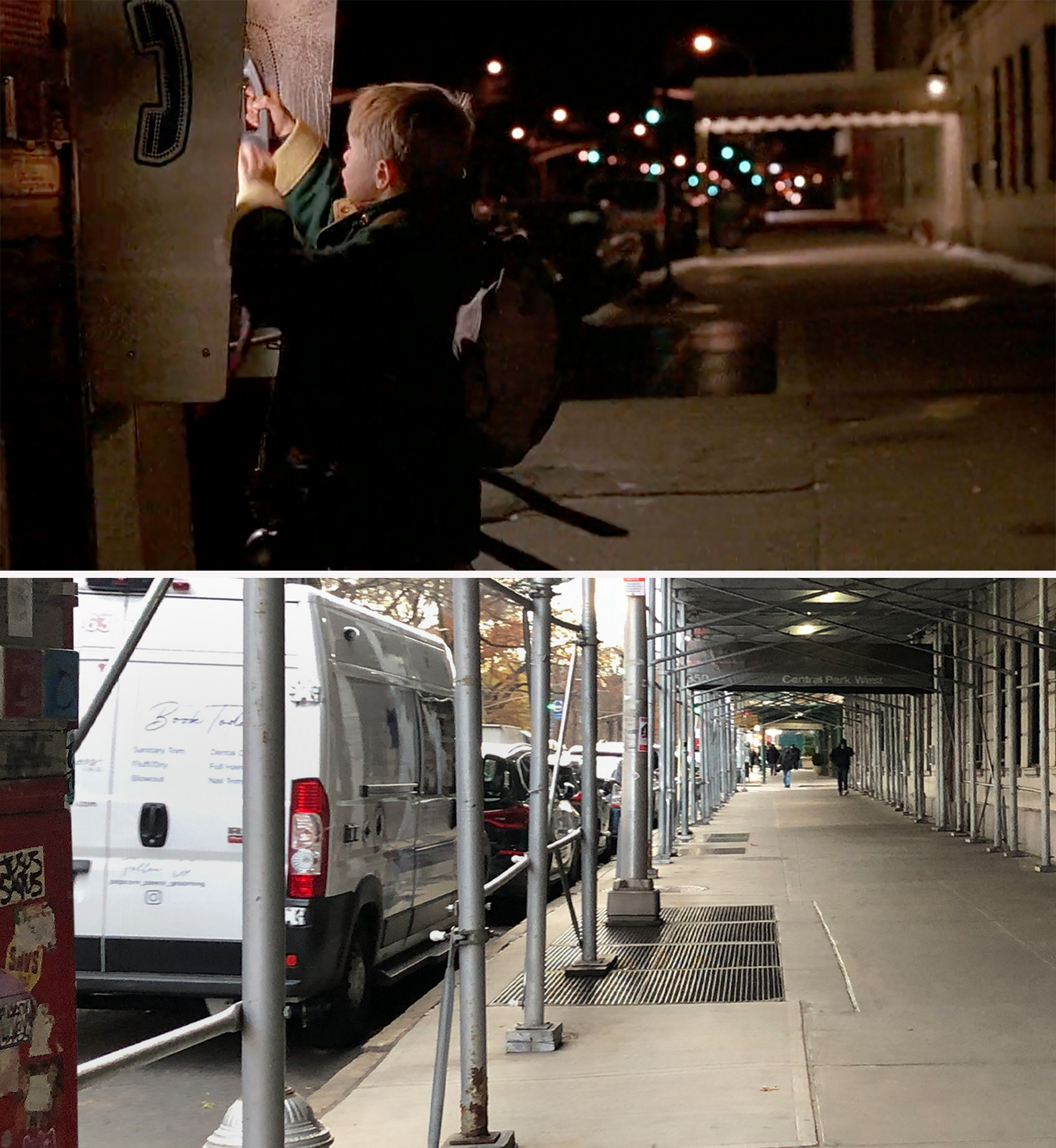
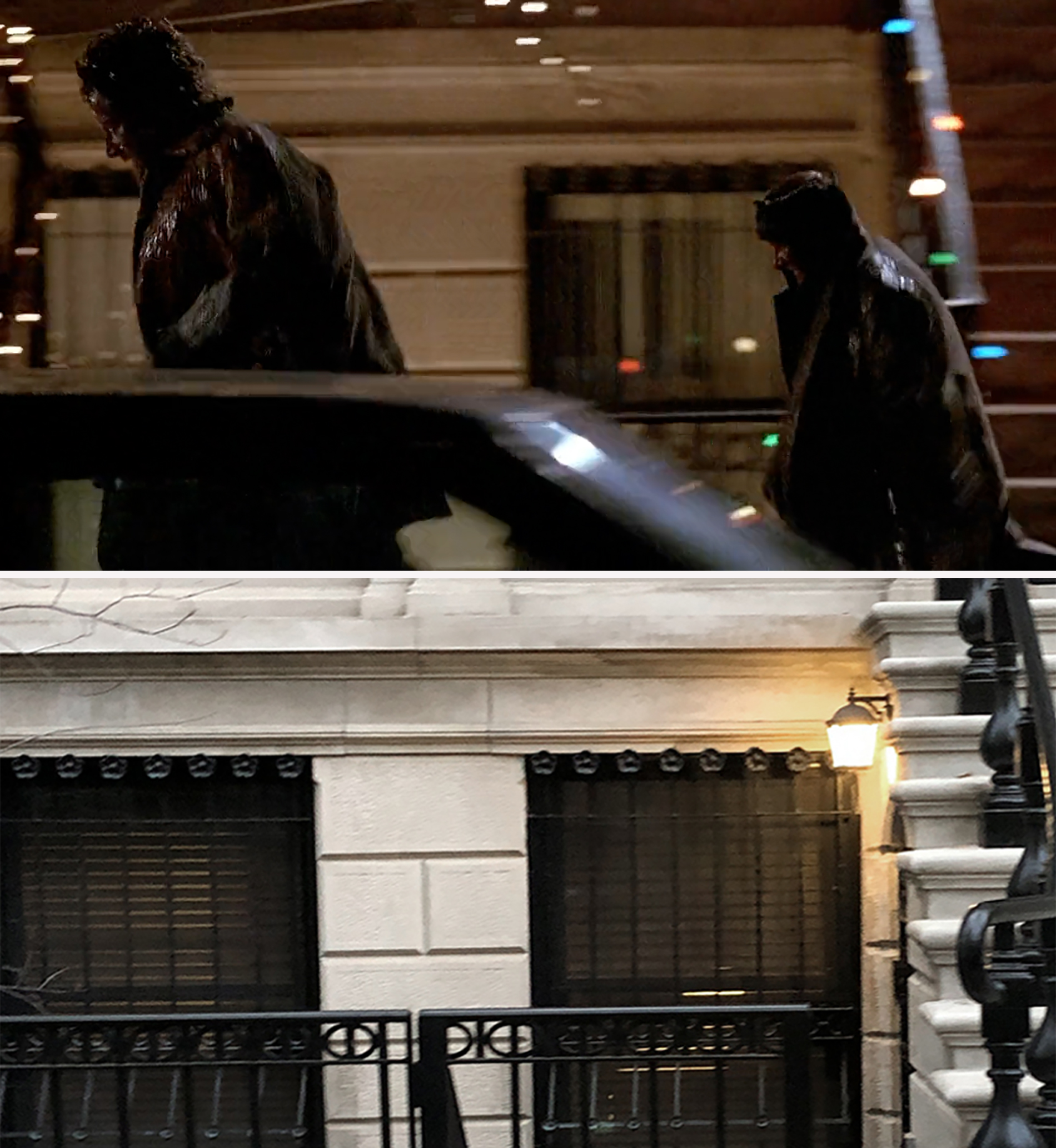
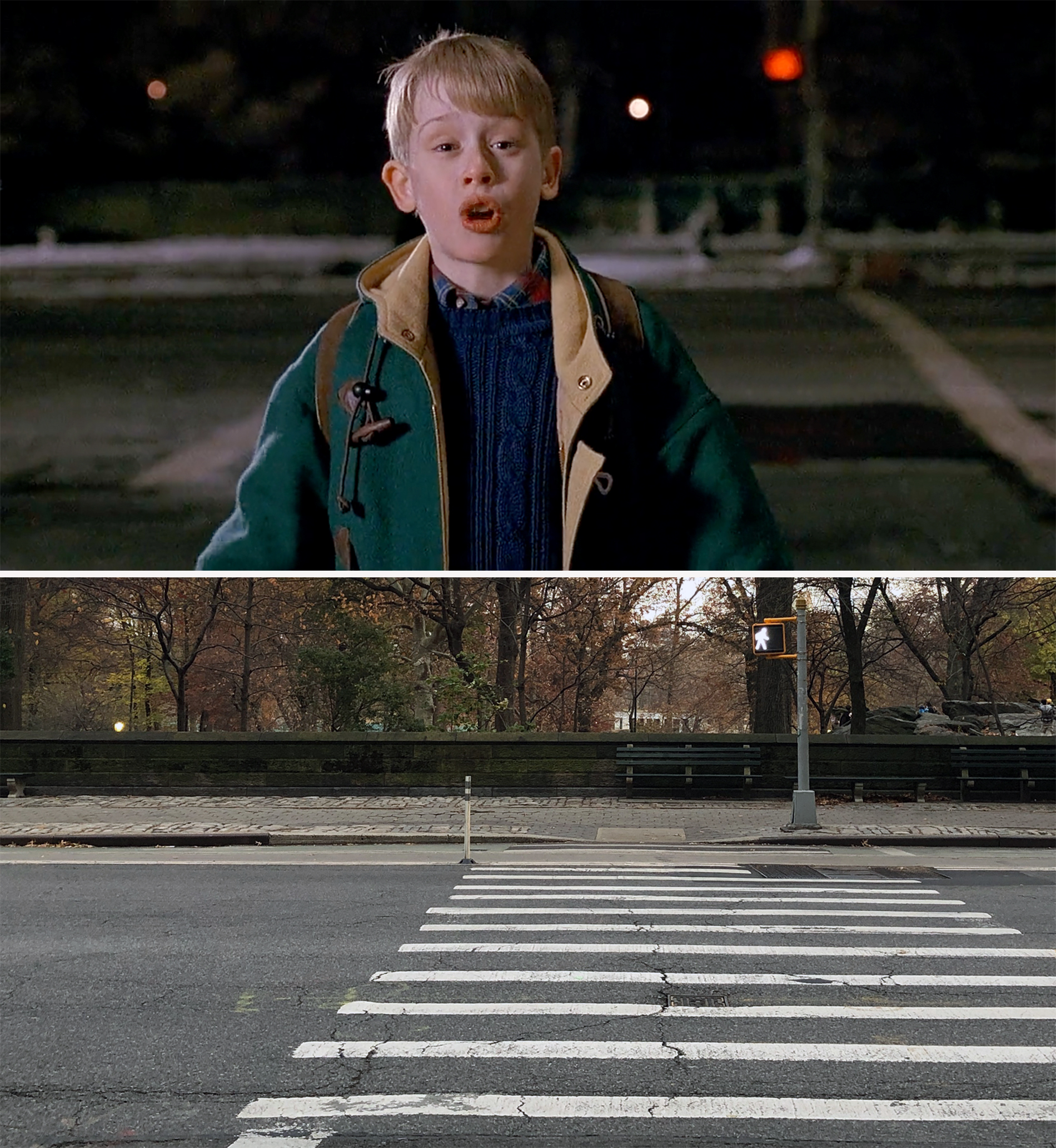
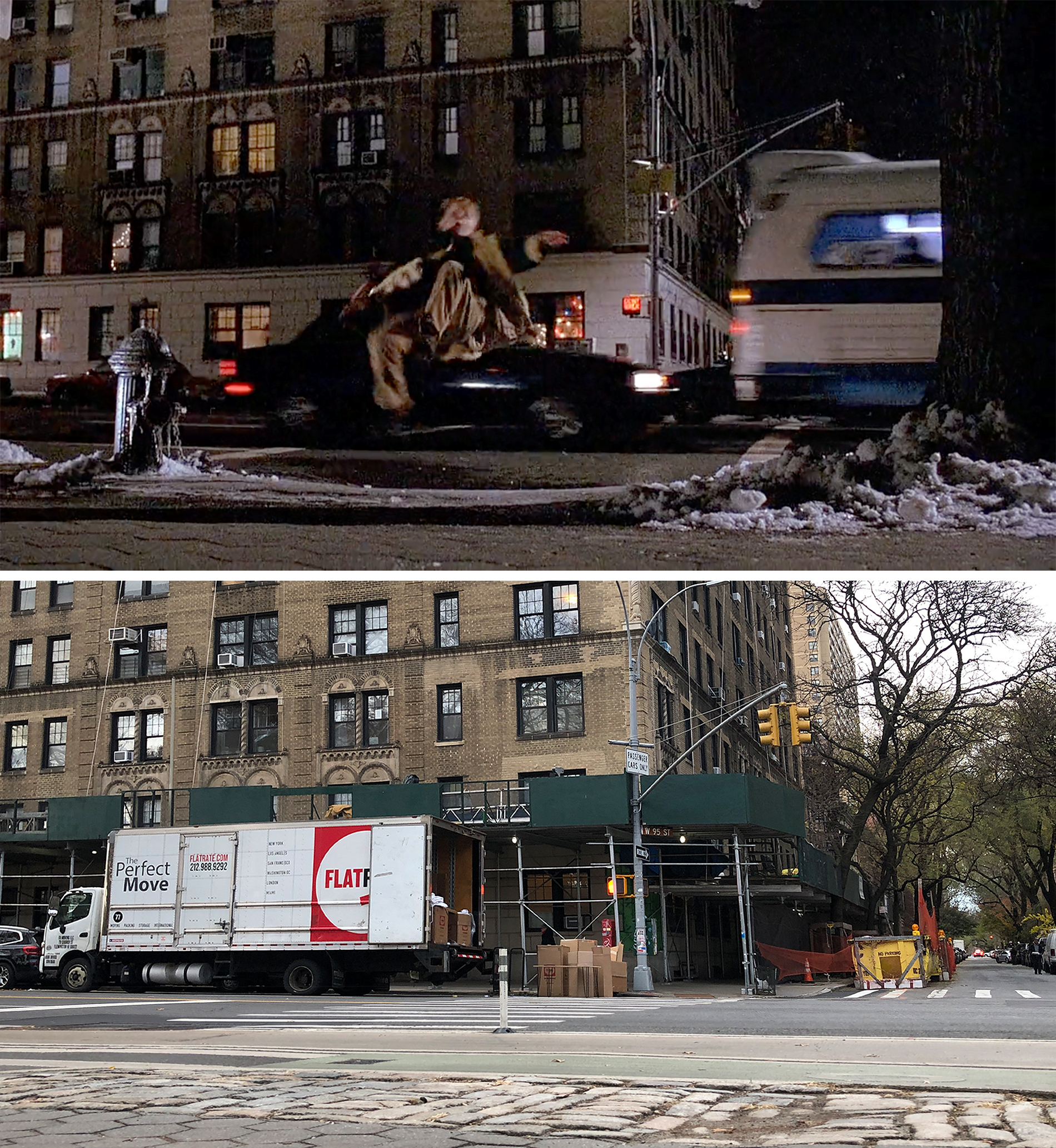

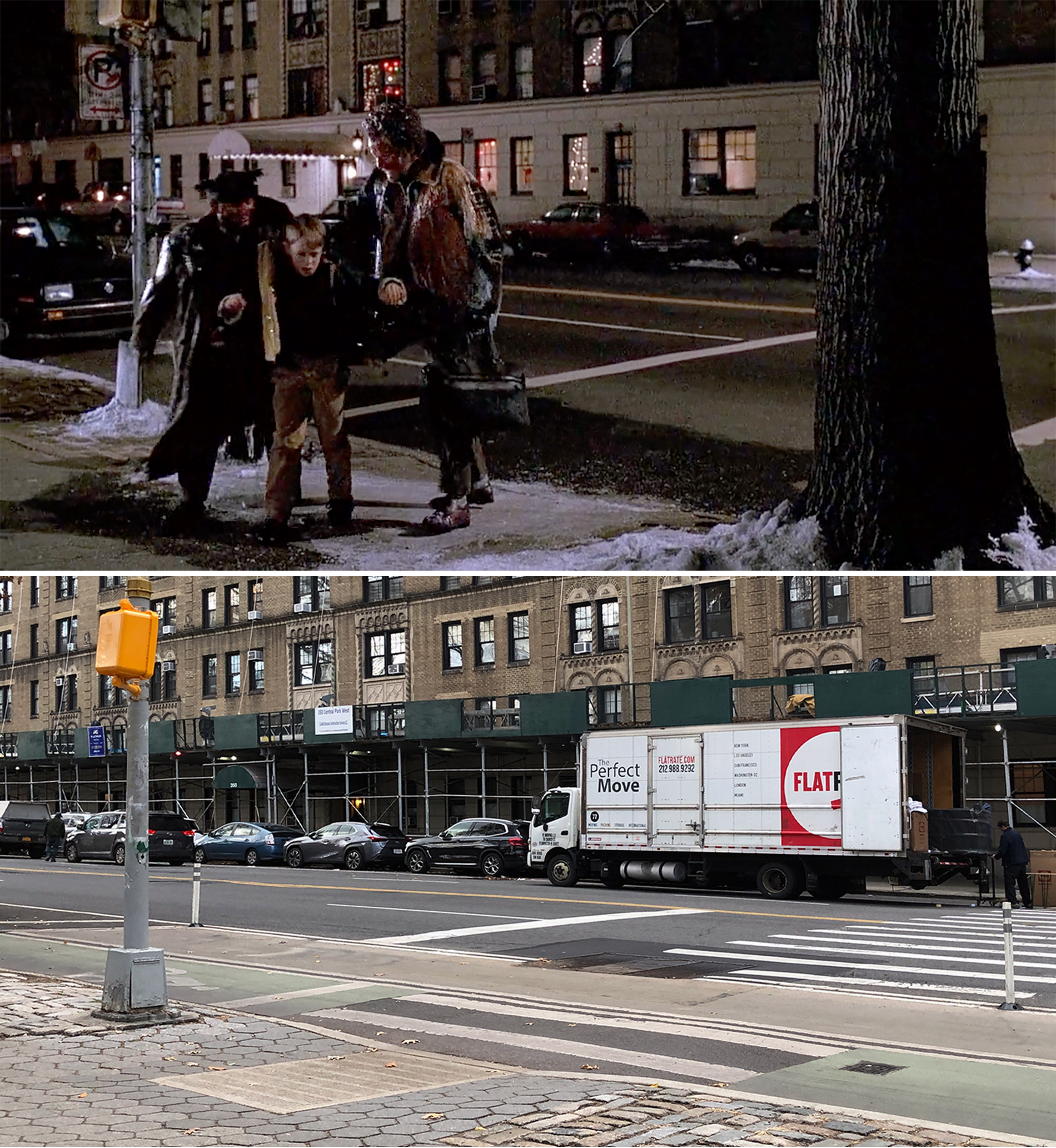
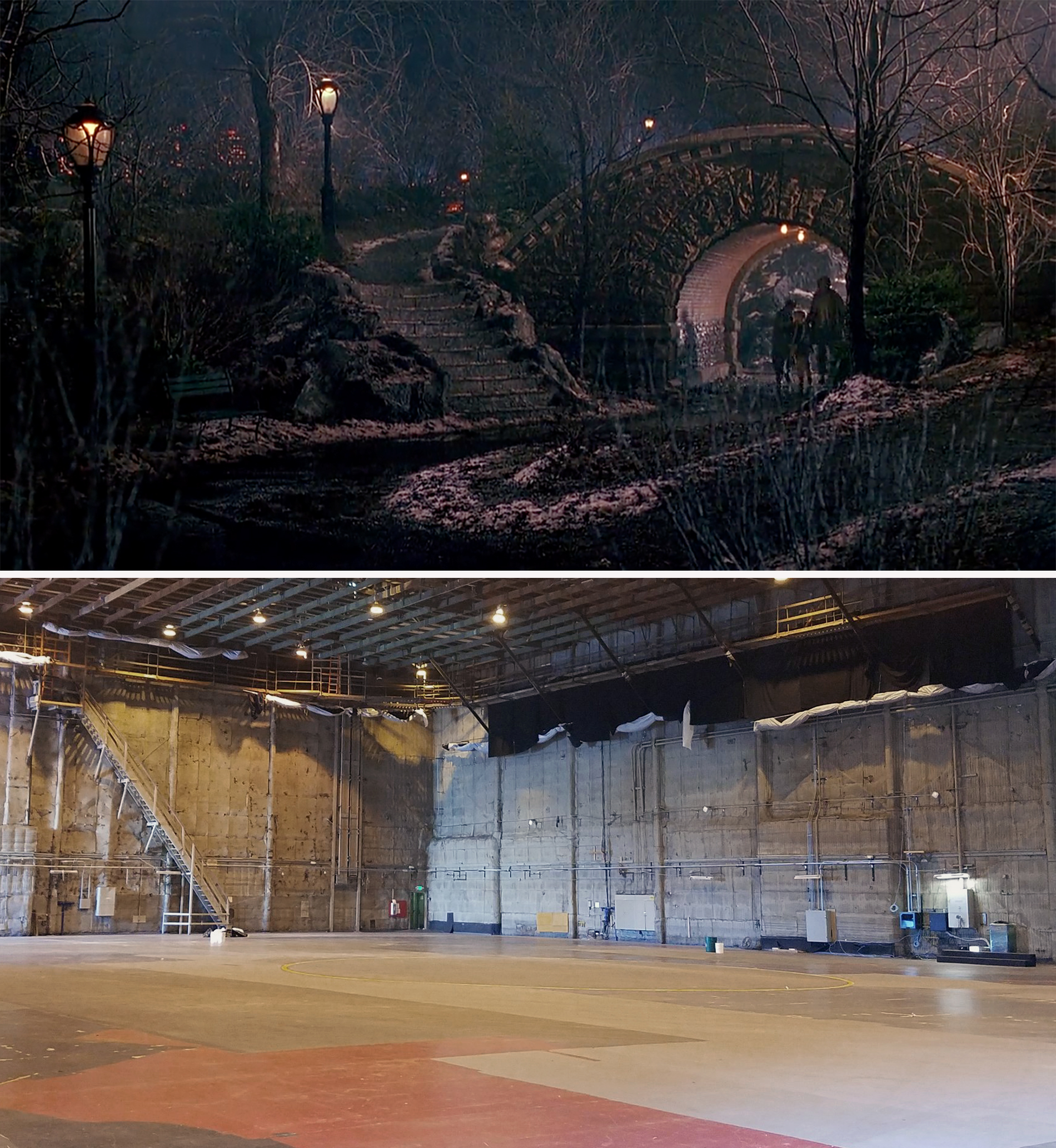

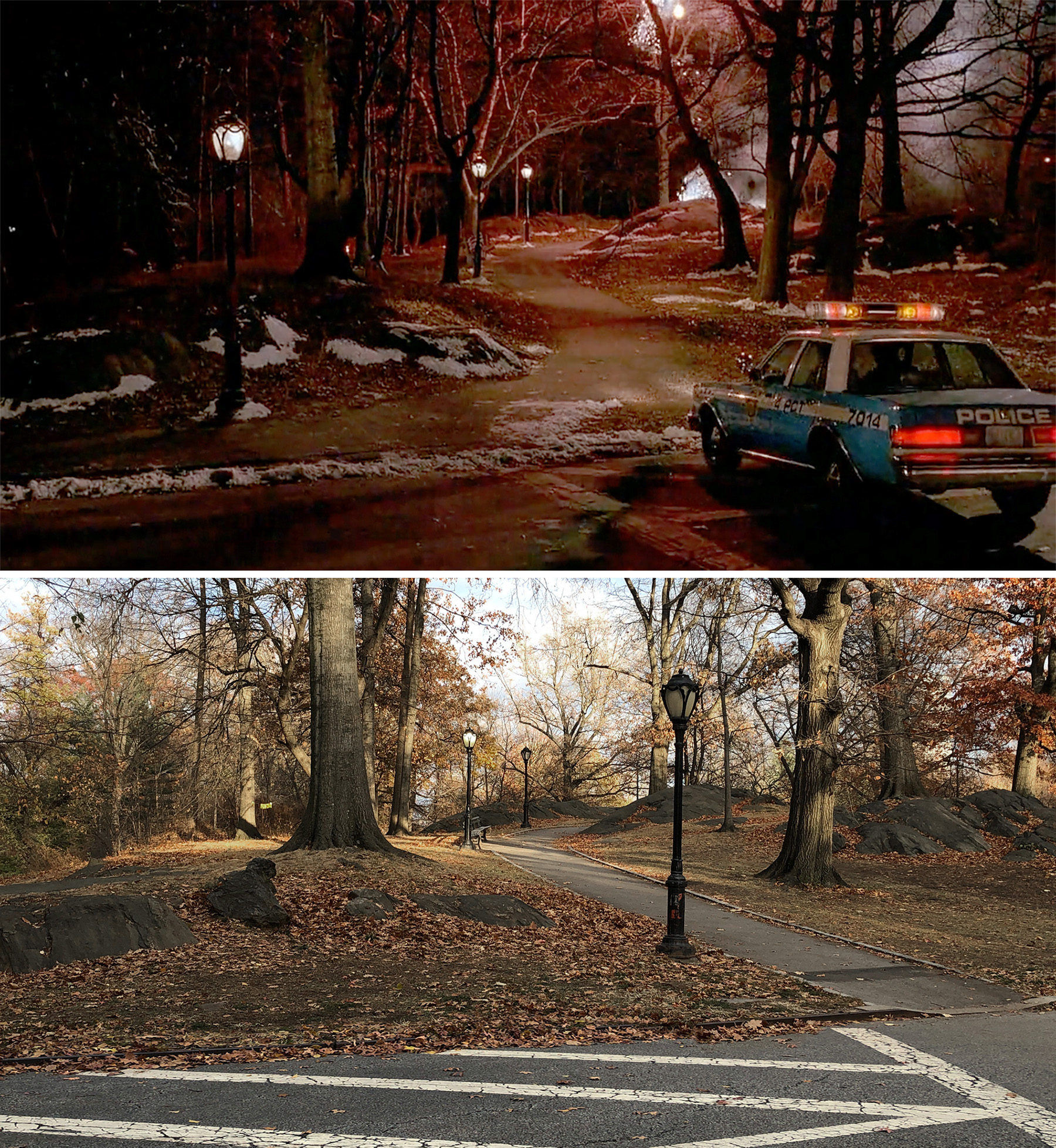
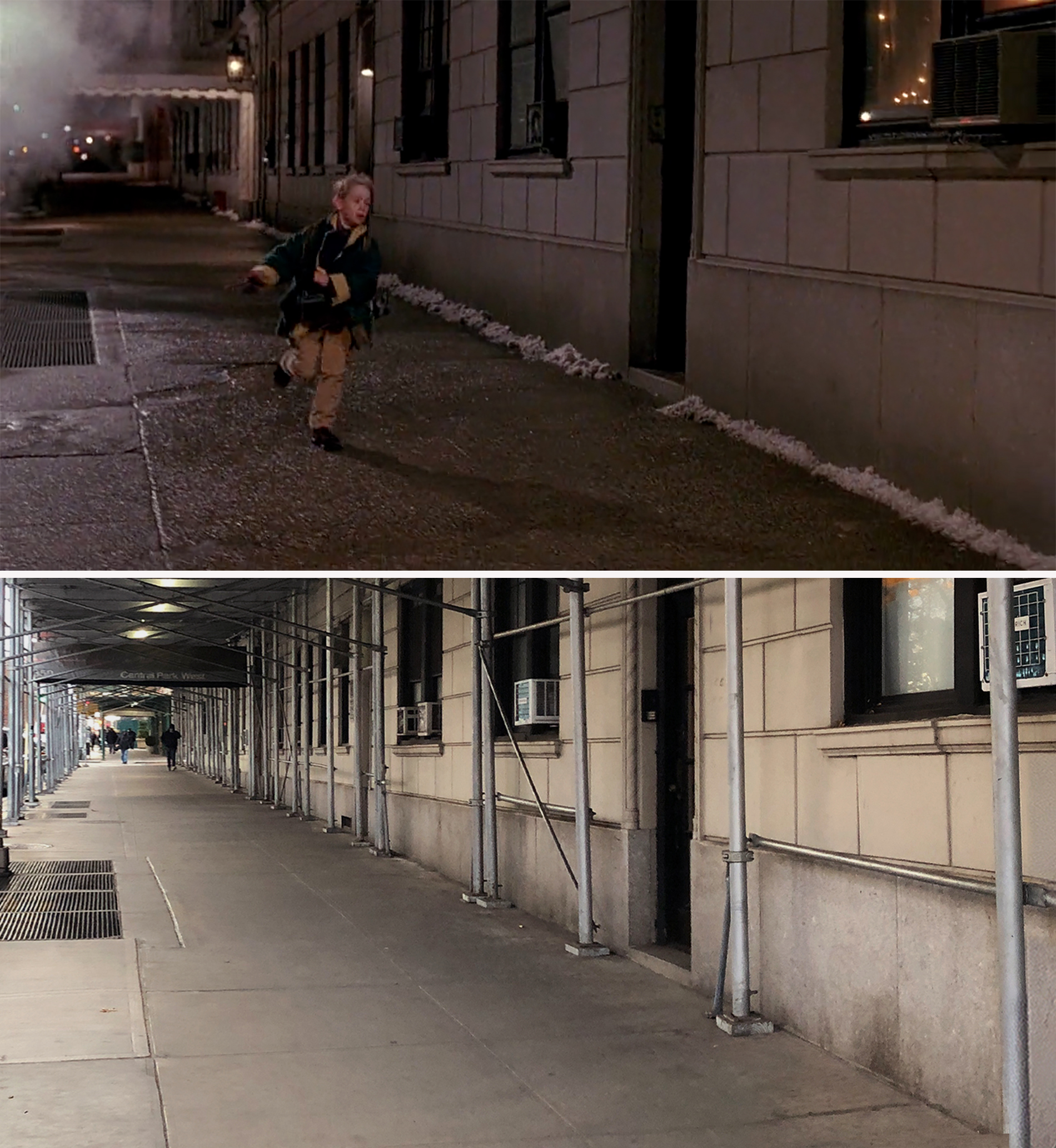
Once again, this sequence mixes real NYC footage with Hollywood stuff. Unfortunately, the corner building at W 95th and Central Park West has been covered in scaffolding for several years now, making my modern pics a little ugly. But at least it’s not covered in netting too, so you can still see many of the matching doors and windows in the wide shots.
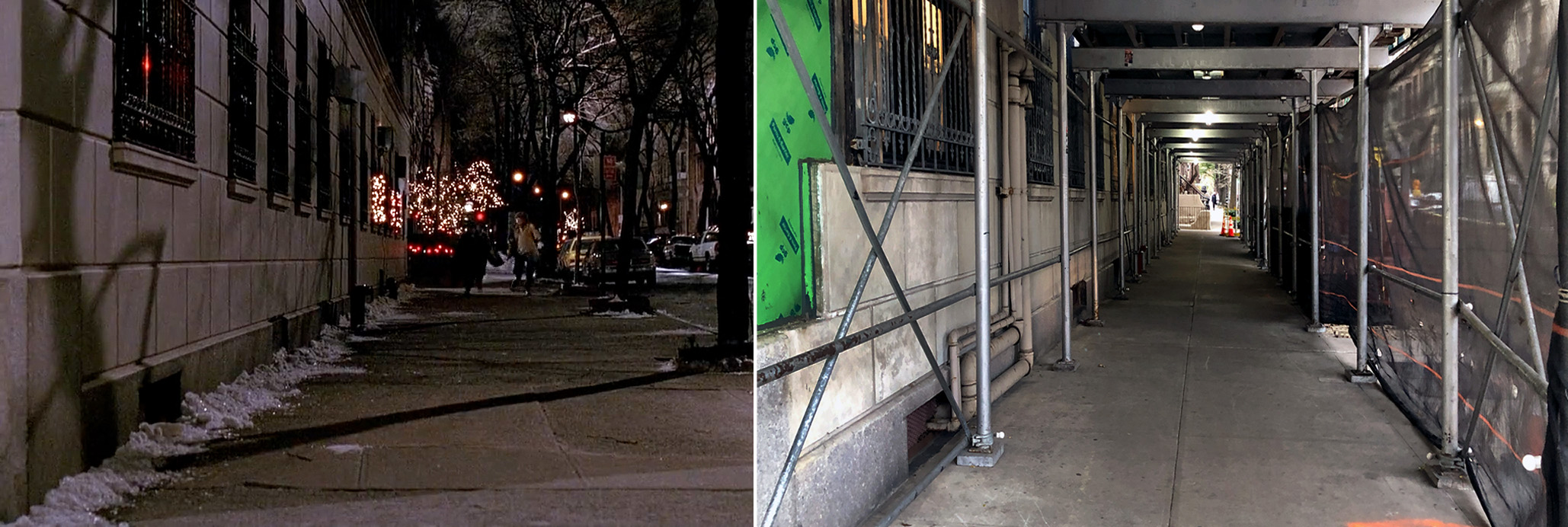
Once the characters go into Central Park, again, we switch to a soundstage. The tunnel featured in these parts was obviously inspired by Inscope Arch, located in the park not too far from Gapstow Bridge. They did such a good job recreating Inscope, many film fans thought it was the real deal. But the tunnel in the movie is clearly not as long as the one in New York, plus production added a set of stairs that aren’t at the real place.
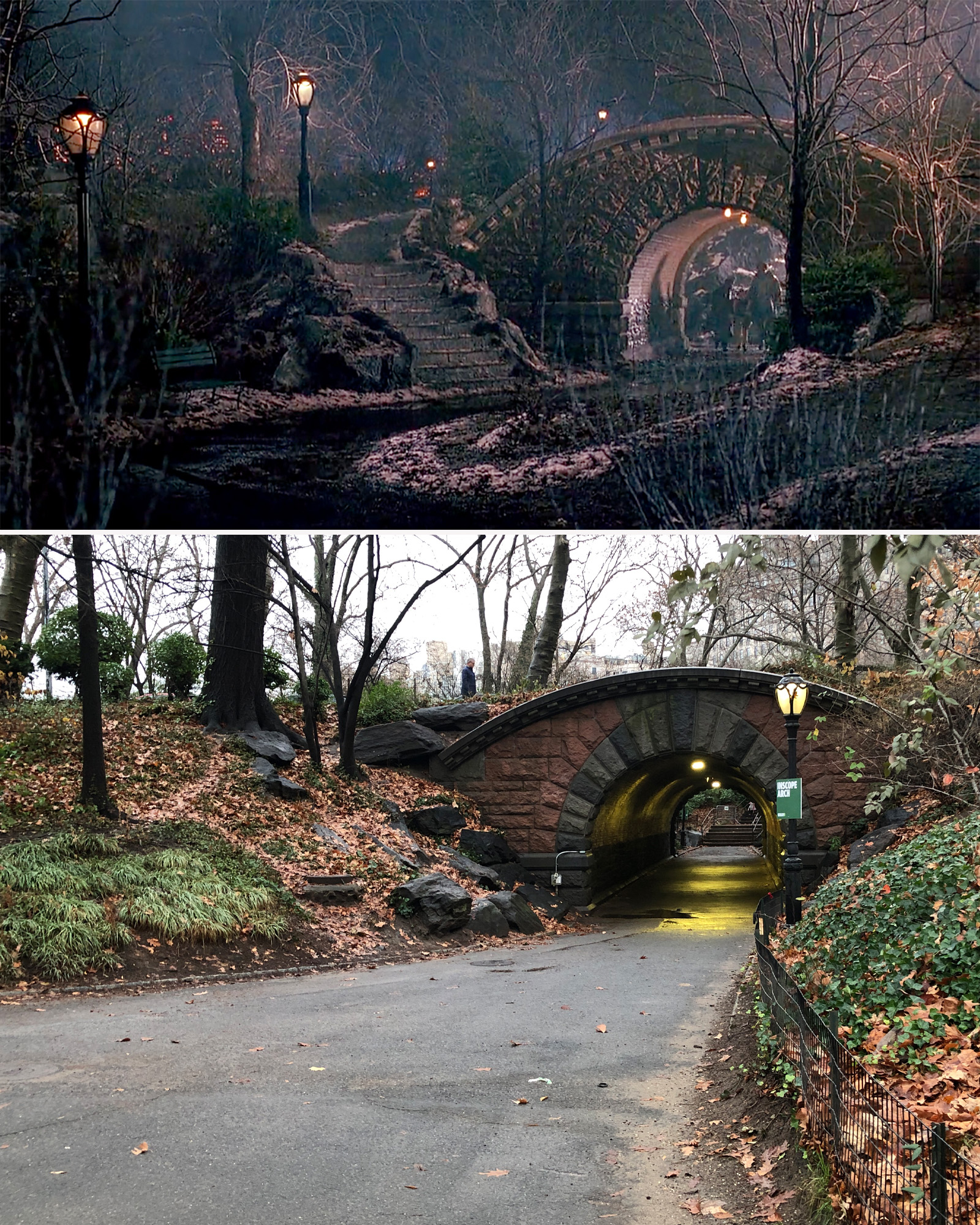
I’m sure the main reason they did these parts on a set is because they were dealing with trained birds, which would be a nightmare to control in an open park. You can see a short clip of them filming on this set in that “making of” special that aired on TV.

While the matching between the tunnel set and the real Central Park isn’t as seamless as the W 95th Street stuff, it’s still pretty good. The key was they used somewhat unnatural lighting effects with colored gels when they did the on-location filming in NYC so it would better match the studio lighting.
Times Square
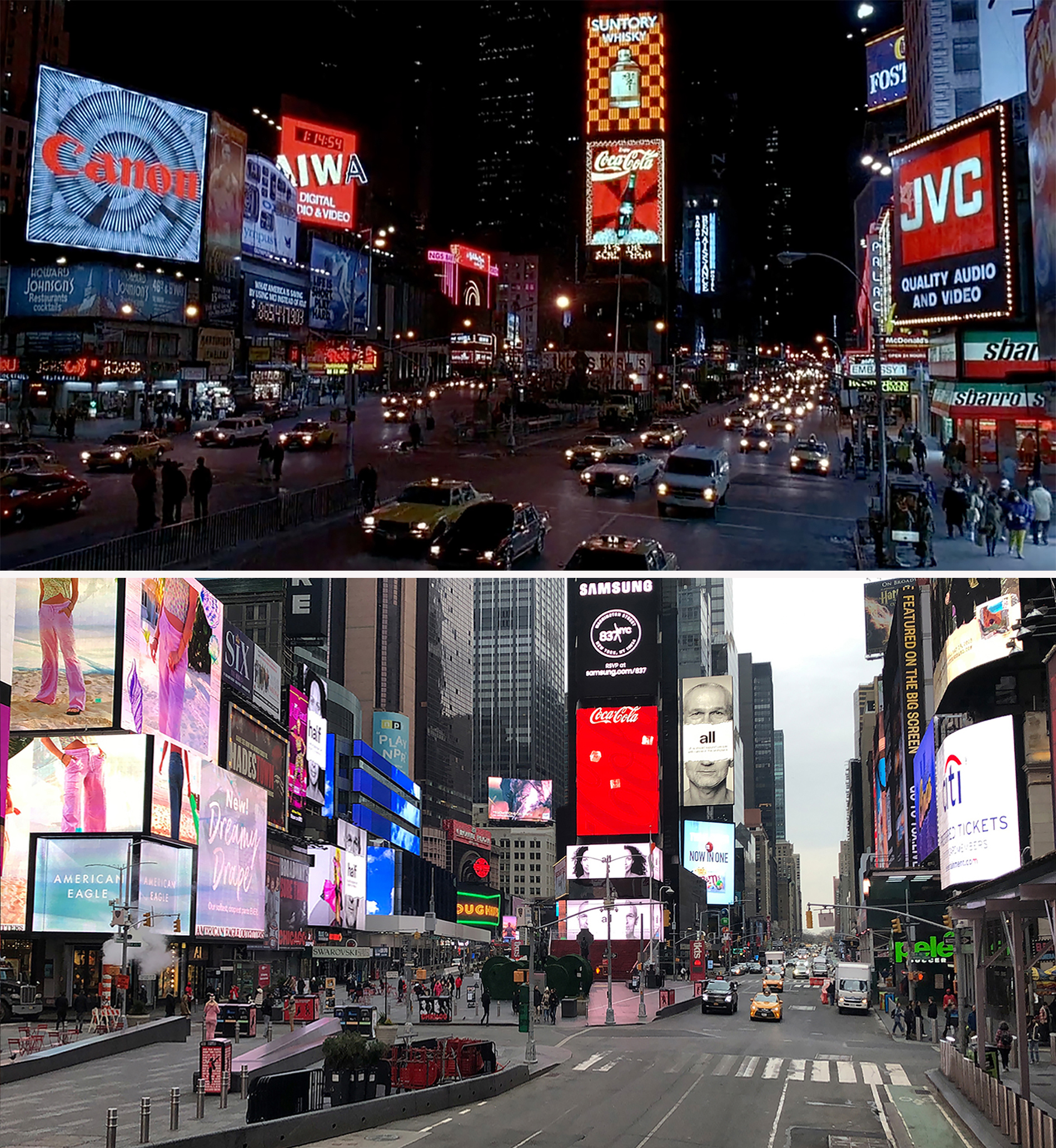
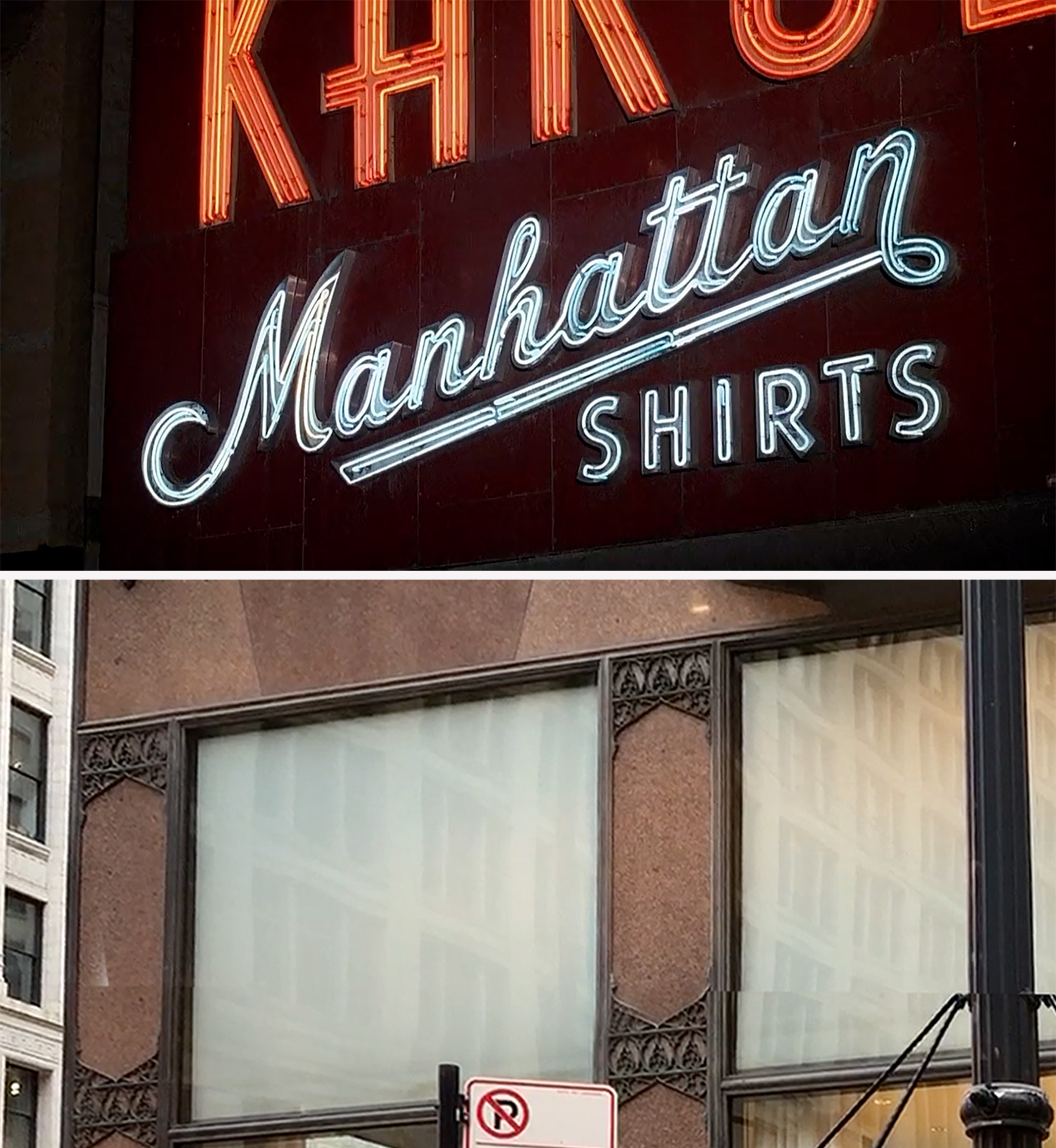
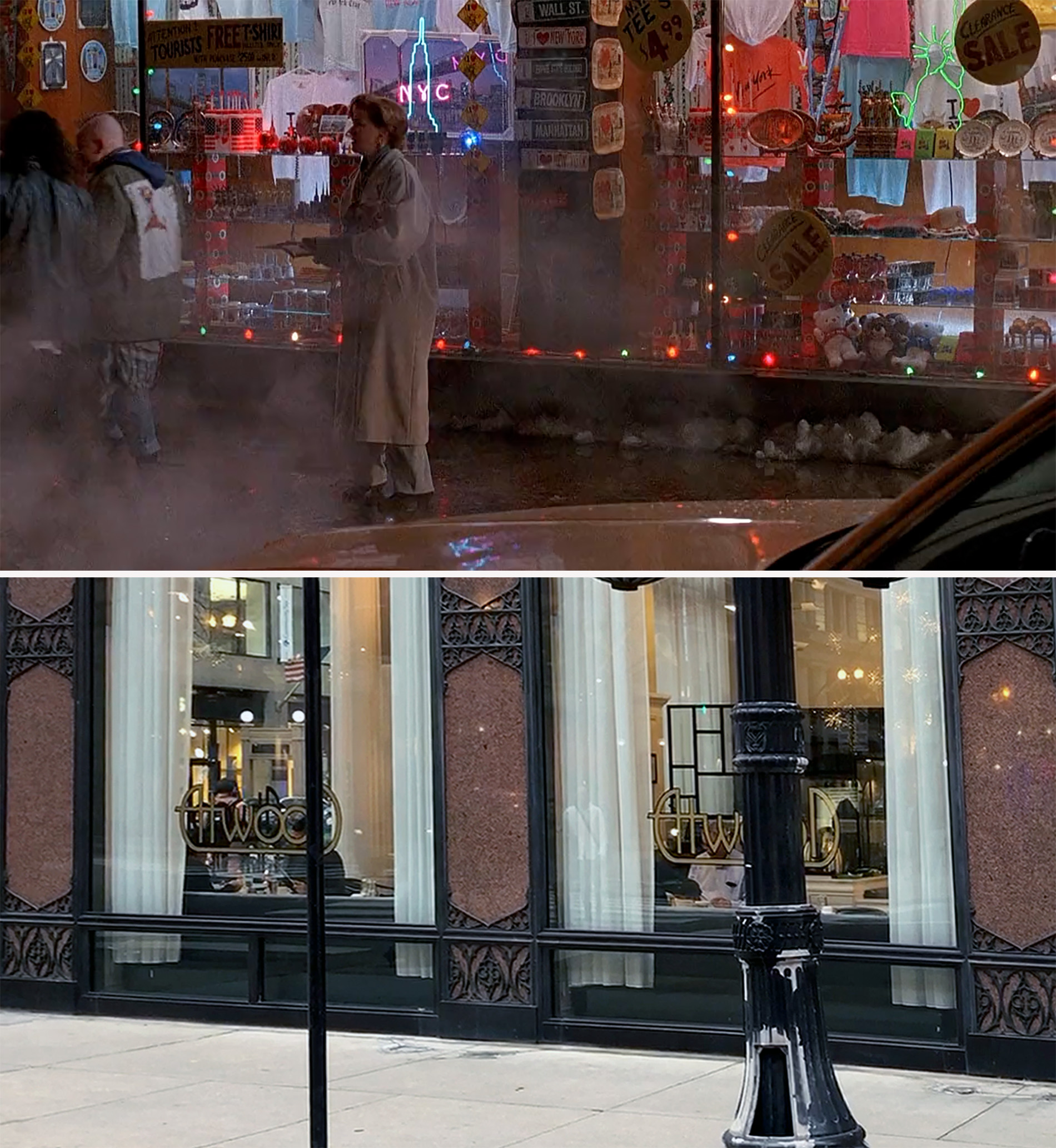
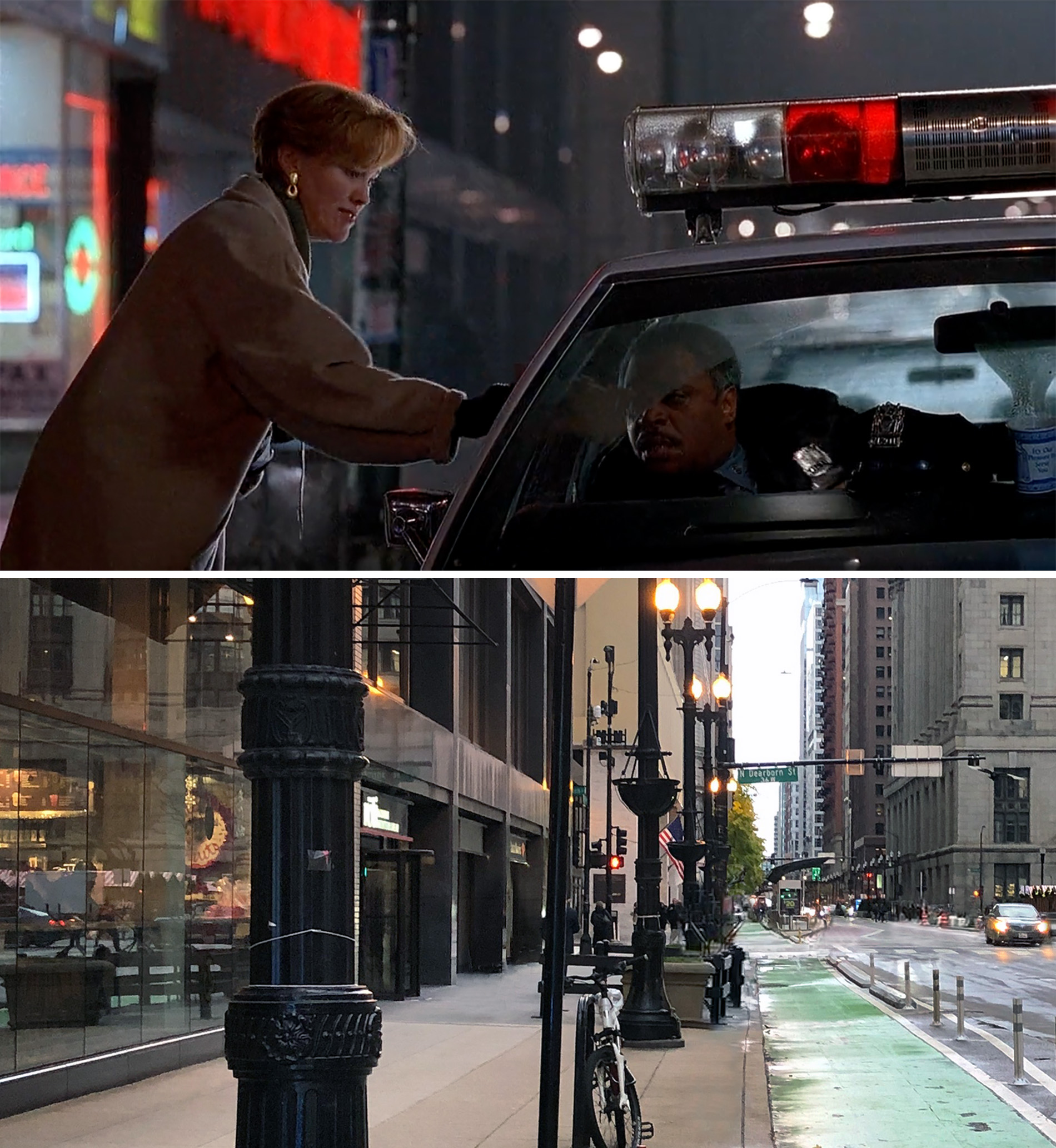
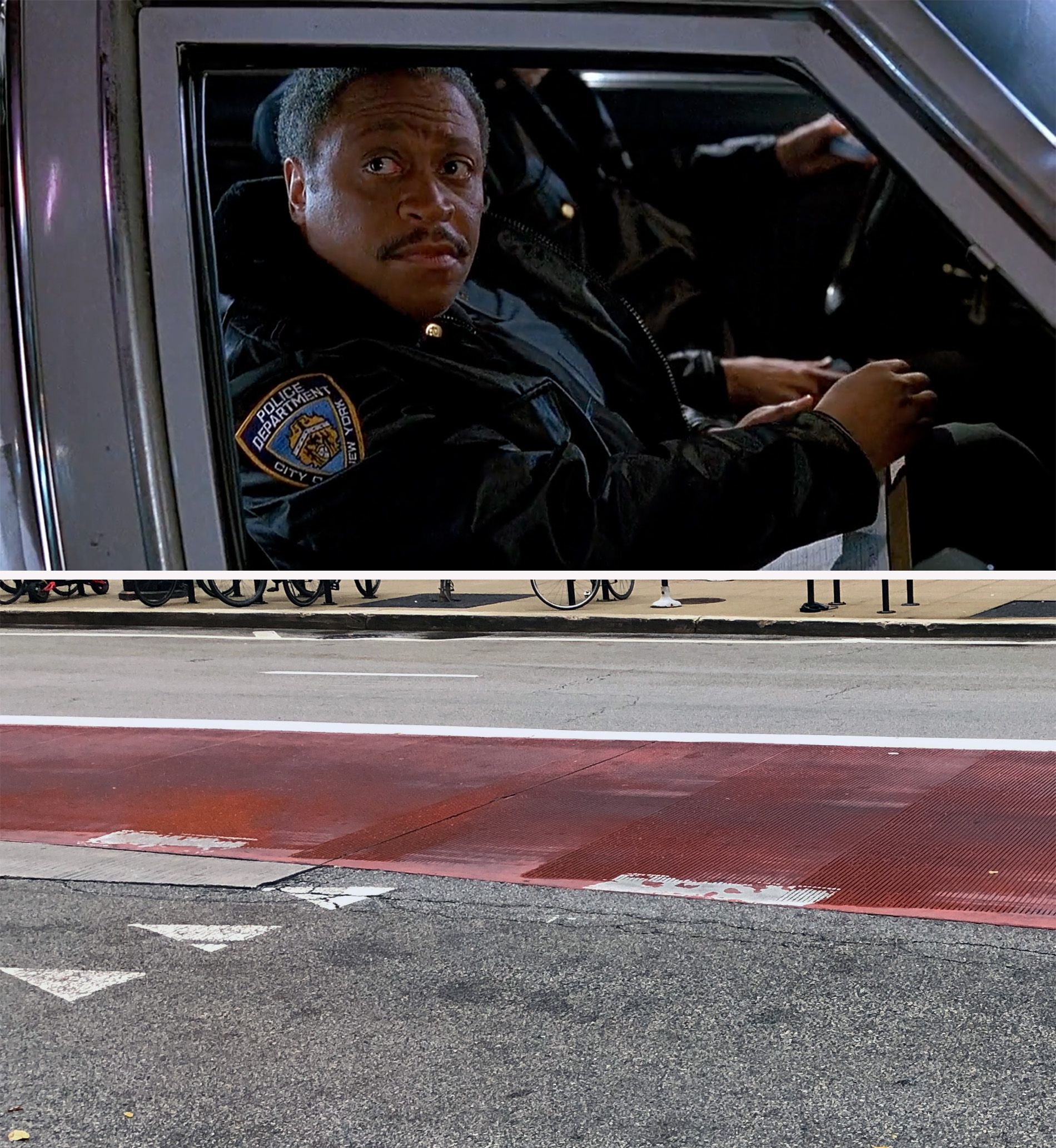
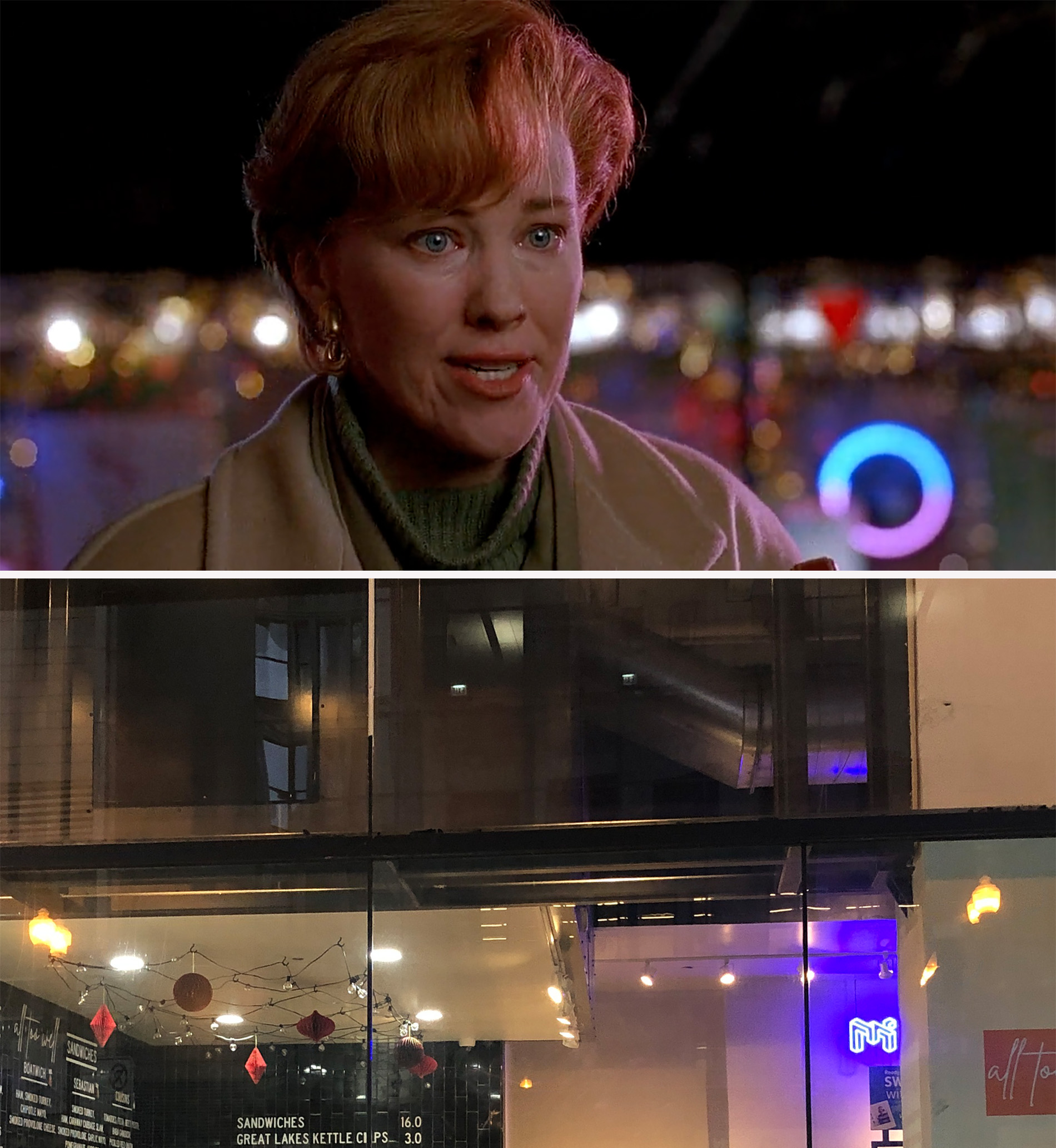
The location of this “Times Square” scene was unidentified when I began researching this movie, probably because most folks assumed it was shot somewhere in the actual Times Square (which is understandable since it starts with a wide establishing shot of the real place). But the big neon “Manhattan Shirts” sign didn’t look like anything I’ve seen in the Square.
After discovering how much filming was done in Chicago, I figured this scene was also done there. In order to find the exact spot, I knew I had to figure out what the orange lettering above “Manhattan Shirts” said.
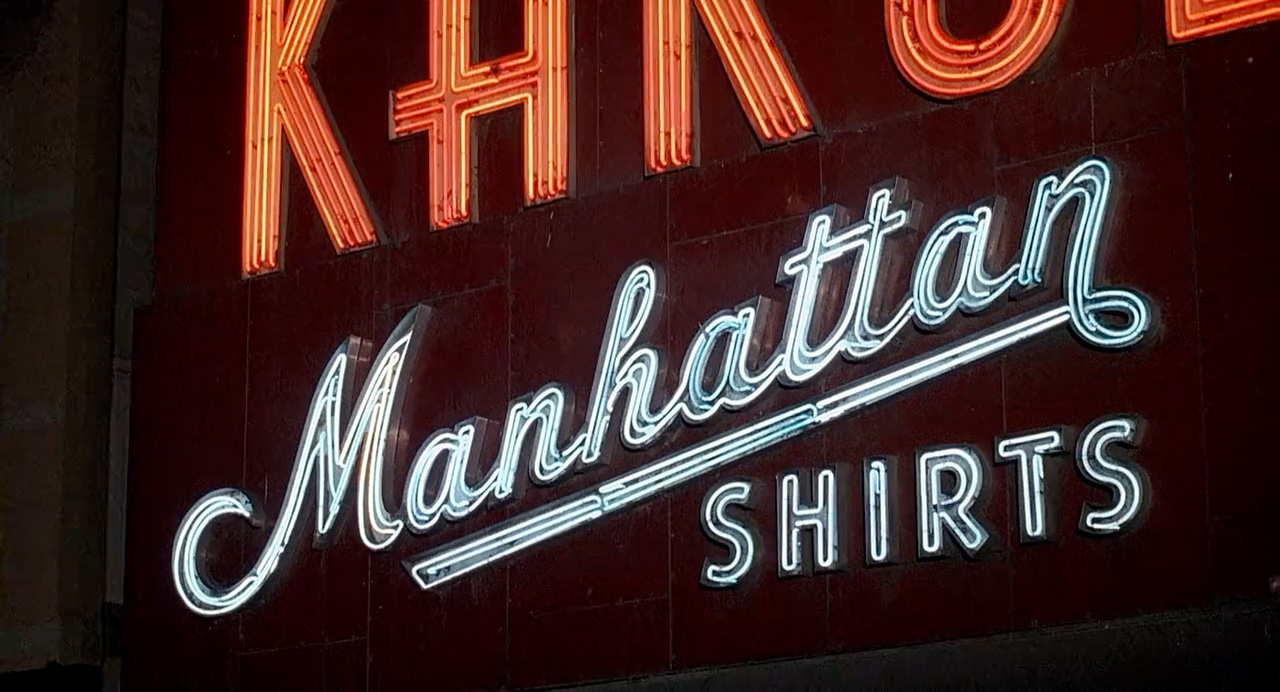
The first two letters were obviously KA, and the next two letters were most likely an RO. So, from KARO, I thought there was a chance it was spelling the word KAROL’S or KAROLL’S, which sounded like the name of a nice midwestern department store.
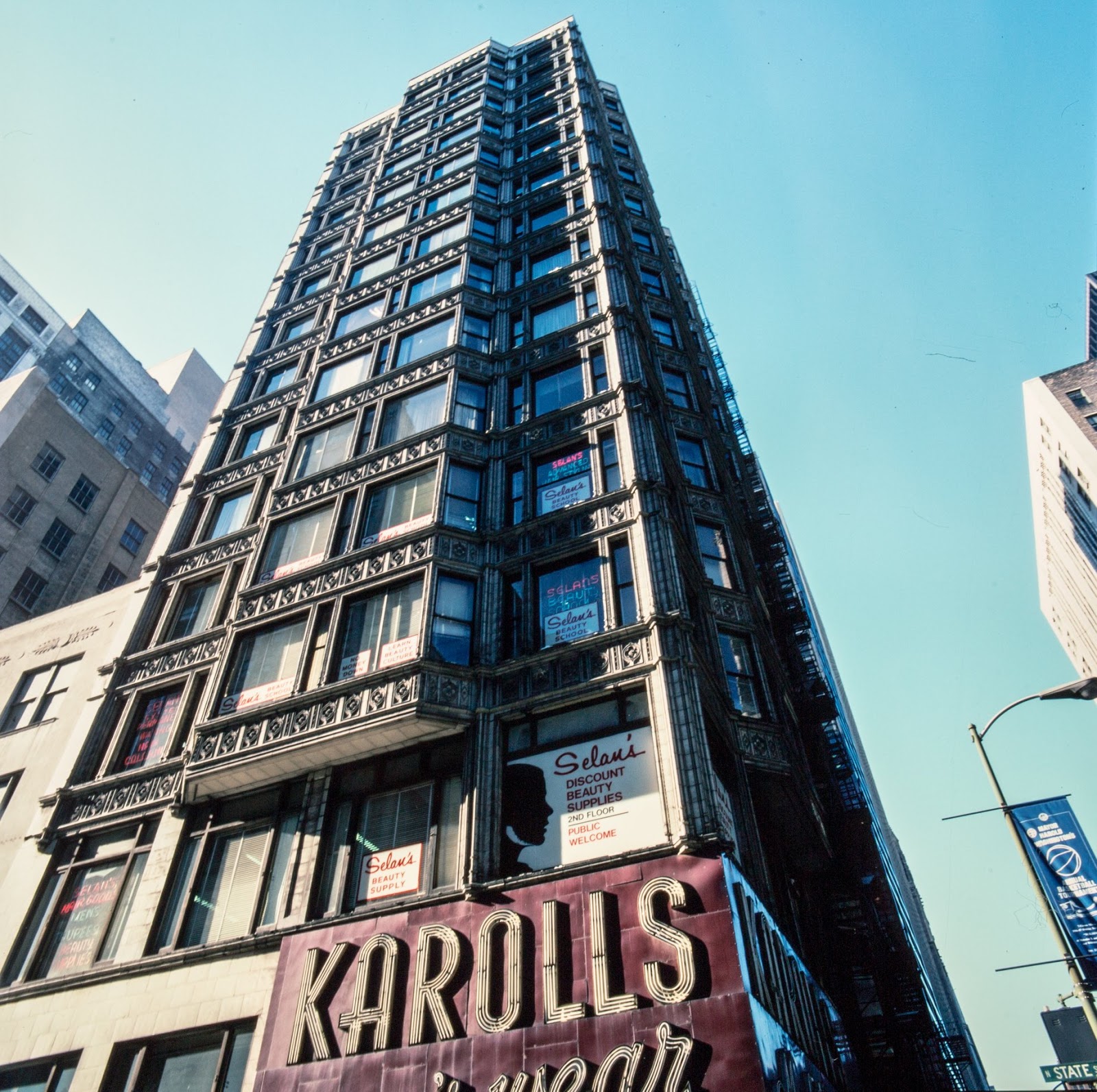
Thankfully, I was successful in my deciphering of the letters, and I soon discovered that there used to be a chain of Karoll’s Men’s Stores in Chicagoland. After a little more digging around, I unearthed a 1948 article in the Chicago Daily Tribune announcing the grand opening of a new Karoll’s at 36 North State Street, which was inside the historic Reliance Building (EST 1895).
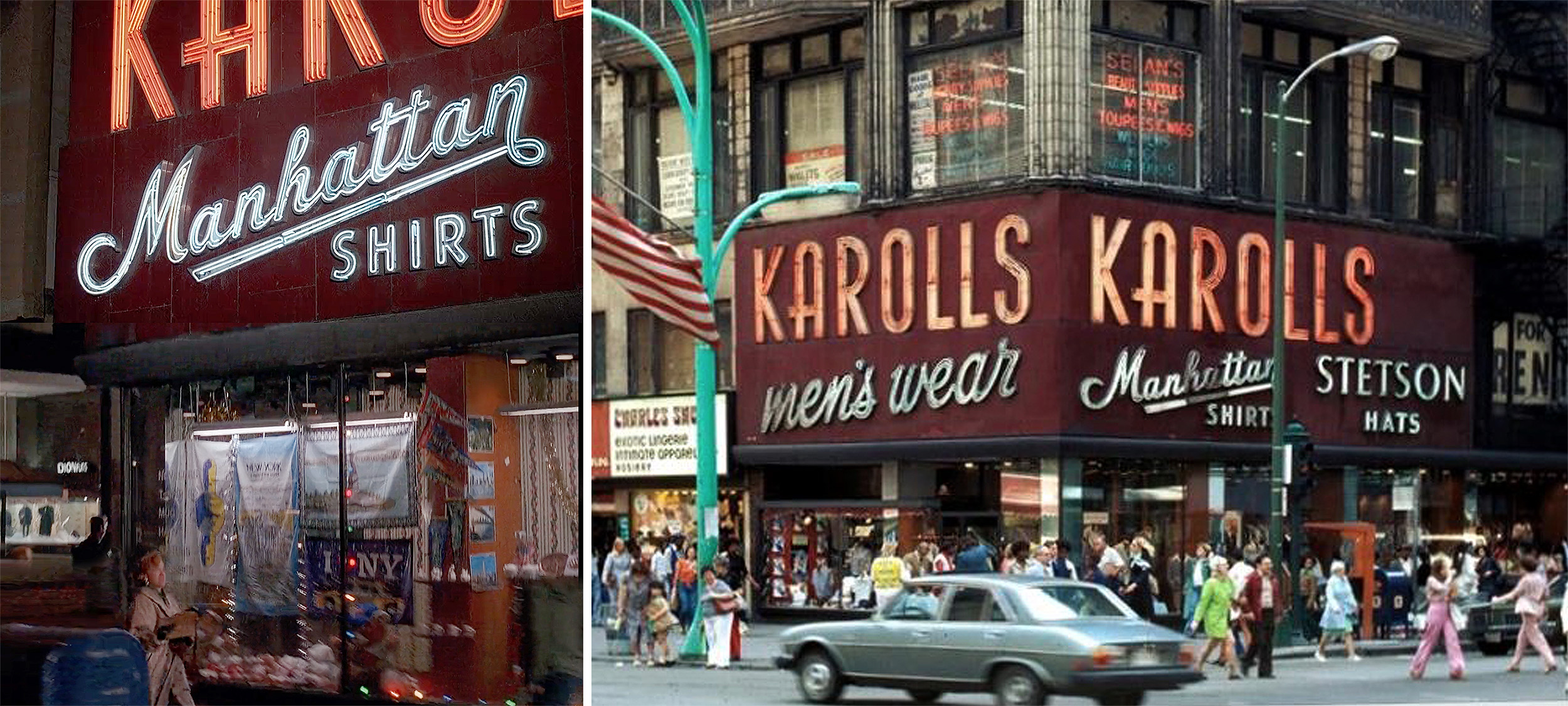
Armed with that info, I was able to find several online photos of that flagship store with a matching “Manhattan Shirts” neon sign.
The story behind this local clothing store is kind of an interesting one. The business was founded by Herb Karoll and his brothers during the stock market crash of 1929. At the time, Herb was working as a teenage traveling salesman when he happened to call on a New York manufacturer on Black Friday. Desperate for cash to cover his losses, the manufacturer quickly agreed to Herb’s off-the-cuff offer to take his entire inventory on consignment.
Immediately after that, Herb phoned back to Chicago and told his brothers to hurry up and rent a bunch of stores, explaining that they were going into retail business, regardless of having zero experience in it. But the gamble ended up paying off, quickly going from five locations with three-month leases to a successful 16-store chain.
Karoll’s continued to be a popular part of the Loop Retail Historic District well into the eighties, finally shuttering its shops around 1988 after being hit hard by the recession. The sign remained on the building at least until this movie was made, and was most likely removed in 1994 when the building was restored to its original 19th century appearance.
Rockefeller Plaza
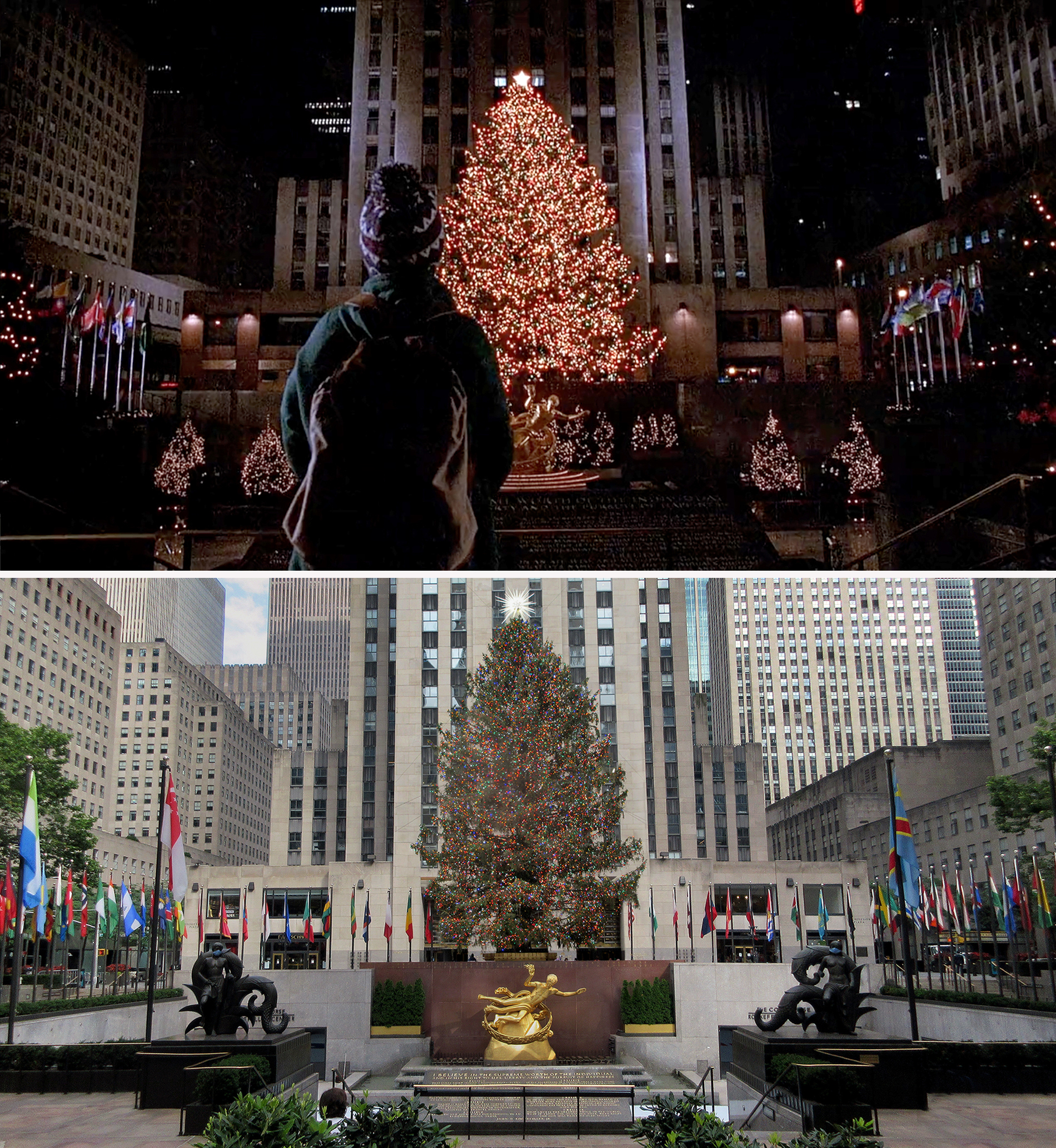
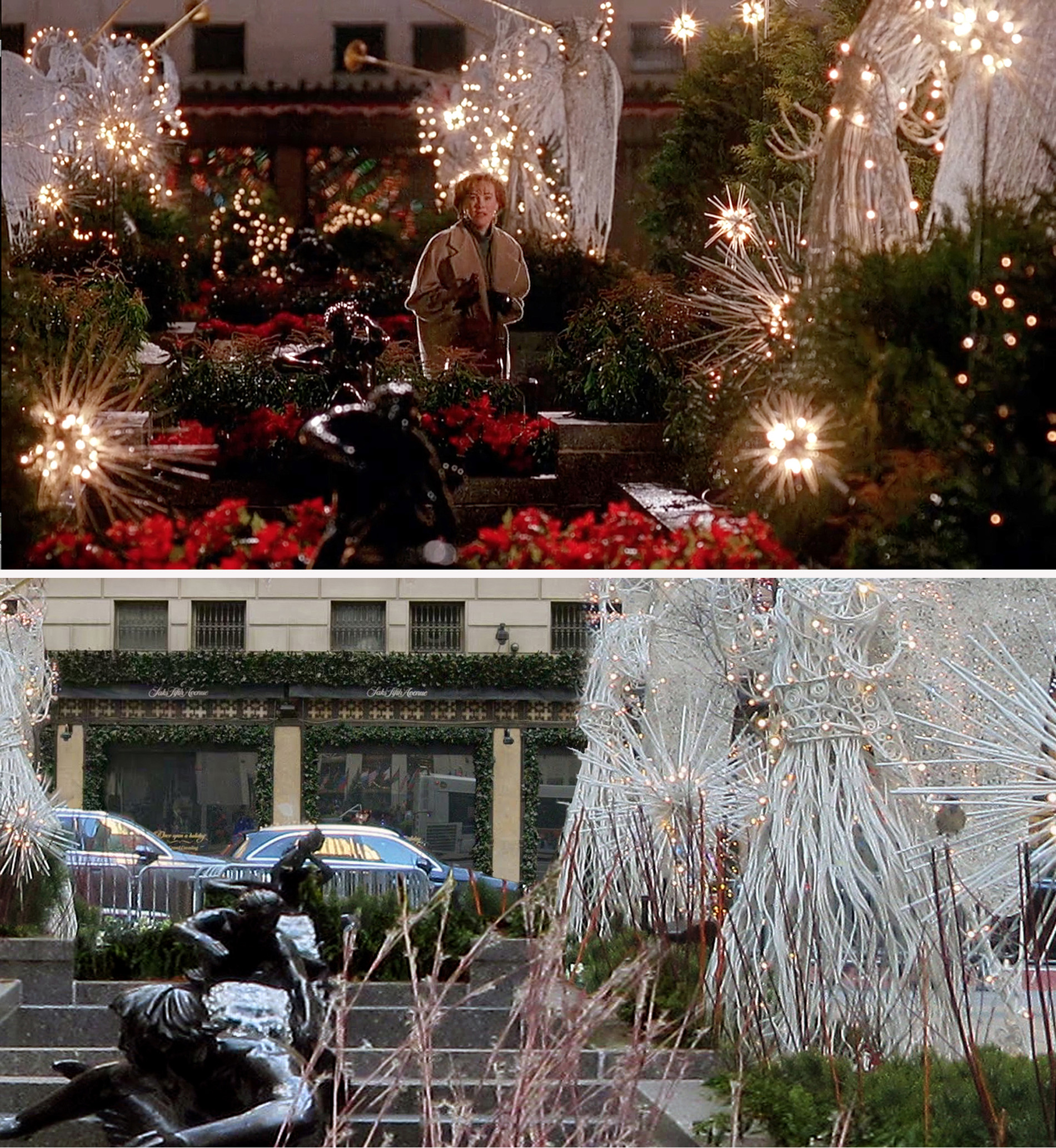
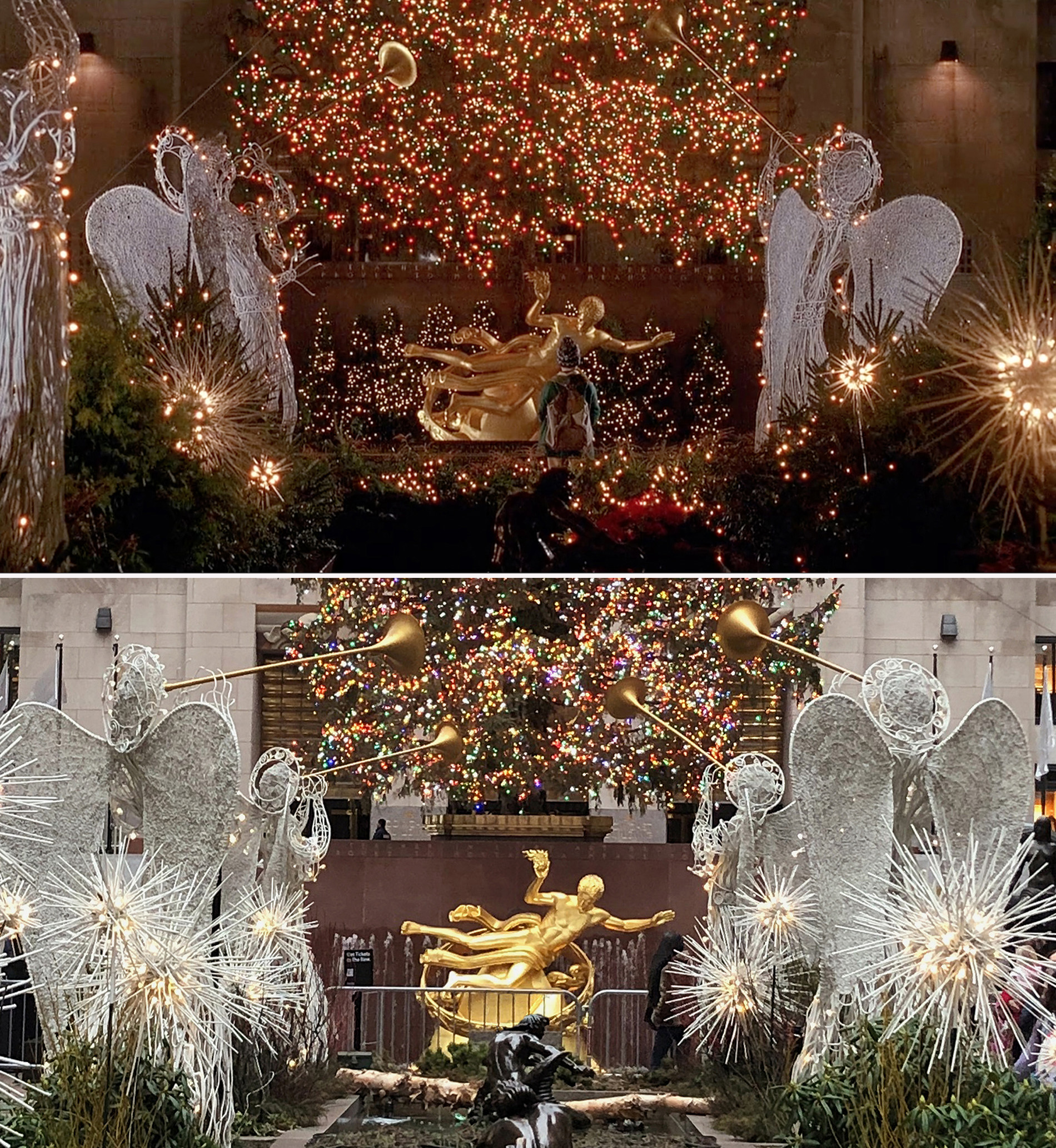
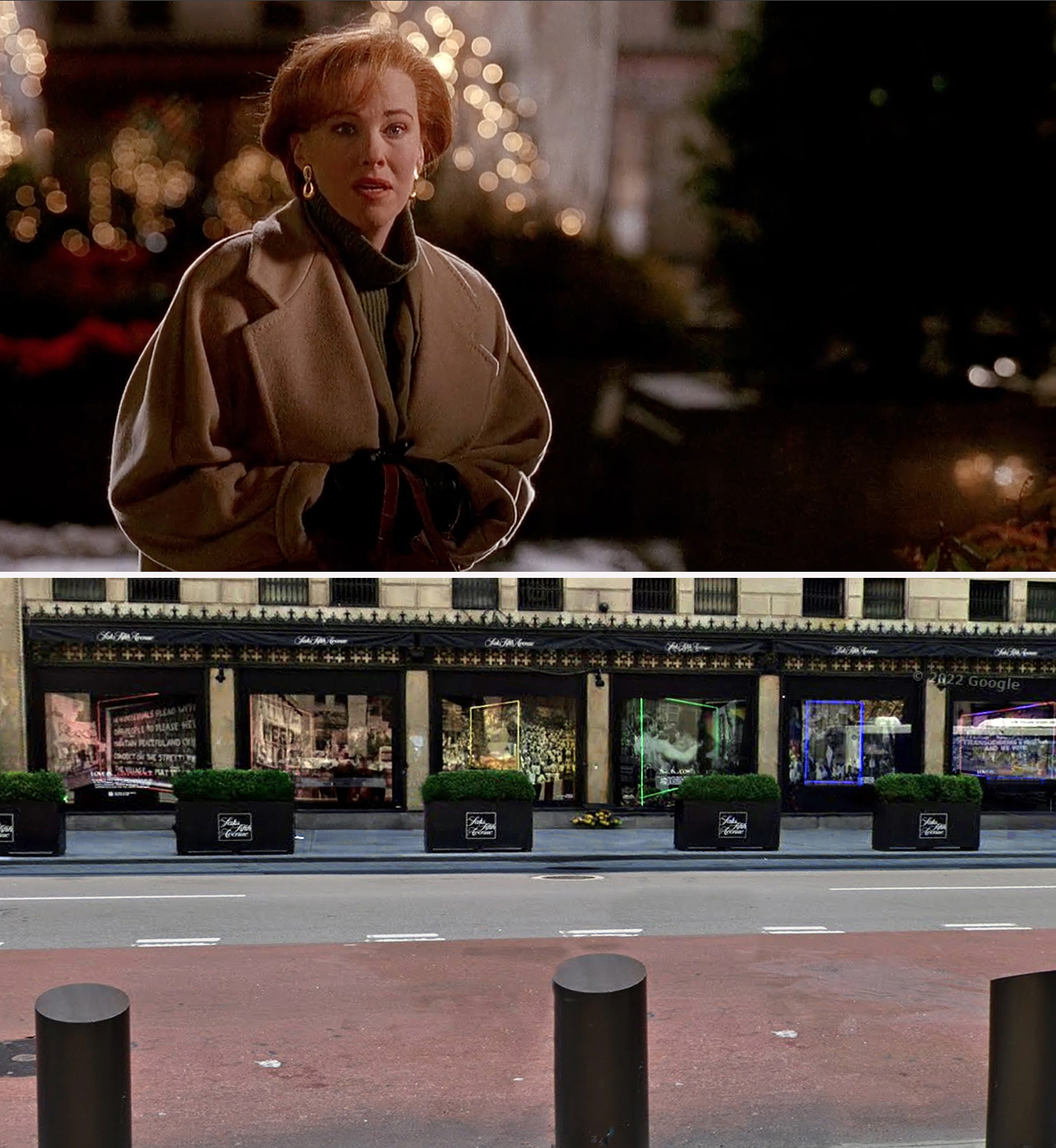
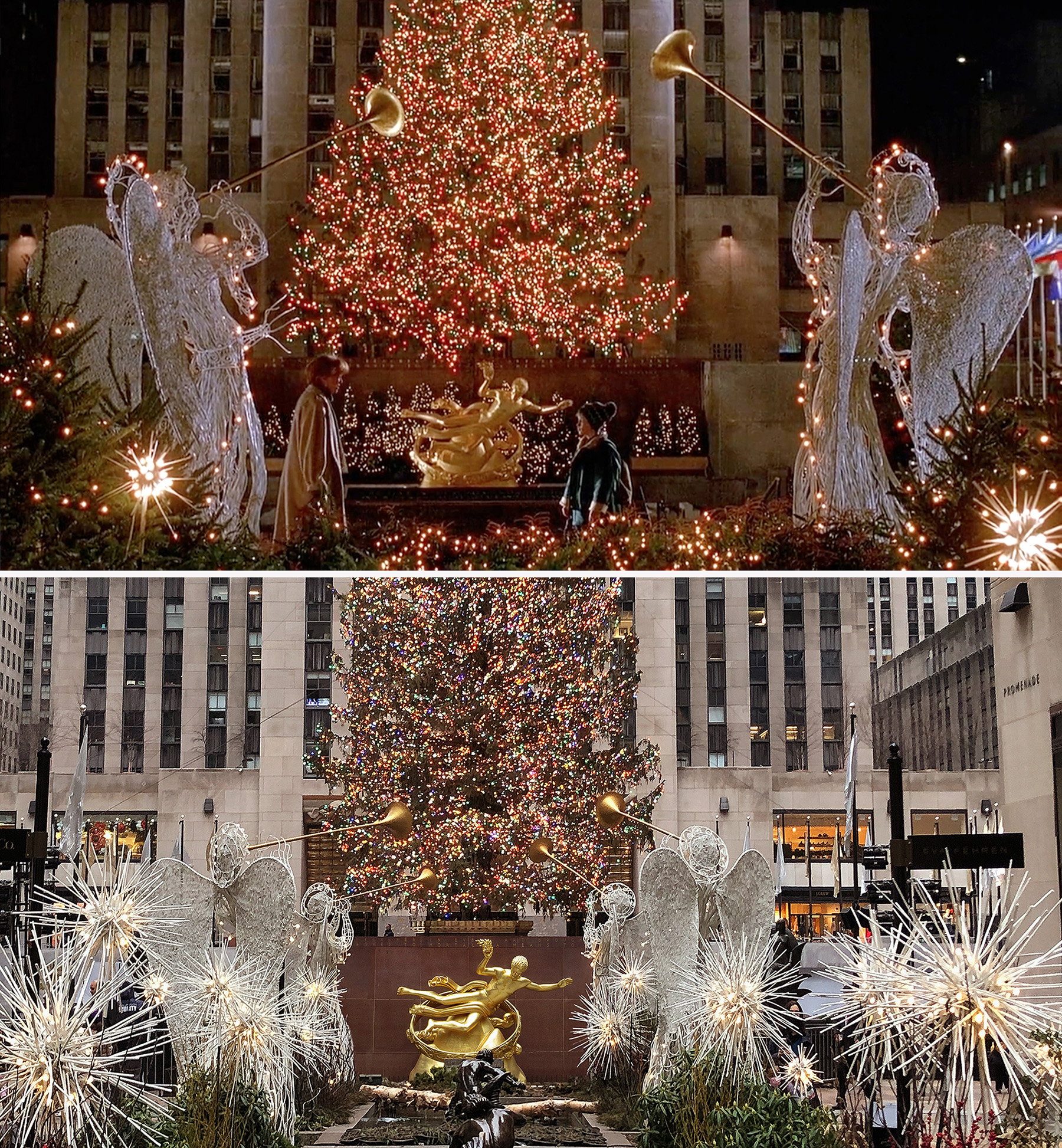
Christmas Morning
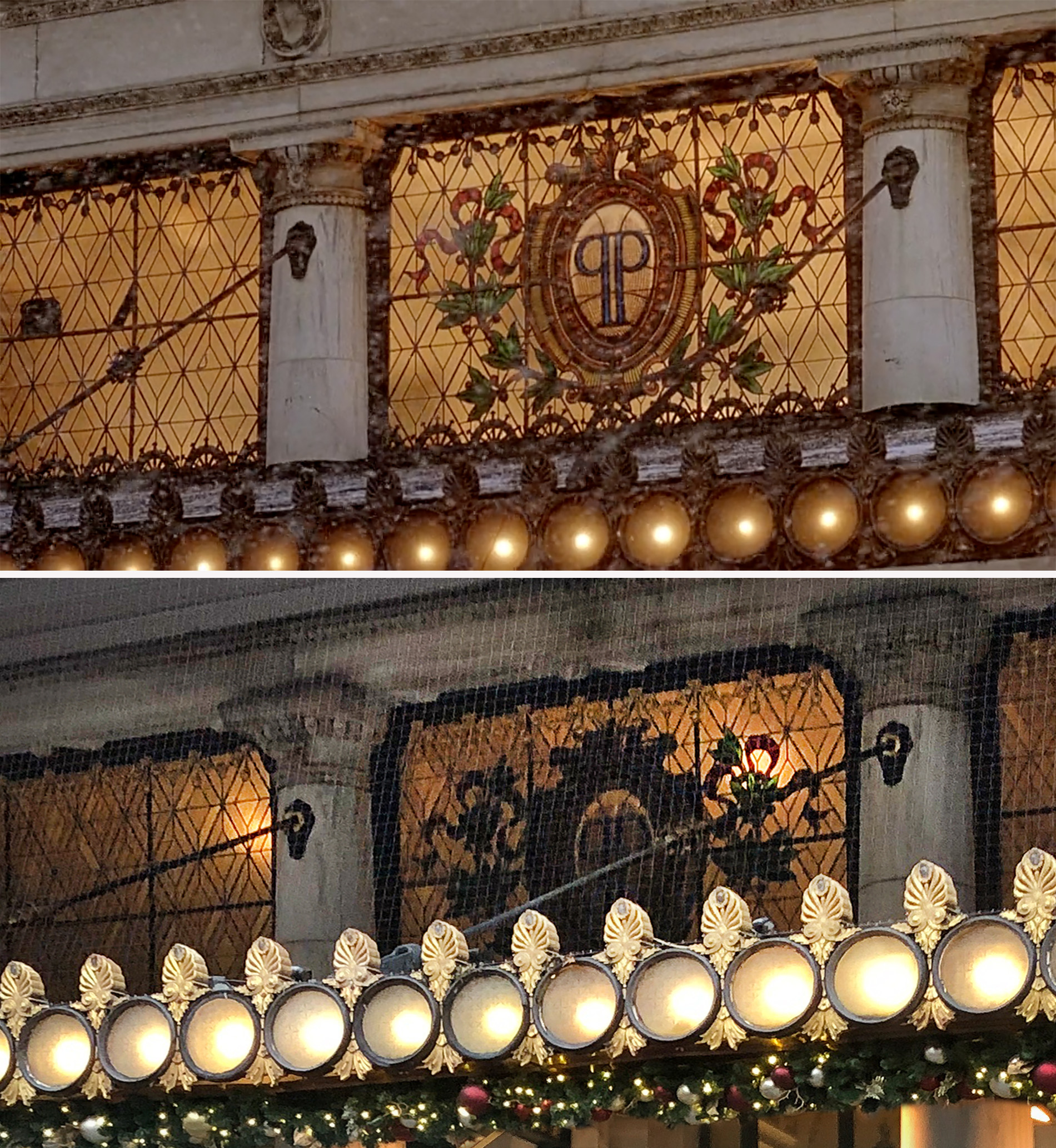
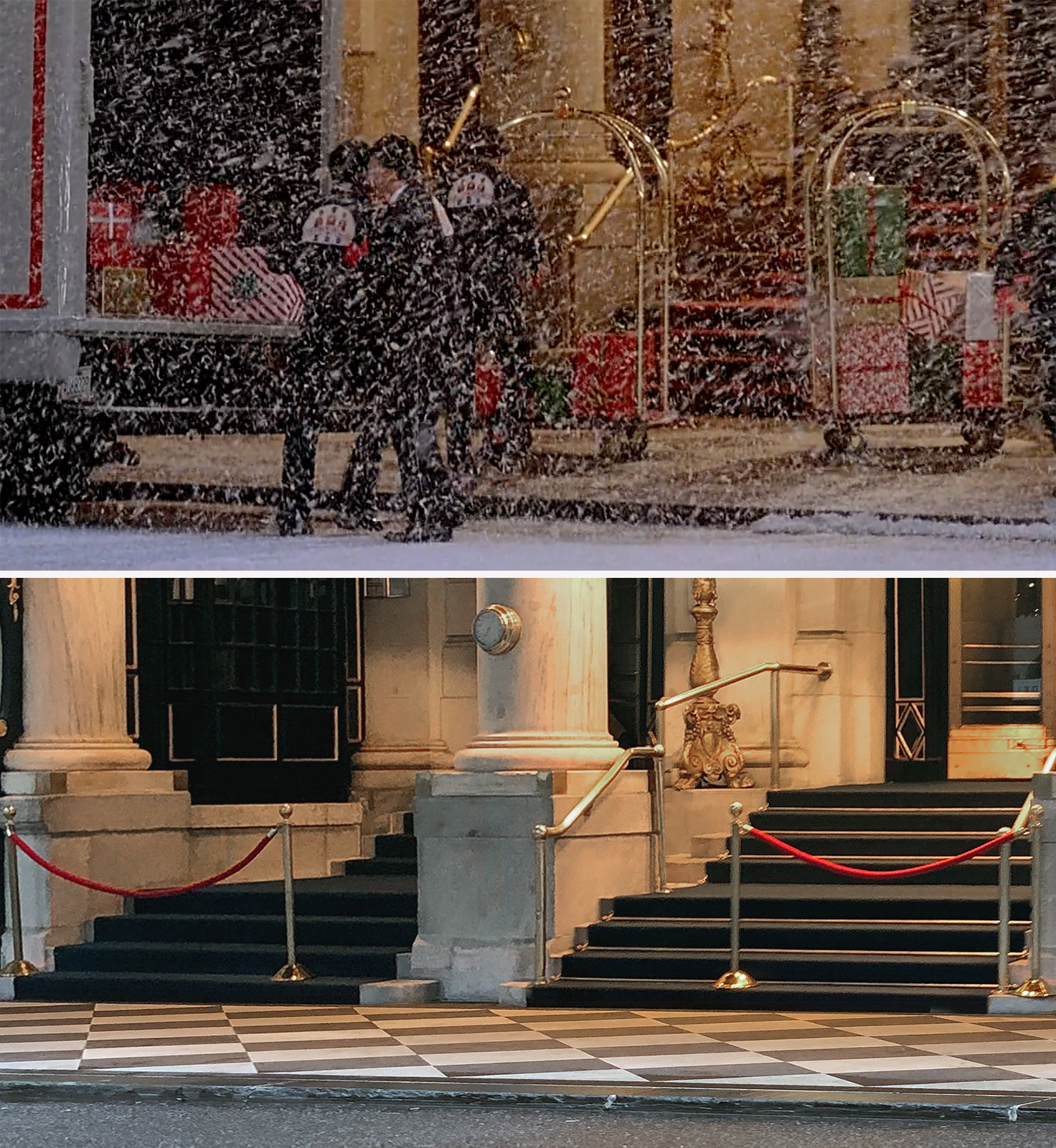
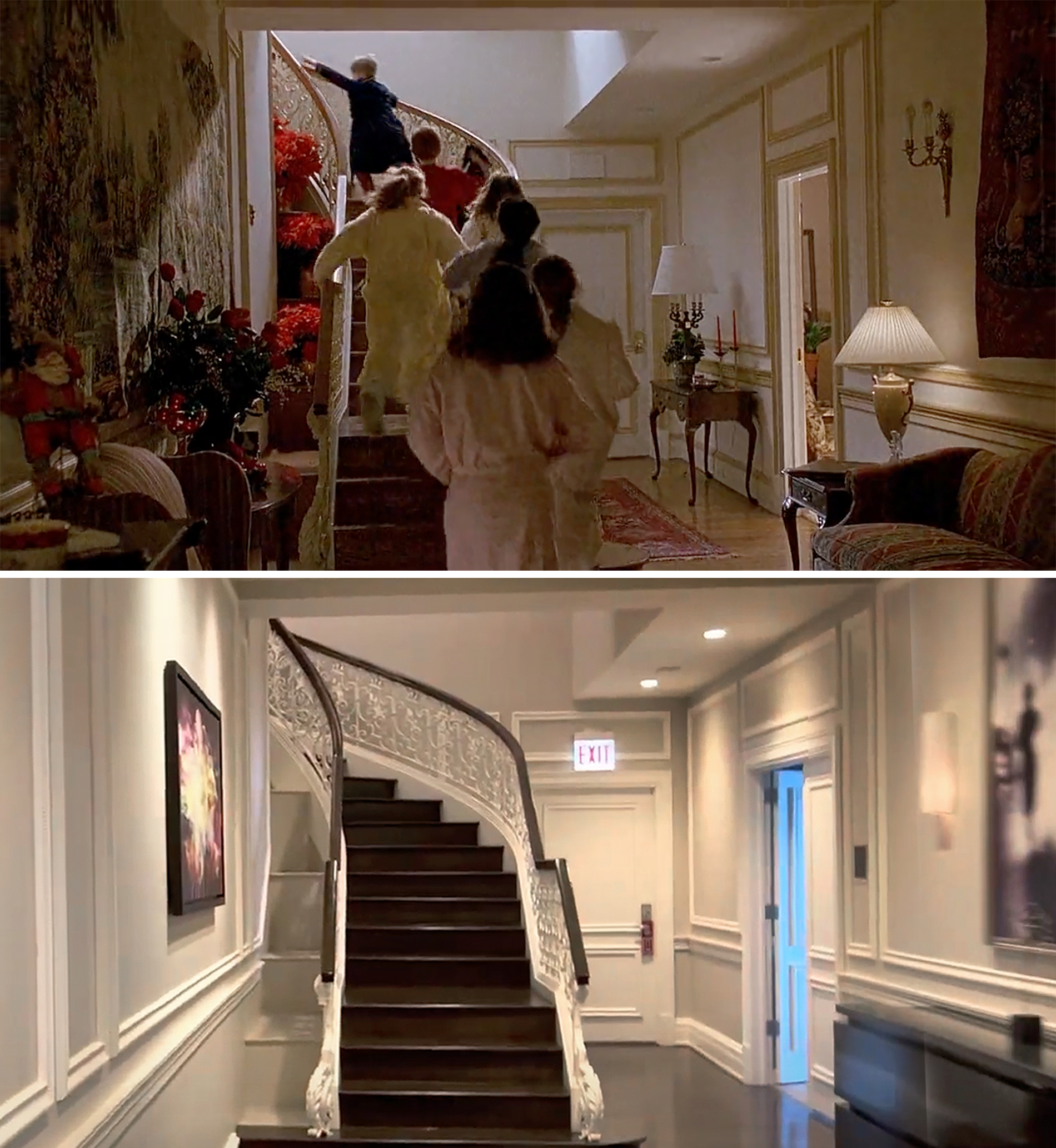

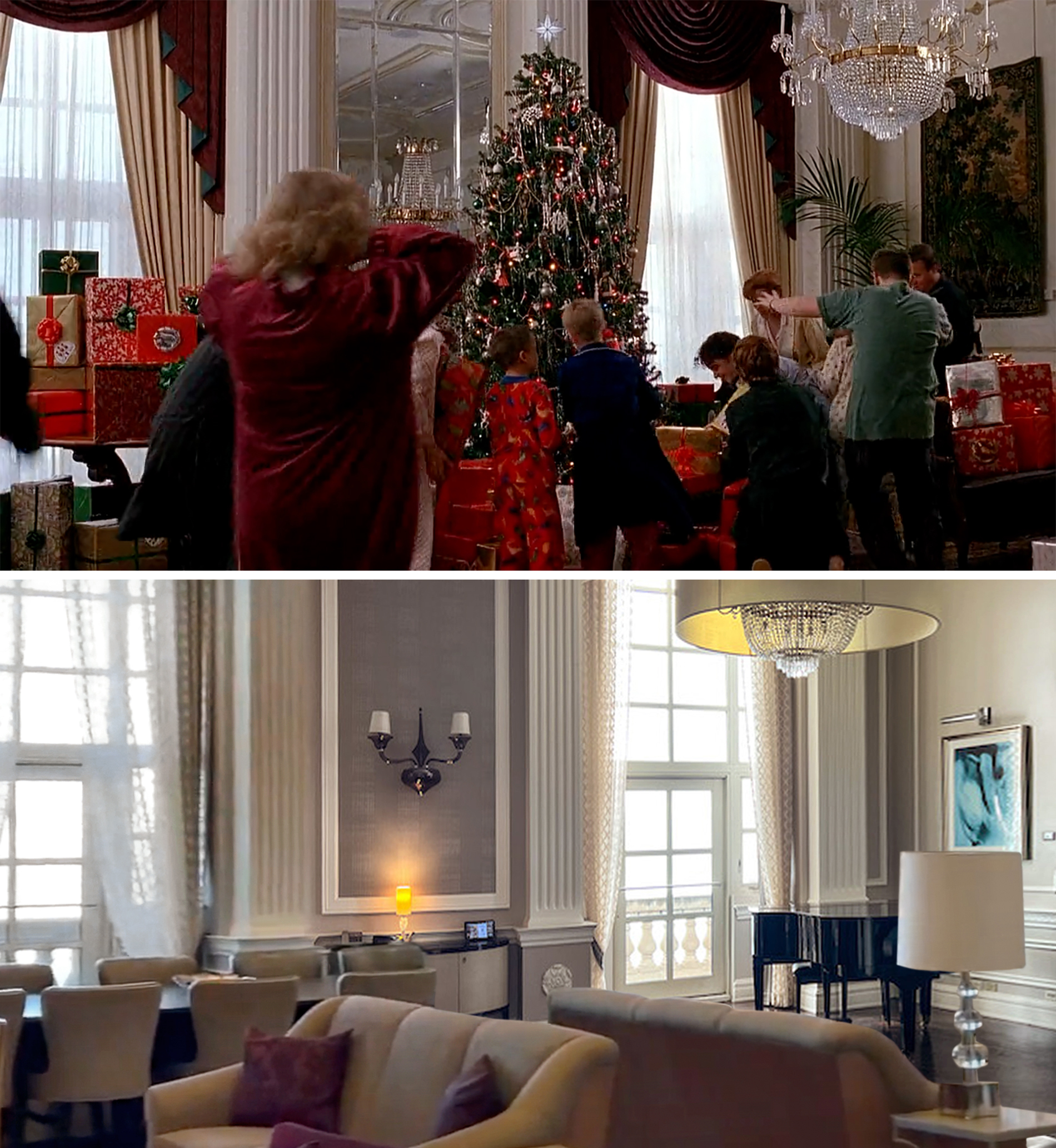
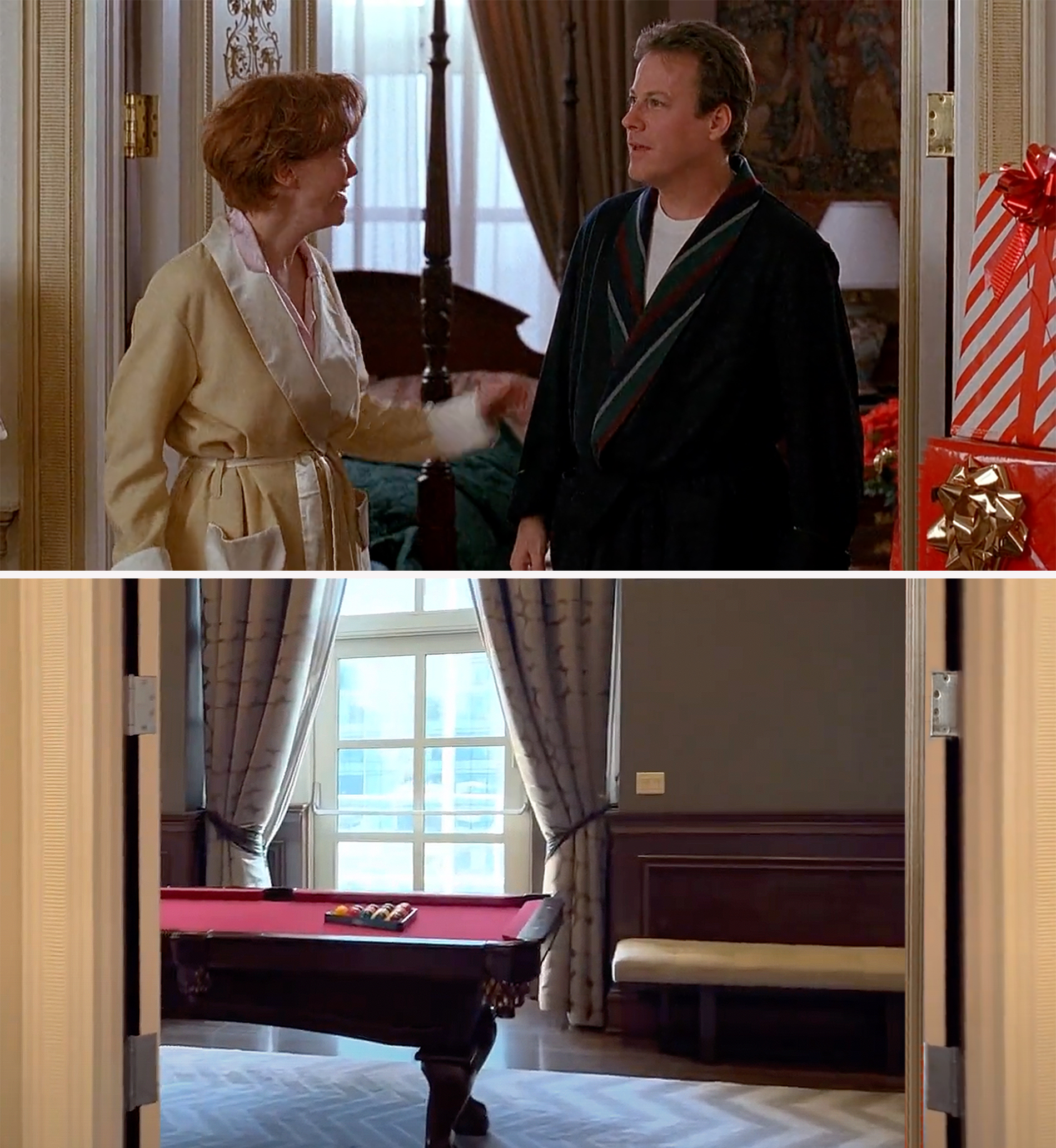
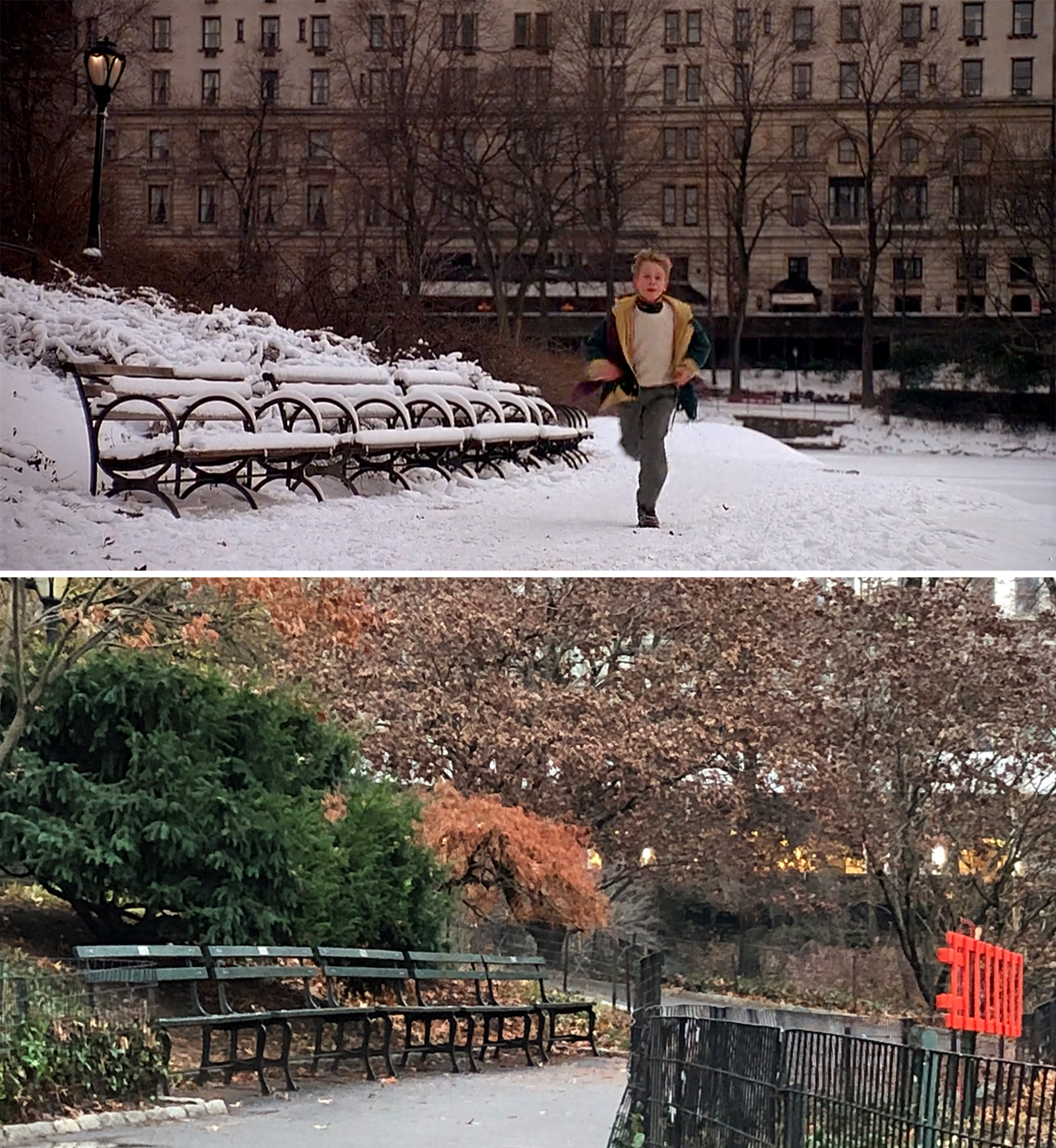
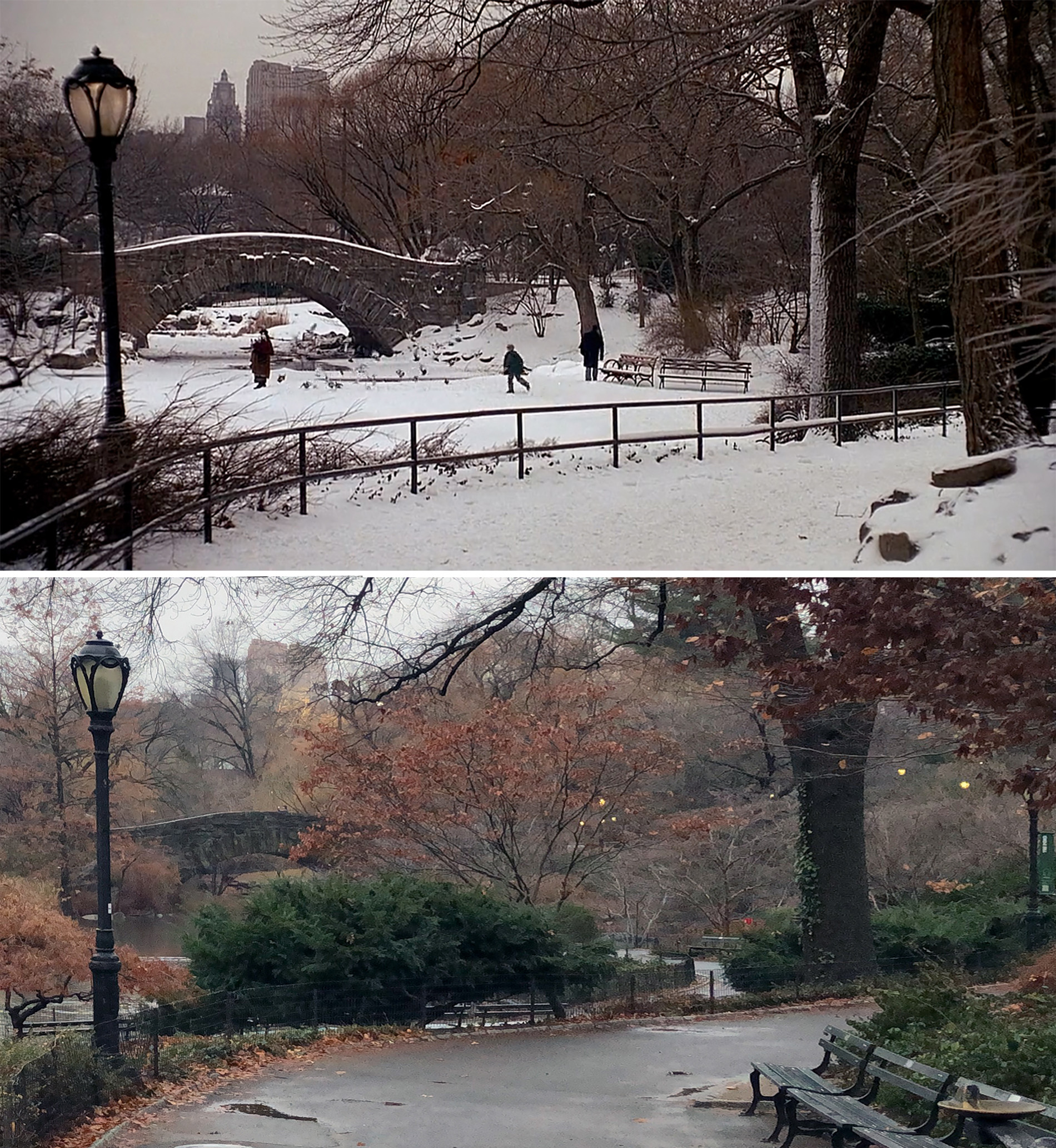

In this closing sequence, once again, the filmmakers used a Chicago location to pose as New York. I always assumed that the suite seen at the end off the movie was a set, but I later found out that it was the Conrad Suite in the Chicago Hilton.
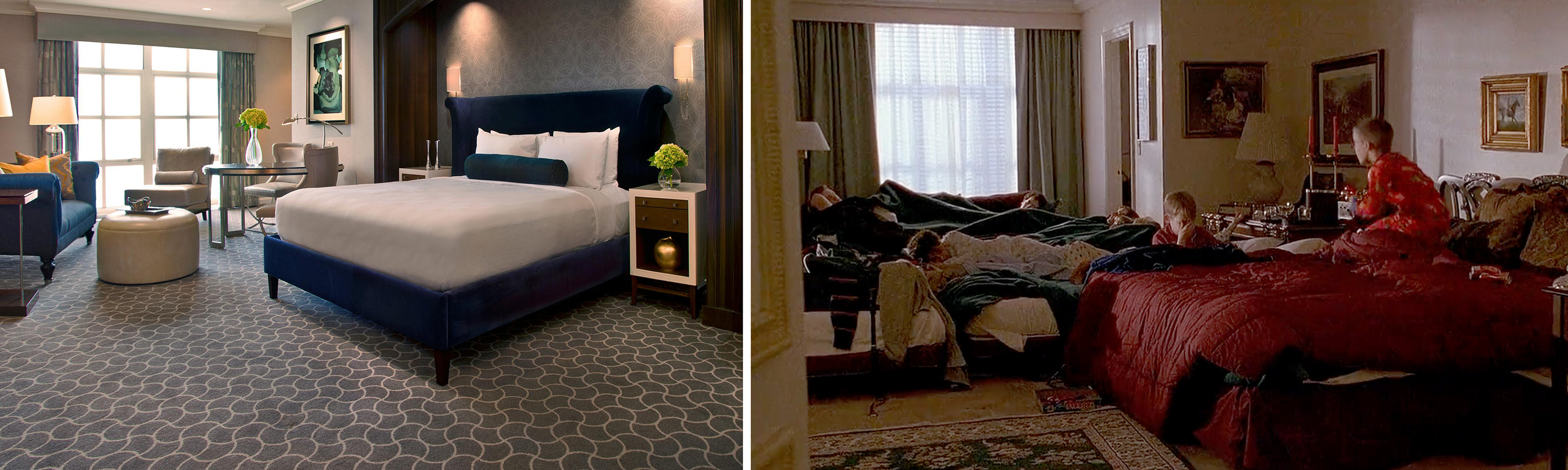
At 5,000-square-feet and more than $7,000 per night, the Conrad is Chicago’s largest and most expensive hotel room. Formerly serving as the Tower Ballroom, the two-floor suite is now part of the Home Alone-inspired “Kevin Package” offered by the Hilton. It includes a VIP limo ride to and from the McCallisters’ iconic house, a cheese pizza, pool reservations for cannonball practice, and an ADA-approved toothbrush, but sadly, no free gifts from Duncan’s Toy Chest.
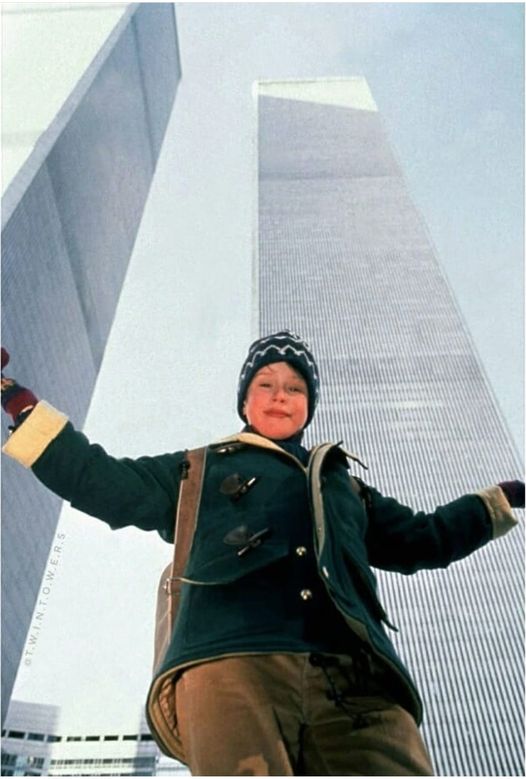
Like I mentioned in the intro, I’m not a huge fan of this franchise, but I can recognize its appeal to mass audiences. After over 30 years, the first two Home Alone movies are still quite popular, so it made sense to do a post on its NYC locations, regardless of whether I love the movie or not.
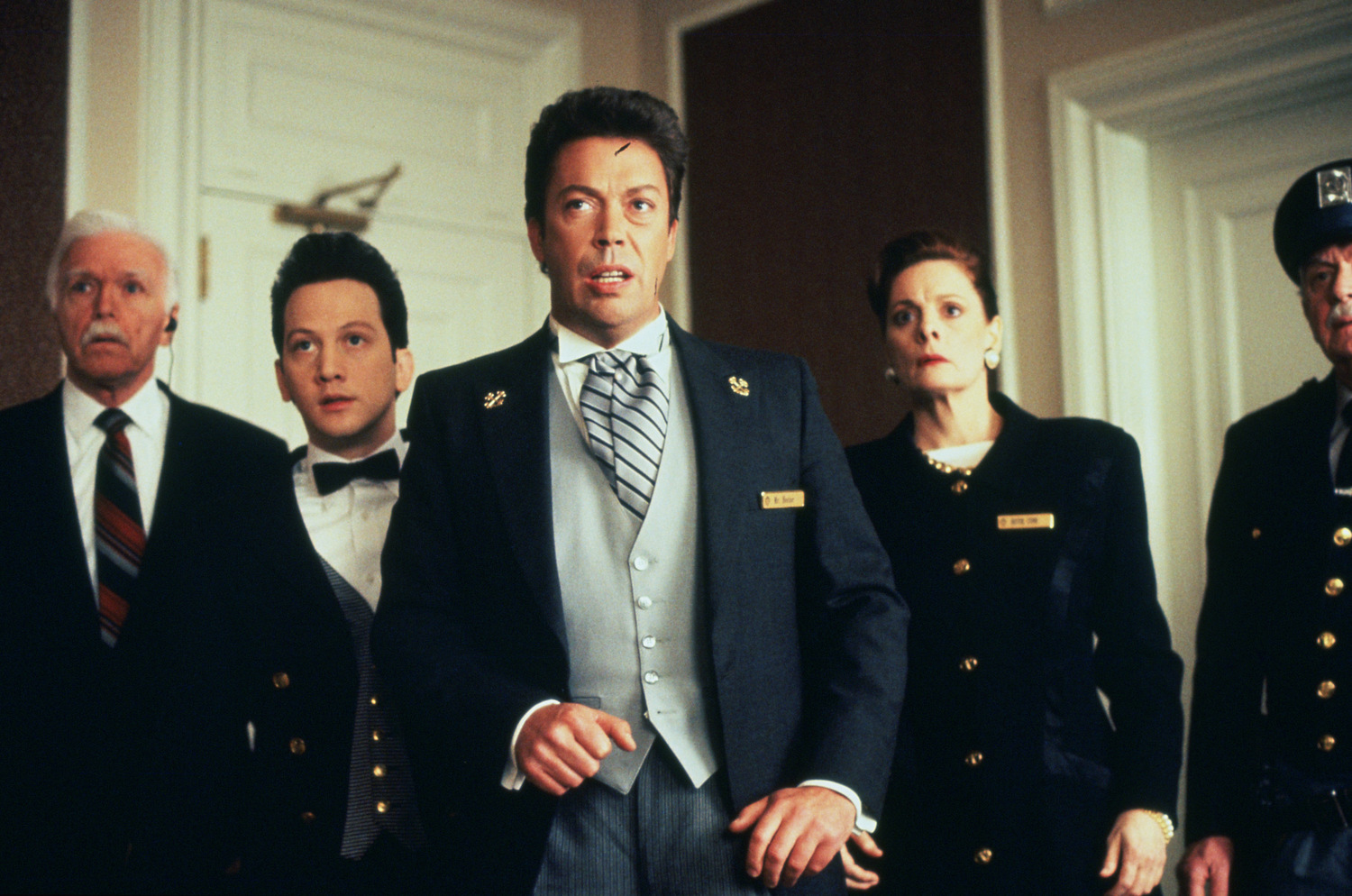
Not to say I hate it. It’s fine. And honestly, if I had been born ten years later, it probably would’ve been one of my favorite childhood movies.
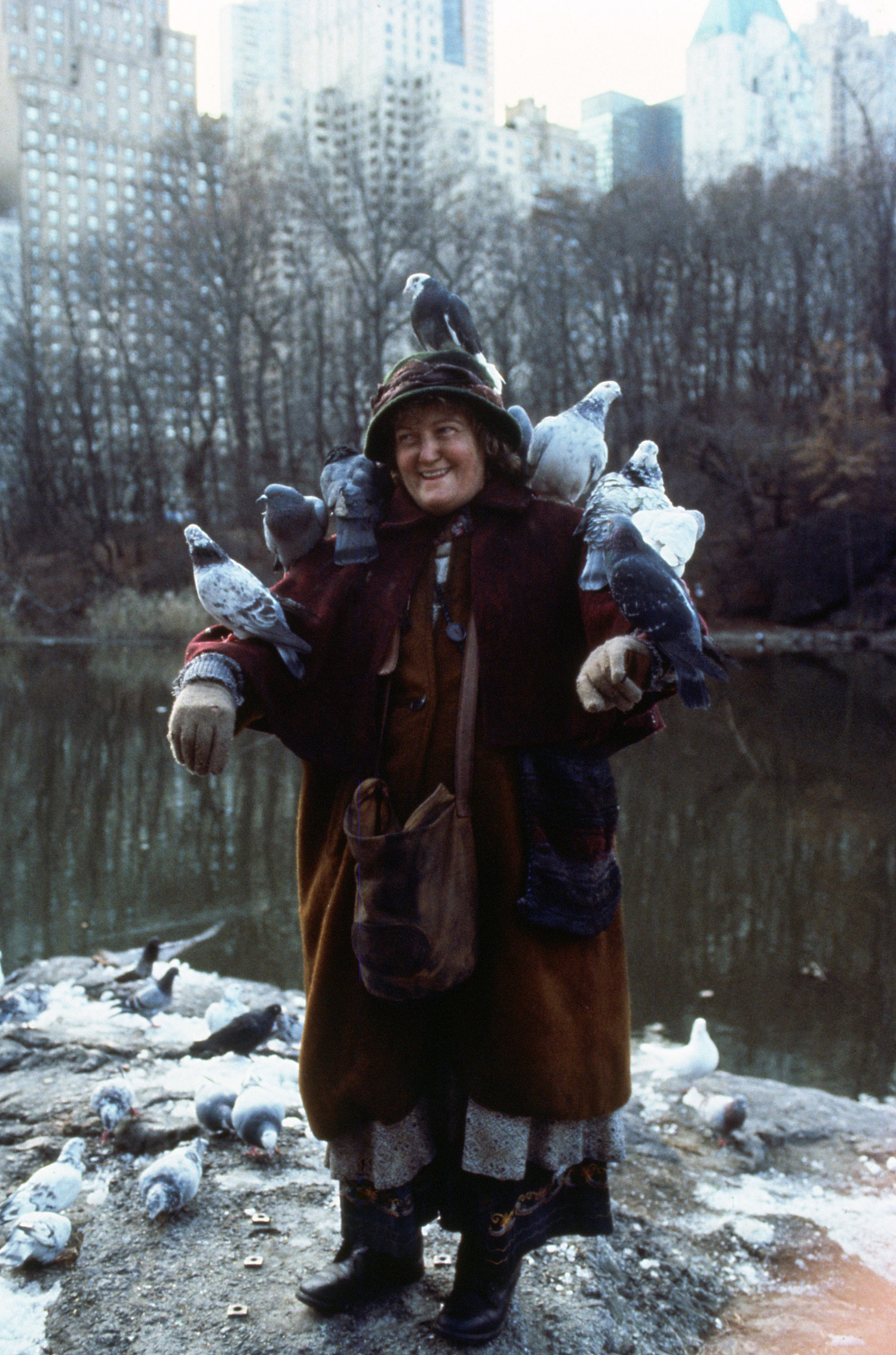
All the actors do a fine job with their fairly one-dimensional roles, but you sort of get the sense a lot of the adult cast members are kind of discontented with the gig. Joe Pesci, specifically, has an unmistakable “doing it for a paycheck” acting style going there.
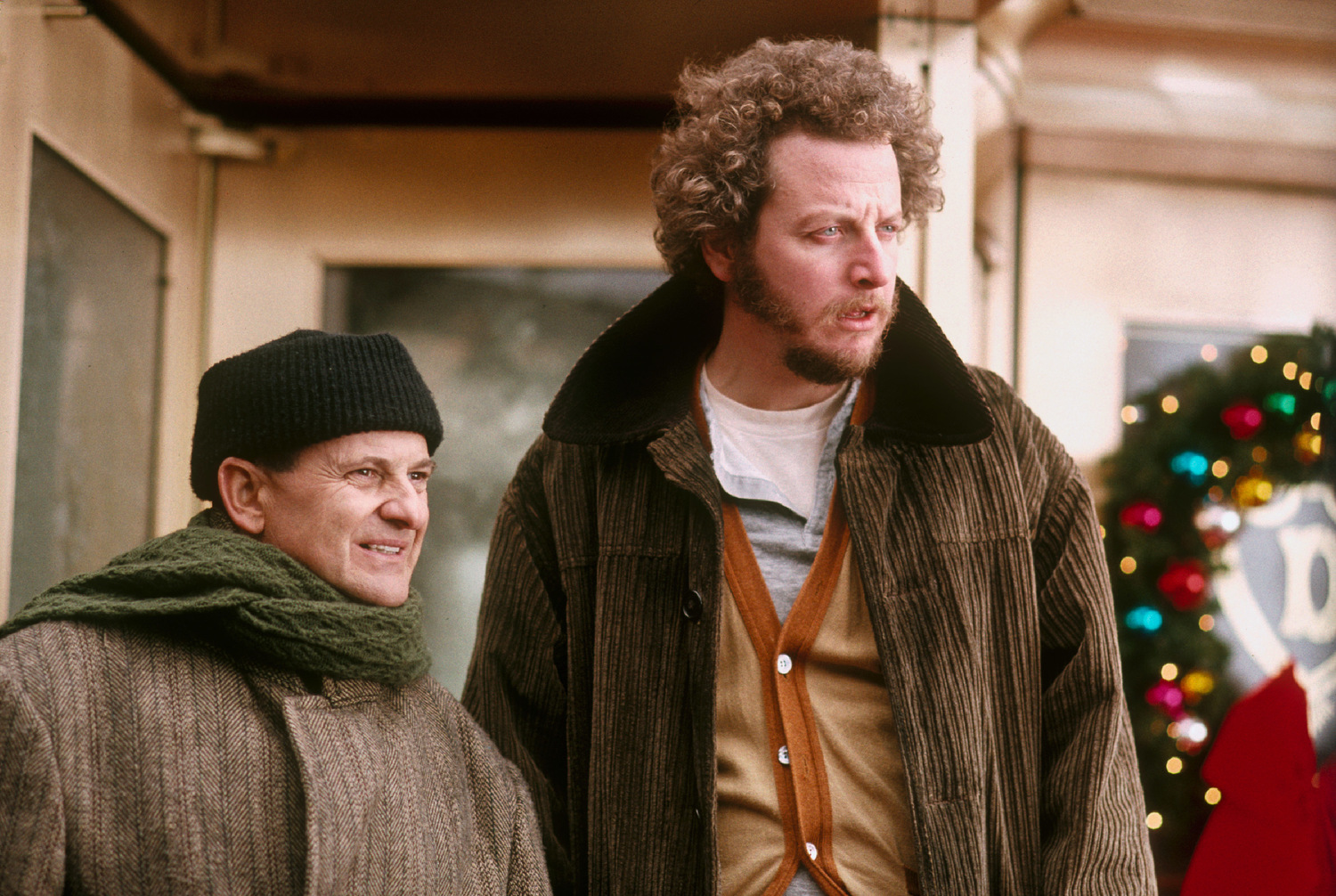
But Daniel Stern and Catherine O’Hara seem to be having at least a little fun, making the most out of their cartoonish characters.

And the plot moves along at a pretty decent click, so it’s difficult to be too bored with it.
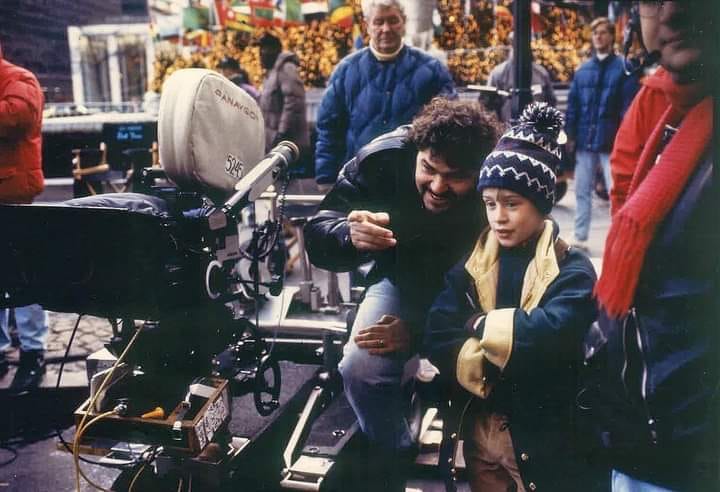
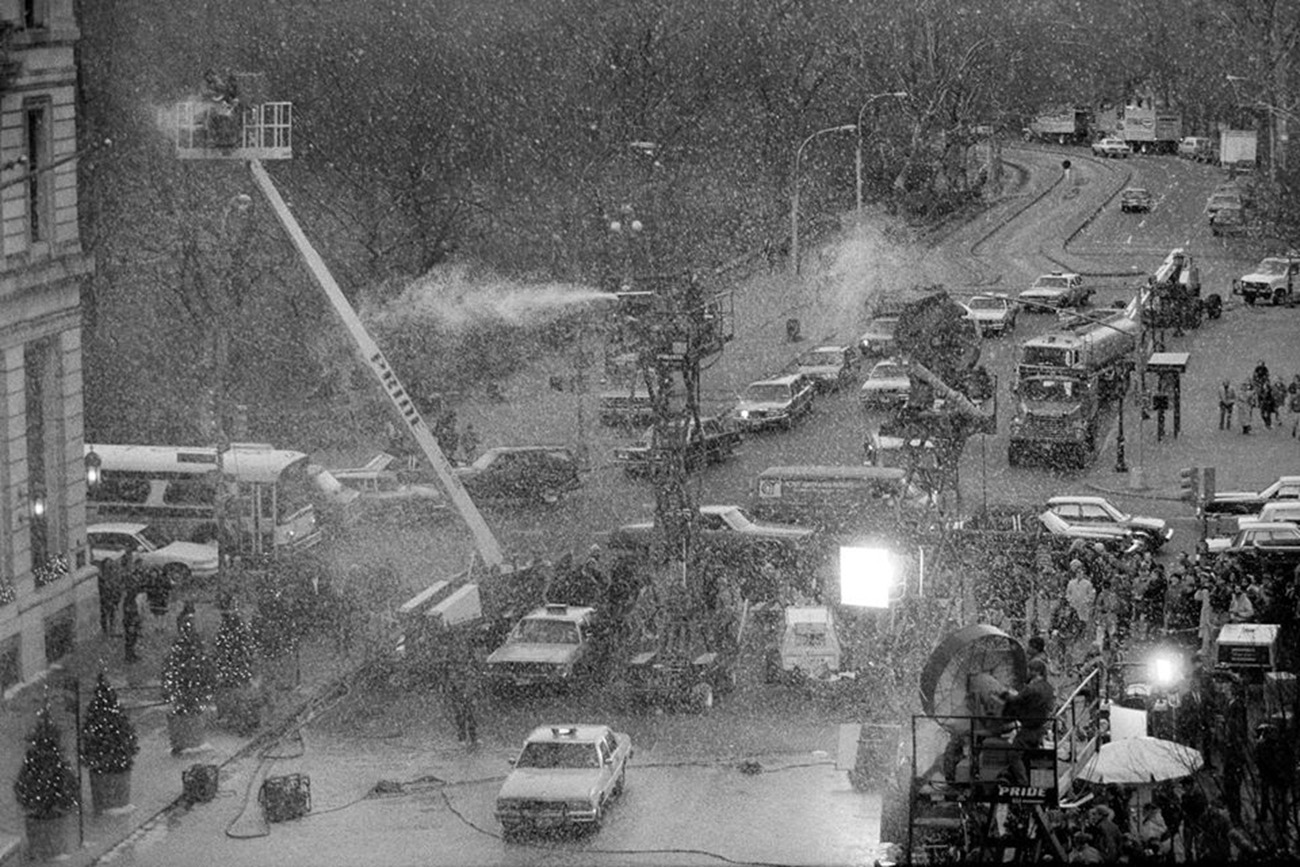
The movie also offers up some interesting visuals of New York City in the early nineties, in particular, during the Christmas season. (Although, despite filming in December, production still ended up having to use large snow machines to create a more wintry effect.)
What’s interesting, now over 30 years old, this seemingly unnecessary sequel is viewed by many as being superior to the original. Although I disagree, the consensus appears to be that number 2 is better because it’s more realistic, supposedly painting a representational picture of New York City as it was beginning its big change from gritty to glitzy.

Of course, this impression of the city is significantly muddled by the consistent use of Chicago standing in for the Big Apple. As a result, the movie feels more like it takes place in Any City, USA, rather than NYC. And not to put too fine a point on it, aside from one cop, there are practically no minority characters in this movie. Certainly not very representative of New York’s eclectic population.
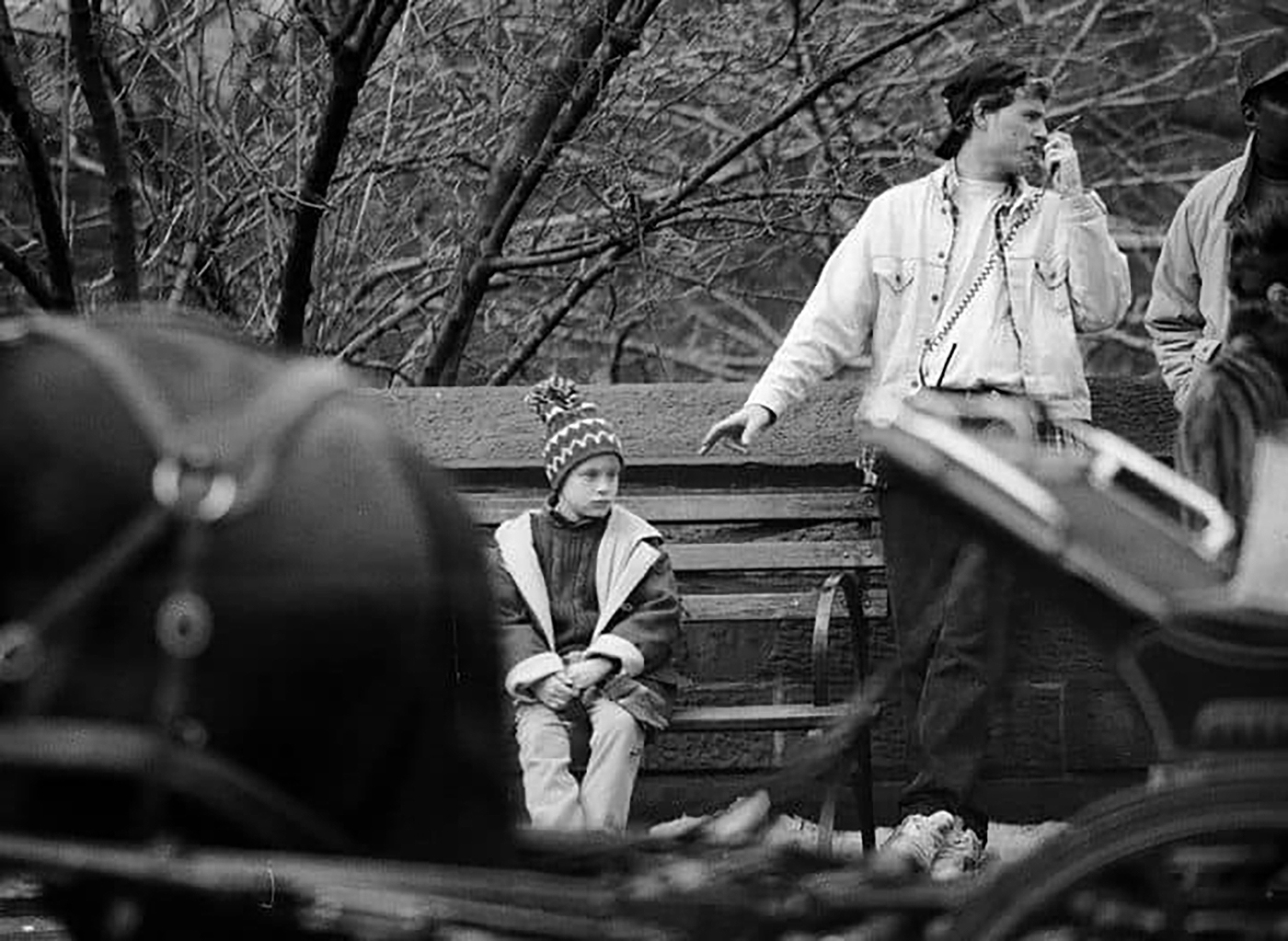
Aside from my quibbles with its portrayal of NYC, how anyone can think a movie that mixes maudlin storylines with Road Runner levels of violence is realistic completely baffles me. But that doesn’t mean I can’t see its allure to audiences.
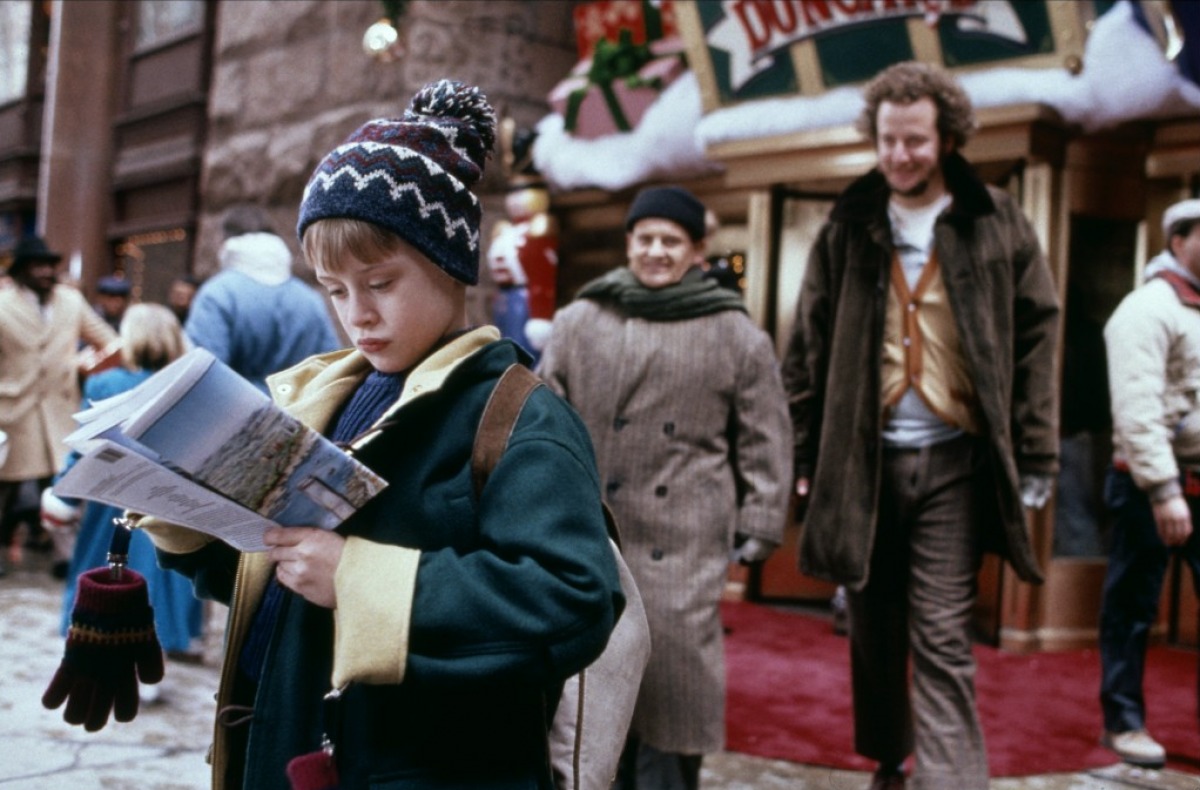
Overall, Home Alone 2: Lost in New York may not be the greatest holiday movie out there, but it gets the job done. My feelings are best summed up by a quote from the gangster in the movie within this movie — “Merry Christmas, you filthy animal!”
 NYC in Film
Another wonderful post. Long ago, on the rare occasion when people would question why I was snapping photos of some random home or building (did they think I was a narc?) I would lie and say I was an insurance adjuster. That seemed to satisfy them, while being so boring a reply they wouldn’t ask further questions.
LikeLike
Thanks, John. I’ve actually done a similar charade a couple times, but just giving a generic “working for the city” response which also seems to satisfy folks.
LikeLike
Mark, did u know John Bengtson in the above comment, who enjoyed yr posts very much, died a few months ago. Had Lou Gehrigs Disease. There are obits of him online.
LikeLike
Yes, we communicated probably about a month before he passed. Very sad news. I’m actually working on a “Speedy” post right now as a way to pay tribute to his work and inspiration.
LikeLike
Mark, I’m very sorry I only just saw yr reply.U may know there’s a whole lot on Speedy locations in his book on Harold Lloyd.On John’s website he also had a later post about the scene with the old gent’s spilt liquor,on 57th and 1st.There’s also a good video on youtube about Speedy’s locations by Bruce Goldstein of Film Forum.
LikeLike
“After some businessman gives him directions to the check-in counter, Kevin ends up in the south lobby, which is now used as the residence entrance.” Really…?
LikeLike
The “some businessman” gave me a good laugh. I like your style and sense of humor. Fun to read and interesting seeing all the places the different scenes were filmed. Great work.
LikeLike
Wow. Thanks so much, appreciate all the effort that took.
LikeLike