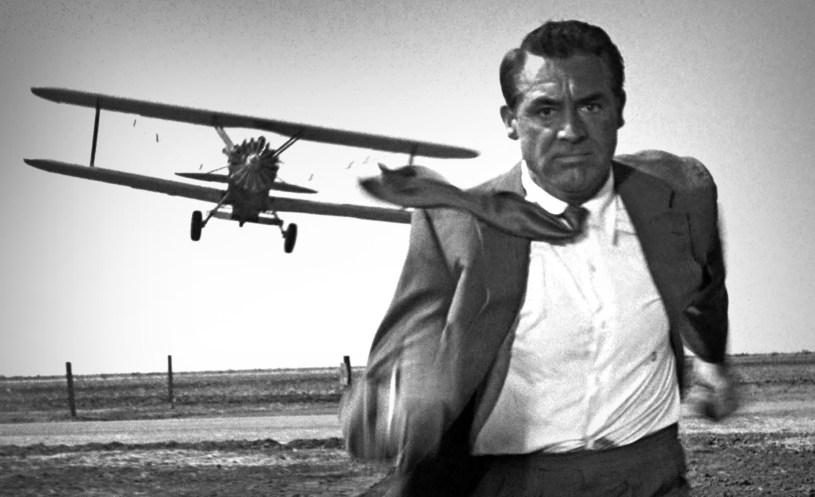
Considered by many to be Alfred Hitchcock’s most entertaining film, North By Northwest is a fast-paced thriller that manages to adeptly blend tension-filled action and intrigue with lighthearted repartee and romance.
The movie is about a New York advertising exec, Roger Thornhill (played by Cary Grant), being mistaken for a secret agent, sending him on an unexpected adventure across the country, as well as in the arms of a sultry blonde agent (played by Eva Marie Saint, who just turned 100 last July). Once things get started, the frenetic storyline doesn’t let up, taking us from New York to Chicago, and climaxing on the presidential faces of South Dakota’s Mount Rushmore.
In this post, I’ll be covering all the movie’s locales, but my main interest is naturally with the stuff taking place in the Big Apple, which was made up of both on-location photography and Hollywood trickery. While many of these filming locations had been identified prior to my own investigation, there were still a few mysteries that needed to be solved, along with a couple cases of internet misinformation that needed to be corrected.
Opening Credits – Skyscraper
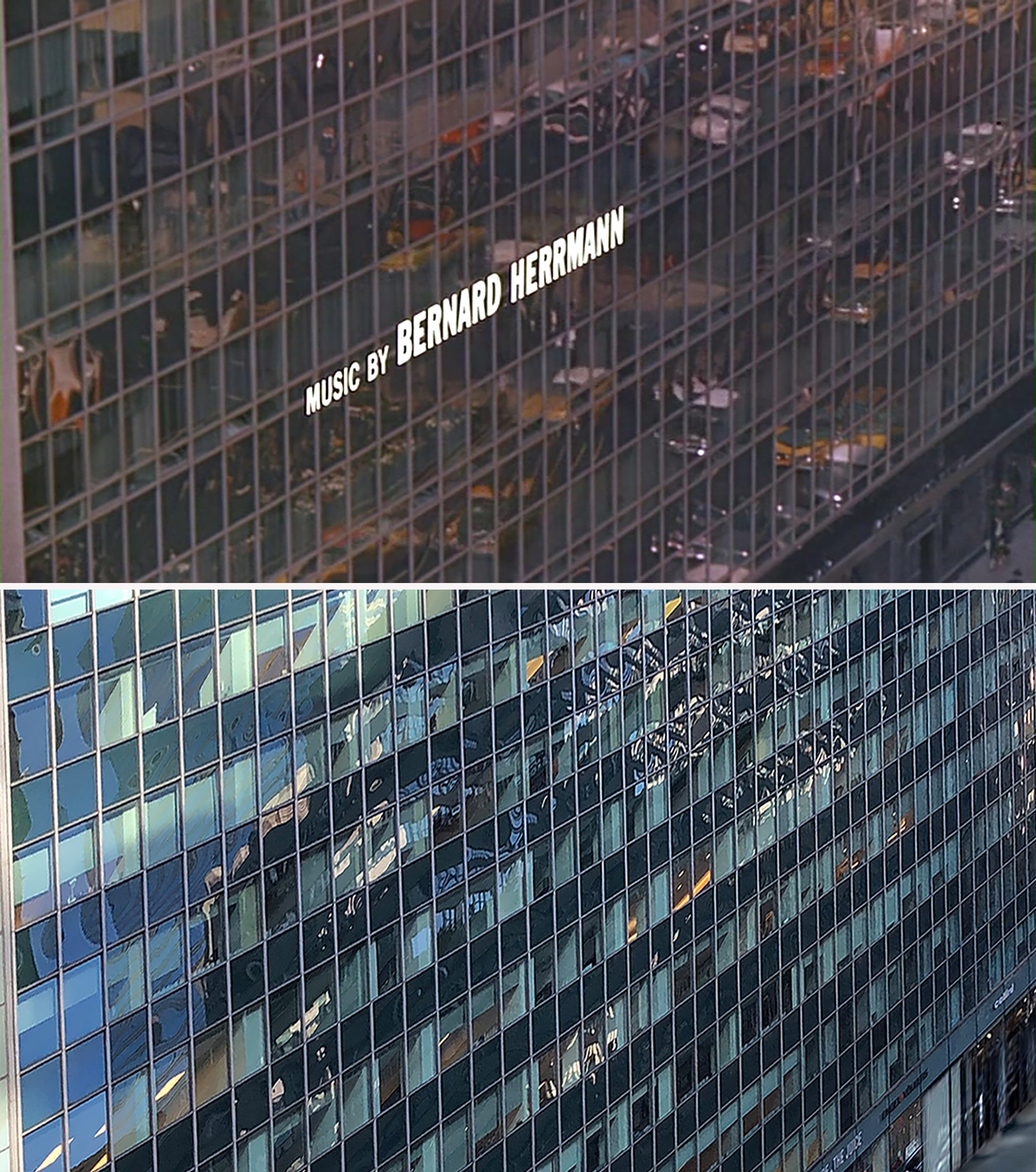
As I mentioned in the intro, some of the information floating around the internet regarding this movie’s filming locations turned out to be false, starting with the very first shot in the movie.
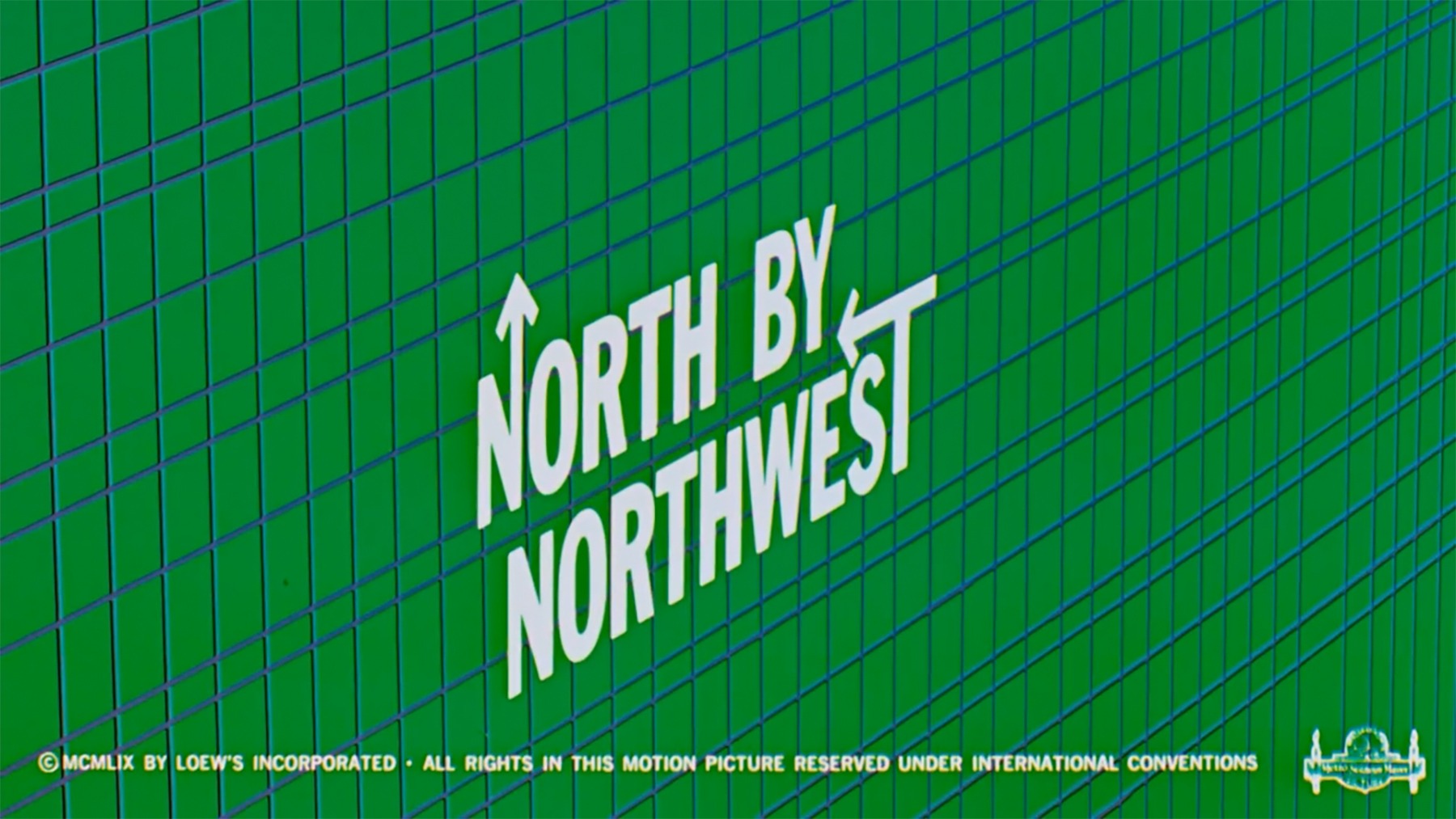
The movie opens with an animated title sequence, designed by the eminent Saul Bass and scored by Hitchcock’s long-time collaborator, Bernard Herrmann.
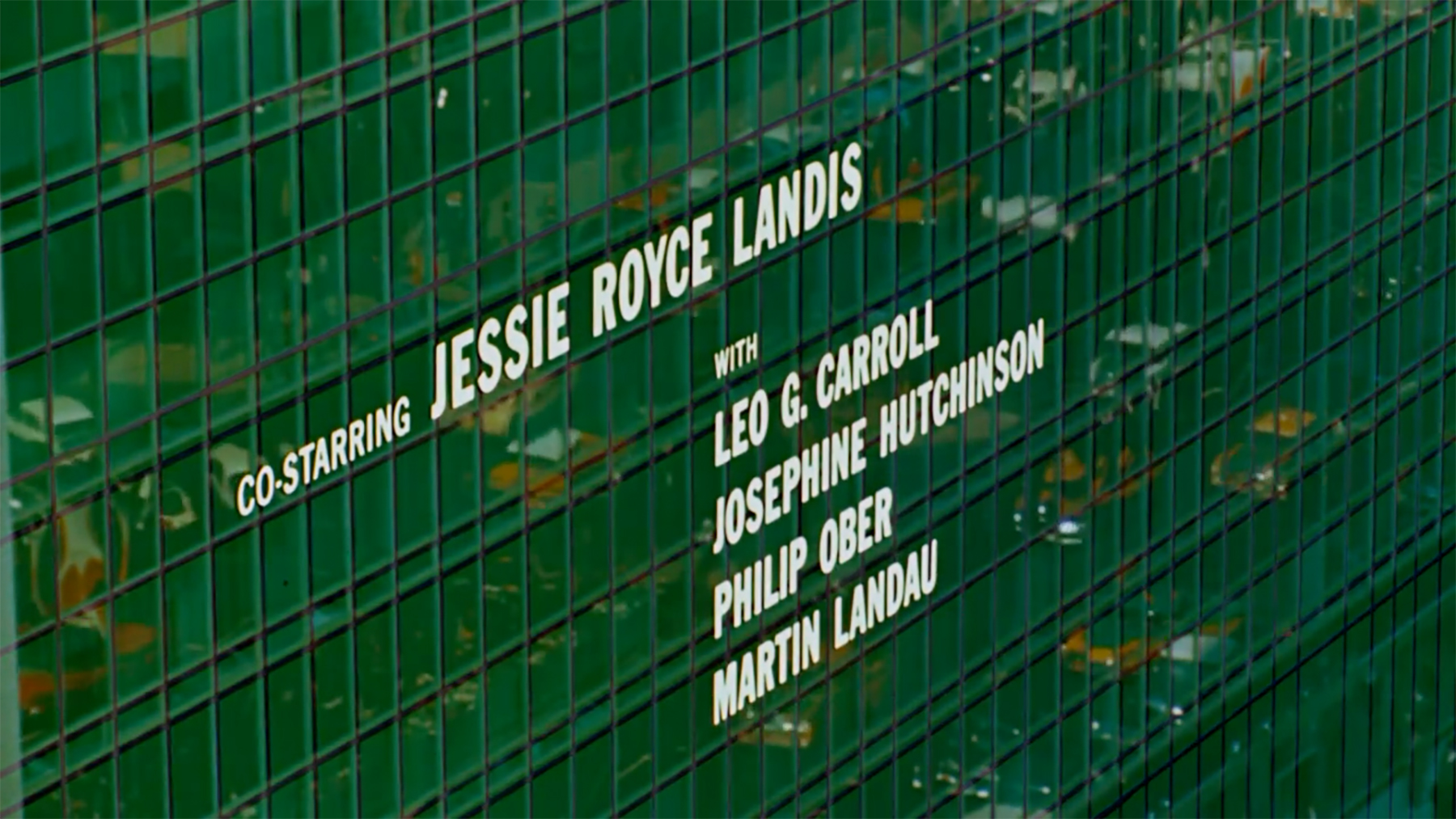
After about 45 seconds, the gridded background dissolves into the reflective façade of a real skyscraper with the line graphics turning into the expansive window framework.
It’s long been believed that this modernist skyscraper was the CIT Building at 650 Madison Avenue – the theoretical location of Thornhill’s ad agency. This was first postulated by art historian, Steven Jacobs, in his 2007 book, The Wrong House: The Architecture of Alfred Hitchcock, and a few years later by Nick Carr on his movie location website, ScoutingNY.
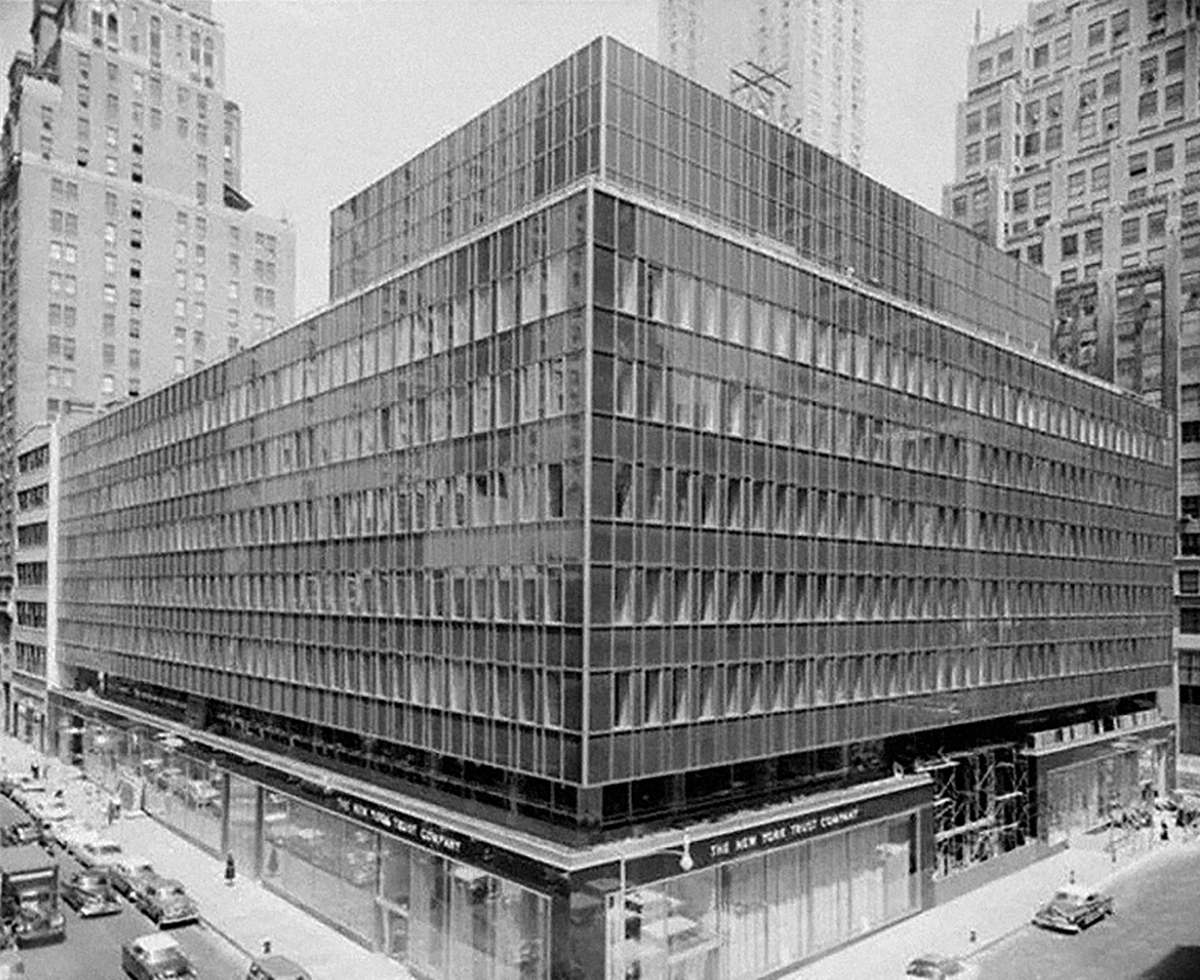
This remained the online consensus for the next ten years or so, until New York architect, Benjamin Marcus, posted on his blog an alternate theory. It was his contention, with much deference, that the opening titles building was, in fact, over at 430 Park Avenue.
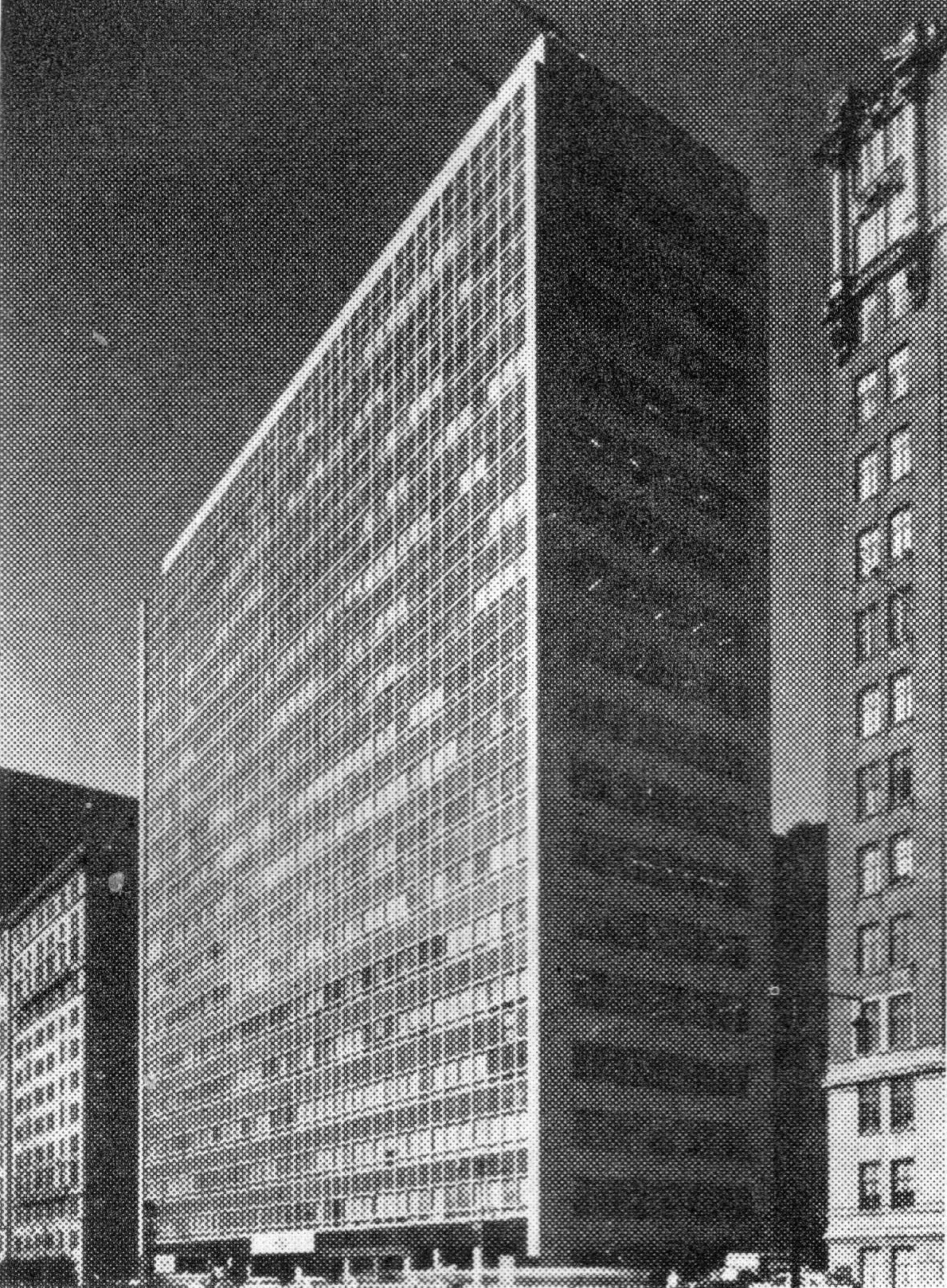
Designed in 1953, this sleek wall of glass at 430 Park was actually a renovation to a previously existing building —a 1923 brick and limestone apartment house— which was stripped to its bare bones and converted into a modern office building. The midtown structure remained unchanged until 2001, when it was re-clad with a new curtain wall, creating a different window pattern (and making it more difficult to be recognized as the North By Northwest building).
Another modernist skyscraper that saw an update to its façade was 650 Madison, which is not, as claimed by the aforementioned movie analysts, the building from the opening credits. It is, though, the office building Cary Grant exits in the scene that immediately follows the opening sequence (see “Thornhill’s Office” below). My guess is that people just assumed the building seen on the street level was the same one seen from above in the opening credits.
However, if you look at old pictures of both skyscrapers (before they got any updates), you can see the one on Madison doesn’t line up with what appears in the credits, but the one on Park Avenue does.
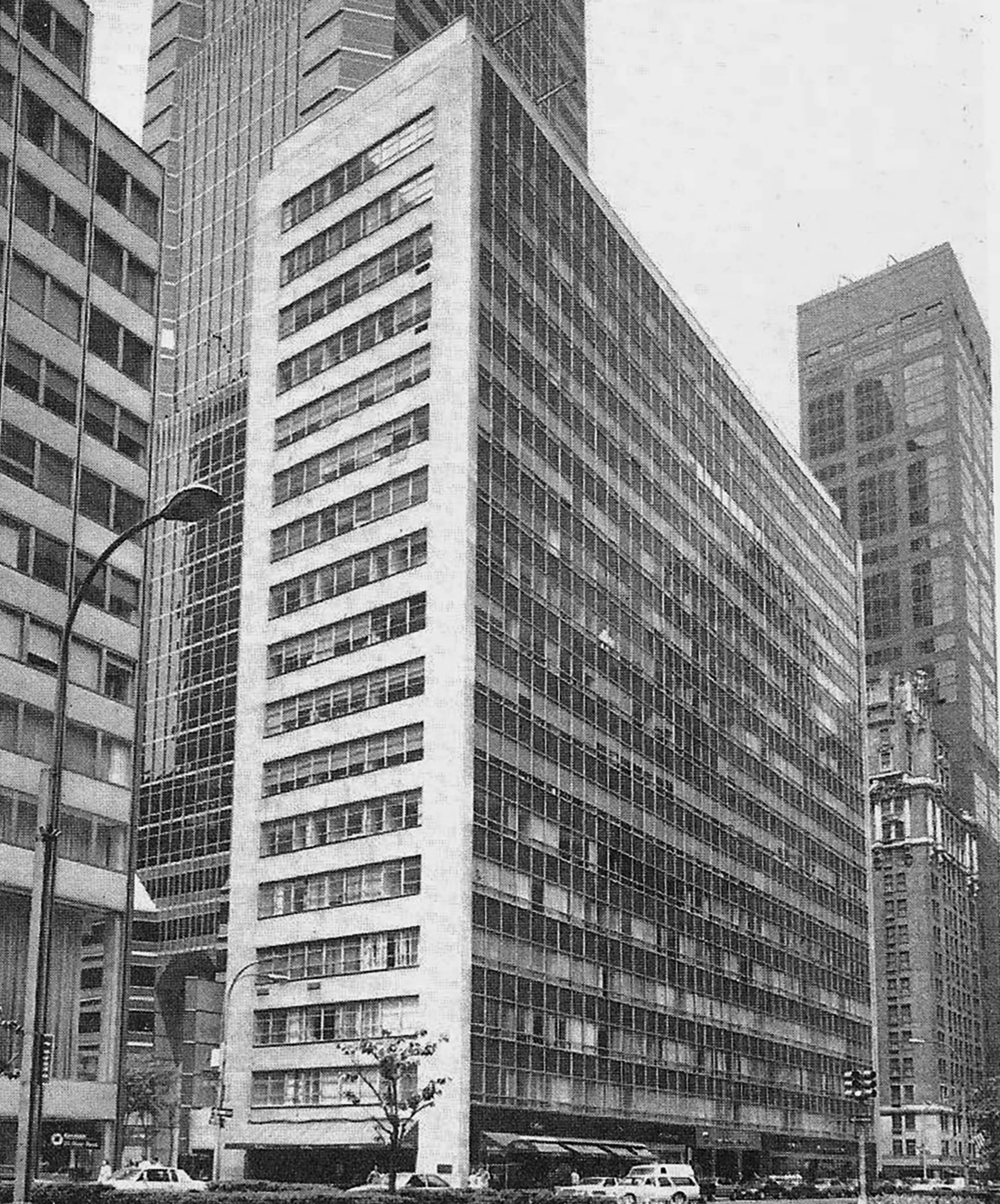
On his blog, Marcus gives a very detailed analysis of both buildings’ façades, pointing out elements that either match or don’t match the movie. He zeroed in on things that only an architect would think to look for, like the number of muntins (the metal bars separating the panes of glass) or the spacing of the spandrel panels (non-vision glass used to conceal the floor structure).
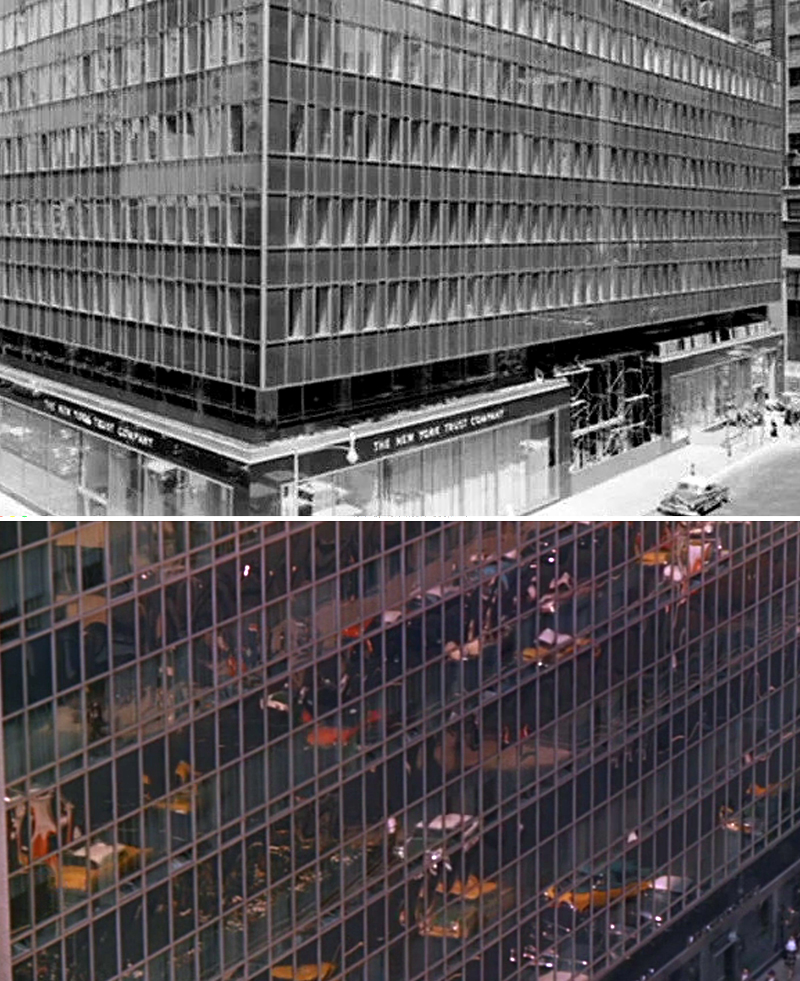
He certainly made a convincing argument, which seemed to be confirmed when I overlayed an early photograph of 430 Park Avenue on top of the opening credits building and the panels lined up.
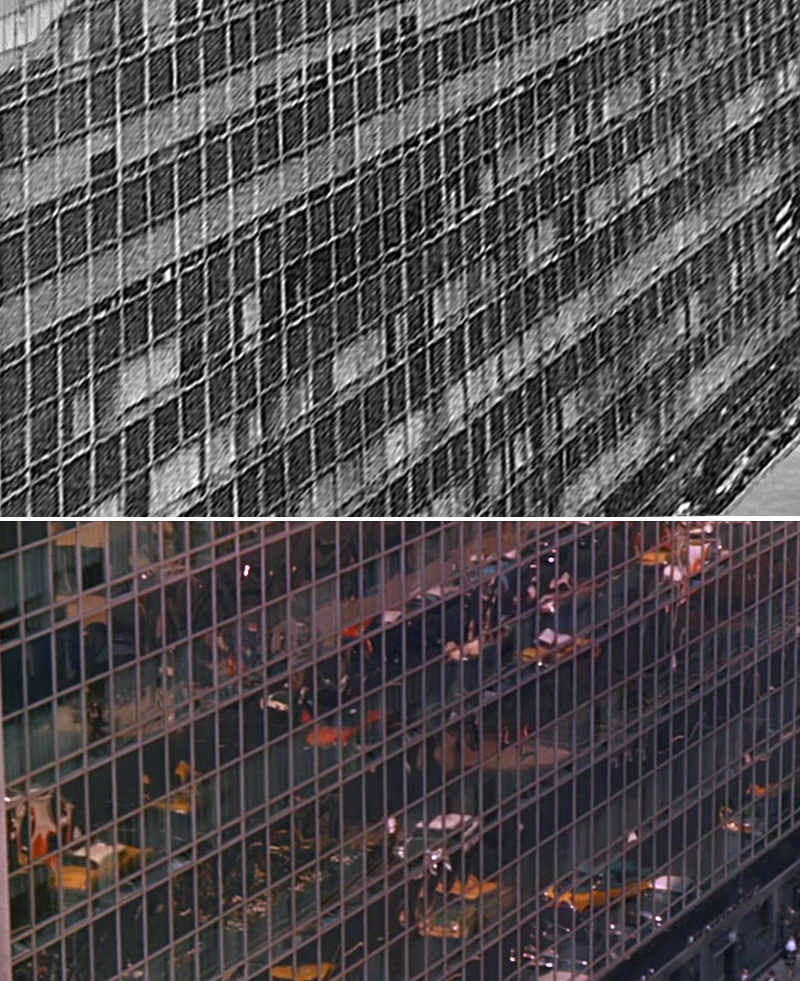
Add to that the reflection in the glass showing an avenue with a grassy median strip —indicating that they were on Park Avenue— and you can’t help but conclude that Marcus’ theory was spot on.
Opening Credits – Street Action
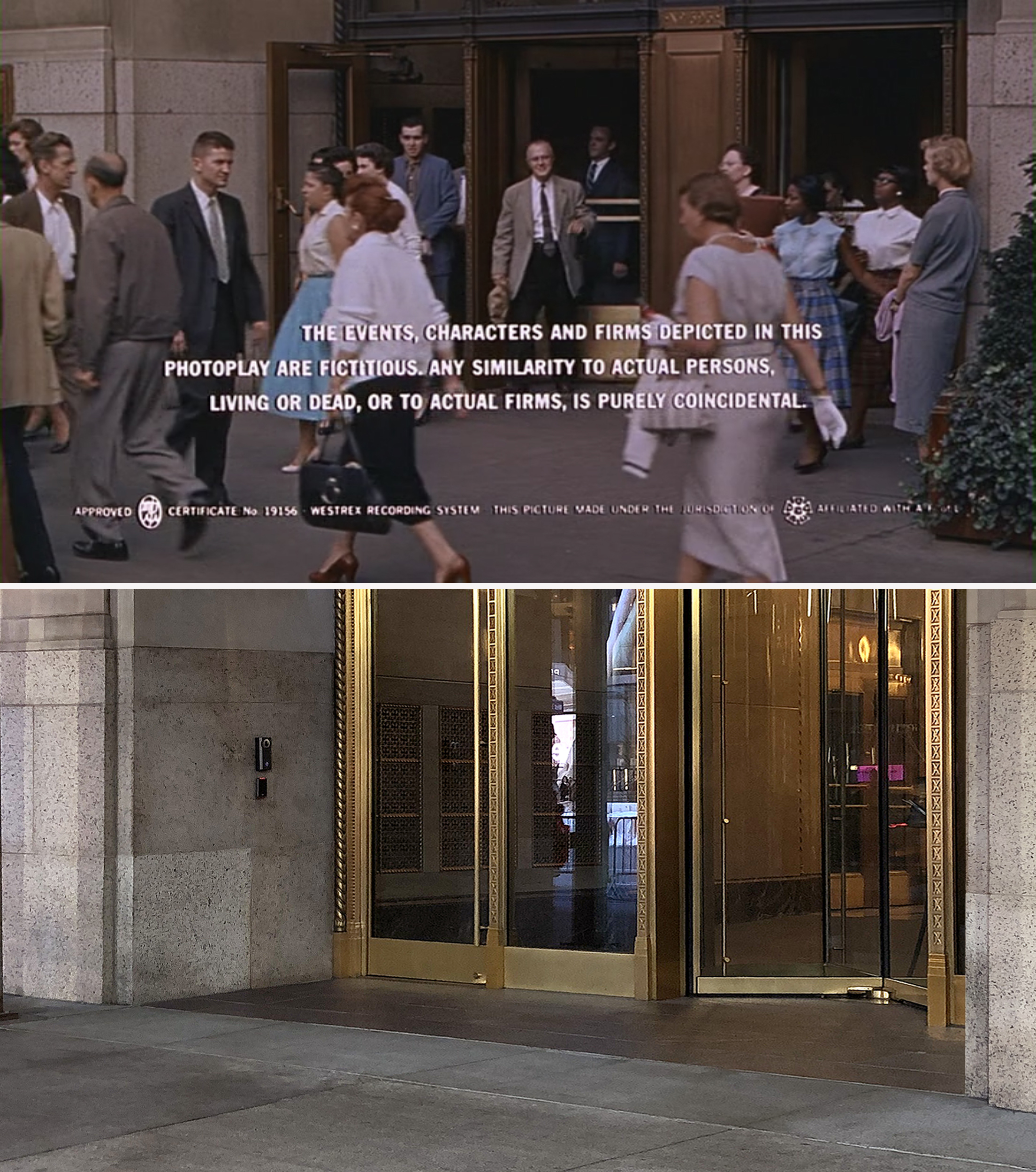
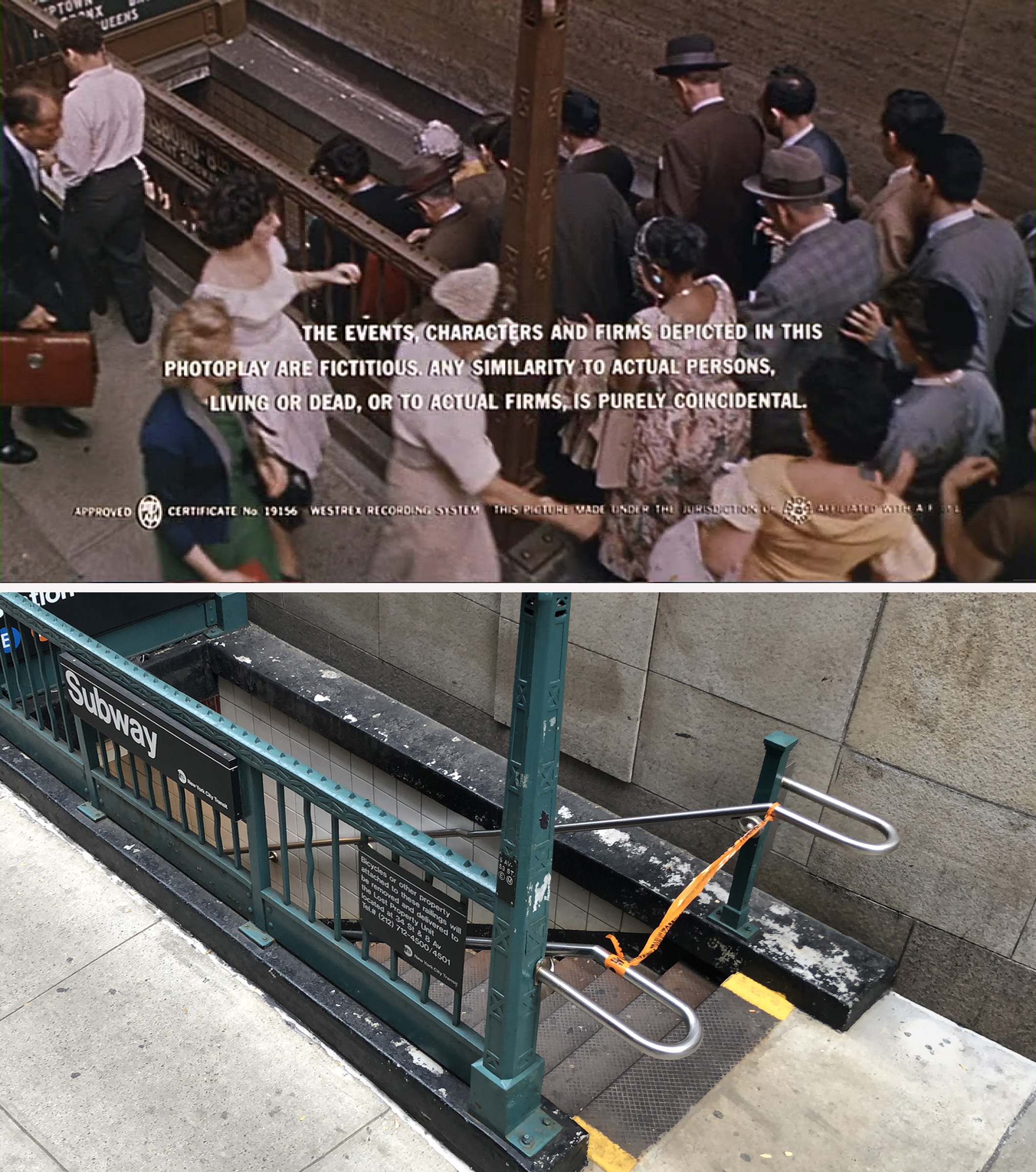
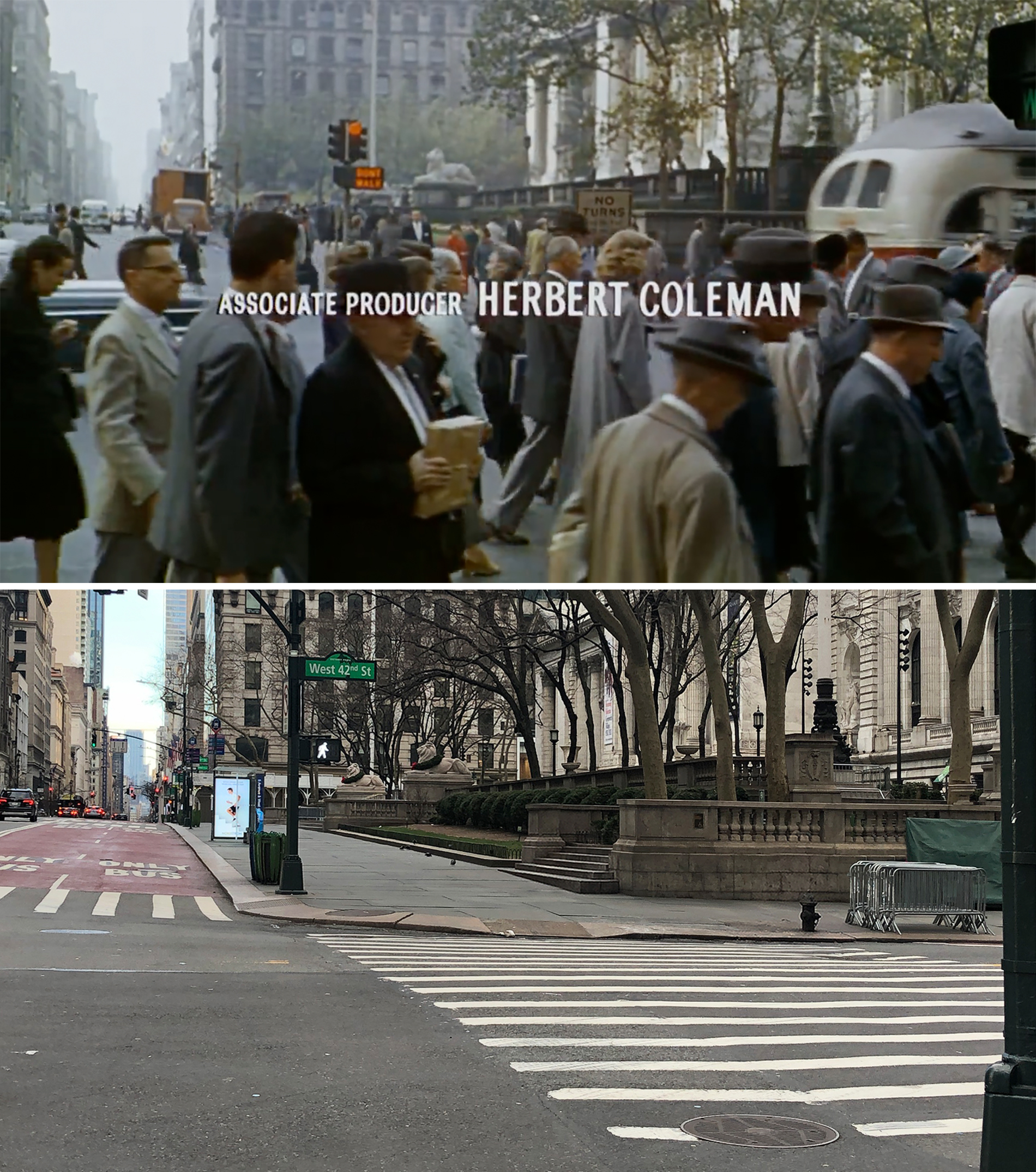
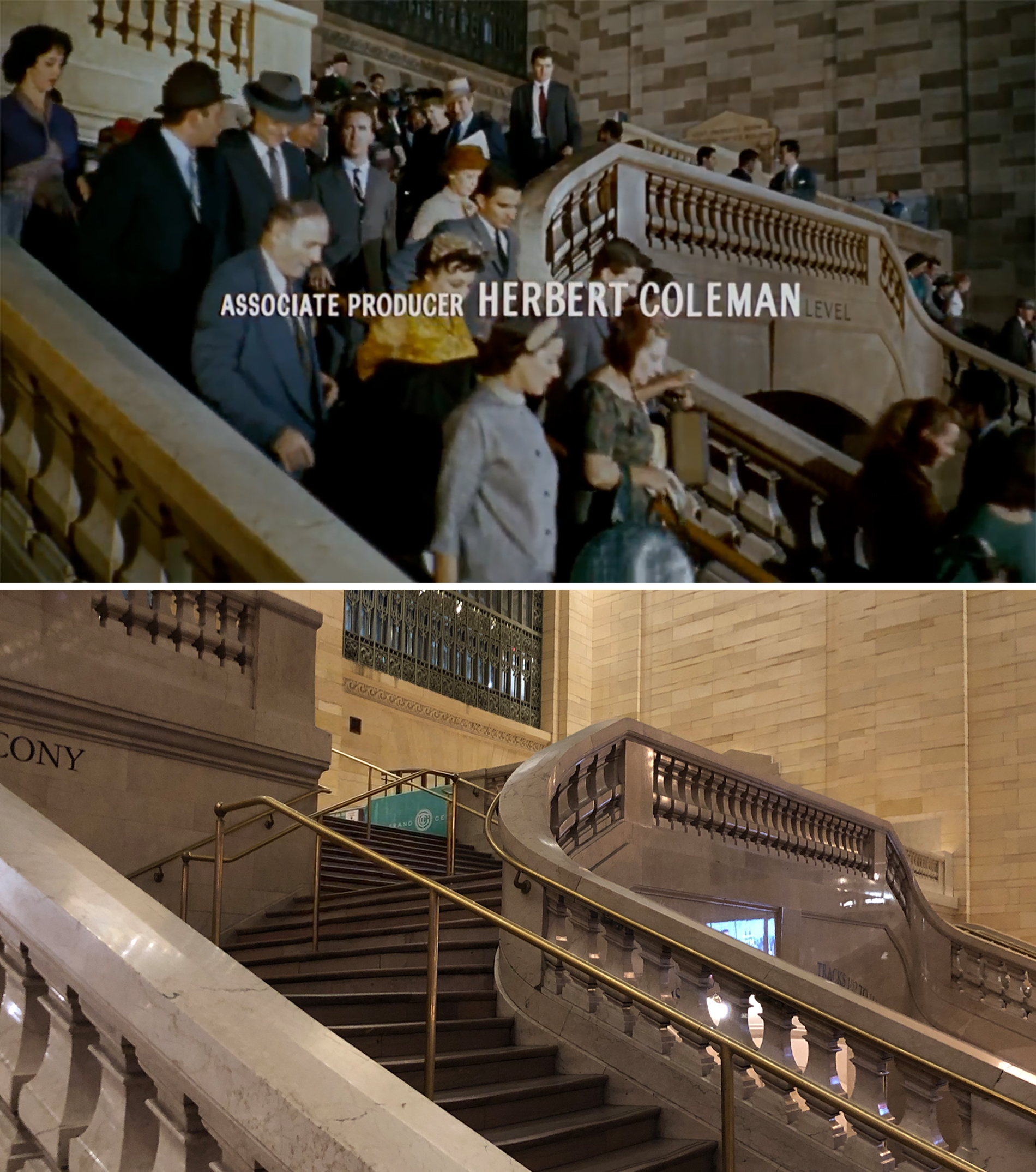
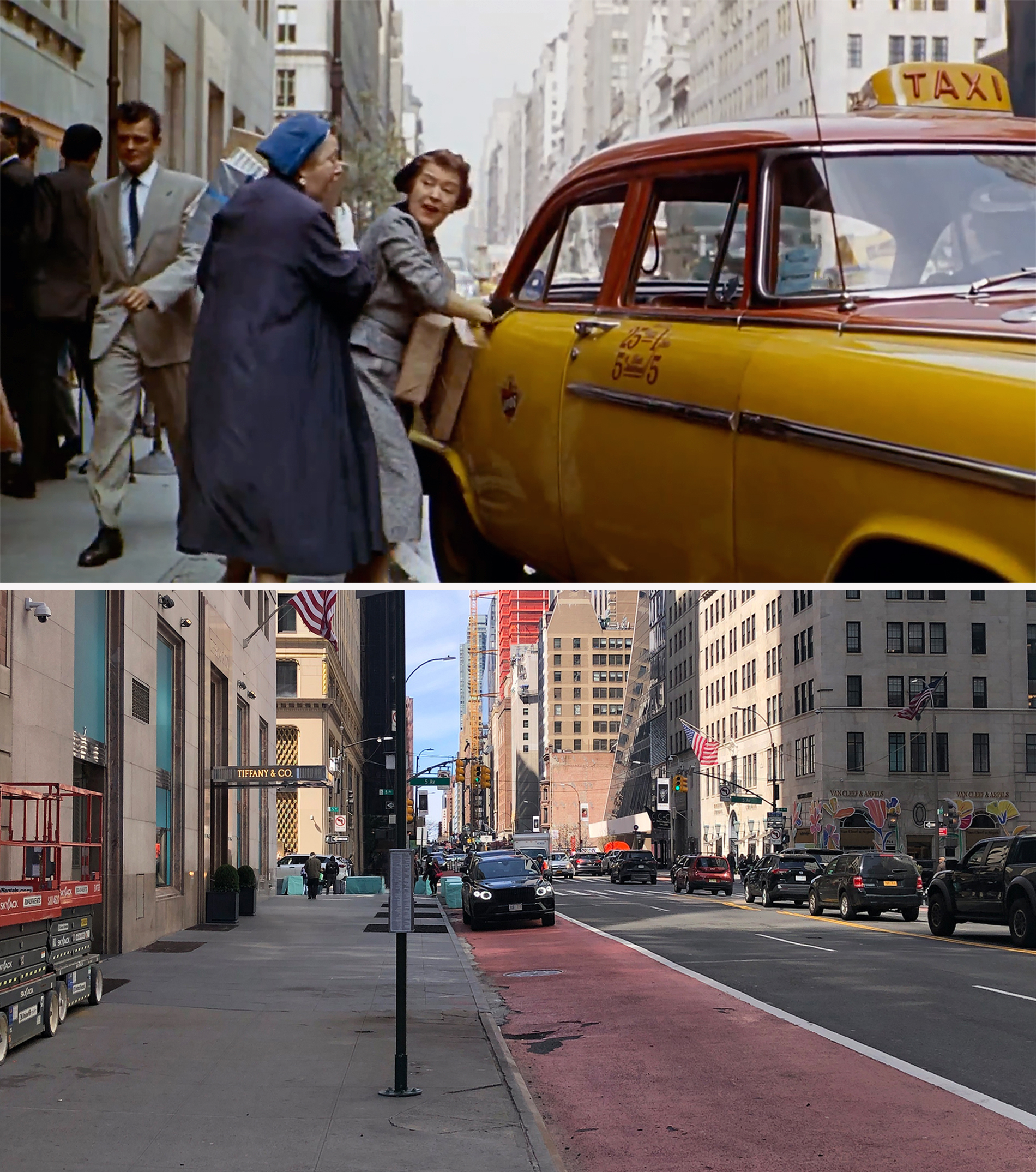
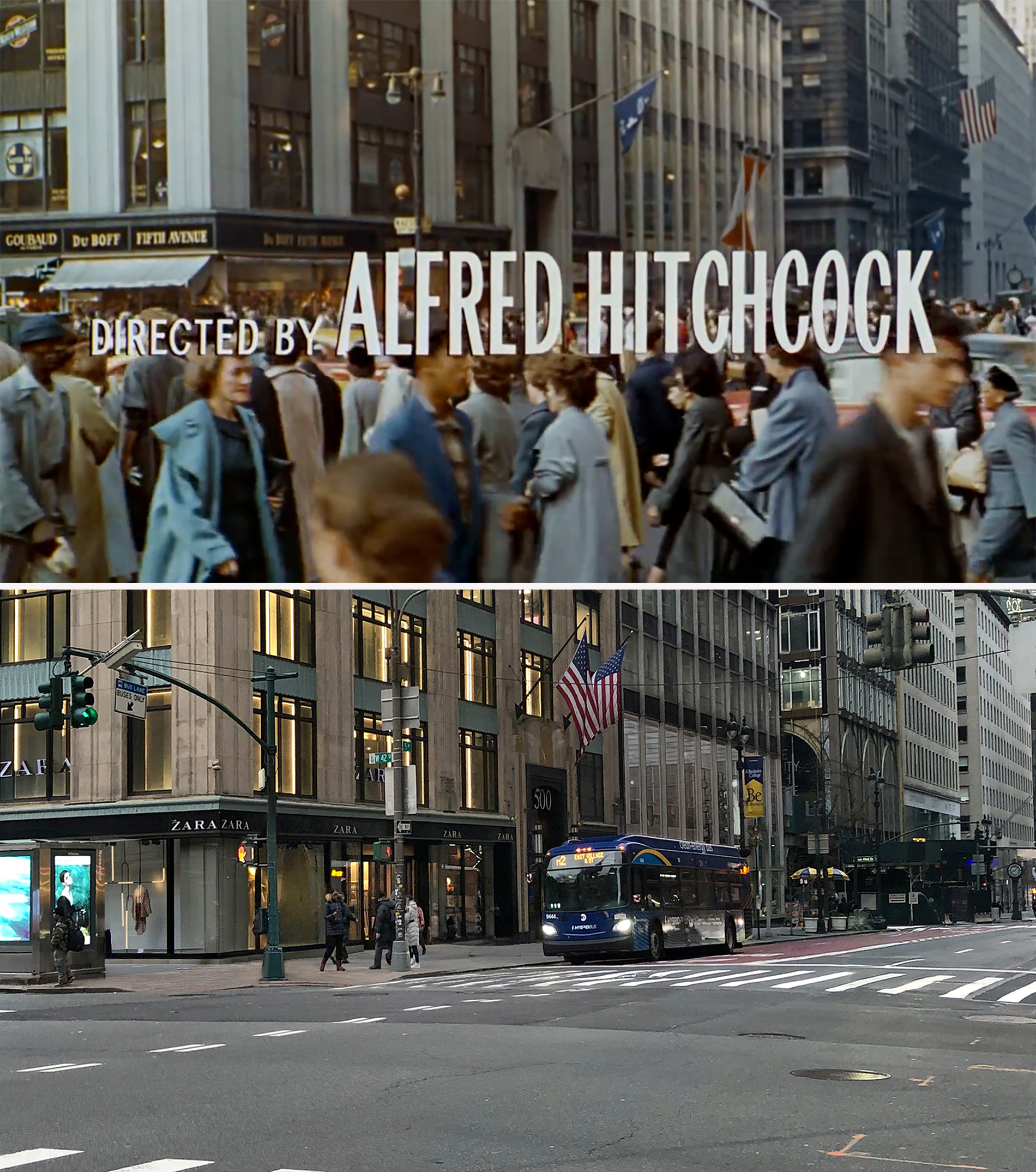
As fast-moving as this opening montage is, it consists of just six different shots at five different locations. Three out of the five locs had already been identified by Carr on his ScoutingNY website, thanks to some clearly visible and well-known architecture.
But the locations of the two remaining shots were a mystery to Carr and continued to mystify him and other location-hounds for several years. But finally, with the help of my research partner Blakeslee and a comment from a reader, I was able to identify these long-missing locations.
The first thing I found was the subway entrance. At the time I began my search, the ScoutingNY comment section was filled with suggestions to the subway stairs location, with most of the commenters —myself included— thinking they were probably somewhere along Eighth Avenue.
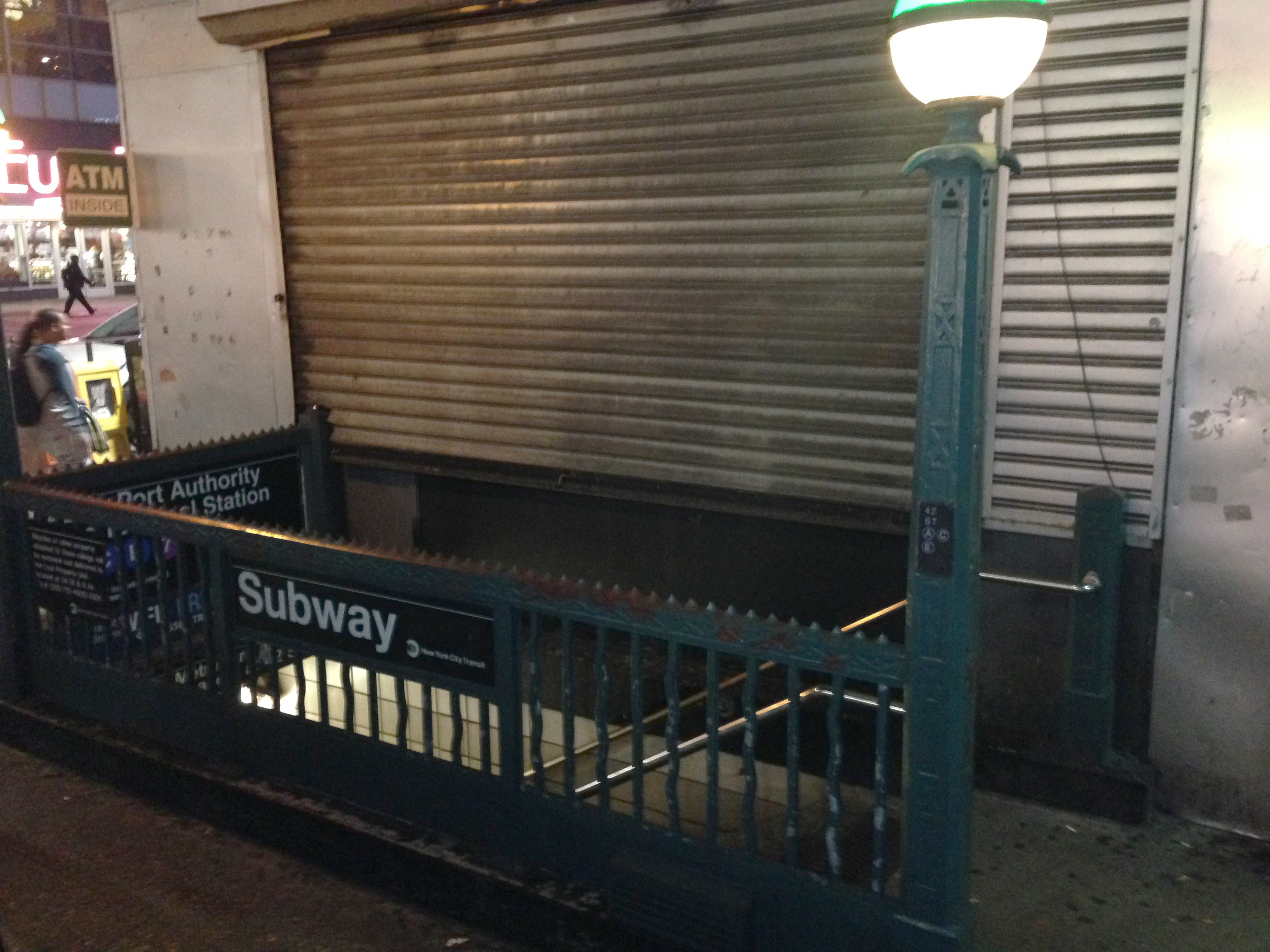
The problem was, with such a tight shot of the entrance, cluttered with commuters and credits, it was hard to spot any details that could be a clue to its whereabouts. To help make things a little clearer, I stitched together a bunch of frames in Photoshop to give Blakeslee and me a more unobstructed view of the entrance.
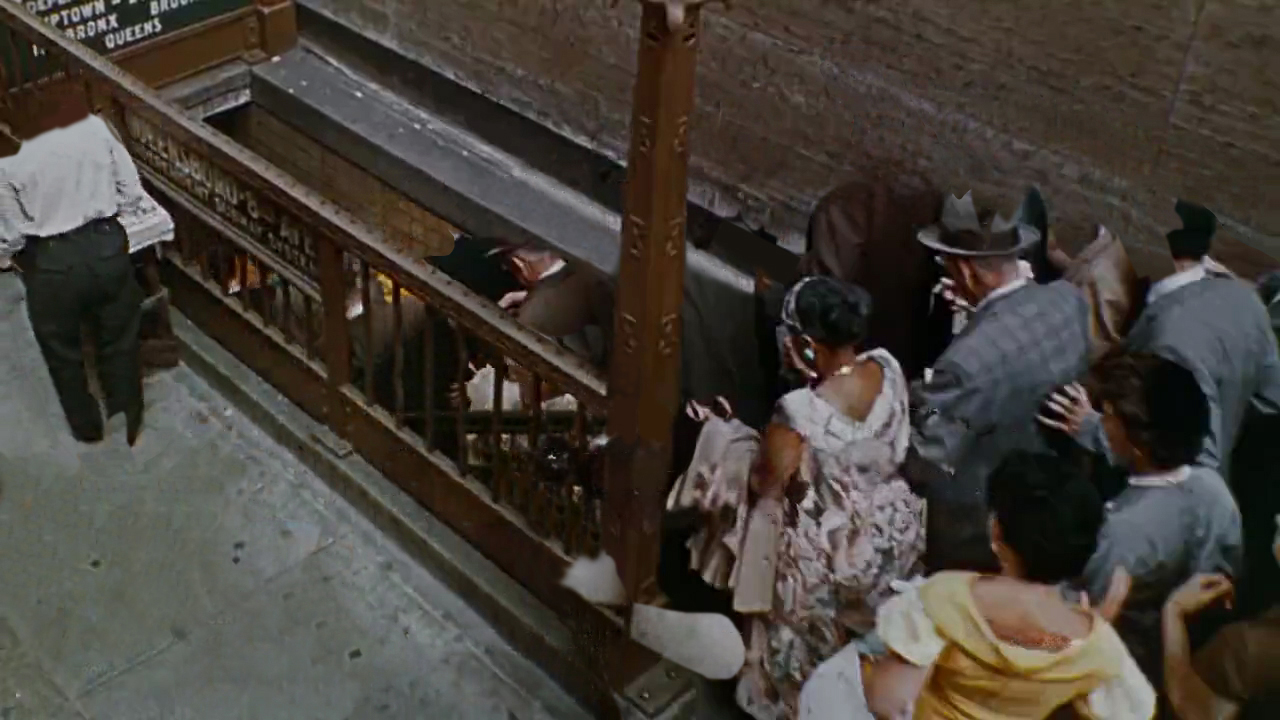
From there, the logical starting place was the subway signage. While the sign above the stairs was mostly cut off, the sign on the side railing was fully visible and contained a few useful clues. It was a little tricky to decipher, but we eventually figured out it said, “Queensboro – 8th Ave. Independent Subway System.”
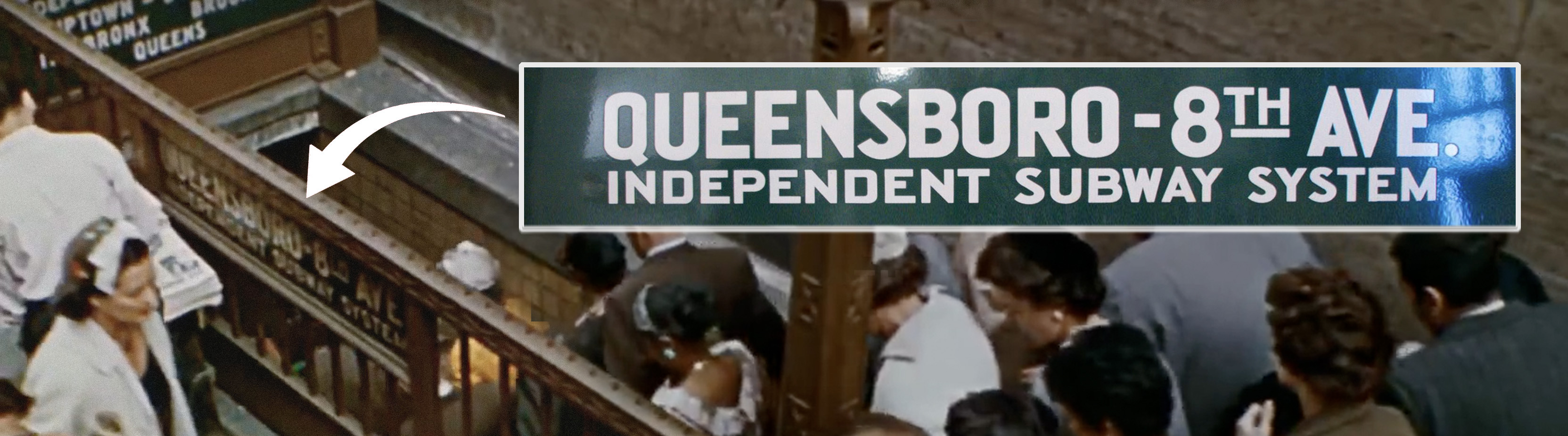
That meant it was most certainly somewhere along the 8th Av IND line, more commonly known as the A/C/E. While readers on the ScoutingNY website were fixated on entrances on Eighth Avenue itself, the sign’s “Queensboro” notation made Blakeslee think that maybe it was somewhere on the crosstown E line that travels along 53rd Street and into Queens. There were three stops along 53rd —one at 7th Ave, one at 5th Ave, and one at Lexington— and we investigated them all.
We ultimately settled on the 5th Ave entrance for a few reasons. The first being that it fell in the general midtown zone Hitchcock used for this opening sequence. He filmed on Fifth Avenue, both at 42nd Street and up at 57th Street, so using the subway at Fifth & 53rd made total sense.
The other thing that brought us to Fifth was a simple process of elimination. Looking through vintage photos of the buildings that sat next to entrances on the E line, we were basically able to rule out the stations at 7th and Lexington. And when it came to the station at 5th, I found an image of its entrance taken in 1955 that was very promising. The image didn’t come from one of my usual sources, like the NYC tax archives or the NYPL digital catalogue; it came from another Hitchcock movie, The Wrong Man.
It had already been verified that in The Wrong Man, Henry Fonda entered the 53rd crosstown IND at 5th Ave, and when Blakeslee and I compared it to the North By Northwest subway, we found several similarities.
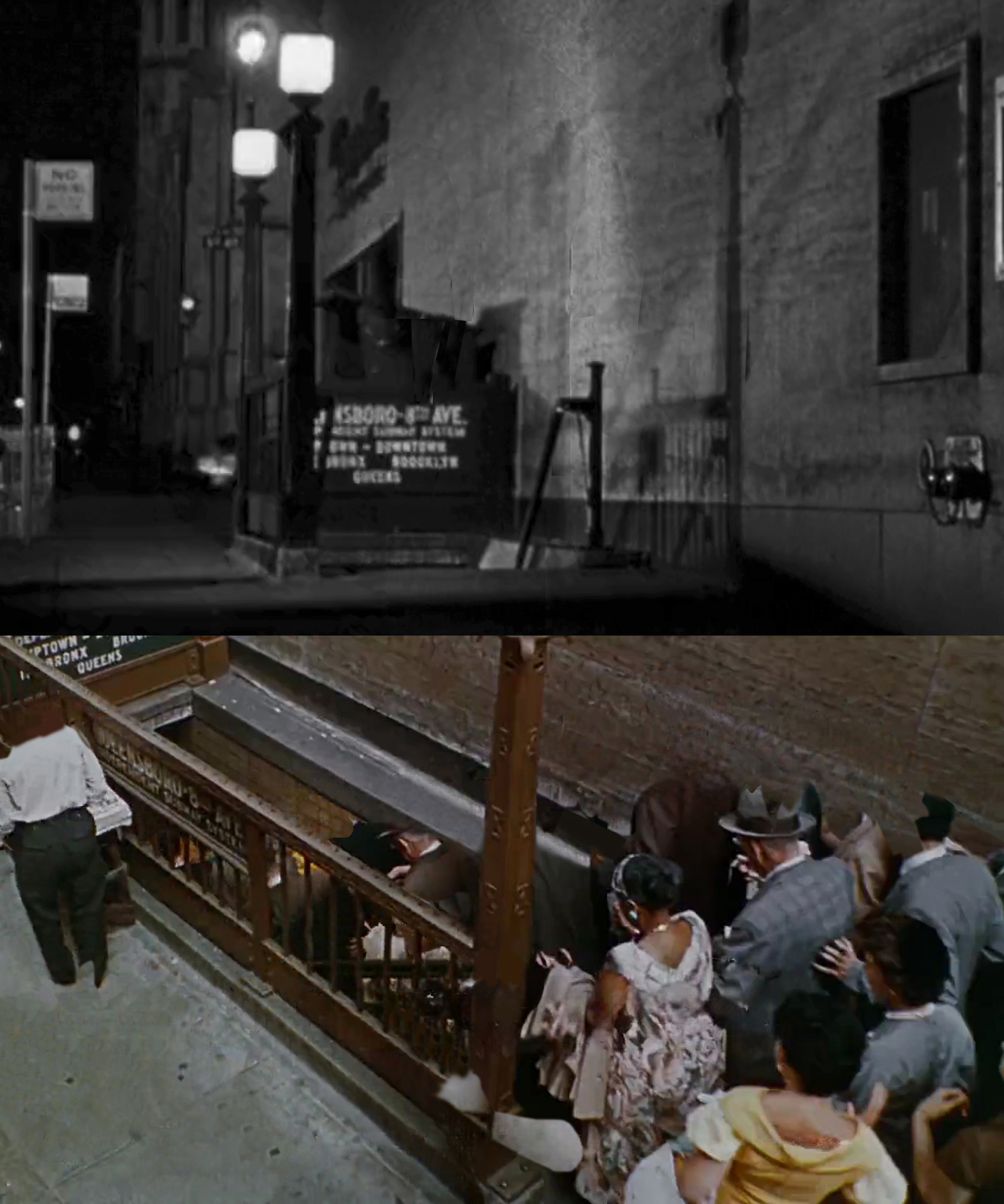
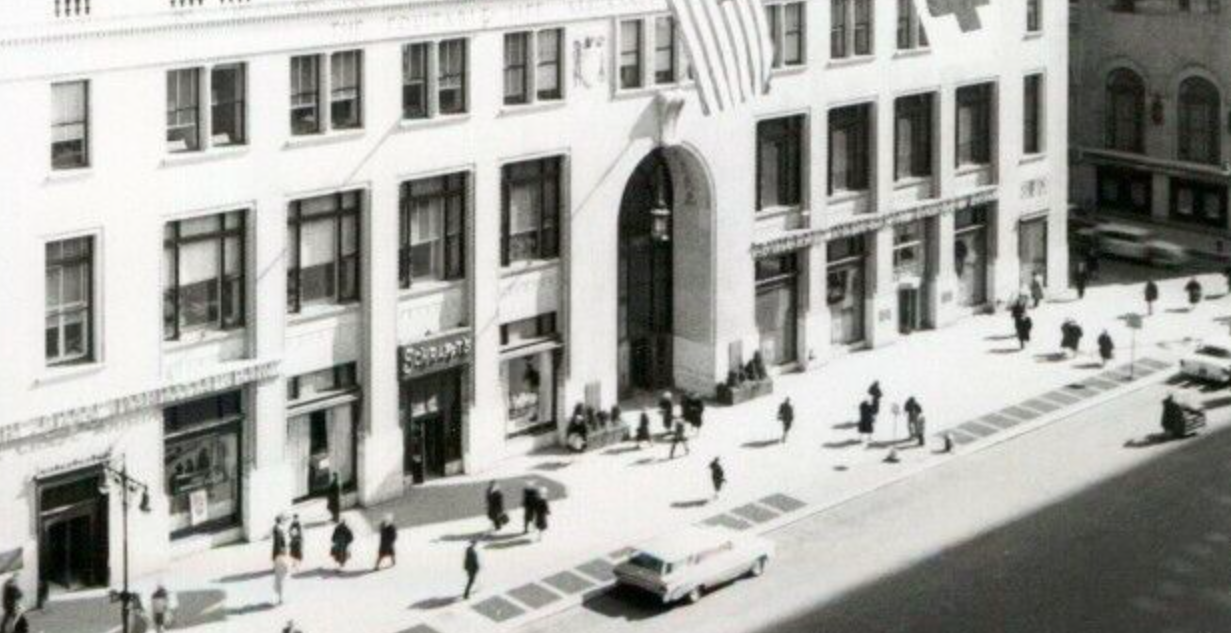
The subway entrances were of the same style and layout, with matching signage. The building that abutted the stairs looked like a match as well, with a traditional brick wall and a dark stone base trim. And while Hitch is not specifically known for reusing the same locations, it’s not inconceivable he and his scout would choose a place used in a previous movie (especially for a quick shot that was most likely photographed by a Second Unit).
Feeling confident Blakeslee and I had solved this missing location, I zoomed in on frames from the two movies, searching for any other similarities, and found a pattern of dark streaks that looked the same.
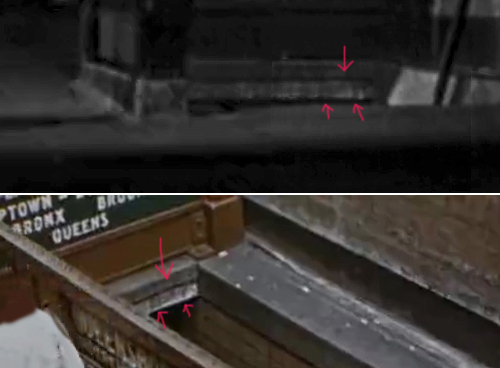
Granted, streaks like that were commonplace on subway entrances, but it just added a little more evidence to the pot.
All that being said, I’m still giving this location around a 90% certainty. Without some official production notes or an informative behind-the-scenes photo, it’s hard to be absolutely positive that it’s the same place. Nevertheless, I’m still feeling pretty confident.
The other missing location from this sequence was the first shot, showing commuters exiting a building. And after years of searching and scrutinizing, I was able to finally nail it down.
The plethora of suggestions on the ScoutingNY website as to where the building was located ran the gamut, most of which were random and unsubstantiated. Ignoring the comments on that and other websites, Blakeslee and I rolled up our sleeves and went to work in finding this elusive location.
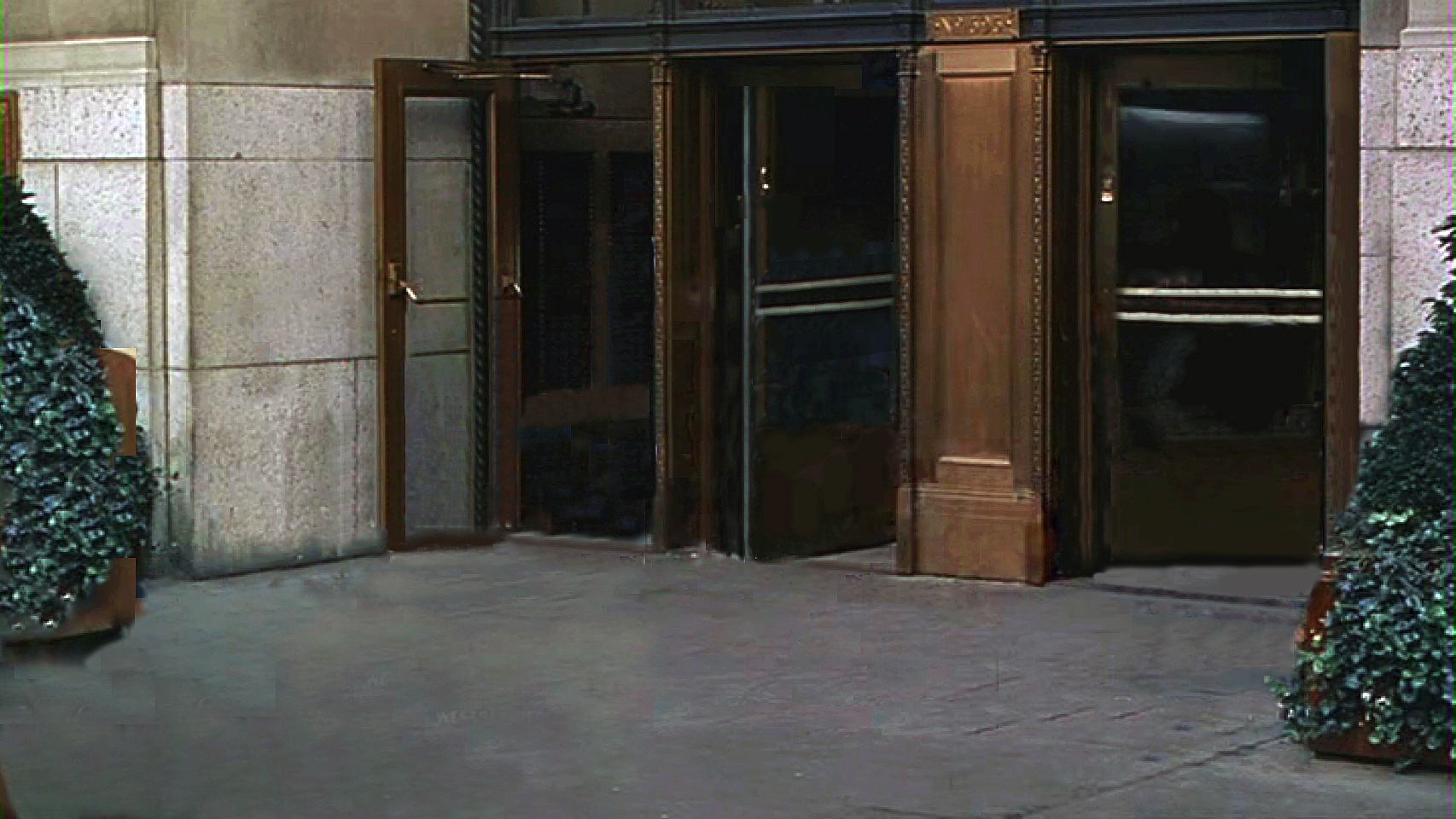
The entrance with its elegant brass doors looked so damn familiar, making us constantly think that the building’s identity was at the tip of our mental tongues. But we knew a lot of midtown buildings had similar entrances, so it really could’ve been almost anywhere — although we figured it was most likely somewhat close to the other locations used in this credits sequence.
Using those other locations as a guide, I mapped out a basic corridor used by Hitchcock’s team in Midtown Manhattan and looked at every potential building in that area. However, I came up with nothing.
Blakeslee and I also did an image search for “New York brass doors,” which gave us a few close calls, but they were always a little off.
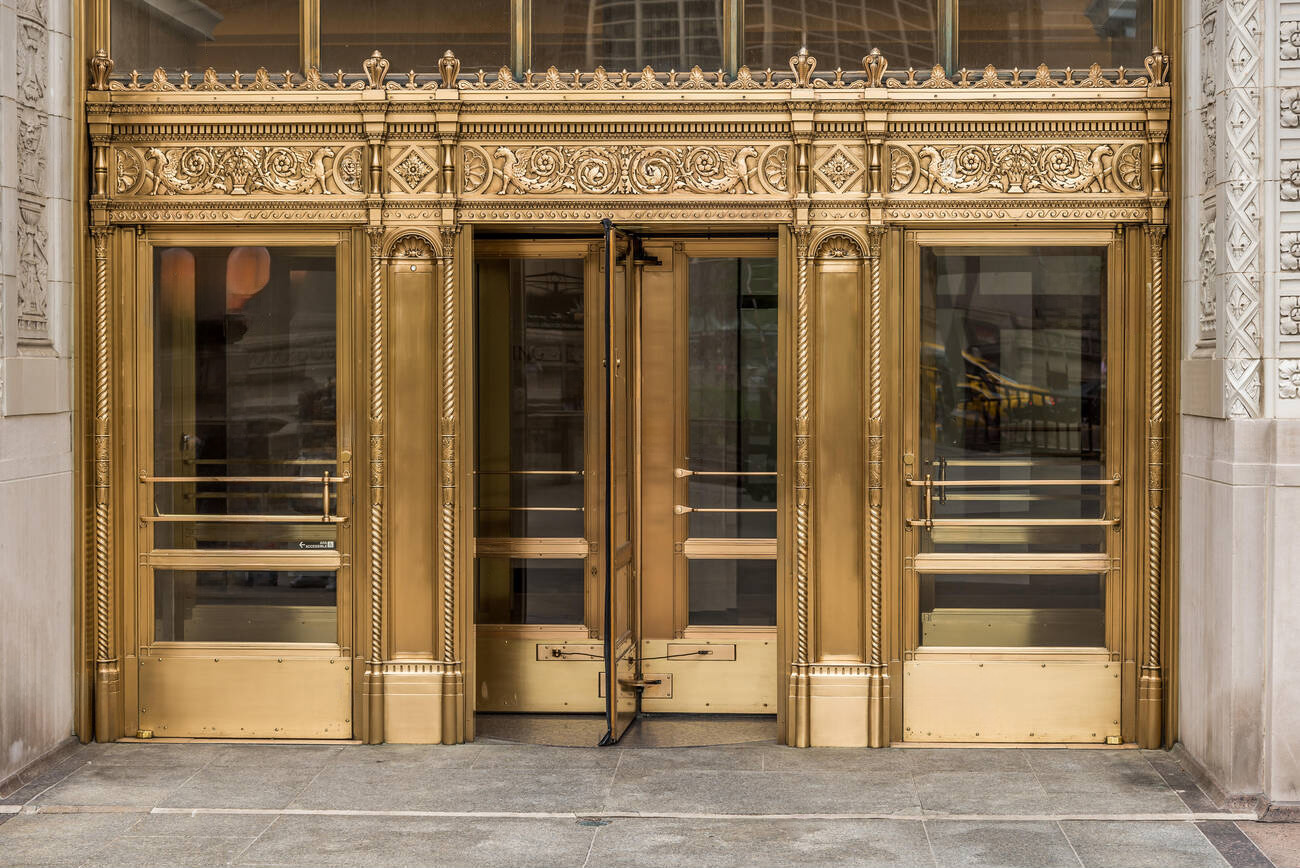
At one point, I thought it might’ve been an entrance to the old baggage building attached to the north end of Grand Central Terminal. But I couldn’t find any pictures of its street-level entrances, so I was unable to confirm or deny a match.
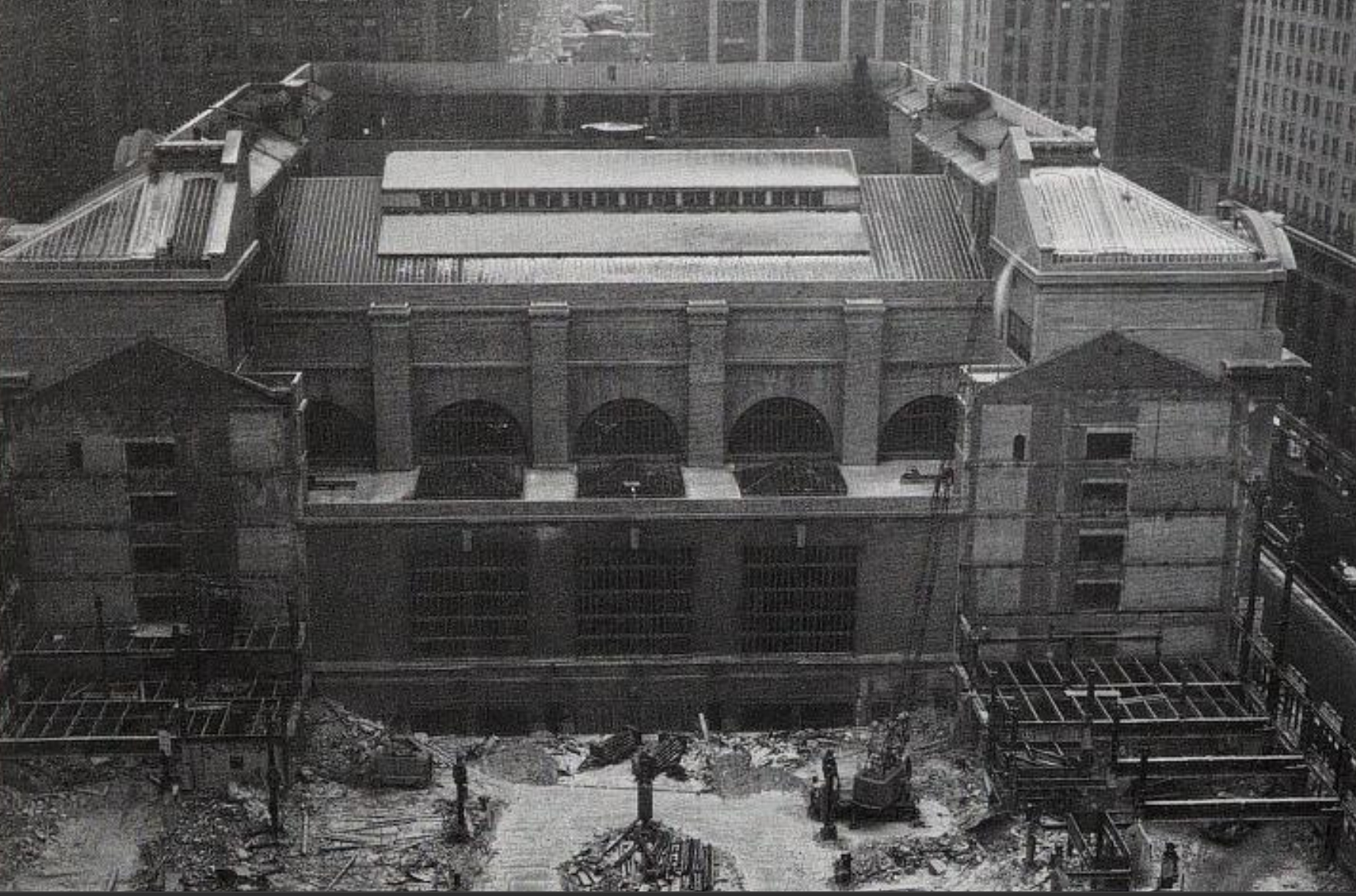
I eventually discarded the baggage building as a candidate, mostly based on the people that appeared in the movie, none of whom were carrying any sort of luggage.
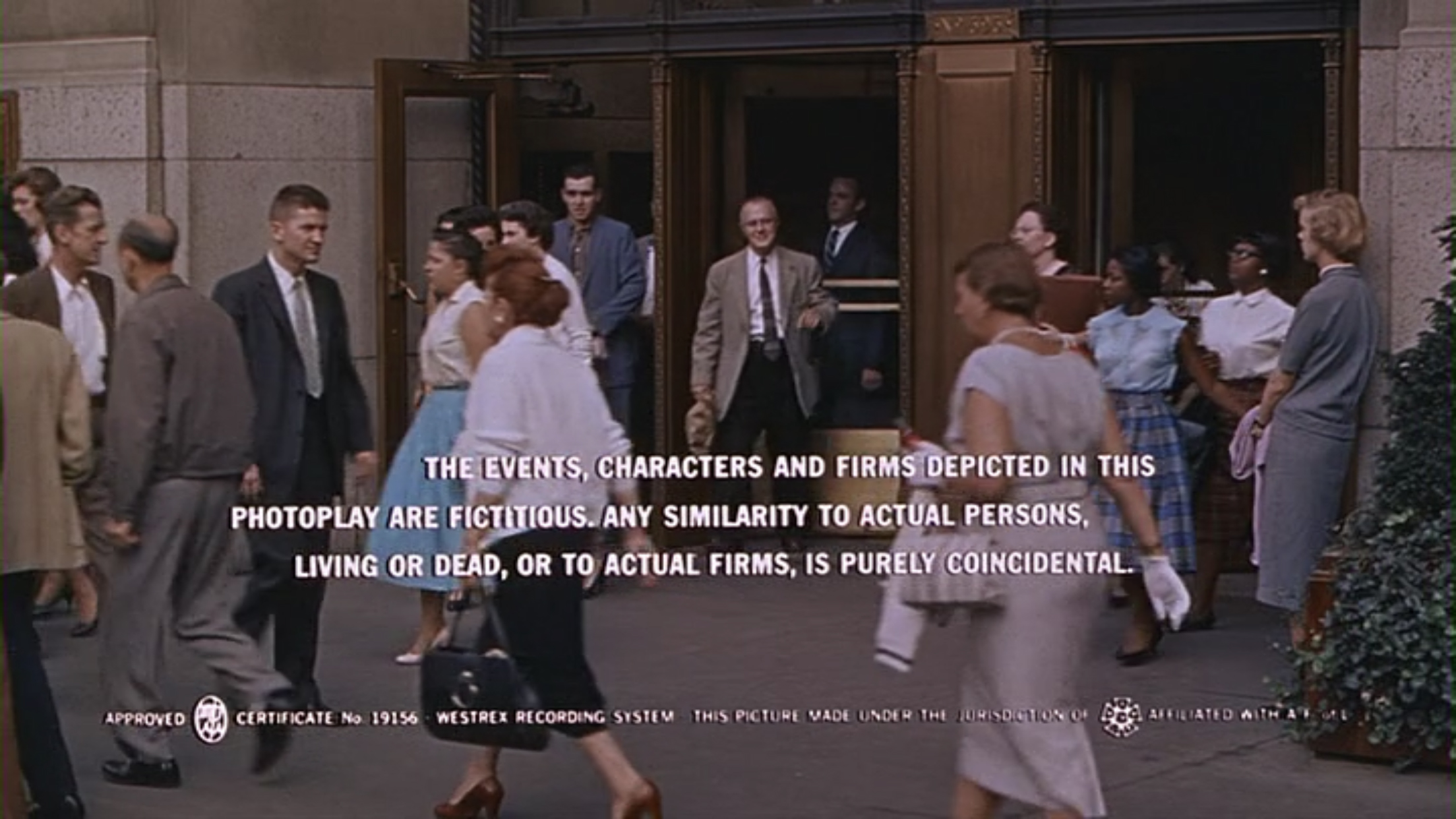
In fact, it was the people in the scene that helped me narrow down the type of place it could be. While the brass doors looked like something you’d see at an office, the eclectic group of folks exiting the building indicated they weren’t all office workers. My next thought was maybe it was a department store since the doors resembled the ones at Macy’s in Herald Square. But I rejected that idea, too, because no one was carrying any shopping bags. That left me with one last idea — that there was a subway entrance inside the building, which would explain the high volume of foot traffic.
As I began searching for Midtown buildings with a subway entrance in its lobby, Blakeslee had stumbled upon a valuable clue of his own. While watching an HD version of the movie on his big screen TV, he noticed a set of numbers on a brass plate above the entrance which he assumed was an address.
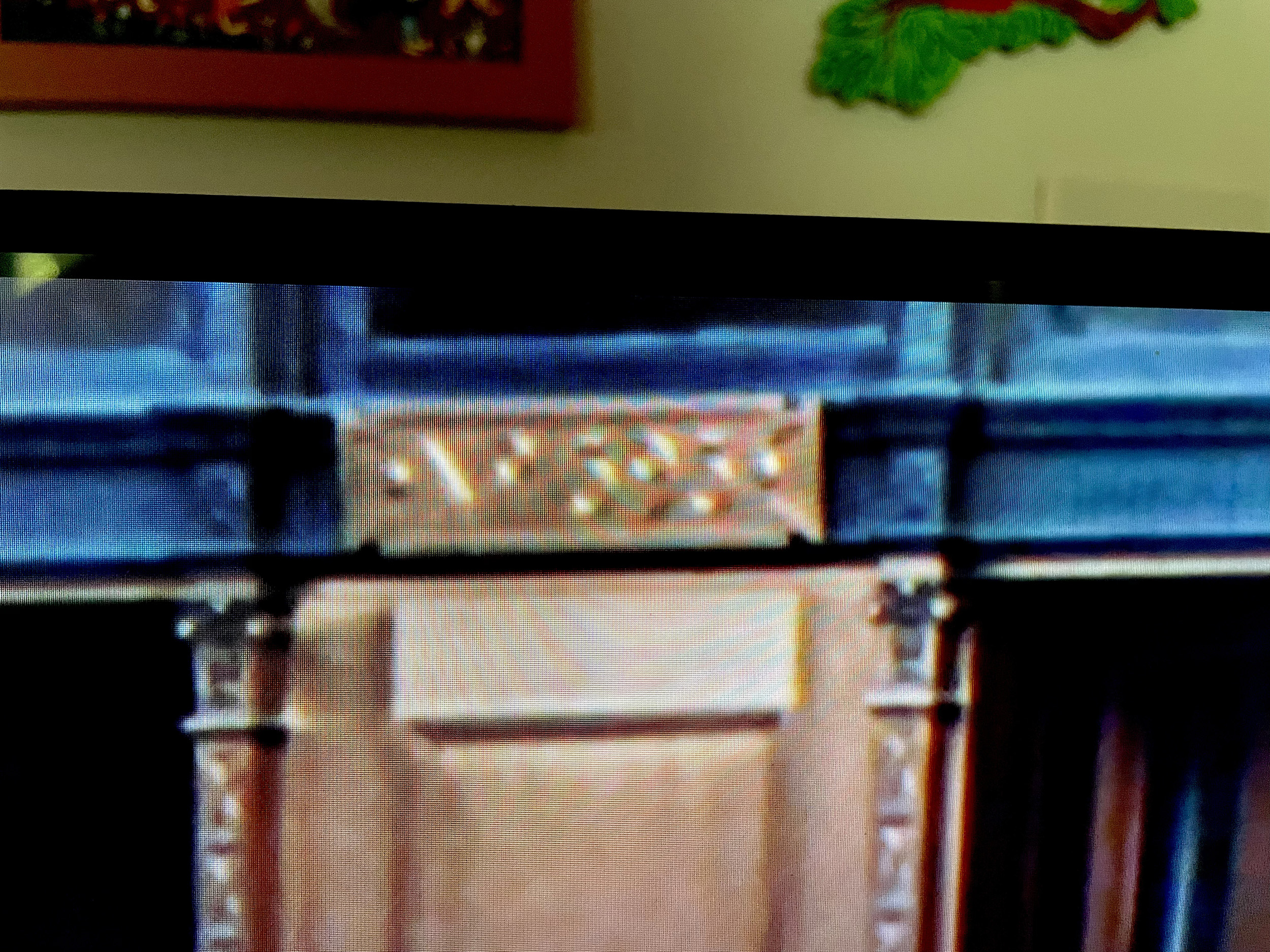
Only problem was, we weren’t exactly sure what the numbers were, but it looked like it said “no. 595.” And with a number in the high 500s, it seemed unlikely that it was a cross-street address, so all we had to do was check out any 595 building on an avenue. Just the same, after hours of rummaging around the internet, neither one of us found any good leads.
Then, after taking a long break from this movie, I decided to relook at the address, considering whether we incorrectly interpreted the numbers. Maybe one or both of those 5s was actually a 3. So then I started a new hunt for any midtown structure with a combination of those numbers — 395, 593, or 393. I began this new pursuit with the aid of Google Street View, but of course, if I came across anything that looked like it was built post-1959, I’d look up the address in the 1940 tax photos to see what used to be there.
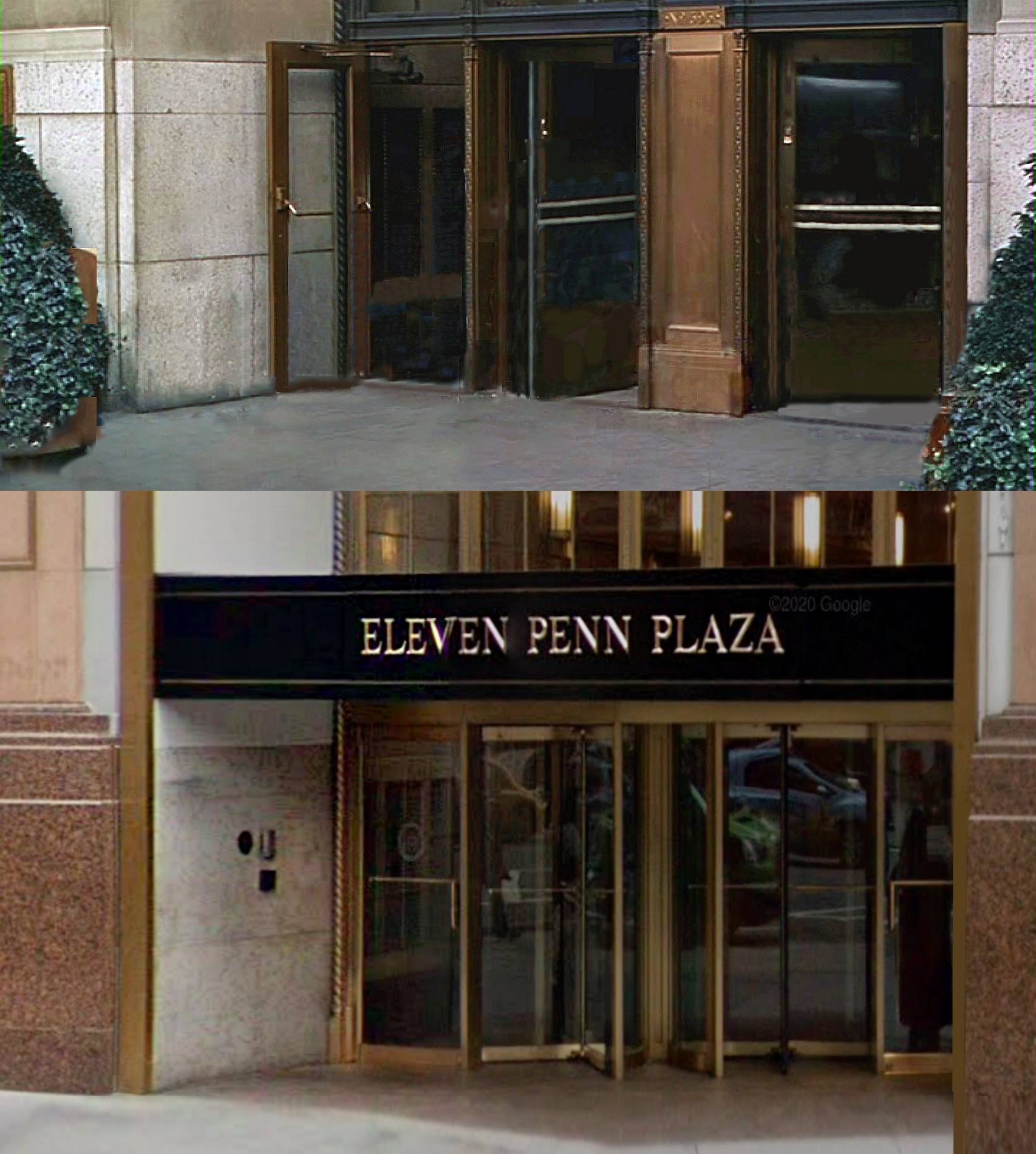
After an hour or so of looking, I landed on something that looked hopeful — 393 Seventh Avenue (renamed 11 Penn plaza). Best thing about it, the building is located across from Penn Station, making it a reasonable candidate for having a subway entrance in its lobby. Upon inspection, I could see the basic layout of the building’s entrances were similar to the movie, but they weren’t perfect matches. Plus, the granite panels next to them were a darker shade. Yet, I knew these were plausible changes that could’ve happened between then and now, so I made a plan to investigate things further after I exhausted all other possible locations.
Coincidently, at the same time I was doing this, a reader named Ed wrote in to suggest 393 Seventh Avenue as the filming location, too, making me think we were both onto something. So instead of looking at other buildings, I went back and focused all my attention on Seventh Avenue.
Shortly after I took a closer look, I started feeling really confident that I had found the right place, spotting several things that lined-up nicely. But the real clincher came when I finally went to the location in person and took some detailed pictures of the entrance.
Despite the building receiving some modifications over the decades, the side granite panels are the same ones from 1958, and all the specs and imperfections are still there today.
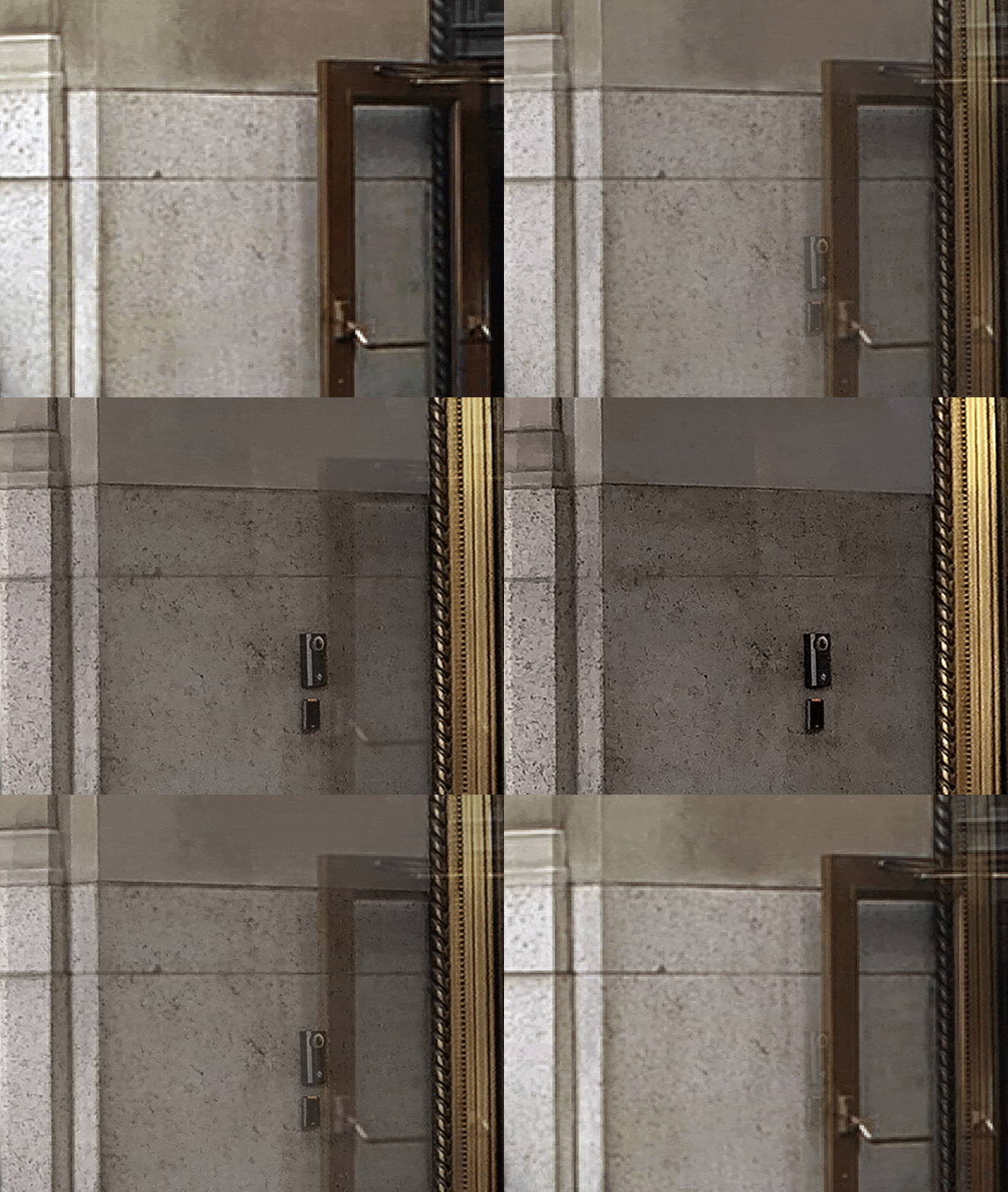
While it’s hard to tell from my photos, when I visited 393 Seventh Avenue a few months ago, it was covered in scaffolding, making me worried that it was being prepped for demolition. But thankfully, it appears the building was just getting repaired.
That being said, the situation can always change, as seen with its southern neighbor, the Hotel Pennsylvania. The owners of the historic building went through years of back and forth between preserving or demolishing, before finally deciding to tear it down. It’s a dire reminder that nothing is safe in New York.
Opening Credits – Hitchcock Cameo
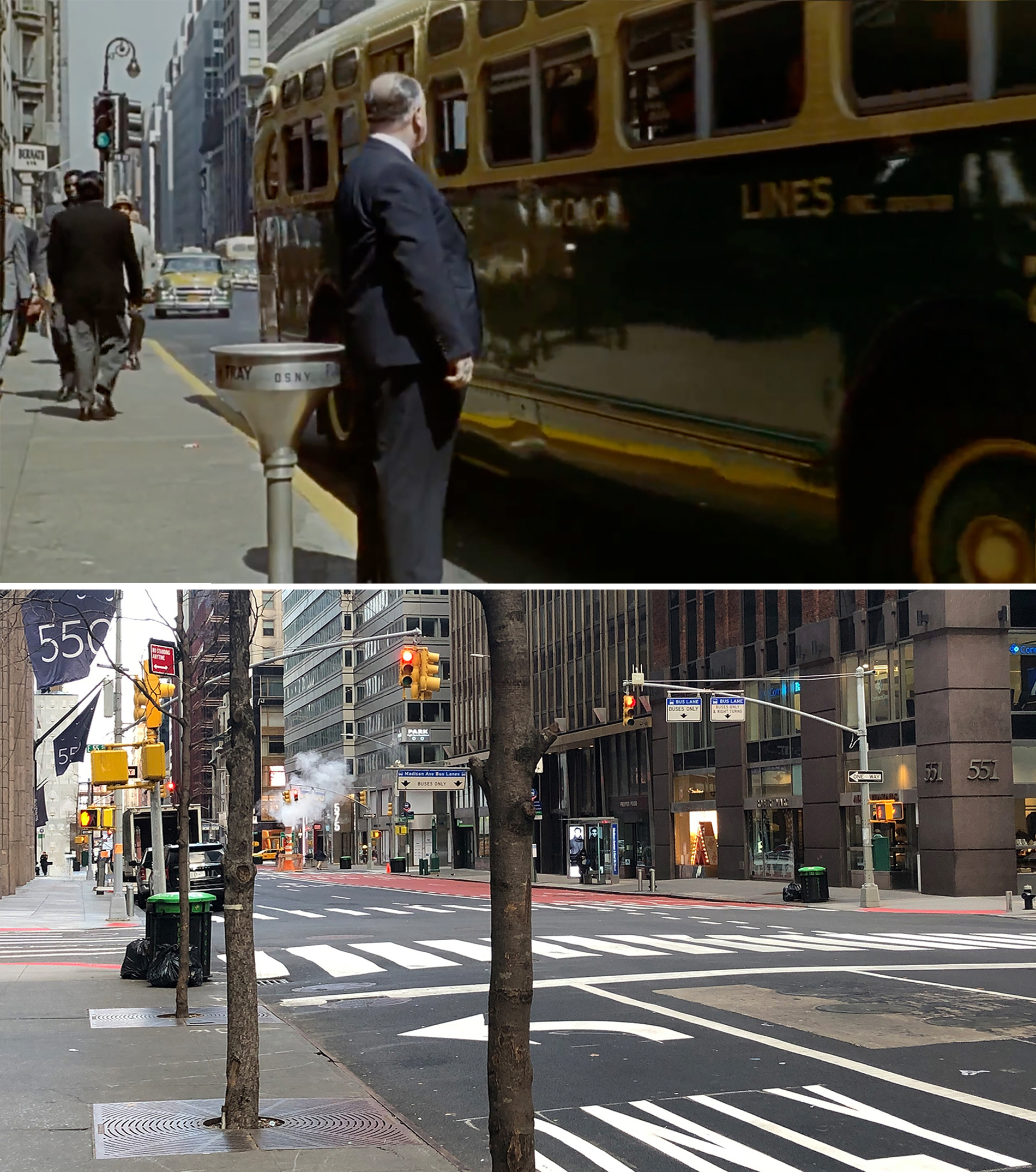
First of all, I’d like to give credit to Nick Carr, who did a knockout job of finding/cataloguing a lot of these New York locations from North By Northwest back in 2012. However, along with the opening credits building, he missed the mark of the location of Hitchcock’s cameo, placing the action about ten blocks south of the real location.
For the longest time, I just assumed he was correct with his assessment, especially since he gave a very detailed explanation on his website as to how he ended up on Madison and E 45th Street.
Ironically, he prefaced his explanation with the statement, “Every NY locations book I looked in had this wrong.” Then from there, he went on about shadows, illegible street signs, unique bay windows, and how most avenues used to be two-way back in the 1950s. However, the thing that got him to Madison Avenue was a pair of skyscrapers in the far background, both of which featured a sort of step-up design.
He made it sound that this was a unique feature, but actually, a lot of mid-century office buildings had that step design. This was to comply with a 1916 zoning law that required buildings to “set back” as they rose to certain heights in order to allow sunlight to reach the street and lower stories.
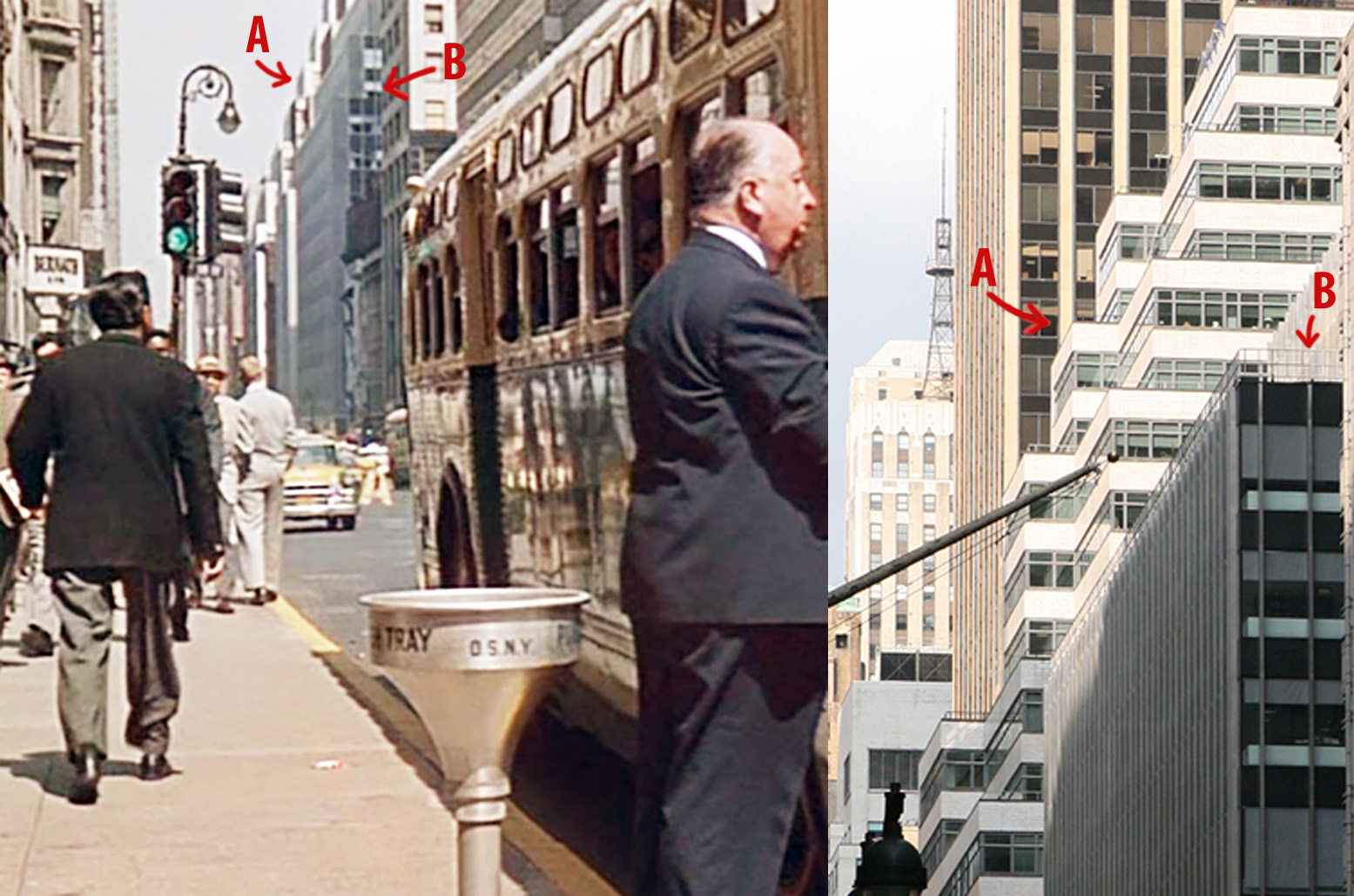
Amazingly, even though Carr mistook one pair of step buildings for another, it still got him on the correct side of the correct avenue — just off by a half a mile.
I first suspected he was off when I went to take a modern photo last month and discovered some unaccountable inconsistencies. In particular, if the scene really took place just south of E 45th, you’d see behind the bus, part of the Roosevelt Hotel (which hasn’t changed in appearance since it was established in 1924). But instead, there’s a more modern-looking building with distinct horizontal bands.
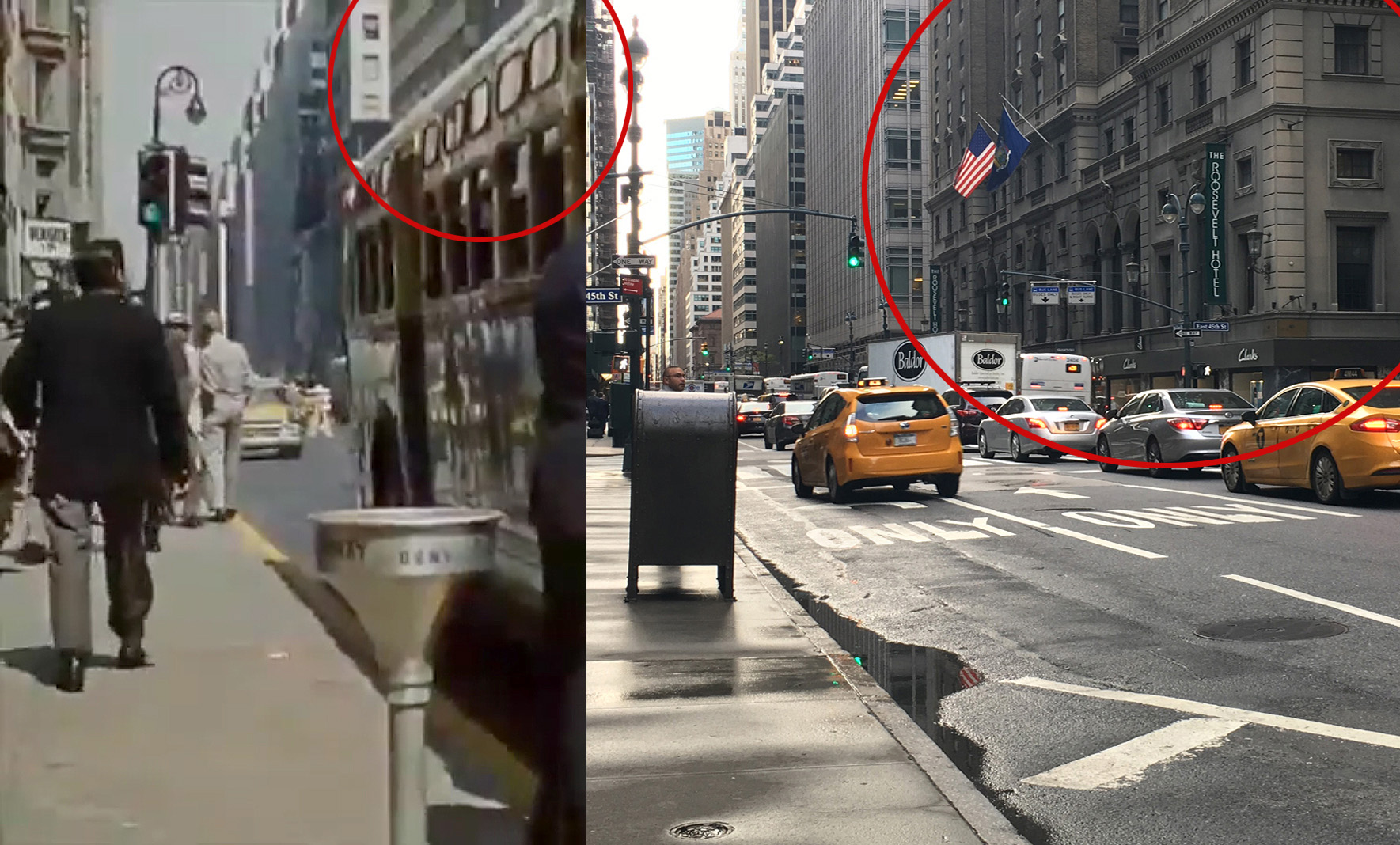
So I began my own journey in search of any matching buildings. Fortunately, there are a couple great websites that make it easy to do a nice organized search. Both of these websites use maps of NYC, allowing you to click anywhere on it and see vintage photos of that spot. One site links you to pics from the NYPL archives (most of which are from the turn of the last century) and the other site links you to tax photos taken circa 1940.
Before I even started, I was already pretty sure the action was on Madison, based on the skyscrapers, the bus and the style of lamppost seen in the movie. At first, I thought the big ashtray could’ve been a clue, but apparently they were located all over the city during this period.
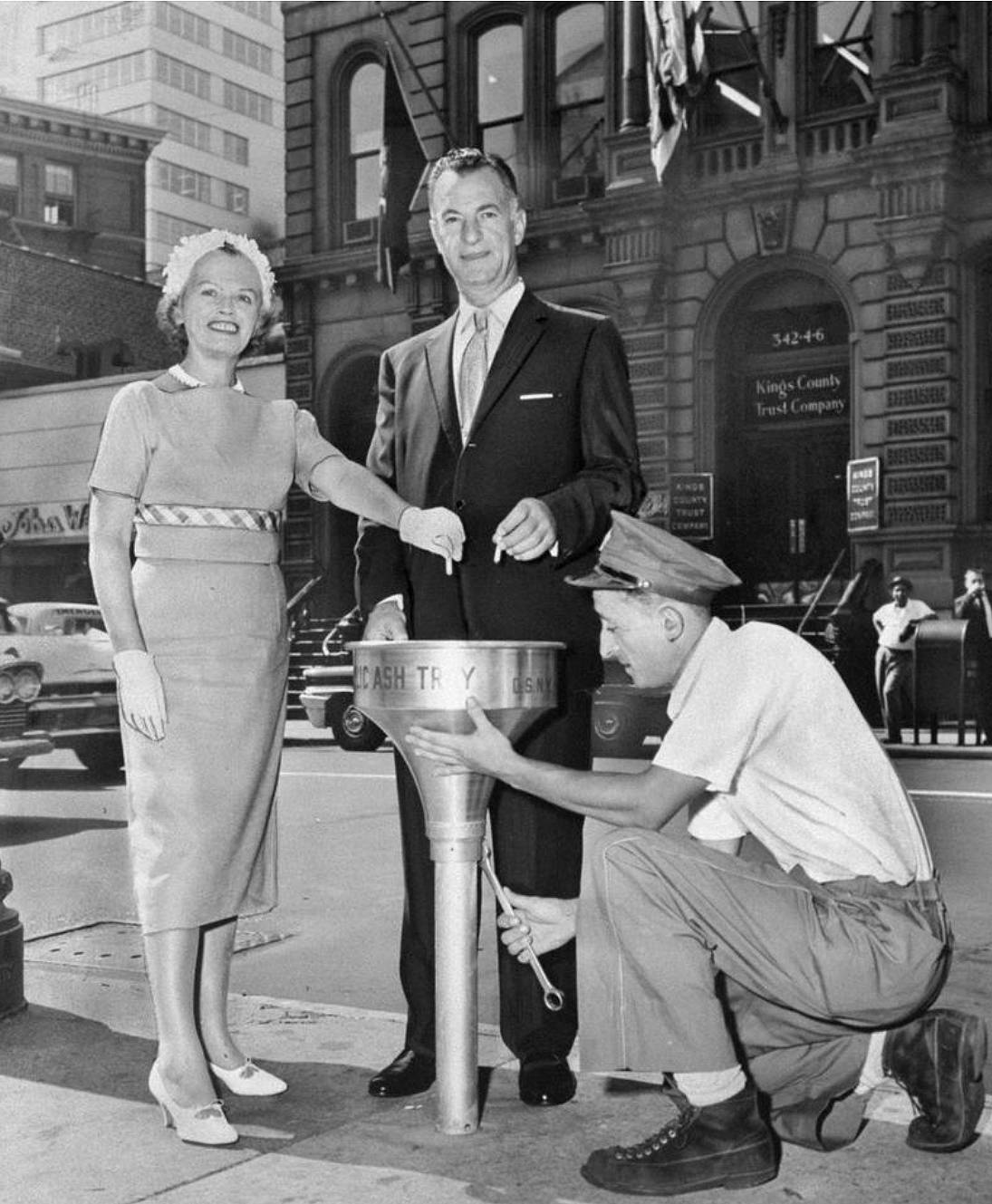
These cigarette receptacles could even be found in Brooklyn, as seen in this black and white photo above, taken in front of the old Kings County Trust Company building on Fulton Street.
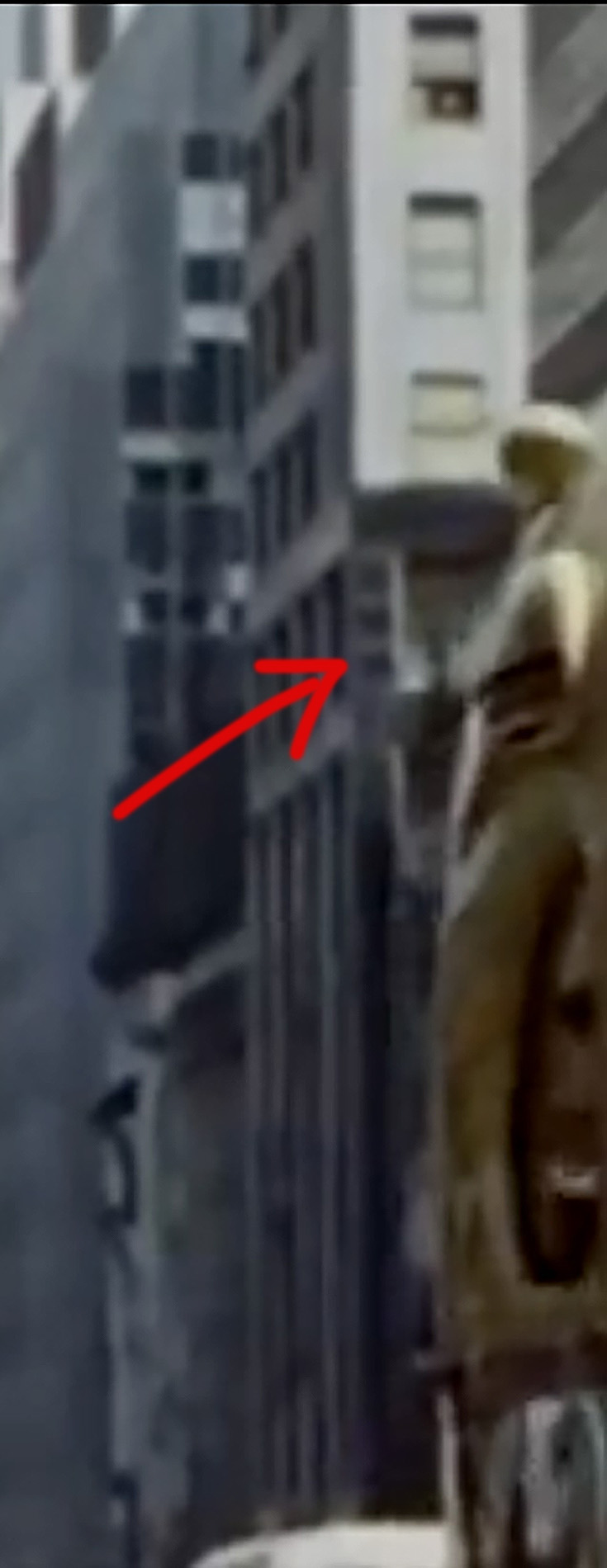
So, the first thing I directed my attention to (and eventually found) was a building about one block north of Hitch, showing three upper windows on a light background with the lower windows on a darker background. You can also see a few horizontal lines next to the window on the dark background, giving me an “Art Deco” vibe.
So I did a Google search for Art Deco buildings on Madison Avenue and soon found an article entitled, “The 1929 Art Deco Fuller Building — Madison Avenue and 57th Street” on the always-fascinating Daytonian in Manhattan website. And once I laid eyes on a photo of the extant skyscraper, I spotted the same horizontal lines next to a corner window and became pretty confident I found a match.
From there, I looked at the buildings to the north and south of the Fuller and was able to match more things up, including to my surprise, a few smaller buildings that have avoided the modern wrecking ball. I was even able to find an old tax photo that showed the building with those bay windows that appeared on the left side of the movie screen.
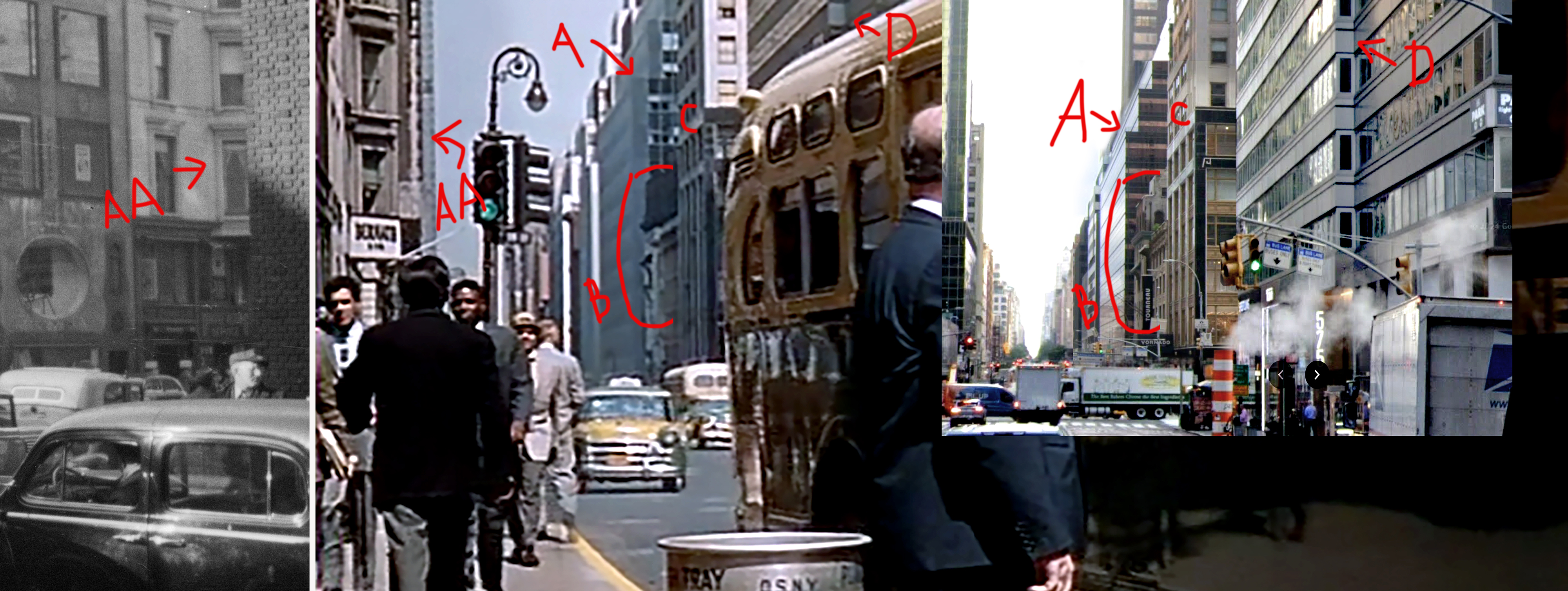
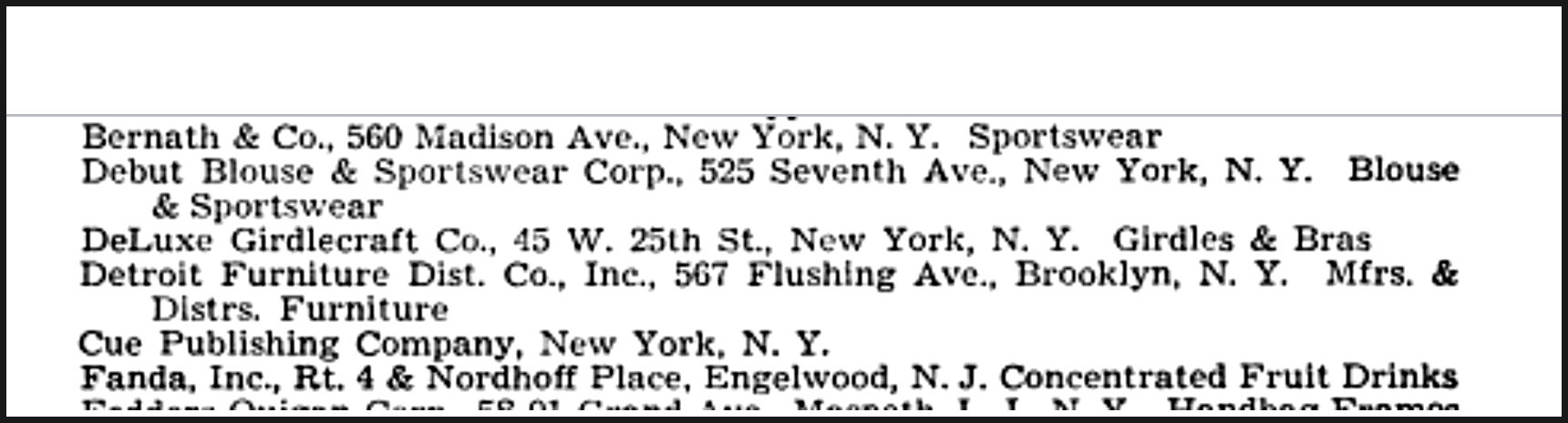
Then, to get a better sense of where Hitch was standing, I tried to figure out what that sign said on the left side of the movie frame. After a little digging around, I discovered a sportswear company called Bernath located at 560 Madison — placing it just north of E 55th Street. The sign was too blurry to read before, but once I found the company name in a 1955 directory, I could tell the letters were the same.
So with Bernath at no 560, that would place Hitch at around 540, which is just south of 55th Street.
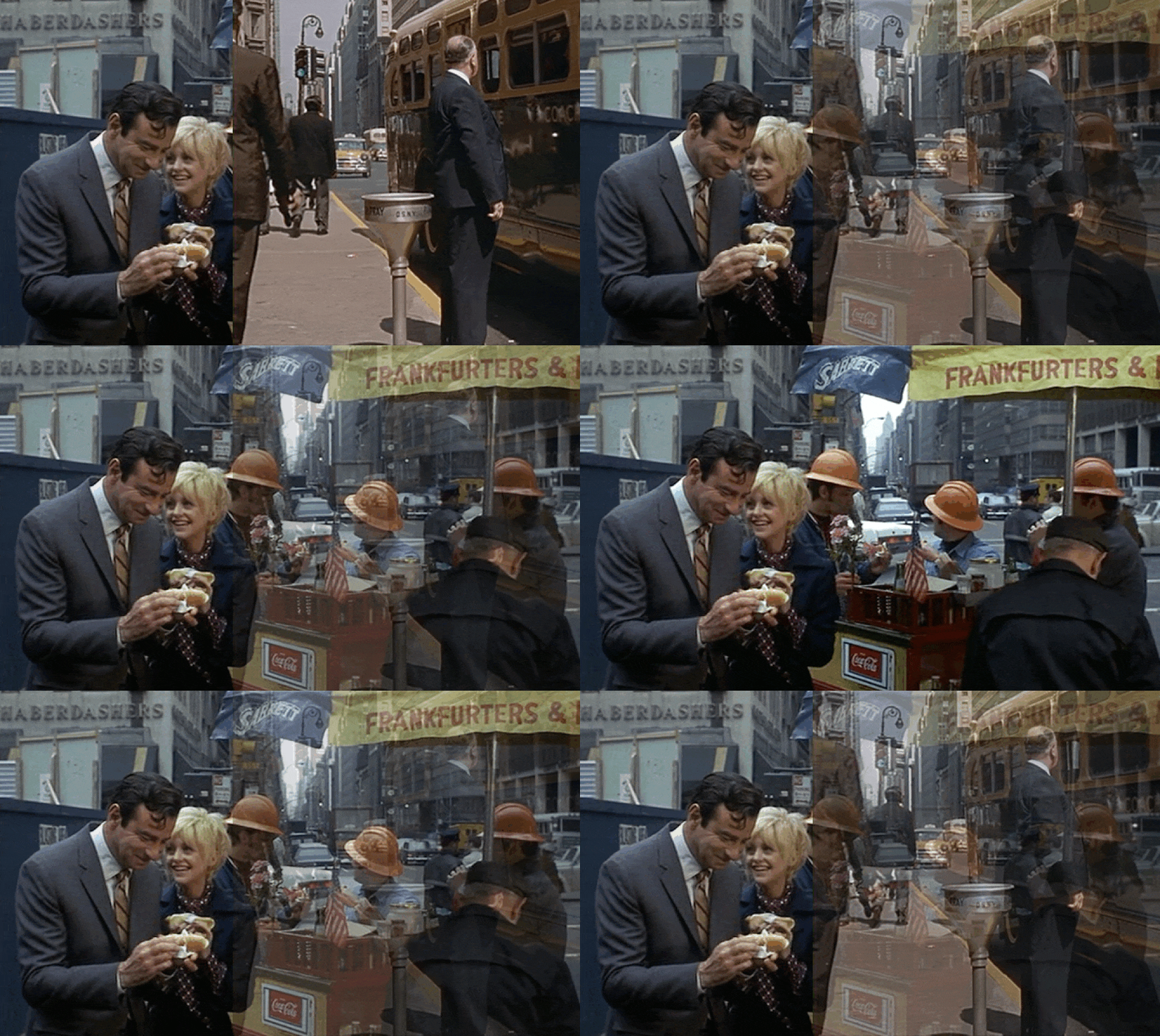
Coincidentally, the same corner would later be used in the 1969 film, Cactus Flower, where Walter Matthau and Goldie Hawn eat hotdogs.
And I got to tell you, once I was 100% confident I found the right spot, I was pretty excited when I went there in person early one morning to take a modern photo.
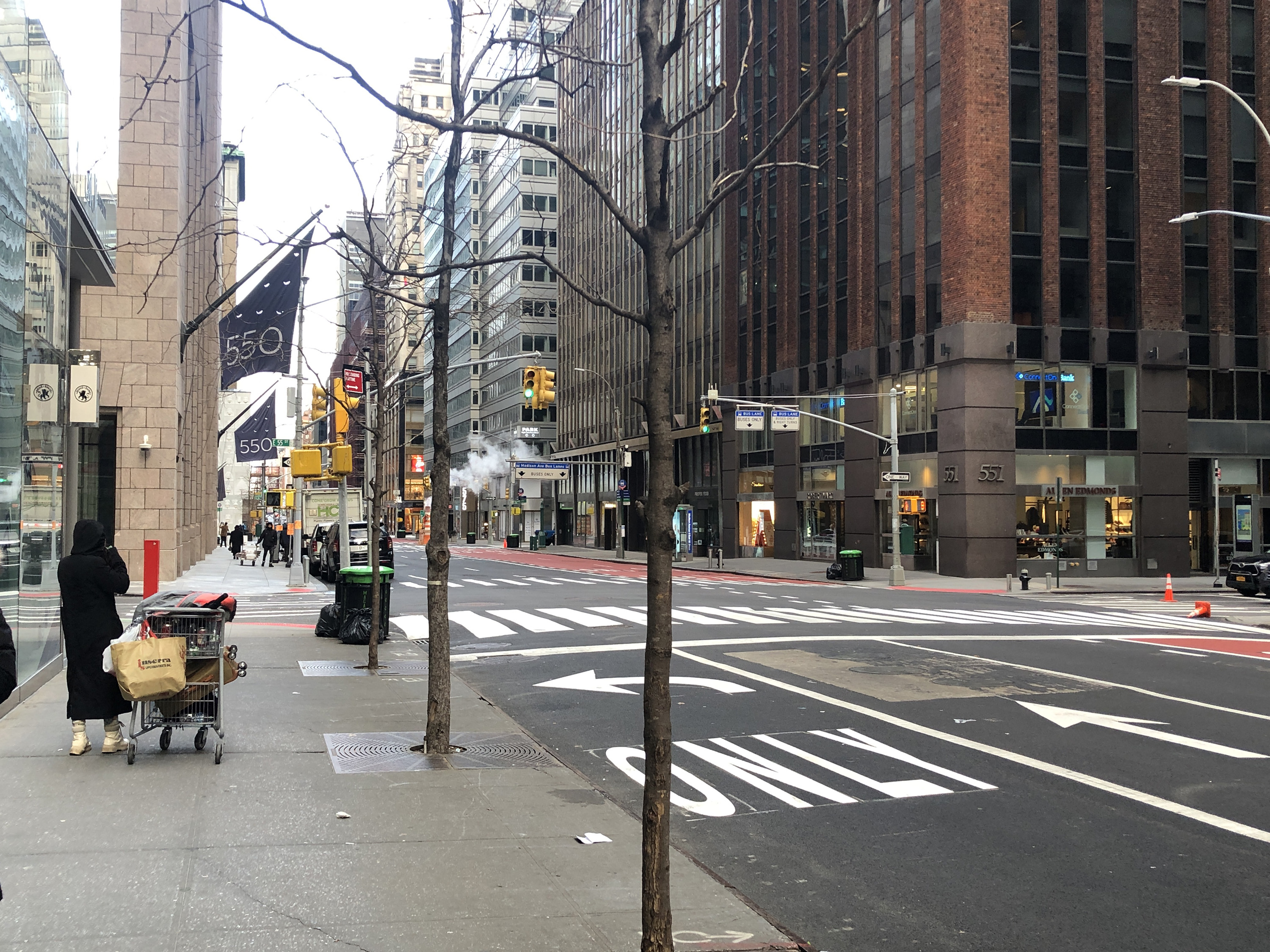
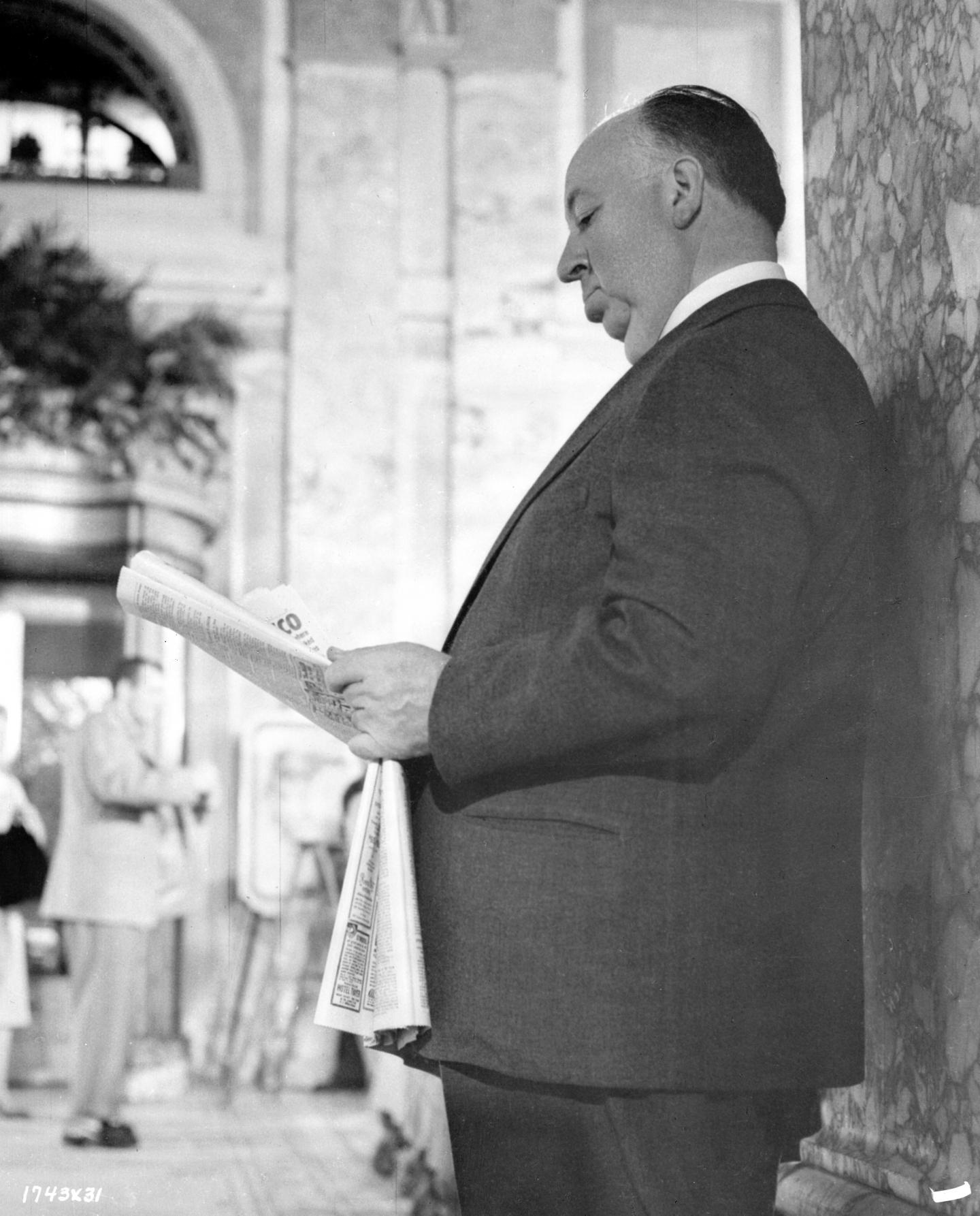
Normally, when I go to a location, I’m preoccupied with getting the camera angles right. But this time, I made sure to take a moment to appreciate standing exactly where Alfred Hitchcock made one of his most famous cameos over sixty-five years ago.
Thornhill’s Office
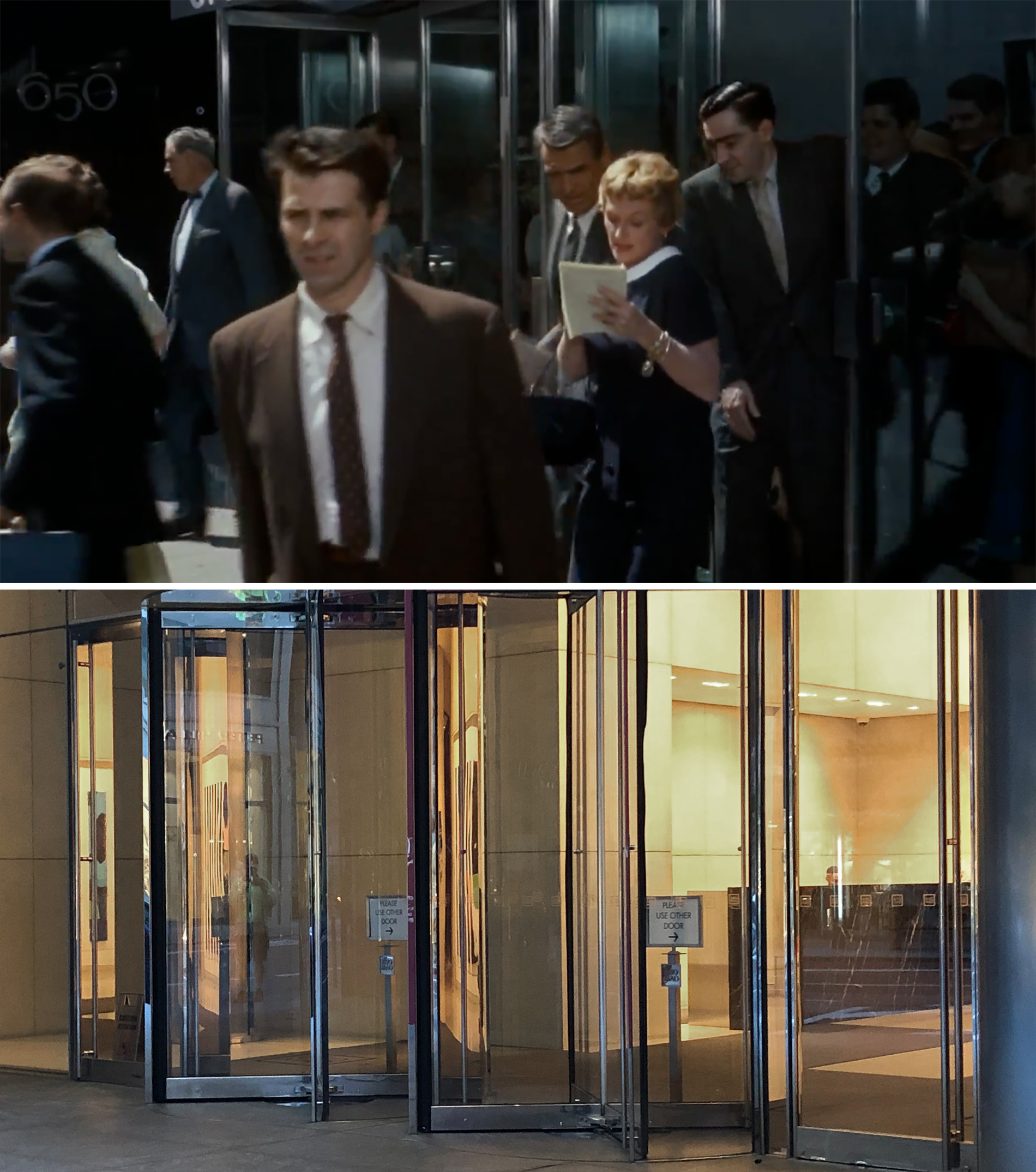
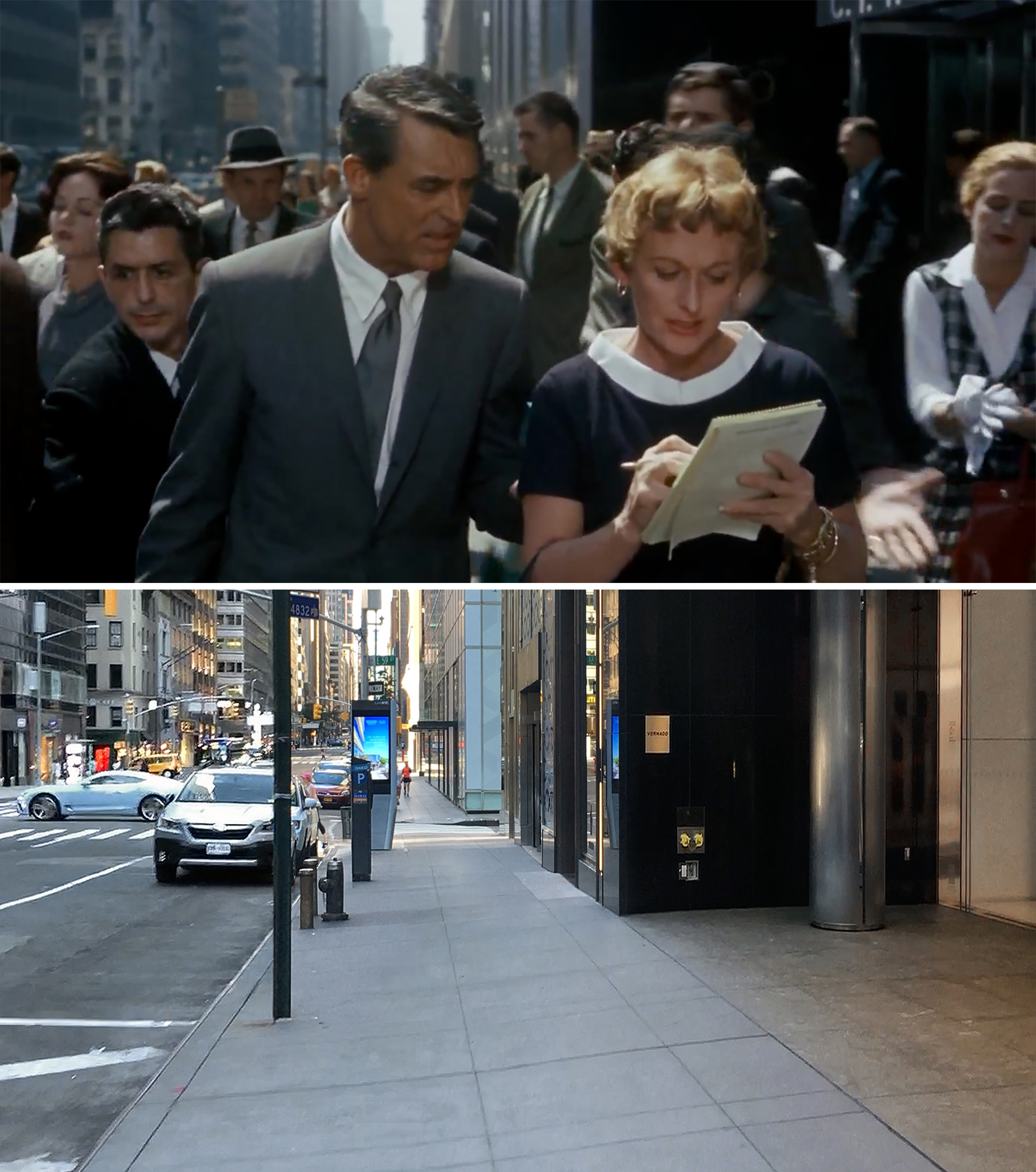
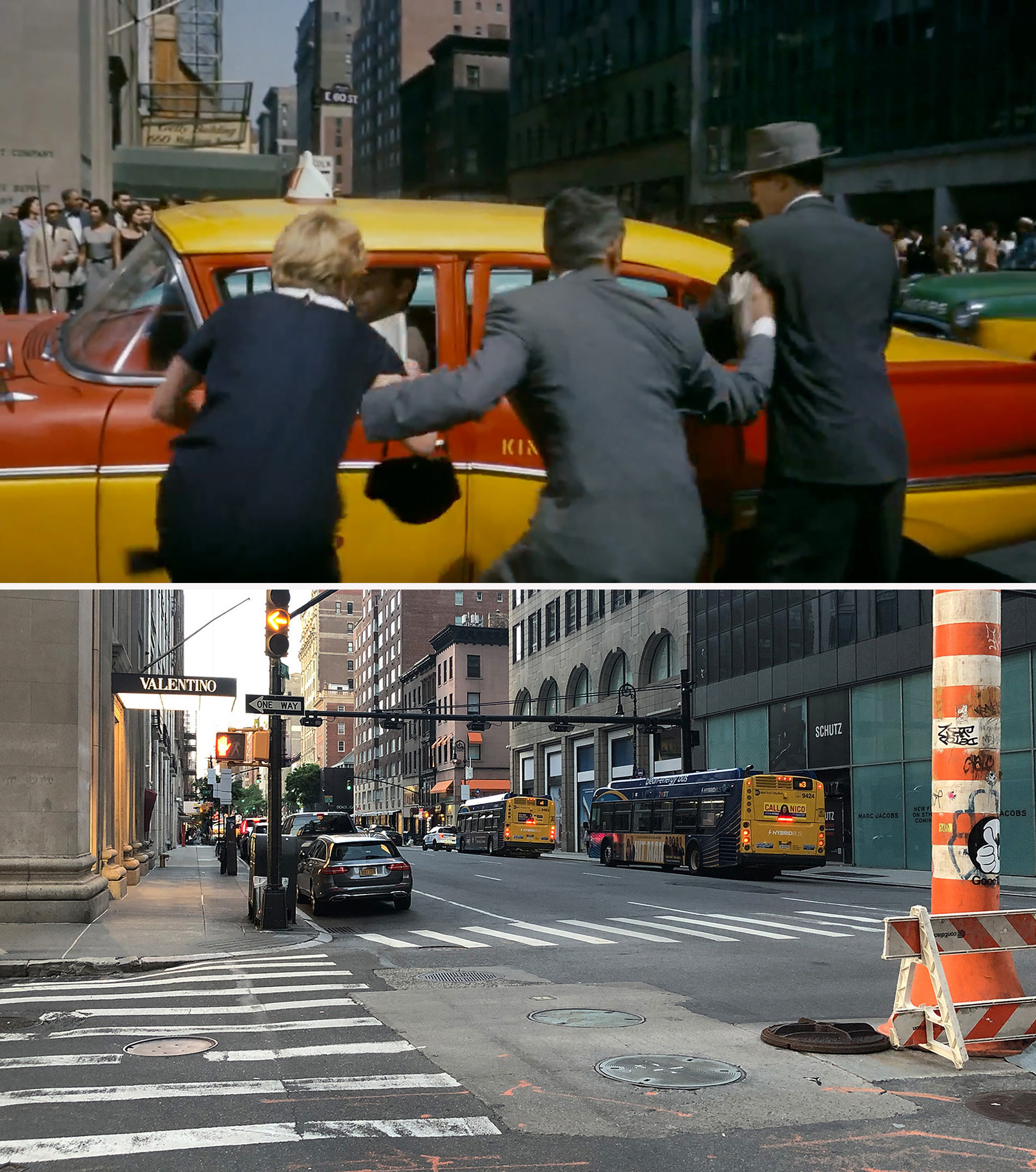
Pretty much the rest of these NYC filming locations were already identified on the ScoutingNY website, which again, was quite impressive for 2012.
The office lobby was naturally a set, but they did a good job of including rows of elevators that opened and closed. I’m not sure how accurate of a reproduction it was because the lobby today has been extensively renovated since 1958. In fact, the entire building has been extensively renovated, including the addition of 19 stories.
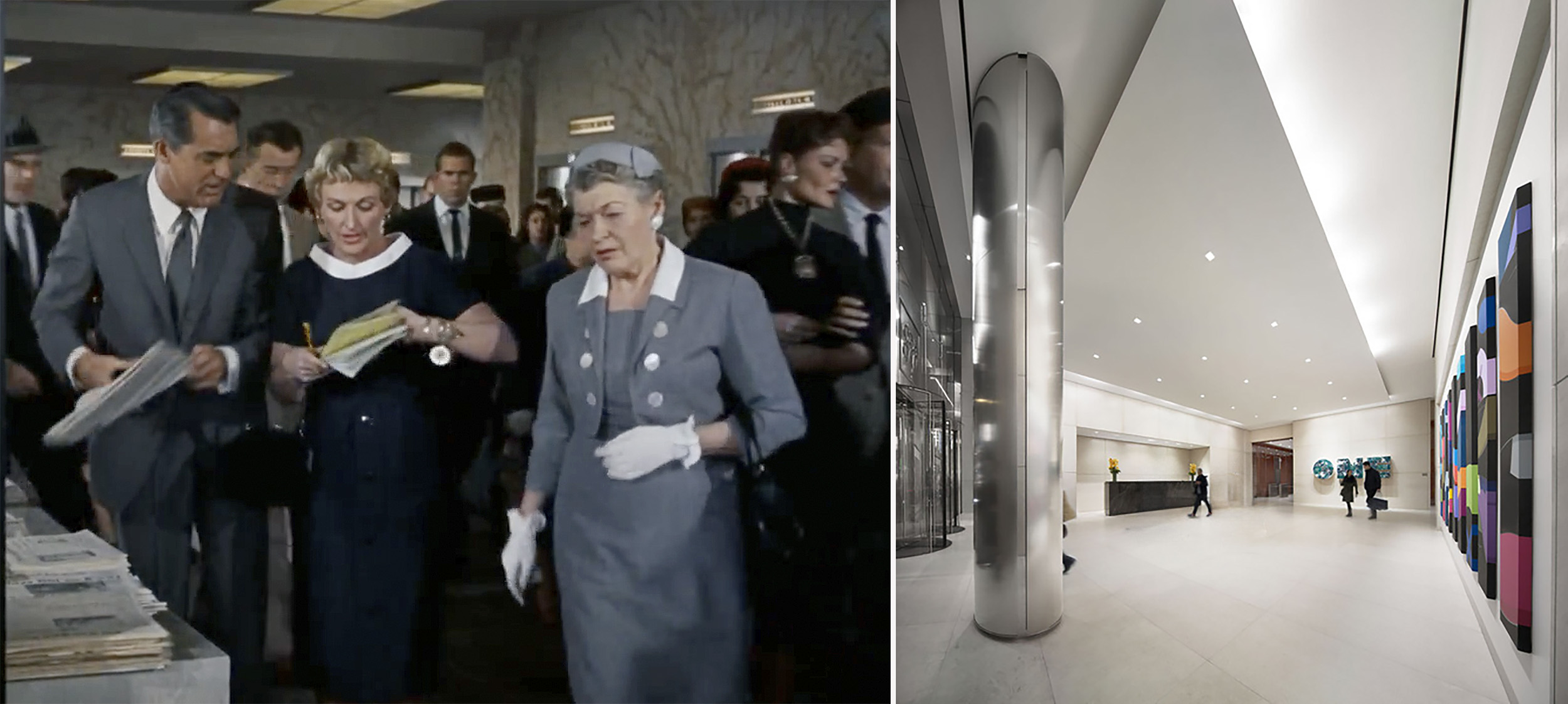
Once they exit the lobby, we get a brief moment on the actual streets of New York.
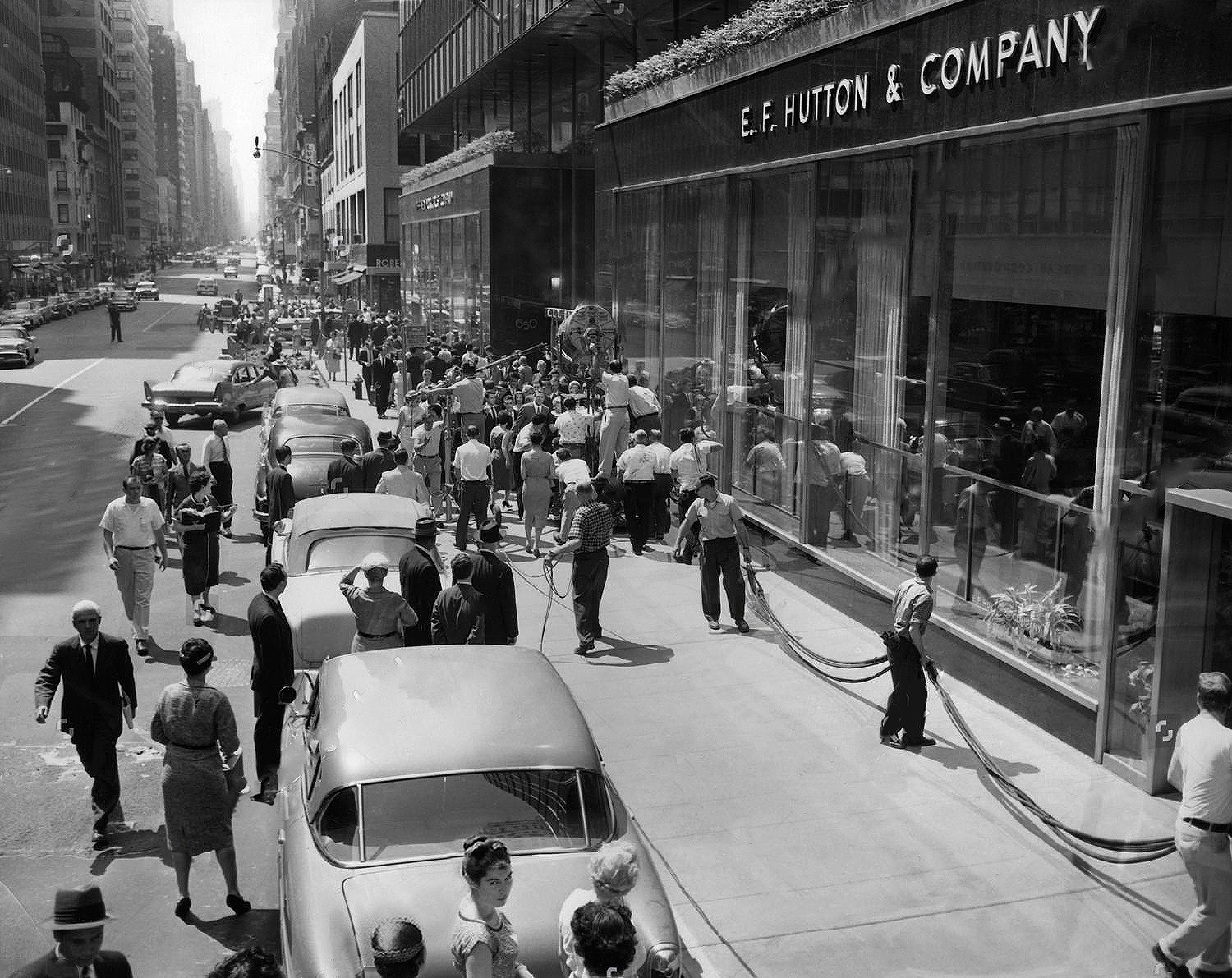
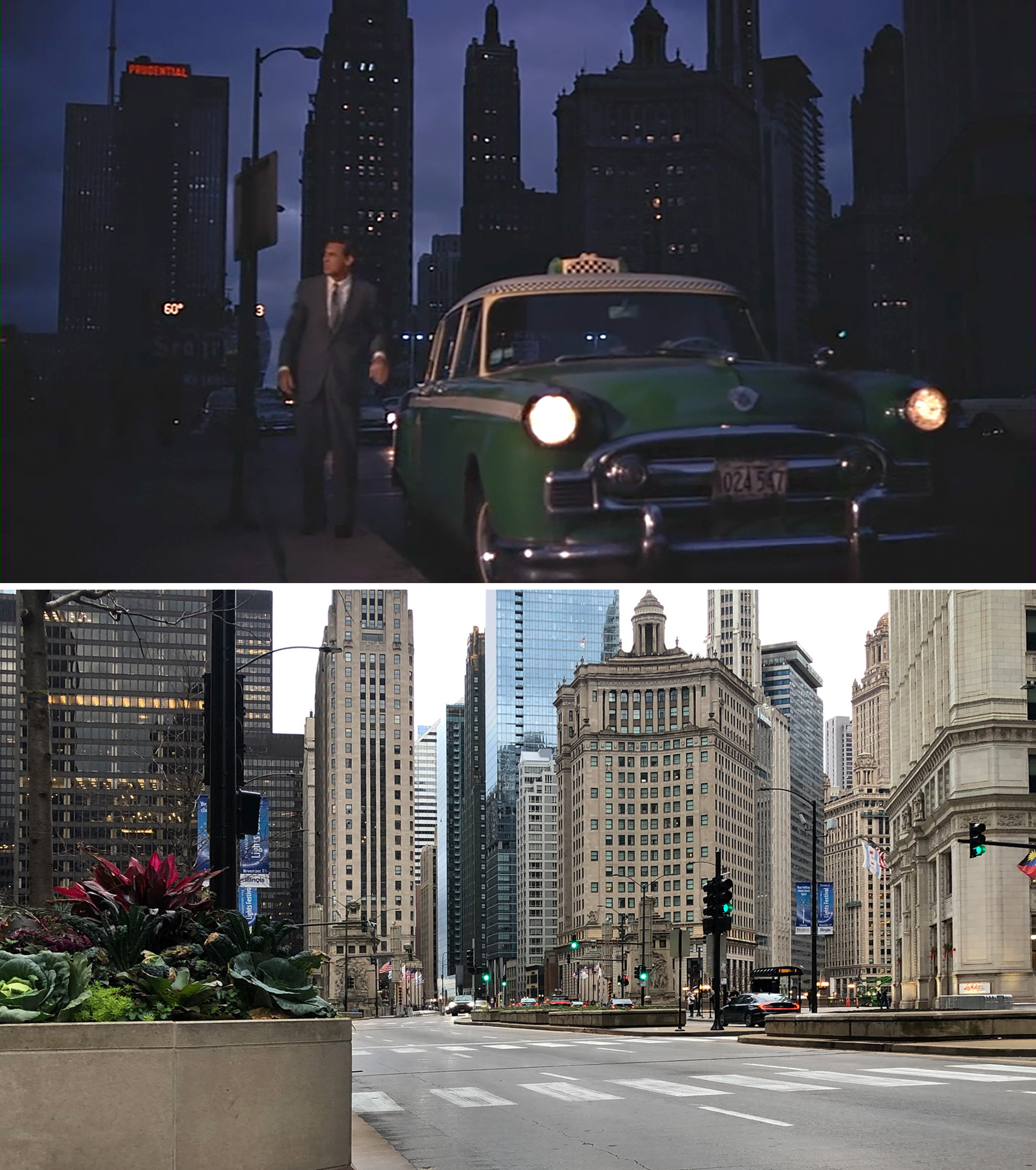
Even though 650 Madison is unrecognizable today, the background buildings on the left side of the second “then/now” image above are still around and relatively unchanged.
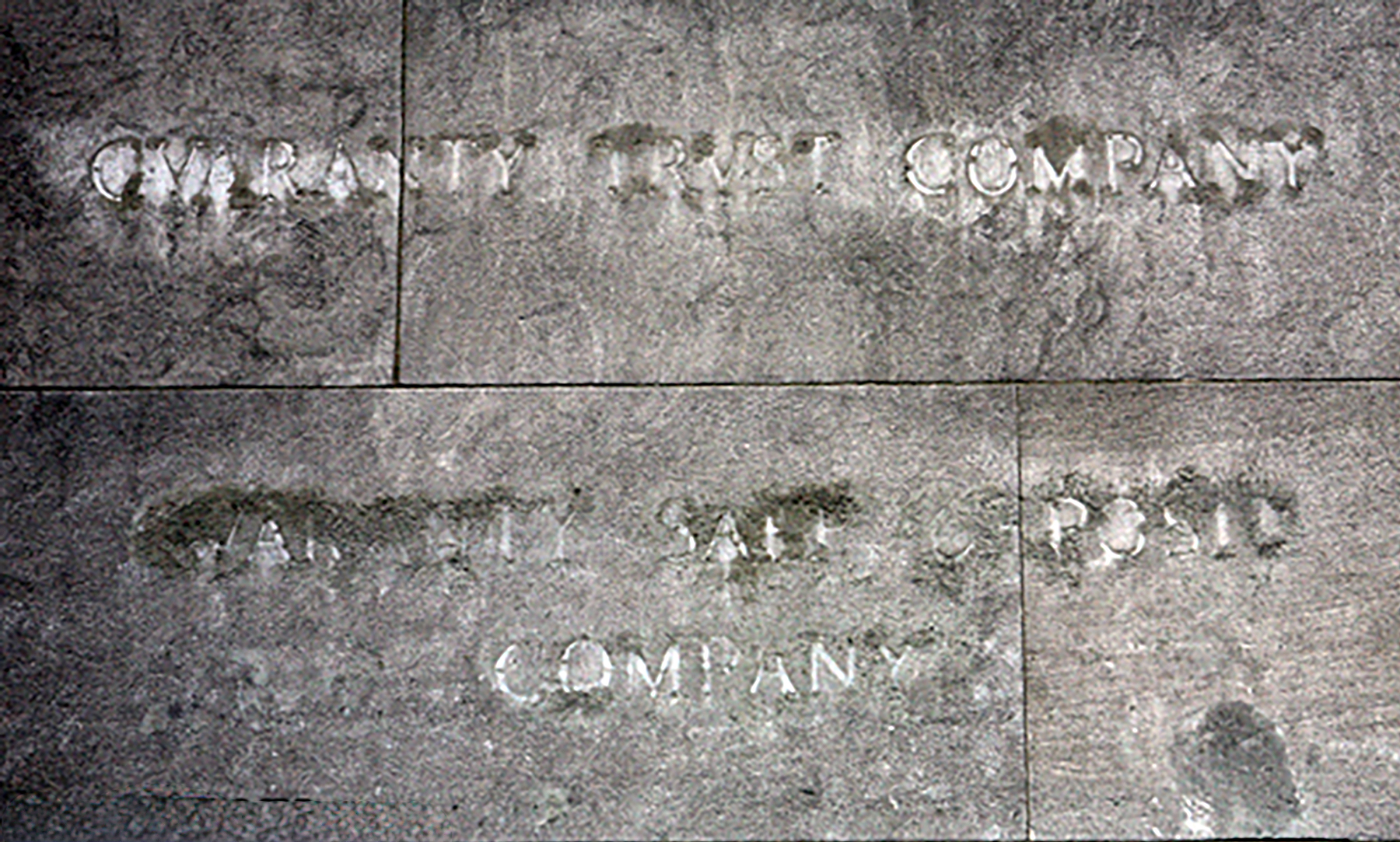
The same is true for a lot of the buildings in the reverse shot where they steal a cab. This includes the building on the corner of E 60th. In the film, you can see lettering on the building’s cornerstone, and even though the raised lettering is now gone, you can still make out the imprint left behind.
As mentioned on ScoutingNY, all the geography from Thornhill’s office to the Plaza Hotel makes logical sense. First, Thornhill and his secretary grab a cab at E 60th Street, right outside his 650 Madison office, and take it in the correct direction for the Plaza Hotel. Once inside the cab, the action switches to a soundstage in California, using a rear projection of New York City behind them. But the background plates weren’t of just random streets, they were of the precise trip from Madison Avenue to the Central Park South entrance of the Plaza.
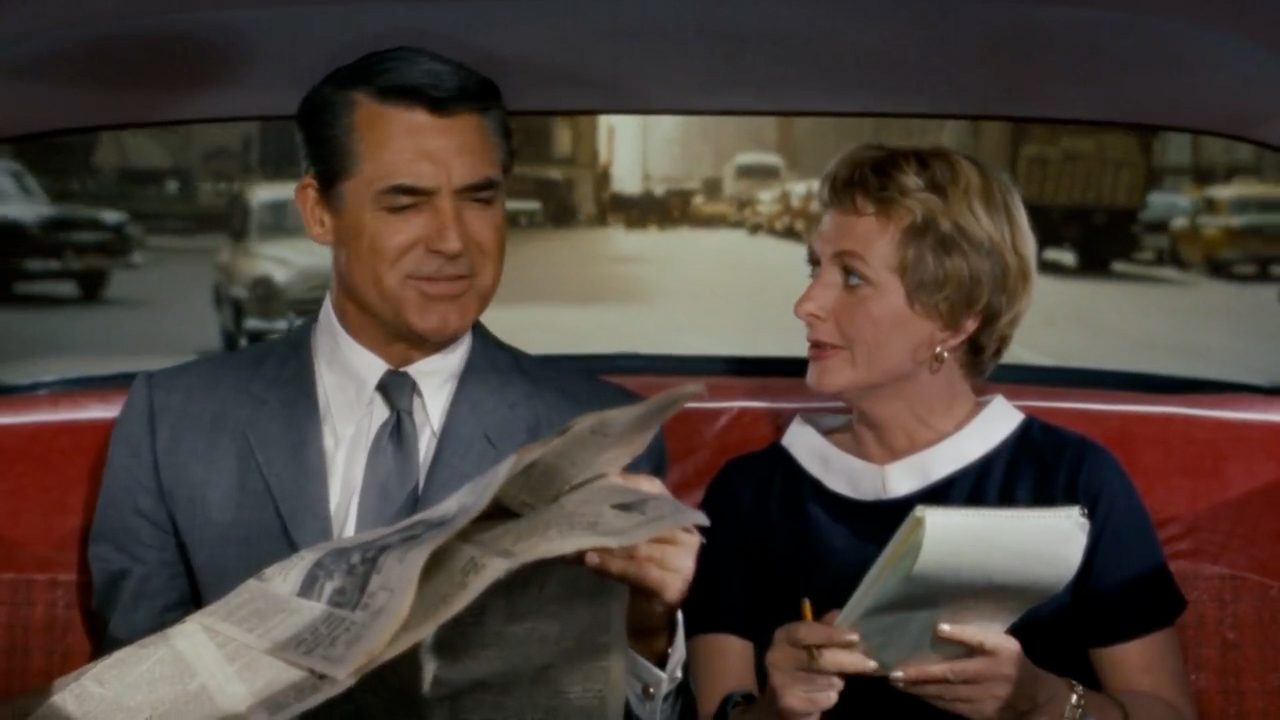
A stickler for details, Hitchcock even included a big U-turn in front of the hotel so it would match the position of the taxicab when they switched back to the on-location footage.
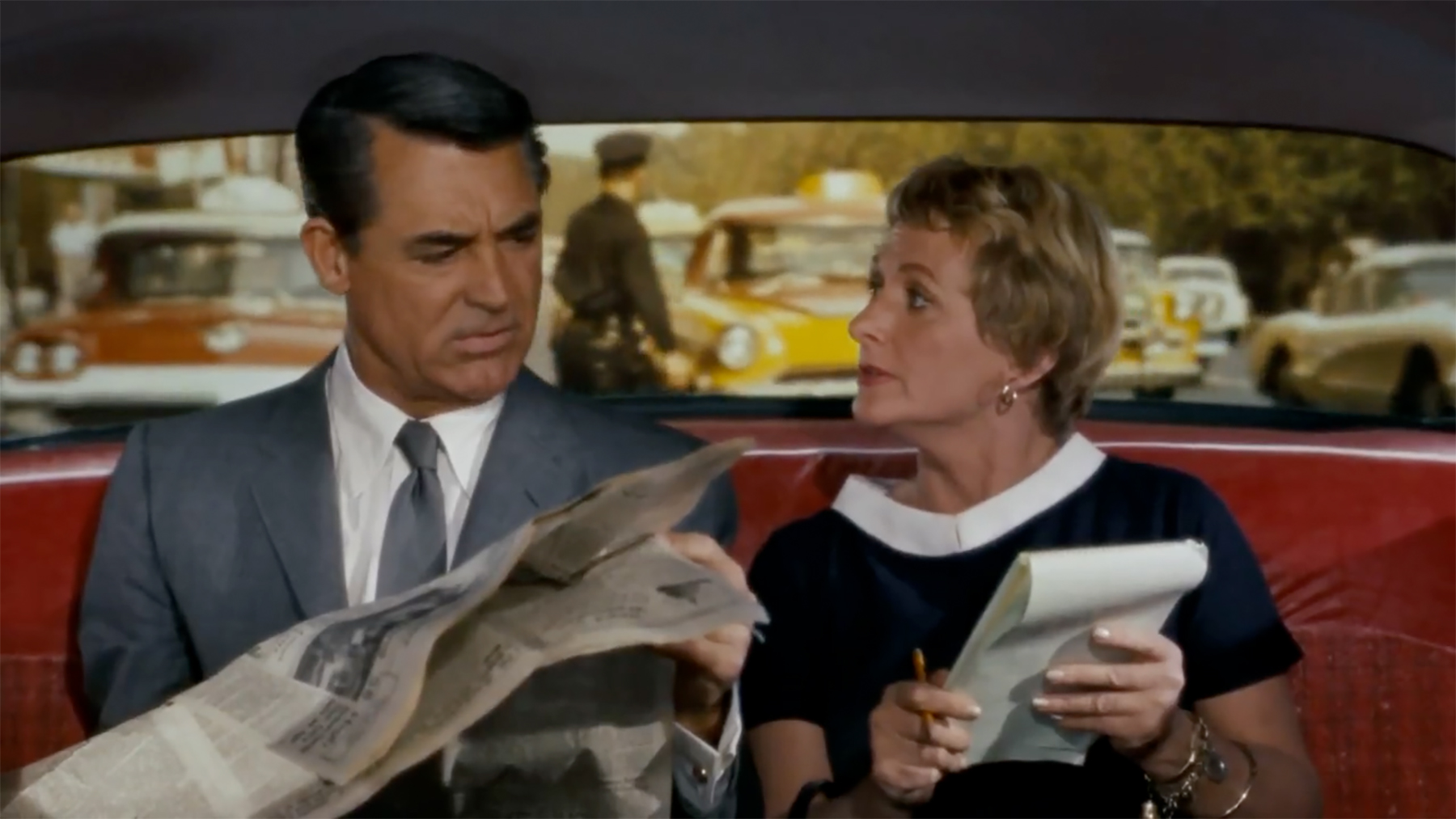
In the background plate, you can actually see a hired traffic cop holding oncoming traffic as they make the U-turn on Central Park South.
The Plaza Hotel
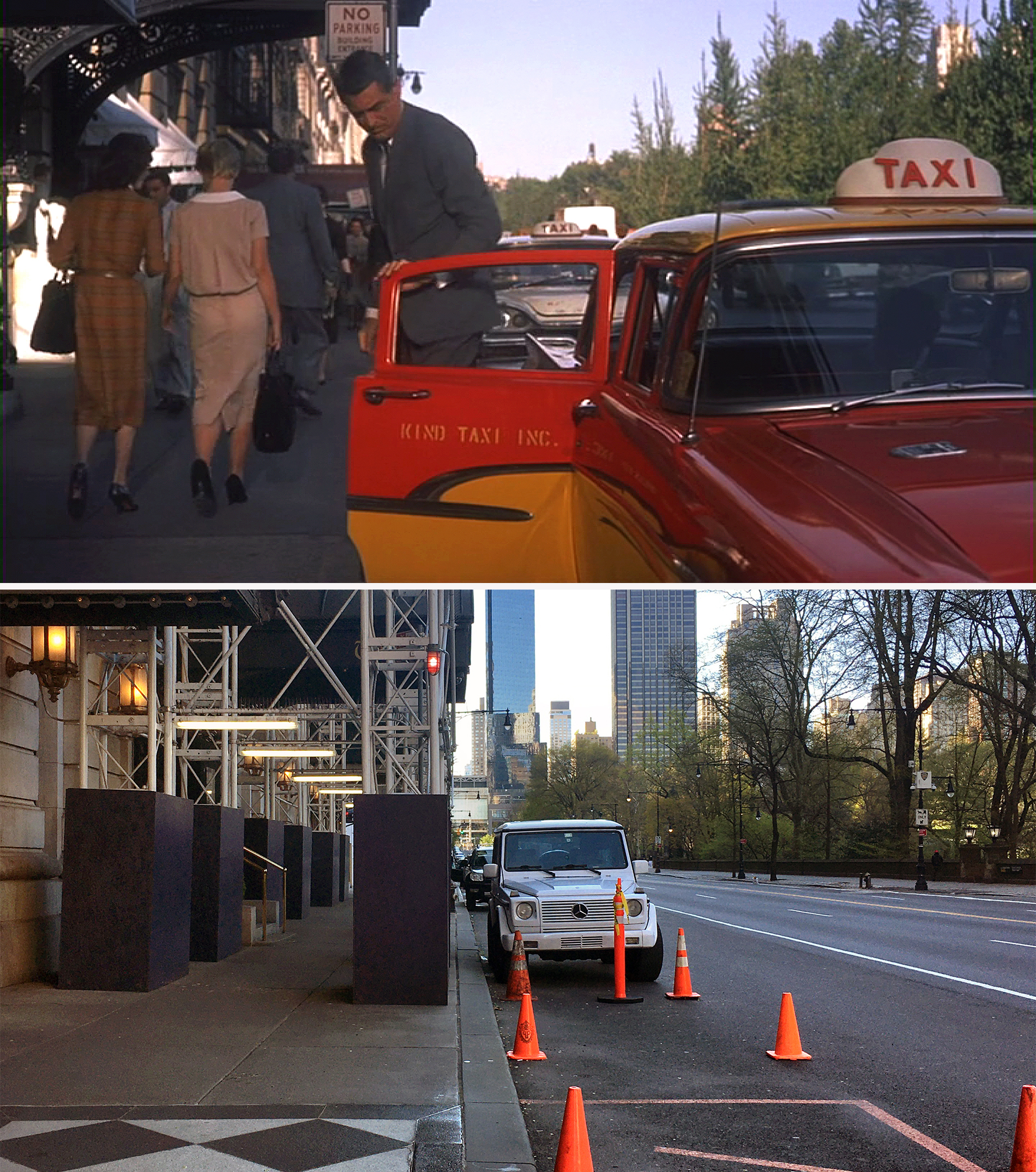
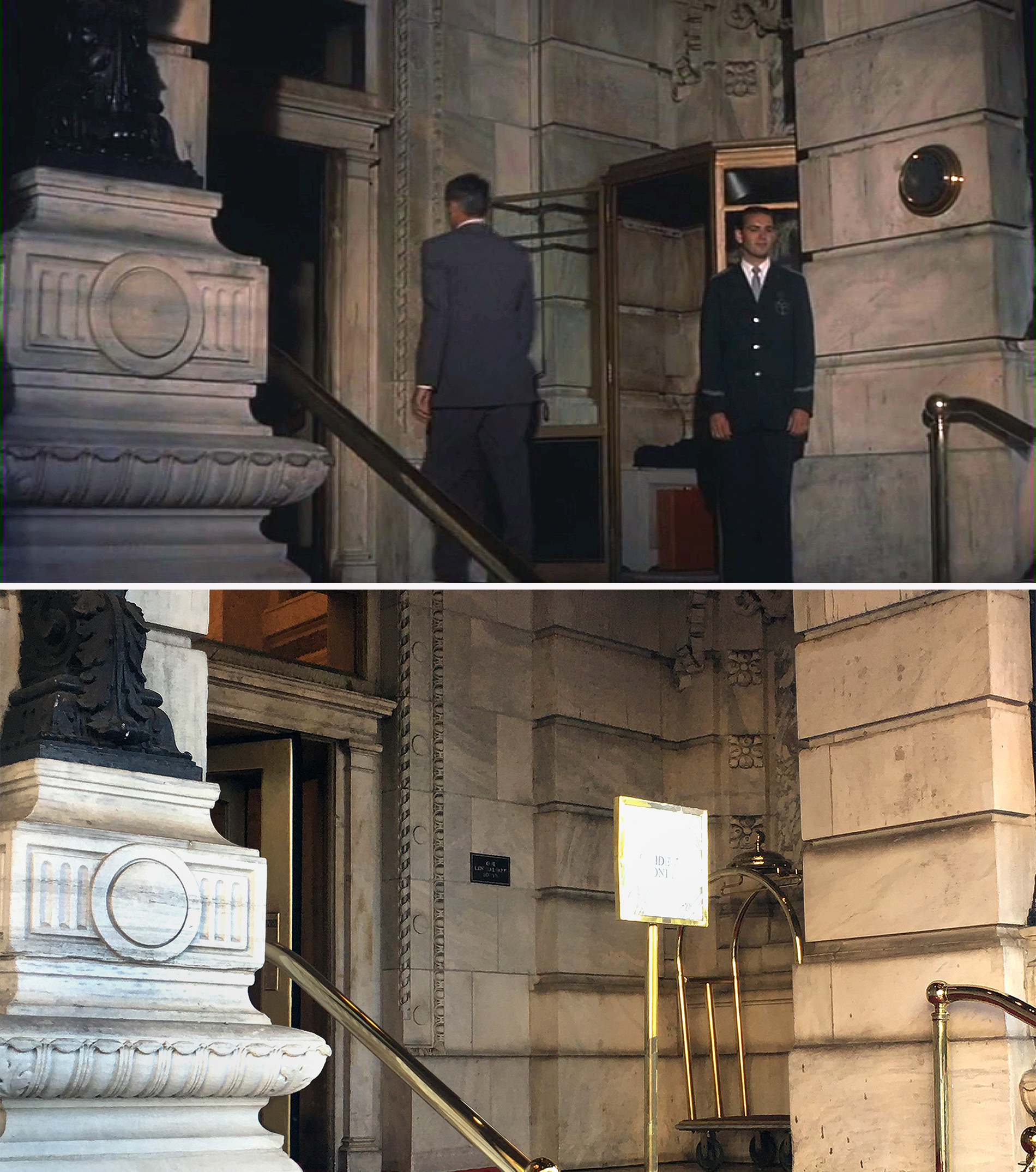
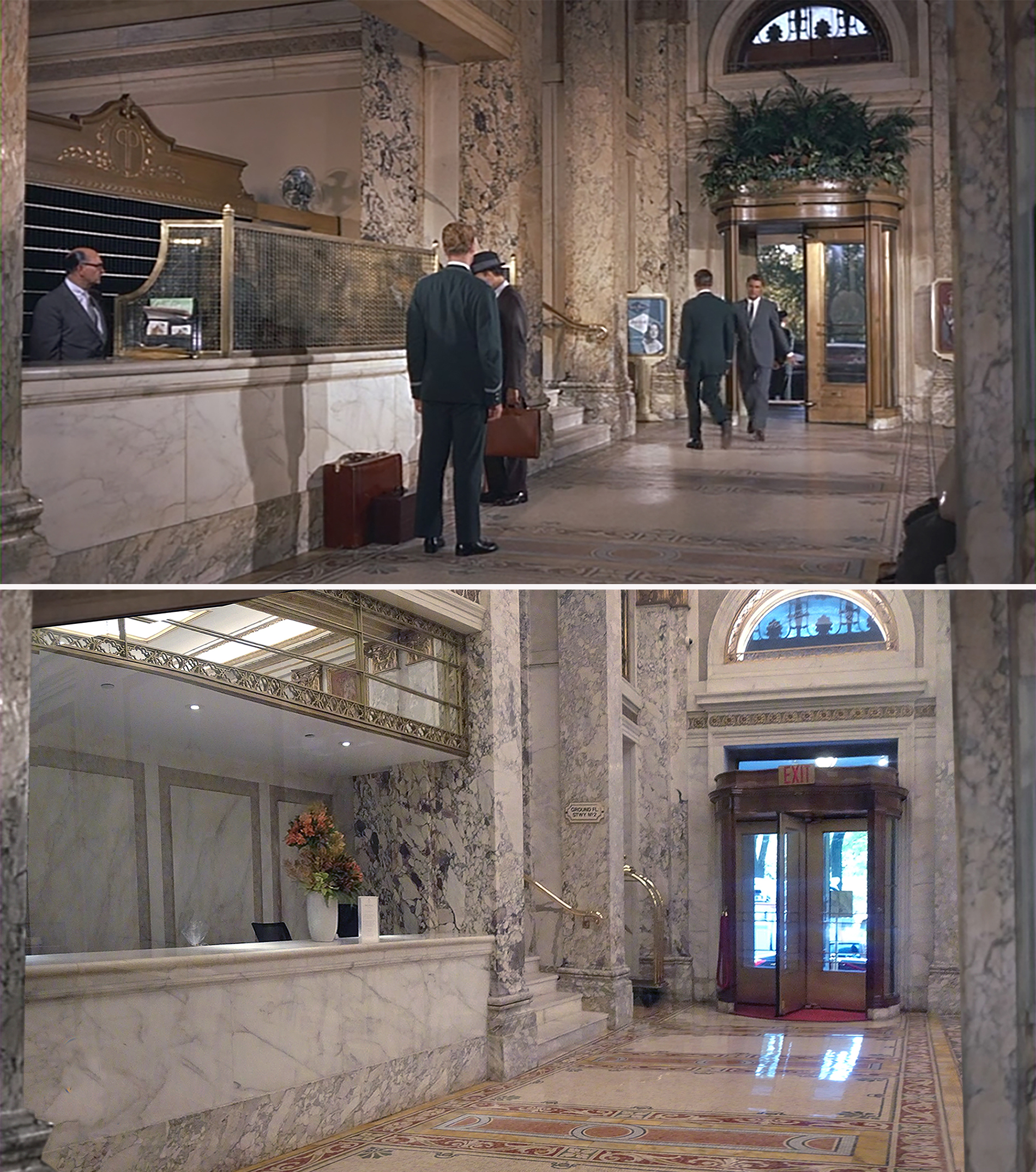
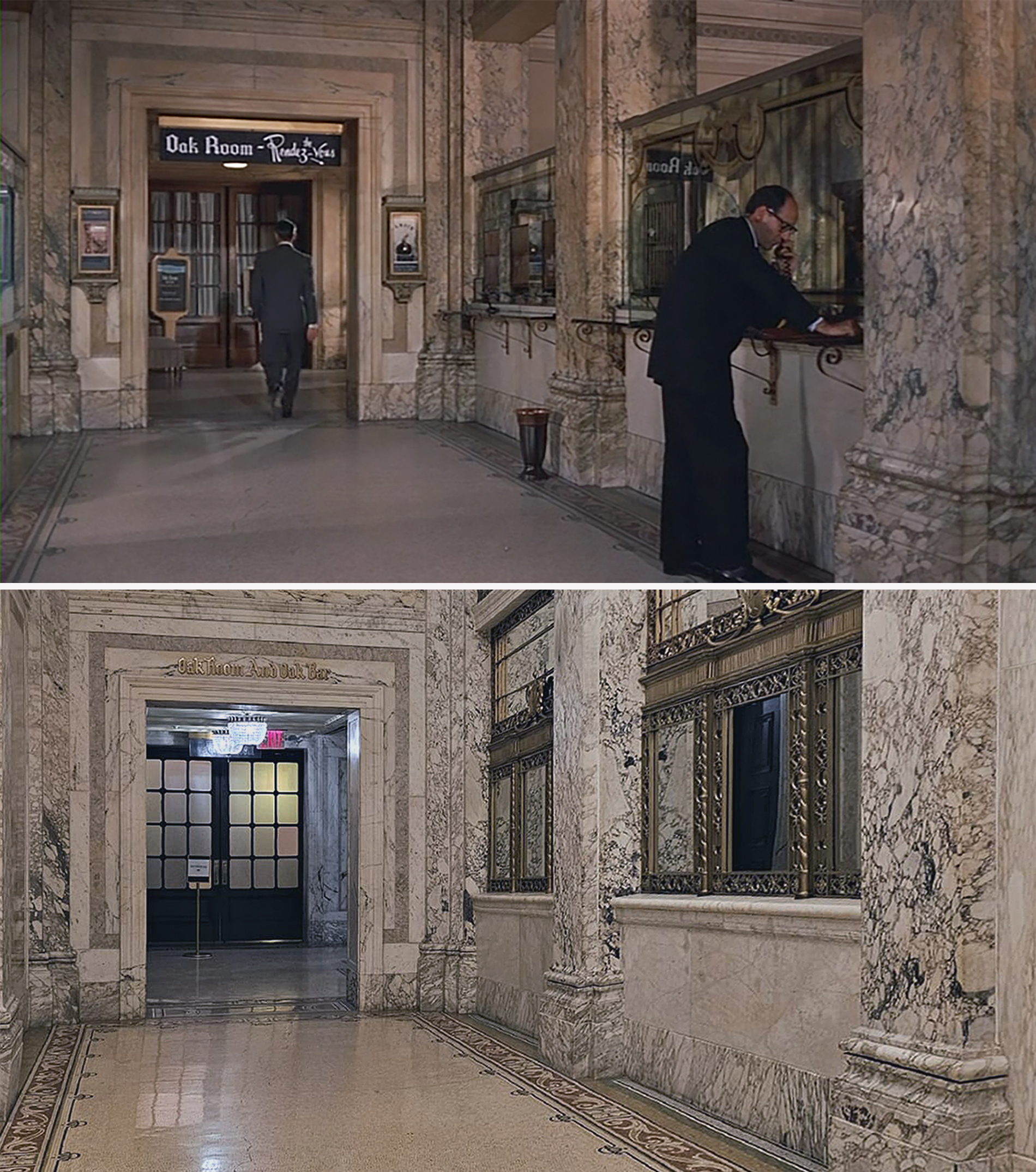
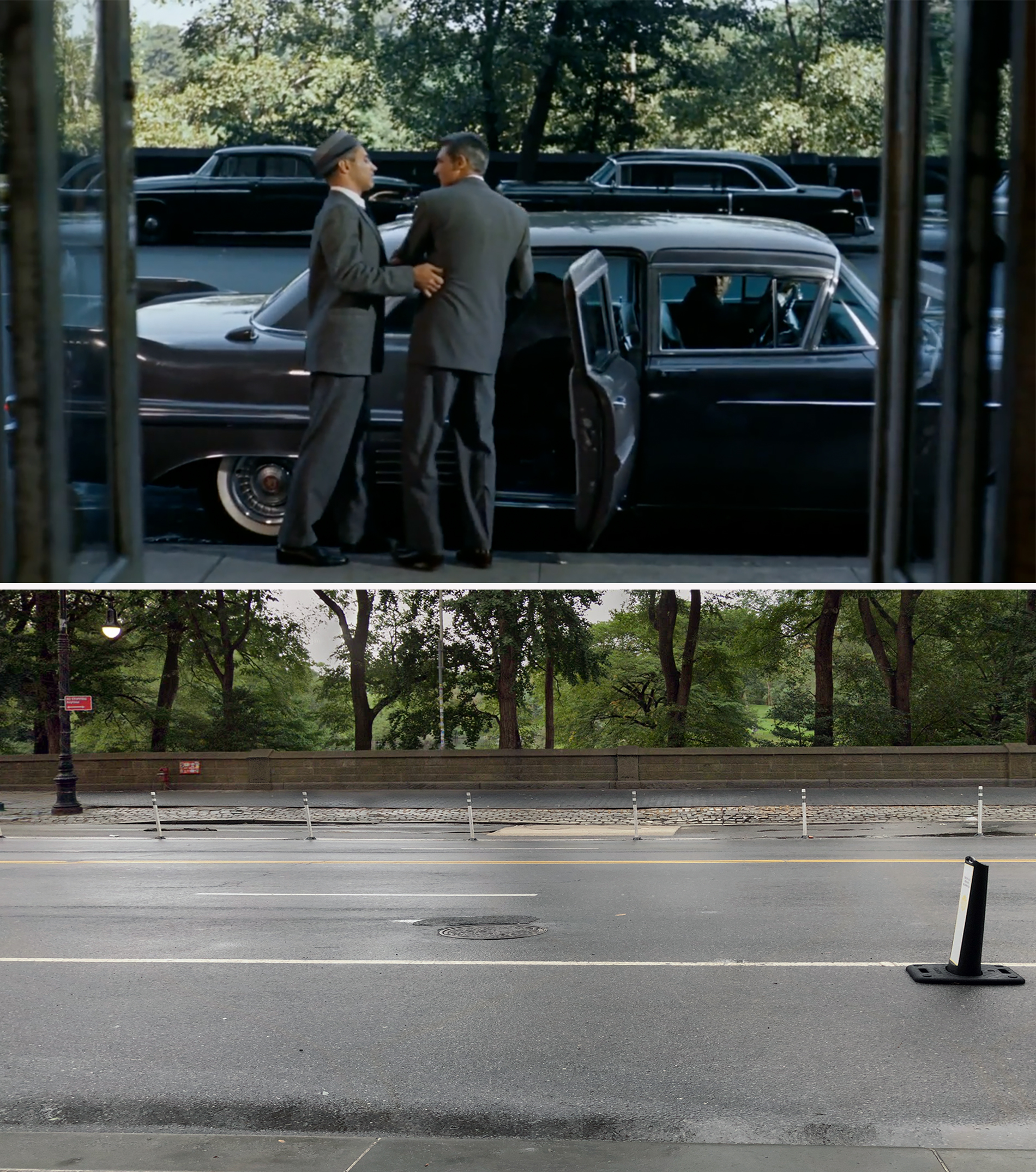
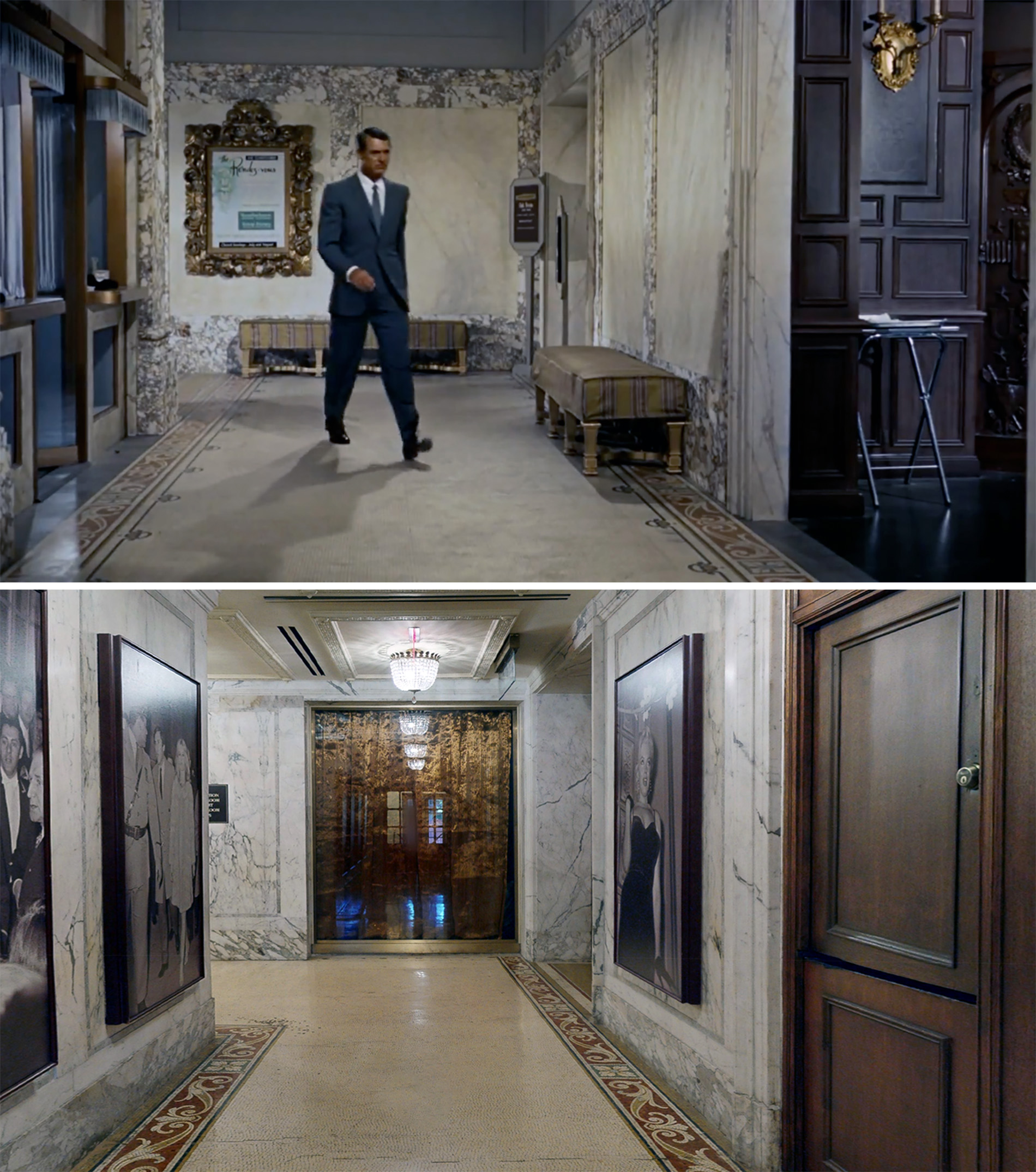
This sequence takes place at the Plaza Hotel, although most of it was shot on a soundstage at MGM Studios (now SONY Pictures) at 10202 Washington Blvd in Culver City, CA. The lobby was real, but once there’s a cut and Cary Grant is in the hallway outside the Oak Bar, it’s all one big set. You can tell because the layout in the hallway is not quite right.
But they did do an excellent job recreating the notorious bar inside the hotel, even down to Everett Shinn’s huge mural of the Plaza’s former neighbor, the Vanderbilt mansion. Unless you were intimately familiar with this hangout spot (which is unlikely since it’s been closed for around 15 years now), you would be hard pressed to know the difference between the Hollywood set and the real deal.
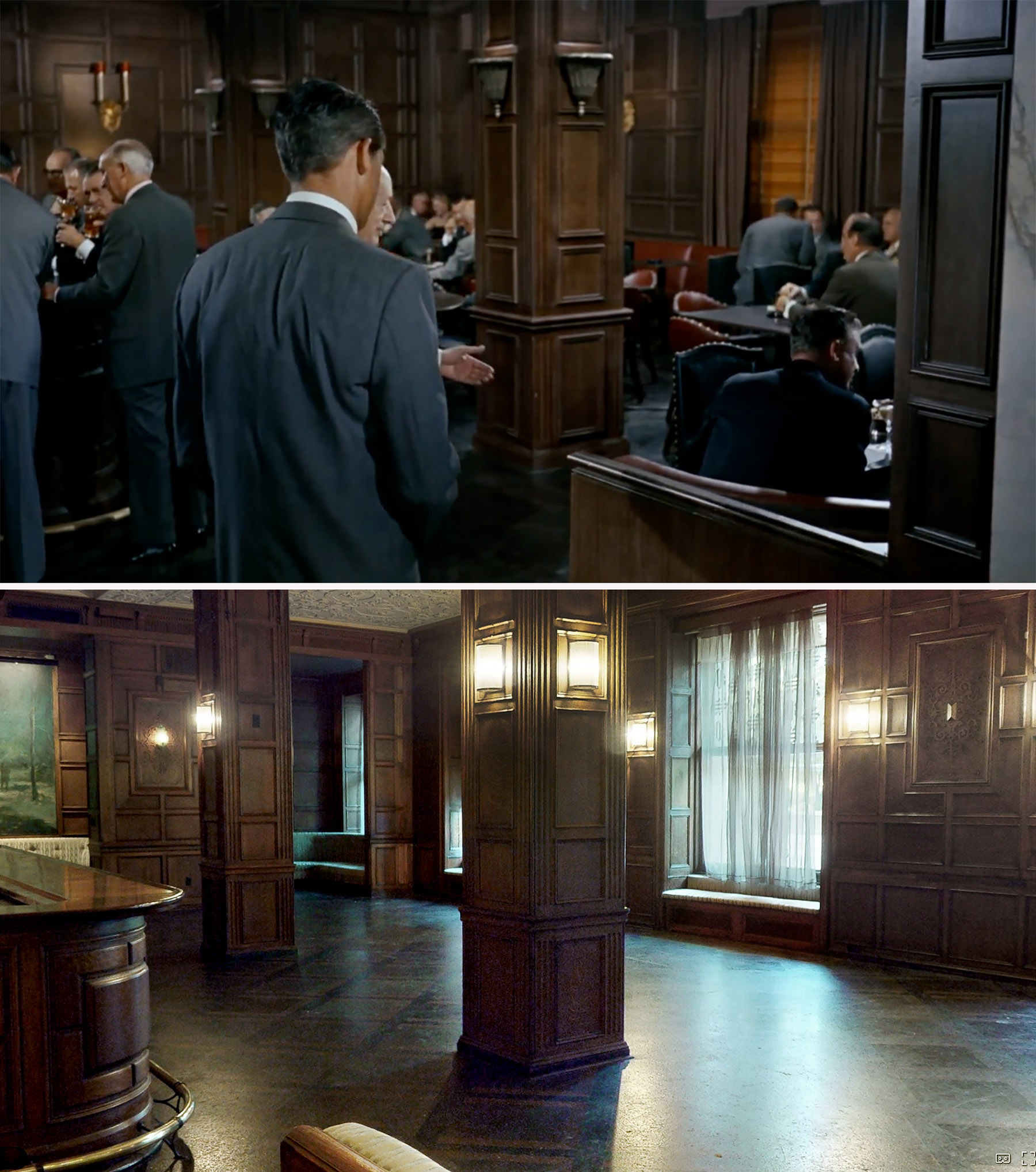
One clue that it’s a recreation is with that mural on the wall, where about one third of it seems to be framed out.
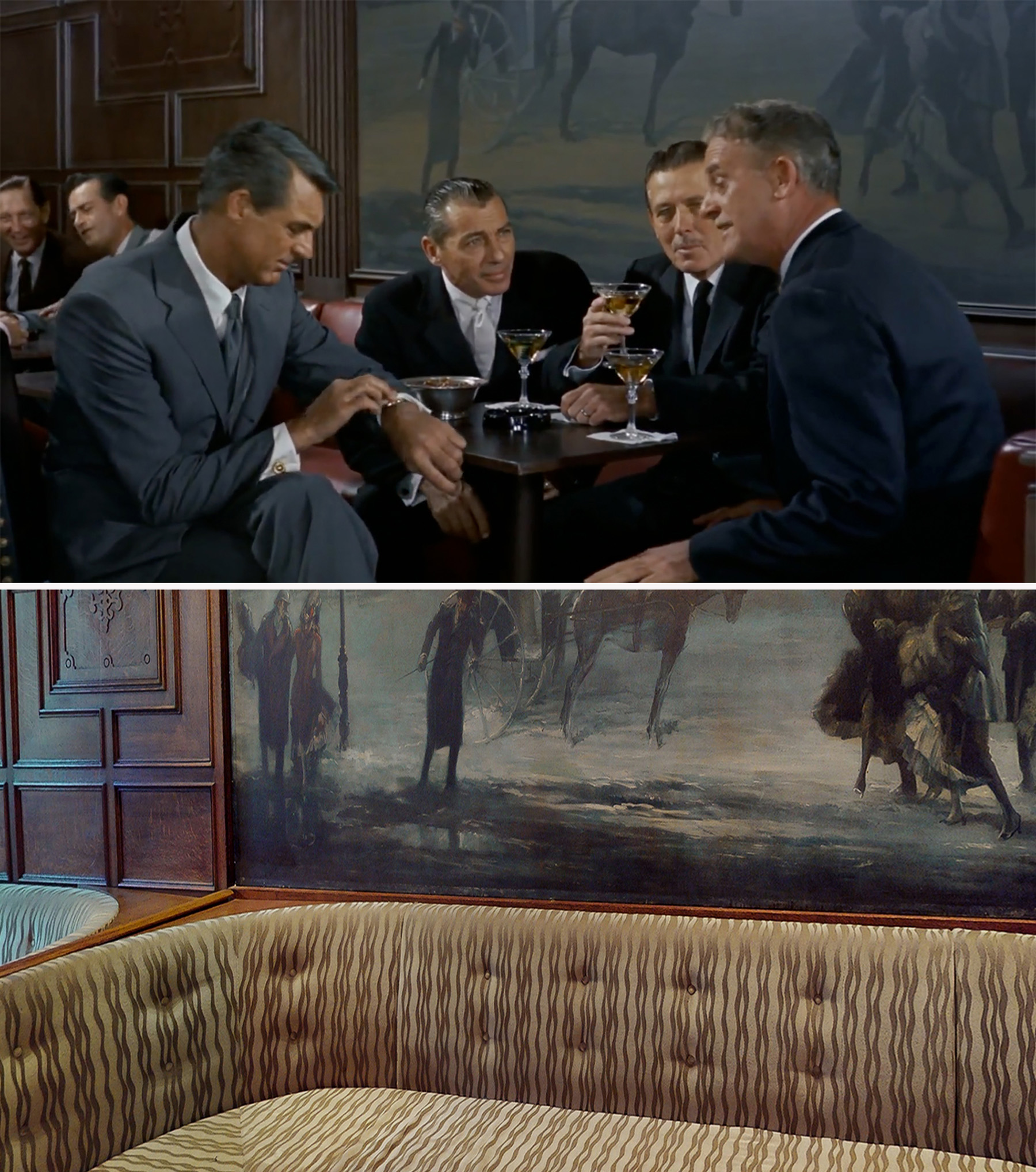
I did have the opportunity to see the mural in person in 2013 when I was working on a TV pilot being shot there. I can’t recall the title of the show, but I do remember comedic actor Richard Kline (best known for playing Jack’s friend Larry on Three’s Company) was in it. I remember because I happened to be taking his 4-week acting seminar at the time and we practically did a double-take when we saw each other on set.
I still find it so strange that the Oak Room has remained vacant for so long, being used only for special events. But it’s nice to know Shinn’s three murals are still there, including the one recreated for this movie.
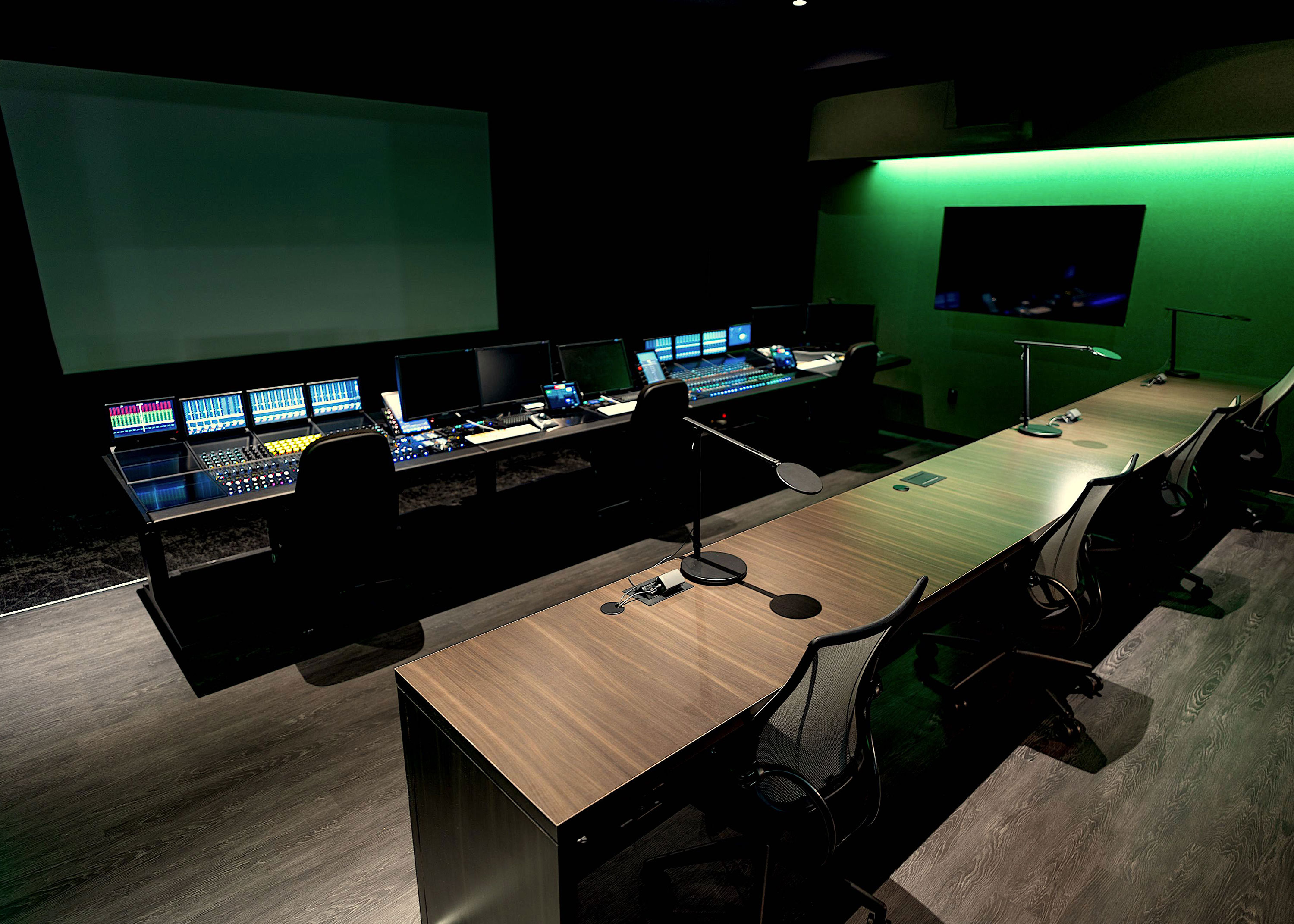
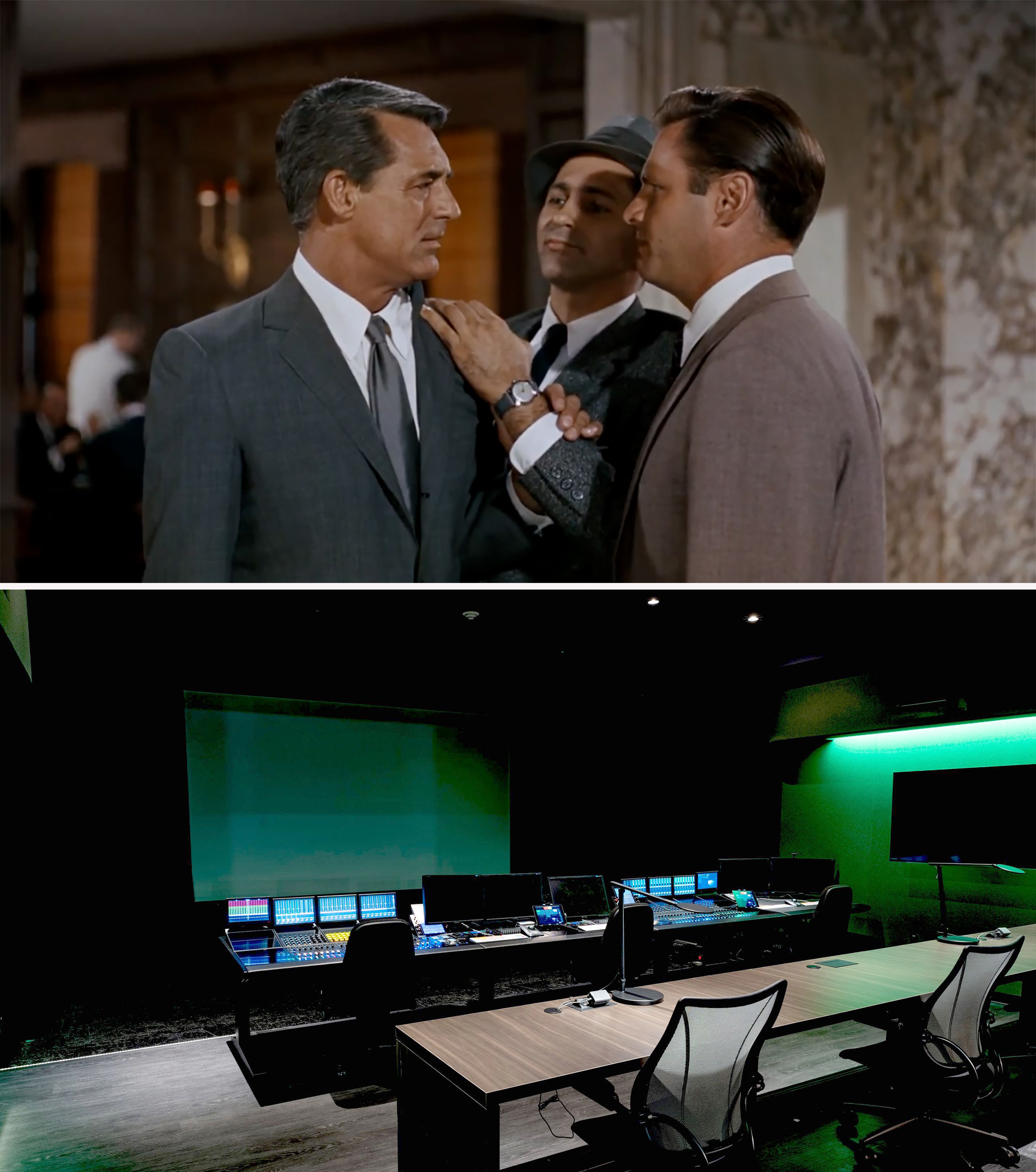
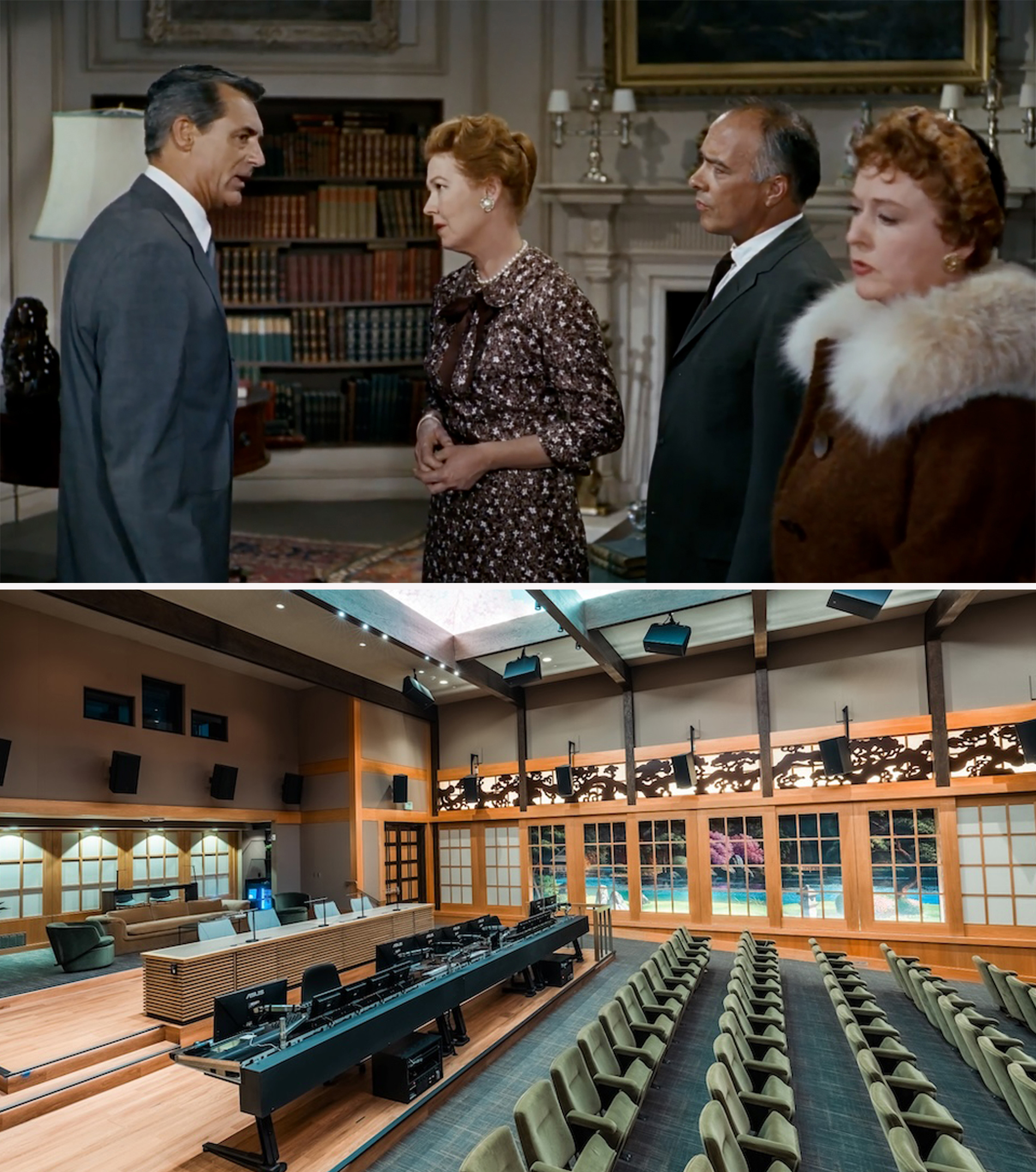
It’s hard to know which MGM stage was used for this Plaza Hotel recreation, but it was most likely Stage 3. The space has since been converted into a production facility with Dubbing Room 17 being somewhat close to where the Plaza/Oak Bar set might’ve been built.
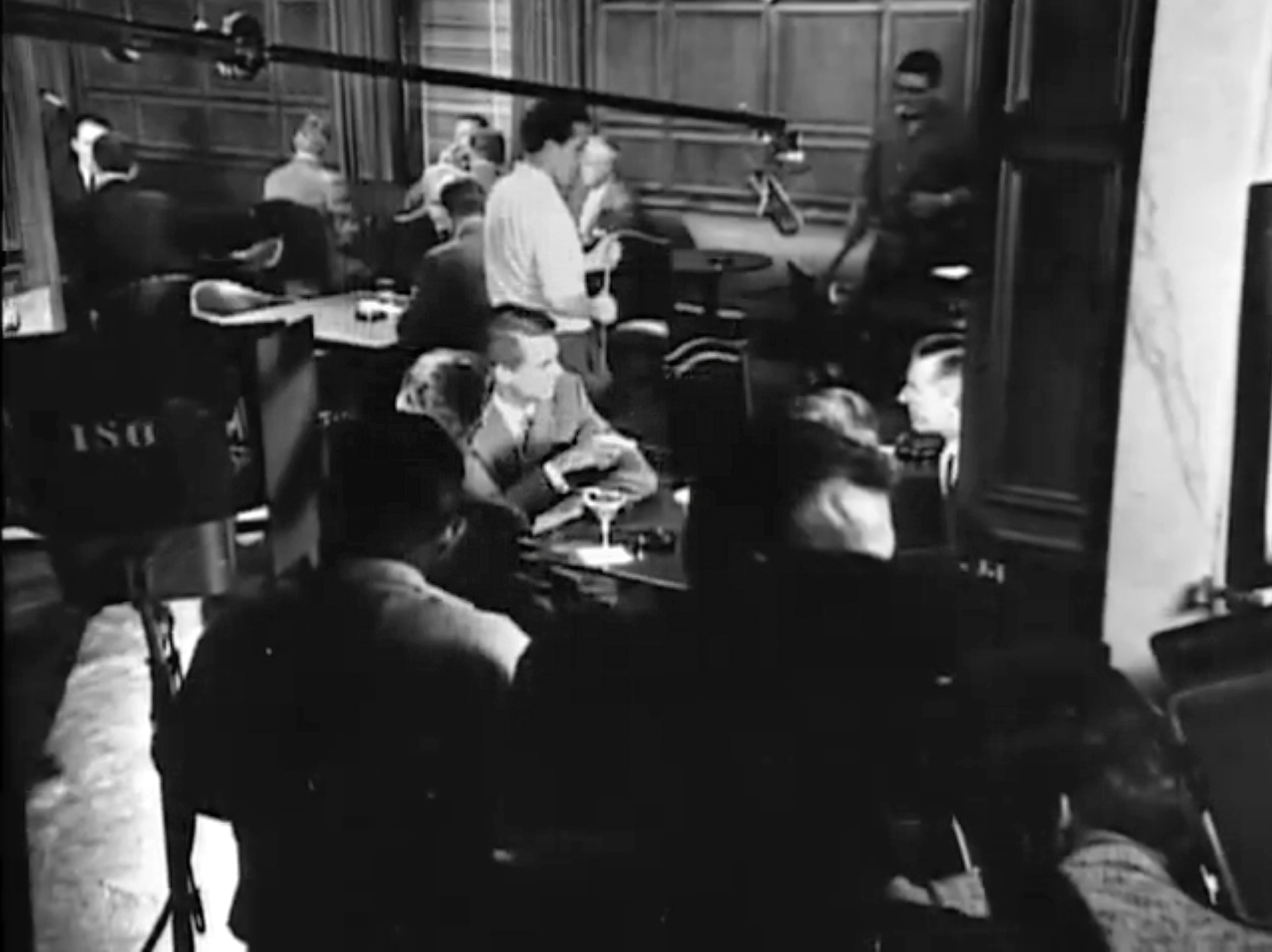
Even though they didn’t use the real Oak Bar in the movie, Grant probably spent a good amount of time there during his off hours since he had his own apartment in the Plaza Hotel.
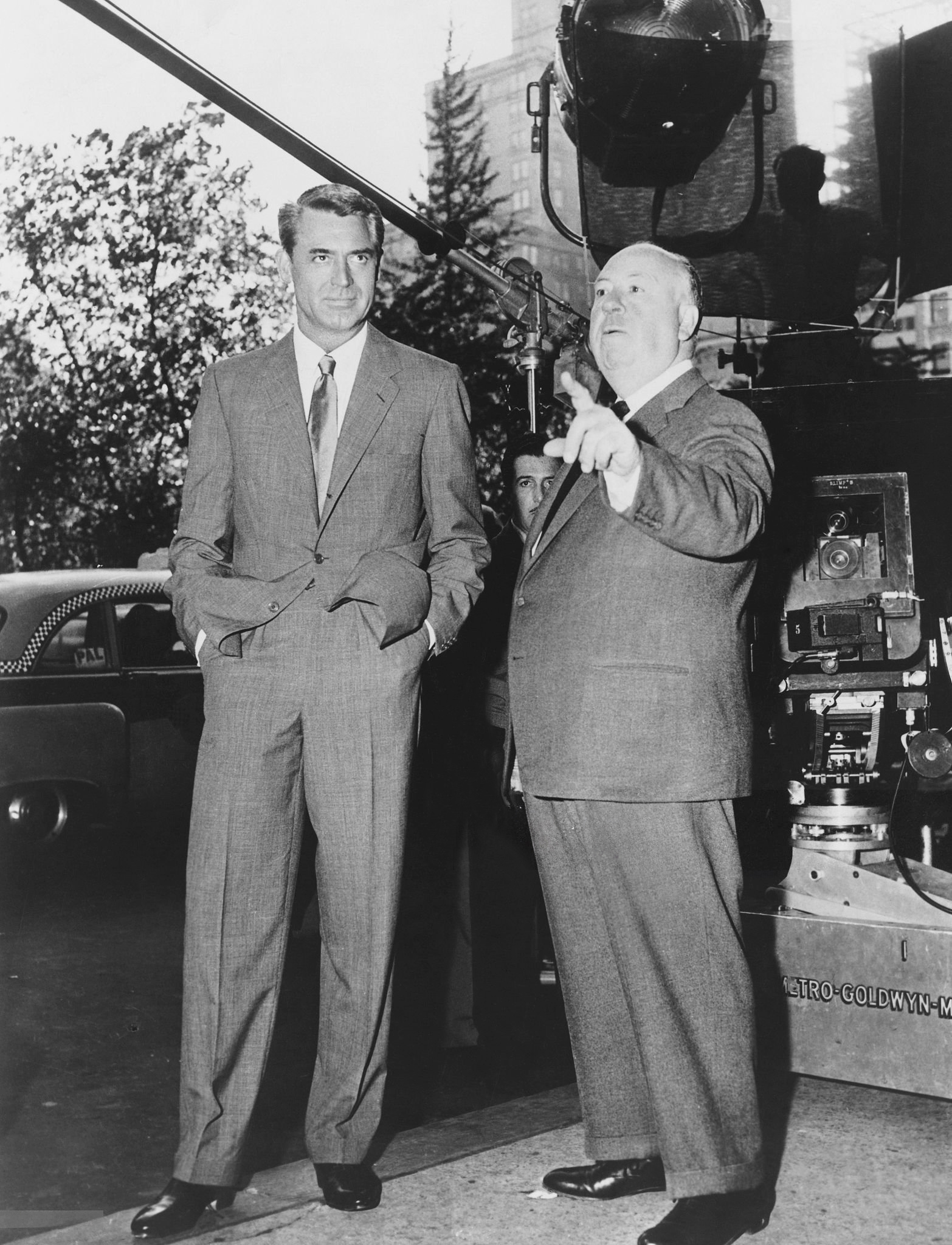
In fact, it’s been said that when they filmed there, he hung out in his apartment until the very last minute before he was needed on set, pop down, do his bit, then disappear back upstairs.
The Townsend Estate
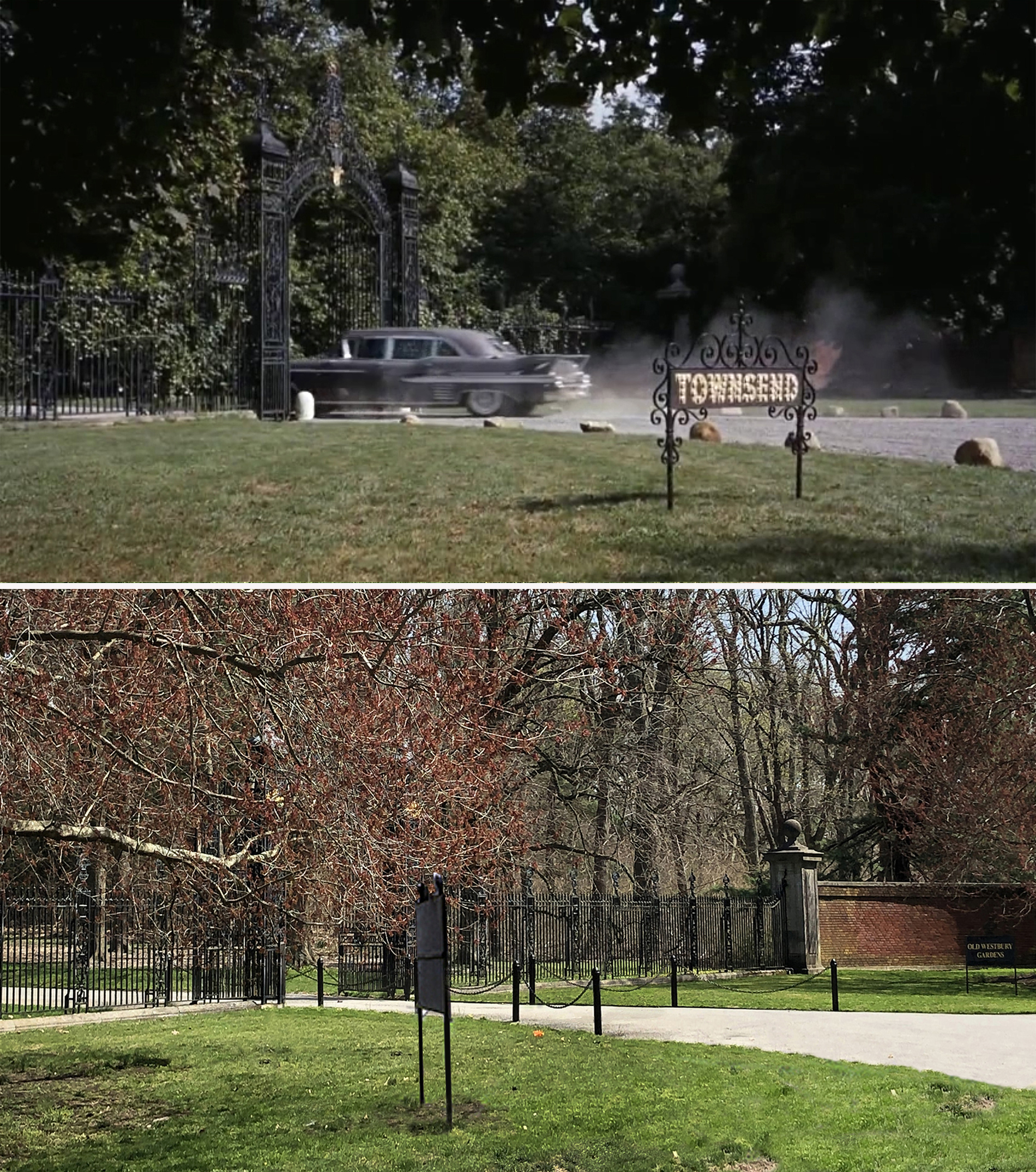
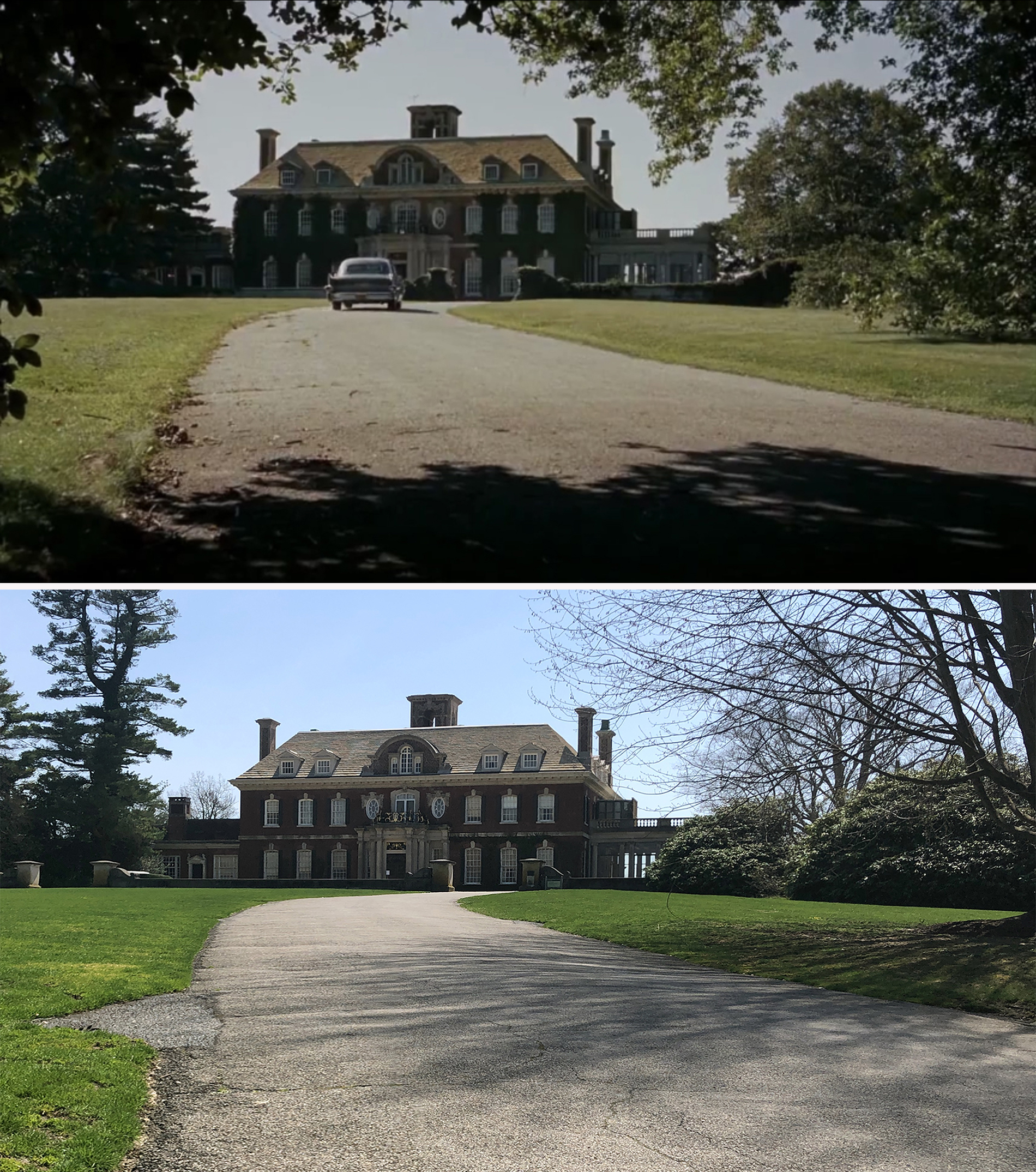
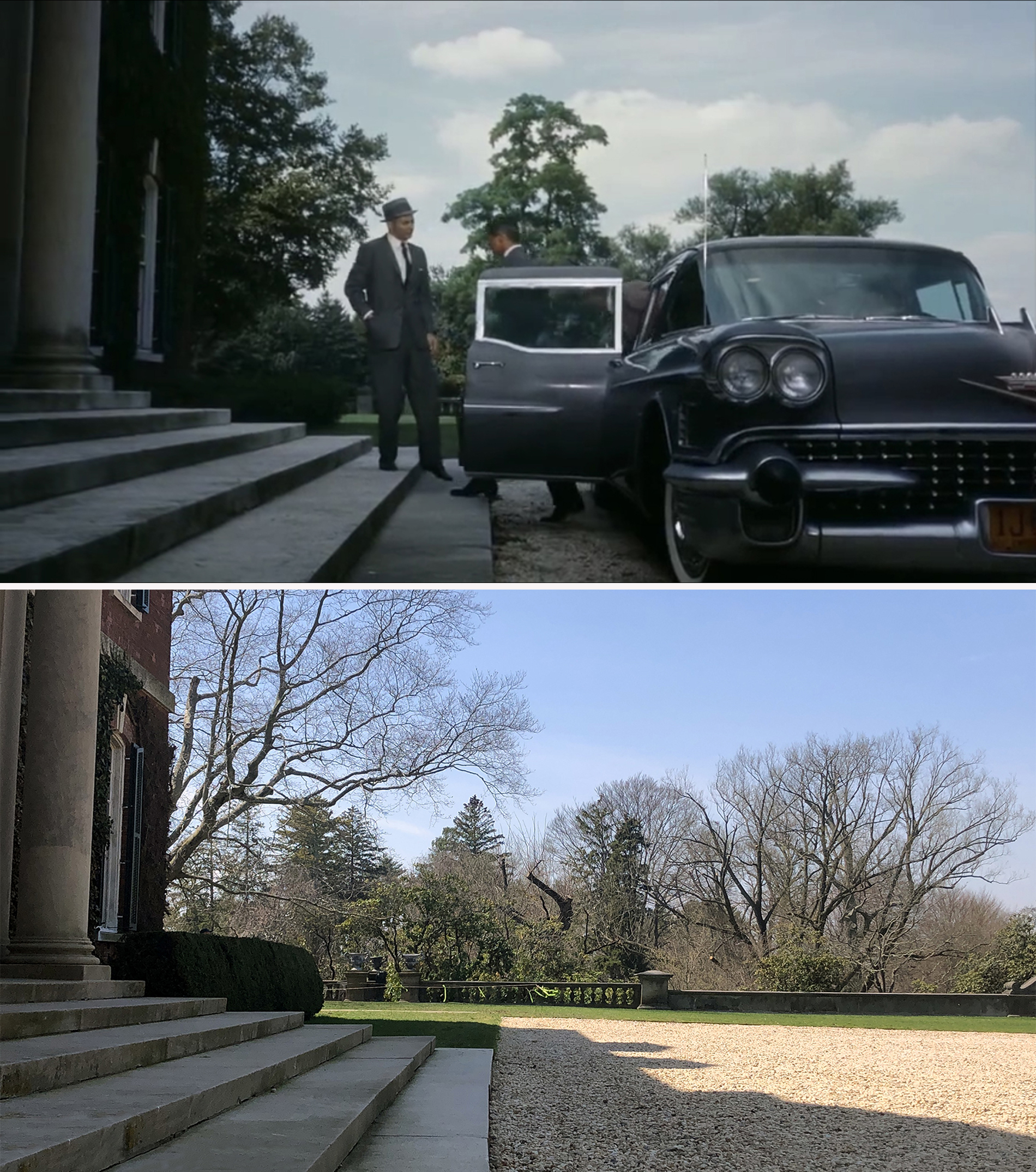
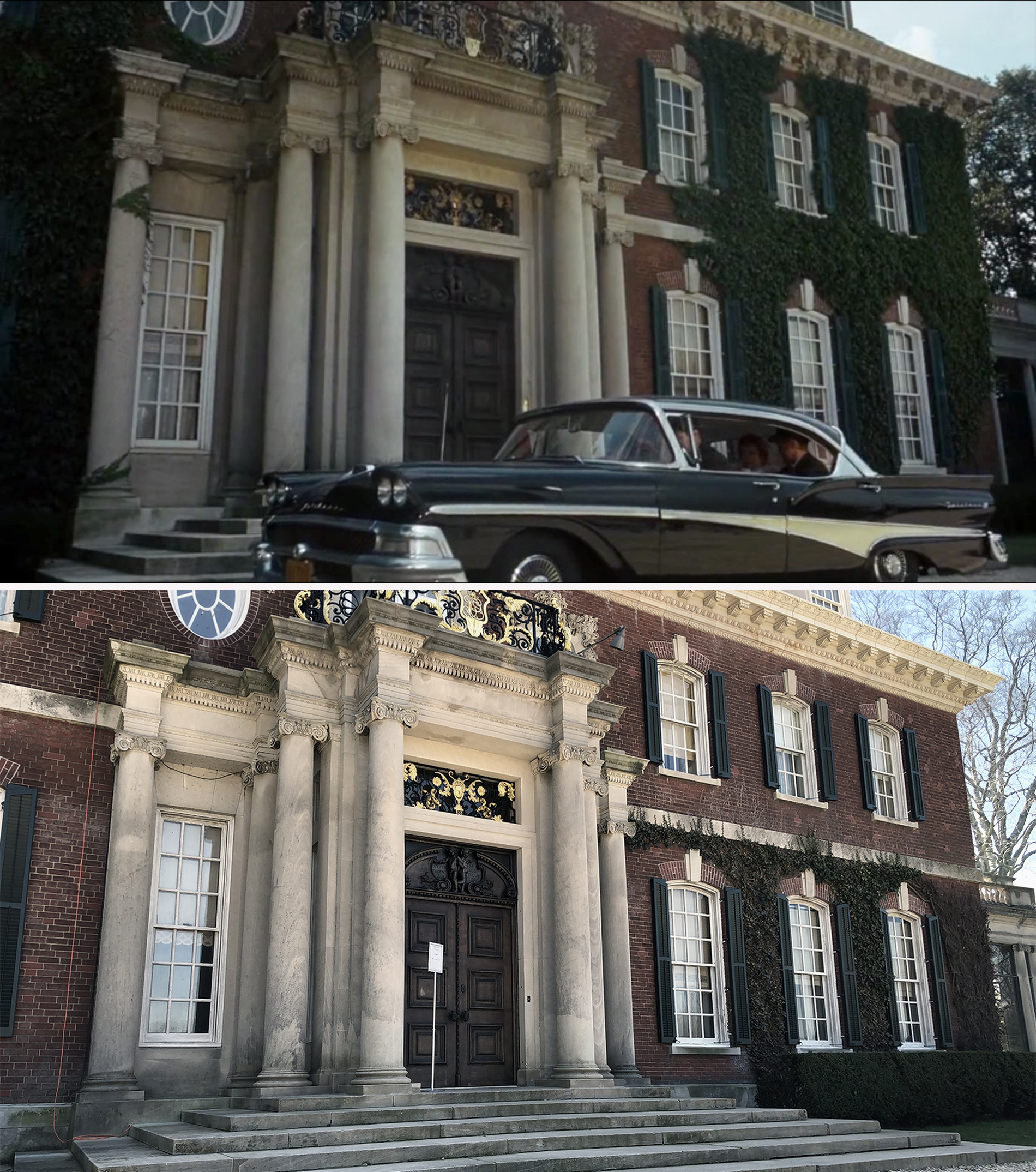
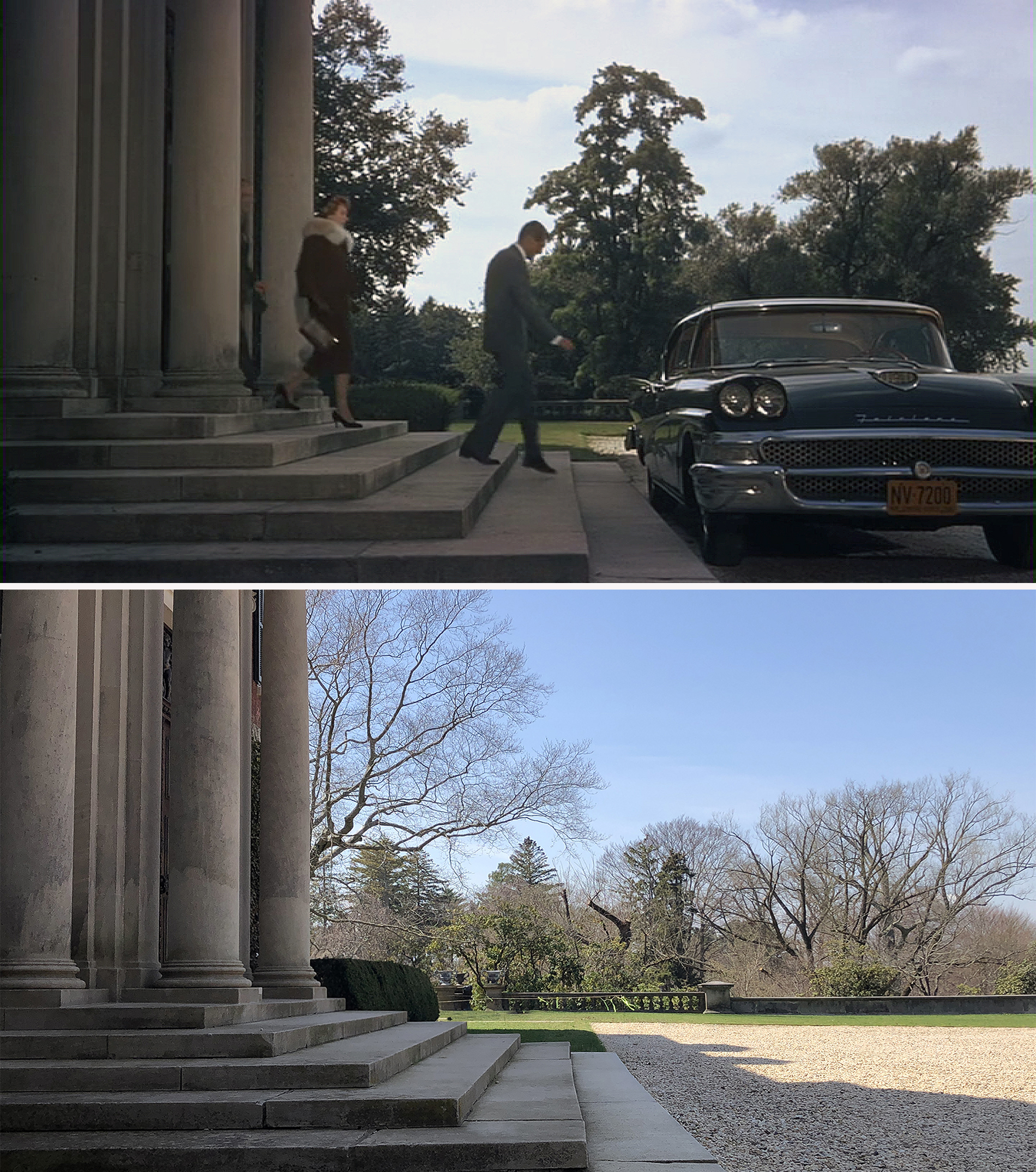
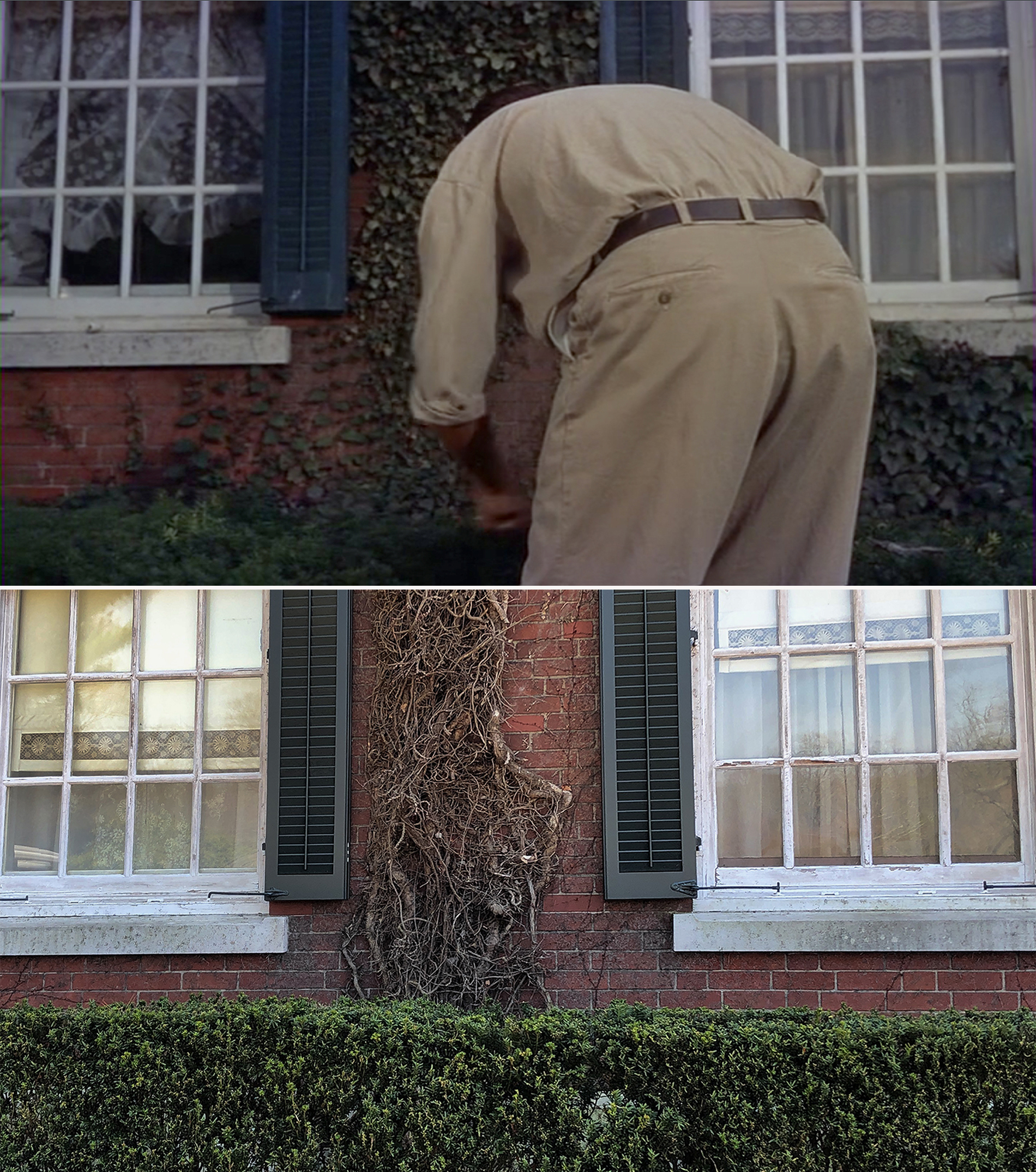
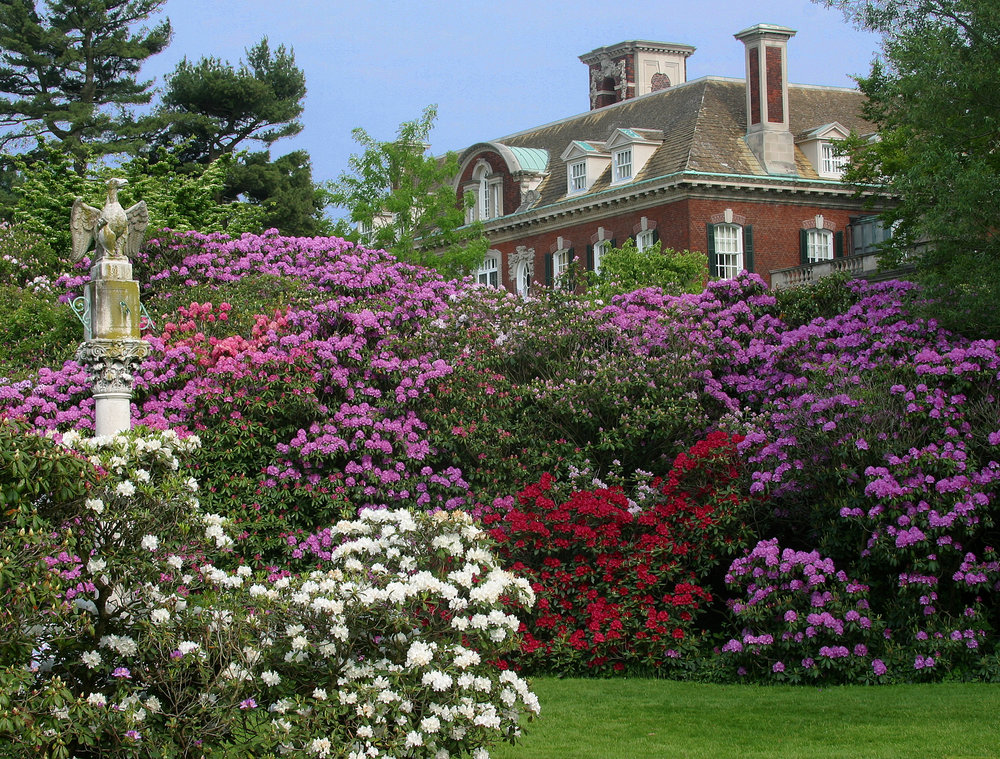
The exteriors of the Townsend Estate (except for close-ups of the entrance) were shot at Long Island’s Old Westbury Gardens — a lush piece of land built by US Steel heir John Shaffer Phipps in 1906 for his new wife Margarita. These days, the estate is a park that is open to the public, and certainly worth a visit. The Westbury House is quite lavish, and the gardens are even more spectacular.
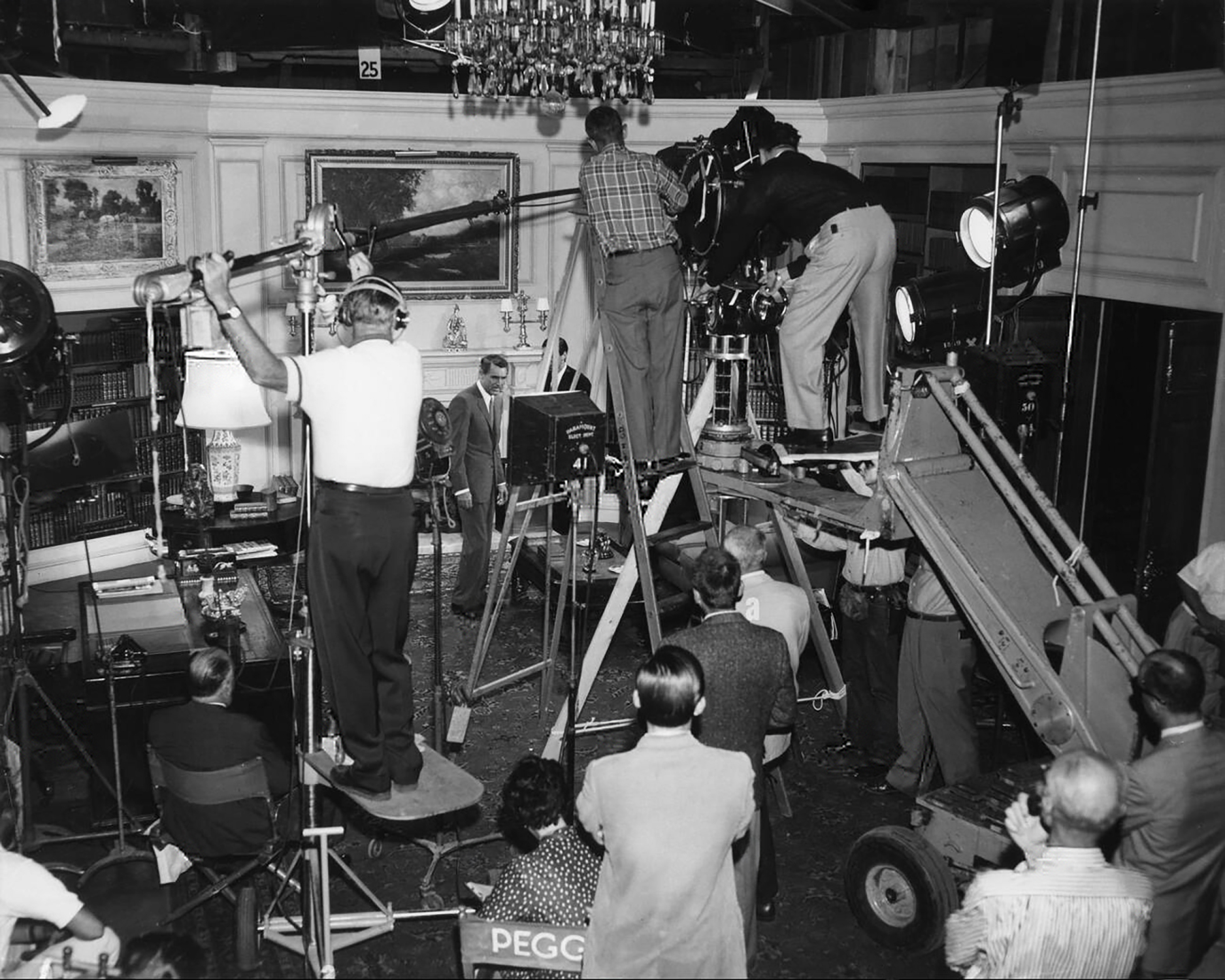
Of course, everything taking place inside the mansion was on a set built back in Culver City.
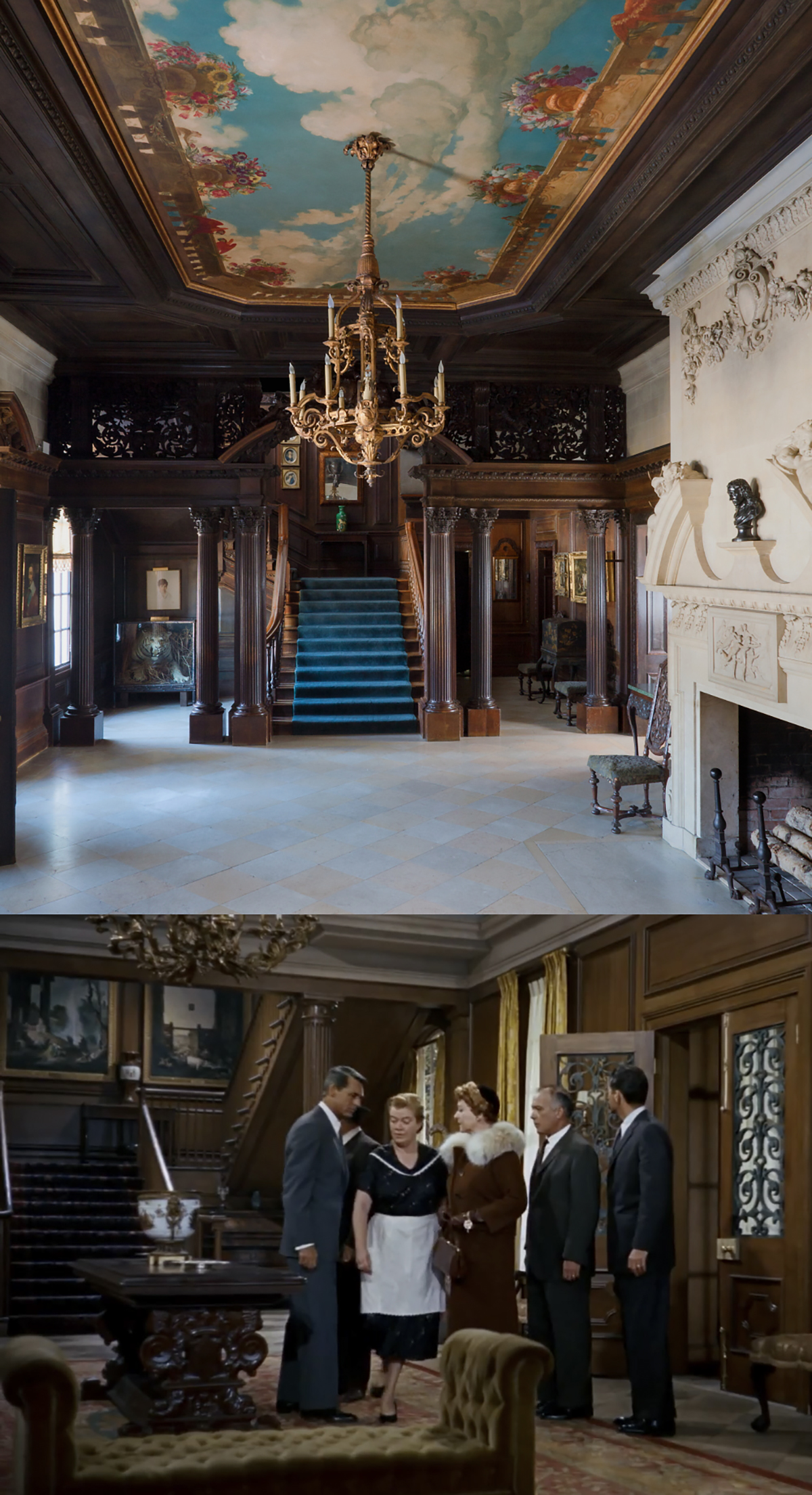
In general, the sets built for these scenes don’t really look like what’s inside the Westbury House, but the foyer had a few similarities in style.
Old Westbury Gardens has played a role in a number of movies, including Love Story, To Wong Foo, Wolf, Cruel Intentions and American Gangster.
After forcing Thornhill to consume a huge helping of bourbon, the goons try to fake a fatal drunk driving accident on what I guess are supposed to be Long Island cliffs, which of course, don’t really exist (at least not to the extant shown).
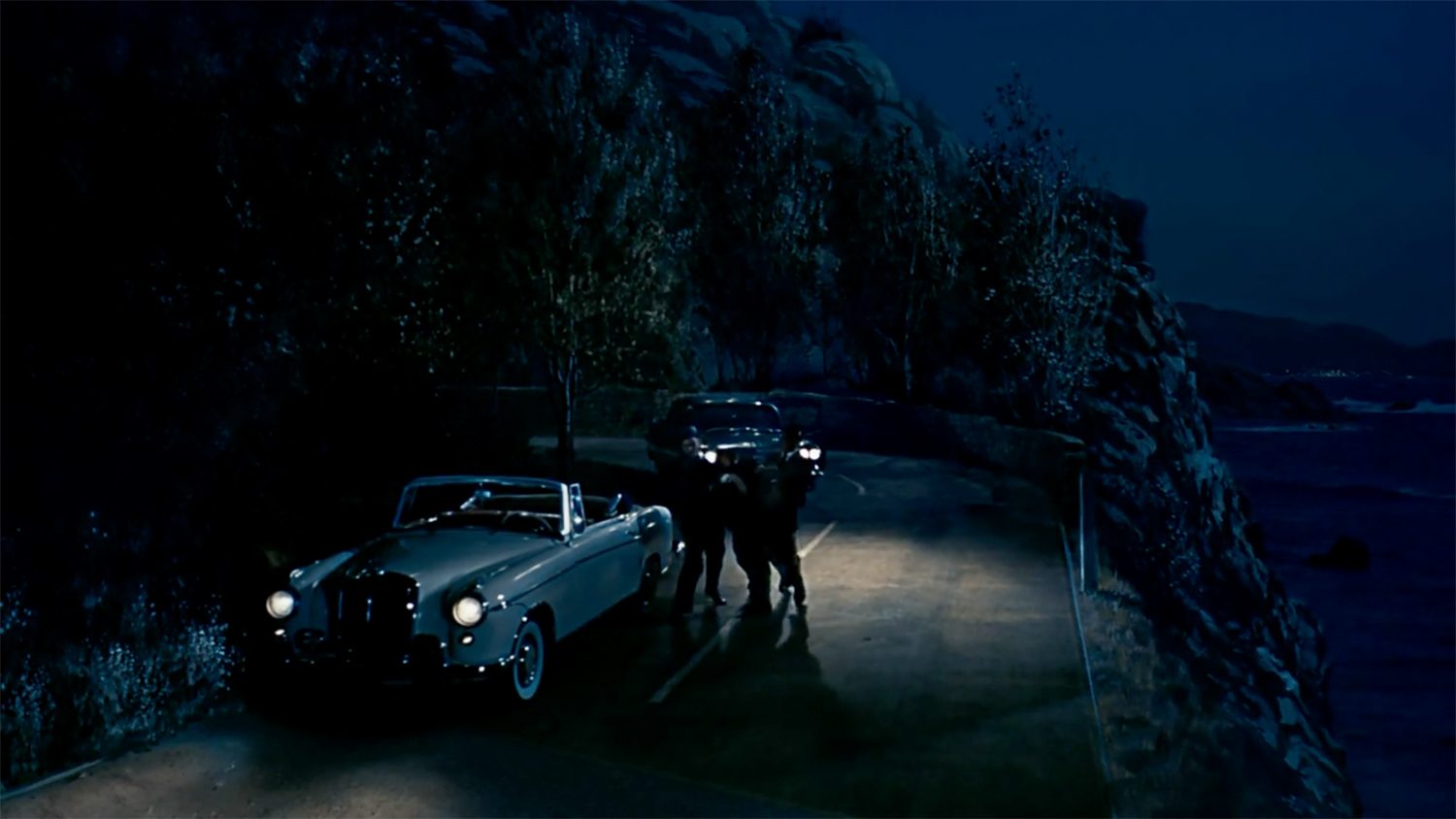
These shots were filmed back in California using sets, matte paintings and 2nd-unit background footage. I’d love to figure out where they filmed the one wide shot of the ocean and distant cliffs, which was most likely somewhere not too far from Los Angeles.
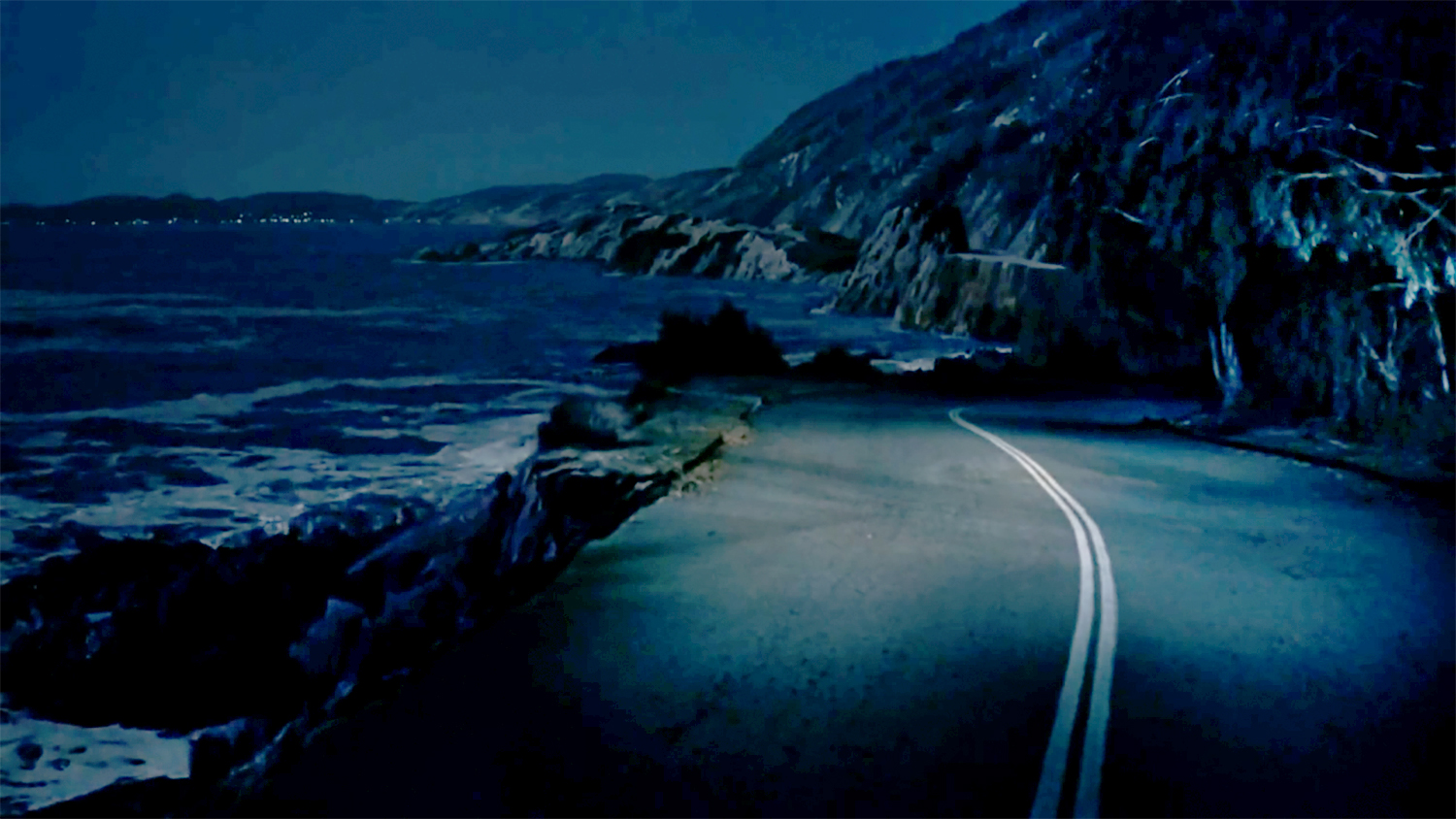
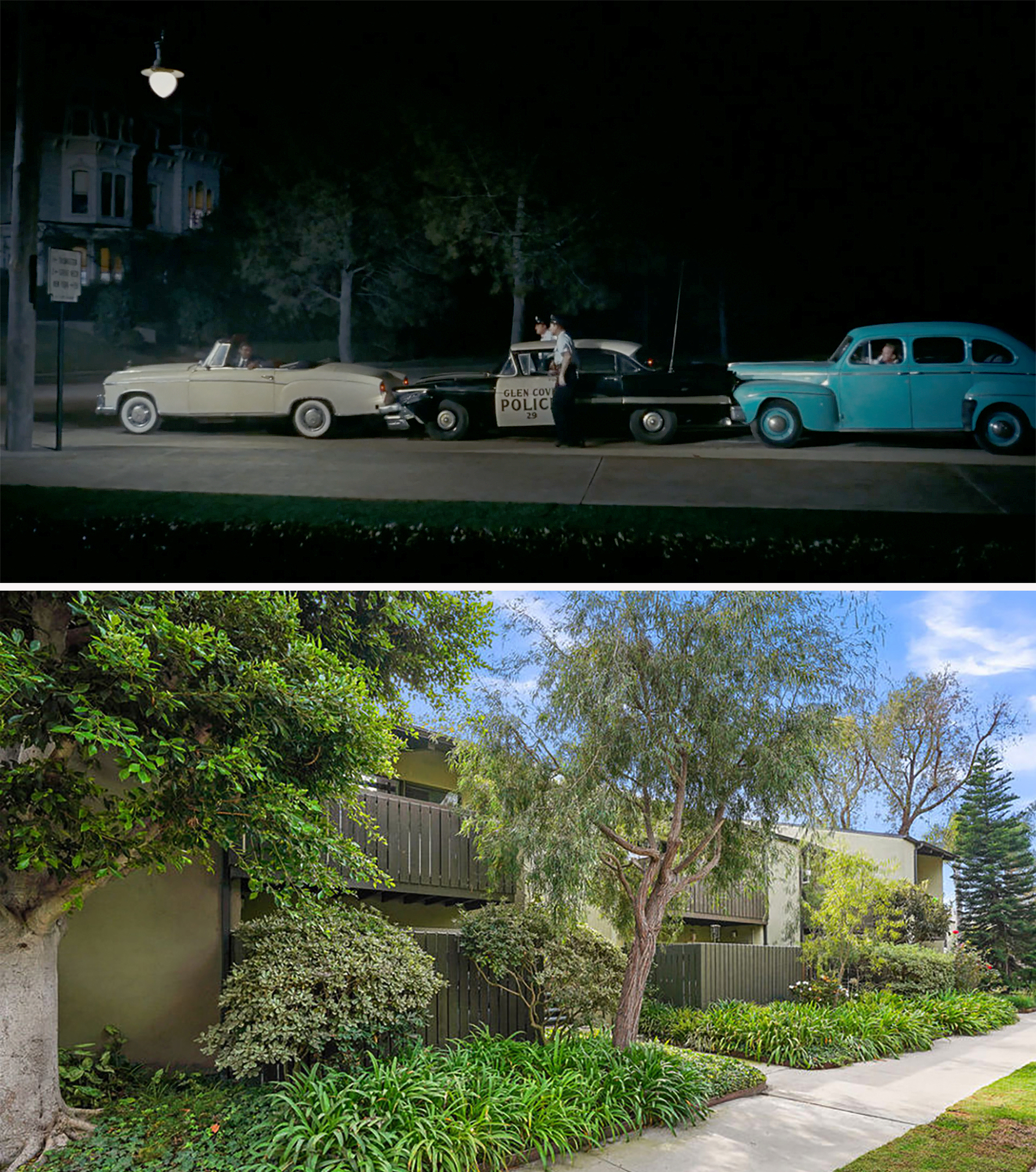
When it came to the part where the cop crashes into Thornihill’s car, it was Blakeslee who figured out its location, which he thought was probably in California, too. Granted, the sign in the shot listed distances to New York City and two Long Island towns —Great Neck and Huntington— but he and I were pretty sure it was fake. (Geographically speaking, it just wouldn’t make sense to have those three destinations on one local sign.)
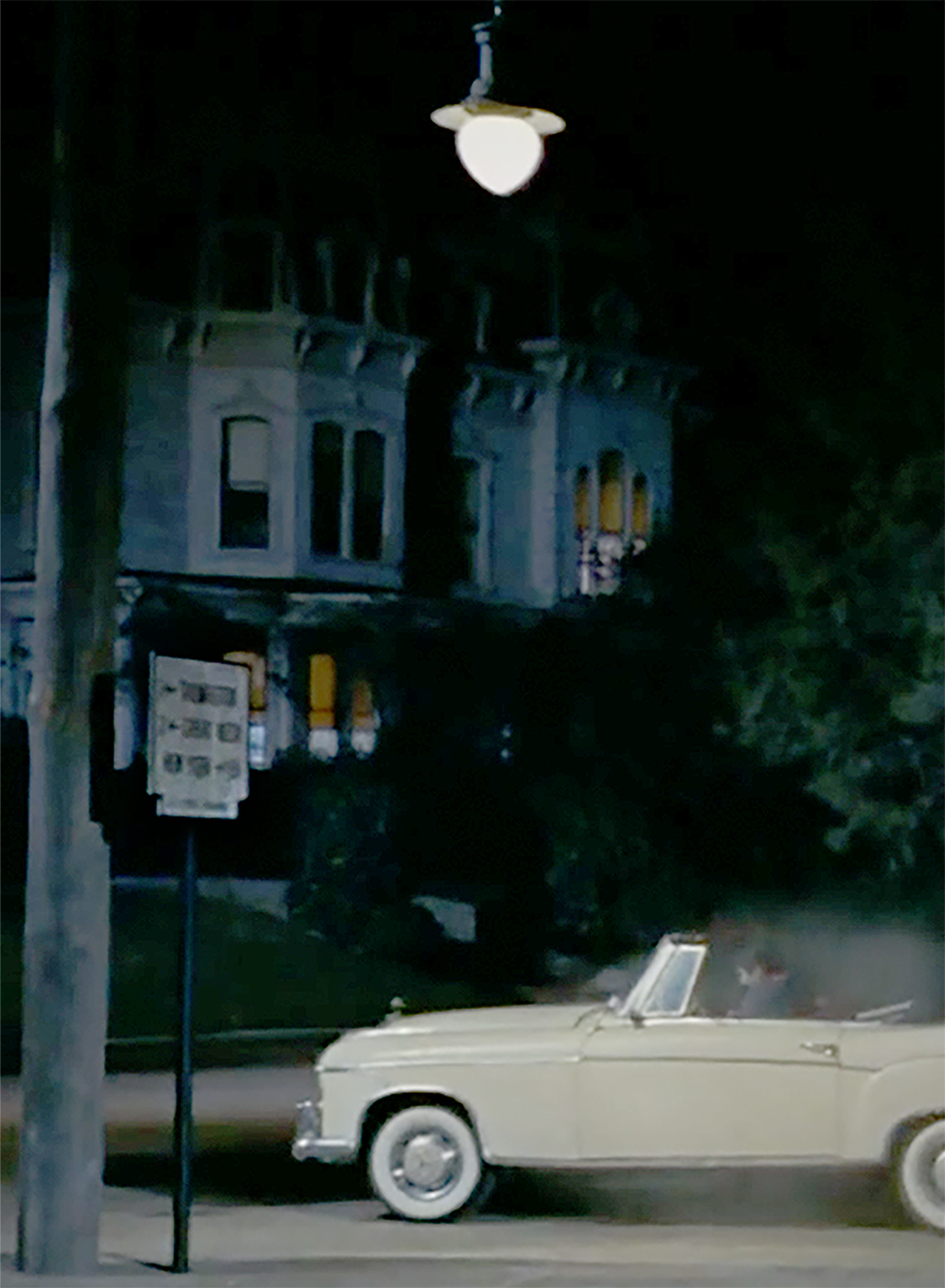
The only other clue in the shot was the structure in the background, which looked like a Victorian home. Going on a hunch, Blakeslee did an internet search for “studio backlot victorian” and found a match on the old MGM Lot #3 in Culver City, CA.
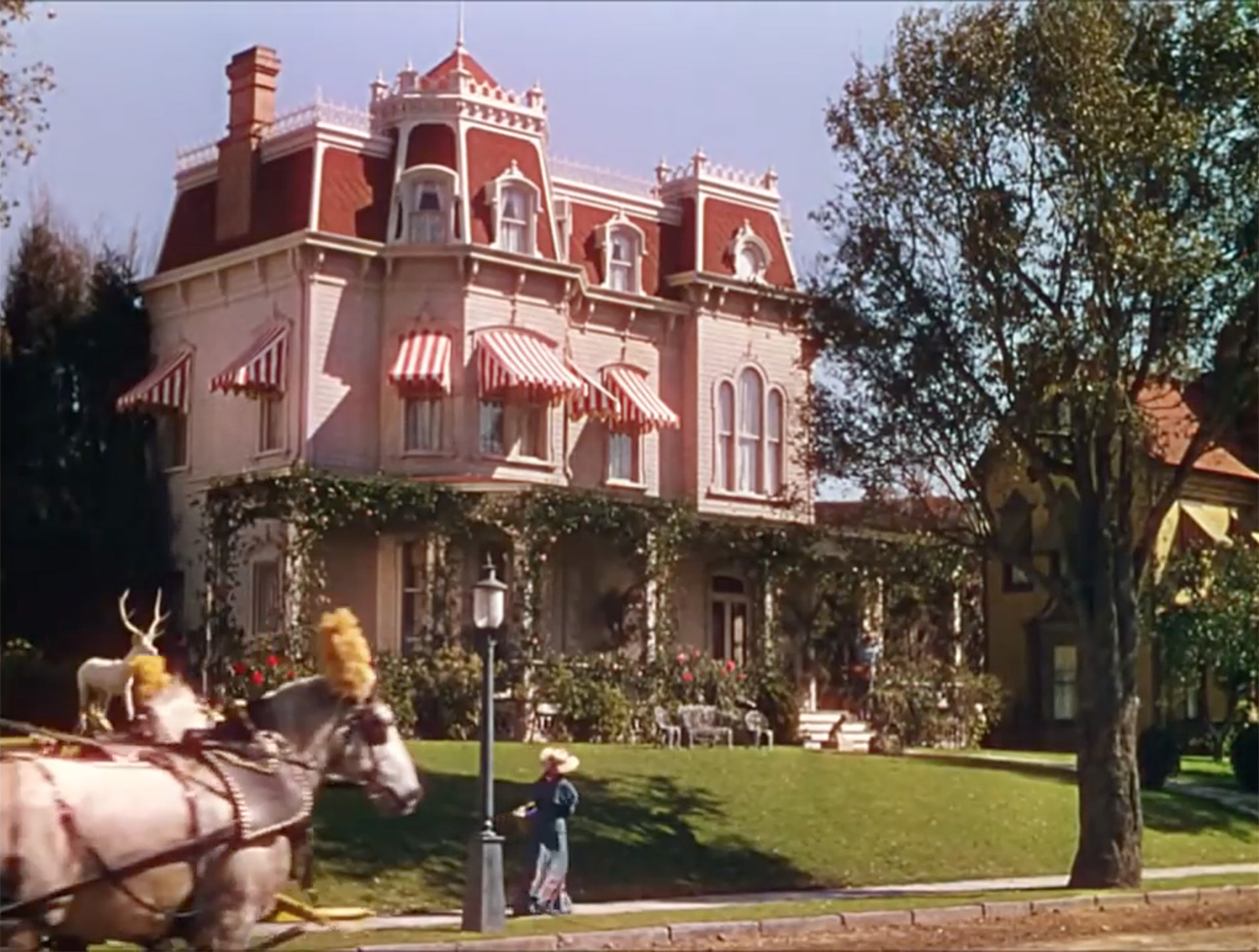
The house was located on the bottom of “St Louis Street,” named for the 1944 musical, Meet Me in St. Louis, starring Judy Garland. The Victorian age neighborhood was built expressly for the film, including the house seen in Northwest, which served as the residence of Judy’s family.
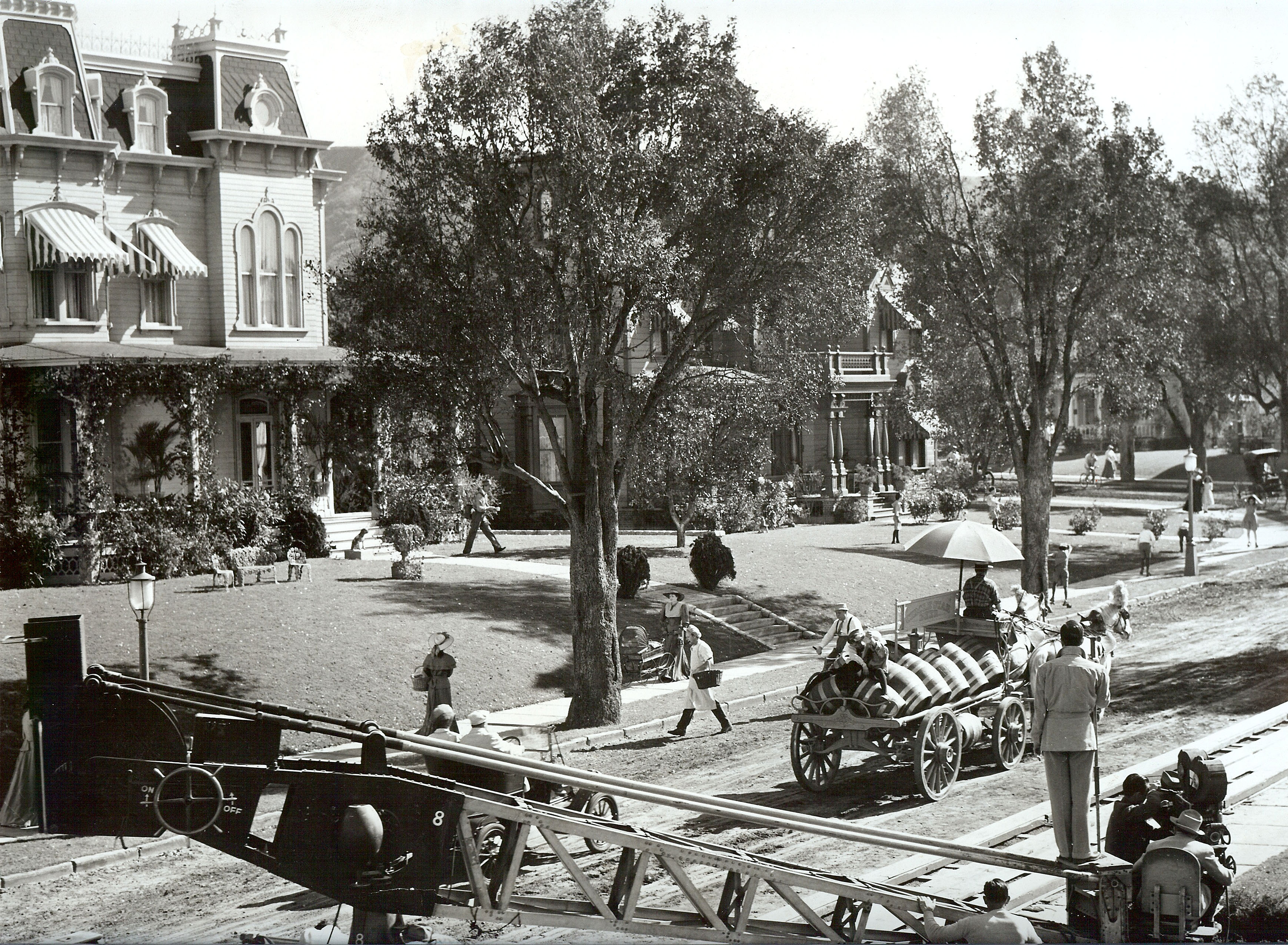
The house lasted until around 1970 when MGM sold off Lot #3 to developers. The spot used in North By Northwest is now on the southern border of the gated community Tara Hills, named for the movie Gone With the Wind (also filmed on Lot #3).
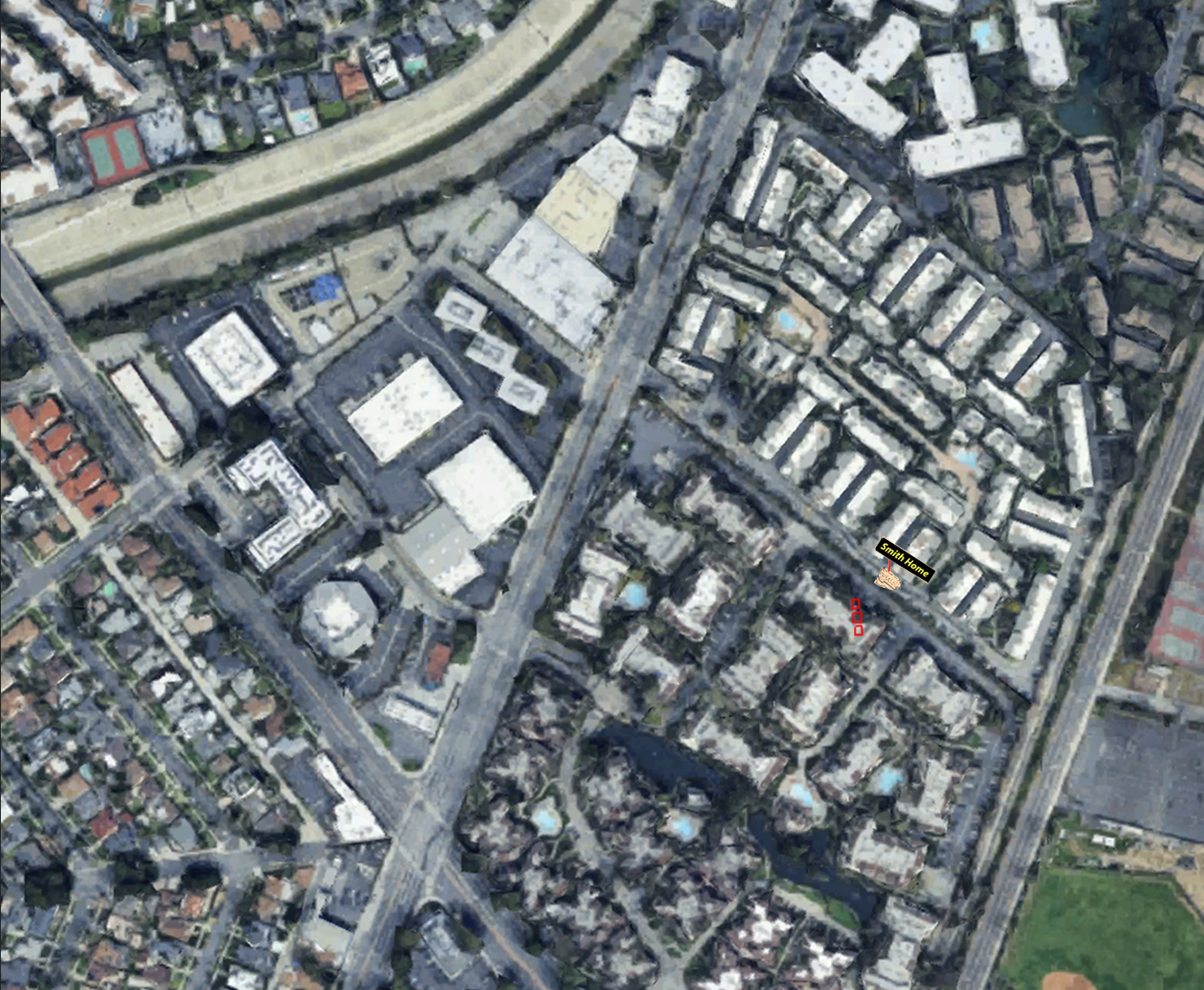
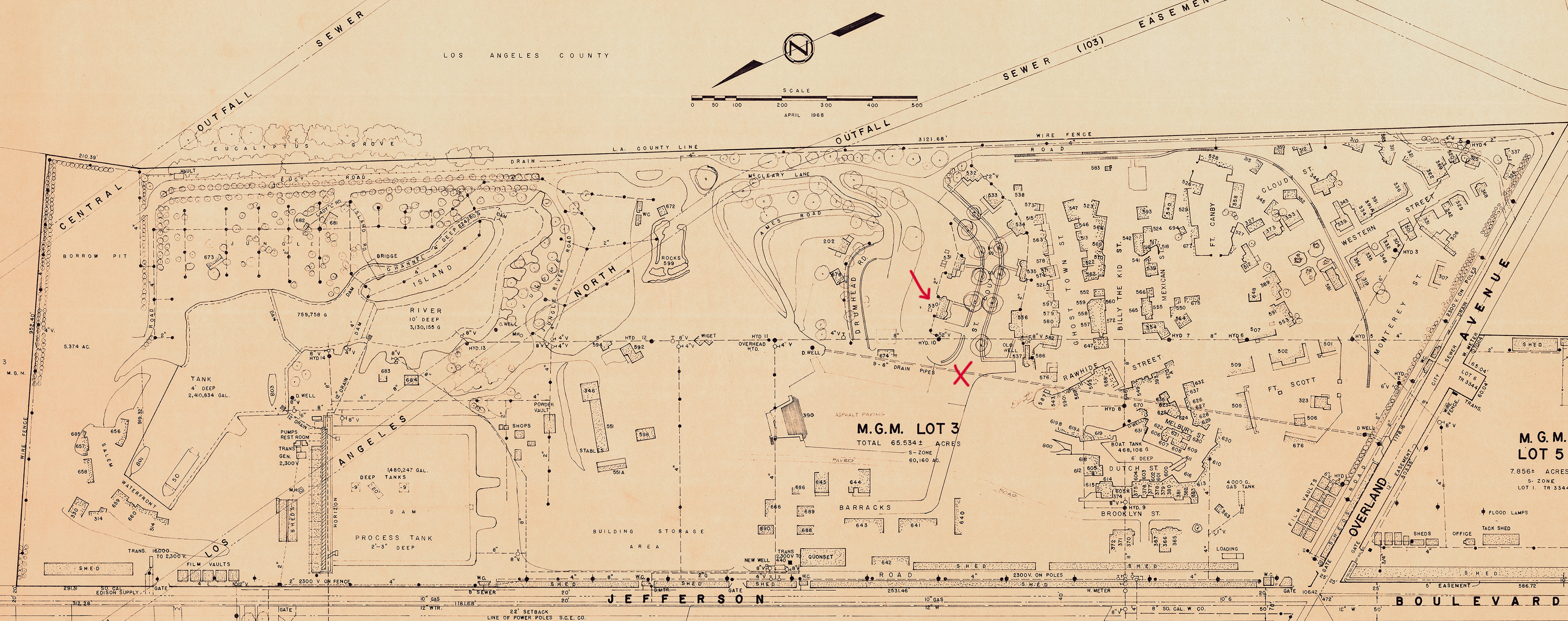
I figured out the approximate location by aligning old and new satellite images with a vintage map of the MGM lot.
Since everything’s gone now and the land is now private property, it’s hard to get a modern photo at the precise spot, but the “Now/then” image above shows roughly where the crash took place.
Back at the Plaza
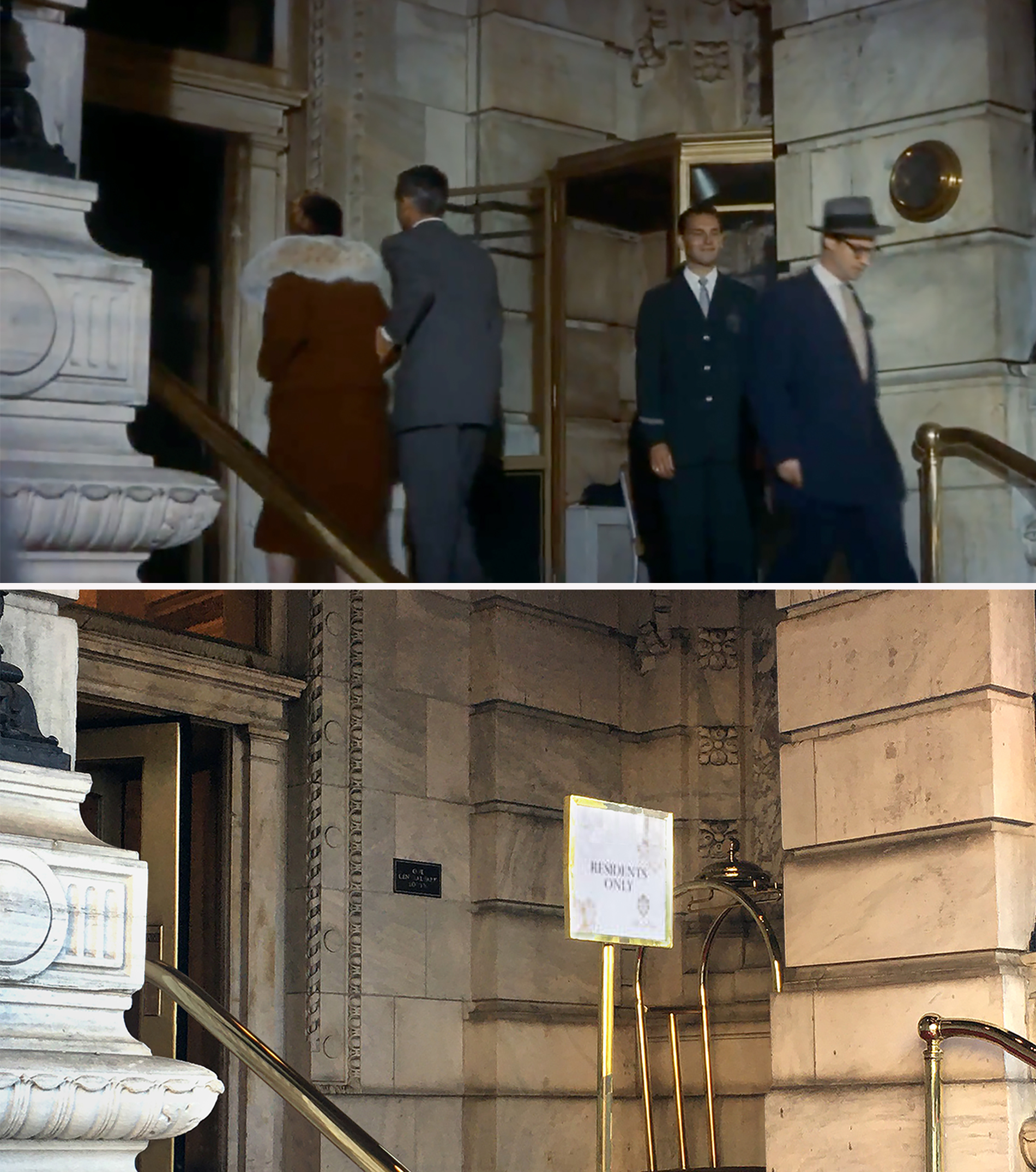
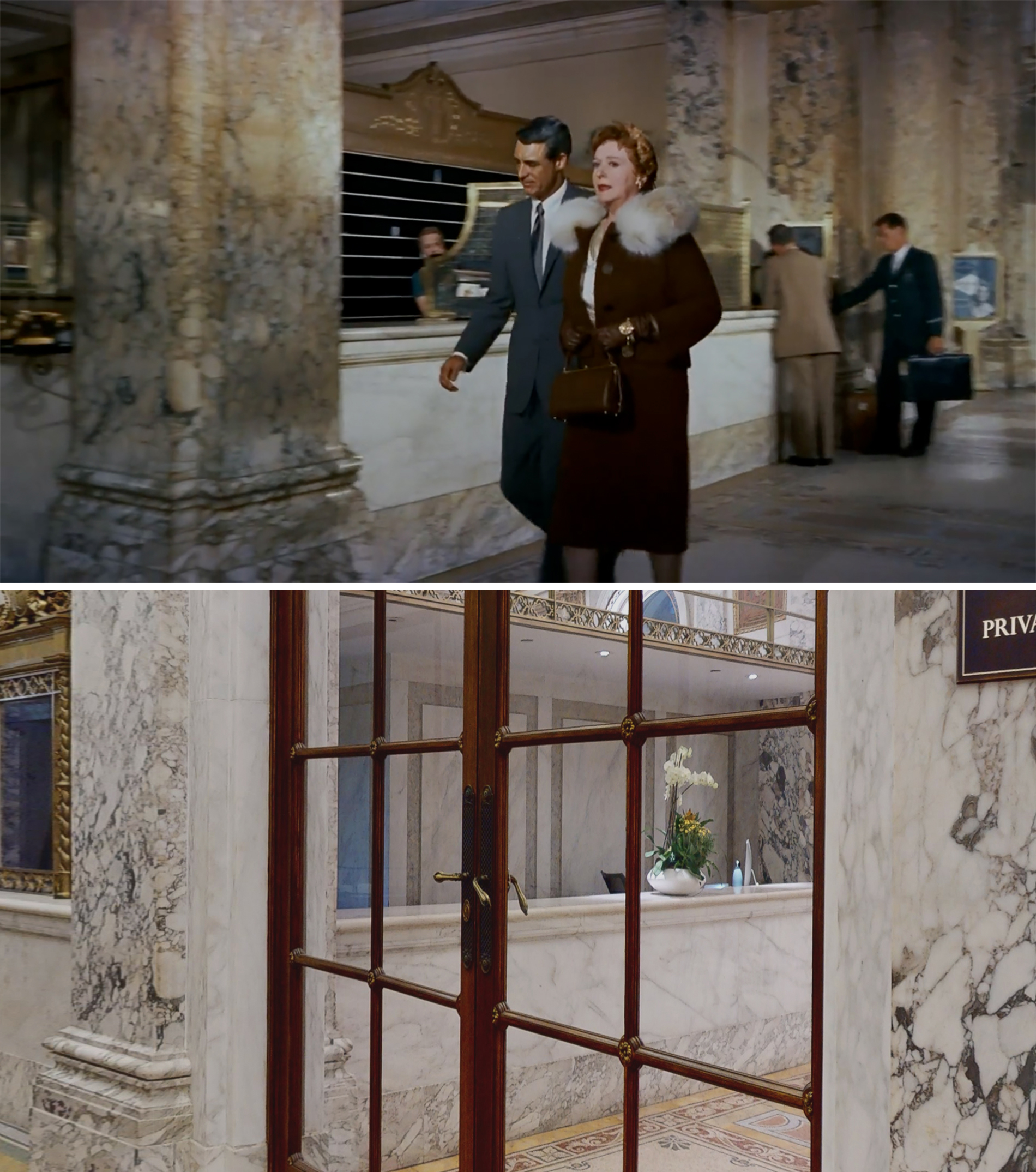
Back at the Plaza Hotel, Alfred Hitchcock once again did a great job blending the real with the fake.
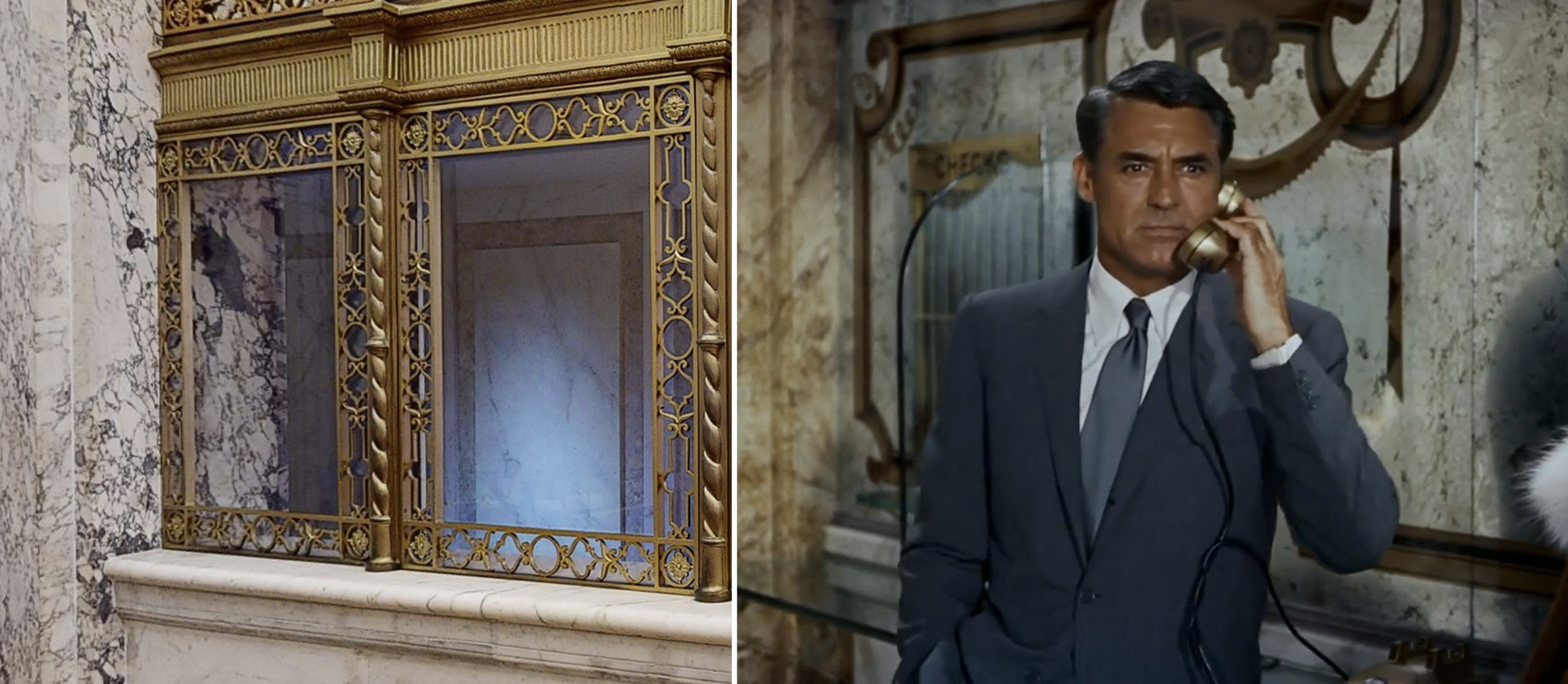
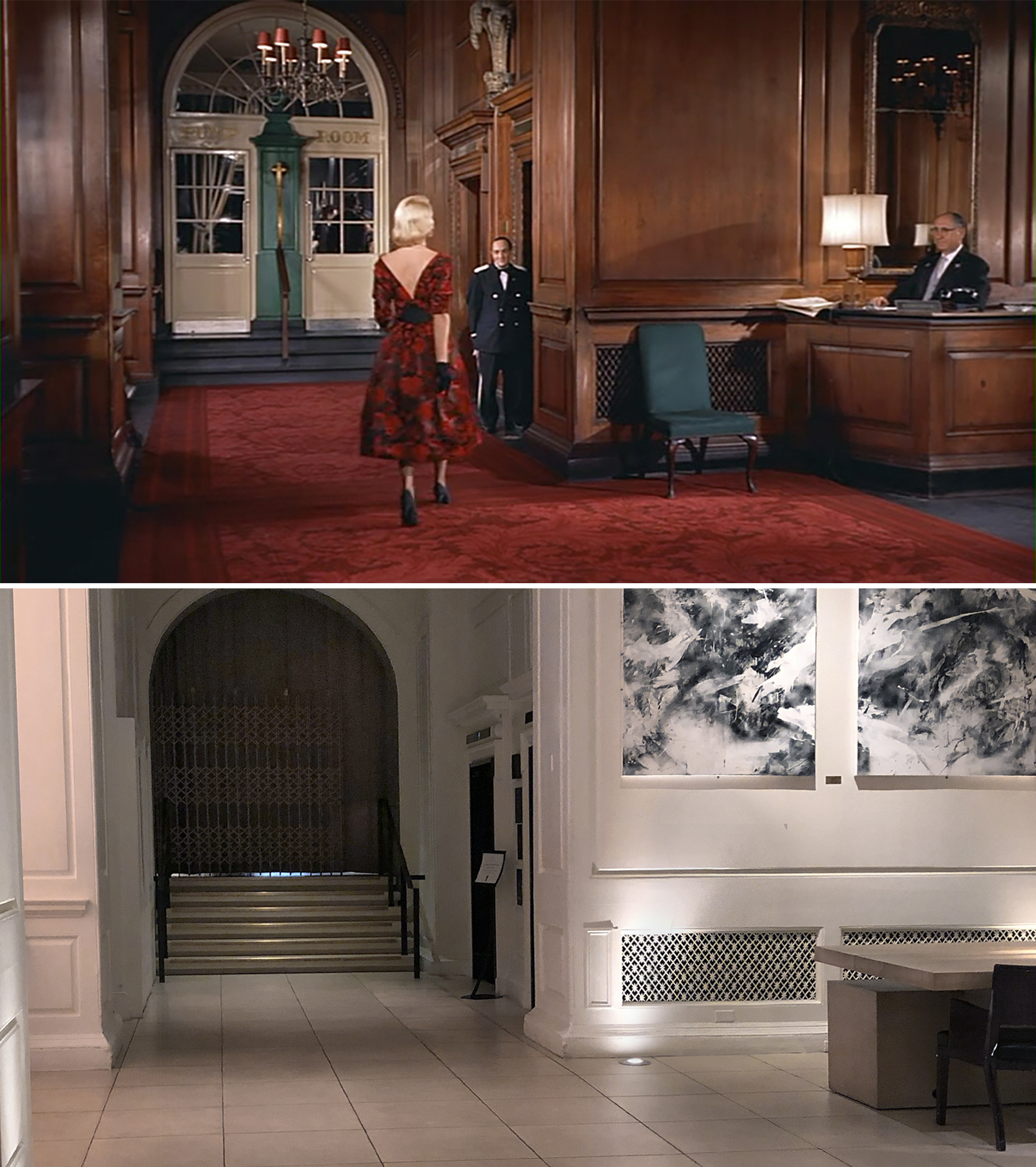
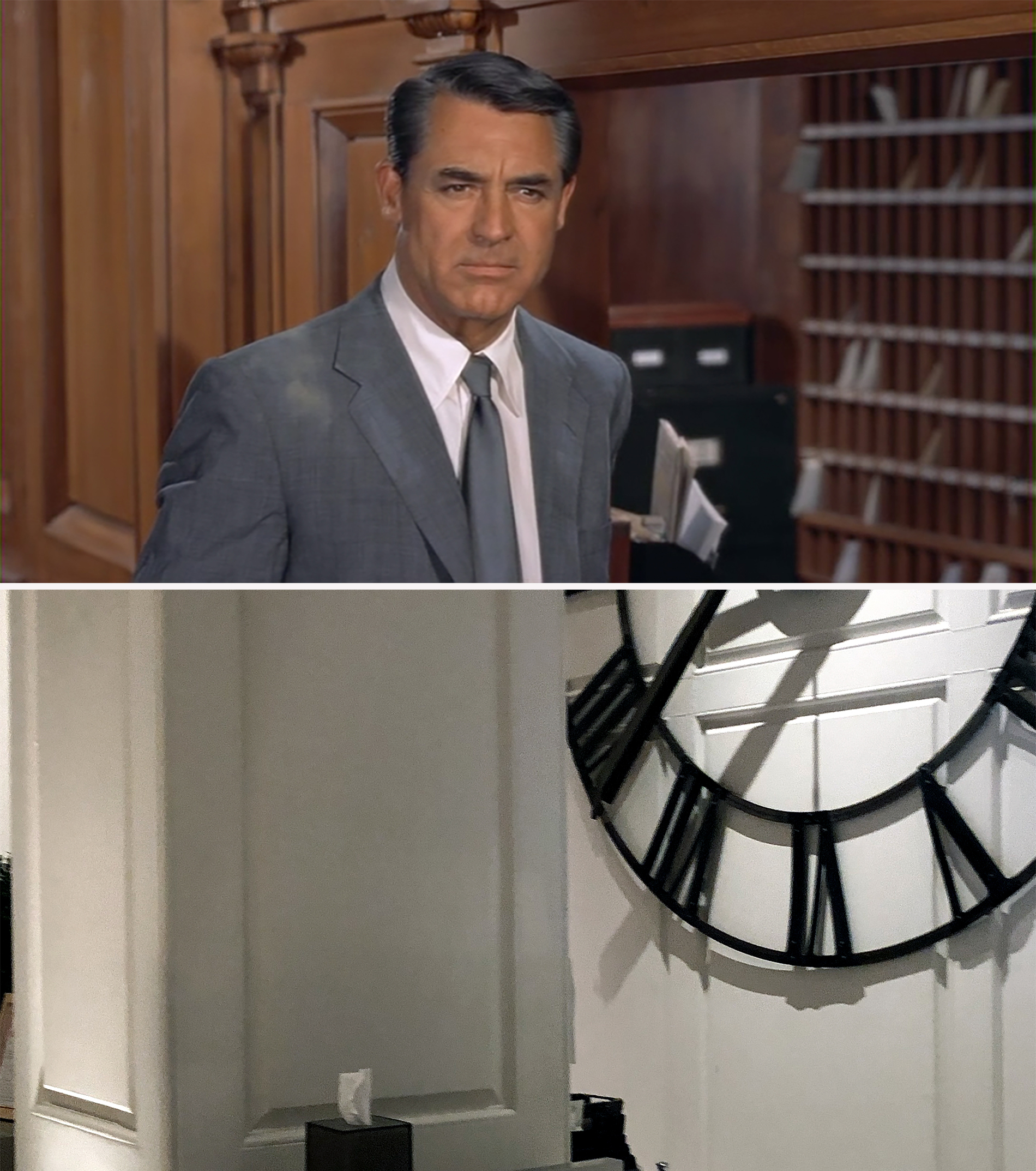
Like in the earlier scene, Hitch used what is now the residence lobby in the building, but as soon as we go into a close-up of Grant on the courtesy phone, it switches to a set at MGM. You can tell because the marble swirls at the real location don’t match the close-ups, but they do in the wide shot.
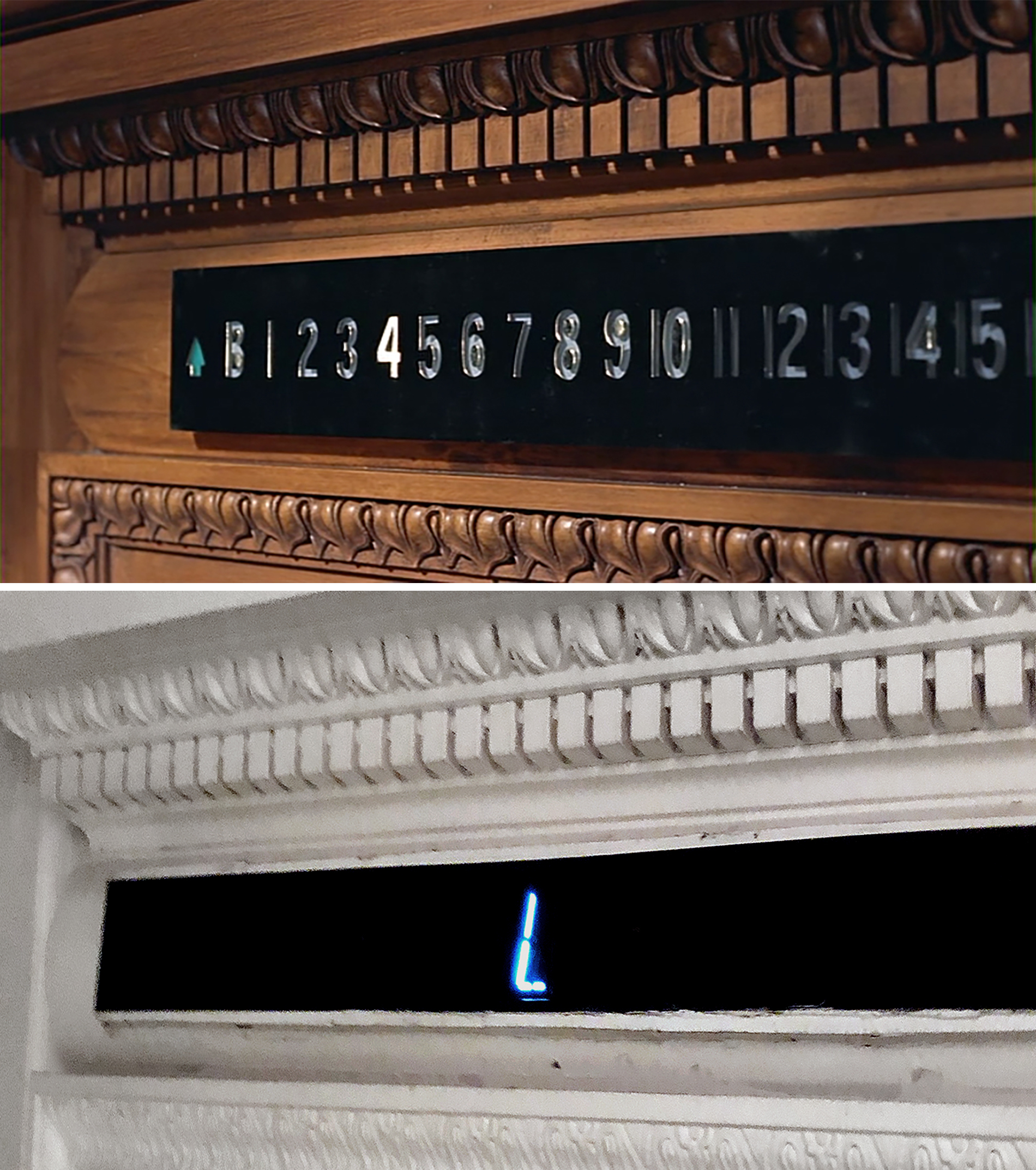
The upstairs hallway and hotel room were both sets as well, filmed weeks later at MGM Studios. But the stuff of them getting on the elevator was done at a New York studio.
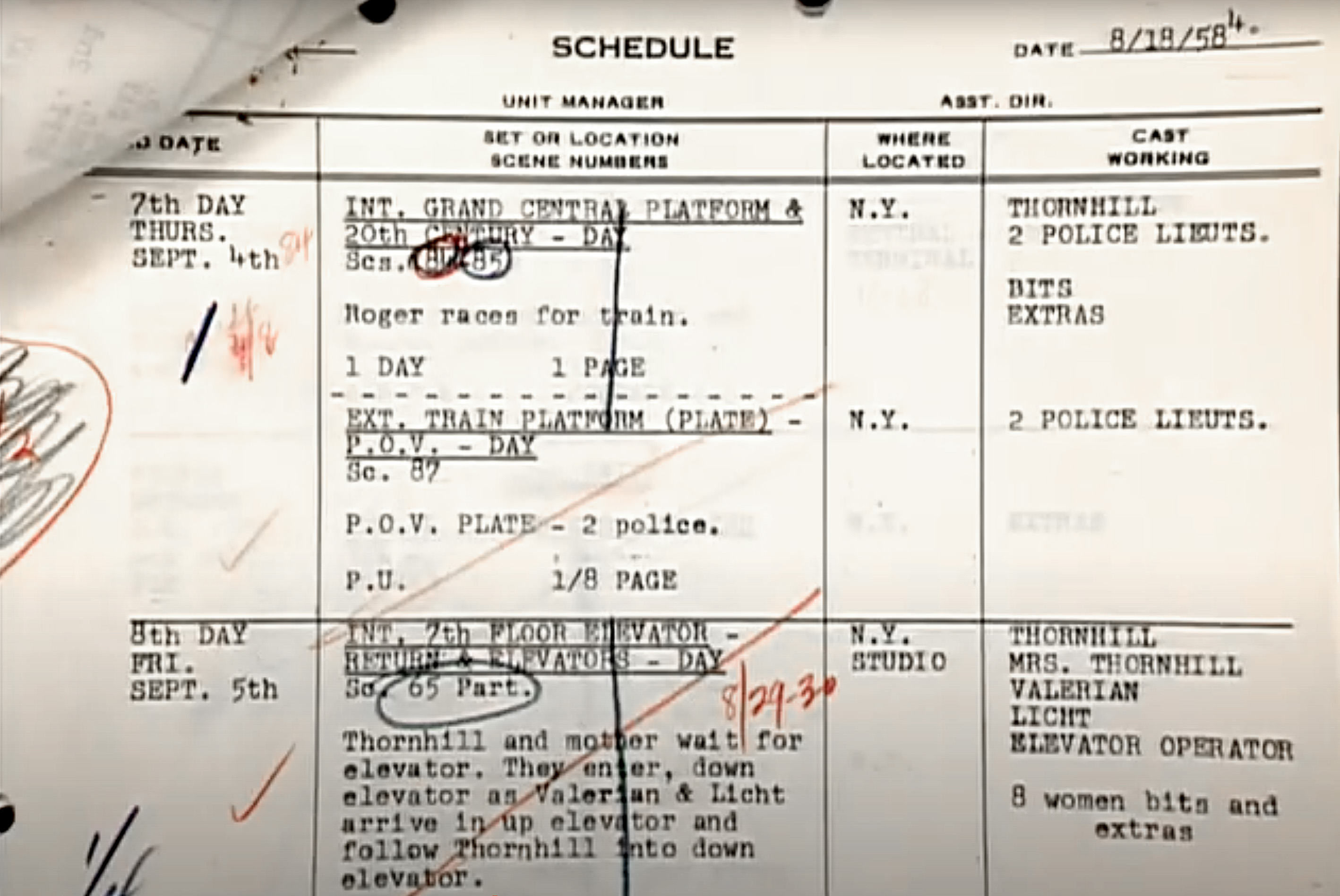
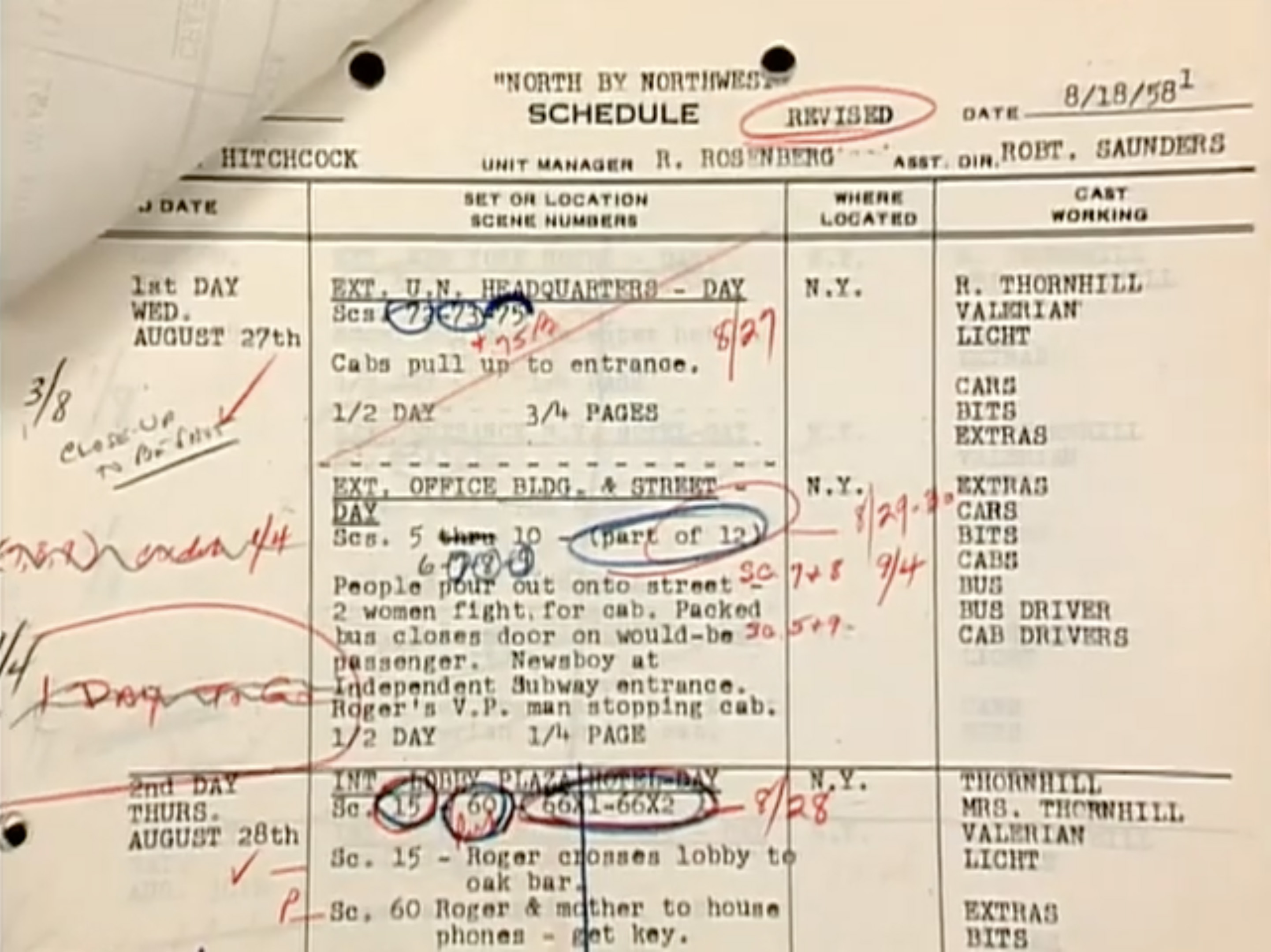
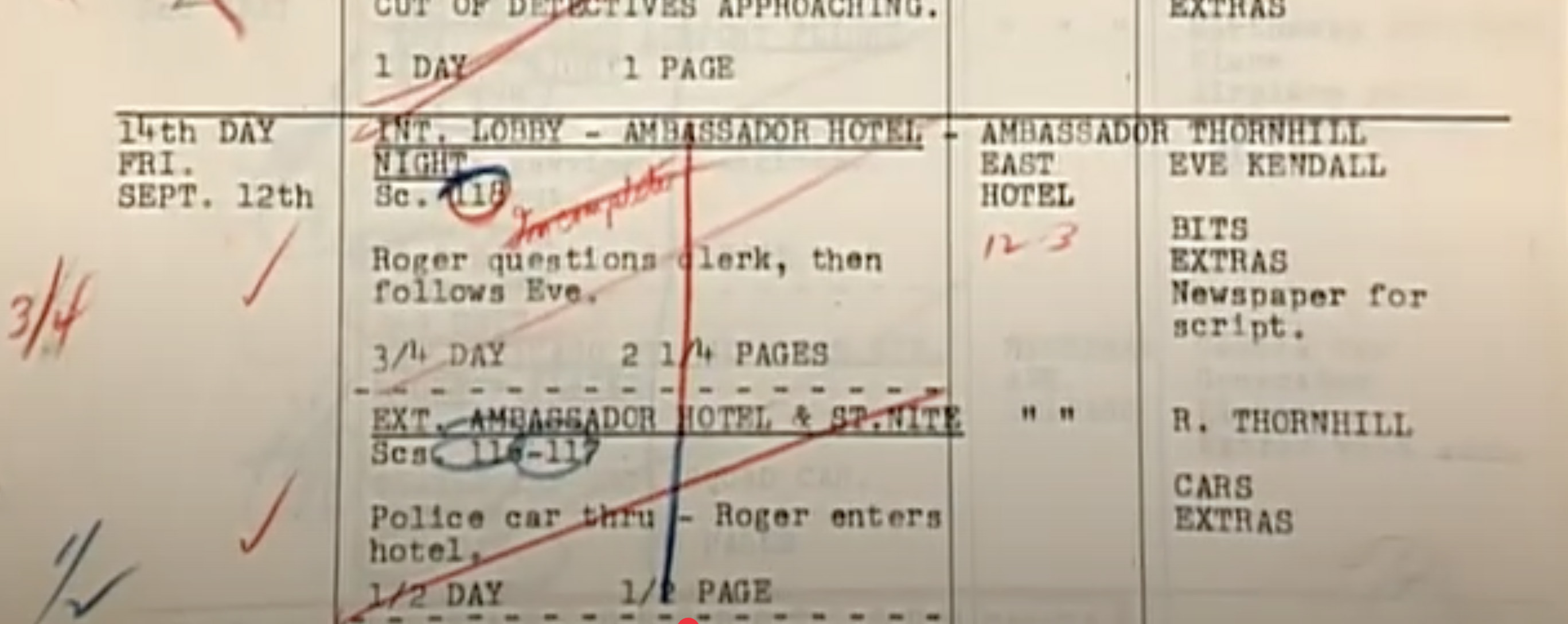
Not sure why it was done in New York or what studio was used; all I have to go on are the production notes on an original schedule sheet. I believe this elevator scene was the last thing they filmed in NYC before making a company move to Chicago.
The United Nations
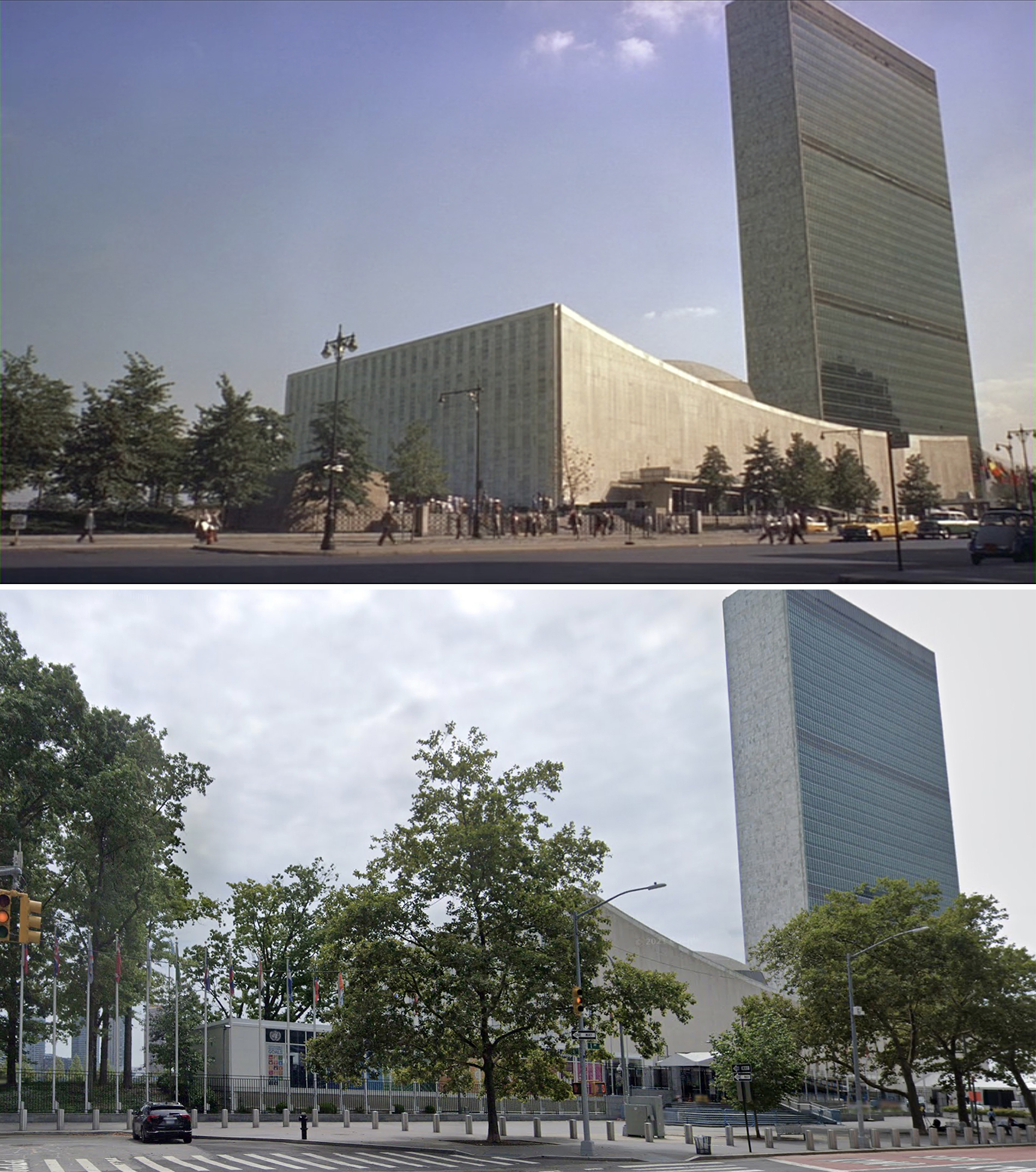
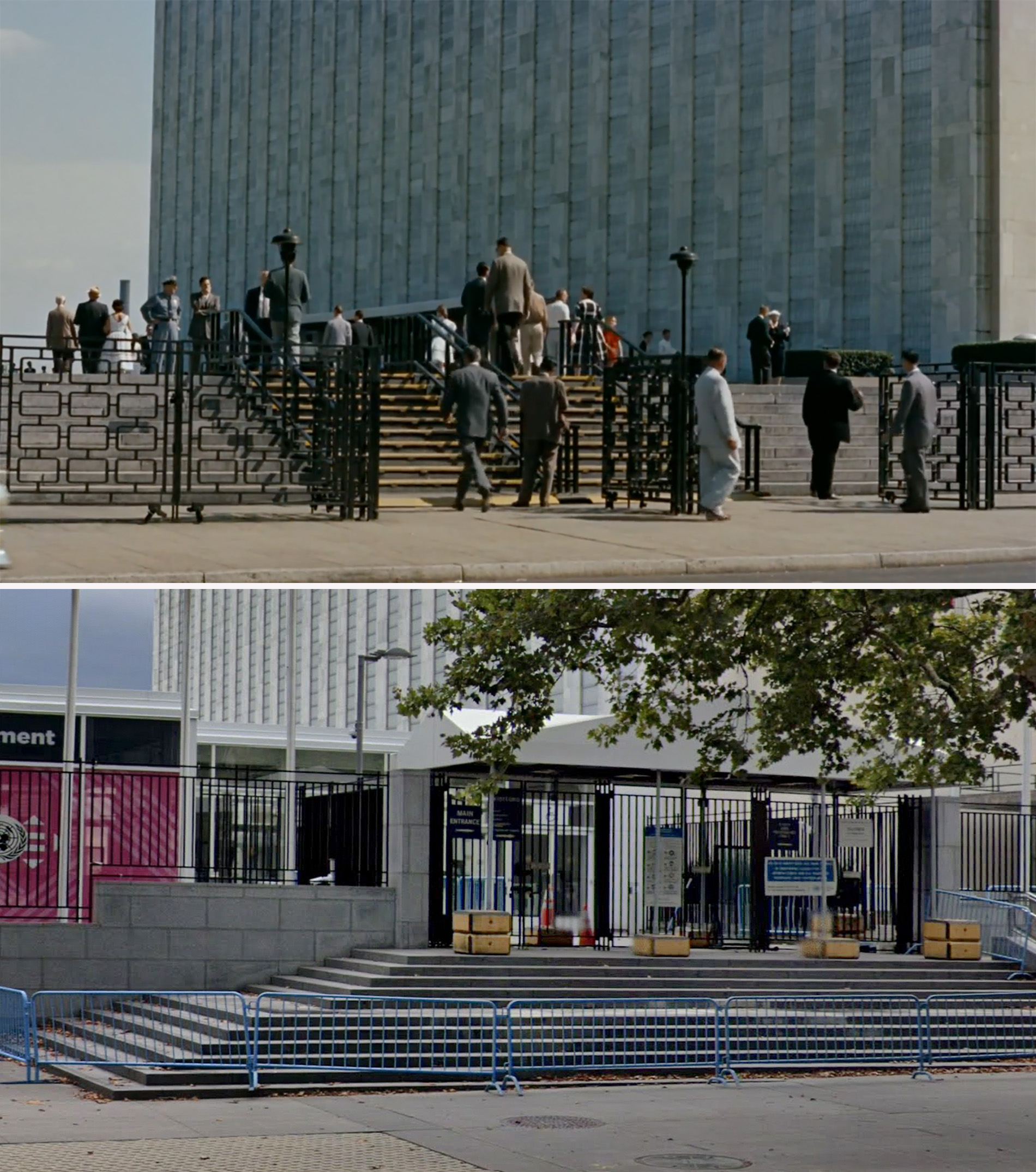
The exteriors of the United Nations were filmed on Wednesday, August 27th, 1958, which was the very first day of production.
This brief scene of Roger Thornhill entering the building was actually done on the sly, because for some reason, production was unable to get official permission to film at the UN. As the story goes, Hitchcock and his crew hid in a carpet van parked across the street and covertly grabbed shots of Cary Grant with their VistaVision camera (hoping none of the passersby would stop and gawk at the debonaire movie star).
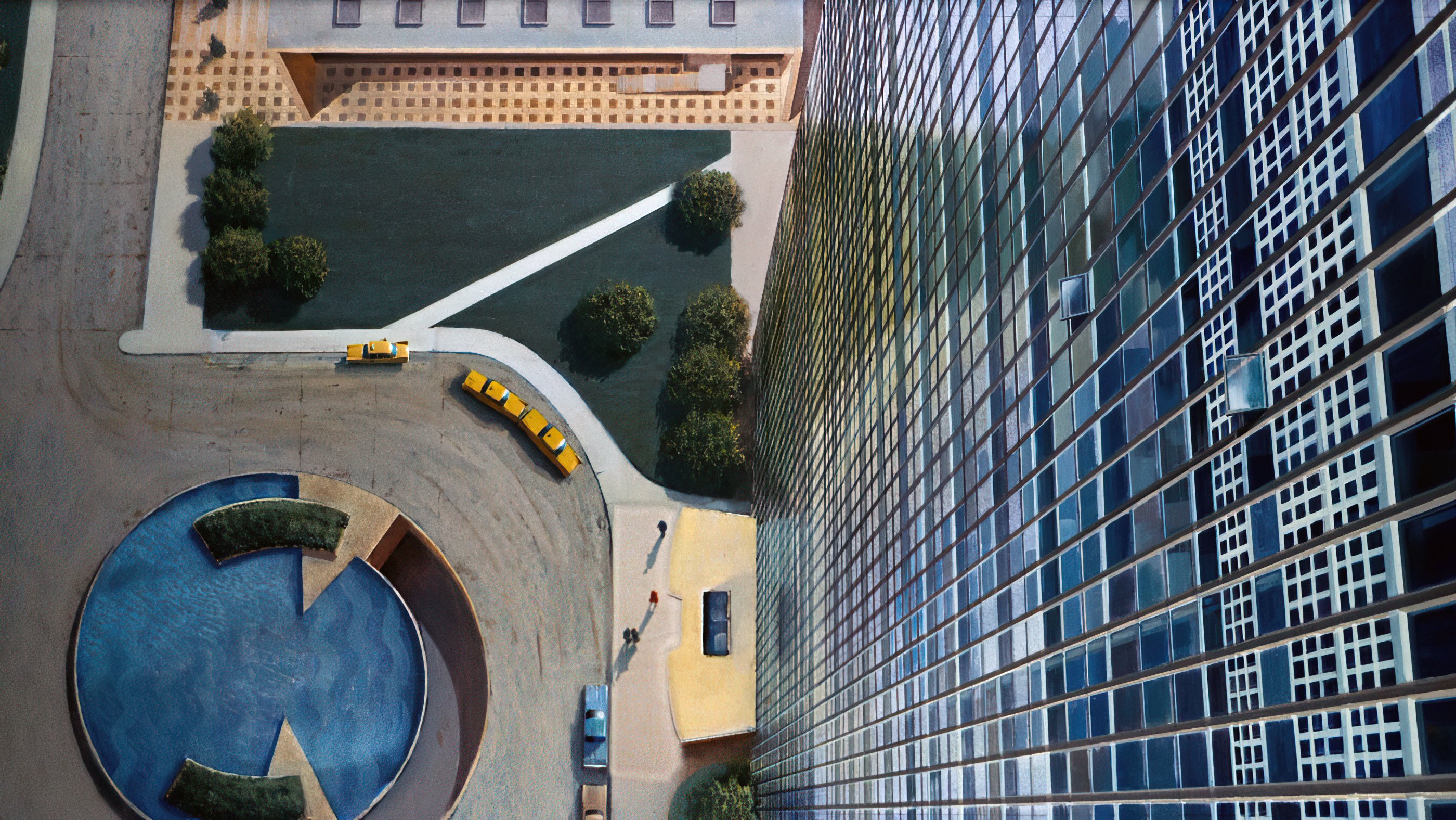
Once inside the UN, it transitions to yet another set, this time enhanced with a matte painting by the prolific visual effects artist, Matthew Yuricich, who who later do work for another iconic NYC movie, Ghostbusters.
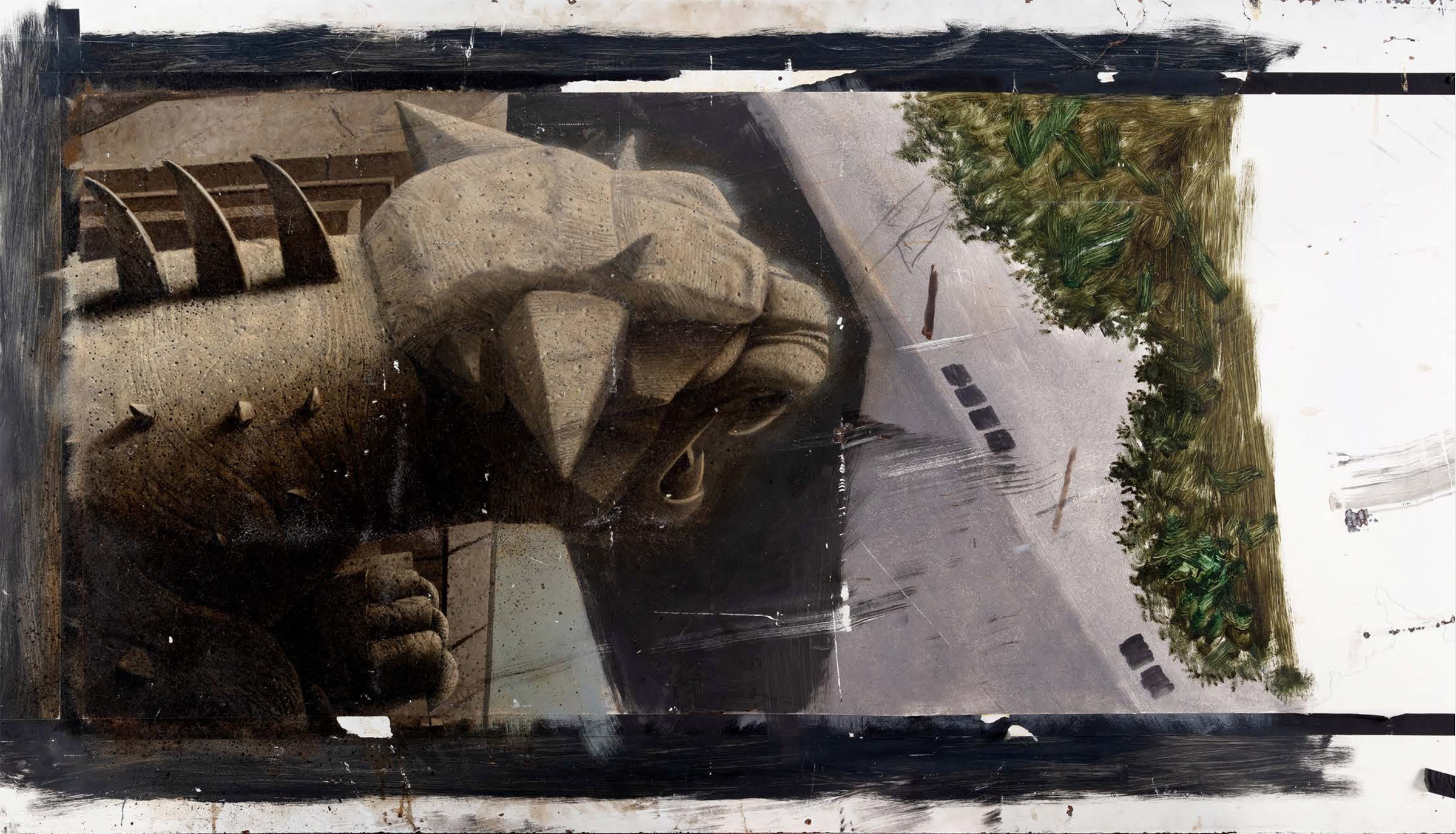
Yuricich’s recreation of the UN Headquarters lobby was quite impressive, flawlessly matching the real one to a tee.
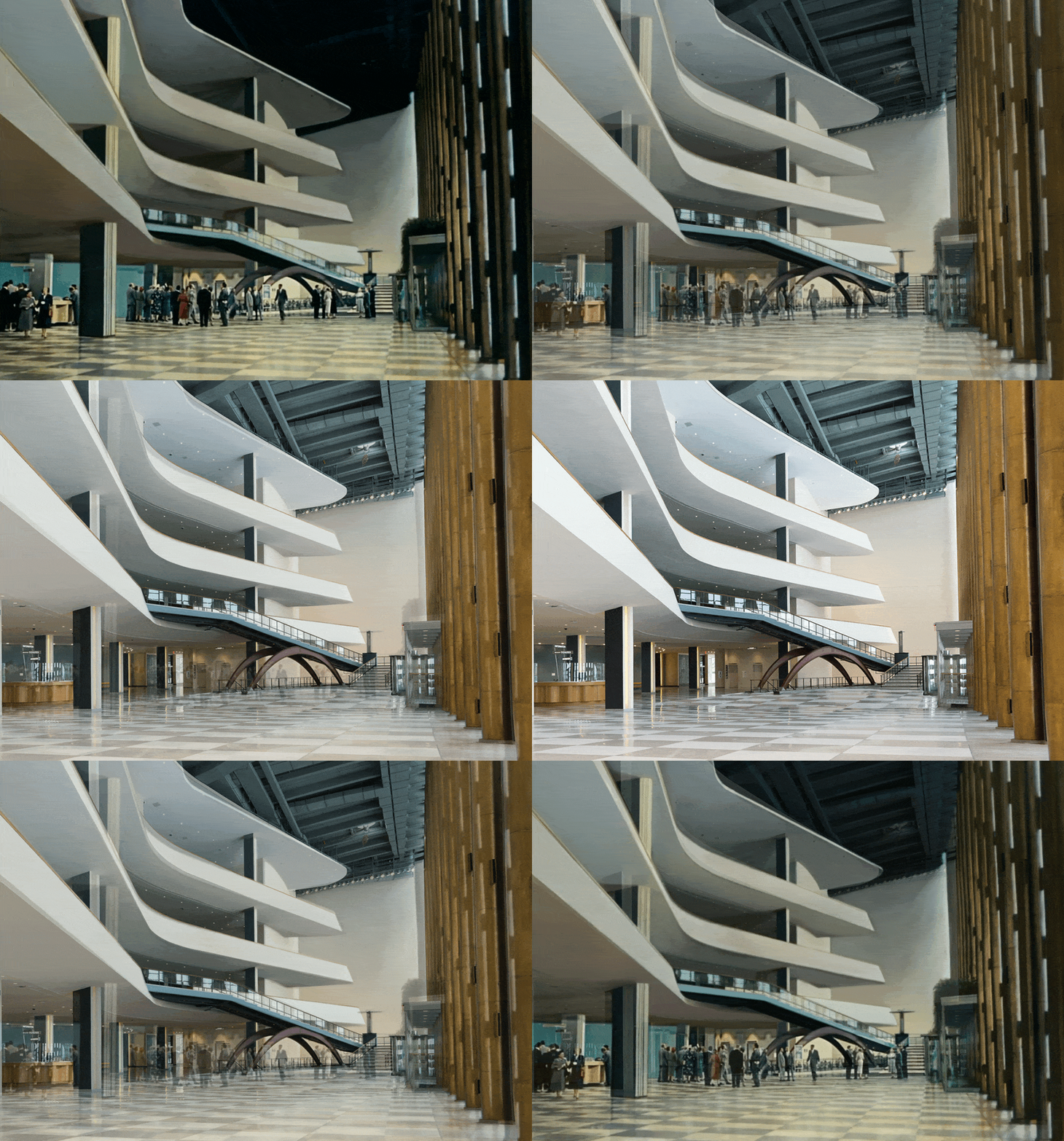
Once they move into the lounge area, it becomes a little more obvious they’re on a set.
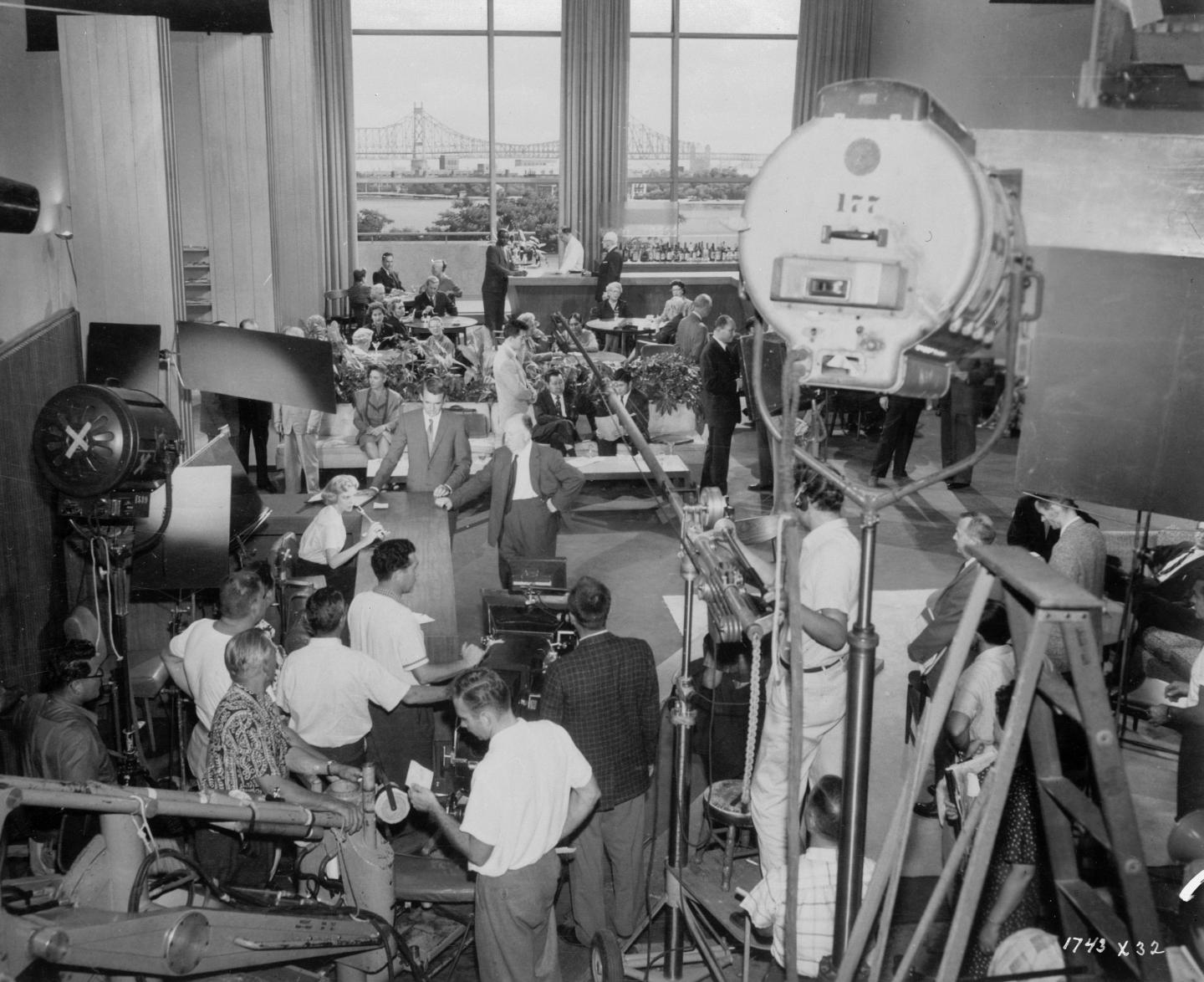
In particular, the window in the movie is way off from what’s really at the North Delegates’ Lounge, which basically has an entire wall of glass.
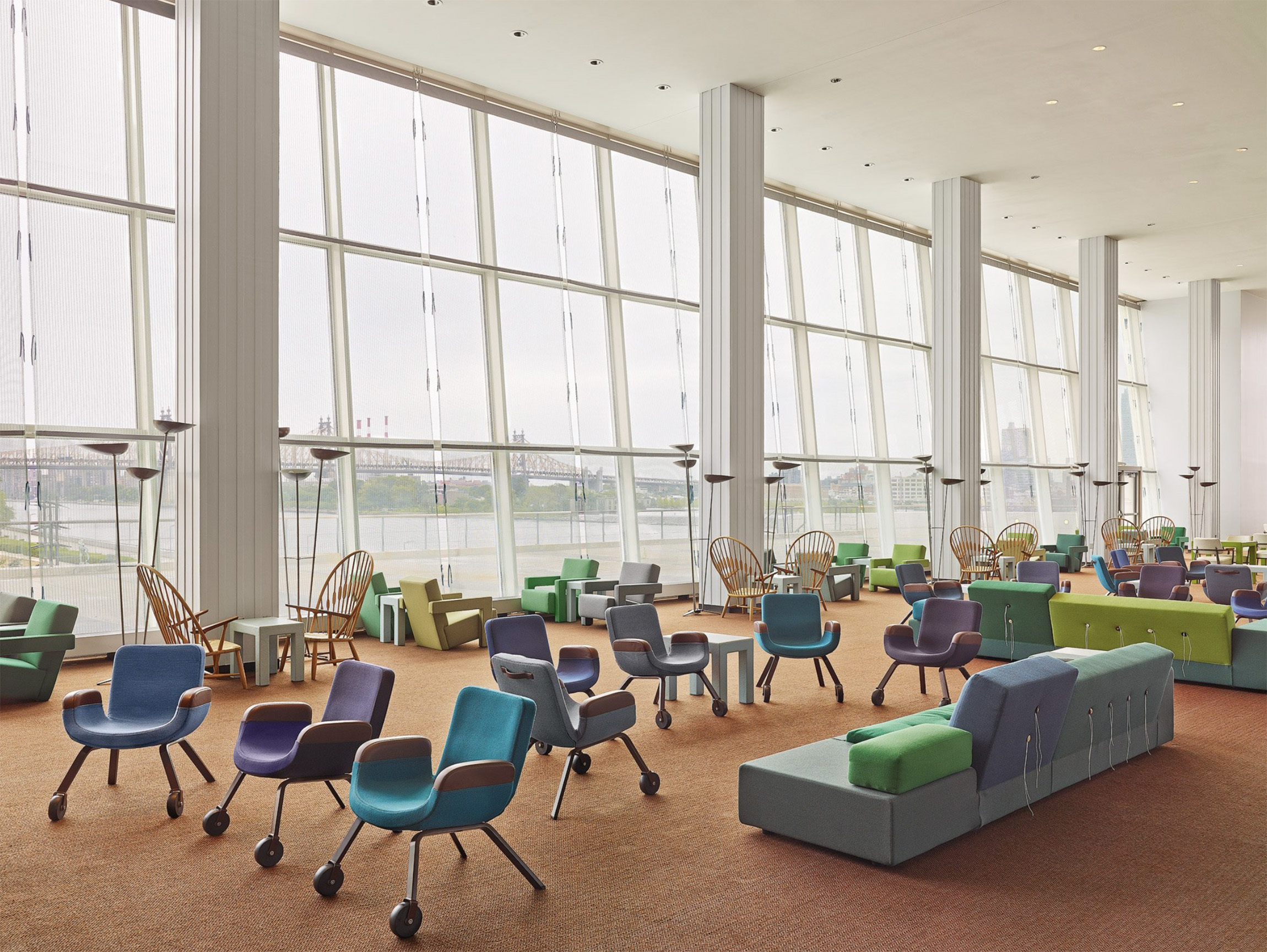
But it was a nice touch for them to include the 59th Street Bridge in the backdrop which can be seen from the real lounge.
Grand Central Terminal
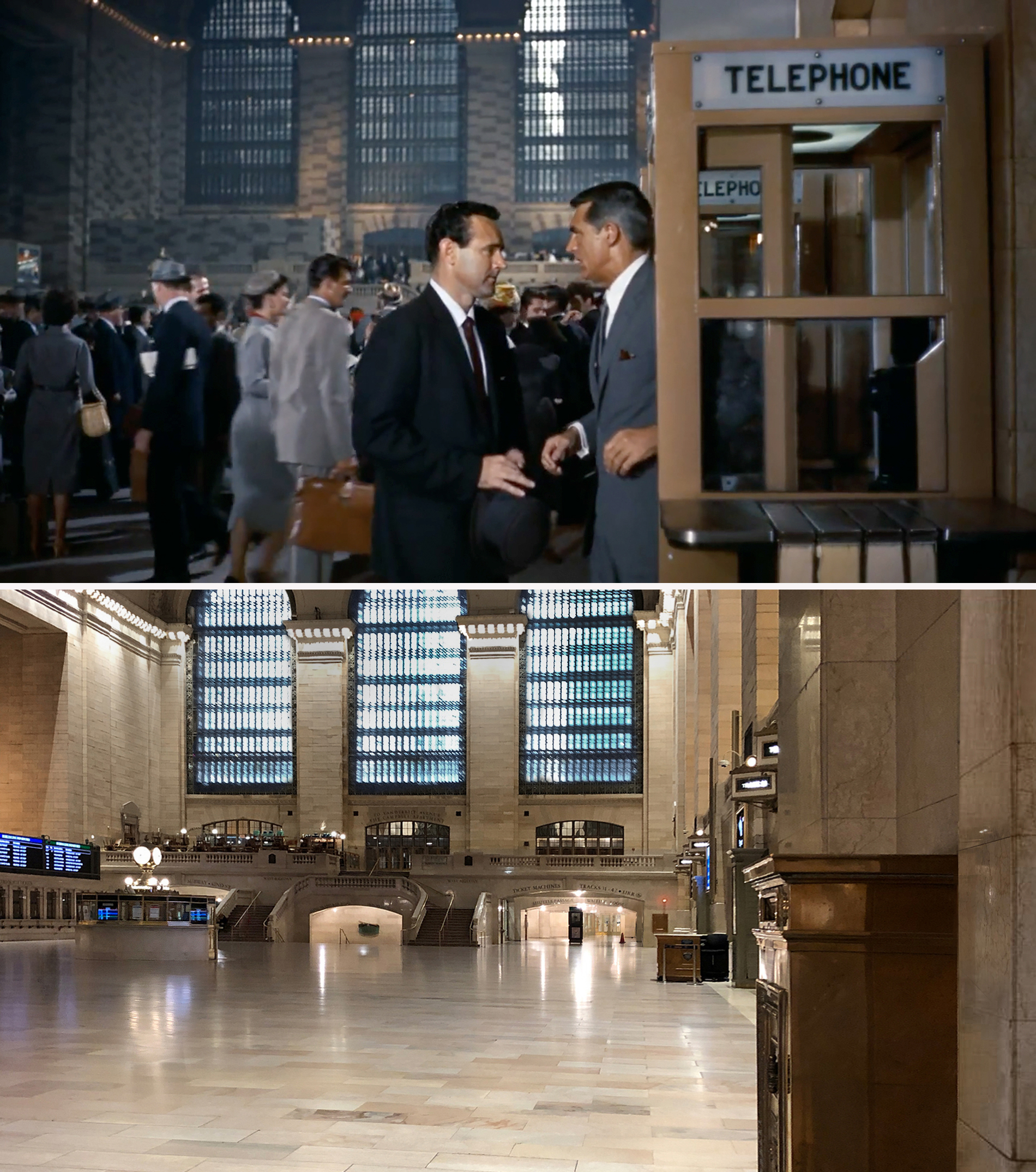
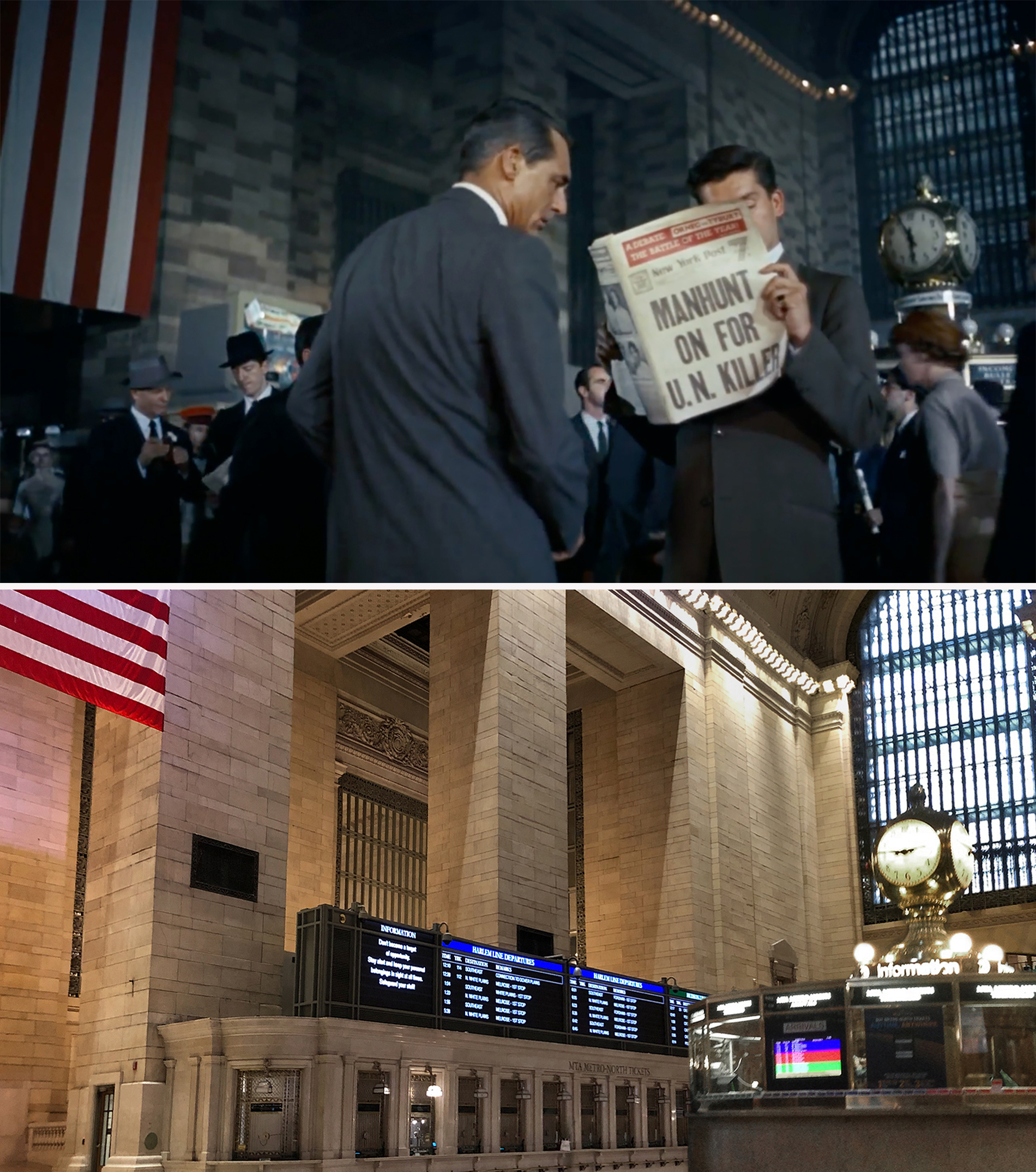
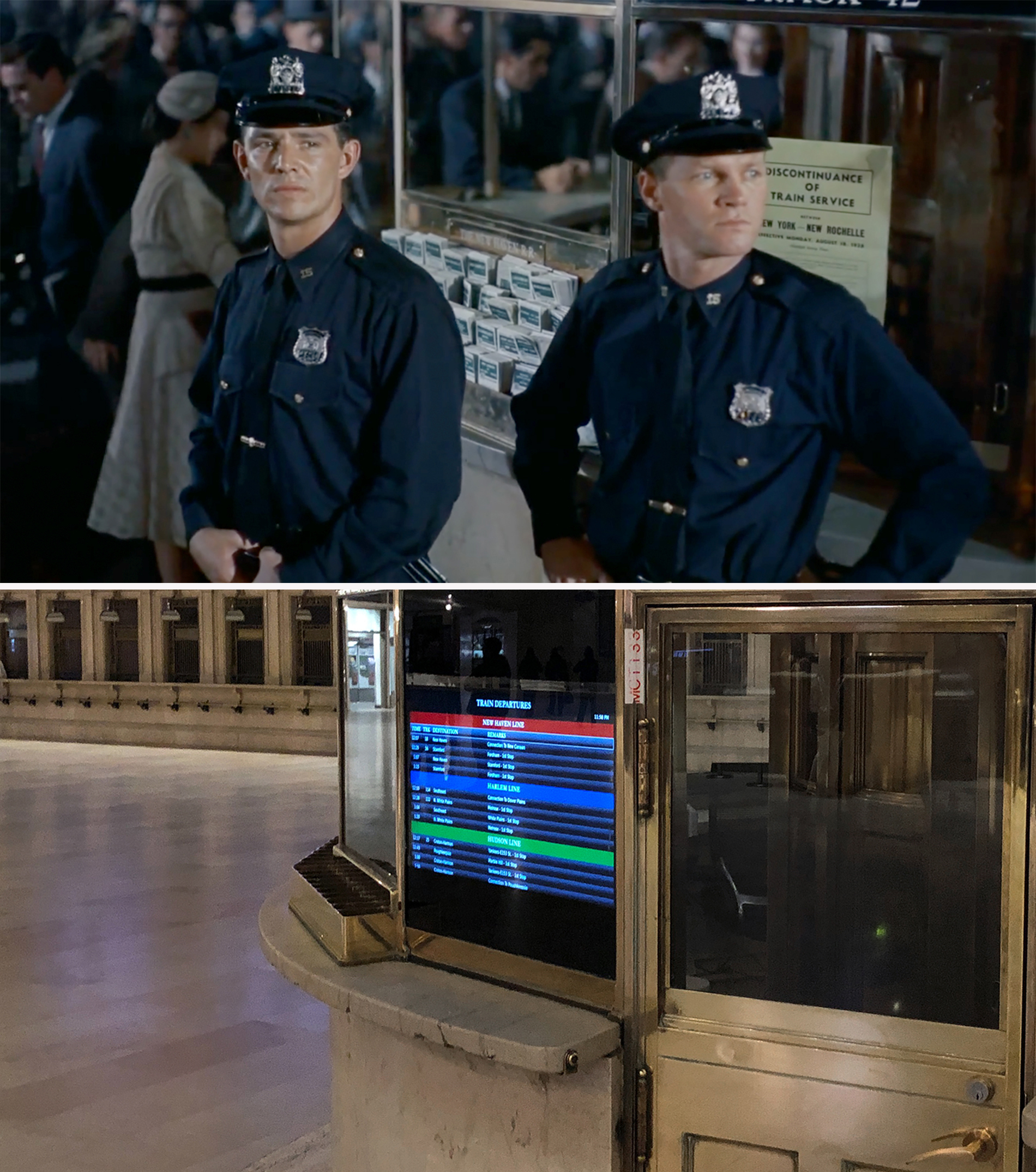
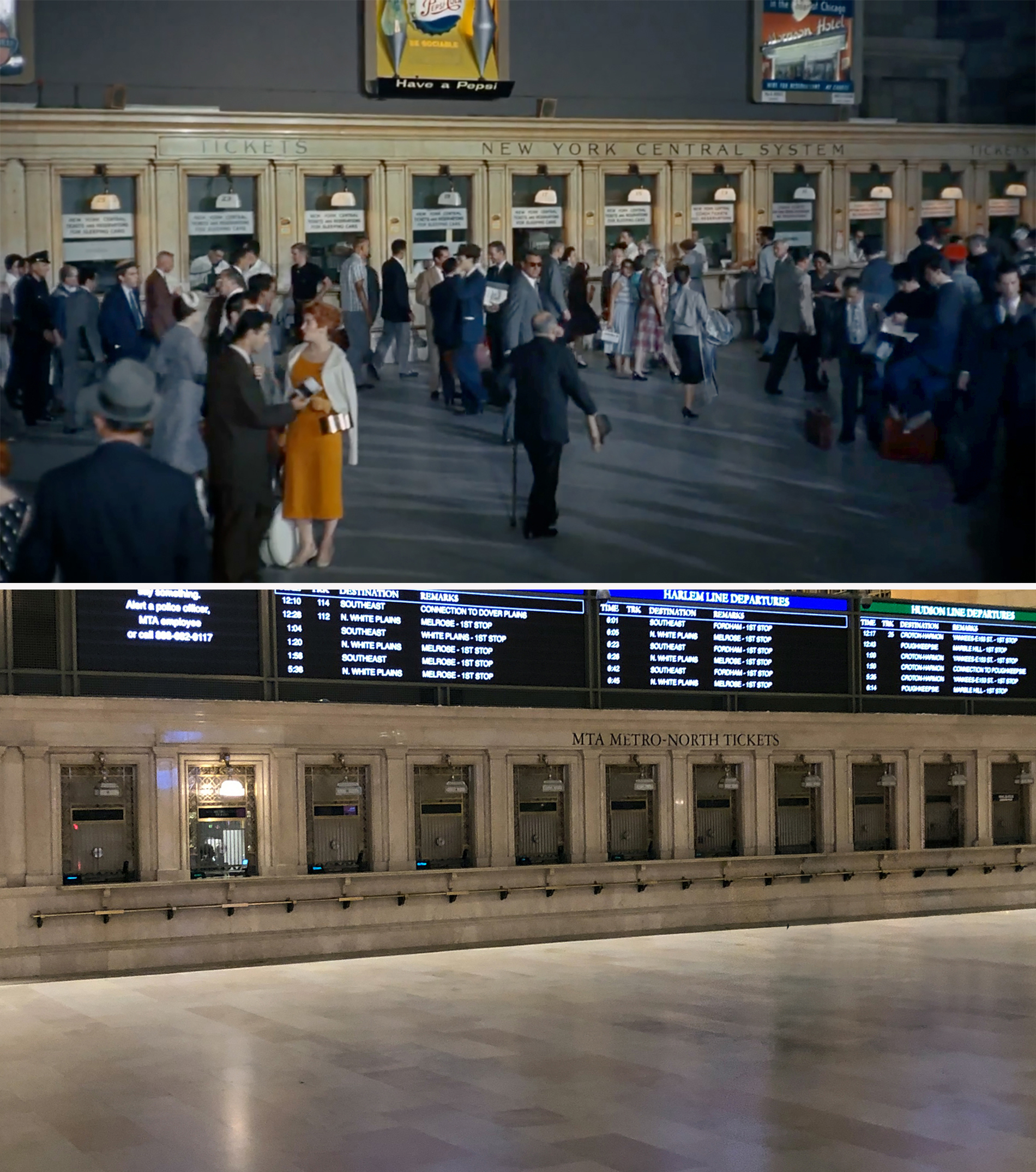
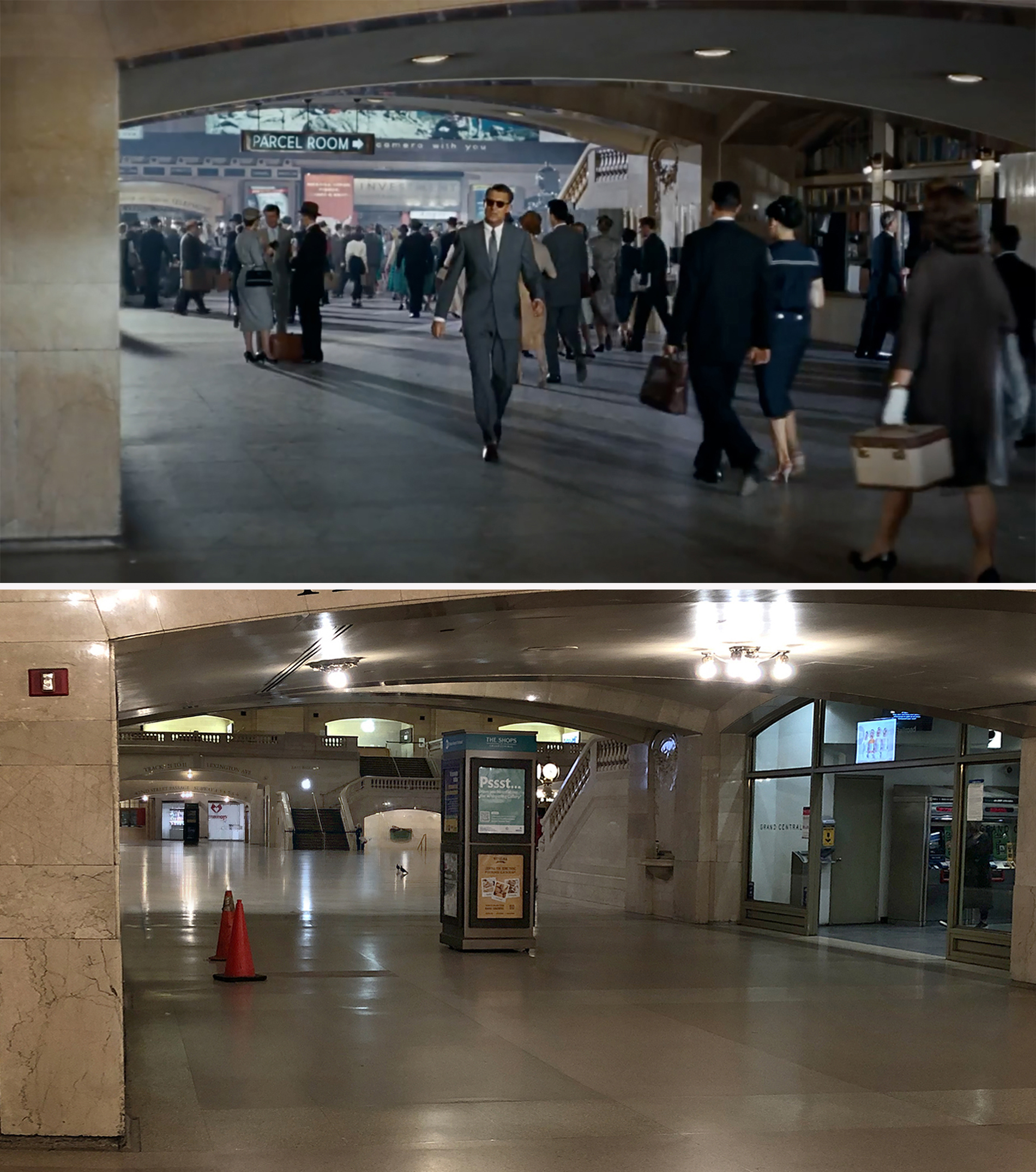
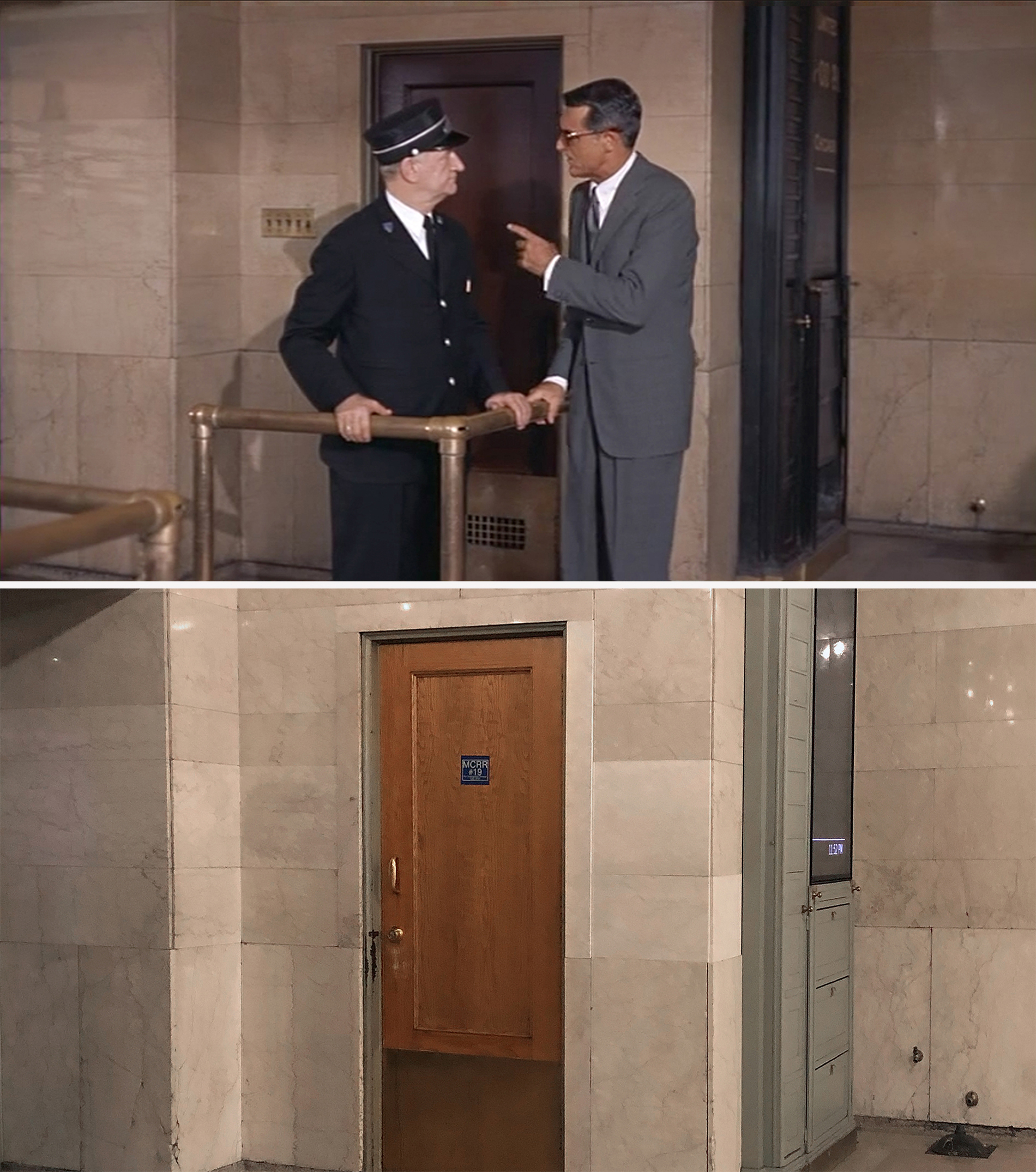
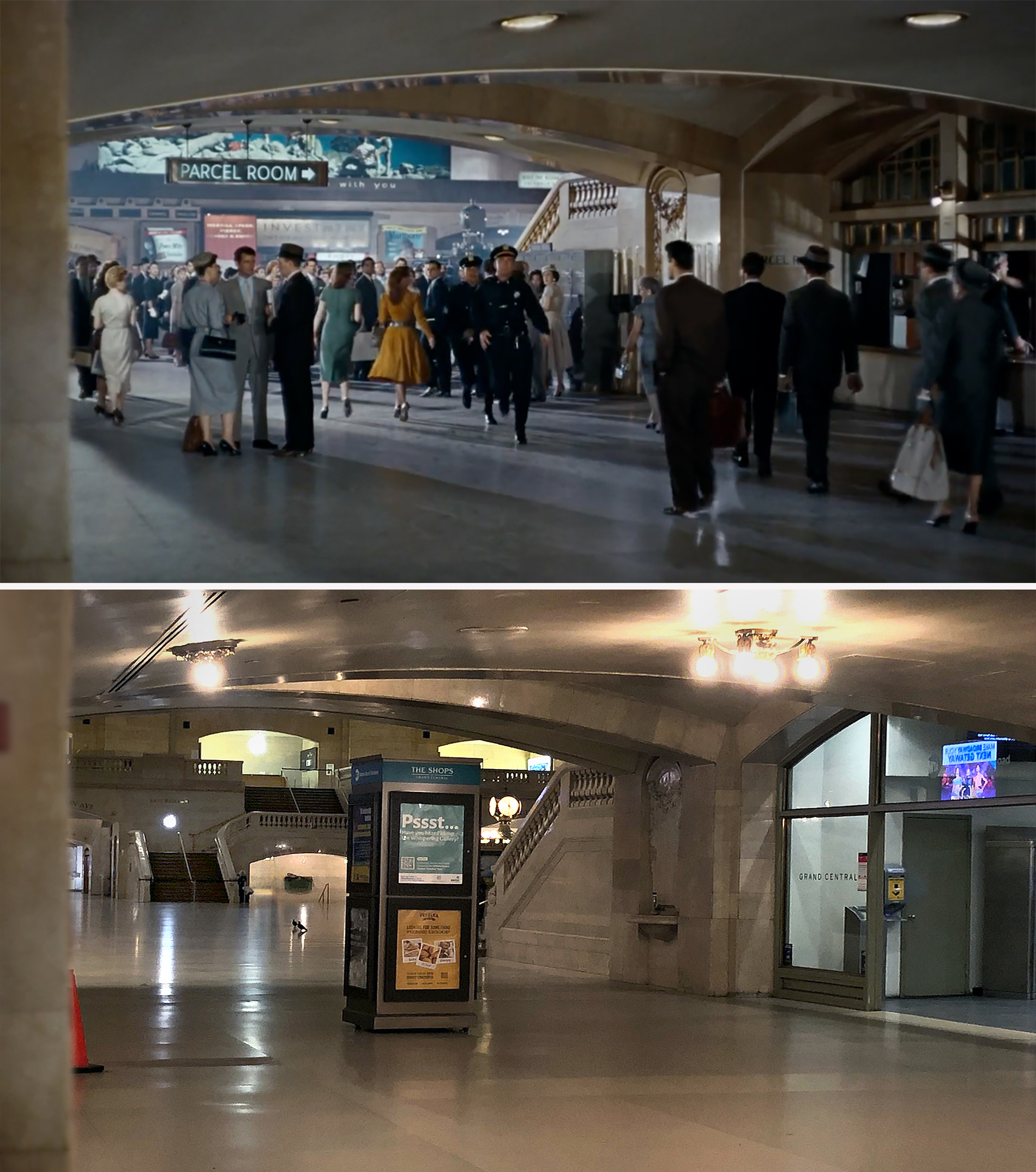
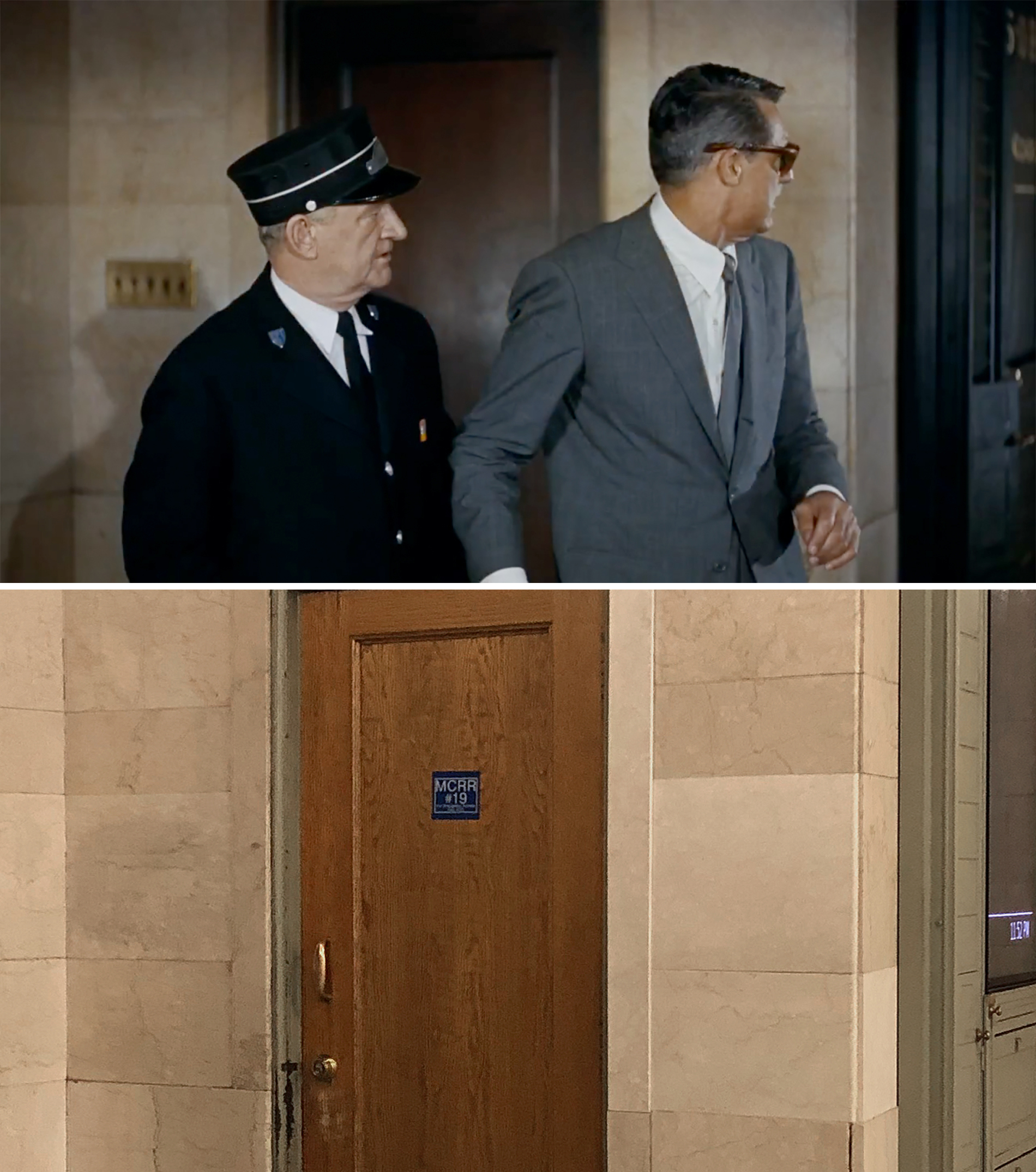
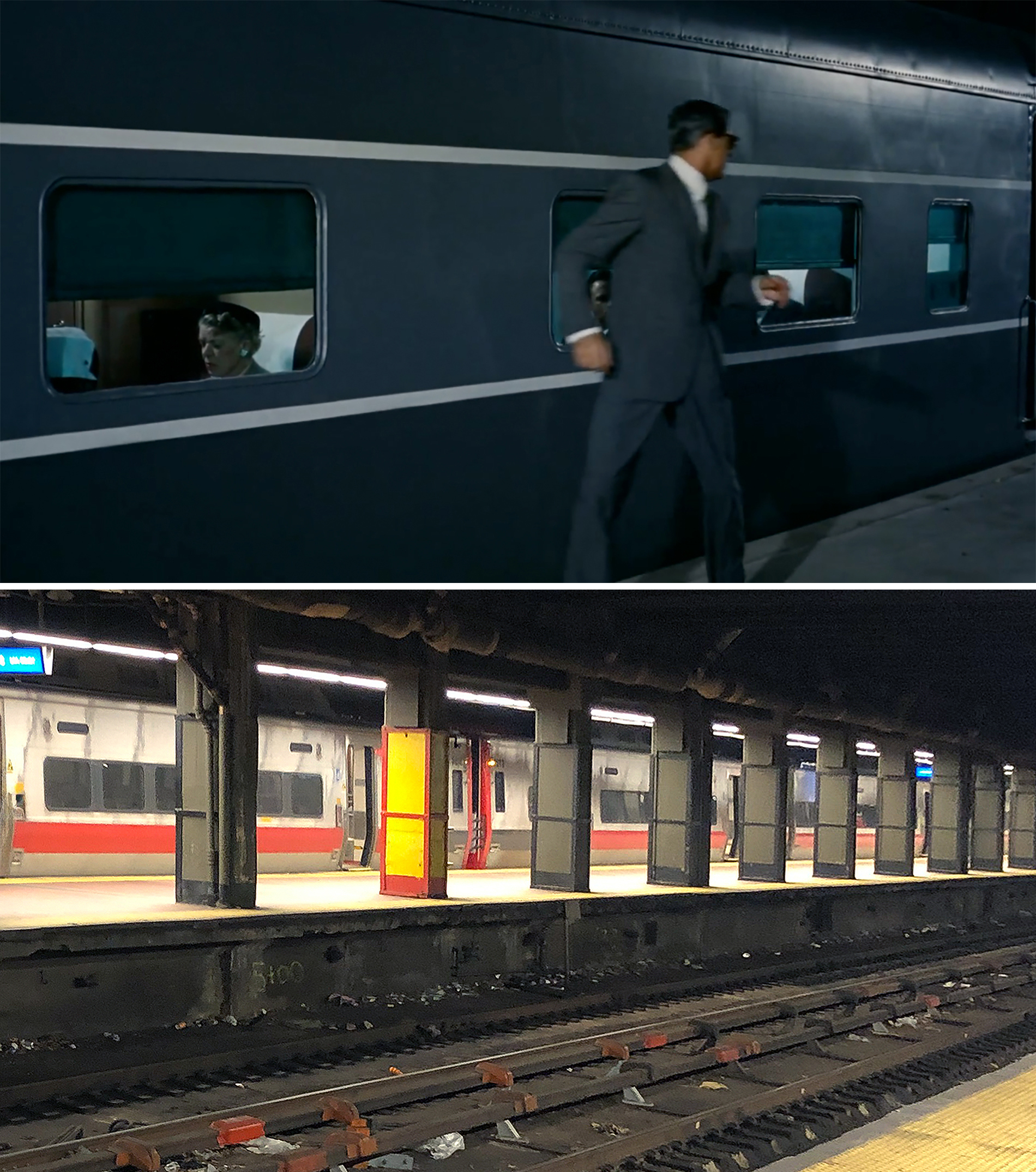
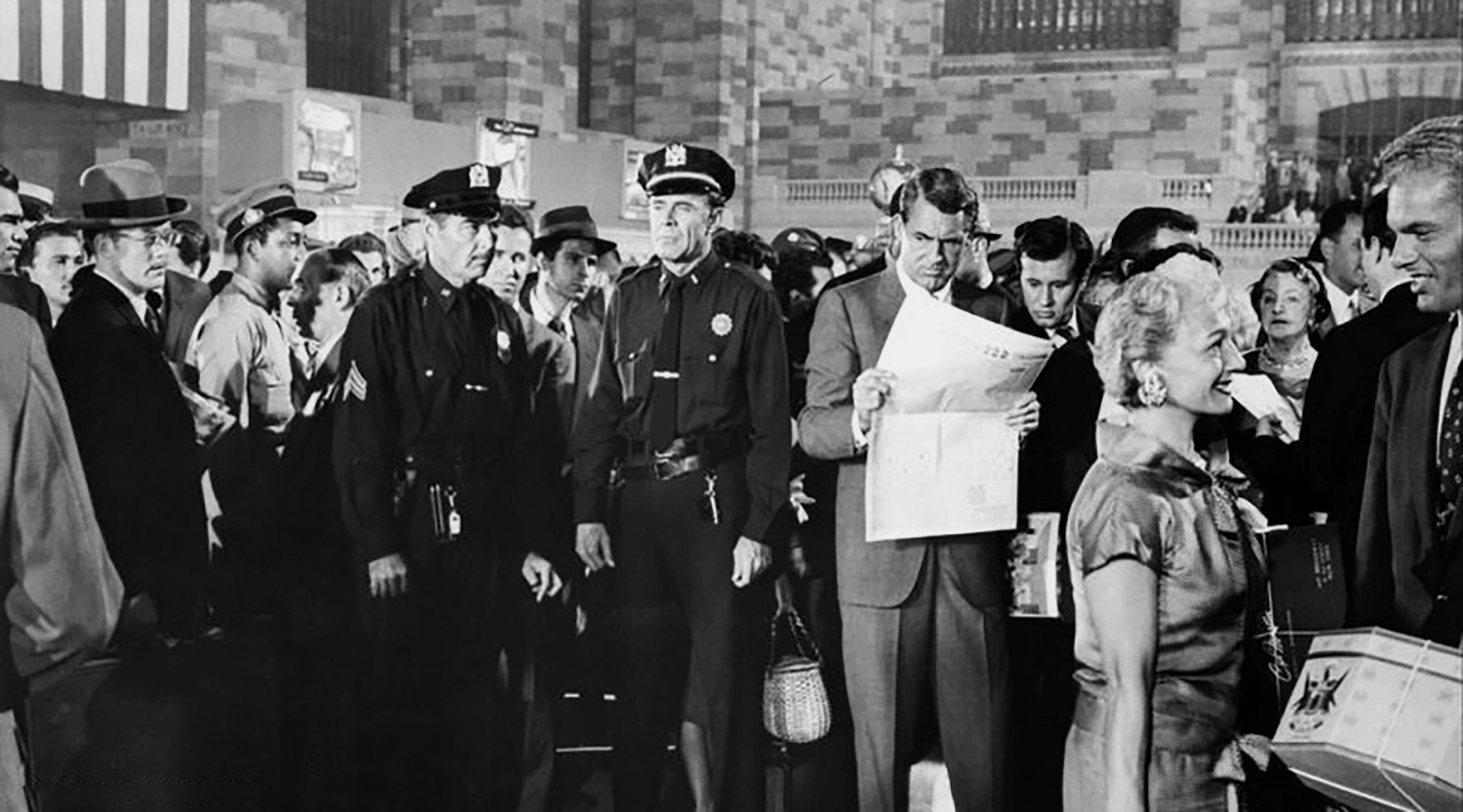
I obviously knew this sequence was shot at Grand Central, it was just a matter of figuring out what individual spots were used. But that wasn’t too hard since it was all taking place at or near the Main Concourse which has essentially remained the same over the years.
The cavernous, elliptical ceiling is certainly the thing that stands out the most when you enter the concourse, bearing a celestial mural of more than 2,500 stars that was lovingly restored in 1996-98.
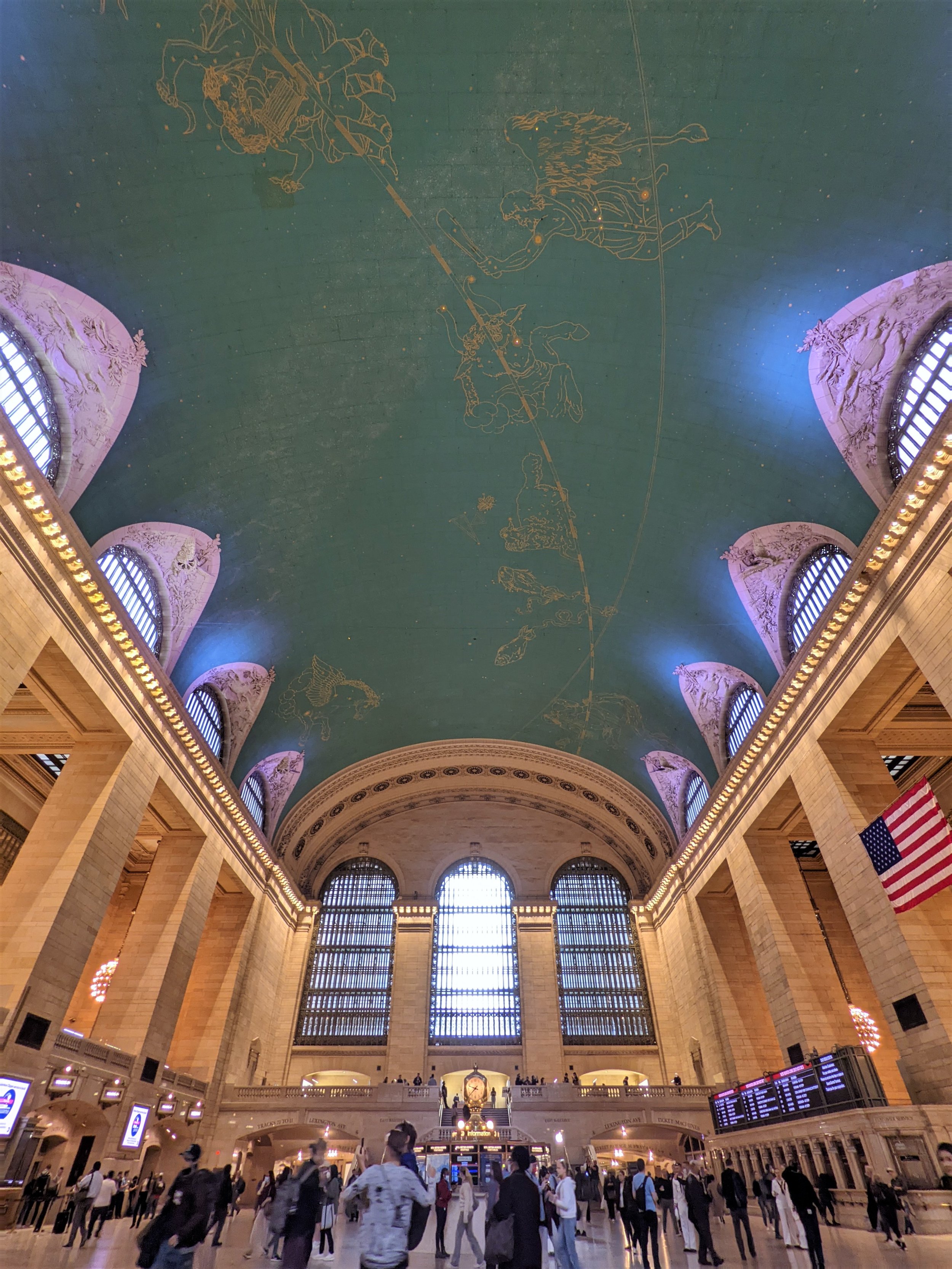
A lot of the damage done to the ceiling was the result of years of cigarette smoke, which had already drastically darkened the bricks by 1958 when they filmed this sequence.
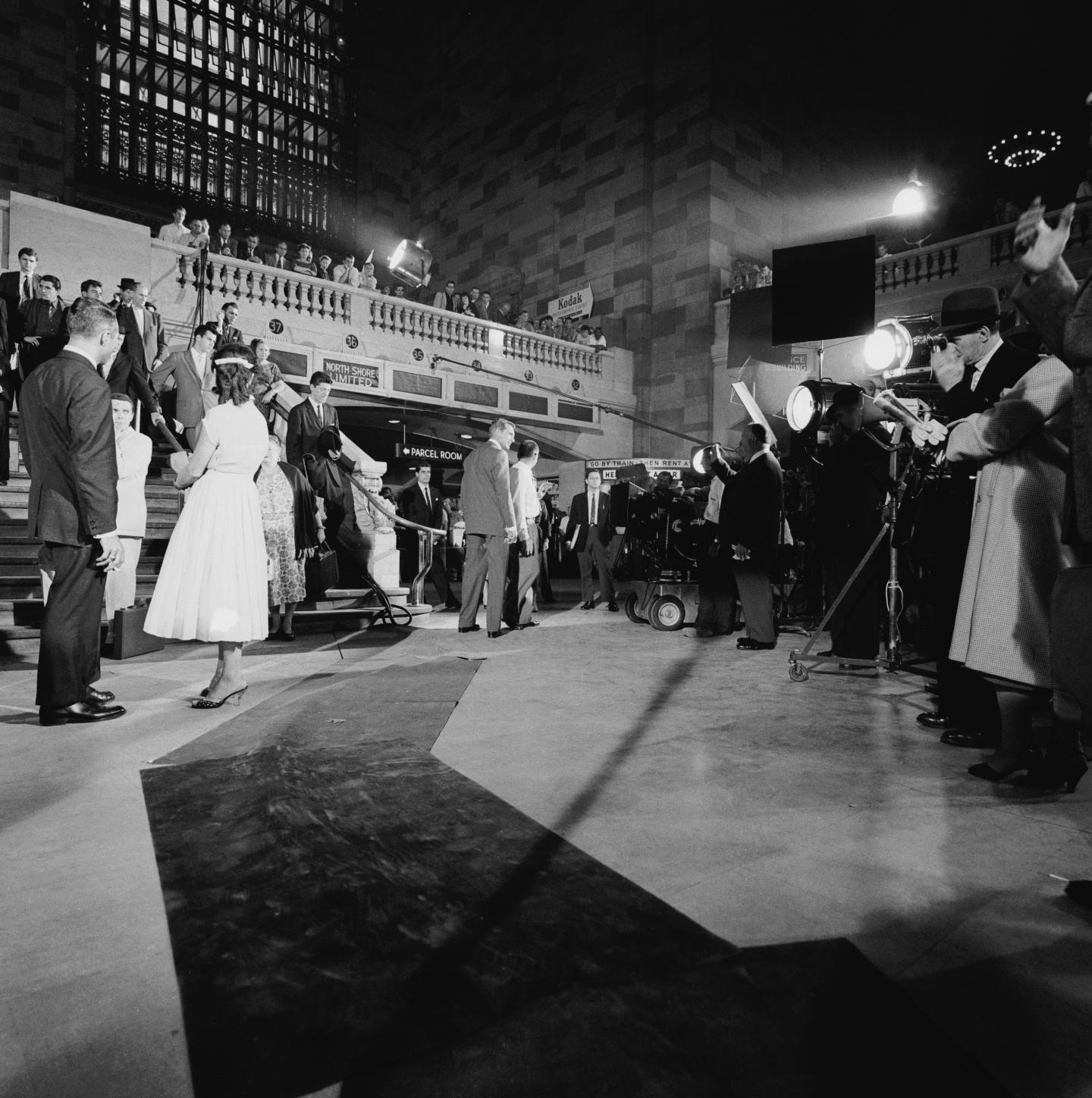
Aside from the 1990s restoration, there have been a few other minor changes to the concourse, like the addition of digital monitors to the Information Booth and “New York Central System” being replaced by “MTA Metro-North” above the ticket windows. Back in the 1950s, New York Central used to offer trains to the Great Lakes and Mid-Atlantic regions out of Grand Central, but ever since 1991, the terminal only provides local commuter service.
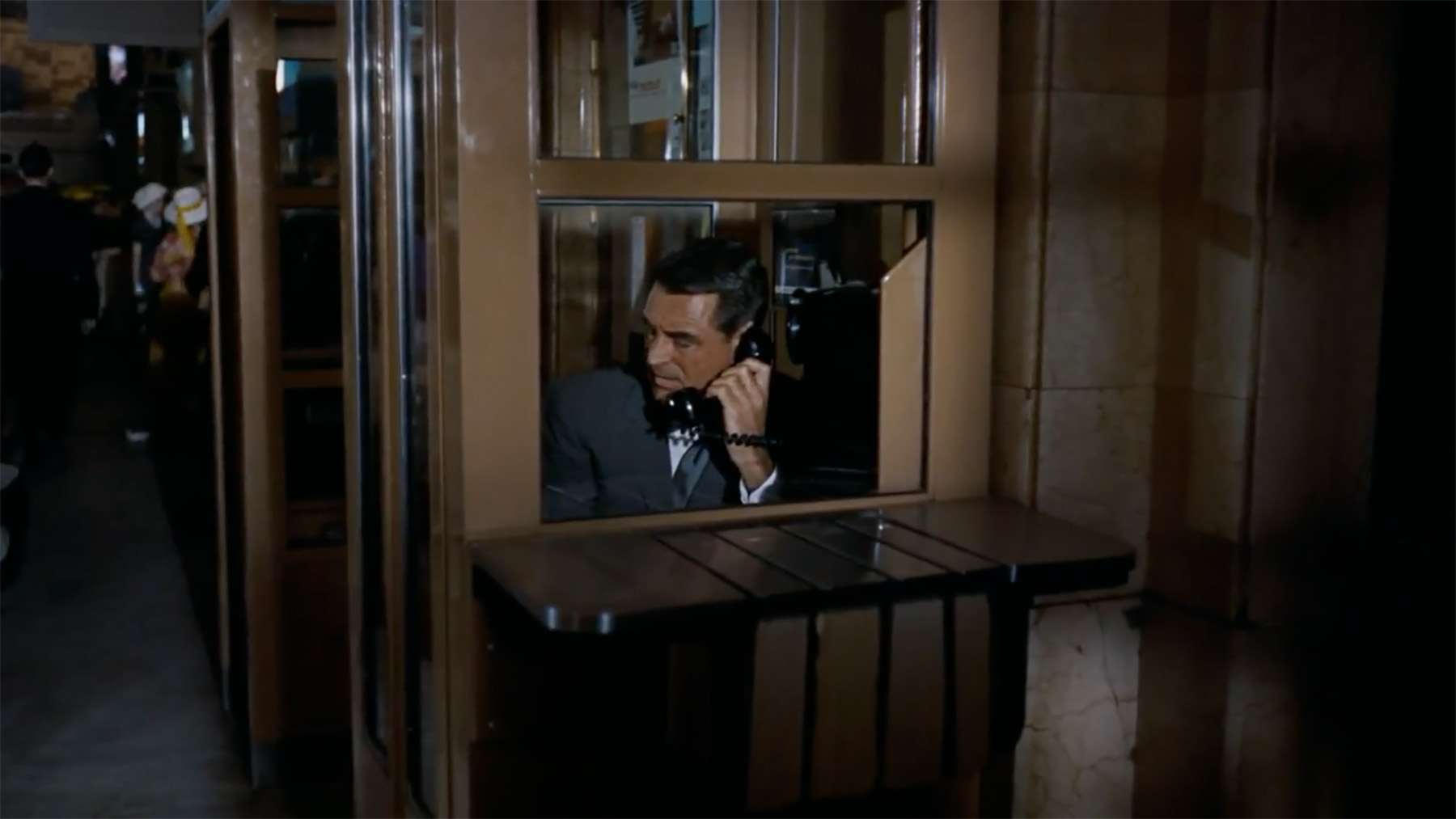
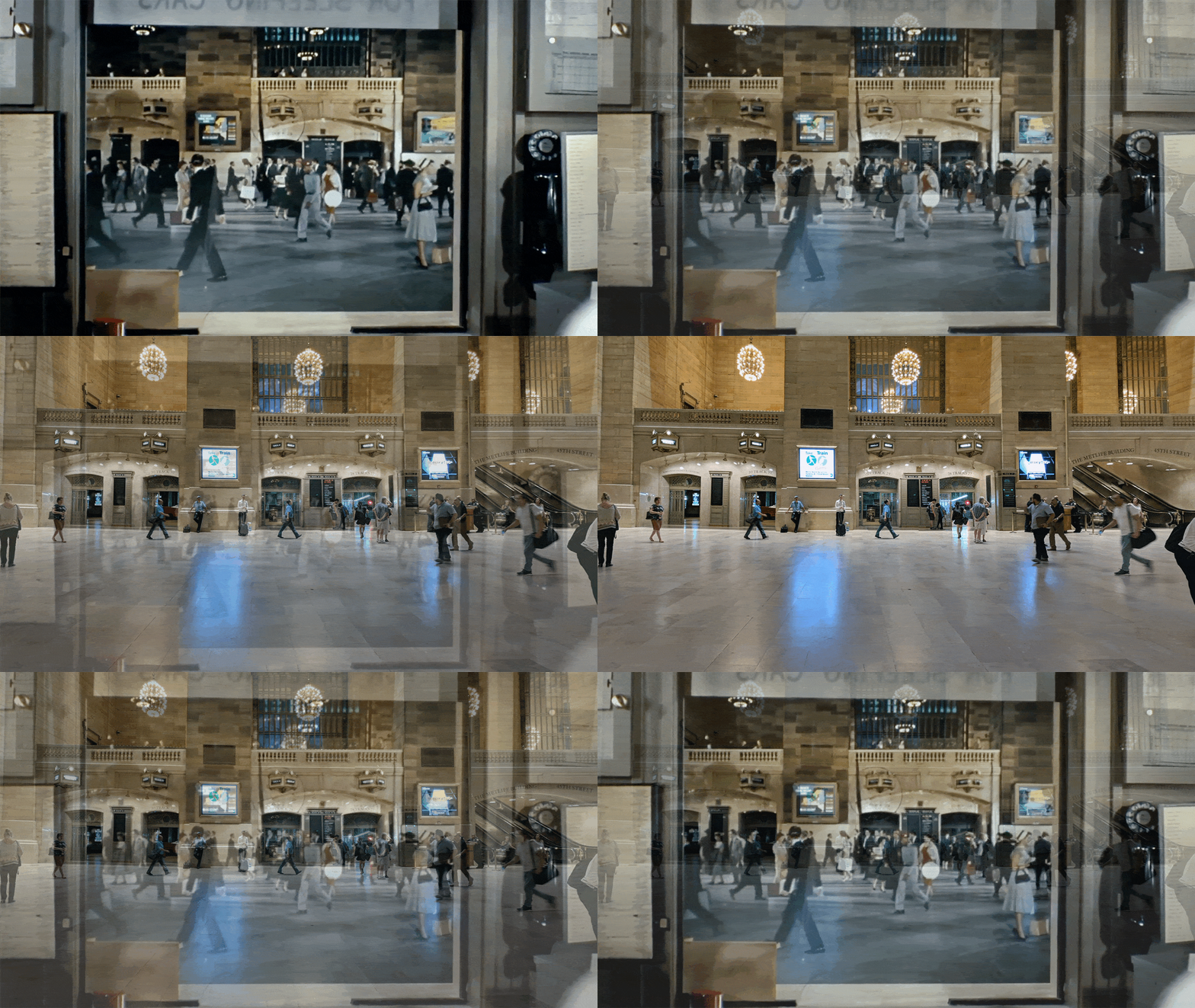
There are no longer any phone booths in the terminal either, but I have a feeling the booths used in this sequence were added by production. And if you want to see the exact spot used in the movie, it’s pretty easy to find as the two booths were situated on either side of a quaint brass mailbox that remains mounted on the north wall today.
If you want to visit the ticket window Cary Grant went to, that would be window number 6, but I’m pretty sure all the close-ups were once again, movie sets built at MGM.
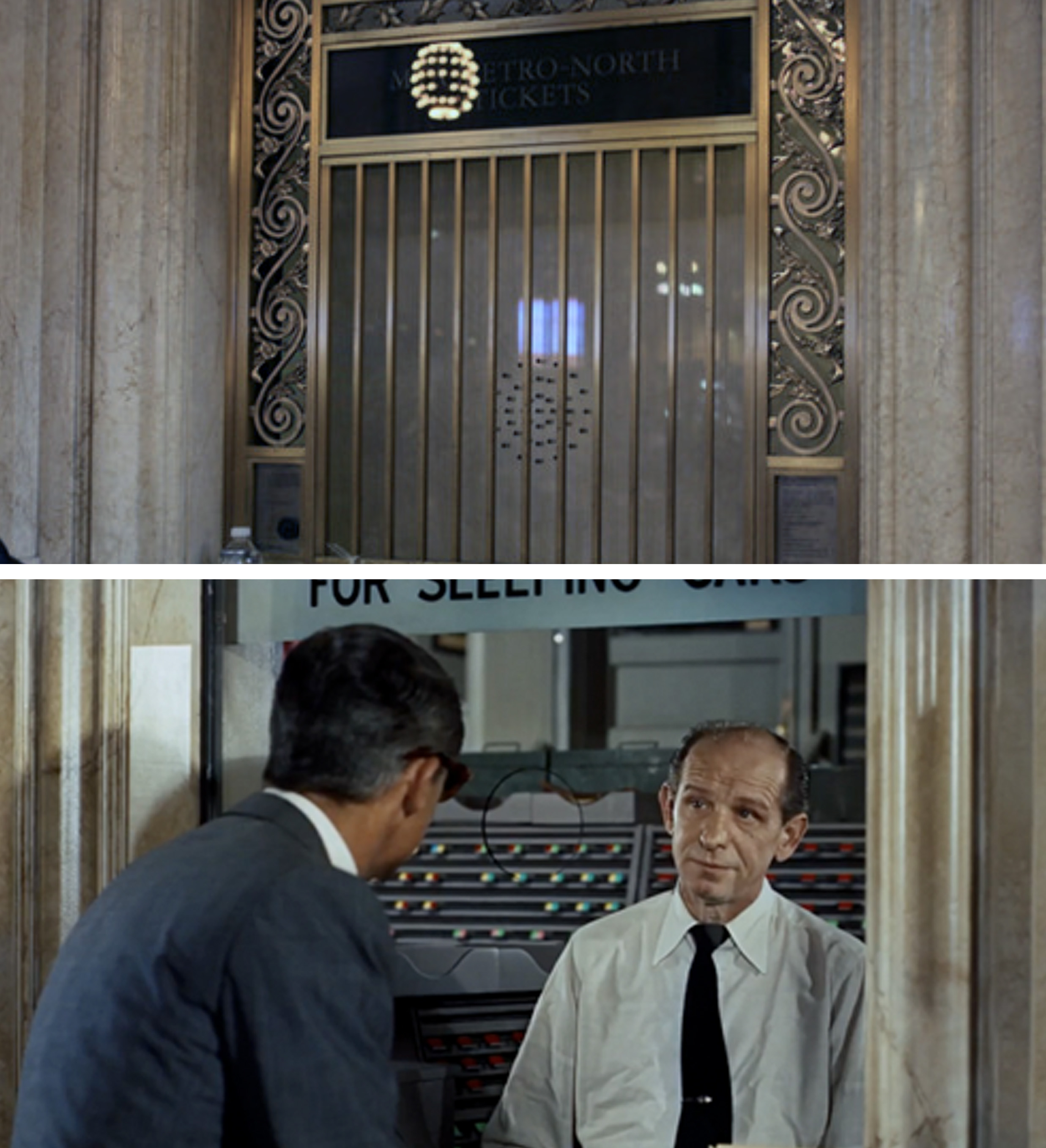
It’s a pretty smooth transition from real to fake, and the rear projection seen behind Grant is quite good.
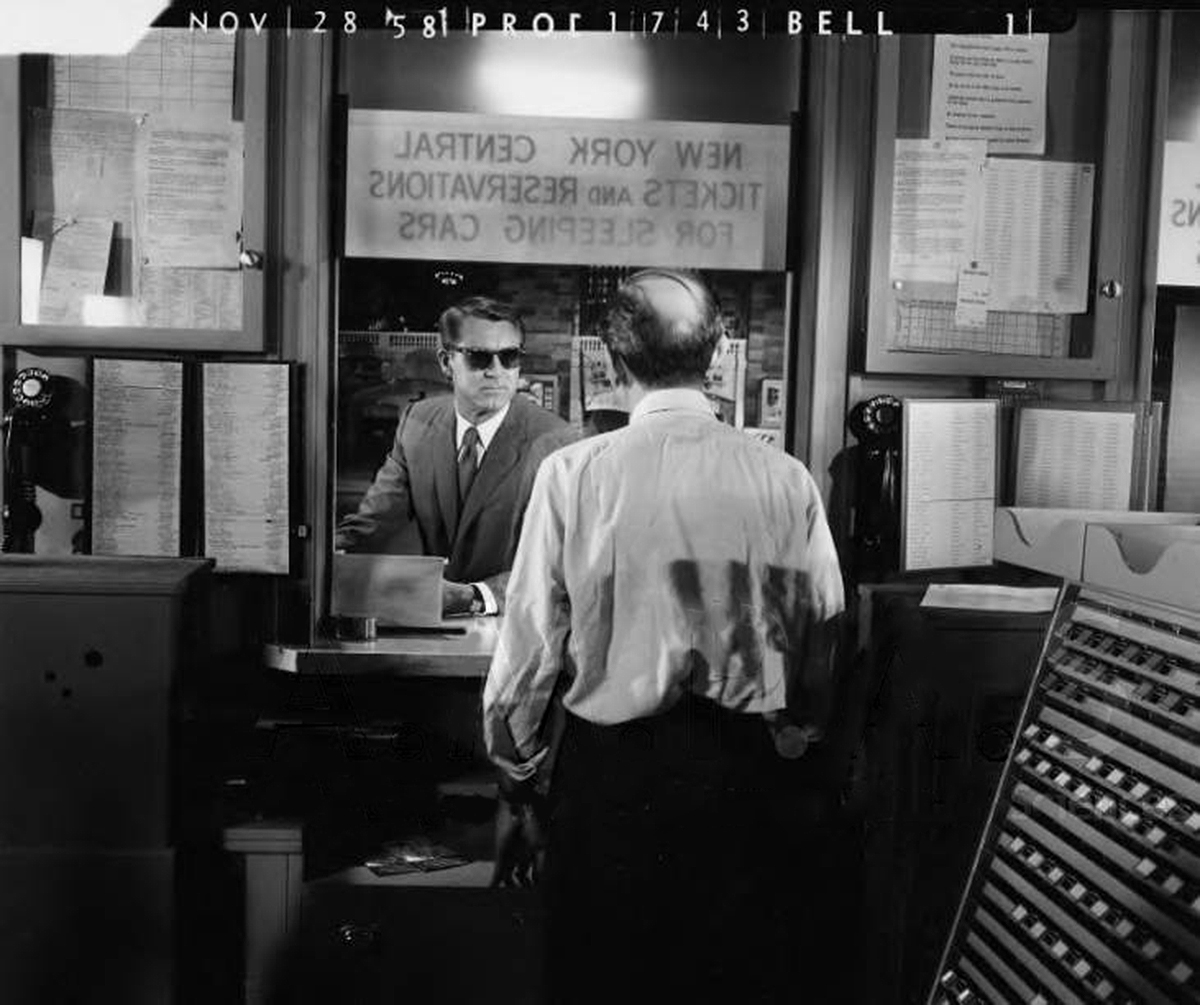
According to the negative imprinting on a publicity photo taken of the scene, they filmed the ticket window stuff on November 28th, 1958 (although it’s possible that’s just when the film was developed).
While the ticket window was a set, the track entrance was definitely real, as you can match up cracks and swirls in the wall. You can even see a little discoloration where the light switch used to be.
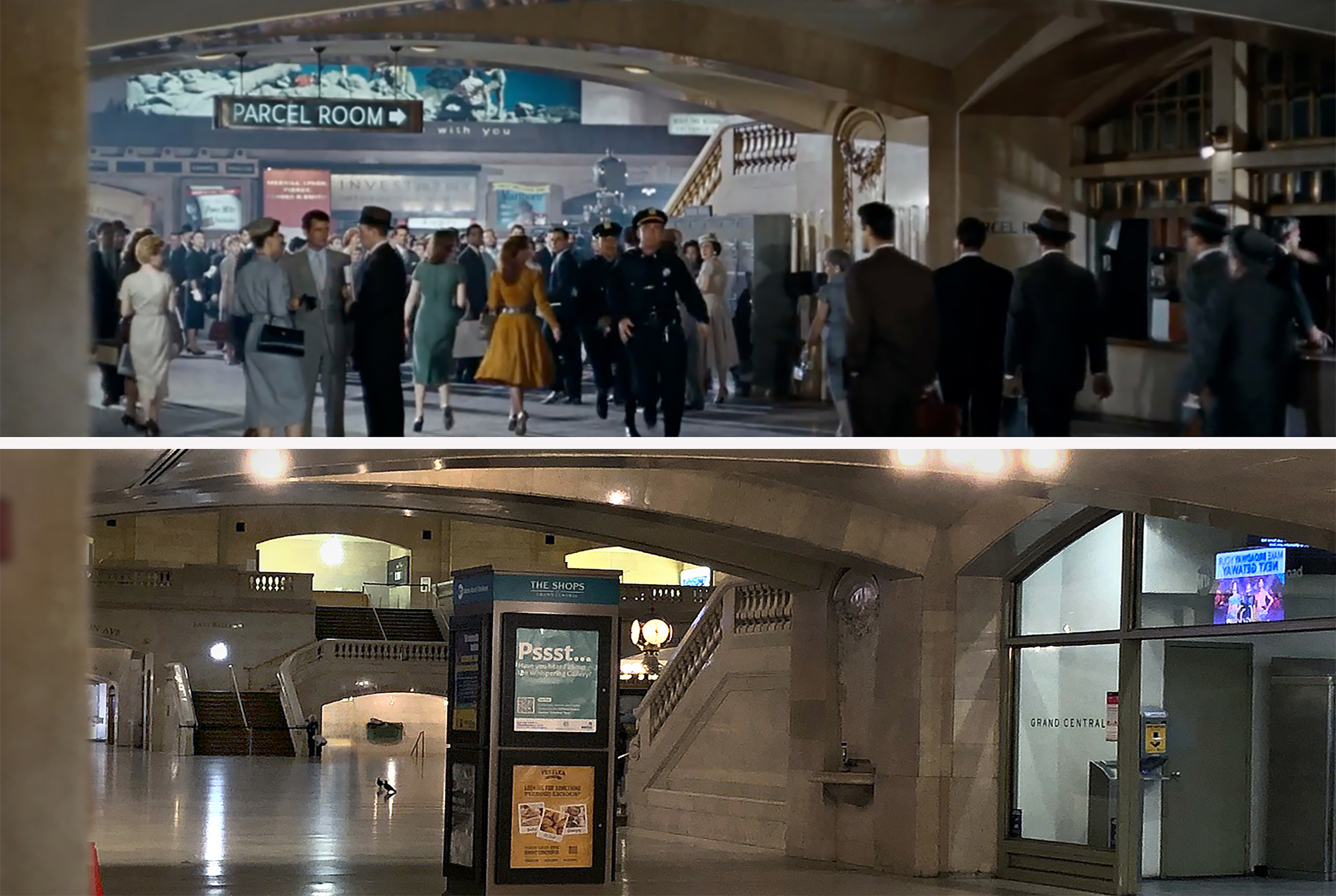
One of the bigger changes to the Grand Concourse can be seen in the shot of the police approaching the track entrance. On the far eastern wall, you might notice there weren’t any stairs in 1958. They weren’t added until the late 1990s during the restoration project, made to echo the western staircase. Given its prominence, this late addition might’ve seemed like a bold change, but records show that an eastern staircase was always envisioned by Warren & Wetmore, the original architects of the terminal.
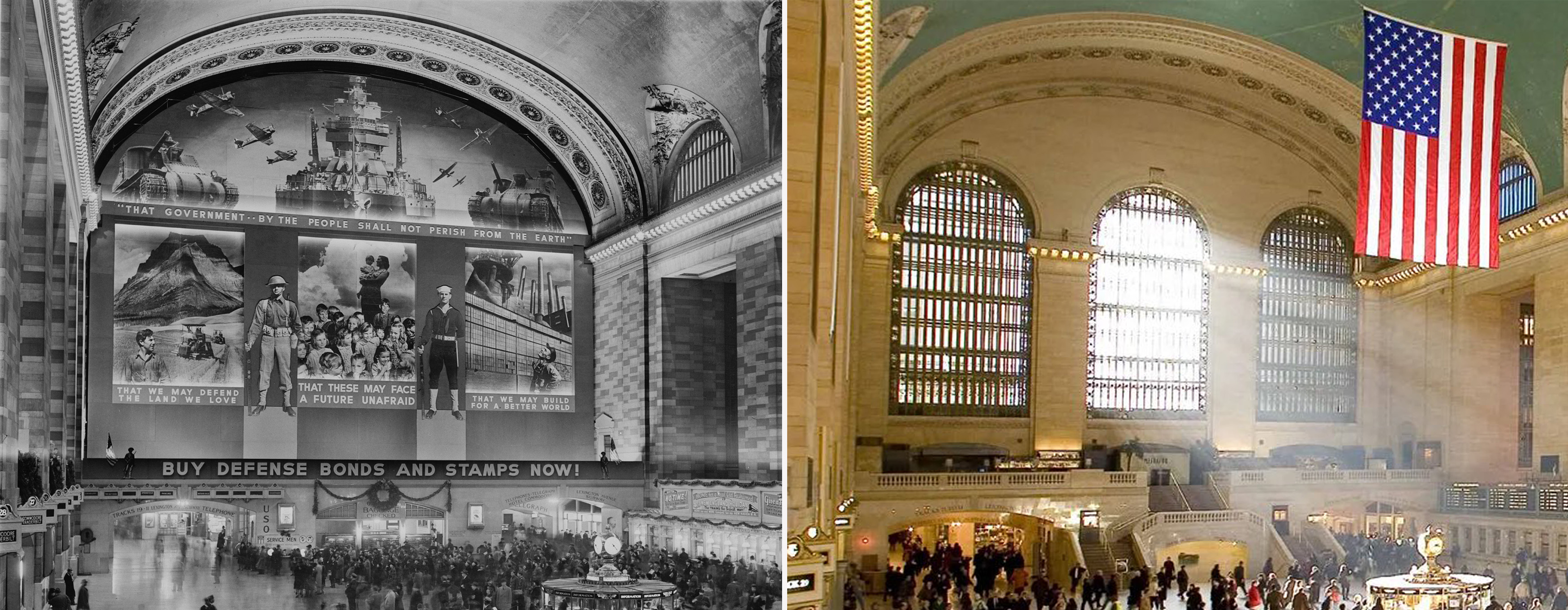
The last bit from this Grand Central sequence takes place on a train platform (presumably track number 34), but there’s some debate as to whether it was filmed on location in NYC or not. While many train enthusiasts have pointed out that the train in the movie was not the 20th Century, it’s still hard to know whether it was the real GCT platform or not since all you really see is part of the floor and the side of a train.
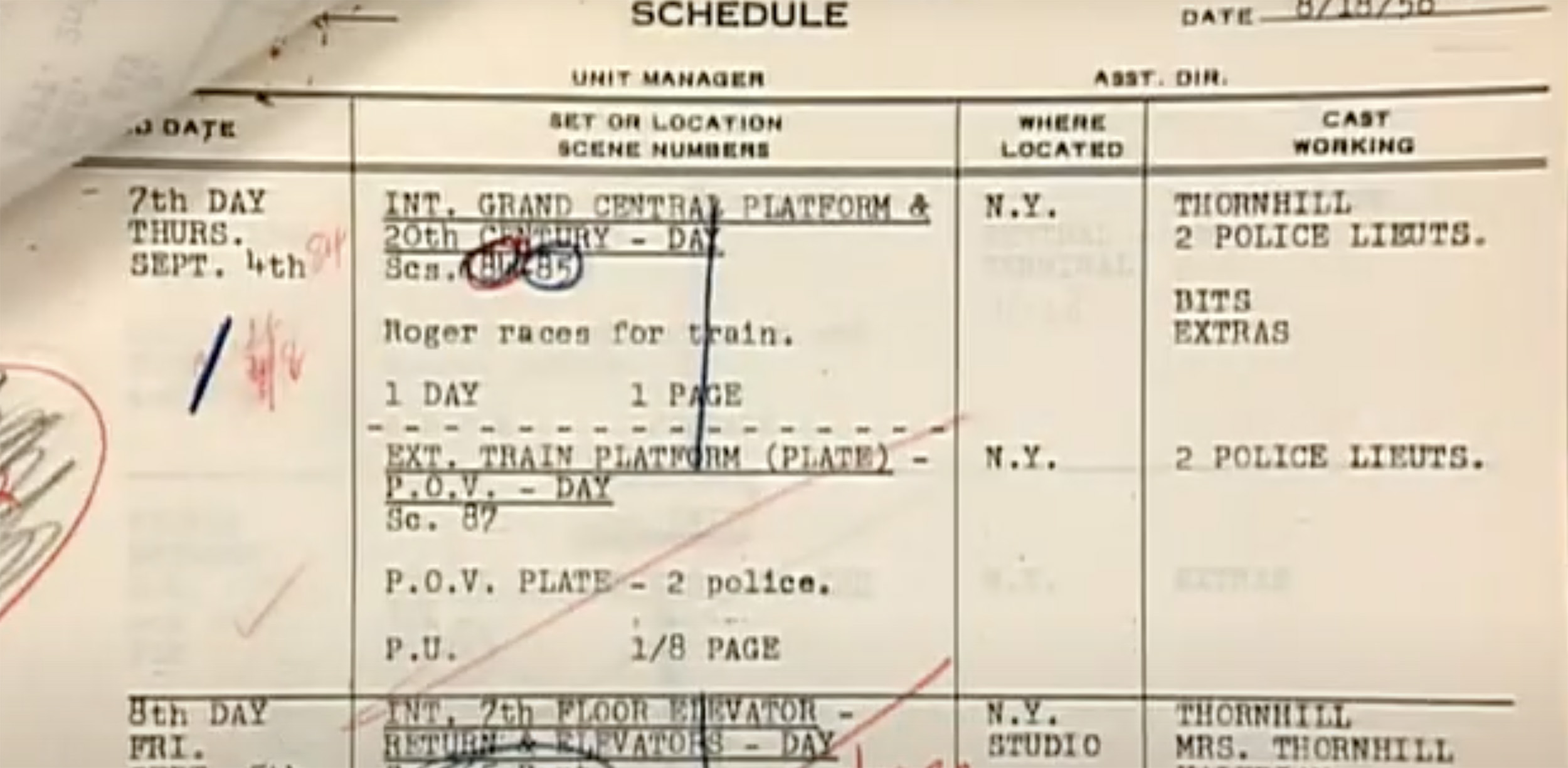
But according to the production notes, they filmed Cary Grant racing for the train, as well as the POV background plate of the two policemen, on the actual platform at Grand Central. It’s always possible they ran out of time and ended up shooting it later in Los Angeles, but I’ve found no evidence to indicate that. So, at this point, I’m going to trust the schedule sheet.
Train Ride
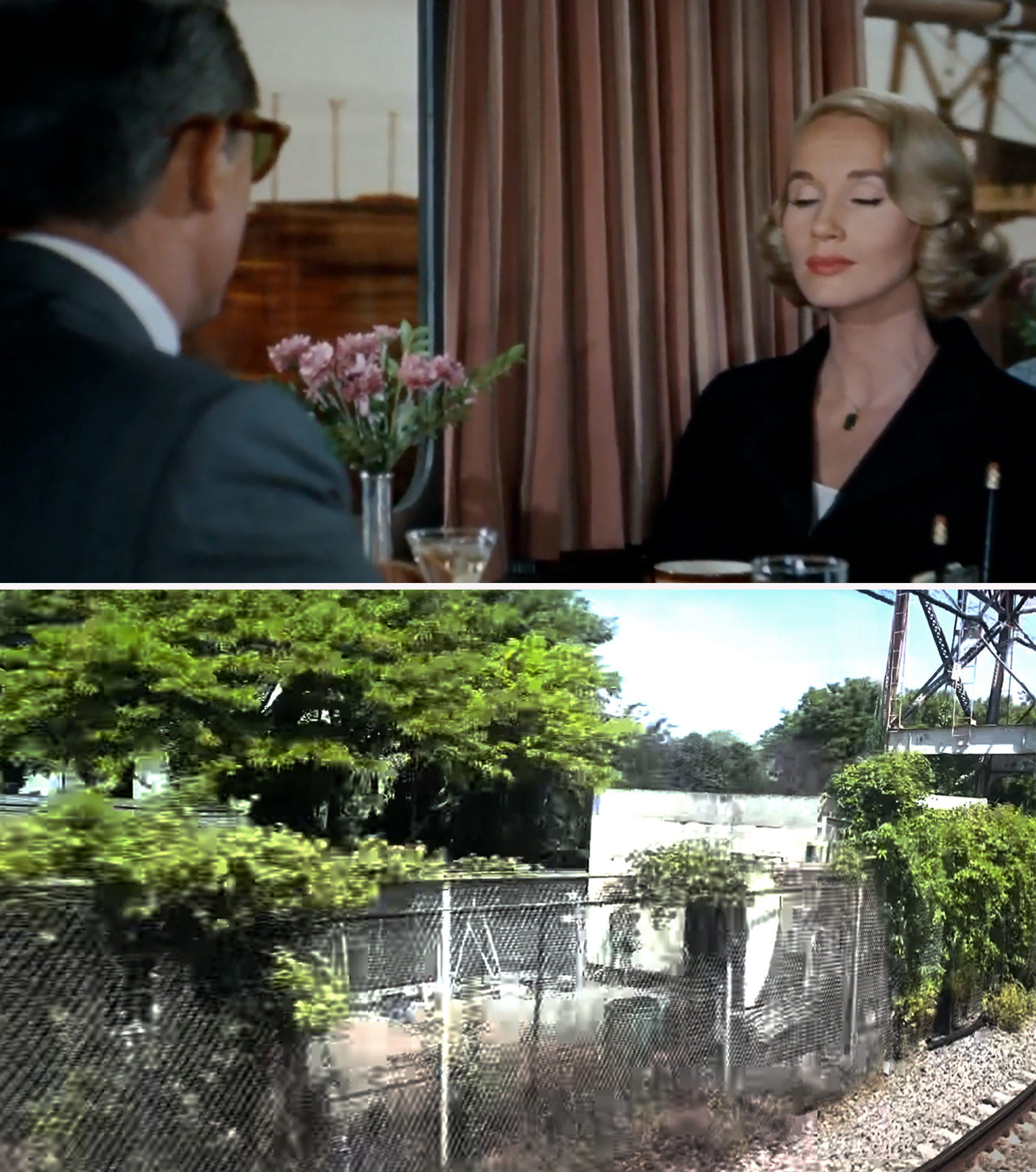
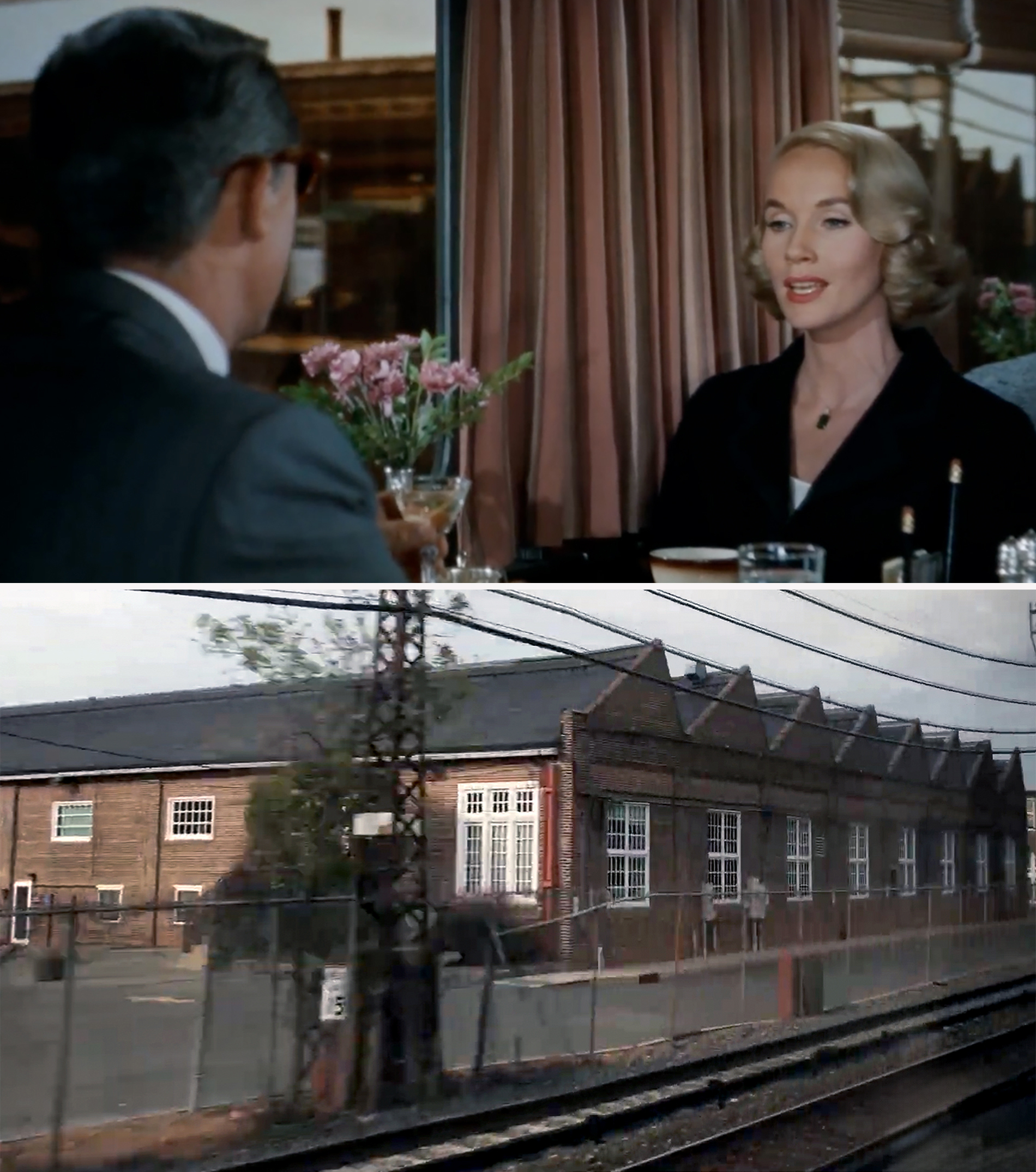
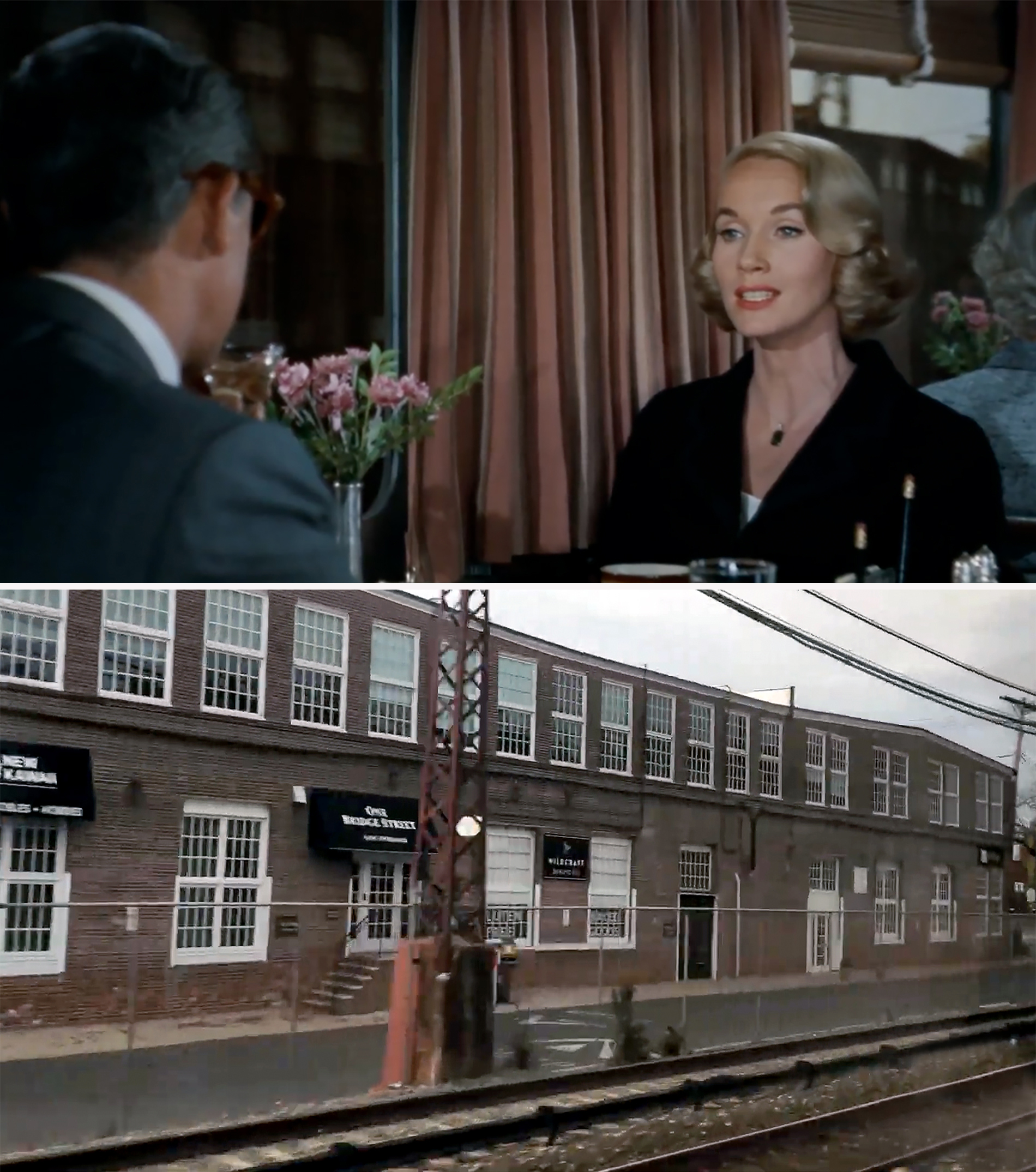
This extended train sequence is the last part of the movie to utilize any New York footage, even if it’s just background plates for the train set. Having previously worked in Westchester County, I was pretty familiar with the scenery shown out the windows of the Hudson River. But in order to get some of the less obvious spots, I had to travel up the tracks virtually in Google Earth until I found several extant structures in Irvington.
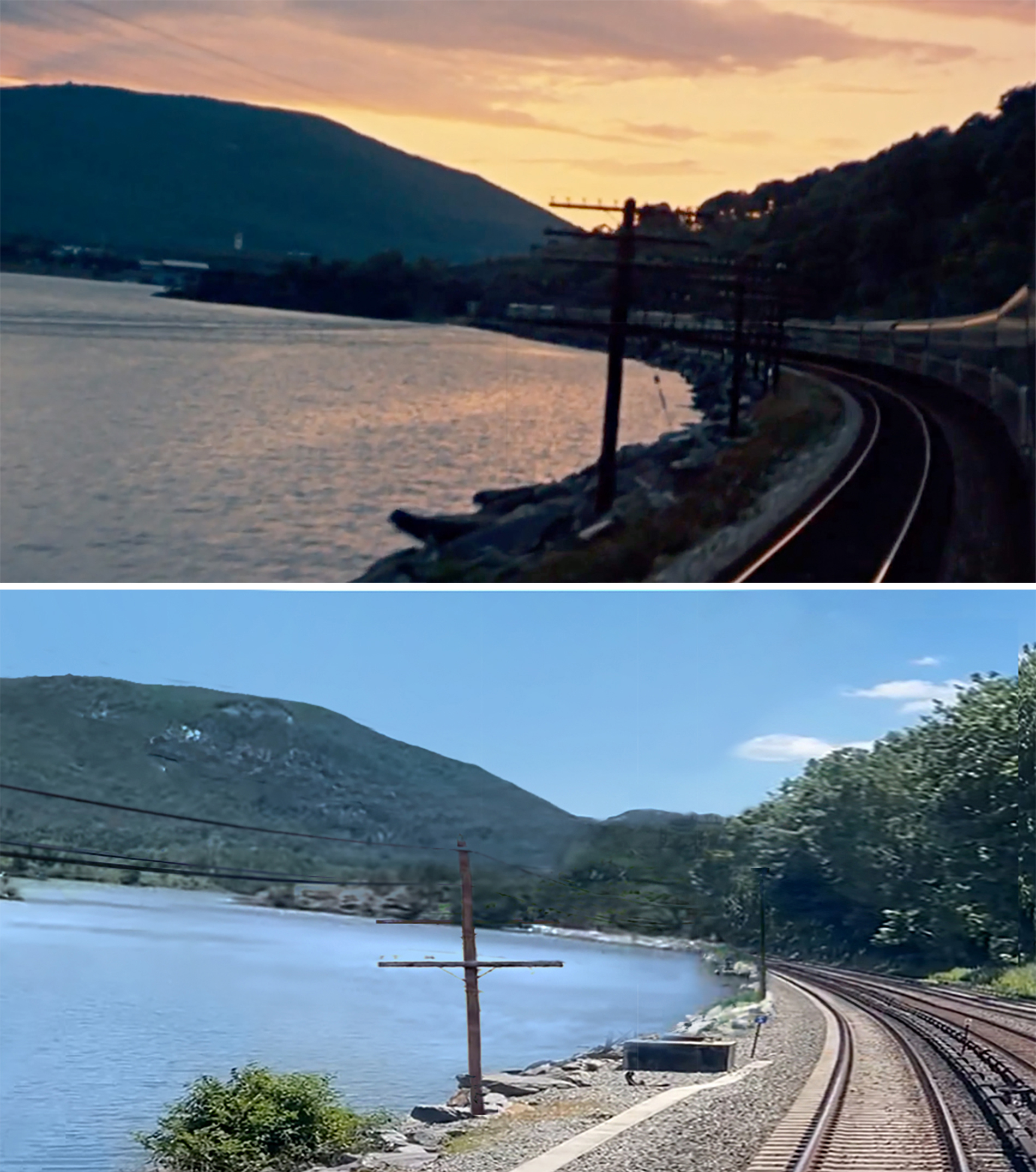
The later shot of the train rounding a bend ended up being somewhat easy to find since it featured Bear Mountain in the distance. Bear Mountain is one of the best-known peaks of New York’s Hudson Highlands and contains one of the main routes to Western New York (a destination I’ve gone to countless times).
As I already alluded above, these shots of the Hudson were second unit footage primarily used as background plates in the window of the train sets built at MGM. While not positive, my guess is these sets were built on stage 14 which was often used for process shots.
Arriving in Chicago
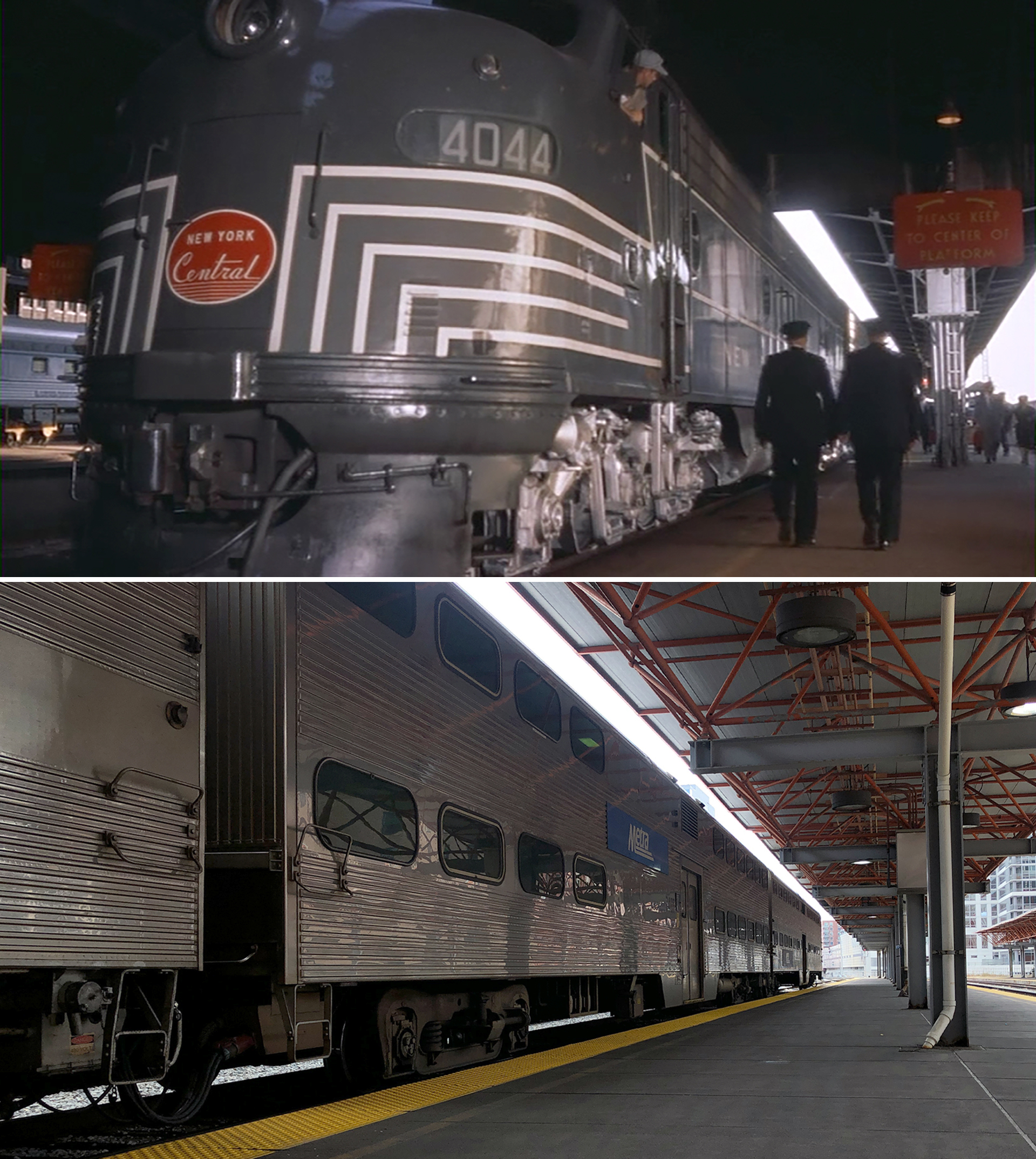
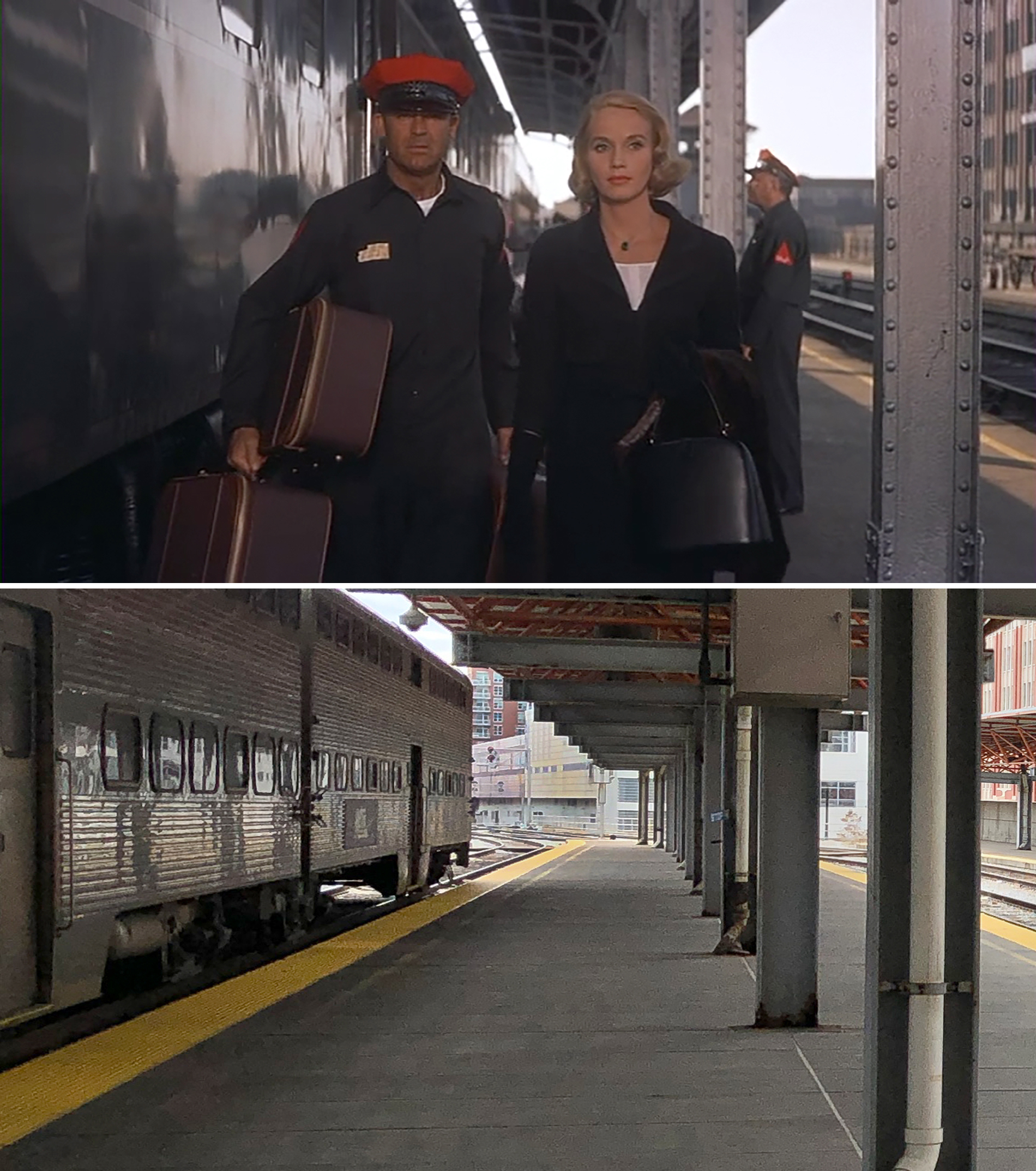
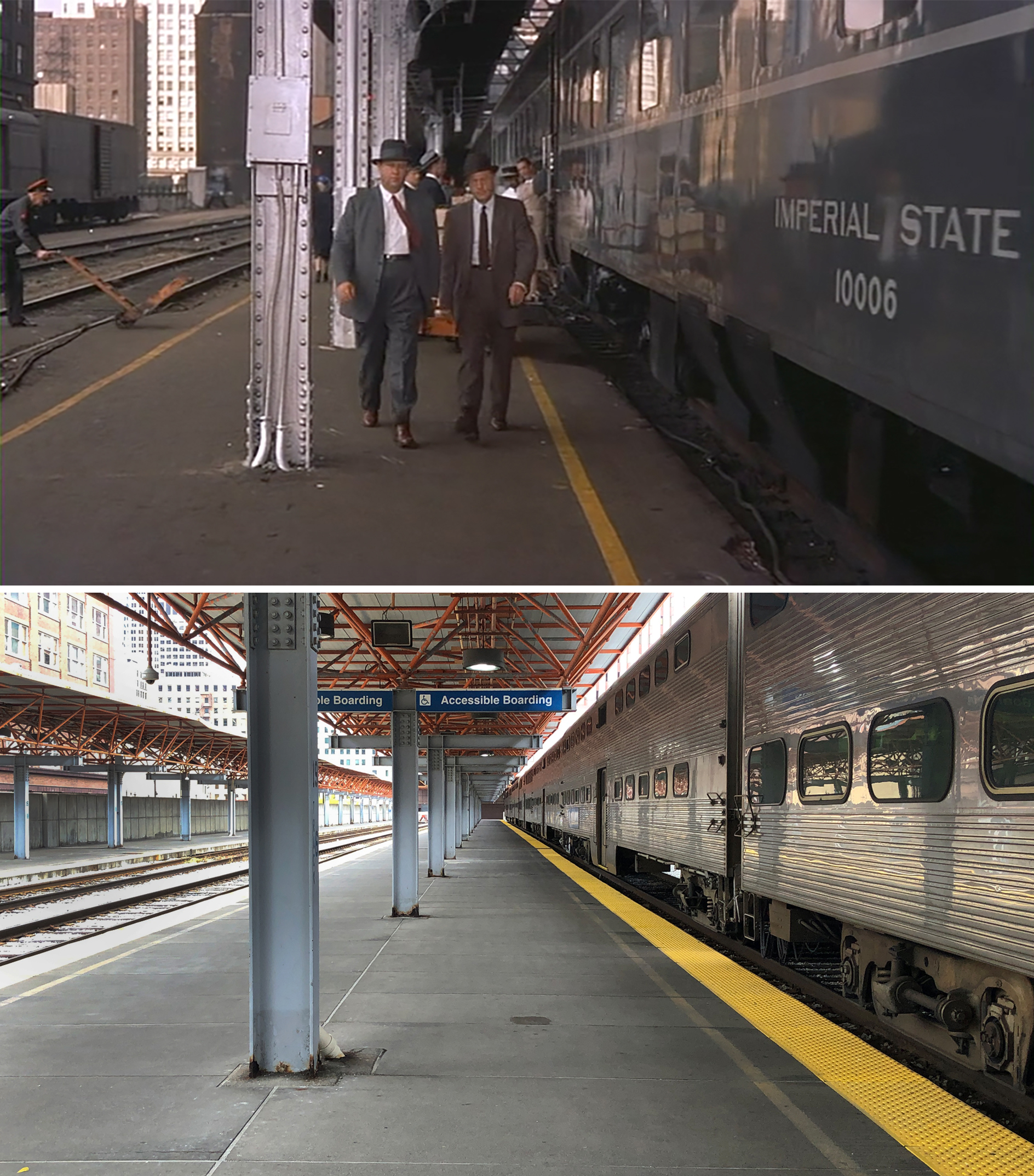
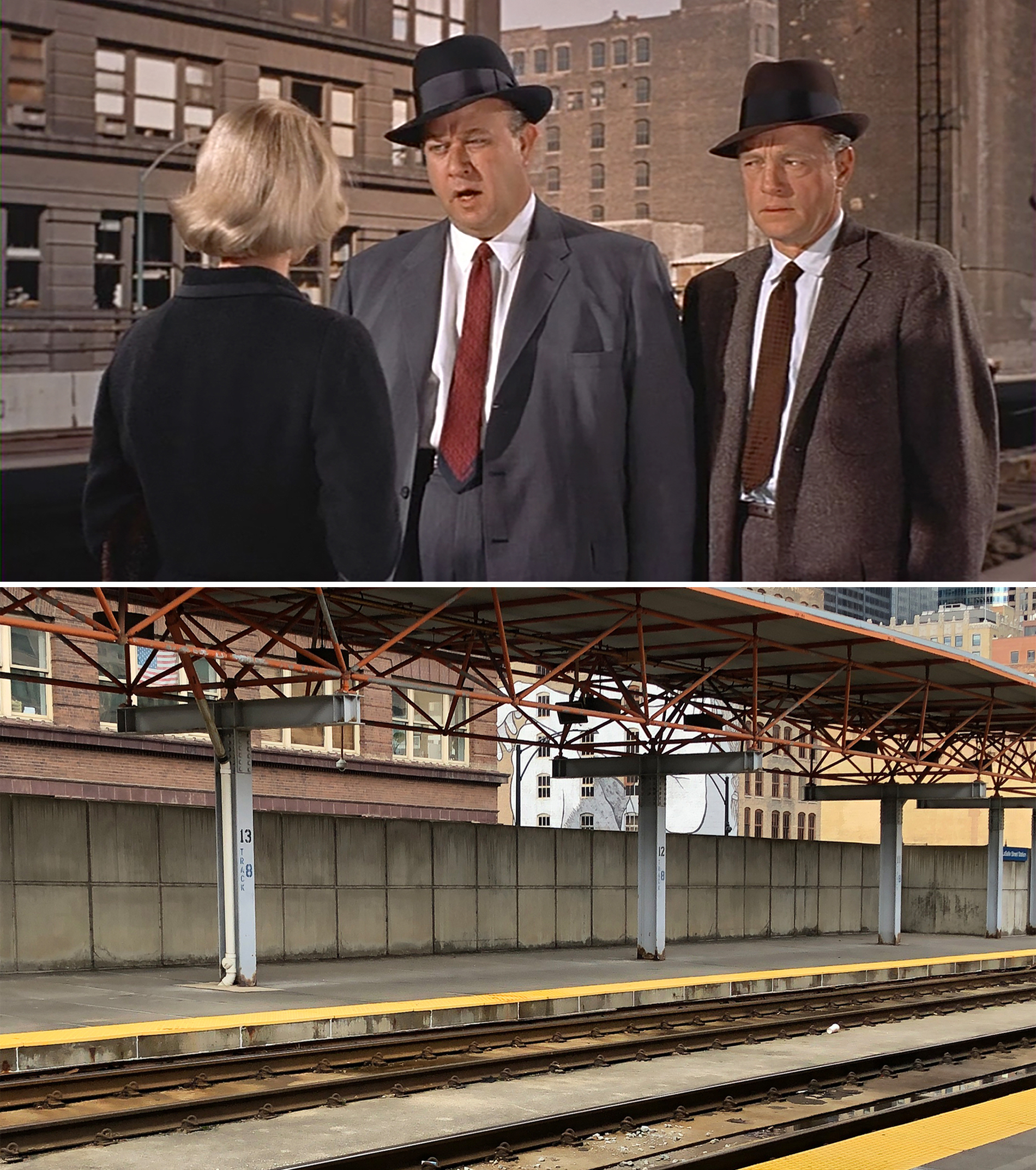
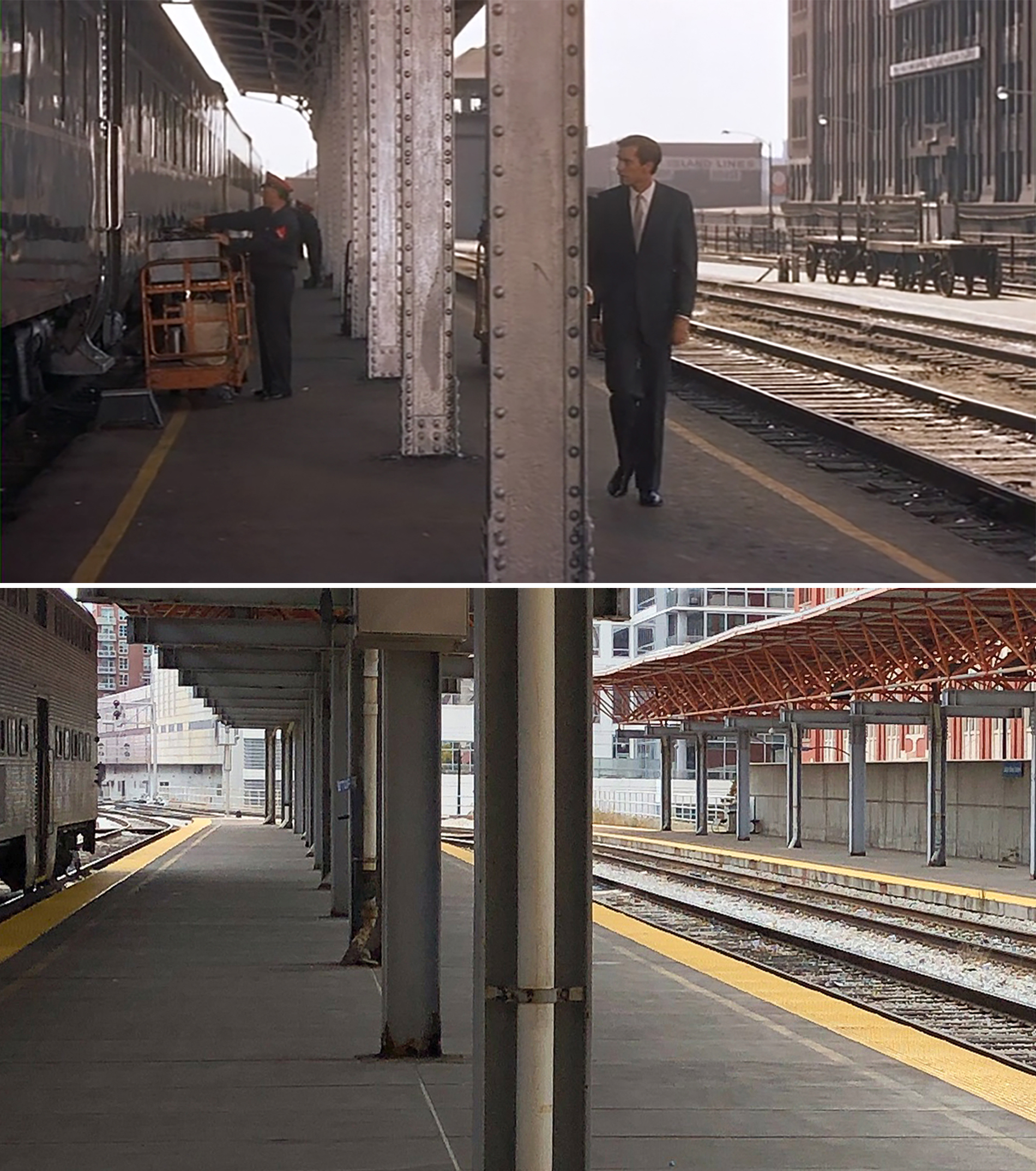
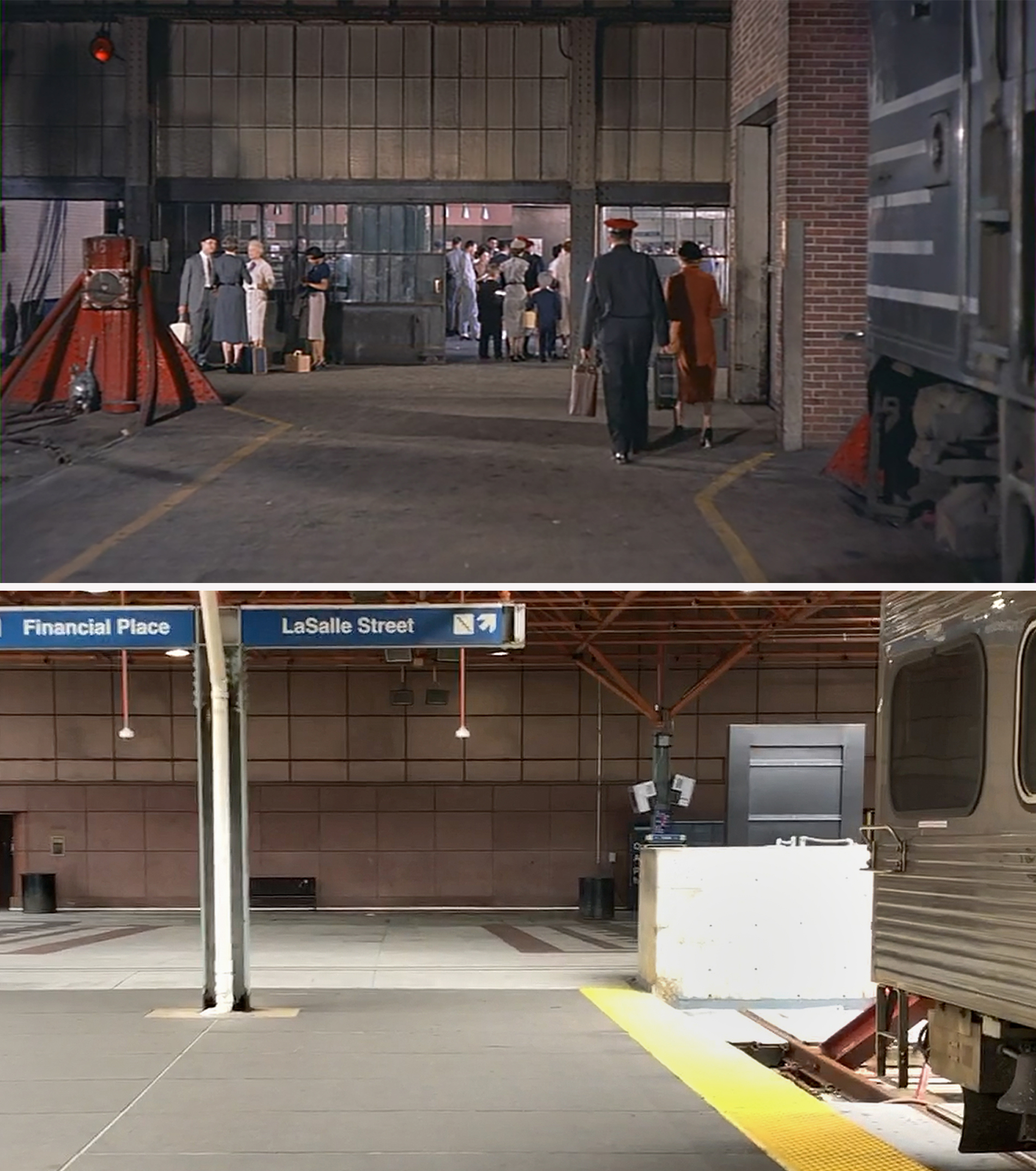
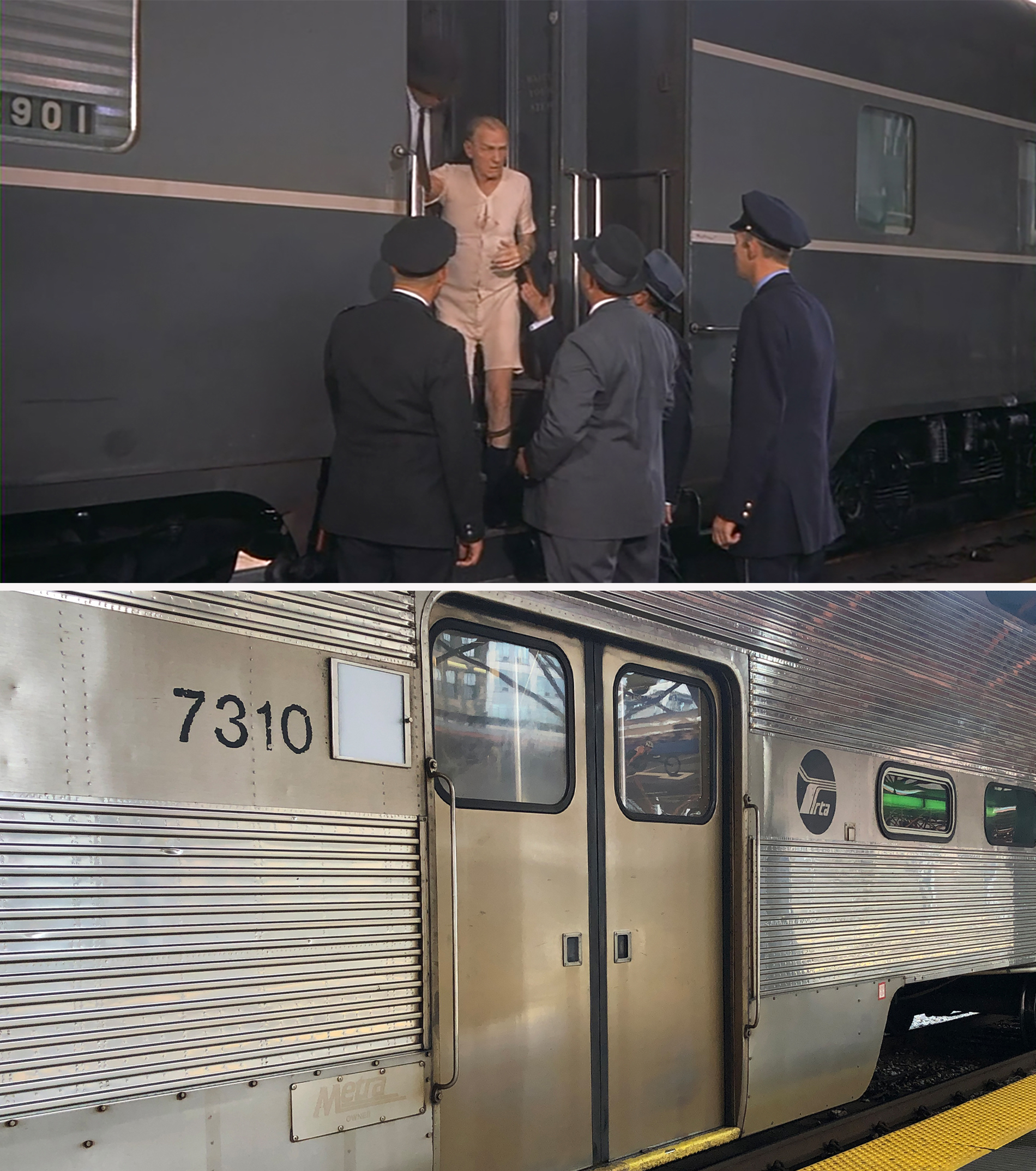
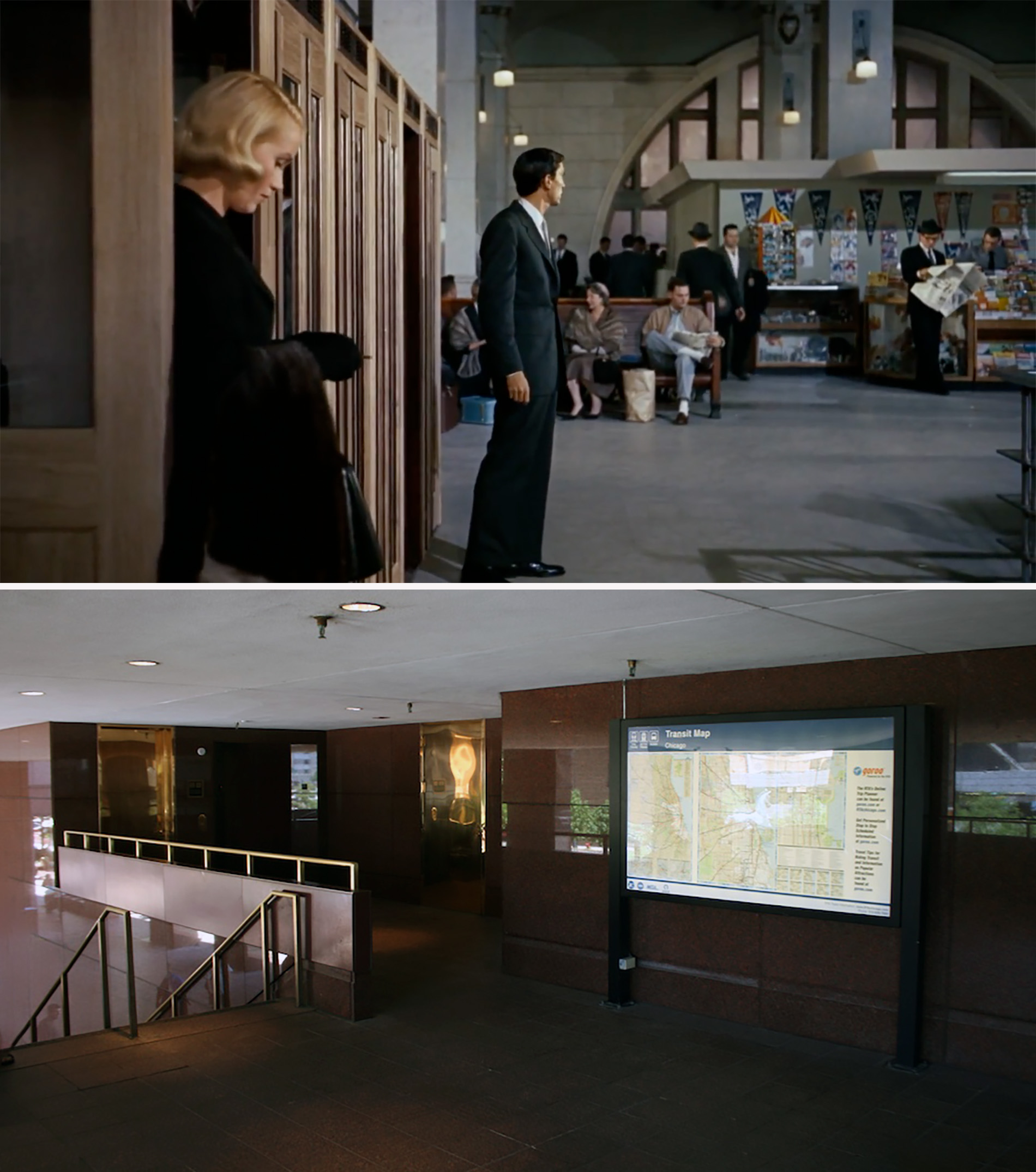
Once we hit Chicago, I had to rely more on other websites to provide info on the filming locations. Fortunately, with plenty of railfans out there, I quickly learned that they shot these train station scenes at LaSalle Street Station in Chicago.
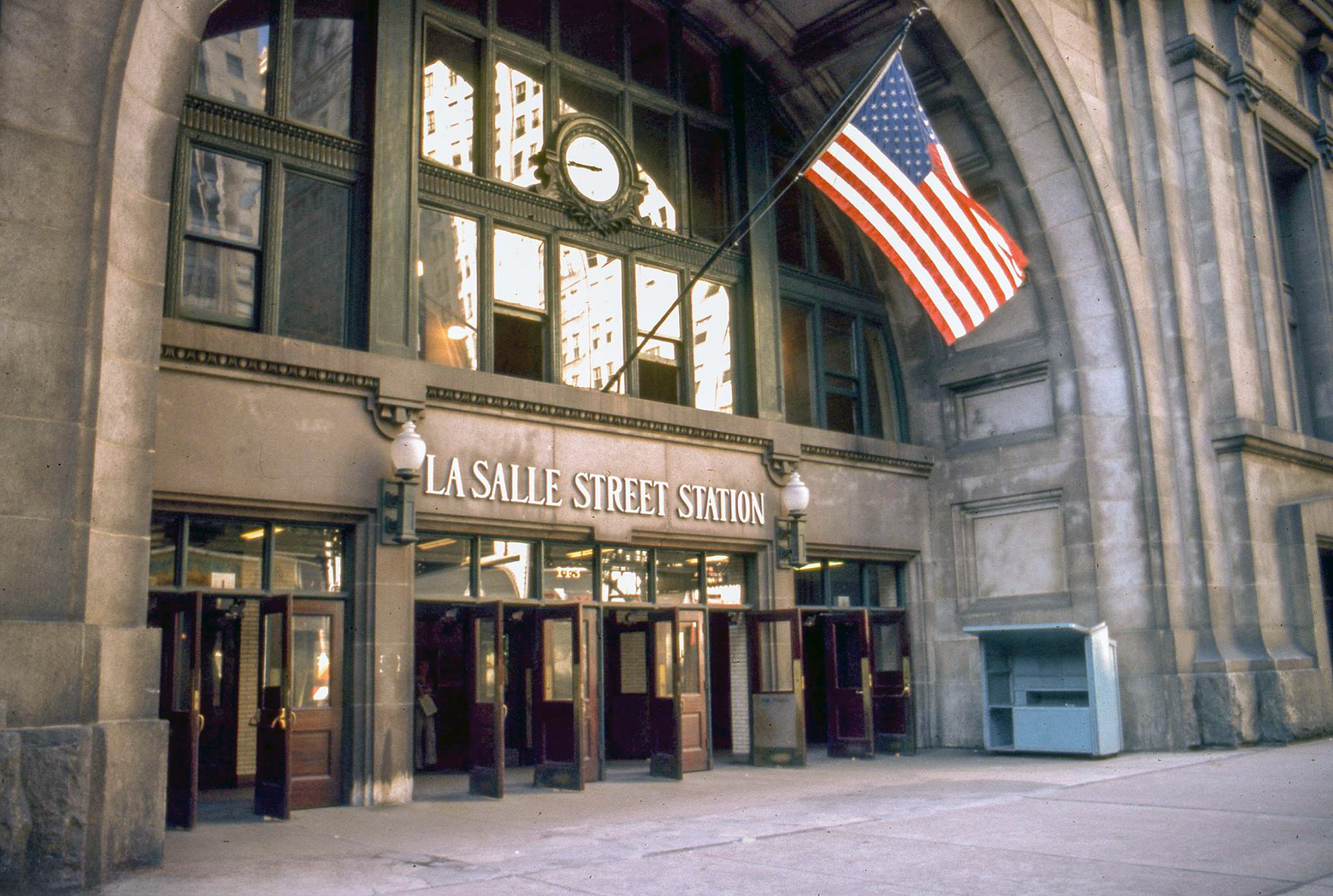
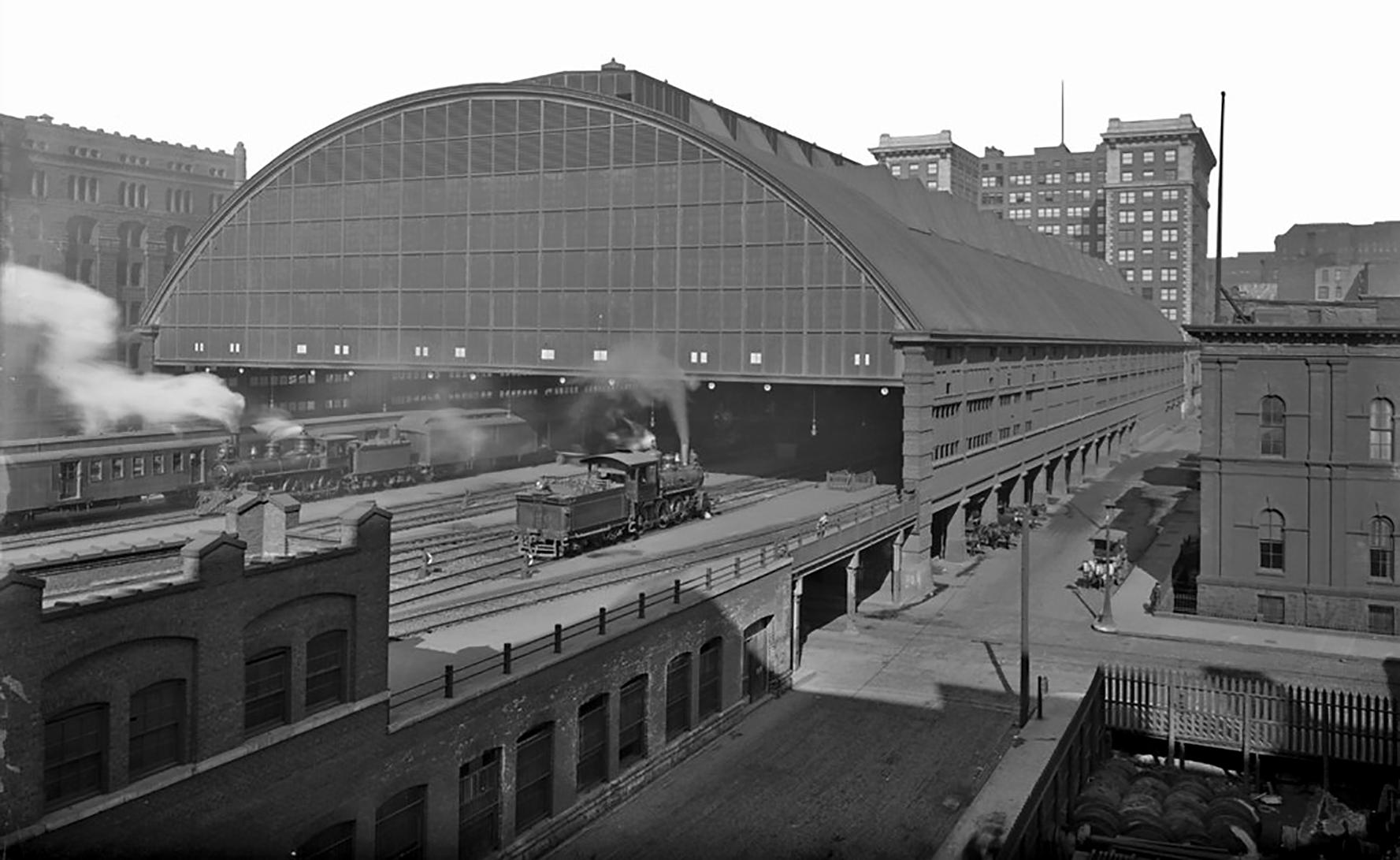
The rail terminal seen in the movie was actually the fourth to be at this downtown Chicago location. Completed in 1903, the large complex included a unique feature — a massive balloon shed covering eleven elevated tracks.
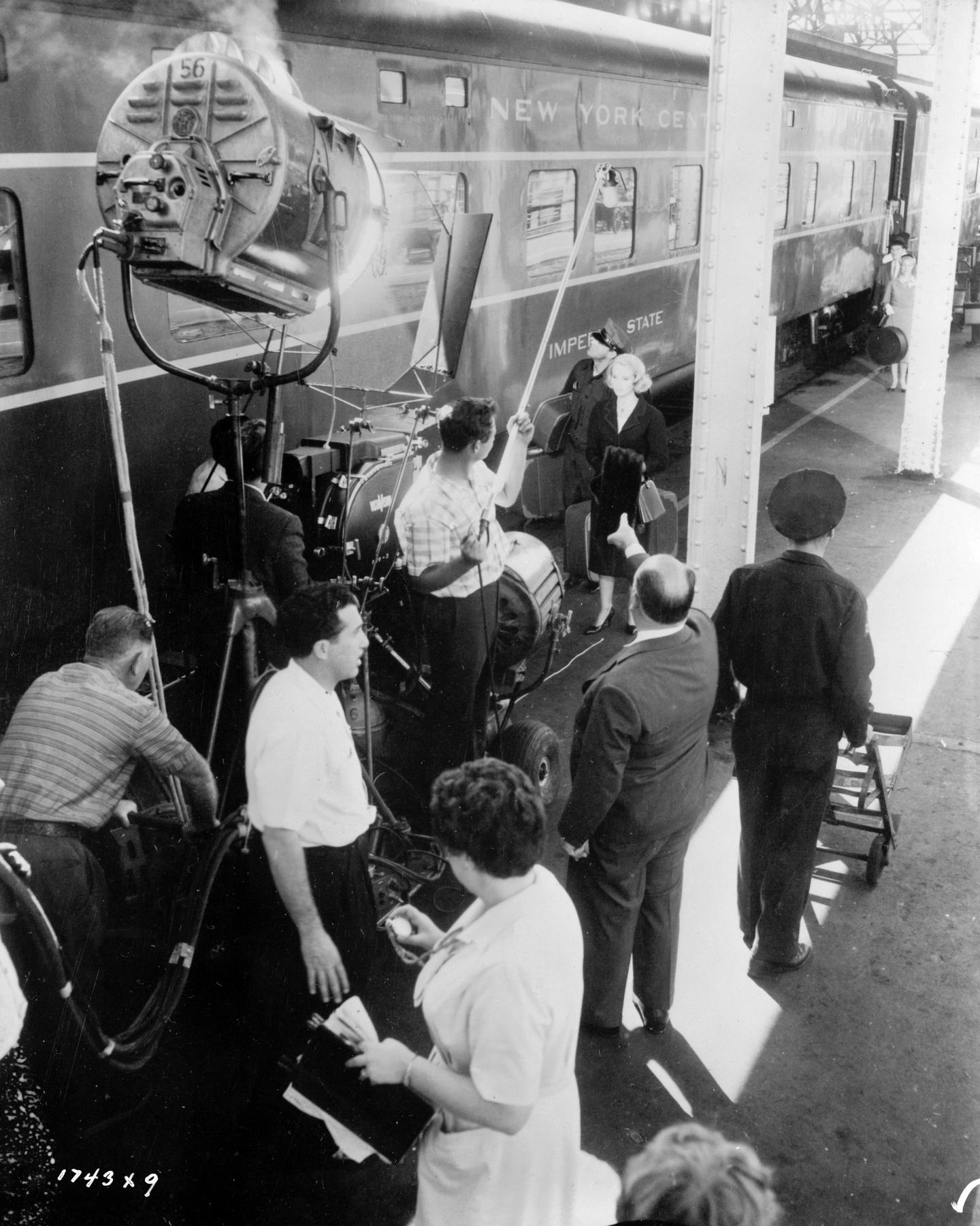
I could tell they filmed (at least partially) on the actual train platform at LaSalle, and was able to figure out the camera angles by matching up a few buildings in the background that are still standing today.
The most clear view of one of these extant buildings is in the background plate used for the conversation between Eve and the detectives. Disappointingly, any parts with dialogue were process-shots done on a soundstage, but the geography between the on-location stuff and the rear projection stuff appeared to be consistent.
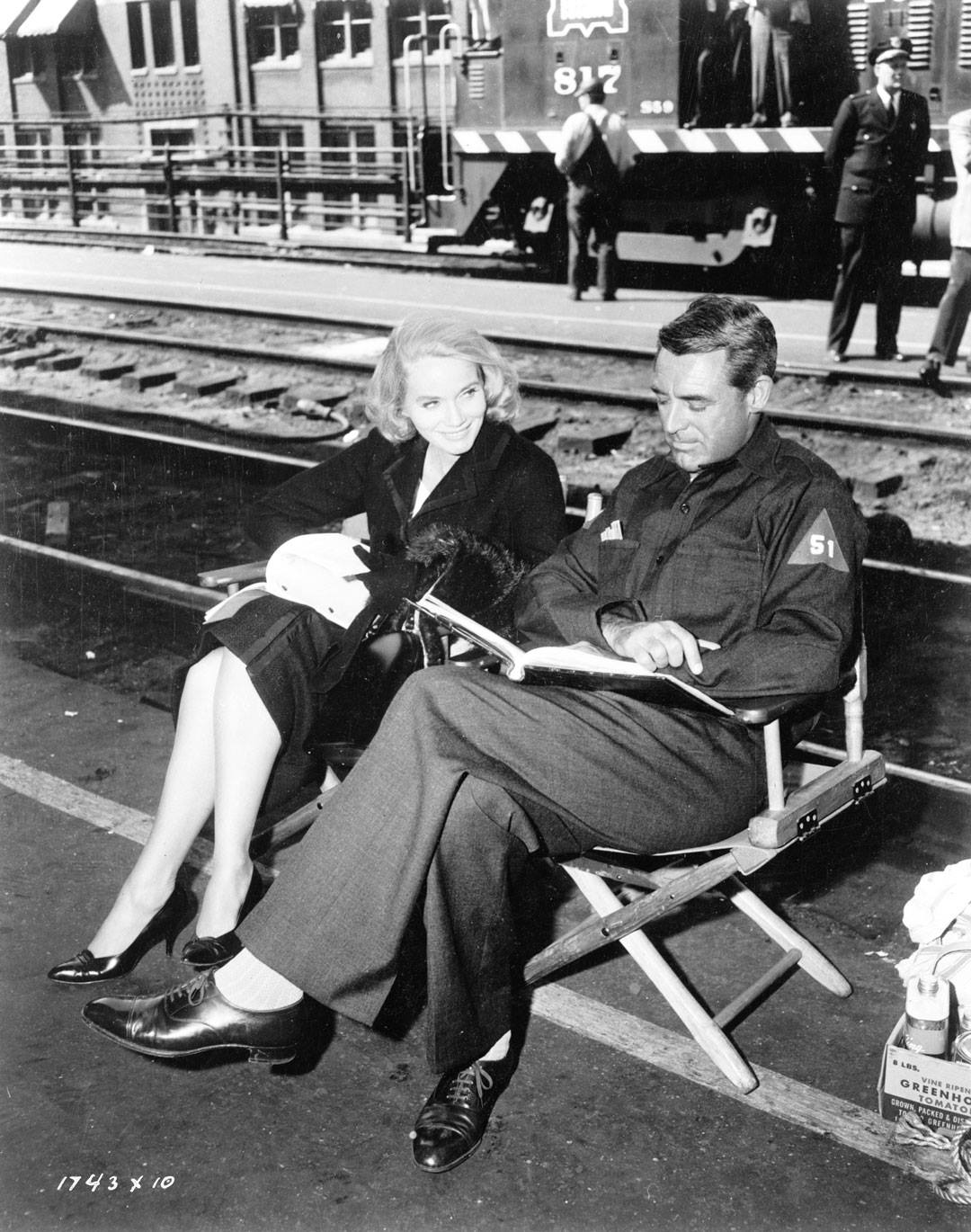
Despite the use of rear projection, Hitchcock did shoot quite a bit on location in Chicago with the two main leads.
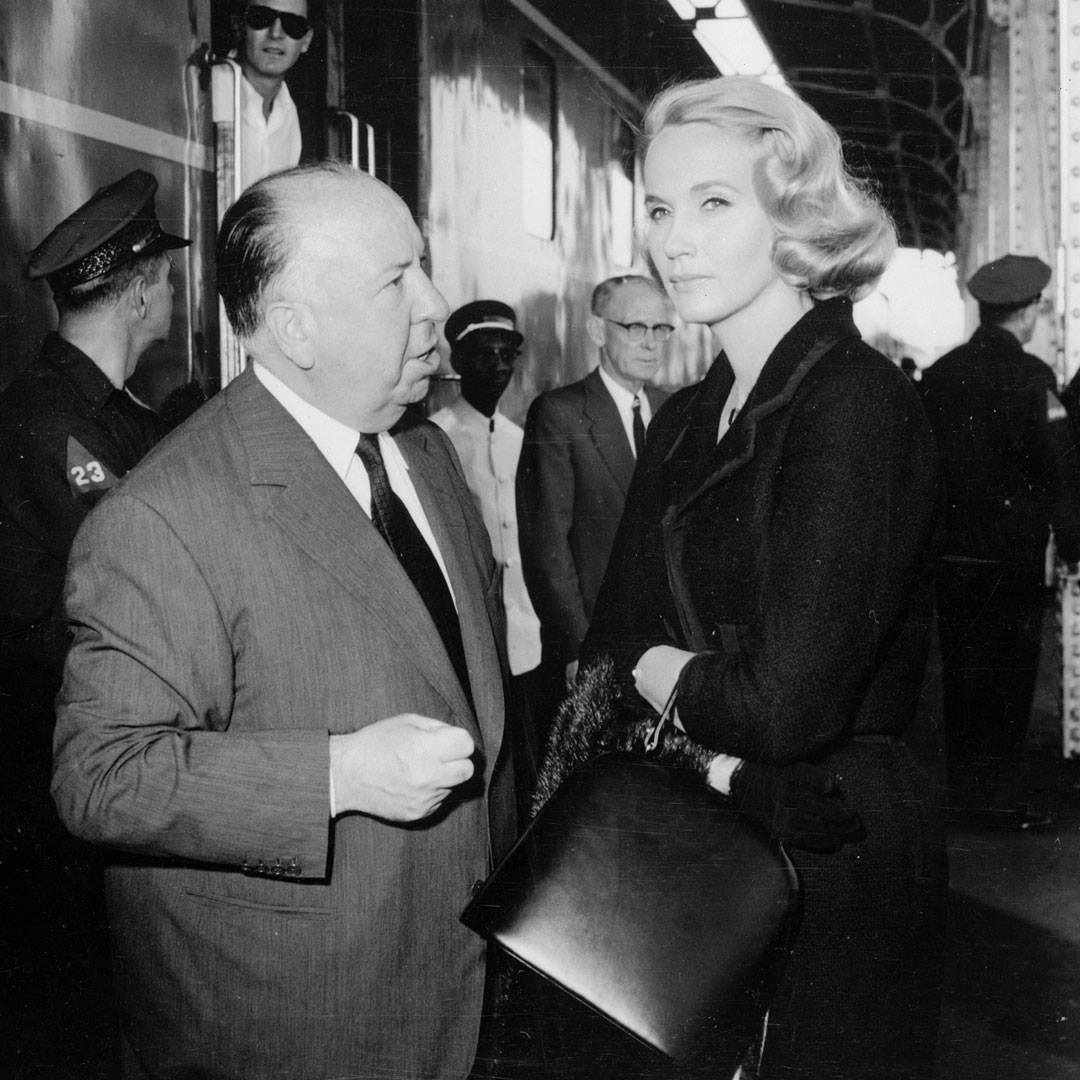
According to the Schedule Sheet, they filmed for three days at LaSalle, from September 9th to the 11th, 1958.
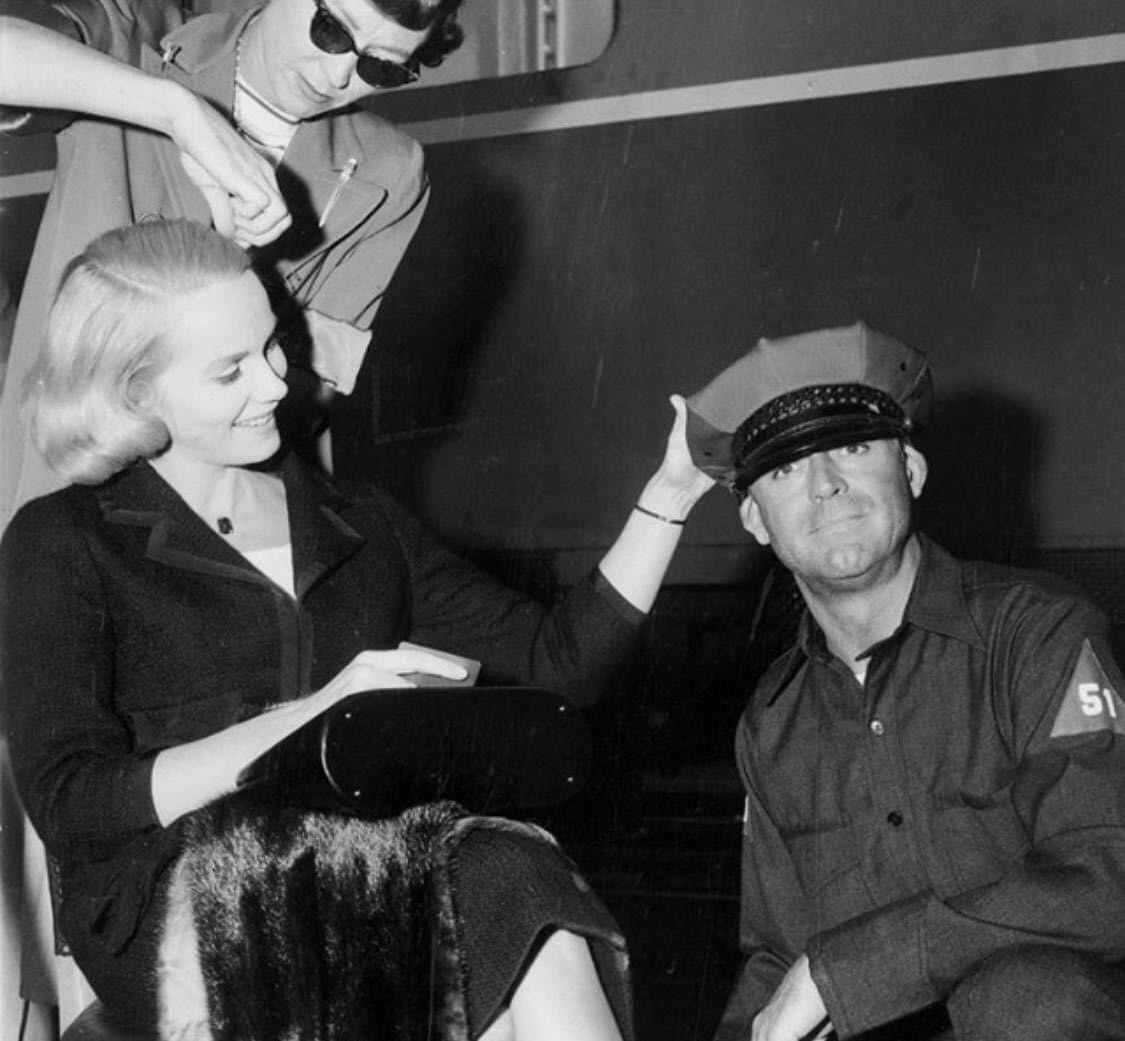
So I knew they filmed on the actual platform, but once they go inside the station, I wasn’t one hundred percent sure if it was a set or not. There weren’t a whole lot of vintage photos of the old LaSalle station available online to compare, but what I did find looked like what was in the movie.
I also found a few behind-the-scenes photos of them filming in what appeared to be a real station.
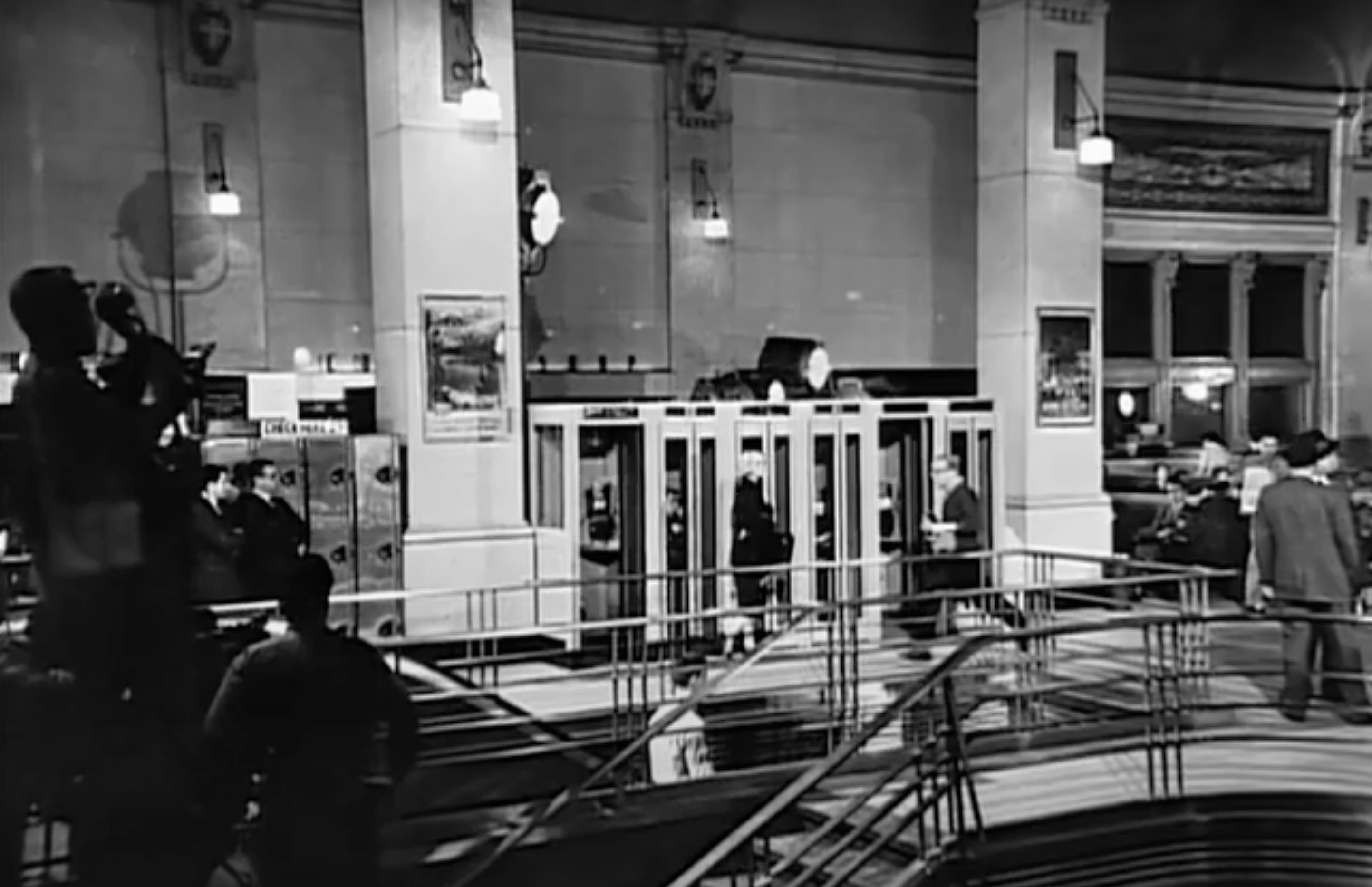
Of course, it could’ve been one big, elaborate recreation, like what they did with the Oak Bar. So I examined each set-up carefully, comparing them with the limited number of vintage photos I had of the old station.
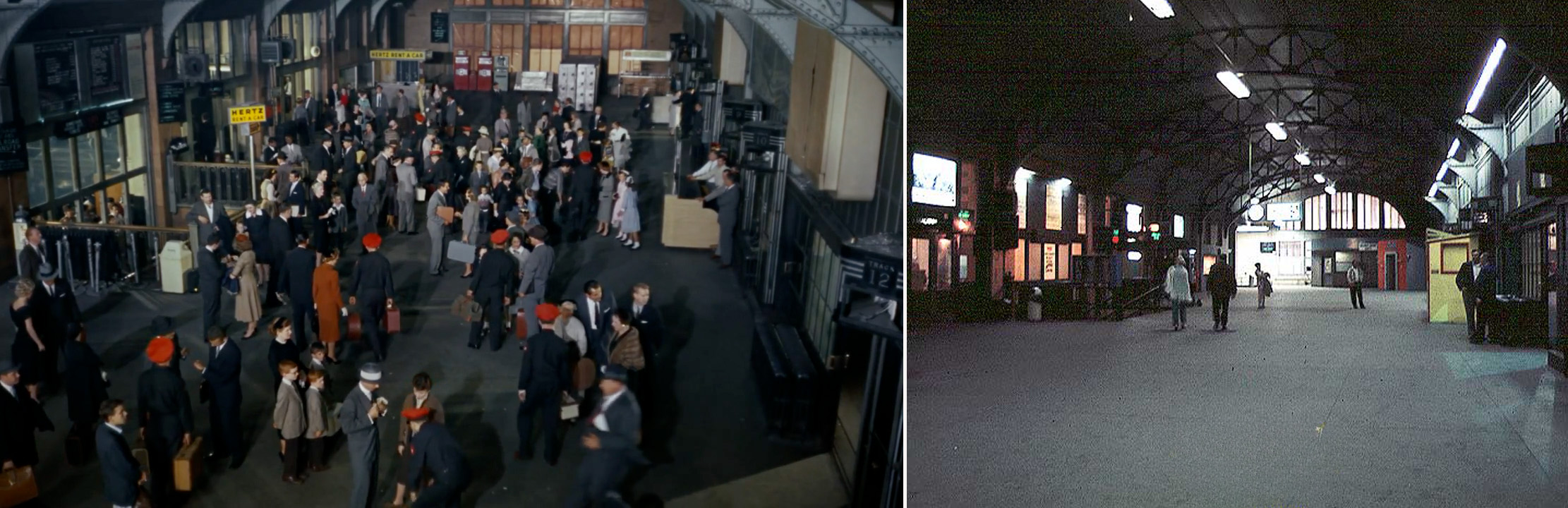
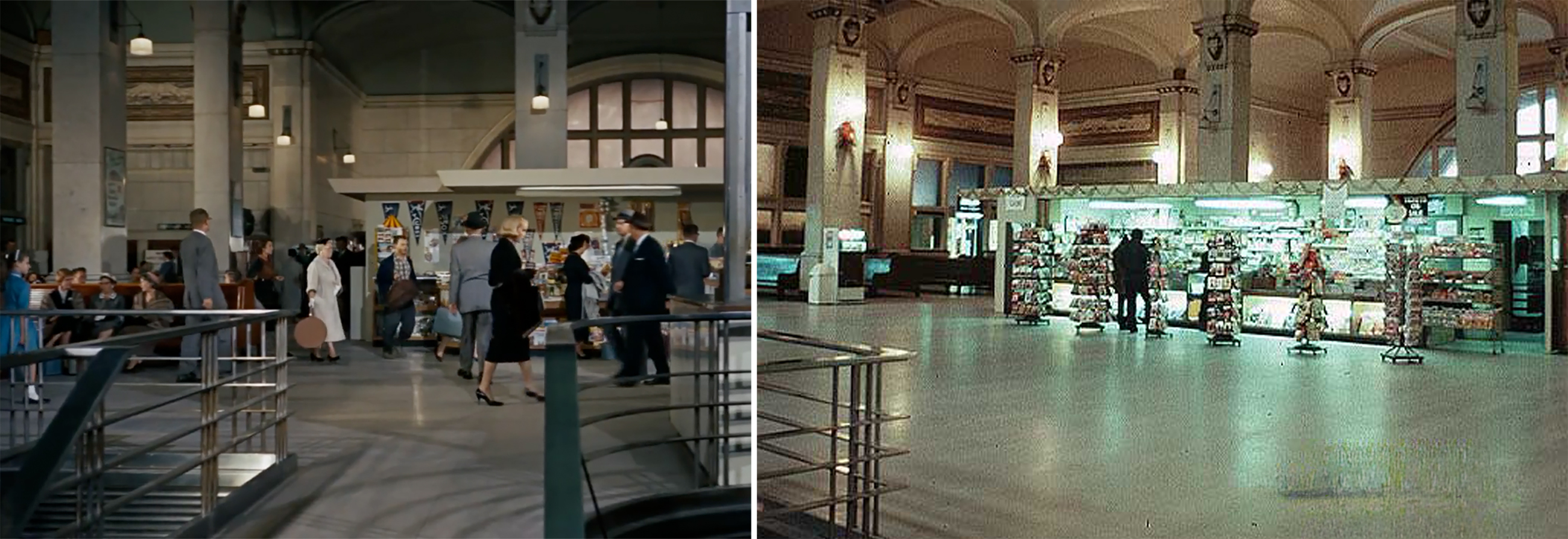
At the end of the day, it was the fact they used rear projection for the dialogue parts that convinced me that the other shots were indeed done at LaSalle. My logic was, there’d be no reason to use rear projection if you had access to a controlled set on a soundstage.
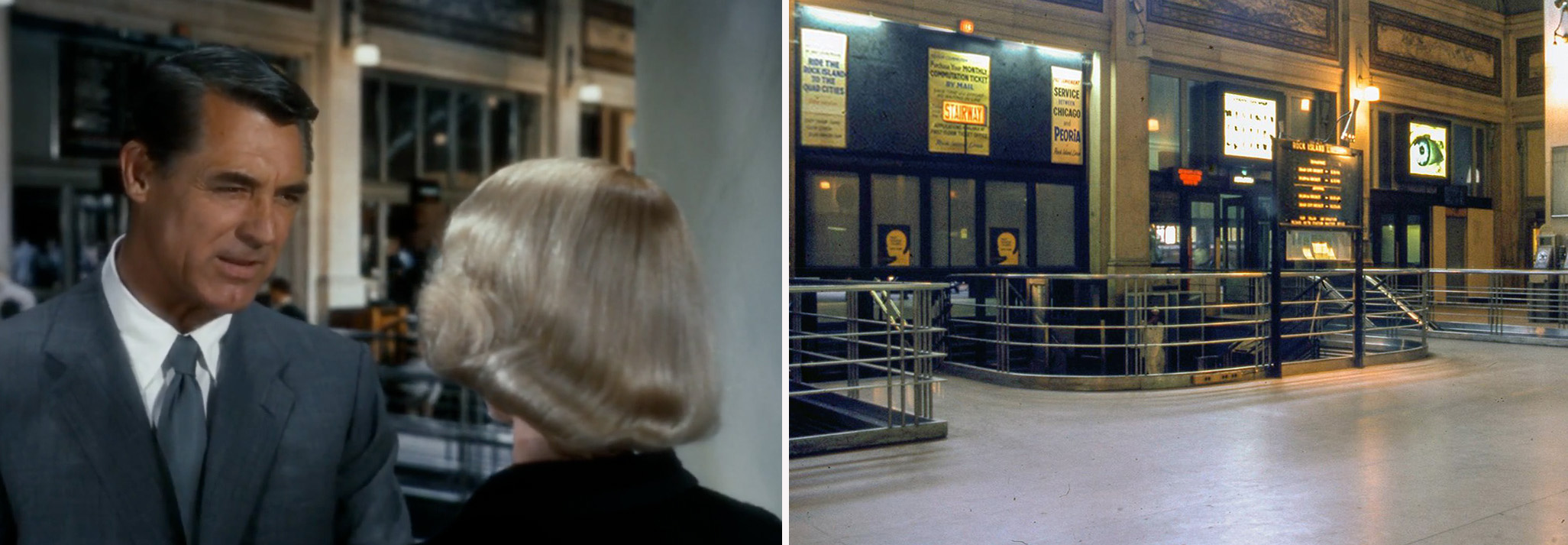
Sadly, the LaSalle Street Station used in this movie got torn down in 1981 and got replaced with an extremely unpleasant structure that only serves one single line for the Metra commuter rail system. But since it wasn’t a very busy station, it made taking pictures along the tracks quick and easy (plus, it was conveniently around the corner from the L station used in the film, Planes, Trains and Automobiles).
Crop Duster
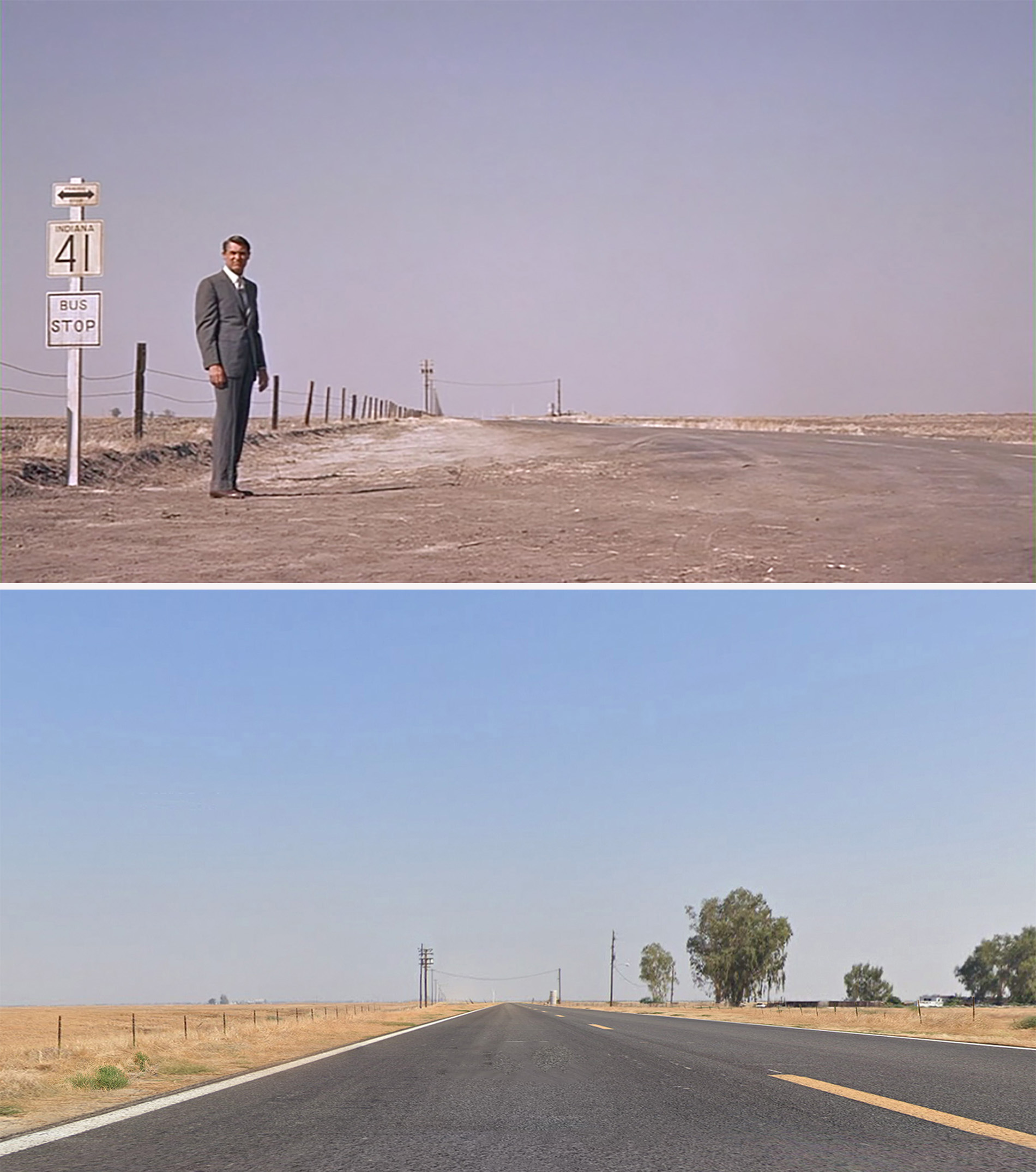
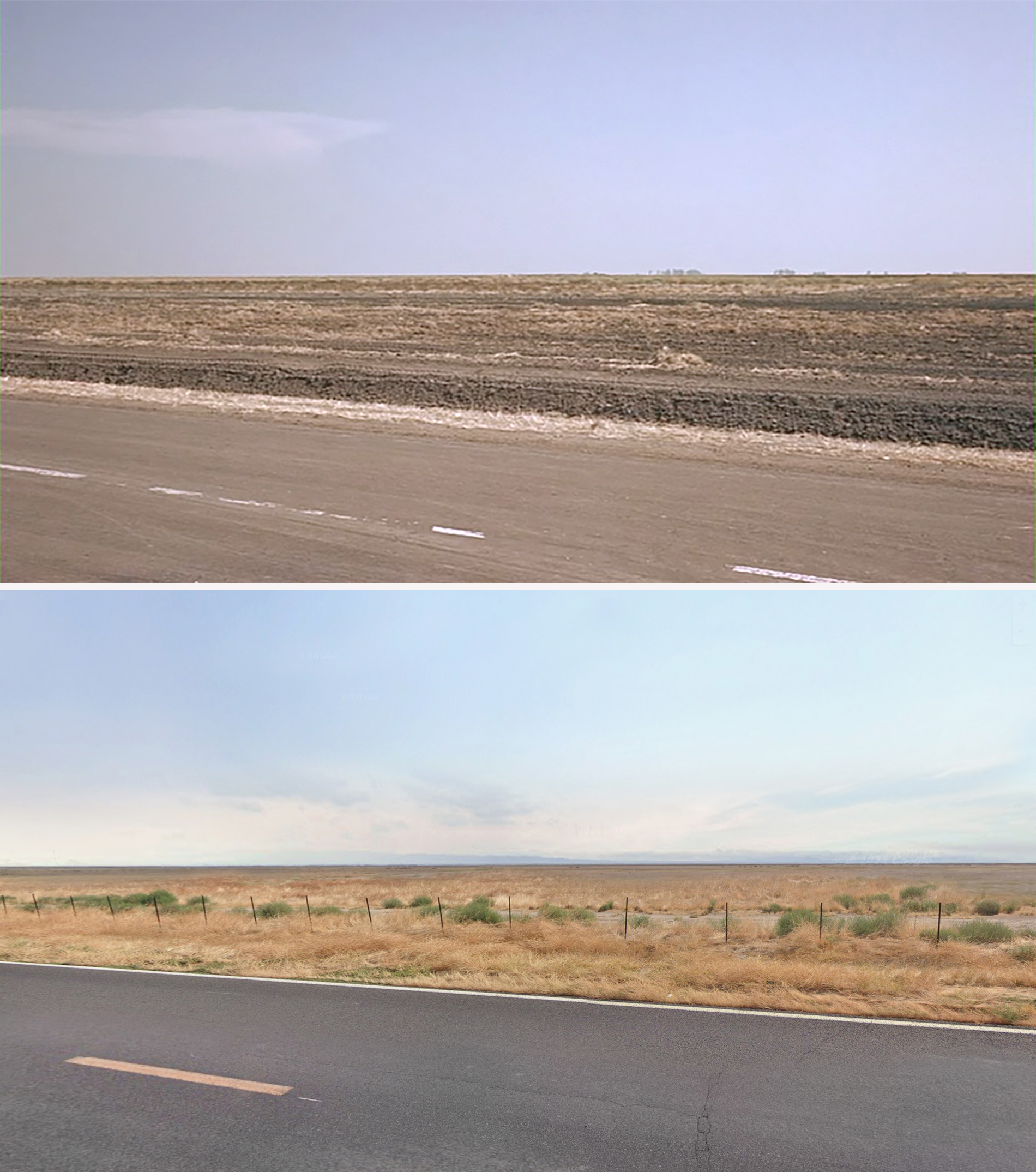
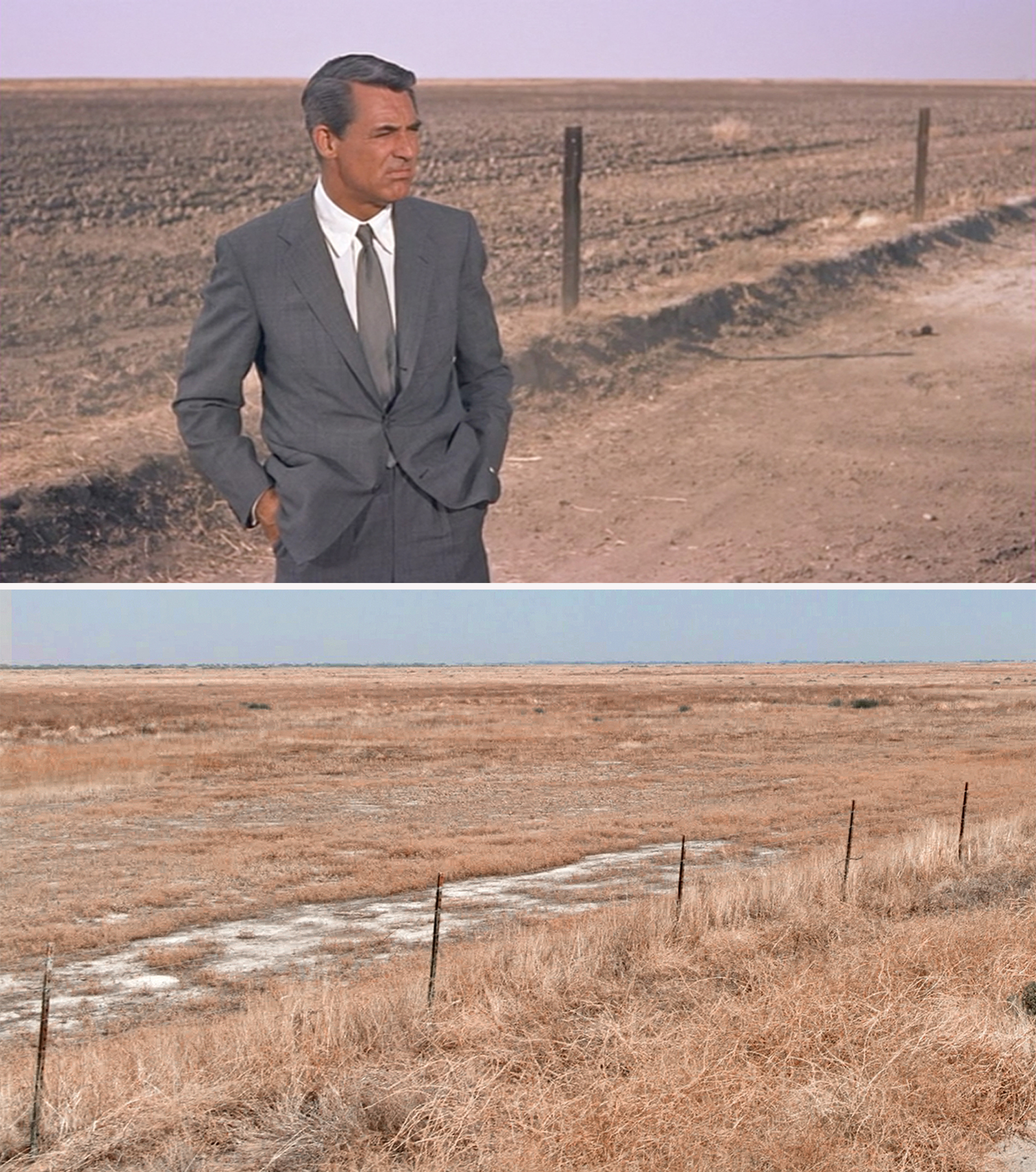
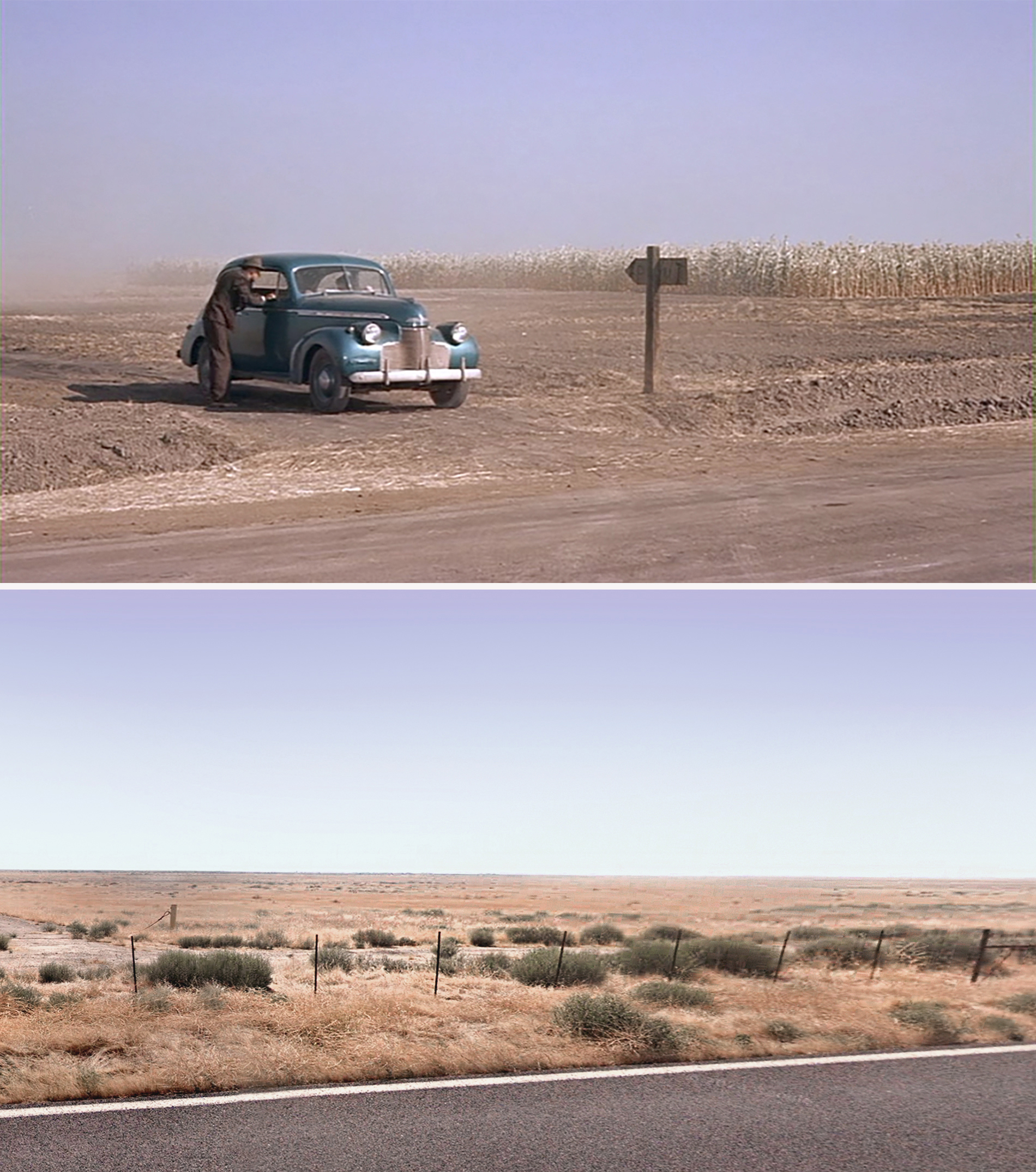
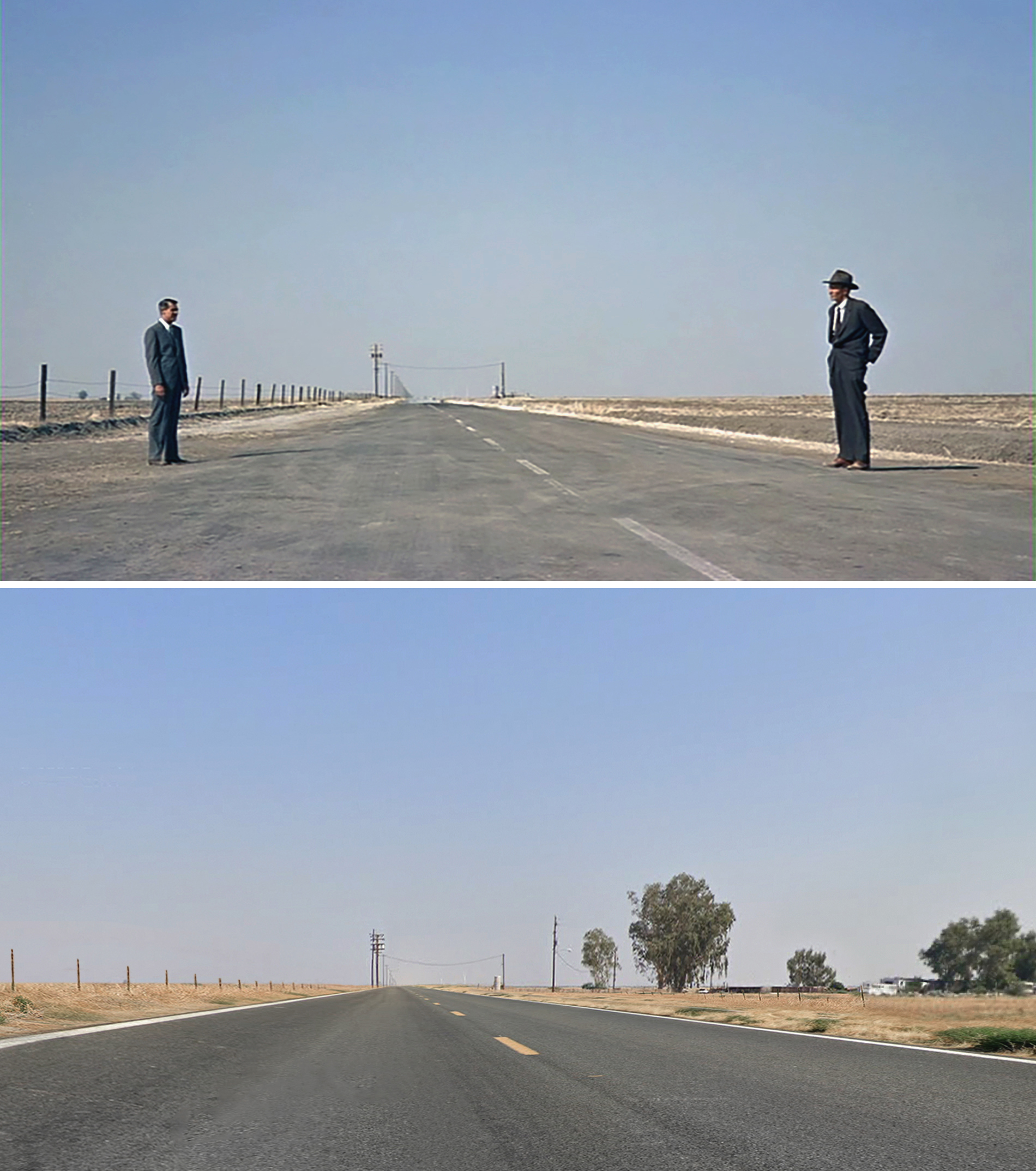
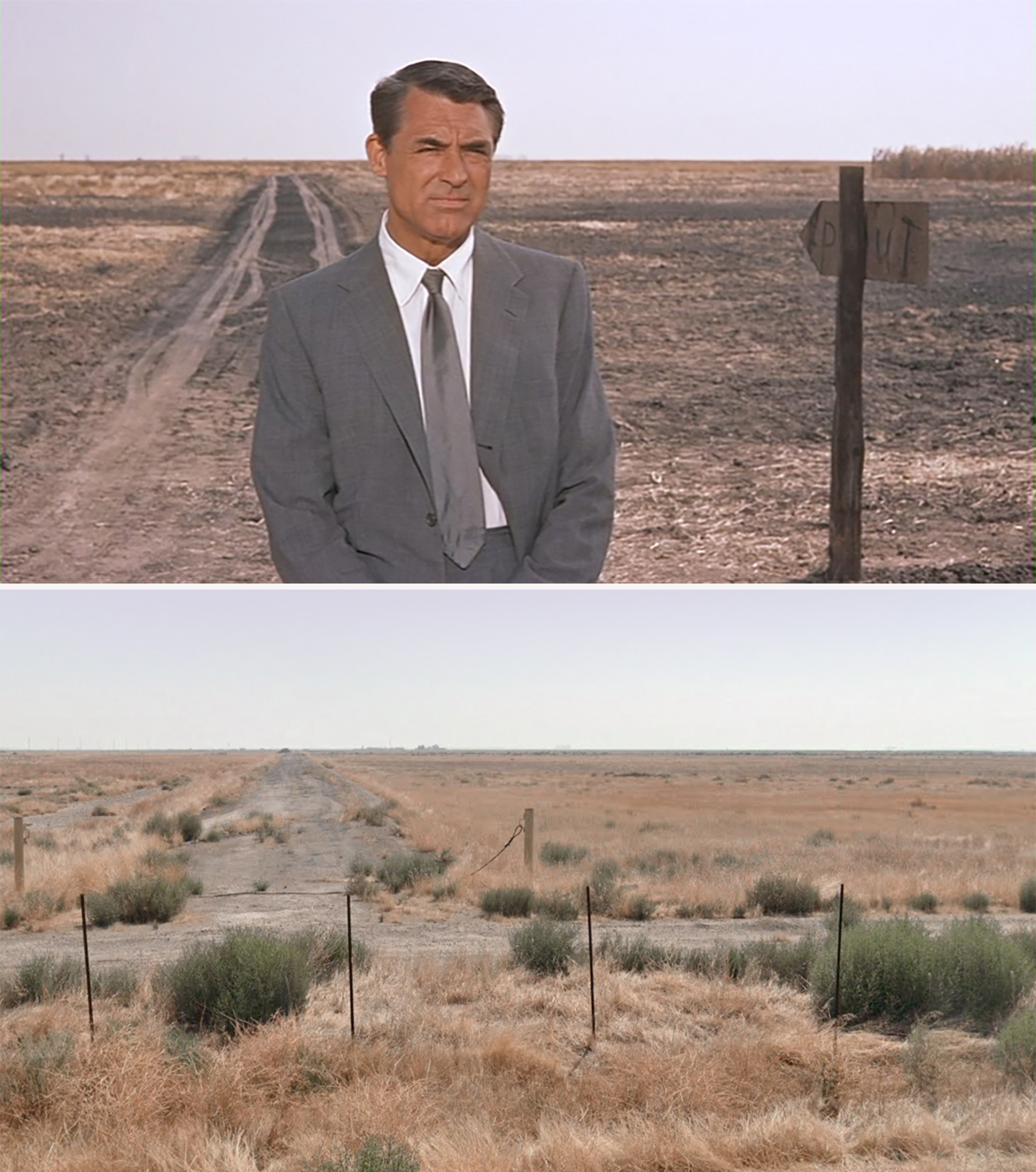
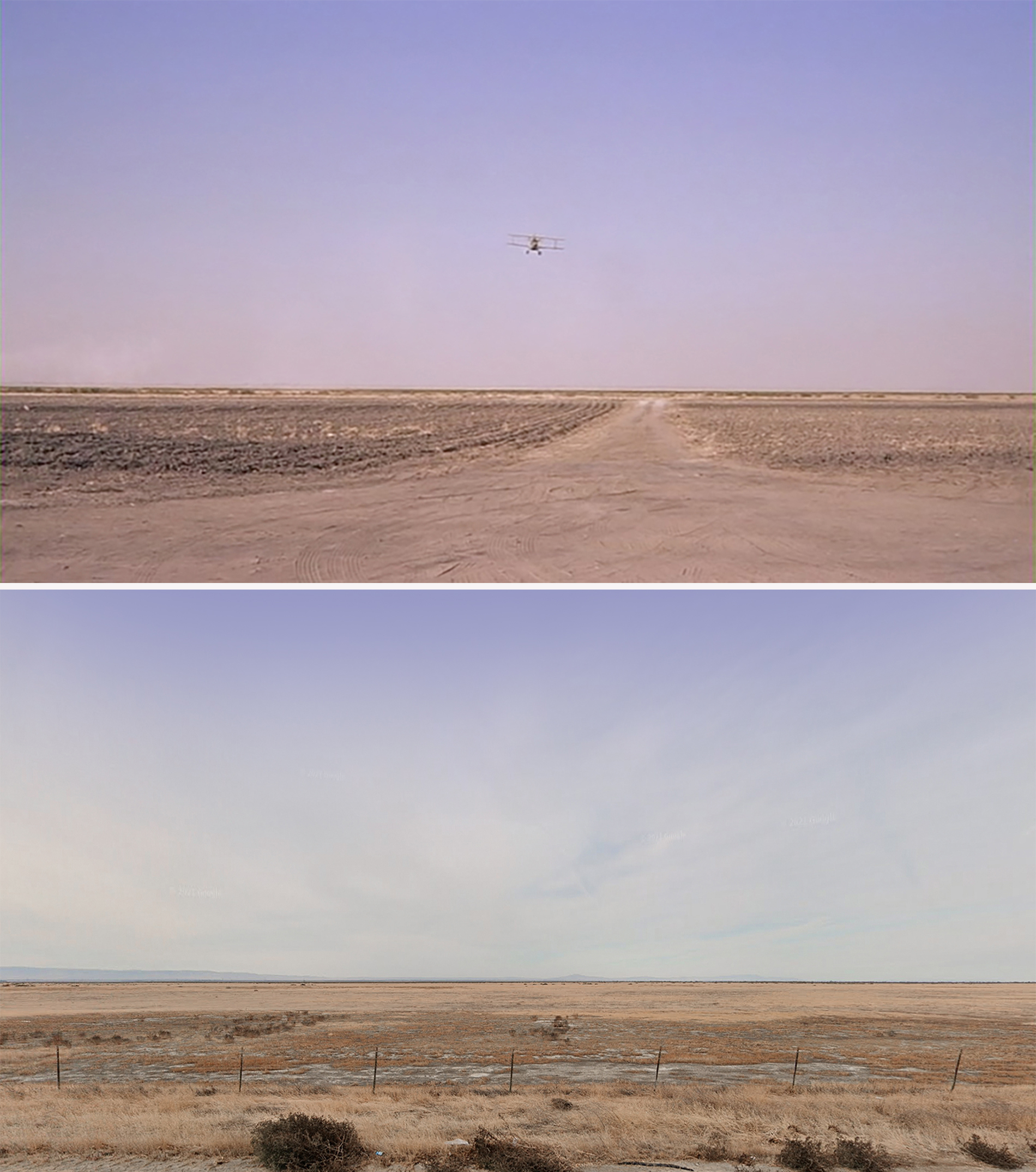
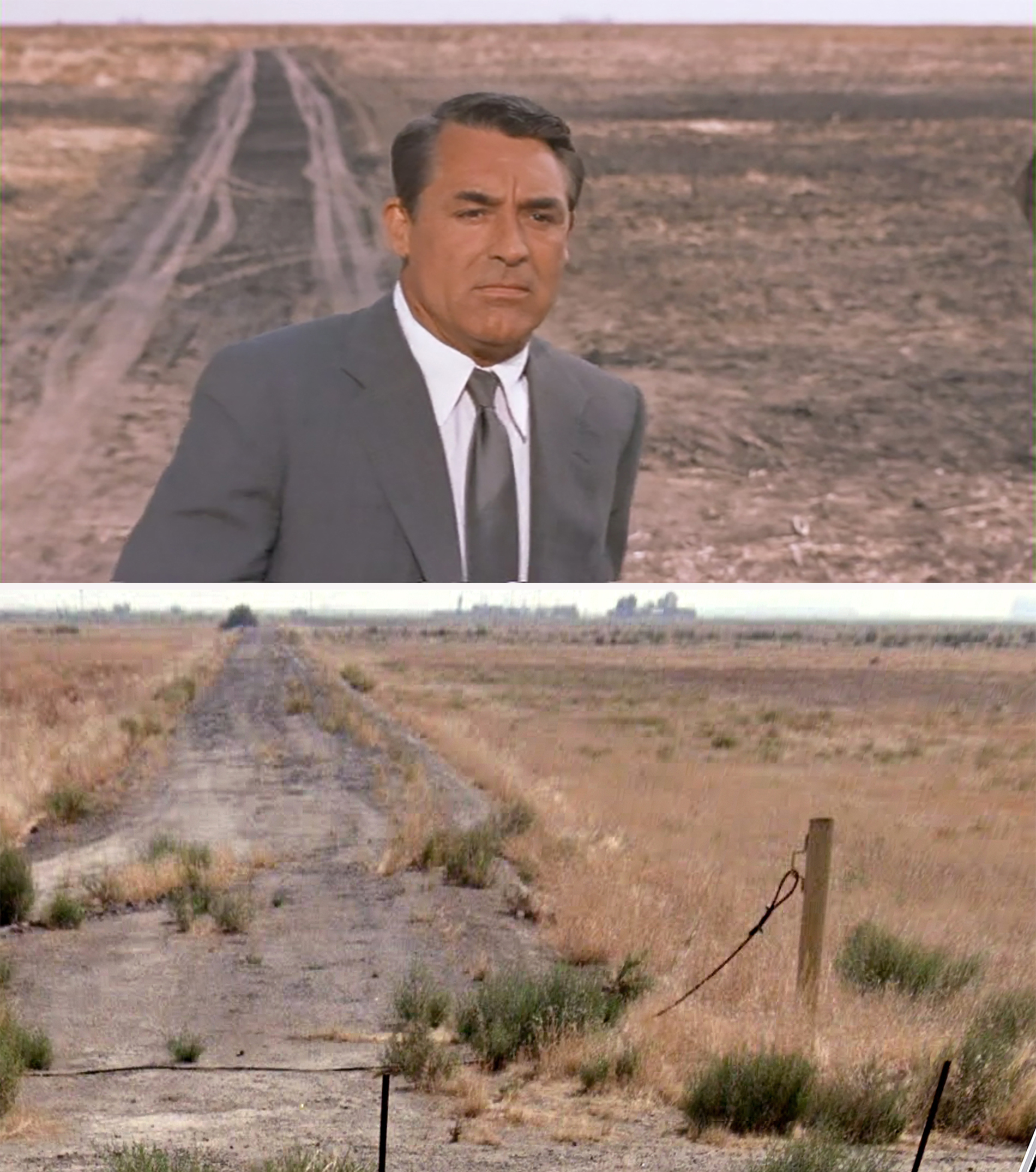
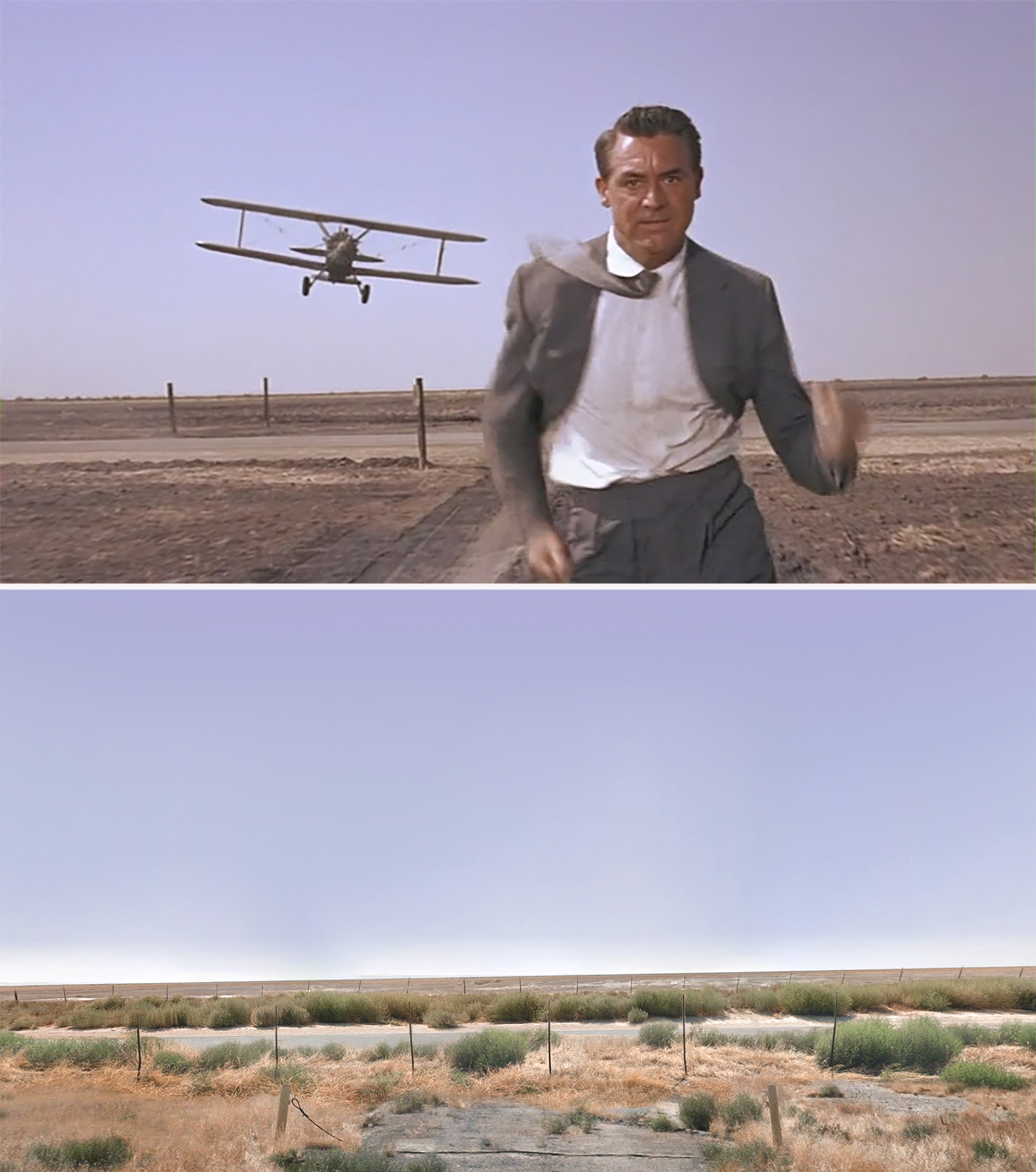
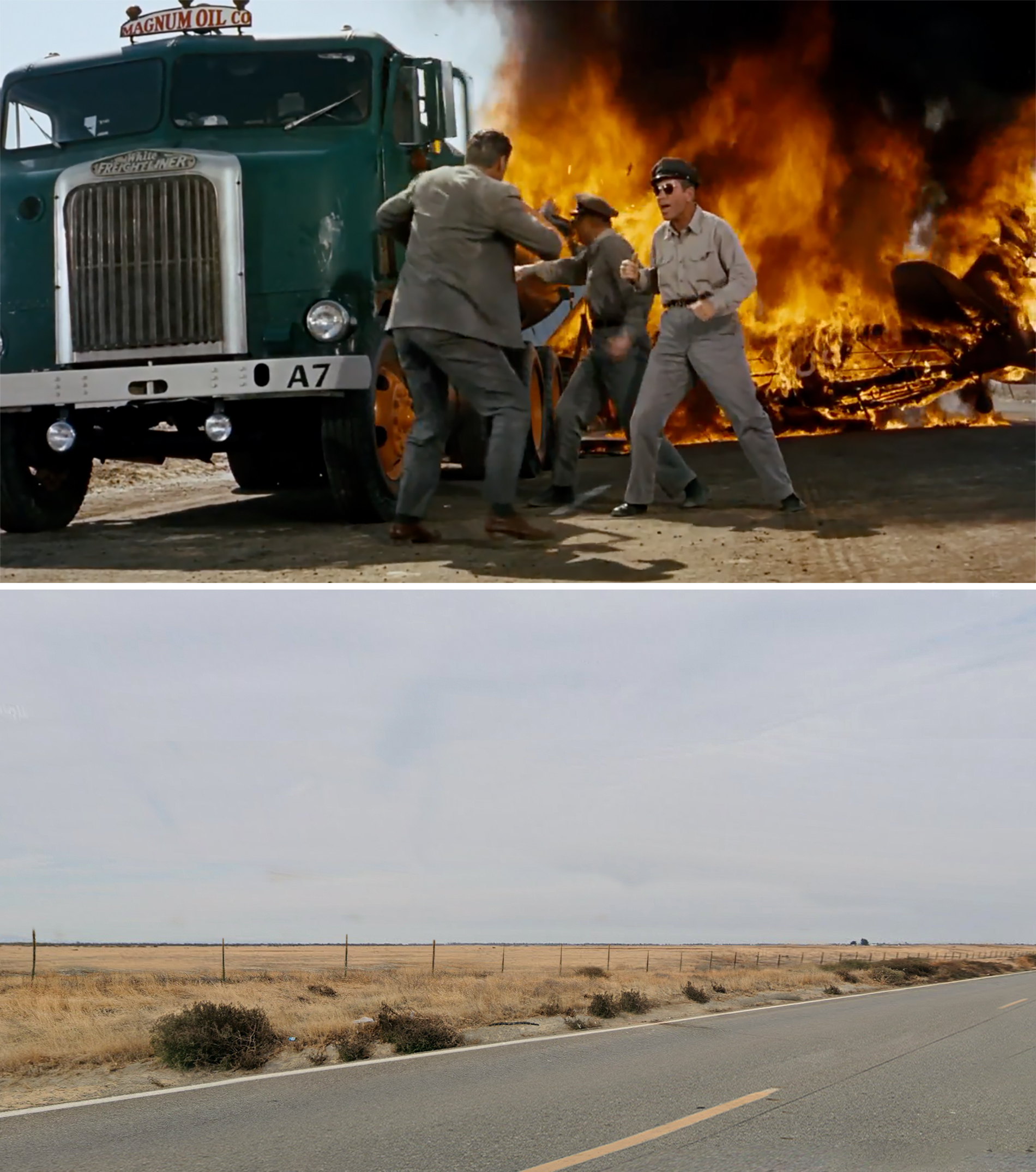
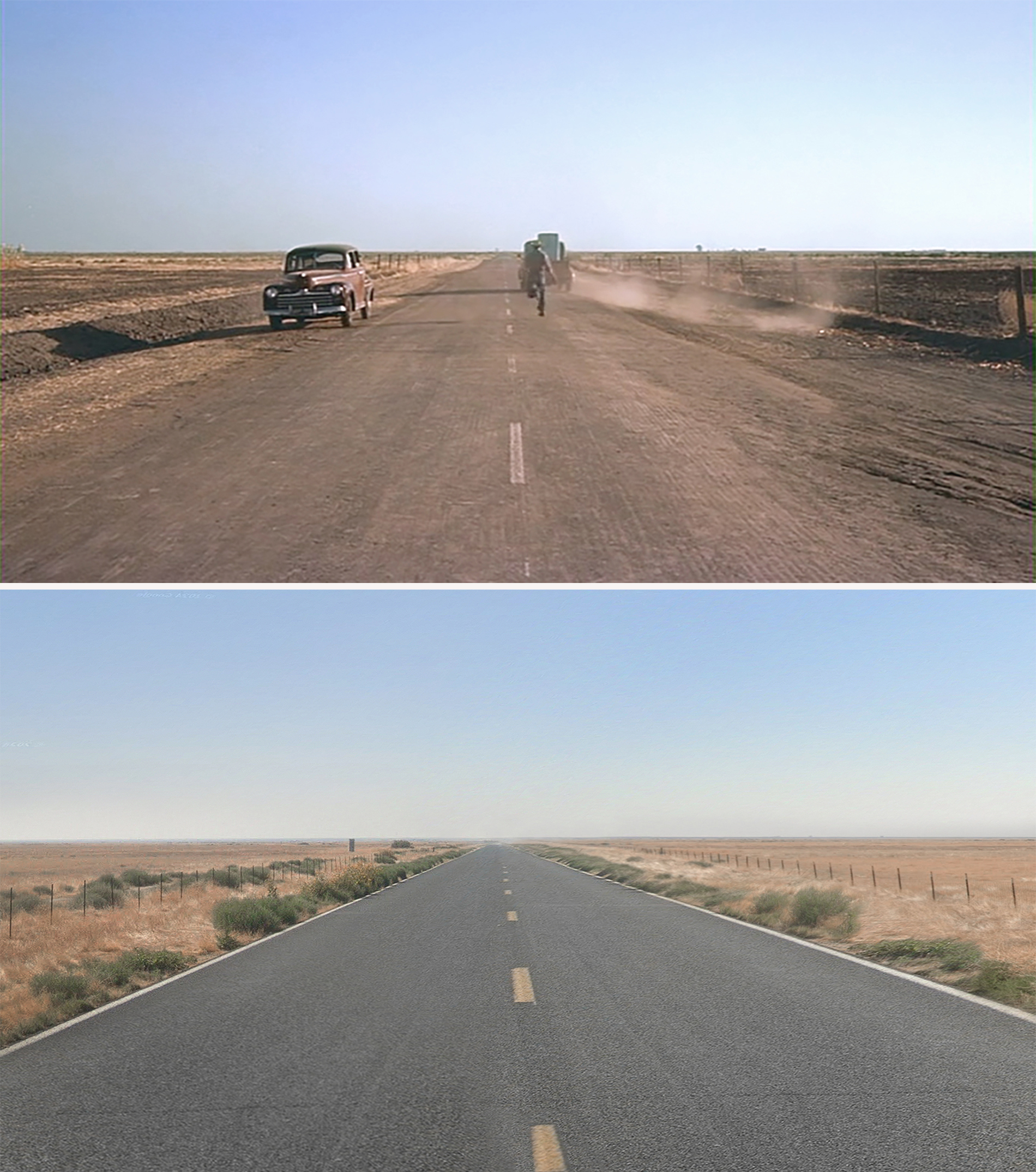
This is most certainly the most famous sequence from the movie (even more than the Mount Rushmore climax), and while it’s not a New York location, I was very eager to find and photograph it.
I reason I say “find” is because there has been a discrepancy over the years as to what stretch of road was used for this sequence. It’s long been asserted that it took place at the intersection of Garces Highway and Dairy Road in Wasco, California.
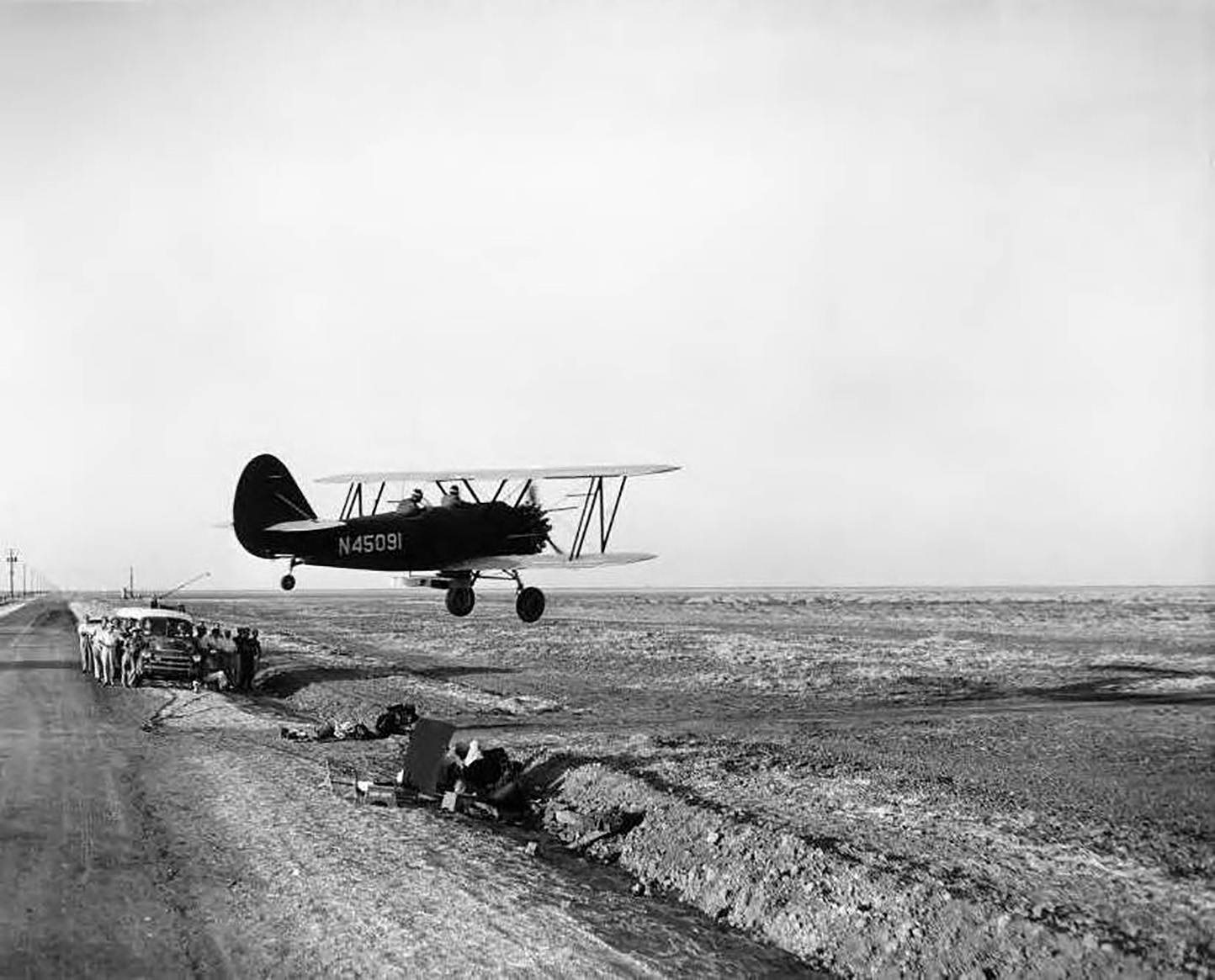
But since the scene takes place on a flat, nondescript road in a barren landscape, its location is hard to substantiate. As an additional wrinkle, according to production designer Robert F. Boyle, part of the background was matted out in order to hide mountains and a distant town, essentially concealing some potential clues.
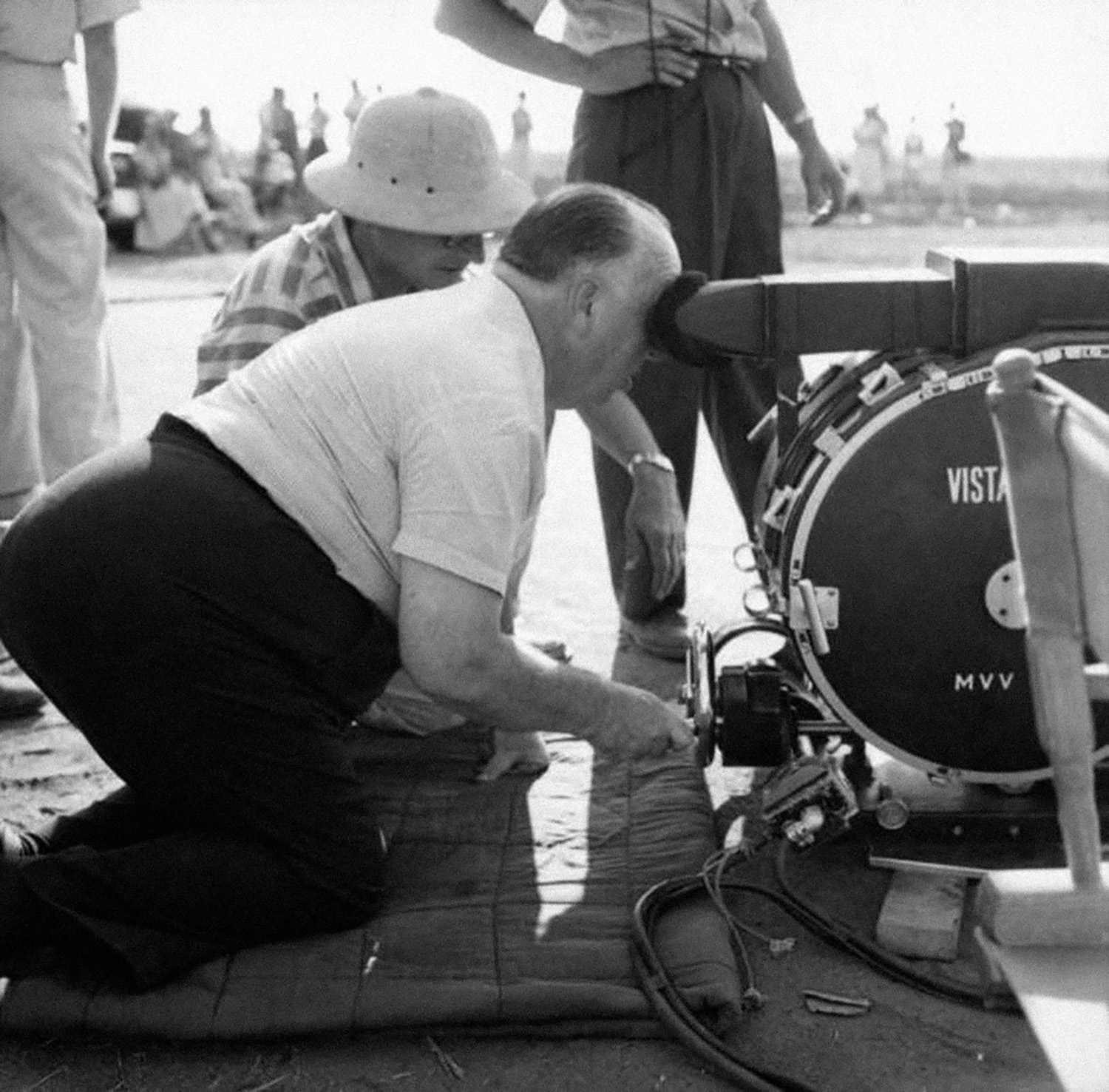
Without any clear visual proof that they filmed at the intersection of Garces and Dairy, I didn’t feel comfortable including it in my catalogue of North By Northwest locations. And I was about to move on when I stumbled upon a comment on a movie blog that offered up an alternate location.
The commenter, Nick Duerksen, claimed that his father was at the crop dusting location when they filmed the scene and had direct knowledge of its whereabouts. (Cary Grant even reputedly chatted with his father in between takes, mentioning to him that the cast and crew were originally staying at a motel in McFarland, but moved to a hotel in Bakersfield because the first one’s bar closed at 10:30pm.)
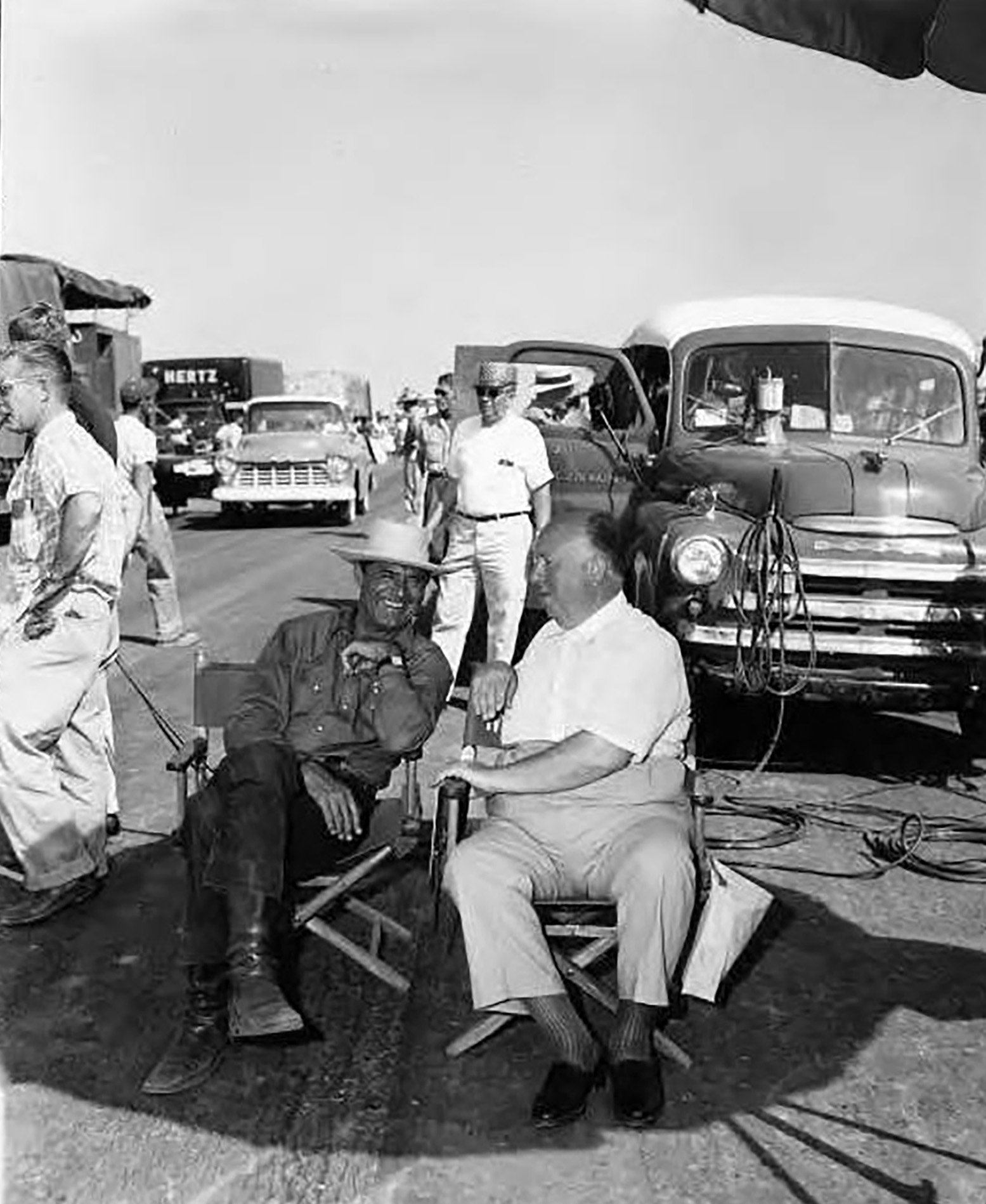
According to Duerksen’s dad, the true location of this scene is on Corcoran Road, about 4 miles north of Hwy 46, and that the dirt crossroad seen in the movie was something added by the crew.
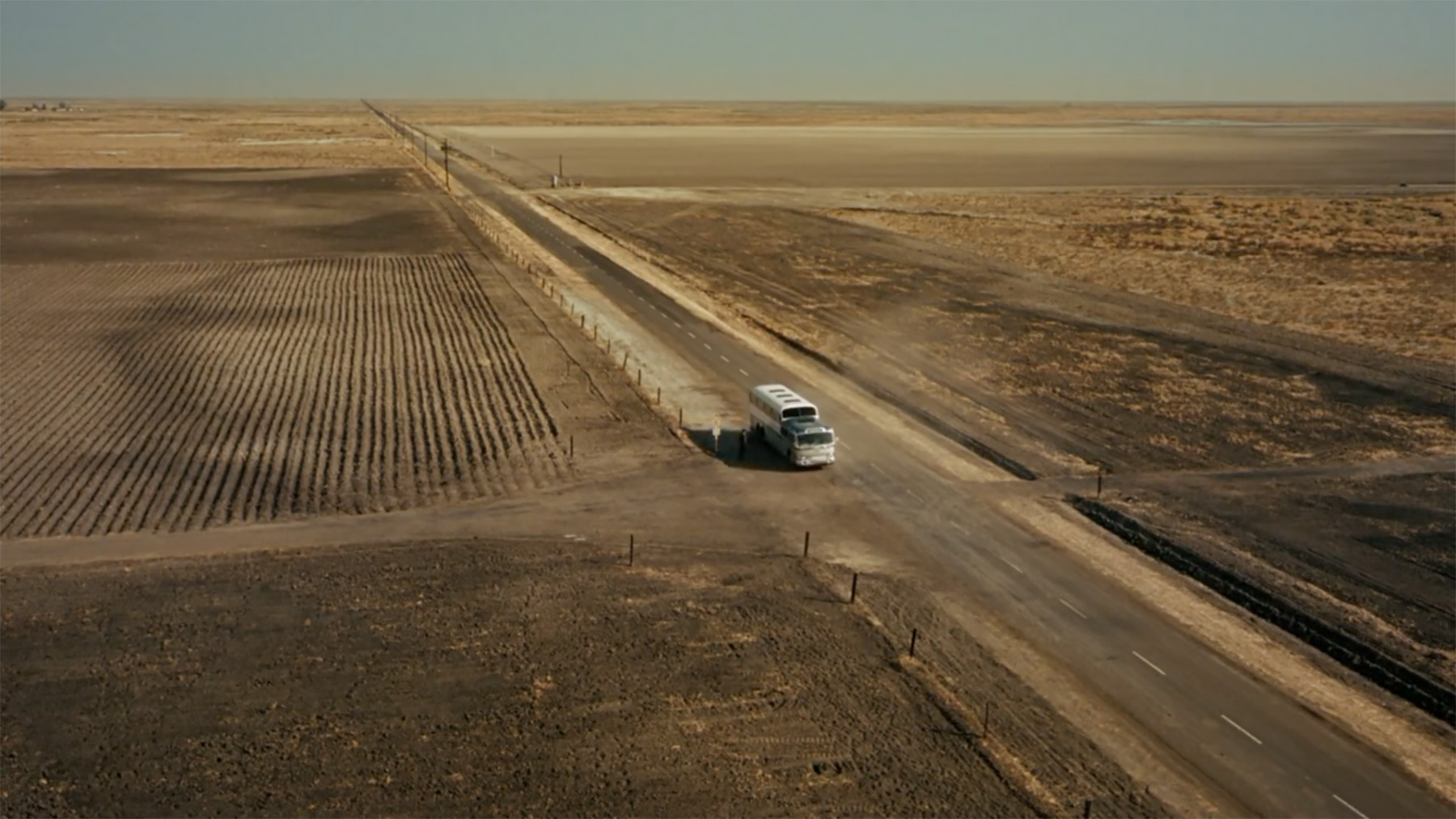
Now, when it comes to random comments on the web, you always have to treat them with the hearty helping of skepticism, especially if the proof amounts to a hearsay statement. But the commenter offered up some nice details and sounded reliable, so I certainly thought it was worth investigating.
Thinking this new location was going to be as nondescript as the other one (which was about 6 mies to the north), I wasn’t very optimistic I’d be able to verify anything. But as soon as I looked at the area in Google Street View, I spotted something very promising. Just up the road was a grouping of telephone poles that seemed to perfectly match the ones in the movie (something that was not at the other claimed location). And not only did the poles seem to line up, there was also a small water tank by one of them that appeared to be the same one in the movie.
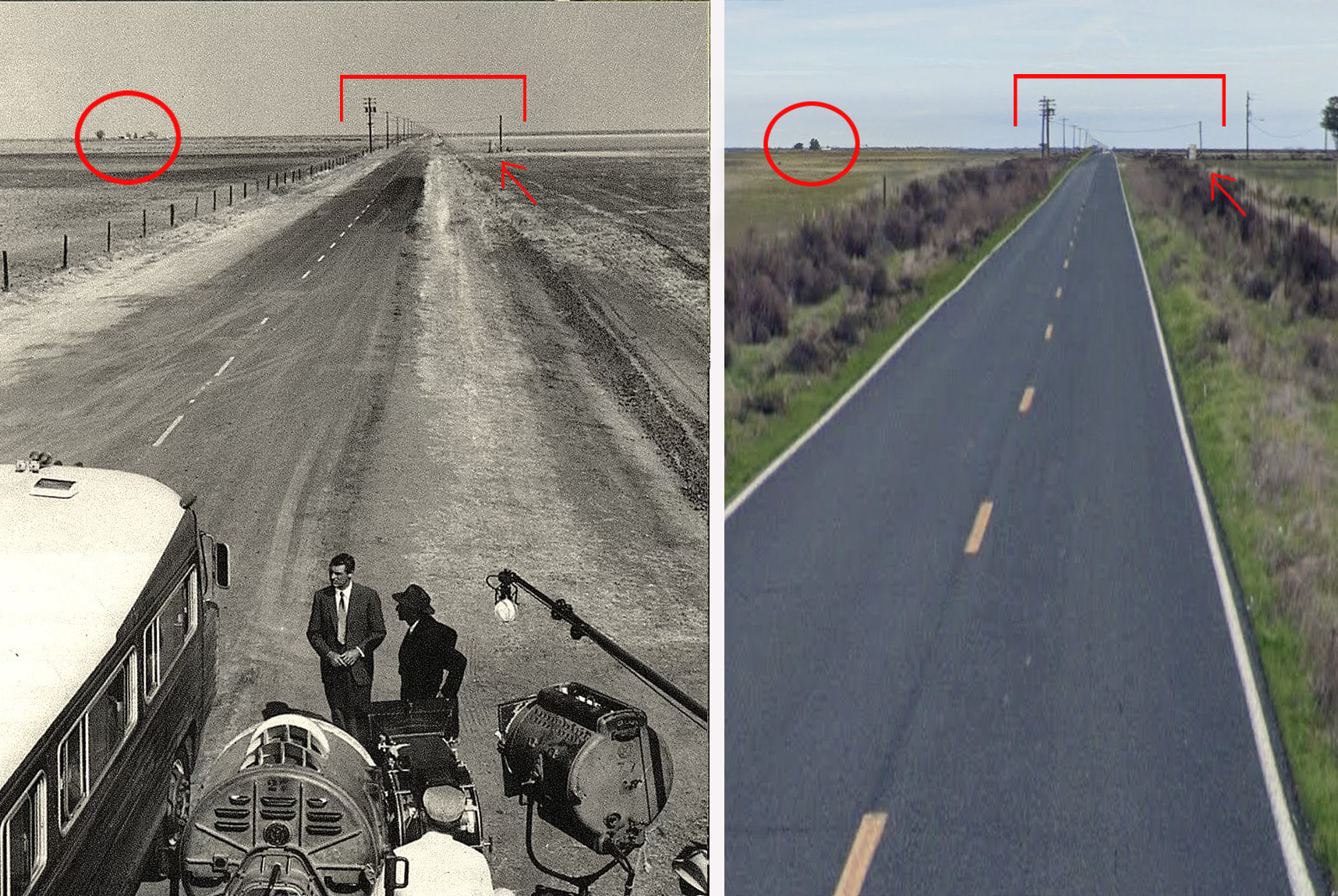
By my calculations, based on the distance from those poles and the fact there’s remnants of a small dirt road on one side, they filmed this sequence at these coordinates: 35°39’53.6″N 119°34’47.8″W.
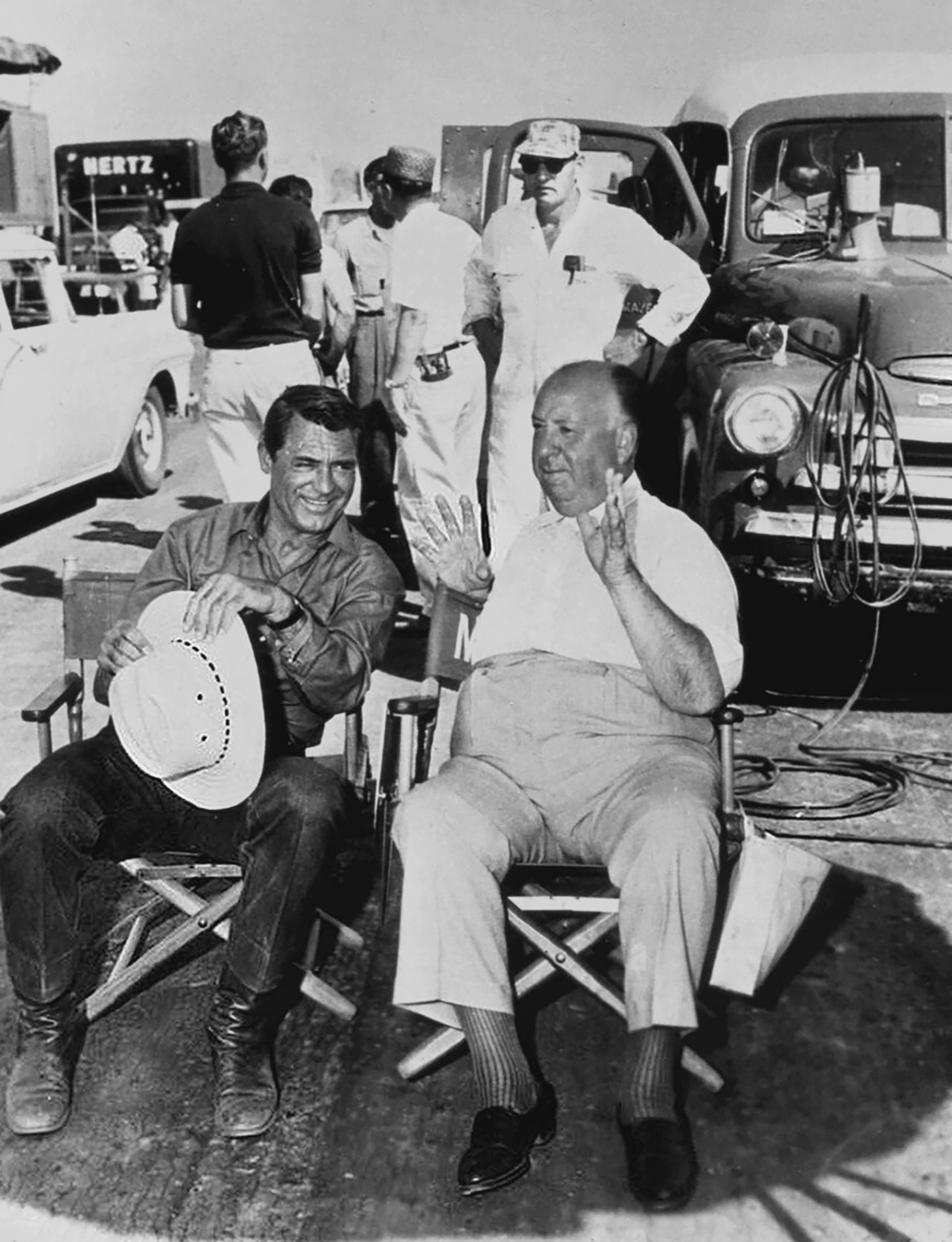
I still can’t call this absolutely confirmed, but there seems to be a lot of strong evidence that this site on Corcoran Road is where the infamous crop duster sequence took place.
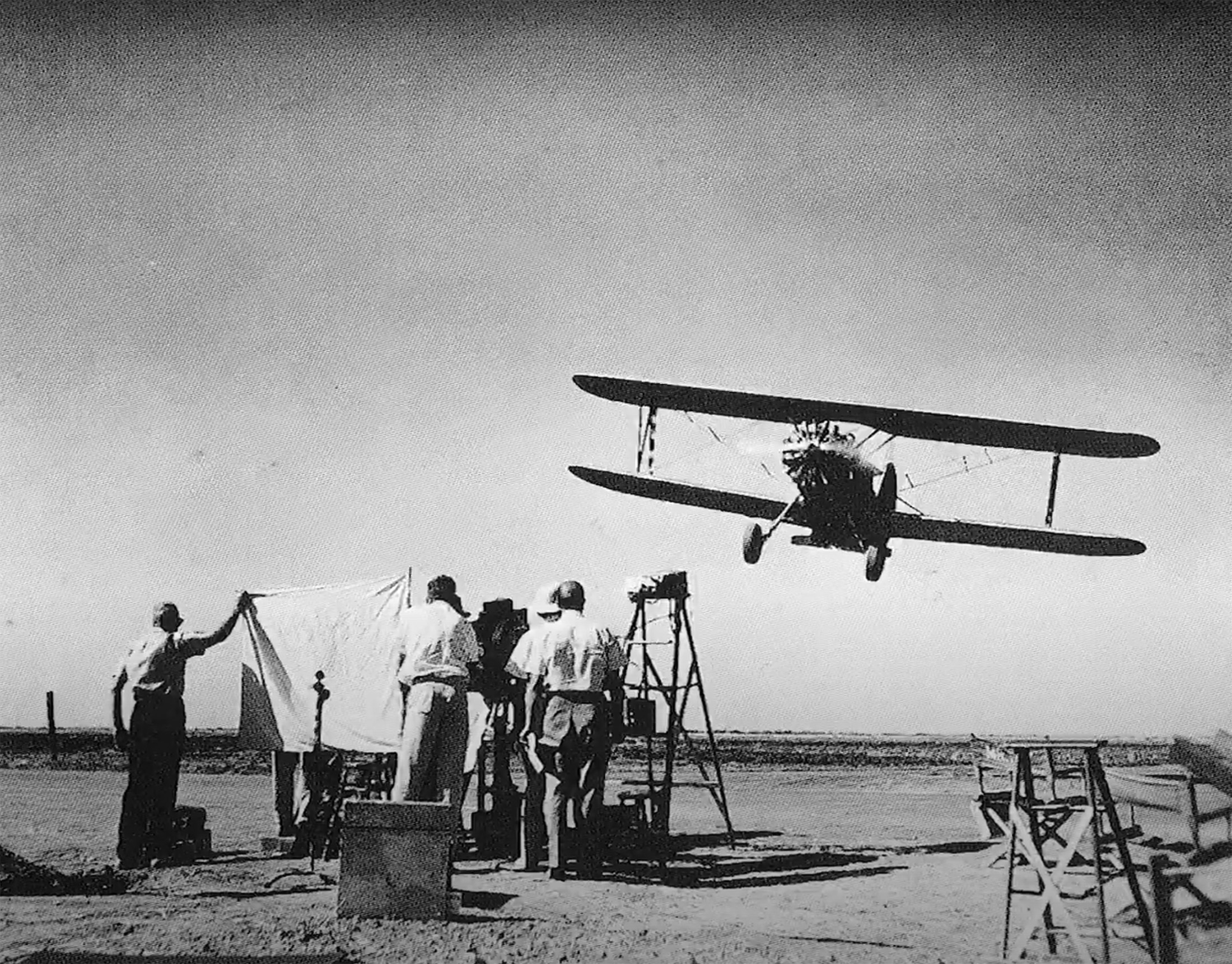
Of course, not all of it was shot on location. Hitchcock also used process shots and miniatures to complete the scene.
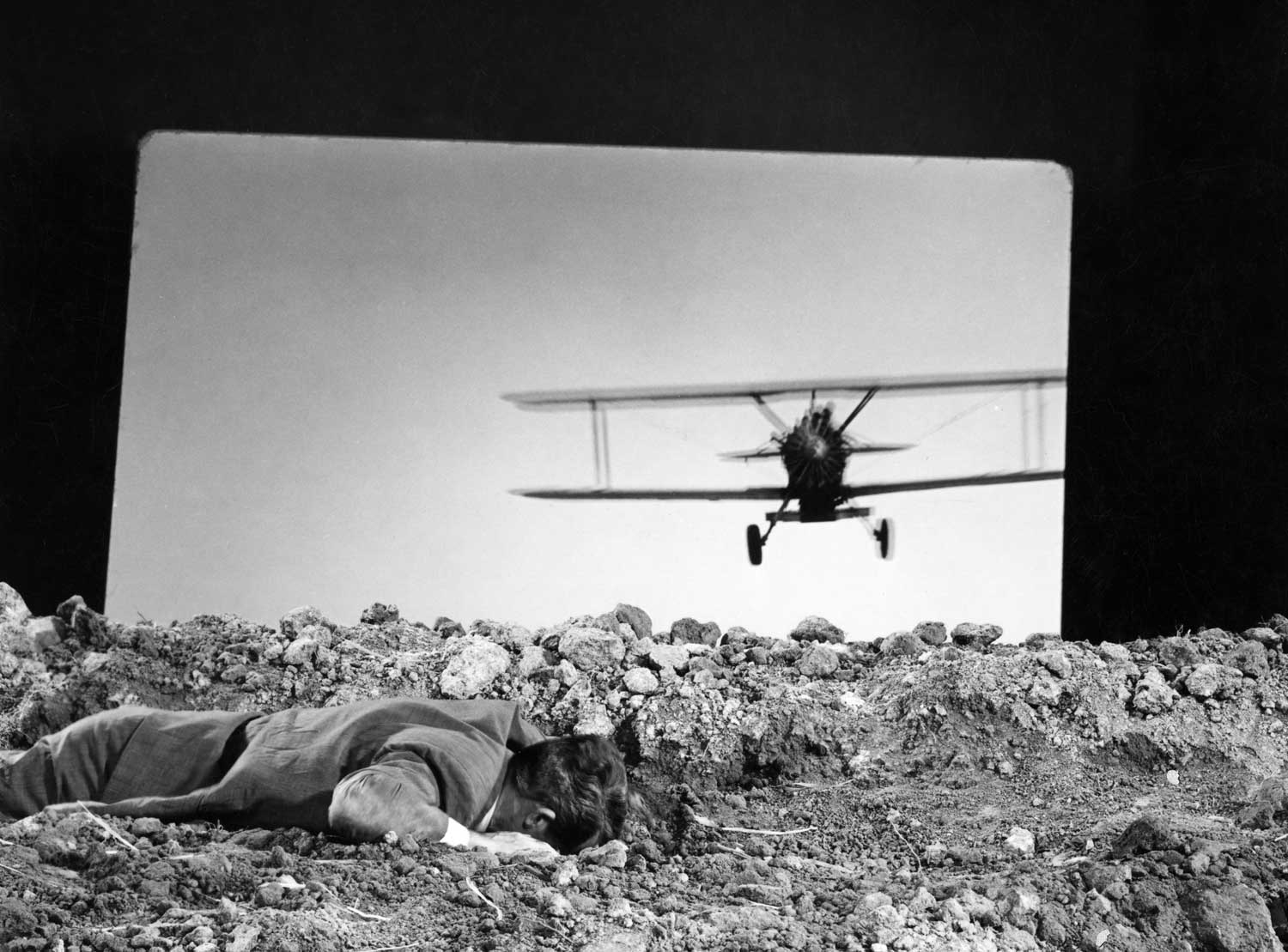
But generally speaking, he only used trick photography for the big stunts, and the majority of the sequence was filmed on location, over a period of three grueling days.
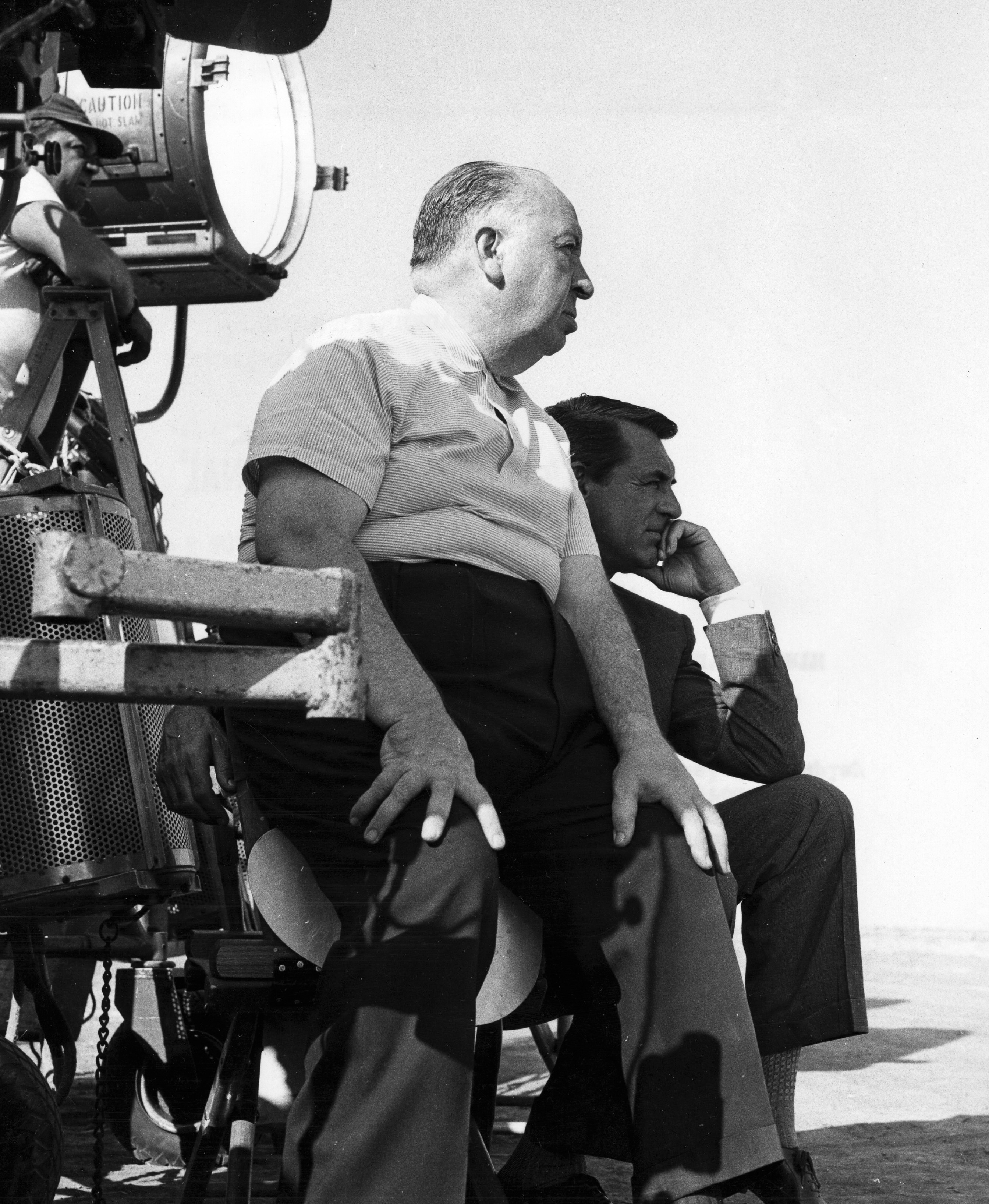
Even though it was early October, the weather in Southern California was reportedly very hot, which I’m sure made the fire stunt even more unbearable to be around.
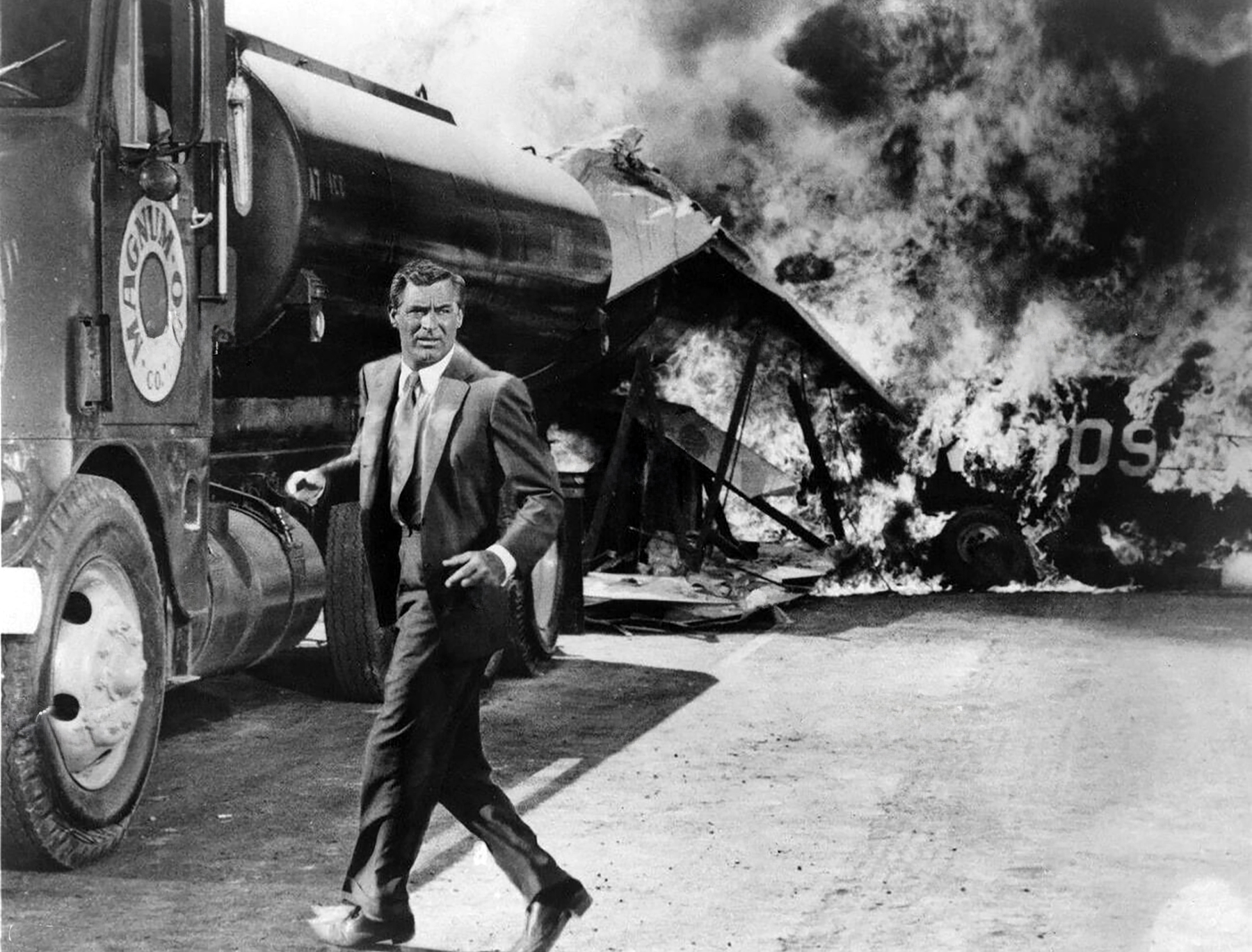
A few details about this stunt were mentioned on that movie blog by another commenter, David Ellenstein, son of character actor Robert Ellenstein, who played one of Vandamm’s henchmen.
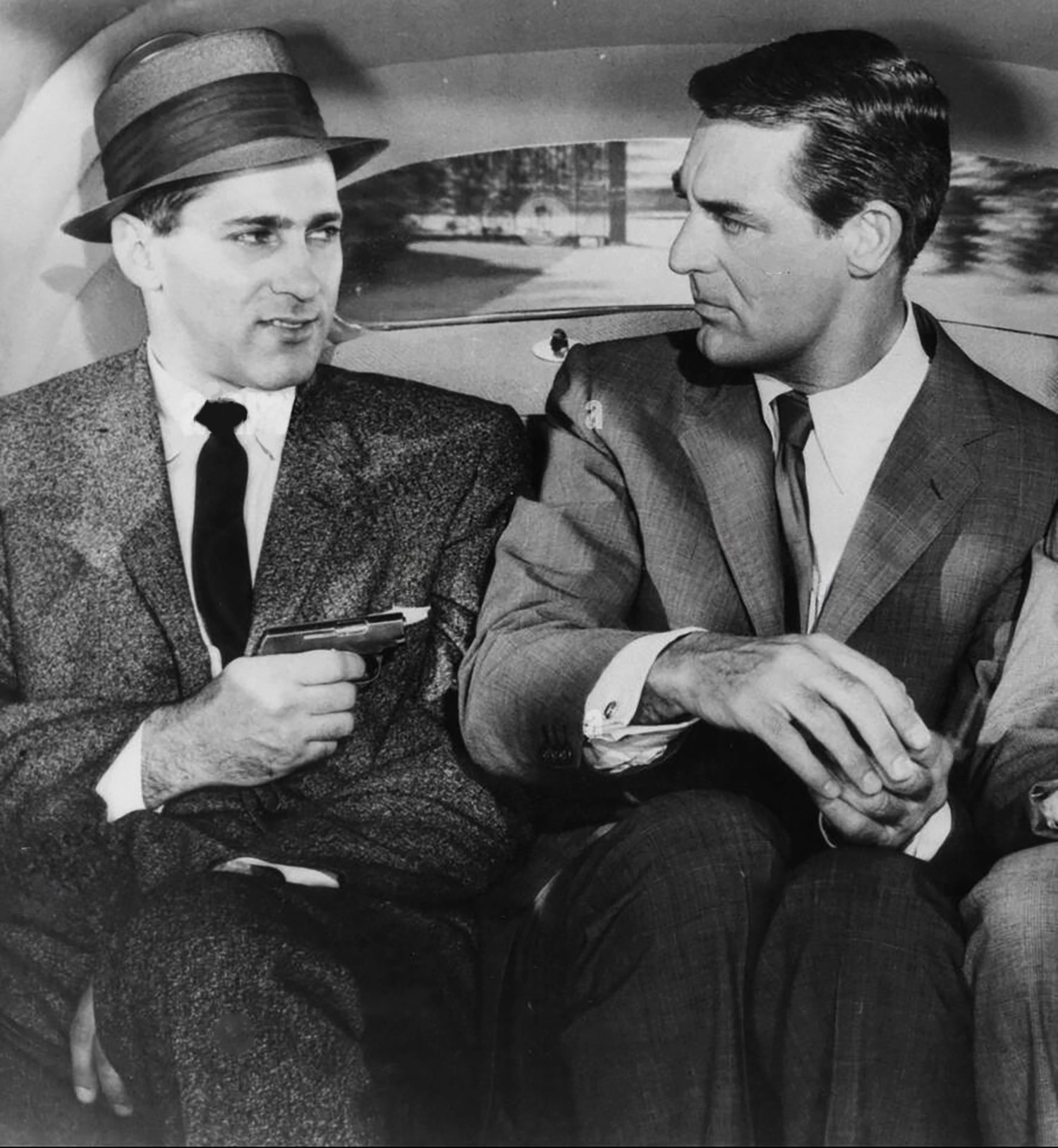
Ellenstein described his father’s role as such:
He was the flyer of the crop duster in the script and disappears from the movie after that scene. They made a life mask of him, and either shot the scene of his rolling from the flames when the plane crashes, but it was removed by the censors at the time, deemed too graphic; or they never actually shot that (I was never clear which way it actually went). We still have the plaster of paris head they made of my dad to create the life mask on.
Chicago Hotel
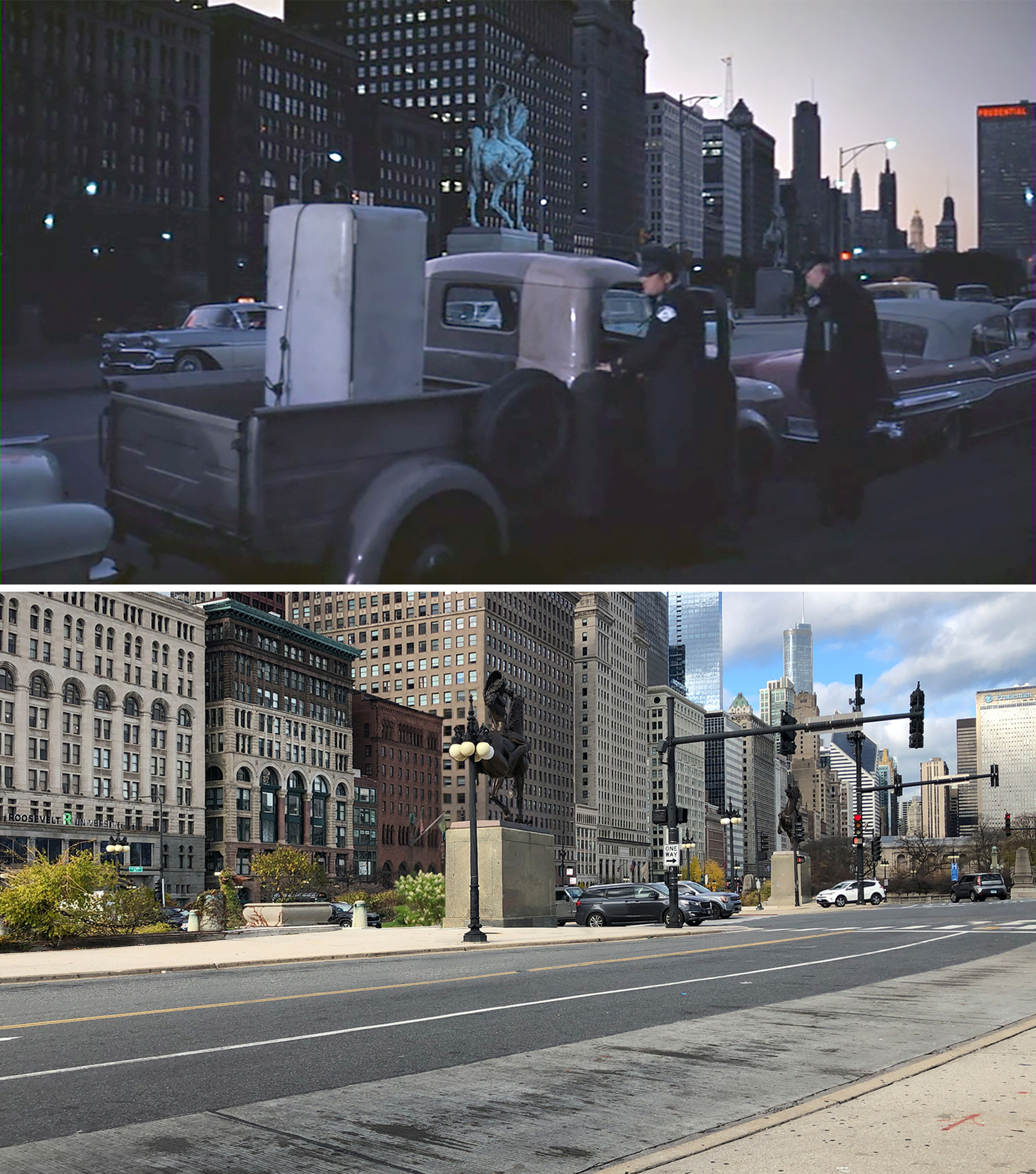
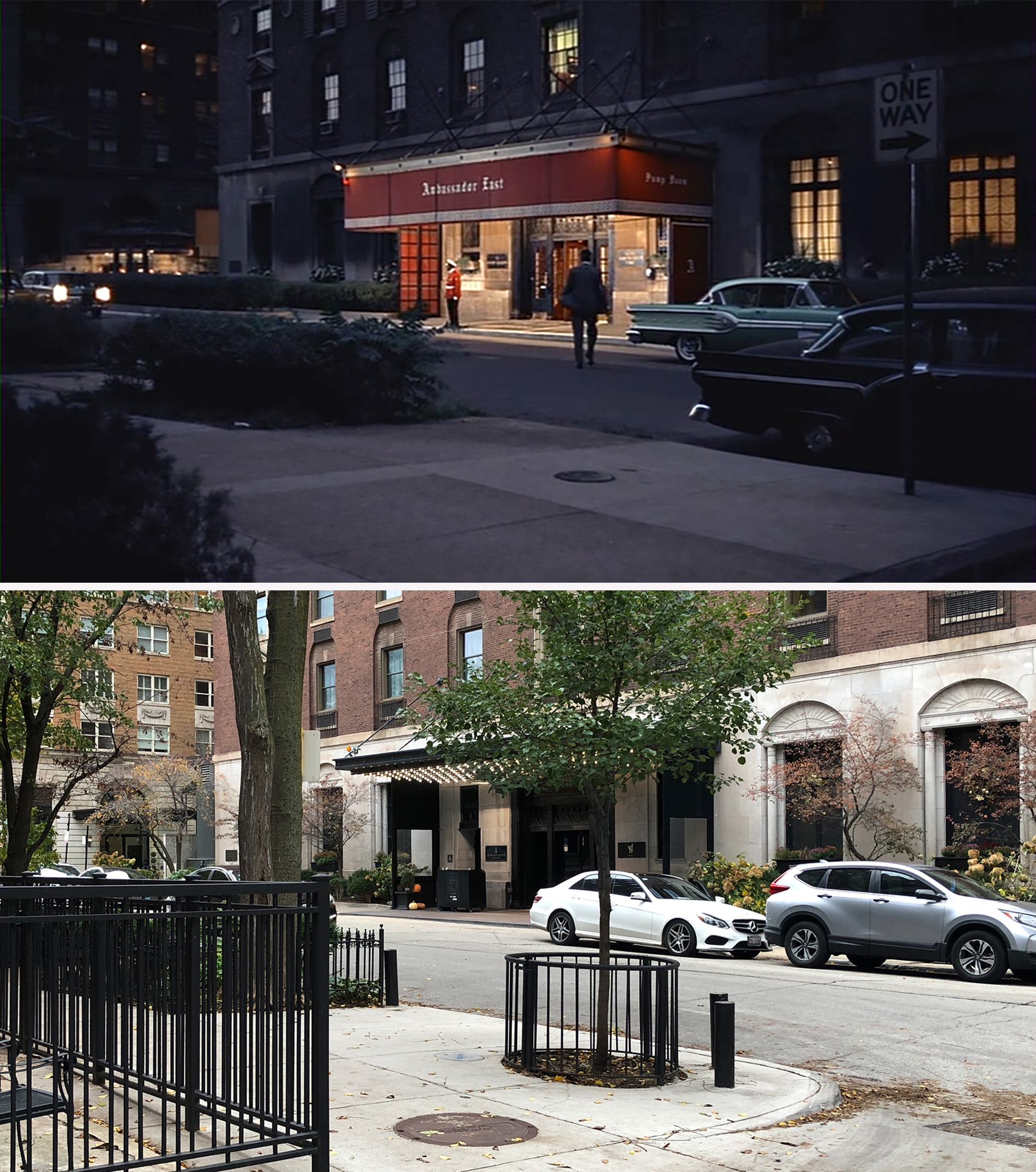
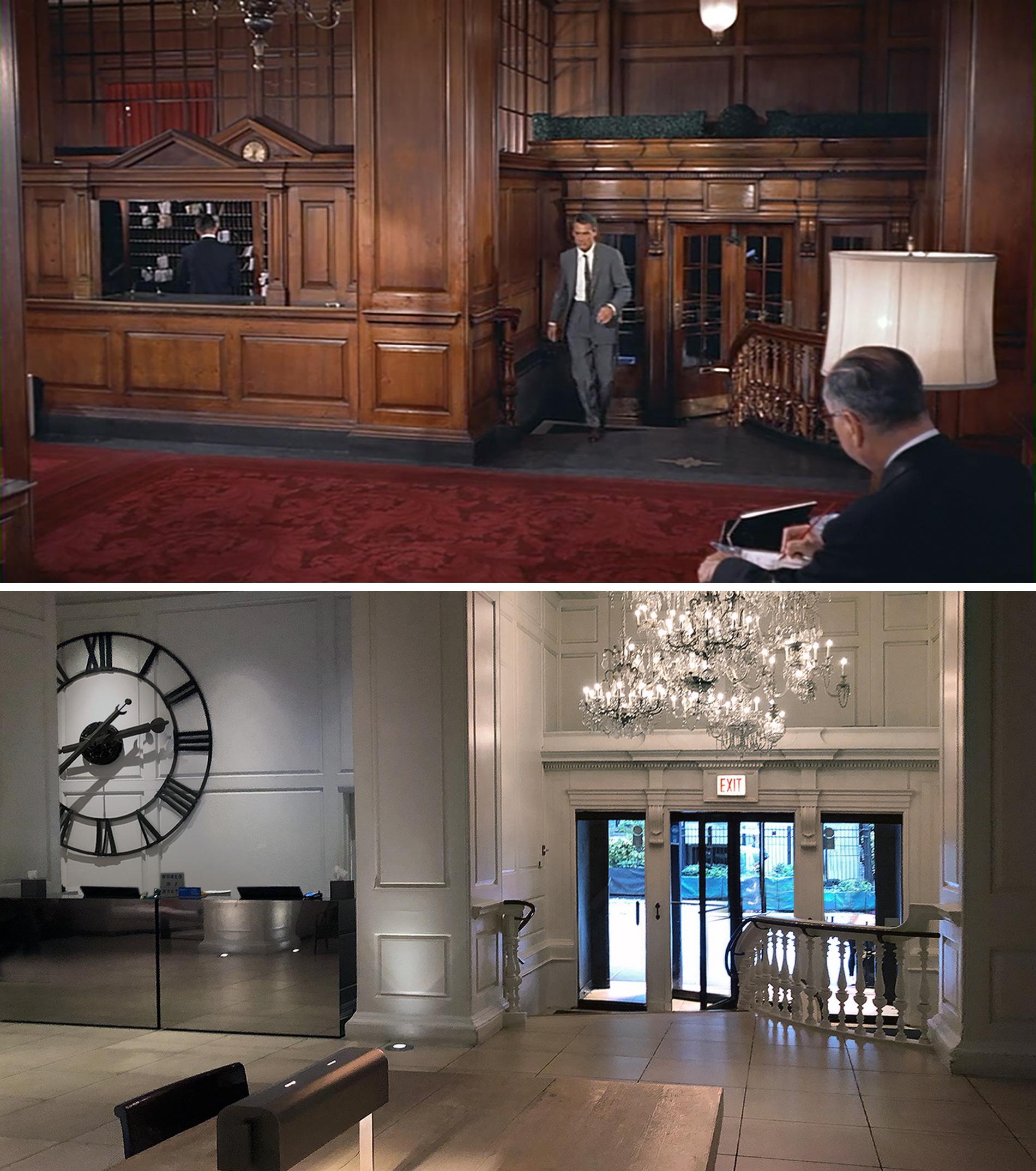
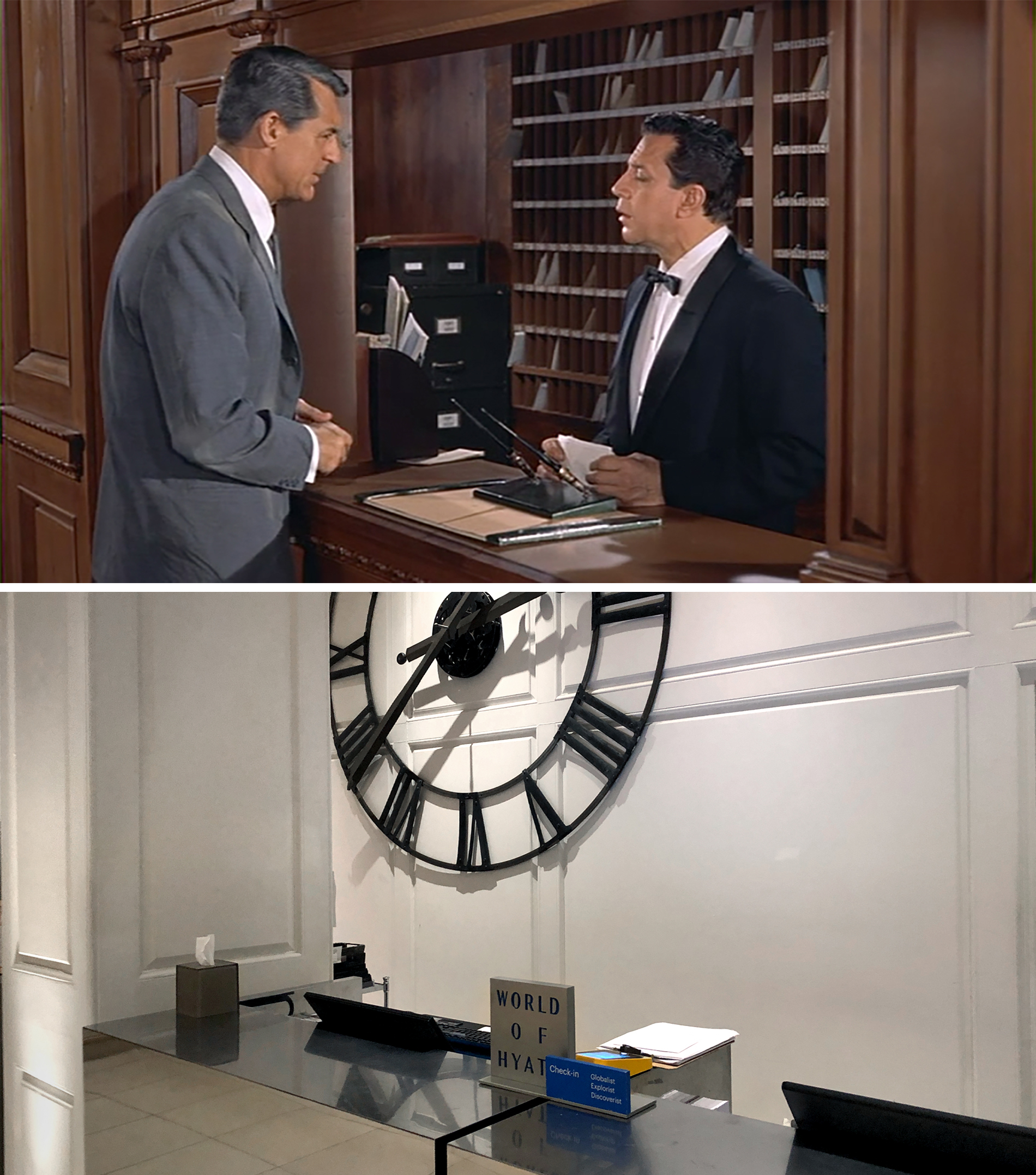
The only place I could find that listed the location of the abandoned pick-up truck was the website, reelstreets. They also identified where Thornhill gets dropped off in front of the art gallery later in the movie. In both of these quick street scenes, there were a few prominent Chicago landmarks in the background to help them pinpoint their locations.
As to the location of this hotel, it has been widely cited as Chicago’s Ambassador for a while now, in no small part to its name being clearly written on the awning in the exterior scene.
Like with the LaSalle station, I wasn’t completely sure if the interiors were real or just a very well-made imitation. But according to the production notes, they did film both the exterior and interior of the Ambassador Hotel (which was also where the cast was staying during their time in Chicago).
As a side note: even though I have a long-standing relationship with NYC, I have to say, the folks in Chicago were decidedly friendlier and more accommodating. While in the Windy City, I visited several filming locations, including a couple luxury hotels, and no one gave me a problem of taking pictures of the property. The woman at the Ambassador’s front desk even happily ducked out of the way so I could take a clean picture of the spot.
The Art Gallery
The Airport
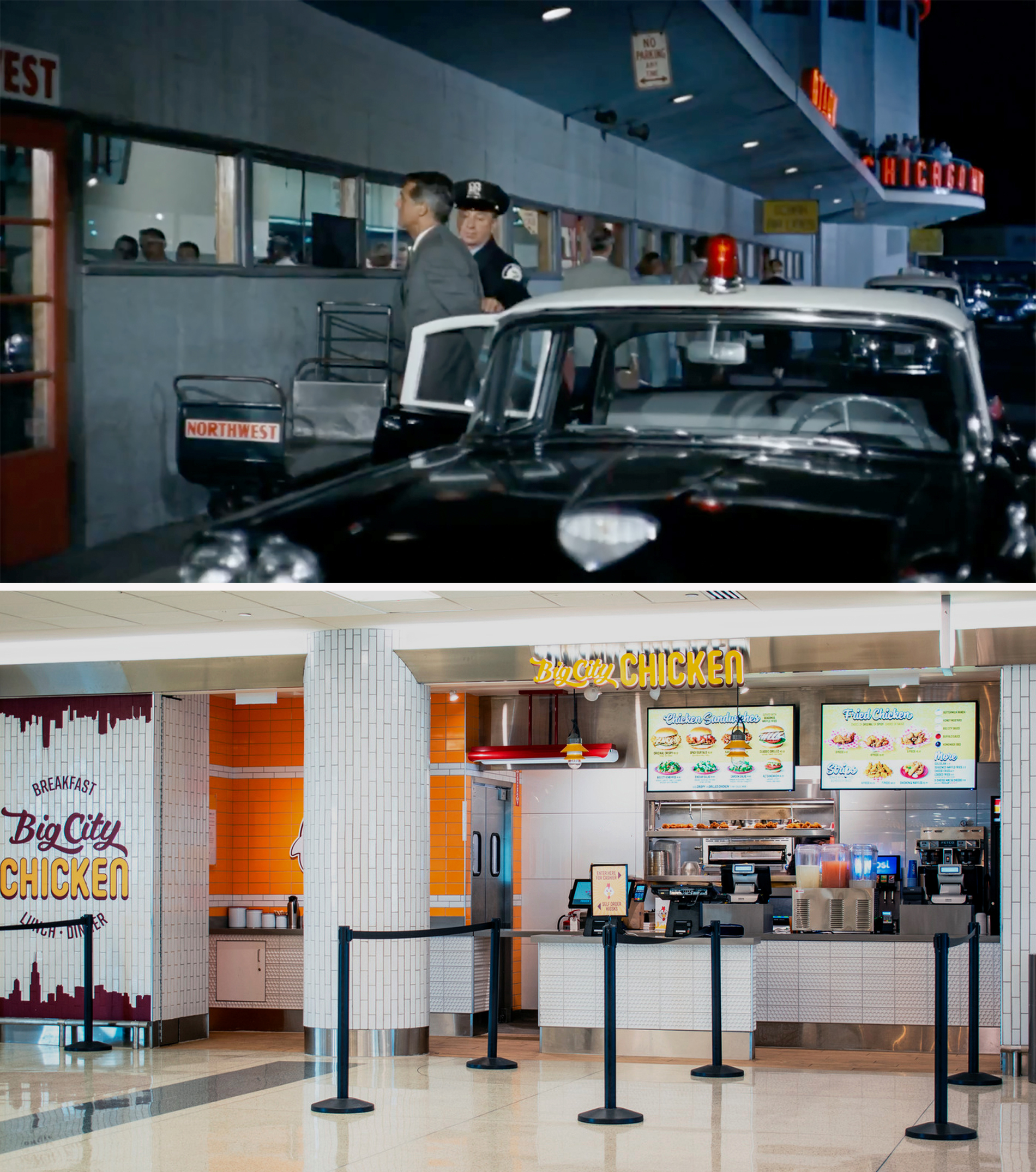
The reelstreets website, which identified the filming location of the art gallery, also identified the filming location of the airport. They indicated that it was Chicago Midway International Airport, but had no information as to what terminal was used and whether it still existed.
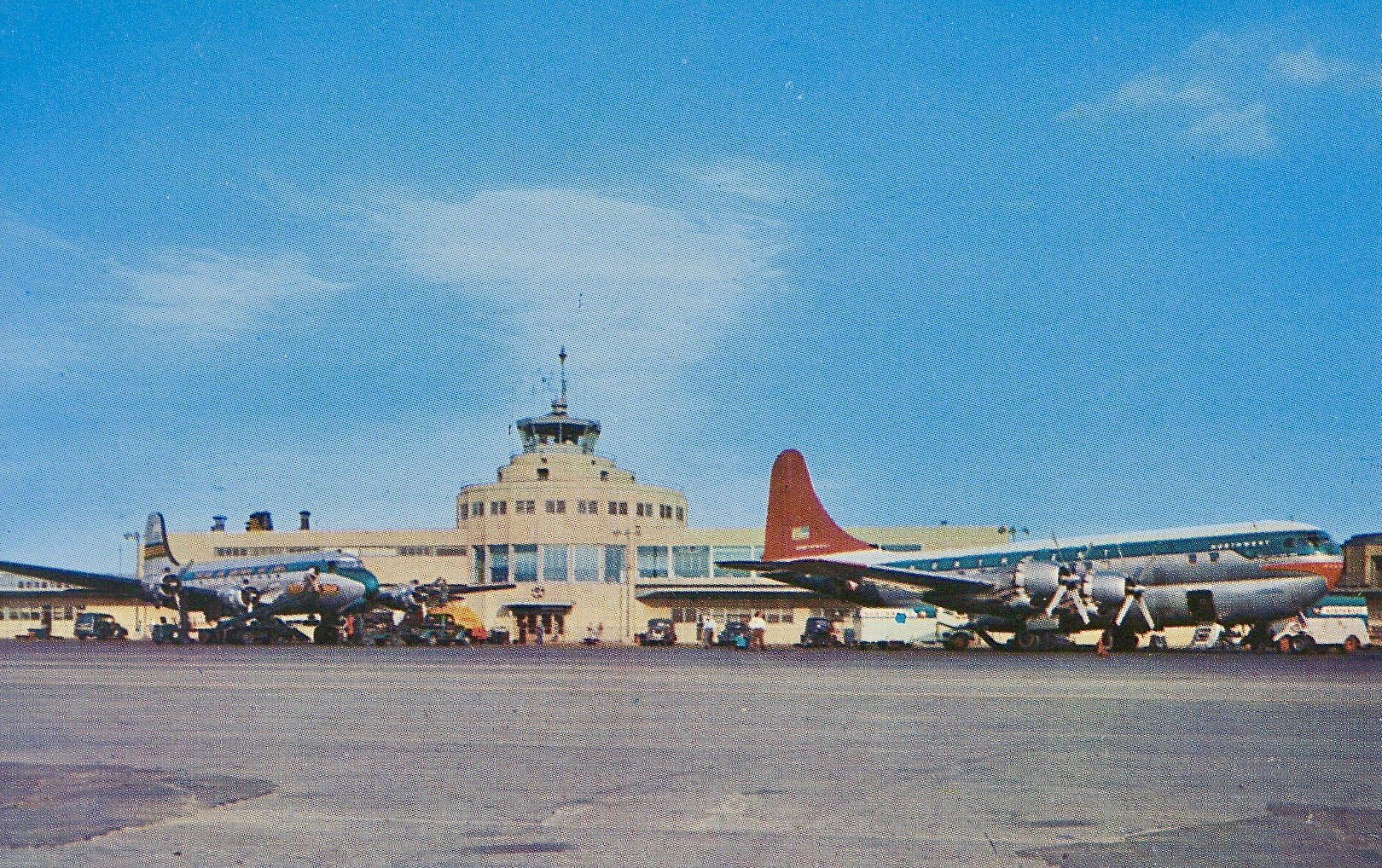
Originally named Chicago Air Park, Midway Airport was built in 1923 on a 320-acre plot on the southwest side of Chicago, with just one cinder runway, primarily used for airmail flights. Today, Midway is one of the busiest airports in the nation, serving around 22 million passengers a year.
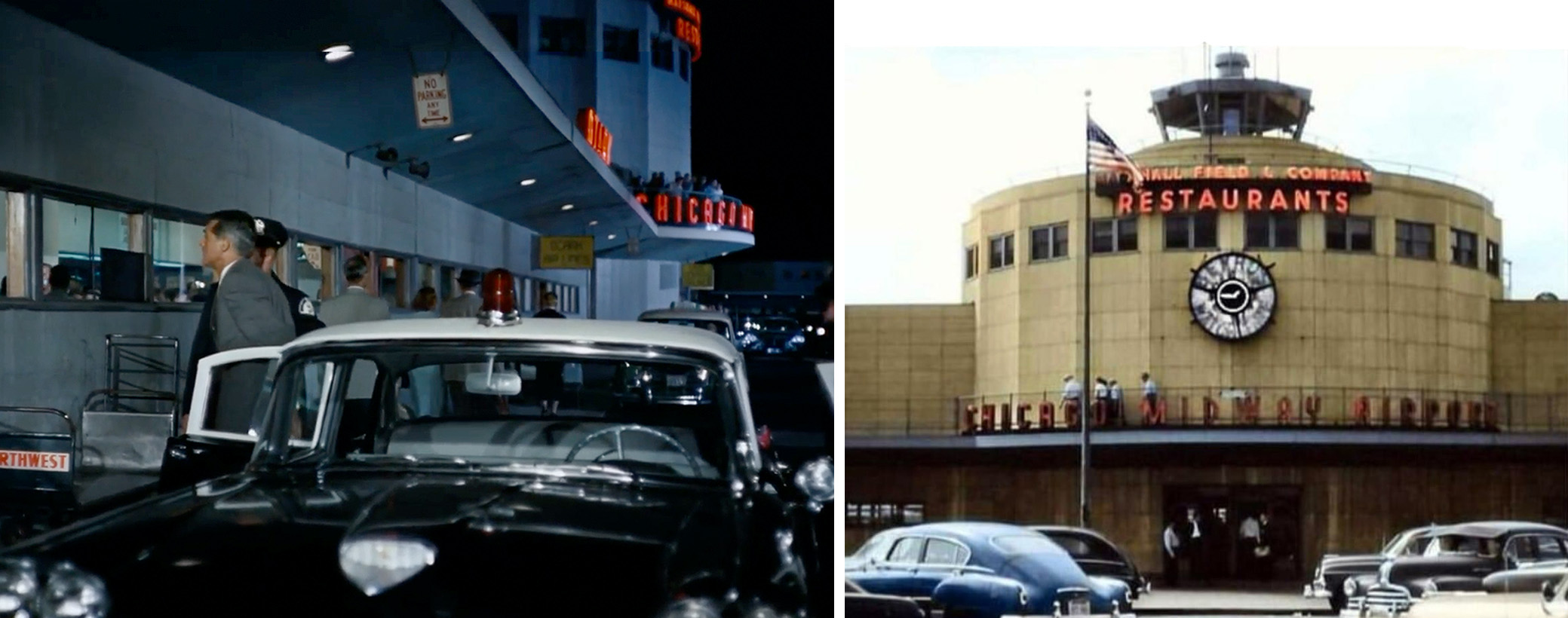
Unfortunately, the original terminal that’s featured in this scene is now gone, making it a little harder to nail down where exactly the action took place. The first step I took to find it was dig up some old aerial photos of the terminal, where I quickly zeroed in on three circular towers that looked like the one in the movie. I eventually calculated they filmed outside the center tower since that’s the one that housed the Cloud Room Restaurant (whose neon sign can be seen at the very top of the frame).
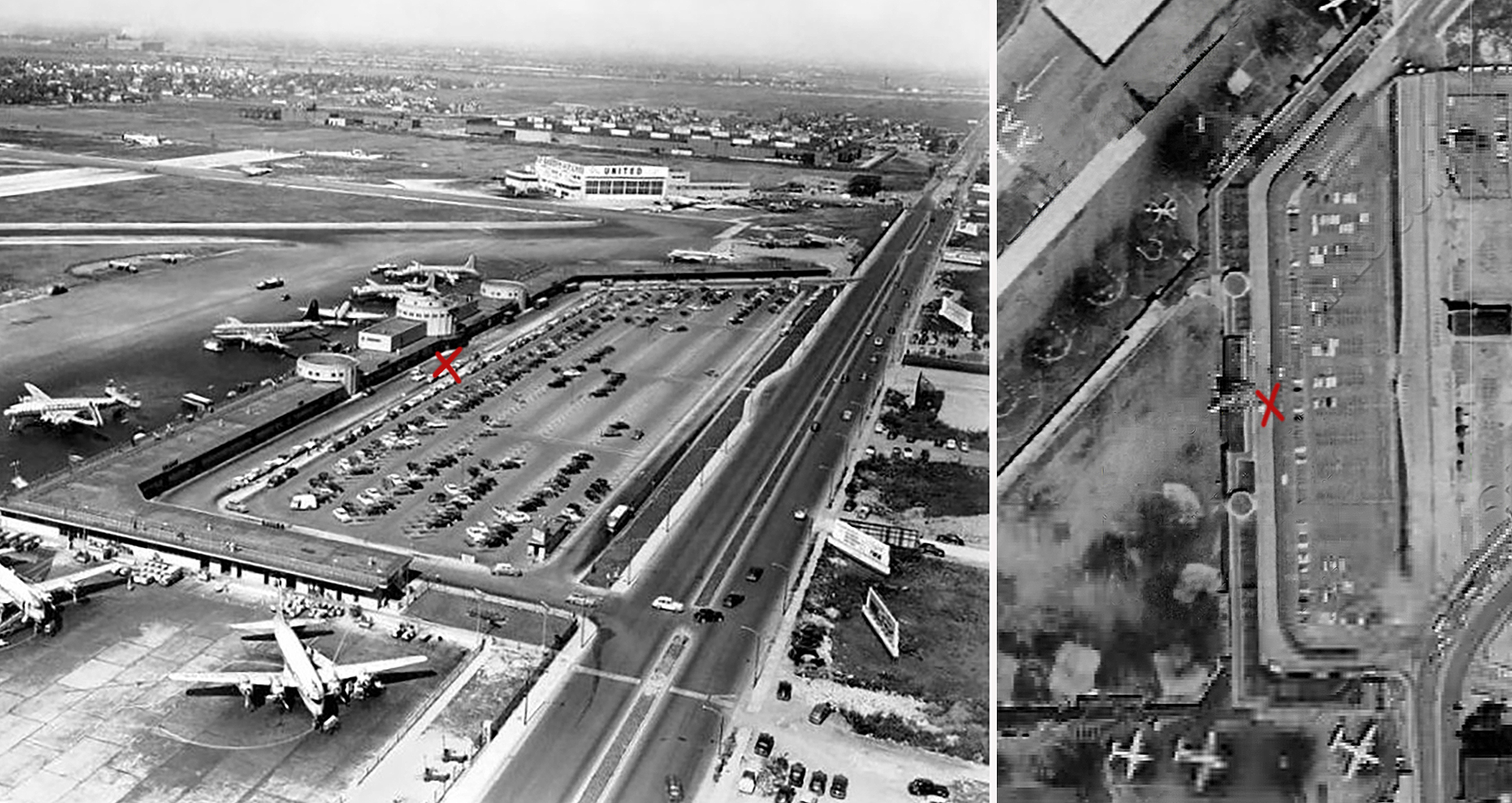
I could tell which tower had the restaurant because that was where they added a second story to the terminal building, offering patrons heightened views of the airfield.
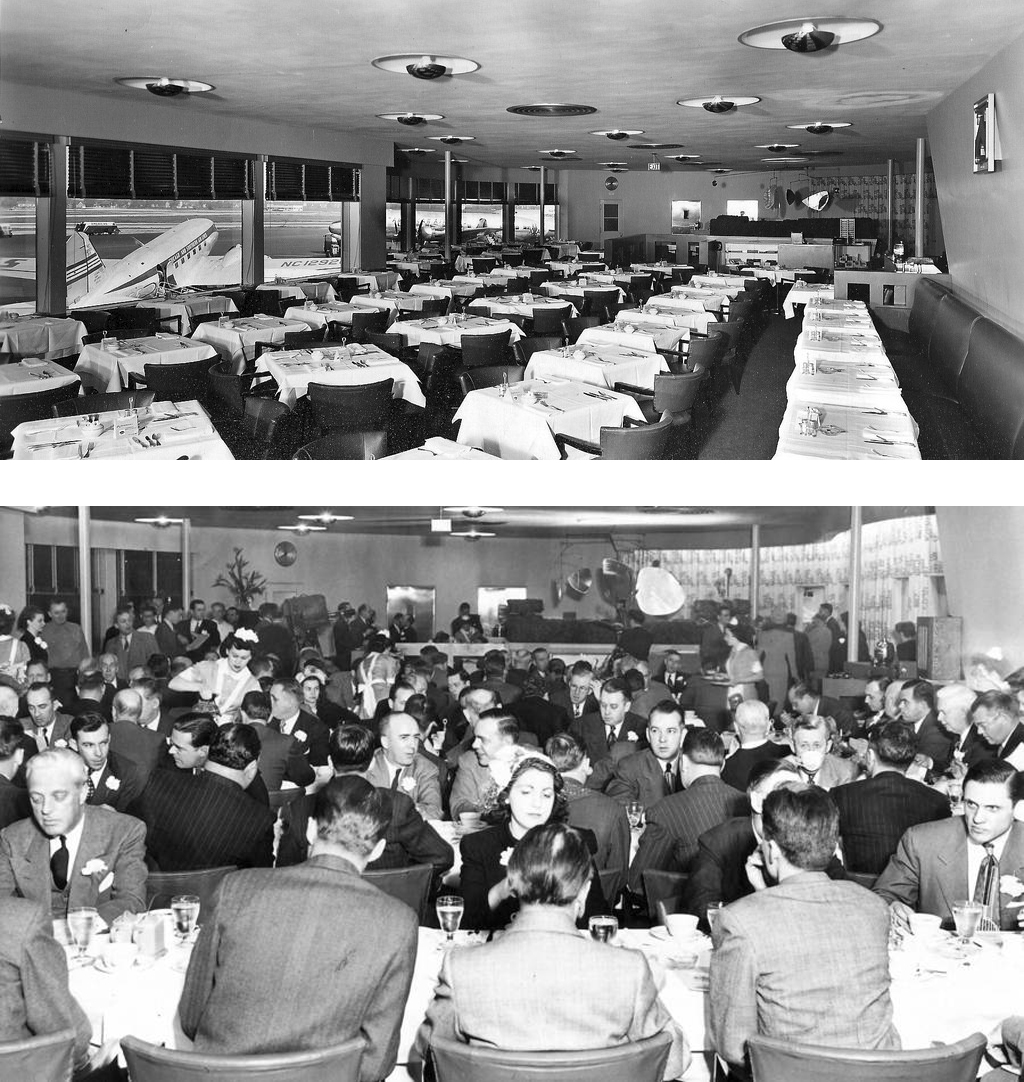
The Cloud Room was was a novel addition to the airport and was profiled in a Chicago Tribune article shortly after it opened in 1948:
Its west wall, overlooking the air field, is glass. The view on the field is excellent and with the movement of aircraft into and out of the airport provide a live mural.
The remaining walls are gray with gray drapes, the ceiling is white, and carpet is gray-green. Upholstery on the chairs and on banquettes around the room is red leather. Lighting is indirect. The coffee shop, on the first floor, is done in blue and yellow, and its west wall, also glass, opens upon the airport.
The dining room has 220 seats and coffee shop 100.
The restaurant closed in 1964, and in 1997, the entire building was razed and replaced with a new, 900,000-square-foot airport terminal.
Knowing roughly where they entered the old terminal, it was back to the vintage satellite archives to figure out how things compare today.
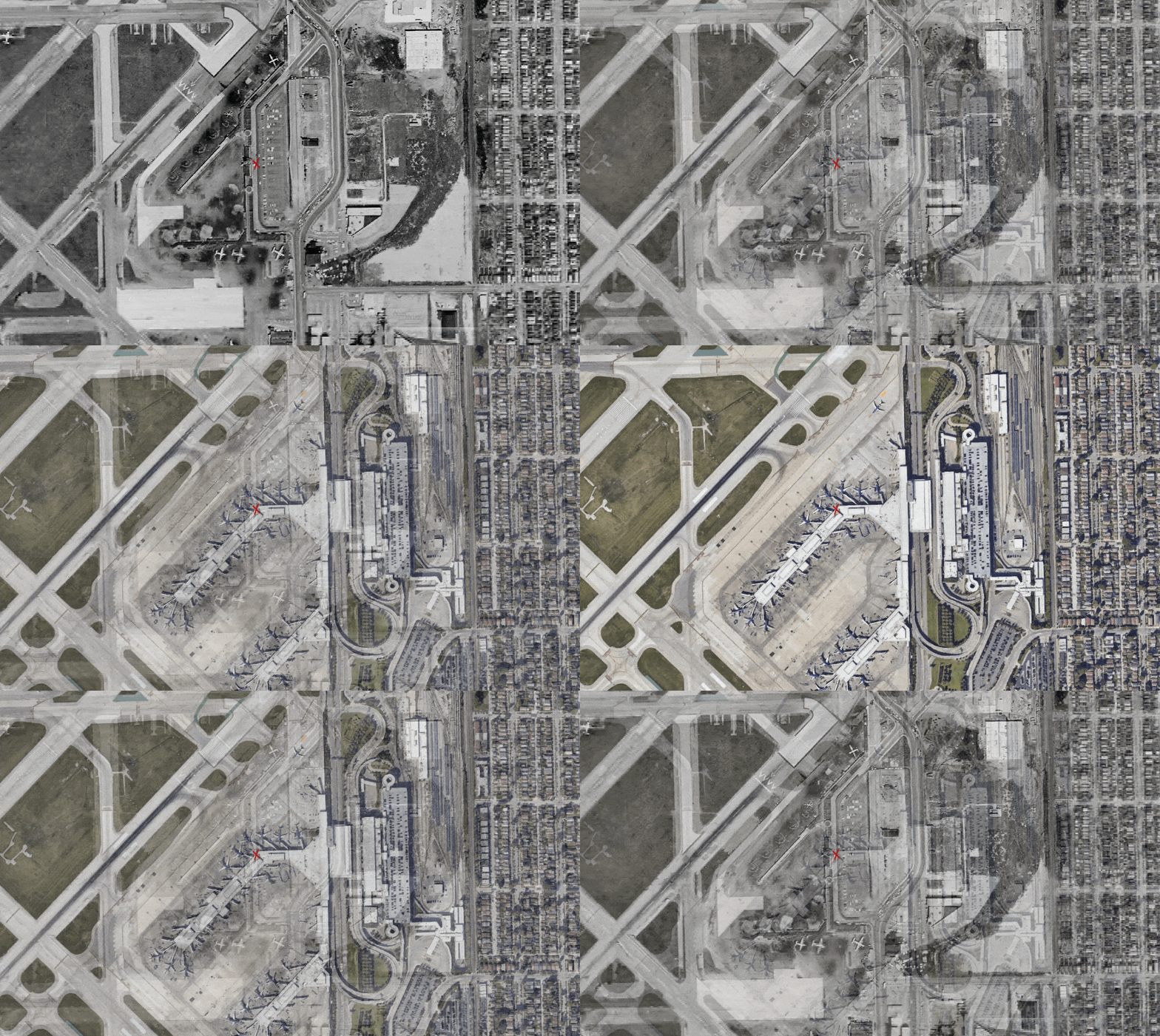
Thankfully, the layout of the airstrips has more or less remained the same, making it easier for me to line up the old with the new.
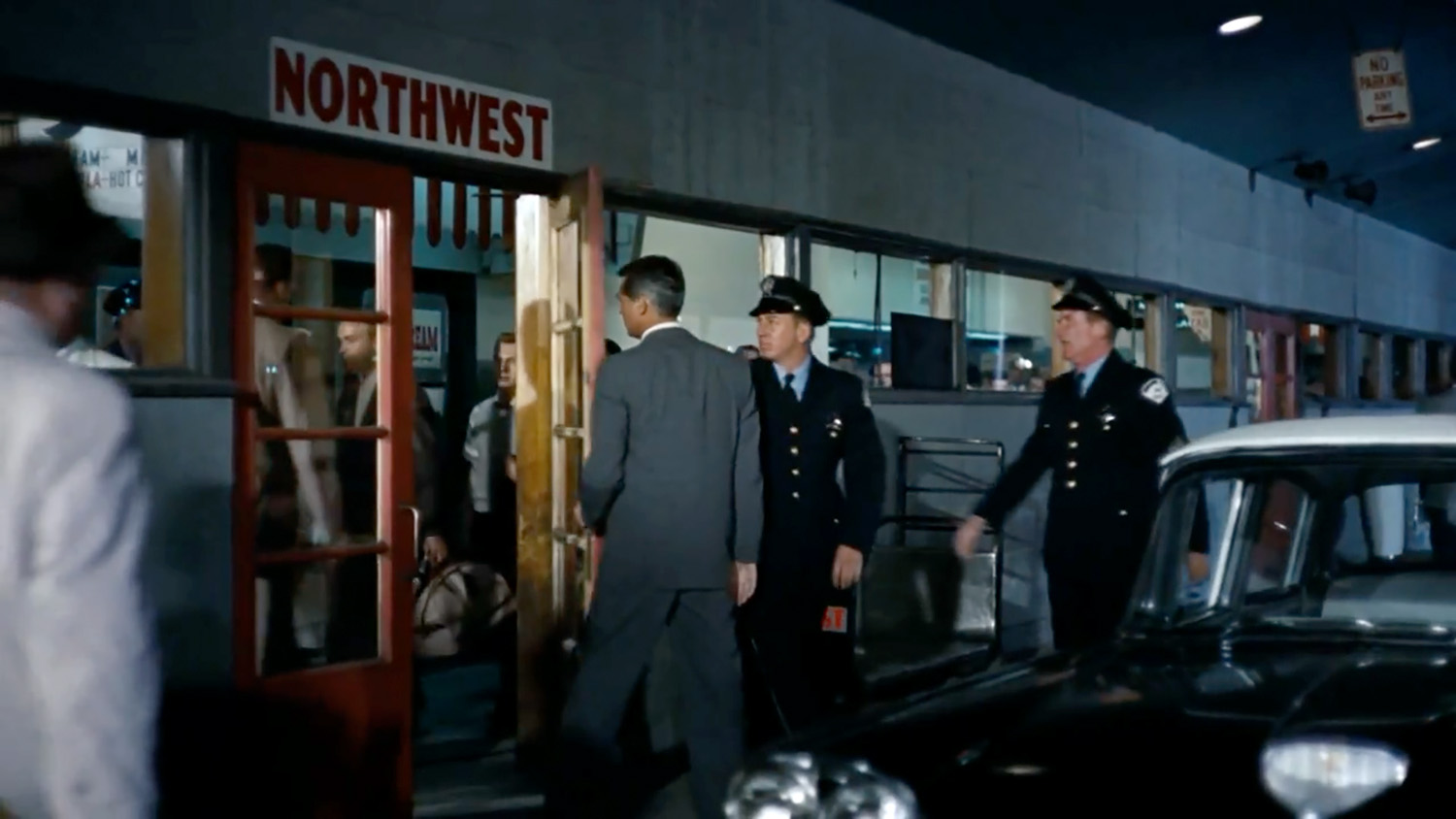
The “Northwest” entrance used by Cary Grant is now in the middle of the new terminal, approximately where there’s a Big City Chicken restaurant.
Mount Rushmore
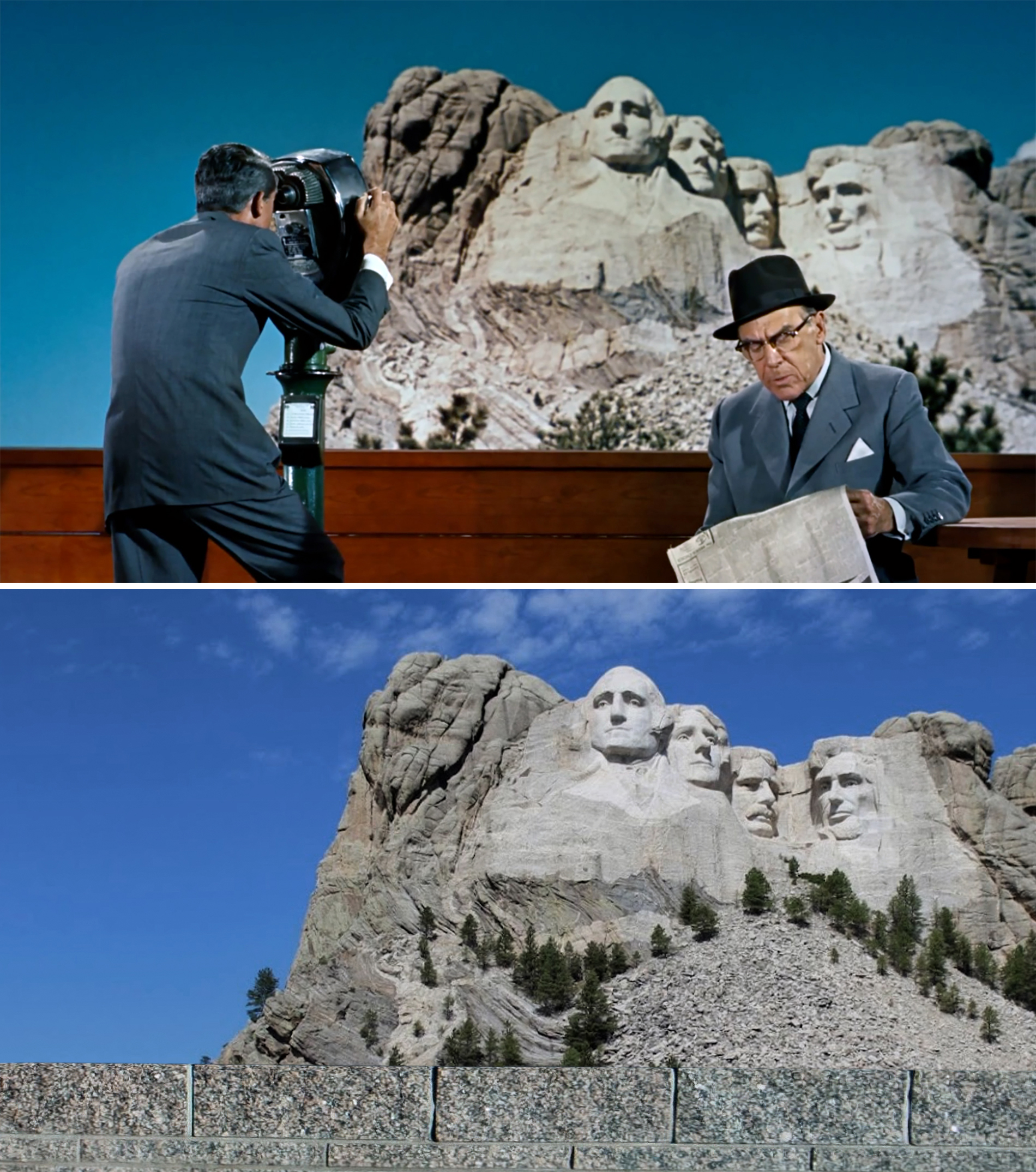
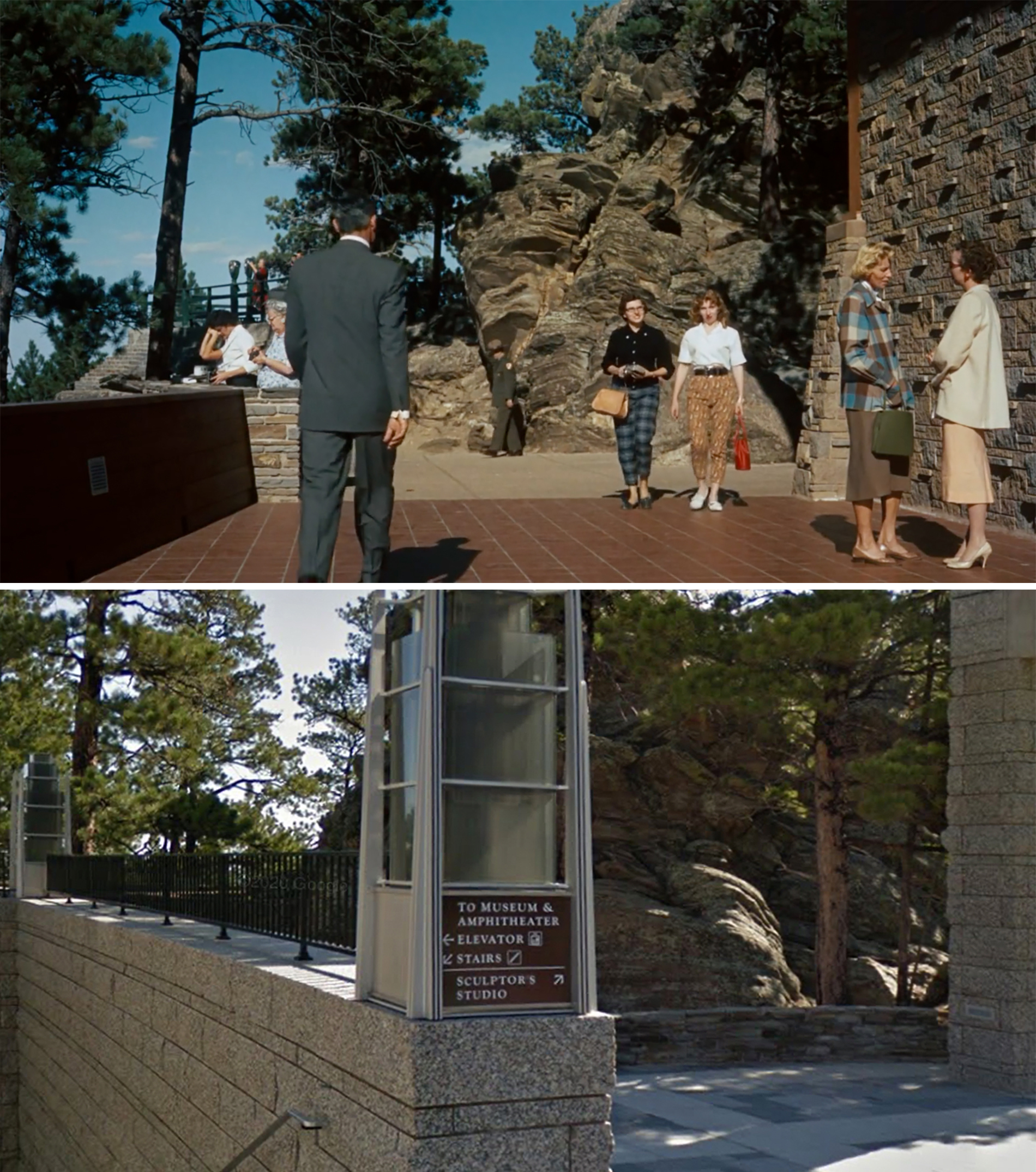
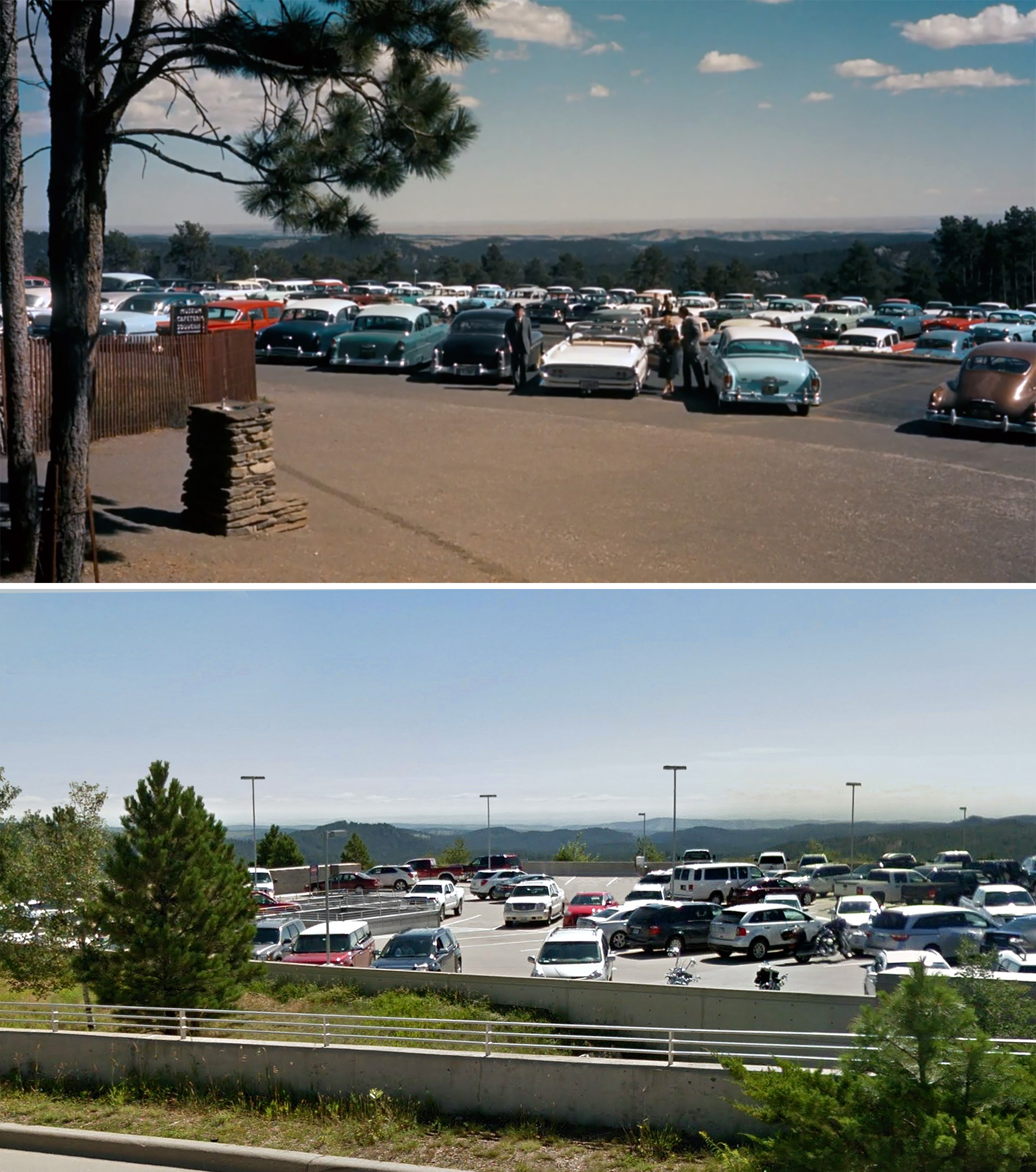
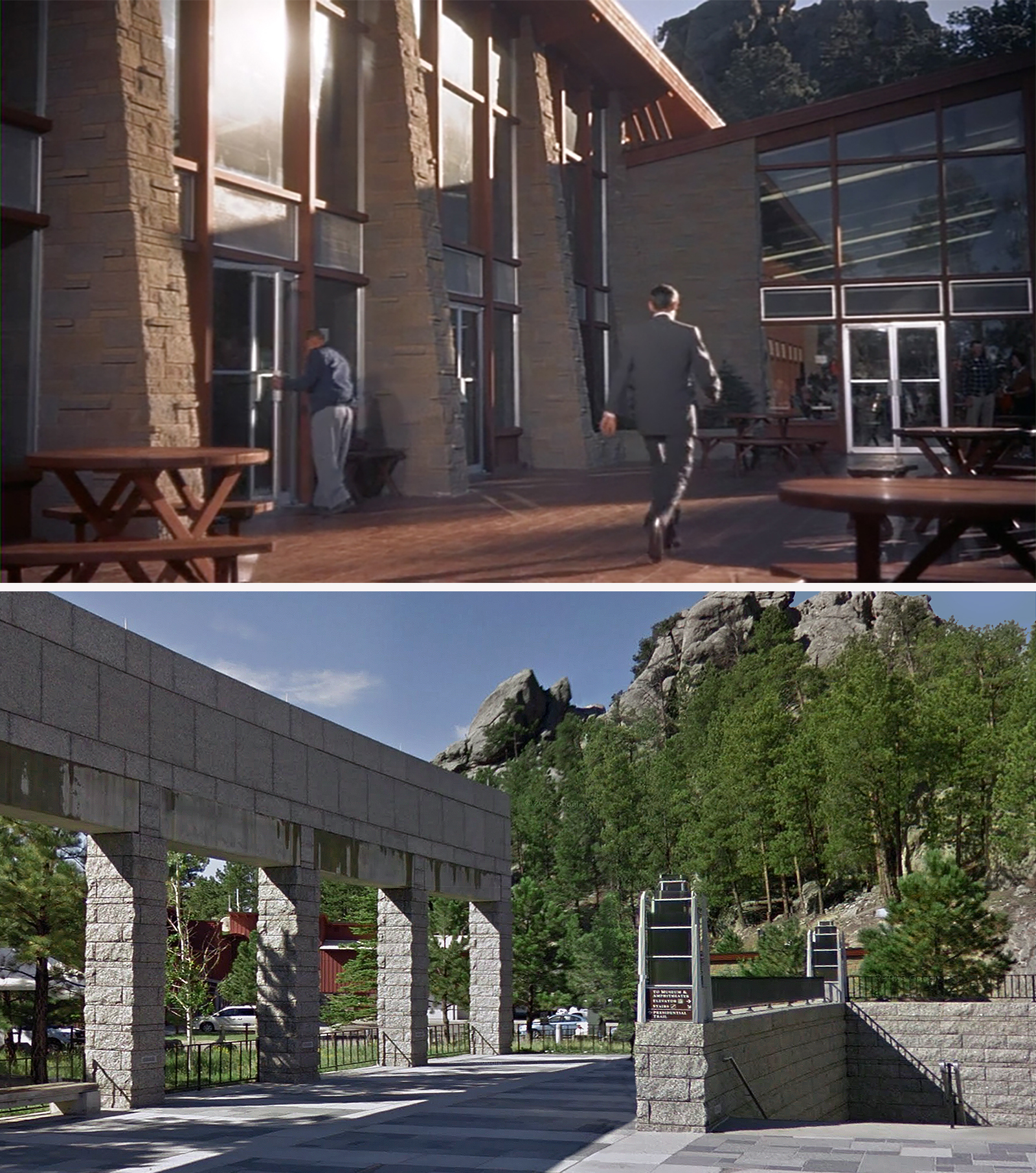
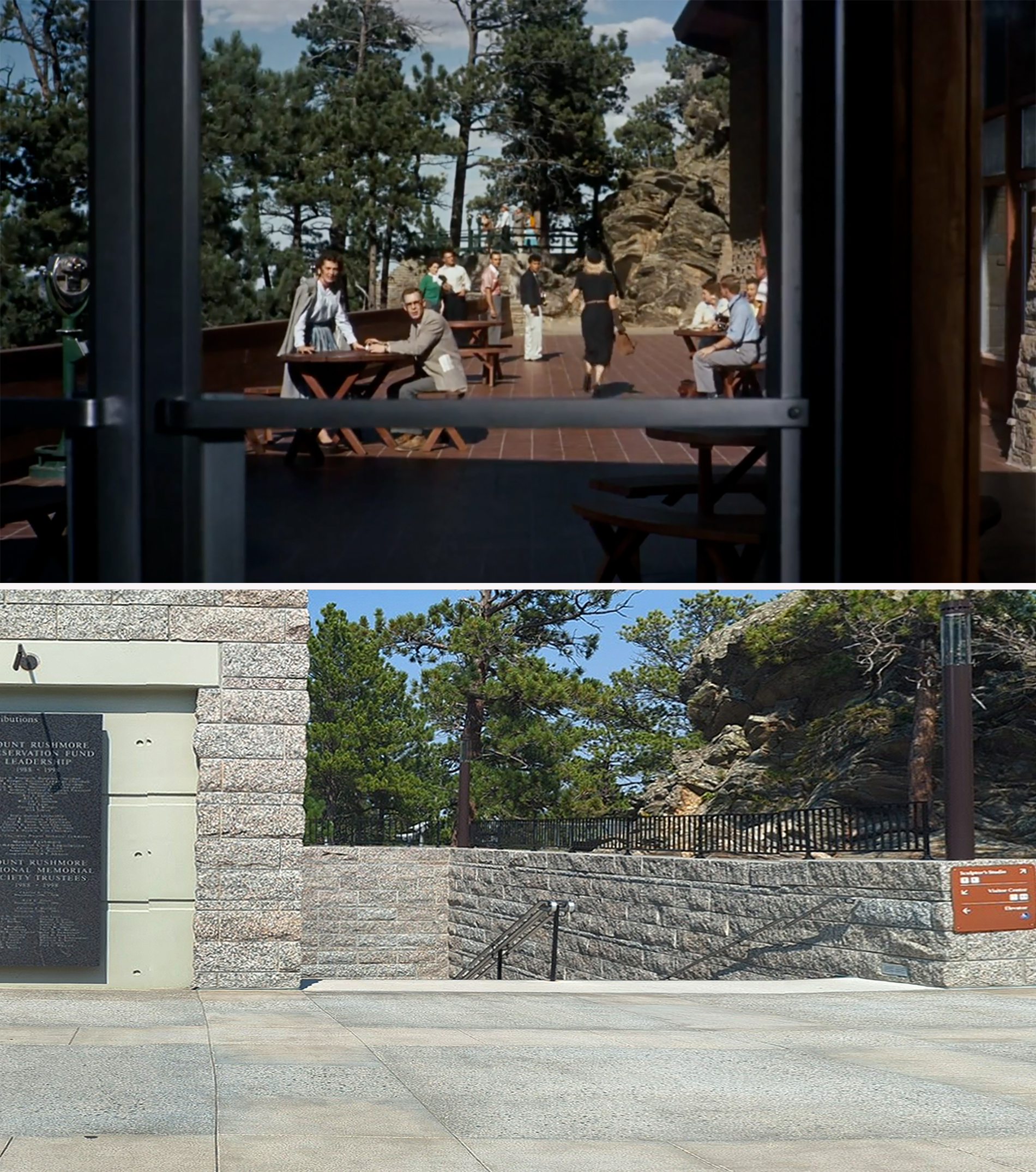
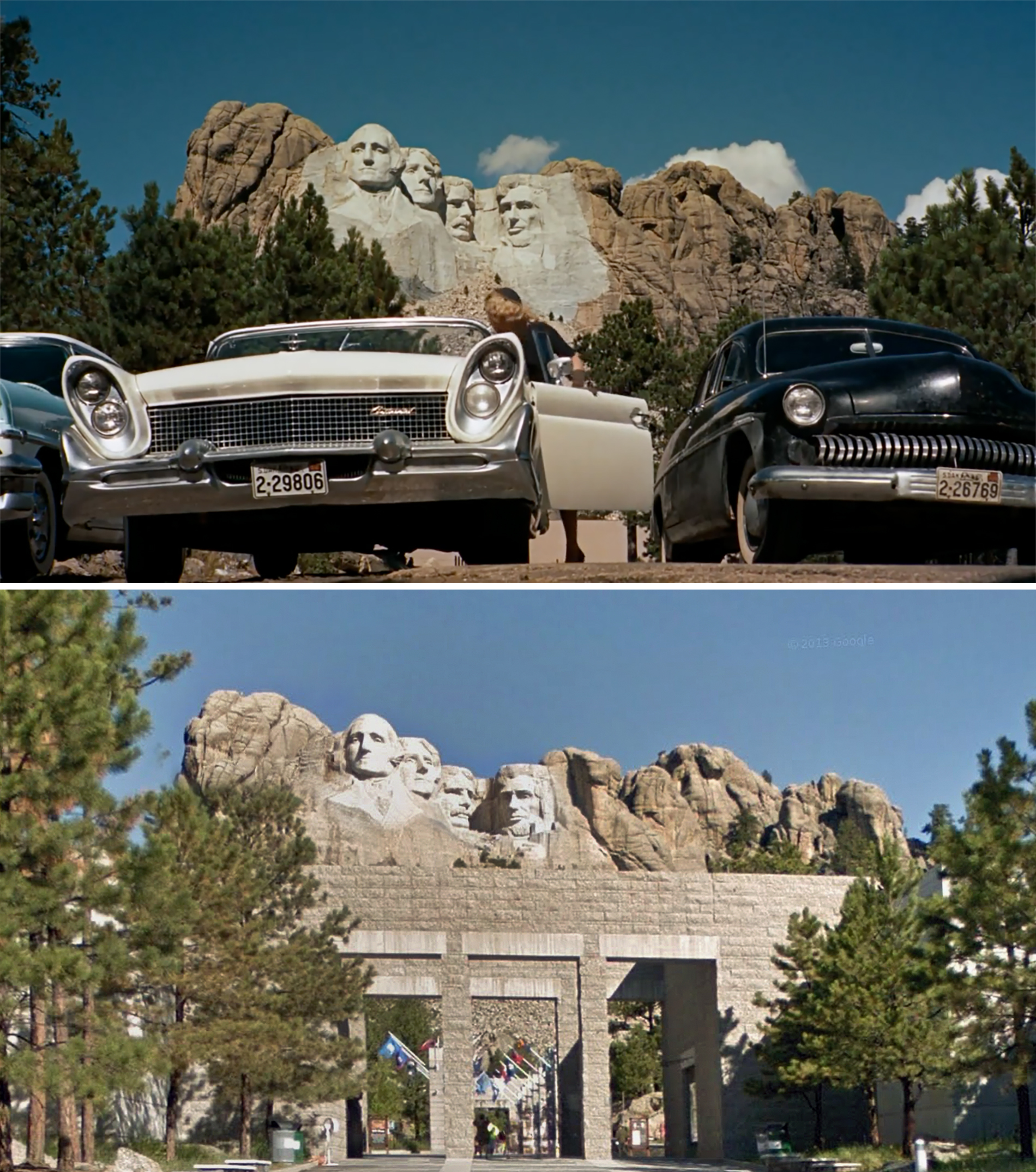
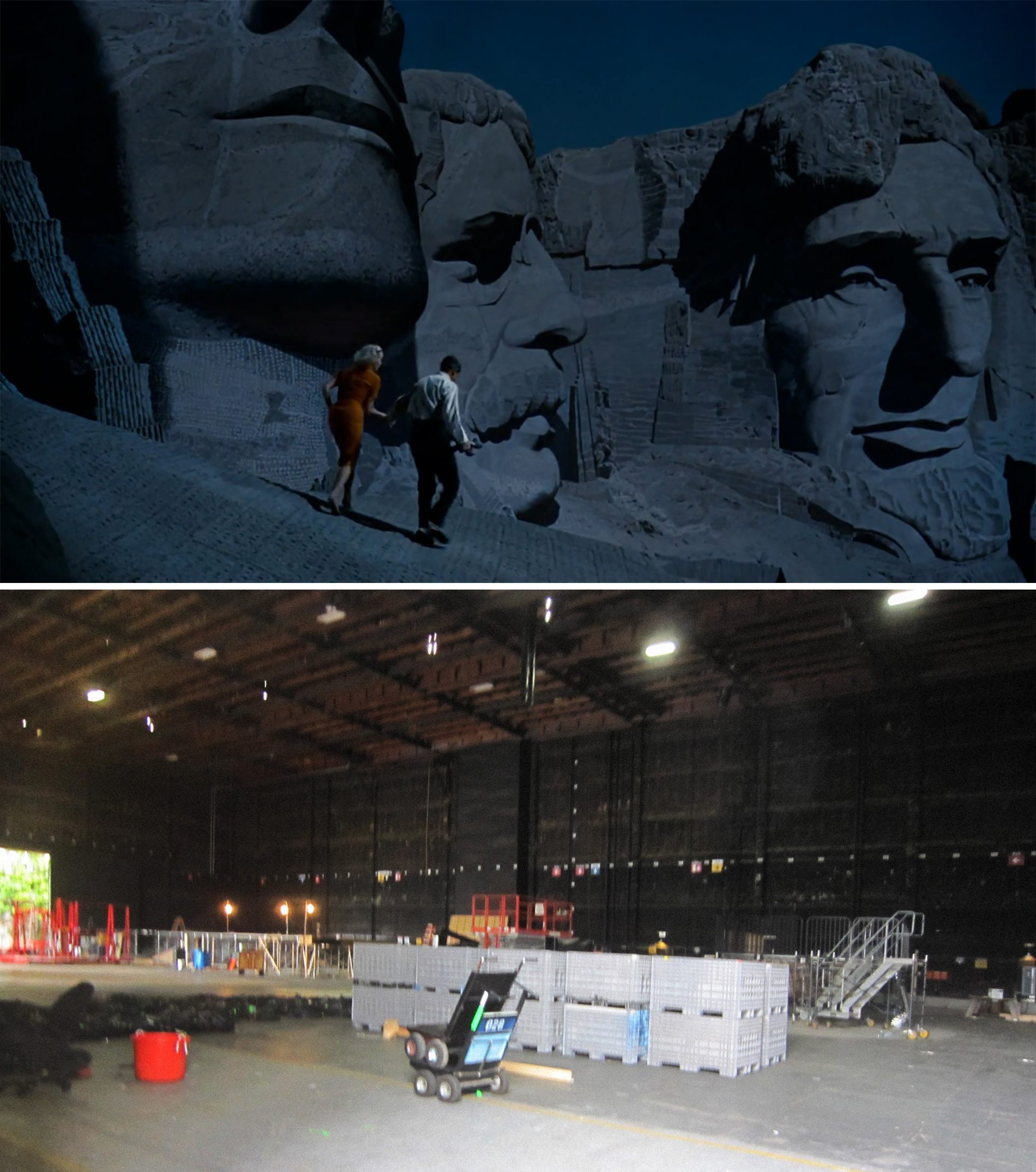
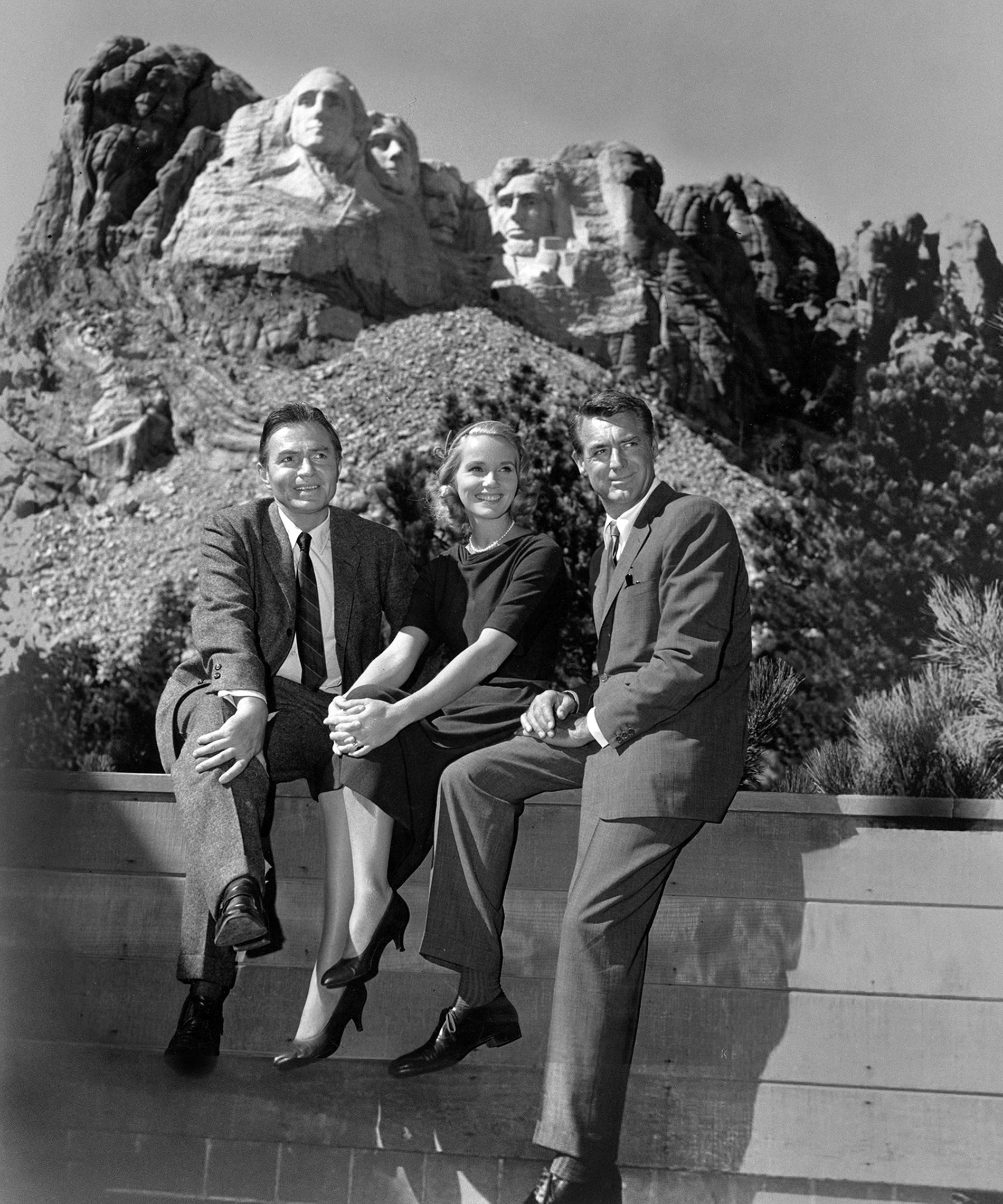
After filming in Chicago, the cast and crew traveled to South Dakota, where location shooting took place at the iconic Mount Rushmore, but limited to the car park and its adjoining terrace.
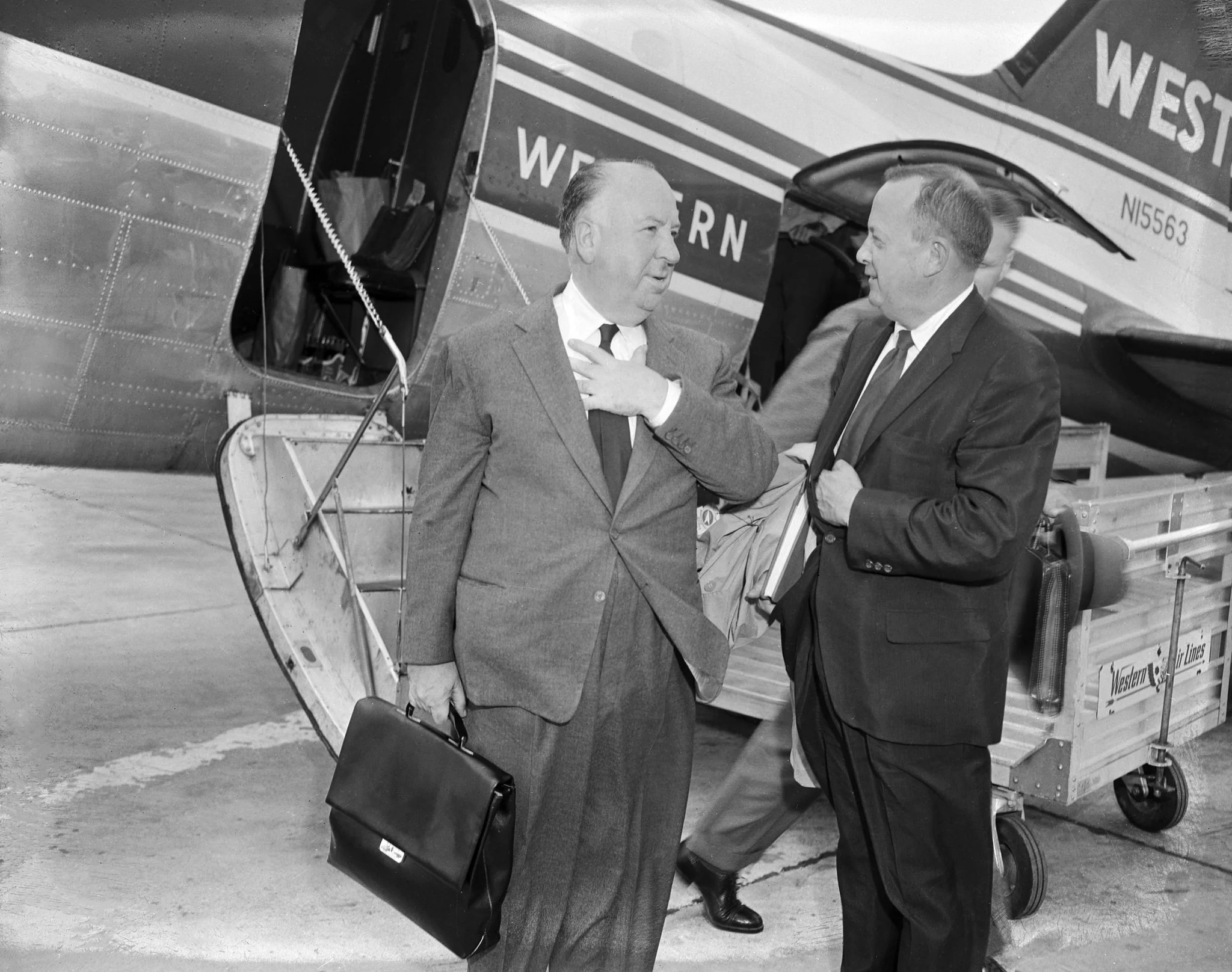
Filming was supposed to be done over a period of two days, but ended up being cut short due to a disagreement with park officials.
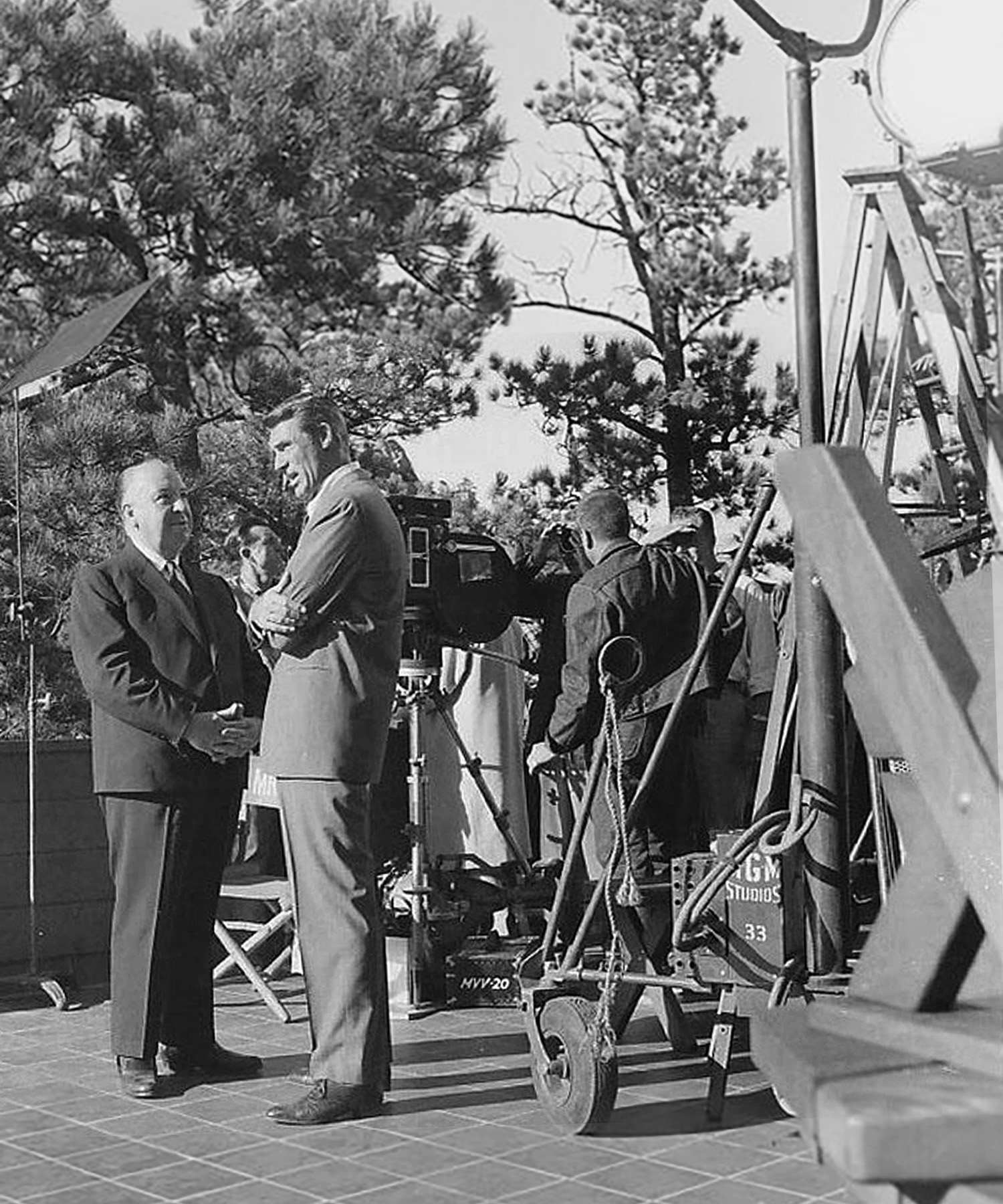
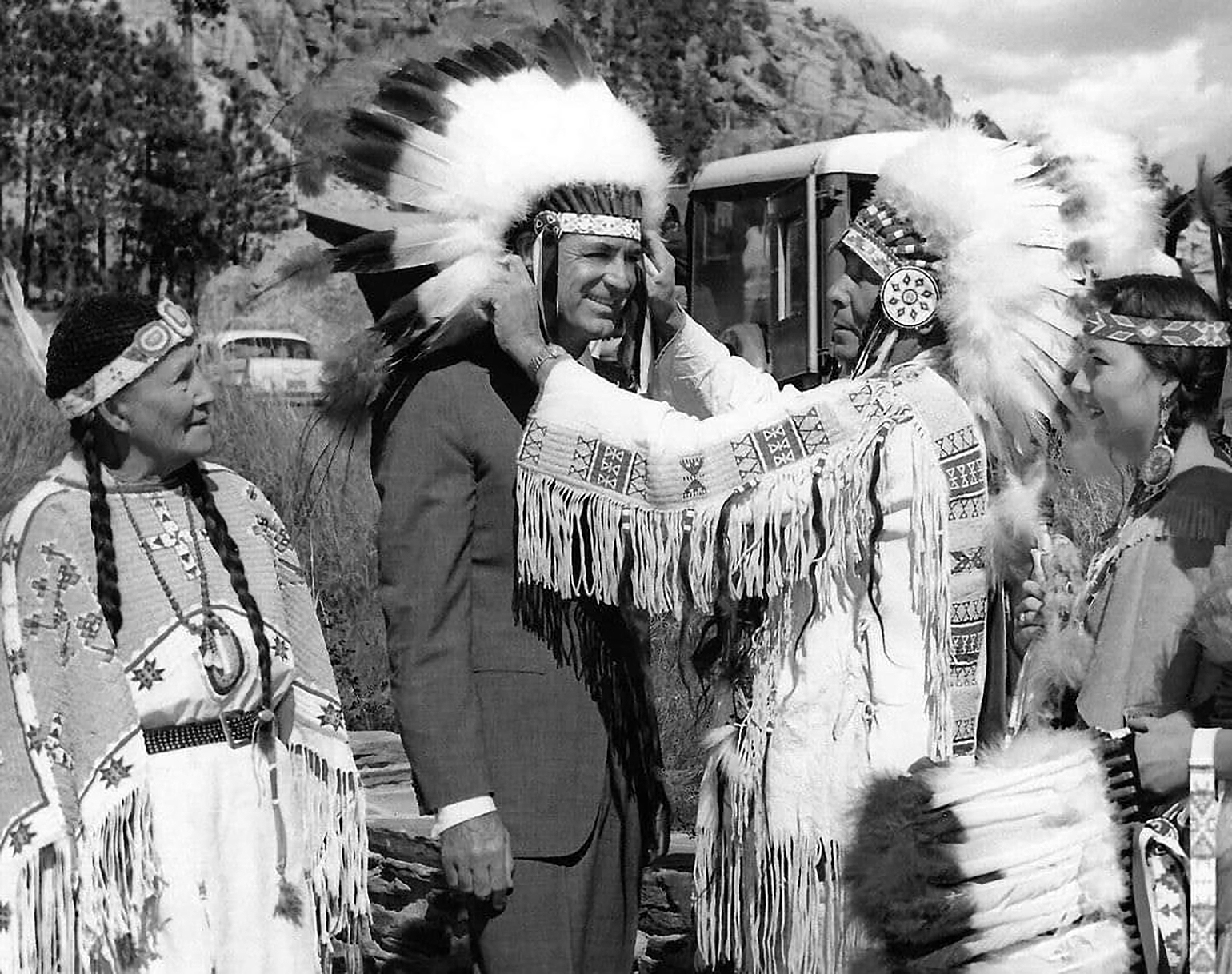
Initially, permission to film at Mount Rushmore was granted by the National Park Service, but it was under the strict condition that no violent scenes were to be depicted at or near the sculpture — this also included any simulations or mock-ups. However, after a local journalist published an article describing the violent climax Hitchcock had planned, the Department of the Interior (the Park Service’s parent agency) revoked the filming permit.
Despite this controversy, the crew was able to grab a few key shots at the park itself, even if they were just simple master shots of the characters coming and going.
As soon as the characters go inside the cafe, it naturally became a set built at MGM. It was a decent reproduction of what was at the park, but the backdrop seen through the window was rather fake looking and a dead giveaway they weren’t on location.
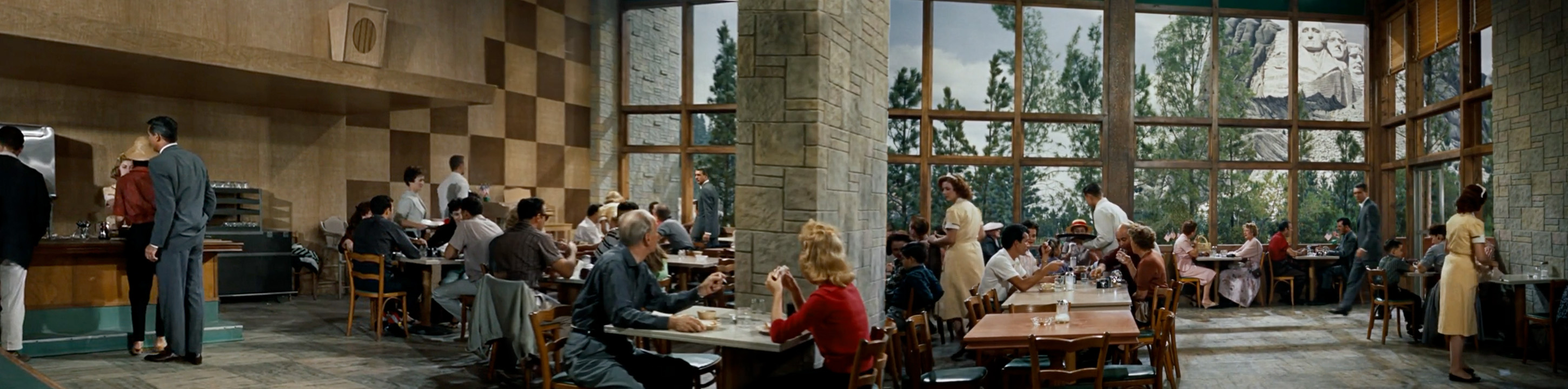
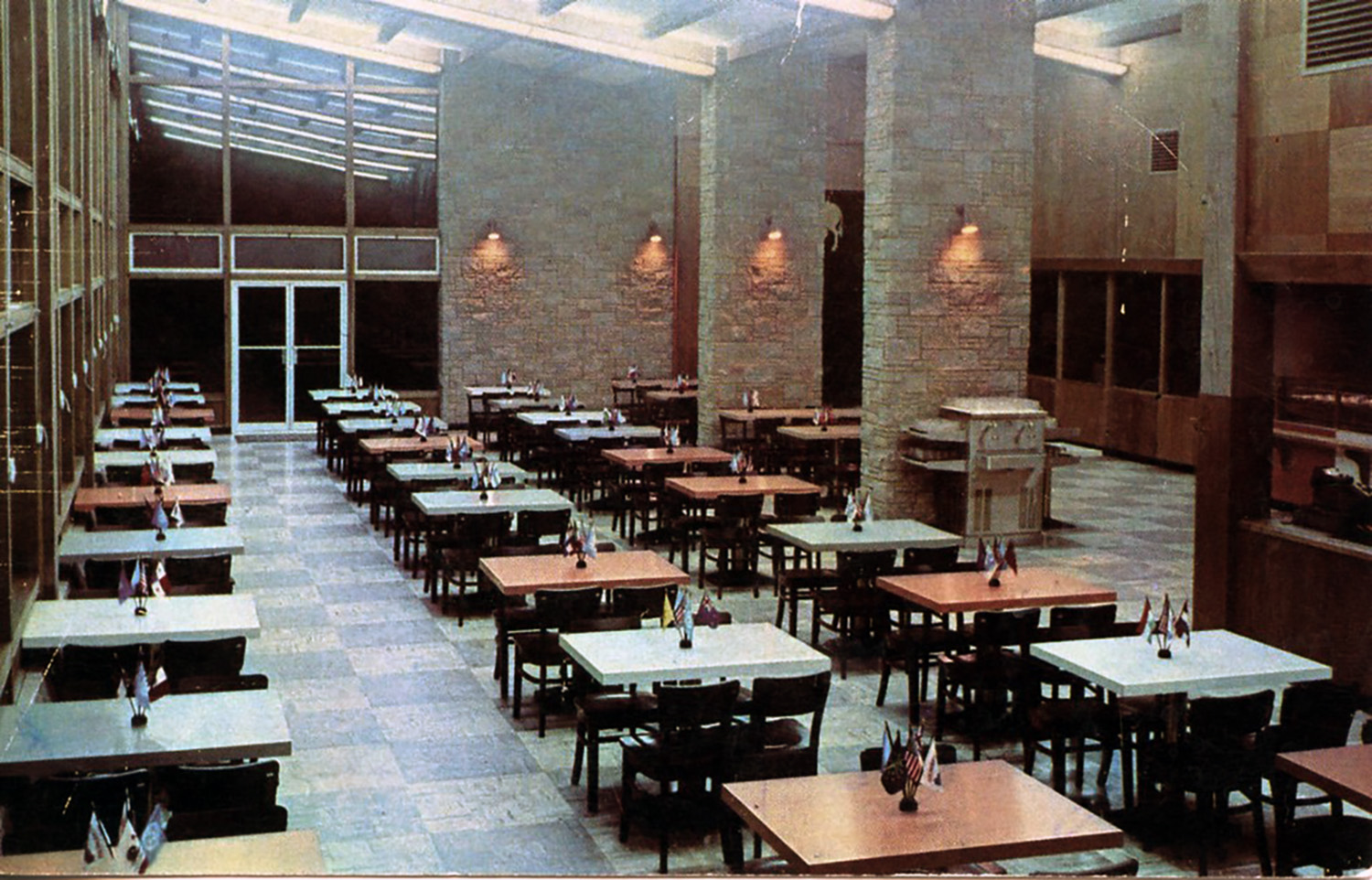
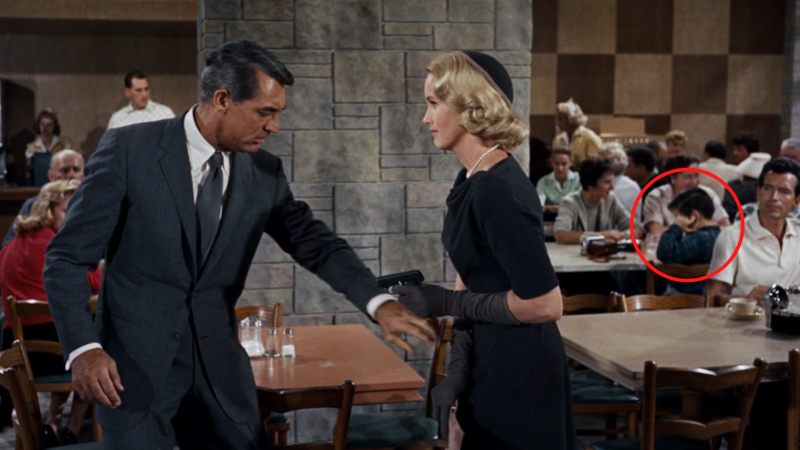
This scene inside the cafe is notorious for having a bit of a blooper — something that has been pointed out countless times over the decades (especially since the age of home video).
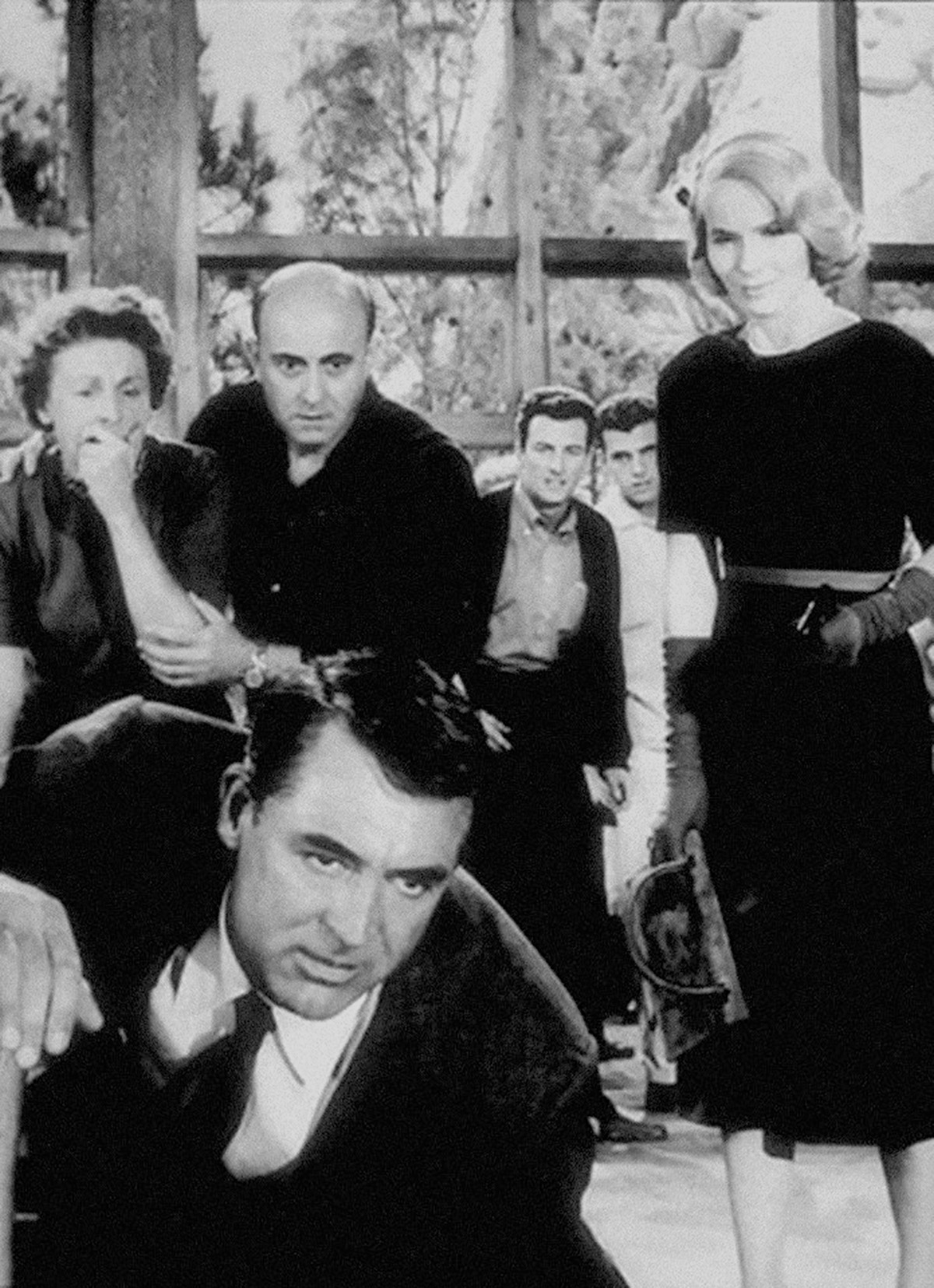
In the scene, right as Eva Marie Saint pulls out a pistol, a boy extra with his back to them can be seen plugging his ears, psychically anticipating a loud bang. (Although, I like to justify it by pretending the boy’s parents were telling him it was time to leave the park and he didn’t want to hear it.)
But weeks before those interiors were filmed, the cast and crew were wrapping things up in South Dakota, having spent three nights in Rapid City.
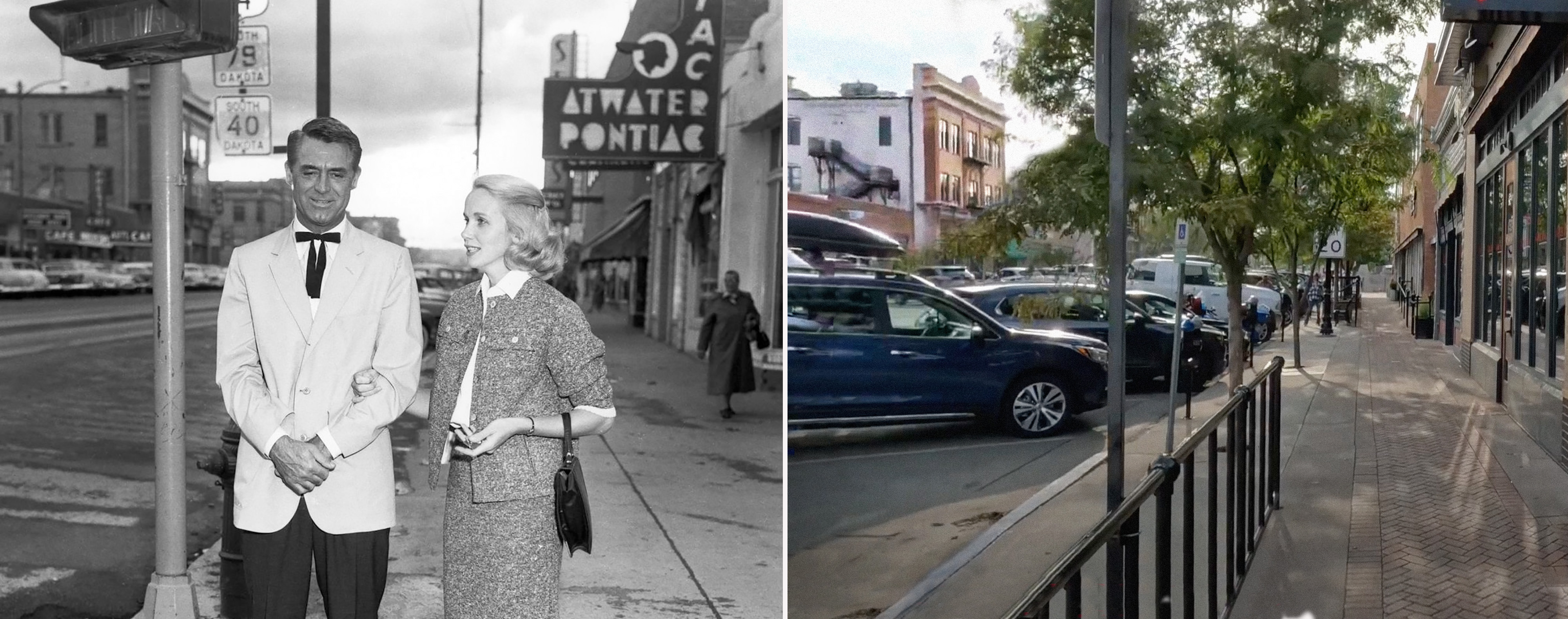
Once the limited filming was completed in the Midwest, the company returned to California to finish out its shooting schedule, most of which was done on sets at MGM Studios.
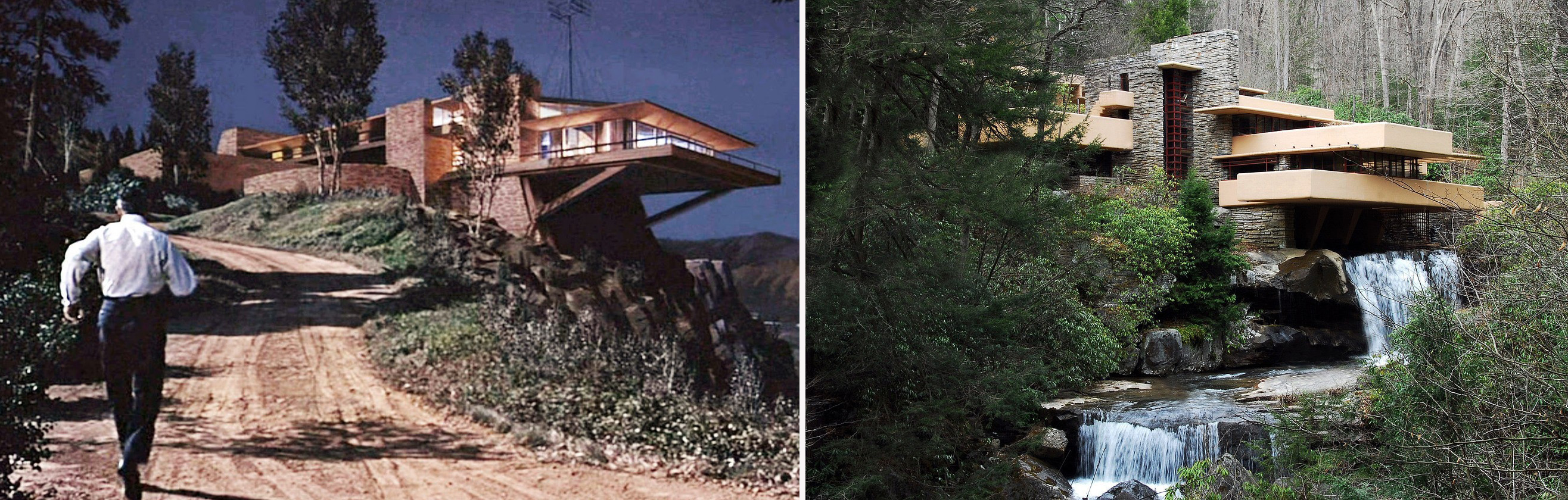
It’s hard to pick out which sets were the most eye-catching, but my personal favorite is the Frank Lloyd Wright-inspired Vandamm house. For years, many people thought it was a real place, but the interior was just a massive set built on Stage 5. and most of exterior was a just a matte painting.
And as expected, the extravagant fight sequence on top of Mount Rushmore was also done at MGM in Culver City. By that point, the Department of the Interior reissued permission to use a Mount Rushmore mock-up in the movie, so long as the presidents’ faces were shown below the chin line in scenes involving live actors.
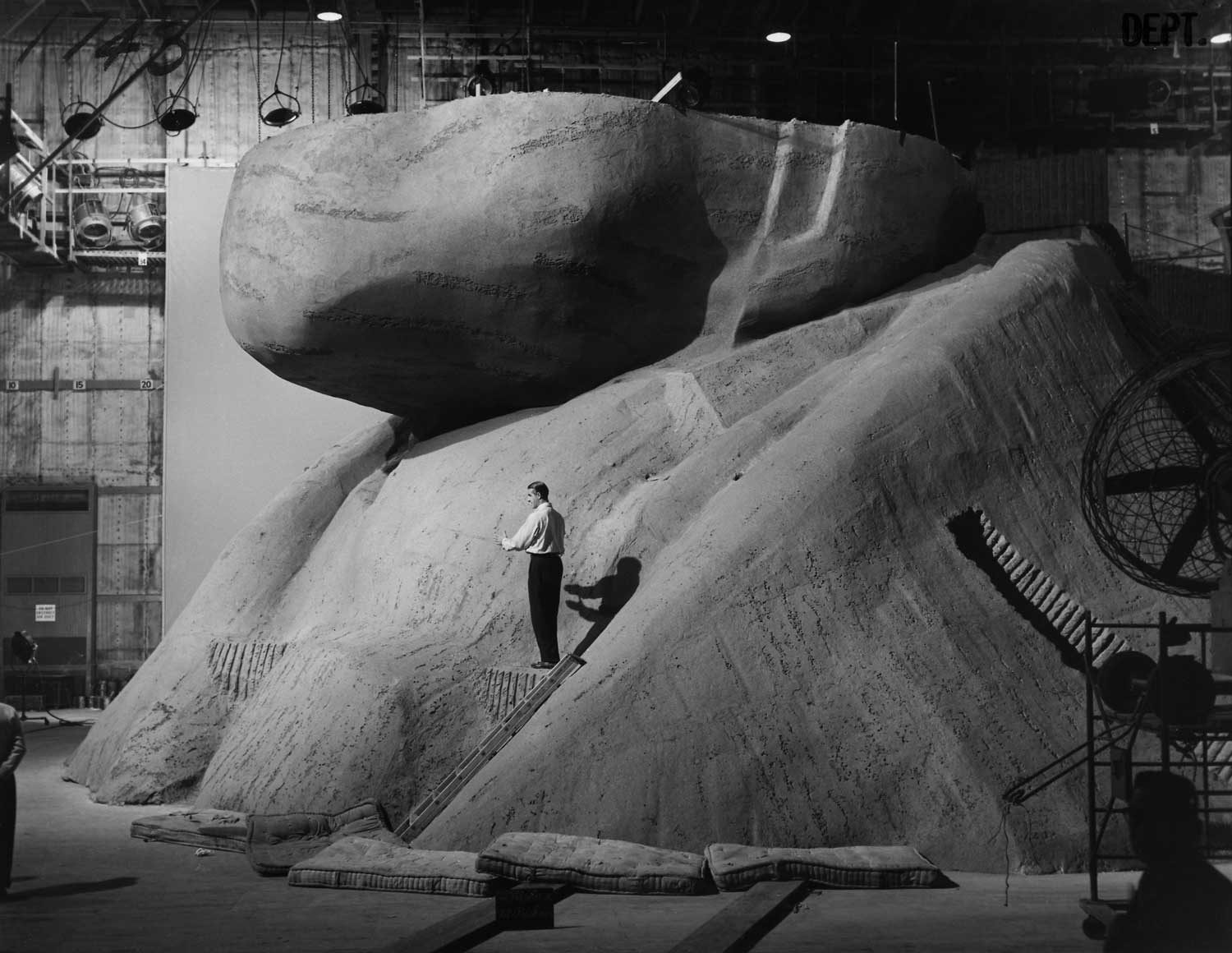
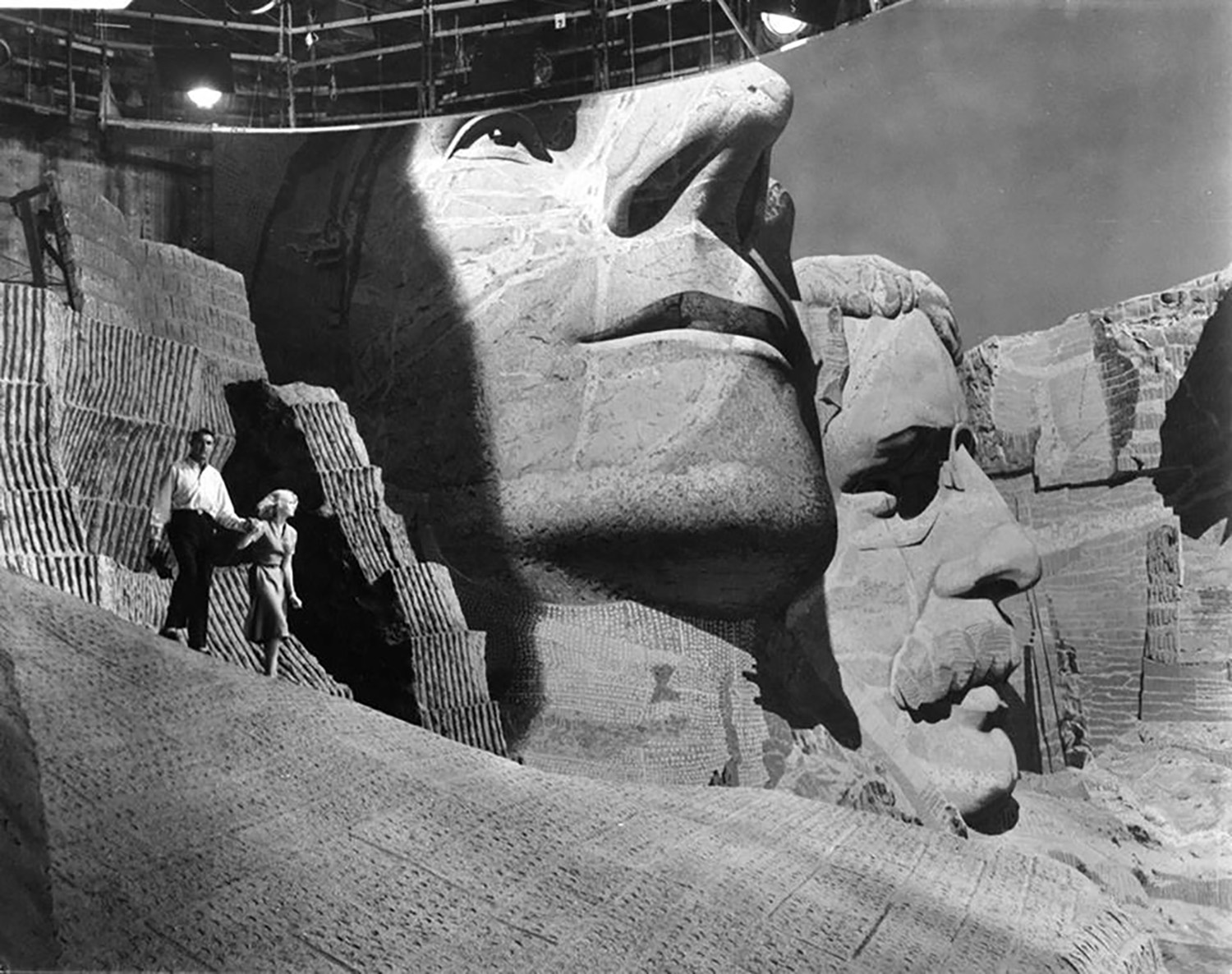
That should’ve been the end of it, but nearly a year after filming commenced, the clash between the Park Service and the film studio continued. It mostly came from Hitchcock fostering the illusion that the movie’s violent climax occurred on the real Mount Rushmore by including a credit stating: “We gratefully acknowledge the cooperation of…the National Park Service in the actual filming of the scenes at Mount Rushmore National Memorial, South Dakota.”
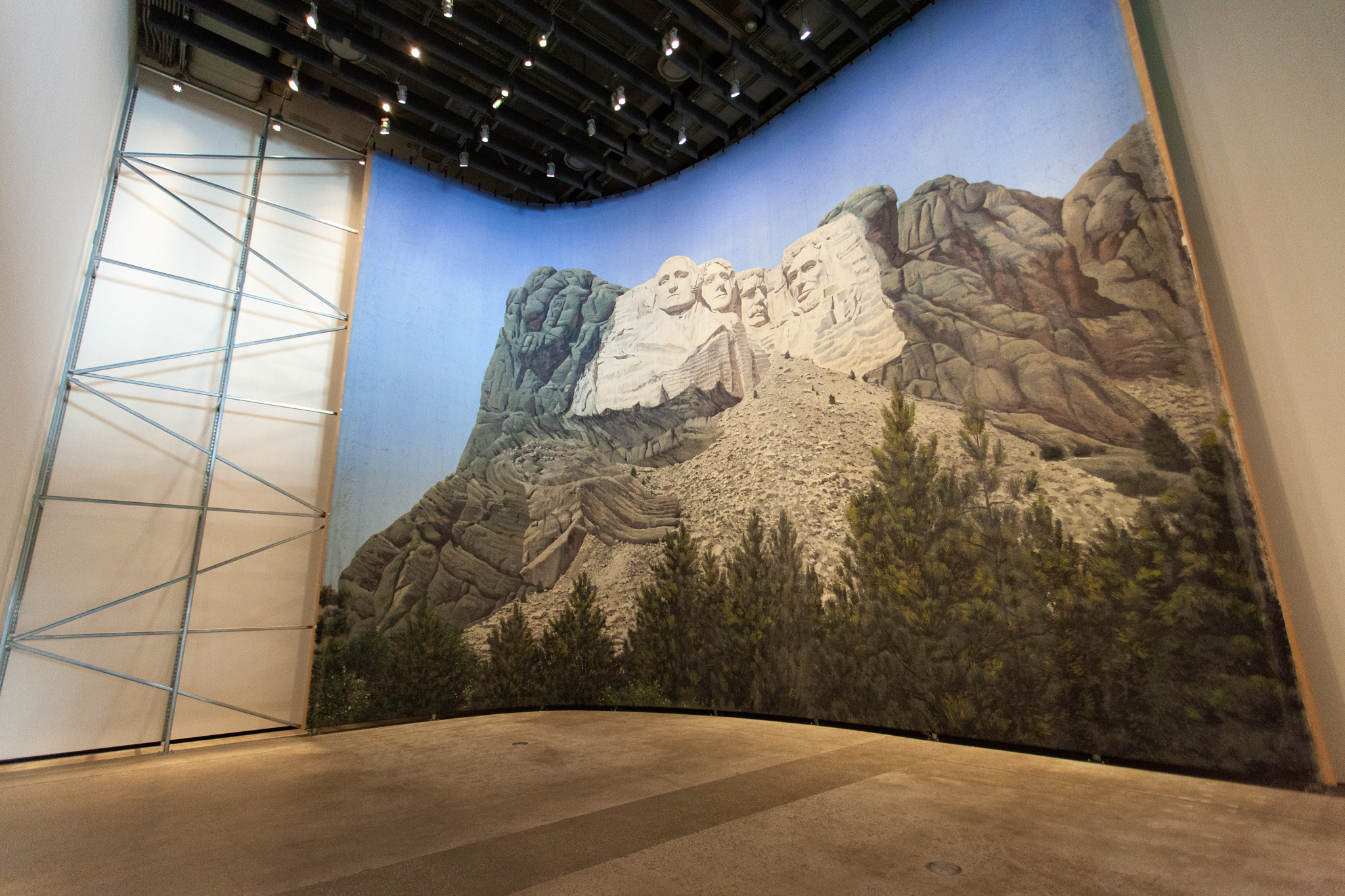
At that point in the game, government officials knew there wasn’t much they could do. Nonetheless, by the time the movie was released, the credit was pulled and tensions eased.
The Tunnel of Love
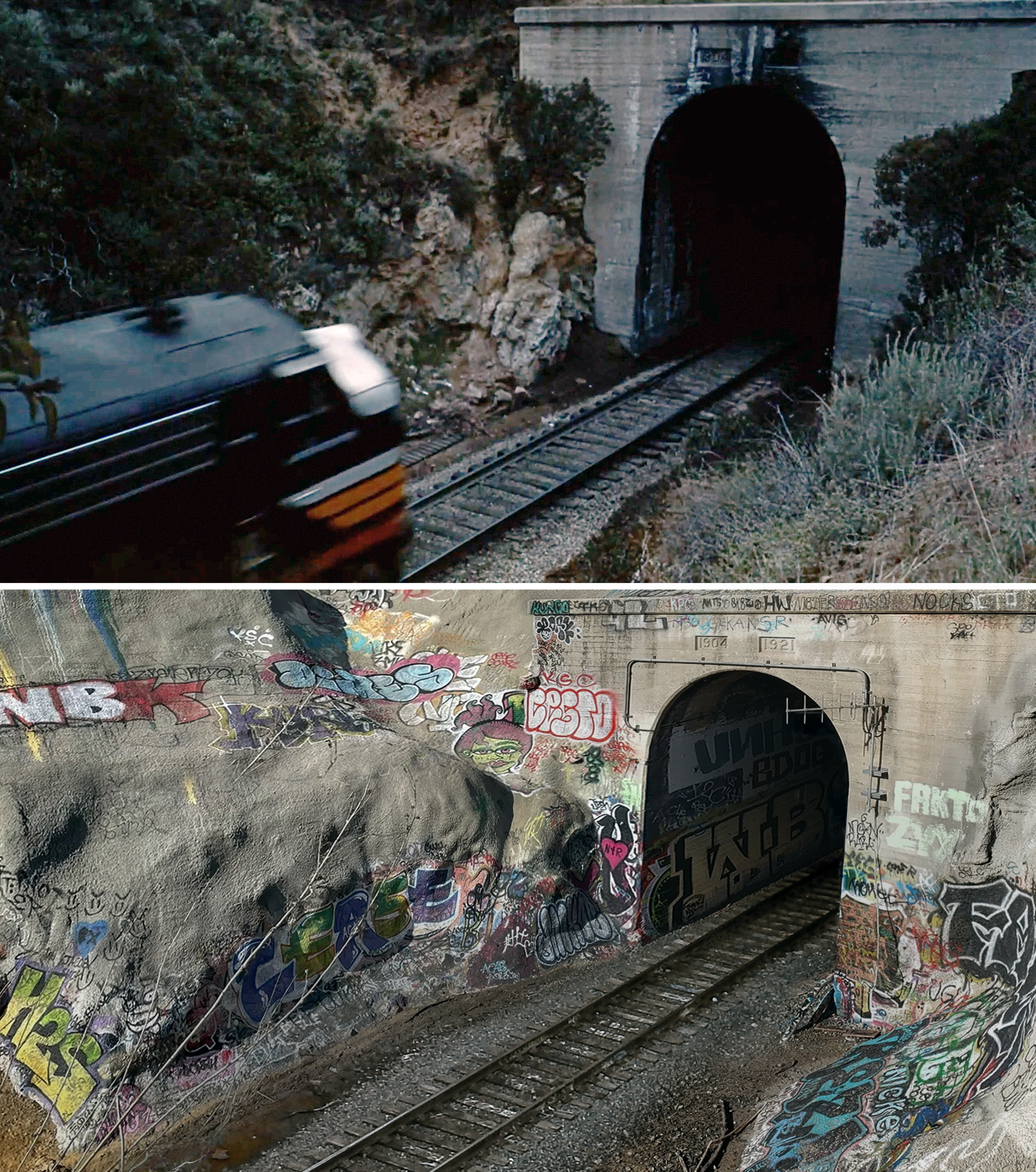
Most of the final act of North By Northwest was done on soundstages, but the very last shot of the movie was a real location. I’m not sure if this quick shot of the train entering the tunnel was filmed by Hitchcock’s team or just stock footage, but regardless, I wanted to find its location.
The online consensus was that it was filmed at one of the tunnels at the Santa Susana Pass, but there wasn’t much more information as to which tunnel was used and on which side.
Completed in 1904, the Chatsworth Tunnel is broken into three sections, numbered 26-28, and is credited for saving considerable travel time between San Francisco and Los Angeles. The tunnel is still used today by both freight and passenger trains (and was sadly the location of a deadly crash in 2008).
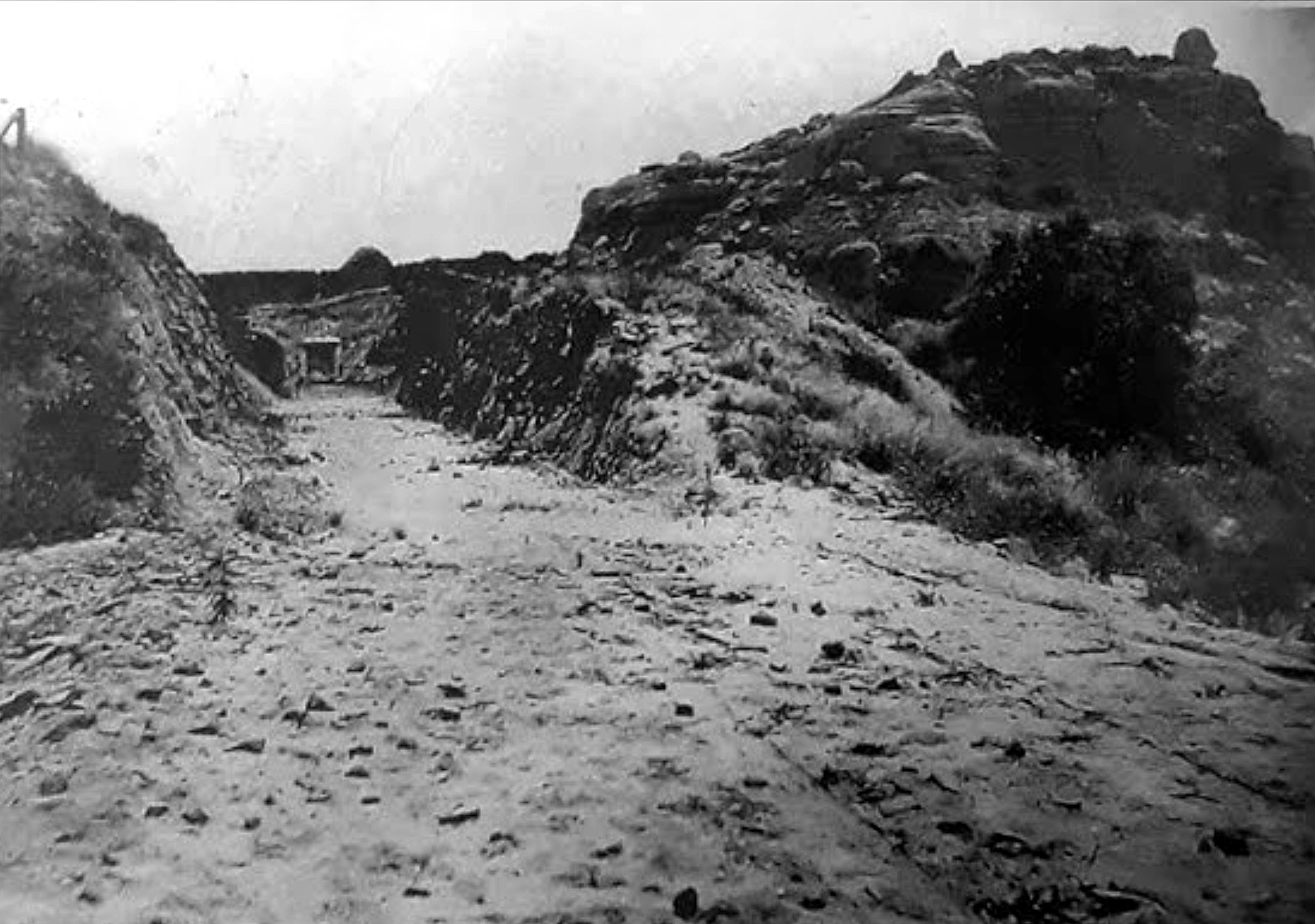
Over the years, Chatsworth Tunnel is well-known for serving as a film location backdrop, appearing in a number of movies and old serials (mostly B-Westerns). Productions usually film at tunnel #28 because it’s the most easily accessible, located just underneath Topanga Canyon Boulevard. The other two tunnels are little more remote and not as easy to get to, but have occasionally been utilized by film crews.
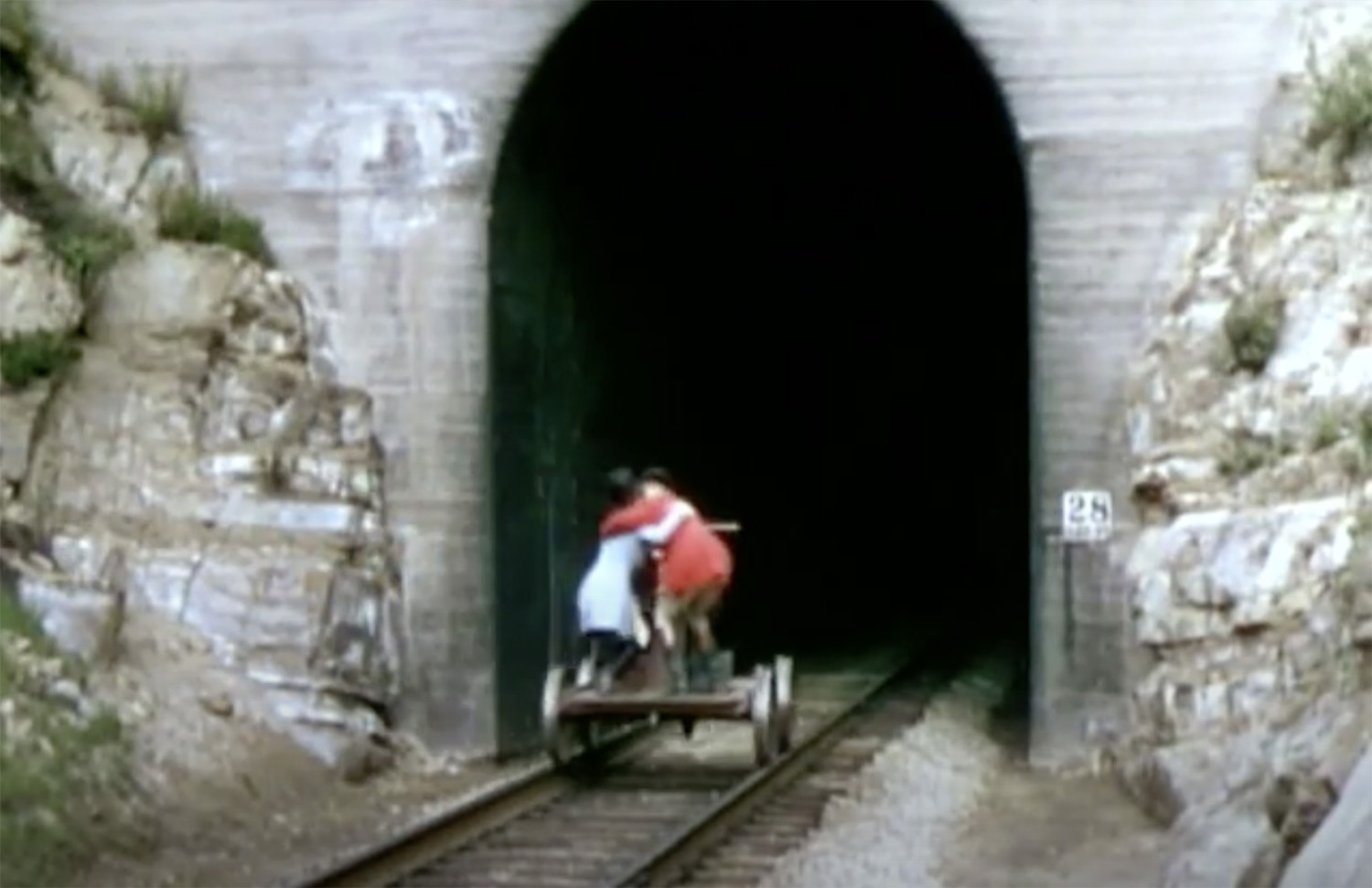
Movies that have filmed at the Chatsworth tunnels include The Trail Beyond (1934) starring John Wayne, Pigskin Parade (1936) starring Jack Haley and Judy Garland (her first feature film), White Heat (1949) starring James Cagney, Fancy Pants (1950) starring Bob Hope and Lucille Ball, and the sci-fi/horror classic, Invasion of the Body Snatchers (1956).
When I searched for modern photos of the three tunnels, I couldn’t find any that seemed to match the one in North By Northwest, but I knew it had to be one of them since you can see the 1904 date above the entrance.
I thought they most likely filmed at the often-used tunnel #28, but all the photos I found only showed the western entrance. When Blakeslee decided to search as well, he couldn’t find any modern pics, but did find a still from the movie, Ma & Pa Kettle on the Farm (1951) which looked promising.
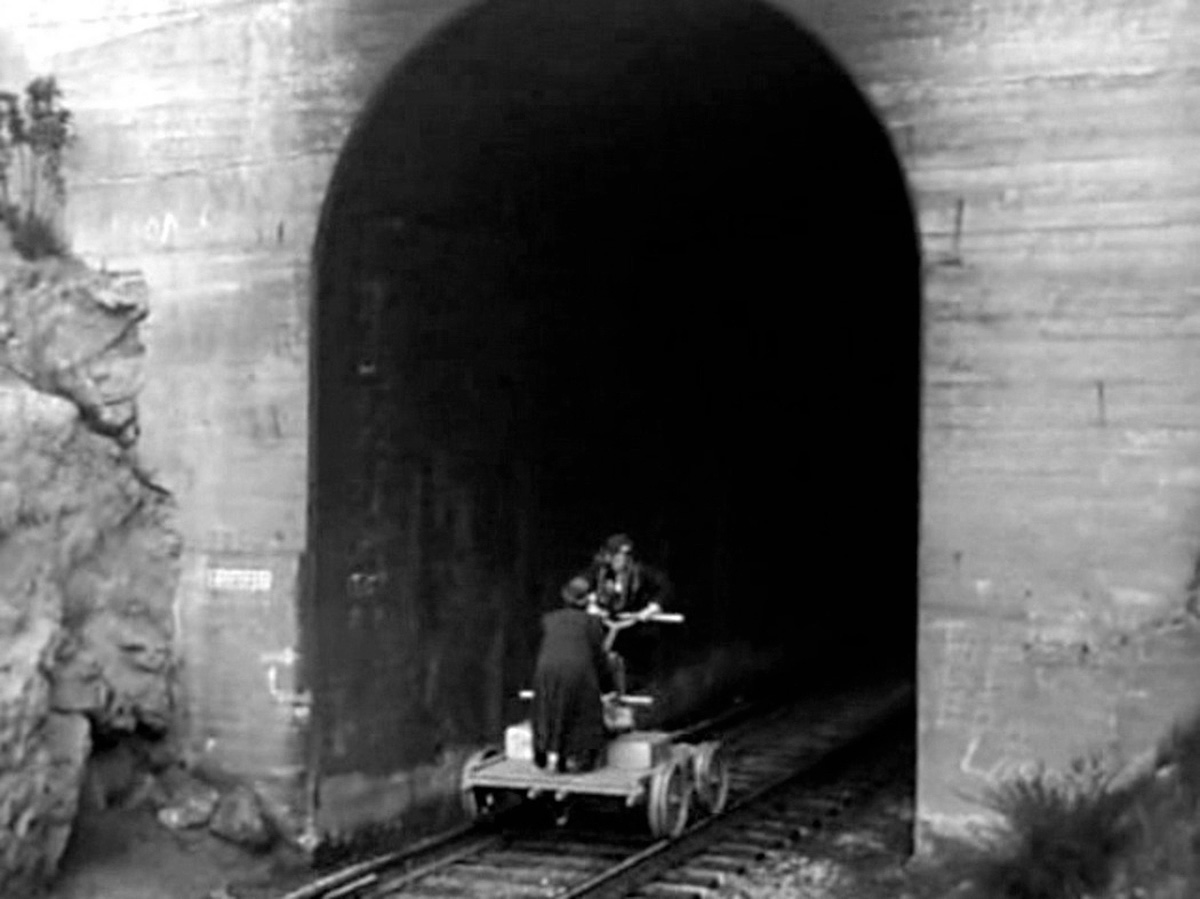
The movie was reportedly shot on the east side of tunnel #28 and the rock formation looked pretty similar. That inspired me to focus all my attention on the east side of #28, and I soon stumbled on a boatload of recent pics on the Alltrails webpage for the Stoney Point Loop trail, which runs partially along the tracks.
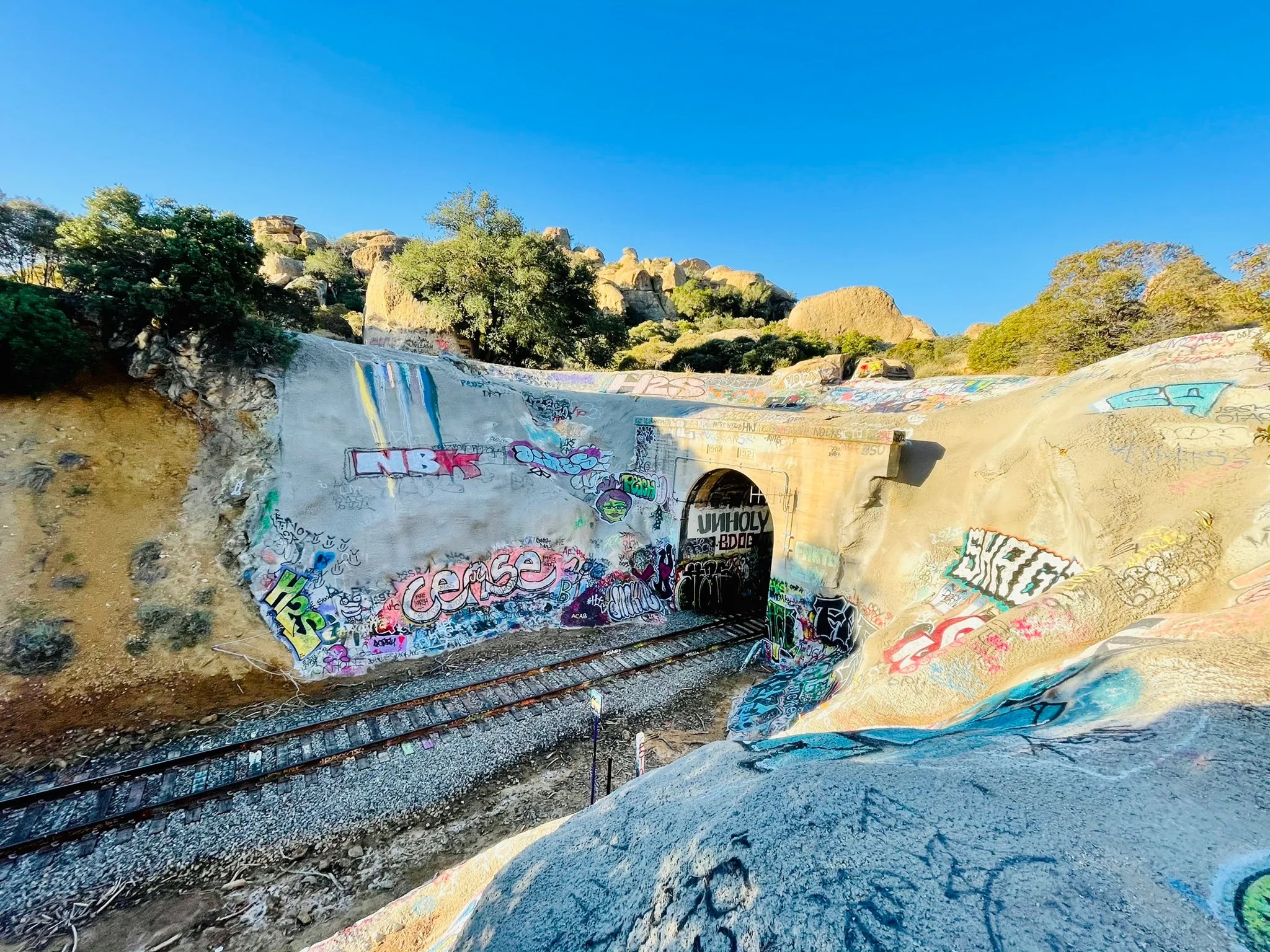
Because the landscape is made mostly of sandstone, there’s been some erosion over time, but I found enough similarities in the rock formations to conclude the east side of tunnel #28 was used for the last shot of North By Northwest.
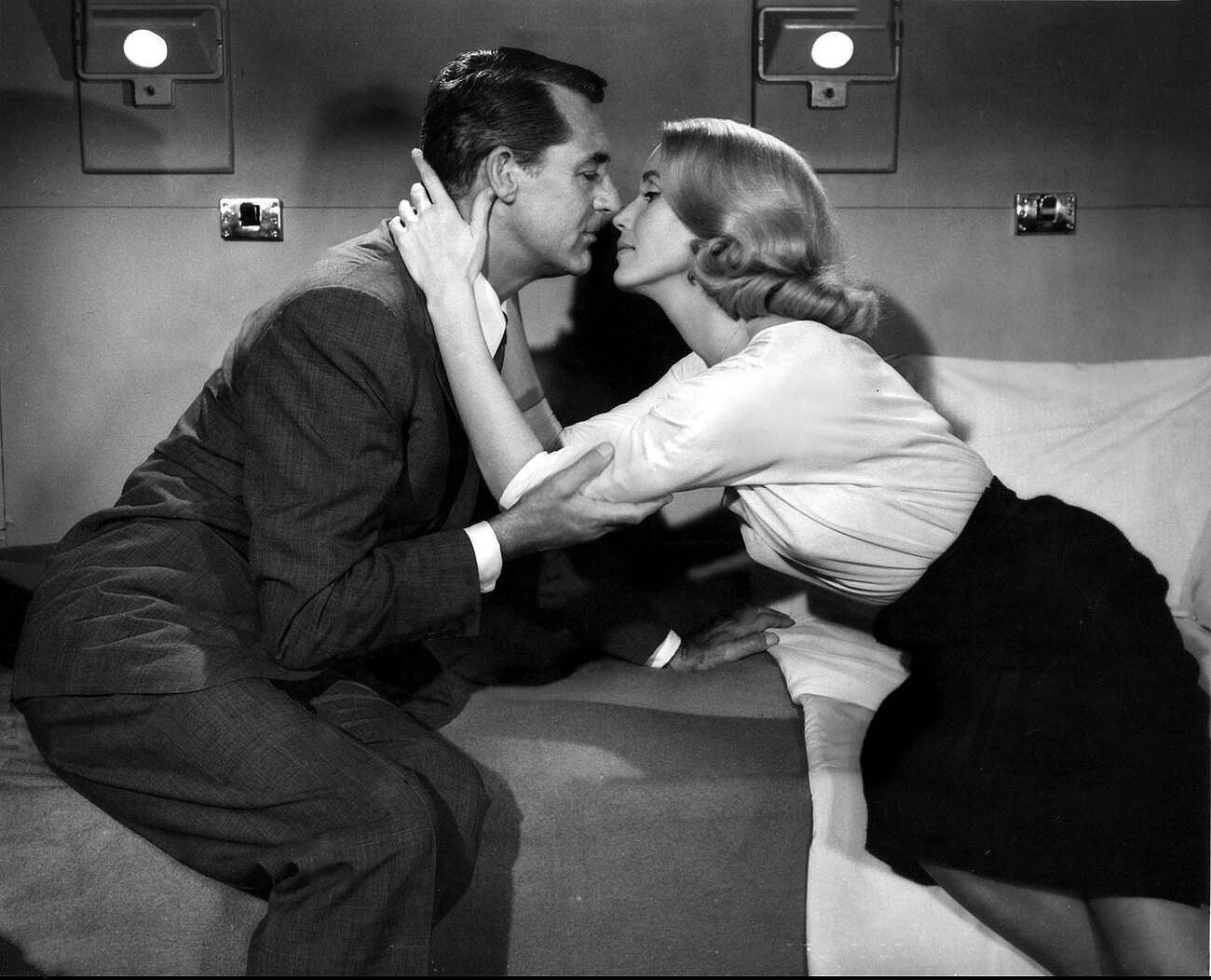
Of all of Hitchcock’s later color projects, North By Northwest is probably my favorite. Not only because it features several NYC locations, but because it’s just plain fun to watch.
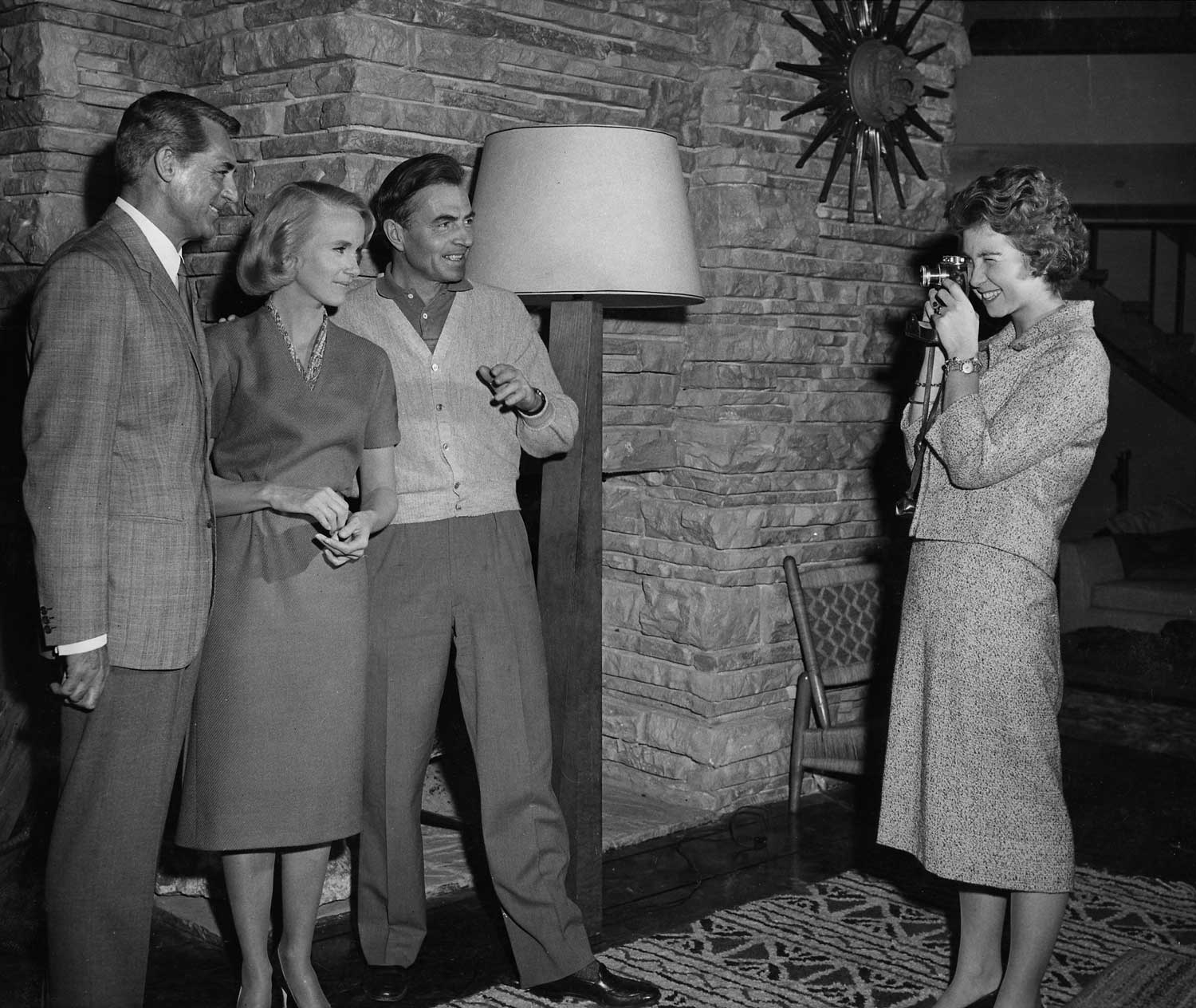
It is undoubtedly a great achievement in the spy genre, reaffirming Hitchcock’s filmmaking prowess.
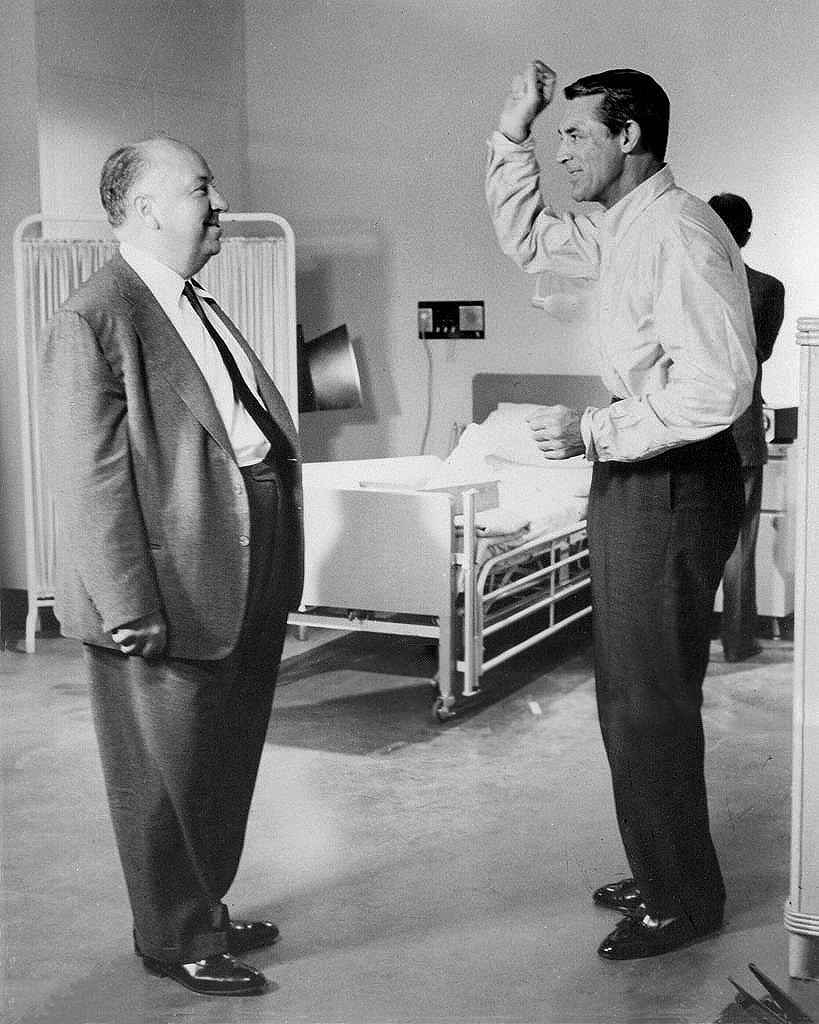
He was probably the first director to successfully mix action and humor, without sacrificing either one. This certainly helped pave the way for other films, in particular the James Bond series, which would hit the screen three years later.
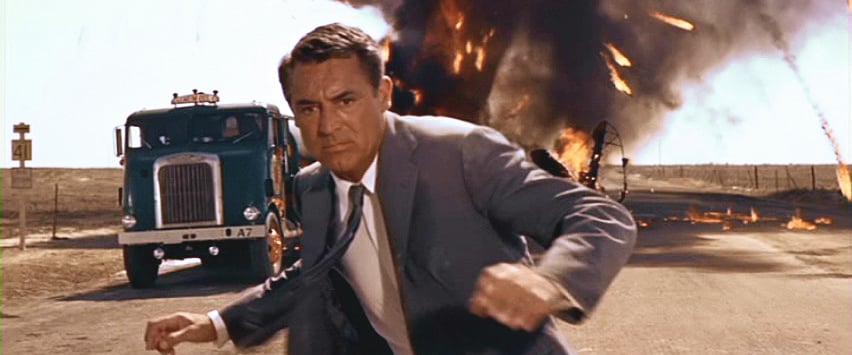
The crop duster scene alone is as memorable as any modern day stunt, and does it with about 90% anticipation and only 10% actual action. It was so successful that it became the scene most associated with Cary Grant, which is quite an achievement considering how many other memorable roles he has on his resume.
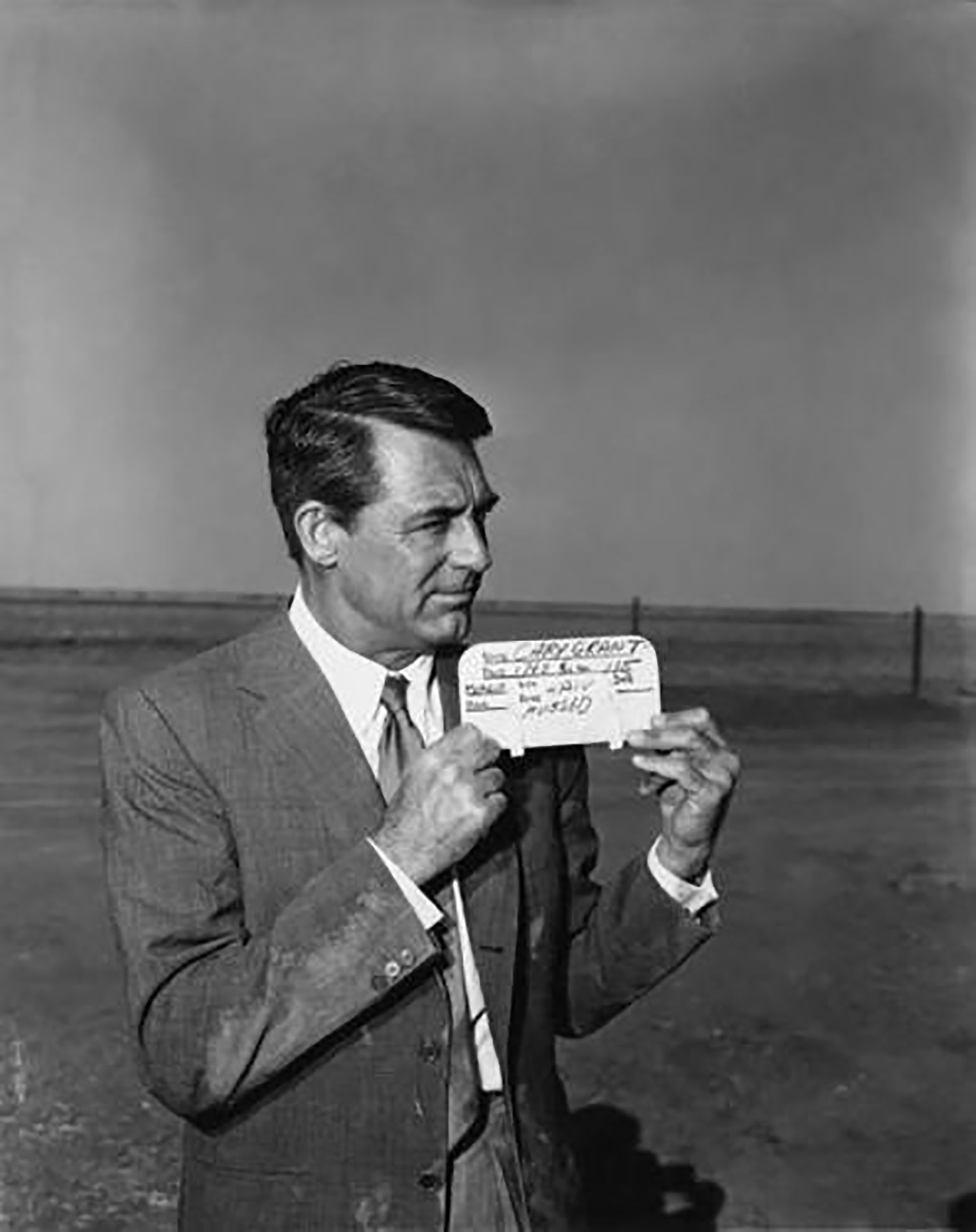
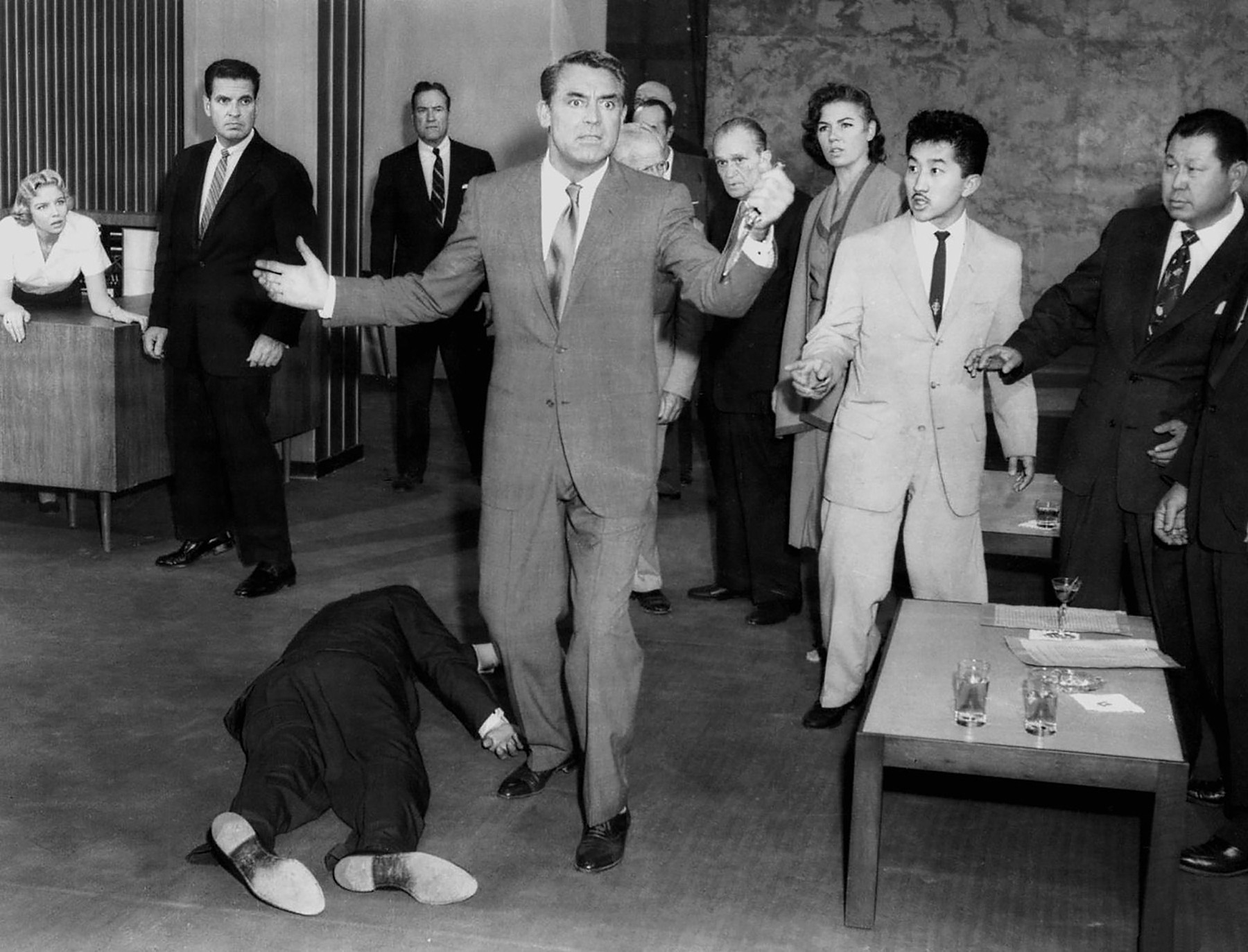
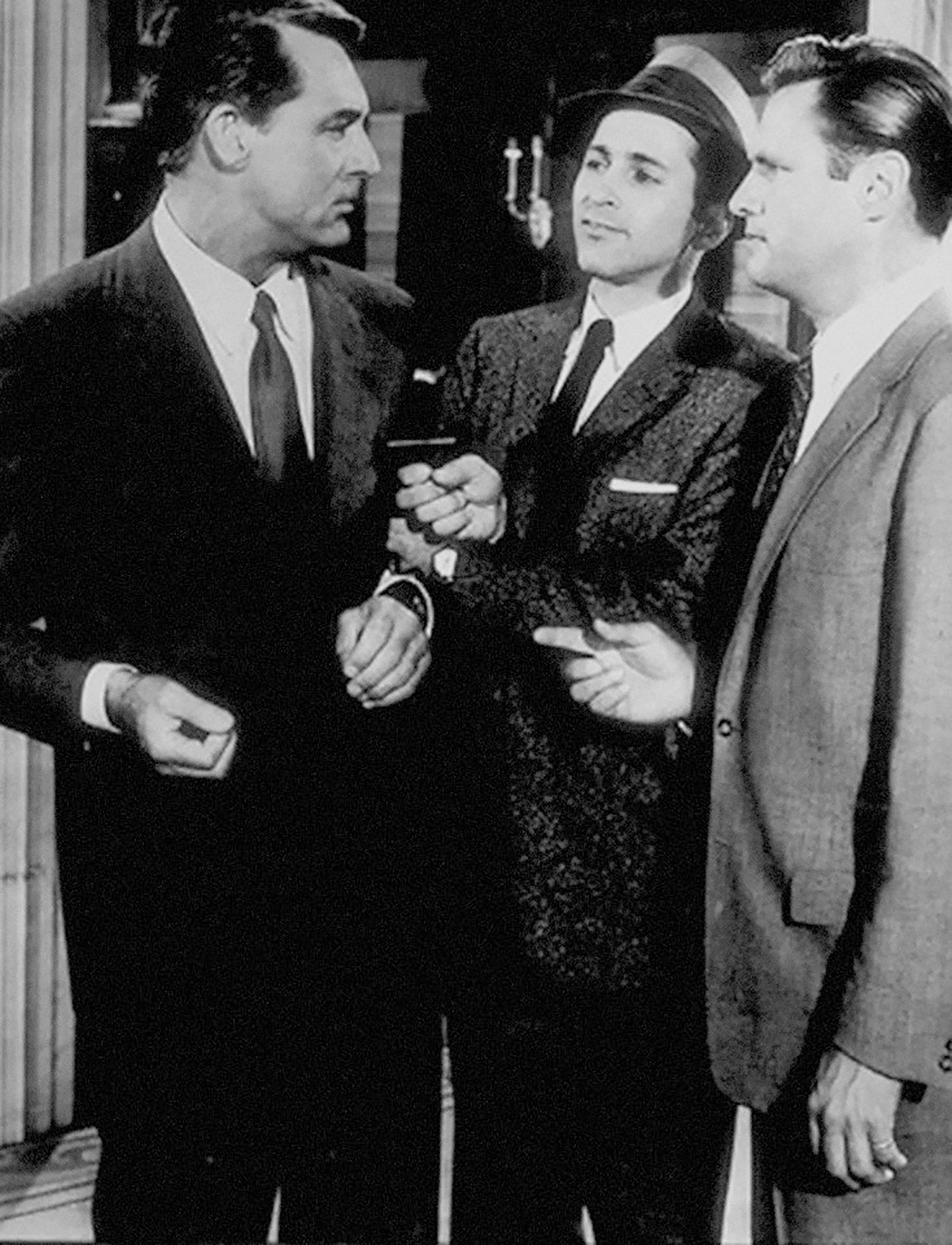
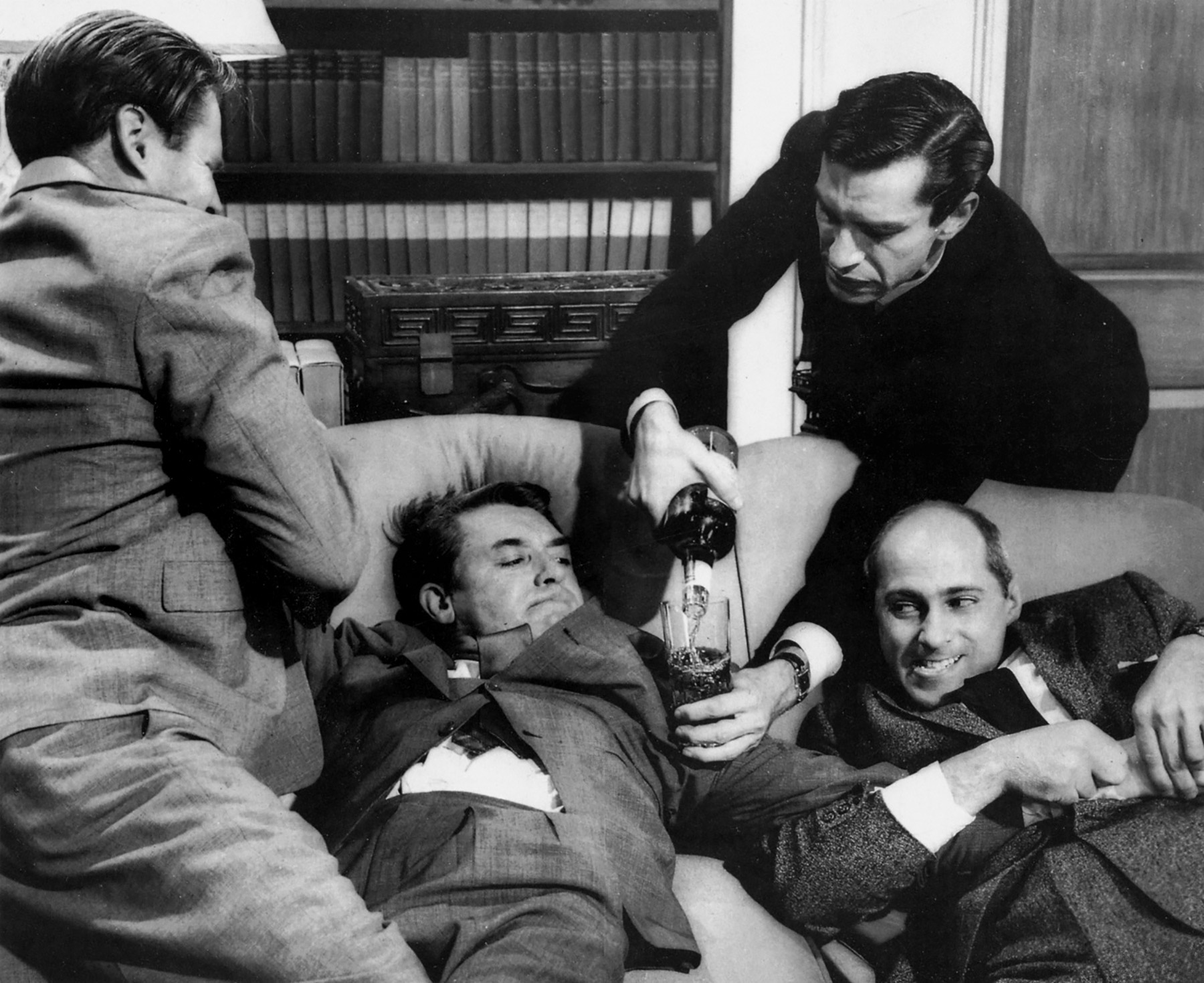
The rest of the cast is superb as well. James Mason and Martin Landau make perfect partners in crime, each with unique diabolical qualities that work together in their unspoken simpatico relationship.
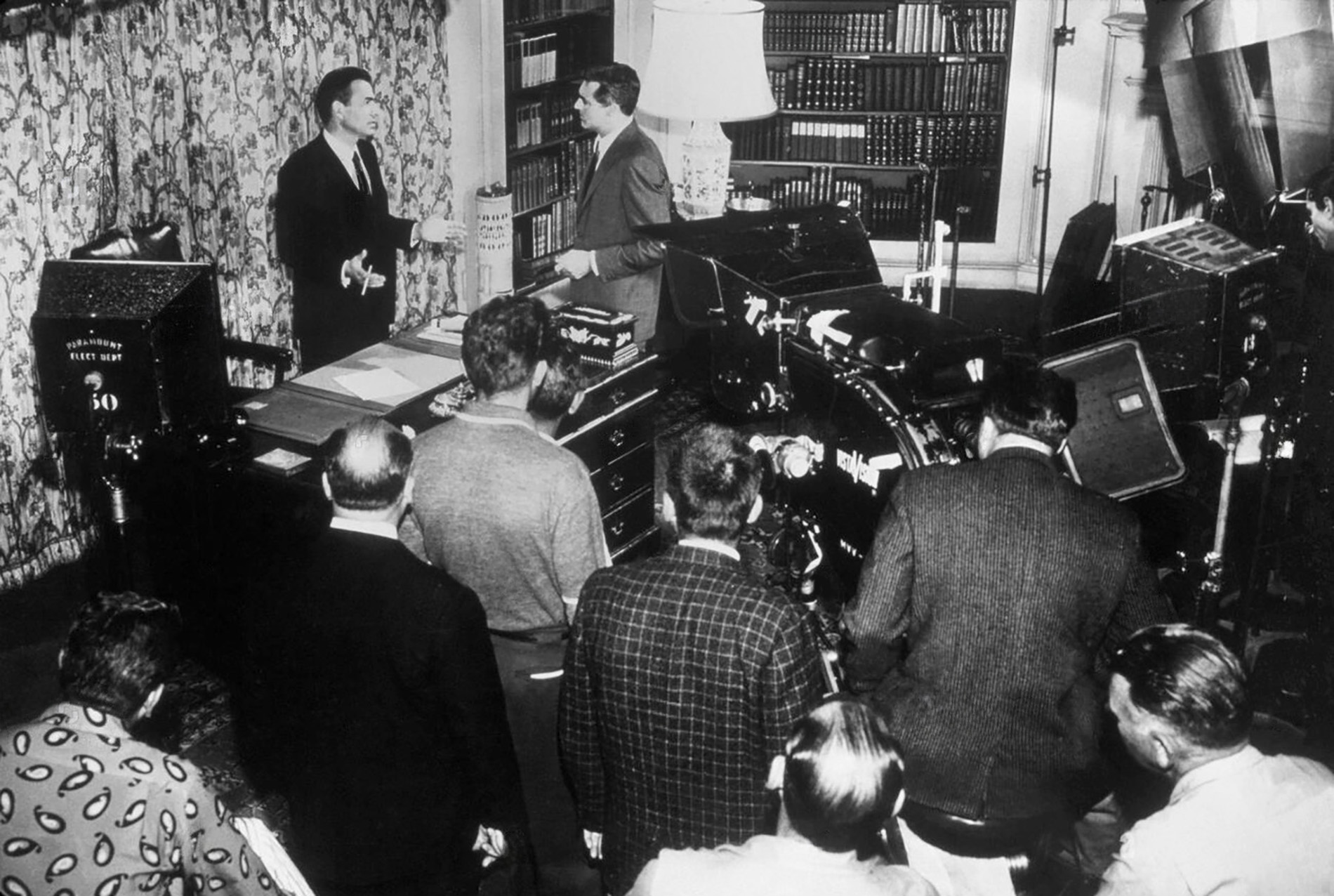
Even the low-level henchmen stand out as individual characters, seemingly carrying complex backstories that led them to a life of crime.
And then there’s Eva Marie Saint as the sultry counterpart to Grant’s Thornhill. It’s almost hard to believe she’s the same person who played the drab, tortured Edie Doyle in On the Waterfront five years earlier.
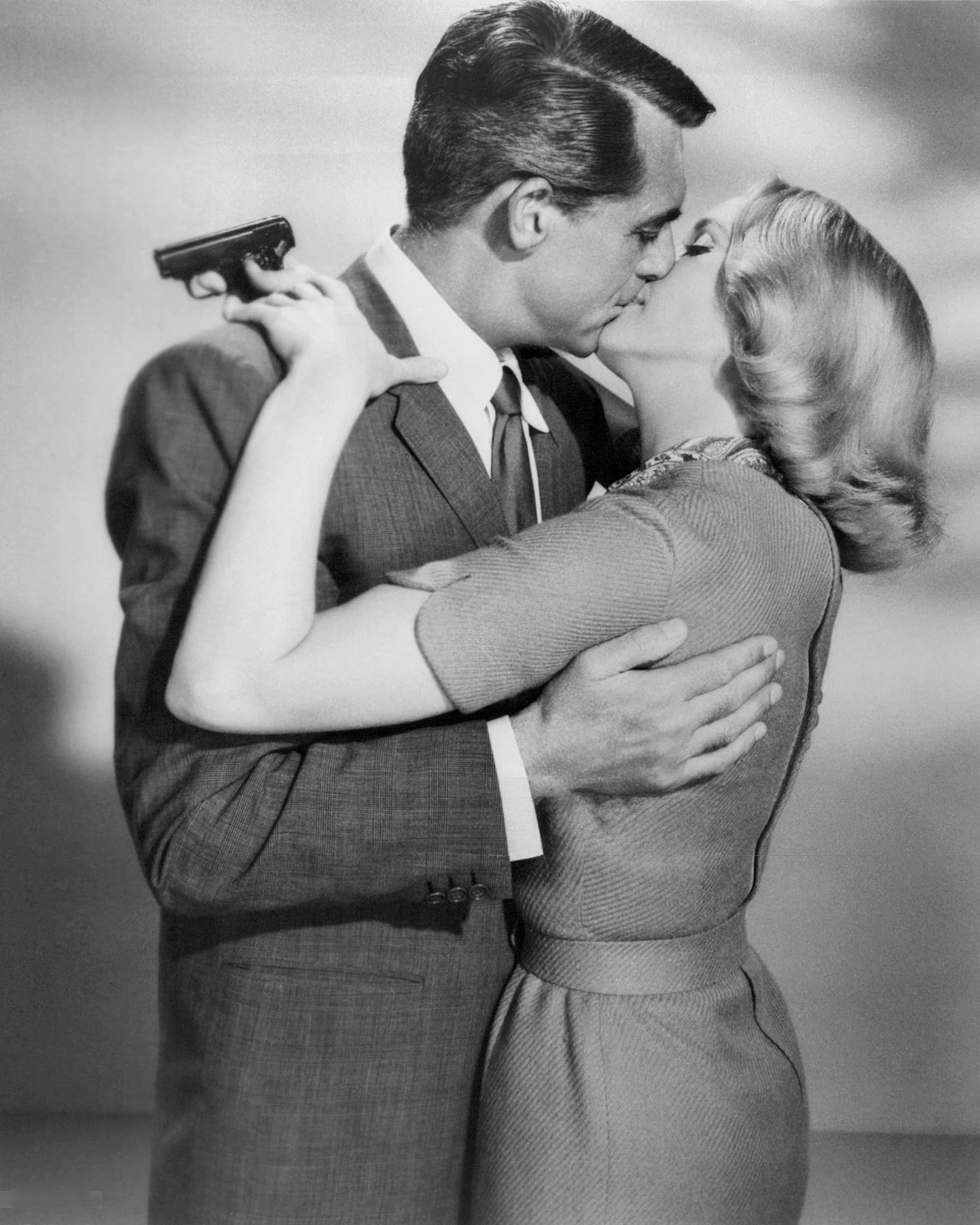
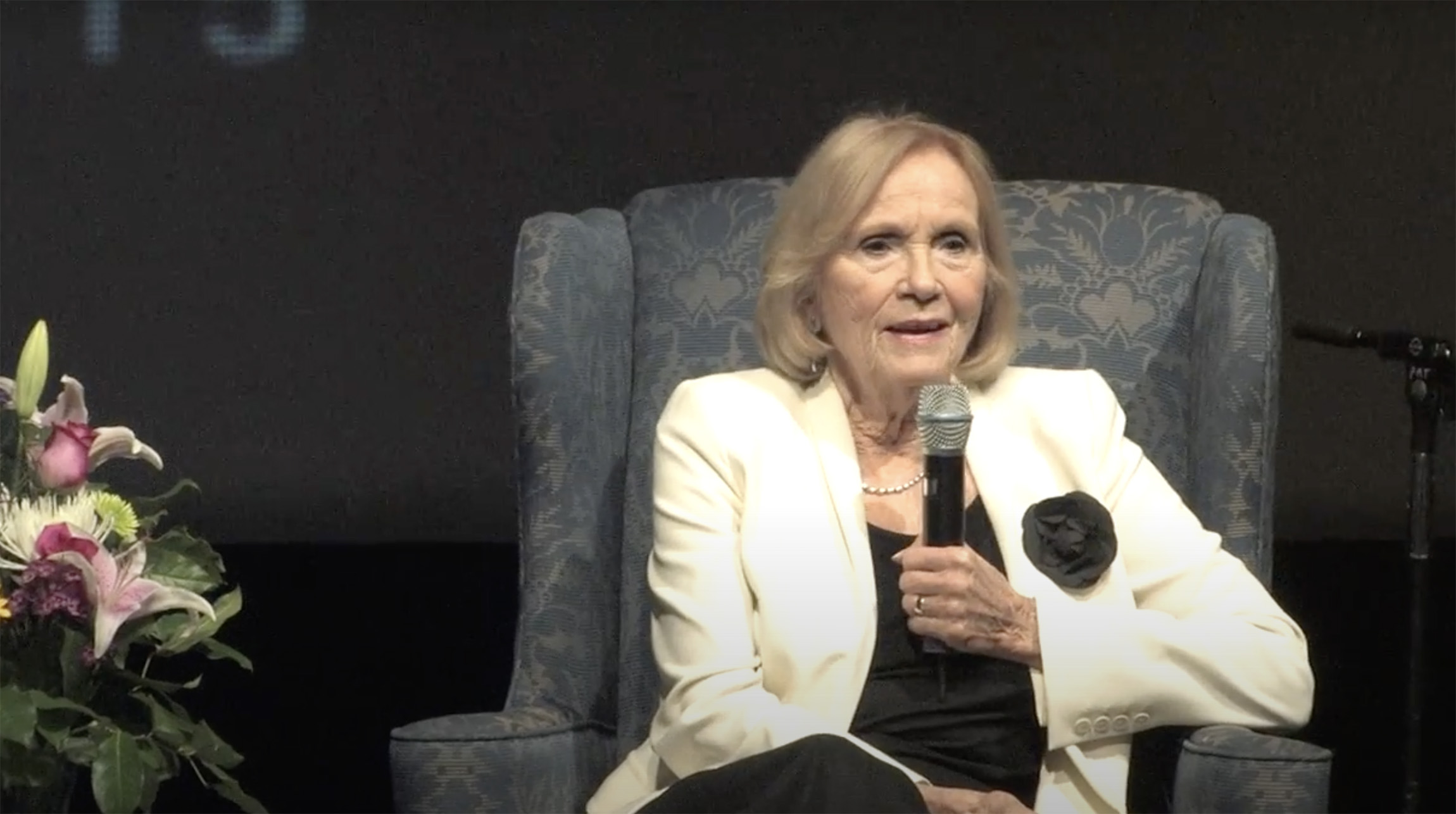
Saint just celebrated her 100th birthday last July, and as of this writing, she’s one of four Hitchcock leading ladies that are still alive; the others are Vera Miles, Tippi Hedren and Kim Novak.
In addition to the performers and a well-crafted script, I would be remiss if I didn’t mention the wonderful look of the film.
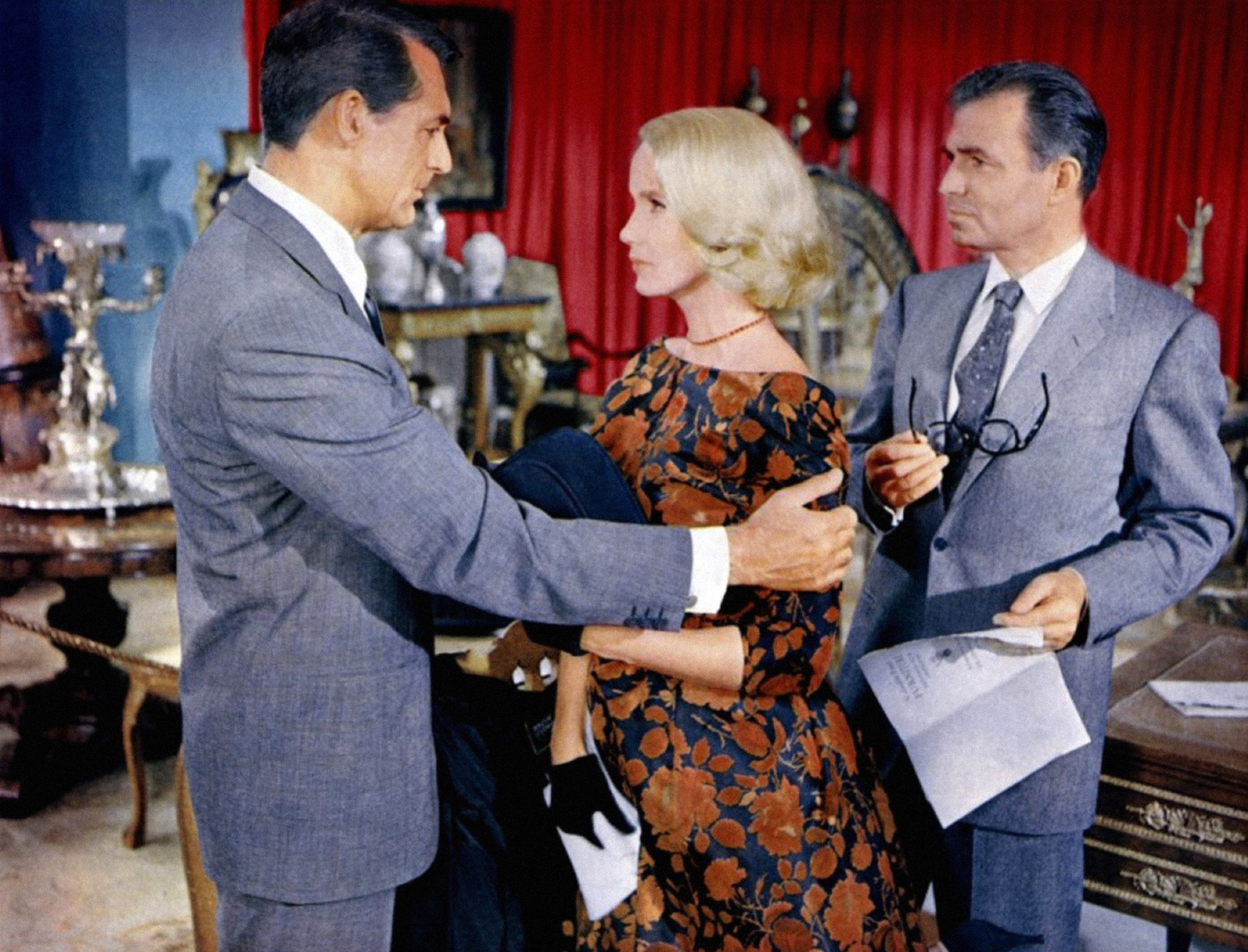
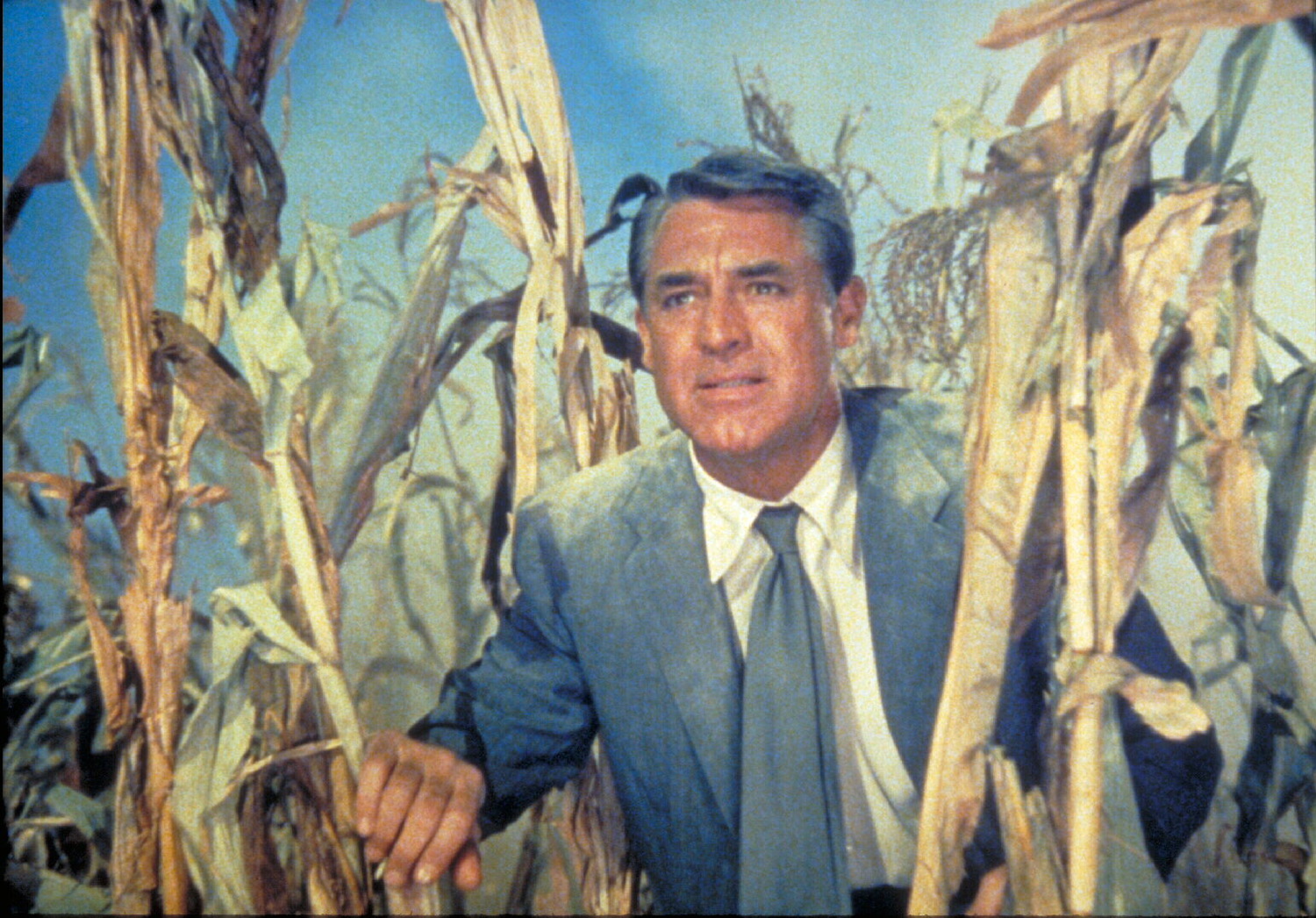
Cinematographer Robert Burks’ VistaVision-Technicolor photography is luminous and ingeniously composed — maximizing all the colors of the palette, be it the deep blues of an evening cityscape, or the hot ambers of a prairie cornfield.
The vivid quality brings each scene alive and works incredible well with the matte paintings that are utilized throughout the picture.
Along with the cinematography, the production design, art direction and location scouting became valuable assets in shaping the look of the film, working in unison to ensure the visuals stayed cohesive — whether it’s on fabricated sets or at actual locales.
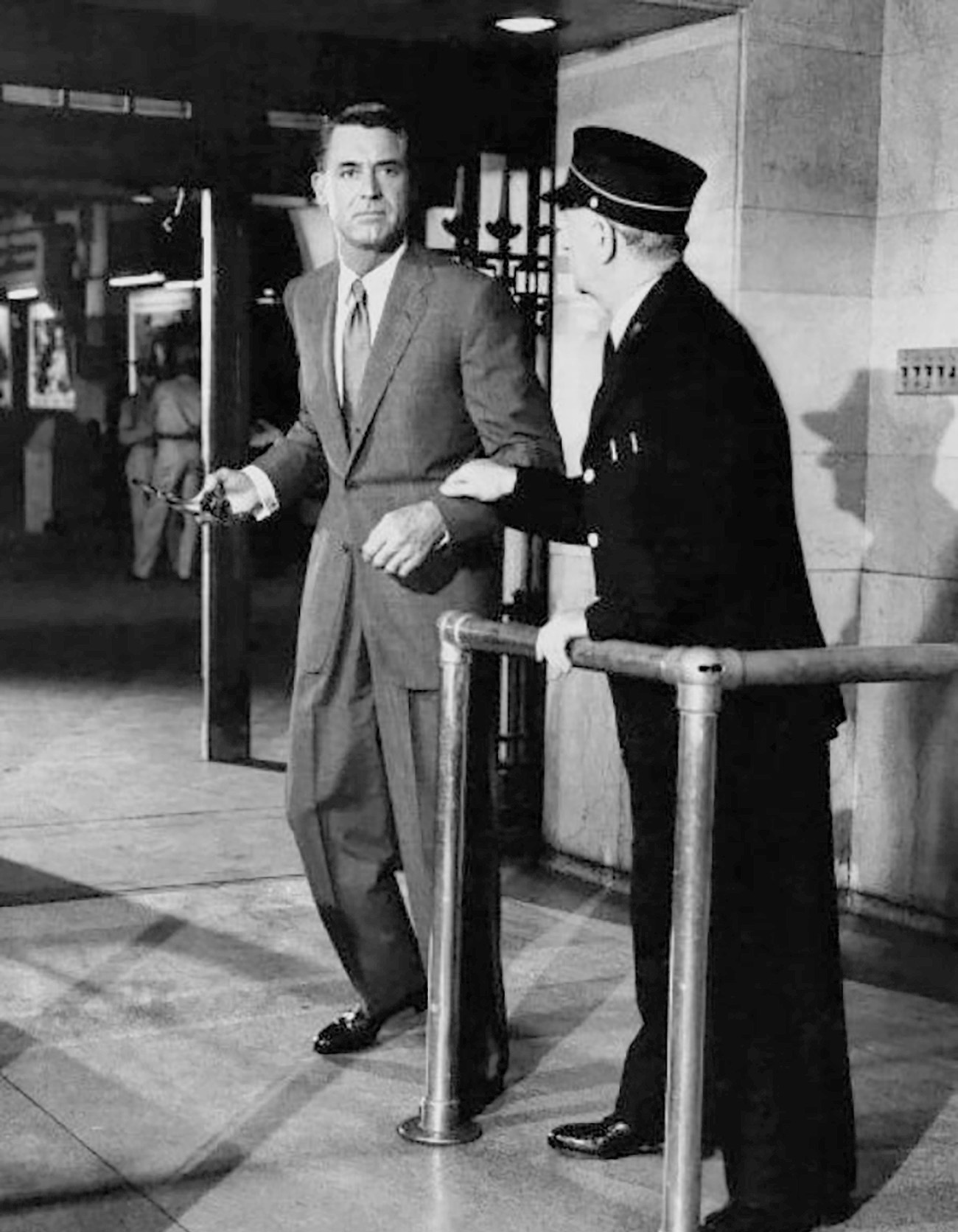
And finally, Bernard Herrmann‘s rollicking score is the perfect accompaniment to the various situations and environments. While best known for his Psycho soundtrack, I believe Herrmann‘s work here is some of his best. It’s the glue that keeps the story together, maintaining that critical balance of tension and laughter.
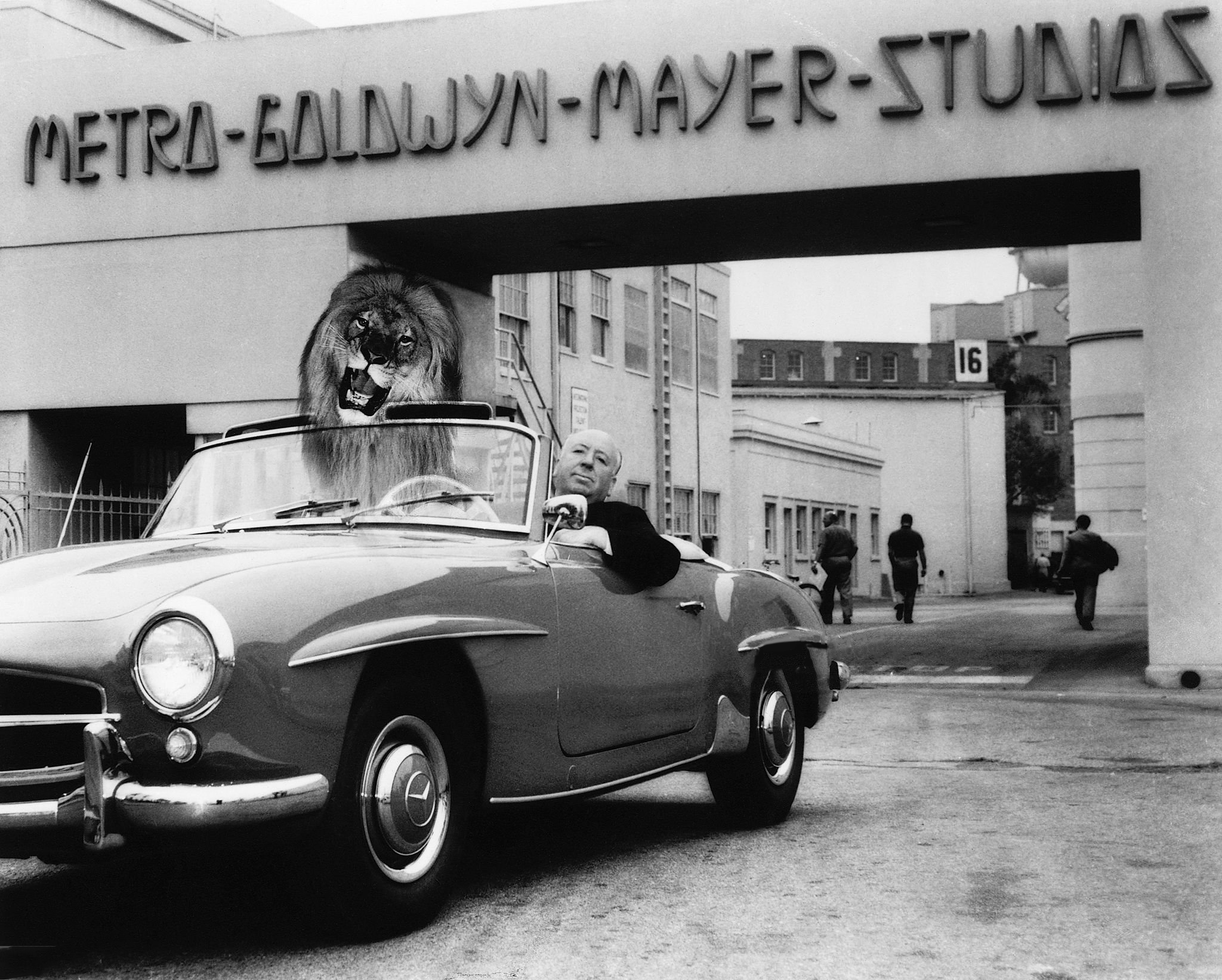
Tension and laughter — that pretty much sums things up. It’s the two main ingredients of a great rollercoaster ride or a classic Hitchcockian adventure.
 NYC in Film
Eva Marie Saint is so lovely in this movie.
LikeLike
Wow.
LikeLike
I enjoyed this piece very much. Pardon my mentioning, in the site menu N by NW is listed as “1990s, Comedy”. And Arthur is listed as “1970s, Action, Thriller.” Also, Tiffanys is located on the east side of 5th Ave and its side entrance is on East 57th not West. BTW, I had thought for some time that the building behind the credits was the one on Park Ave you cite and the subway entrance was at 5th and 53rd. It is a beautiful piece/article.
LikeLike
Thanks for pointing out the typos, and I had just finished updating the tags on Arthur and NxNW when I got your comment. This is basically a one-man-show so it’s hard to avoid these little slip ups. Always happy to get notes and corrections from readers.
LikeLike
Very nice article about the filming of North by Northwest. Do you also have call sheets for the production schedule for the other filming days?
LikeLike
I got all the call sheets from the “Making of” featurette on the DVD. Can’t remember if any others were included but I believe the video is on YouTube.
LikeLike
My sister is in the crowd scene exiting the building at 393 Seventh Avenue. She is wearing a light blue shirtwaist dress. That summer she was working at a major make-up (lipstick, powder, mascara, etc.) company, but I can’t remember the name of the company. Can you find out? Thanks.
LikeLike