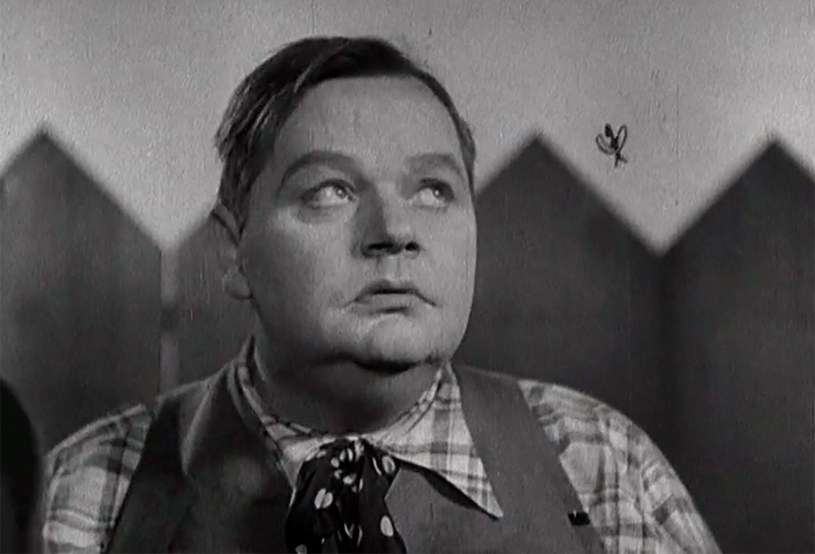
After being acquitted from what was at the time the biggest Hollywood scandal in history, silent movie star Roscoe “Fatty” Arbuckle spent the next ten years trying to get back in the good graces of movie studios. Finally in 1932, Arbuckle landed his first official movie contract with Warner Bros. to star in a series of two-reel comedies to be filmed at the Vitagraph Studios in Brooklyn, New York.
While most of this work was filmed on Vitagraph’s soundstages, a couple of his shorts utilized the streets of the surrounding area. The one that had the most on-location footage was his second two-reeler, Buzzin’ Around, filmed (judging by the lack of leaves on the trees) in late 1932. Sadly, the original Vitagraph Studios, which survived for over a 100 years, was torn down in 2015. But luckily, a lot of the buildings featured in this short survive today, with several of their elements looking very much as they did nearly a century ago.
Attacked by Bees
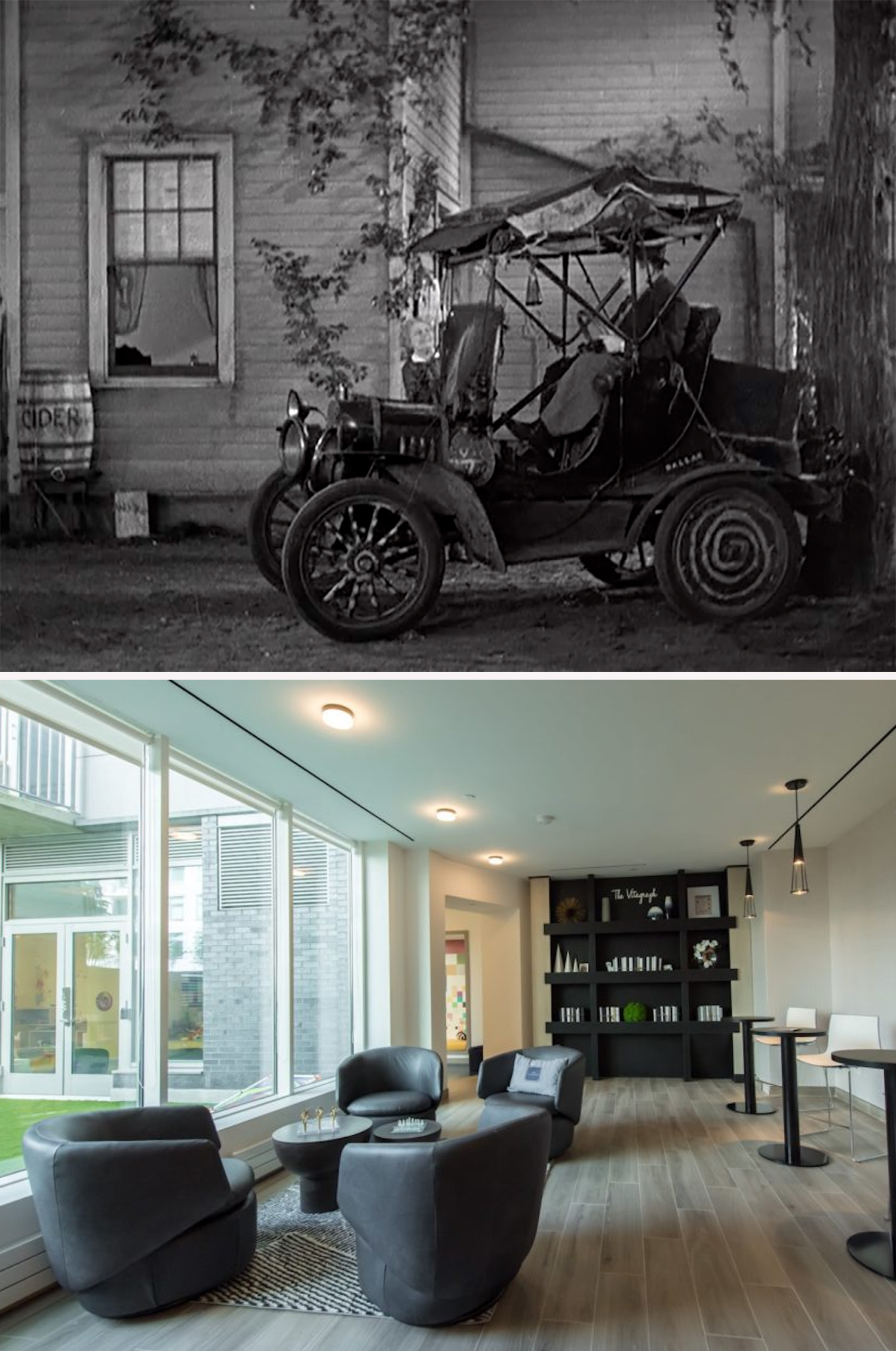
I just happened to stumble on this Arbuckle short on my hard drive a couple weeks ago after not seeing it for at least a dozen years, and was floored by how much of its story took place on the actual streets of New York. Naturally, my impulse was to track down all of its filming locations posthaste, which turned out to be a fairly quick task thanks to all of them being within a few blocks of Vitagraph Studio in Midwood, Brooklyn.
Buzzin’ Around begins with Arbuckle’s character on his family farm, which was a set built on a soundstage at Vitagraph Studio.
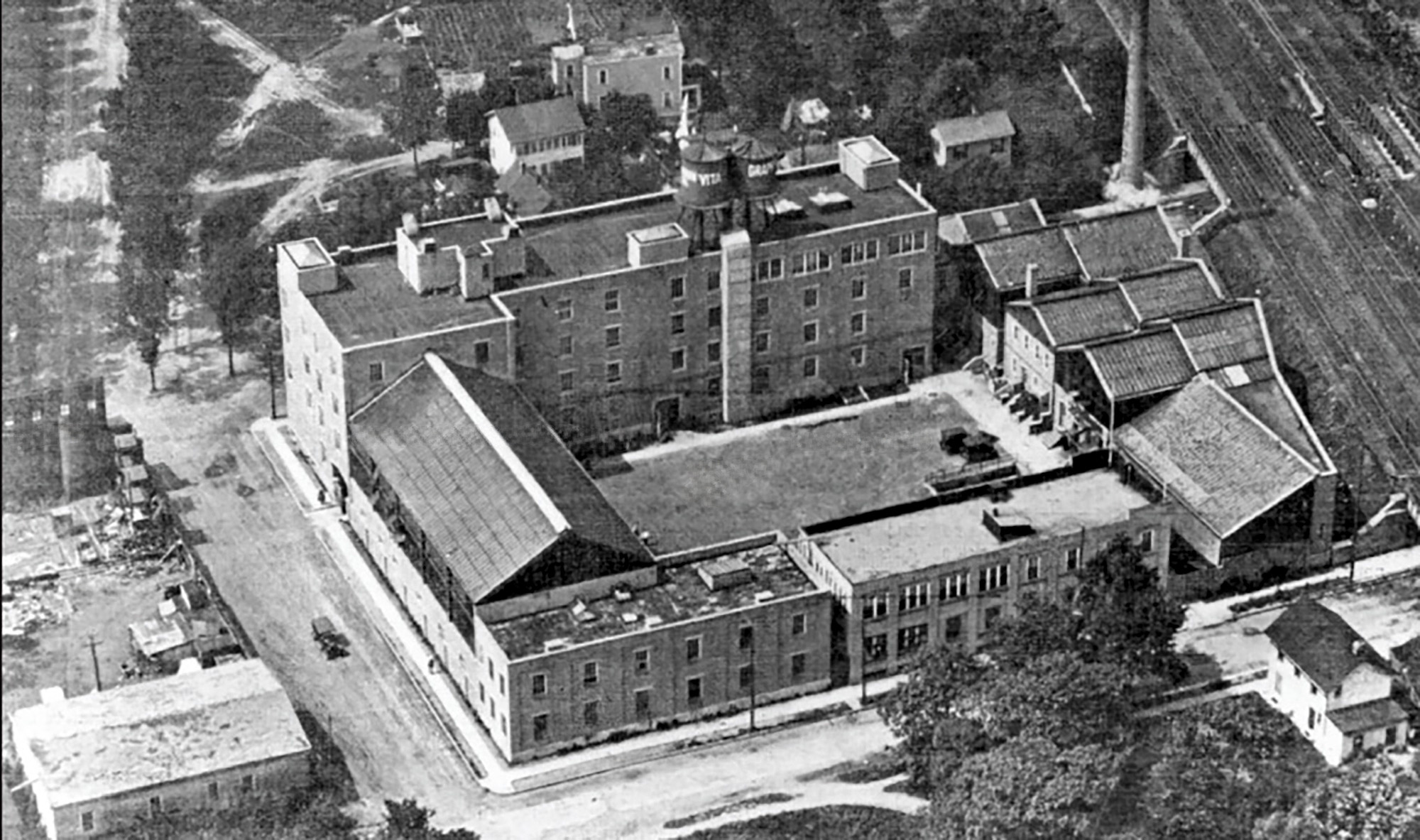
Originally starting as a newsreel company, Vitagraph evolved into a full-fledged movie studio by the early 1900s, becoming one of the most prolific production companies in the United States. However as the industry began its migration west, the Brooklyn studio’s business slowly started to wane. In 1925, after nearly 30 years in the business, Vitagraph was bought out by Warner Brothers which began churning out a flurry of early sound shorts under the new moniker, “Vitaphone.”
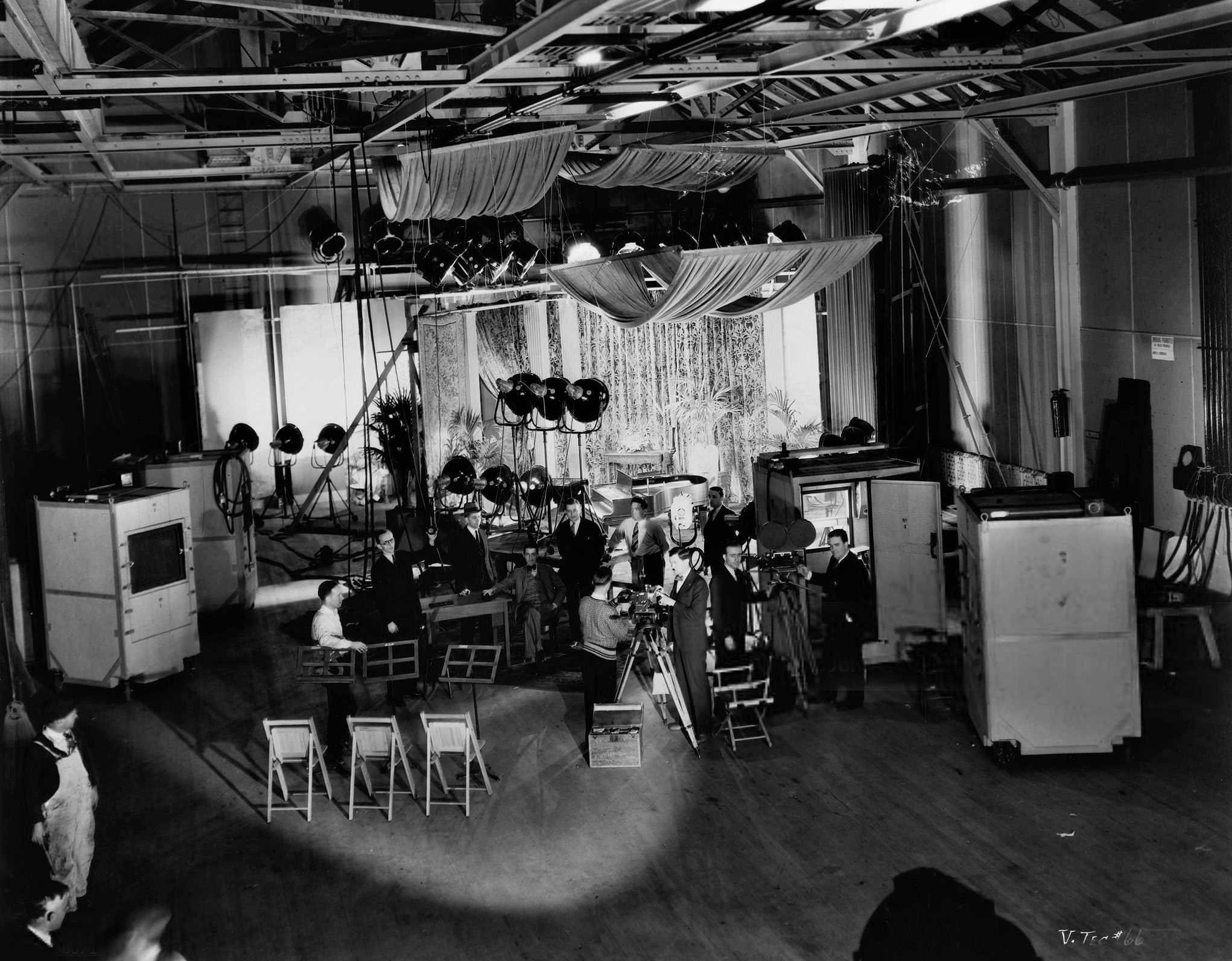
It was around this time that Warners built an adjacent studio across the street from the original Vitagraph, which they would later sell to NBC around 1952. A few years after that, Warner Bros. permanently closed up shop, and the main space was converted into a school.
Meanwhile, NBC continued to operate out of the adjacent studio for the next few decades, producing such programs as The Perry Como Show, The Sammy Davis Jr. Show, Sing Along with Mitch, the soap opera Another World, three 1976 episodes of Saturday Night Live, and early seasons of The Cosby Show.
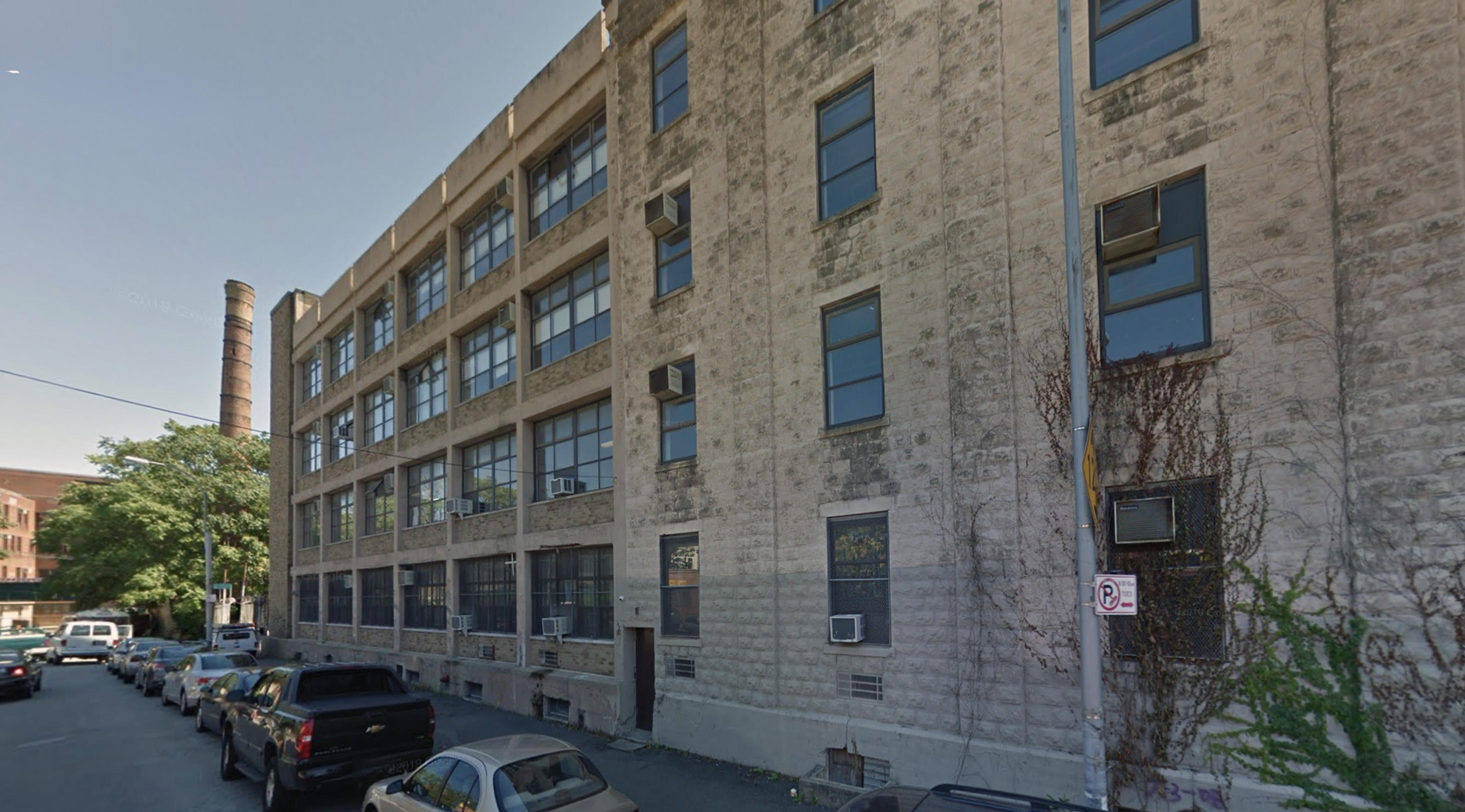
By the early 2000s, NBC had moved out and the old Vitagraph studio became the focal point of many local historians and members of the film community. It was argued that the Vitagraph complex should be preserved since it represented one of the last surviving links to New York’s early contribution to the film industry. There was even some talk of transforming the buildings into a film museum or cultural center, but in the end, these efforts failed and Vitagraph was essentially wiped off of the Midwood landscape.

In 2015, the studio was demolished and a giant apartment complex was built in its place, with the tall brick Vitagraph smokestack being the only visible thing that remains from the historic film studio.
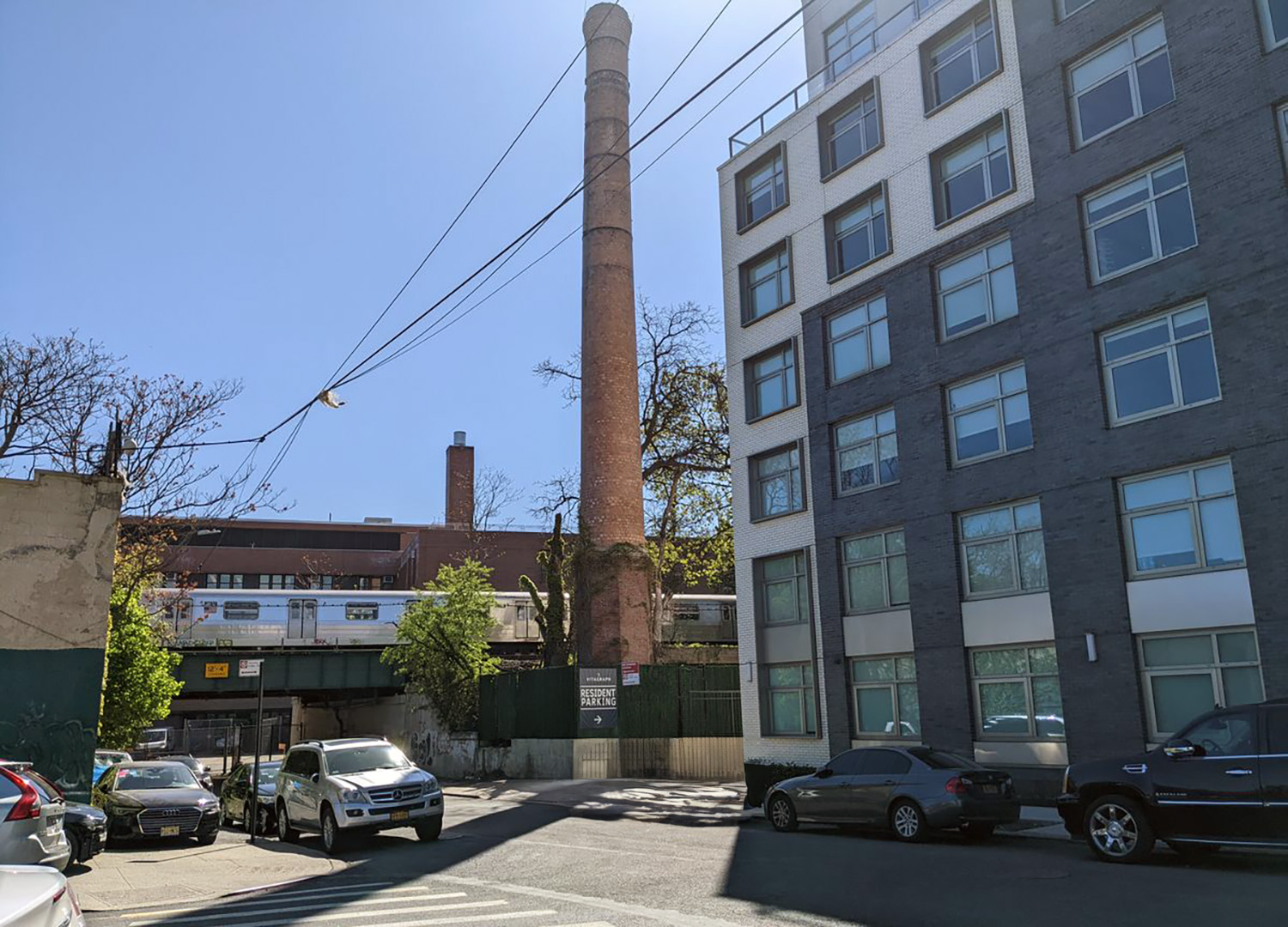
Even though the studio is now gone, a lot of the buildings from Buzzin’ Around are still standing today.
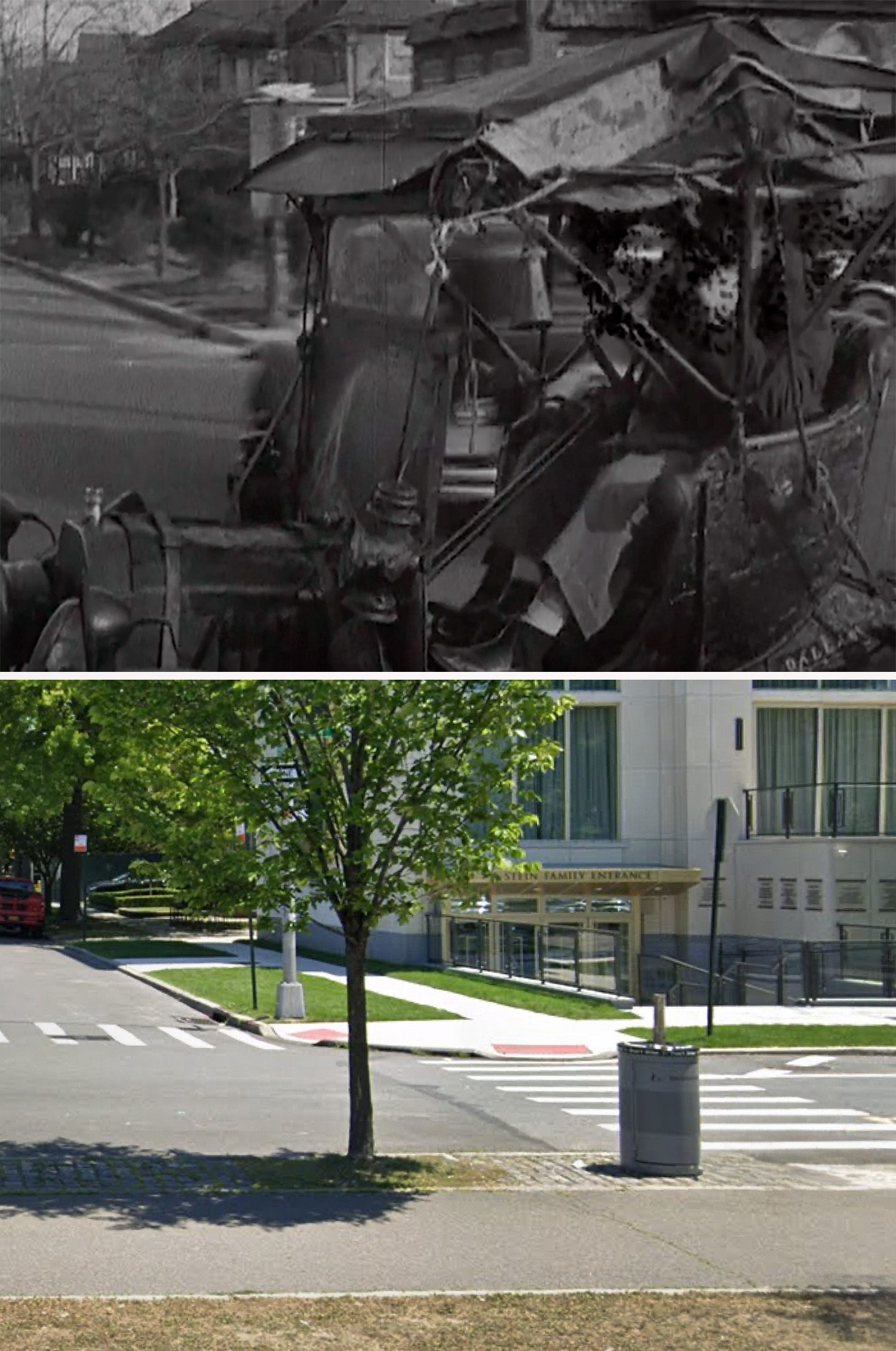
The first on-location shot from the movie comes after Arbuckle’s character leaves the family farm, where his jalopy gets swarmed by a hive of animated bees. Even though the background is partly obscured by his car and moves along quickly, I still got a general sense of the surroundings and guessed that he was traveling on Ocean Parkway. This was based on the single-family homes in the distance along with what looked like a green median separating local- and thru-traffic — two known characteristics of the parkway.
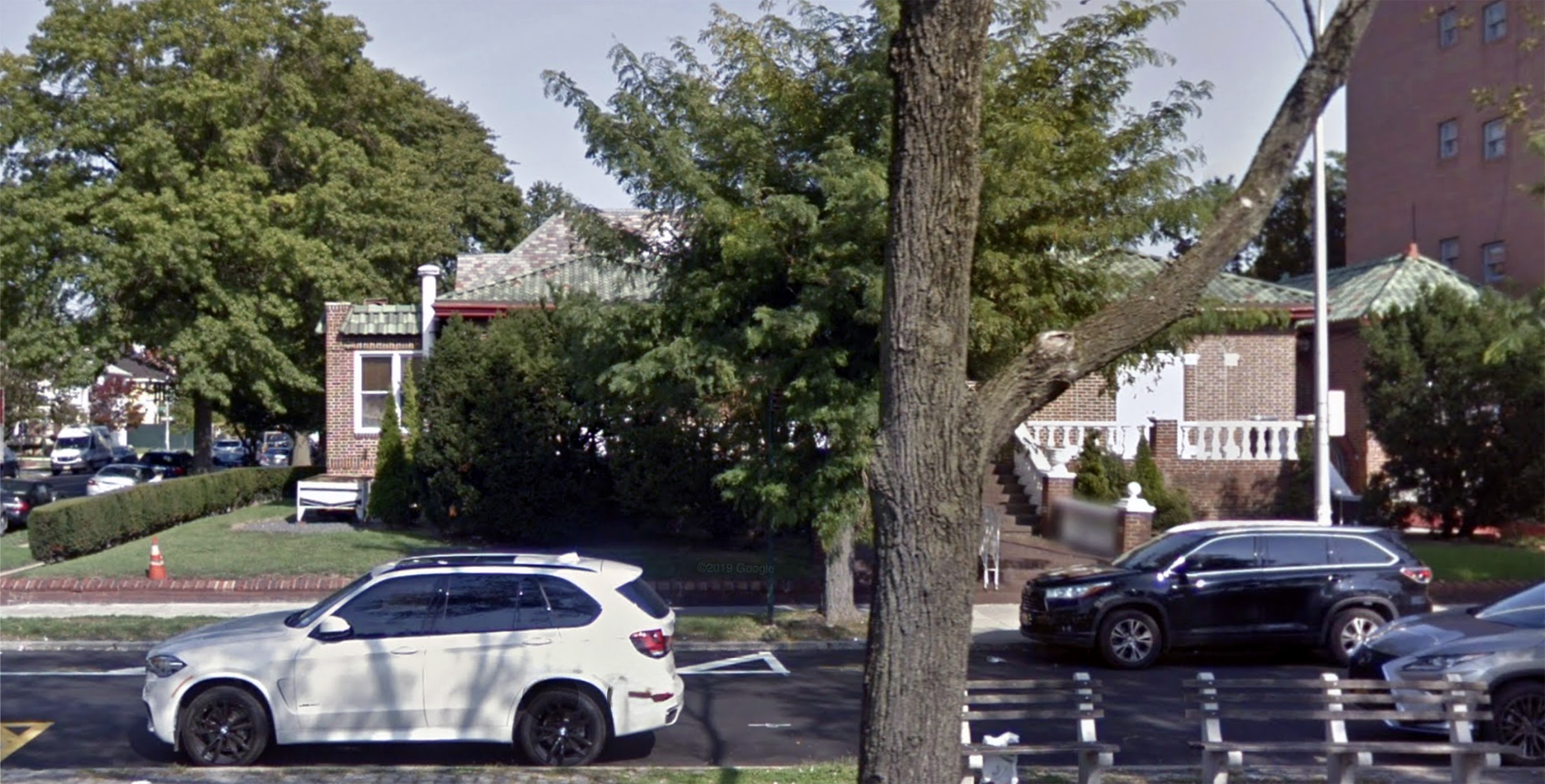
My first plan of action was to find a matching building, but since it was possible the buildings seen in the movie were gone today, I used the 1940 tax photo archives as my main source. As I was doing this, I asked my research partner Blakeslee to also take a stab at it, and within minutes, he found a tax pic of a house on the corner of Avenue K that seemed to match a house Arbuckle passes in the movie.
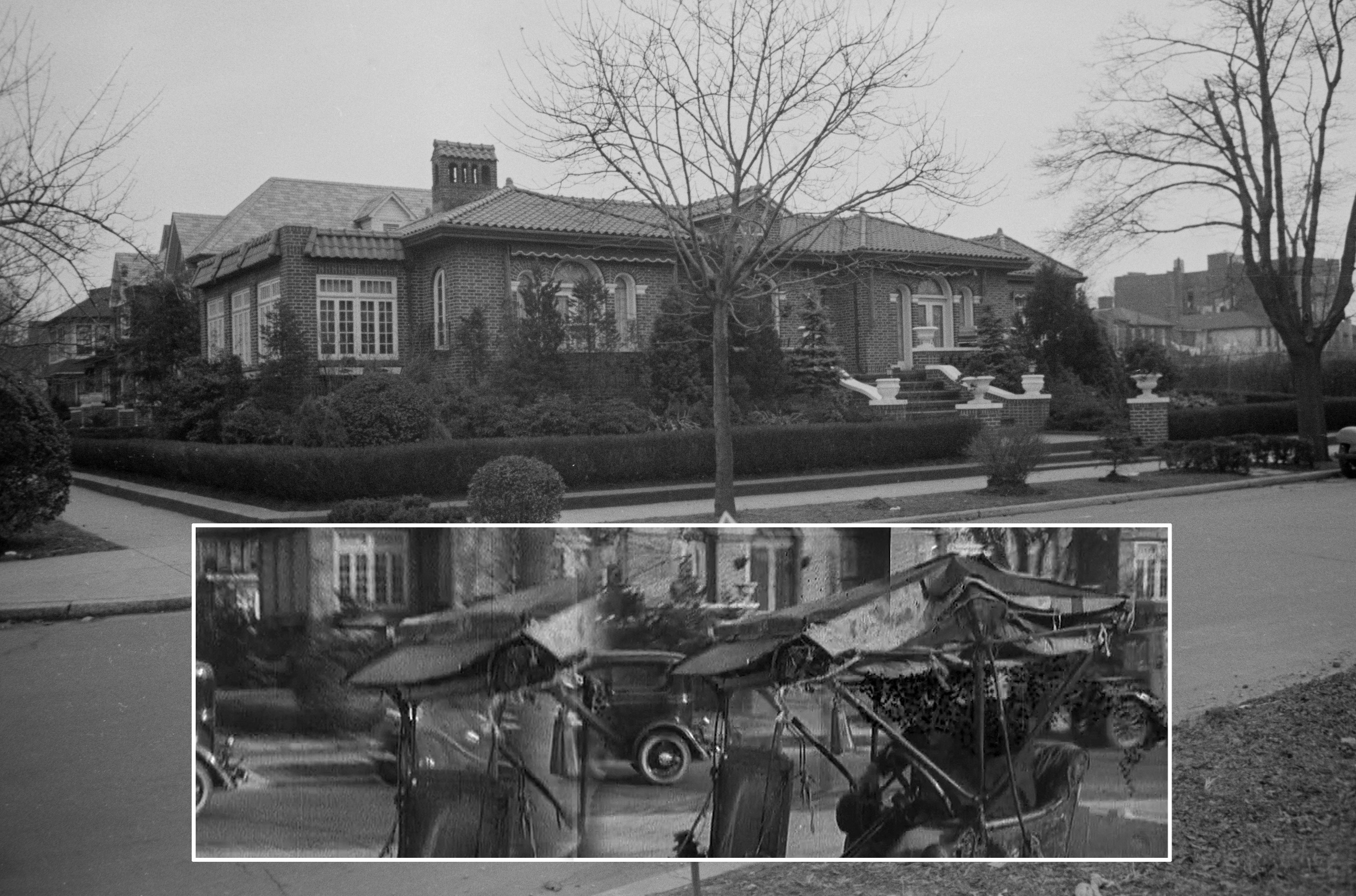
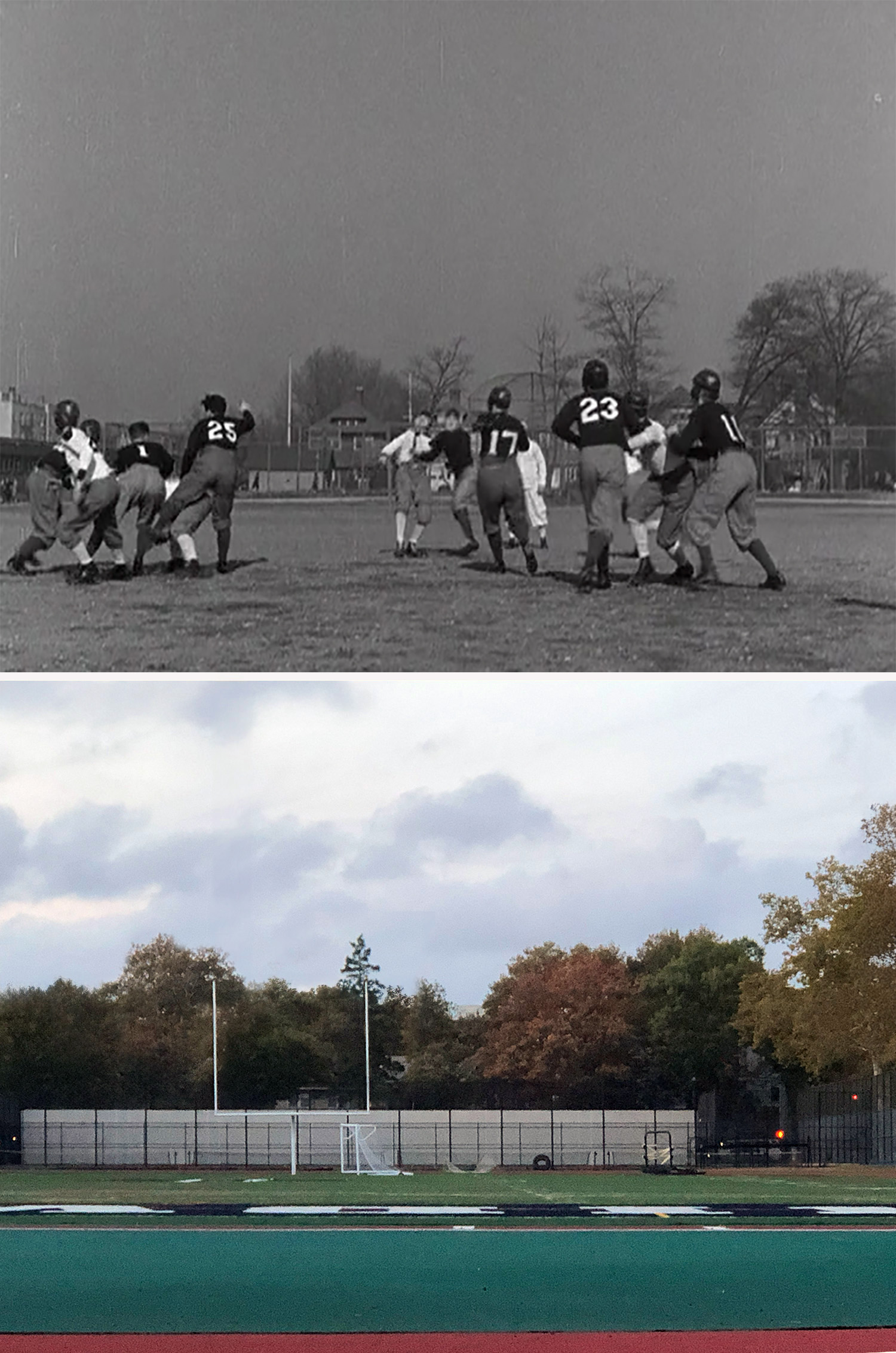
As soon as he shared with me the tax pic, I knew he found the right spot. especially since it was not too far from the football field location which I had identified a few days earlier. Unfortunately, the early-20th century residential home was torn down around 2018 and replaced with some large, boxy event space.
There wasn’t much ingenious detective work involved in finding that football field. I just looked on a map for any parks or athletic fields that were close to Vitagraph Studio and the Midwood Athletic Field between Avenues K and L made the most logical sense. I was then able to confirm it by matching up all the houses along the street on the north side of the field with their corresponding tax photos.
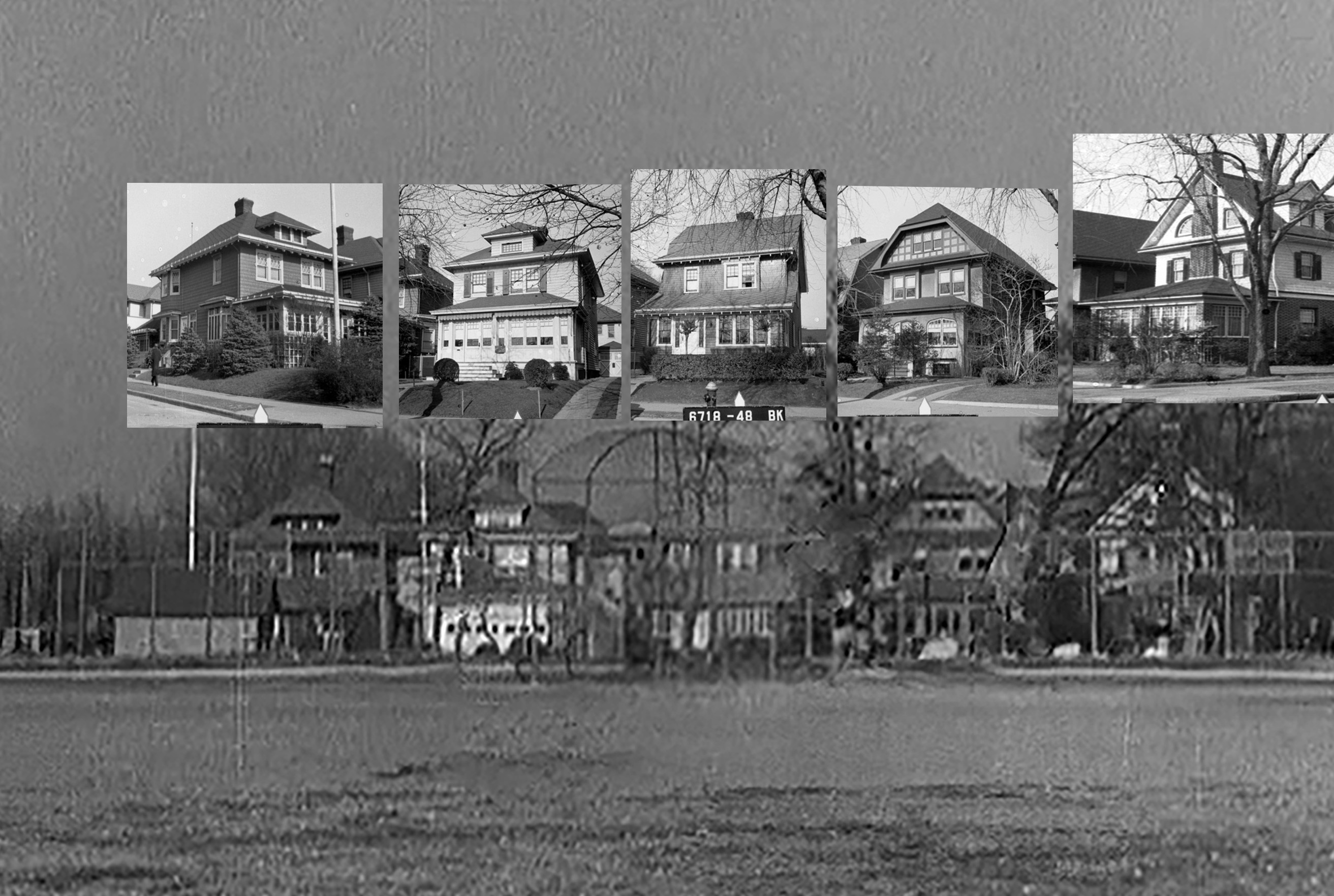
Even though I used tax photos to compare the homes, I could’ve just used Google Street View because, incredibly, all of them are still standing and almost completely unchanged. The only house that looks a little different today in the corner one at 1621 Avenue K, whose owners had the chimney removed in 2022.
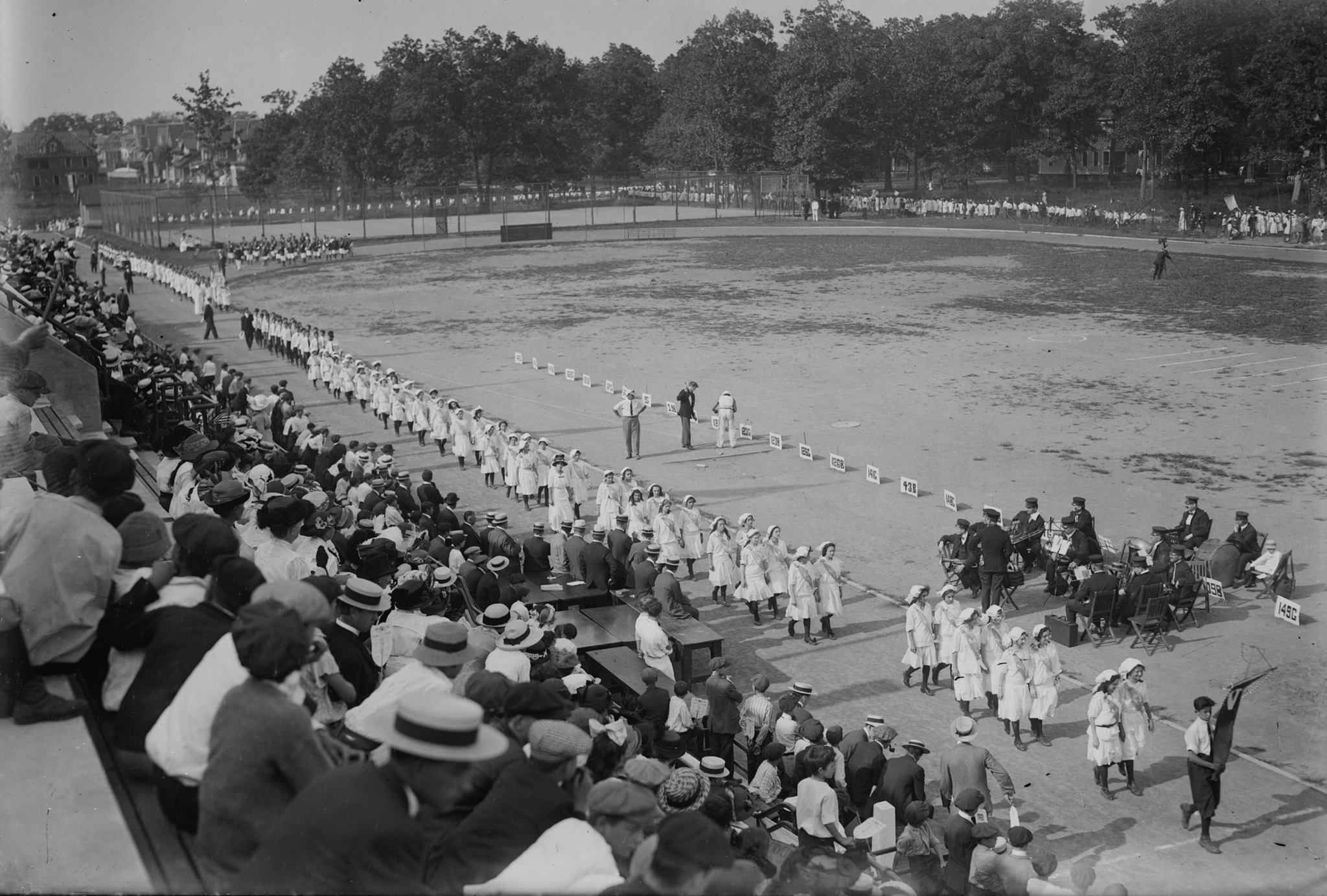
When Buzzin’ Around was being made, the football field was called General Wingate Athletic Field, named after George Wood Wingate, a New York lawyer and Union soldier who co-created the NRA. The field’s grandstand, modeled after the one used in Athens at the 1906 Olympic Games, was built in 1911 and is still there today, making it one of the oldest in the city.
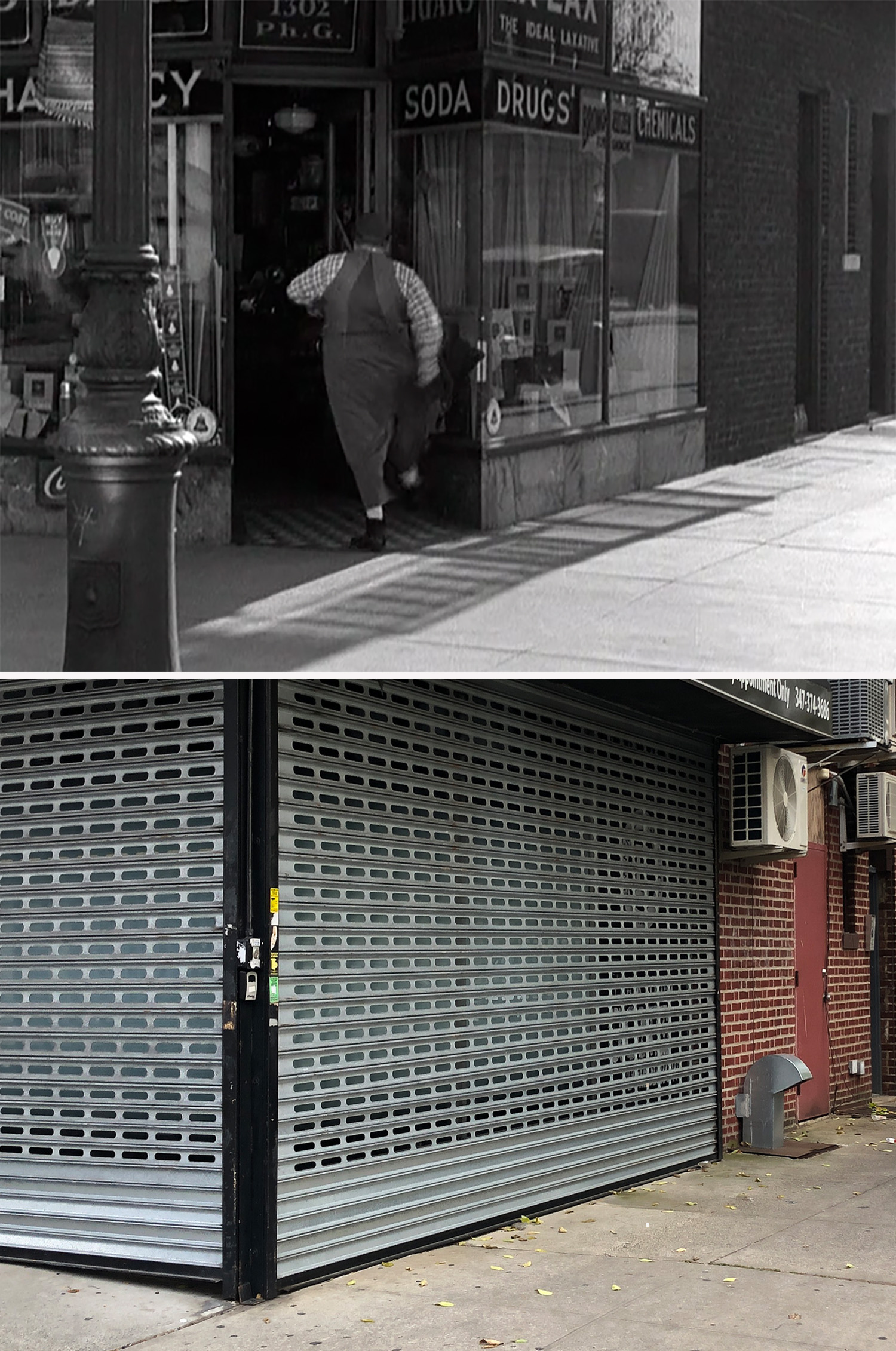
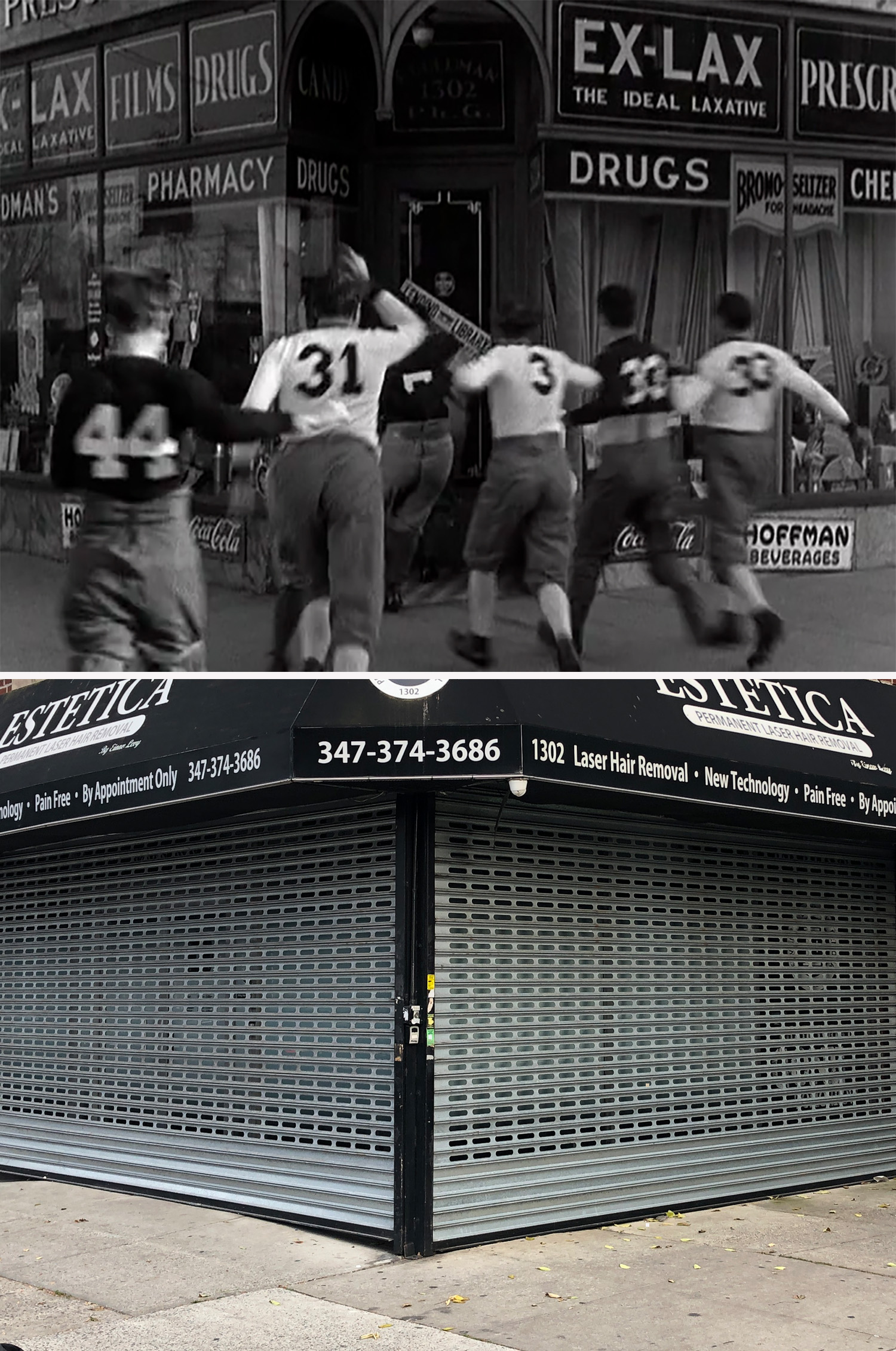
The last part from this sequence was filmed on a pharmacy set, along with exteriors of a real Brooklyn store. This was actually one of the first locations I found — a place that was also featured in another Arbuckle short made at Vitagraph titled, Hey, Pop!
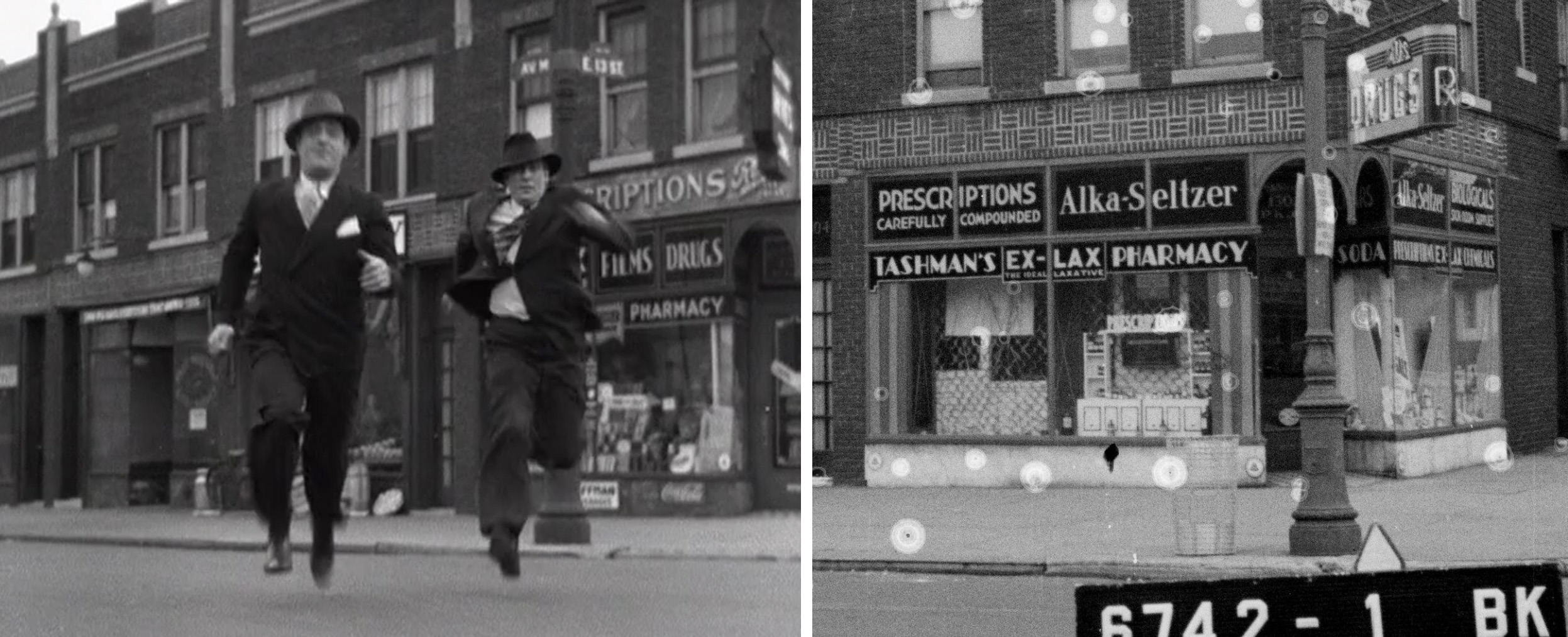
In that short, you can clearly see a street sign showing they’re on 13th and Avenue M. Then, after looking through the 1940 tax records, I found a photo confirming they were on the southeast corner.
Hooking Bumpers
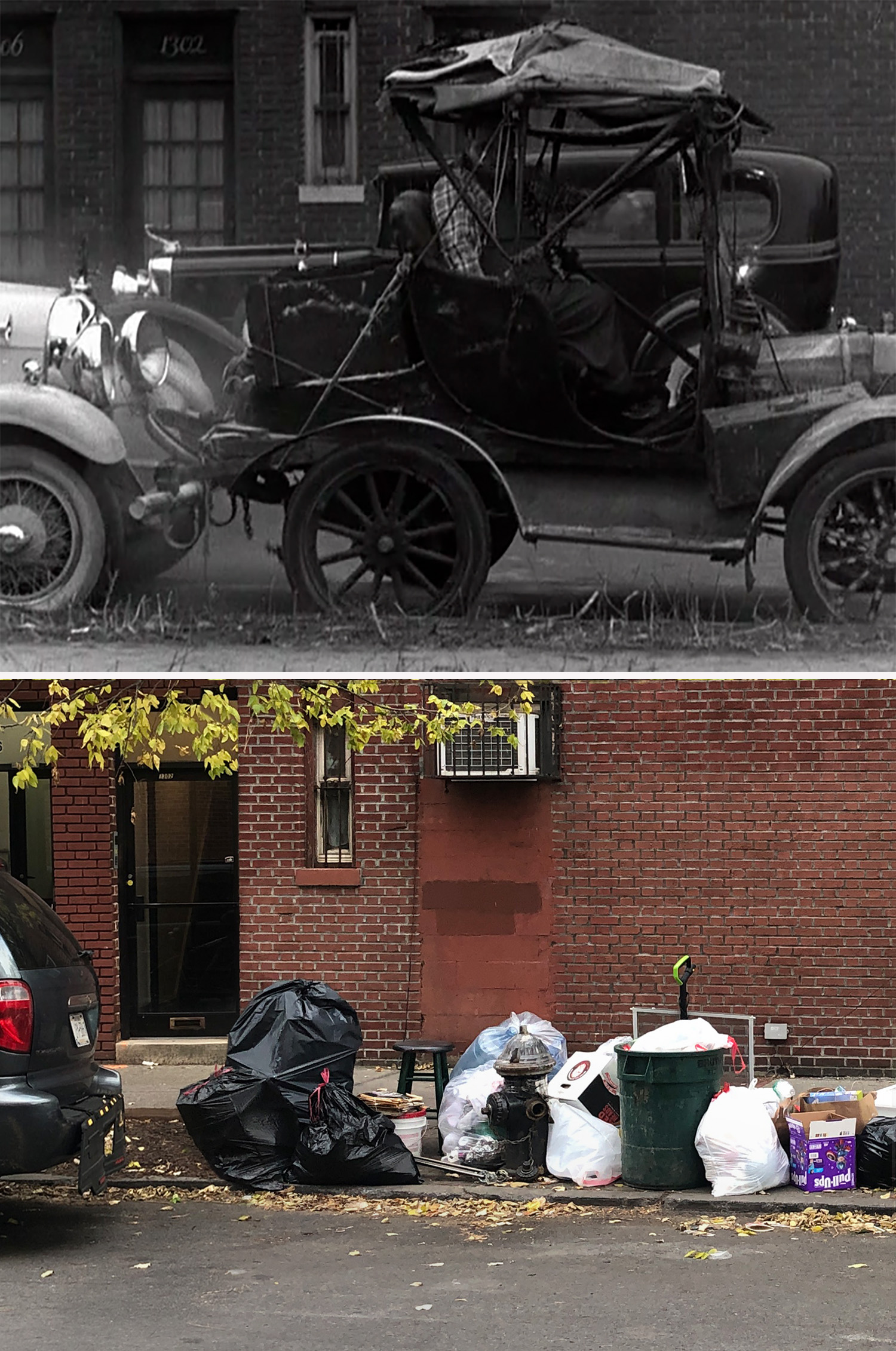
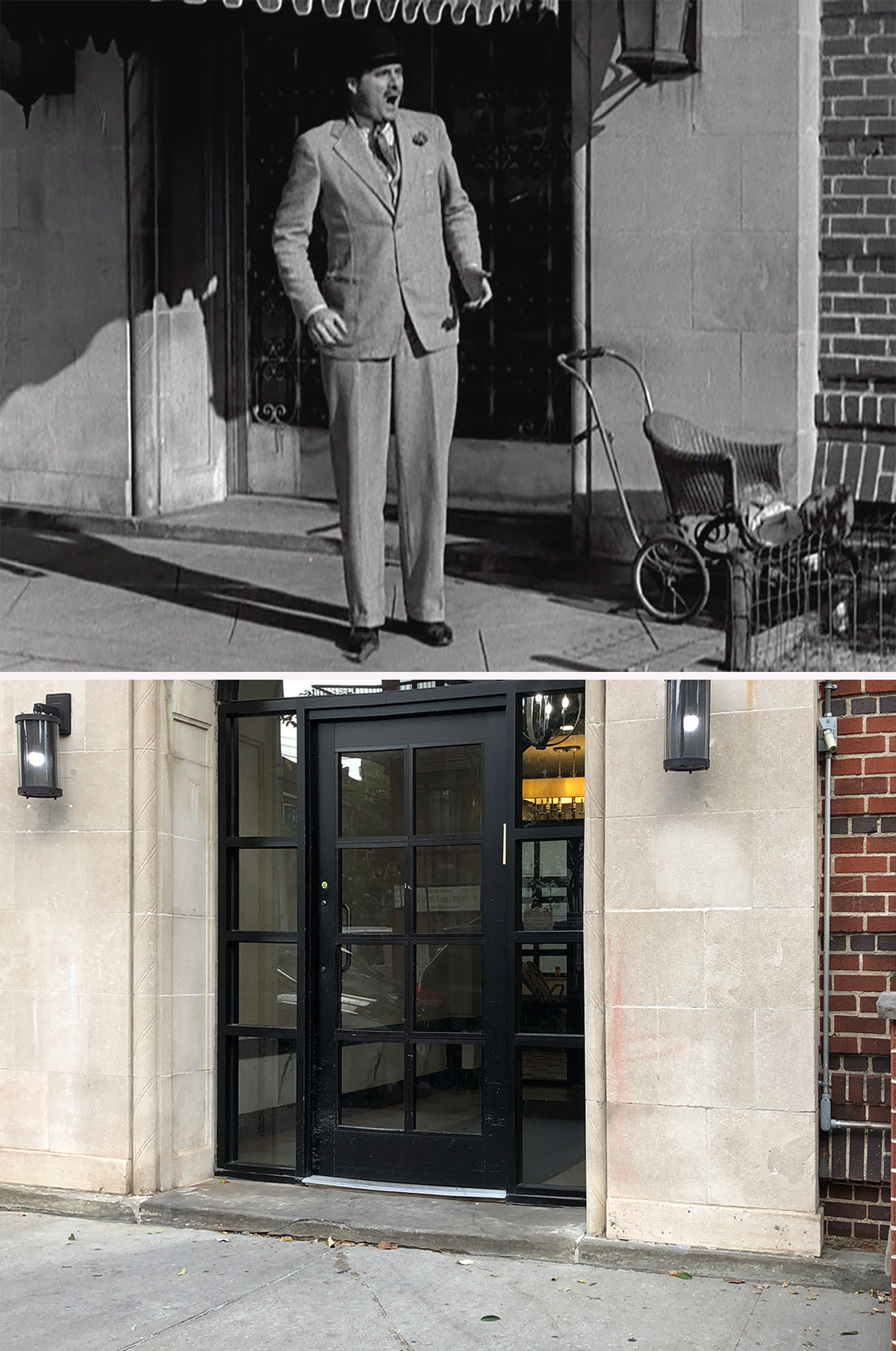
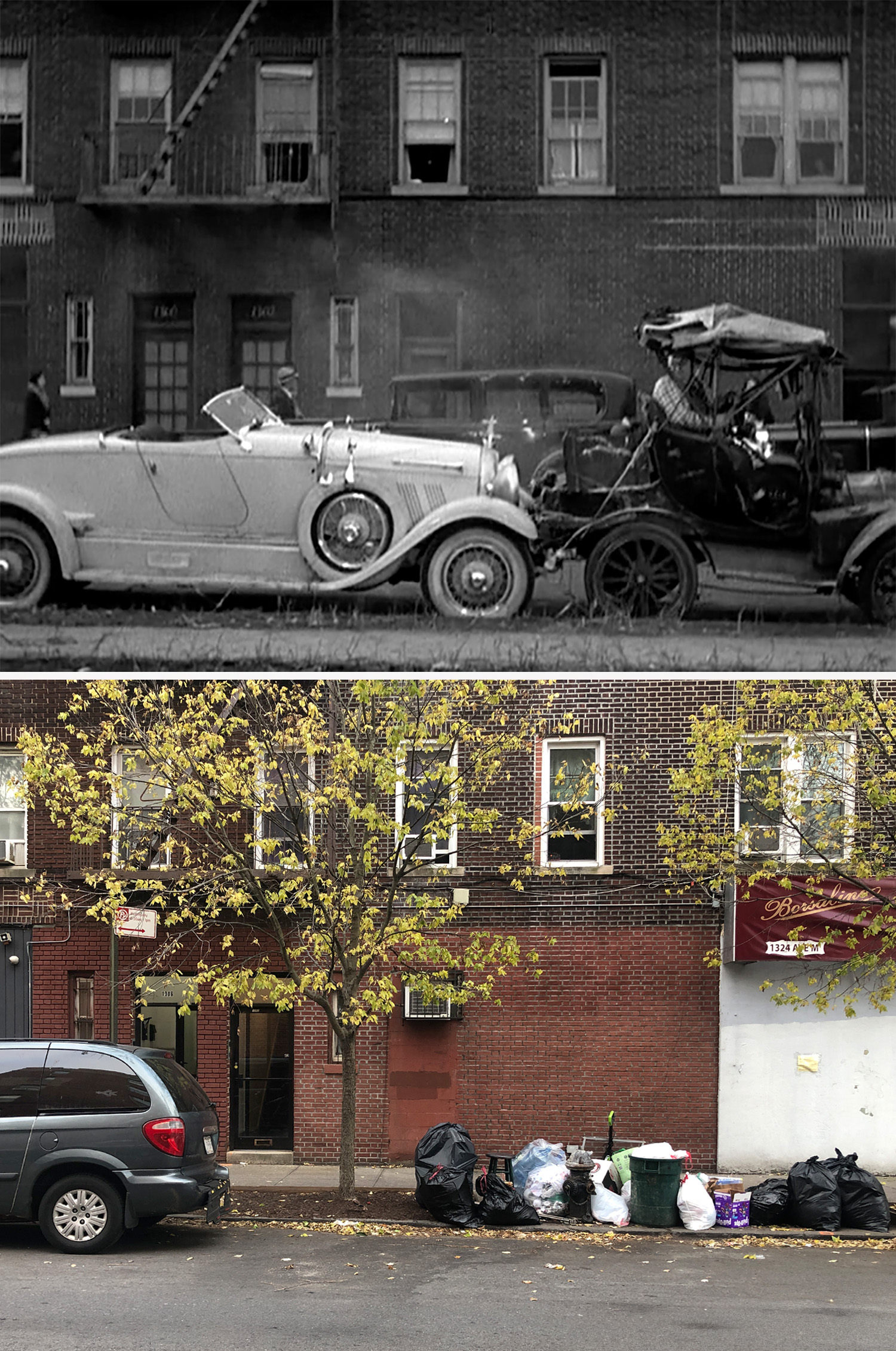
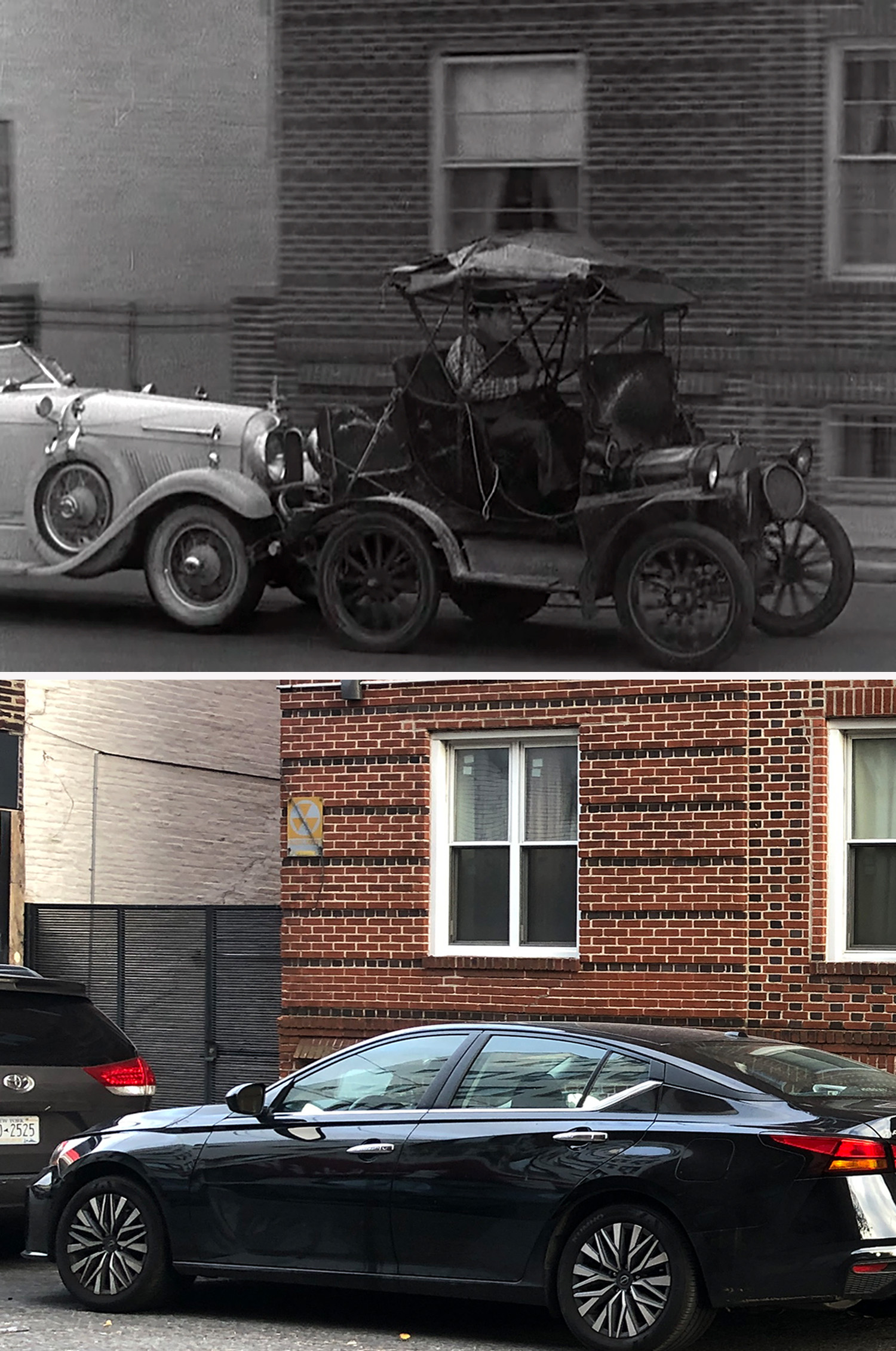
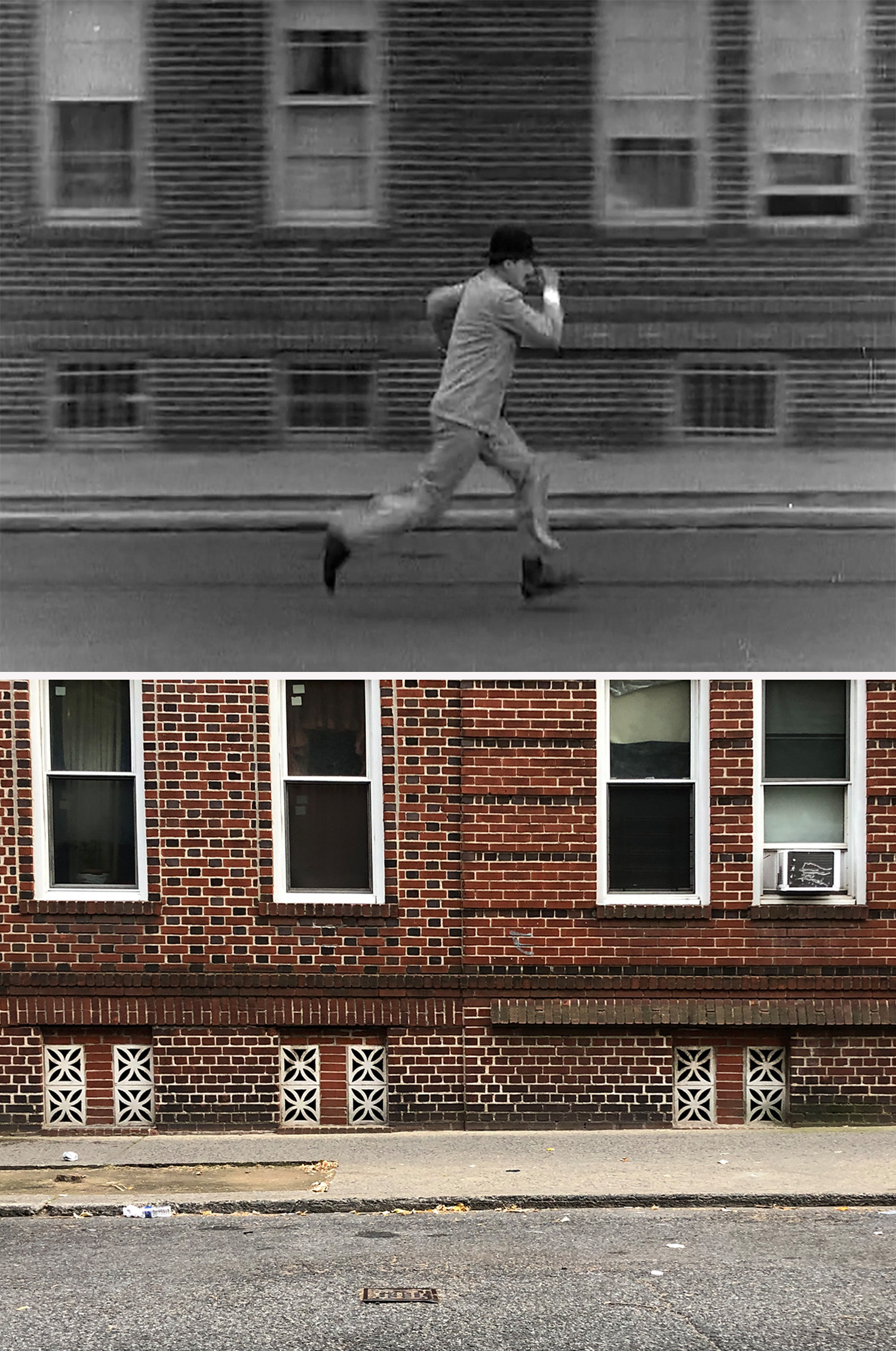
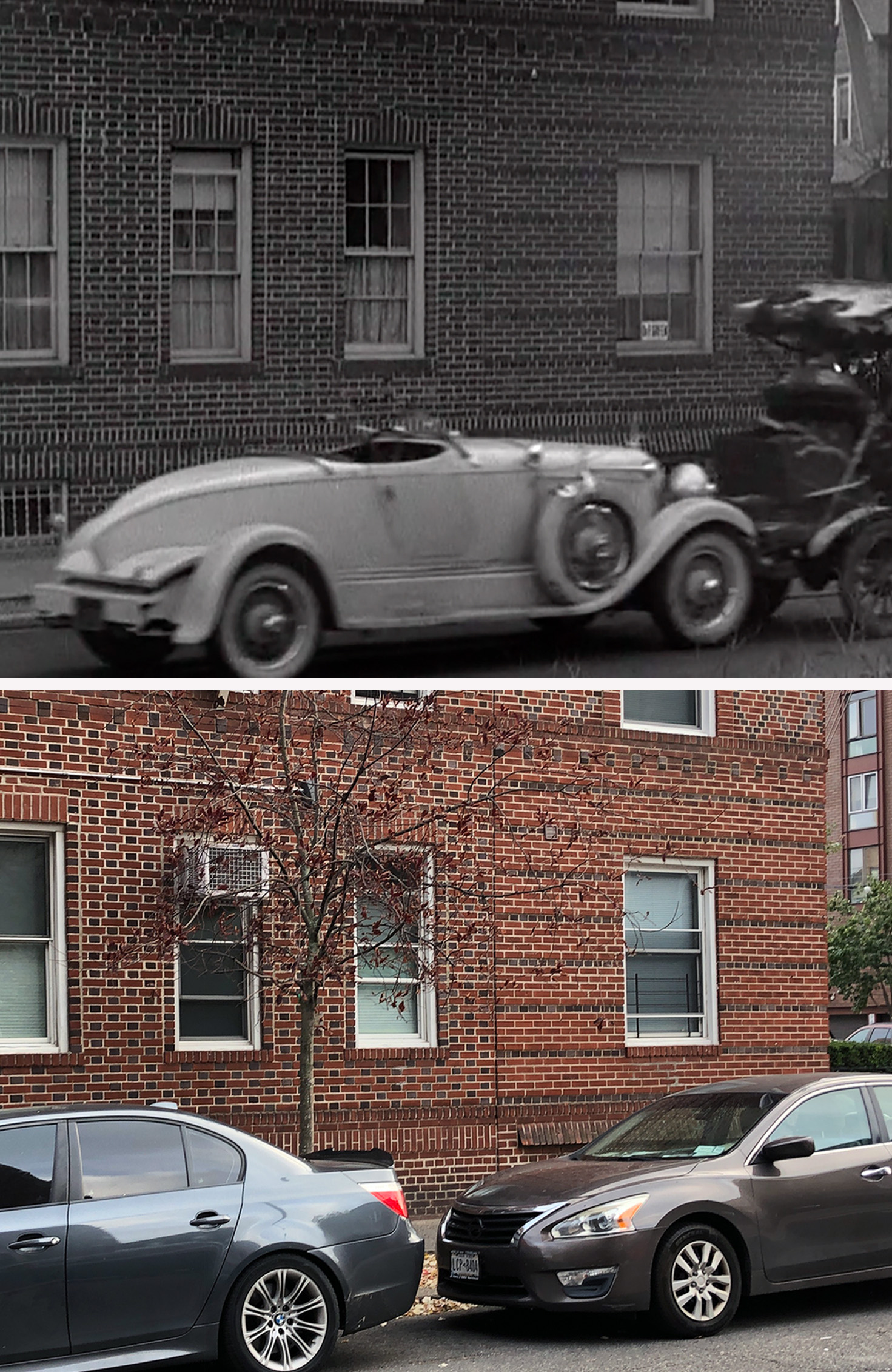
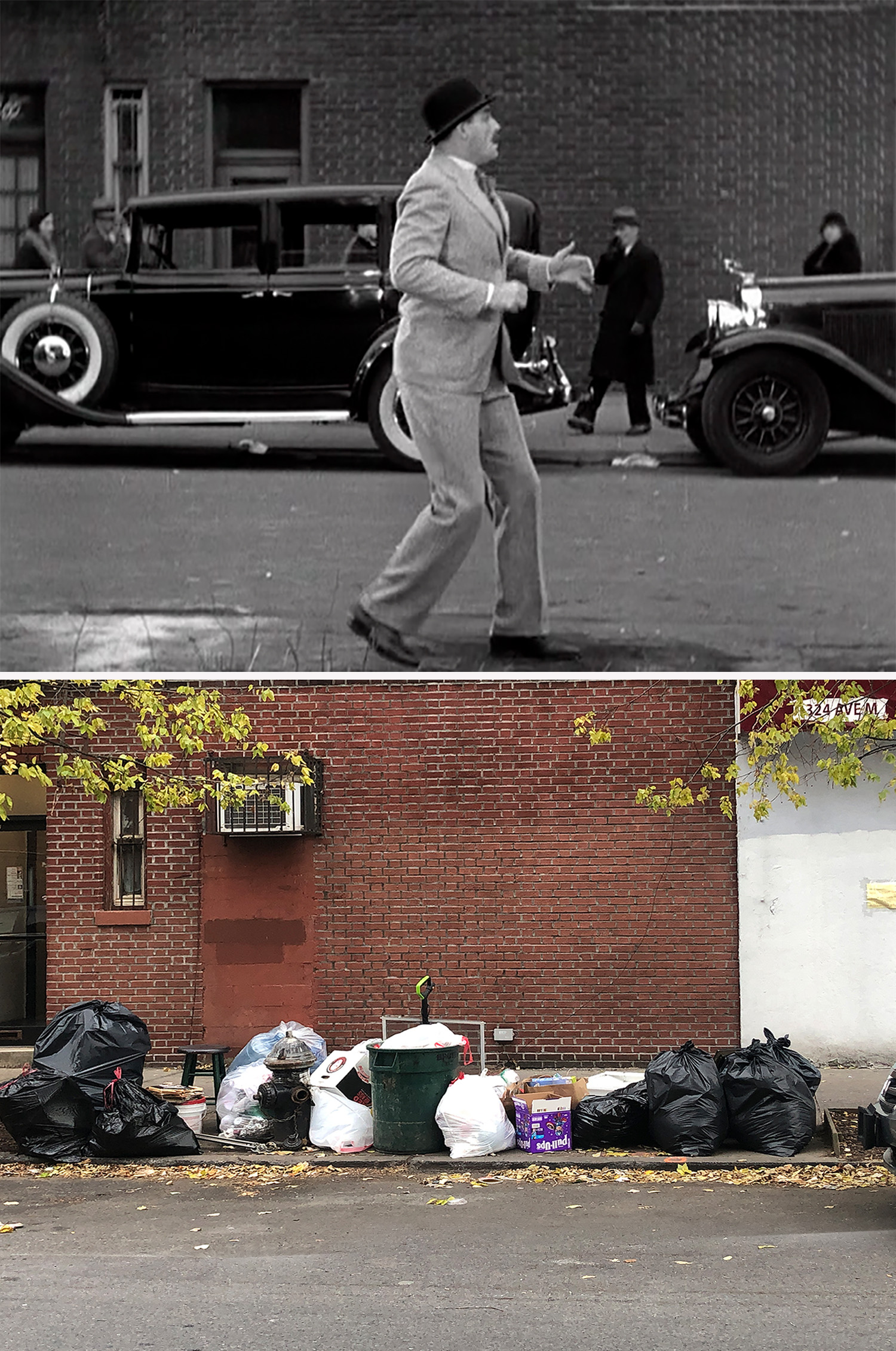
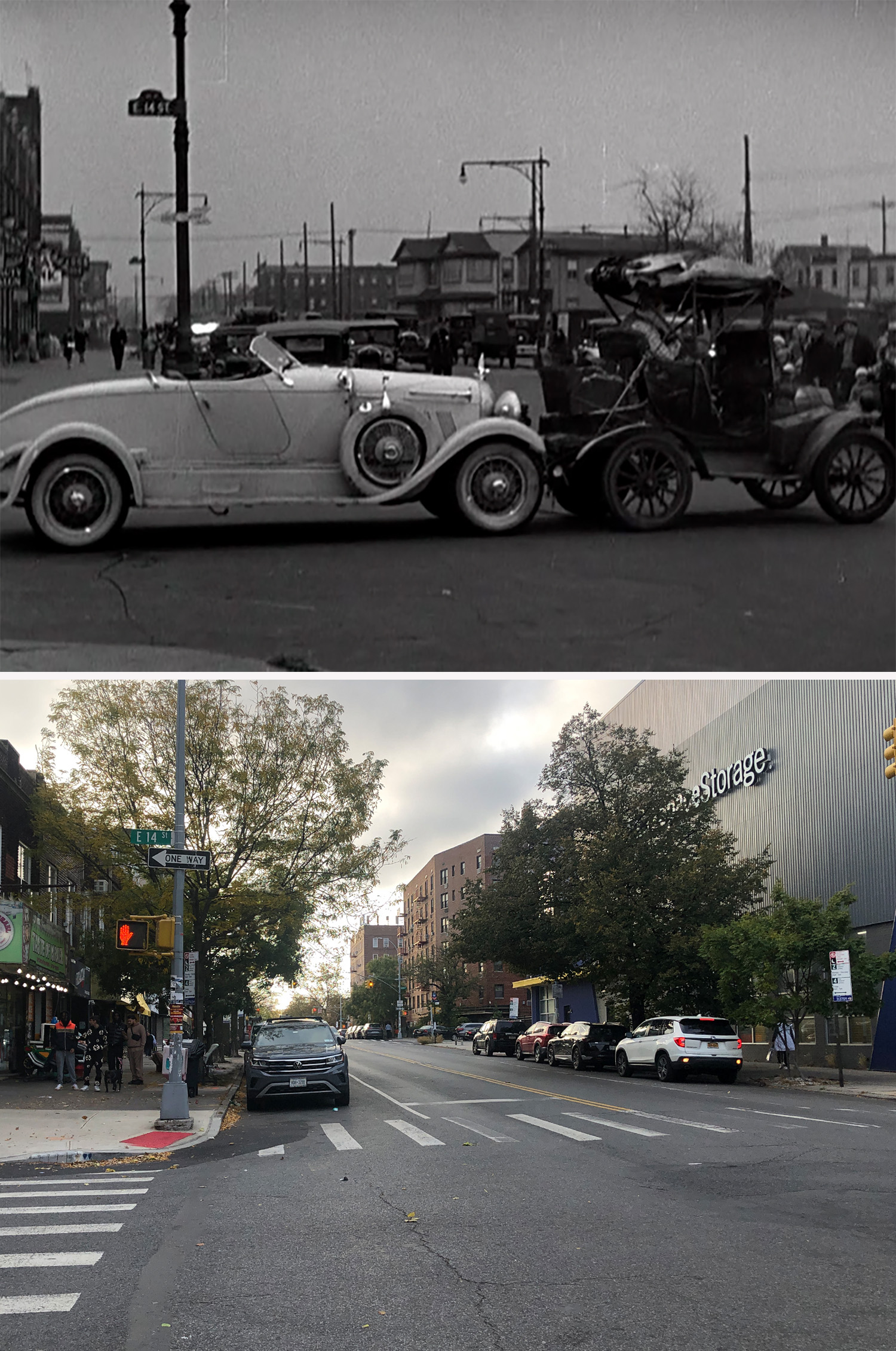
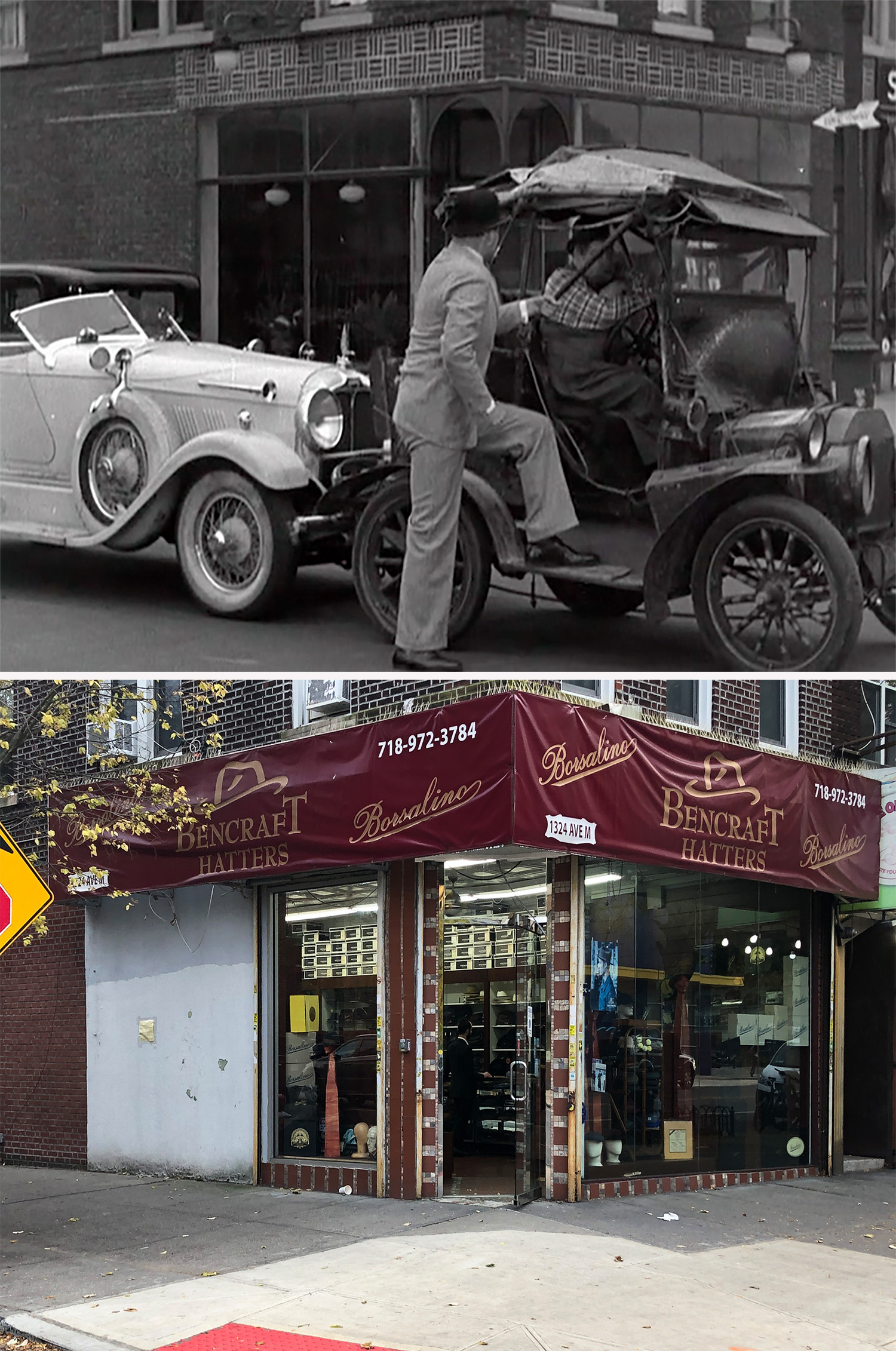
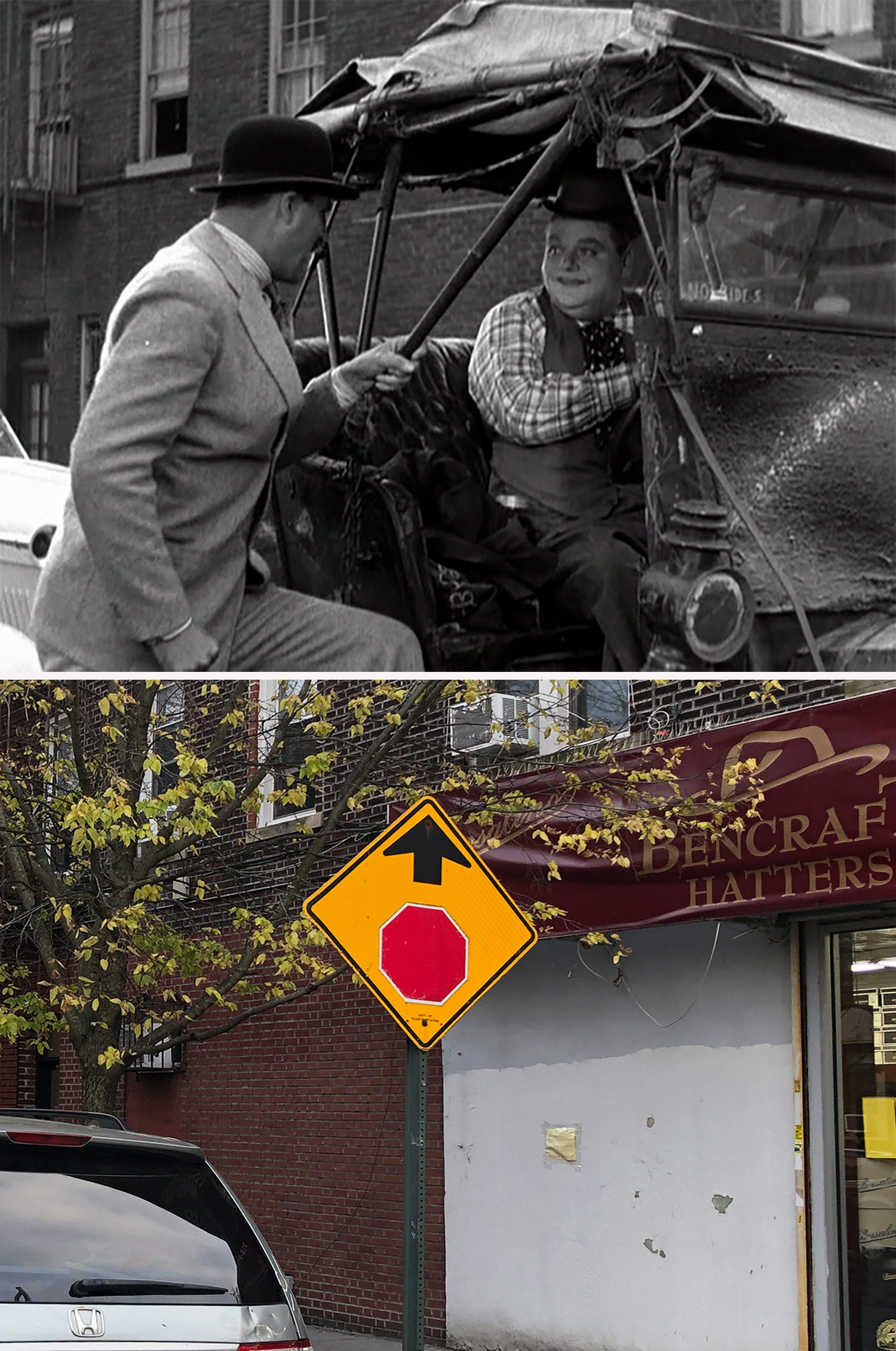
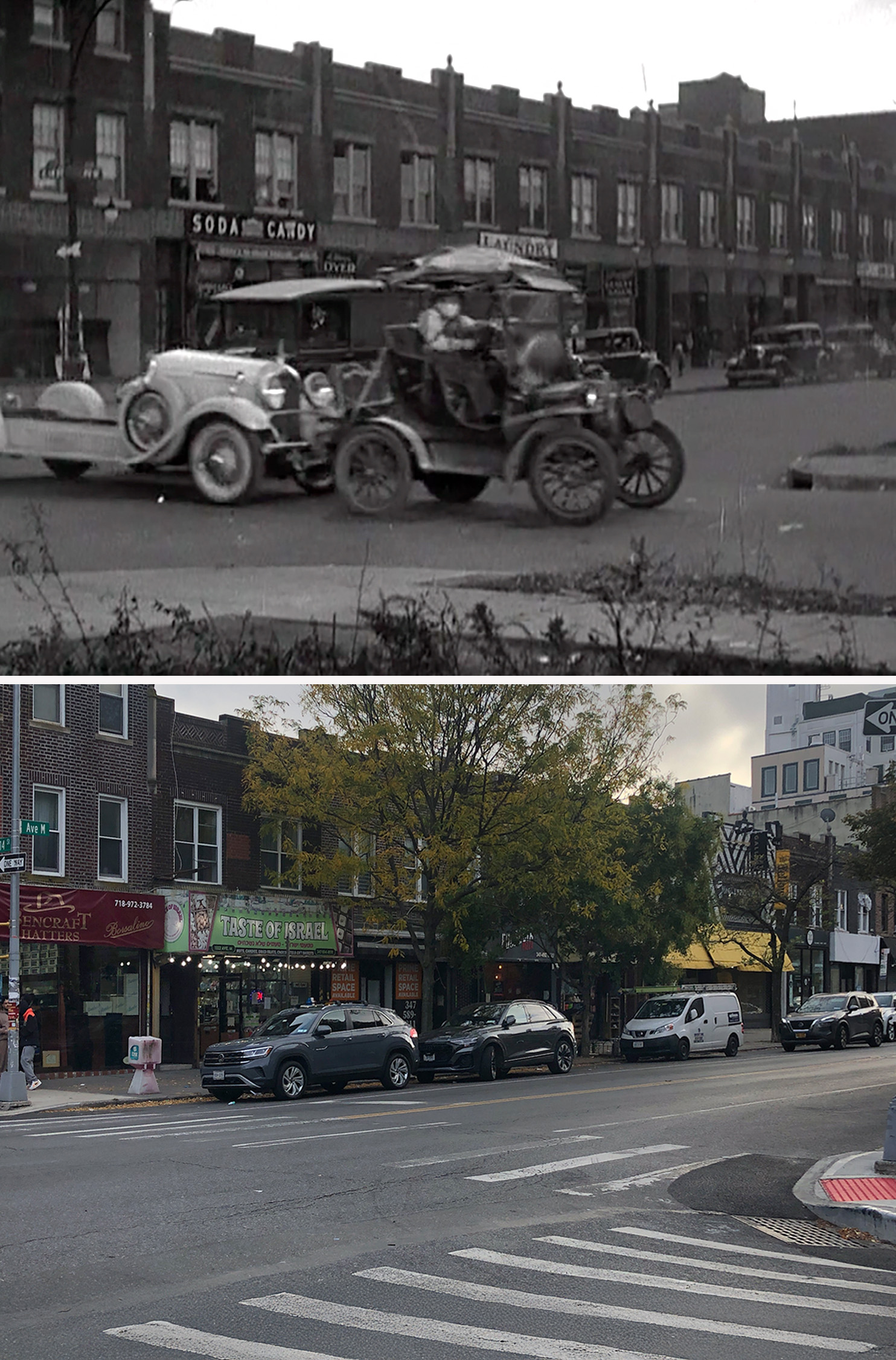
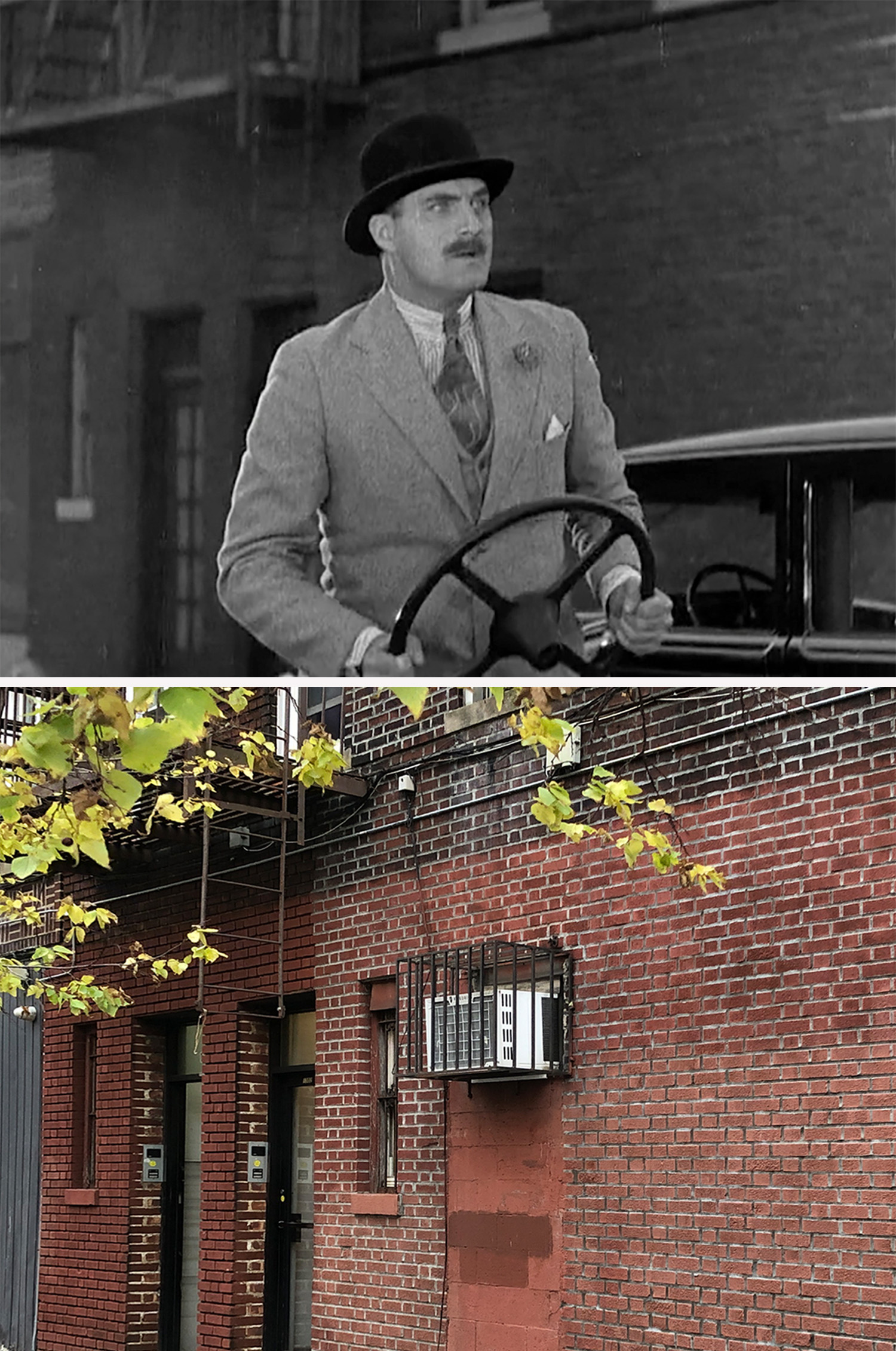
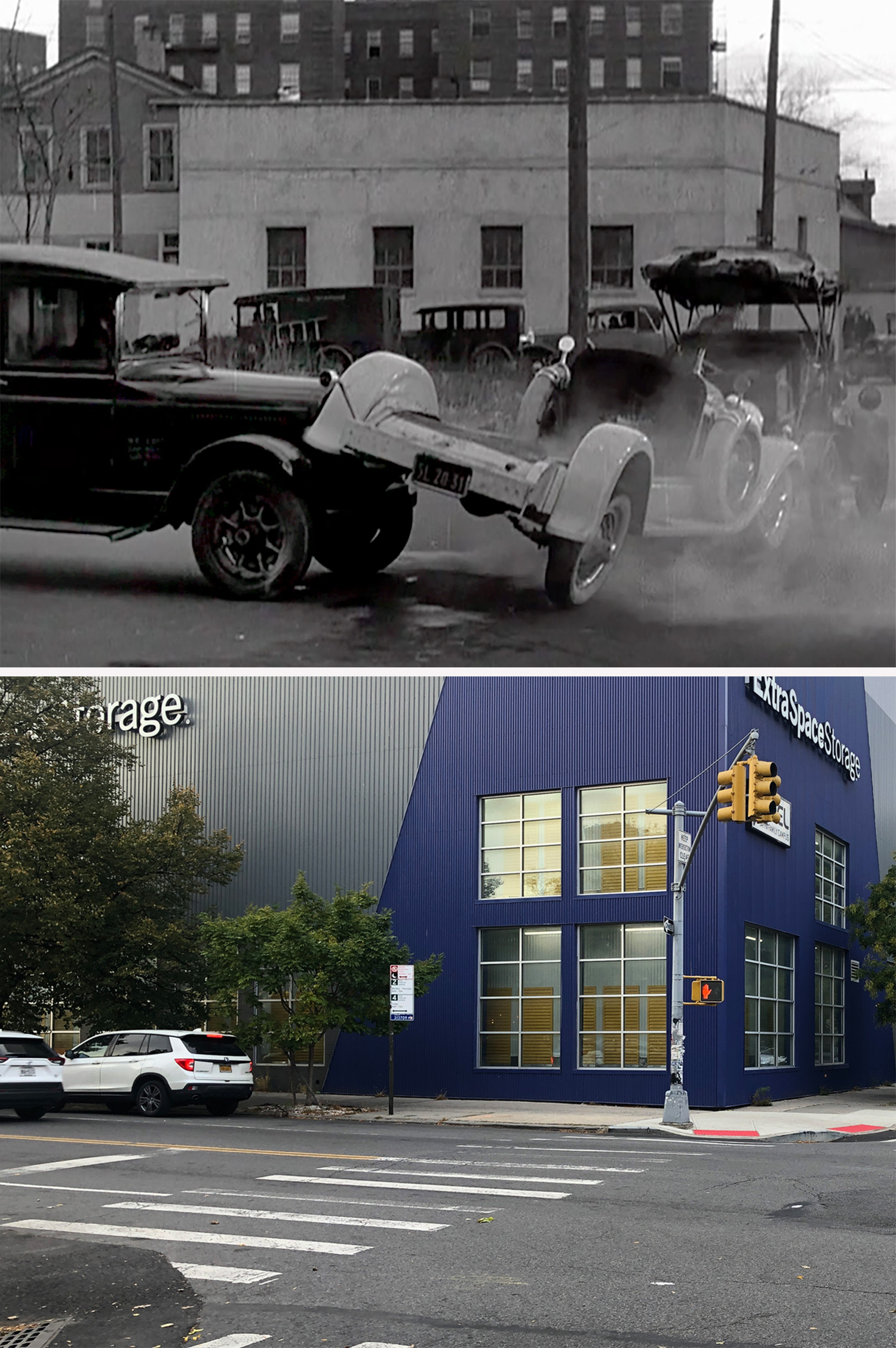
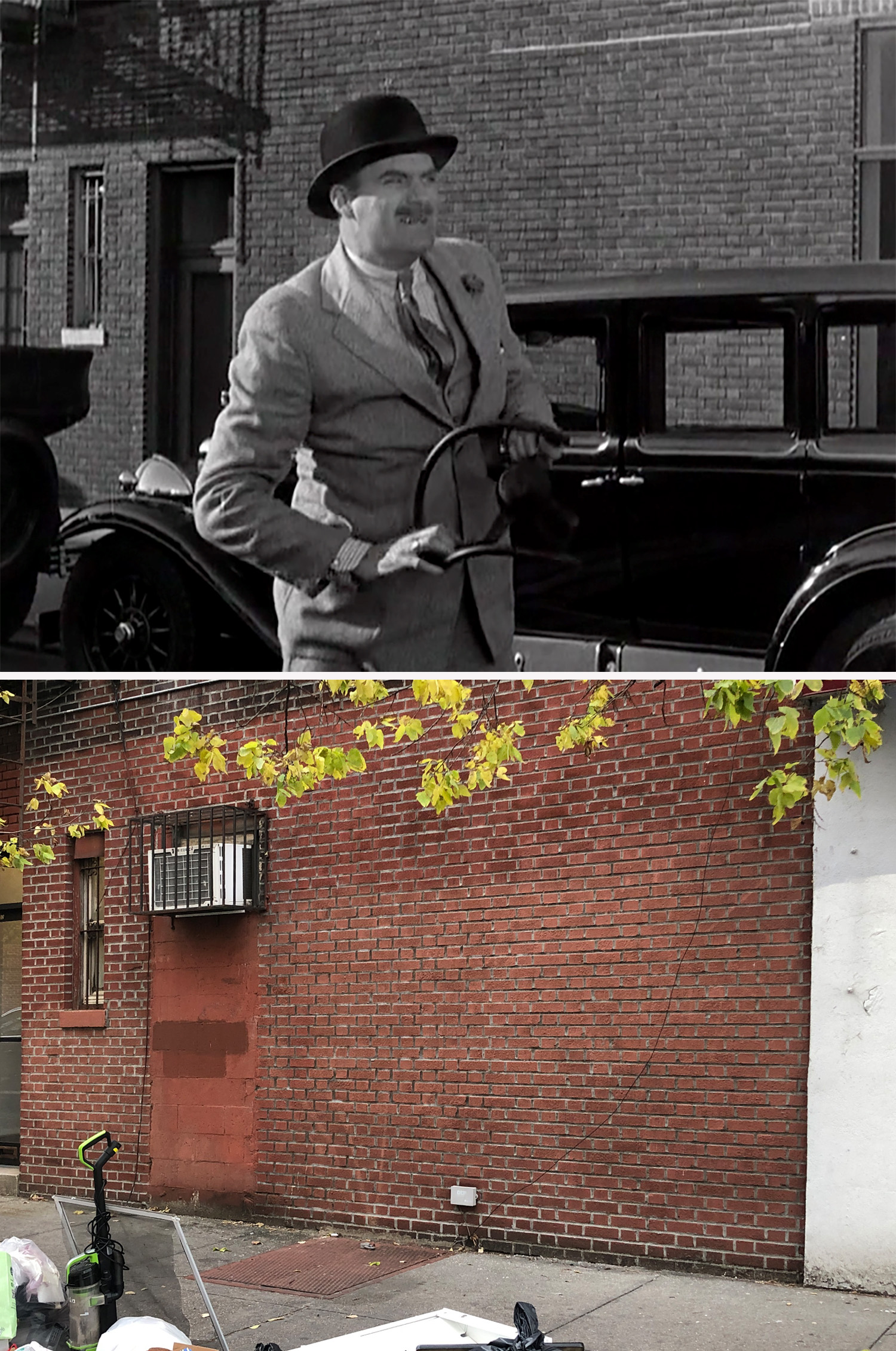
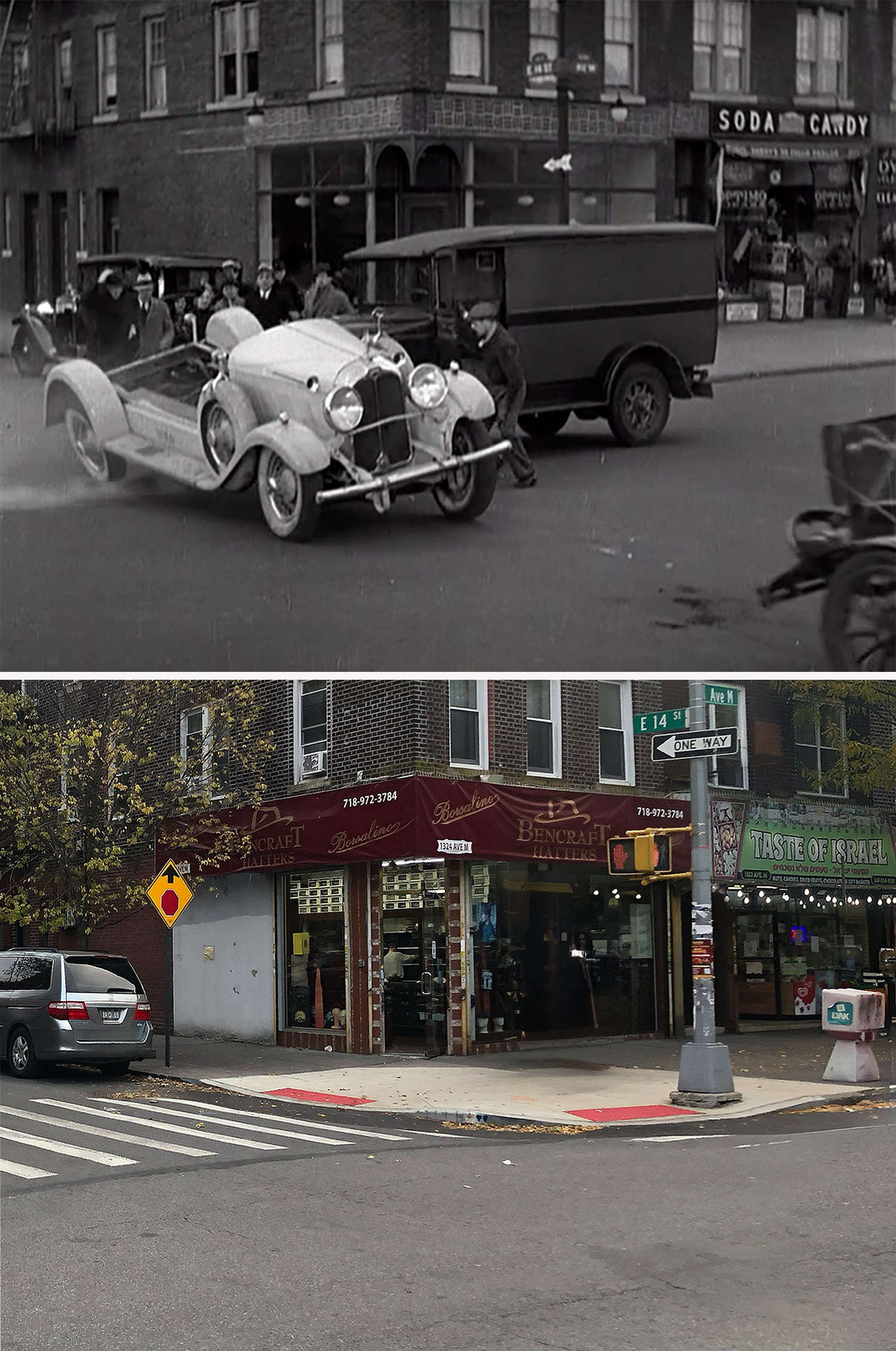
As I researched this film, I was also simultaneously researching another Arbuckle short that was filmed around the same time, Hey, Pop! (I plan to cover that title in the near future.) Both of these two-reelers shot footage on the streets of Brooklyn, and through my investigations, I quickly gleaned that they didn’t stray too far from the Vitagraph studio.
Everything from this towing sequence was about three blocks from the studio, utilizing just two connected streets — Elm Avenue and E 13th Street. Once I established the 13th Street location by matching up the unique window design on the ground level, I just looked around the area in Google Street View until I found the other spots used.
There is one shot in this sequence that feels bit out of place. It’s a quick insert shot of a semaphore traffic signal with those old-fashioned retractable arms — something I didn’t believe were used in Brooklyn.
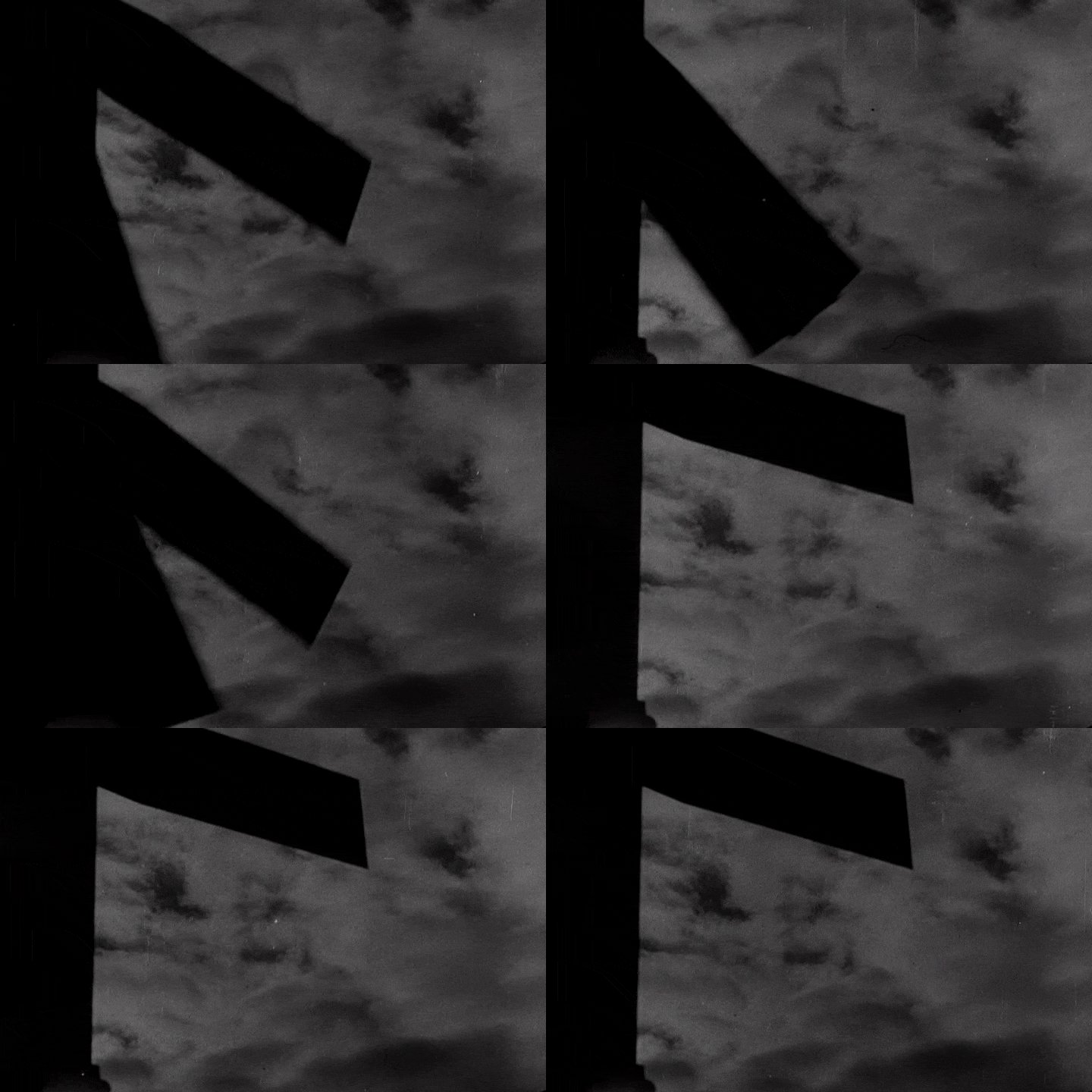
Turns out my instinct was correct — it wasn’t filmed in Brooklyn at all. It was actually old footage filmed in downtown Los Angeles, originally used in the 1932 Warner Bros. feature, Central Park.
Knowing they used a little trickery in that part of the sequence, I briefly thought the wide shot of the intersection was filmed somewhere else, mostly because the background looked very different from what’s now on Avenue M.
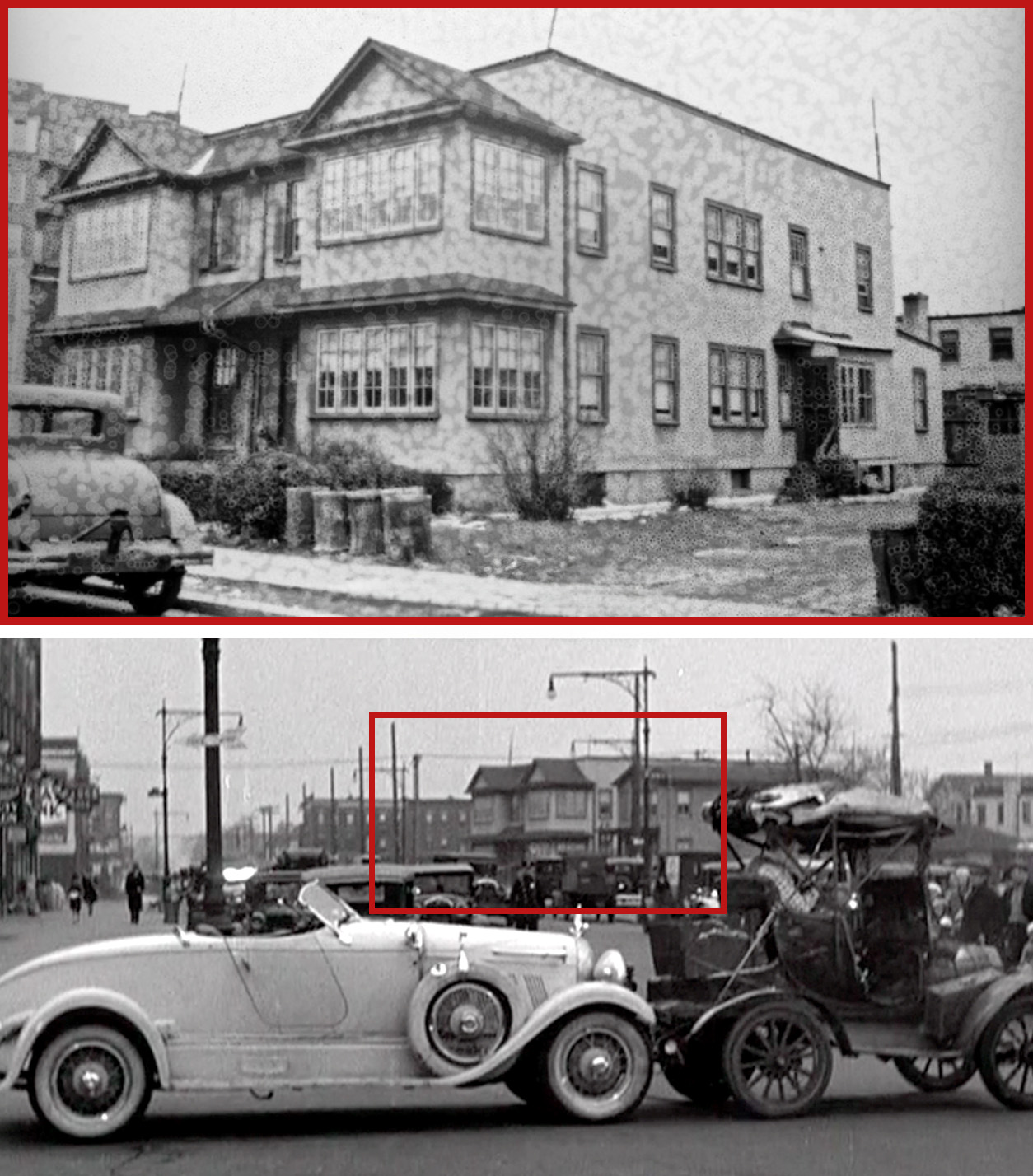
But thanks to the 1940s tax archives, I was able to find some old photos showing the more modest buildings that used to line Avenue M near E 13th, and see that they matched the ones that appeared in the movie.
Road Barricade
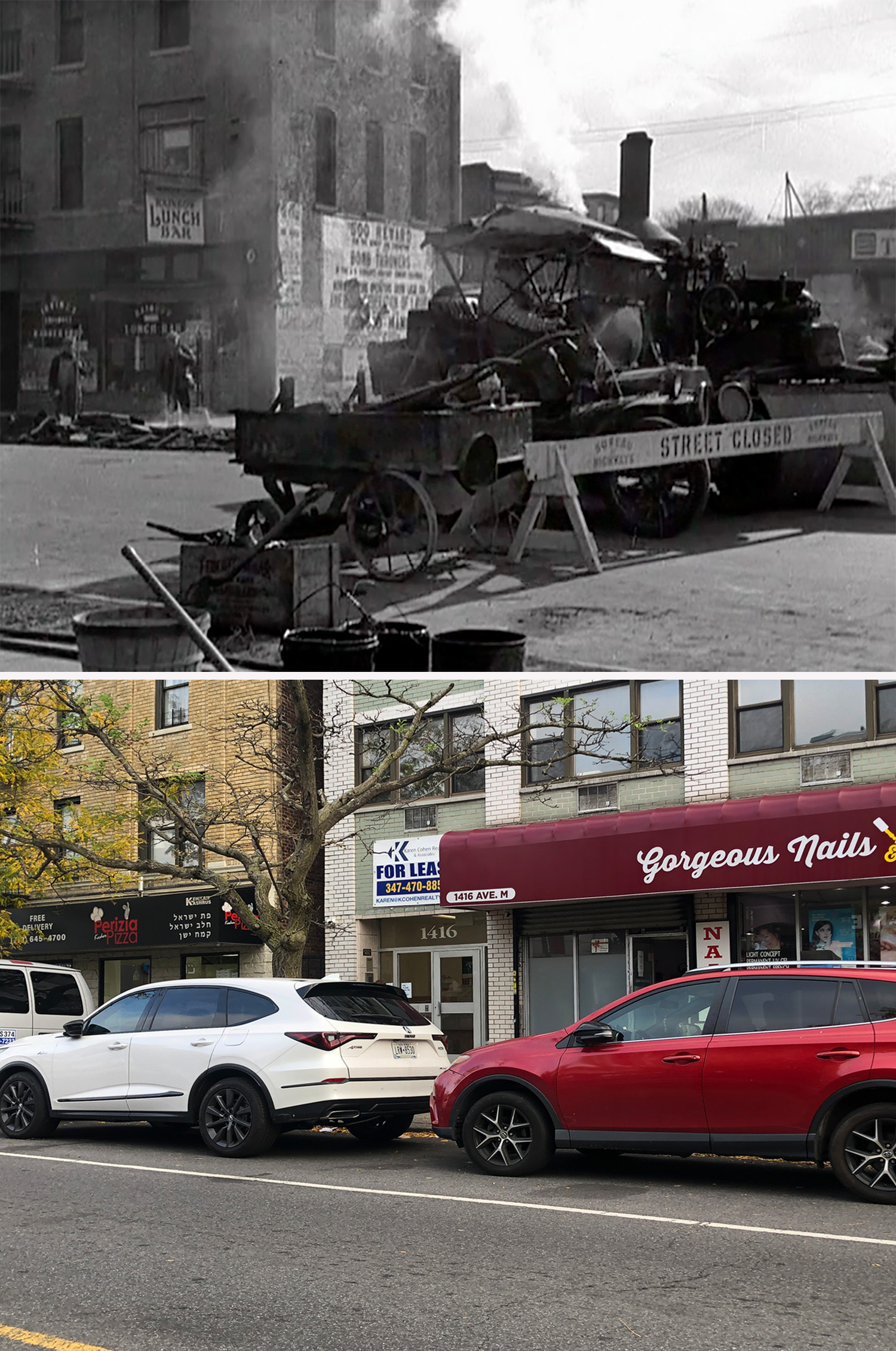
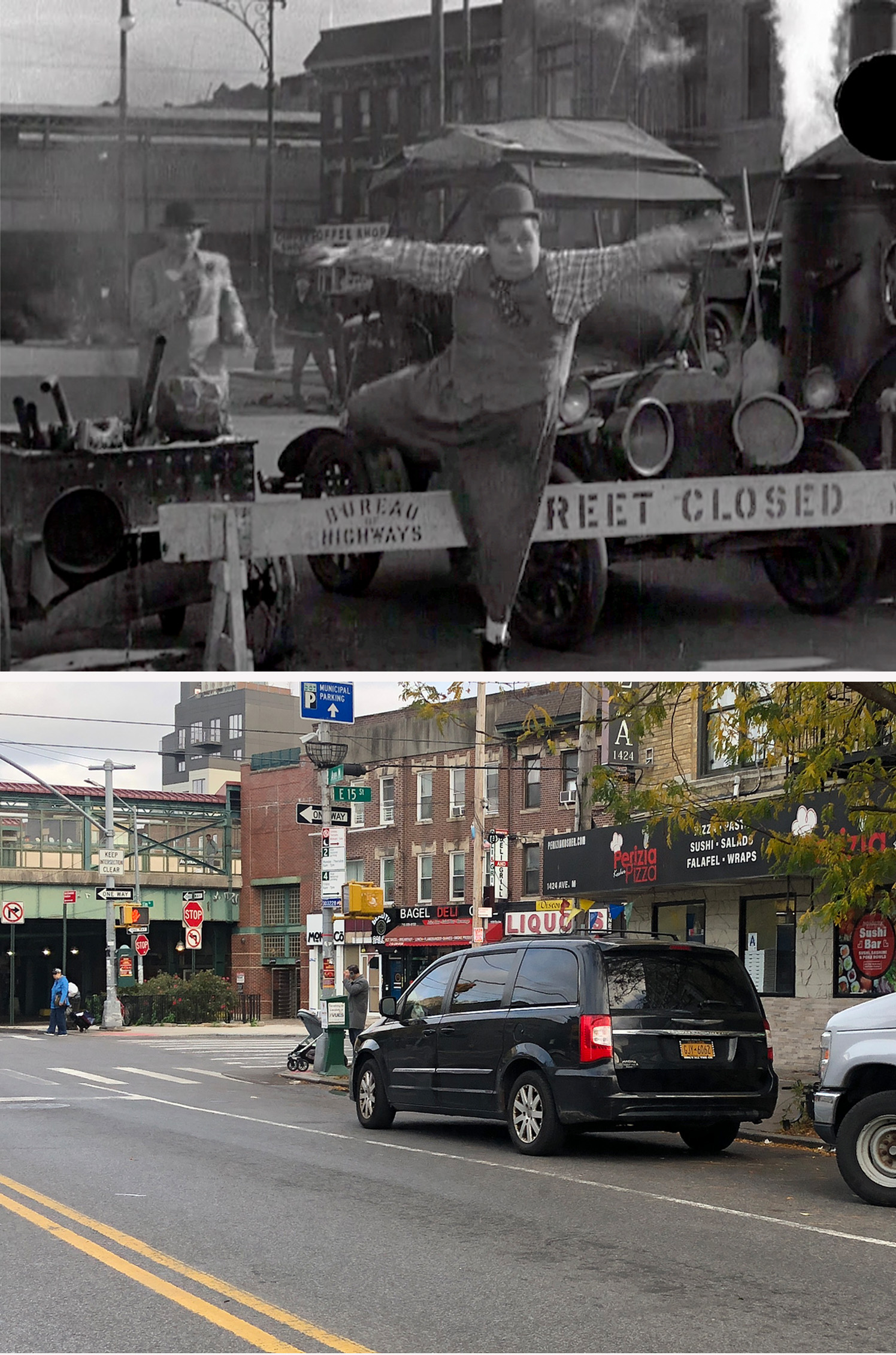
This was fairly easy to identify since you can see the elevated BMT station (the Q line) in the background. Also, the building next to the empty lot, at 1424 Avenue M, has survived, so I was able to match up the window patterns, further verifying the filming spot.
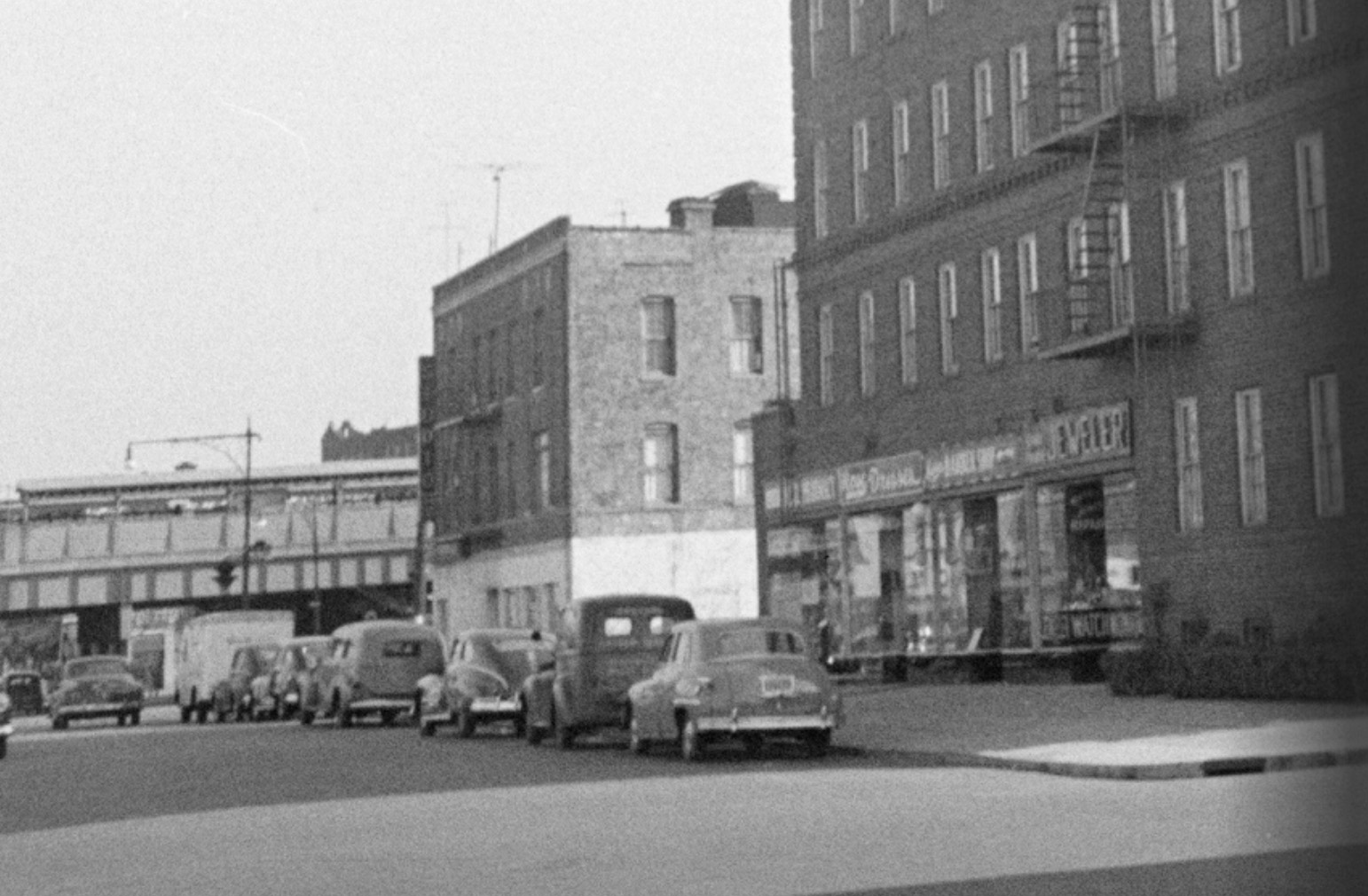
As you can see from this ca 1940 tax photo above, there was still an empty lot at no. 1416 nearly ten years later. The lot remained vacant until 1963 when the building seen in my modern photos was erected.
Beat Cops to the Rescue
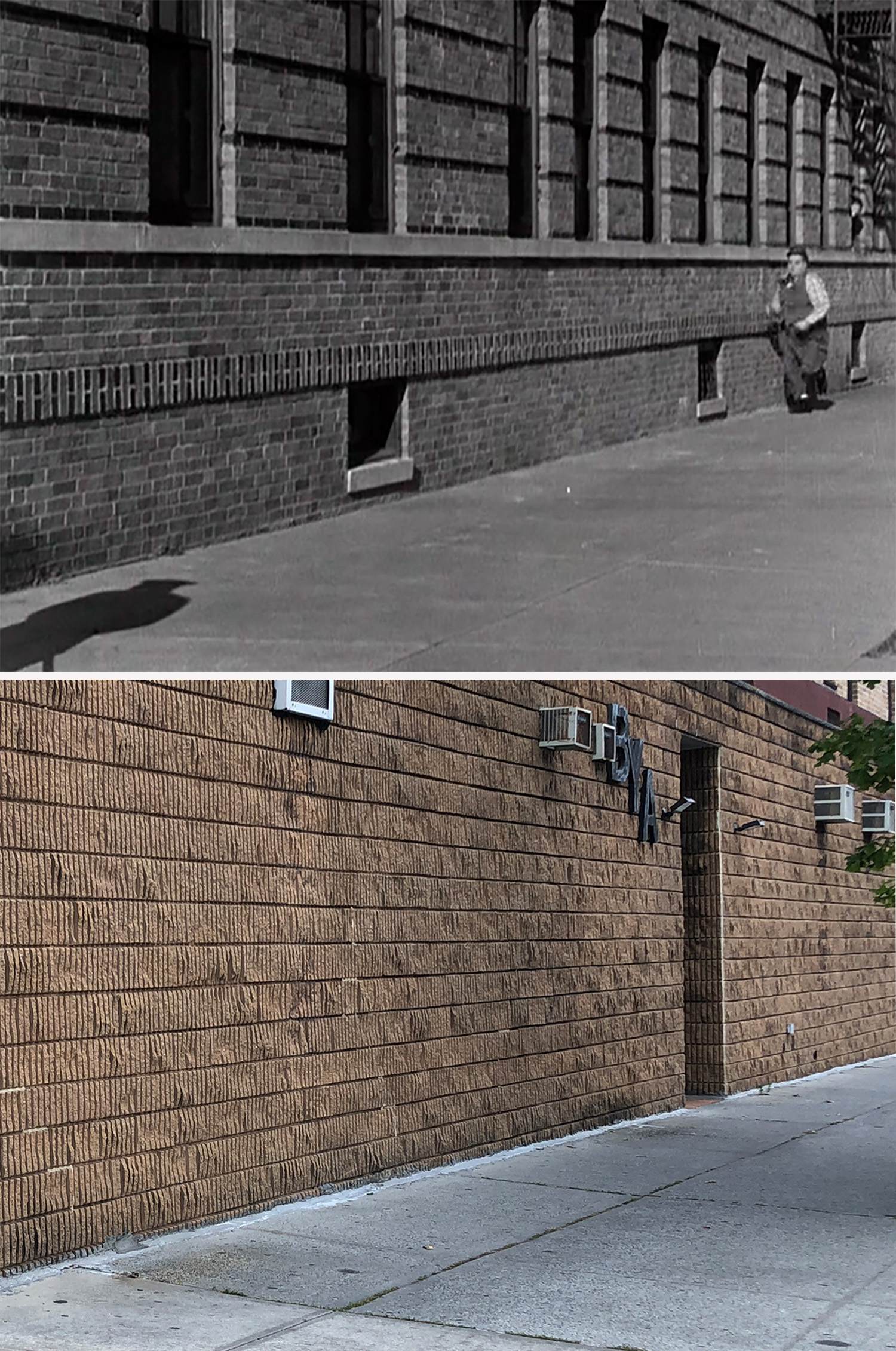
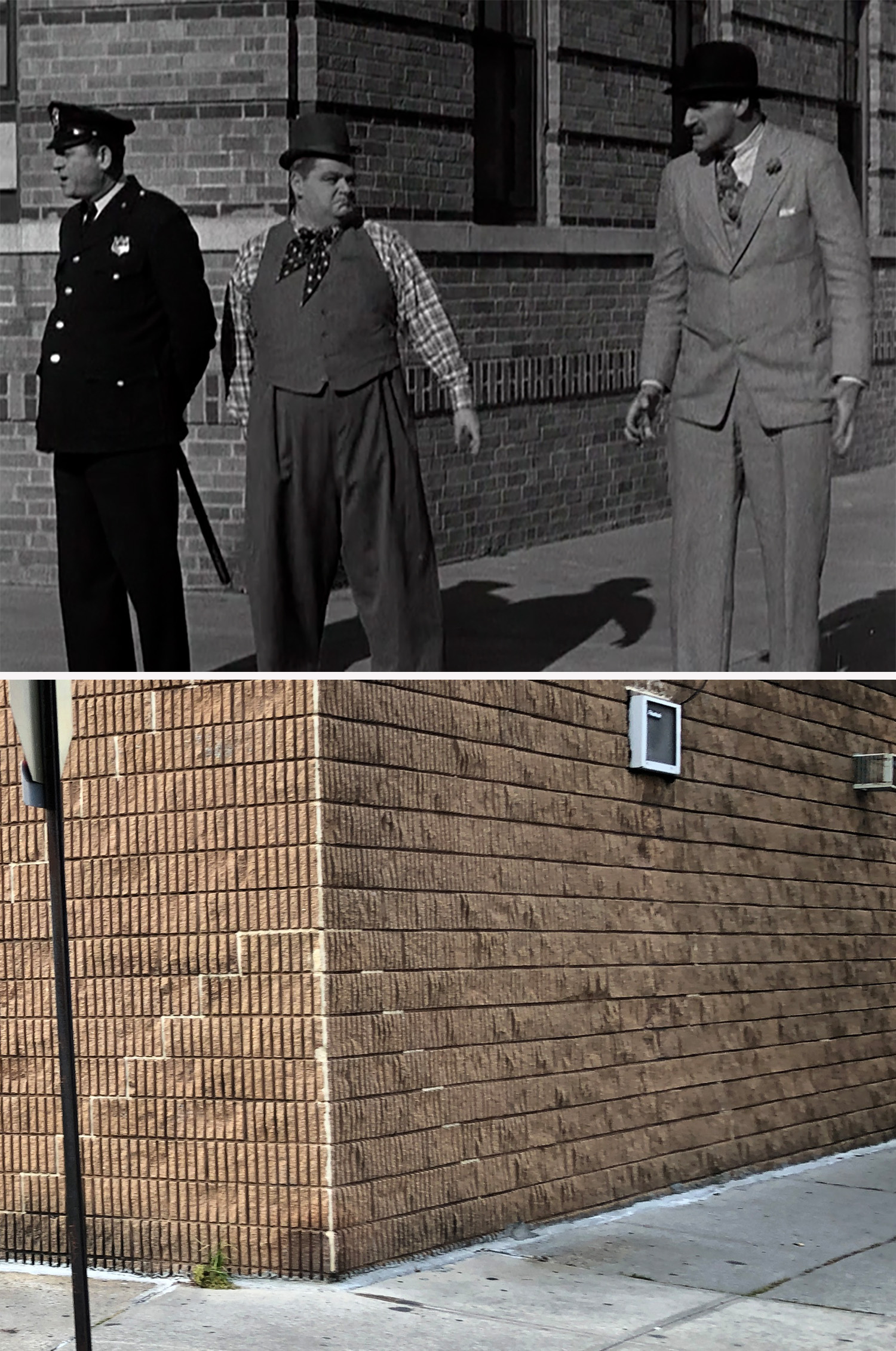
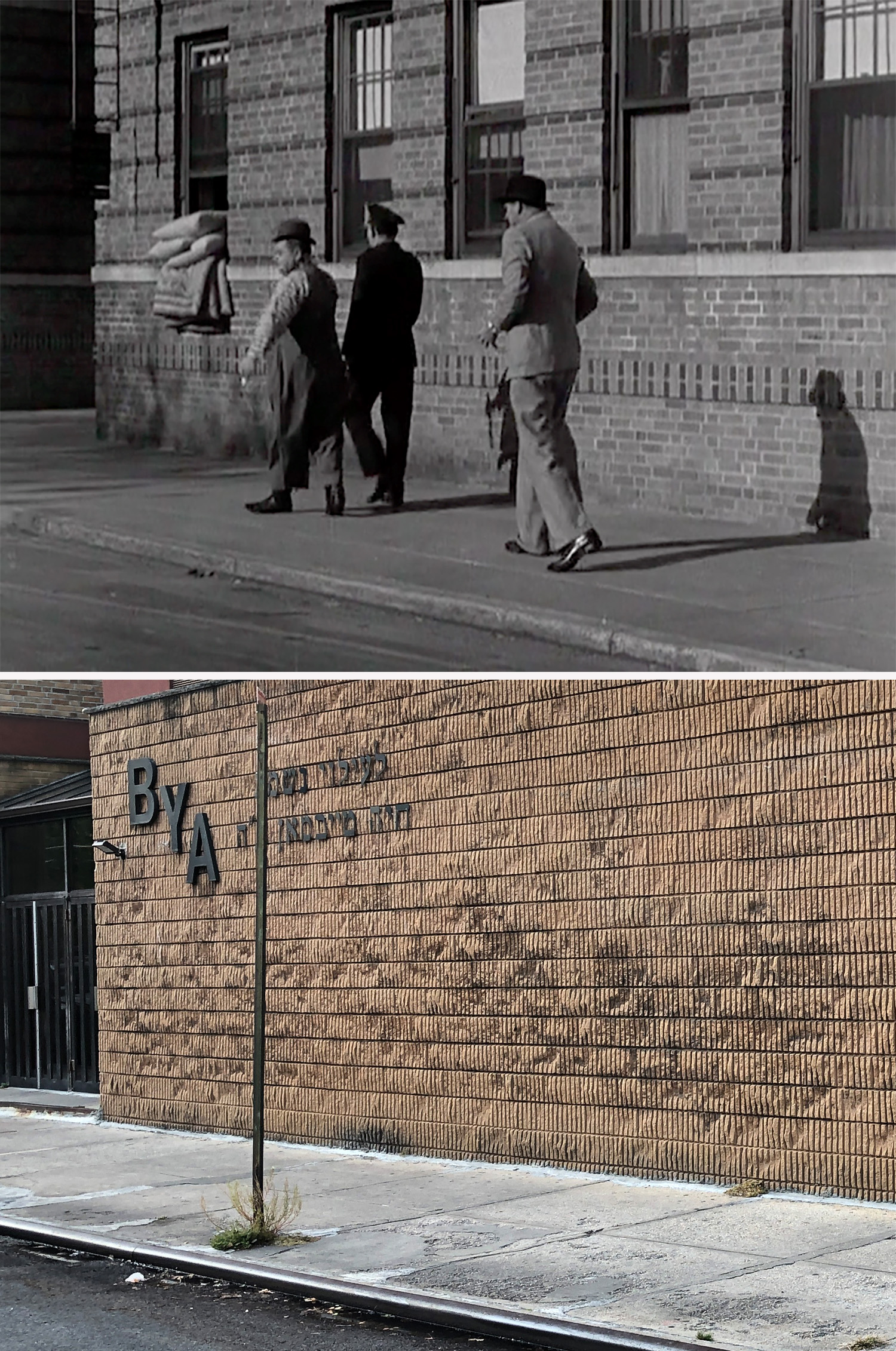
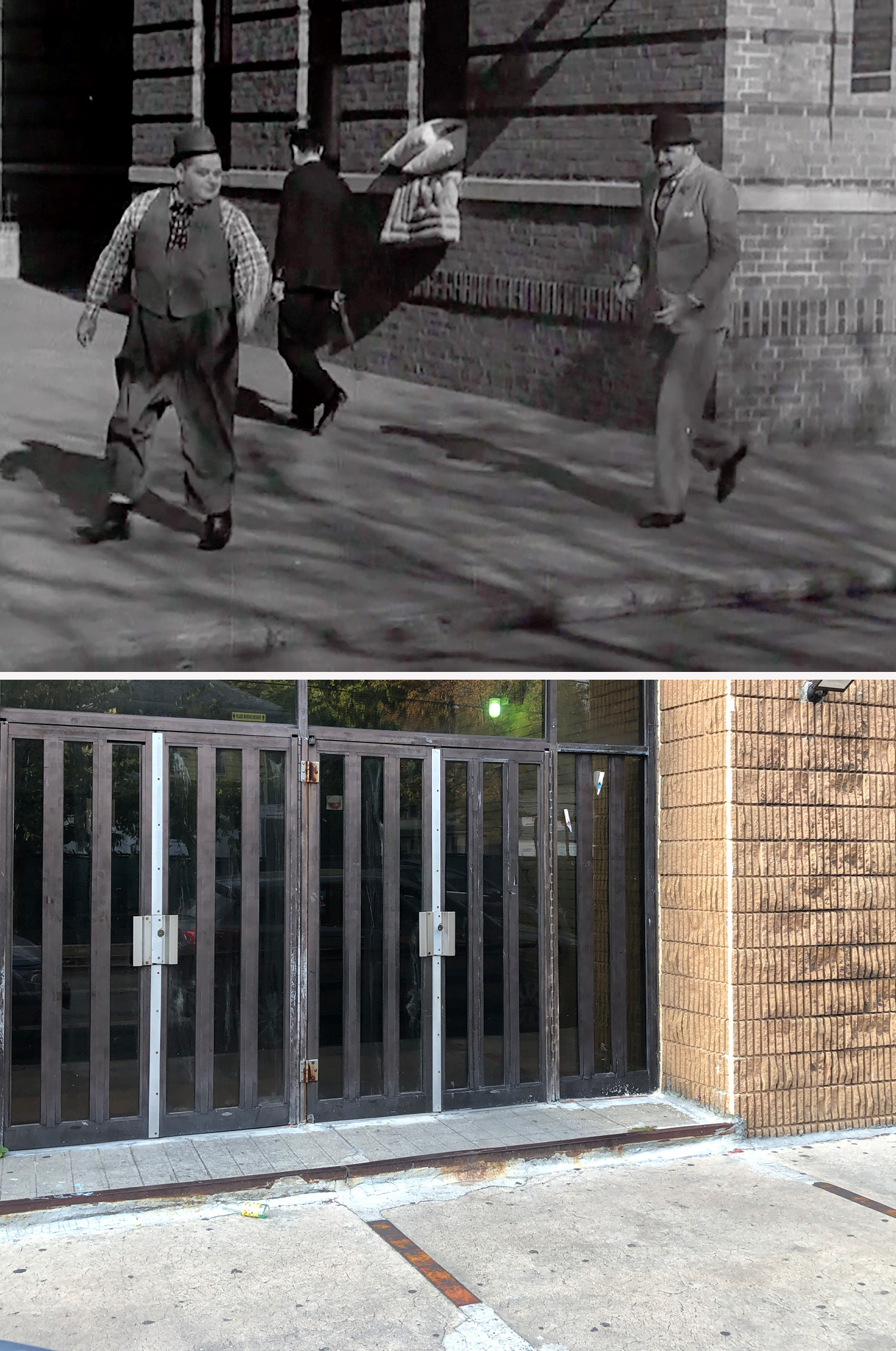
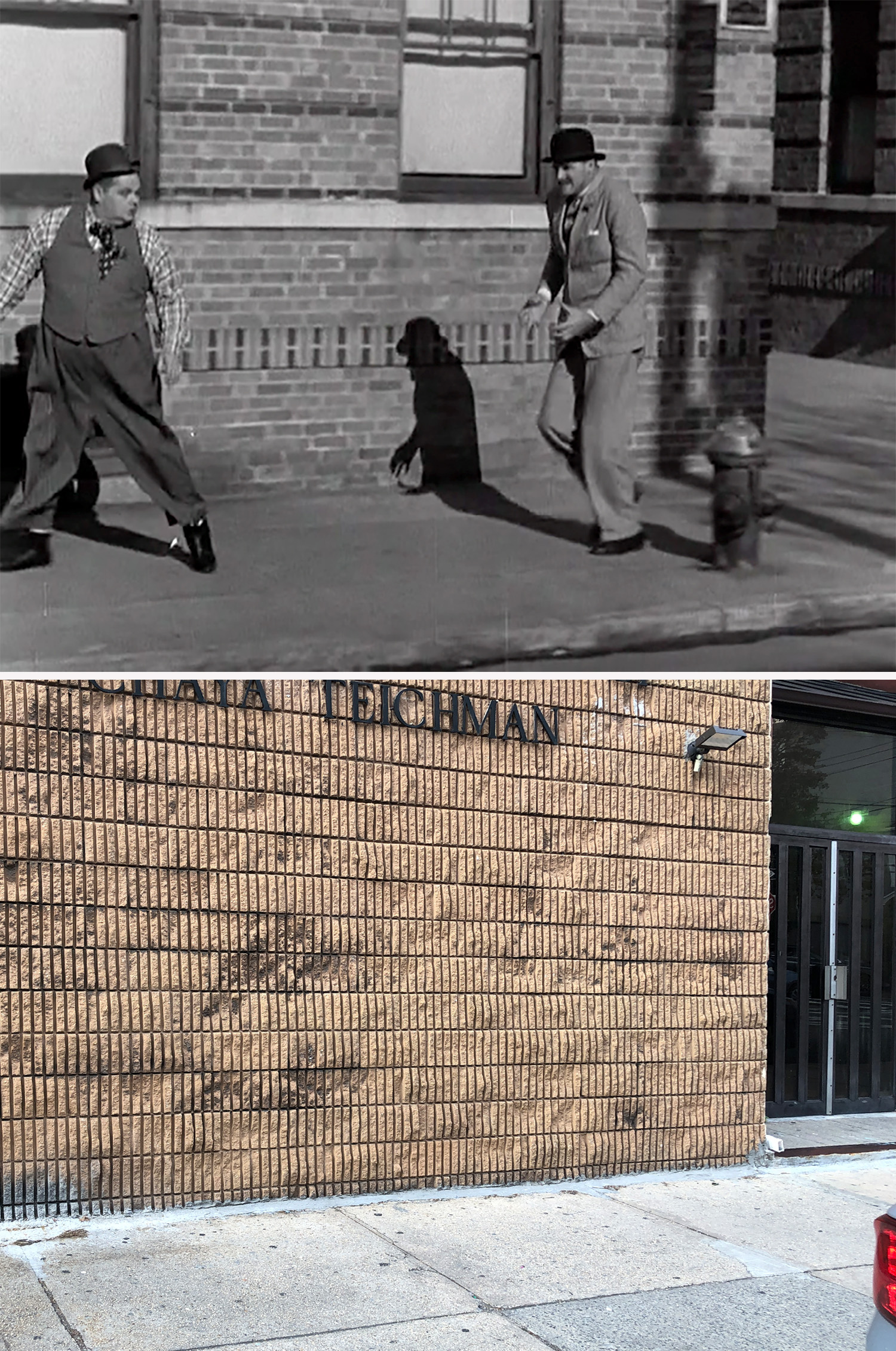
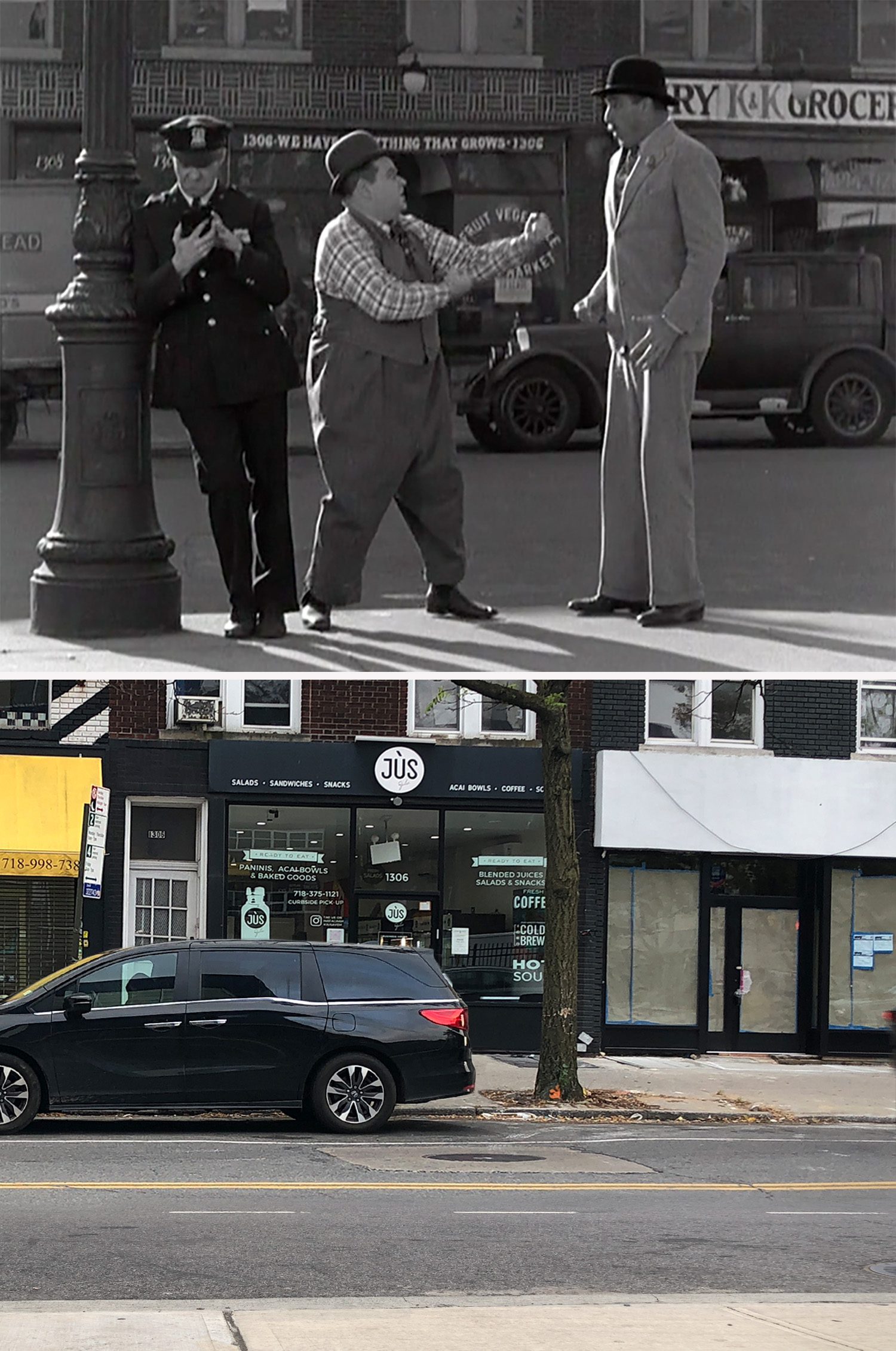
About three-quarters of my way into researching Buzzin’ Around and Hi, Pop! I ran into a few puzzlers. Up to that point, I didn’t have to do much work other than a doing a little roaming around in Google Street View or looking up a business name in an old Brooklyn phonebook (something that came in handy for the scenes taking place on Avenue M later in this short). But when it came to this first scene with a beat cop, there was no signage to work from, nor did the building facade resemble anything I could find in the studio’s immediate area.
As I took a deeper dive into my research, using a variety of different phrases in my internet searches, I came across an article written by a great colleague of mine — John Bengtson. While he normally focuses on silent pictures made in California, he occasionally enters the foray of early “talkies” made in New York, and had already tackled these two Arbuckle shorts back in 2017. I felt a little silly I didn’t consider checking out his website before starting my work on these shorts. If I had done so, I could’ve avoided some overlapping research, but thankfully I hadn’t spent an inordinate amount of time to get to that point in my work.
In John’s article, he covered this scene with the beat cop, identifying the main building behind them to be 1213 Elm Avenue (now home to the Bais Yaakov Academy). He acknowledged that that street level of the structure didn’t resemble the movie, but given its proximity to the studio, its distinctive mid-block alcove, and non-rectangular configuration, he was confident that he found the correct spot.
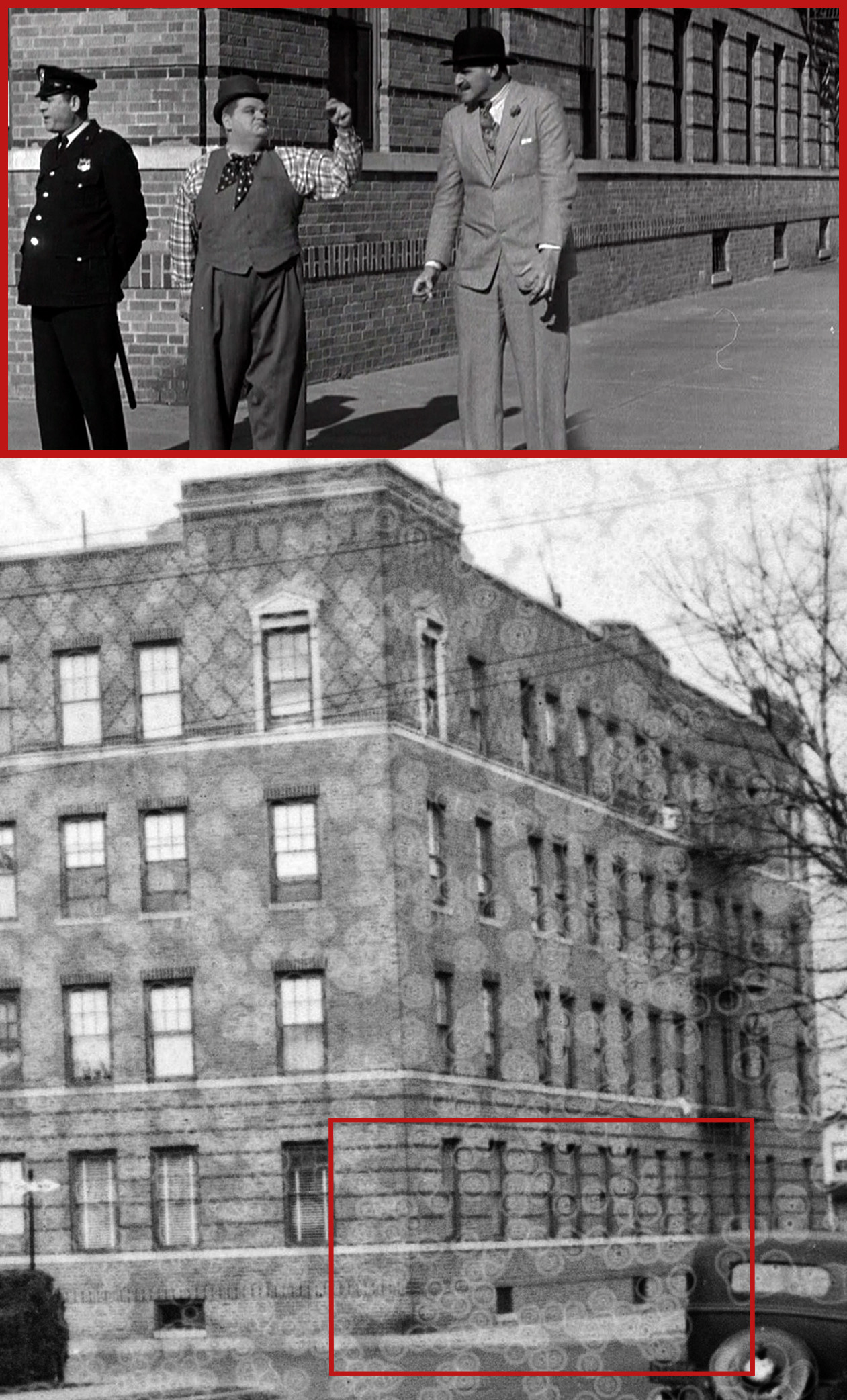
When John was researching this scene in 2017, it was right before the NYC tax photo archives were released online, so he couldn’t gather any definitive visual proof. However, I have since found a tax pic of the building pre-renovation, showing everything lining up with the movie perfectly.
The Parking Spot
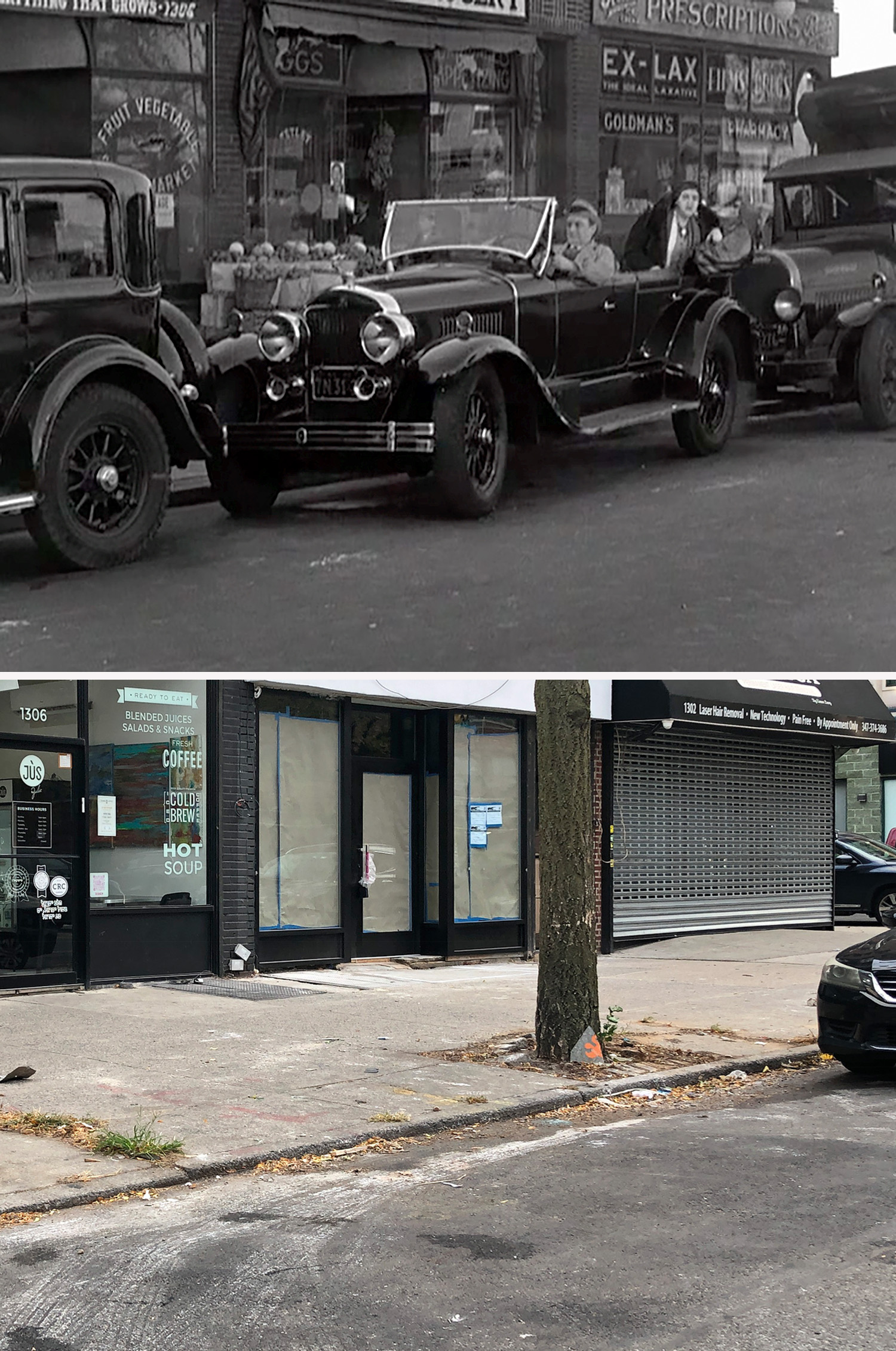
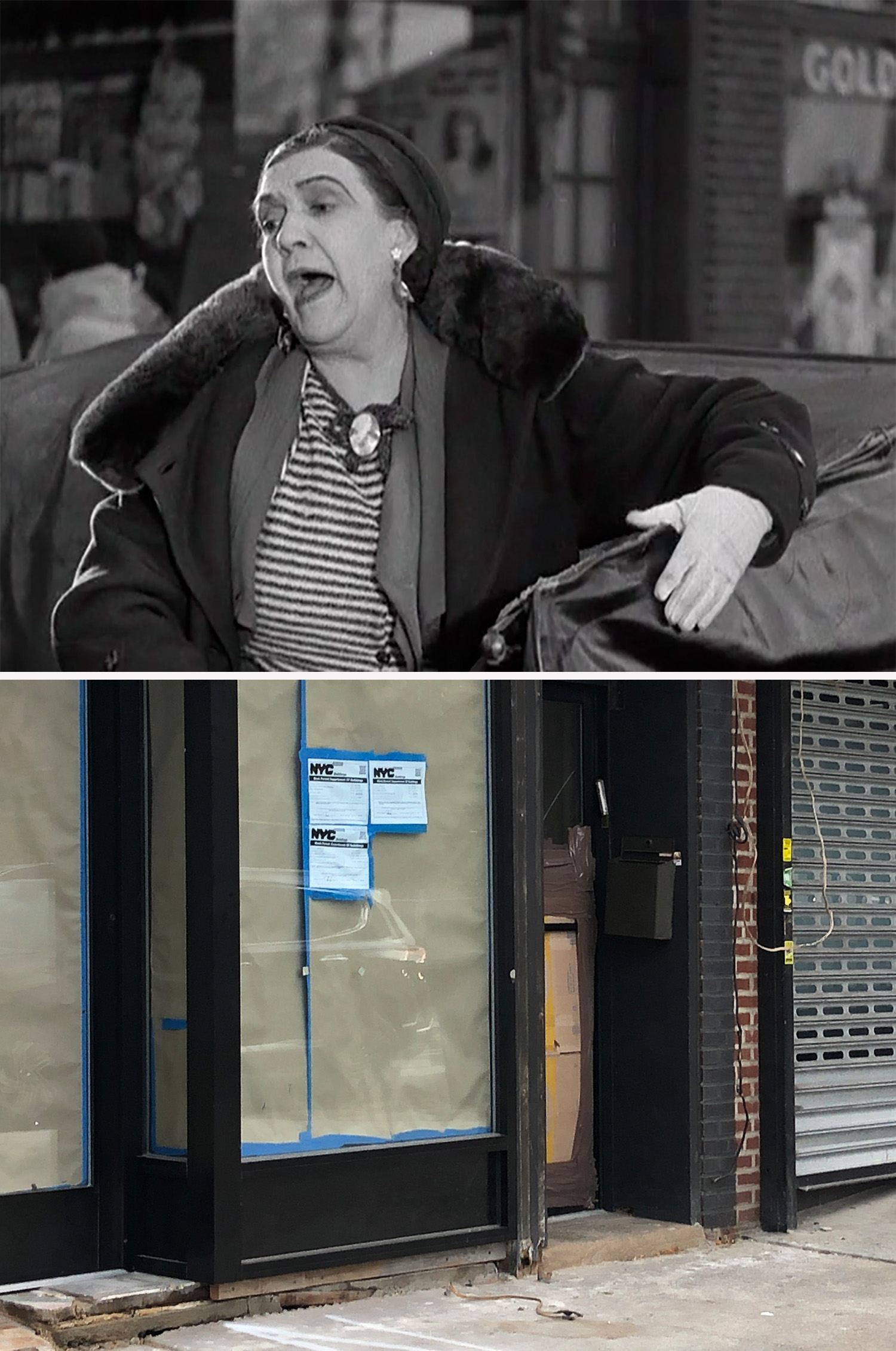
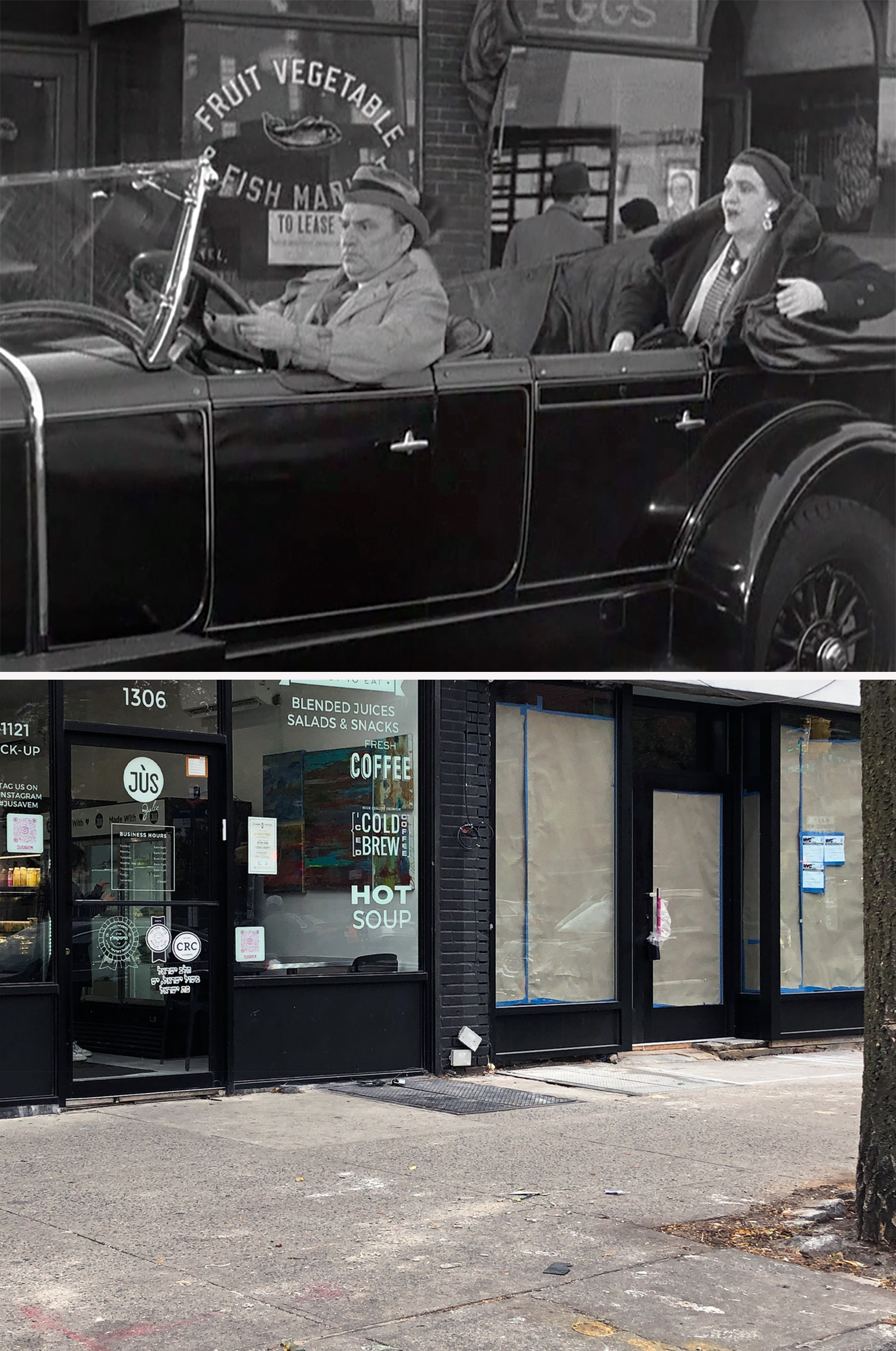
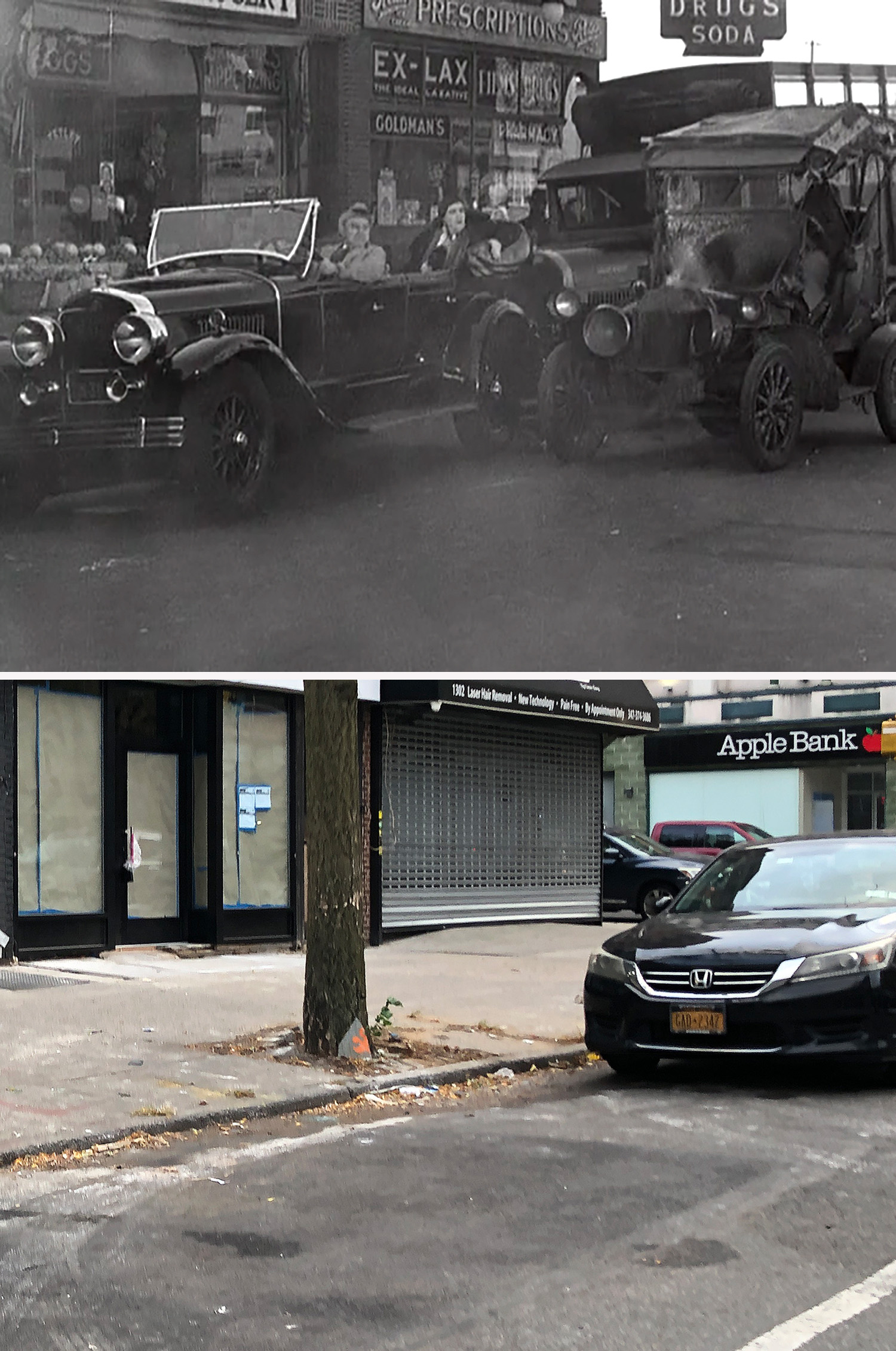
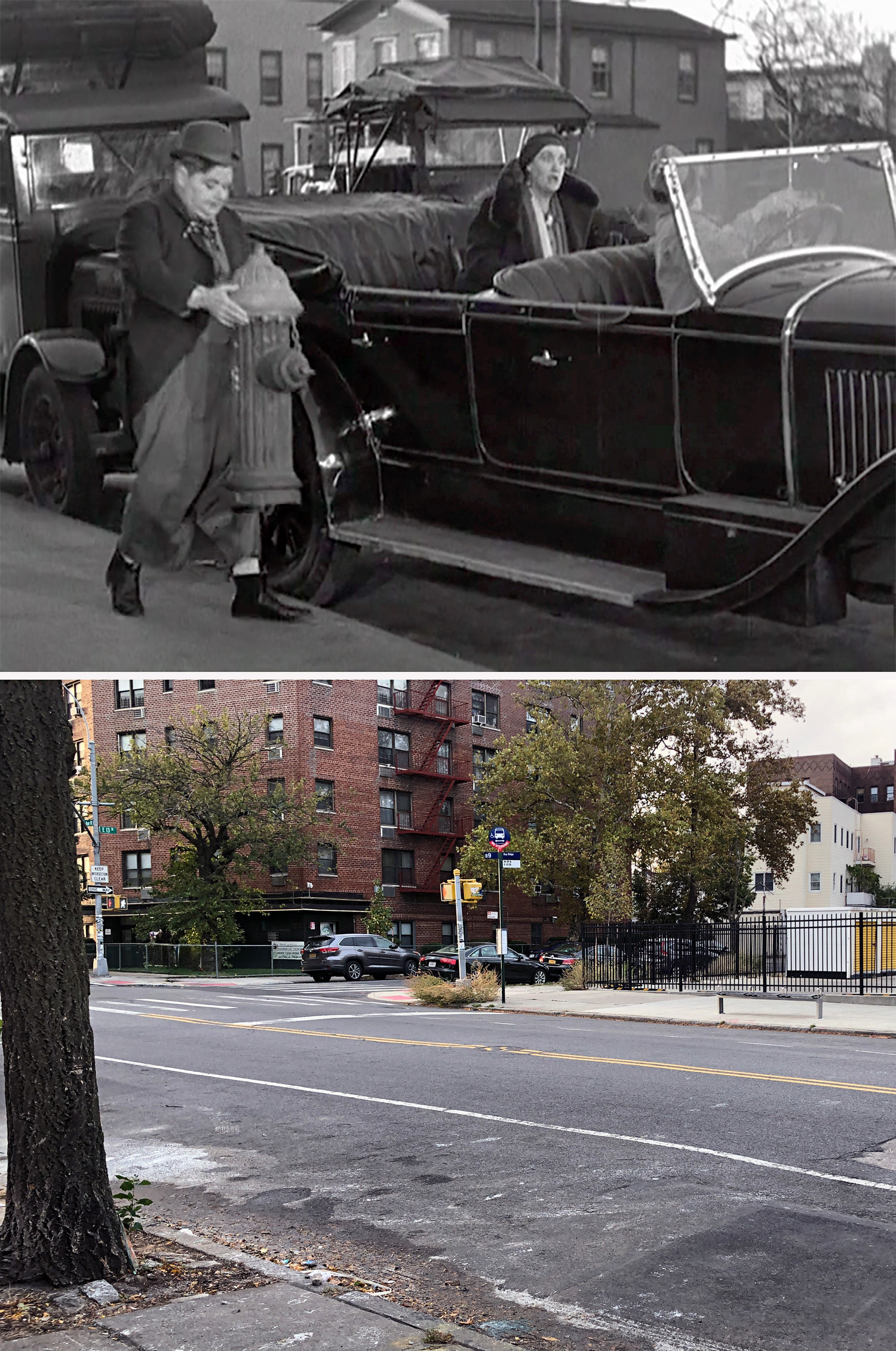
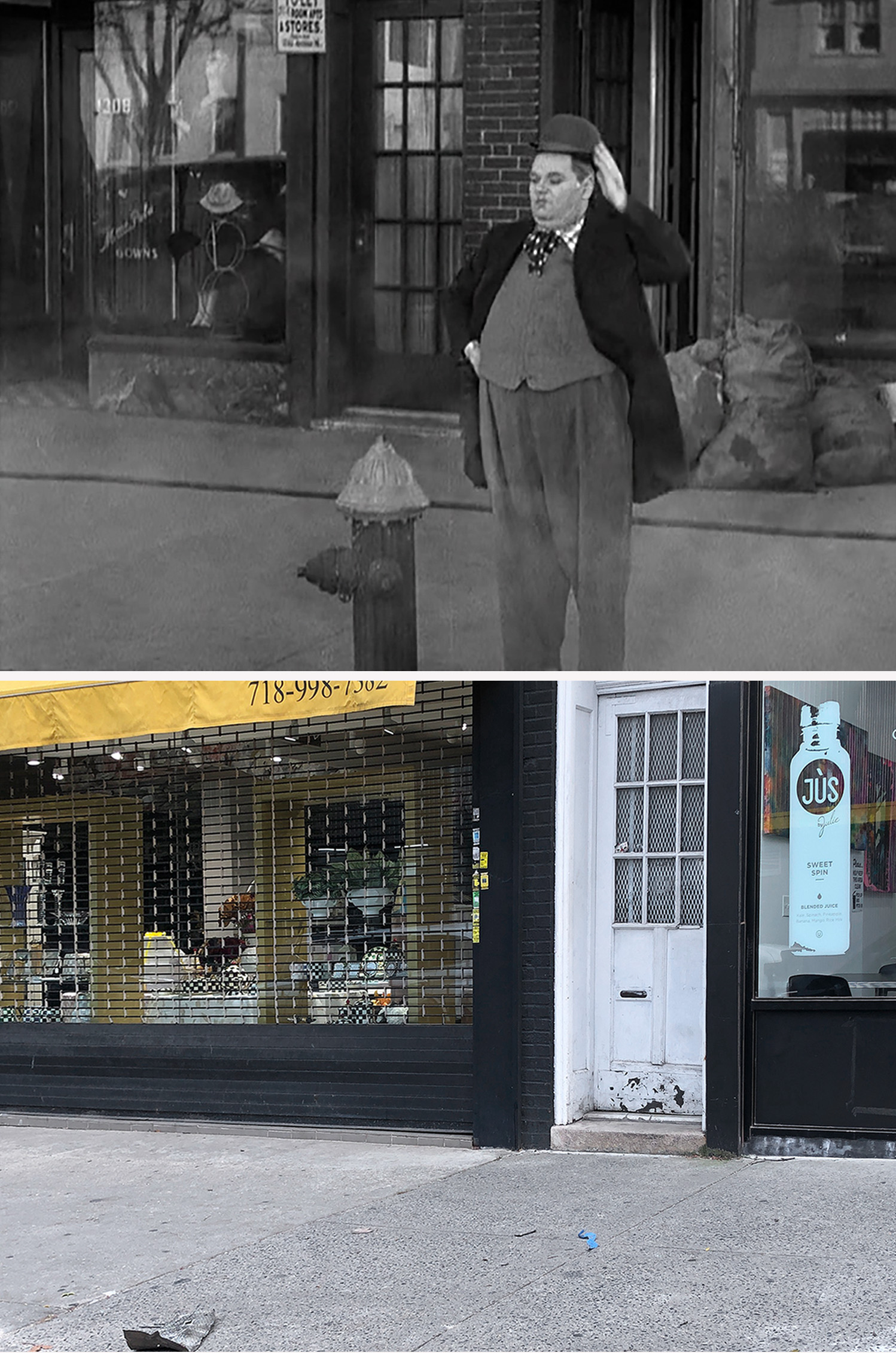
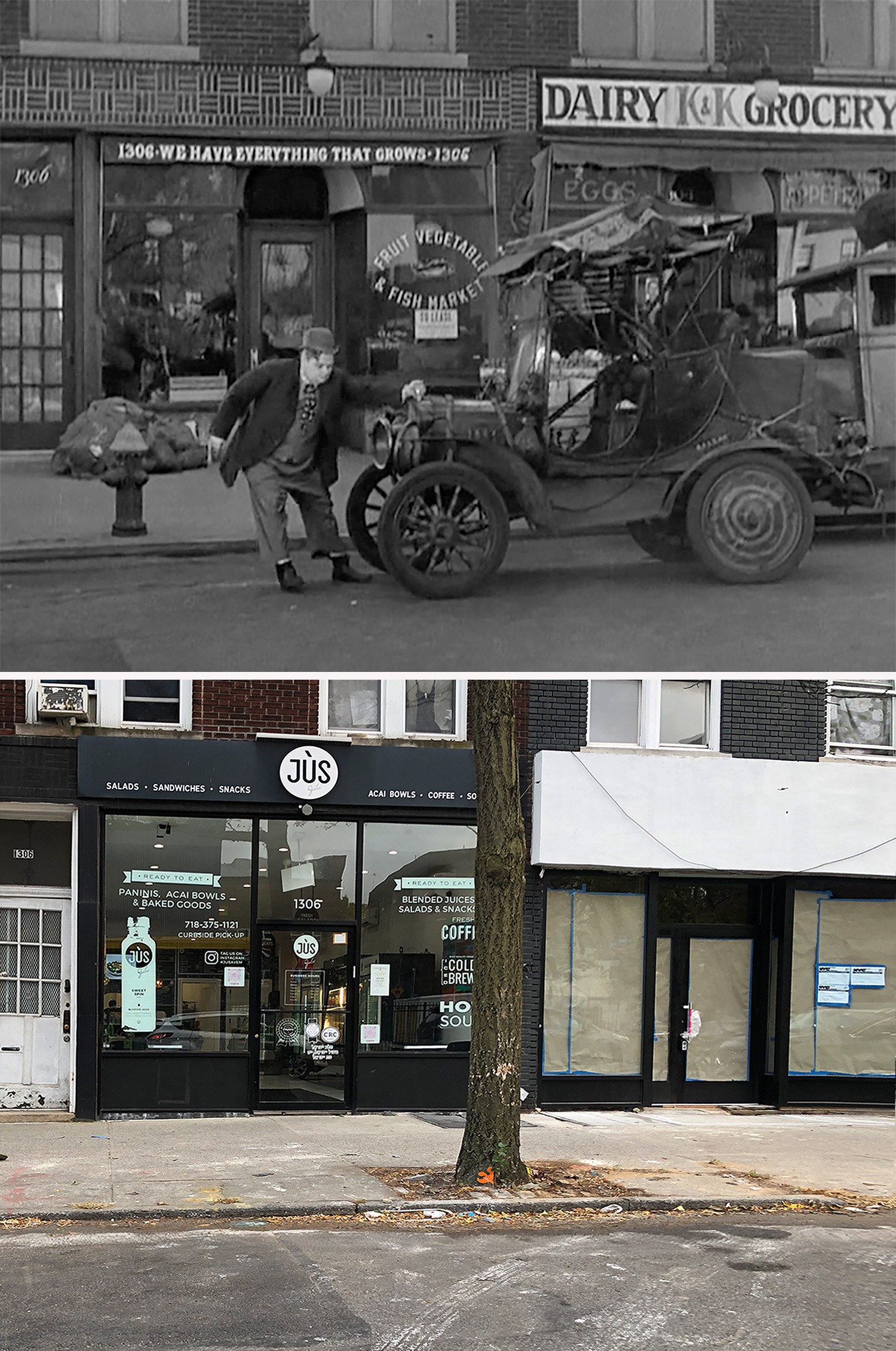
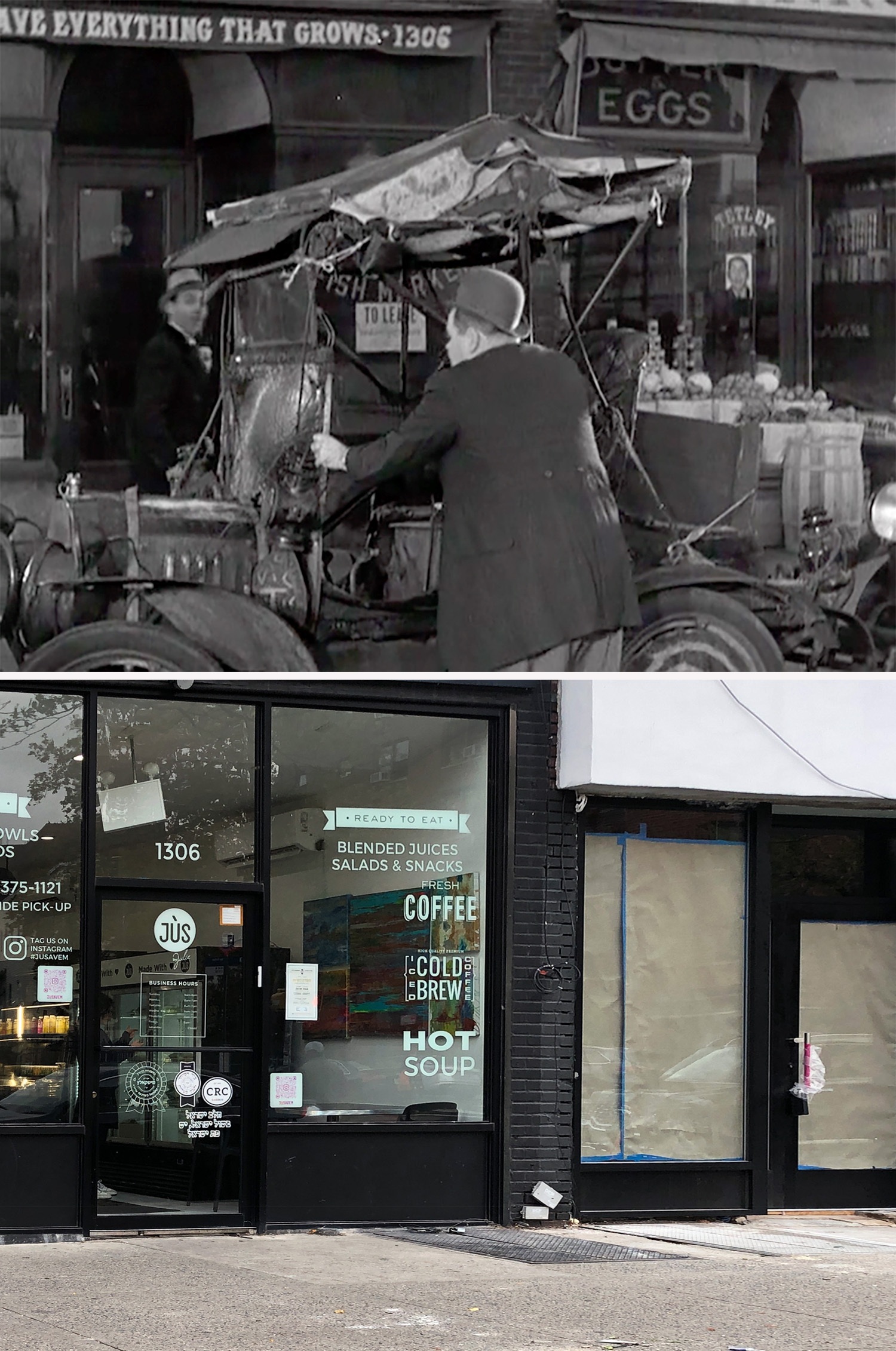
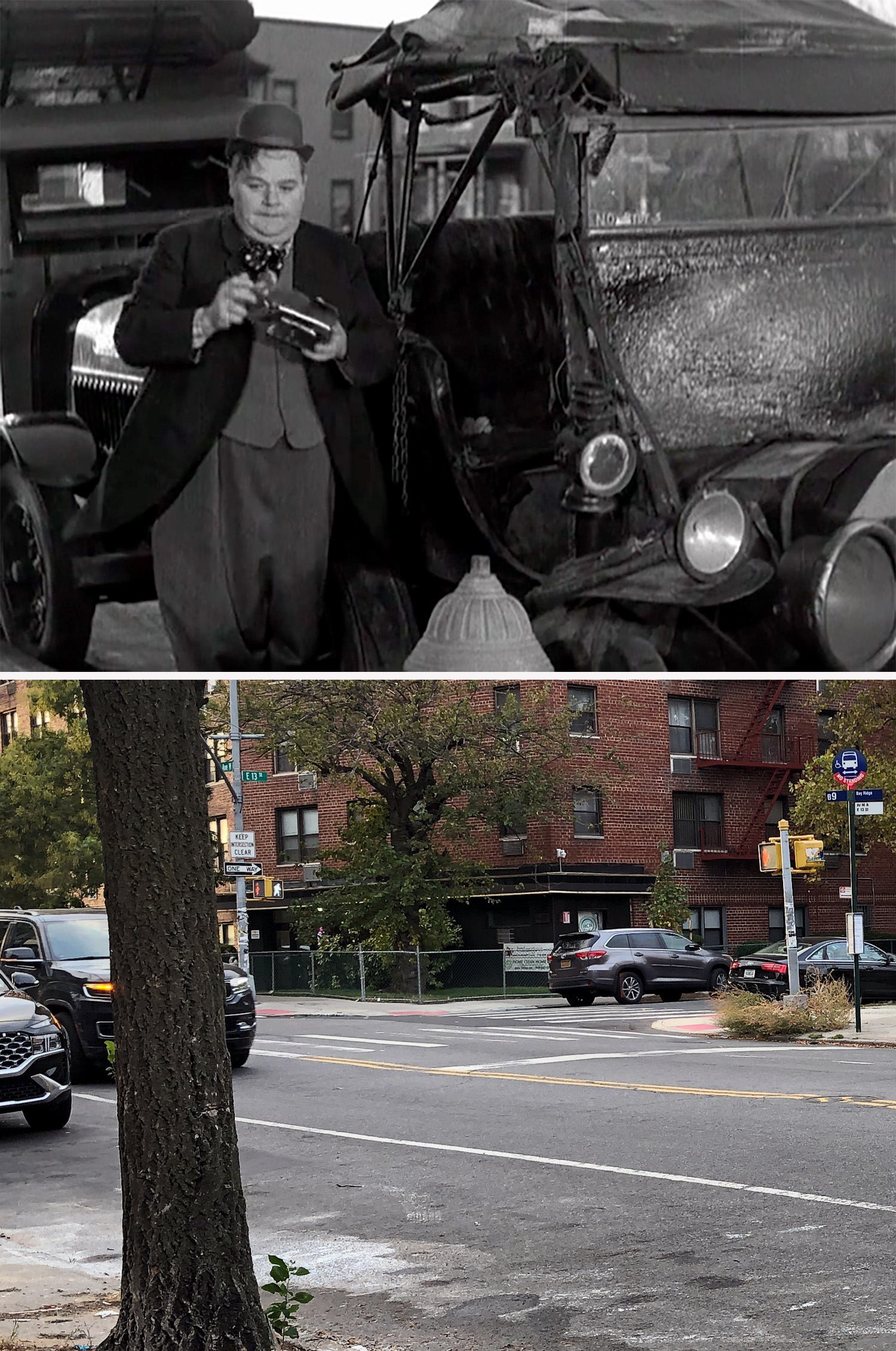
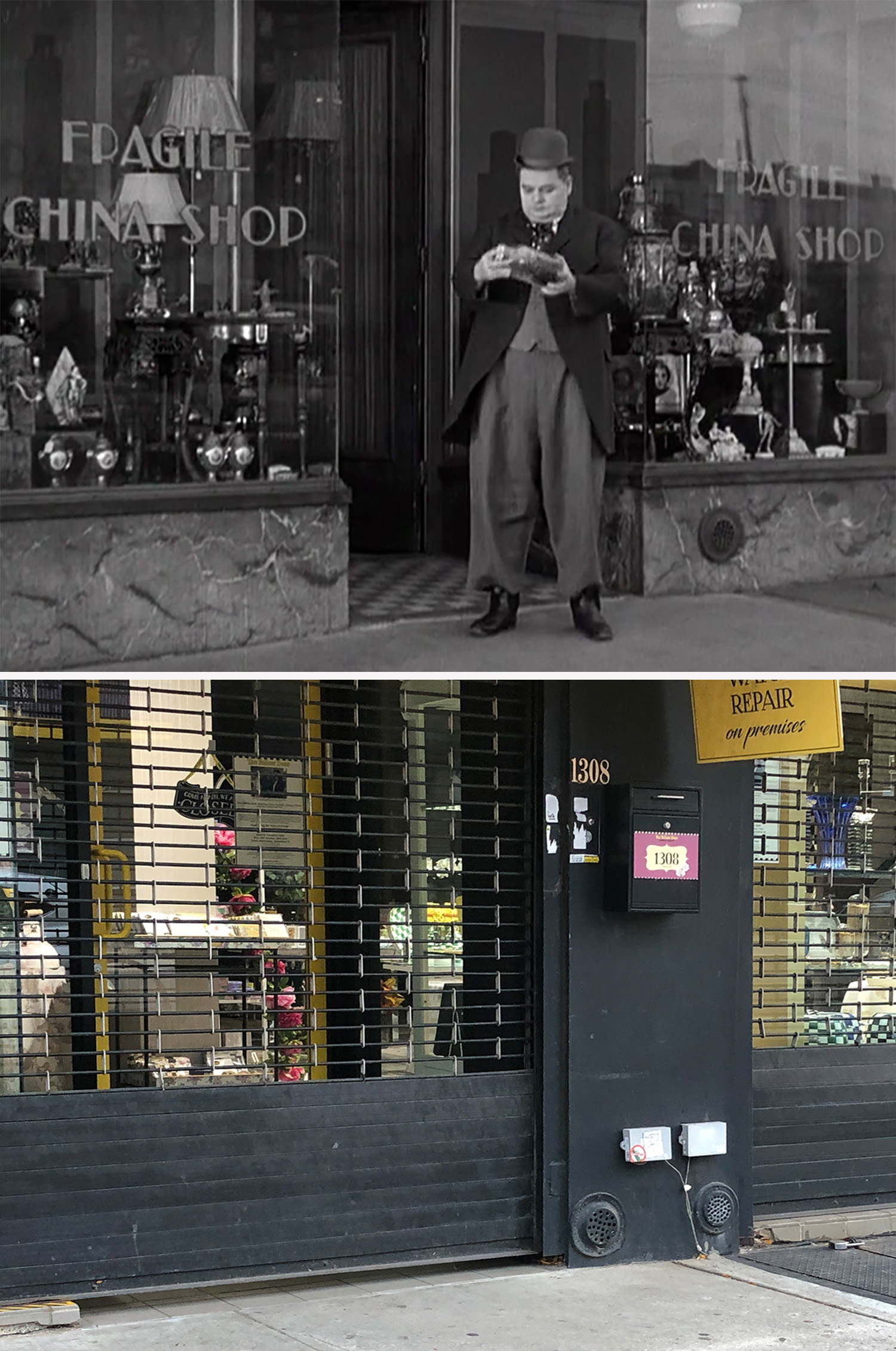
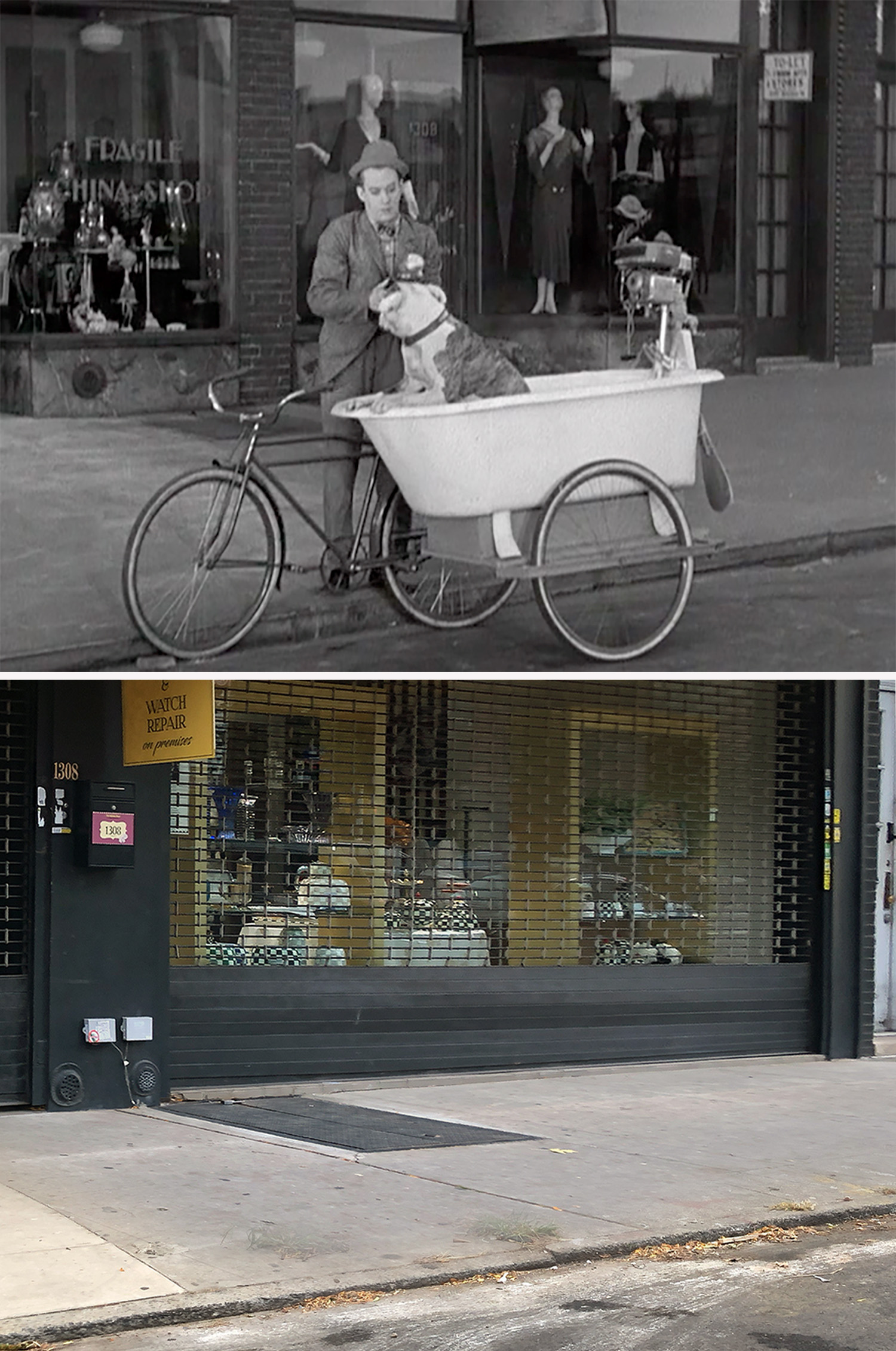
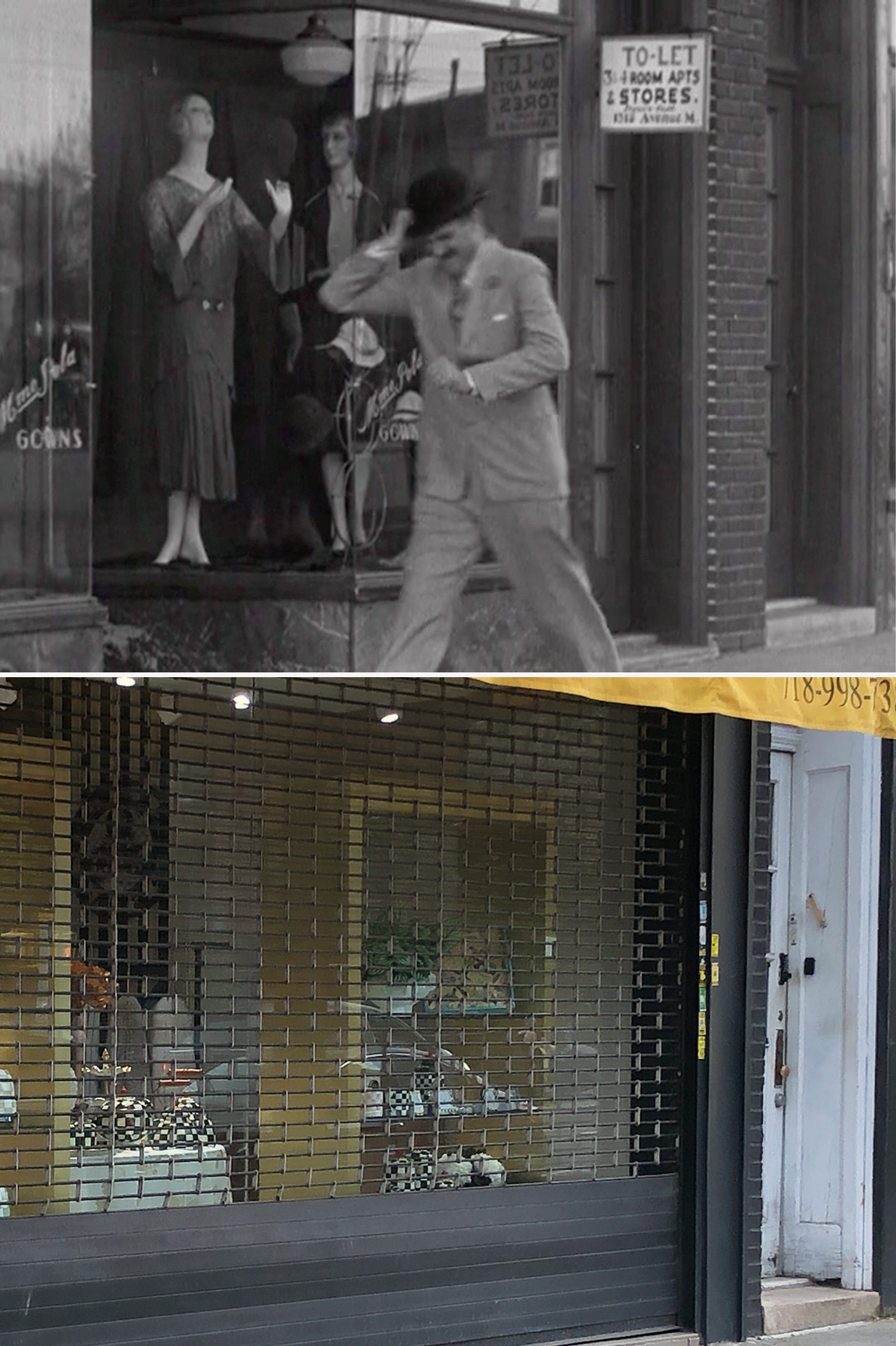
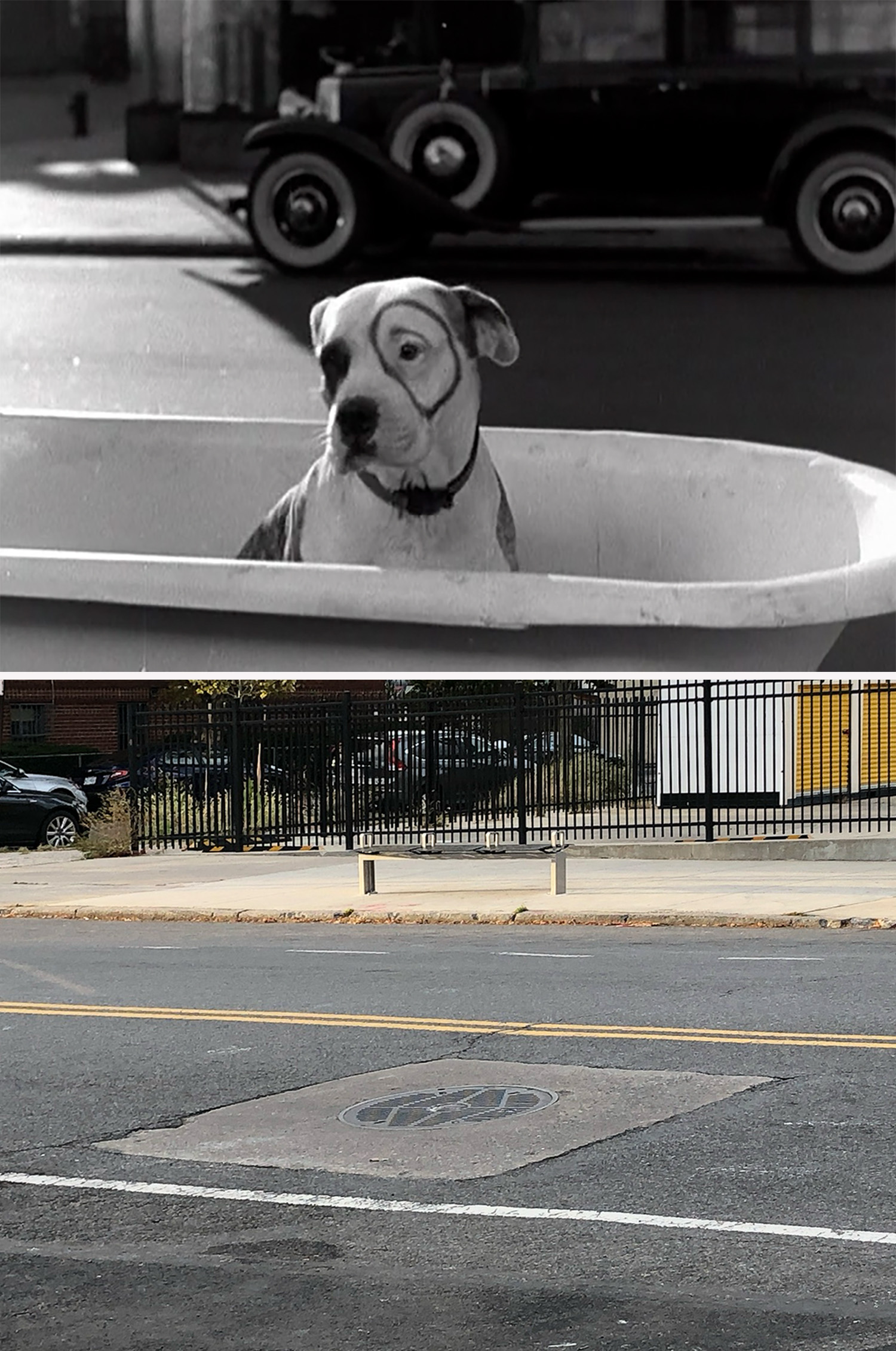
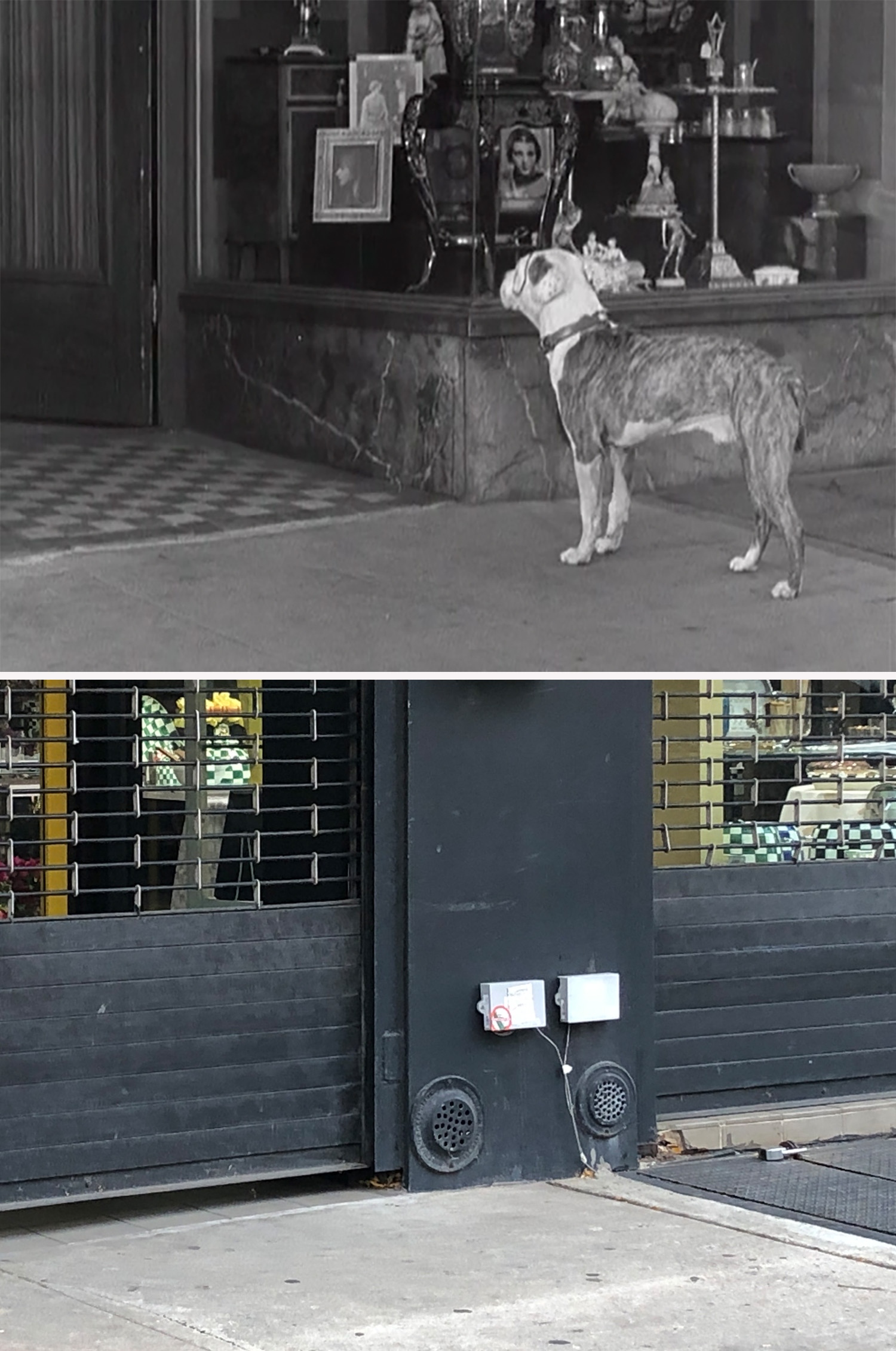
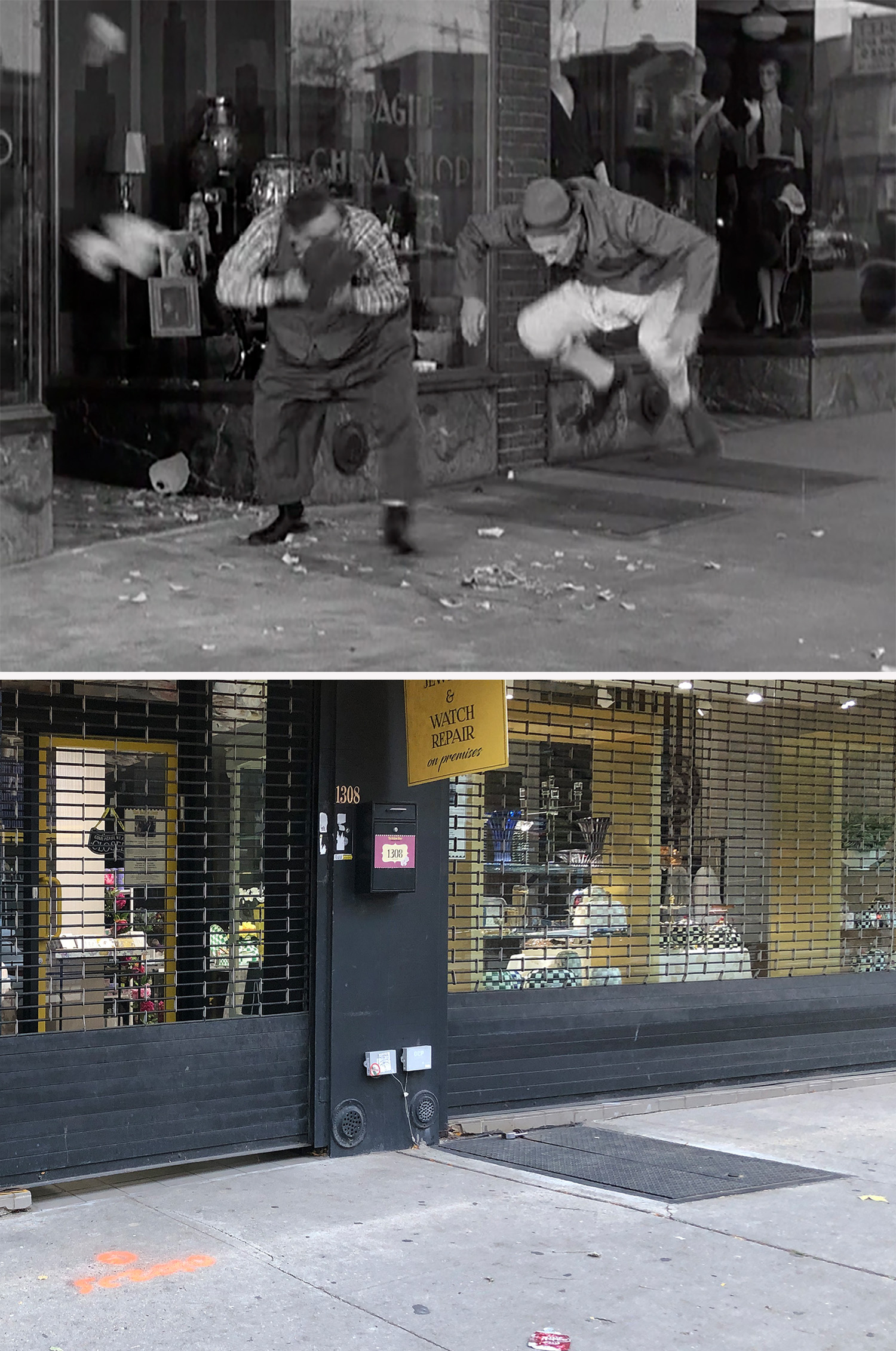
Most of the remaining on-location footage from this short was taken on the south side of Avenue M between 13th and 14th Streets. Fortunately, in a lot of the shots, you can see a street number either on the storefront or above the residential entrances. I was then able to figure out any of the stores that didn’t show an address by cross-referencing them with the already-established locations.
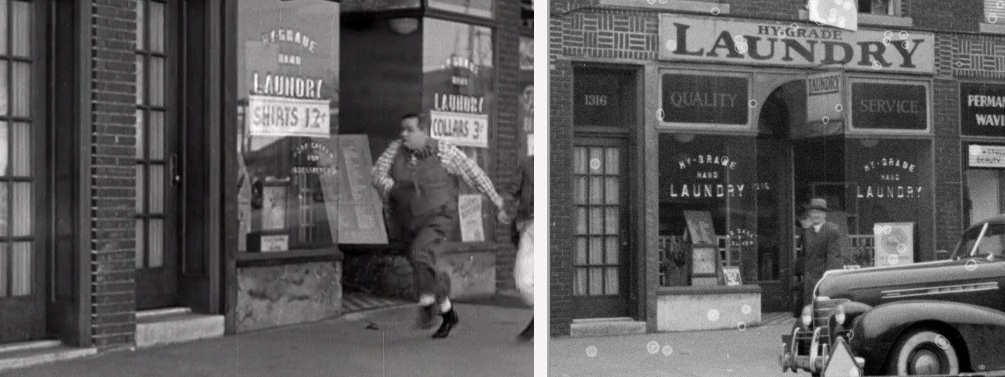
Turns out, Arbuckle filmed in front of nearly every store on that block, jumping back and forth from place to place without any real regard to continuity. And once I was able to map out which store was where, it was pretty easy to know where everything was shot.
China Shop
Cops and Pants
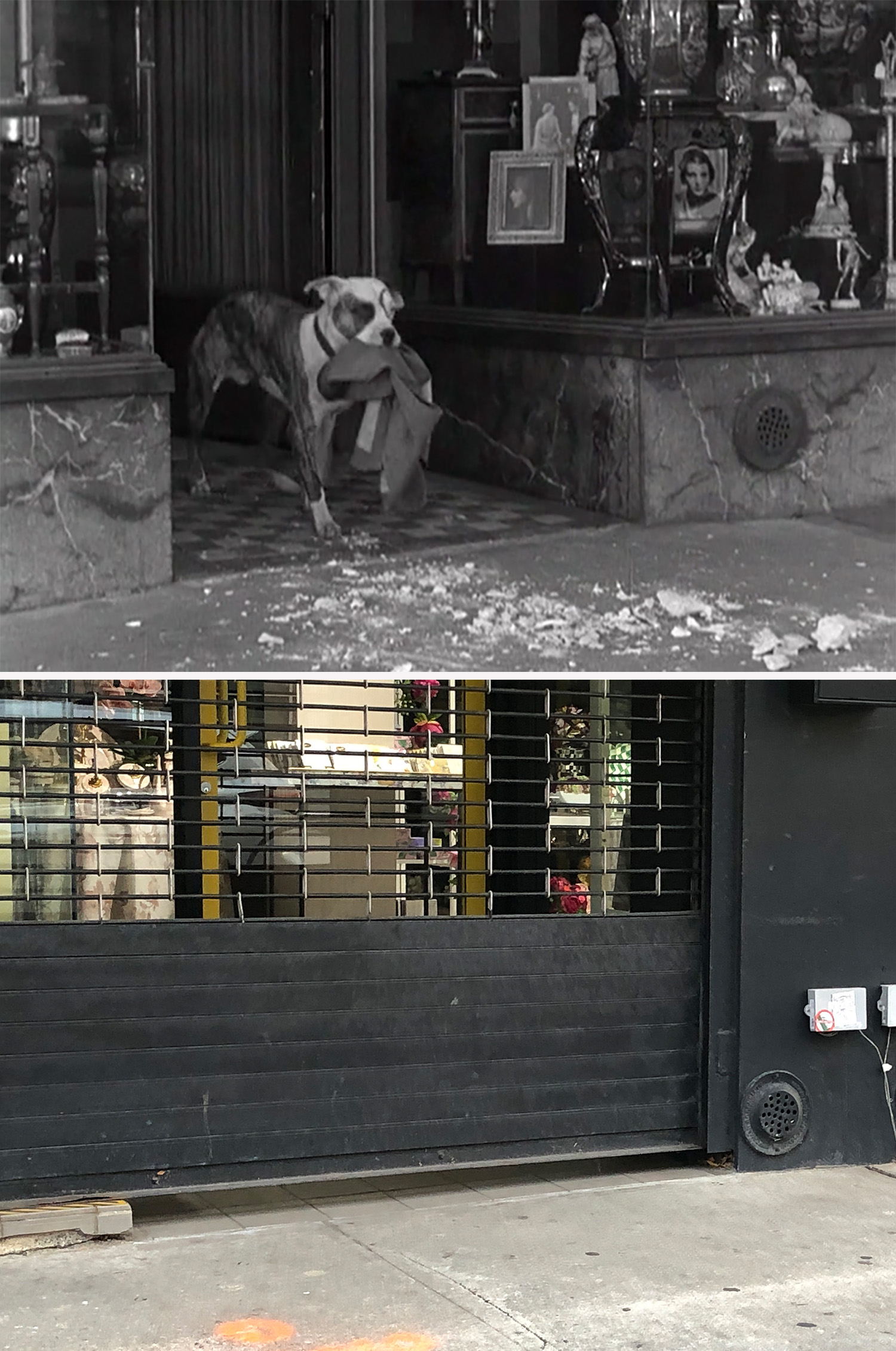
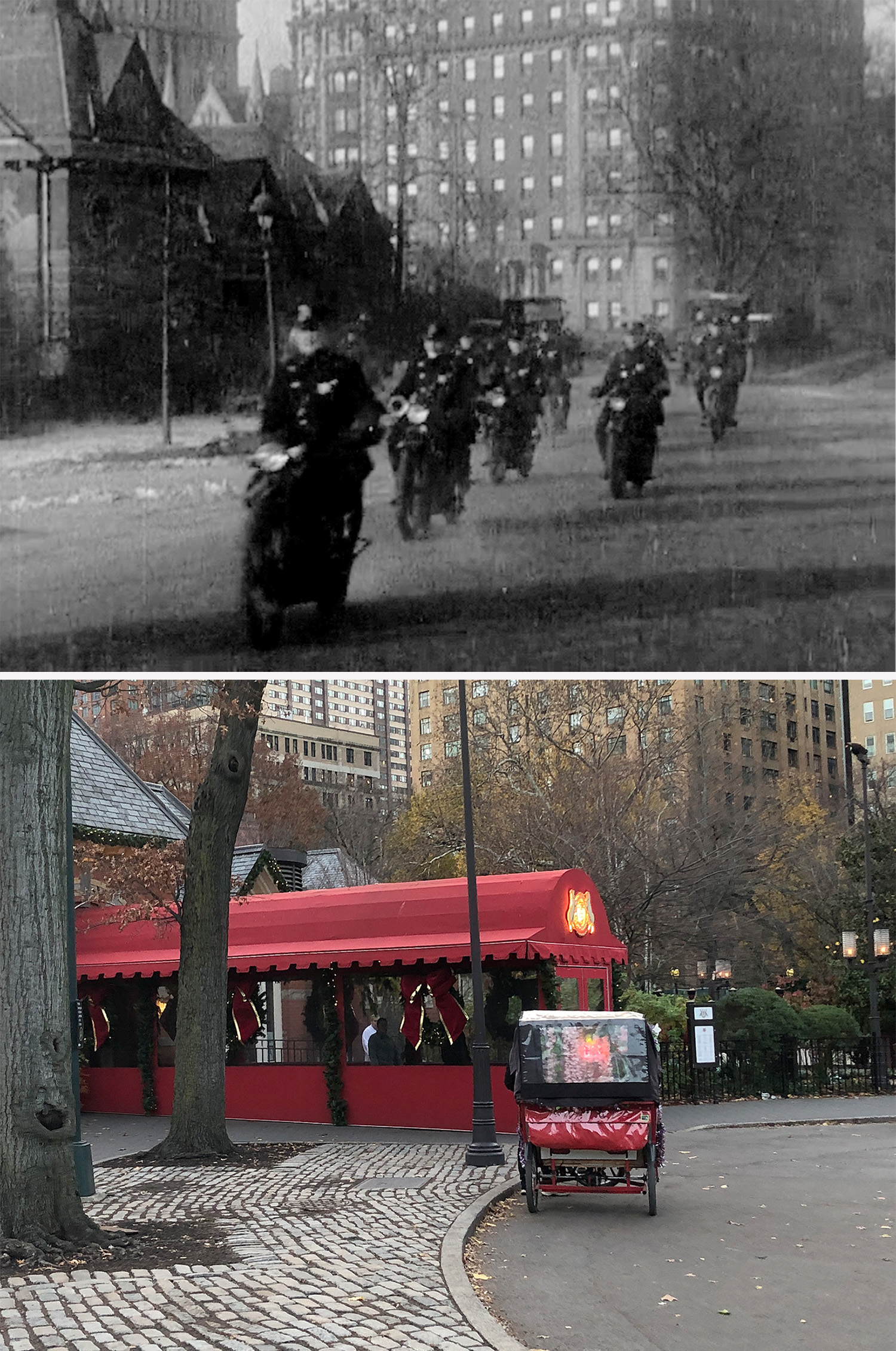
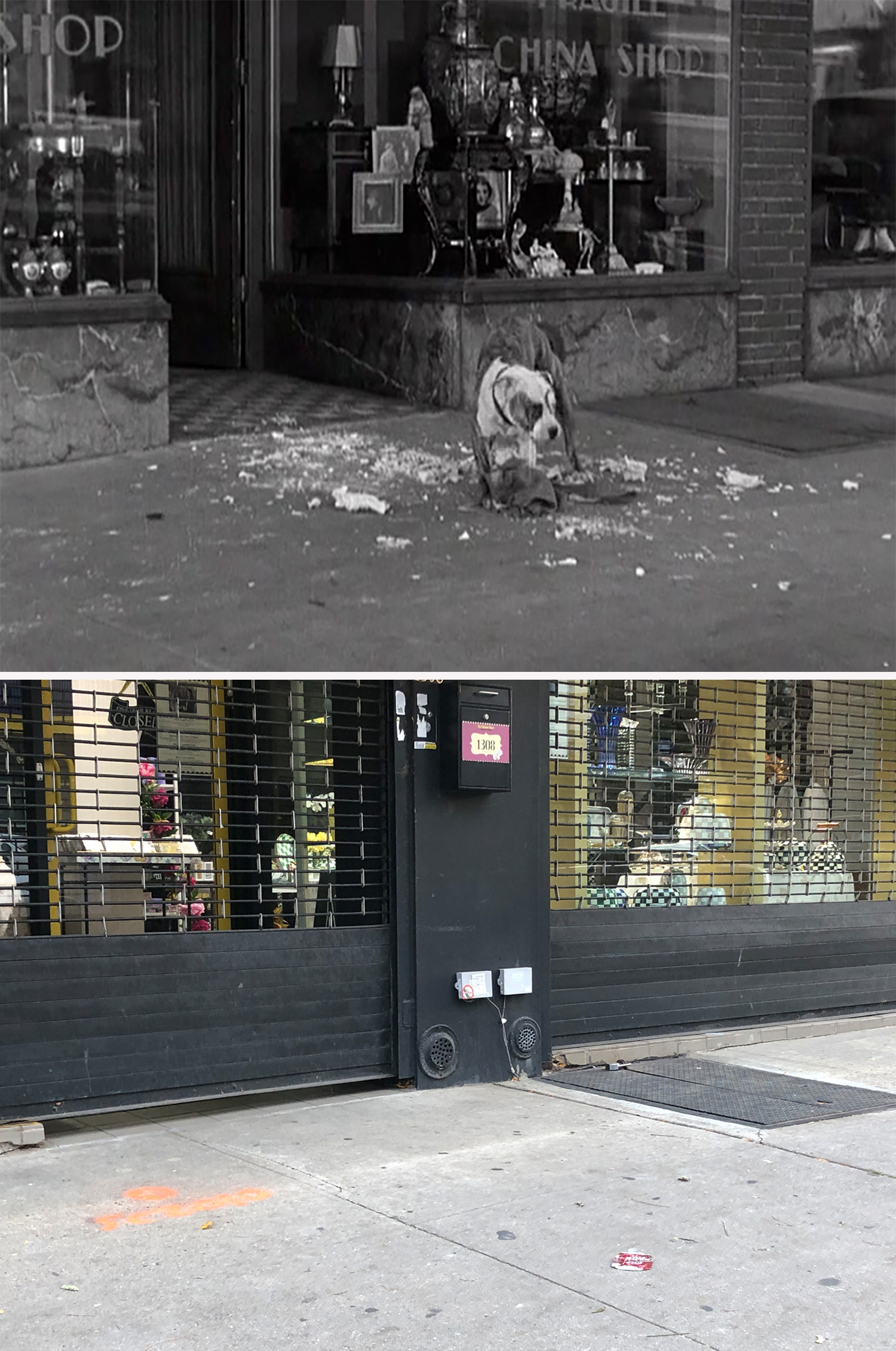
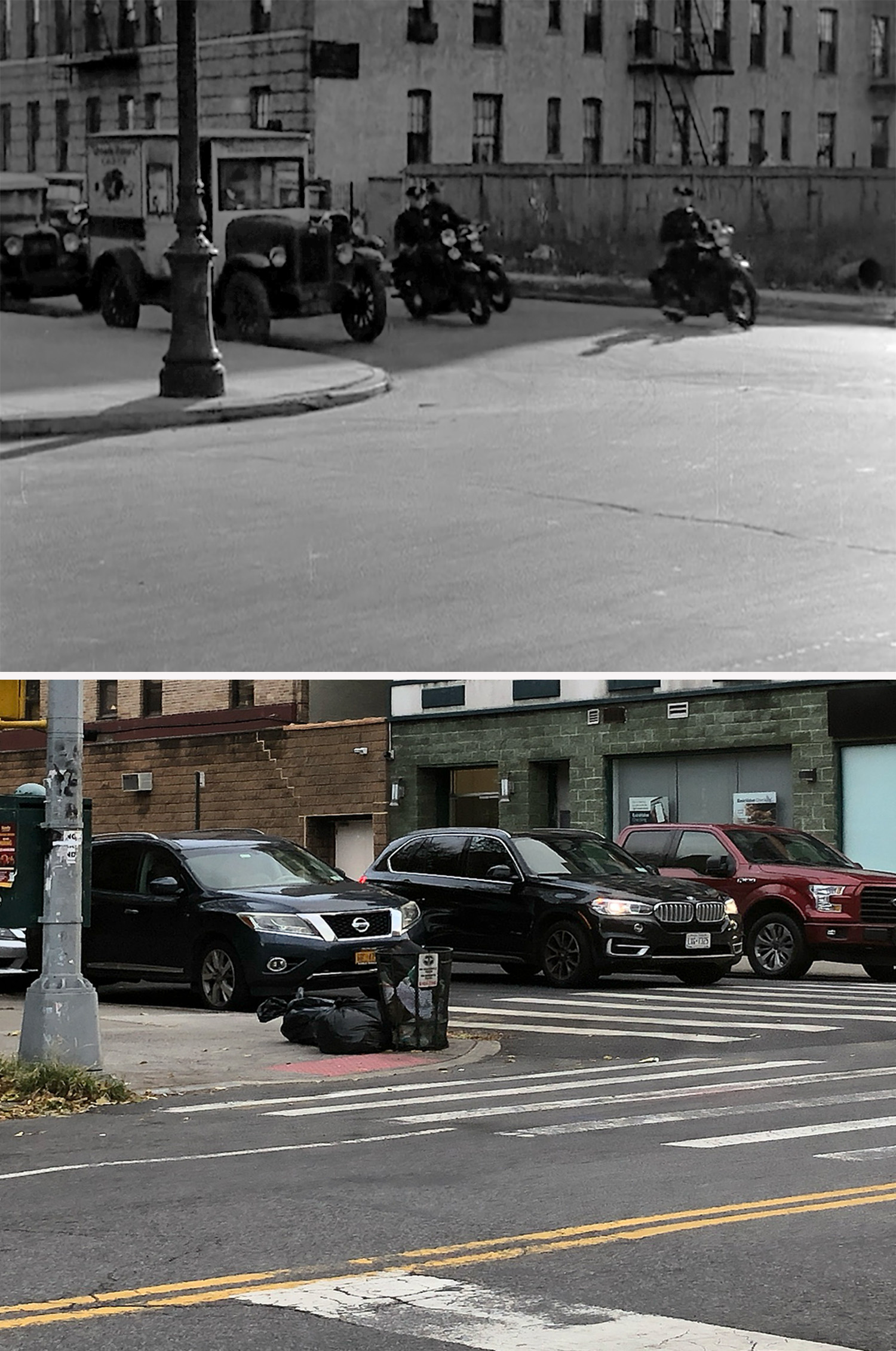
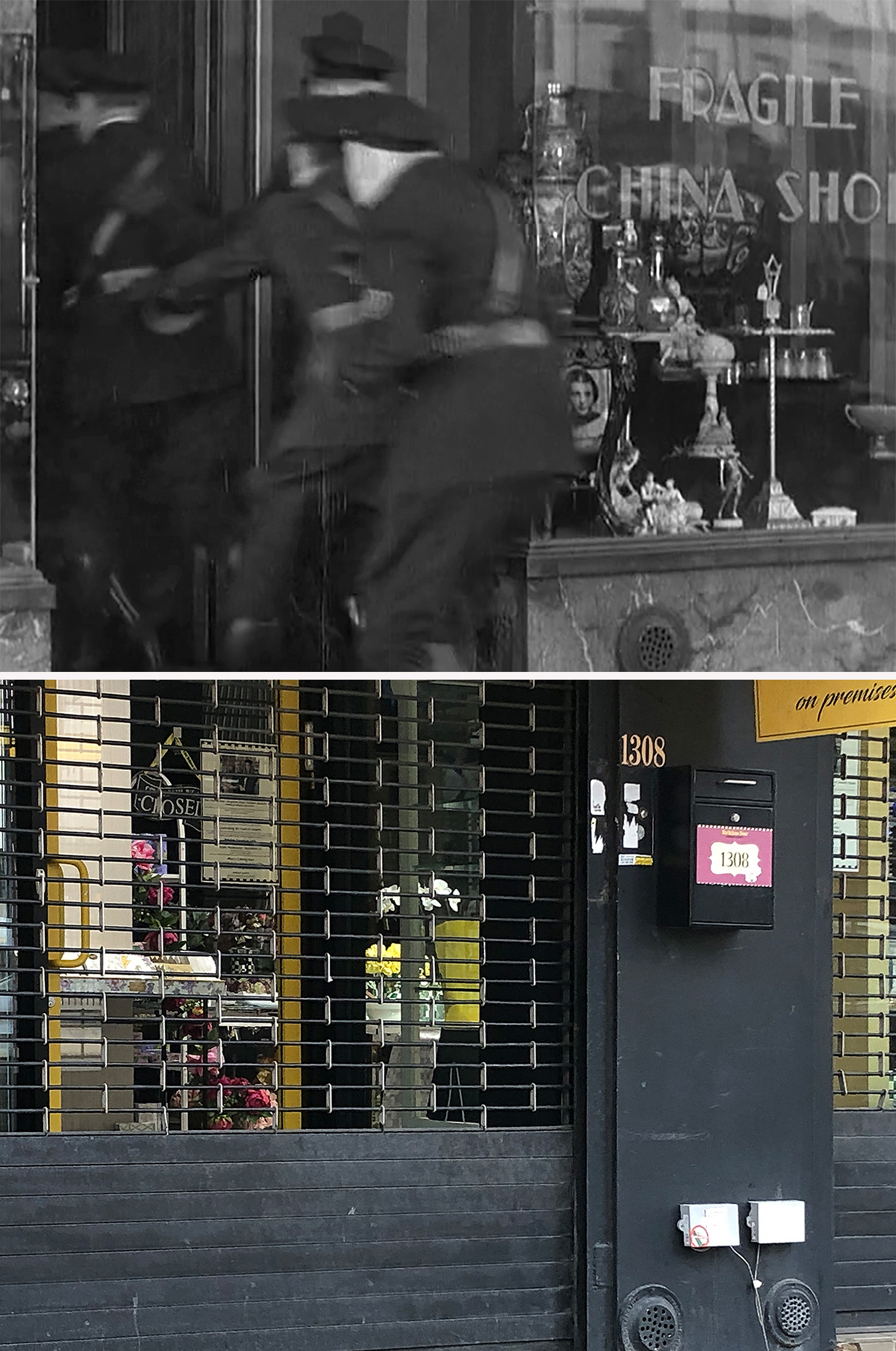
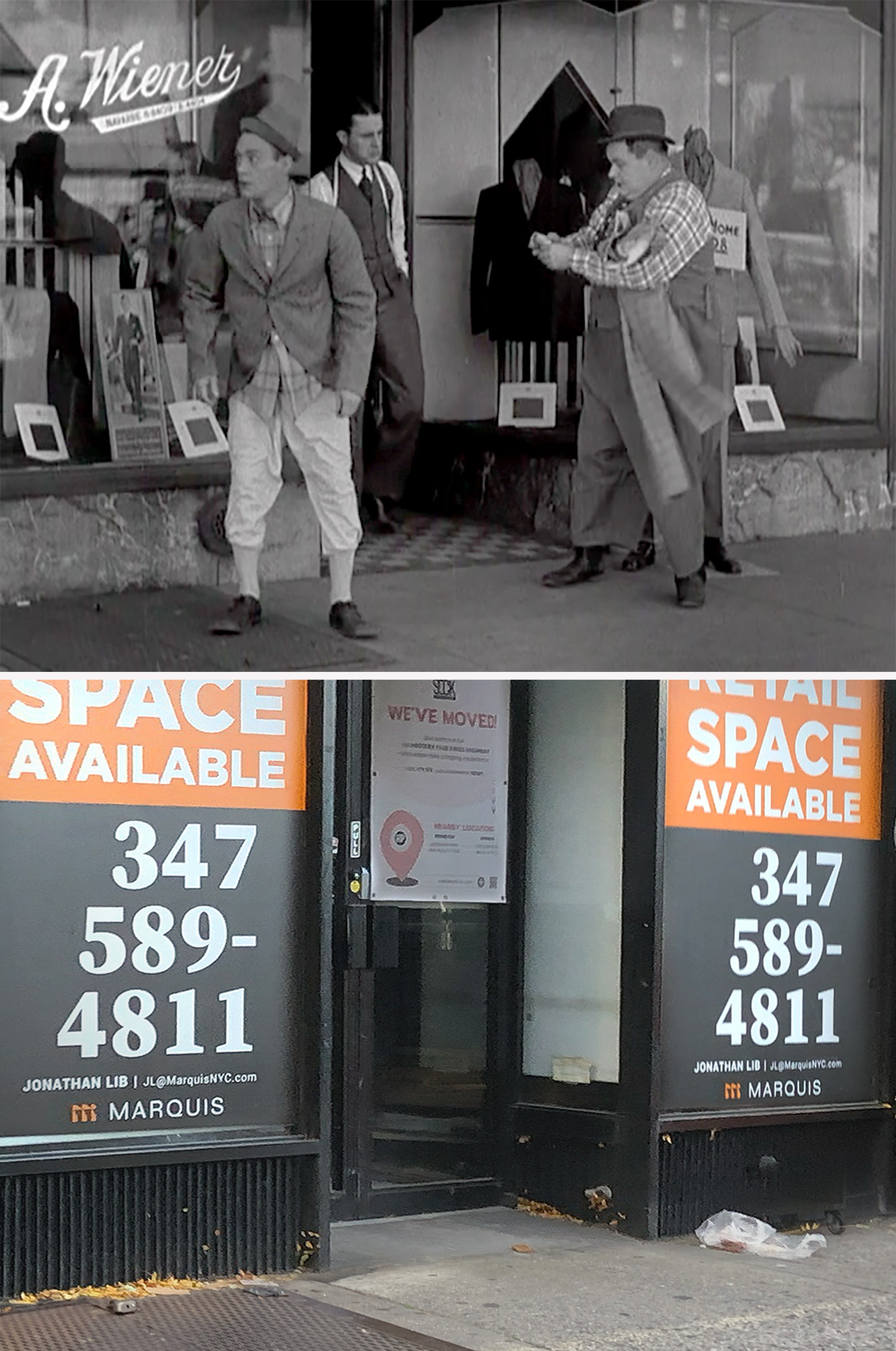
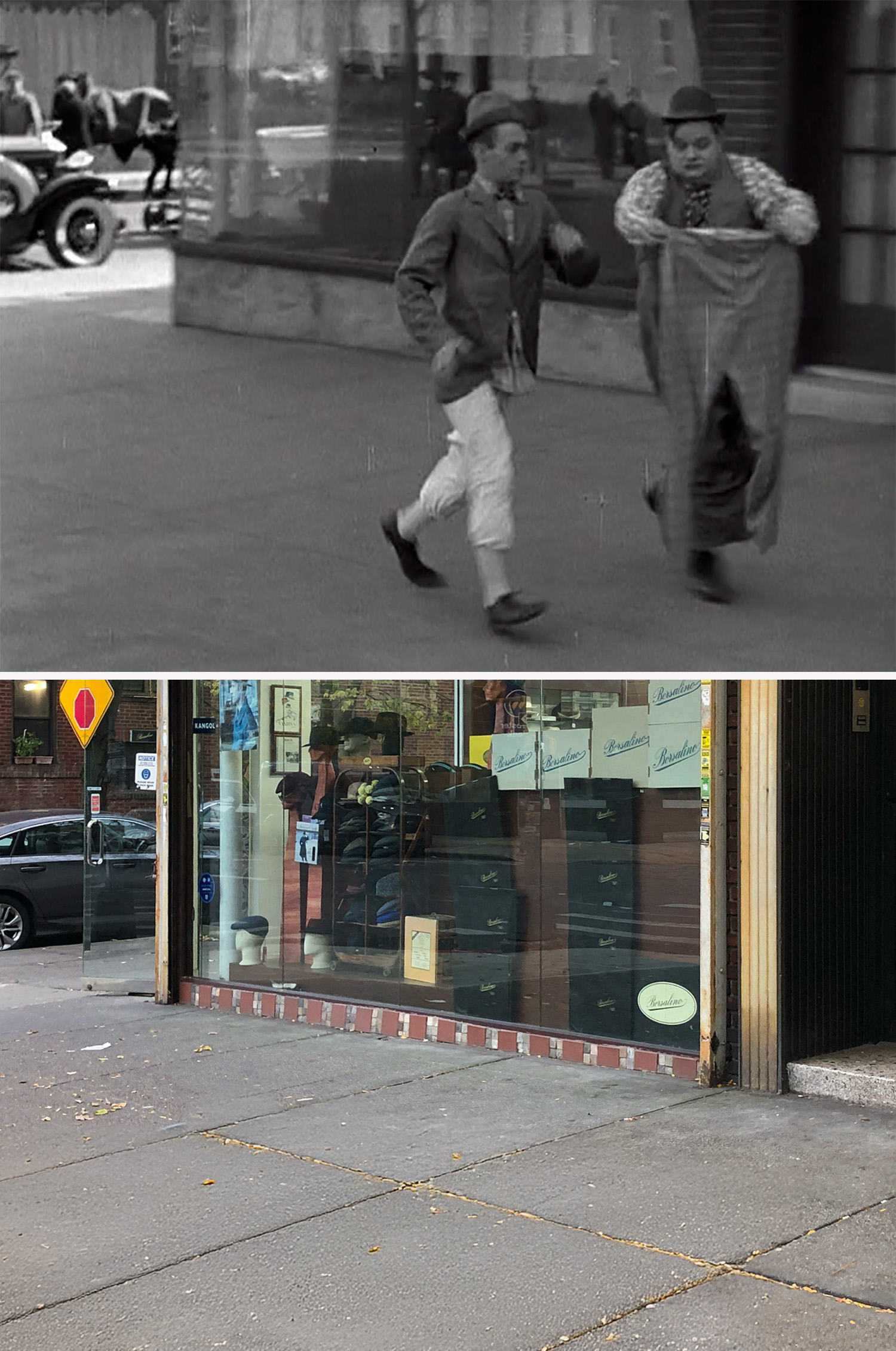
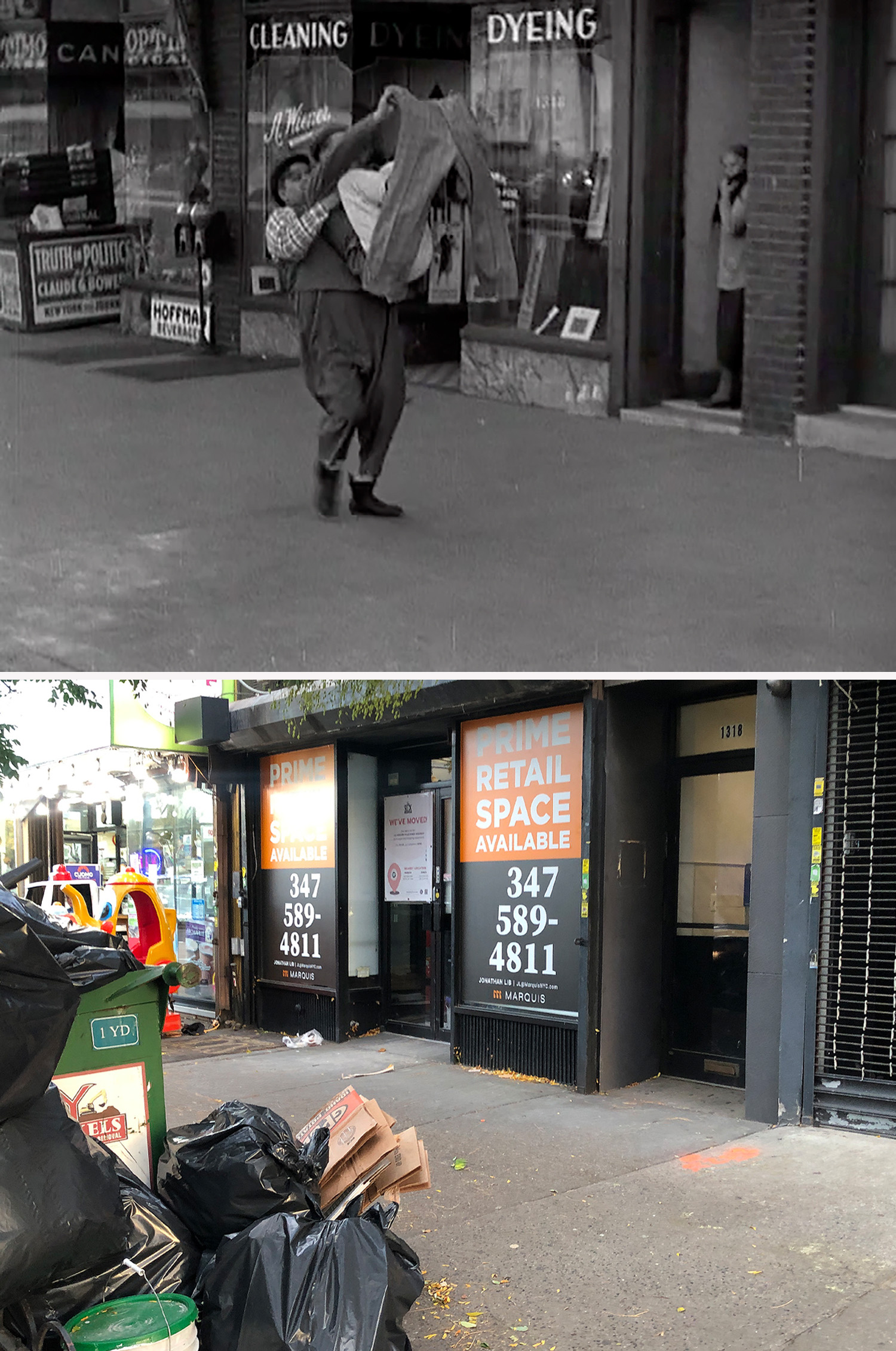
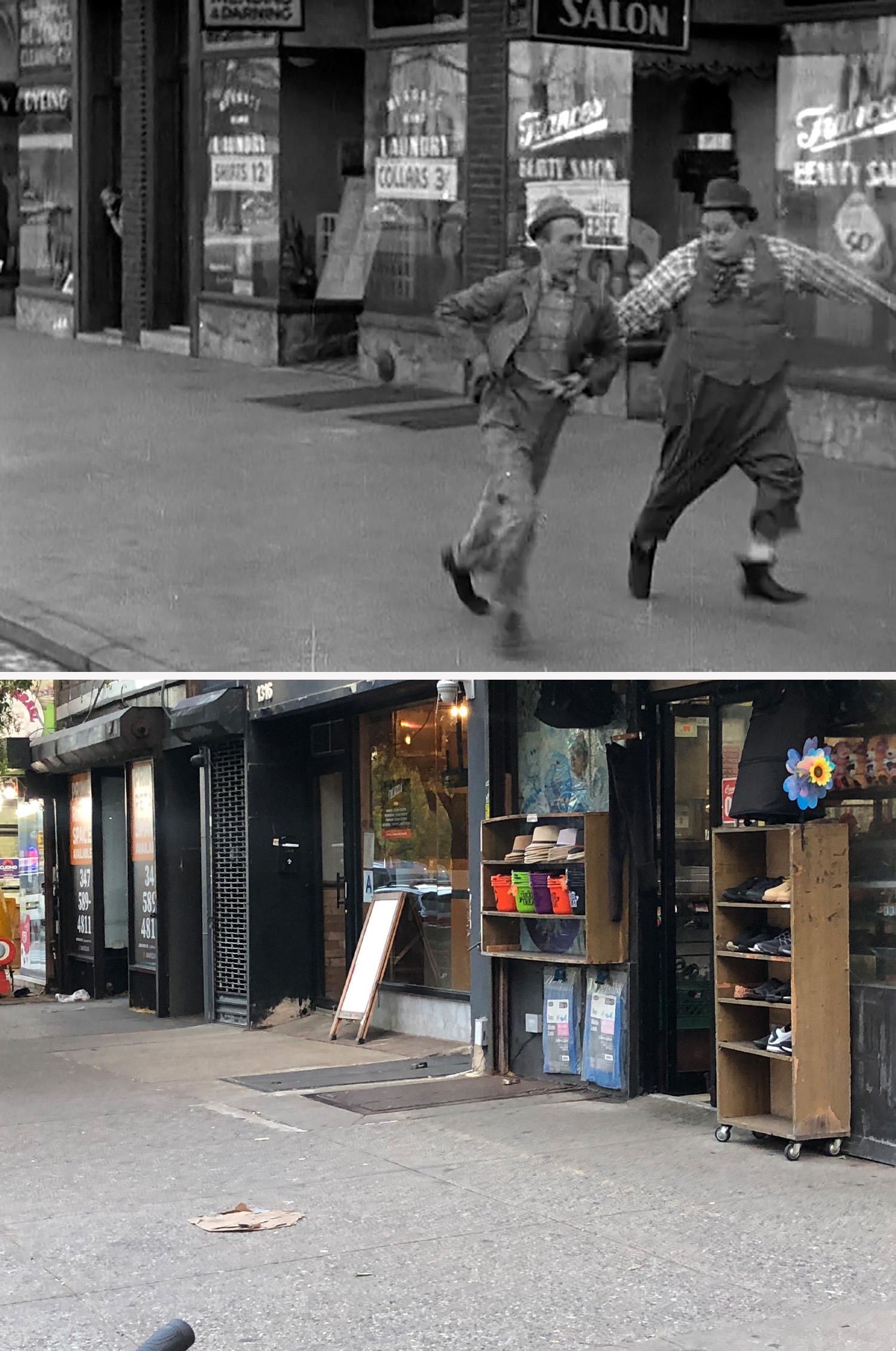
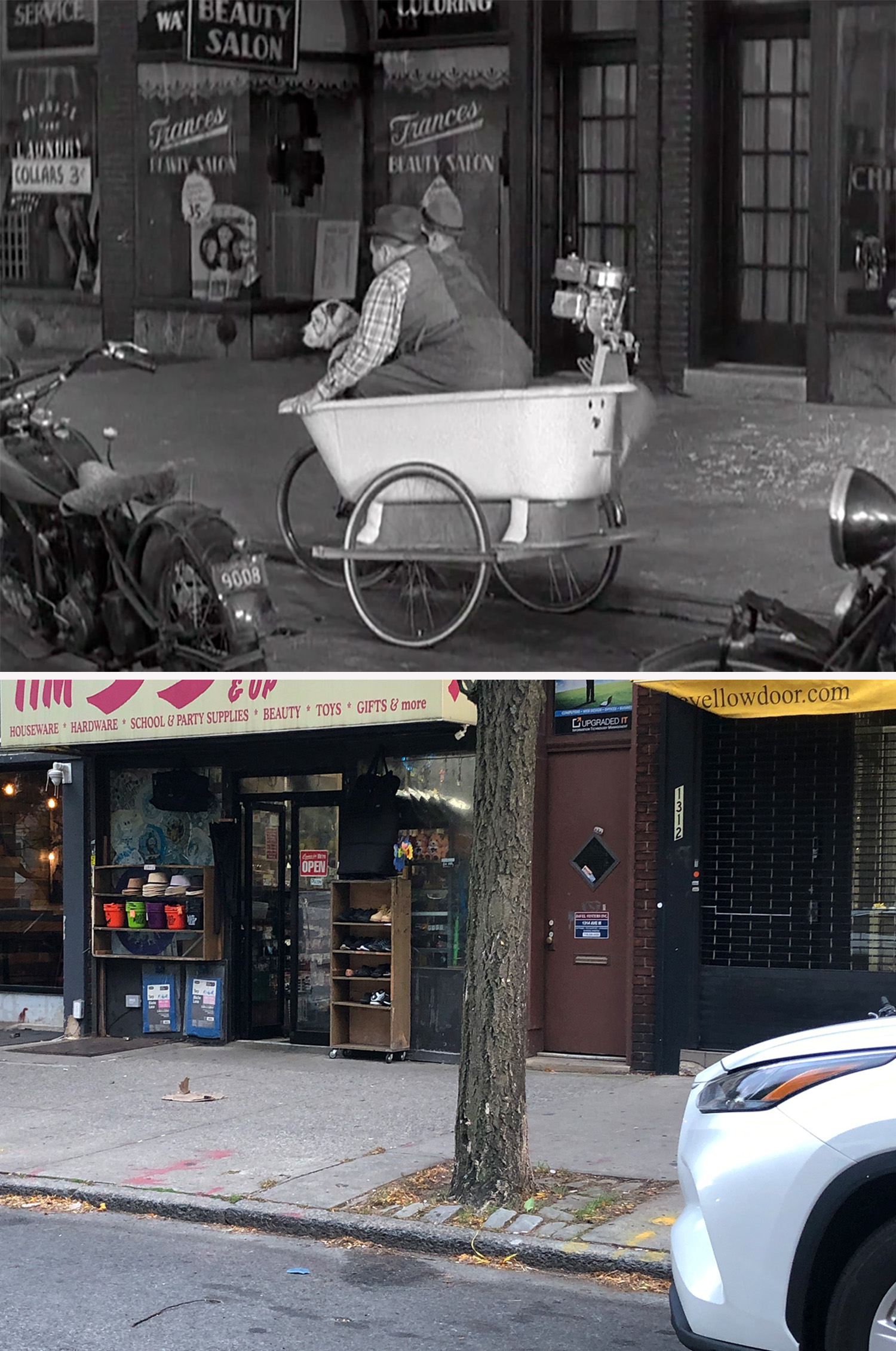
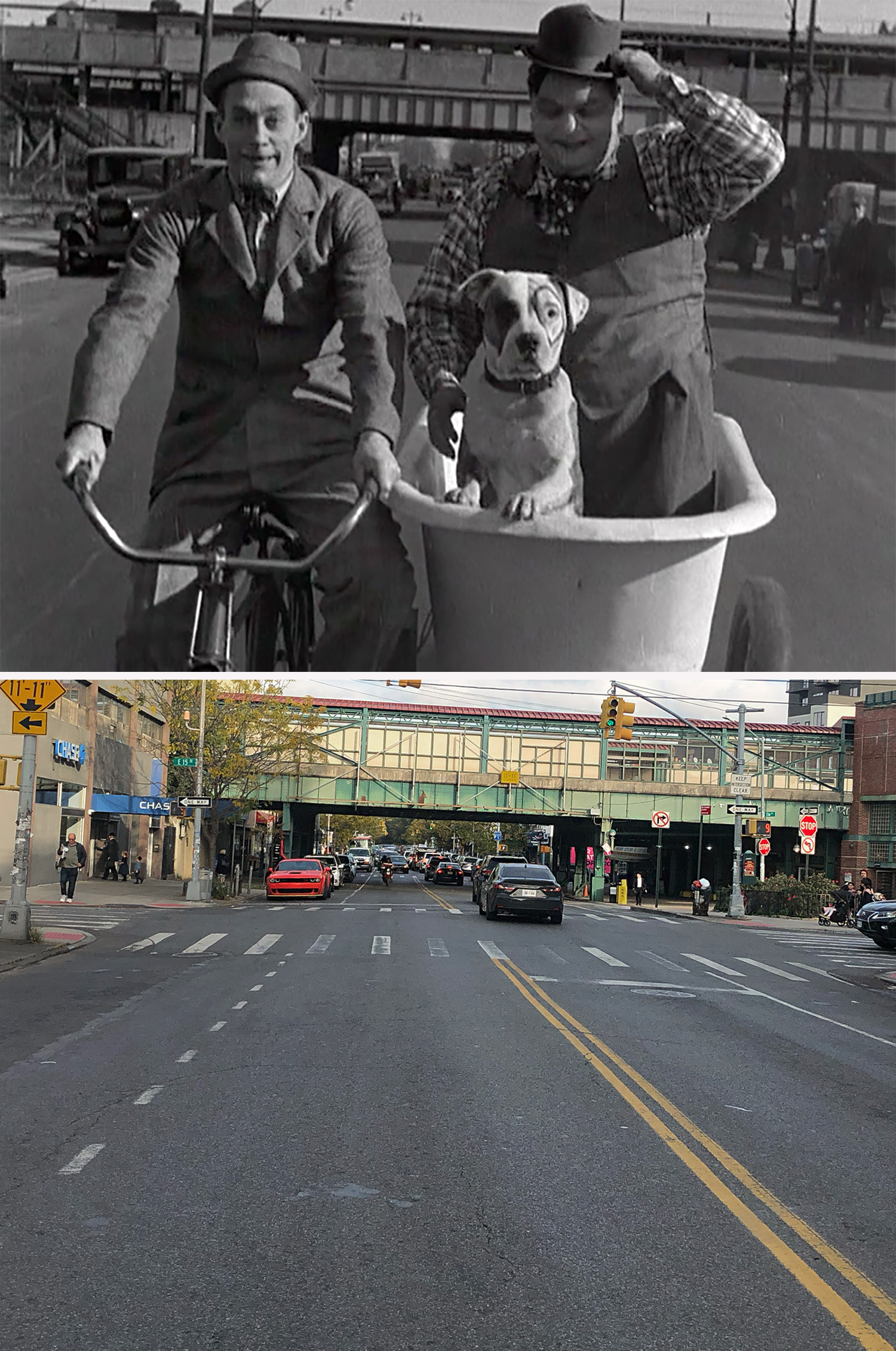
Almost all the action from these last two sequences took place along the same block on Avenue M, occasionally messing around with the geography. The most glaring inconsistency is when they buy pants at a shop at 1318 Avenue M, run west, then pass the shop again a few seconds later. Also, the very last shot of them escaping from the china shop in the bathtub was a little screwy — they are seen one block east of 14th Street, traveling west, but that would mean they were actually heading right back towards the shop.
One other inconsistency occurred with the motorcycle cops racing to the china shop. In one quick shot, they’re seen driving into Manhattan’s Central Park, roughly 12 miles away from Midwood, Brooklyn. This was clearly old stock footage inserted into the sequence. I could tell it was old because the building seen in the background on Central Park West was torn down in the late 1920s.
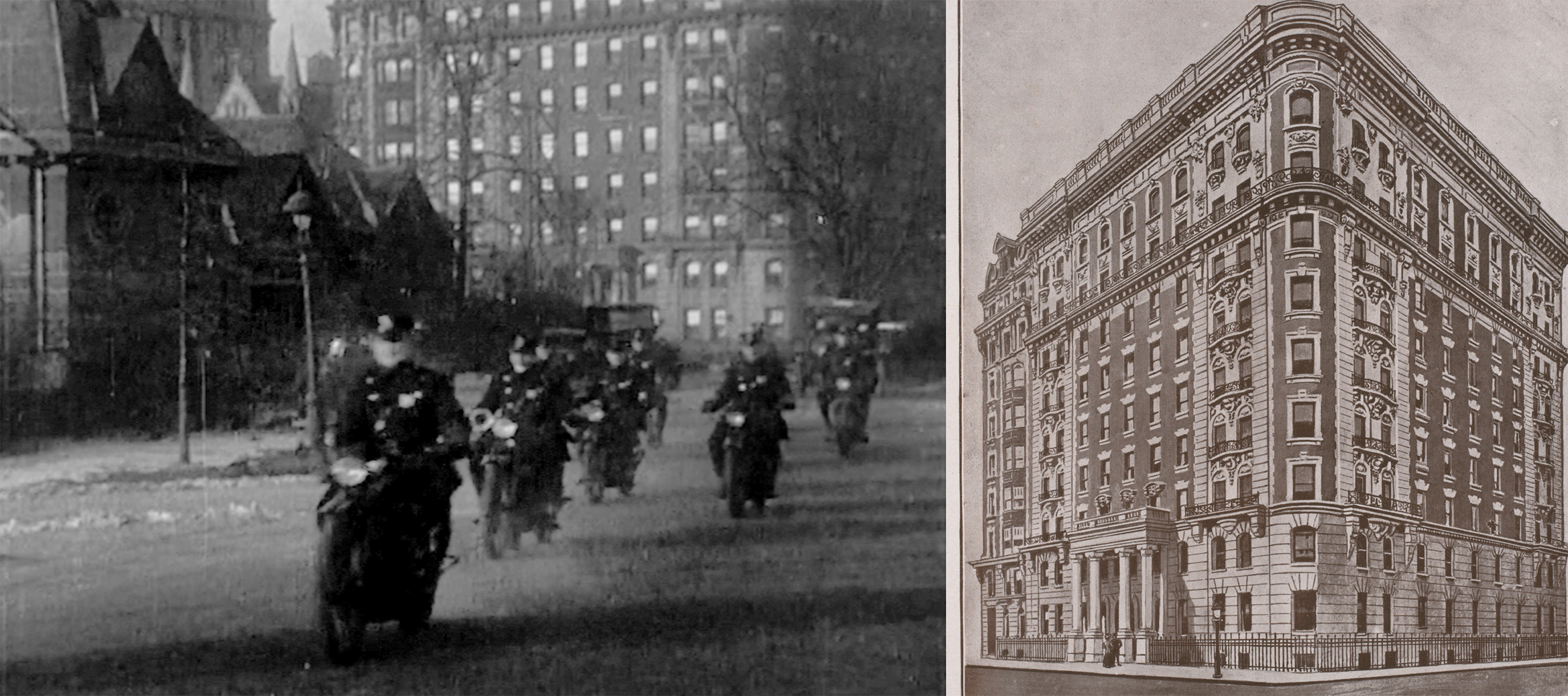
The old building was called Georgian Court and was situated on the corner of W 66th Street and CPW. Built in the early 1900s, the apartments inside consisted of 8 to 12 room suites designed in the Flemish style, catering to New York’s more affluent residents. Surprisingly, the elegant, Beaux Arts building was demolished just a little over twenty years after its construction. It was replaced in 1929 with a 19-floor “second tier” rental property, which was later featured in the 1984 film, Ghostbusters, as the memorable “Spook Central.”
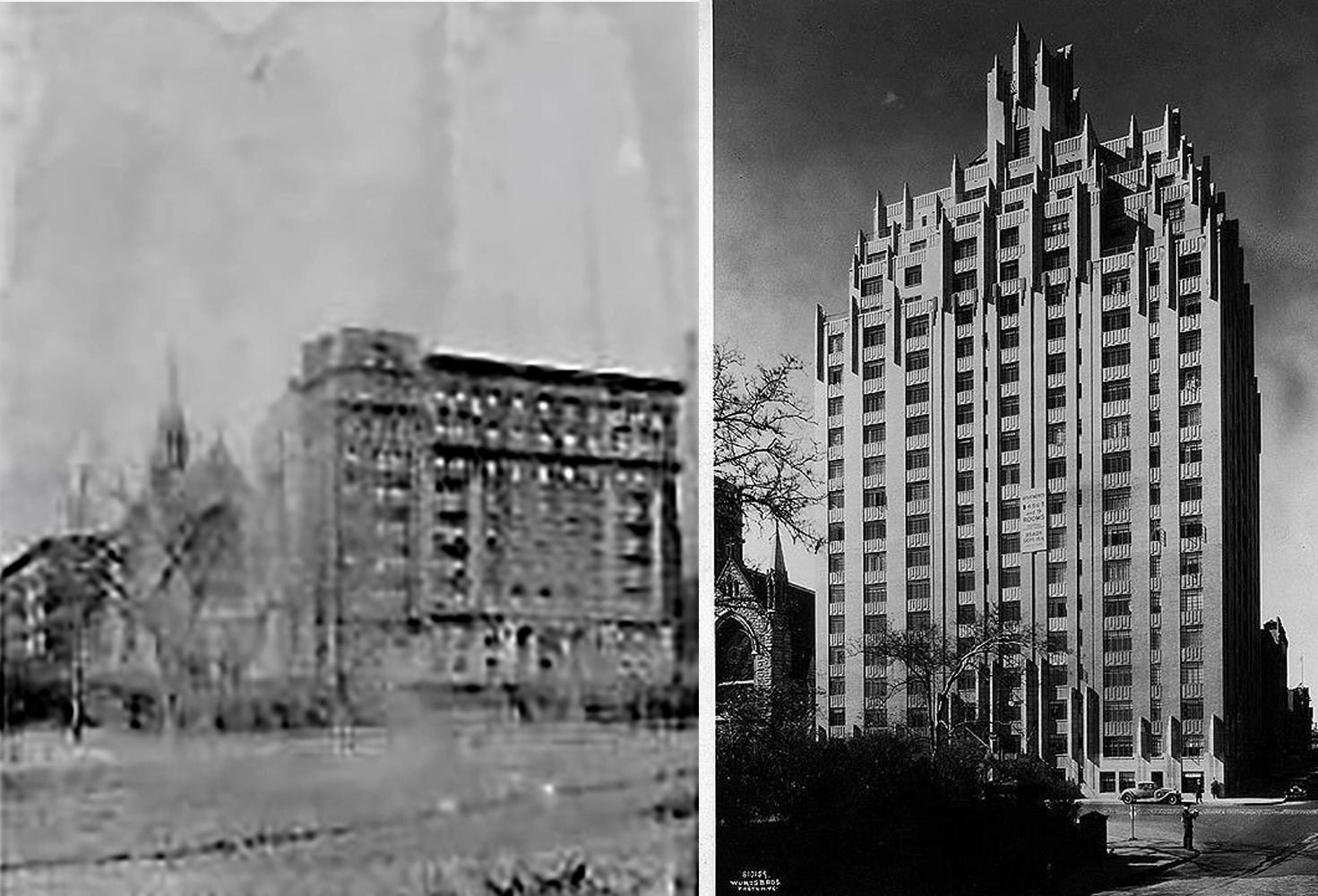
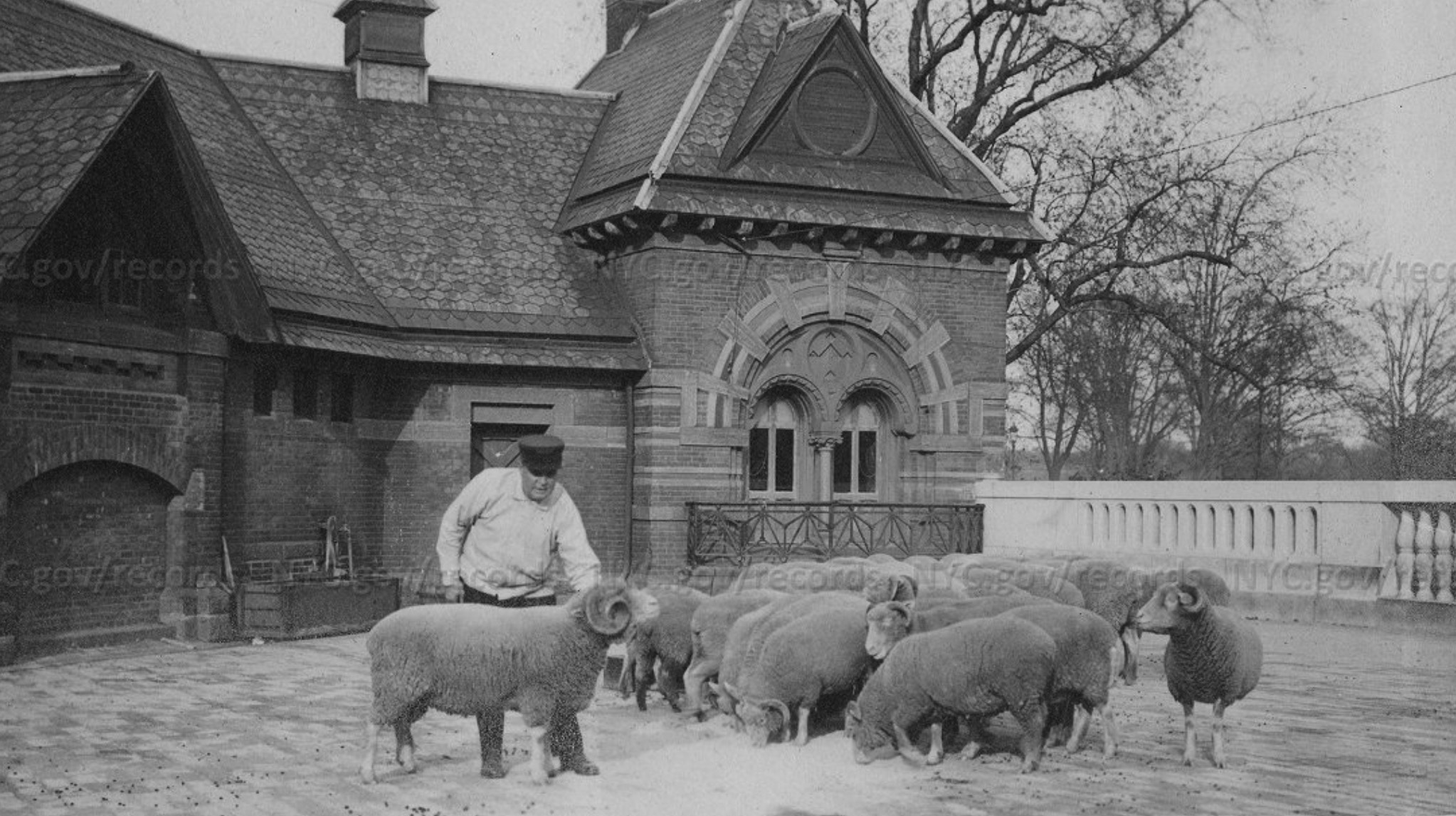
Despite the change of buildings on CPW, I was able to identify the location fairly quickly, recognizing the Tavern On the Green structure on the left side of the frame, which was still operating as a sheepfold at the time. You can read more about it in my post about Central Park (1932), a movie that also showcased the old sheep shelter.
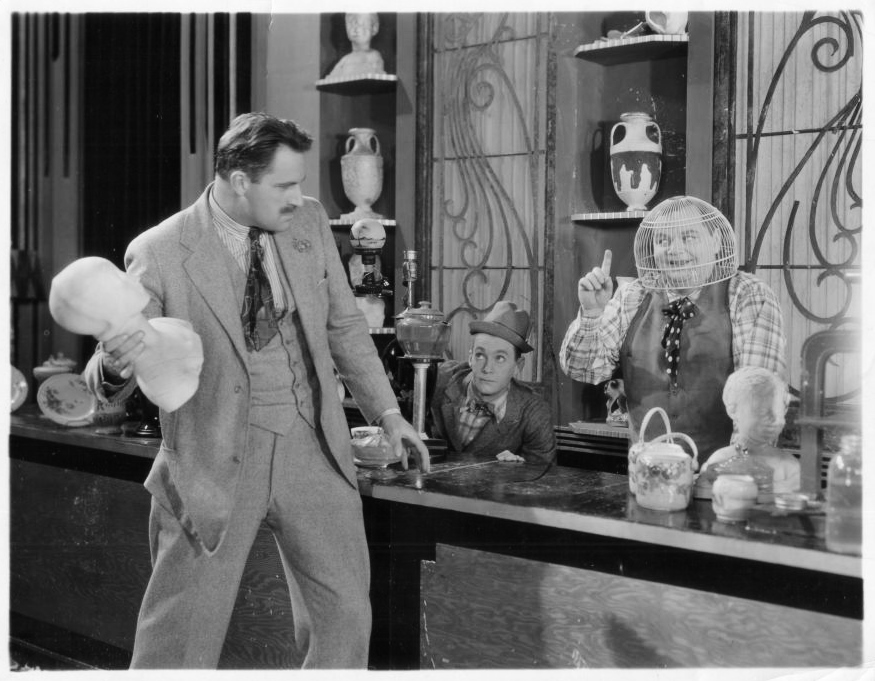
While not a particularly inspired comedy, Buzzin’ Around is noteworthy for being one of the few sound pictures featuring Roscoe ‘Fatty’ Arbuckle, and does include a few amusing gags.
Buzzin’ Around is also significant for being one of the few surviving films to showcase the streets of Brooklyn in the early 1930s. To quote John Bengtson from his post about these Arbuckle shorts:
Movies are time machines, transporting viewers back to the time and place of their creation. The Vitaphone Studio is but a memory, and now the building has been brought down, but through its films we can still experience brief and vivid glimpses of a bygone era. We all owe a debt of gratitude to the many collectors and archivists who rescued these films and made them available for us all to enjoy.
If you’re a fan of old films and are in New York, I highly recommend taking a trip to Midwood to visit these locations. The subway ride from Manhattan is a tad long but worth it since all the locations are within a couple blocks of the subway station, including the old Vitagraph smokestack.
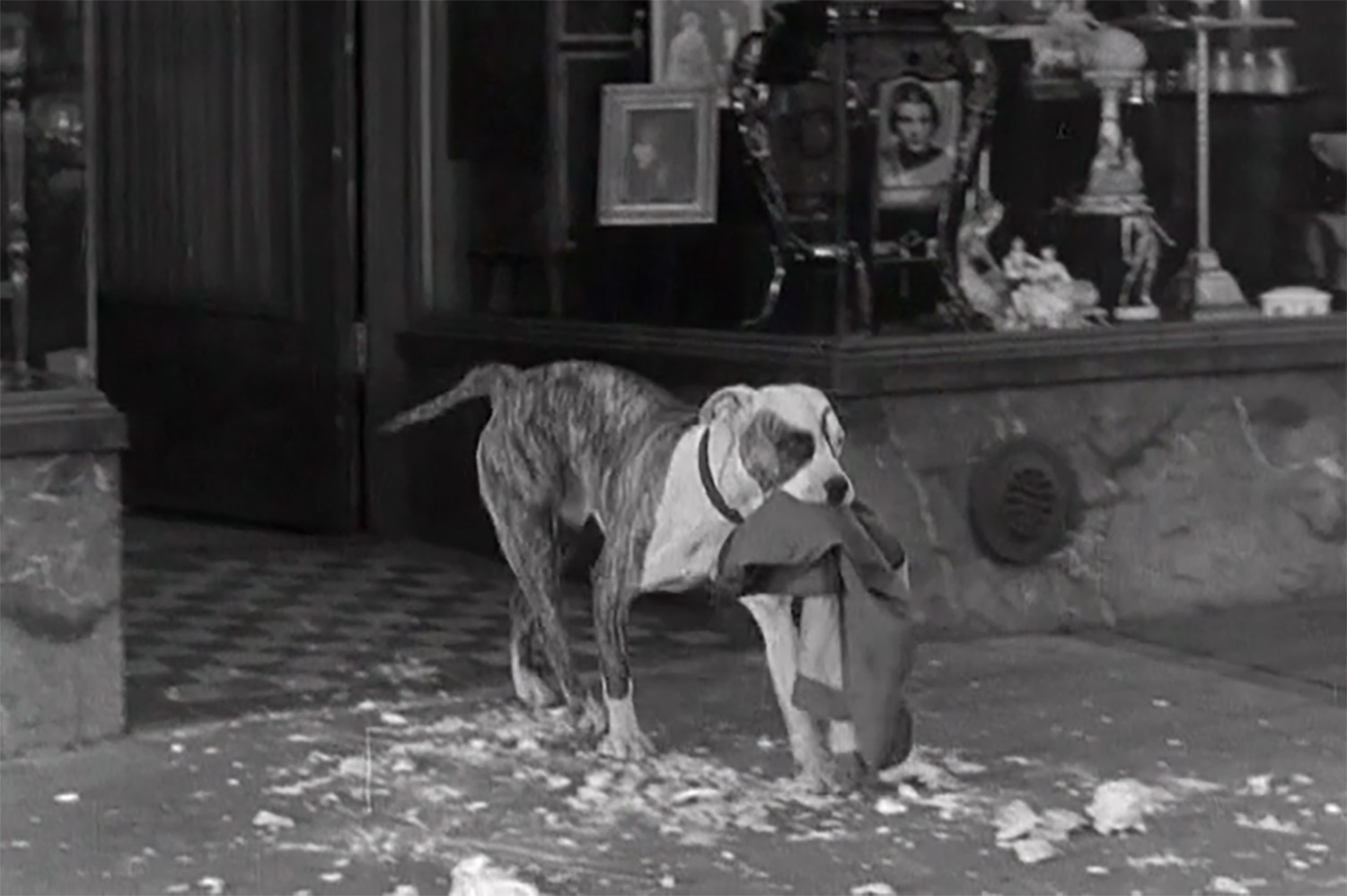
And personally, I must say, standing on the same stretch of sidewalk where Pete the Pup (best known for his appearances in the Our Gang shorts) once stood, gave me quite the thrill.


Love all those matching shots, Mark. Great research!
LikeLike
Thanks Bob. It was a fun adventure going down to Midwood after not being there for years.
LikeLike
Had no idea any SNLs were aired from Brooklyn! Apparently the third episode filmed there was Chevy Chase’s last as a regular cast member.
LikeLike