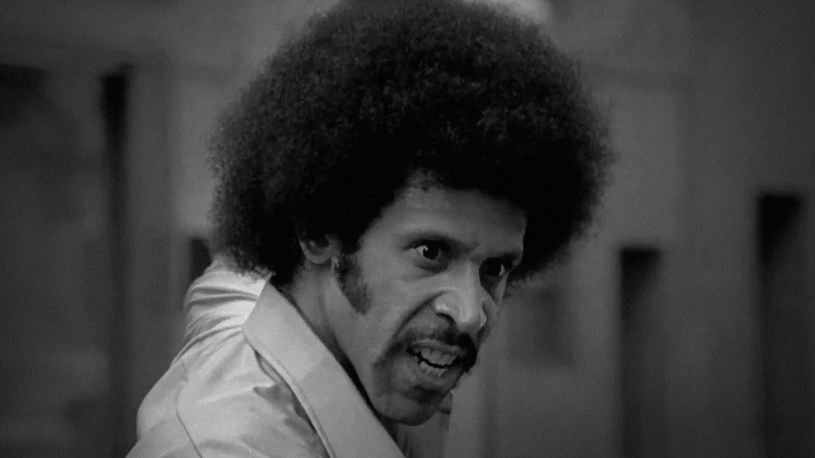
If you’re a fan of low-budget seventies movies with mixed genres, shoddy plots, goofy violence, and a “Z-grade” level of technical finesse, Devil’s Express is right up your alley. First-time director Barry Rosen serves up a madcap mishmash of martial arts, blaxploitation, gang warfare, police procedural, and man-in-a-monster-suit horror; all taking place on the dilapidated streets of NYC.
Leading this largely-forgotten picture (which doesn’t even have a Wiki page), is Warhawk Tanzania, a Brooklyn-born martial artist who briefly dipped his toe in the world of acting, quitting the business and moving to India after just two credited roles. Known for his imposing physique and signature gold velvet playsuit, Warhawk’s acting in this movie is subpar at best, but strangely compelling.
While by no means competent production, Devil’s Express is an MST3K-worthy flick, supplying a smorgasbord of (unintentional) belly laughs. And with all the footage of NYC and the surrounding area, it instantly tingled my location senses and sent me into dedicated hunter-mode.
Opening Credits
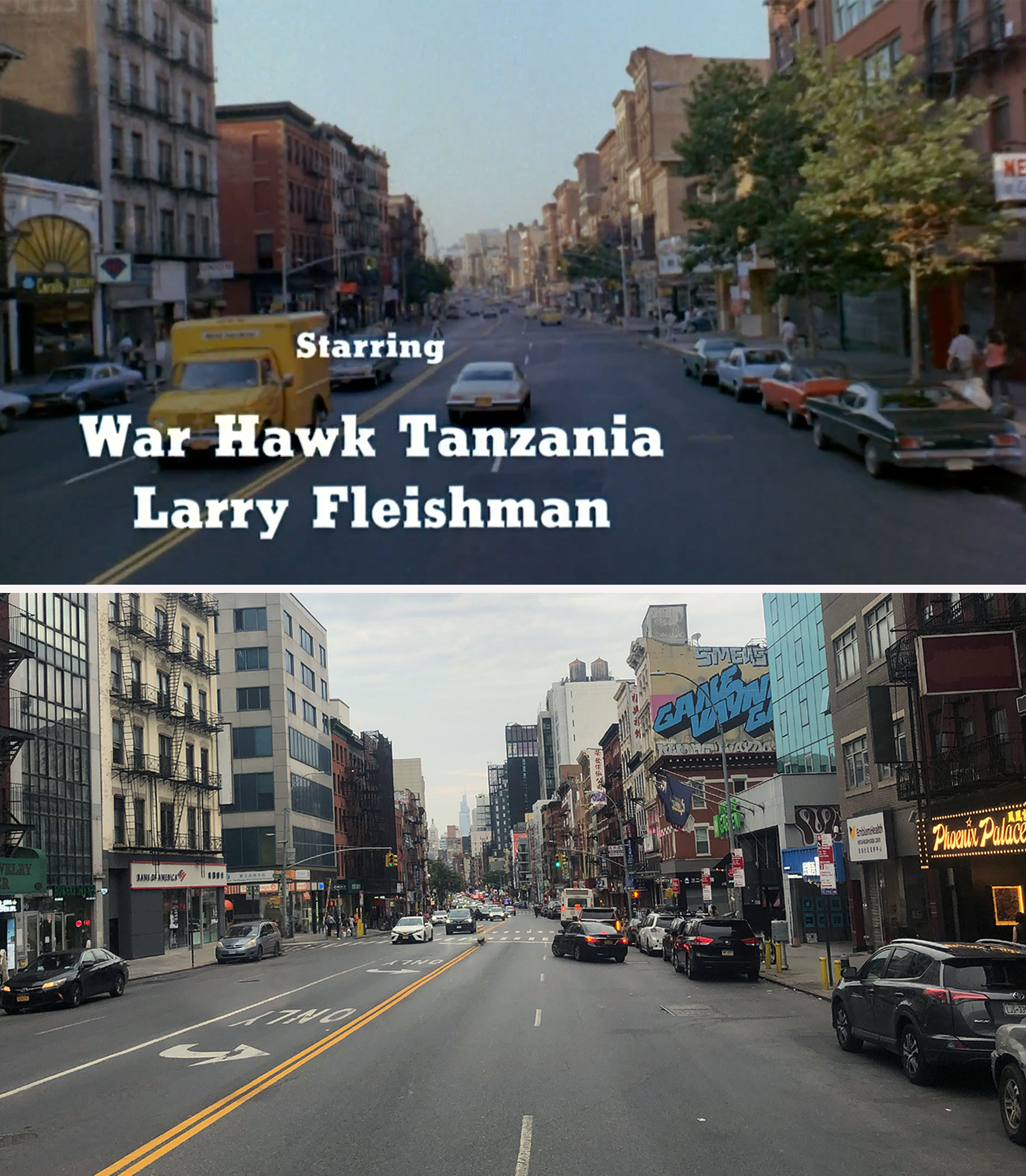
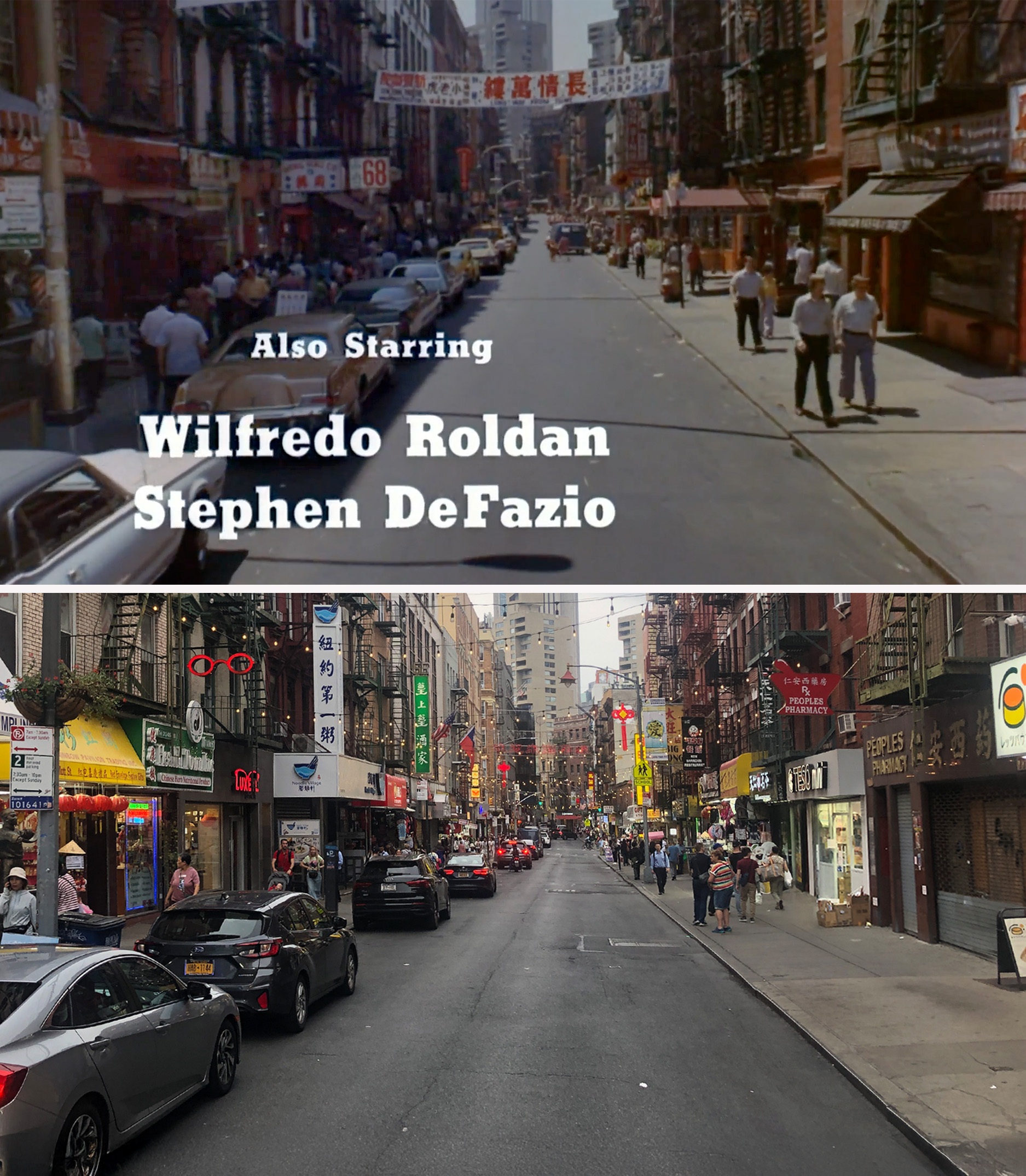
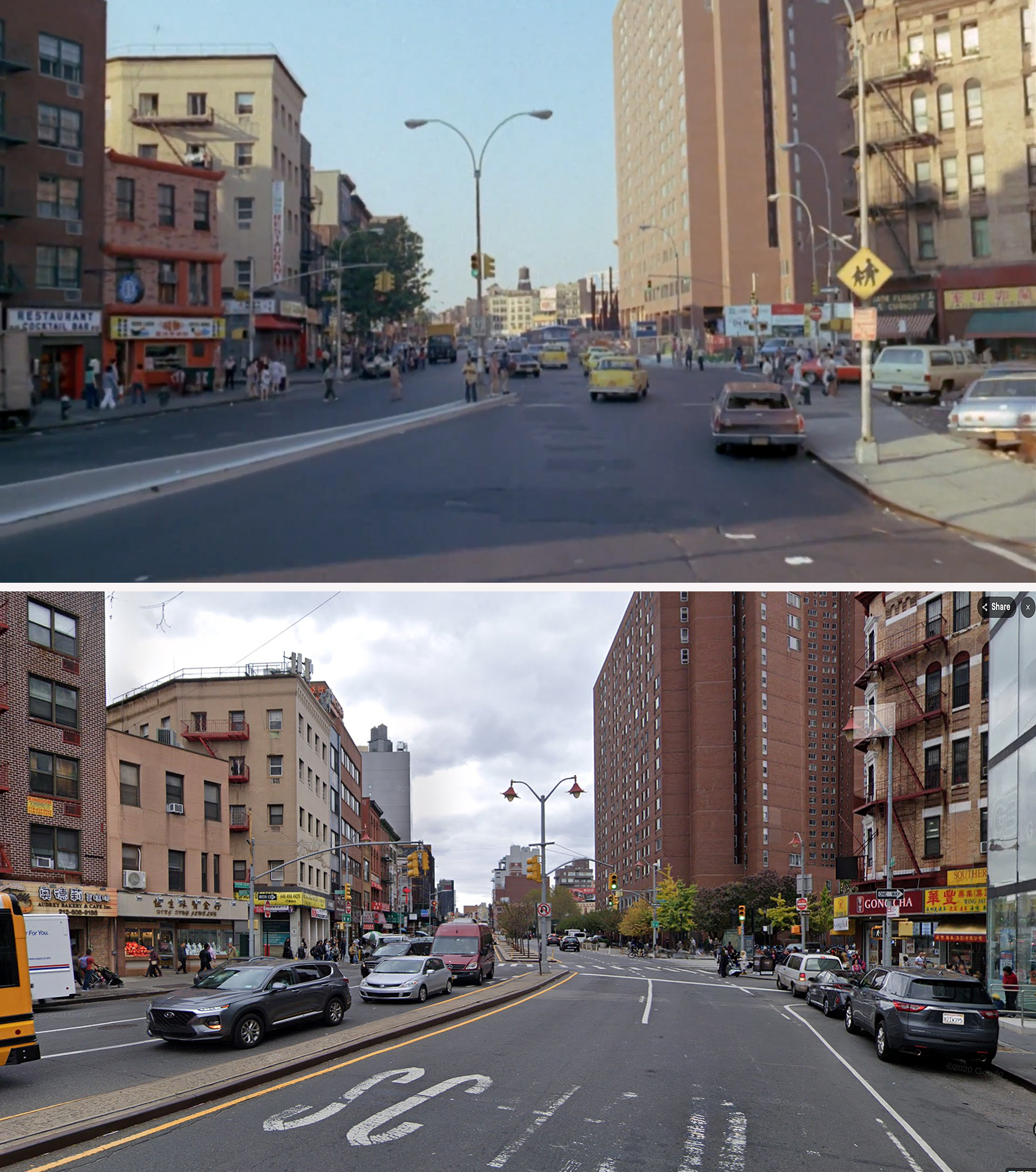
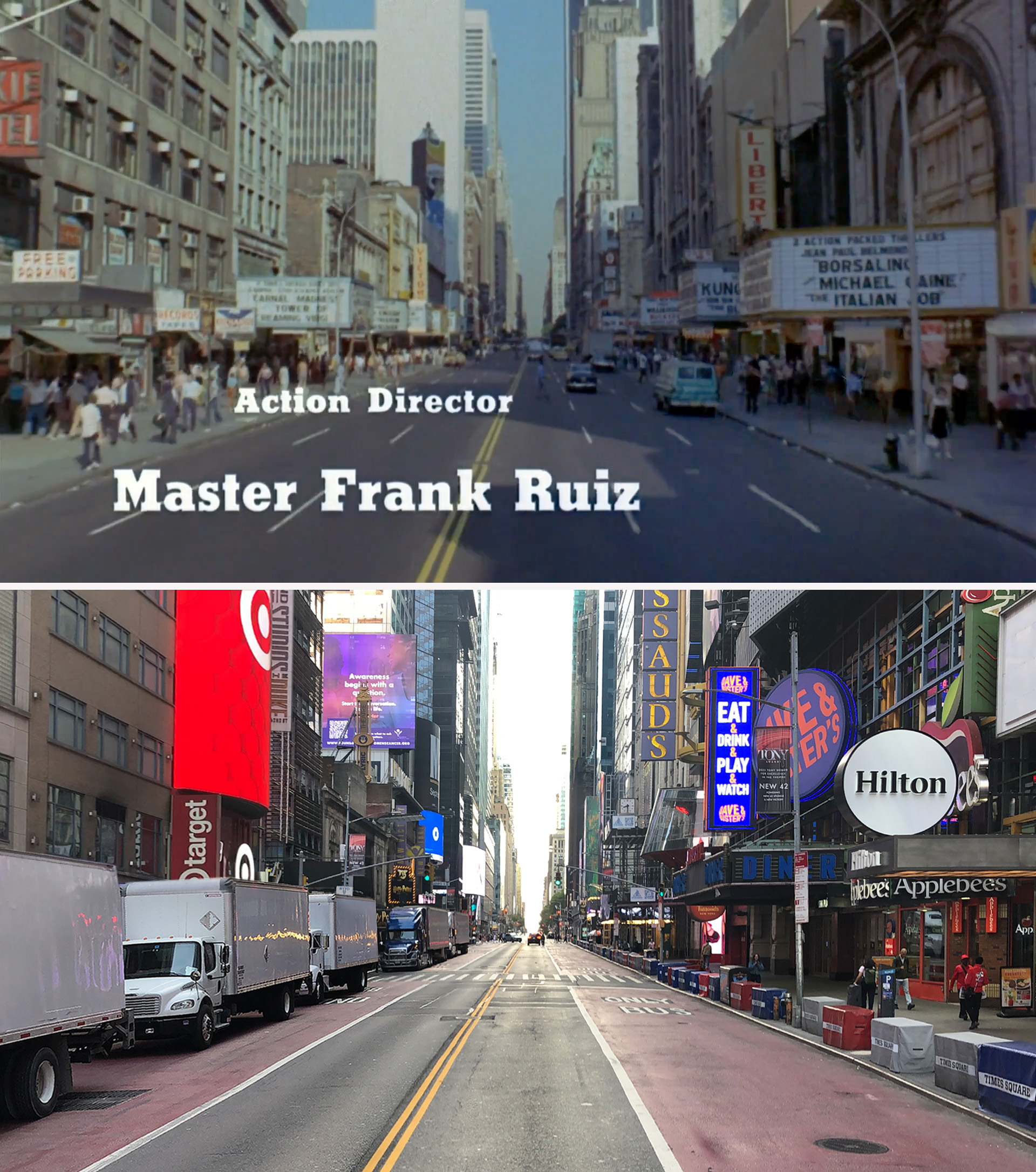
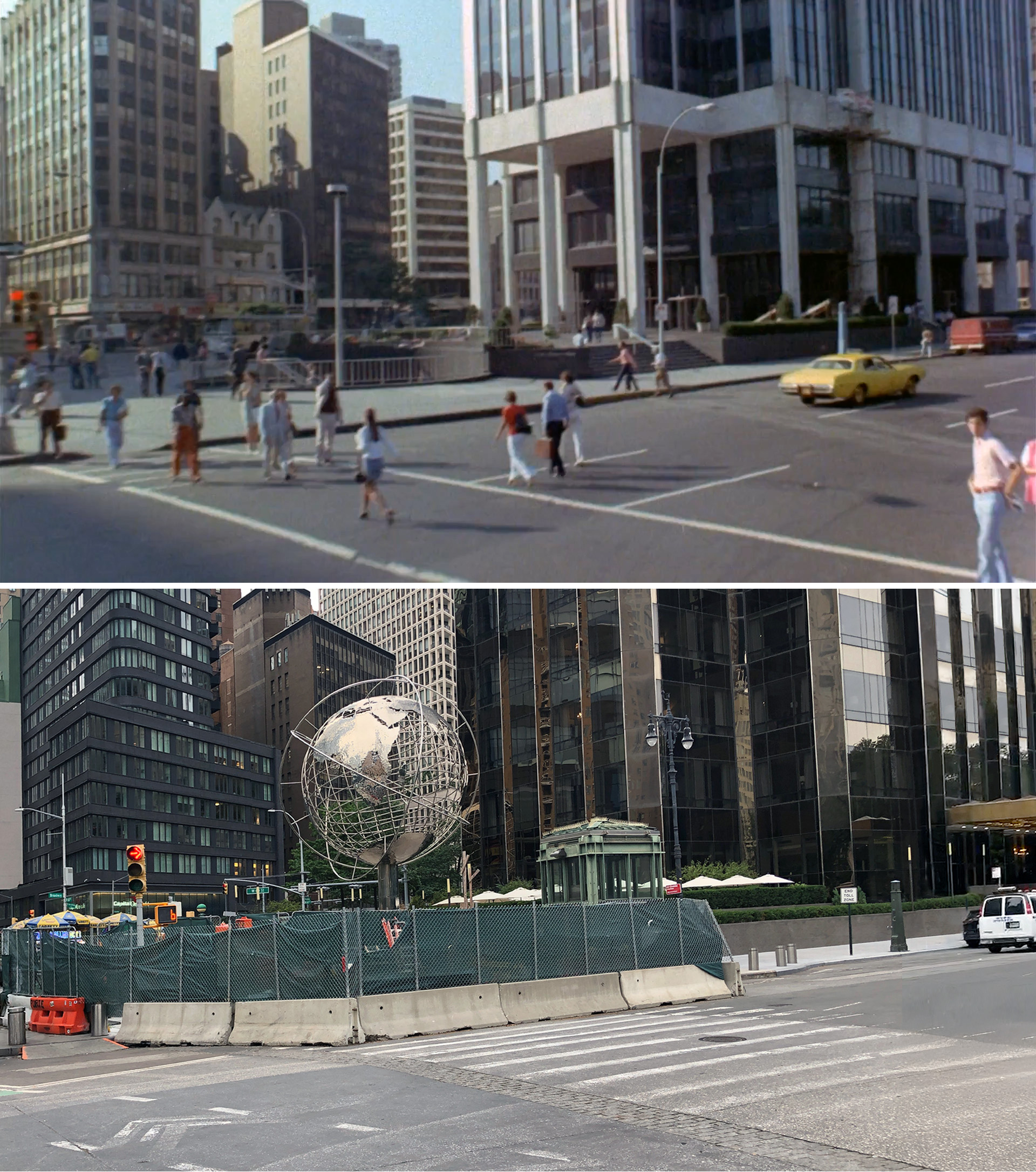
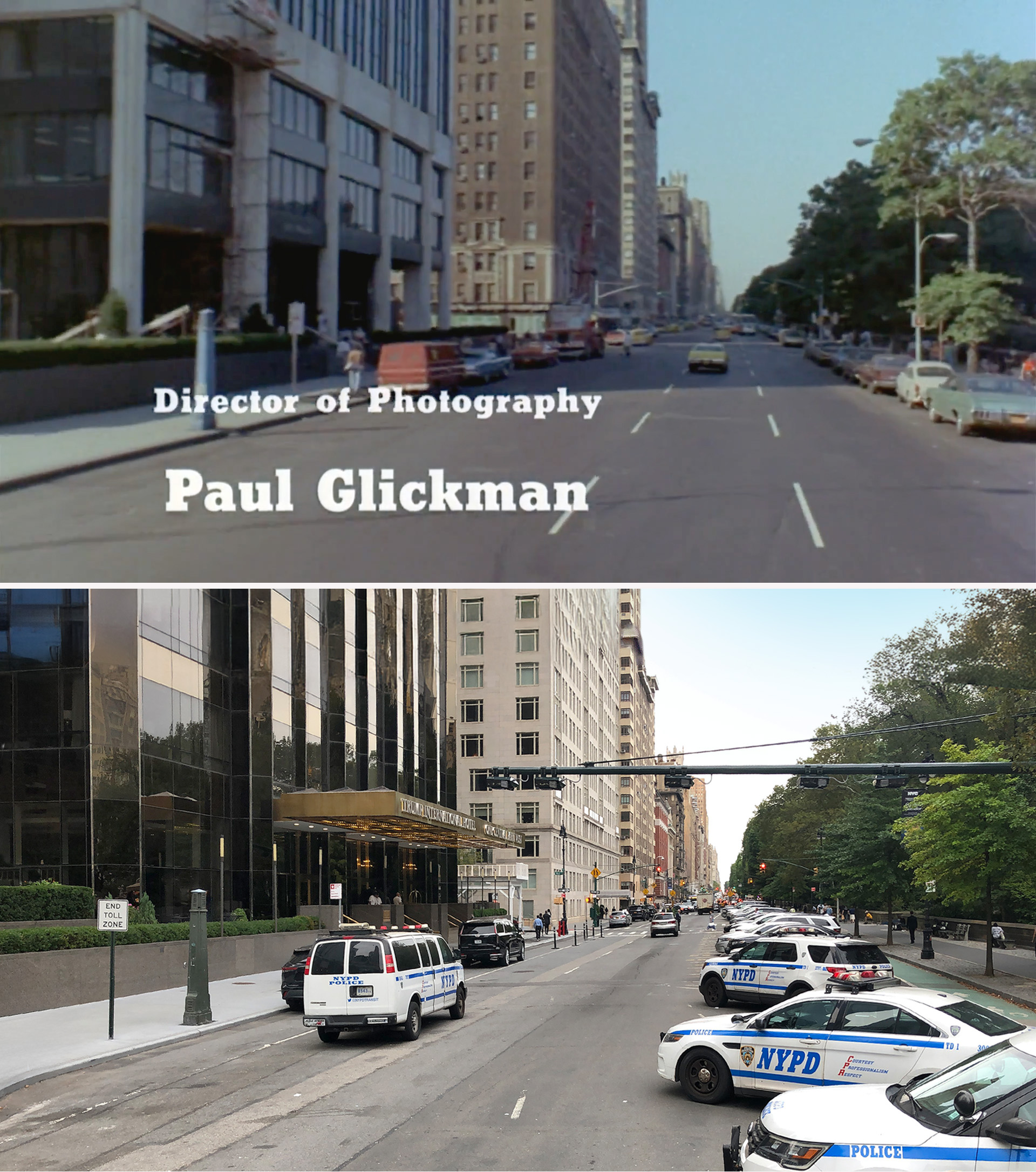
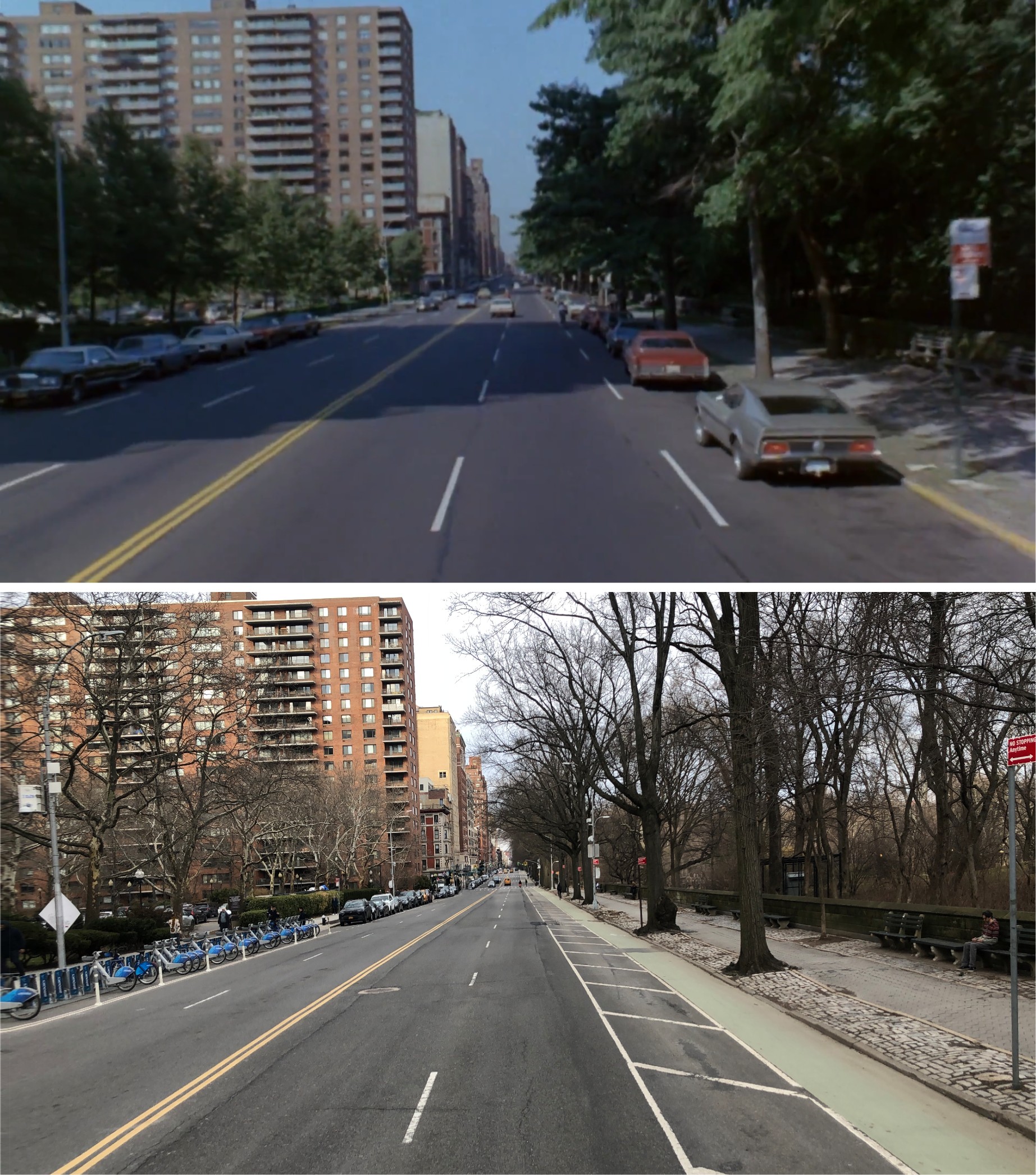
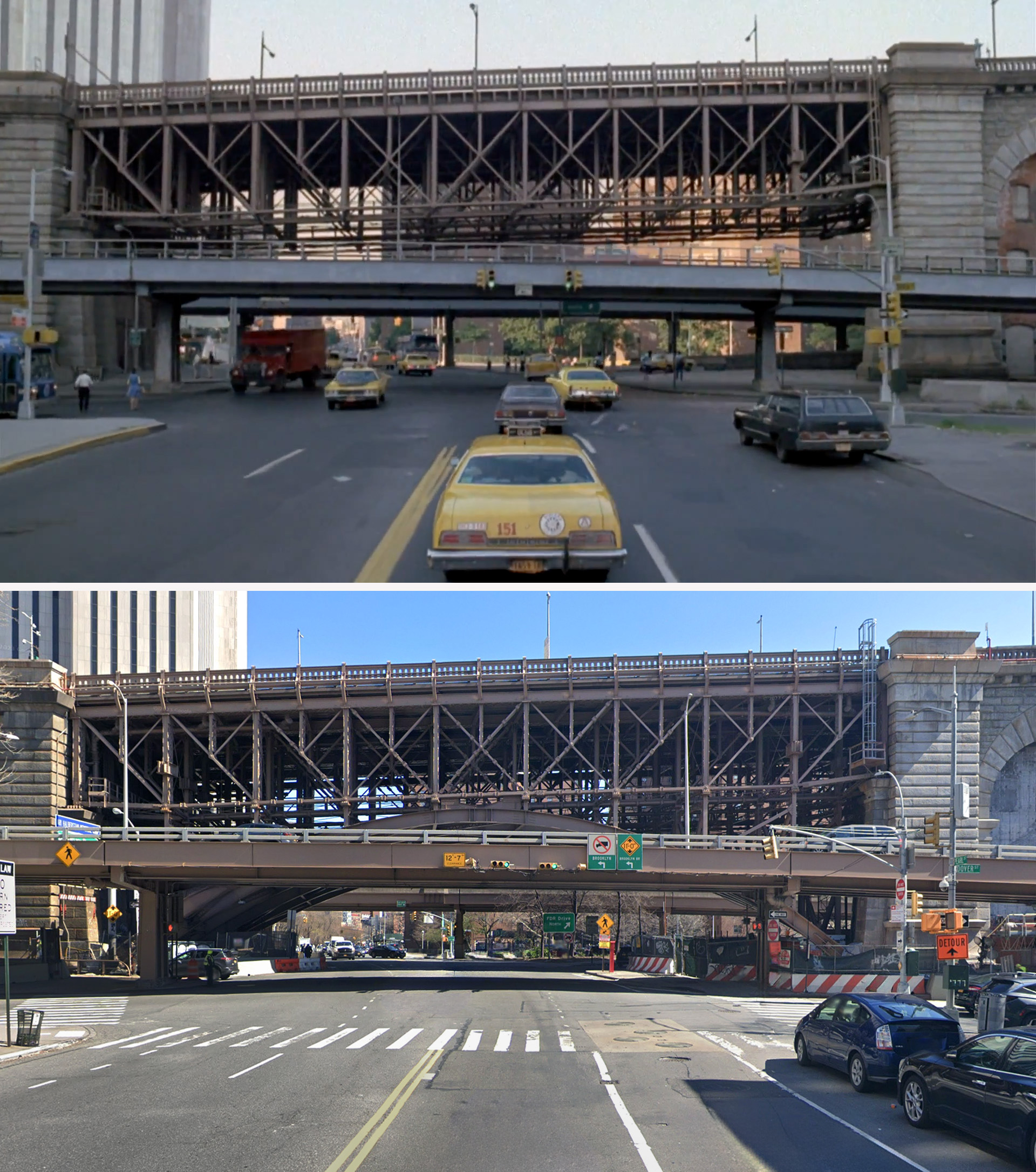
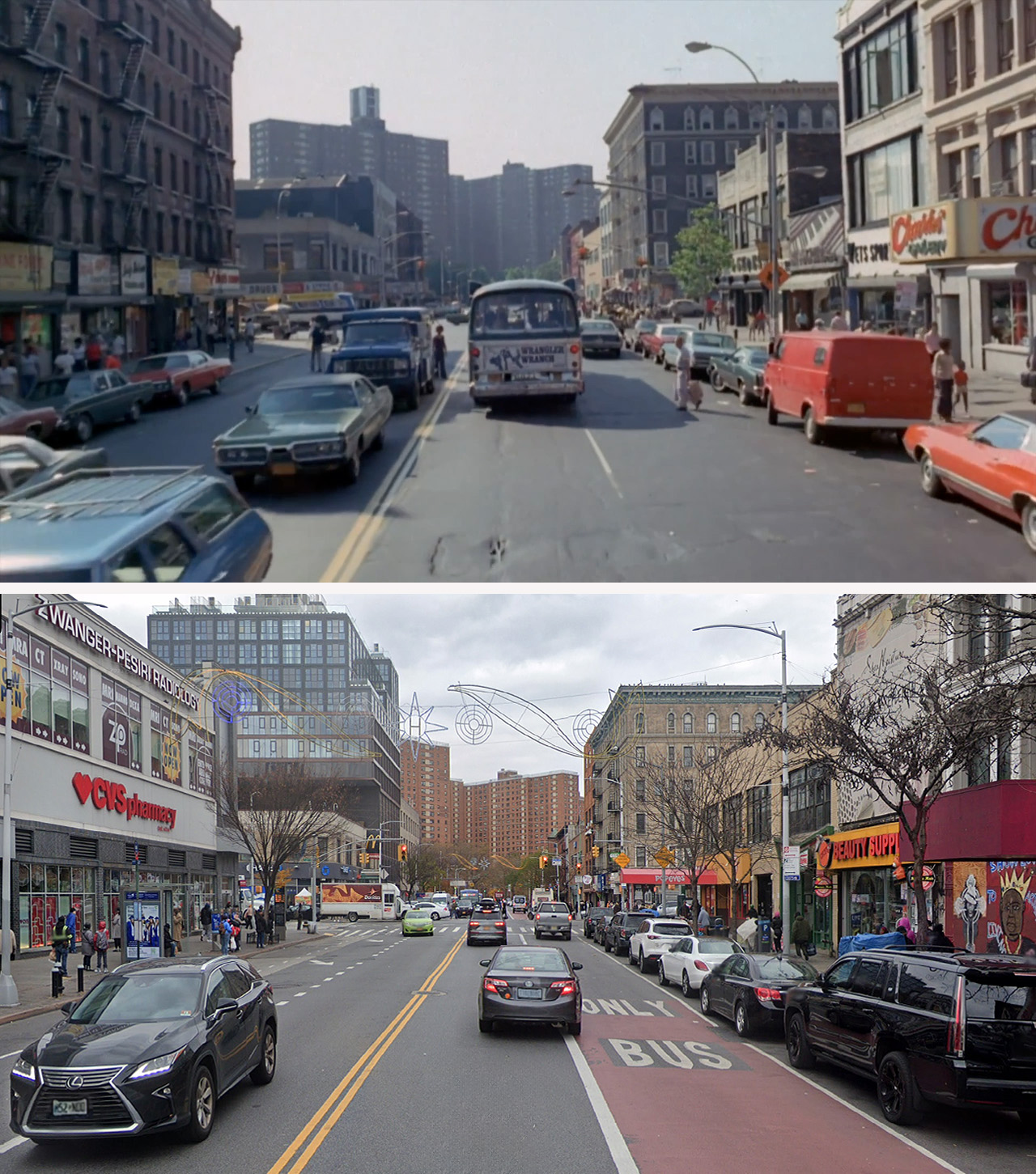
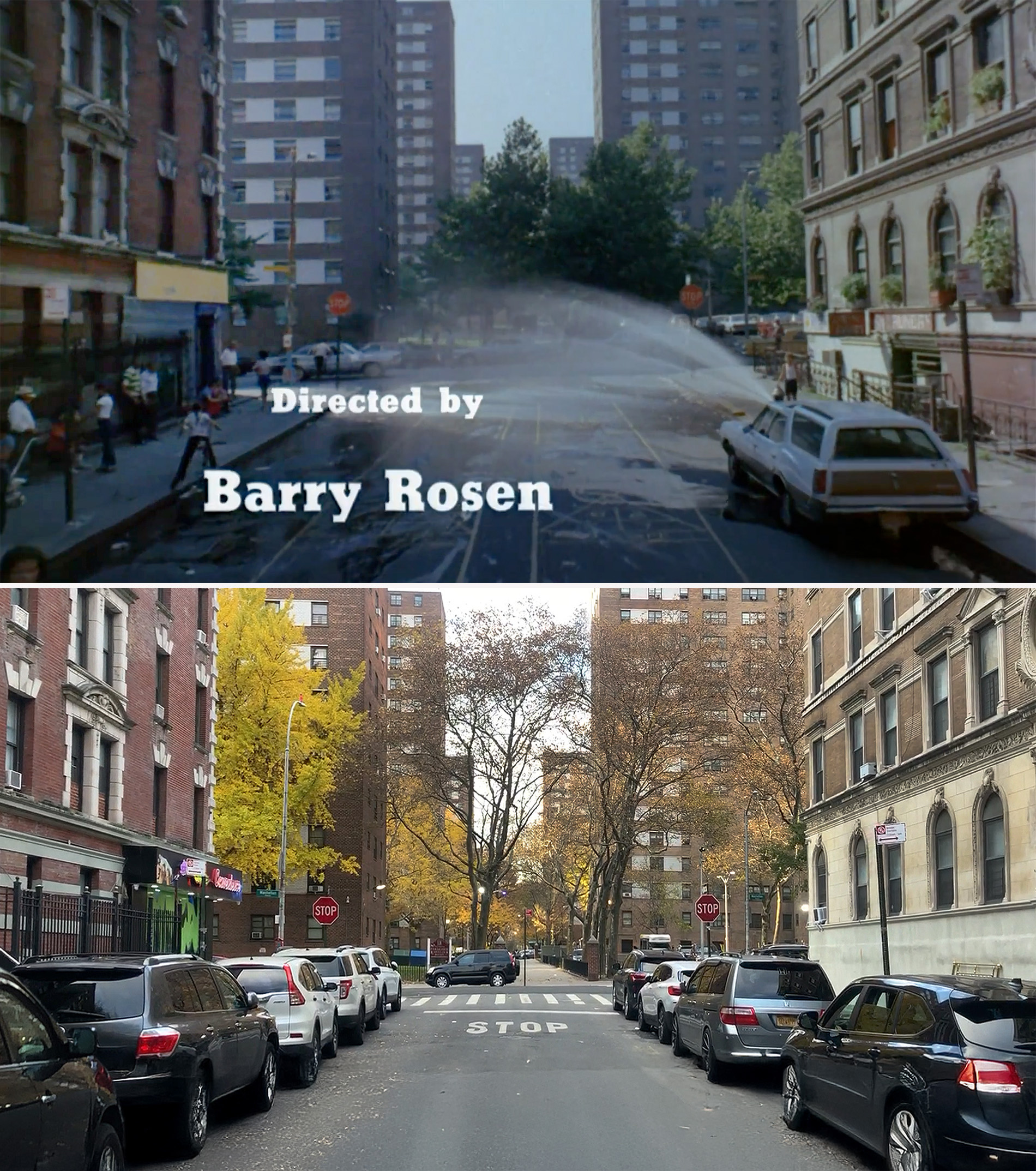
I normally wouldn’t do a post on such an inconsequential exploitation picture, but for some reason, Devil’s Express amused me in all the ways a low-budget movie should. Normally when I encounter poorly-made old films, I just scan through them to find all the on-location scenes and get a basic gist of the storyline. But with Devil’s Express, I found myself watching the whole movie in its entirety, soaking in all its glorious ineptitude.
Plus, as you can tell by this opening credits sequence alone, the movie contains an endless potpourri of NYC locales in gritty seventies technicolor.
Even though this opening montage was filmed all over the place, most of the shots were fairly easy to find. The majority of the sequence was filmed on avenues or major cross streets showing enough of the environs to give me a good idea of what neighborhood they were in. The only shot that gave me problems was the last one with the open fire hydrant. Although, I did have a sneaky feeling it was filmed somewhere uptown, based on the public housing projects at the T-intersection.
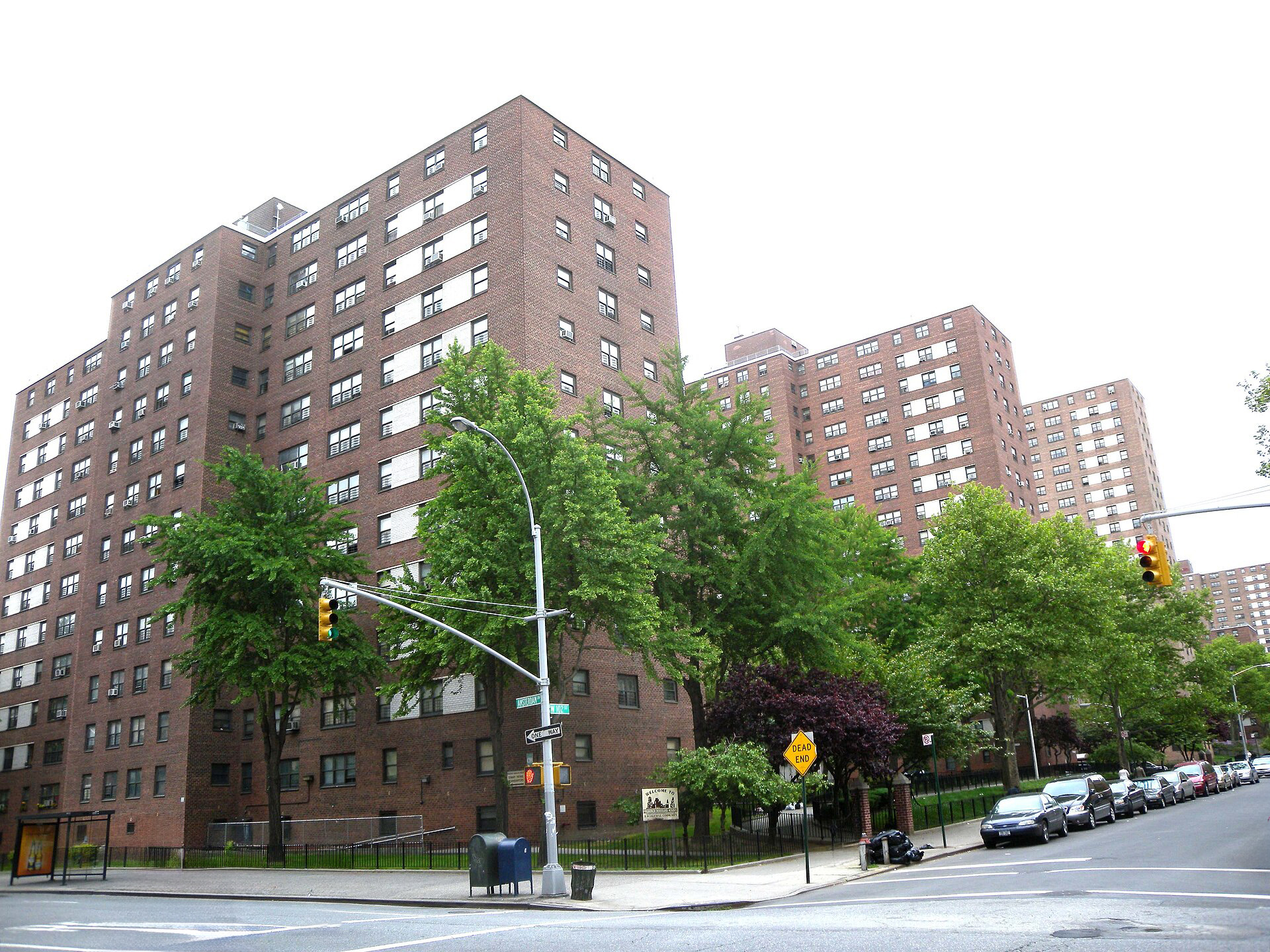
My research partner, Blakeslee, ended being the one who found the spot. He did it by simply doing a reverse image search of those project buildings, which turned out to be the Frederick Douglass Houses in the Manhattan Valley neighborhood.
Traveling To “Hong Kong”
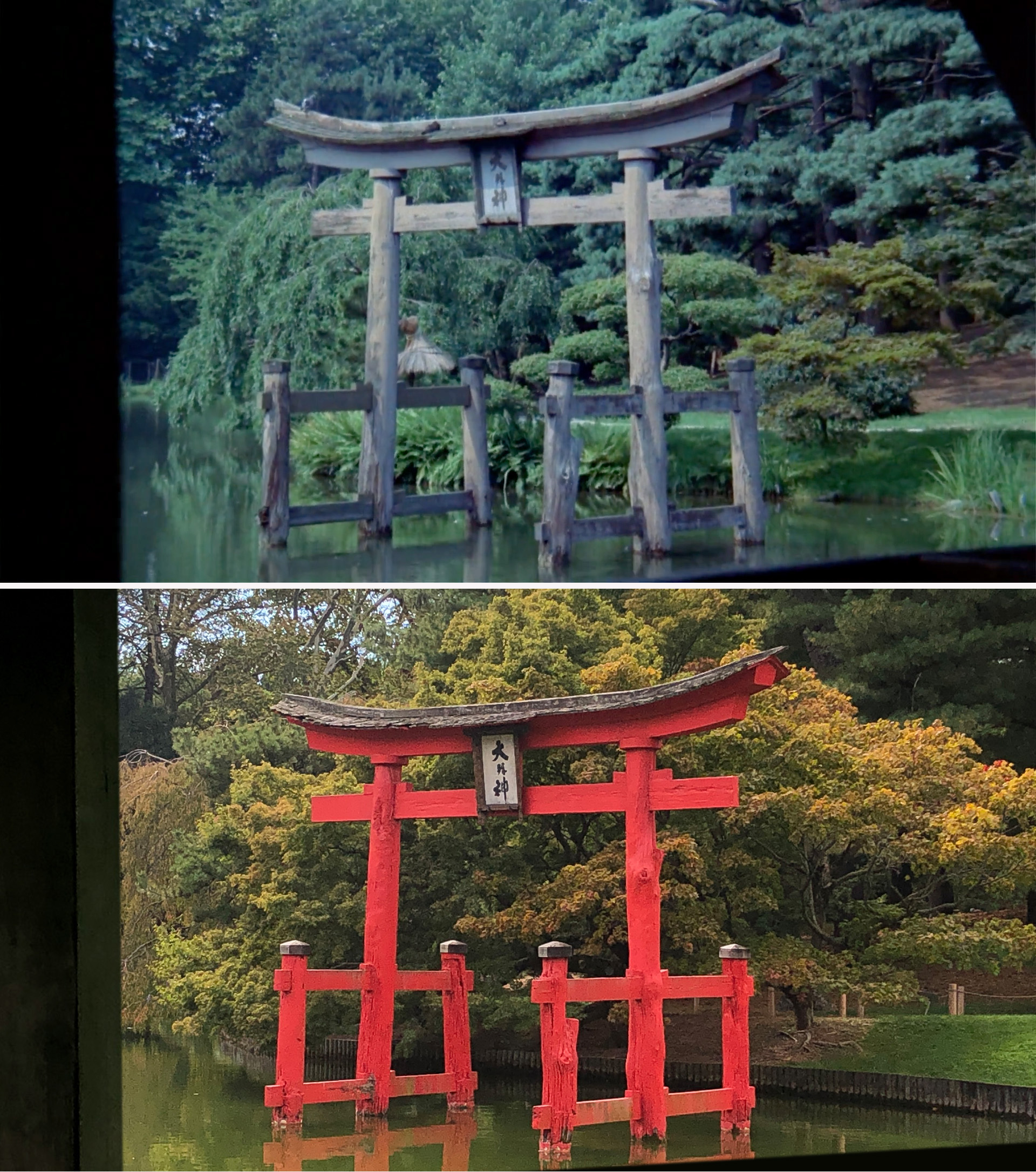
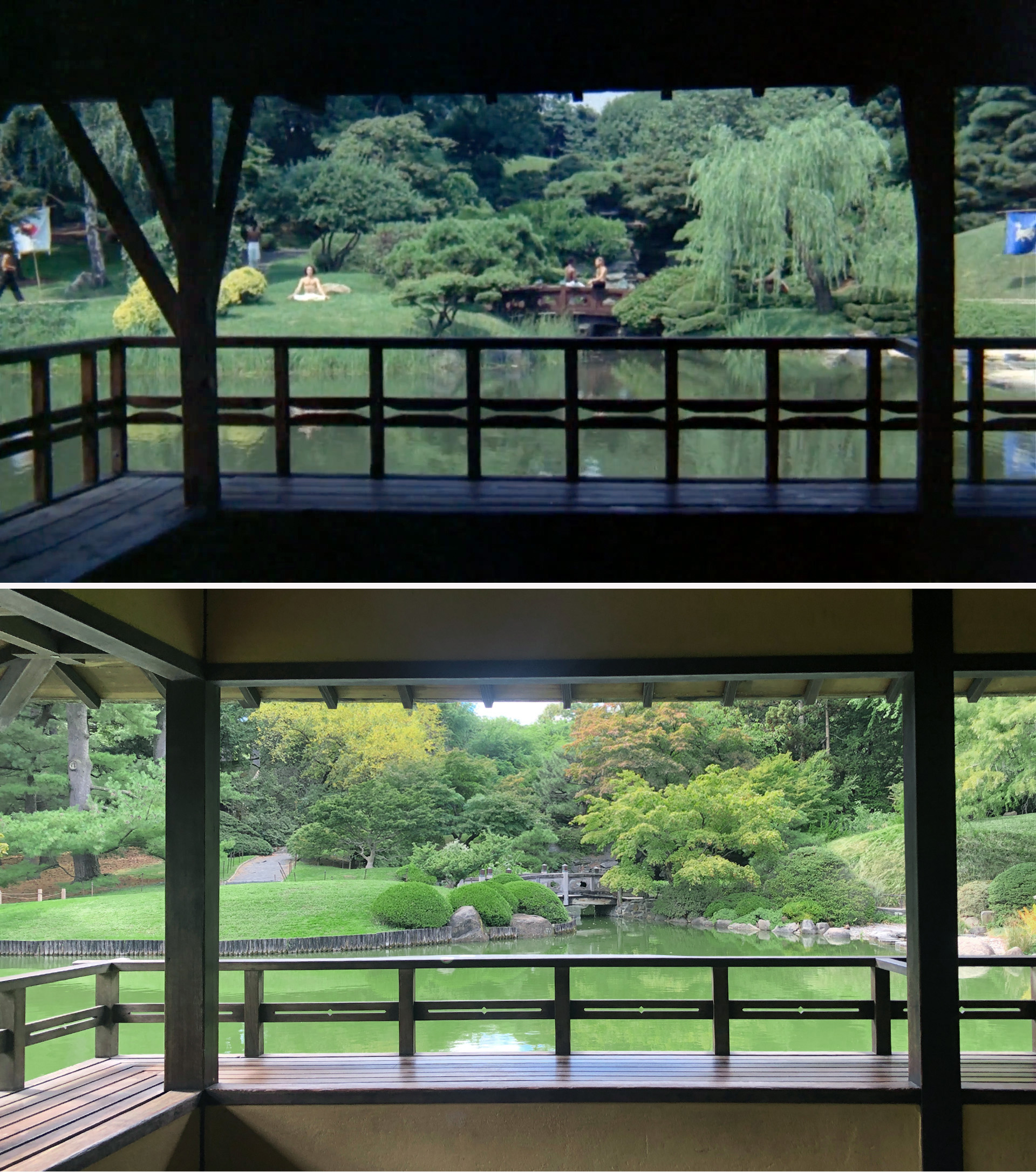
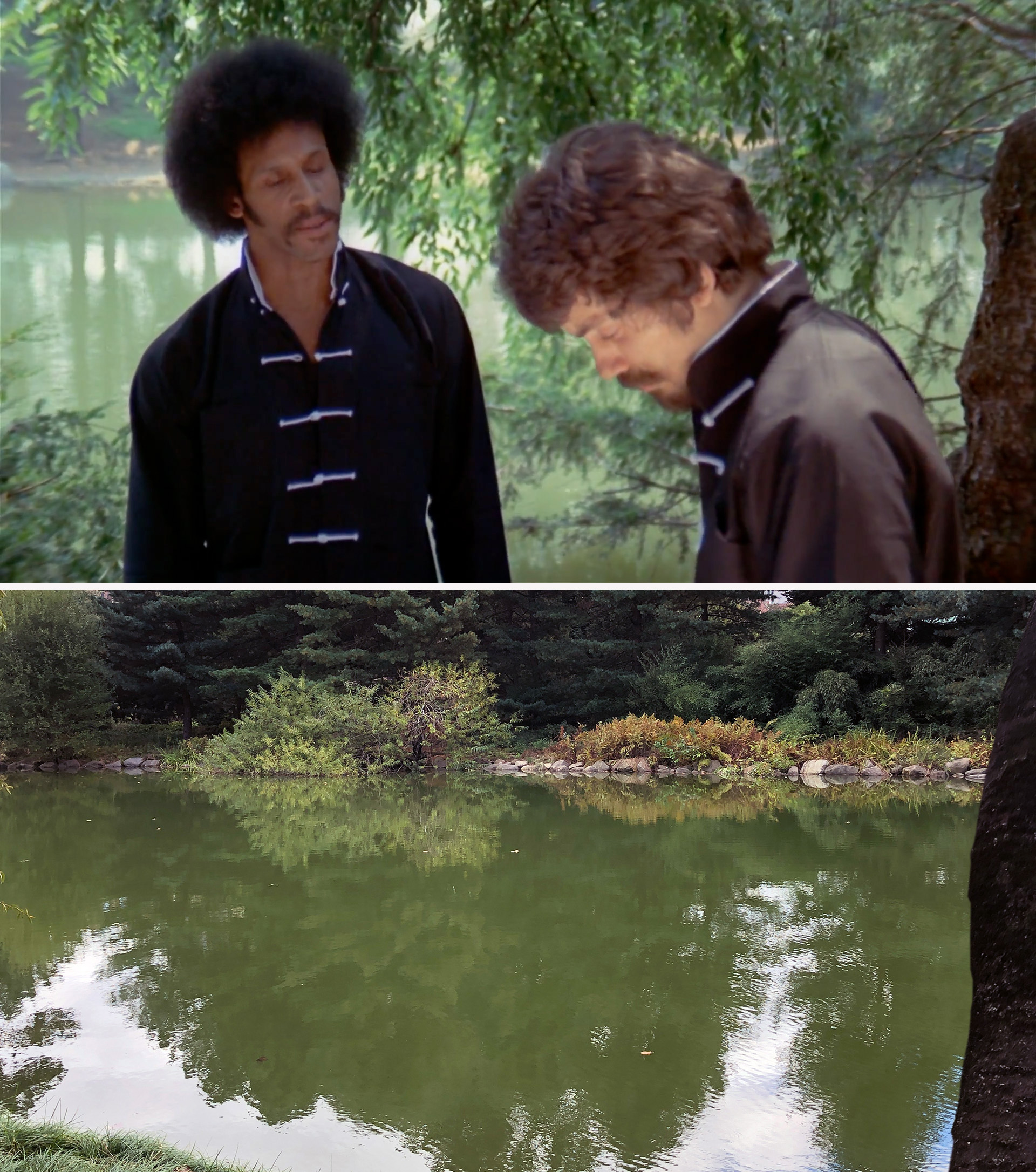
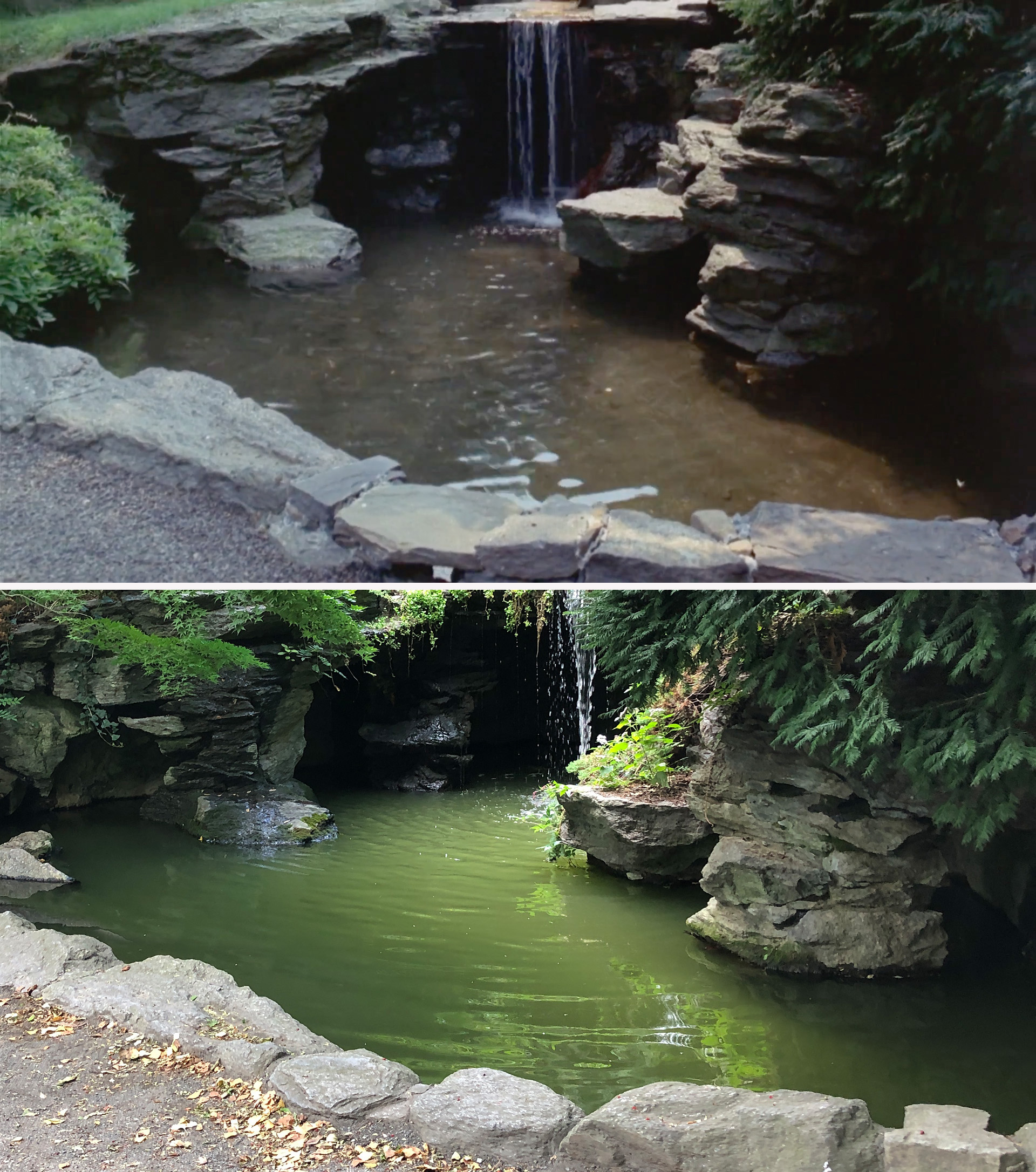
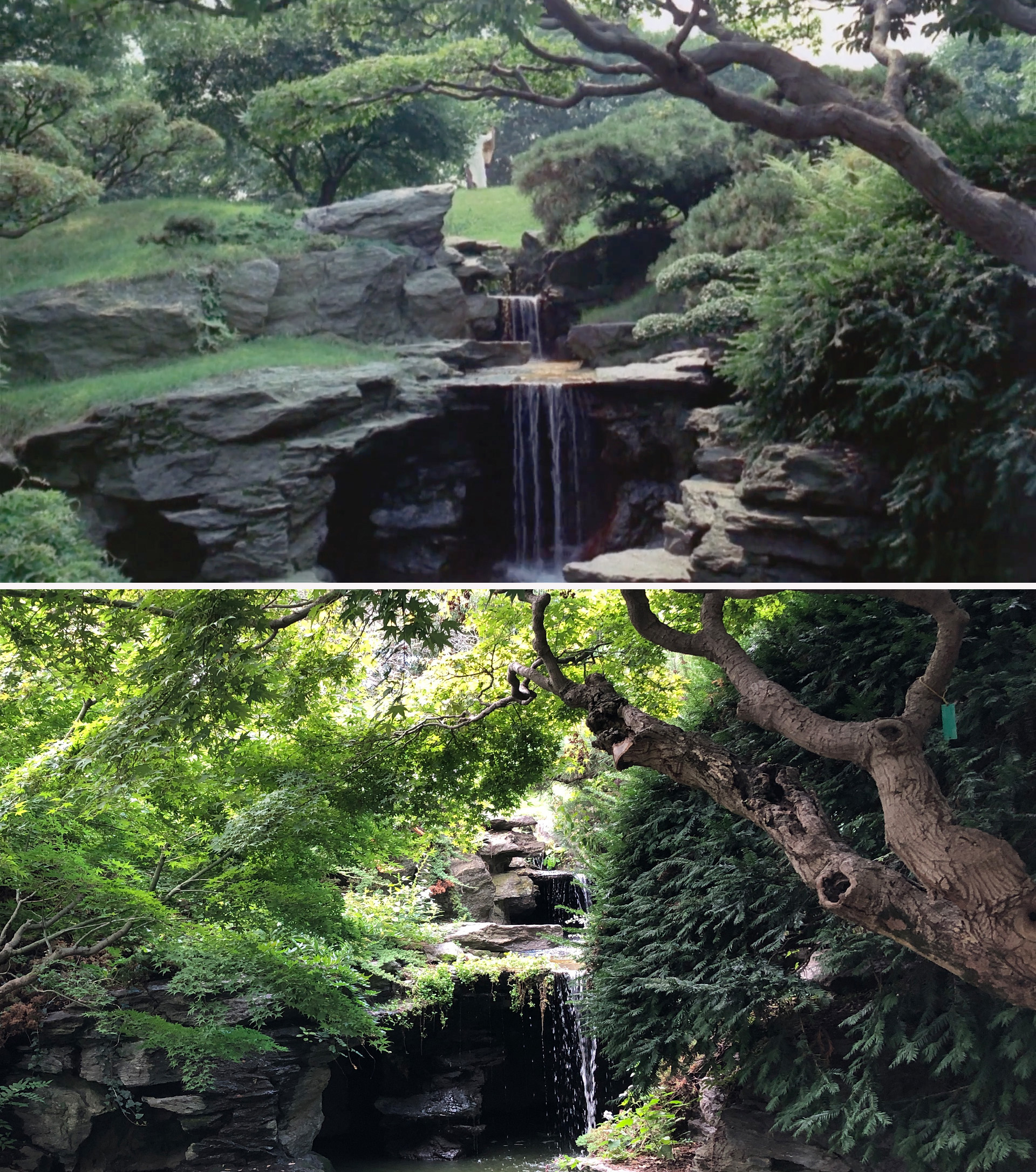
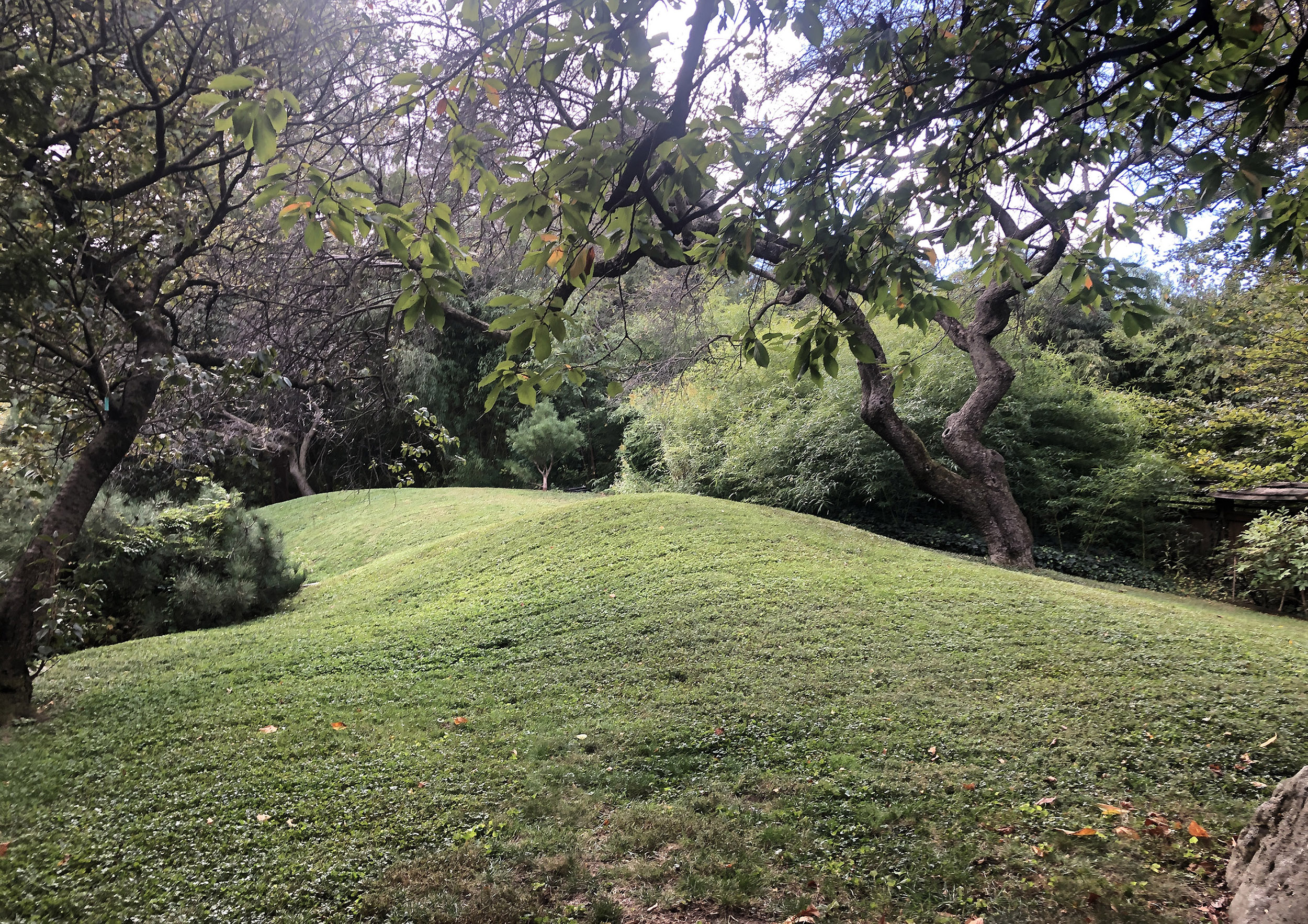
I knew this “Hong Kong” training camp was likely located somewhere in the New York area and almost certainly not in Asia. At first, I though they perhaps filmed these scenes at some Buddhist temple in Upstate New York, but once I realized the waterlogged shrine in the first shot had Japanese lettering (大月神), my mind went to the Japanese Hill-and-Pond Garden at the Brooklyn Botanic Garden.
These gardens were modeled after East-Asian, 17th-century stroll gardens, typically built around secluded, winding paths that reveal hidden views. However, NYC naturalists probably know this spot best for its famous collection of ornamental cherry trees that have been blooming every spring for the last 100 years. It’s the stuff of Instagram clickbait.
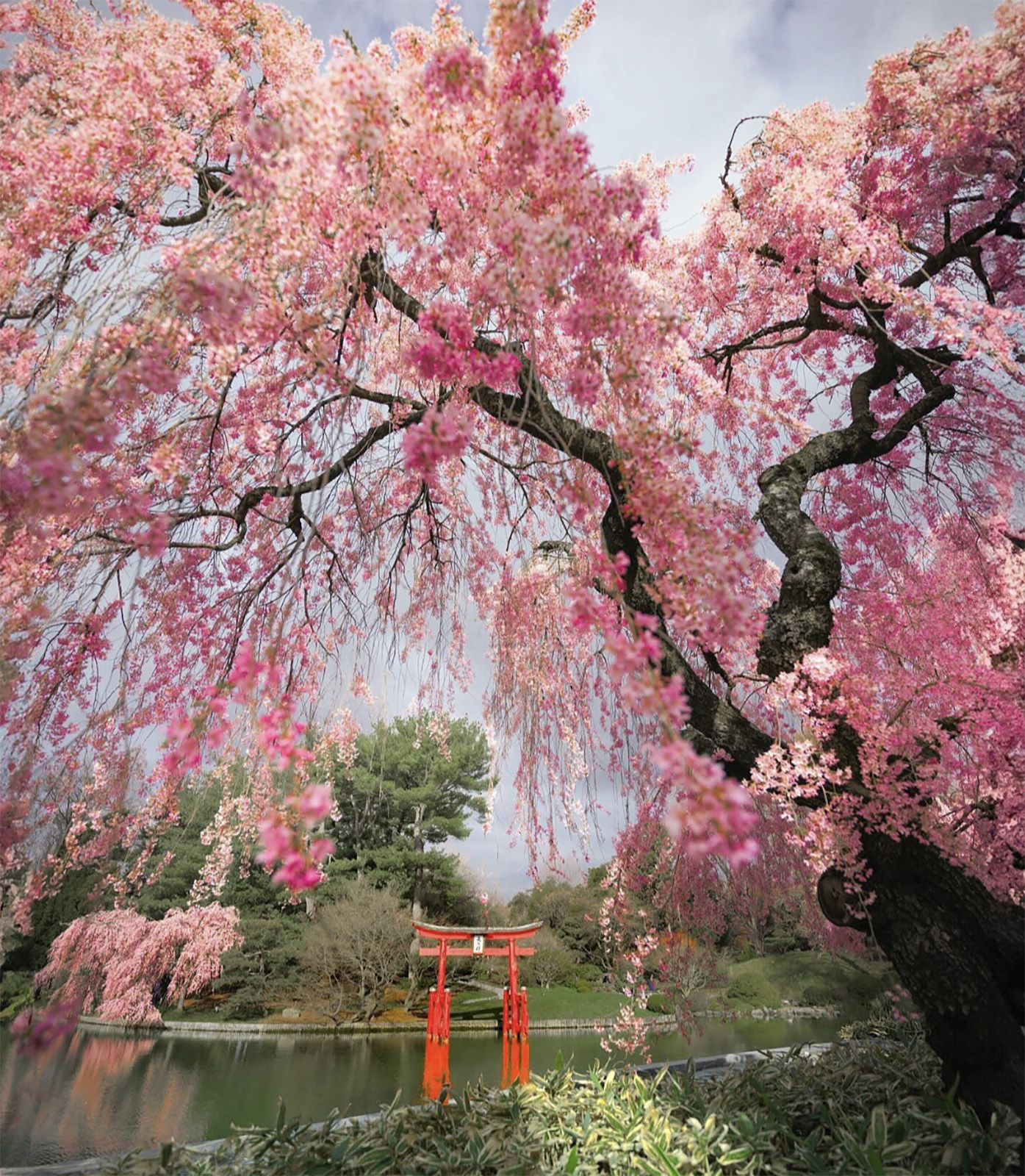
While some things have changed since the 1970s, BBG’s Japanese Hill-and-Pond Garden has mostly remained intact, including the same Shinto shrine (albeit with a new paint job) and cascading waterfall. It’s definitely worth a visit, especially since it’s right next door to the Brooklyn Museum and Prospect Park Zoo.
Visiting the “Chinese ” Cave
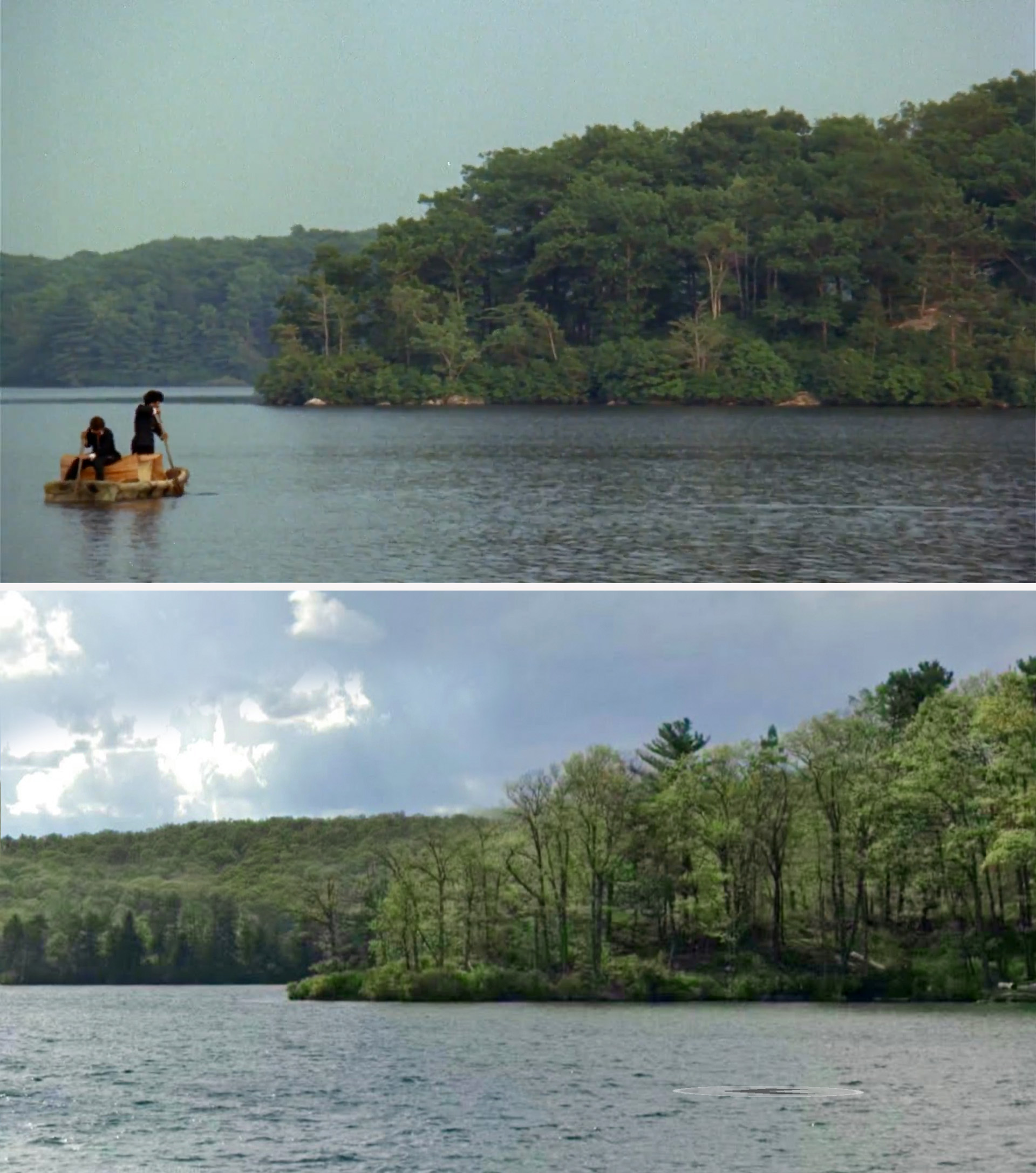
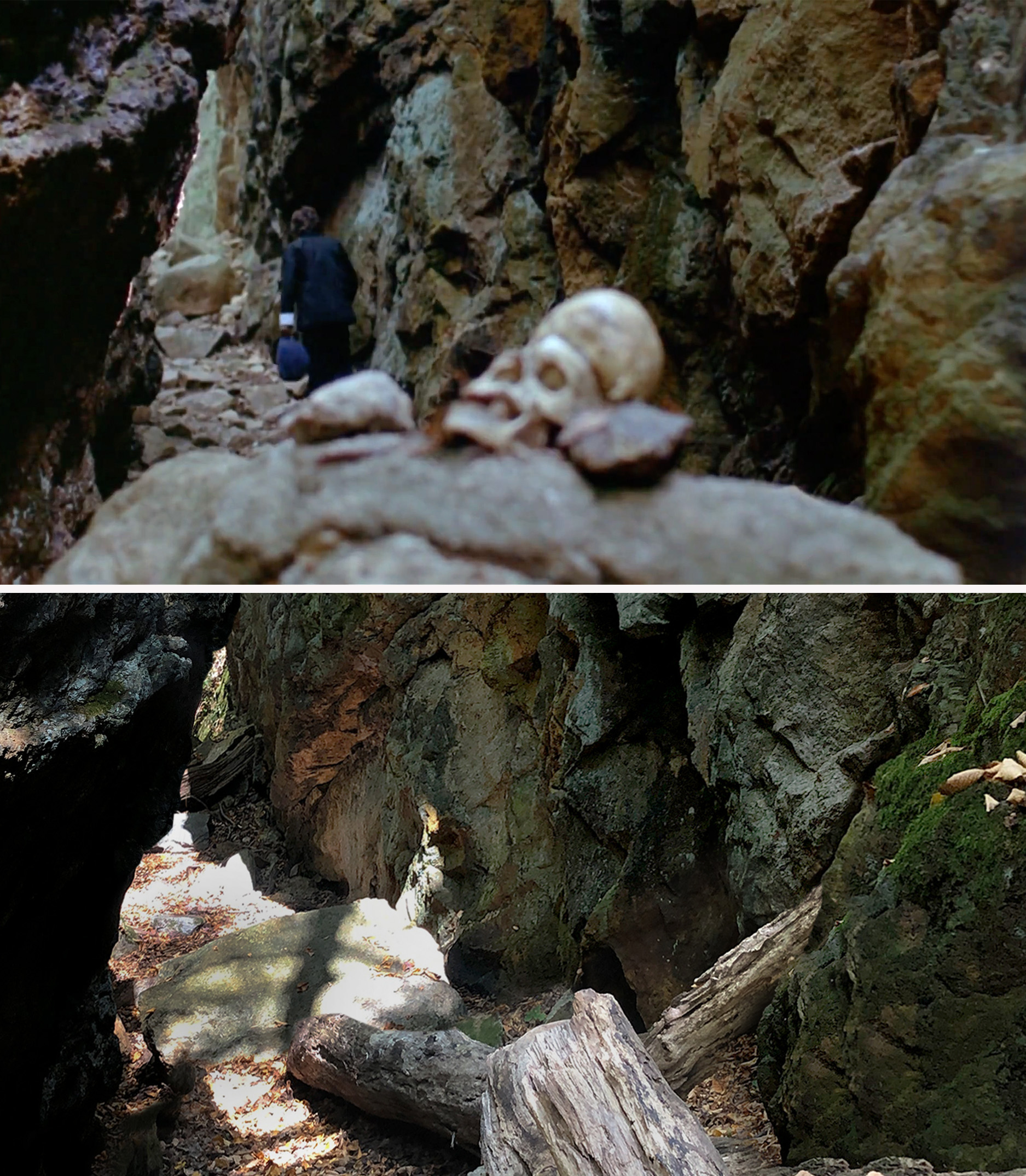
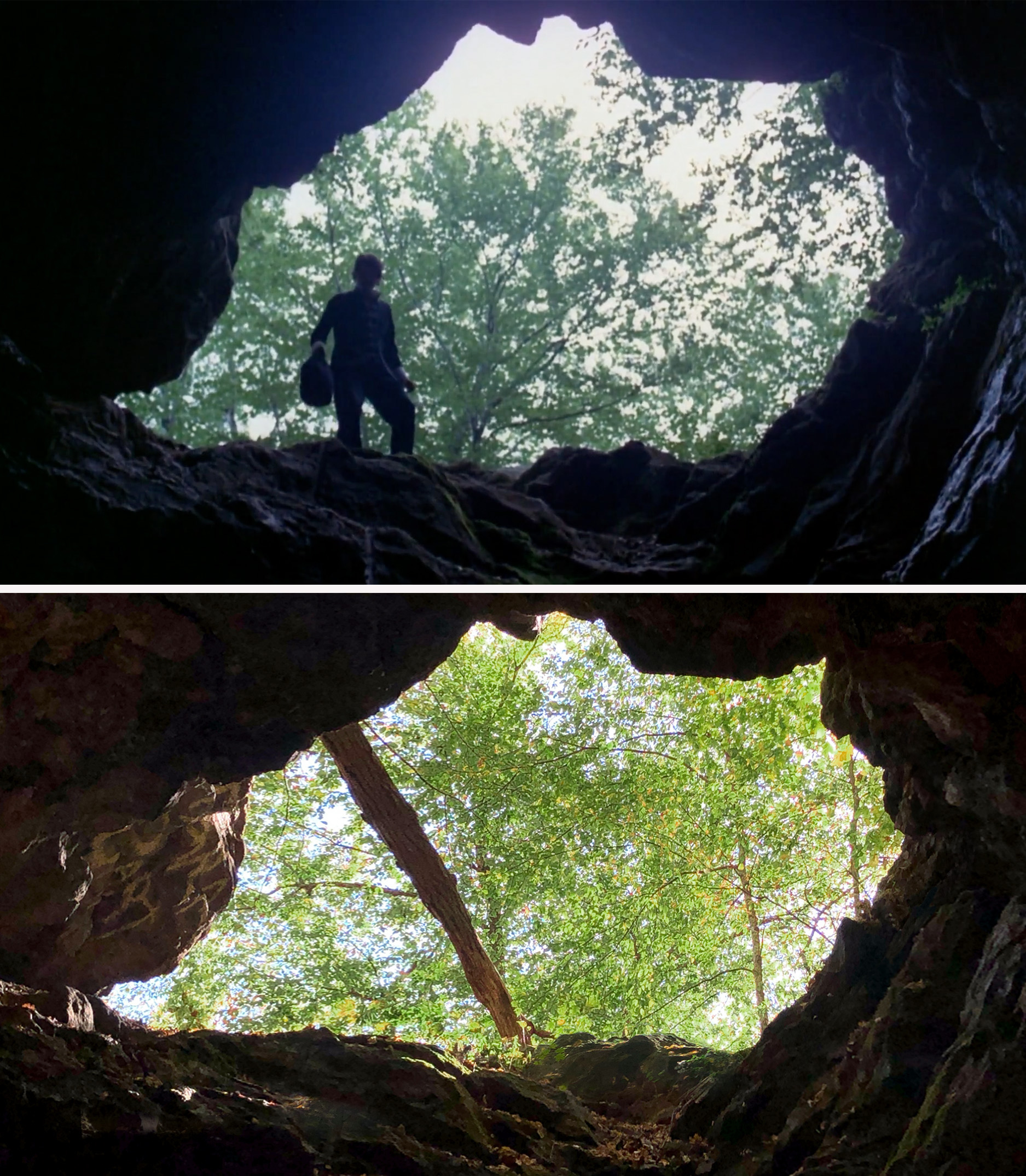
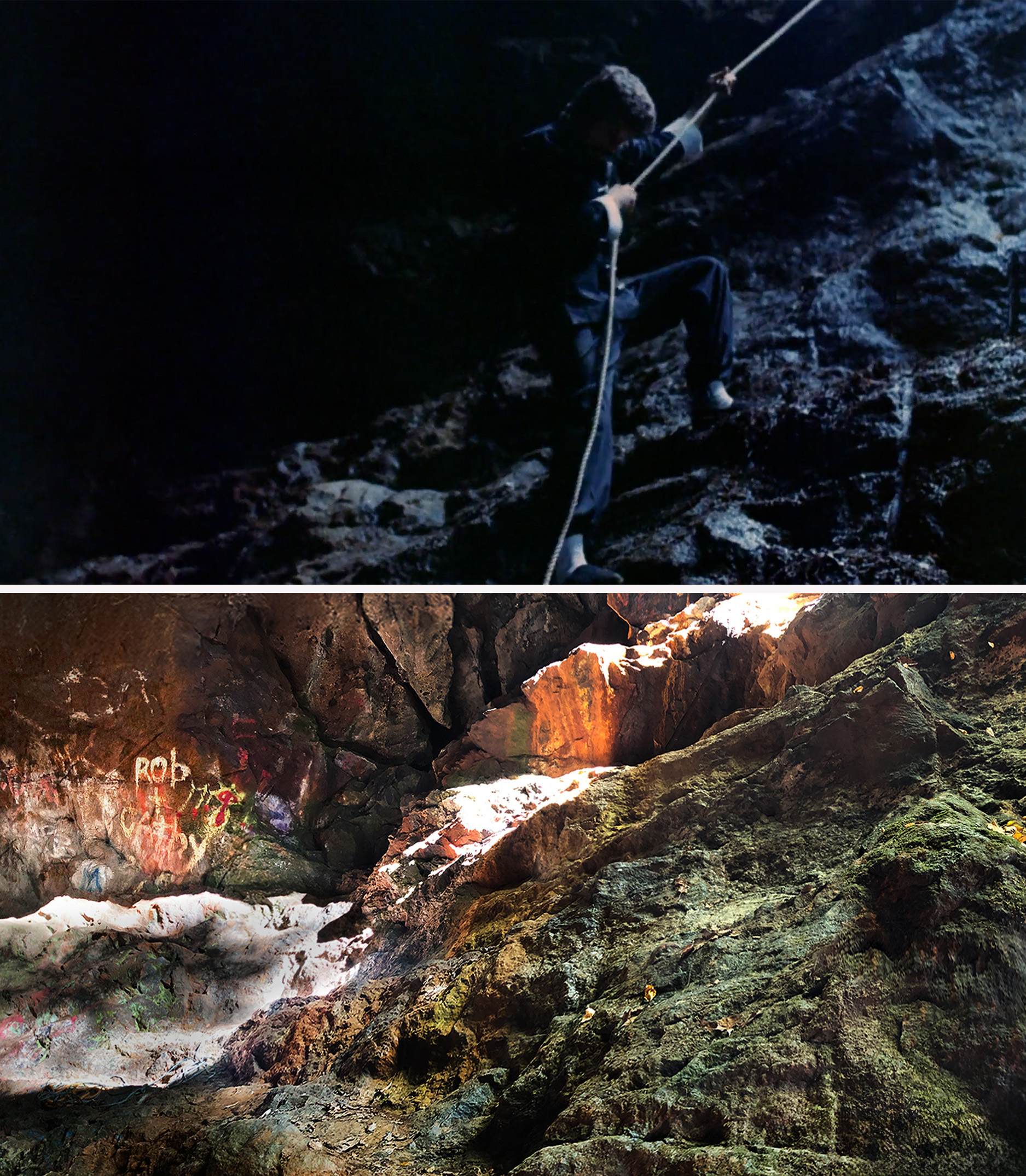
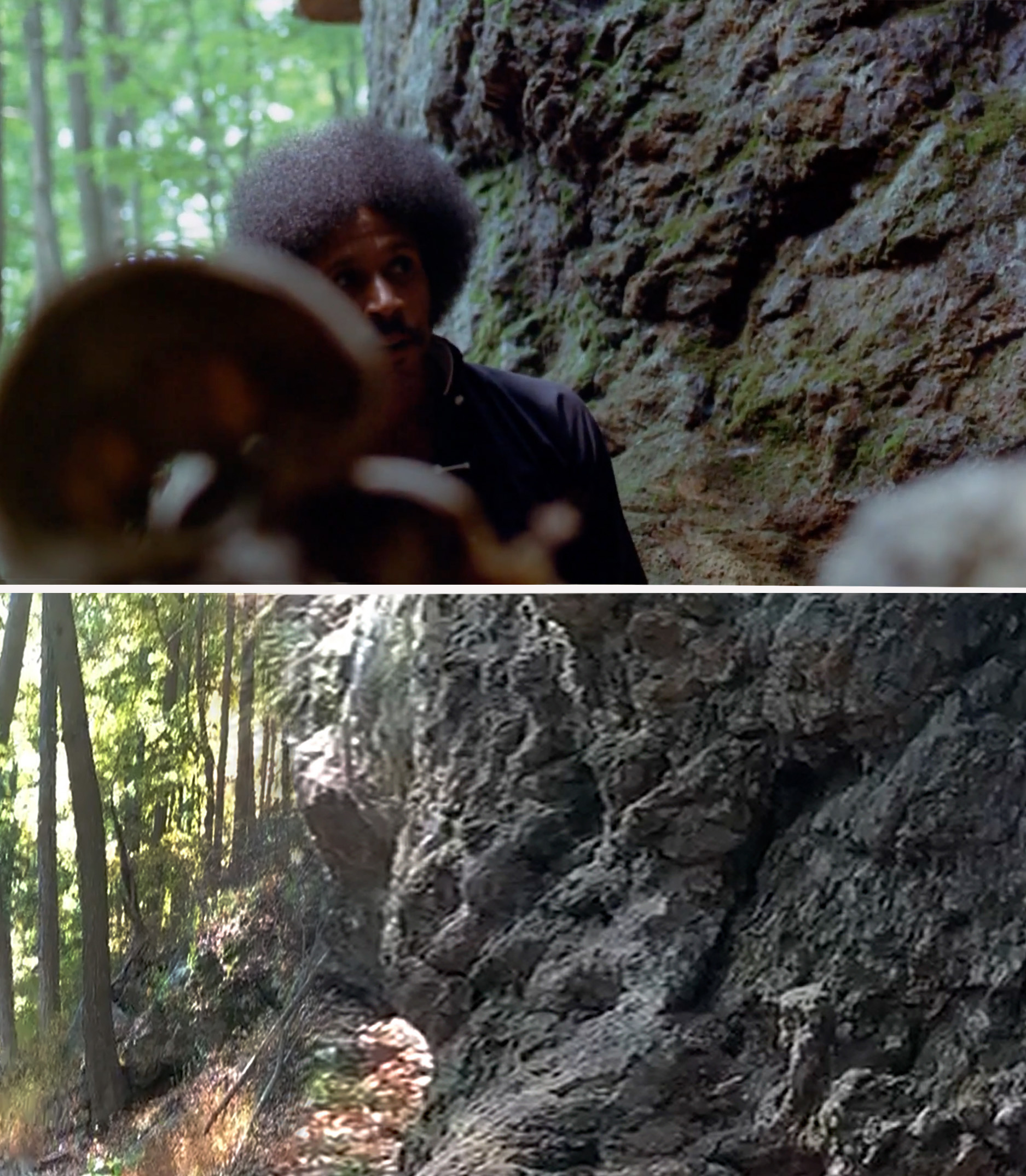
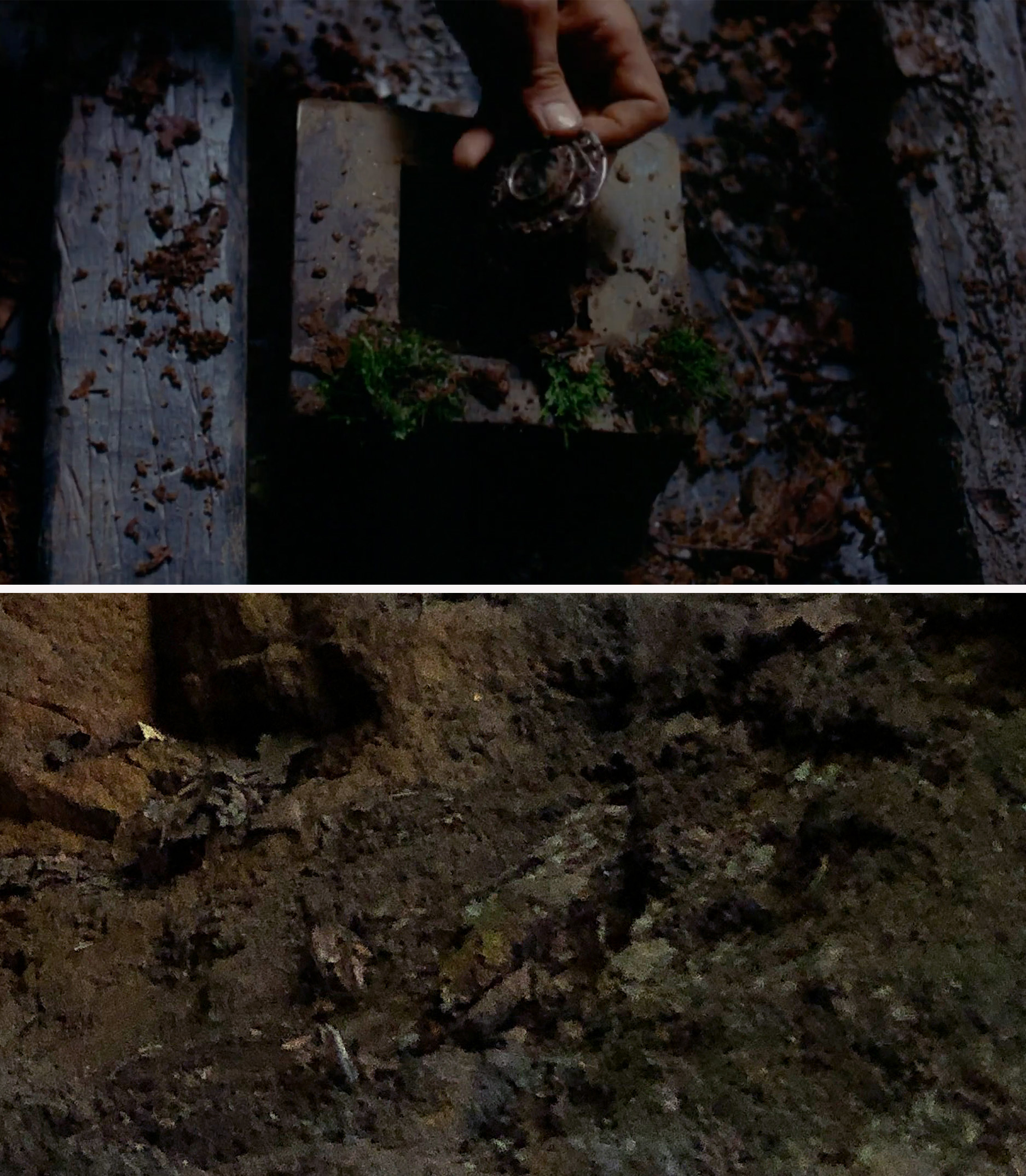
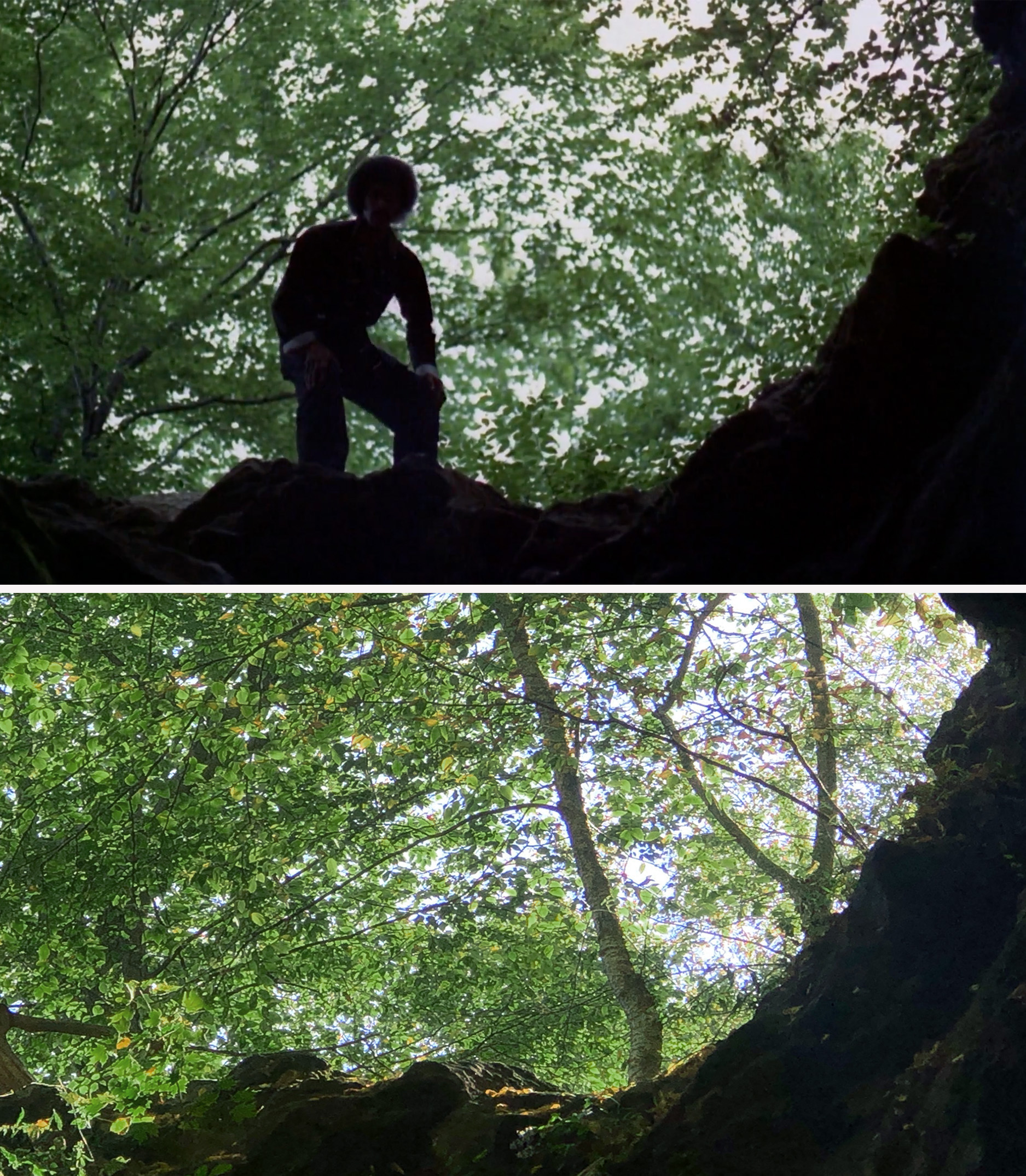
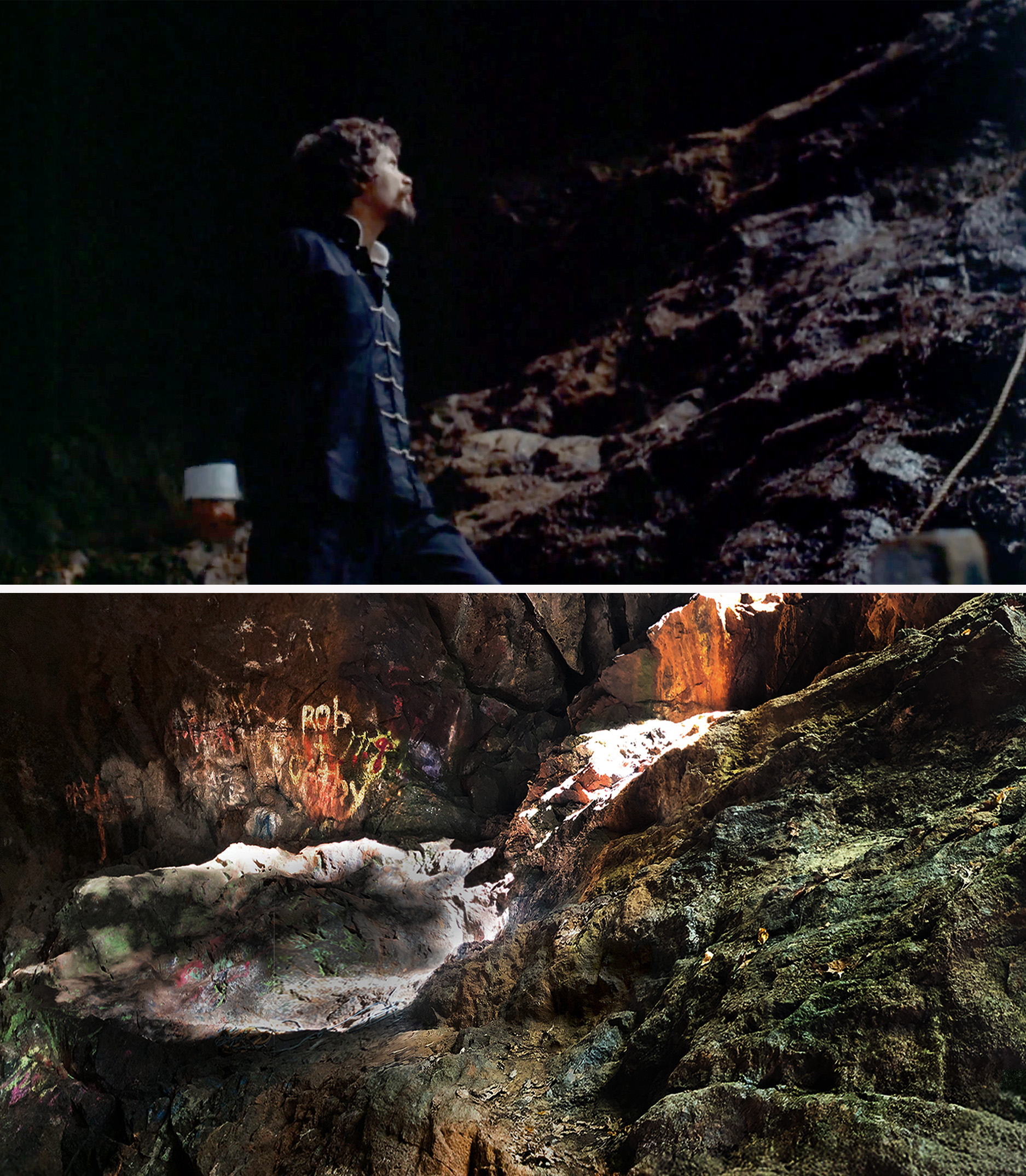
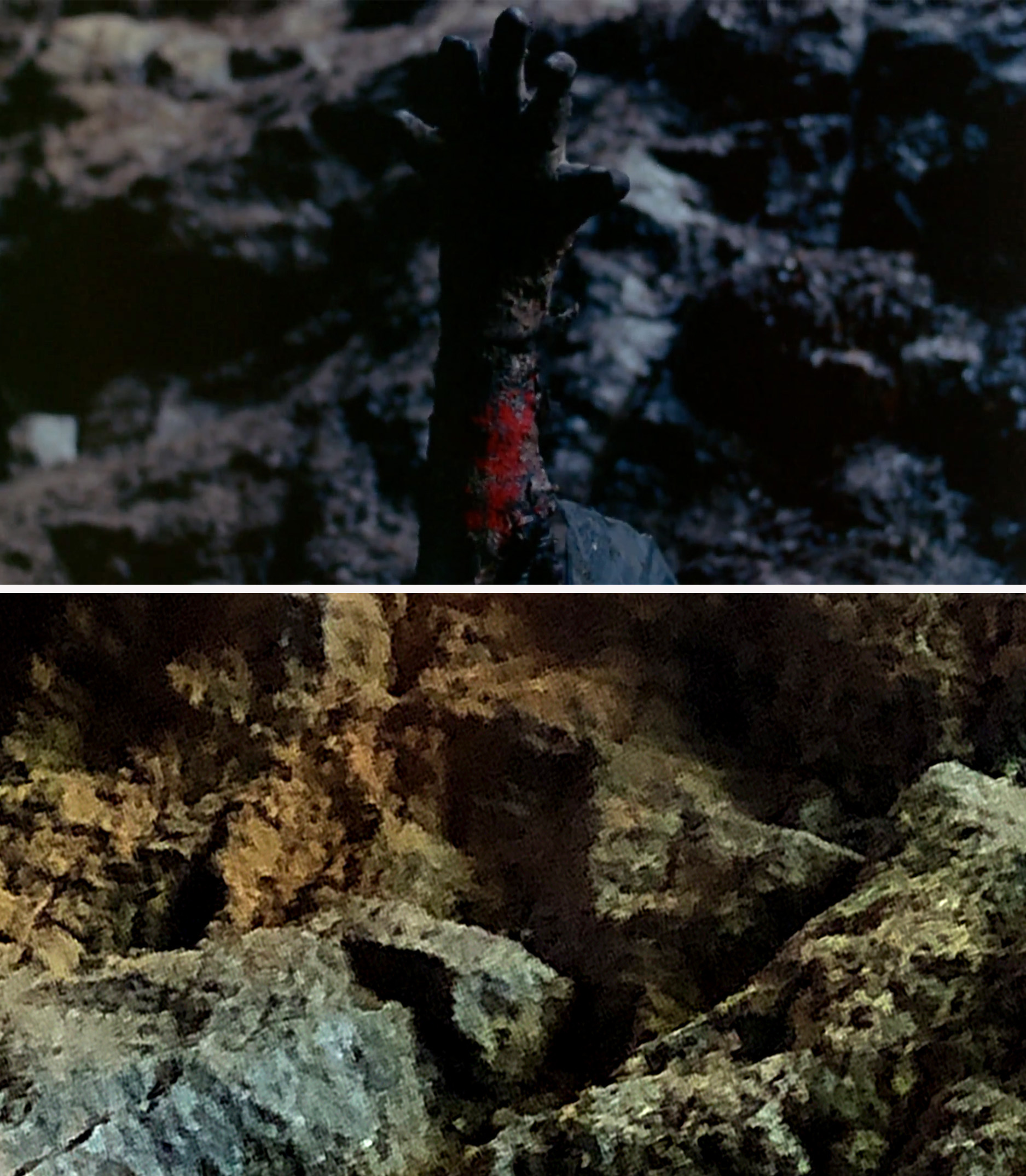
This location would’ve been nearly impossible to find had it not been for a 2007 interview I found on the CineFear Video website with one of the Production Assistants on Devil’s Express, Jane Landis.
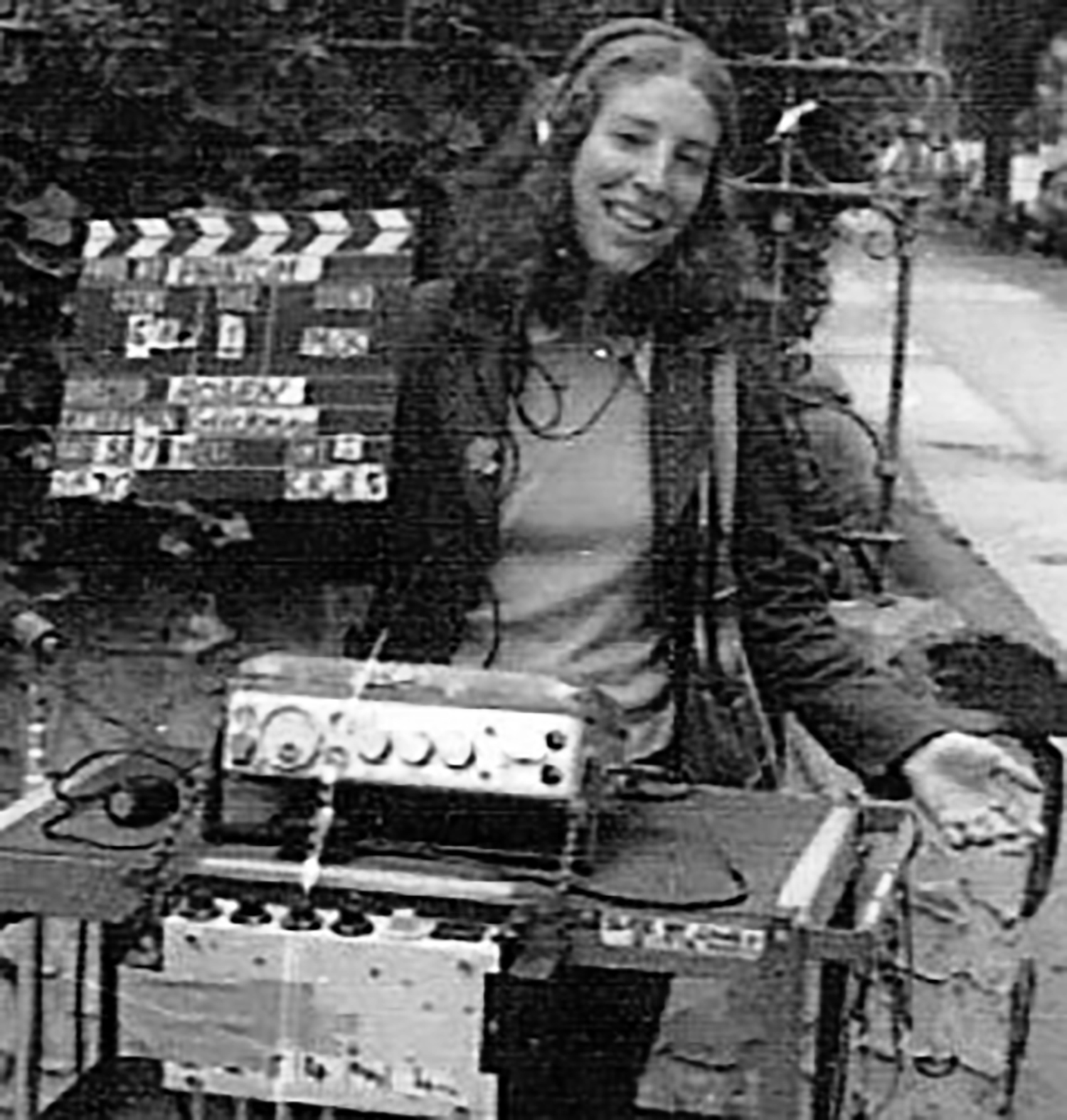
When asked about the “China” scenes, here’s what she had to say:
“We shot the scenes in the cave in Harriman State park, upstate [New York]. There’s an old horizontal mine that looks like a cave which is where the opening scenes were shot. I remember cleaning up the garbage in the water down there, old bottles and such, so they wouldn’t be in the shot.”
While Landis didn’t specify the cave, it was definitely an amazing jumping off point. After researching the park, I discovered there were a bunch of mines/caves scattered throughout the land, but the Bradley Mine was by far the premiere one.
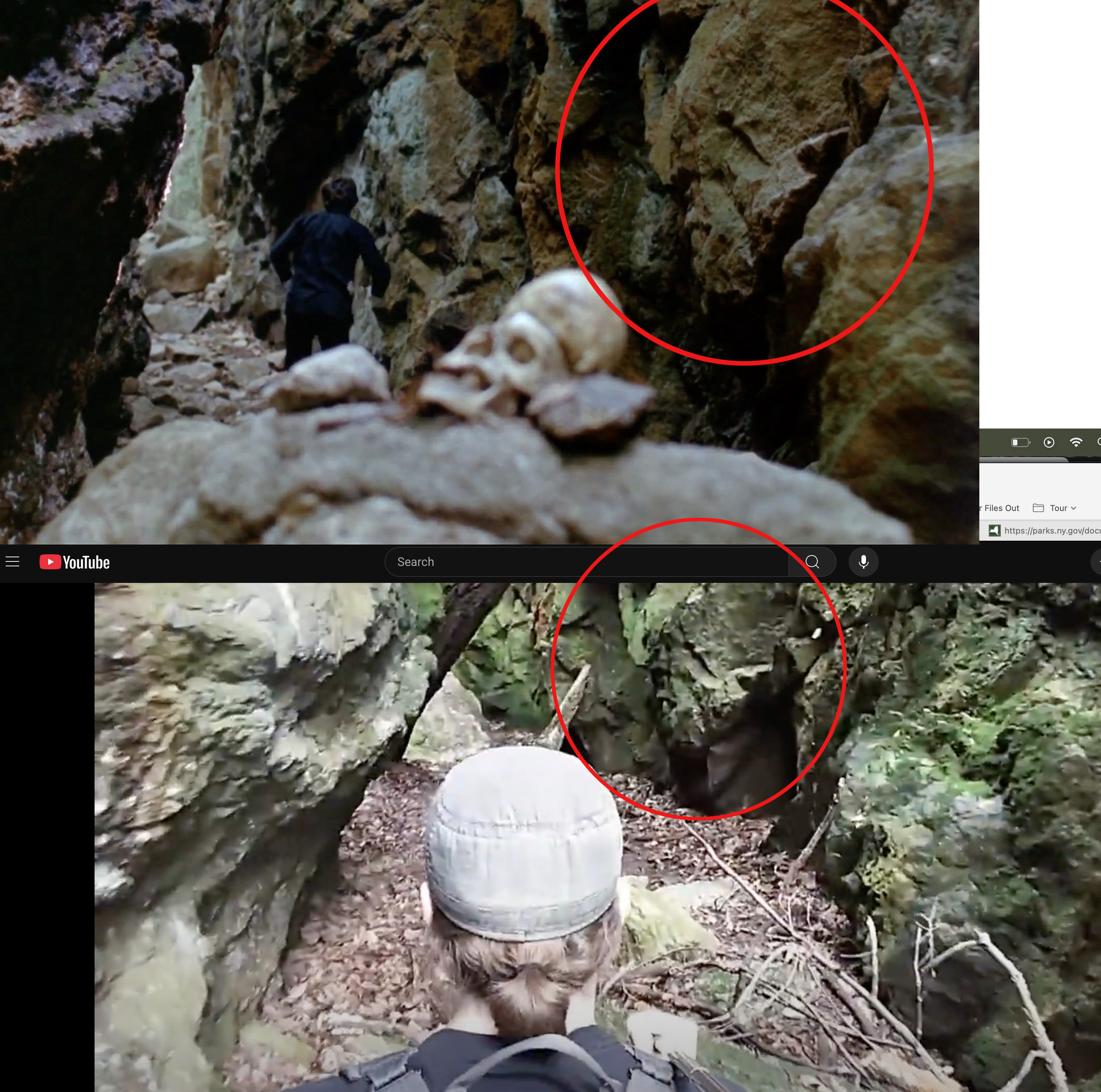
Assuming Bradley was the place used in the movie, I searched for any online pictures to try and match things up. But it was a YouTube video by Pete Green showing his 2018 hike to the mine that provided the evidence I was looking for.
Before you enter the cavelike enclosure, you have to take a narrow “open-cut” trench for about 200 feet, and the video showed several angles of this rocky trail. One of those angles featured what looked like the spot where the skull was placed in the movie. After studying several frames from both the YouTube video and Devil’s Express, I was able to find some matching ridges in the surrounding granite, confirming I found the right mine.
Visiting the actual mine in Harriman State Park to take the modern pictures wasn’t so easy. I already knew from Green’s video that the trail leading up to the cave was a bit treacherous and confusing, and quite frankly, exploring any abandoned mine can be risky.
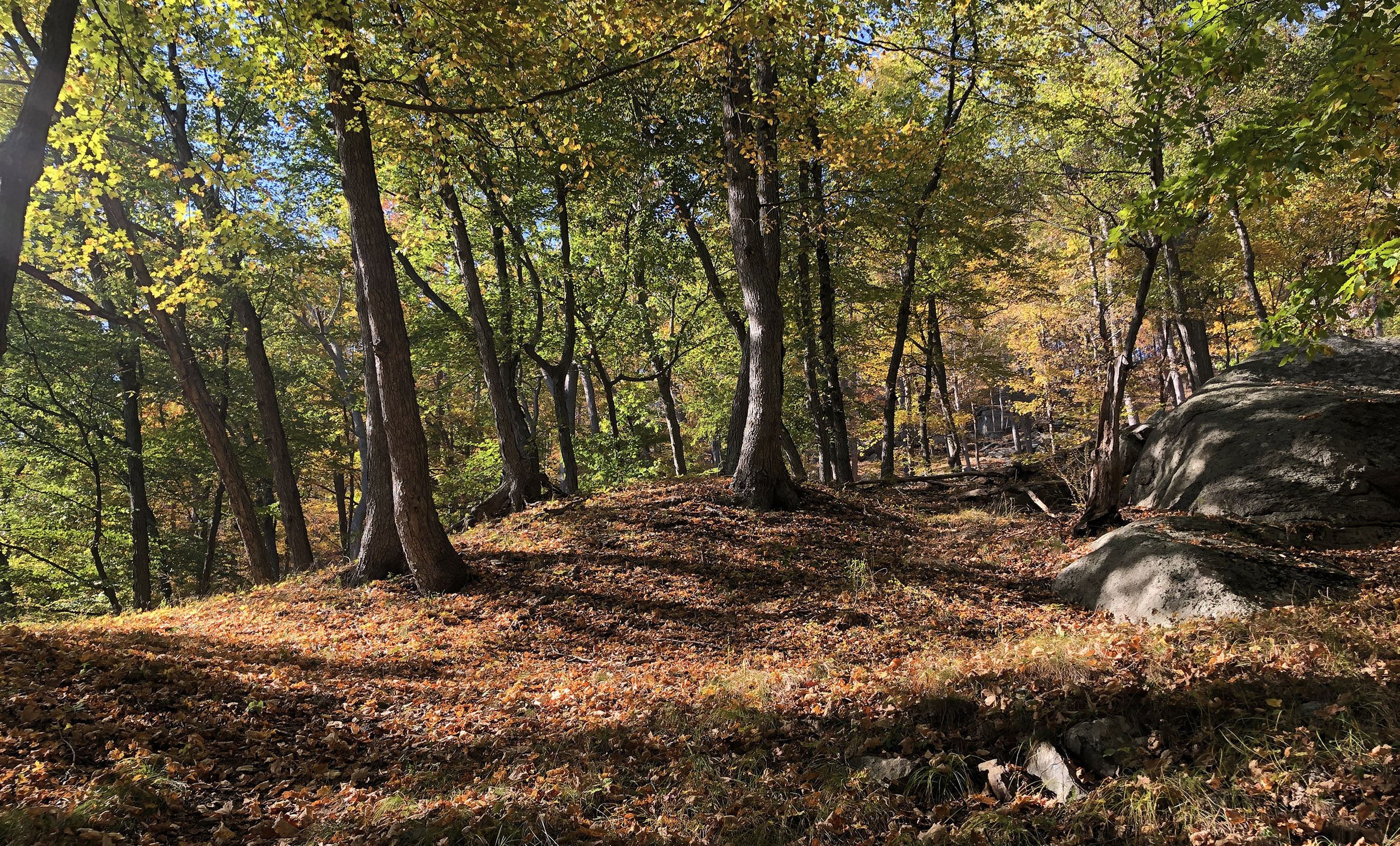
But it turns out, the most dangerous part was the walk into the park. Being a longtime (non-affluent) New Yorker, I don’t have a car, so the only way I could get up to the area was to take a train on the NJ Transit. From there, I had to walk about 16 miles roundtrip from the Harriman train station to get to the mine and nearby Lake Tiorati.
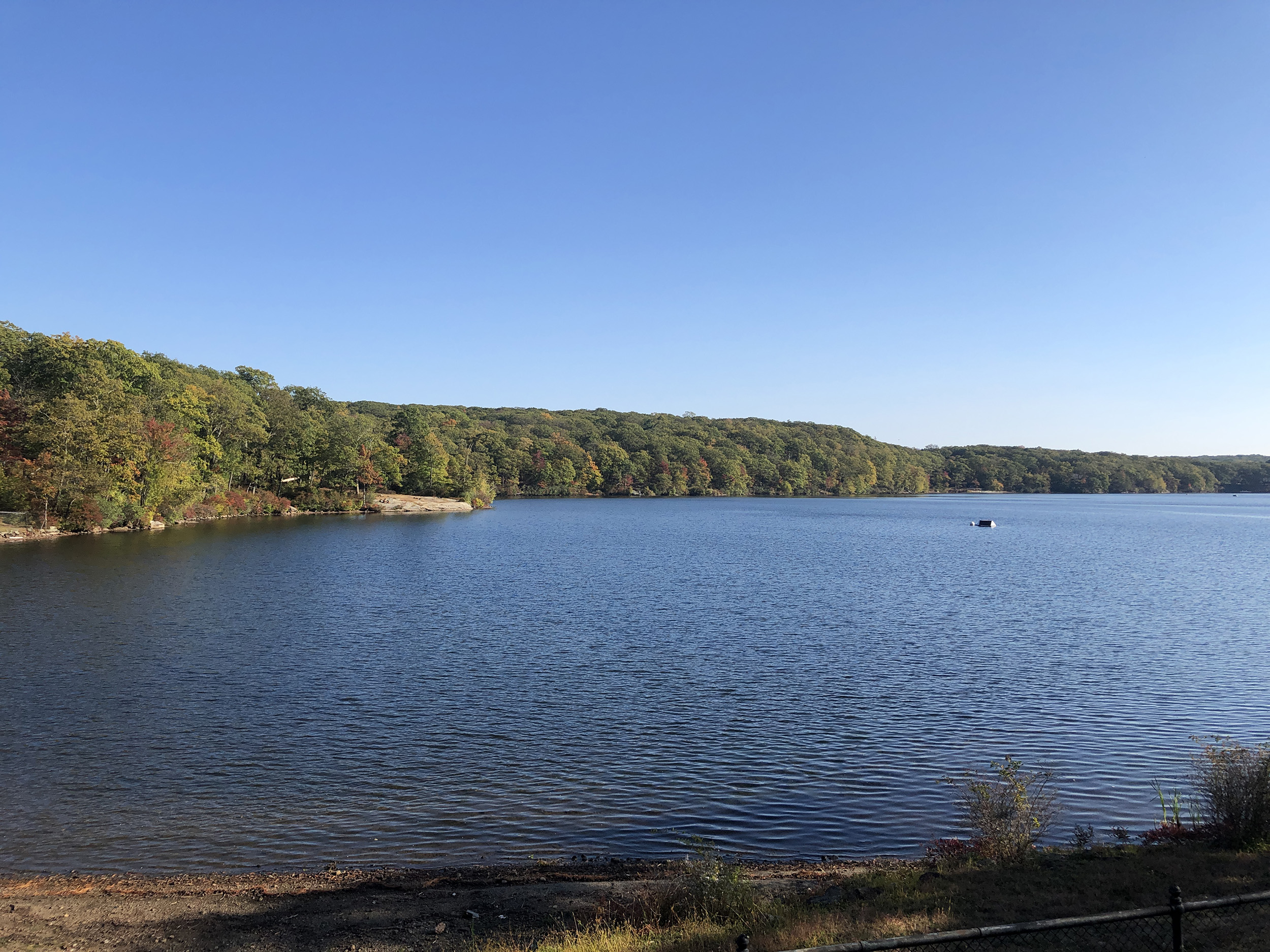
Unfortunately, the main thoroughfare in the park —Arden Valley Rd— is open to thru-traffic and consequently can get very busy at times. And to add to my woes, the road essentially had zero shoulder, so I had to constantly hop into the overground embankments to avoid getting clipped by speeding motorists.
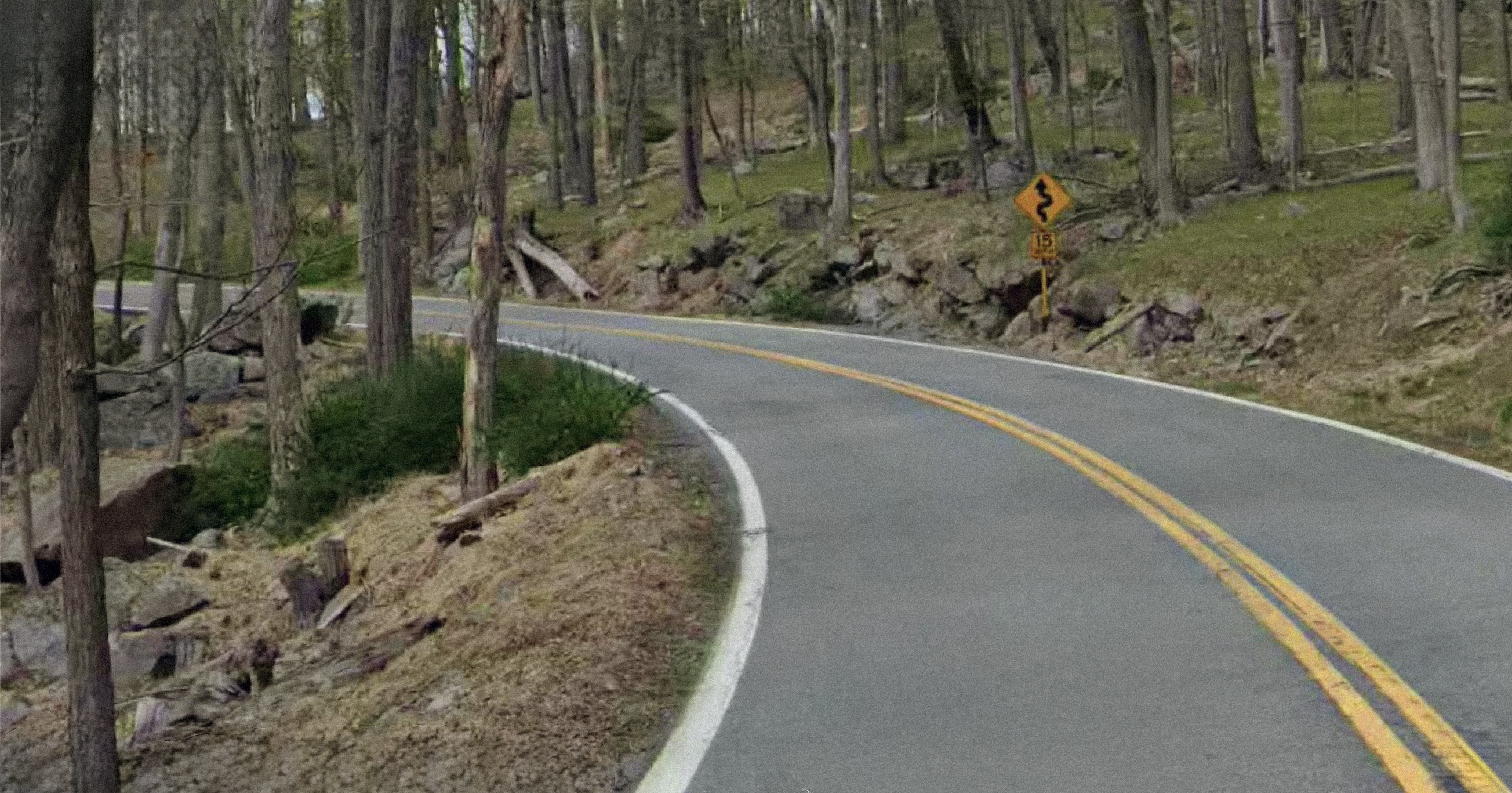
Thankfully, most of time, the drivers were decent enough to give me a wide berth where possible, and one even stopped to warn me about a bear that was sighted about a mile down the road.
Despite the long walk and perilous conditions, I’m glad I went. It was a fun weekend adventure, and a nice way to burn off some calories.
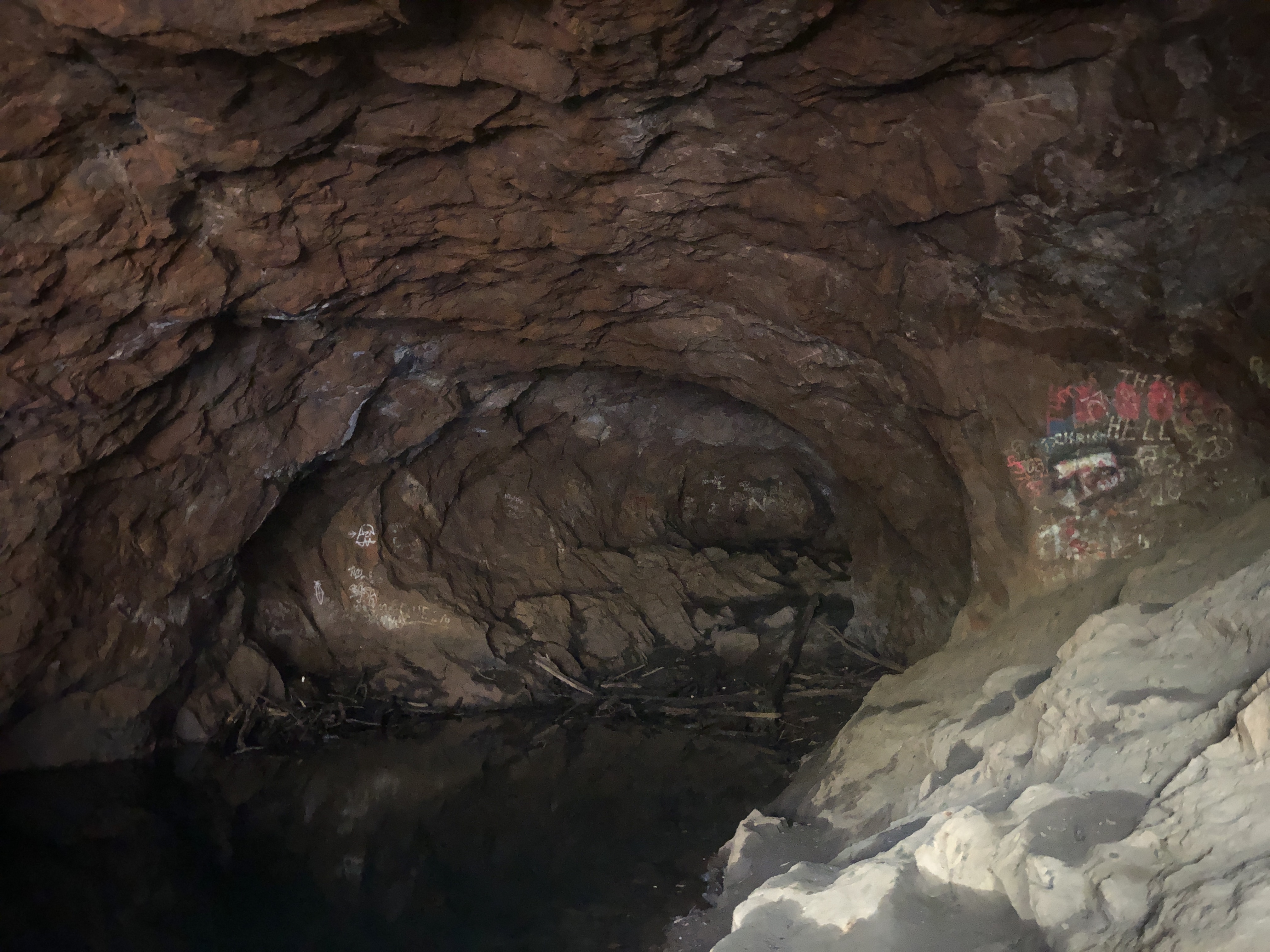
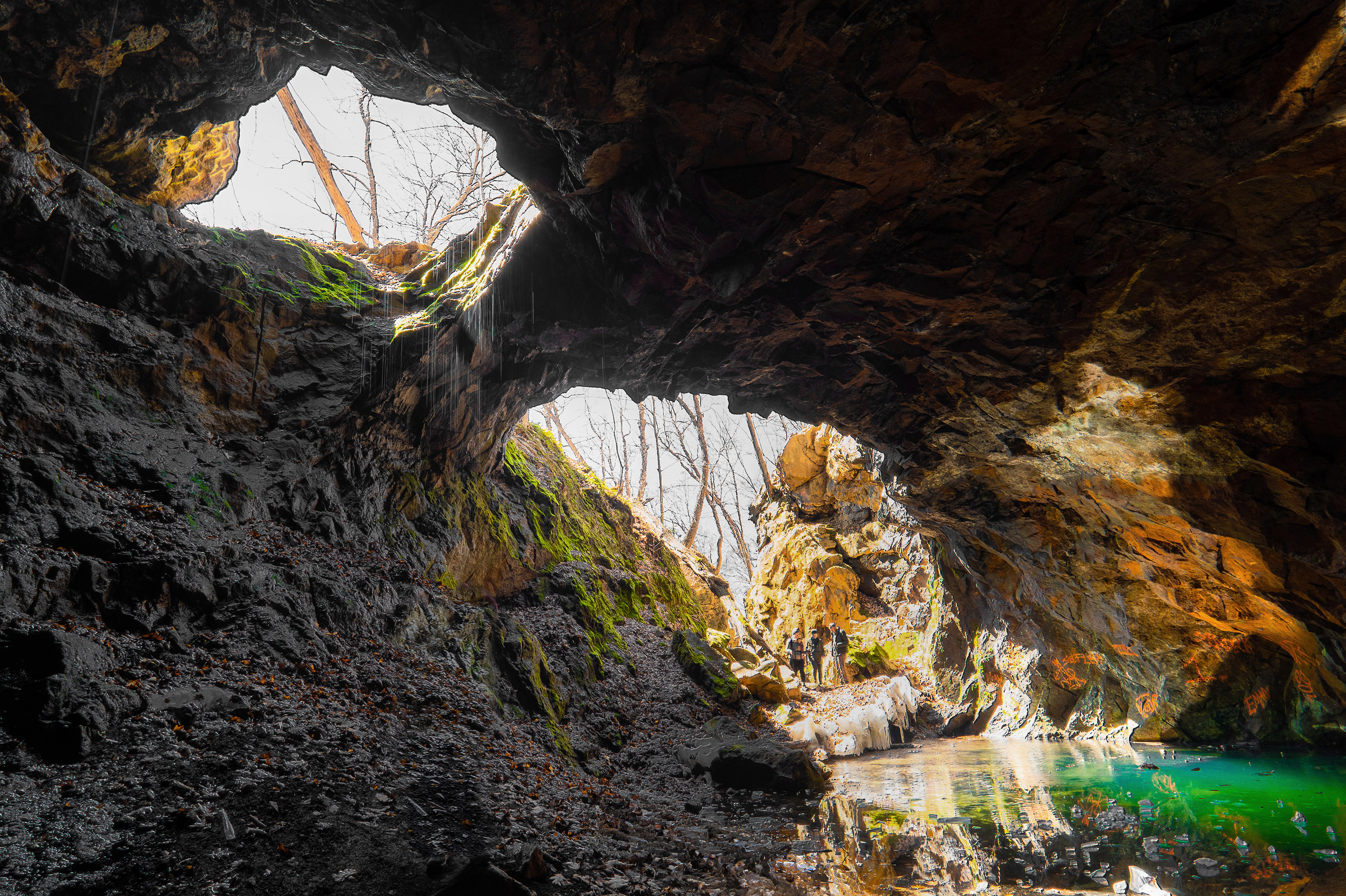
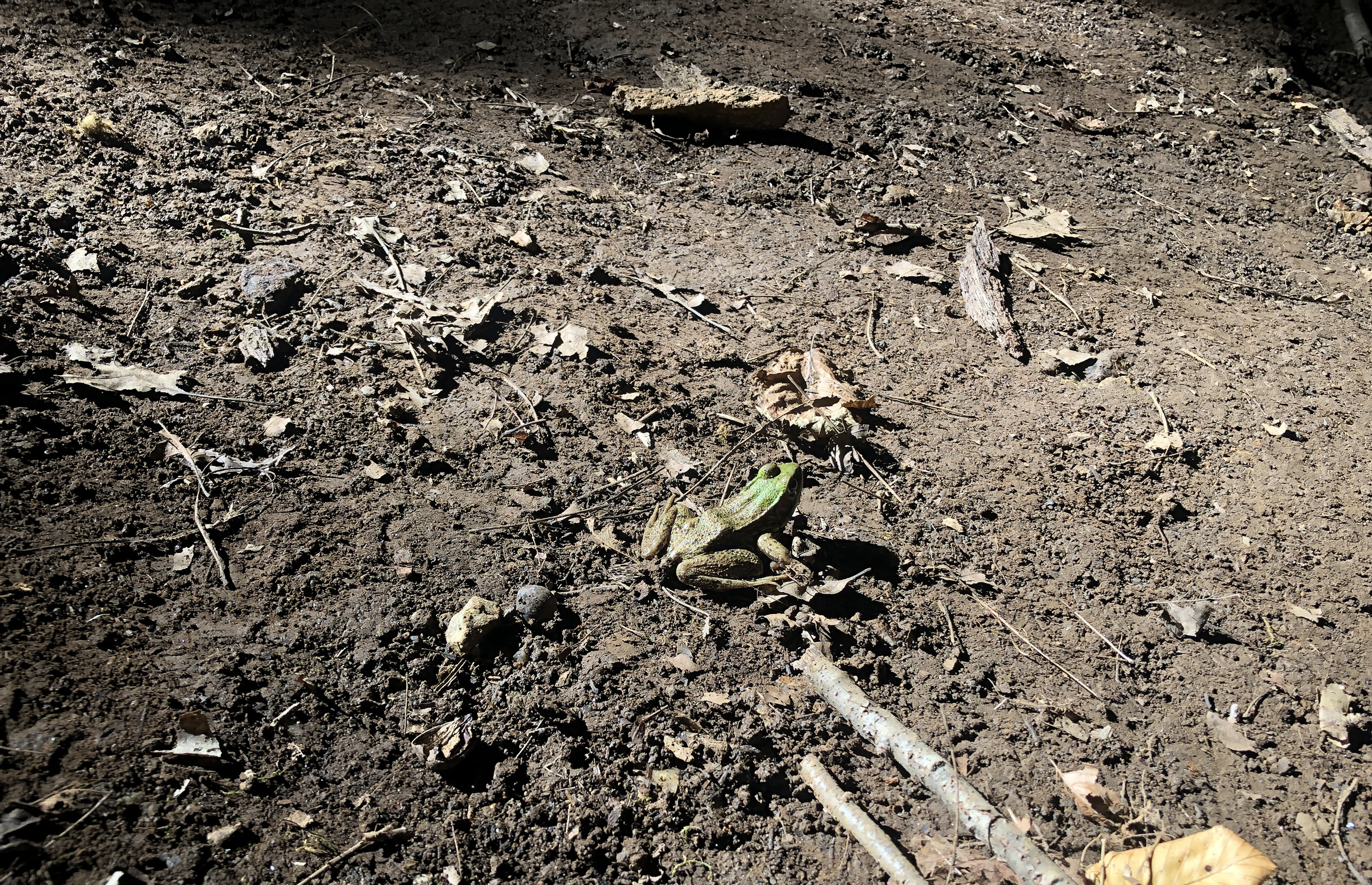
The Bradley Mine itself was cool to see in person; its cavernous underground chamber almost had a cathedral-like atmosphere (so long as you ignored the graffiti). I even got an amphibian friend to keep me company.
The history of the mine dates back to the late 18th century when the iron veins were first tapped to help support the American Revolutionary War. But the site saw its most intense industrial operation in the mid-19th century where the extracted iron ore was cast into rifle artillery guns used by the Union Army during the Civil War. As demand for local iron declined following the war, and richer deposits were discovered in the Midwest, the Bradley Mine was officially shut down and abandoned in 1874.
A Chinese Demon in America
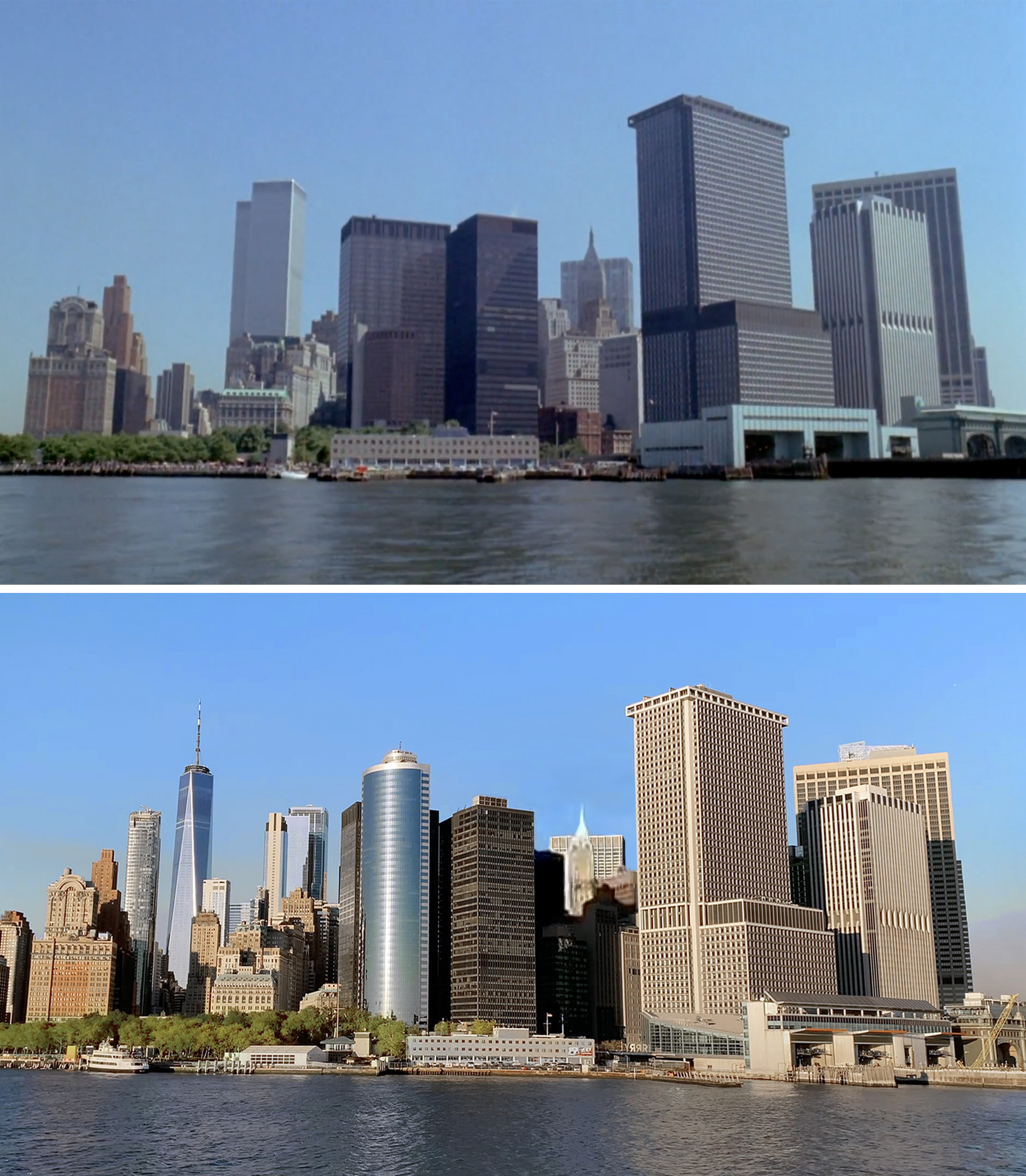
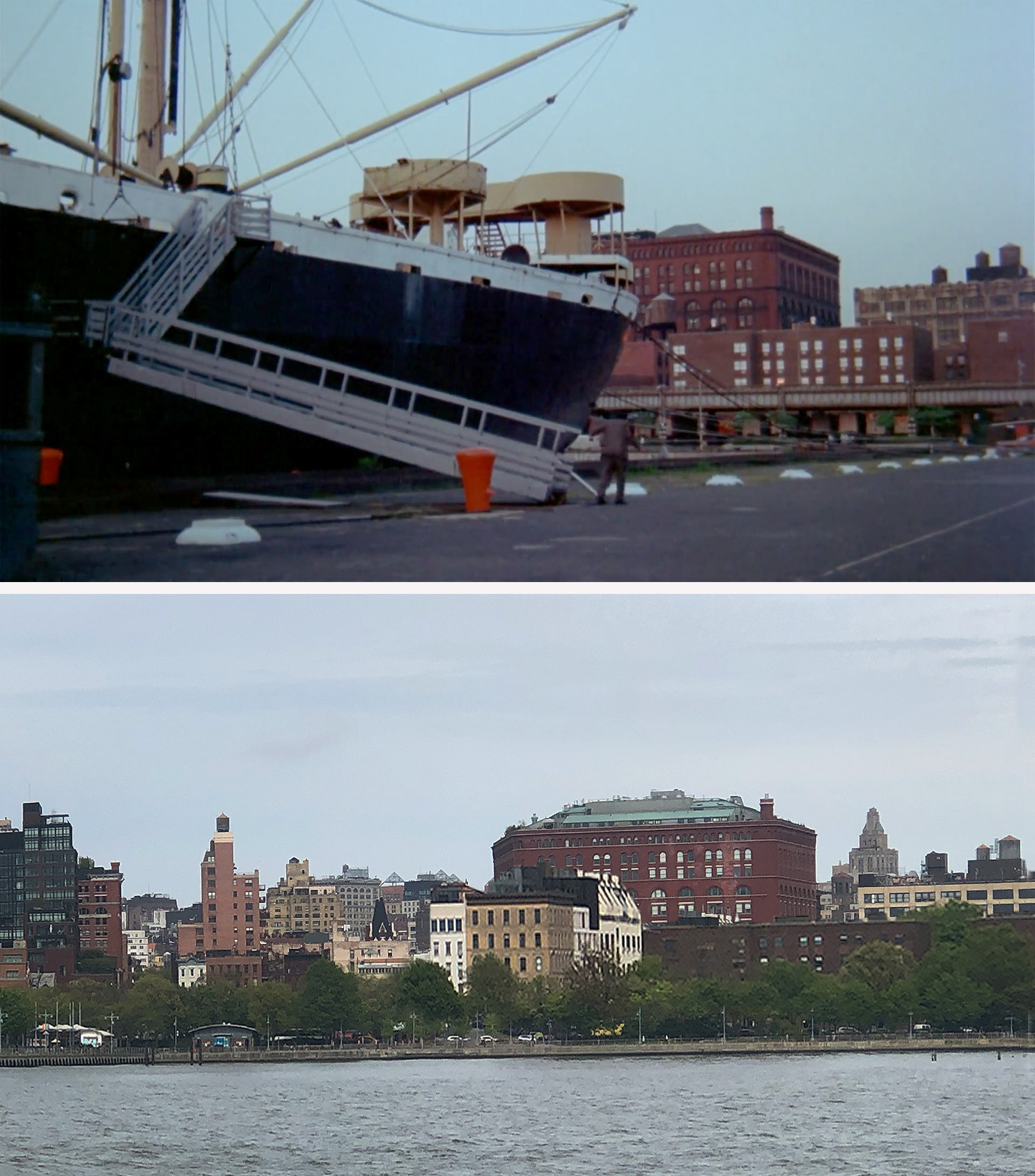
The shots taken from the water were easy to pinpoint as they offered wide, panoramic views of the Manhattan skyline containing many extant buildings.
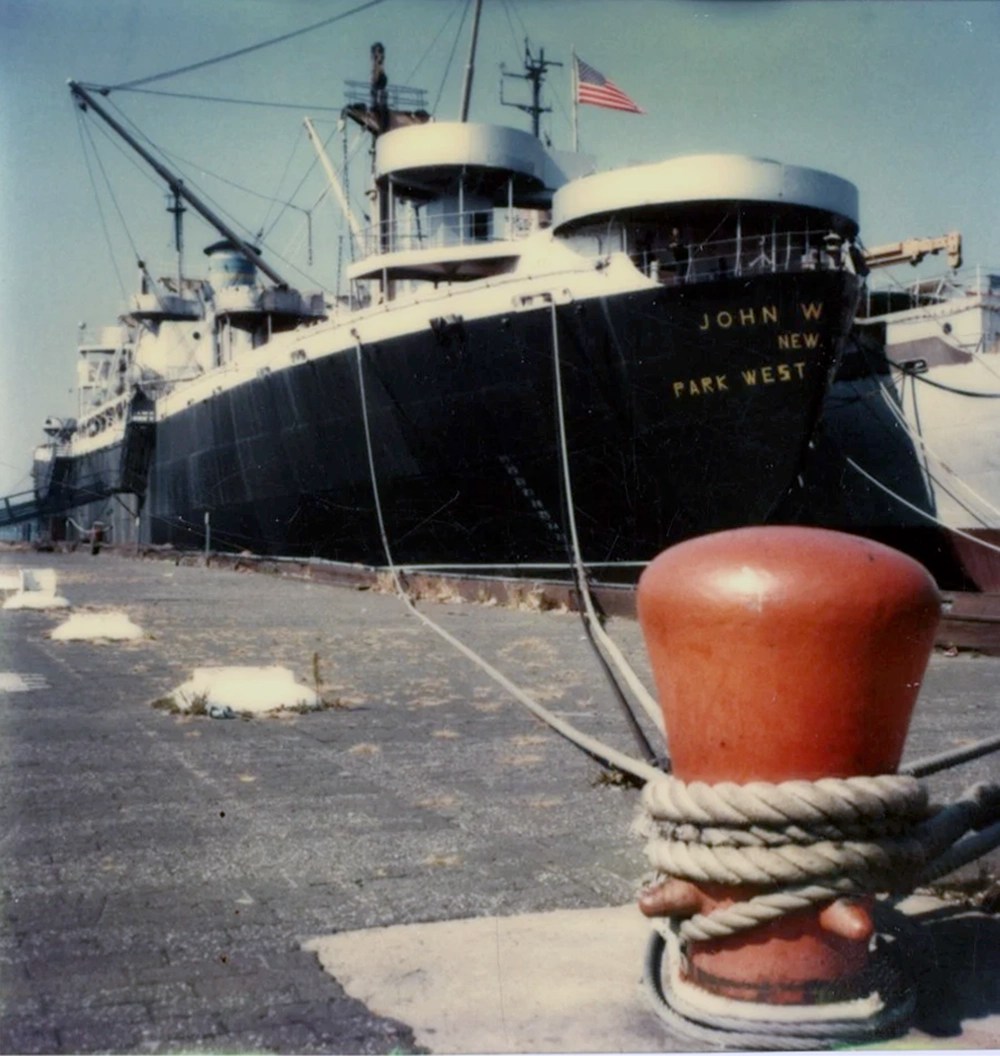
The ship was docked at Pier 42 in the West Village which was colloquially known as the Morton Street Pier due to its proximity to that cross street.
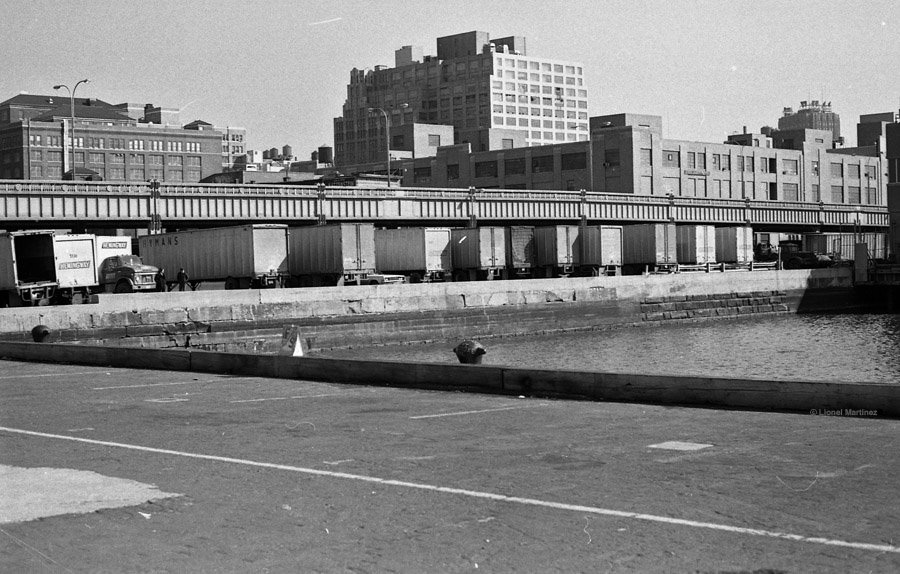
By the way, the ship docked at the pier was the SS John W. Brown which actually had been operating as a static training facility for high school students interested in nautical careers. Launched in 1942 to fight in WW II, the SS John W. Brown functioned as a school from 1946 to 1982 and is currently one of only two operational Liberty ships remaining.
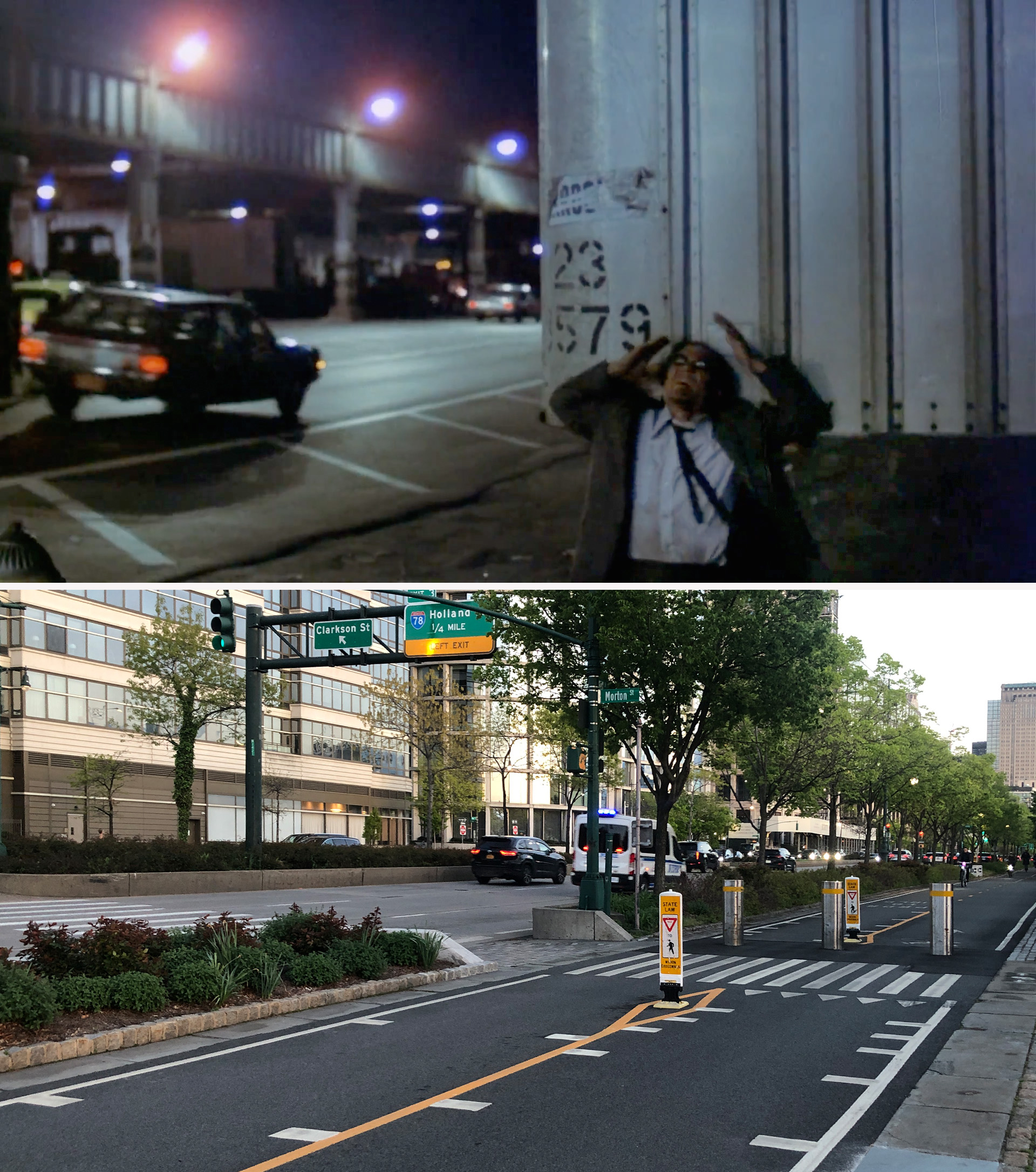
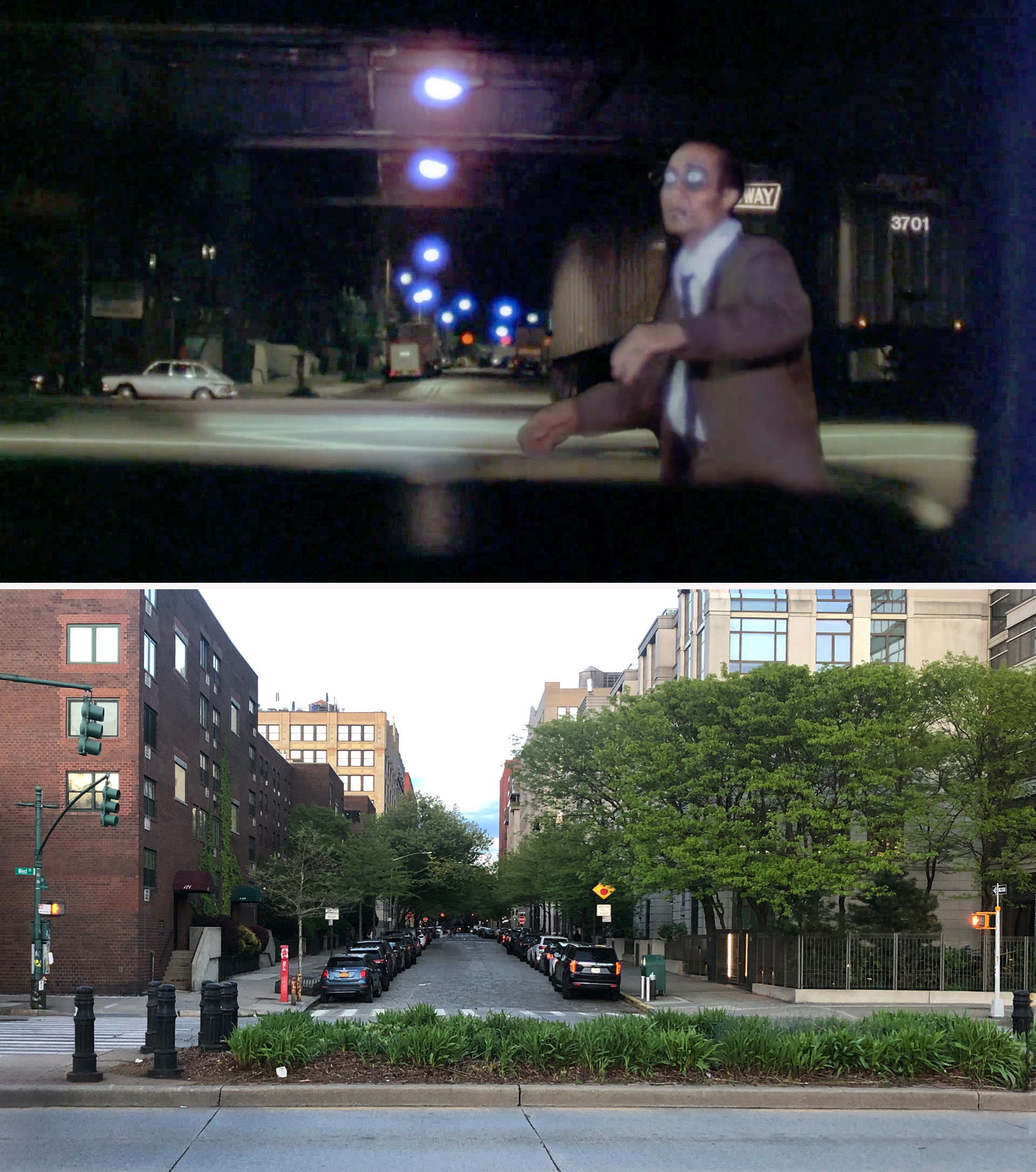
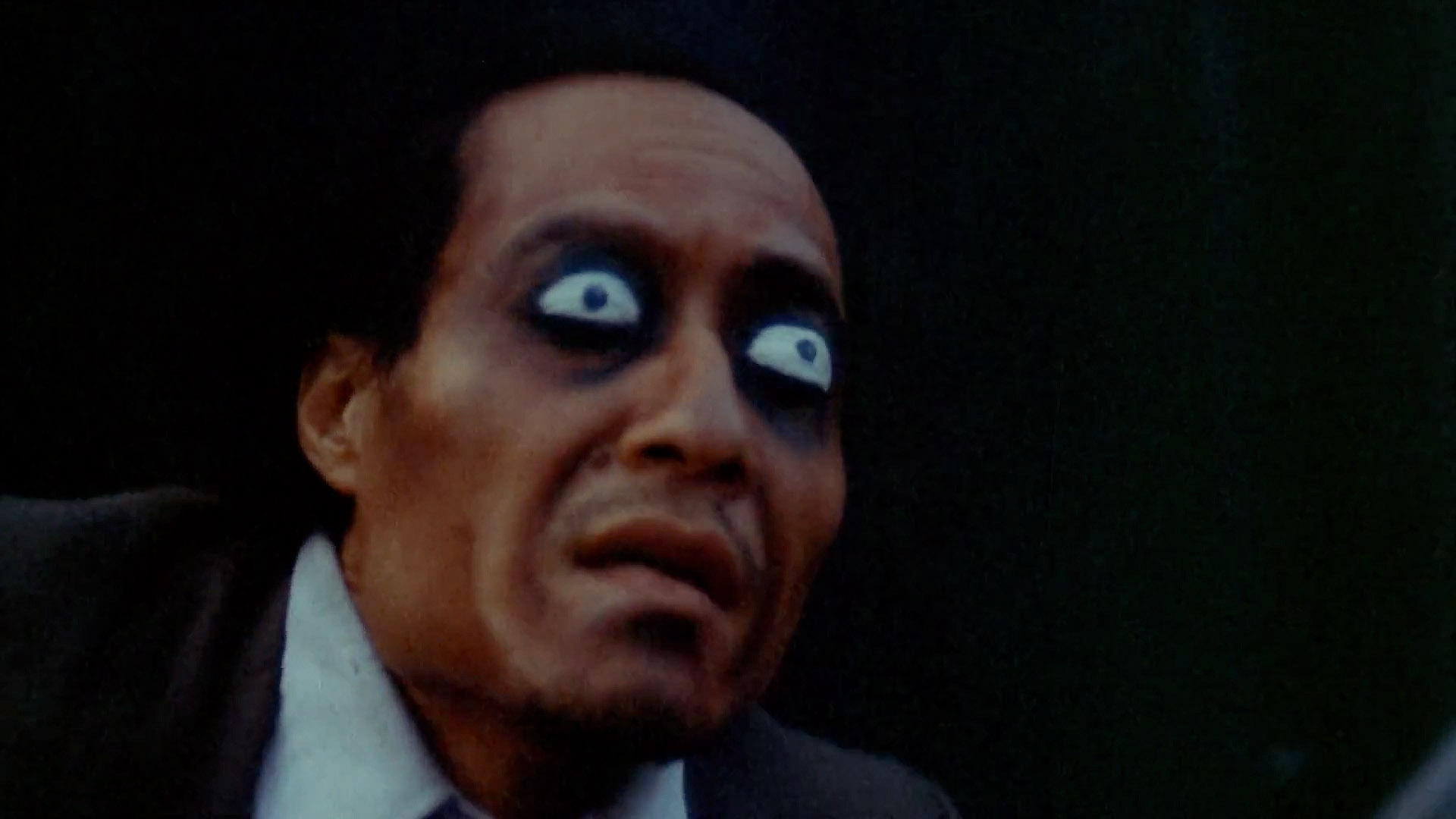
Even with the ship and pier identified, it still took me a little time to figure out that the footage of the possessed businessman wandering the streets was shot at essentially the same place.
I could tell by the old elevated highway that they filmed it on West Street along the Hudson, but because it was so dark, I figured it’d be nearly impossible to confirm the exact spot used. All that I could make out were parked semi-trucks with the name “Hemingway” on them.
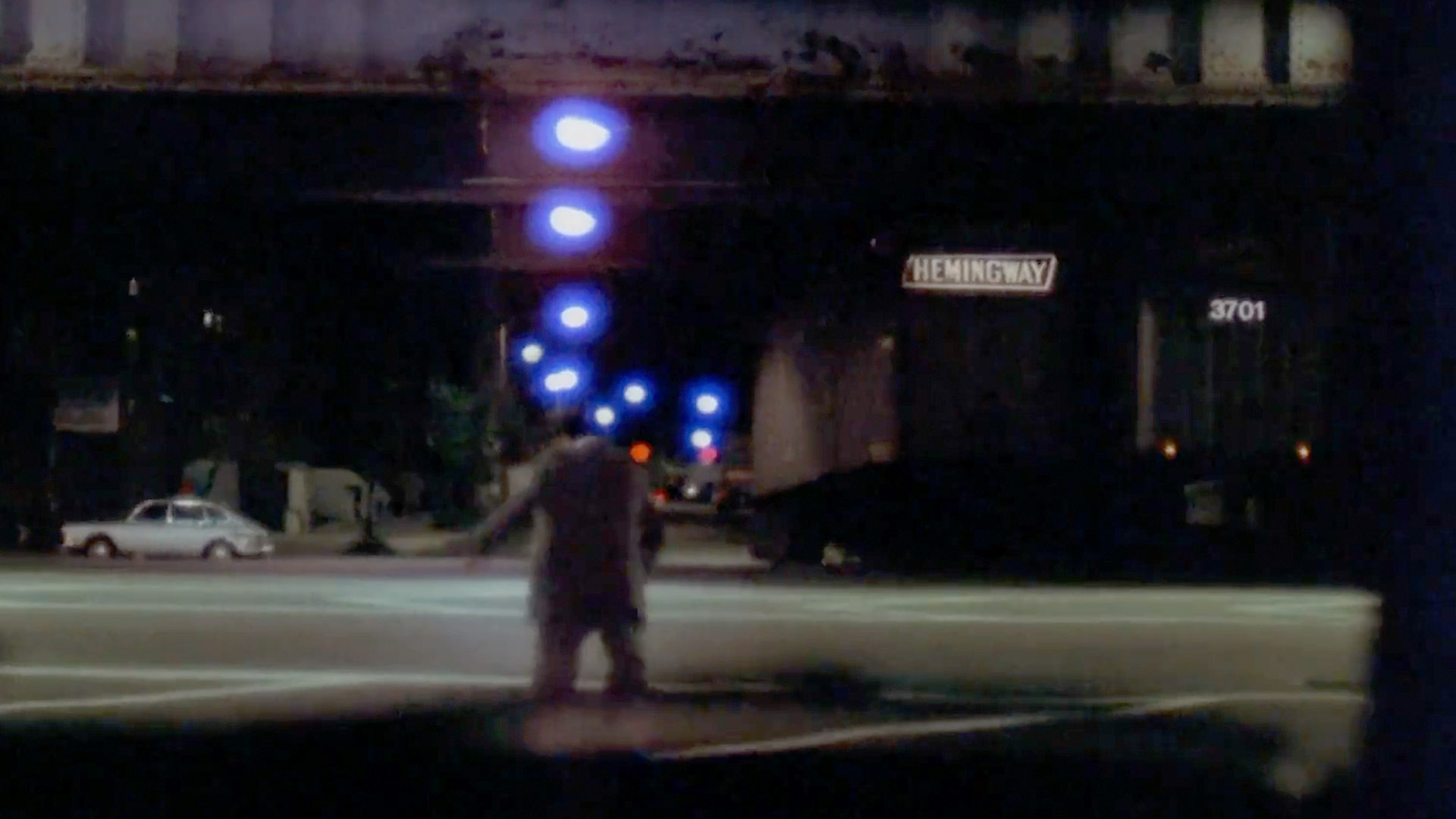
But then, hoping they shot this near Pier 43, I brightened up the scene and noticed something that looked like a red emergency callbox. After checking the area in Google Street View, I could see there’s currently a callbox on the corner of Morton Street. (It’s in a slightly different place, but that’s a normal occurrence I’ve seen before.)
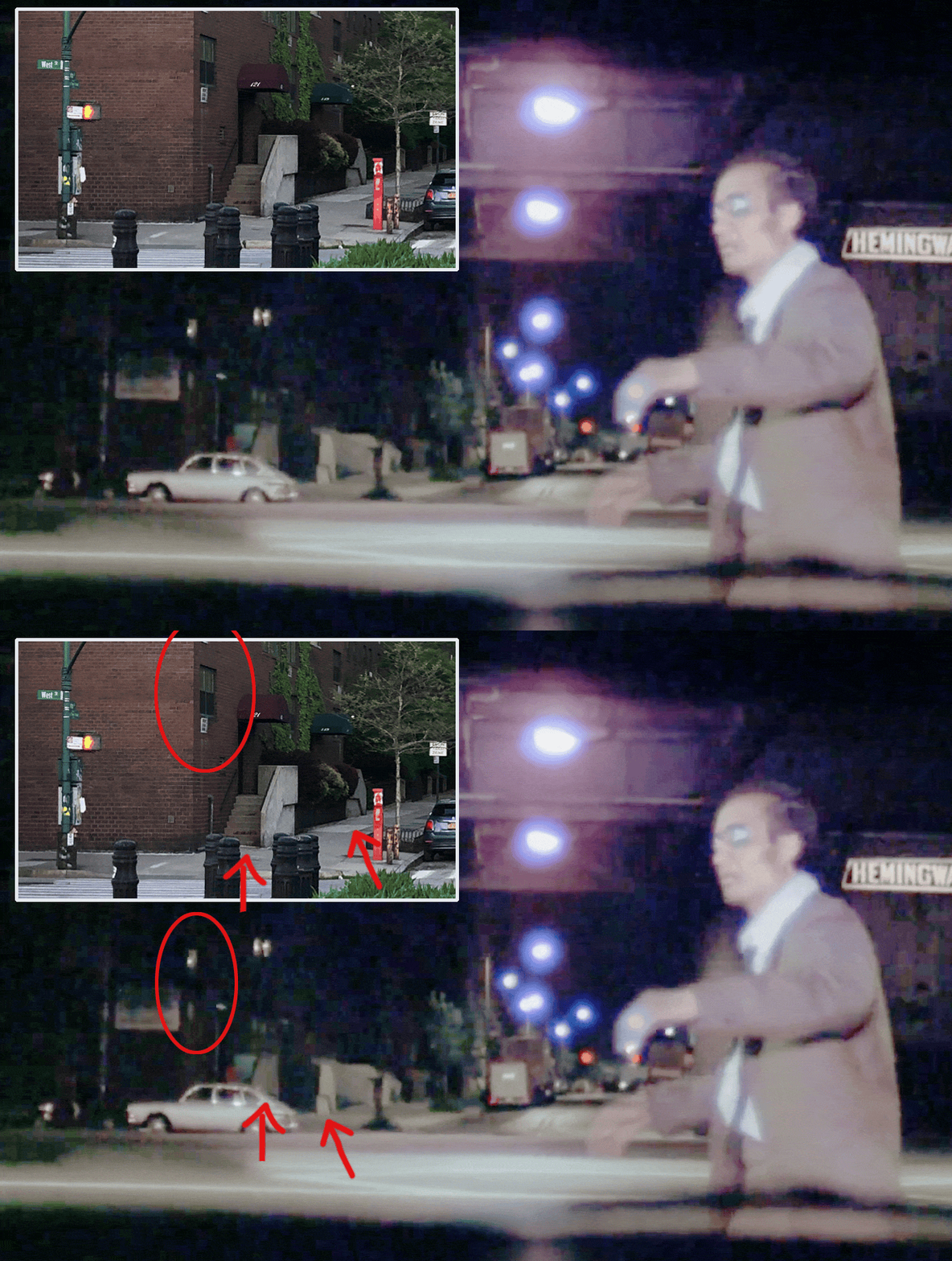
After that, I started spotting a few other matches on Morton Street, starting with the traffic direction. But the apartment building on the northeast corner was the main source of corroboration, appearing to have similar window patterns and matching staircases.
It was enough for me to call this pretty much solved. But the location of the following scene proved to be a more difficult nut to crack.
The Demon Goes Down
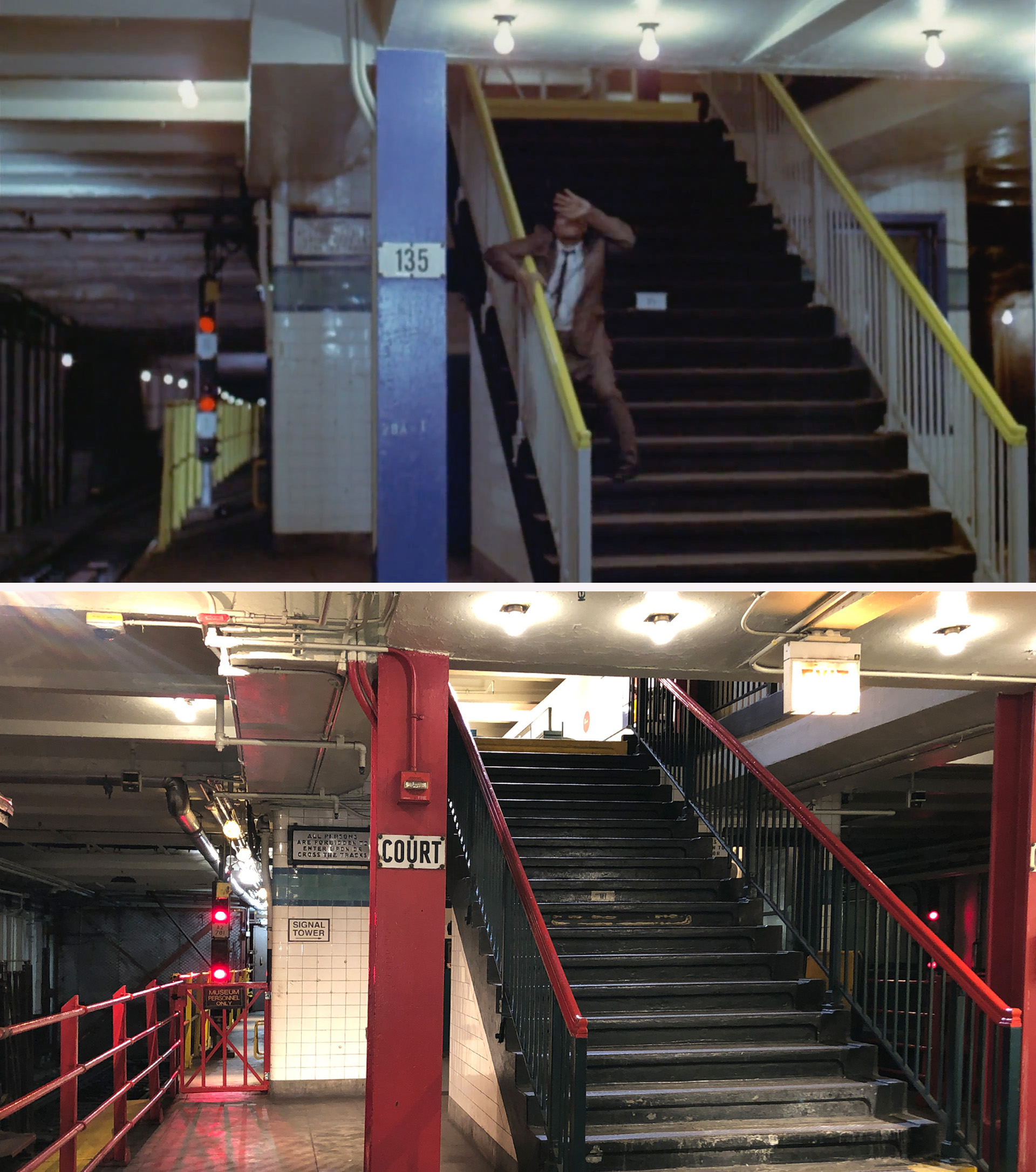
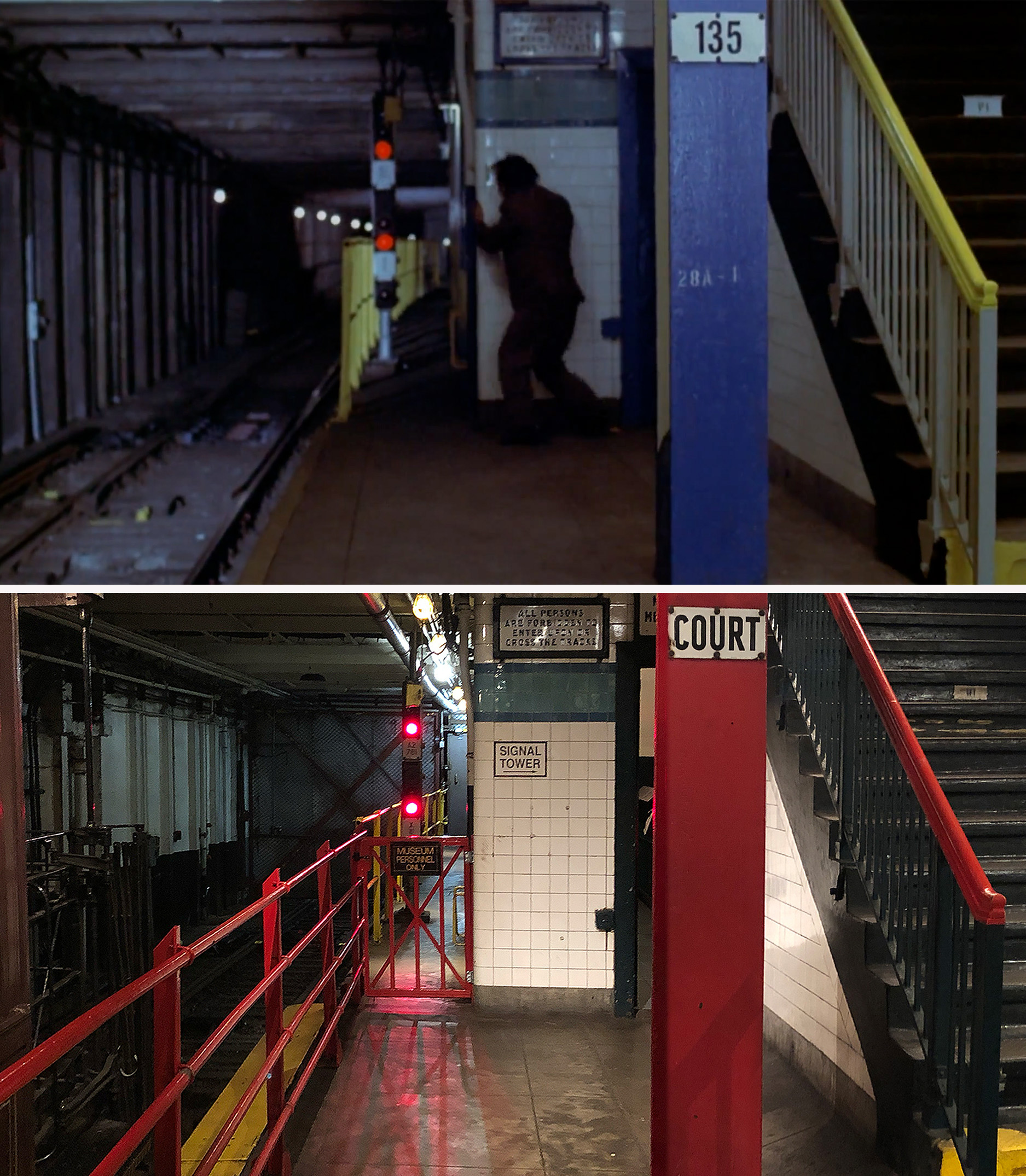
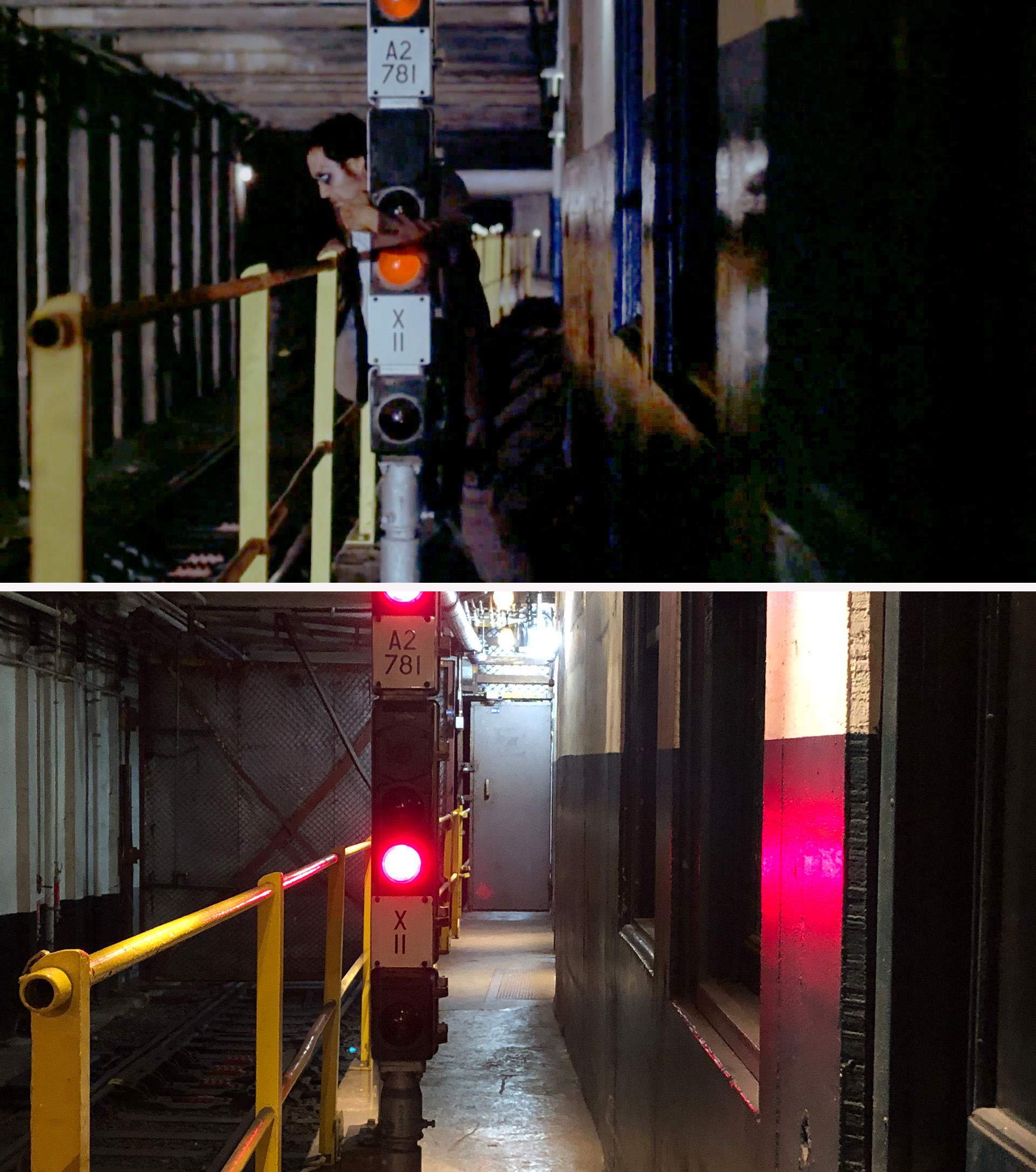
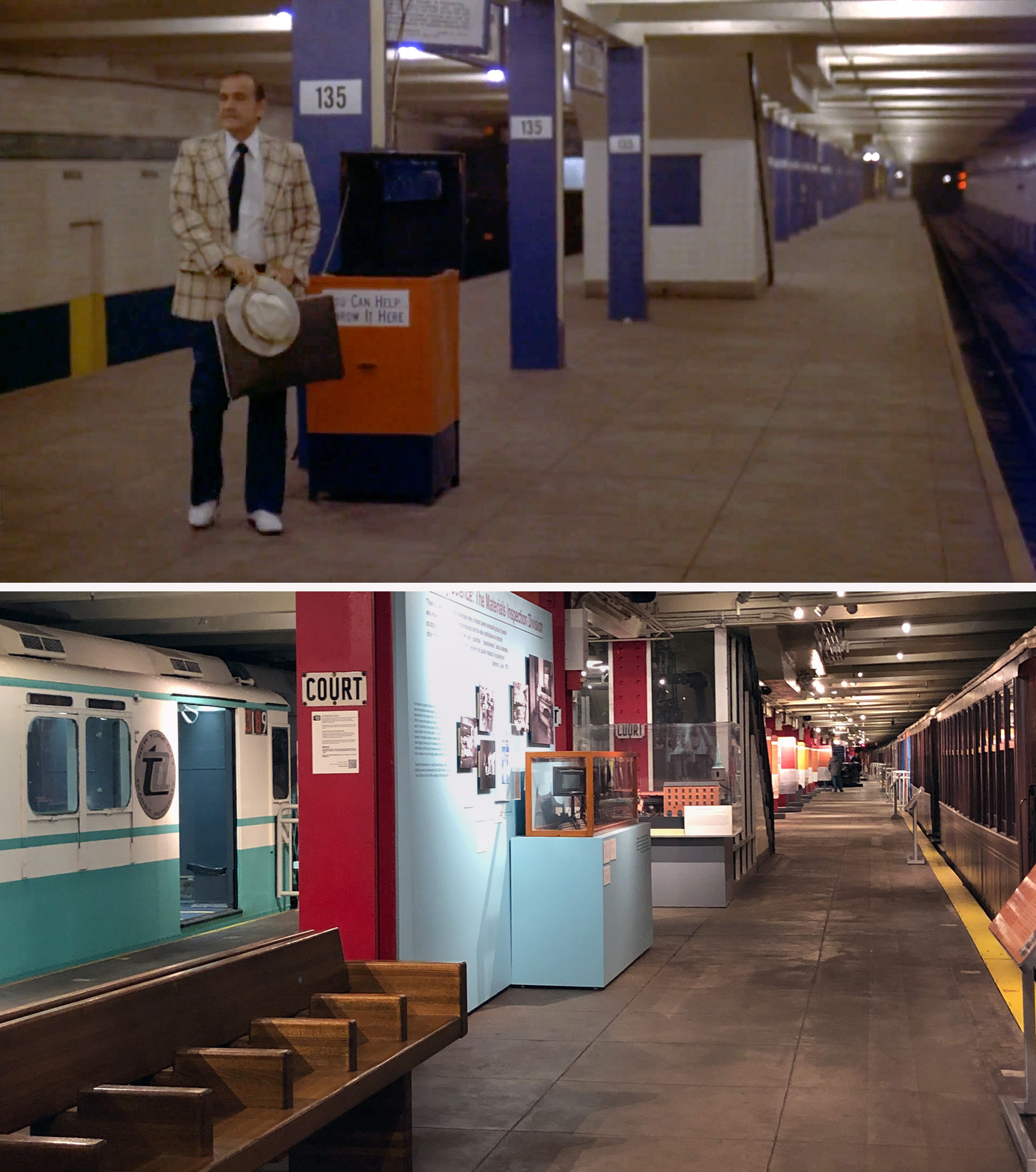
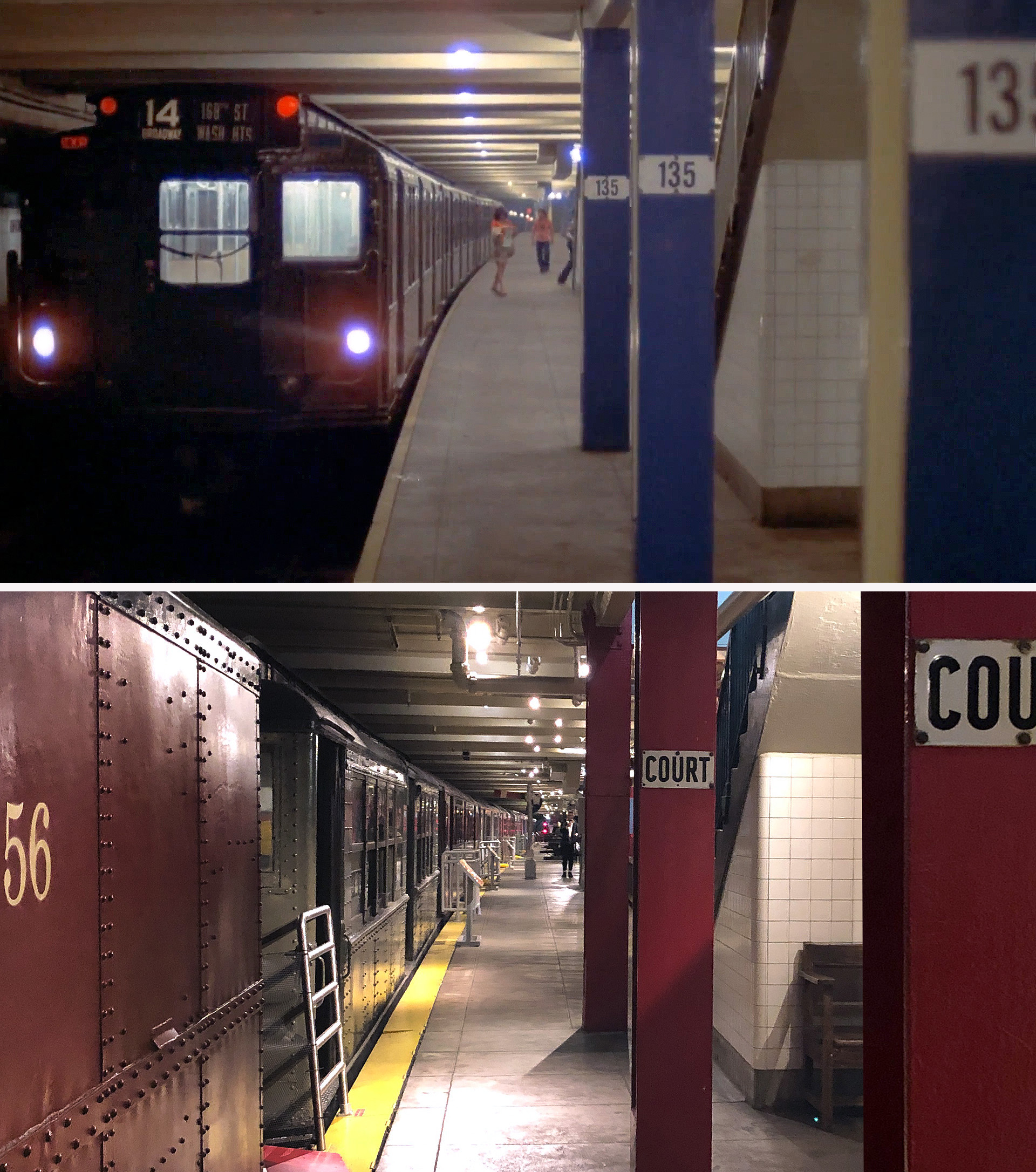
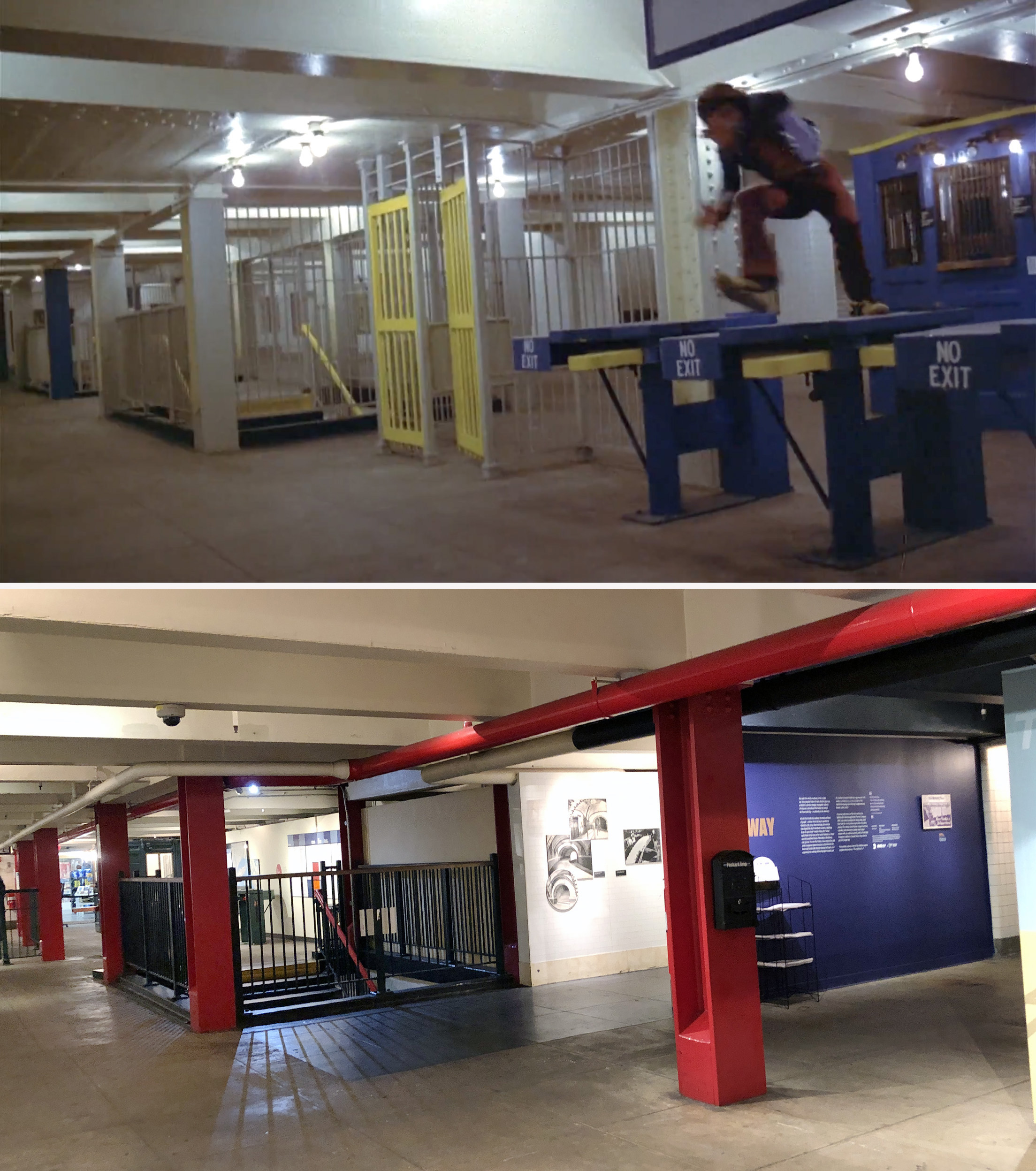
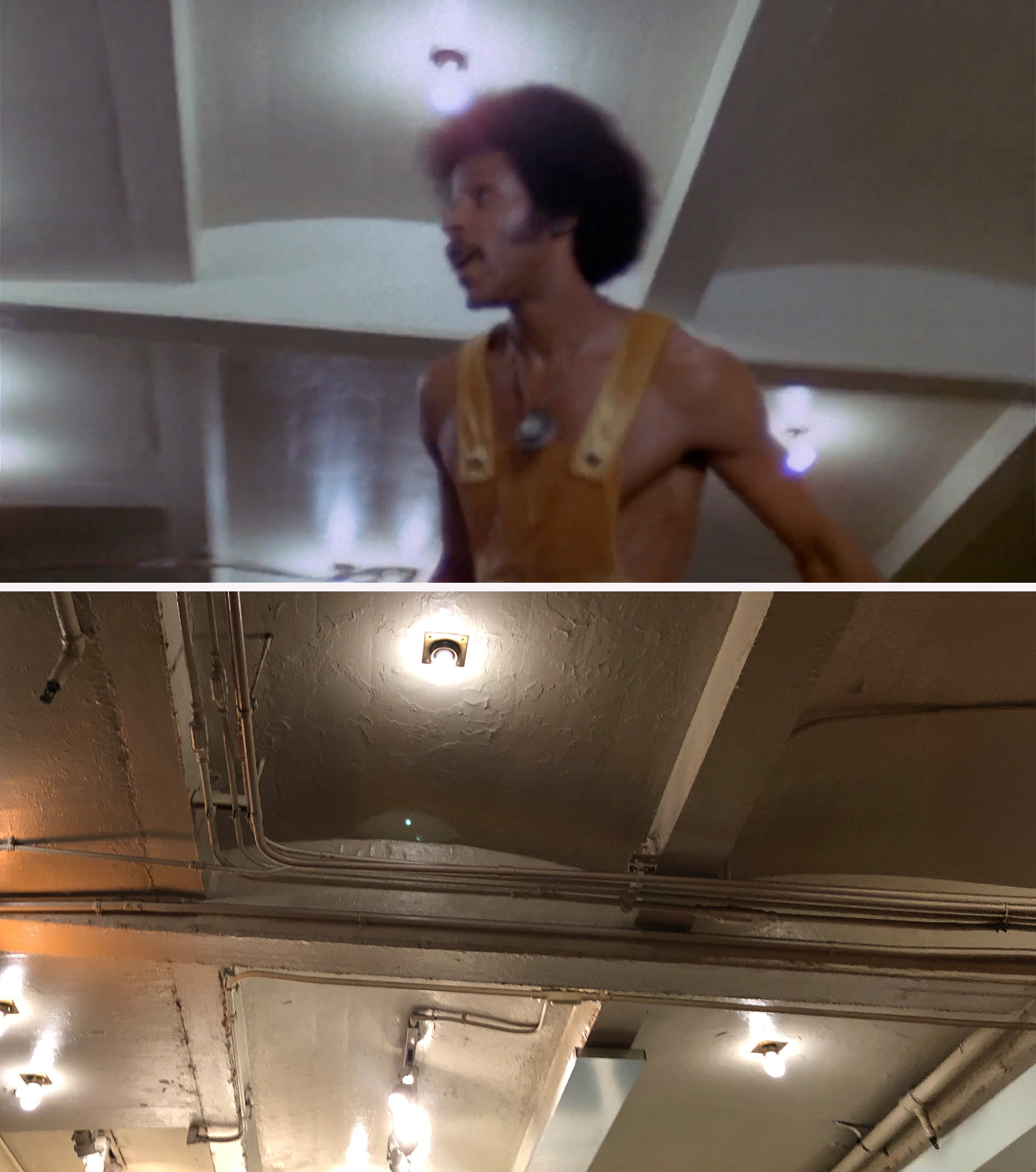
Even though the subway signs on the platform said 135th Street, I had a feeling they actually filmed the subway interiors at the abandoned Court Street station in downtown Brooklyn. I already knew Court Street was used fairly regularly by film productions in the sixties and seventies —such as Midnight Cowboy (1968) and Death Wish (1974)— and after finding several matching details at the station, I concluded Devil’s Express was also one of them.
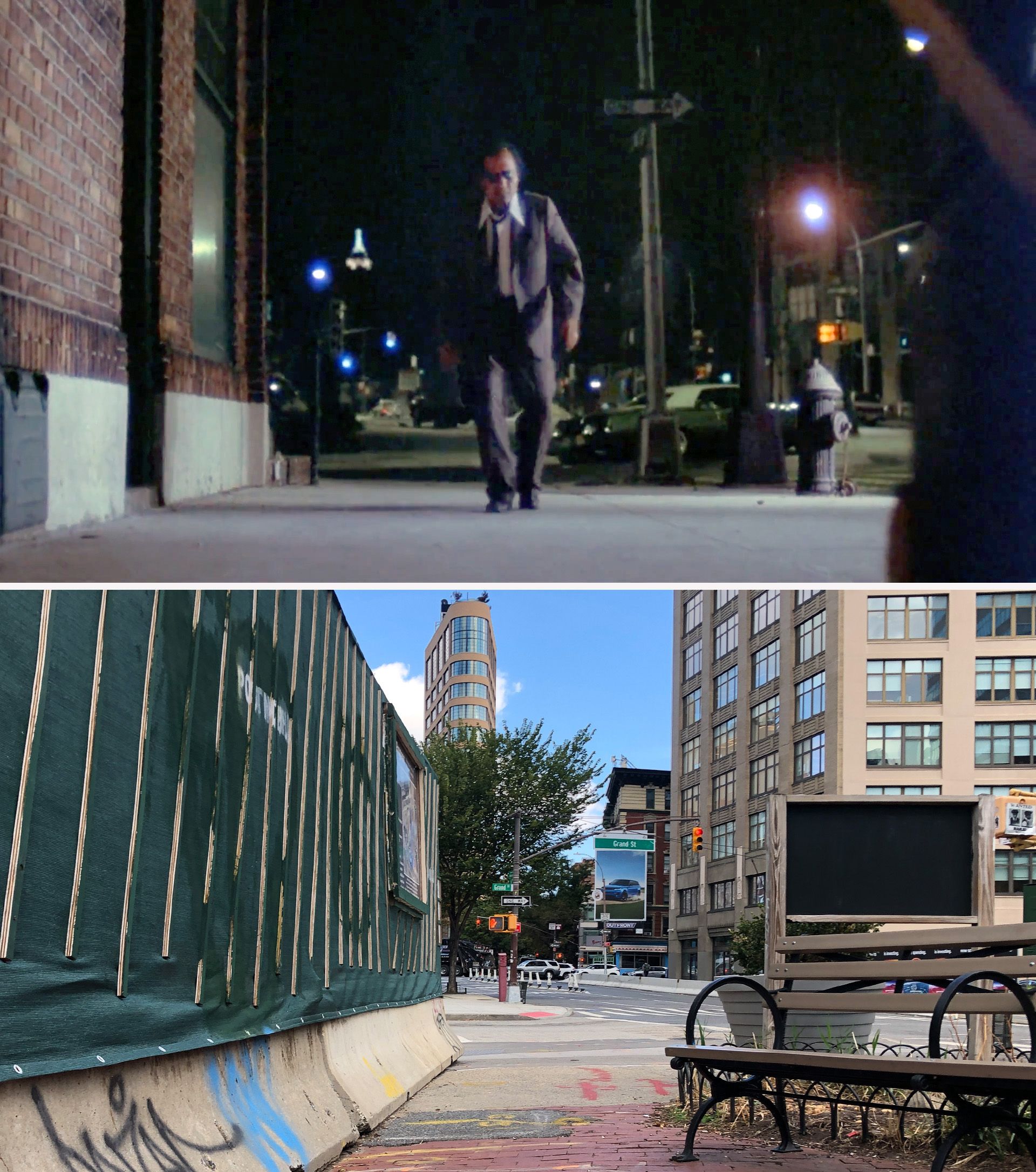
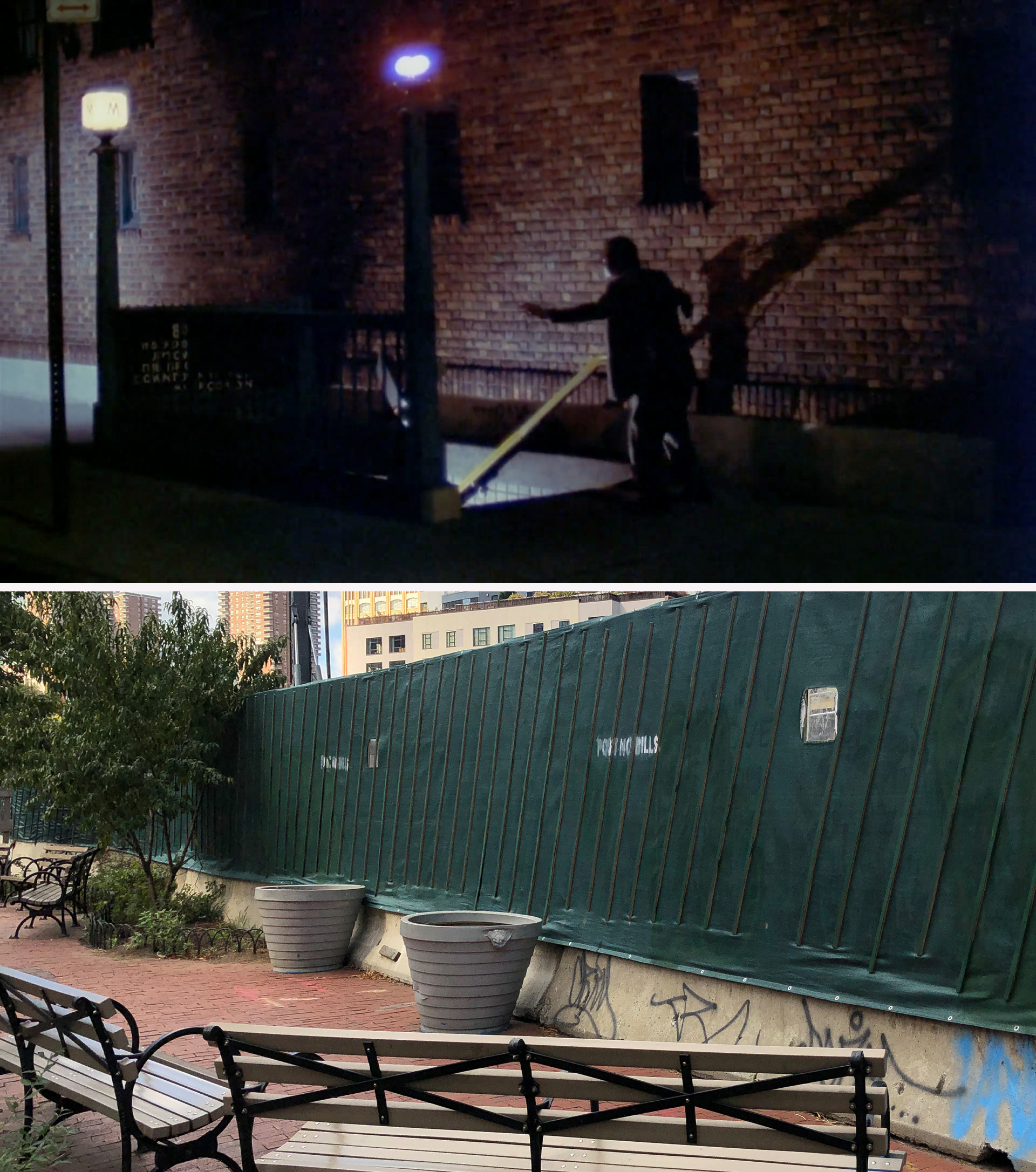
However, as far as I could tell, the exterior entrance used by the possessed businessman was a completely different location. The only major clue I had to go on was the Empire State Building seen in the background of the initial shot, lending to the likelihood that it was filmed in Lower Manhattan with the camera pointing north.
And Blakeslee offered up some additional help in this mystery by deciphering the sign on the subway entrance.
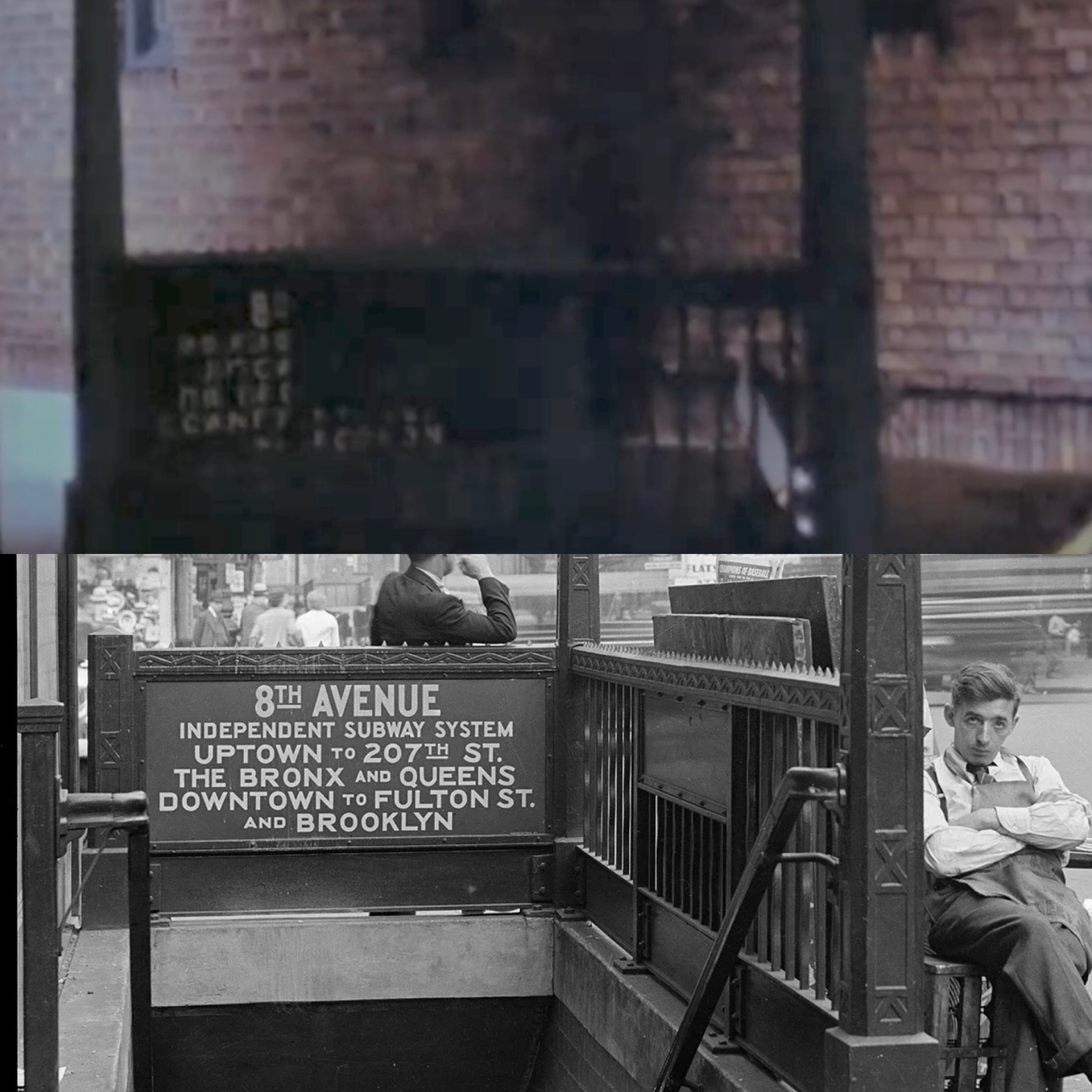
He concluded the entrance was to the IND’s A/C/E line, which primarily ran up Eighth Avenue in Manhattan, but went along Sixth Avenue between the West Village and the Financial District. And it was that section of the line that seemed most likely to offer views of the Empire State Building. But after Blakeslee and I studied each subway stop, we couldn’t find anything that looked right. A little later on, in sheer desperation, I even started considering parts of Brooklyn. But despite a couple close calls, nothing panned out.
Whenever I come upon a location stumper like this, if I can’t figure it out within a few days, I’ll usually leave it alone for a while and sporadically revisit it over the ensuing weeks, months or (on occasion) years. Fortunately, in this case, the solution came after the passage of only a couple weeks or so.
Any time I revisit a location-mystery after taking a bit of a break, I usually come at it with a fresh perspective. And with this scene, I suddenly noticed that a passing car in the background seemed to be traveling at a diagonal angle, indicating that we were possibly at an intersection of more than two streets.
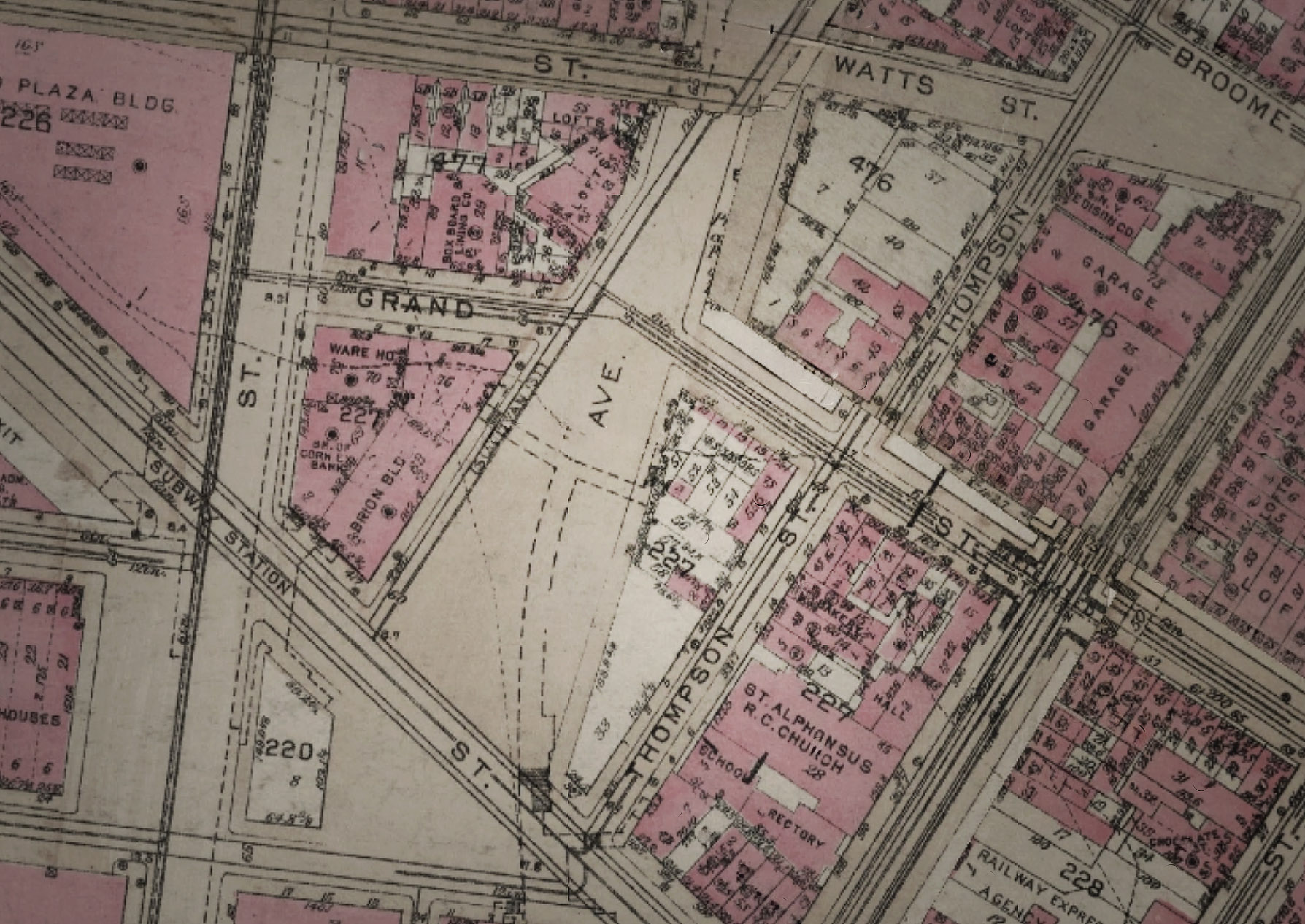
That inspired me to look along the A/C/E in a 1930 Bromley map, seeing if any of the intersections stood out. Shortly thereafter, I came upon the intersection of Sixth, Sullivan and Grand Street, which potentially could create the same sort of landscape. I couldn’t find a matching building there today, but when I looked through the 1940 tax photos, the one of 17 Grand looked quite promising.
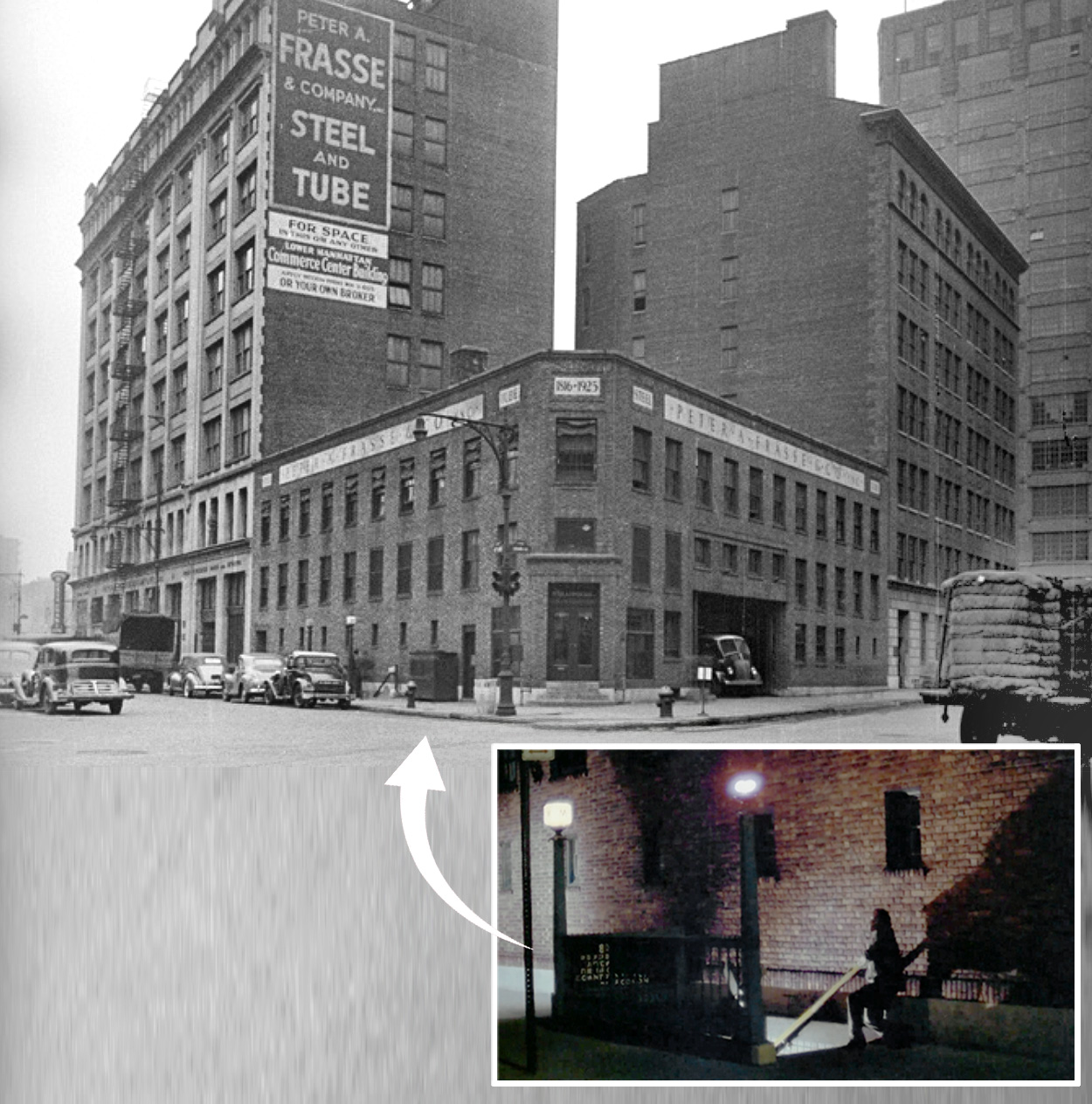
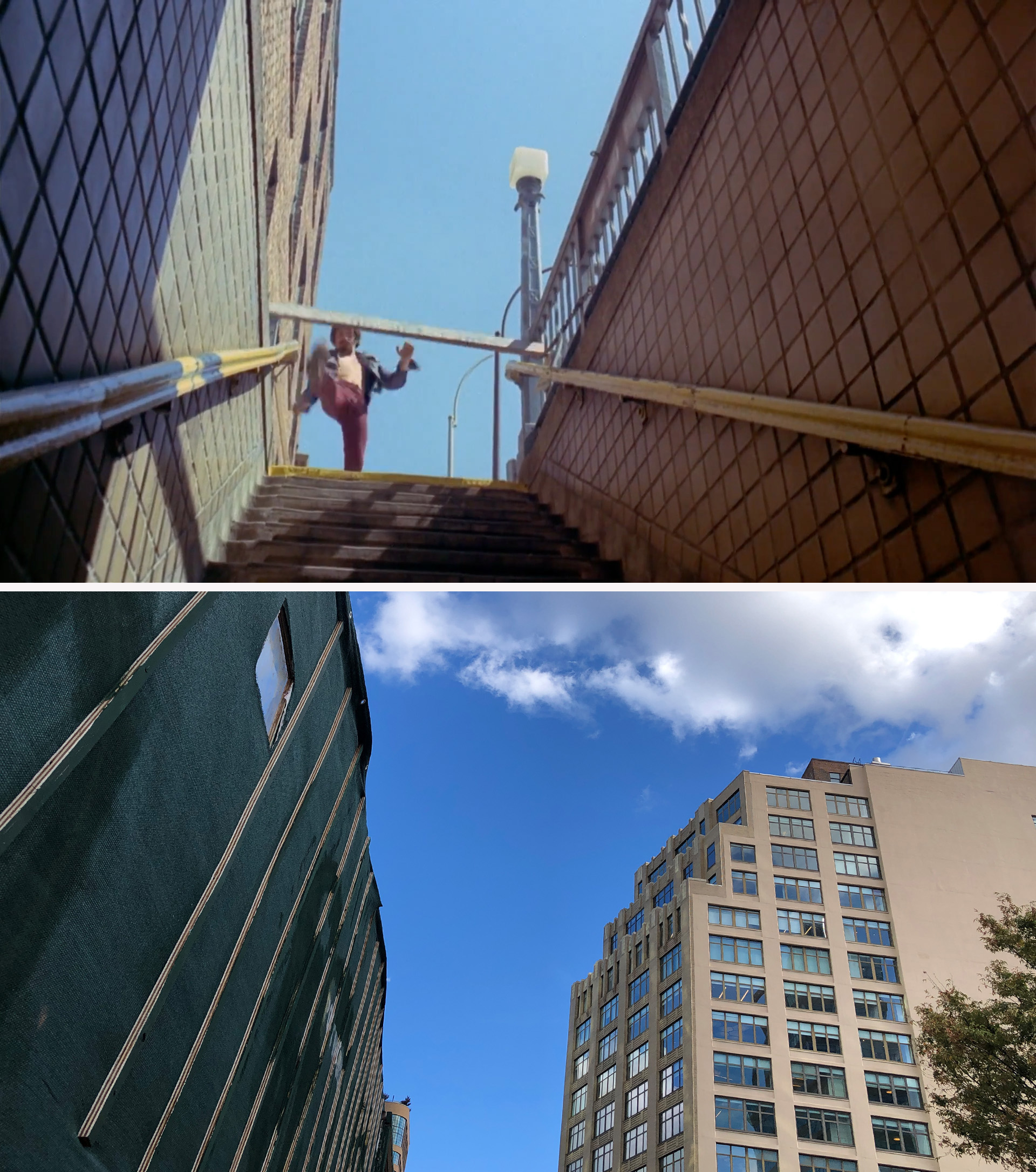
The brick and windows looked the same, and while there’s no longer a subway entrance at that intersection, you can see from the tax photo that there used to be one.
Part of the Canal Street IND Station, there used to be three exits that are now closed. Two of them were located in a passageway that extended north from Canal (indicated with the dashed lines in the map above). One led to the southeast corner of Grand Street and Sixth Avenue, the other led to Grand Street and Sullivan Street on the west side of what is now Juan Pablo Duarte Square. (The closed passageway currently houses employee facilities.)
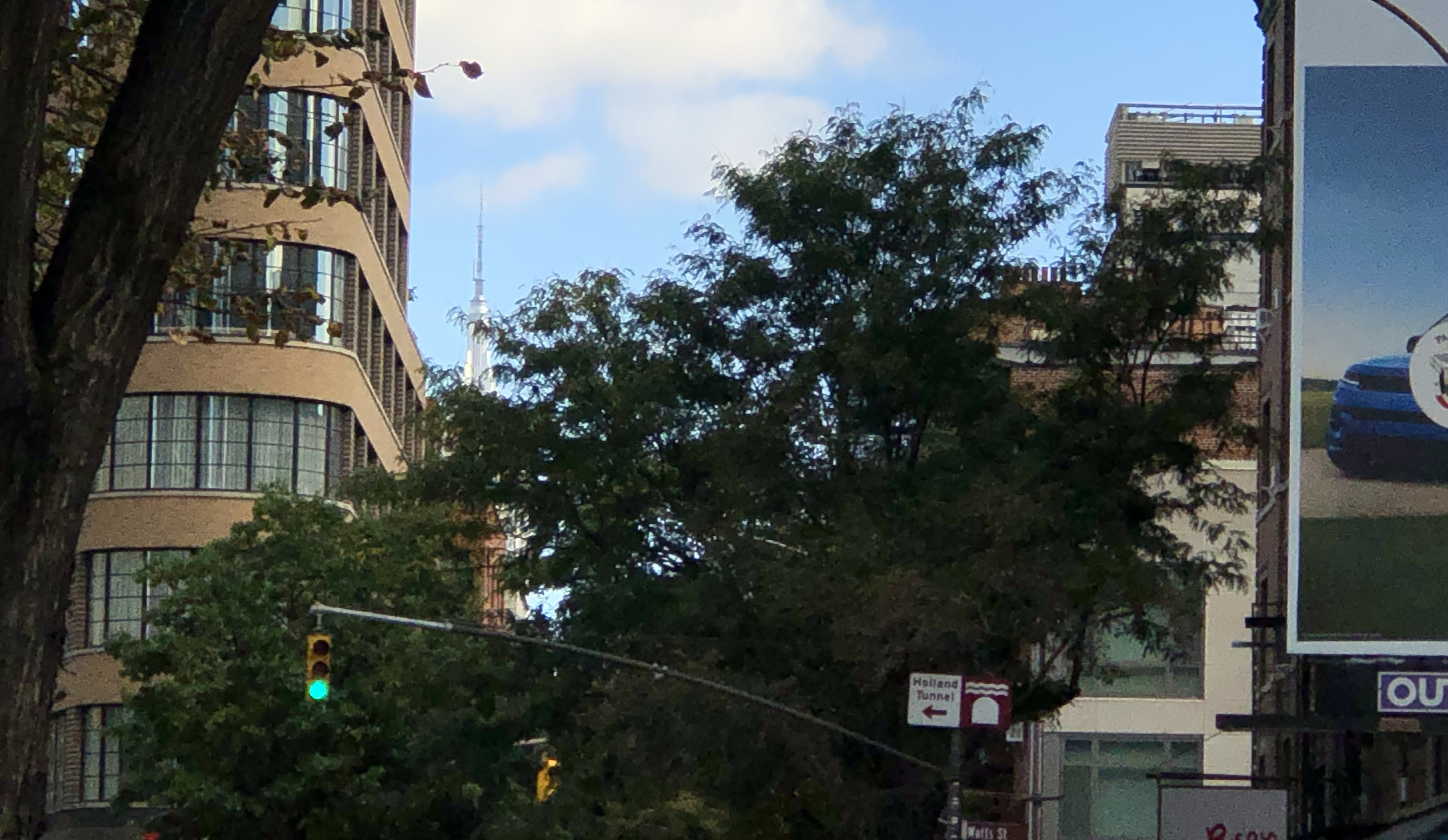
While the tax photos of that corner building was pretty definitive proof, as an added bonus, I was also able to verify that the intersection offers the same vantage of the Empire State Building as the movie (although it’s now mostly blocked by new buildings and overgrown trees.)
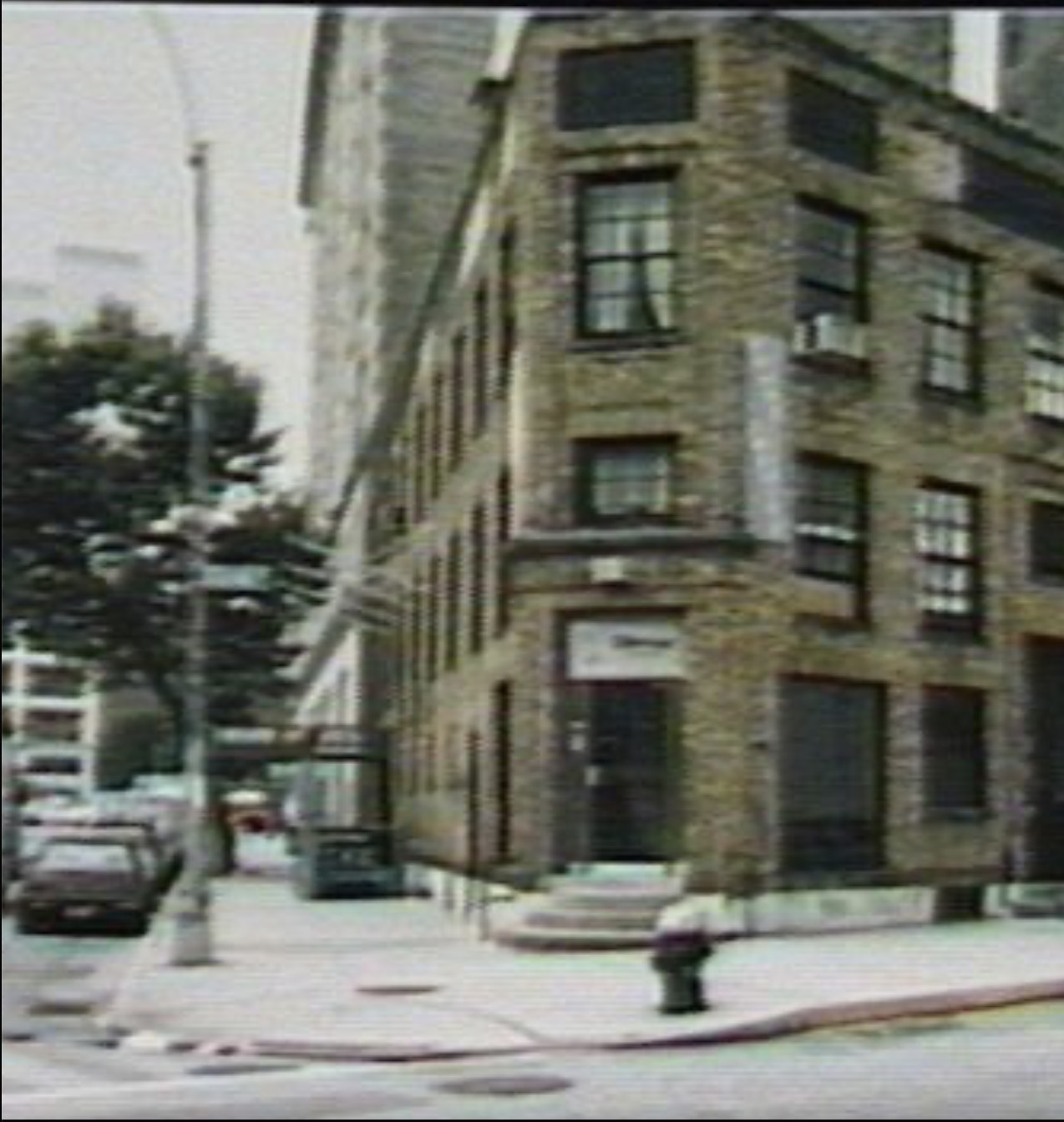
One interesting fact: in the late 1980s, that corner building on Grand housed a restaurant called, Triplets Roumanian Steak House, which was operated by Bobby Shafran, David Kellman, and Eddy Galland, the subsequent subjects of the documentary, Three Identical Strangers.
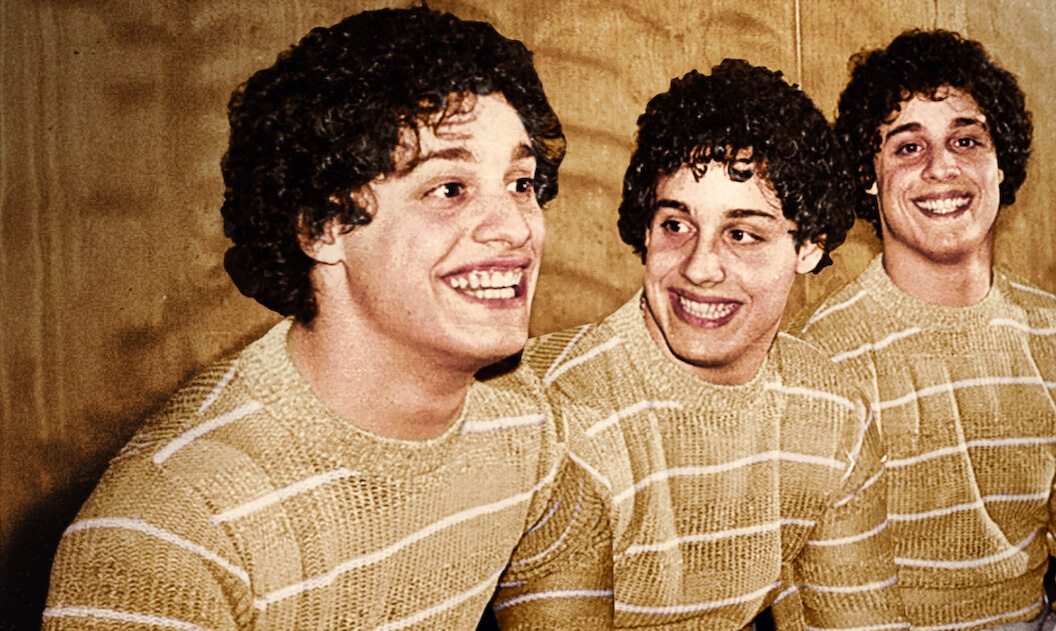
Featuring kitschy decor and traditional Jewish-Romanian fare, the SoHo eatery was built around the triplets’ sudden celebrity. Their whole bizarre tale was told on table tents in the restaurant, explaining how three separated-at-birth brothers discovered their kinship by pure chance at age 19.
While a successful enterprise at first, the novelty of the restaurant soon started to fade and tensions began to intensify between the estranged triplets. The situation got progressively worse and the restaurant finally closed in 2000, about five years after one of the brothers committed suicide.
I can only assume the corner building was razed within a few years of the restaurant’s closure. (It was definitely gone by 2007.)
These days, the entire block is one big open lot, but that will soon change. The Trinity Church-owned property has been slated to be the future site of a 28-story mixed-use development, tentatively titled, One Grand. The plans do include preserving Duarte Square, the small triangular park on the west side of Sixth Avenue (where Sullivan Street used to be), but I’d be curious to see if they try to have that subway entrance reinstated.
Heading to Chinatown
Drug Deal Goes Bad
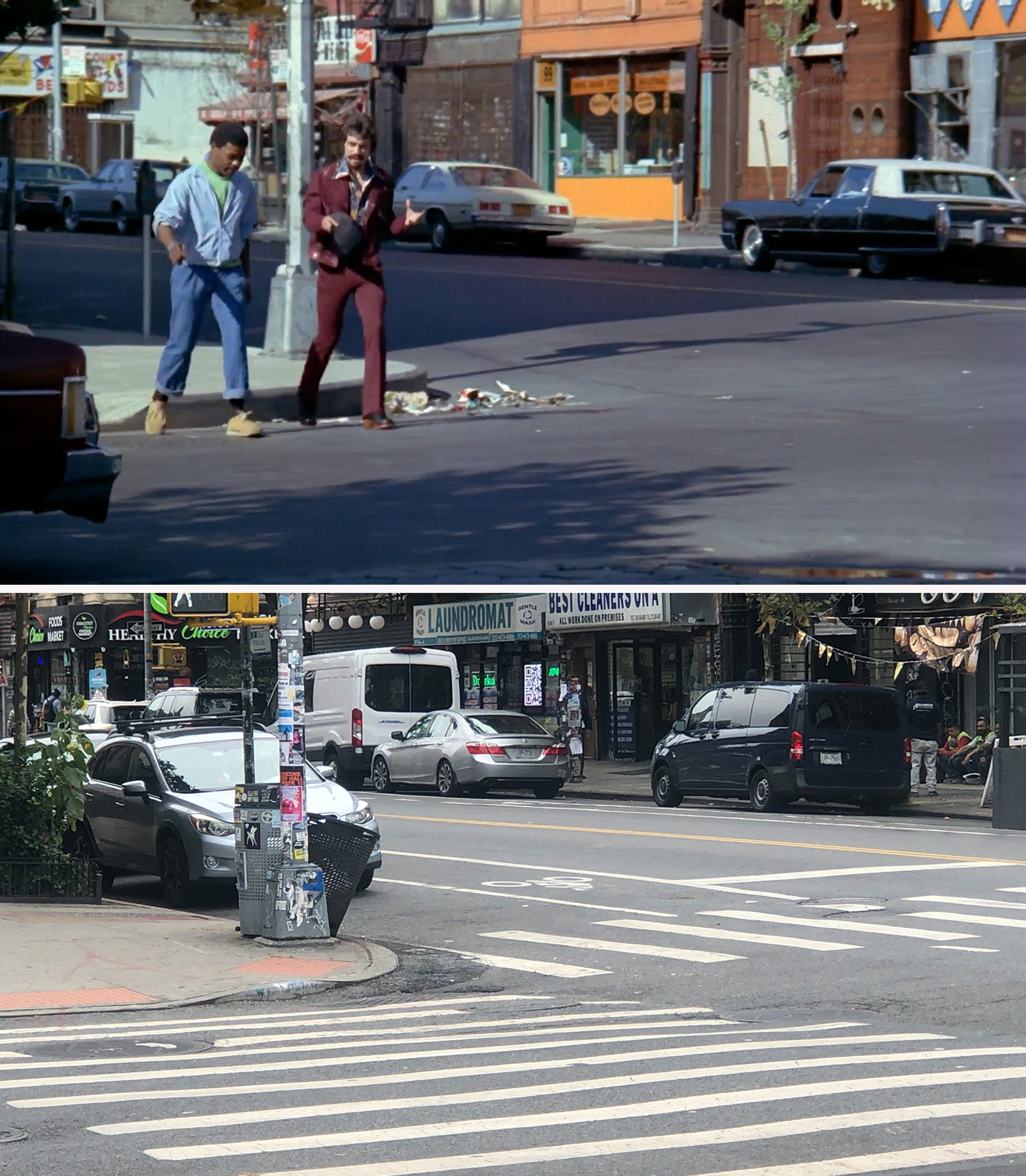
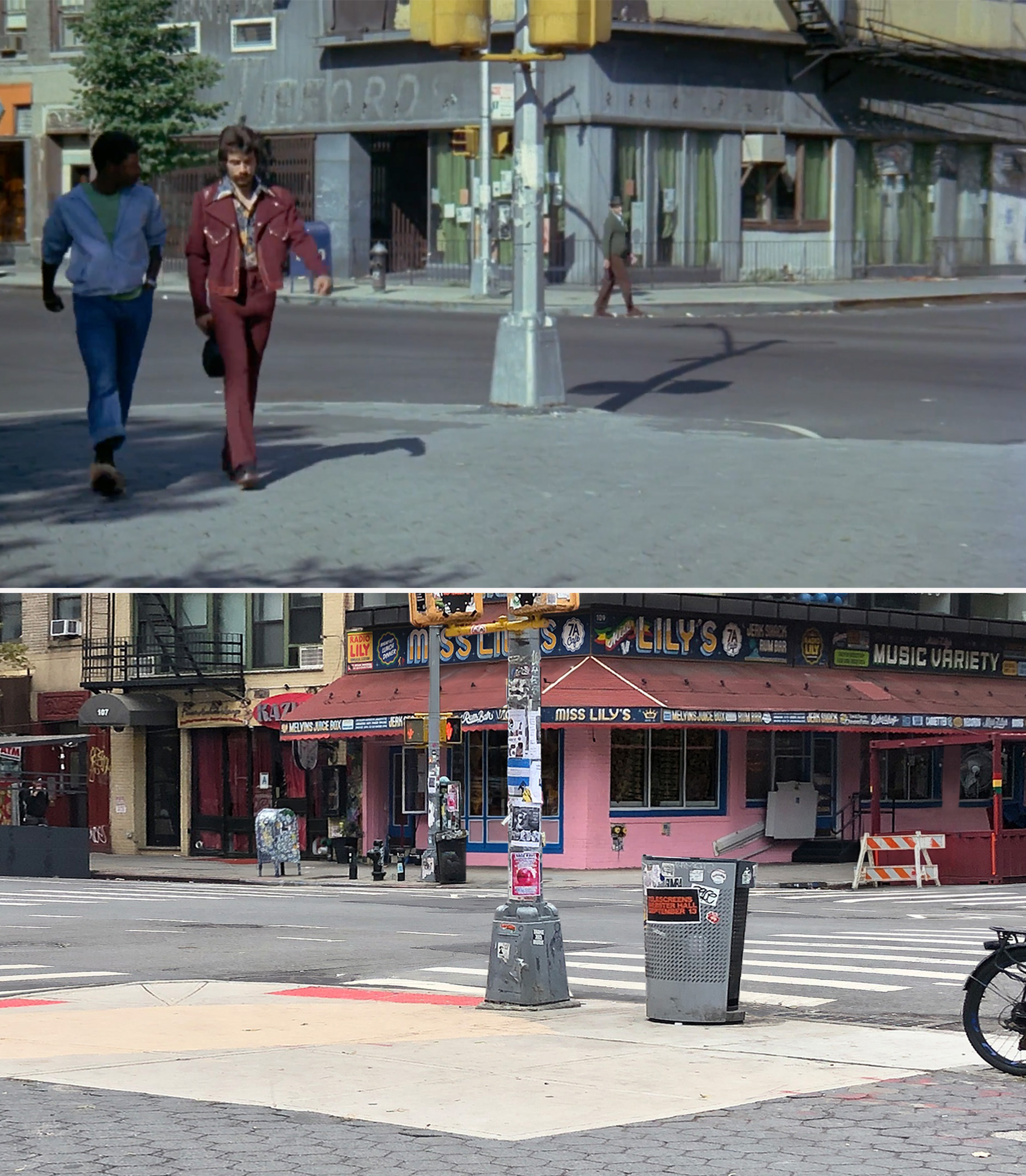
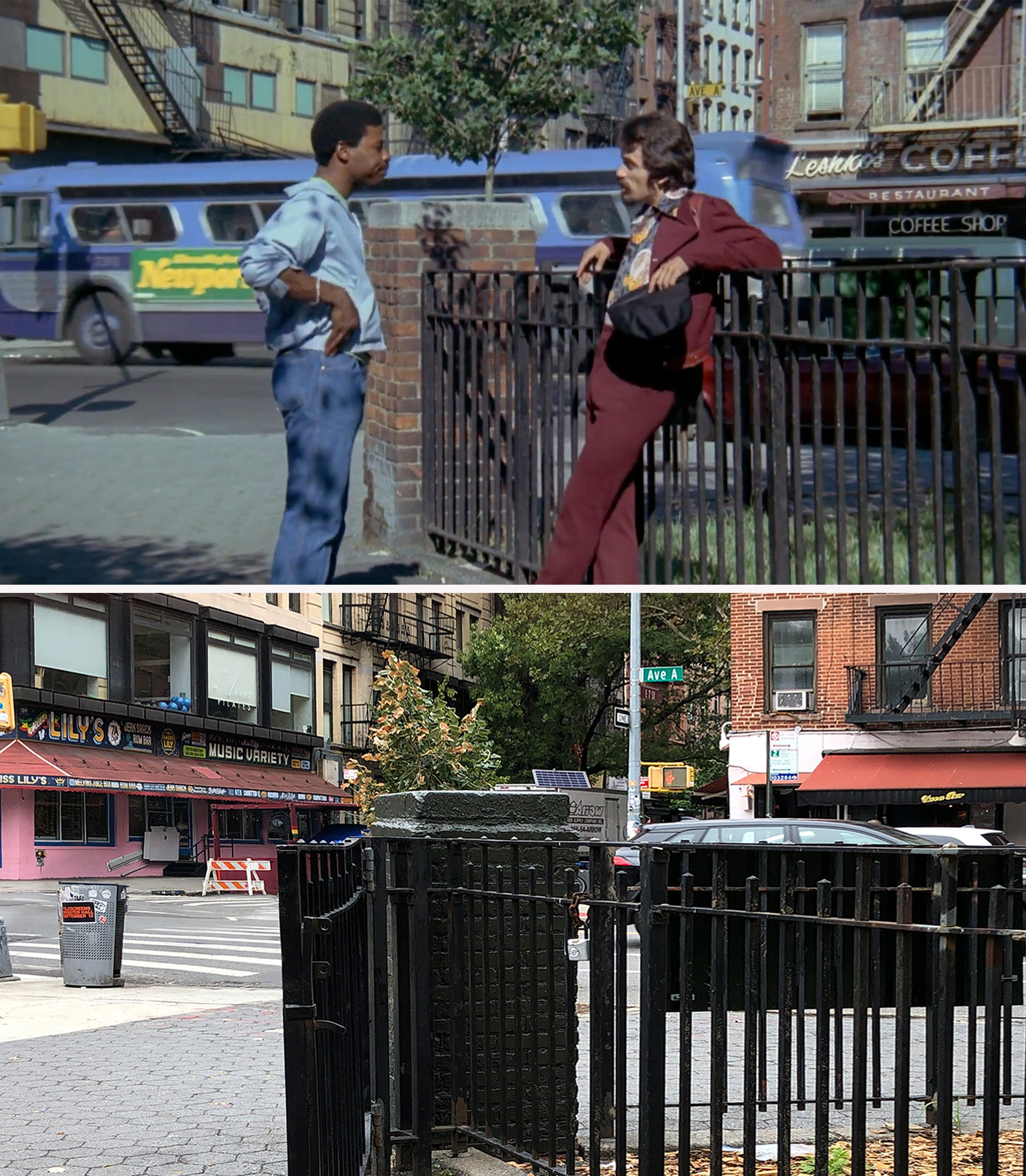
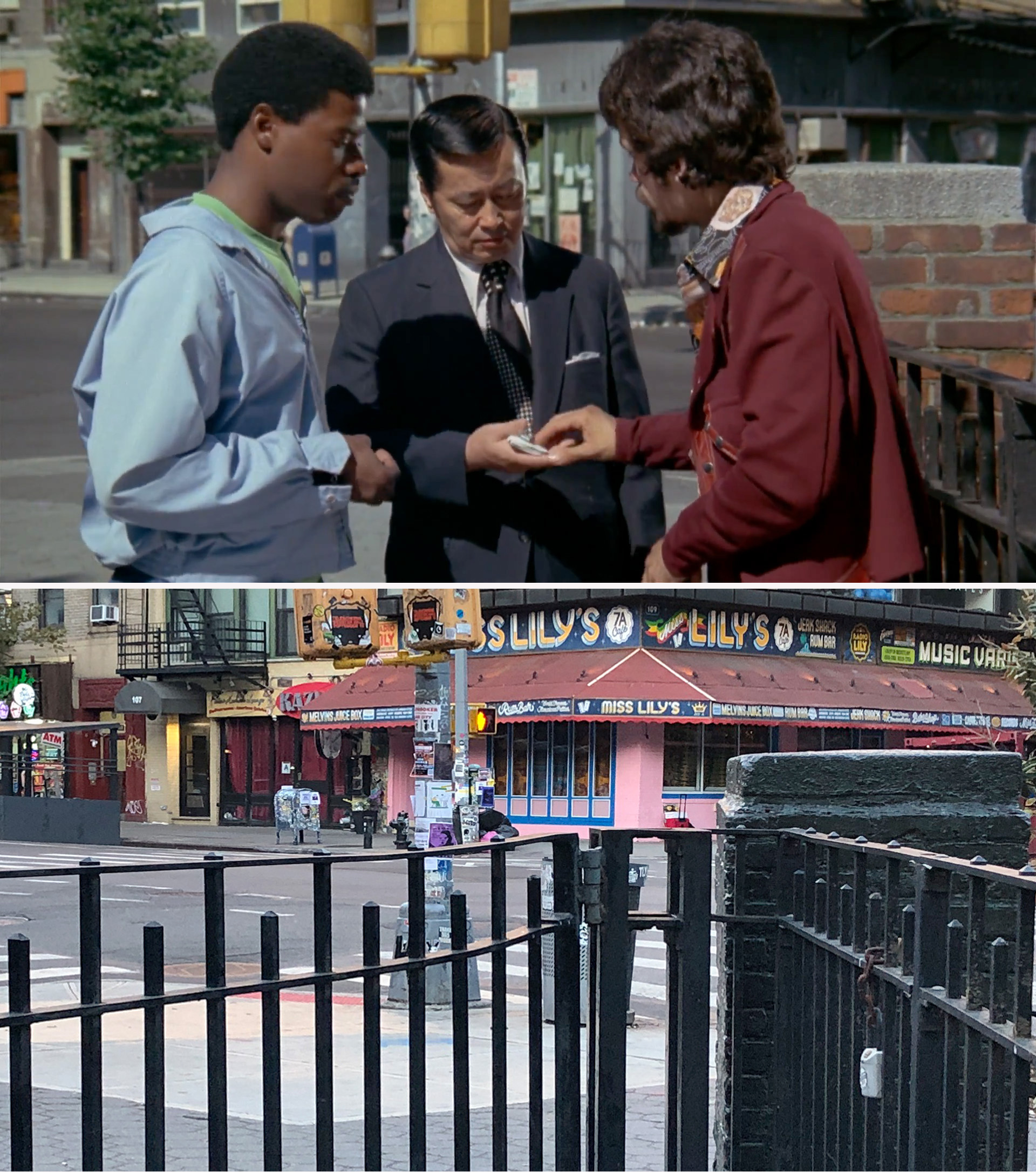
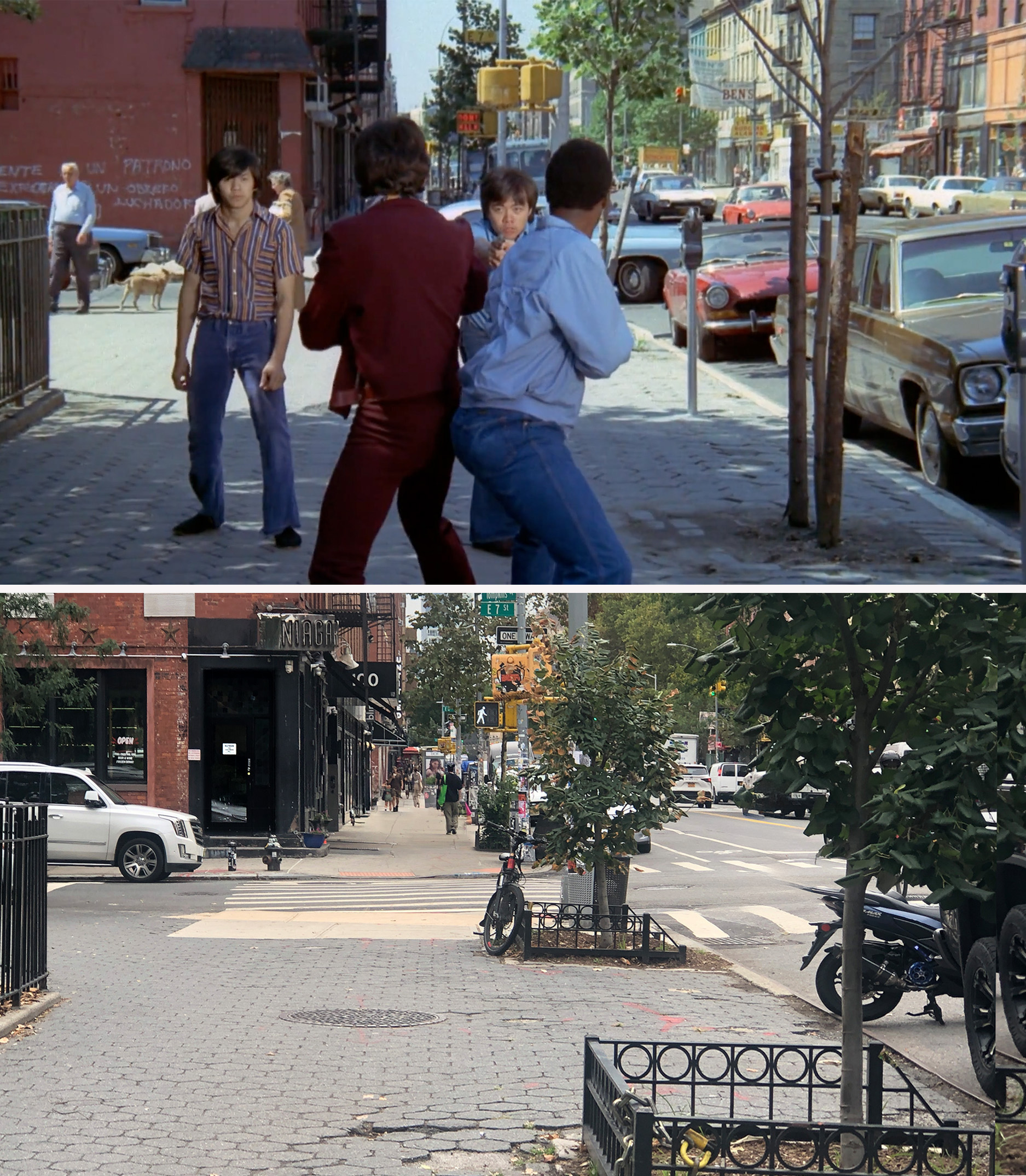
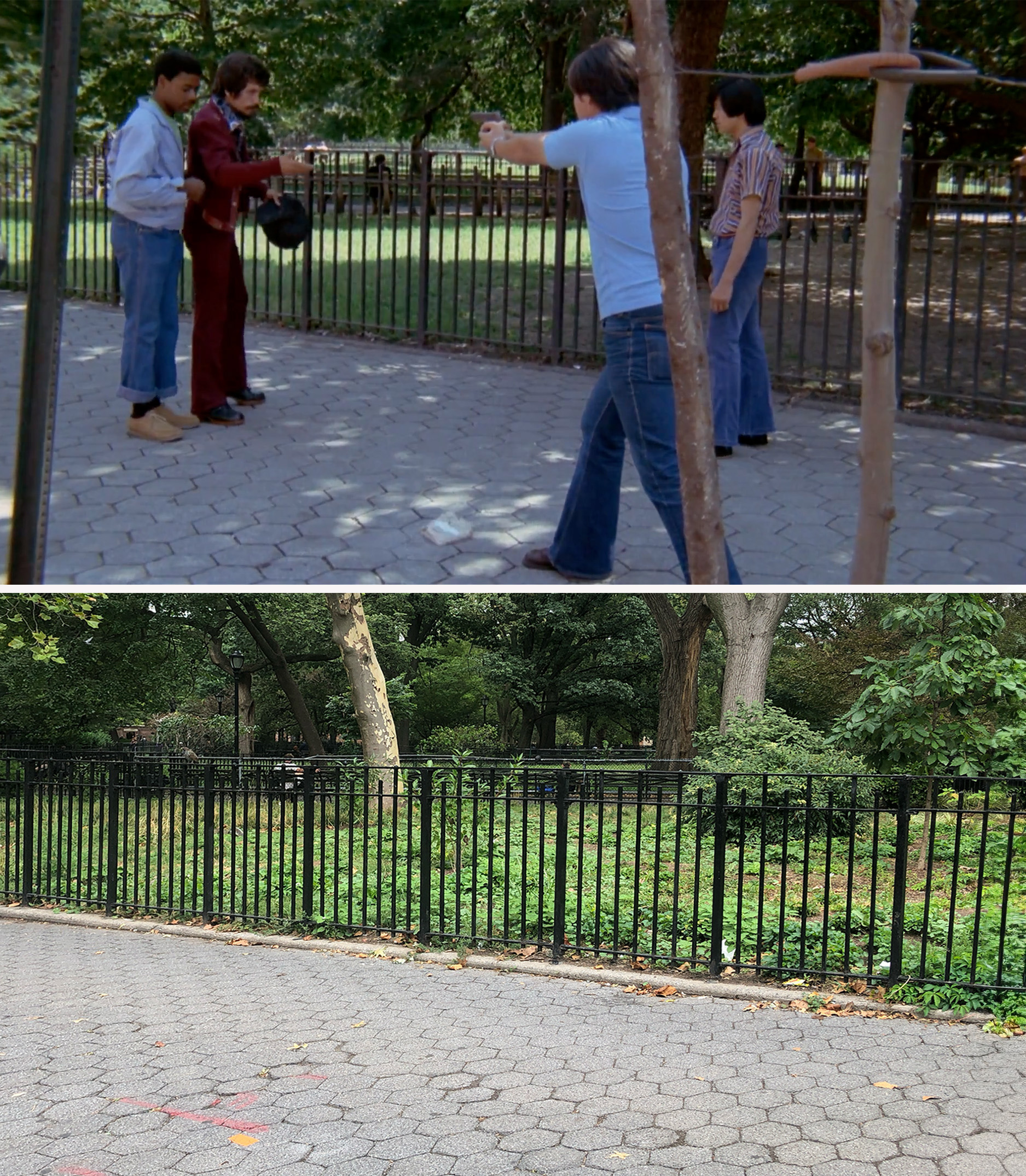
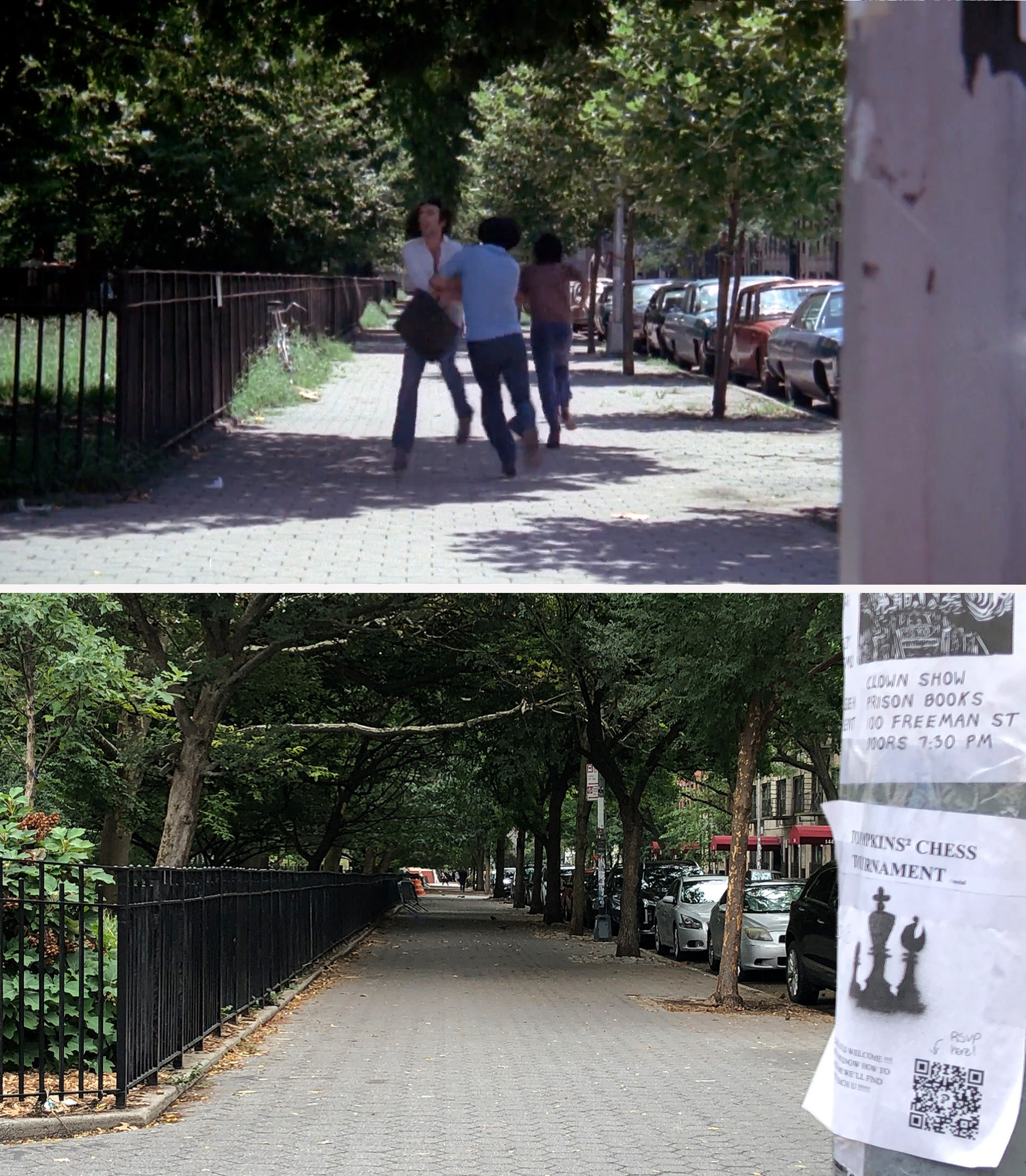
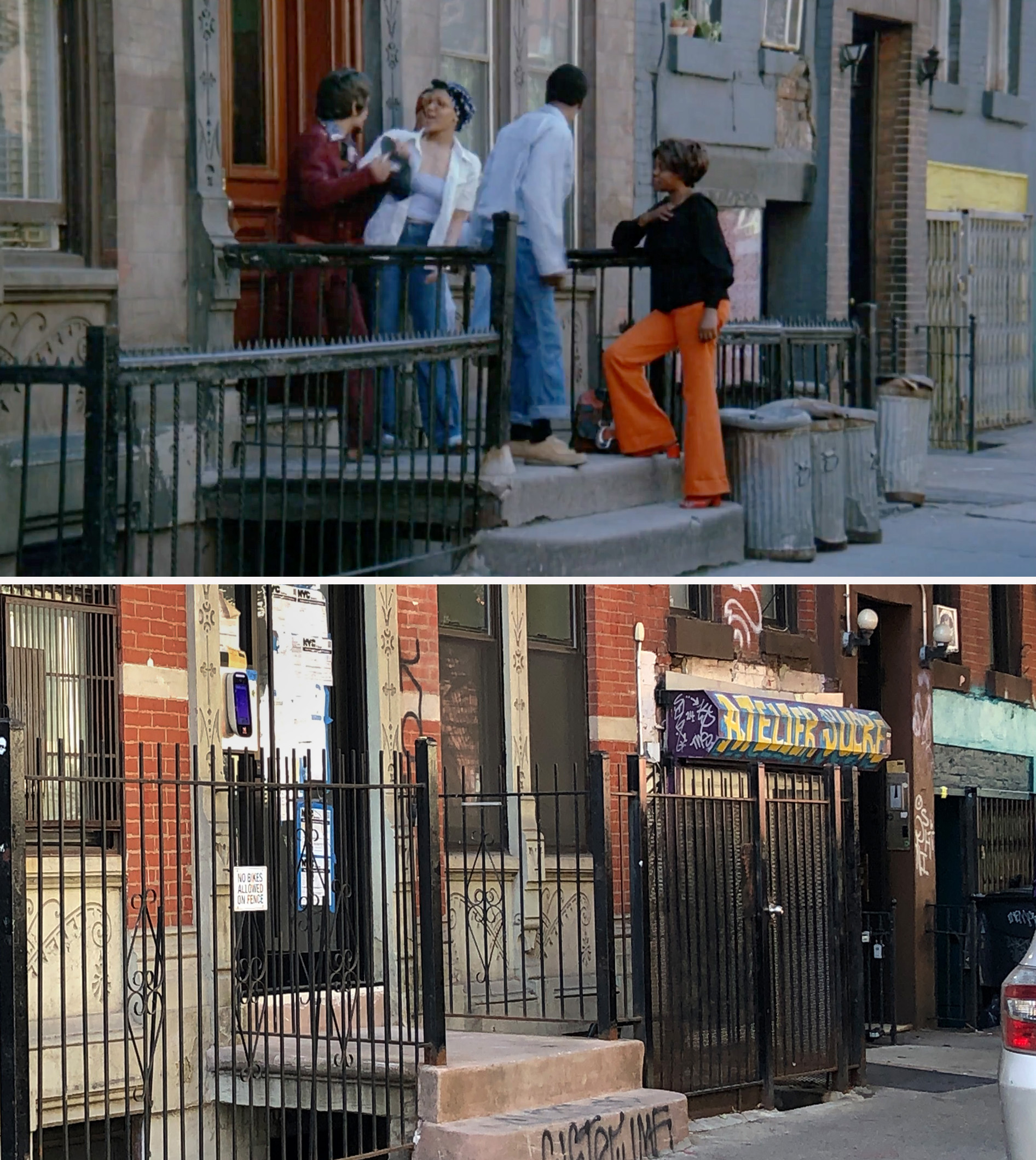
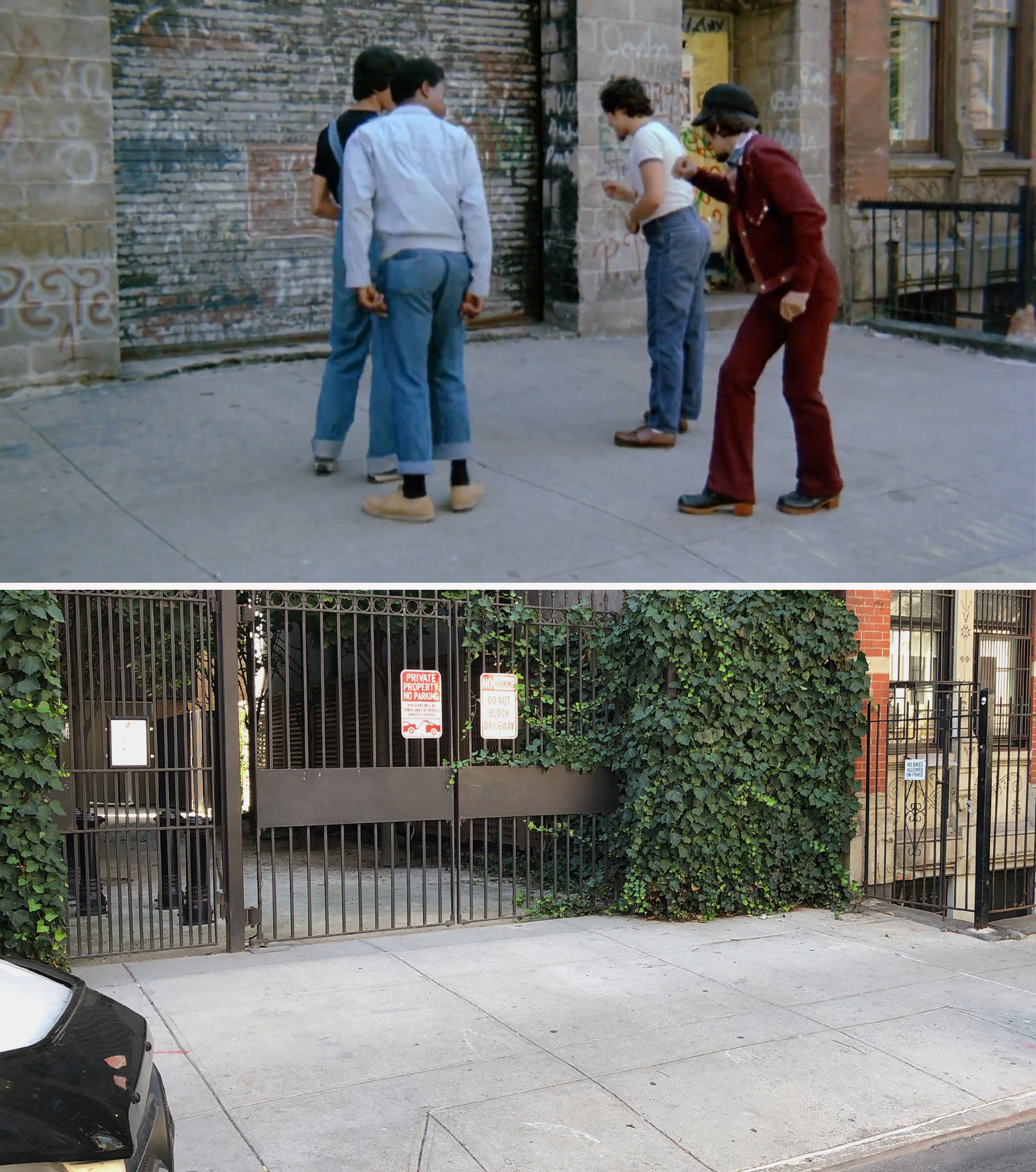
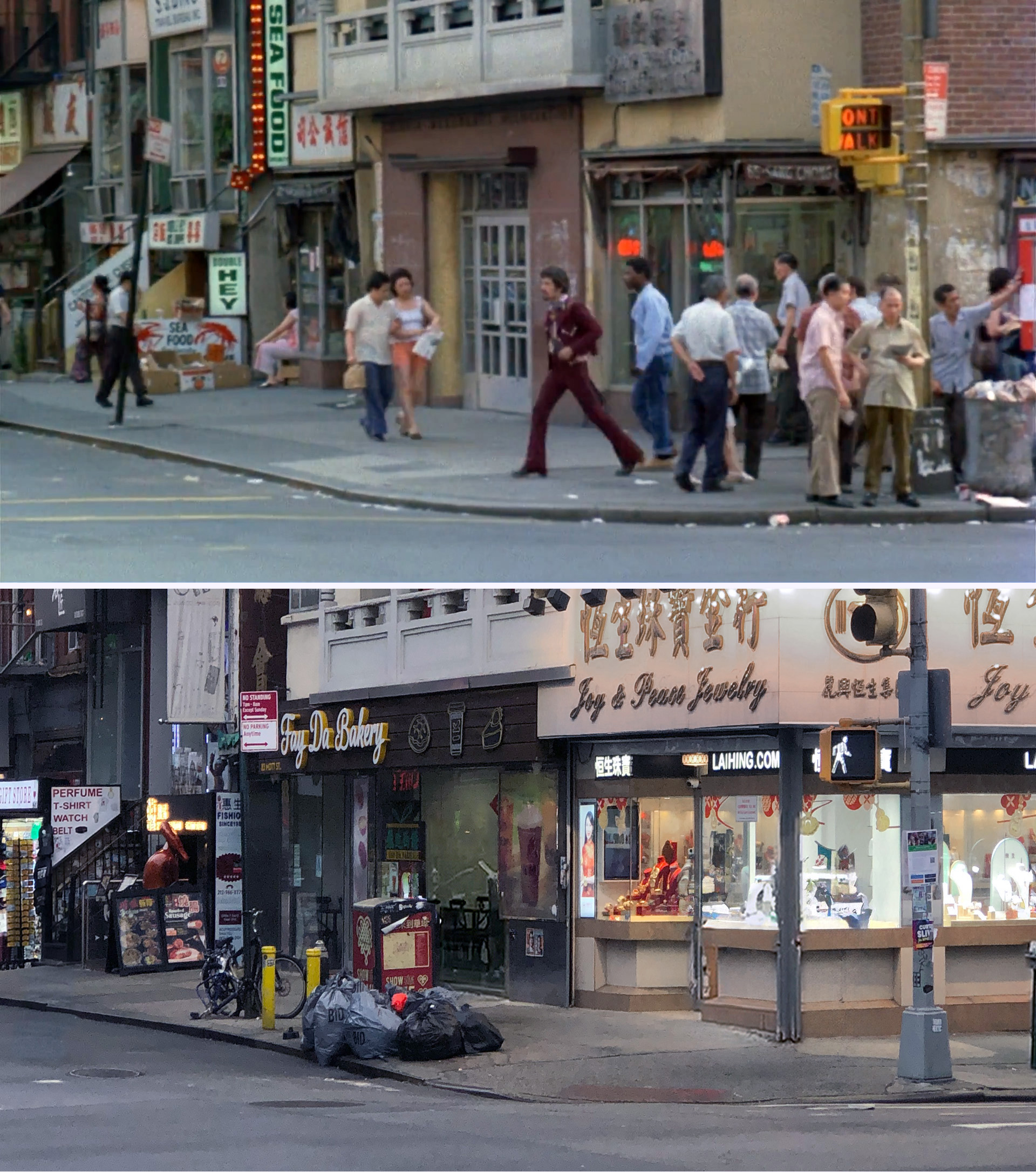
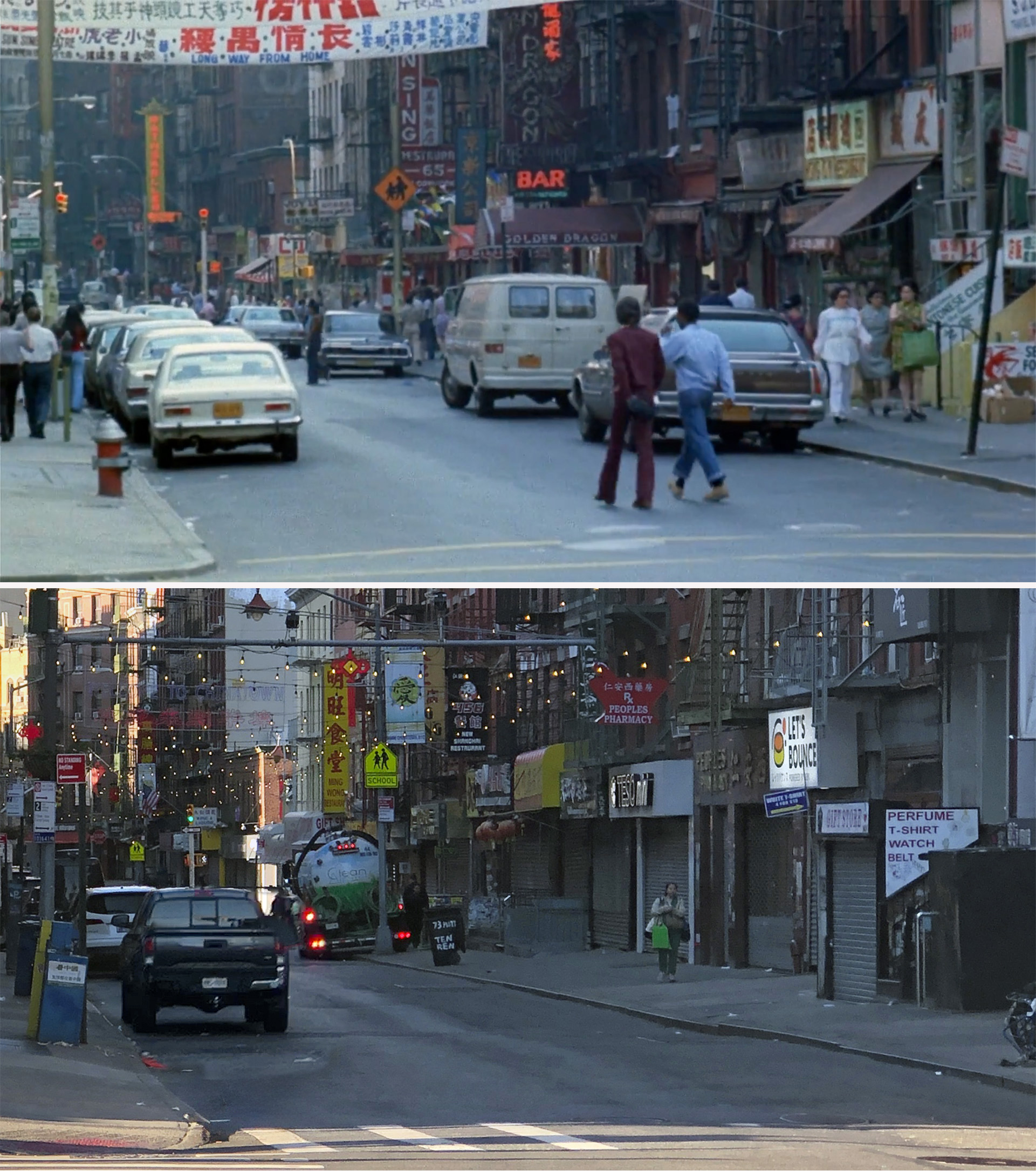
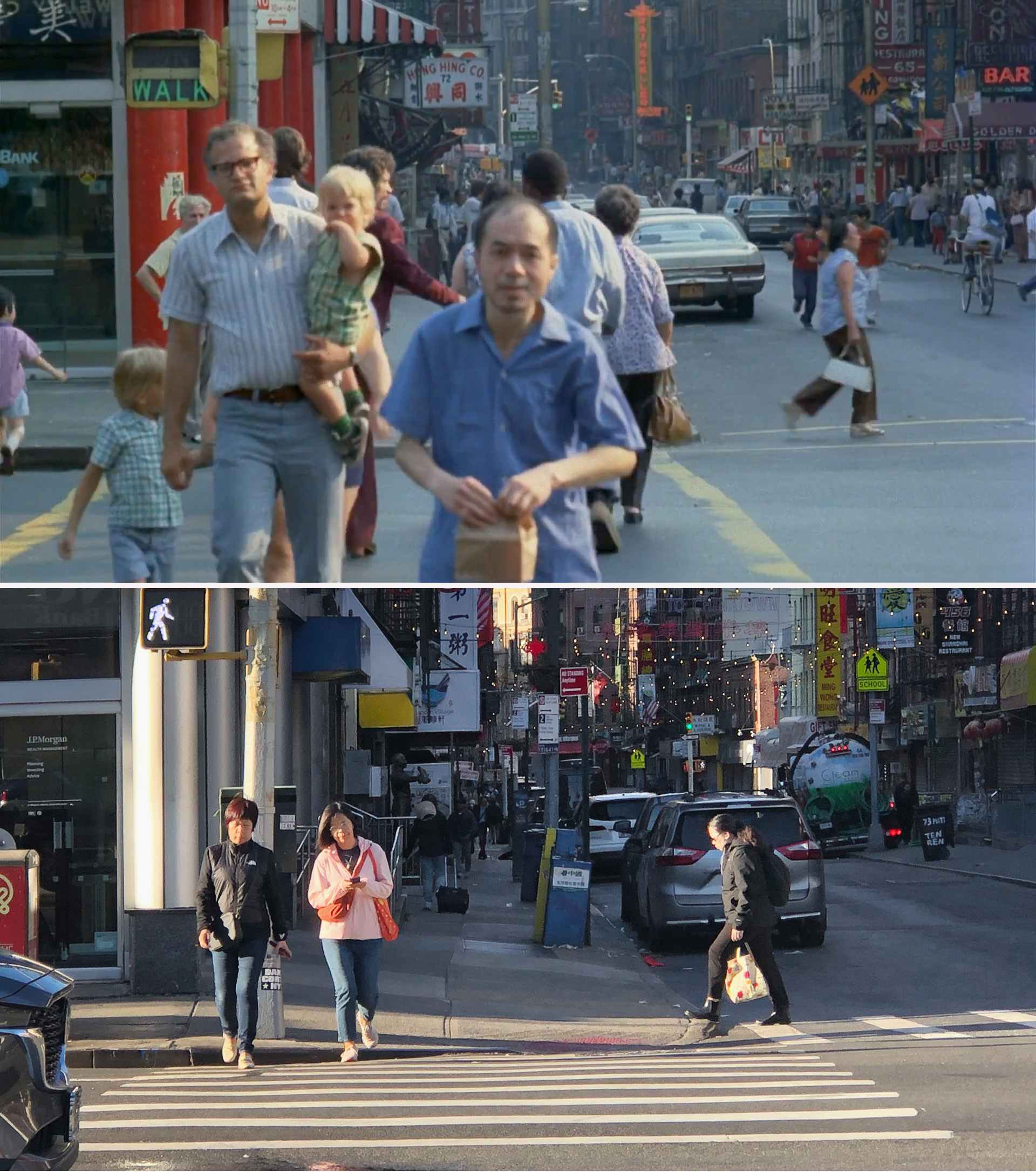
Most of these locations were easy to find, especially since a lot of them were filmed in the East Village, which was my old stomping grounds in the 1990s. What’s funny is it’s implied the two drug dealers travel from one end of Manhattan to the other, but in reality, they never go further than a half of mile or so, ending up less than a block away from where they started.
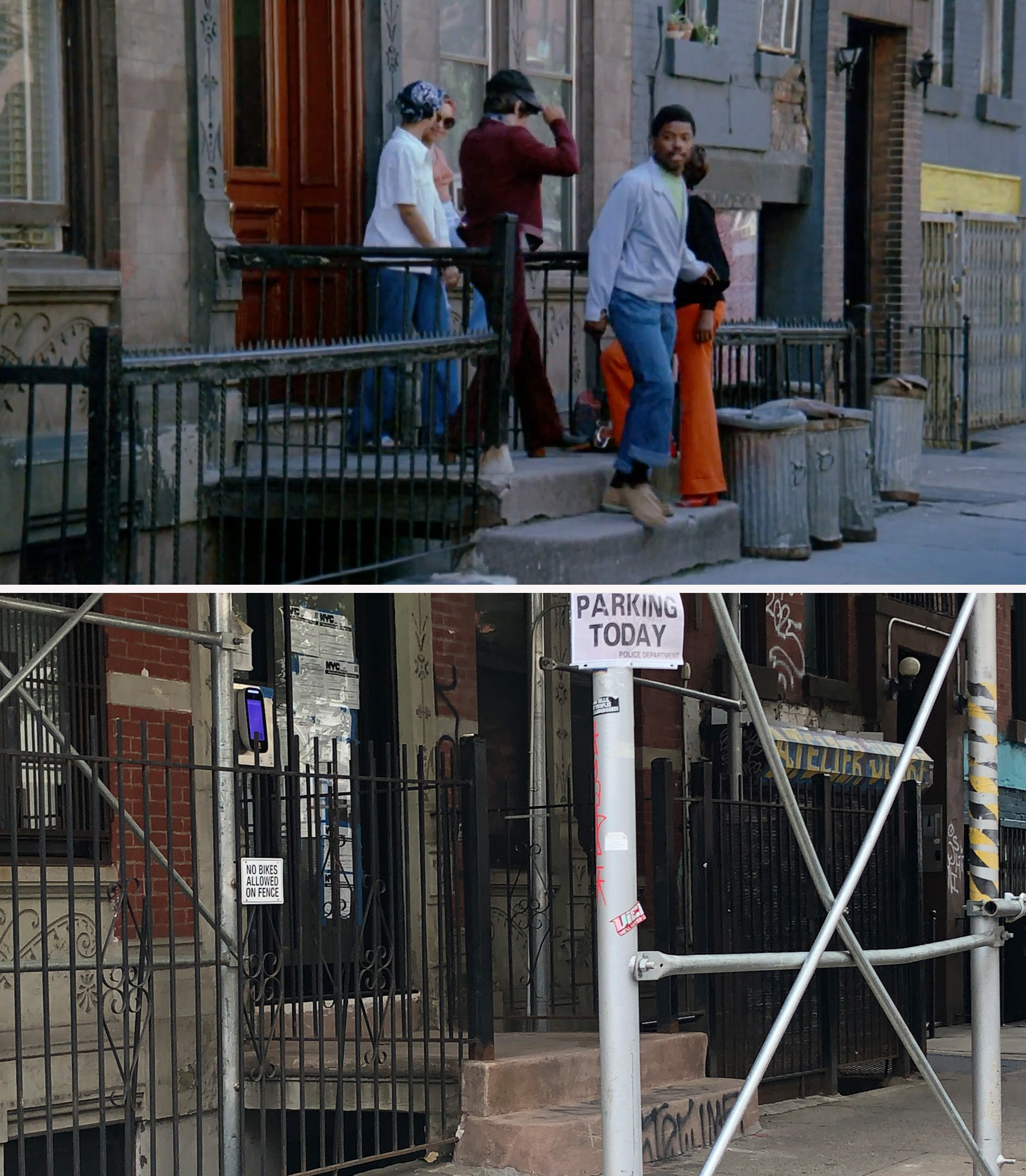
Speaking of where they started, when I took the modern photos of Rodan’s apartment building at the end of 2025, it was covered in a sidewalk shed, intrinsically ruining the shot. But literally two weeks later, when I was walking down the street, I noticed the shed was gone, suddenly giving me a nice clean photo op.
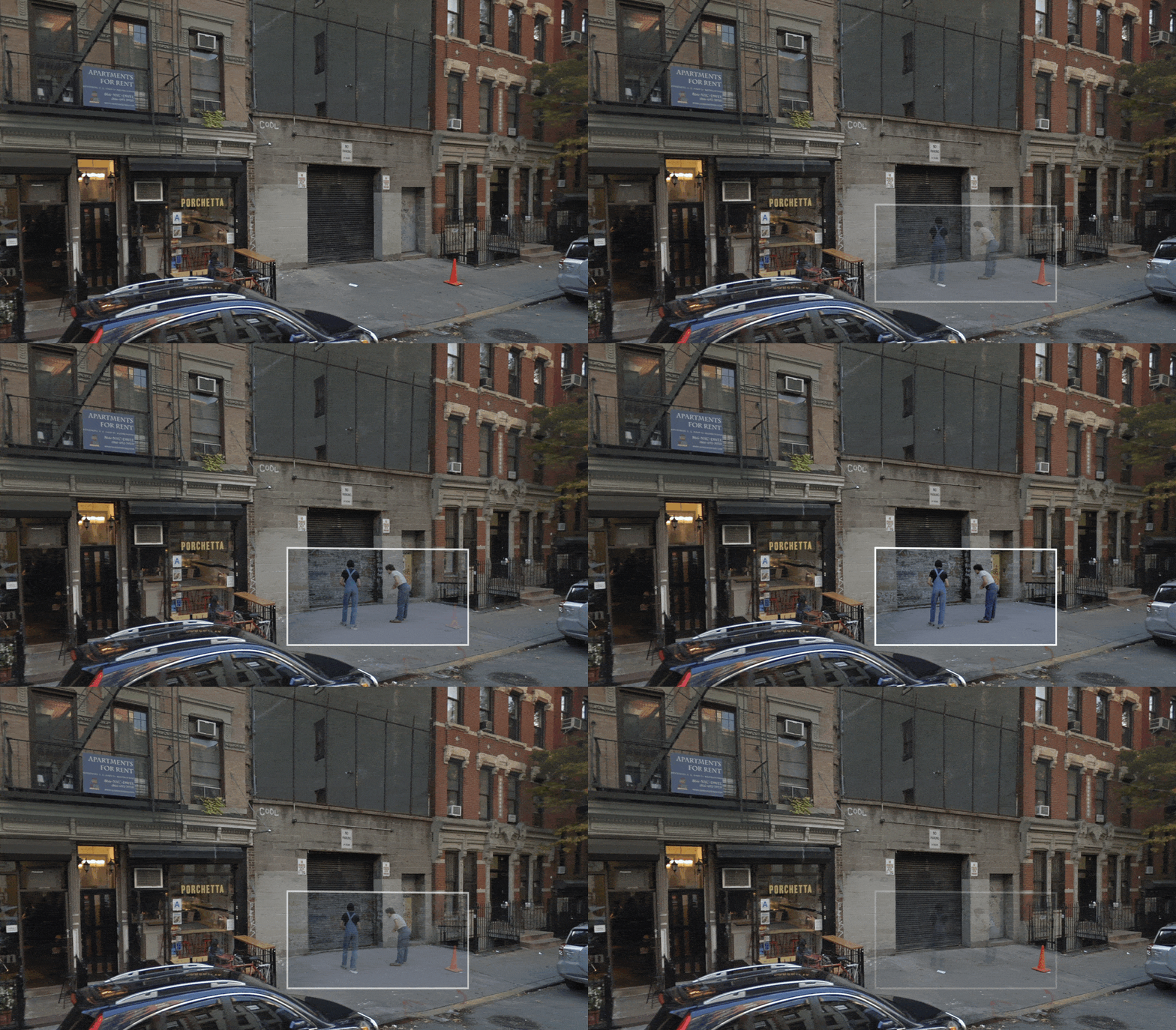
It might be noted that the one-story garage next door, where the men were playing craps, had survived into the 21st century. It only got torn down around 2015, but for what purpose I don’t know, as it’s remained an empty lot ever since.
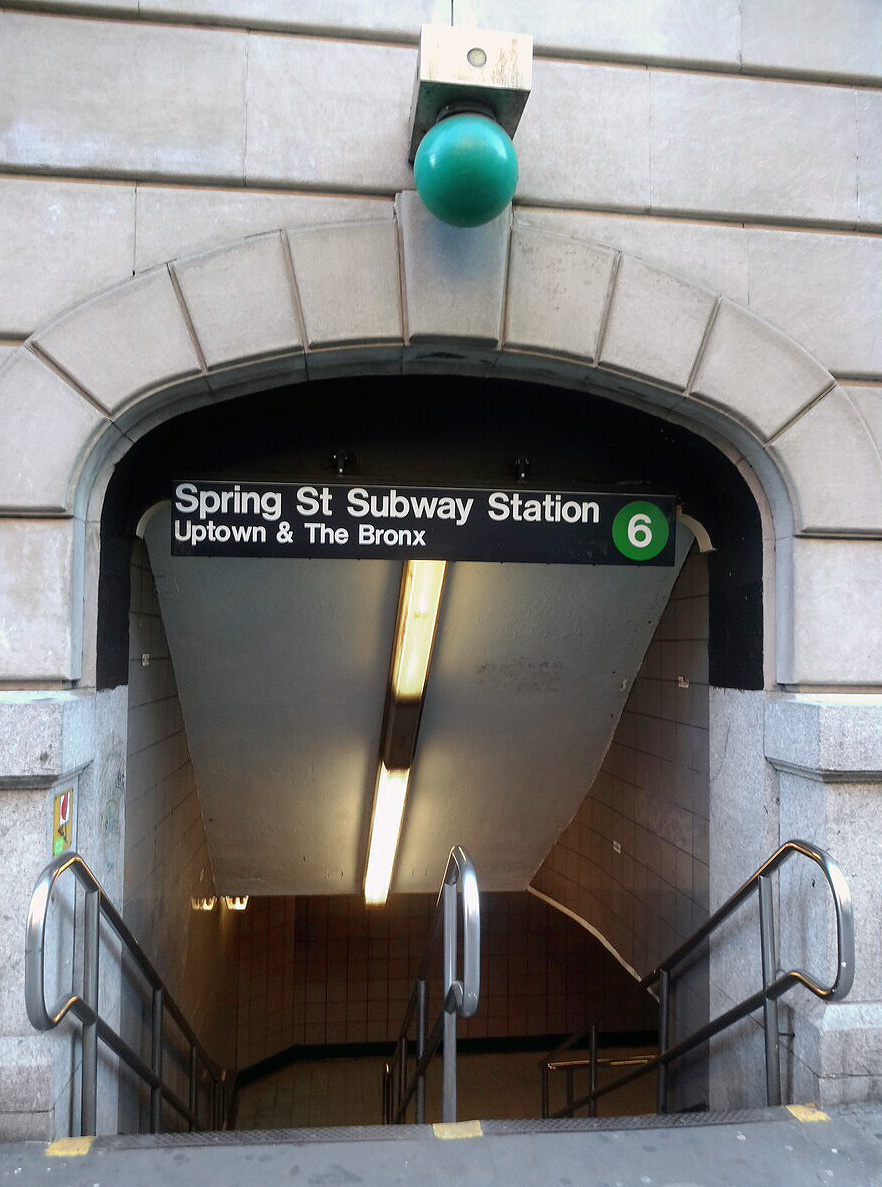
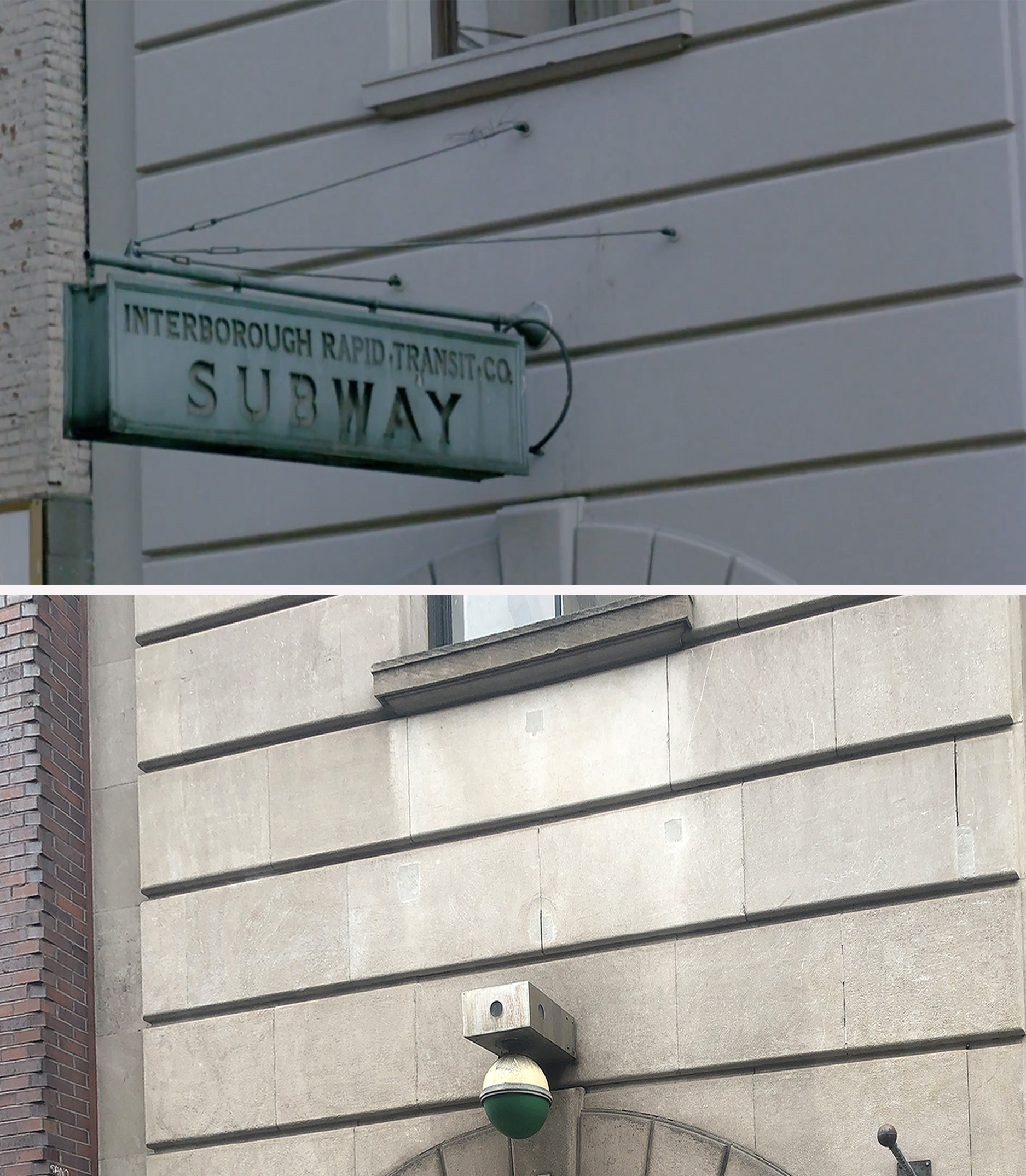
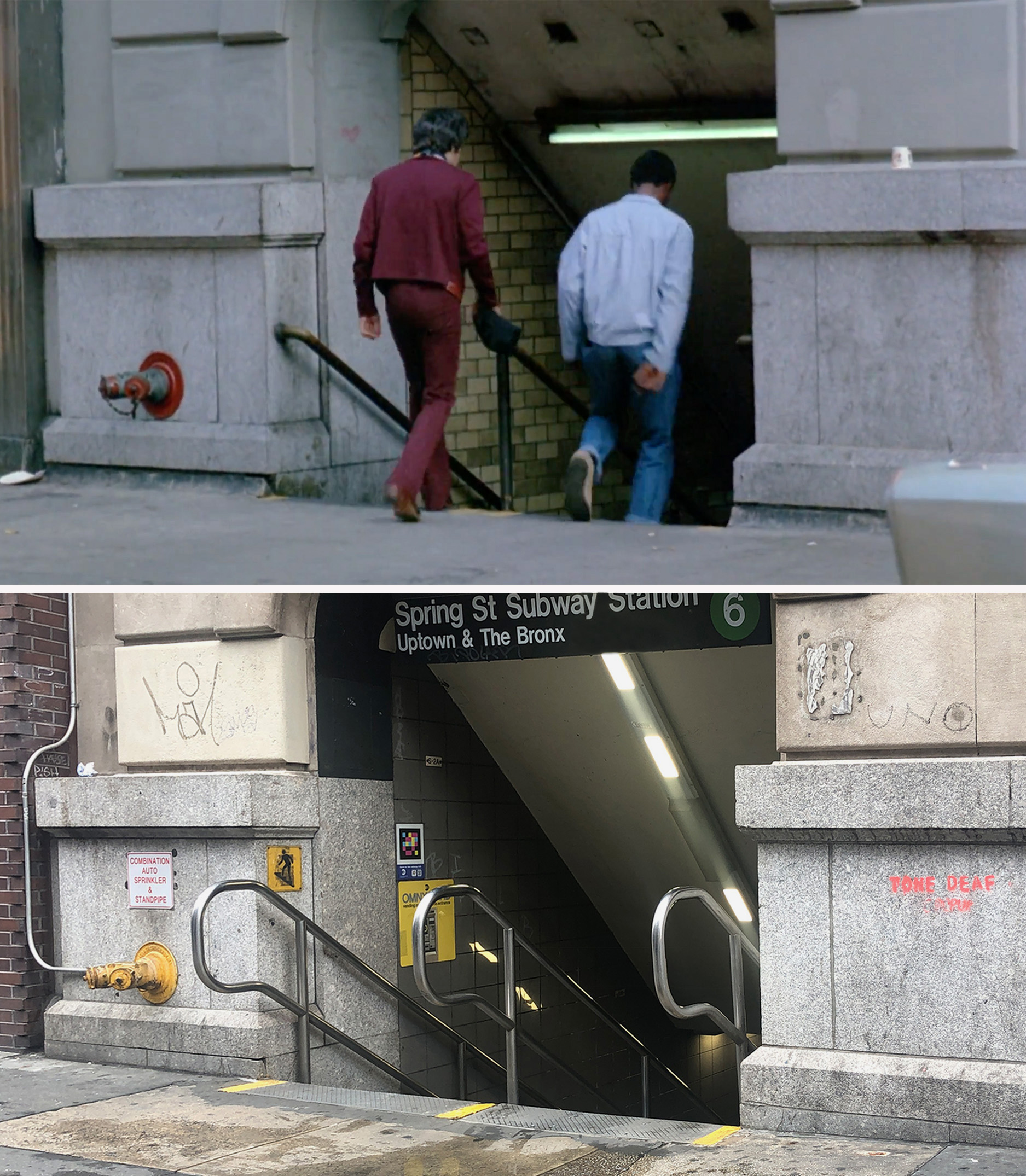
One charming spot used in this sequence was that subway entrance on Spring Street. I don’t what it is, but I’m always intrigued by entrances that are forged into a private building.
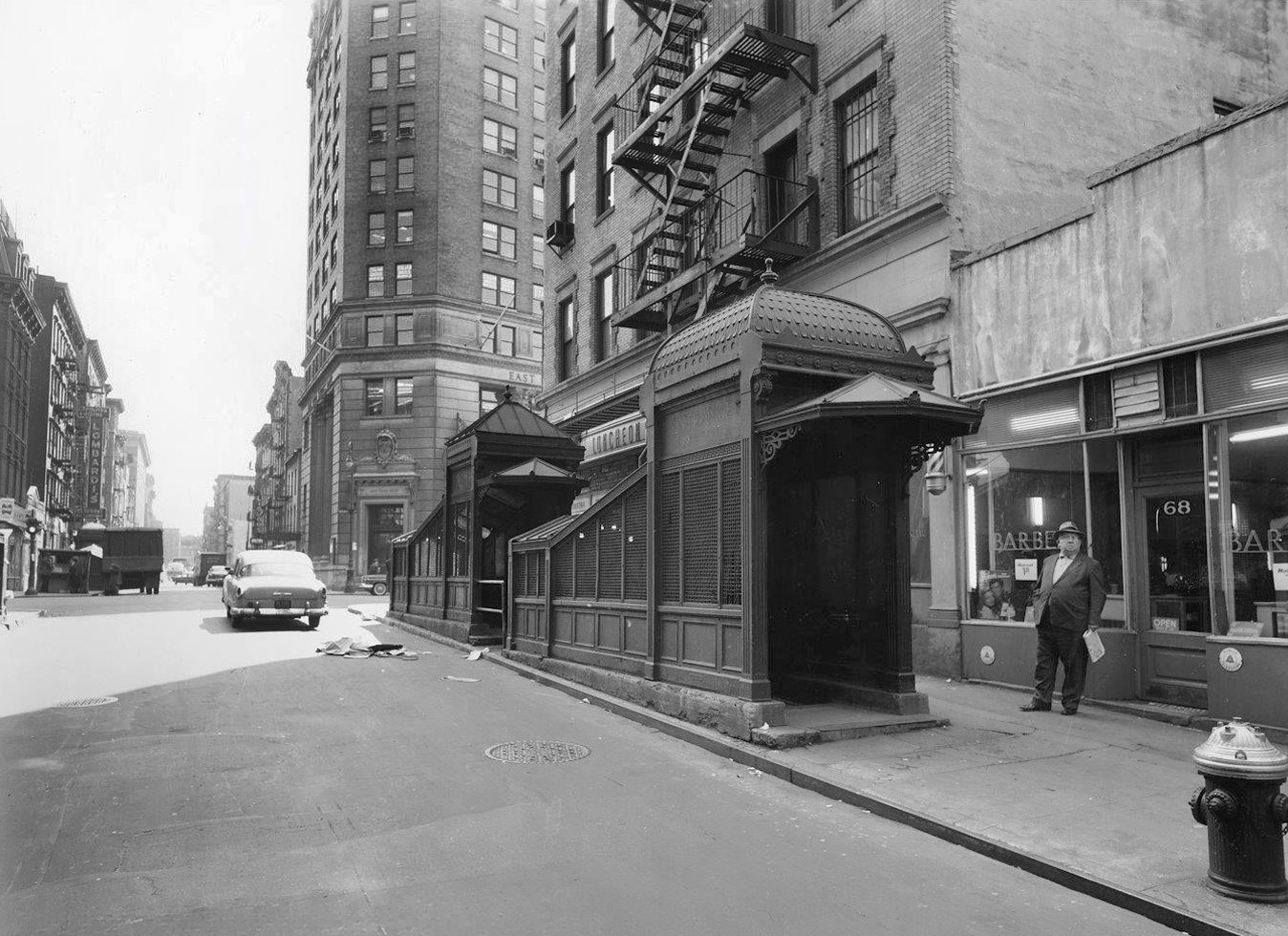
The subway entrance used in this movie is part of 225 Lafayette Street, a Beaux-Arts building known as “The Spring.” The 14-story edifice was designed by famed architect Cass Gilbert (noted for the Woolworth Building) and completed in 1927 as the East River Savings Bank. It was converted in 2004 into 40 luxury residential units, two of which were bought by celebrities Tyra Banks and John Mayer.
Luke’s Neighborhood
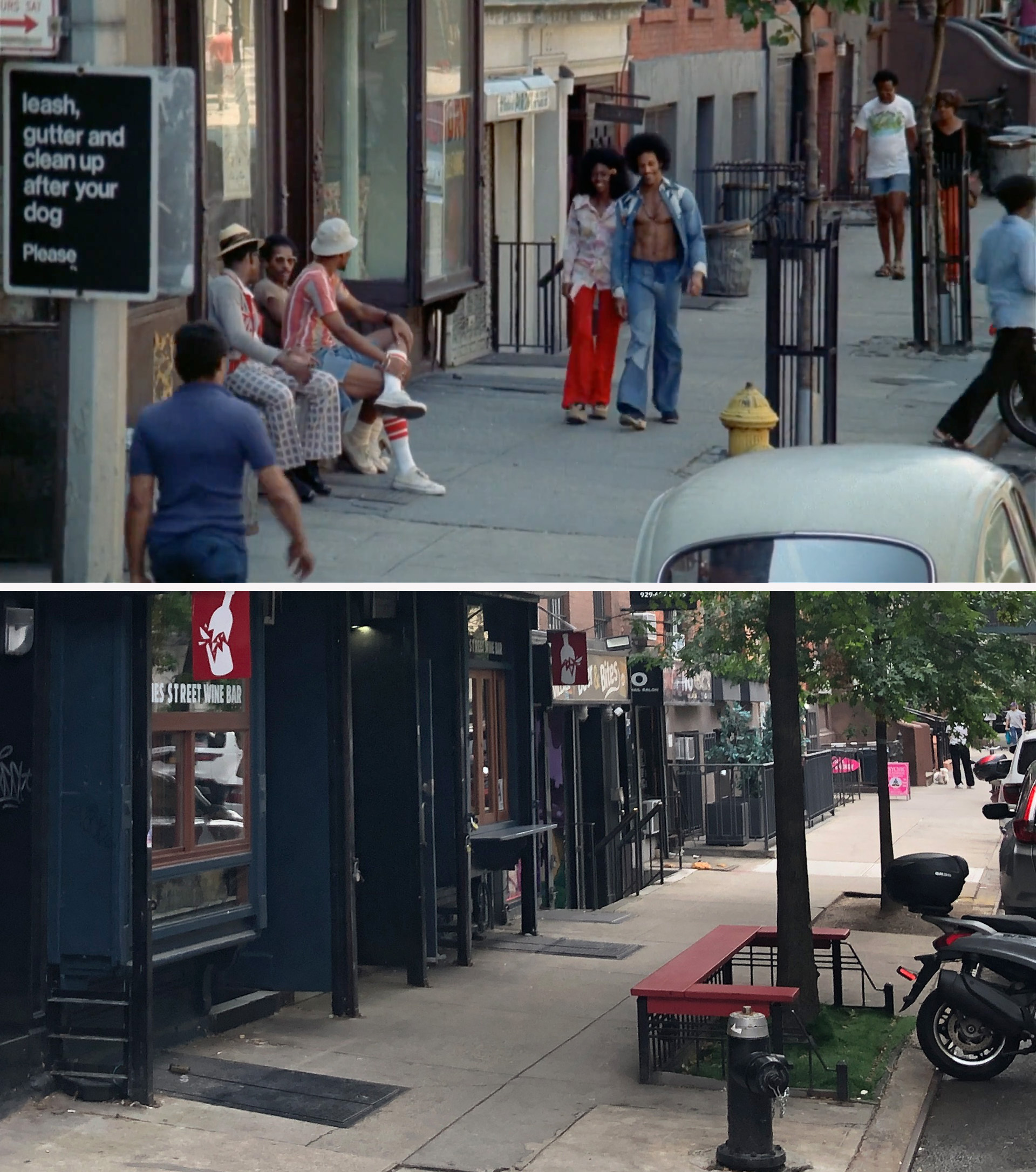
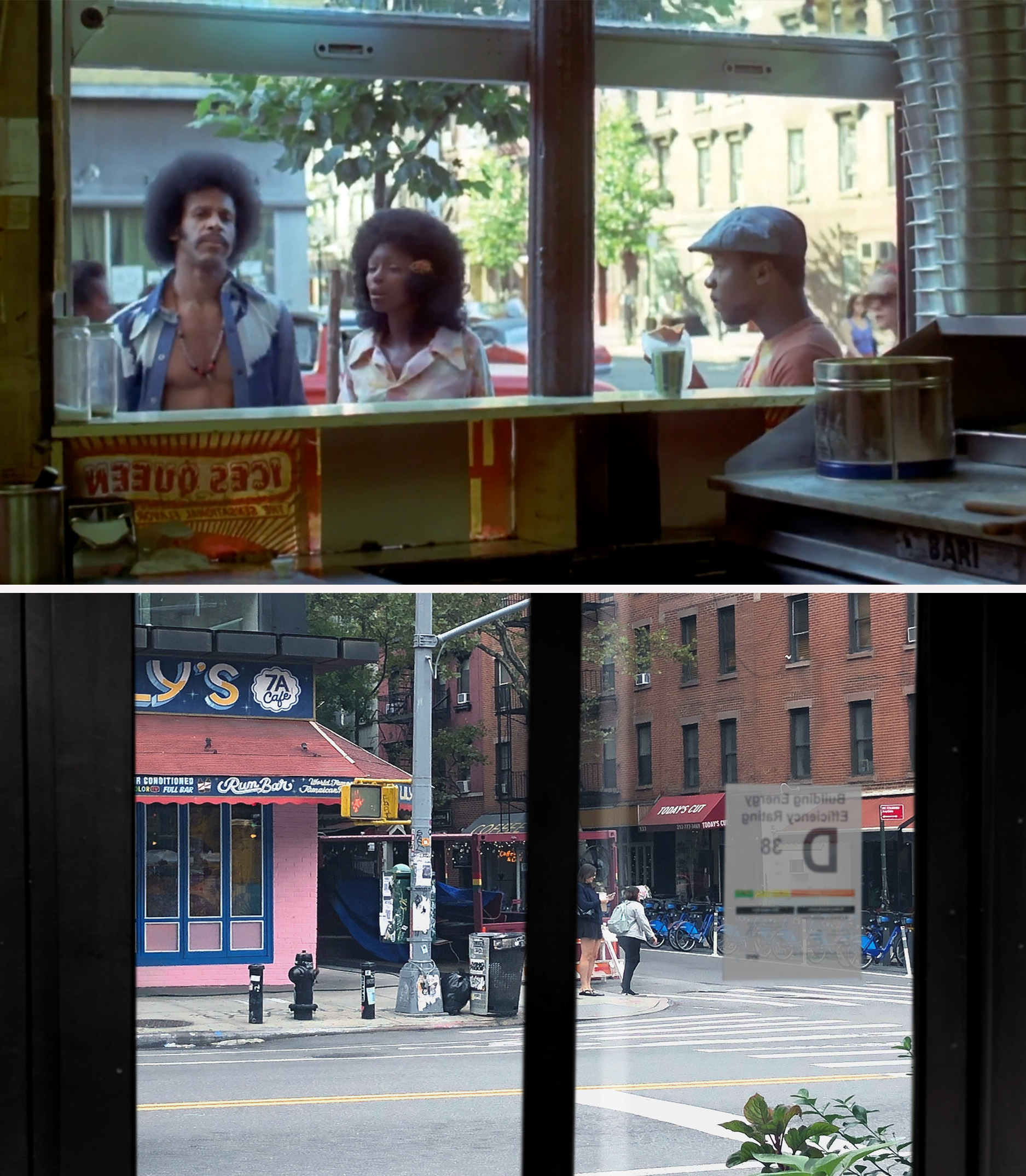
The Neighborhood Bar
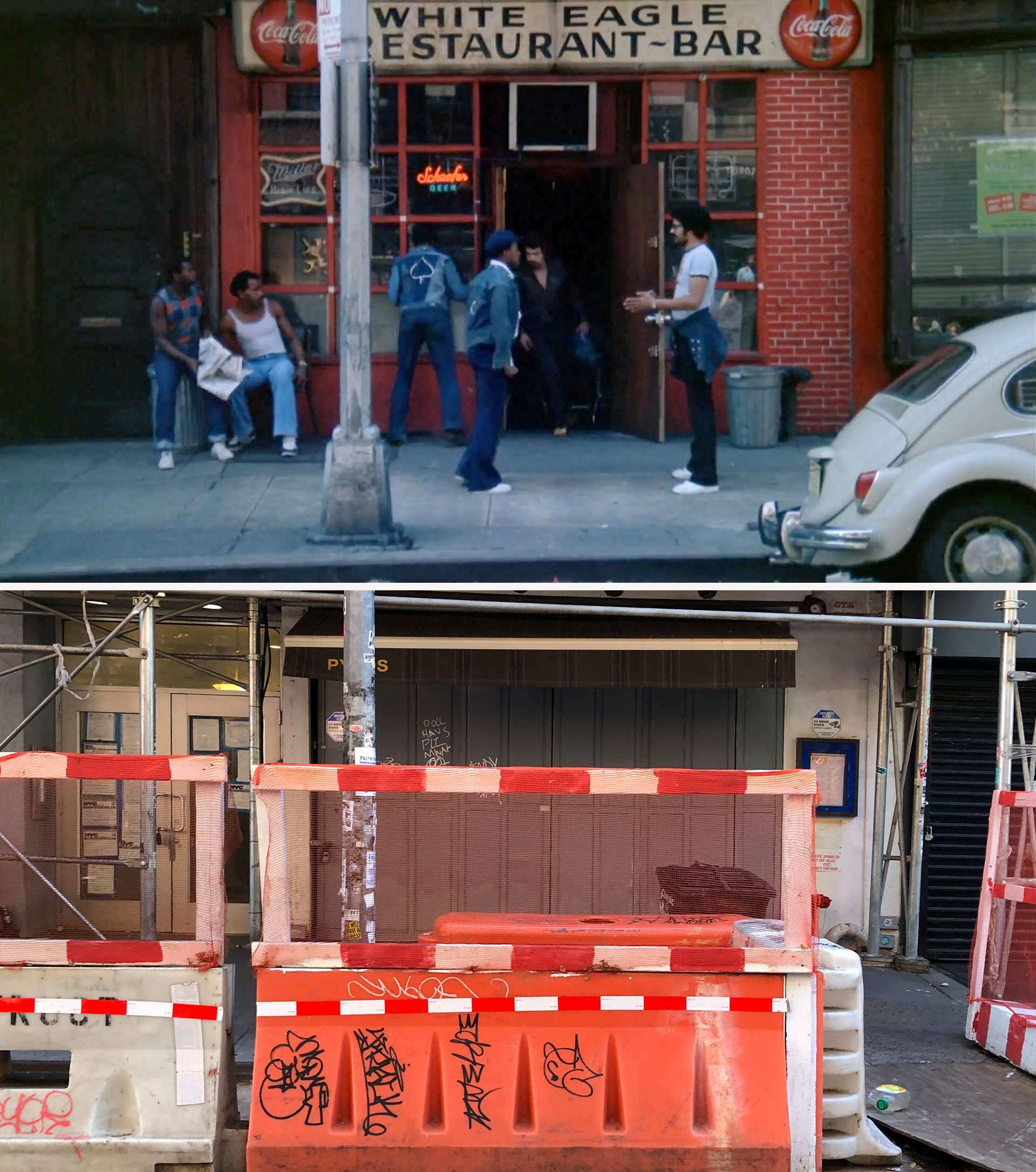
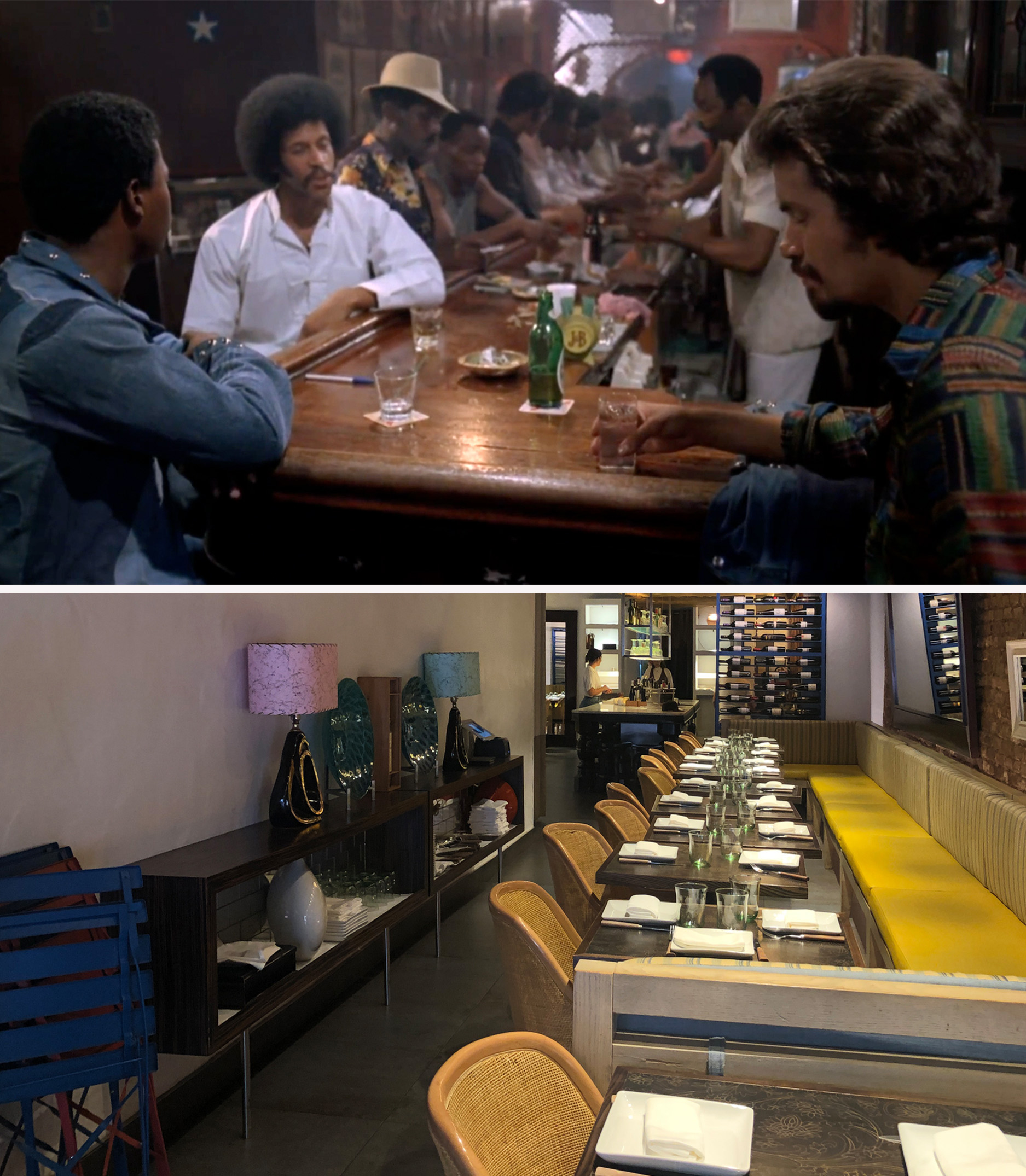
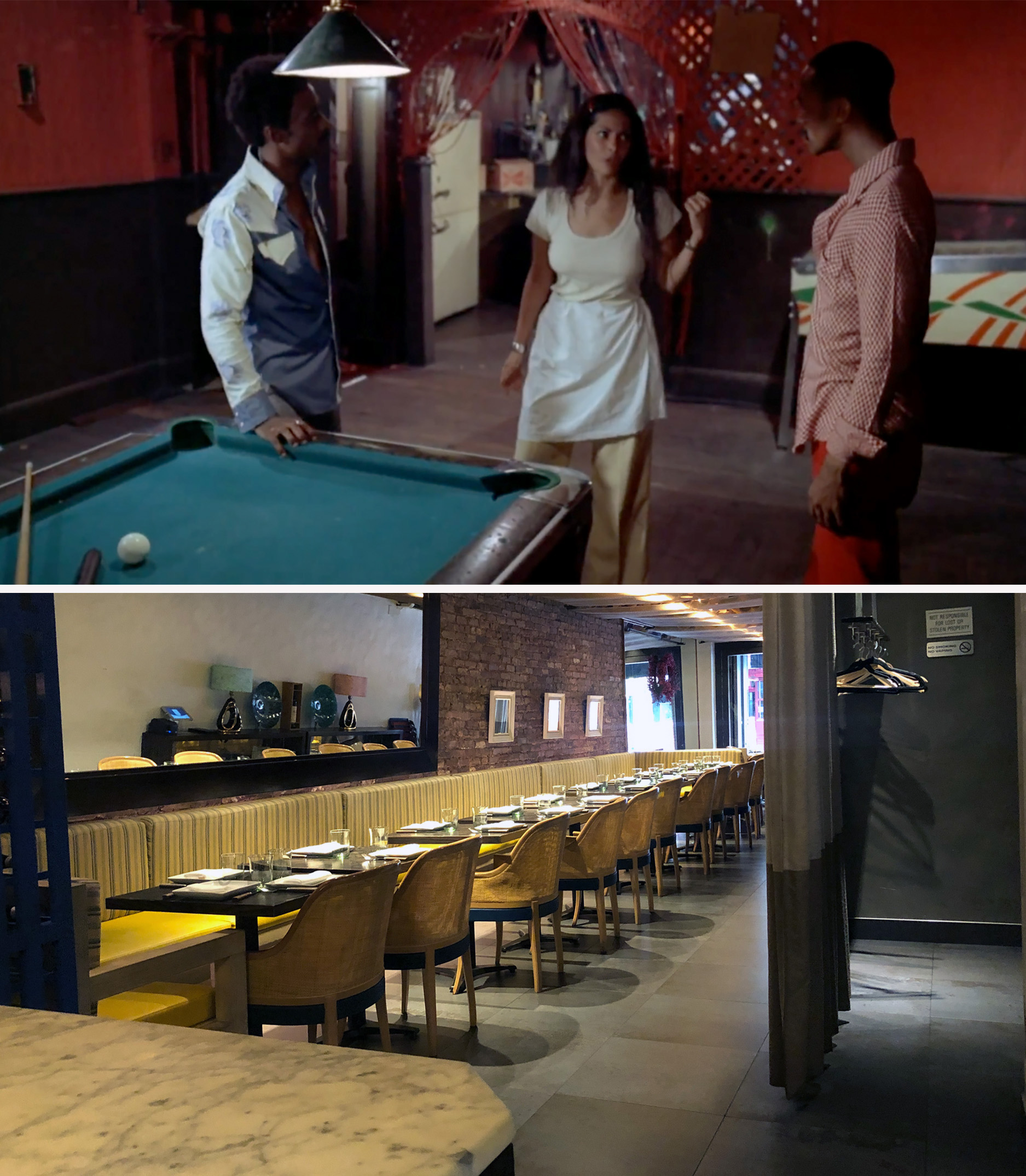
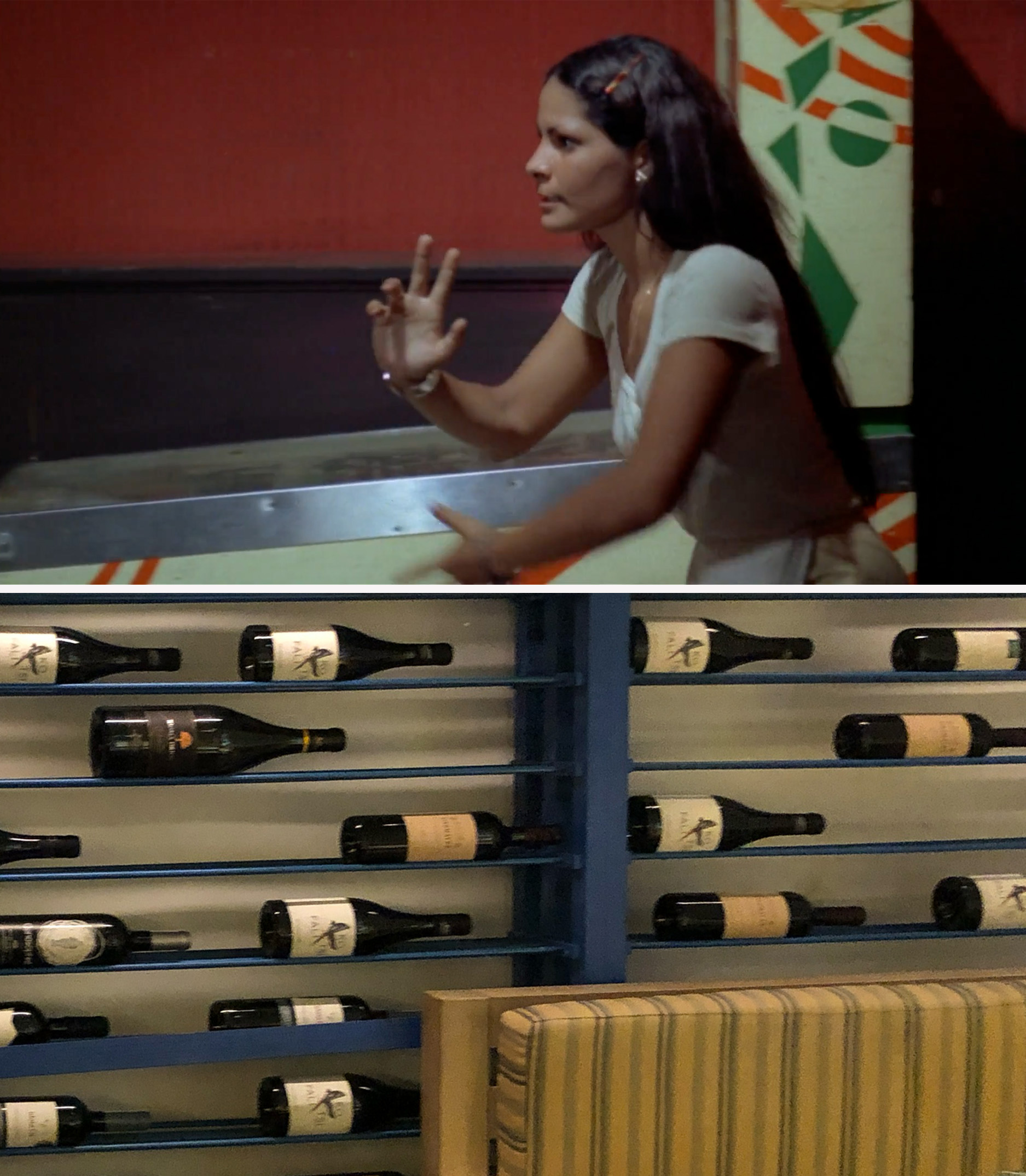
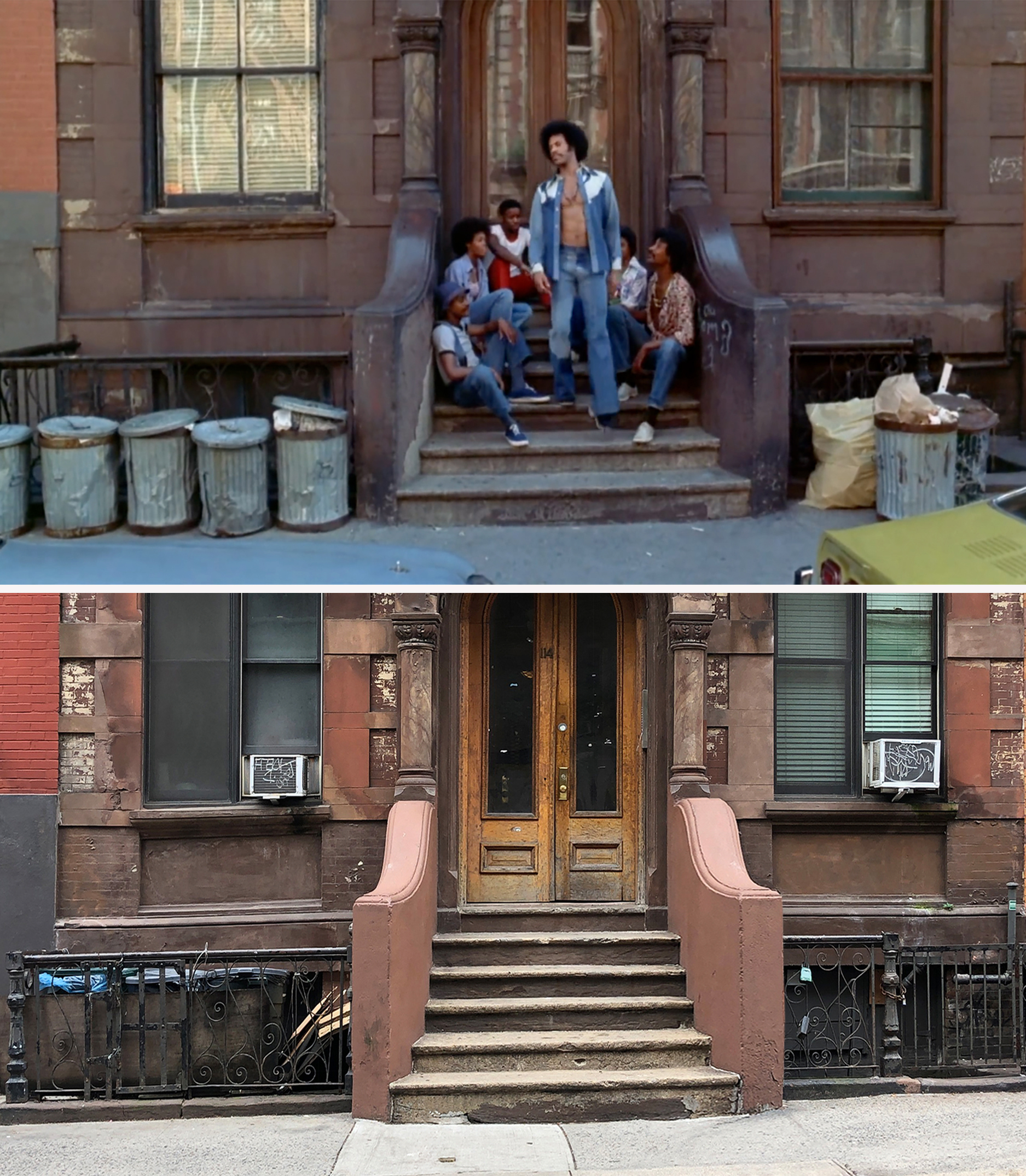
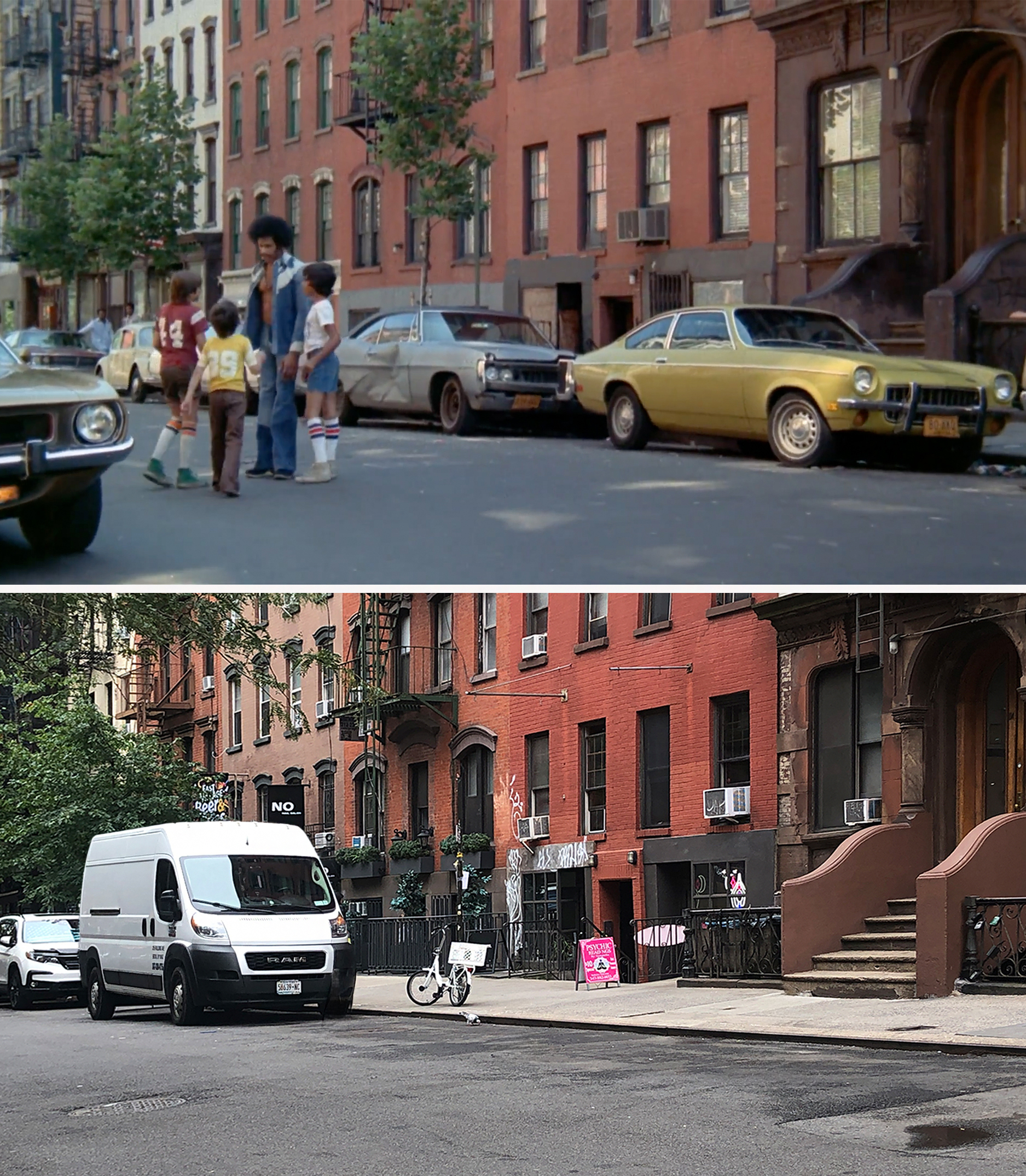
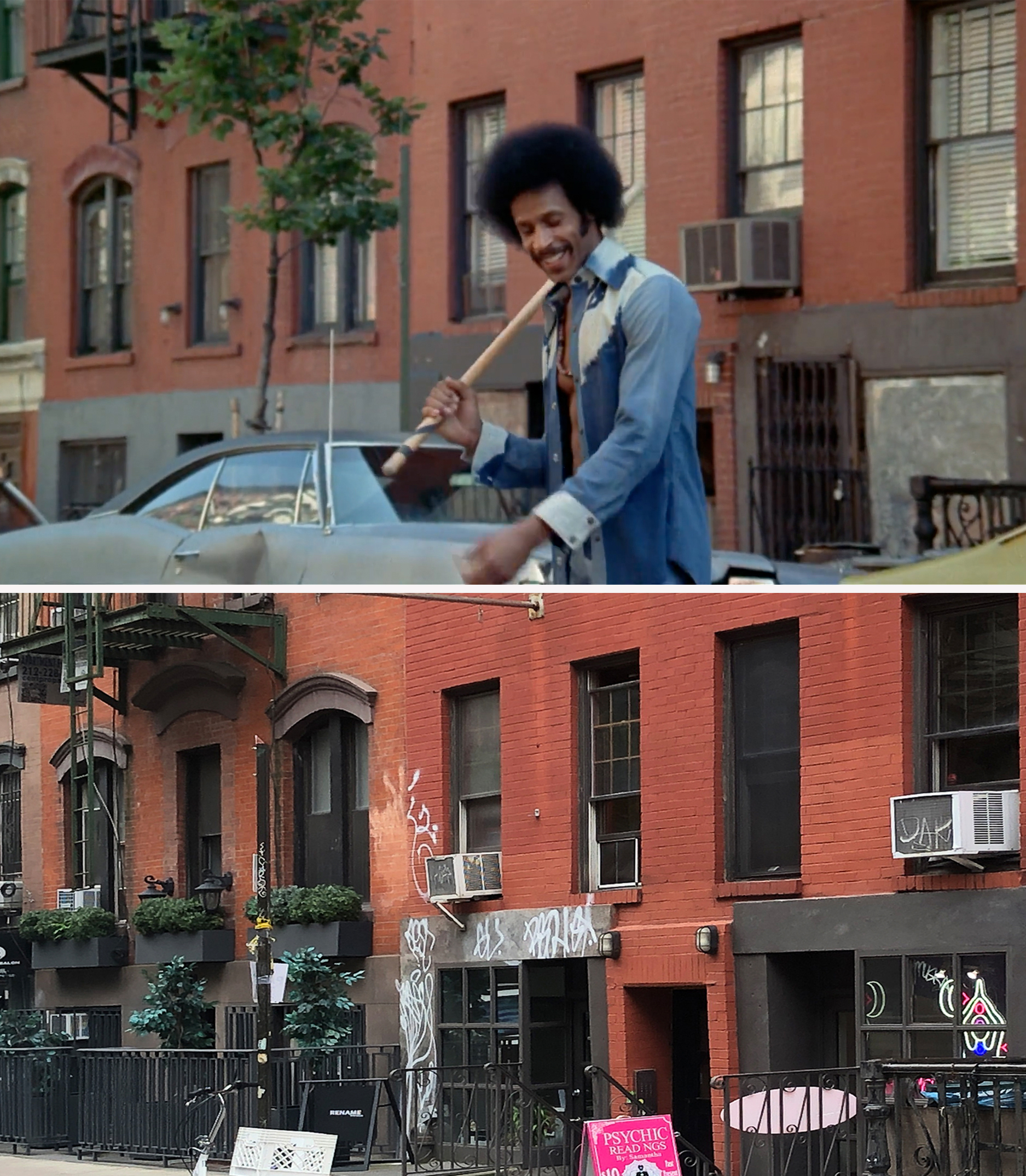
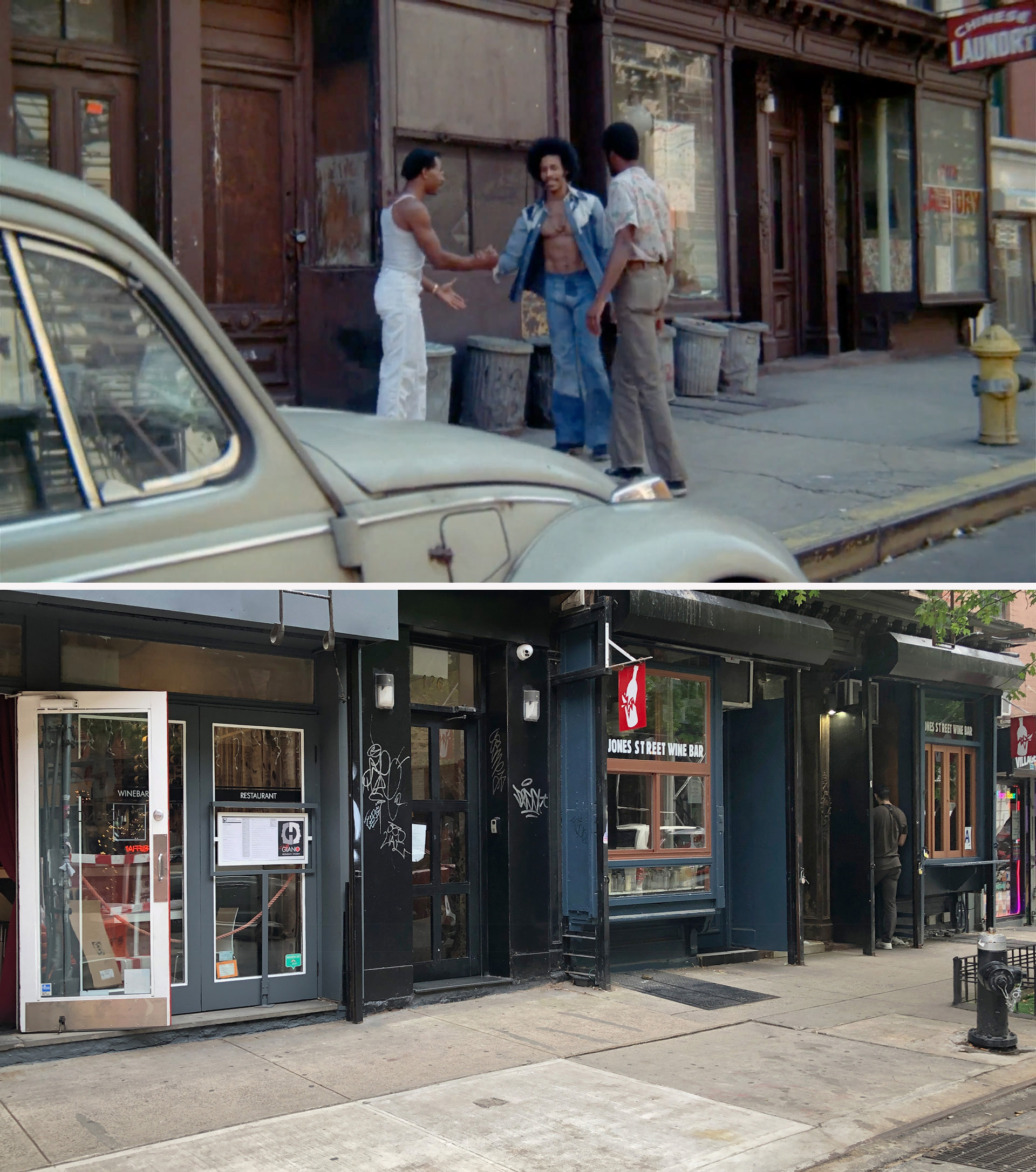
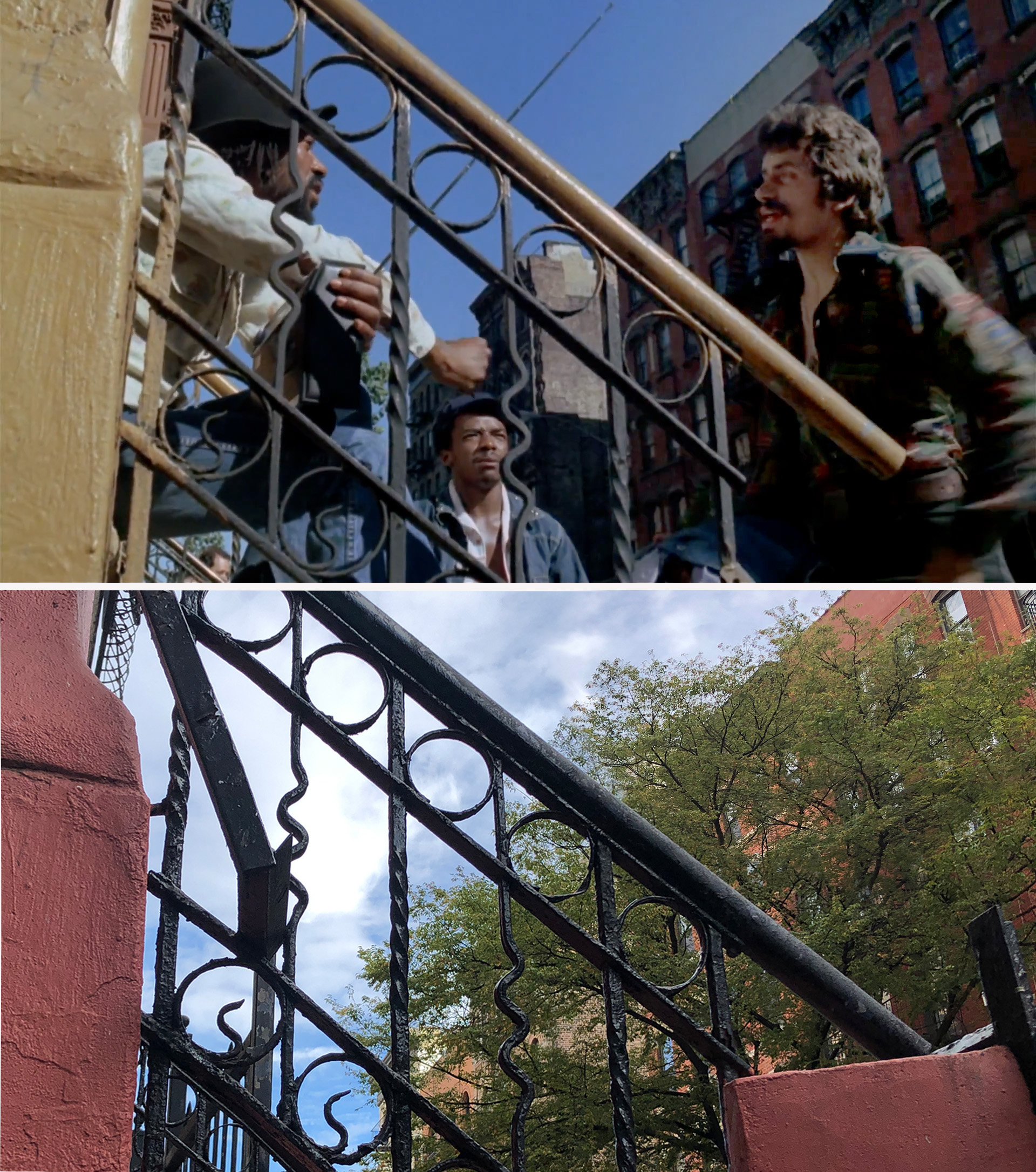
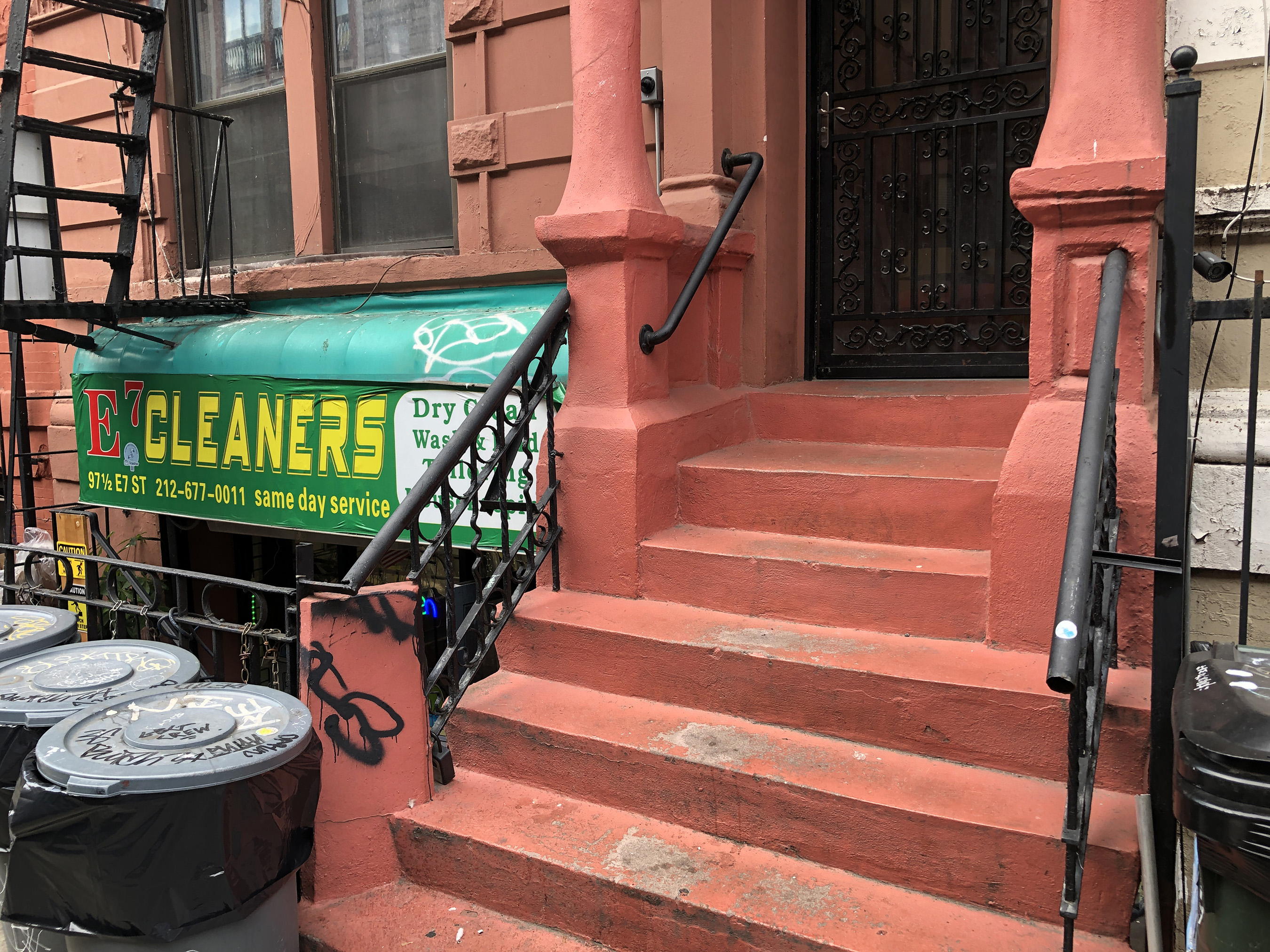
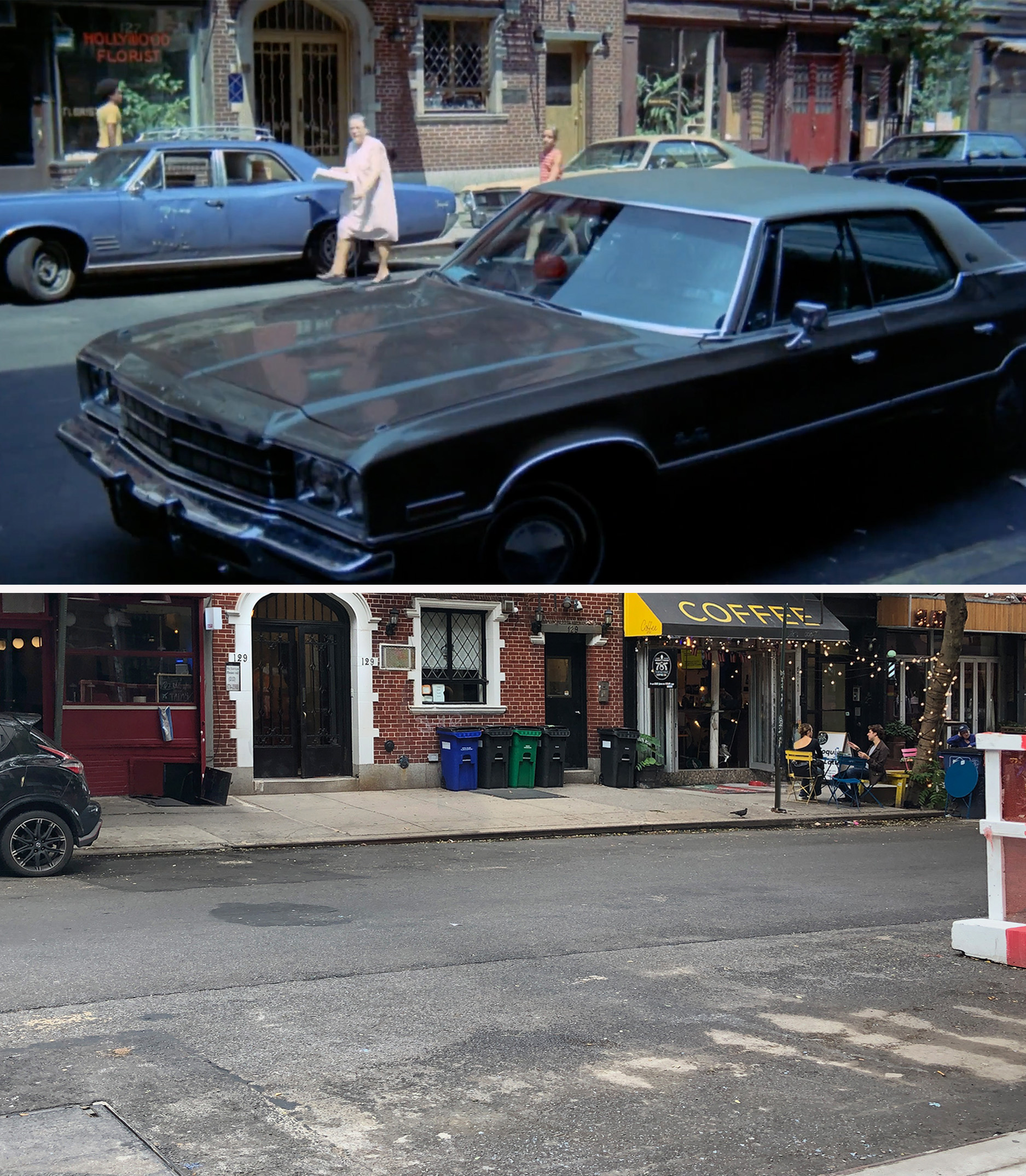
All of these “neighborhood” scenes were shot on E 7th Street between First Avenue and Avenue A. The fact they used this one block for multiple scenes was incredibly helpful in my identification process. And thankfully, most of the buildings look relatively the same, so all it took was to look at the area in Google Street View until I spotted matching elements.
The stoop where Wilfredo Roldan’s character rants to his drug gang was a little hard to spot at first since the angle used was from below looking out. But again, since the stoop has more or less remained the same, I was eventually able to pinpoint the spot.
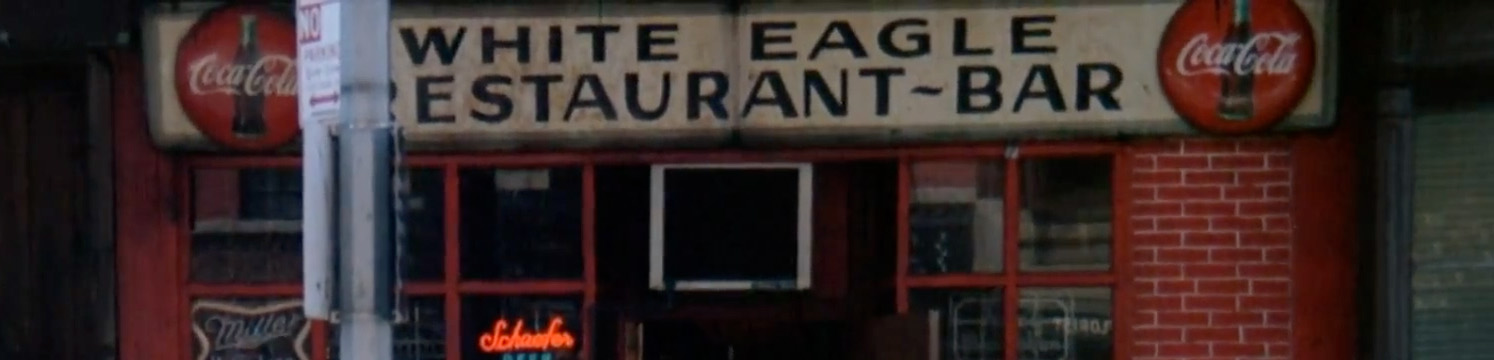
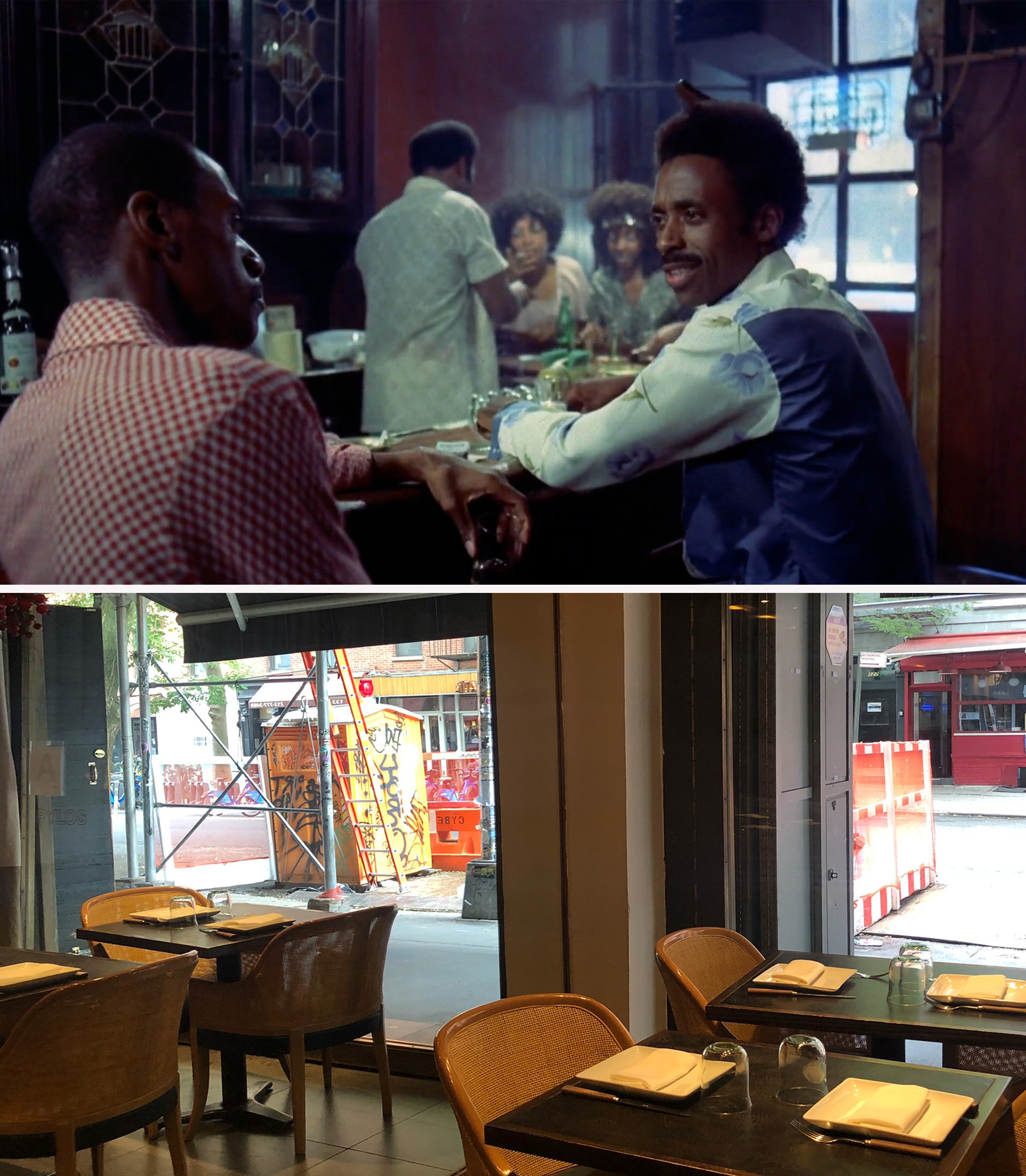
The only place I didn’t figure out right away was the bar. That’s because the street level commercial space has changed dramatically over the decades. And keep in mind, when I first started investigating, I didn’t even know if it was on 7th Street or not.
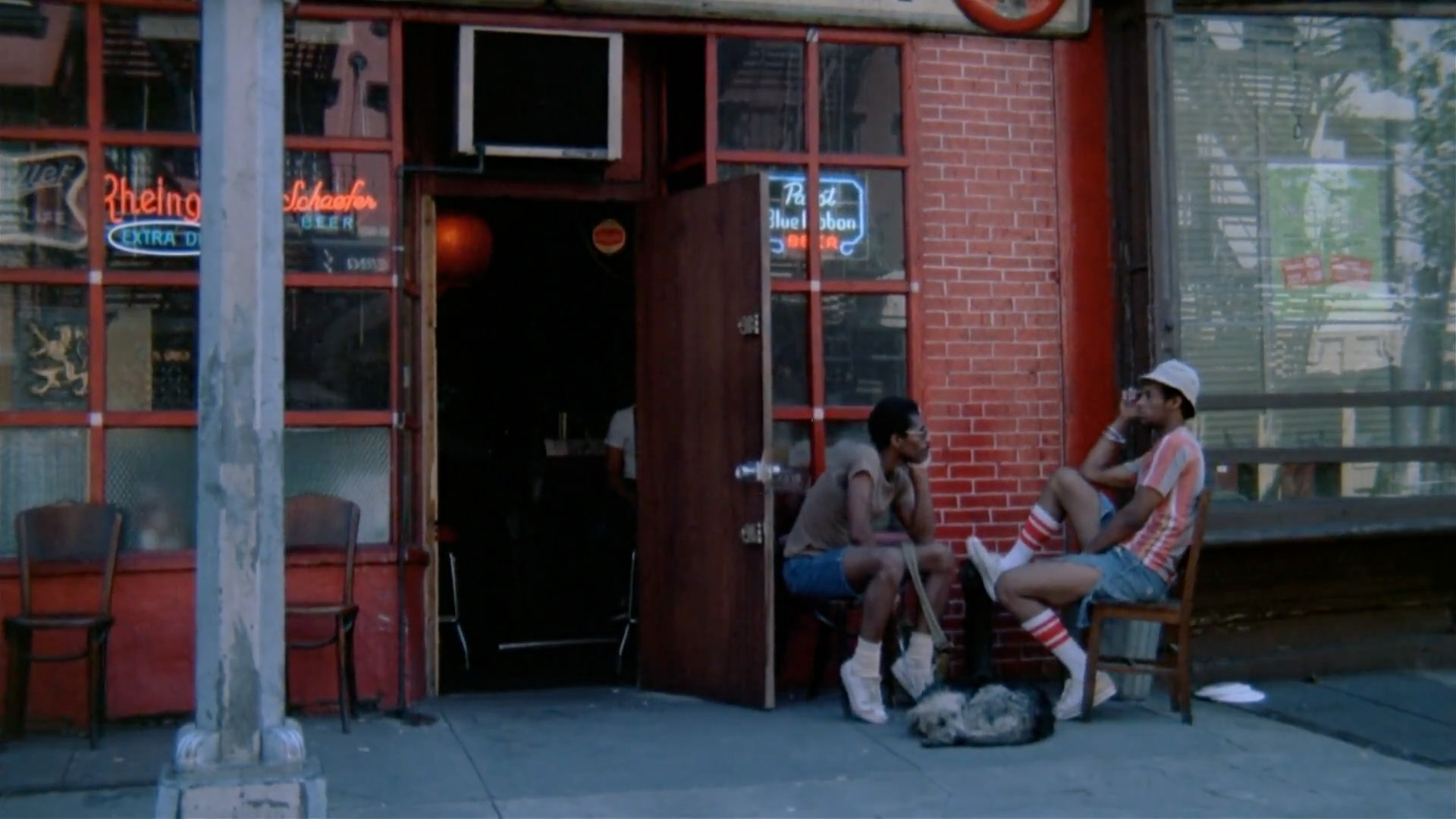
I tried looking up the name “White Eagle,” which can be seen on the sign above the entrance, but like a lot of old neighborhood bars in New York, there was little to no information about it online. I couldn’t even find a suitable address in a 1975 Manhattan phone directory.
I did find several references to a White Eagle Tavern on the corner of Fifth and 23rd Street in Brooklyn, but that clearly was a different place.
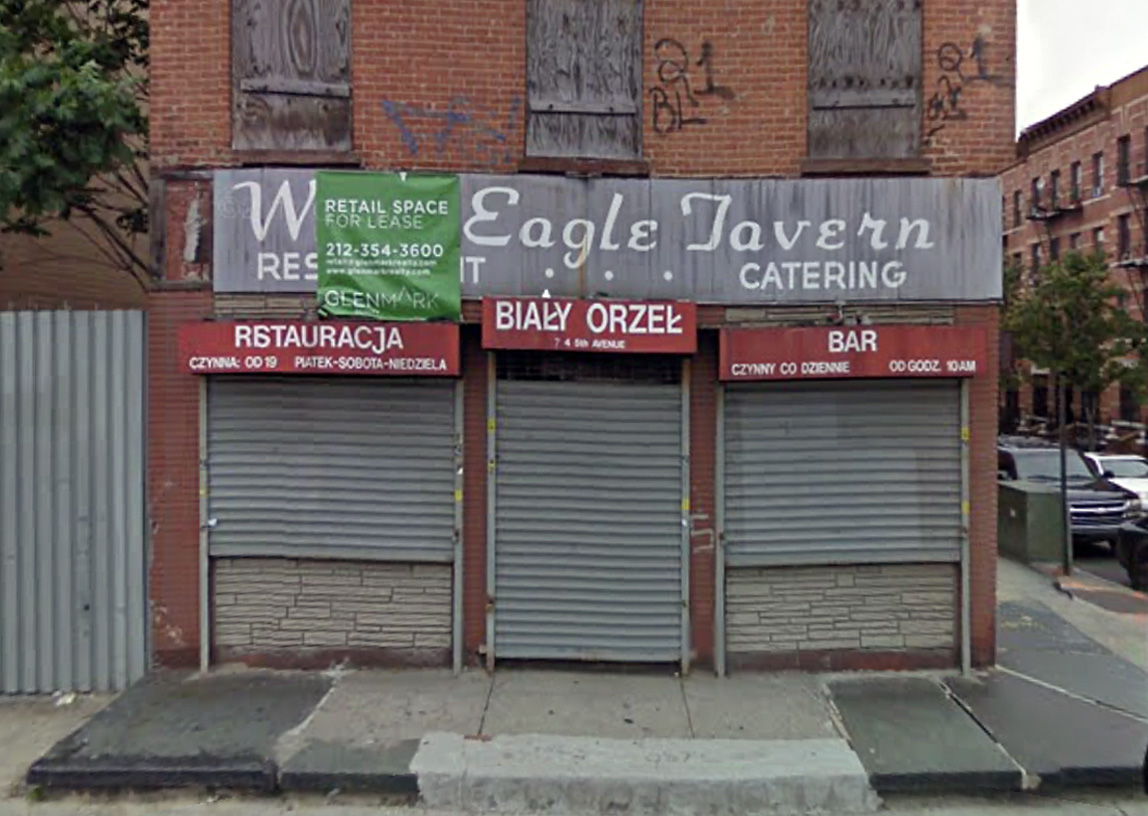
Originally known as the White Eagle Hall, the Park Slope space was headquarters to a local Polish Democratic club durning the early 20th century, serving as a key meeting place for the community.
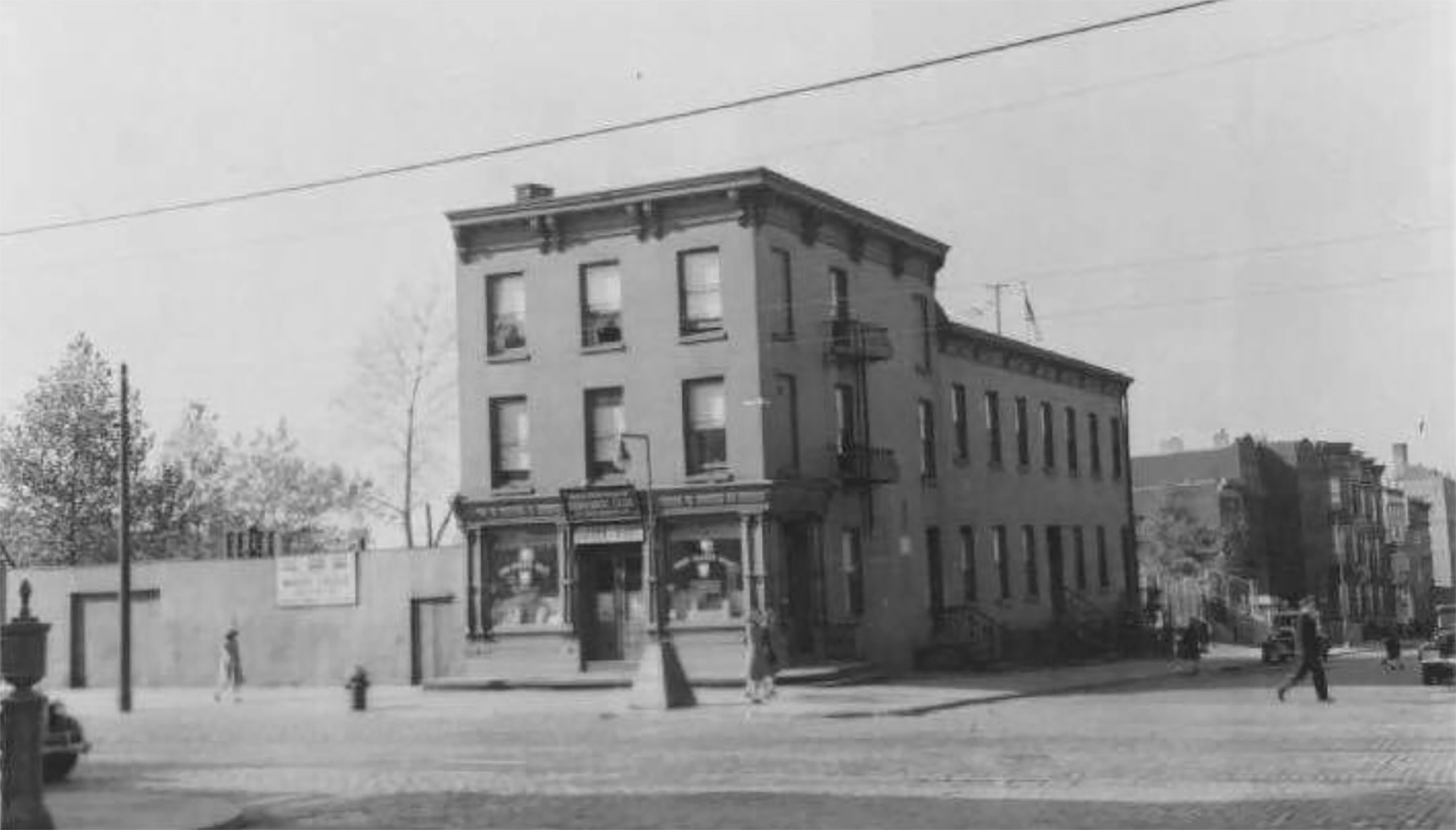
After the building was damaged during Hurricane Sandy, it laid dormant for a couple years before being sold in 2014 for a reported $1,650,000.

Local blogger, “One More Folded Sunset,” noted at the time that work at the site was slow and sloppy with some rather dubious flyers going up claiming to be from the NYPD and DOT. (The fliers were later edited by a concerned neighbor.) The building was eventually demolished and replaced with a rather bland apartment building in 2016.
The White Eagle bar from Devil’s Express was finally figured out after I identified the funeral parlor across the street which can seen in a later scene. Once I had a definitive address, I subsequently was able to find one reference to the East Village bar in a 1975 issue of The New York Times in their weekly listing of Health Code Violations.
These days, the space is an elevated Greek-cuisine restaurant called Pylos, and unlike the former White Eagle, the reviews are consistently positive.
Alley Fight
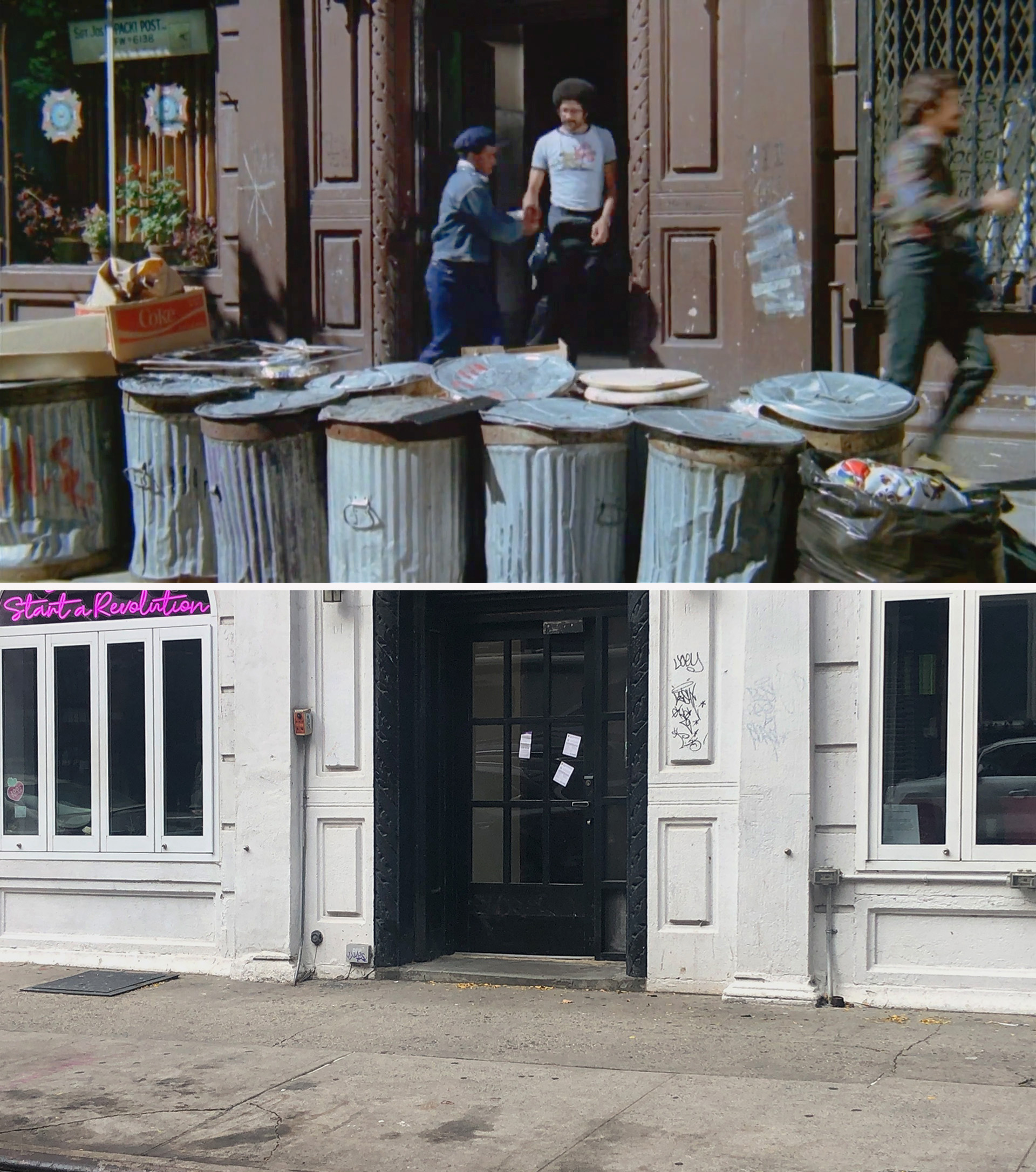
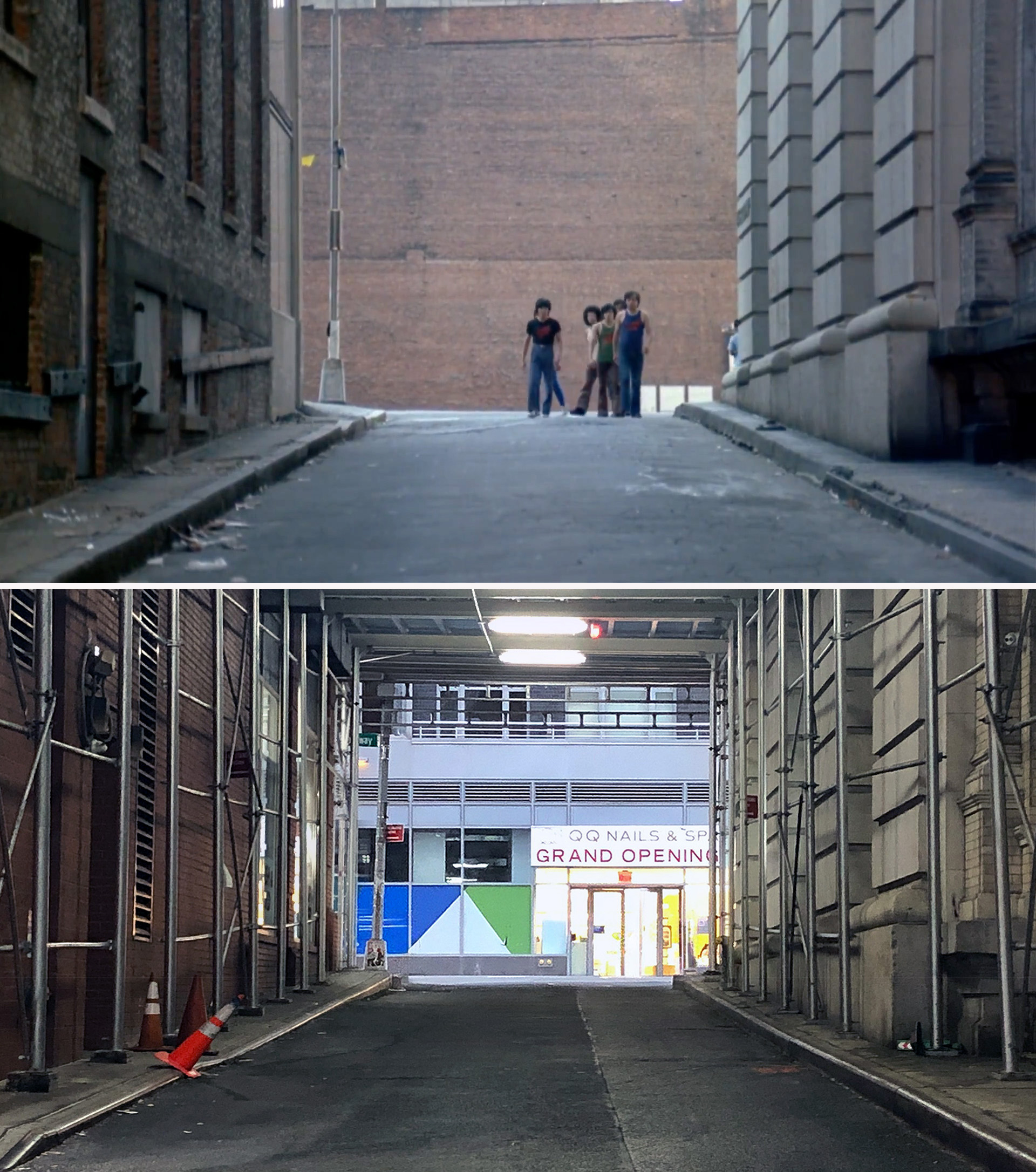
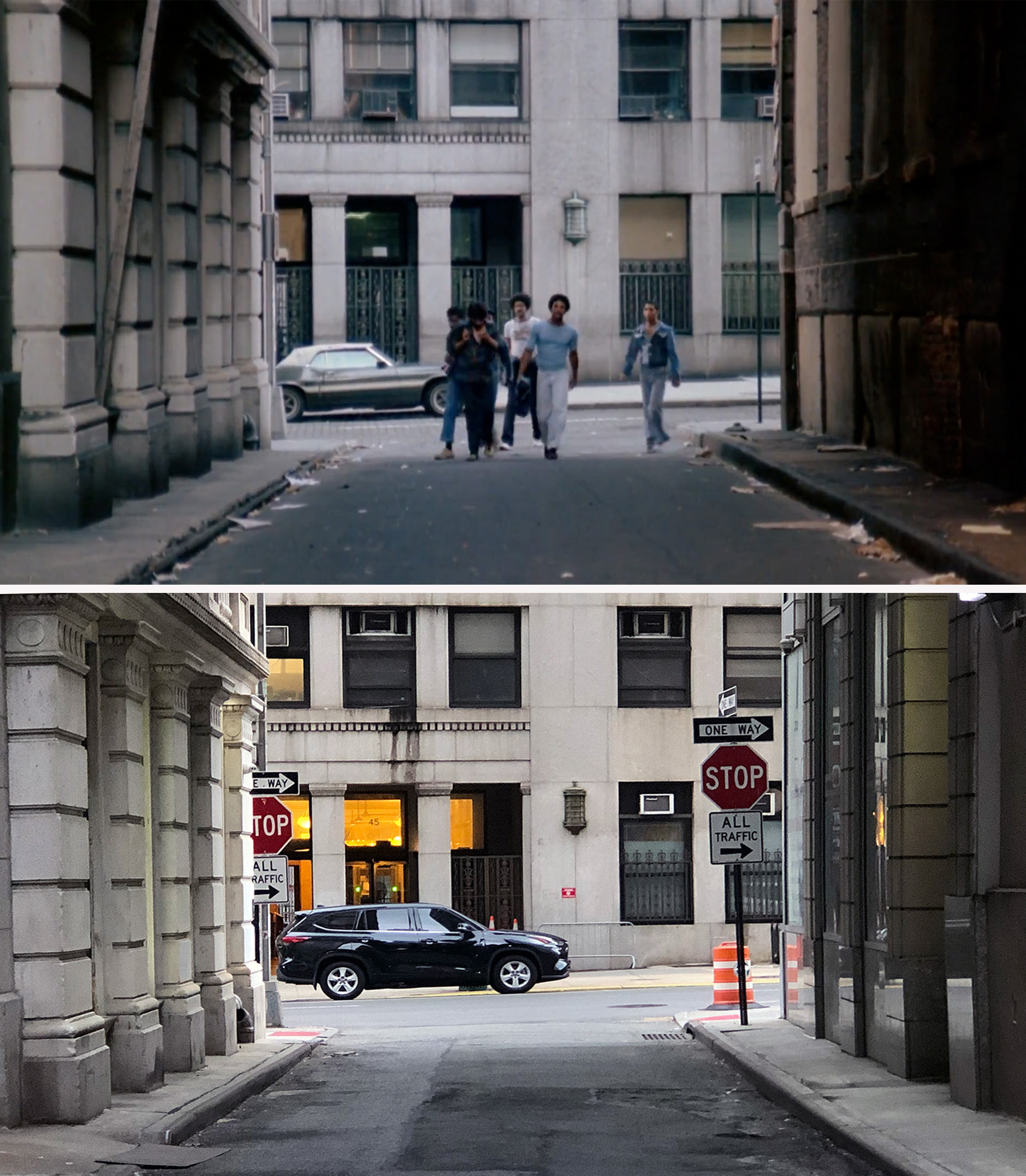
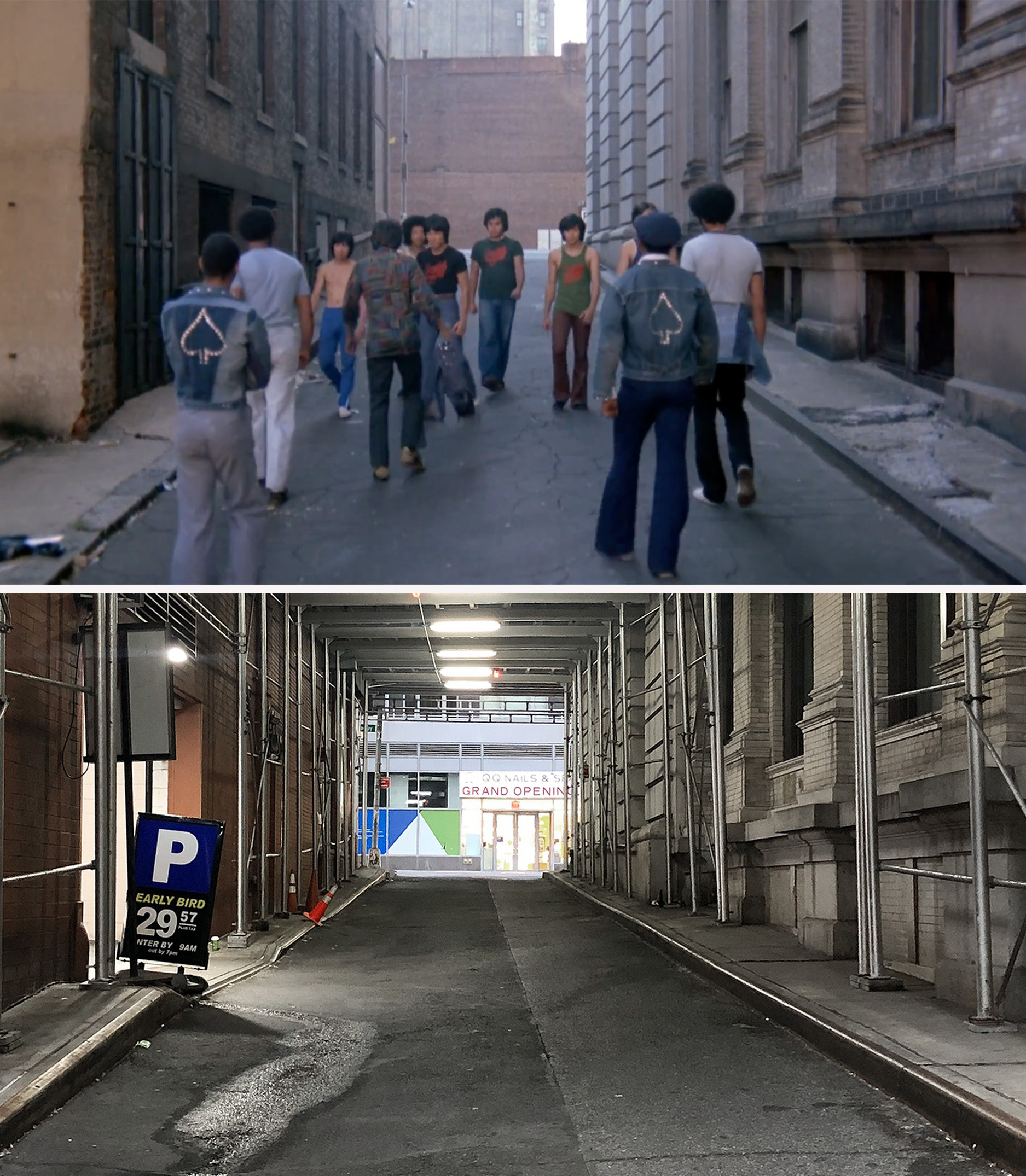
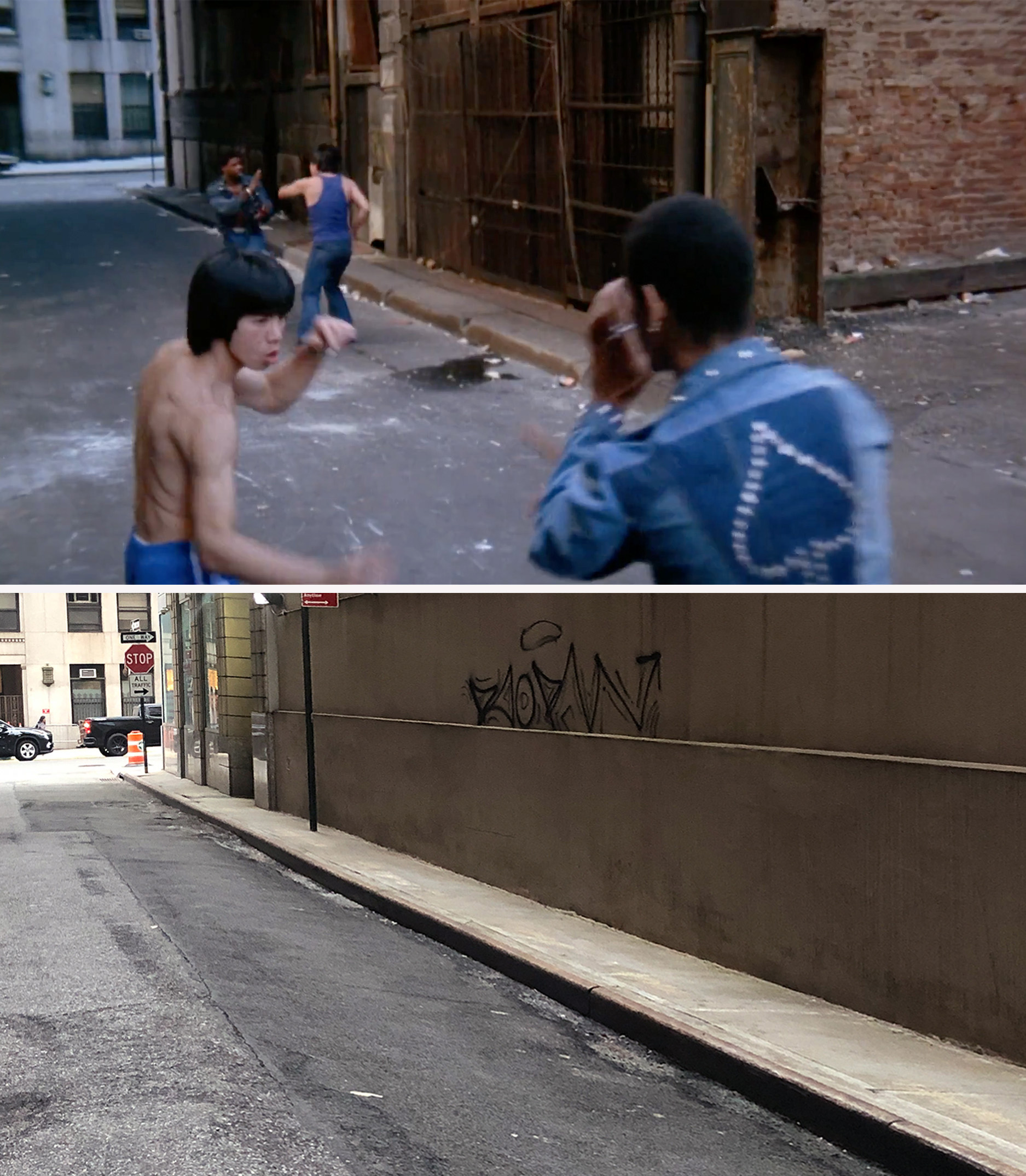
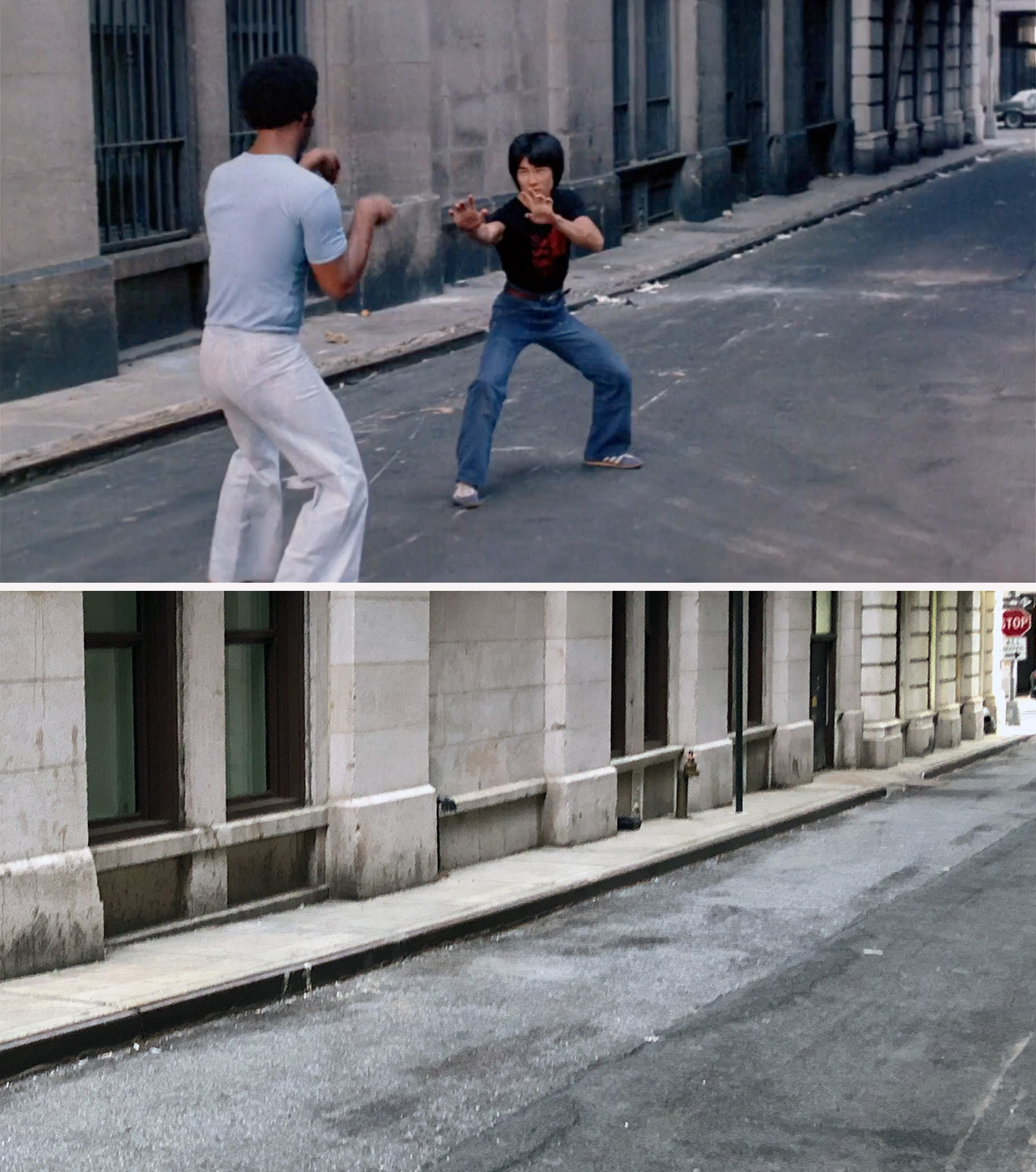
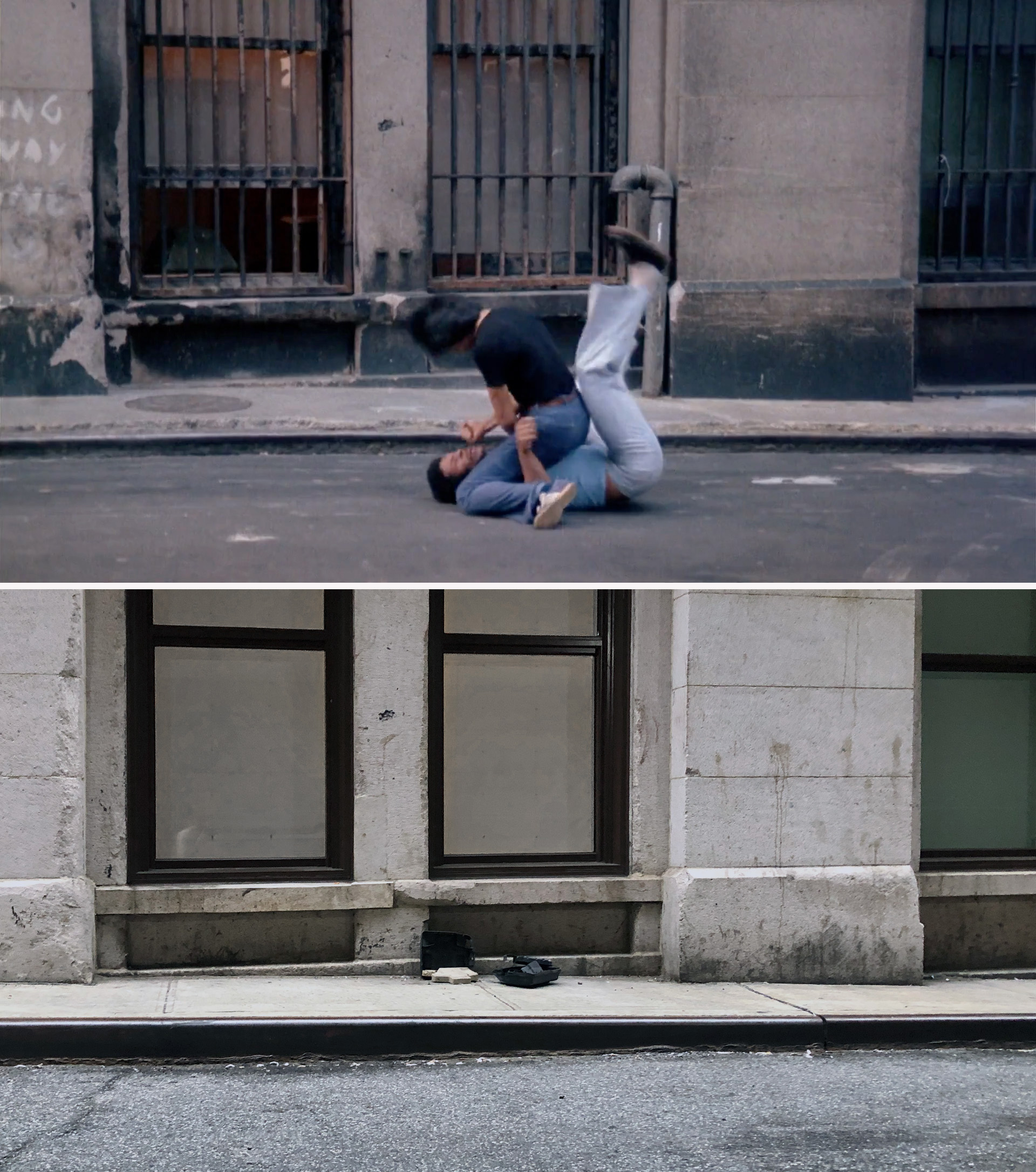
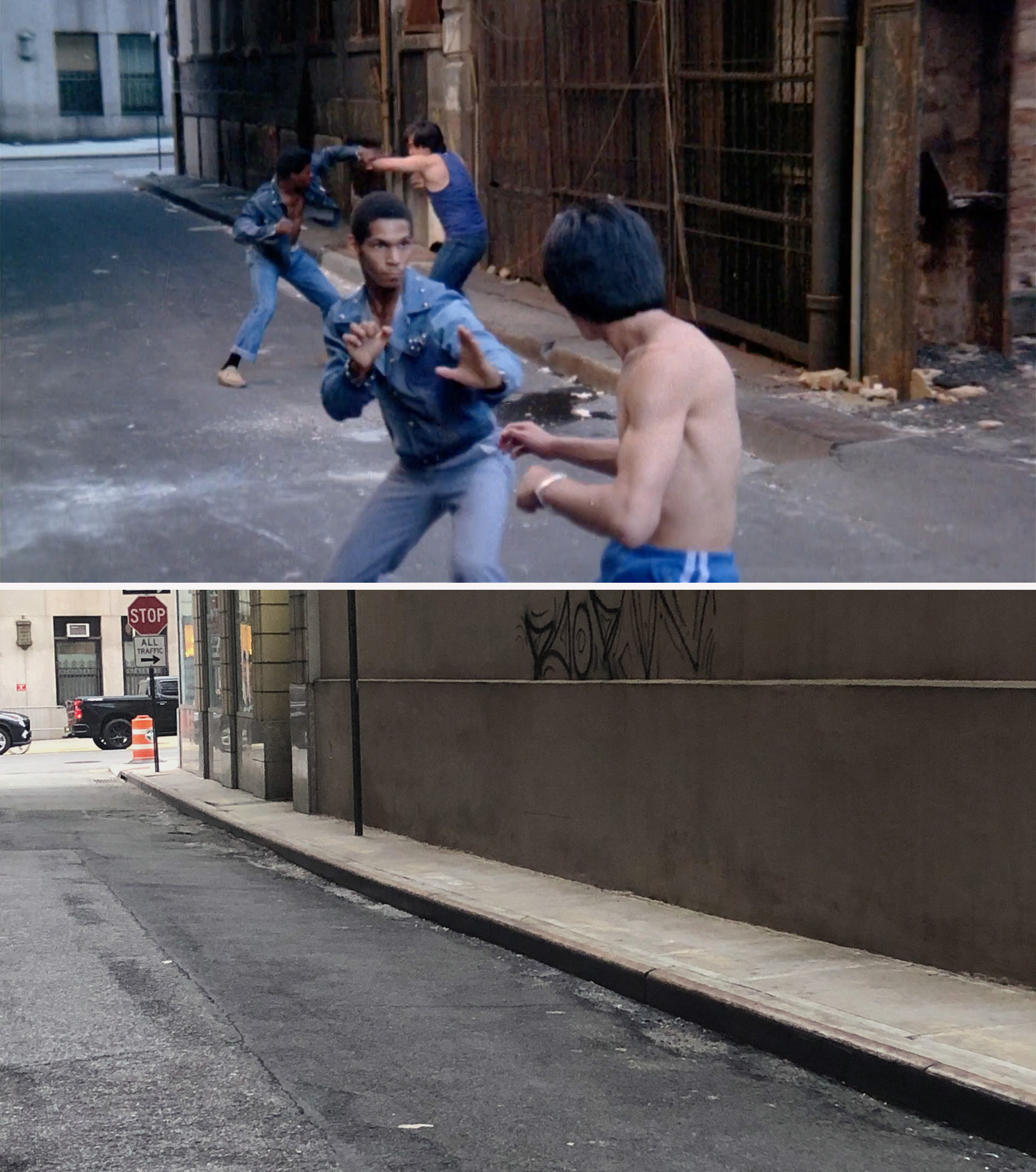
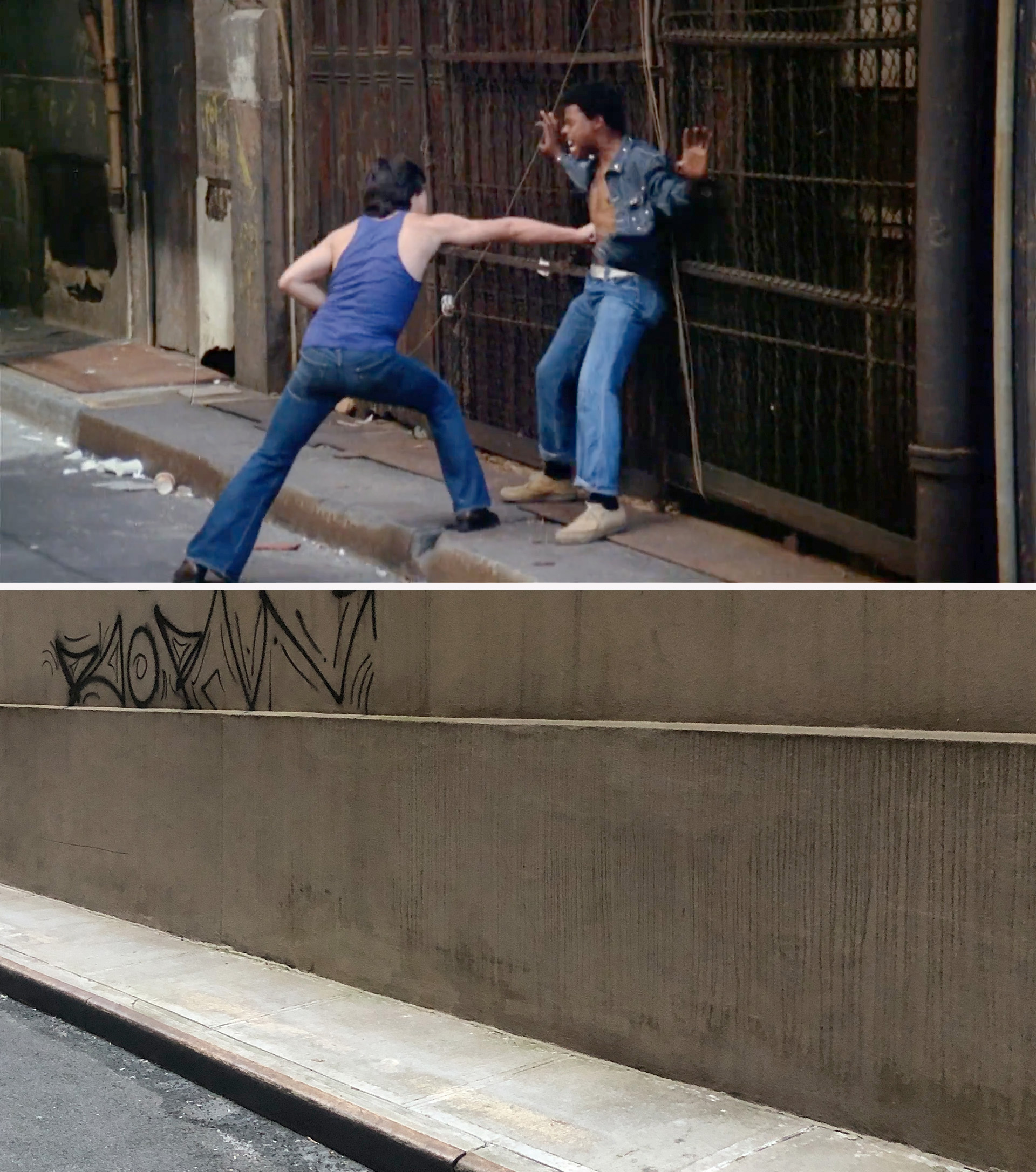
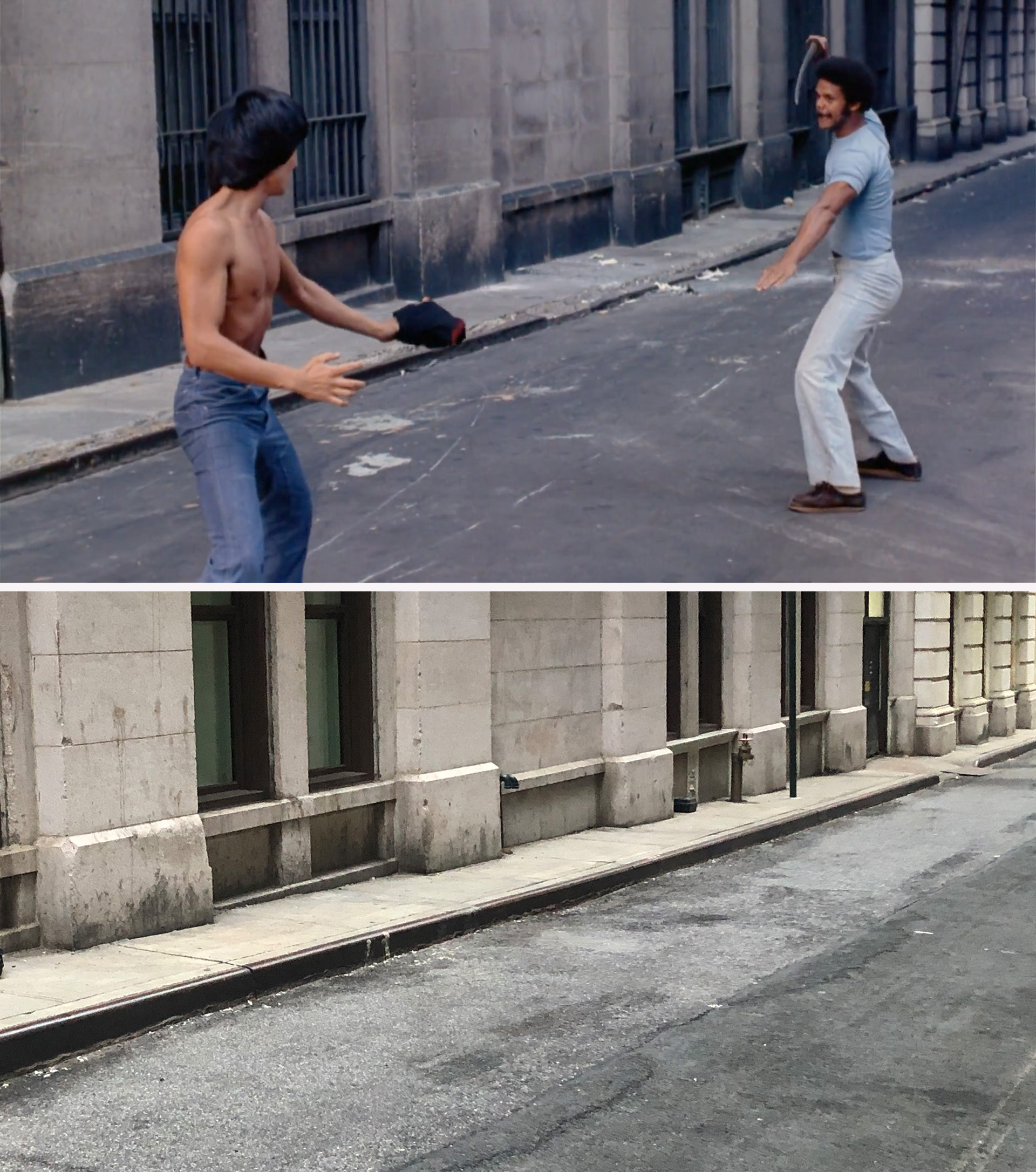
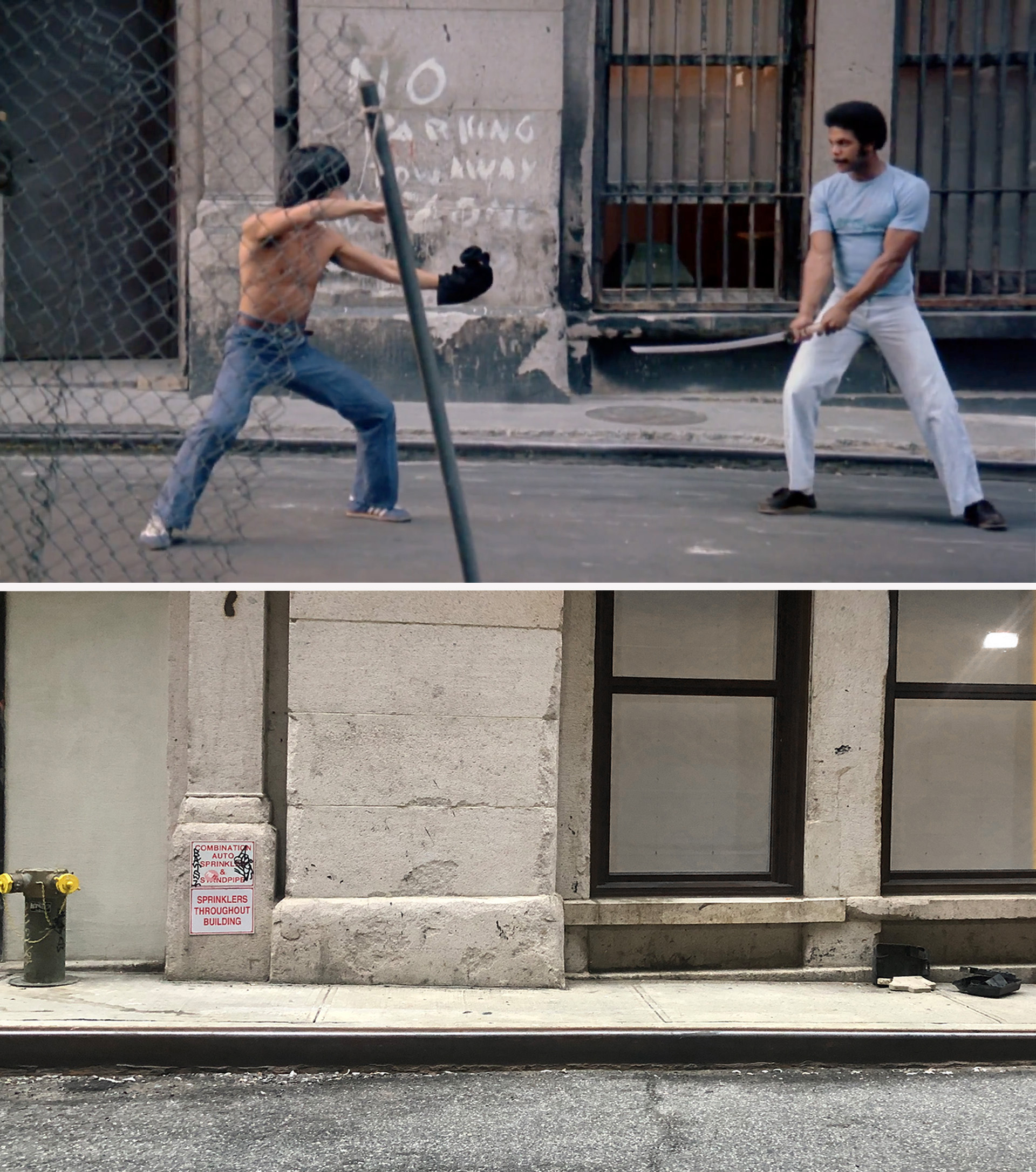
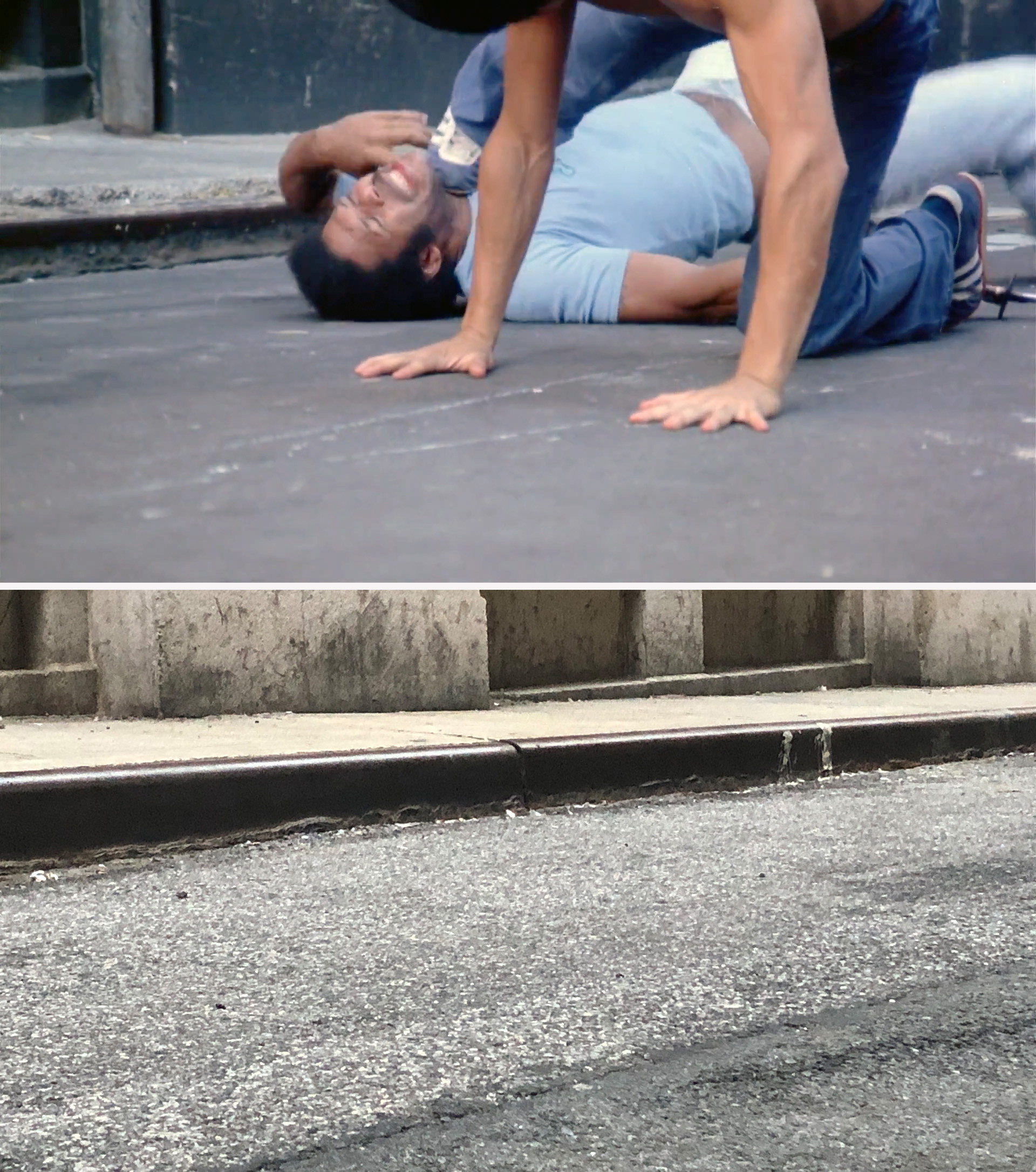
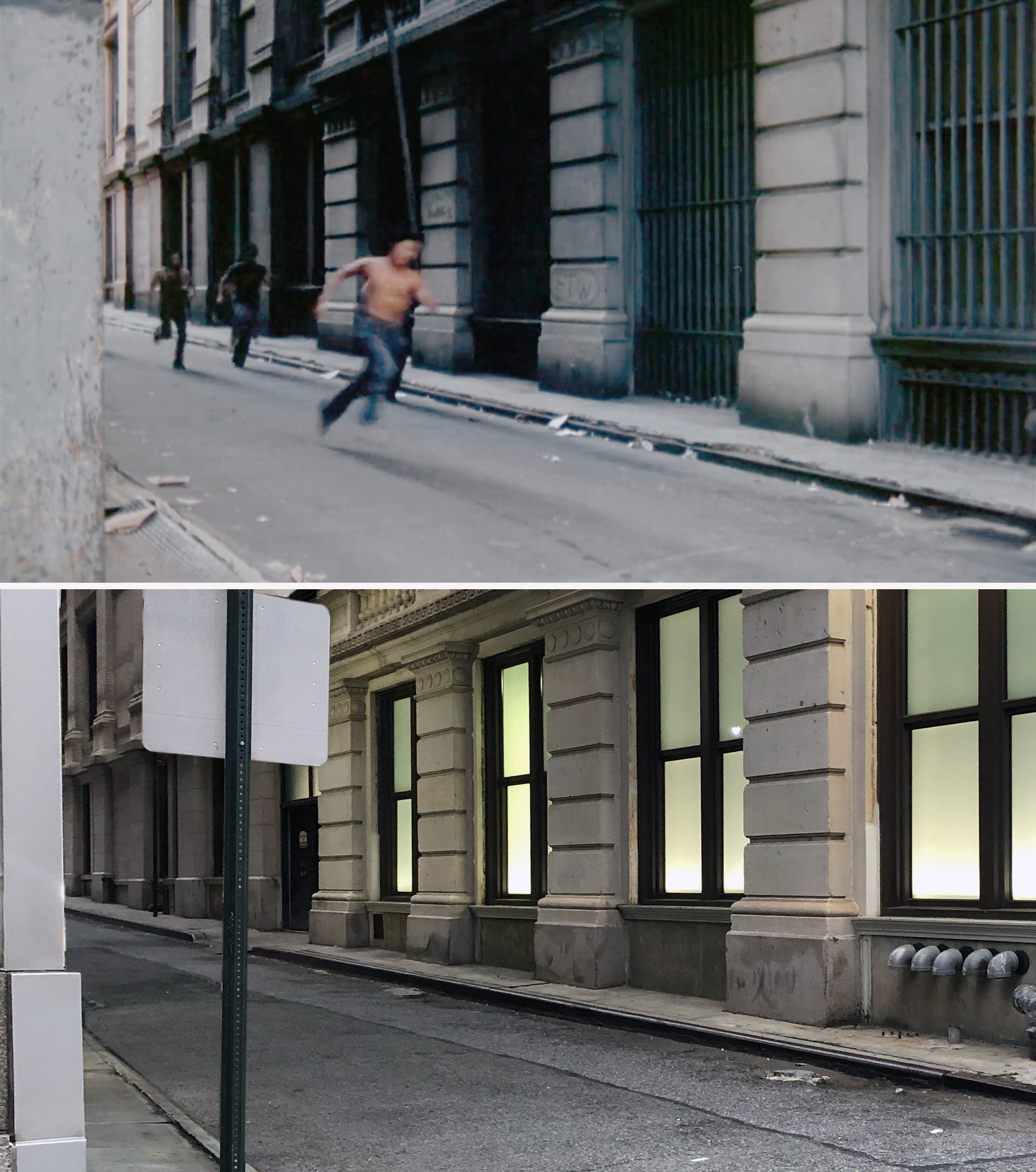
This is the first major scene that took place a good distance from the East village.
Having studied and catalogued most of New York’s alleys when I was researching The Rag Man (1925), it didn’t take me long to figure out they shot this fight sequence in Catherine Lane near the courthouses.
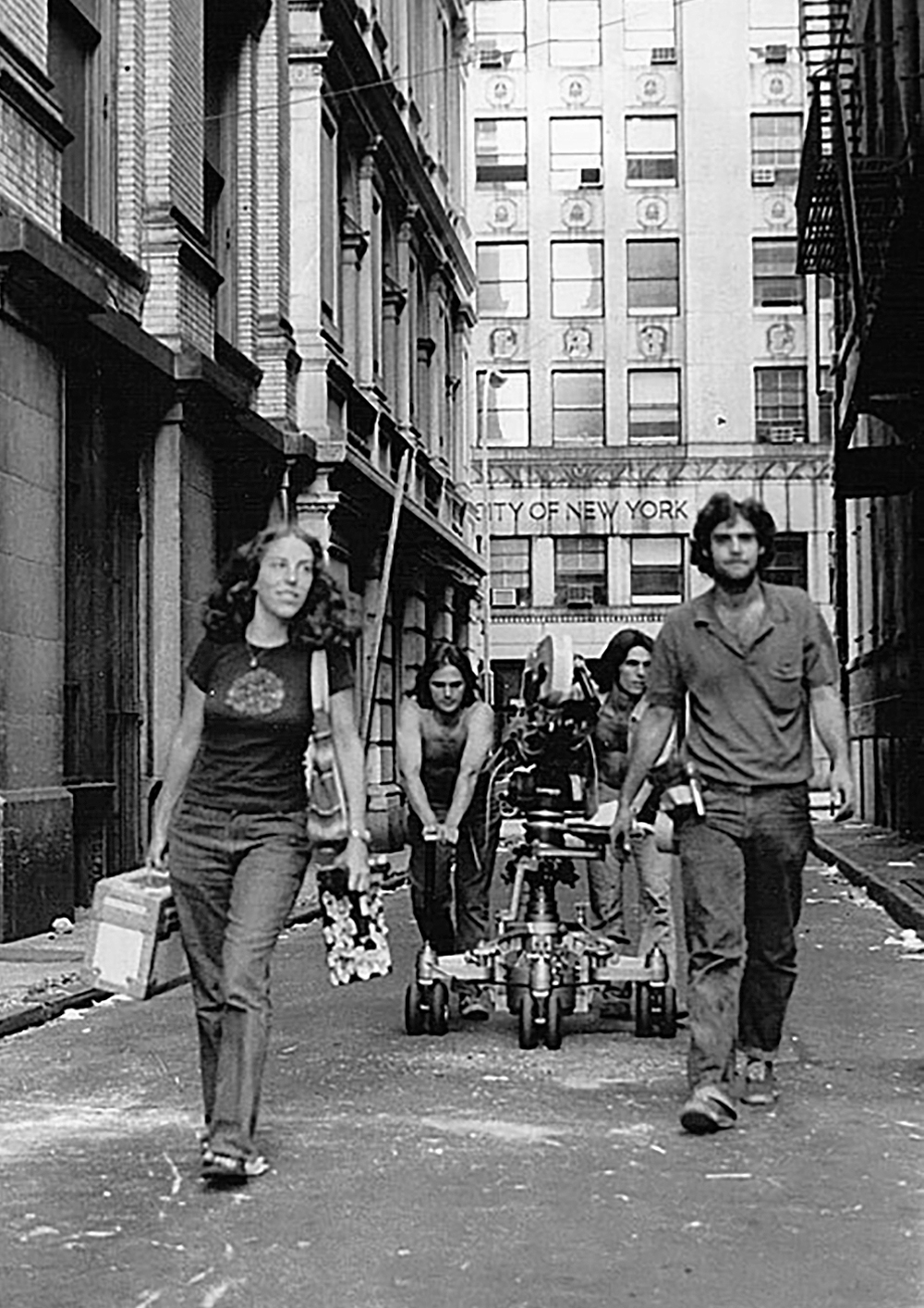
Running from Broadway to Lafayette Street above Worth Street, this slender, one-block alley was named for Catherine Rutgers, a member of a prominent Dutch colonial family (after which Rutgers University in New Jersey got its name). It was originally known as Catherine Place, but was changed to Lane by the early 19th century. It was about that time that the narrow residential street was gaining a bad reputation as a hangout for criminals and other deplorable types.
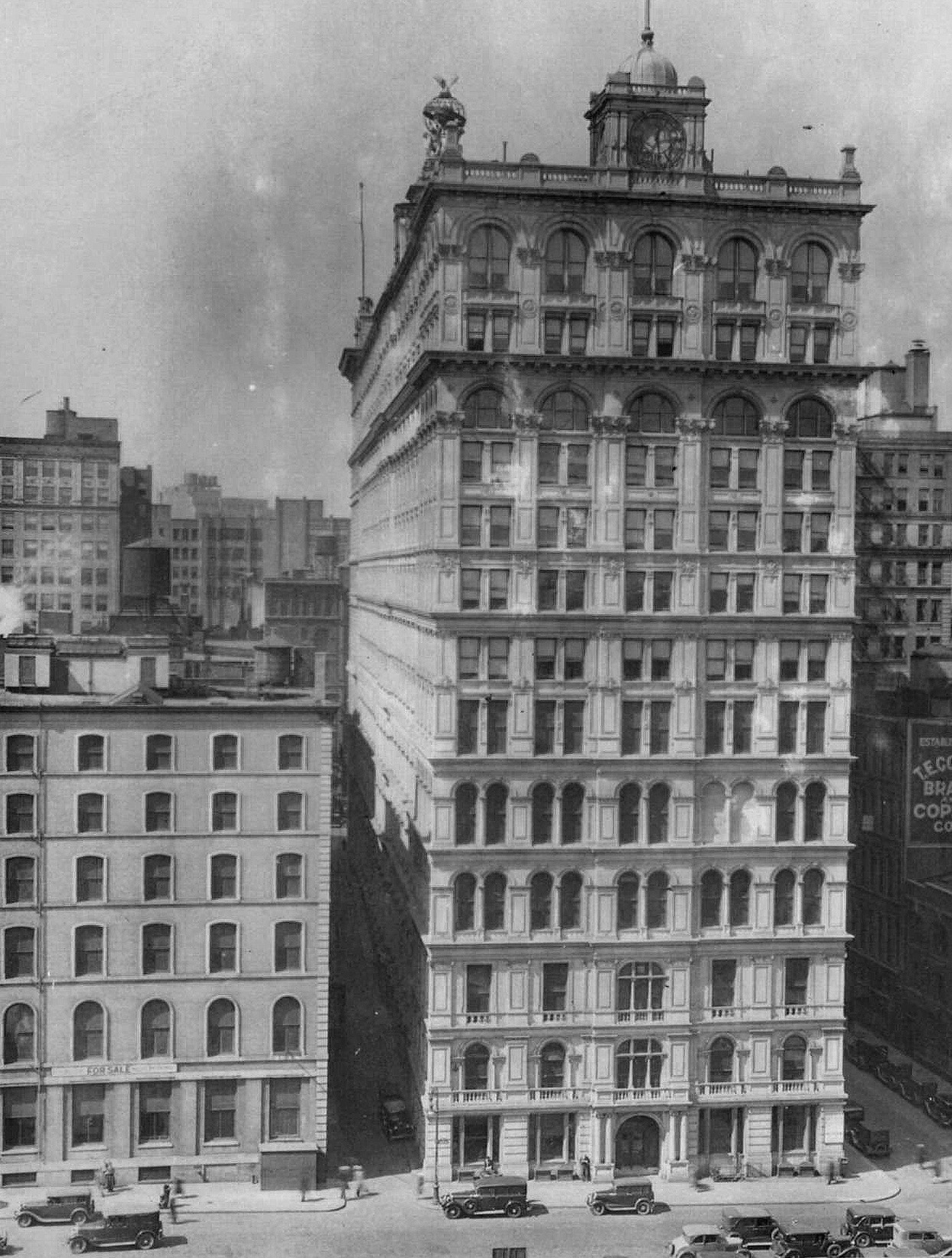
By the 1890s, Catherine Lane’s atmosphere became more positive as the New York Life Insurance Company built their new headquarters there. Overseen by the famed architecture firm, McKim, Mead, & White, this marble-clad structure is now a residential building, still bearing the original mechanically-wound clock tower above the 12th story.
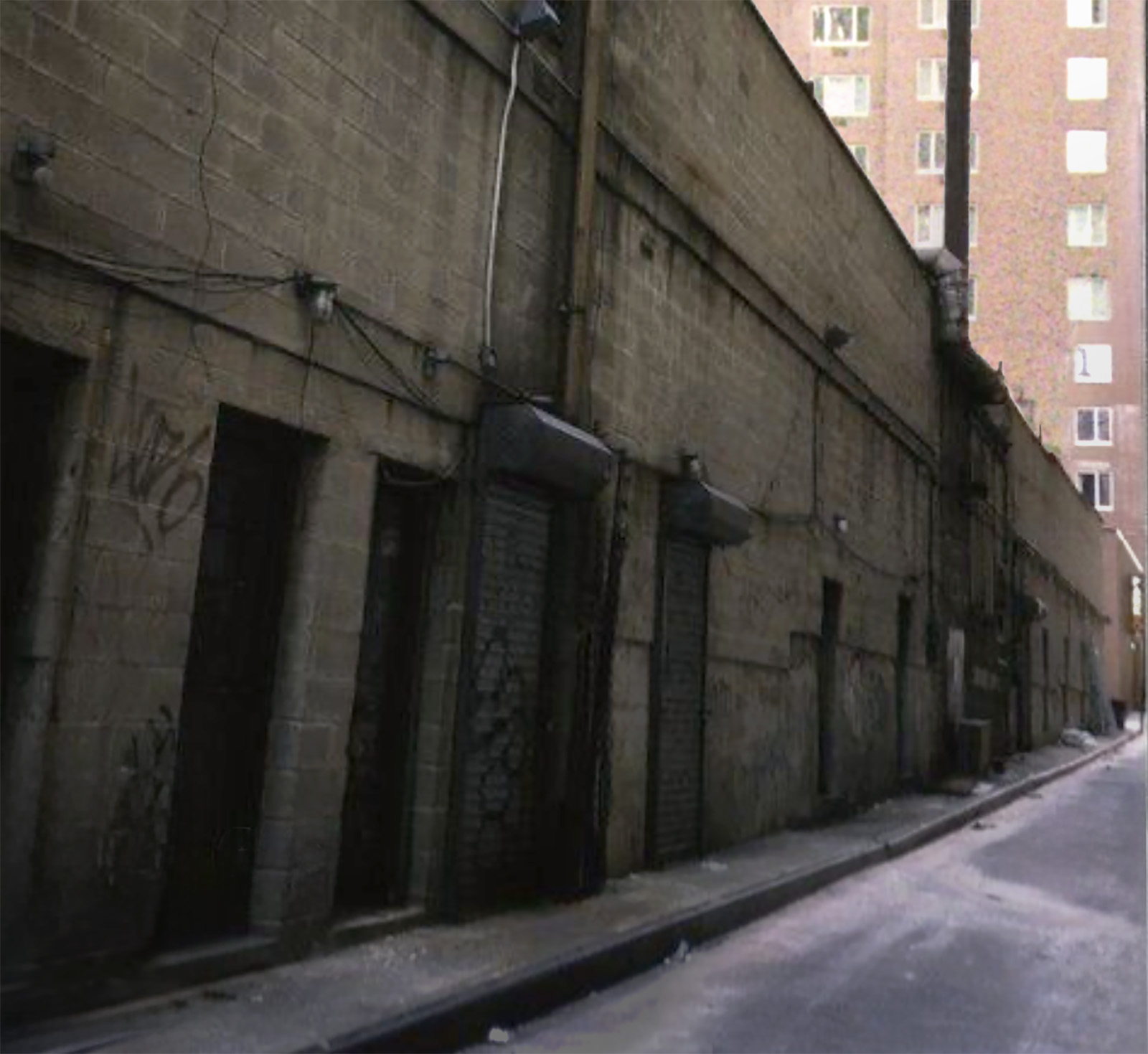
These days, despite the Broadway side of Catherine having some scaffolding set up there, it’s generally a more unencumbered setting than before. For the last 15-20 years, the entire passageway was shrouded in construction apparatus, casting a dark shadow from end to end.
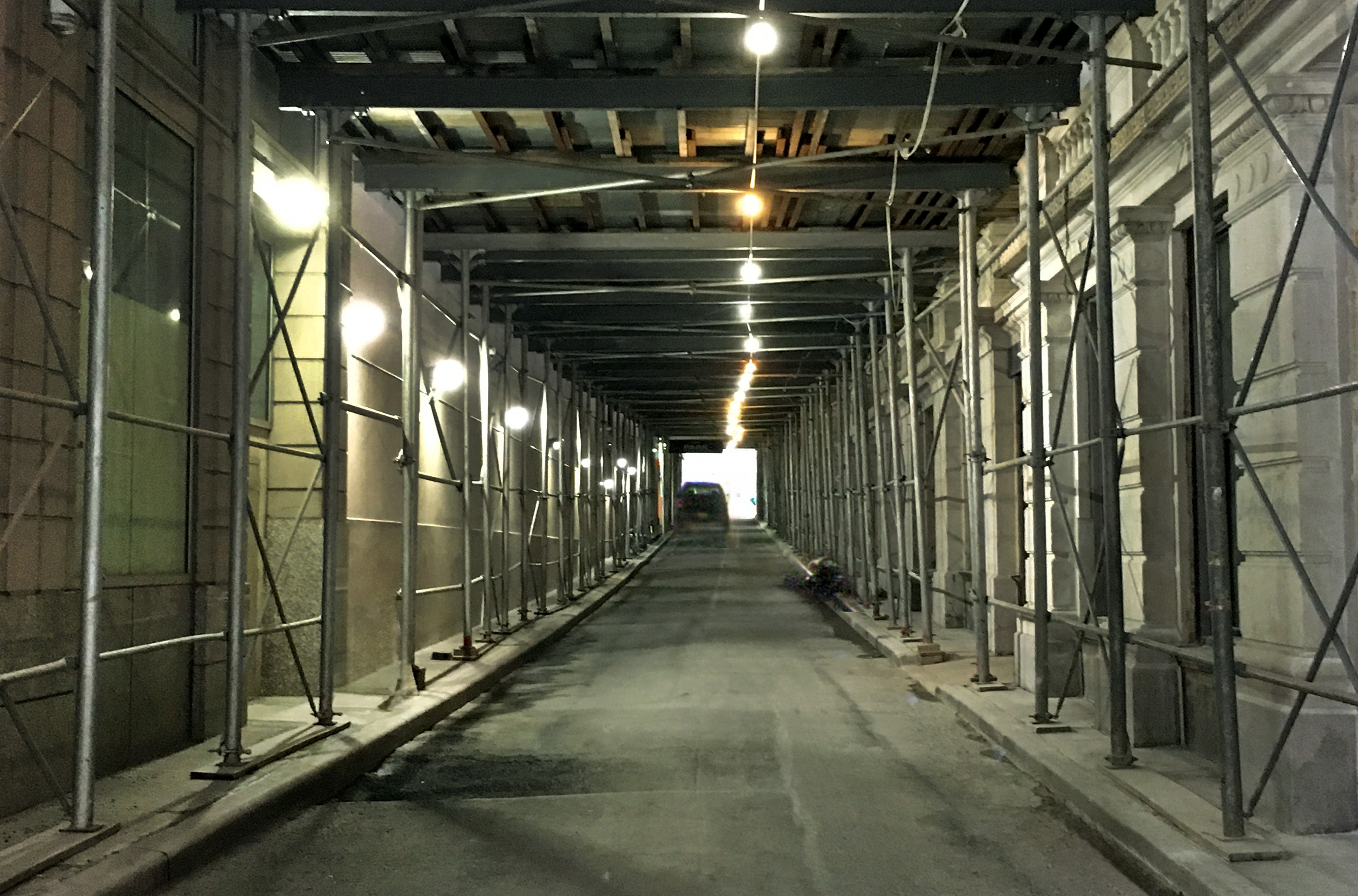
Catherine Lane finally saw the light of day again in 2024, making it an appealing little side destination if you’re in the area. It’s also just a stone’s throw away from the serene Collect Pond Park.
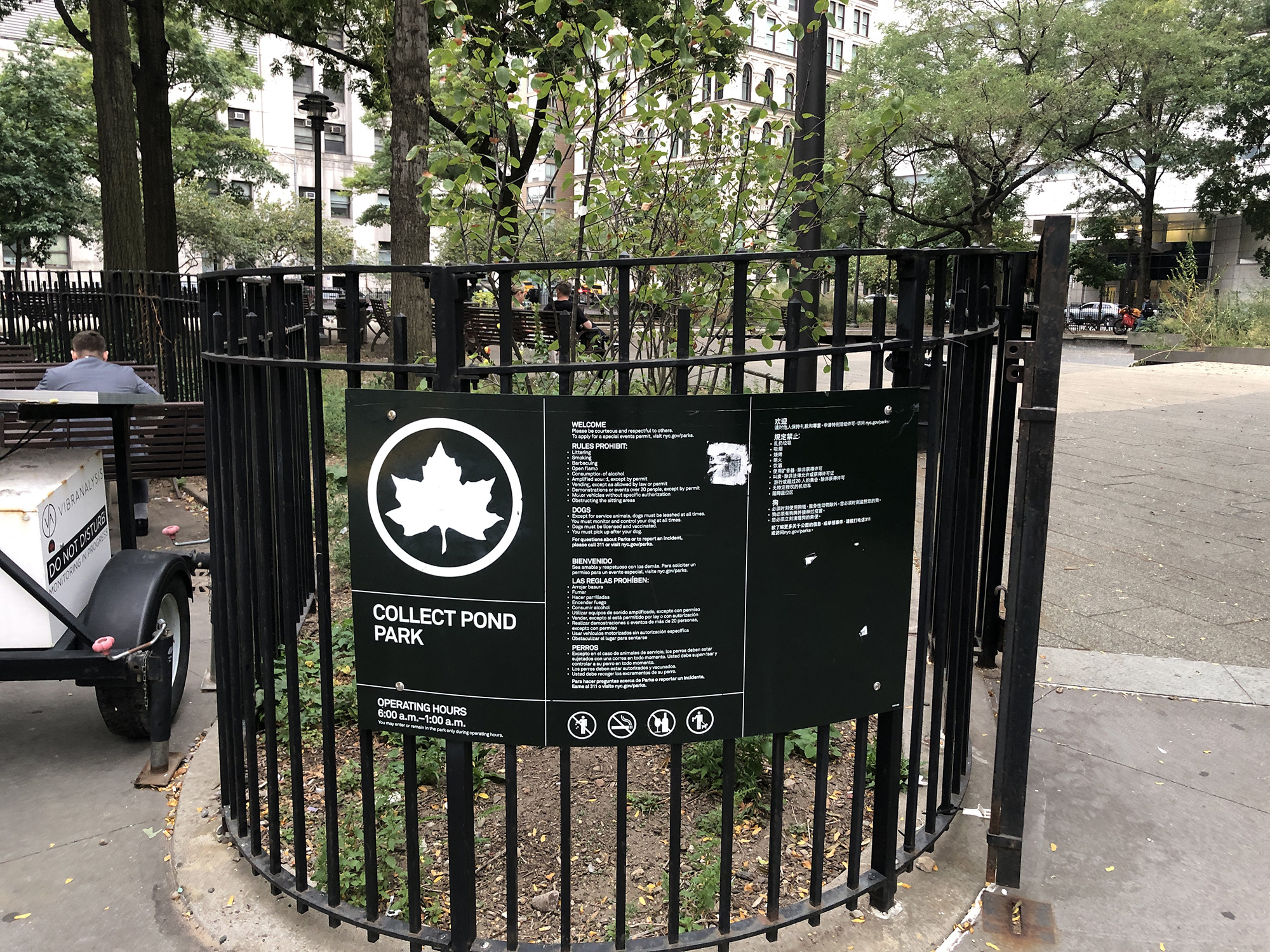
The one-acre park can be found on Leonard Street, occupying part of the former site of Collect Pond, a sixty-foot deep pool that was fed by an underground spring. The waters derived their name from early Dutch settlers, who called it “kolch” meaning “small body of water.”
Providing the city with fresh drinking water, the pond was also a favorite spot for picnics and ice-skating up until the start of the 19th century.
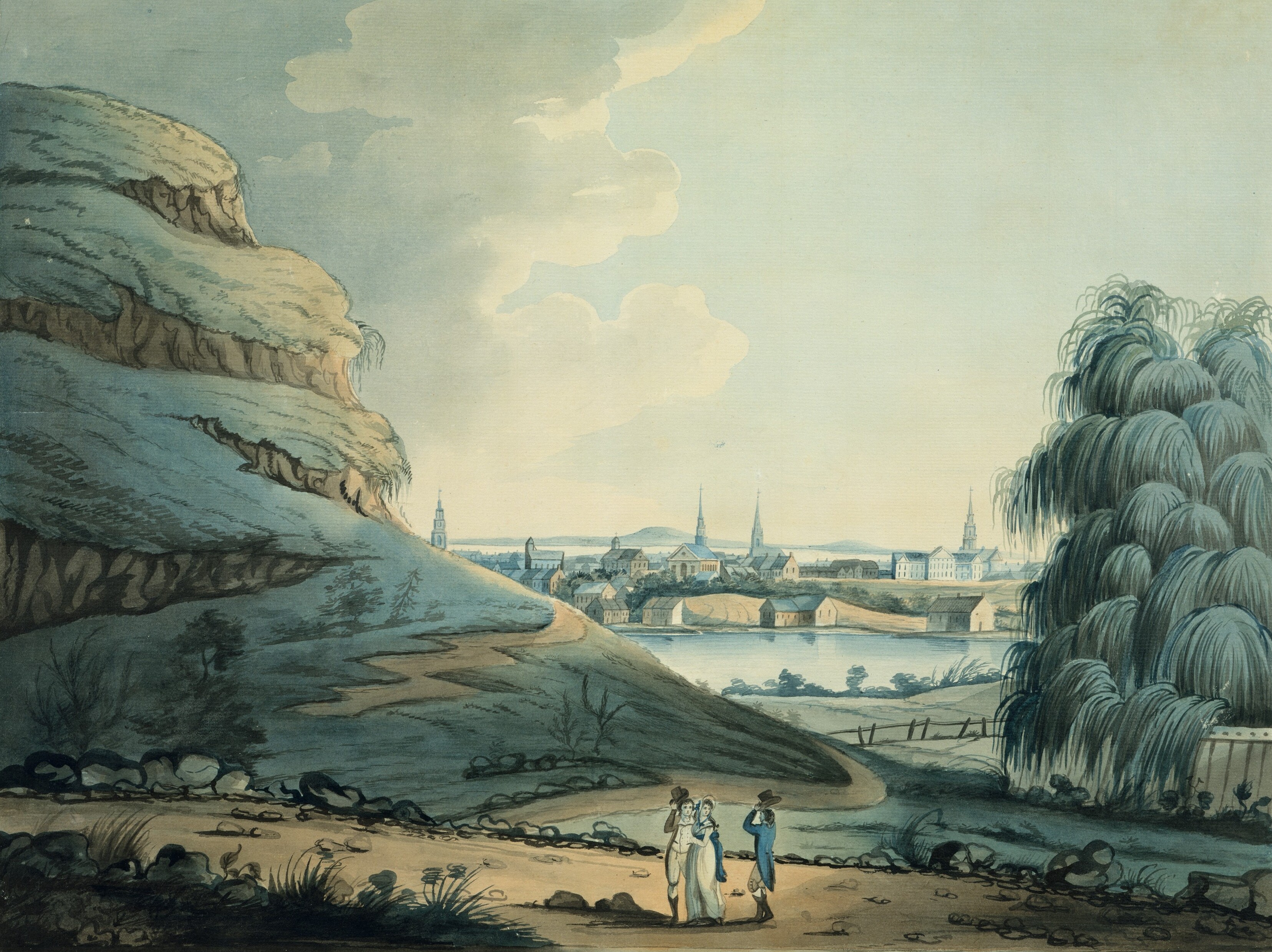
By 1811, the pond had become severely polluted and it was decided by the city to fill it in. But substandard workmanship caused drainage issues and it soon became a swampy, unstable wasteland, helping give rise to the notorious “Five Points” slums. In 1838, New York’s jail, AKA “The Tombs,” was built on the site, constructed on a huge log platform in an attempt to give it a solid foundation.
Today, this fairly unknown city park is a quaint little oasis in the Civic Center neighborhood, with shaded pathways, a central lawn and a small reflecting pool evoking the spirit of the historic body of water.
Homicide Investigations
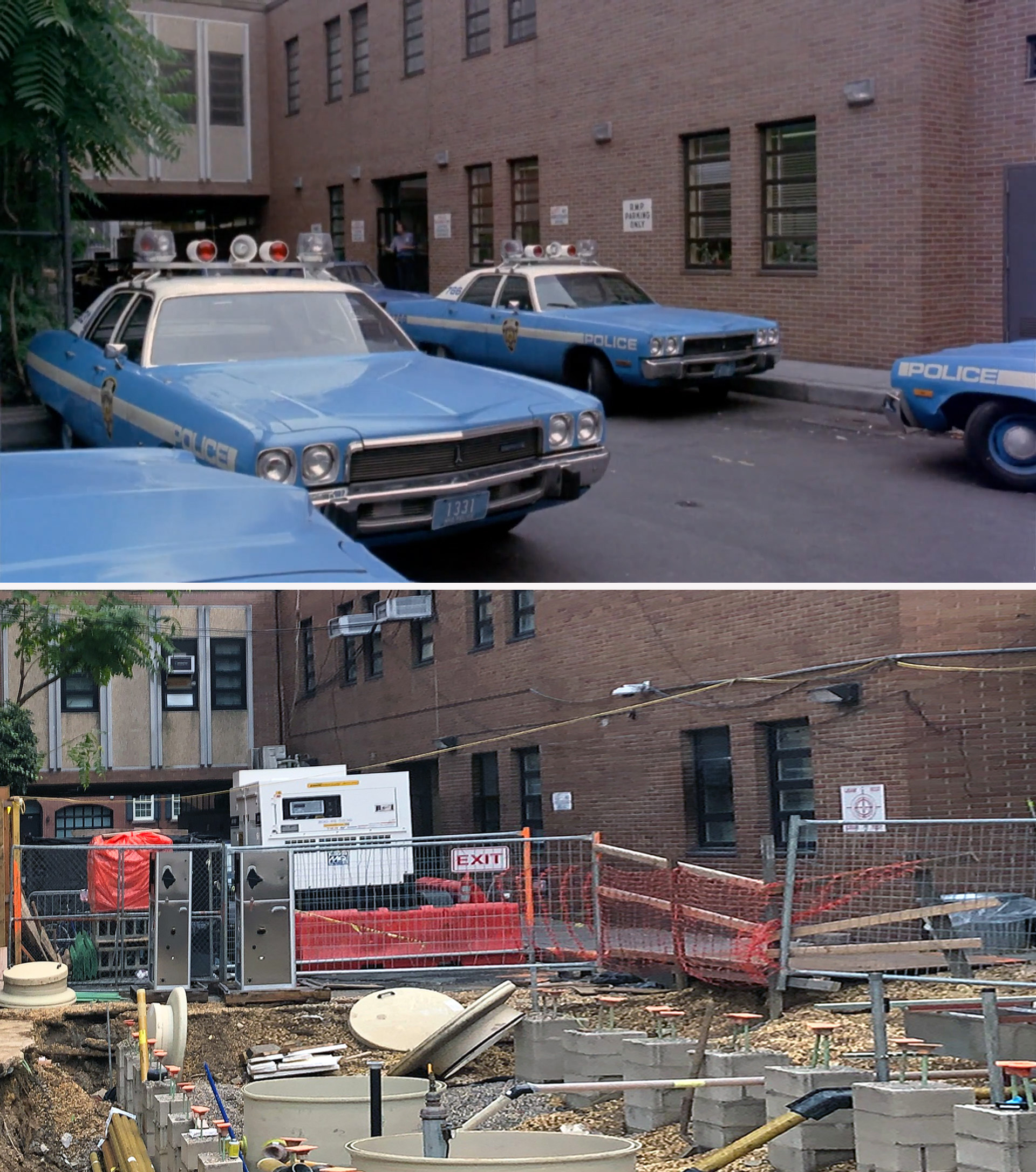
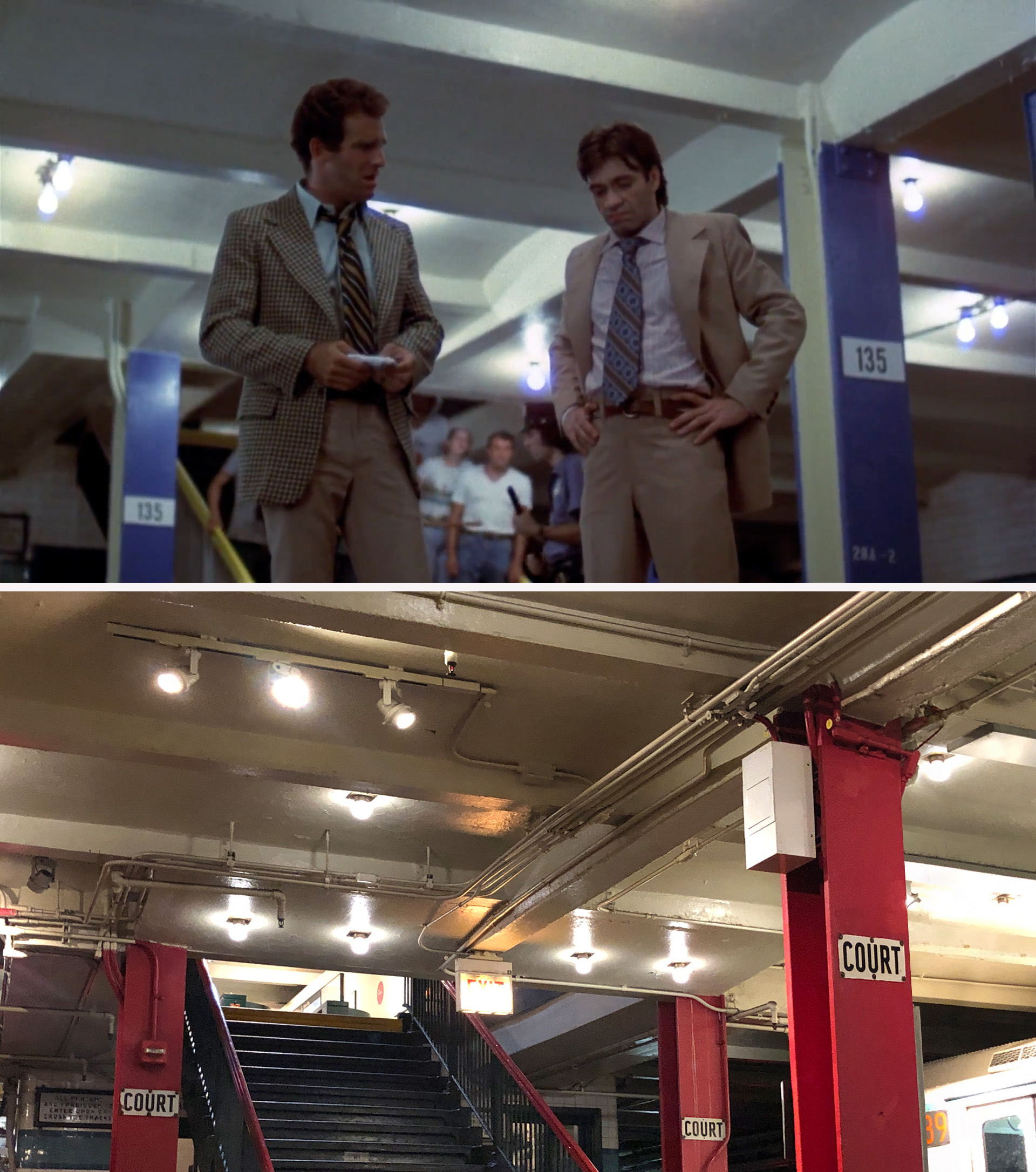
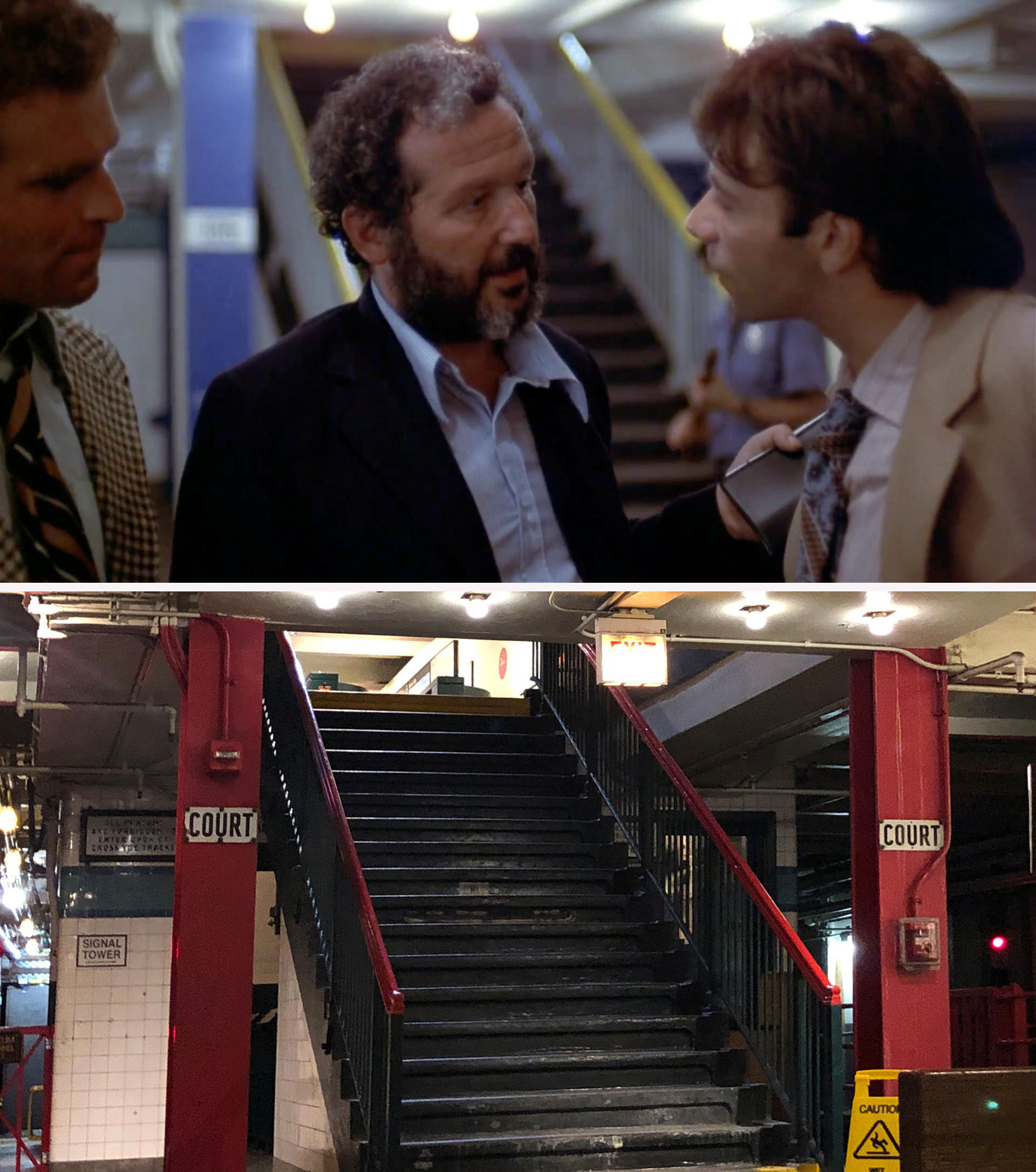
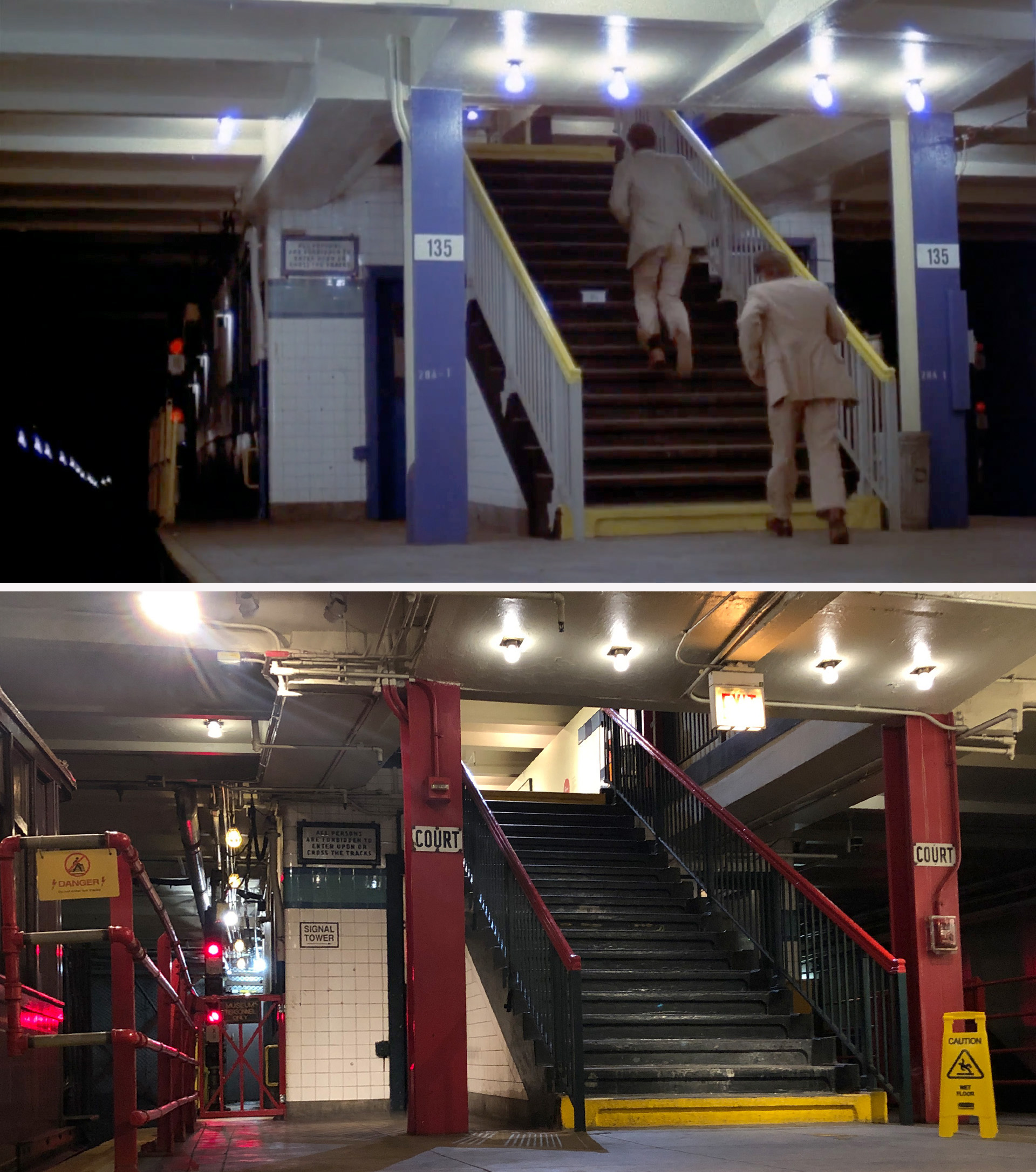
The precinct exterior was easy to find since it was the station closest to my old apartment in the West Village. (Still not sure if the interiors were filmed on a set or at an actual station house.)
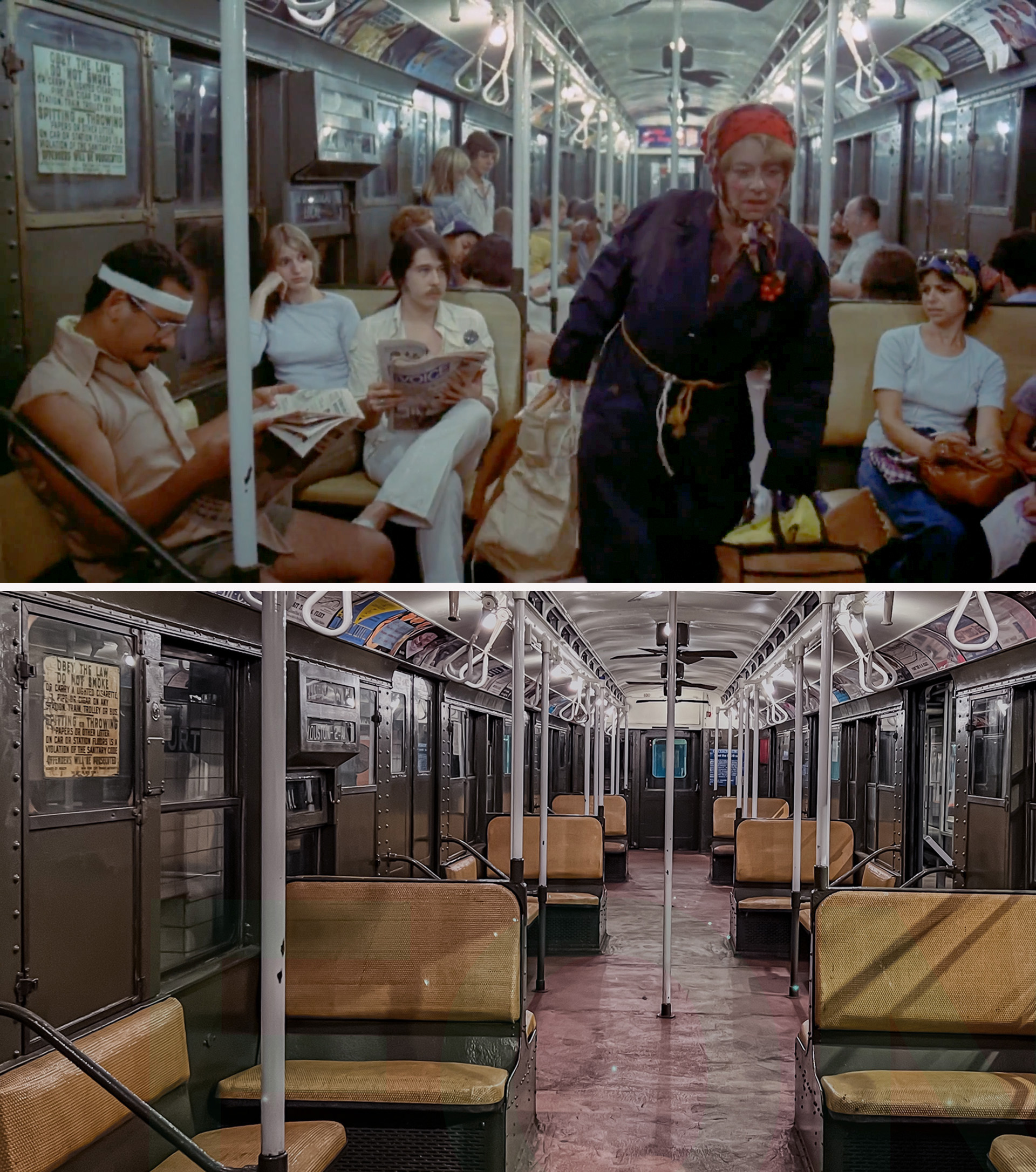
All the subway interiors were again shot at the Court Street Station, including the subway car where a bag-lady (played by cameraman Paul Glickman’s mother) discovers a headless corpse. Even though it wasn’t a museum at the time, since the station was often rented out as a filming location, I imagine multiple subway cars were on hand for the productions.
After studying the fixtures and layout of the car used in the movie, I determined it was the R1 type, which was manufactured between 1930 and 1931 for the first Independent Subway System (IND).
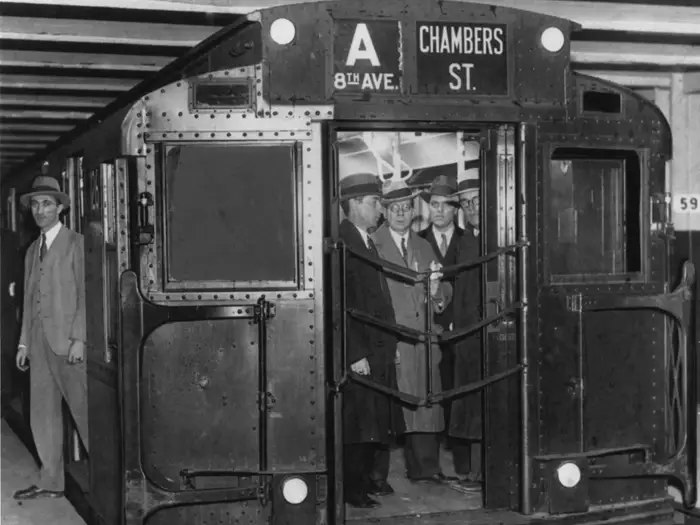
The R1 100 is the car on display in the Transit Museum today, and I can only assume it’s the same car used in the movie, but I haven’t been able to definitely confirm it.
Basketball Rumble
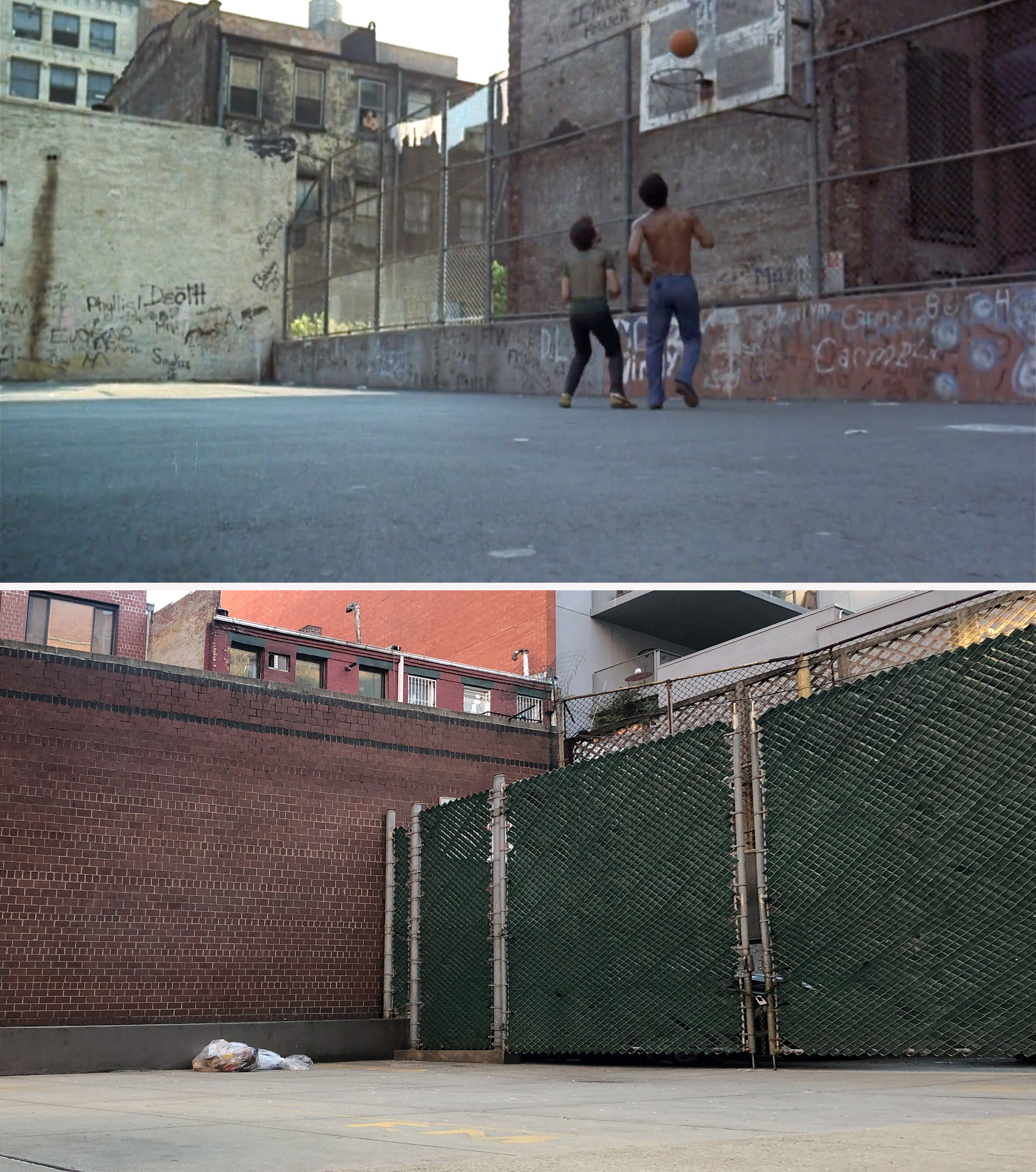
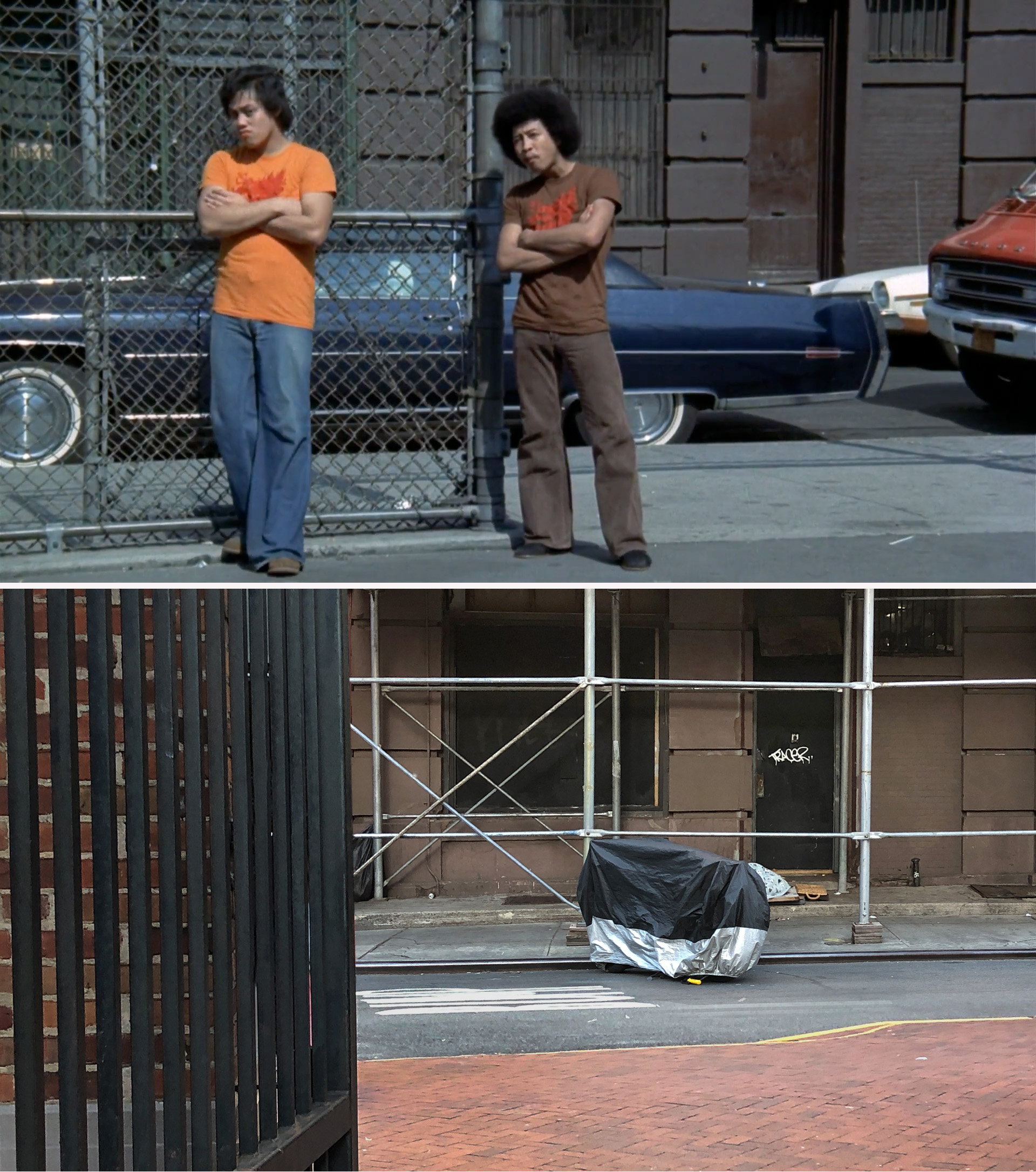
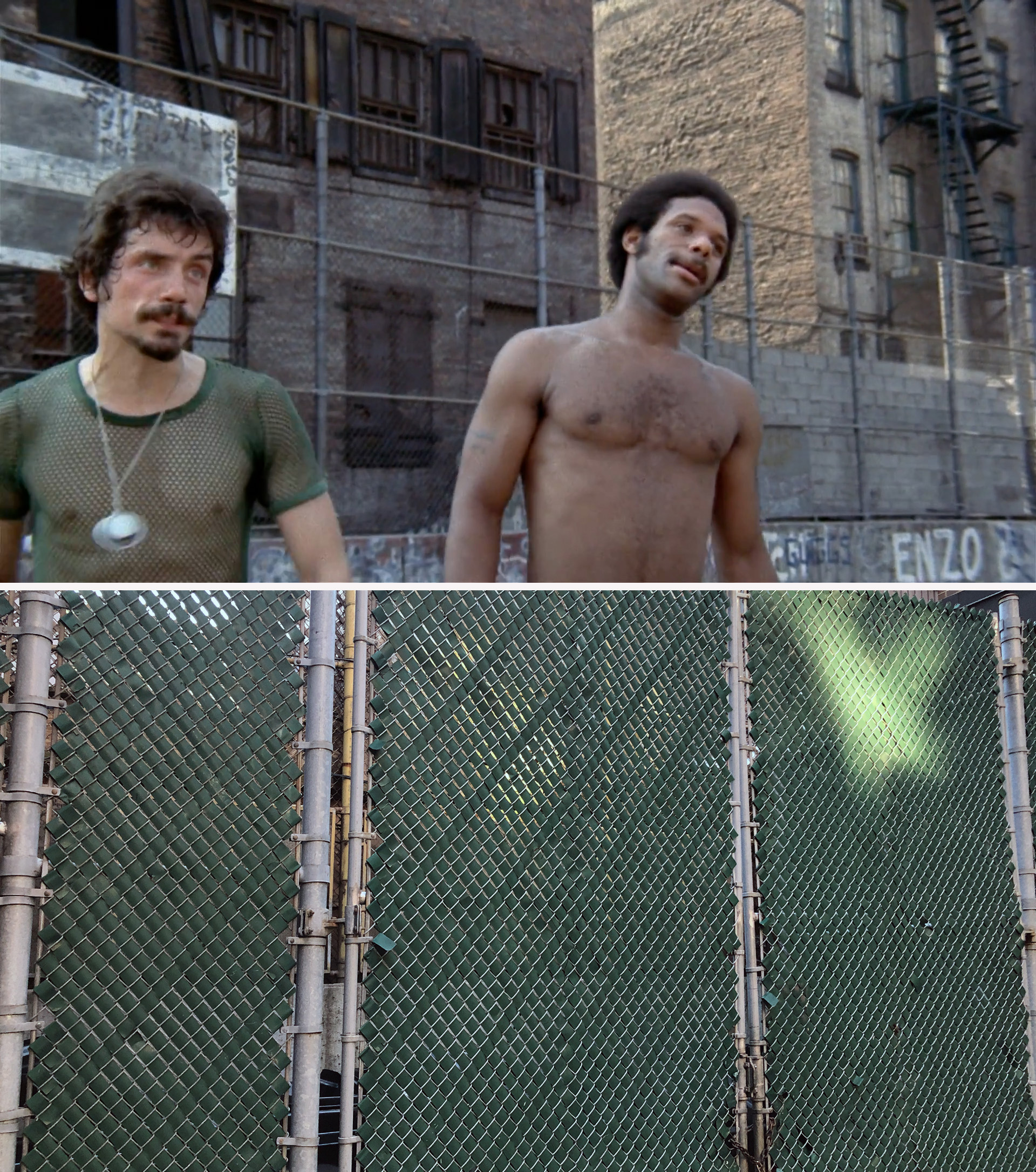
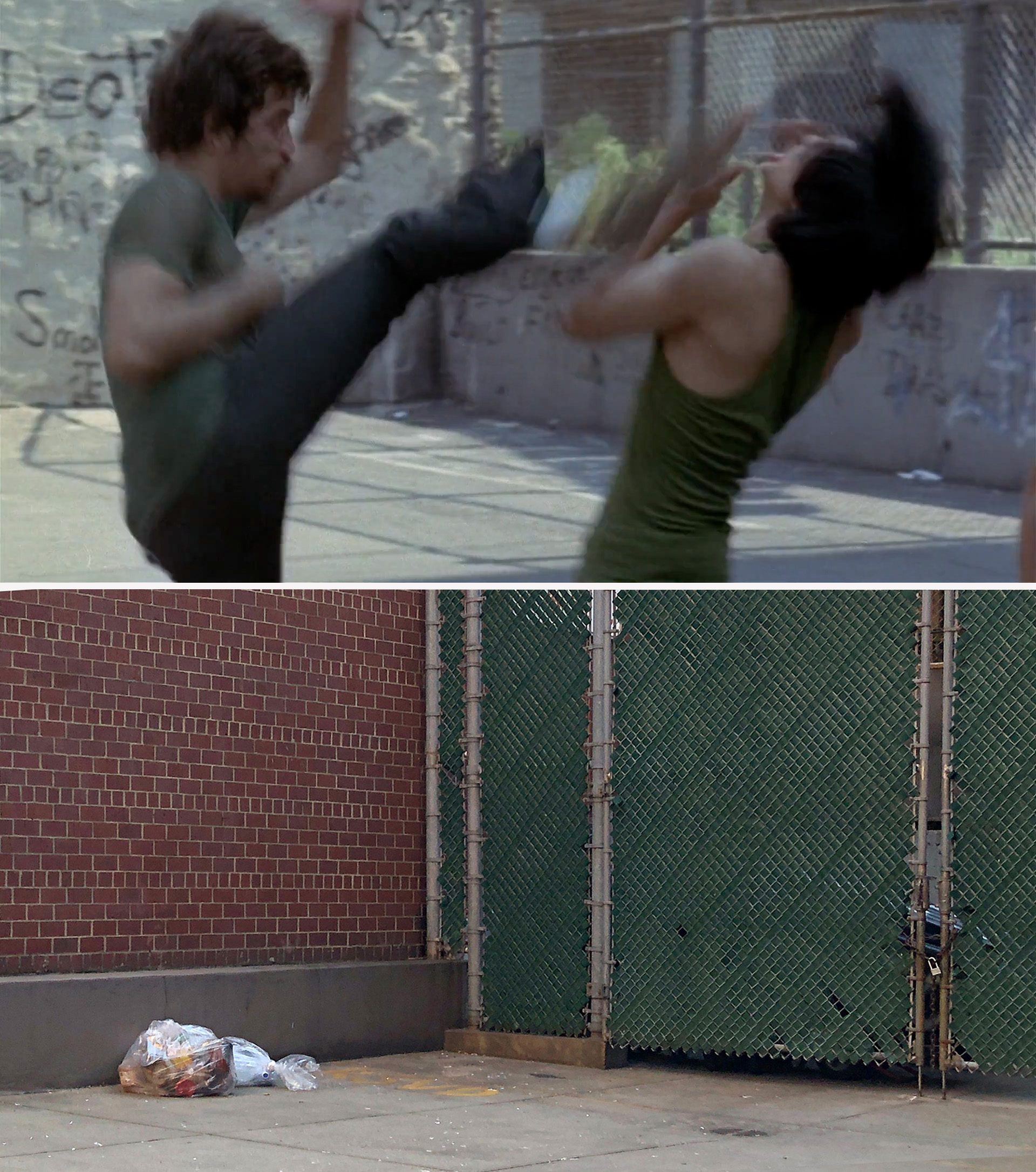
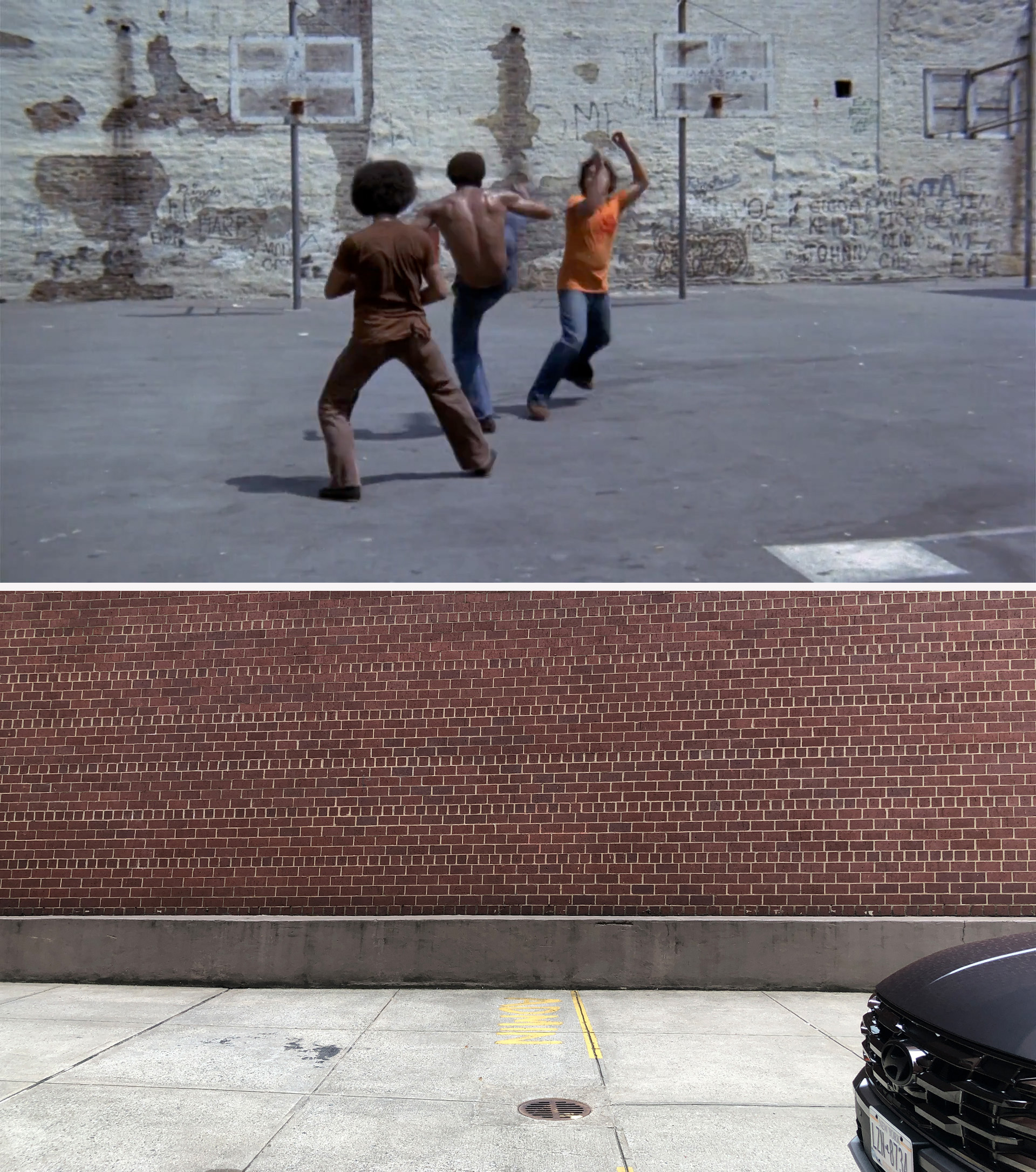
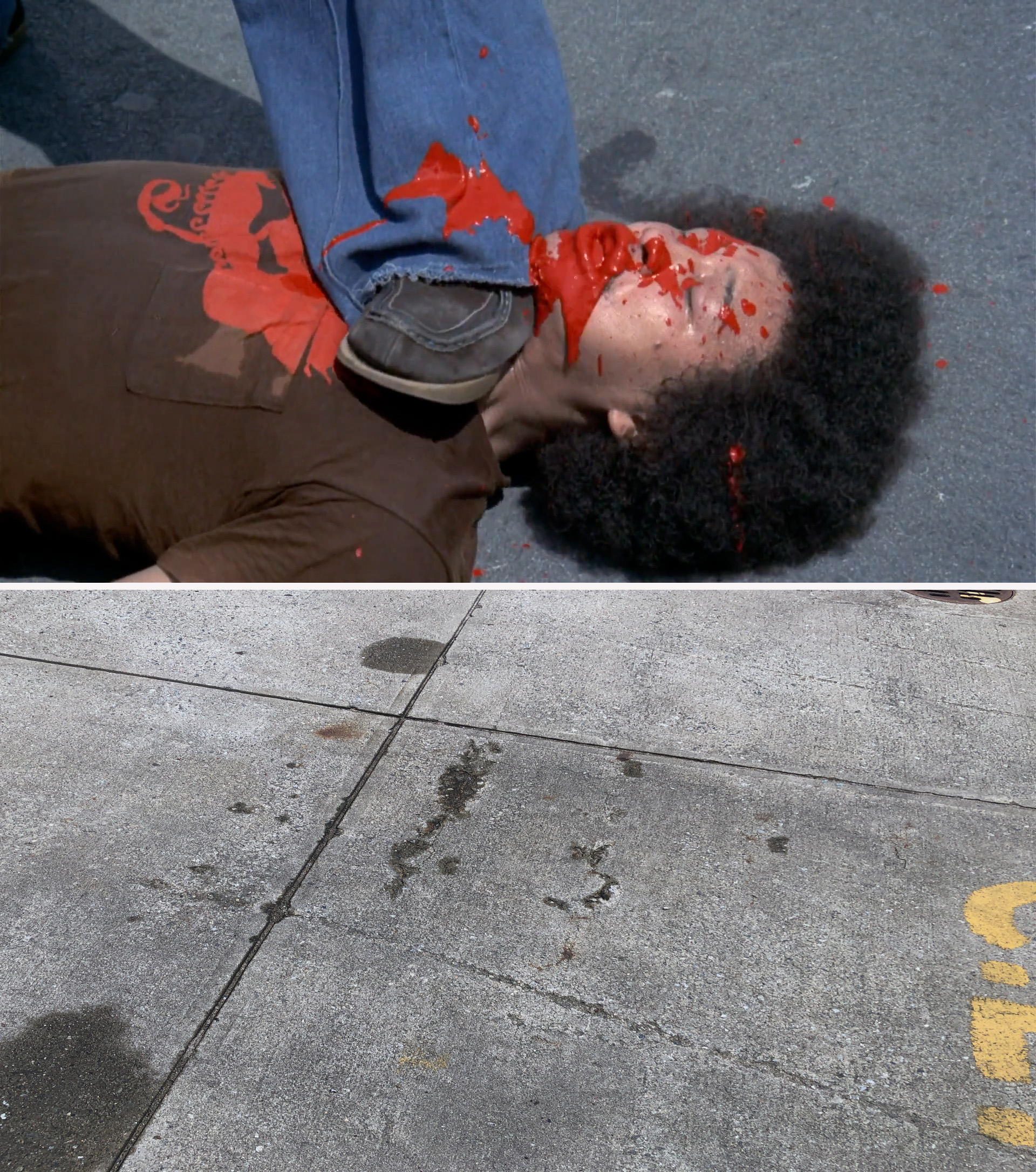
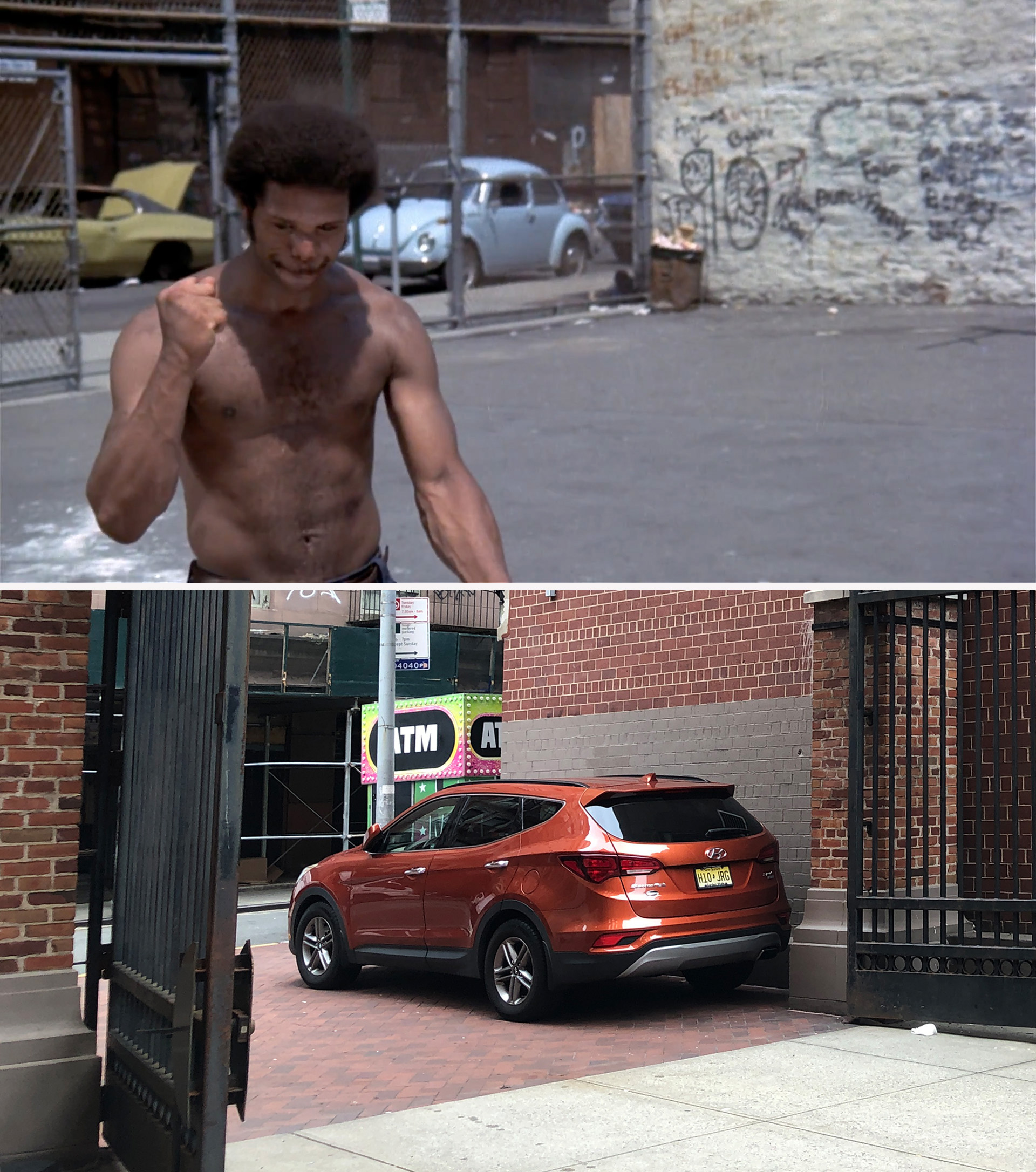
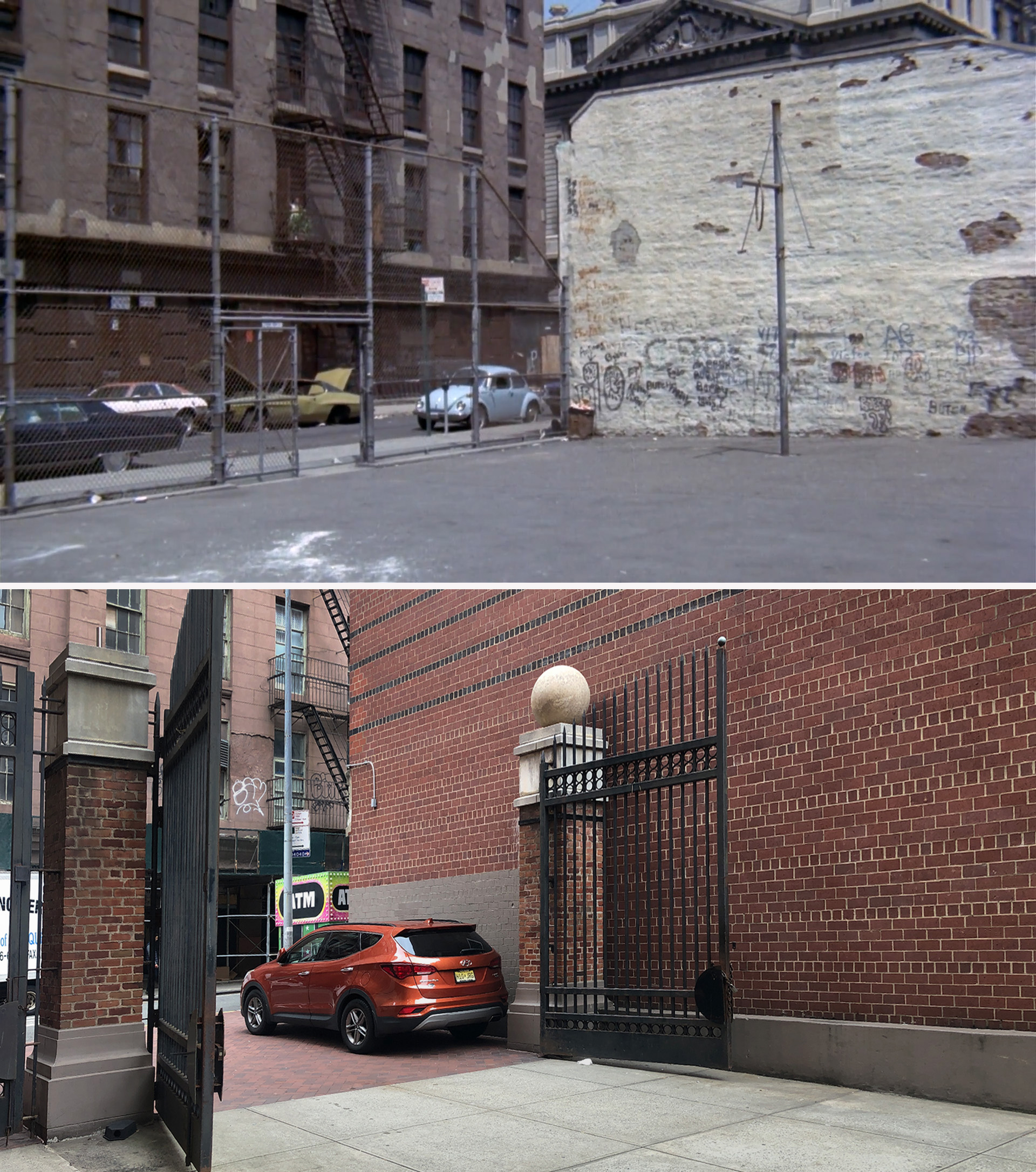
This seemed like a nearly impossible location to find since I couldn’t really see any distinguishing landmarks other than a generic basketball court and the backs of some tenement buildings. I also suspected that the court was long gone since it looked more like a temporary, DIY playground on an open lot.
I was just about to reach out to Blakeslee to see if he could lend a hand when I noticed a possible clue in the very last wide shot of the two drug dealers running away. Just above the foreground building, I could see the top of another building which had the makings of a government building of some sort.
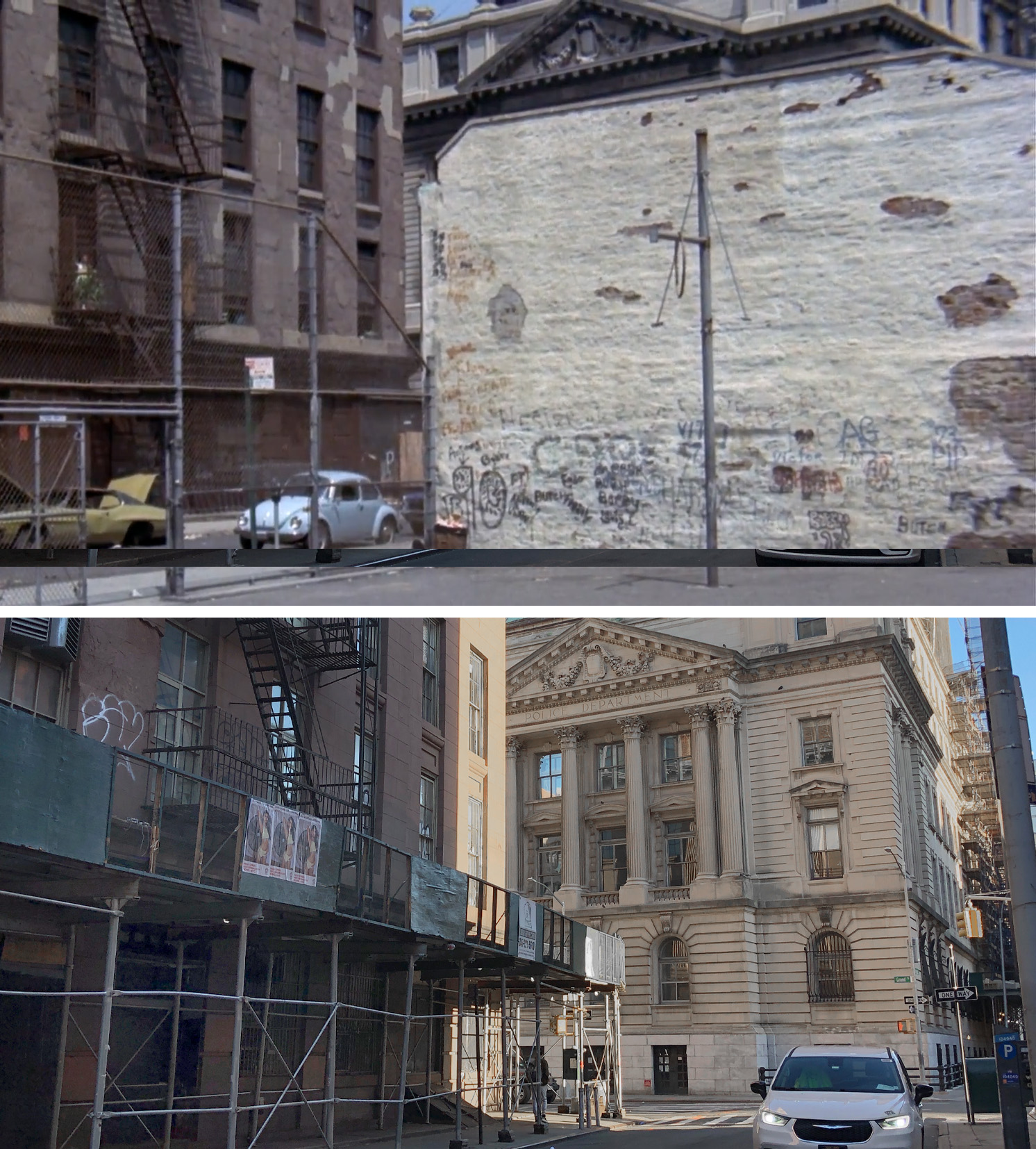
Knowing they mostly filmed in Chinatown and the East Village, I assembled a list in my head of any courthouses, police stations or administrative buildings in those areas. Before too long, my mind went to the former Police Headquarters on Centre Street which has majestic columns and a rather ornate roofline. (It’s now a luxury residence building, home to numerous celebrity-types, such as Scott Schuman, AKA, the Sartorialist.)
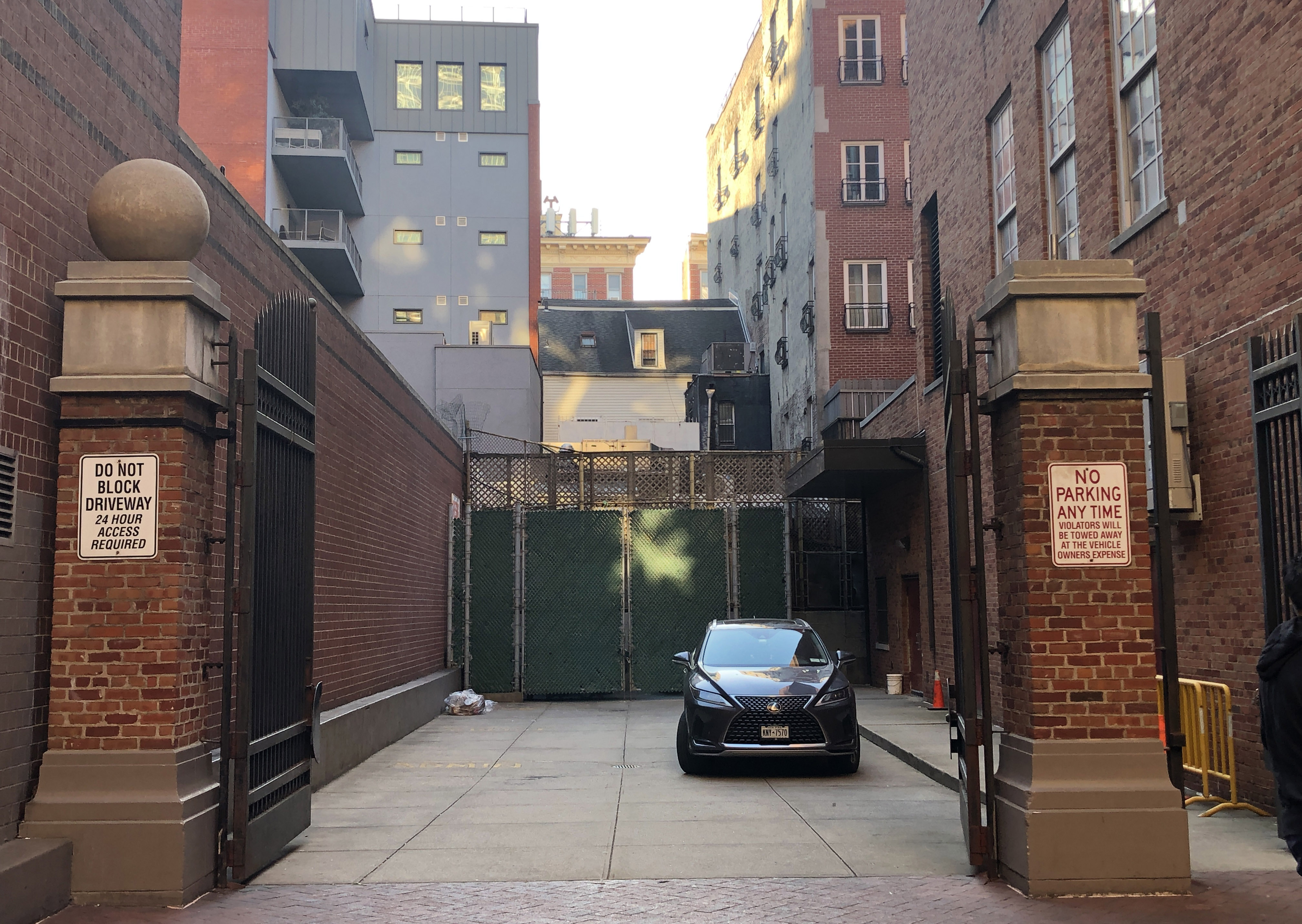
I was shocked that there was still an open space in that general area on Baxter, although, it’s much narrower now. The small outdoor space is wedged between a public elementary school and a modern apartment building, basically serving as a service entrance to the school.
The End of Rodan
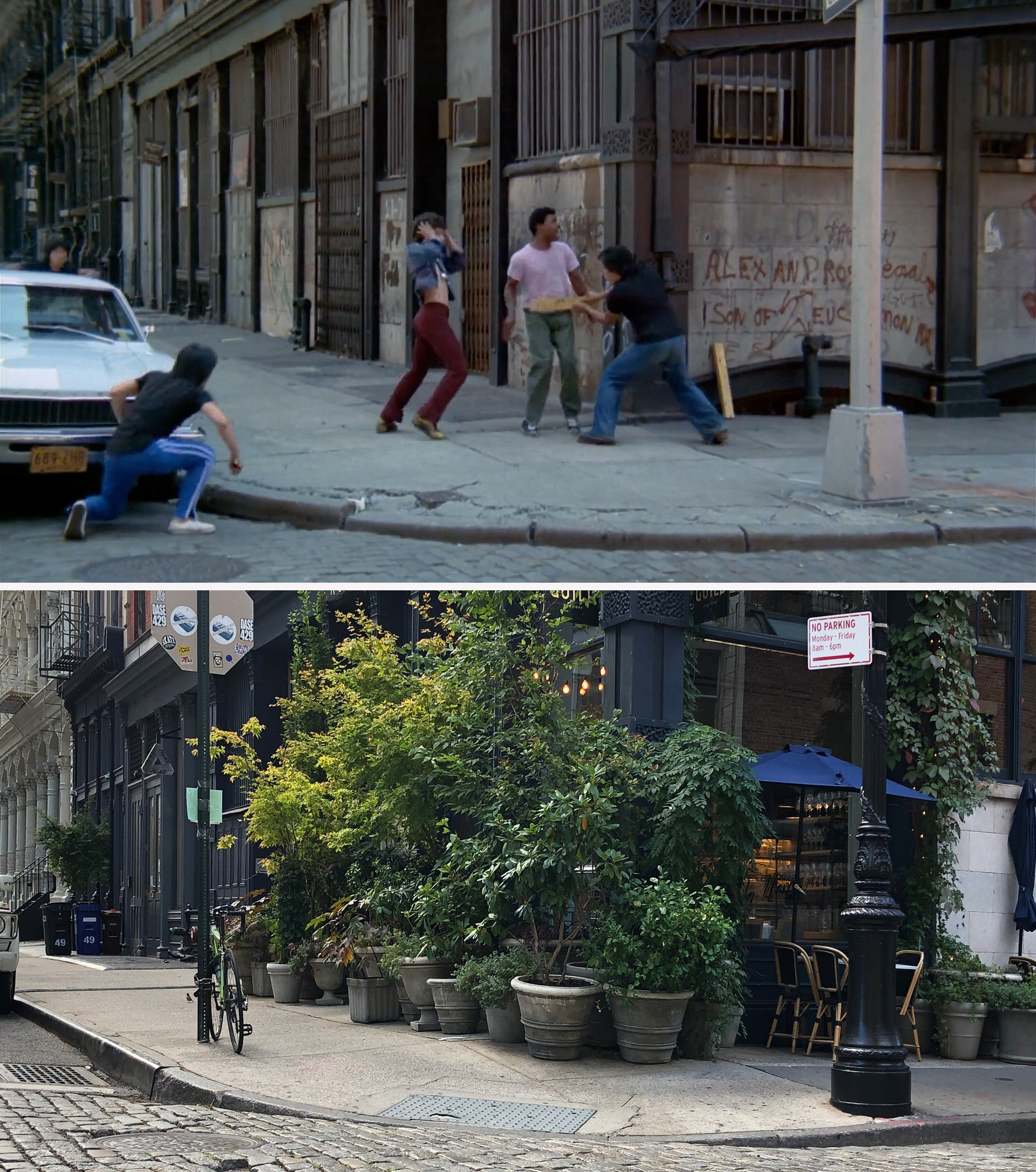
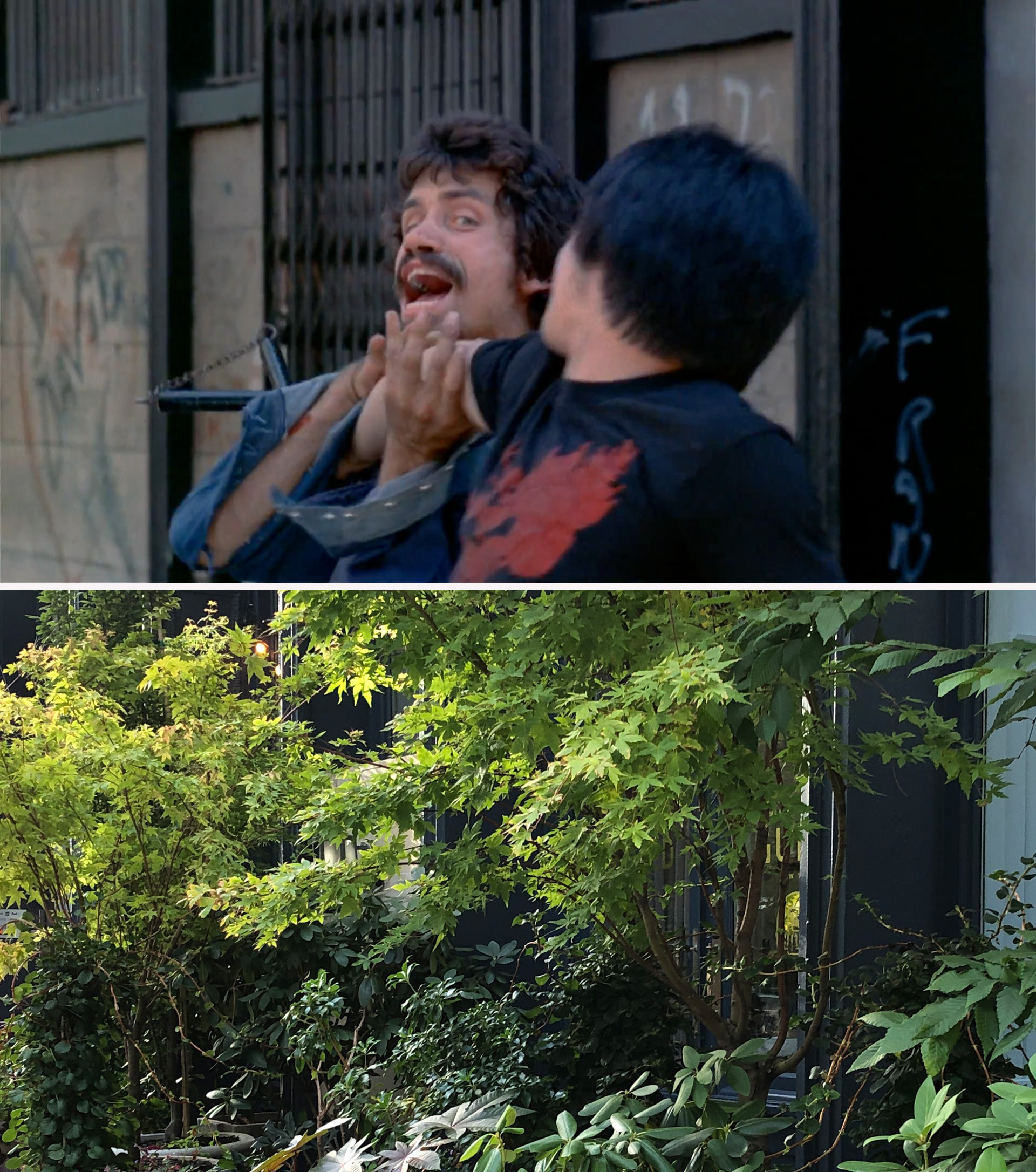
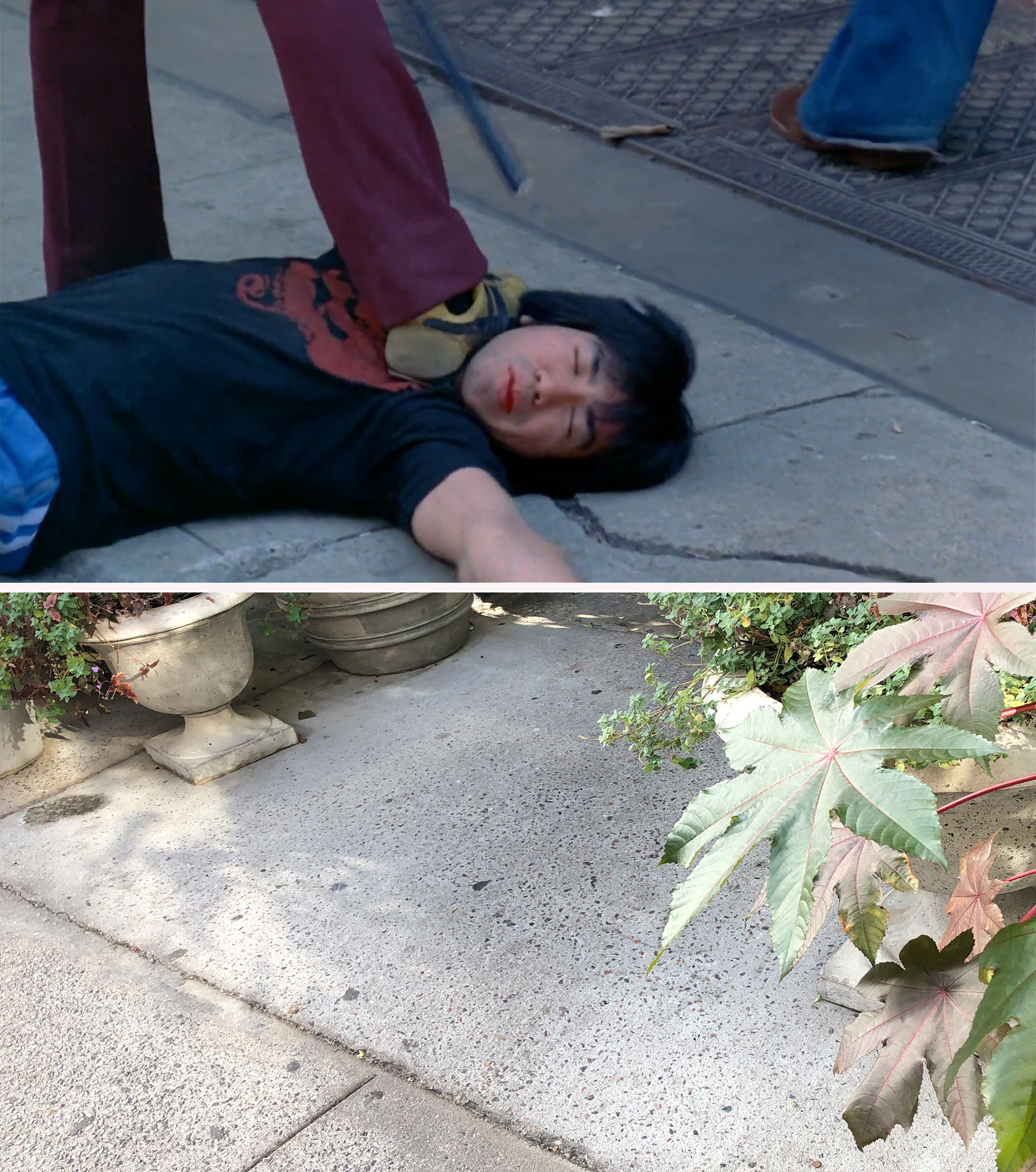
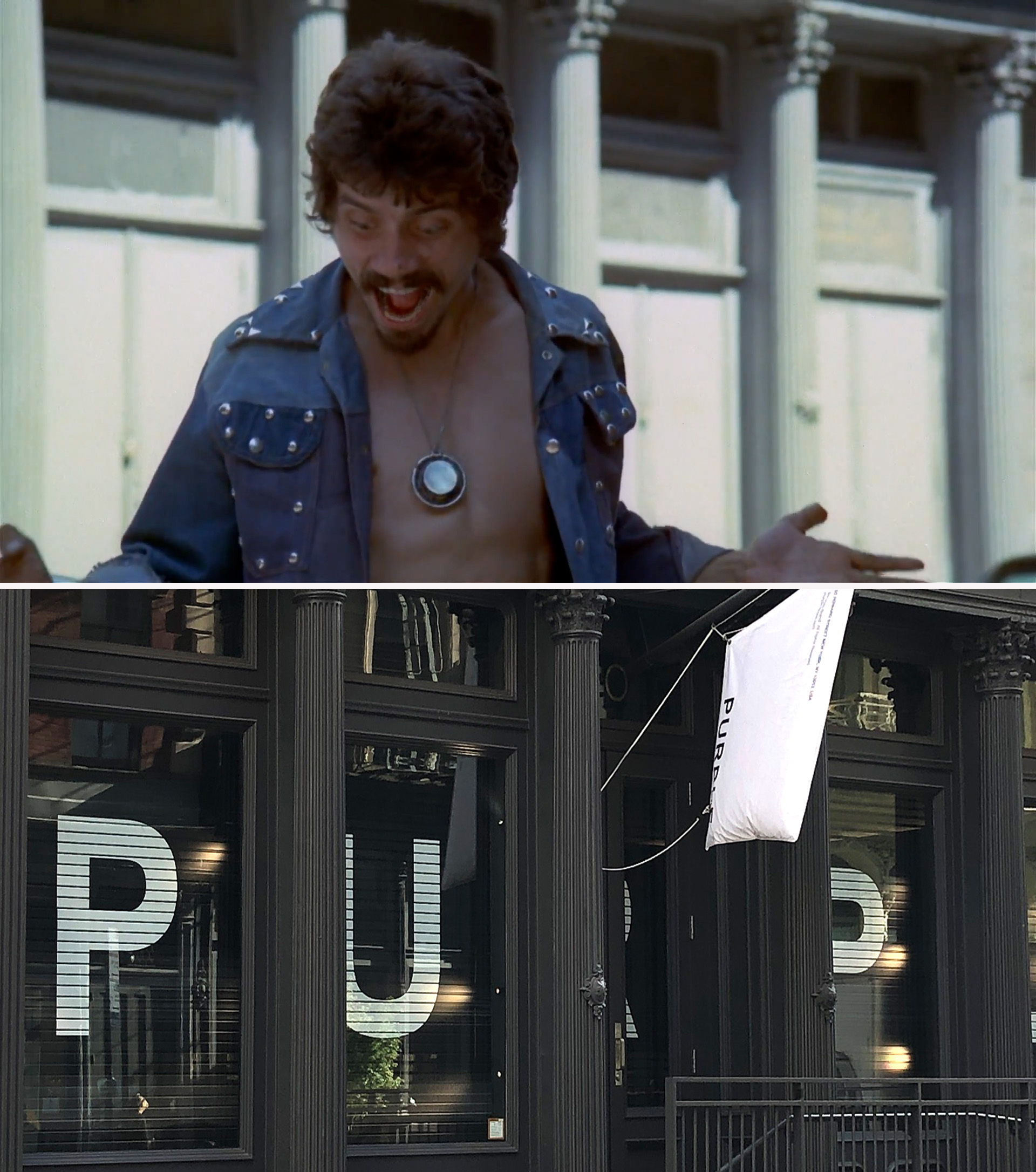
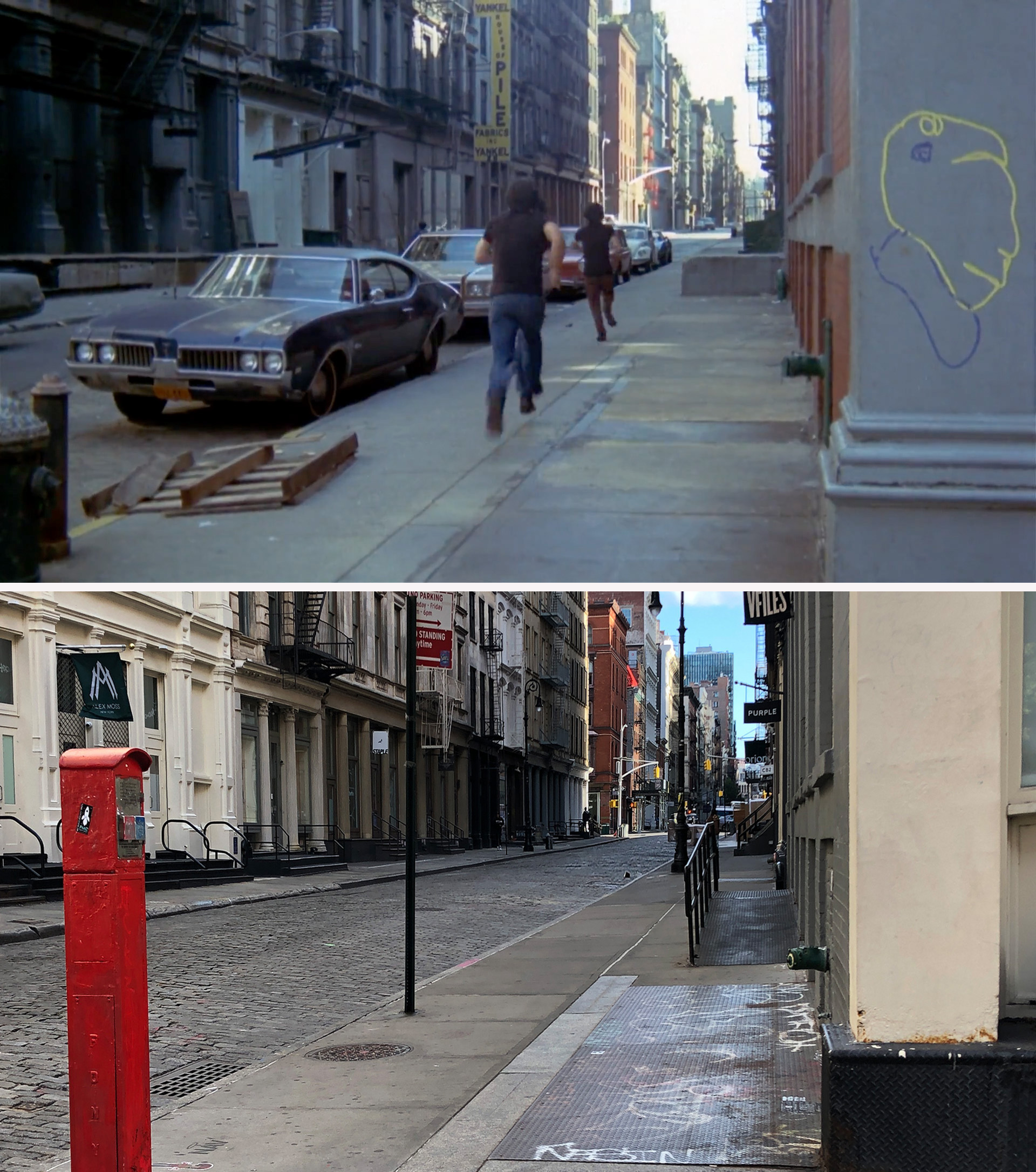
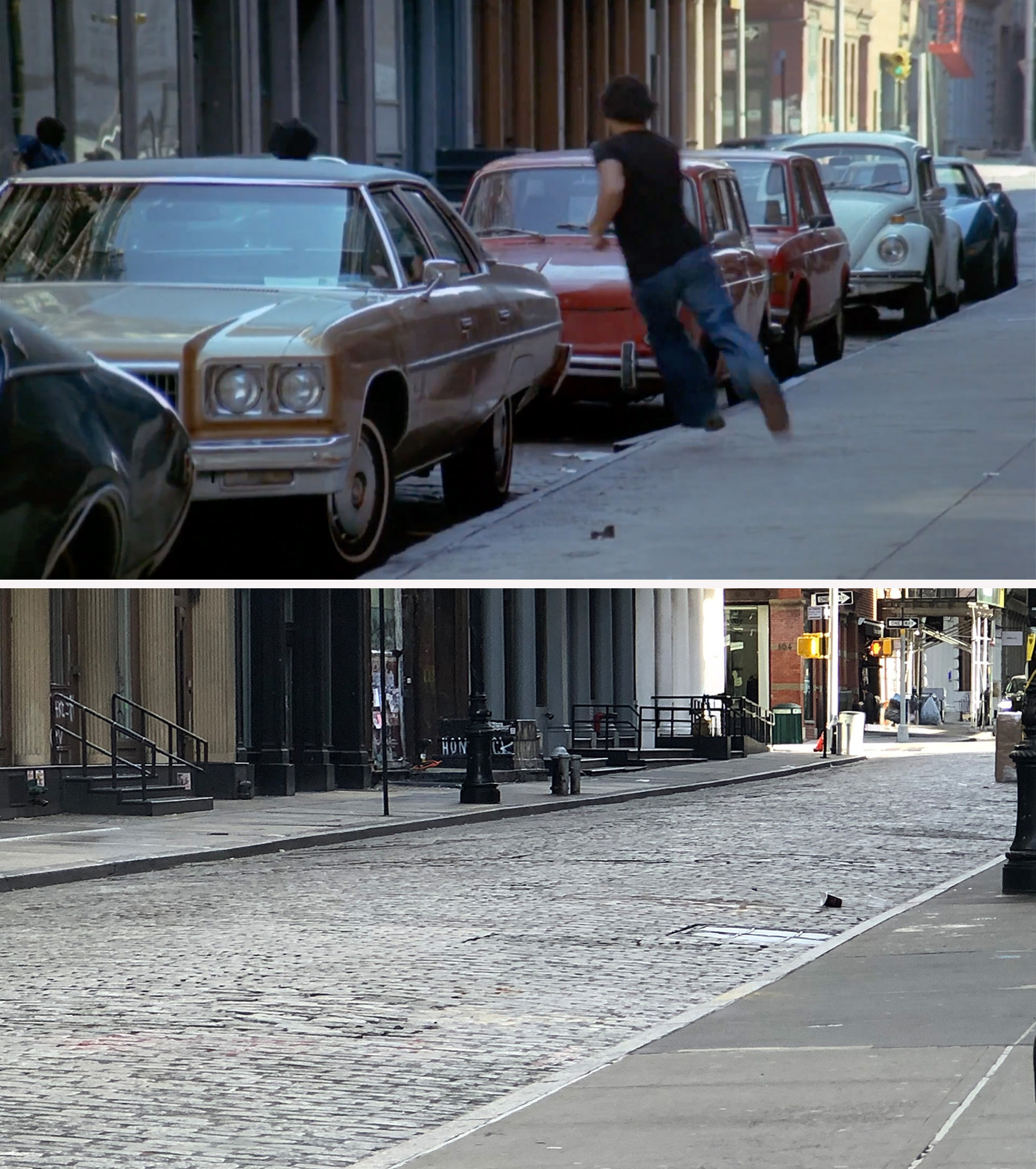
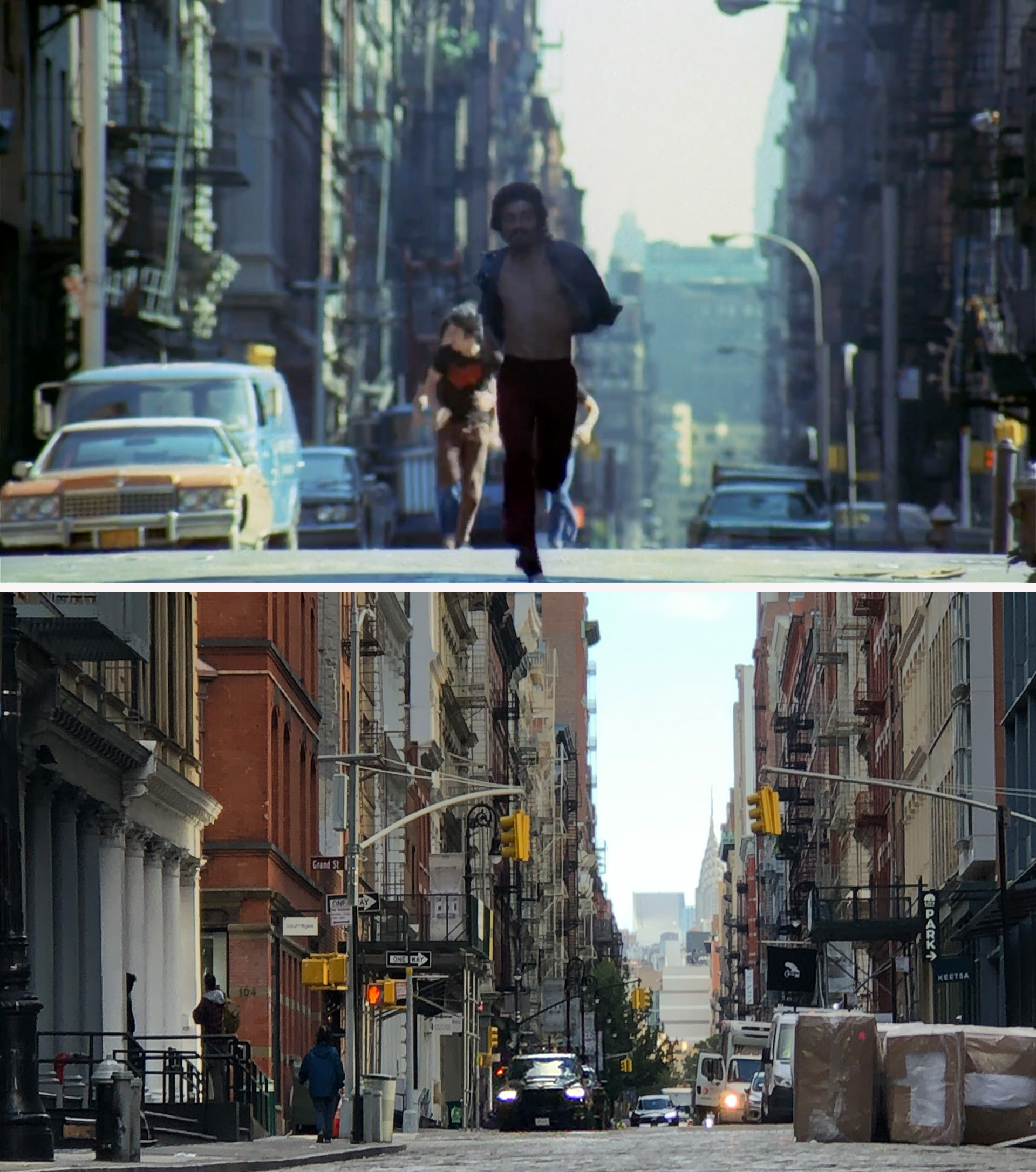
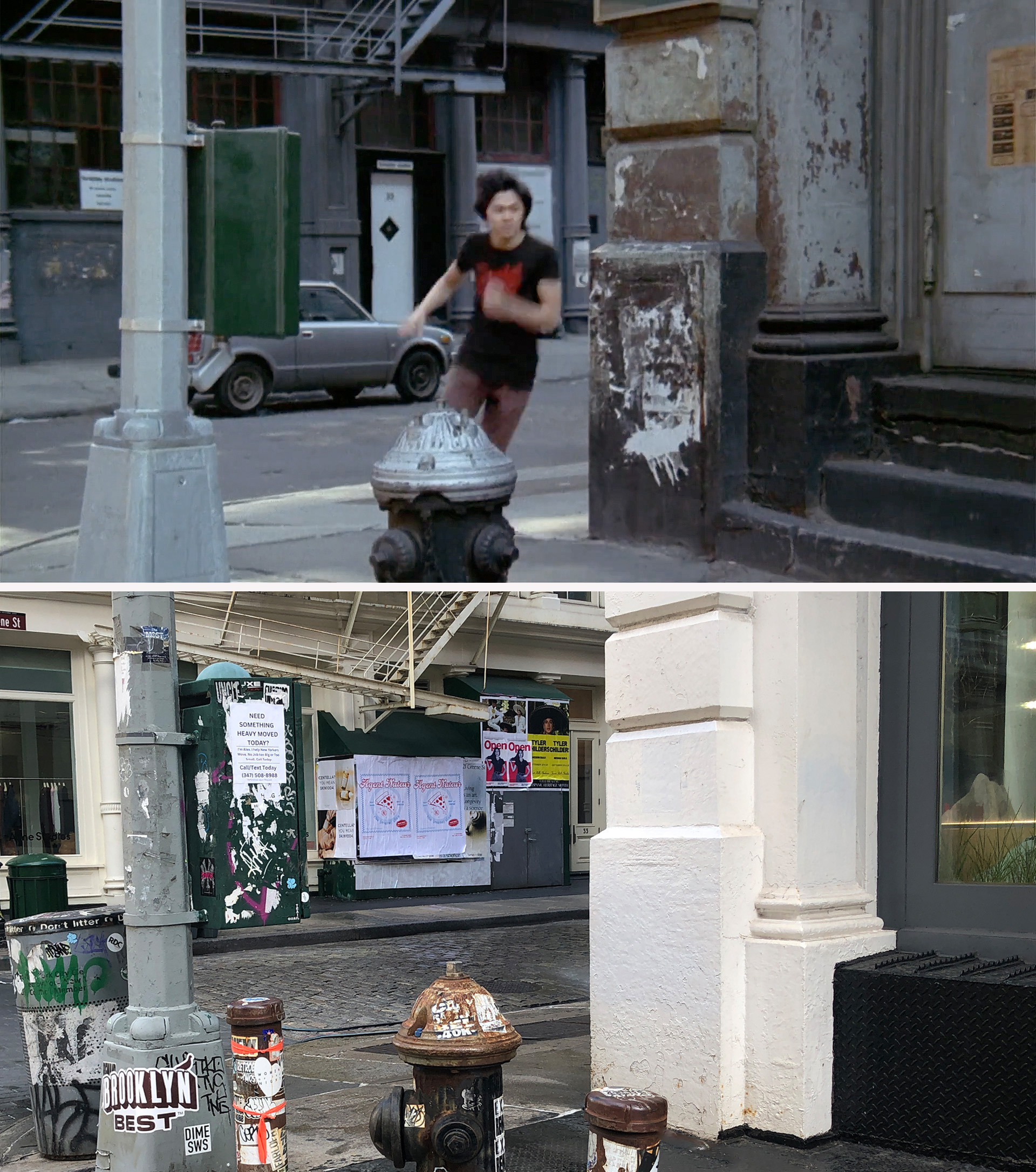
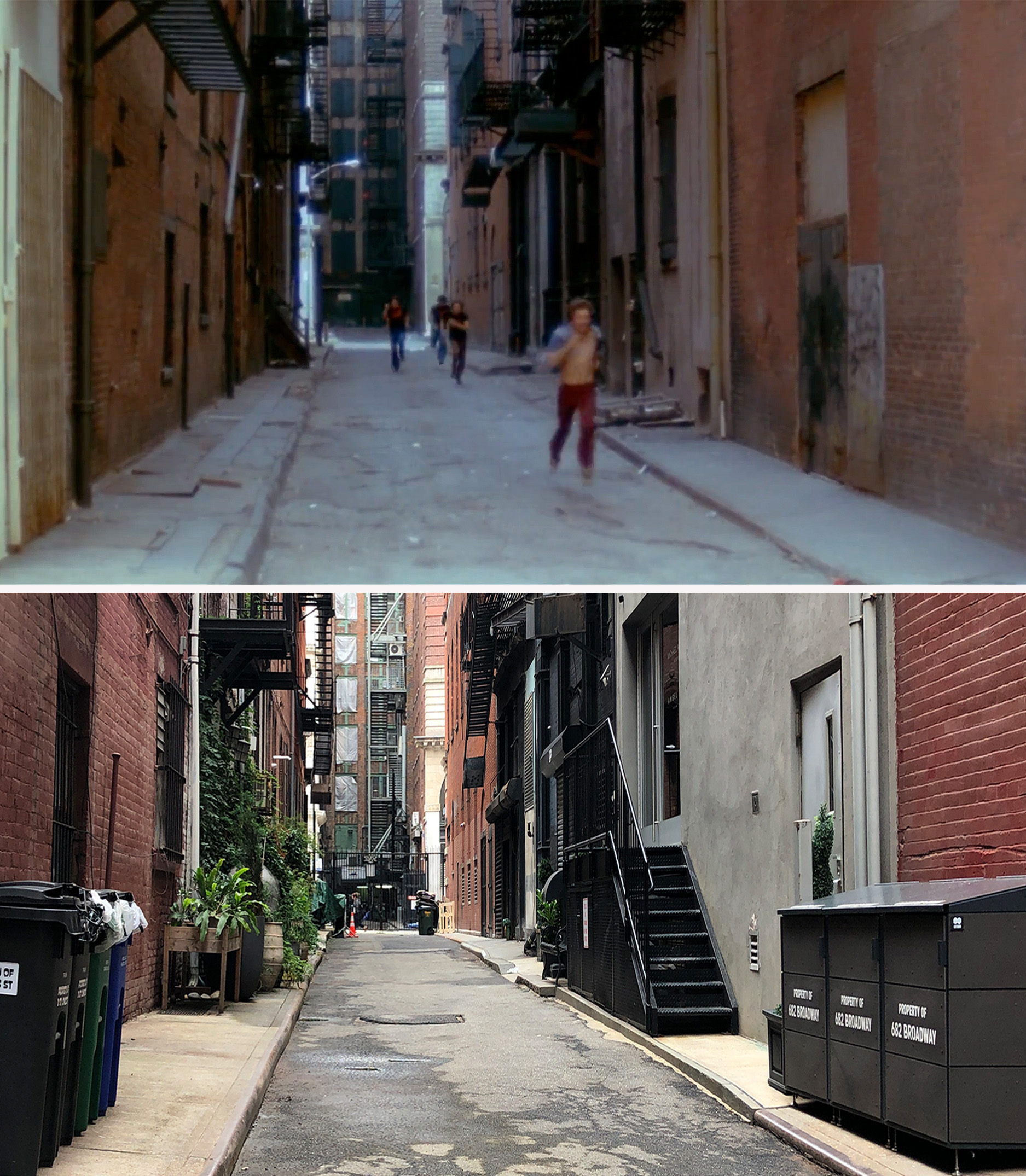
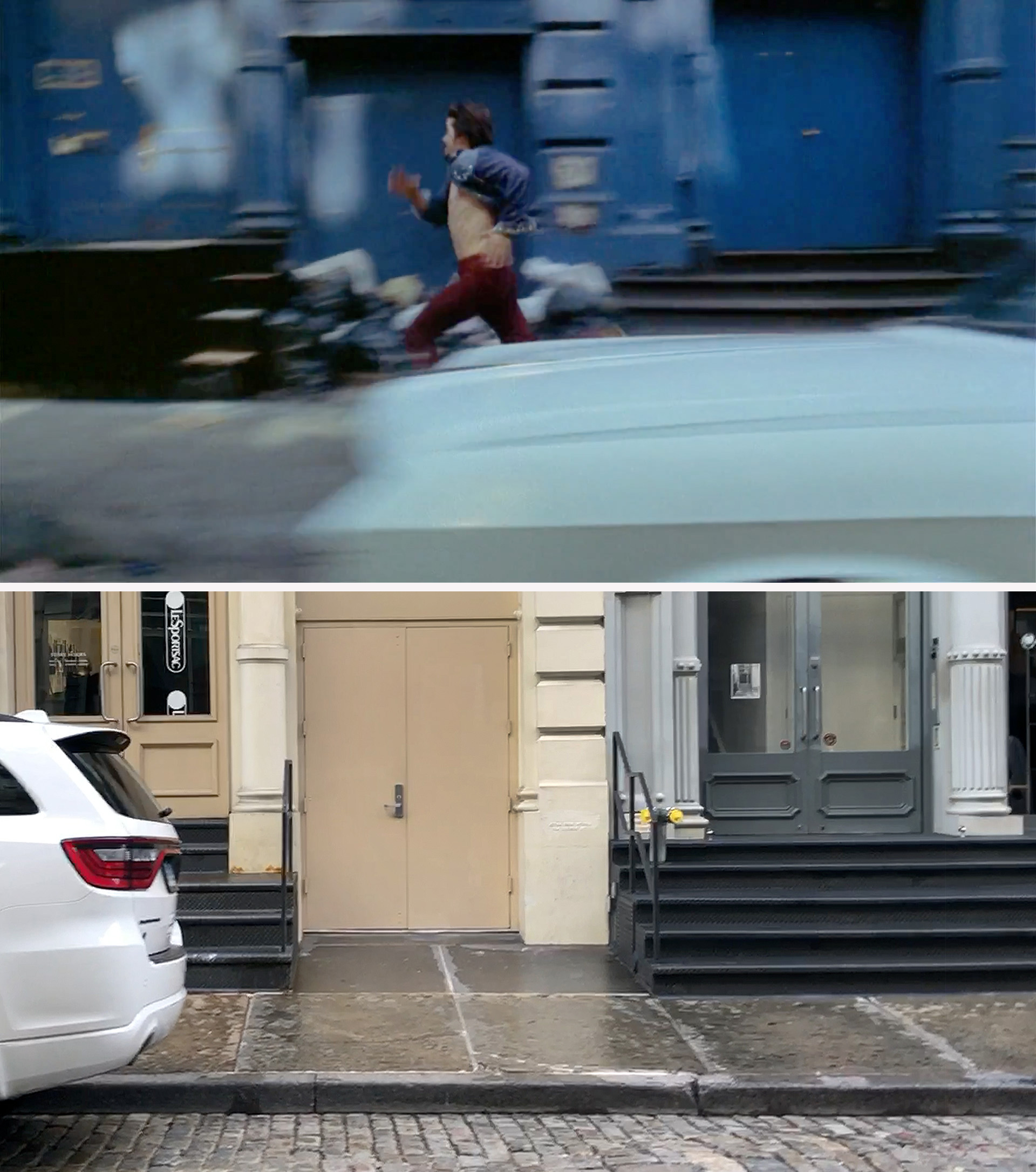
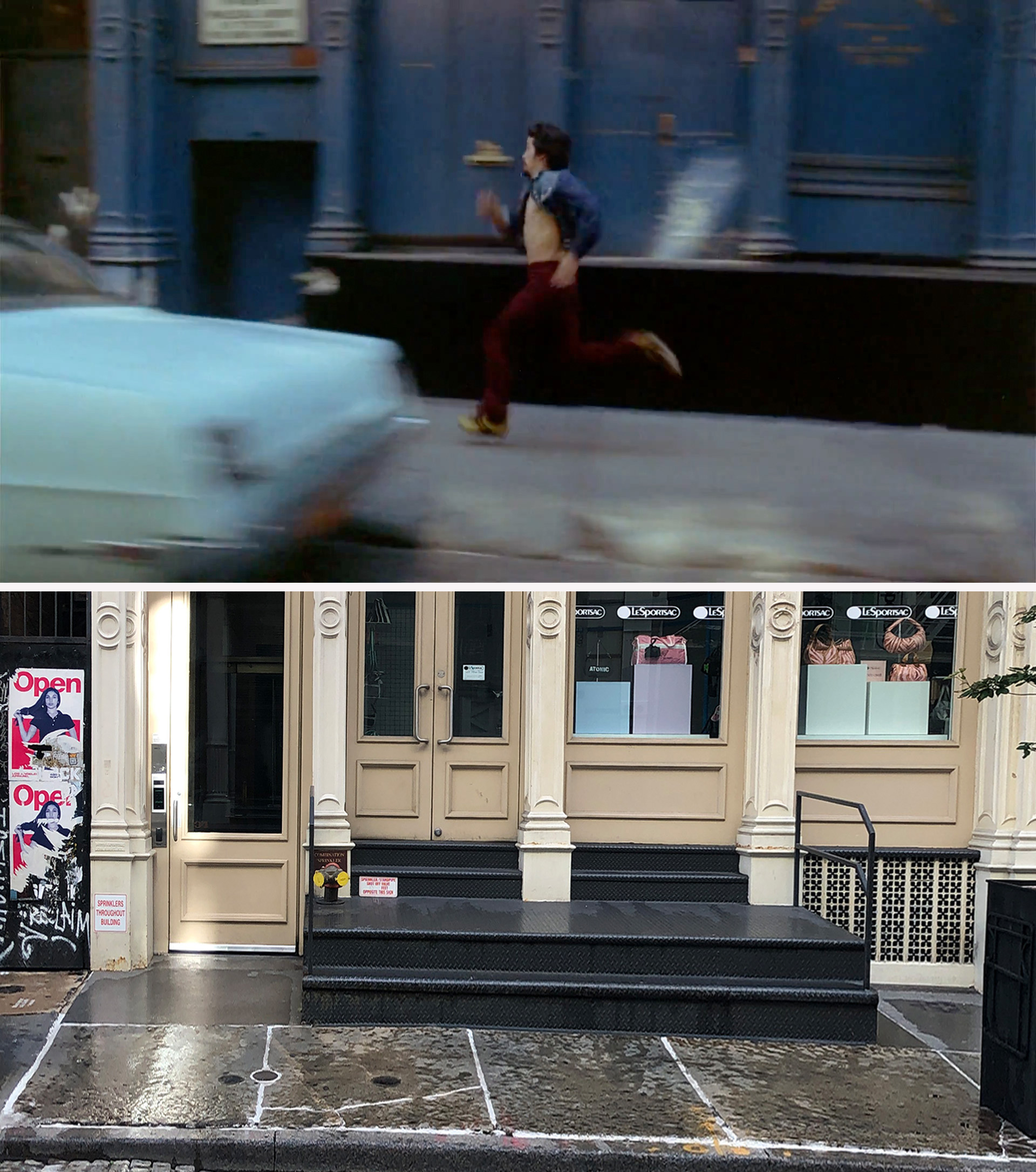
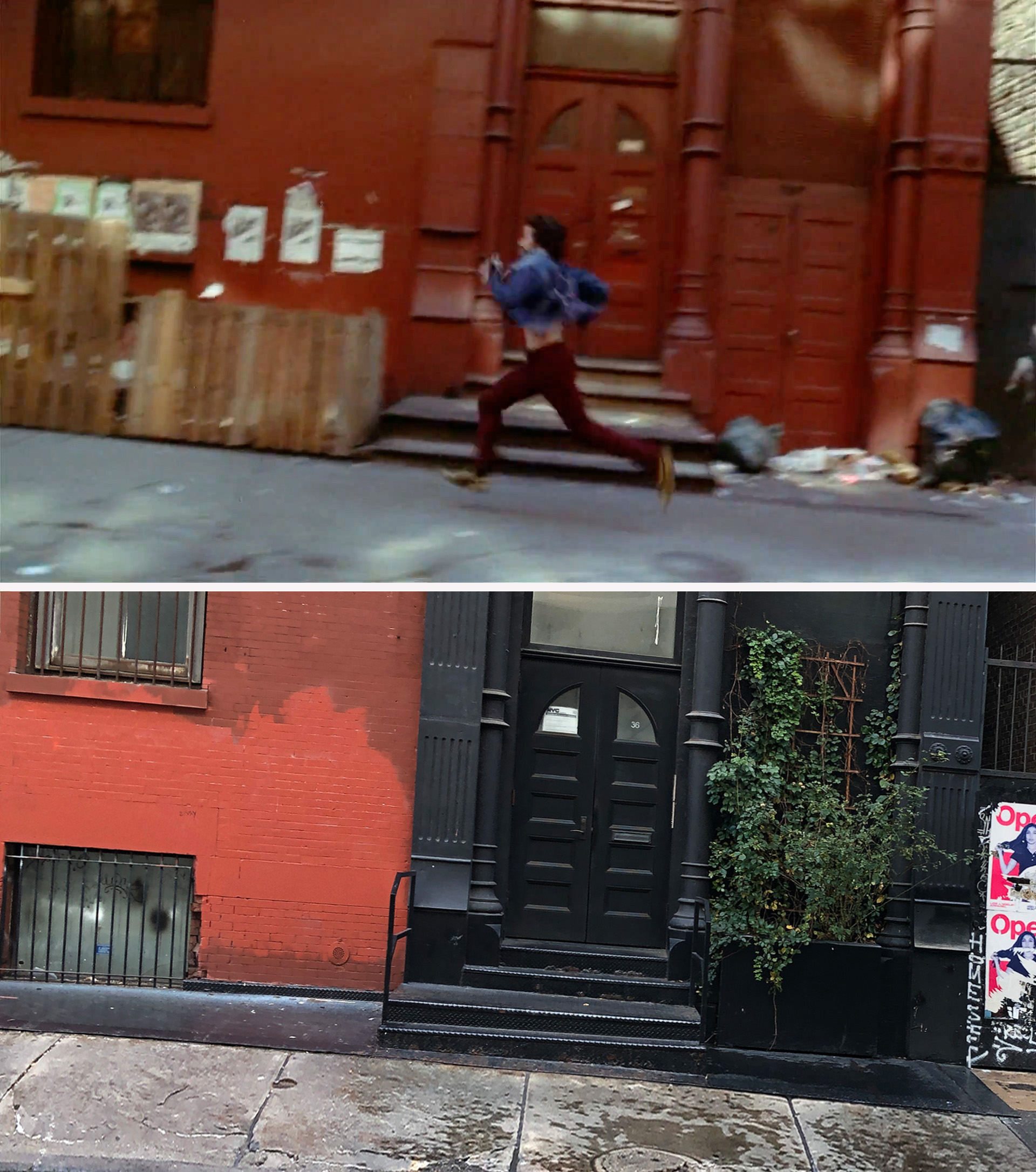
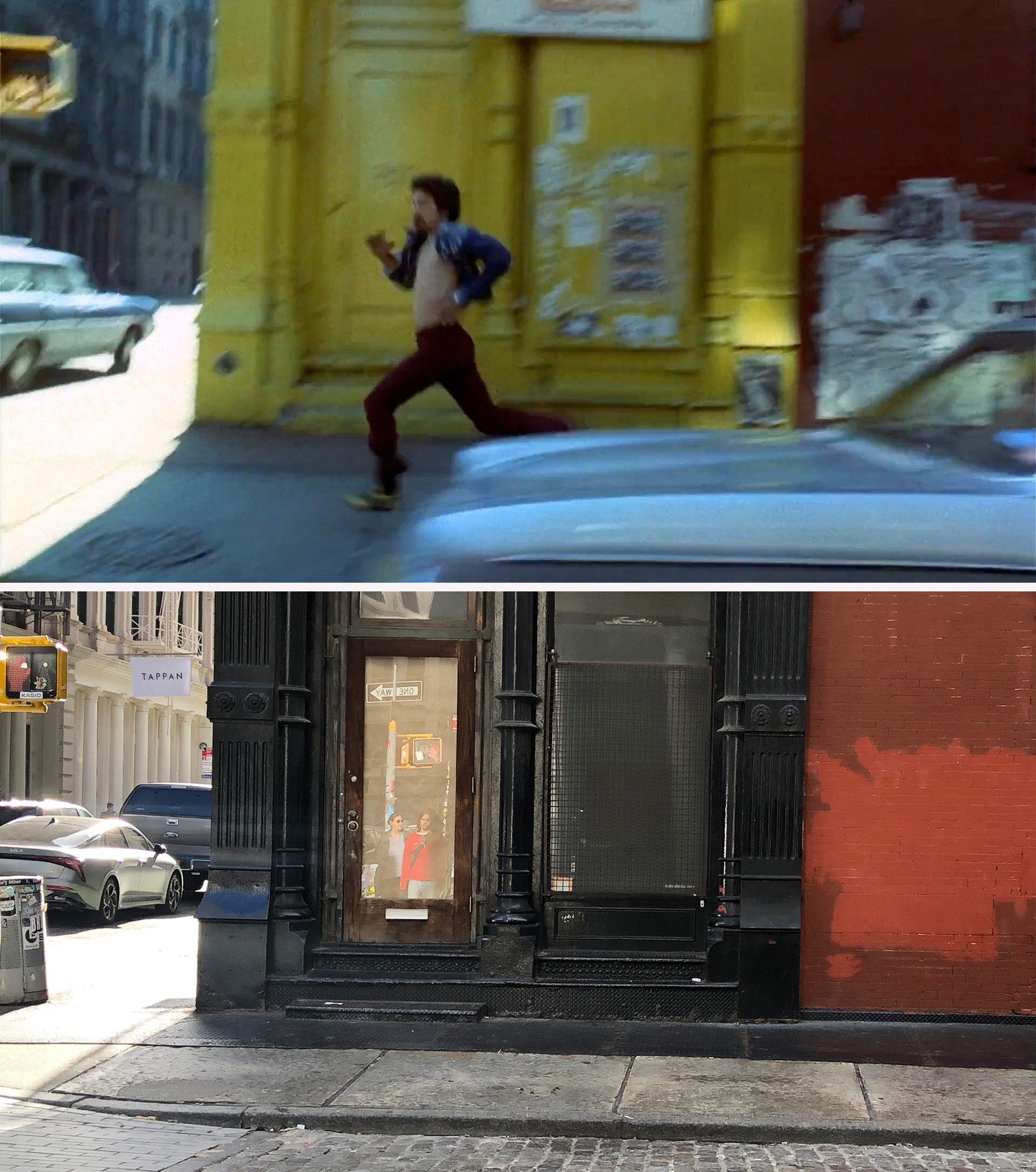
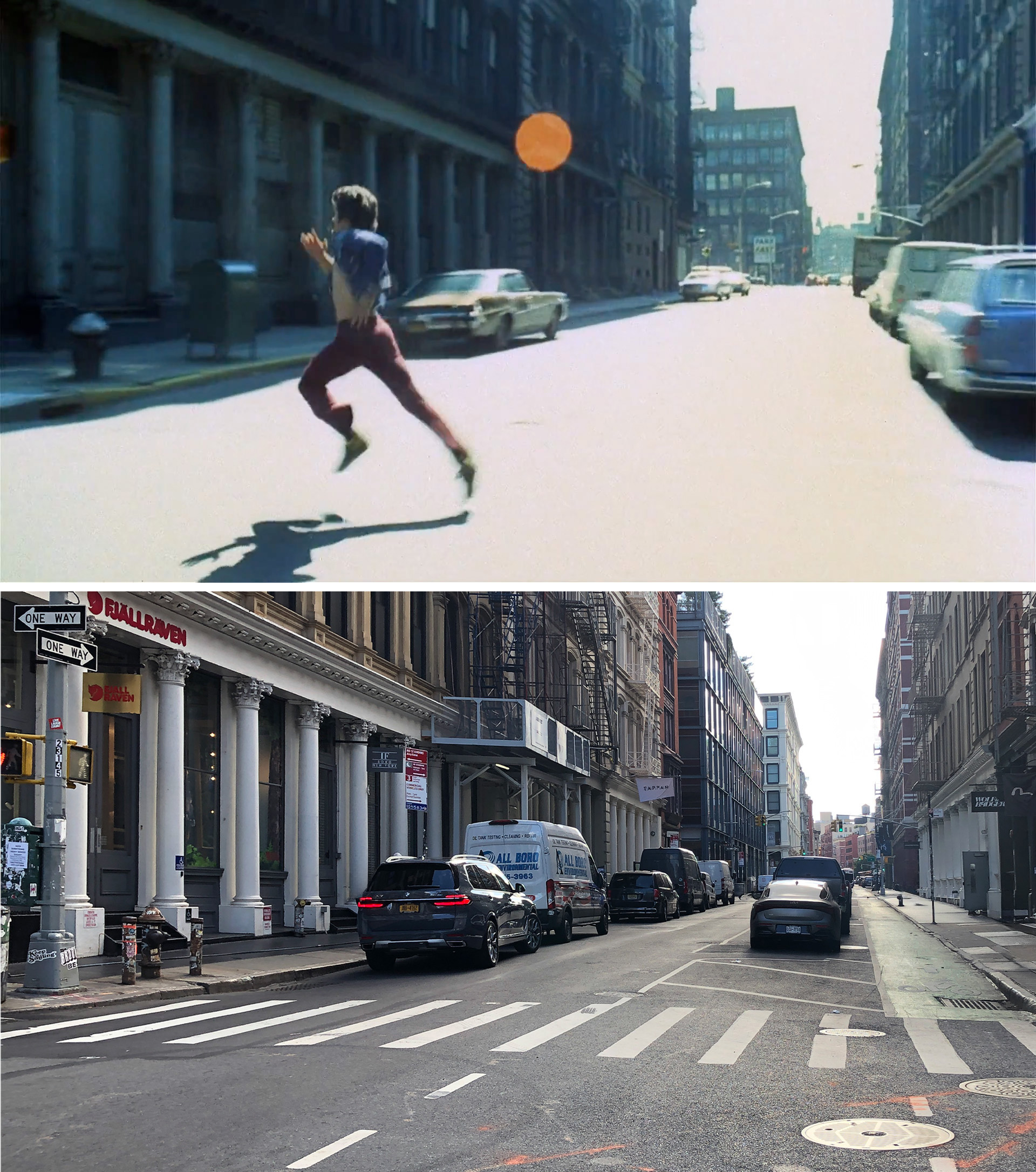
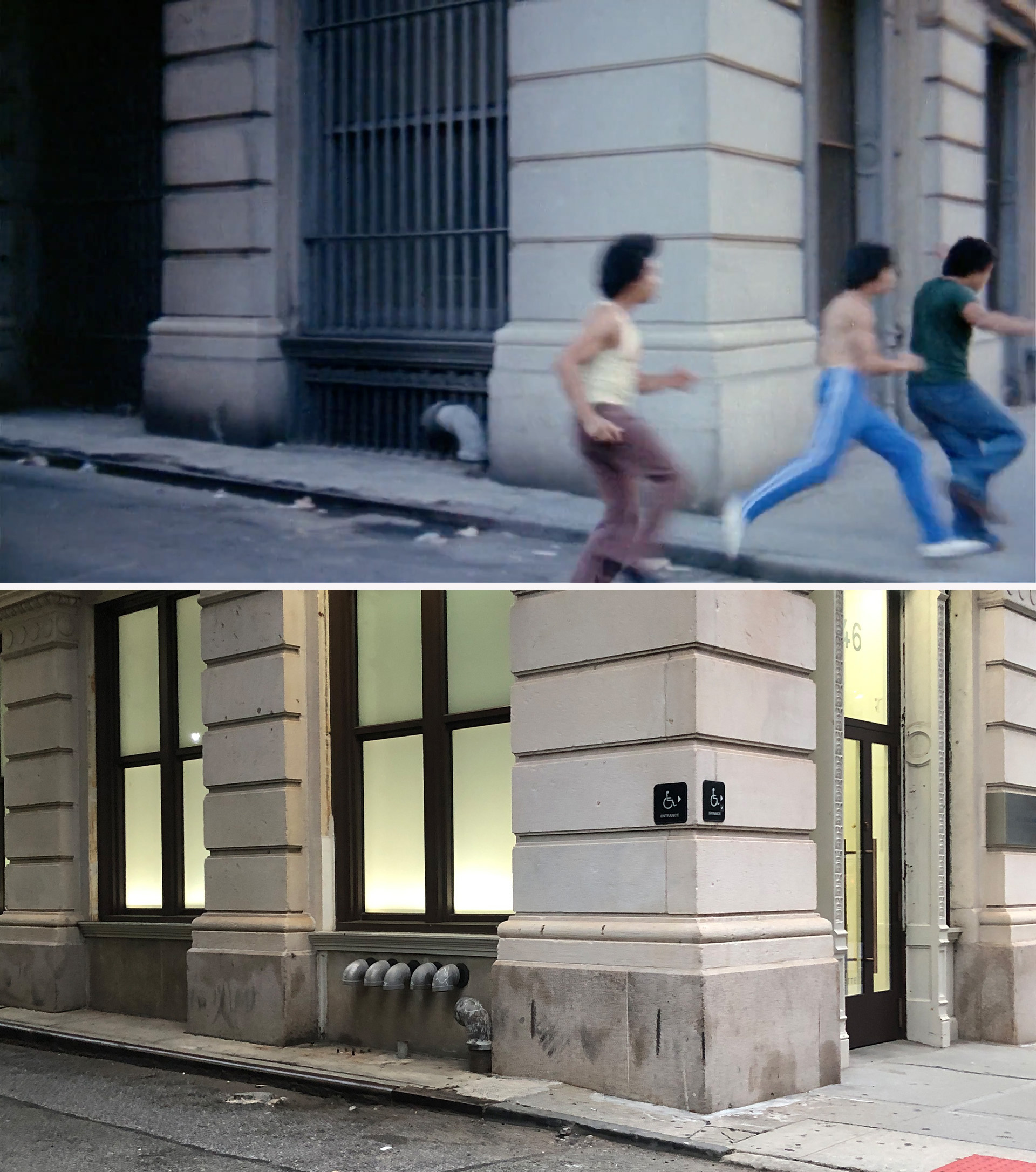
Finding the locations of this fight and chase sequence wasn’t too difficult. Judging by the distinct, cast-iron architecture, it was pretty clear they filmed it on the streets of SoHo. Luckily, the SoHo neighborhood is not too big, so all I had to do was check out the limited vicinity in Google Street View looking for any matching windows or columns, which was a fairly speedy process.
The last tracking shot in this sequence was even easier to find, based off the primary paint jobs done on the building facades. I figured it was probably Greene Street, as I had seen similar color motifs in the 1978 thriller, Eyes of Laura Mars, in a scene also taking place on Greene. And within minutes, I figured out they shot Devil’s Express on Greene, just south of Grand Street.
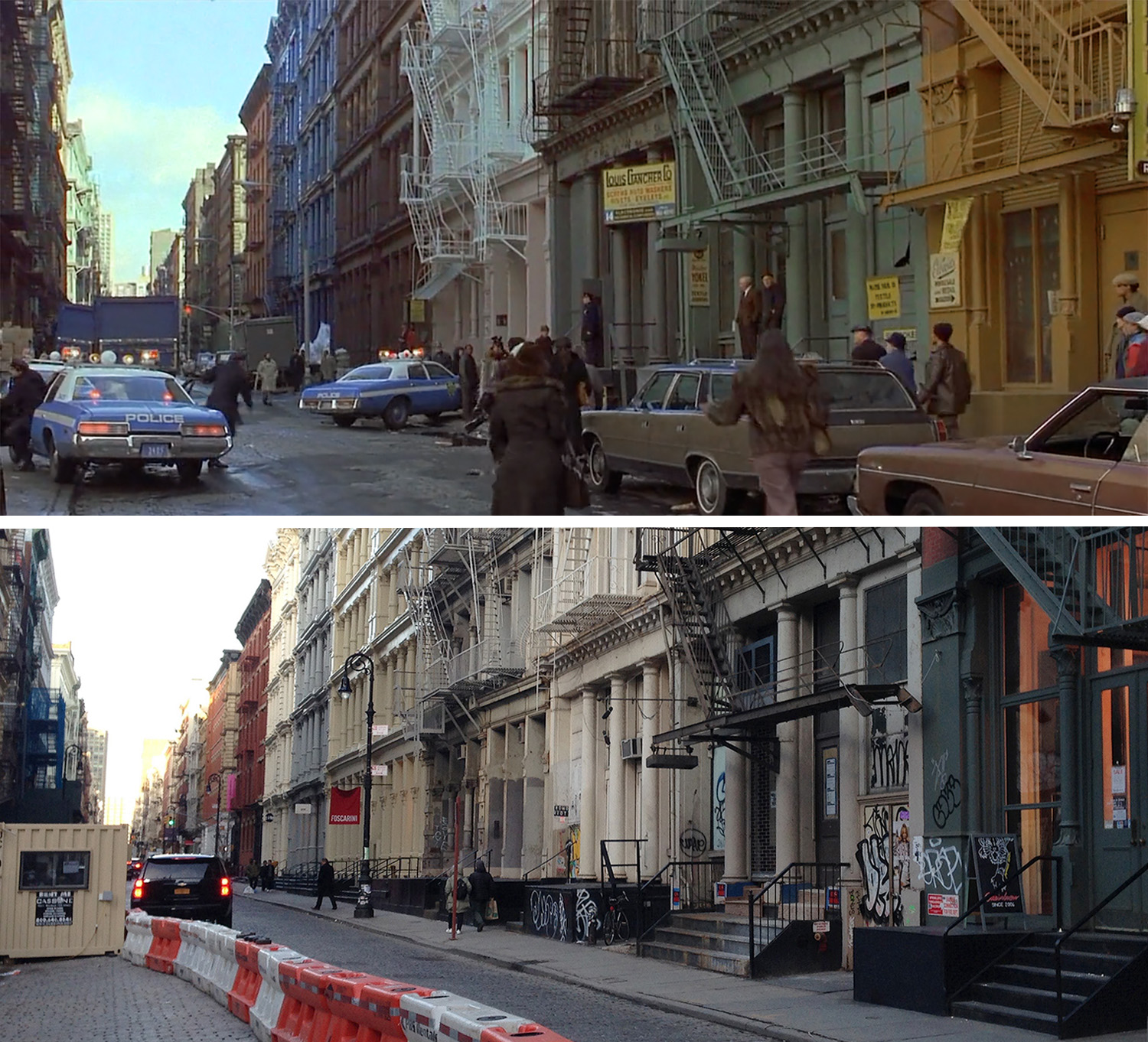
I never have been able to figure out why this street in particular was painted in those bold, bright colors, opposed to more natural tones. The trend didn’t seem to last too long, ending sometime in the eighties. (But if anyone has any background info on this Greene Street phenomenon, please leave a comment below.)
Cris Talks to Luke
Luke Fights Red Dragons
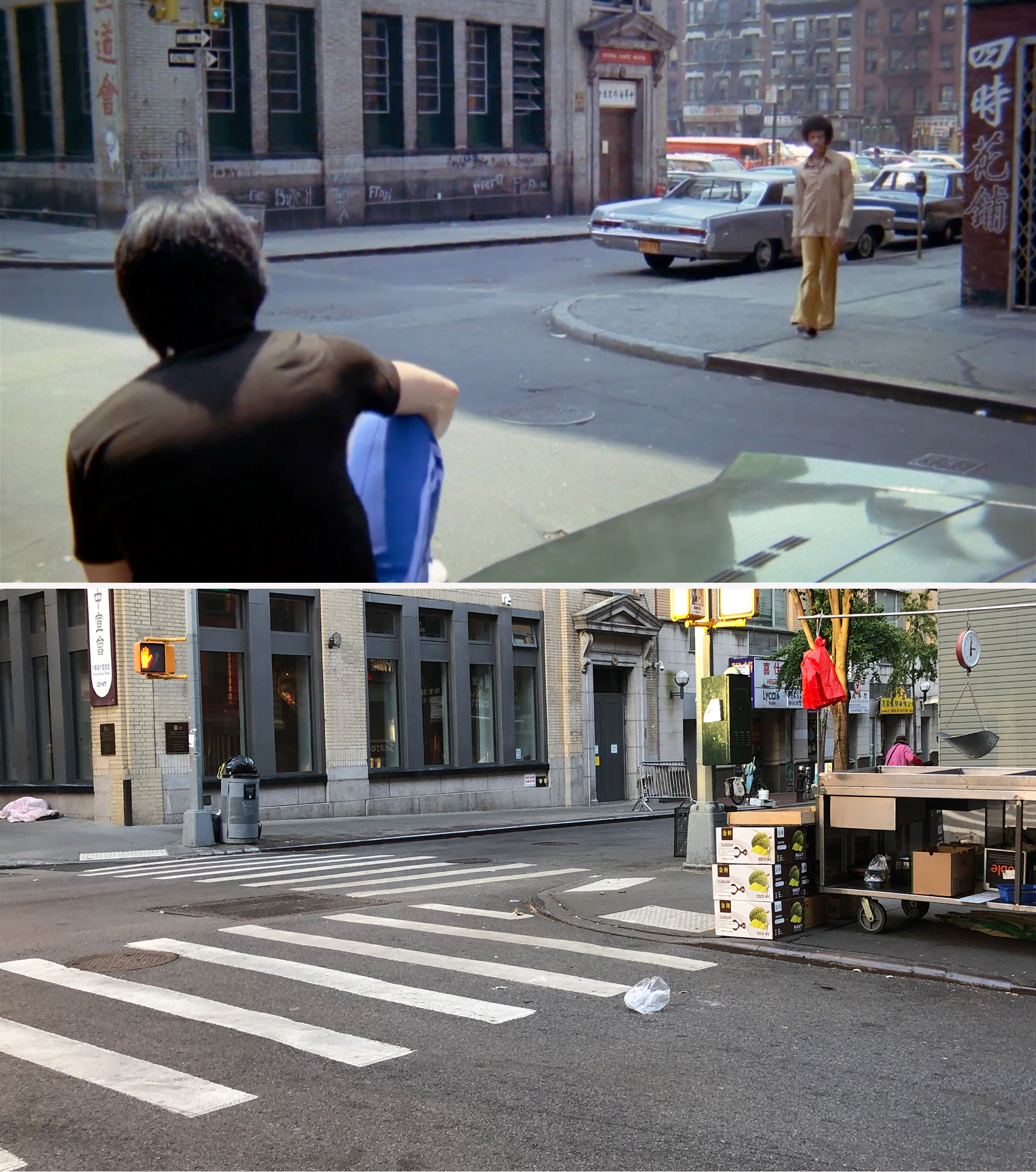
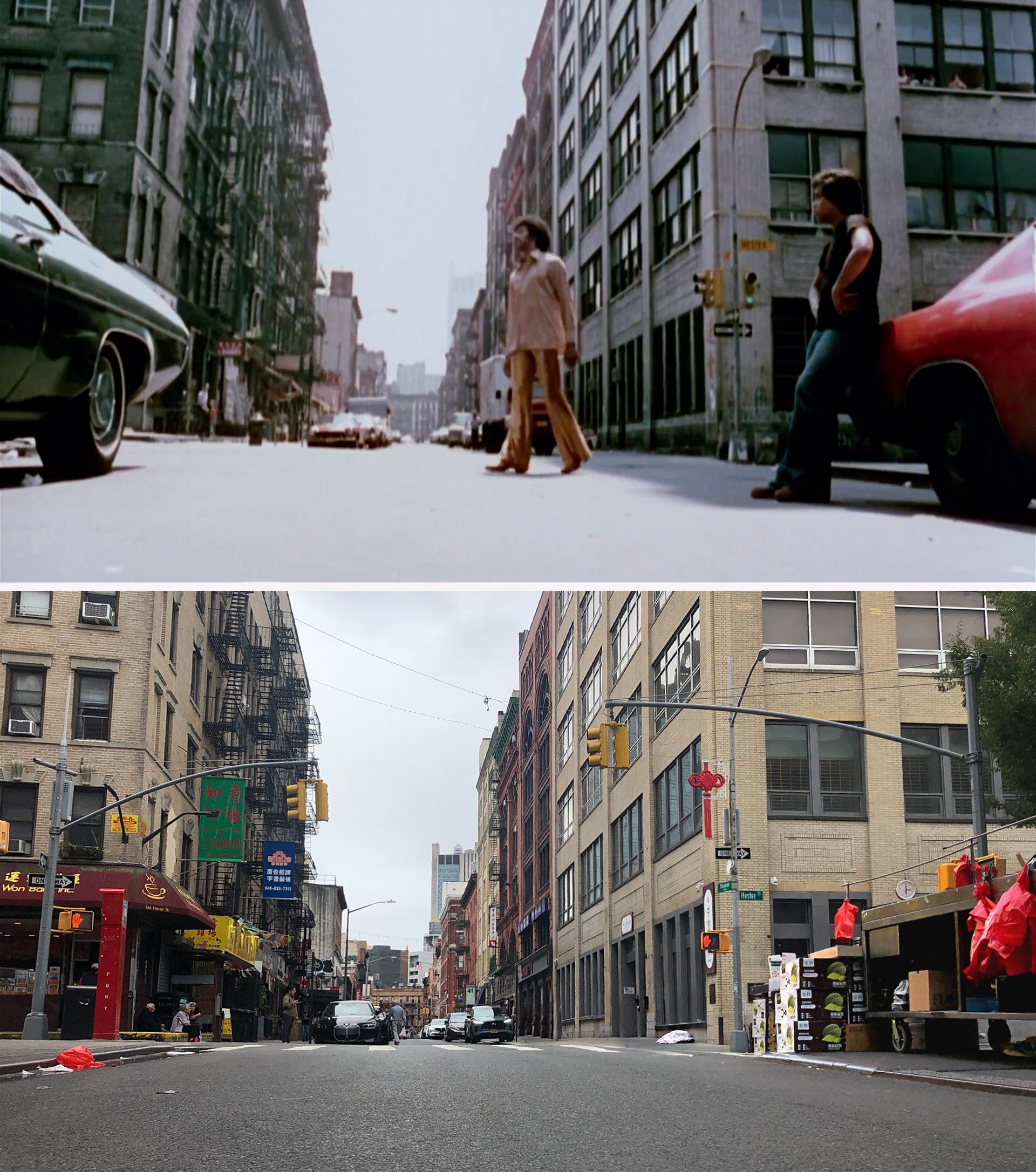
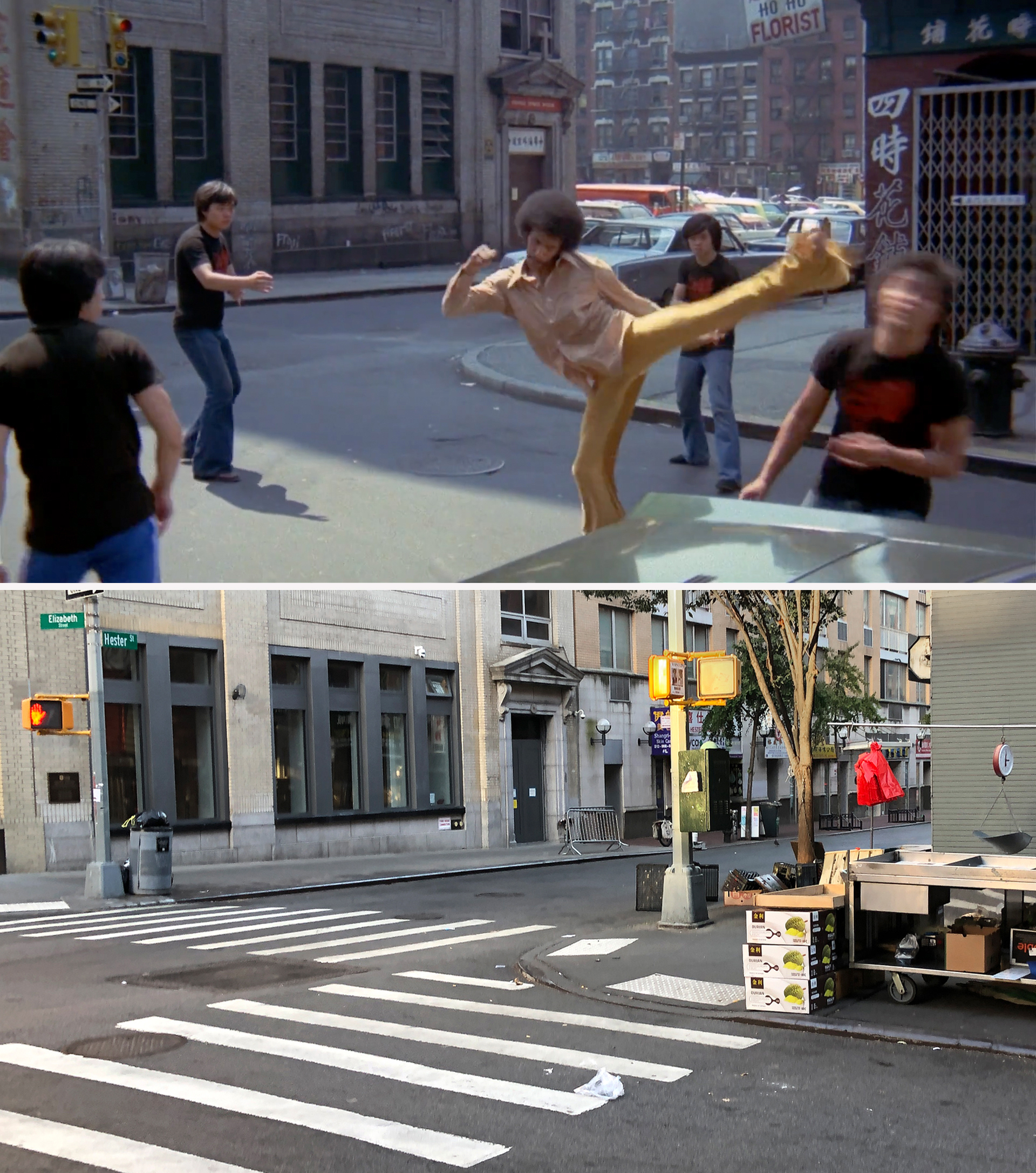
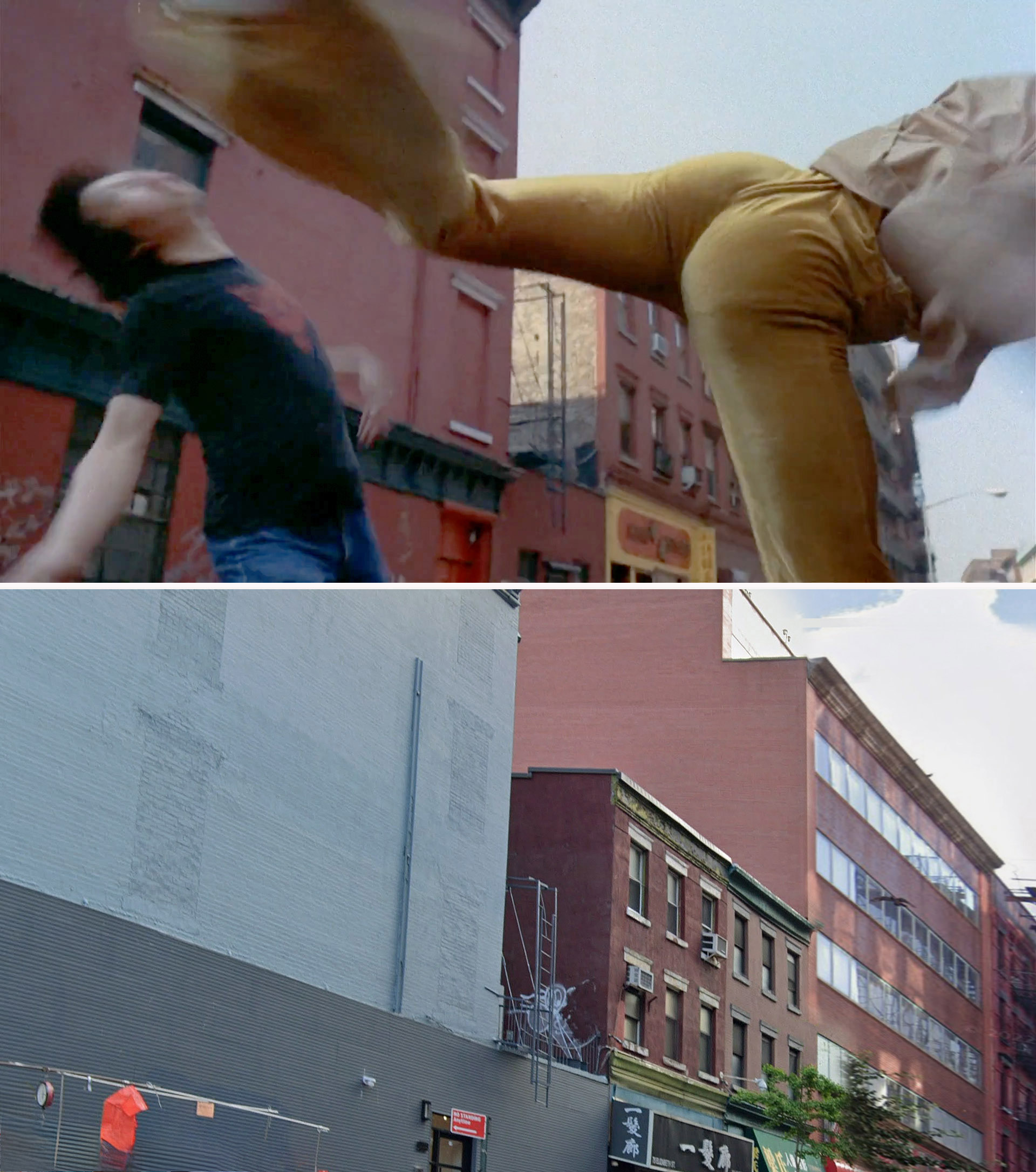
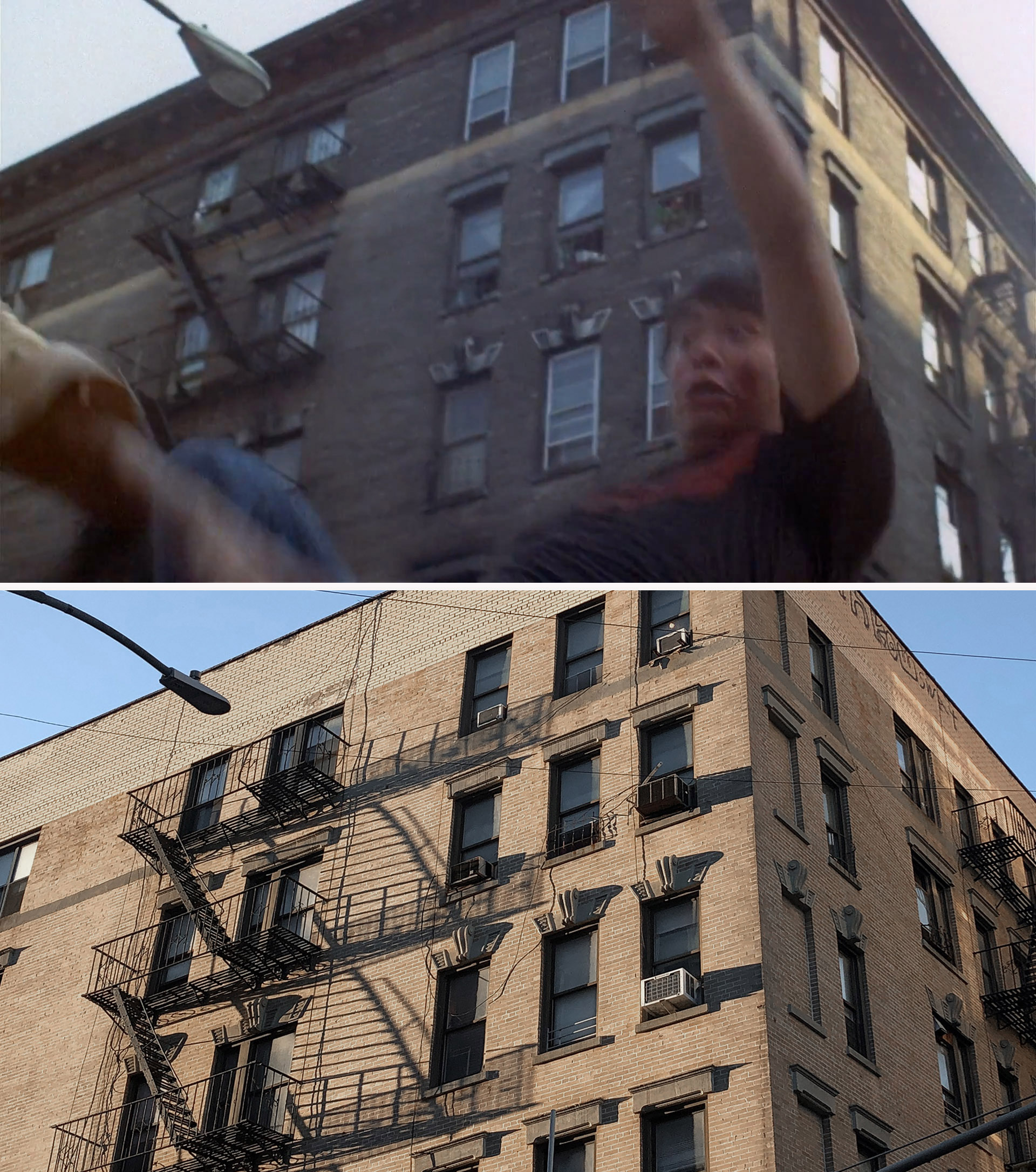
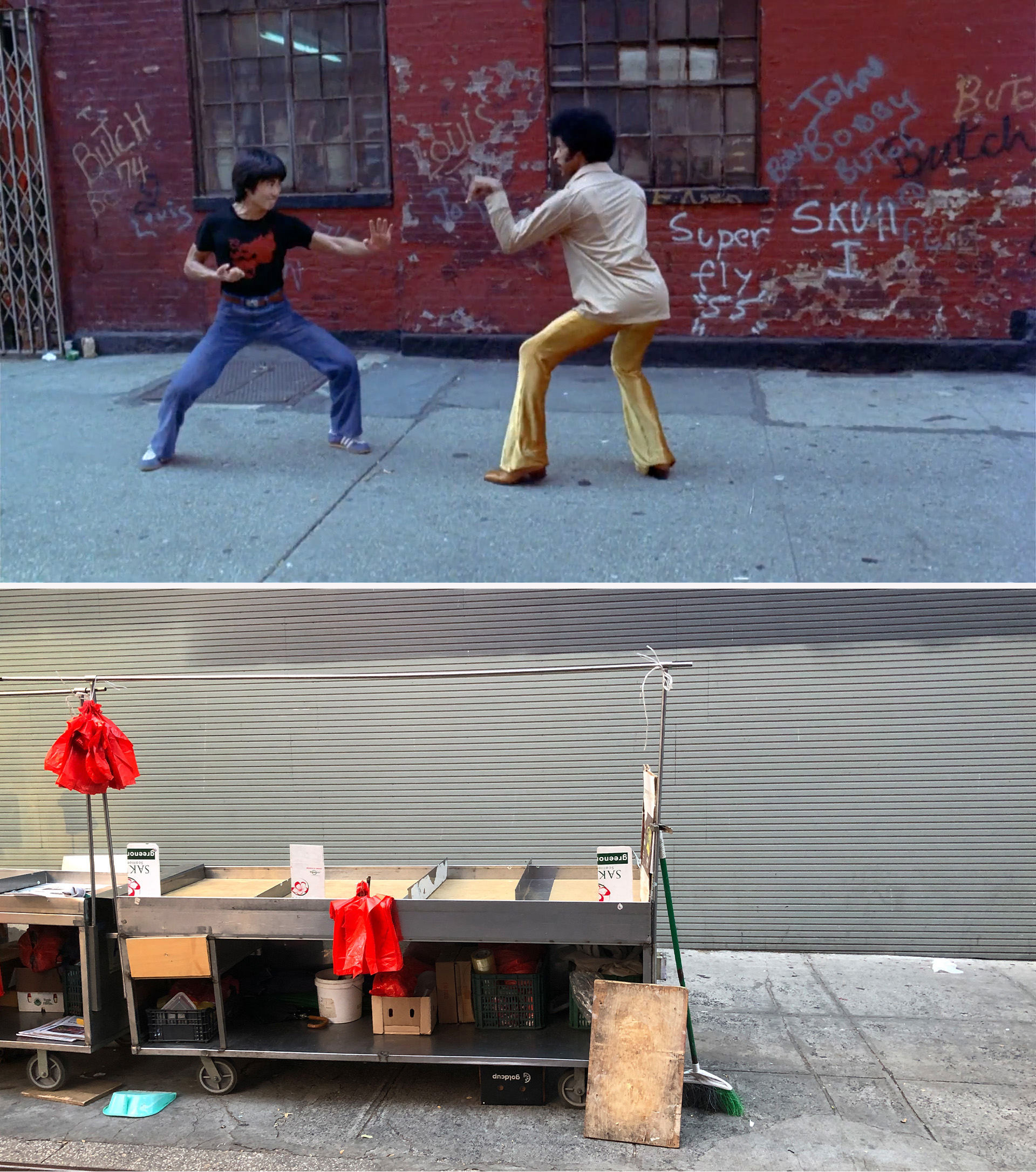
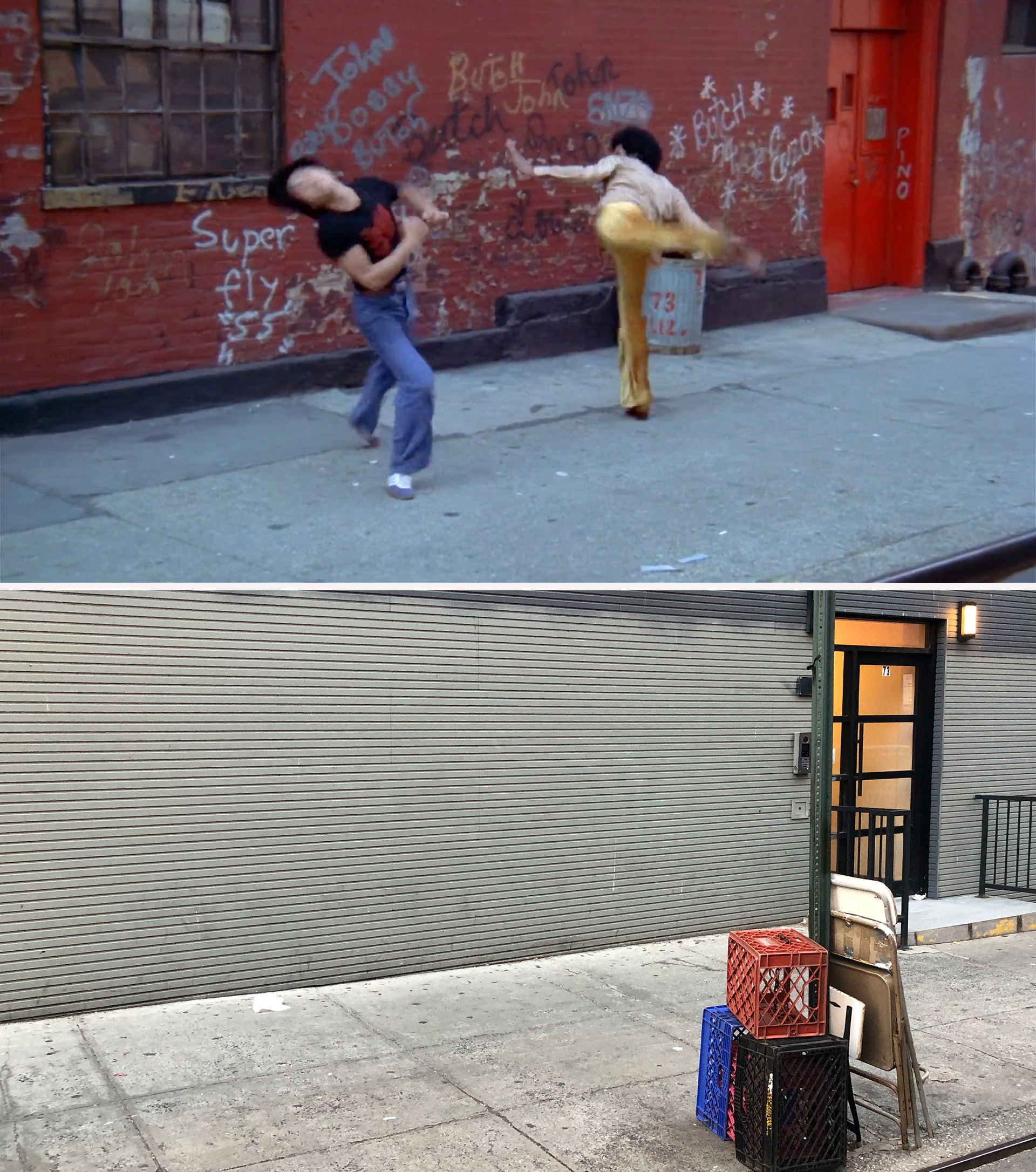
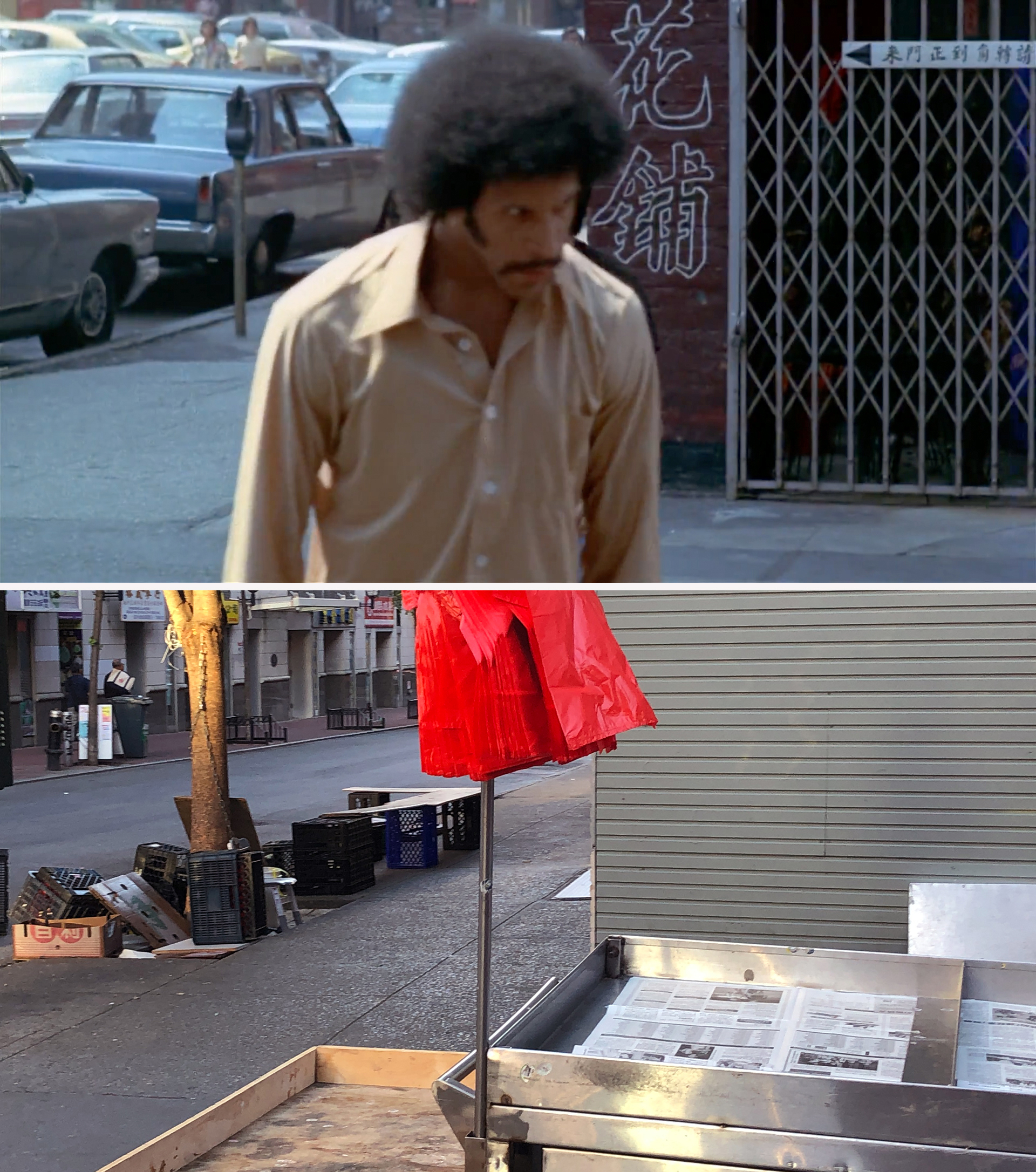
This is one of those locations that I didn’t instantly know, but had a gut feeling about. It definitely looked like it was shot in Chinatown, and for some reason, it felt like it was a block away from Canal Street, the neighborhood’s main strip.
I don’t know why I got that feeling, but in a rare occasion, it proved to be spot on.
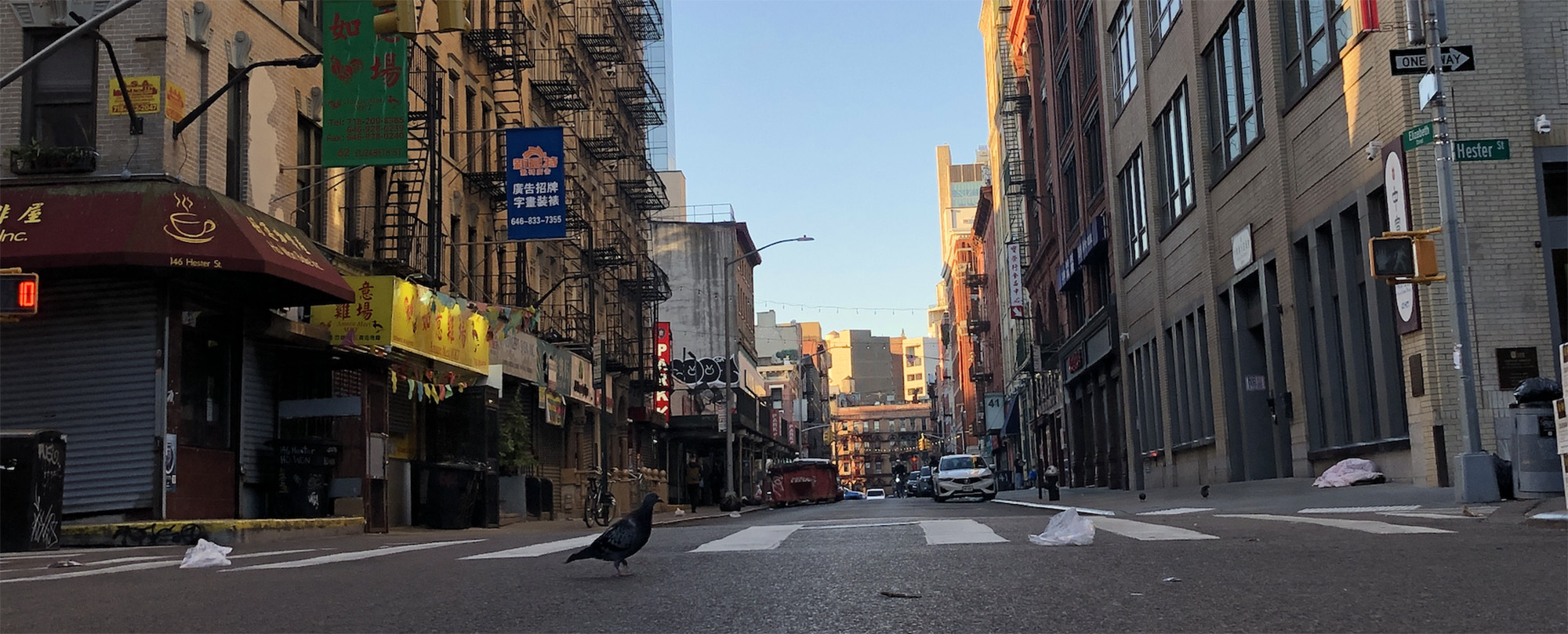
The intersection looks mostly the same today. The only building that got a major update is the one at 73 Elizabeth Street, but just on the ground level. Granted, the windows on the upper floors have been bricked in, but that appears to have been the case (to some degree) for nearly a hundred years now.
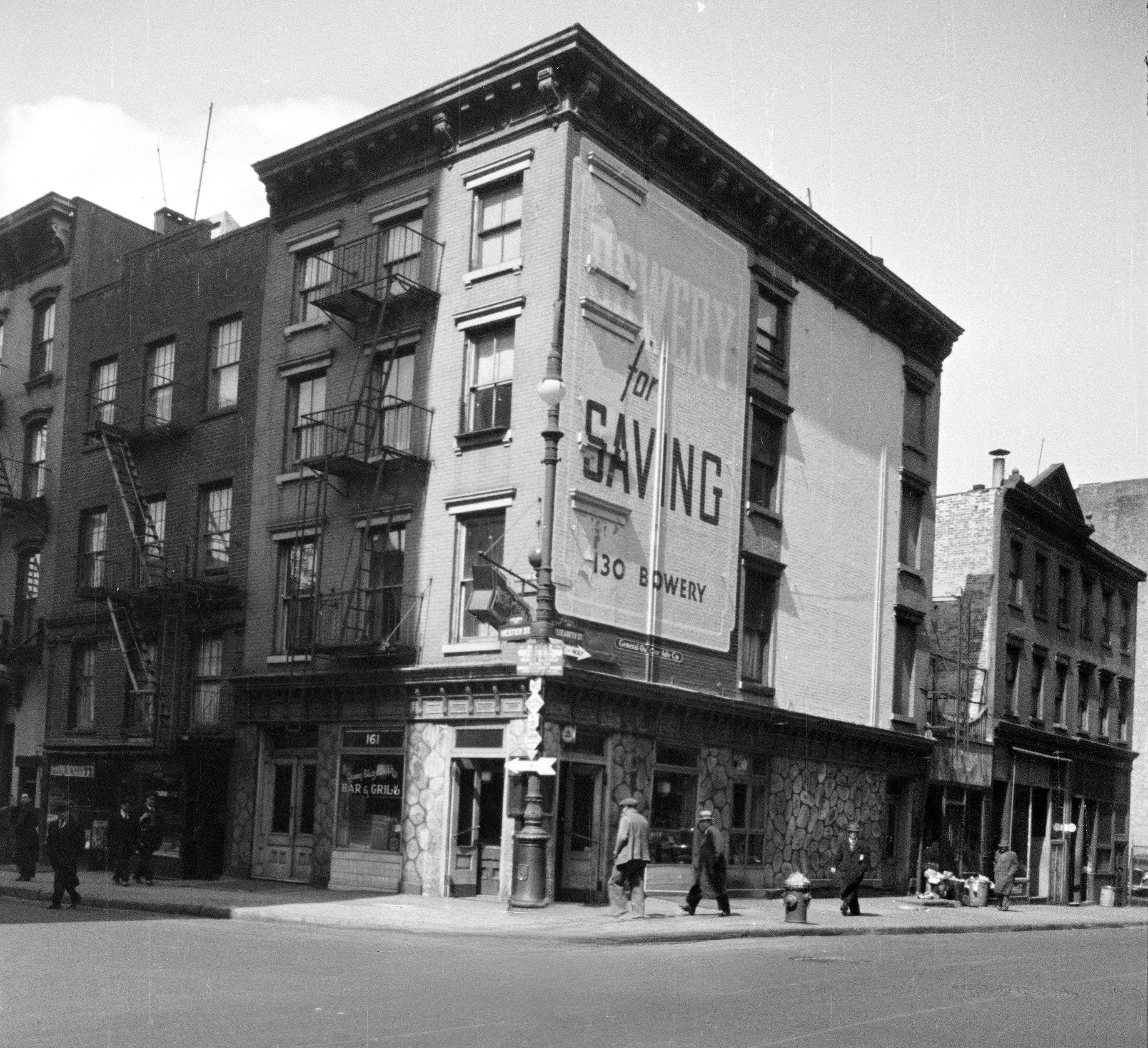
These days, the building at 73 Elizabeth has a very busy sidewalk with an active produce stand out front. So needless to say, I had to go to this location very early in the morning to get an uncluttered shot.
The Final Battle
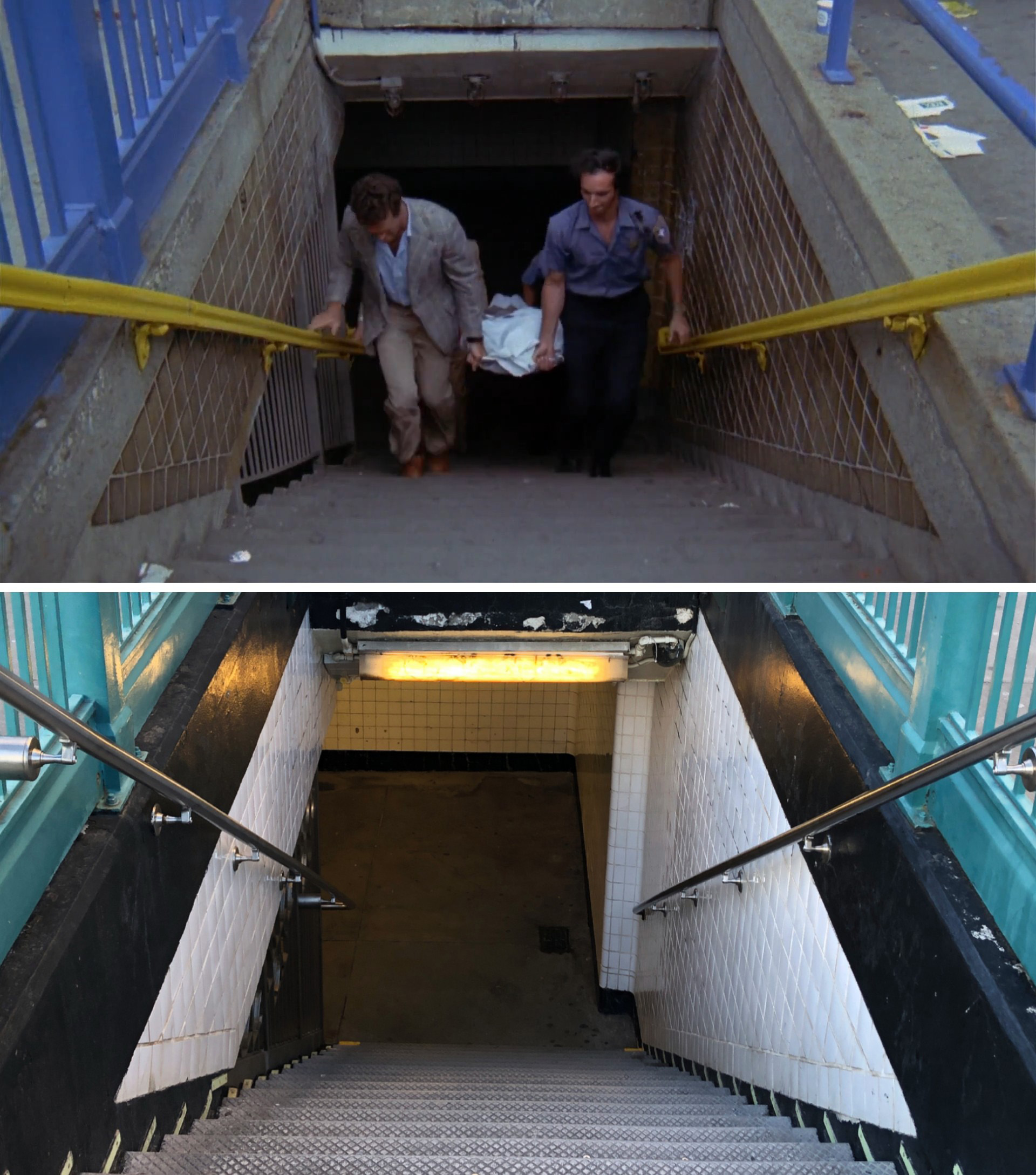
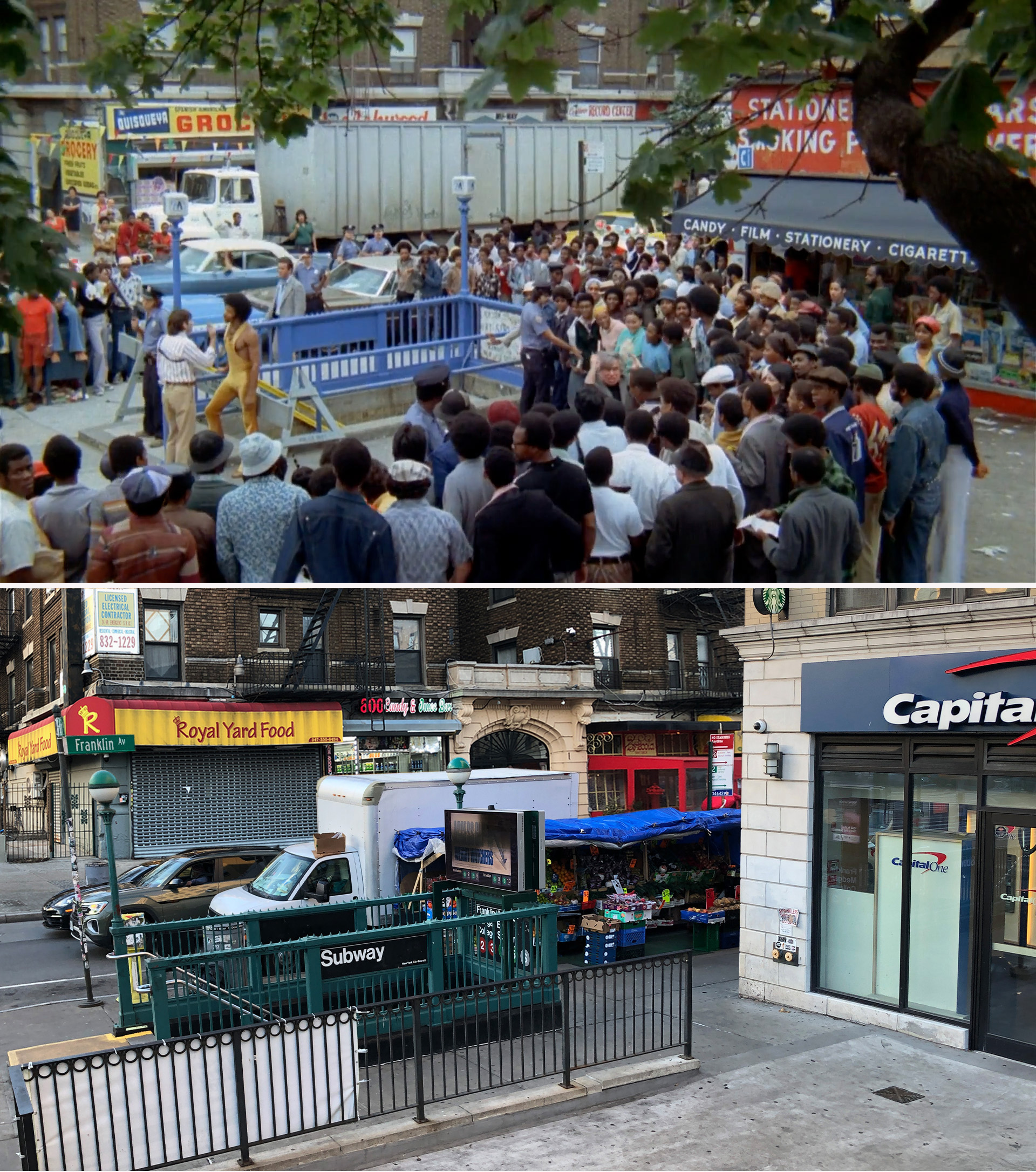
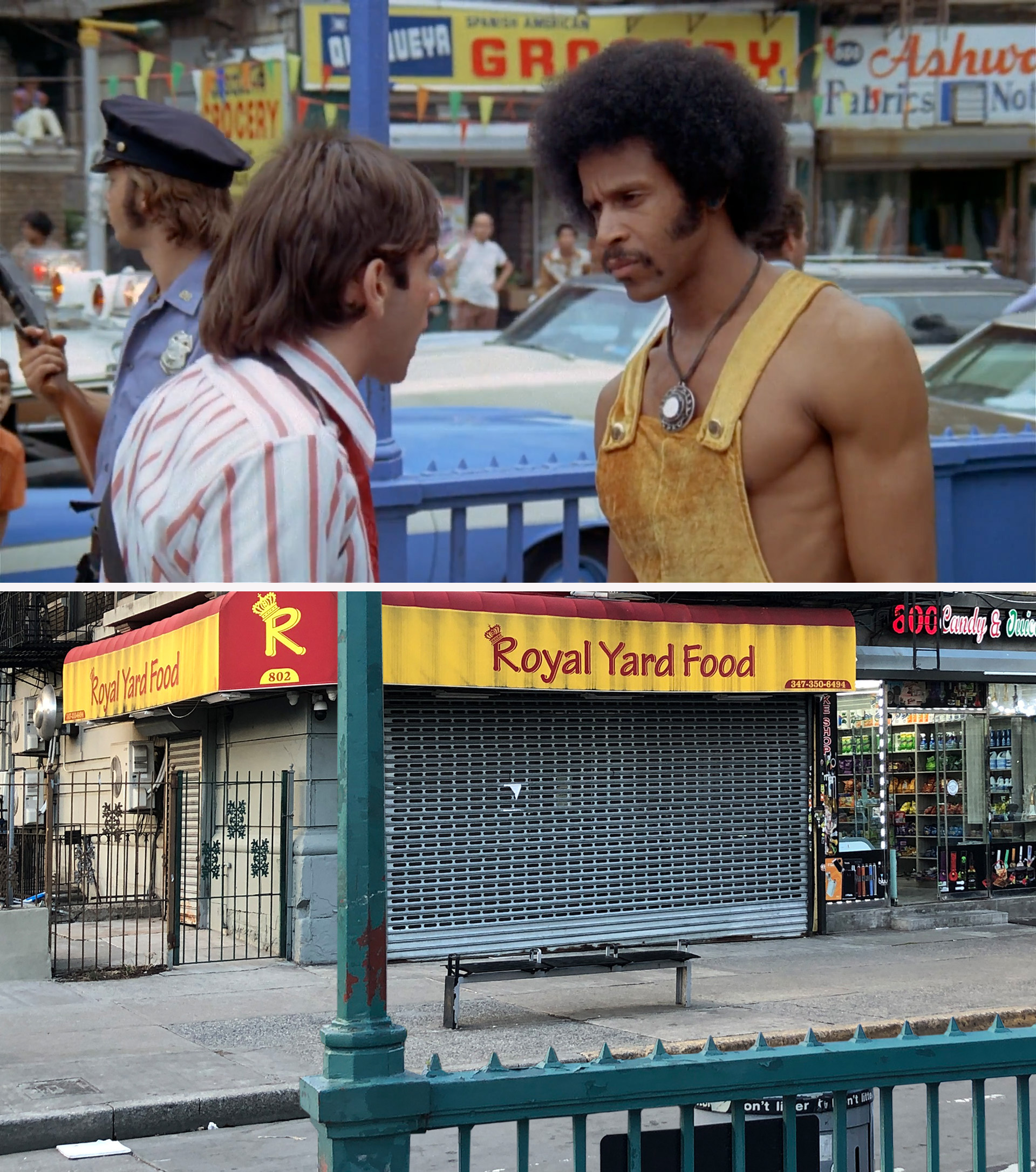
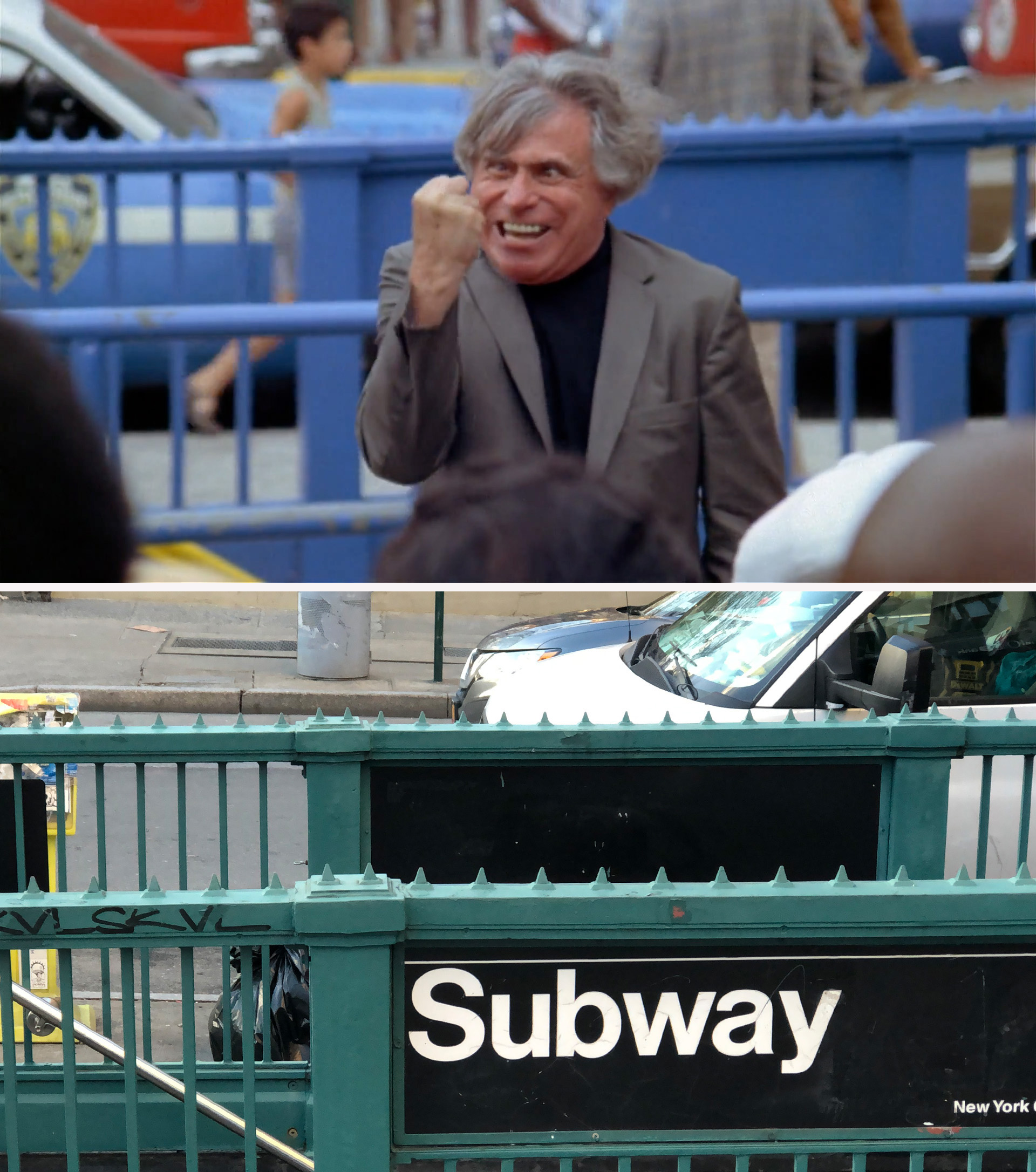
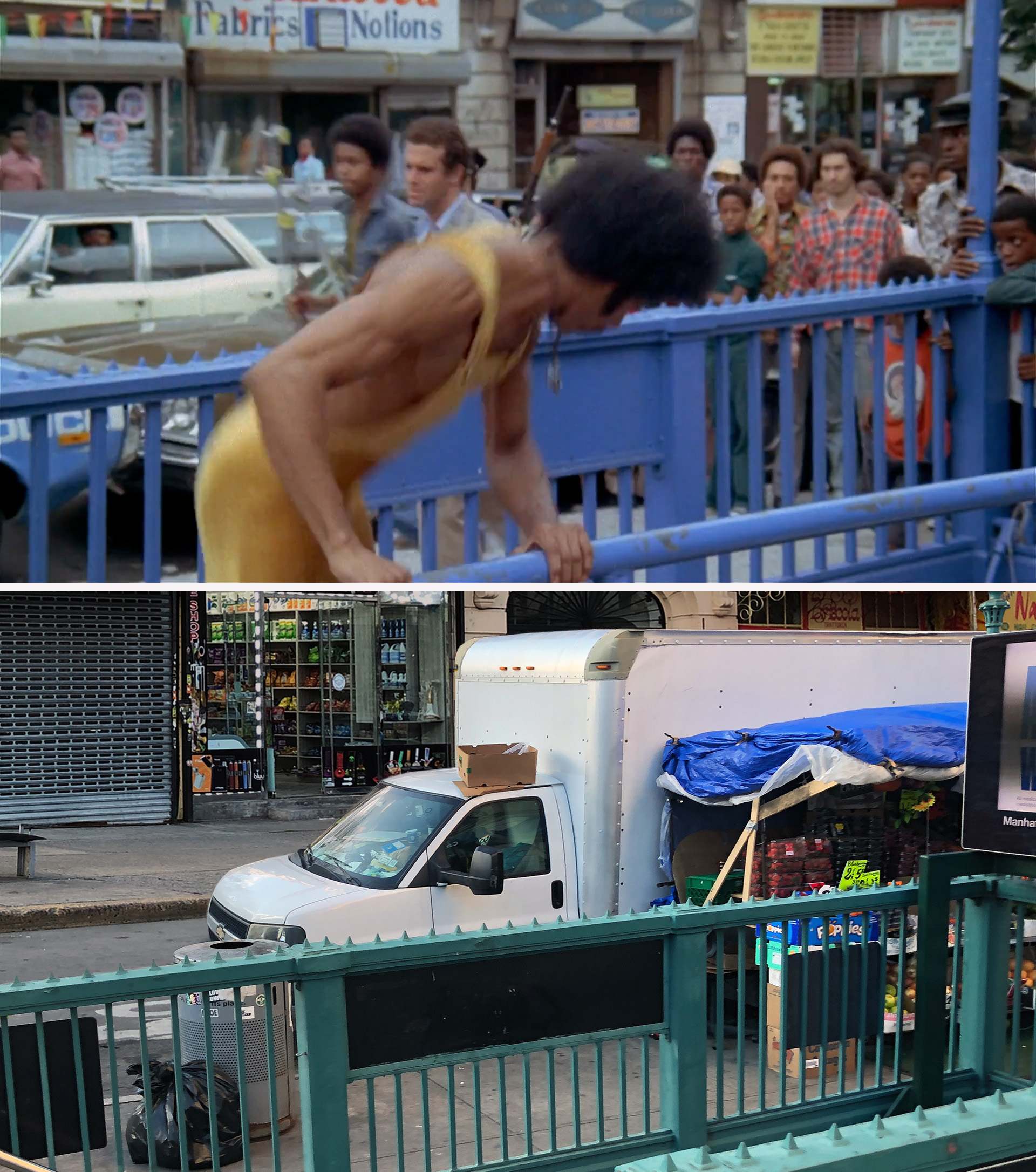
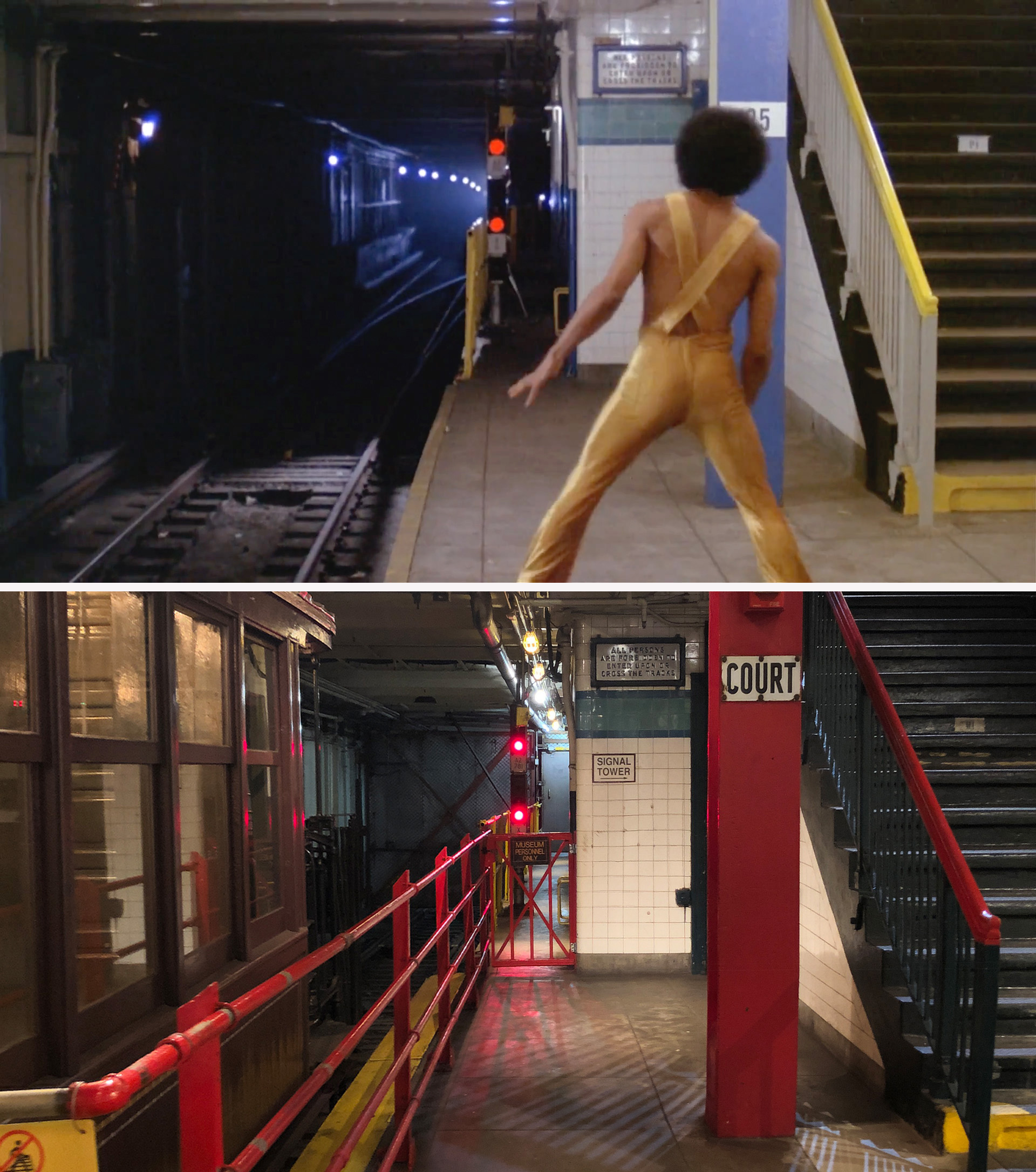
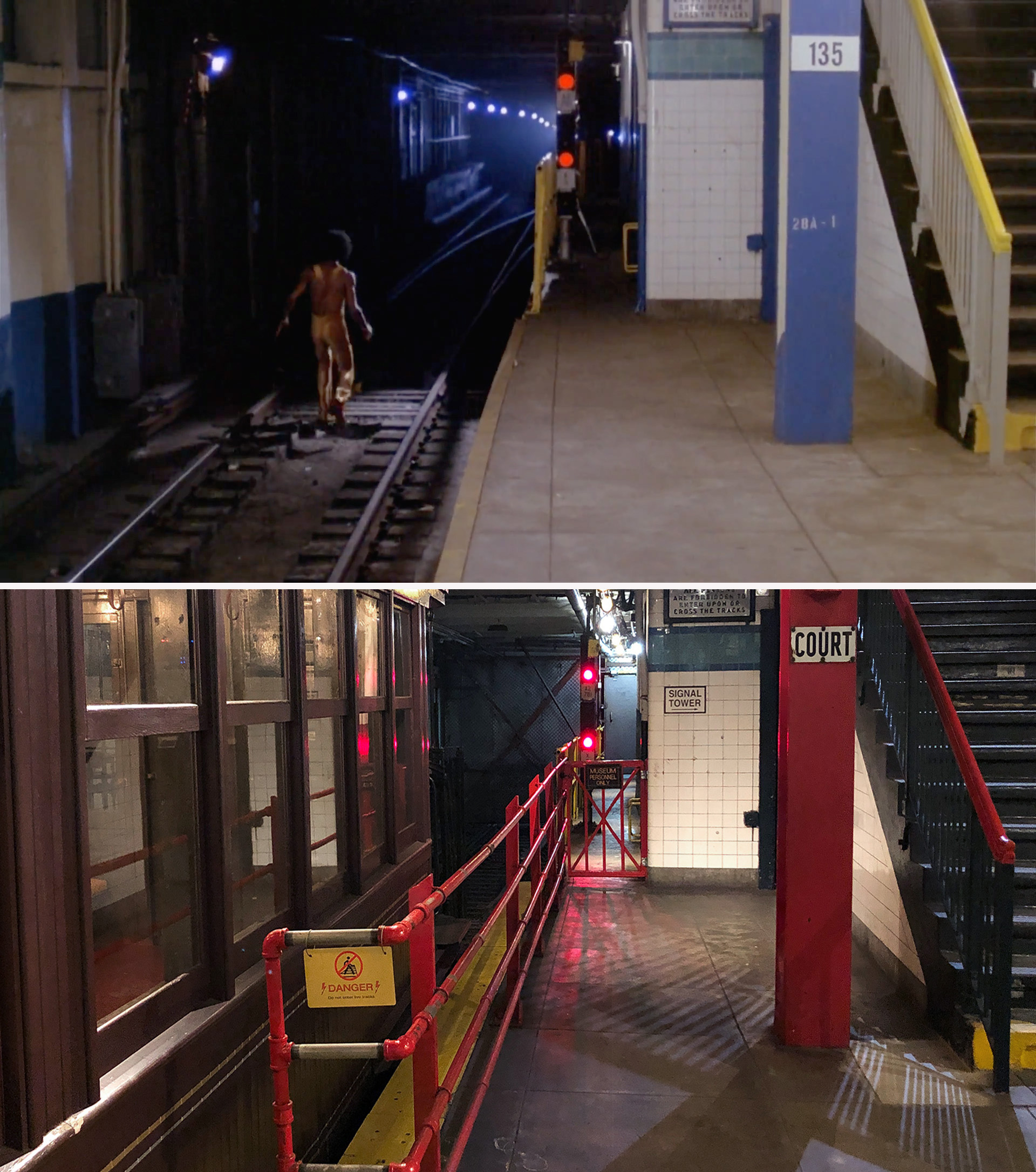
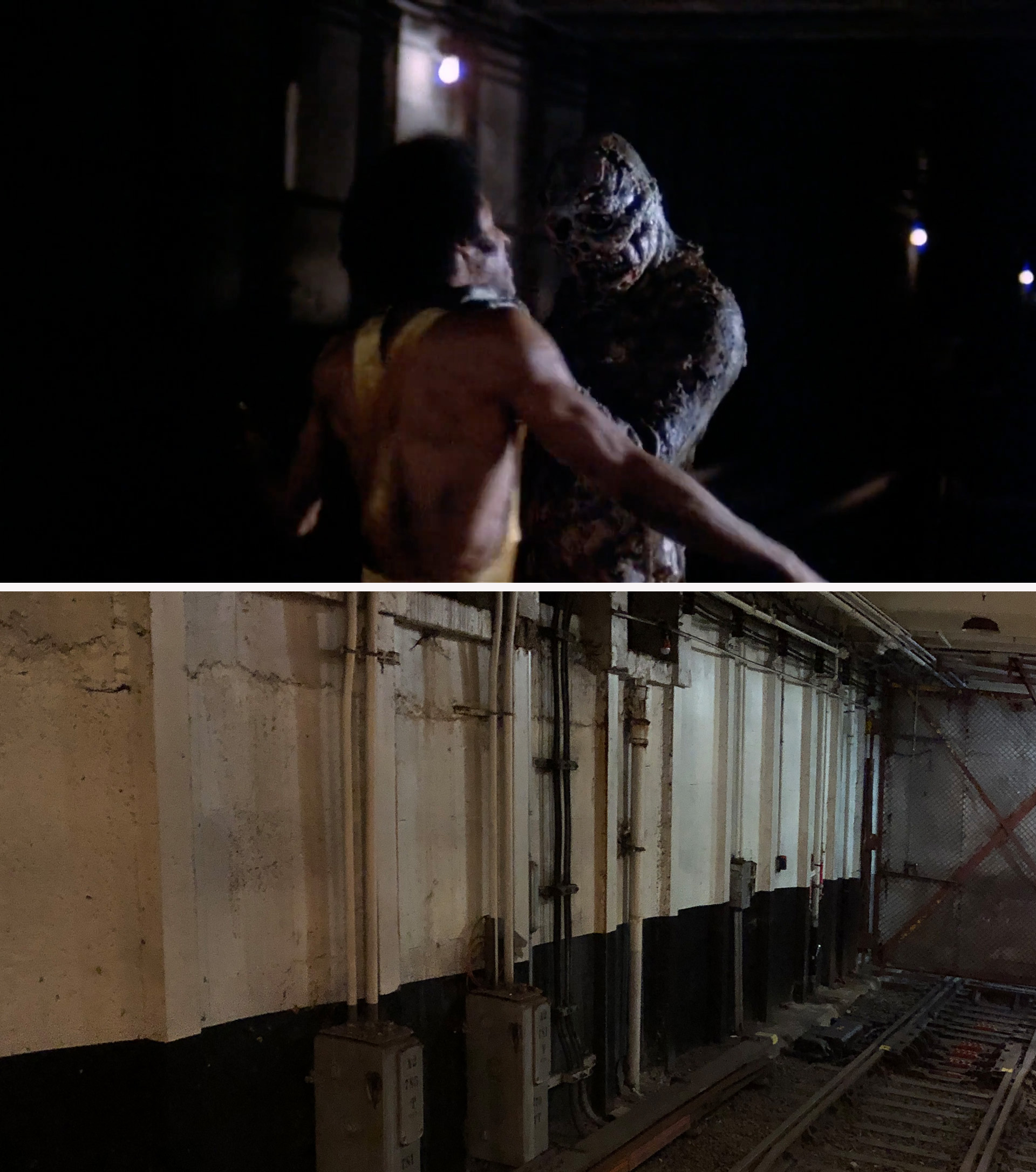
I have no idea why they switched locations for the subway exterior, but I’m presuming that it’s supposed to be the same place, as production added a fake 135th street sign on the corner.
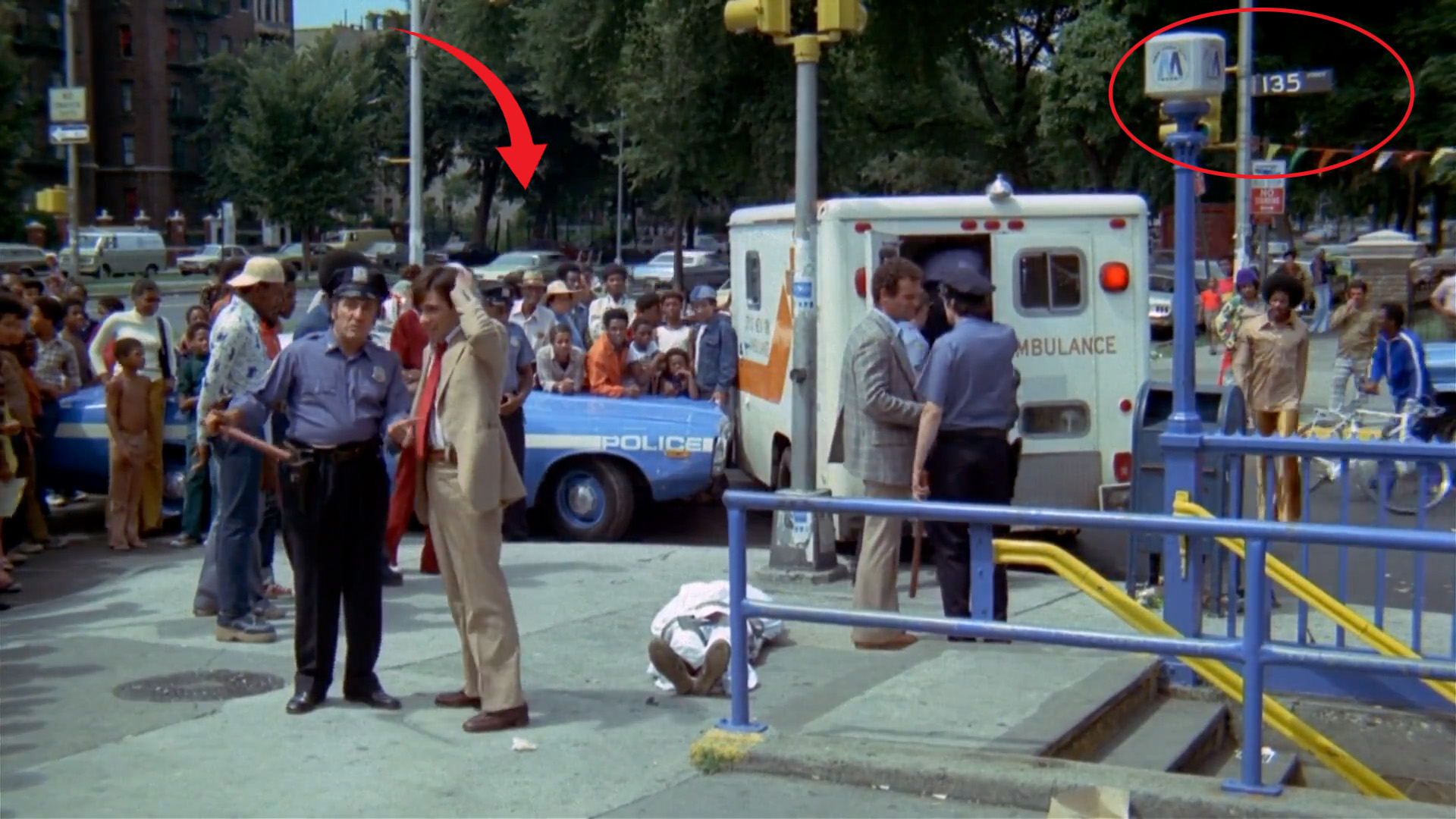
When investigating this location, I naturally ignored that street sign. Instead, I focused my attention on the wide, two-way street in the background, which appeared to have frontage roads for local traffic. (See red arrow above.) My thoughts immediately went to a couple places in Brooklyn that had that kind of street layout — Eastern and Ocean Parkways (although I ruled out the latter since there aren’t any subway lines on it).
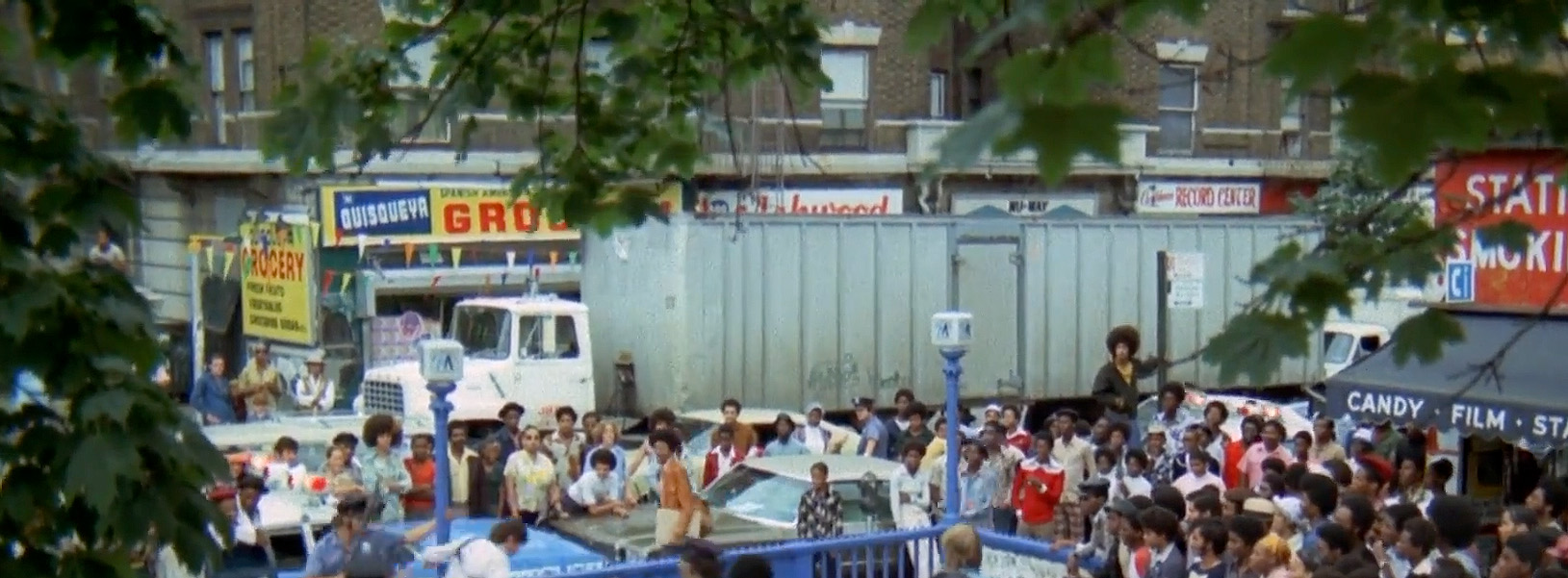
Assuming that we were in Brooklyn, I started doing internet searches on the businesses in the background, starting with the grocery store on the corner called, Quisqueya. Amazingly, the Dominican market was still in business up to just a couple years ago — closing down around 2022.
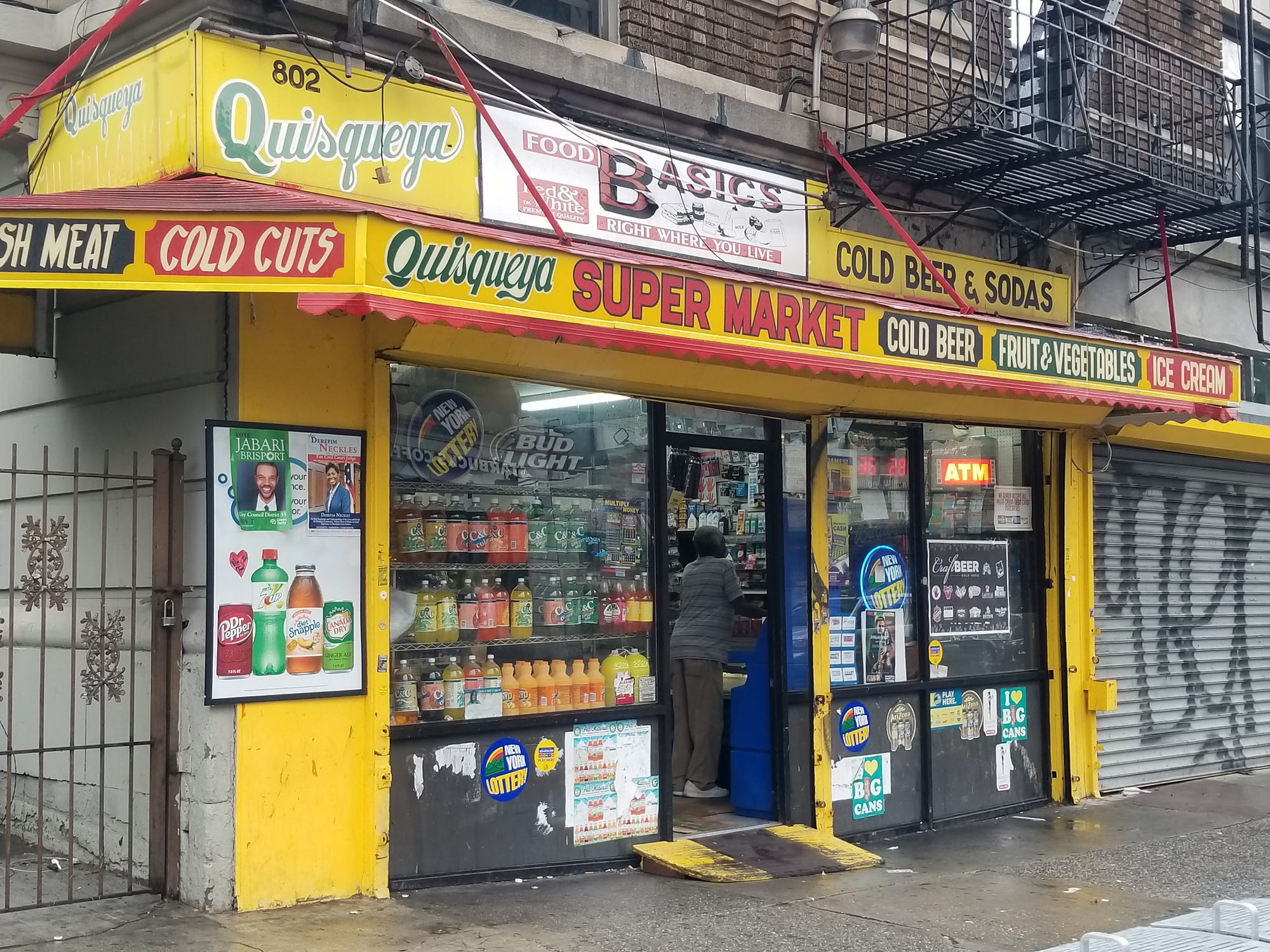
So it goes without saying, I was able to easily find several references to that Brooklyn bodega, including its address of 802 Franklin Avenue. Then, as soon as I saw the subway entrance and the surrounding buildings, I knew I found the right place.
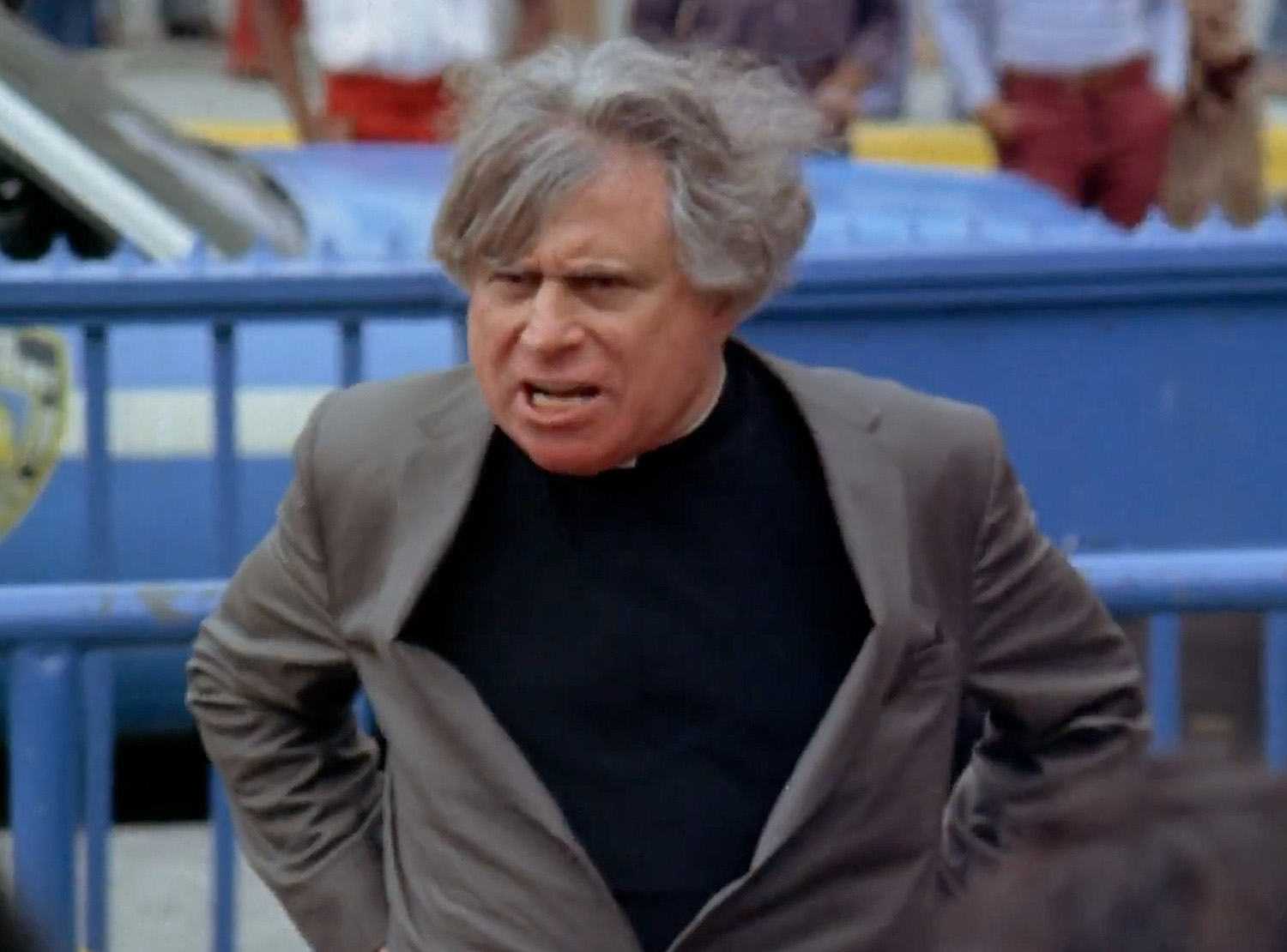
Again, I don’t know why they went all the way to Crown Heights, Brooklyn, to film these scenes, but more perplexing is why they included local goofball personality, Brother Theodore, in the cast.
Born Theodore Isidore Gottlieb, the German-born philosopher and monologuist was known in New York for his rambling, stream-of-consciousness performances, which he sullenly called “stand-up tragedy.” By the late 1970s, he established a weekly one-man show at the off-off Broadway 13th Street Rep Theatre — performing his existential jabberings for the next two decades there. (As a side note, yours truly did a couple shows on the same stage during my early acting days.)
Theodore eventually achieved a certain amount of national fame in the 1980s from his frequent appearances on Late Night with David Letterman, culminating in 1989 with a supporting role in the Tom Hanks dark comedy, The Burbs.
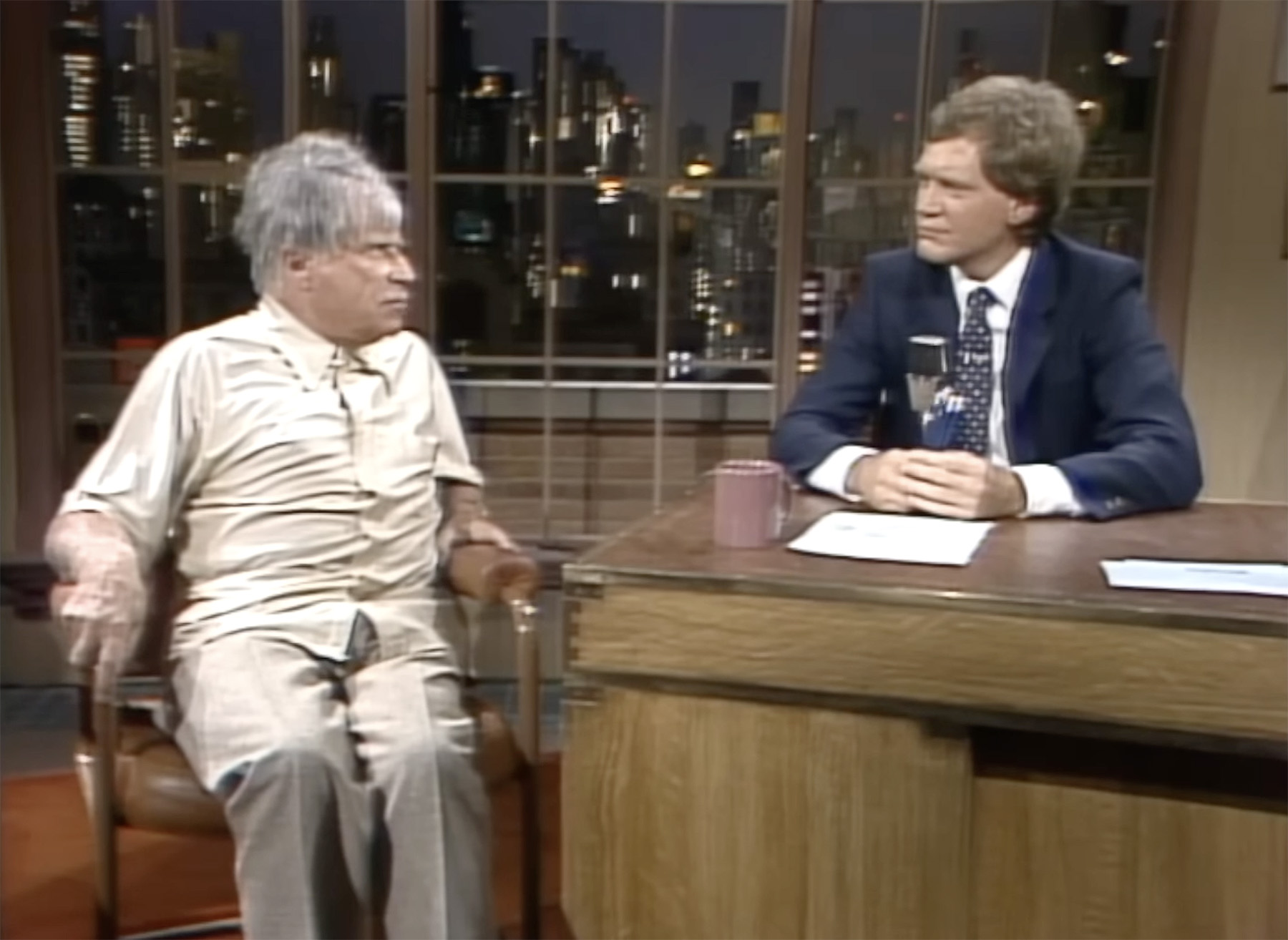
But of course, his participation in Devil’s Express was several years before he reached this quasi-stardom. According to Production Assistant, Jane Landis, even she was confused by his presence:
“We all thought Brother Theodore was weird and really didn’t know how he came to be in the film. …. He really would go on rants and none of his stuff was scripted. He never seemed to be ‘out of character.'”
So what inspired director Barry Rosen to cast Theodore as a rambling zealot is anyone’s guess. And for that matter, the inspiration for the entire cast is rather questionable.
Hospital Wrap-up
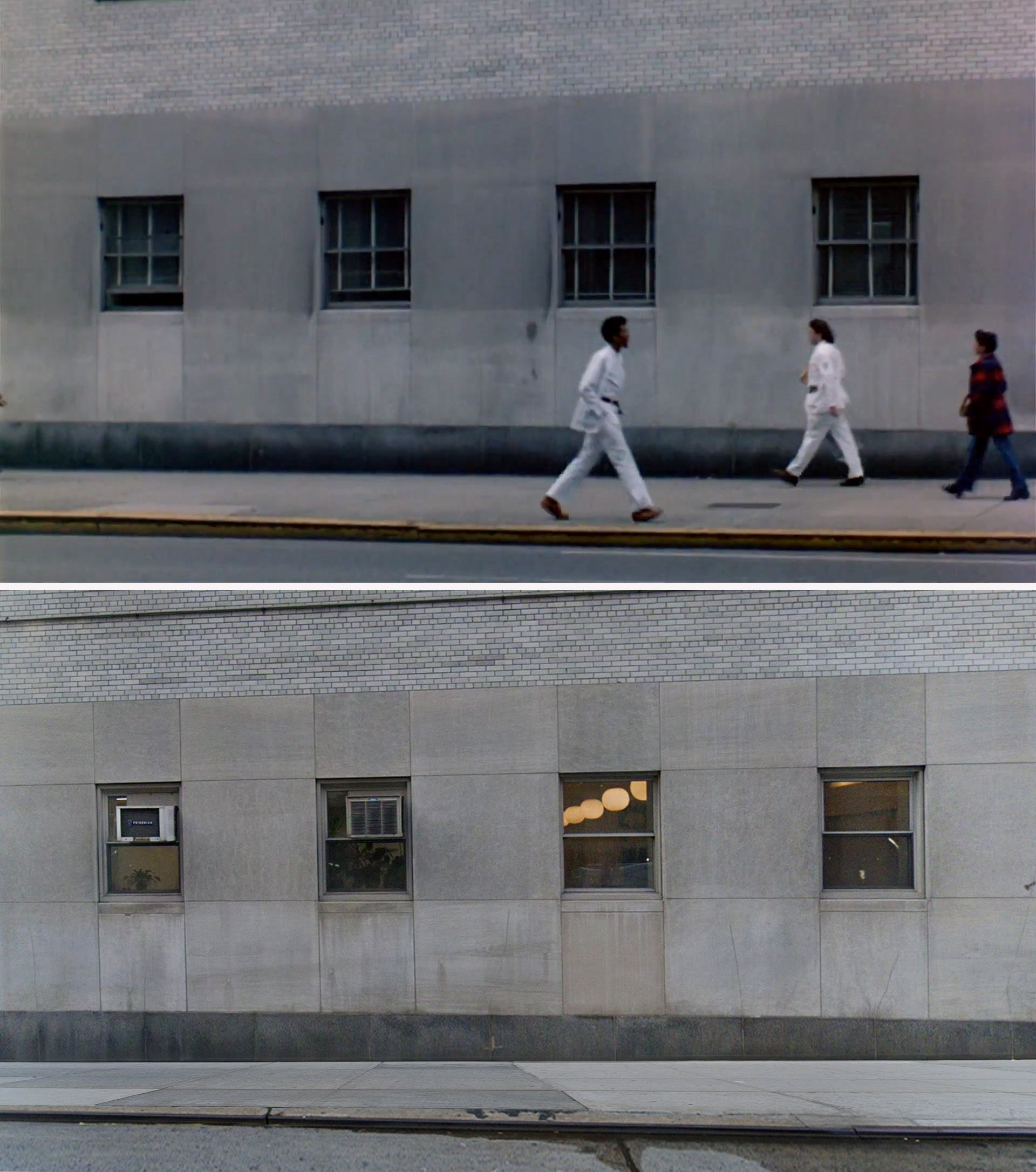
This location was literally figured out just as I was finishing up this post. Since all you see is a wall of generic windows, I hadn’t even bothered to try and find this hospital location. But as I neared the end of this write-up, the completist that I am, I thought I’d take a quick stab at finding it. And it turns out, it was much easier than I thought.
I took a wild guess that the crew actually filmed outside a real NYC medical building. And with a somewhat streamlined, modernist facade, I figured it would be either on “Hospital Row” in Yorkville or at Columbia University Irving Medical Center in Washington Heights. Starting with the row of hospitals on York Avenue, within minutes, I came upon a building on E 69th Street that looked like it had the same windows as in the movie. After studying the ground level in Google Street View, I spotted a bunch of matching bricks and instantly became convinced my search was over.
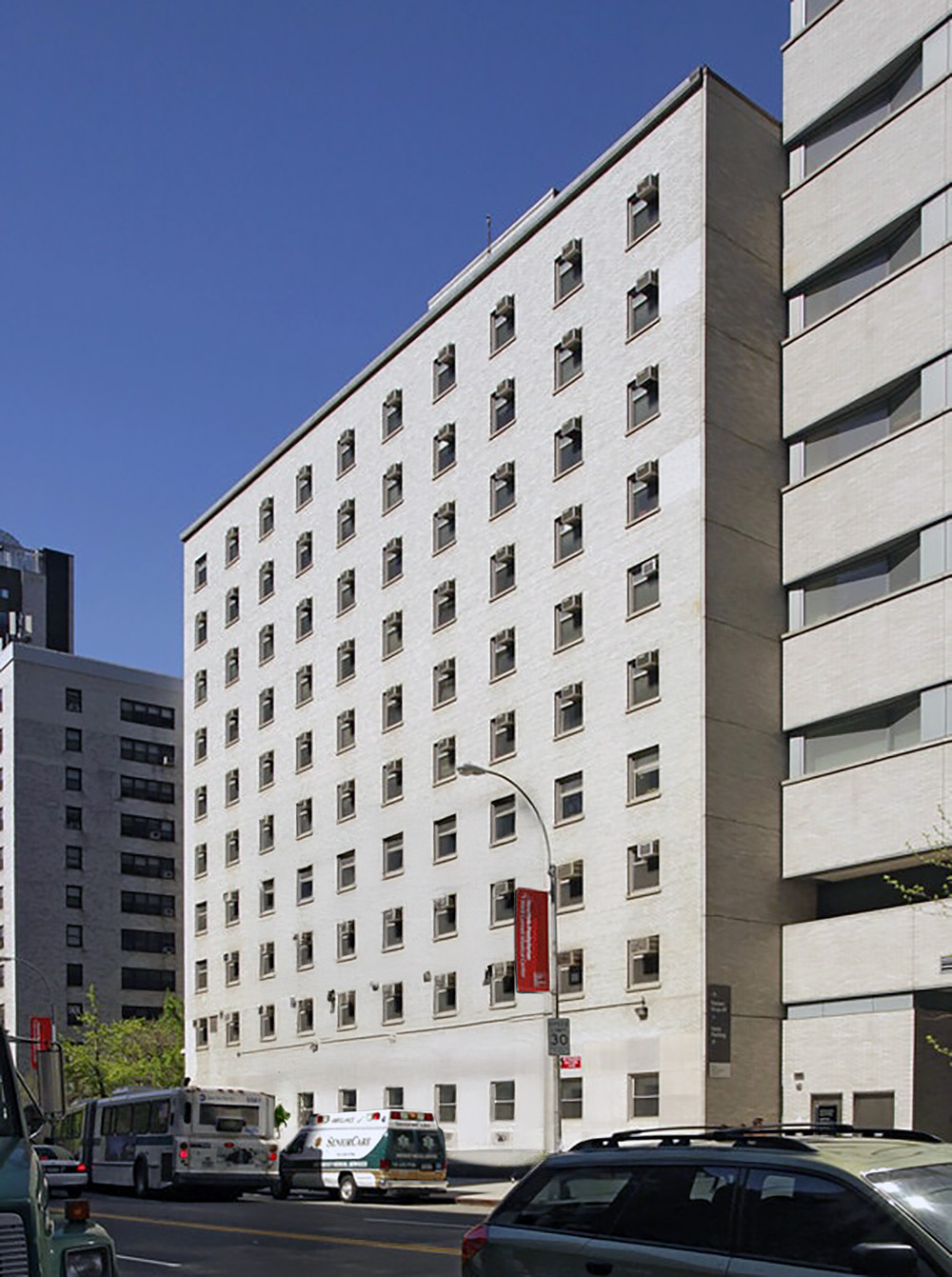
The 10-story structure is called F. W. Olin Hall, and is actually not a hospital but a dormitory-style building for medial students studying at Weill Cornell Medicine. But it still served the purpose for this low-budget feature.
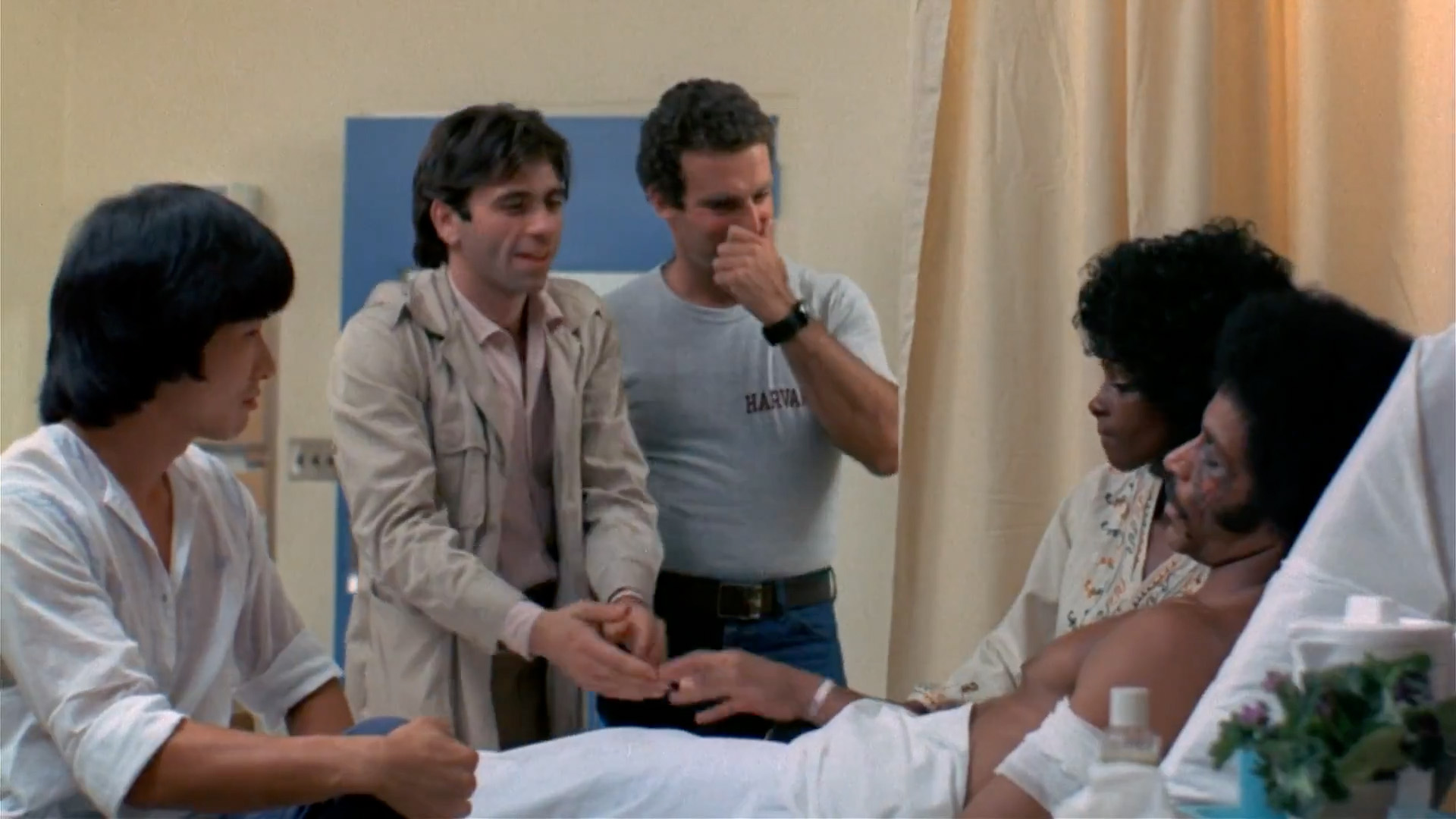
The movie ends with a one-minute scene in a hospital room that feels more like a tag to a sitcom. All the surviving characters gather together like the ending to The Wizard of Oz and briefly sum up the vague events of the story. The scene ends with some oblique joke about music and then abruptly cuts to closing credits superimposed on stock shots of New York Harbor.
Trying to make heads or tails of this movie is an exercise in futility, but makes for fun viewing on a late Saturday night. But to be honest, I still don’t know why I felt compelled to take the time to visit all these locations and post my finding here. Part of it might’ve been the fact I was able to identify almost all of the locations in a relatively short amount of time and was just riding on the momentum.
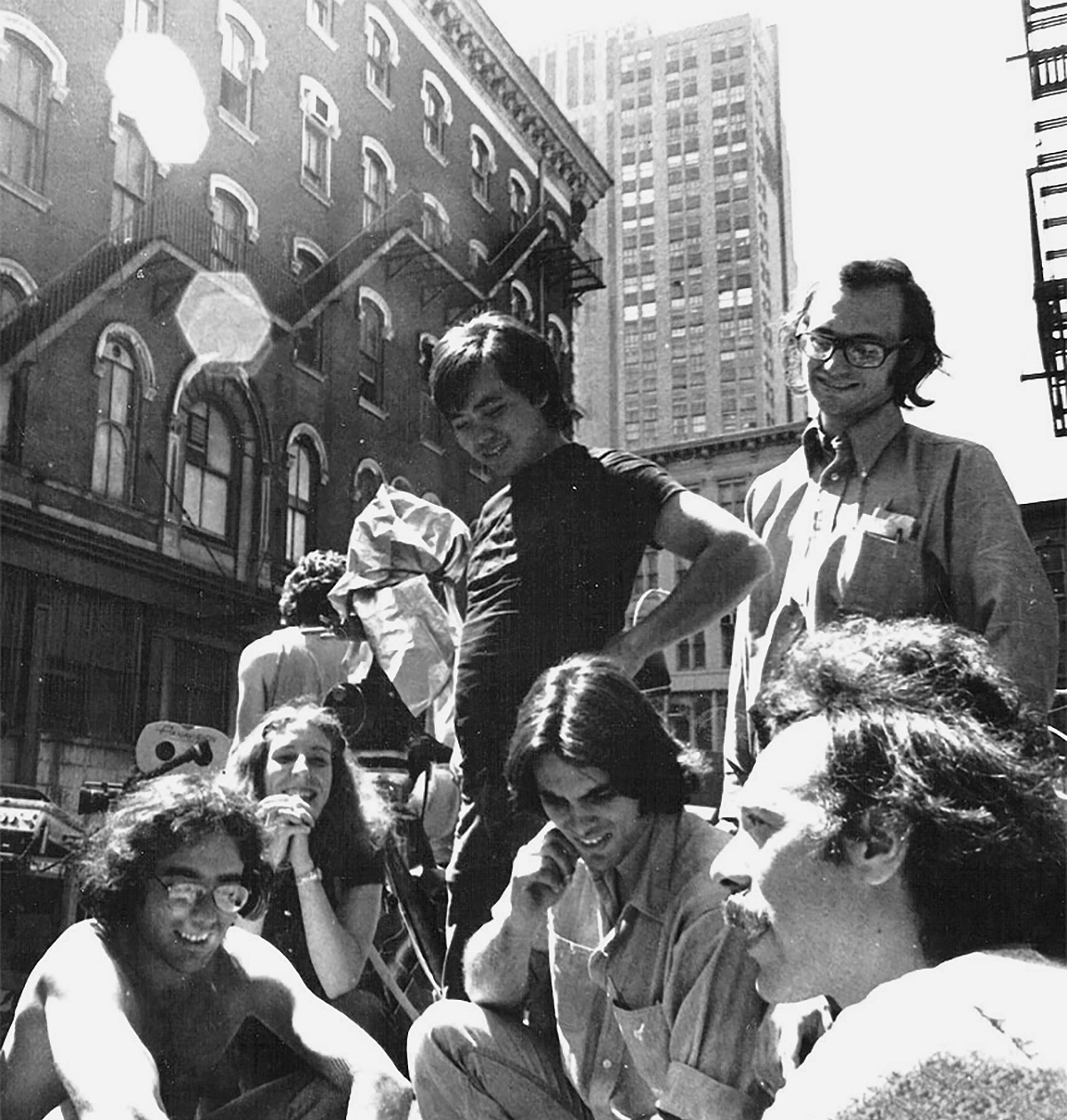
Regardless, Devil’s Express is a great example of harmless bad filmmaking and functions as a decent View-Master of seventies NYC, capturing real-life passersby in just about every shot. Also known as Gang Wars, this movie led me down a few interesting paths, giving me the opportunity to discover some curious historical factoids about the city and Upstate New York.
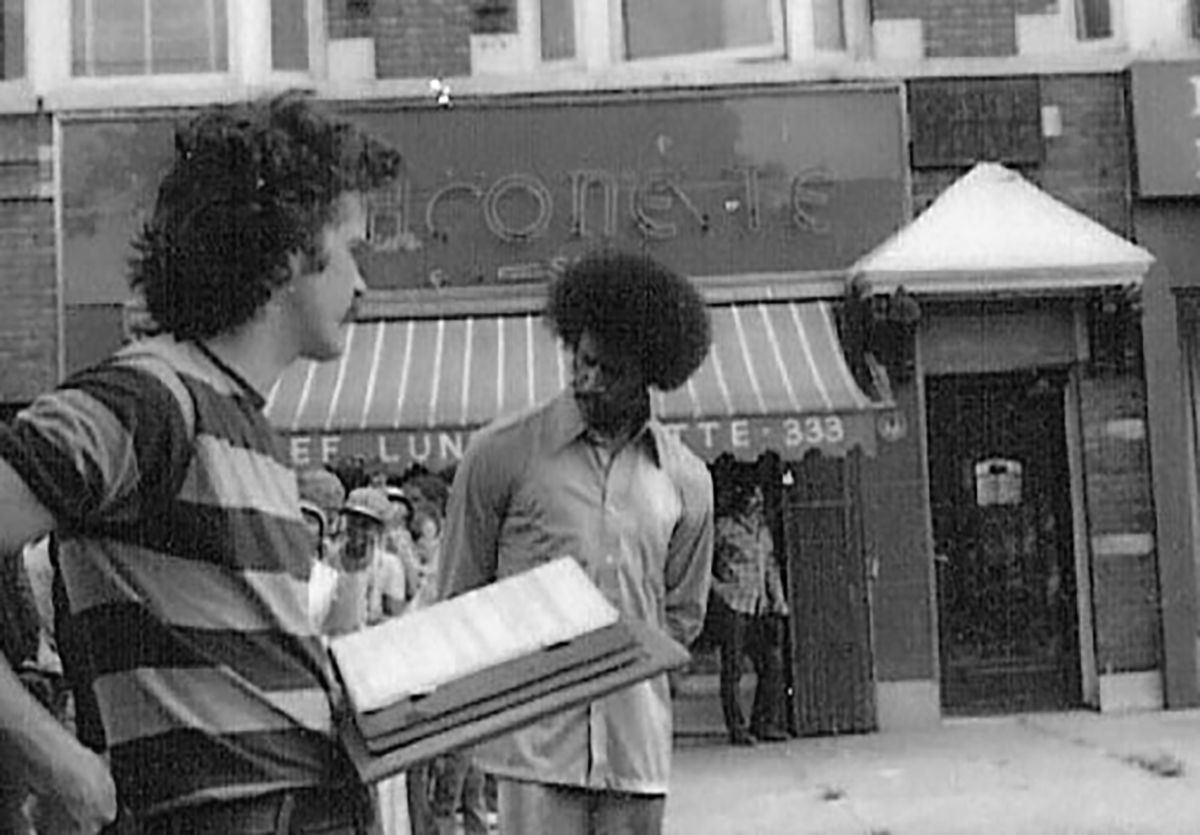
When it comes to the cast, the movie’s main protagonist, Warhawk Tanzania, comes across pretty stiff, delivering deliberately enunciated speeches about righteousness with very little nuance. And to be fair, most of the other actors in the cast suffer from the same shortcomings. But it’s still fascinating watching them navigate through the corny dialogue, incongruent plot points and awkwardly-choreographed fight sequences.
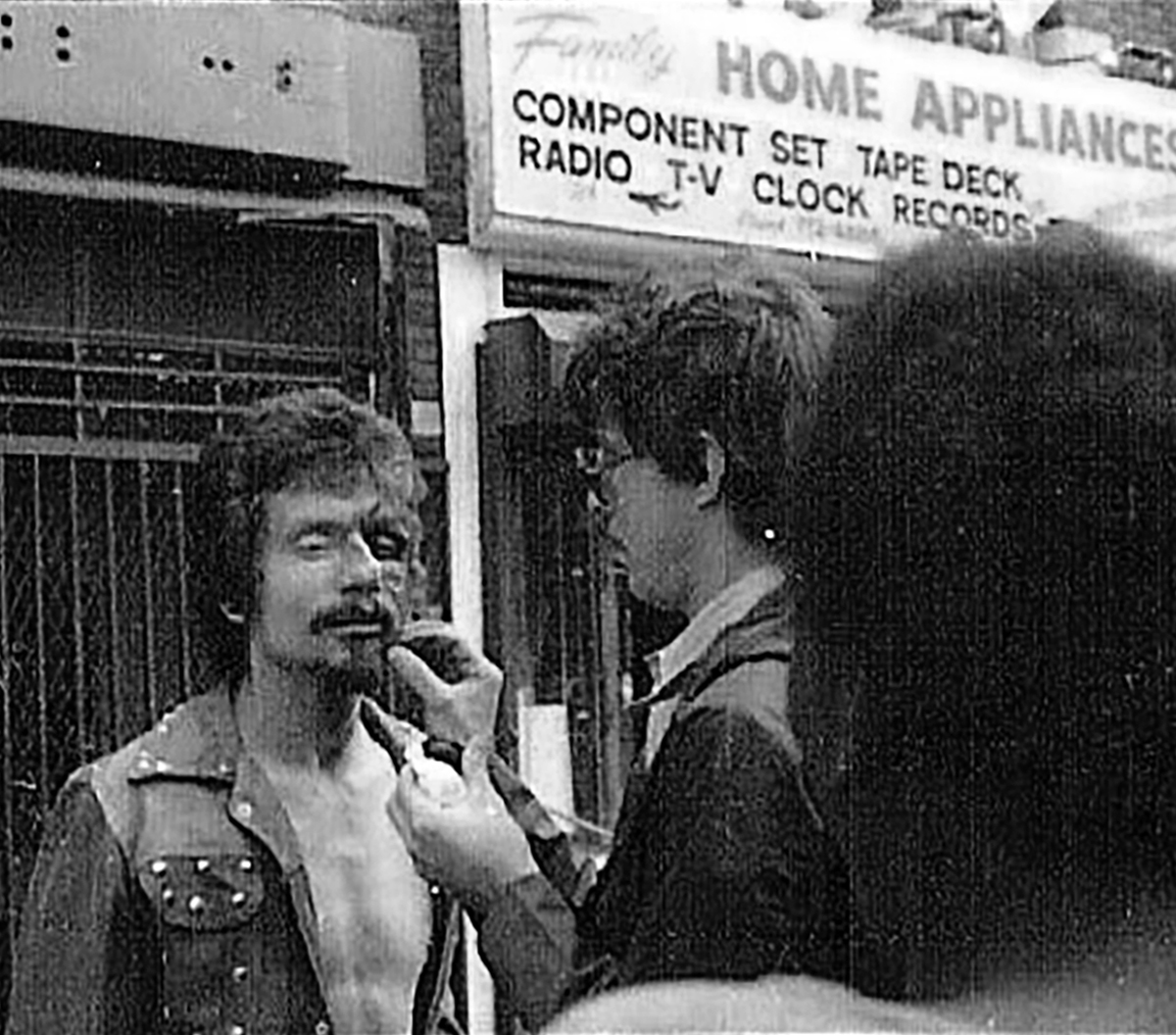
The only performer I found somewhat competent was Wilfredo Roldan, who played the quick-tempered drug dealer, Rodan. While a bit one-note, he seemed to be the most distinctive character out of the bunch and had the most consistent motive — namely, be a bad-ass mofo.
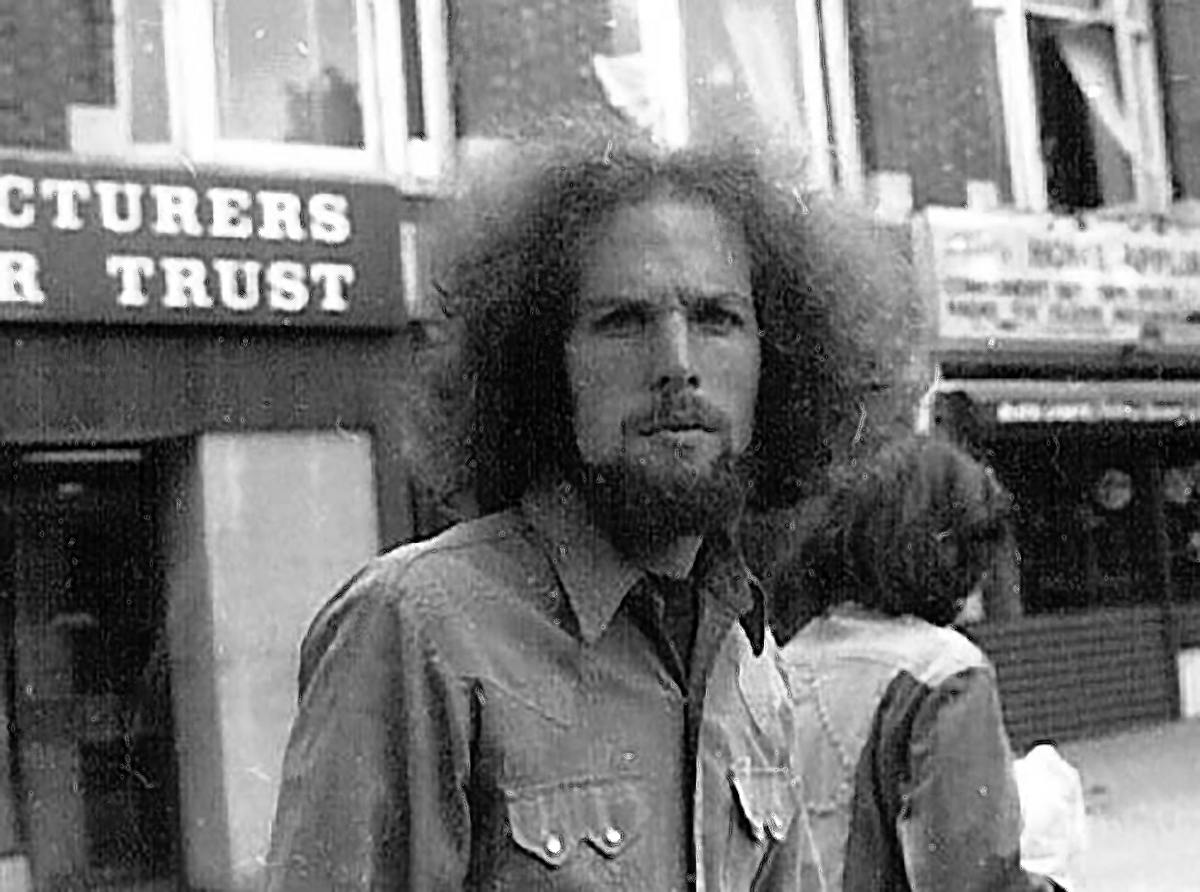
Watching this cinematic mélange unfold, it becomes apparent novice director Barry Rosen was trying to hedge his bets by cross-pollinating several seventies genres into one movie. In doing so, he’s created a fascinating 82-minute document of flimsy fantasy and urban verisimilitude.
So, is that something worth watching? Who knows? All I know is, if it wasn’t for Devil’s Express, I never would have spent a Sunday walking 16 miles in Orange County to visit a random abandoned iron mine.
For me, that’s value enough.
 NYC in Film