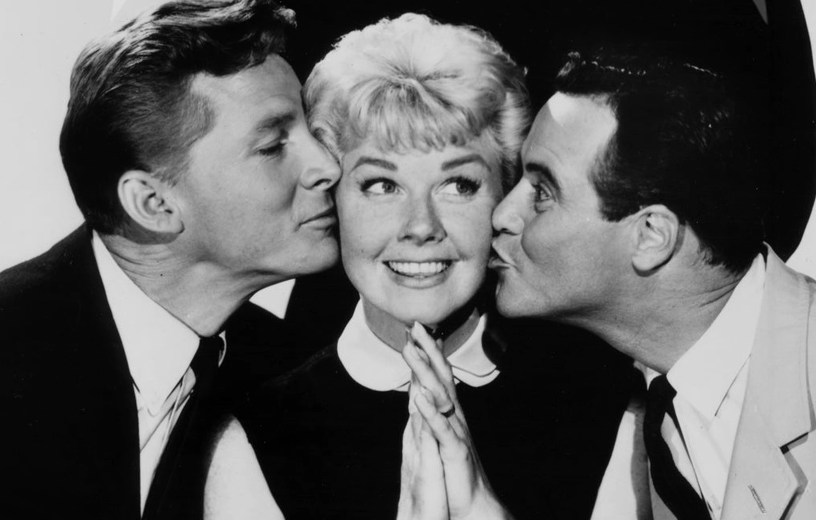
Doris Day, Jack Lemmon, and Ernie Kovacs star in this 1959 romantic comedy about a small town business owner who has to go up against a devious, New York railroad tycoon. Inspired to showcase the wholesome, nostalgic life in rural America, director Richard Quine filmed a large portion of the movie on location in Connecticut, using the local townsfolk as extras to add a palatable sense of authenticity to the scenes.
Even with its fairly scattershot plotting, It Happened to Jane provides a fair share of chuckles, as well as dependably disarming performances from Day and Lemmon. And with a large chunk of on-location photography of NYC and rural New England, it makes for a fascinating look at the late-fifties’ idealized vision of America.
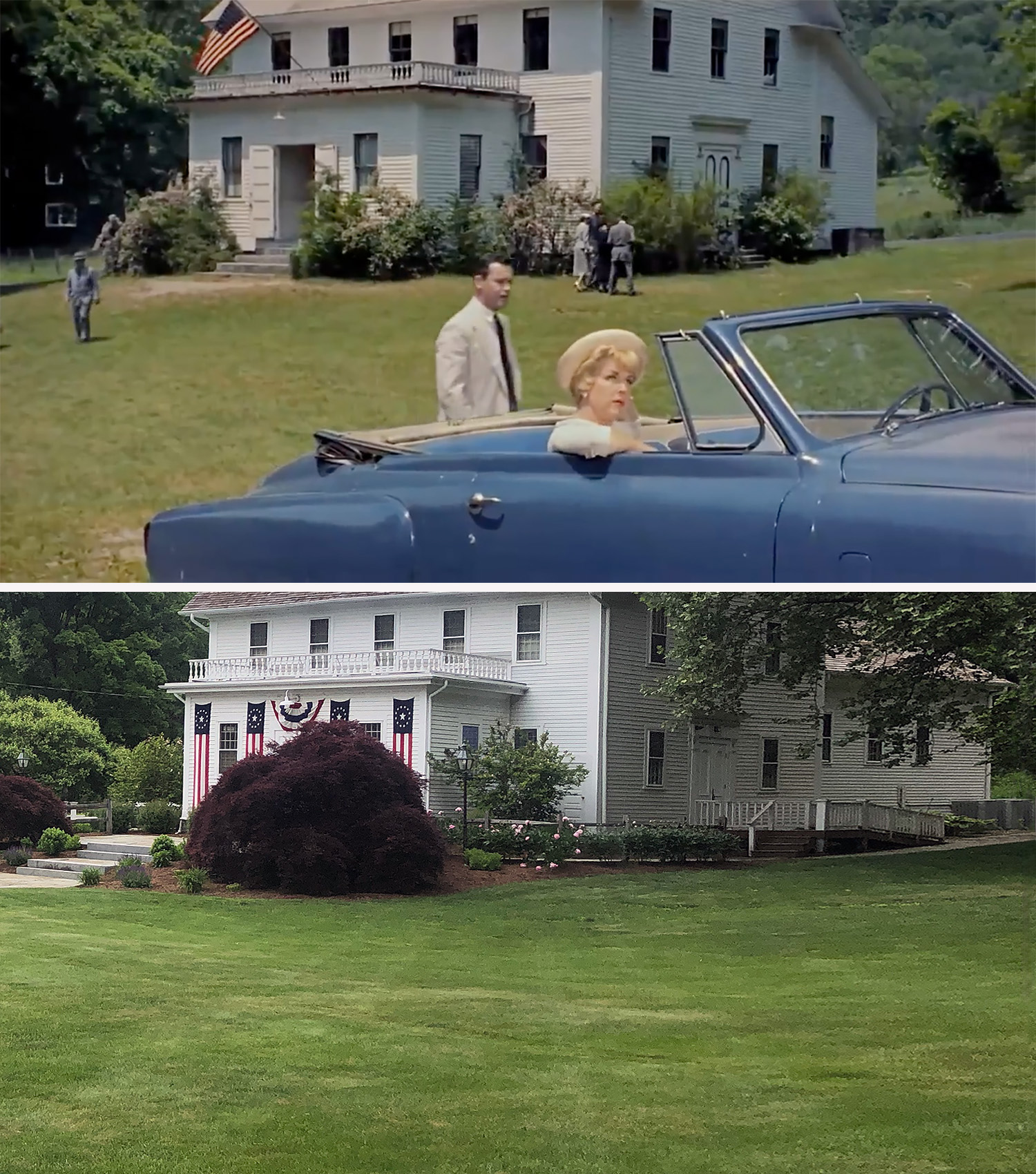
Jane’s Home
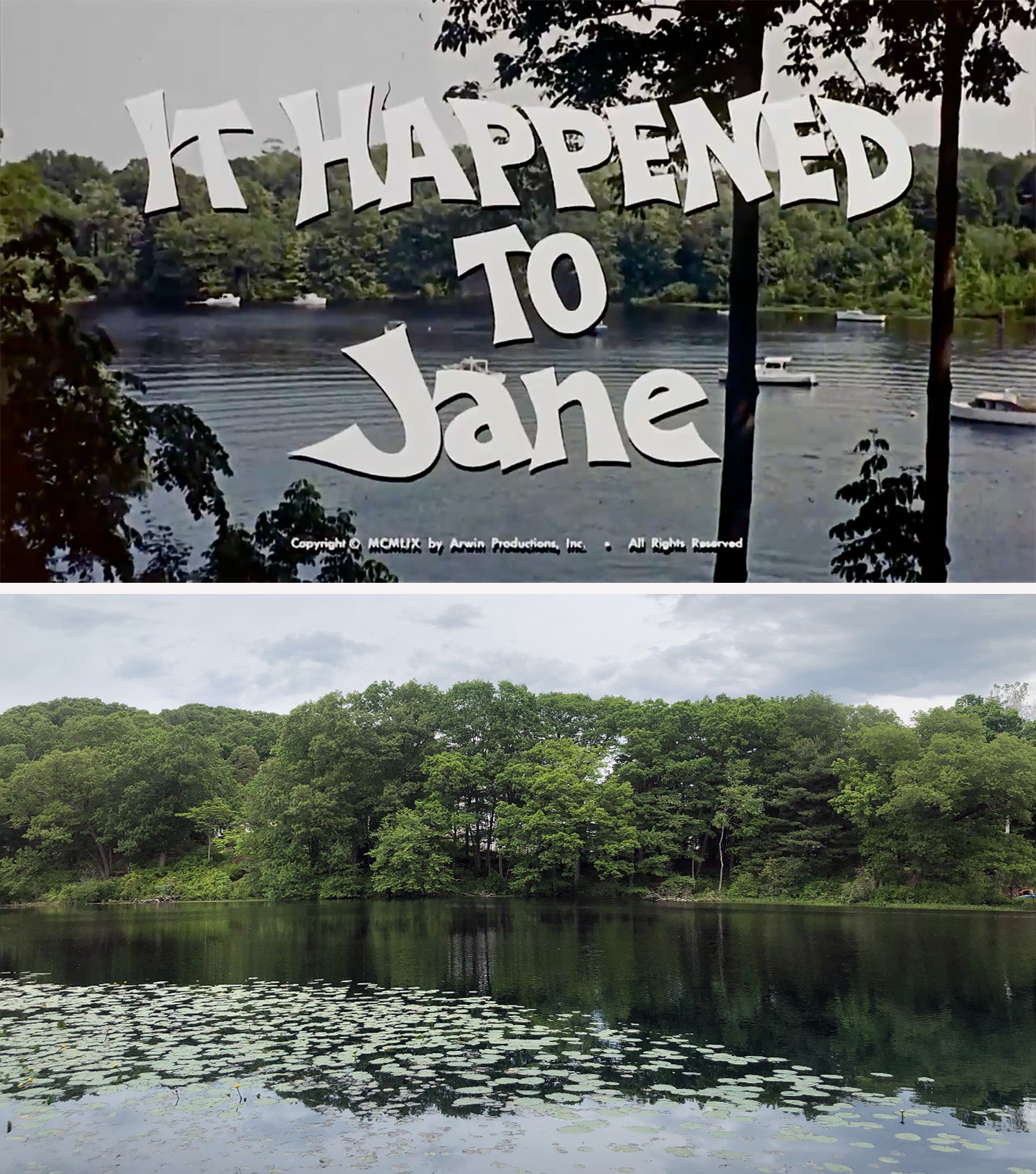
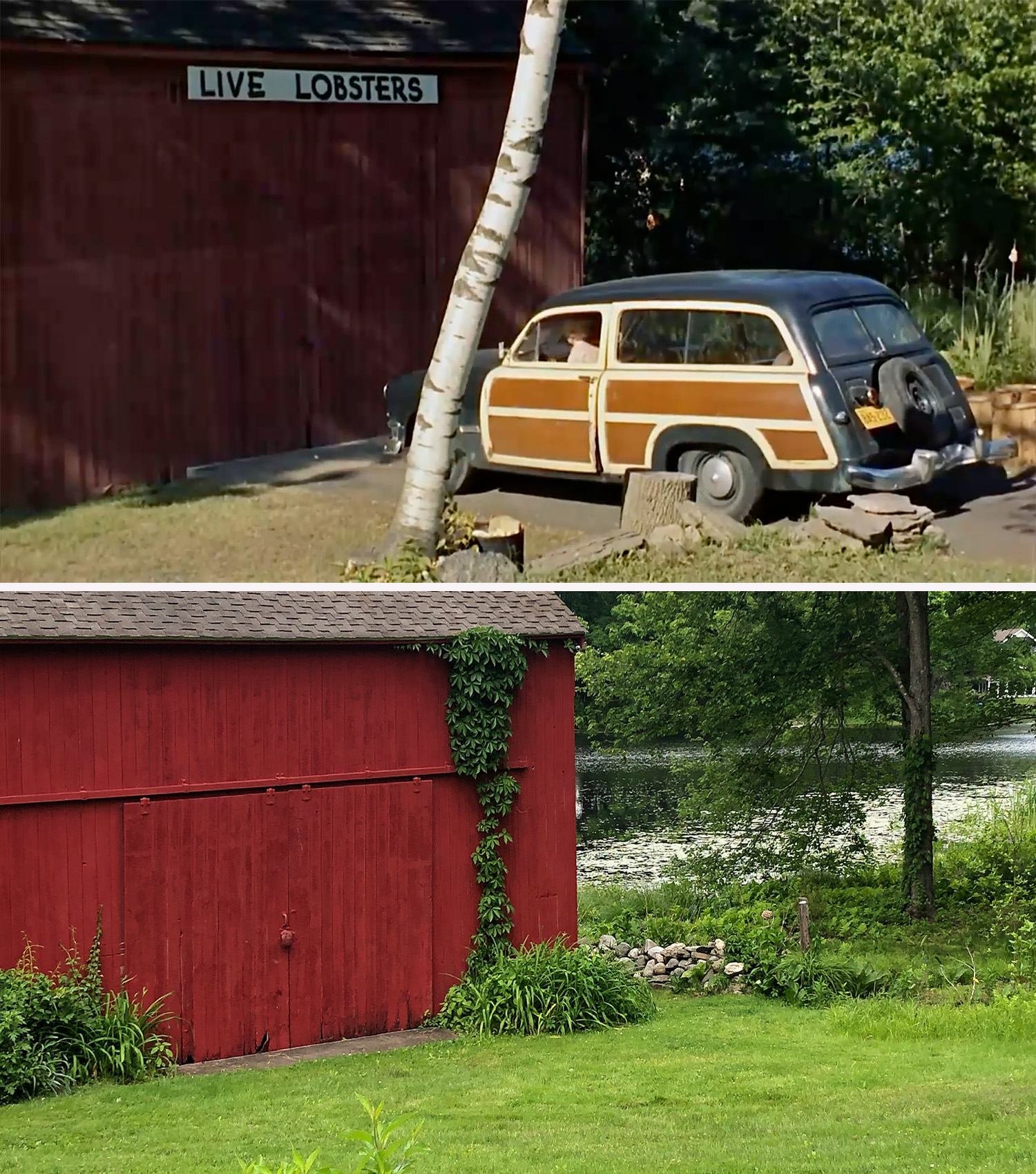
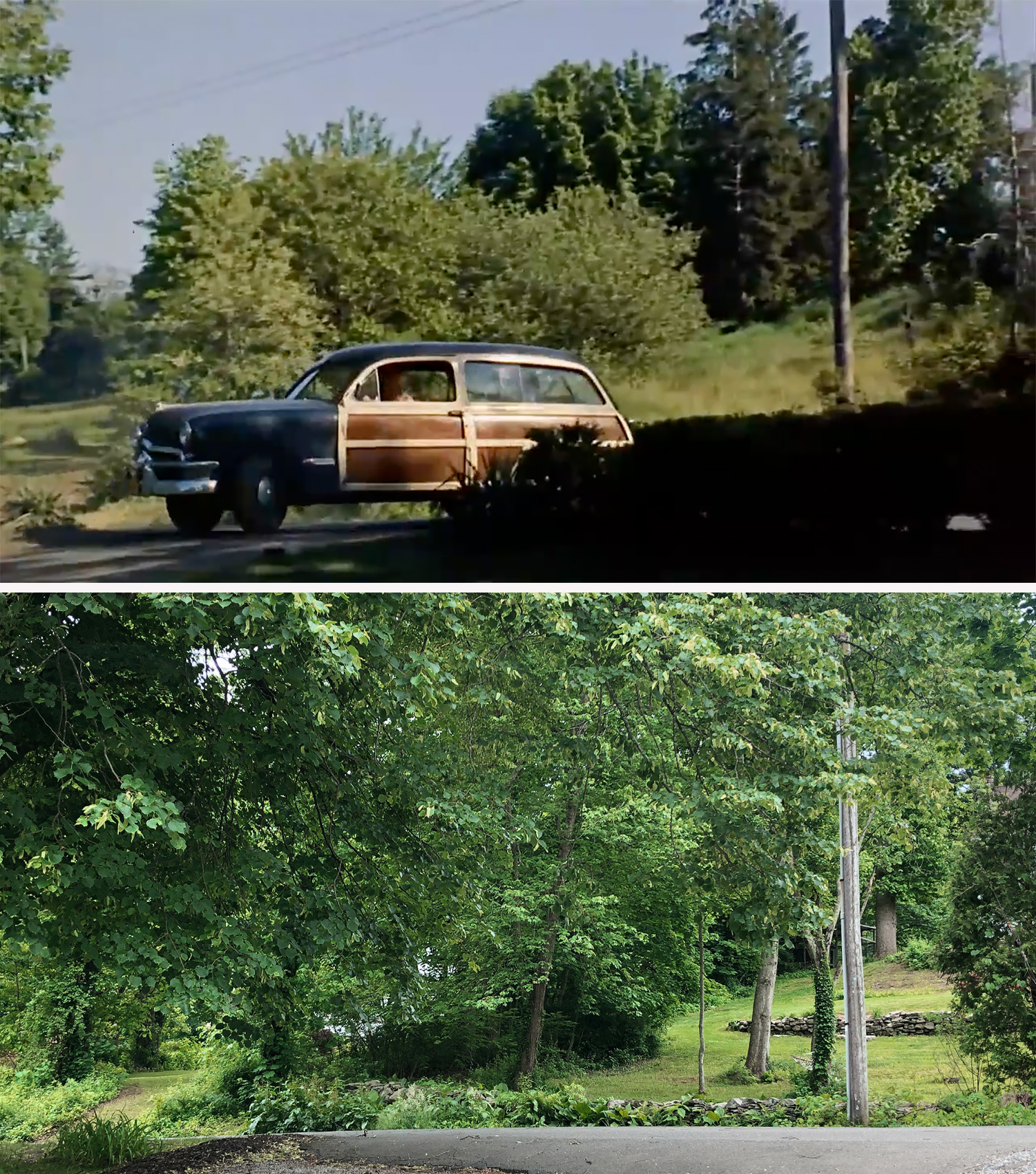
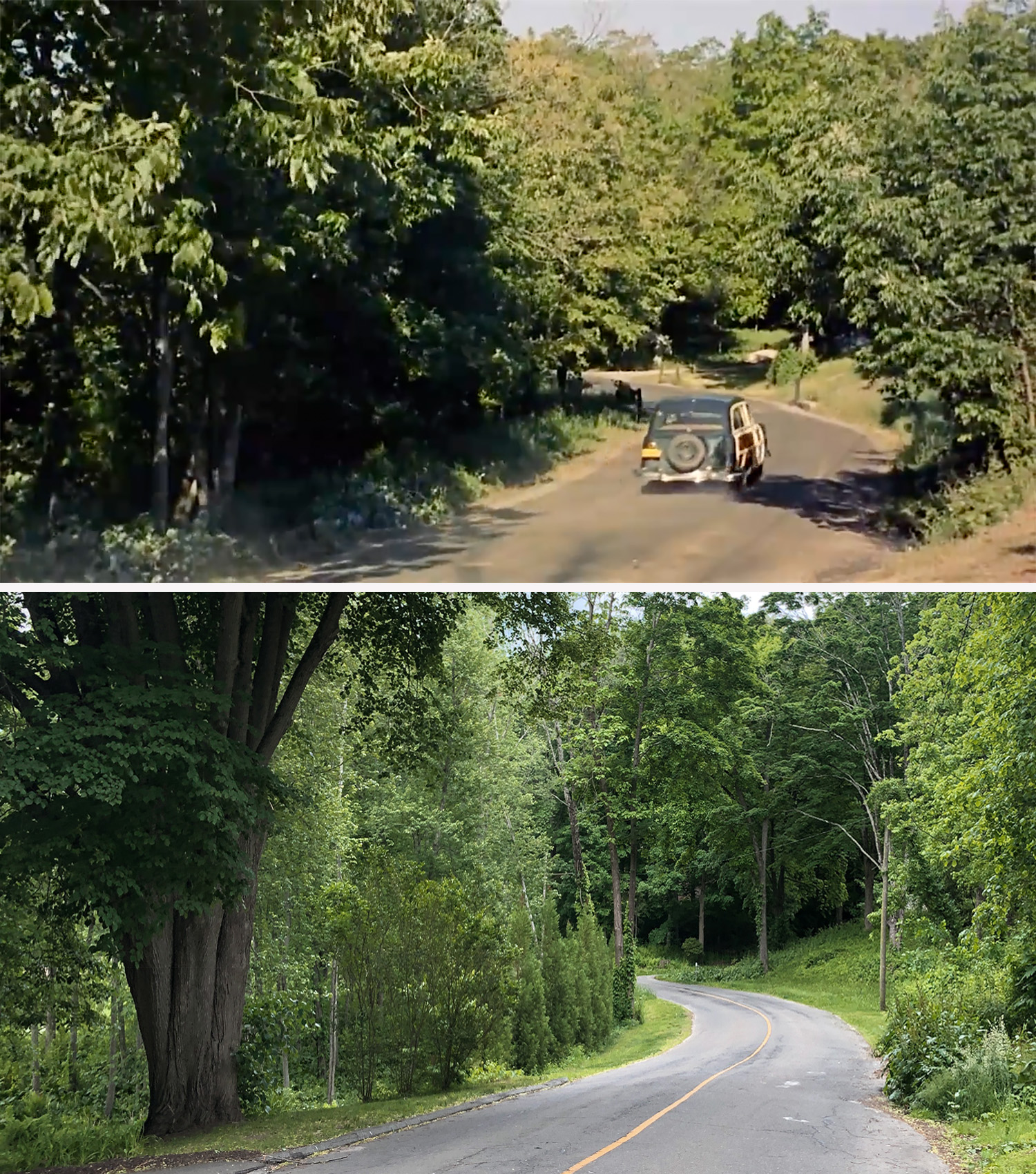
I originally took notice of It Happened to Jane because it was partially filmed in New York City. But once I took a closer look, I realized there was actually very little footage of the city, and of that footage, it was all done by a second-unit team without any of the principals involved. Regardless, I still decided to go ahead with my research since so much of the movie was shot on location on the East Coast.
It’s long been known that the majority of the footage of the fictional Maine town, Cape Anne, was taken at Chester, Connecticut, about two and a half hours away from NYC. And while not technically part of the “New York Tri-State area,” the town was close enough to the Big Apple that it still felt like an appropriate entry onto this website.
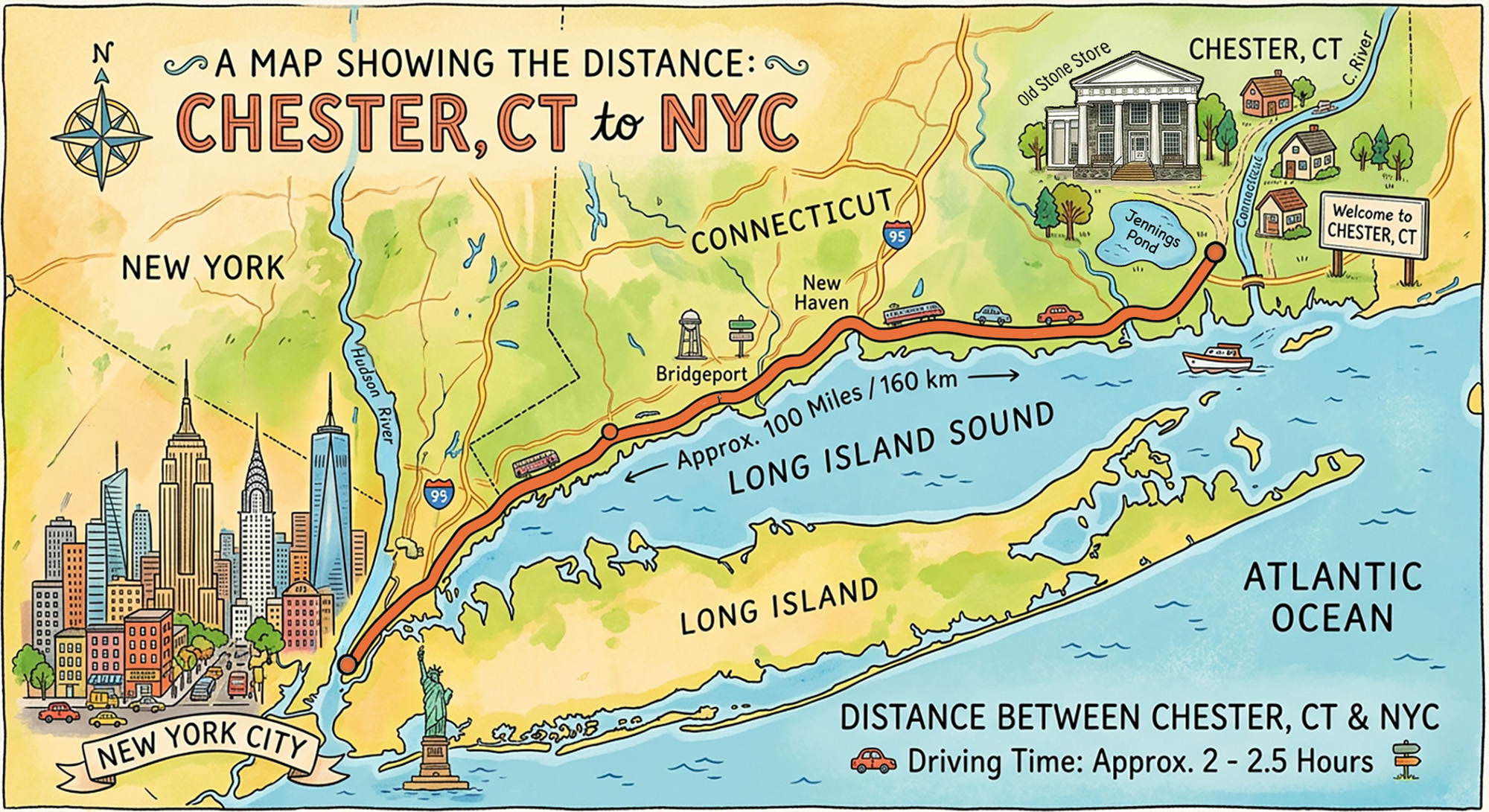
I believe from the get-go, it was widely publicized that It Happened to Jane was filmed in Chester, but there wasn’t a whole lot of real specifics out there. Fortunately, the New England town is fairly small, so I was able to identify several of the locations within minutes of exploring the streets in Google Maps. But when it came to the location of Jane’s home, I couldn’t figure out where that was, or even if it was in the town of Chester.
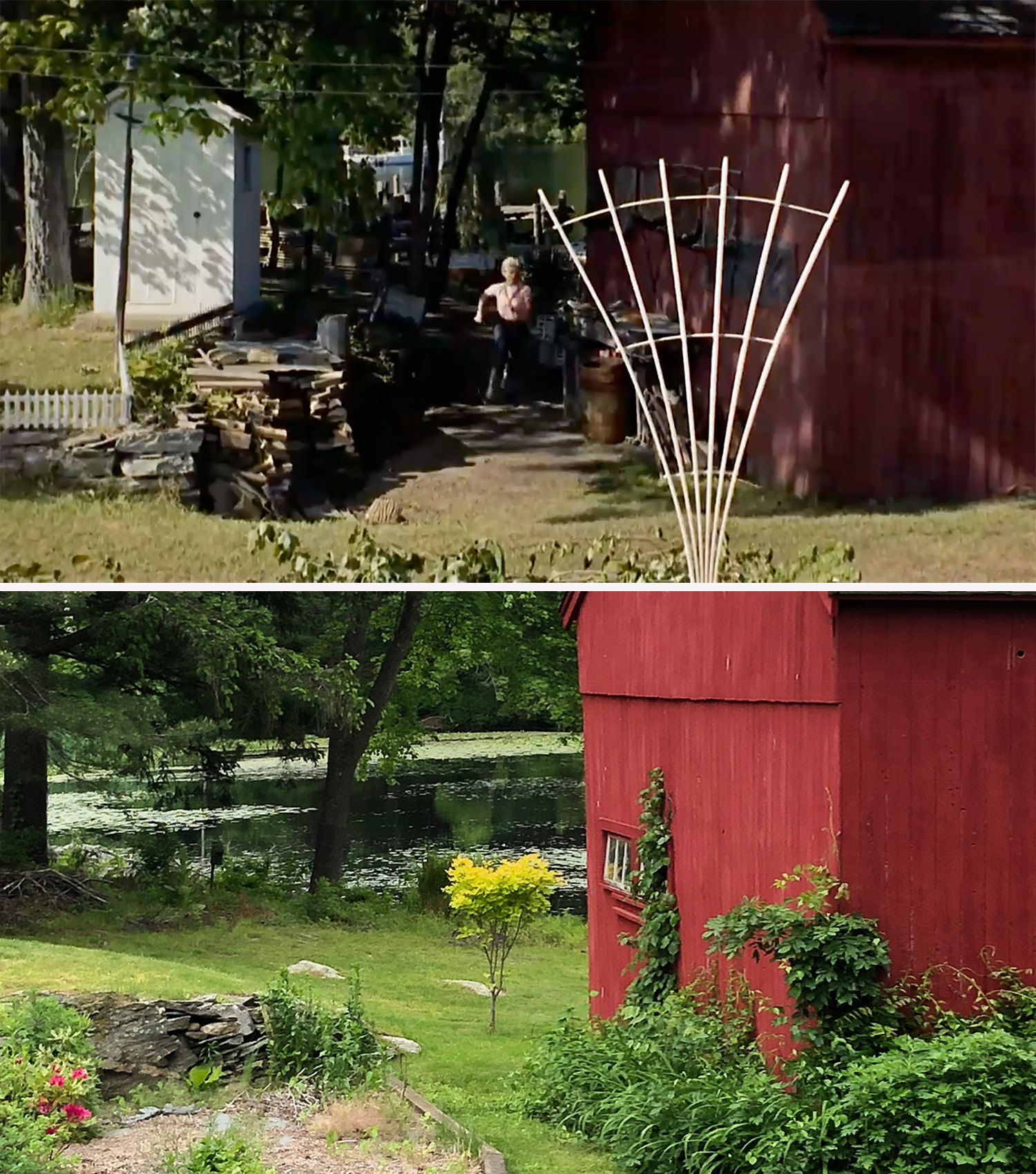
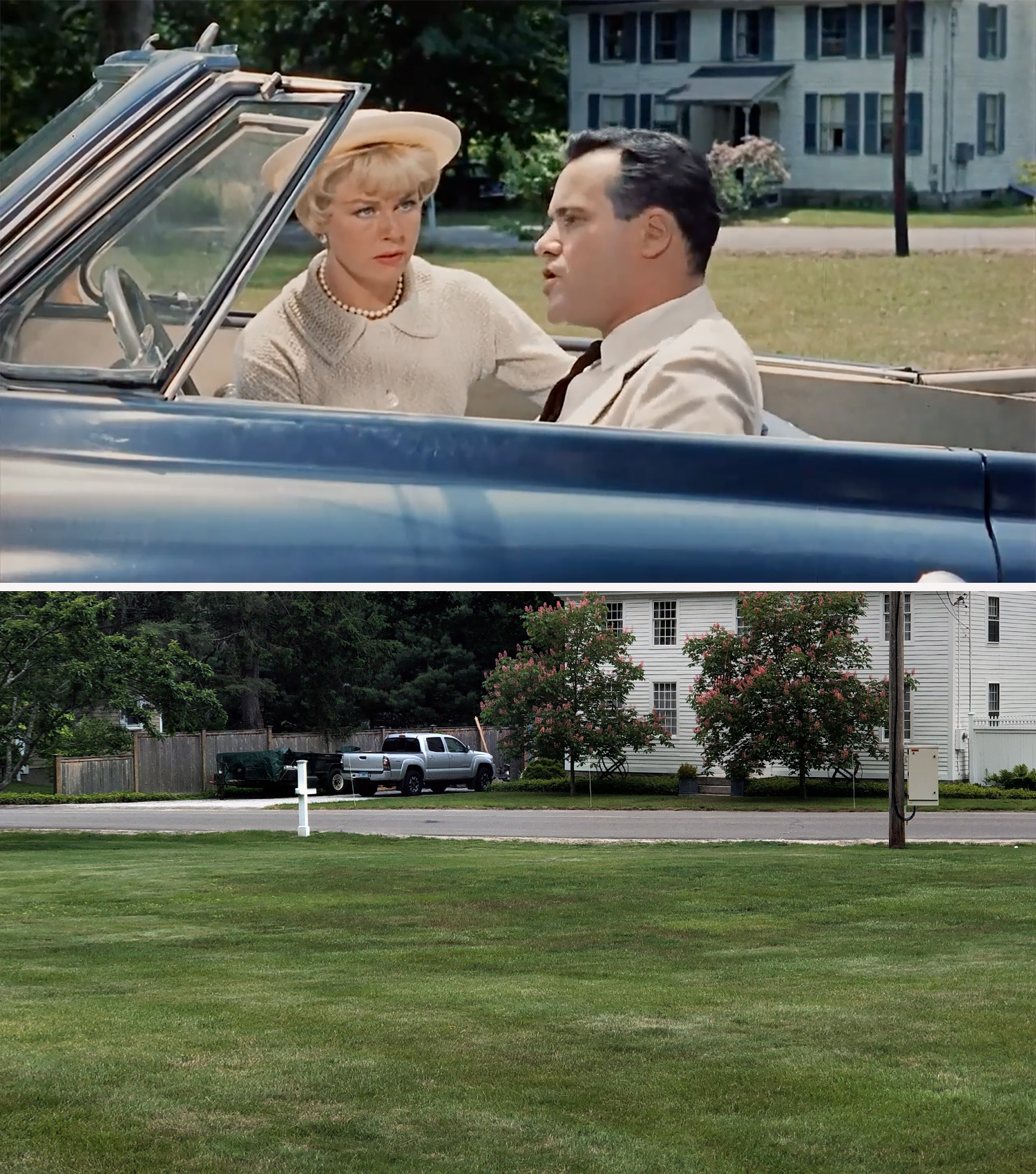
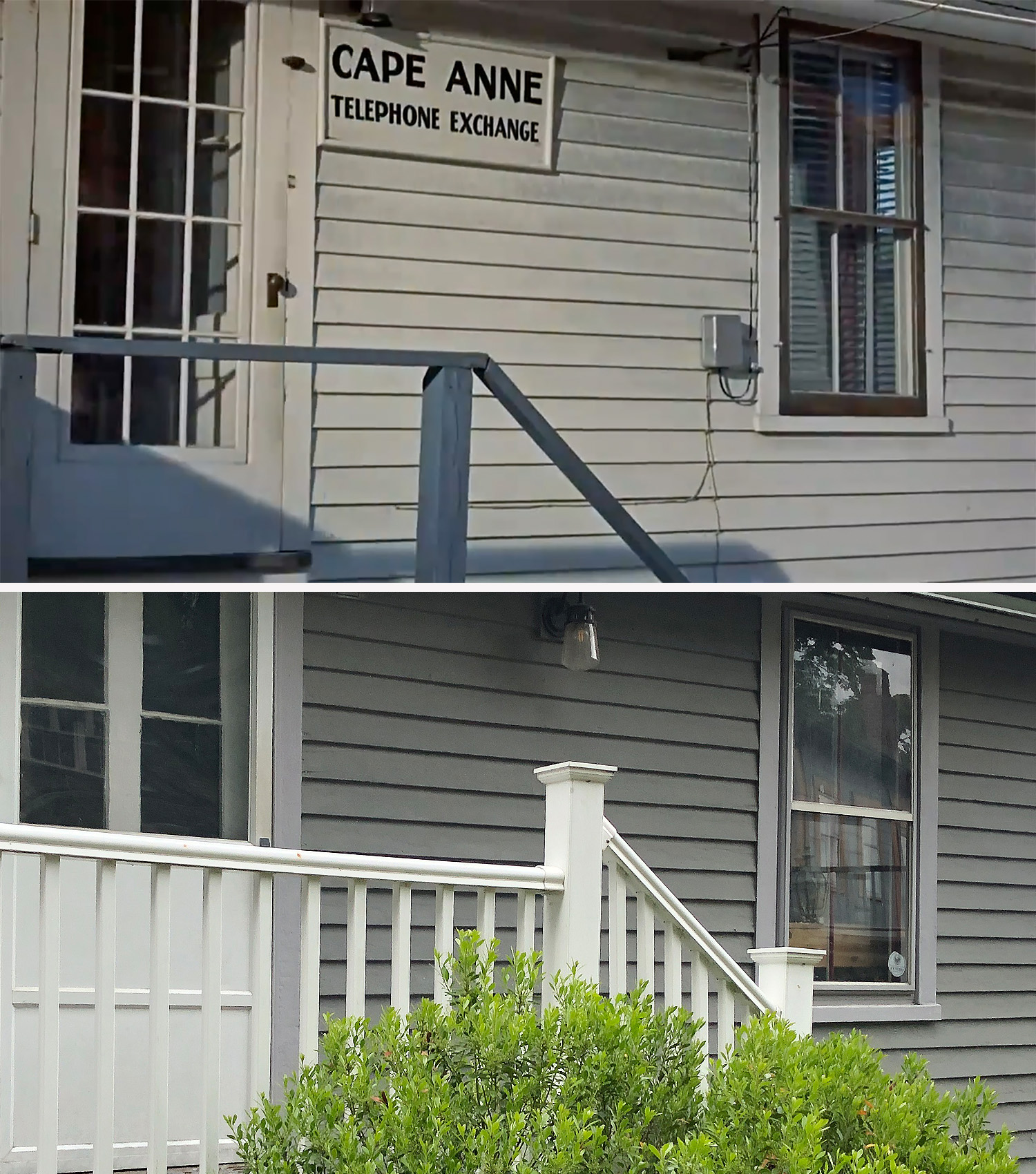
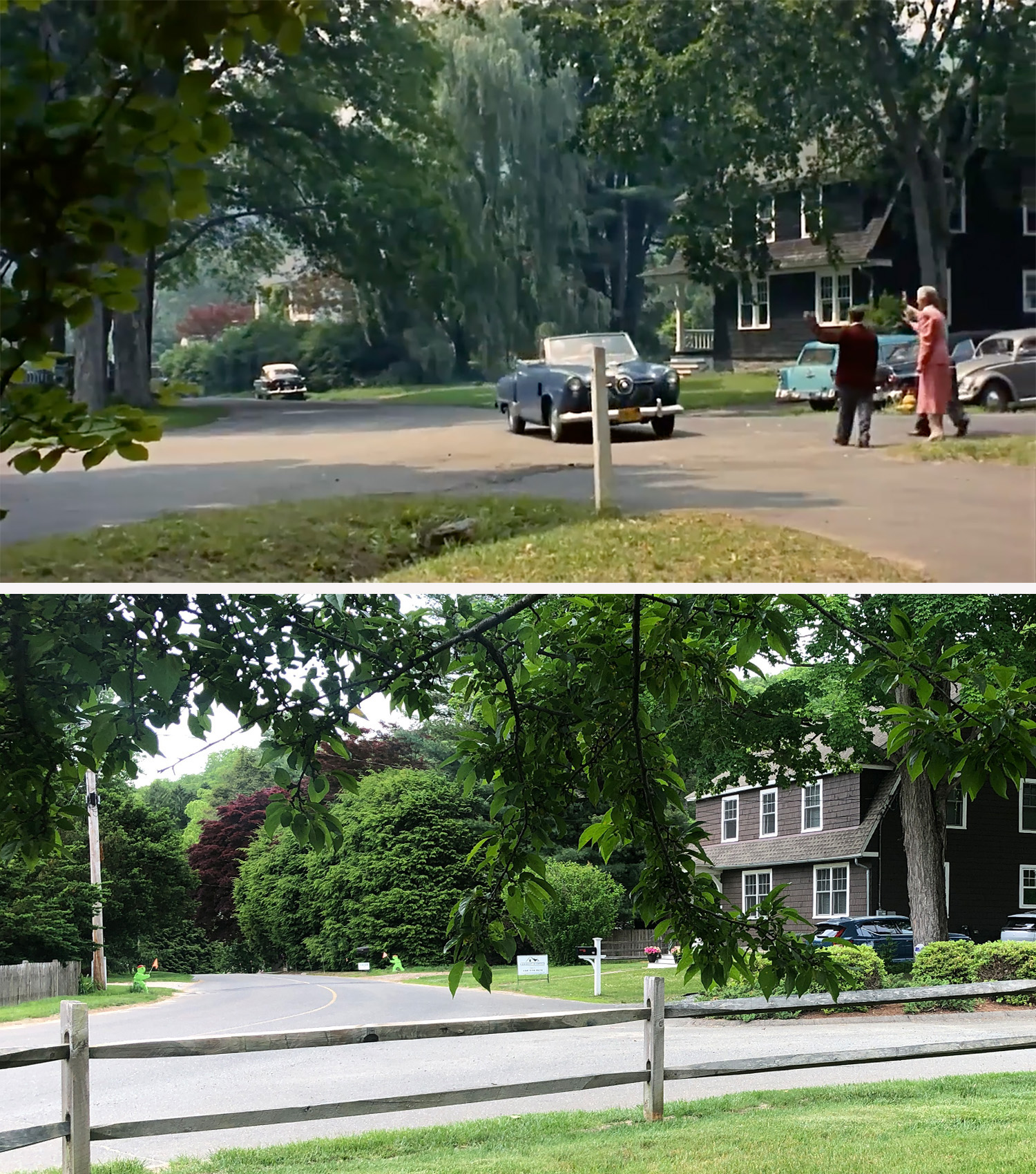
In fact, there were several spots that were still missing when I visited the Eastern Connecticut hamlet in May of 2026. But after talking to the friendly folks there —in particular the curator of the Chester Historical Society, Diane Lindsay— I was informed of the location of pretty much every missing spot from the film. Diane was especially knowledgeable of the “Jane’s home” location since her grandmother used to live directly across the street. (The crew even borrowed her wheelbarrow for one of the scenes.)

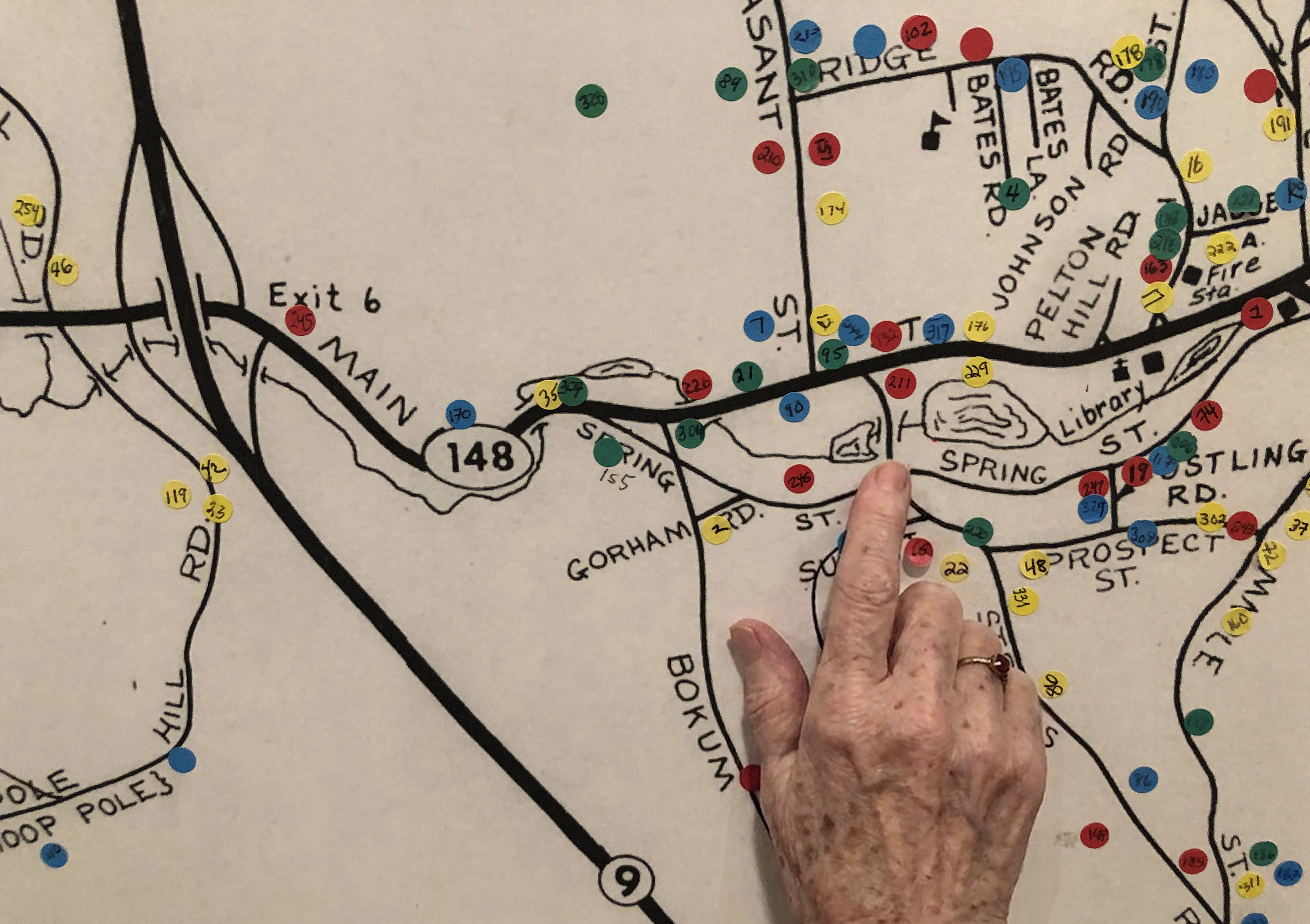
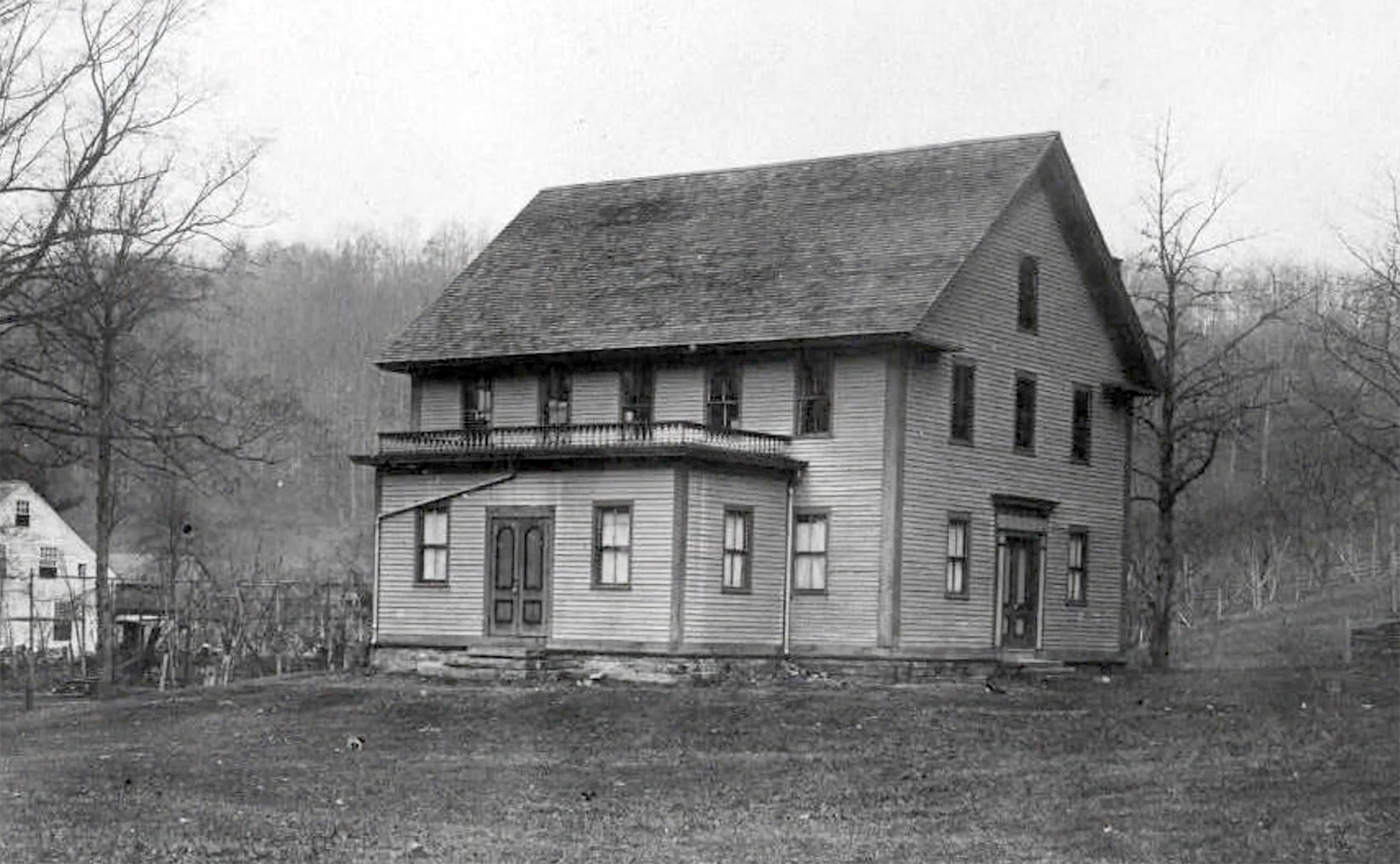
Luckily, there was a large, hand-drawn map of the village at the museum, so Diane was able to show me exactly where Jane’s house was, as well as her grandmother’s.
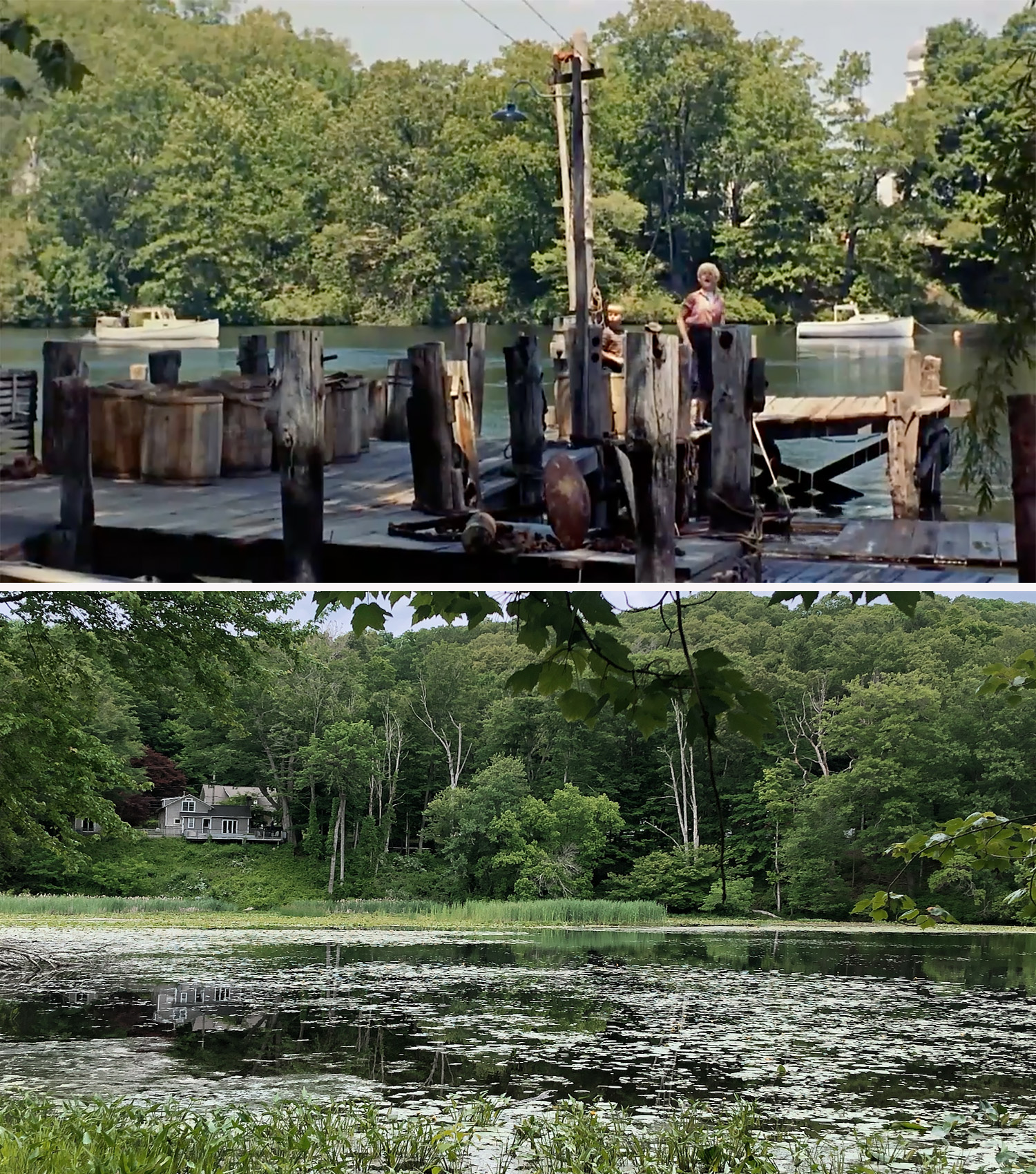
It turns out, I probably never would’ve been able to find the house on my own, because the building has essentially been replaced and looks nothing like the movie. But as a small consolation, the barn is still there, the road still curves the same, and you still have a pristine view of the water.
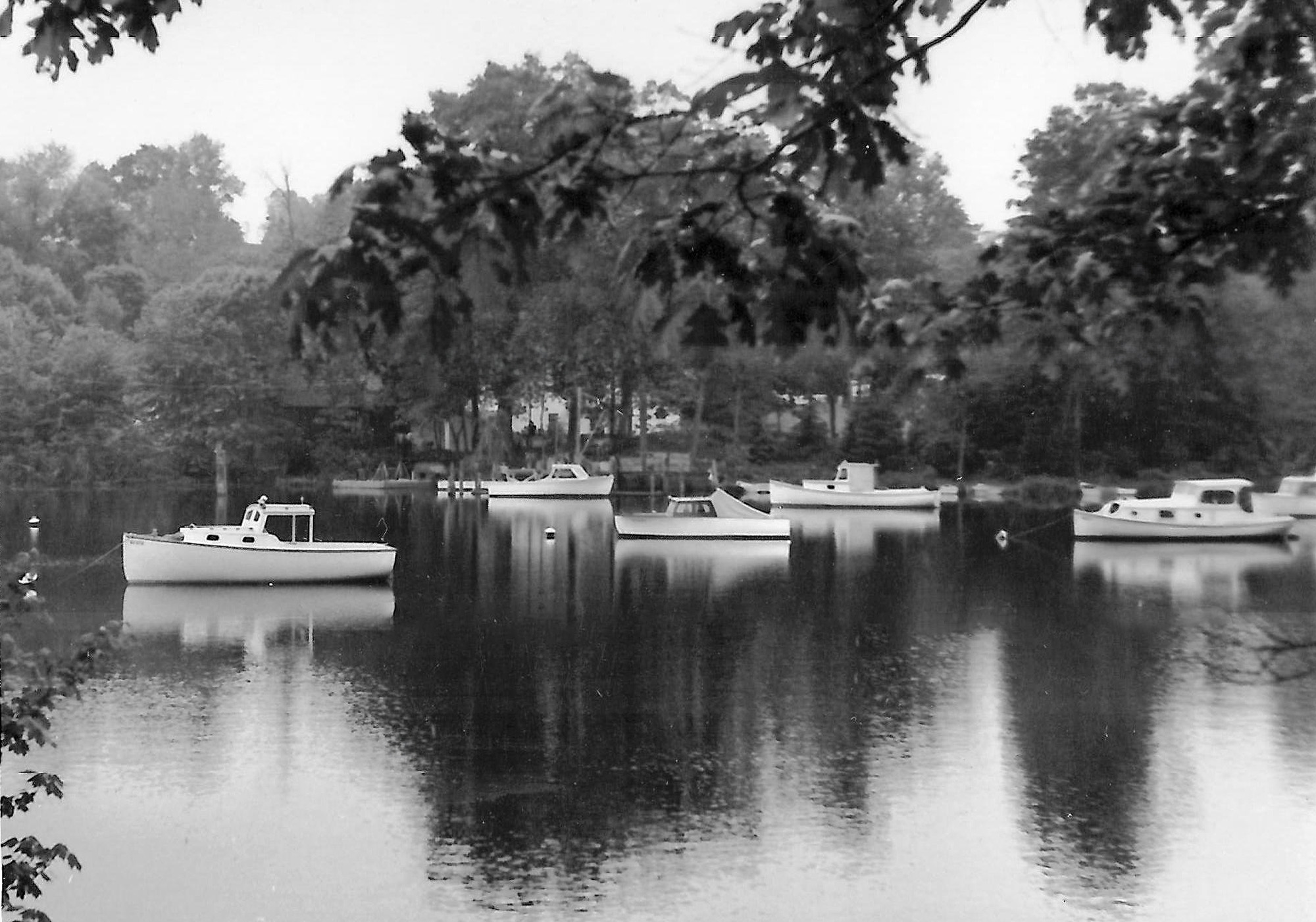
Interestingly, what appears to be a large “ocean harbor” was actually just a small, freshwater pond called Jennings Pond.
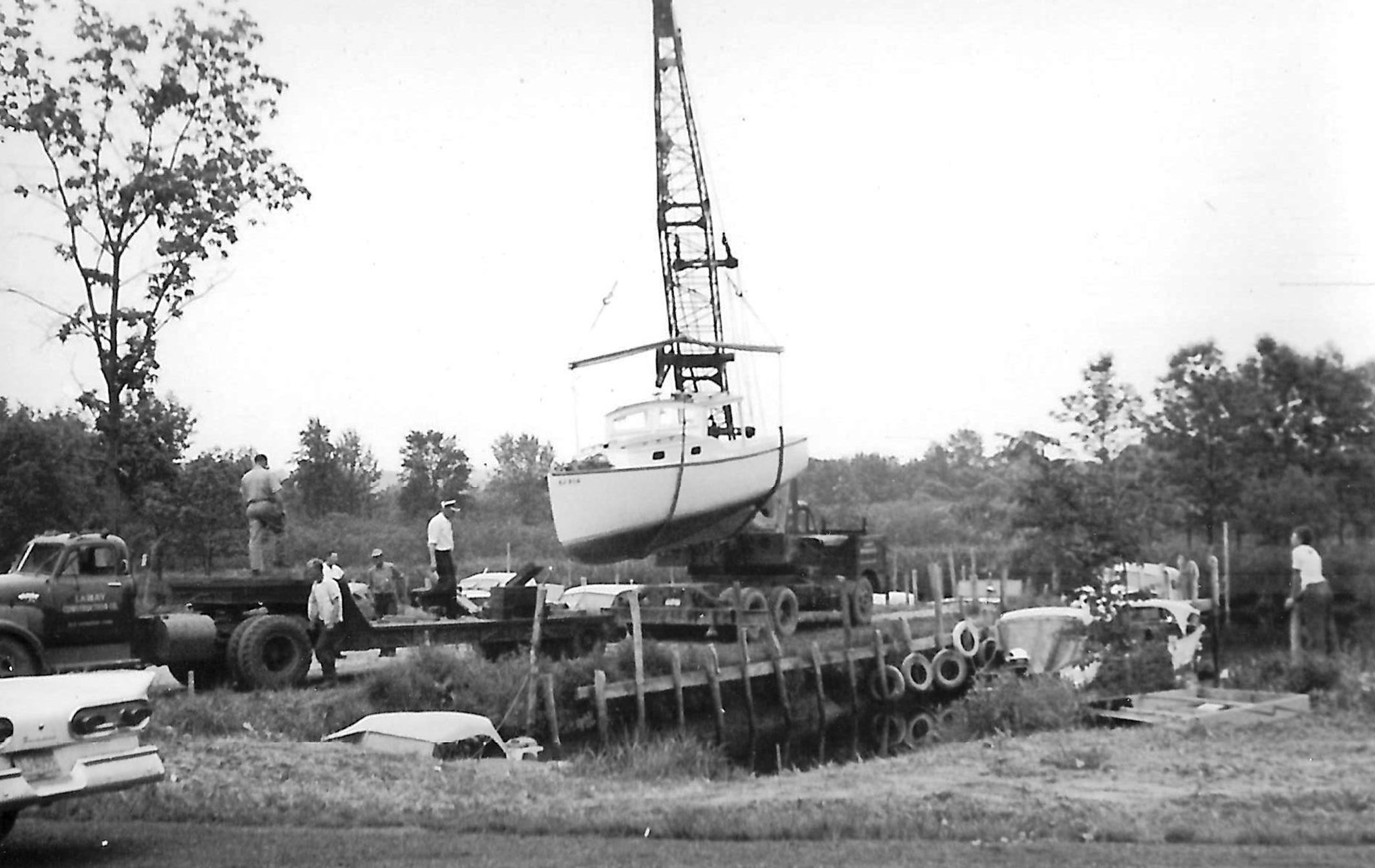
In order to make this functionally-landlocked pond look more like an active coastal hub in Maine, production installed a bunch of docks and boats throughout it.
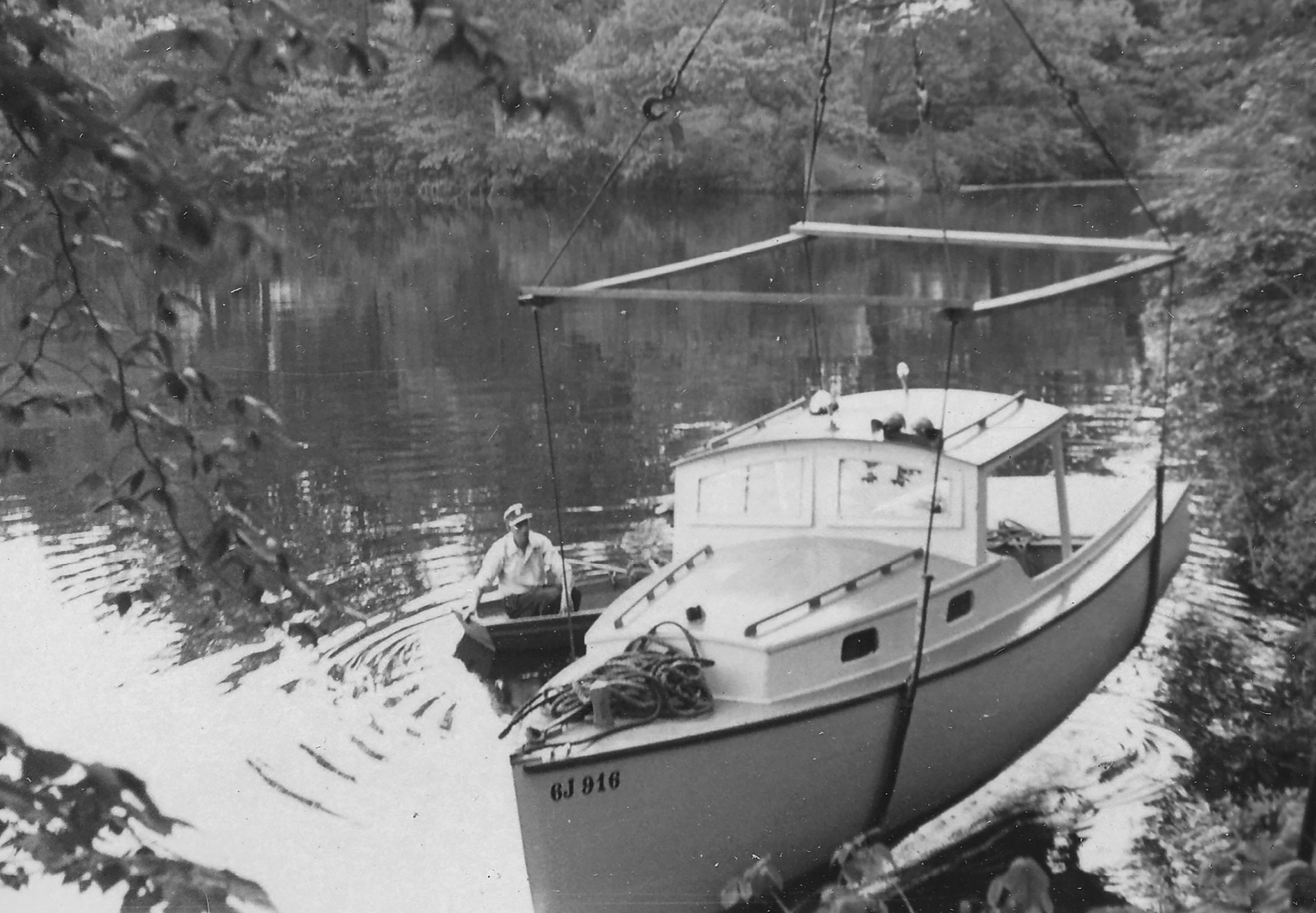
I gotta say, they did a pretty effective job selling Jennings as an ocean inlet, although I’m surprised they didn’t just use a real harbor on the Atlantic coast since it was only about ten miles away.
The Train Depot
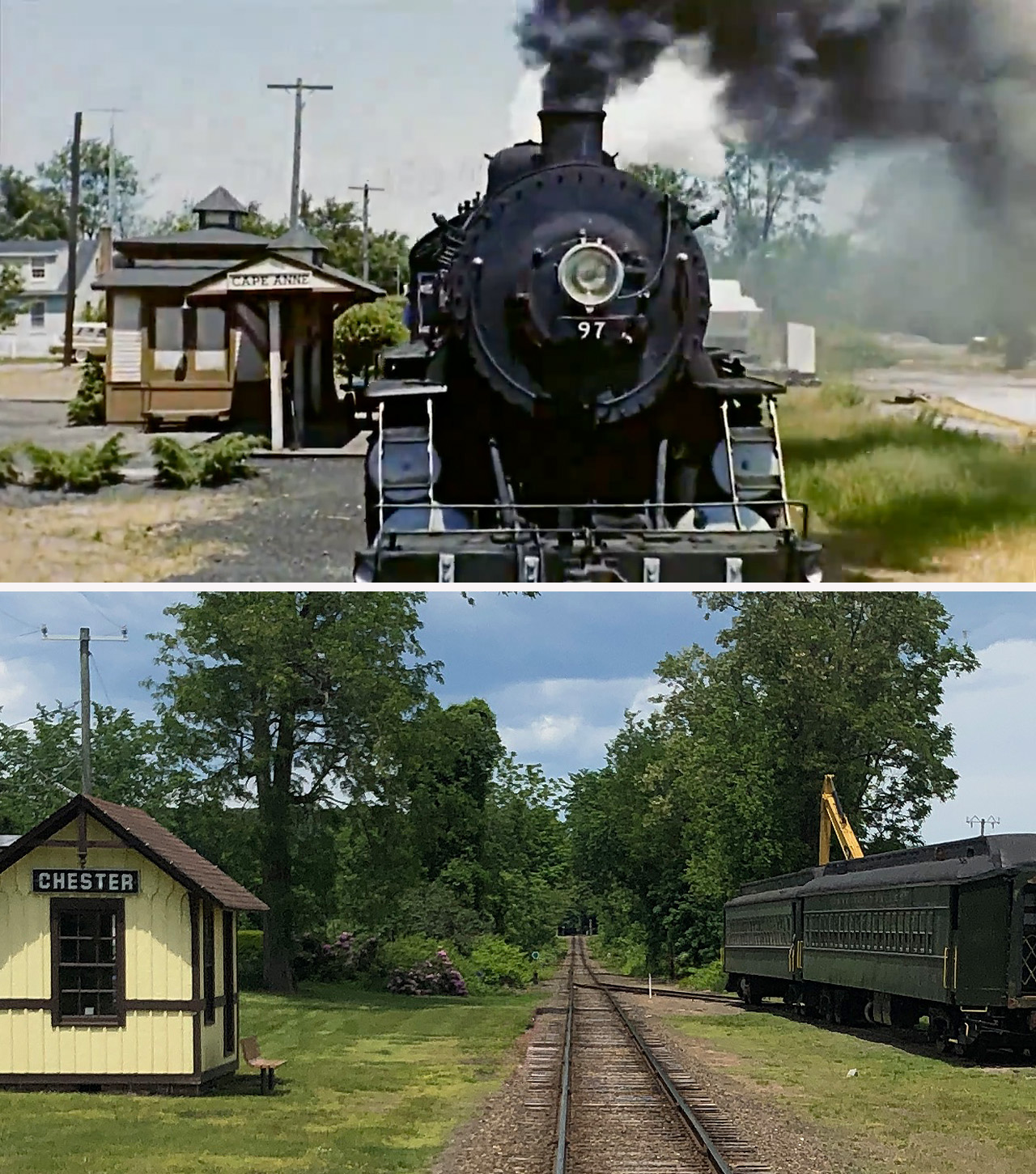
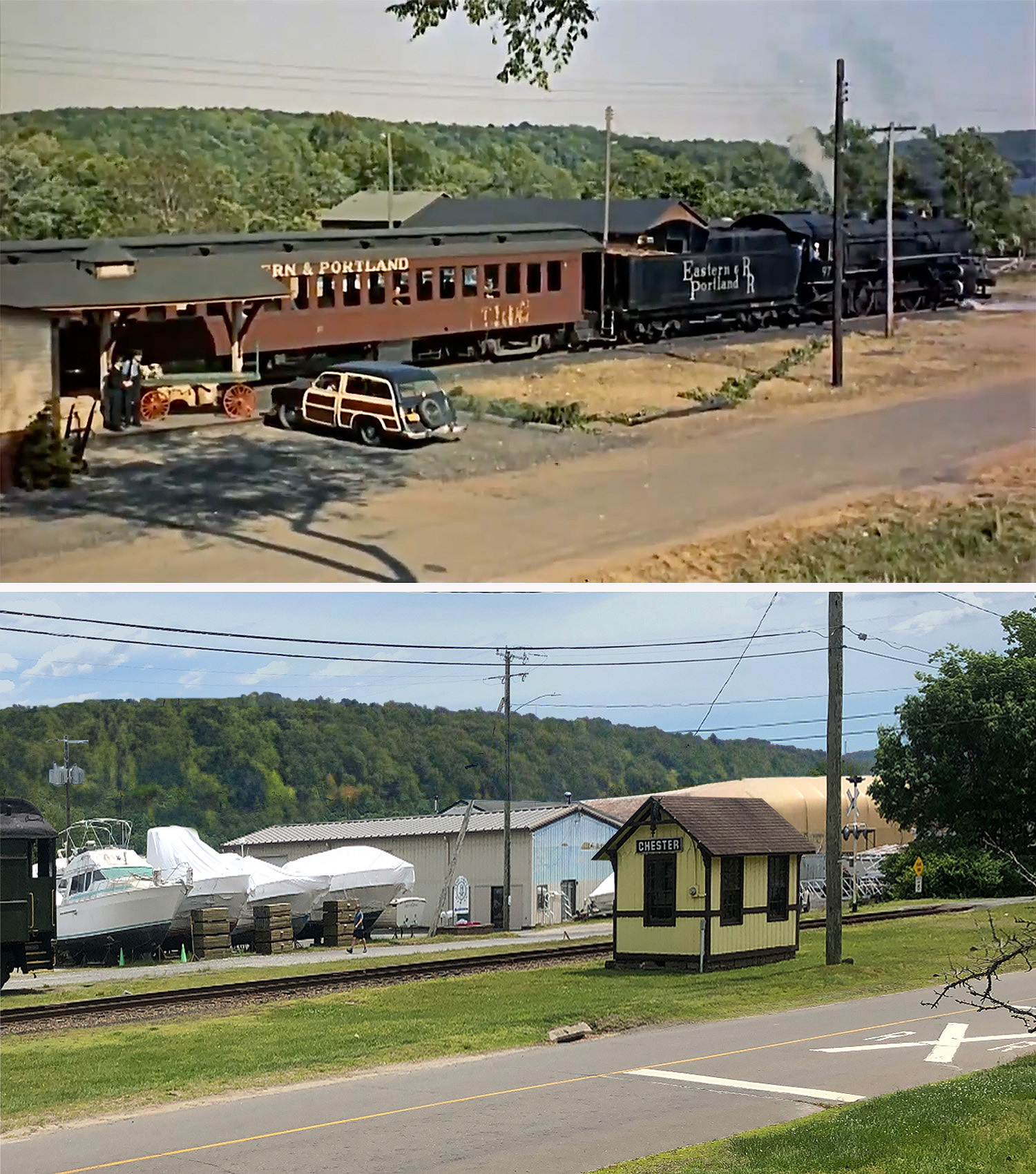
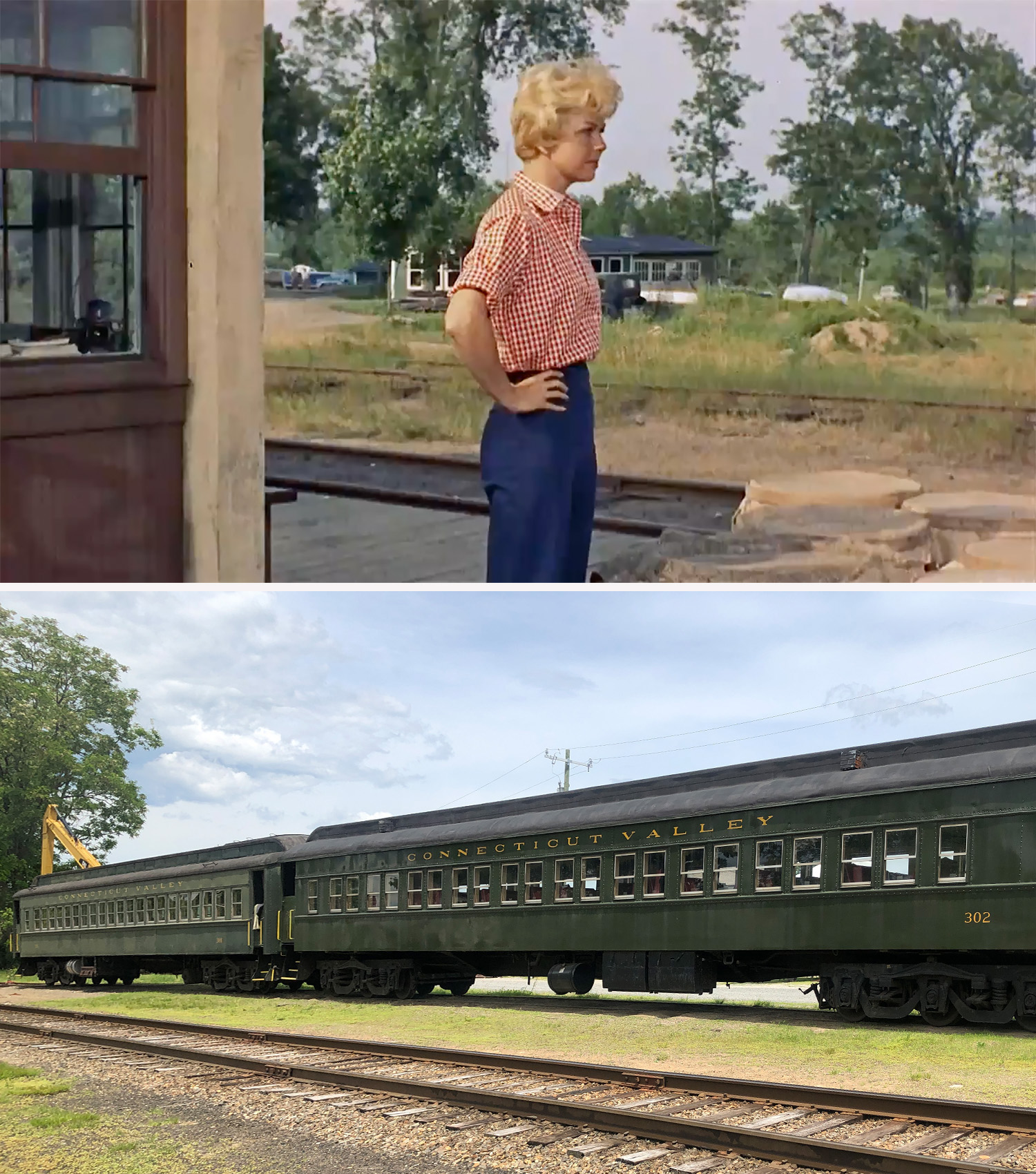
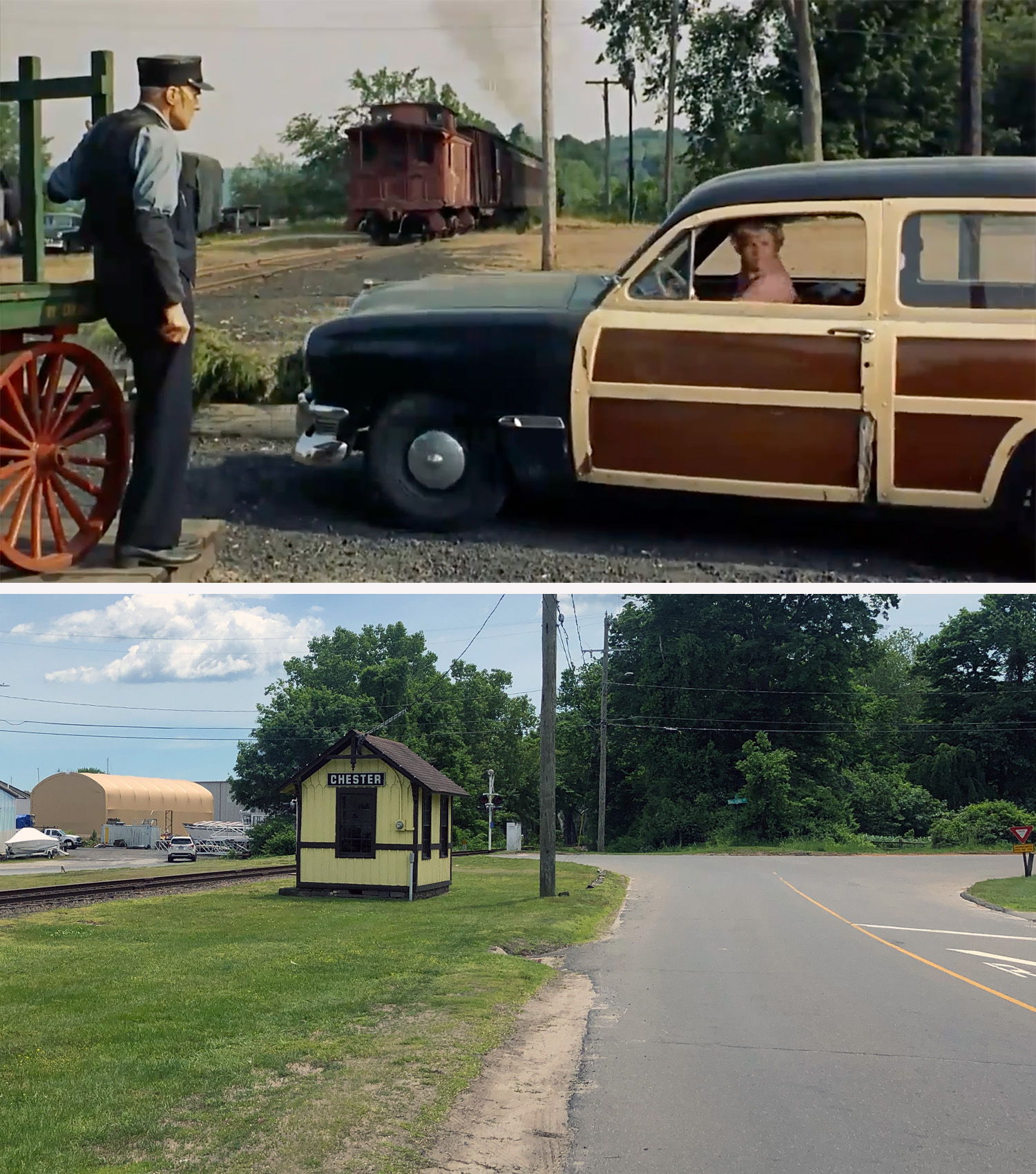
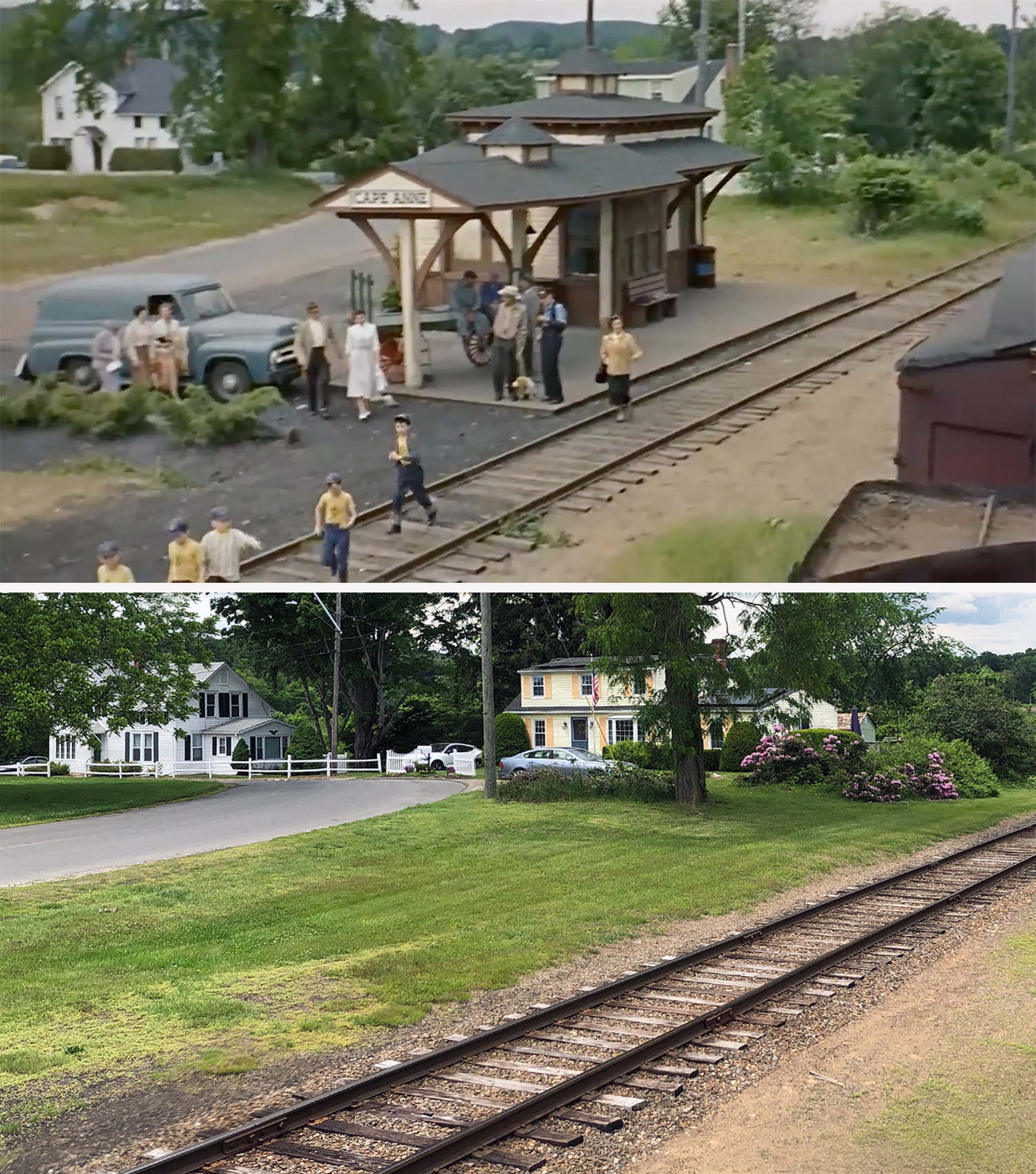
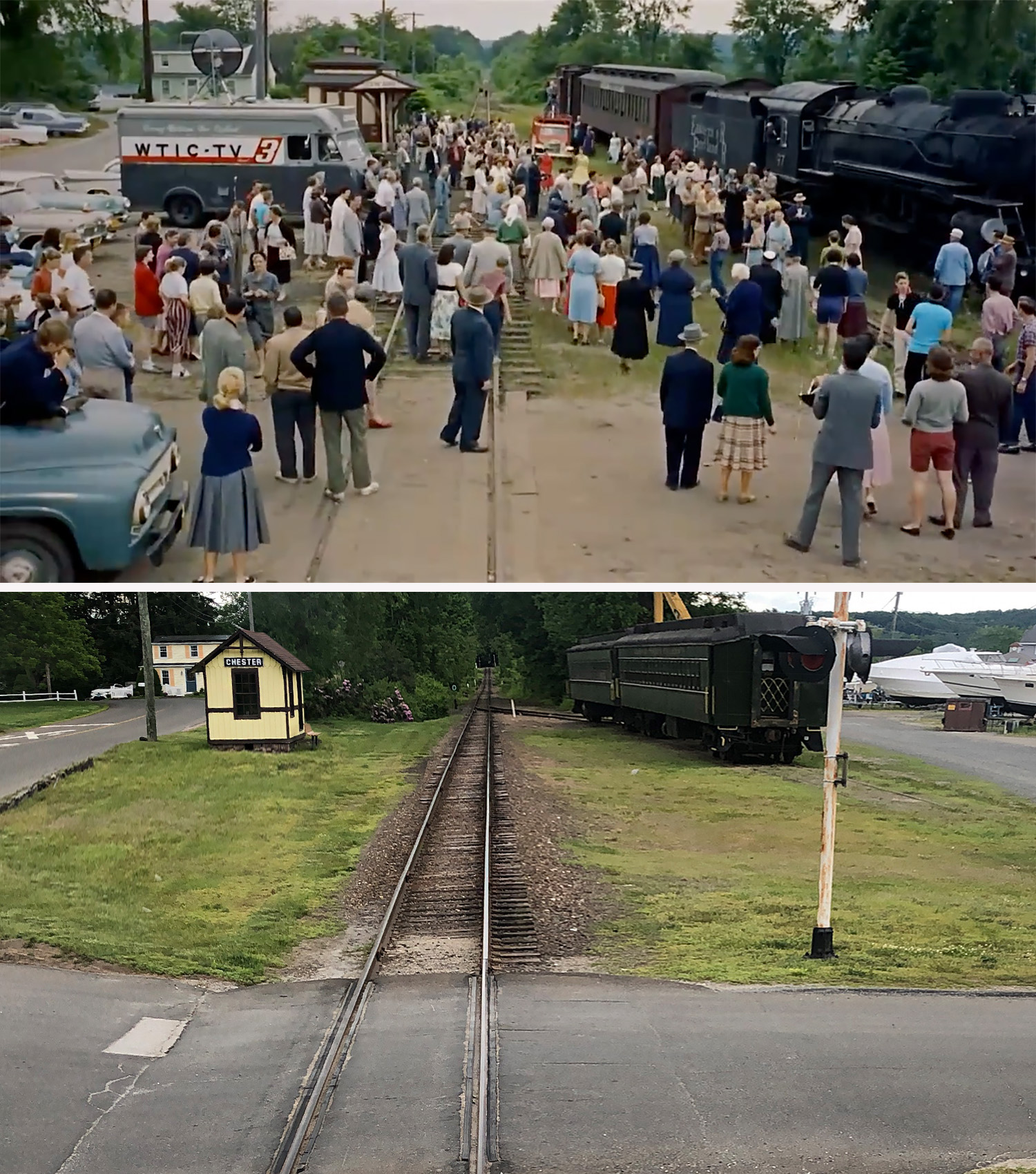
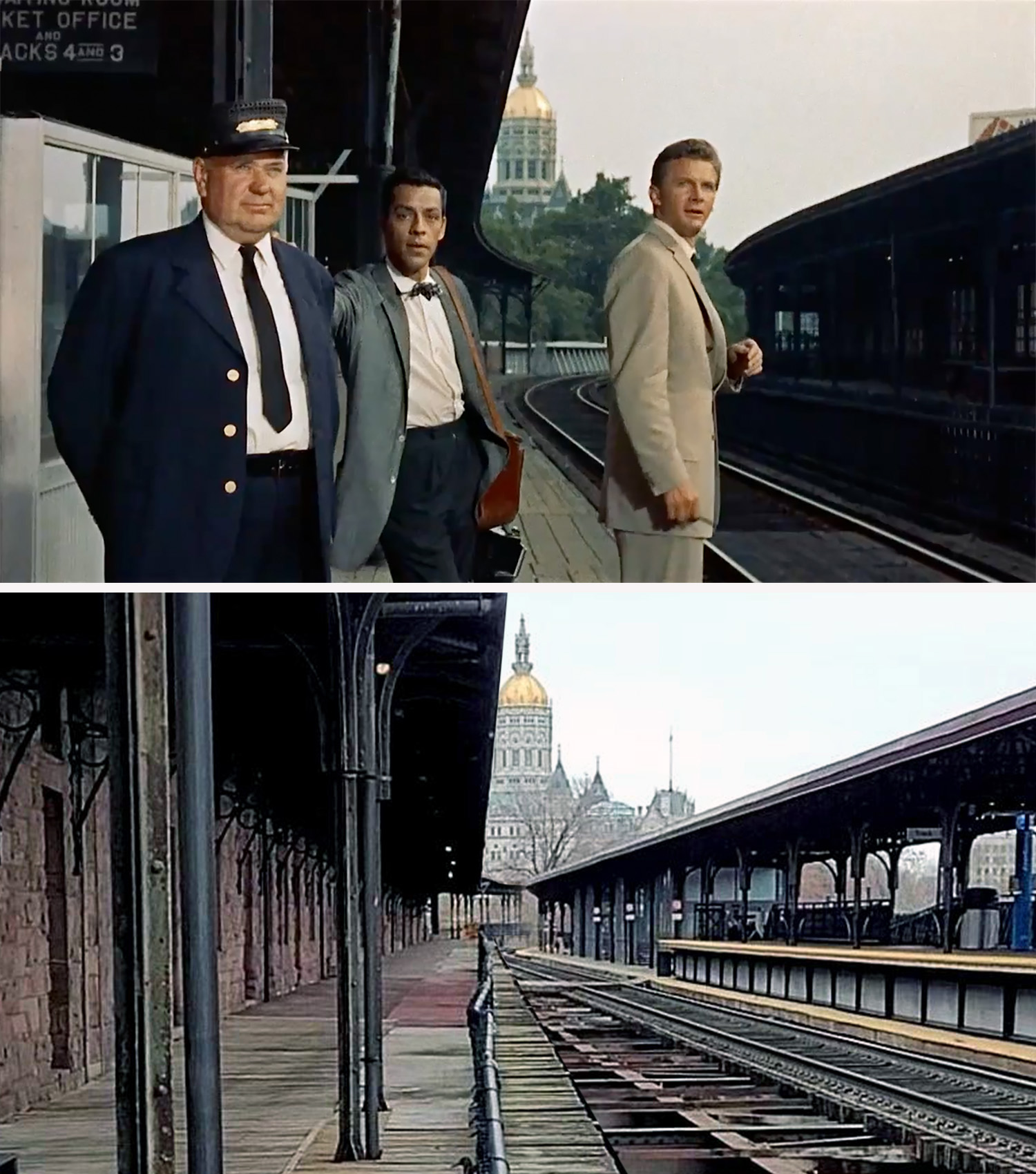
When it came to the location of this “Cape Anne” train depot, most movie websites were vague in their description, and/or offered up conflicting information. All I knew was, it was somewhere outside the Village of Chester, but was still somewhat close.
I eventually figured out the exact location from a train enthusiast website that had a message board discussion about the movie. From the comments on the board, some of which included modern photos of the location, I was able to nail down the precise place used.
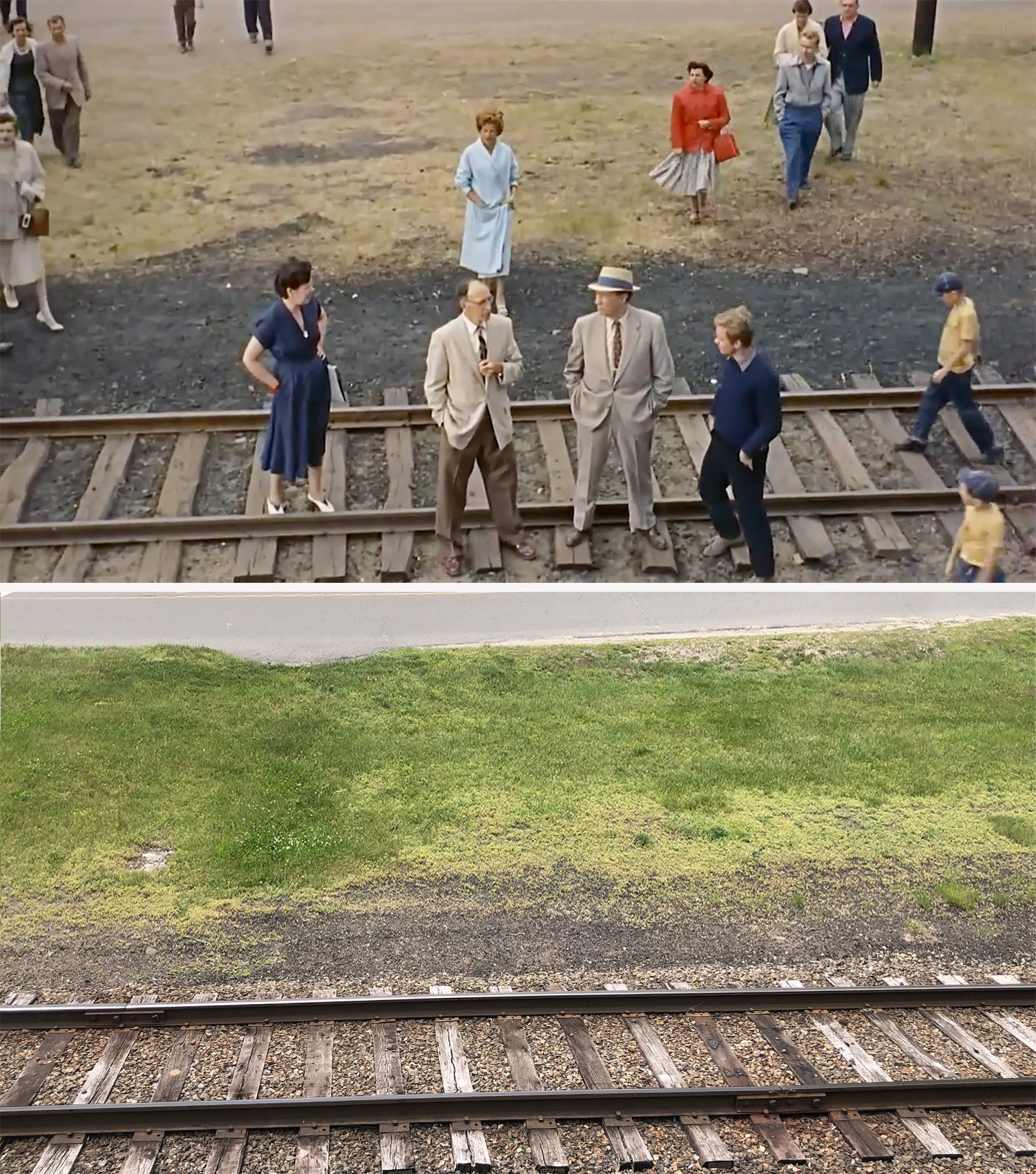
As far as I can tell, the entire depot building was a set built by both the film crew and local carpenters. They had to build the station from scratch since there hadn’t been an official stop at that section of the Connecticut Valley line since the late 19th century. After the building was completed, the crew added soot to the freshly-painted exterior to give it more of an aged look. Also, to make it appear even more old, they used a specially designed cable system to pull down the frame, creating a genuine sag to the roof.
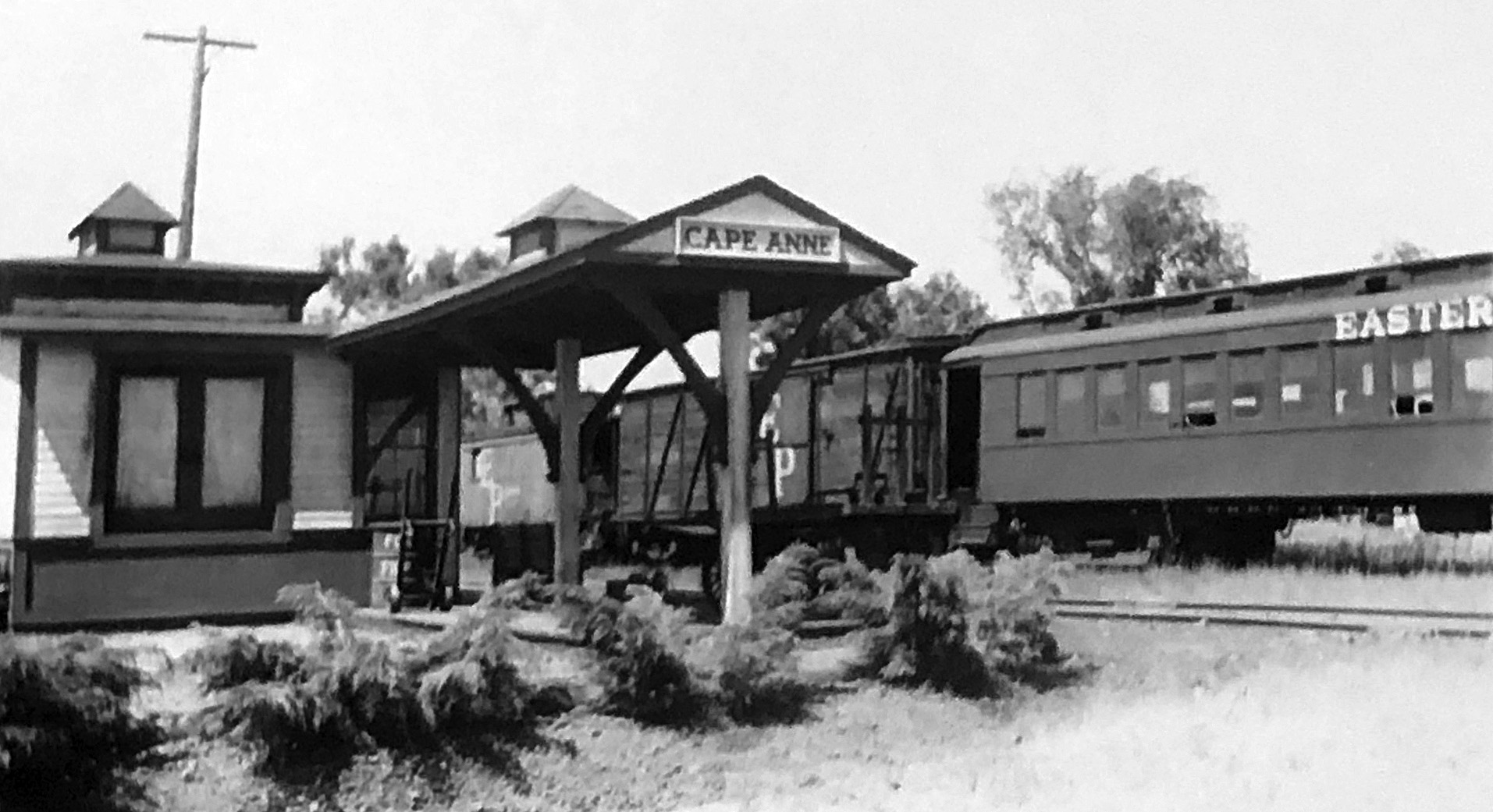
The fake depot is obviously long gone, but as you might’ve noticed, they do have a tiny station building there today, relocated from Quinnipiac Station sometime in the 1990s. Not sure whether the building serves any real function other than being a storage unit. But the historic building is certainly a nice part of the scenery for customers of the Essex Steam Train & Riverboat touring company, which offers a 12-mile roundtrip along the Connecticut River in an antique locomotive.
There’s not a whole lot to match up from the movie in this scene, other than the general layout of the tracks. However, in a later scene, we get a good view of an extant residential home next door on Grote Road. Luckily, aside from a small addition, the house still looks about the same and helped confirm I got the correction location.
Jane Runs Into Town
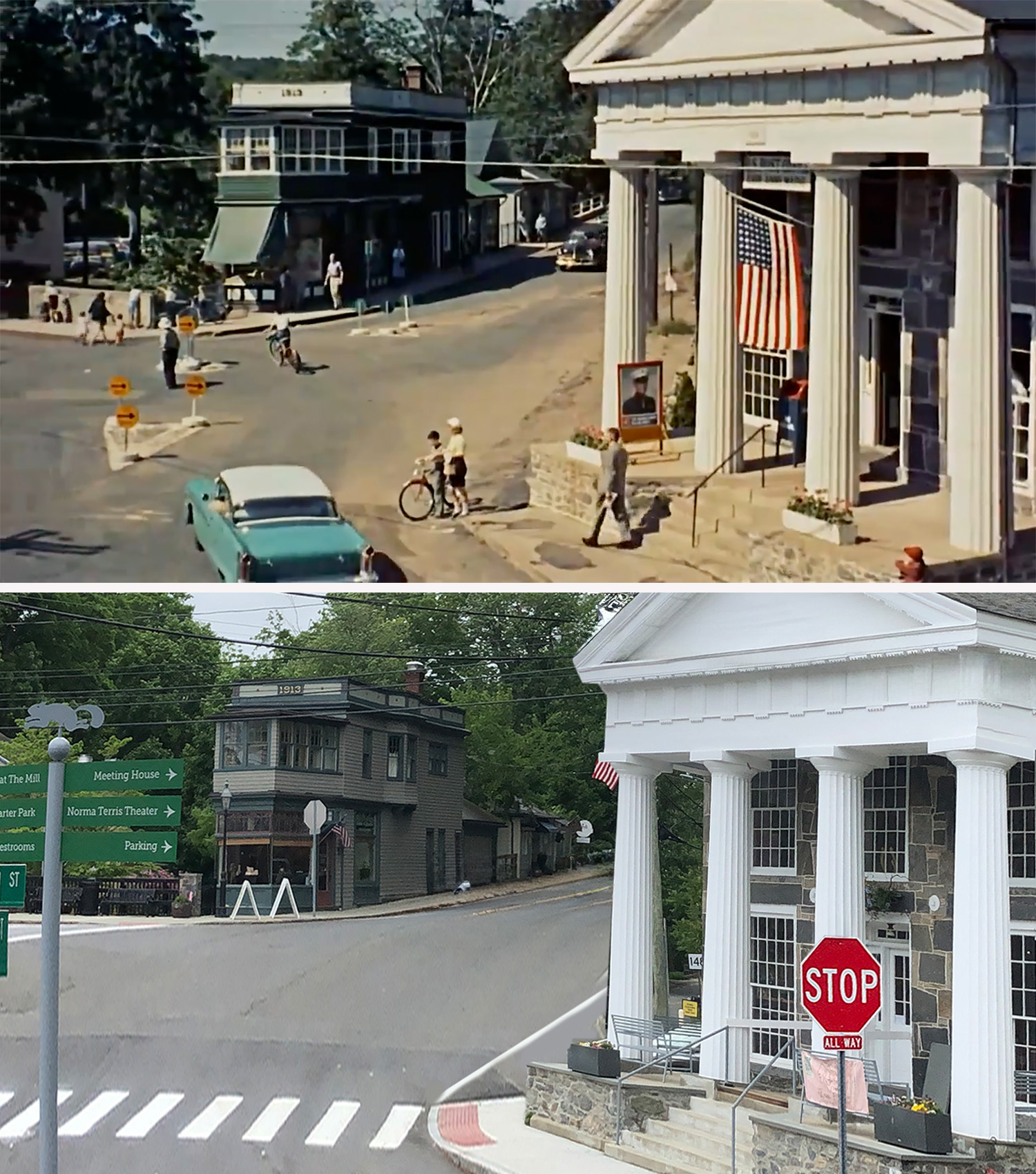
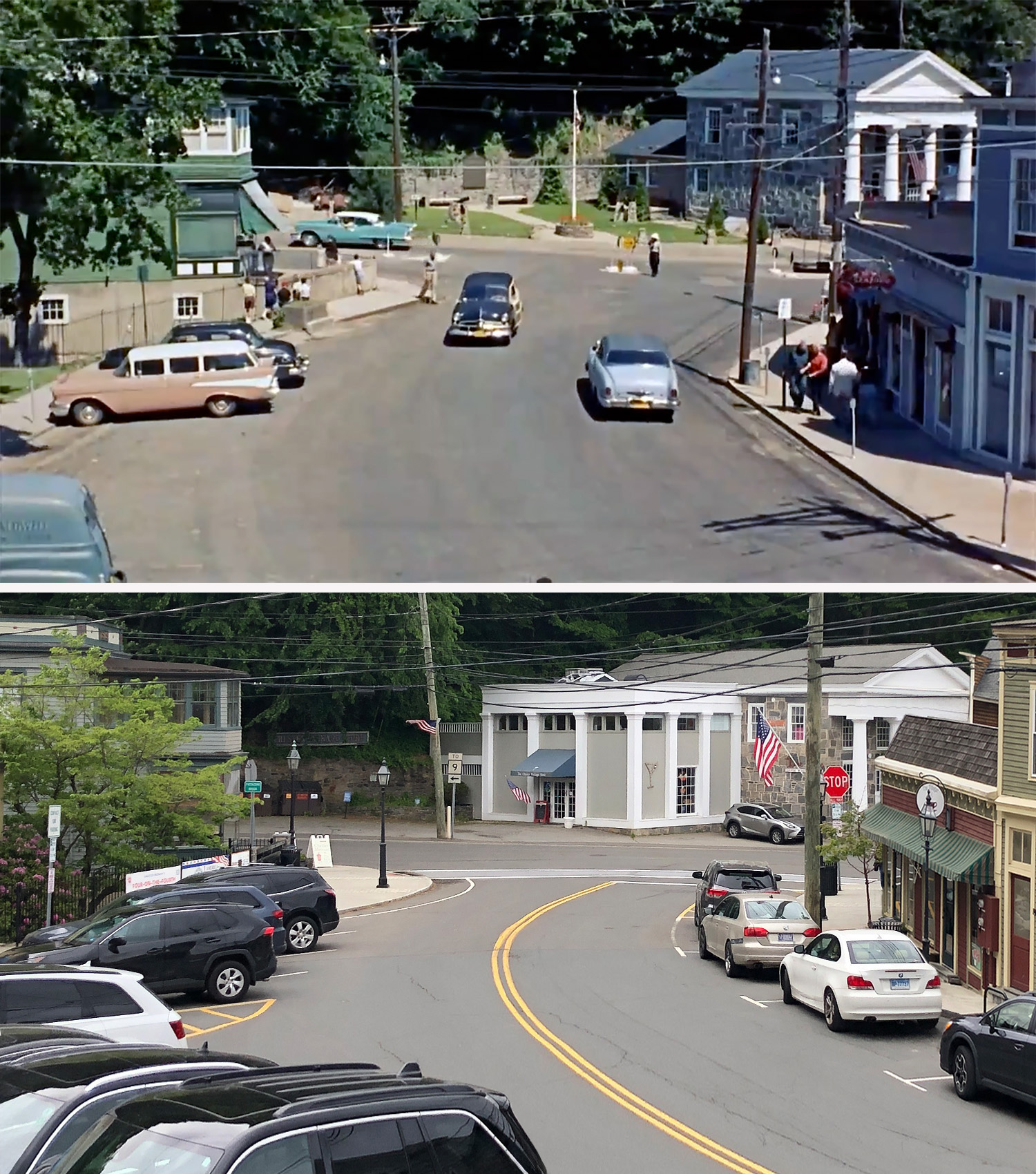
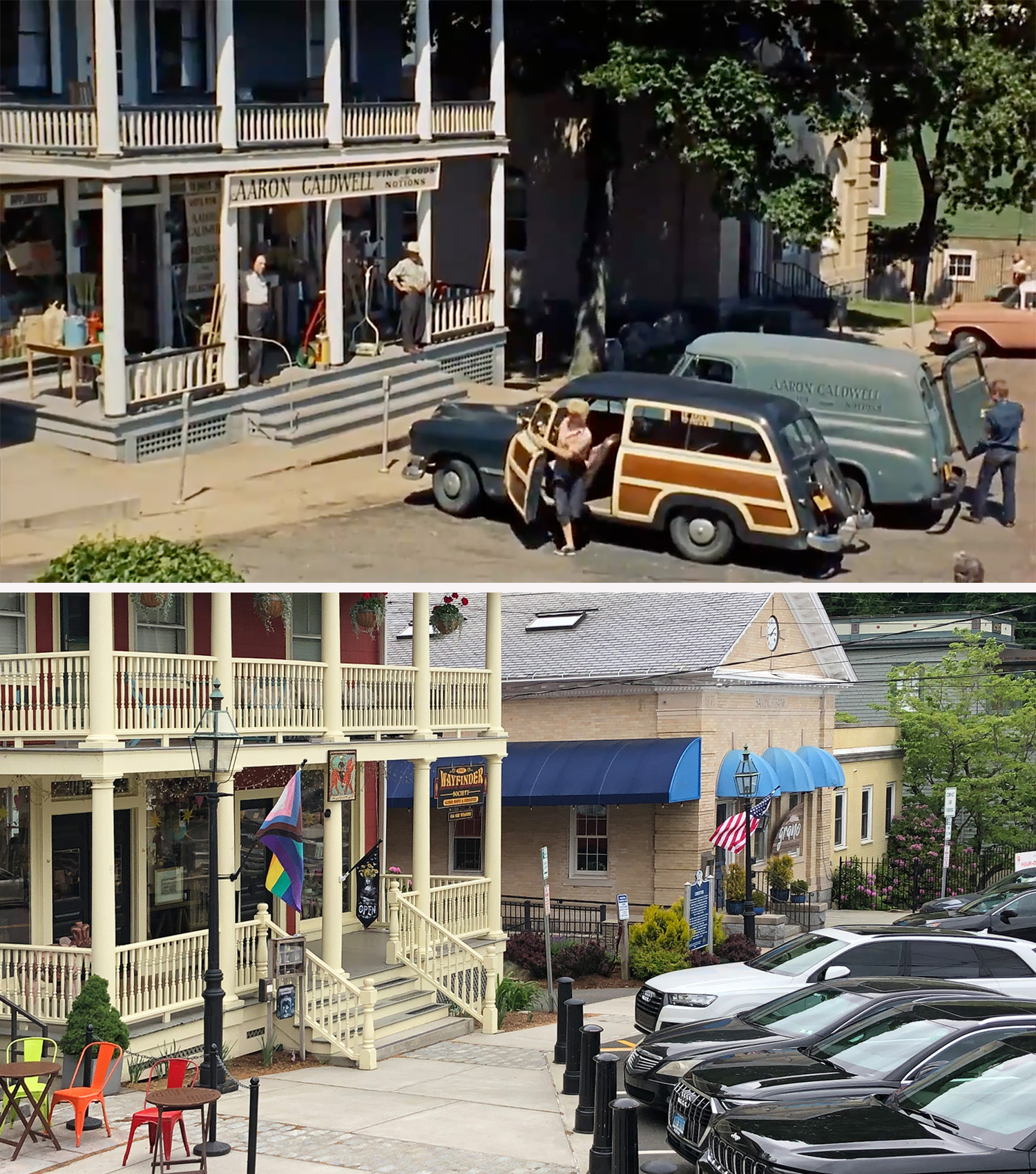
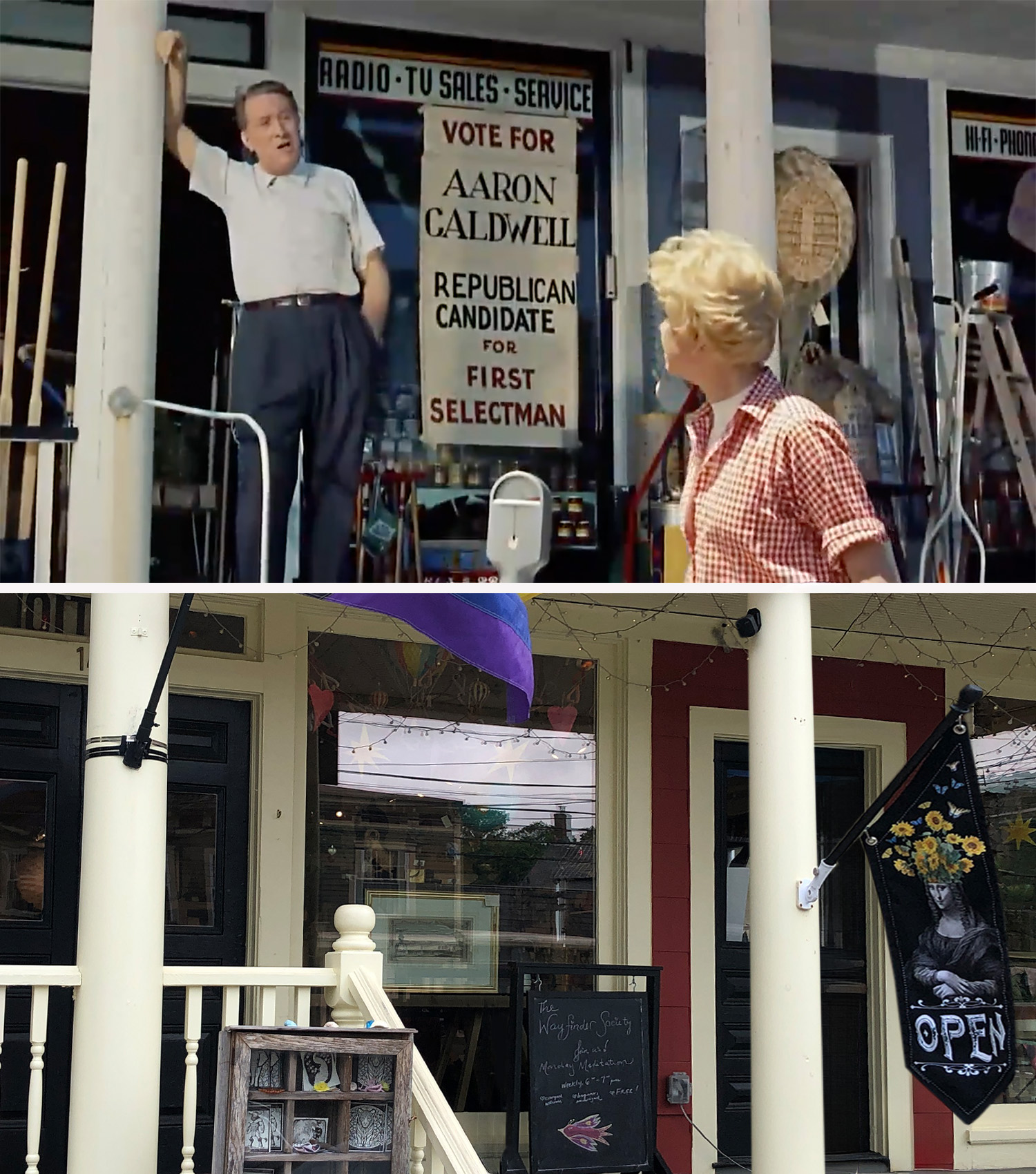
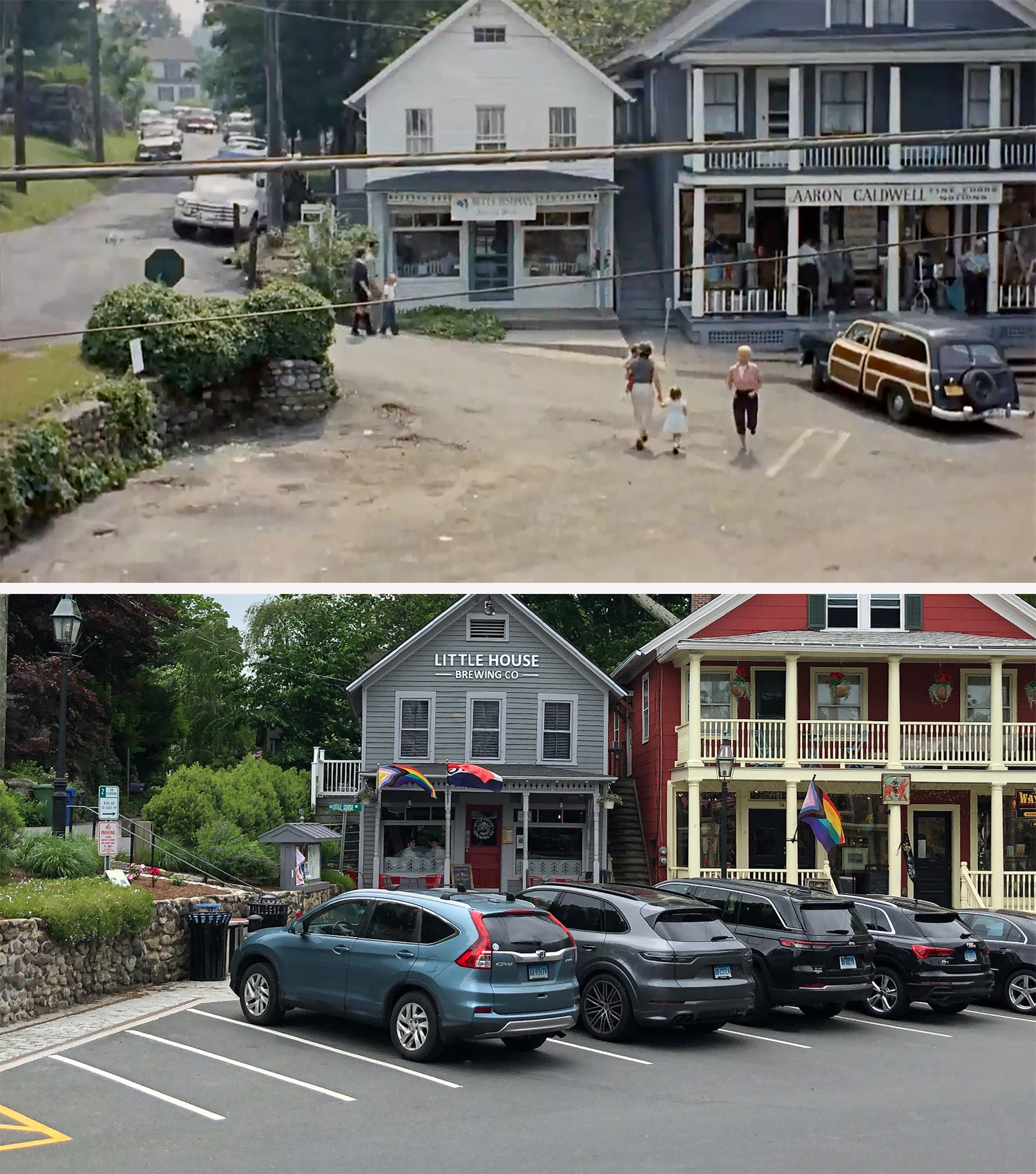
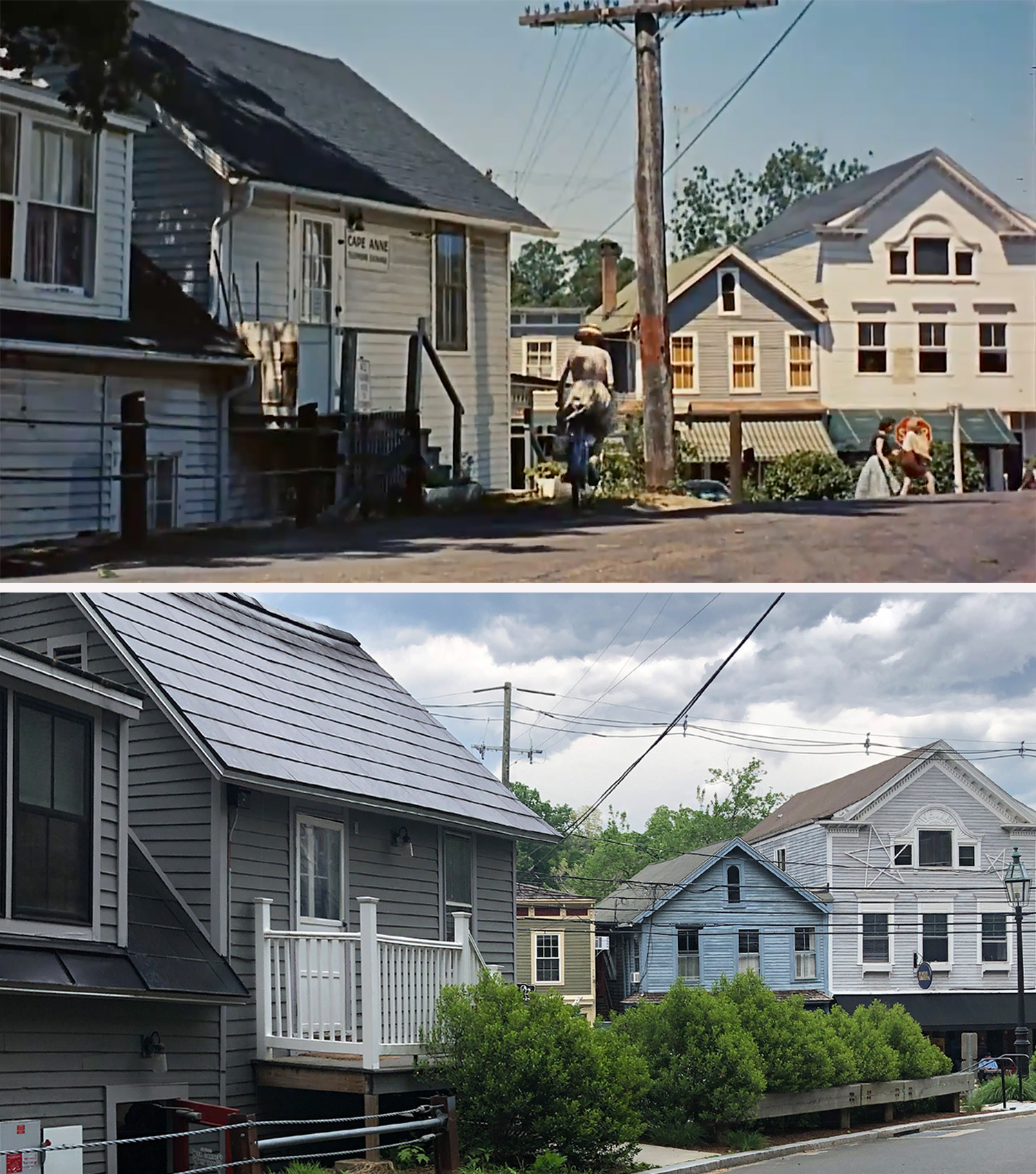
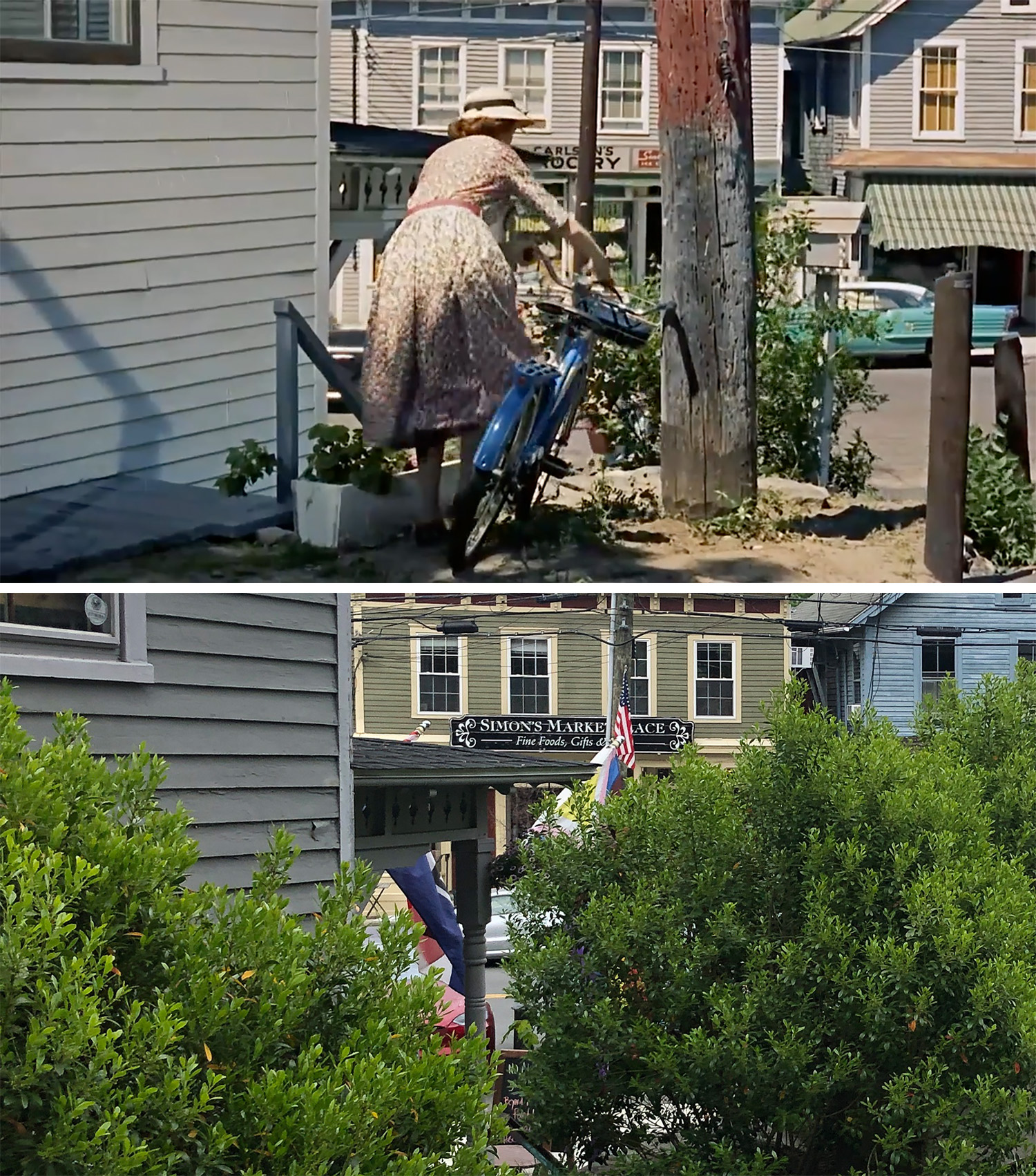
Everything from this scene was shot at Chester’s main square where all the shops and restaurants now are. It was this section of town that I explored in Google Street View when I first decided to investigate this movie.
As you can tell, most of the buildings are still there and resemble what they looked like when they filmed this movie in 1958 — and for that matter, what they looked like a hundred years before that. First settled in 1692 then incorporated in 1836, Chester was originally rooted in shipbuilding and mills, but more recently, it’s become a vibrant center for local artists and craftspeople.
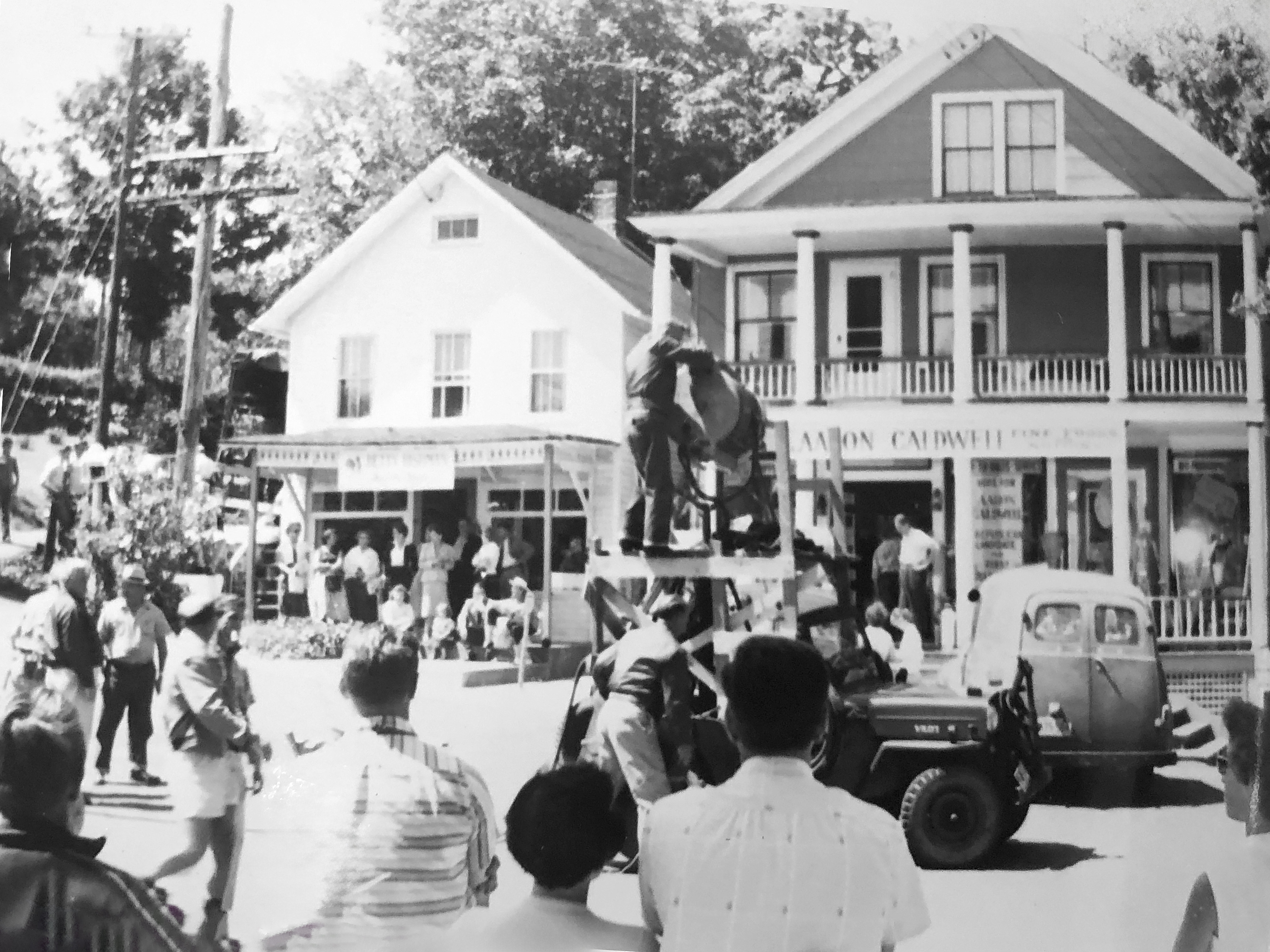
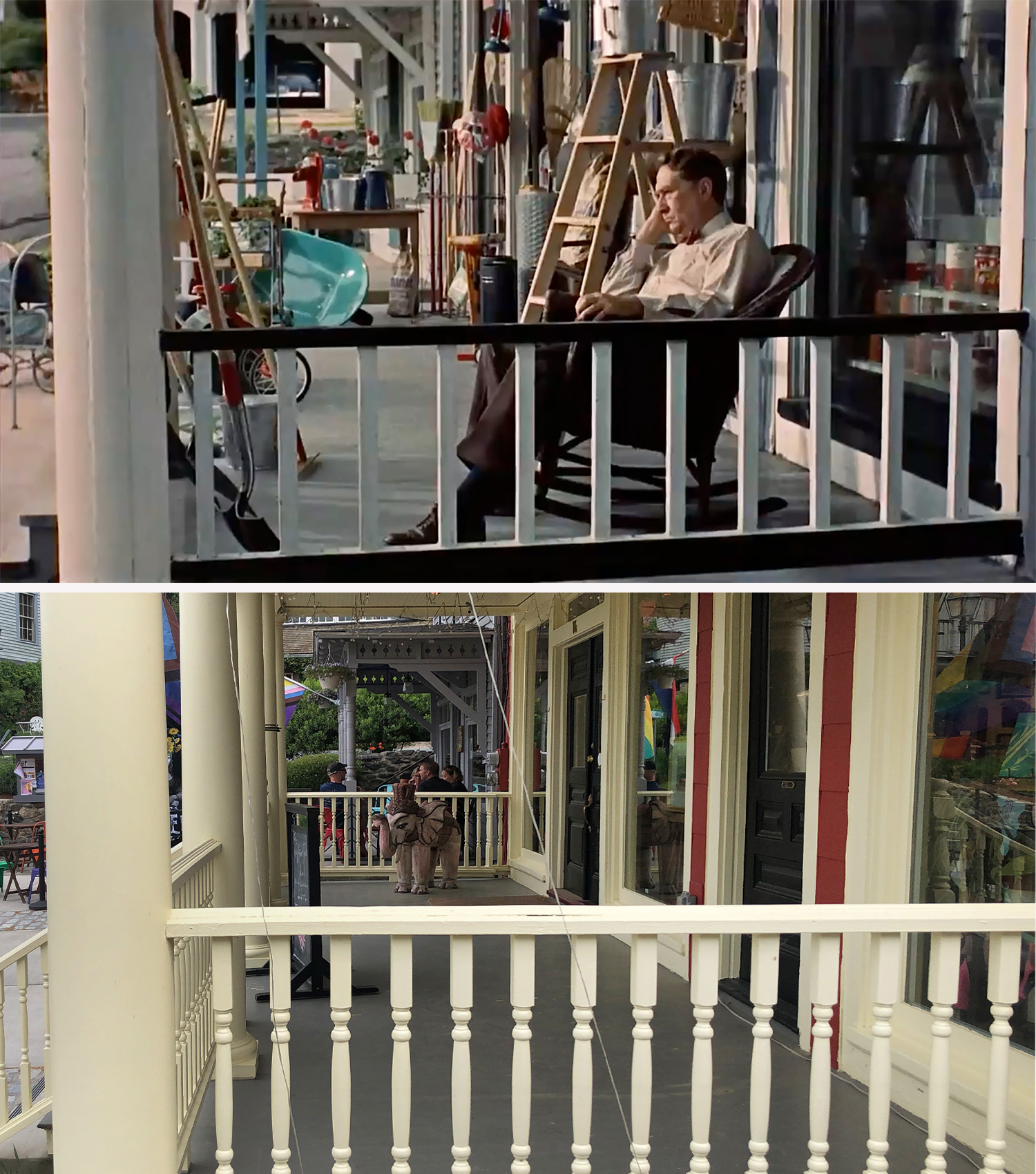
Most of the village has retained its 19th-century charm, which was probably an appealing factor for the filmmakers. The epicenter of this quaintness is Main Street, whose star is the Old Stone Store at the north end, featuring rubble-stone construction and a distinctive four-columned Doric portico.
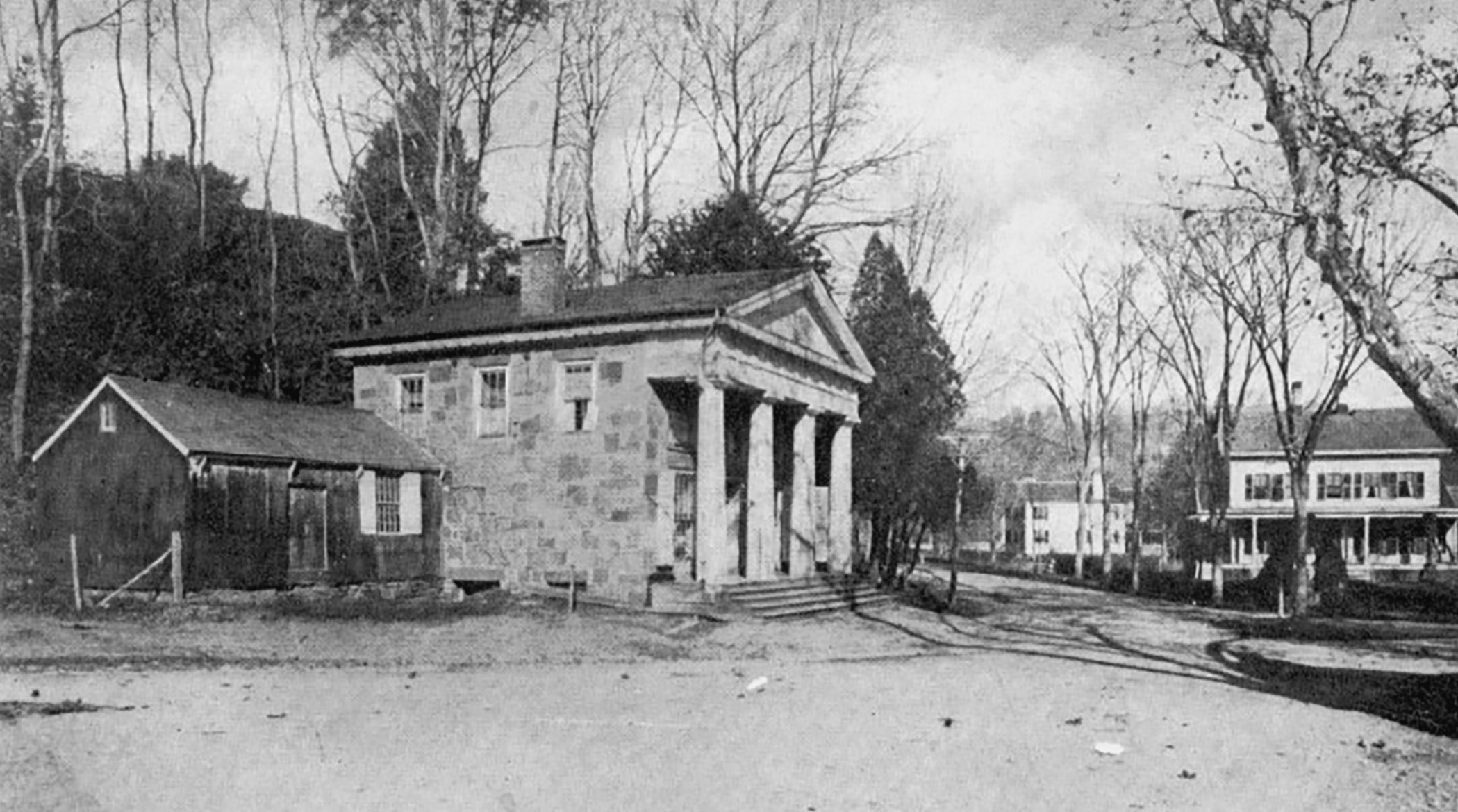
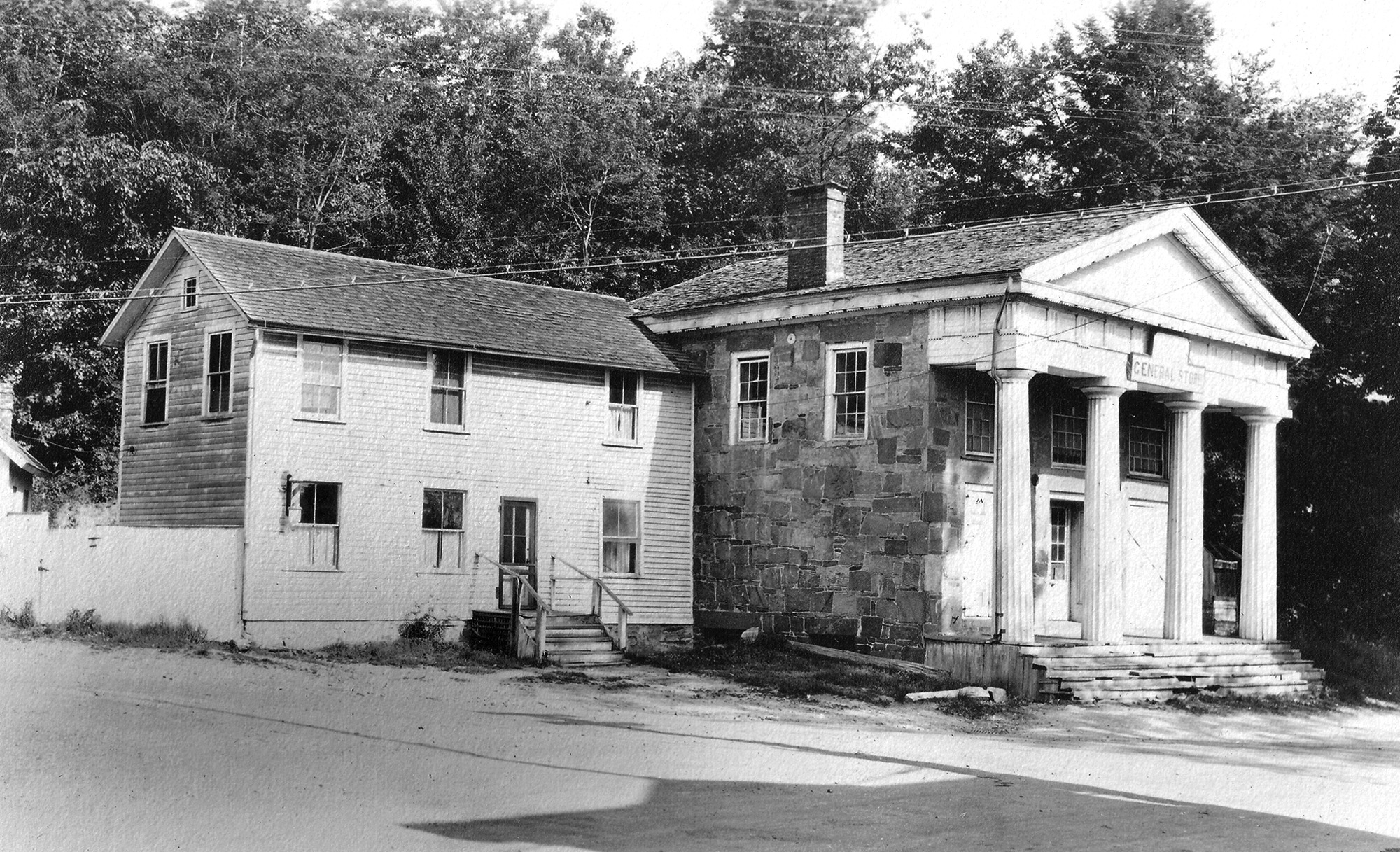
The historic commercial building (which appears in the first two shots above) has been around since 1809 and has served as a tavern, a liquor store, a library and the town post office (until 1964).
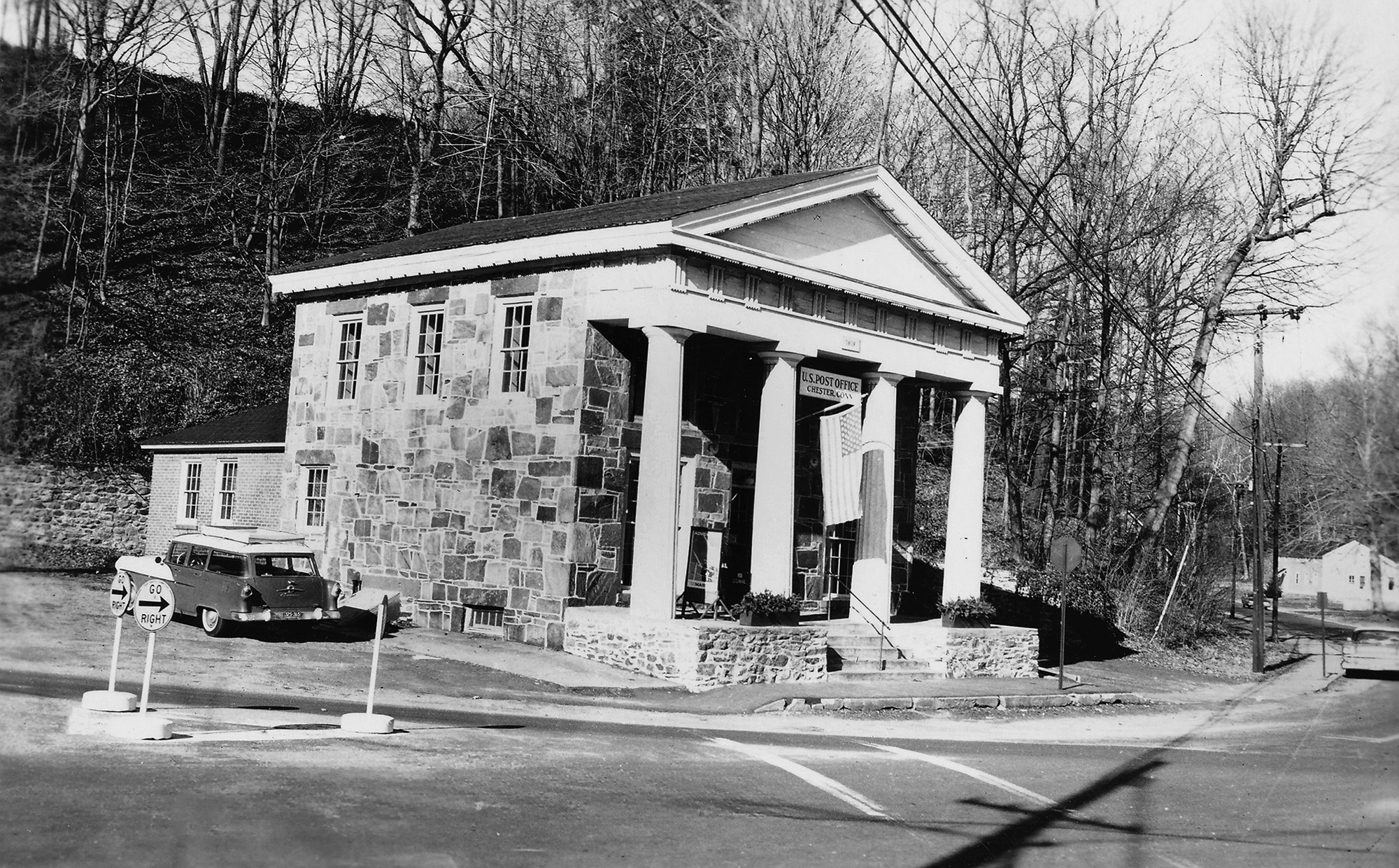
It currently hosts a mix of active commercial businesses, including a wine shop in the wing to the west of the building, which was added about 15 years after the movie was made.
One thing that was added to Main Street during the film shoot in 1958 was a set of parking meters. The story behind that is described in Illeana Douglas’ in-depth 2023 book, Connecticut in the Movies:
Art director Cary Odell needed to install parking meters on Main Street for a gag in the script about First Selectman Aaron Caldwell’s (John Cecil Holm) penchant for collecting from expired meters outside his store. Chester didn’t have any parking meters in 1958, but the production unit convinced Chester officials it might be a good source of income, so actual working parking meters were installed. Local townspeople were incensed. Columbia was forced to remove all the meters after filming was completed.
And during my visit to Chester, I did take note that the downtown business district still has zero parking meters. In addition, they offer a free nearby parking lot for when Main Street gets filled up.
Harry Foster Malone’s Office
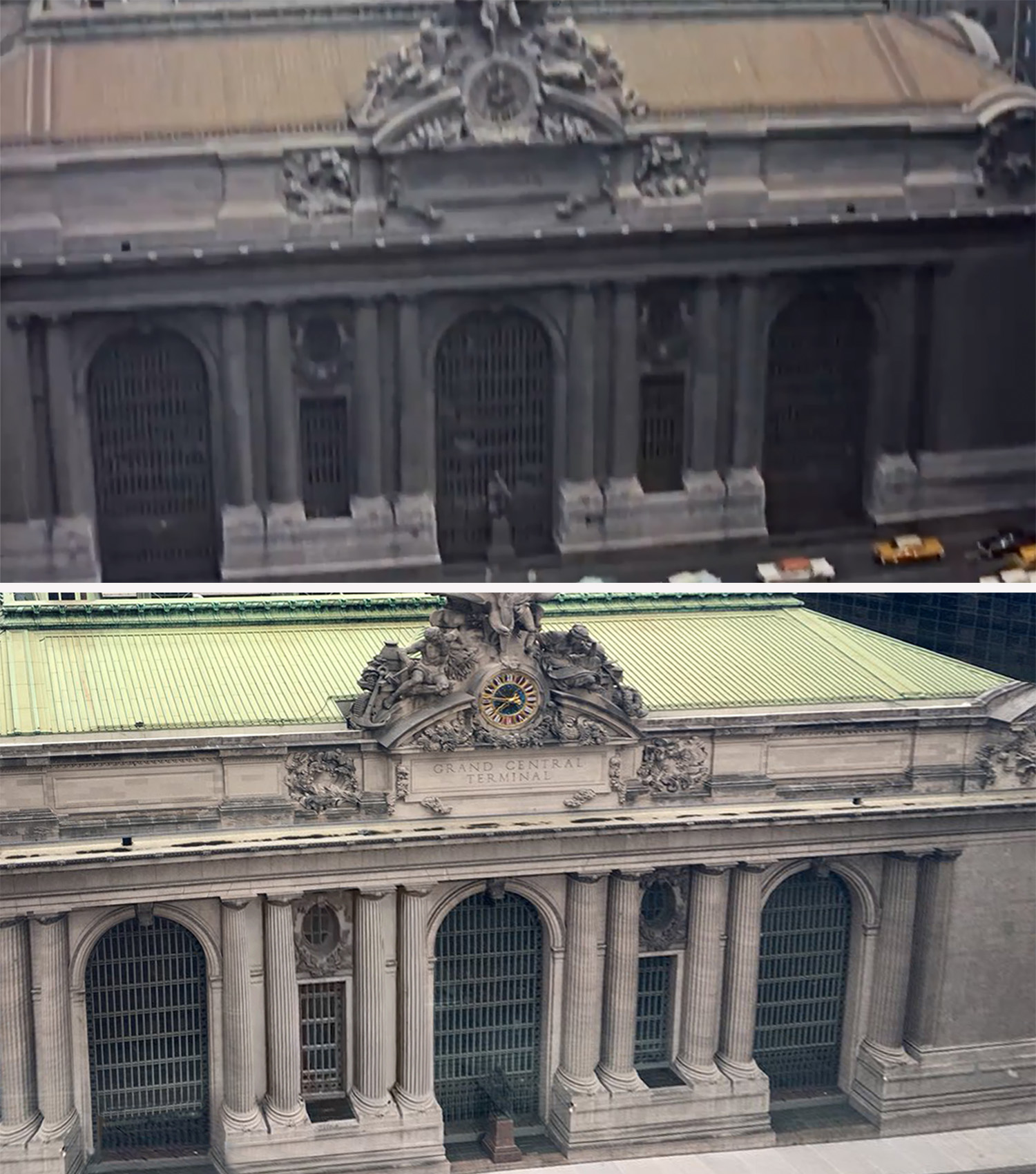
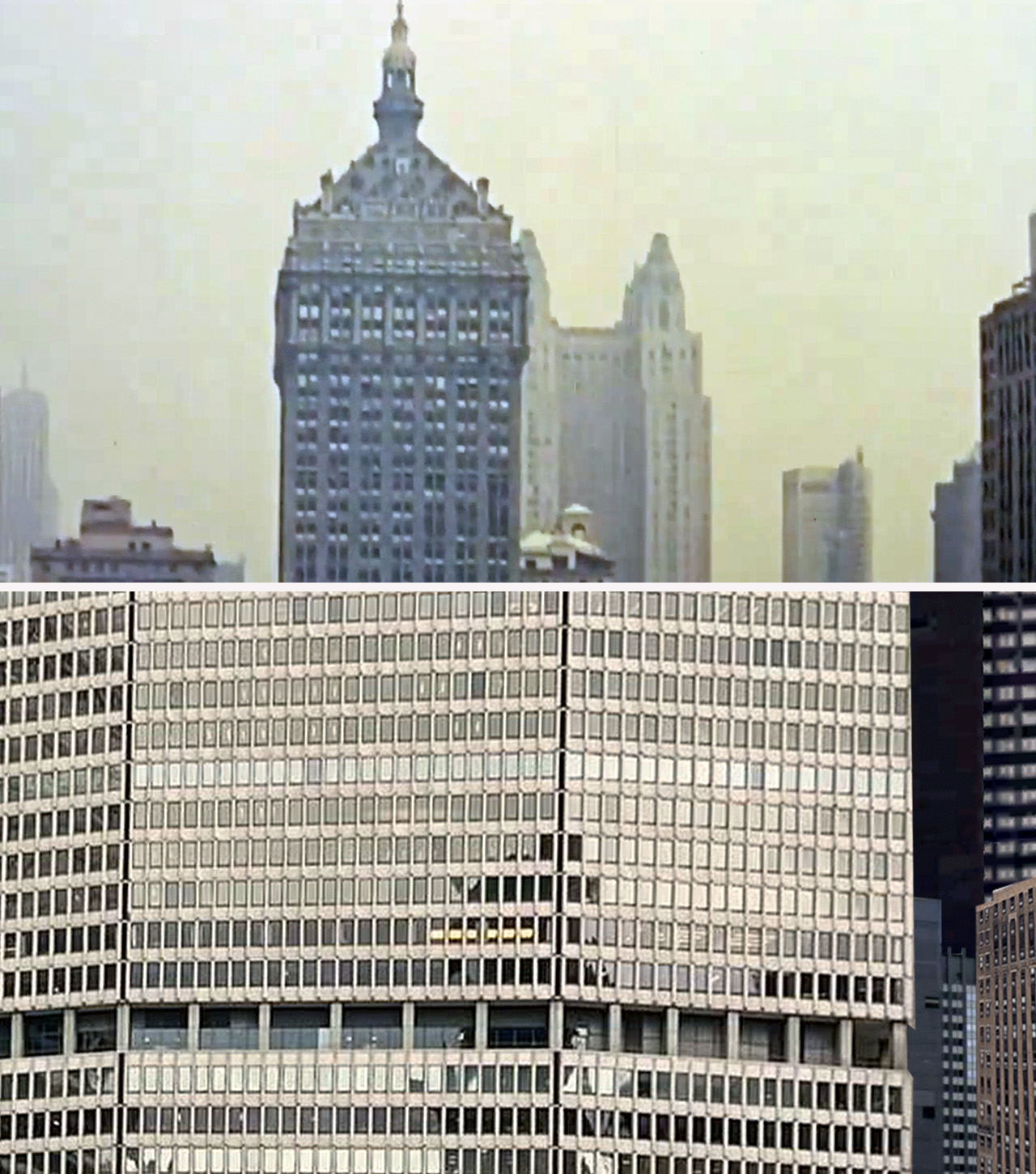
This is the first of the very few shots taken in NYC. And as I mentioned in the intro, it was just a quick establishing shot taken by a second unit team.
Naturally, with Grand Central in the foreground, there was no difficultly in identifying this location. And as you can tell from the second image above, this shot was taken before the Pan Am Building (now the MetLife Building) went up, which now blocks the view of the Helmsley Building from Park Ave.
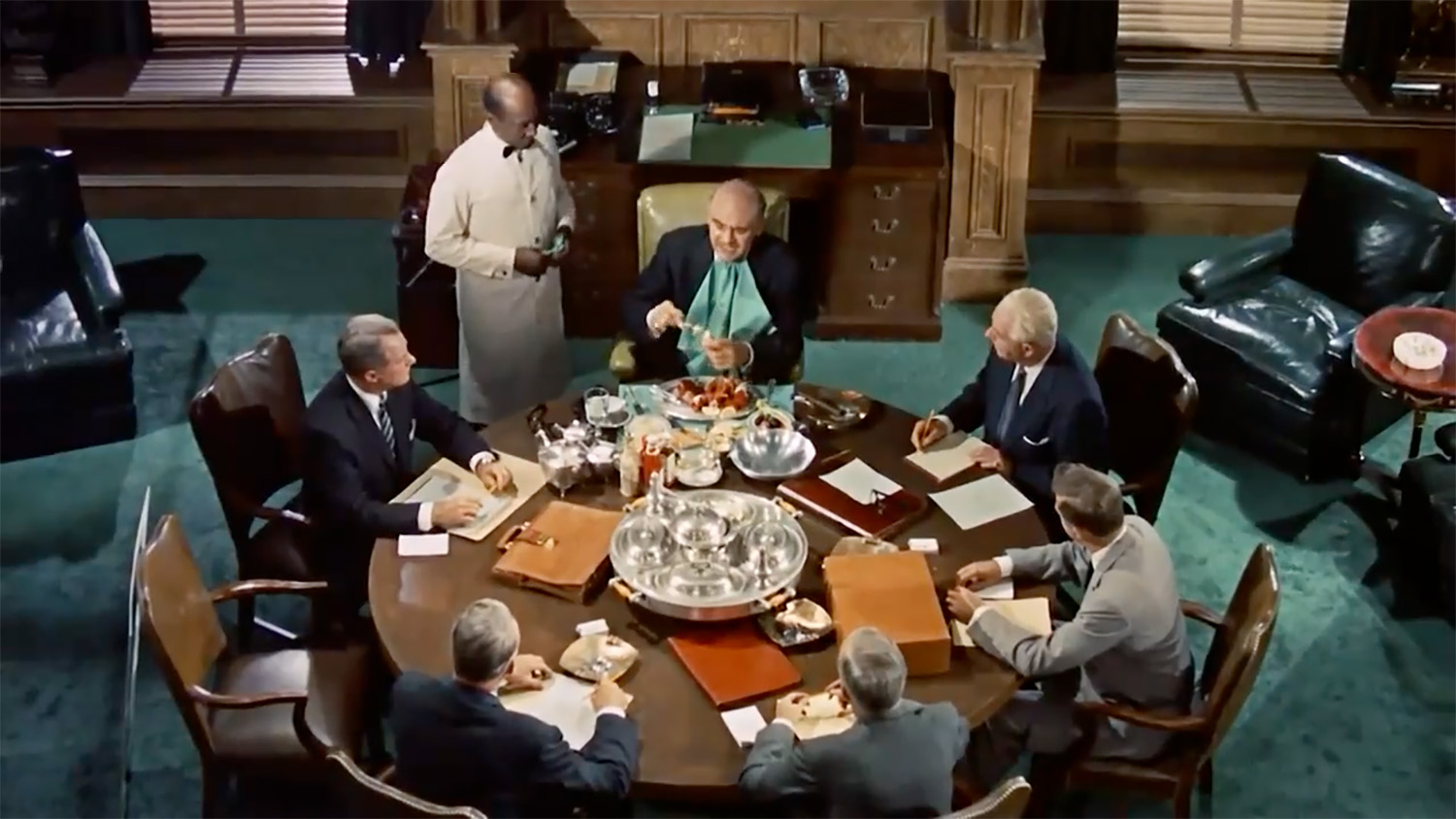
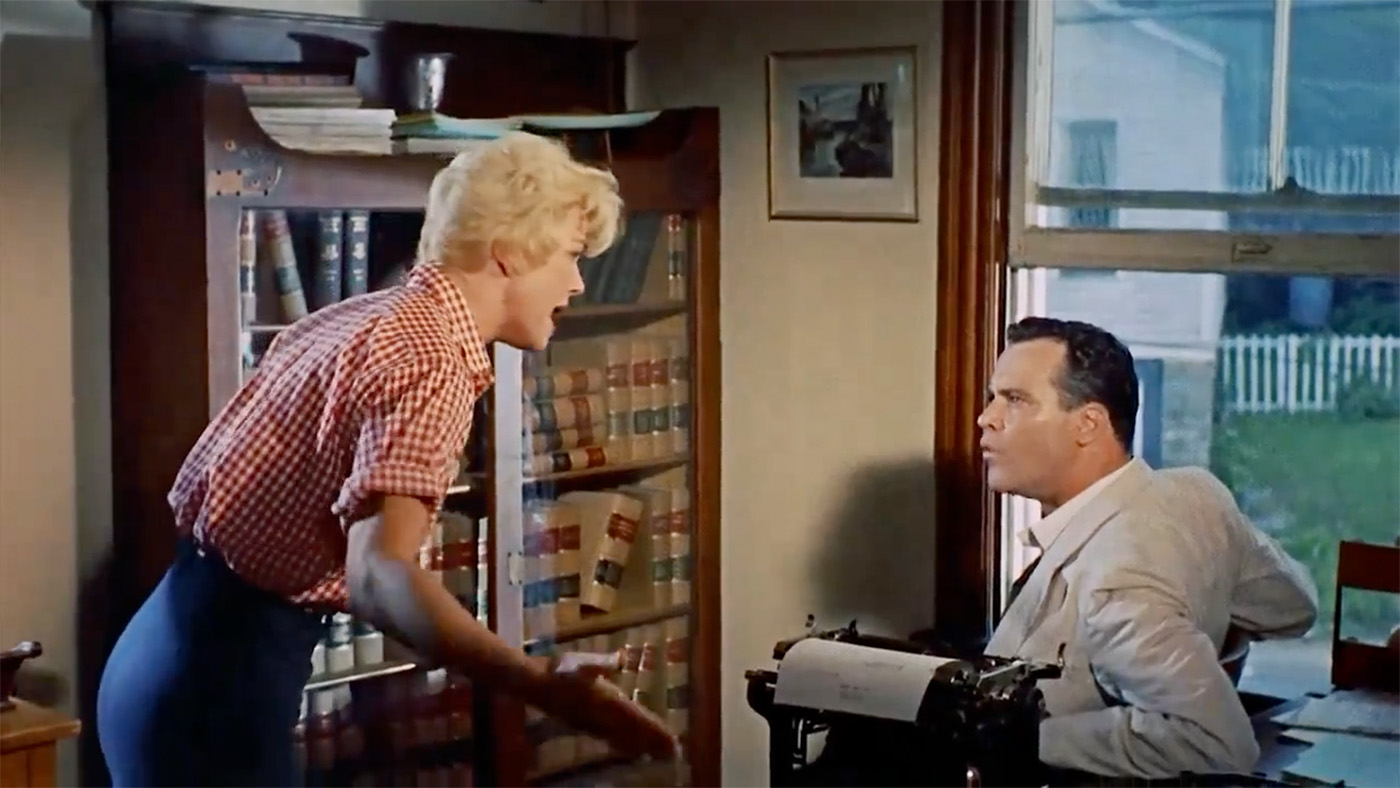
When it came to the office interiors, they were a set built on a soundstage at Paramount Studios in California. Filming interiors on a Hollywood set is, of course, pretty standard for almost any movie made in the 1950s. But to my surprise, they also filmed interiors on several practical locations in Chester, CT, as you’ll see in the next sequence.
Court Proceedings
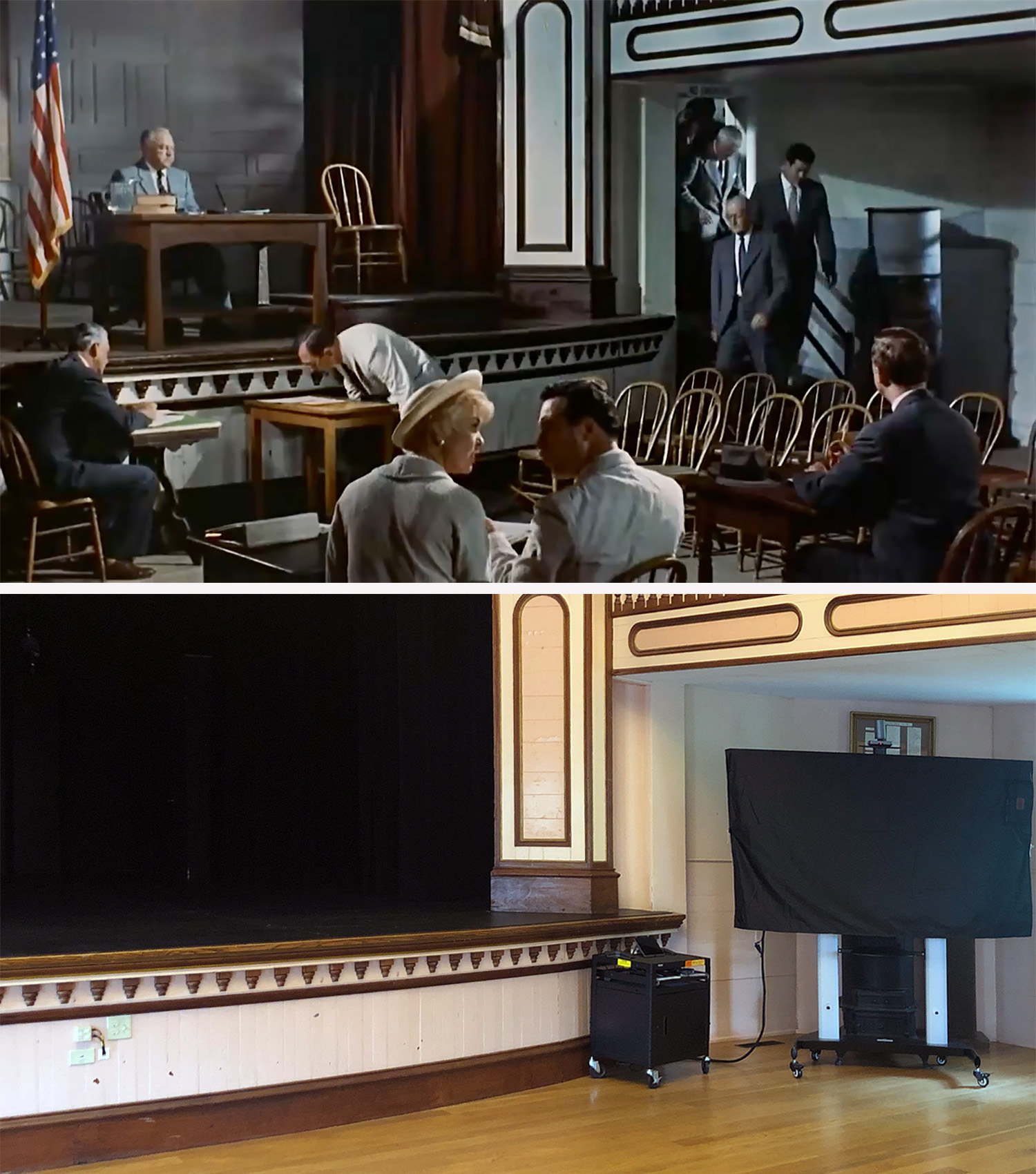
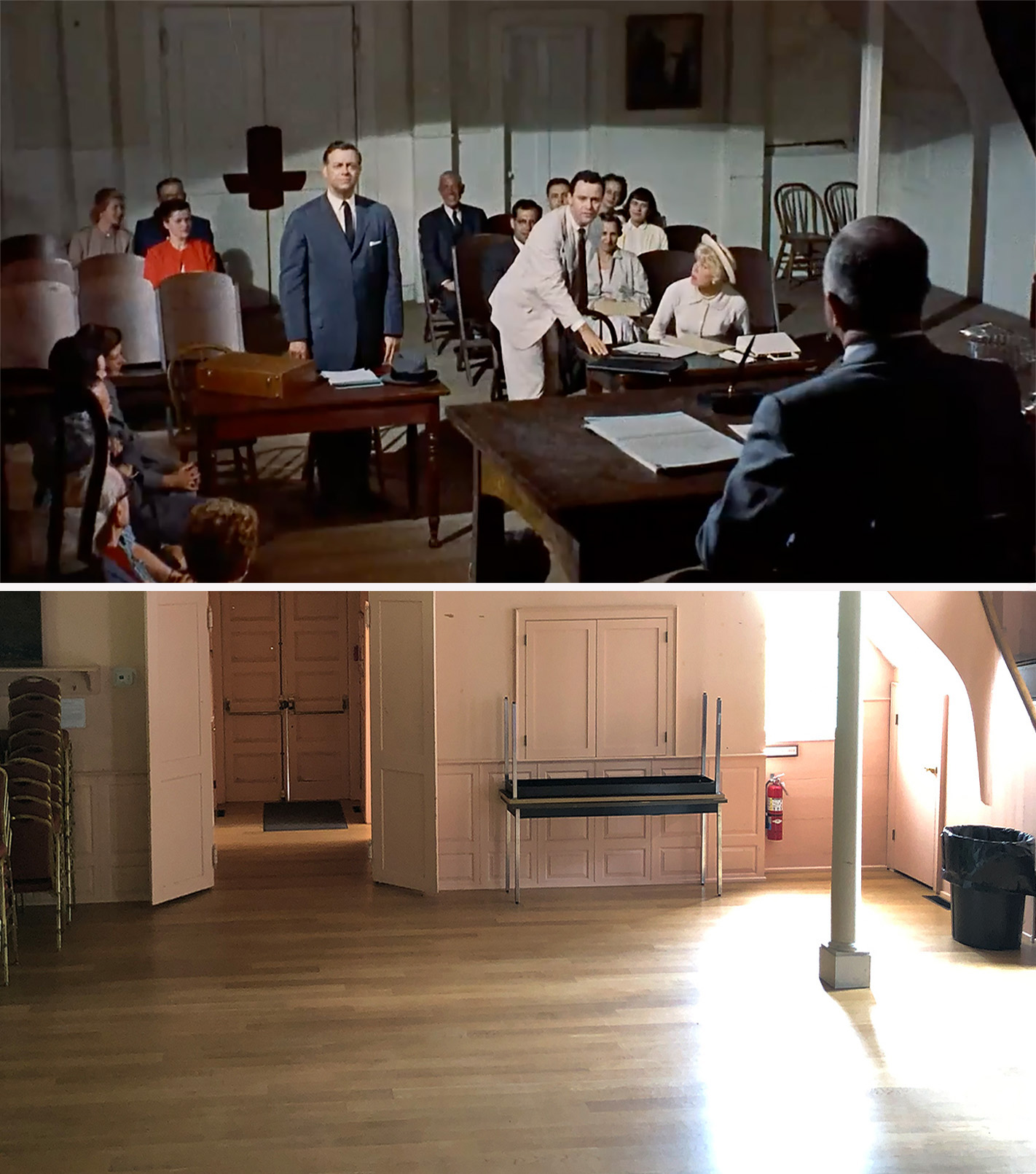
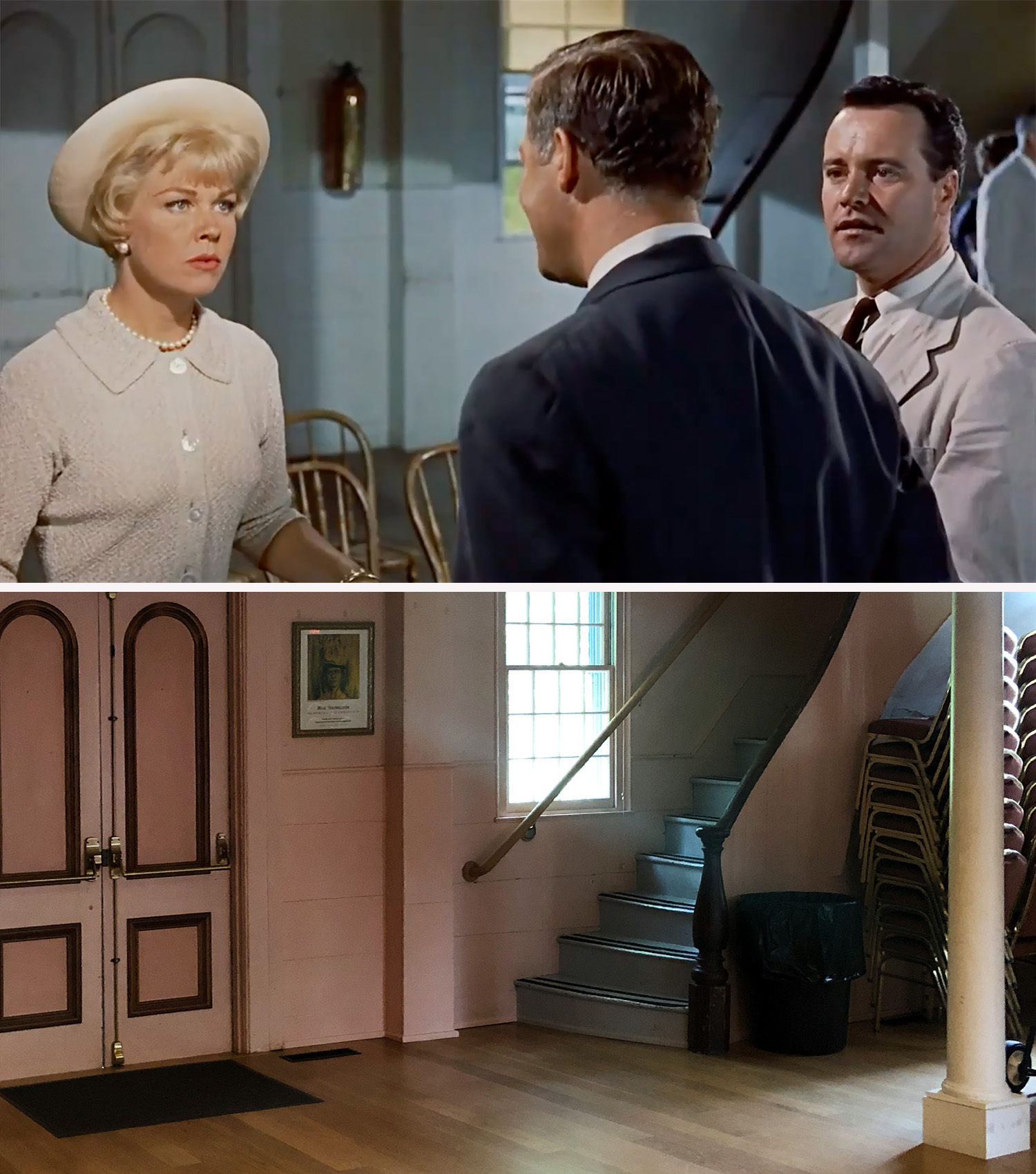
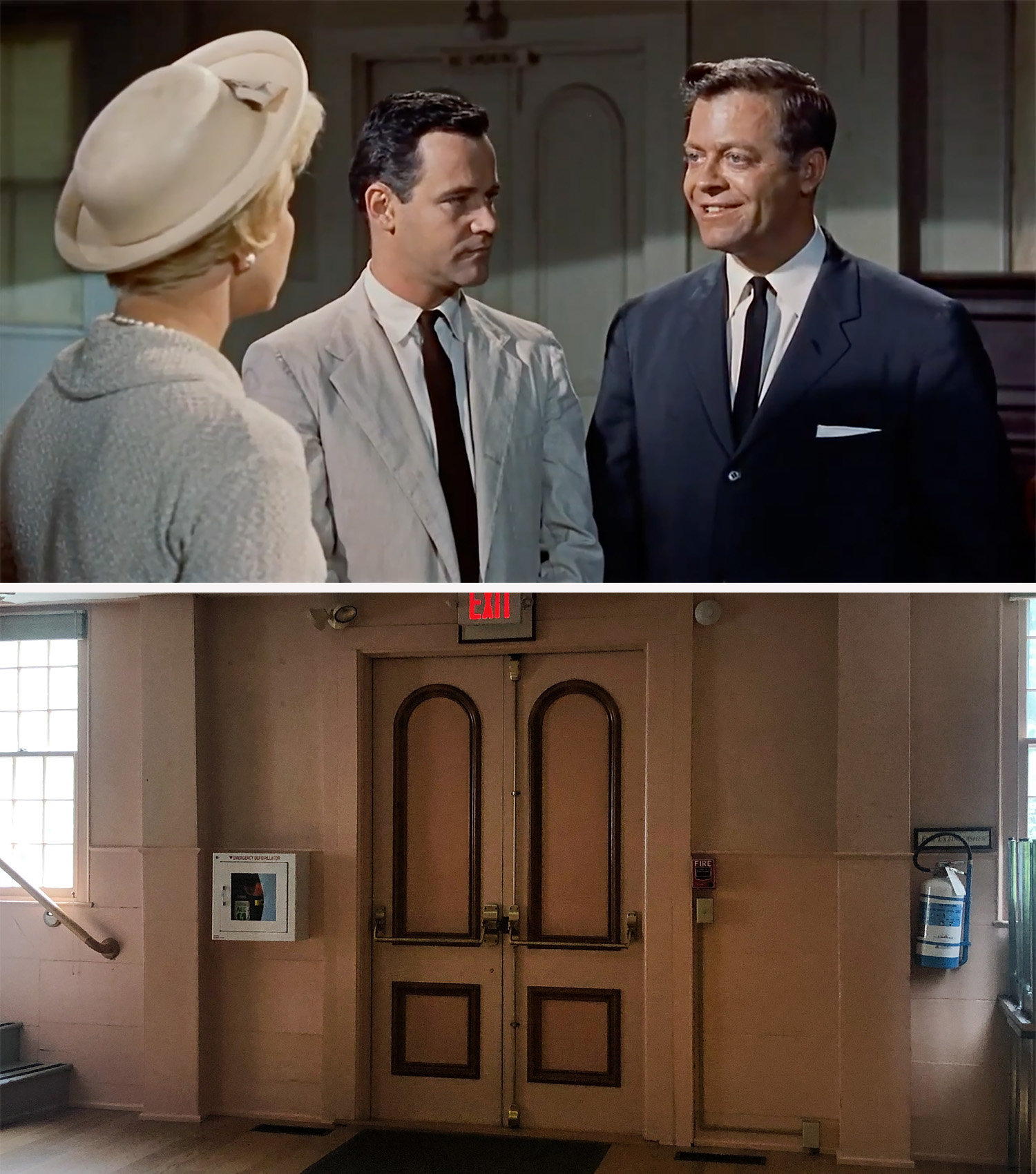
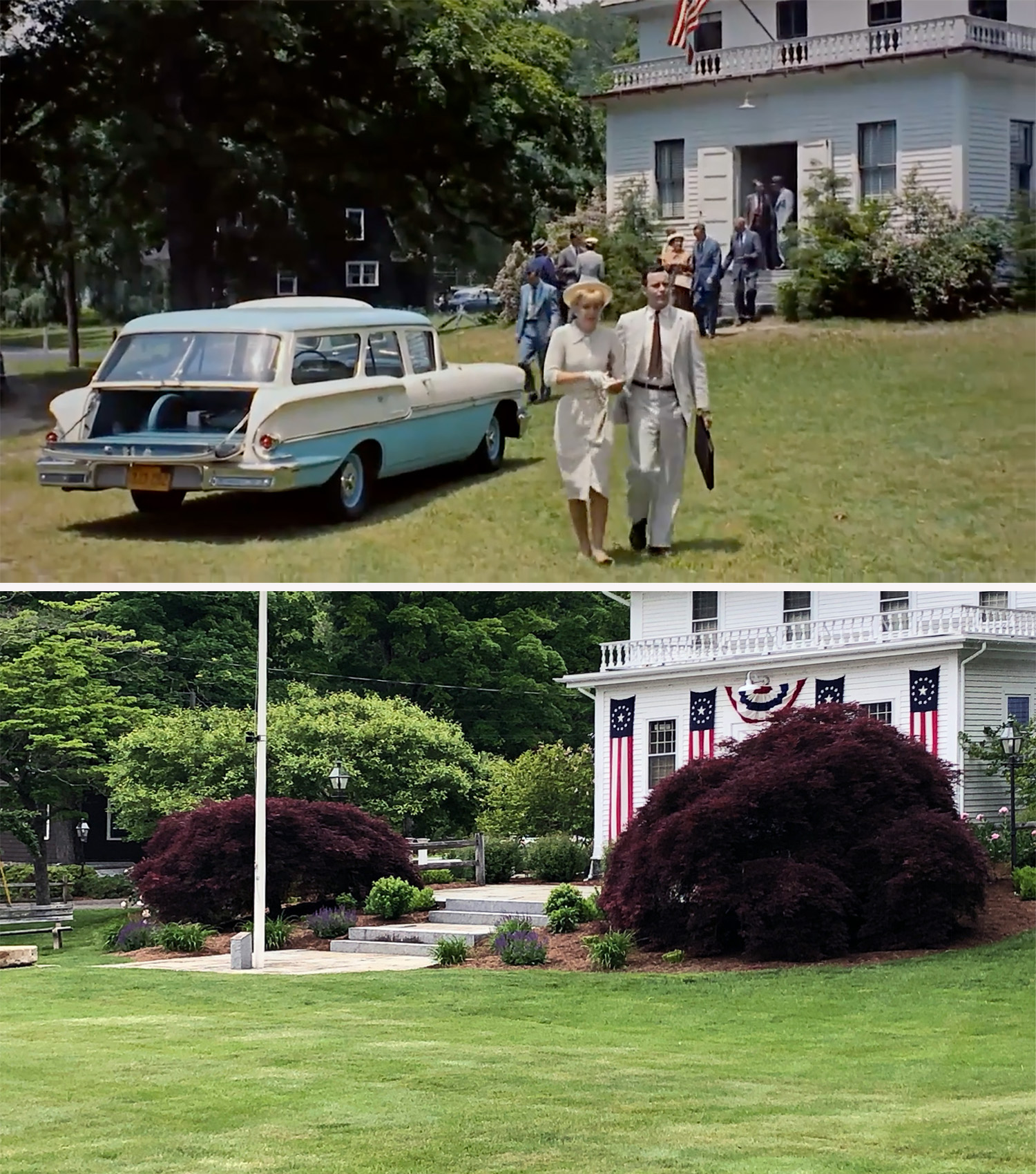
This was another location I didn’t figure out until I got into the town of Chester and started to ask around. All I had to do was show a screenshot from the movie to the local 71-year-old handyman, and he was able to identify the building posthaste.
I spent two days in Chester last spring (as part of a week-long New England road trip), but it wasn’t until the second day that I was able to venture inside the meeting house. The space is normally locked up during off-hours, but Diane from the museum had keys to the building (as the historical society has offices in the basement) and graciously offered to give me a tour inside.
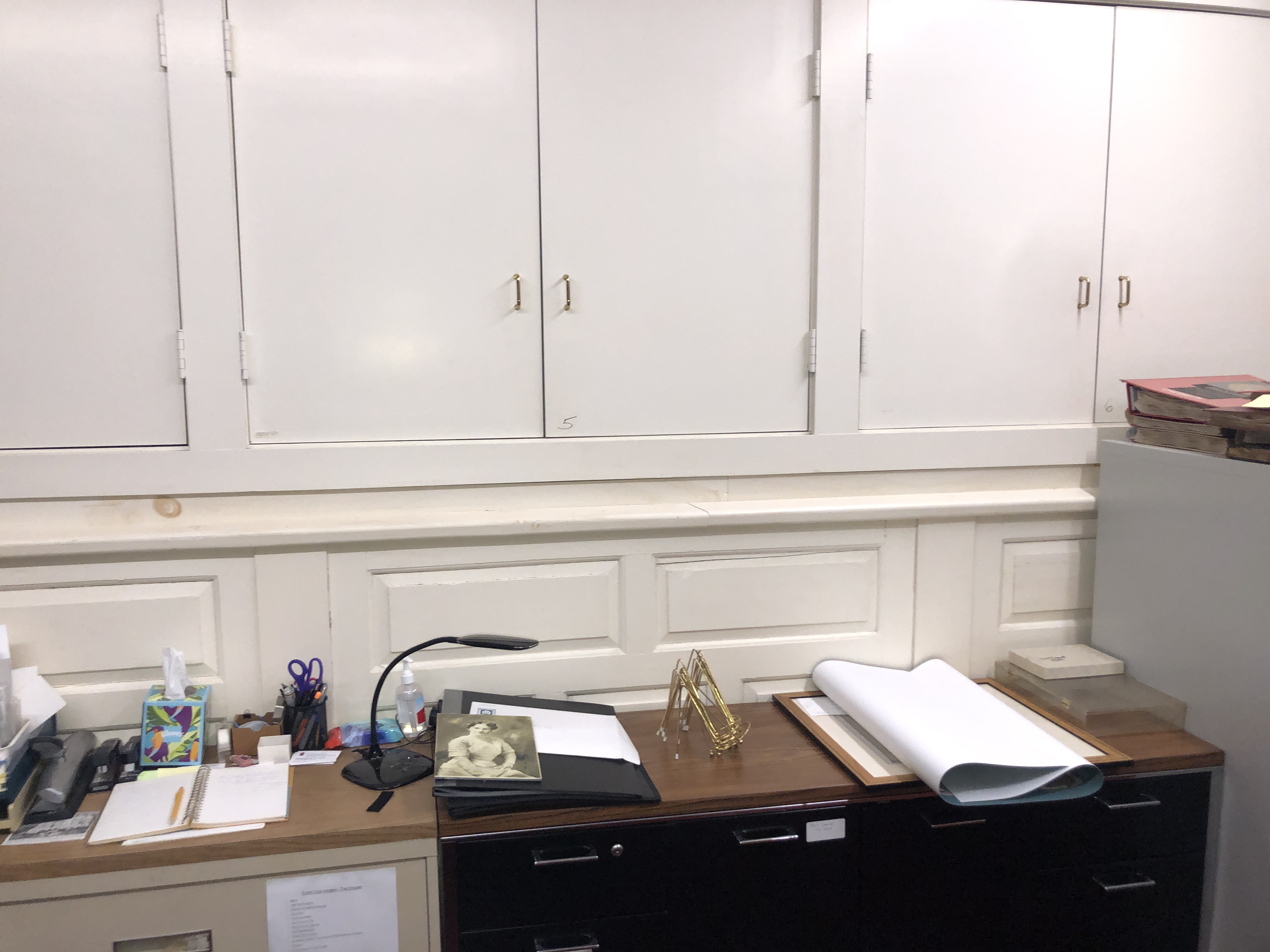
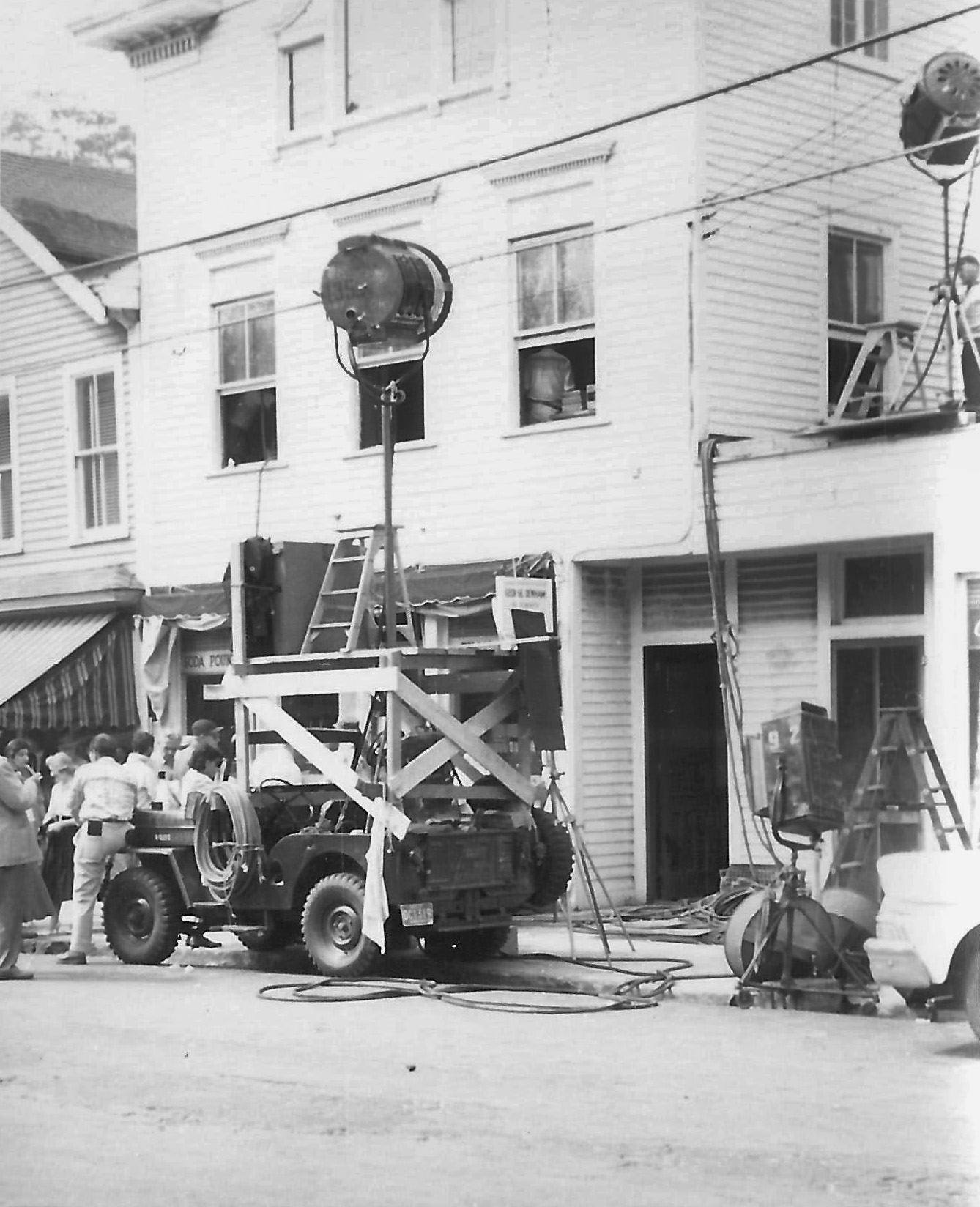
While there, she took me down to their office and showed me an album filled with candid photographs taken in 1958 when the movie was being made. There weren’t a lot of pictures of Jack Lemmon, but there were quite a few of Doris Day, giving me the impression she was more approachable.
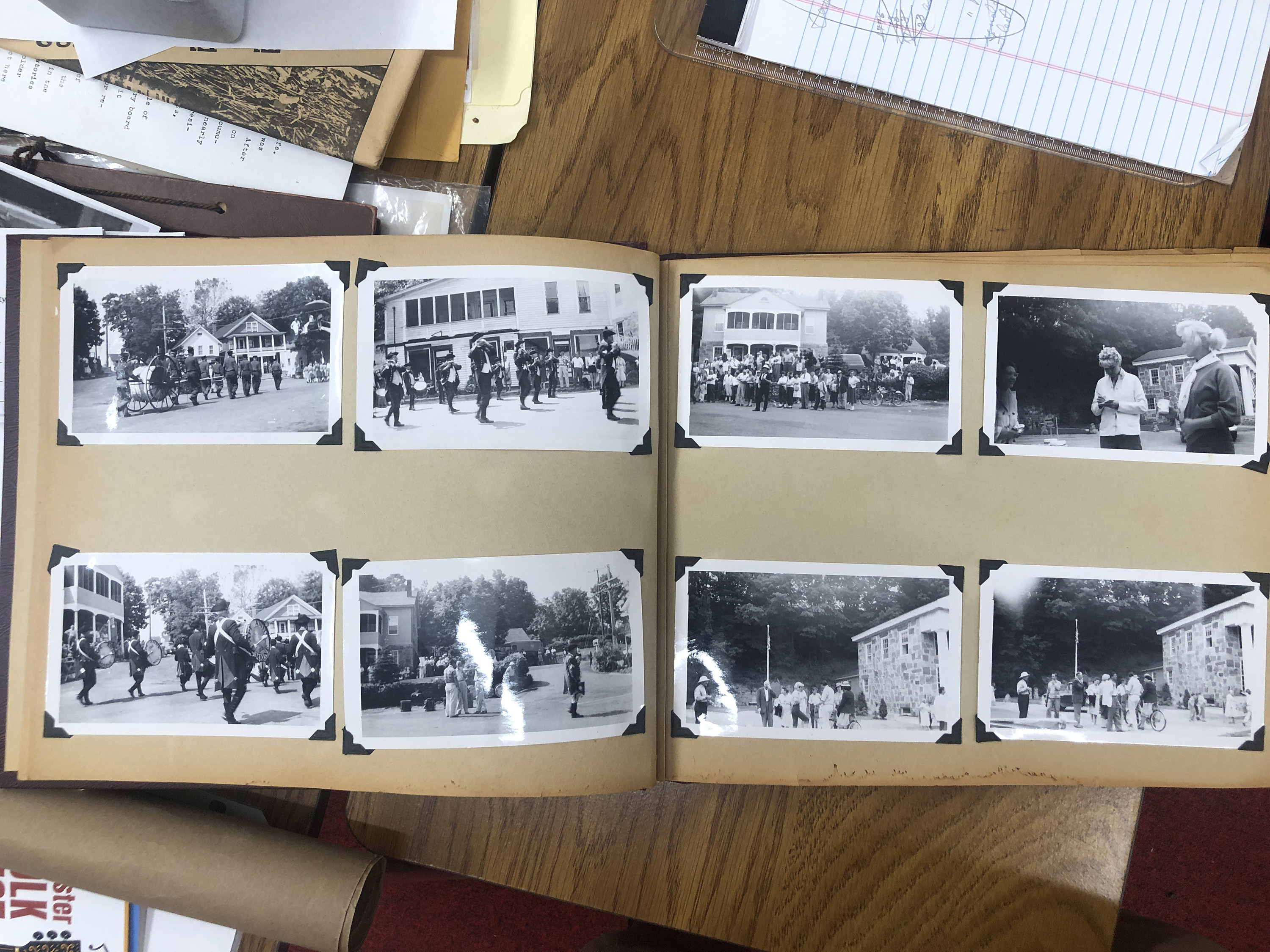
The Chester Meeting House is definitely one of the more interesting landmarks there, and I’m grateful I was able to see the inside. Erected in 1793, the wooden building on the north end of town originally served as a church, then in 1846, it became the “Old Town Hall,” where it was predominately used as a place to hold town meetings. The building also began serving as a theater and concert hall in 1876 after a stage was added during an extensive remodeling.
Today, the Chester Meeting House is still used for town meetings and public hearings, as well as concert and theatrical performances. In addition, it hosts a variety of community activities and special events, including weekly yoga classes. It is one of very few buildings in New England that has been in continual use for over 200 years.
Taking Possession of Old 97
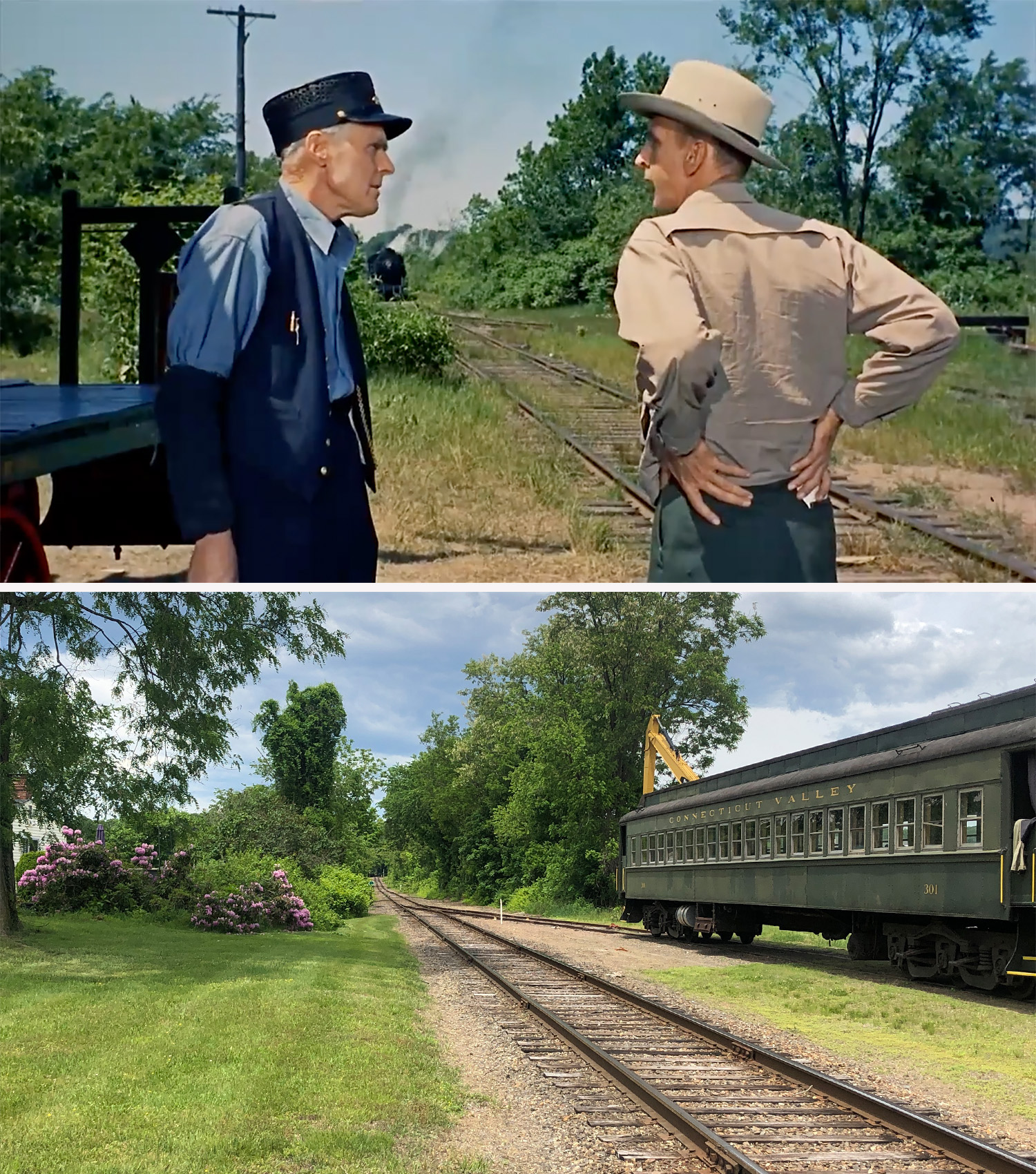
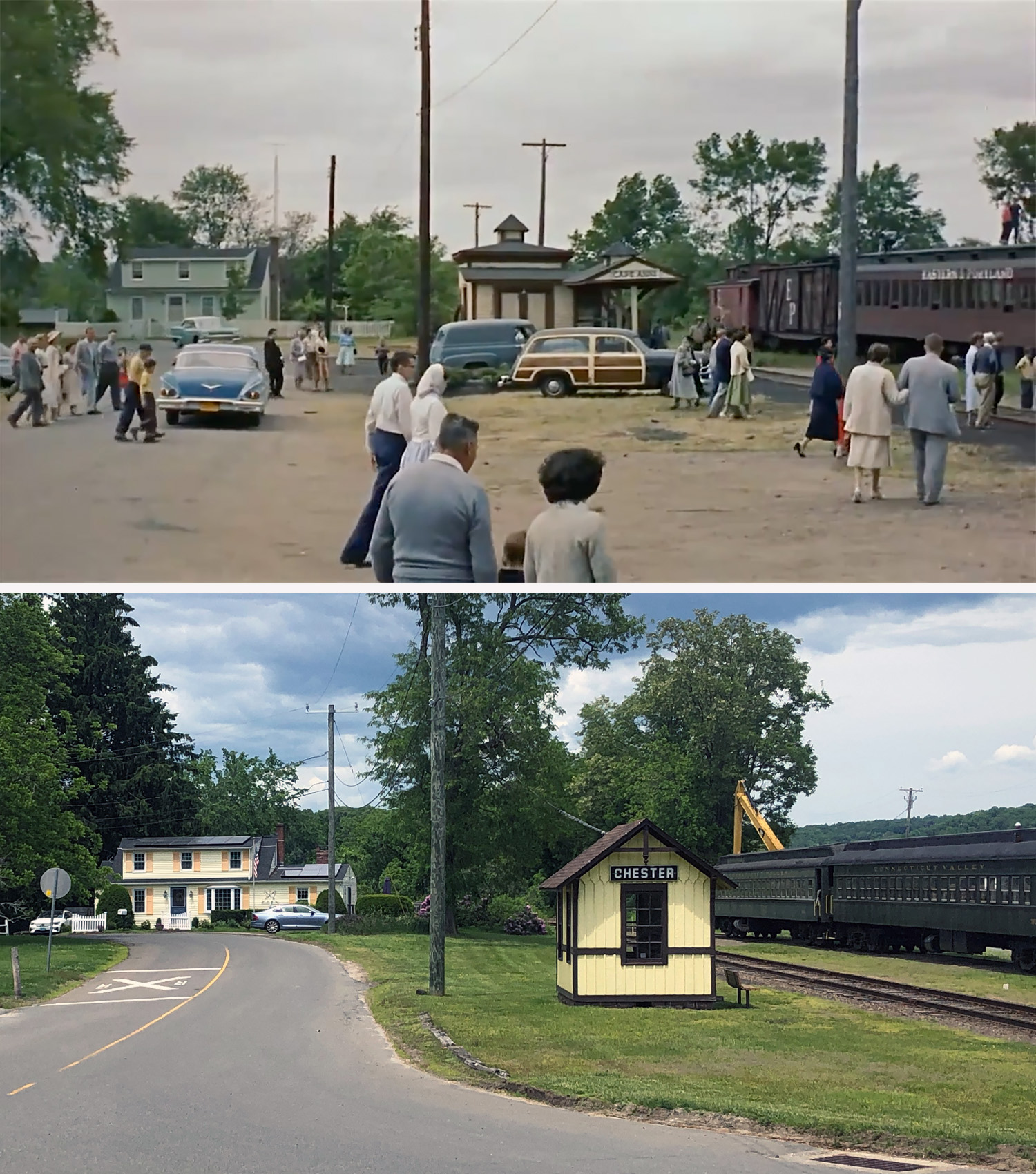
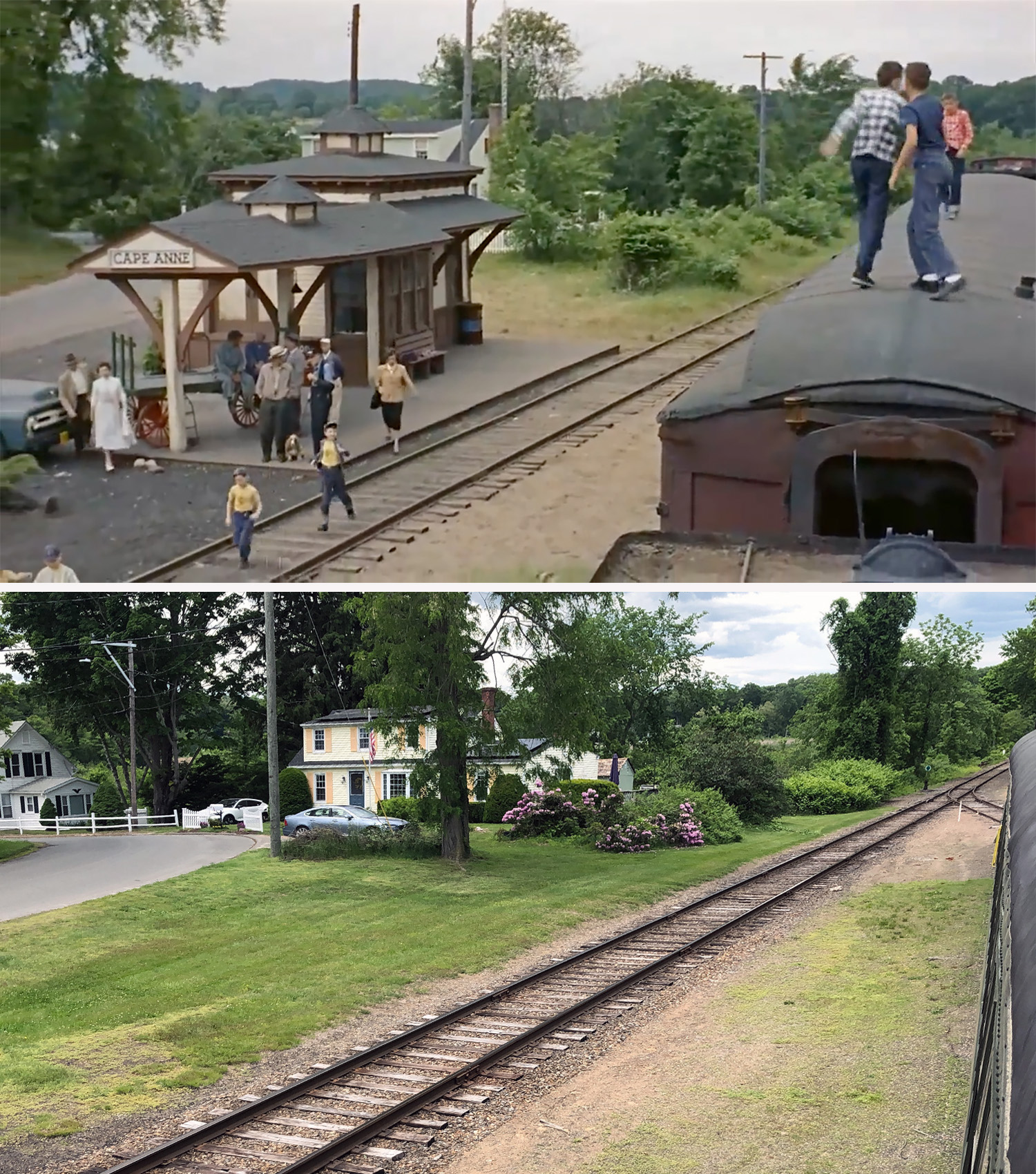
The Old 97 in the scene is based on the J-Class 2-8-2 steam locomotives that used to run on the New Haven Railroad. According to a member on the community discussion forum, railroad.net, Old 97 was a common nickname for any steam locomotive that had the number 97 on them.
This particular train (New Haven #3016) was apparently scrapped shortly after this movie was made, despite some attempts to give it away. And surprisingly, a wooden prop replica of the locomotive, which was used for a later scene in the movie, actually survived for a longer period.
Calling New York
A Media Explosion
Touring the Town
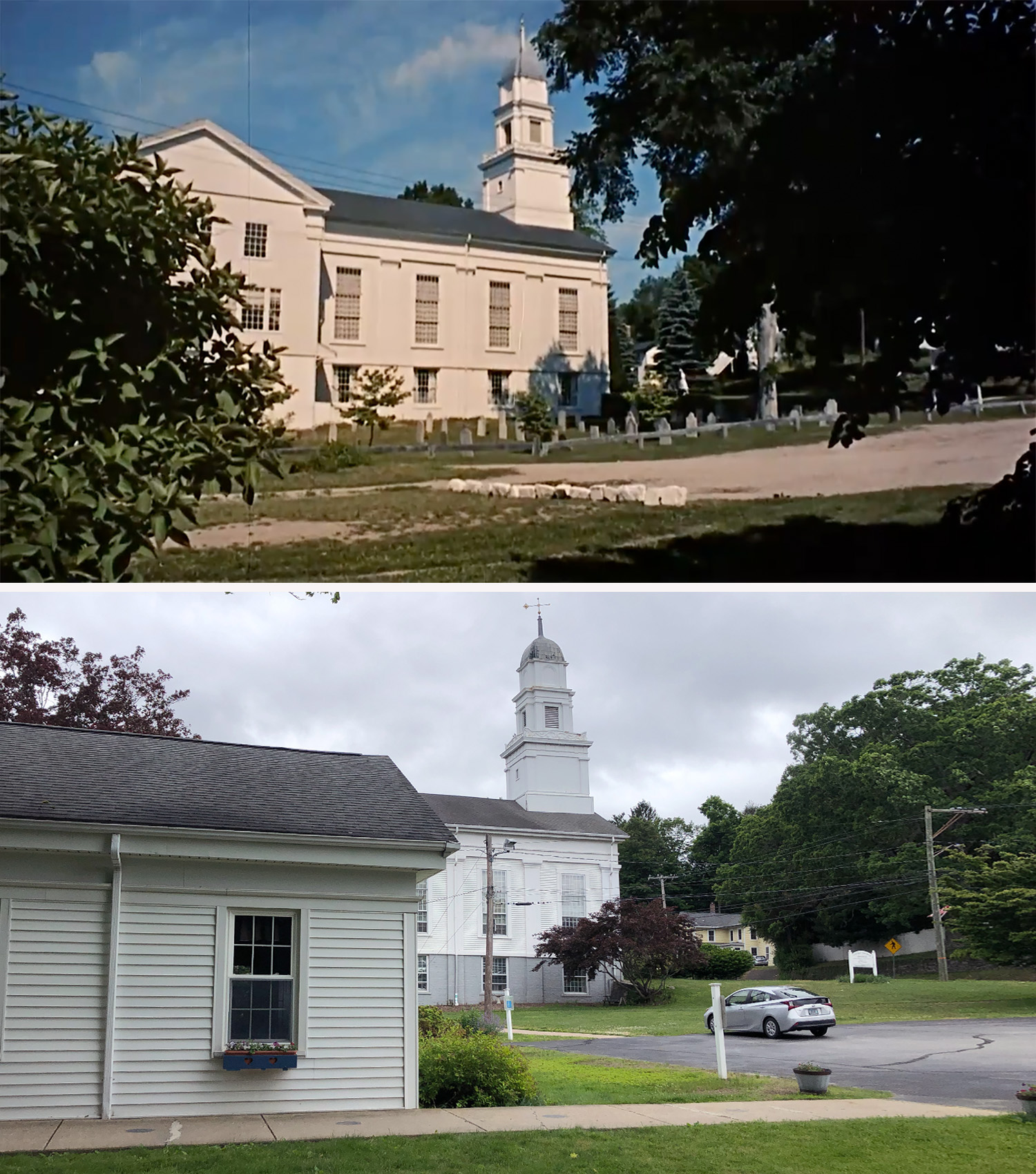
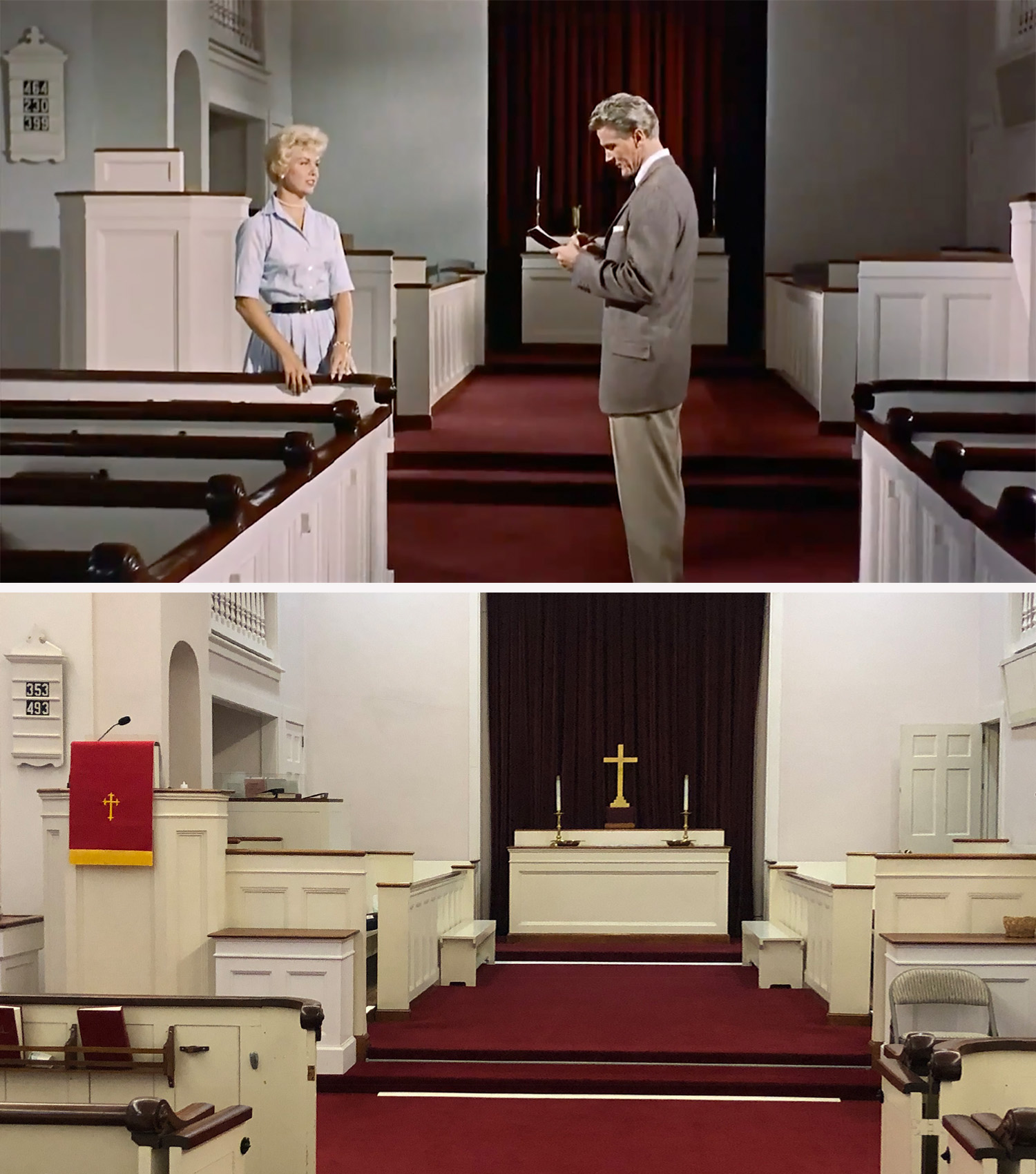
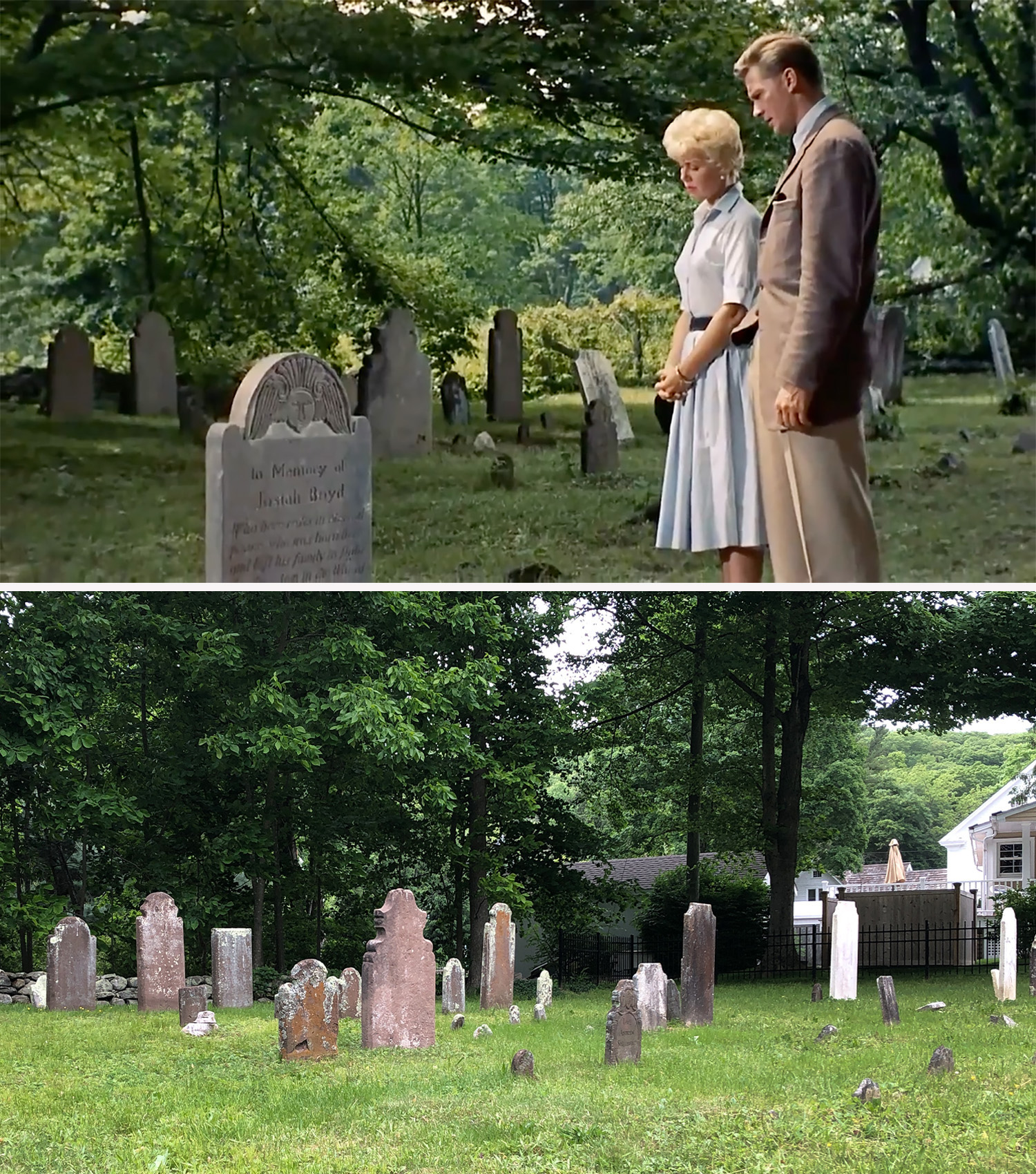
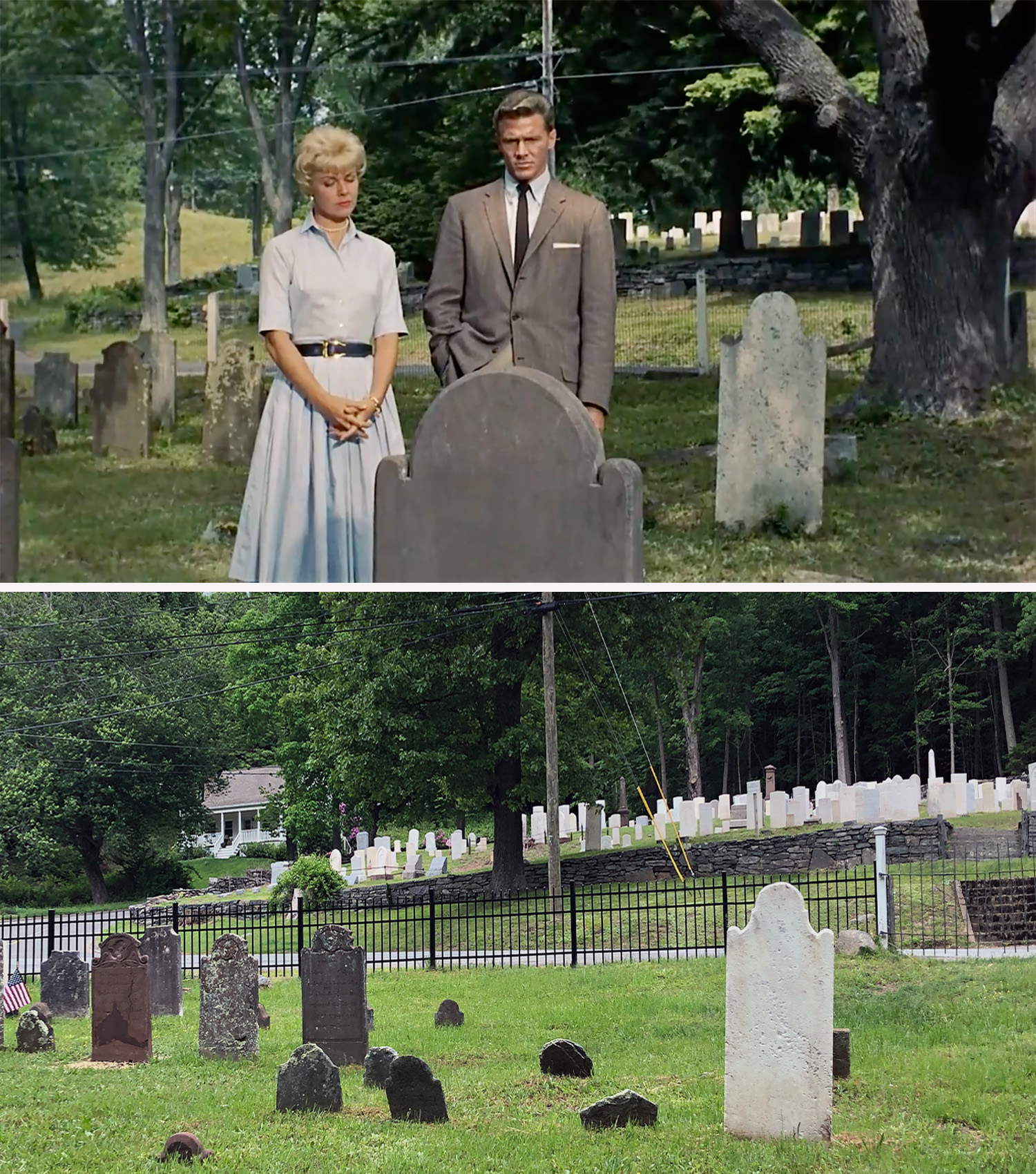
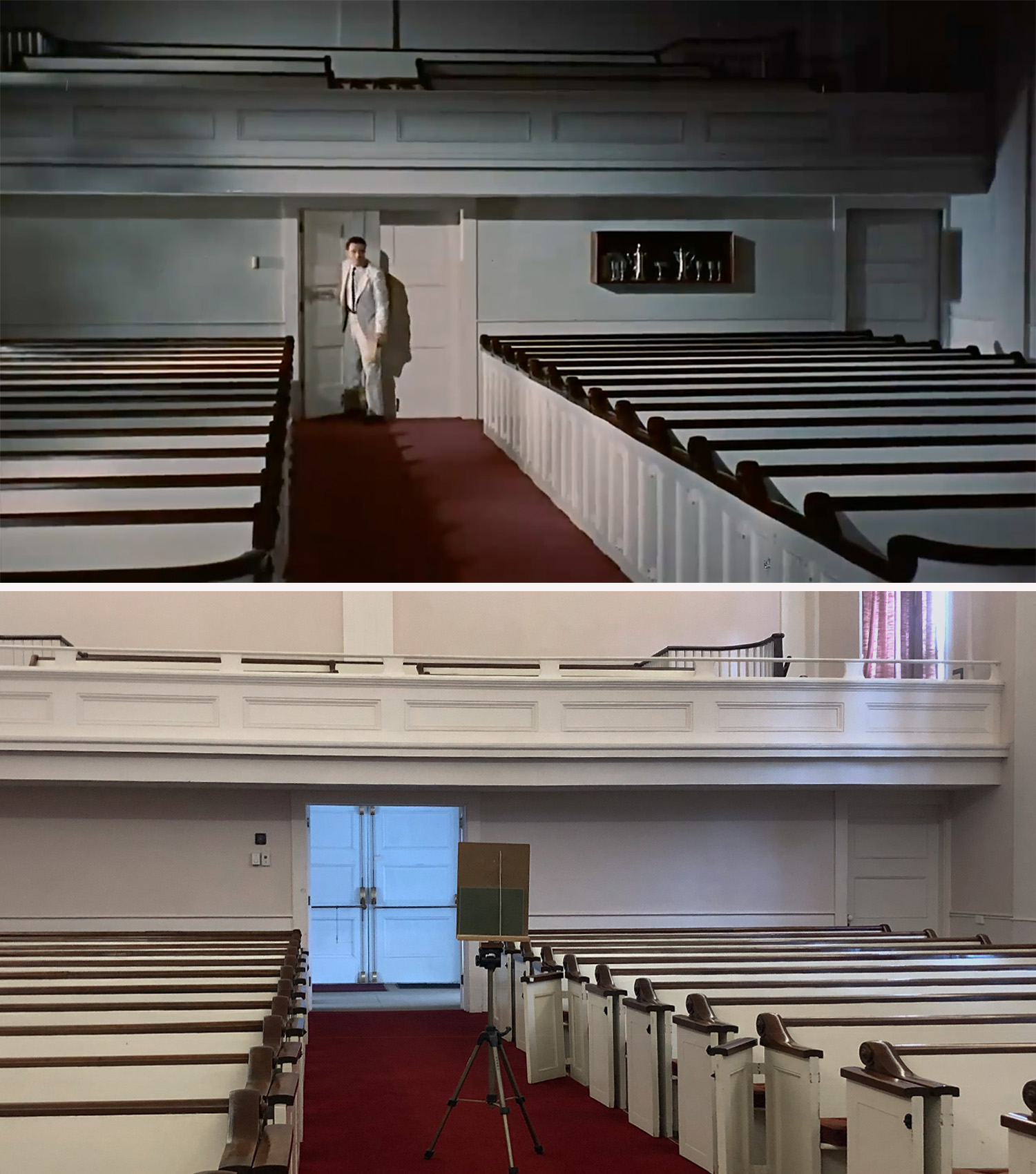
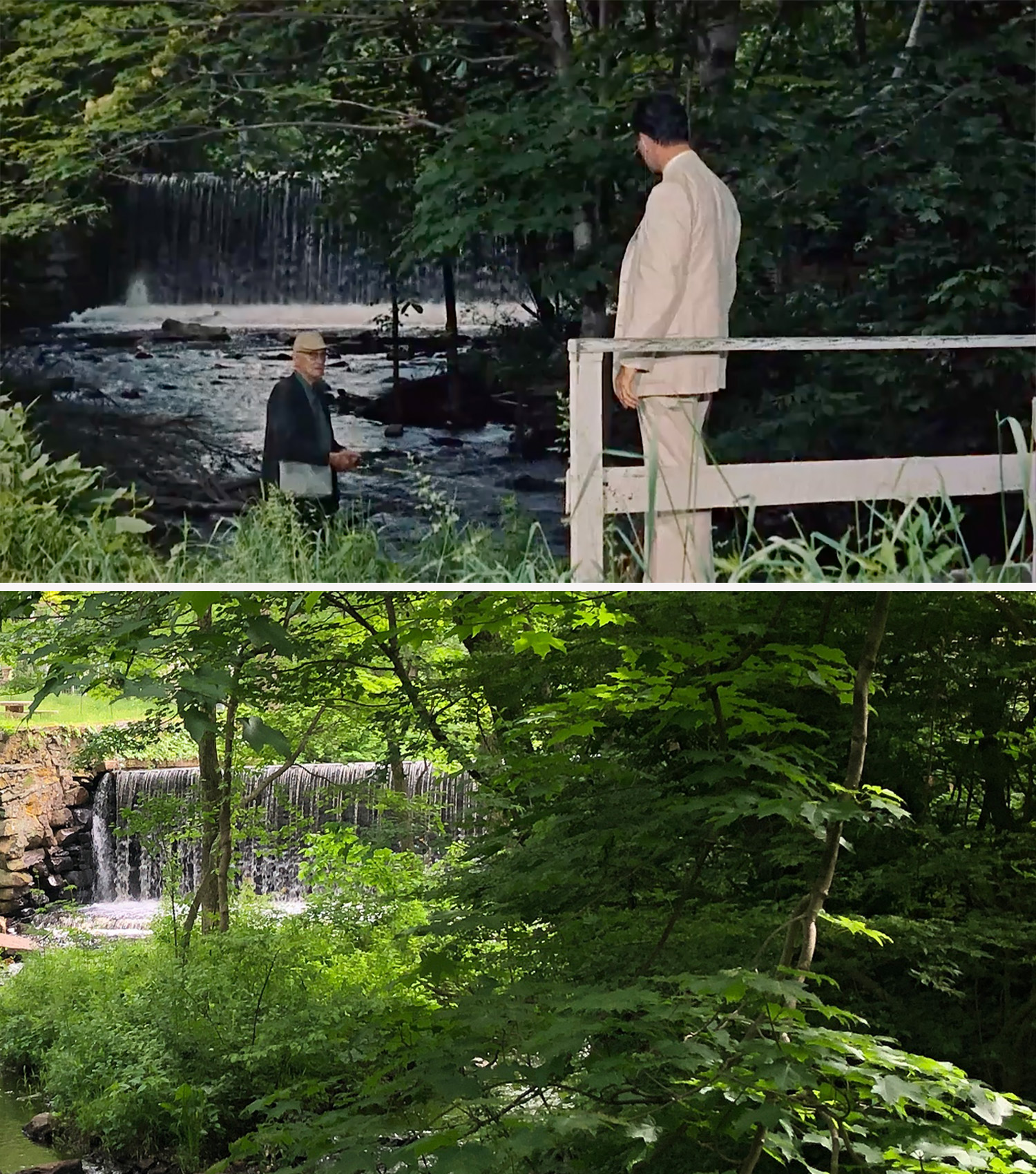
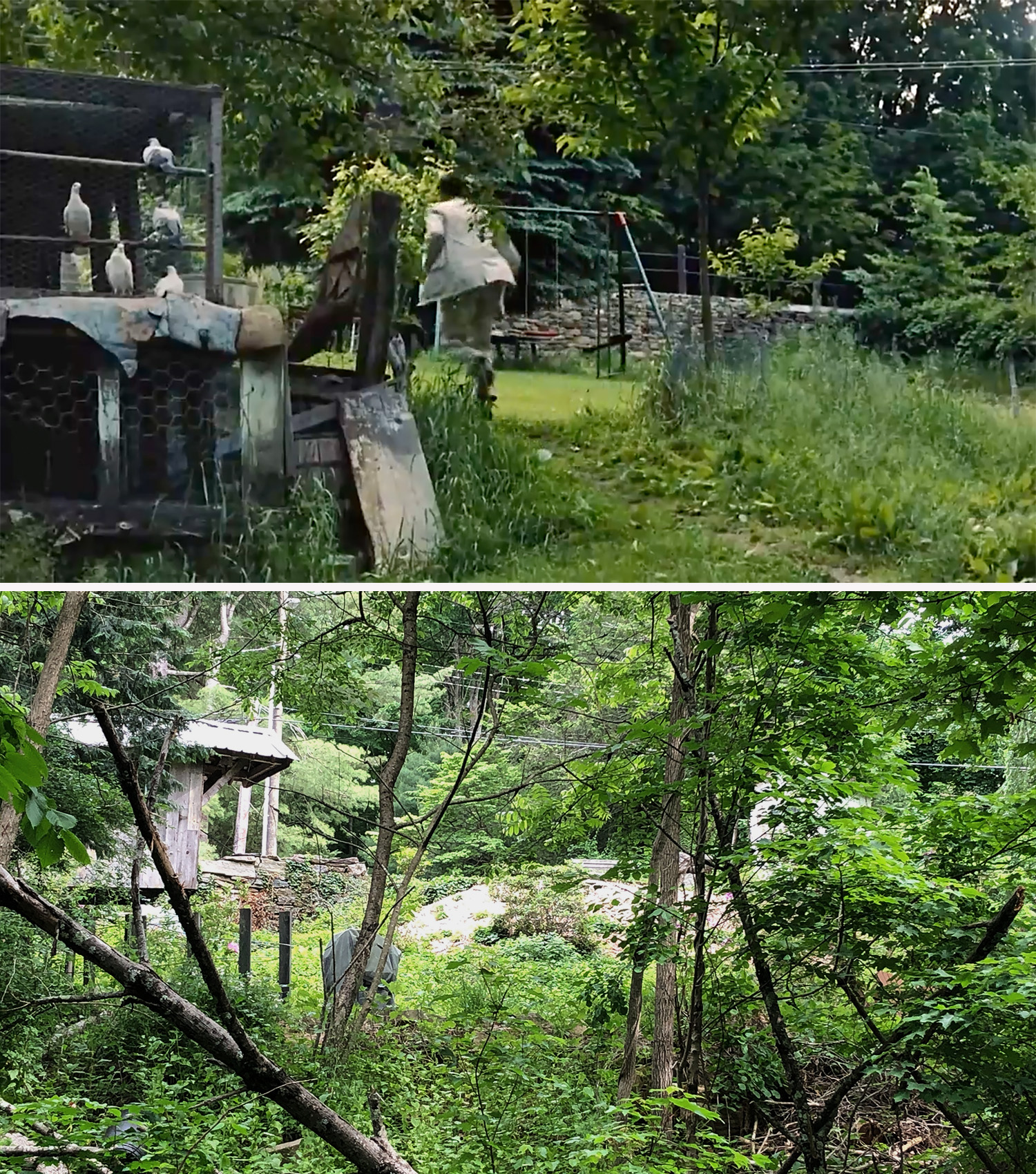
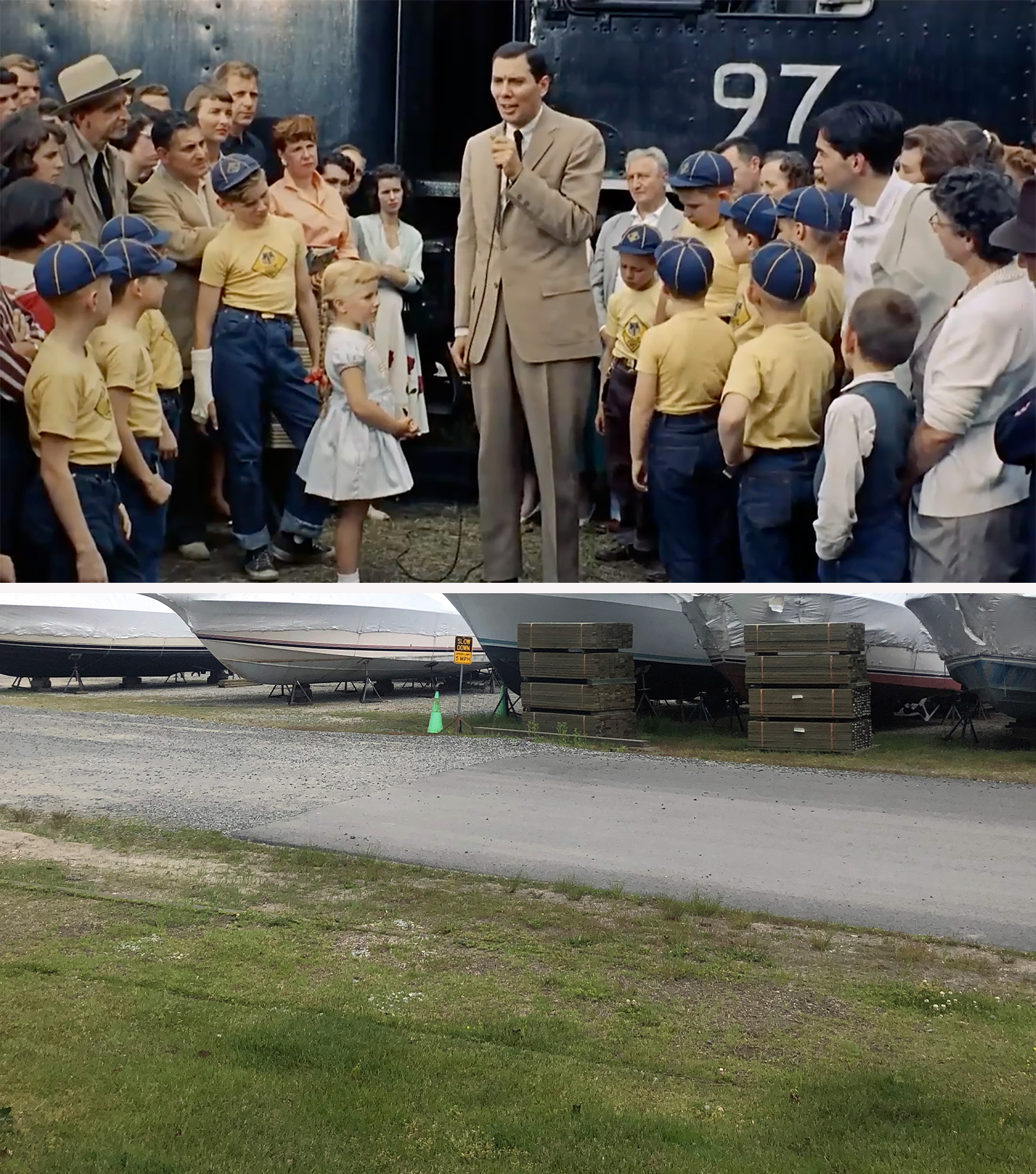
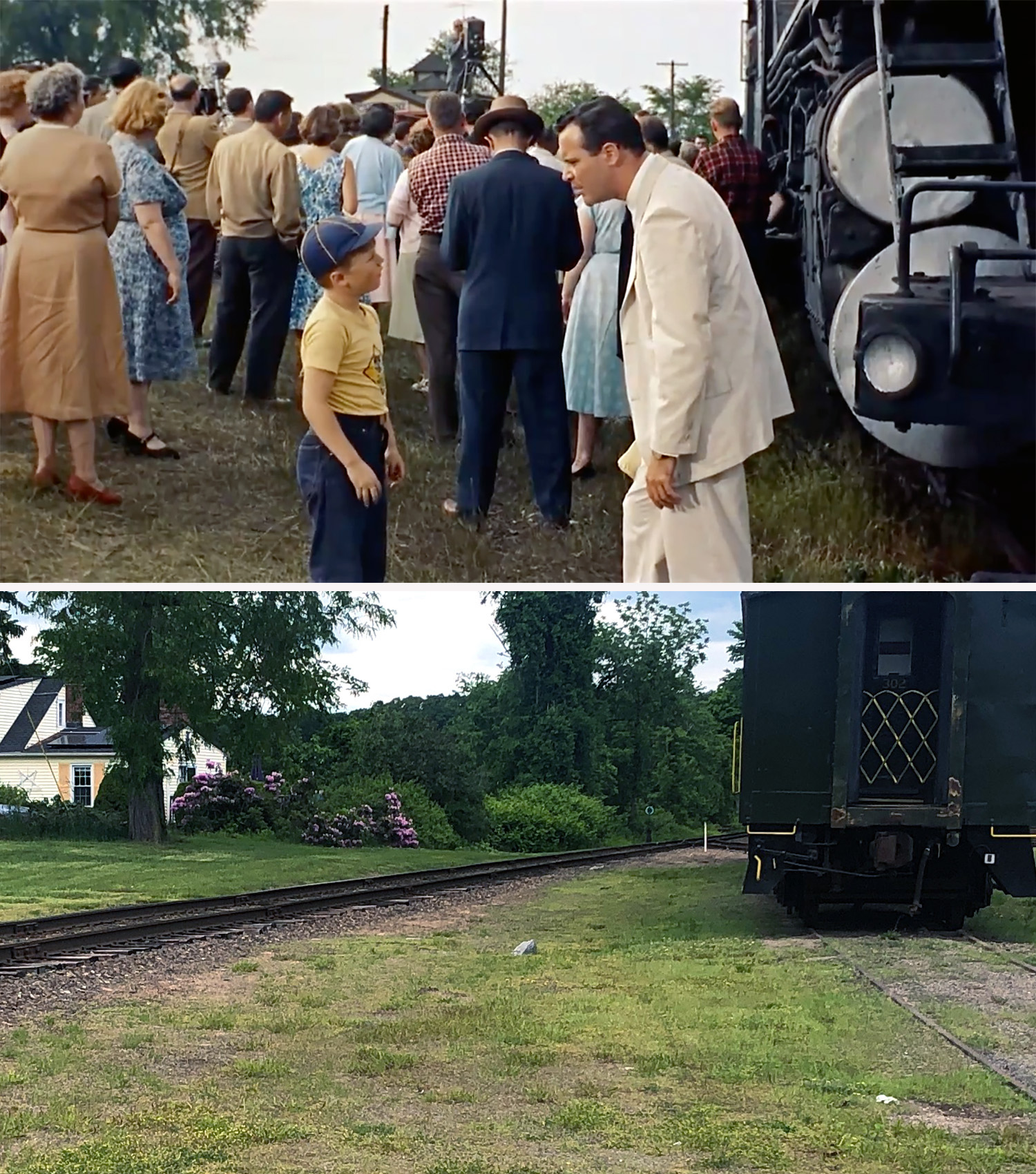
There’s a bunch of locations used throughout this sequence, spread over a couple miles, although it’s implied in the movie that they’re all within walking distance of each other.
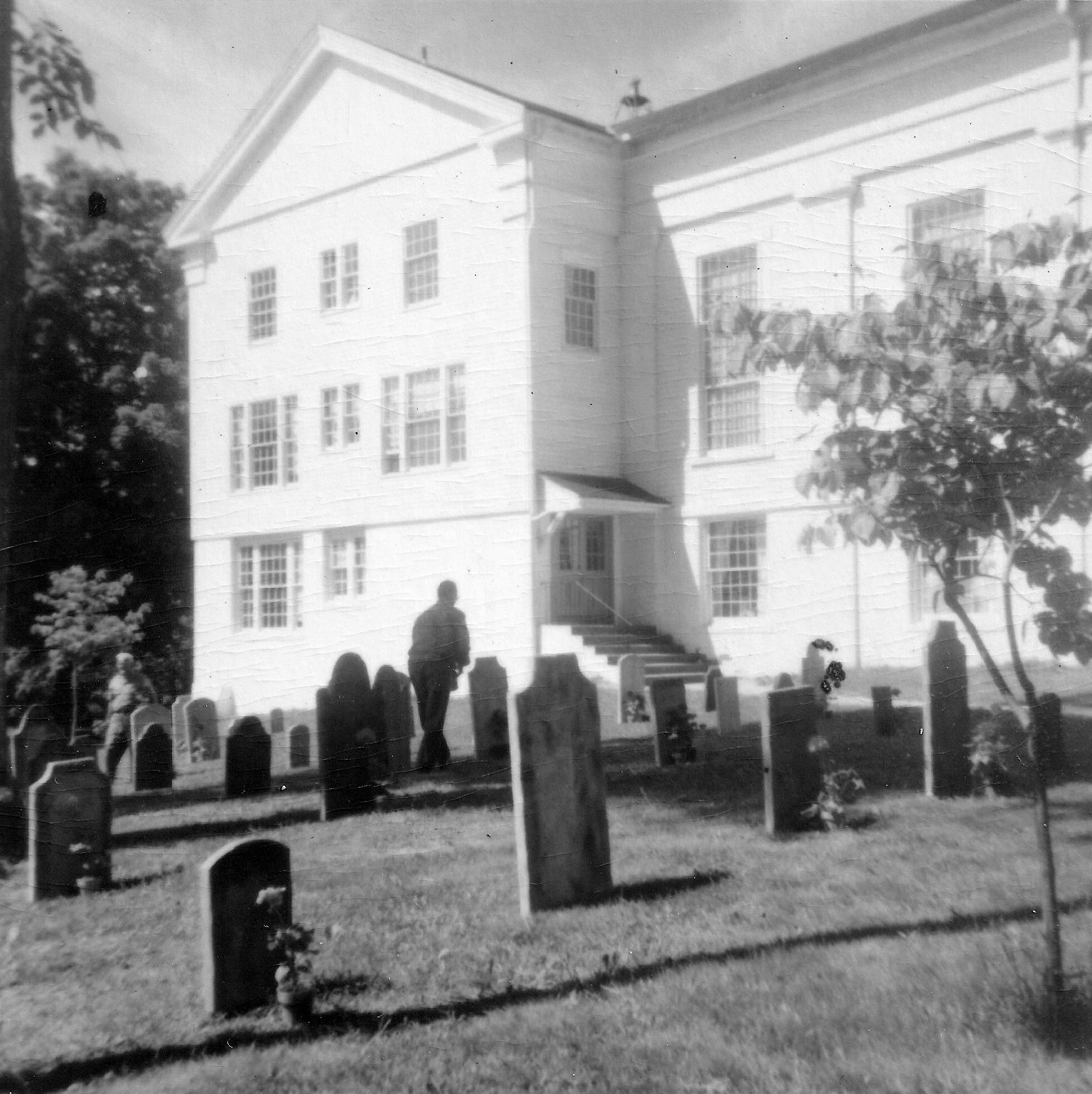
The church was easy to find since it’s on the main highway leading into town and its towering steeple is impossible to miss. The United Church of Chester was formed in 1941 by merging the town’s Congregational Church (founded in 1740) and Baptist Church (founded in 1822), physically connecting their two adjacent West Main Street sanctuaries into a single facility in 1948. And despite what appears in the movie, there aren’t any graves on the land.
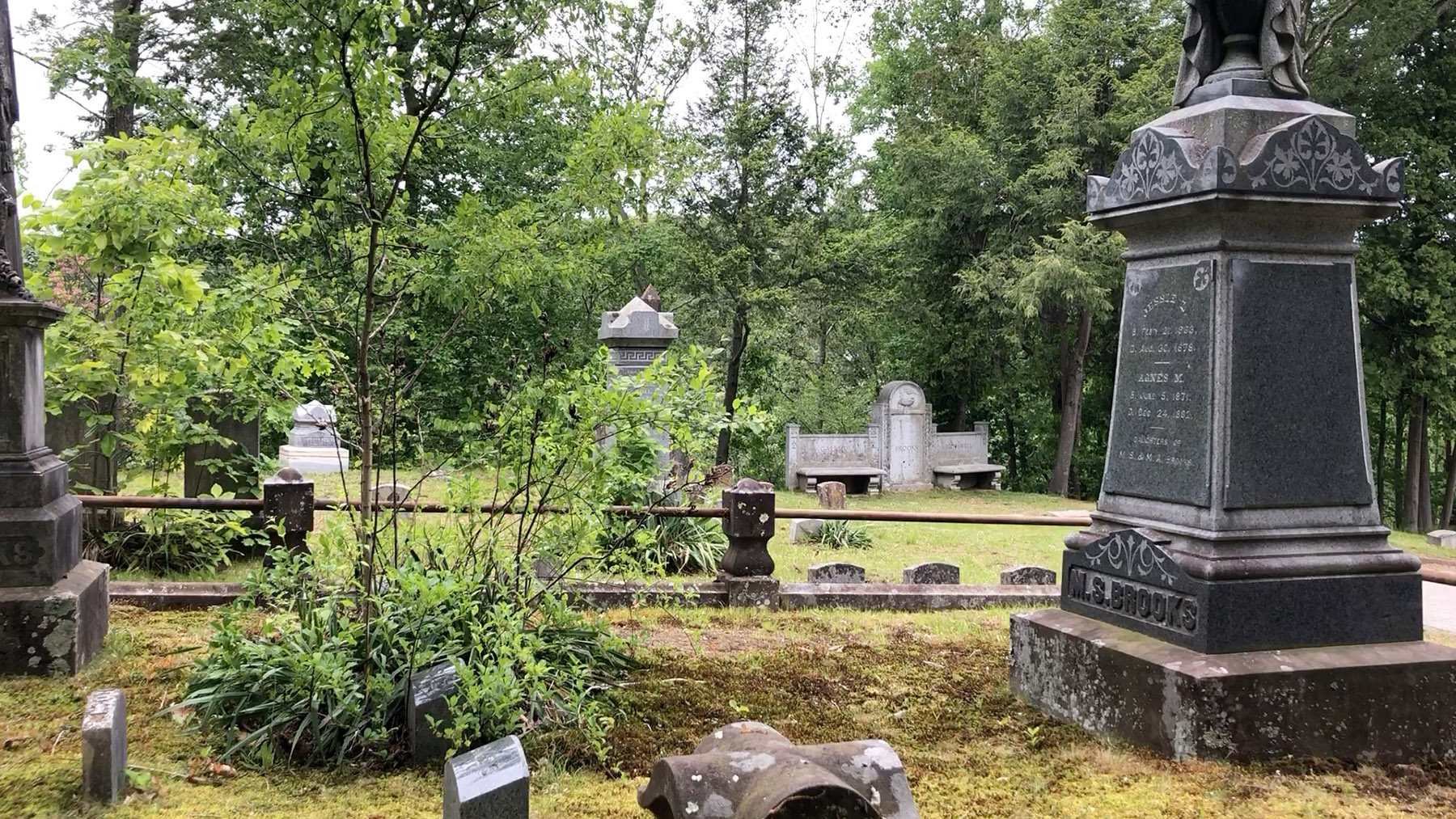
Since there’s no actual cemetery connected to the United Church of Chester, I had to do a little investigating to locate the one from the movie. At first I thought it was perhaps the Laurel Hill Cemetery just off of Main Street near the center of town.
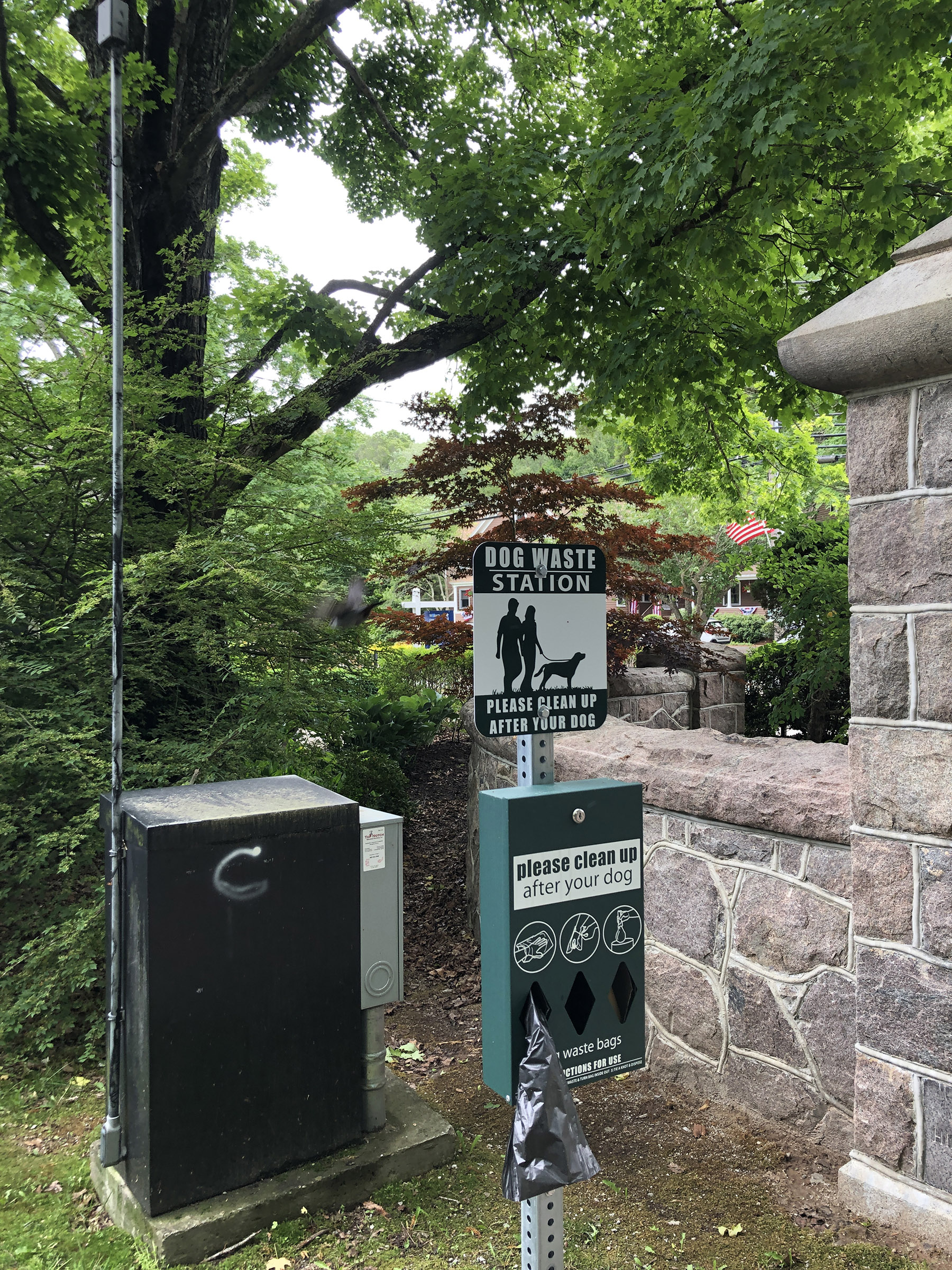
However, after walking through the modest, hilly property, I concluded it wasn’t a match. (But it was a leisurely stroll and a nice diversion from the town’s main strip.)
At one point, I started thinking that maybe it was a fake cemetery, like the one they mocked up at the church. But that changed when I made my first visit to the Chester Meeting House and noticed a small cemetery nearby. The stones looked to be the same style as the ones in the movie, so I immediately thought I was on the right track. And yet at first, I had a little trouble finding where they placed the fake “Boyd” headstone.
In the movie, Jane and Larry are standing by a squat, gnarly tree with a road and small rolling hill behind them. I figured the roadway was Goose Hill Road which bisects the property, and based off the landscape, I placed the scene at the lower end of the graveyard. And to my surprise, there was still a tree there that looked like the one from the movie, but I eventually concluded that it wasn’t the same one.
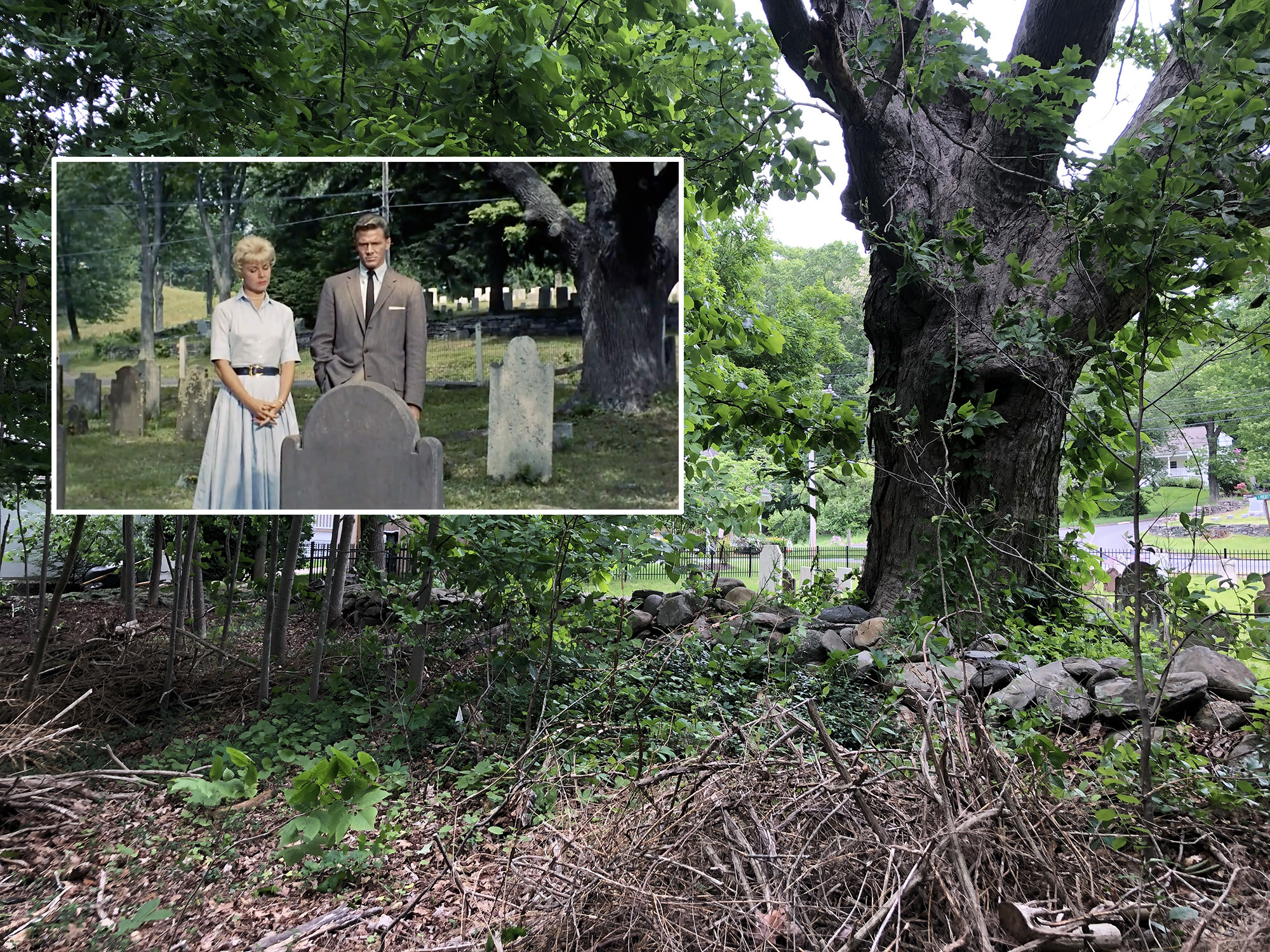
In the end, I was able to pinpoint the exact spot used in the movie by matching up several of the gravestones in the background (which stand unchanged, aside from being a little more weatherworn).
Jane’s trip to NYC
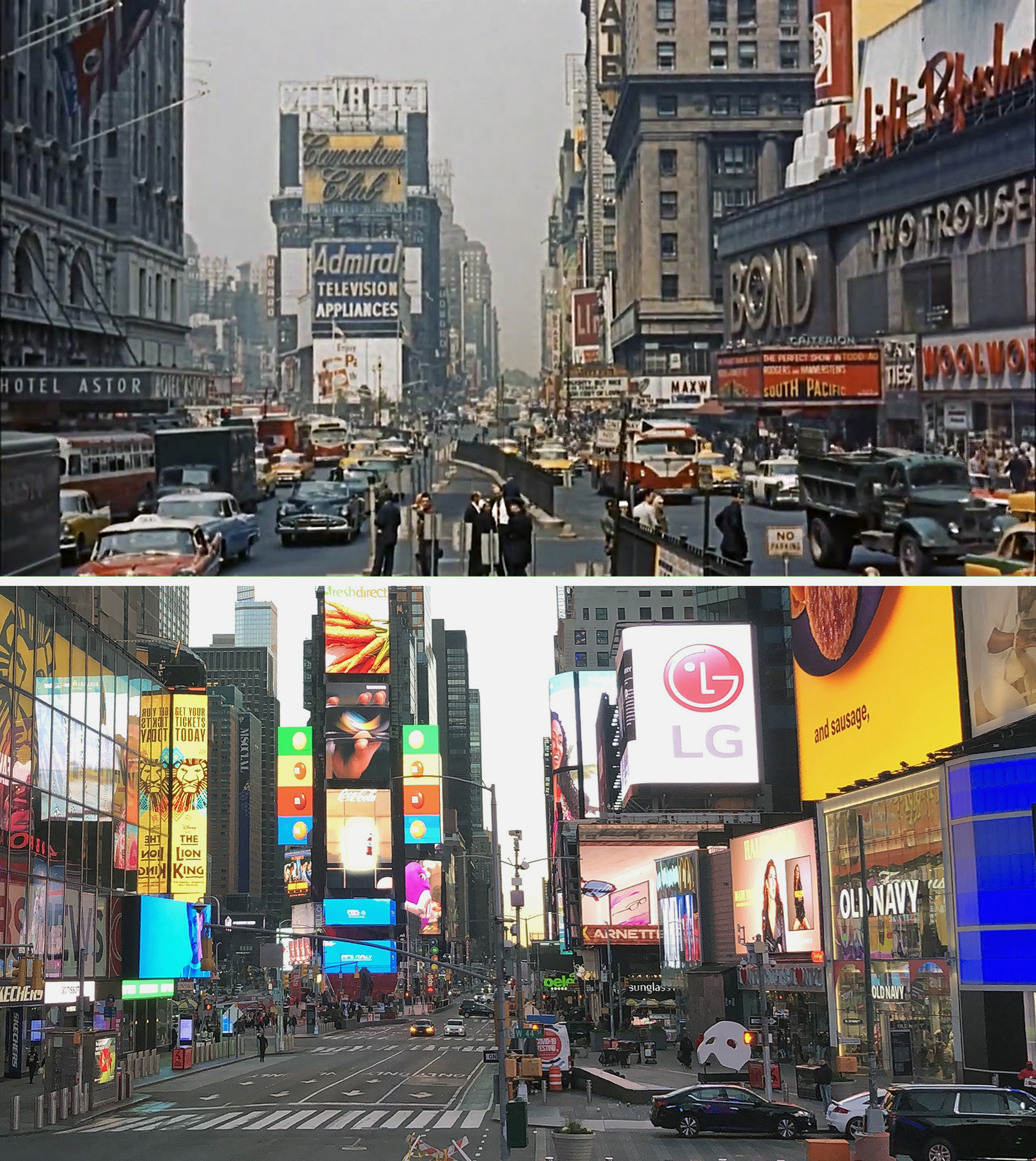
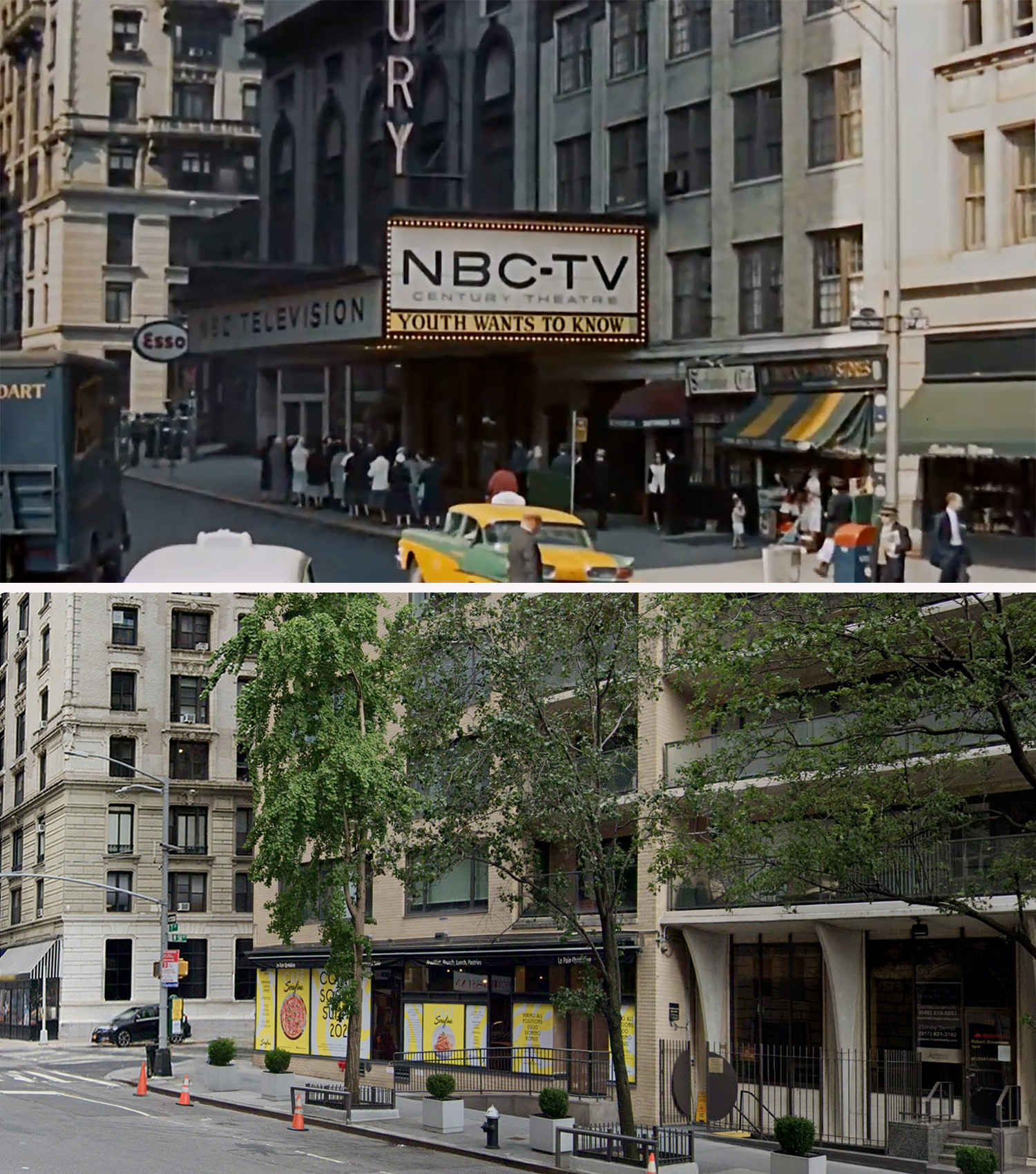
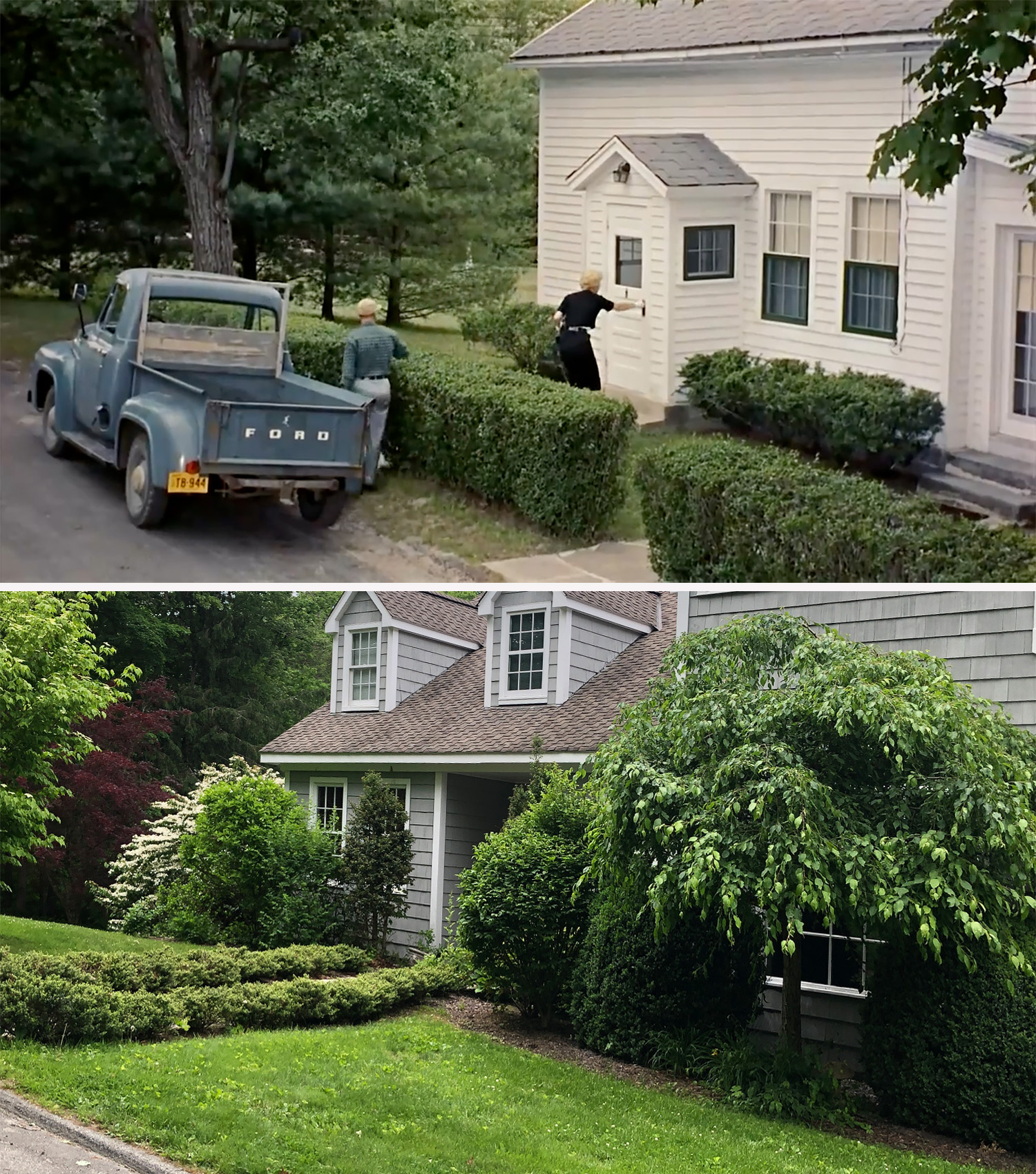
We get our last two shots of New York City in this extended sequence, which again, were almost definitely filmed by a small, second-unit camera crew. The Times Square shot is fairly typical for movies of this period — a high-angle, northern view, often featuring the Bond Building on the right.
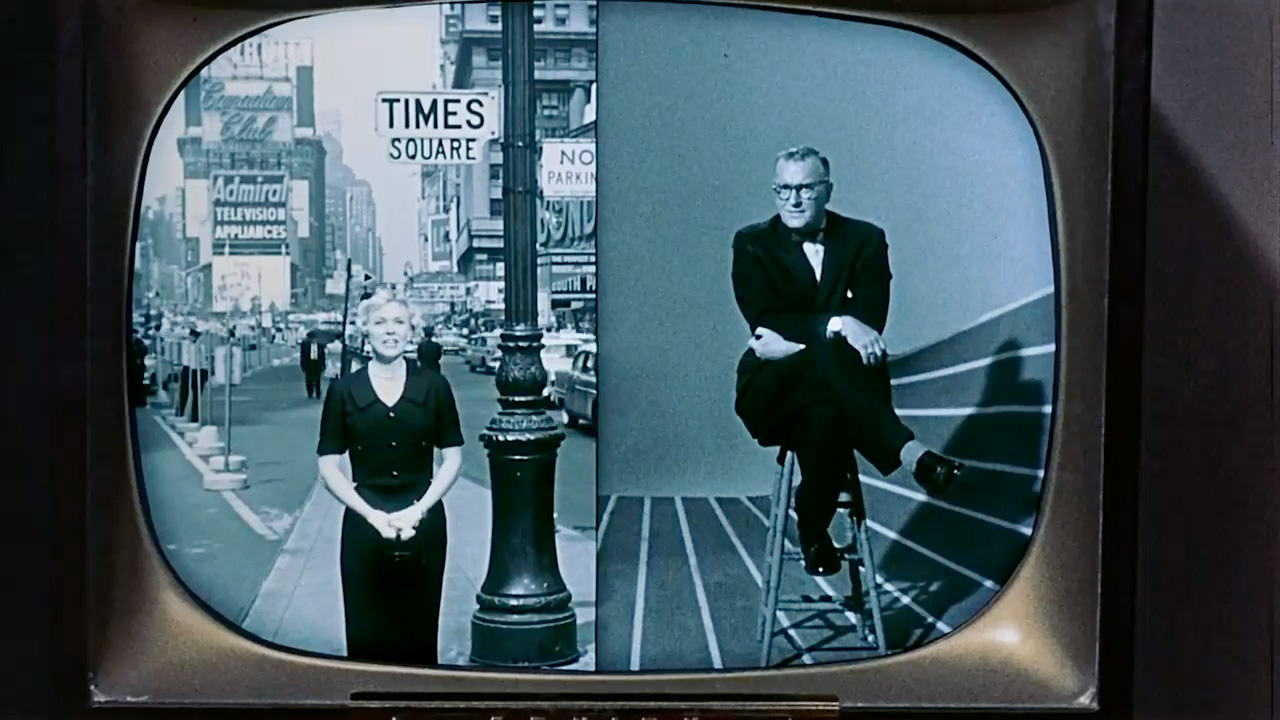
The one shot of Jane being interviewed from Times Square was clearly a composite shot with the Doris Day doing her lines from a soundstage. It’s a shame they didn’t have any of the principals come down to NYC for one day of shooting, especially since they weren’t very far away.
The shot of the NBC television studio is really the only unique thing from the scant amount of NYC footage in It Happened to Jane. I don’t think I’ve seen the exterior of that theater shown in any other movie, and as far as I can tell, this might be the only image of the building taken when it was being used by NBC.
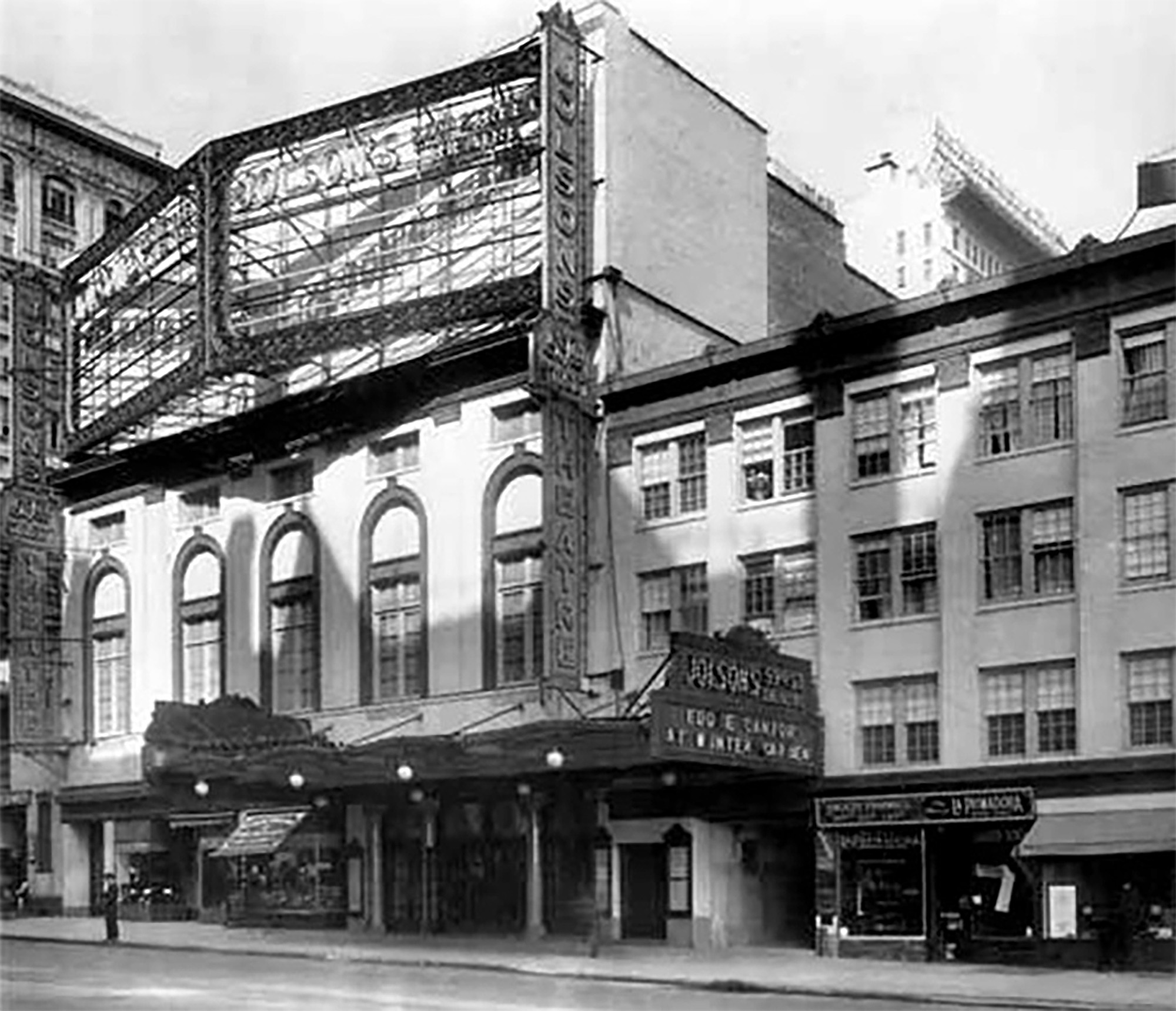
Opening in 1921 as Jolson’s 59th Street Theatre (named after vaudeville star, Al Jolson), the historic Broadway venue on Seventh and W 58th was actually converted from a structure used by the Central Park Riding Academy. Unfortunately, Jolson’s never did any exceptional business, in part because of its remoteness from Times Square. So in 1931, the property was sold and the live theater switched to a movie house under the new name, the Central Park Theatre. Over the next decade or so, the theater was renamed no less than five times before settling on the “New Century” in 1944.
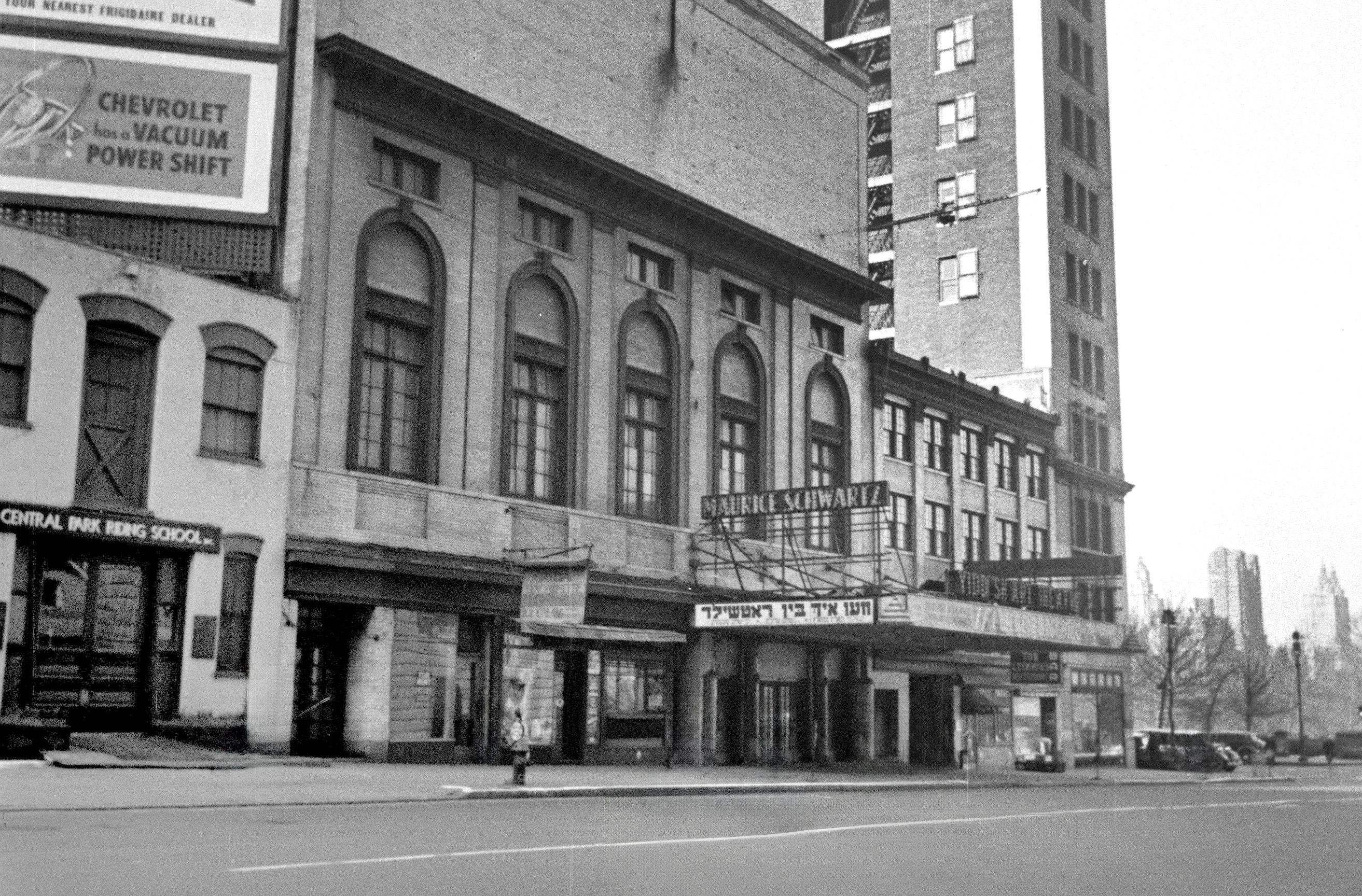
The theater was then converted to an NBC broadcast studio in 1953, appearing as it did in It Happened To Jane. However, the studio interiors were recreated on a soundstage at Paramount in Hollywood. And technically, NBC’s panel show Youth Wants to Know was filmed in Washington DC, not NYC, so I’m pretty sure that the marquee was a special effect done for the movie.
After serving as a videotape studio for a couple years, the New Century Theatre was demolished in 1962, and the apartment building that’s there today was built on the site. But luckily, the building on the southern corner is still around, which helped me get the right angle when I took the modern photo of the location.
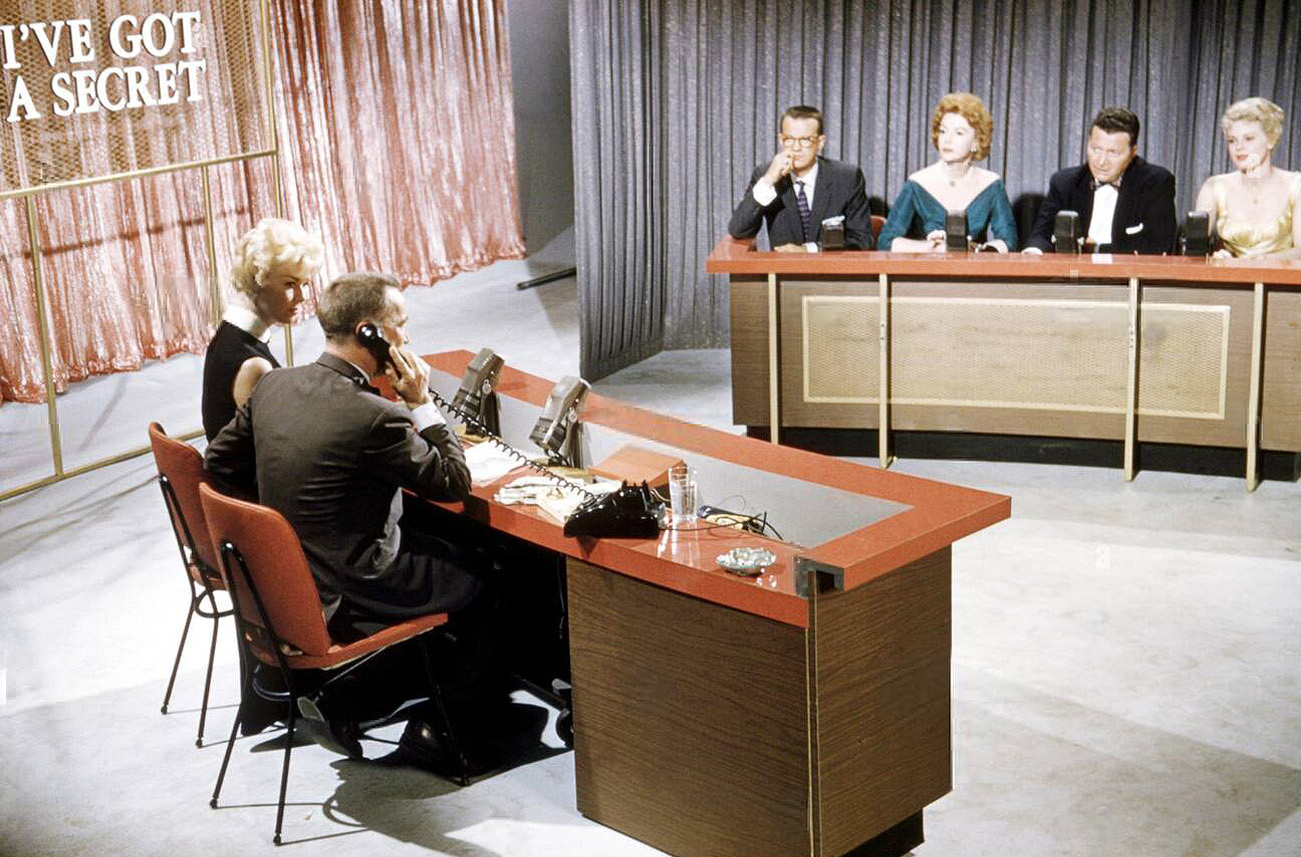
When it came to the CBS show I’ve Got a Secret, even though it was produced in New York at the time, I’m pretty sure the studio set was also recreated at Paramount.
The Town Turns on Jane
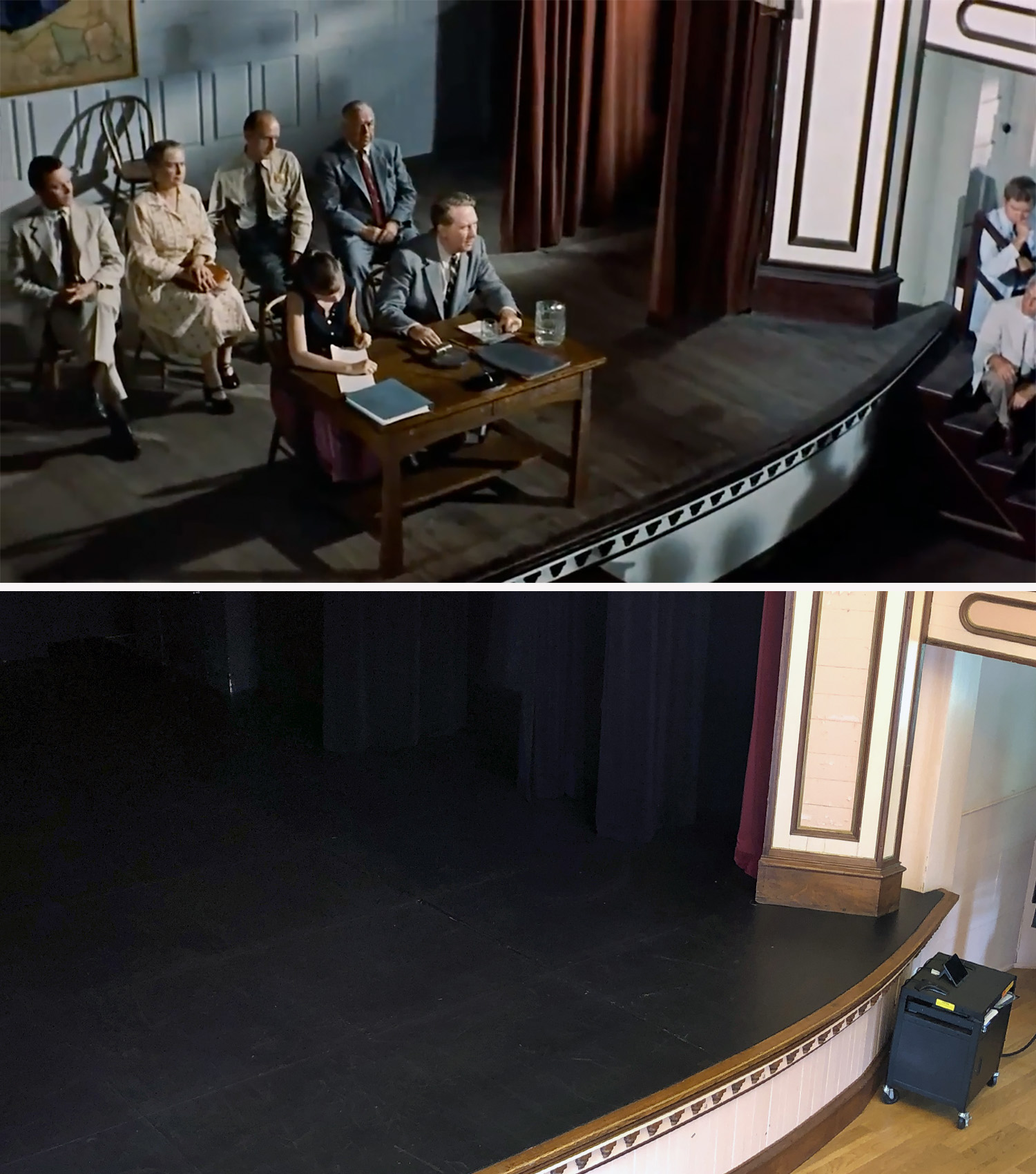
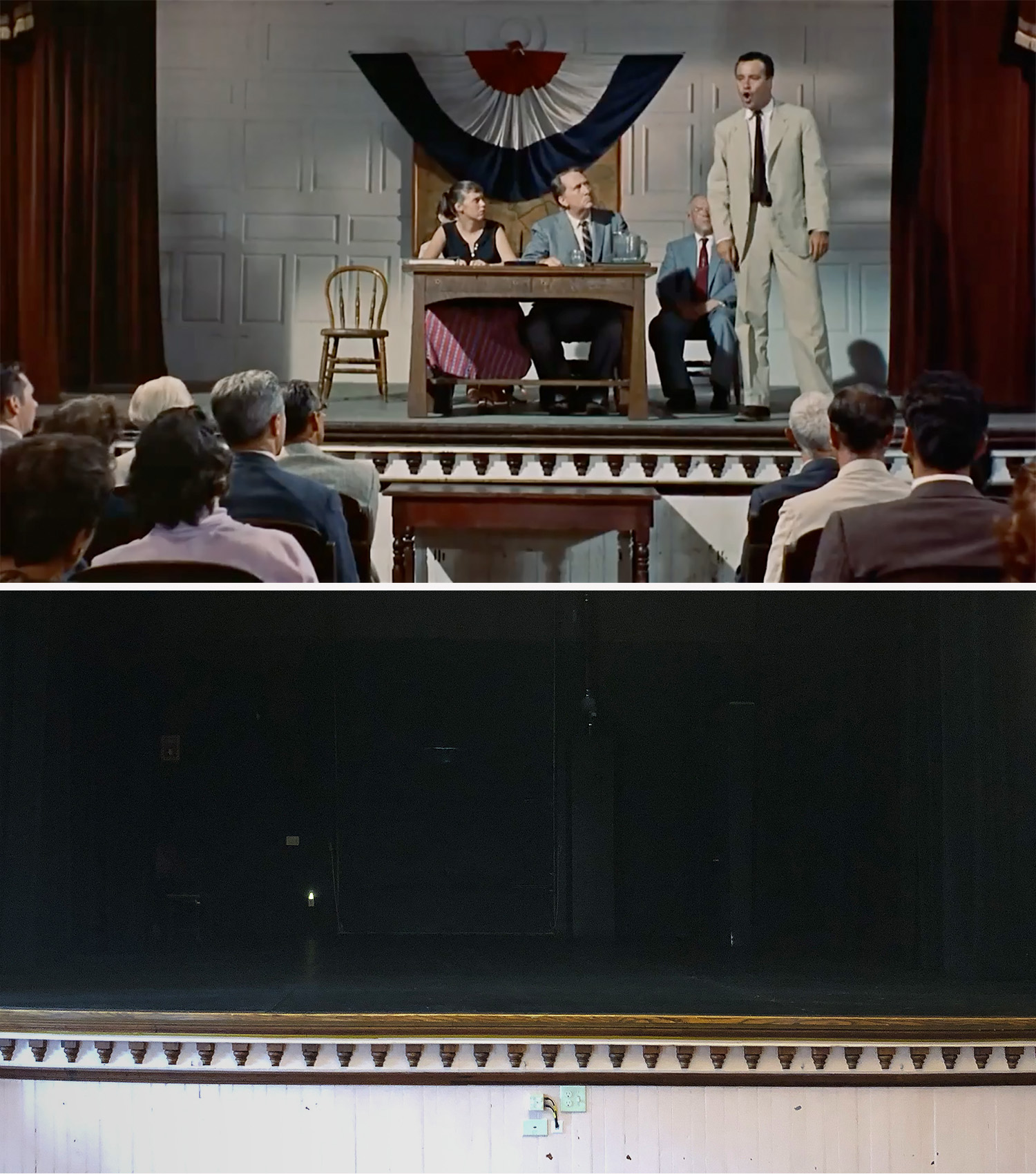
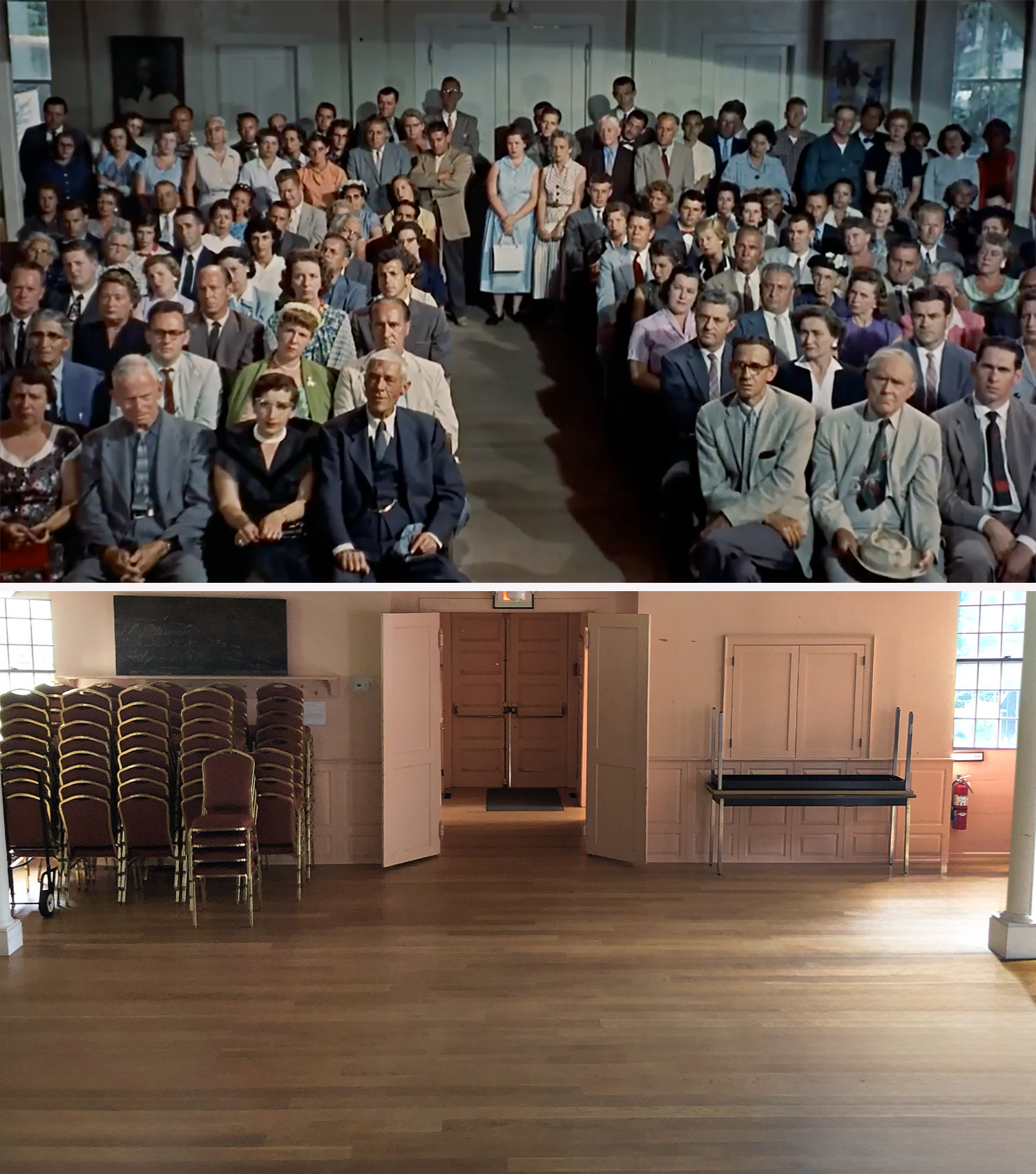
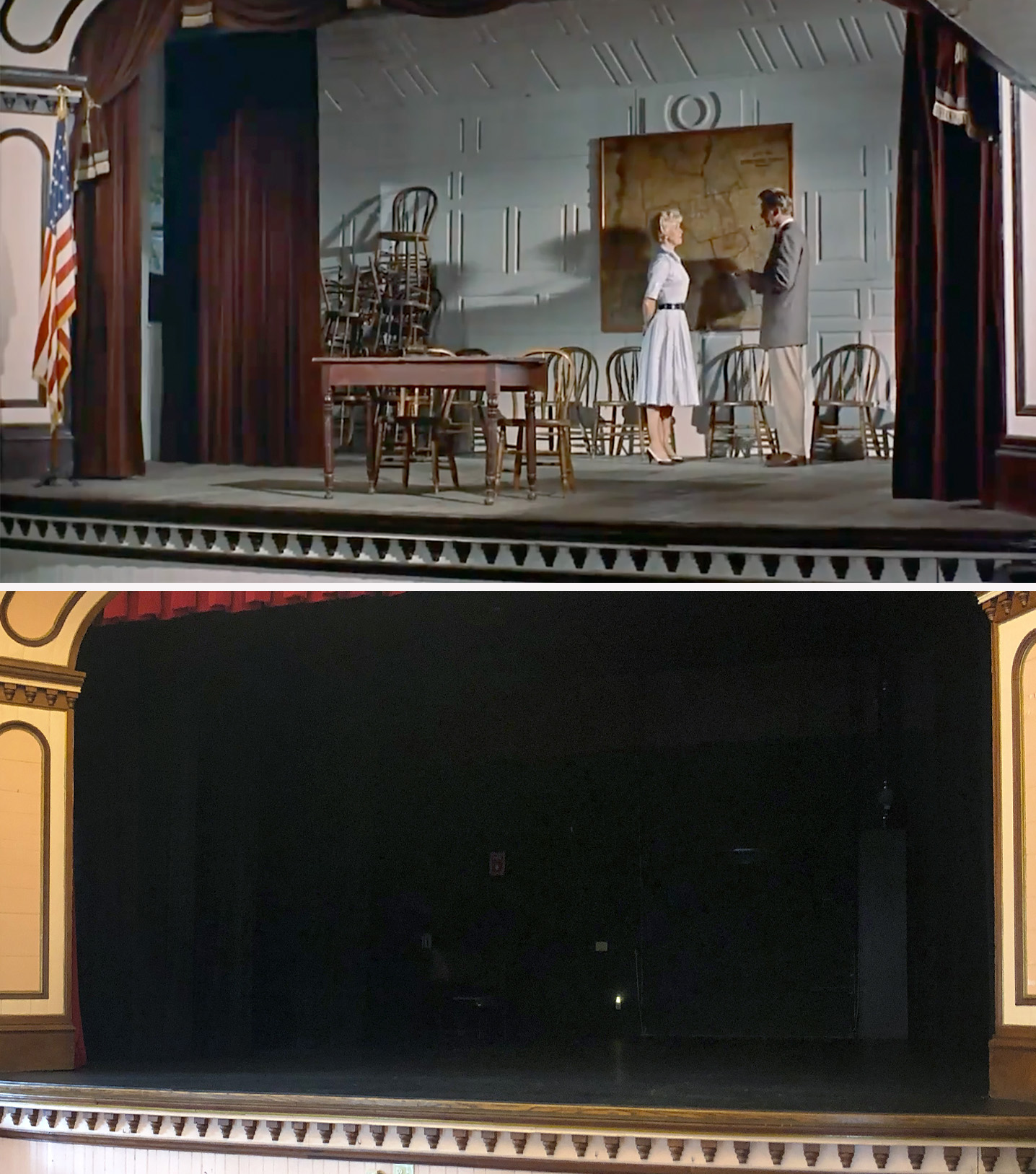
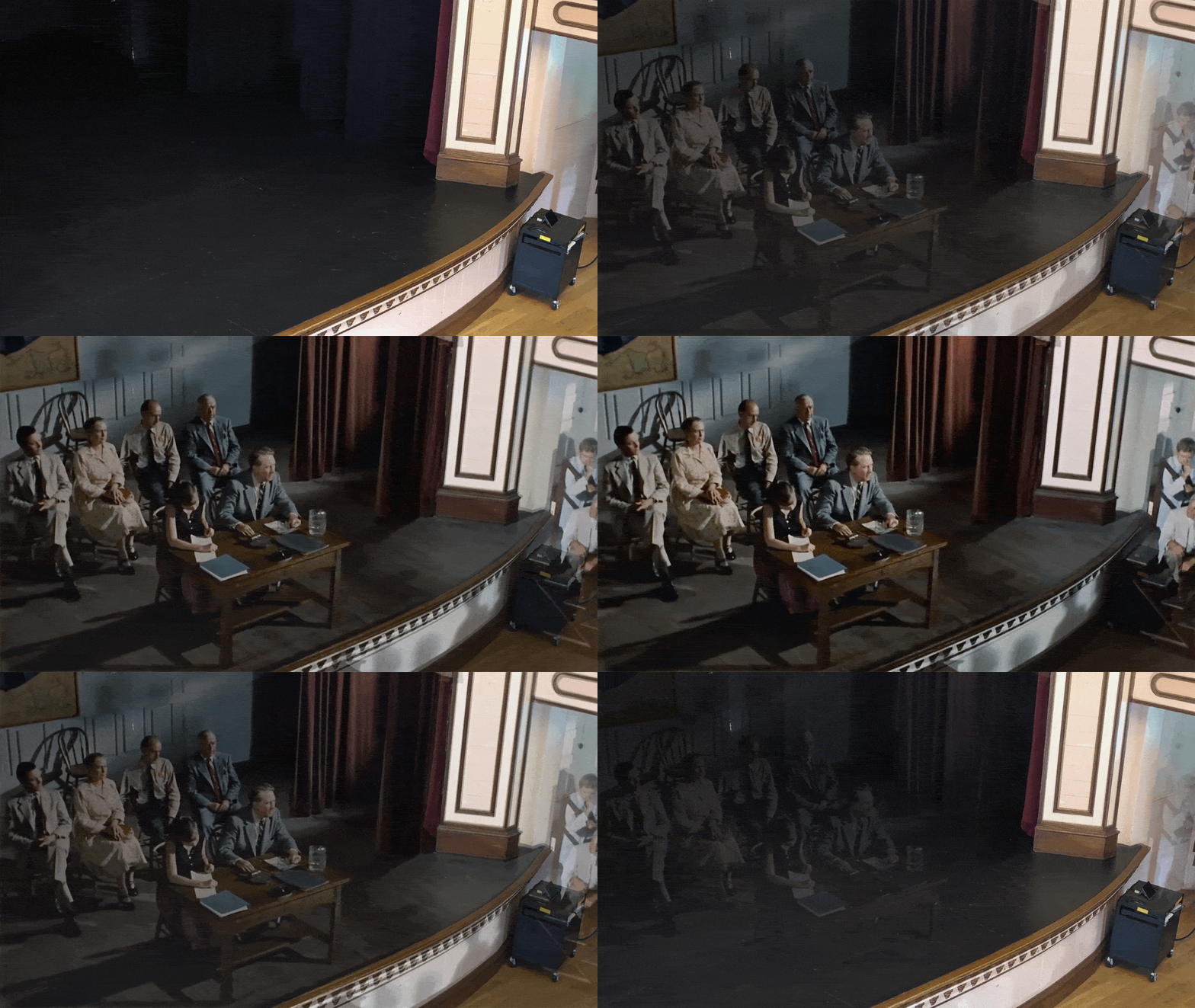
As mentioned earlier, the Chester Meeting House originally was a church but was later converted into a general meeting space. Around the time they put in the stage, they also installed new floorboards, and those were recently replaced with the ones seen in the modern photos. (Diane mentioned the old floor was extremely creaky, immediately alerting everyone if you came into a meeting late.)
You can sort of see what the old boards looked like in that last “then/now” image above — they’re hanging on the back wall behind the stacked chairs.
Chasing Down Jane
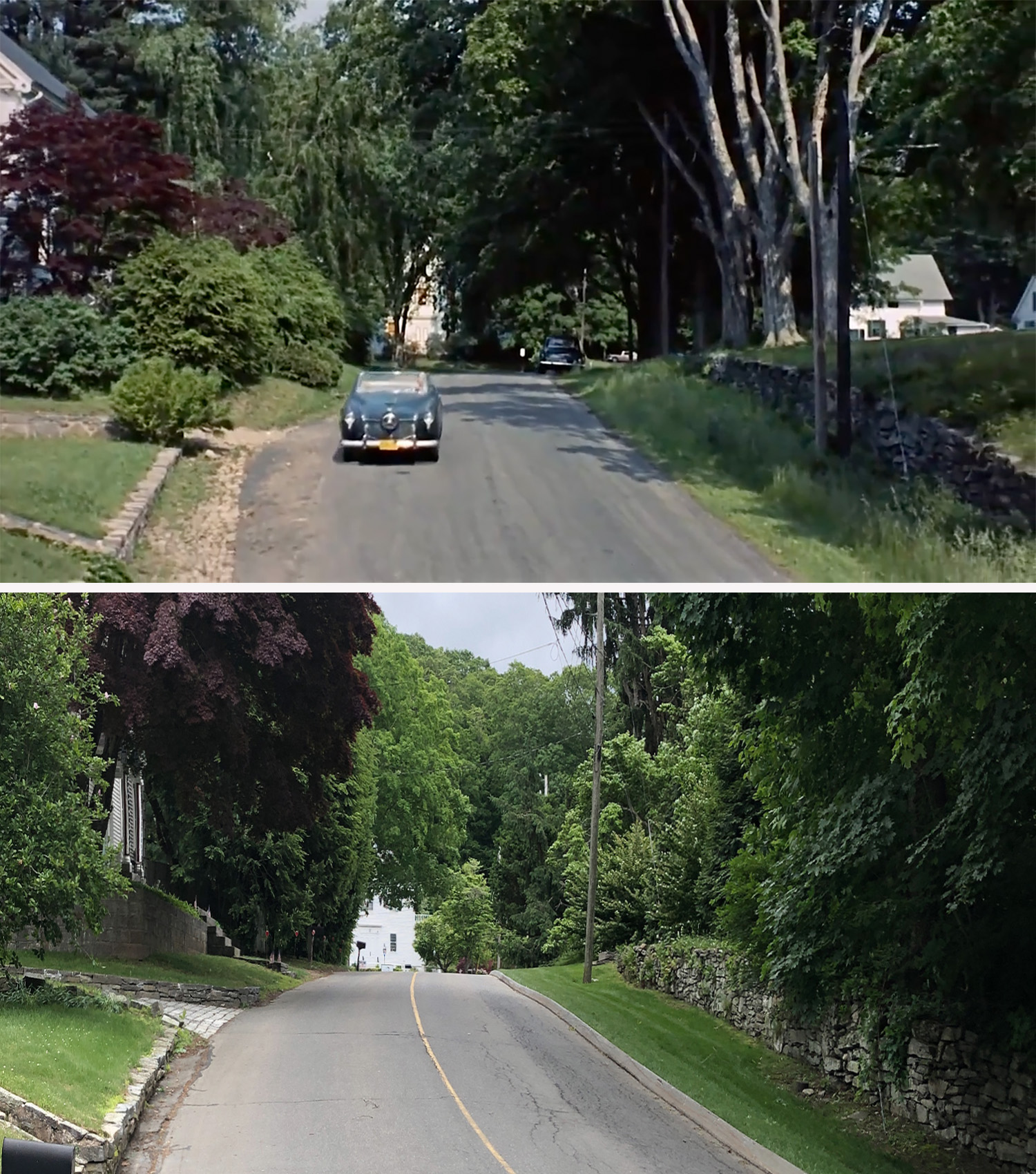
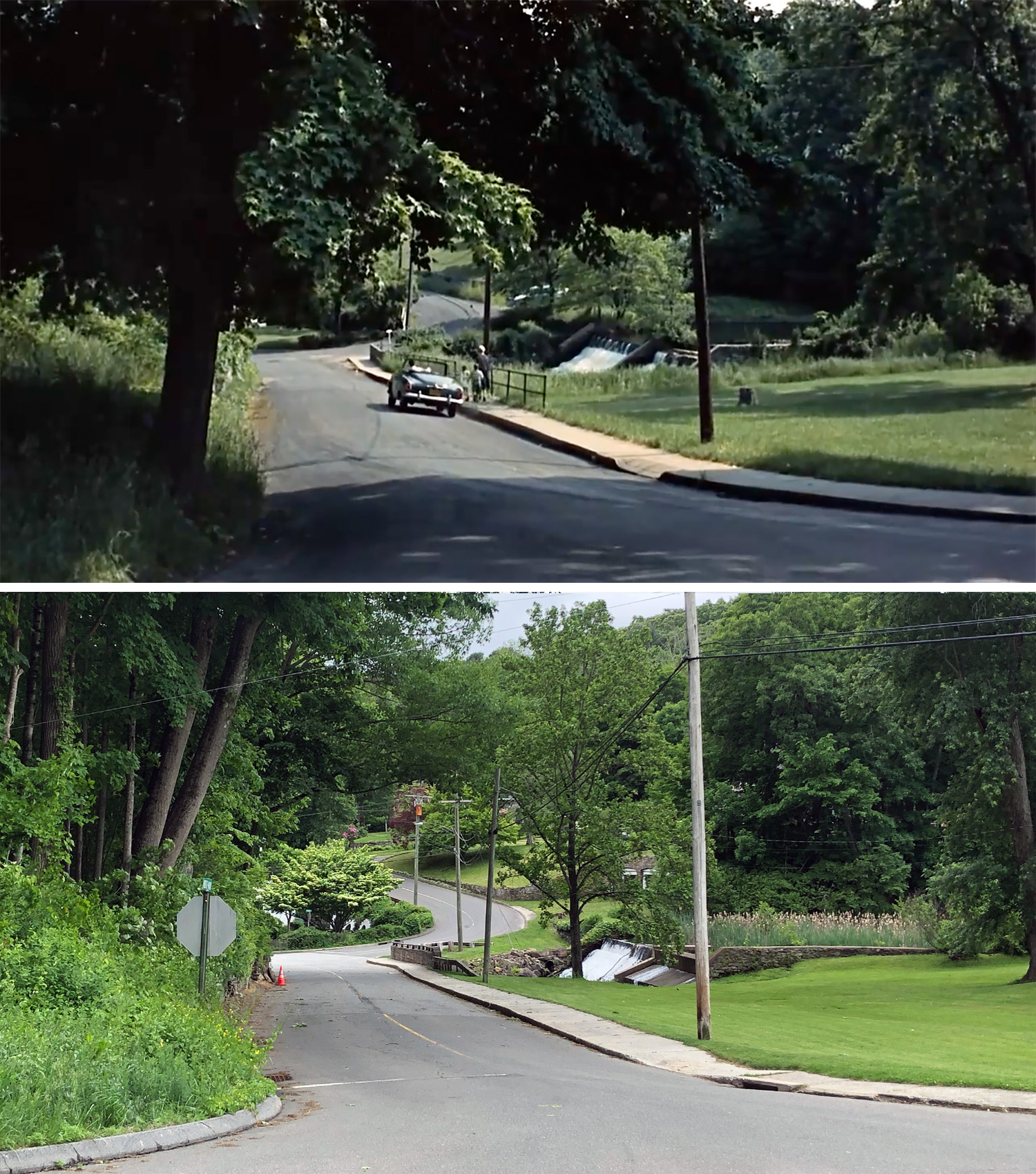
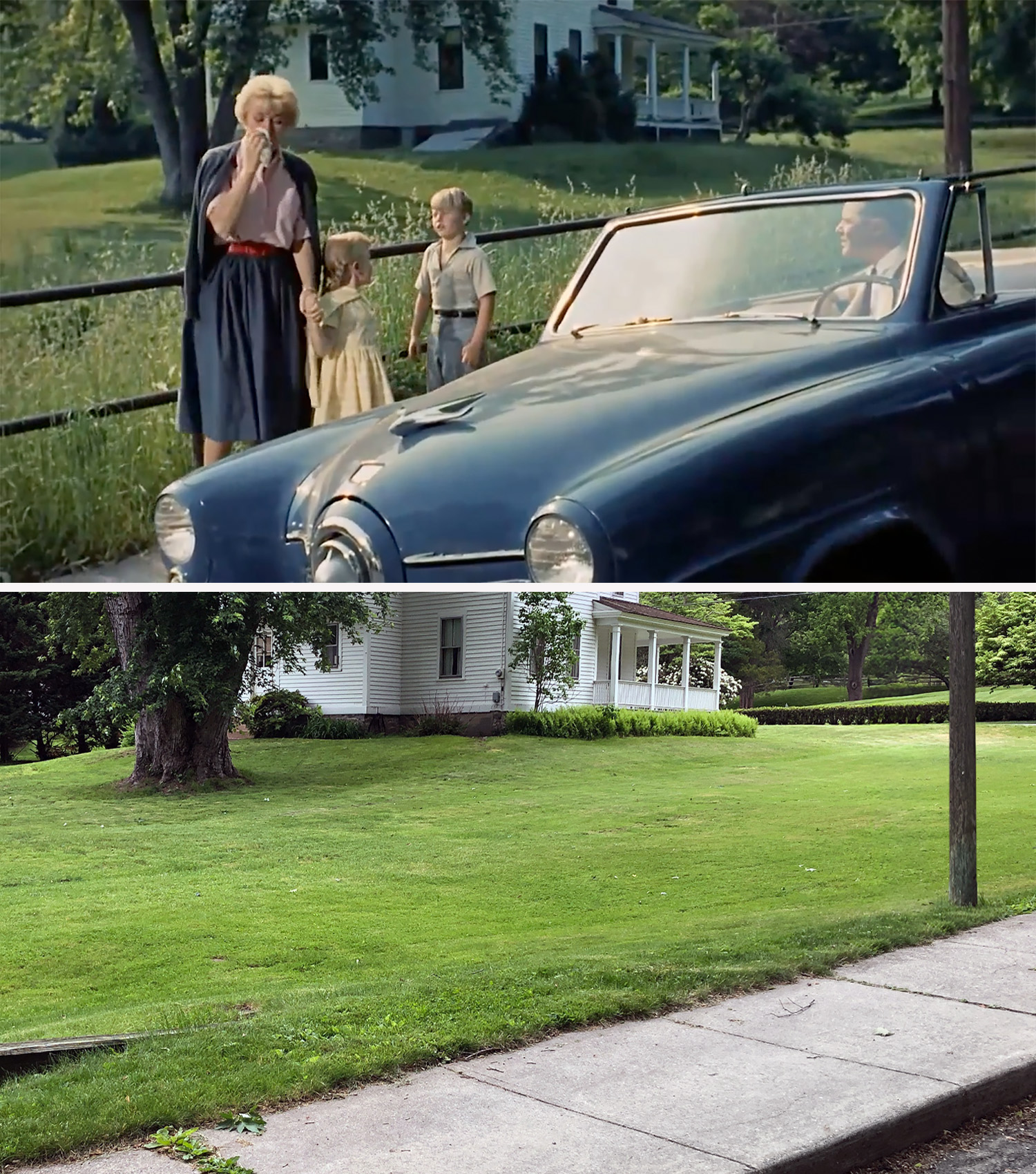
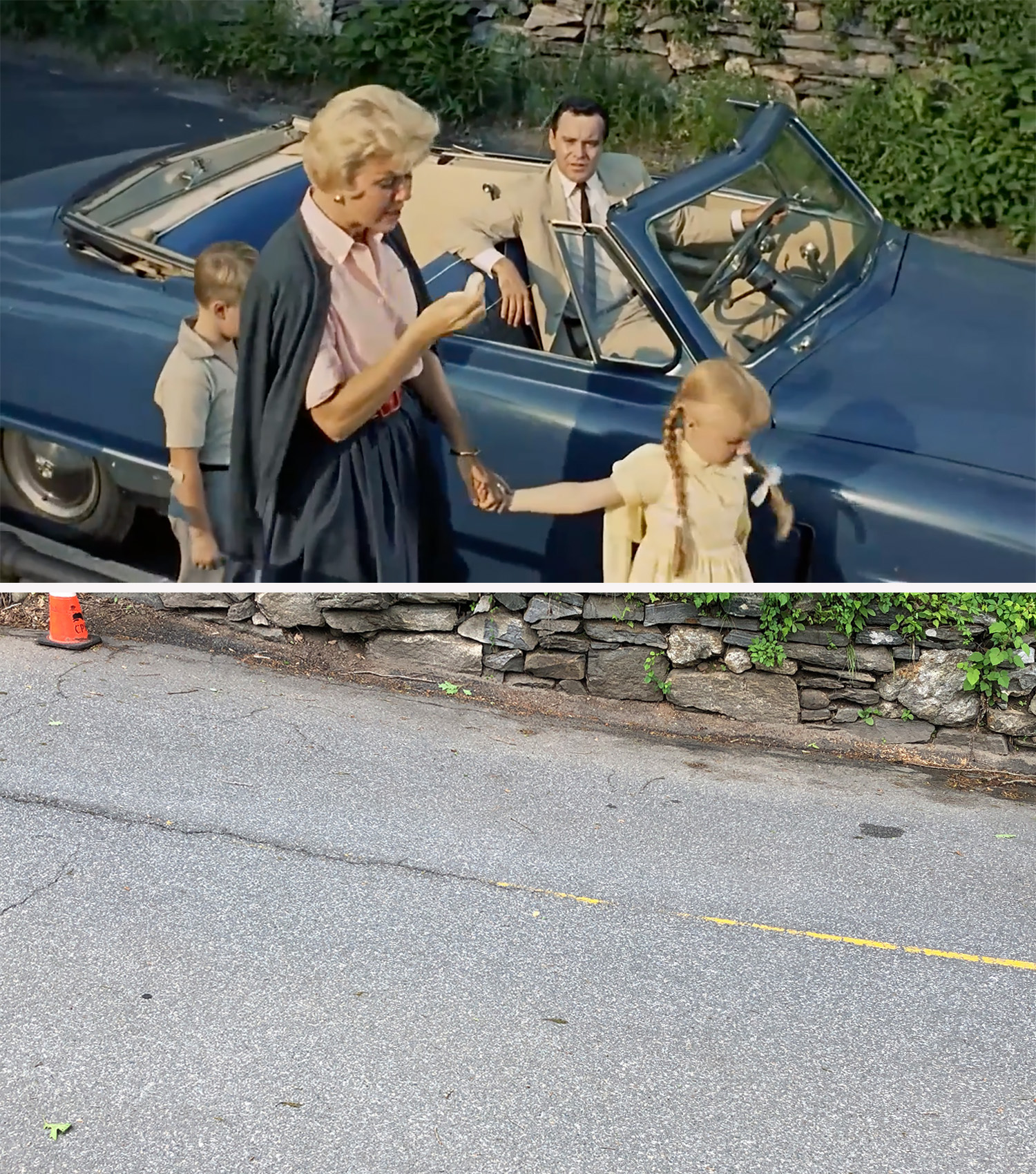
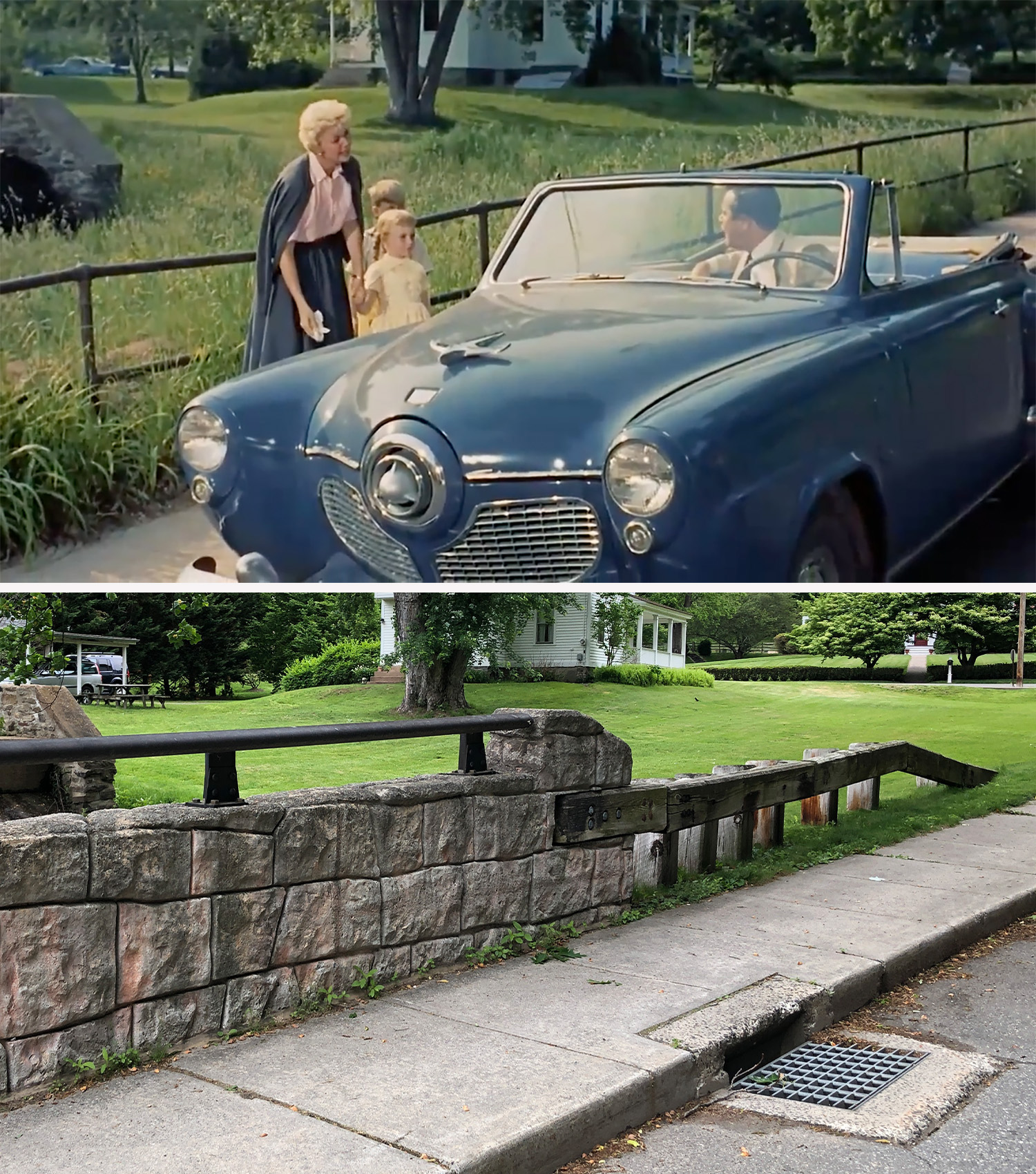
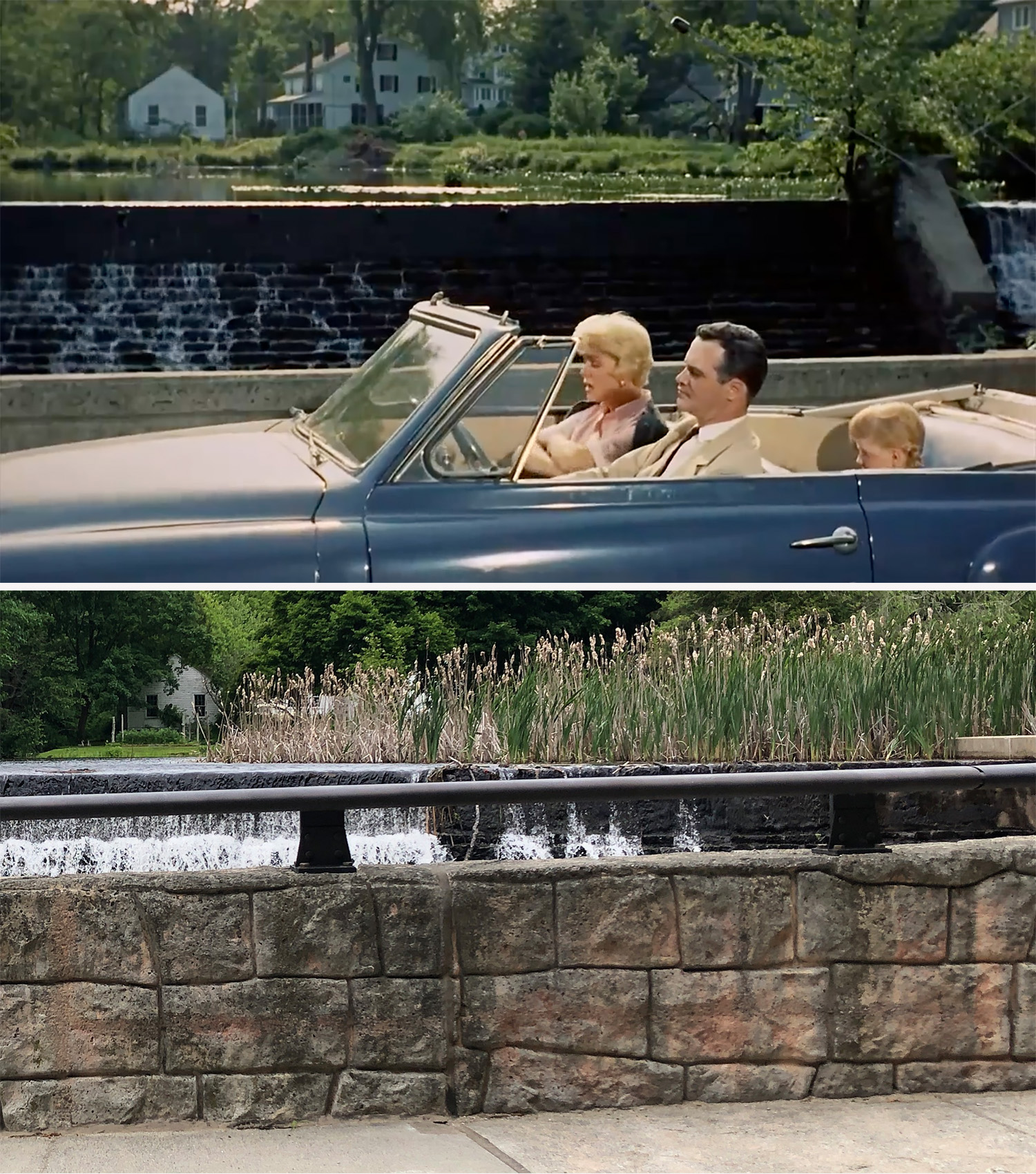
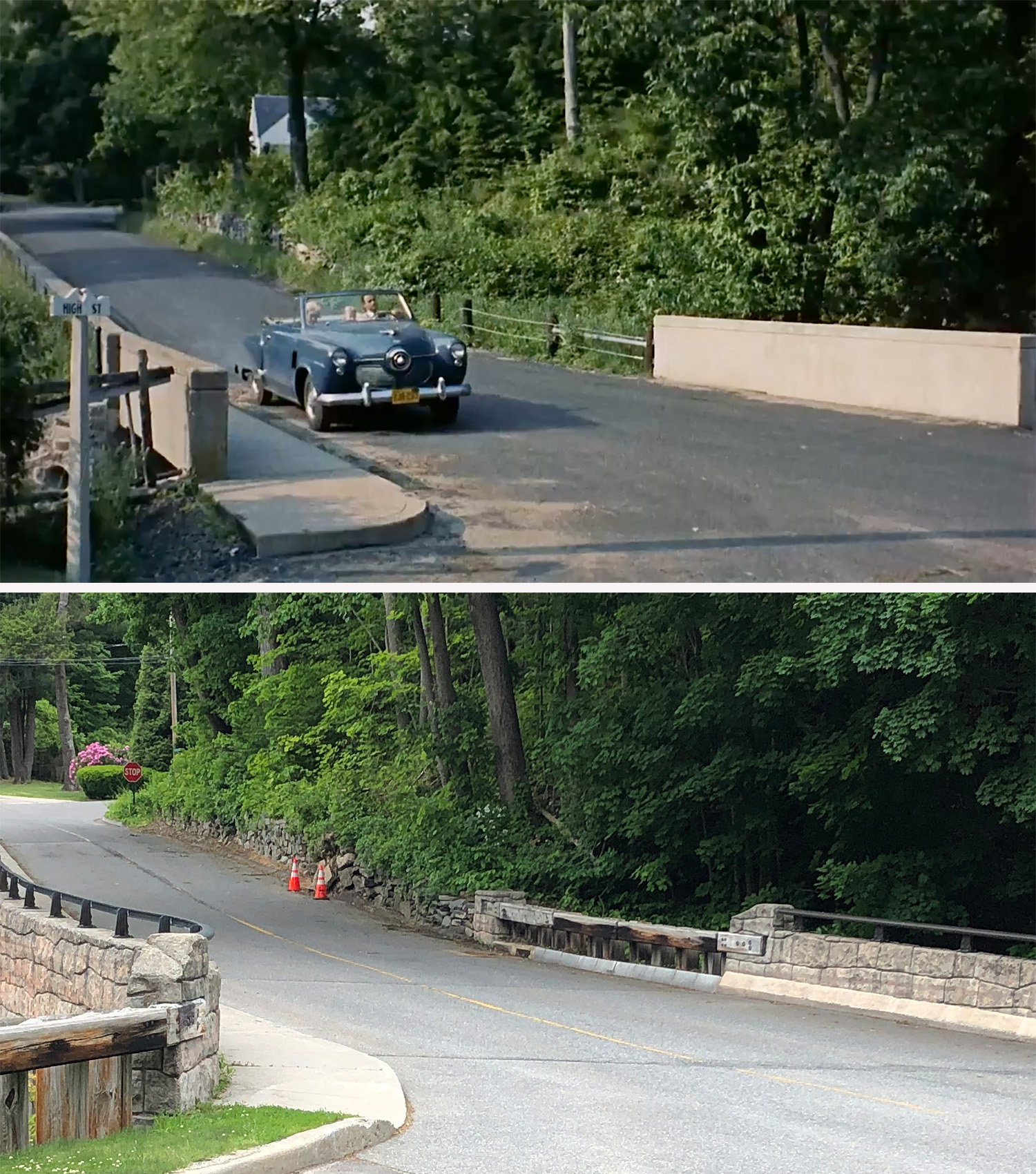
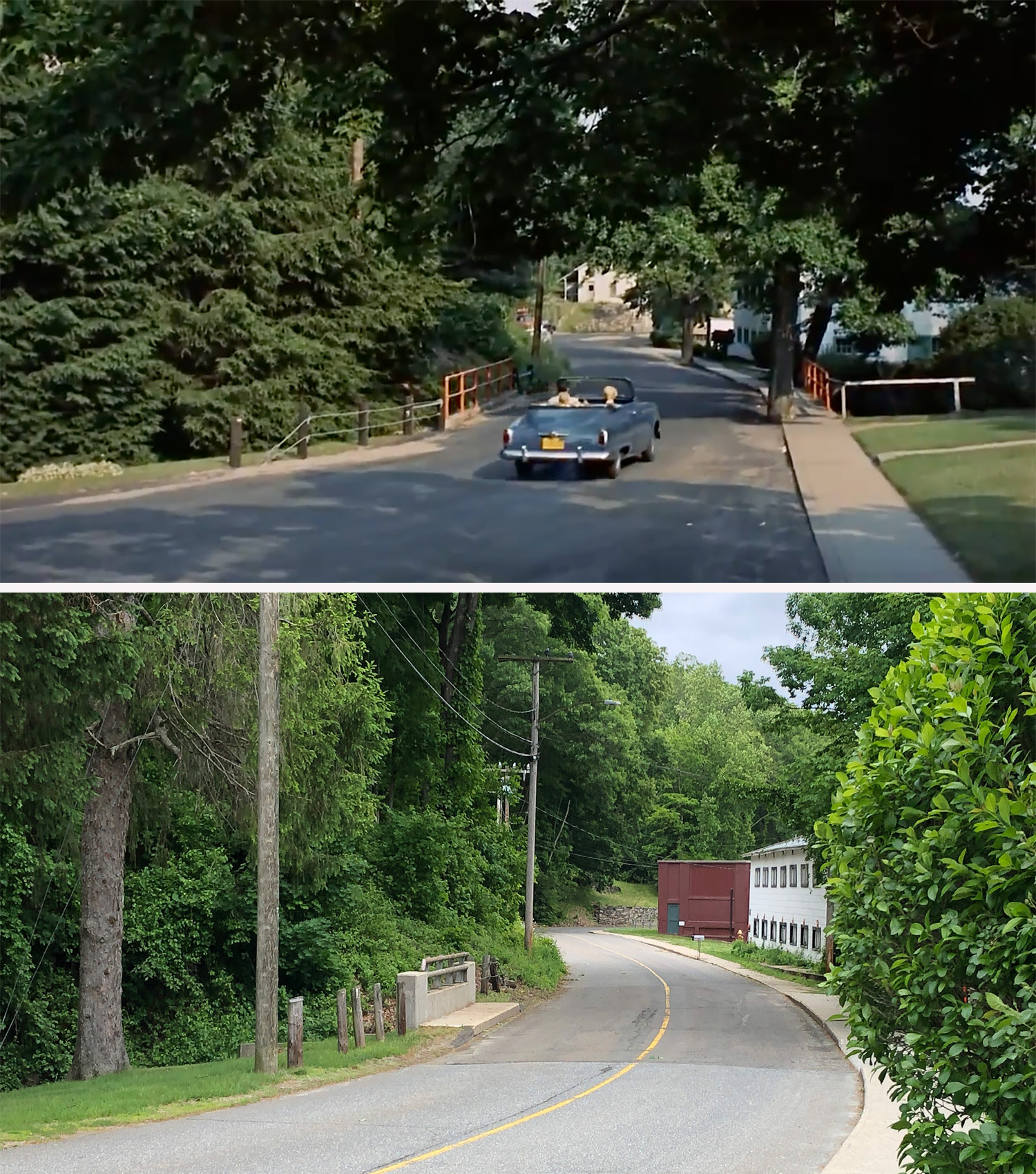
Even though this scene wasn’t filmed in Chester’s main square, I was able to find this location on the outskirts of town fairly early in my research. I just looked for any roads that crossed over a creek or a river and eventually found the spot on N Main near High Street.
Unlike the section of Main near the Old Stone Store, this area is pretty devoid of any tourists/visitors, giving me a nice break from the “downtown” hoopla, and inspiring me to do a little walking around.
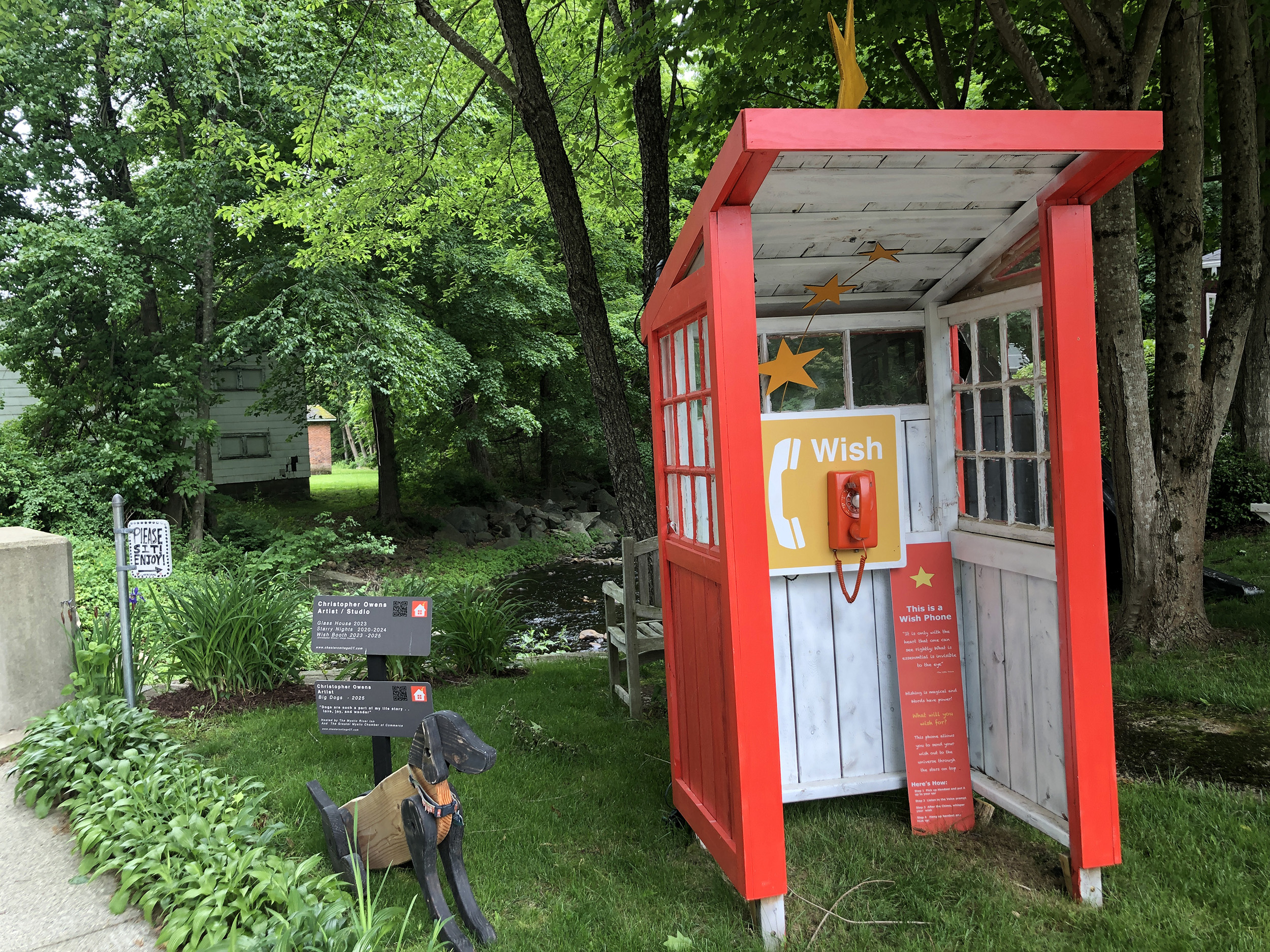
I’m glad I did. Because if I chose instead to drive to the location, I might’ve missed seeing some of the funky pieces at a local artist’s home on High Street, which included a “wish phone.” (My wish? Someday identifying “Charlie’s Deli” from the movie, Serpico.)
Coming Up With a Plan
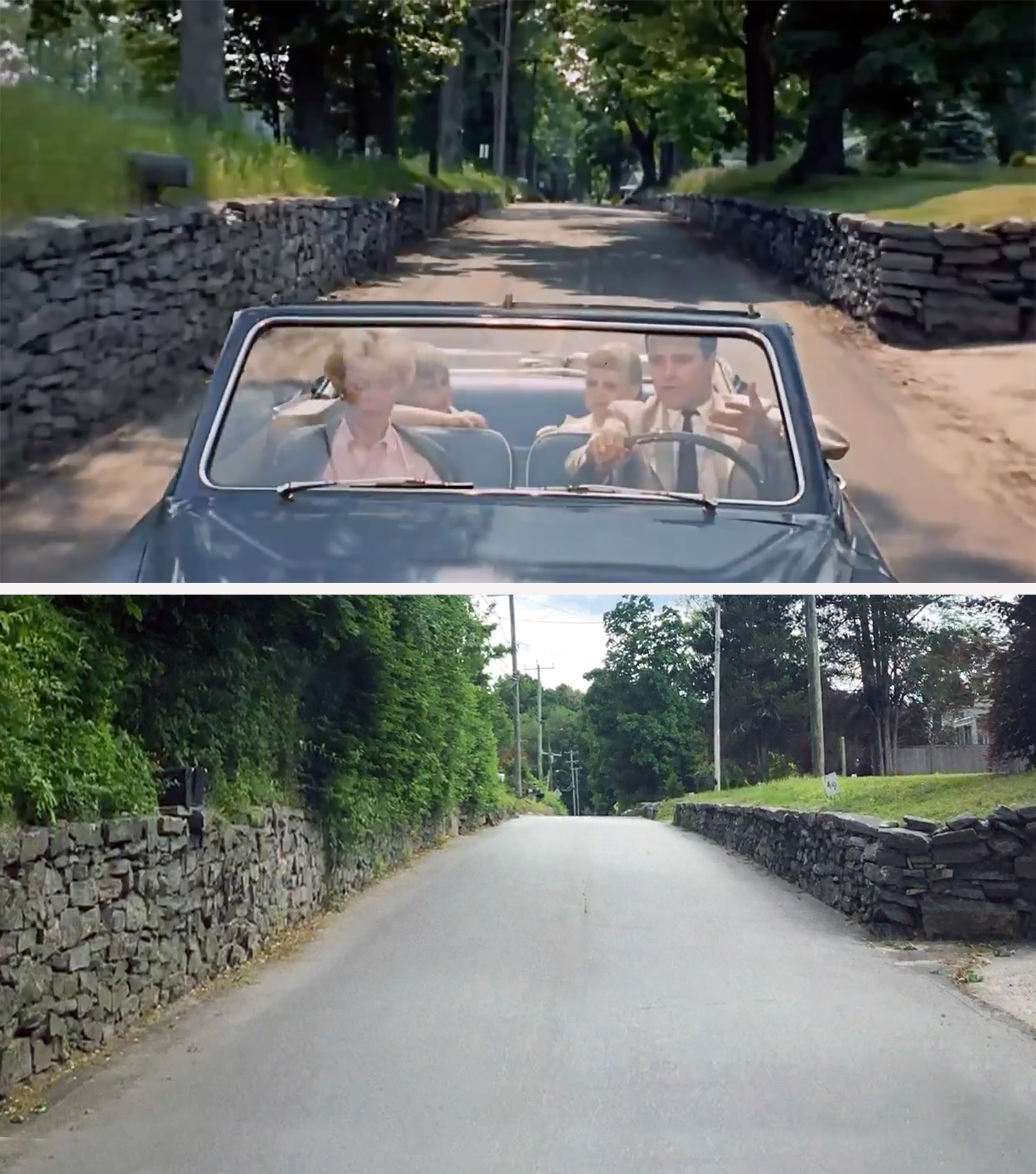
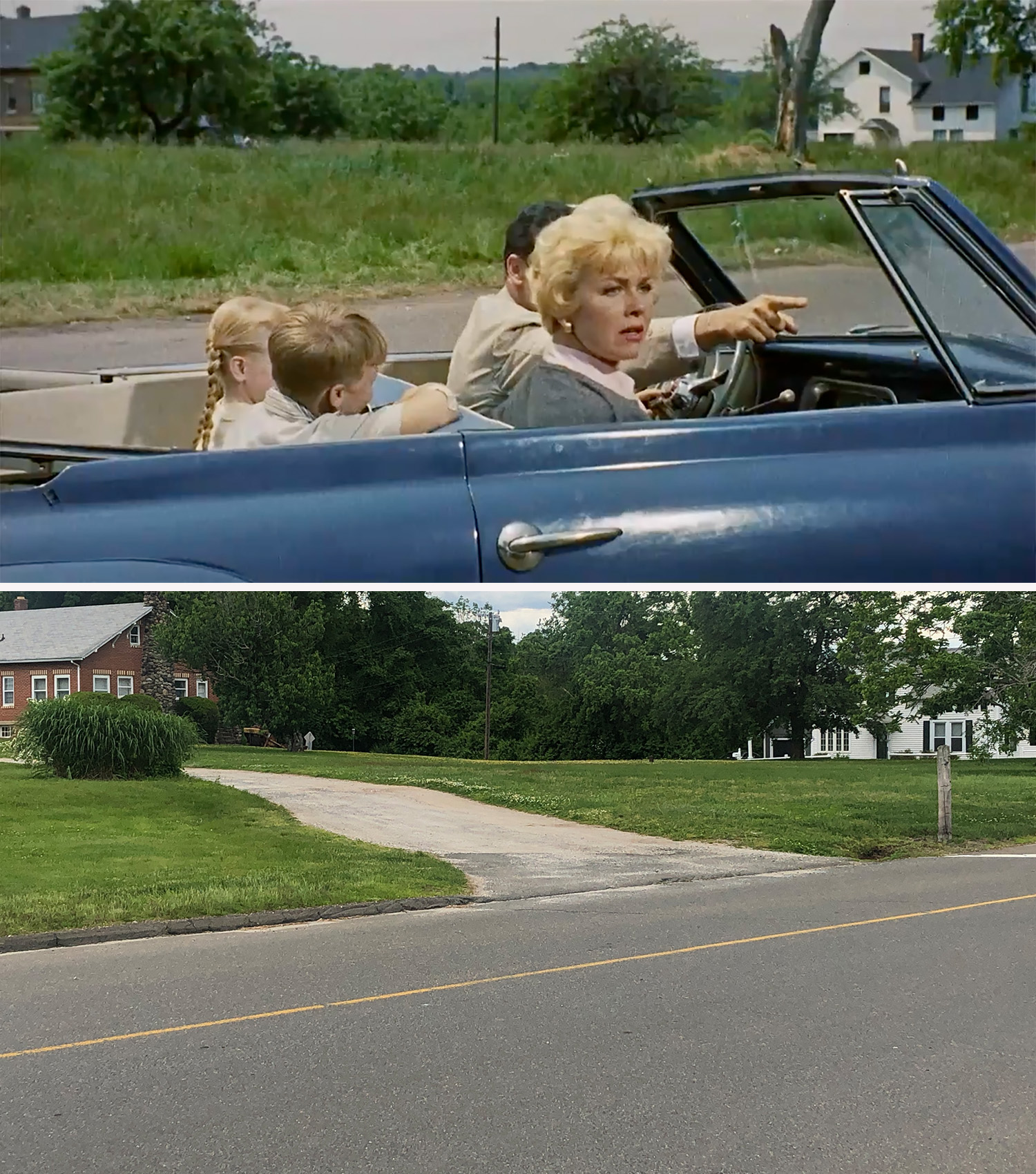
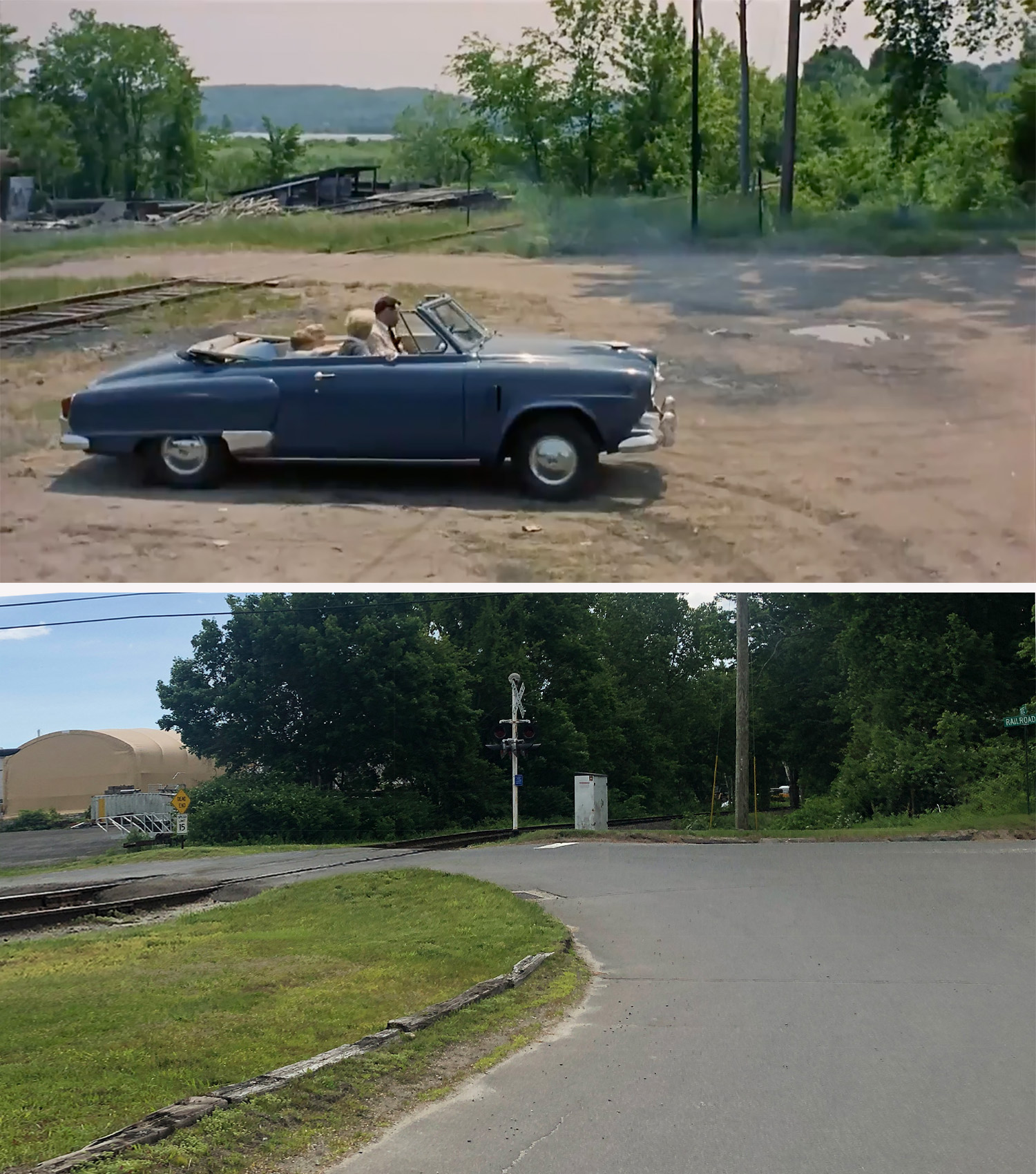
Loading up Old 97
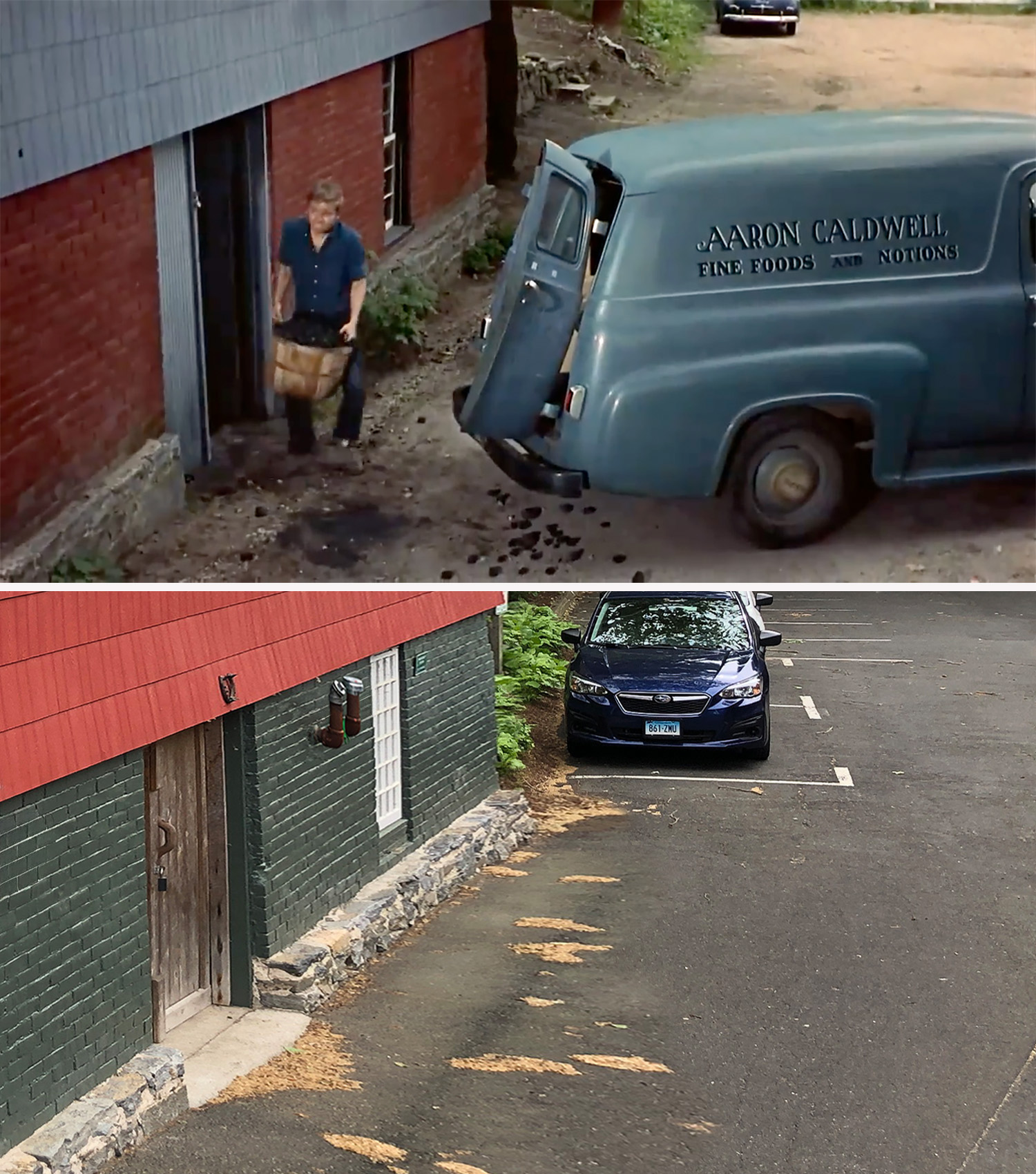
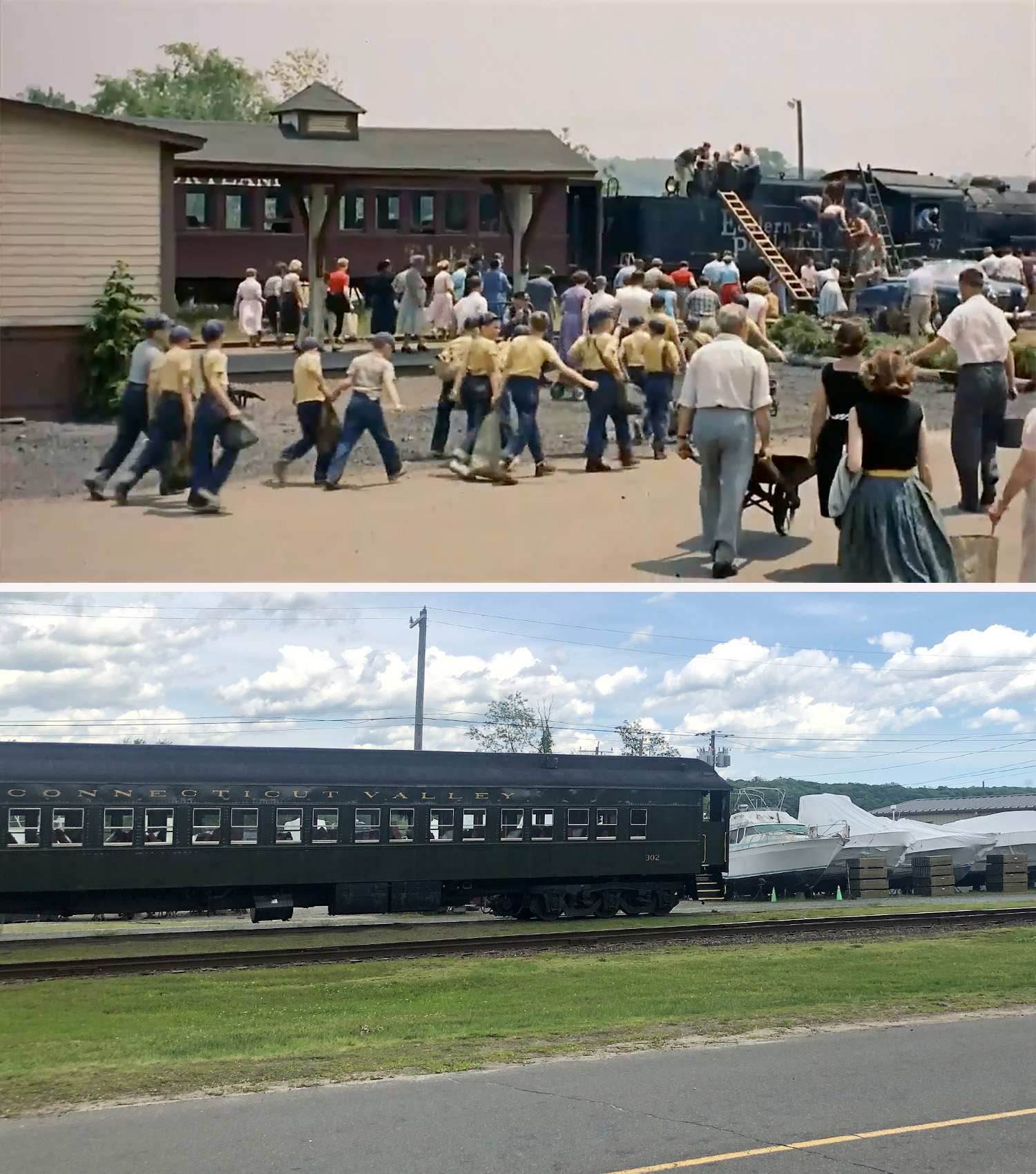
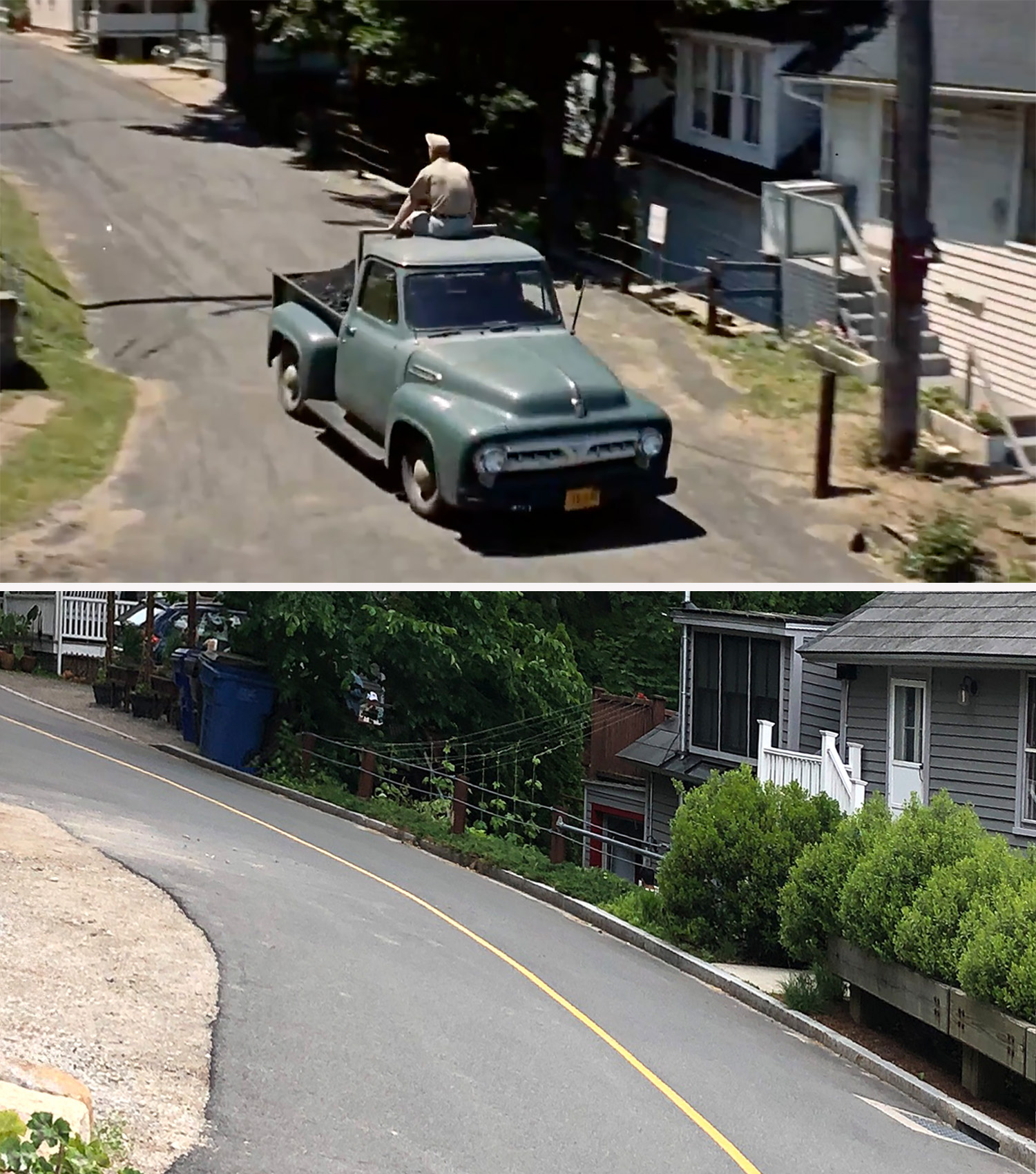
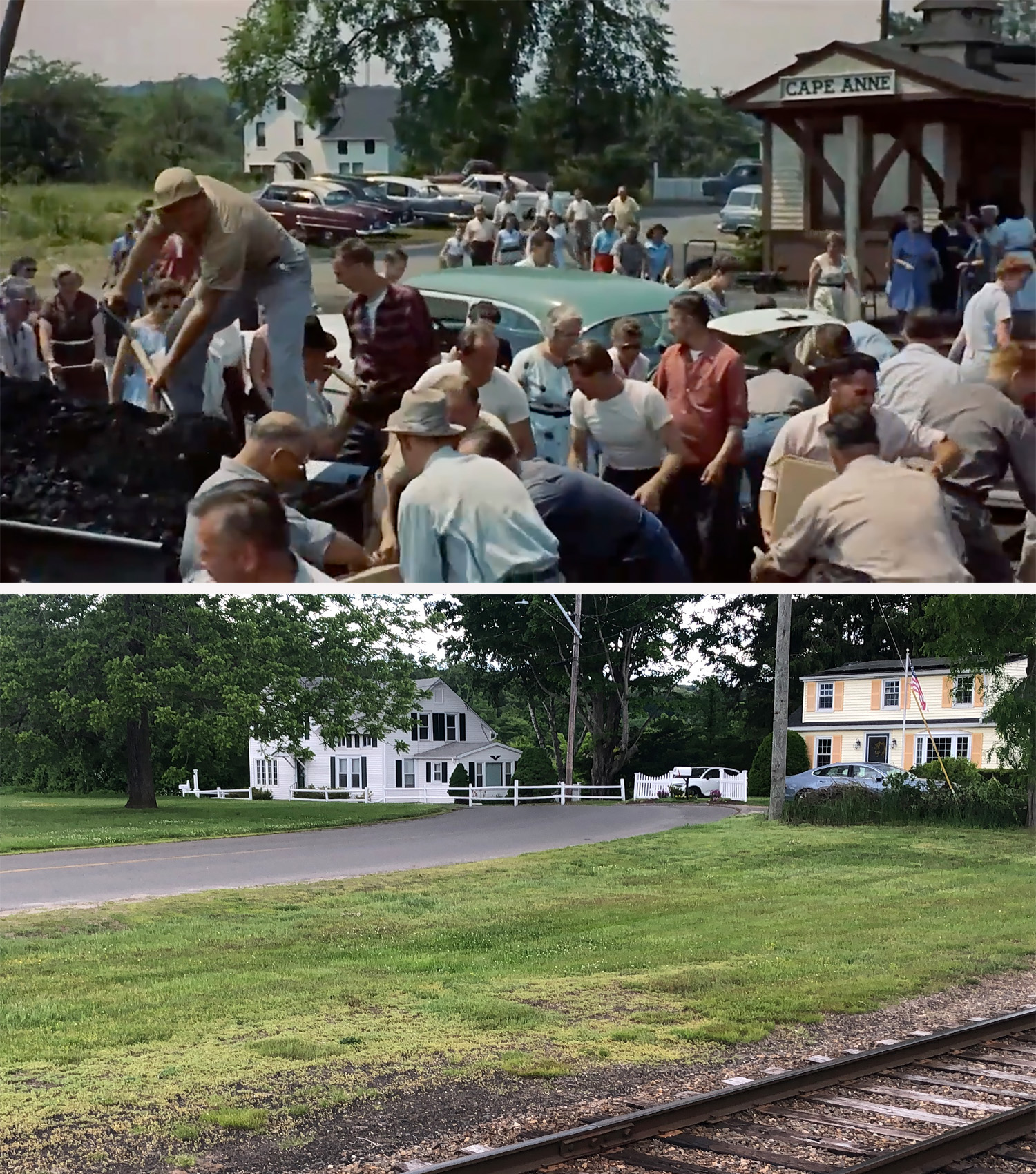
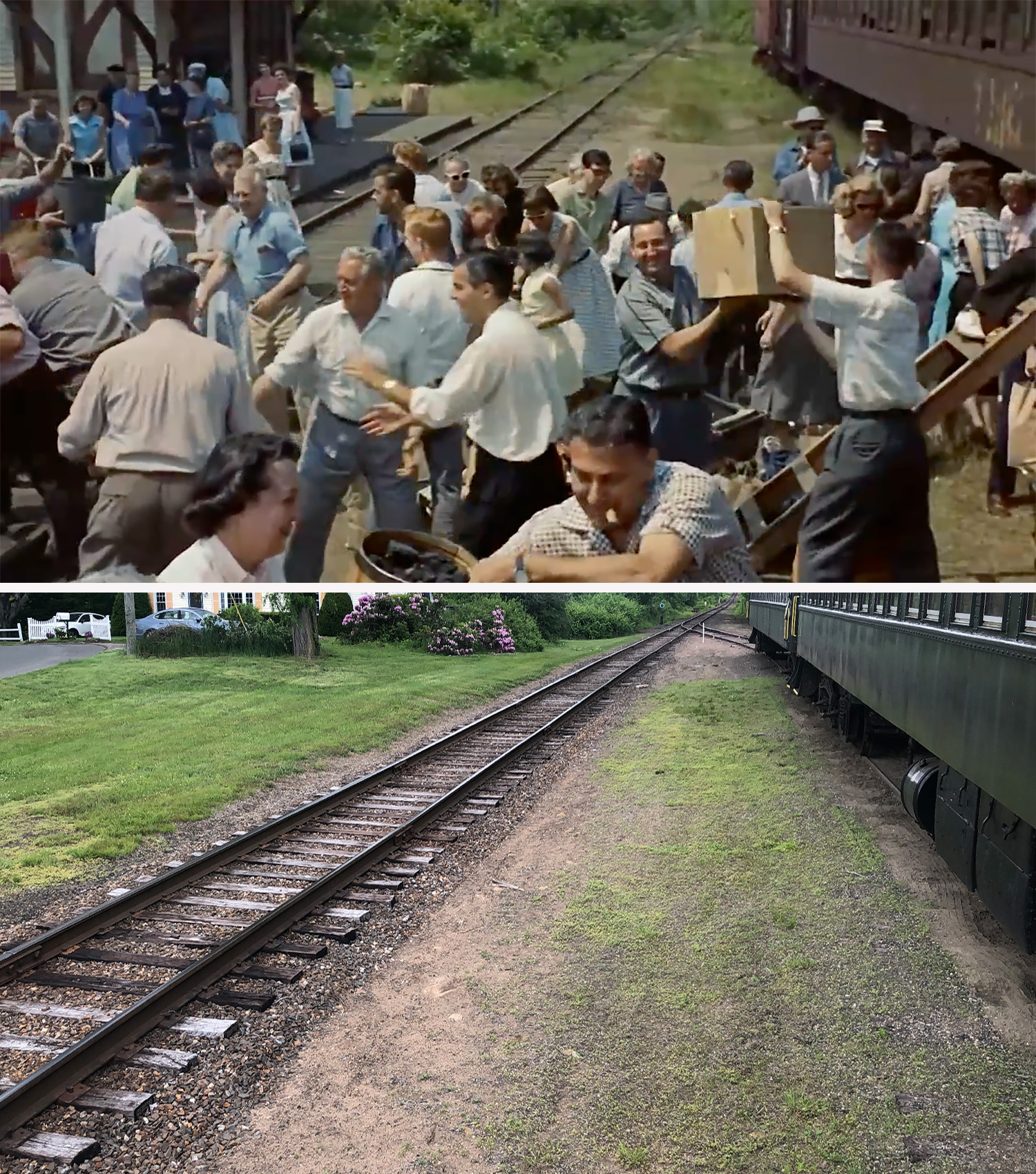
As the story leads up to Old 97’s big run, the film basically recycles a lot of the same locations already established in Chester.
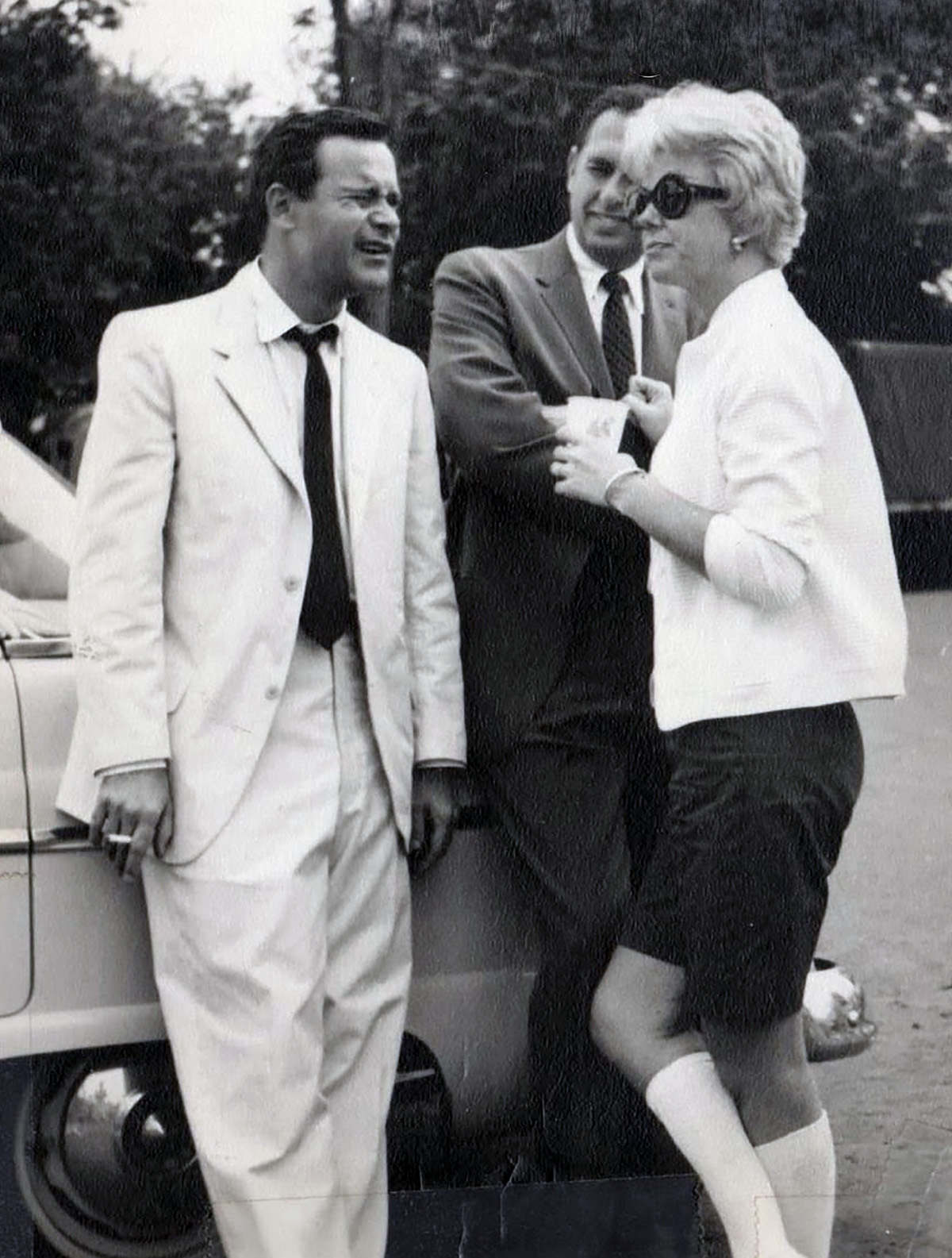
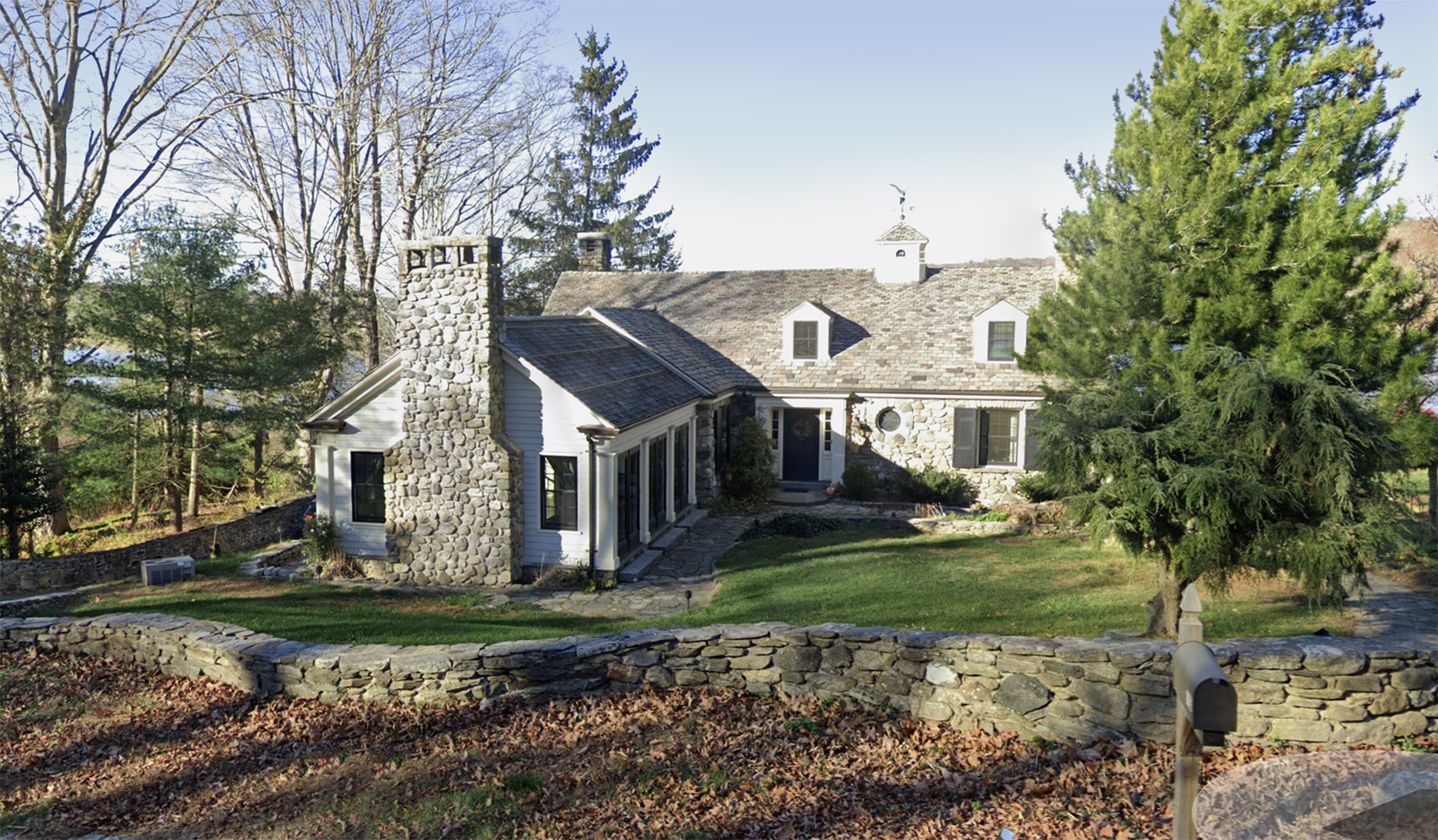
The production spent approximately two months in Connecticut filming these New England scenes, which includes the climactic train ride down the “Maine” coastline. During this lengthy filming schedule, director Richard Quine and most of main cast stayed in Chester, while Doris Day stayed at a house at 105 River Road in nearby Deep River.
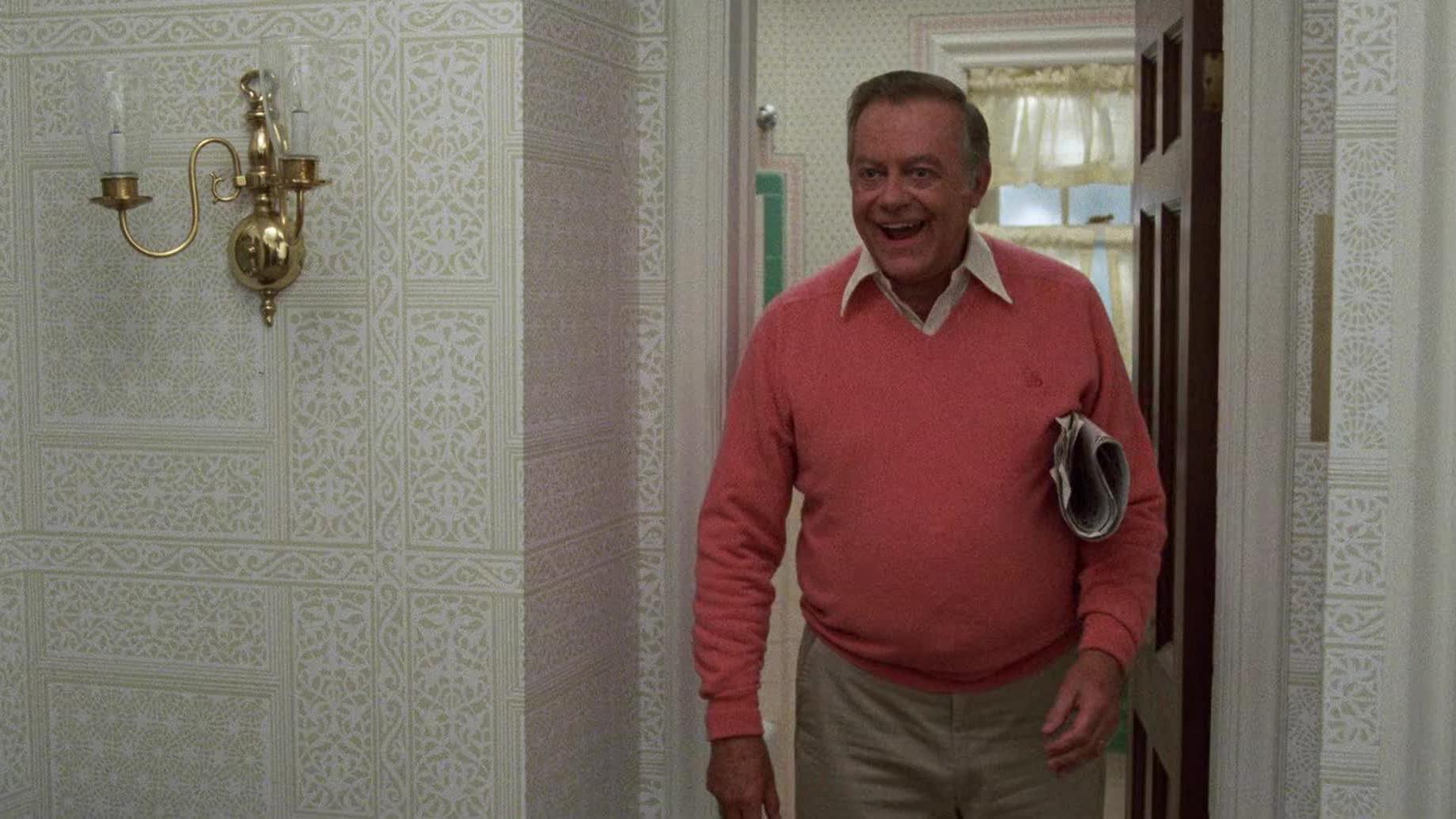
One actor who, in a sense, extended his stay in Chester was Max Showalter (credited at the time as Casey Adams, who played chief counsel for the E&P Railroad.
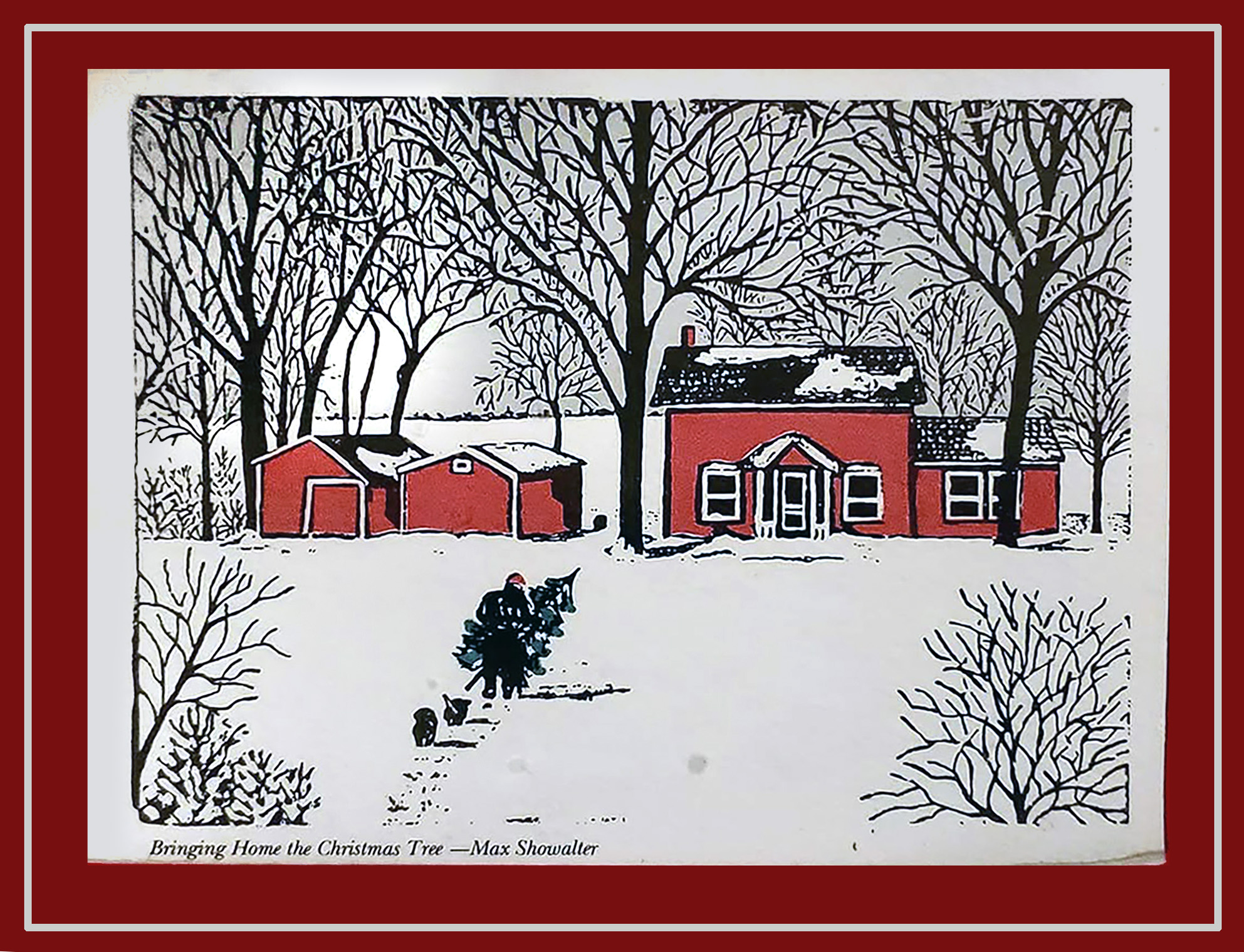
The town apparently left a lasting impression on Showalter, and after retiring from film and TV acting in 1984, he decided to move there permanently, buying an 18th-century farmhouse just outside of town. During his time in Chester, he got involved in local theater, helped fundraise for the National Theatre of the Deaf, and donated his collection of acting memorabilia to the Goodspeed Opera House in East Haddam, CT. He also spent his time composing music and working on his paintings.
When Showalter passed away in 2000, his memorial was held in a tent on the green of the Meeting House, the same place where his character first appears in “Cape Anne” in this movie.
Making Deliveries
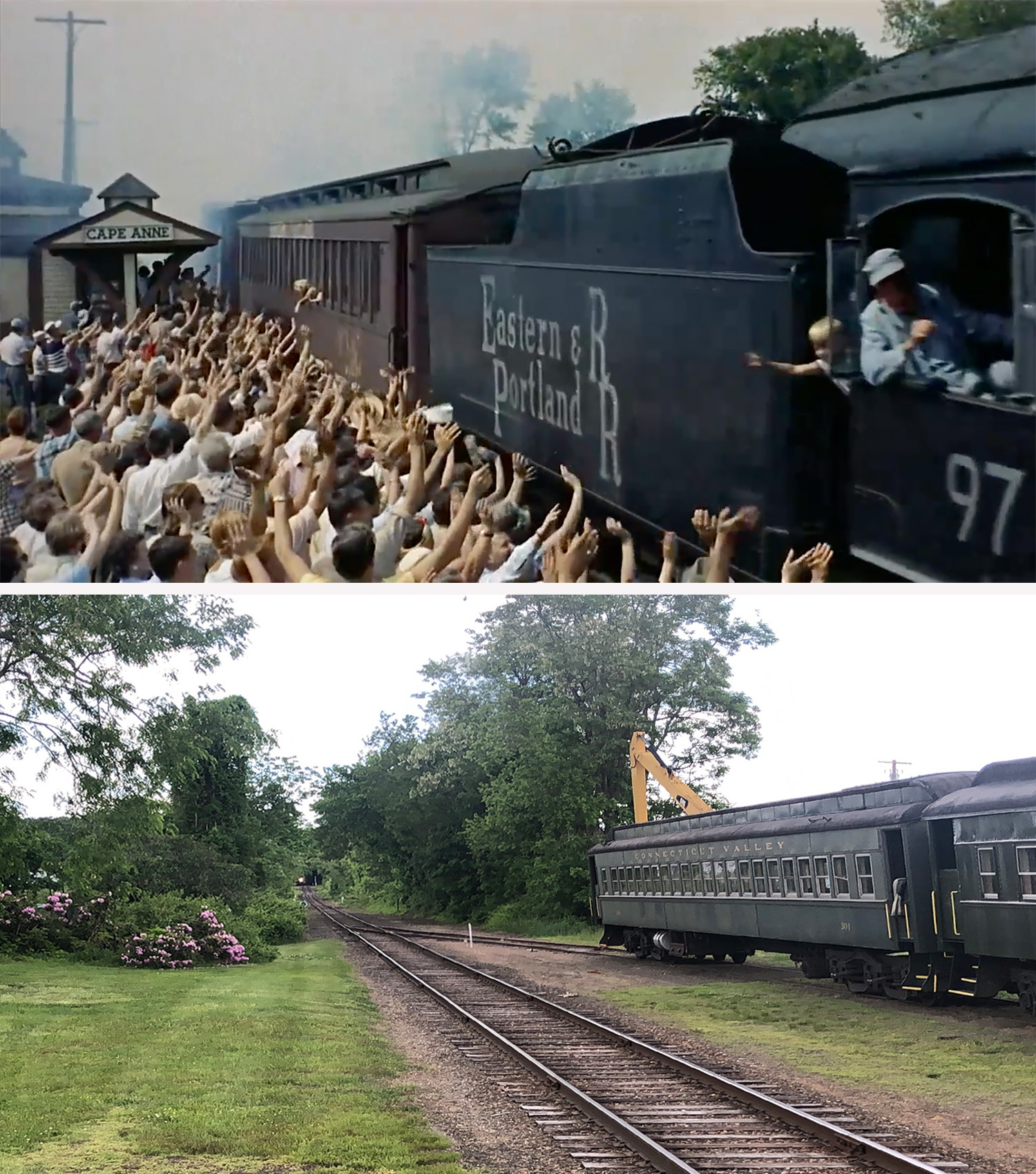
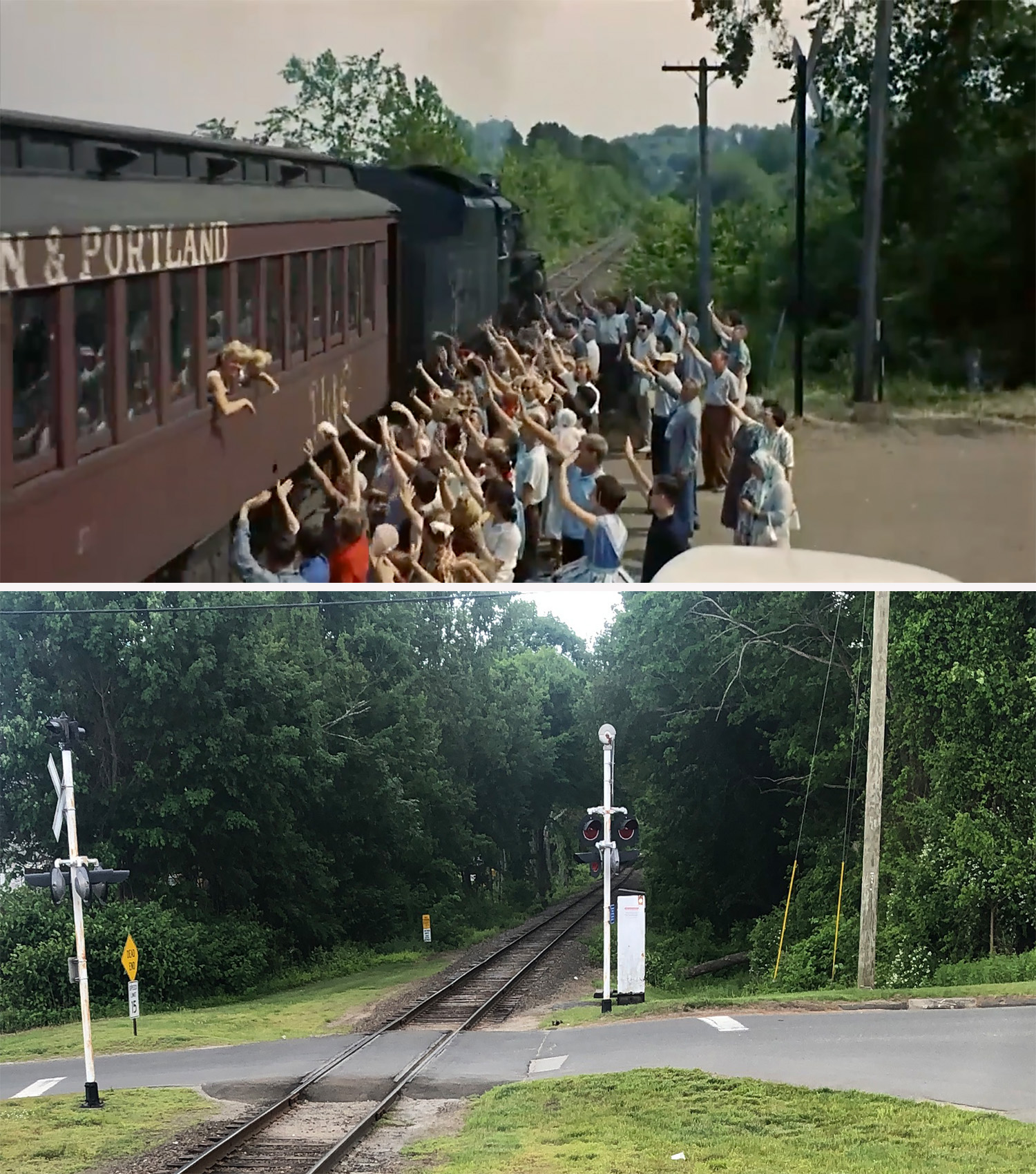
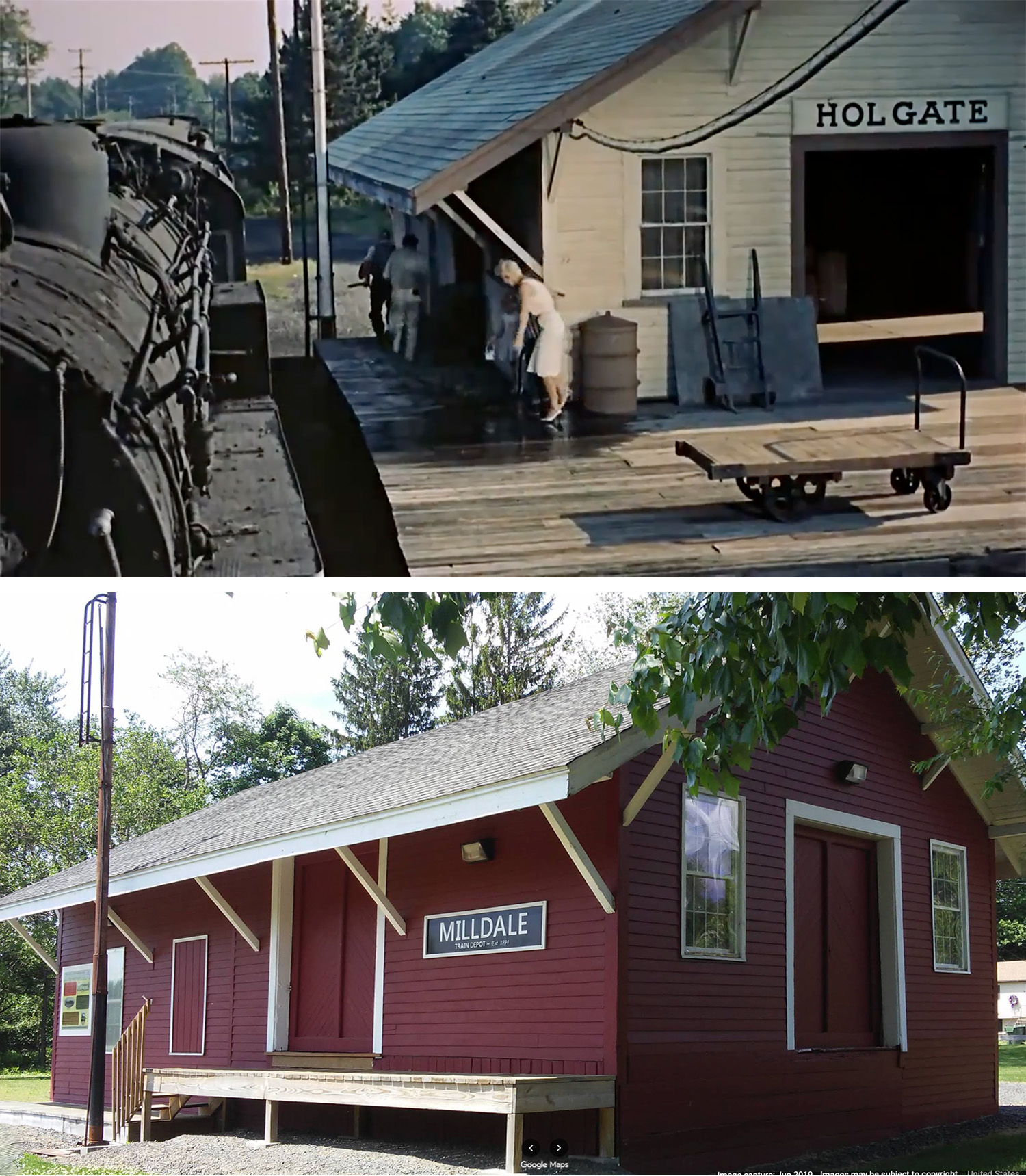
This is the only section of the movie I haven’t been able to identify all of its locations. In the story, Jane’s train is traveling through Maine making deliveries, but in reality, it was all filmed in Connecticut. The online chatter as to where exactly things were filmed was varied and vague without any definitive proof, but it’s believed that they filmed in Hartford, New Haven, Southington, Centerbrook, Cedar Hill and Plainfield (which appears in the next scene).
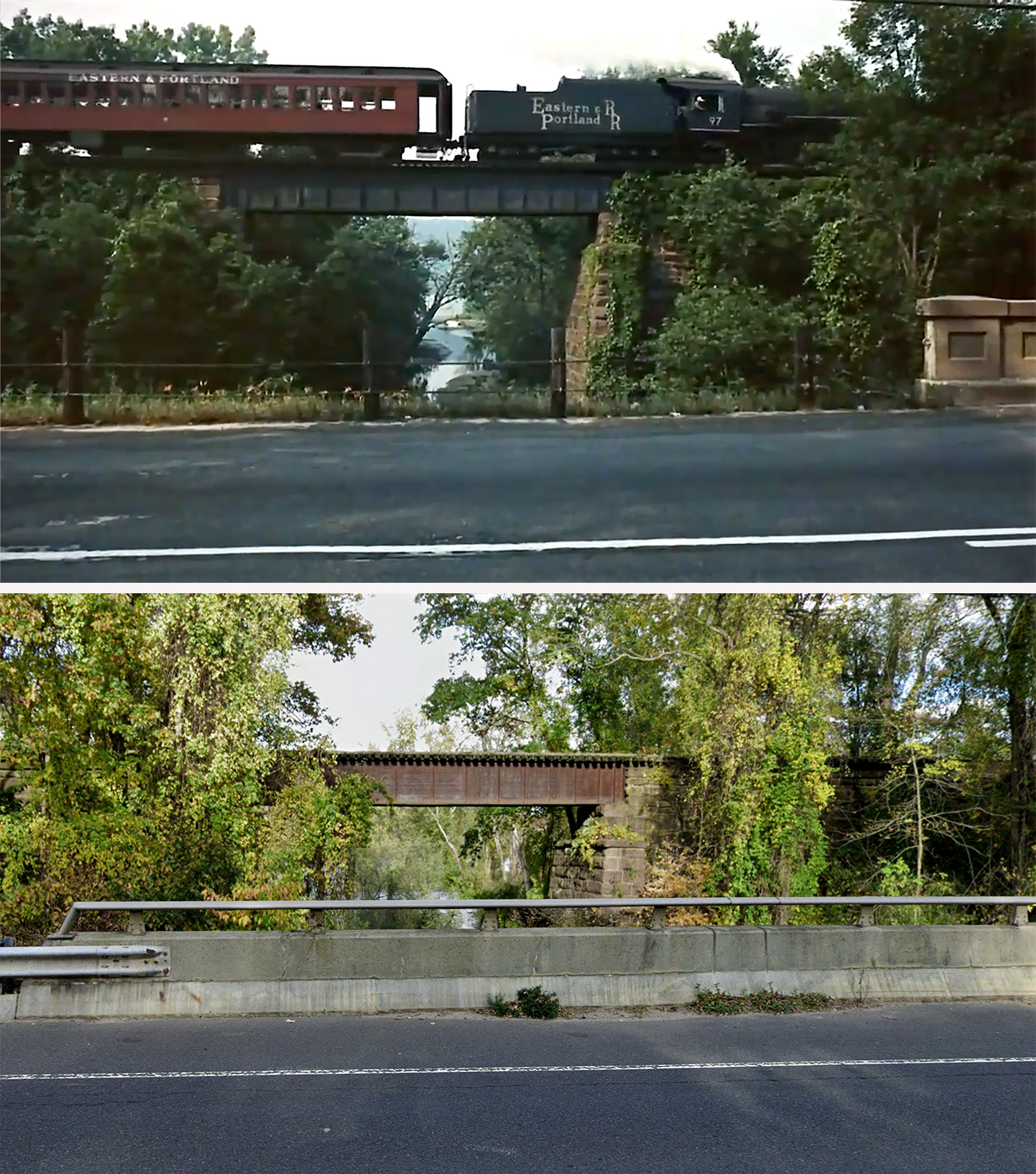
The only place in this sequence I was able to find was that shot of Old 97 crossing a bridge. That was filmed in Haddam, CT, which is just north of Chester. I found it by looking for a stretch of road that closely paralleled the tracks as they crossed a water inlet. Luckily, the spot was fairly close to Chester, otherwise, I’m not sure I would’ve found it.
Everything else is still missing, so any railfans out there who might be able to identify any of these Connecticut locations, please let us know.
Running out of Coal
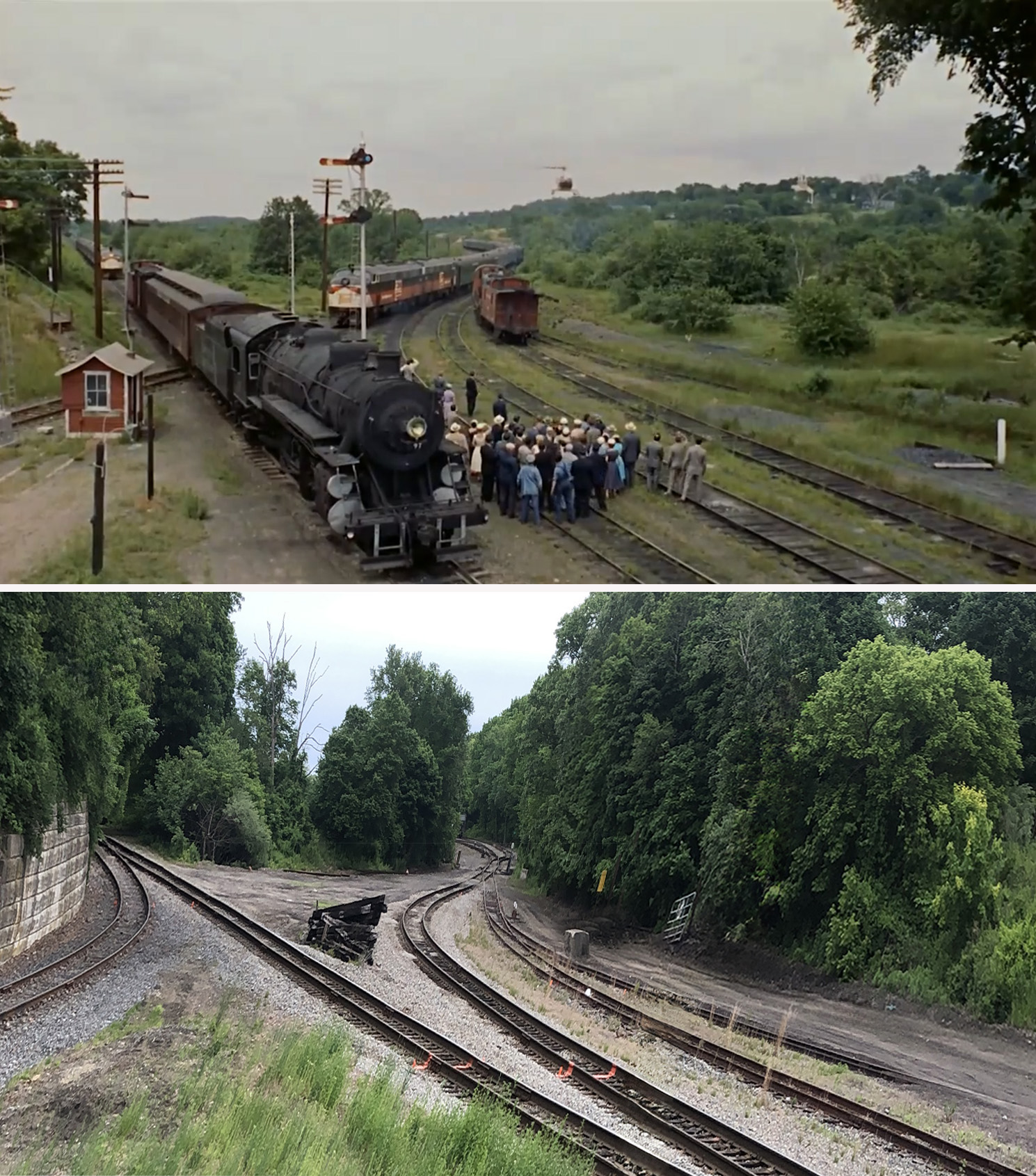
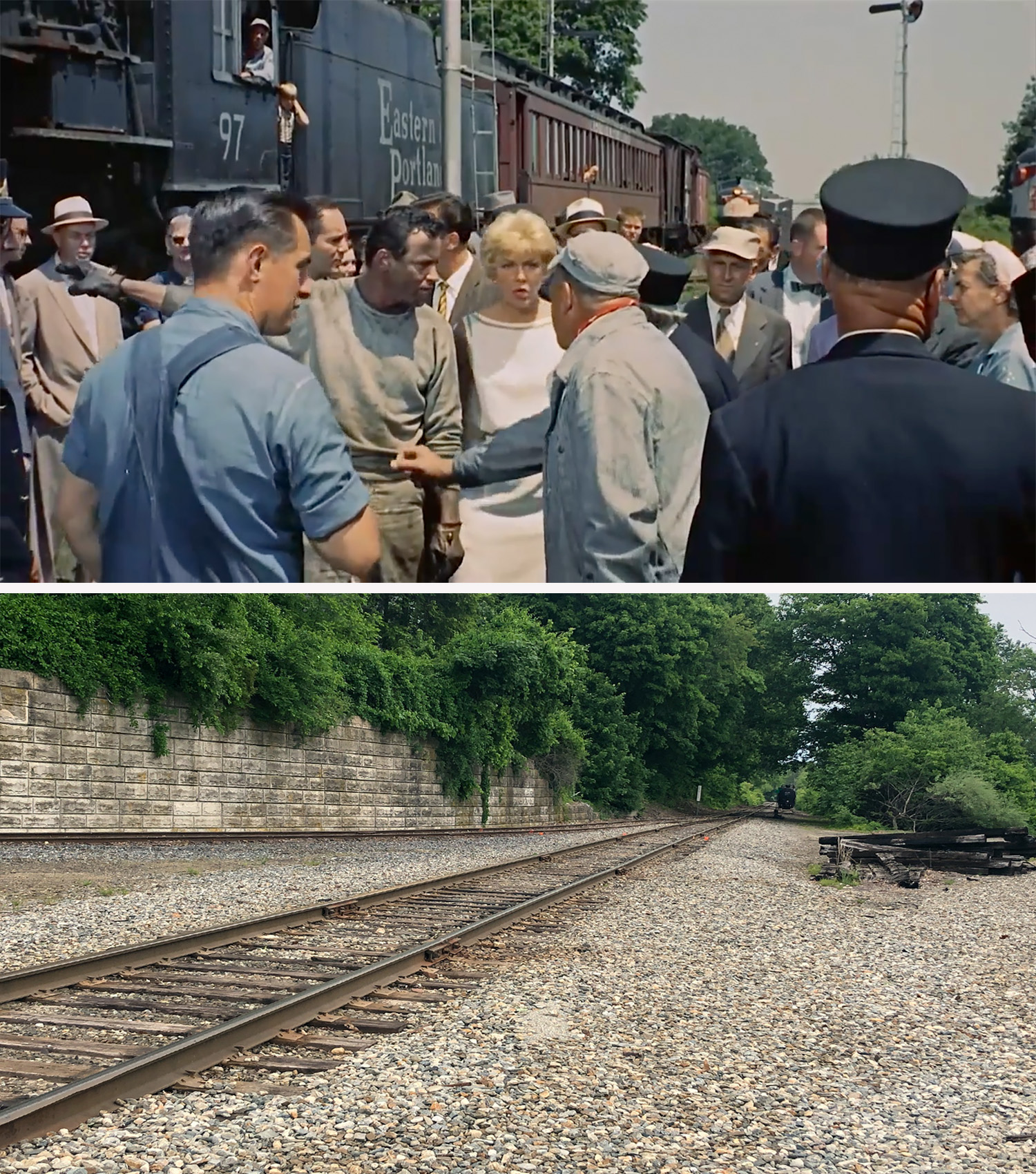
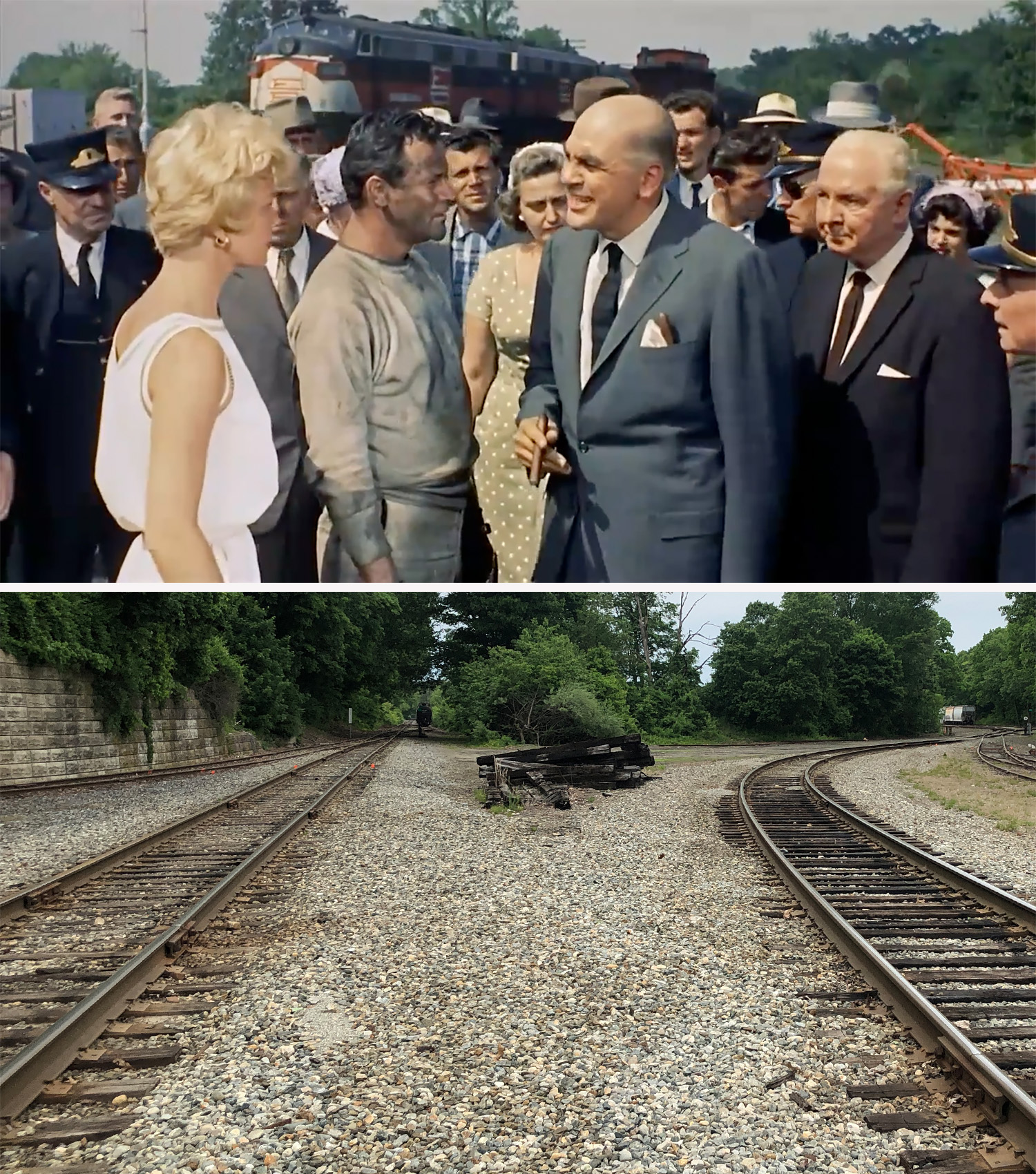
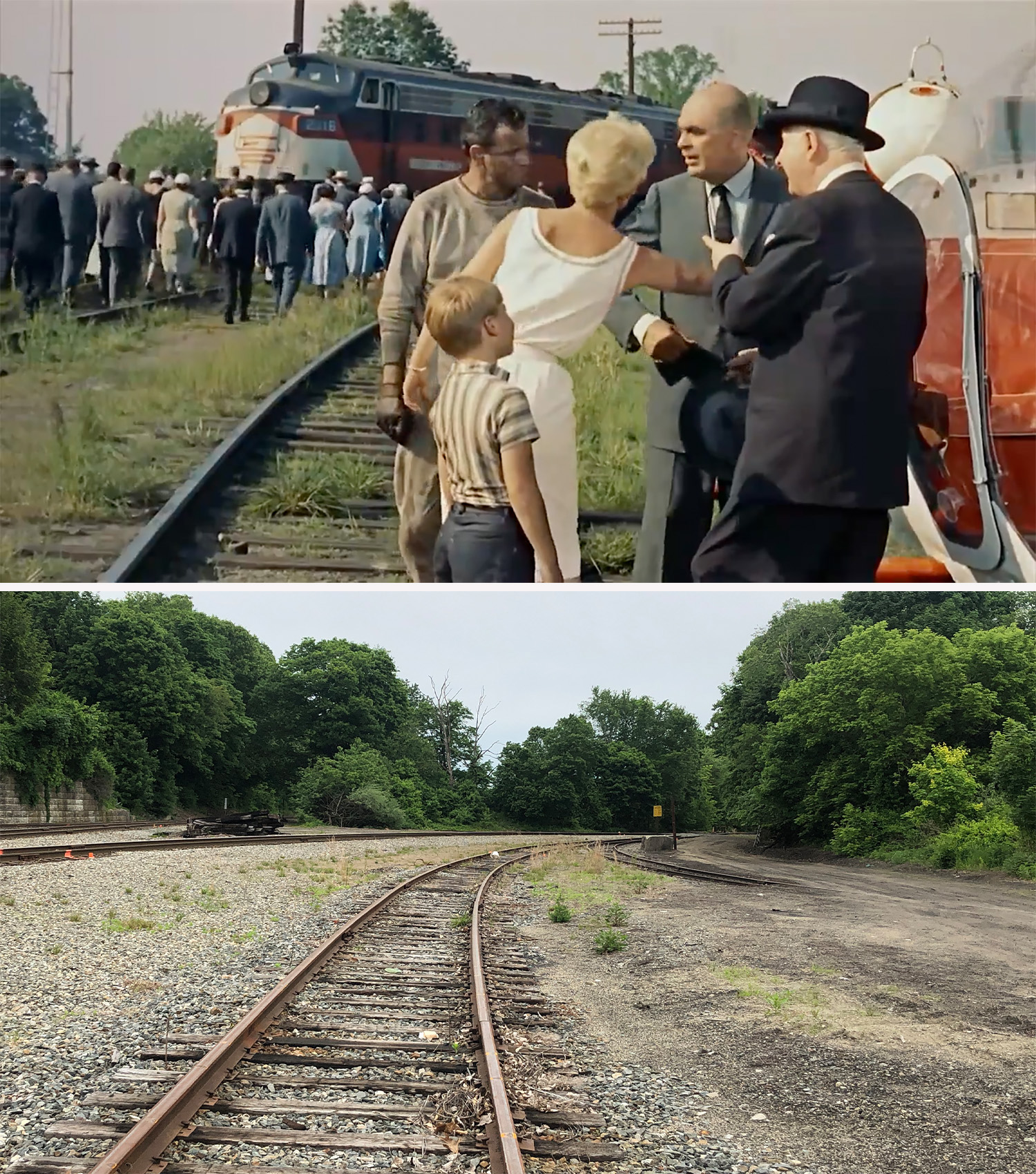
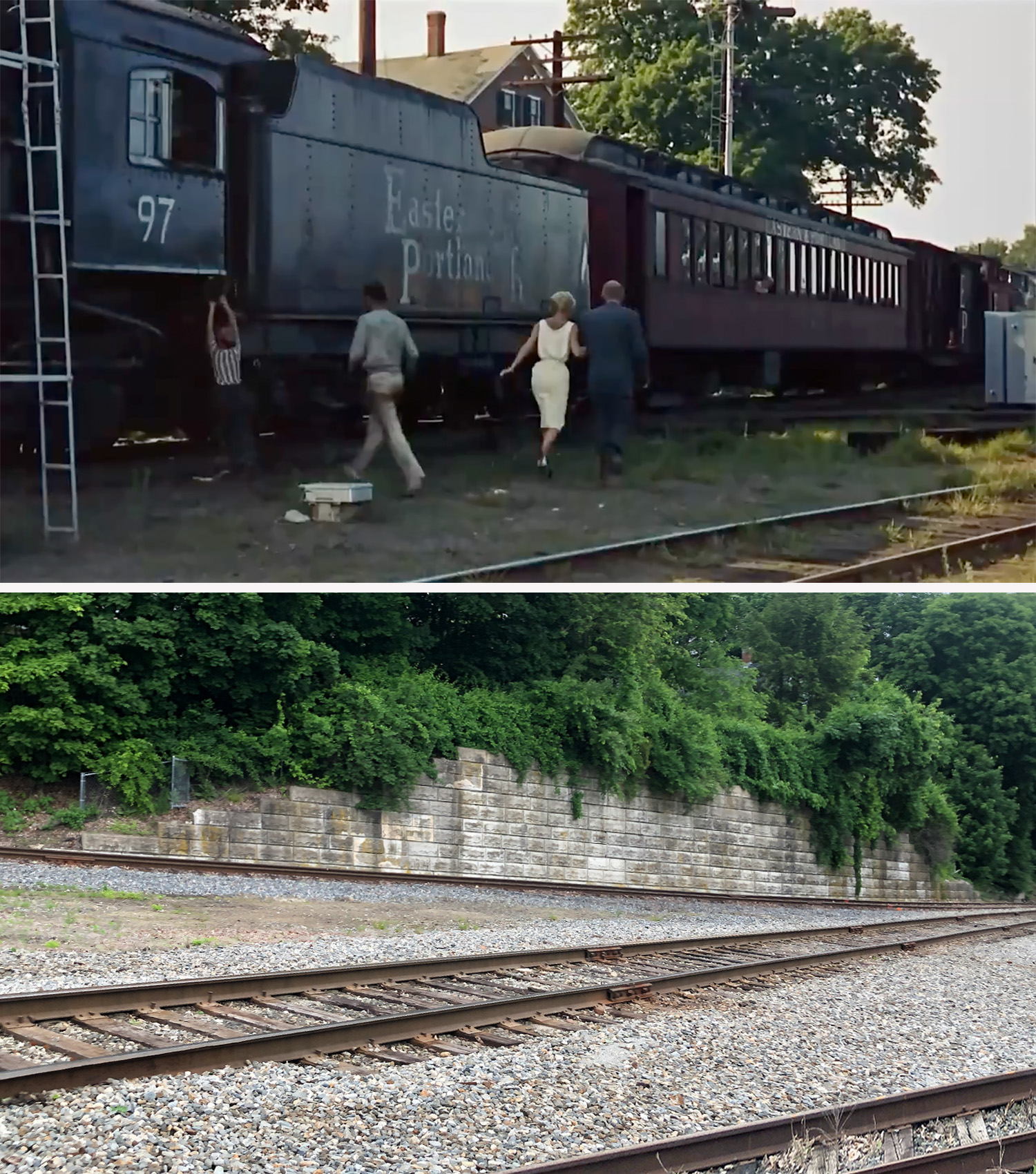
This location was identified by others prior to my research.
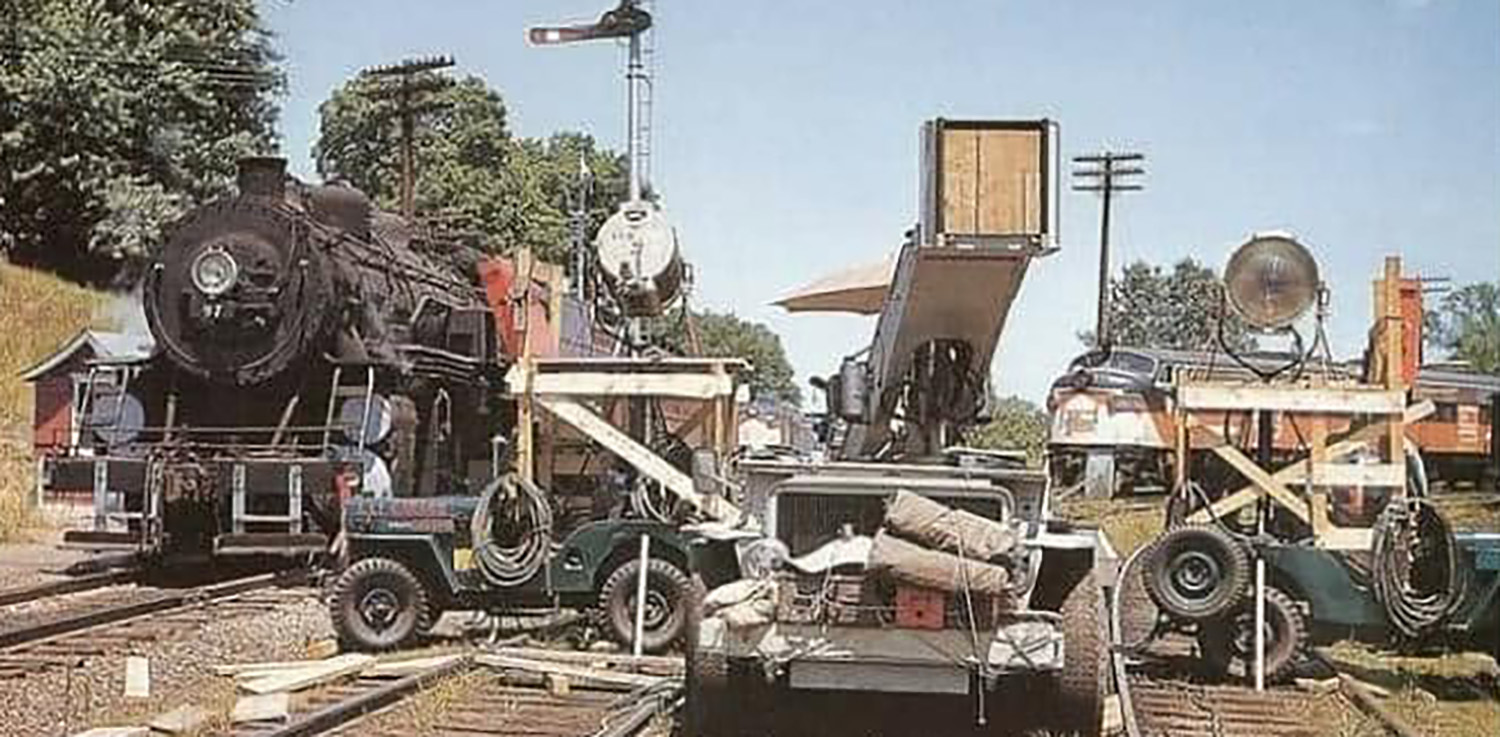
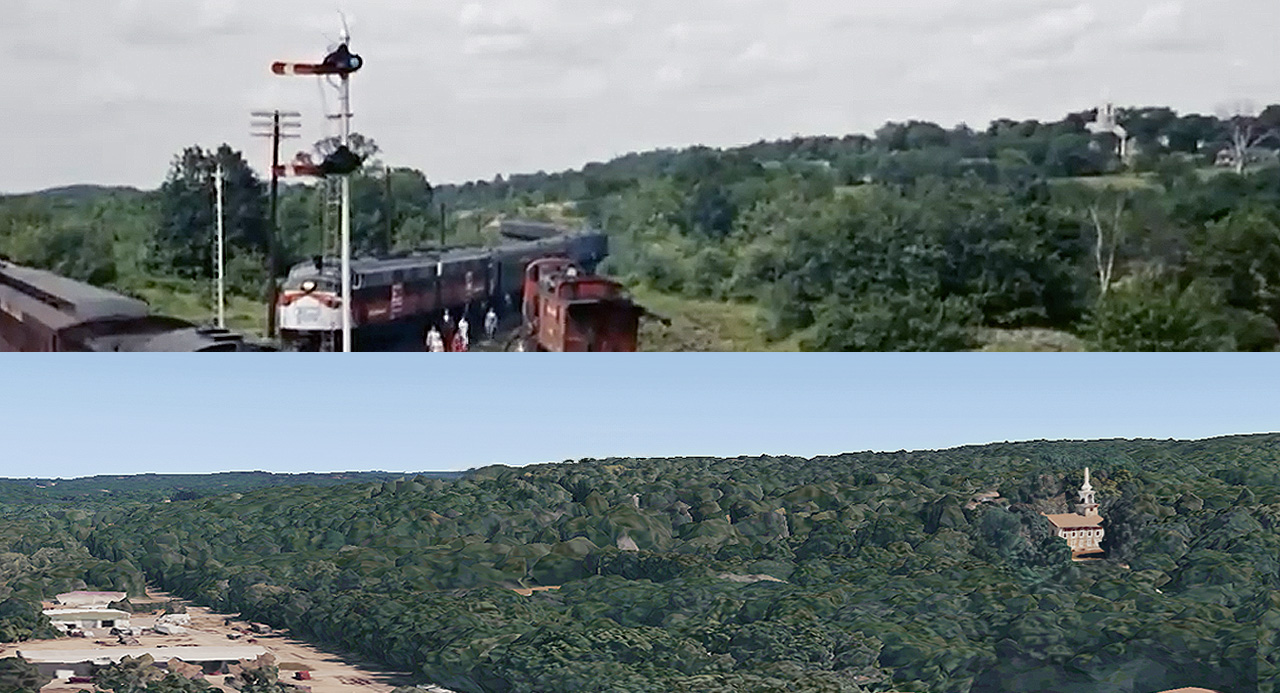
Not sure who found it first, but in a post I found on Facebook’s “Connecticut Old Churches Houses Bridges Mills” page, a member was able to confirm the spot by matching up the steeple of the first Congregational Church of Plainfield that briefly appears in one of the initial wide shots.
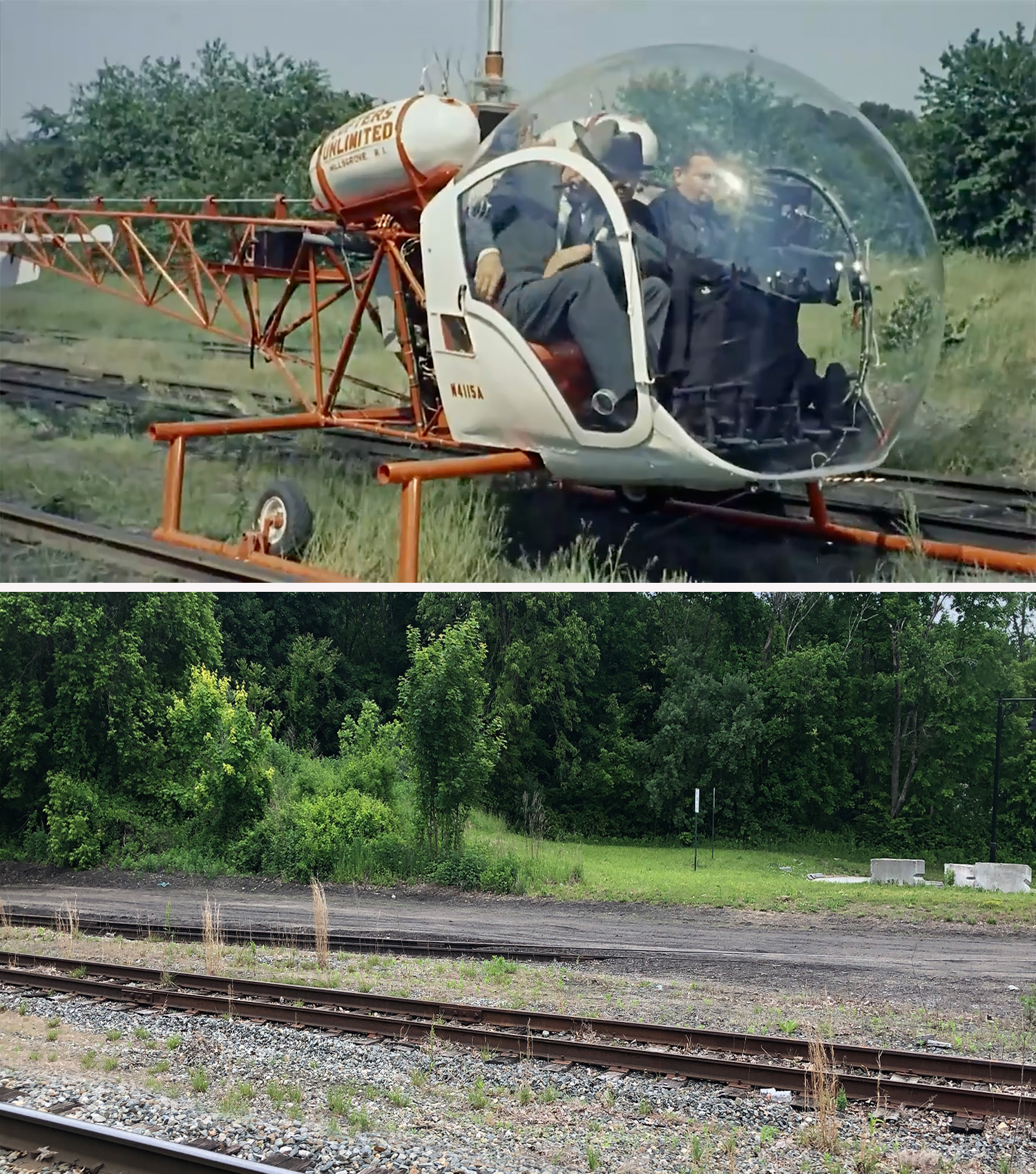
When it came to the helicopter Ernie Kovacs arrives in, my research partner Blakeslee was curious to identify it. Turns out, it’s a 1957 Bell 47G rotorcraft — a bubble-cockpit model that was also featured in the TV show M*A*S*H. The specific helicopter used in It Happened to Jane had the tail number N4115A and is apparently still around. The aircraft was most recently registered in Jacksonville Beach, FL, but in 2006, it was reportedly seen flying in Long Beach, CA.

The photo does seem to confirm that the retro 3-seater has the same tail number as the one in the movie, although the door looks as if it’s since been modified. Regardless, it’s definitely a cool looking aircraft, especially with its bright white-orange color scheme.
Making the Last Stop
Town Celebration
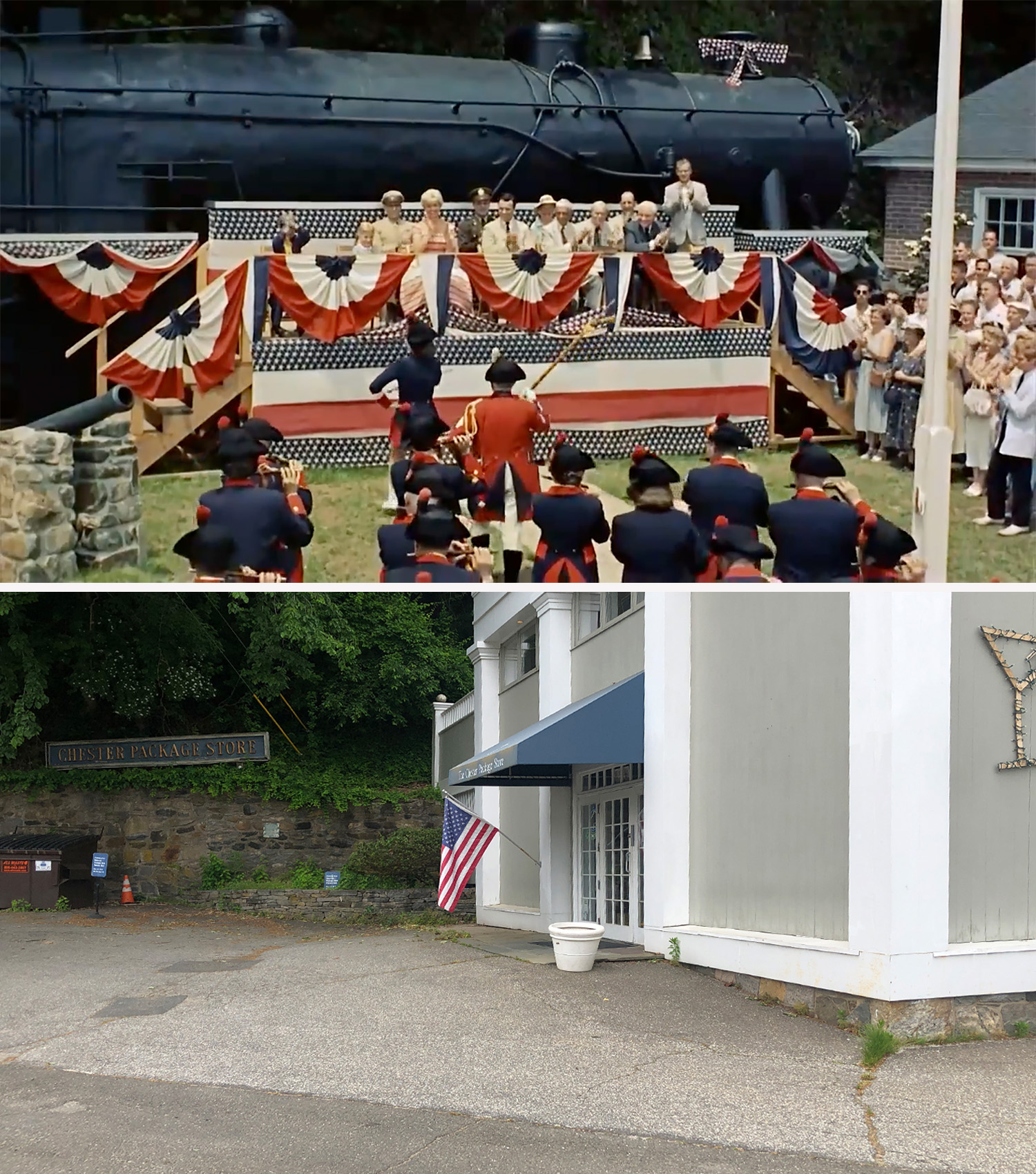
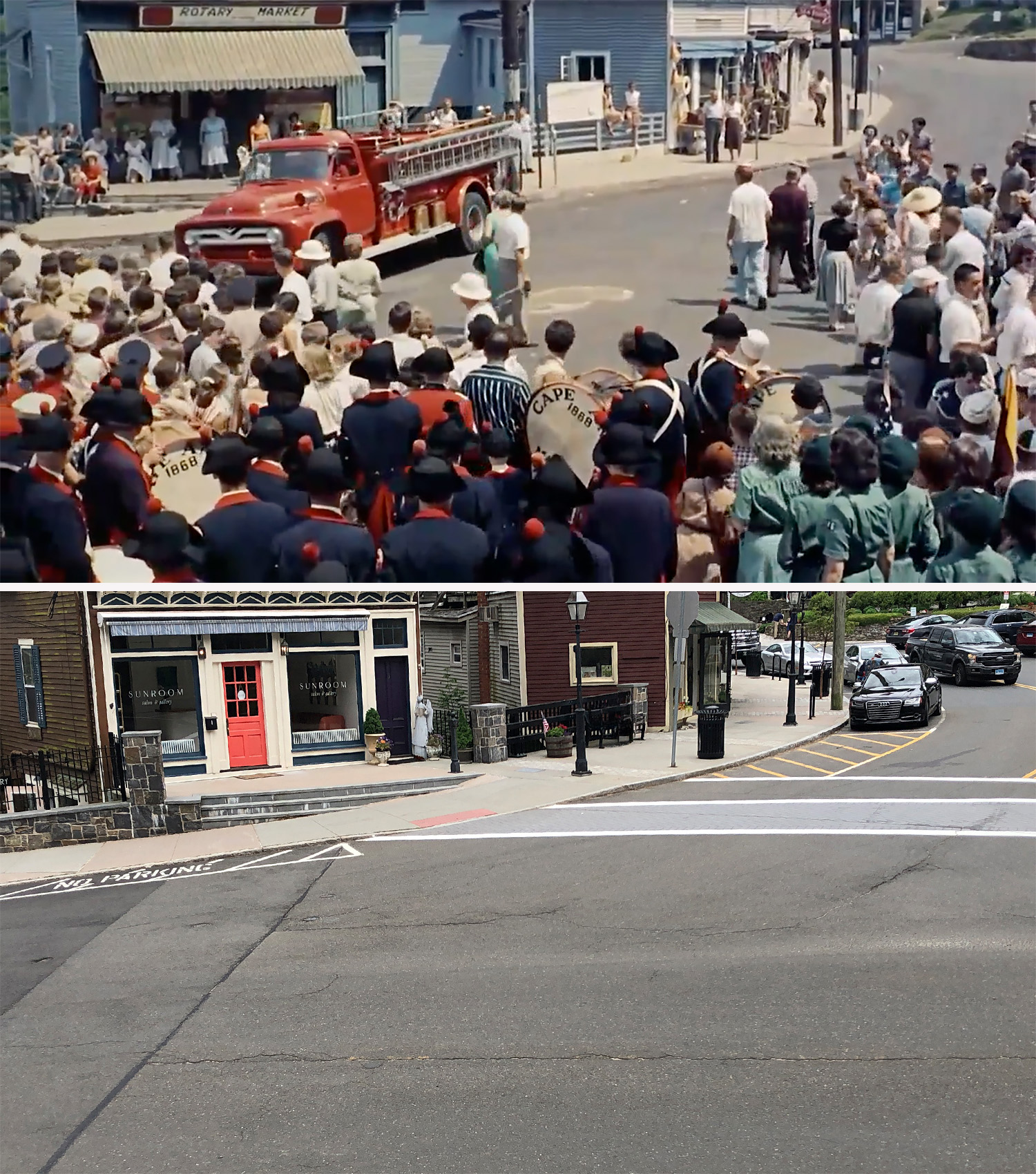
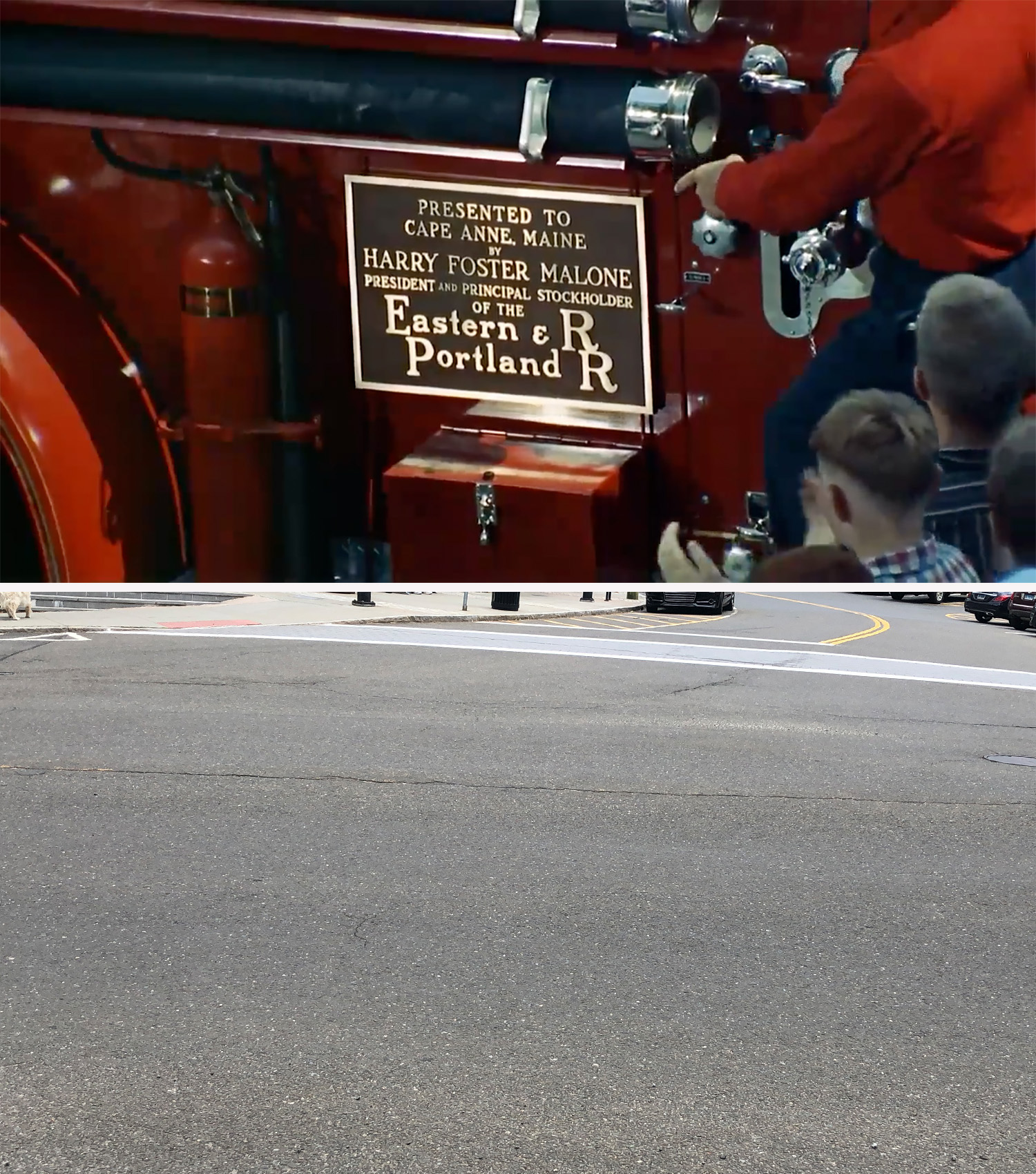
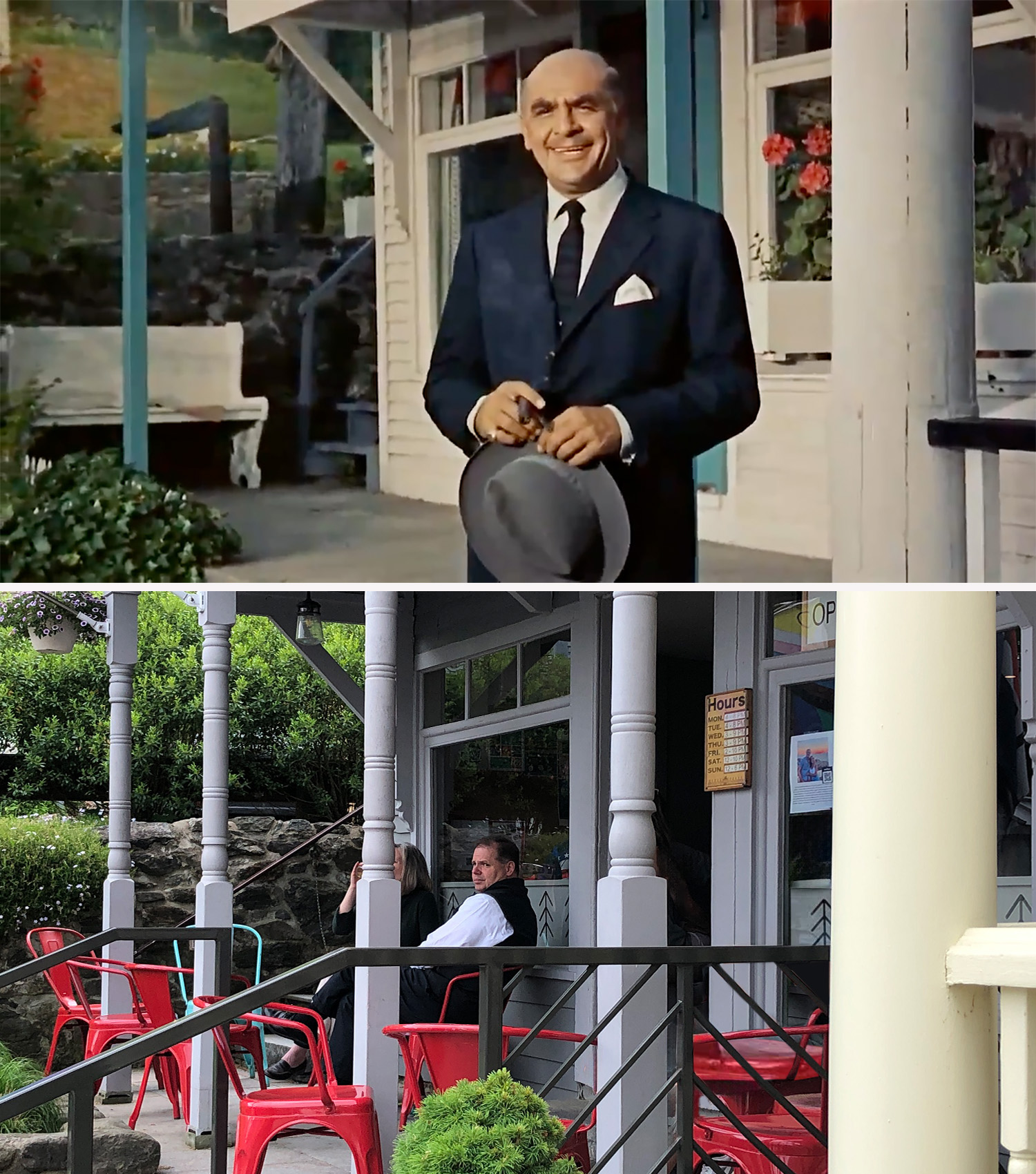
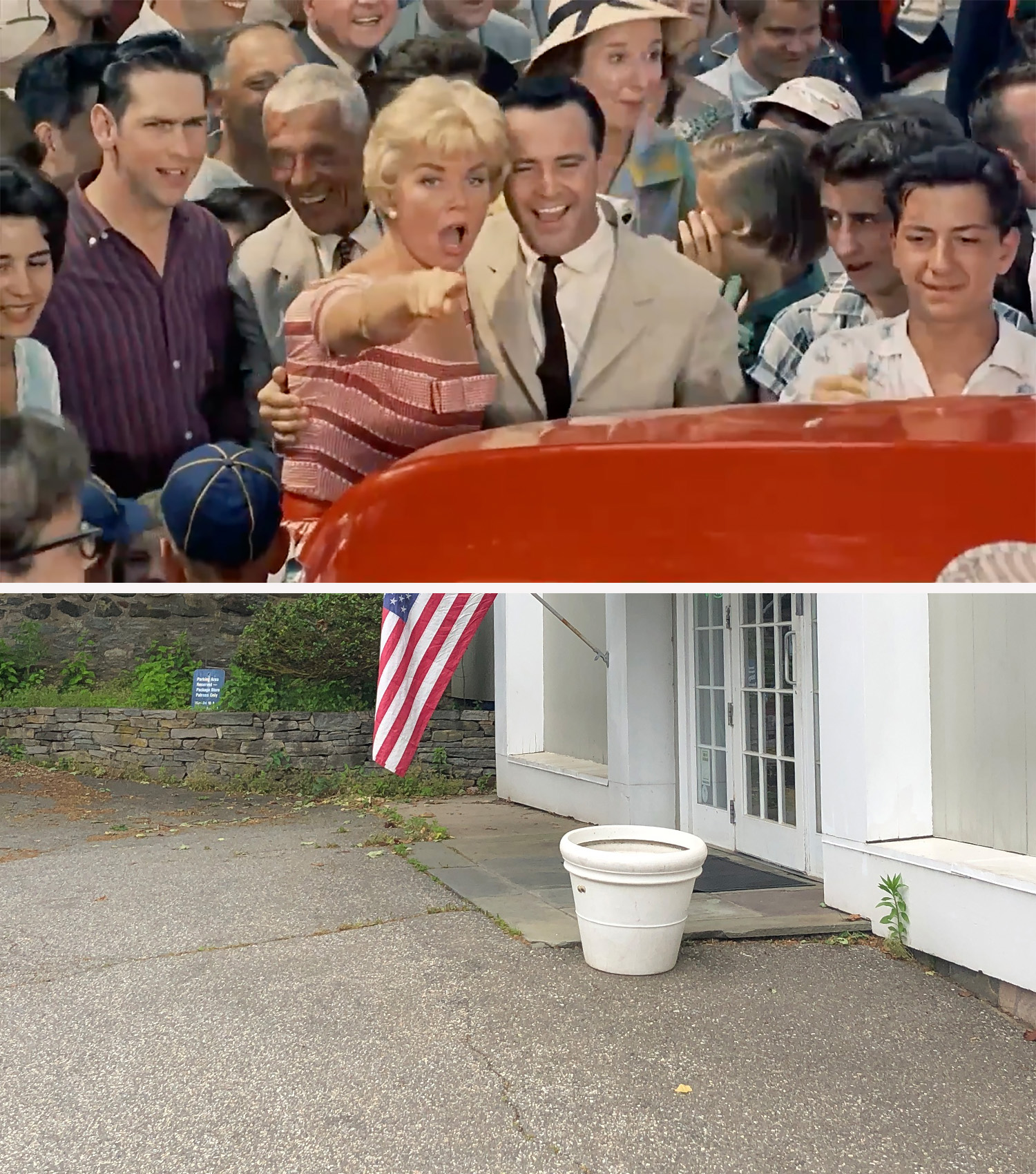
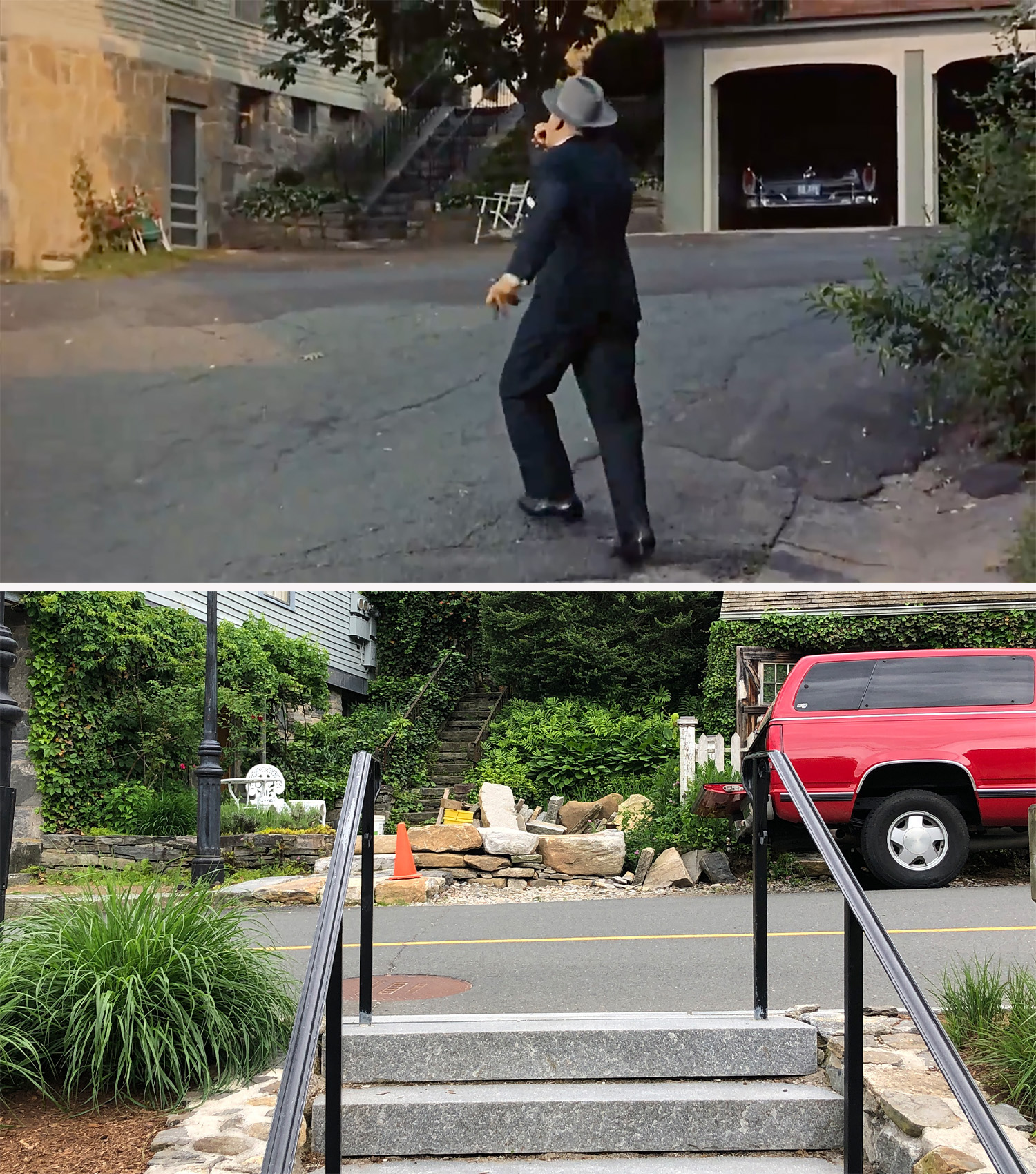
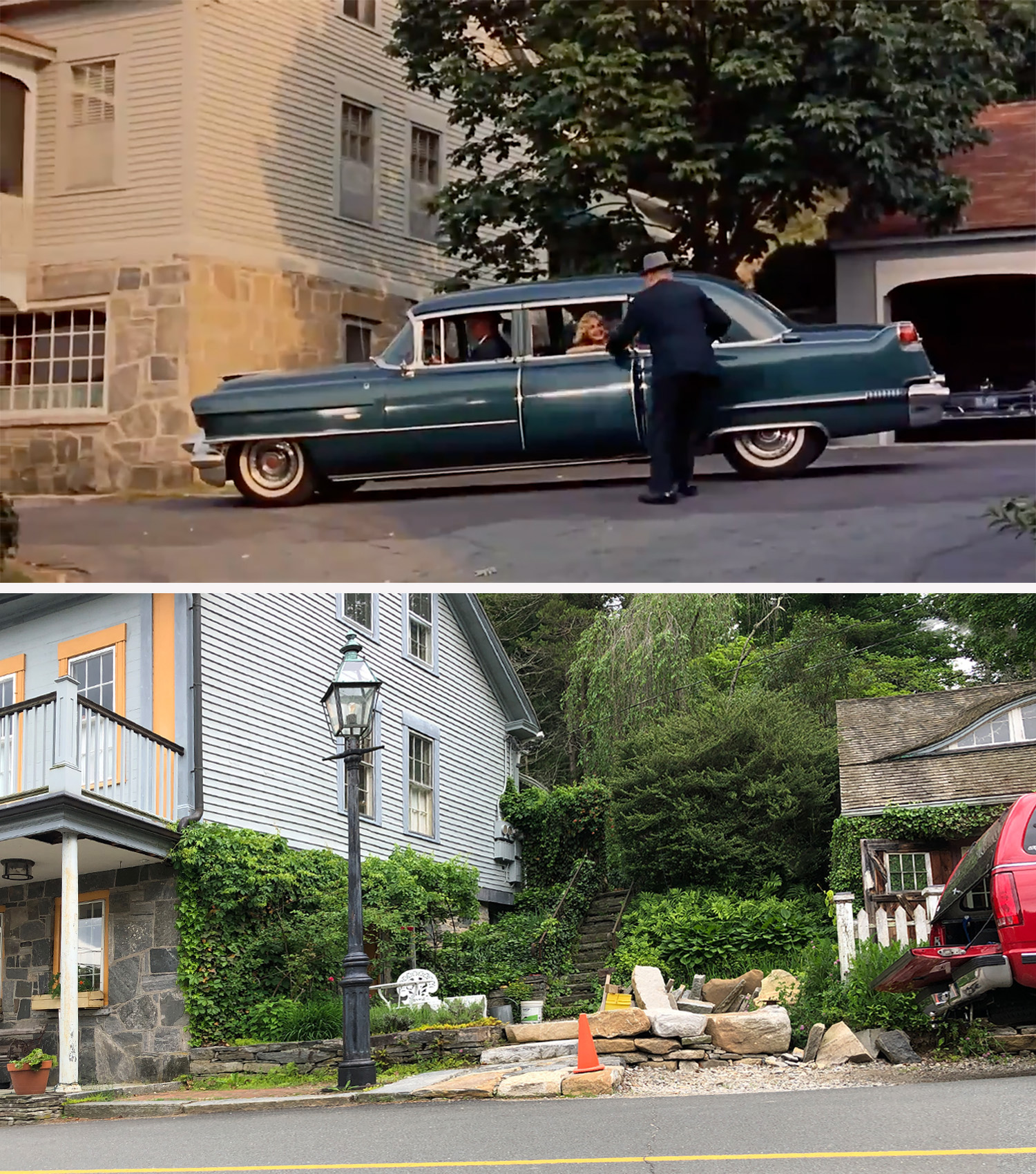
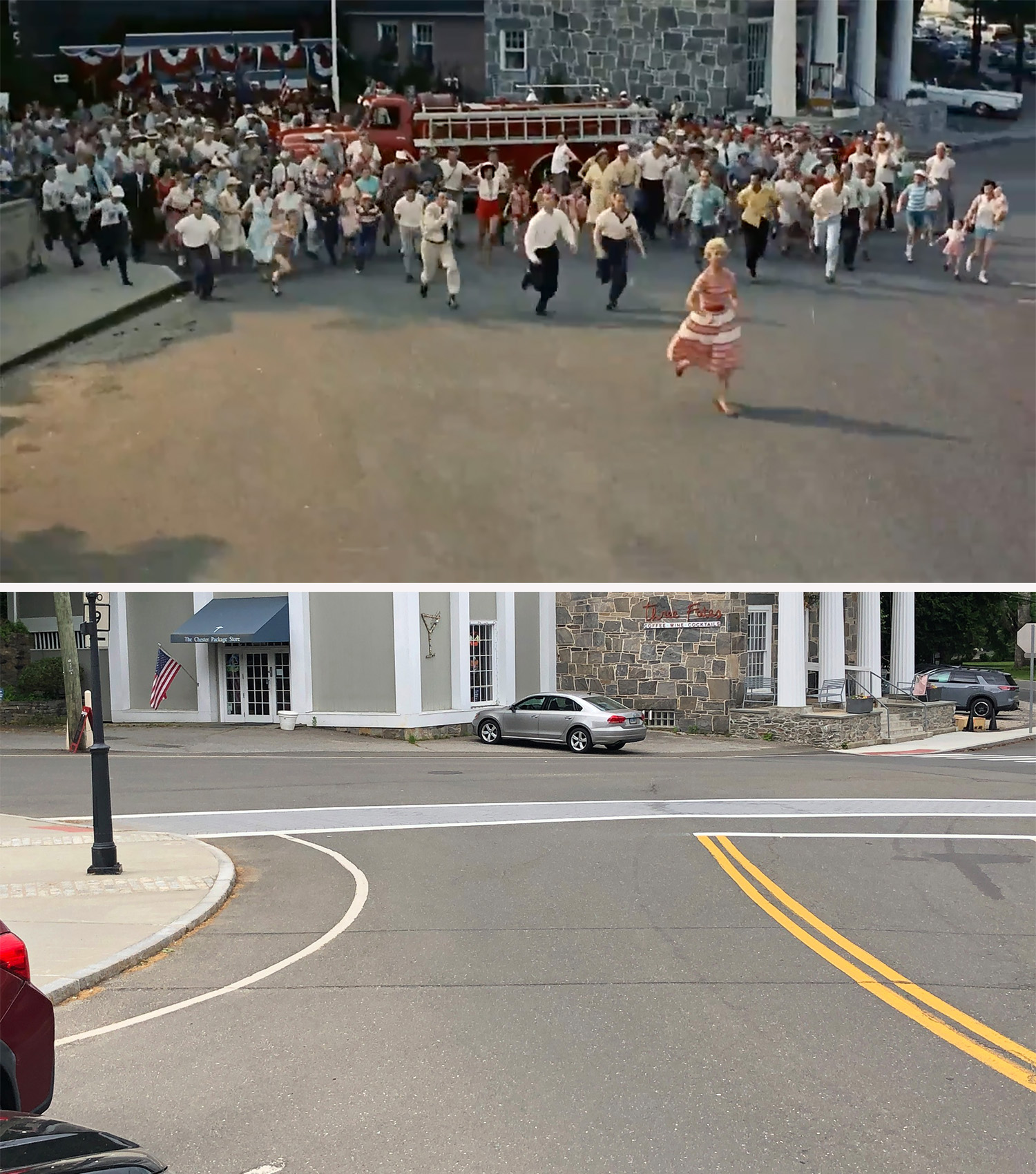
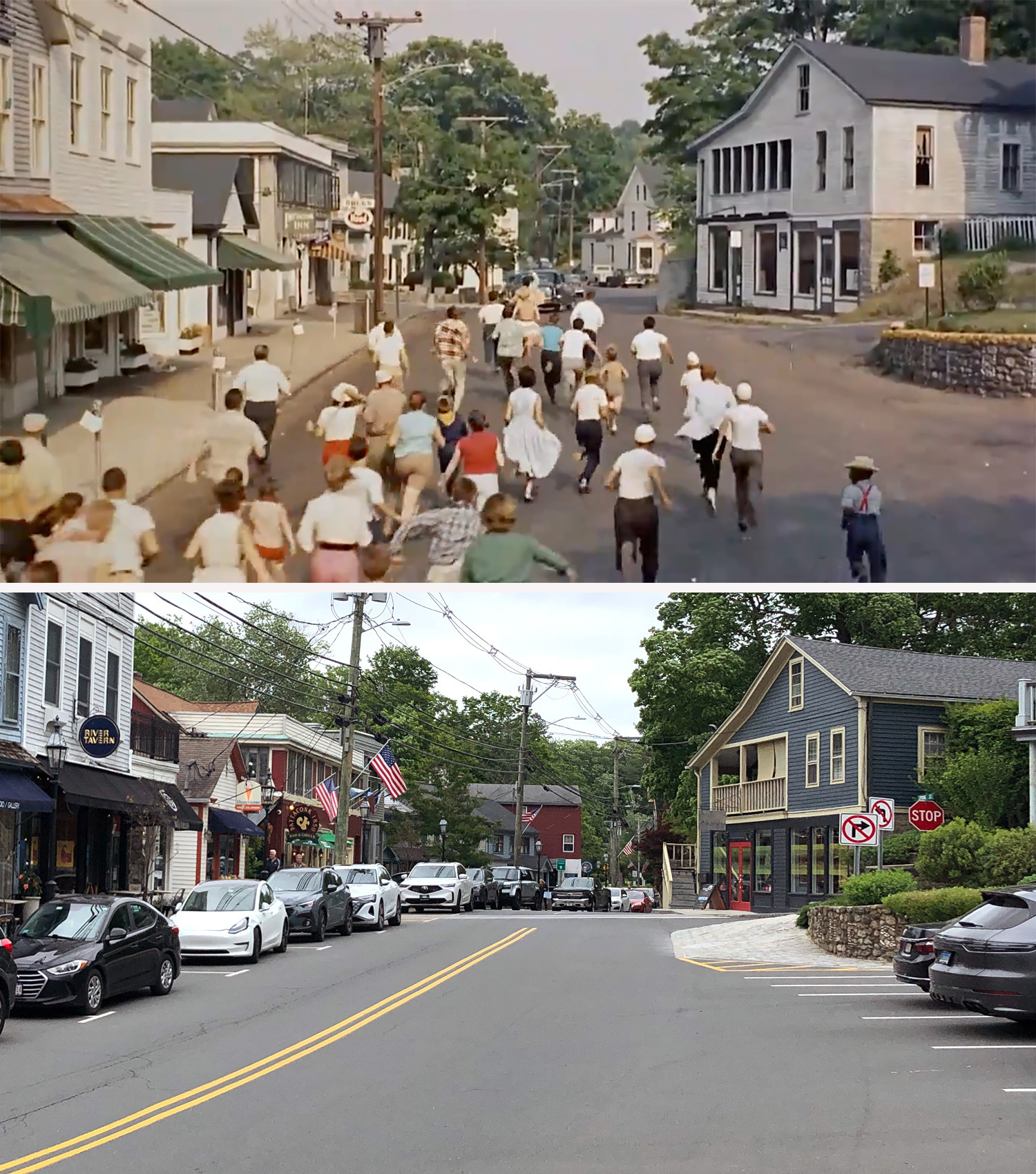
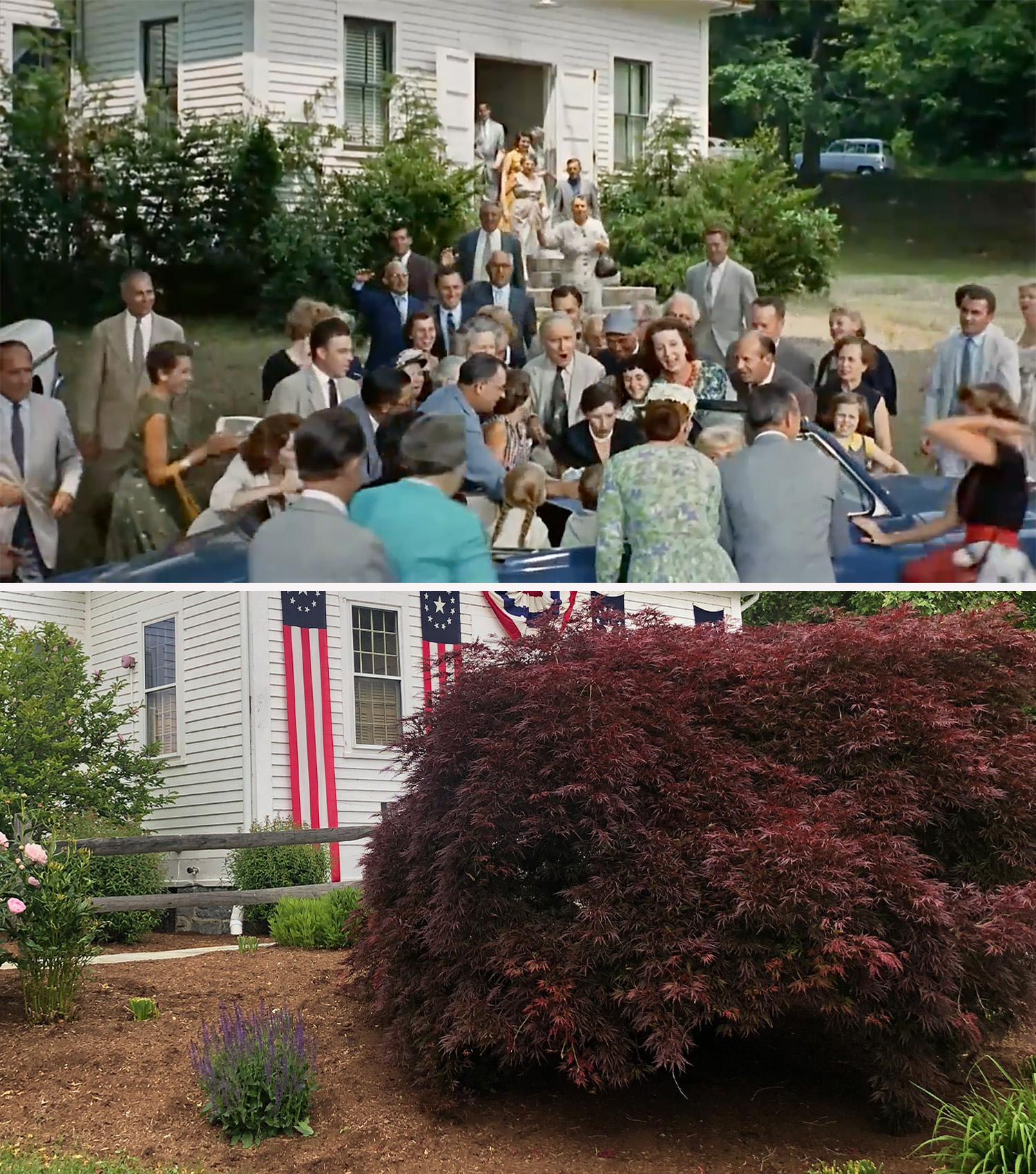
The last scene from the movie was shot back in downtown Chester next to the Old Stone Store.
This was obviously before the building was expanded in the 1980s. The spot that served as a small park in the movie is now the building’s west wing.
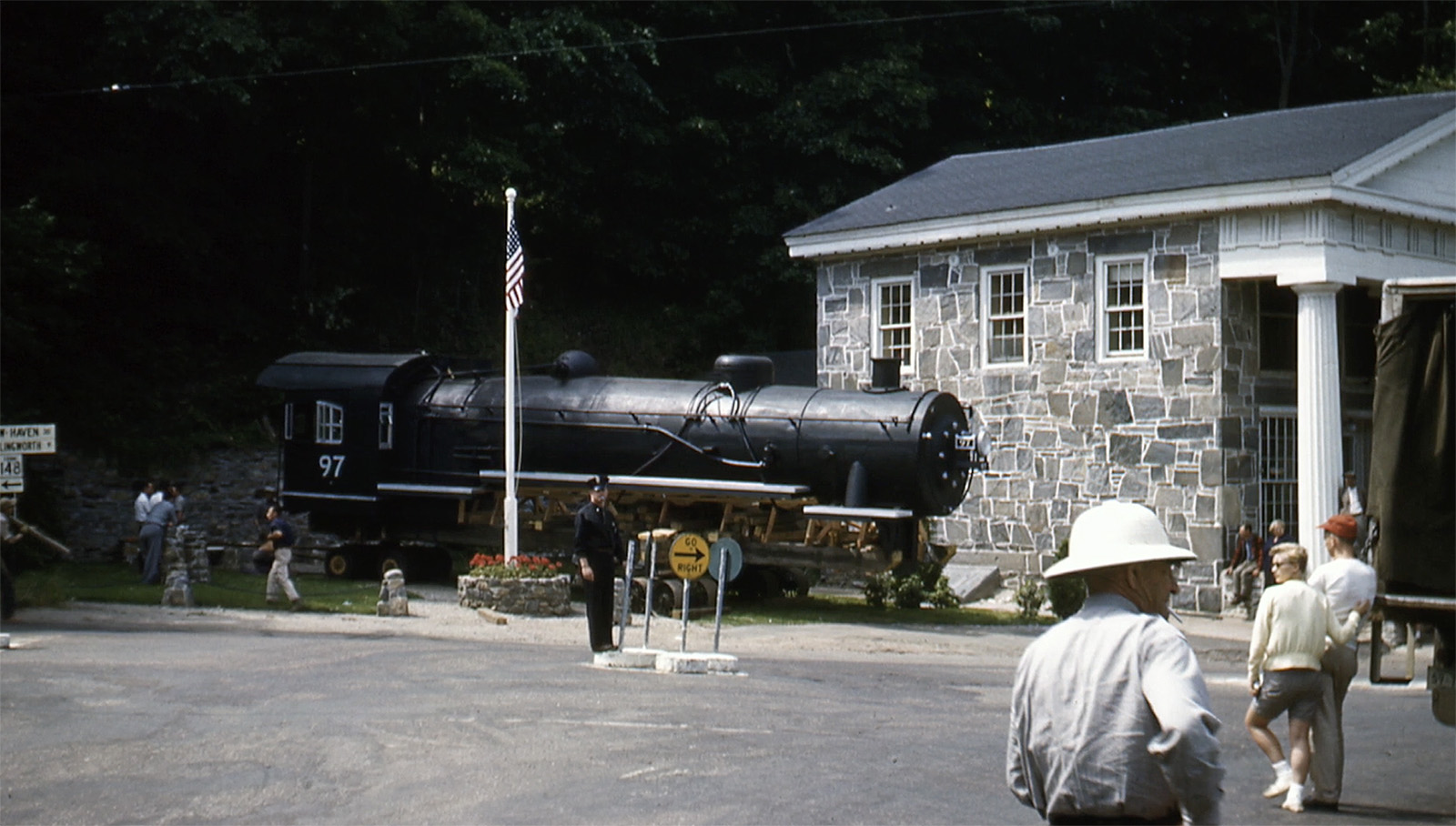
As I mentioned earlier, the locomotive in this scene was a wooden prop created for the movie. I assume the cost/effort of getting the real Old 97 there was too prohibitive, so they opted for a replica. According to historian Diane Lindsay, this giant prop was actually created by local carpenters Clifford Taber and Louis Bertelli.
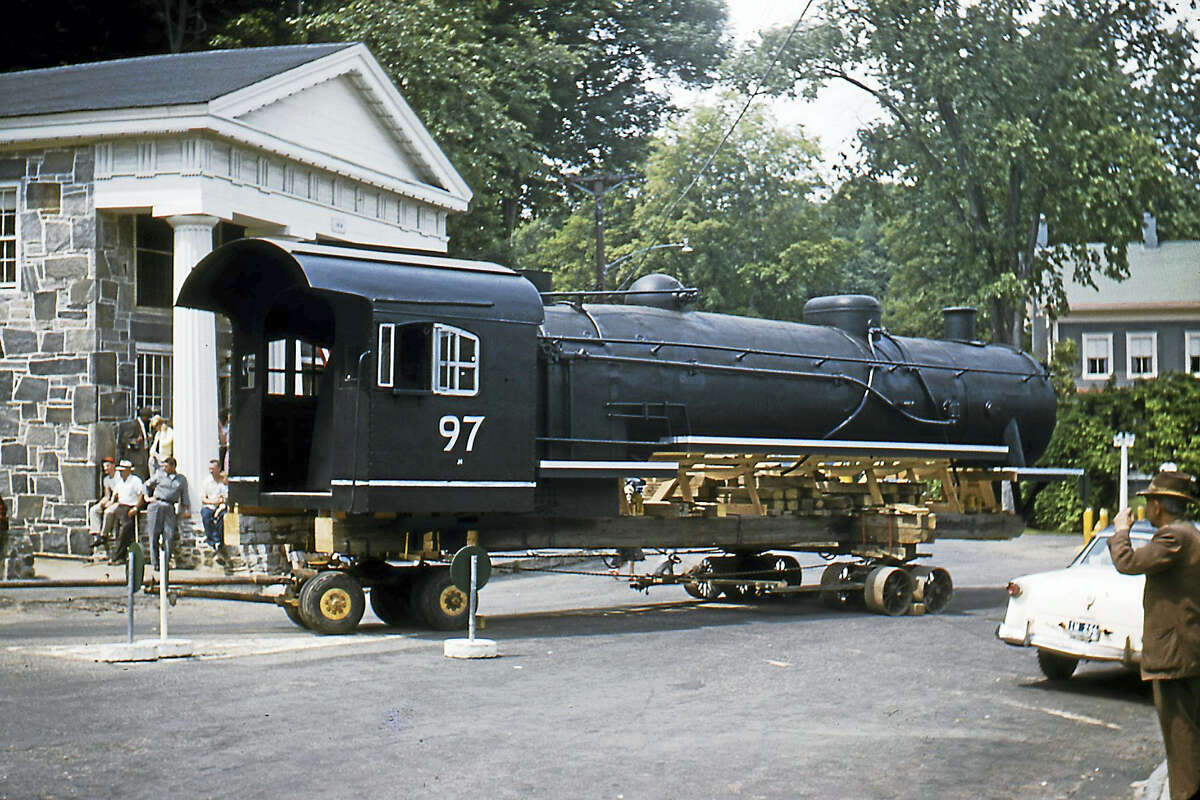
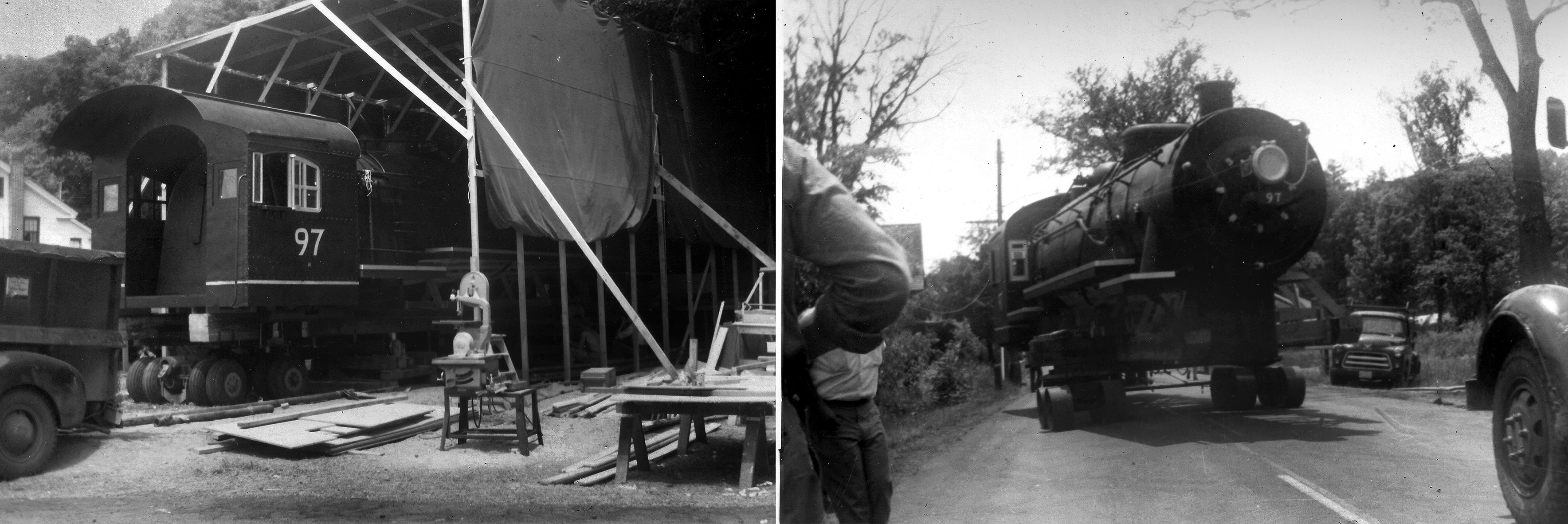
After the movie was completed, Bertelli had the fake train placed in his yard on School Lane. It remained there for a number of years, where neighborhood kids would often come to play on it.
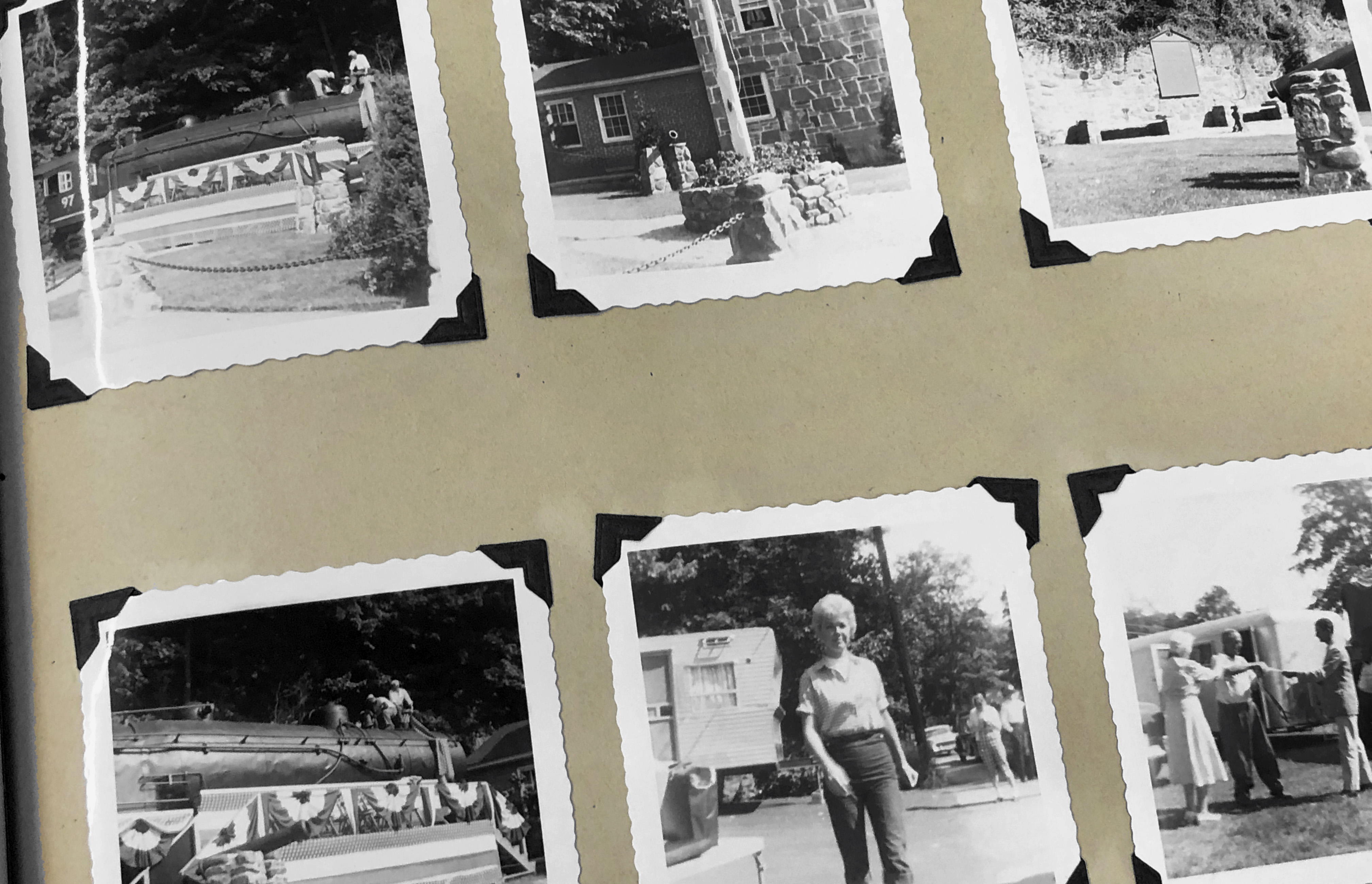
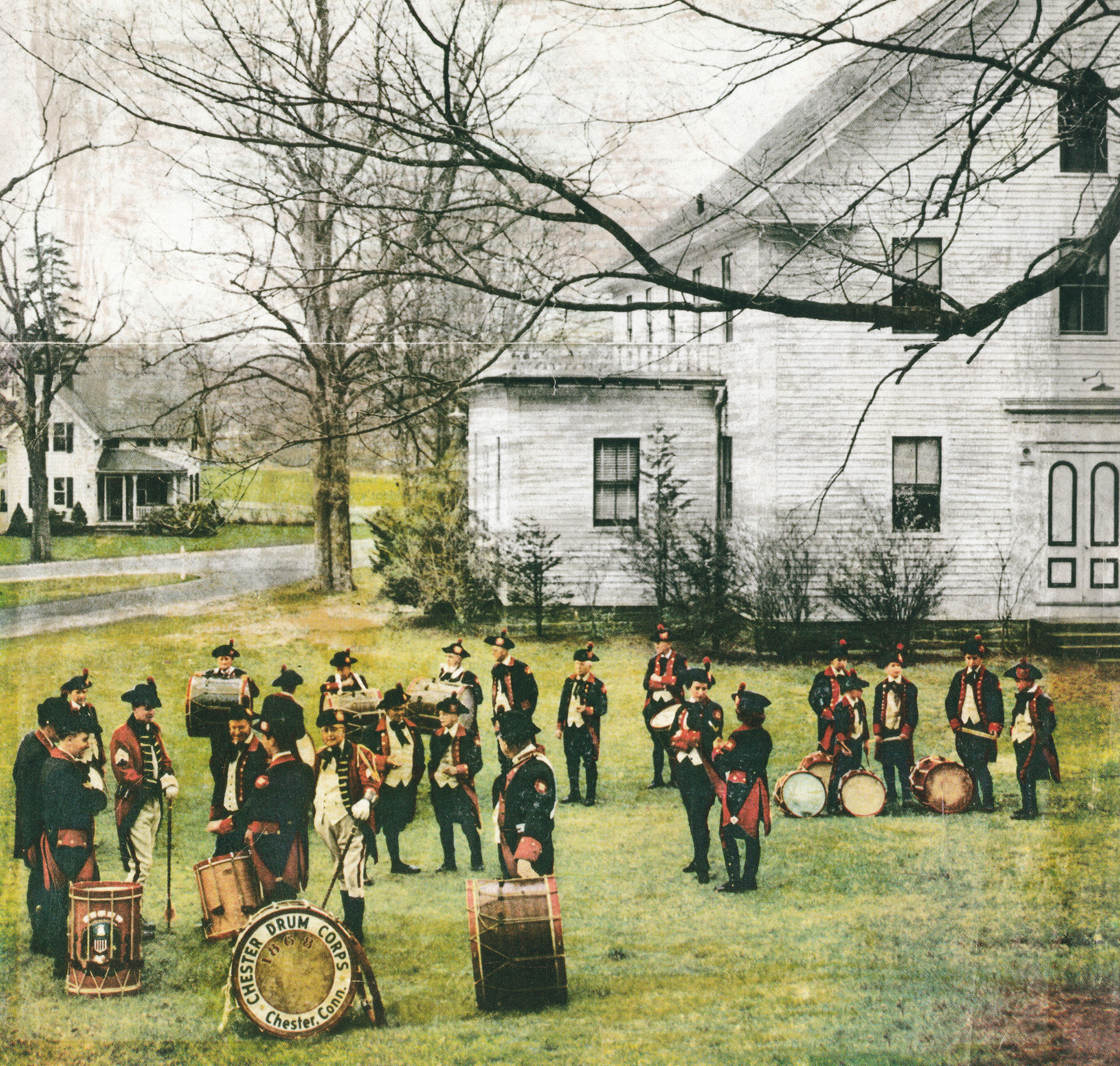
As you can tell by the scale of this scene, it required the most number of extras to fill the frame. This included the local girl scouts, as well as the Chester Fife and Drum Corps, dressed in 18th-century Continental Army uniforms.
One of the extras in this scene was Diane’s grandmother, Liberata Agnelli Narducci, who you might recall, lived across from the “Jane House” on Spring Street.
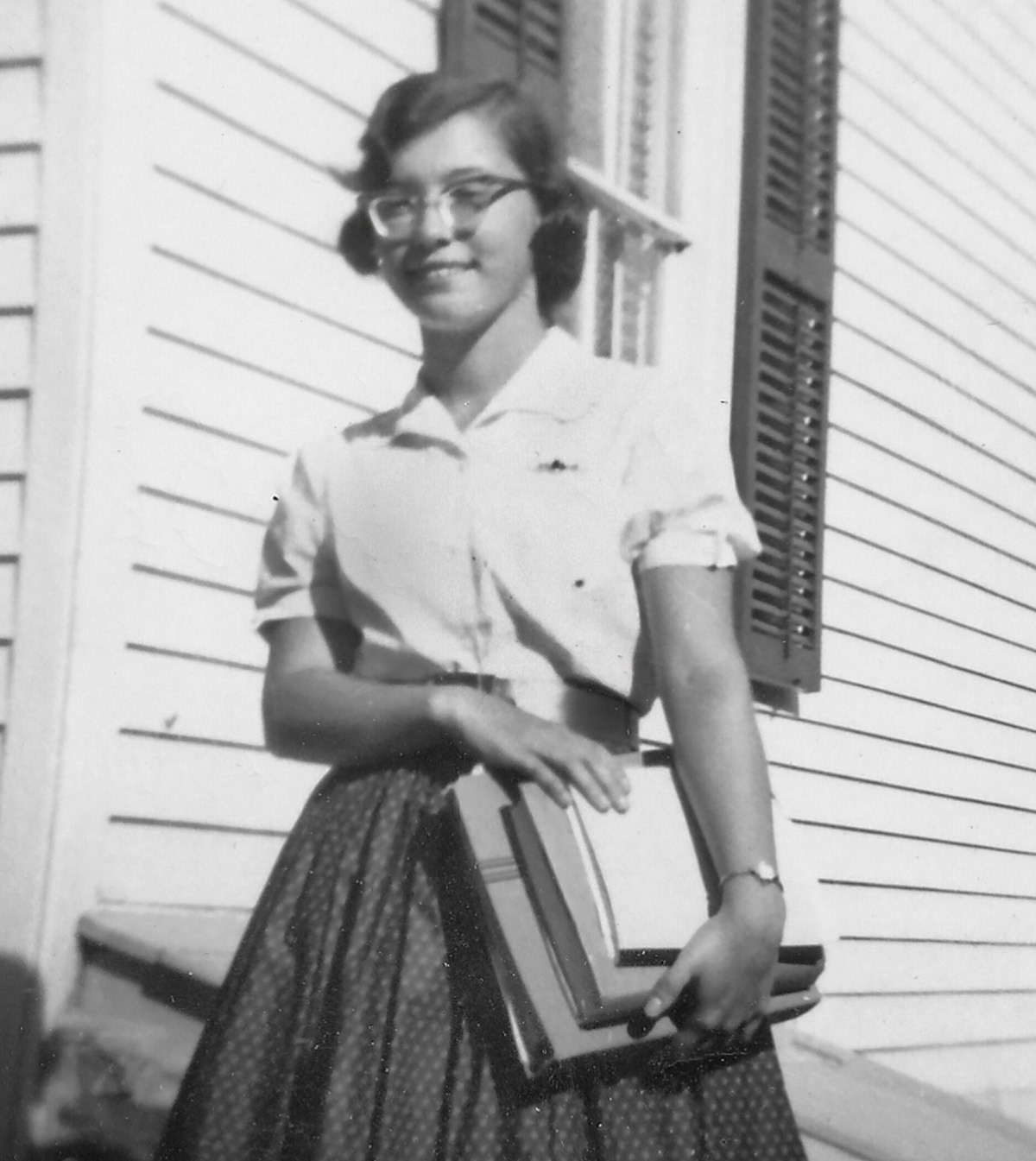
Diane, a high schooler at the time, also wanted to be an extra in the movie. However, her parents weren’t so keen on the idea of her hanging around “them Hollywood types” and forbade her to apply for the job.
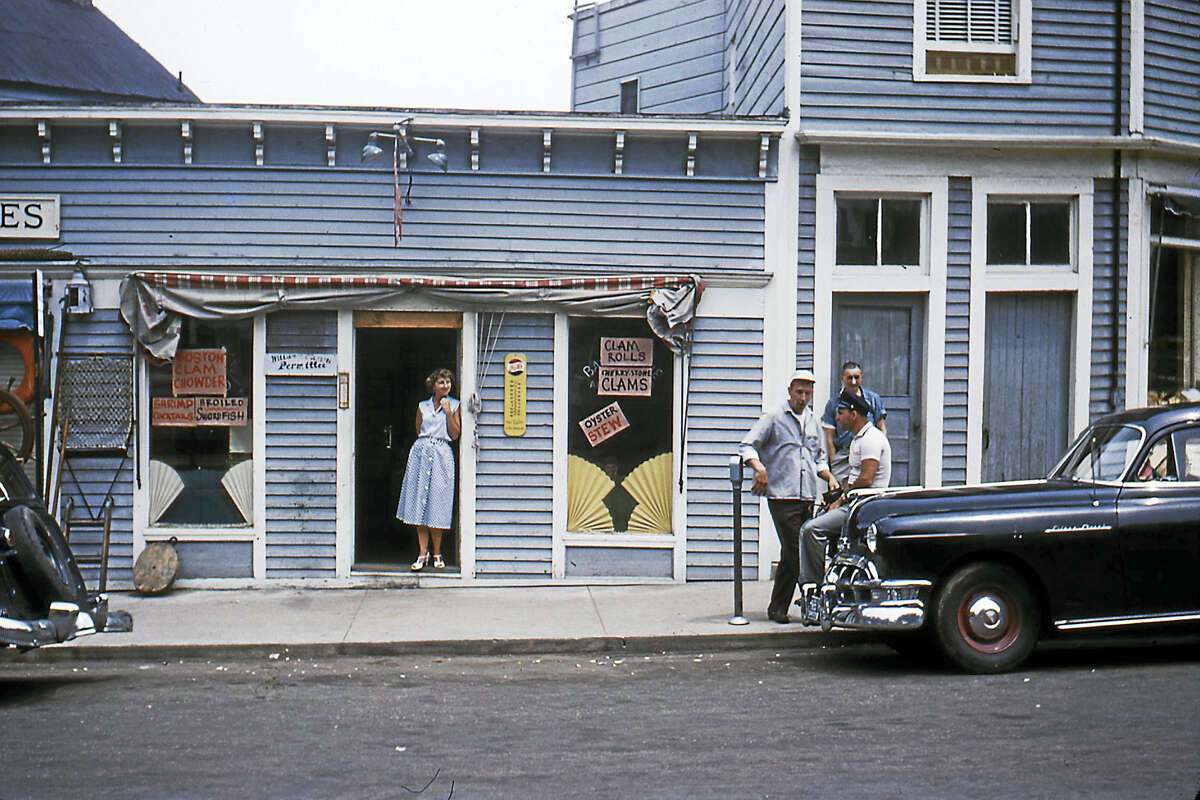
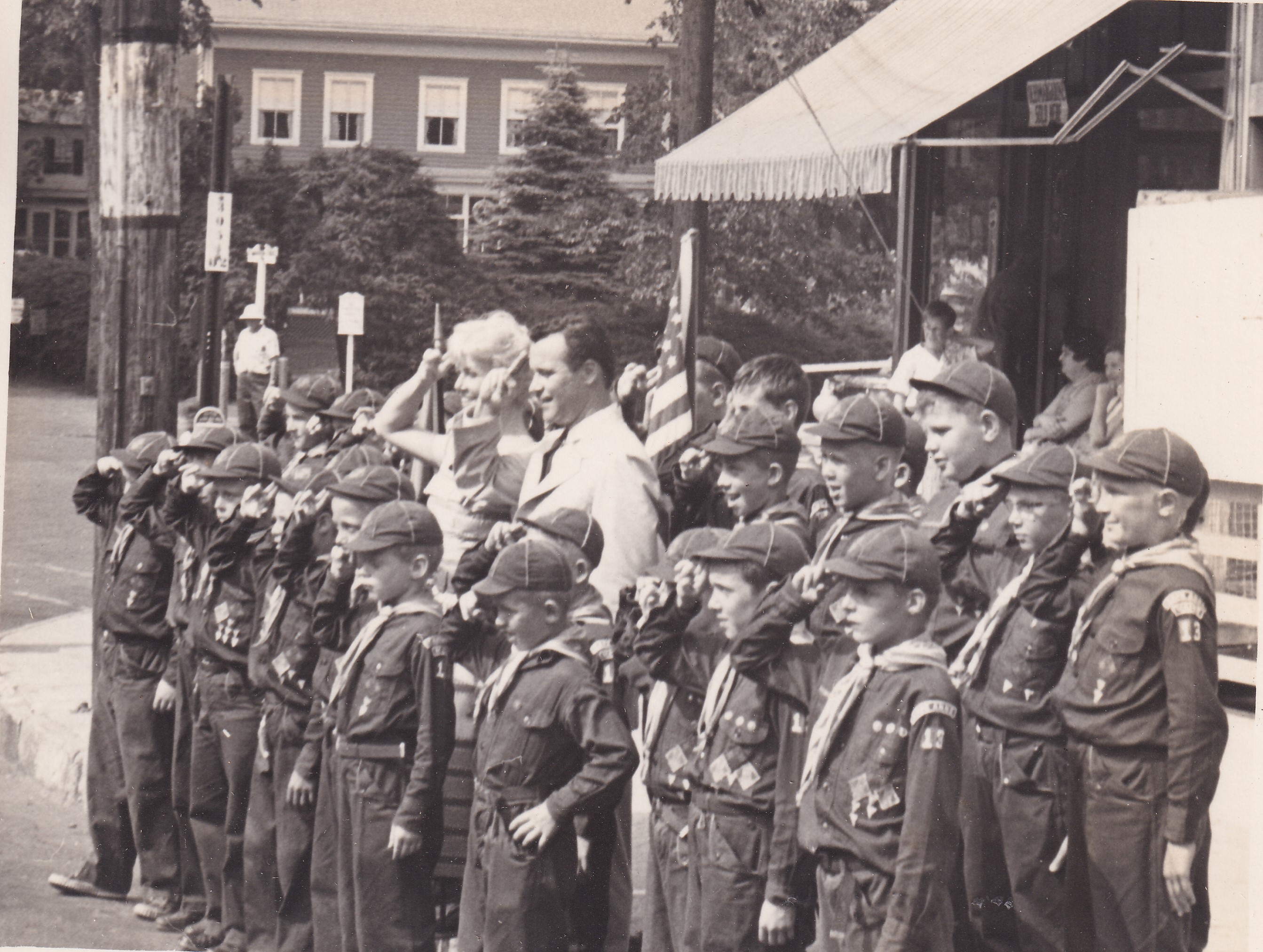
But there was no shortage of willing participants in town, as several of her friends made it into the movie as well as the local boy scouts (several of whom still reside in Chester).
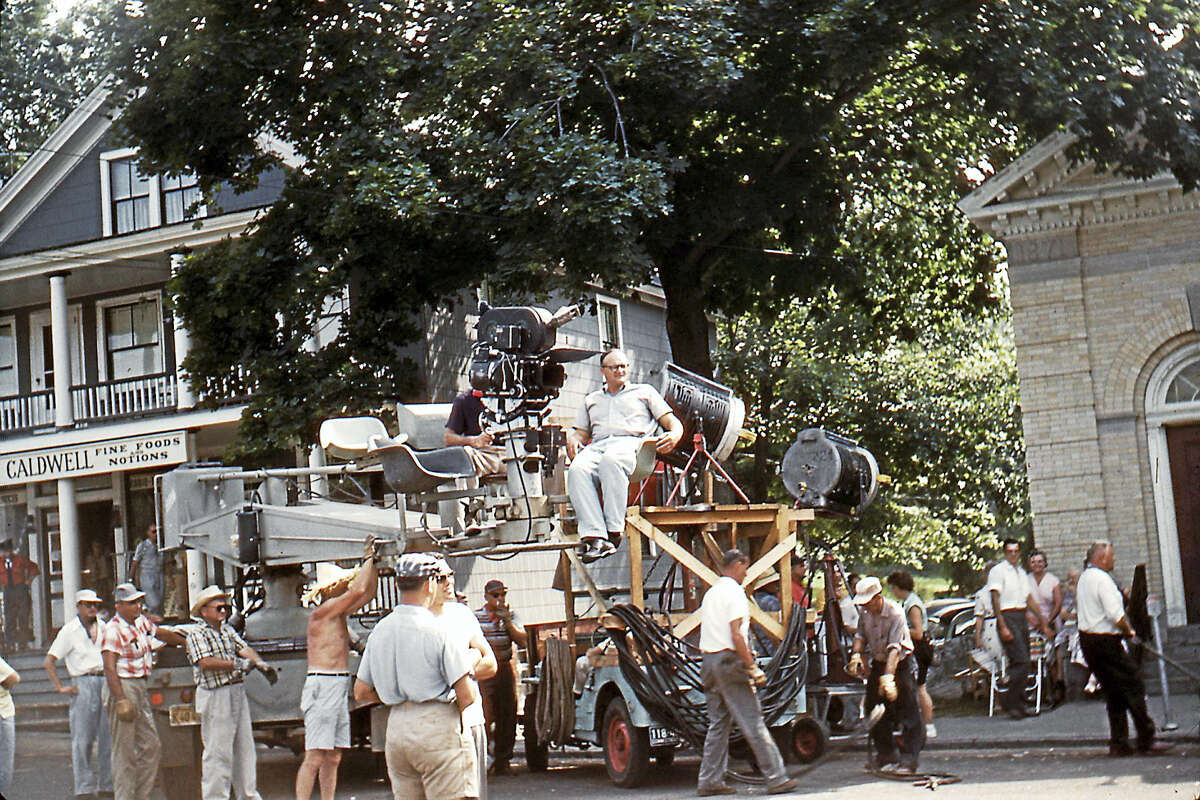
Today, Hollywood’s brief stay in this small New England town remains a fond memory for its residents, and the production of It Happened to Jane has become a unique part of Chester’s history. I can safely say it left a bigger mark than the 1970s psychological horror film Let’s Scare Jessica to Death, which shot a few atmospheric exteriors in the area.
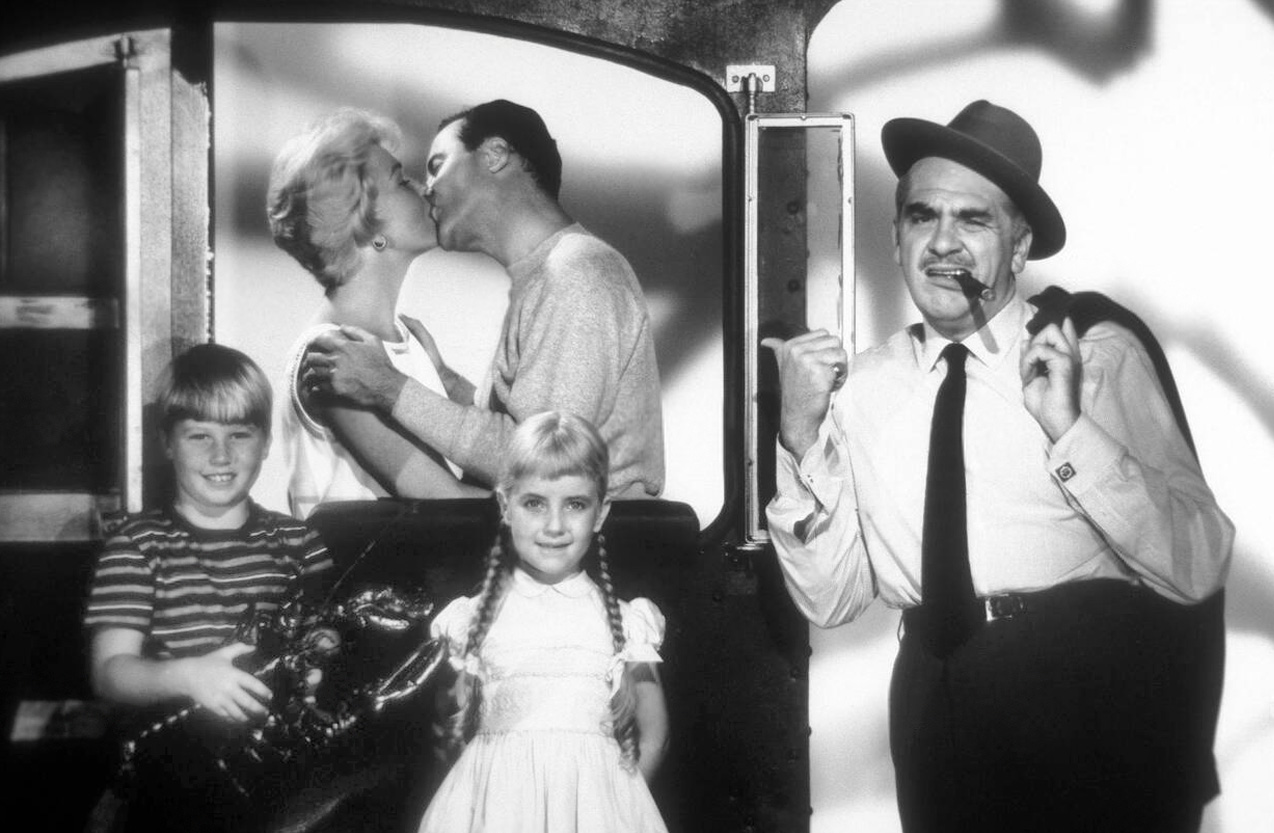
With the romanticized storytelling of a Frank Capra picture, It Happened to Jane is fairly easy to digest, though its scattershot plotting can be a little exhausting. It was ultimately a box office disappointment, and its 1961 re-release under the title Twinkle and Shine didn’t fare any better.
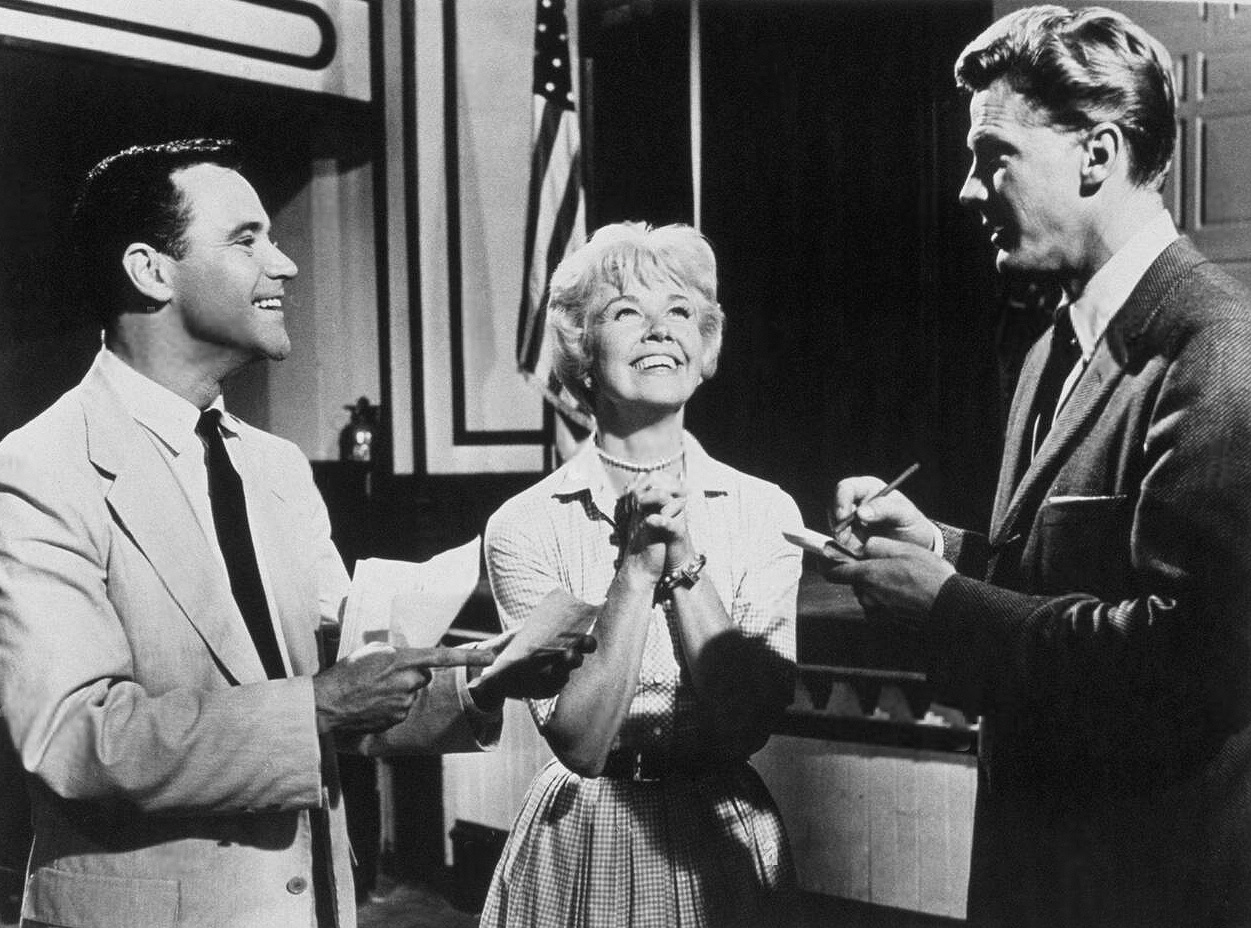
Despite the commercial flop, the film fostered a lifelong, real-world friendship between its two main stars. Doris Day fondly recalled, “it was pert and funny, but whether it was the insipid title or something else, it just didn’t make it. However, I’m grateful to the film, for Jack and I became friends and we saw each other socially over the ensuing years. Jack is a… gut actor with a natural sense of comedy—very challenging to work with.”
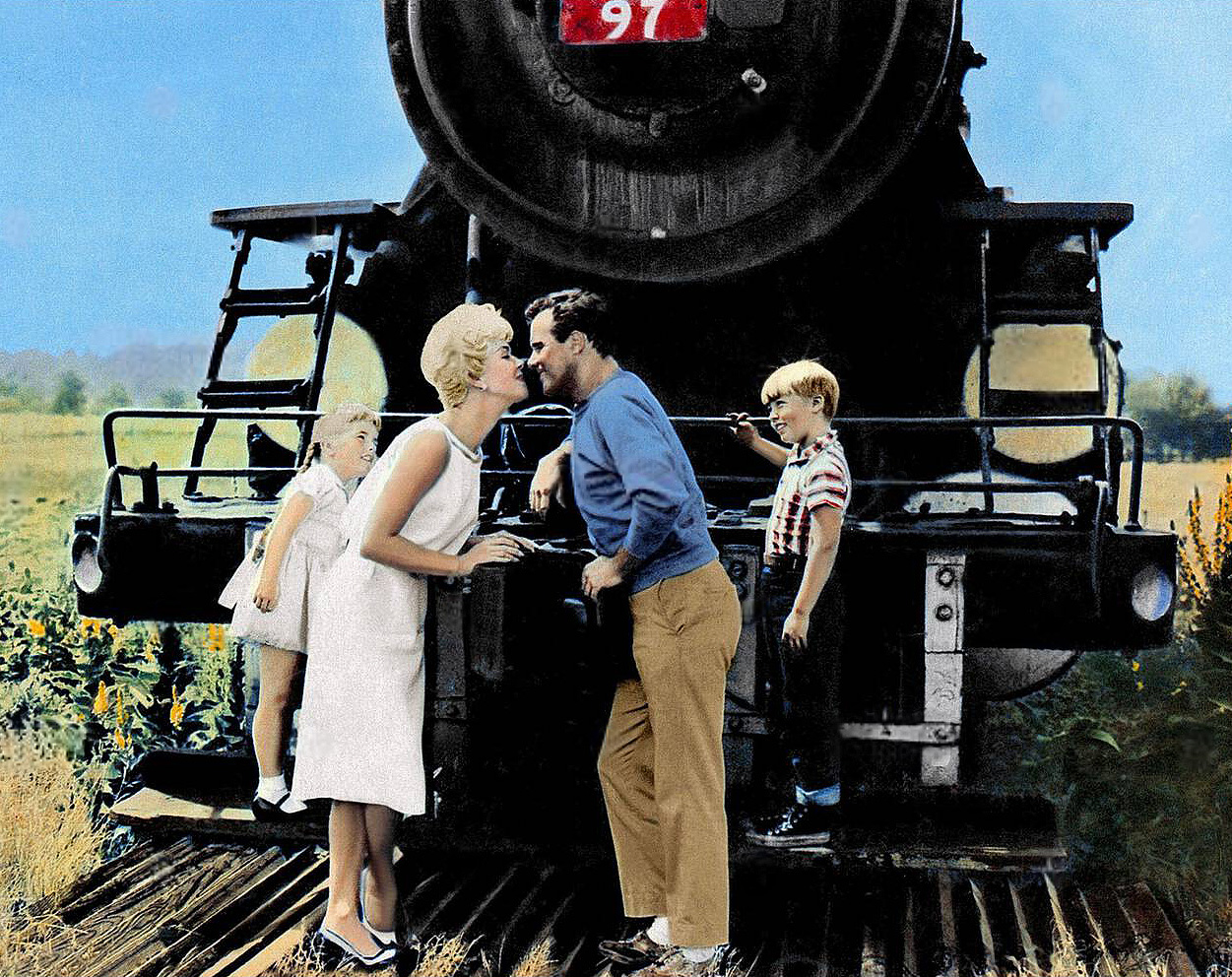
Lemmon was equally impressed with his co-star, maintaining that It Happened to Jane was a good, funny movie.
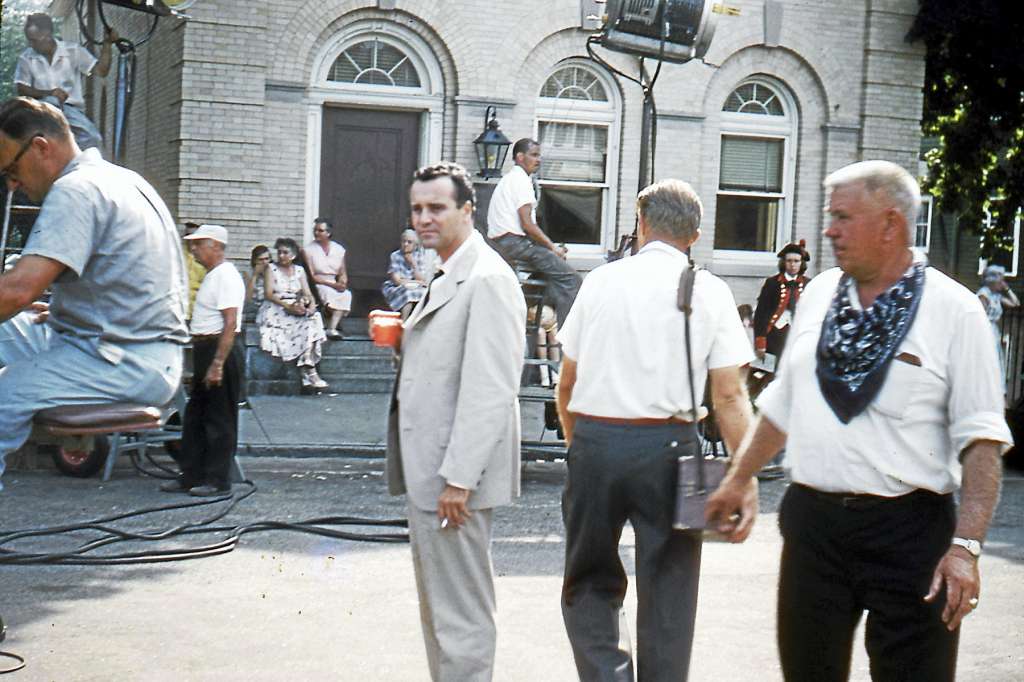
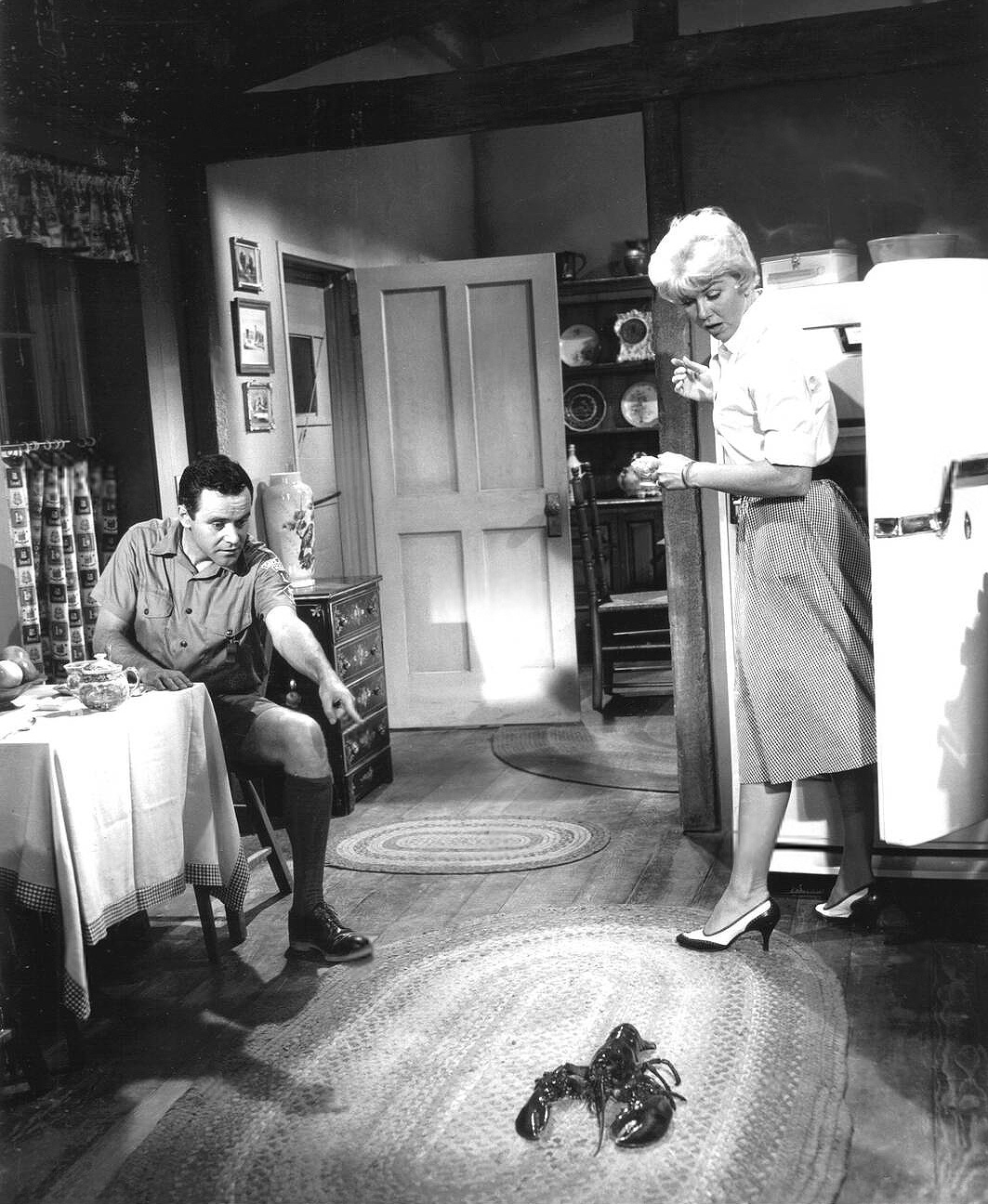
Modern retrospectives offer a mixed but nostalgic view of this David-and-Goliath tale, often taking note of Ernie Kovacs’ lively performance as the corporate villain. While the script relies on a sanitized, old-fashioned feel, It Happened to Jane remains a nice viewing diversion and unique piece of local New England history.
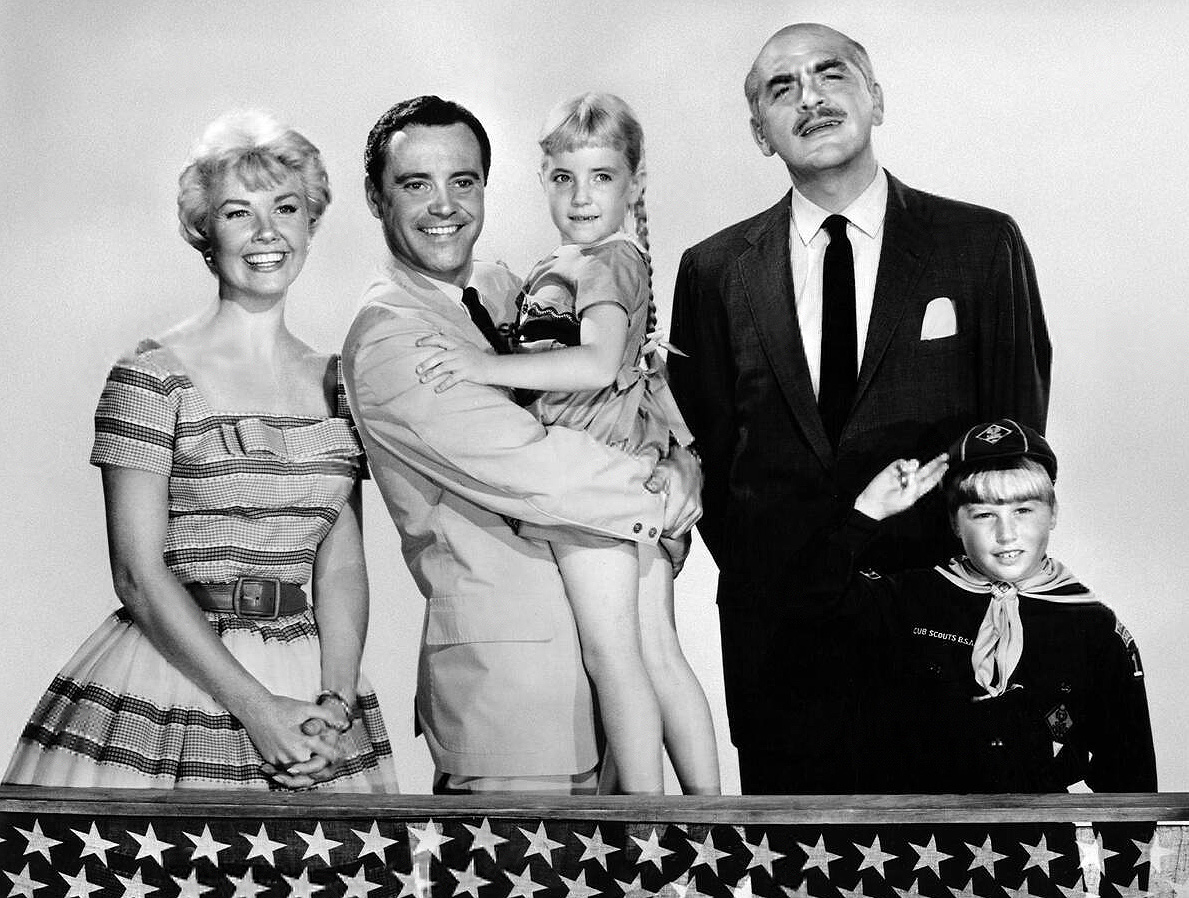
While not perfect, the film has solidified its place as a charming, slice of late-50s cinema and in the end, it gave me a great excuse to explore rural Connecticut.
 NYC in Film