
Taking place in an alternate Gotham universe, Todd Phillips’s supervillain origin story starring Joaquin Phoenix is the most modern film I’ve covered on this website.
While I generally focus on titles that are thirty years or older, I do make a few exceptions, in particular, if it has some really interesting locations and/or if the city is portrayed in a unique, stylistic way. 2019’s Joker satisfies that criteria, but more importantly, I decided to write about this recent movie because I had a tiny acting role in it.
Sign Spinning


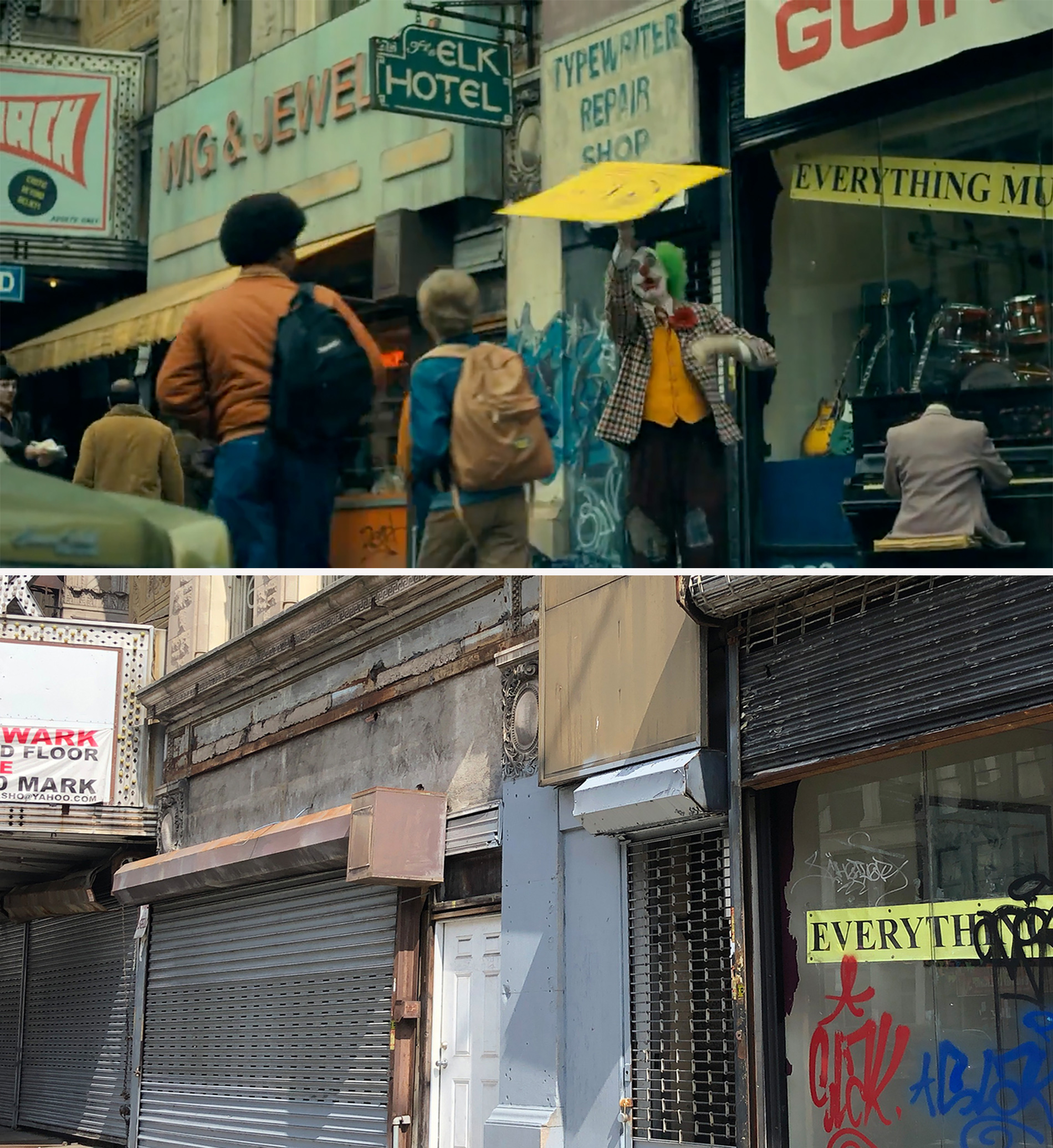
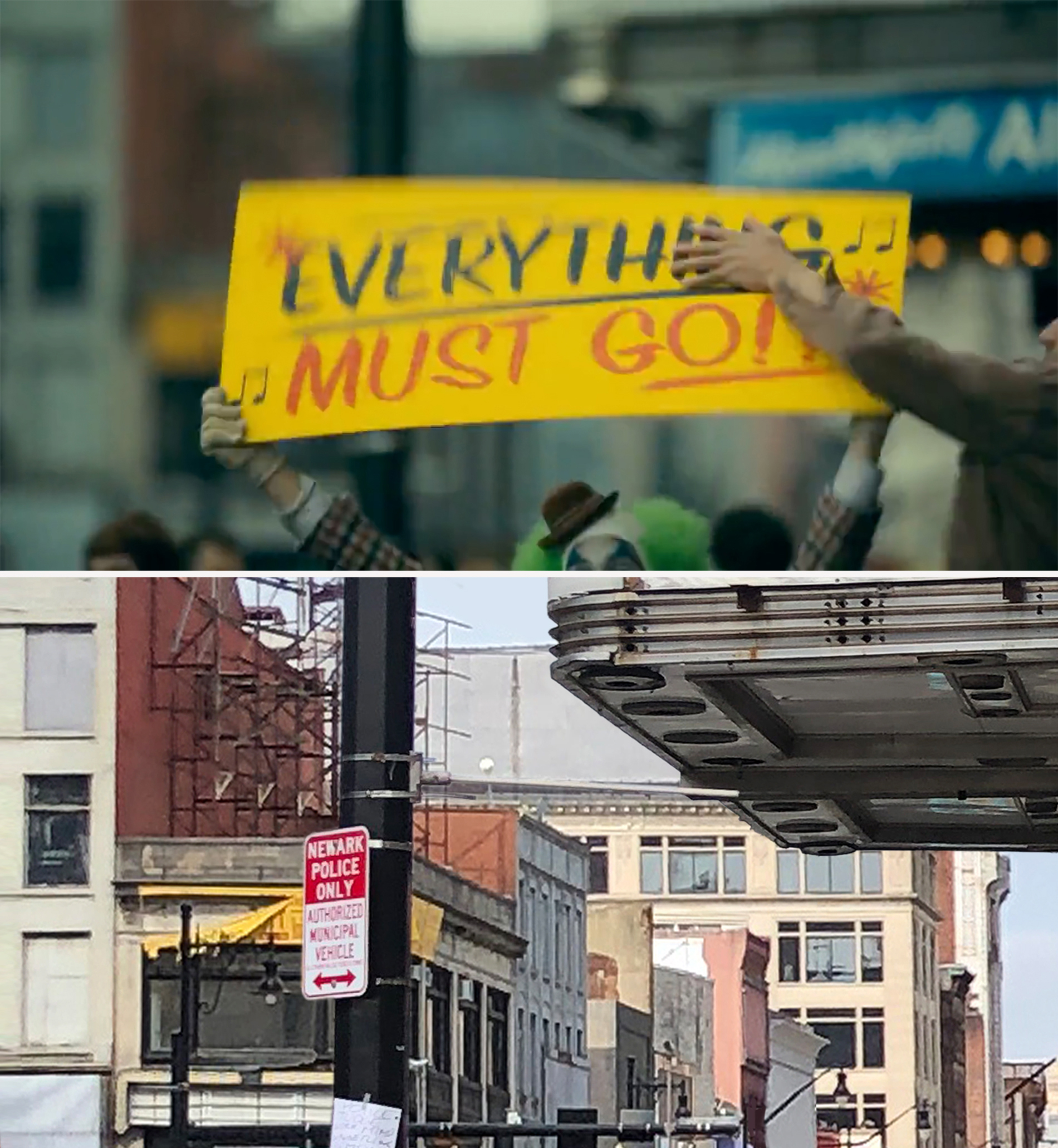
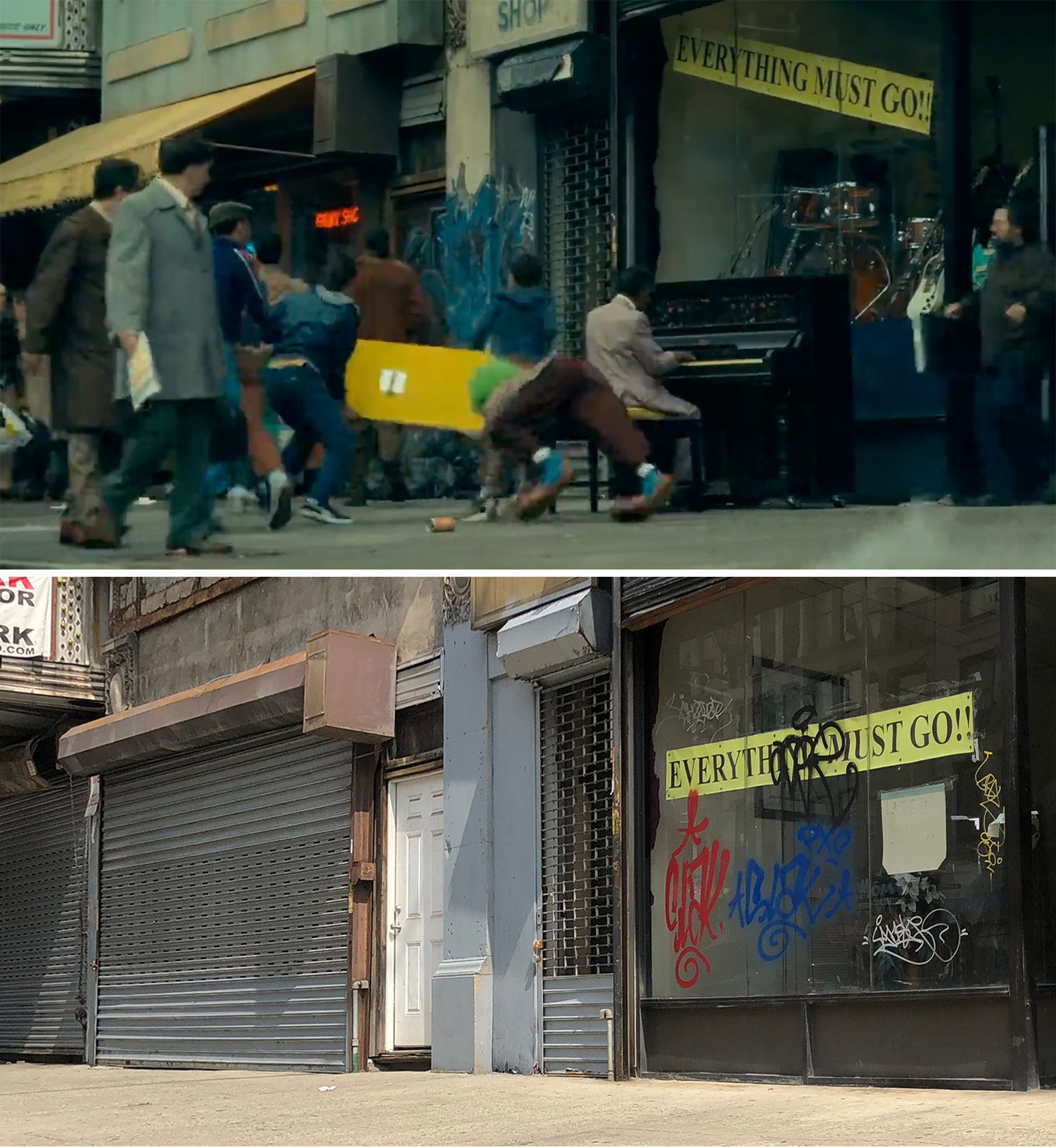
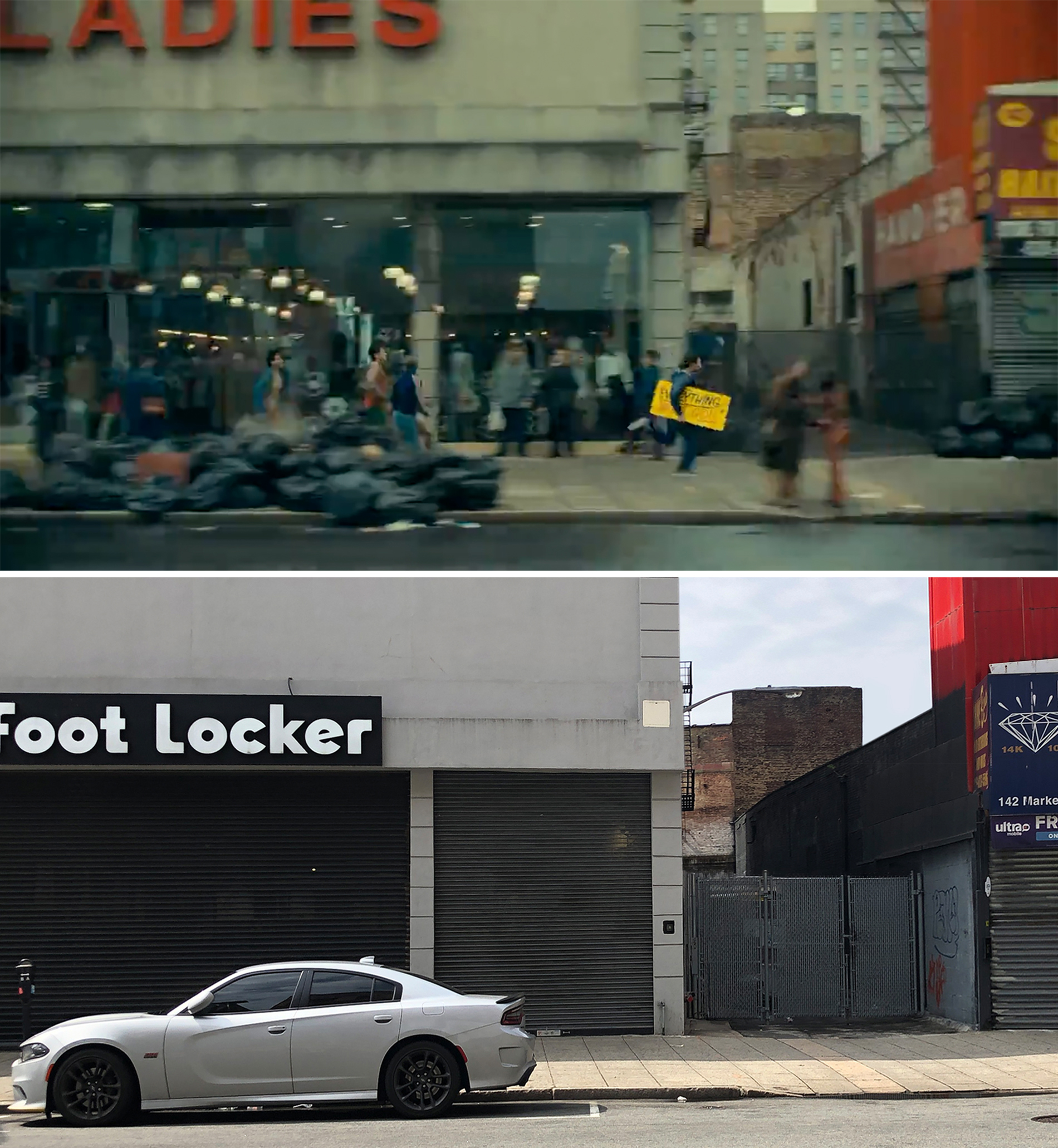
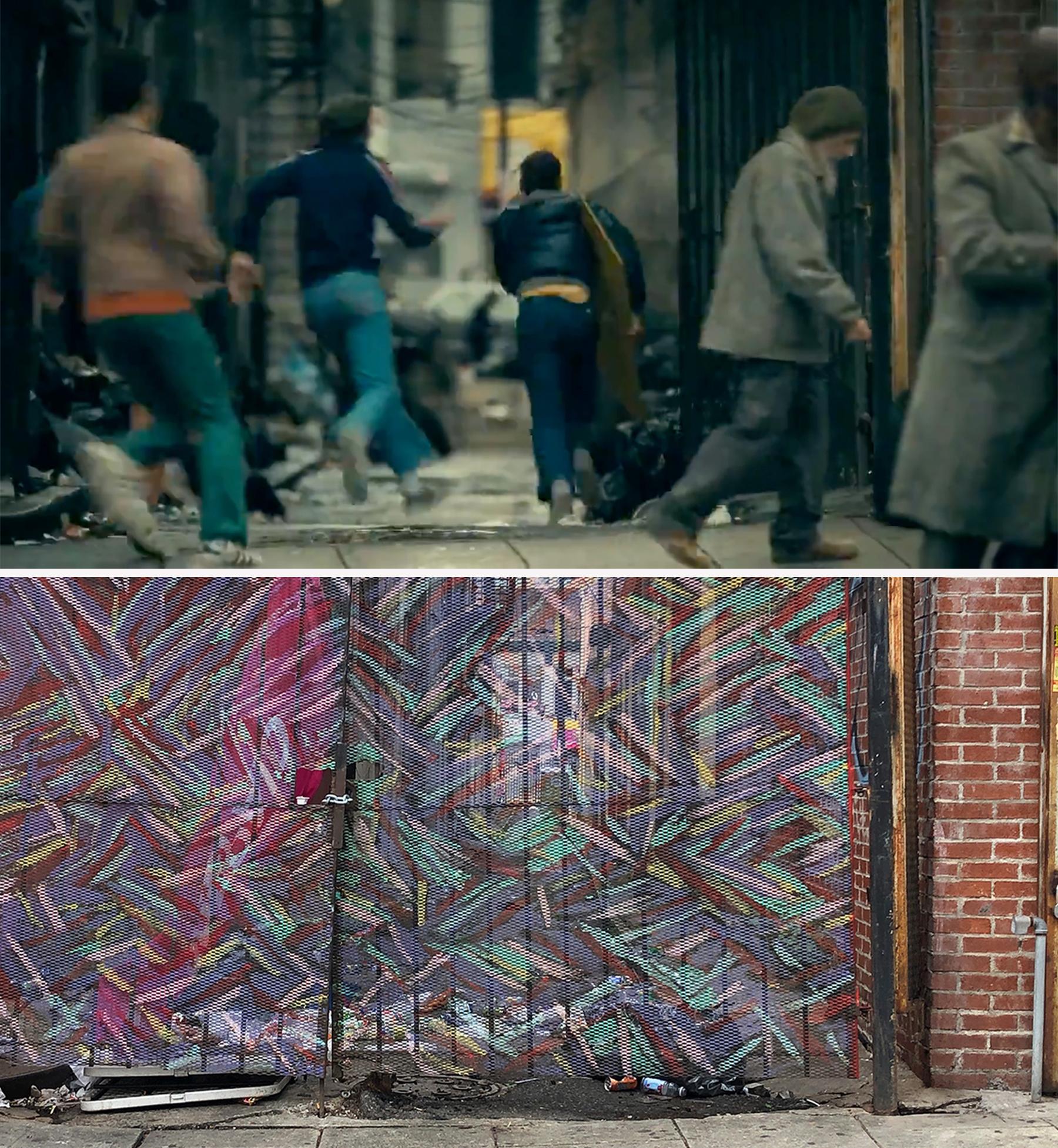
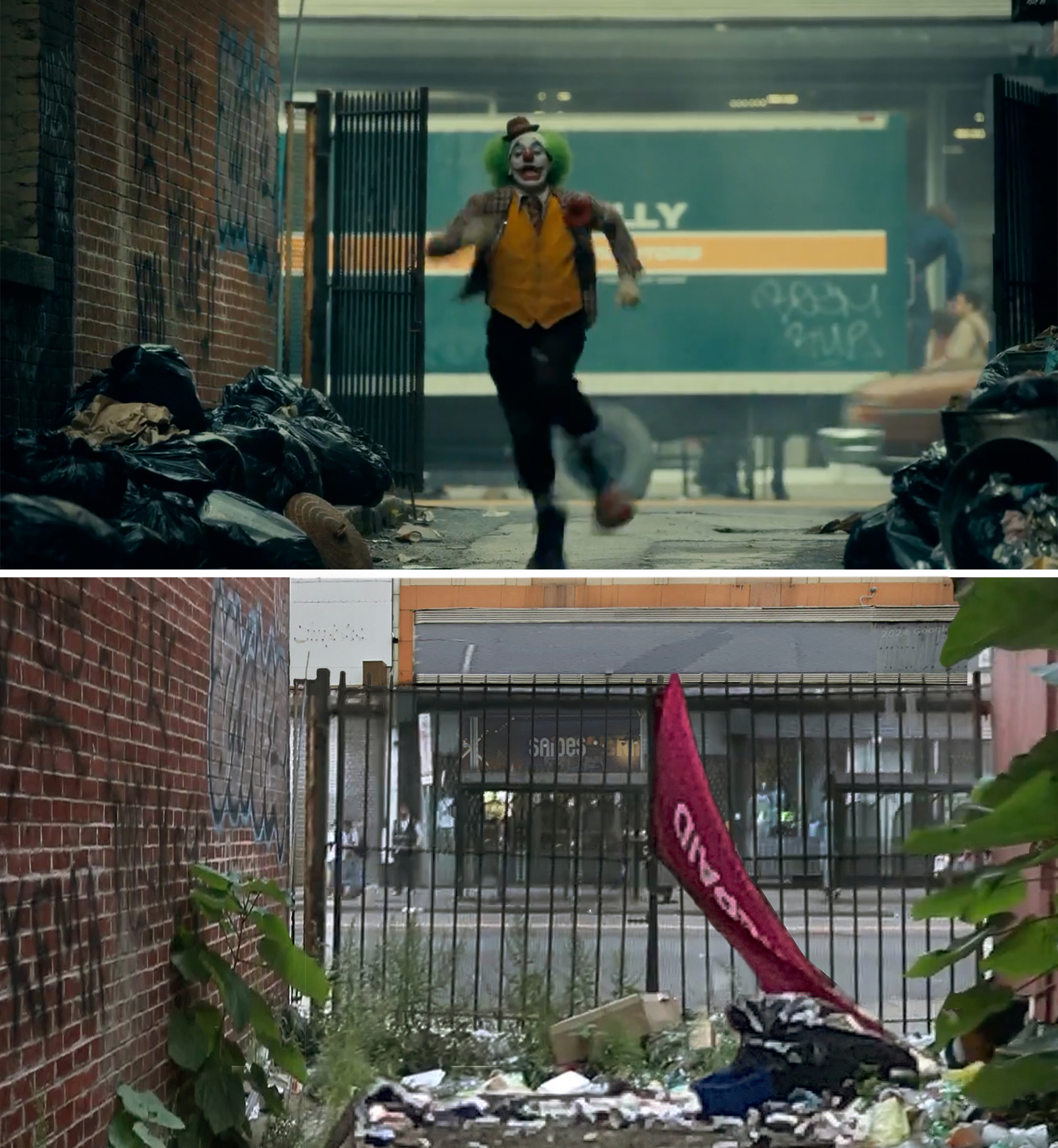
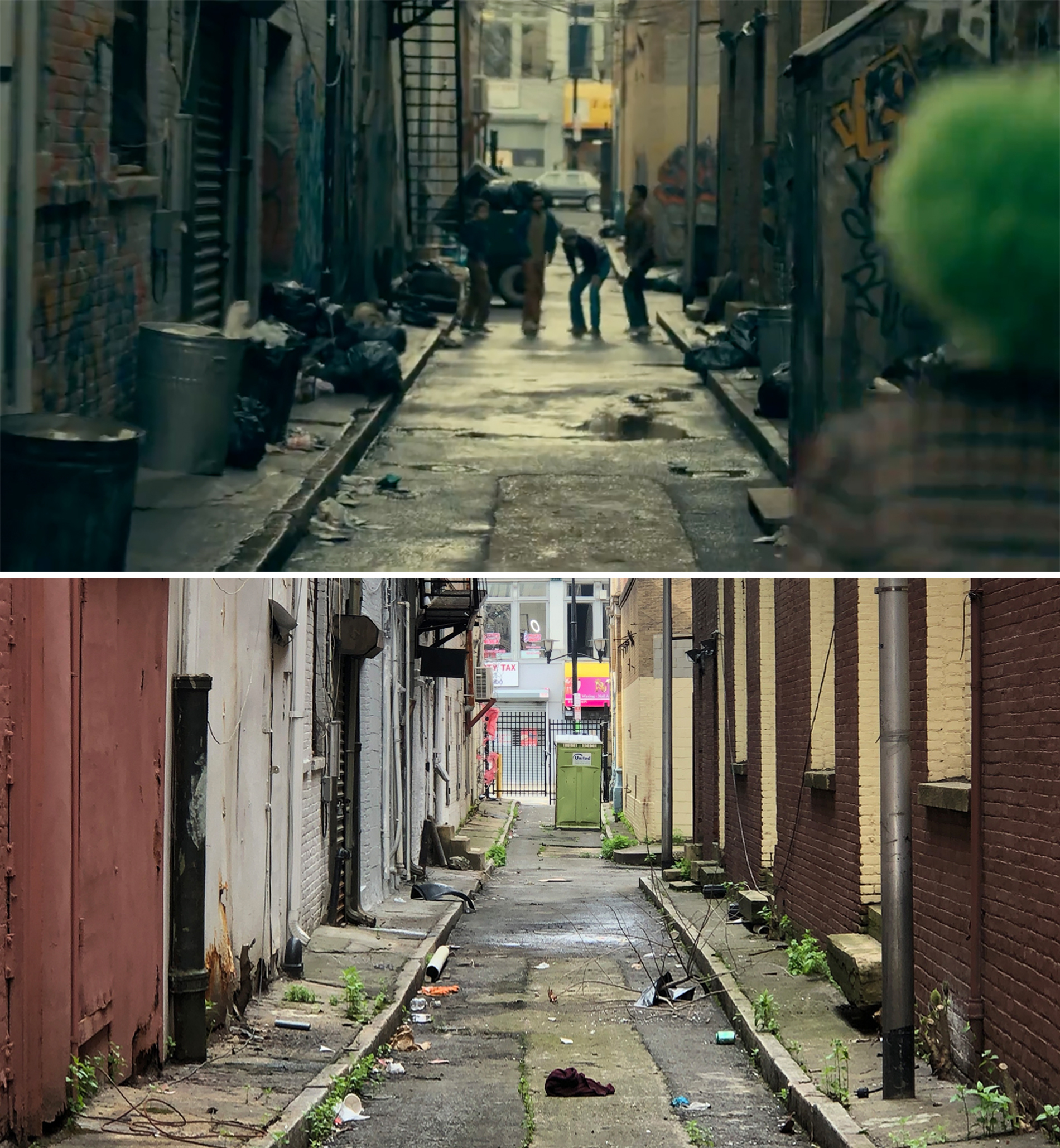
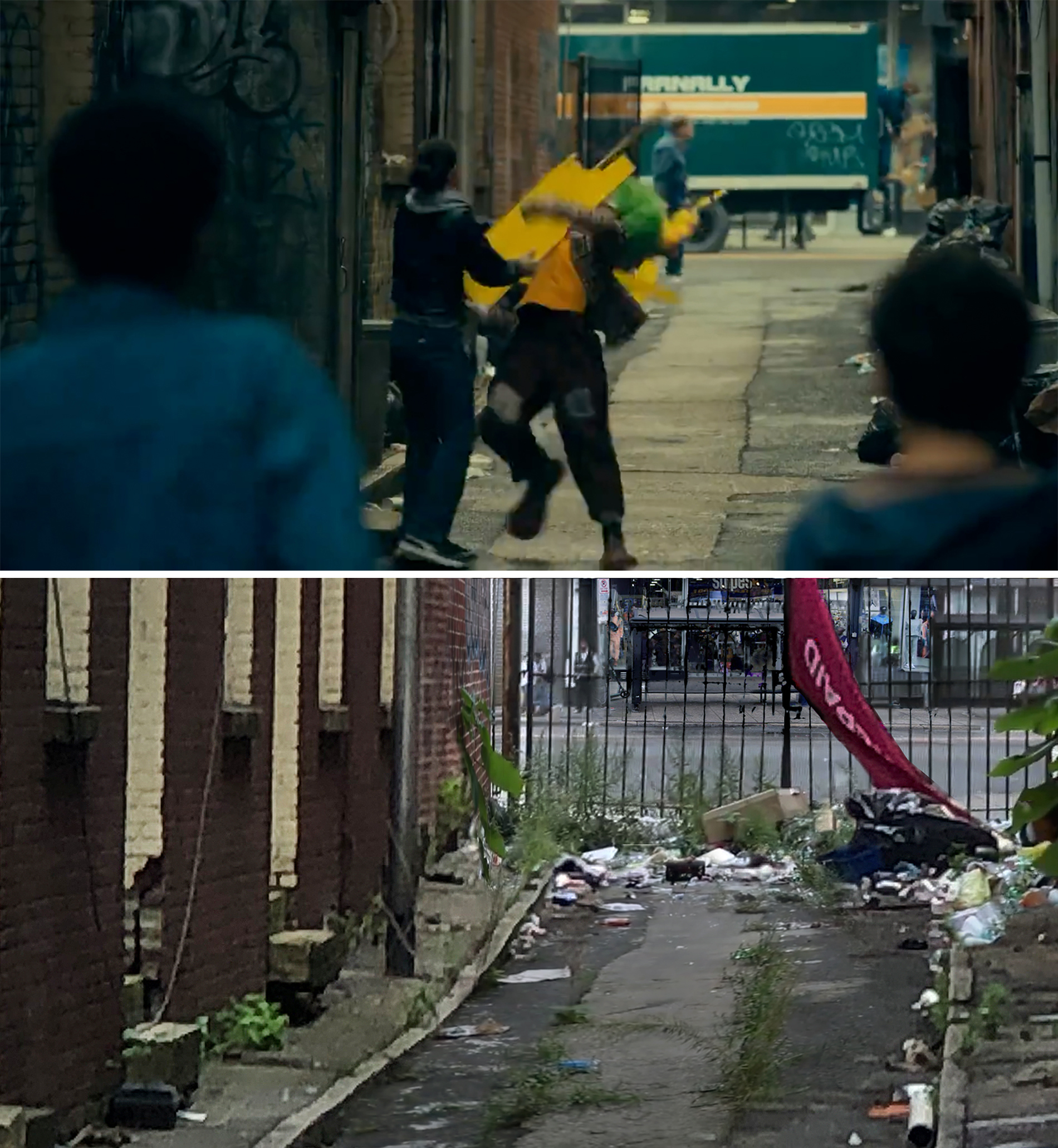
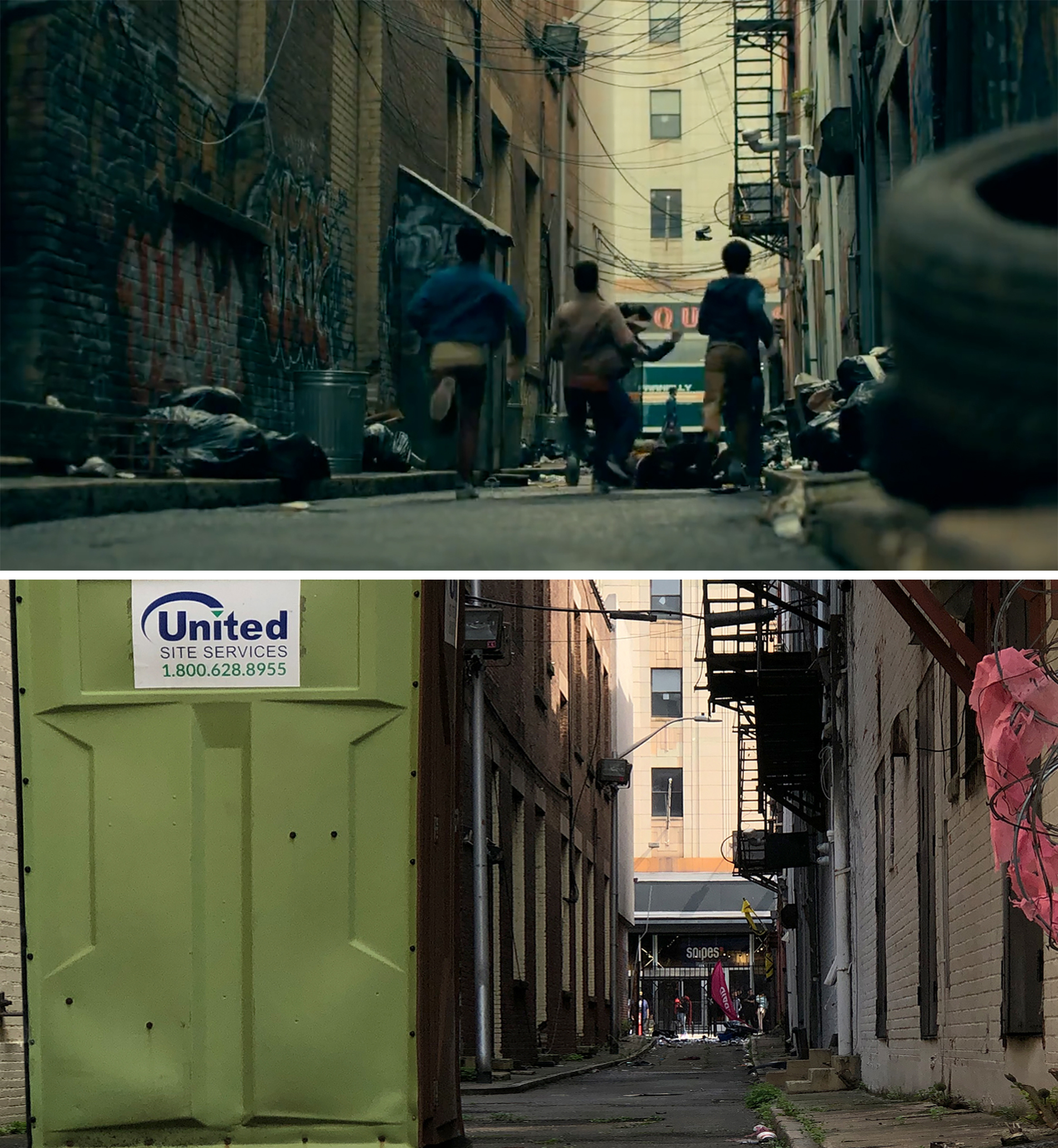
Incredibly, even before Joker was released into theaters, a few websites had already tracked down a bunch of the filming locations based on the trailers alone. Once the movie was released in the autumn of 2019, the majority of the main locations were identified, leaving me only a couple holes that needed to be filled.
This Newark sequence was already identified by a couple folks, including a YouTuber who goes by louie6cat who tracked down the production schedule and went to the location while they were filming this and some other scenes in October, 2018.
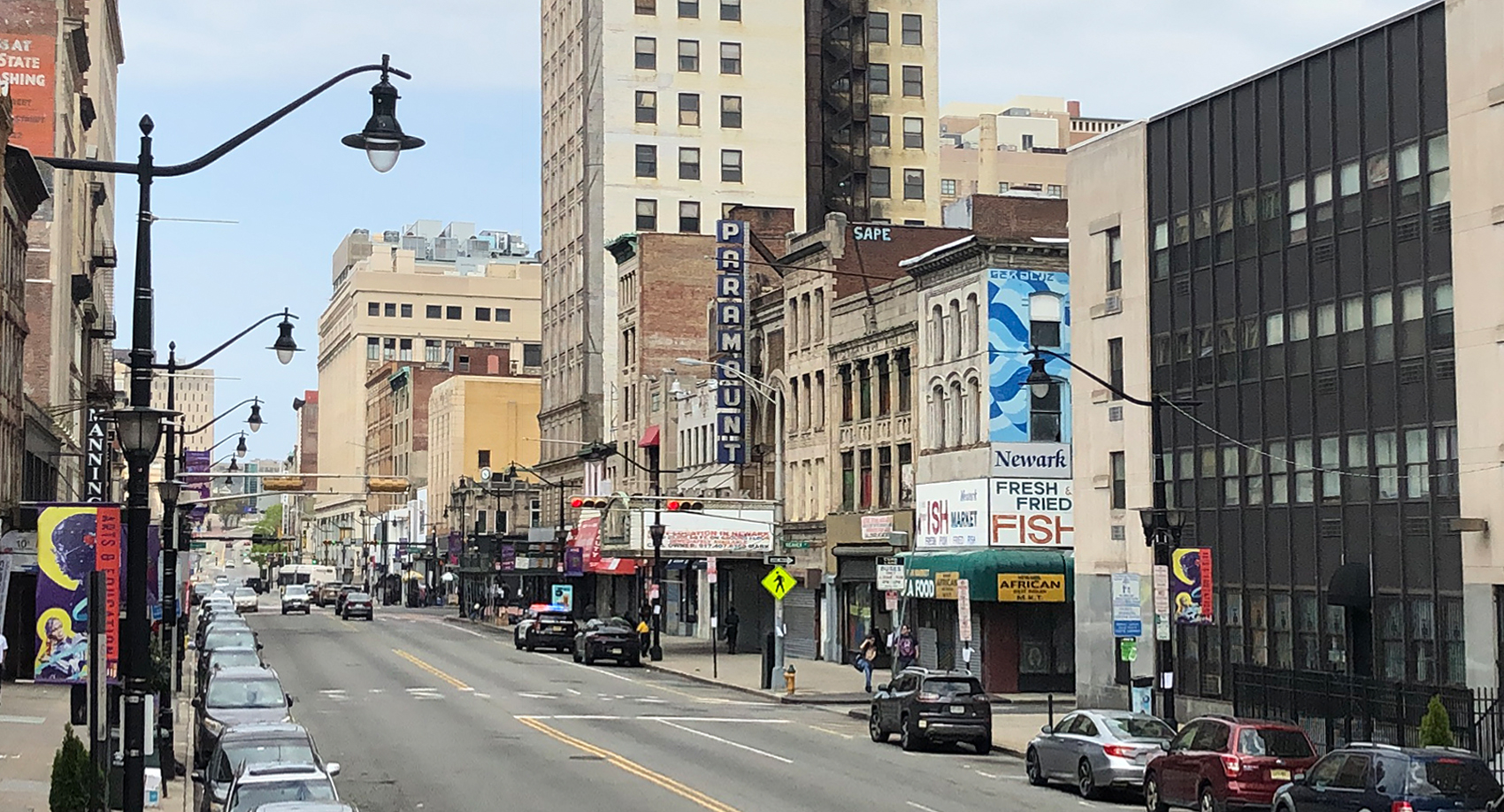
When I went to Newark last April to take these modern pictures, as soon as I arrived, I could see why production chose to film in this area — there was palpable eighties vibe in the air.
It was a nice grey Sunday morning when I went there, and many of the stores in the century-old buildings didn’t open until noon (probably a holdover from old New Jersey blue laws). And while it was definitely in a low-income part of the city, the locals were friendly and the retail establishments (once they opened) embraced their Joker connection.
Case in point, when one movie fan visited the sign-spinning site in 2021, the lessee of the retail space used as “Kenny’s Music Shop” invited the guy inside to show him a prop sign used in the movie.
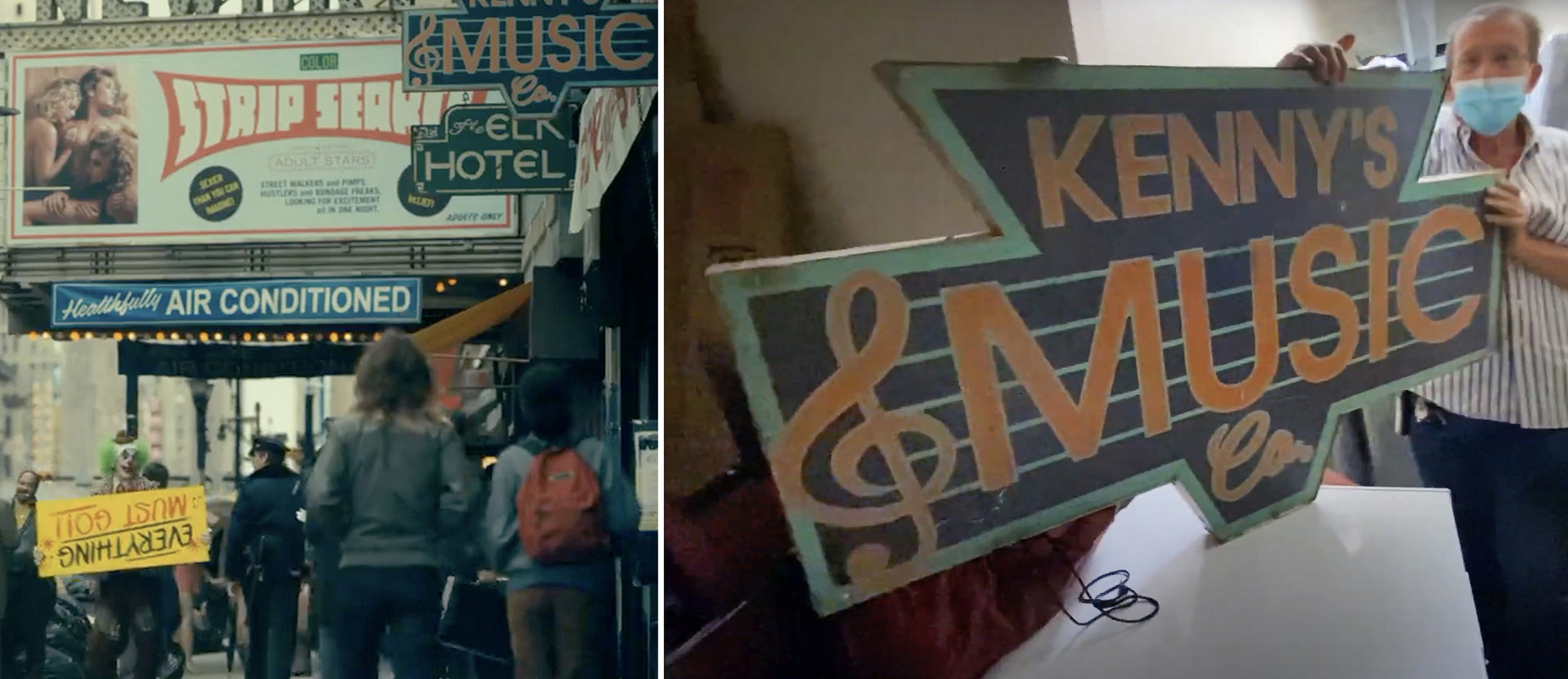
The business owner was given a “Kenny’s Music” sign after production was done filming in front of his furniture store — one of apparently many props they were giving away for free.
Personally, I would’ve loved to have gotten my hands on that Elk Hotel sign seen next to the music sign, which was most likely an homage to the last “hot-sheet” hotel to operate in Manhattan’s Times Square.
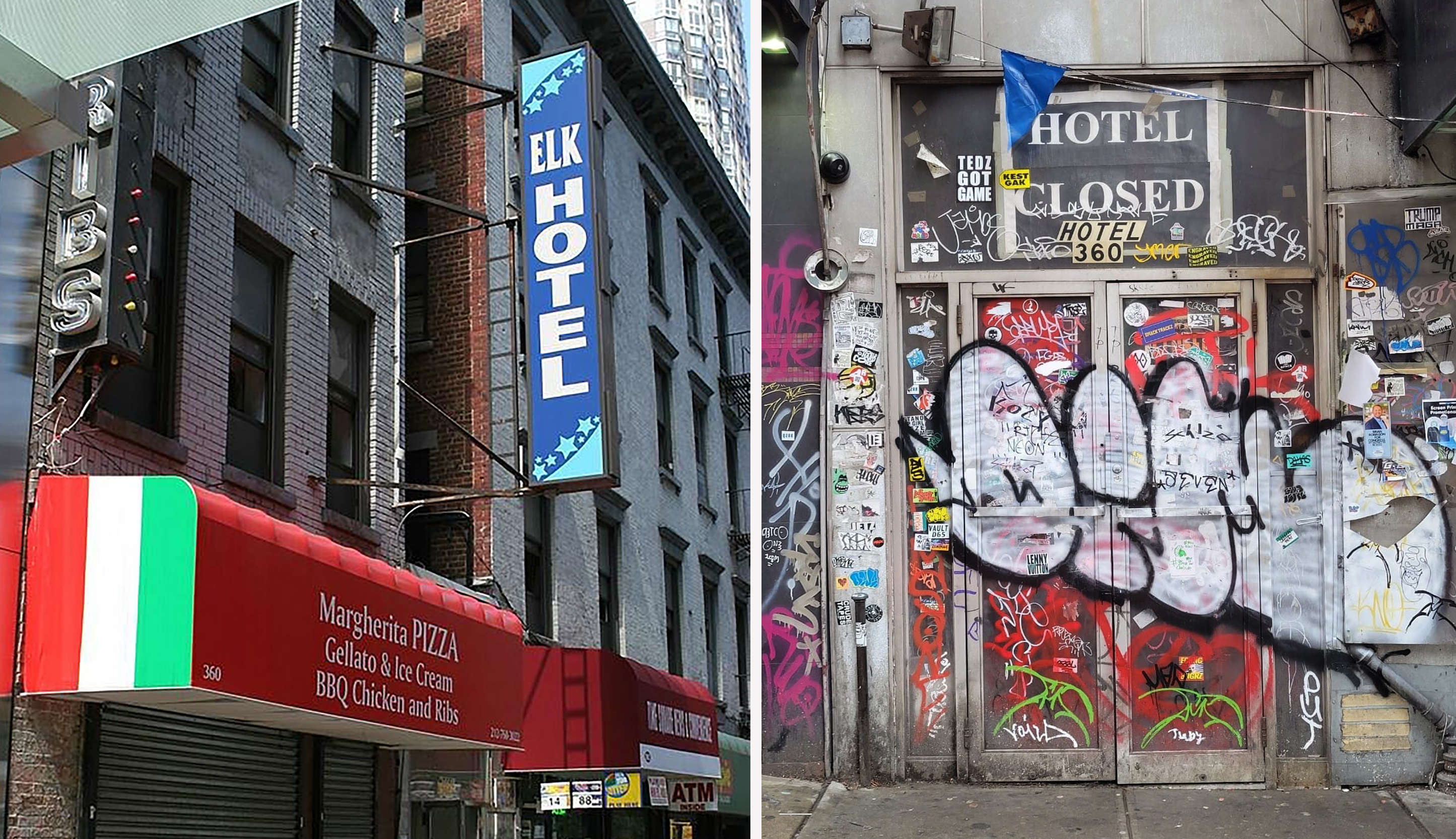
The Elk, a sleazy, pay-by-the-hour hotel at 360 W 42nd Street amazingly managed to survive the tortuous redevelopment phase of Times Square, and stayed in business up to 2012, long after the Disneyfication had embedded itself into the neighborhood.
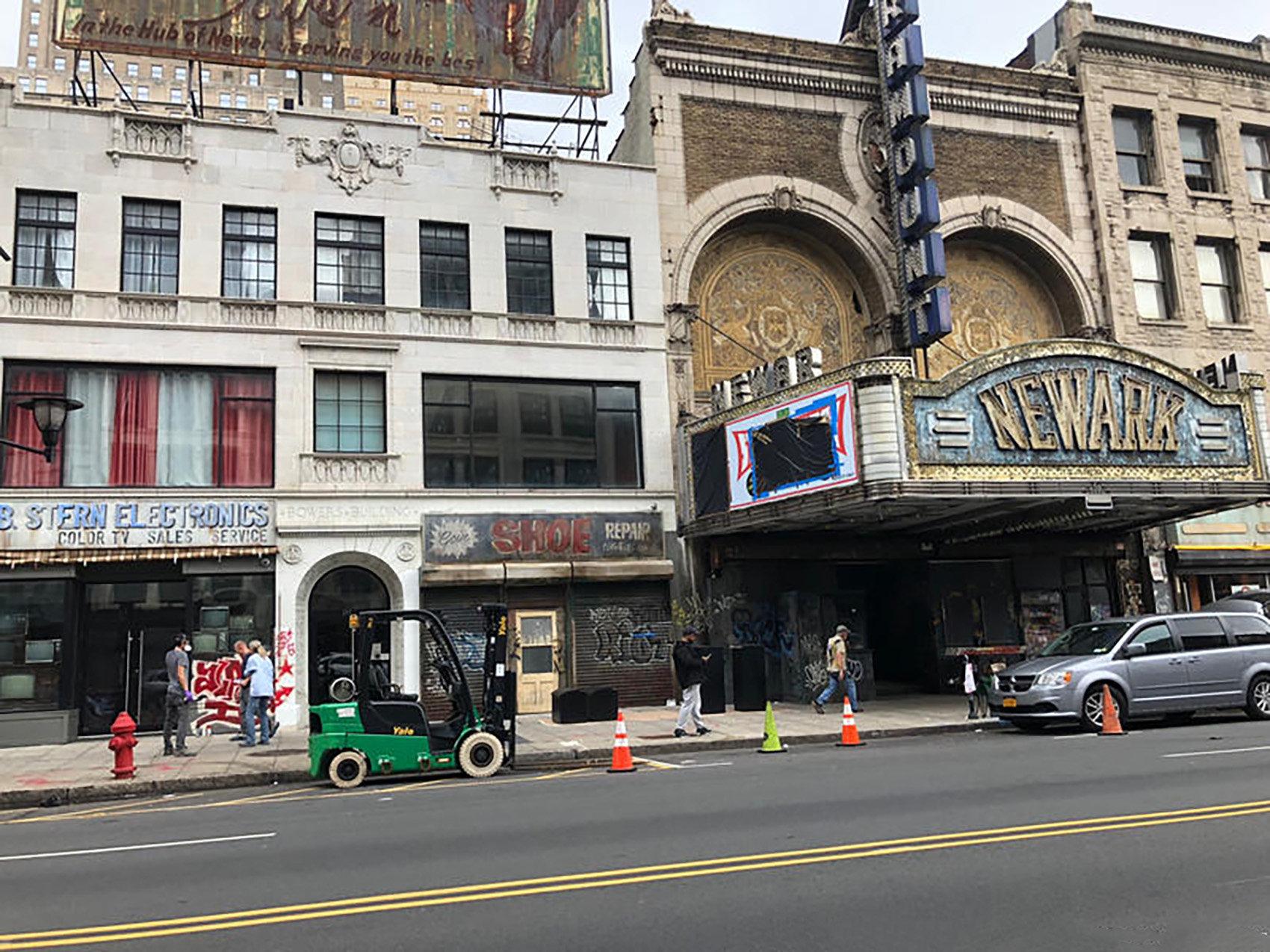
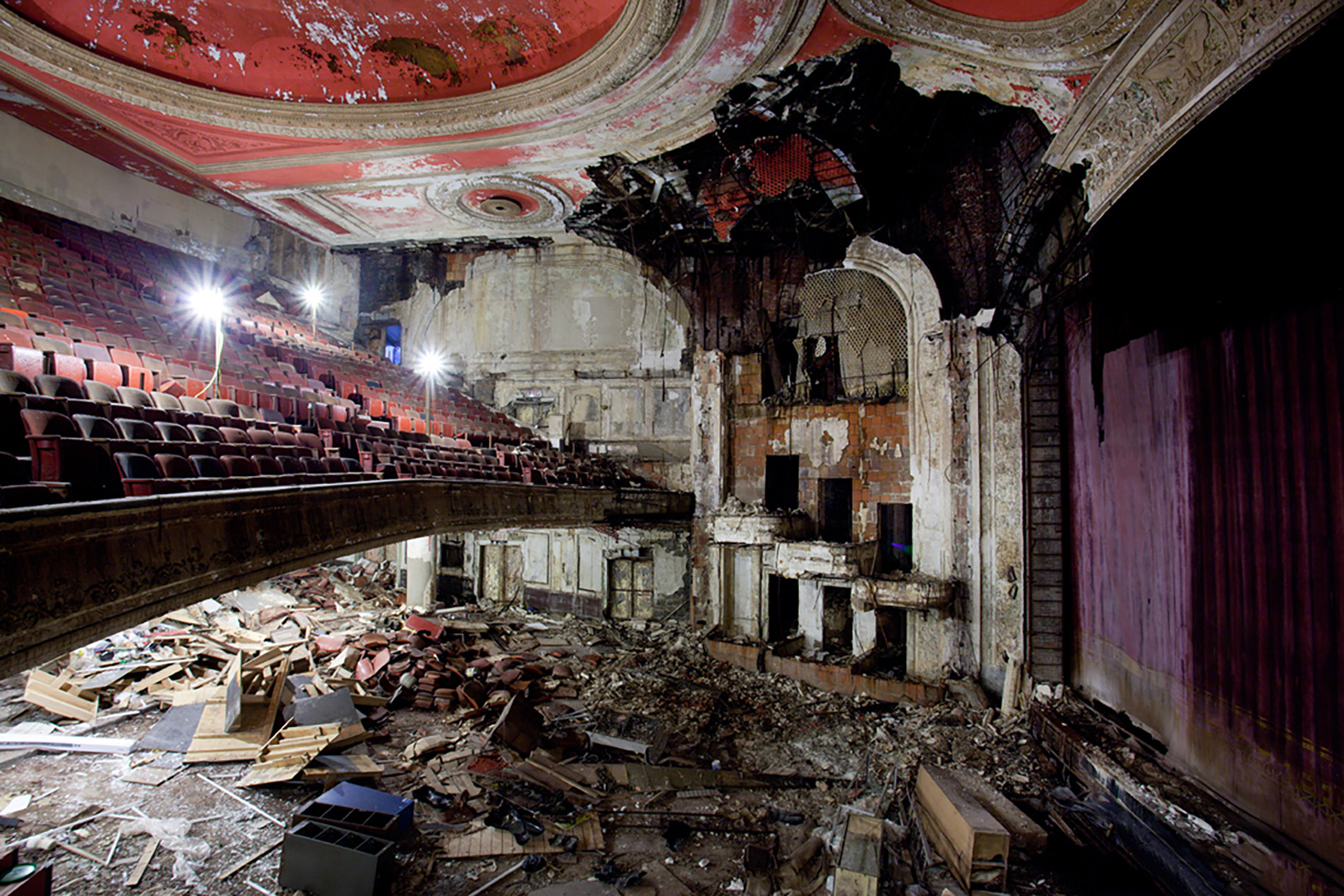
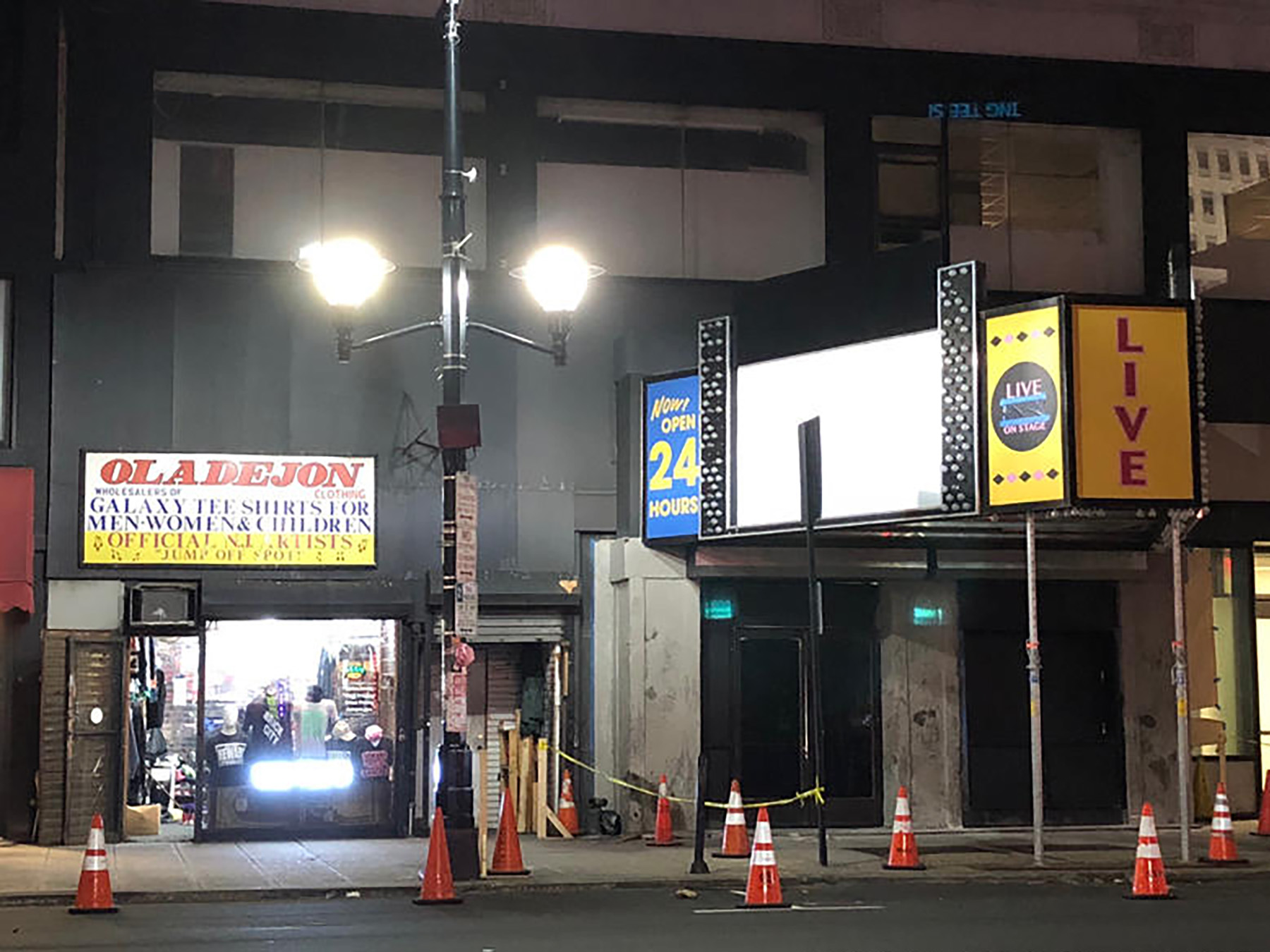
Next to “Kenny’s Music Store” on Market Street was the fabulous marquee to the former Paramount Newark Theatre — temporarily porned-up for the filming. The space has been vacant for a few years now, but according to signs on the building, it’s available for leasing.
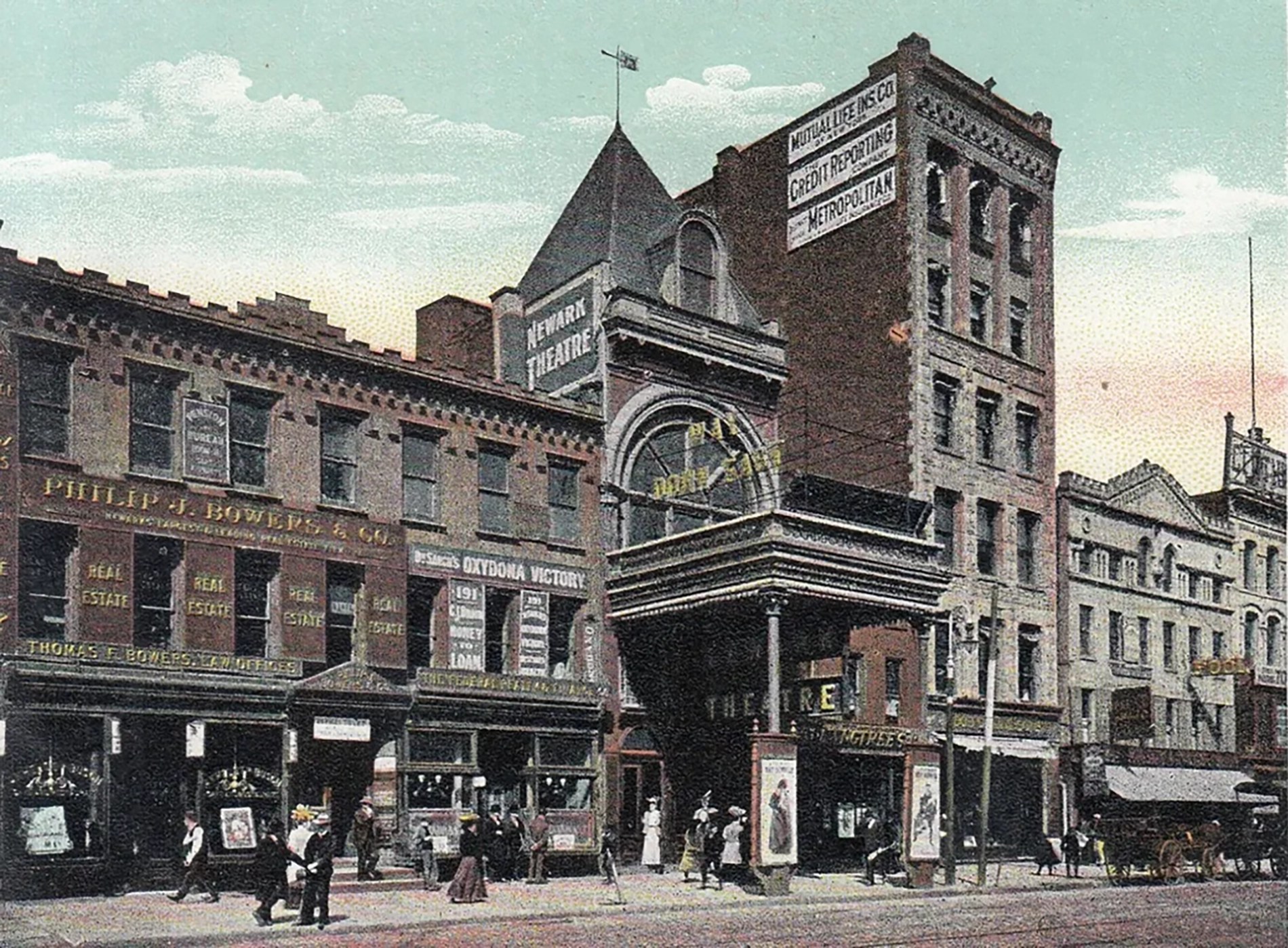
Originally built in 1886 as H.C. Miner’s Newark Theatre, it started as a vaudeville house but was remodeled in 1917 for moving pictures. It was around this time the theater was equipped with a giant Austin 2 manual 13 ranks organ and renamed Pantages.
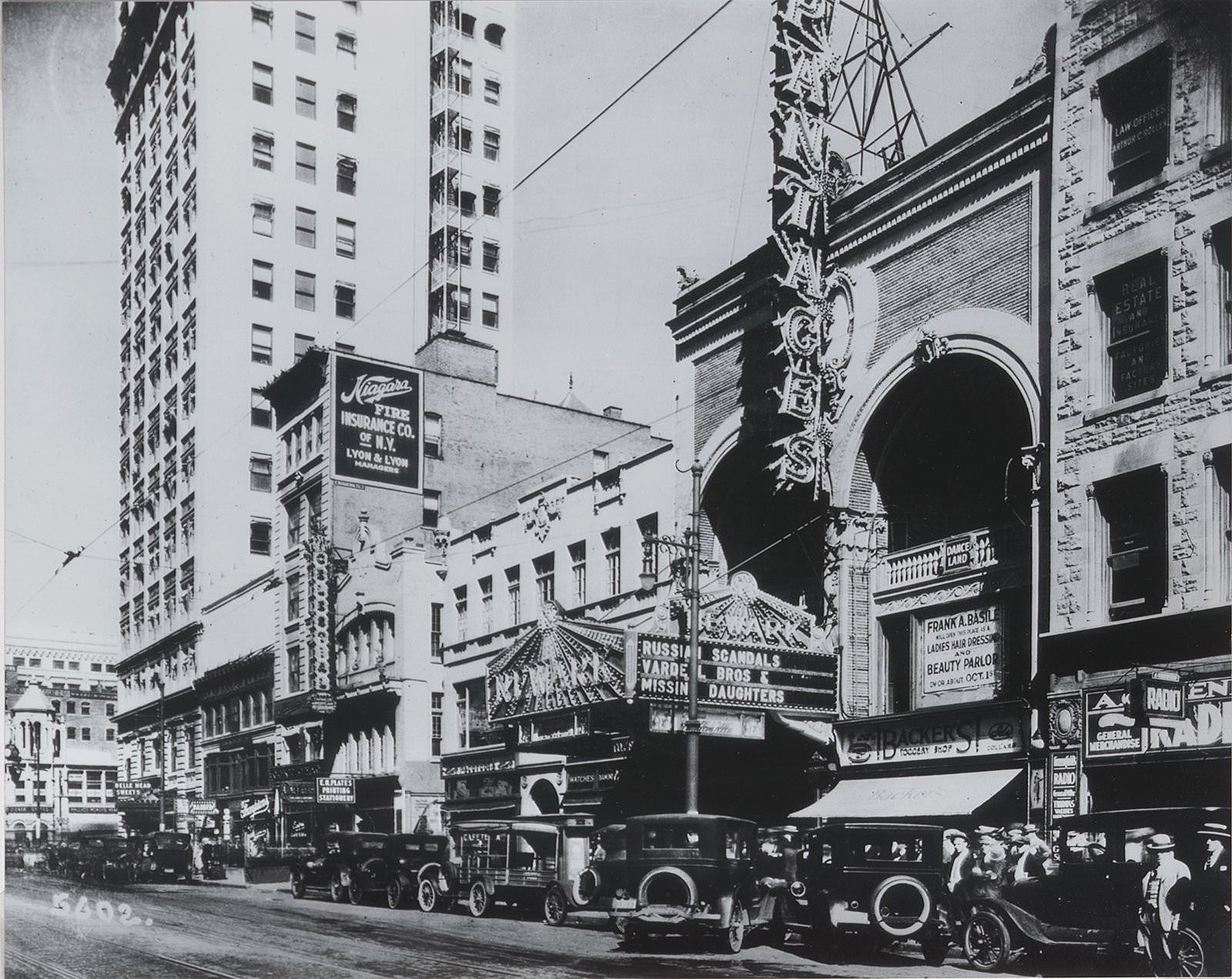
Following another makeover and expansion, the theater was renamed Paramount Newark in 1931.
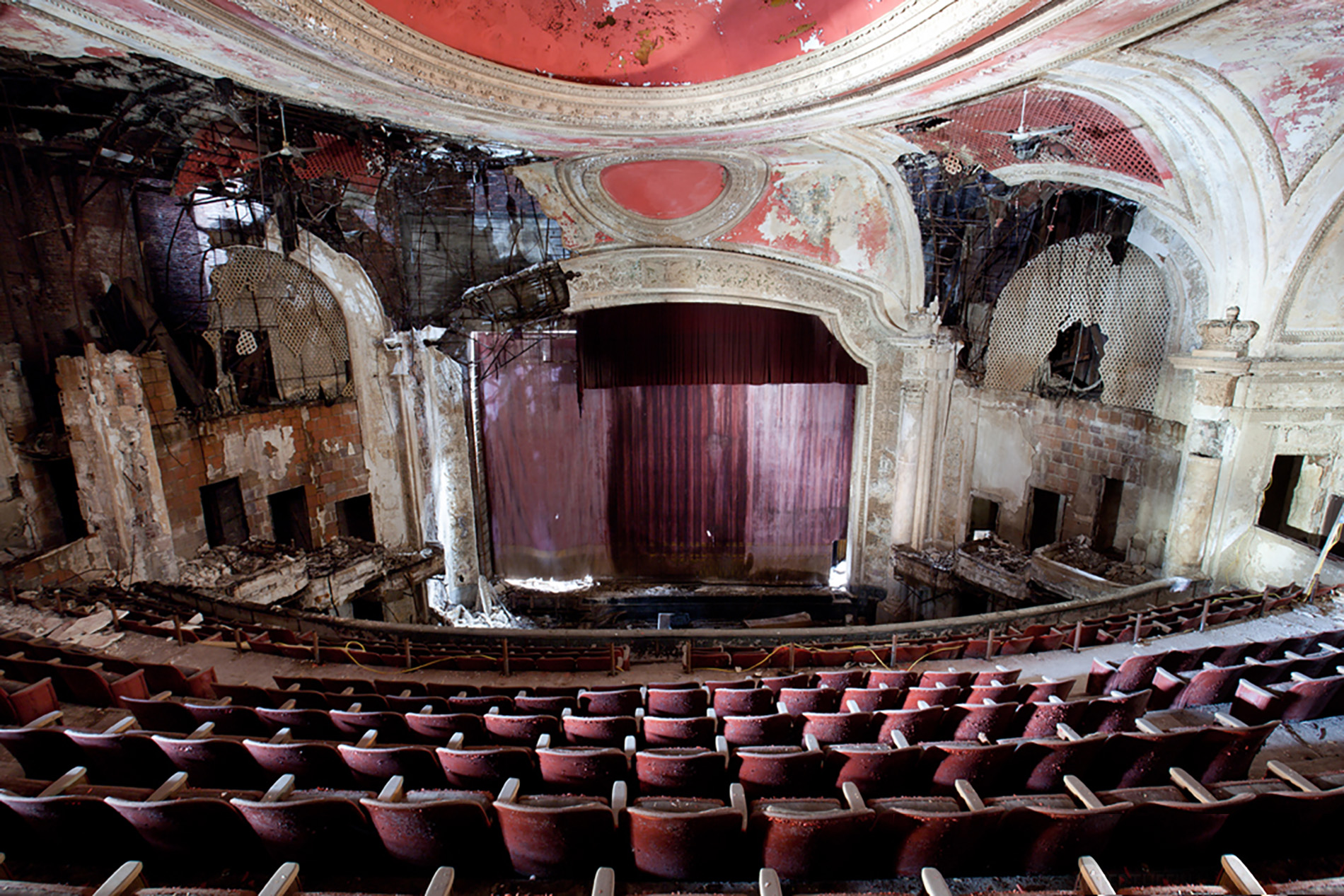
Even though the theater has been closed since 1986, the building still boasts the vertical Paramount sign as well as the Newark marquee. Also, according to a store employee that used to work in the front retail space, behind the drop ceilings and modern walls, much of the old theater’s auditorium remains, complete with a stage area and balcony seating.
After the kids steal Arthur’s sign by the Paramount Theatre, the chase sequence continues west along Market Street, which was distressed by production and decorated with 1970s-1980s-inspired set-dressing.
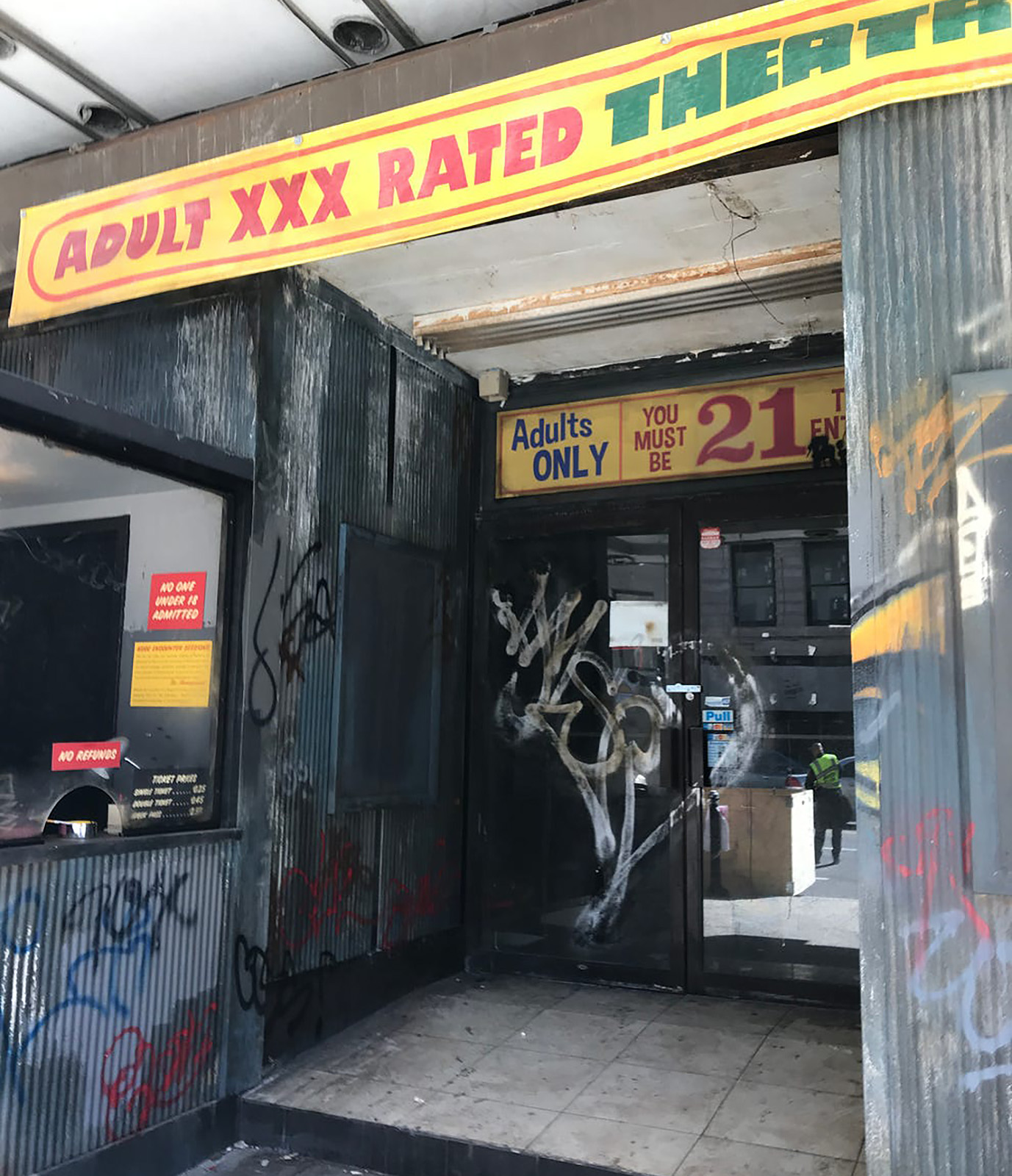
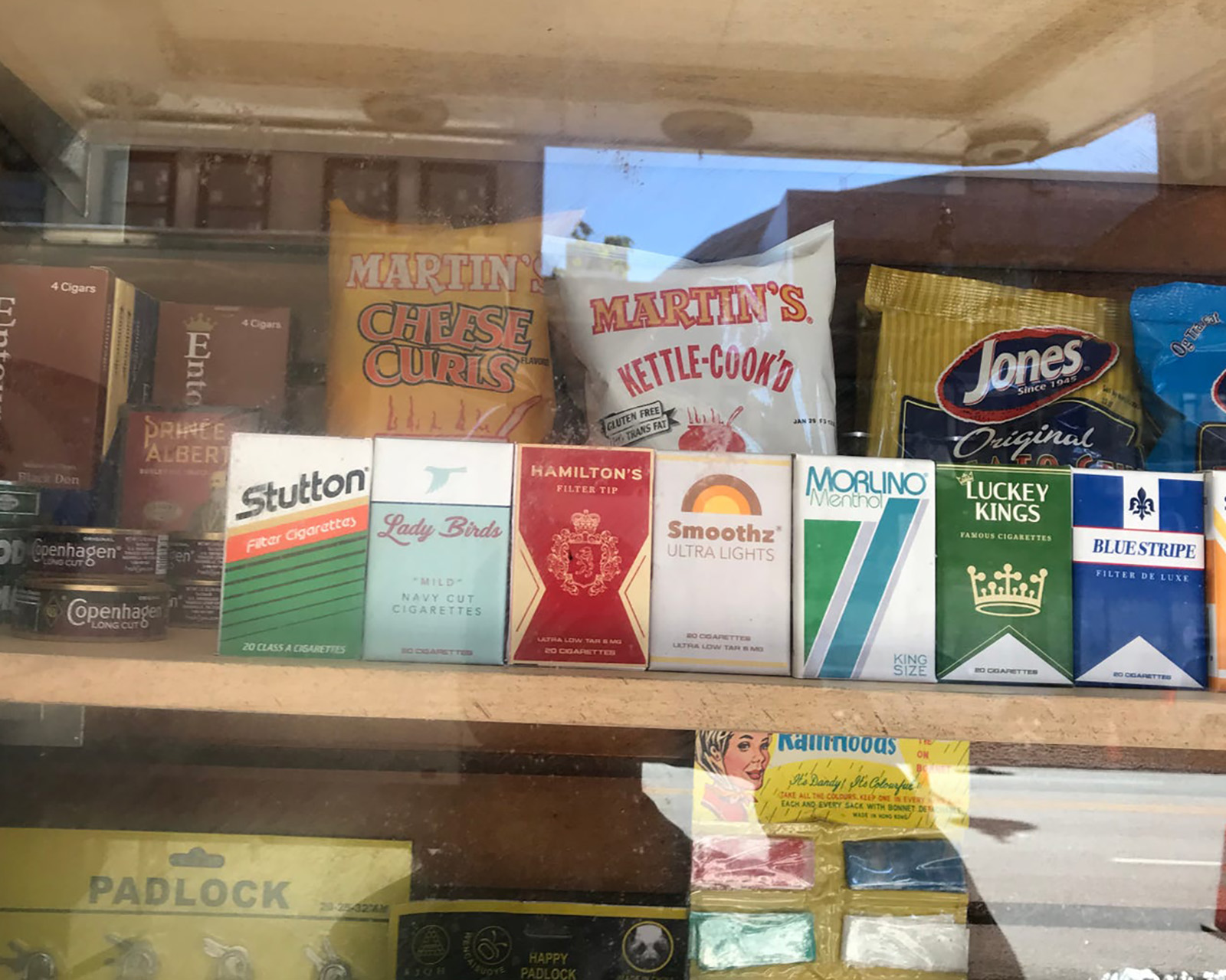
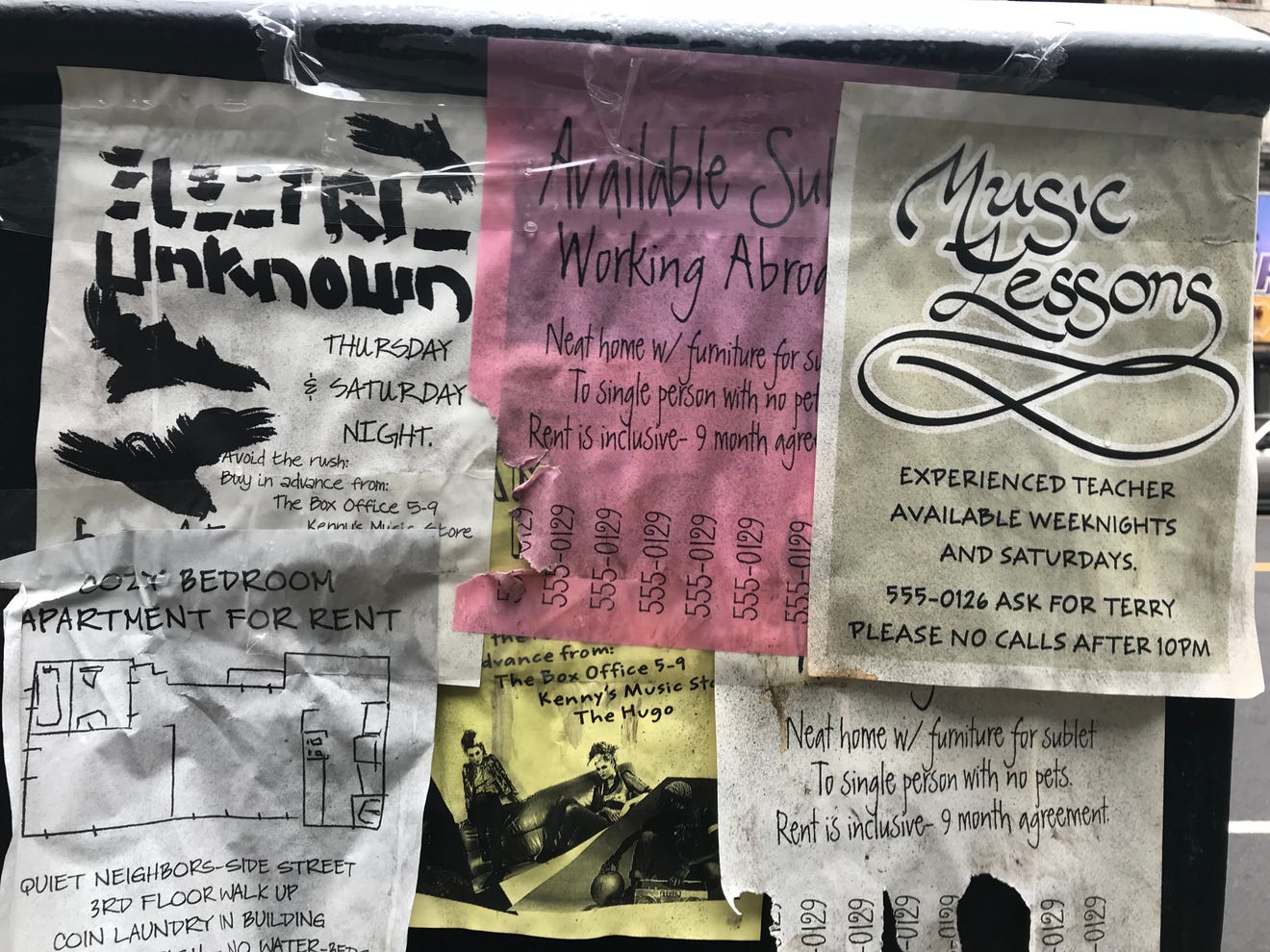
In addition to all the set dressing, the filmmakers also made the area look a little more like Gotham City by adding more buildings into the background using CGI.
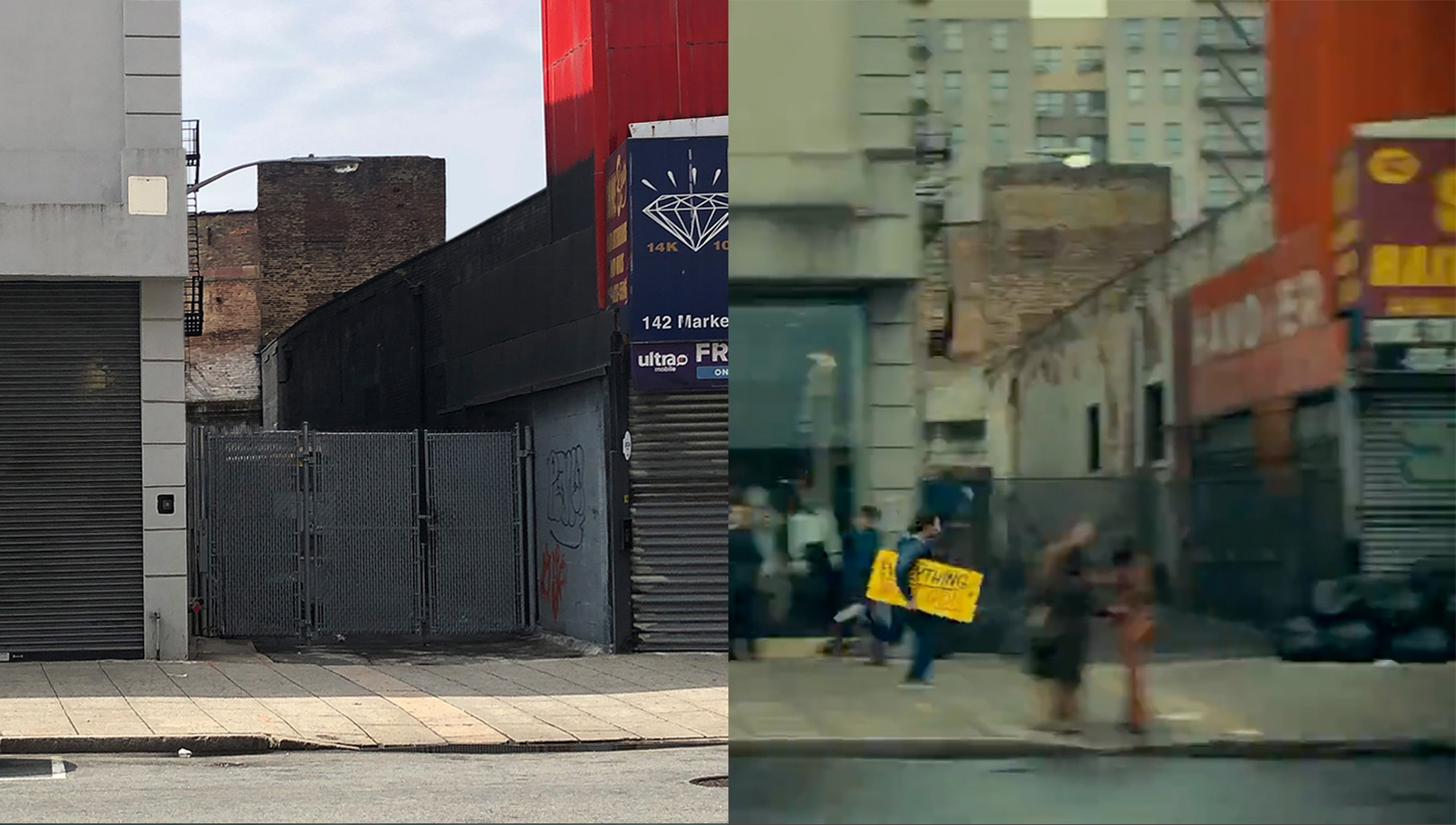
This is just the beginning. There will be many more instances of digital tomfoolery to come.

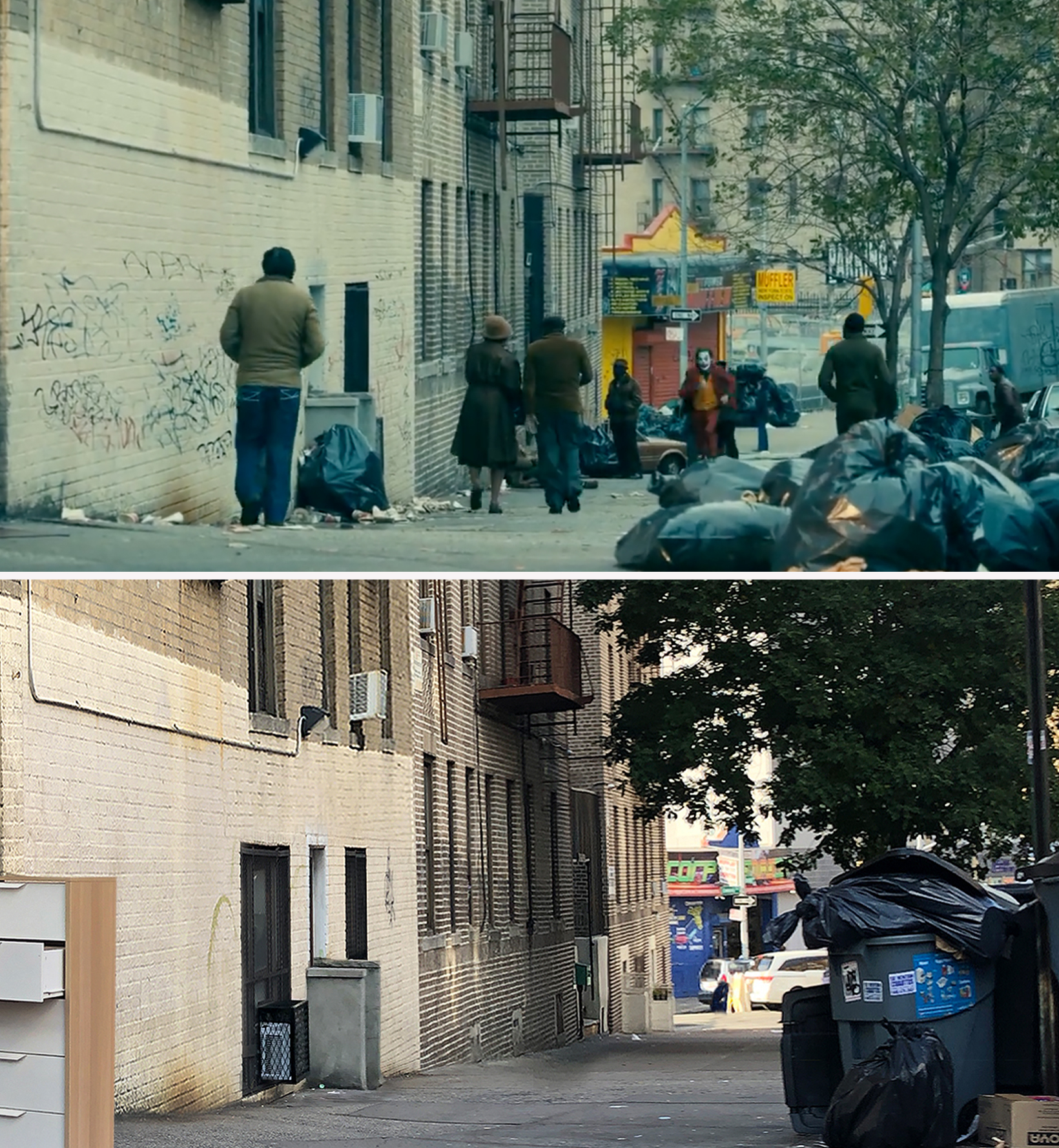
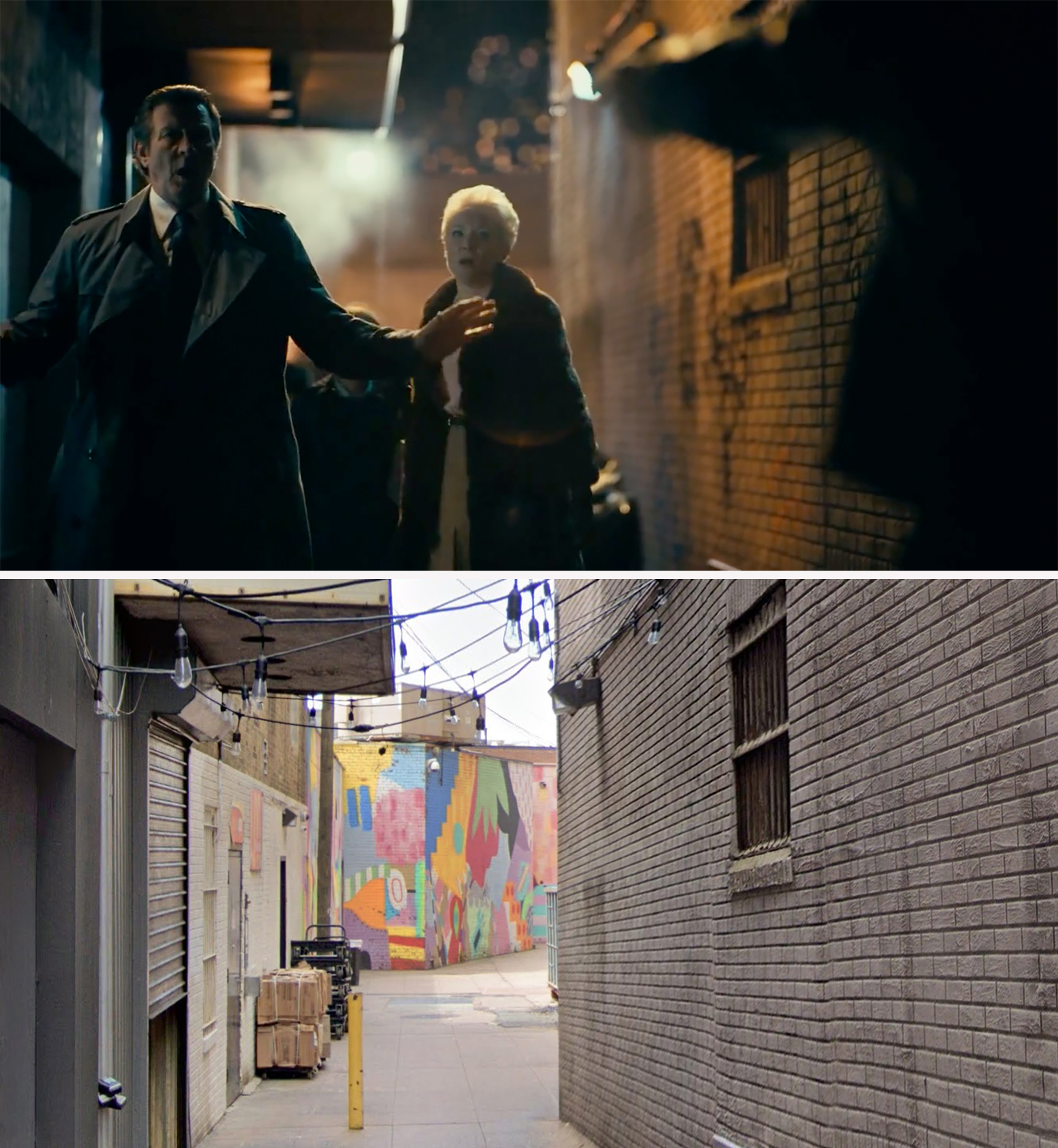
After a little mixed-up geography and loose editing, the characters run into an alley about one block away from the movie theater and music shop. Unfortunately, the alley is normally gated off, so when I was there, I had to take the modern photos from awkward positions through tiny openings in the gates. This ended up forcing me to snap zoomed-in angles that are lacking in both accuracy and resolution.
Riding the Bus
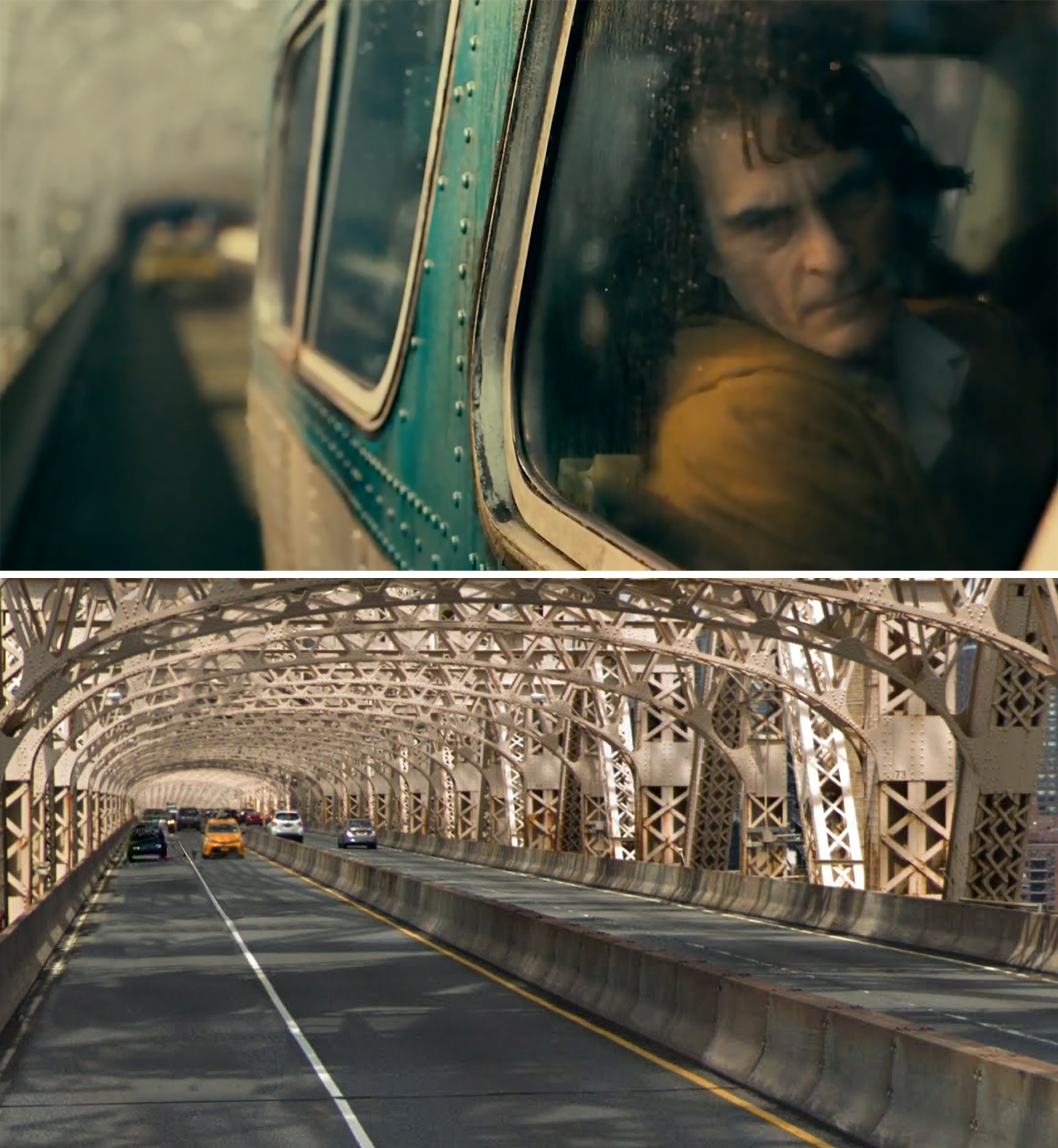
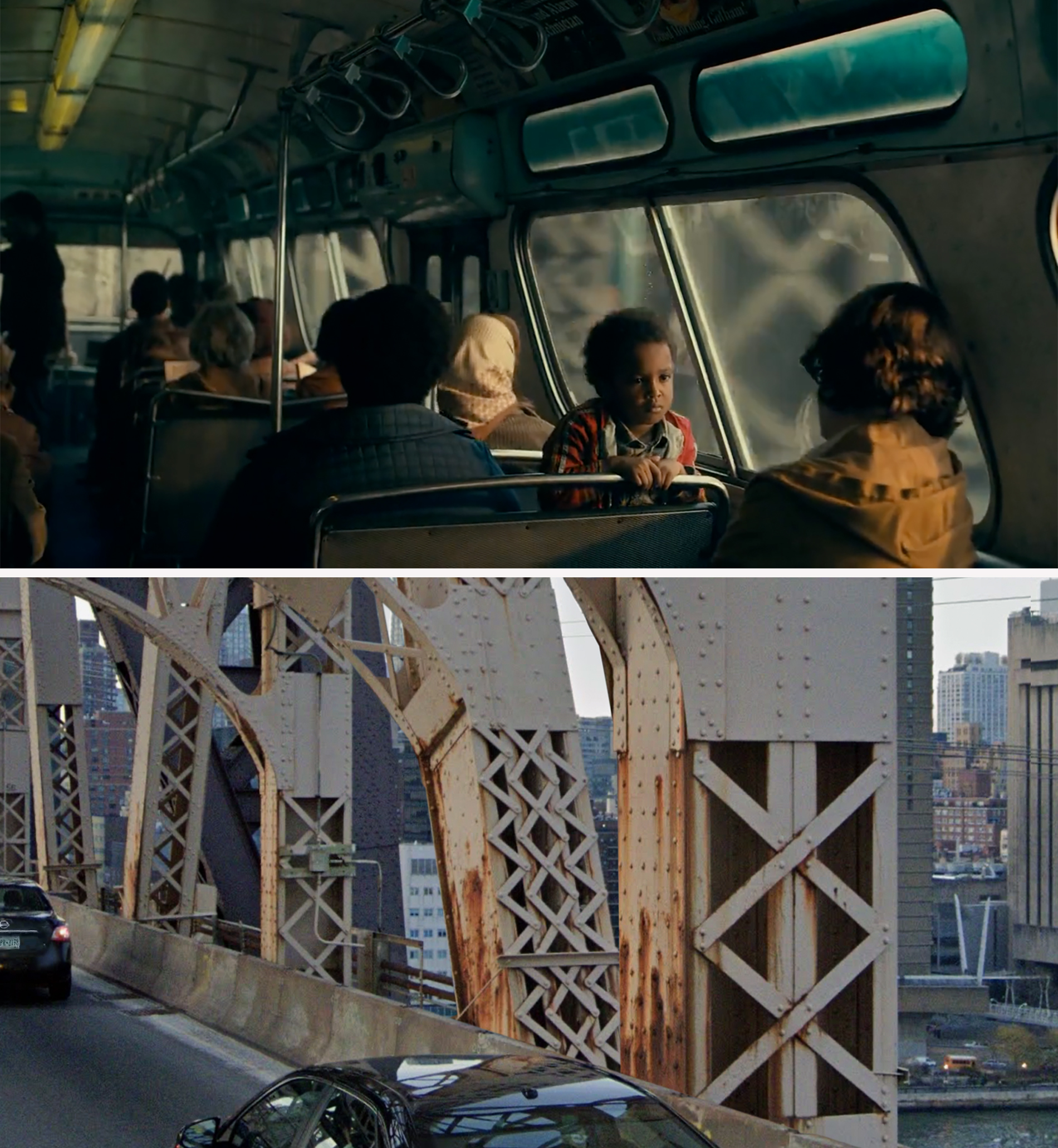
This bus scene was most certainly filmed on a stage using a green screen to digitally add in the background.
Even though the views outside the bus were limited, I could tell the steel truss looked like something on the Queensboro Bridge. I then checked out the bridge in Google Street View and was able to match things up. However, since the bridge’s pattern of beams repeats itself, I had to randomly guess where exactly the background footage was shot.
Arthur Walks Home
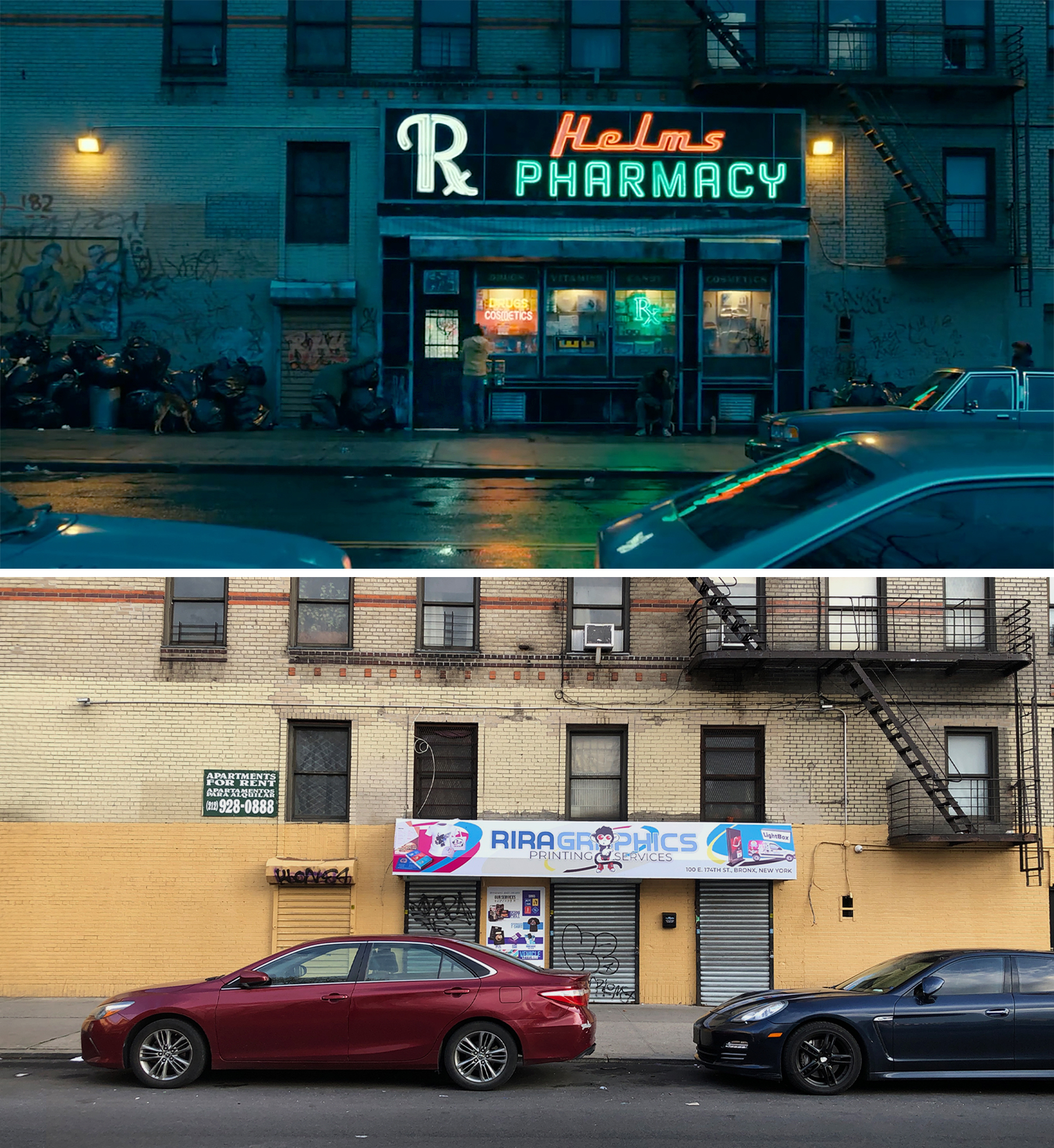
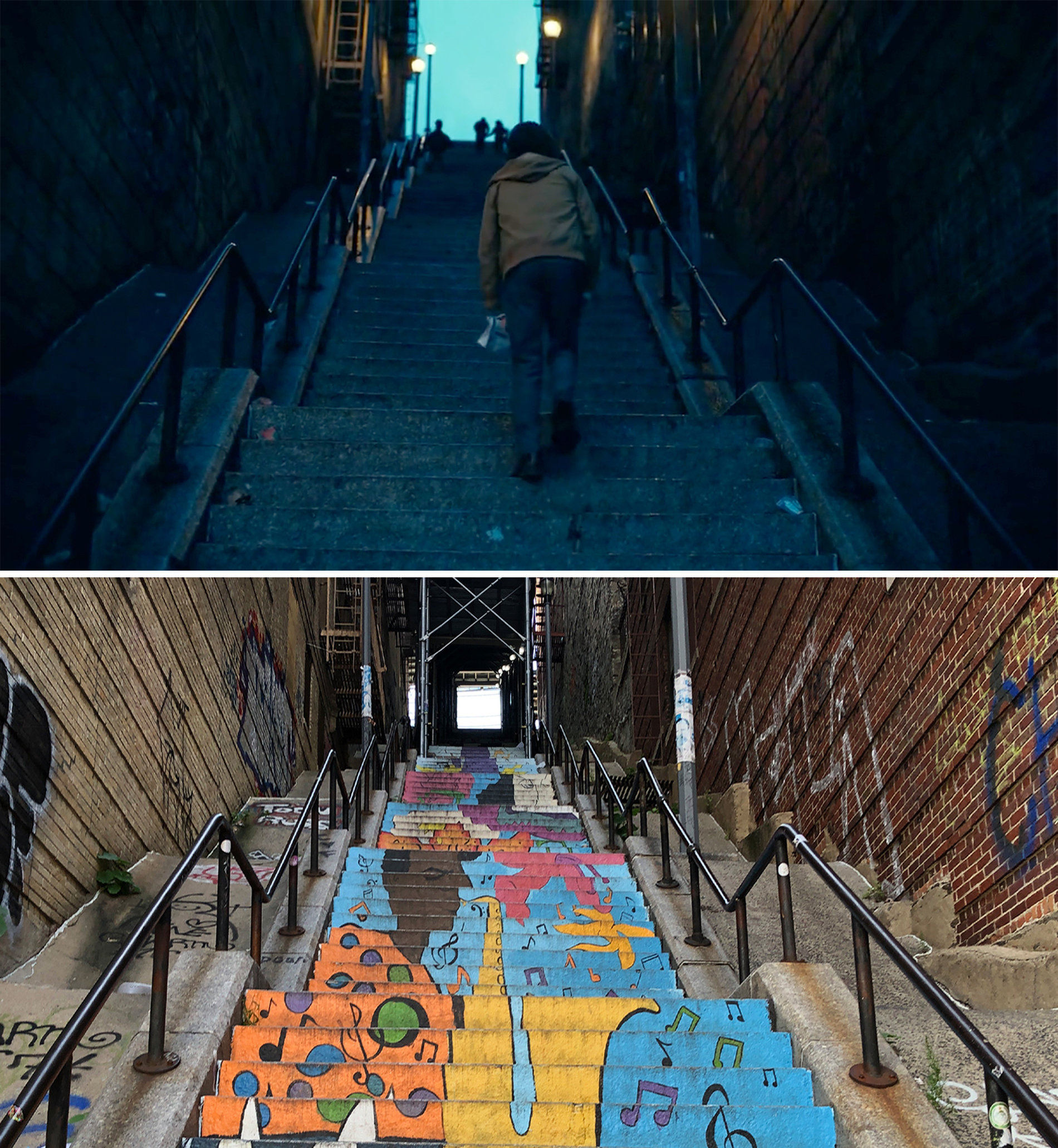
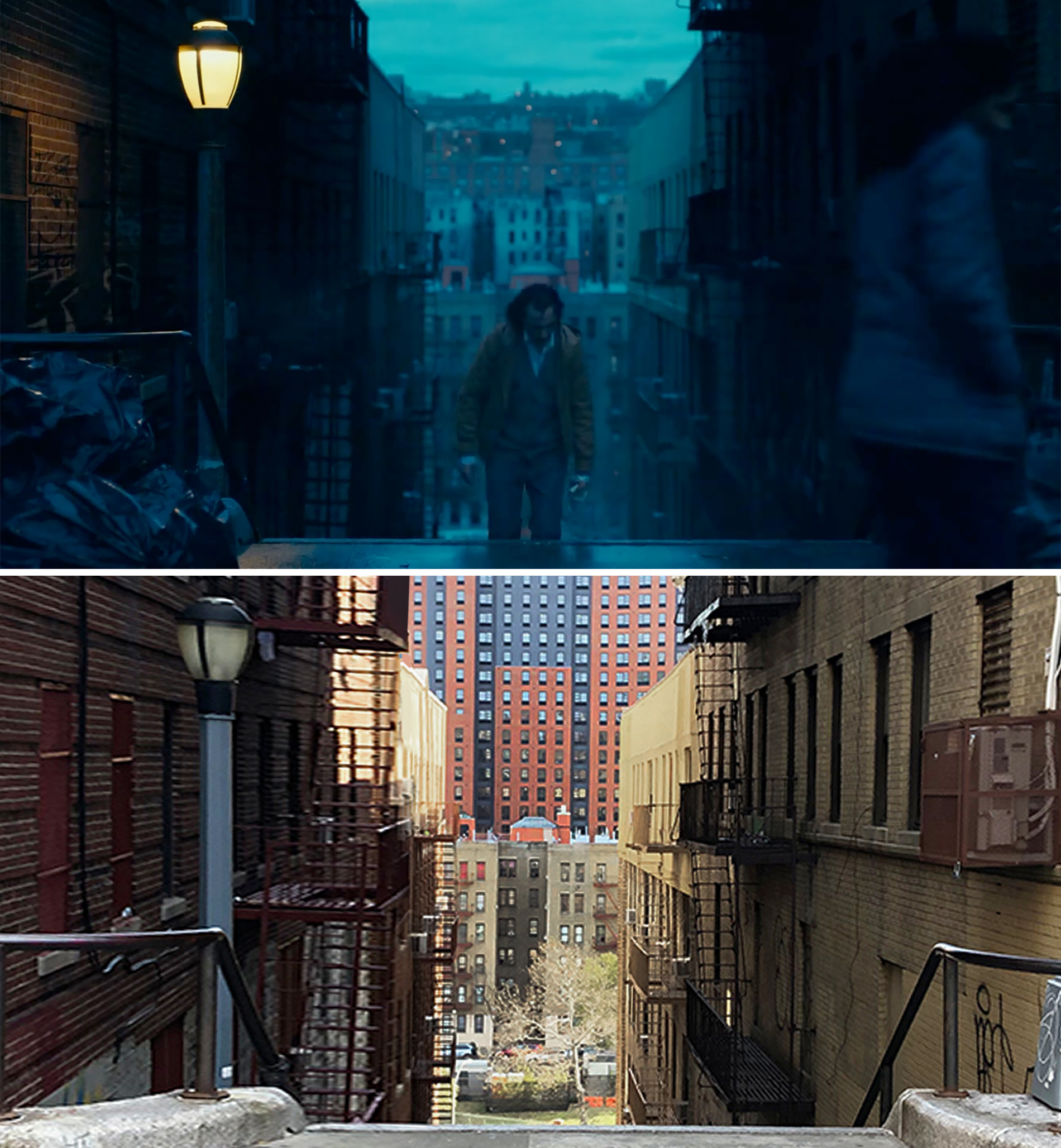
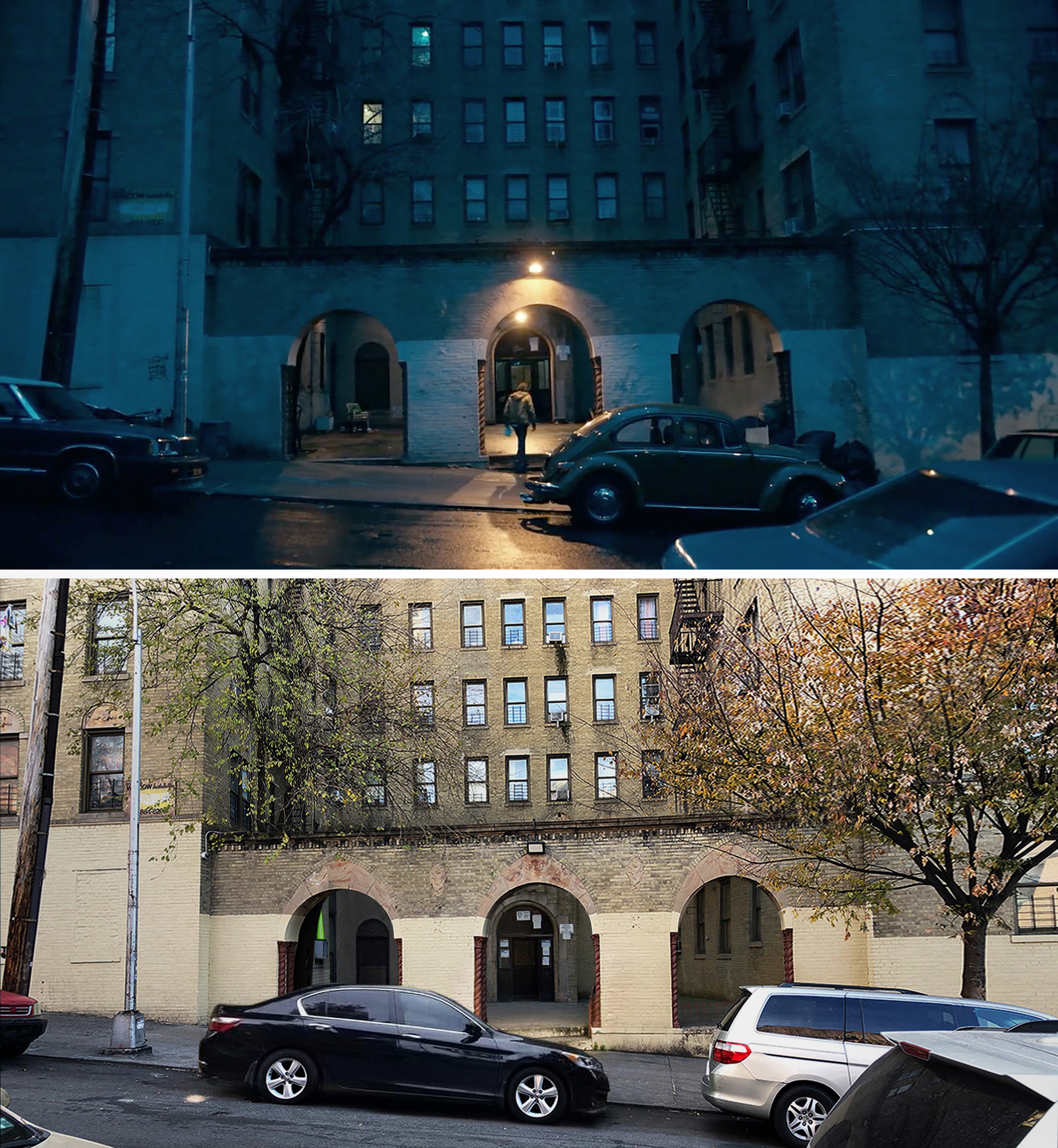
All of these Bronx locations were identified by others even before the movie came out. Not sure how the pharmacy was figured out since the neon signage is fake (but lovely) and there aren’t many distinguishing elements indicating where it’s taking place.
Figuring out the location of those distinct public steps was probably an easier task. While the Bronx has many “step streets” similar to the one used in the movie, there are few enough in the borough that an industrious Joker fan could find the right one in a fairly short amount of time.
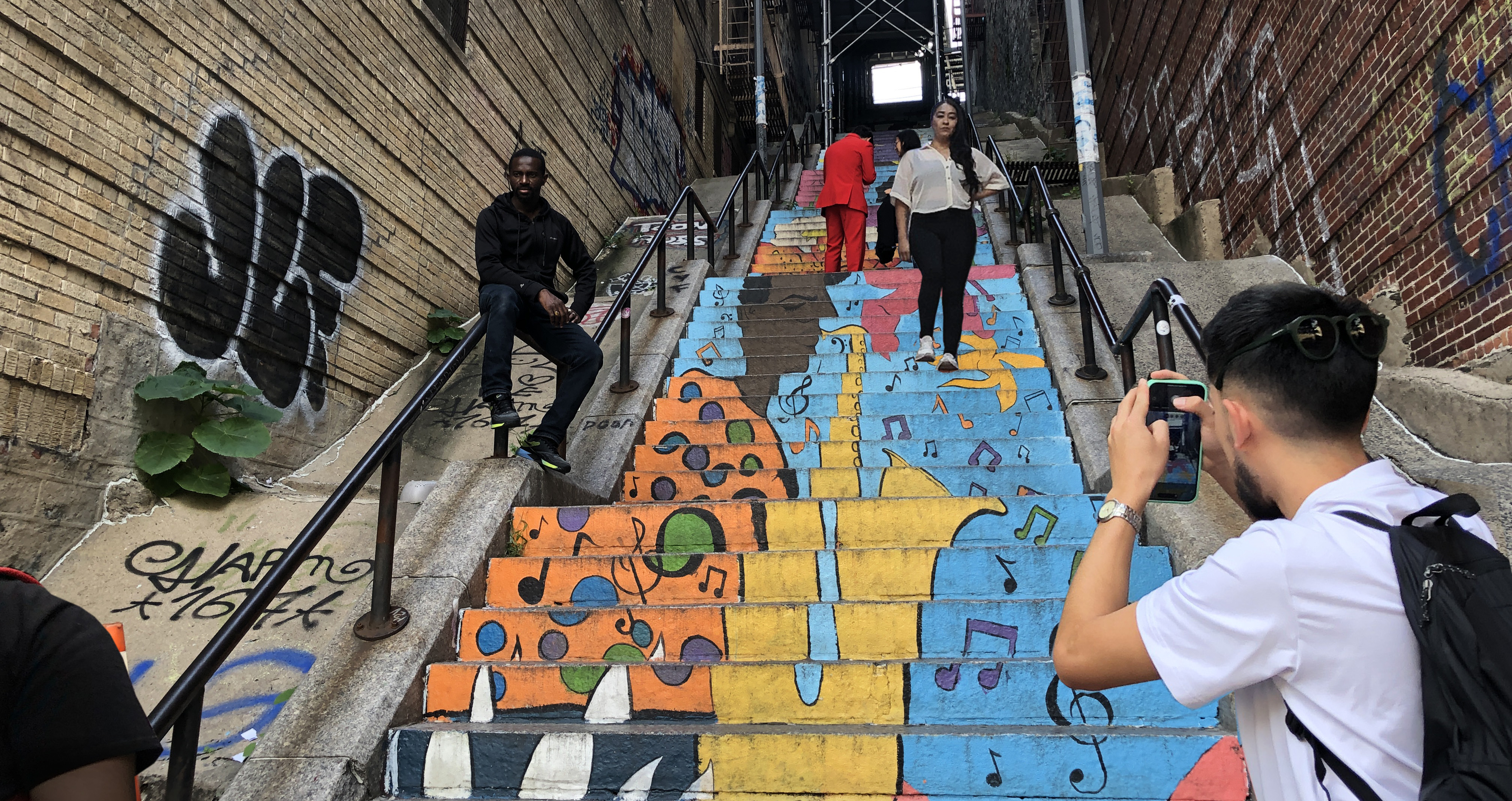
Of course, in the ensuing years, the Shakespeare Steps have become the most famous staircase in the city, visited by tourists on an hourly basis.
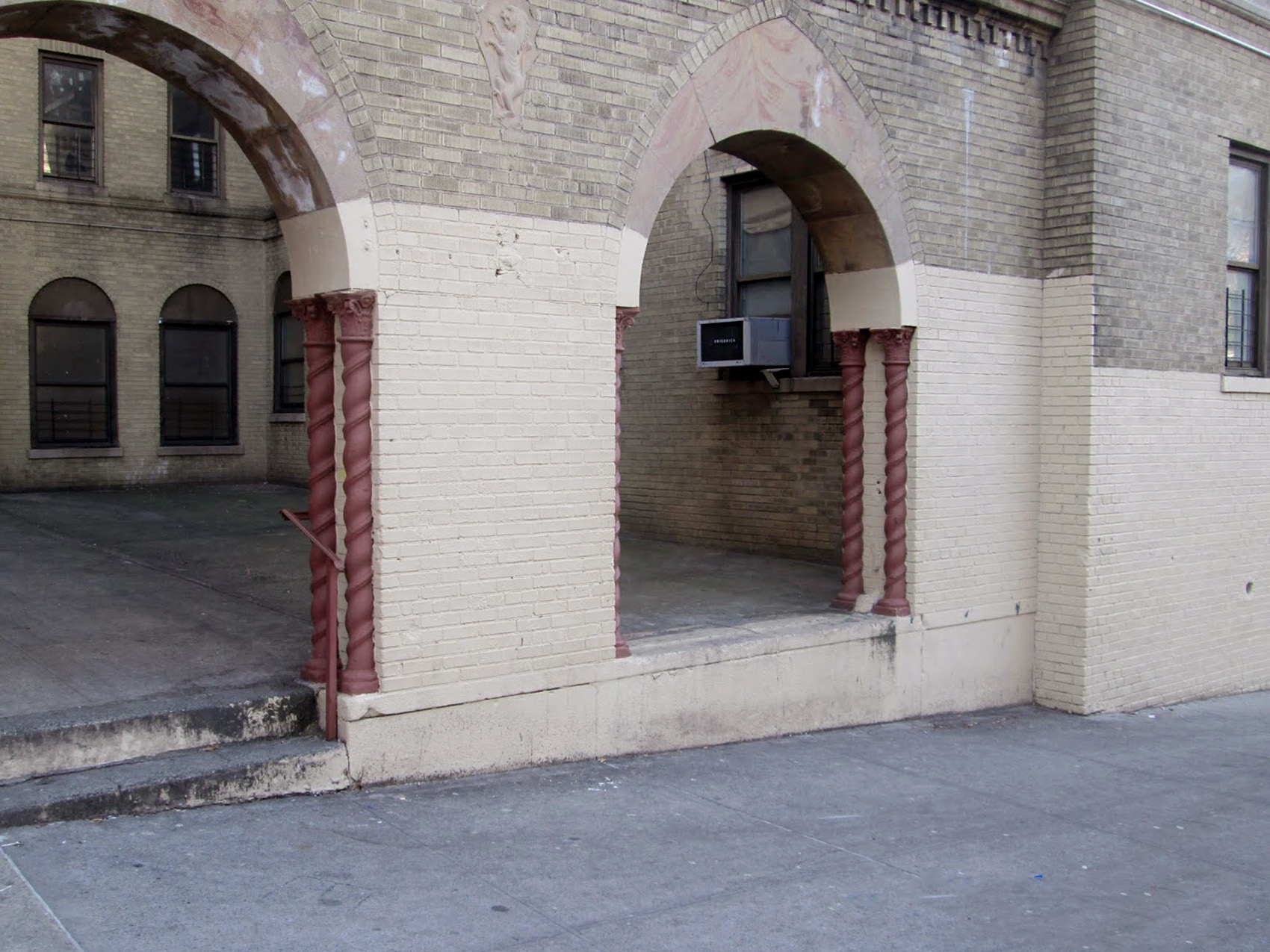
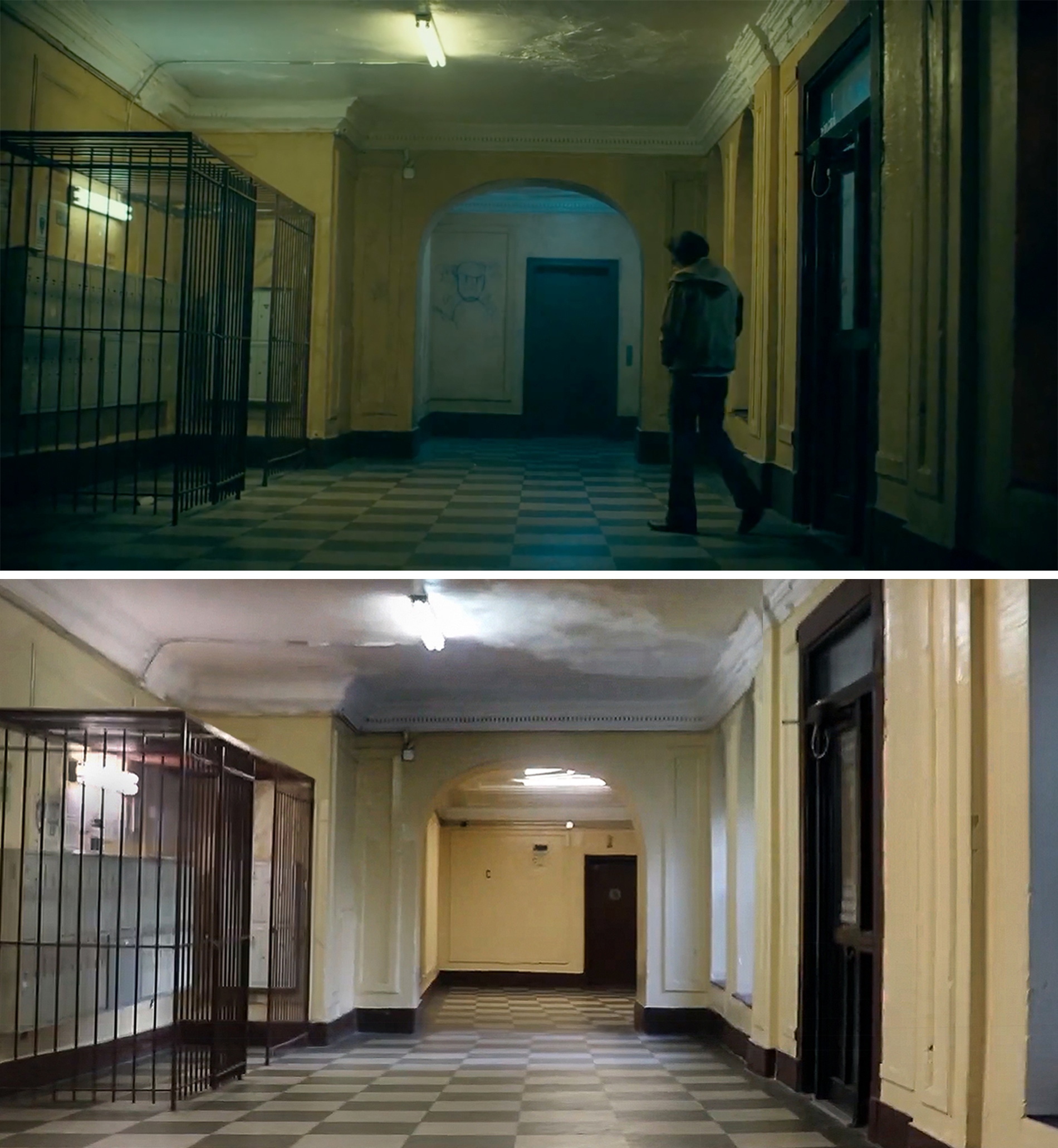
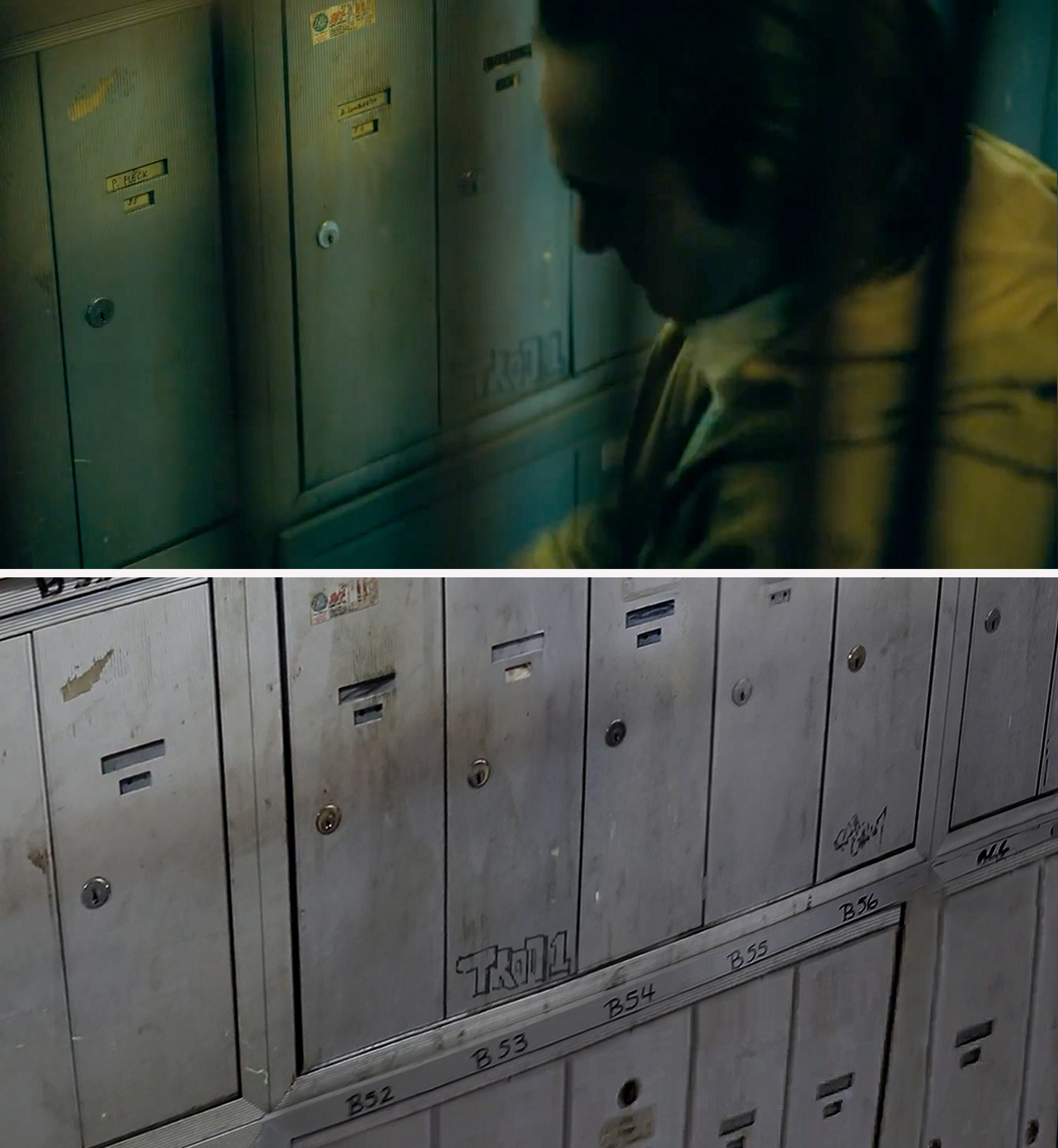
Since Arthur Fleck’s apartment building is only one lot over from those steps, I’m sure that made it an easy find. Although, some fans have confused 1140 and 1150 Anderson Avenue since they have similar facades, but the movie definitely used no. 1140. You can tell by the front courtyard layout, the position of the curbside telephone pole and tree, as well as the markings on the mailboxes inside.
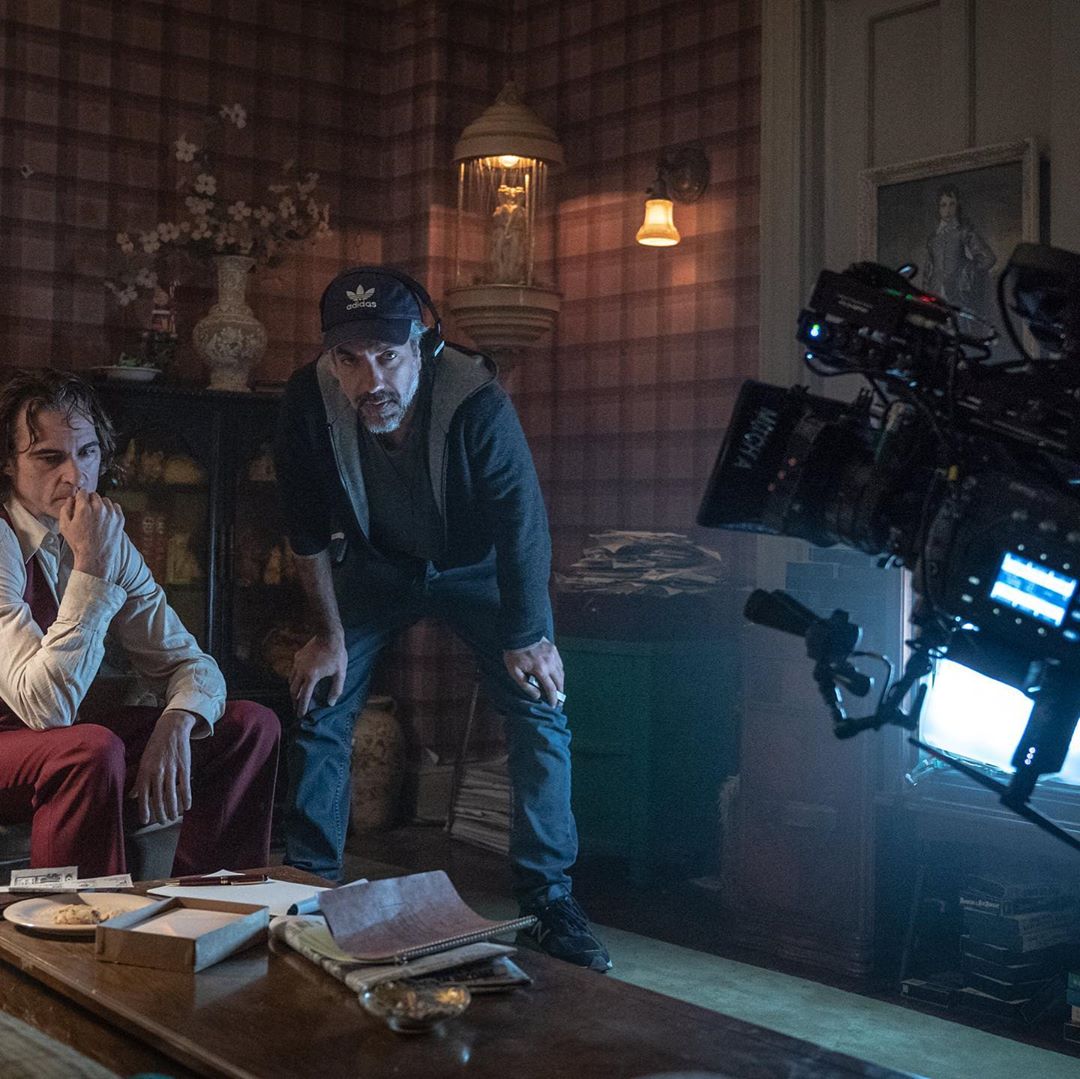
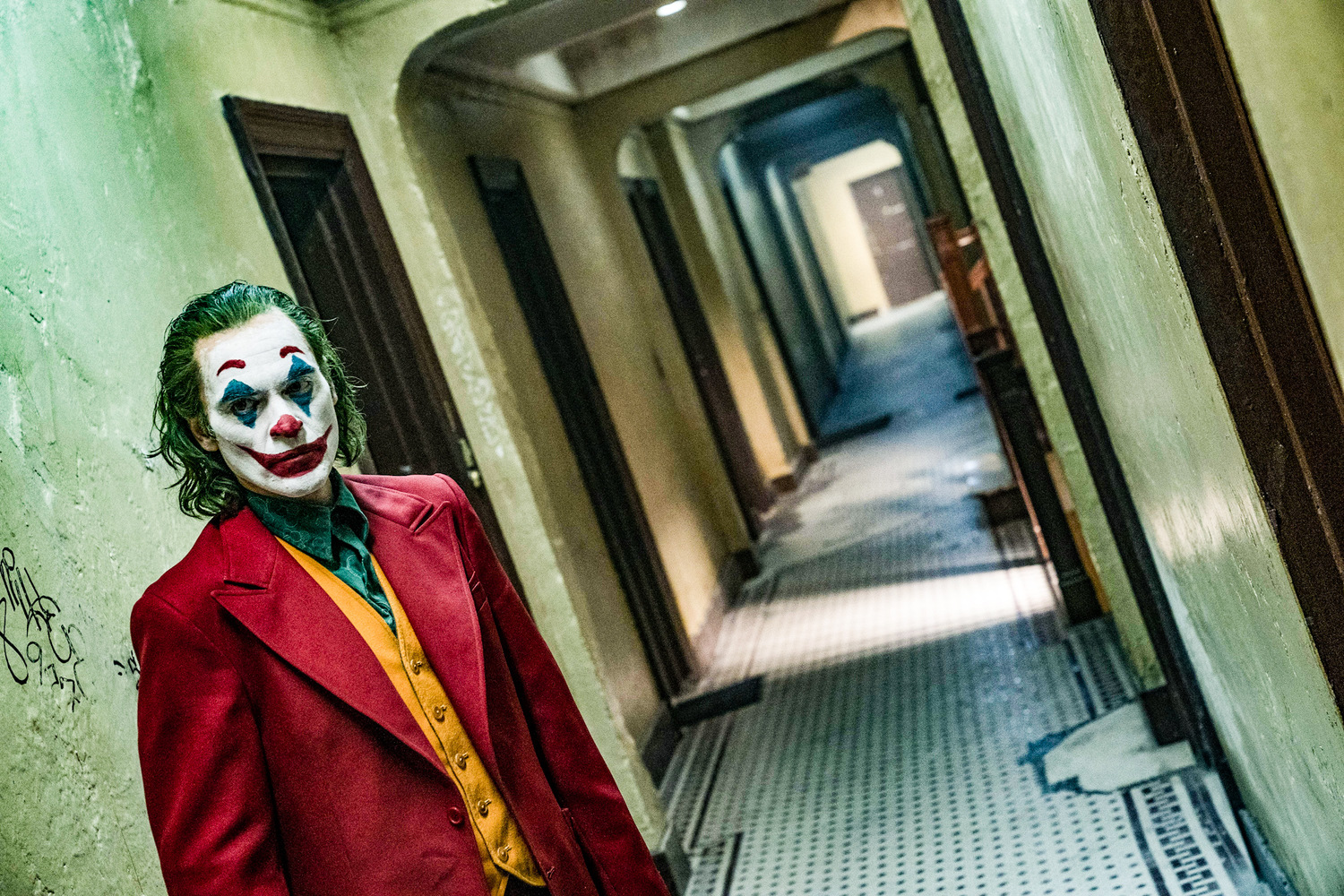
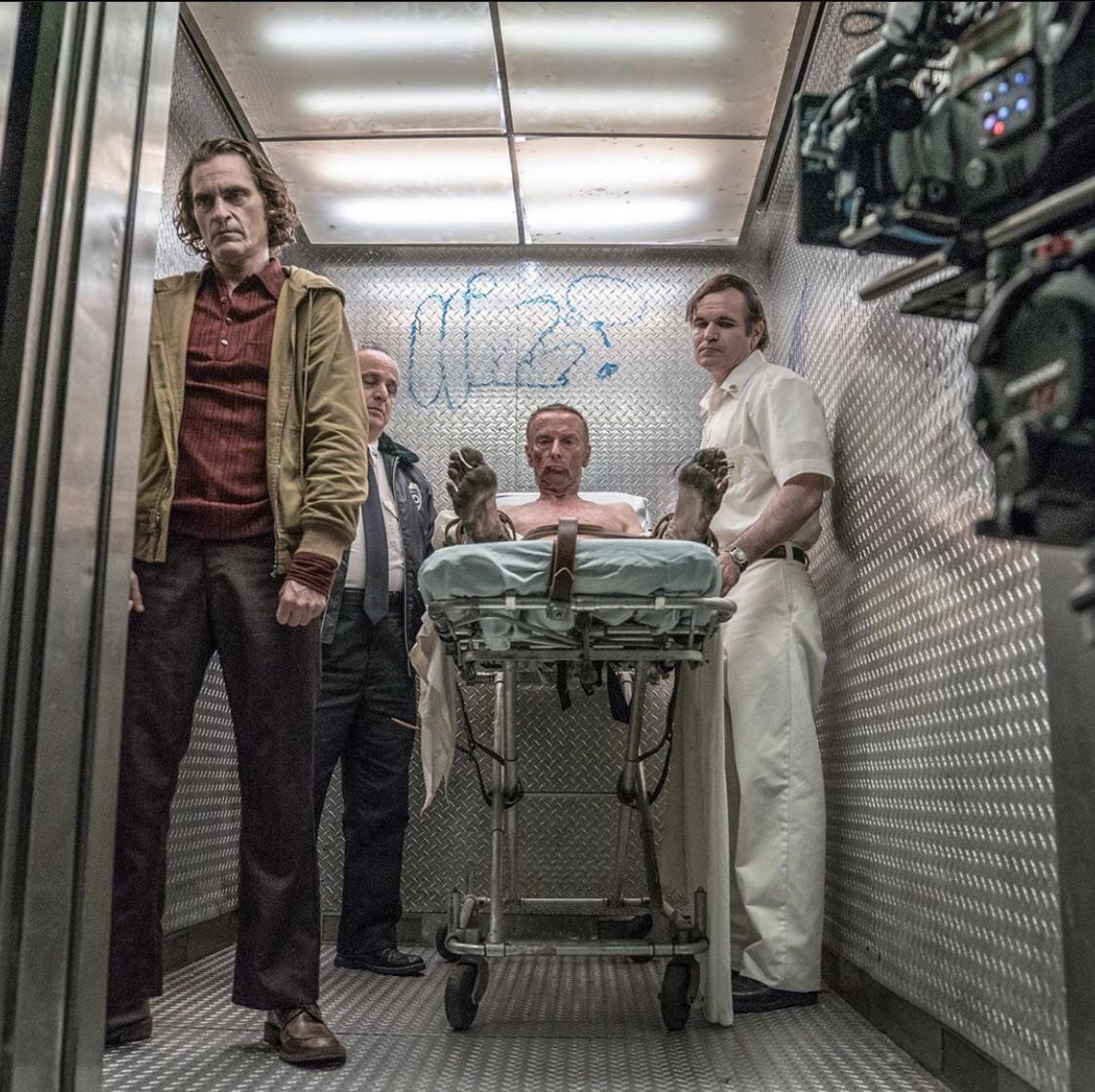
While the exterior and lobby of the Bronx building were real, the rest of the interiors, including the hallways and elevator, were sets built at Steiner Studios in Brooklyn.
They even added a false elevator door in the real Bronx lobby to match the one they created on the soundstage.
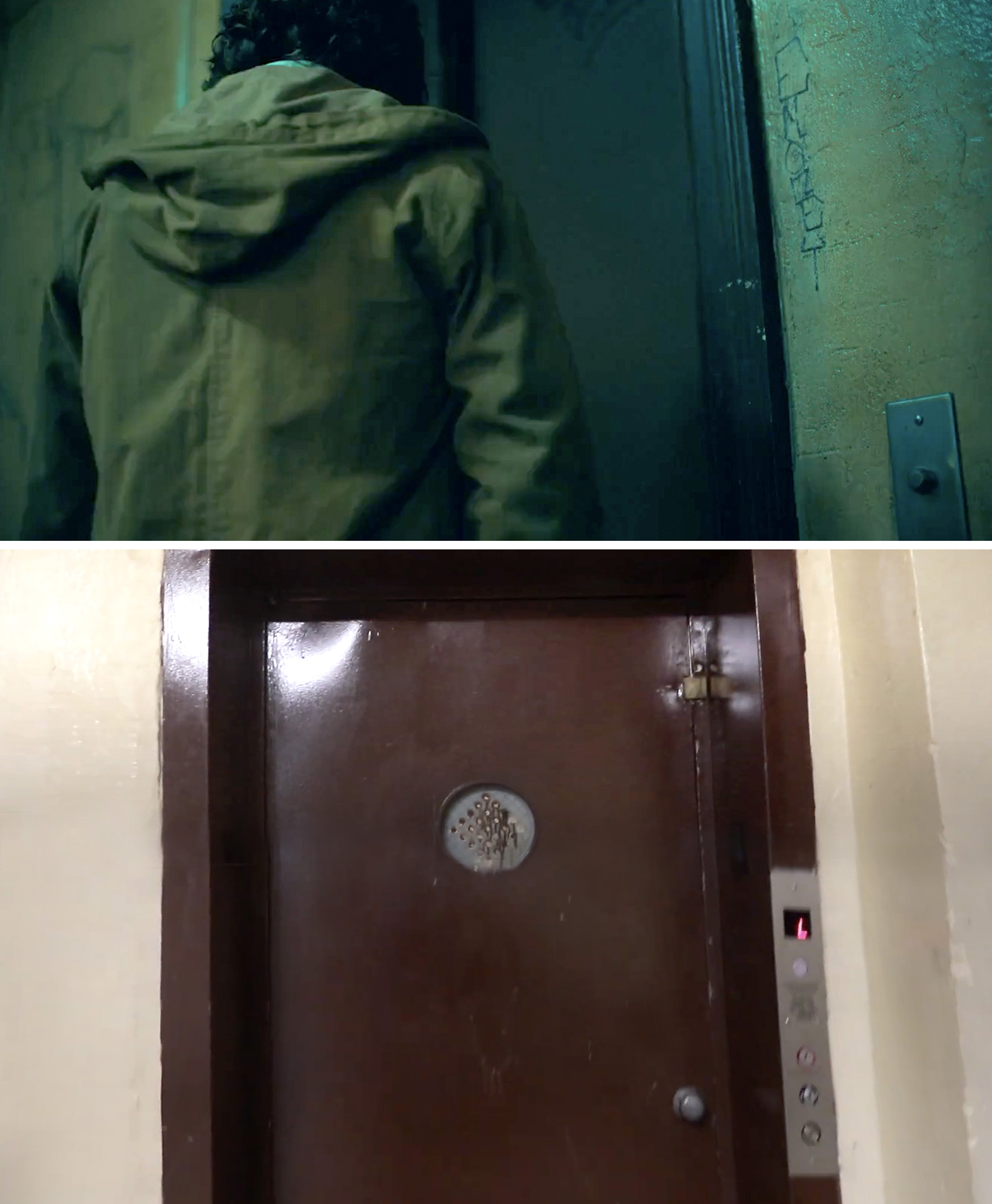
It was a fairly inventive way to mesh the on-location and studio footage together.
Arthur Follows Sophie
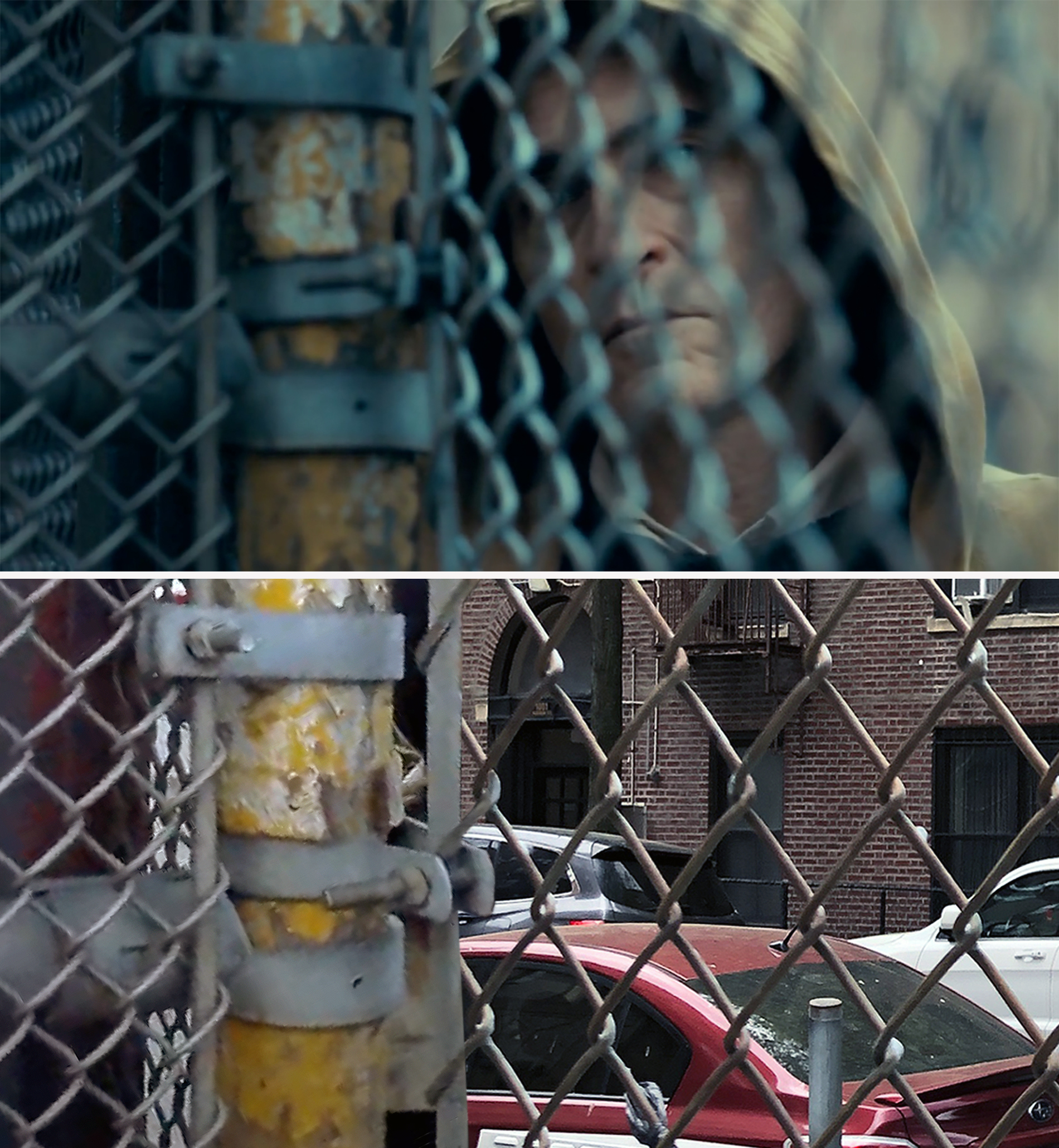
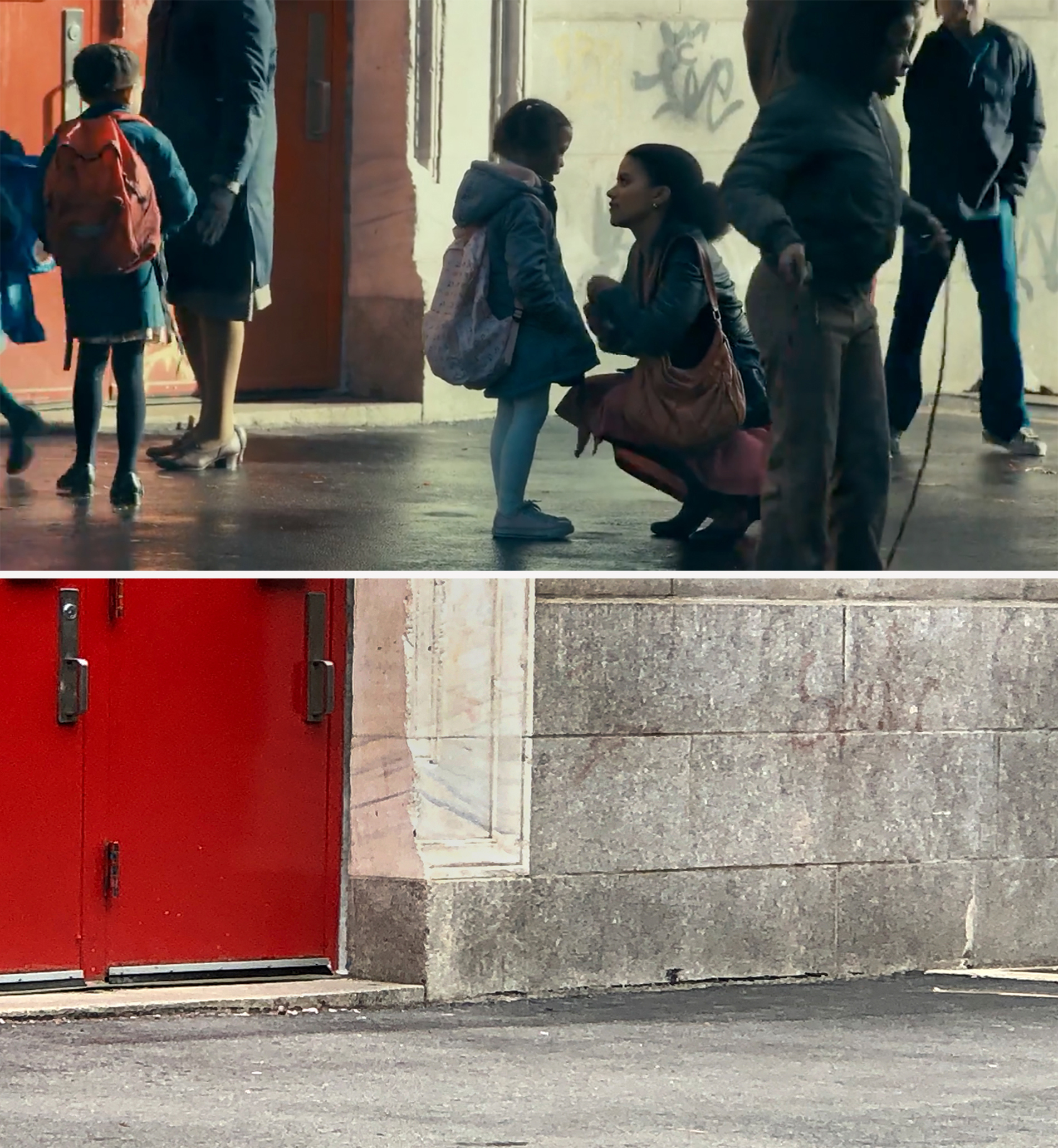
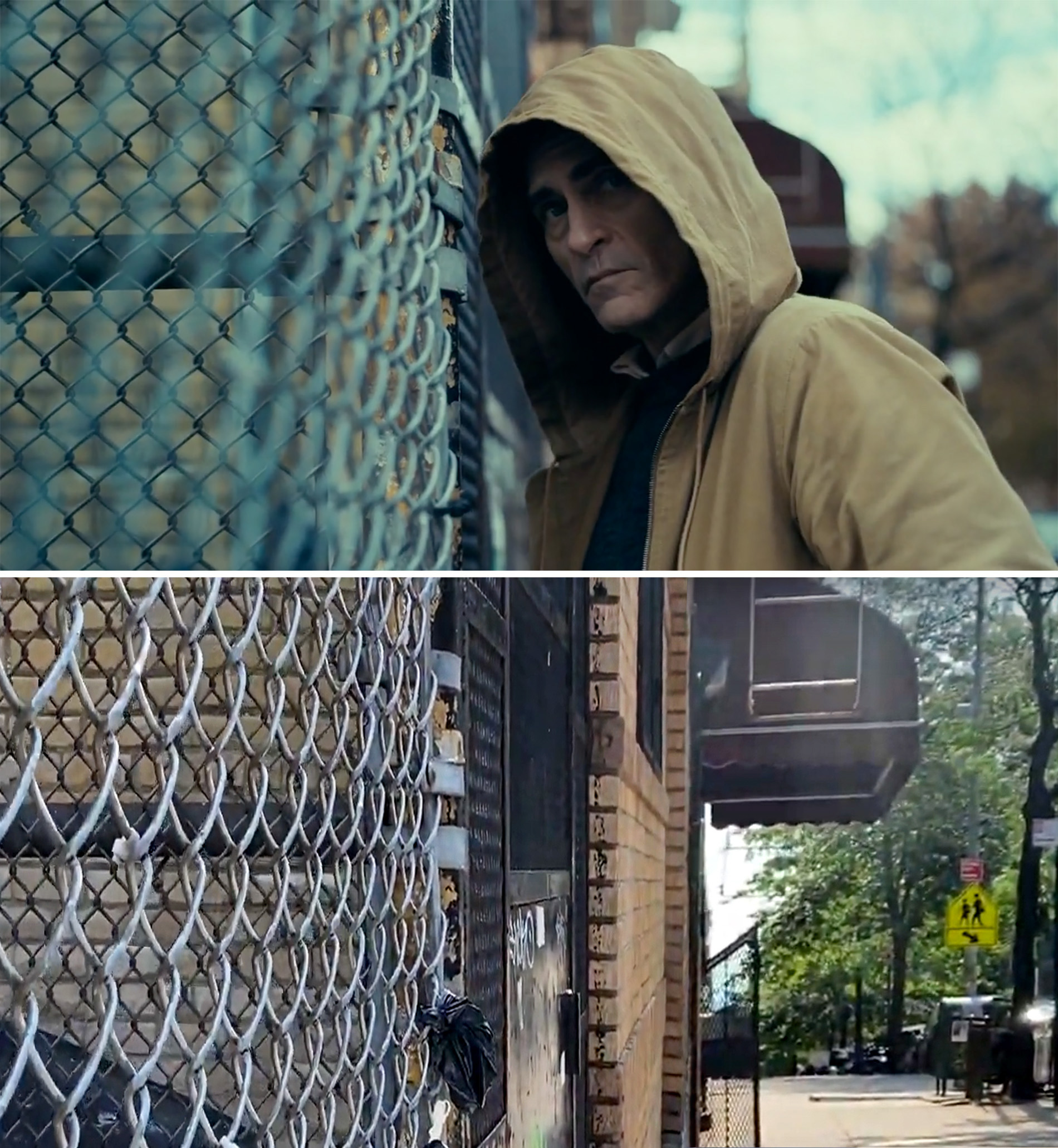
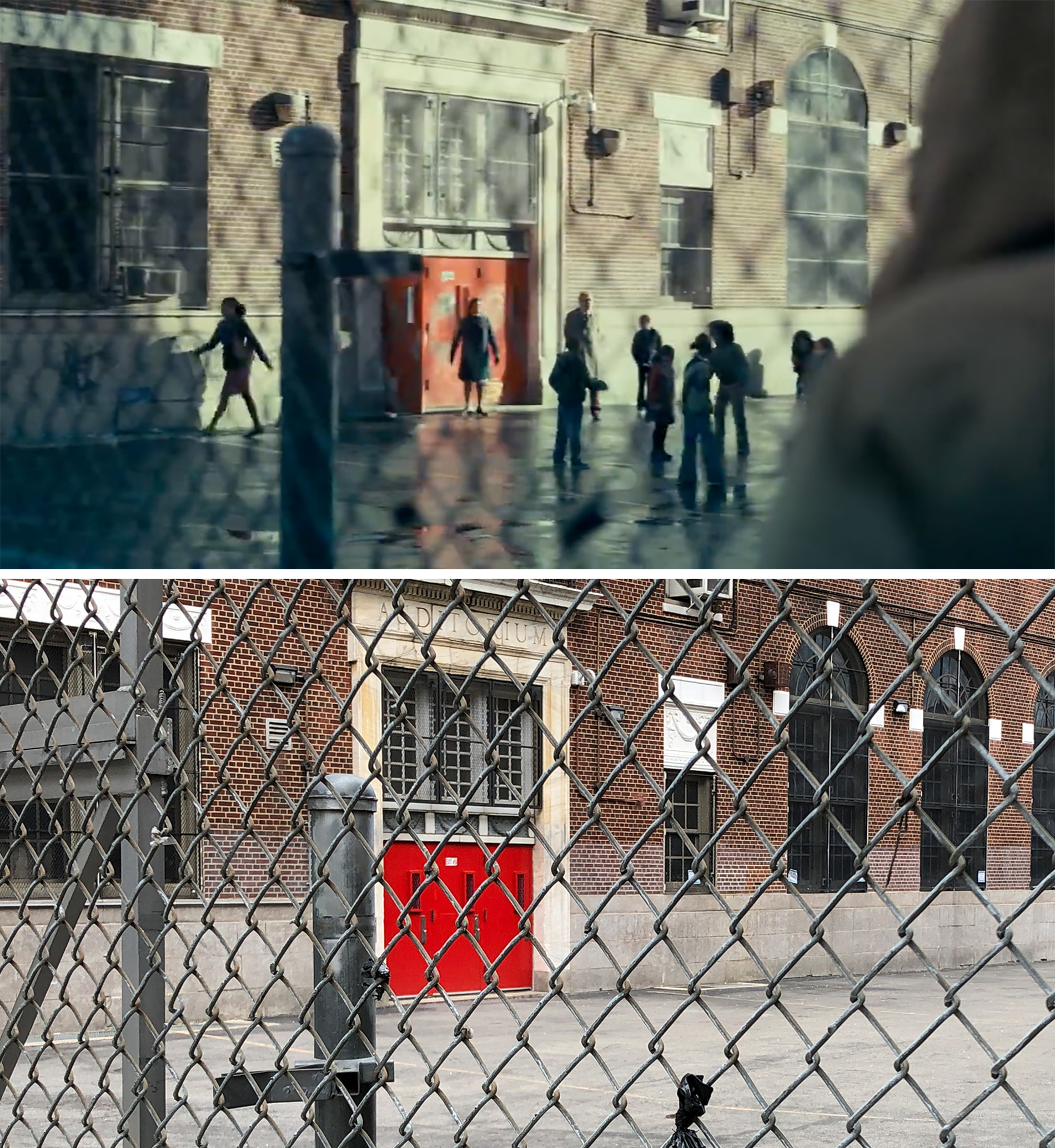
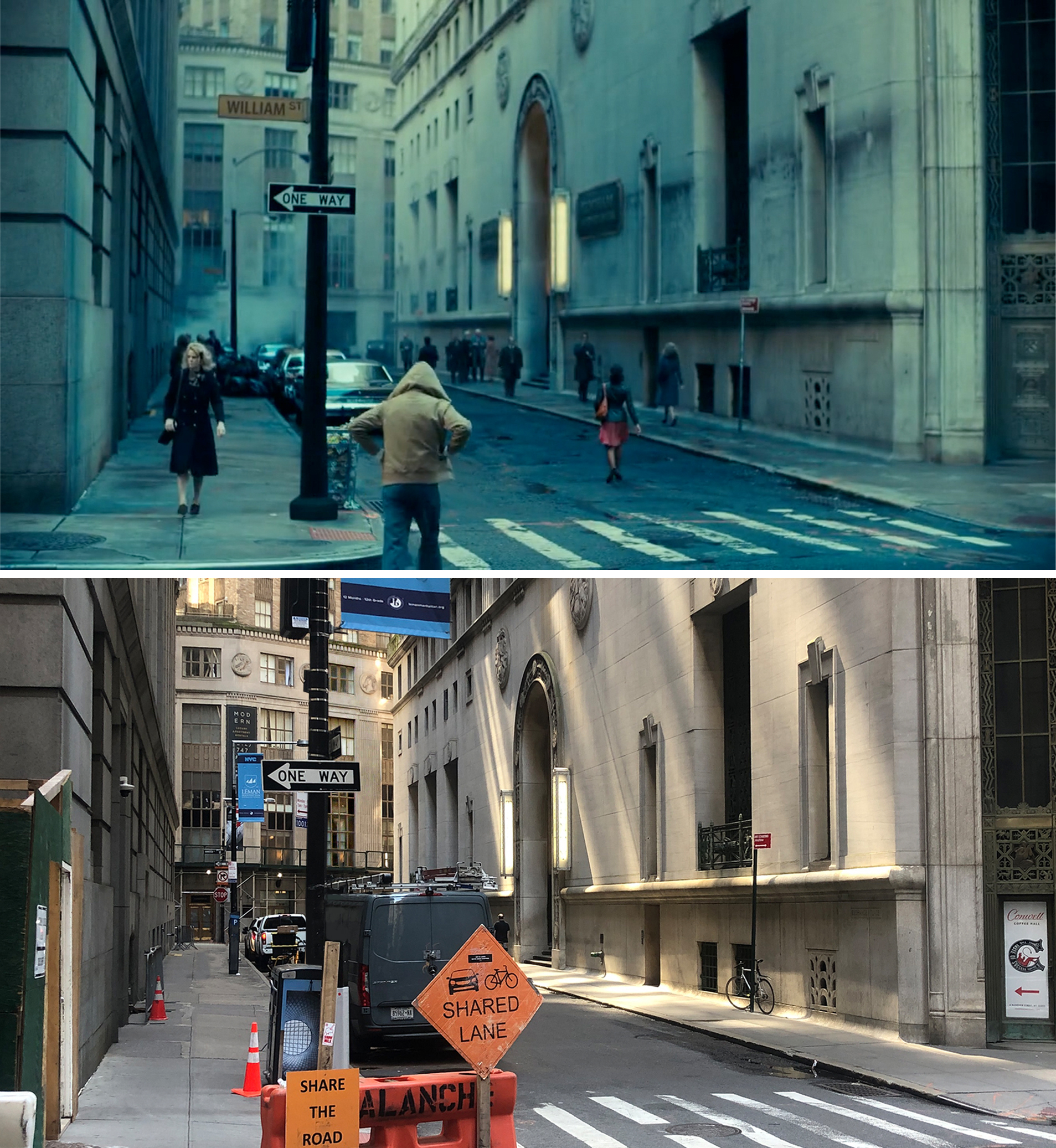
These were more locations that were fully identified back in 2019. The school location was probably easily found since it was only a few blocks south of the apartment and steps location on Anderson Avenue. The bank location was also pretty obvious, especially since it includes an accurate street sign in the shot (made-up in the 1970s black-on-yellow motif).
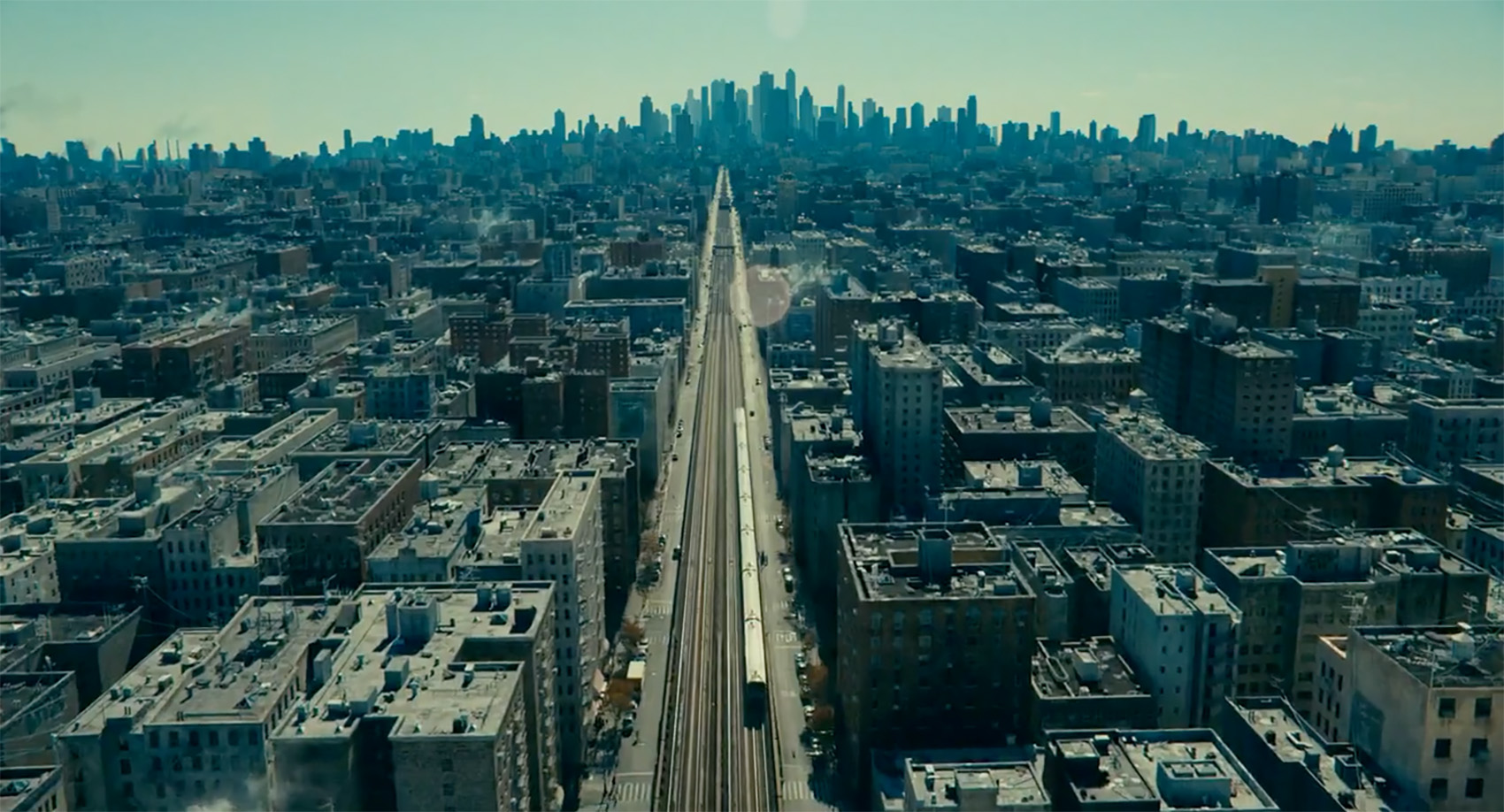
In between the school and bank scenes, the movie had a quick overhead shot of the two characters taking an el train, which I was certain was mostly CGI. The landscape was dense with an oddball mixture of building styles and zero greenery. (As developed as the NYC is, almost any wide aerial shot will show a city park somewhere.)
While I was certain the shot was mostly a digital composition, I had a feeling the stuff in the foreground was real. The idea is, by having a little real stuff in the front, it helps sell the fake stuff in back.
When I showed the clip to my research partner Blakeslee, he became curious to see if he could find the matching buildings in the foreground. By the looks of the elevated tracks —very straight with street traffic on either side of it— we guessed that it was the MetroNorth line that runs along Park Avenue in Harlem.
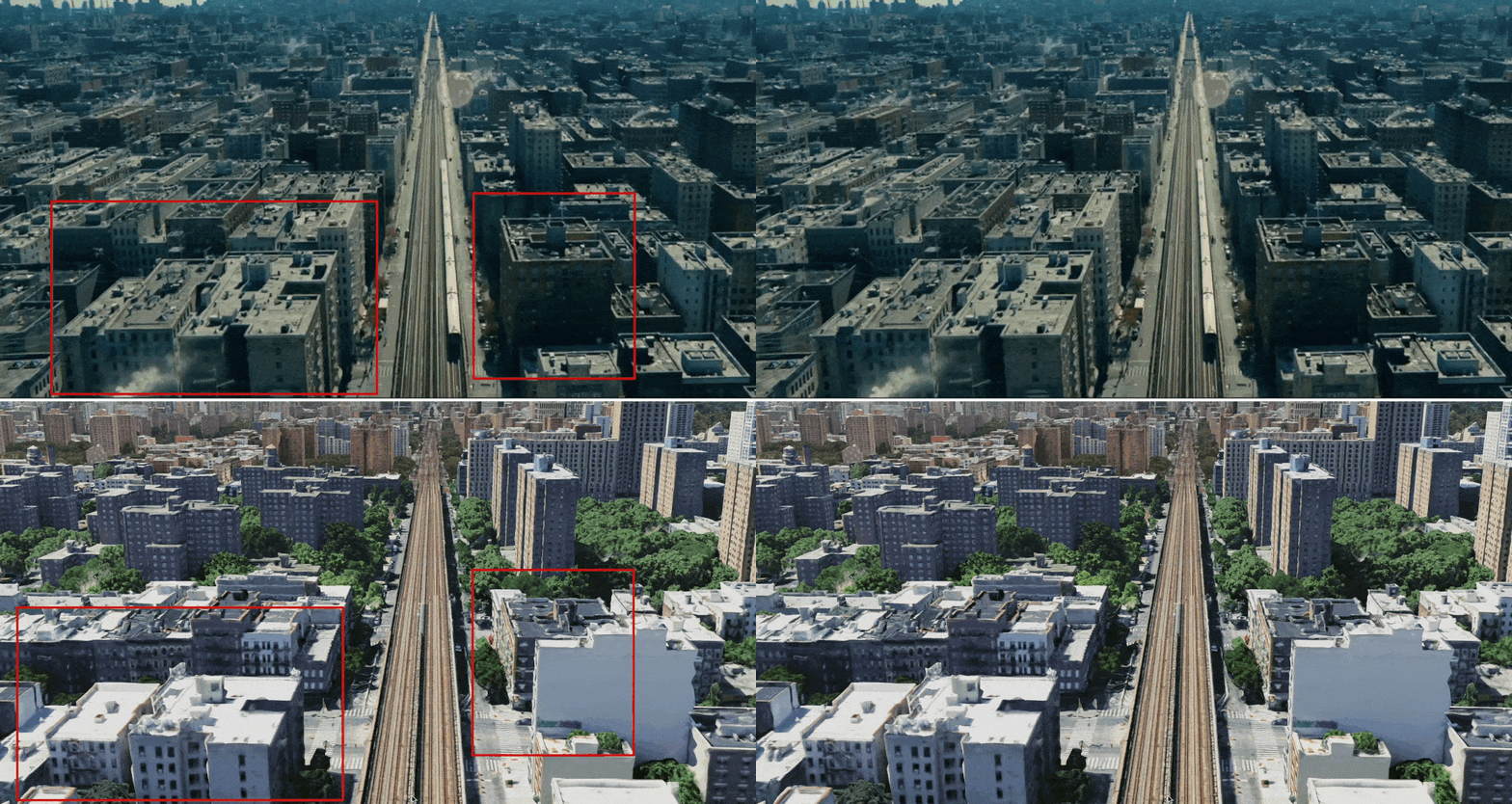
A few clicks later, Blakeslee found a match at E 115th Street and Park Avenue, looking south from 116th. And as we both suspected, a couple blocks south of 115th, the matches ceased, indicating that the rest was computer creations/enhancements.
Working At a Hospital
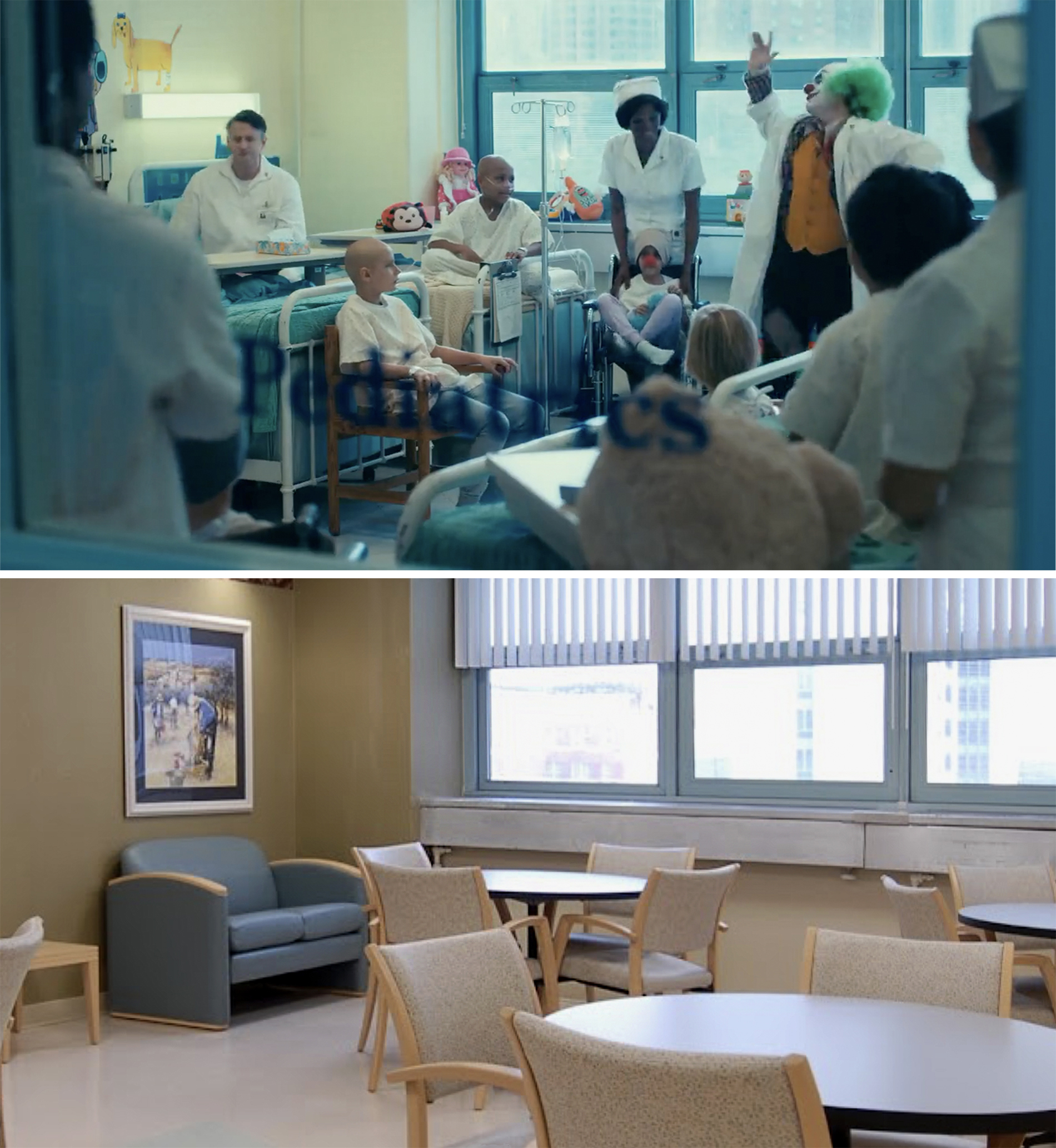
I had a feeling this children’s hospital scene was shot at NYC Health + Hospitals/Metropolitan in East Harlem. During one of my three days of working on this movie, I was in the basement of the hospital filming a later scene. But since we didn’t do my scene until after lunch, I had a feeling they filmed this other scene earlier in the day.
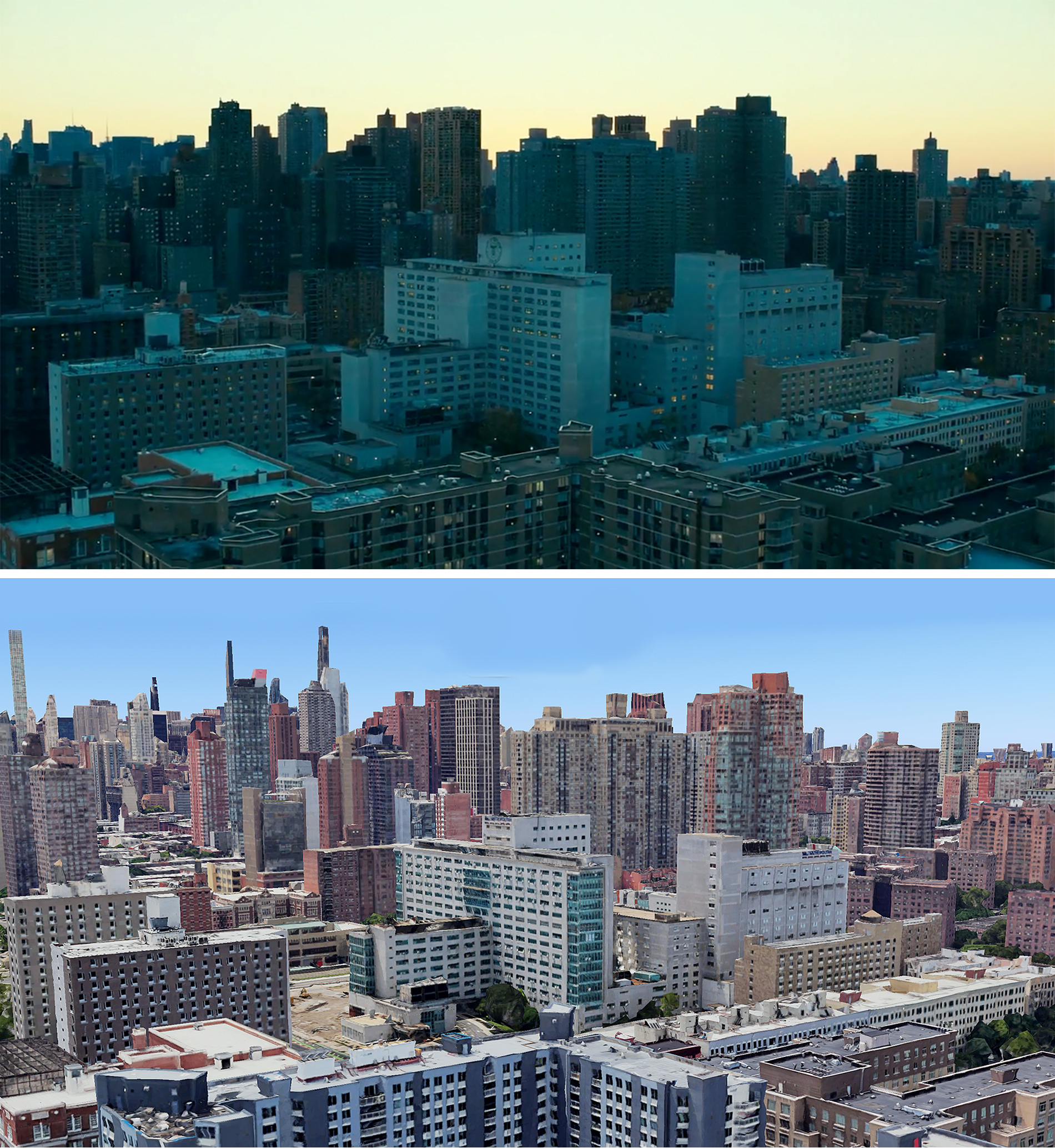
As to the wide aerial shot of the hospital, it was also Metropolitan in East Harlem, but story-wise, it was actually an establishing shot for the city clinic where Arthur gets his therapy. And unlike the aerial shot of the elevated train, this view of the hospital seems to have no CGI additions (at least none that I can see).
Arthur Gets Fired
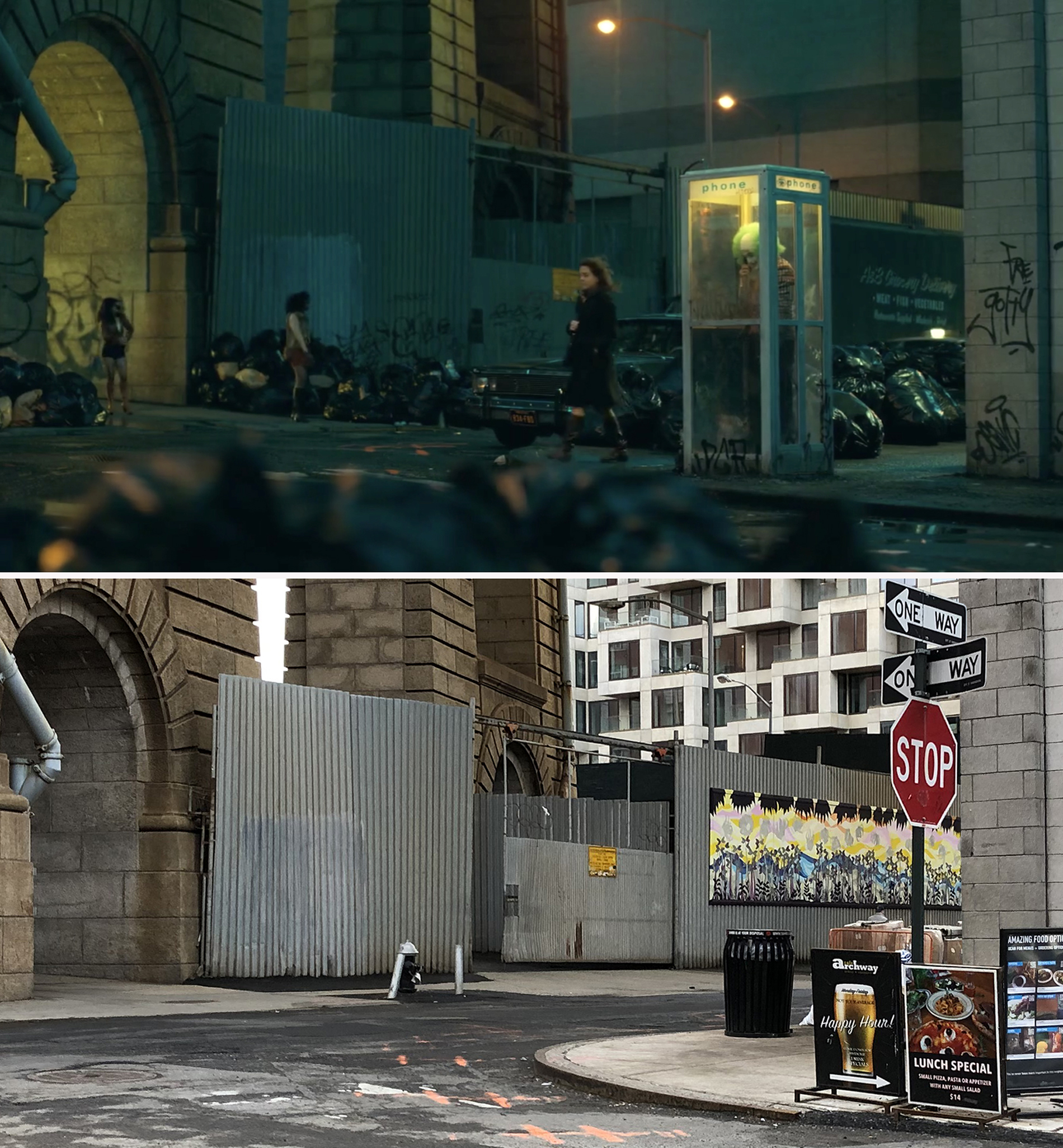

This was one of the few places that wasn’t already identified in 2019 when I decided to delve into this movie’s filming locations. It did surprise me that none of the movie websites covered this scene as the location wasn’t terribly hard to figure out, mostly thanks to the base of the Manhattan Bridge being partly shown in the background.
While I wasn’t 100% certain it was the Manhattan Bridge when I first investigated the scene, all it took was a little poking around in Google Street View to confirm it was shot on Pearl Street in Brooklyn.
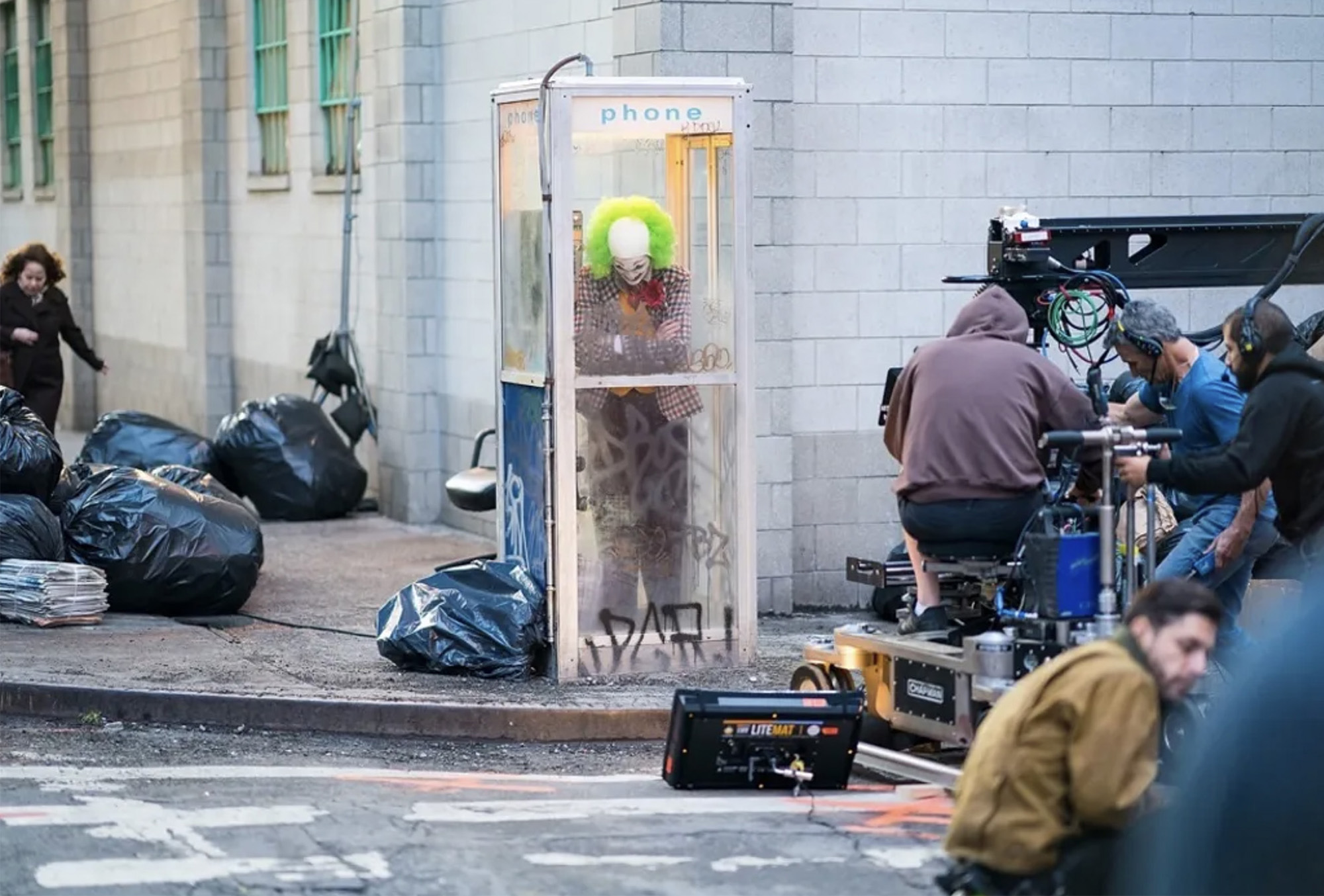
Zeroing on the exact spot was made easier with the help of some behind-the-scenes photos and videos showing Joaquin Phoenix at the phone booth.
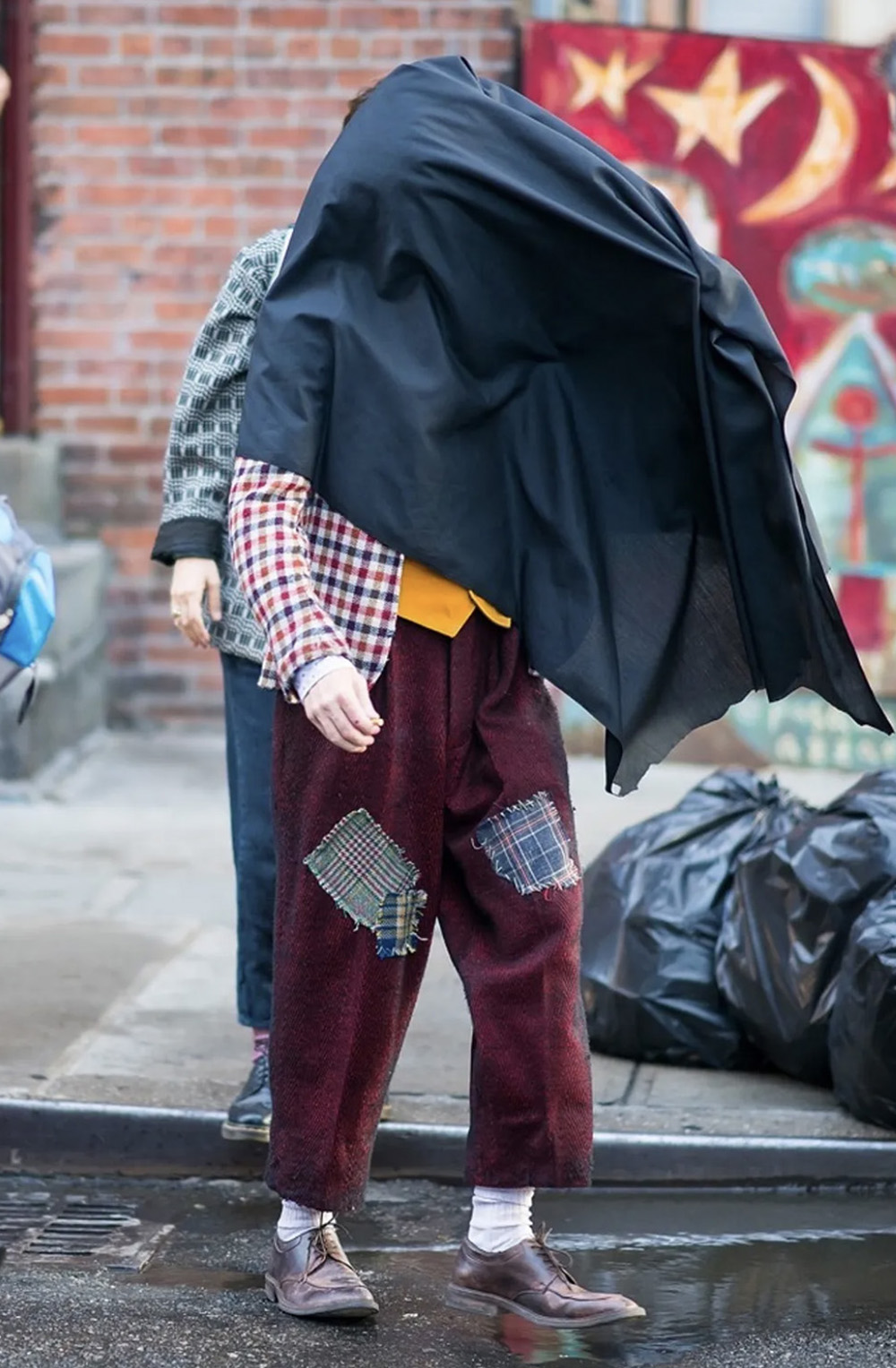
It was fascinating how crew members covered the actor up with a black duvetyne cloth to prevent paparazzi photographers from getting clean shots of him. My guess is that since Phoenix wasn’t in his official “Joker” make-up, production didn’t want any photographs surfacing that gave the impression that the new Joker looked like a regular clown — complete with baggy pants and a bright green fro.
Arthur Murders the Brokers
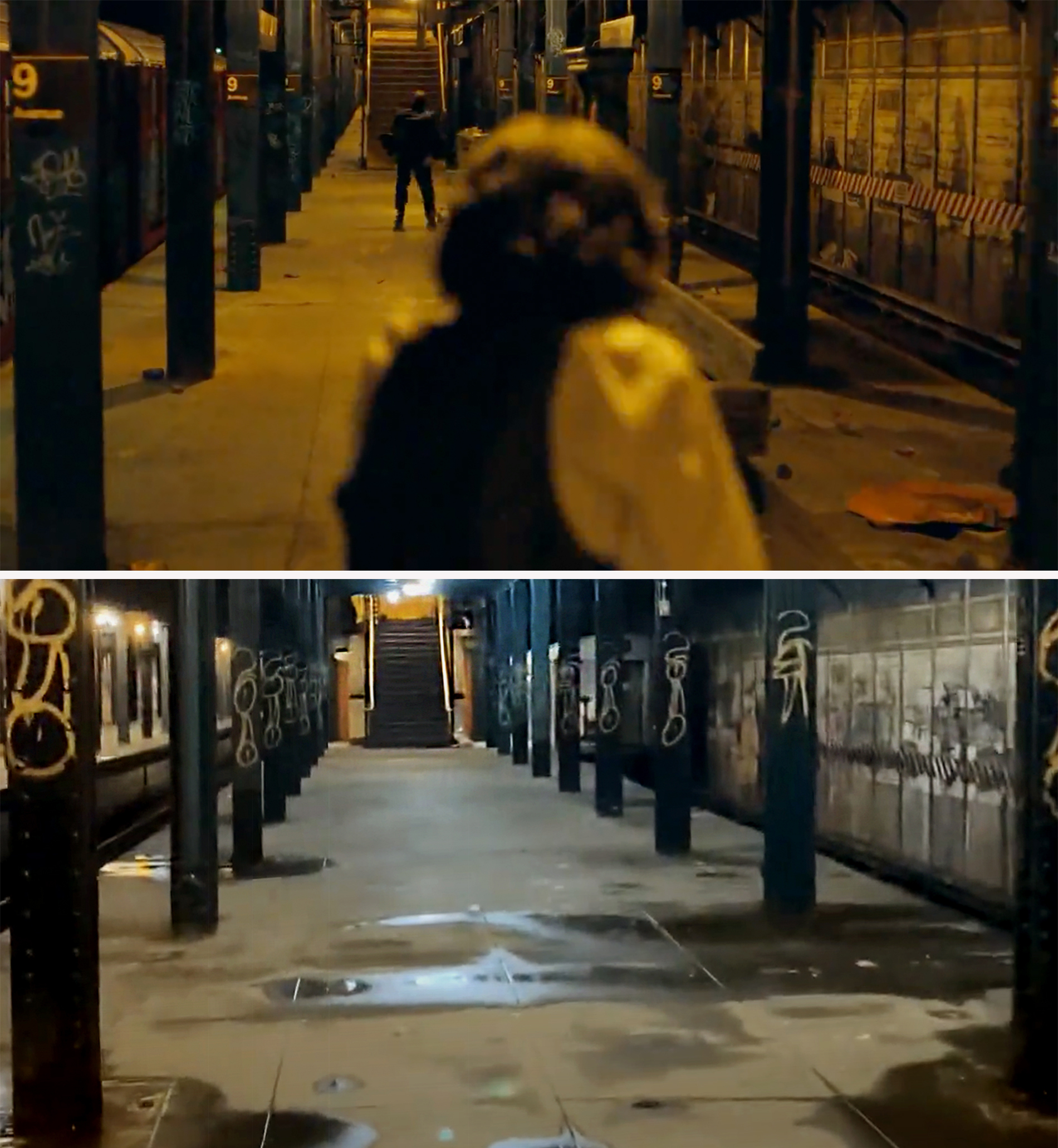
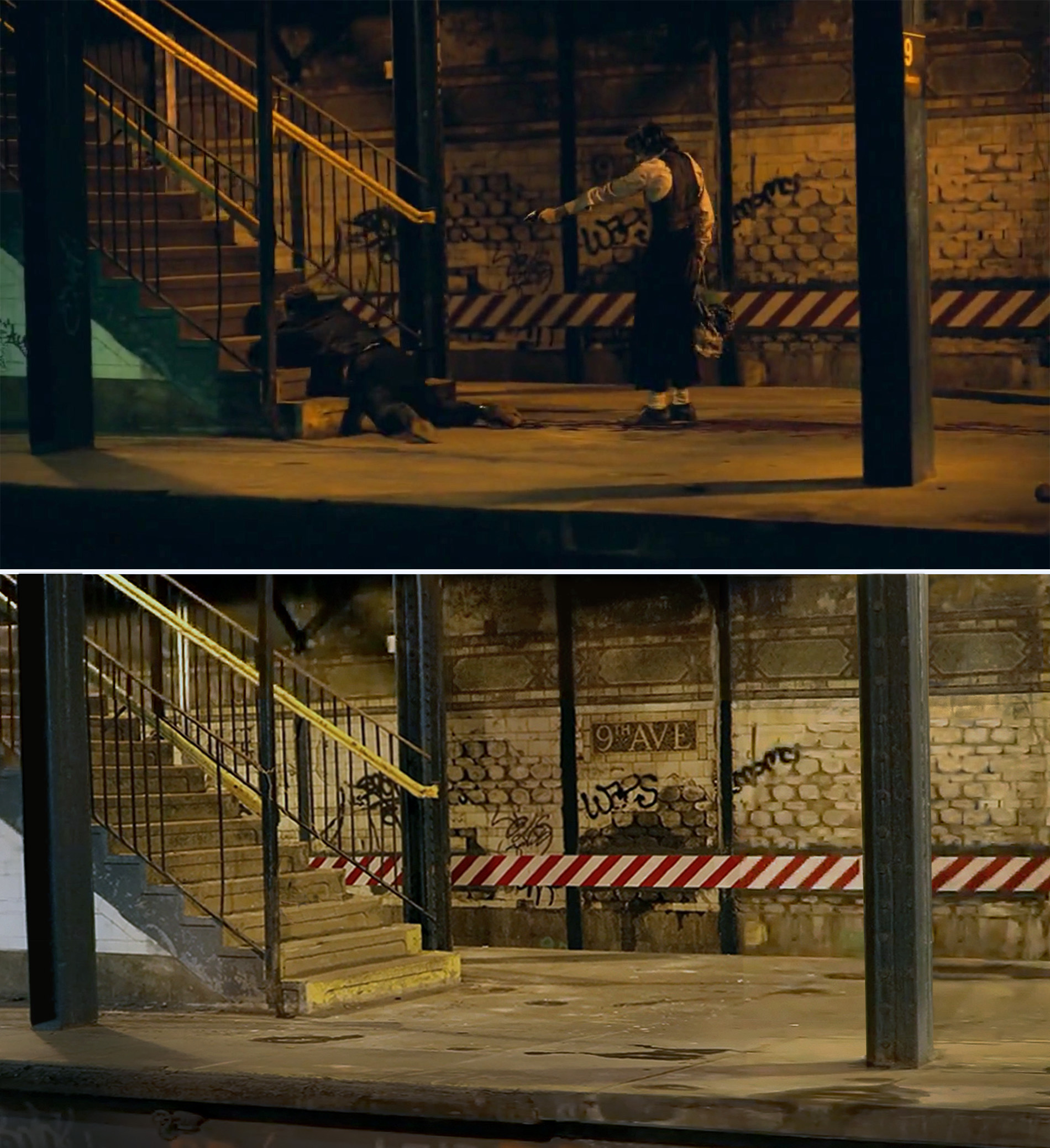
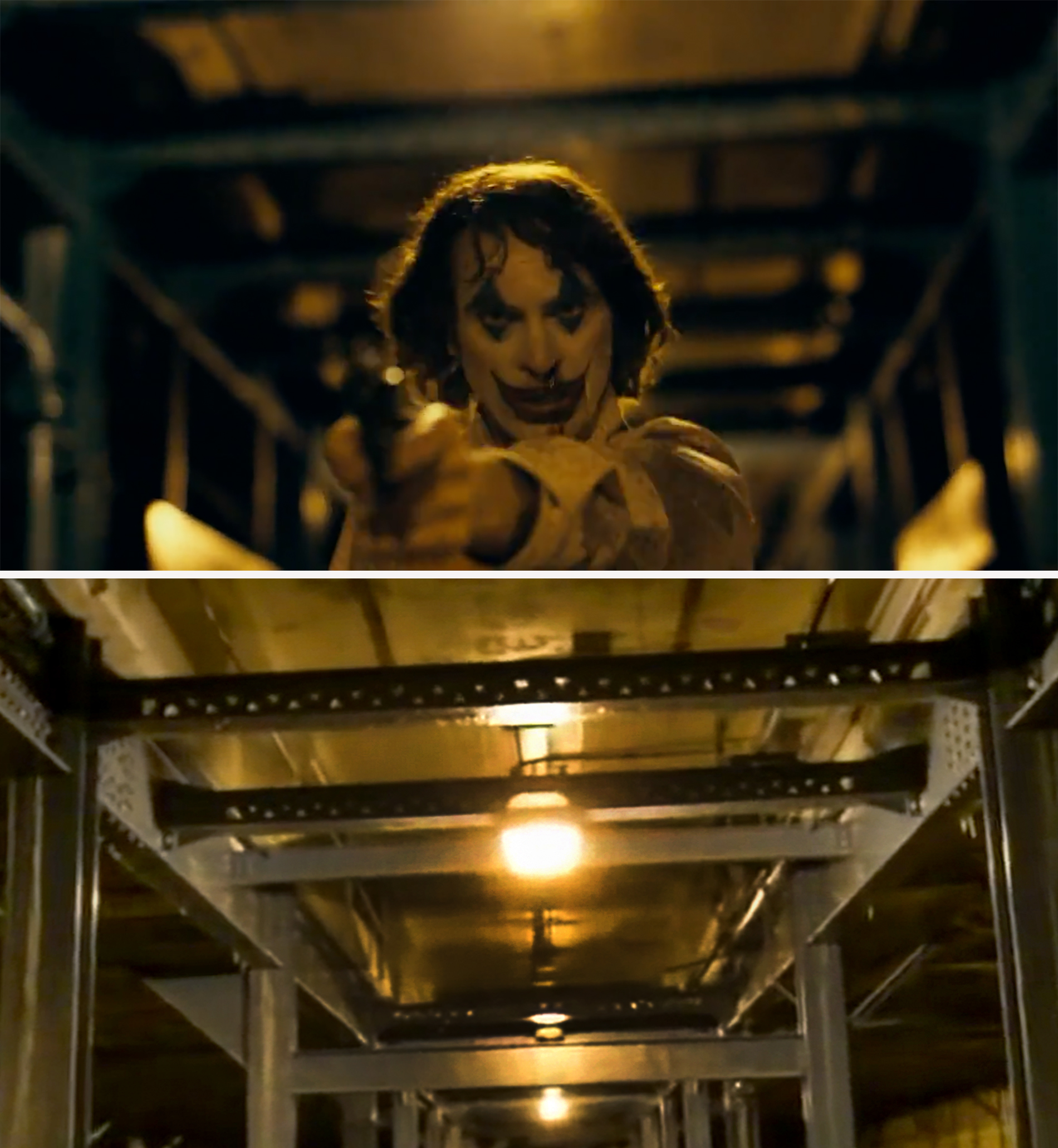
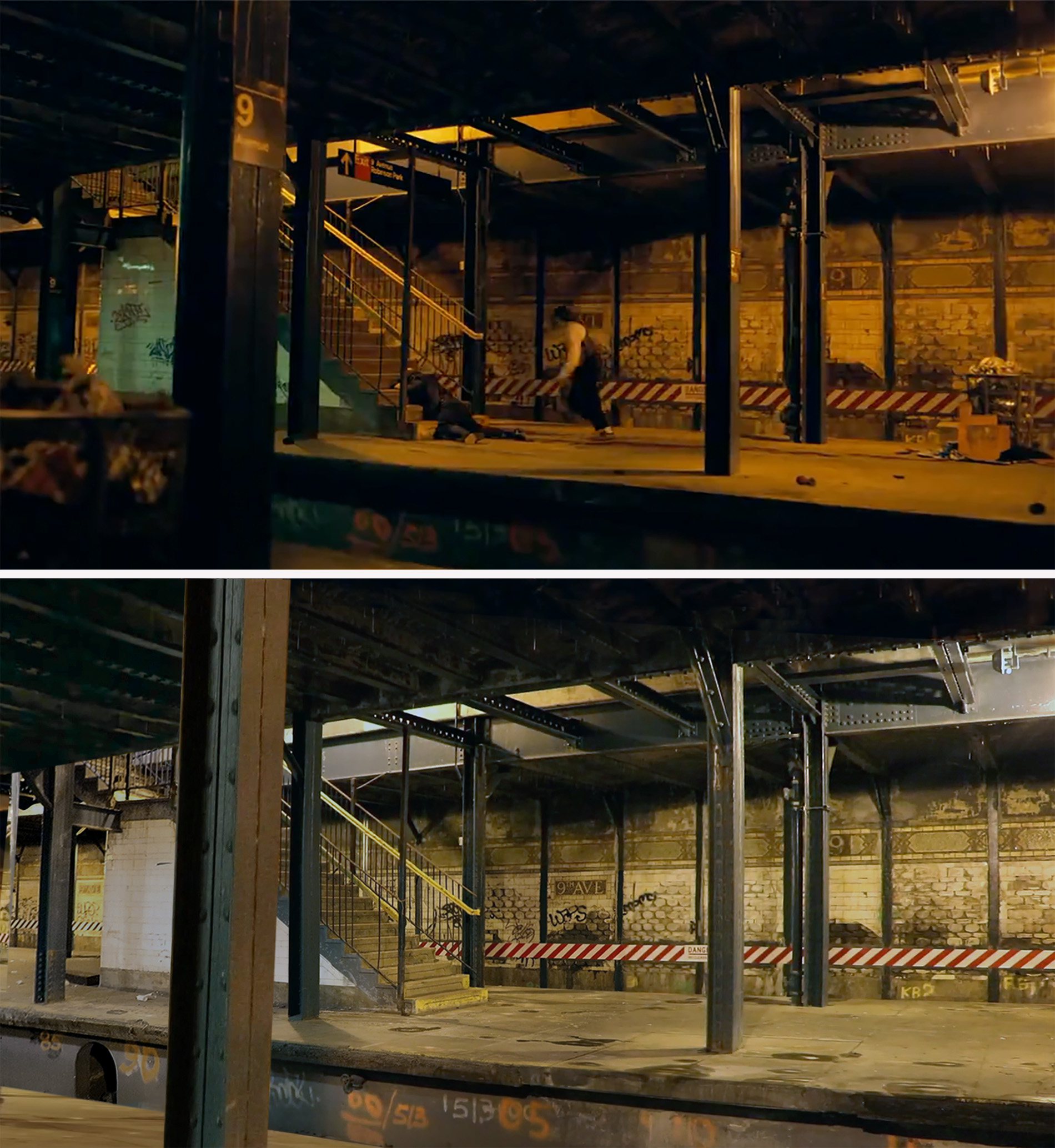
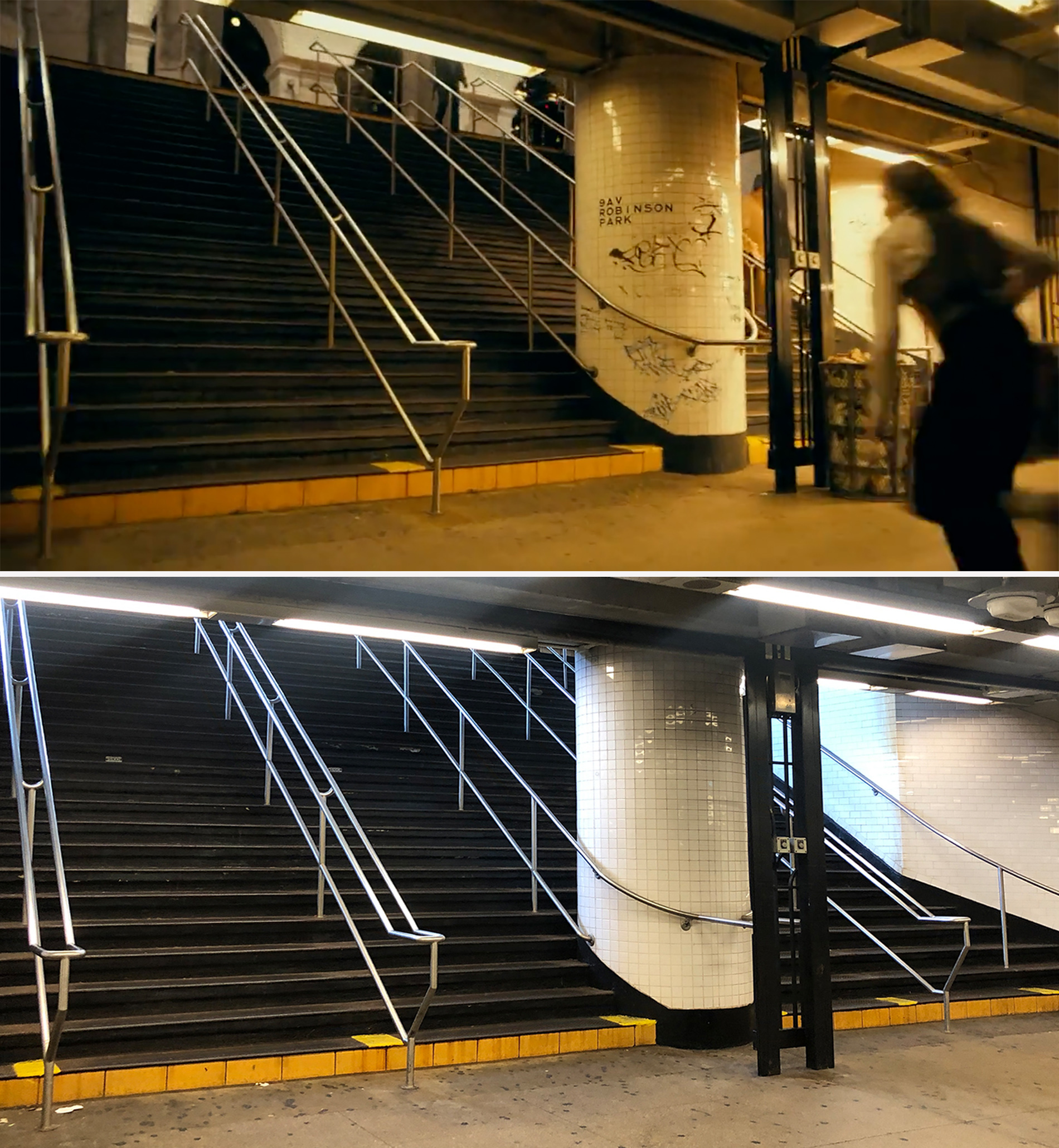
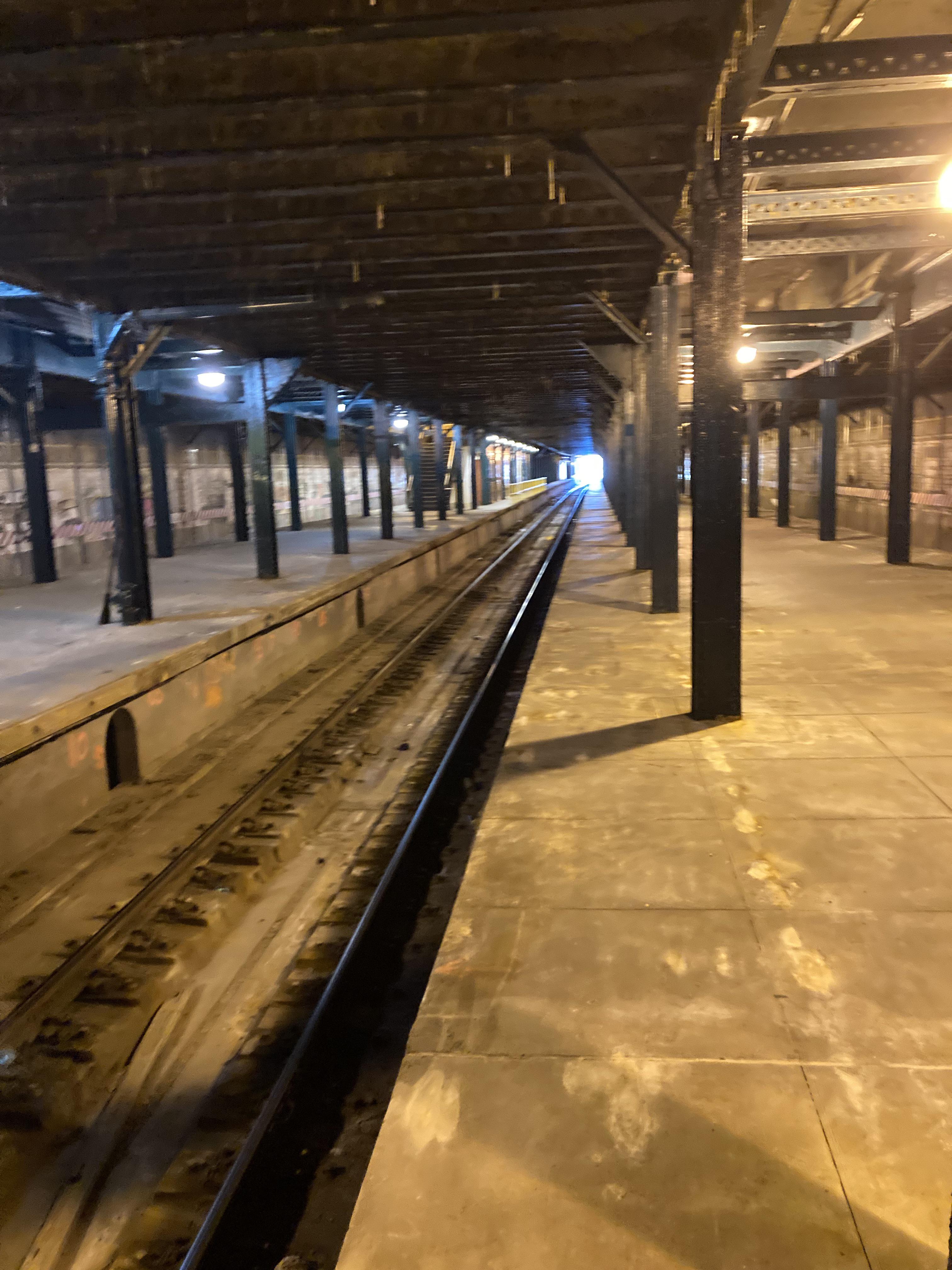
This subway location wasn’t as widely known as some of the other filming locations, but in 2019, at least a couple movie fans figured out they primarily used the abandoned lower level of the Ninth Avenue Station in Sunset Park, Brooklyn. The action took place on the Manhattan-bound side, near the rear end of the platform. You can read more about the history of this elusive subway platform in my article on Crocodile Dundee (1986), which shot its romantic ending there.
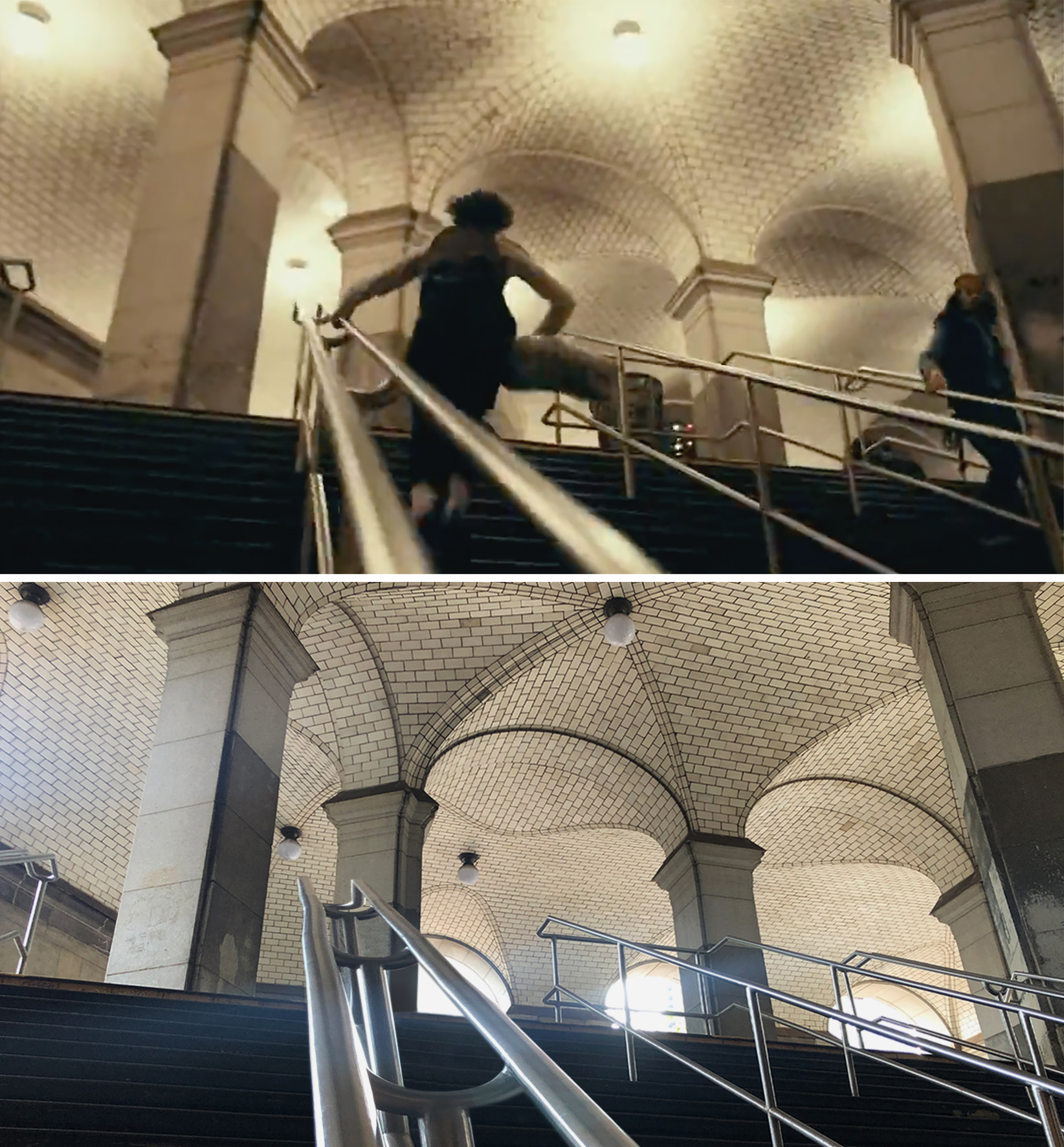
I’m not sure if anyone had identified the stairs Arthur took after shooting the brokers when I started researching this film, but based on those tiled columns, I immediately recognized it as taking place at David N. Dinkins Municipal Building concourse in lower Manhattan. Coincidentally, this was another location used in 1986’s Crocodile Dundee, where Mick delivers his famous “That’s a knife” line.
Running into a Restroom
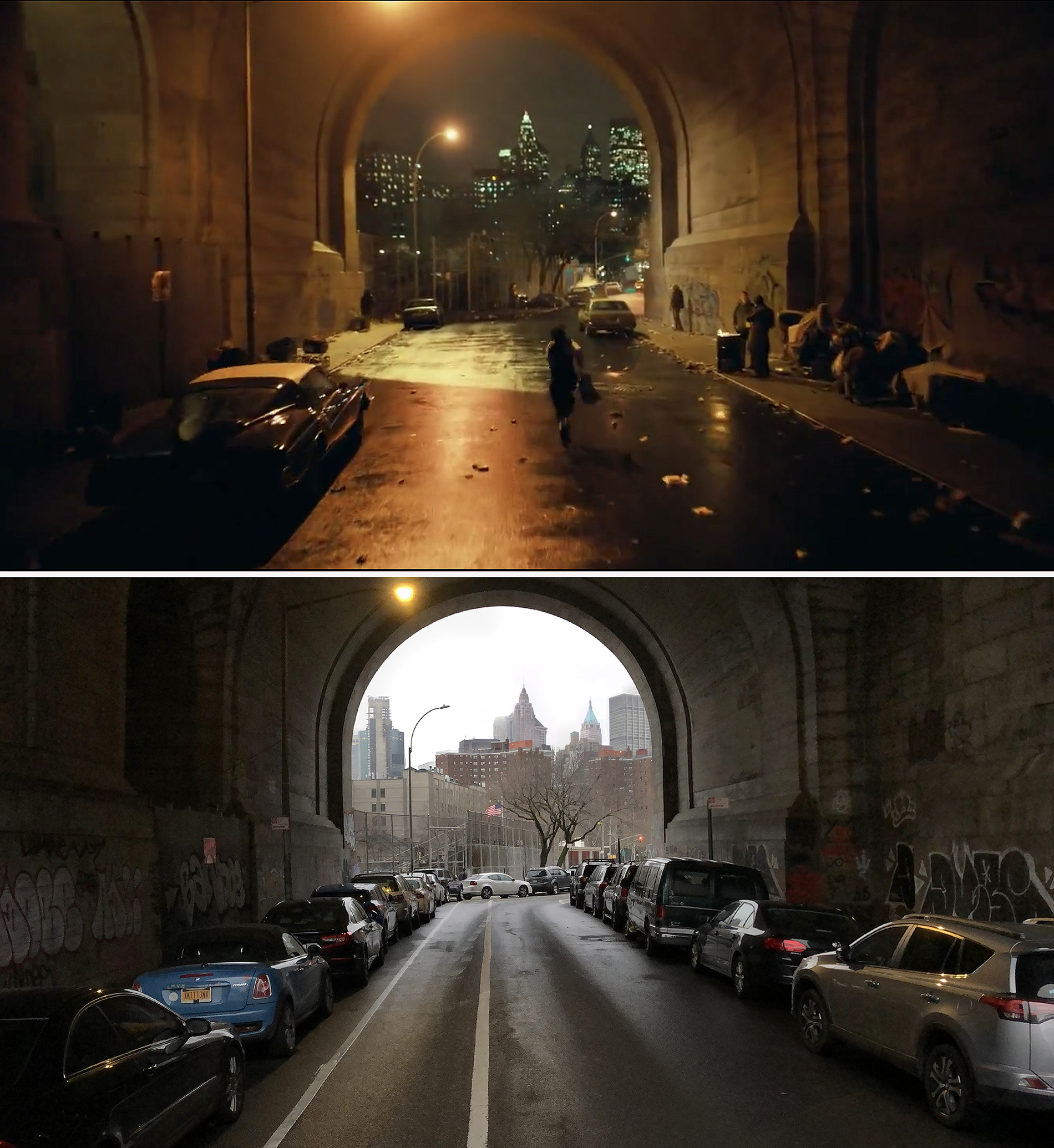
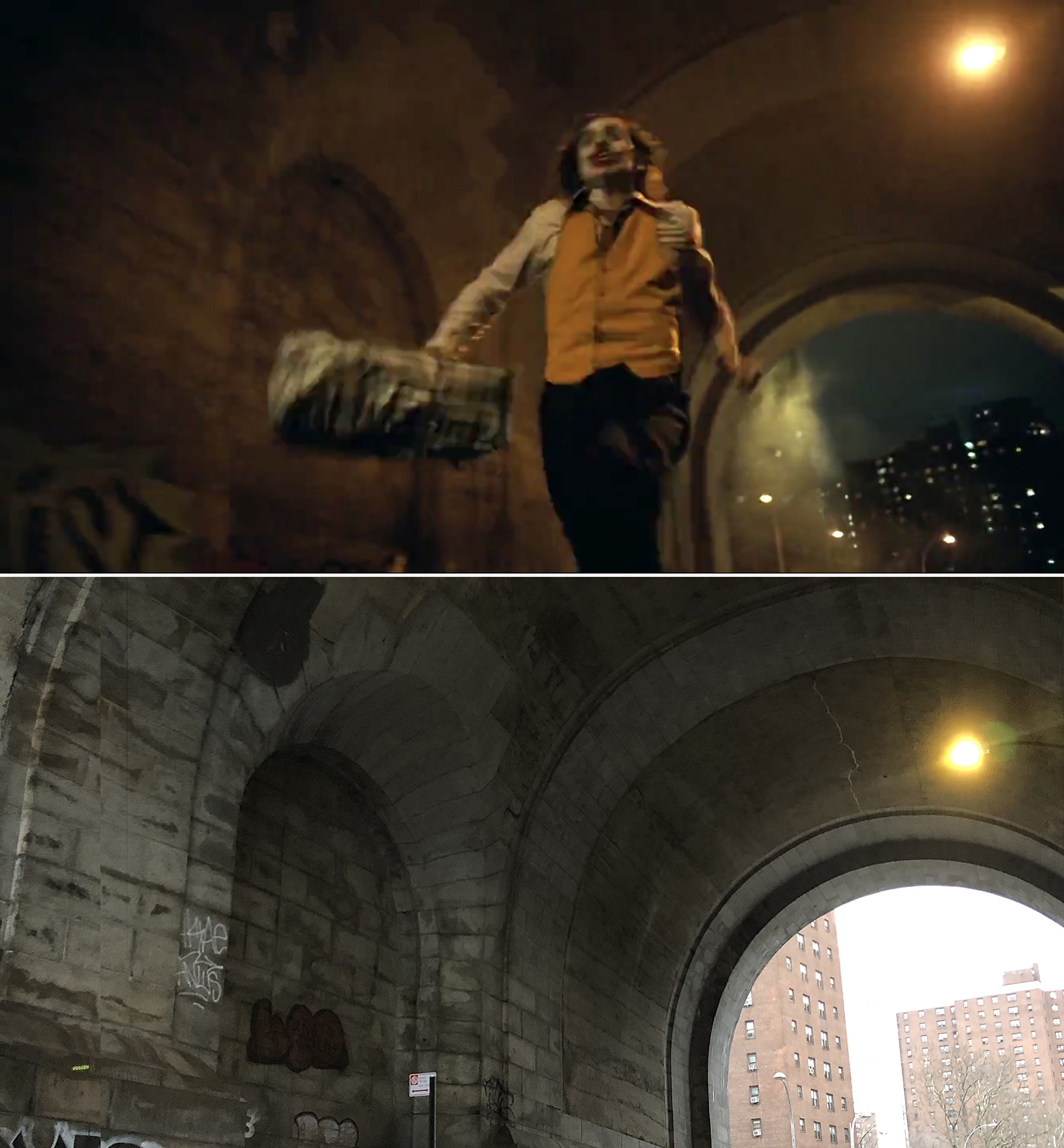
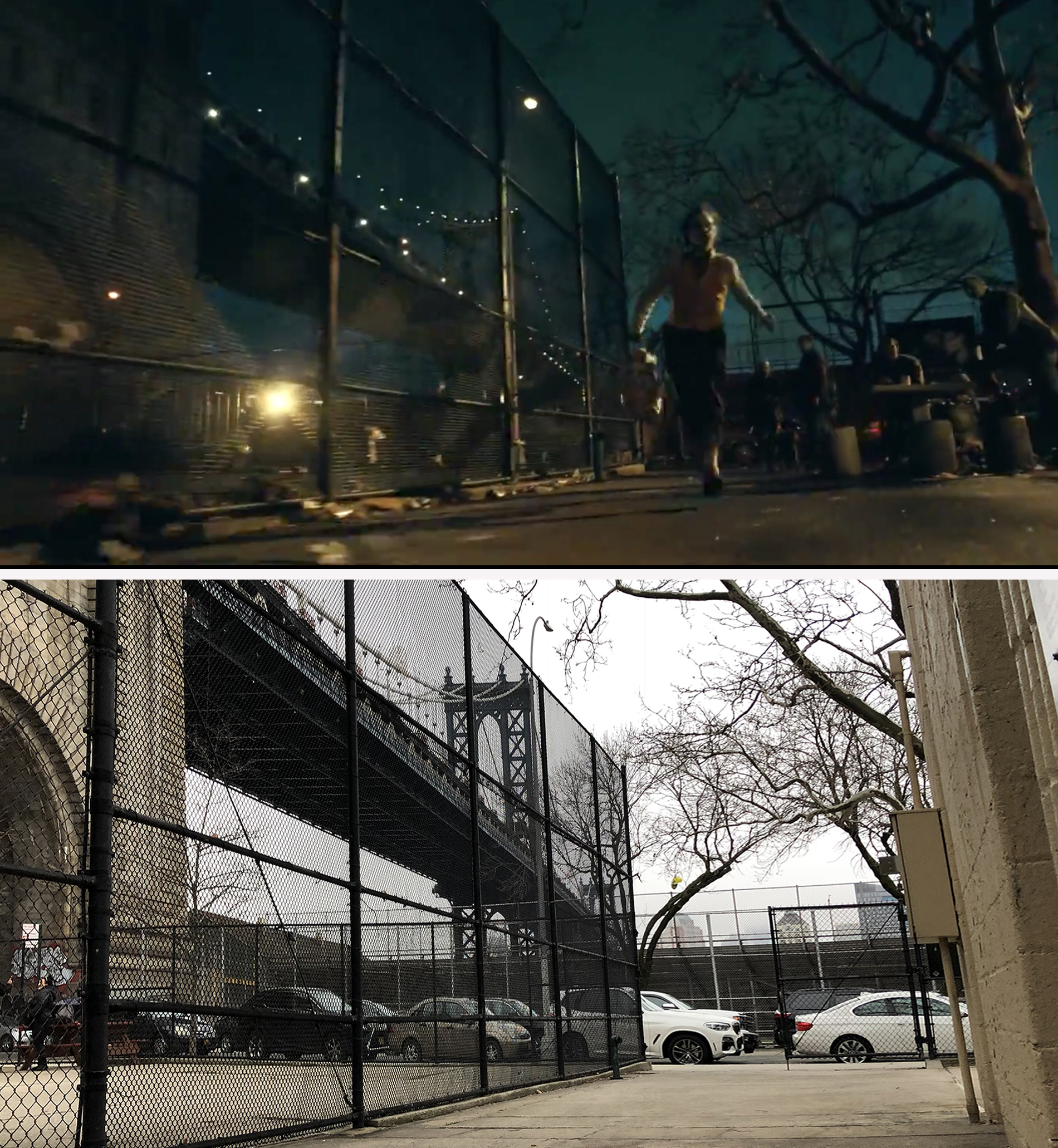
Even though this is supposed to take place right after the shootings, the geography jumps by a mile or two, going from the City Hall area to the Manhattan Bridge in the Lower East Side.
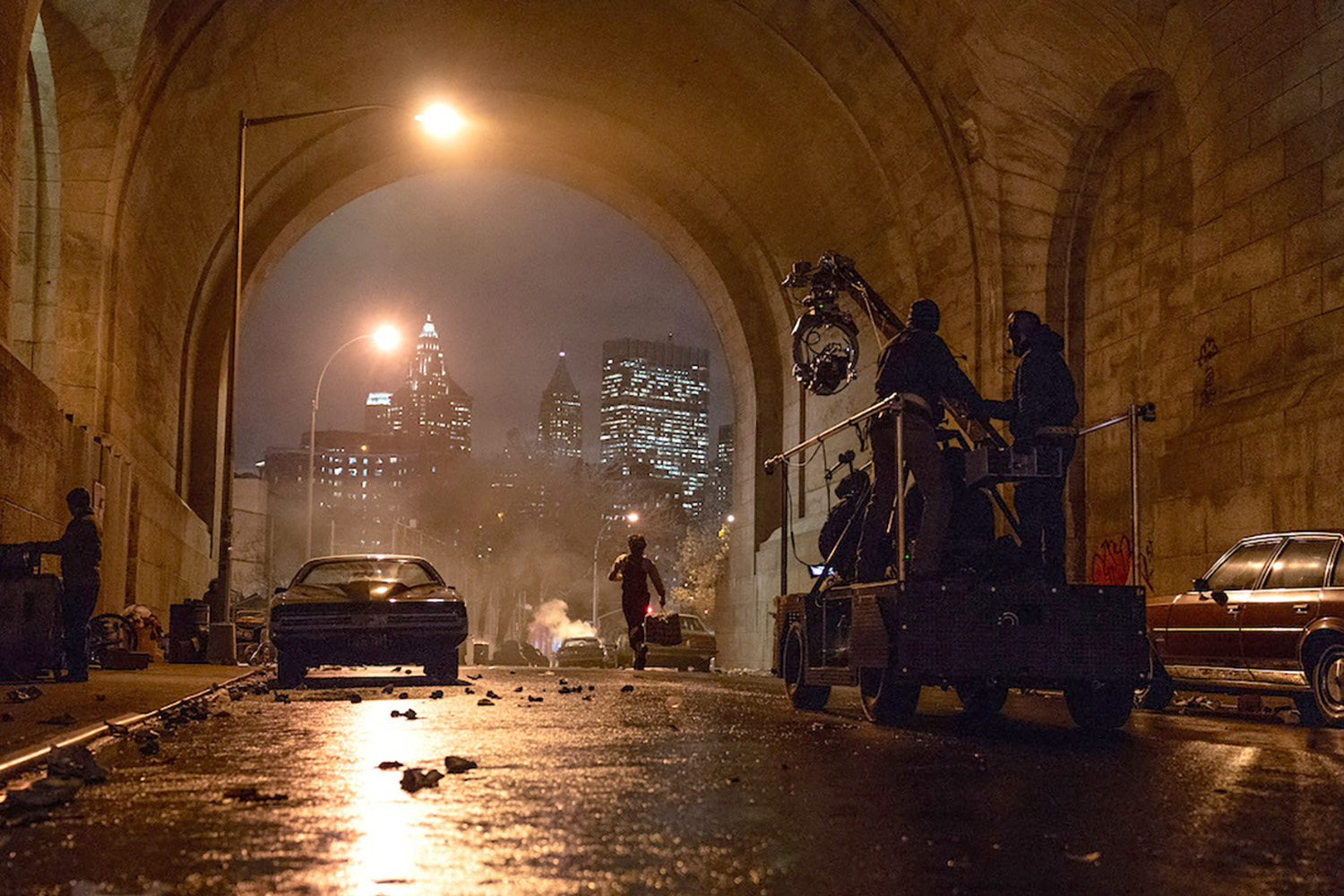
Interestingly, when websites were first cataloging the filming locations in the summer of 2019, some of them placed the action under the Manhattan Bridge, but on the Brooklyn side. This is a common mistake since the bridge’s base looks practically identical on both sides. But the basic landscape is a dead giveaway that they filmed in Manhattan (despite the fact they filmed the earlier phone booth scene under the Brooklyn side of the bridge).
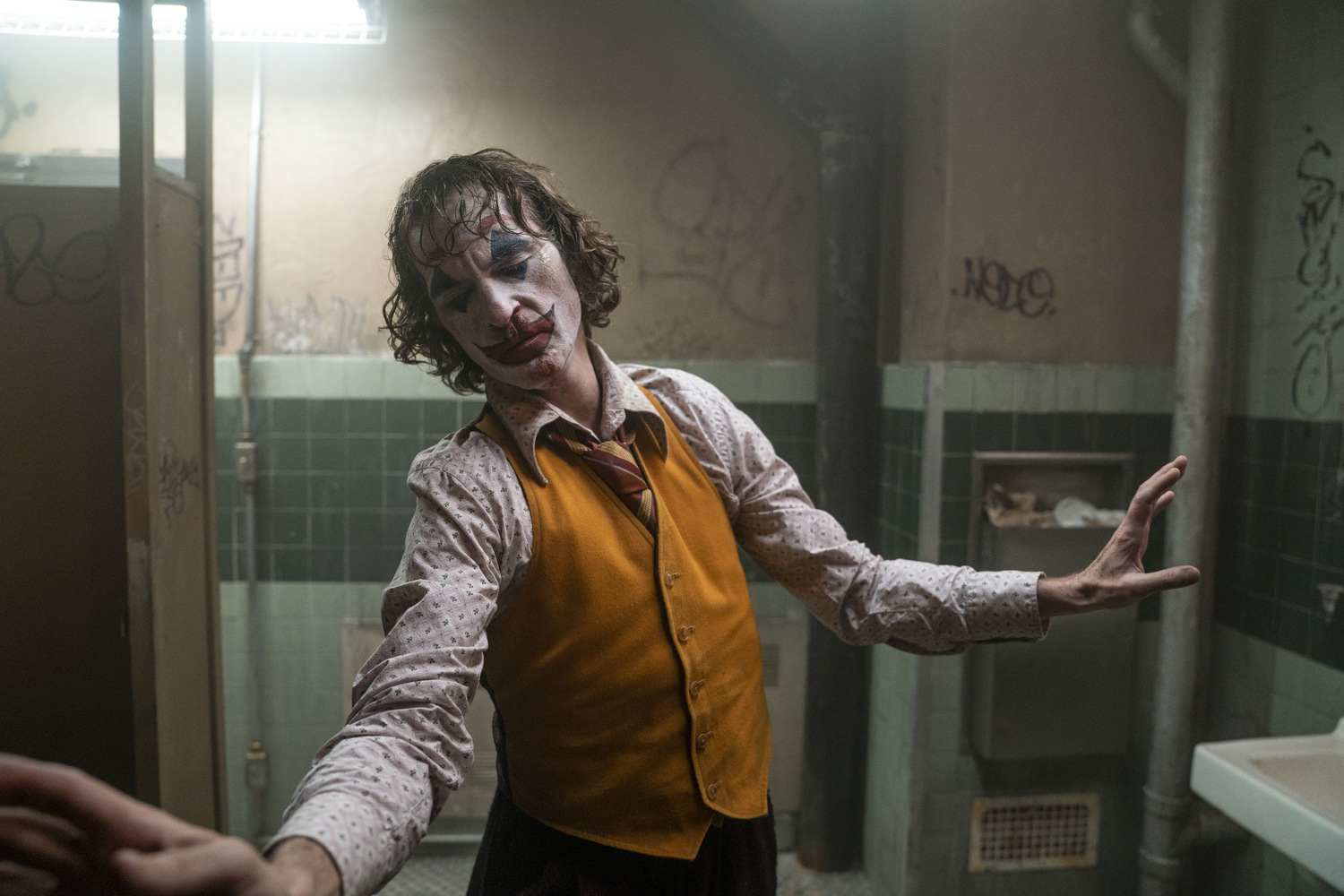
Smartly, the filmmakers chose to switch to a set once Arthur enters the public restroom. Logistically speaking, shooting inside the real bathroom would’ve been nearly impossible (and undoubtedly smelly). Plus, it’s been indicated by both Phoenix and Phillips that the dancing routine inside the restroom was pivotal in the development of the Arthur Fleck character, and by shooting on a soundstage, it gave them the opportunity to take more time to explore the moment.
Ha-Ha’s Talent Agency
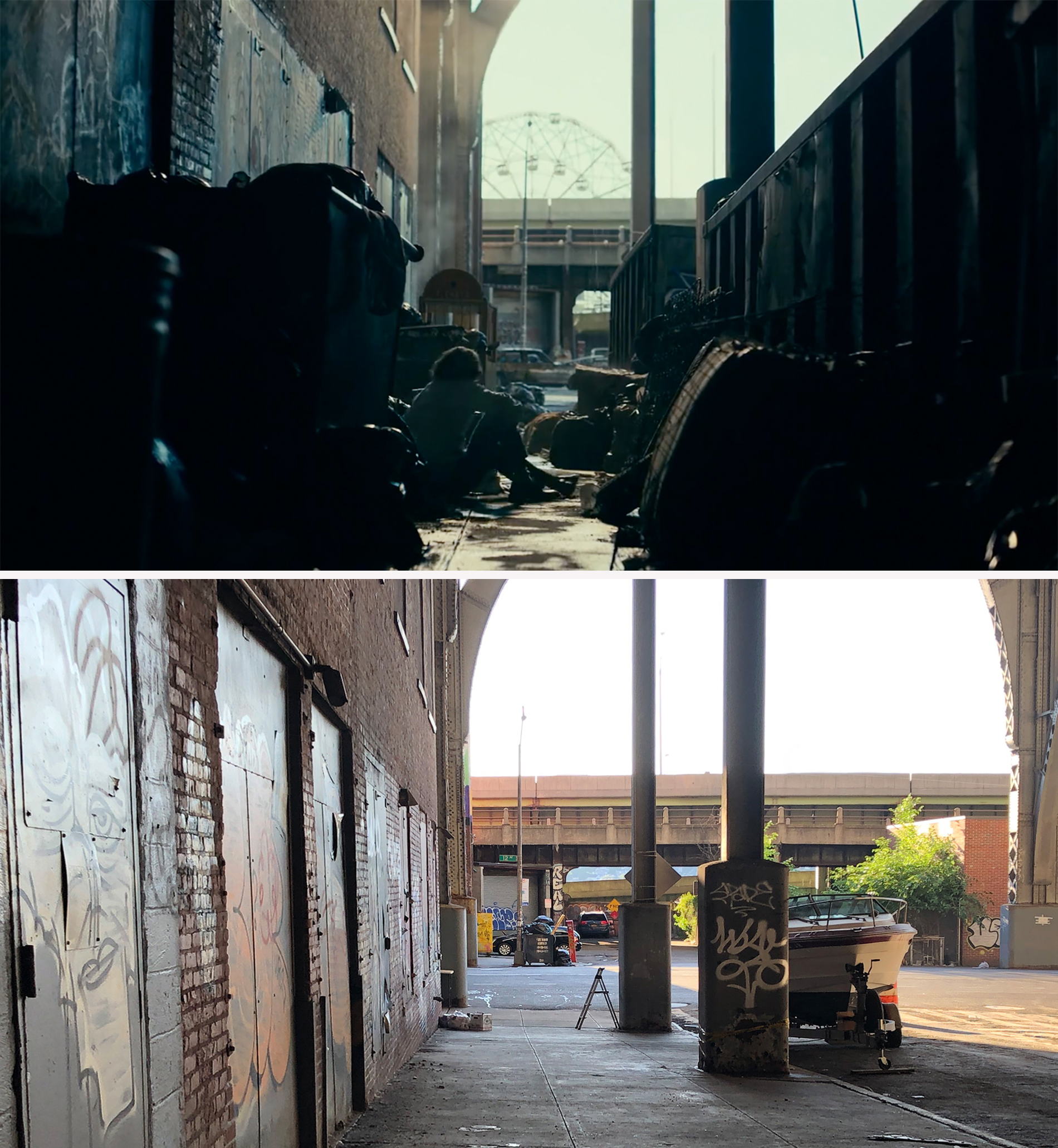
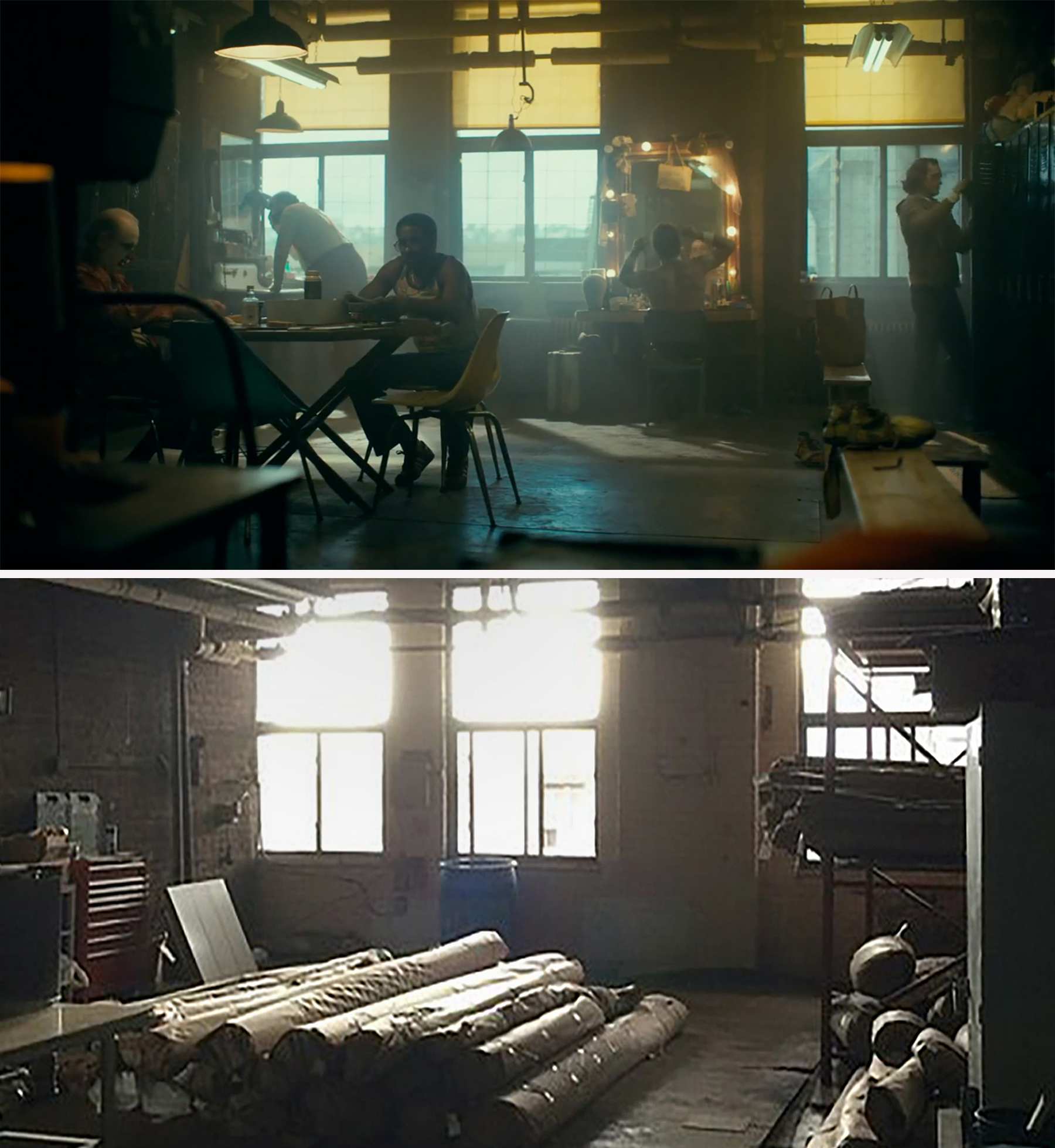
Once again, this filming location was identified even before the movie had officially come out. It was found not from the trailer, but from an amateur video showing the filming of what ultimately ended up being a deleted scene.
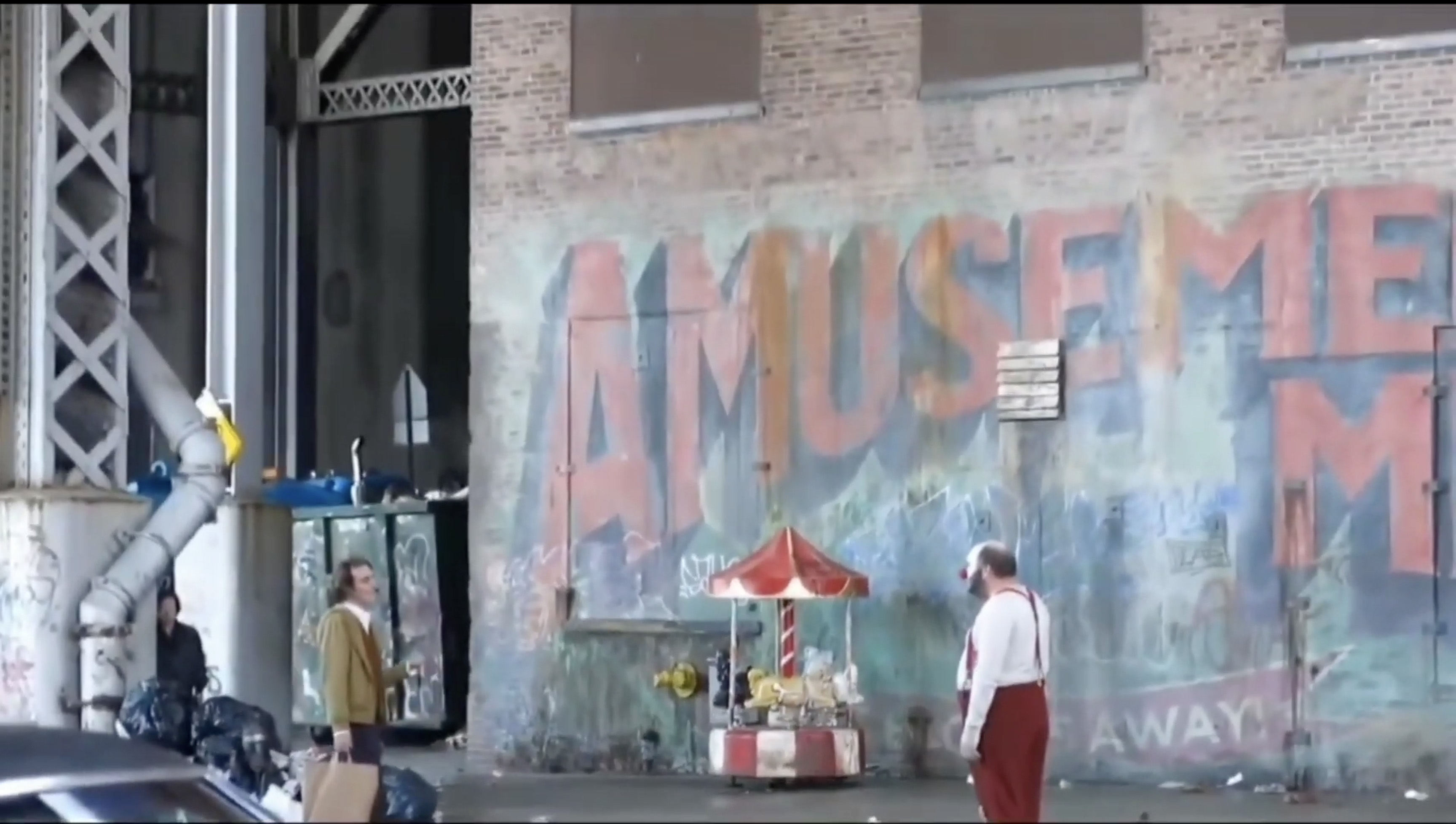
A description accompanying the online video indicated that they were on 12th Avenue, but the surrounding steel columns and latticework were already good clues indicating that they were underneath the Riverside Drive Viaduct.
You might notice that the steelwork on the viaduct looks little like what’s on the Queensboro Bridge, which was featured in that earlier bus scene. This was probably done on purpose by the production designers, but the similarity apparently threw off a couple Joker fans who thought the bus scene was filmed on 12th Avenue under the viaduct.
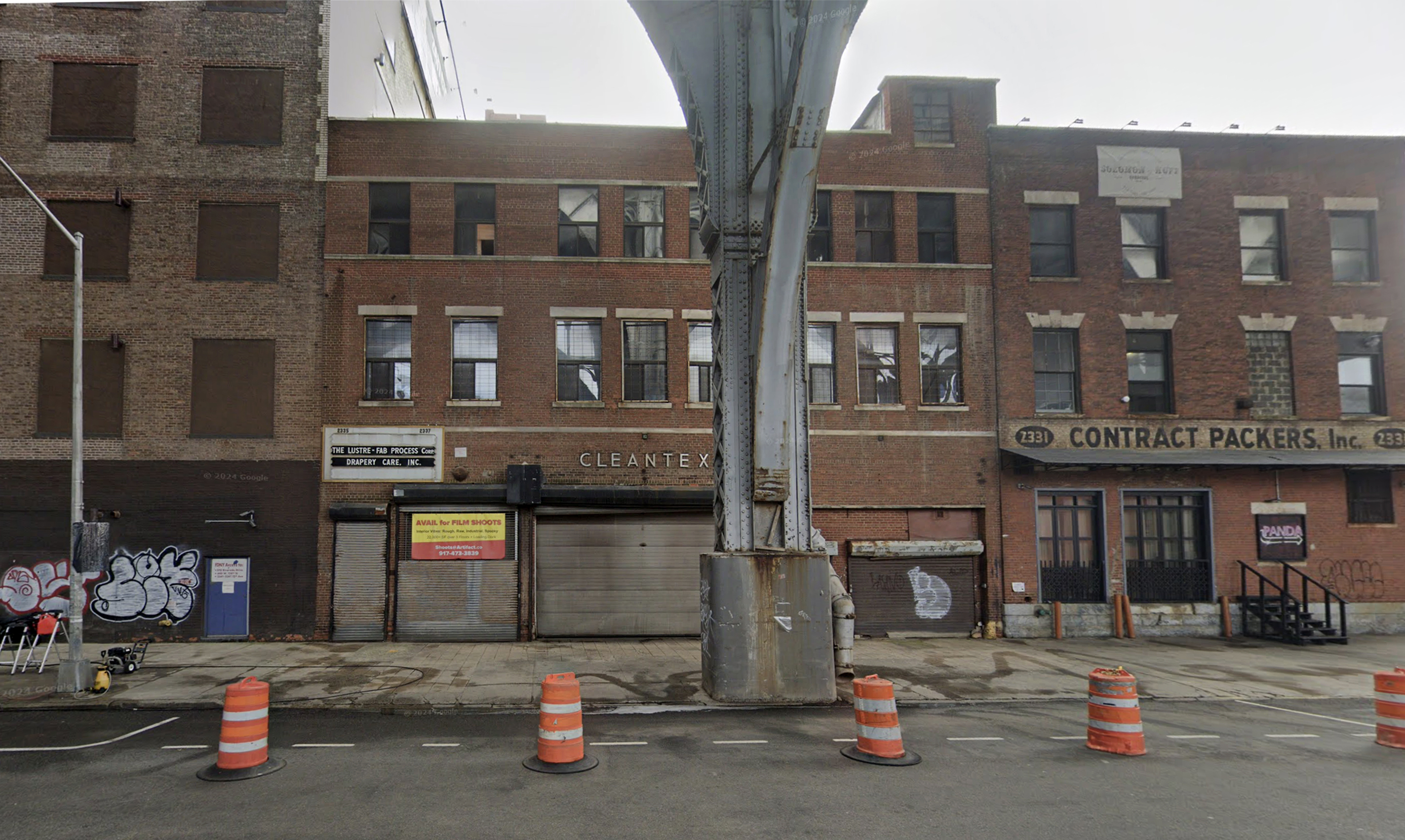
Sadly, the building at 2335-37 12th Avenue where the talent agency was set is currently being prepped for demolition. It’s part of an unfortunate trend that’s been taking place along the Manhattanville avenue for the last ten years or so.
Currently, only about a third of the original industrial buildings are still intact, and that number will inevitably go down in the future.
Going on a Date with Sophie
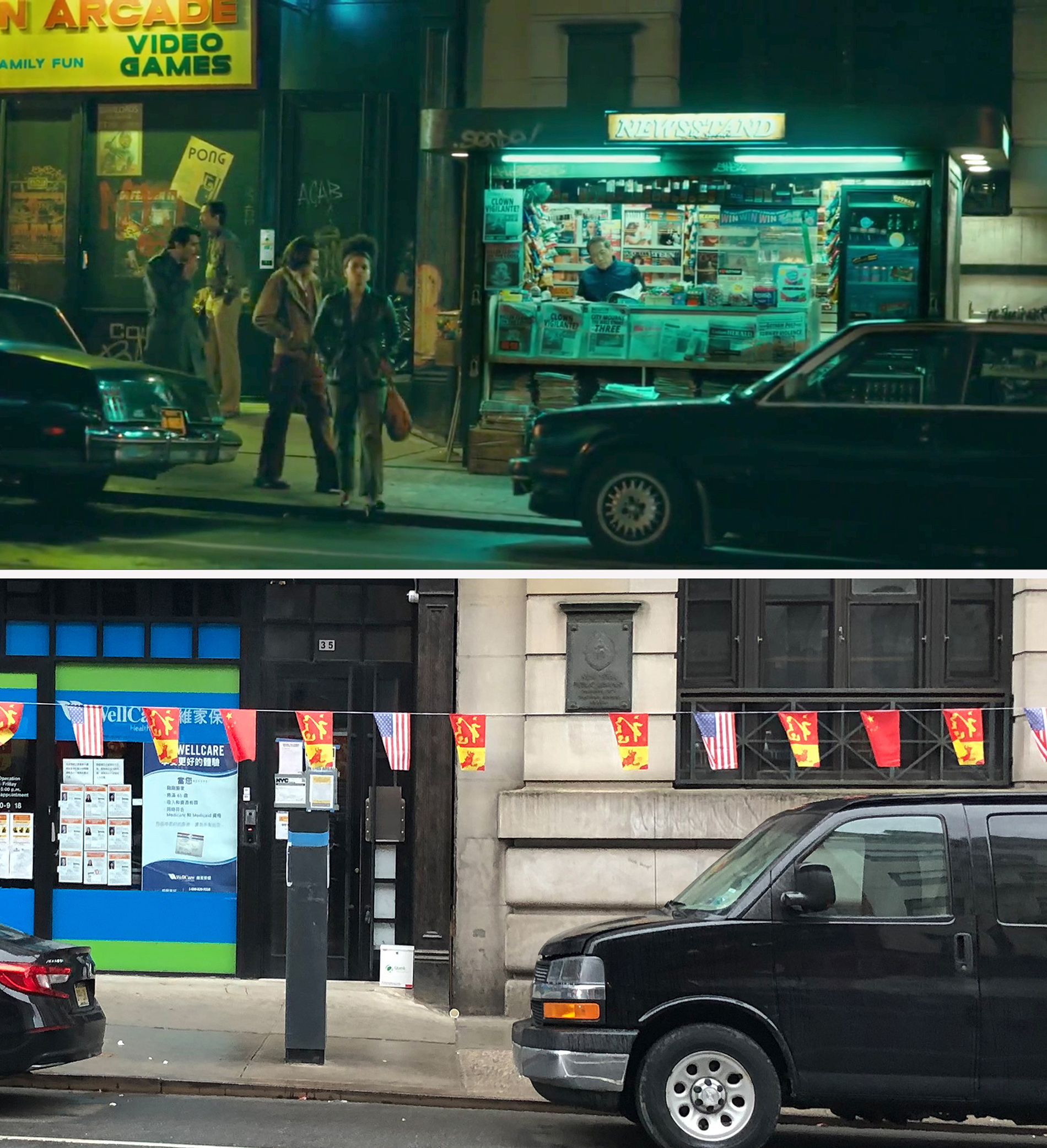
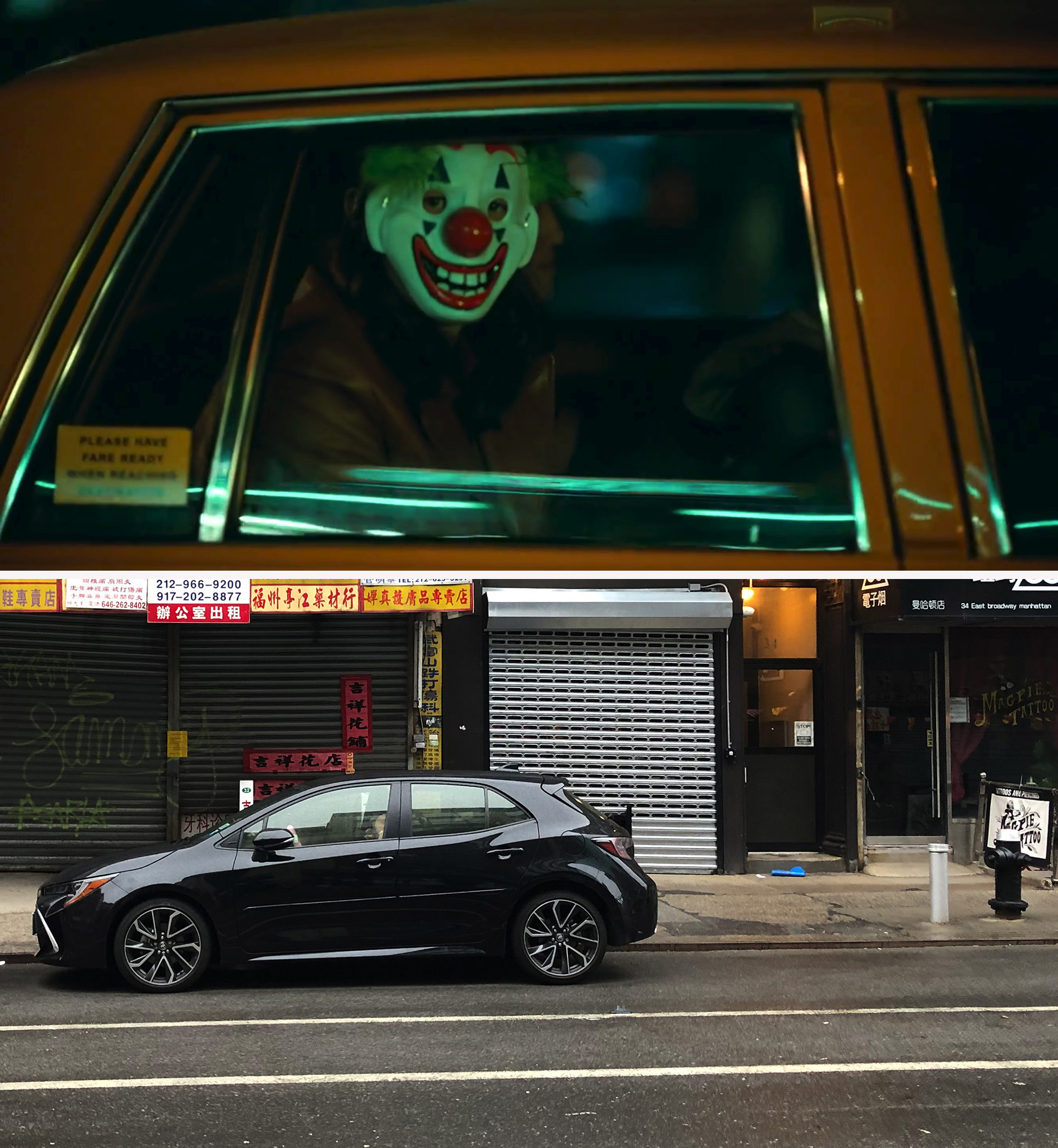
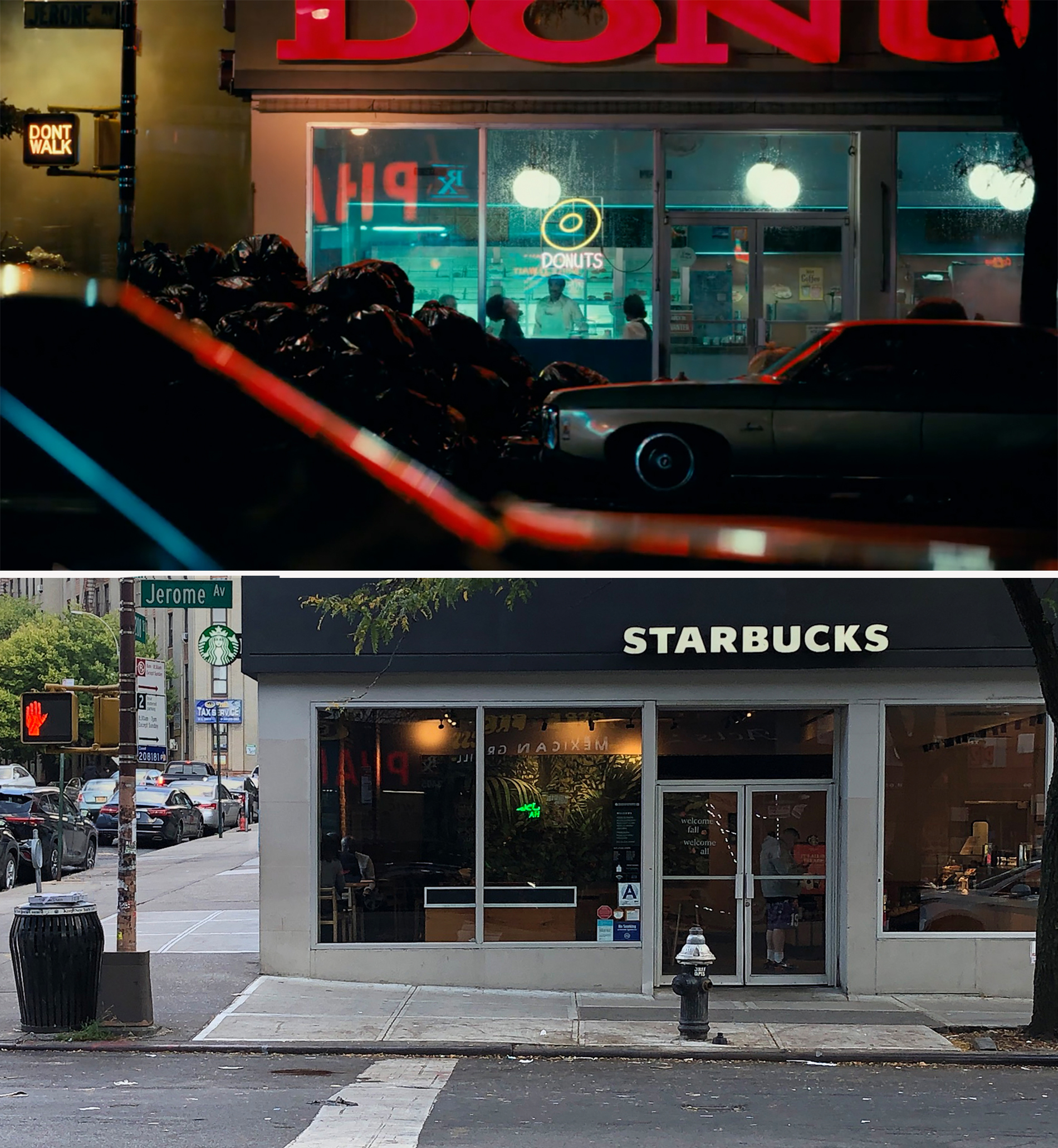
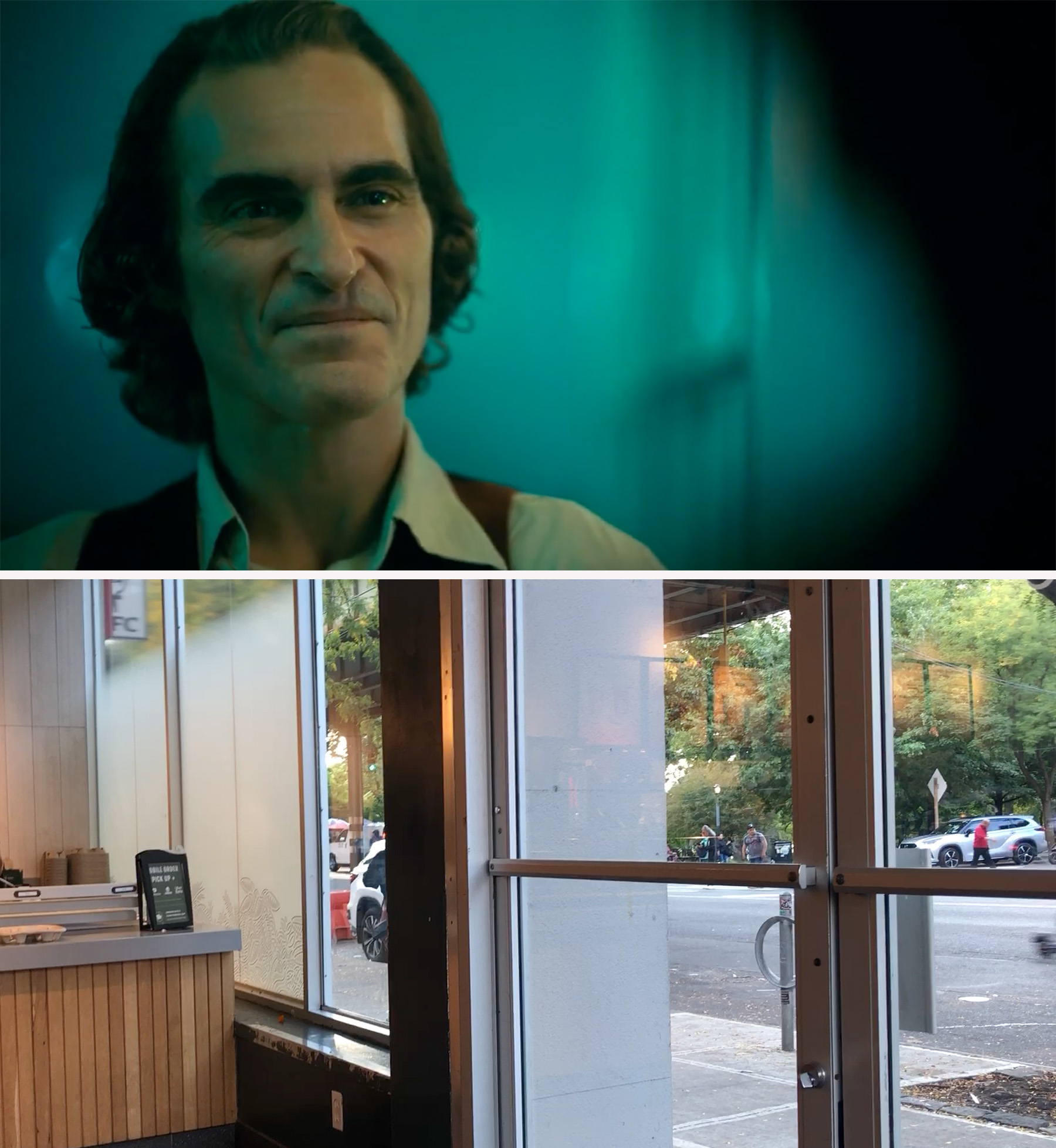
While the newsstand was added by production in the first part of this date sequence, the donut signage was real. Twin Donut is a franchise coffee and donut business that began in the 1950s, and even in modern times, the small mastery outlets maintained a midcentury vibe. I’m sure that’s why it was chosen by the Joker filmmakers.
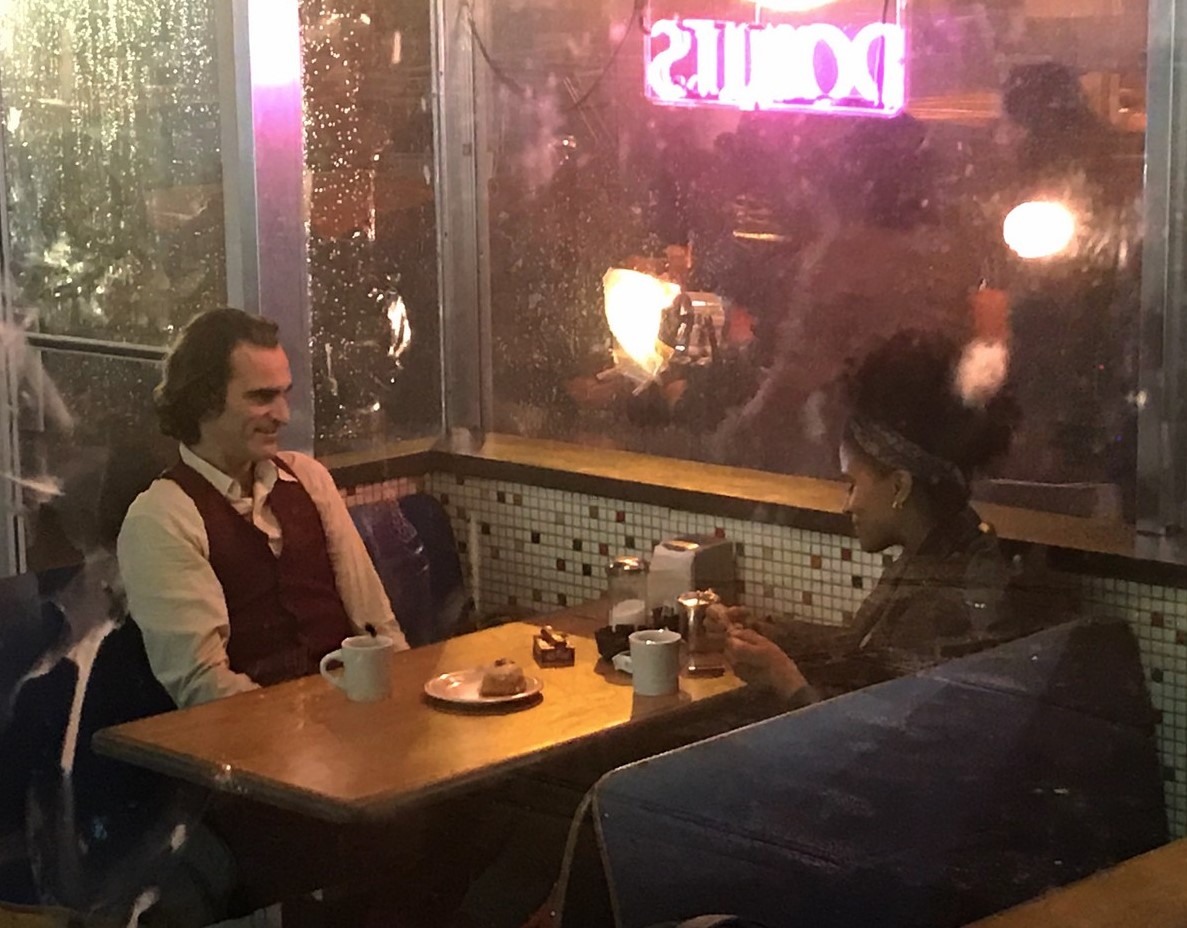
Even though the Twin Donut on Jerome Avenue, which was used in this movie, has been replaced by a Starbucks, the franchise is still managing to stick around — no small feat when you’re competing with the ubiquitous Dunkin empire.
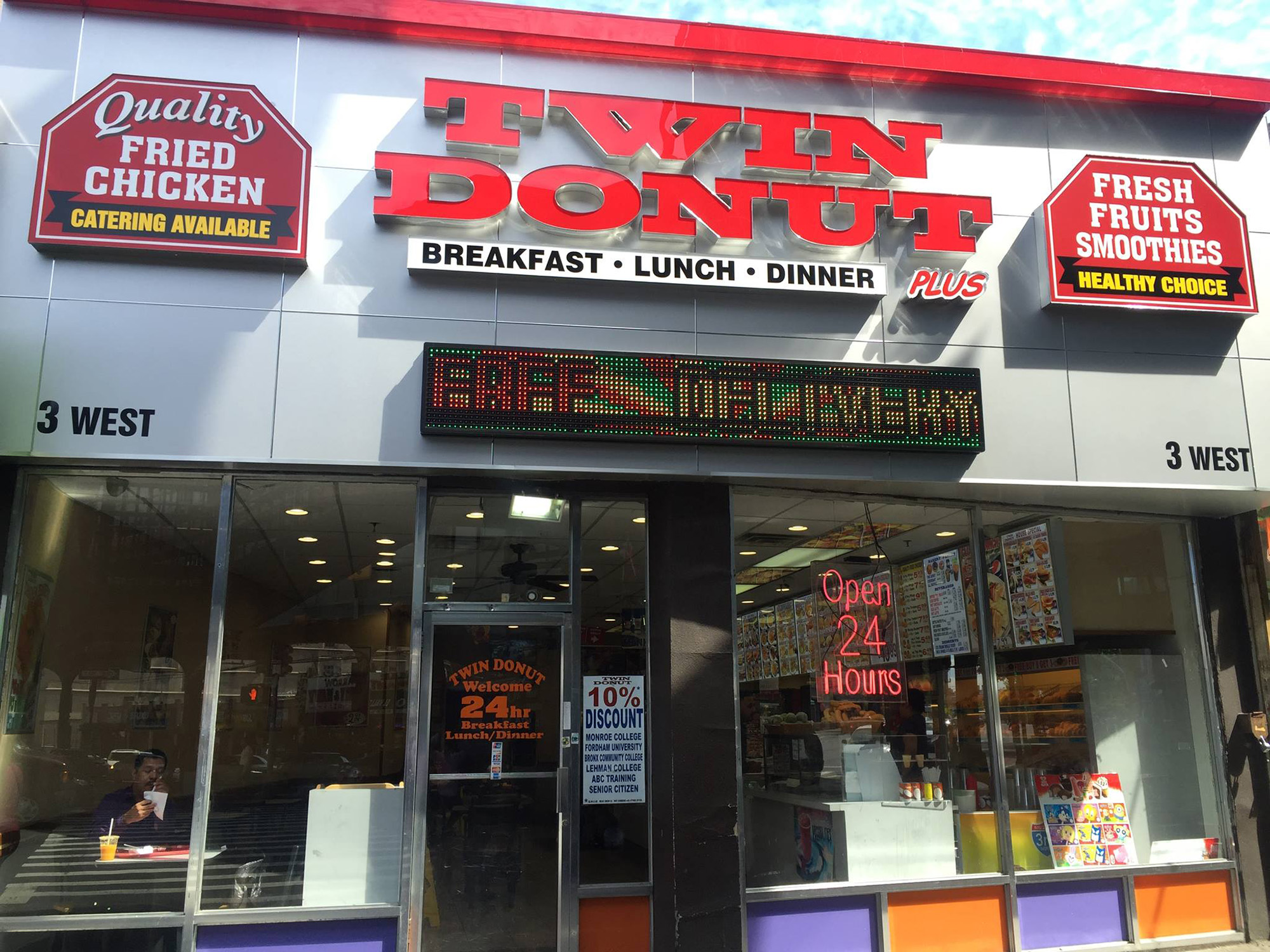
As far as I can tell, there are only two Twin Donuts left in NYC and both of them are in the Bronx (you might say a set of twin Twins). But in each case, they have expanded into a “Plus” model, making them more of a fried chicken/deli that also serves breakfast pastries.
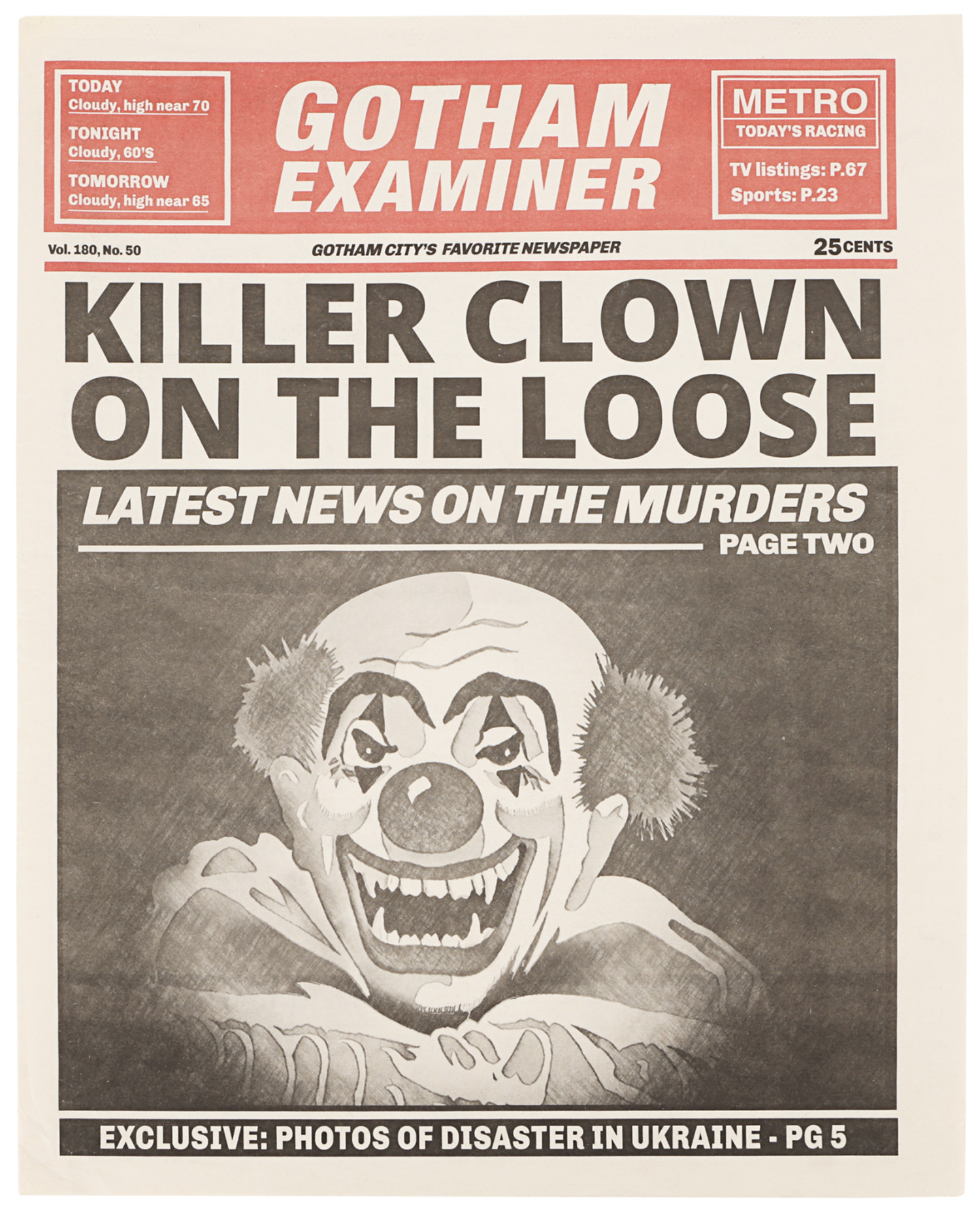
I don’t have much to say about the newsstand scene location, but I did happen to notice that a couple of the prop newspapers have found their way to online auction sites.
To my amazement, they were being valued between four and ten thousand dollars. Needless to say, that sounds criminally high.
Wayne Manor
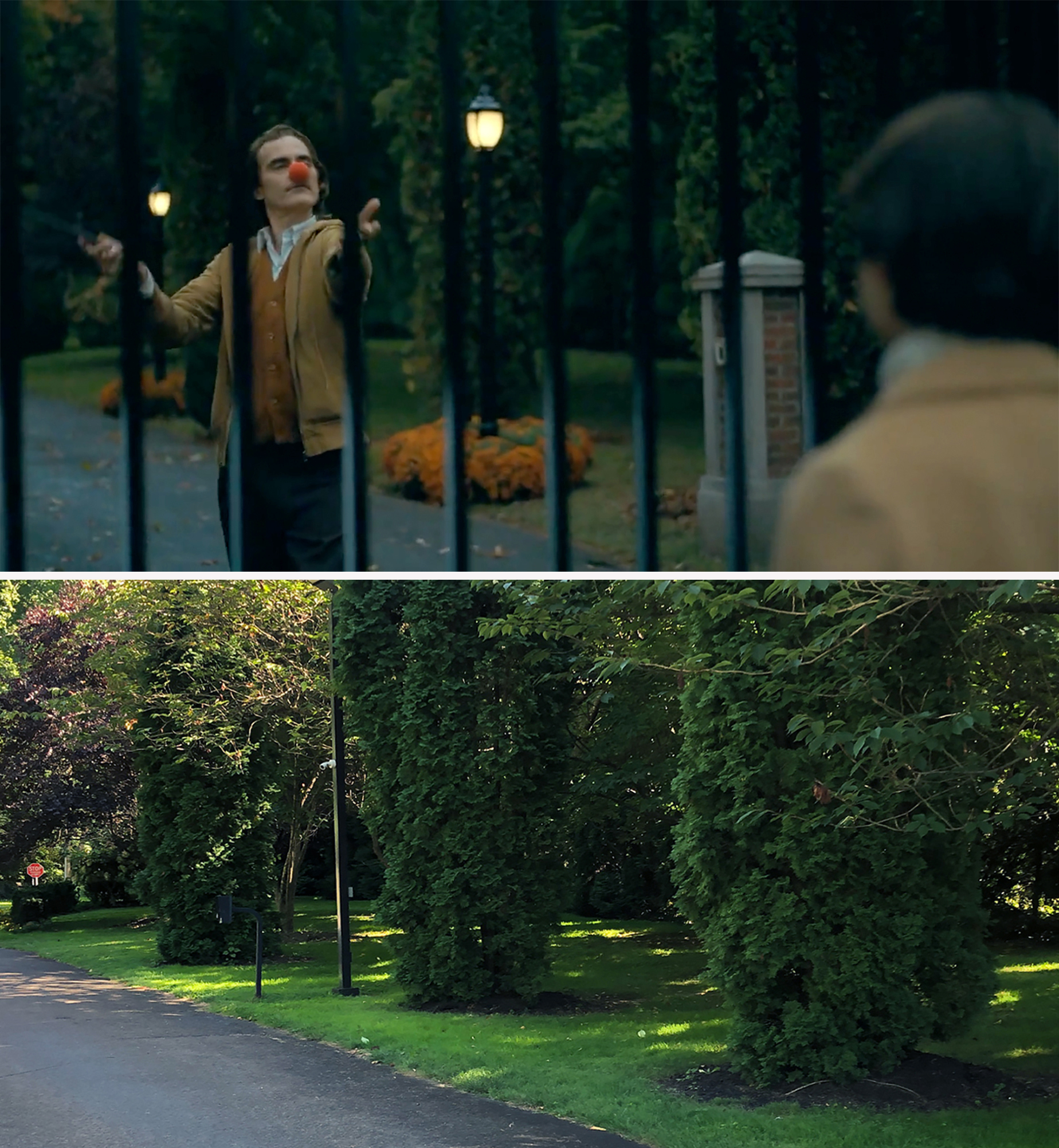
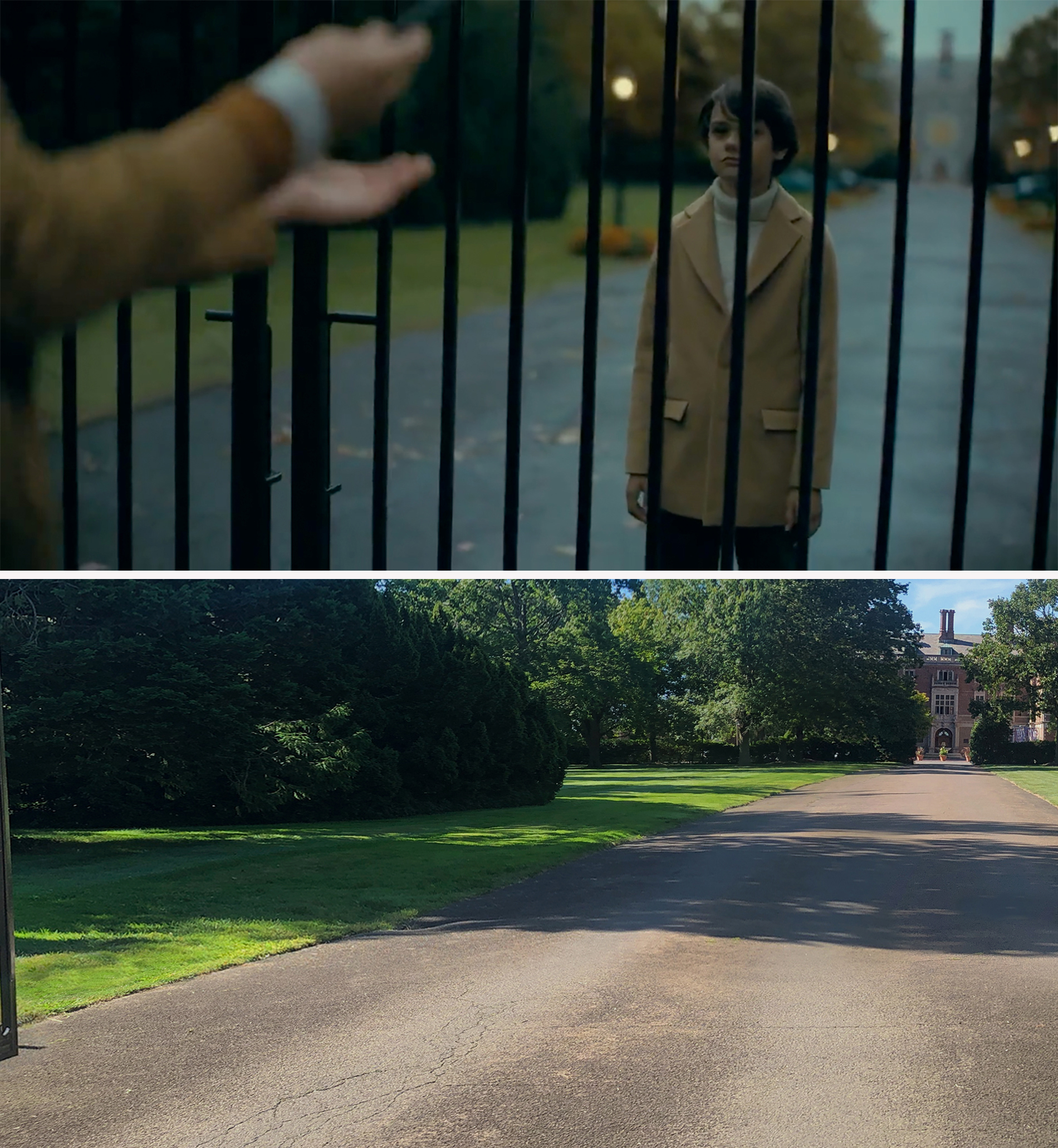
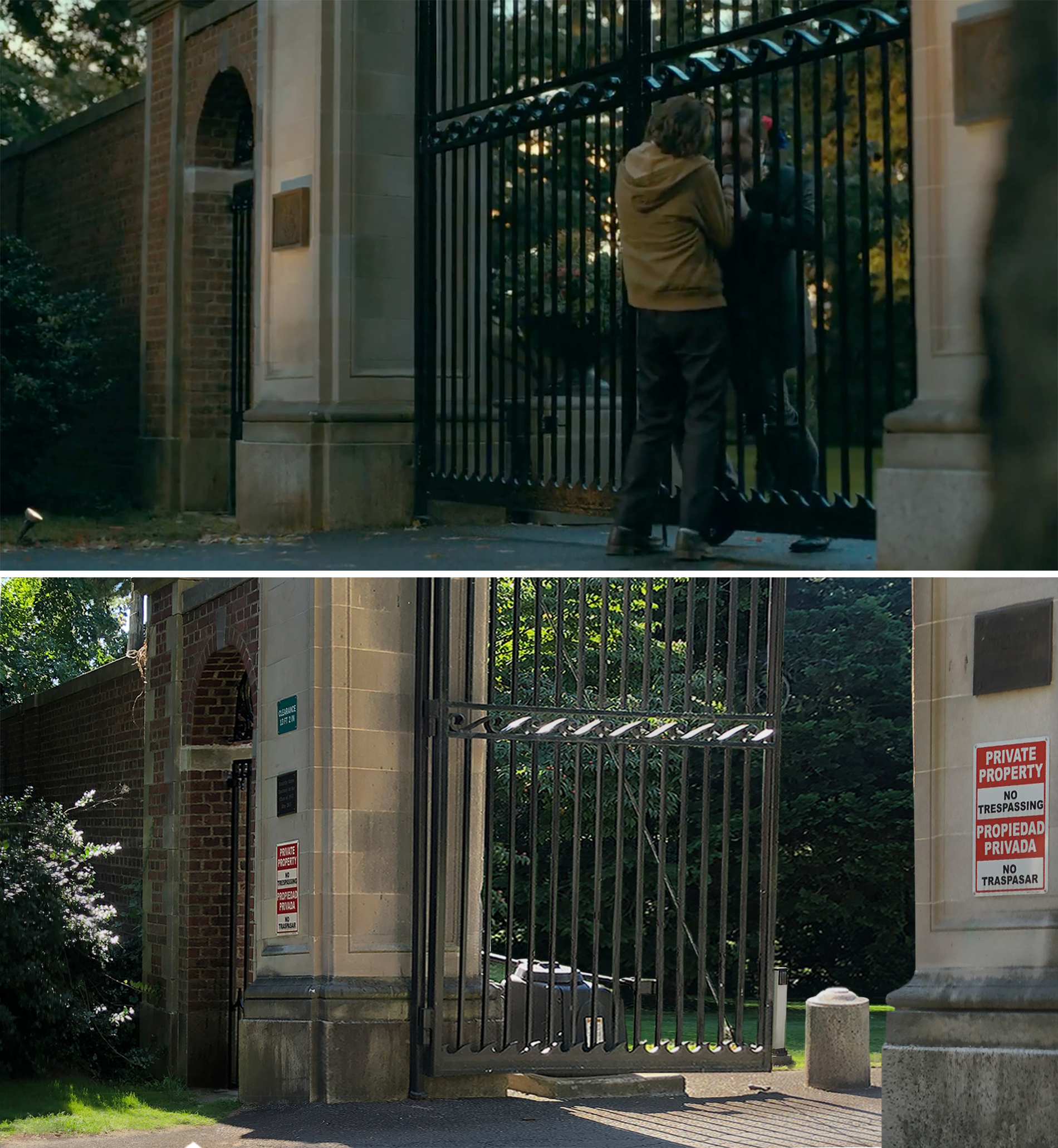
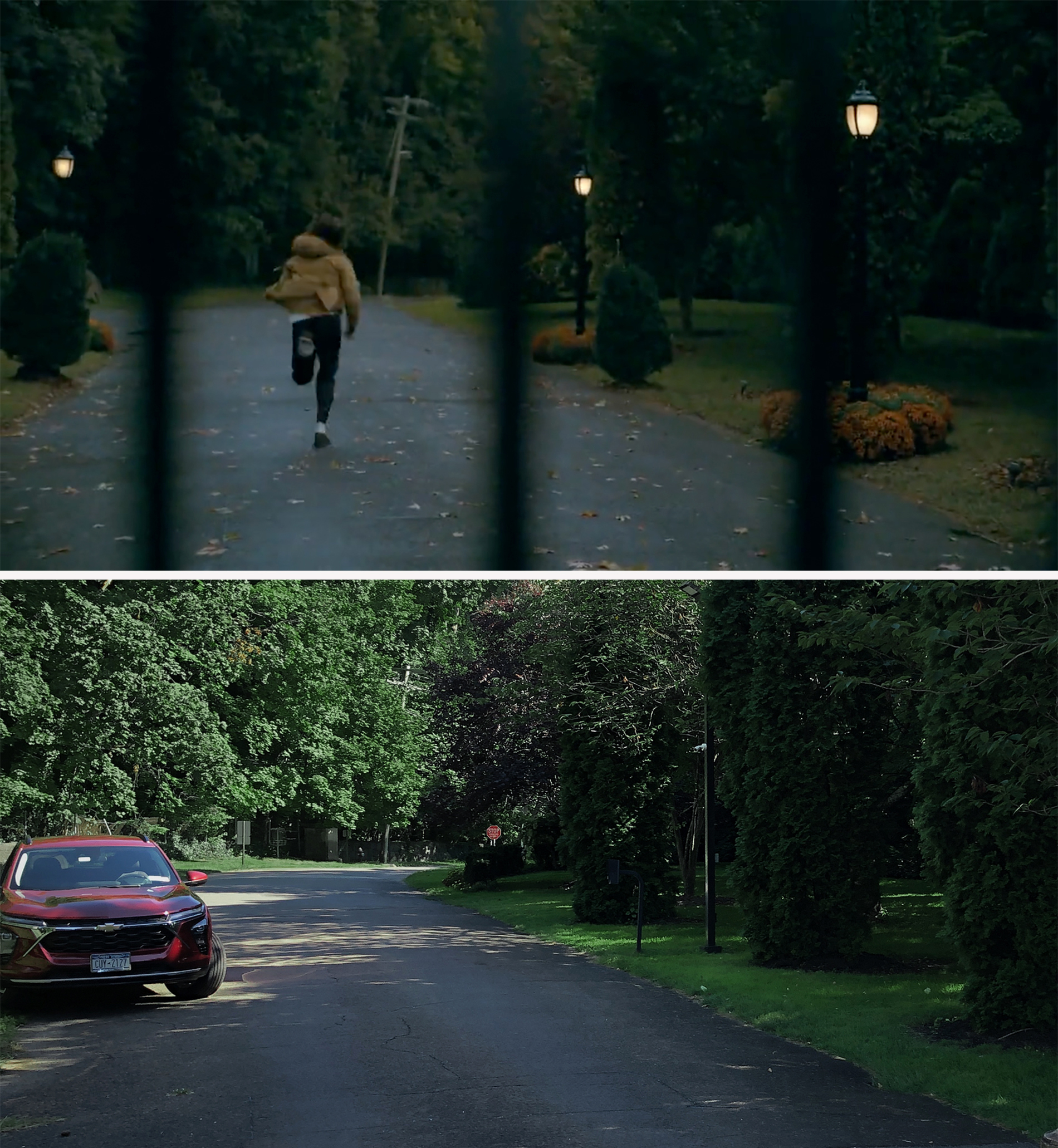
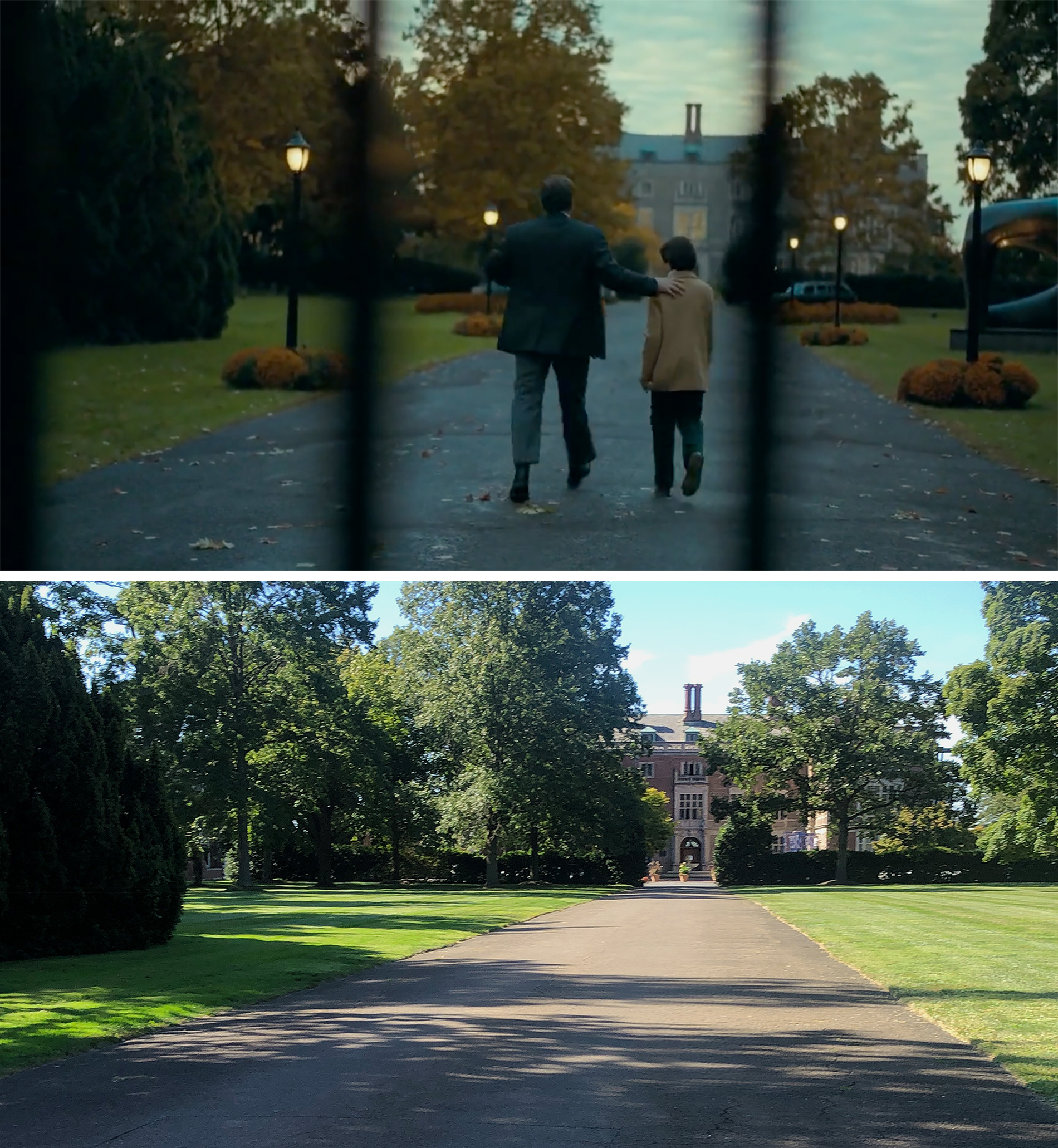
This Wayne Manor location was one of the last places I visited for this film, mainly because it’s on the north shore of Long Island and not super easy to get to without a car. I finally made it up there this past September after meeting my aunt Mary for lunch in the village of Glen Cove.
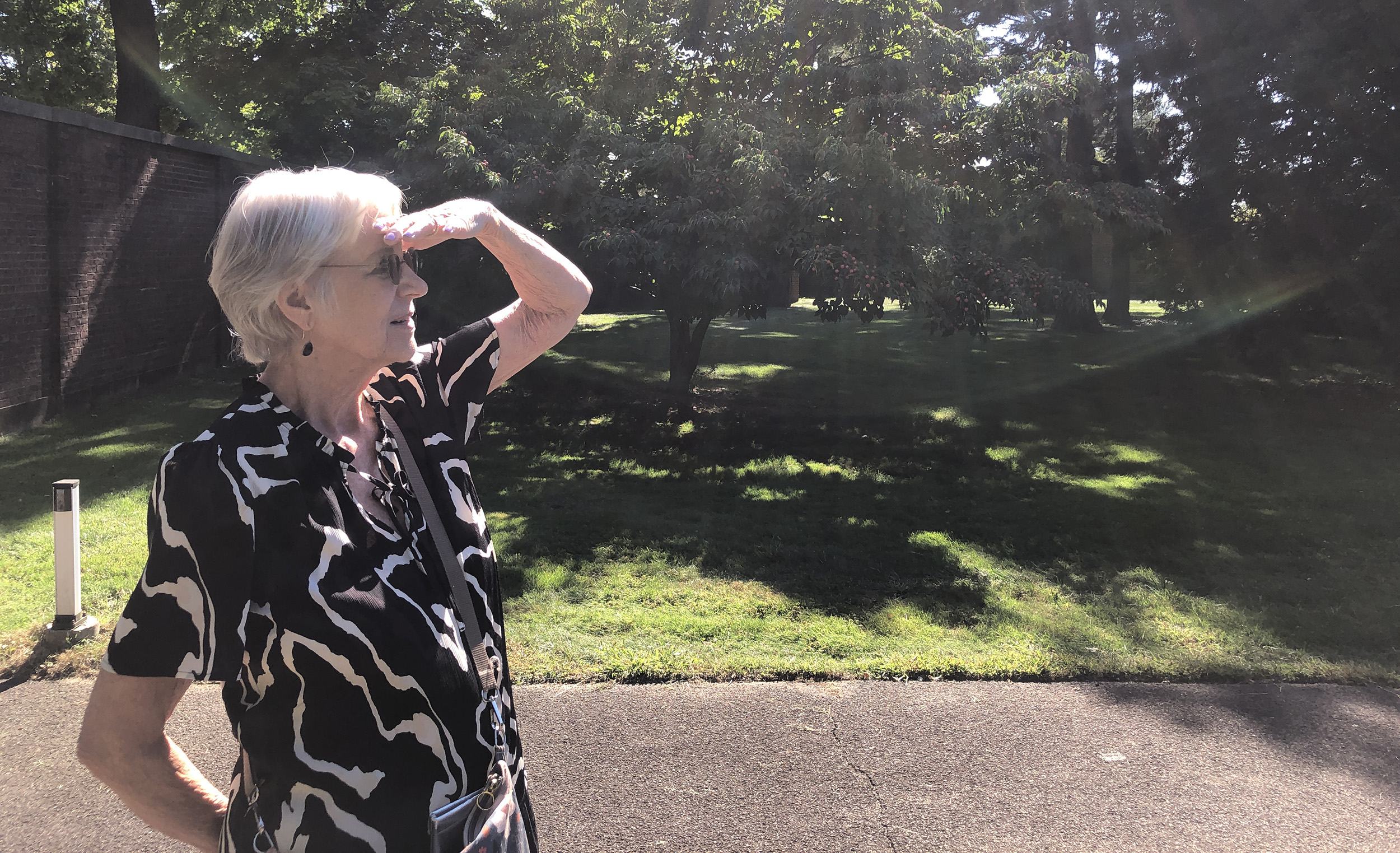
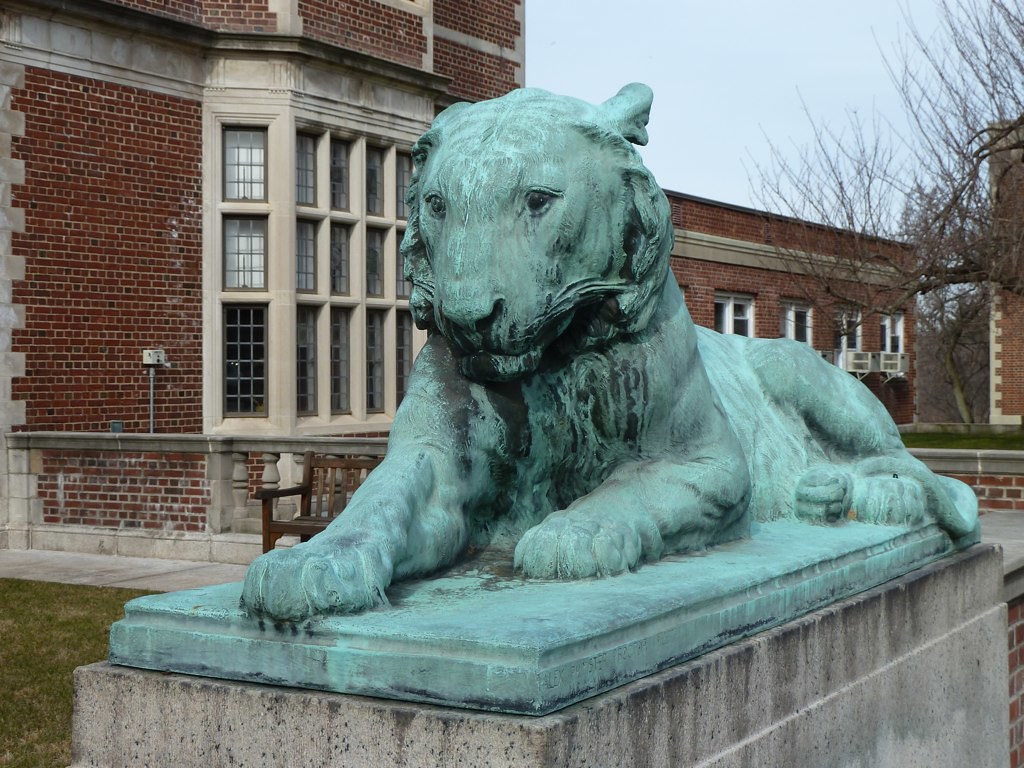
Thankfully, she was enthusiastic to join me on an afternoon movie-location driving tour, starting with the Webb Institute of Technology on Crescent Beach Road.
The campus’s Stevenson Taylor Hall has actually stood in for Wayne Manor in a couple different Batman projects. It was used in the TV series Gotham as well as the 1995 film Batman Forever.
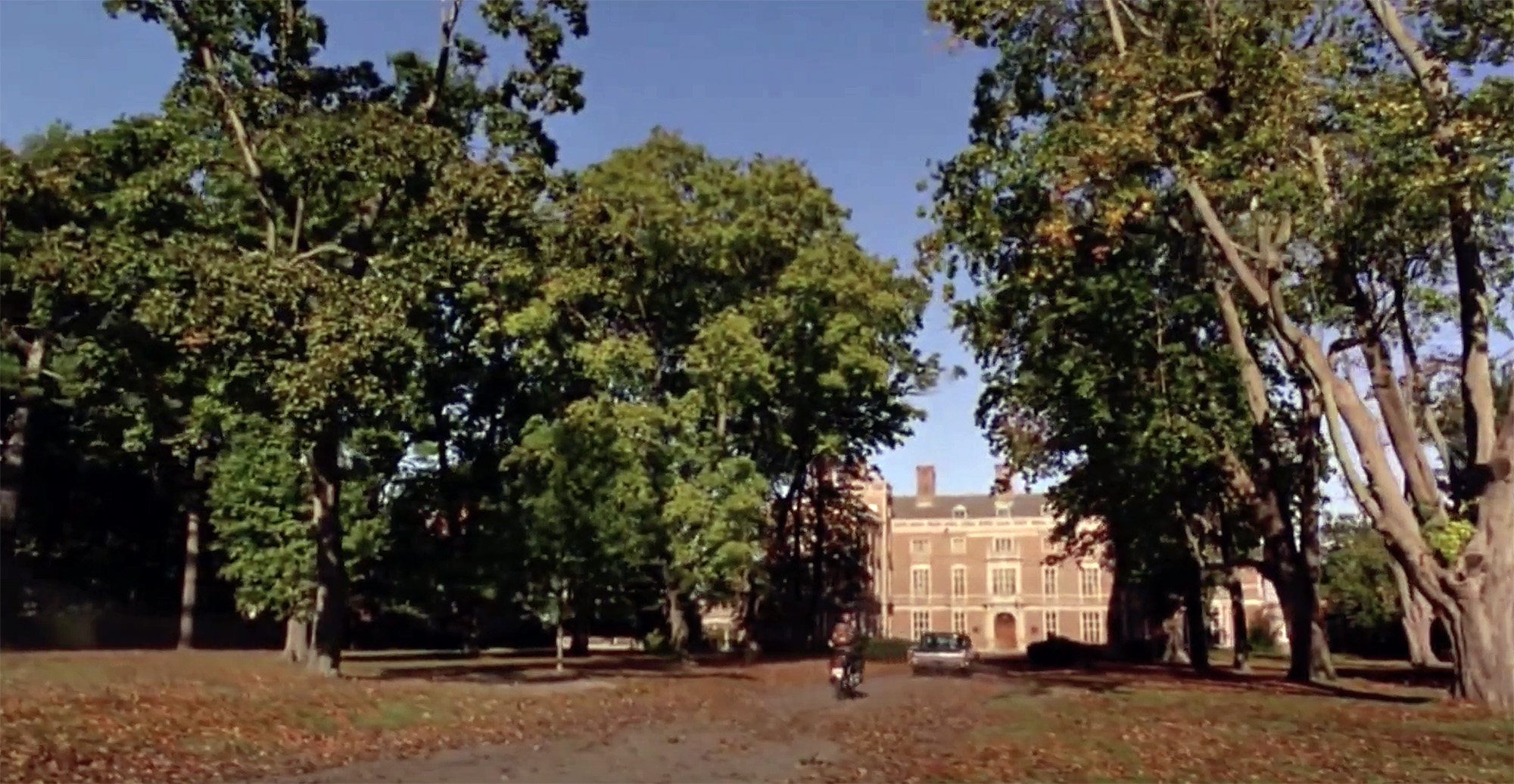
Of course, in each instance, the crew added statues, lampposts and other affluent touches to make it look more like a rich man’s estate, opposed to a Long Island engineering college.
Penny Fleck Goes to the Hospital
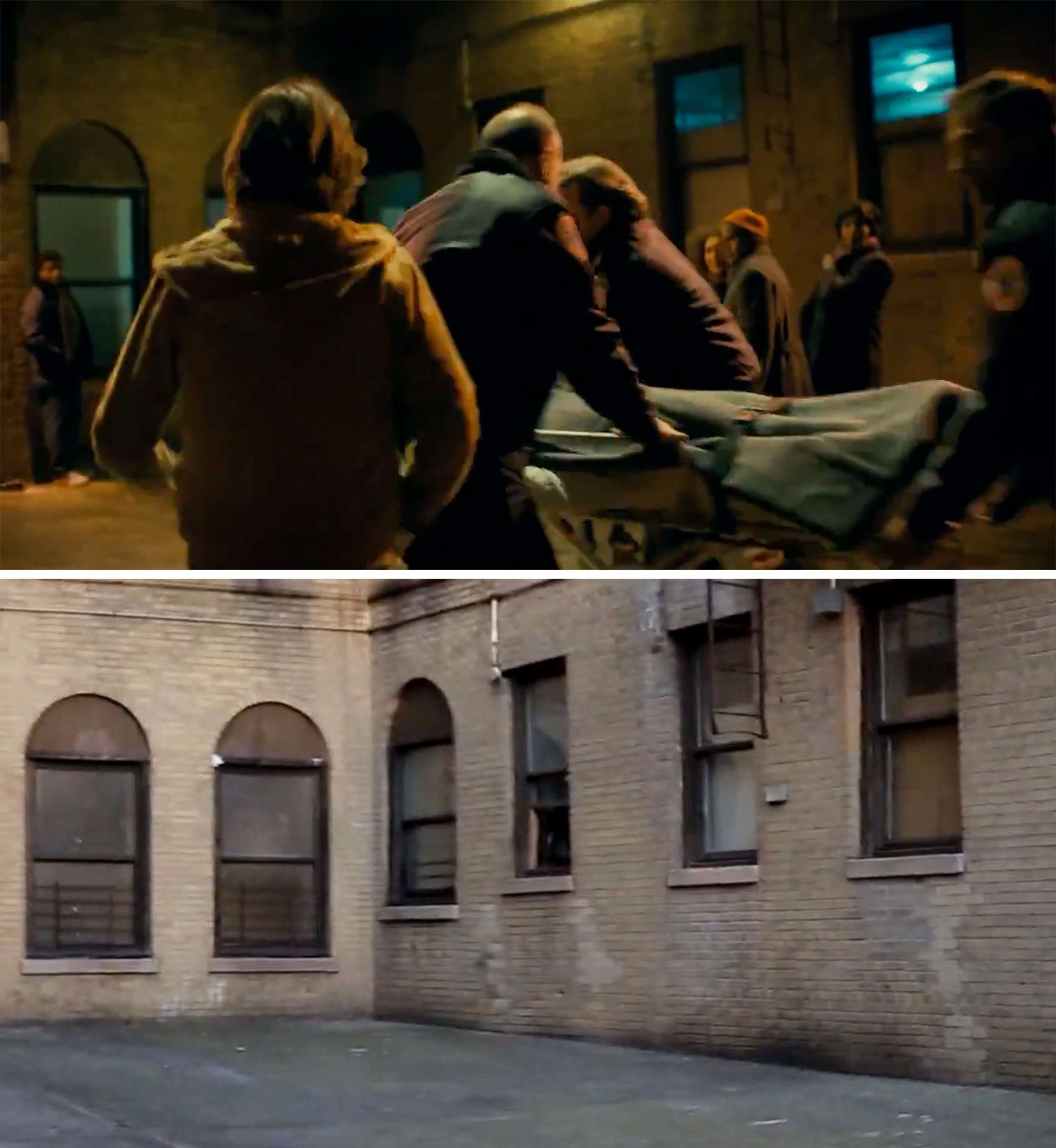
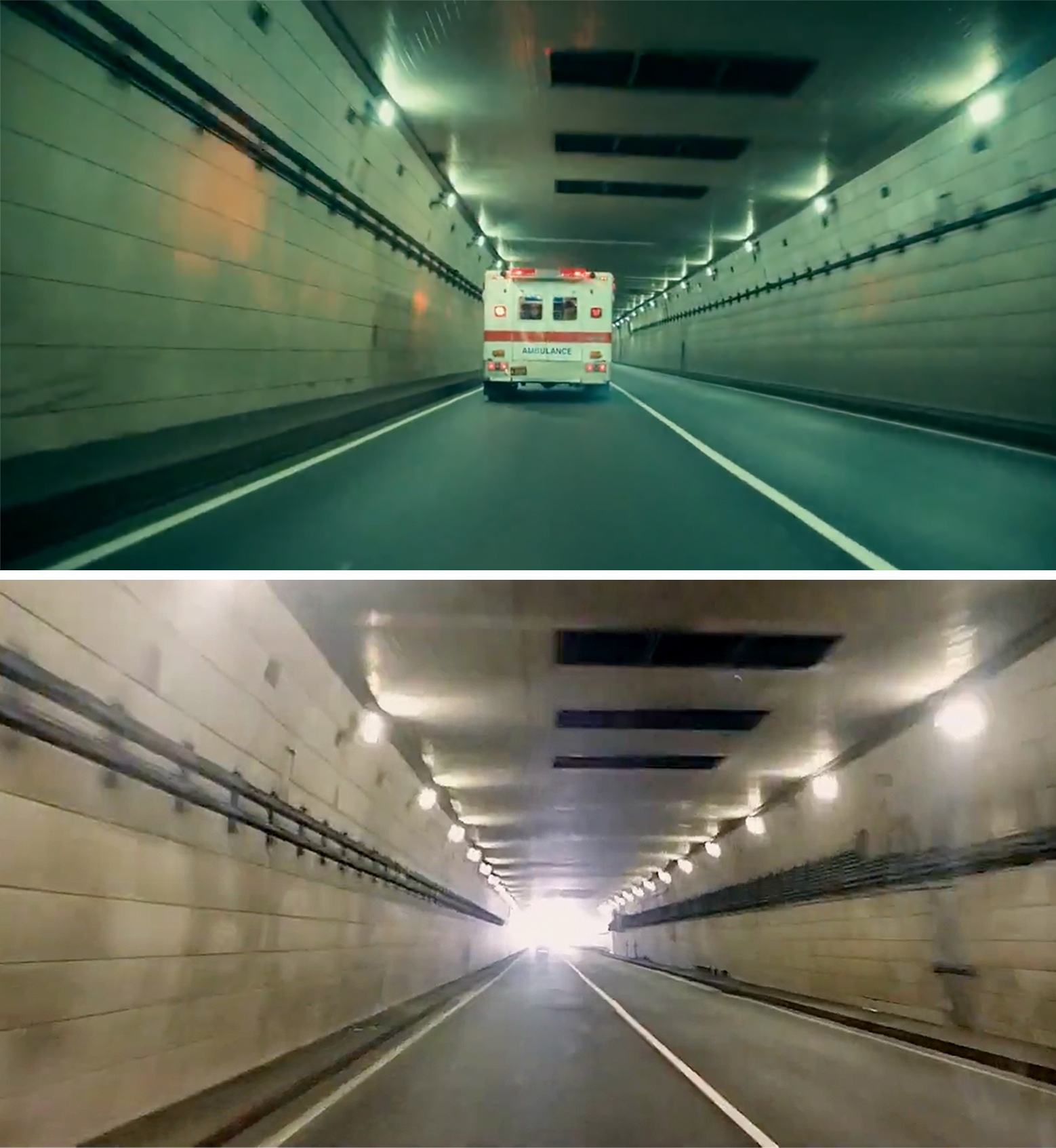
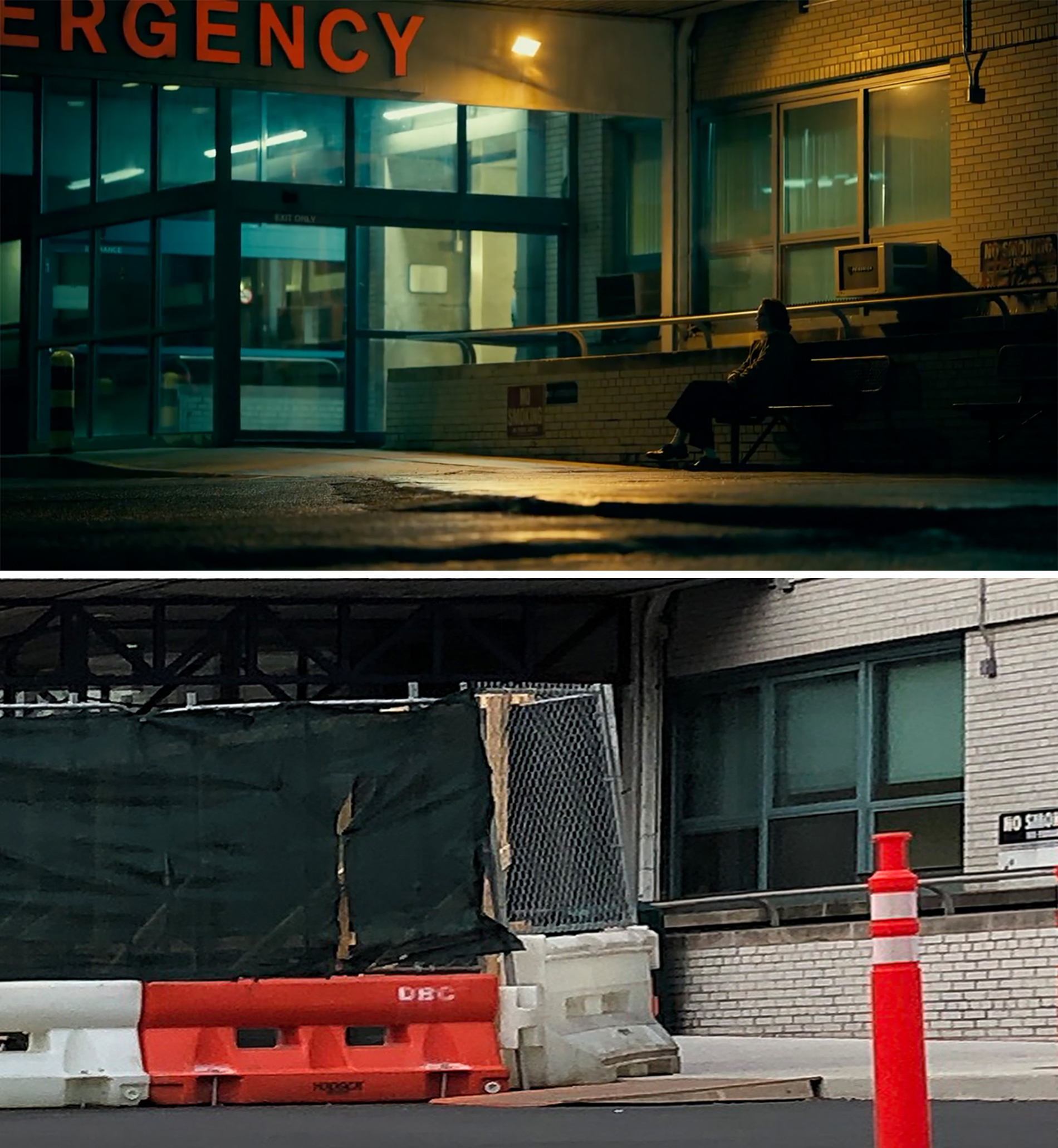
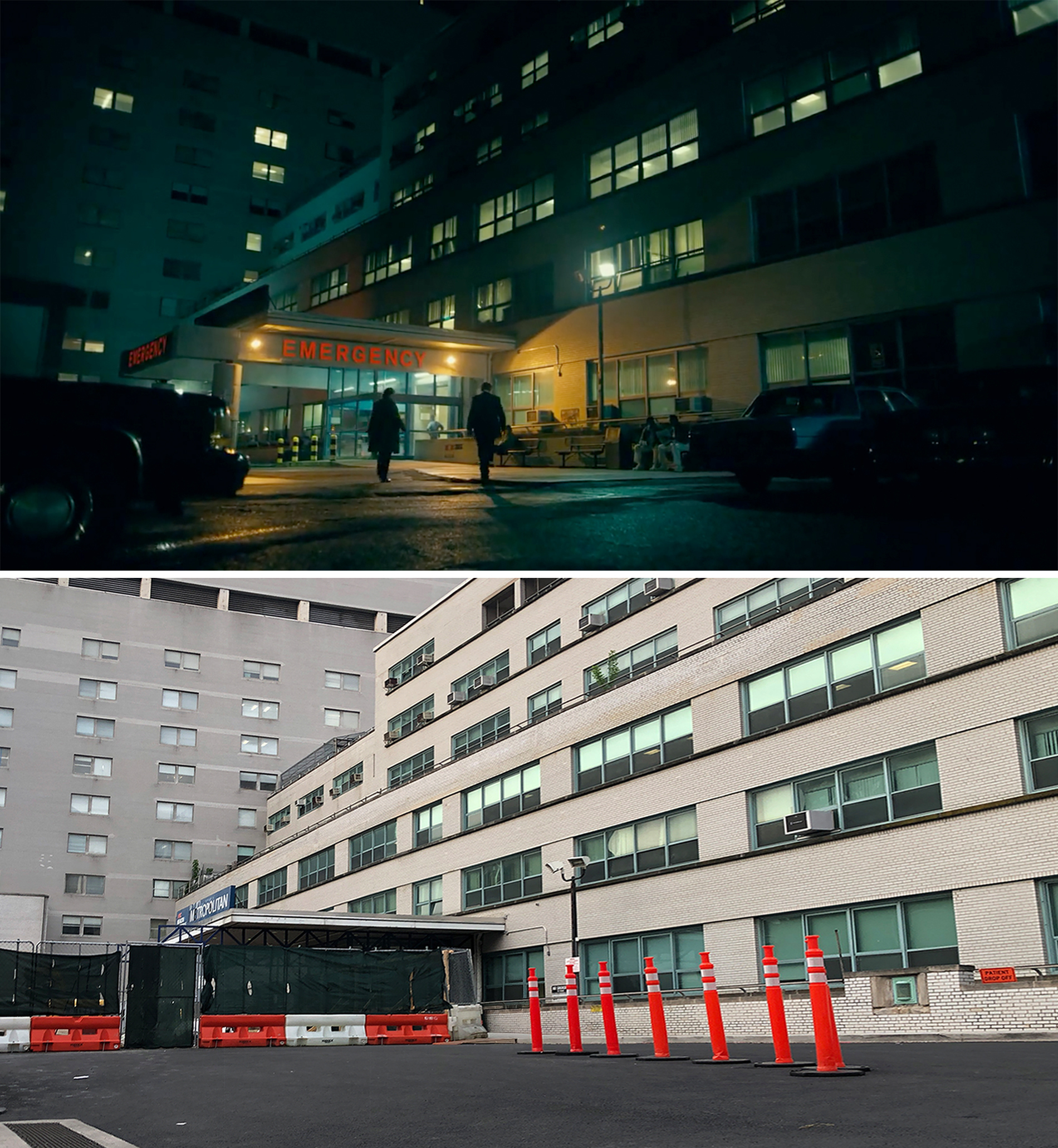
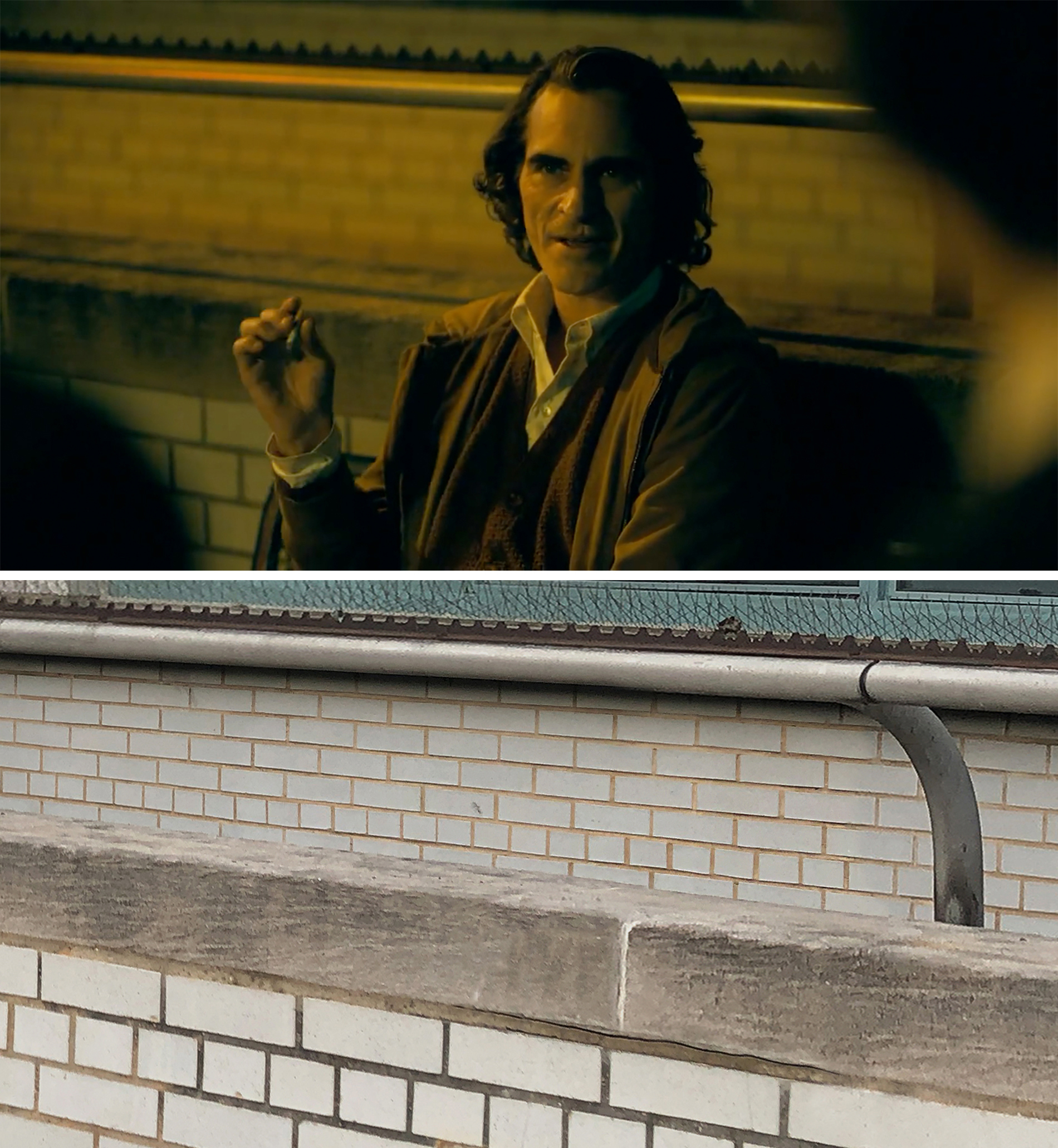
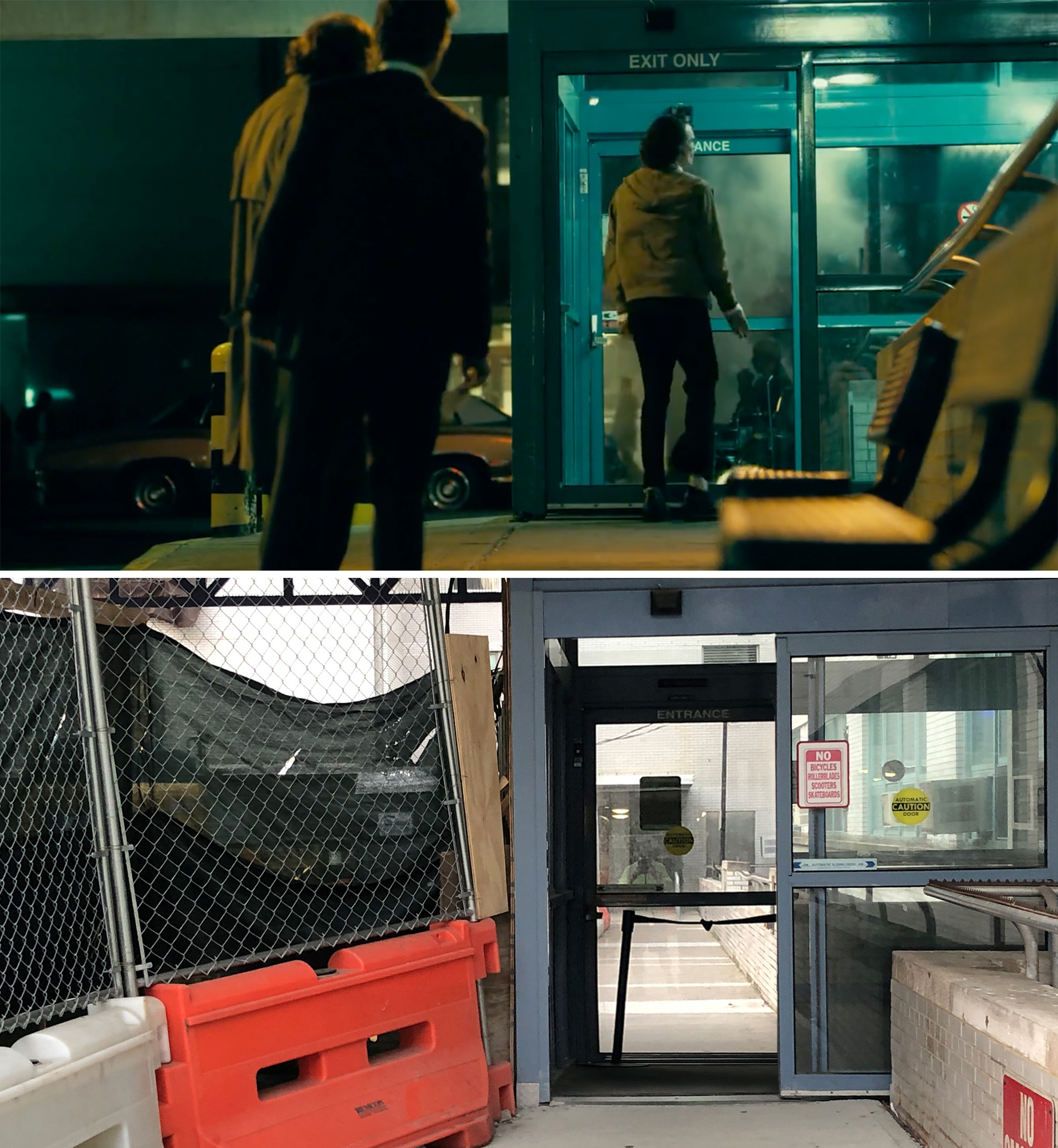
The action returns to NYC Health + Hospitals/Metropolitan in East Harlem, although story-wise, I’m not sure if it’s supposed to be the same place. They shot the police confrontation at the Second Avenue entrance, which threw me off for a moment as I was more familiar with the one on First Avenue.

As you can see from the “then/now” images above, the hospital is currently getting some major renovations, almost making the Second Avenue entrance appear closed. Part of the upgrade includes the construction of a perimeter flood wall and an upgraded storm water pumping system to protect itself from the impacts of future storm surges.
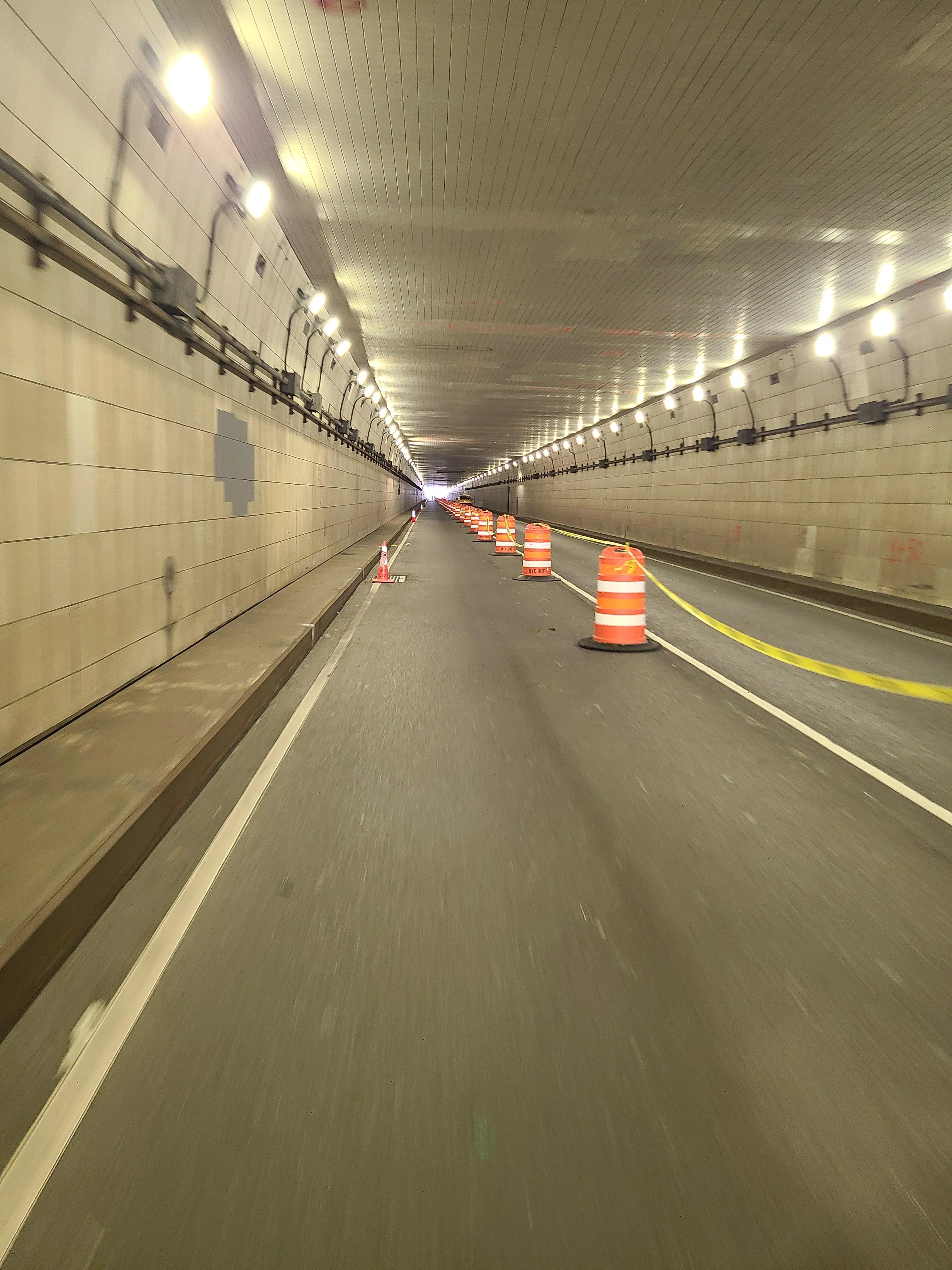
In between the scene at the Bronx apartment building and the hospital, there was a quick shot of the ambulance driving through what turned out to be the First Avenue Tunnel, which hadn’t been identified on any movie location websites.
I quickly recognized the tunnel from the days when I used to bike from Manhattan to the Bronx where I’d use the underground thoroughfare on my way to the Willis Avenue Bridge. It probably wasn’t the safest way to go on a bike, but it did help you circumvent the United Nation area which could sometimes be a bit of a traffic jumble, and it was kind of fun to zip through the nine-block passageway late at night.
The city has apparently seen the advantage of diverting bike traffic through the First Avenue Tunnel, especially when the UN hosts a General Assembly. Just recently, the DOT reconfigured the tunnel, installing a permanent protected bike lane — making it the first of its kind in the city.
I guess you could say it’s a good example of “tunnel vision.”
Wayne Hall Film Screening
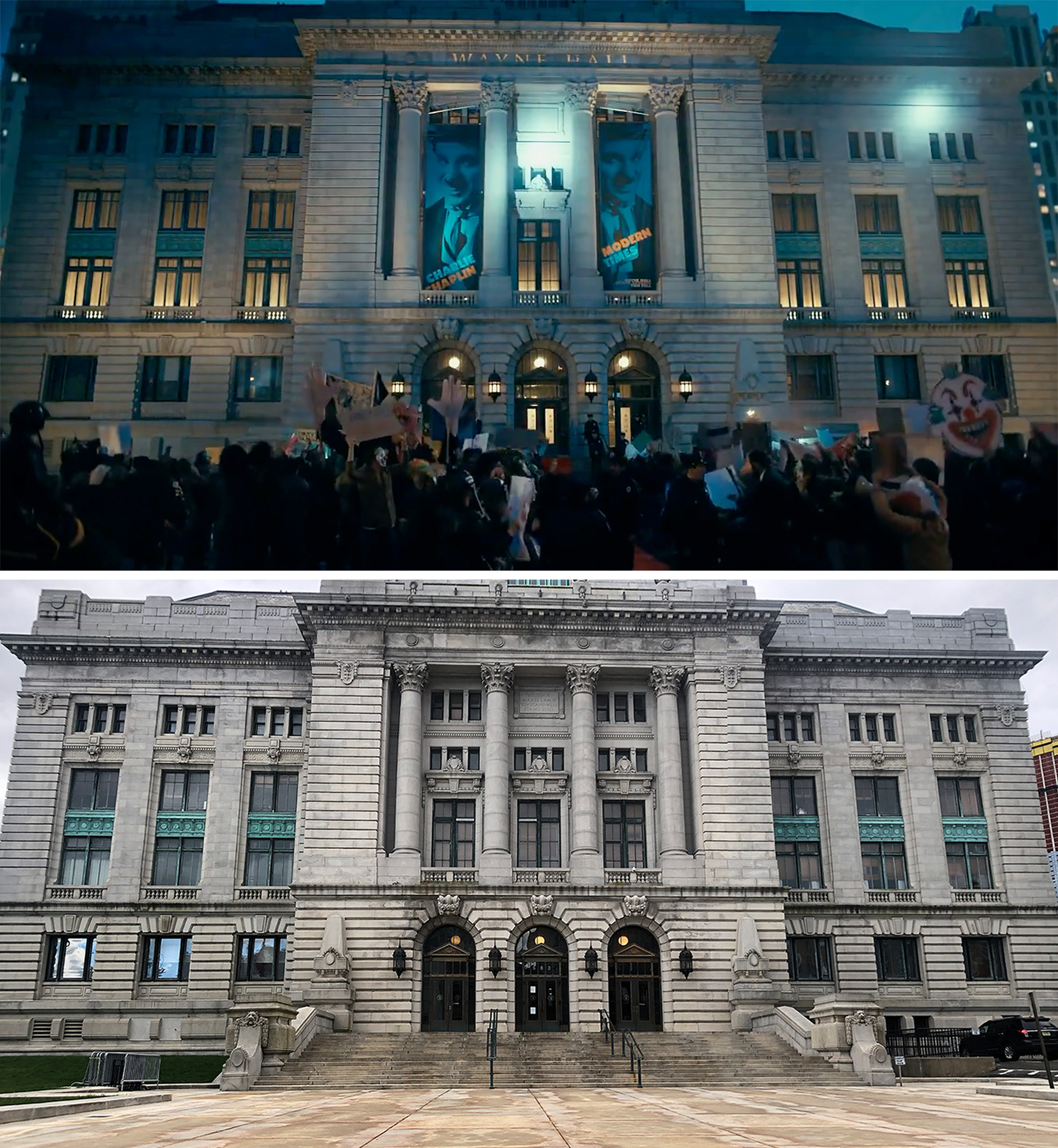
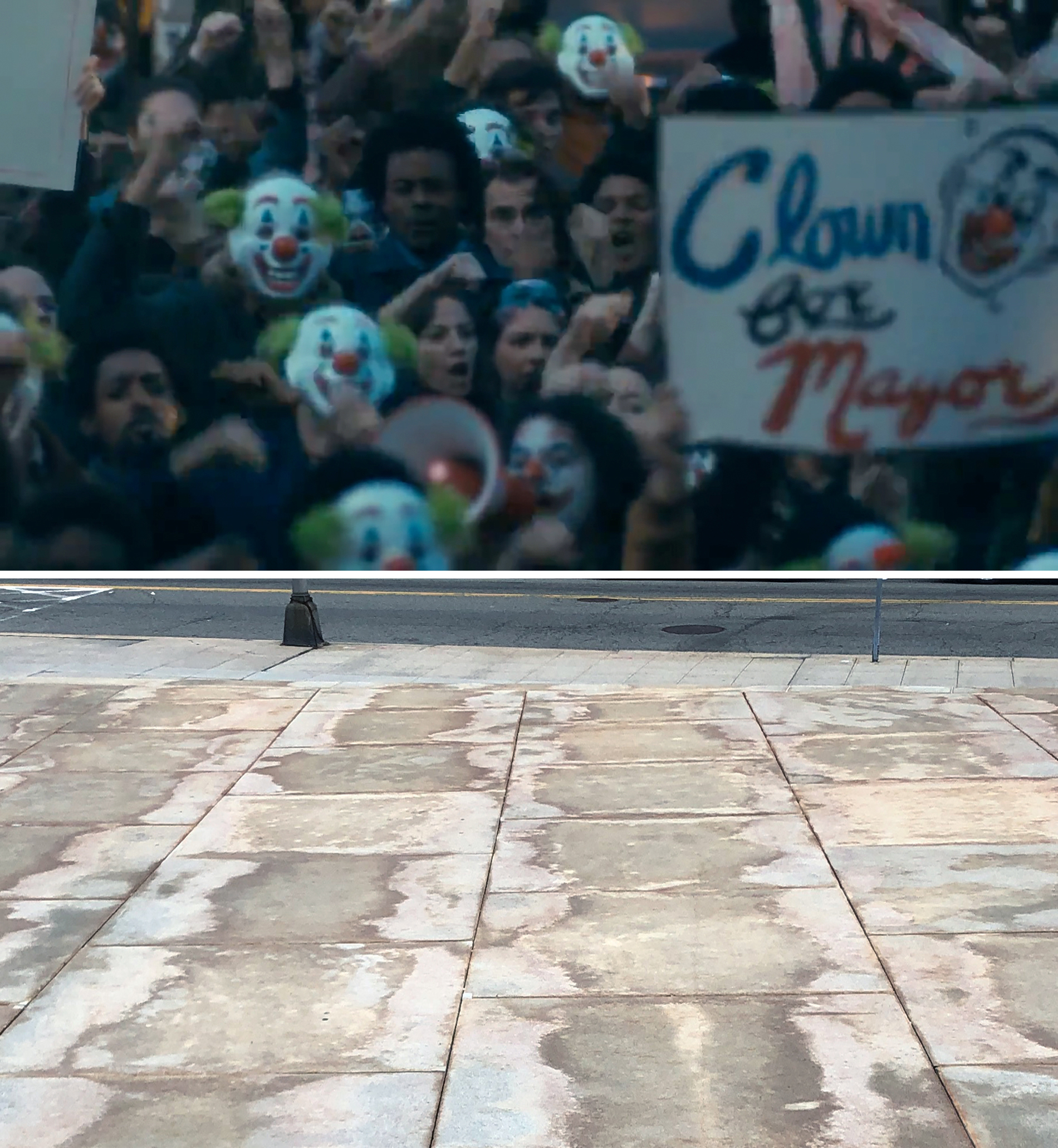
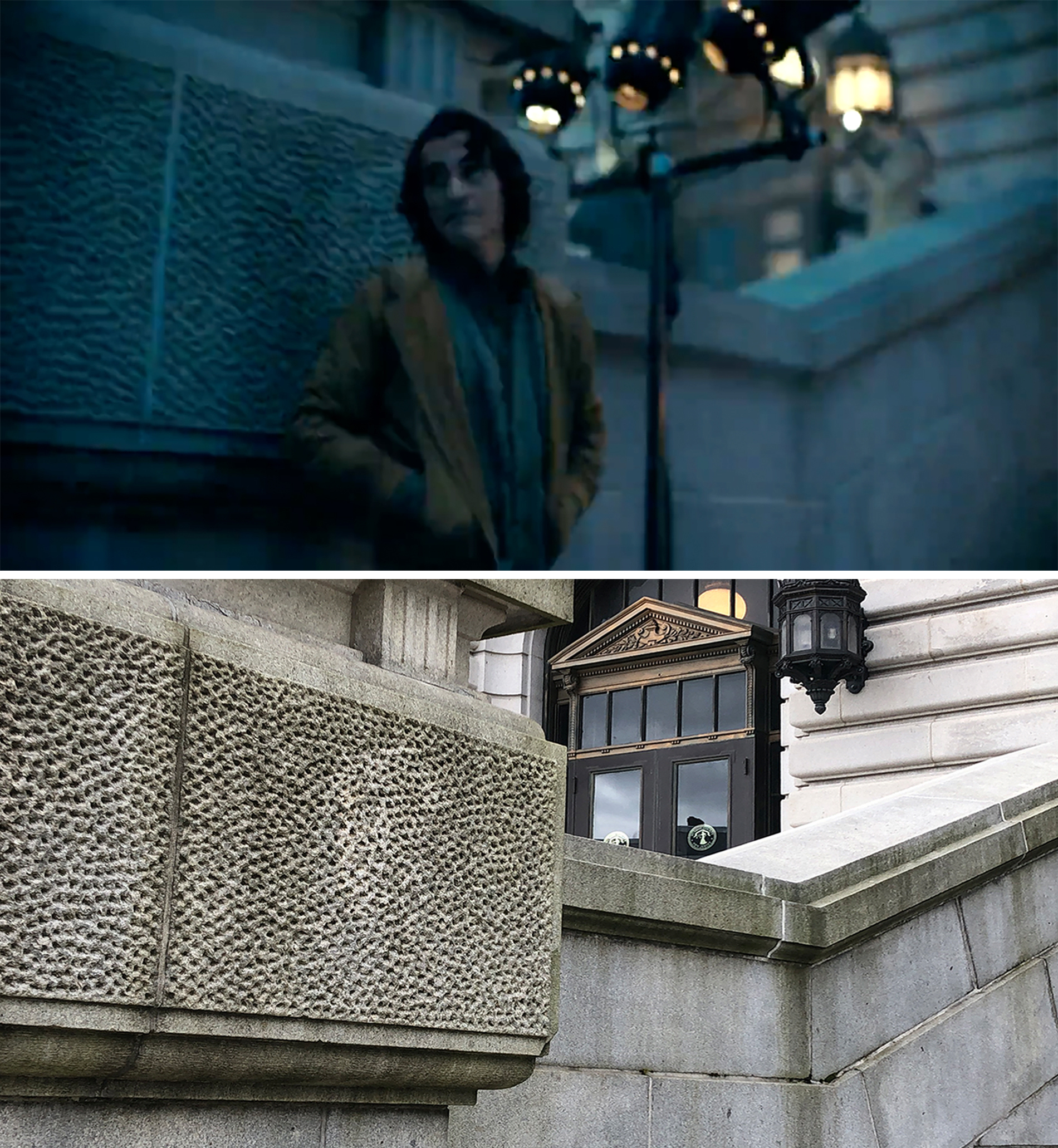
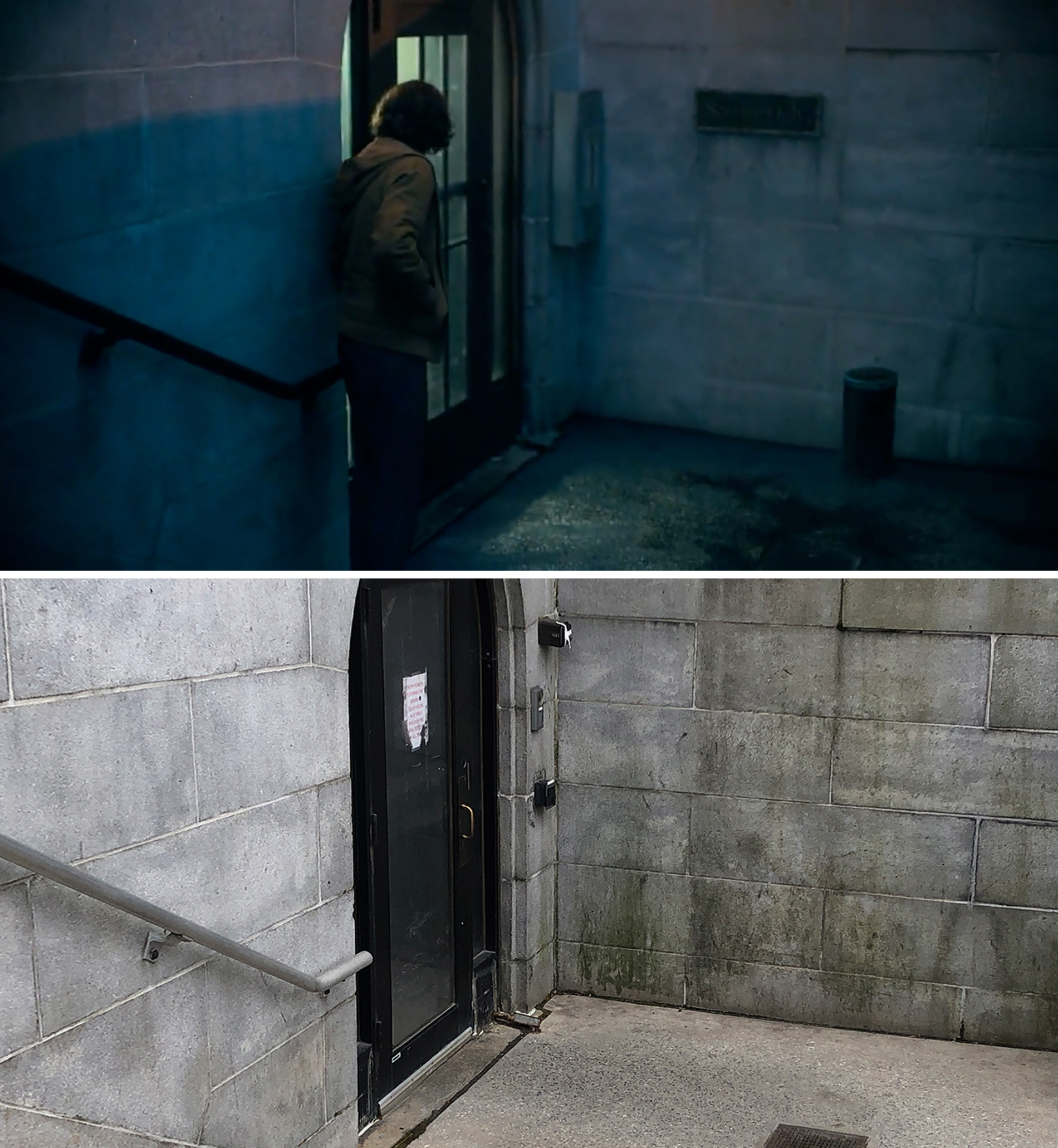
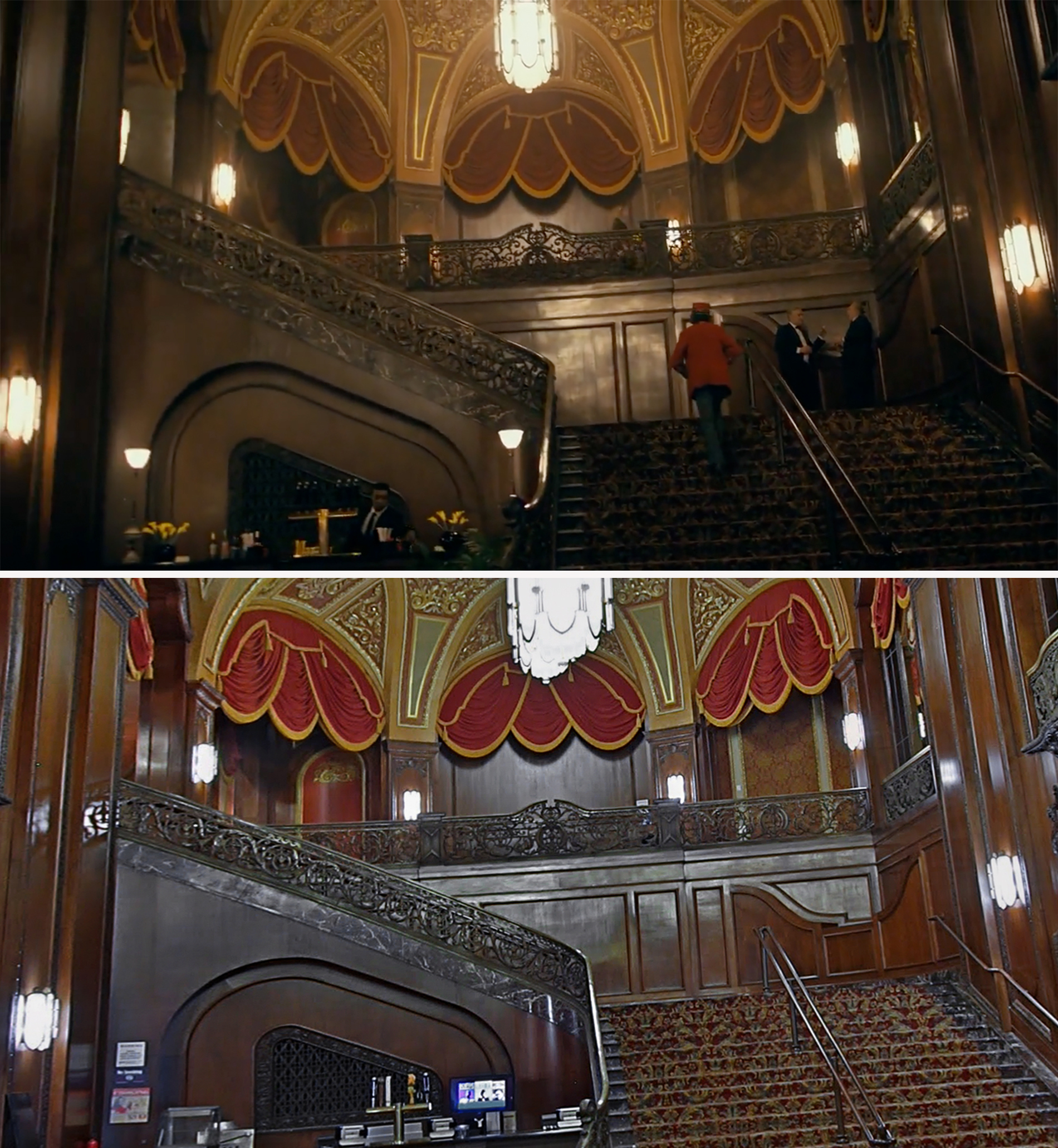
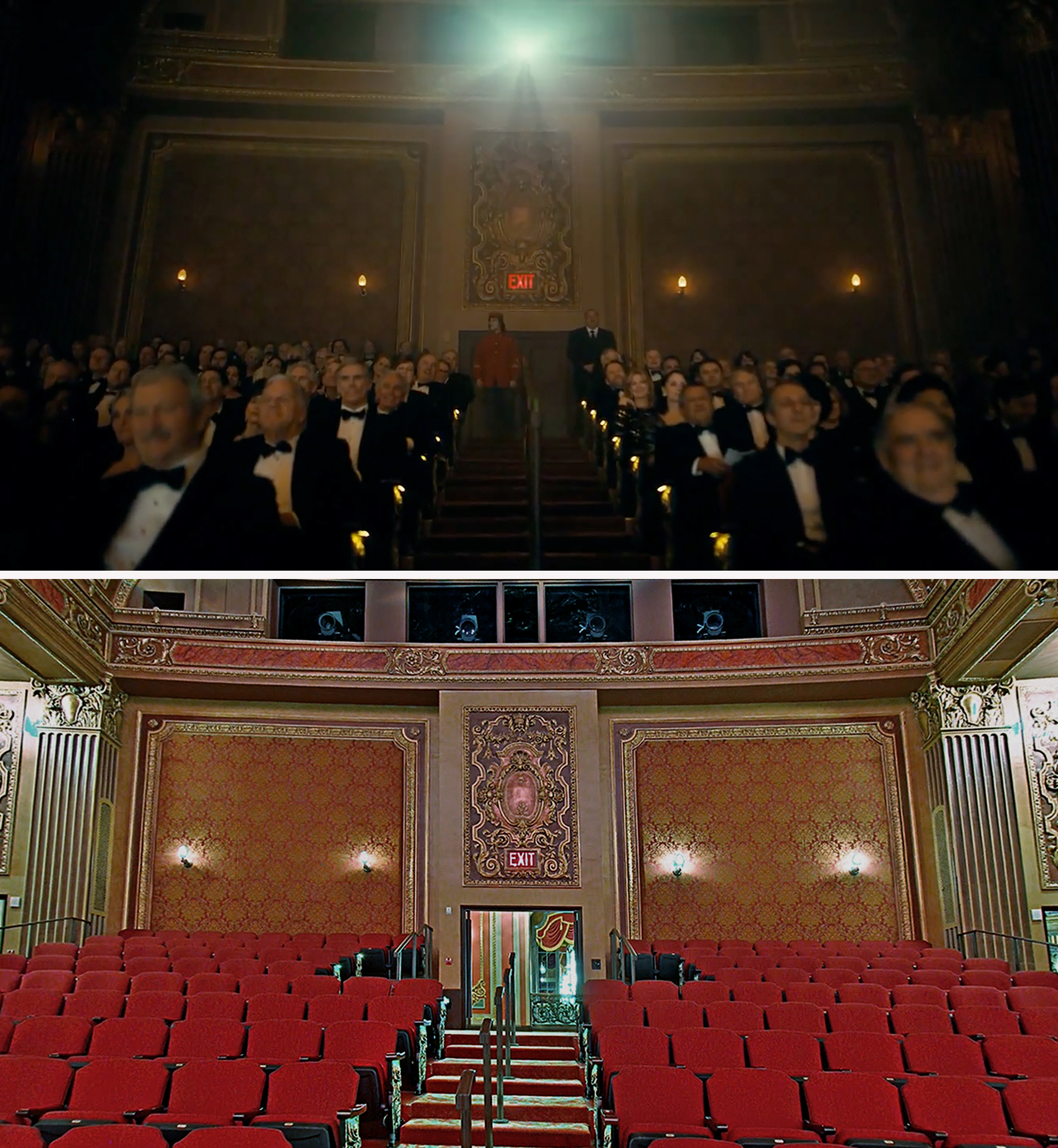
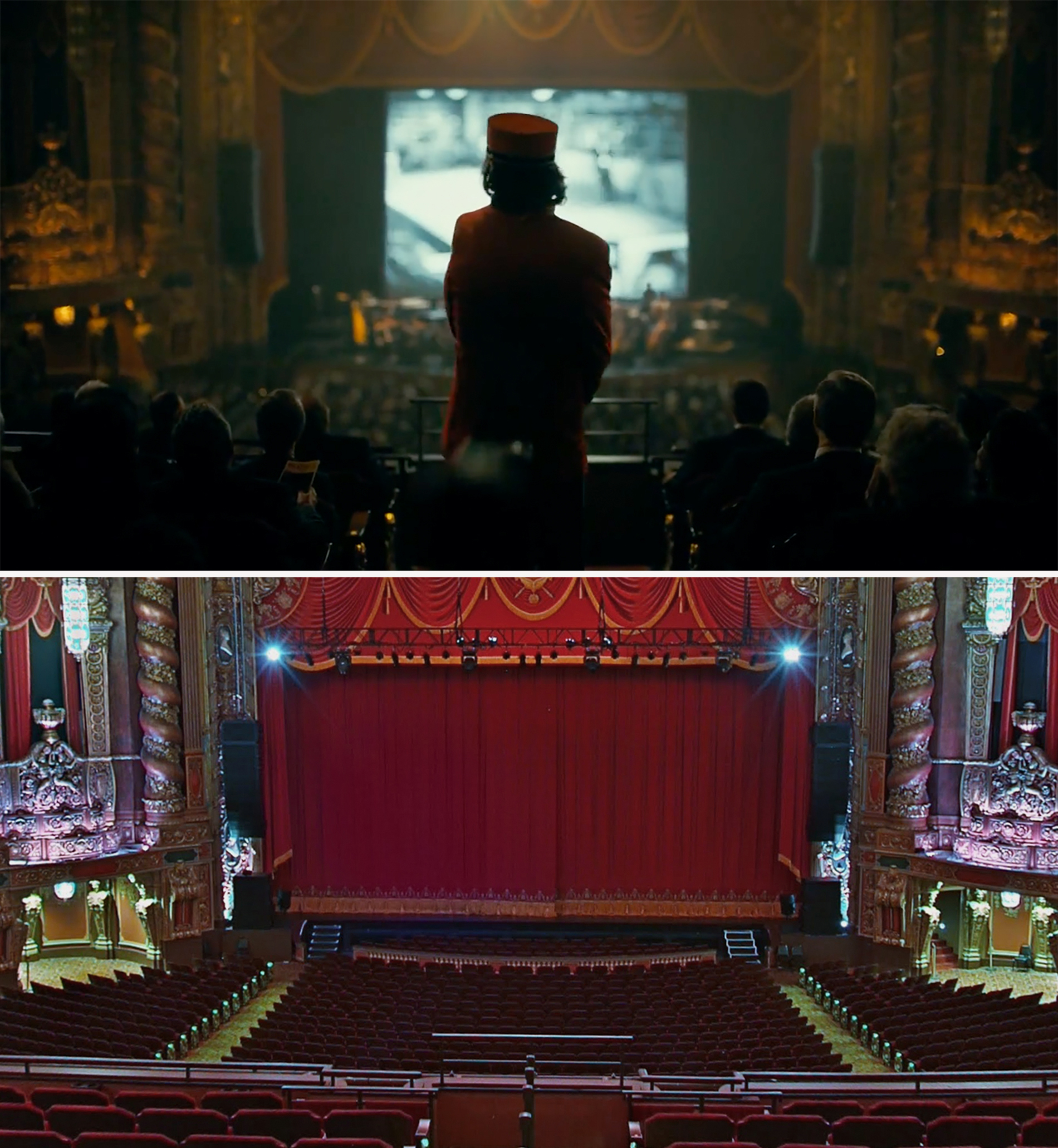
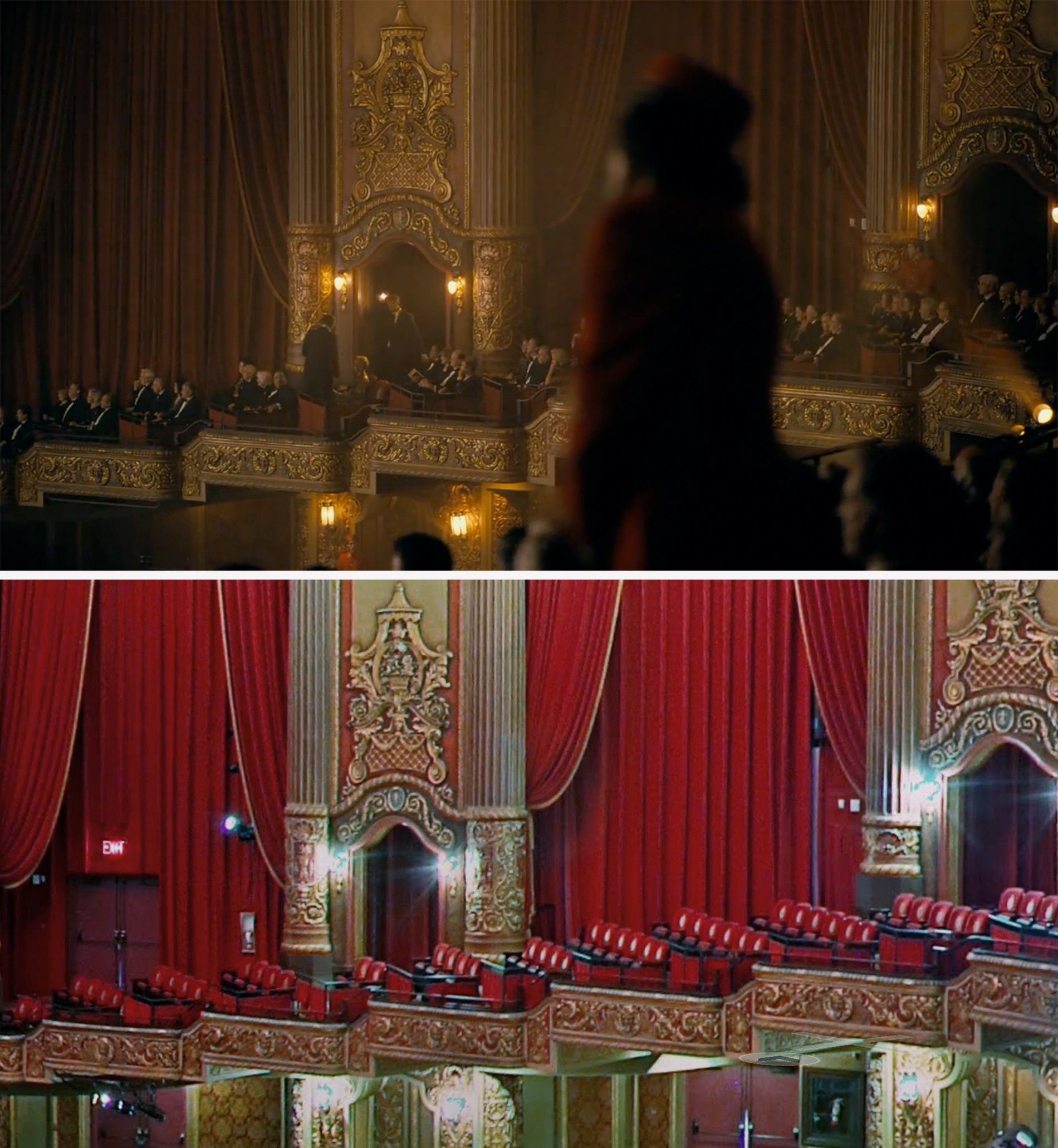
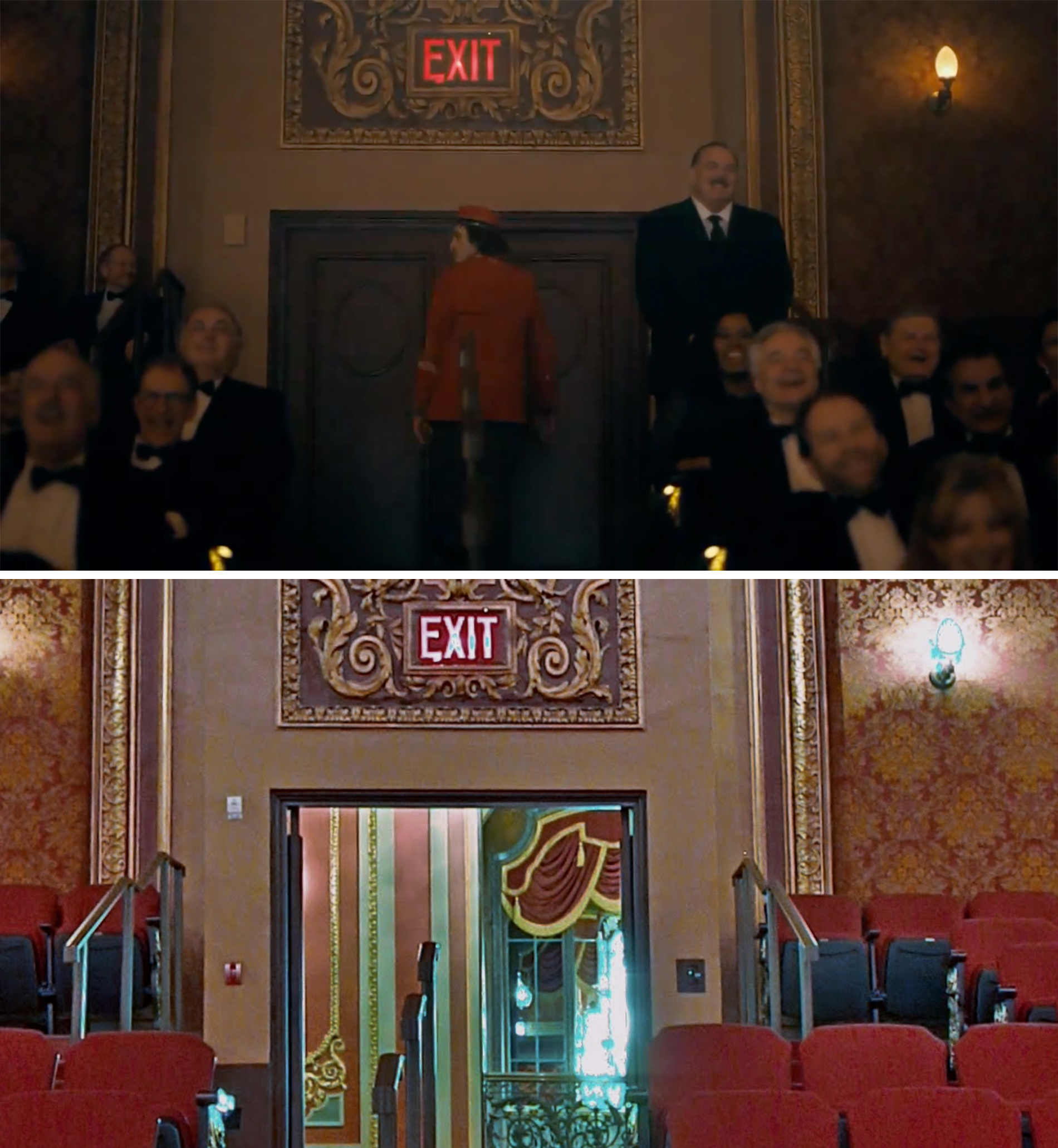
Both the exterior and interior locations were identified by others, so I have no idea how they were figured out.
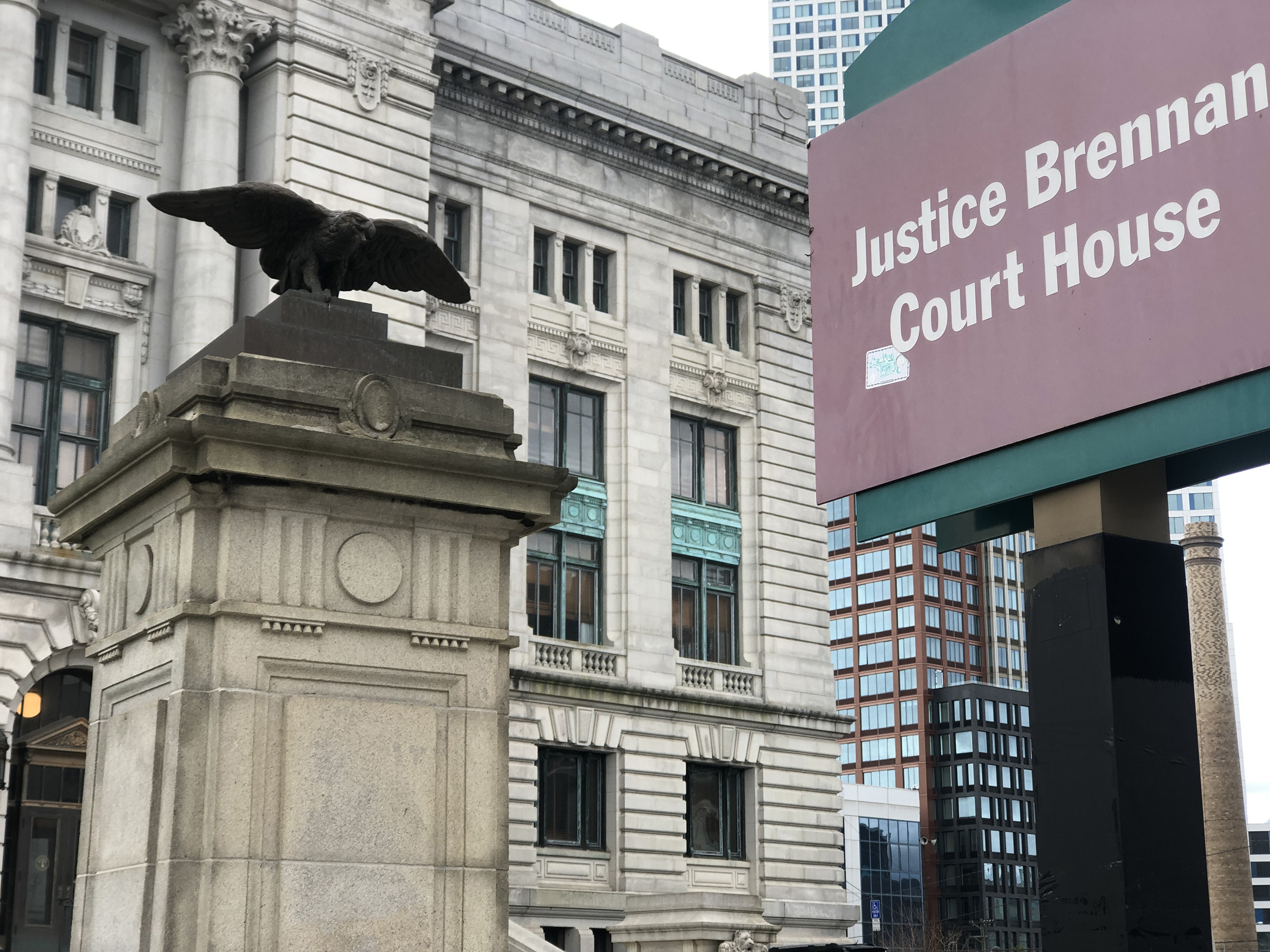
When I stopped by the Hudson County Courthouse in Jersey City, which served as the exterior of Wayne Hall, it was the Sunday before the 2024 eclipse. It was pretty early in the morning and things were eerily quiet — a contrary mood to the riotous scene portrayed in the movie, but a fine setting for grabbing some unencumbered photos.

One thing that stood out to me while I was there was a payphone across the street from the courthouse. I guess it was only noteworthy compared to the streets of NYC which has essentially been wiped clean of all payphones.
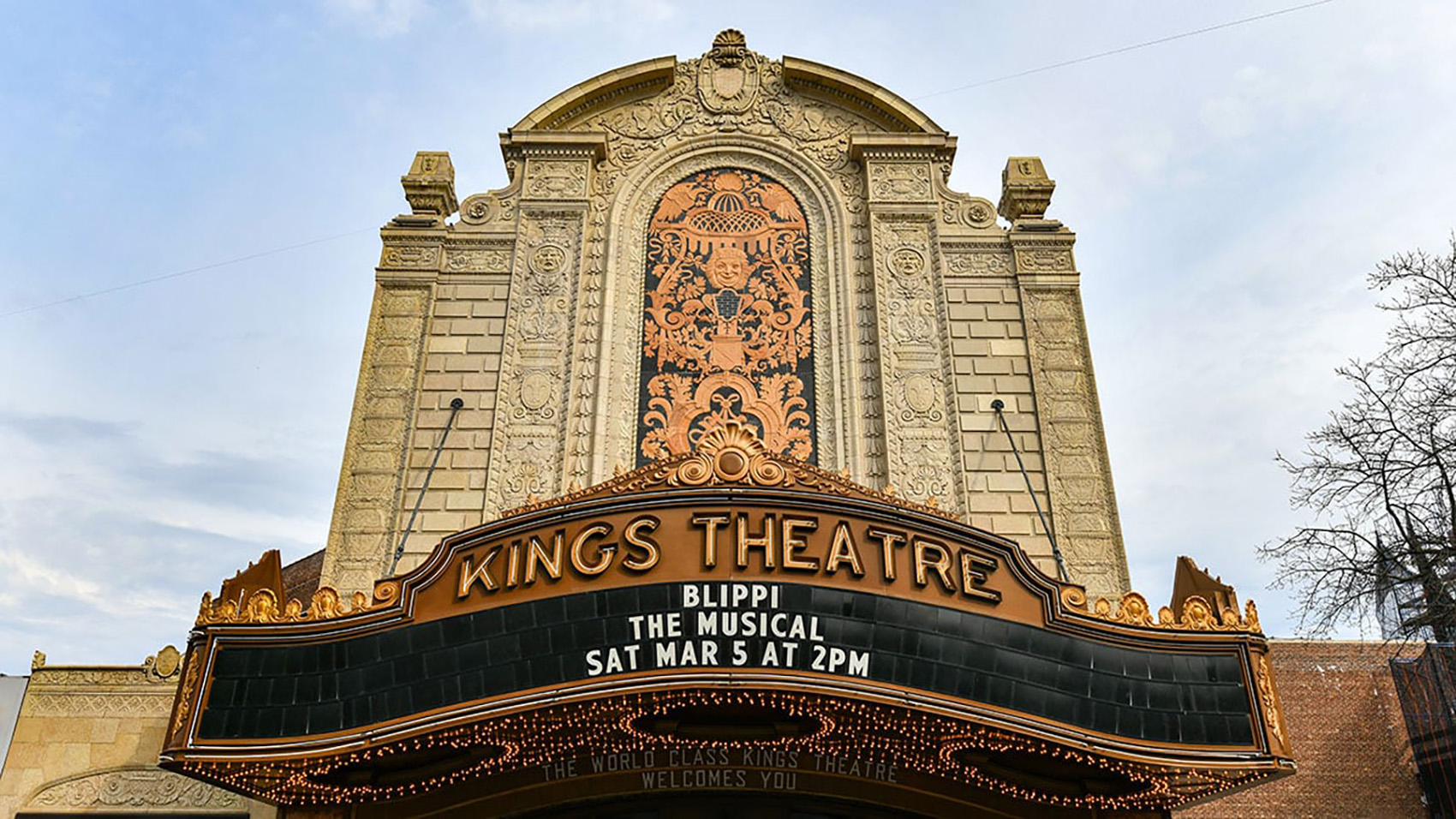
When it came to the interiors, most of it was shot at the Kings Theatre in Brooklyn, that unlike the Paramount in Newark, has recently received a loving restoration.
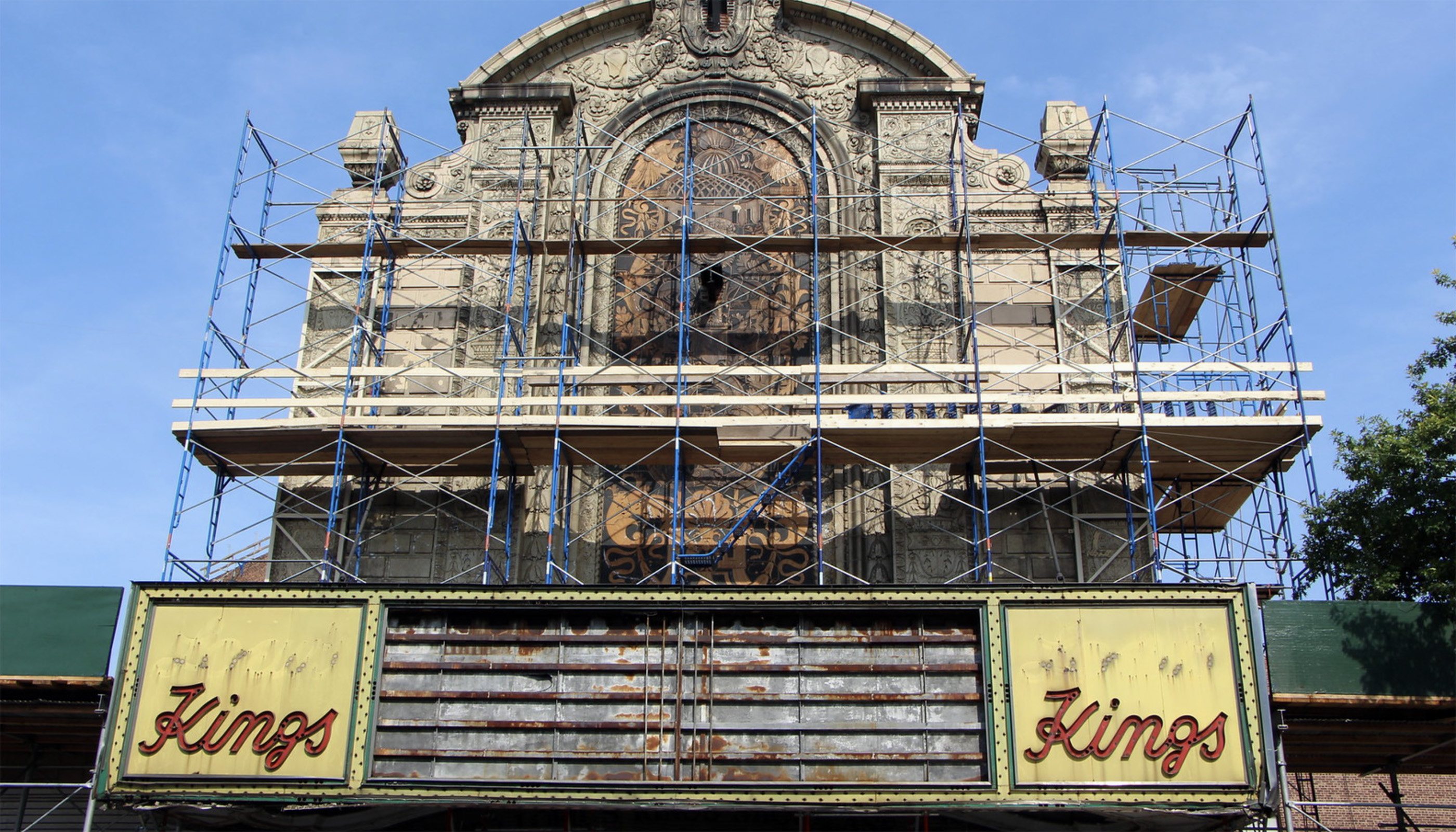
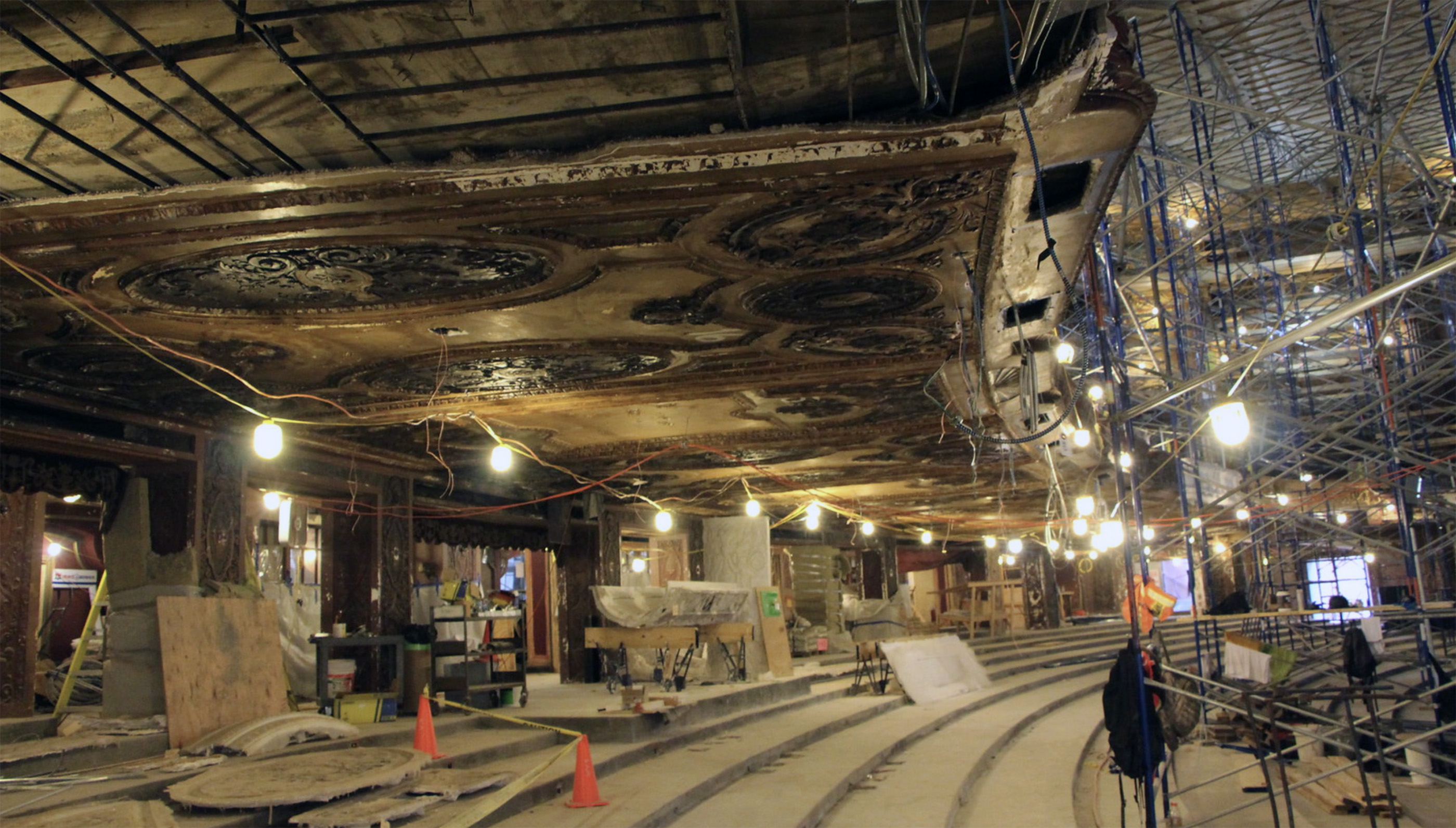
The Kings Theatre first opened in 1929 by Loew’s Inc as a deluxe movie palace, presenting programs that included both moving pictures and live stage shows. As an unusual bonus, Kings actually had a gymnasium and basketball court in the basement for the use of the theatre staff. which in the 1950s, purportedly included a young Barbra Streisand.
With the proliferation of home television sets, Loew’s Kings Theatre saw a steady decline in attendances from the 1950’s onwards. The theater eventually closed in 1977 and sat empty for decades until a complete renovation was initiated in 2010. The theater reopened to the public in 2015 as a performing arts venue.
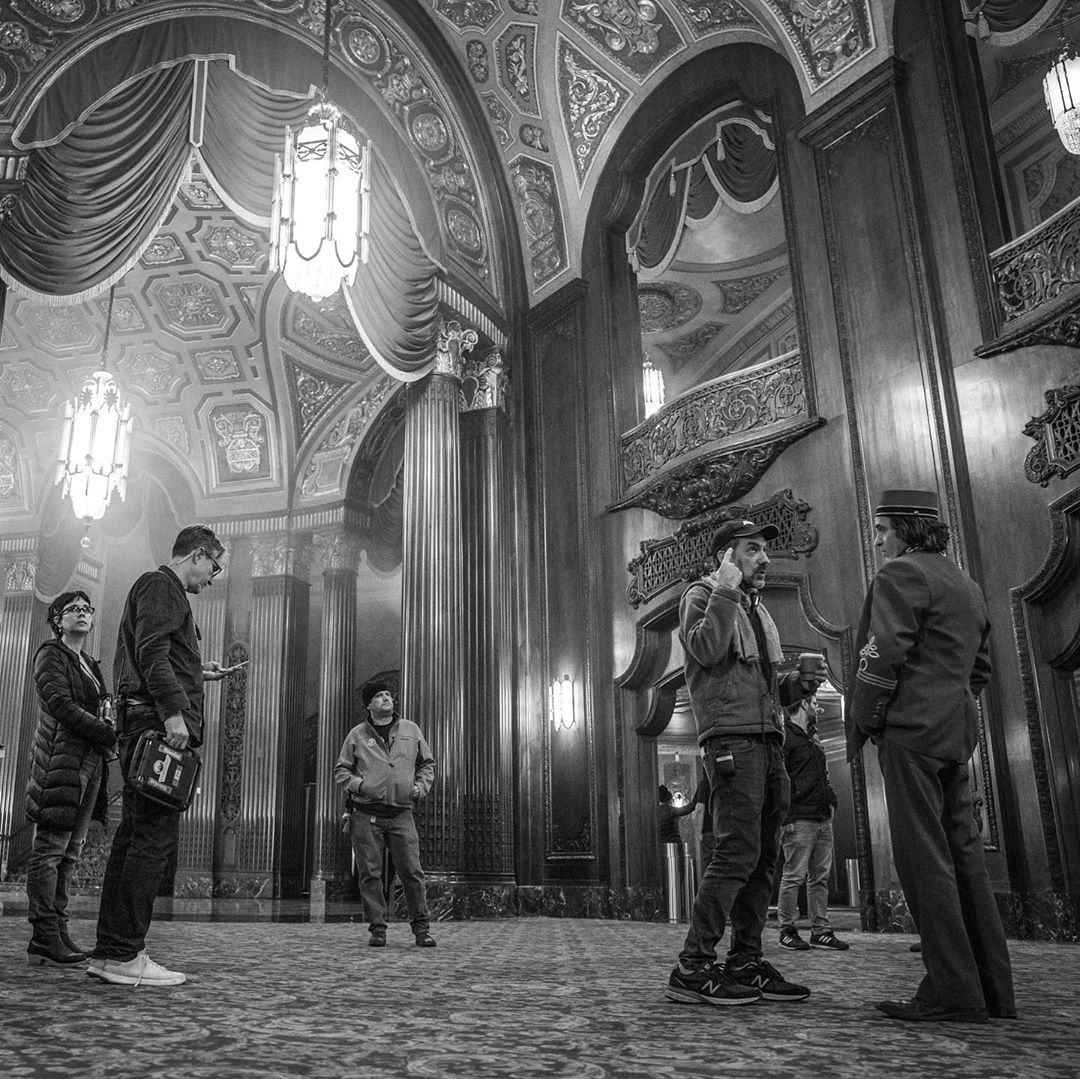
During the renovation, the theater’s stage facilities were completely rebuilt to accommodate modern standards, but the lobby and seating areas were restored to their original grand French Renaissance appearance, making it a perfect setting for a stylized film like Joker.
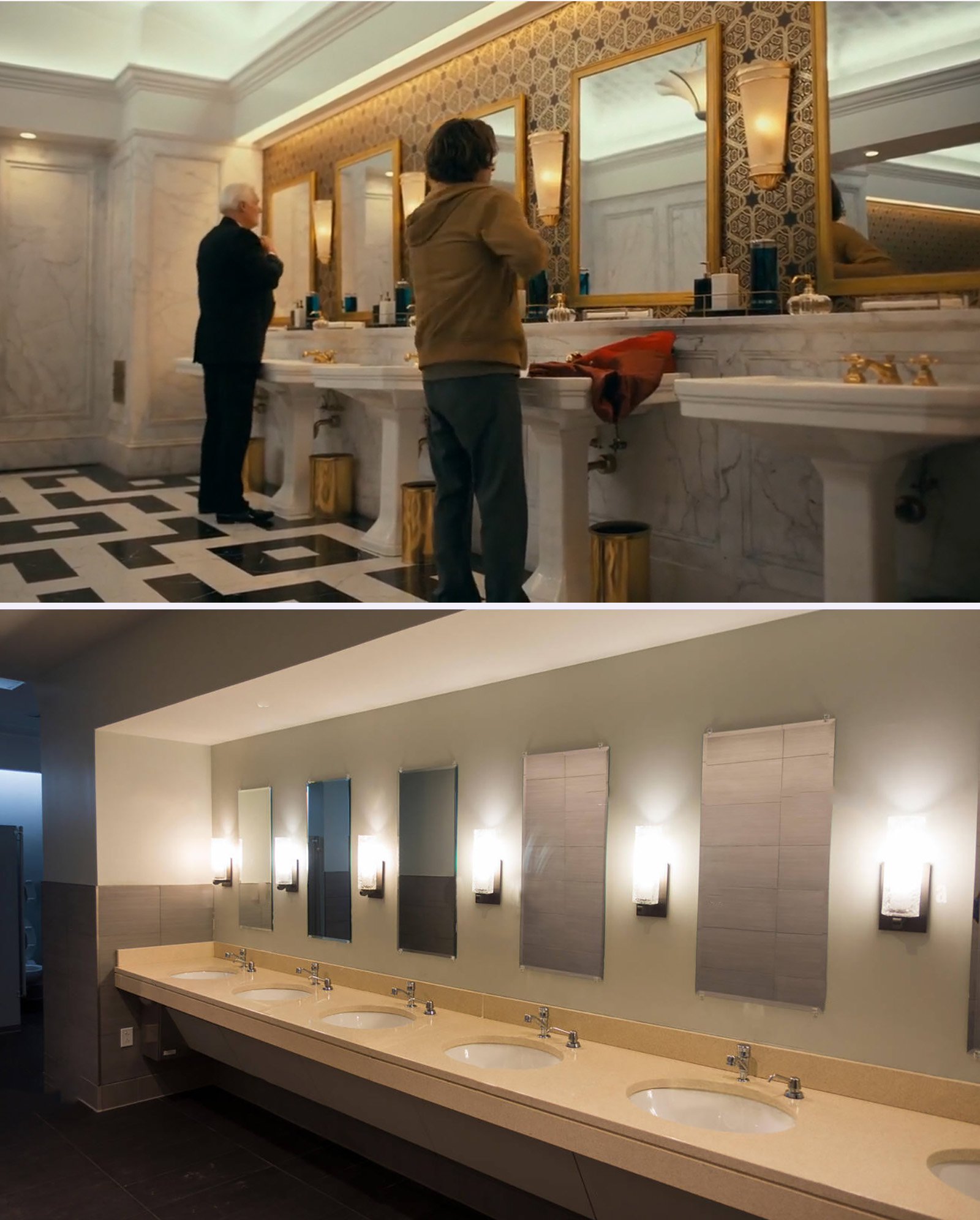
As I said earlier, the majority of the interiors were shot at Kings, but the bathroom ended up being a set. This was possibly out of convenience, but probably because the actual theater’s bathroom is not very opulent-looking.
Arkham State Hospital
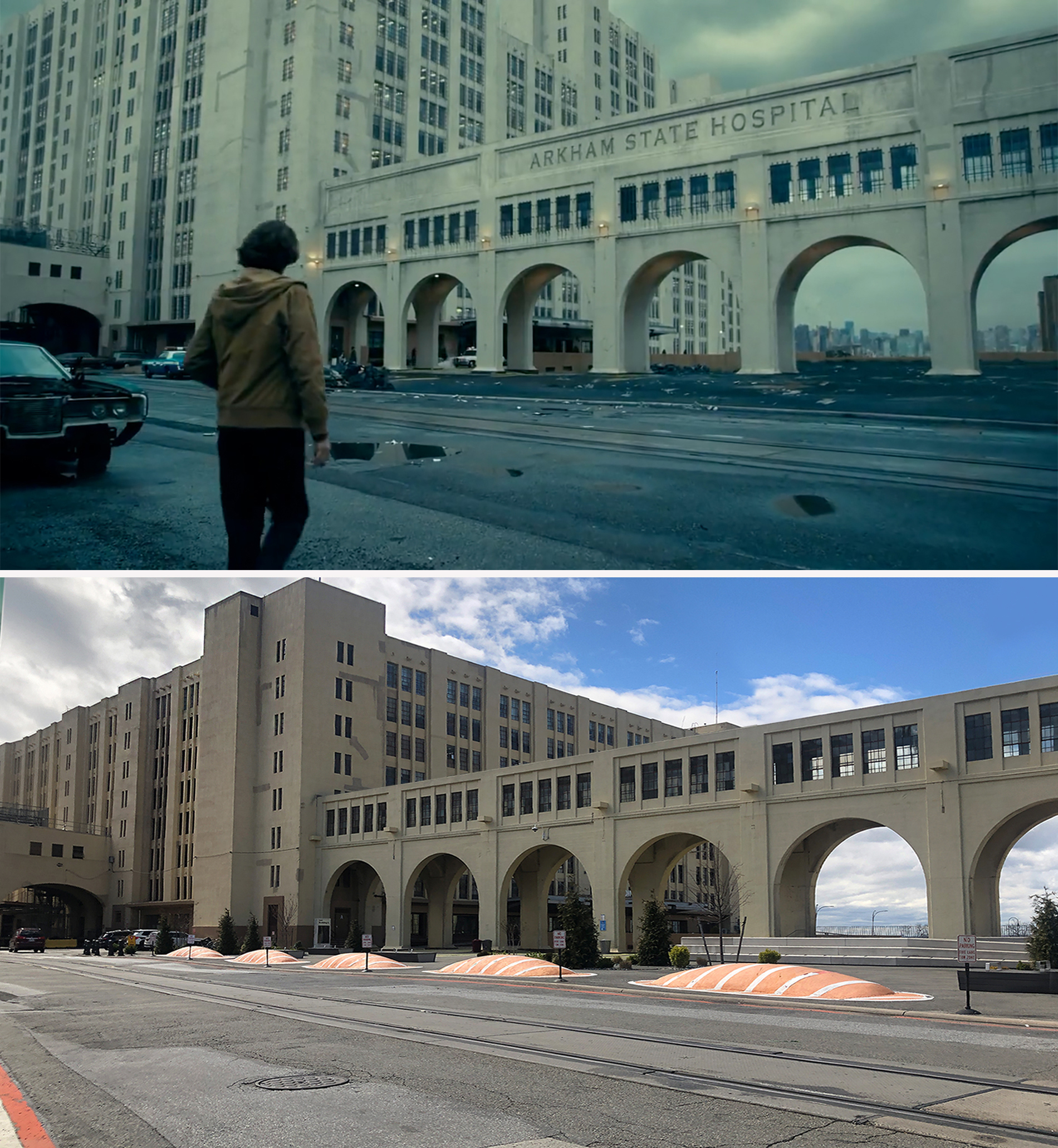
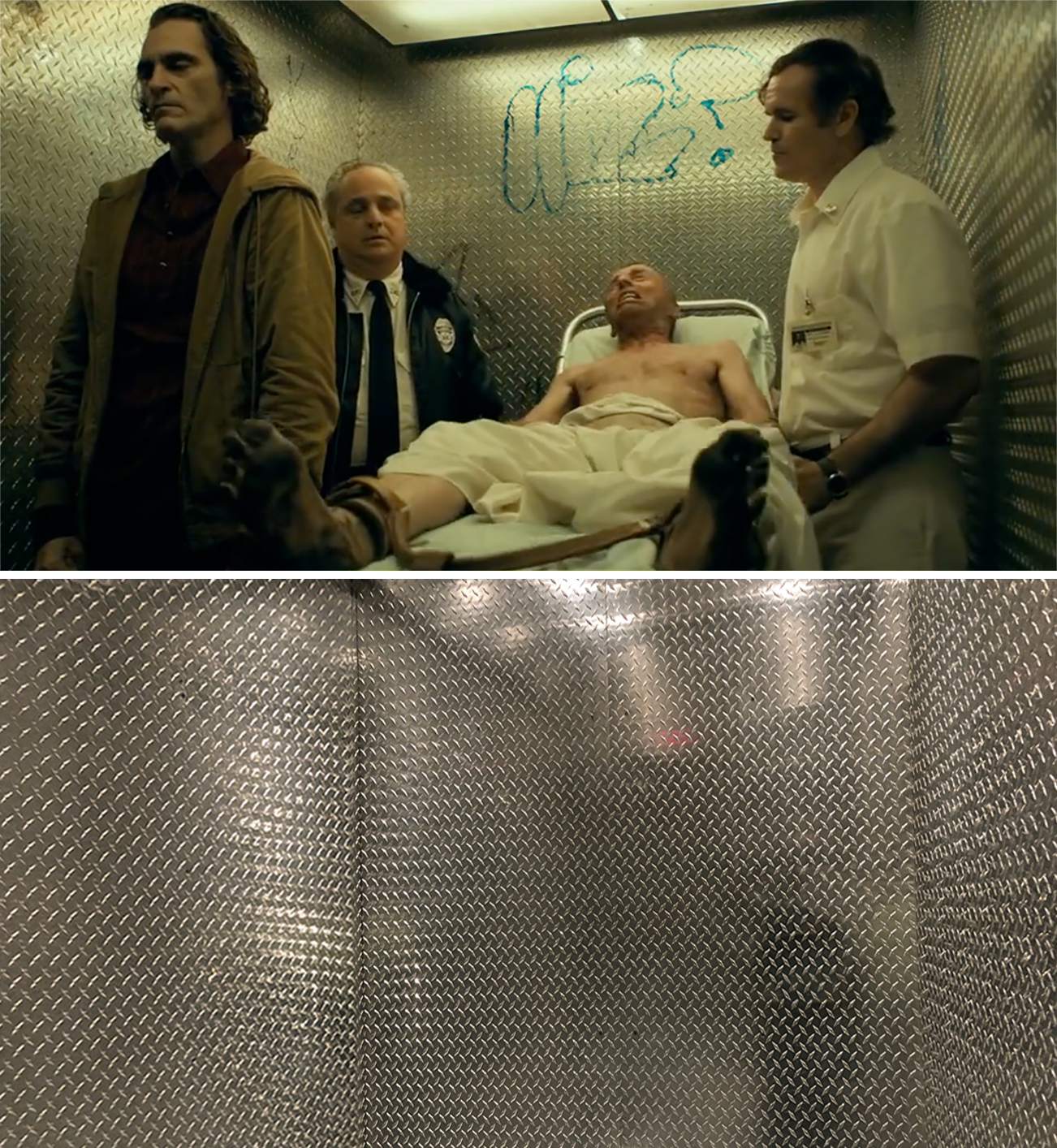
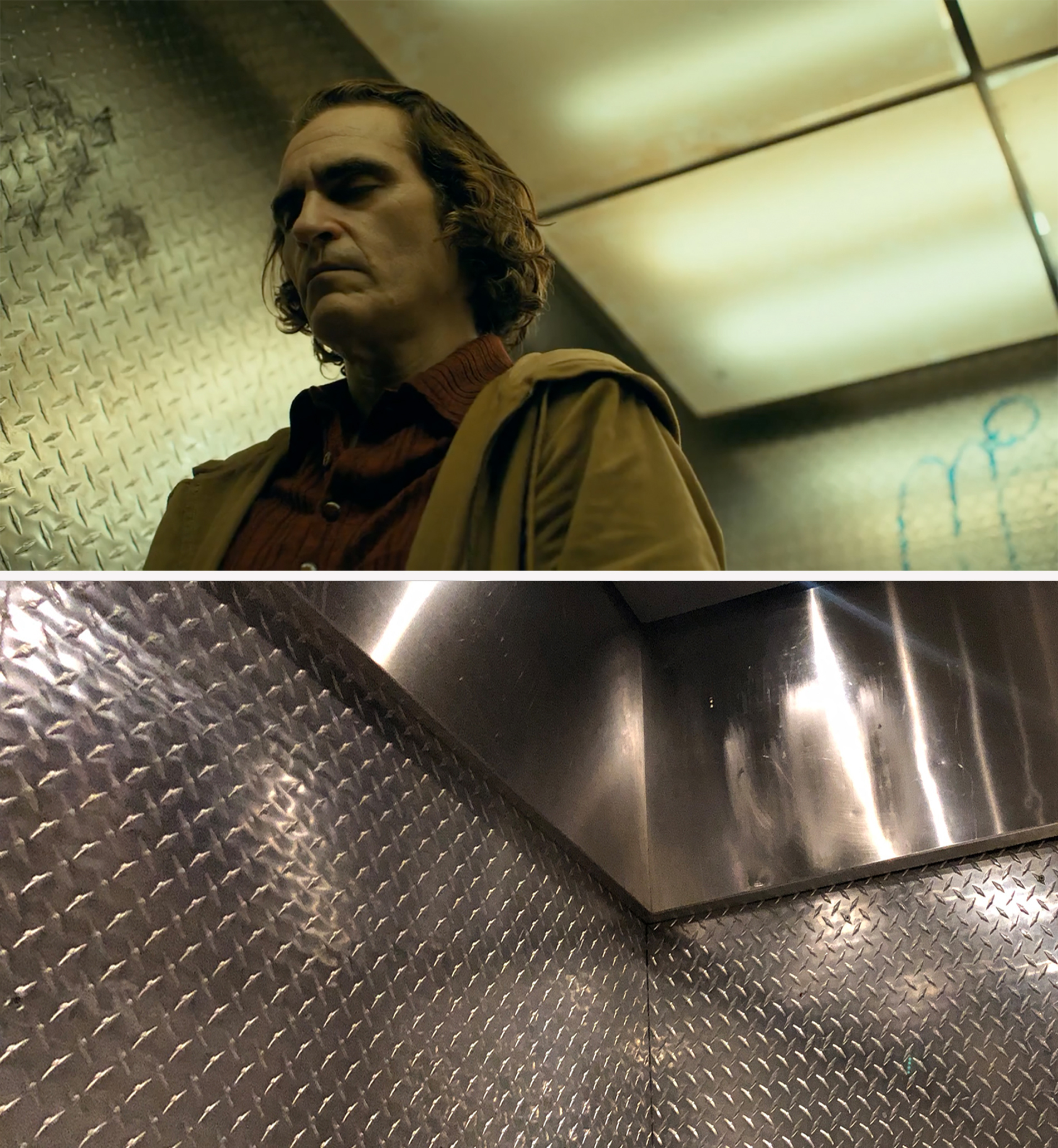
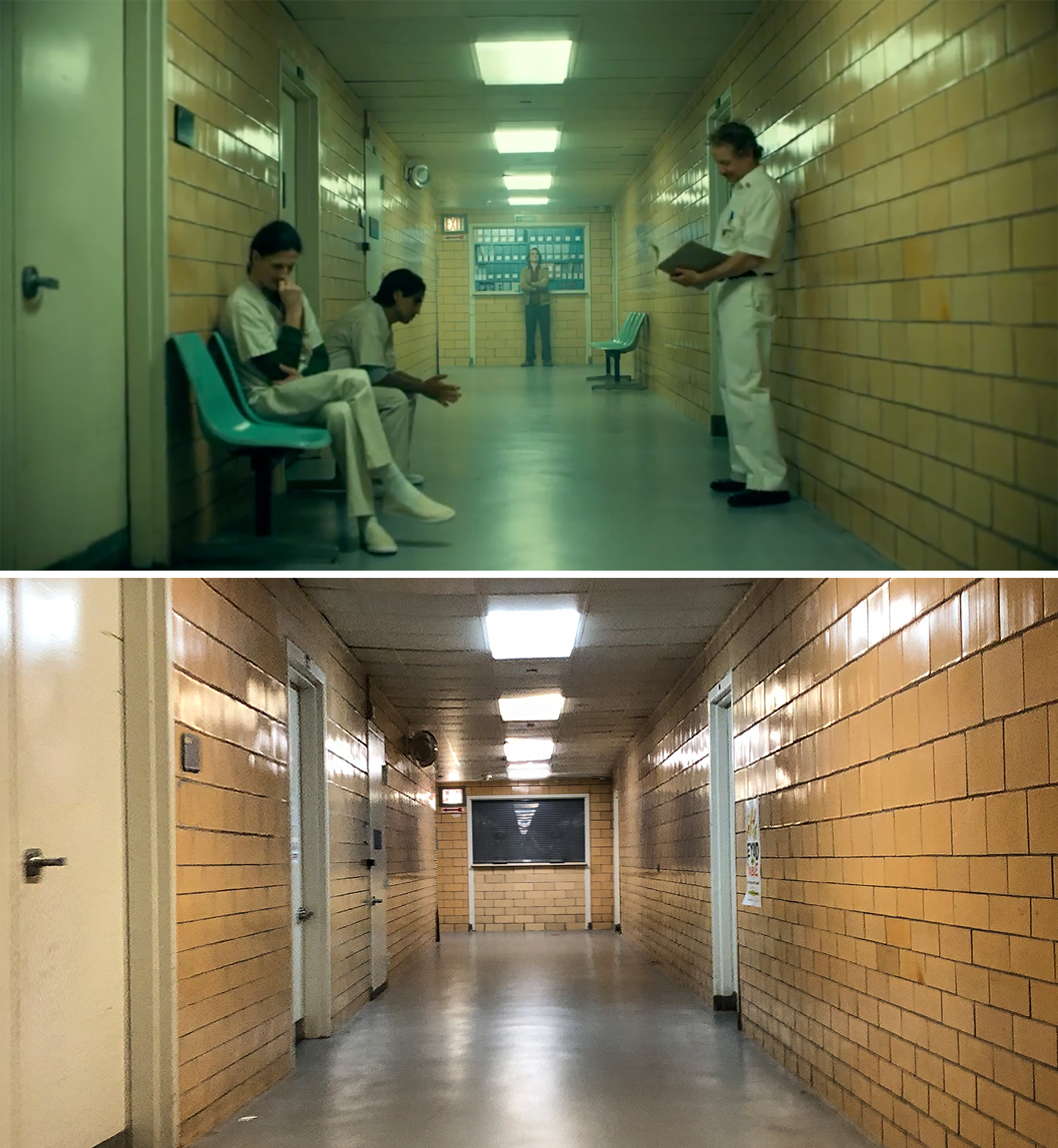
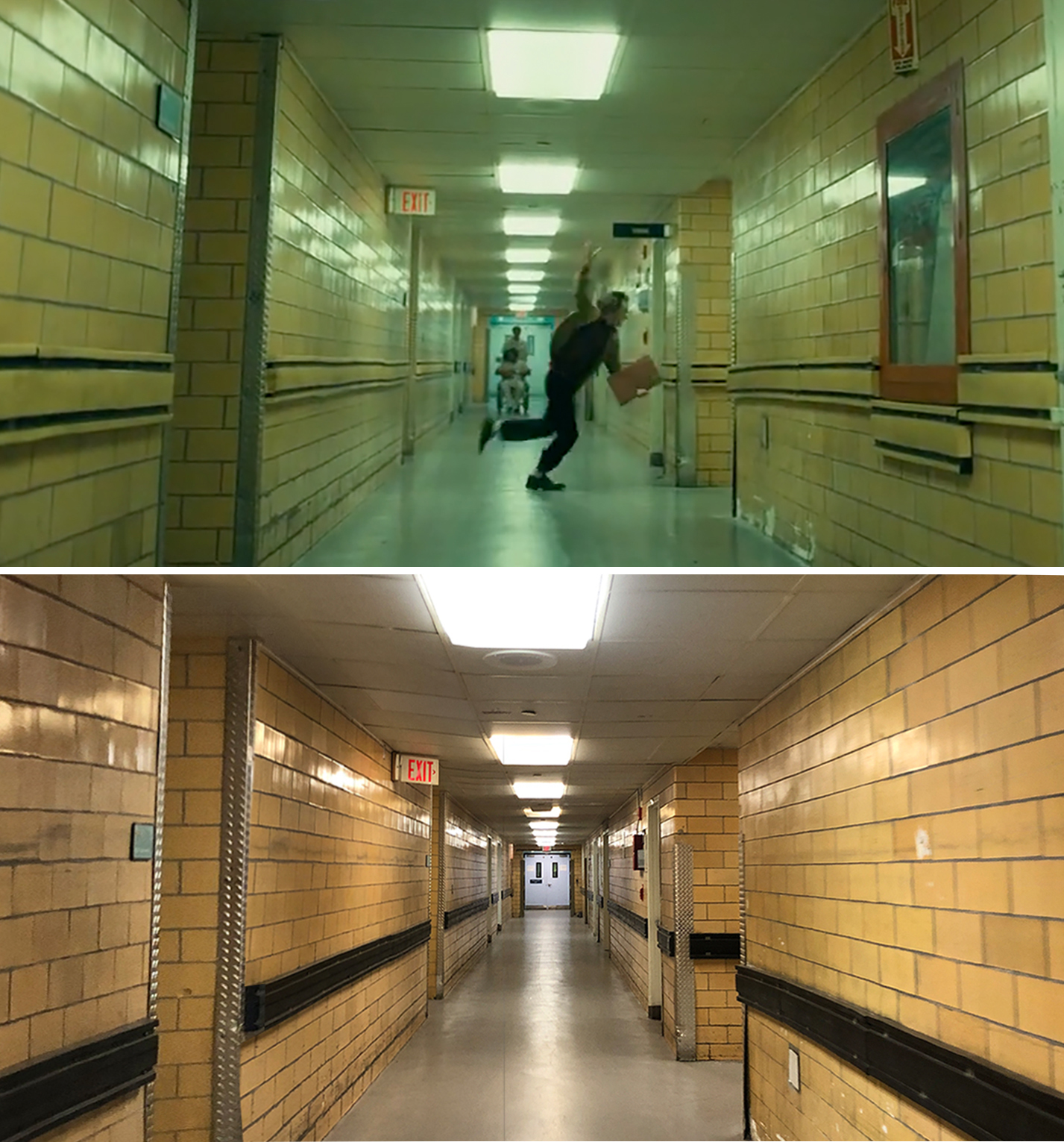
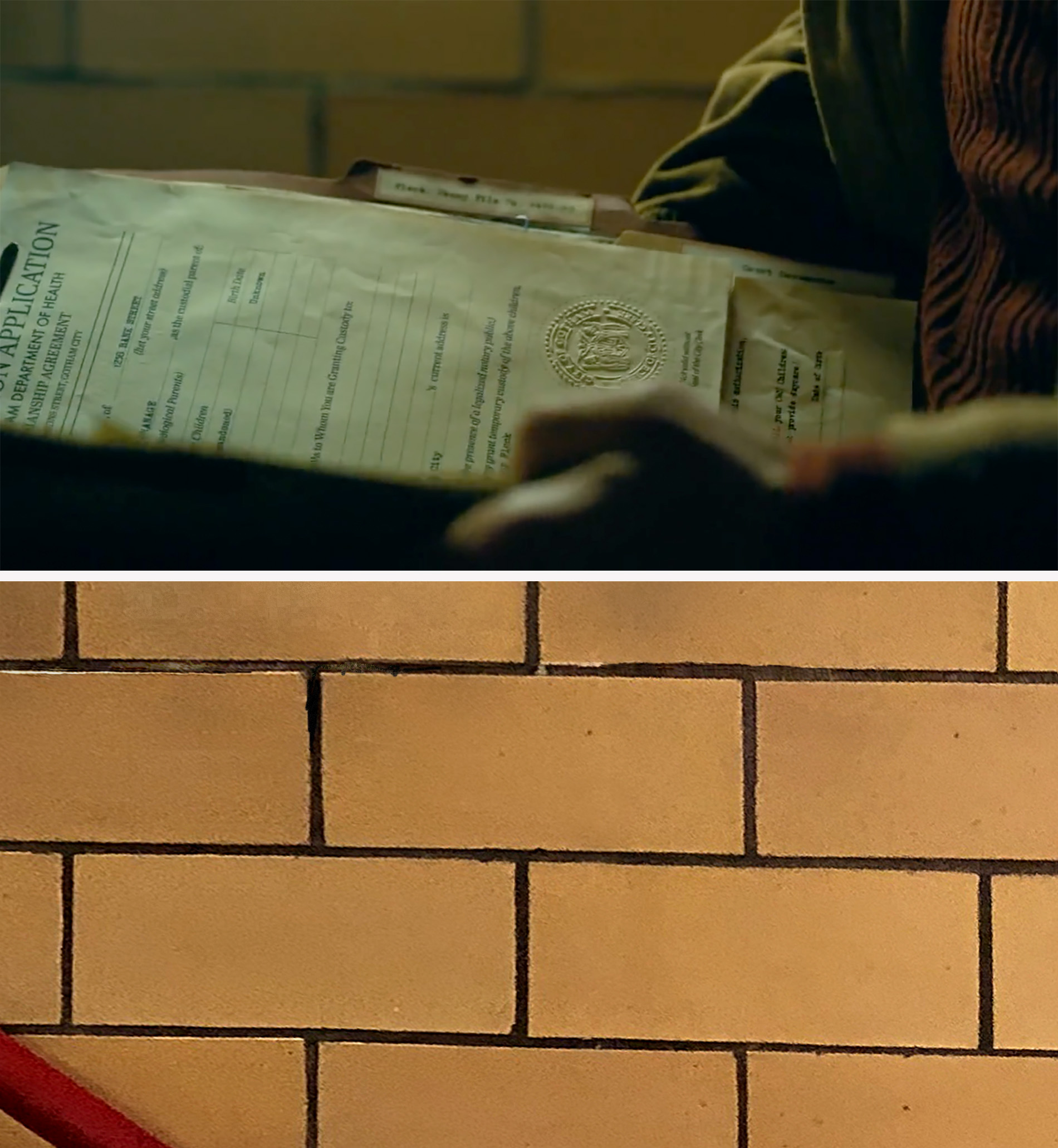
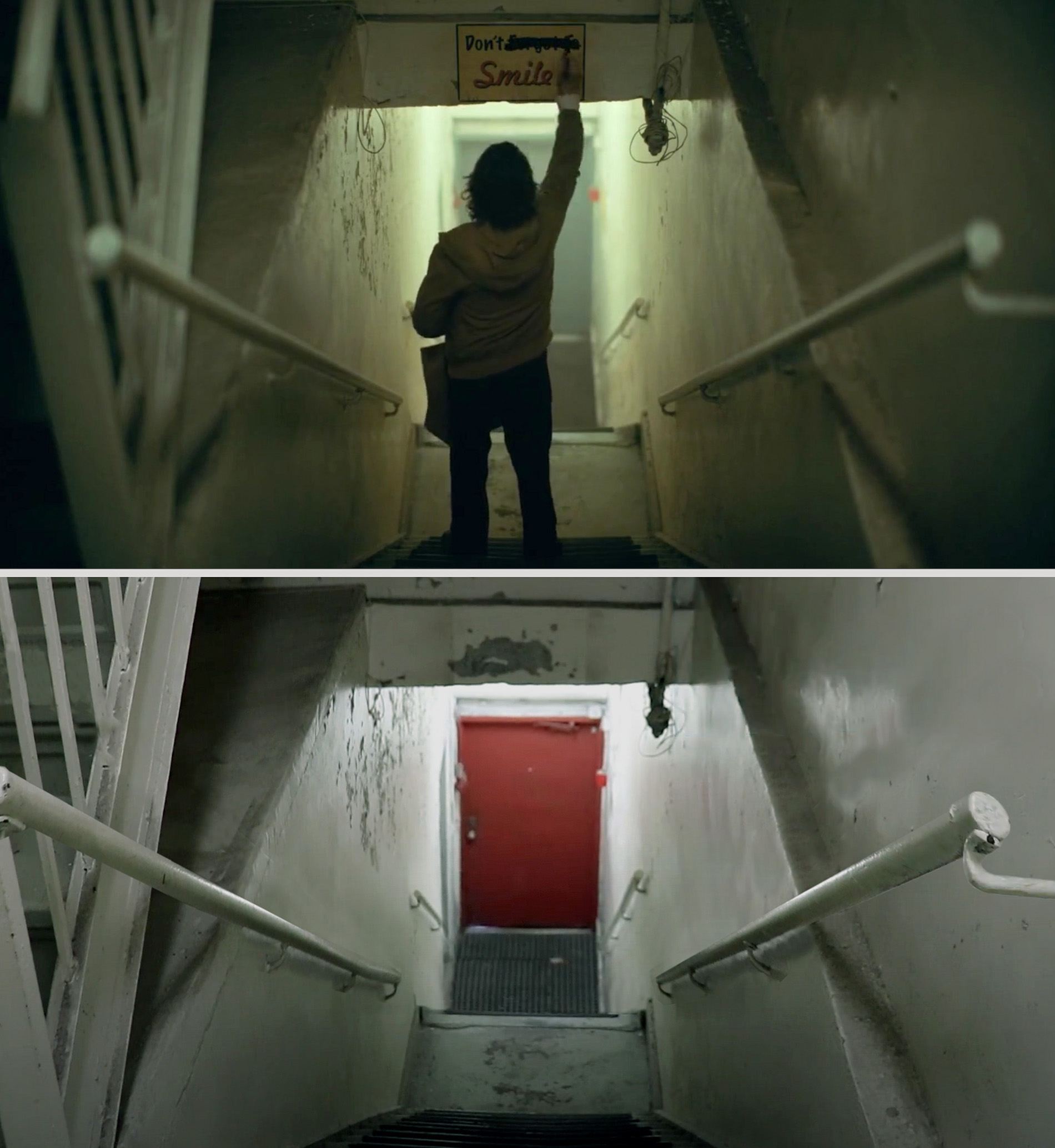
My first day of acting in the Joker movie was at the Brooklyn Army Terminal and my second day was in the basement of NYC Health + Hospitals/Metropolitan, so I obviously knew these scenes’s filming locations pretty early on. But to be fair, since my role as an Orderly was so small, I had very little context as to what the scenes were about. In fact, I was more or less set-dressing in these two locations. (My key scene comes later in the movie.)
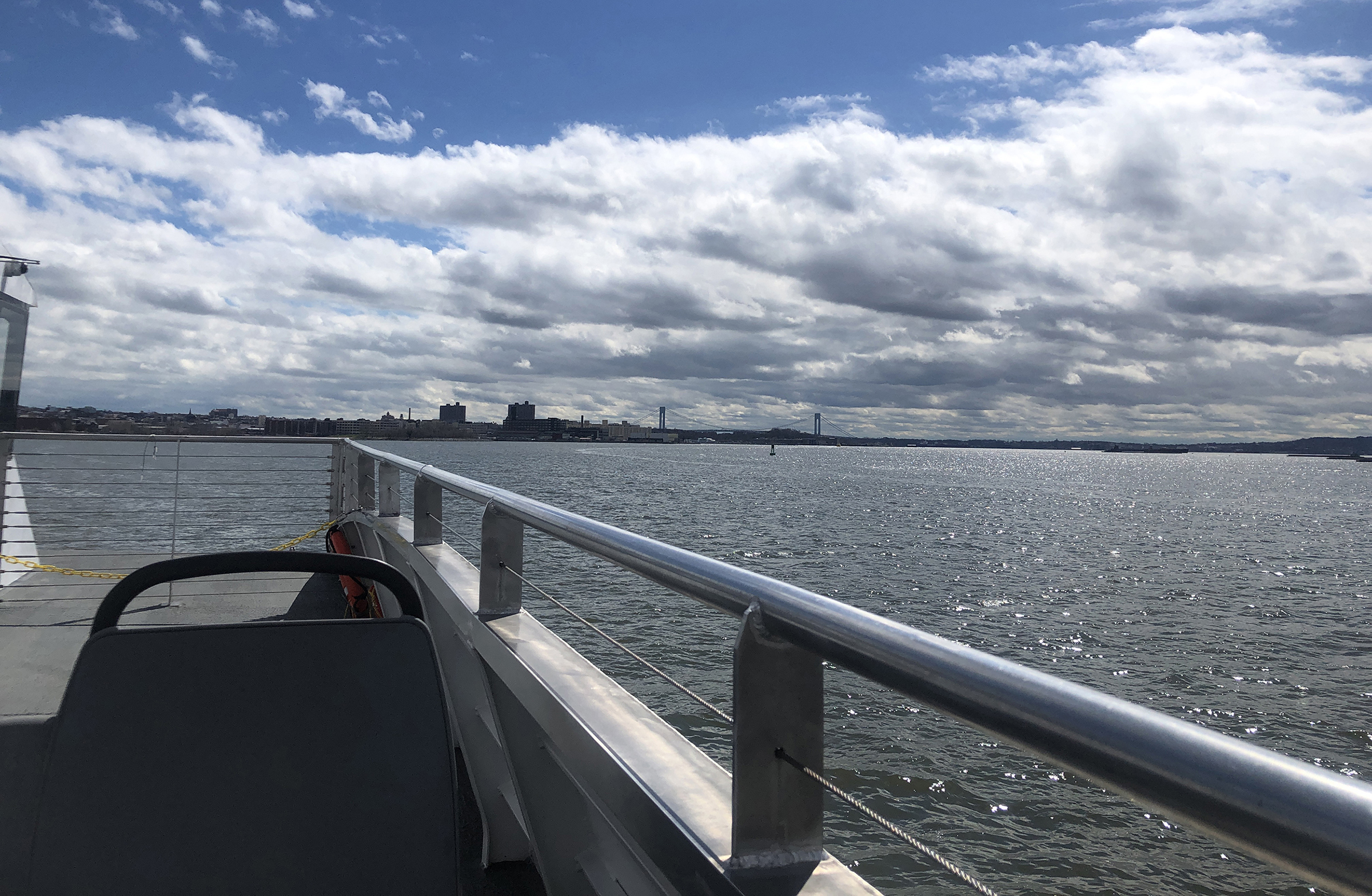
Revisiting the Arkham exterior location was pretty fun, especially since I traveled to it via the NYC ferry system, giving me nice panoramic views of the Brooklyn Army Terminal from the New York Harbor.
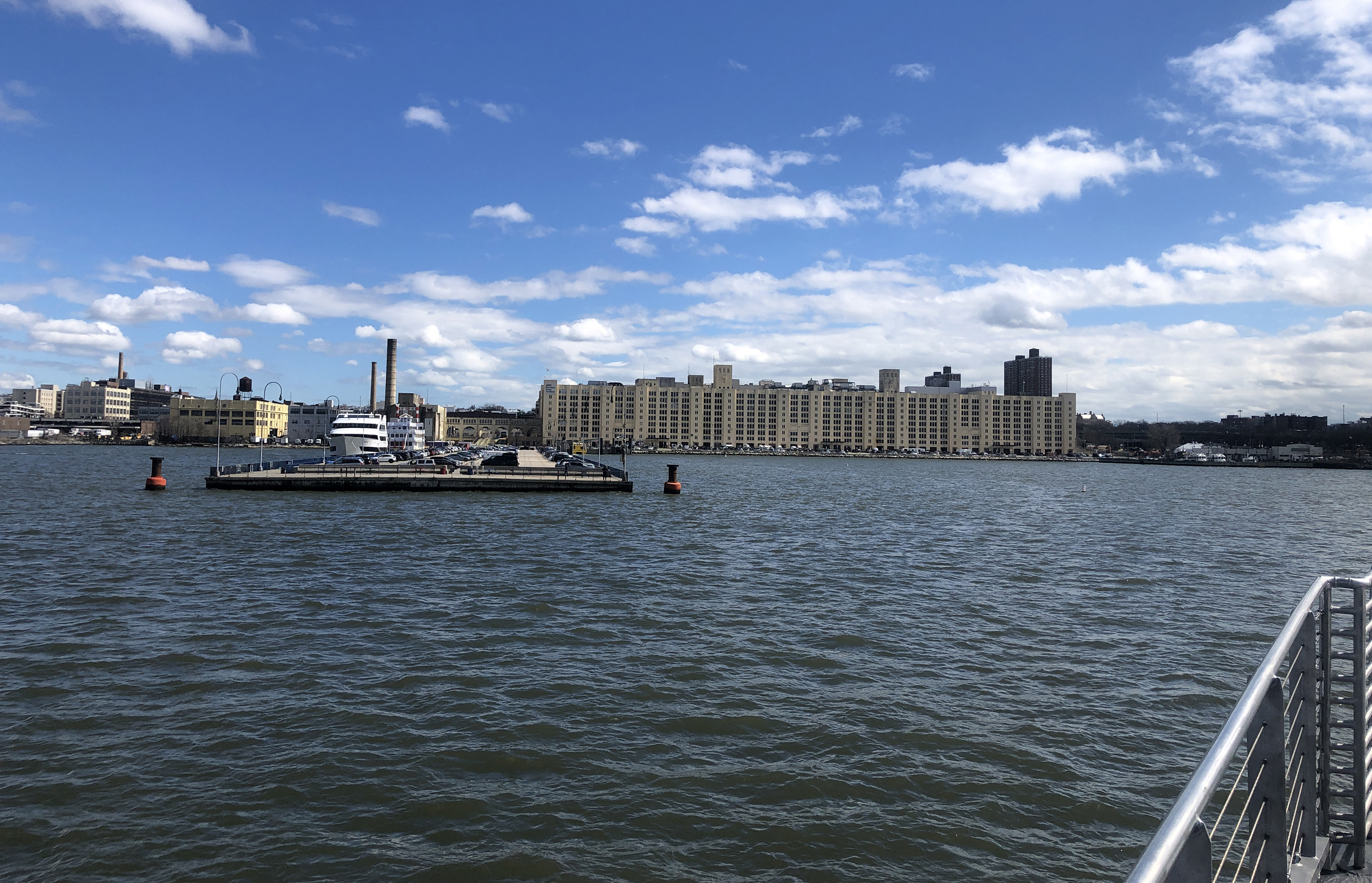
As you might’ve noticed, the Arkham exterior was digitally enhanced, adding an engraved cap to the footbridge and multiple floors to the tower.
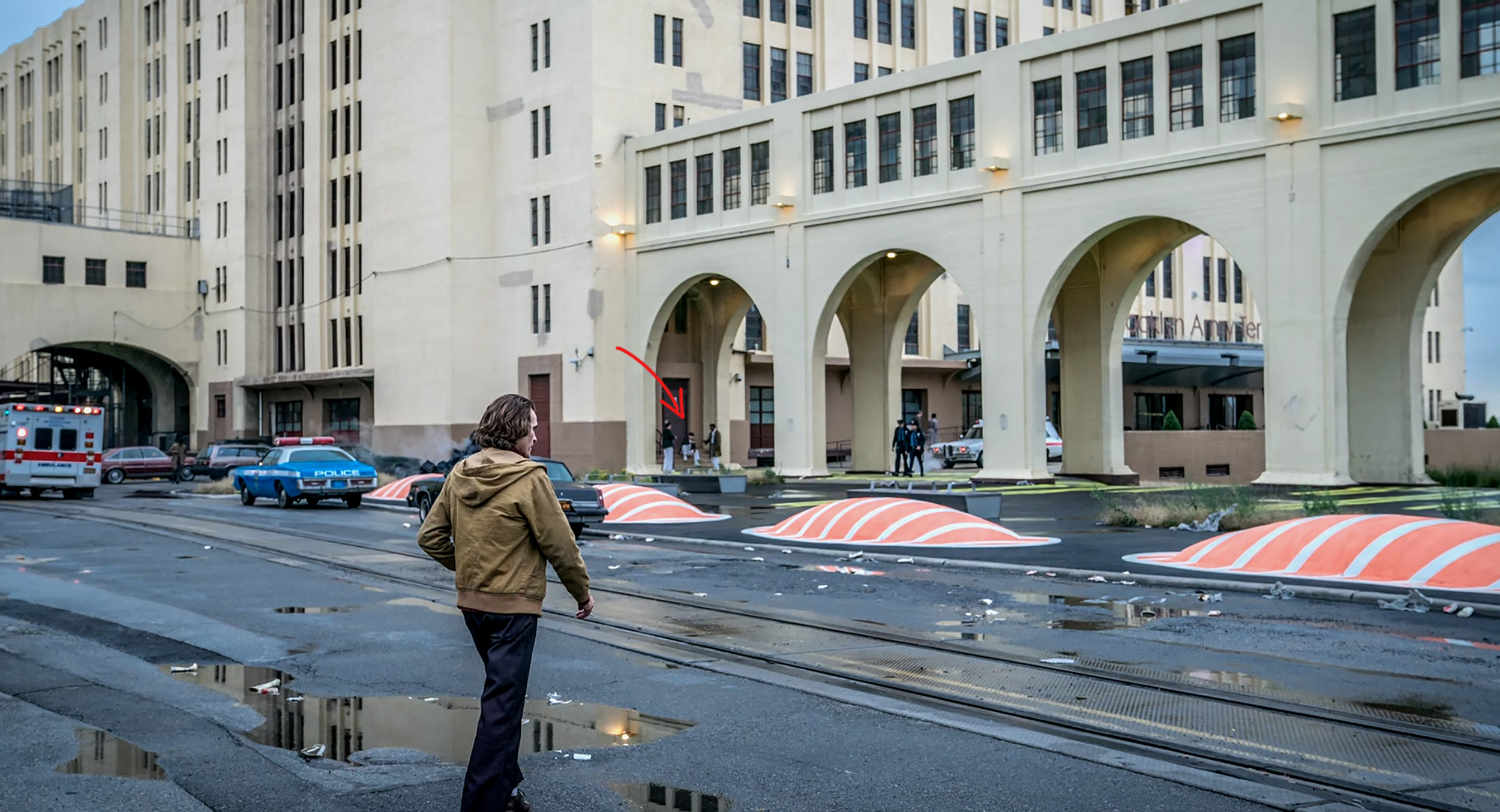
When it came to taking photos of the basement at Metropolitan, I was quite pessimistic about my chances of gaining any sort of access. And my reservations increased when I went to the First Avenue entrance one weeknight and saw a security guard posted by the passageway that led to the main part of the hospital. I could either go to her or join the line at the information window. As I stood there trying to decide, the guard, sensing a quandary in my eyes, came up to me and asked if I needed any help.
Knowing, “Hi, can I go inside there and take some pictures” would not get a favorable response, I glanced up at the directory and saw that the hospital pharmacy was located at the other end of the long, first floor corridor to which she was guarding. I squeaked, “Pharmacy?” which prompted her to check her watch.
“Yeah, they’re still open. At the end of the hall on the left.”
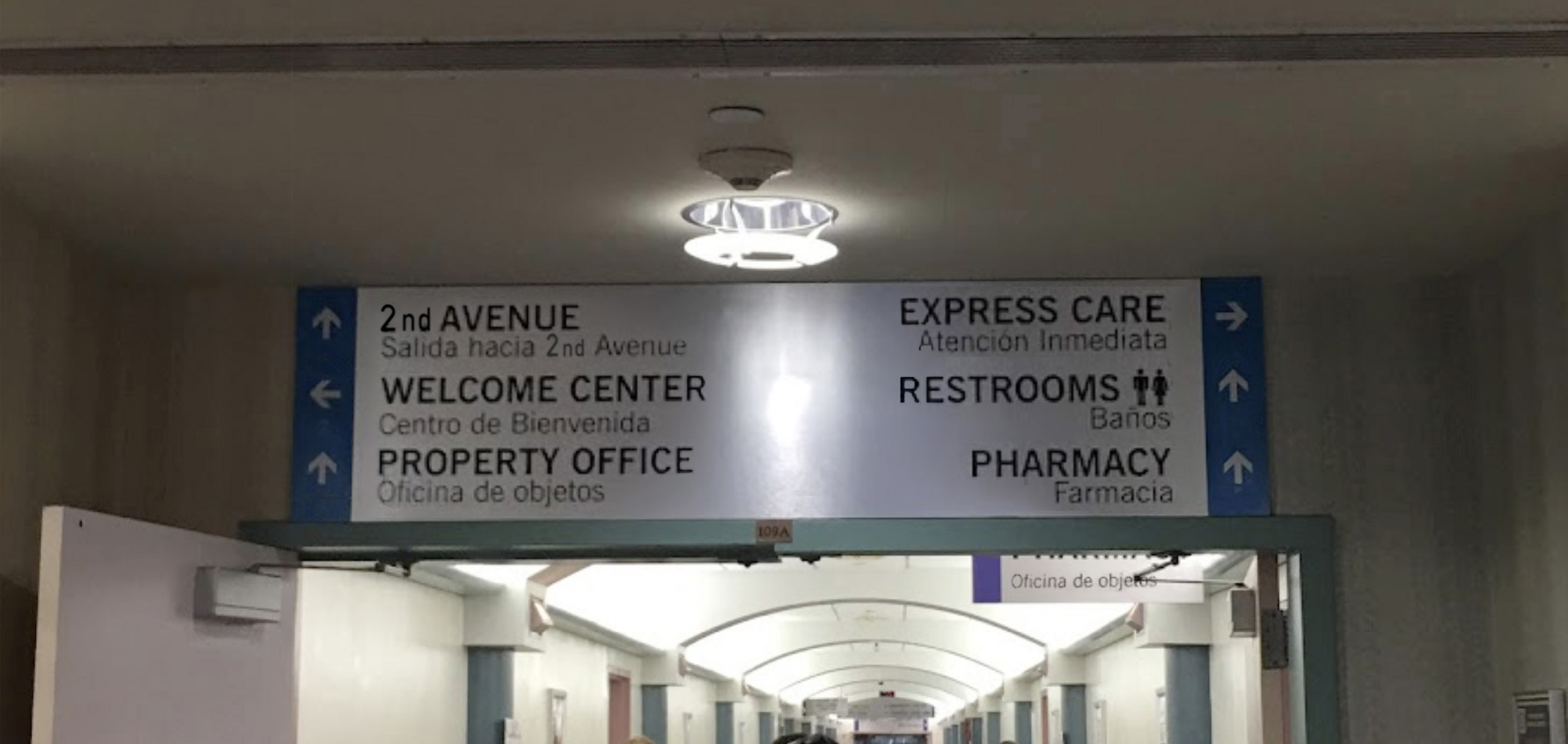
And with that, I was past one obstacle. But how I was going to get to the basement —which I knew was for employees only— was still uncertain. First, after walking the 700 feet or so to the other end of the hallway, I popped into the pharmacy and stood around for about a minute, just in case the guard was watching from her post.
Then I hopped back out and immediately went to a bank of nearby elevators. Fortunately, not many people were around, so I was able to take the elevator by myself to the next floor. I then got off and immediately hit the stairwell, taking it back to the first floor.
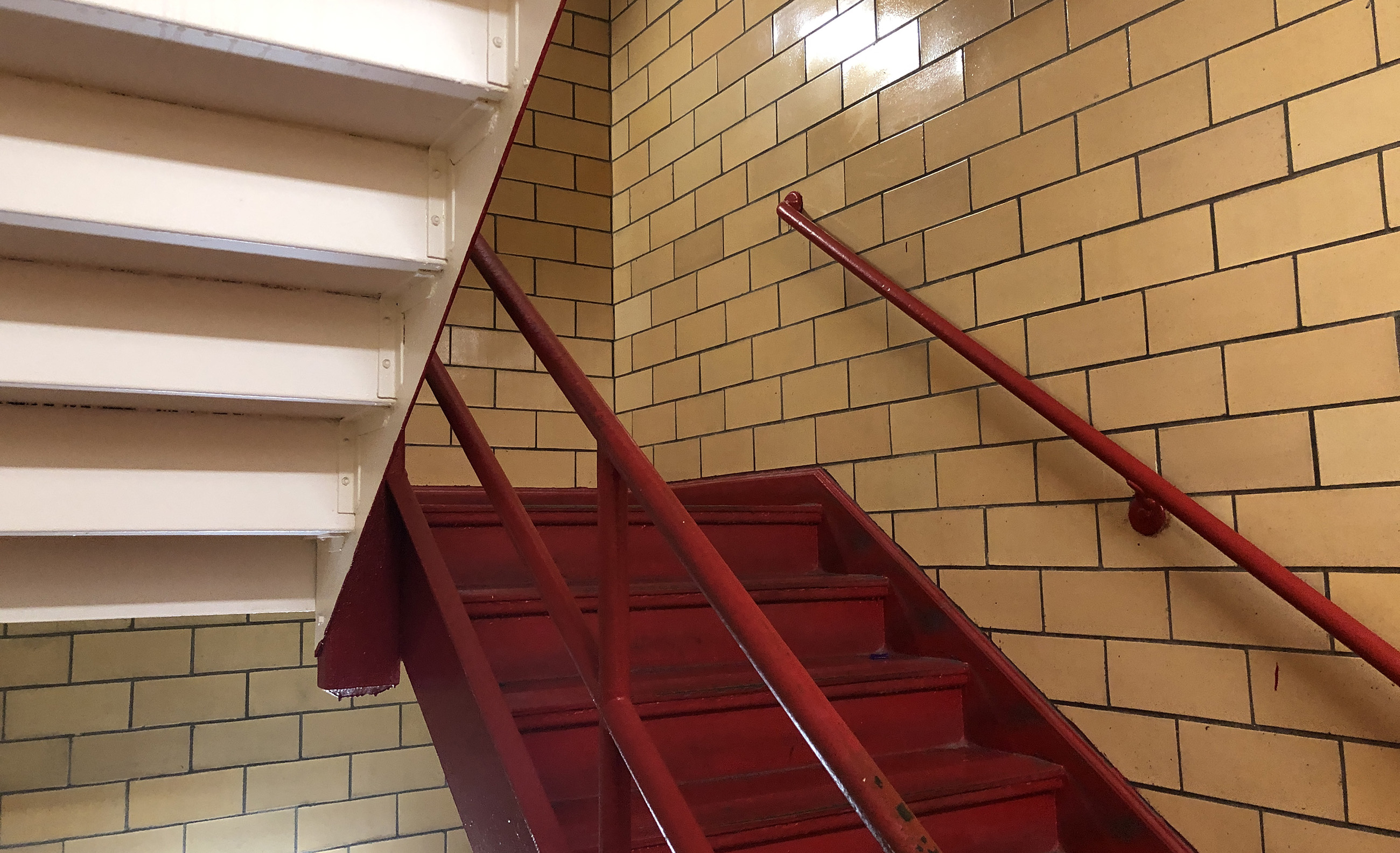
On the landing, I saw one door that exited into the main corridor and another door that I assumed led to the basement. I pulled on the knob, and to my surprise, it gave way, revealing a set of narrow stairs going down to the next level.
Once in the basement, I got an uncanny impression that I could get away with roaming the halls for a bit, so long as I walked with purpose. Since it was after 7pm, the number of staff members was minimal, and anyone I passed seemed to be at the end of their shift and focused on getting home.
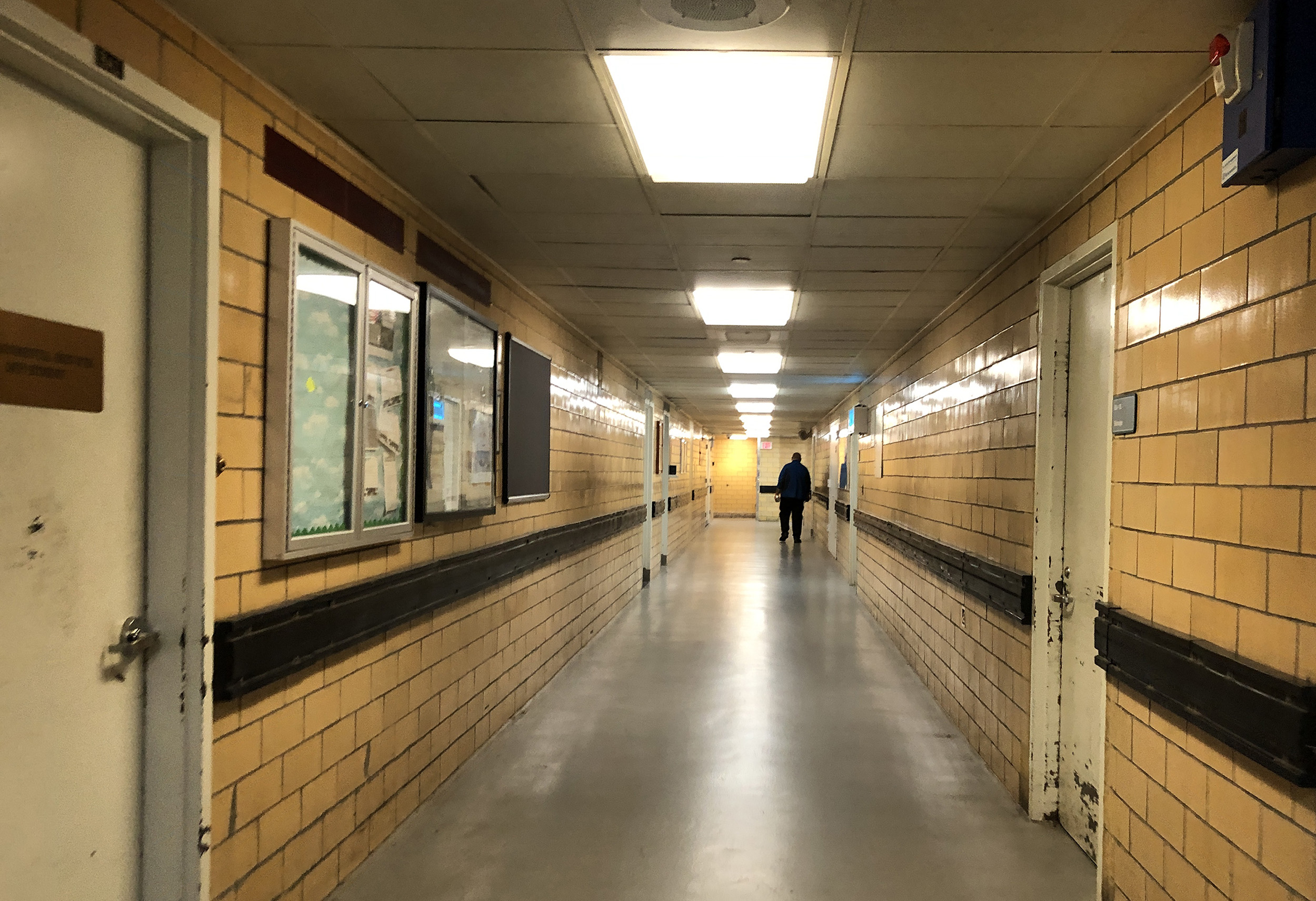
There were plenty of security cameras mounted on the walls, but I figured if I walked with casual aplomb, I wouldn’t really stand out from the other staffers, especially since I was wearing exercise pants that looked similar to scrubs pants.
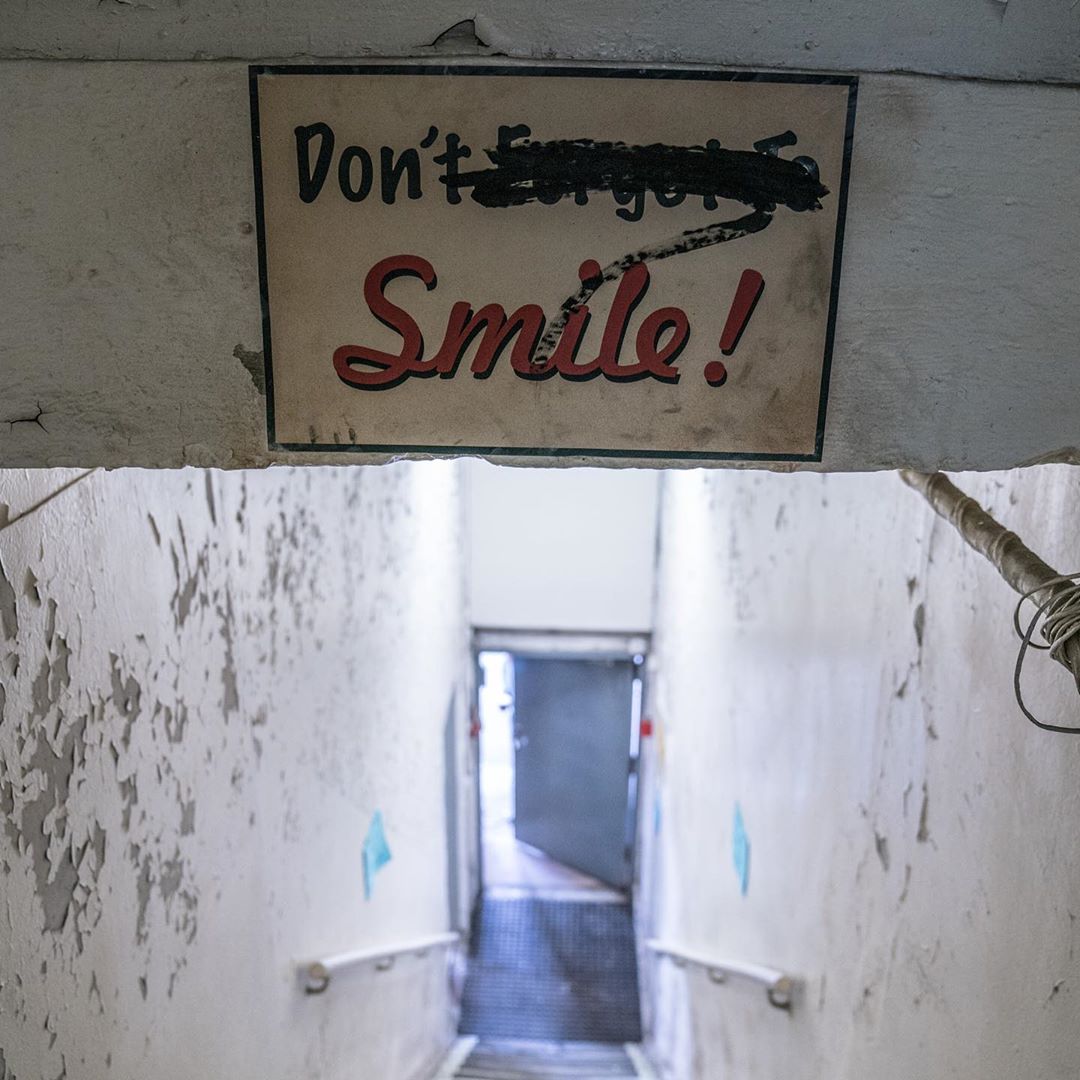
While feeling somewhat bold, I still knew I’d be pushing my luck if I stayed down there too long. Adding to the pressure, I had no idea where I was going — I just did my best to do a lap around the basement and take as many pictures as I could along the way. Luckily, when I hit what turned out to be a filming location, I thought it looked familiar and took an extra number of pics.
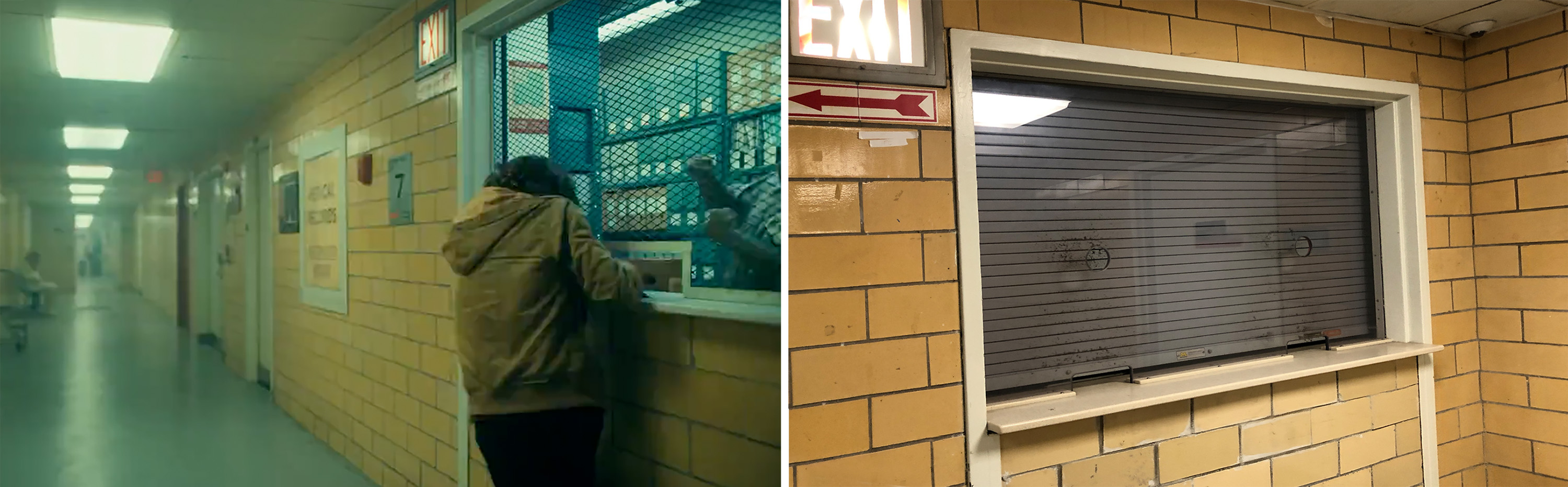
At the same time, I knew my time of roaming these halls without arousing attention was running out, so I just quickly took a bunch of photos without referencing any screenshots from the movie. Consequently, the angles ended up being slightly off — most notably, I took them at eye level when they should’ve been taken about three feet lower.
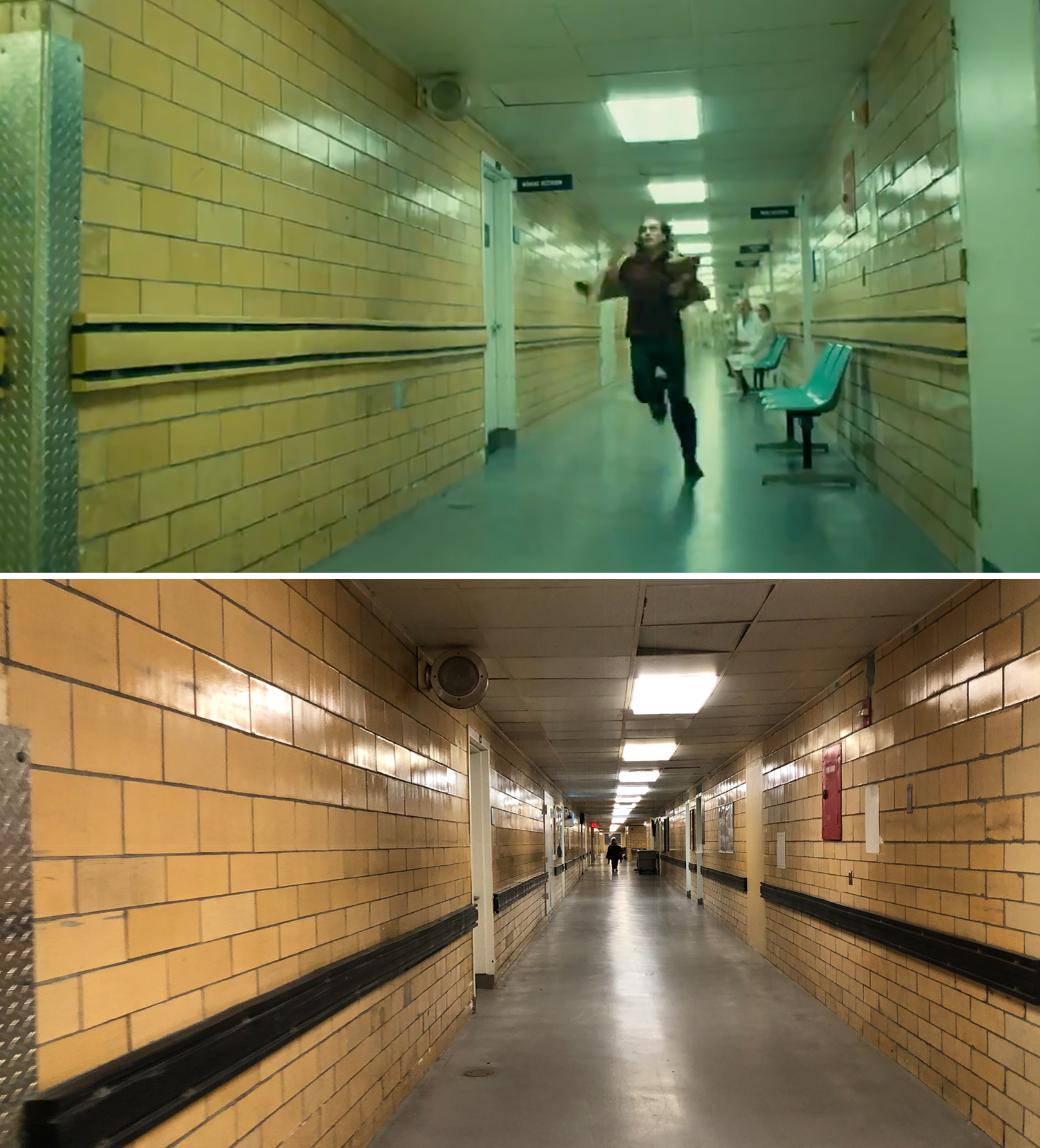
But overall, I felt lucky that I got any pictures at all without getting snagged by security. And once I was back on the street and heading home, I had that tingly feeling of having just gone on a little adventure.
The Joker Dance
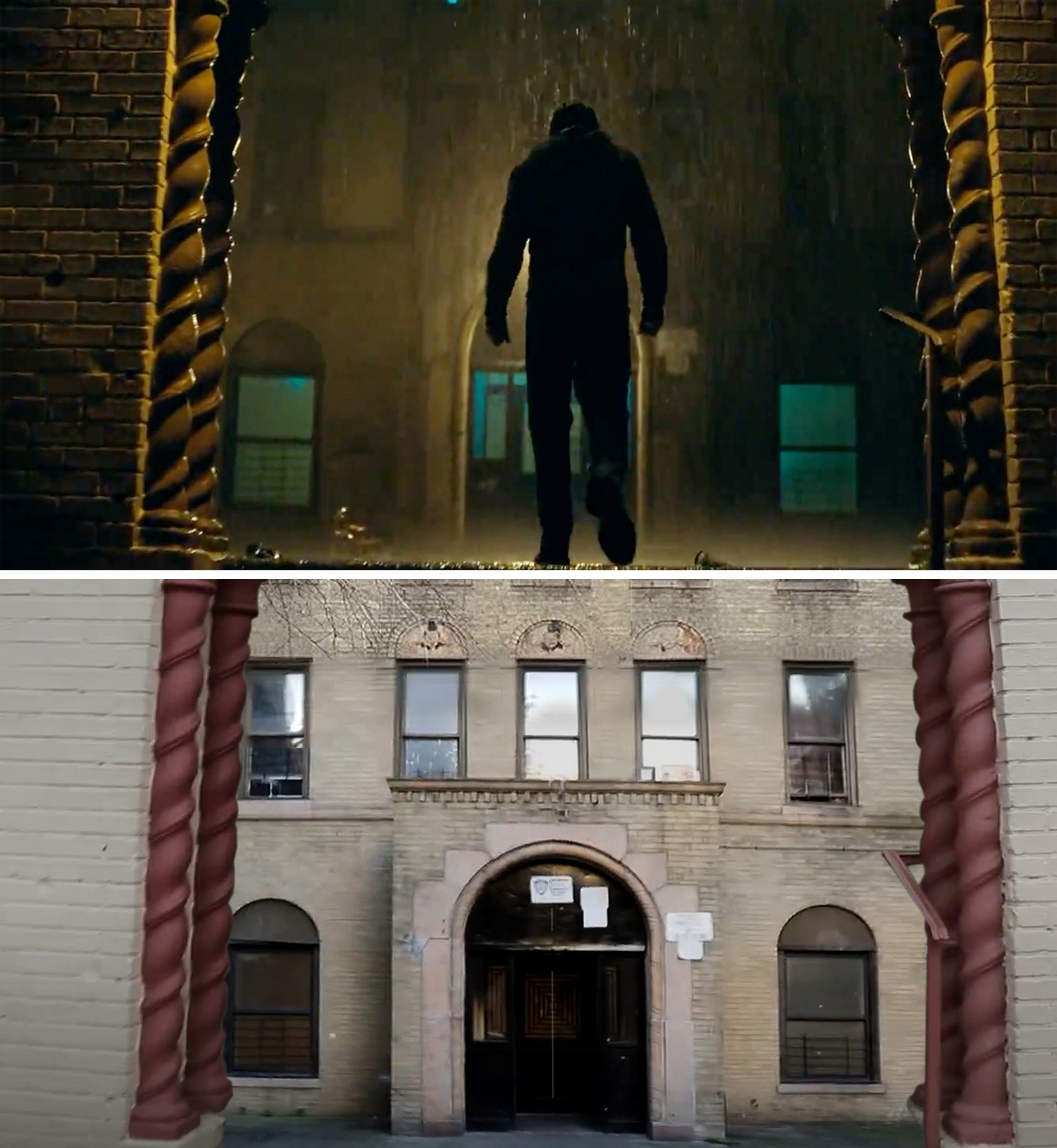
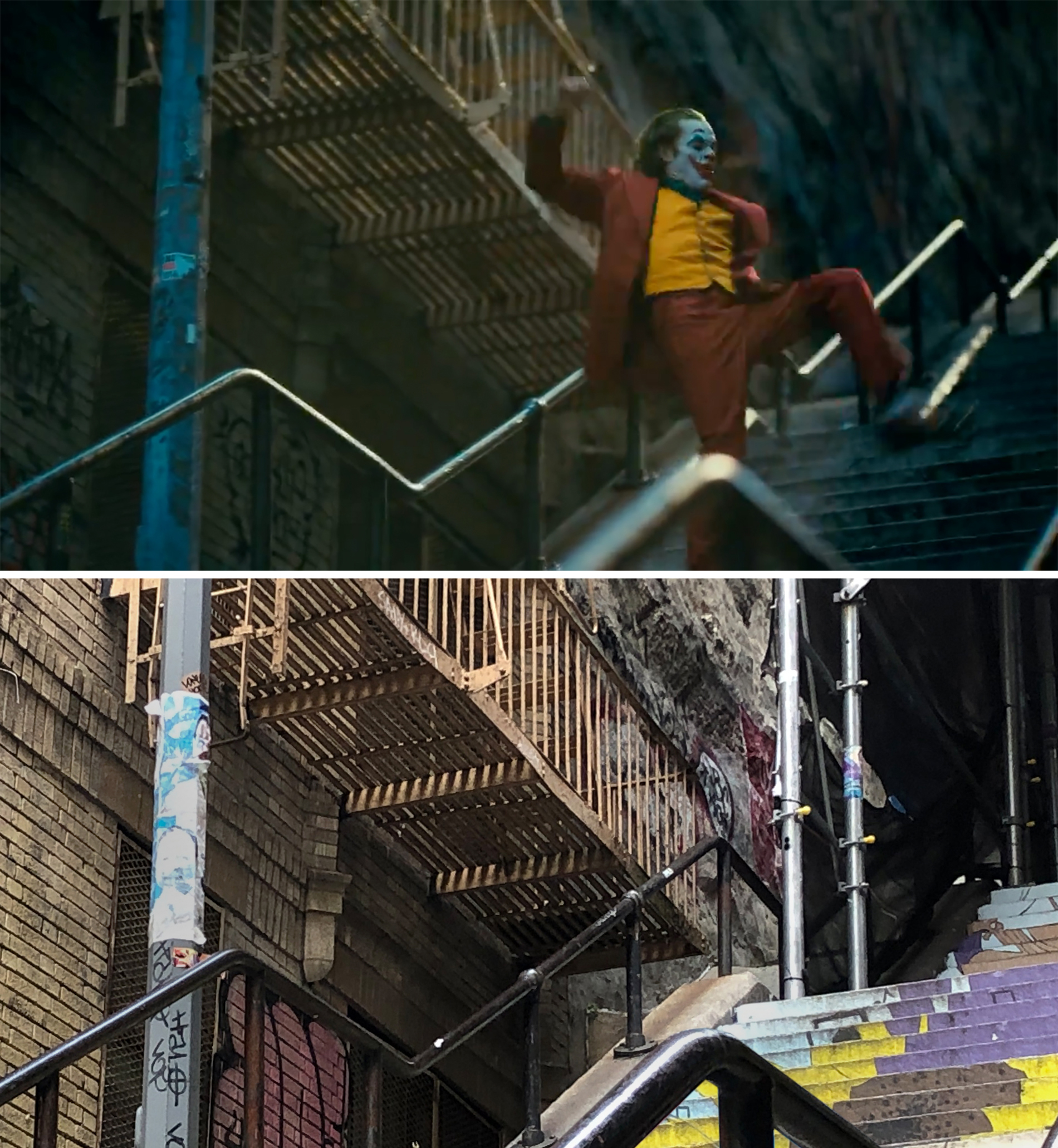

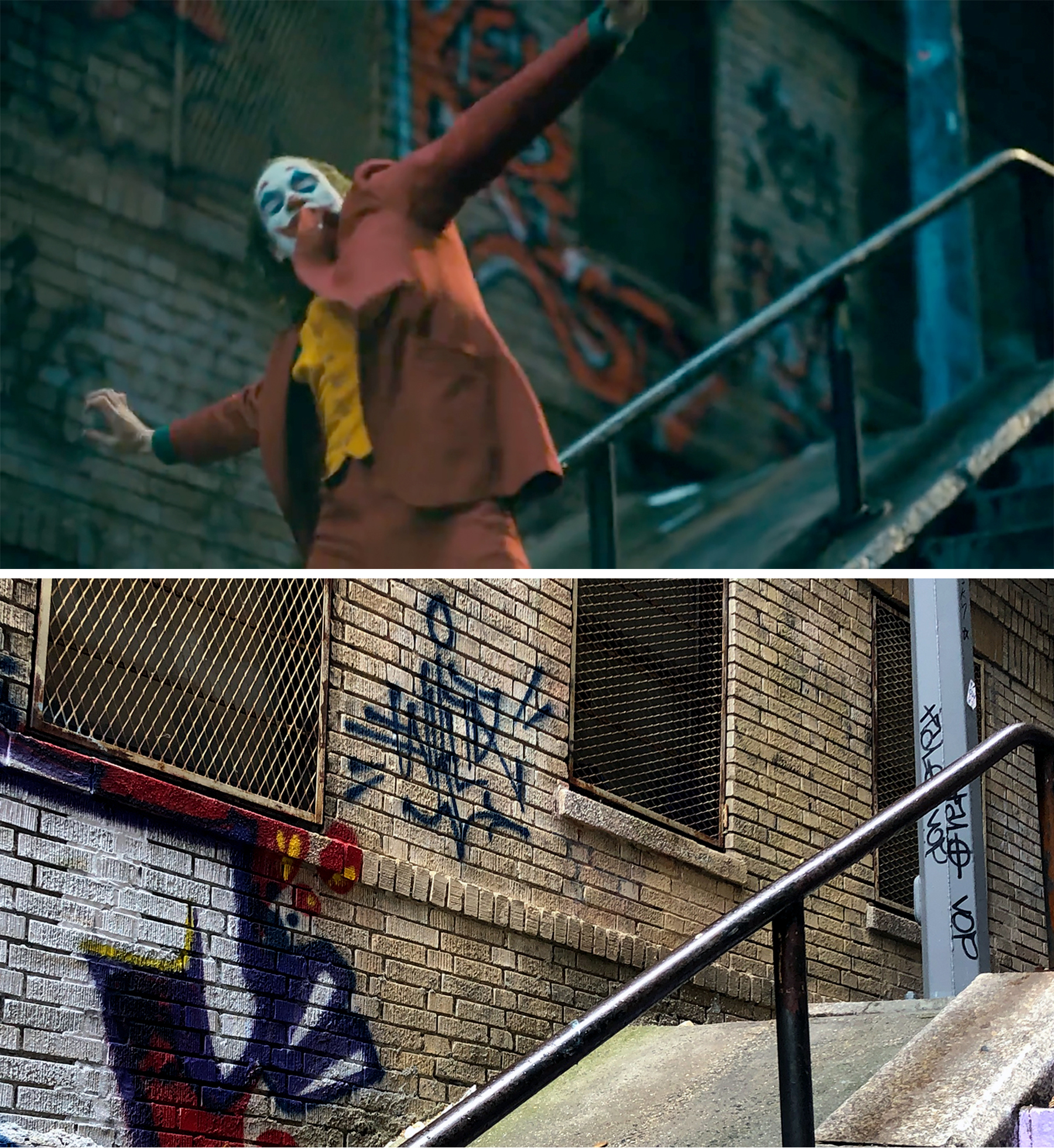
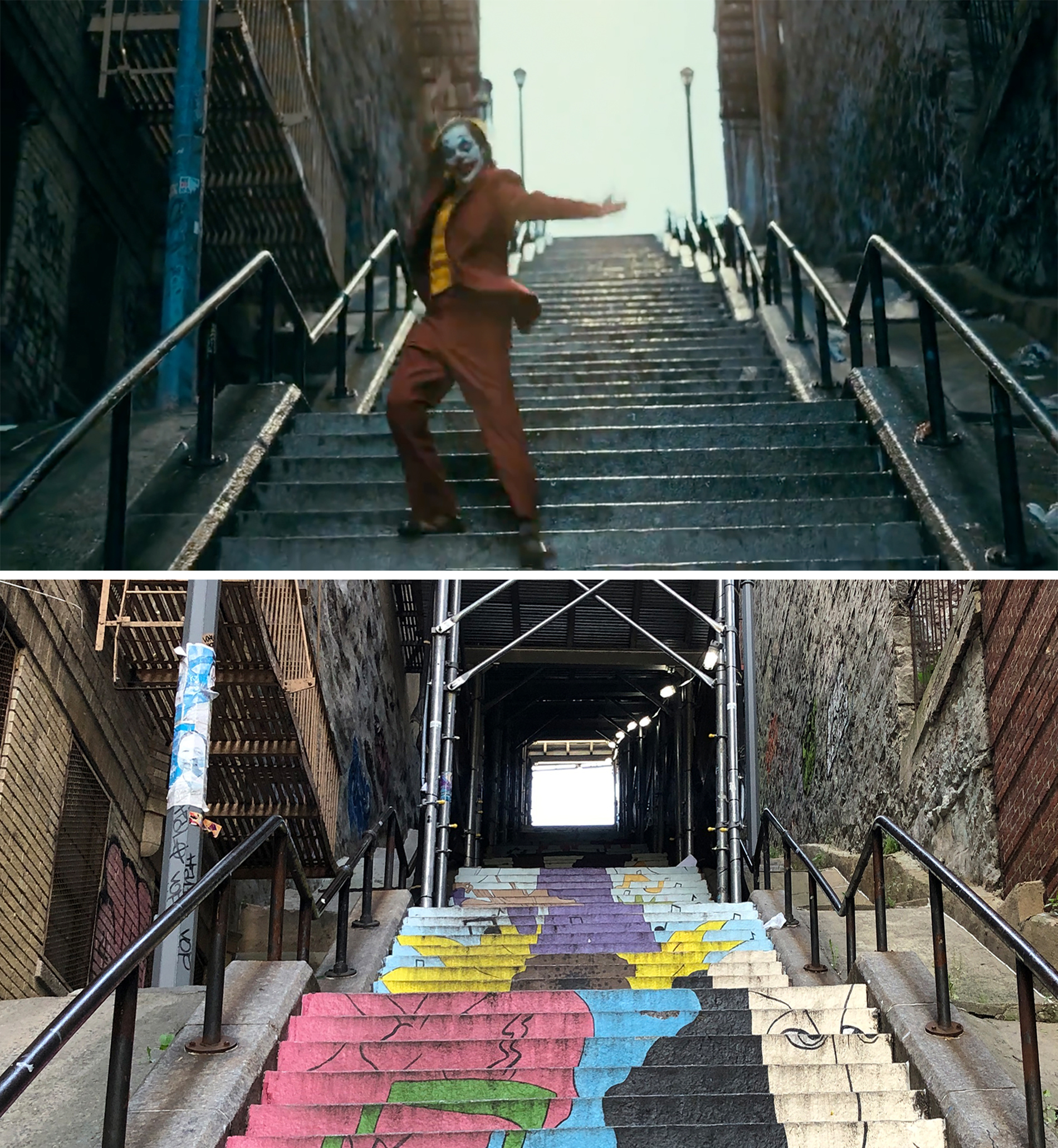

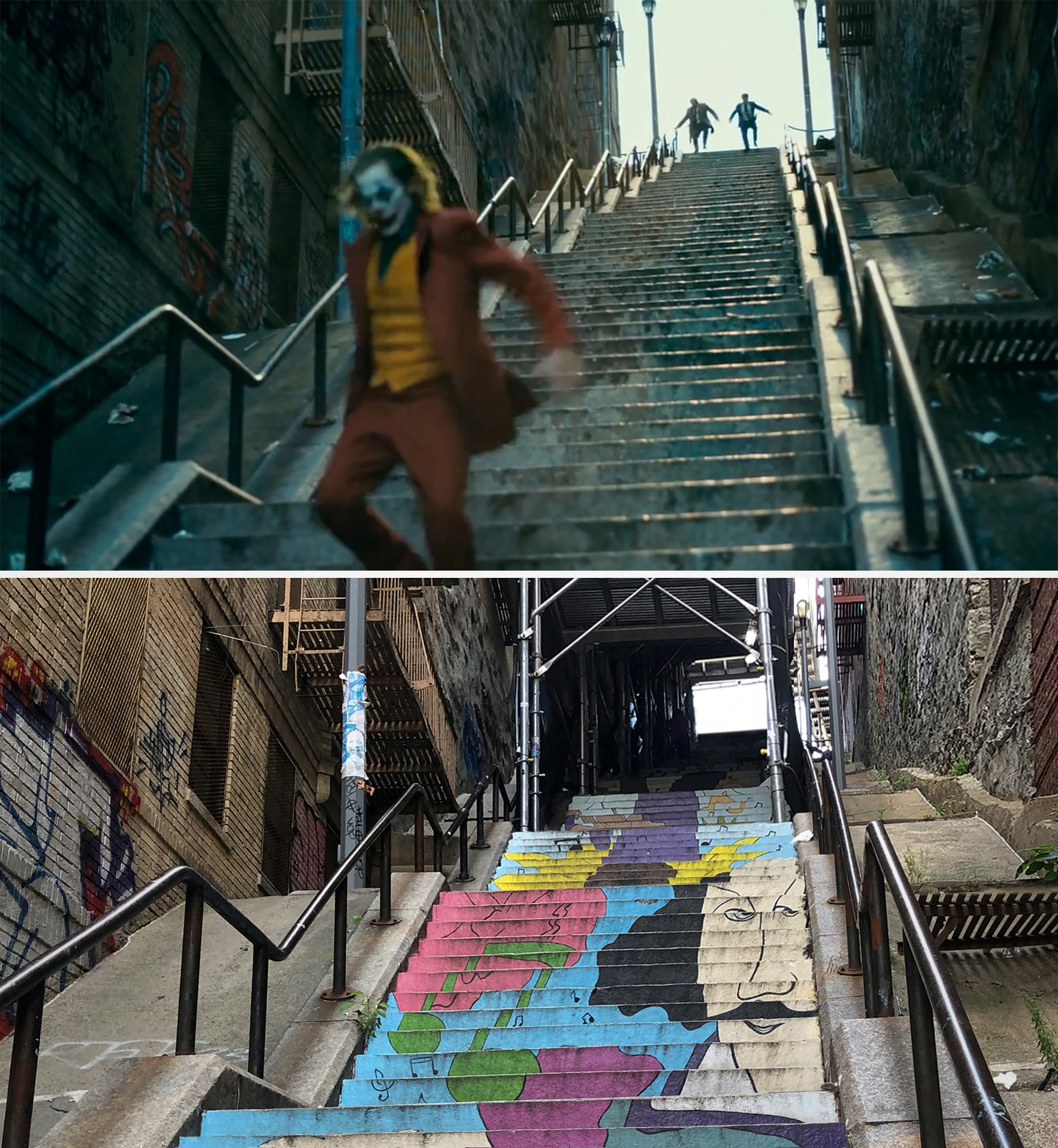
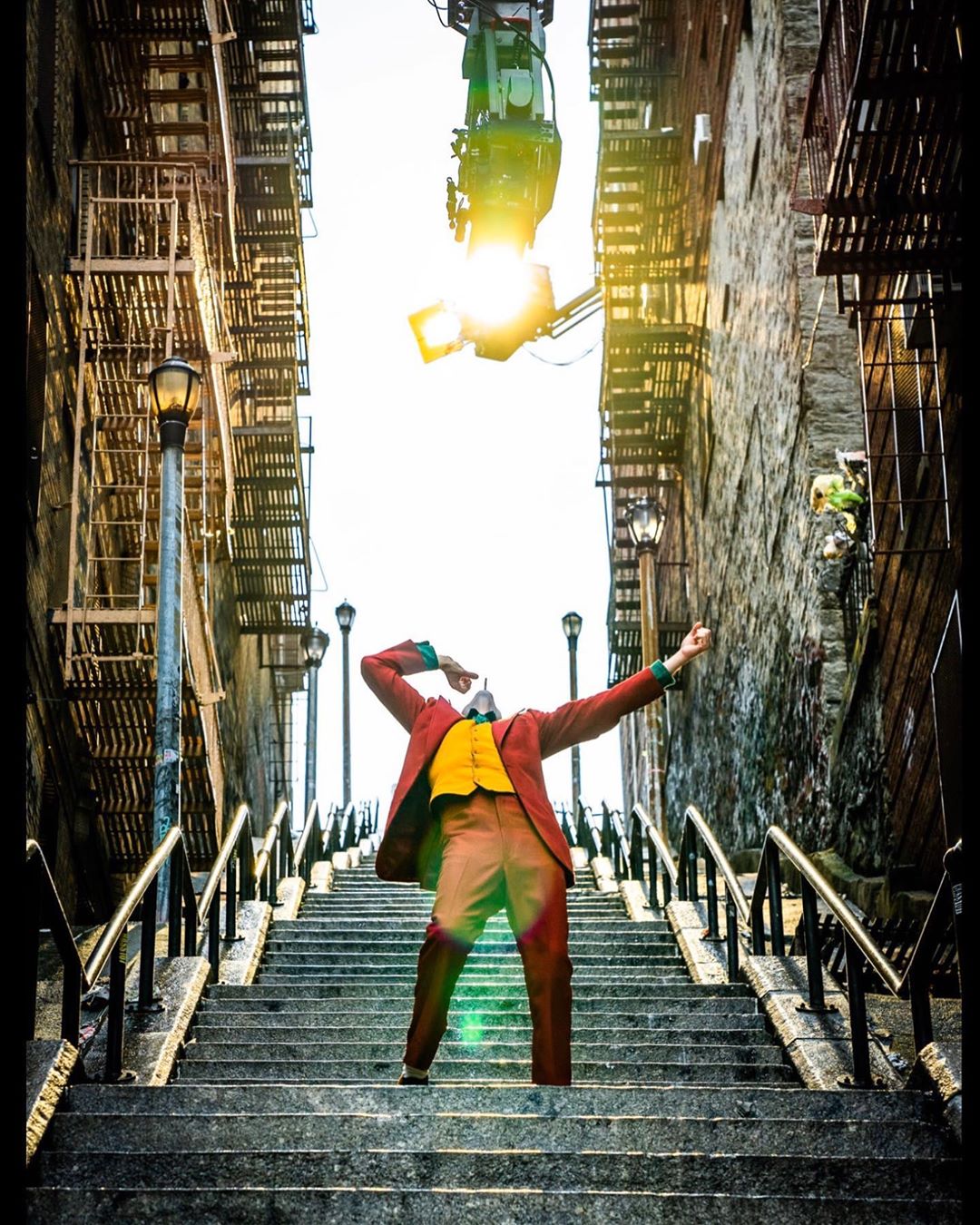
It’s pretty amazing on how popular these steps have become. Both times I visited the location, there was a constant flow of picture-takers and costumed posers.
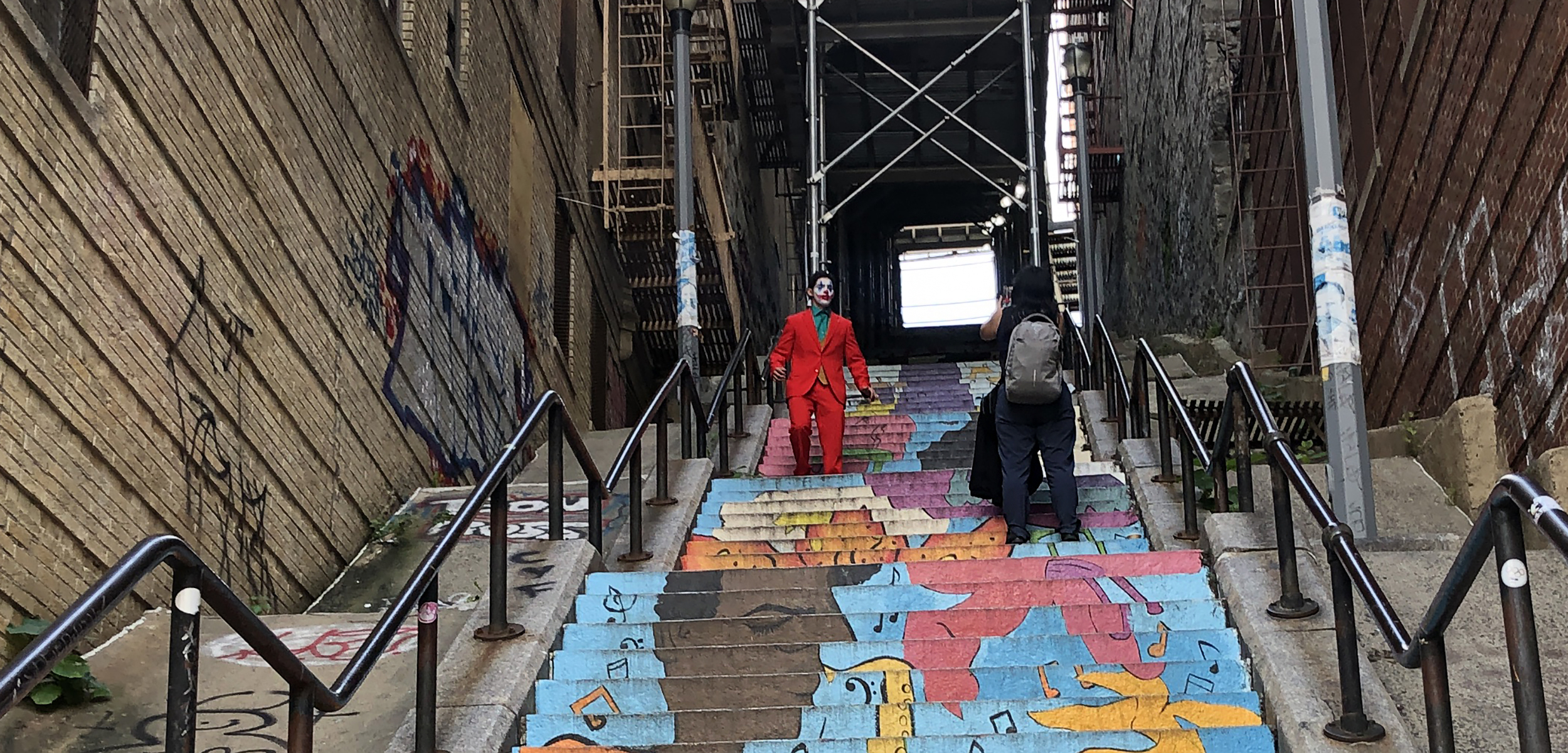
It’s funny, when I moved to the Bronx years ago, the first thing I found endearing about the neighborhood was the array of steep public stairs, often linking you to multiple street levels. And apparently, director Todd Phillips was also struck by these outdoor stairs, looking for a particular set.
As the story goes, Phillips was interested in the one that appeared in the film, American Gangster. But when the location scout tracked down those stairs, they had since been repaved and beautified, going against the Gotham aesthetic. So, the scout drove around the Bronx looking for other “step streets,” eventually settling on the one at Shakespeare Avenue.
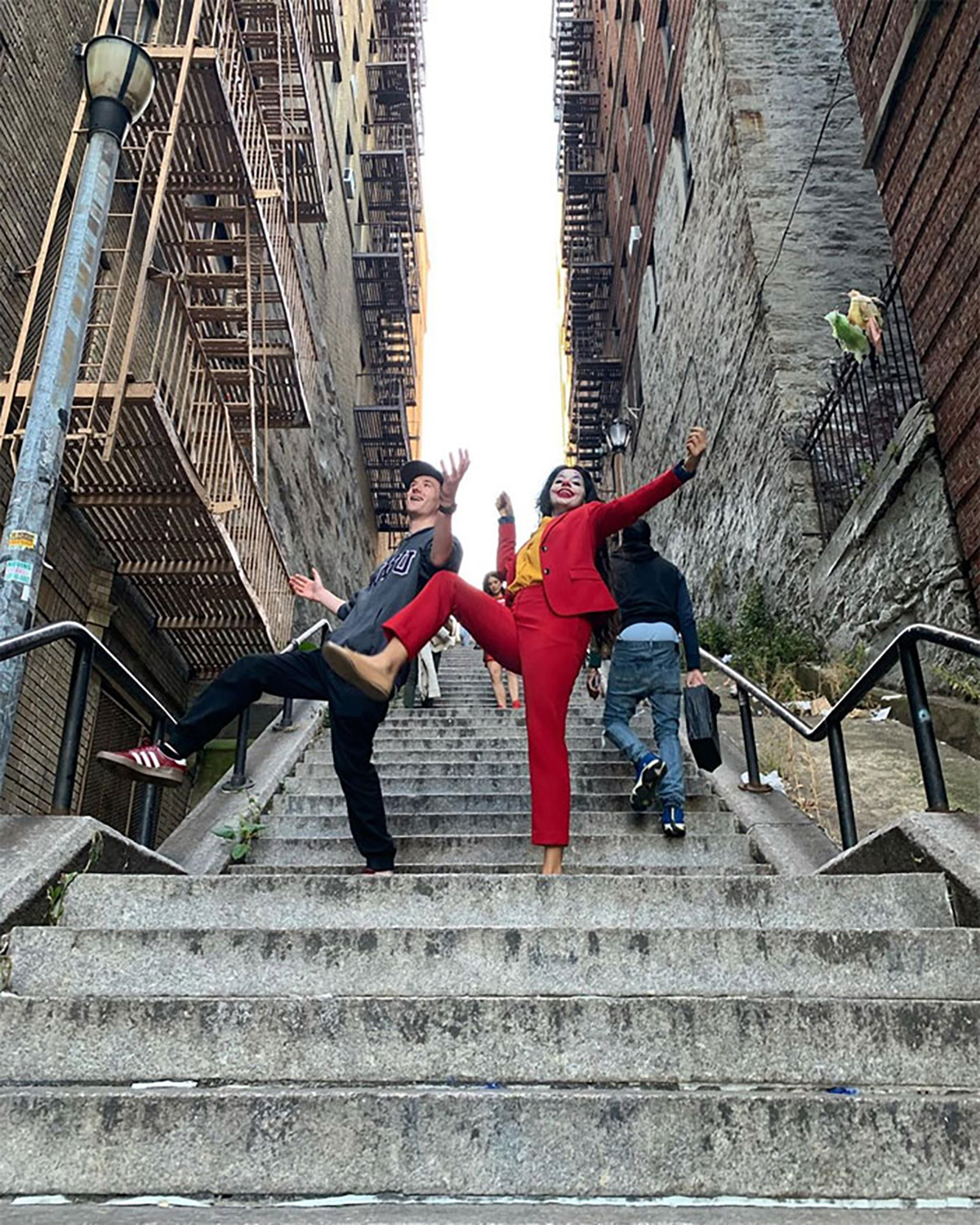
Amazingly, almost immediately after the movie’s release in 2019, the staircase Joaquin Phoenix pranced on became a vibrant tourist destination. Most of the visitors were there to quickly acquire their social media pic with a JokerStairs hashtag, uninterested in really appreciating the surroundings.
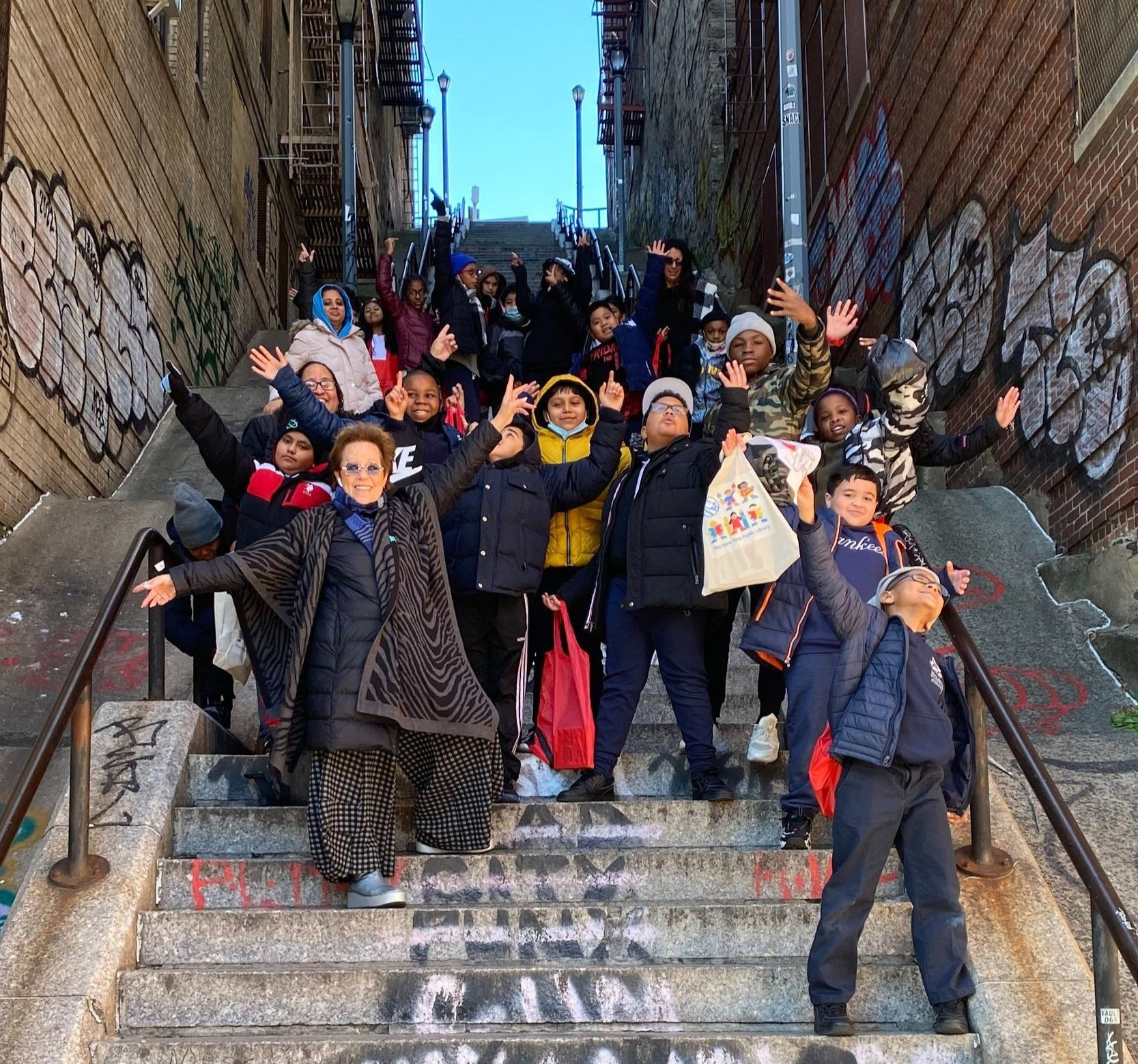
It got so out of control for a while, that it became a real headache for Bronx locals who were simply trying to get to and from home. Instead, they had to constantly contend with swarms of interlopers snapping vertical pics of each other in clown make-up.
I felt their grief. Since I prefer my pictures of the city to have few or no people in them, these Joker-wannabees ended up being a bit of a nuisance to me as well, turning what would normally be a 20-minute photoshoot into a one hour affair.
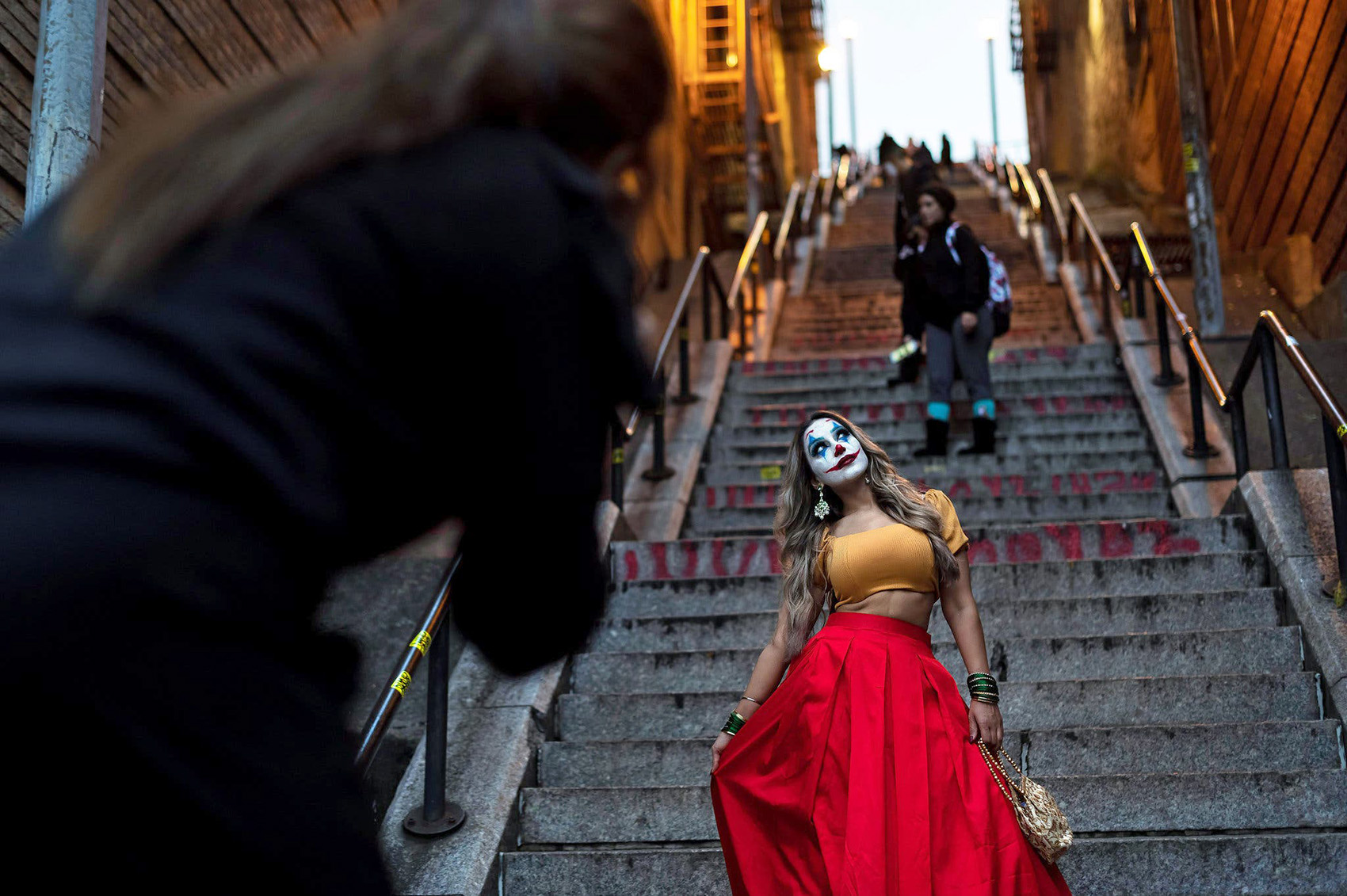
Not sure why these Bronx stairs continue to be so popular, even as general audiences’ feelings towards Joker have somewhat cooled. But this Bronx site has joined the ranks of other sought-after staircases that hold a place in cinematic history, such as the Georgetown flight from The Exorcist or the Philadelphia Museum of Art steps from Rocky.
I guess people like visiting filming locations that can also help build their calves.
Cops Chase Arthur
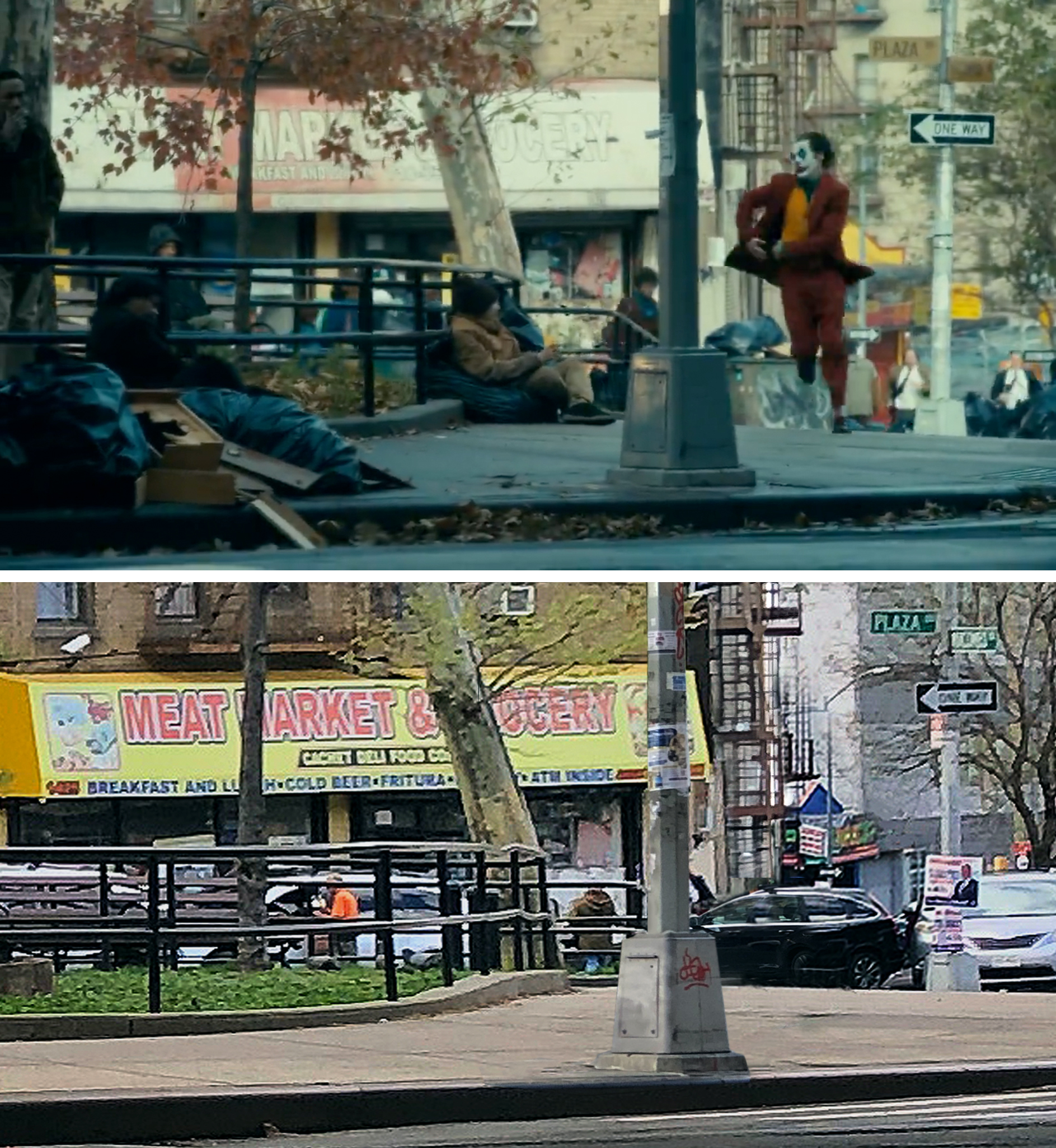
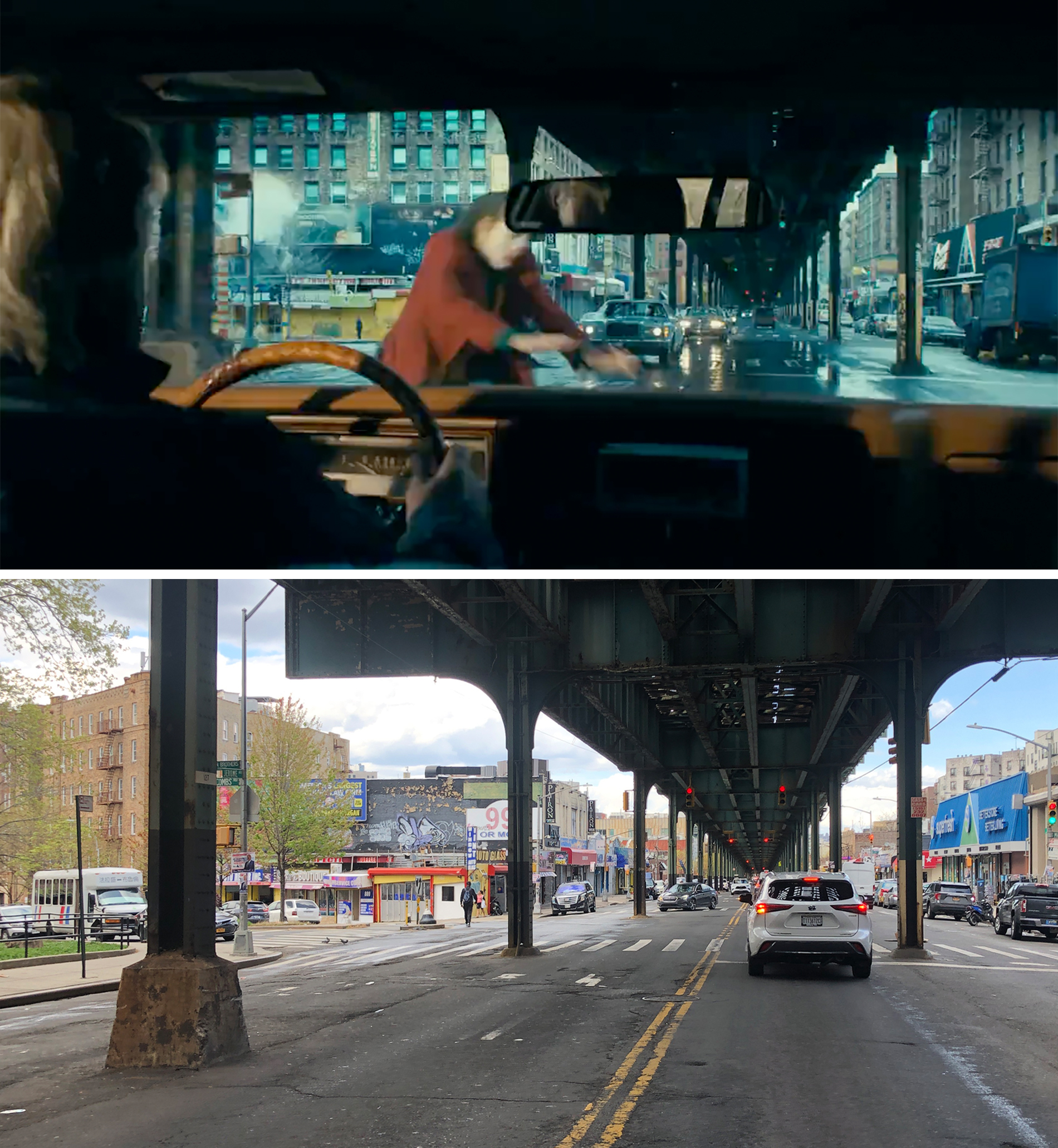
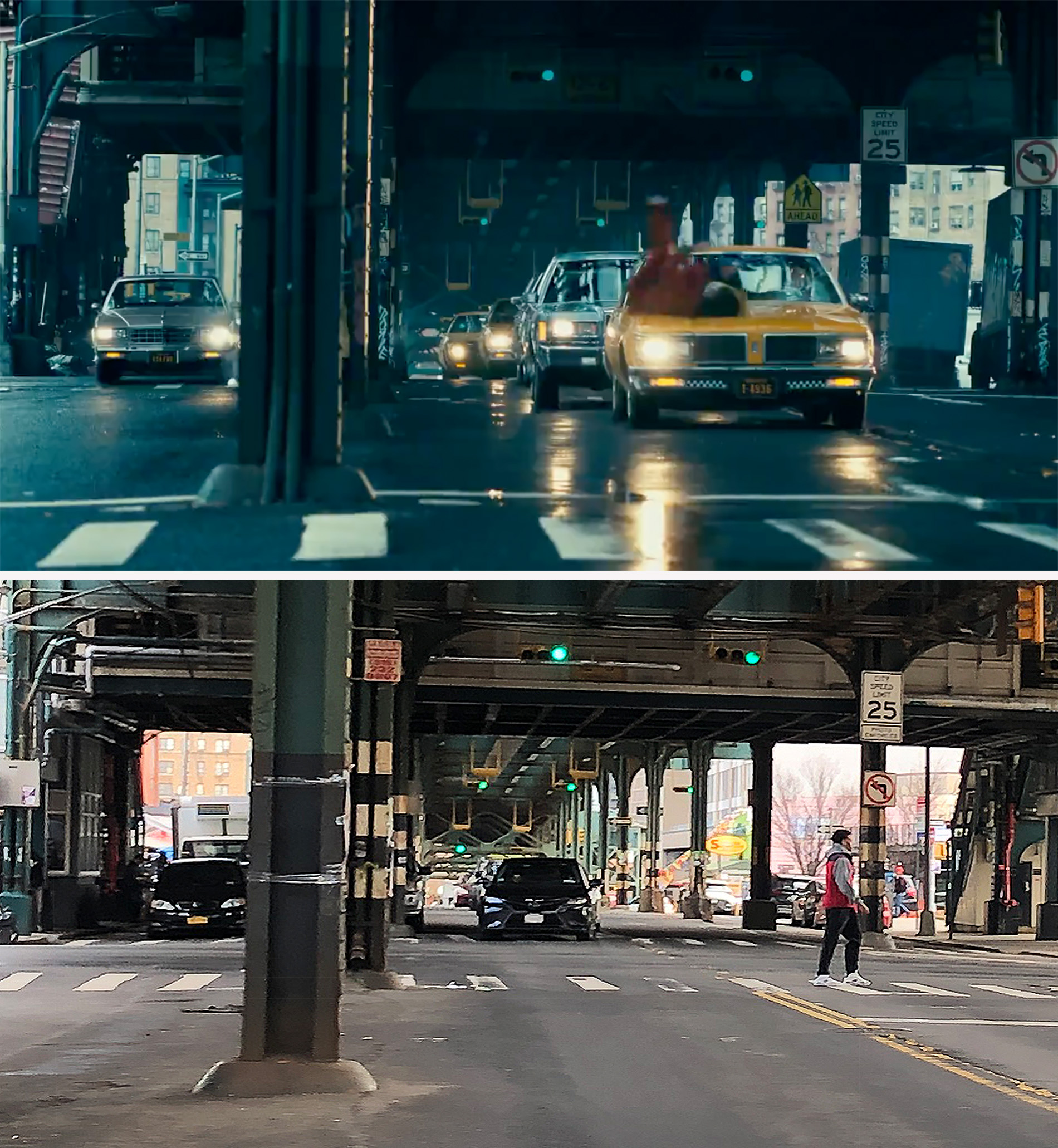
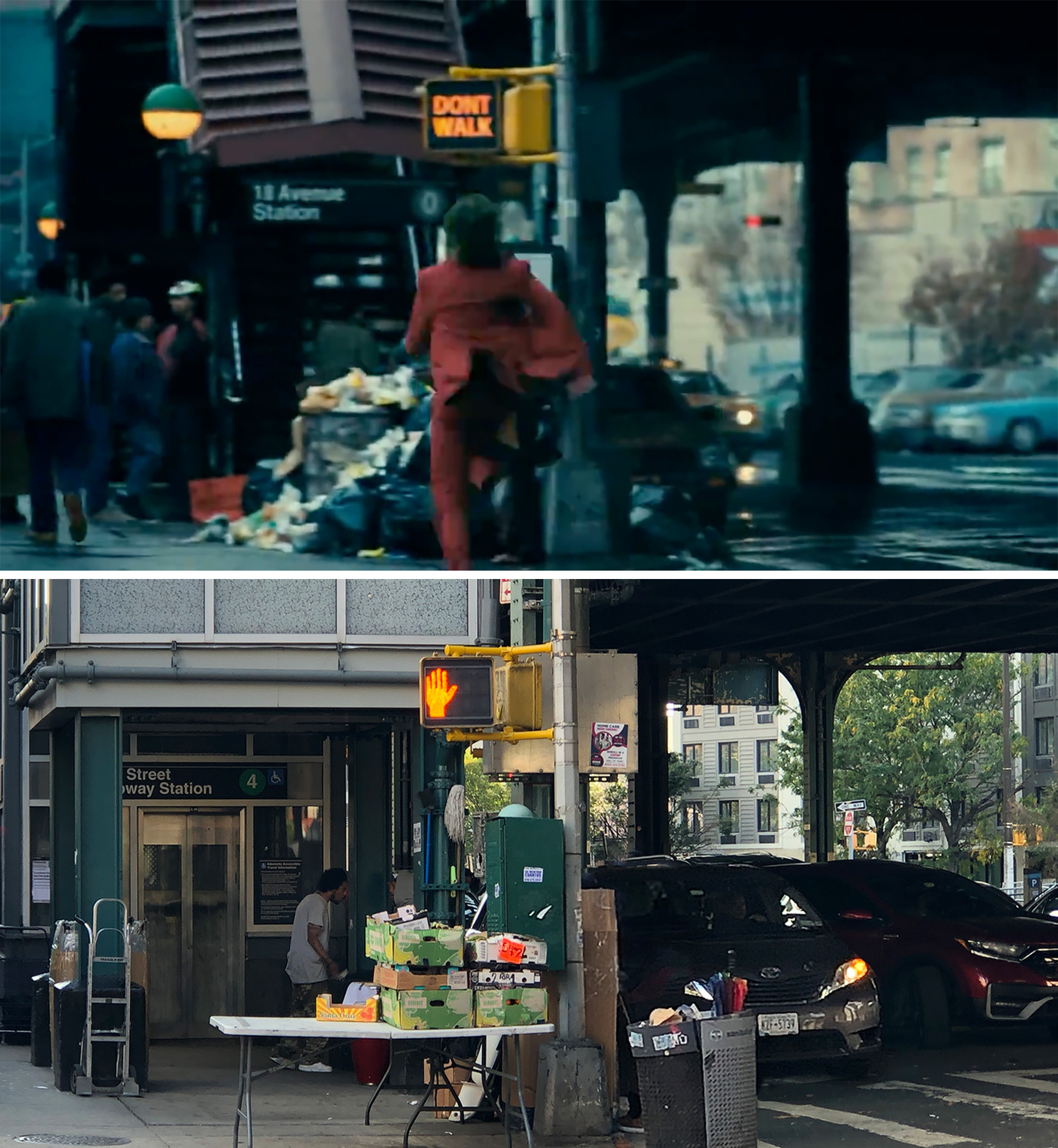
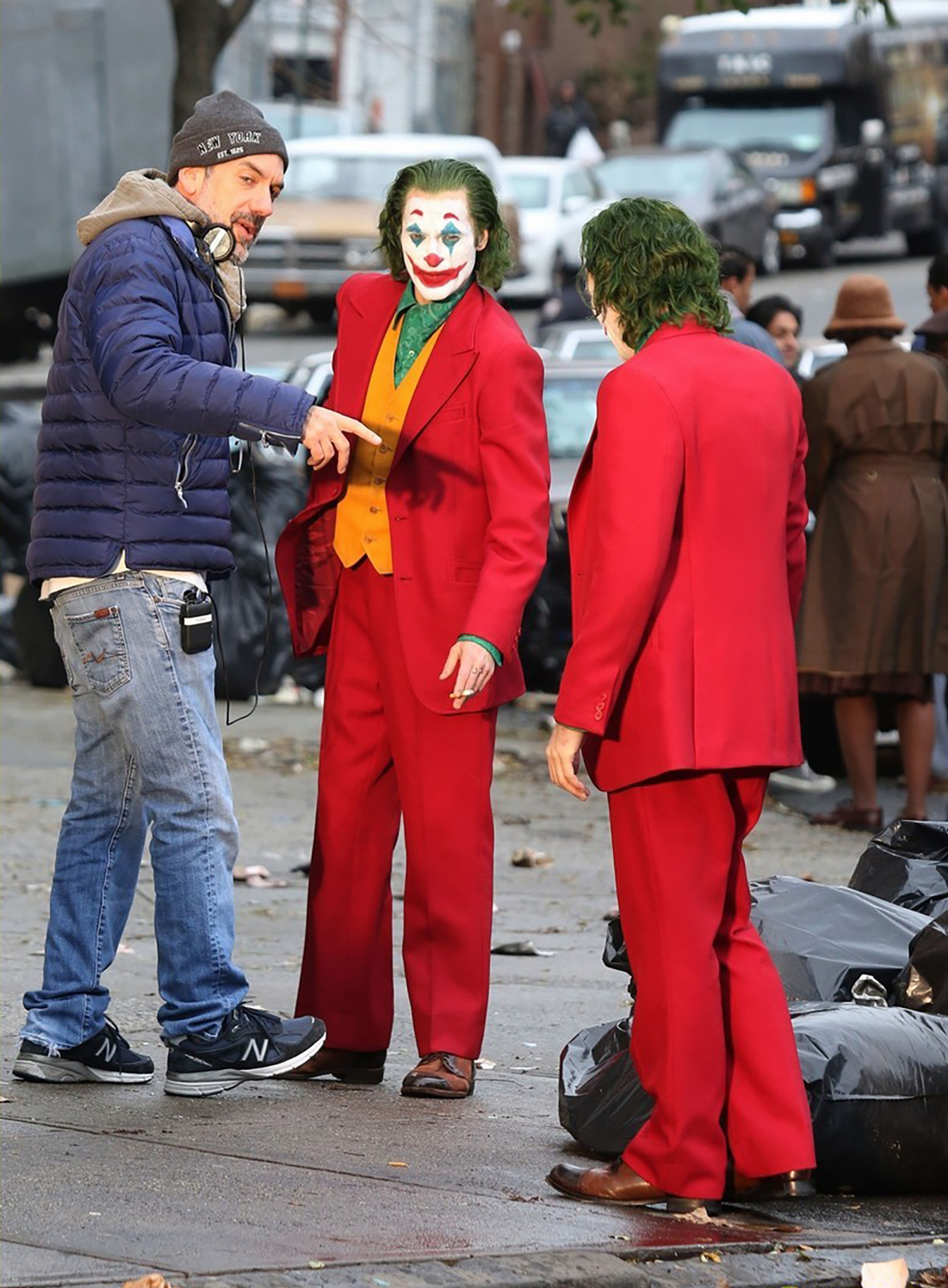
The location of this running scene was documented pretty early on thanks to the release of candid photos and videos documenting where it was taking place.
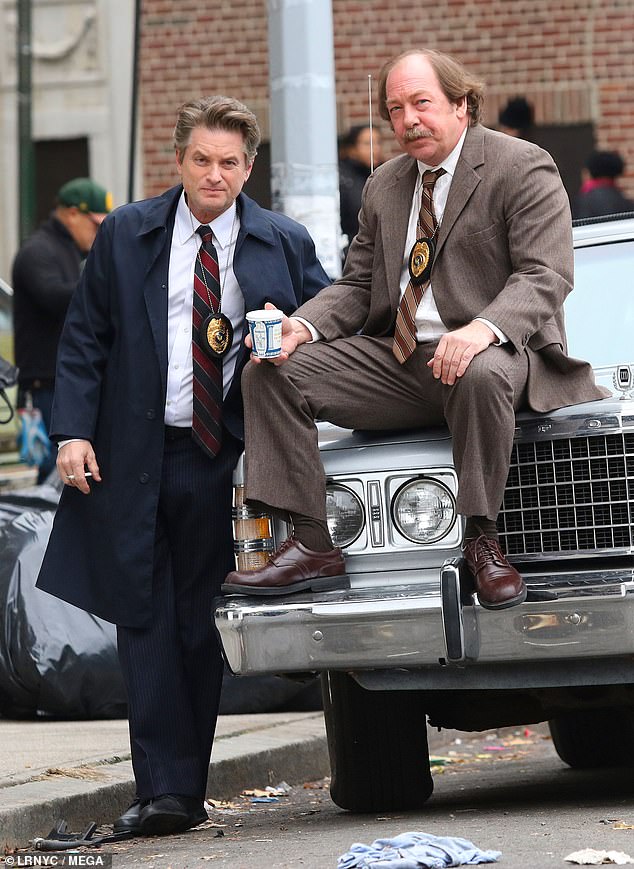
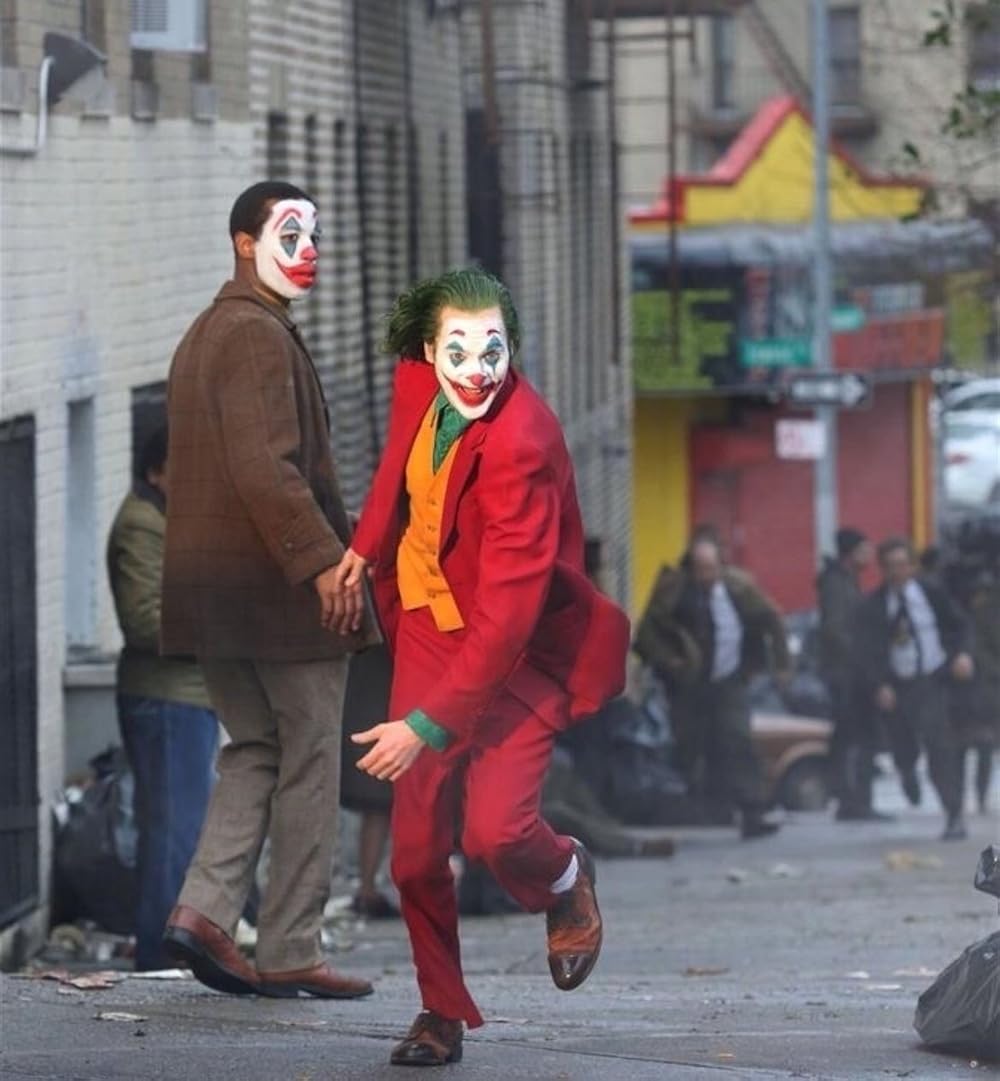
This stunt-laden scene leads into a long subway sequence that will end up using four different stations.
By using so many different stations, sometimes using false signs, it could get a little confusing as to what was shot where. And even though the sign in the movie says he’s entering the 18 Avenue station (serving a mythical “O” line), he was really at 170th Street in the Bronx.
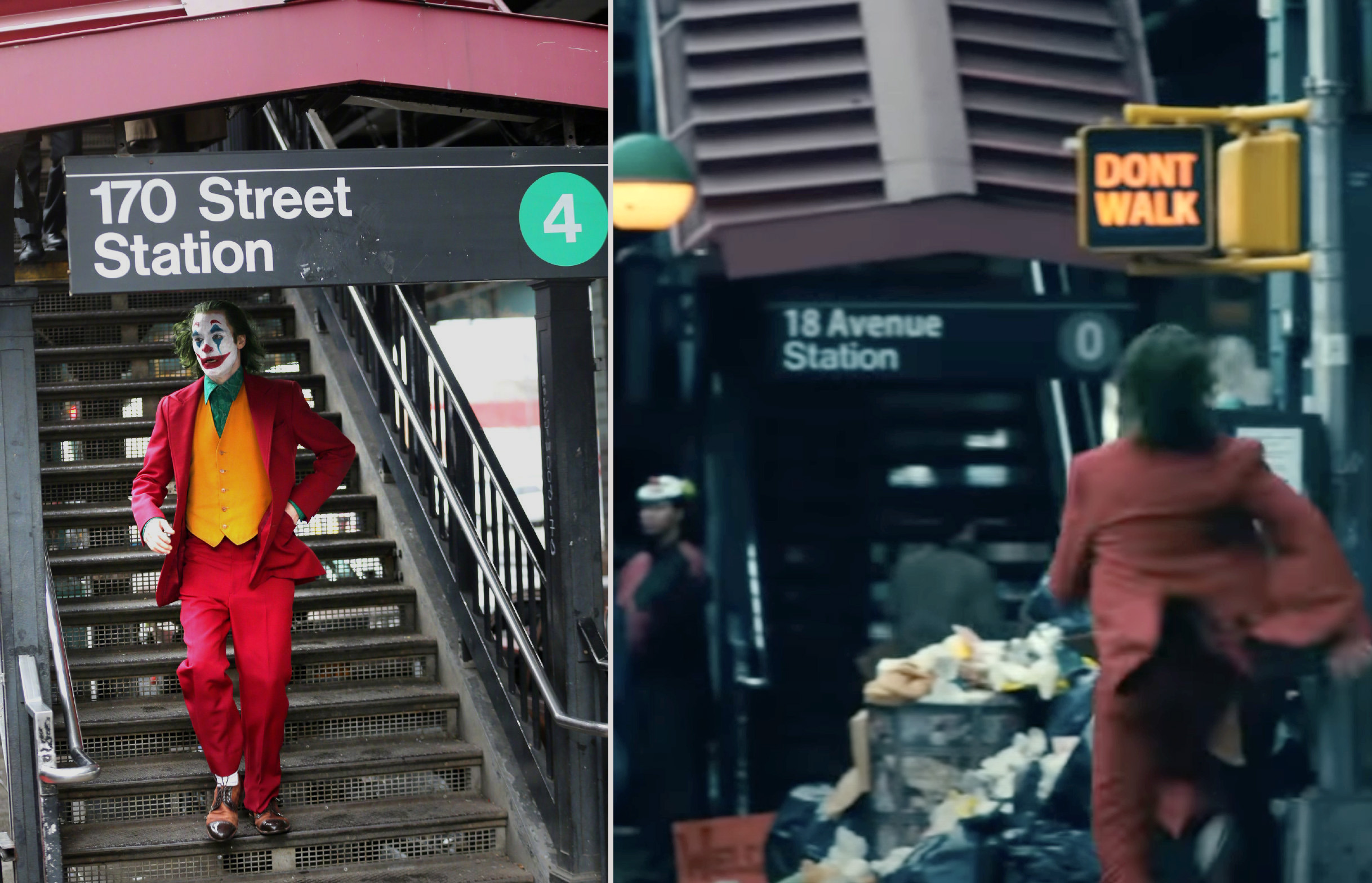
Judging by behind-the-scenes photographs, the sign was unchanged during filming and was digitally altered in post-production.
One last thing that confused me about this subway location came in trying to figure out which set of stairs he used. It took me two visits to the Bronx location to figure out that he entered at 170th on the Uptown side of the station, but the stairs he used have since been replaced with an elevator.
On the Subway(s)
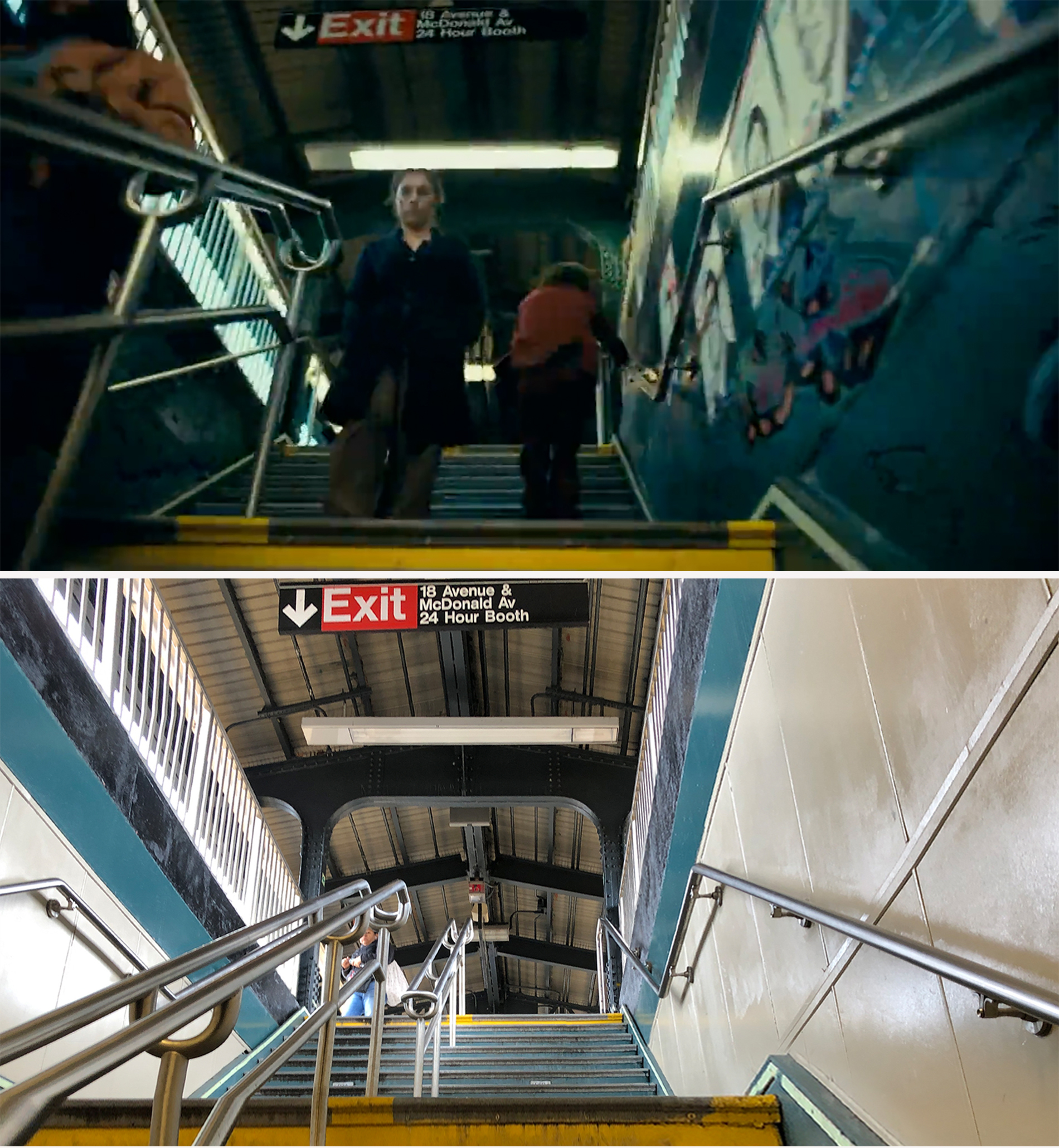
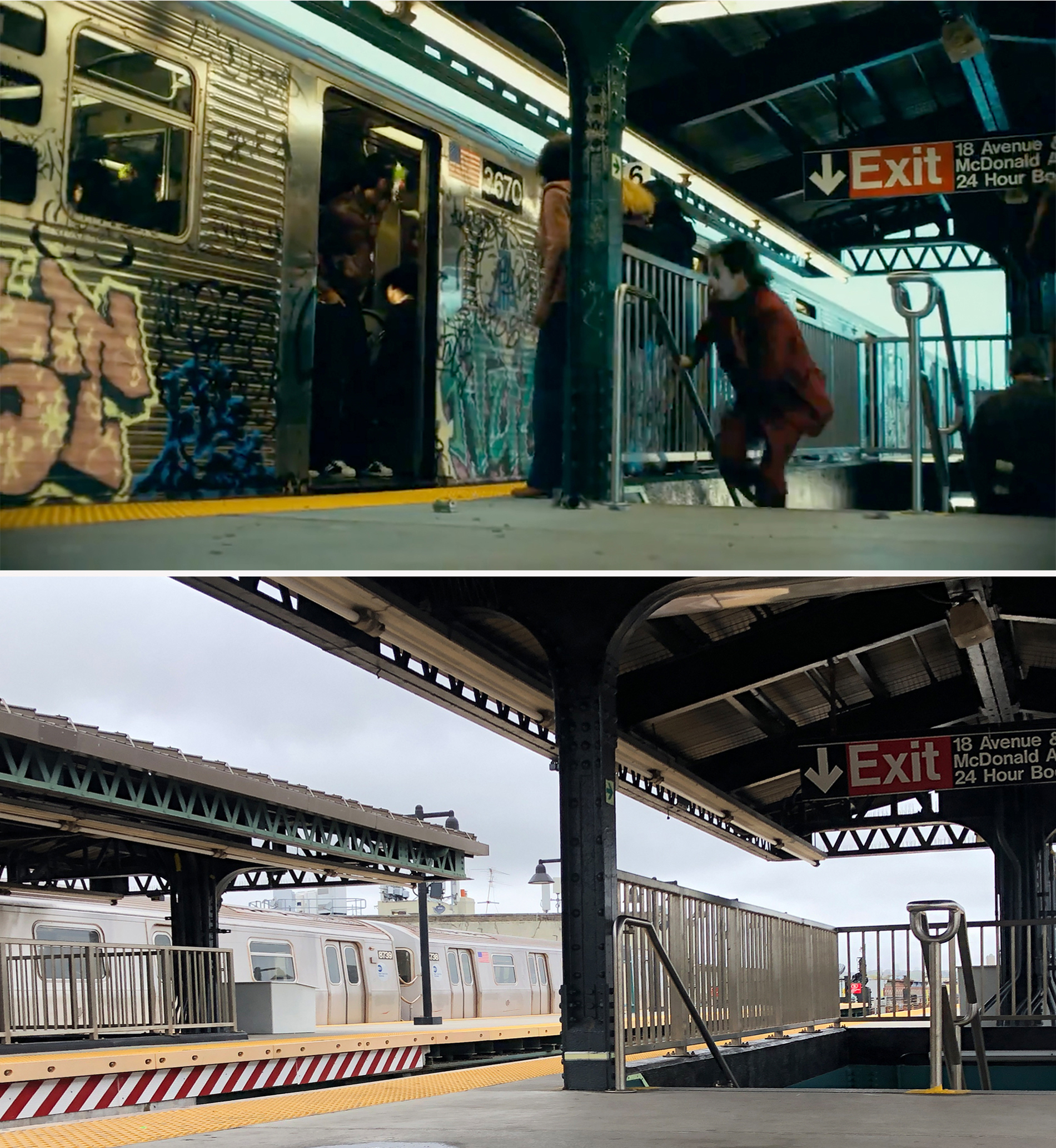
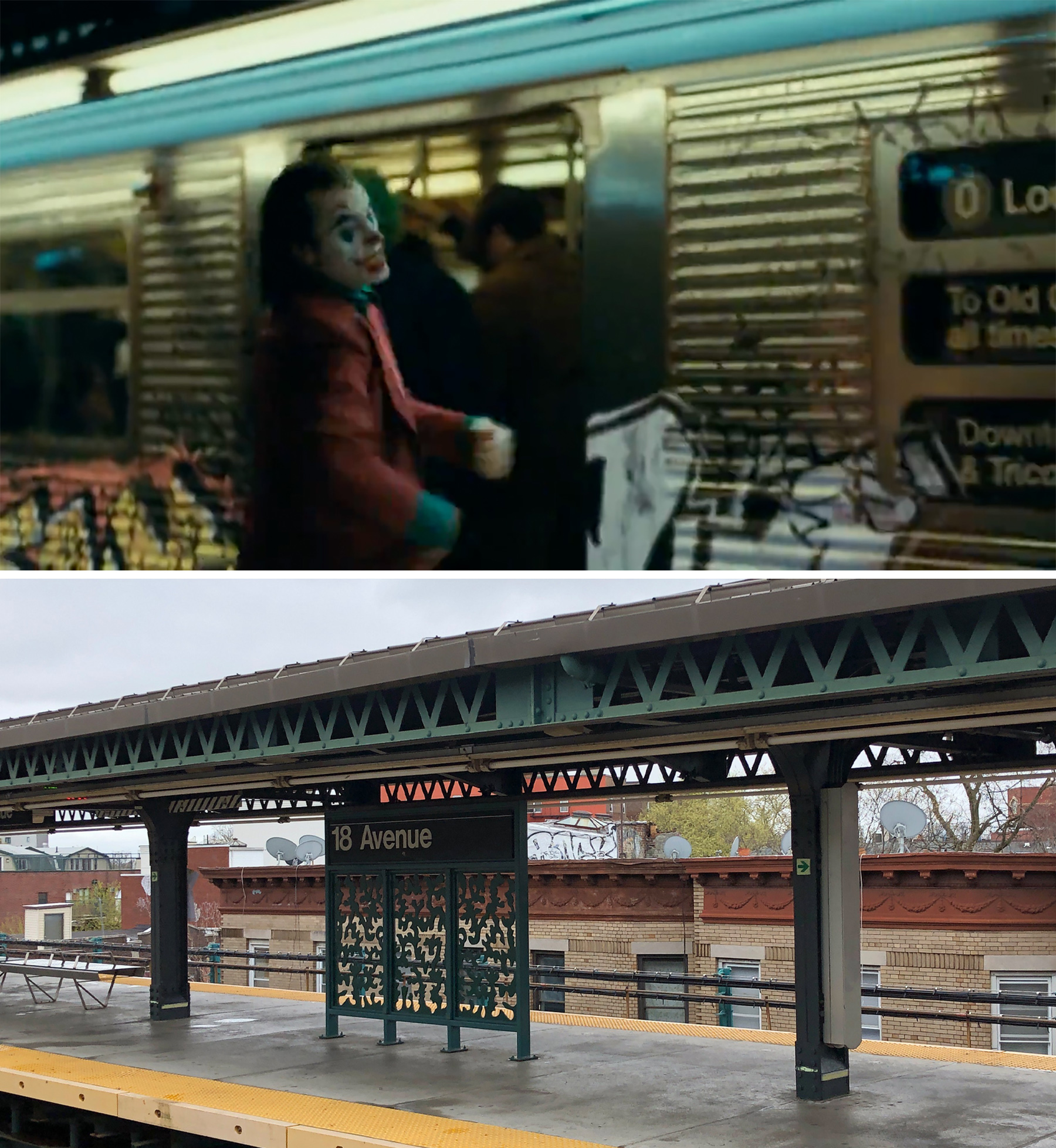
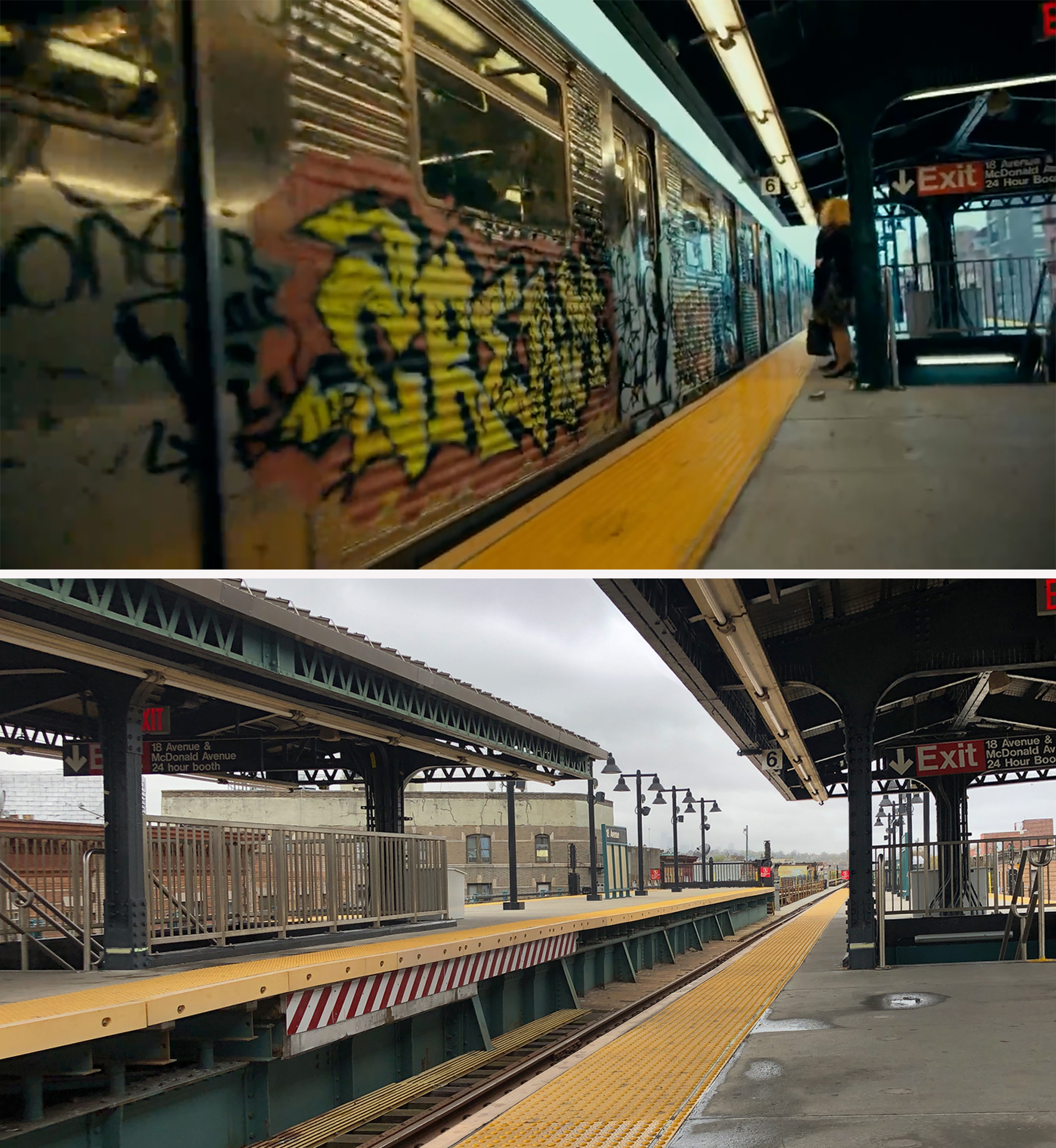
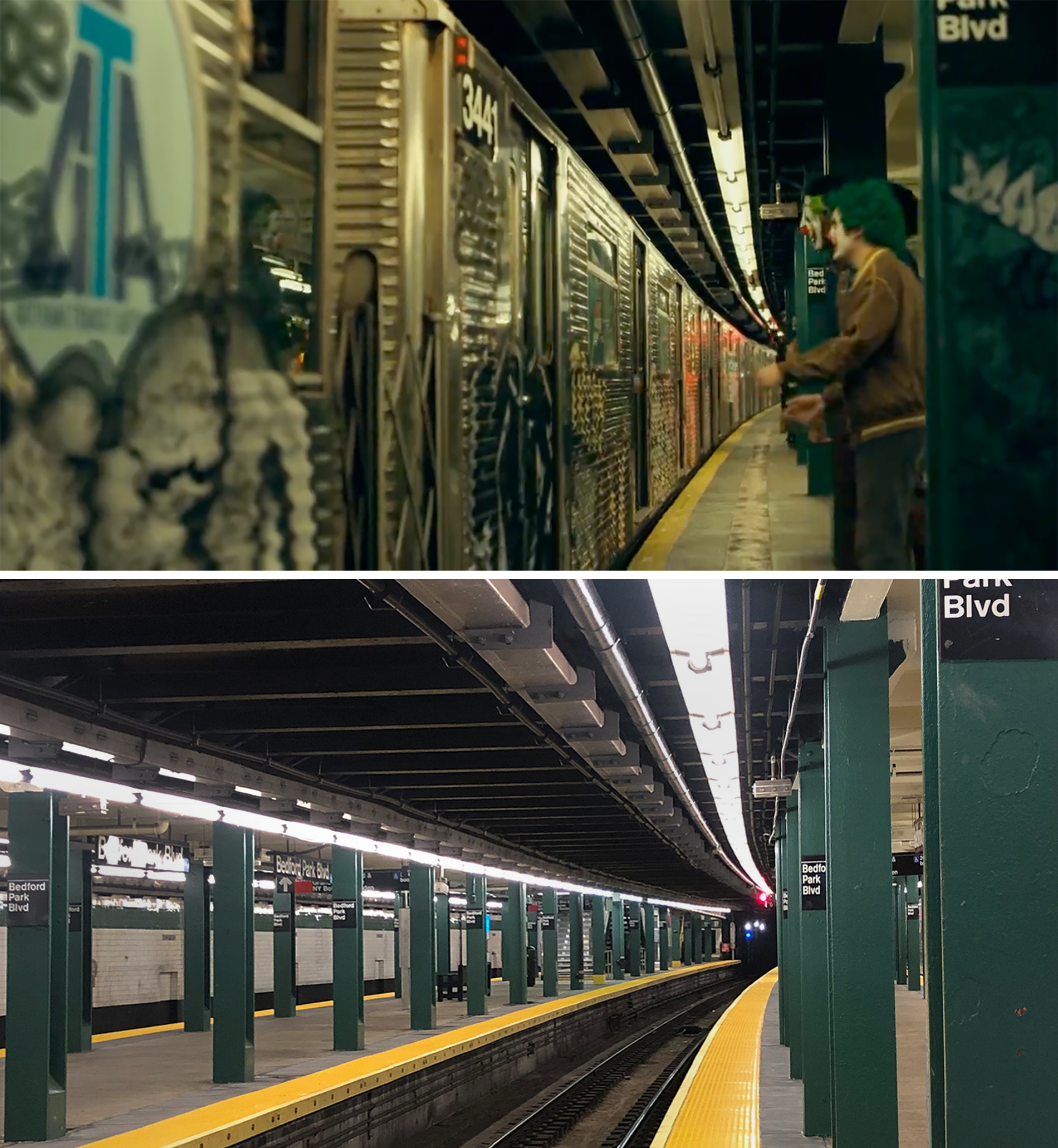

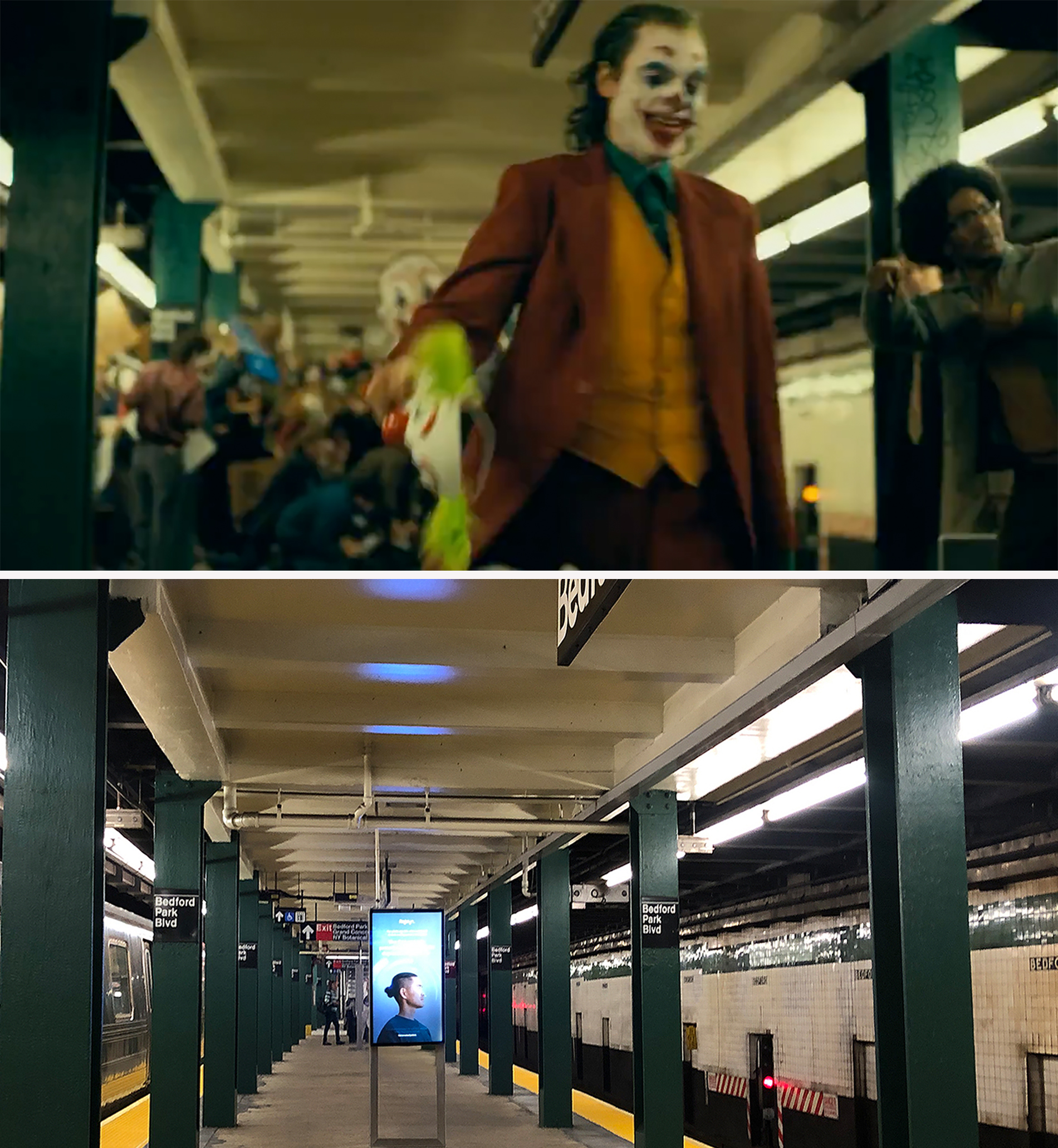
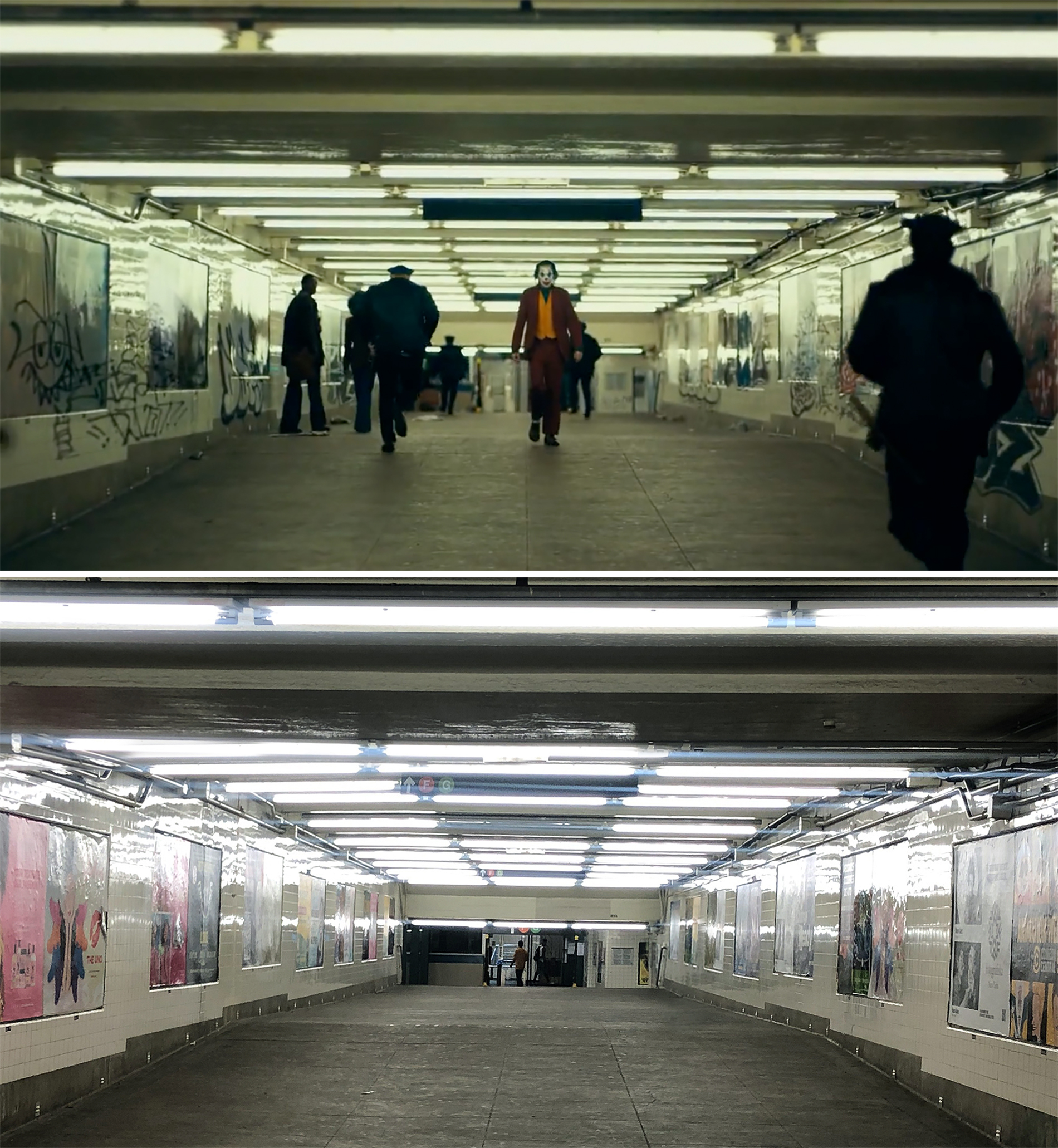
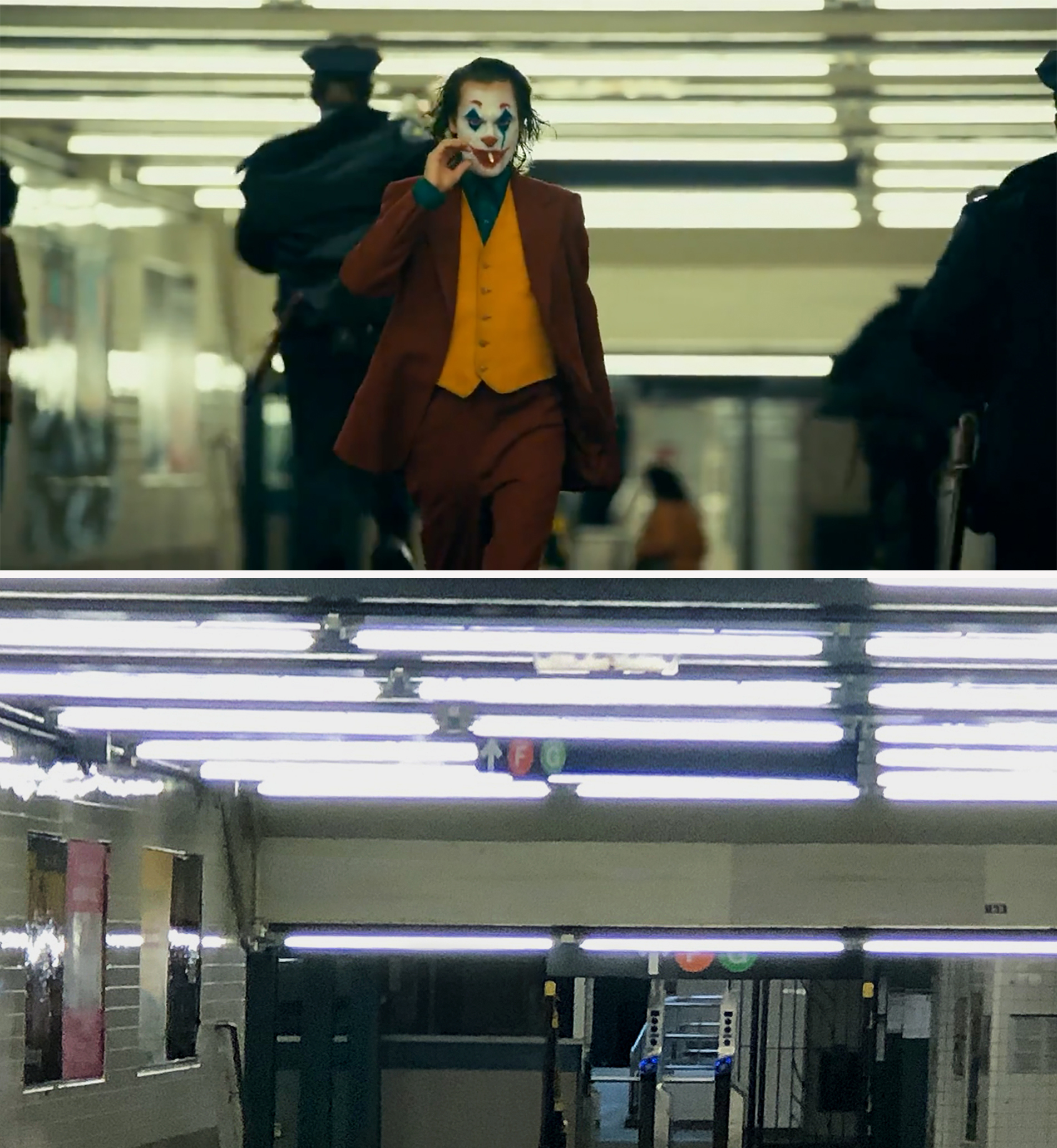
Even though this part of the chase sequence was made up of three (maybe four) different subway locations, I put them all together in one section.
The three stations used were identified by others, but their specific assessments were vague and sometimes misguided, so it required further investigation to verify things.
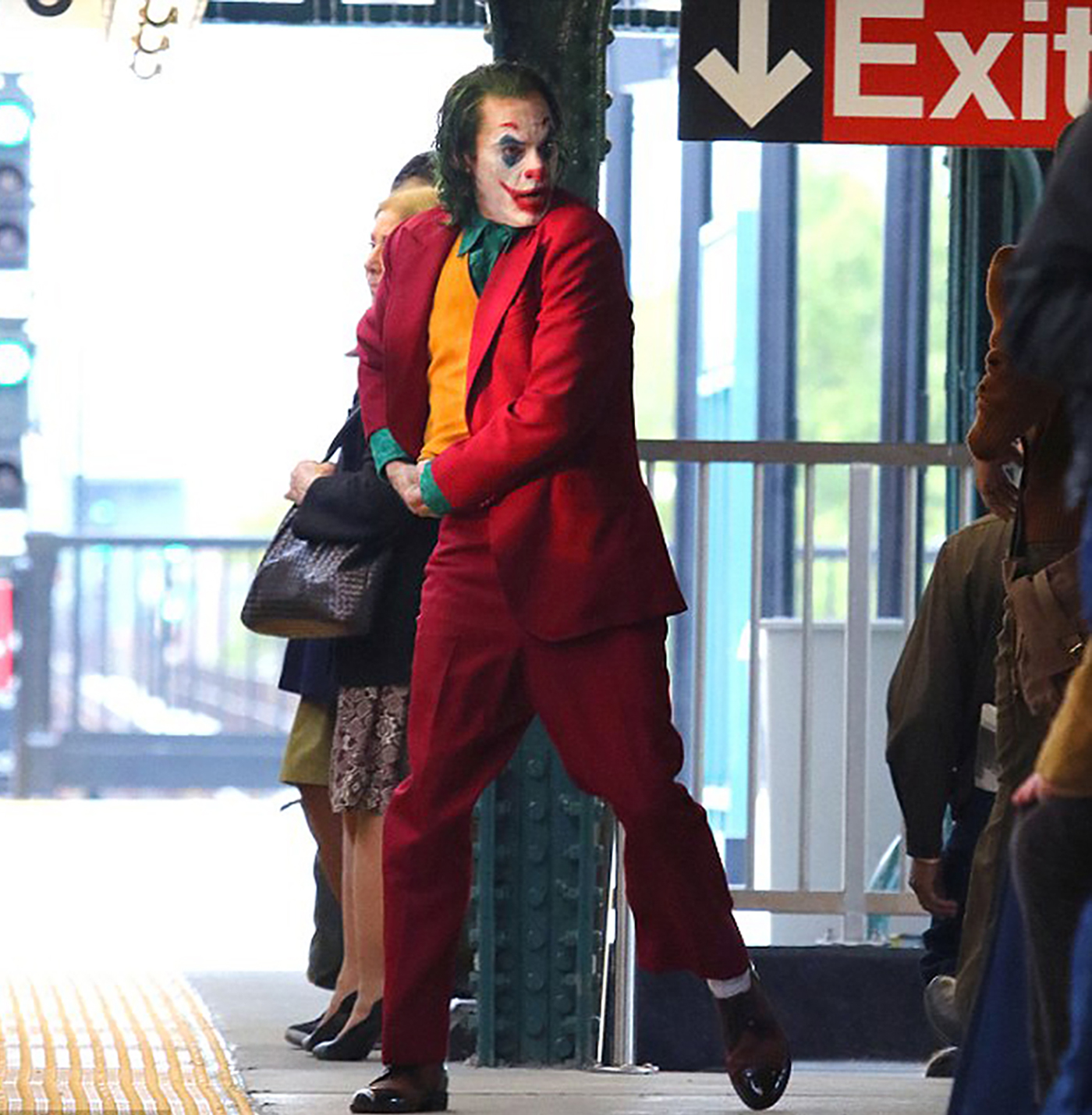
The first station —18th Avenue in Brooklyn— was likely identified by the signage seen in some of leaked “making of” photos, as well as in the final cut of the film.
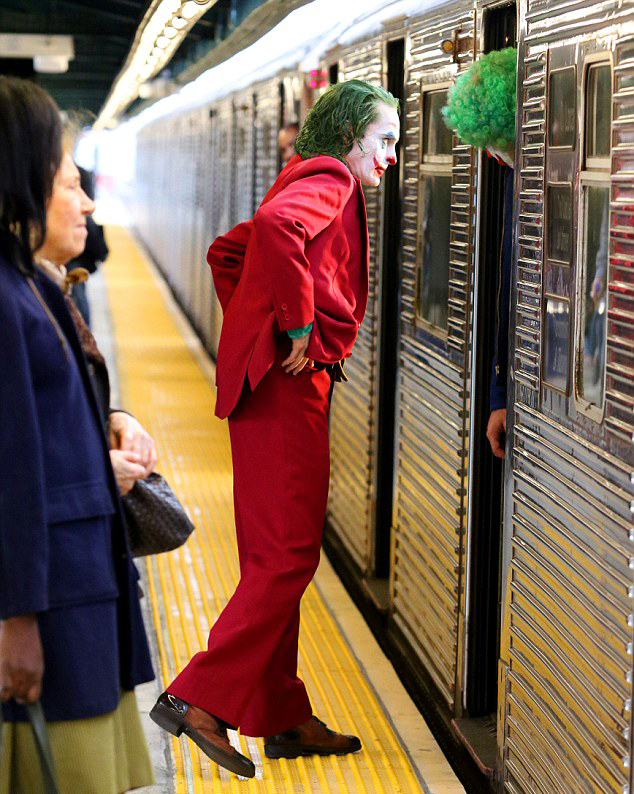
While production altered the station sign at the 170th Street entrance, they didn’t change anything once the filming moved to 18th Avenue.
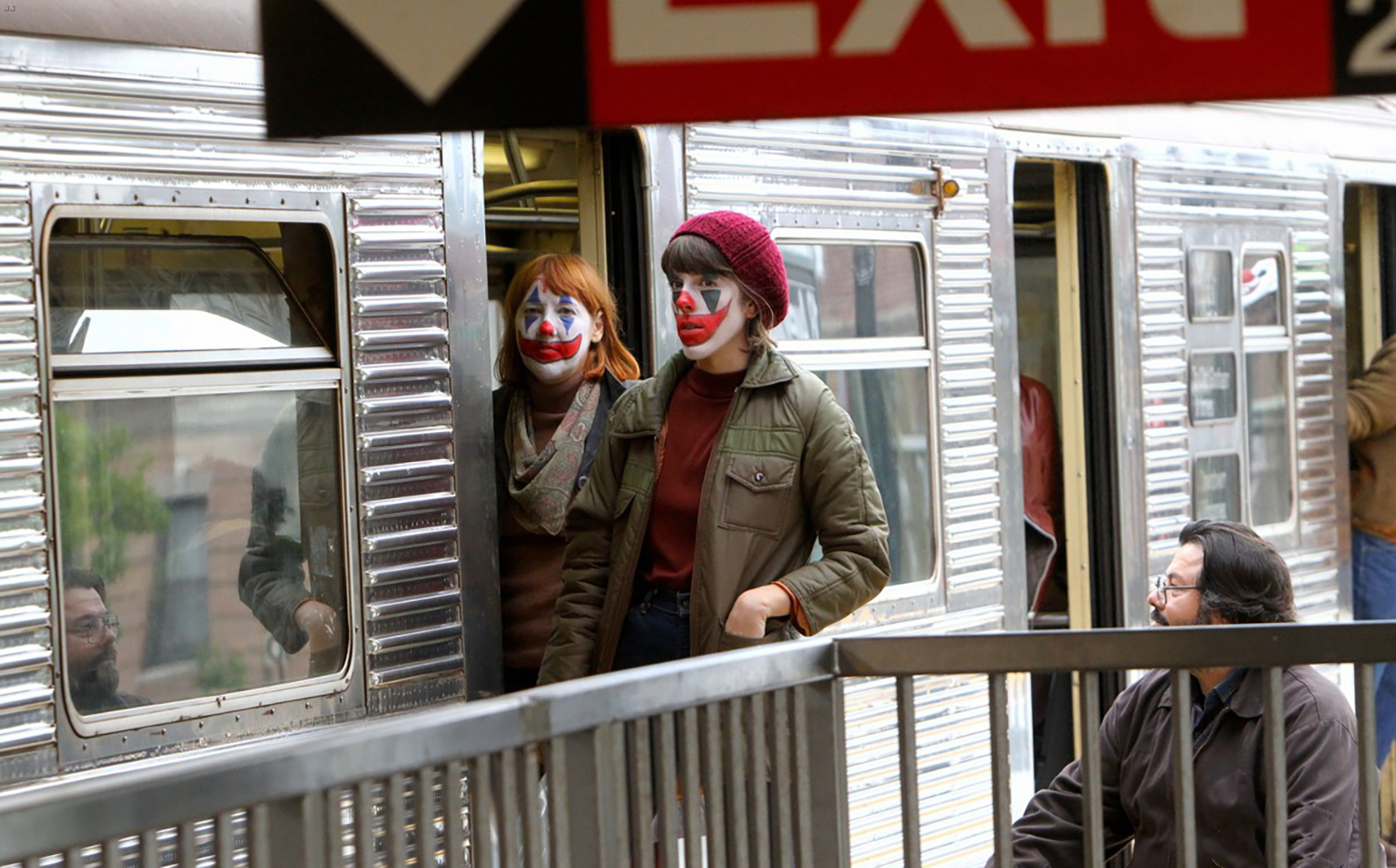
So, it became quite apparent that they were at the 18th Ave station in Brooklyn, but there was a little confusion as to which side they were on. YouTuber louie6cat thought they were on the downtown platform, but I eventually figured out that they were on the uptown side.
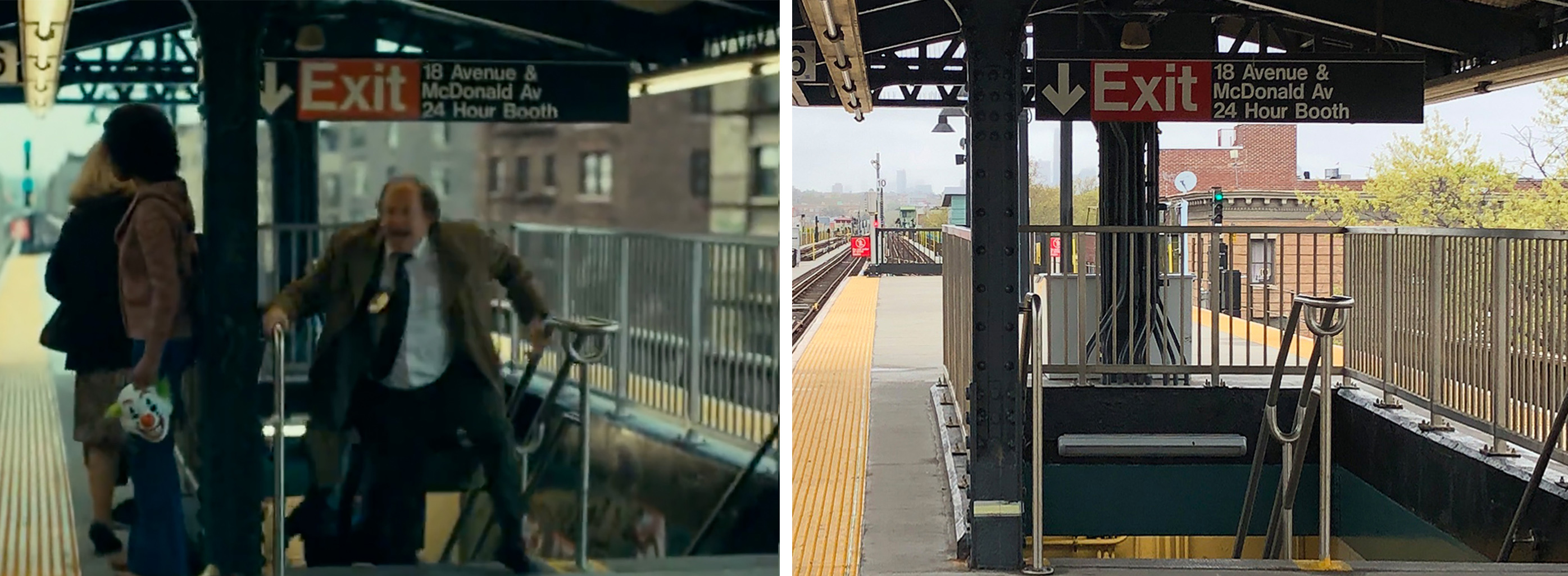
At first, I tried to figure it out by matching up the structures in the background. But that ended up being no good because they added a bunch of CGI buildings to cover up trees and make it look more urban.
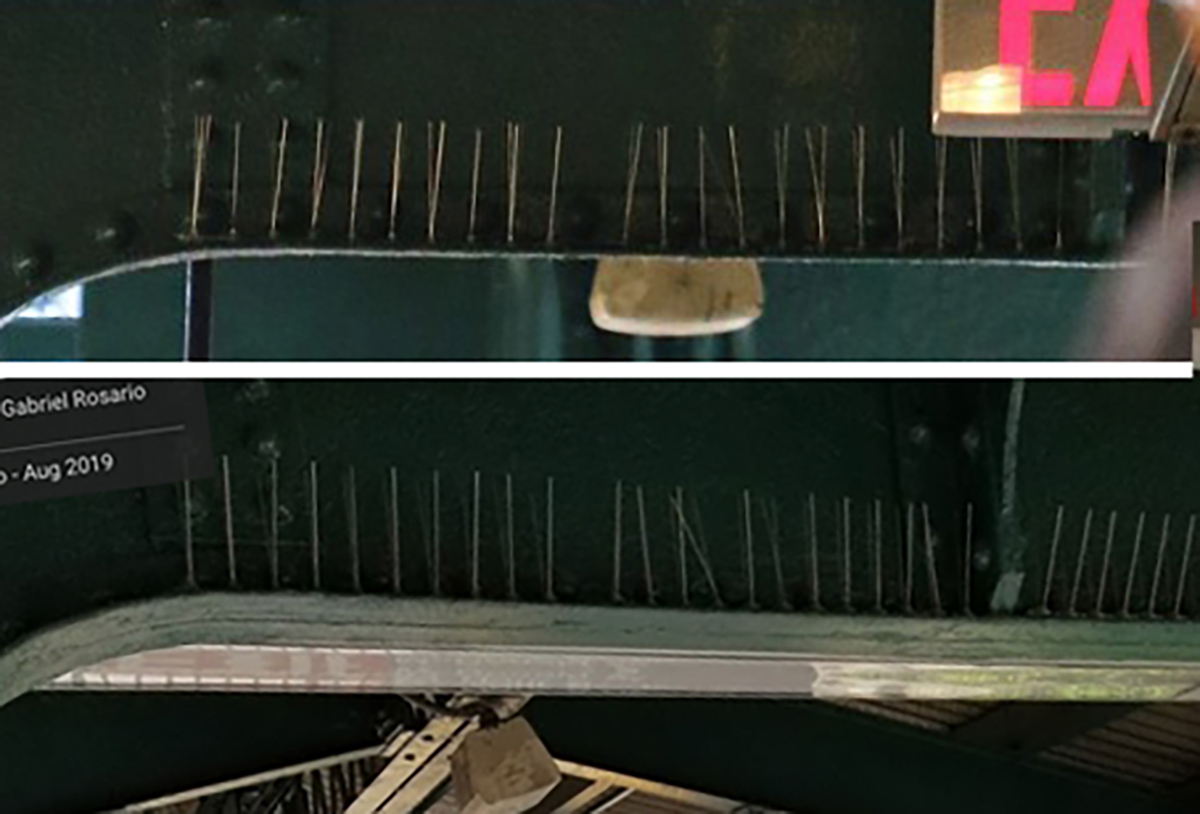
In the end, it was a set of pigeon spikes above the staircase that helped me confirm they were on the uptown side.
During their time at 18th Avenue, production utilized the mostly-unused single center track to avoid disrupting subway service. Coincidently, this was the very same track that was used forty years earlier in the John Ritter superhero comedy, Hero At Large (1980).
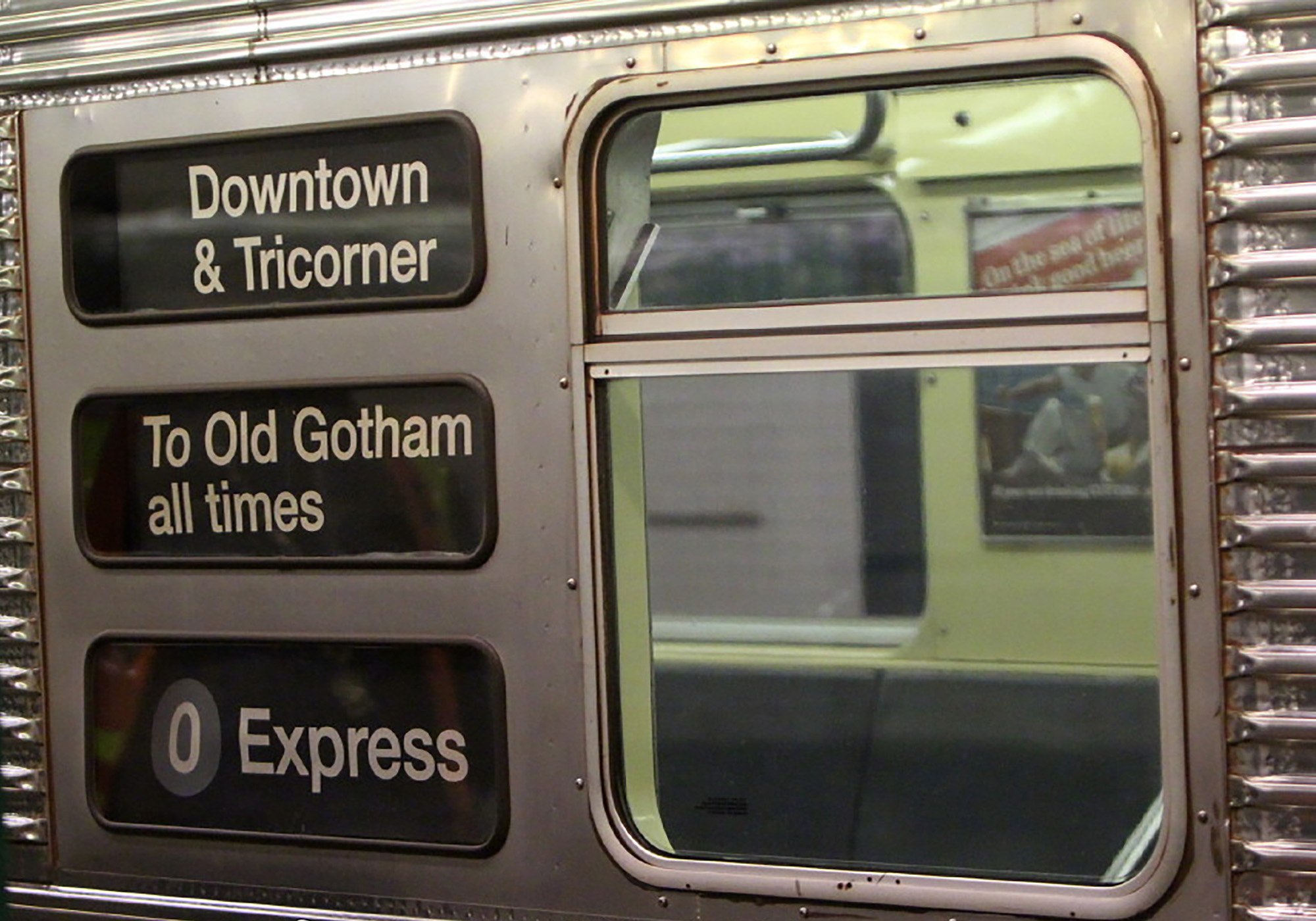
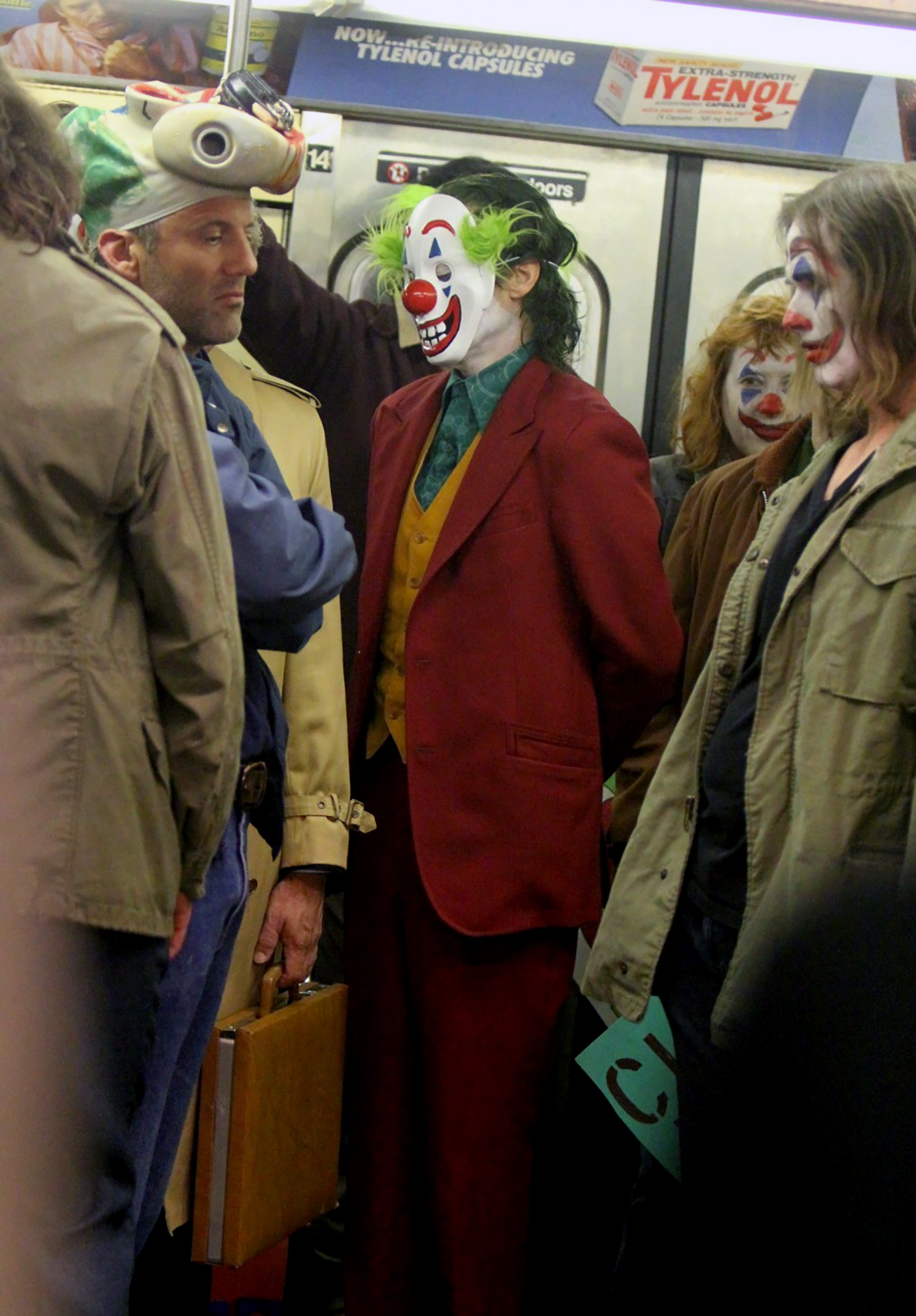
As the characters travel on the subway, I don’t know if the crew shot that on a set or on an actual moving car in the MTA tunnels. My guess would be that they shot in the actual tunnels, which might account for an odd news story that came out during production.
According to TMZ, a bunch of extras were locked on a subway car for more than three hours during filming (a violation of union rules), forcing some of them to relieve themselves between cars and onto the tracks.
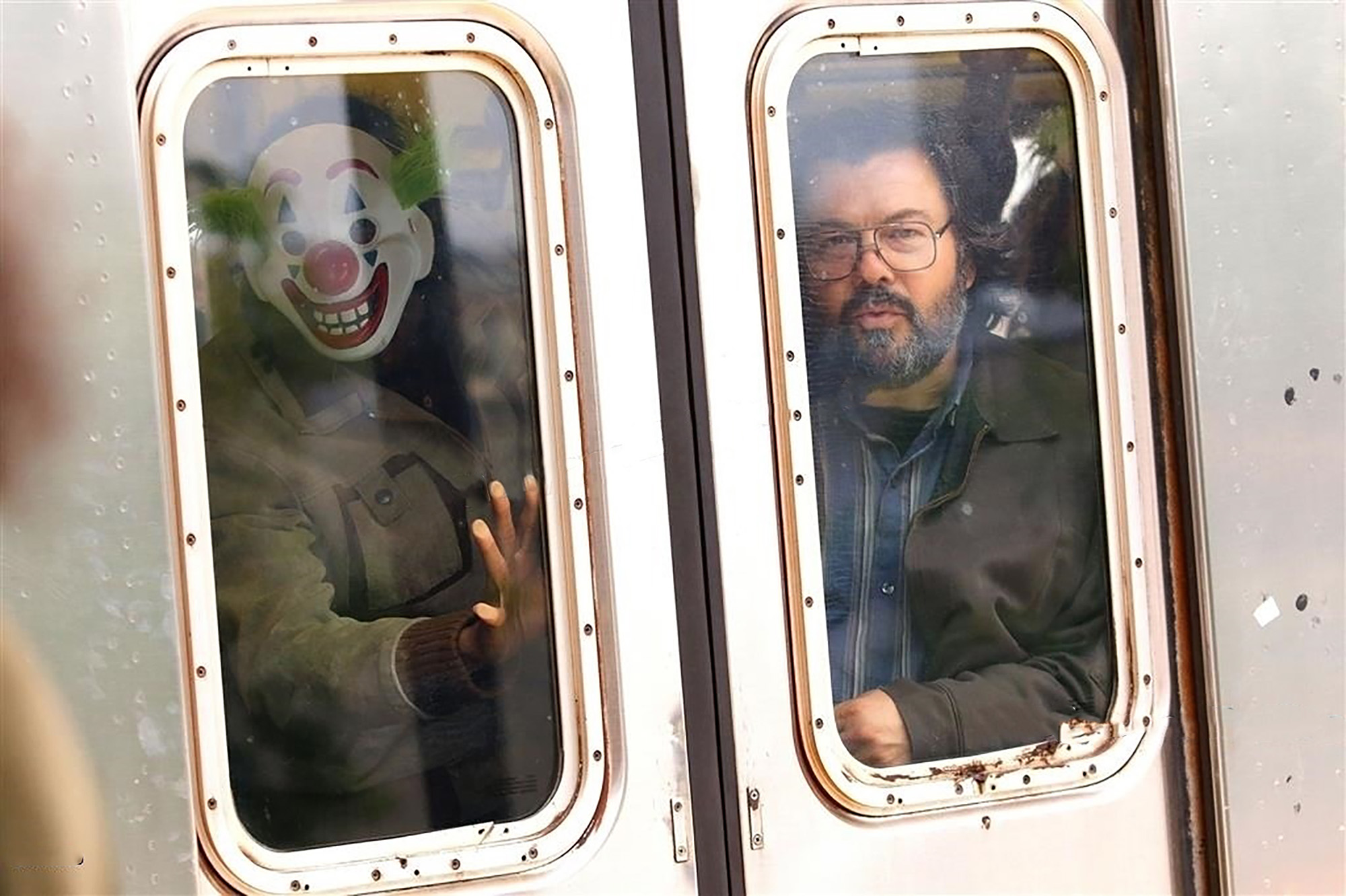
The story was reported on October 10th of 2018, claiming that this unbladdering situation took place over the previous weekend at an unnamed Brooklyn subway station. This might’ve been referring to the 18th Ave station, but if that’s true, then that would mean they were peeing onto elevated tracks above McDonald Avenue, creating an unpleasant shower below.
But who knows if the story is even true.
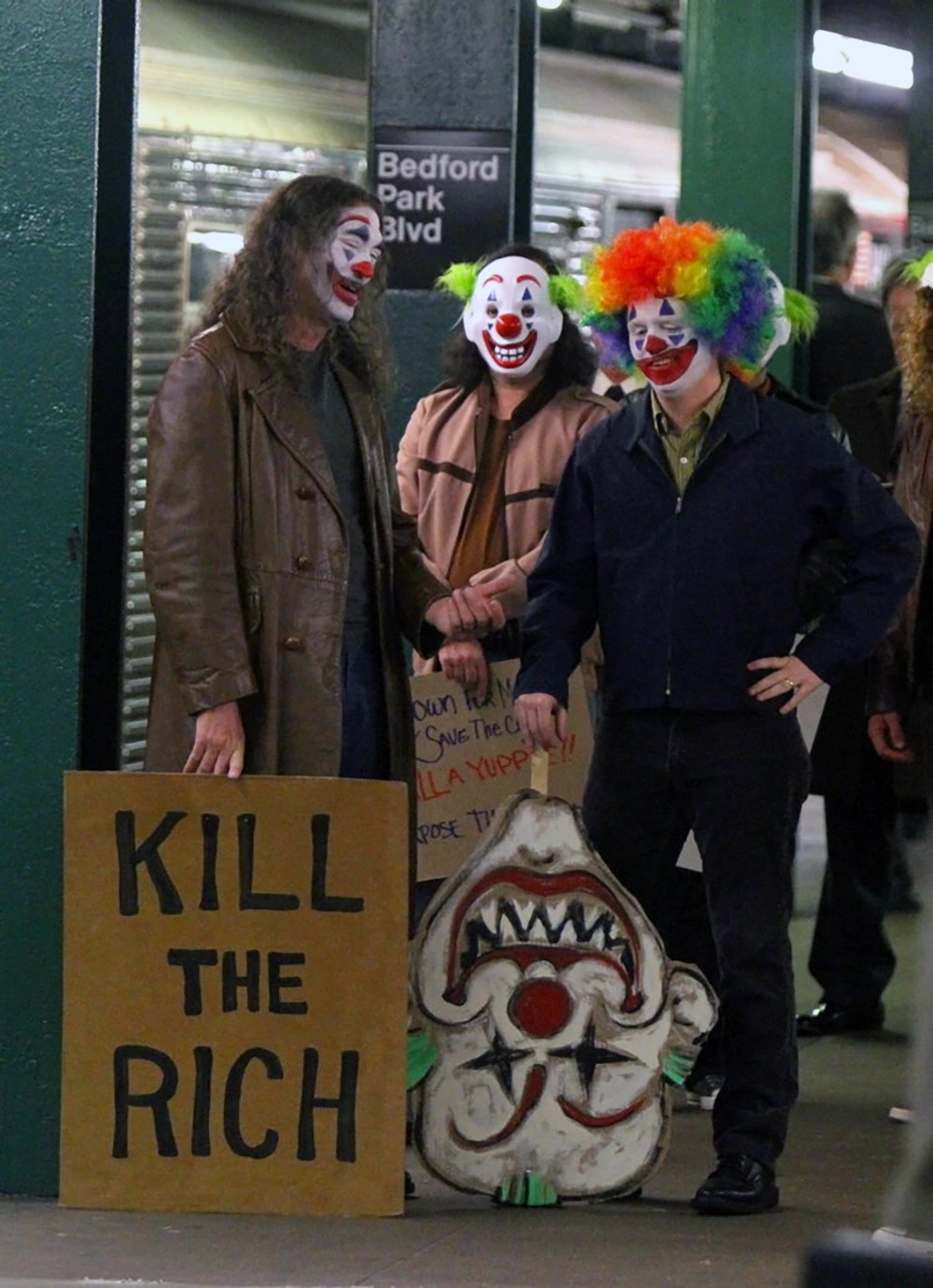
Once the train enters the next station, the action switches to the Bedford Park Blvd station in the Bronx; probably chosen because it, too, has a center track that is only active for a couple hours a day.
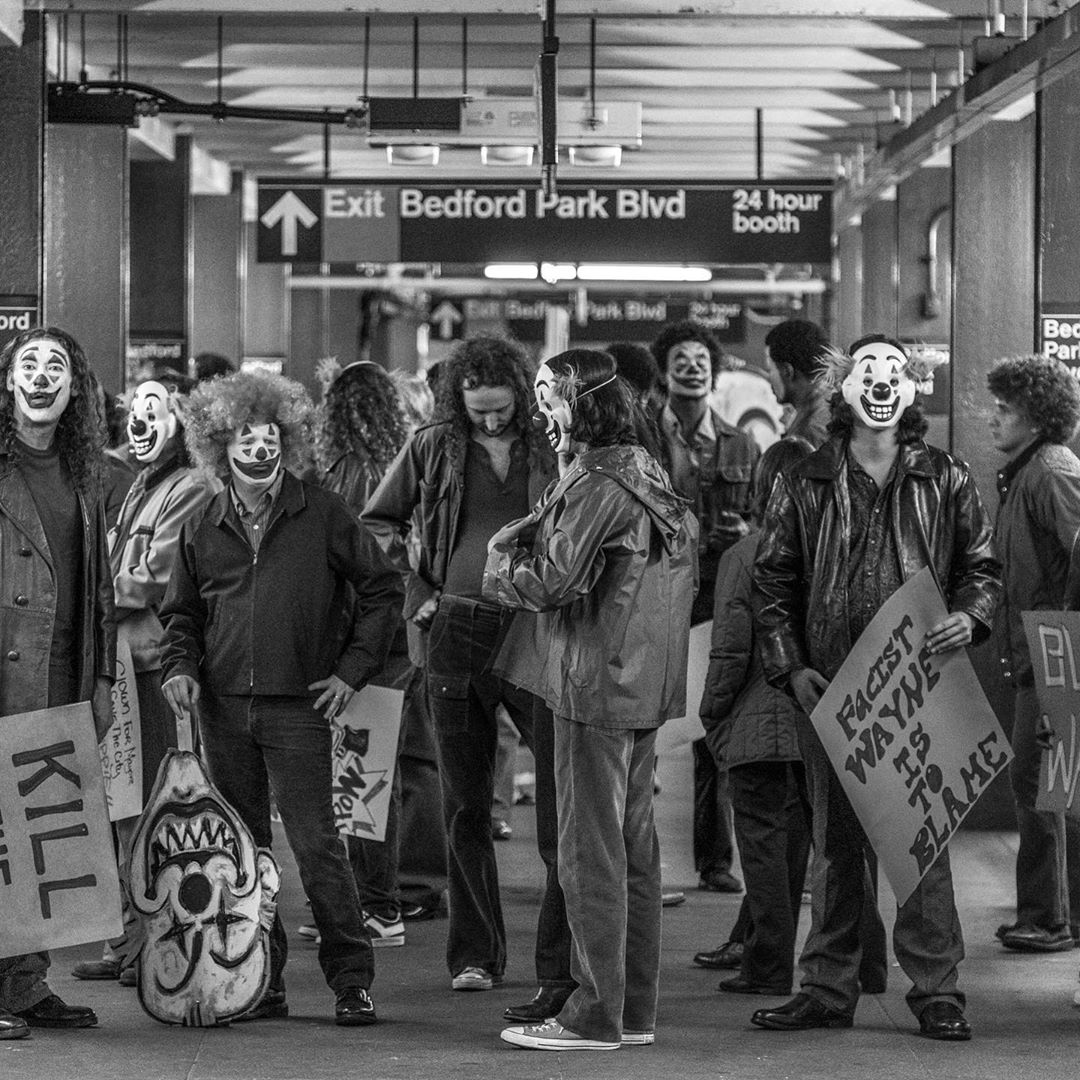
The signage for Bedford Park Blvd is very evident in both the final cut of the film and in behind-the-scenes videos. Yet, for some reason, Wikipedia’s Joker article claims they filmed this scene at the Church Avenue station in Kensington, Brooklyn, and that it was modified to make it look like the Bedford Park Blvd station in the Bronx.
This made me question my conclusions. But when I watched a behind-the-scenes video of the scene, it showed more of the station and I was able to decisively match things up. In particular, a column in the foreground had the same electrical apparatus near the top, as well as a matching crack right underneath the sign.
Another thing I noticed in the behind-the-scenes video is that there was no graffiti on the subway posts, but in the final version of the movie, the subway station is covered in scribblings. That means all the graffiti was digitally added during post-production.
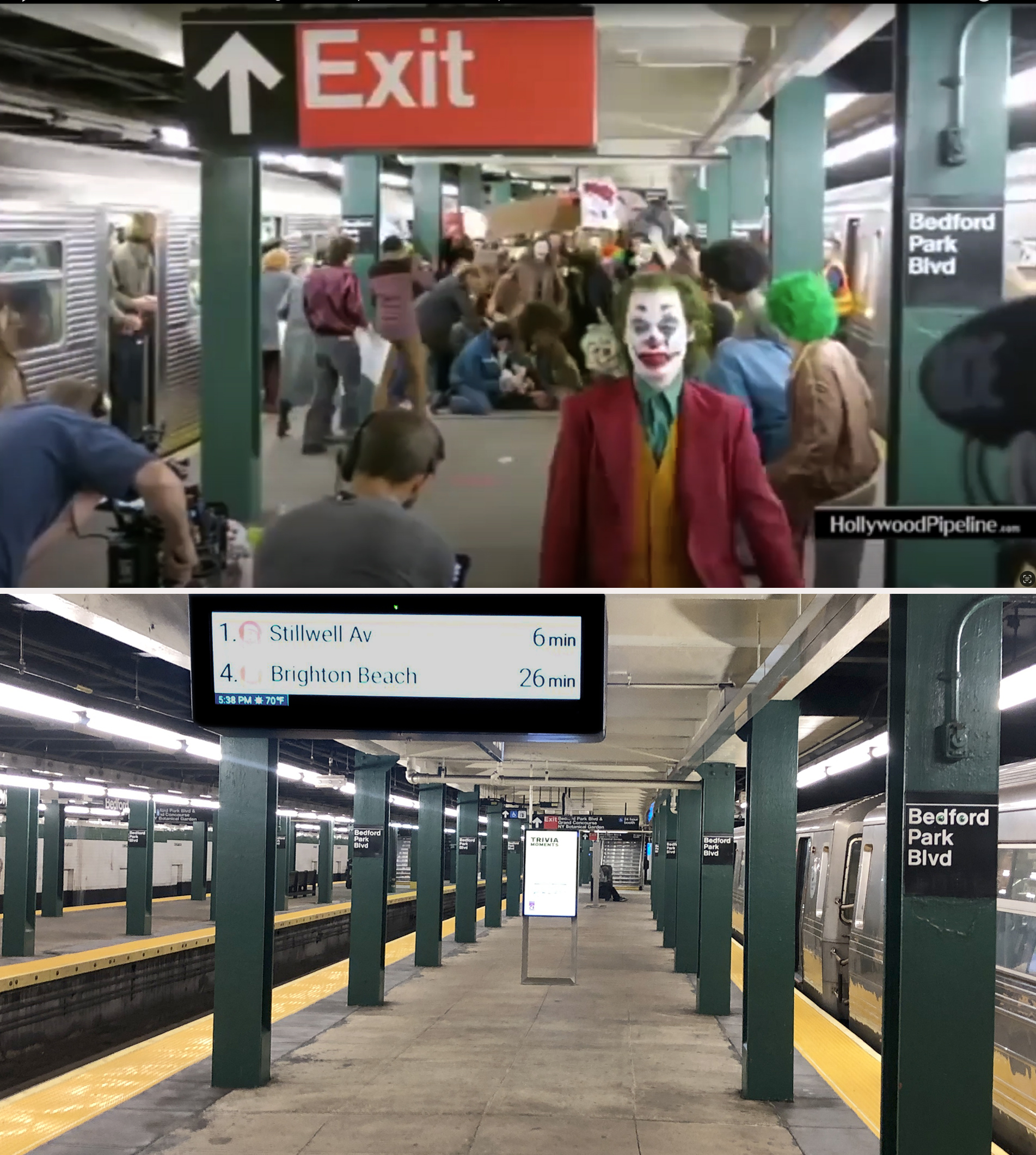
After the location was confirmed to be in Bronx’s Bedford Park Blvd Station, my research partner Blakeslee became curious as to the origin of the rumor that it was really Brooklyn made to look like the Bronx.
Despite several hours of digging up both current and contemporaneous articles, he couldn’t figure out how the misinformation first got started.
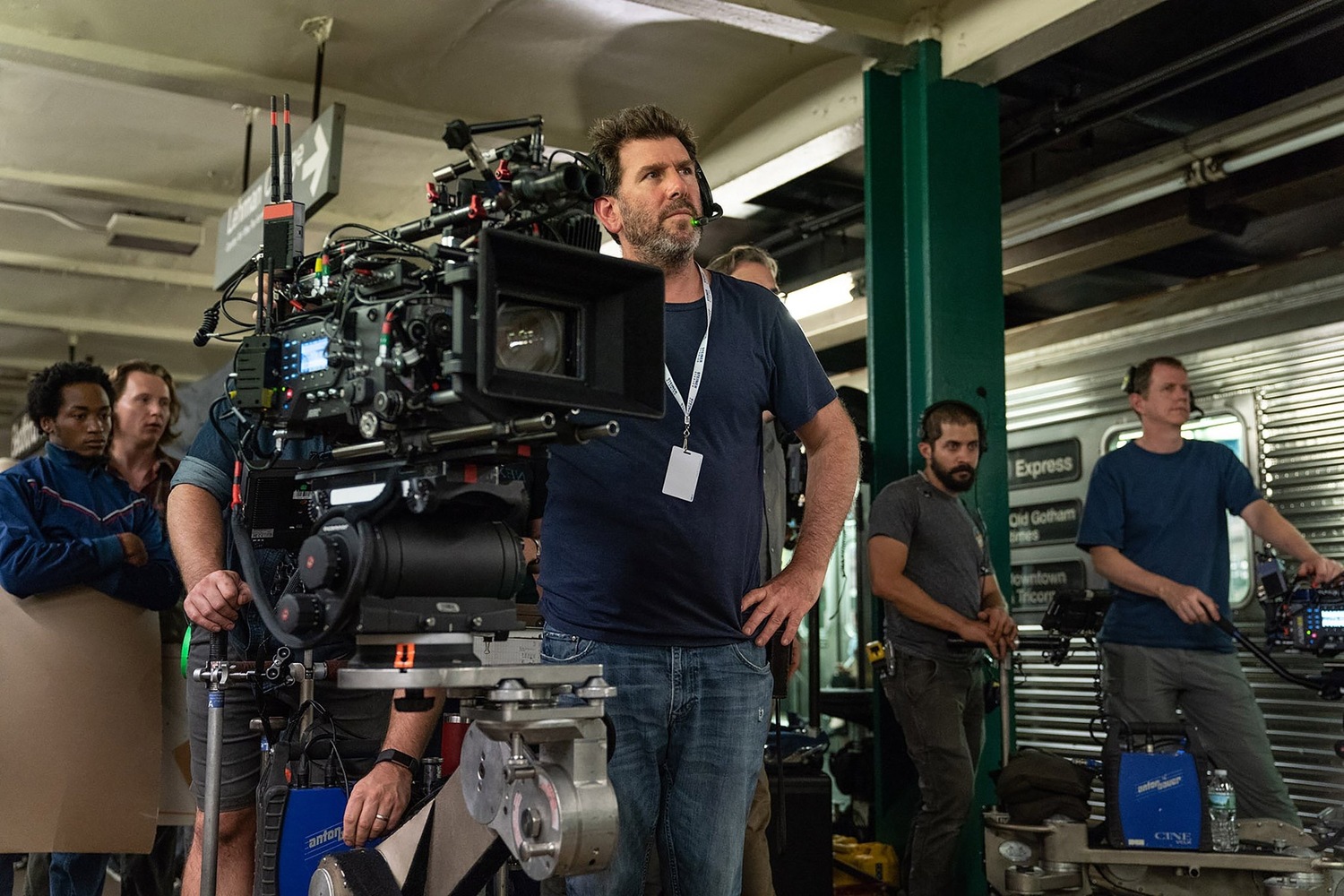
He did find an old Twitter discussion between two New Yorkers that confirmed a film crew was at Bedford Park Blvd in September of 2018. The back-and-forth got a tad heated, but not about the location. They were disagreeing about what movie was being made there. The confusion came from the fact that during filming, all the production notes and call sheets used the fake name Romeo in order to throw fans and unwanted reporters off the scent.
Using fake titles is typical for high-profile projects, but is seldom very effective. Most savvy movie-chasers figured out where and when Joker was filming in NYC. They even managed to grab several on-set photos without much hassle.
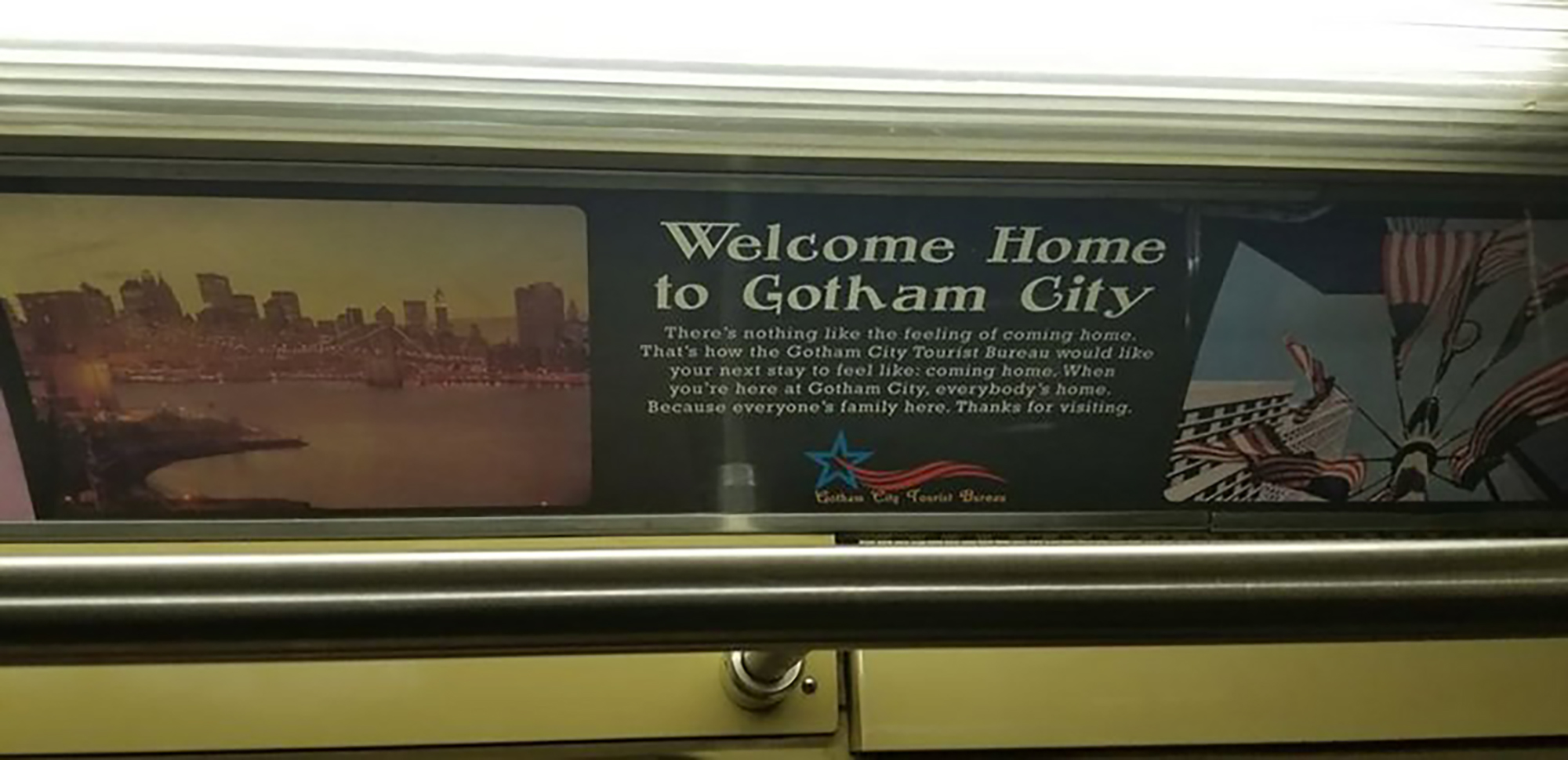
One interesting pic taken from this extended subway sequence was a close-up of the Gotham transit map — chock full of “easter eggs.”
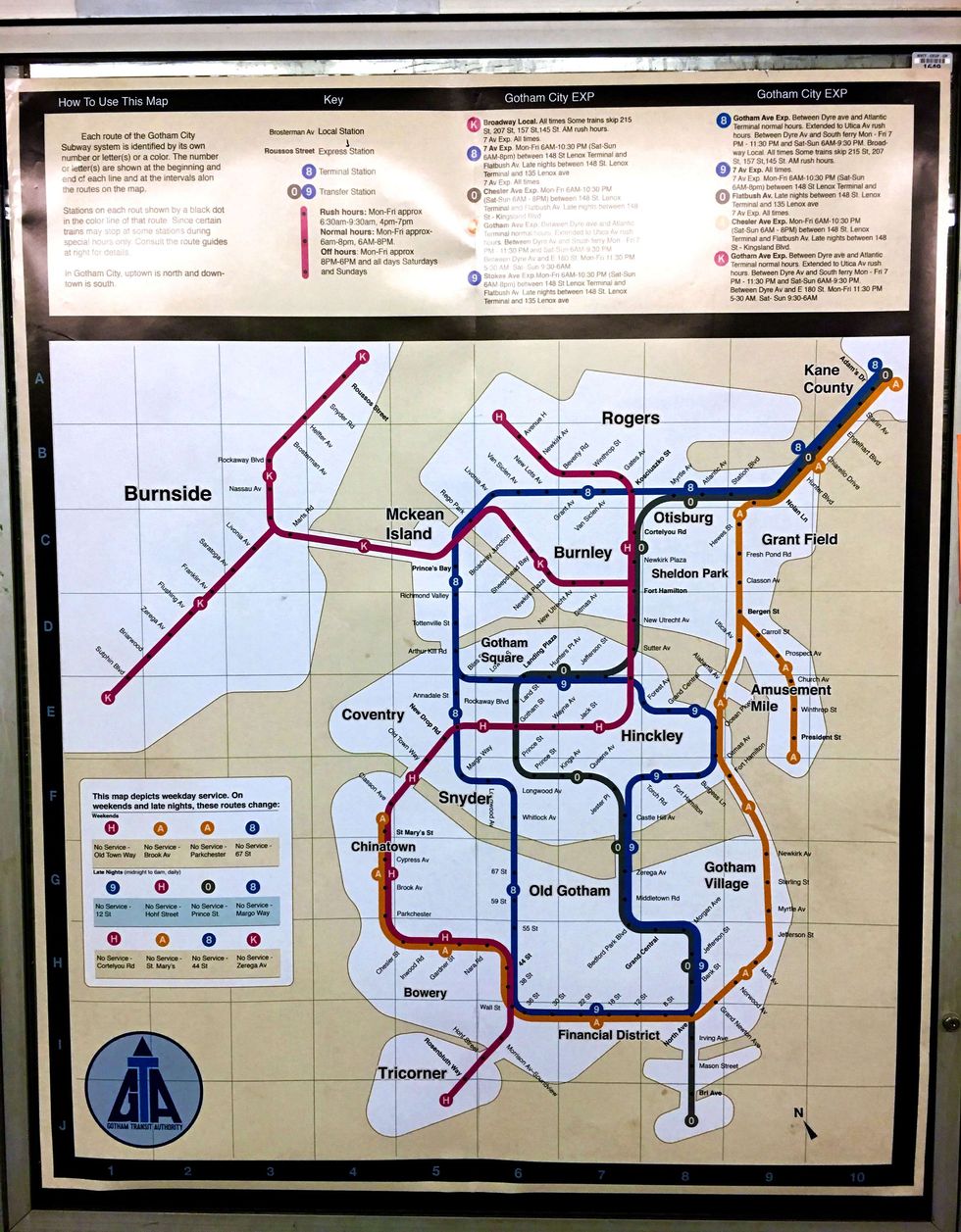
Alongside famous Gotham City locations, such as the Amusement Mile and the Bowery, the subway map contained plenty of shout-outs to folks who have been involved in the Batman franchise.
The map included Grant Field and Mckean Island, referring to Grant Morrison and Dave McKean who worked on the Arkham Asylum graphic novel. The Dark Knight trilogy director Christopher Nolan was also referenced in there, along with Bob Kane, co-creator of the iconic bat superhero that made its comic book debut back in 1939.
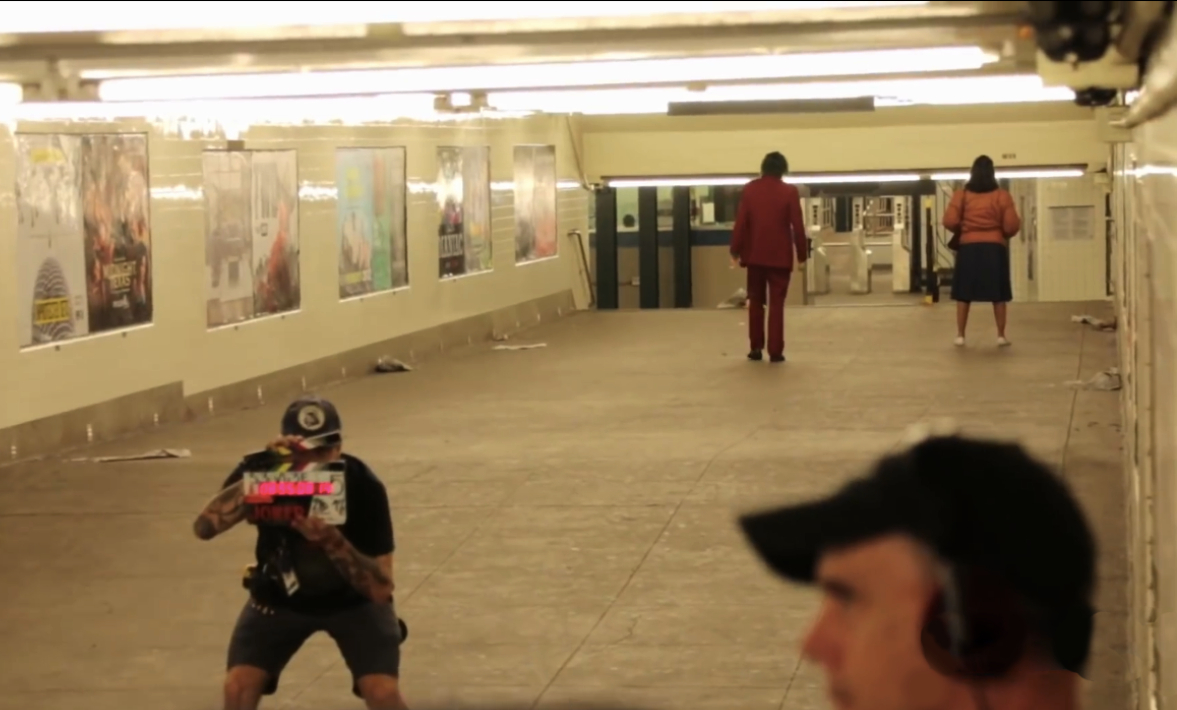
The last subway station used in this sequence is the aforementioned Church Avenue in Brooklyn. The station was only used for its long, florescent pedestrian tunnel that runs under McDonald Avenue.
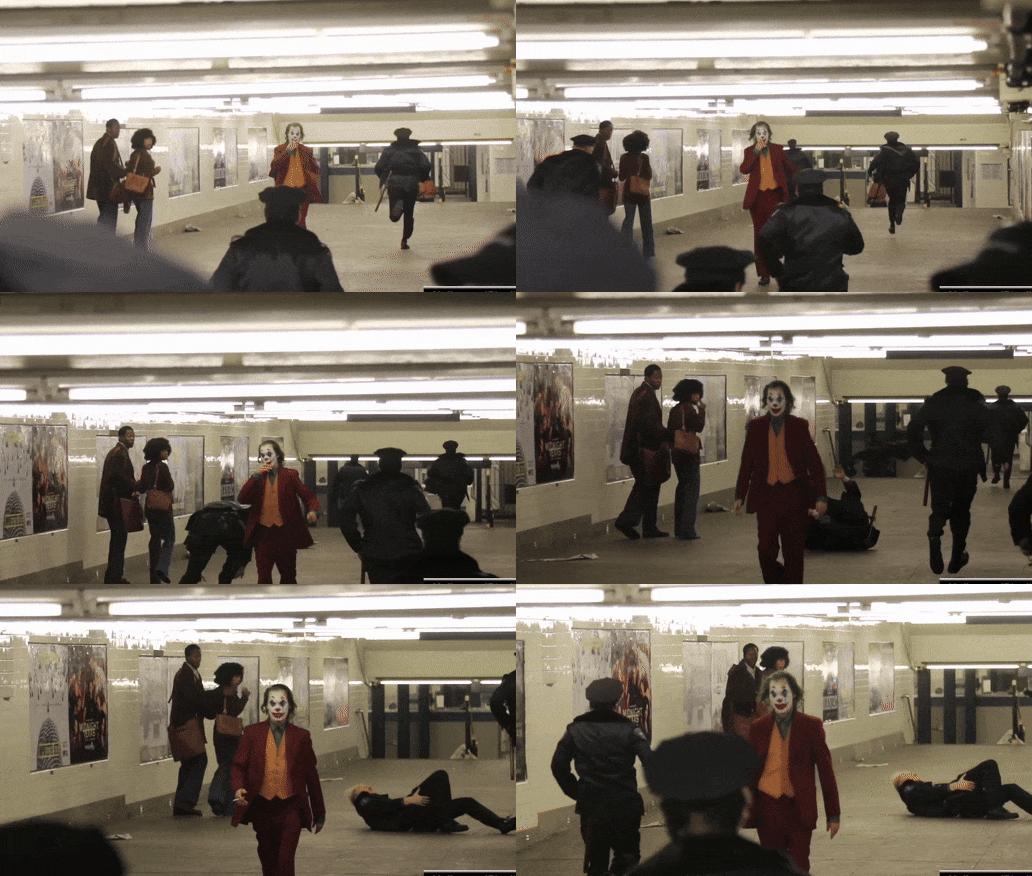
Several freelance videographers knew about these subway locations ahead of time and went to them to grab some exclusive footage. One of these videos became semi-viral back in 2018 when it showed one of the police extras trip and fall while running past Phoenix.
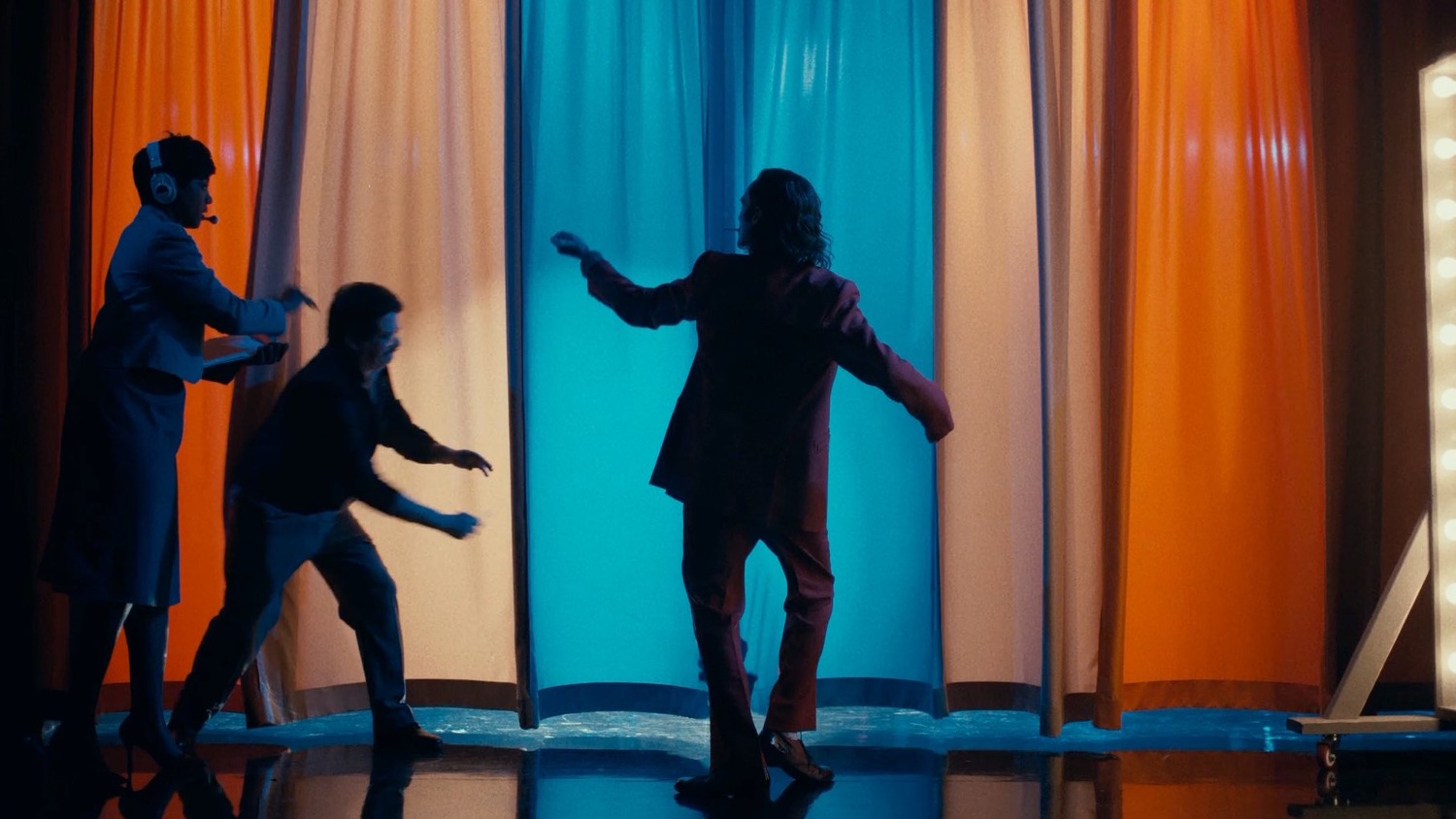
TV Studio
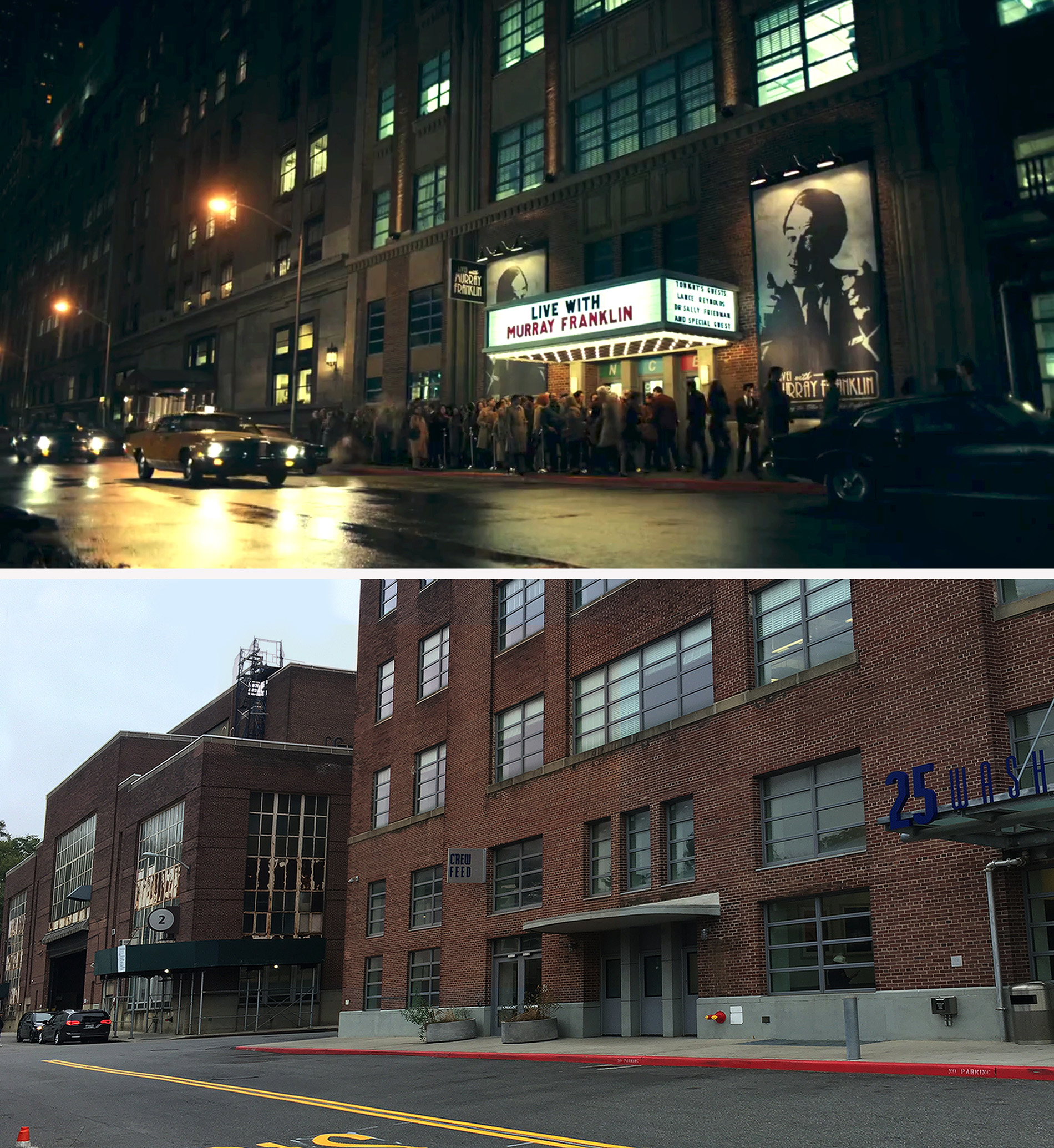
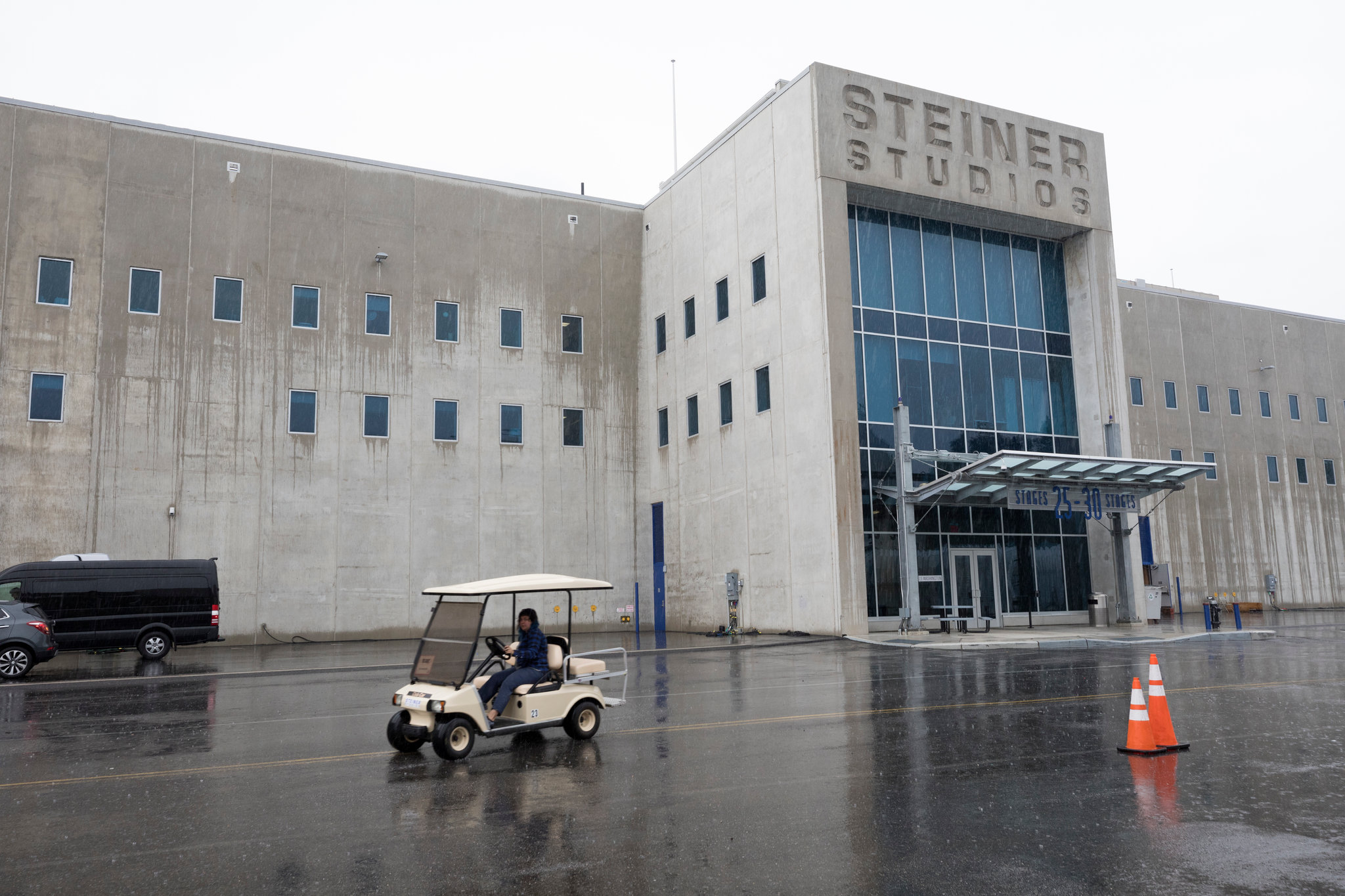
The exterior of the Murray Franklin TV studio was the only significant location that was not identified by anyone on the web, most likely because the visuals in the movie were significantly altered with CGI. I don’t know if I would’ve figured it out myself if I didn’t happen to be working another job at Steiner Studios and came upon the dressed-up building near the Flushing Avenue entrance.
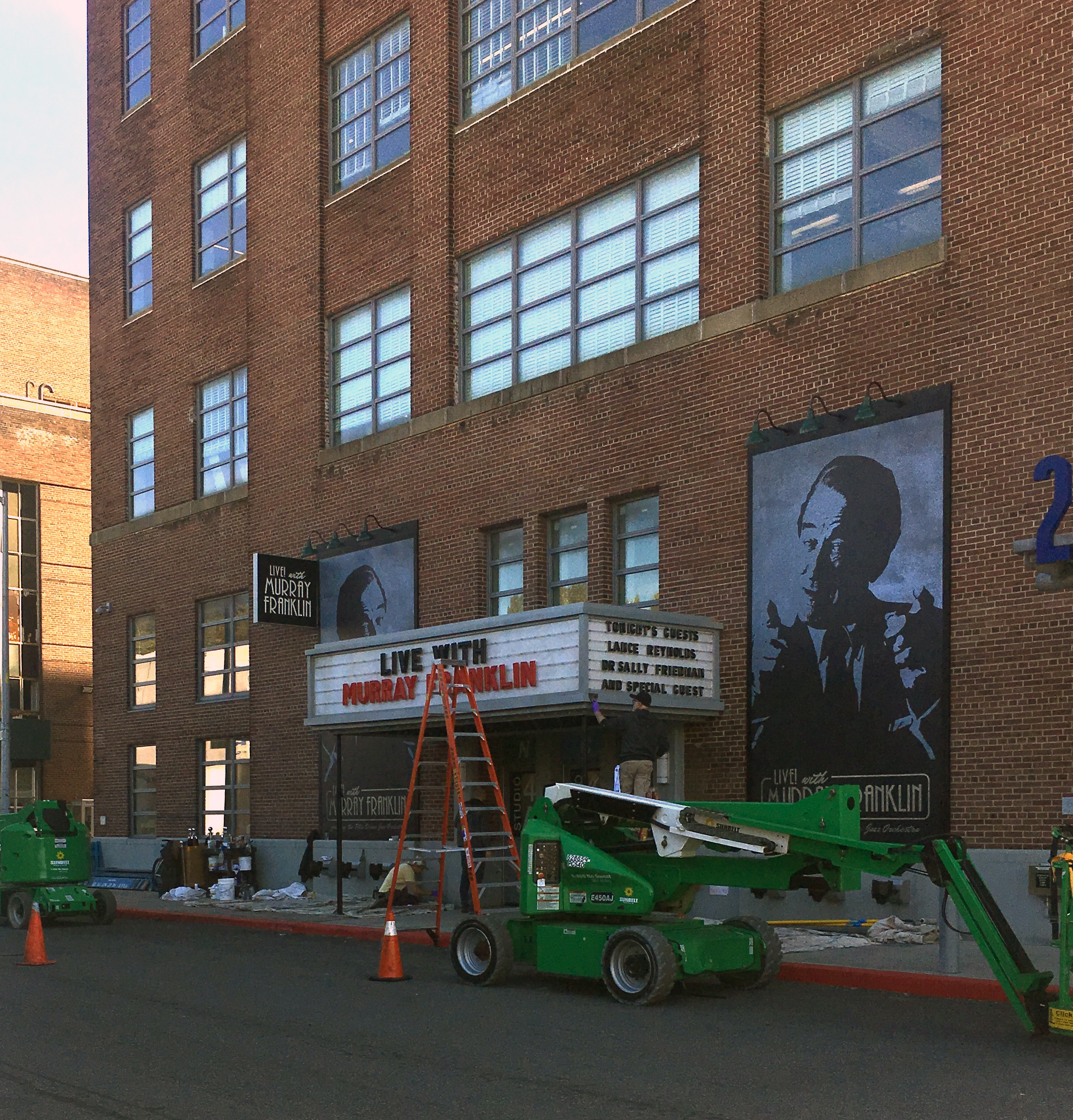
Even though I had already worked one day on Joker when I discovered that fake marquee on the lot, I had no idea Robert De Niro was even in the cast. But after researching “Murray Franklin” on the web, I discovered that he was indeed a character in the movie.
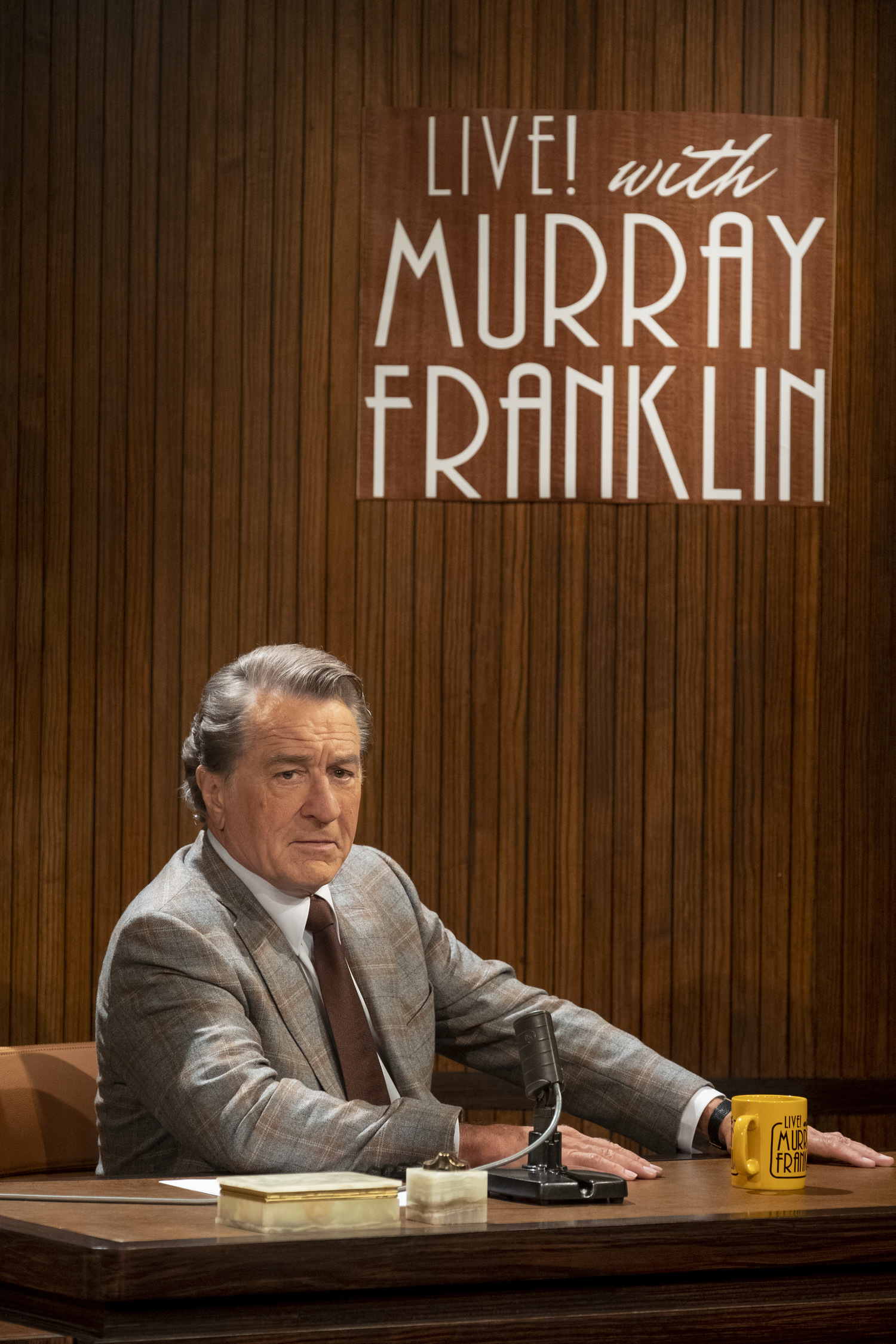
Months later, the significance of that character name suddenly hit me. Murray Franklin was a subtle tribute to the 1990 comedy movie, Quick Change, which was about a clown who robs a bank, and was co-directed by Bill Murray and Howard Franklin.
While the name was an intentional nod to Quick Change, I doubt Todd Phillips realized that the building at 25 Washington Avenue, which was used as the exterior of the Murray Franklin studio, actually appeared in that 1990 comedy.
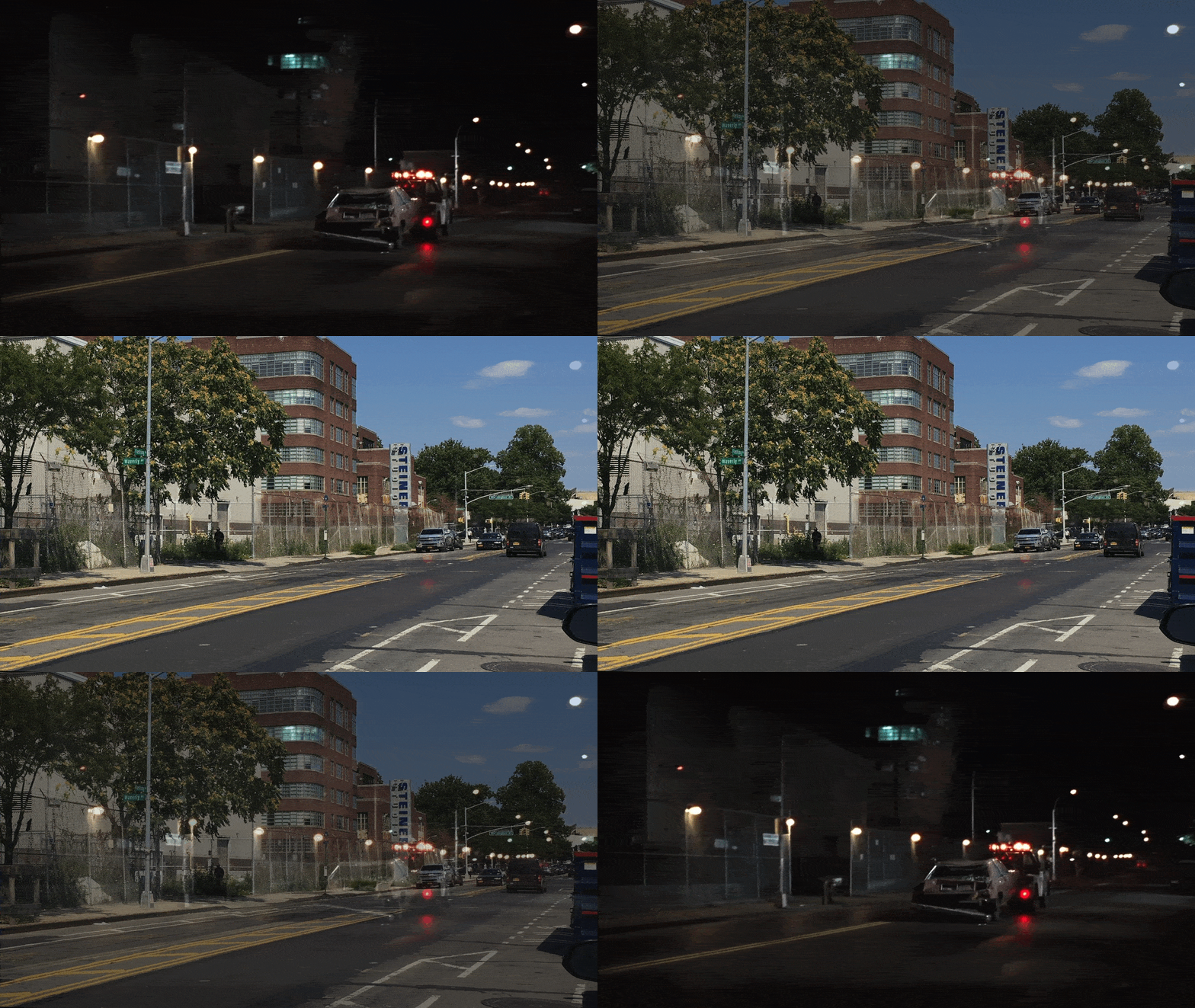
As Bill Murray and his fellow bank robbers desperately try to hail a cab on a dark street, they’re on Flushing Avenue, just one block away from 25 Washington Avenue which looms in the background.
Chaos Breaks Out
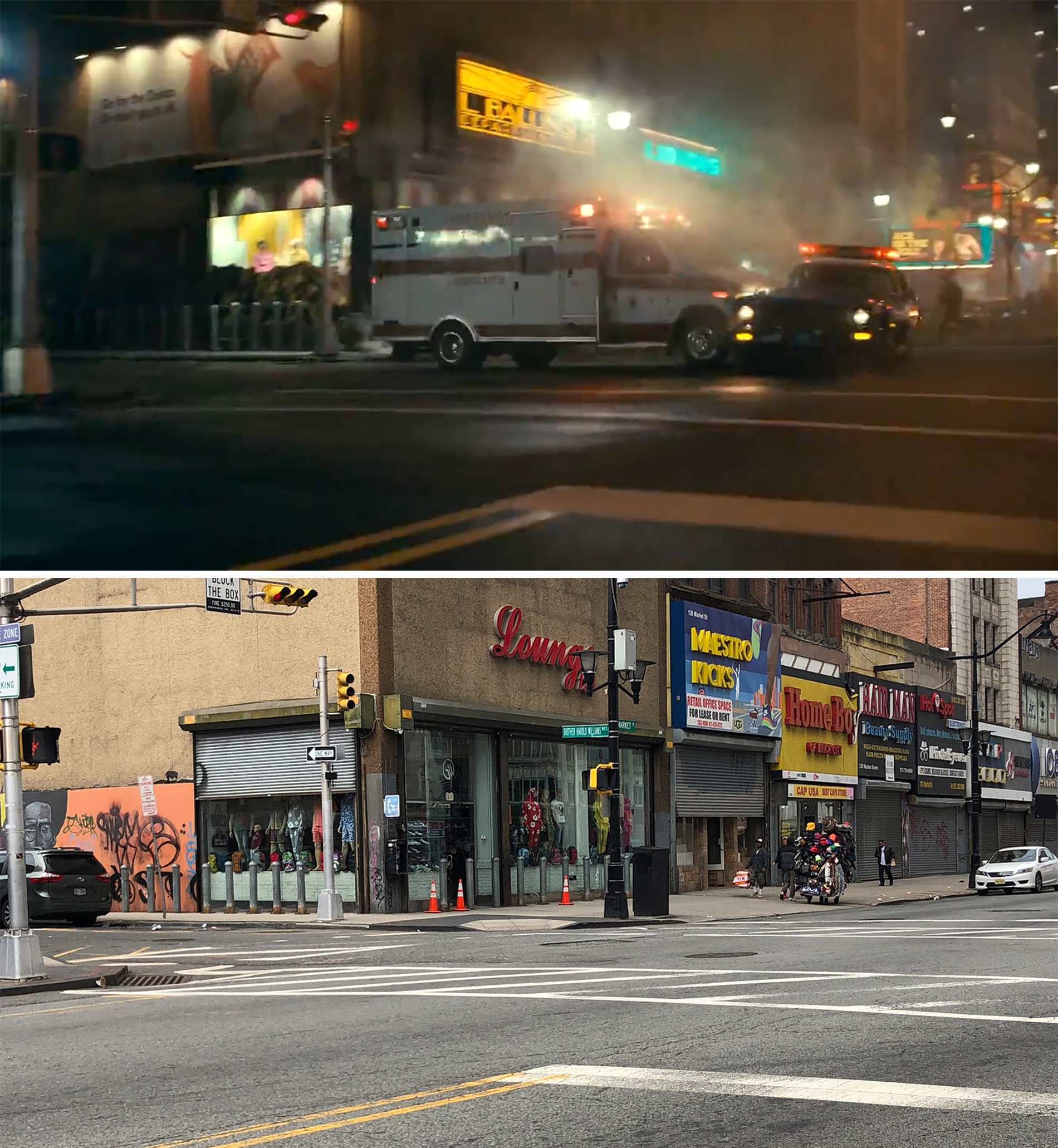
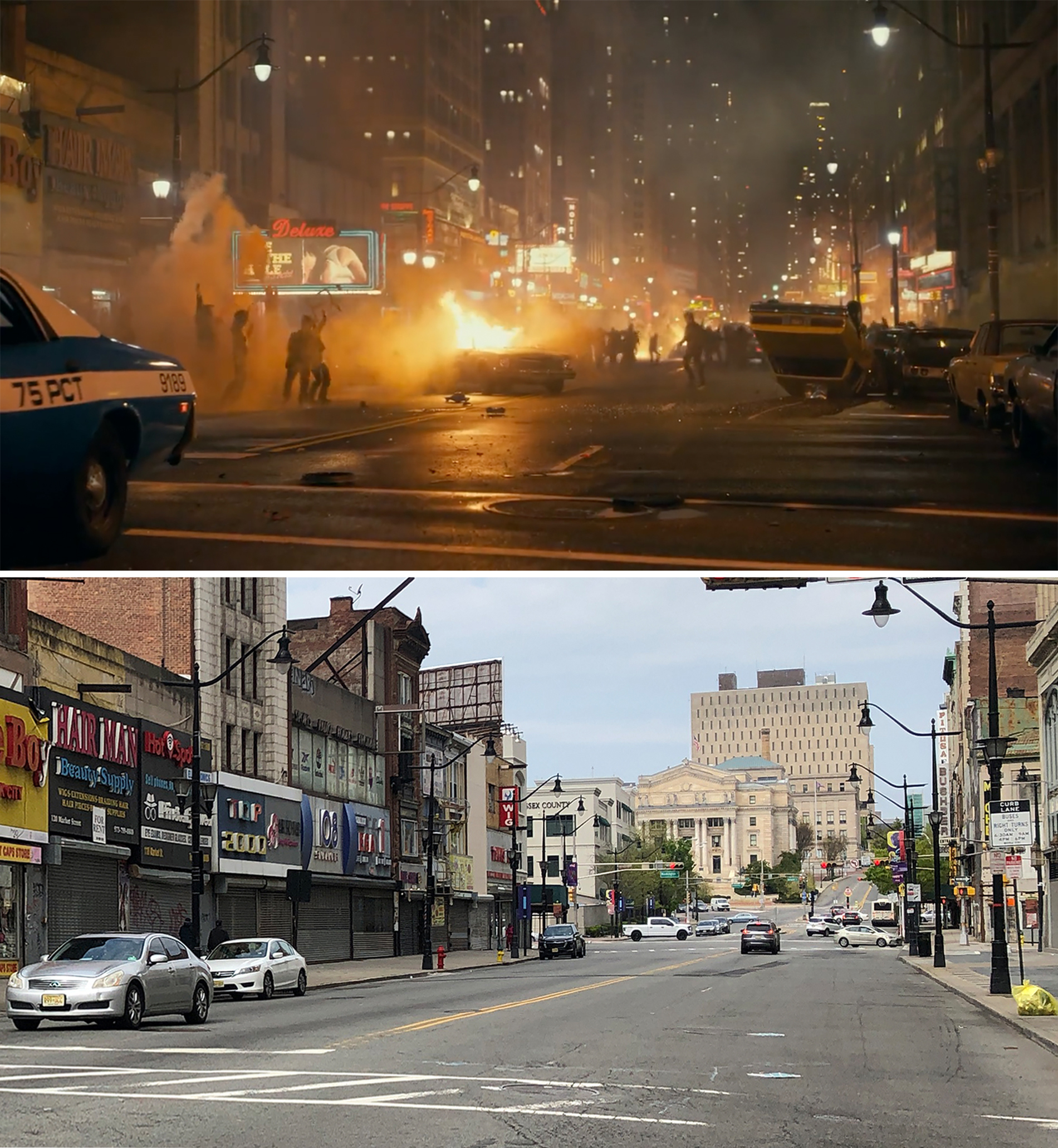
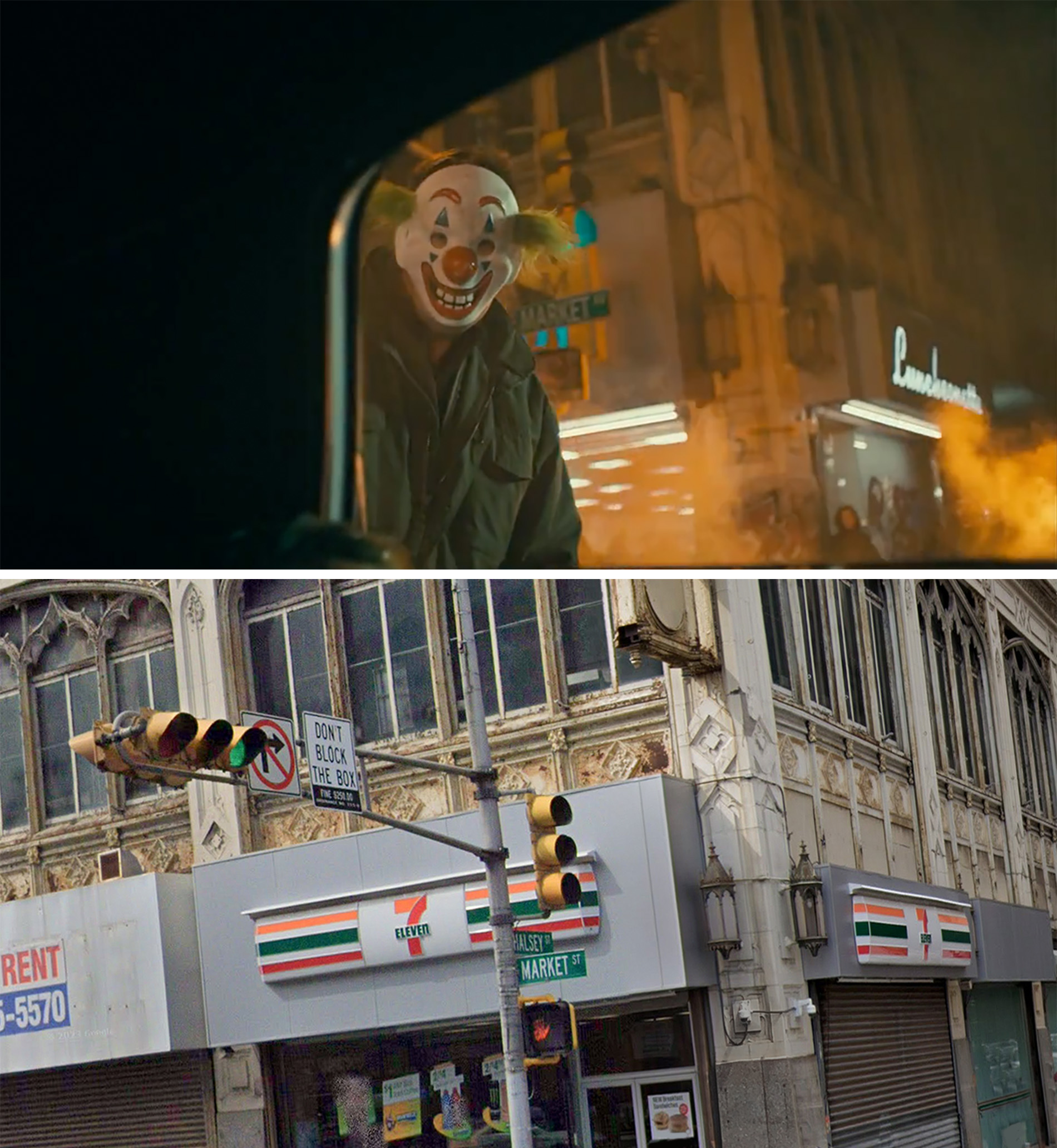
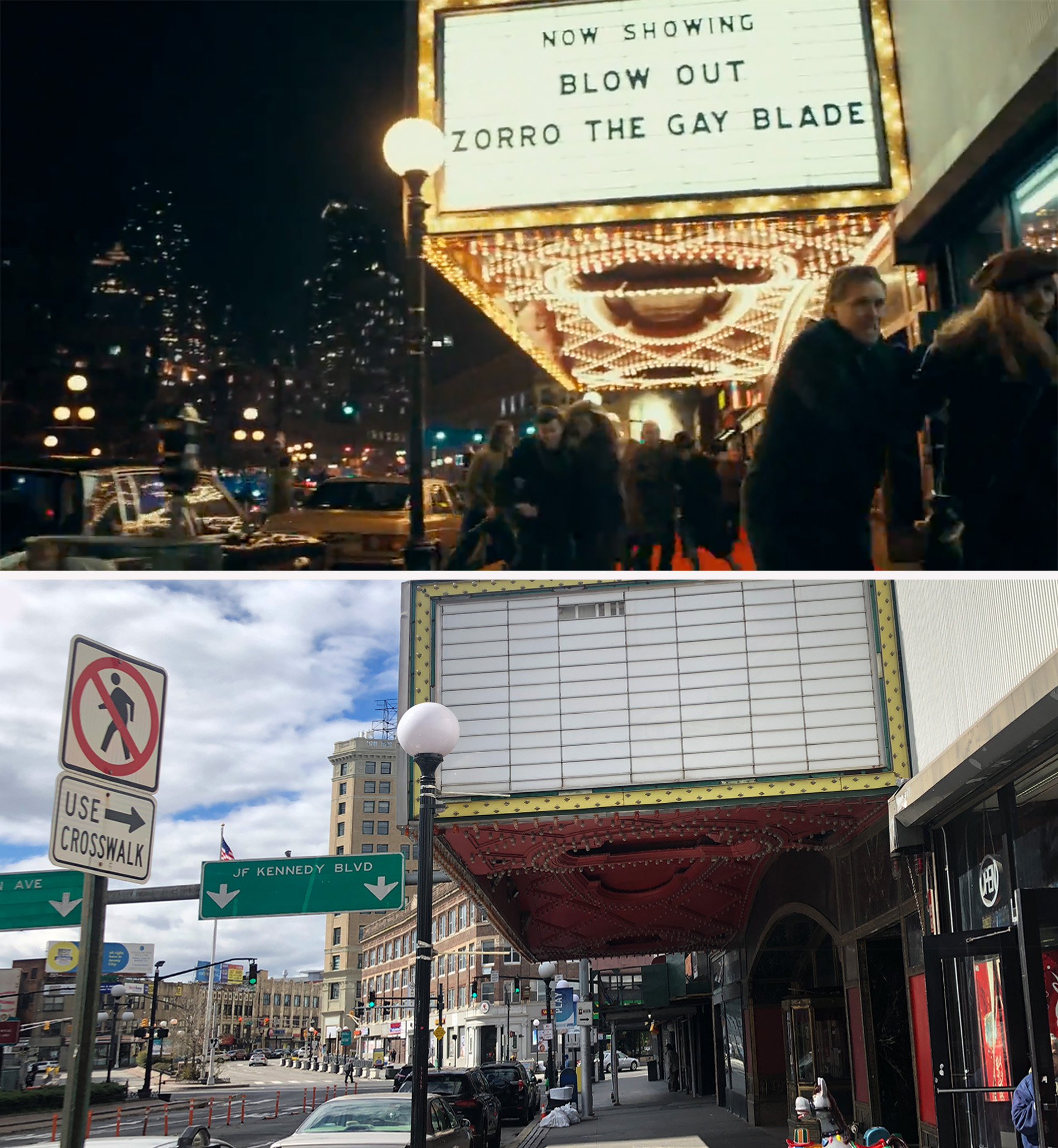
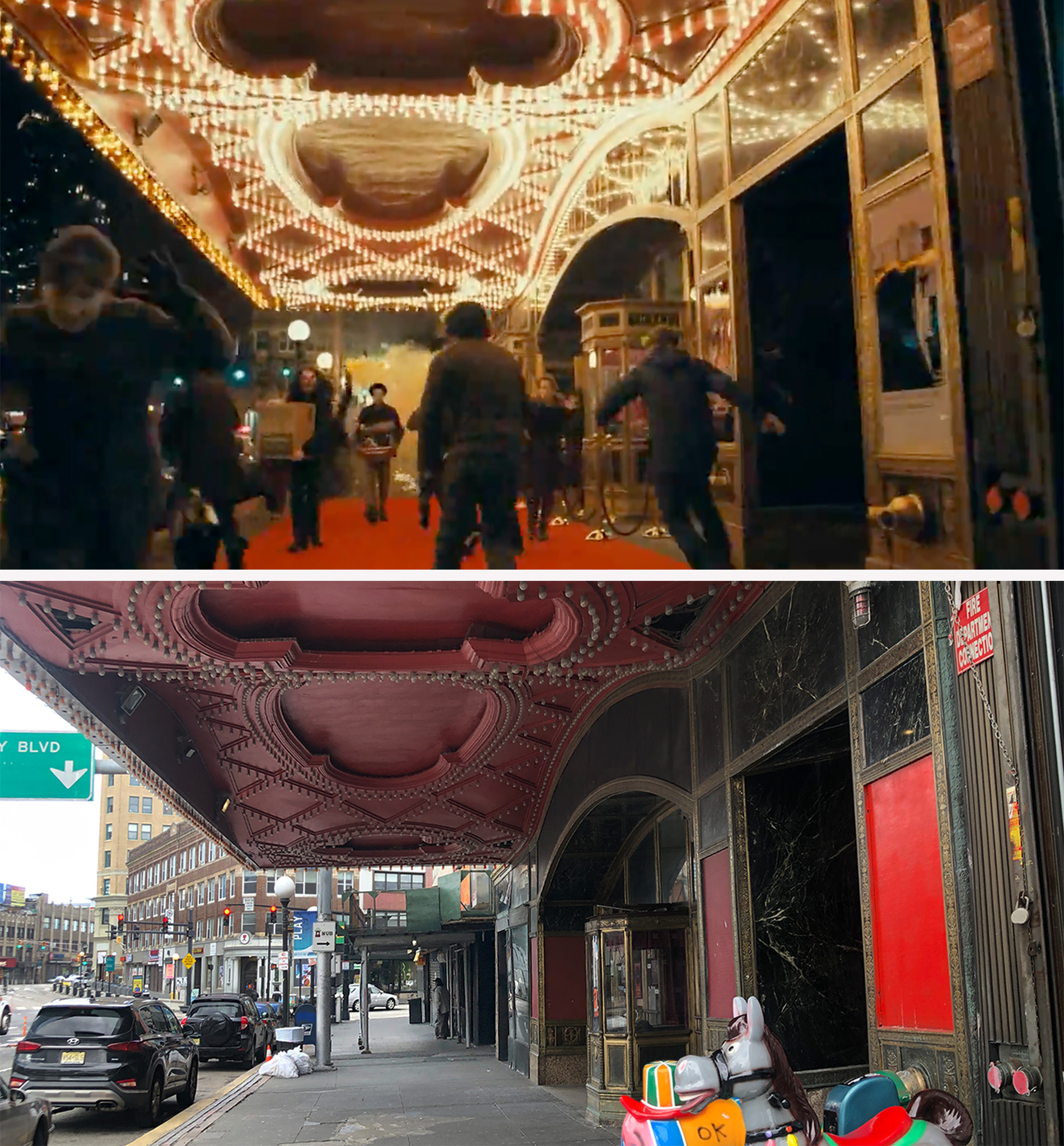
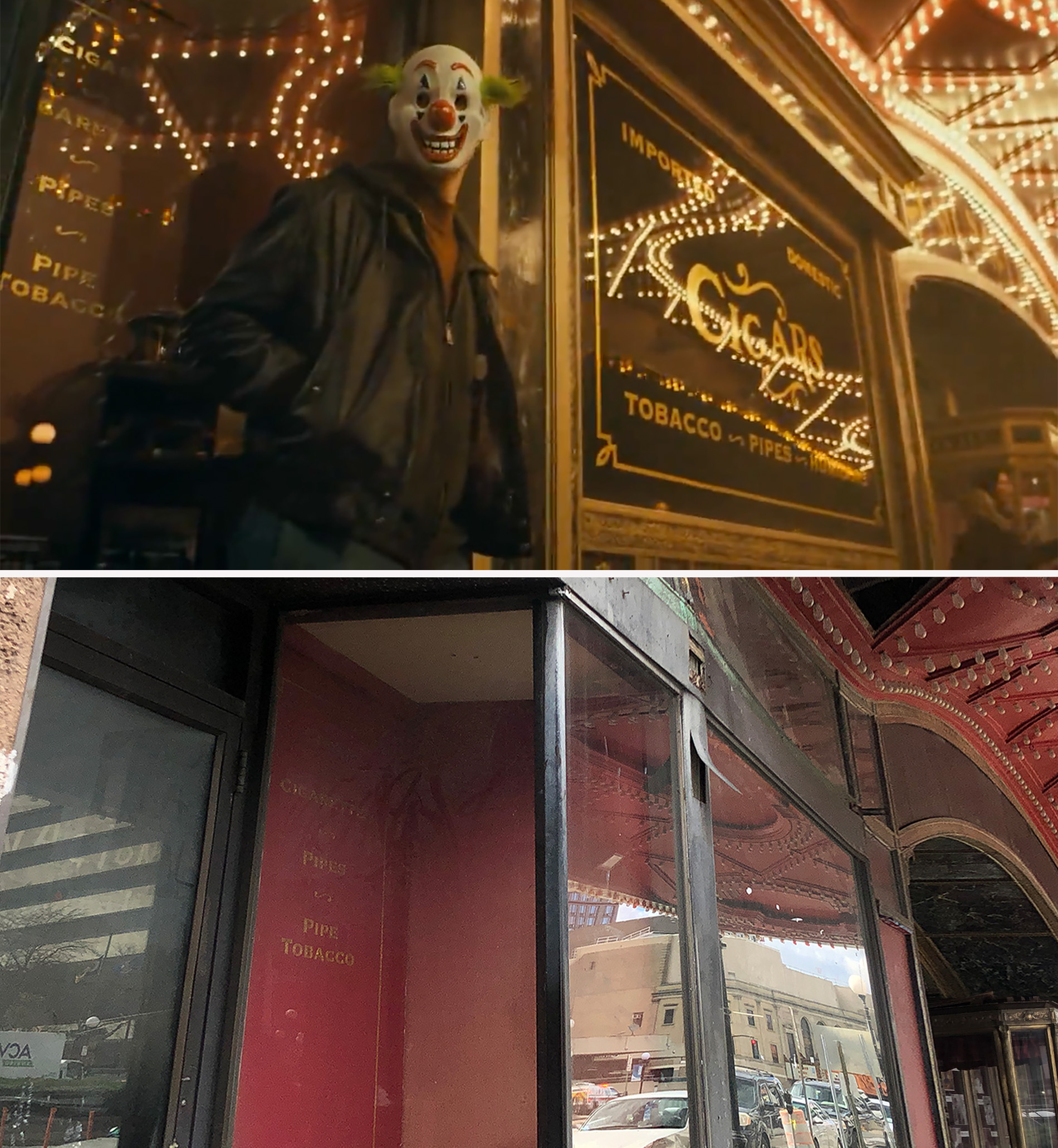
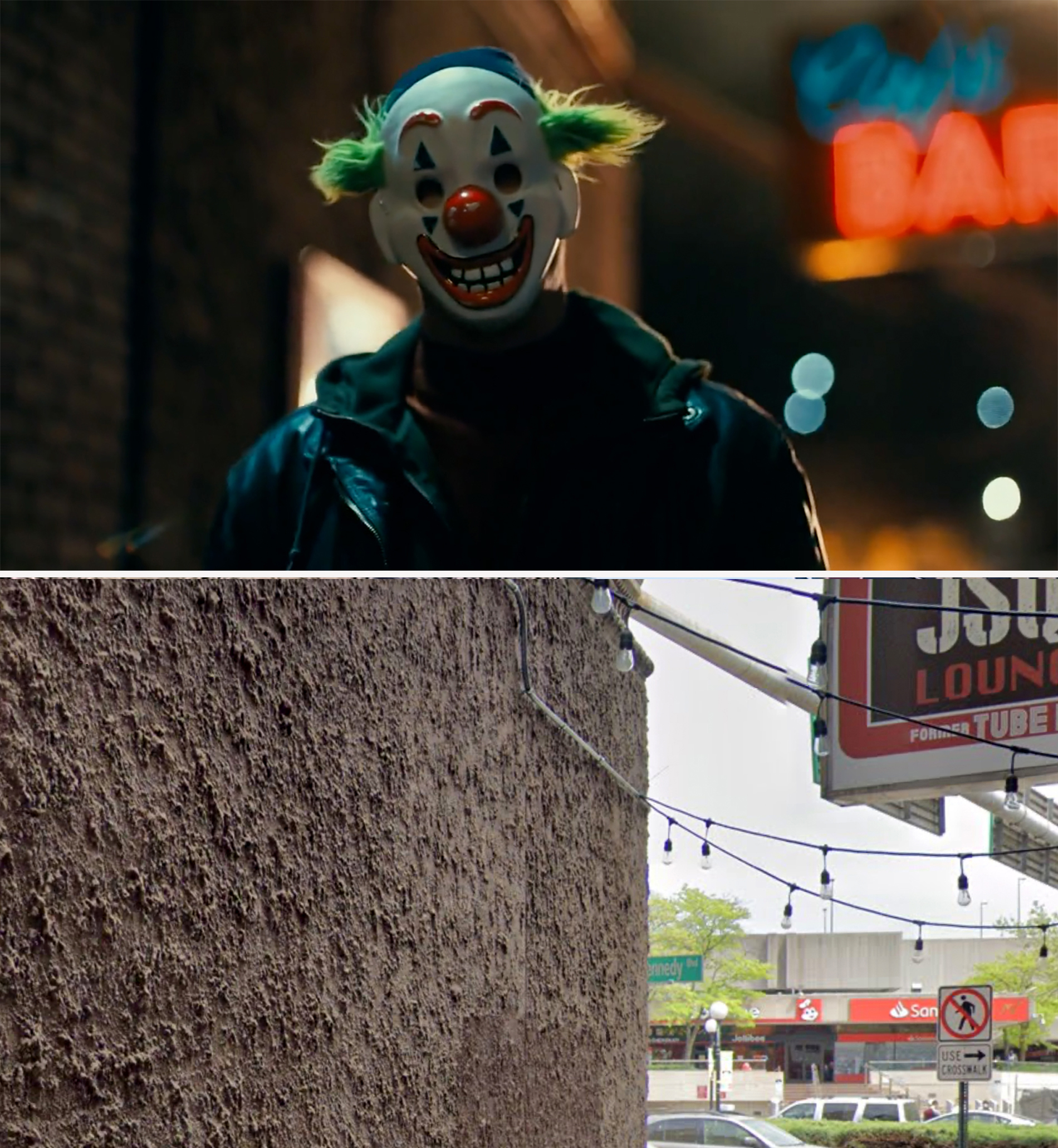
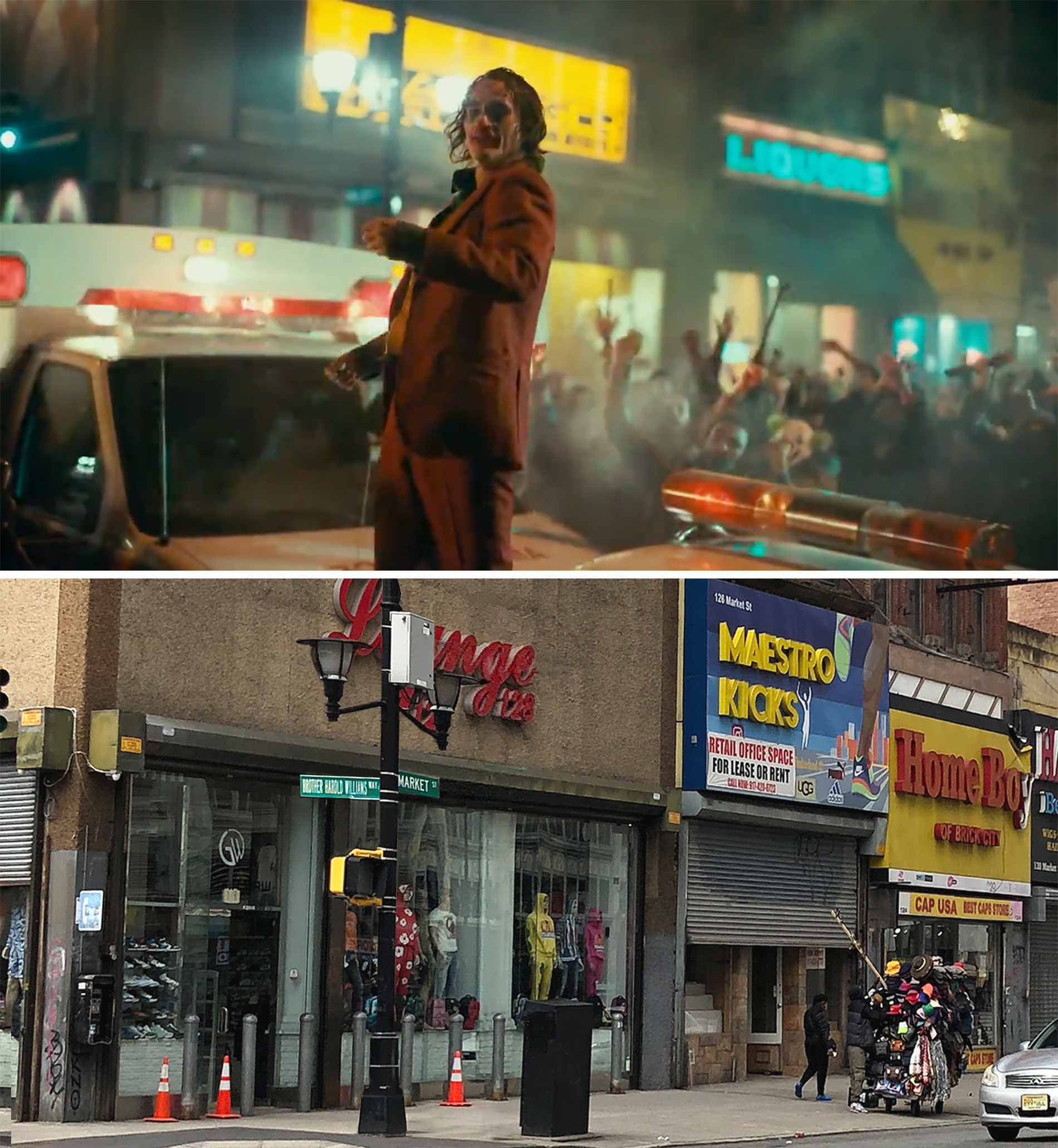
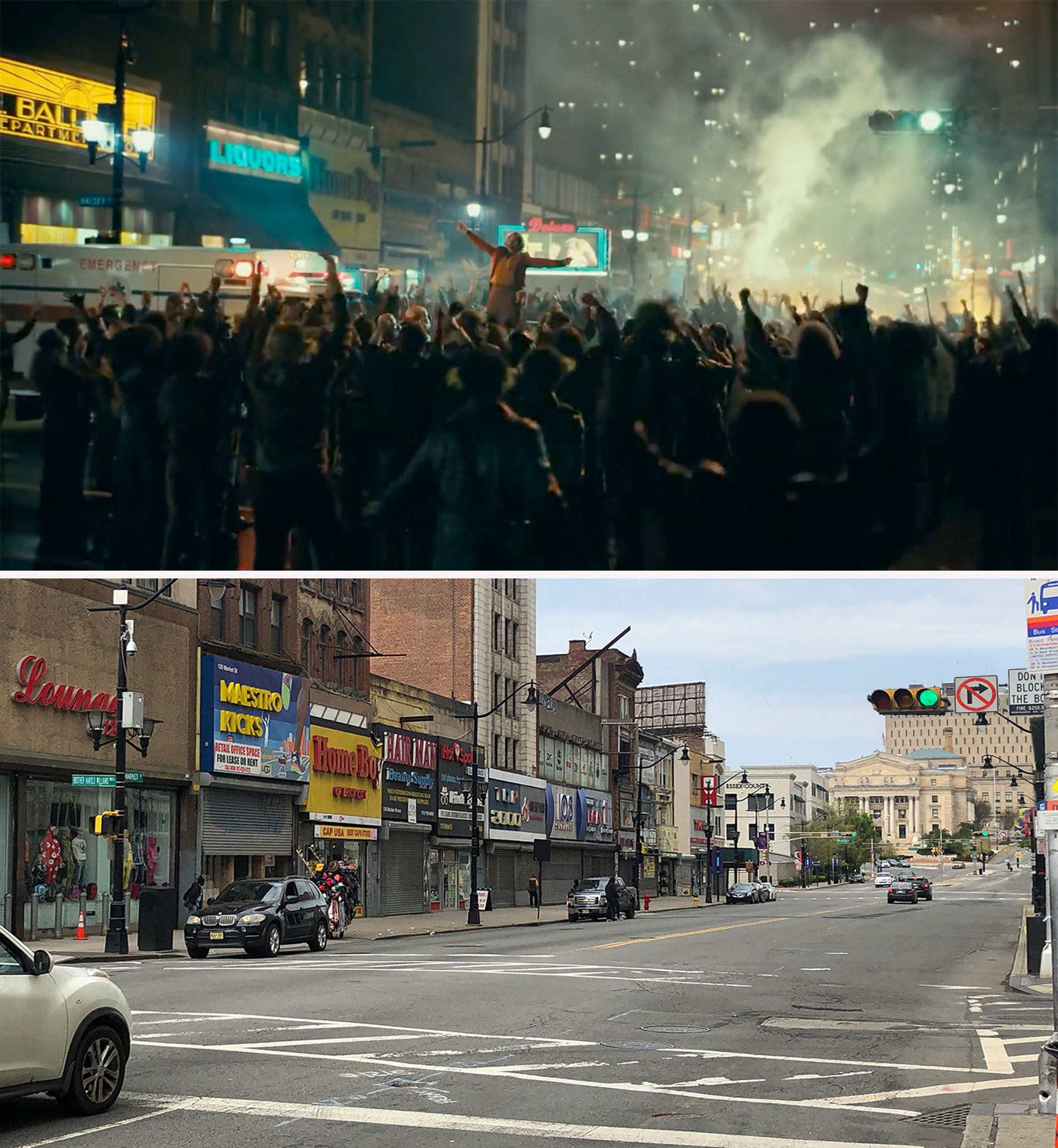
These Jersey riot locations were identified by others at the same time the sign-spinning location was identified. Like many other street scenes in this movie, buildings and such were added into the background using CGI.
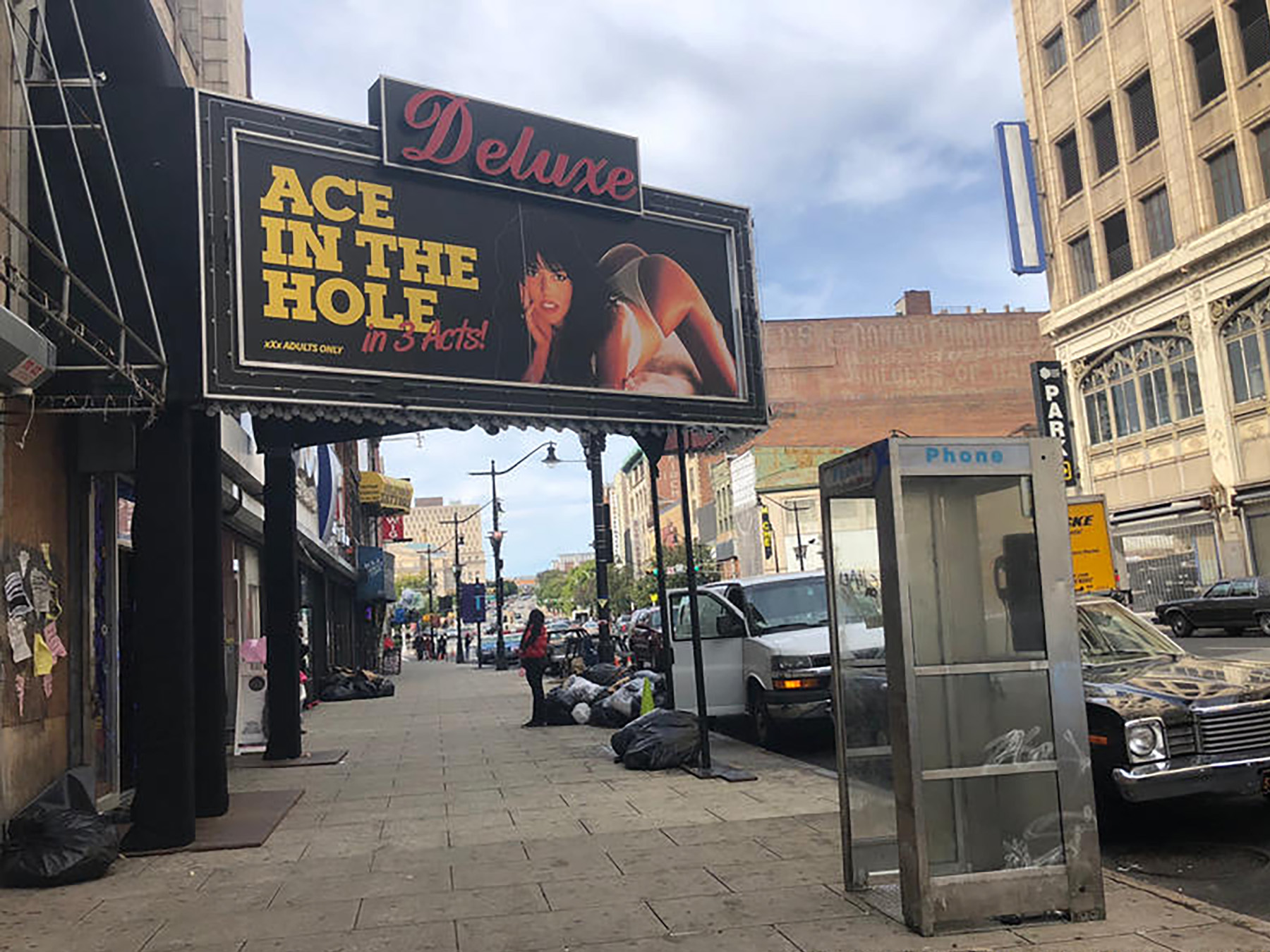
And since a lot of the riot took place in the same area as the opening sign sequence, the streets had plenty of 1970s-1980s-era set-dressing on them.
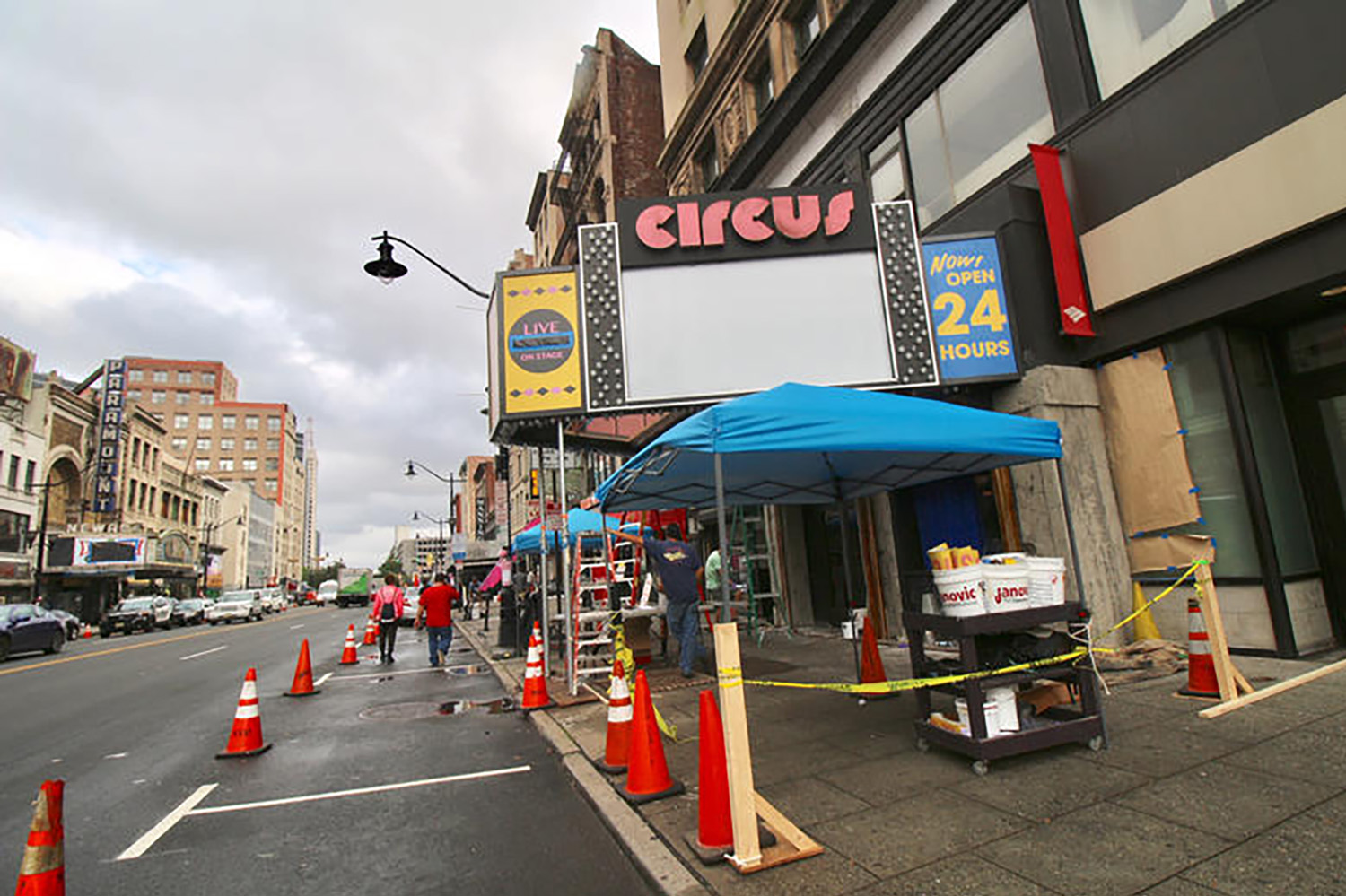
This included several old-school porno houses, modeled after the ones that dominated Times Square forty years ago.
It took production a couple weeks to film this chaotic ending to the Joker story, which included the death of Bruce Wayne’s parents.
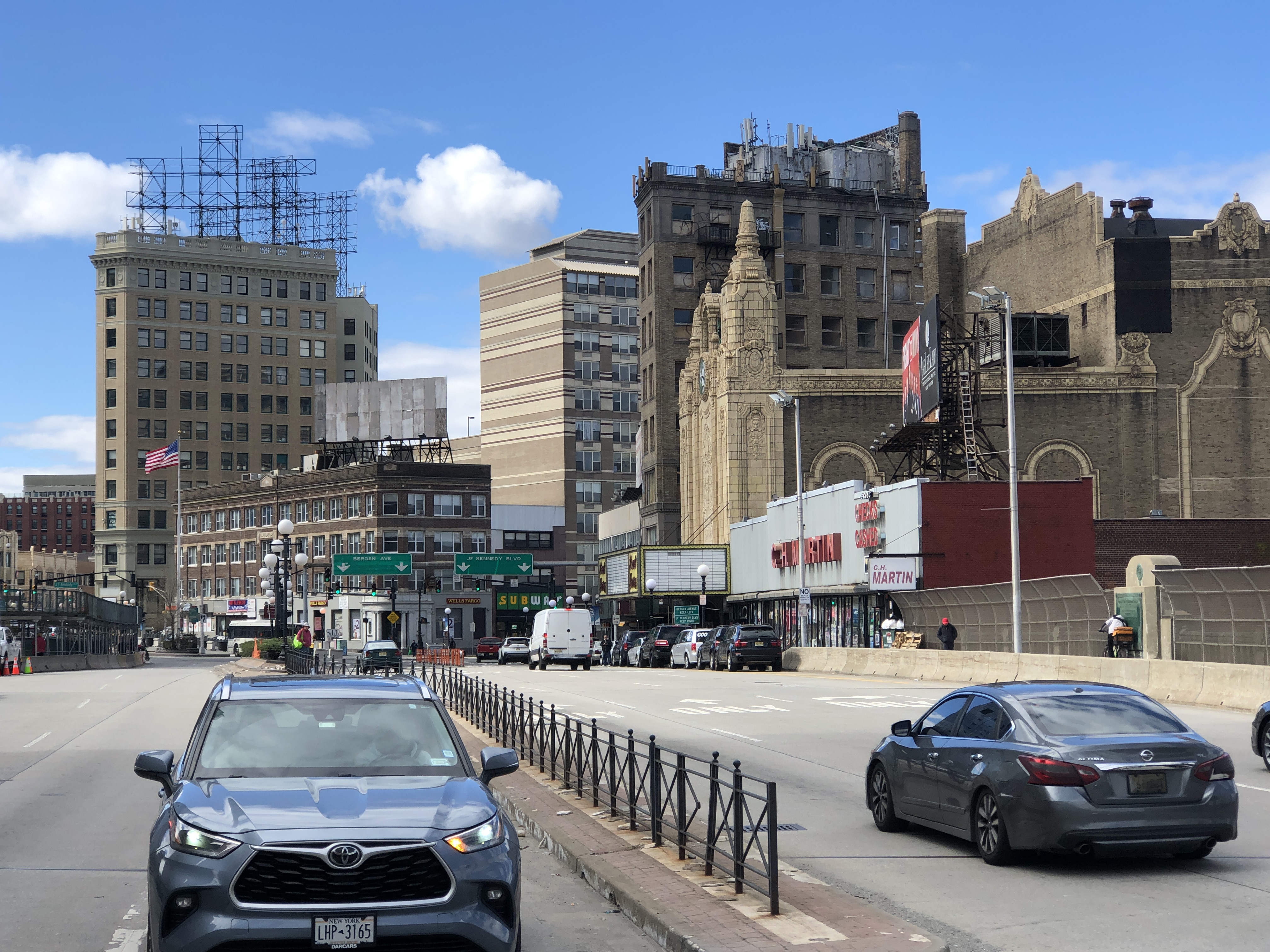
The infamous Batman origin story was filmed about five miles from downtown Newark in Journal Square, at another long-standing movie house.
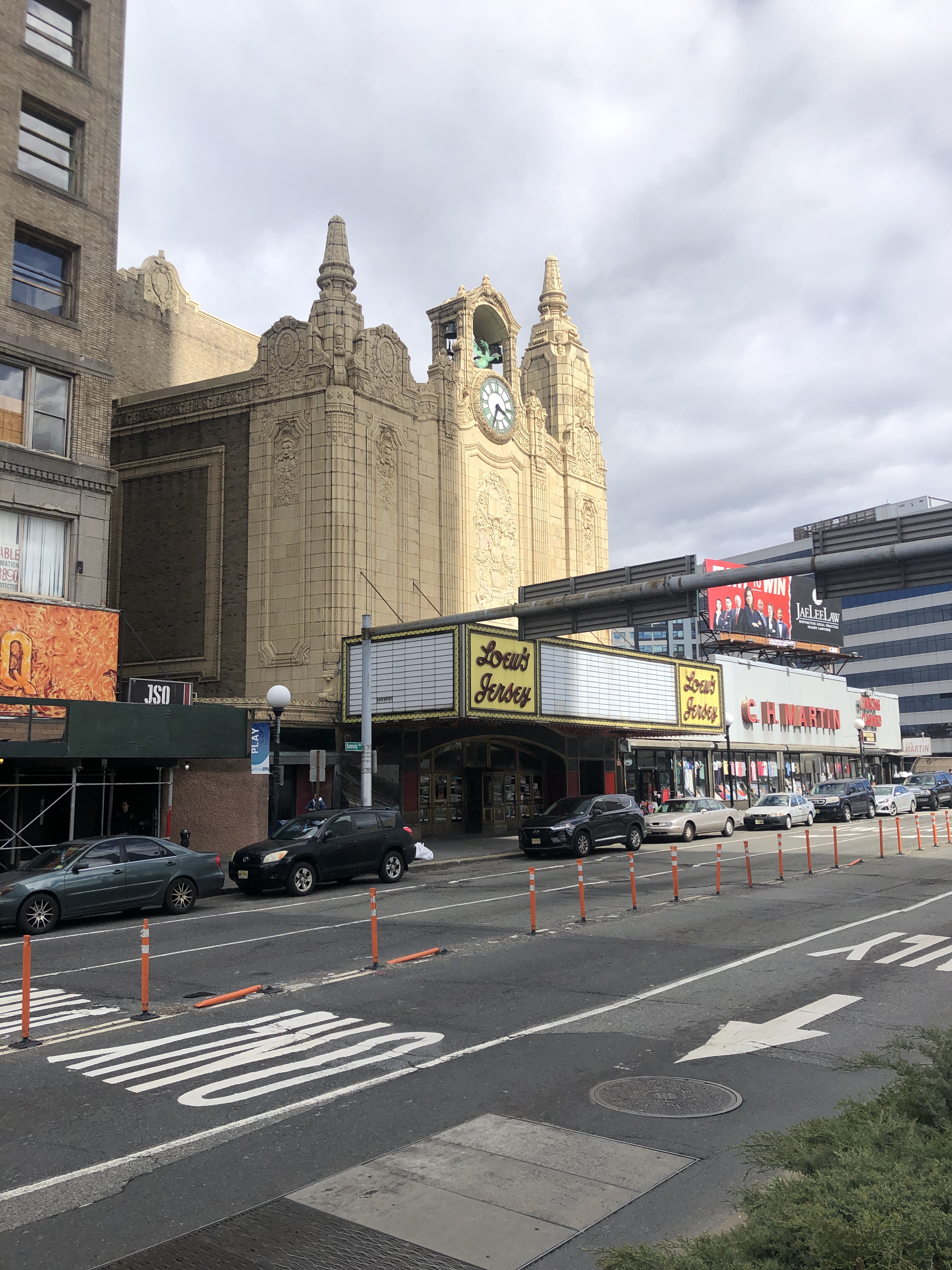
This time they used the Loew’s Jersey Theatre, probably due to its close proximity to an alleyway.
I’m sure the theater’s architecture also played a role in being chosen, having an ornately curved marquee and a Baroque-style box office stand out front. (Although, set designers decided to add a cap to the top of the box office to make it better fit the Gotham motif.)
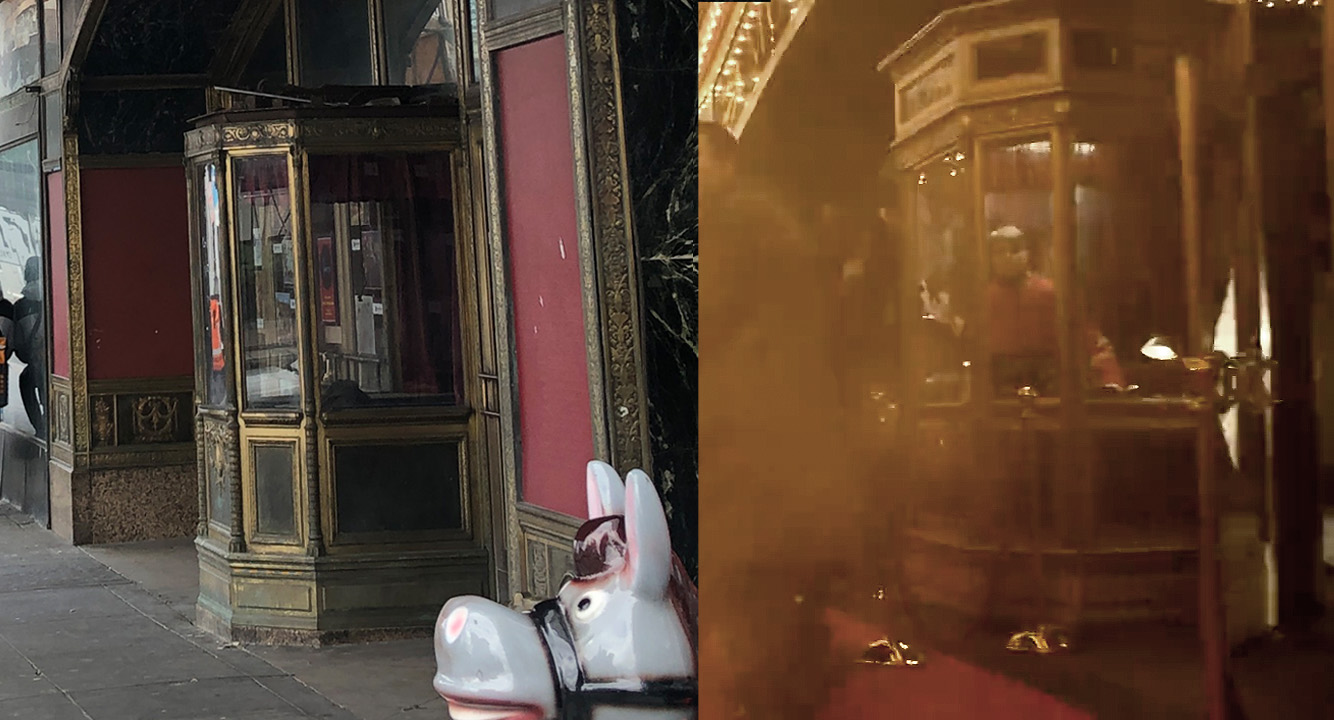
Loew’s Jersey was the fourth of five Loew’s “Wonder Theaters” to open in the New York City area in 1929, having its premiere just two weeks after the Loew’s Kings Theatre in Brooklyn. The building cost around $2 million to build and included a dramatic Italian Renaissance style auditorium and a three-story lobby rotunda.

As was the case with all big movie palaces at the time, Loew’s Jersey Theatre also had its share of live shows, seeing such entertainers as Bing Crosby, Bob Hope, Jackie Coogan, and the Ritz Brothers perform on their stage.
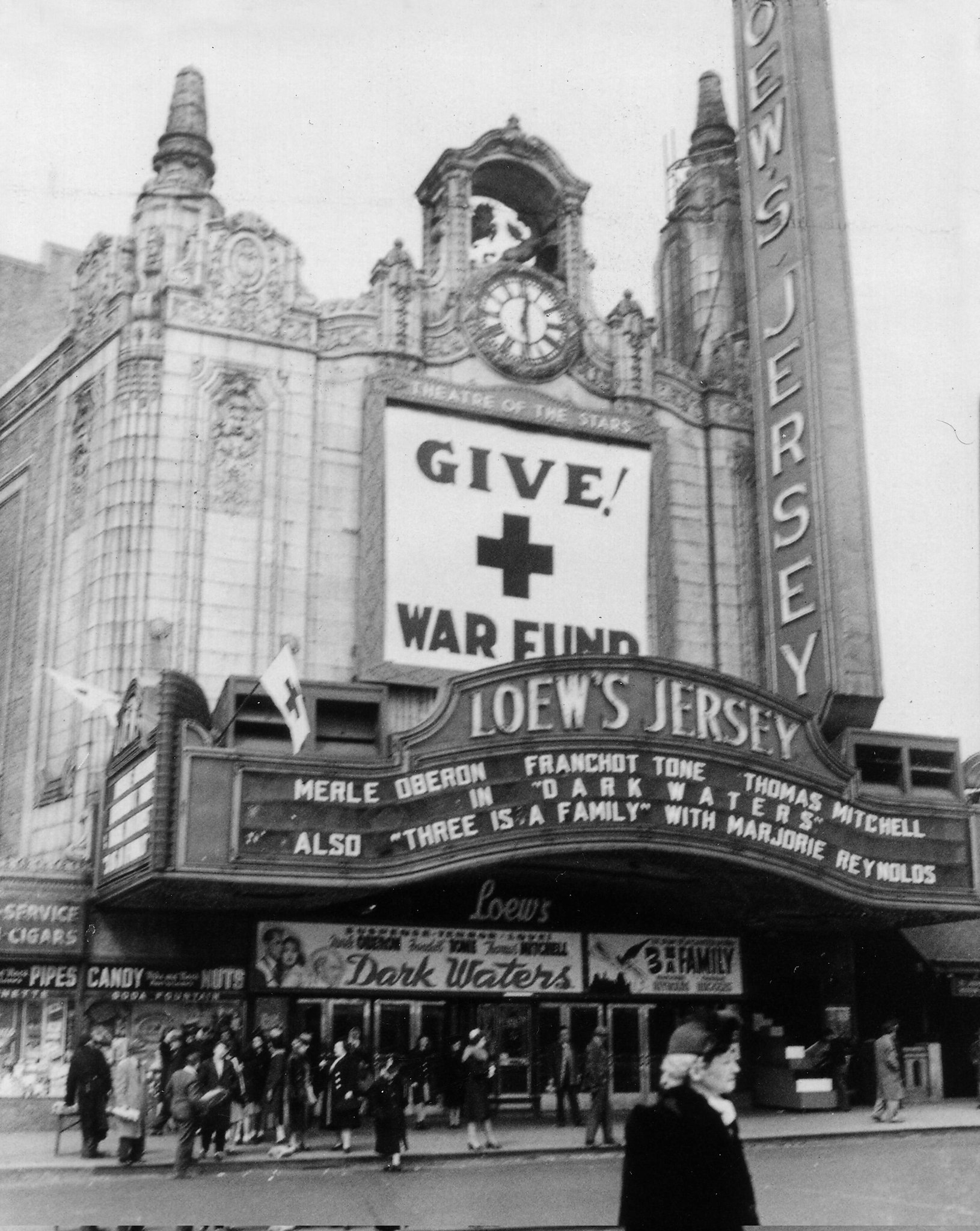
In 1975, two additional screens, each seating 524, were placed in the orchestra seating area beneath the balcony. At that time, the Robert Morton ‘Wonder’ organ that had been there since its grand opening in 1929 was removed. It now sits in the Arlington Theatre in Santa Barbara, CA.
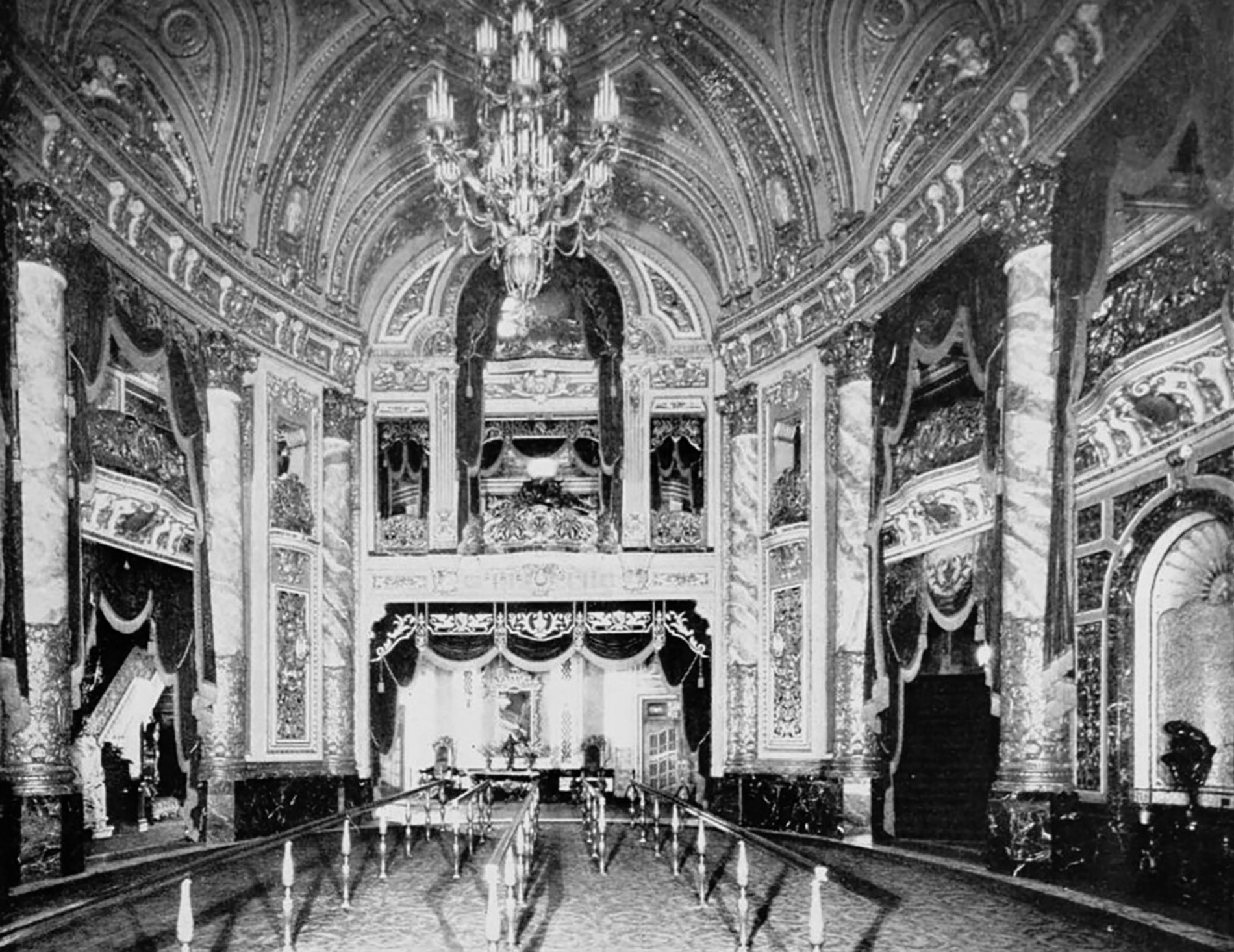
The Loew’s Jersey Theatre closed on August 21, 1986 after a three-week run of Friday the 13th Part VI, and was soon slated for demolition. But preservationists saved the theatre and undertook a restoration project beginning in 1995. The theatre was re-opened to the public in 2001 with regular monthly screenings of classic and revival films as well as occasional live performances and concerts.
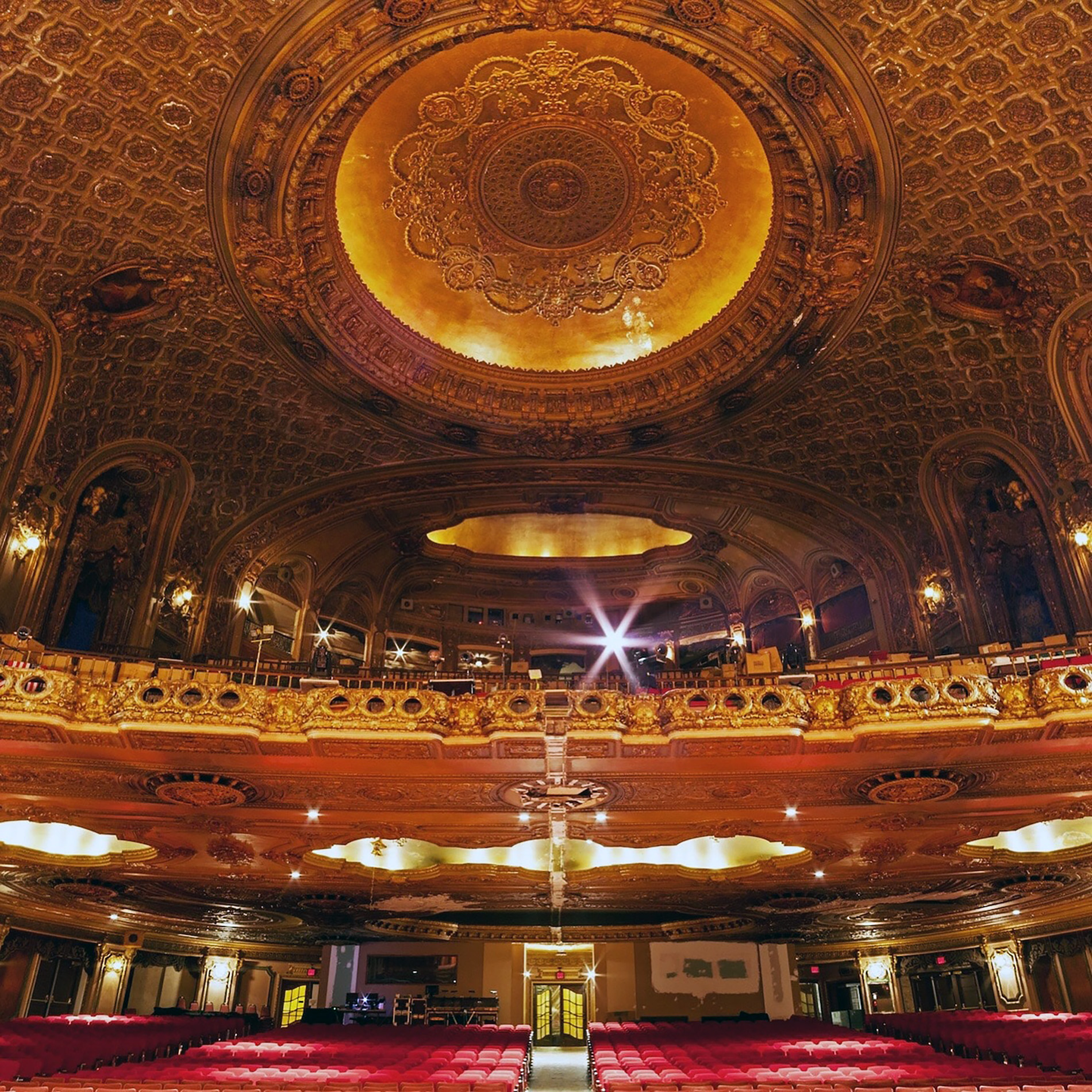
The space has also been used for private events, such as weddings, although the theater is currently closed for another extensive renovation project.
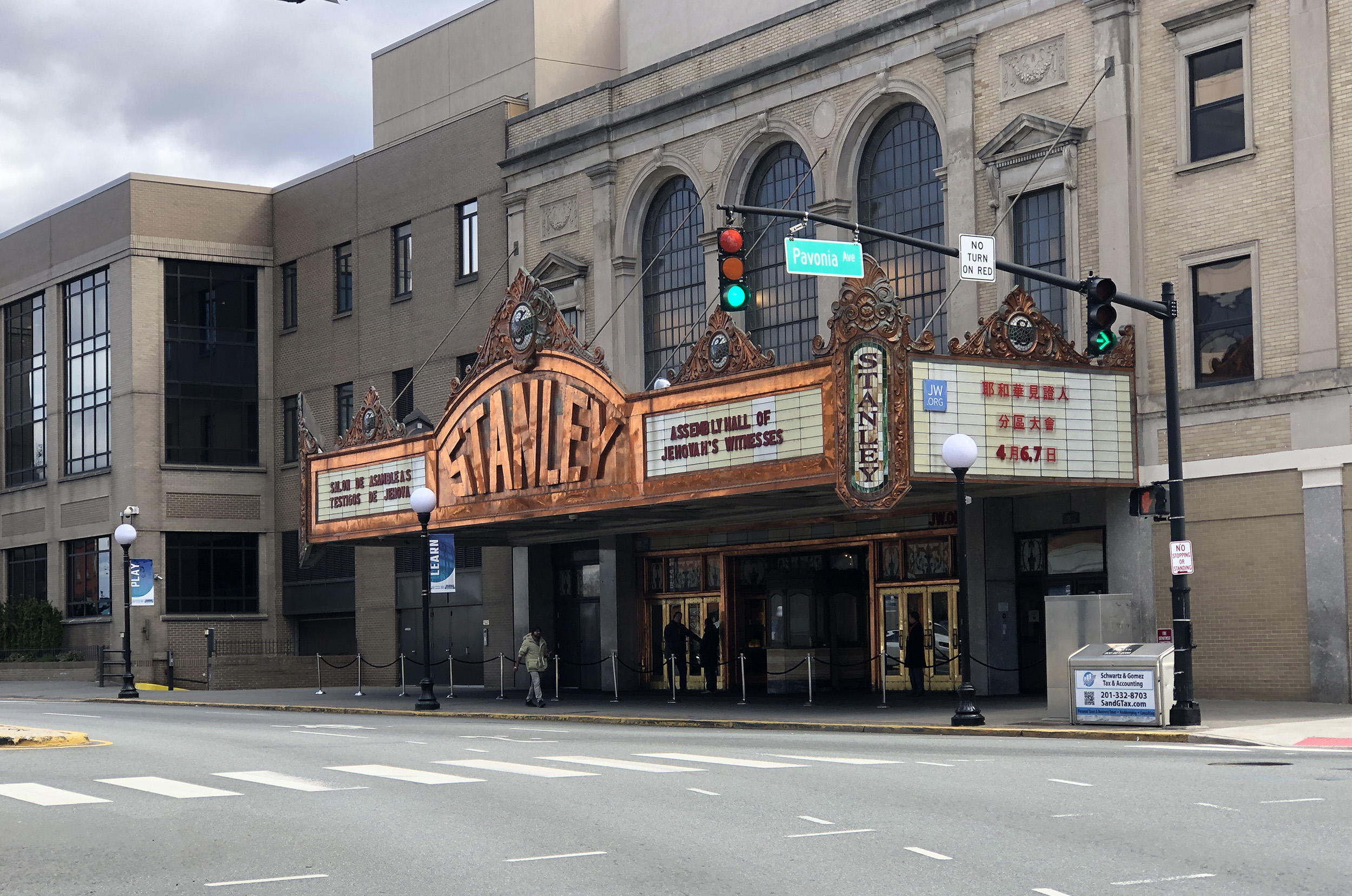
The Loew’s Jersey Theatre remains to be a centerpiece of the Journal Square renaissance, and is just one block away from the another ornate theater — the Stanley, which was the 6th largest movie theater in the USA when it opened in 1928. It is now a regional Jehovah’s Witnesses Assembly Hall.
Arthur Committed
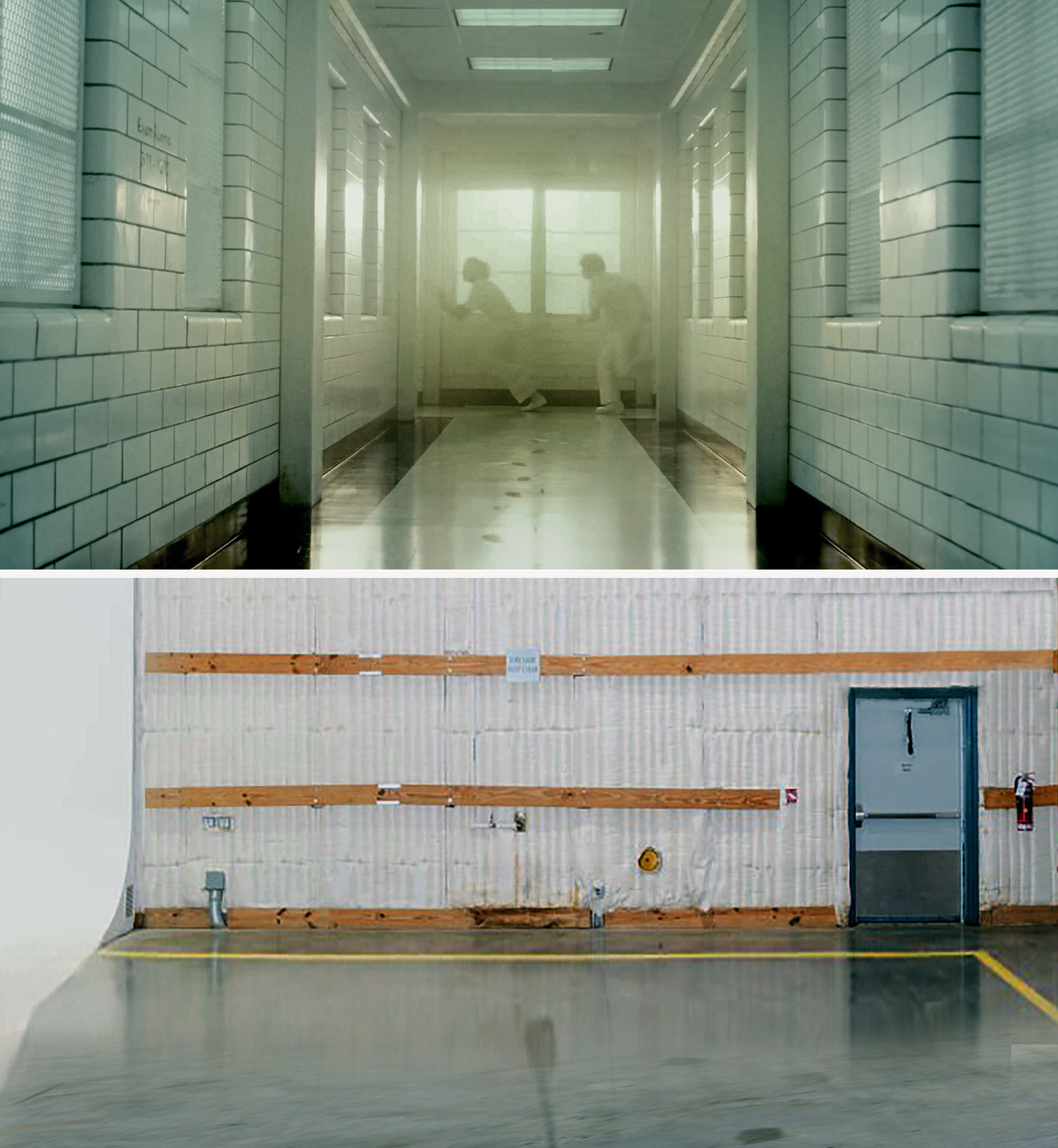
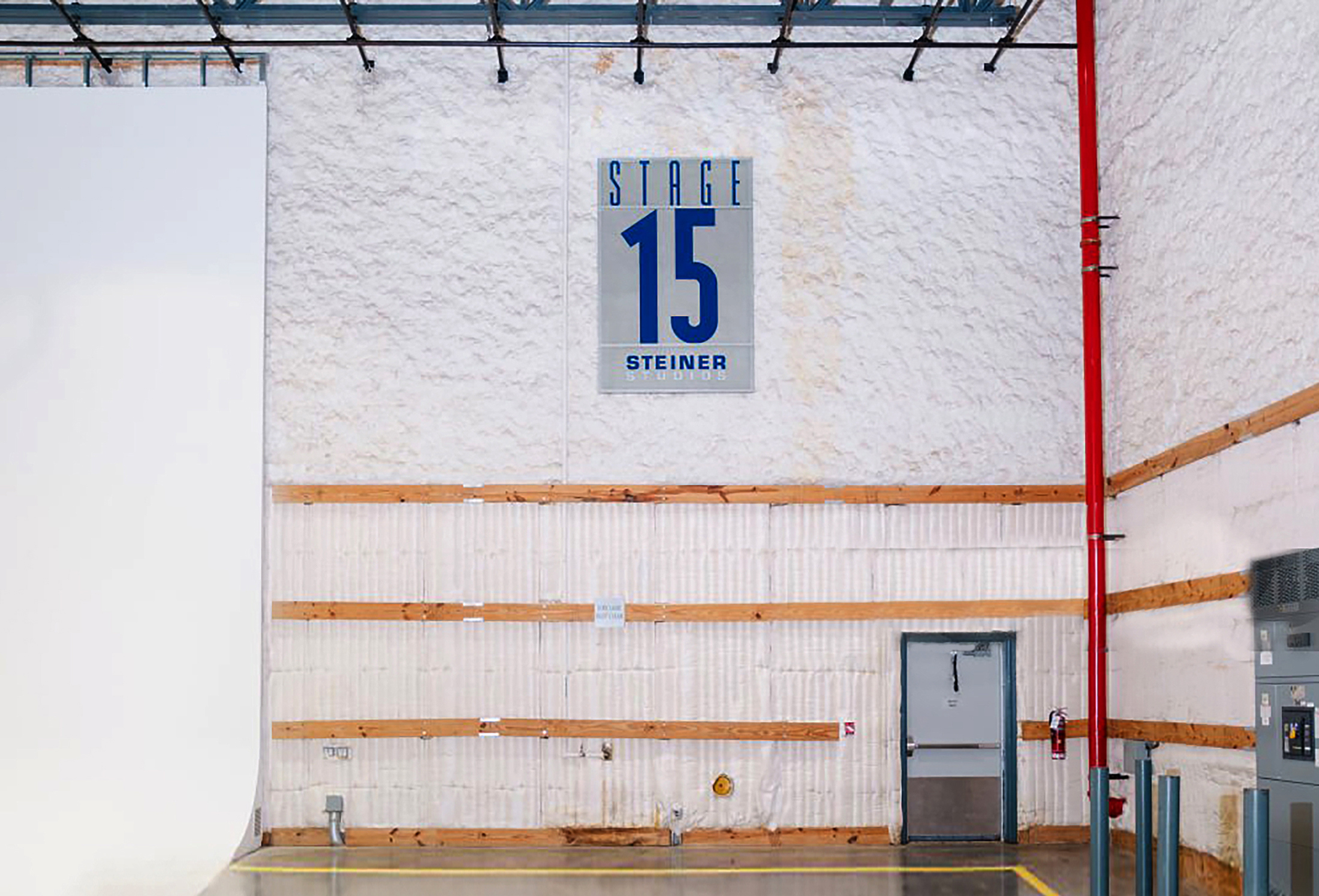
Some people thought this last scene in the movie was filmed at Metropolitan hospital, where they filmed the other Arkham stuff. But this was actually filmed on a set at Steiner Studios on stage 15 — one the newer soundstages on the lot.
I know this because I played the orderly that chases Arthur back and forth in the Arkham hallway. In fact, I’m the last person to appear onscreen before the “The End” title card comes up.
Since I performed in this scene, I can also share a few trivia notes that might be interesting.
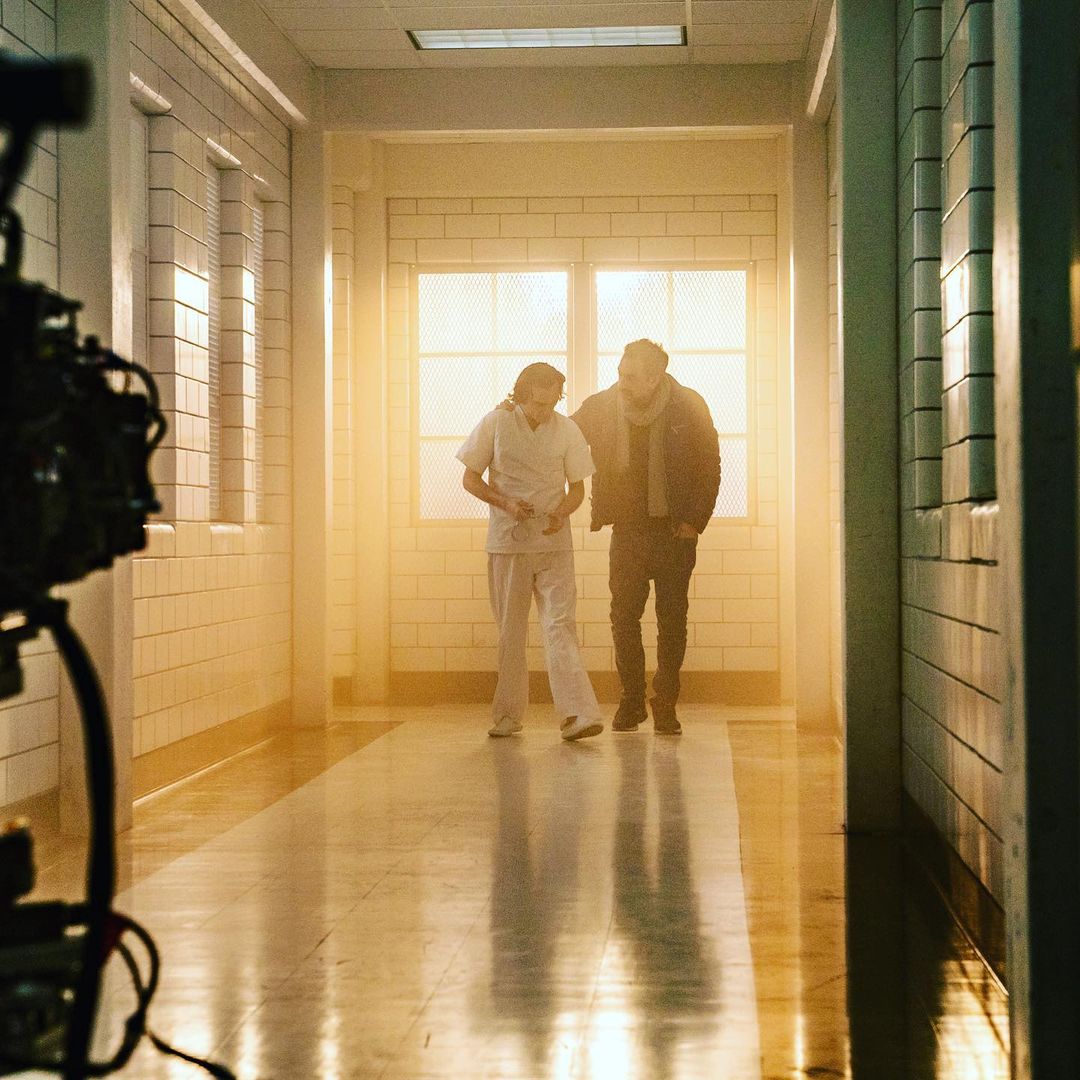
This last scene from the movie was actually the very last scene they filmed during production — something that is not very common in shooting schedules.
Another uncommon thing that occurred — as we filmed the scene, the director had the Frank Sinatra song, “That’s Life” playing over speakers, which ended up being the same song they used on the movie’s soundtrack. Very seldom does a filmmaker know what music will end up being used during the filming stage, but things felt fast and loose that evening.
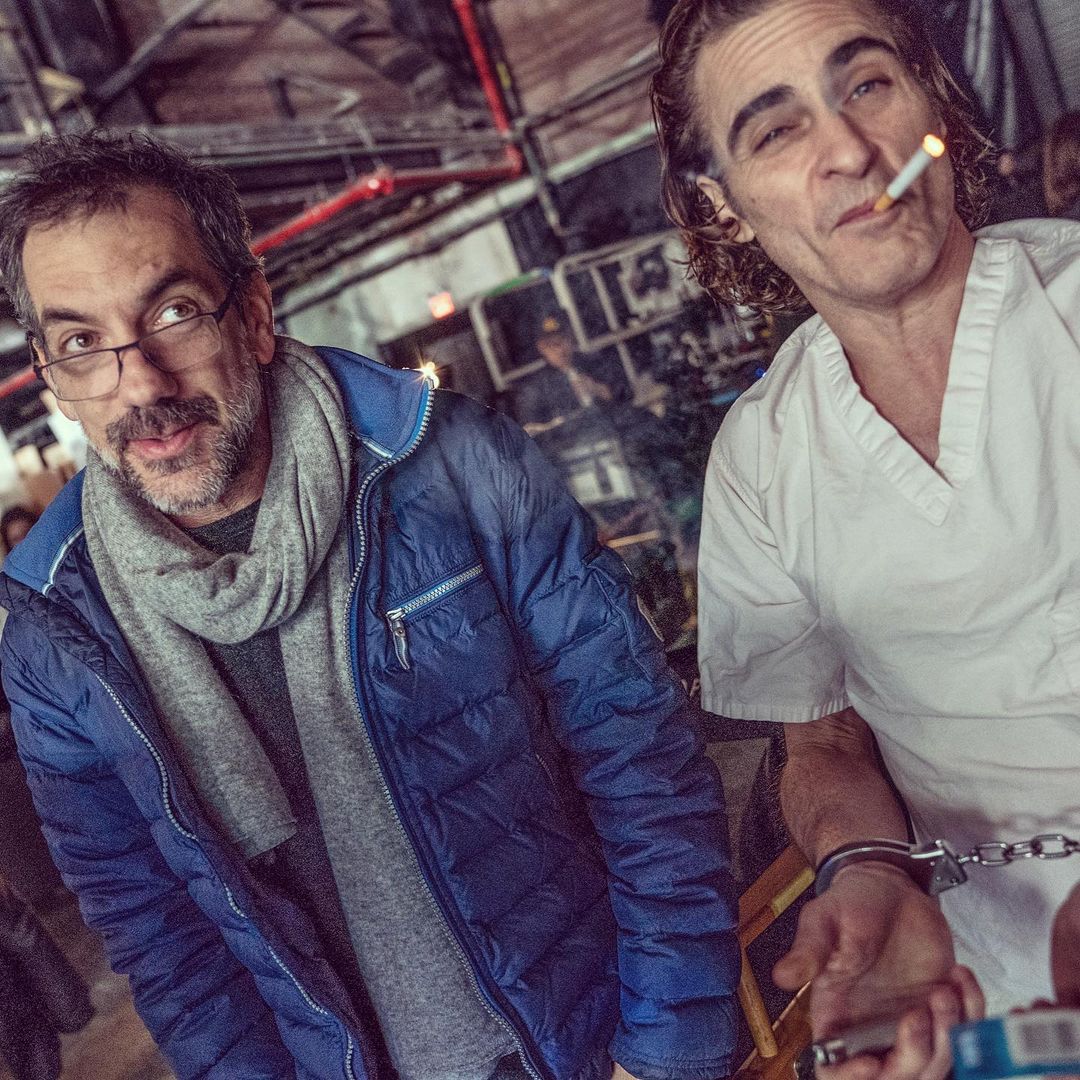
Apparently, this scene was a reshoot that got tacked onto the schedule after Phillips decided to rewrite the ending, and on the day, we shot two versions of the ending, both taking place on this Arkham hallway set. Because of this, the bloody footsteps that Arthur leaves behind were digitally added in post-production, eliminating the need for any messy clean-ups.
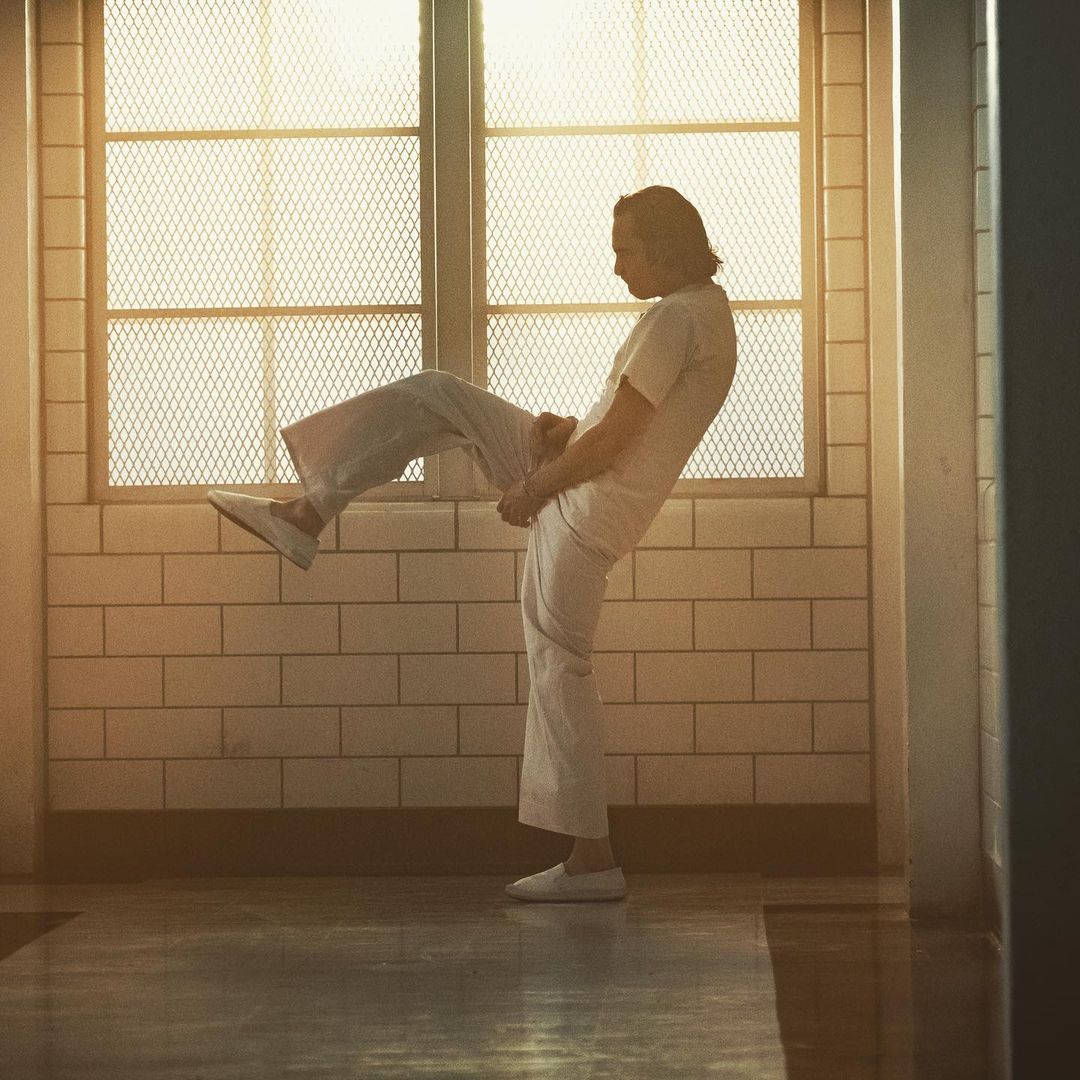
When I was finally given the directions for the scene, I was told Joaquin was only going to run across the hallway once. But for some reason, he decided to go back for one more sprint. I wasn’t sure if I was supposed to chase after him again, and I only had a split second to make a decision, finally choosing to go for it. (That explains why there’s a longer gap between the two of us on the second pass.)
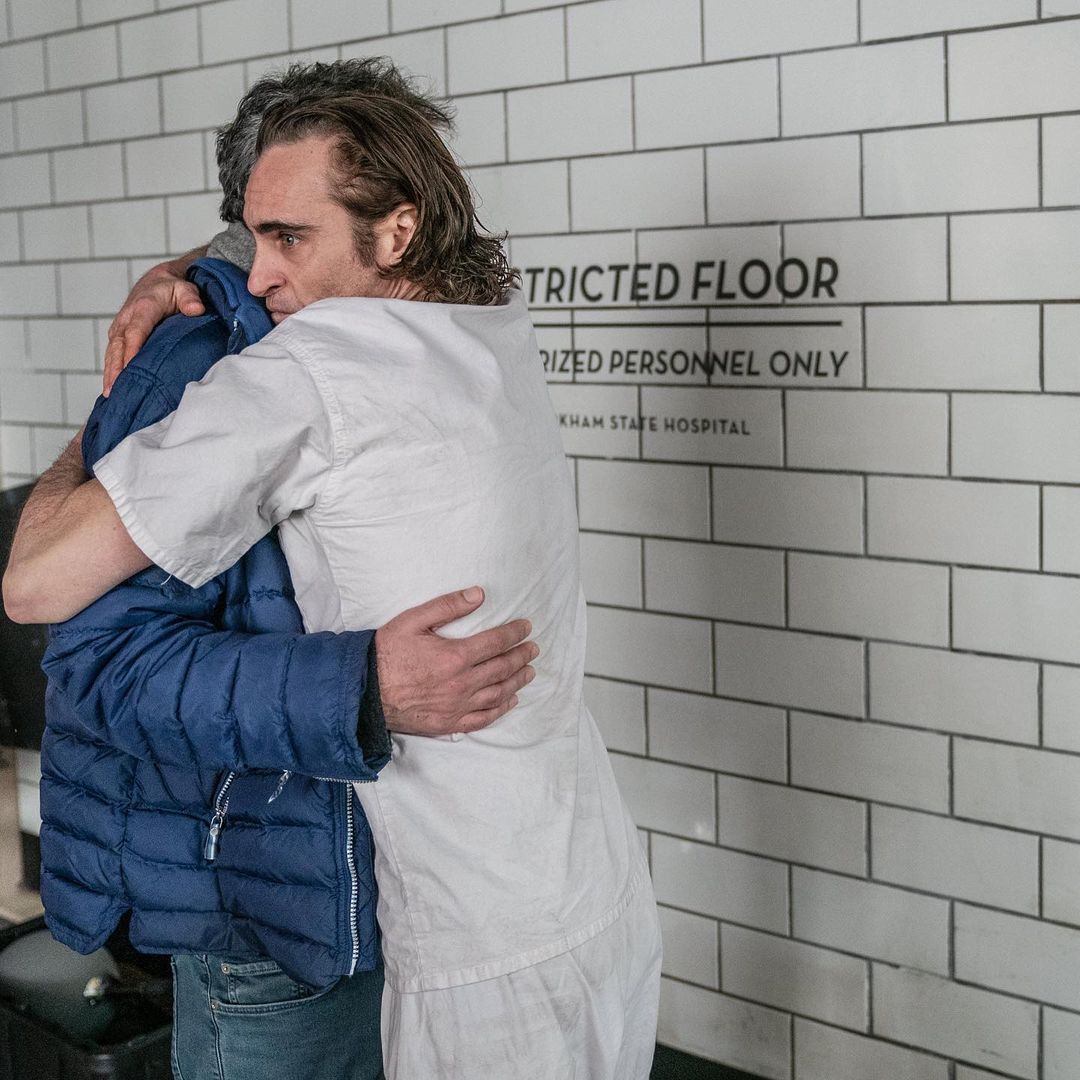
Then, after just one take, the movie was wrapped; Joaquin and I shook hands, and I was done with my third day on Joker.
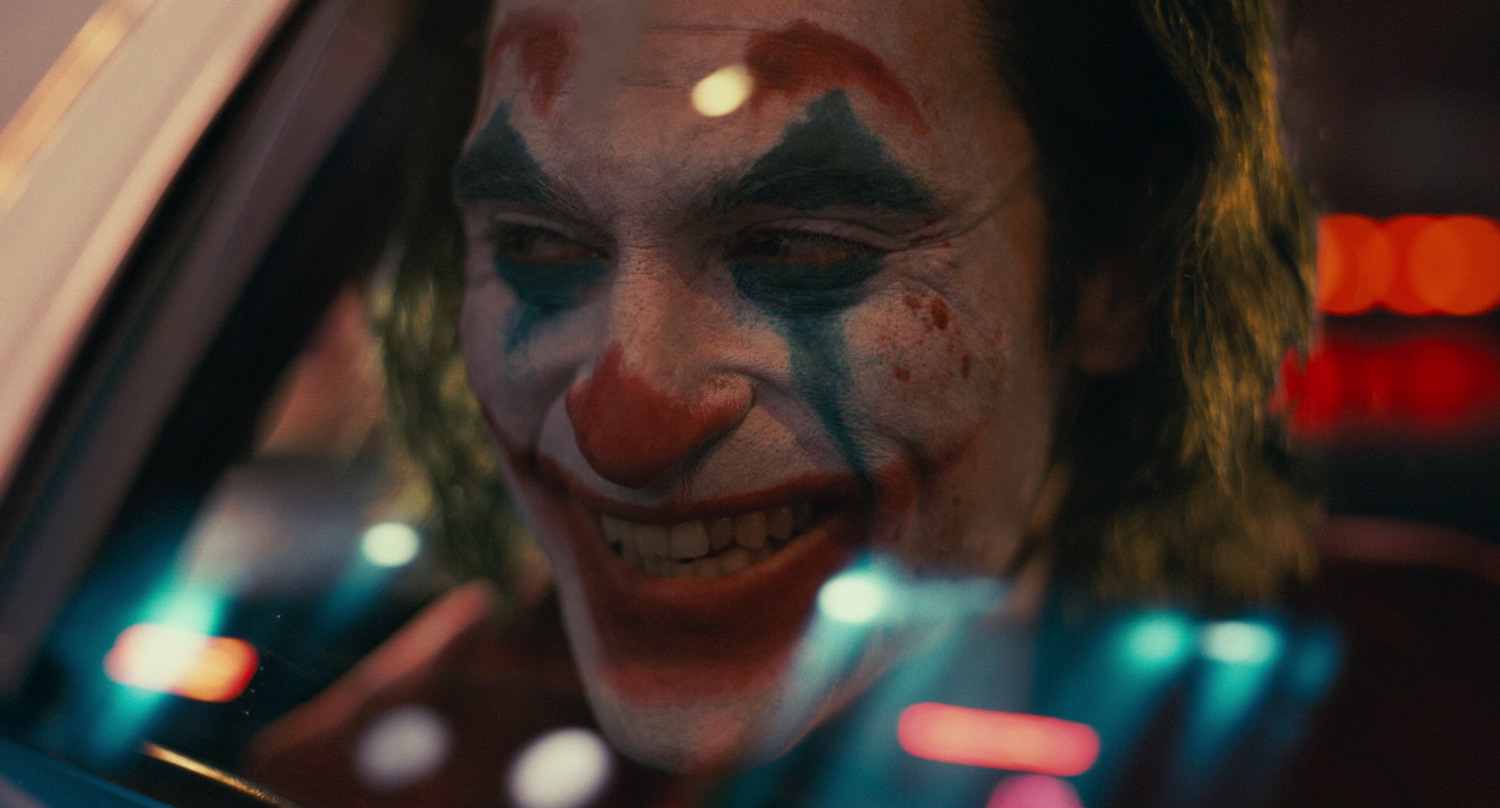
My experience working on this film was fine and offered up a decent paycheck, but my feelings about the movie itself are a little mixed.
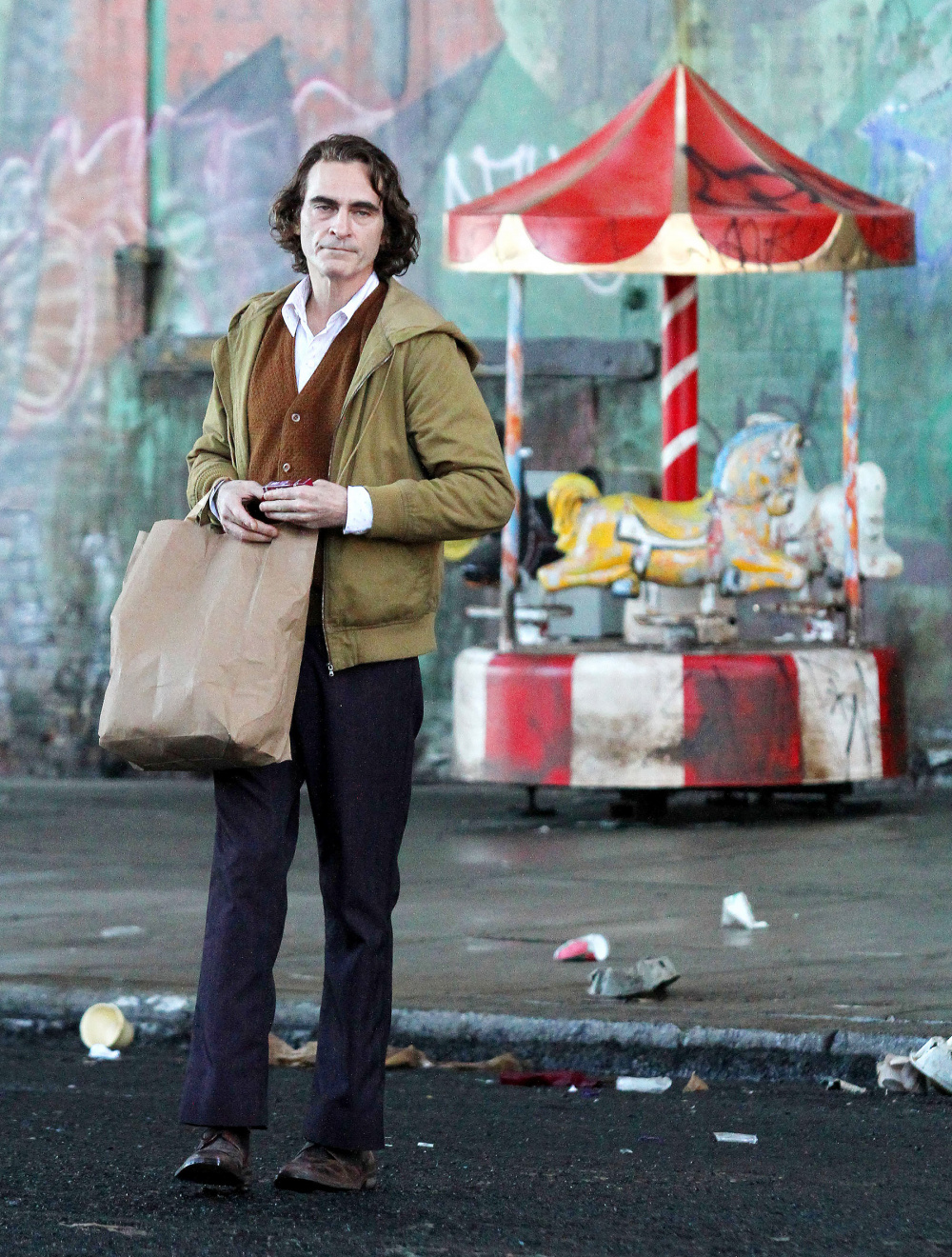
For reasons I’m not quite sure of, Joker doesn’t seem to work as a whole. It’s a little baffling as to why. It has everything going for it — a great performance by Joaquin Phoenix, a very-detailed, stylistic vision of Gotham City and an appealing origin story of one the most famous villains in comic book history. But its sum total ends up being just… okay.
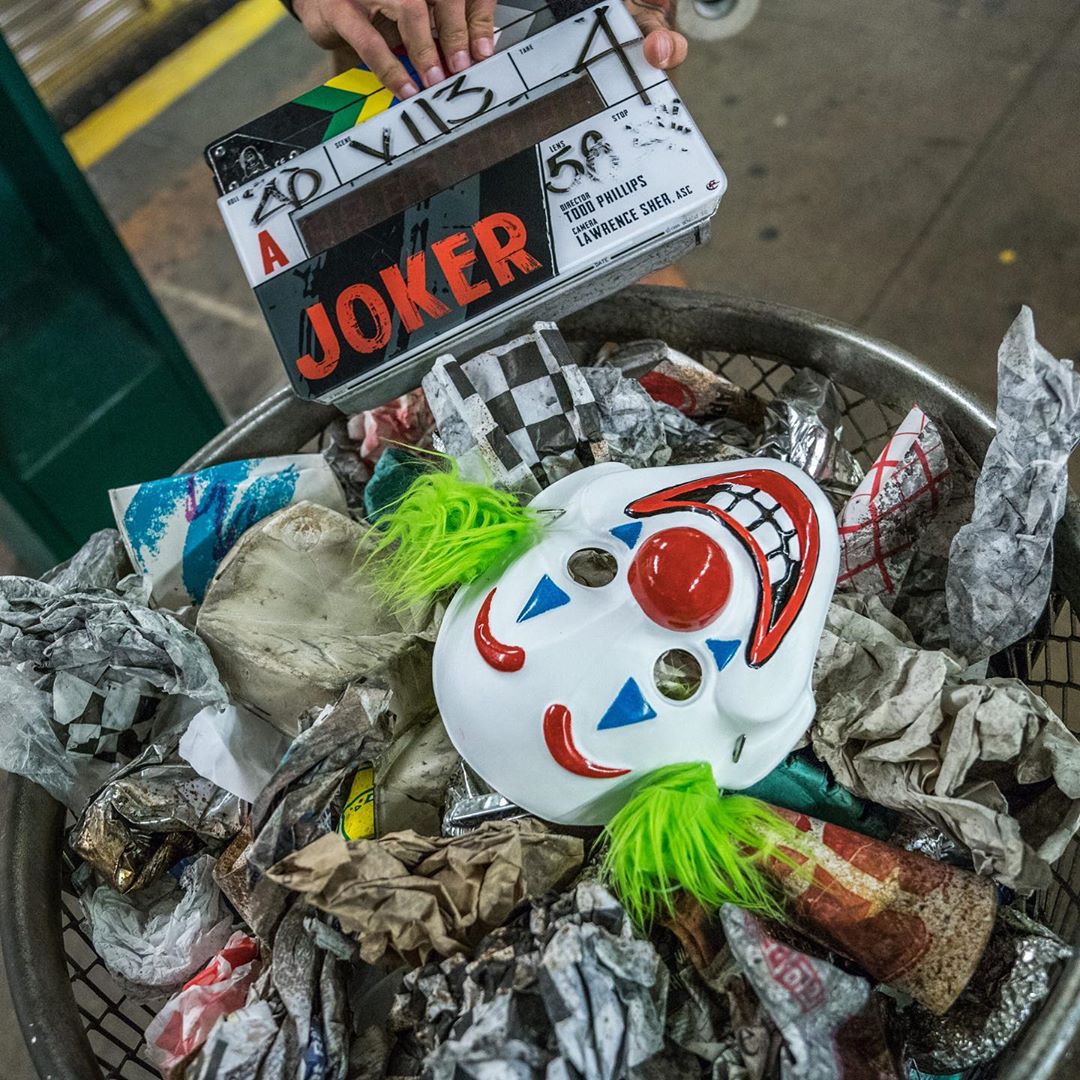
There’s nothing wrong with Joker, and there’s a handful of intriguing scenes, but overall, it just isn’t as compelling as something like Taxi Driver (which was clearly a partial inspiration).
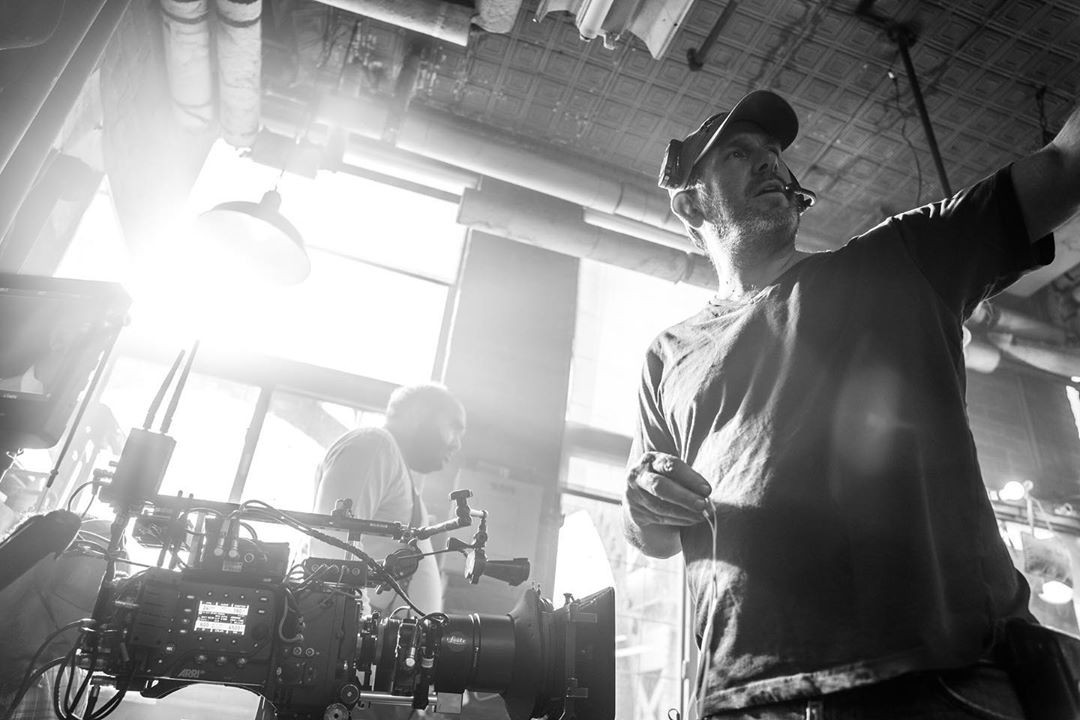
I’m still not sure why it doesn’t work in its entirety, but I think part of it has to do with Arthur’s character development. He doesn’t really go though a major transformation.
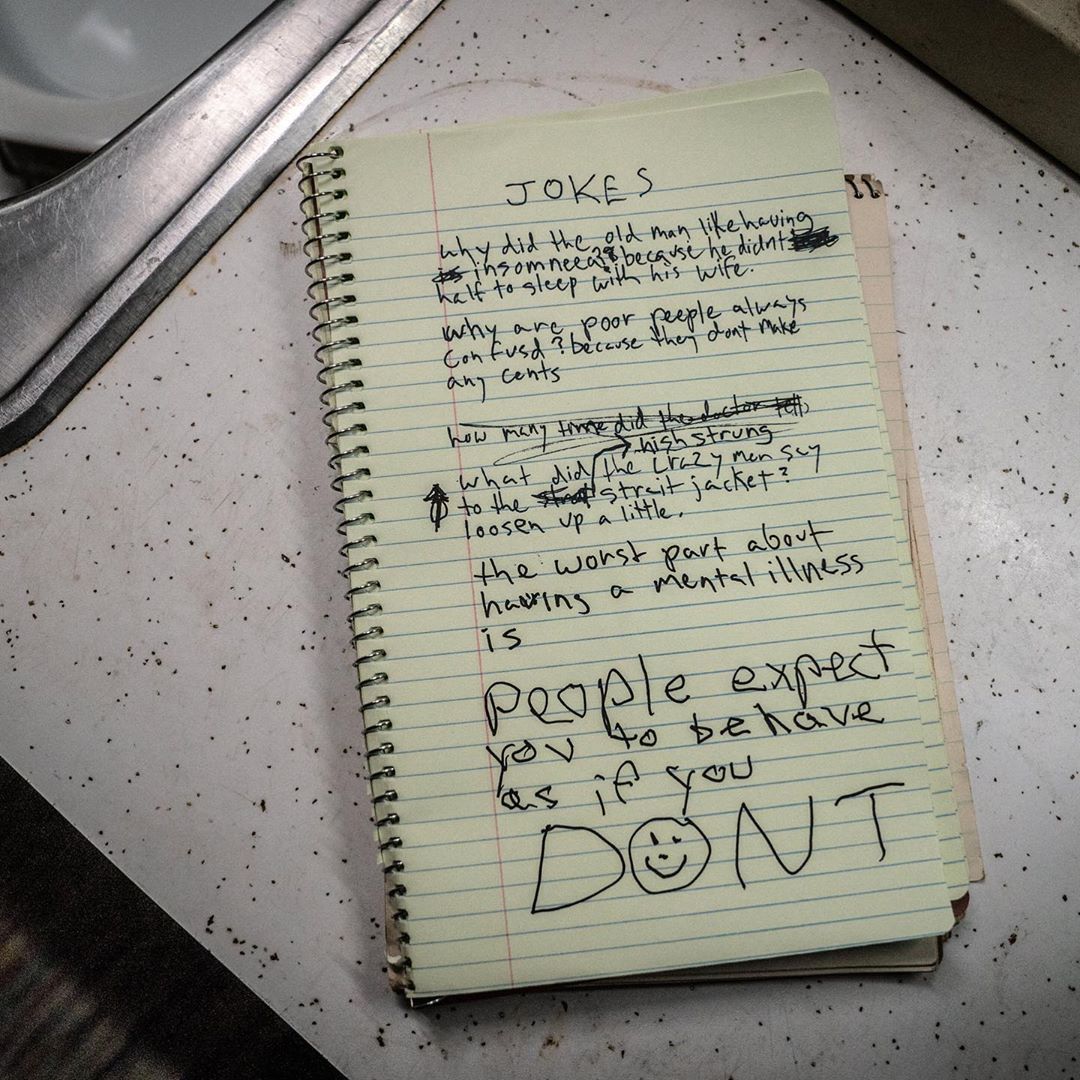
Sure, he goes from a meek hired clown to a murderous Joker, but it feels like he was on the edge of insanity right from the beginning. He always had the Joker inside him, just waiting for the right moment to come out.
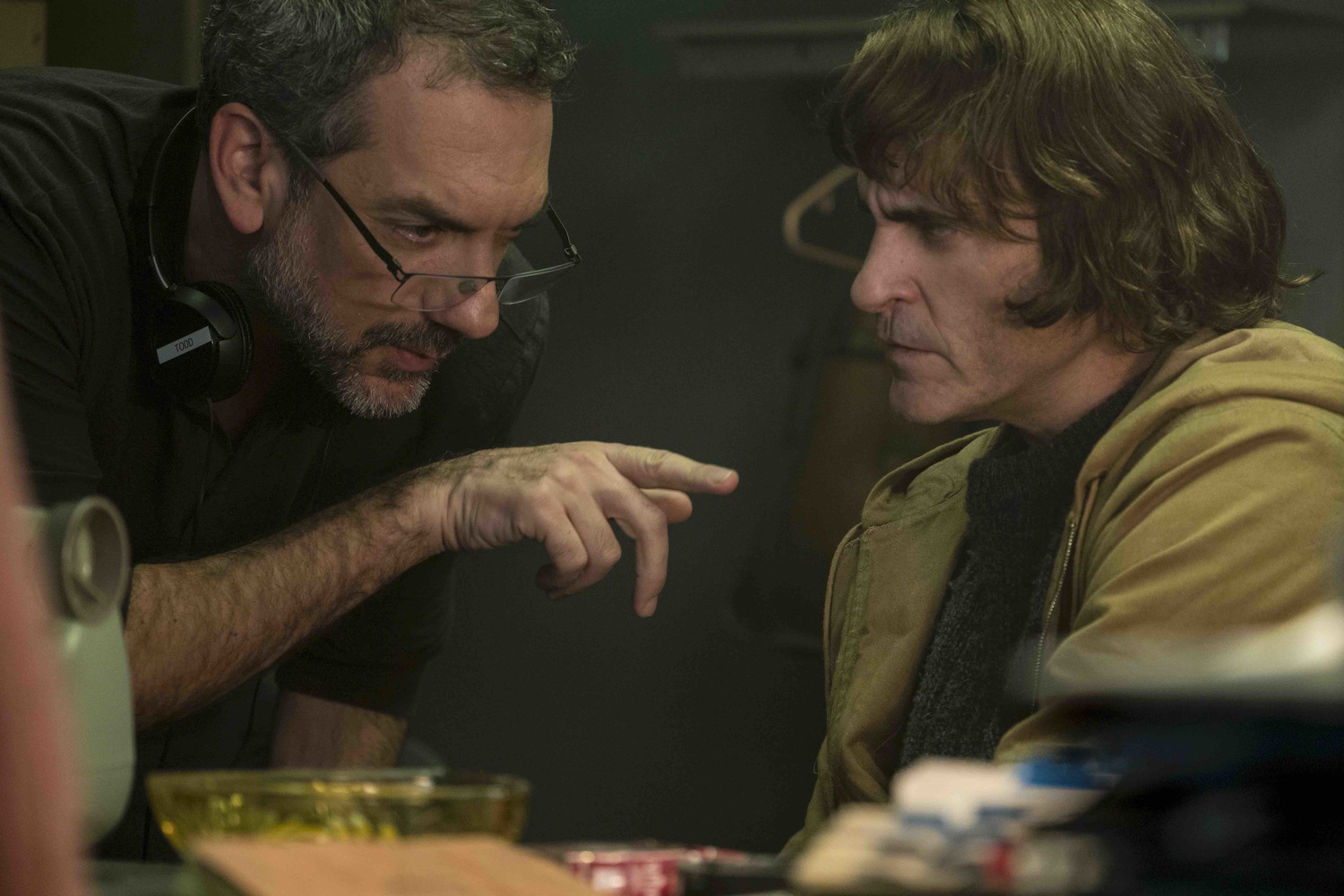
Another thing that bothered me were all the other characters. I found most of them to be boring and one-dimensional, just filling the screen space around the angst-ridden Arthur.
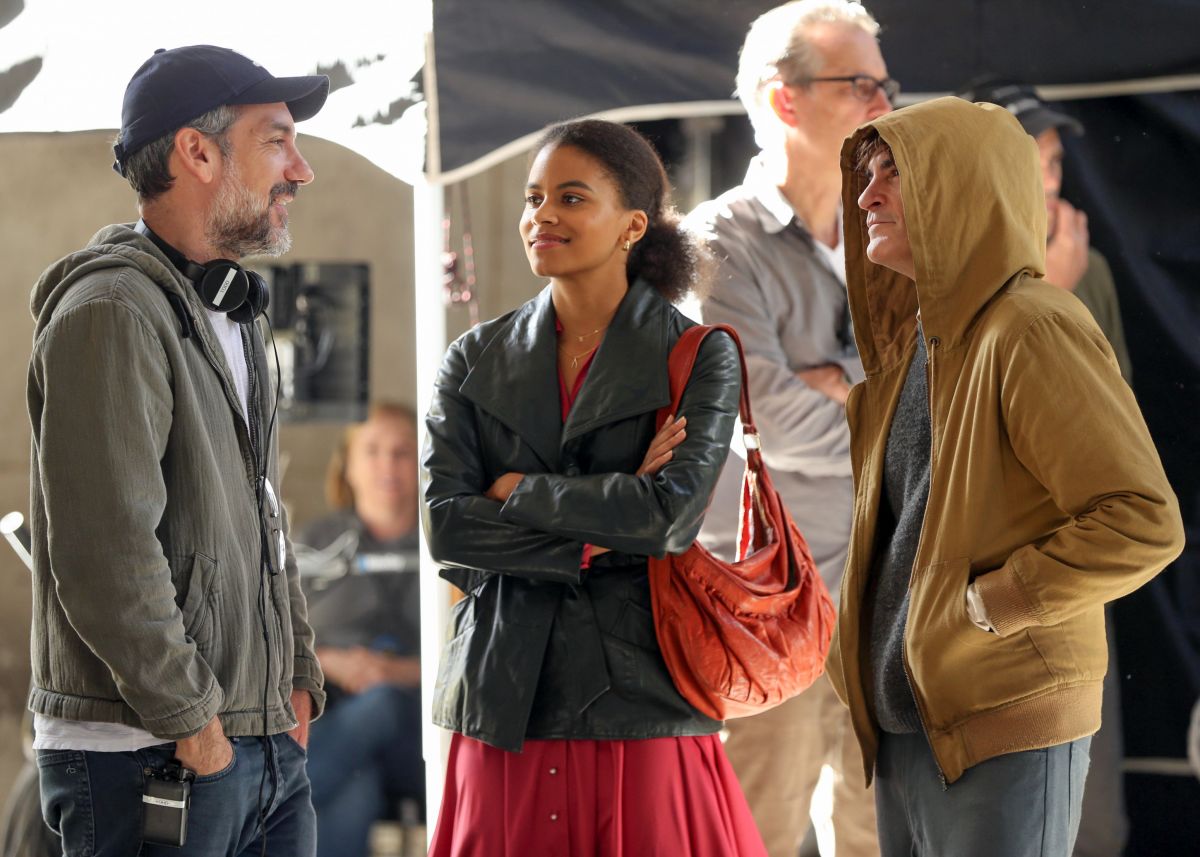
We barely get any sense of the Sophie character (played by Zazie Beetz) and never understand why she becomes Arthur’s obsession. I know their main relationship is just a delusion, but there’s very little dialogue to give us any sort of depth to her being.
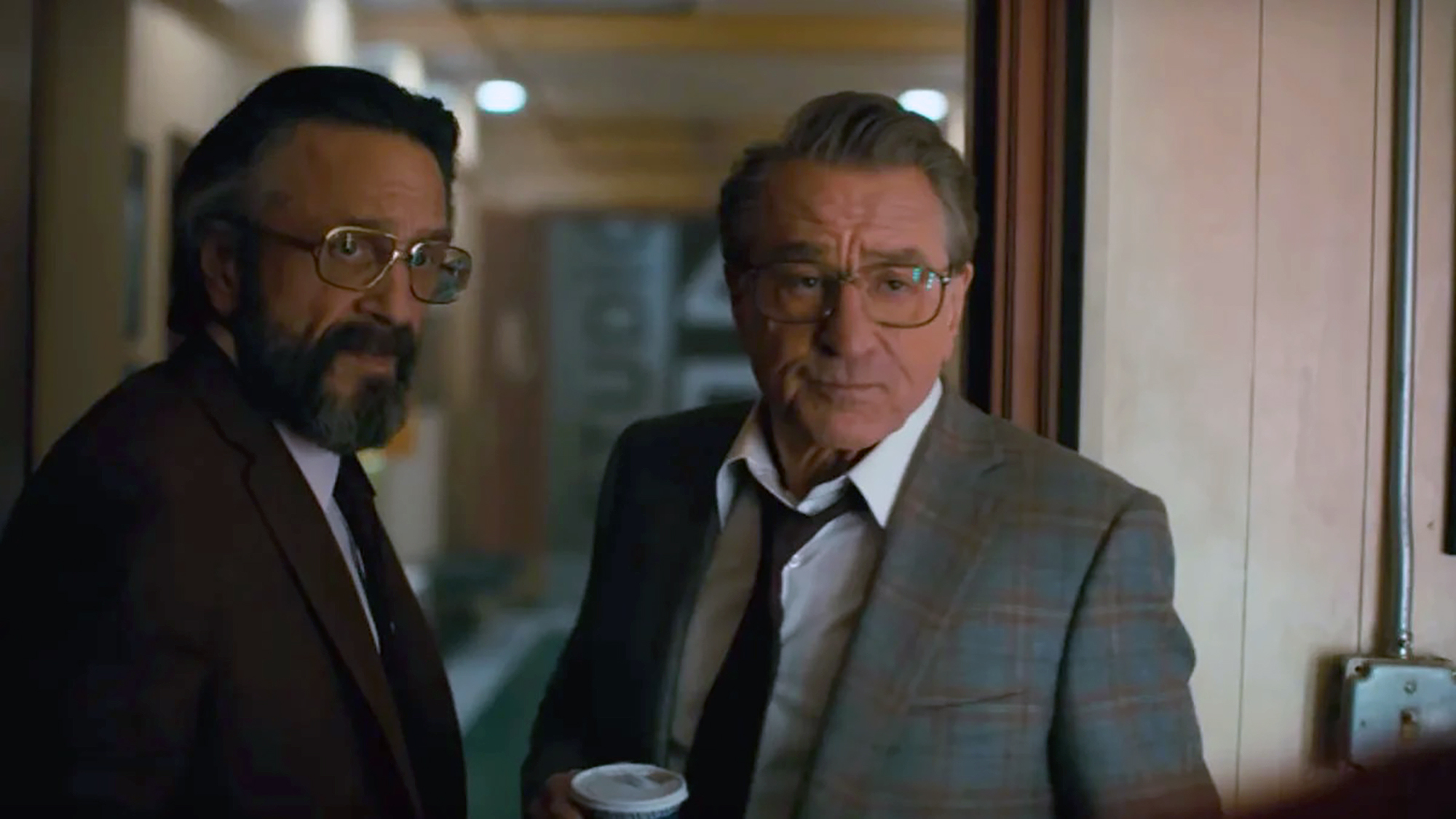
The same can be said for almost all the other secondary characters, especially Robert De Niro as the egotistical talk-show host, Murray Franklin.
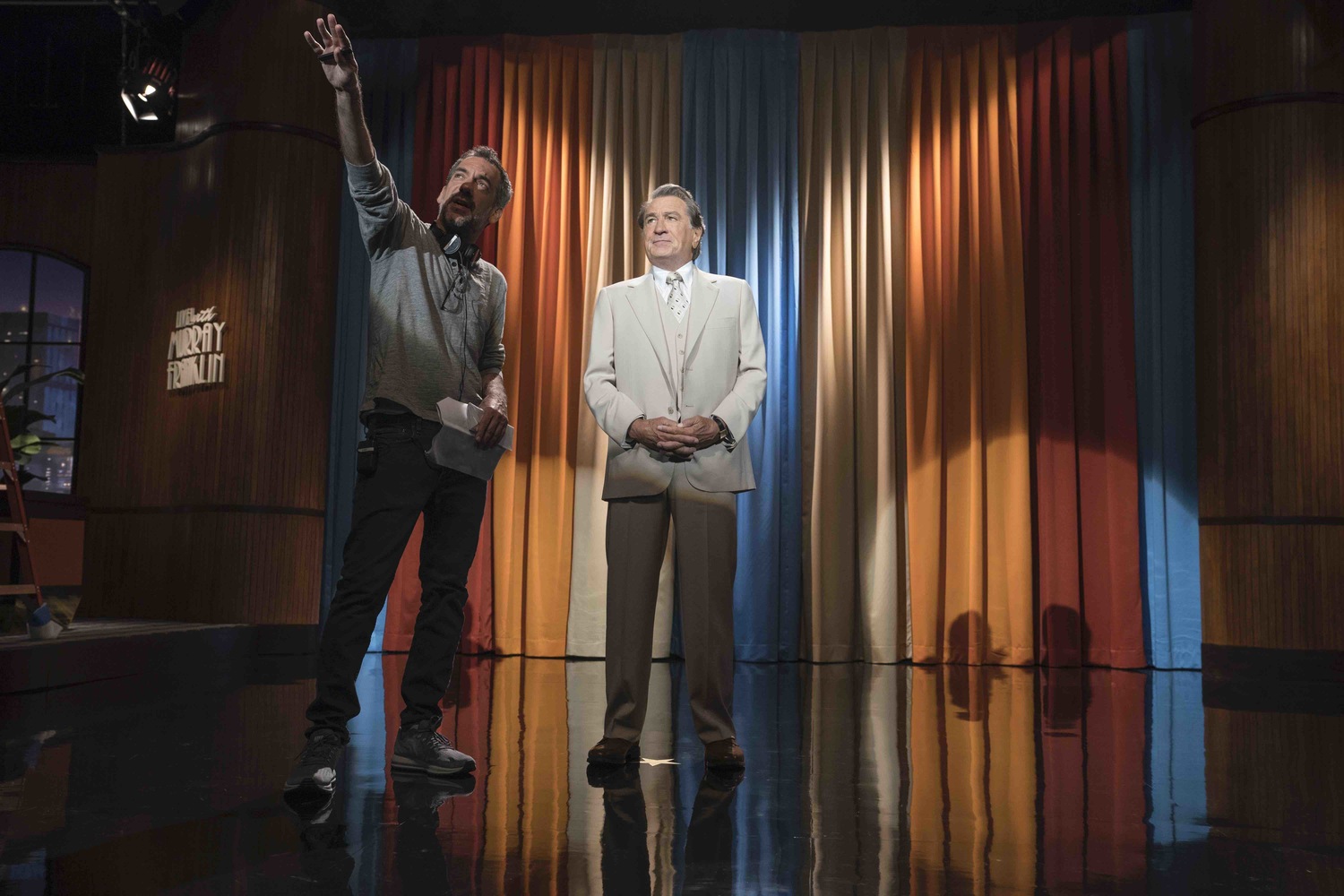
Even though he was hired as a wink to Martin Scorsese’s The King of Comedy —another indisputable inspiration for Joker— he is wholeheartedly unbelievable as a famed talk show host. His comedic timing is terrible, which was an asset in King of Comedy, but a detriment to this film.
Although, I must admit, I did love Marc Maron as his TV show producer, adding just the right amount of justifiable contempt in his character. (And actually, De Niro is pretty good in that one scene with him.)
All this being said, it’s undeniable that Joker was a cultural phenomena —at least when it first came out— and is definitely worth watching.
It may not be a classic like Taxi Driver or The Dark Knight, and the negative response to its 2024 sequel may have tainted its reputation, but it’s still a notable entry into the DC cinematic franchise.
Plus, it’s got one of the best performances by a chasing orderly ever seen on screen!
 NYC in Film
Nice write-up and I enjoyed all the on-set photos.
LikeLike
Great behind-the-scenes insight, Mark!
LikeLike