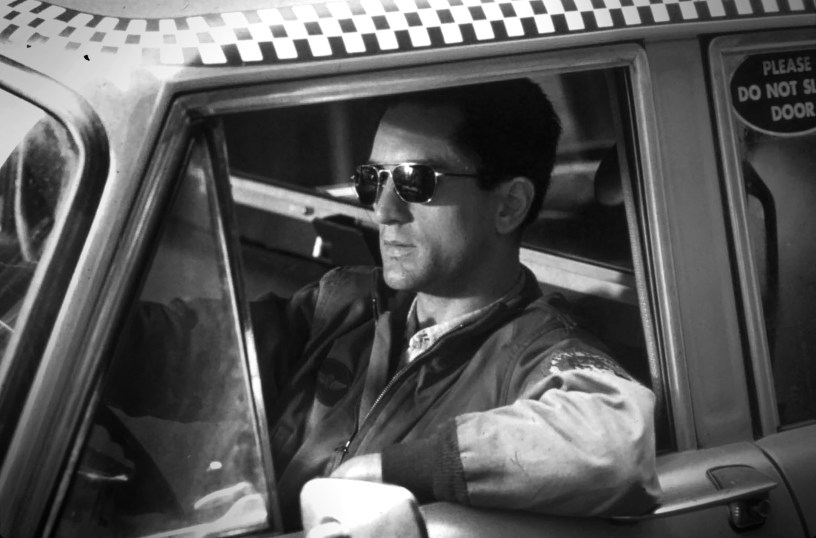
Undoubtedly the most iconic New York movie of the 1970s, Martin Scorsese’s Taxi Driver embraces the seedy landscape of a fallen city, creating a visually powerful experience, filled with colorful characters and unsettling circumstances.
The story revolves around Travis Bickle (Robert De Niro), a disturbed loner who tries to fill his emptiness with endless hours behind the wheel of a taxi cab. Desperate to find some sort of meaning in his addled life, Travis becomes fixated on two women —an alluring campaign volunteer (Cybill Shepherd) and a 12-year-old prostitute (Jodie Foster)— while slowly descending into a deeper state of madness fueled by a seething rage.
Shot entirely in NYC without the benefit of any traditional movie sets, Taxi Driver is the quintessential on-location film, capturing Manhattan during its most unglamorous period. With so many locations, I went through great lengths to find nearly every one, with only a couple shadowy streets left unsolved. So with that, let’s begin our “deep drive” into Scorsese’s indisputable urban masterpiece.
Opening Credits
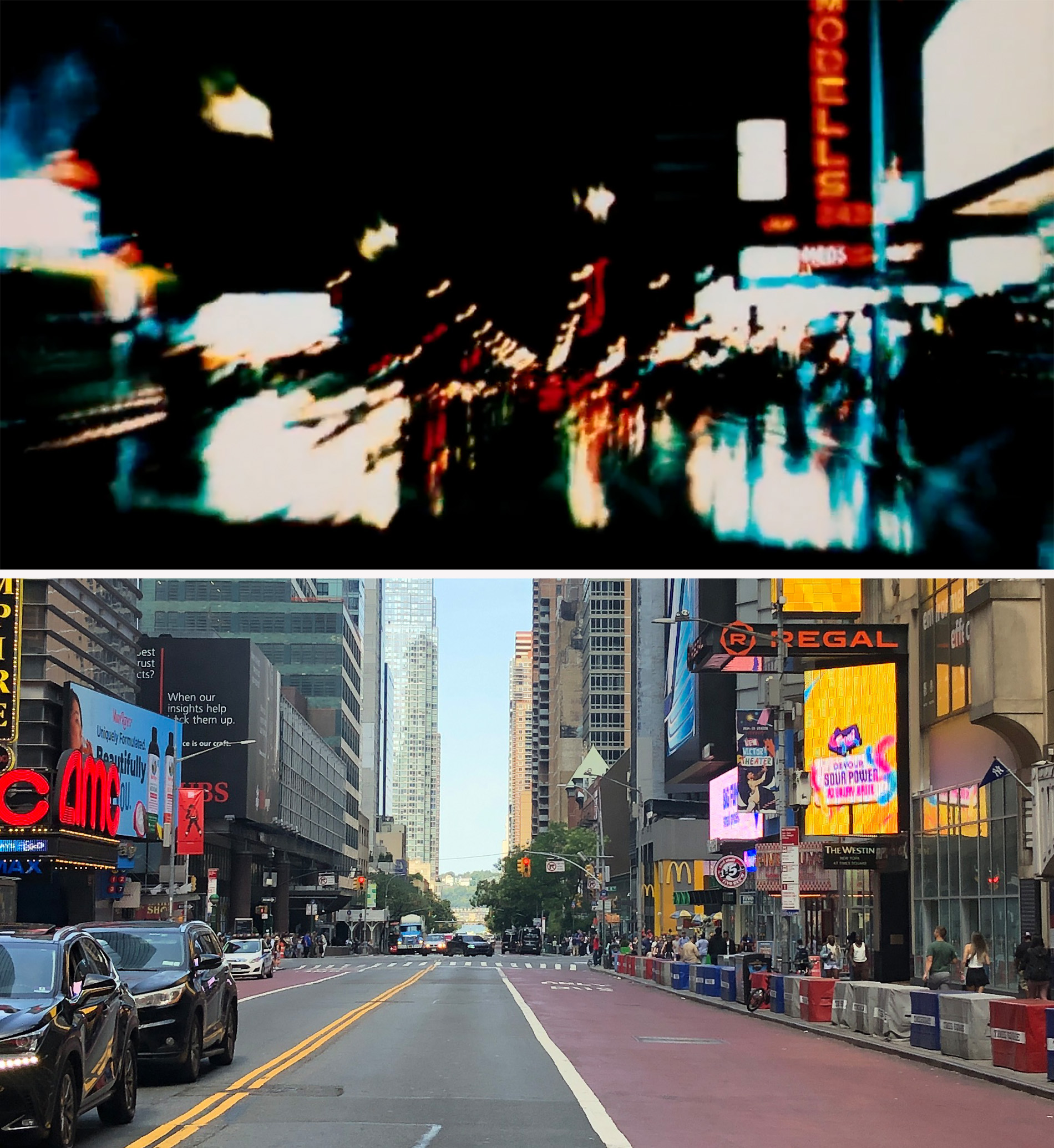
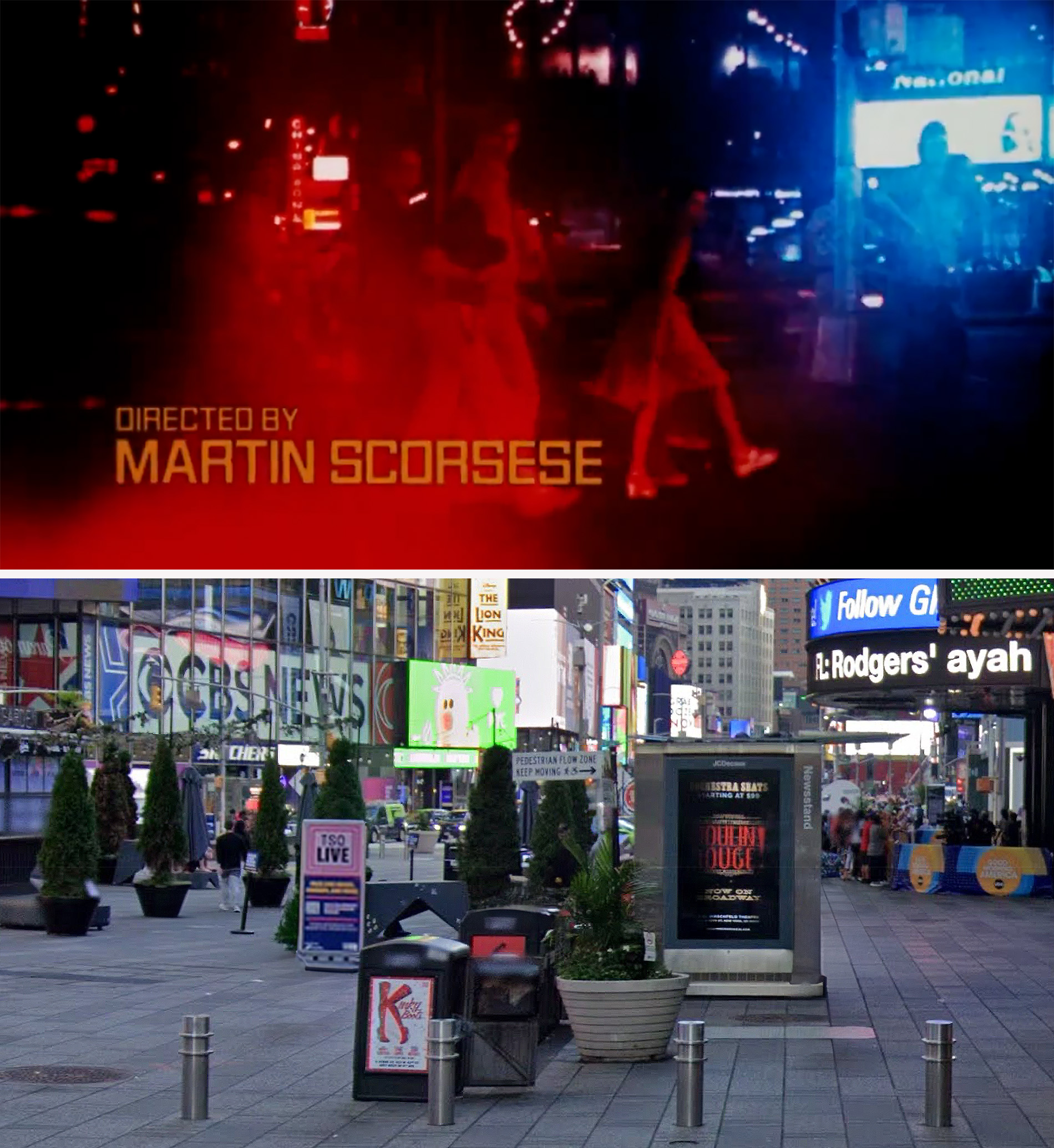
The location challenges begin with the opening credits, which is made up of some nebulous close-ups of Robert De Niro’s face followed by a couple stylized, hyper-contrasted street scenes. Fortunately, in both of those street shots, you can make out a few business signs.
In the POV driving shot, there’s a vertical neon sign for Modell’s Sporting Goods, and since it’s on a two-way street, I assumed we were on W 42nd at Times Square.
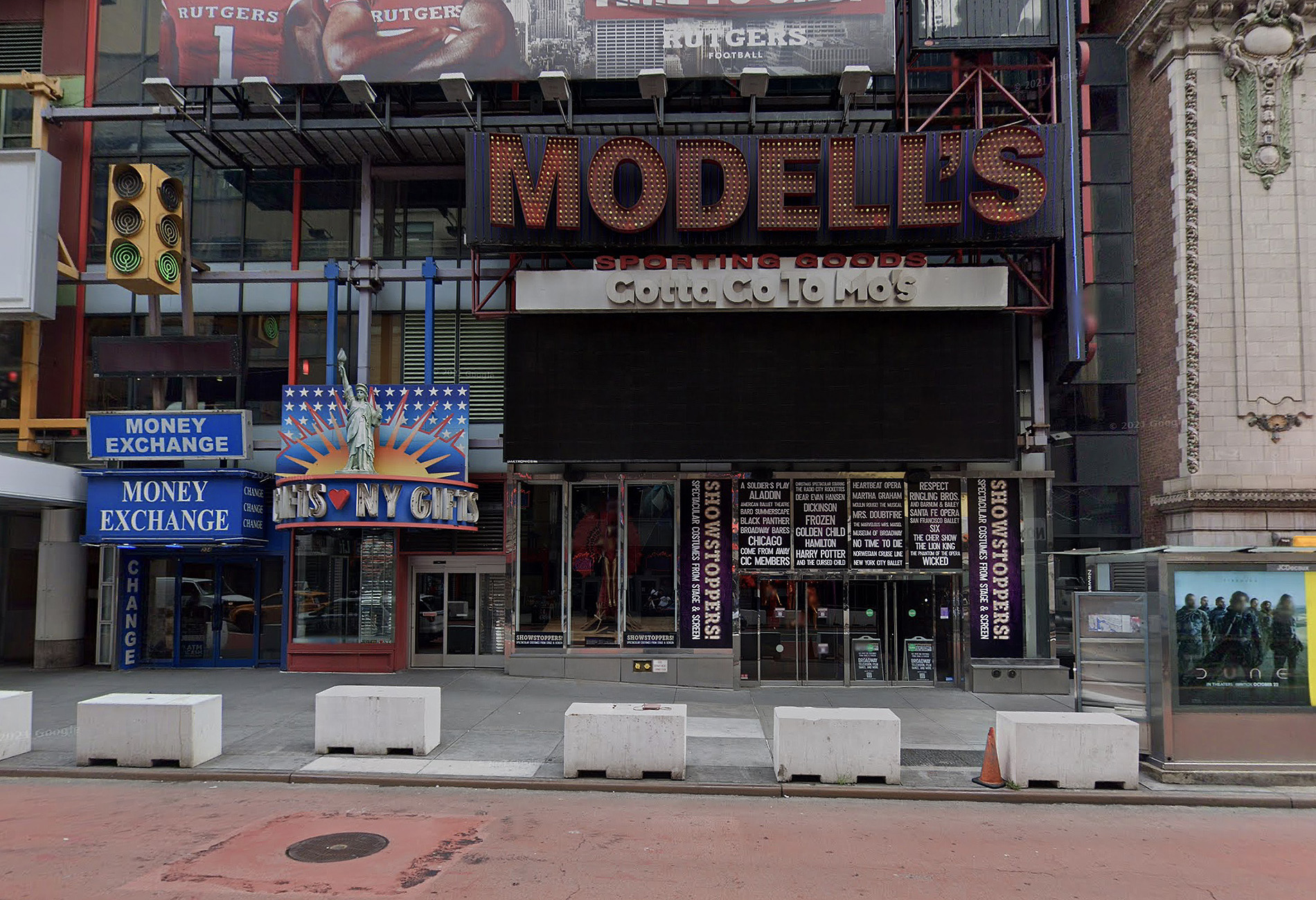
Up until 2020, there was a Modell’s at 234 W 42nd Street, but the one featured in the movie was actually across the street at number 243. I realized this after I found several vintage photos of the sports store situated next to the old Harem movie theater, whose address was 249 W 42nd.
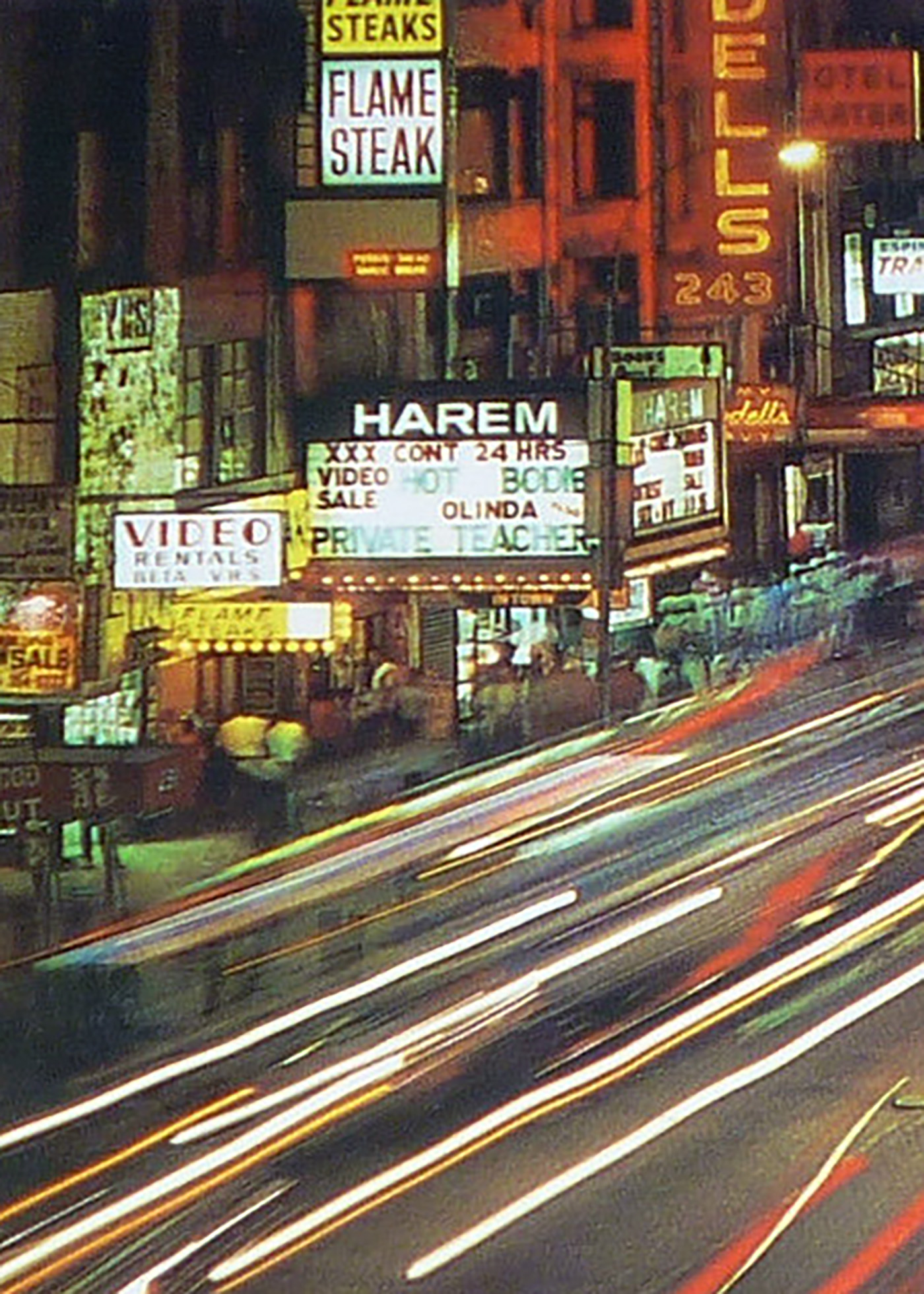
The fact both stores had similar addresses —just a transposition of the last two numbers— made things a little confusing at first. However, in several of those vintage photos, you can clearly see the number 243 at the base of Modell’s vertical neon sign, confirming the location.
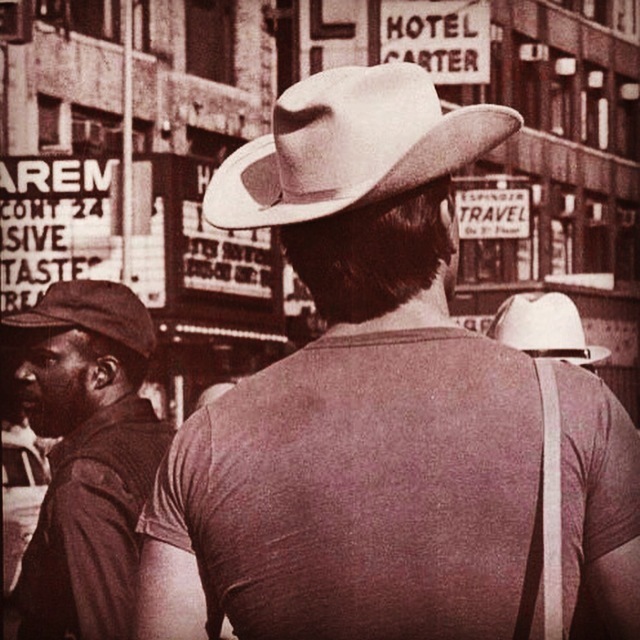
Where the Harem movie theater helped me find the first of these two shots from the opening credits, the National movie theater helped me find the other one.
If you look closely on the right side of the frame you can see the name National on a large marquee, which was a movie house at 1500 Broadway, on the southeast side of Times Square.
The National Theatre opened on December 12, 1972 with the world premiere of The Poseidon Adventure, making it the first cinema to be built in Times Square in over thirty years. The 1,445-seat theater originally had a single screen, but was twinned in 1982 and remained as such until its closing in the winter of 1998.
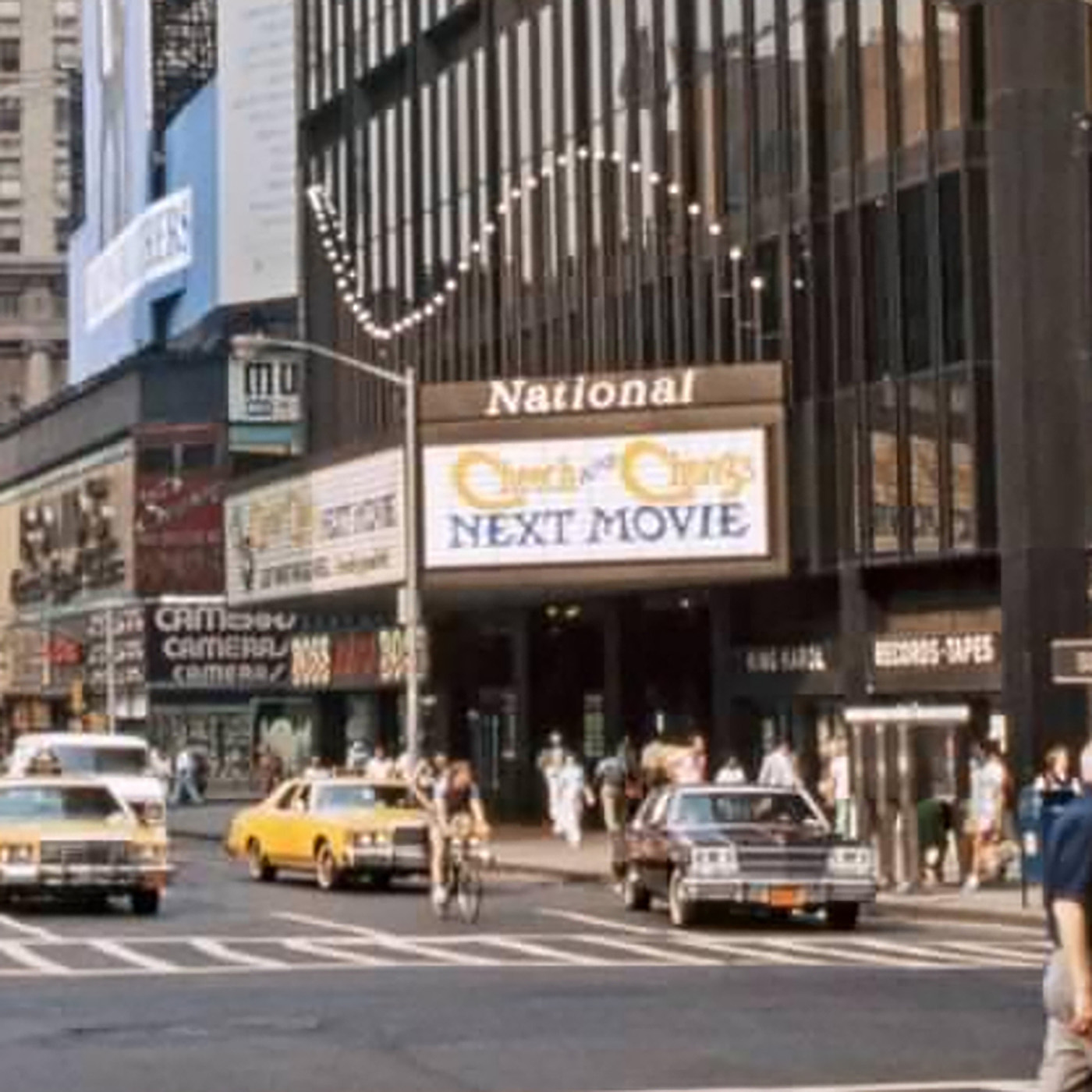
Afterwards, the space was gutted and became the street-level studios of ABC’s Good Morning America, lasting until June 13, 2025, when the network left the building to move downtown.
Taxi Garage
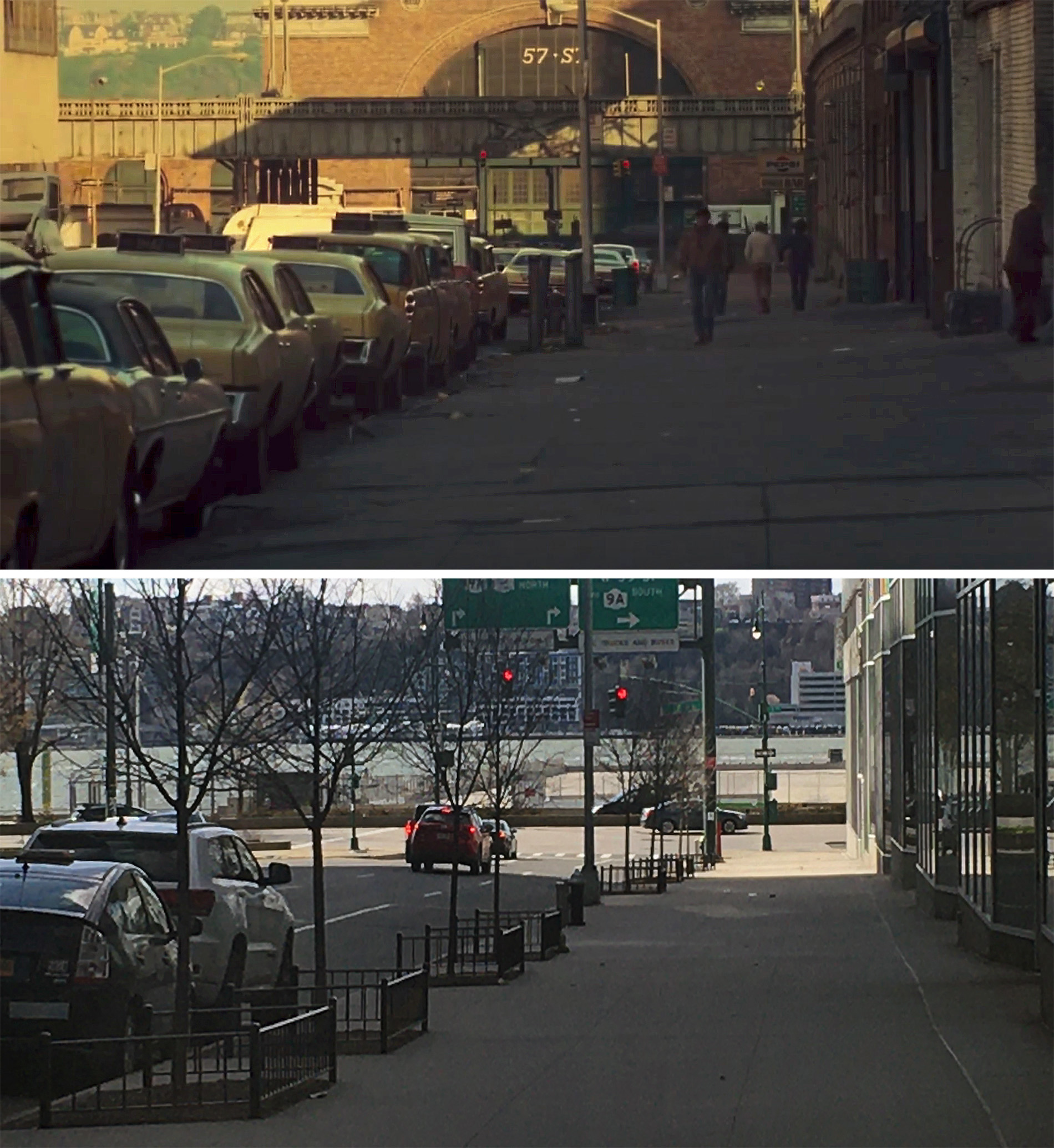
When I first started tackling this movie a few years back, a lot of its filming locations had already been figured out by others, most notably by Nick Carr in a 2009 post on his website ScoutingNY. As usual, the site’s author did an admirably extensive investigation into the filming spots, but there was still a good chunk left unidentified, giving me plenty to work on.
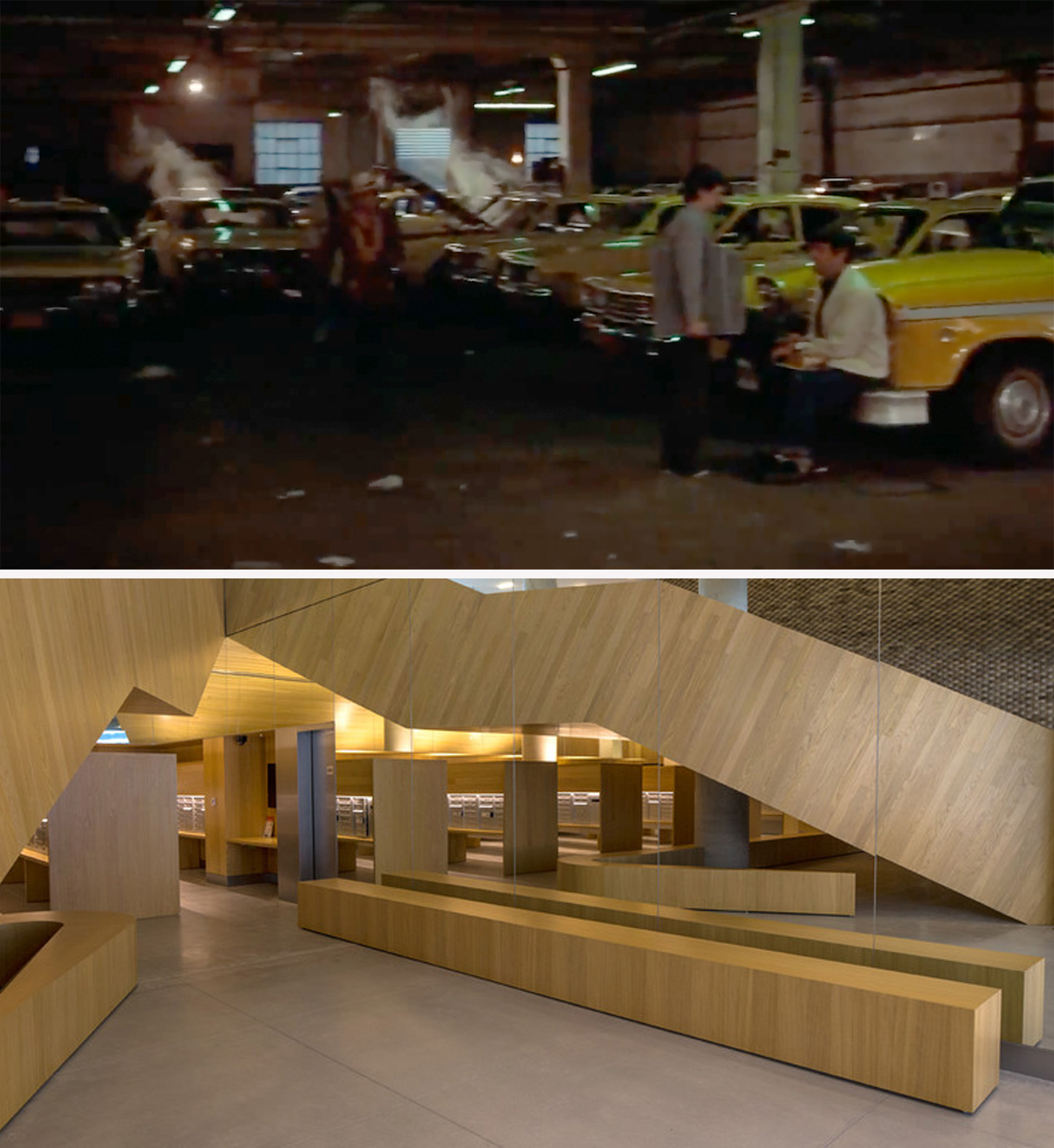
However, this taxi garage was thoroughly covered on his website and basically required no work on my part.
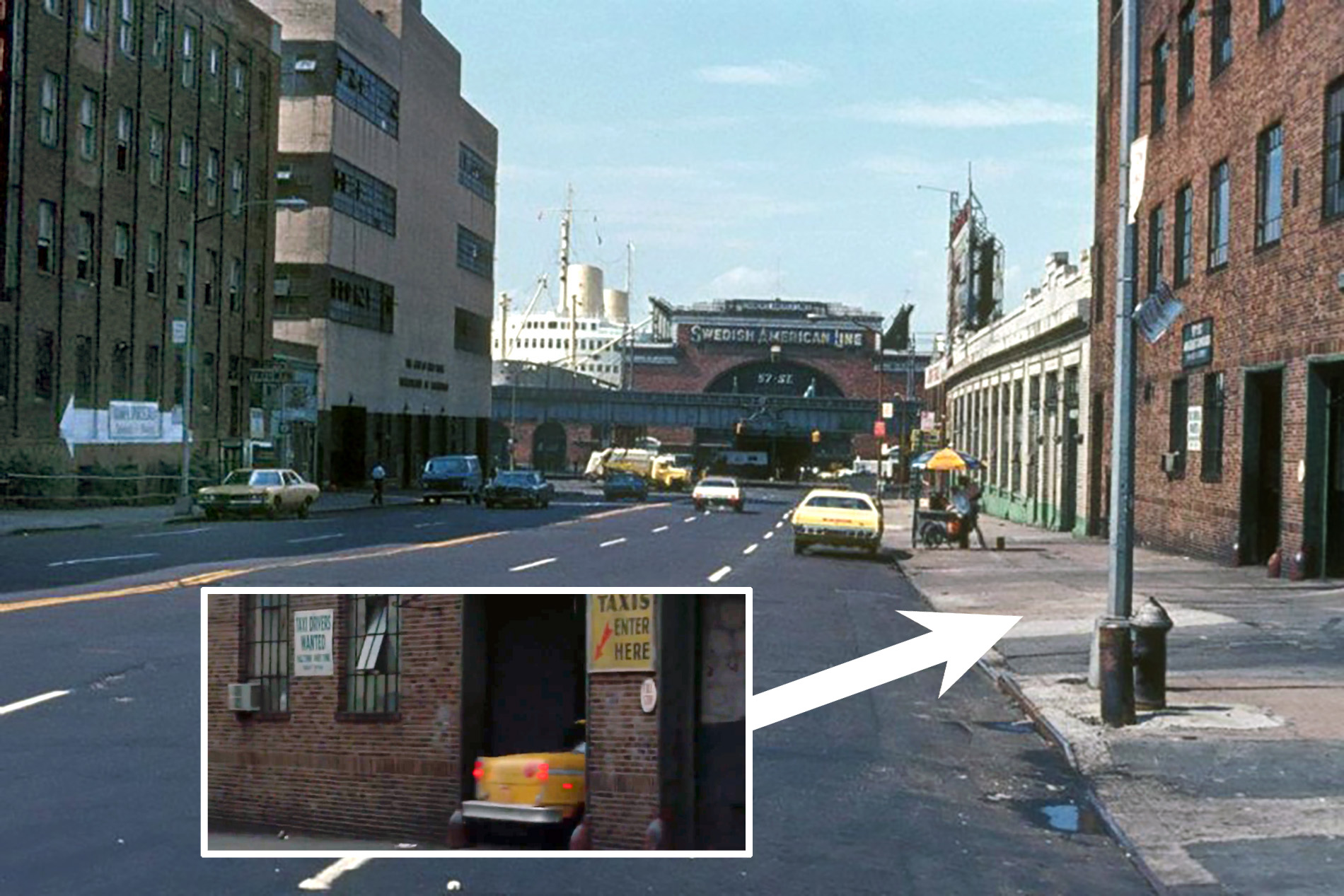
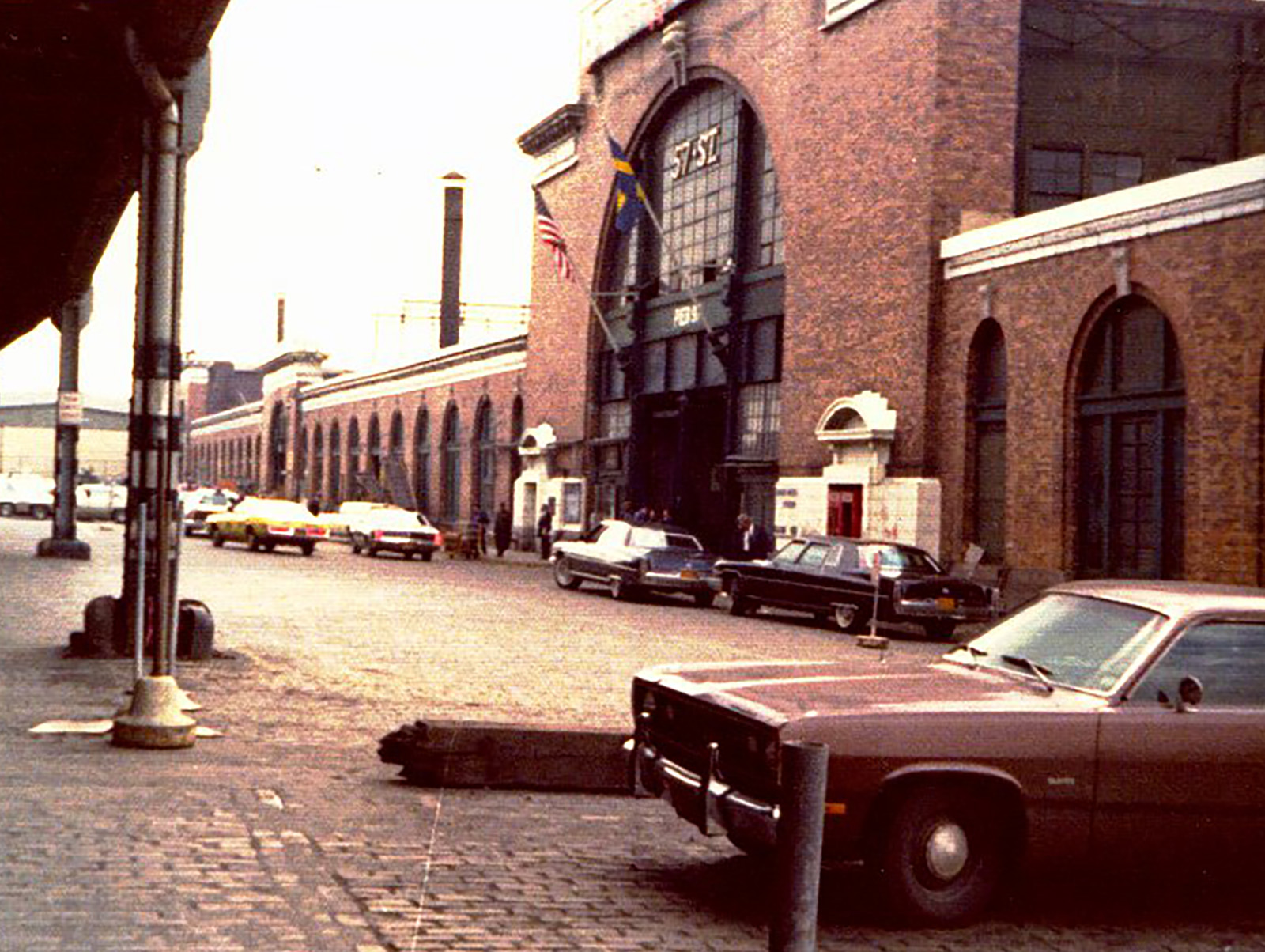
Naturally, the large pier in the background with 57th Street emblazoned on its facade was the key giveaway to where the action was taking place.
Today, the area is virtually unrecognizable — the pier’s Swedish-American terminal, the West Side Elevated Highway, and all the industrial garages are nothing but a faint memory.
Aside from one corner building, West 57th Street between 11th and 12th Avenues is now wall-to-wall glass and steel.
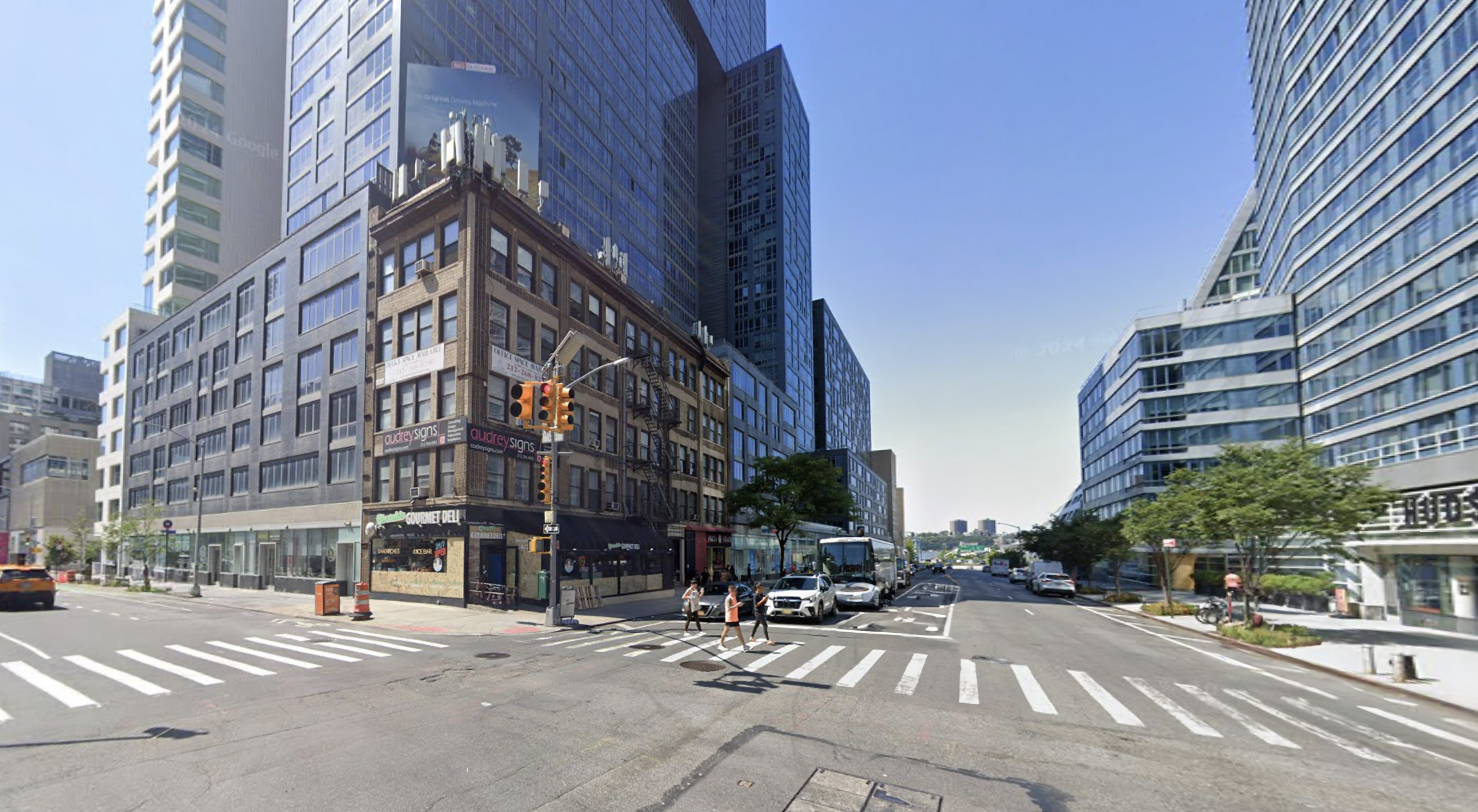
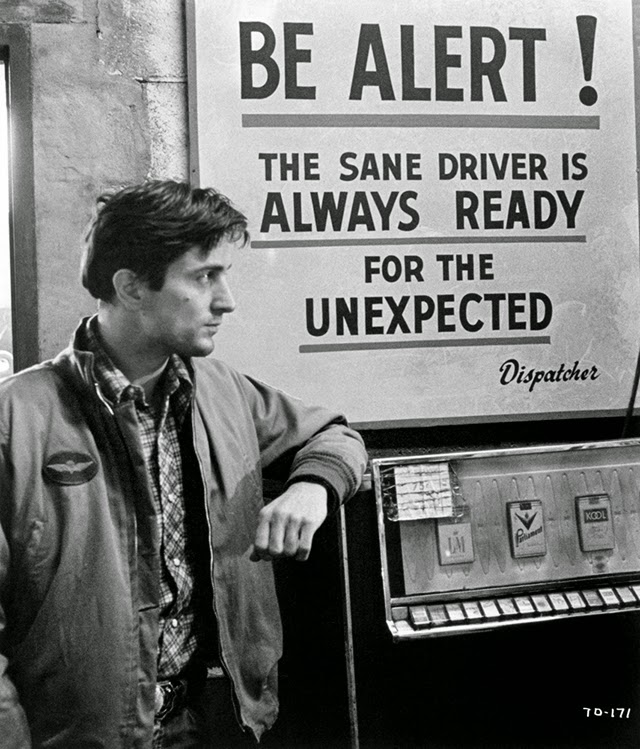
The dark, dingy garage (which really was home to the Yellow Taxi Company) has since become the site of a tetrahedron luxury apartment building called VIA 57 West.
Driving Around Times Square
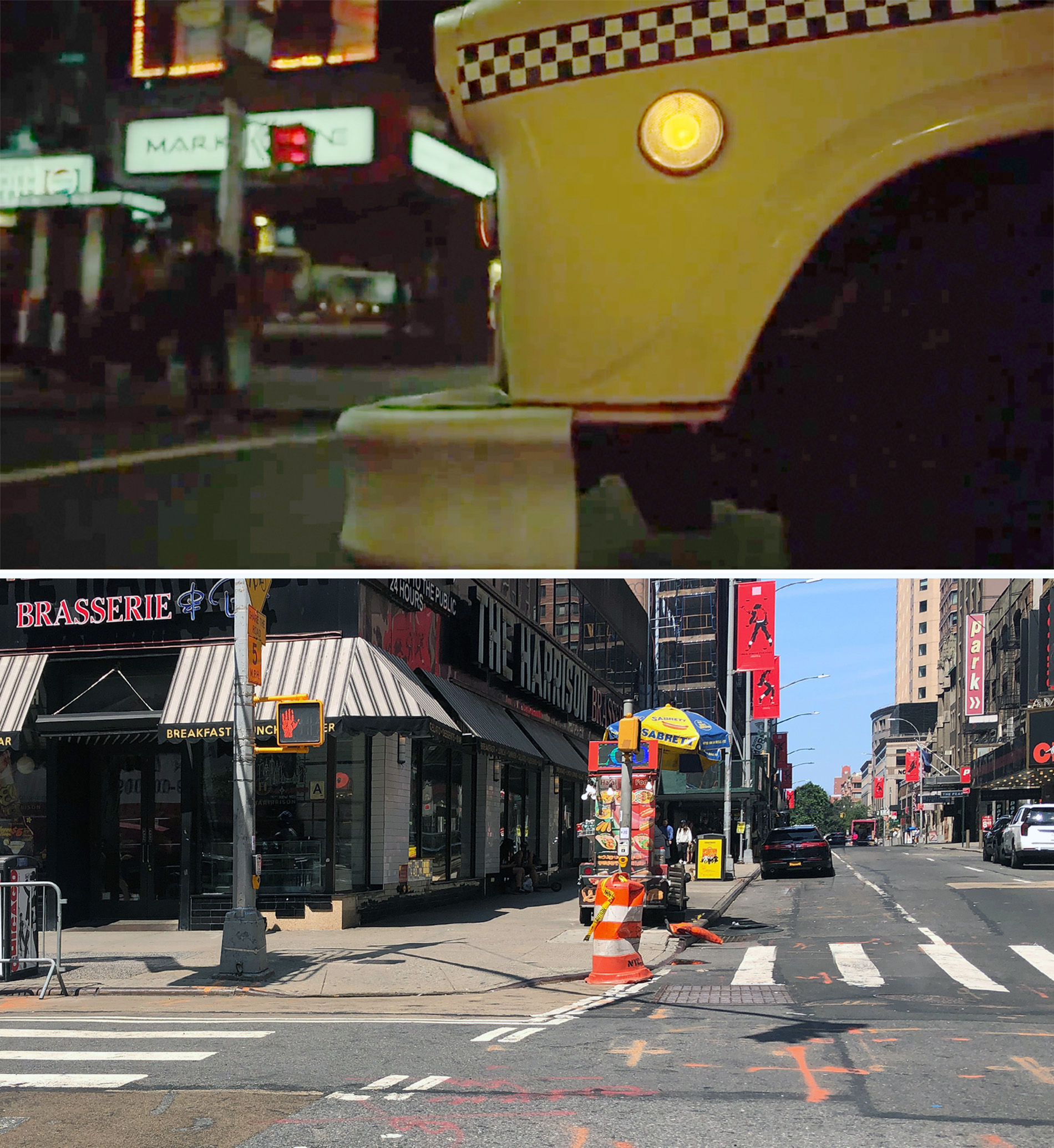
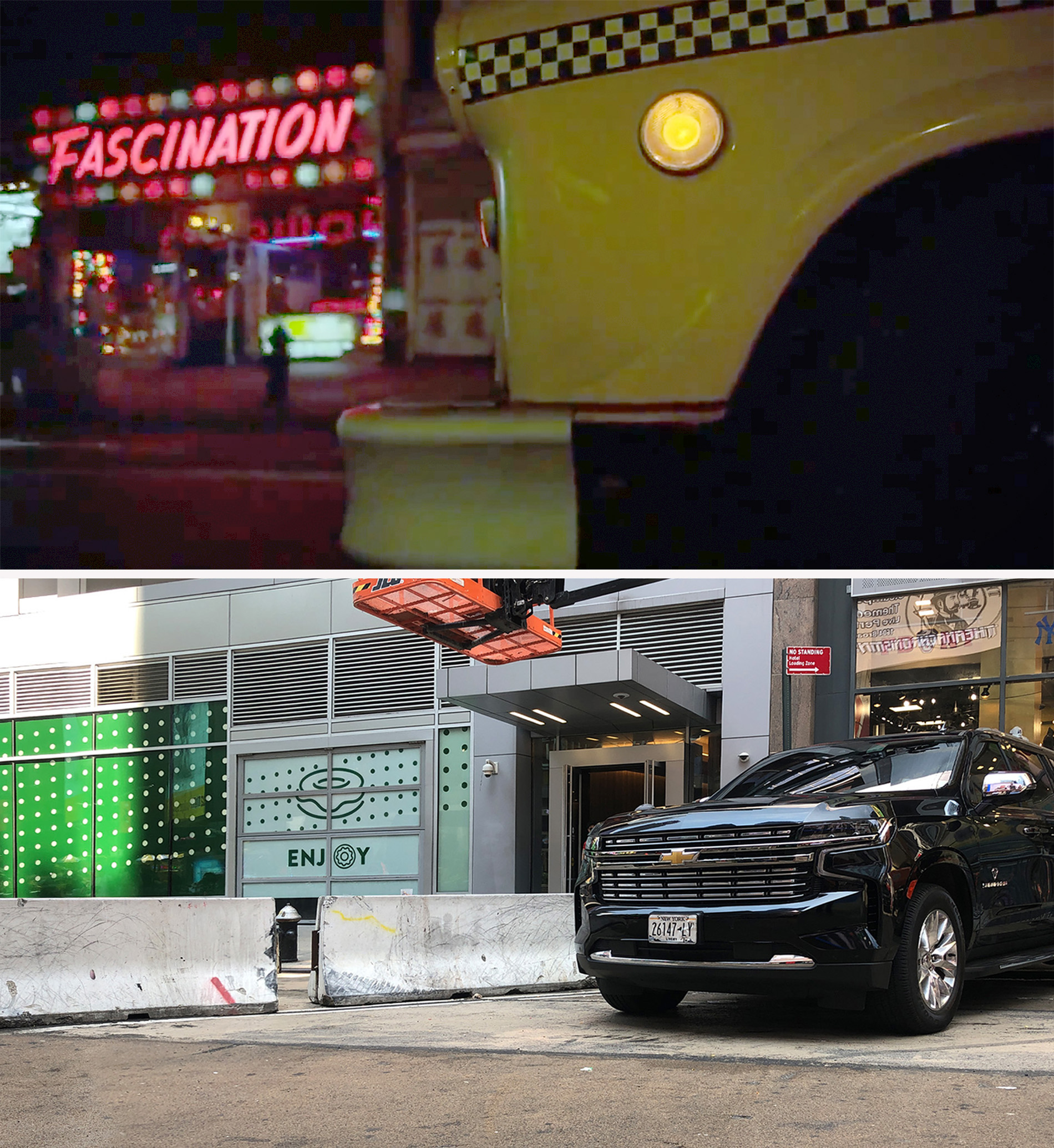
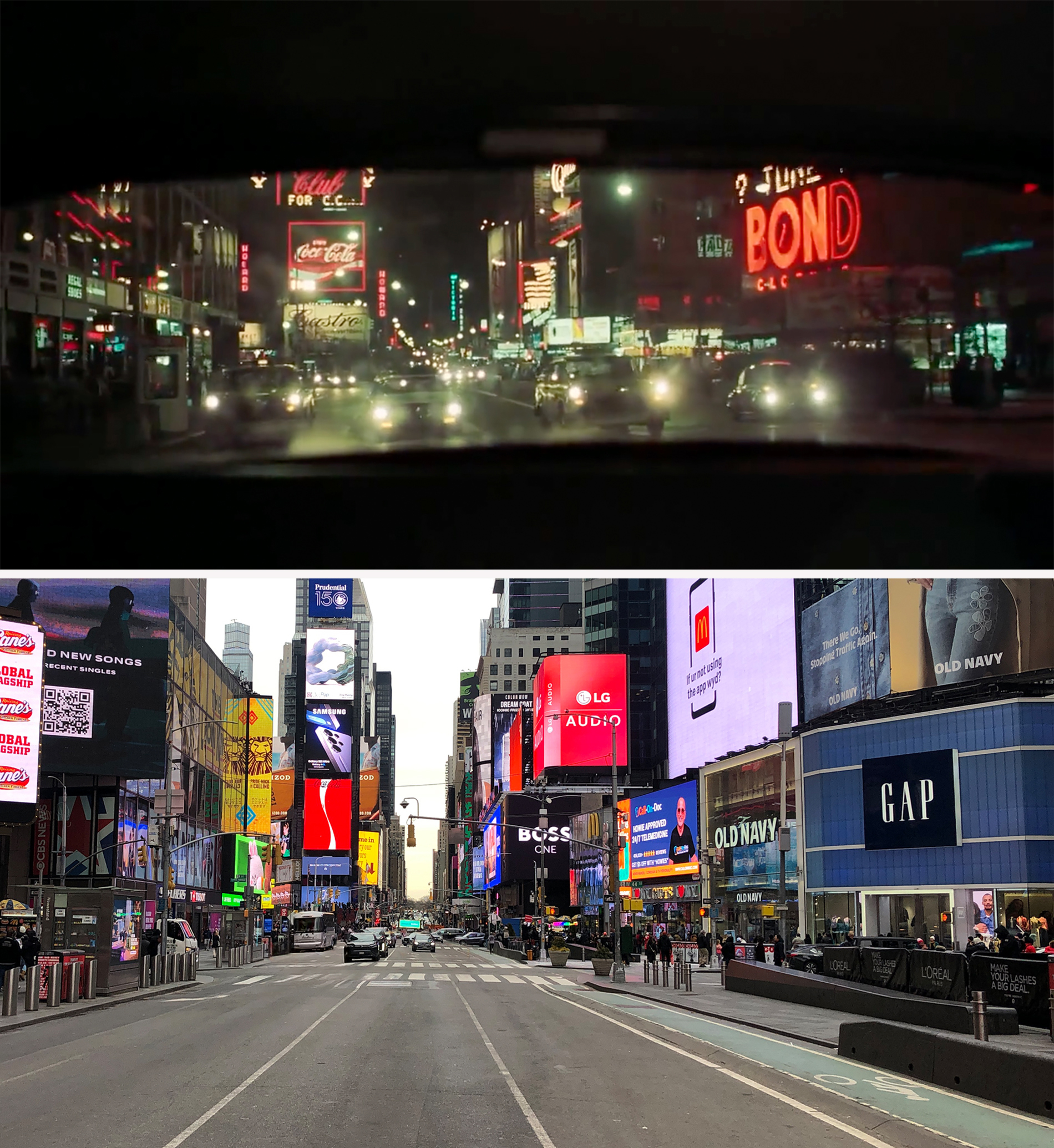


Aside from the wide shot of Times Square, none of these locations had previously been identified by any other website. Figuring out the first shot, beautifully taken from the front bumper of the cab, was fairly easy since it showcased a Fascination arcade. I immediately knew exactly where that particular one was after having done extensive research on Times Square arcades for the 1981 movie, Arthur.
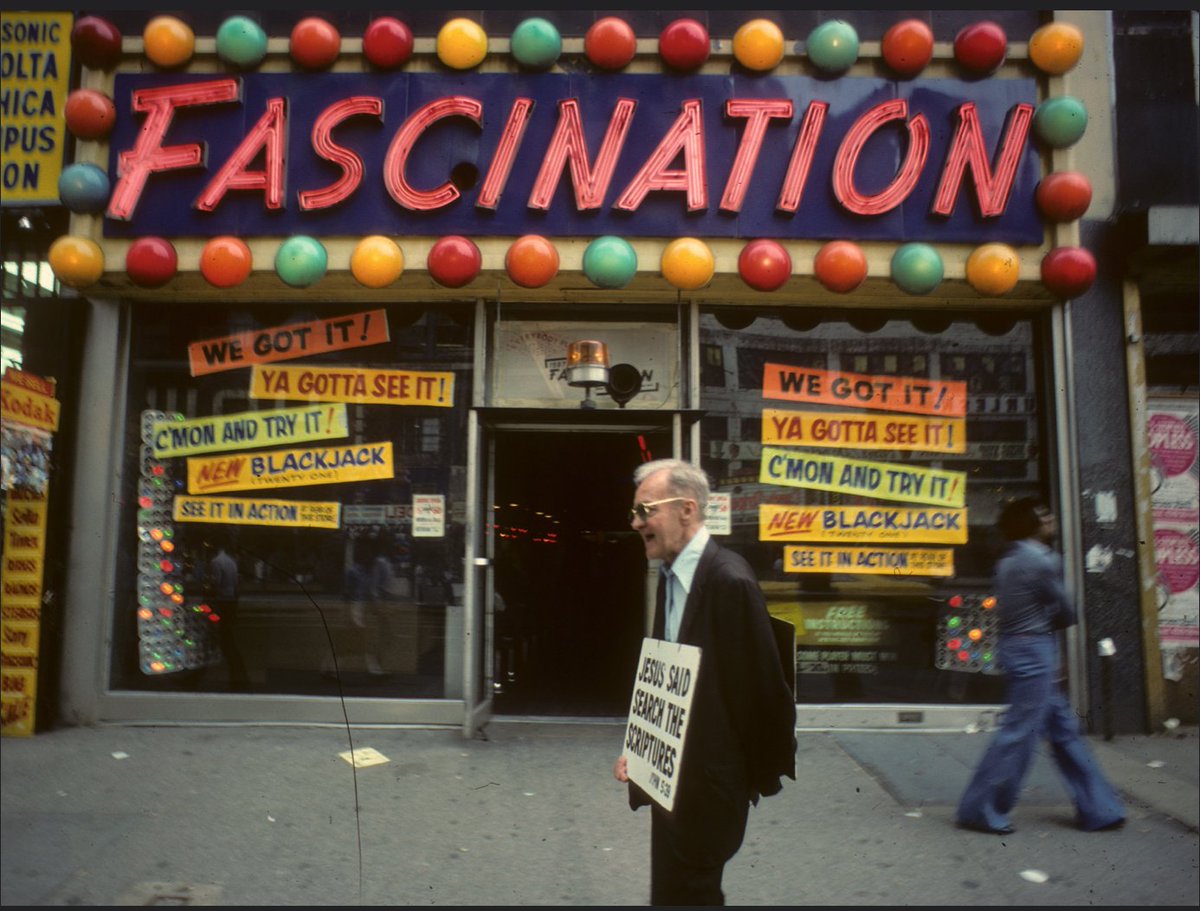
Named after a popular redemption game, Fascination was a local arcade chain similar to the more ubiquitous Playland. And even though I was fairly confident I found the right one, I did doublecheck my work since there were other Fascinations in Manhattan.
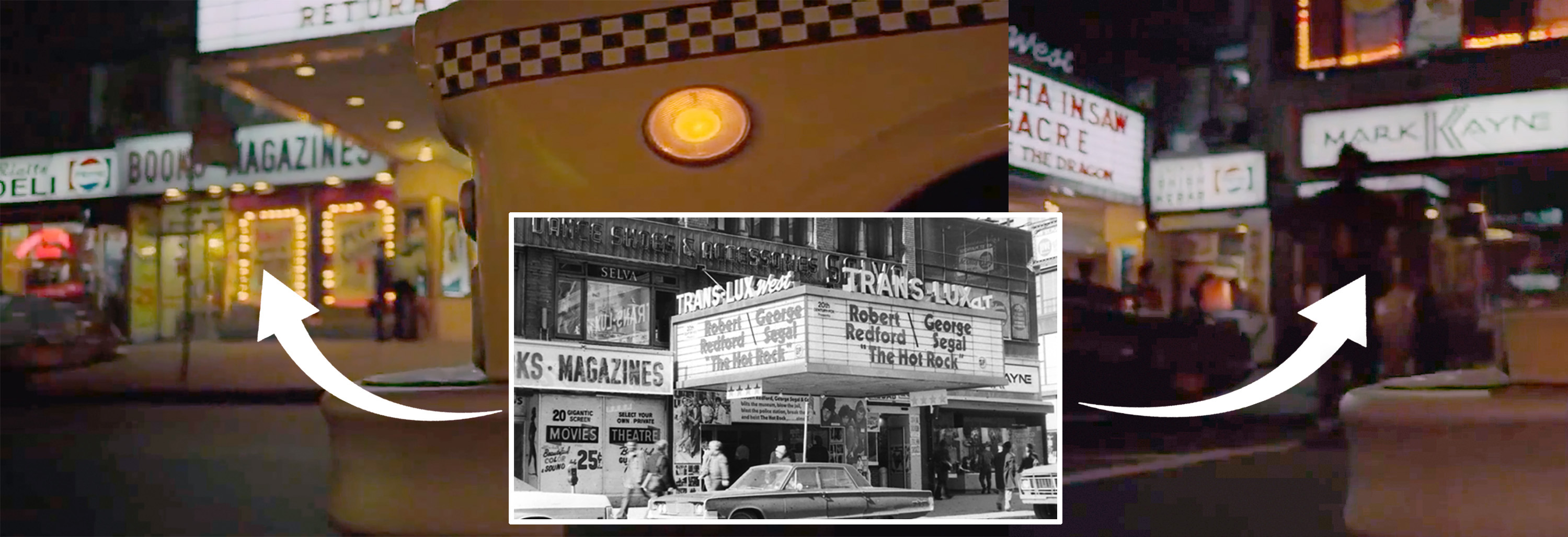
Luckily, I found a black-and-white photo of that Broadway block from 1972, showing several matching storefronts, including Mark Kayne on the corner and a book shop next to the Trans-Lux West Theatre. (The Trans-Lux would later close down and reopen as the Grand Pussycat Cinema).
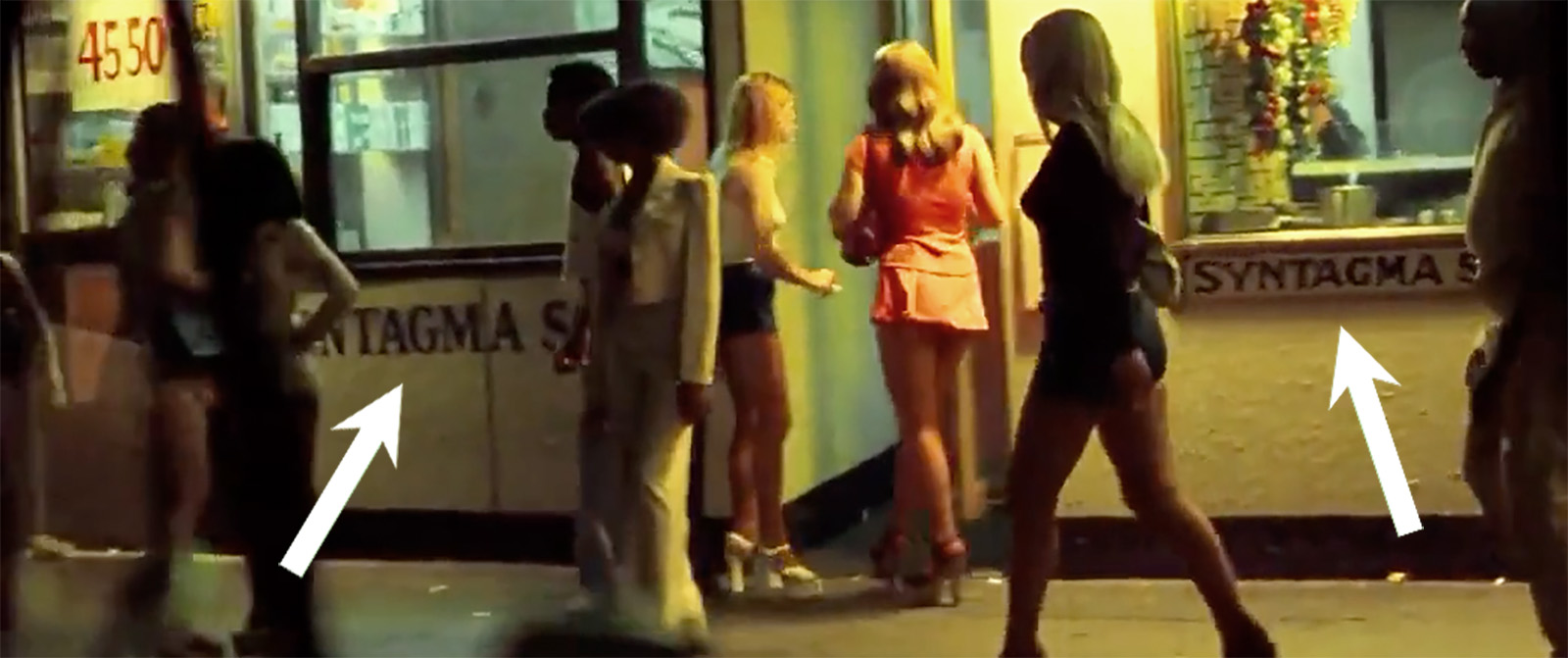
The tracking shot of hookers walking past two eateries was not immediately recognizable to me, but fortunately, I was able to spot some signage for one of the businesses, called Syntagma Square.
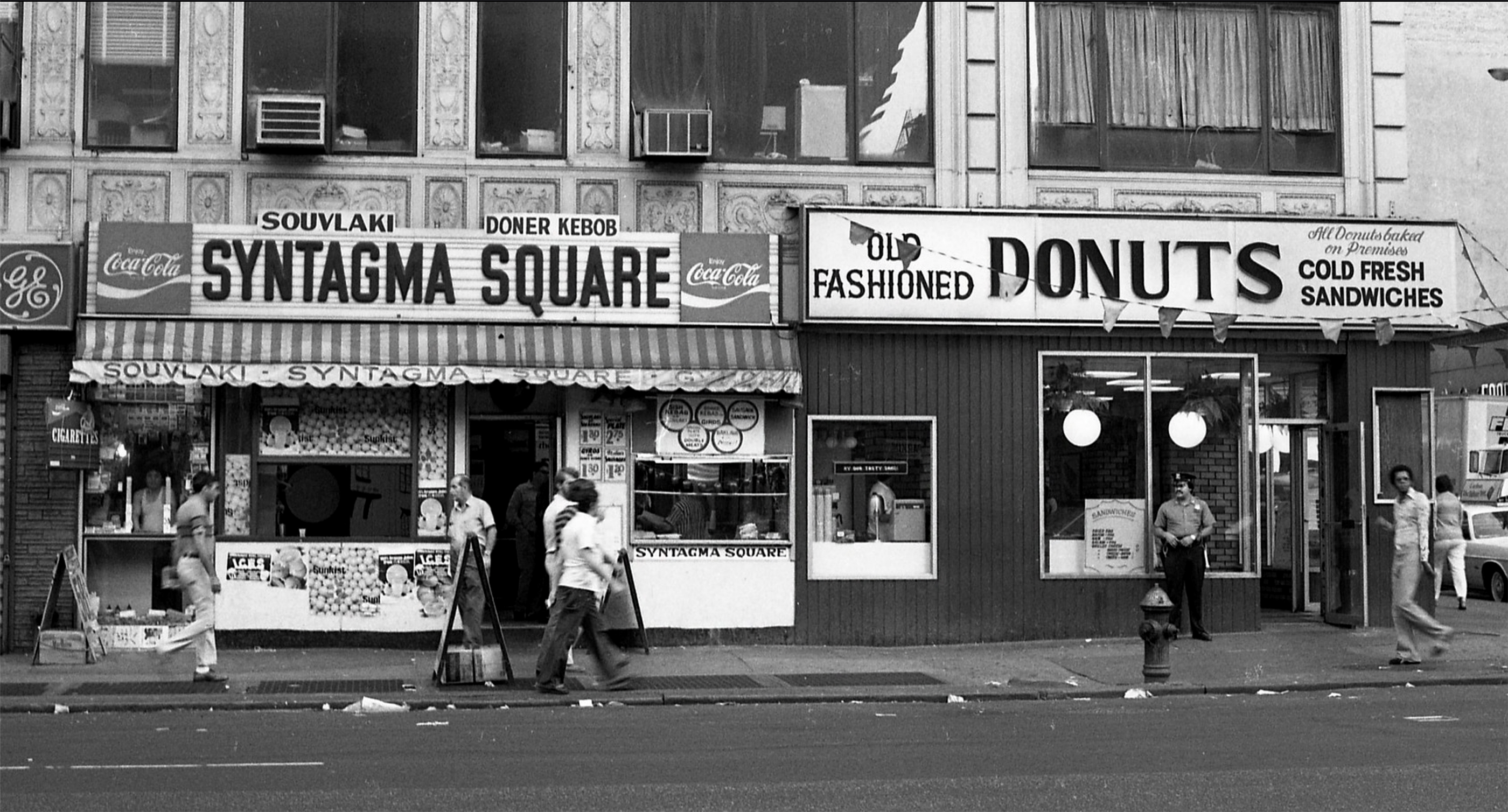
Amazingly, I was able to dig up a 1976 photo on Flickr of the very two eateries seen in the movie, with a caption giving their exact address. The corner shop was Old Fashion Donuts, and directly adjacent to it was Syntagma Square, a cheap Middle Eastern restaurant. Both places were located on the ground floor of the Times Square Hotel, reputed at the time as a hangout for prostitutes, druggies and the homeless.
To my surprise, the Times Square Hotel is still around today, operating as a successful low-income residence since the 1990s.
.
Businessman and a Hooker
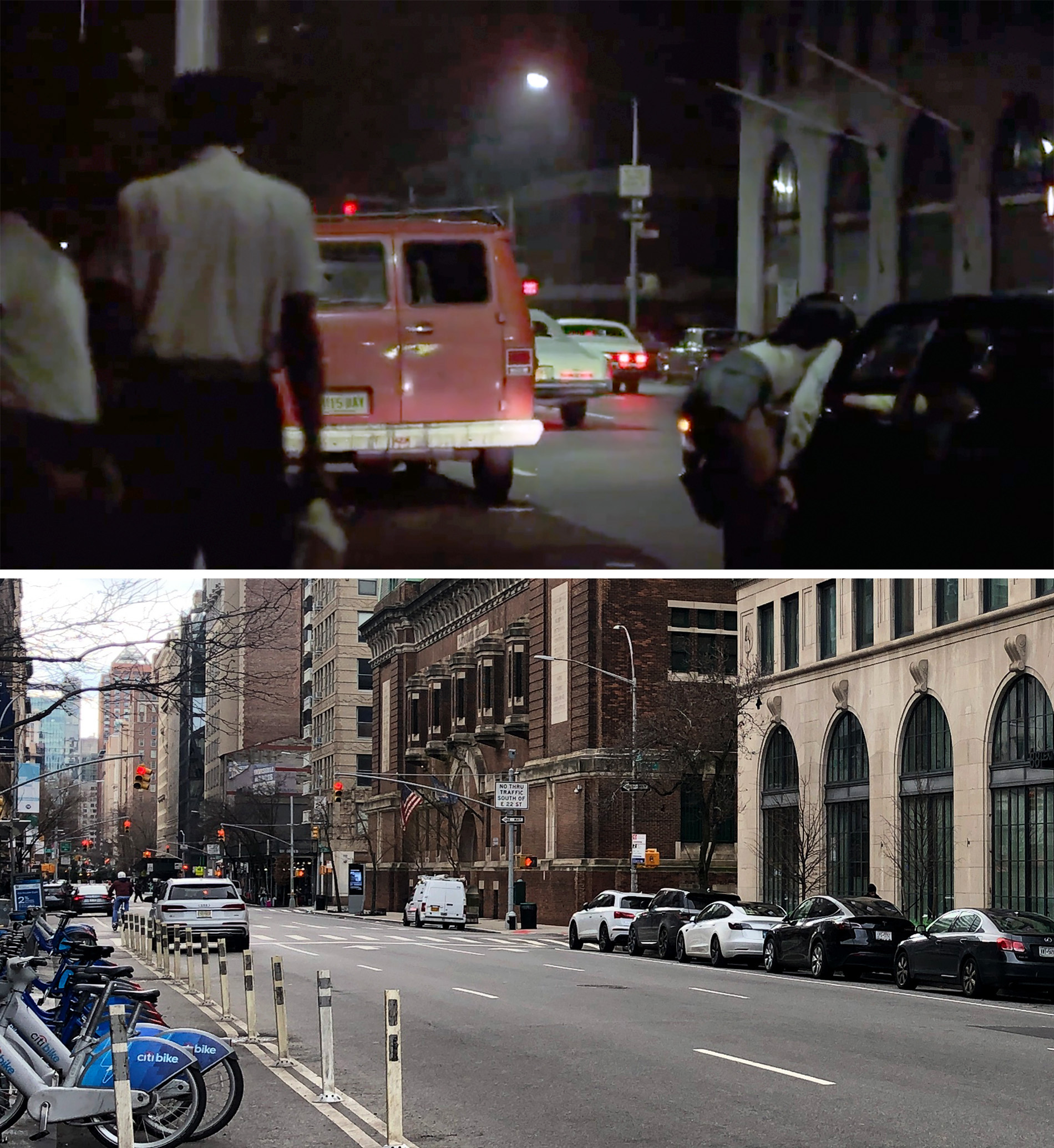
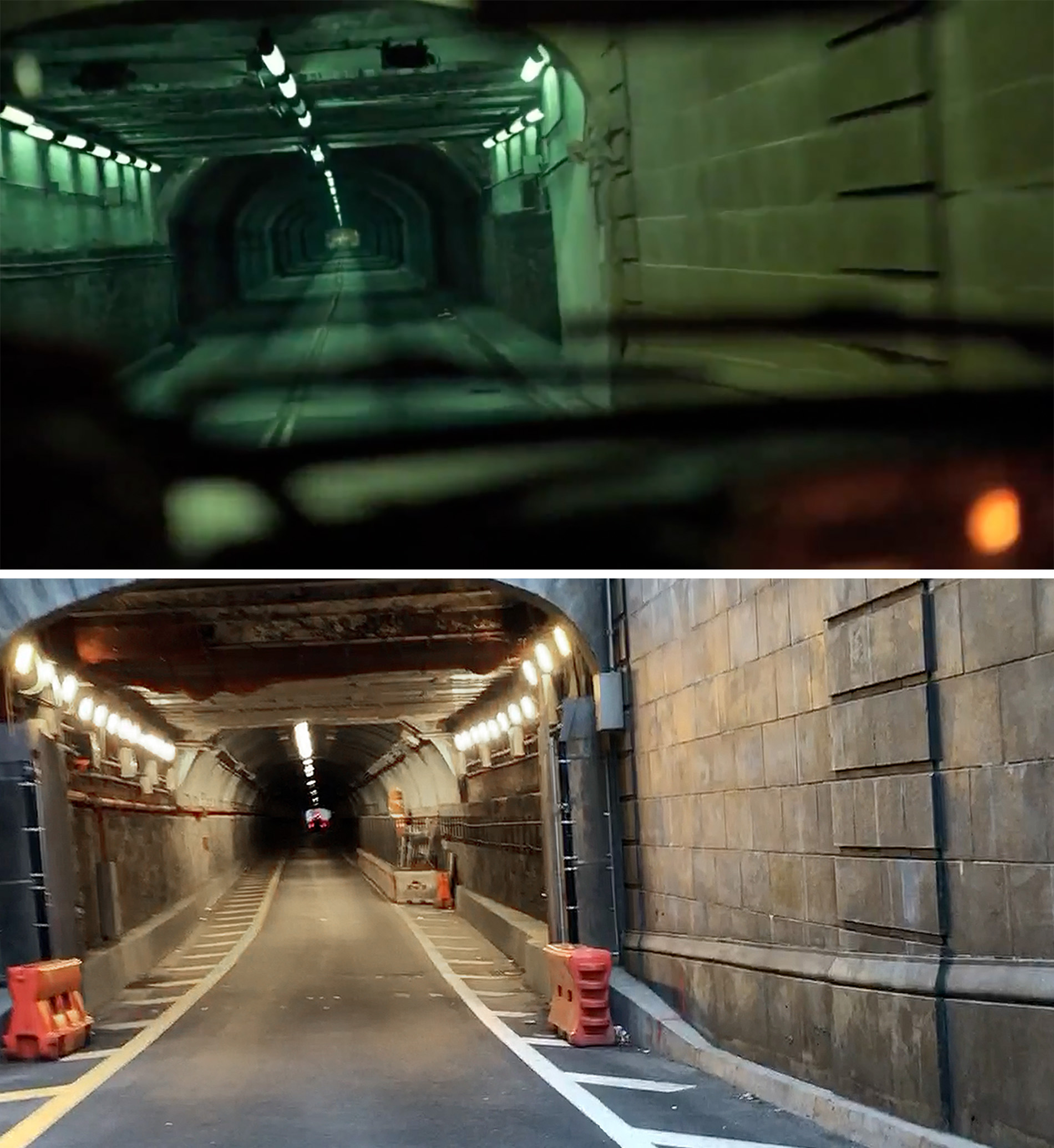

None of the locations from this sequence were mentioned on Carr’s website, and while the tunnel was easy to identify, finding the locations of the other two shots were a little tougher.
I spent hours searching Google Street Views for those large arched windows in the first shot, but was never able to find a perfect match. It was eventually solved by my research partner, Blakeslee, who noticed that the building in the far background looked a lot like an armory. Guessing that it was the 69th Regiment Armory in the Murray Hill neighborhood, he looked around the area in Google Maps and soon determined that the camera was on Lexington Avenue looking southwest towards E 26th. (The armory’s side entrance would later be used as the “city morgue” in the 1997 sci-fi comedy, Men in Black.)
I figured out the fire hydrant location mostly thanks to it being near another location that appears later in the movie. I just looked around the same neighborhood on a hunch they filmed multiple scenes close to each other, until I found what looked like a matching block on Columbus Avenue.
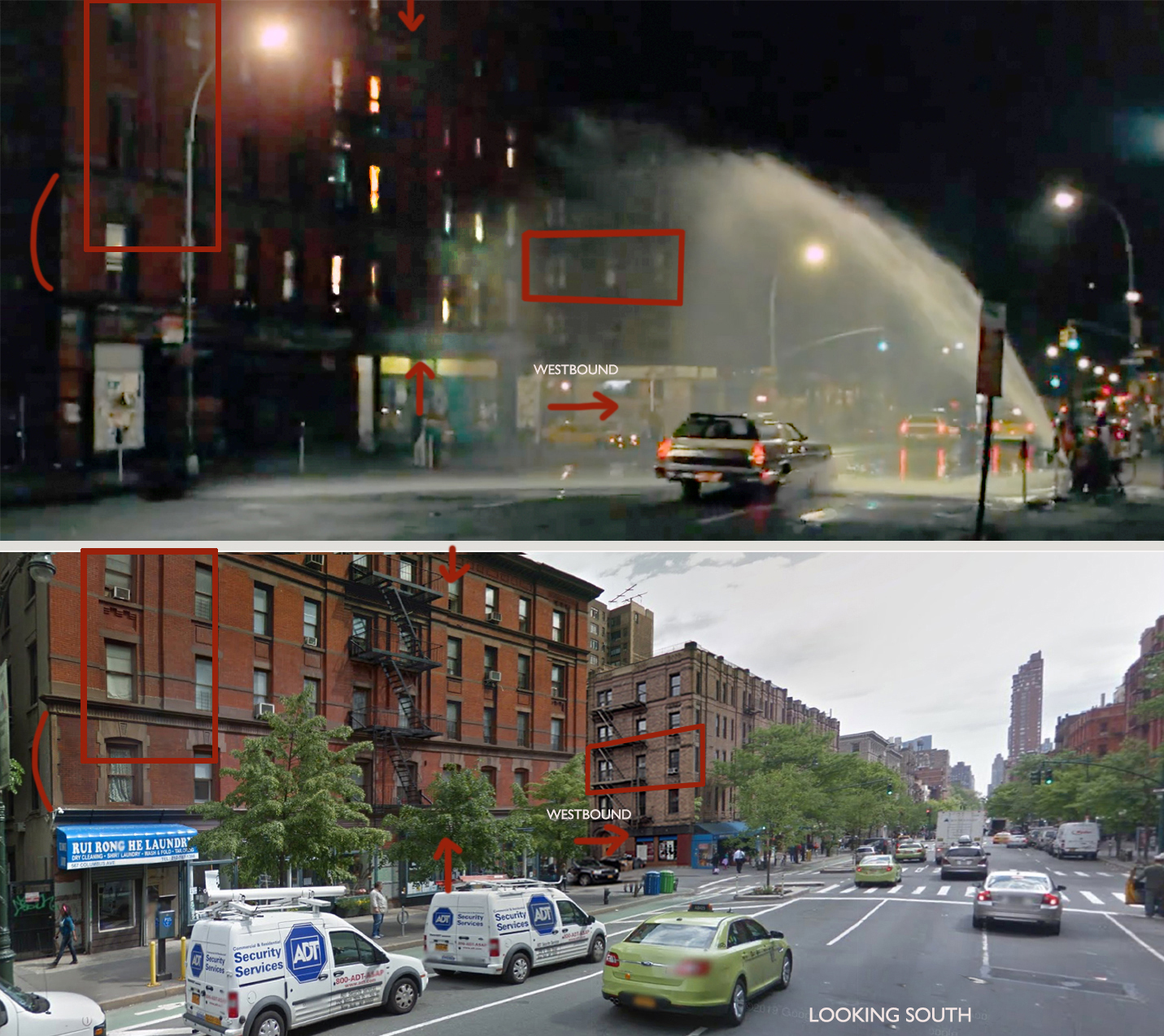
As a way to bolster my conclusions, I was also able to look up a 1990 photo of the block in an Urban Planning Report which had a few more things I could match up.
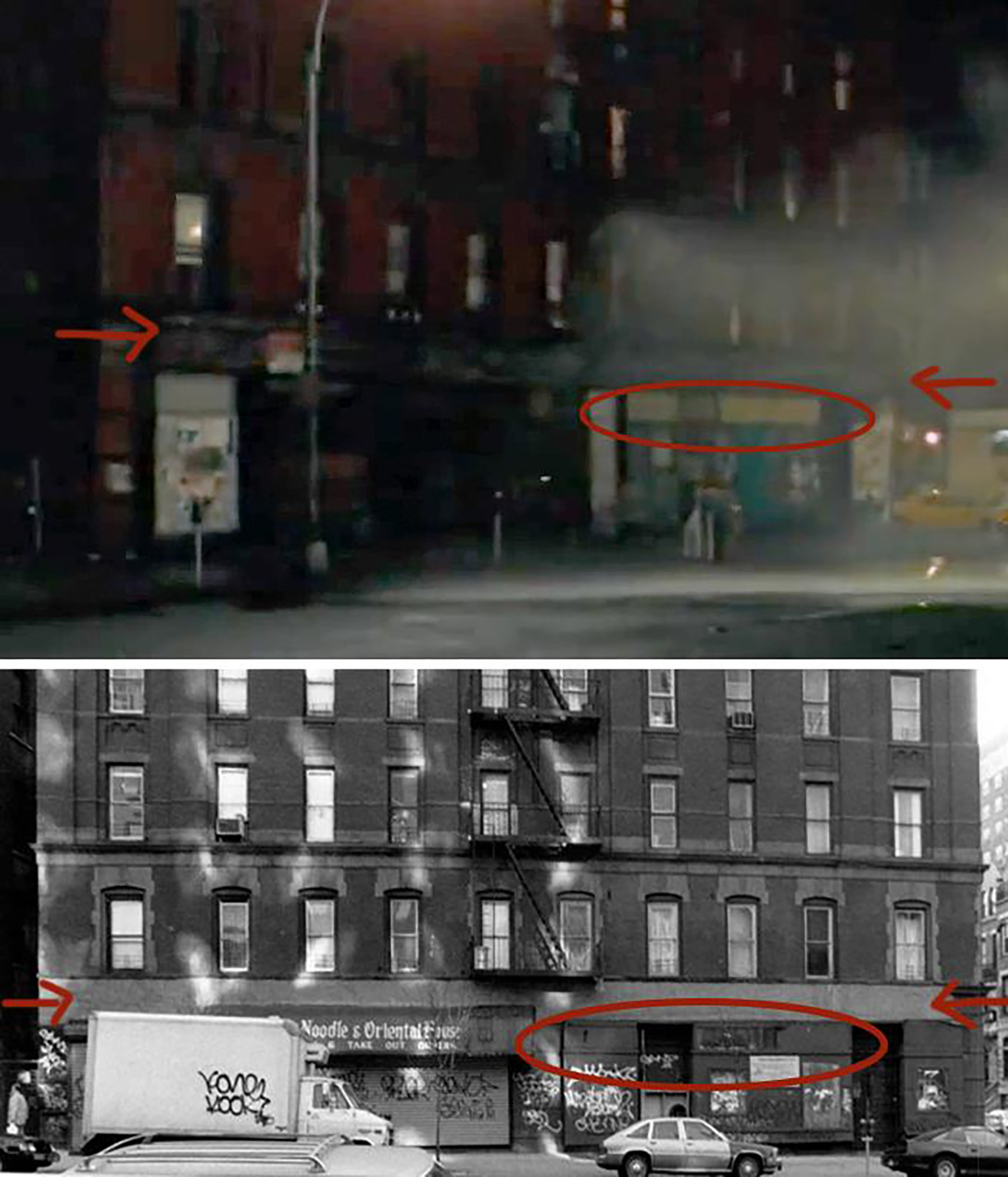
It’s great that all the old tenement buildings that appear in this scene are still there, which is rare in this part of the city.
Porno House
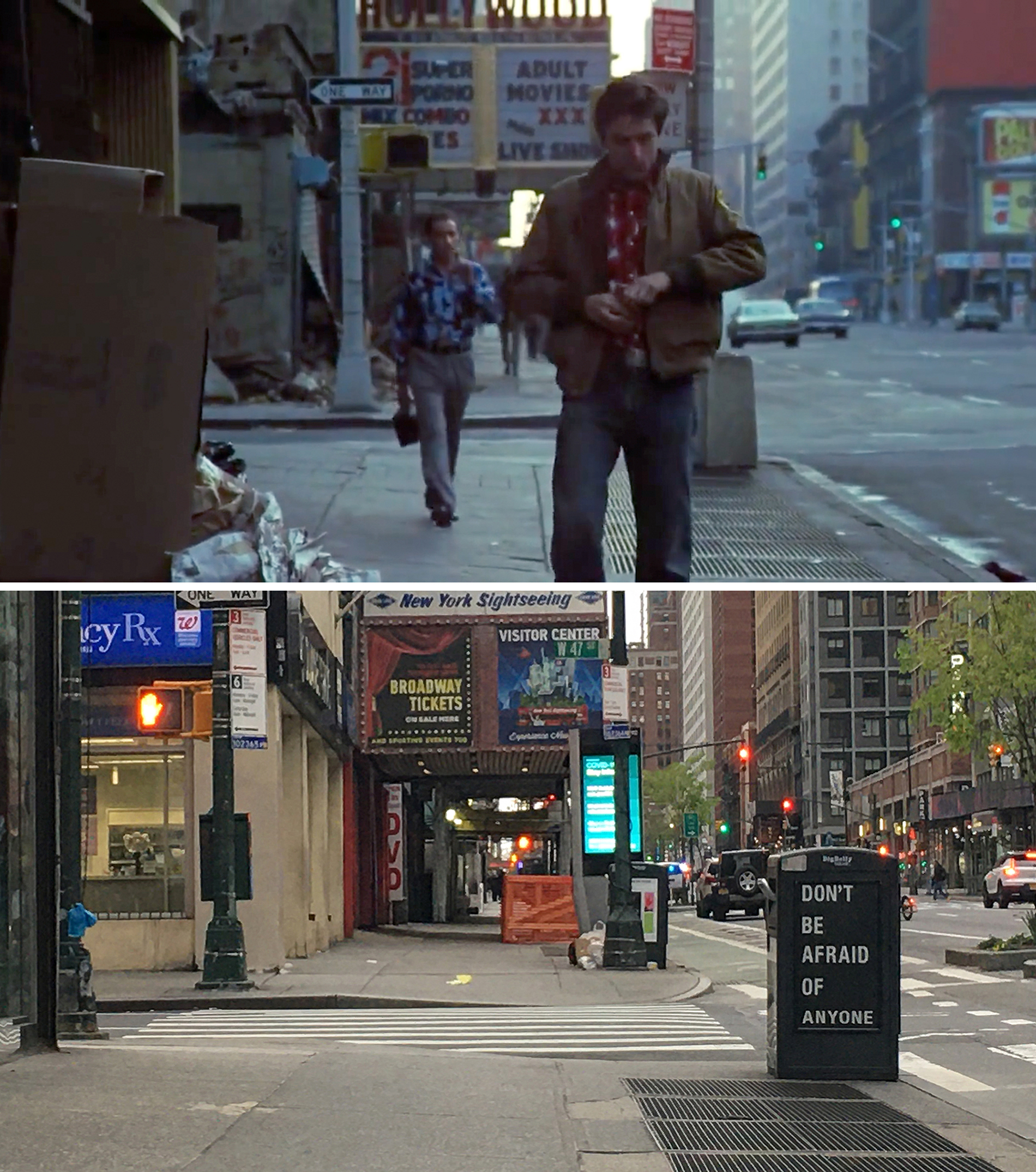
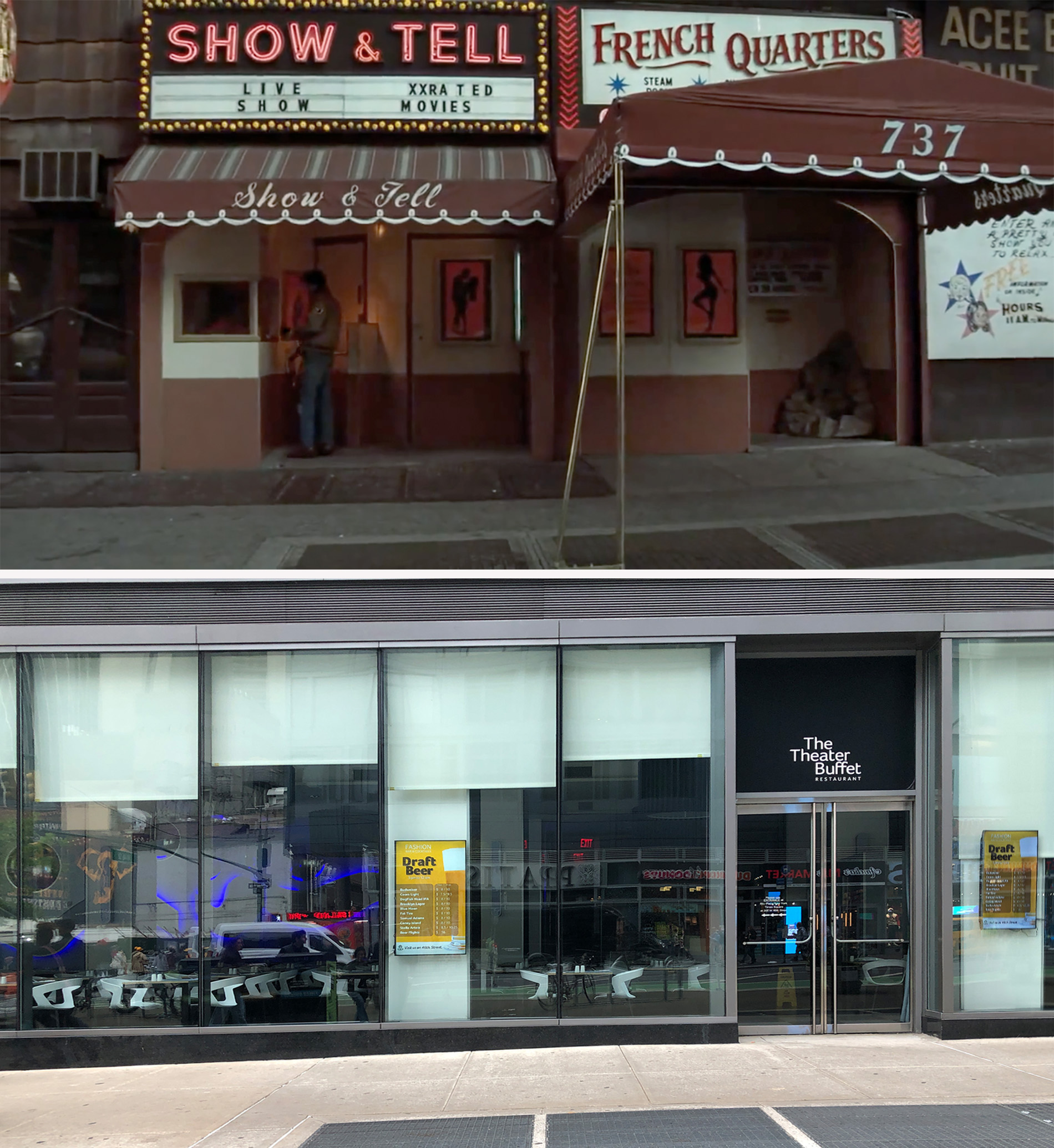
This location was already identified on Carrs’ ScoutingNY website back in 2009, written around the same time the porno building De Niro goes into was being prepped for demolition.
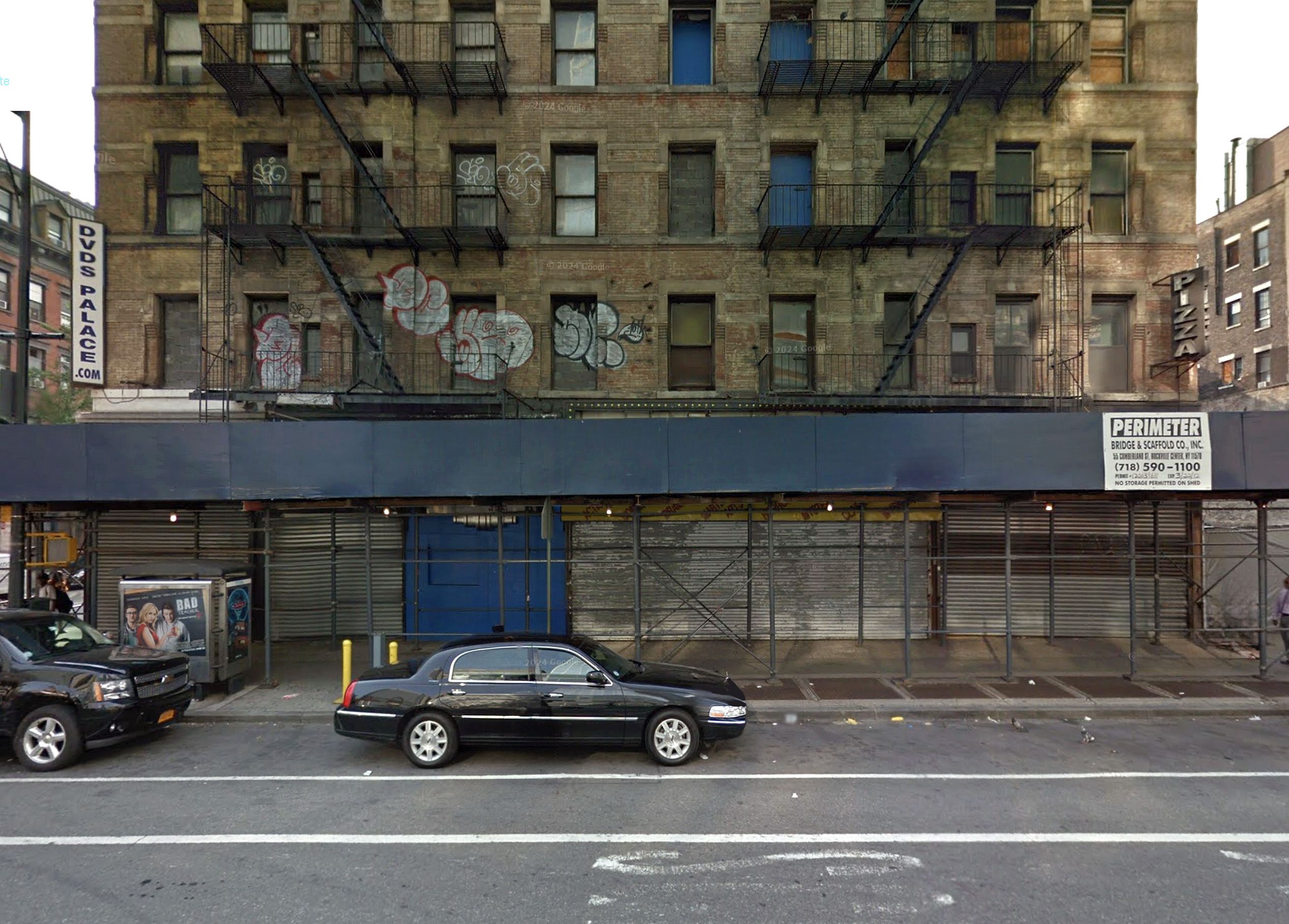
And even though Eighth Avenue is more or less sanitized of any adult enterprises, the porno theater marquee seen in the first “then/now” image above is still in place (although I have a feeling not for much longer).
As to the Show & Tell theatre at 737 Eighth Avenue, I couldn’t find much information out there about it.
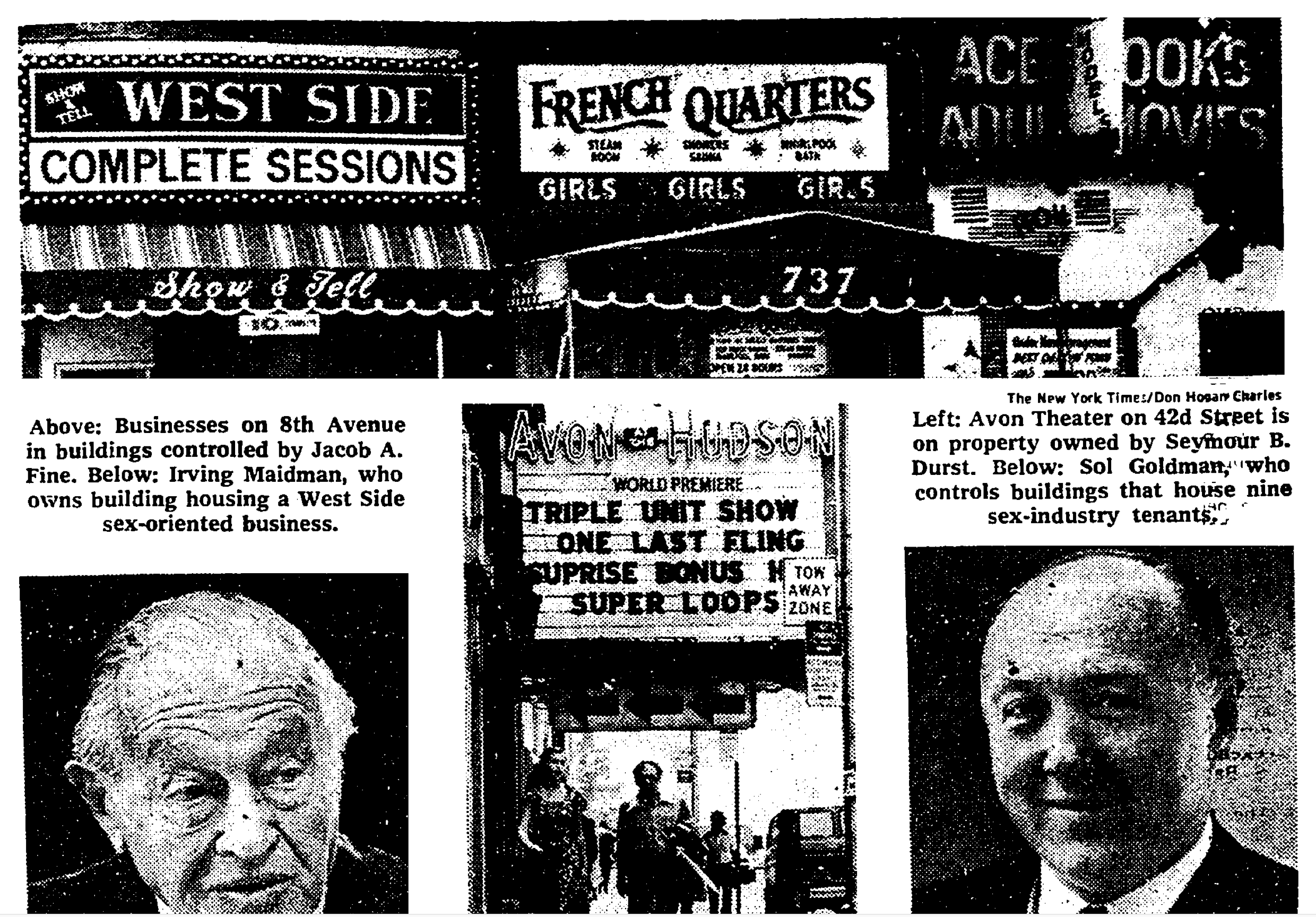
The only thing I could find was a 1977 New York Times article that briefly mentions Jacob A. Fine, the controversial real estate operator who owned the property at the time. In the article, the Show & Tell isn’t described as a movie theater but instead as an illicit “massage parlor.” This adds a little perspective to a 1976 ad I found for the place, touting “$10 complete, best deal, guaranteed satisfaction.”
Sounds like Show & Tell had a variety of services, offering both buttered popcorn and full releases.
Random City Shots
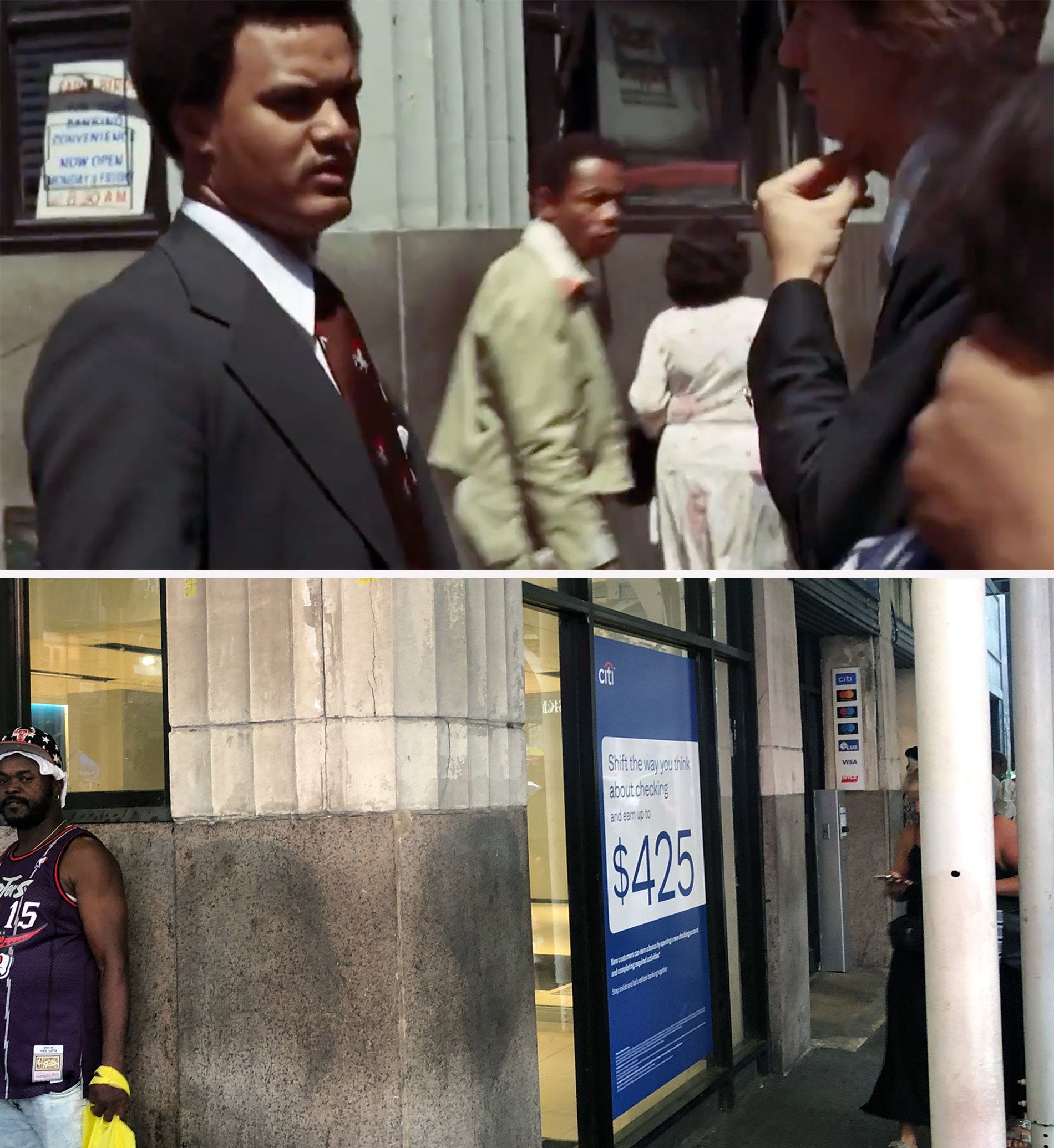
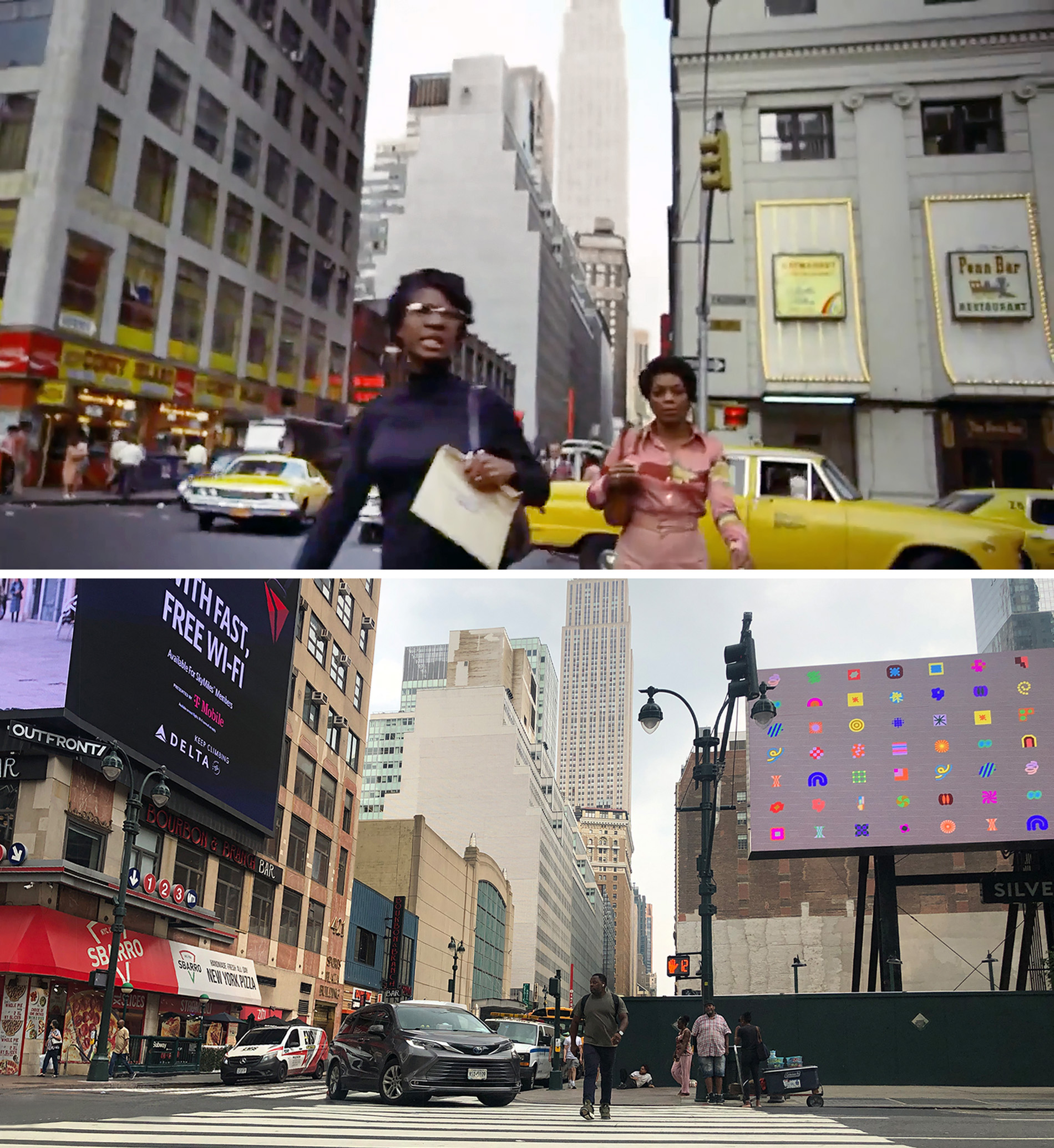
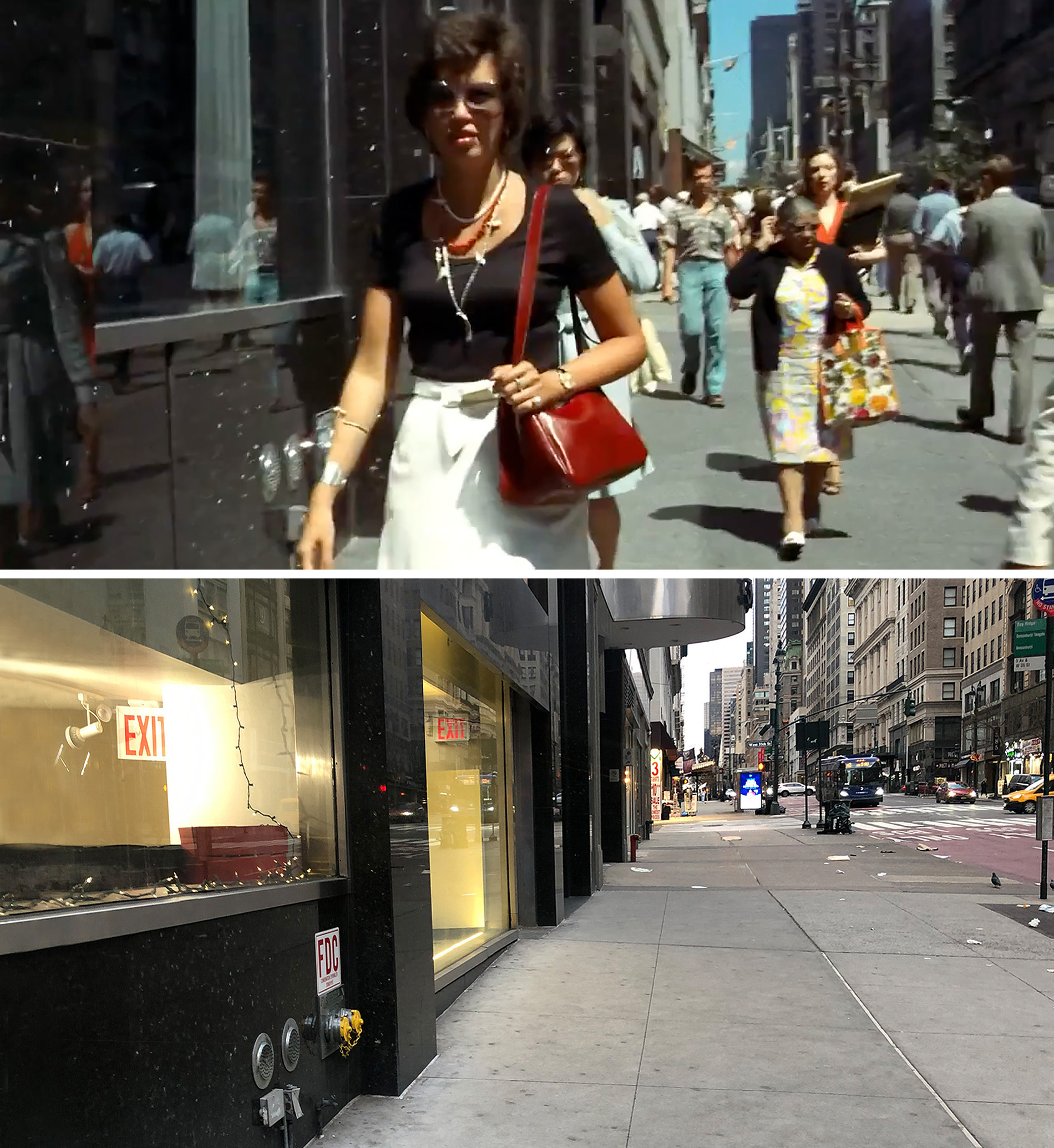
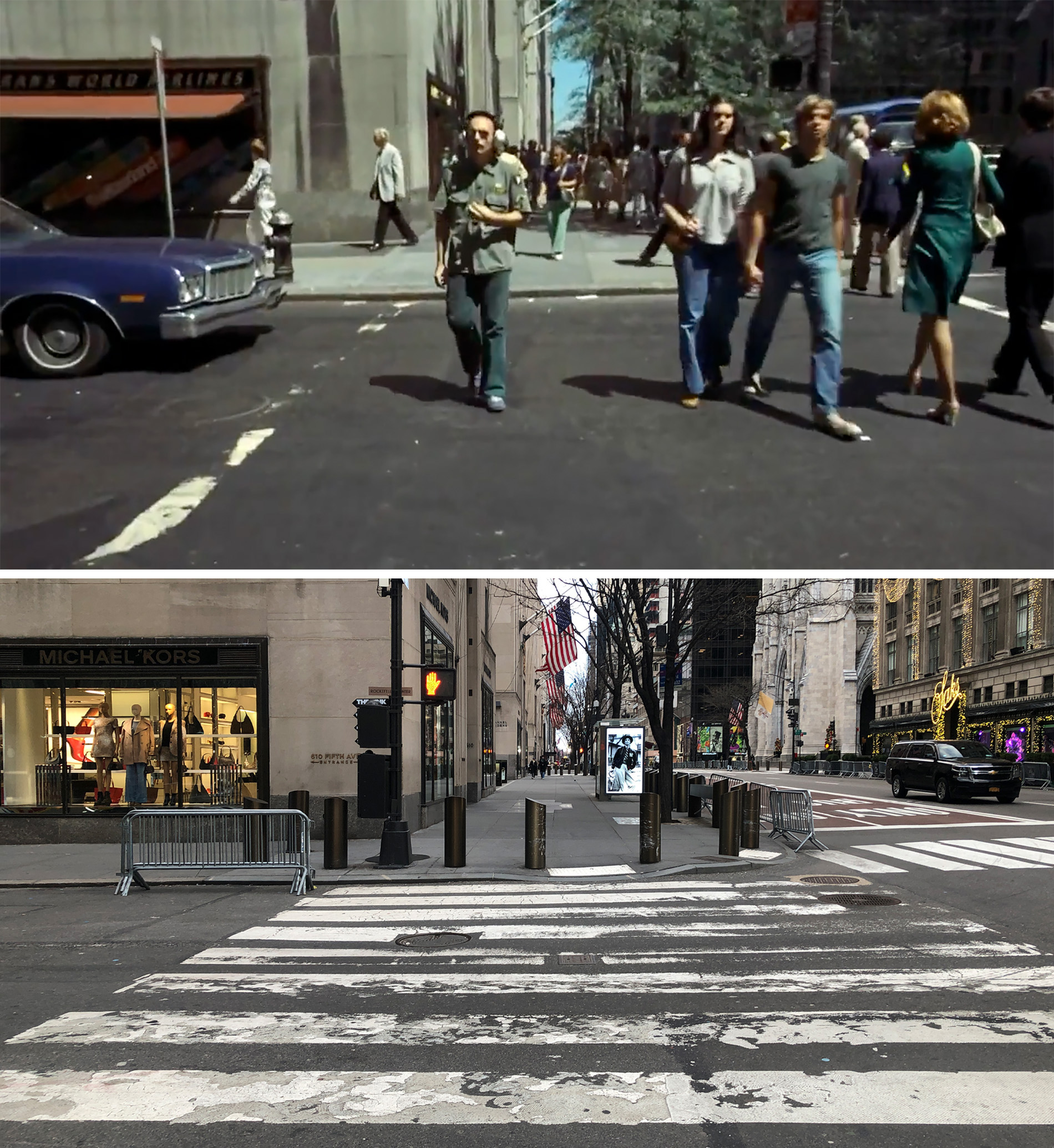
Most of these random handheld shots of the city were fairly easy to find thanks to popular NYC landmarks appearing in the frame. The only tough nut to crack was the very first shot.
The second shot, taken near Penn Station, featured both the Empire State Building and the Hotel Pennsylvania. Sadly, the famed hotel whose phone number was immortalized by the 1940 Glenn Miller tune, “Pennsylvania 6-5000,” was torn down in 2023.
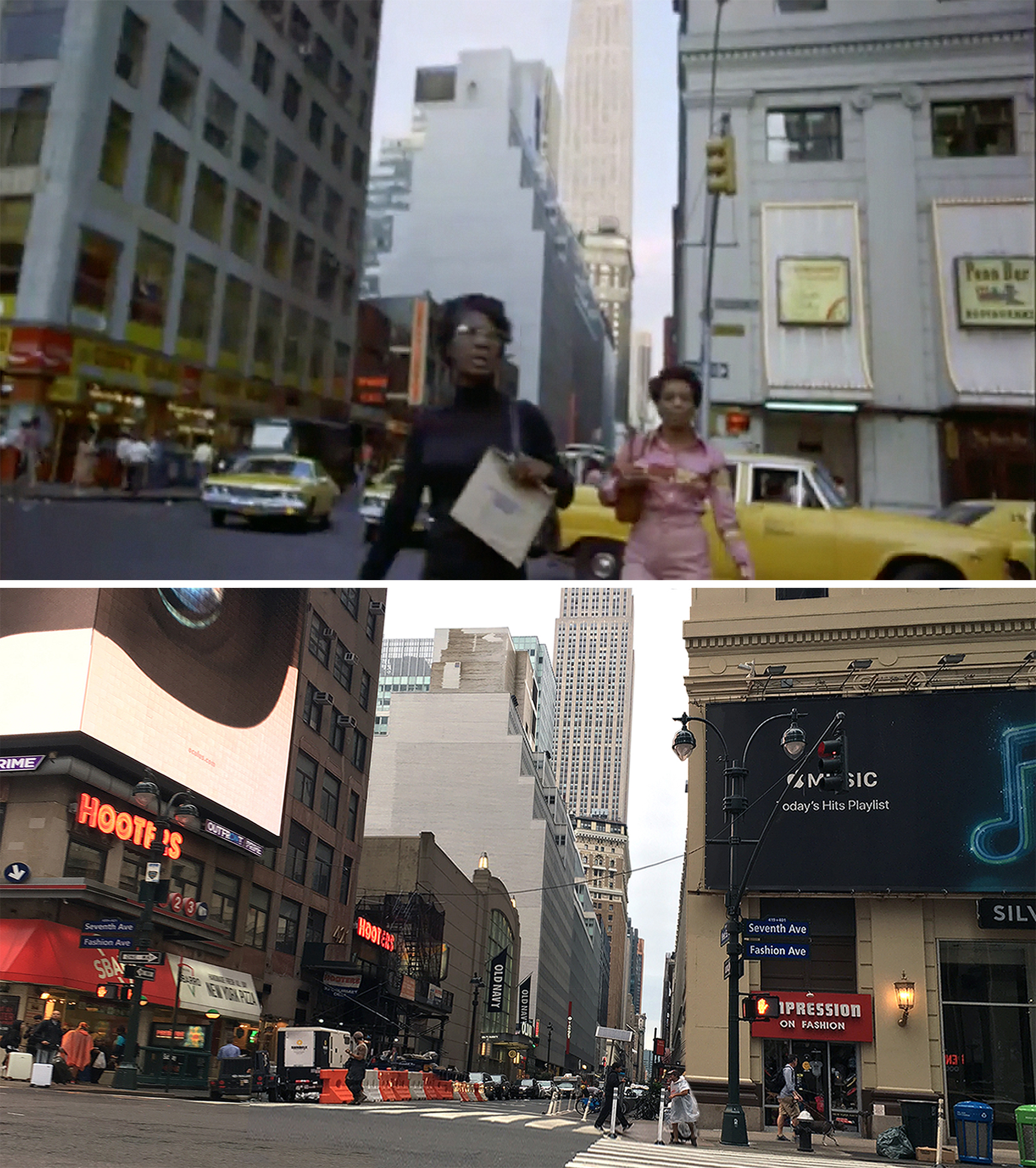
The location of the third shot was discovered after Blakeslee spotted St. Patrick’s Cathedral on the right side in the far distance. Using the Cathedral as a guidepost, he and I calculated that the camera was on the west side of Fifth Avenue, probably about 10-20 blocks to the south. Moments later, we landed on the corner of 34th and Fifth, whose building has thankfully remained the same.
Even though the last shot might not be super evident, I instantly recognized it as being at Rockefeller Center. All that was required was to look around the Center and find the corresponding corner.
But when it came to the first shot in this series, it seemed almost impossible to find, mostly because the camerawork was so shaky and fairly tight on the pedestrians. Nevertheless, Blakeslee and I were able to spot a few clues, including a large “house cocktail lounge” sign hanging above.
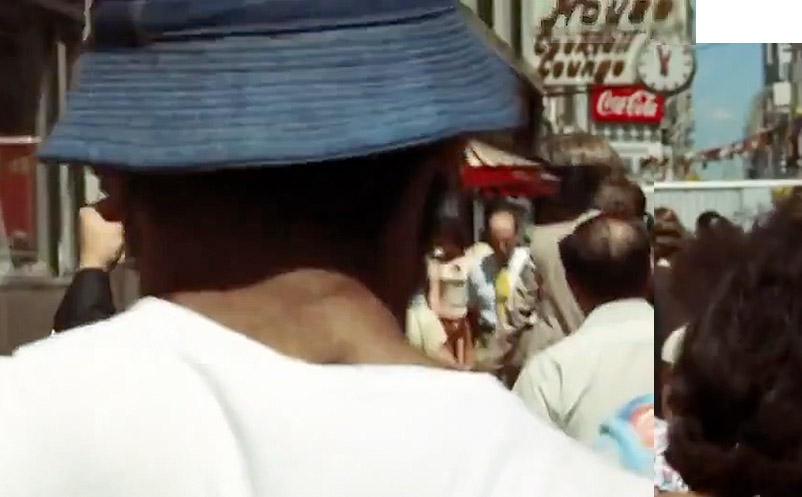
Another clue was a small sign in a window that seemed to be for some bank. However, after several days of starts and stops, neither of us were able to make any progress from either of those clues.
Then, just as I was beginning to accept the idea that we wouldn’t be able to identify this location, Blakeslee took one last stab at it. Using a 1930 map, he scanned the Midtown area, focusing on the corner buildings, hoping he’d find something promising. He then spotted one marked, National City Bank, and went, “oho!”
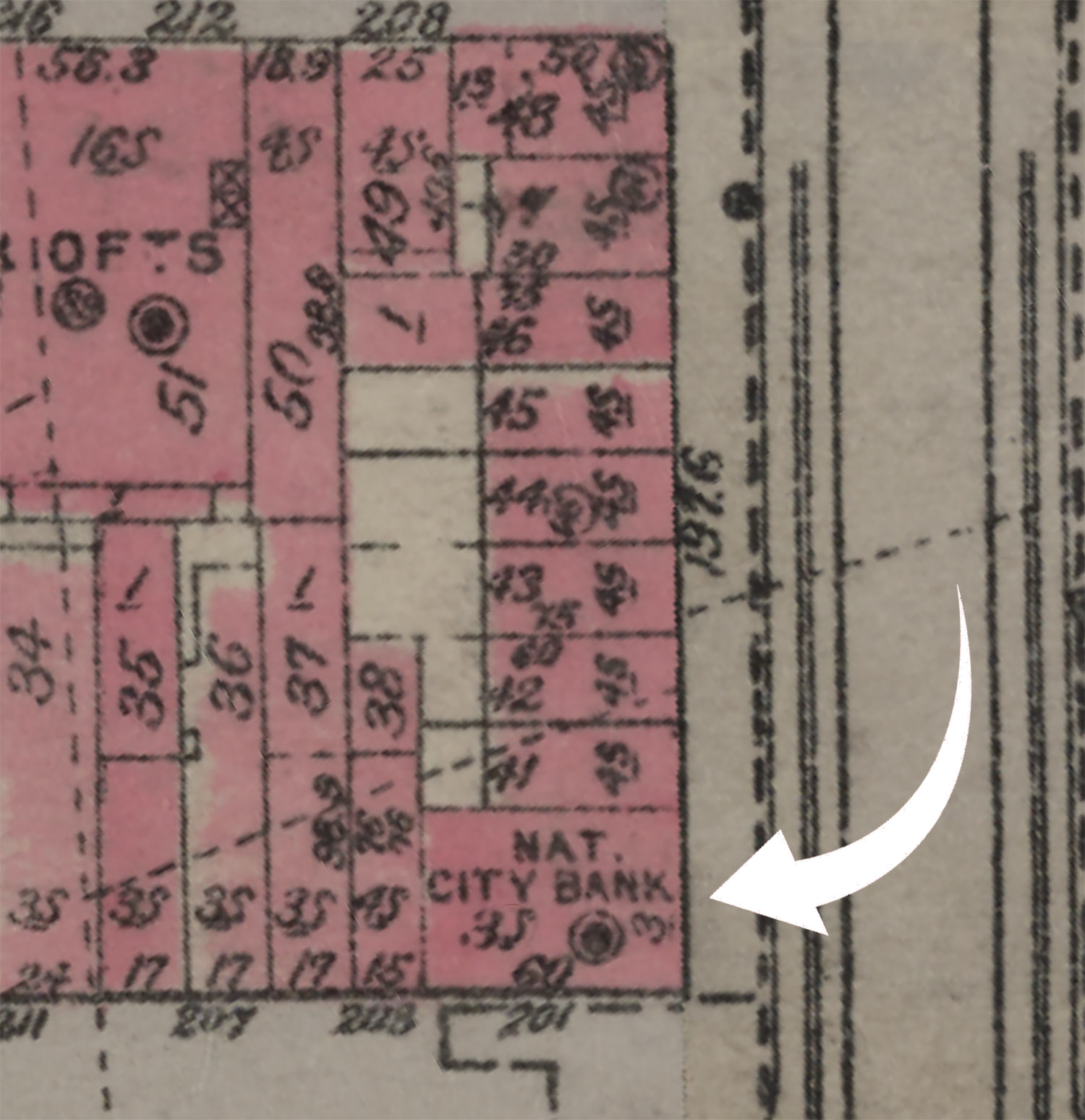
After checking out the building in Google Street View, he could tell right away that it was a match.
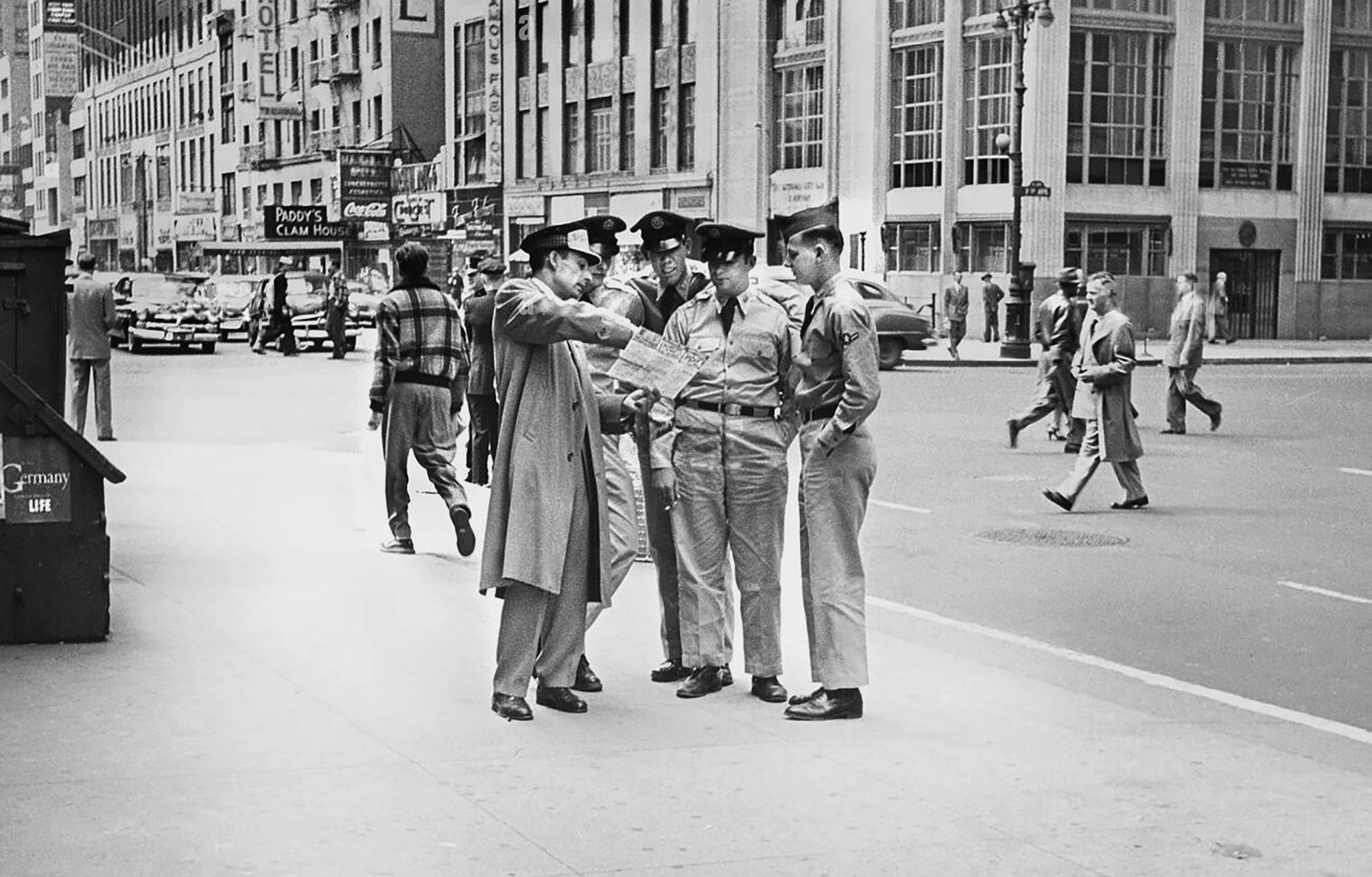
However, neither of us were ever able to figure out what that “house cocktail lounge” sign was for.
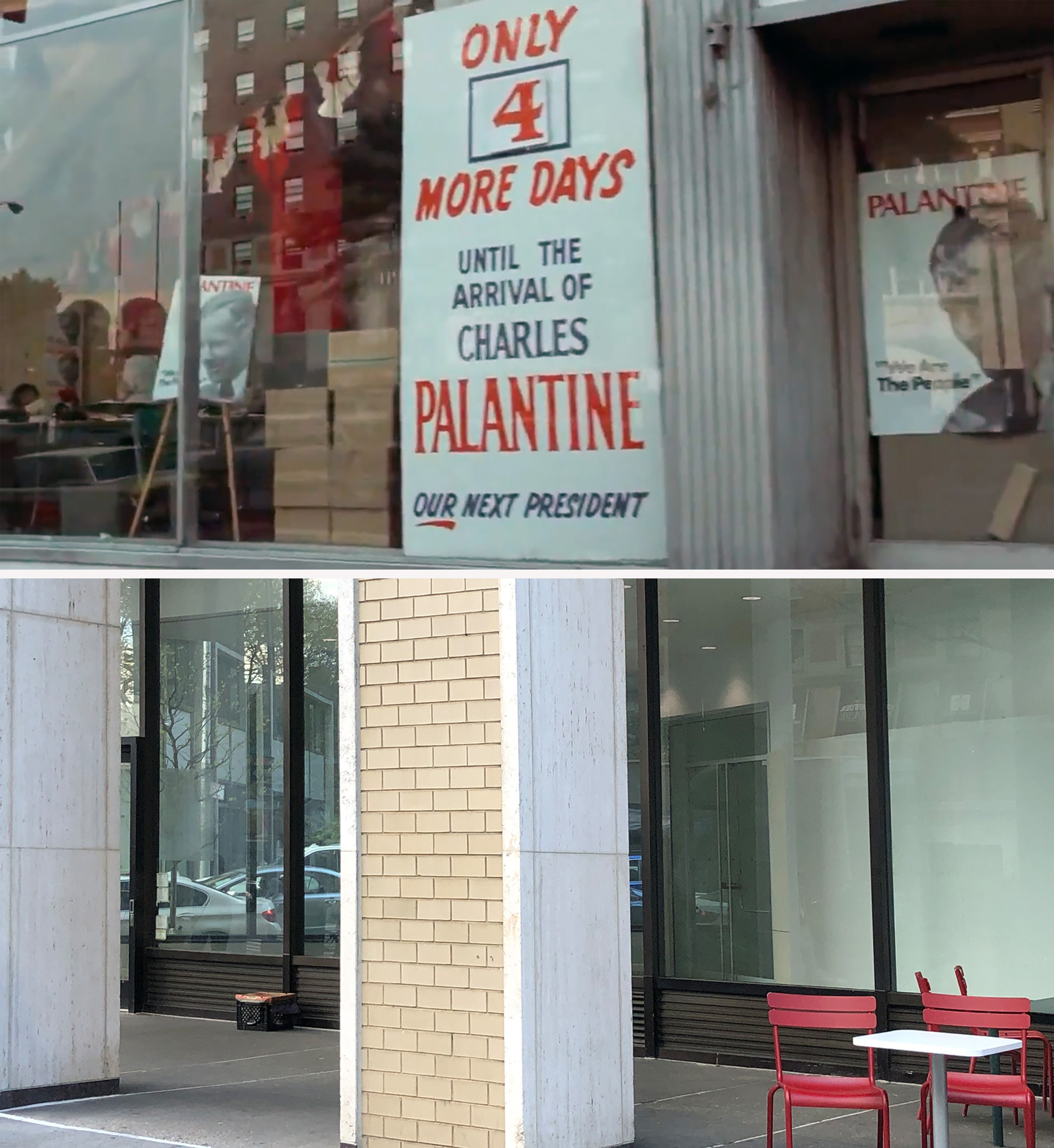
Palantine Headquarters
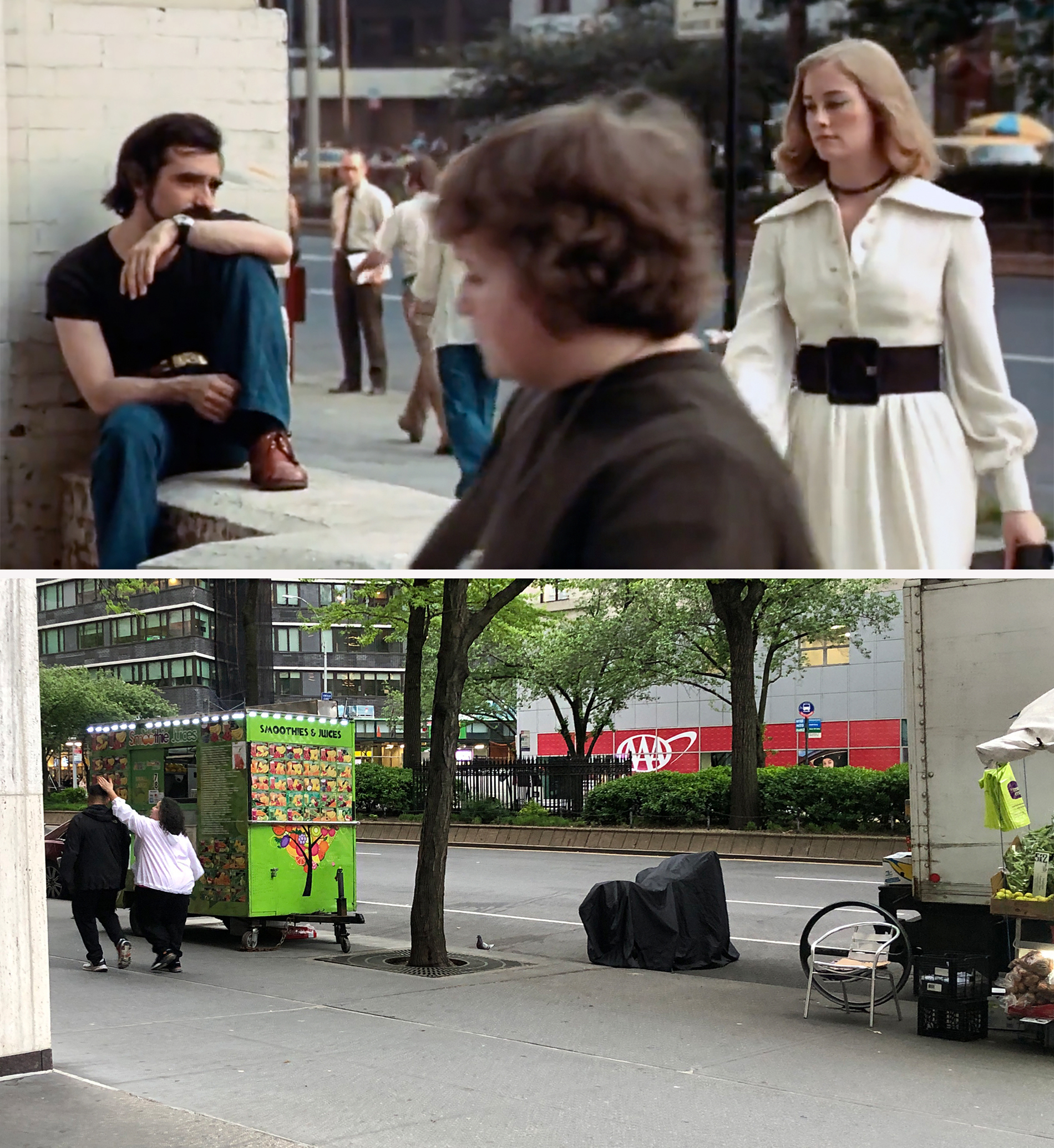
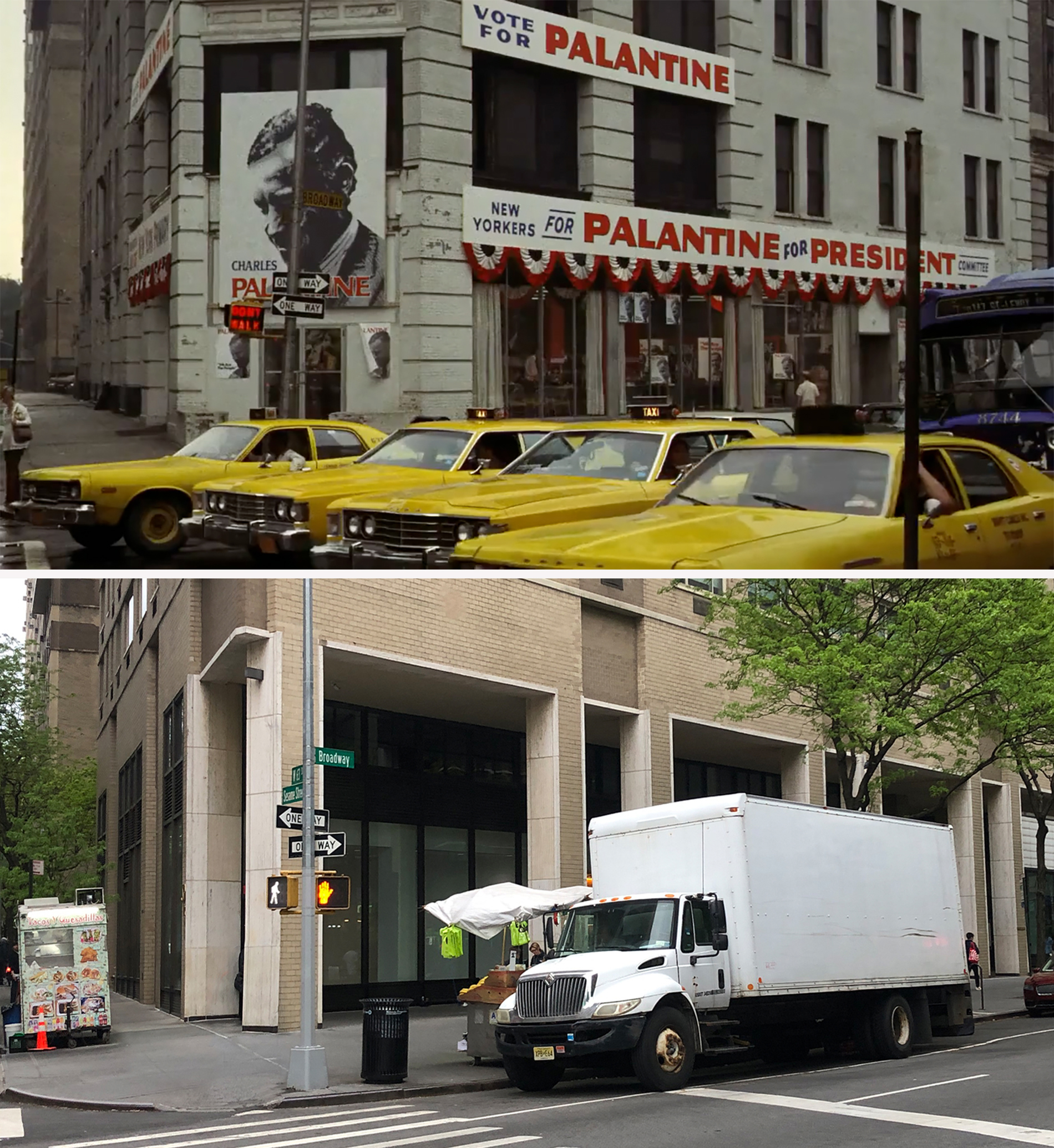
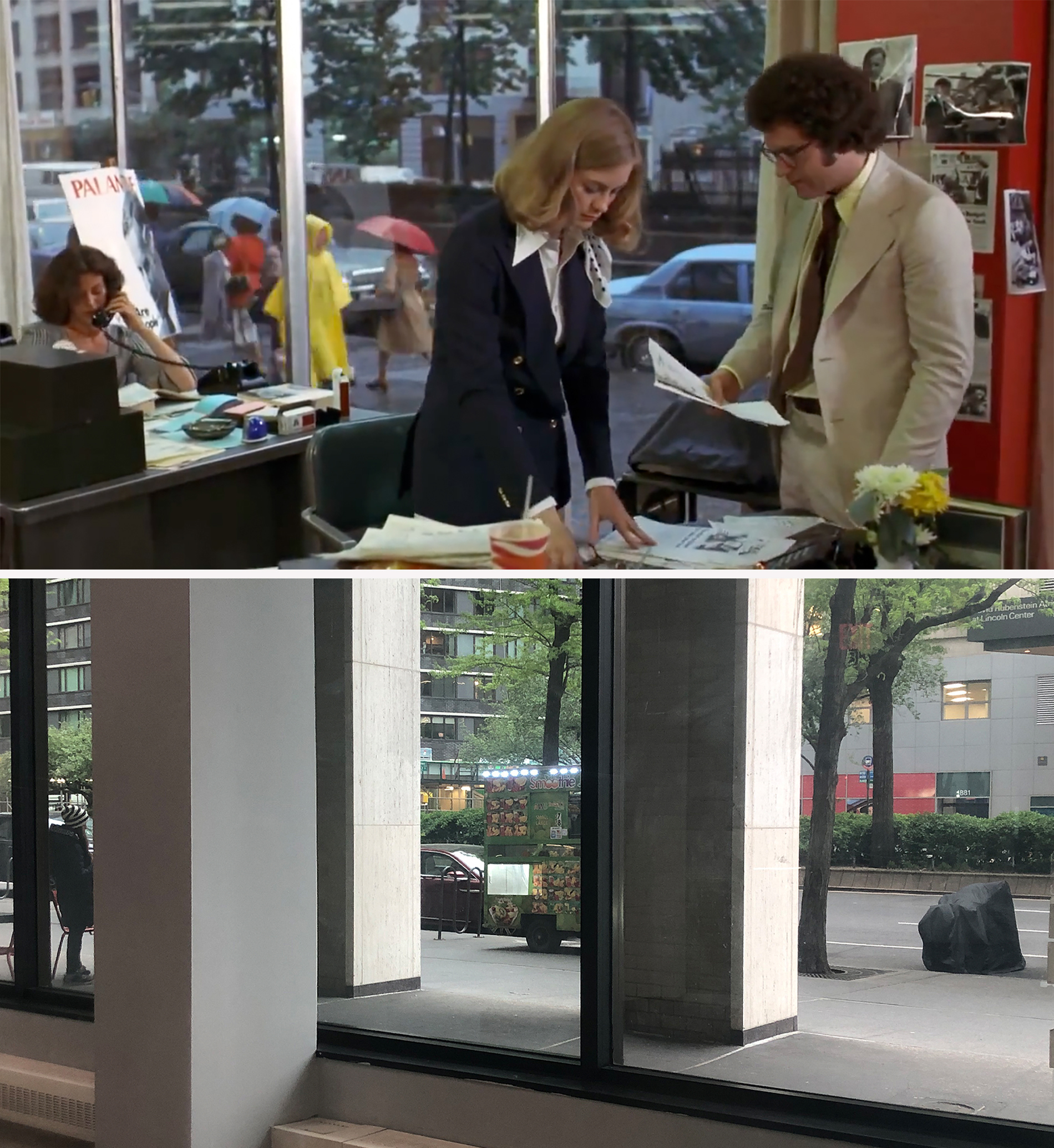
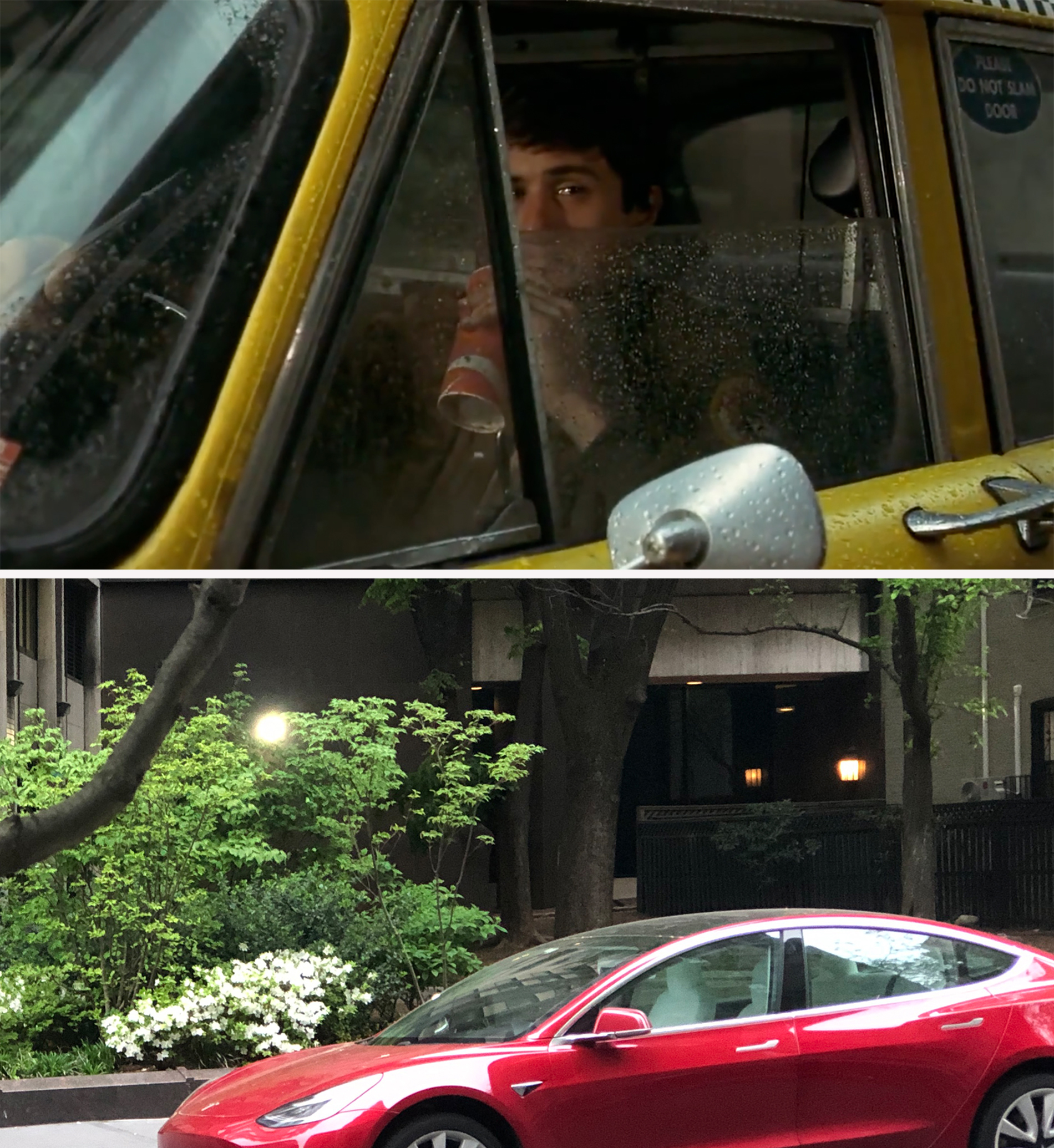
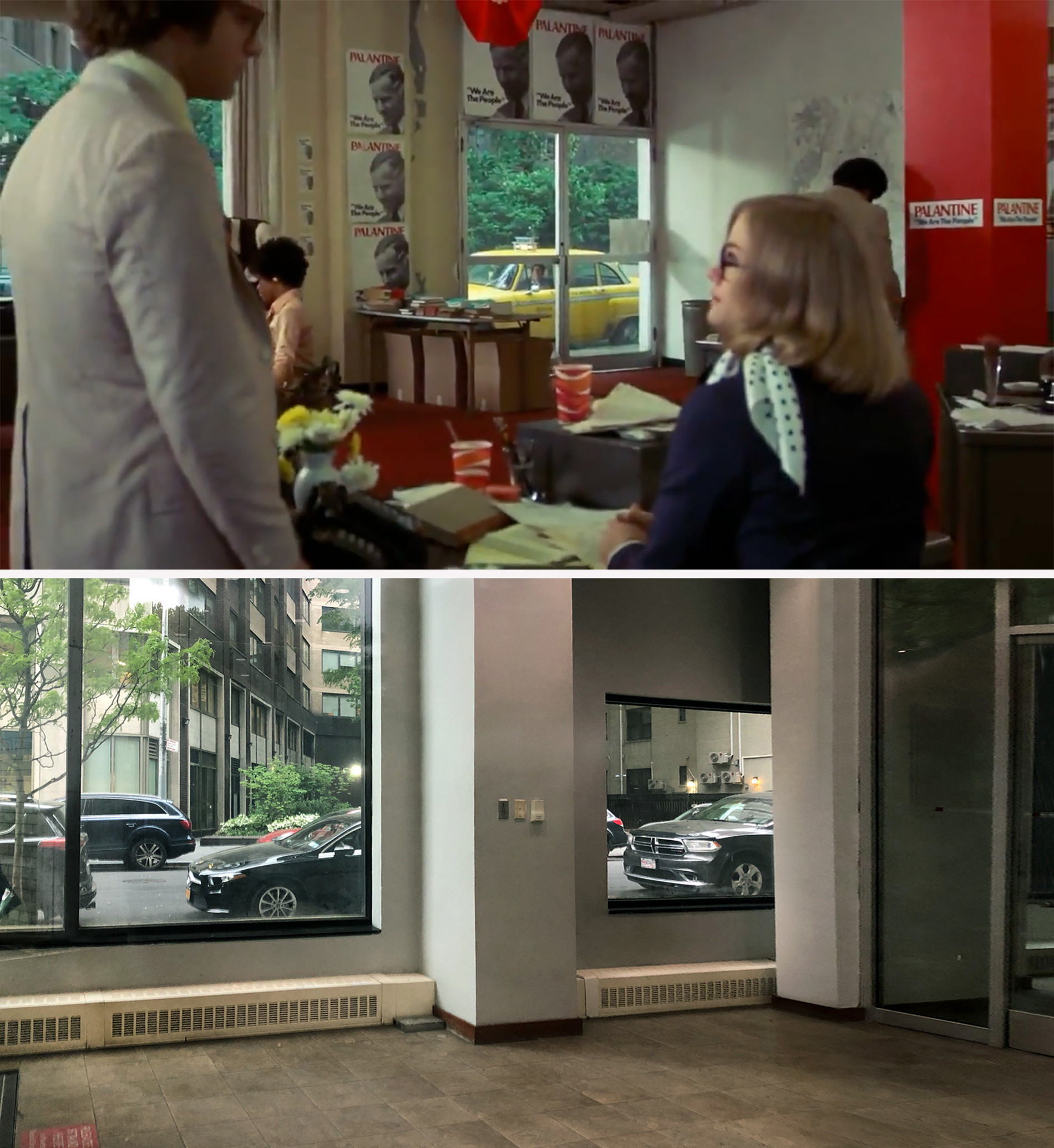
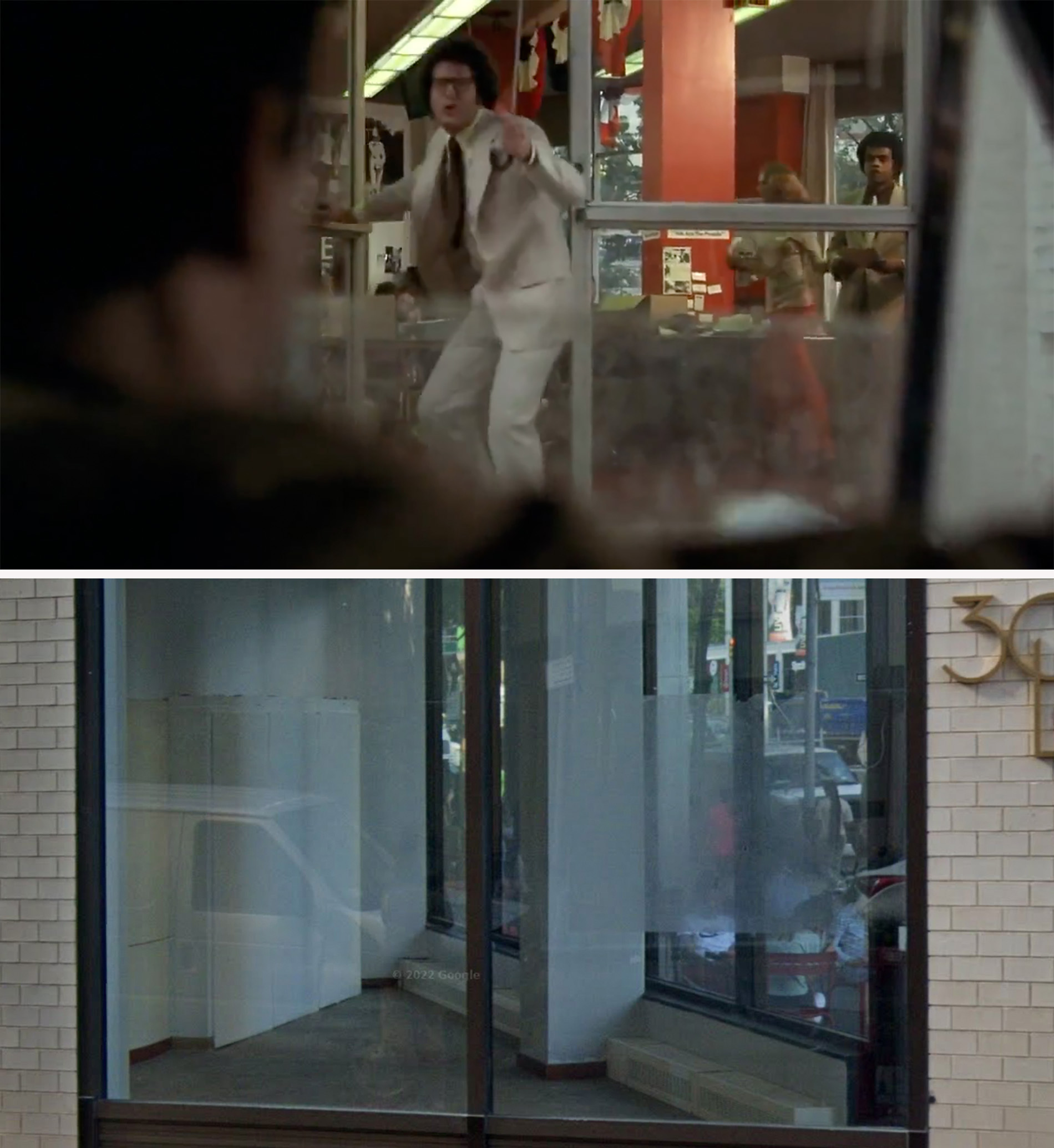
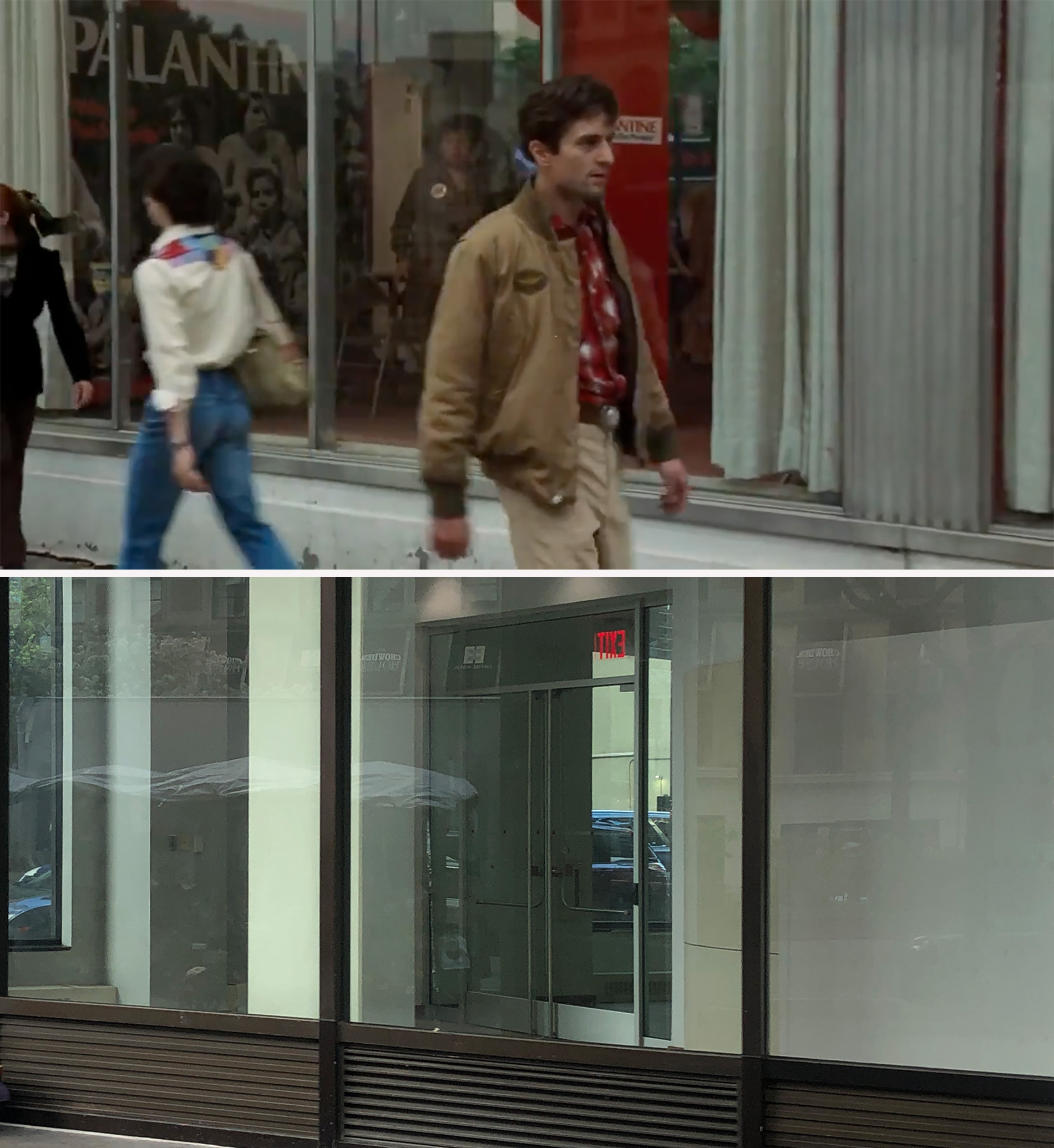
This is a location that was identified on the ScoutingNY website, although there was a little bit of confusion at first.
When webmaster Nick Carr first wrote his Taxi Driver post, he placed the campaign office on W 62nd & Broadway, but was later informed that he was off by one block. It was understandably easy to make that mistake since the building that was used in the movie has been gone since around 1979.
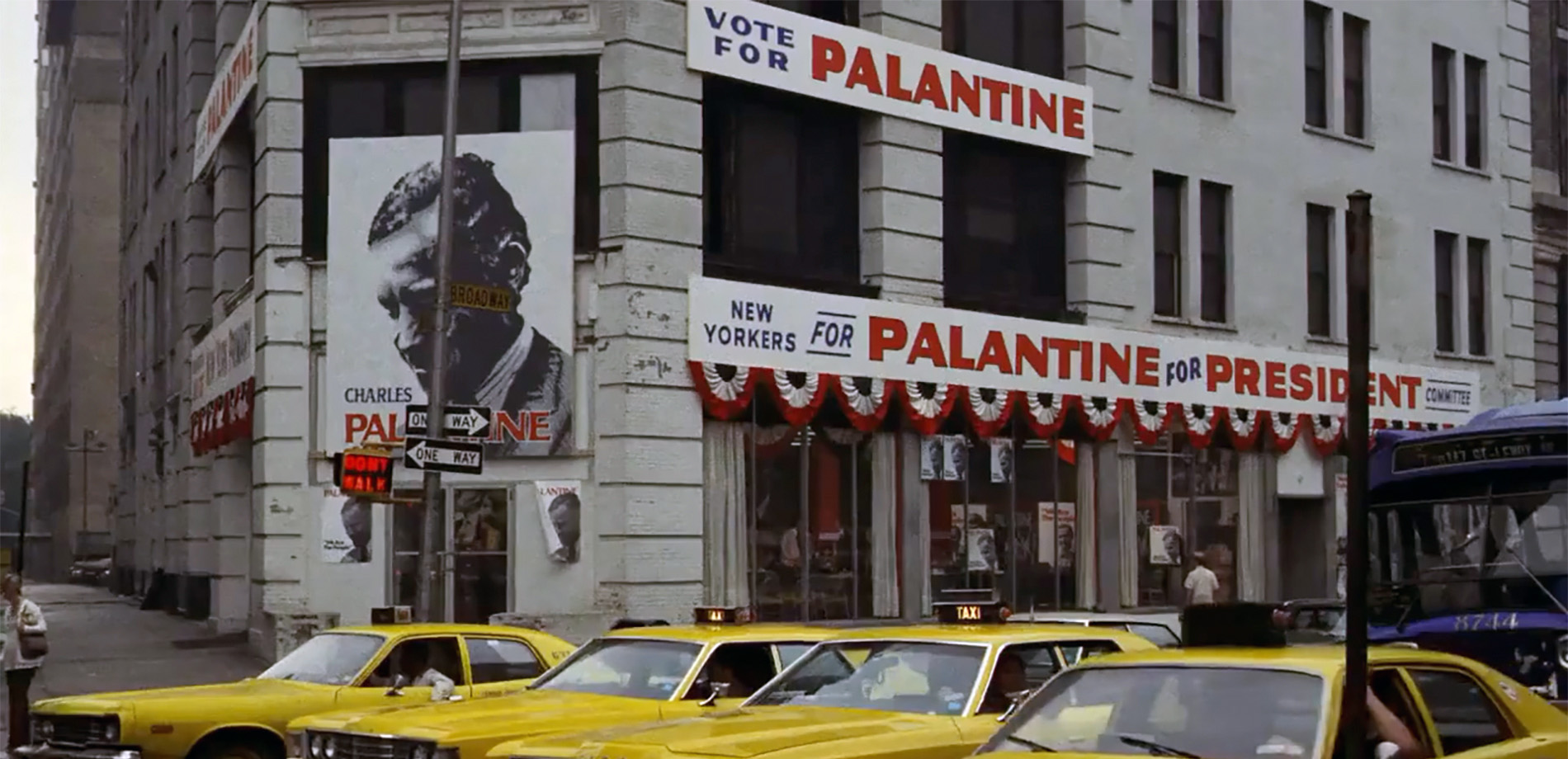
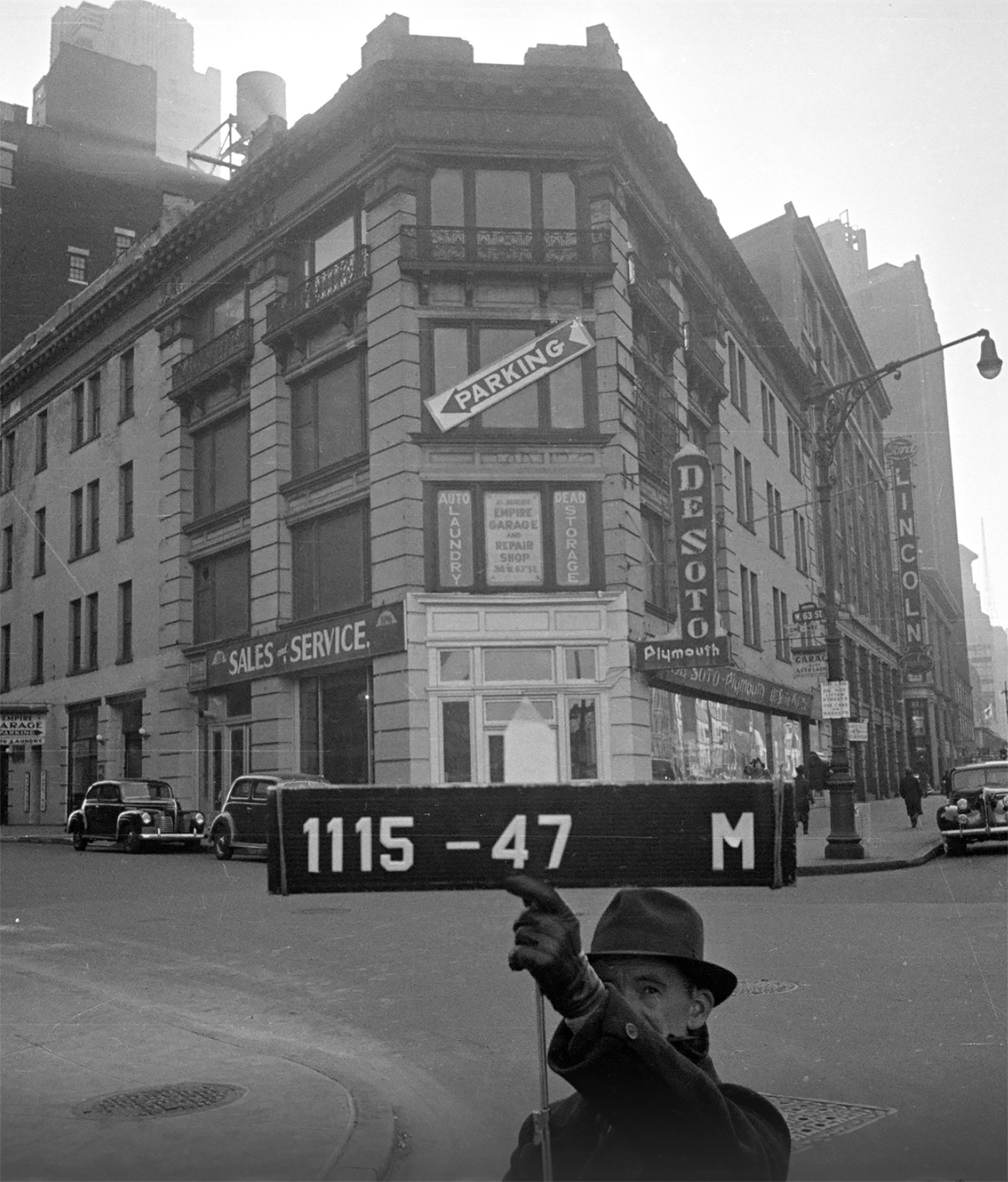
Despite the screen-used building being no more, most of its neighbors are still around (which will appear in some later scenes).
Times Square to Hotel Olcott
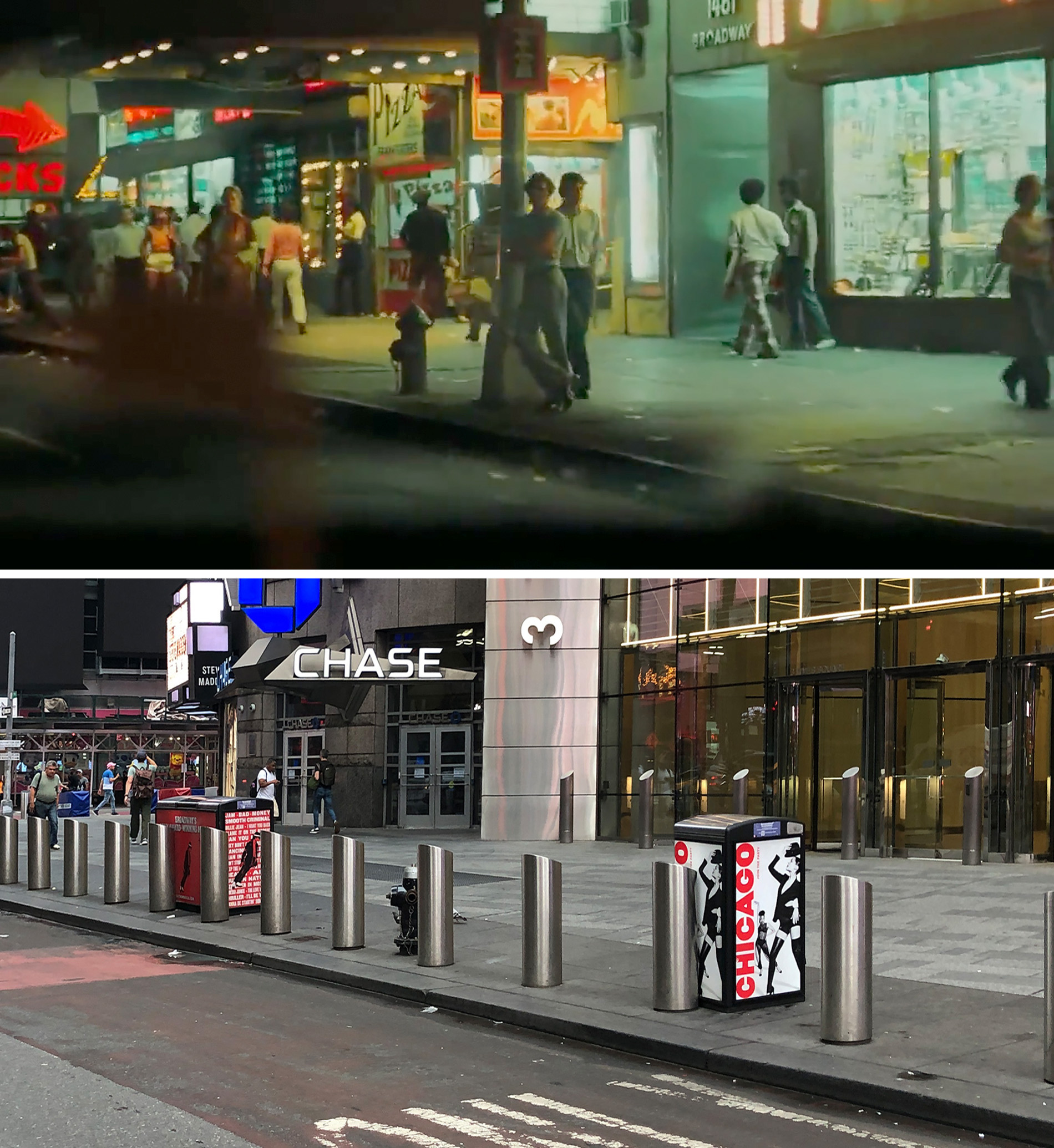
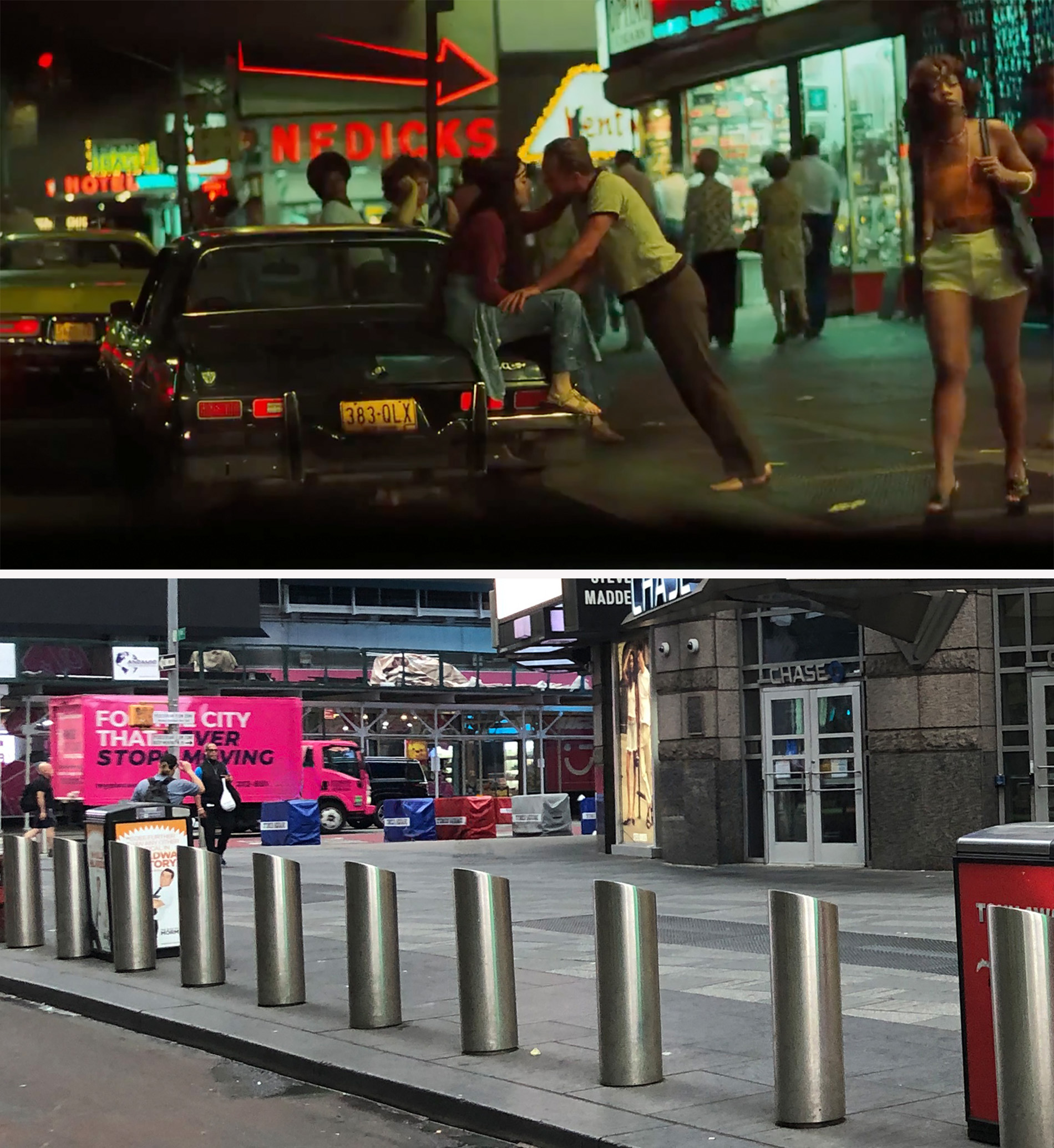
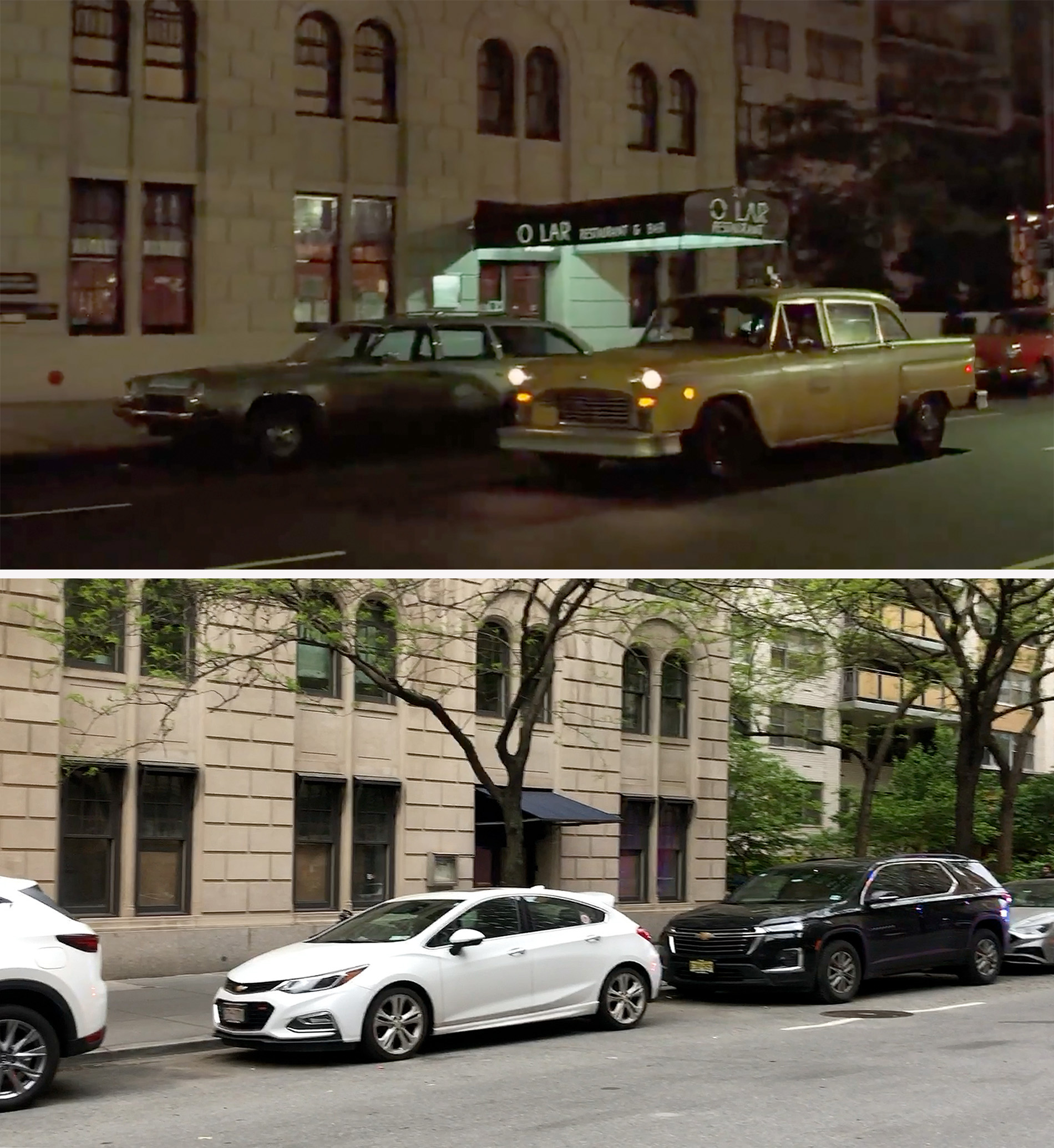
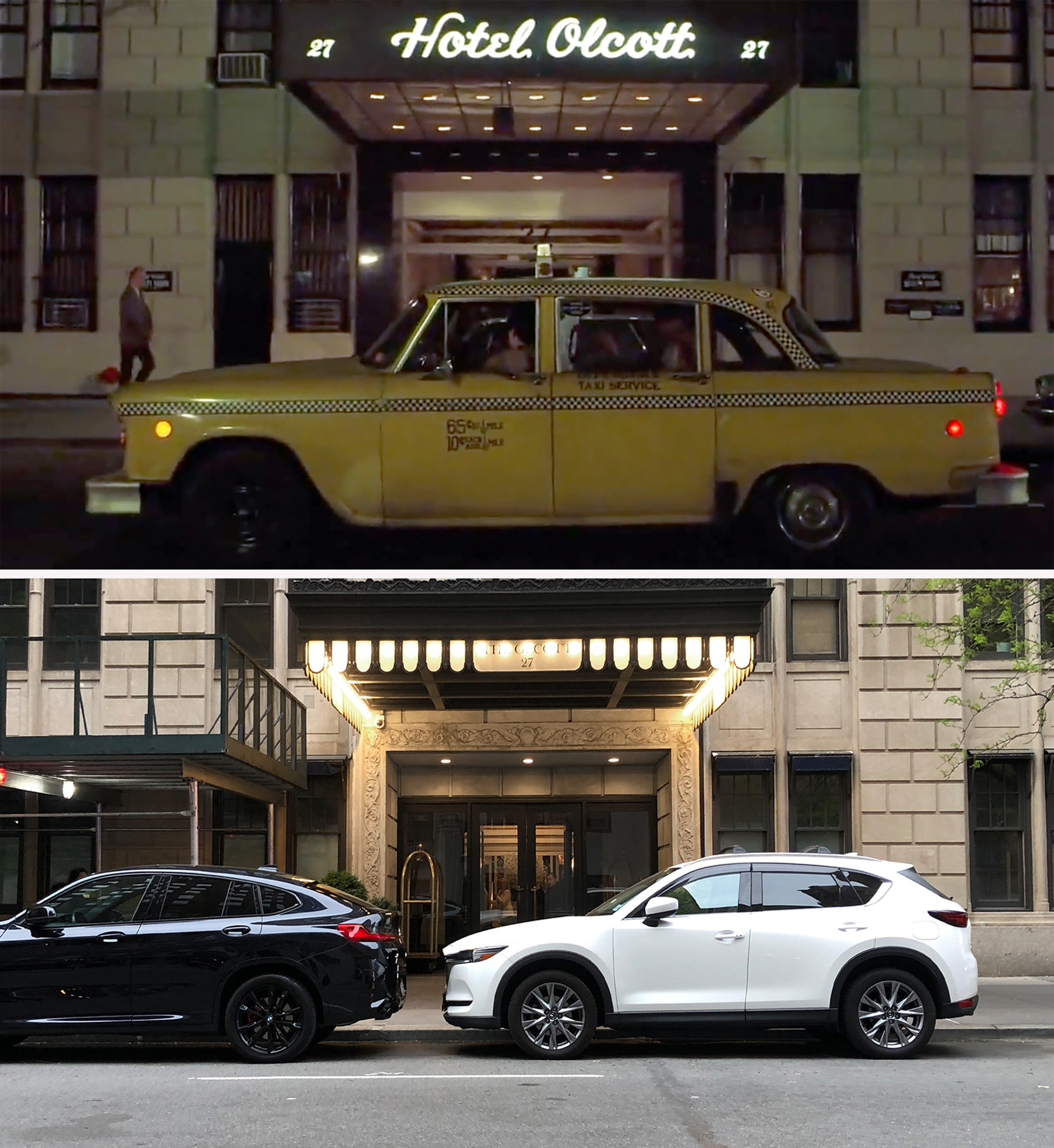
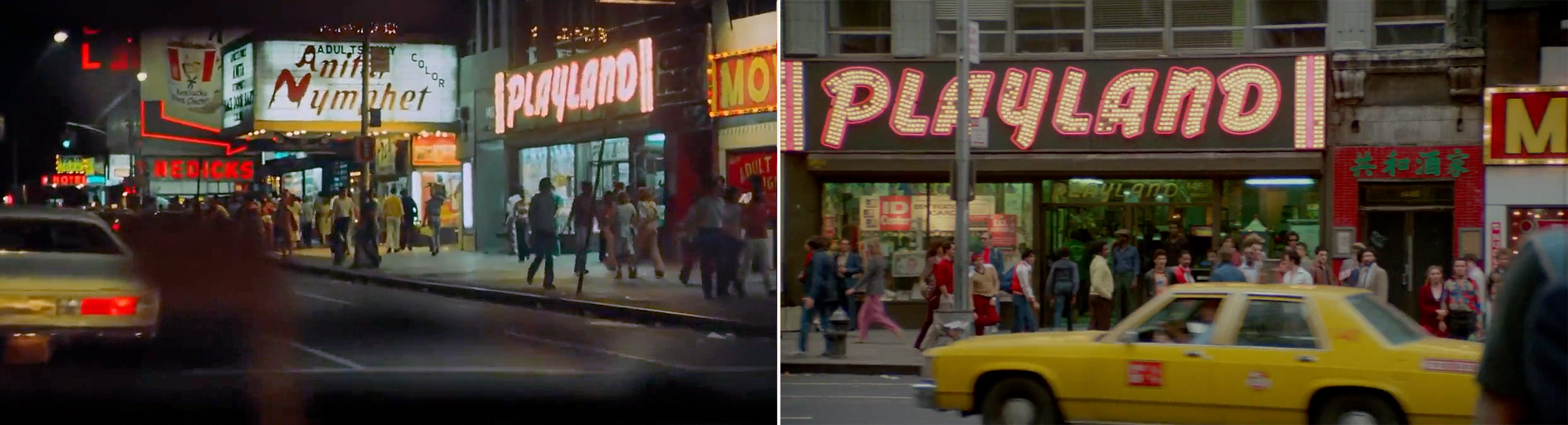
The locations of both the Times Square pick-up and the hotel drop-off were previously identified by others. What’s interesting about the Times Square location is that it’s near a Playland arcade that would later be featured in another Scorsese picture, The King Comedy, also starring Robert De Niro.
The drop-off location on W 72nd Street was in front of the clearly marked Olcott Hotel, which had been in operation for most of the 20th century.
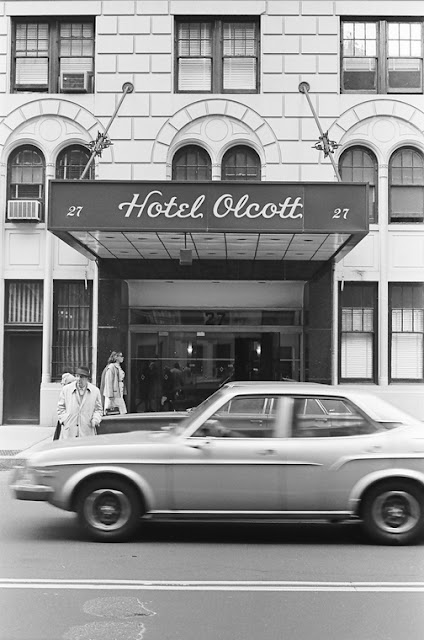
When the Olcott first opened in 1925, the somewhat remote Upper West Side was almost exclusively reserved for the affluent.
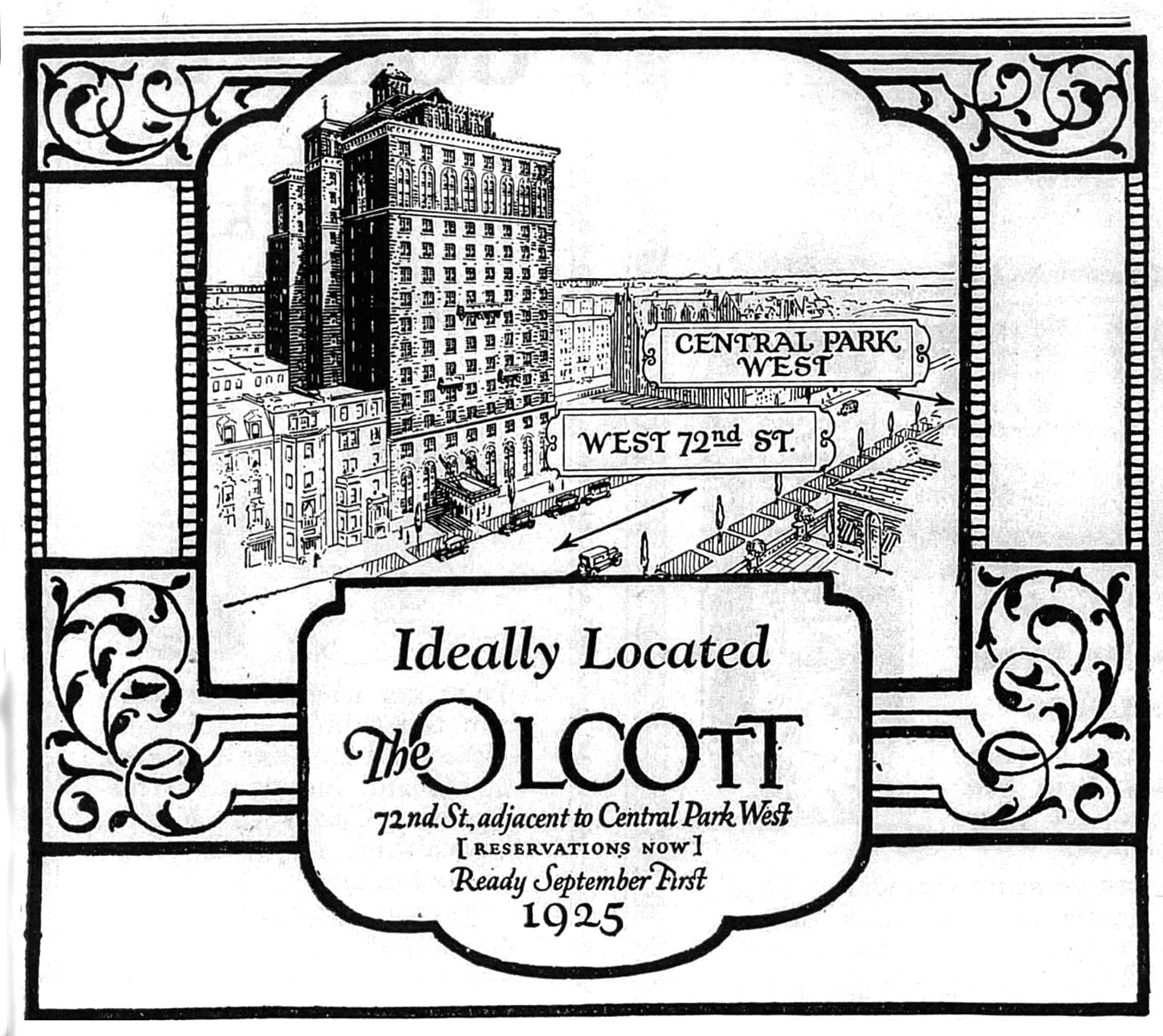
Catering to this moneyed clientele, the hotel’s edifice was constructed of lavish materials, such as limestone and gold-colored tapestry, and inside each of the 227 suites, they included what were at the time, cutting-edge conveniences, such as “private serving pantries with automatic refrigeration.”
By the time the 1990s rolled around, most of the hotels in the area had been converted into apartments, but the Olcott continued to hang on to its original iteration. This lasted until 2005, when the building was converted into standard condominiums.
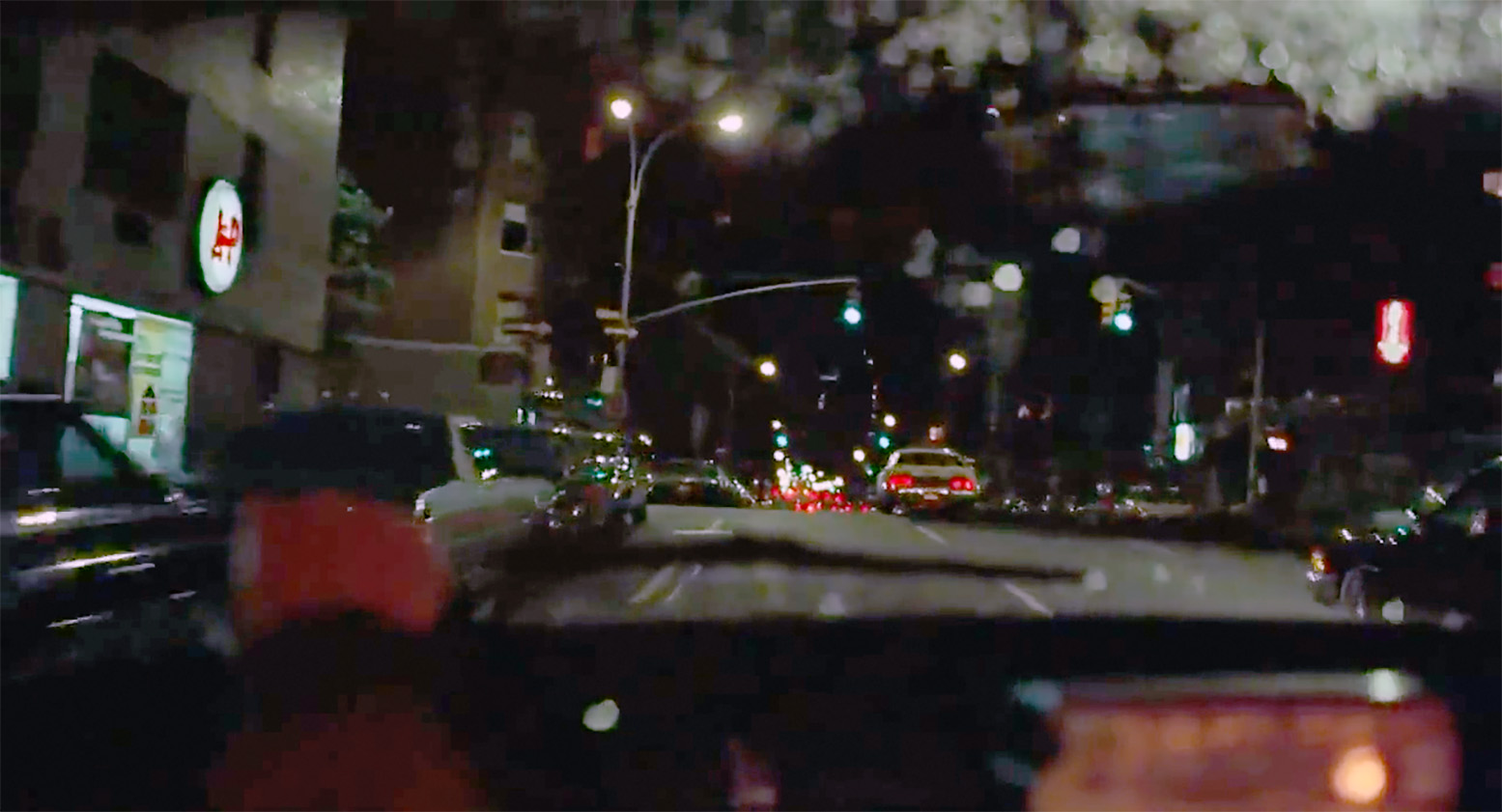
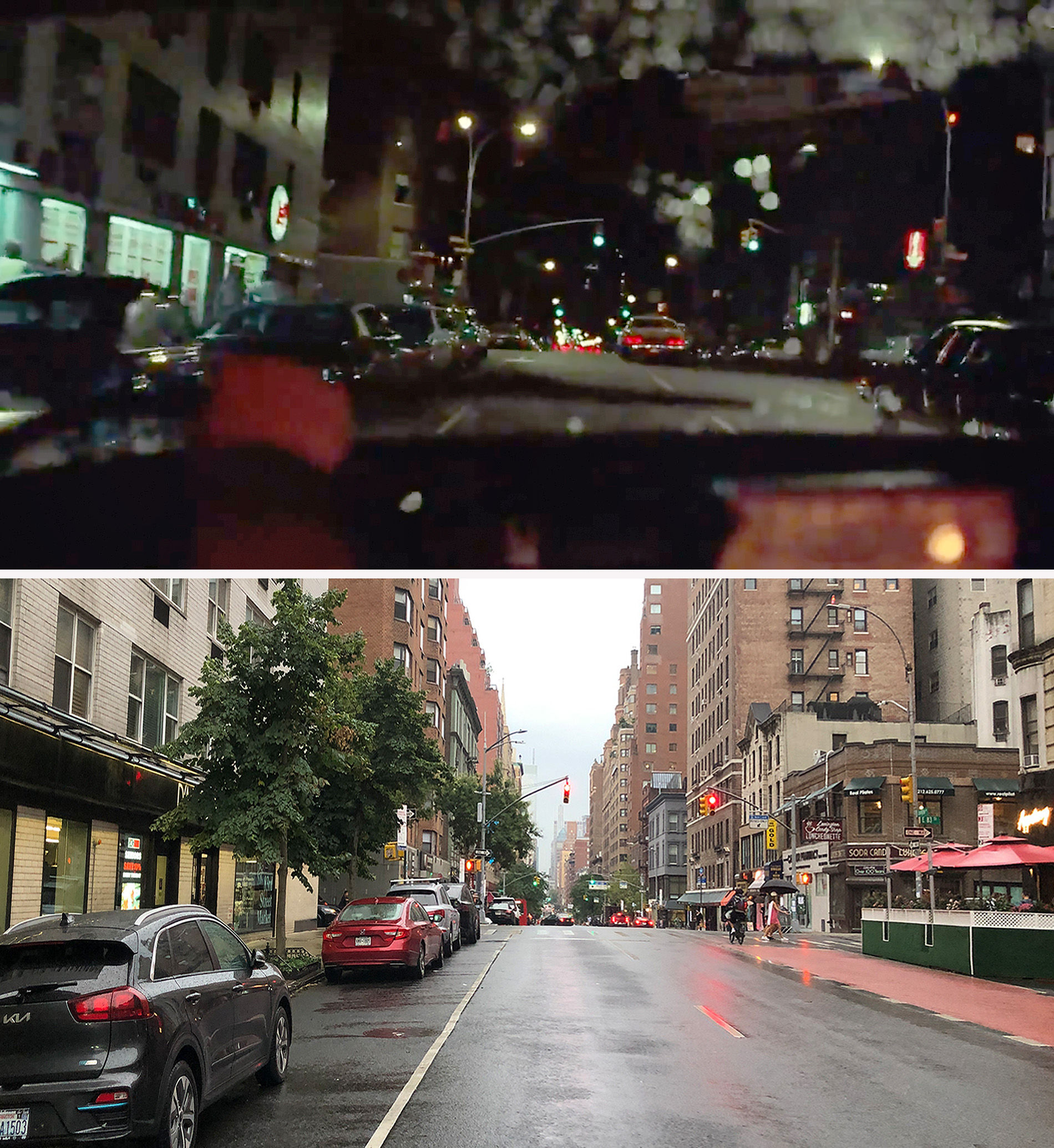
In between the Times Square and the Olcott Hotel scenes, there’s a brief POV shot of Travis driving past an A&P supermarket whose location was unidentified.
I could’ve gone to the library and look up addresses to A&P in an old phone book, but I ultimately took a different route. Instead, I focused on two key clues in the scene’s landscape — a narrow avenue (only three active lanes) and a peak to a small hill. Those two things, in conjunction with architecture typical for the Upper East Side, made me surmise they were on Lexington Avenue.
From there, I just checked out each hill on the avenue (there are only two or three) until I settled on 83rd and spotted matching buildings. As an extra bit of satisfaction, there’s even still a supermarket there — although, the 1975 food prices are long-gone.
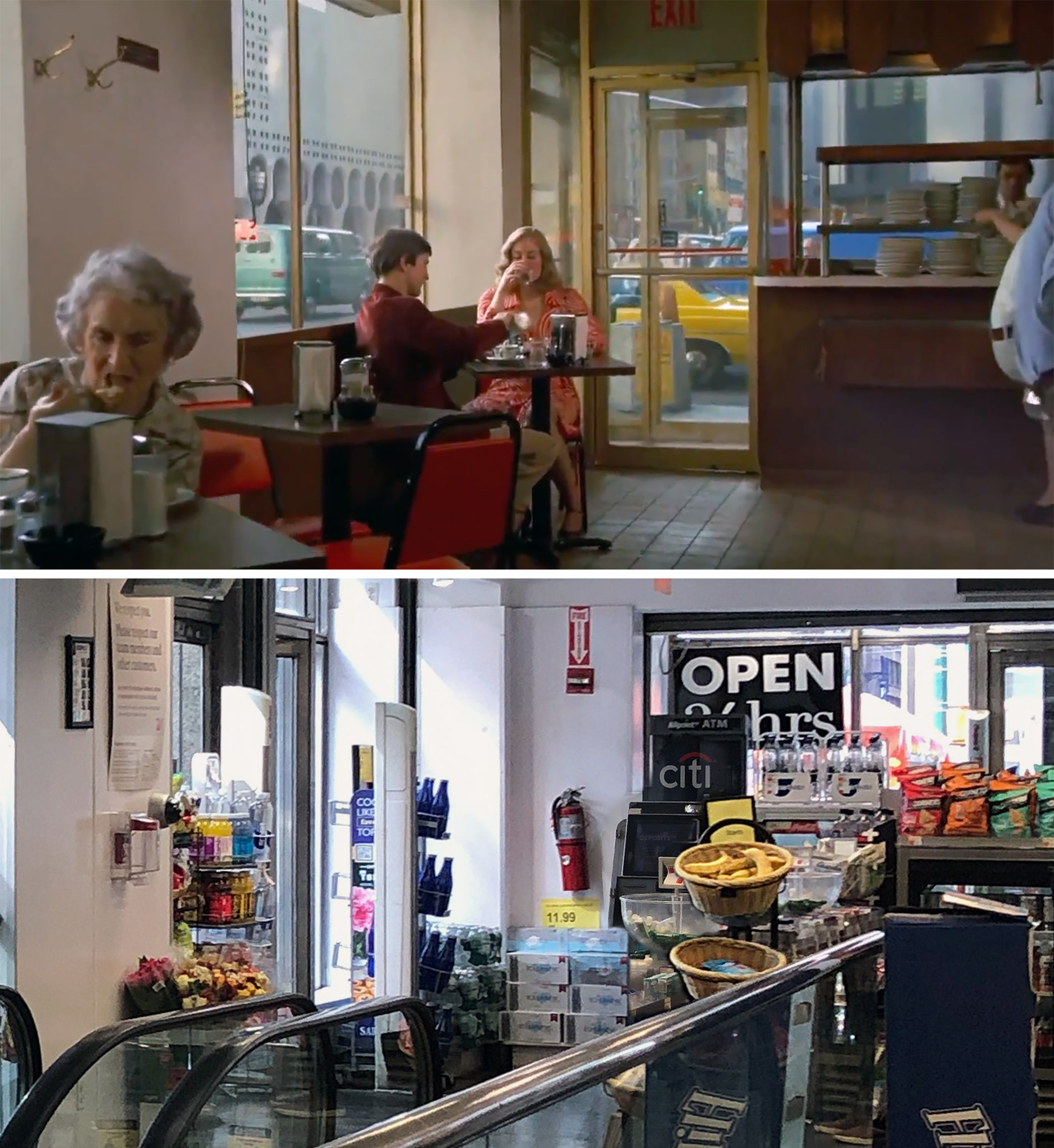
Greasy Diner
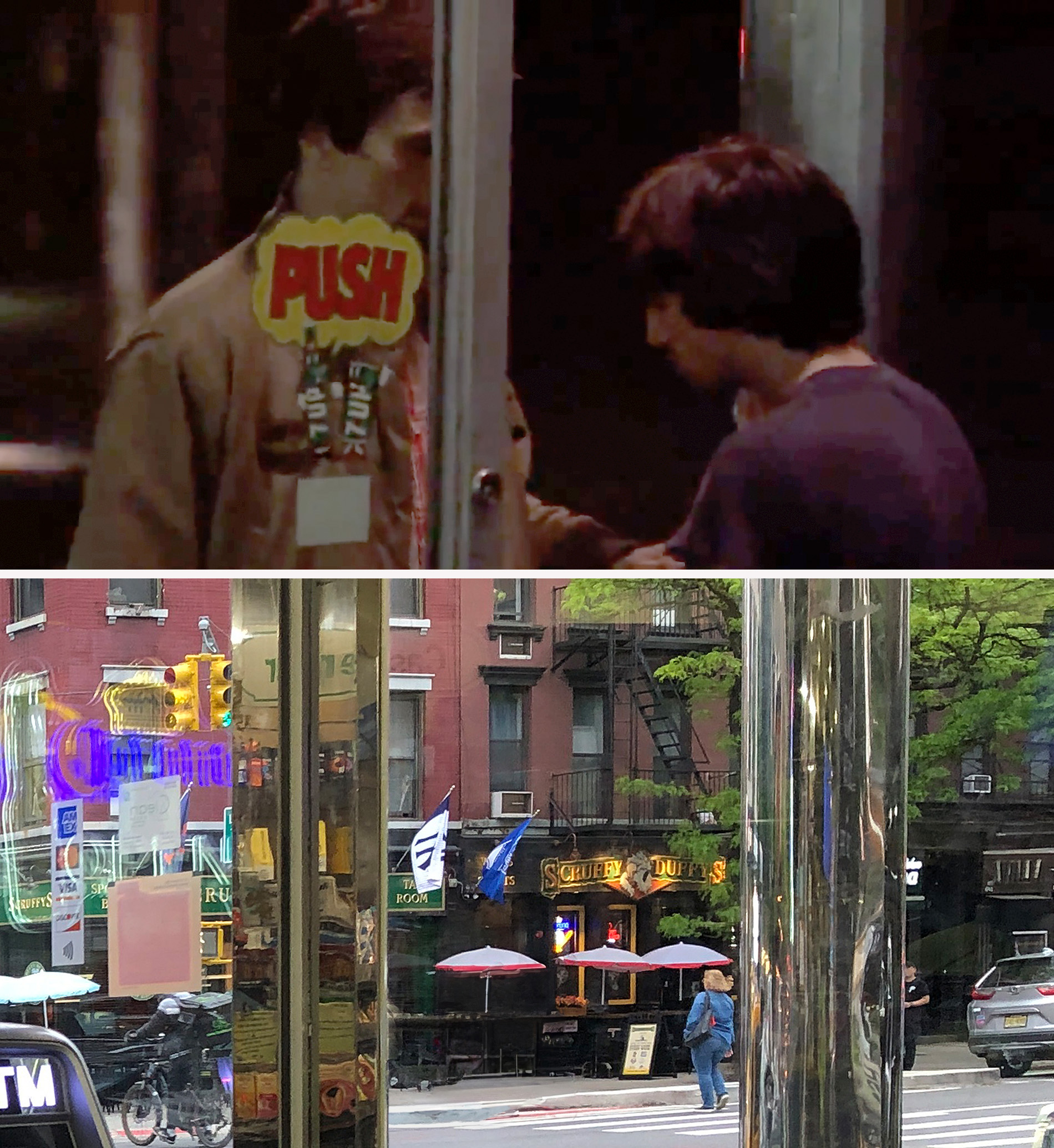
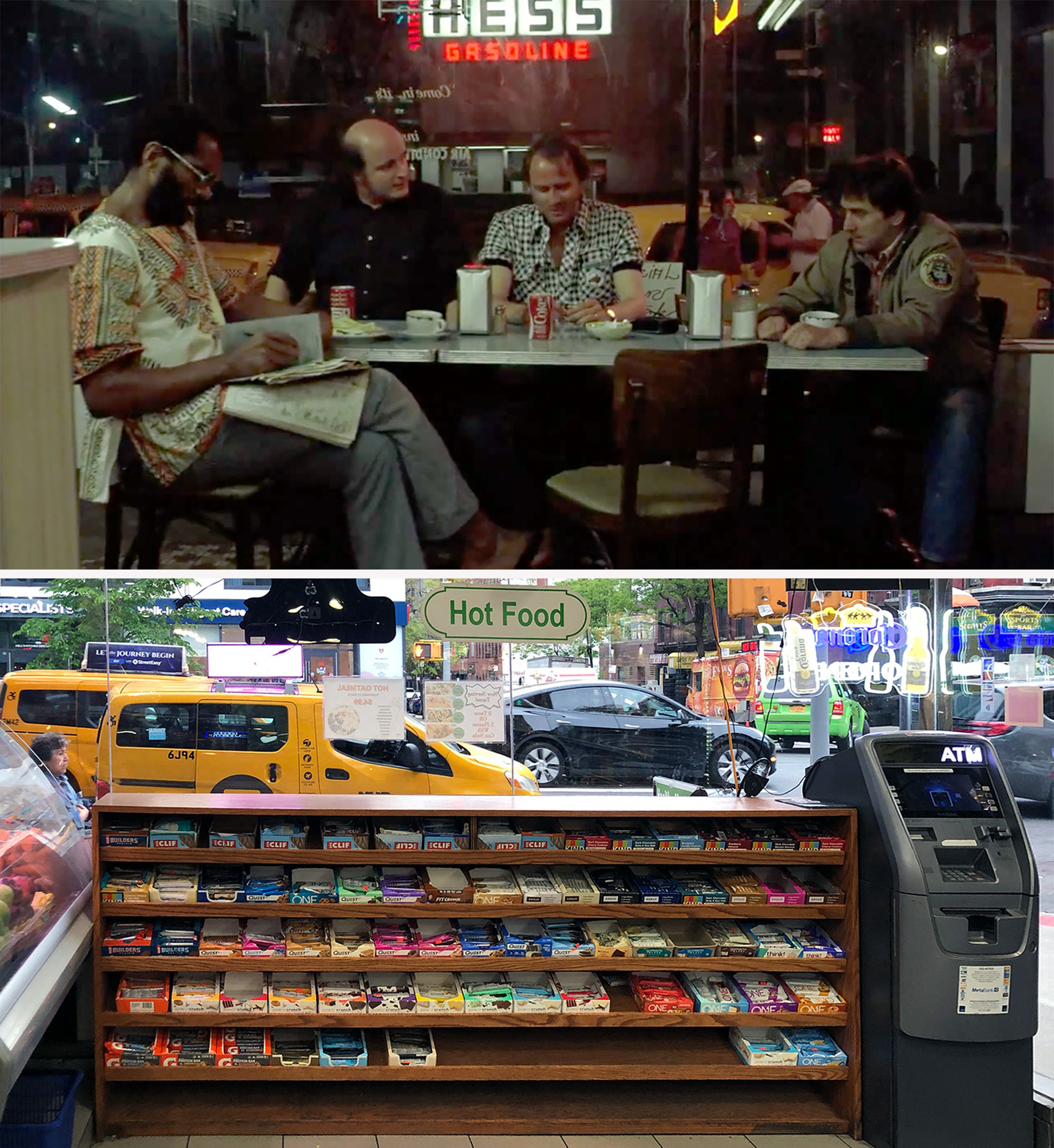
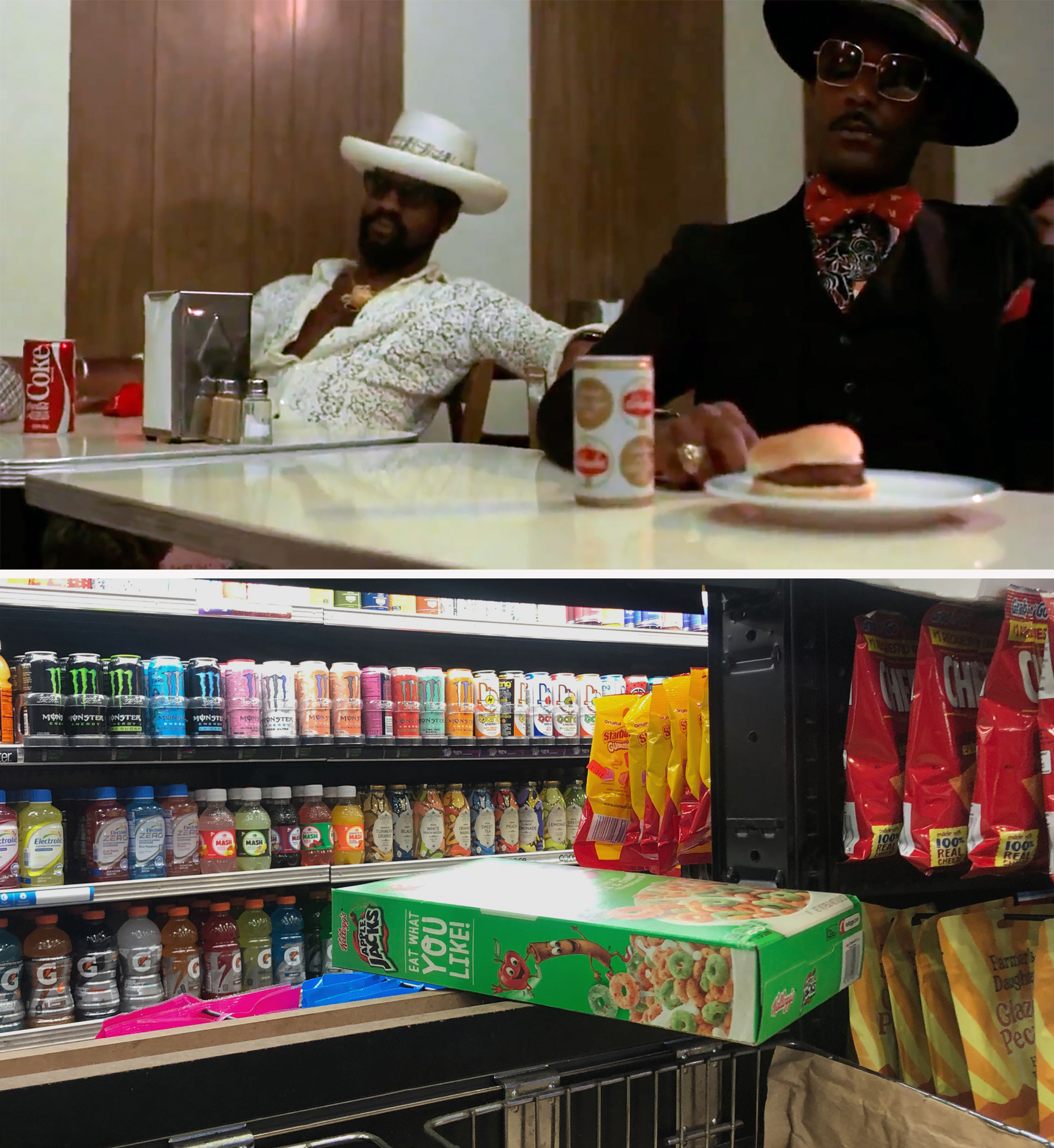
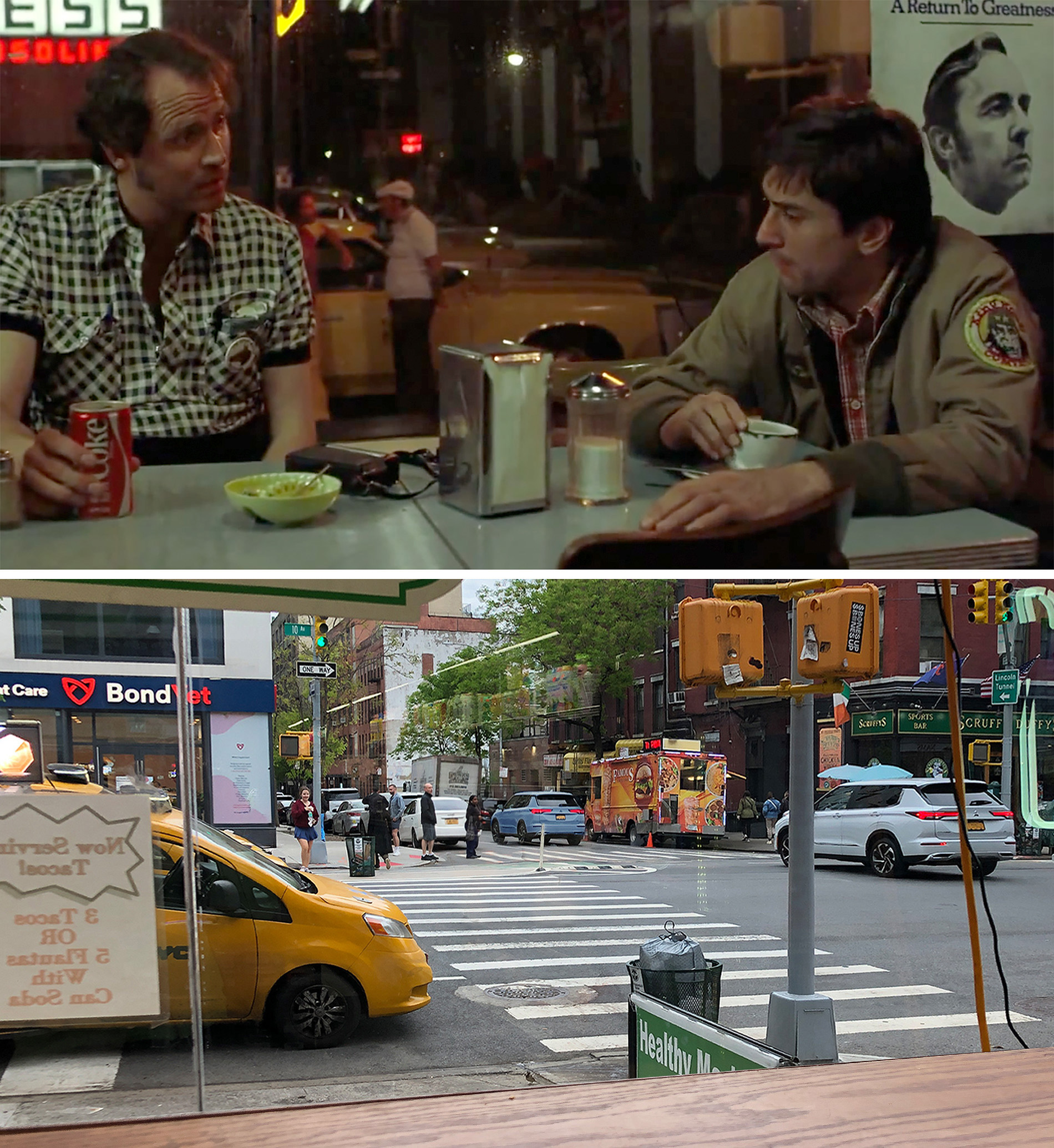
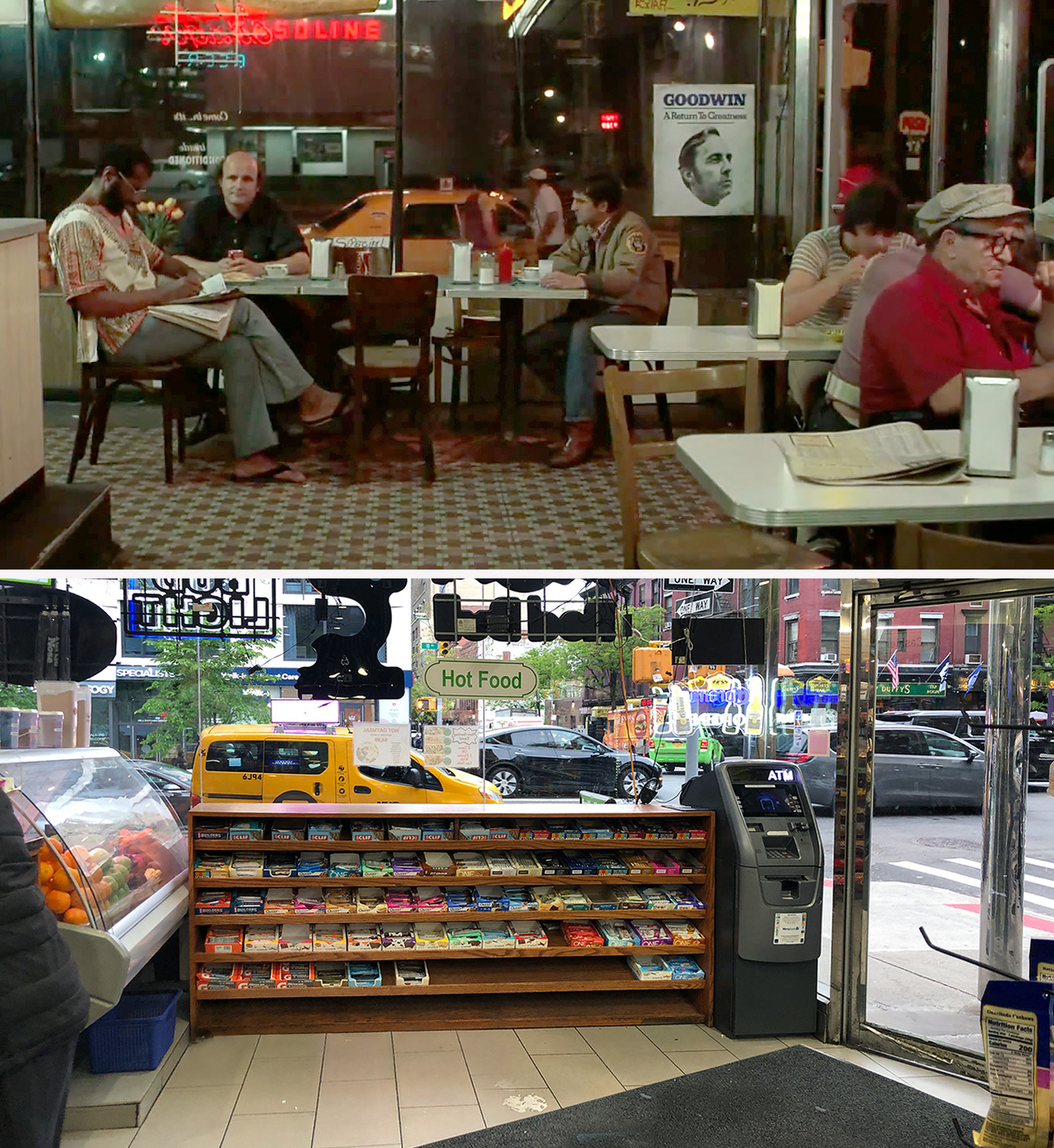
This was a missing location for many years, but when I saw a HESS gas station in the background, my mind instantly went to the one that used to be on Tenth Avenue in Hell’s Kitchen. (A good friend on mine lived in the hood in 1990s and I’d always pass the station on my way to his pad.) However, since there were other HESS stations in Manhattan at the time, I had to do some more in-depth research.
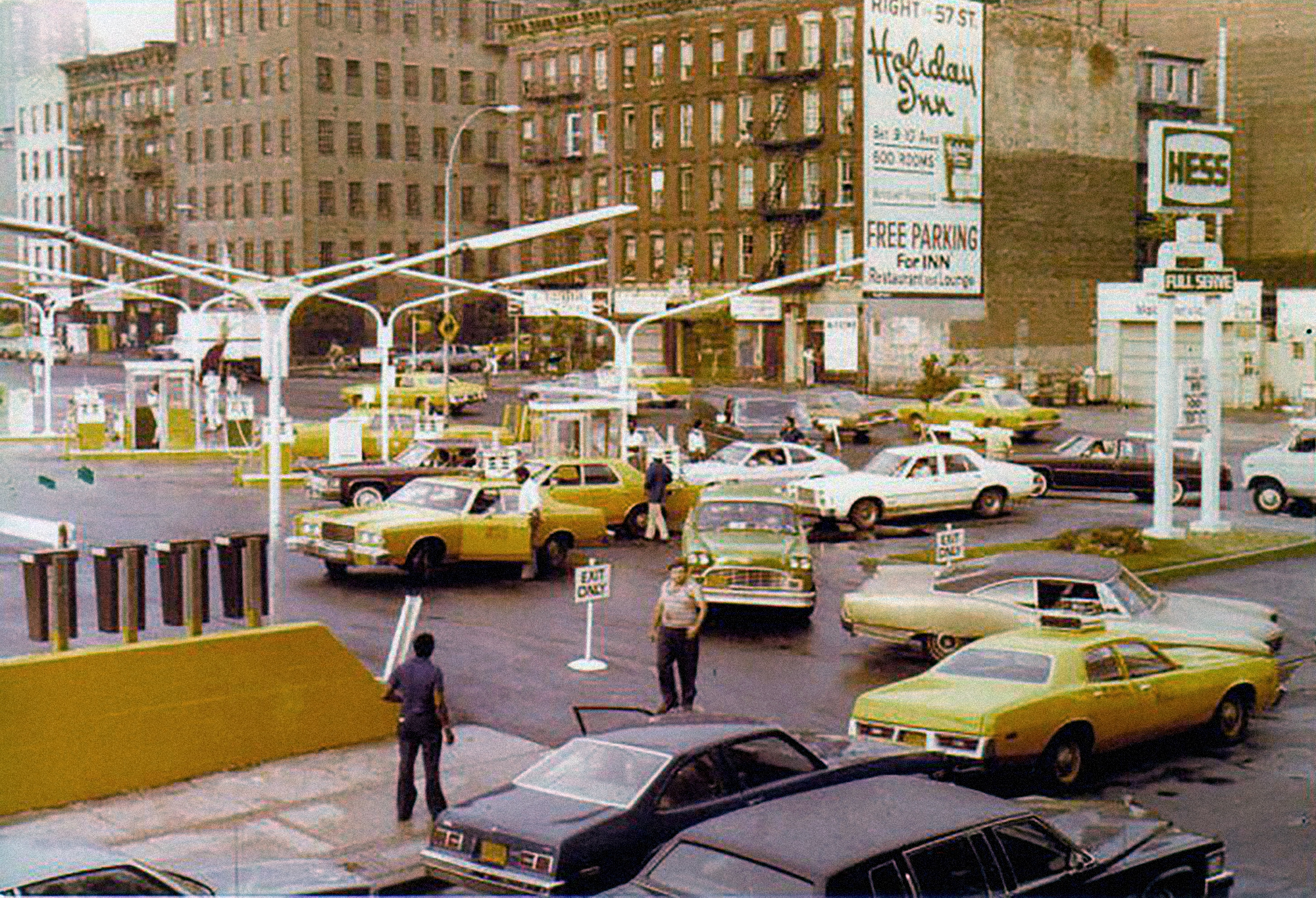
First thing I did was check out a few behind-the-scenes photographs taken at the location by Steve Shapiro.
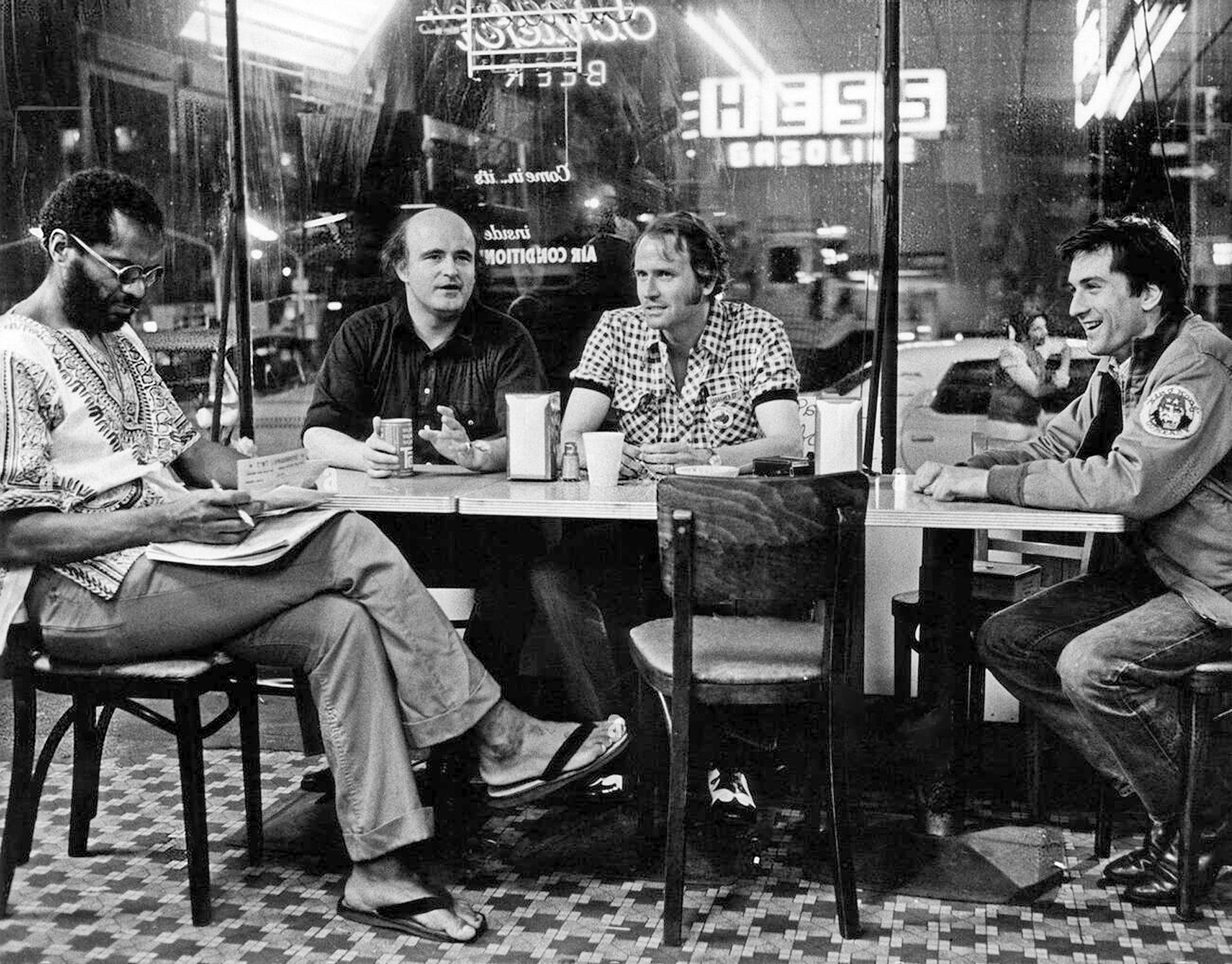
The photographs didn’t provide much evidence as to their whereabouts, but they did show the general convivial mood of the production. This was supported by an interview with De Niro in a 1998 issue of Neon Magazine, who said:
There was a lot of laughing and joking during the shooting between takes. I remember that. It was a lighter period, even though the material was very heavy.
A big breakthrough finally came months later when I discovered a 1976 documentary called, News from Home, which included one long continuous take of a car driving up Tenth Avenue, offering some valuable visuals.
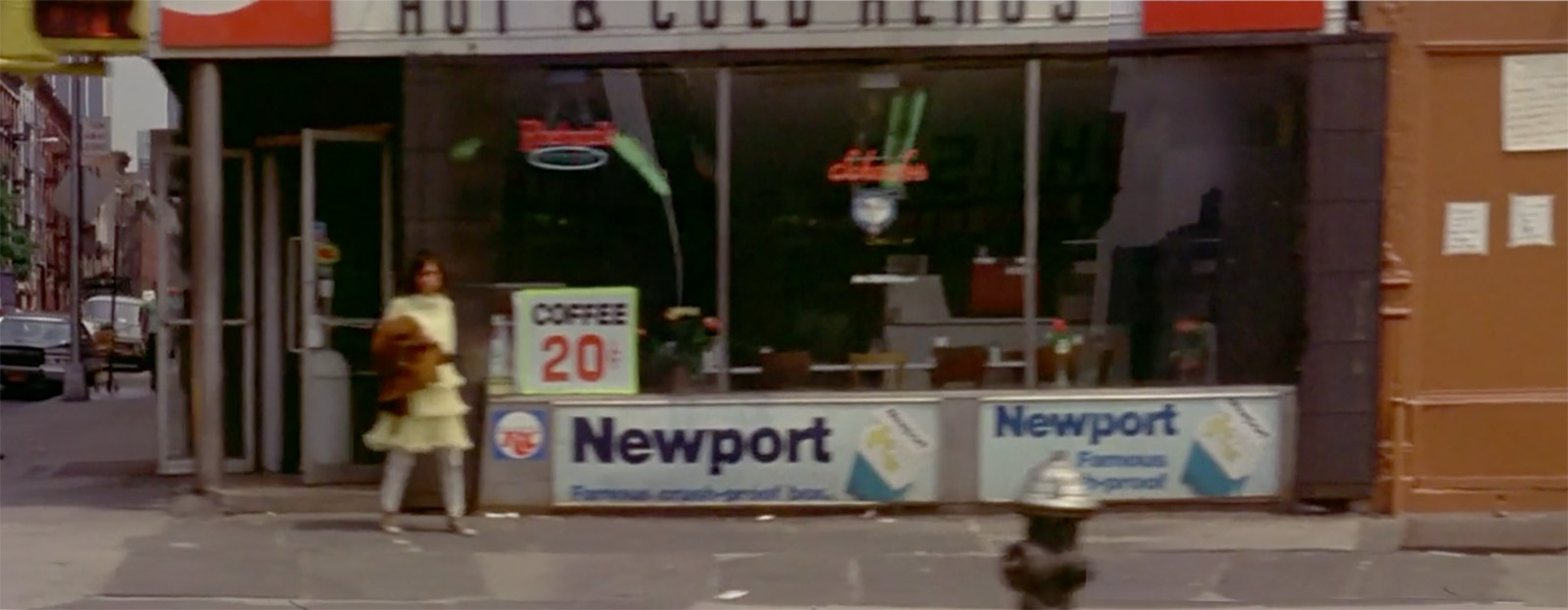
In the film, we get views of all the buildings across from the HESS station, located between 44th and 45th. Judging by the facades, I thought the corner building at no. 632 looked to be the most likely candidate.
I then reversed a frame from Taxi Driver and compared it to a frame from the documentary and found several matching details, including what looked like the very same chairs.
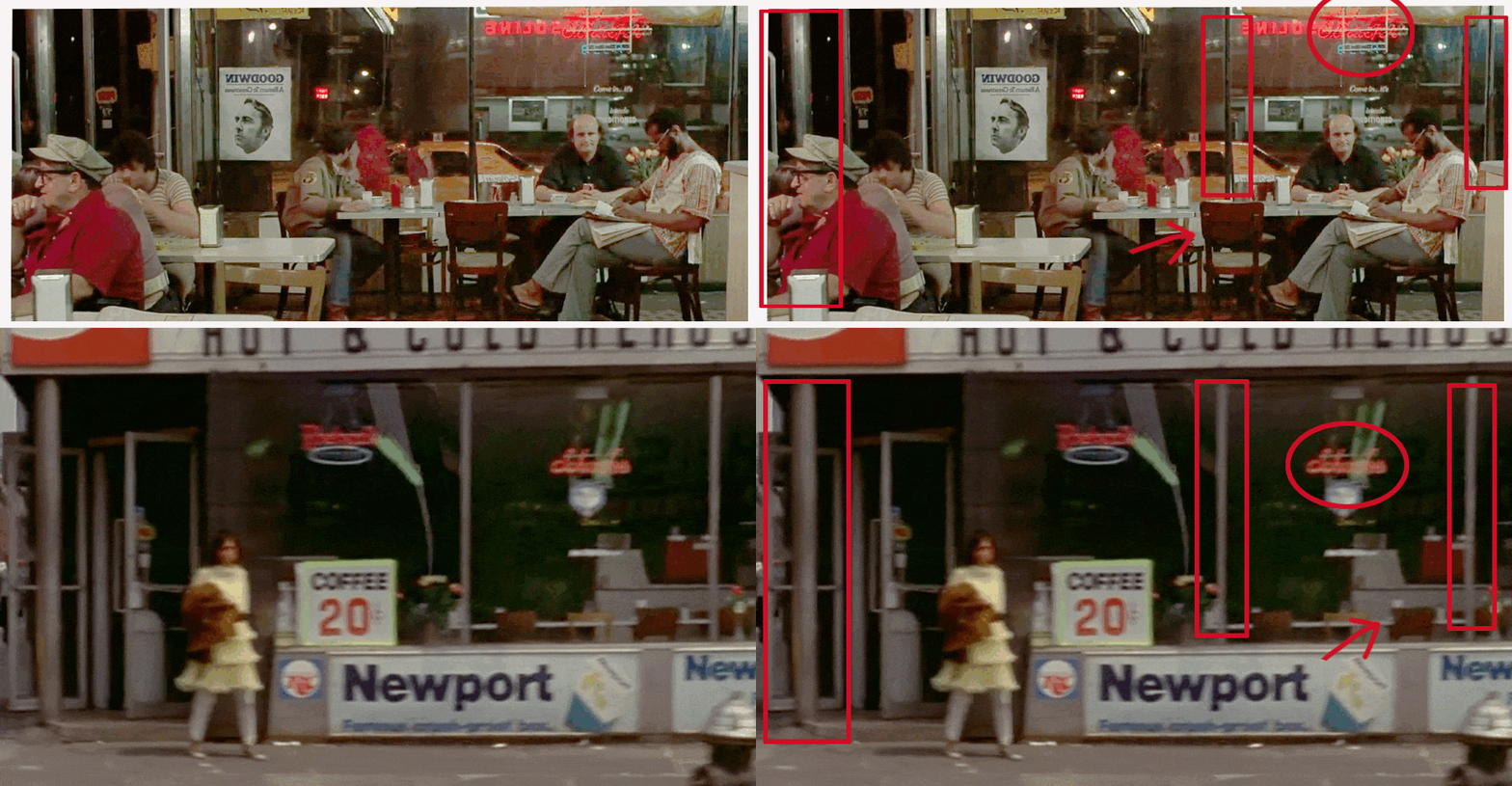
Today, the retail space is a deli/mini-mart, but it still has the support post outside its entrance. It also has a couple tables in the back where patrons can sit and eat a meal or drink coffee.
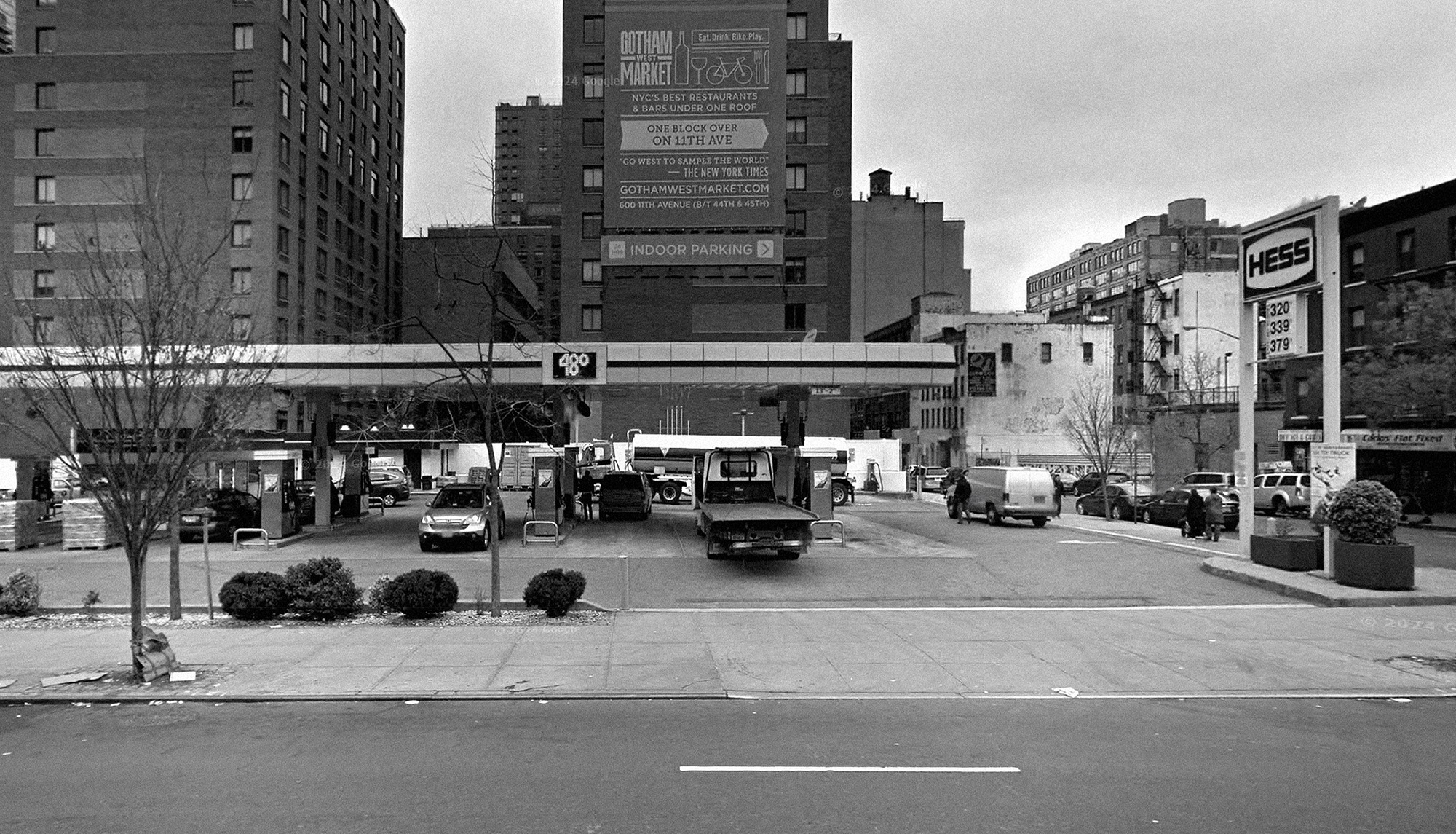
As you might’ve noticed in the “then/now” images above, the HESS gas station is no longer there, but it did manage to stick around until 2015. After briefly becoming a Speedway, the station finally had to shut down to make way for —you guessed it— some high-end apartment buildings.
Travis Asks Betsy Out
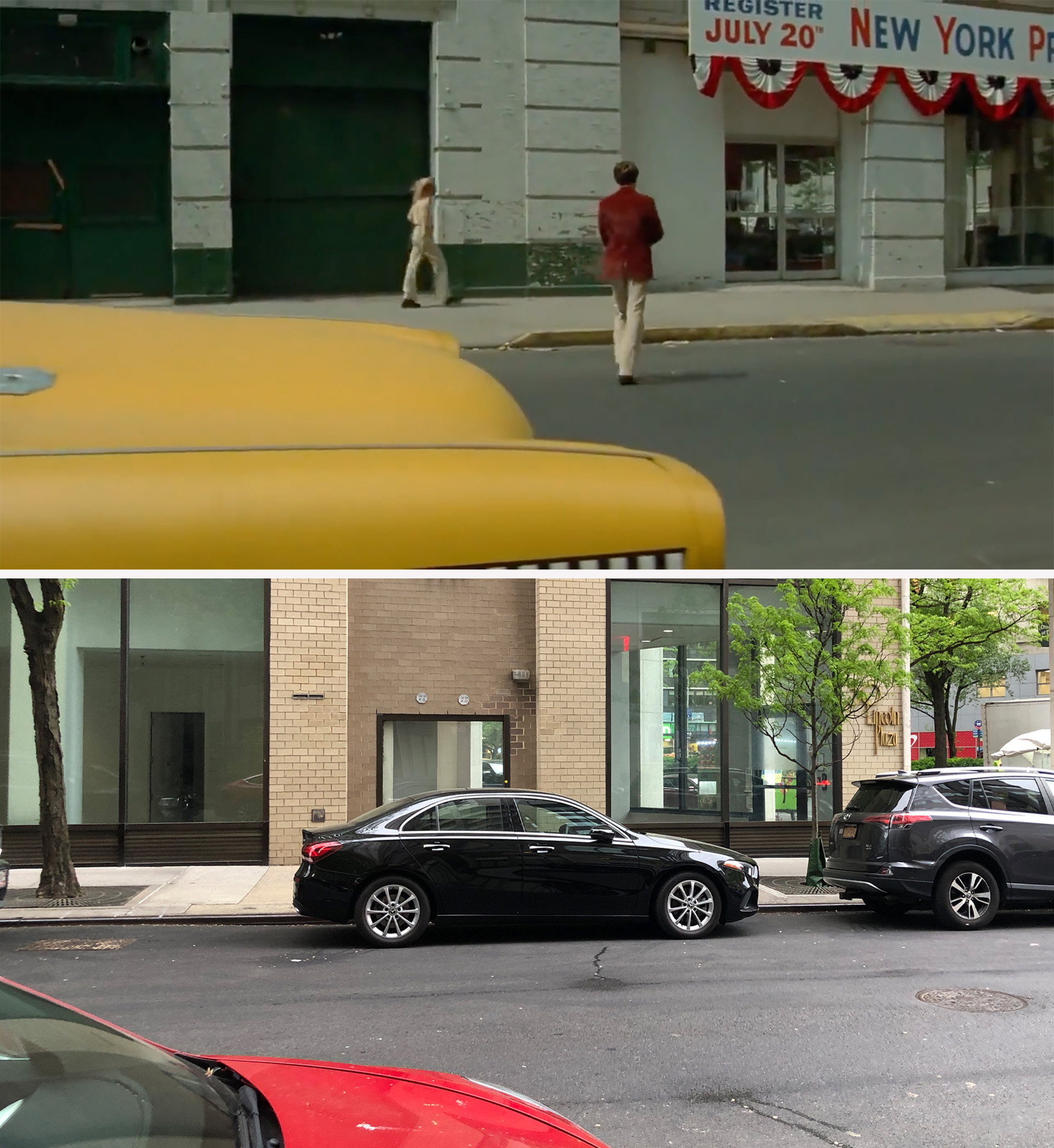
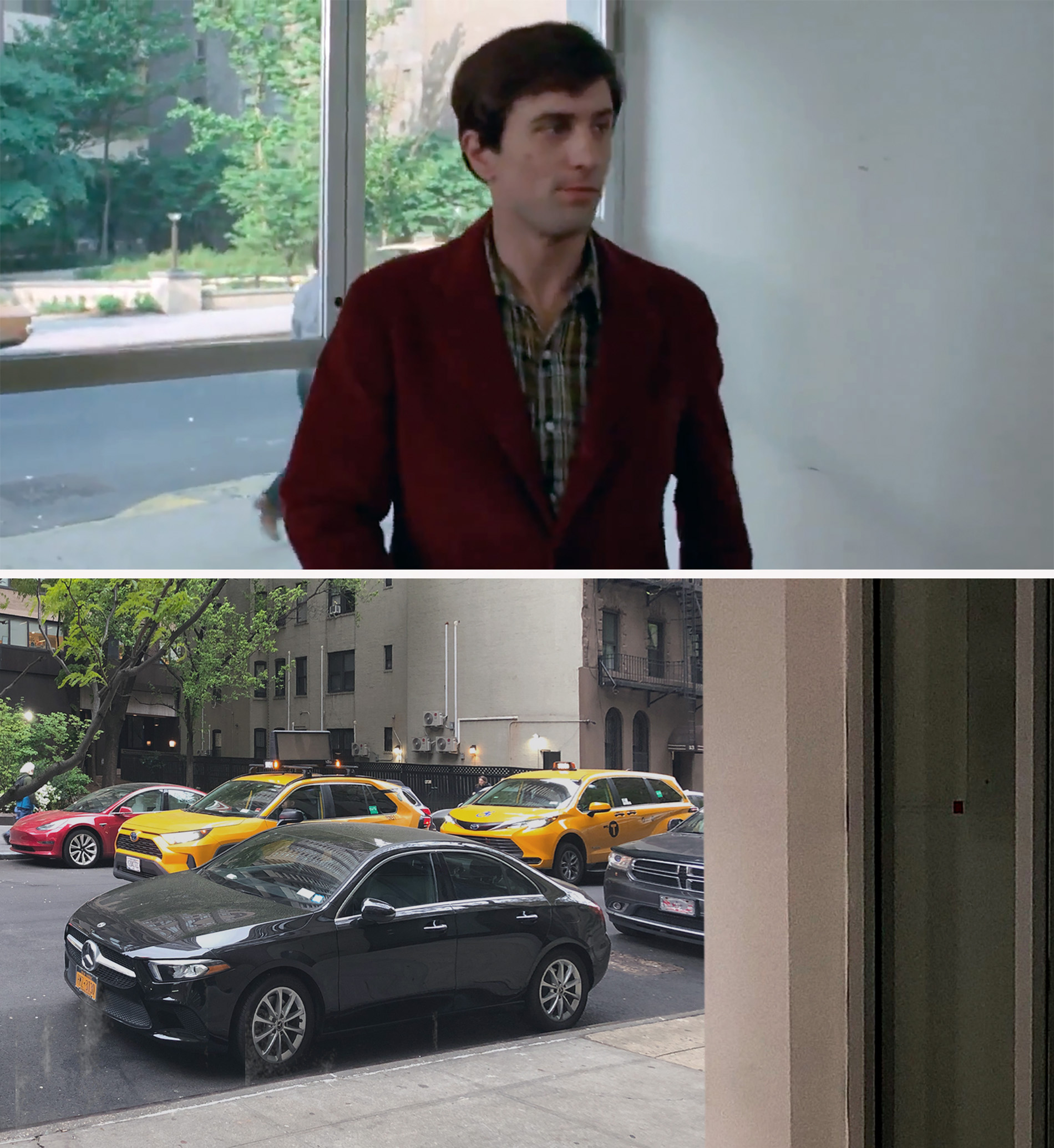
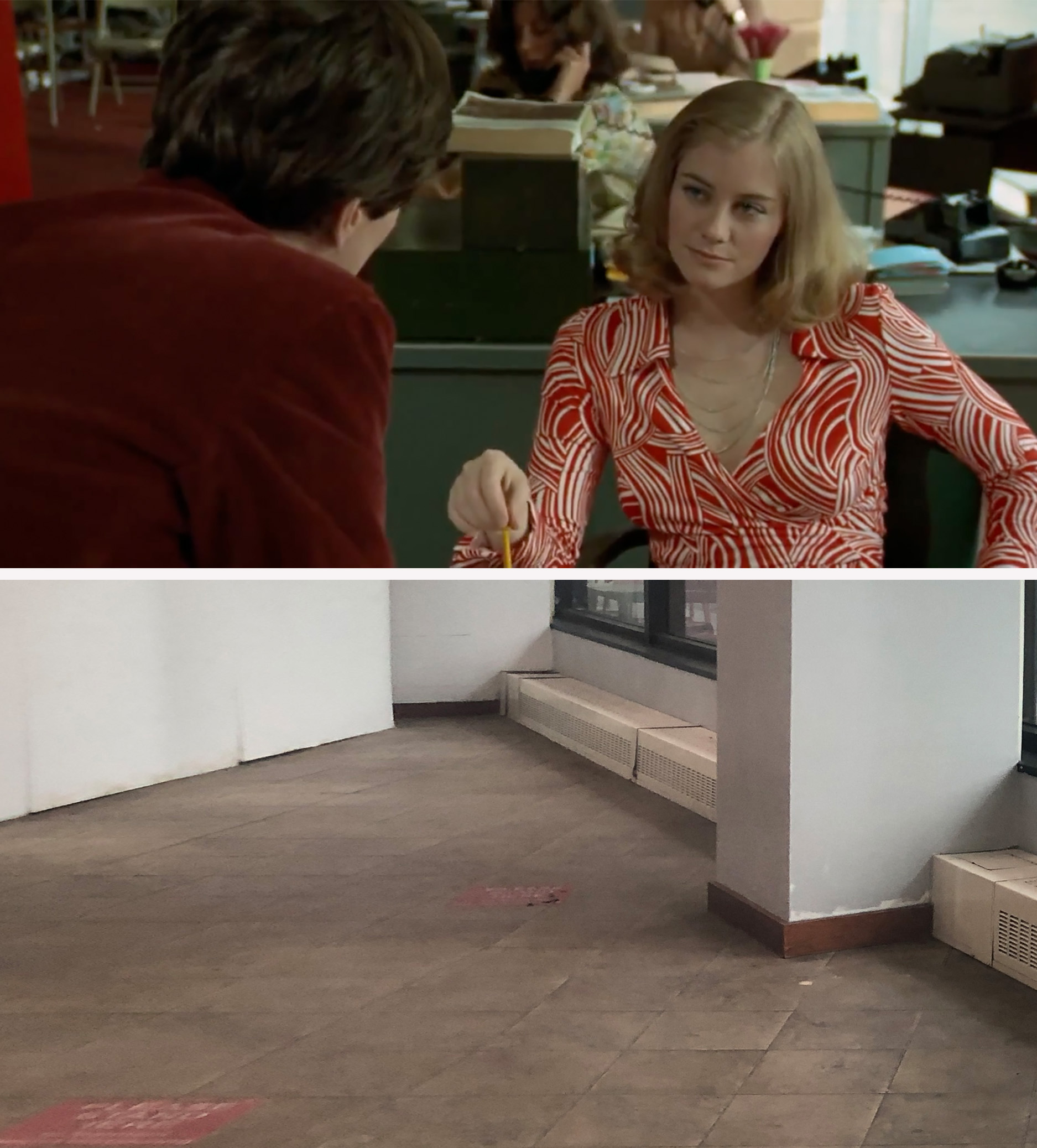
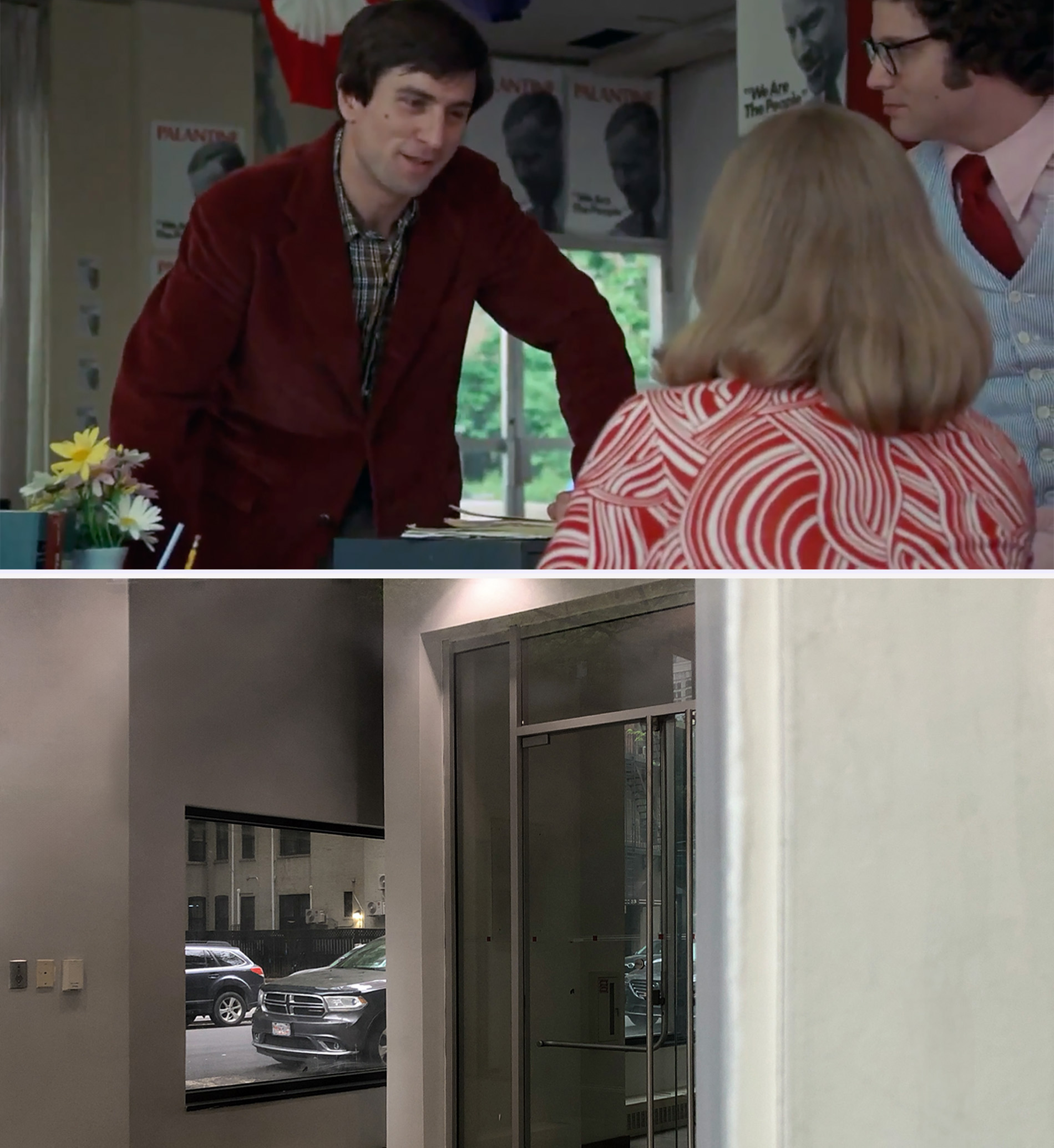
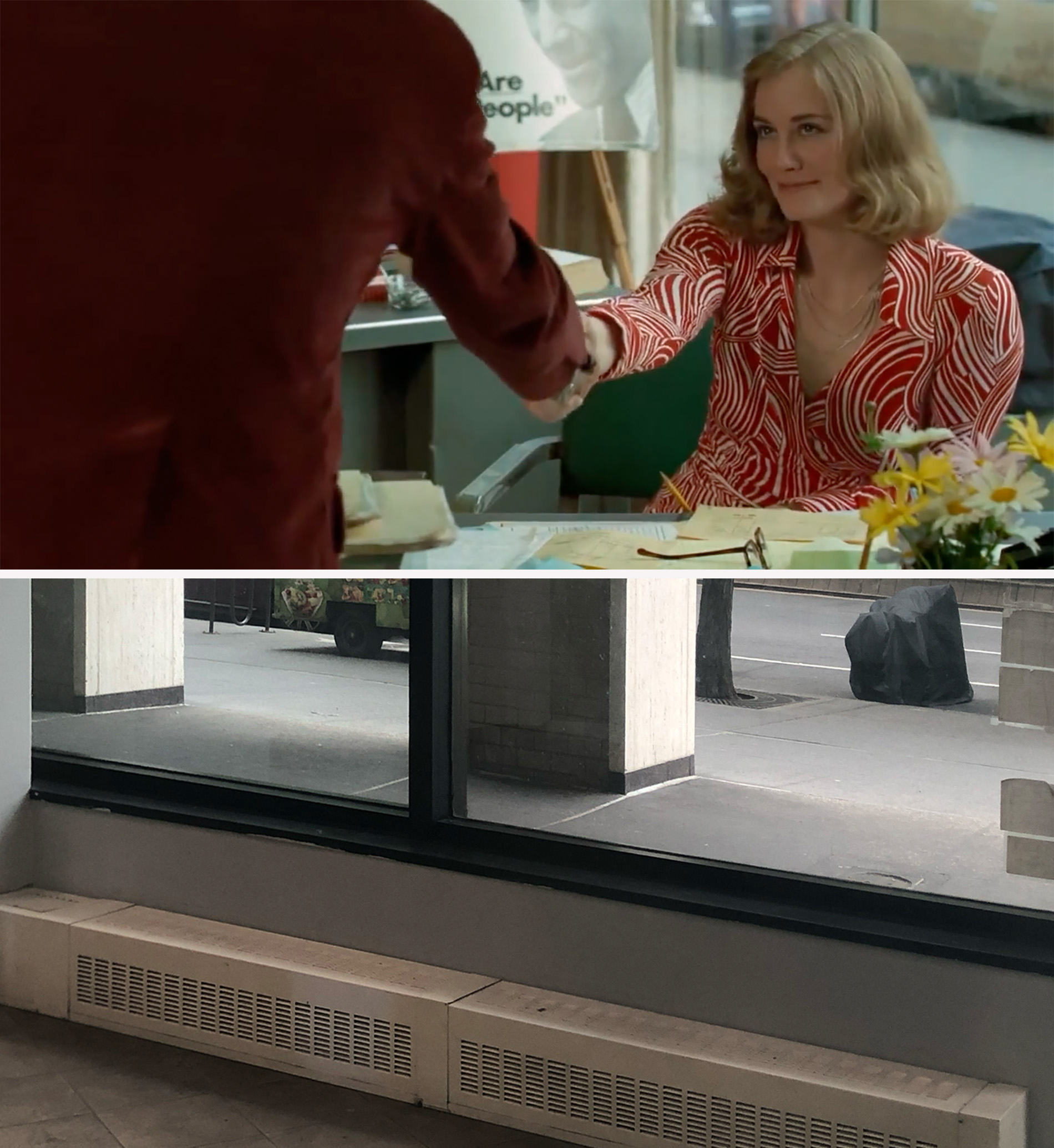
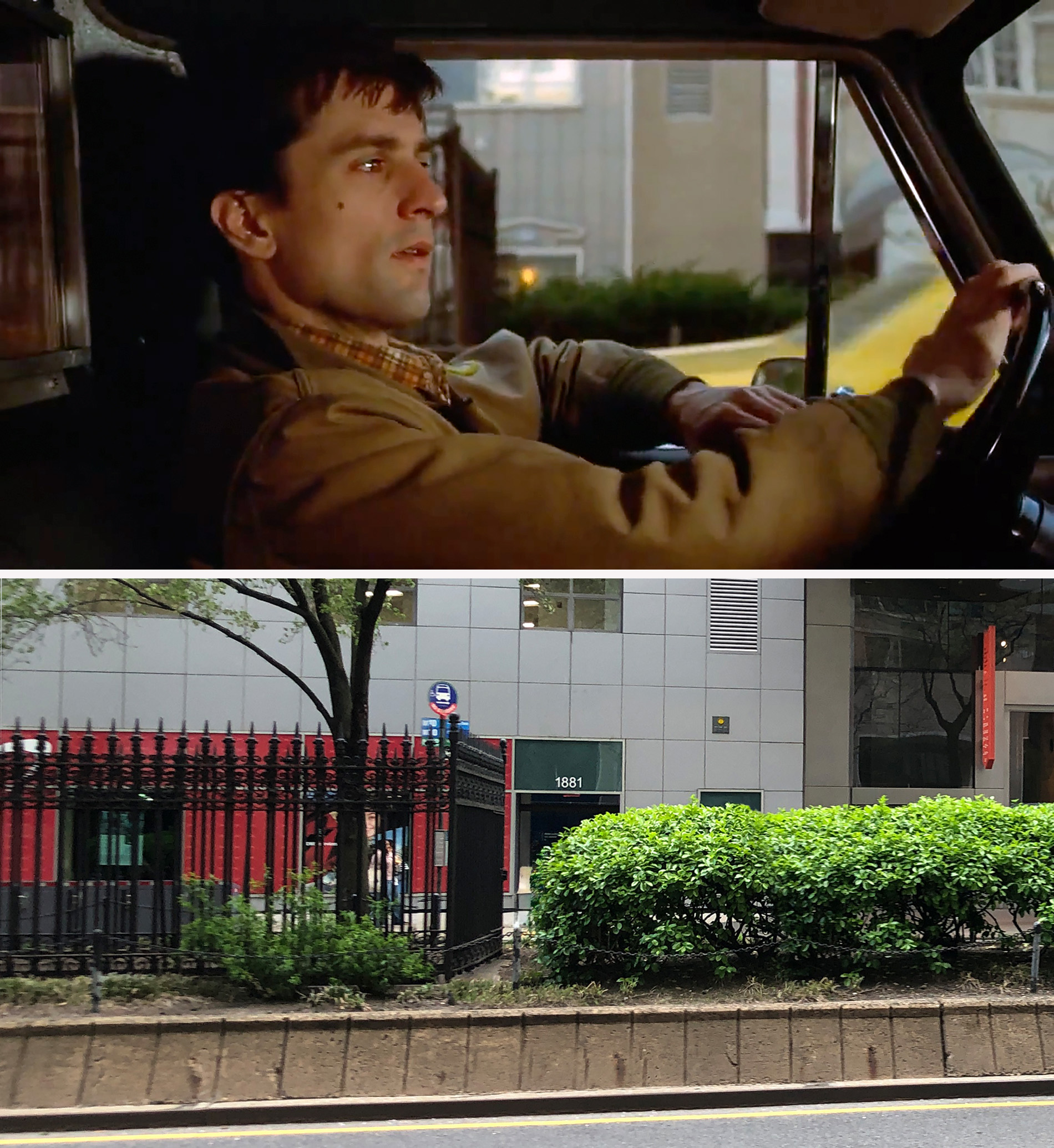
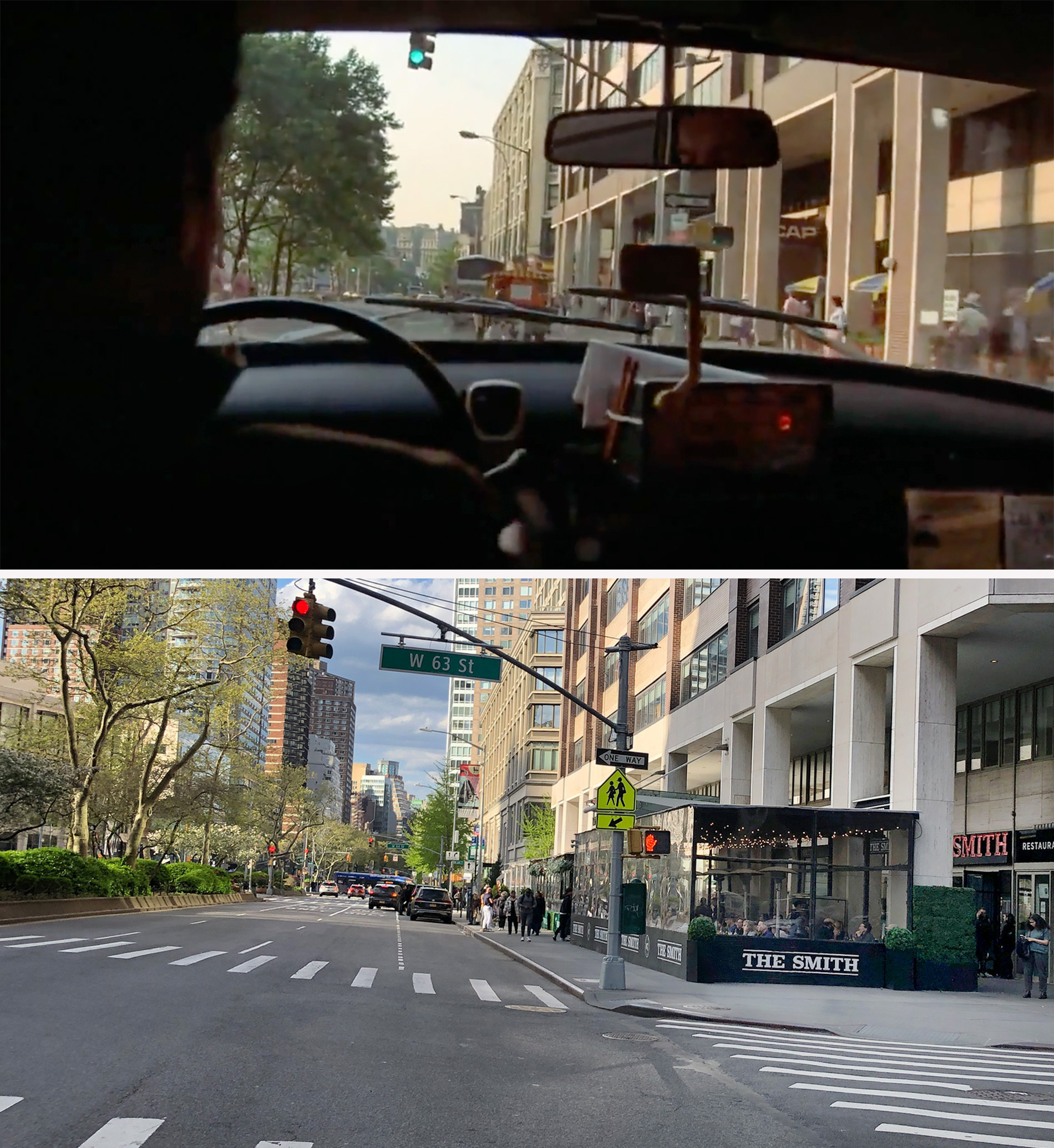
Even though I’ve mentioned the campaign offices were on the corner of 63rd and Broadway, that no longer is technically true.
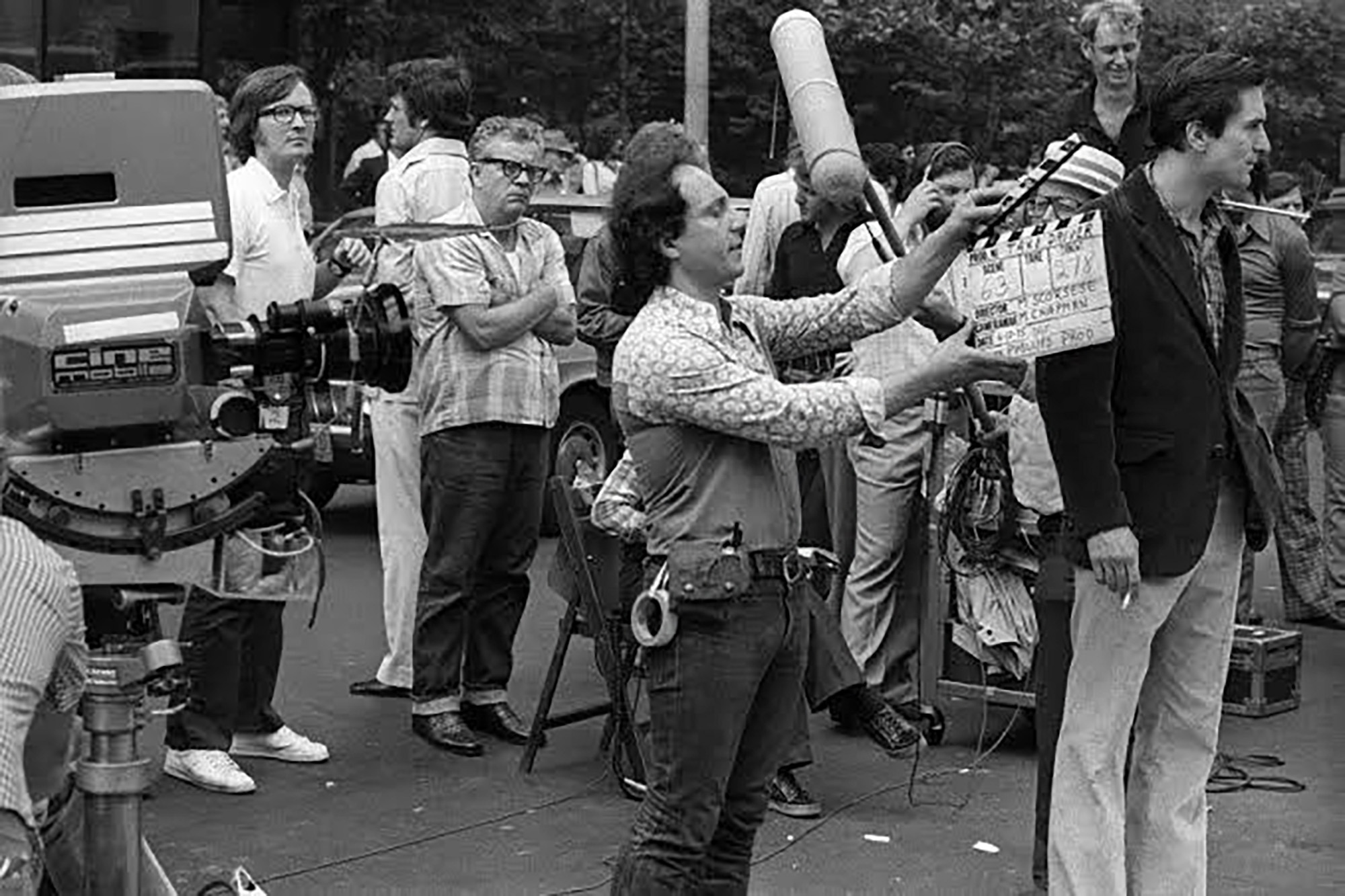
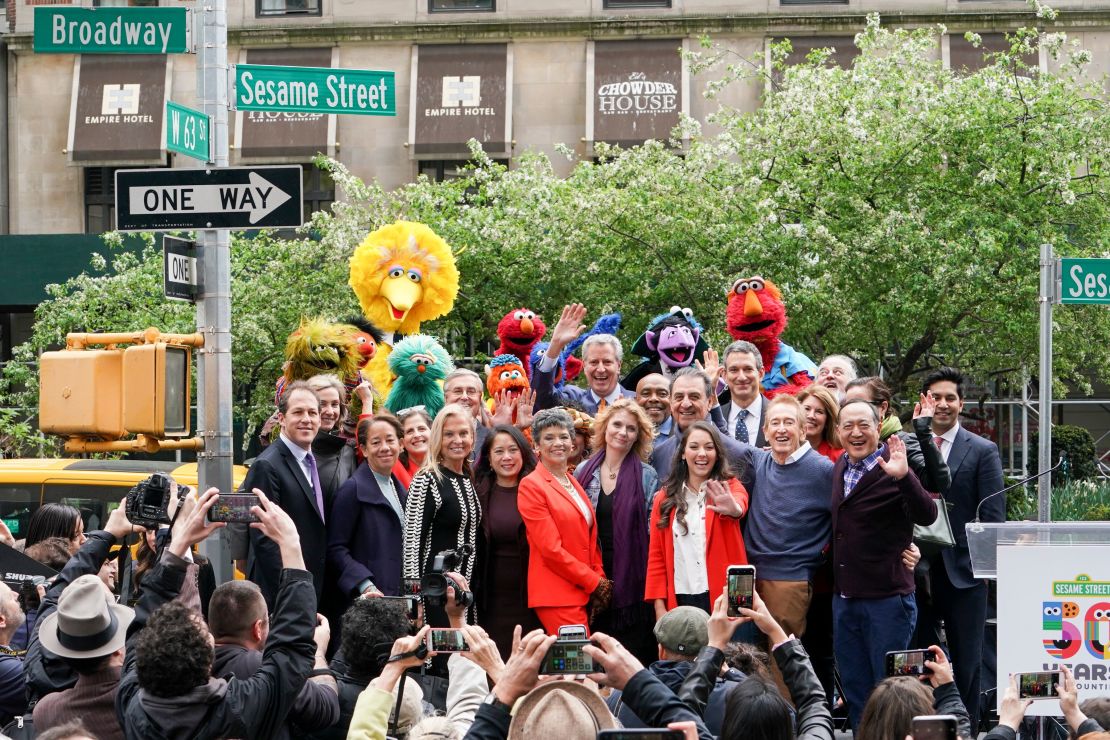
In 2019, as a way to celebrate the TV show Sesame Street’s 50th anniversary, then-mayor Bill de Blasio had 63rd Street between Broadway and Central Park West renamed Sesame Street.
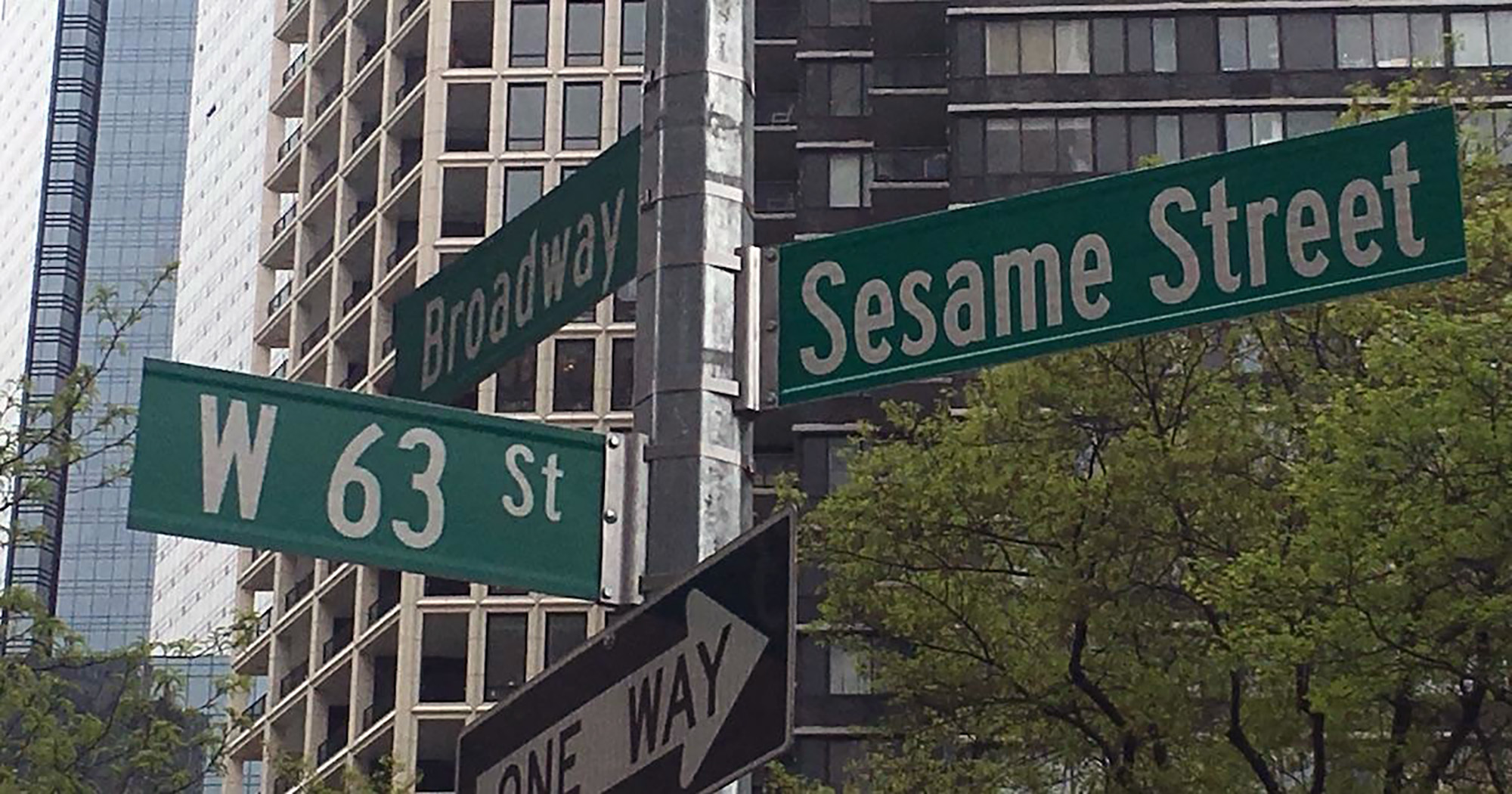
The reason the city chose this seemingly arbitrary street to be named after the children’s program is because the offices of Sesame Workshop are located in the building on the north side.
So I guess the city finally gave us the answer the age-old question, “Can you tell me how to get—how to get to Sesame Street?” The answer: the 1 train.
Having Some Pie
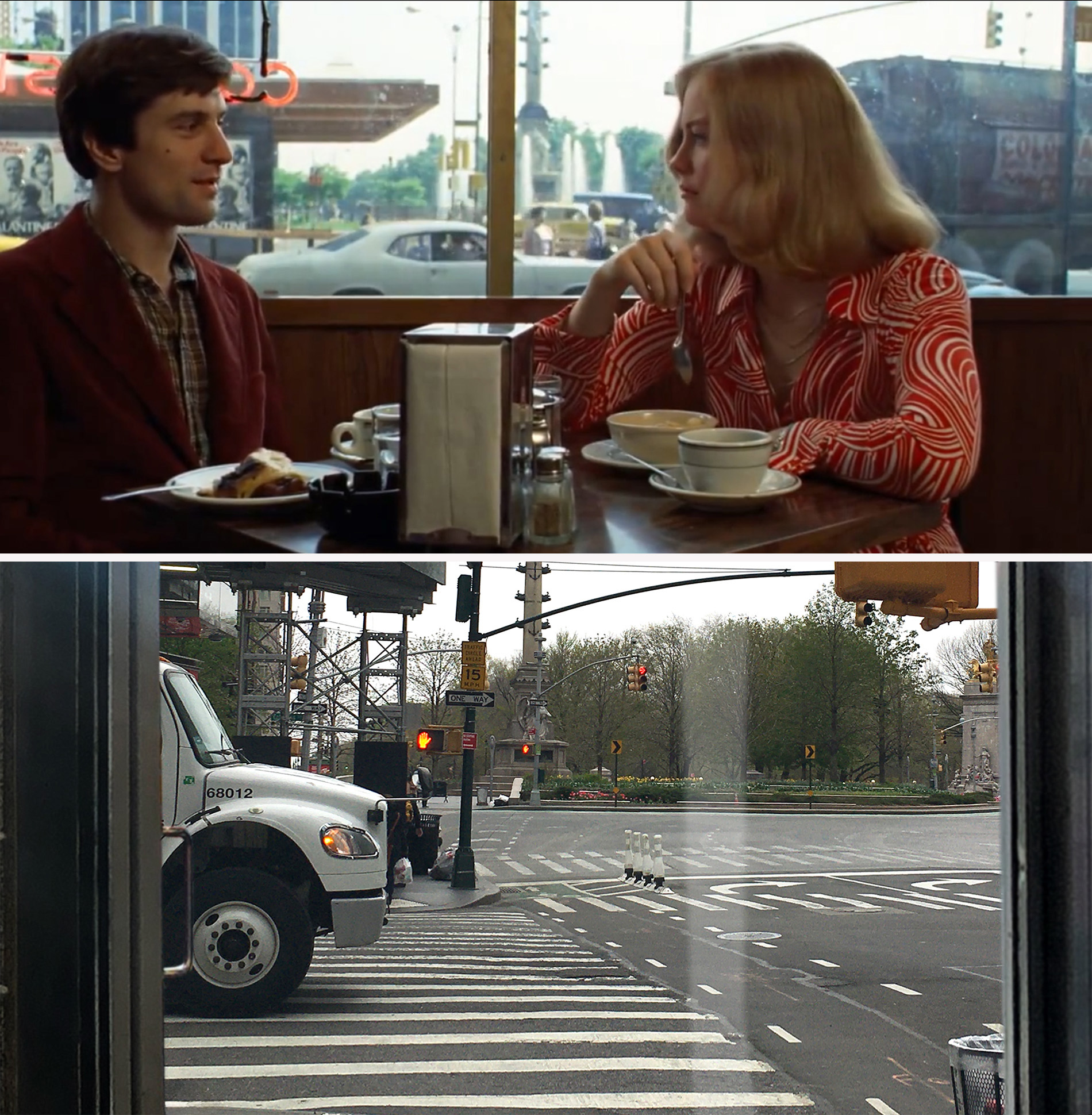
You can tell where they filmed this scene based off the position of the Columbus Monument that appears out the window. You can also tell by the position of the old Museum of Arts & Design building at 2 Columbus Circle, which is still there, but highly remodeled.
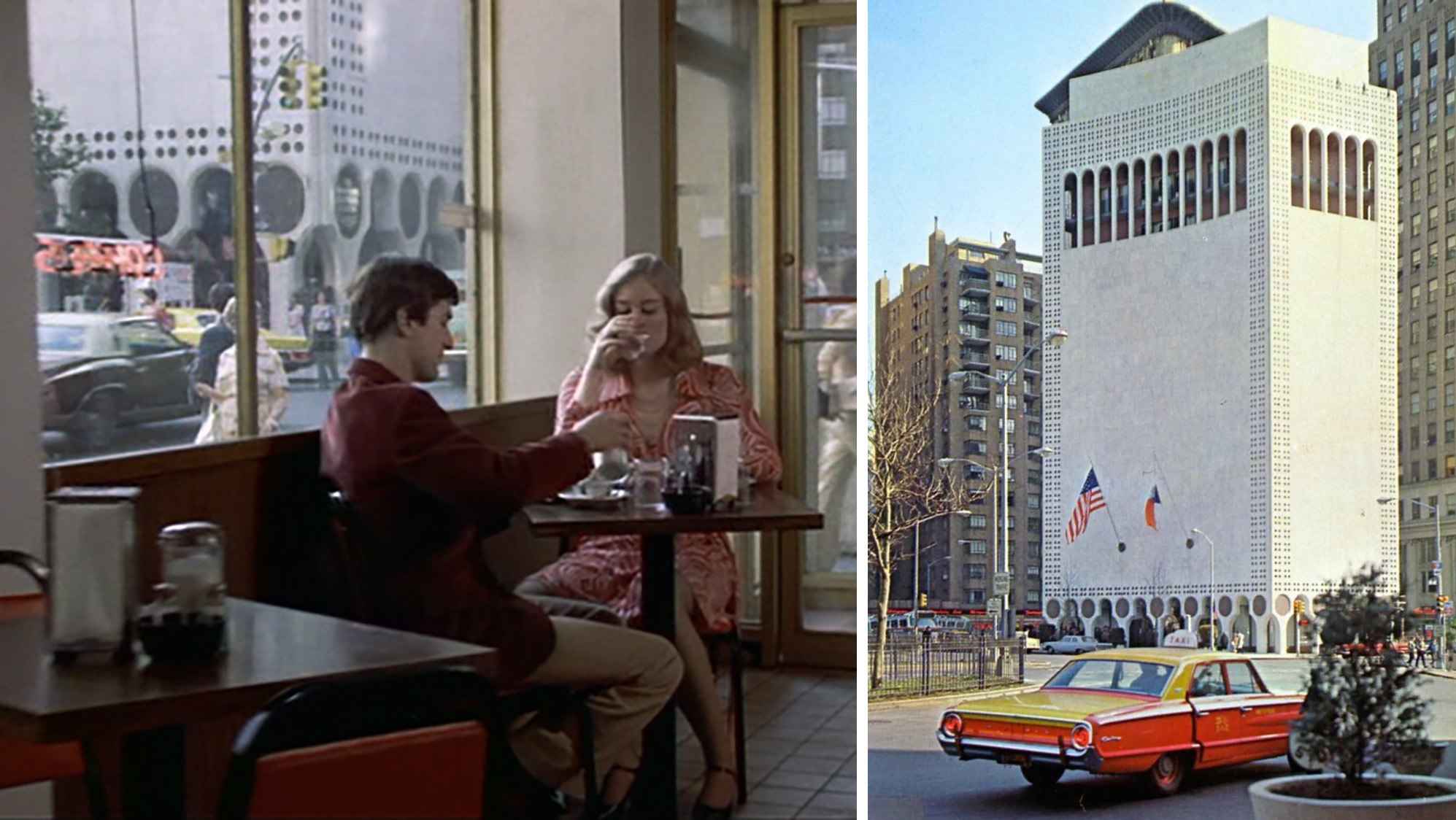
So, the filming location was pretty clear-cut, but when it came to the name of the establishment they ate in, there was a bit of a discrepancy out there.

If you read the subtitles from the movie, it has Travis saying, “I took Betsy to Charles’ Coffee Shop,” but in fact, I’m pretty sure he says “Childs Coffee Shop.” (In the original script he says “Mayfair Coffee.”)
Formally a national chain, Childs was a small chain of restaurants in New York City at the time this movie was being made, and had a location on the southwest corner of Columbus Circle — matching the spot used in the film.
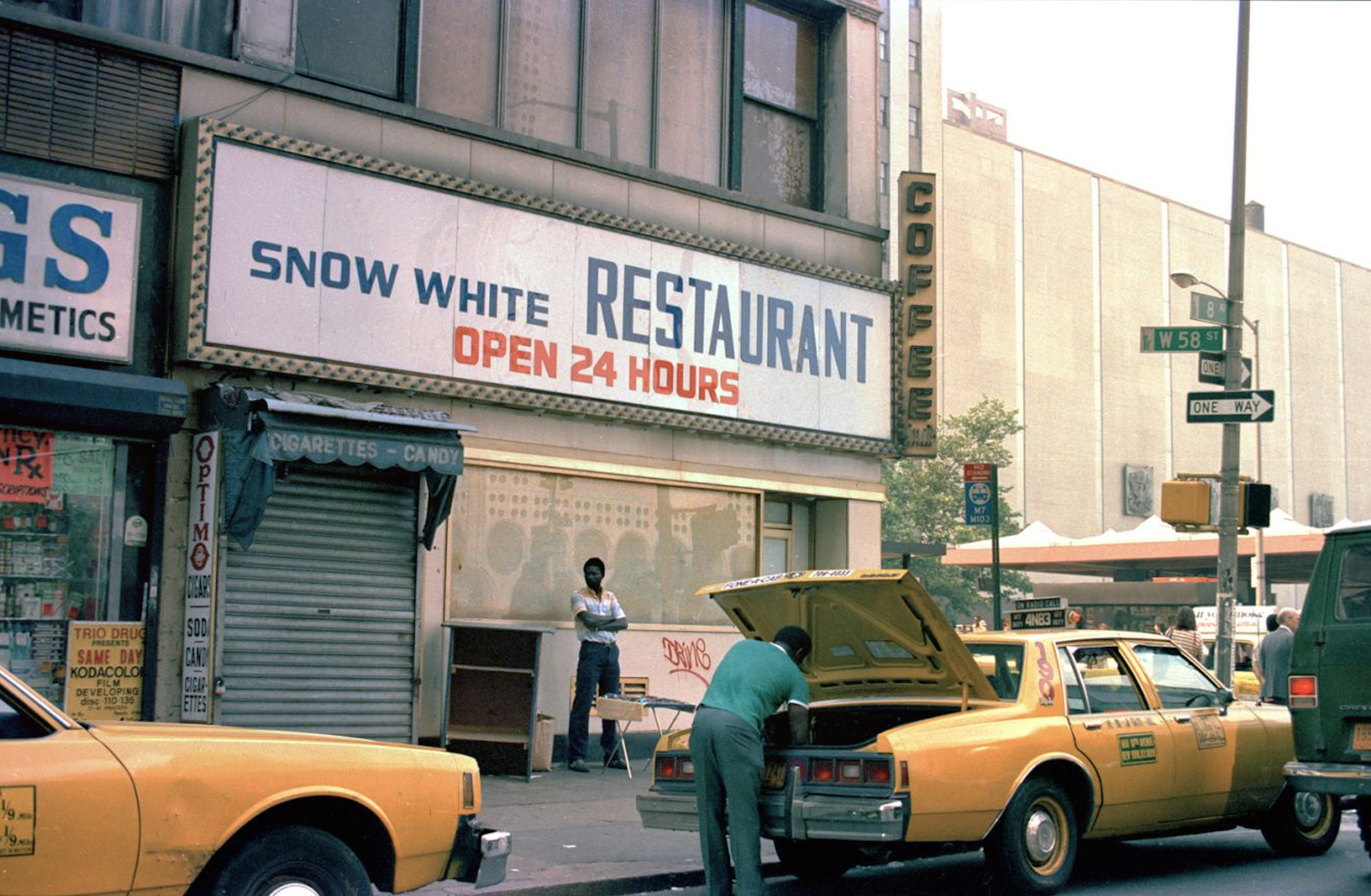
At some point, all the Childs Restaurants disappeared in NYC and the location used in the movie got renamed “Snow White.” Then around 1987, the building (and its neighbors) got torn down and replaced with a large mixed-use skyscraper. The corner space is now a Duane Reade drug store.
Record Store
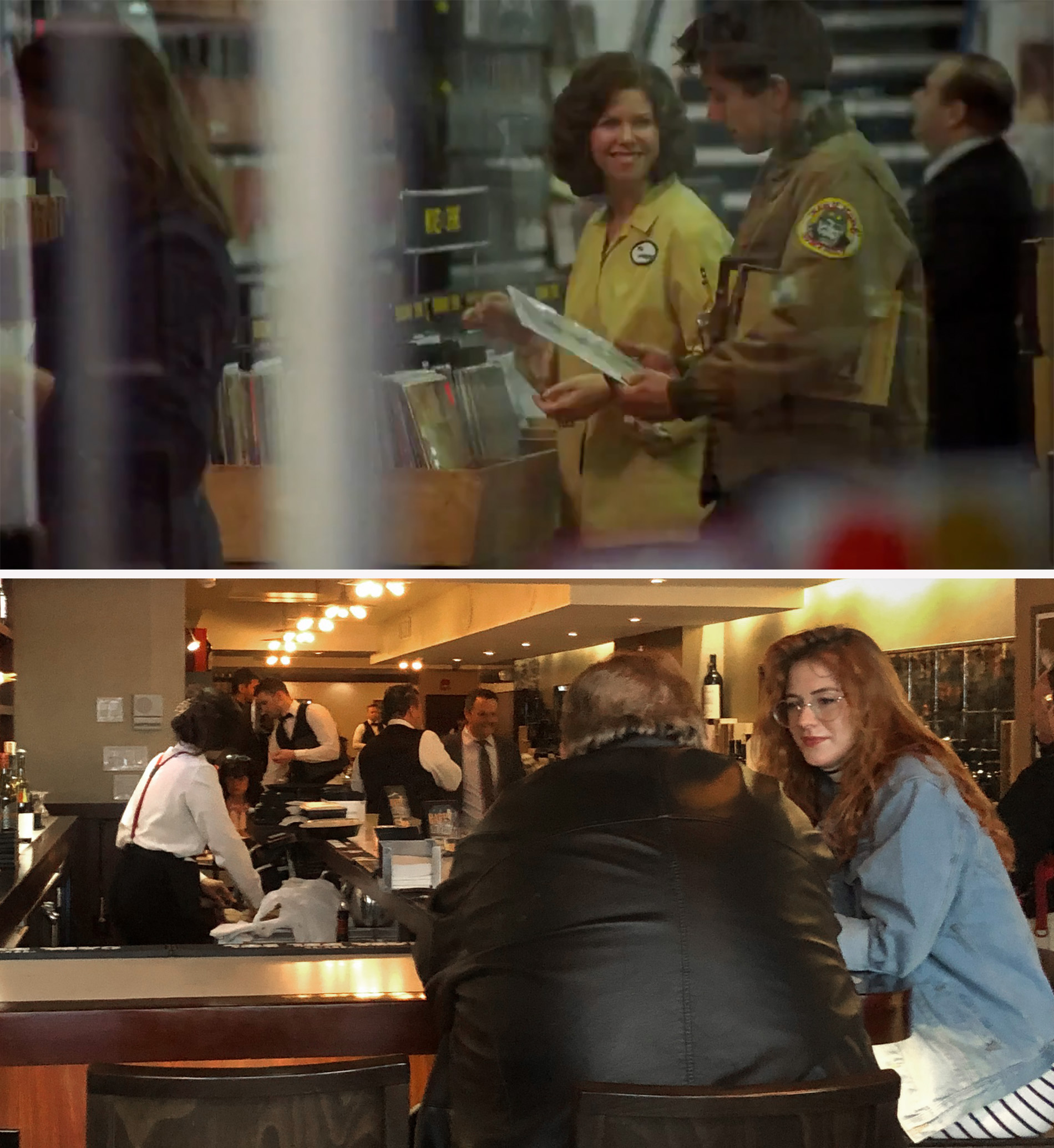

Scorsese used a fairly long lens for this brief scene, compressing the image and making it harder to see any details. However, it was pretty clear by the yellow smock the saleswoman was wearing that they were at a Sam Goody record store, which used to be all over the city. So naturally, the first thing I did was look up the store’s addresses to see if any of them looked right.
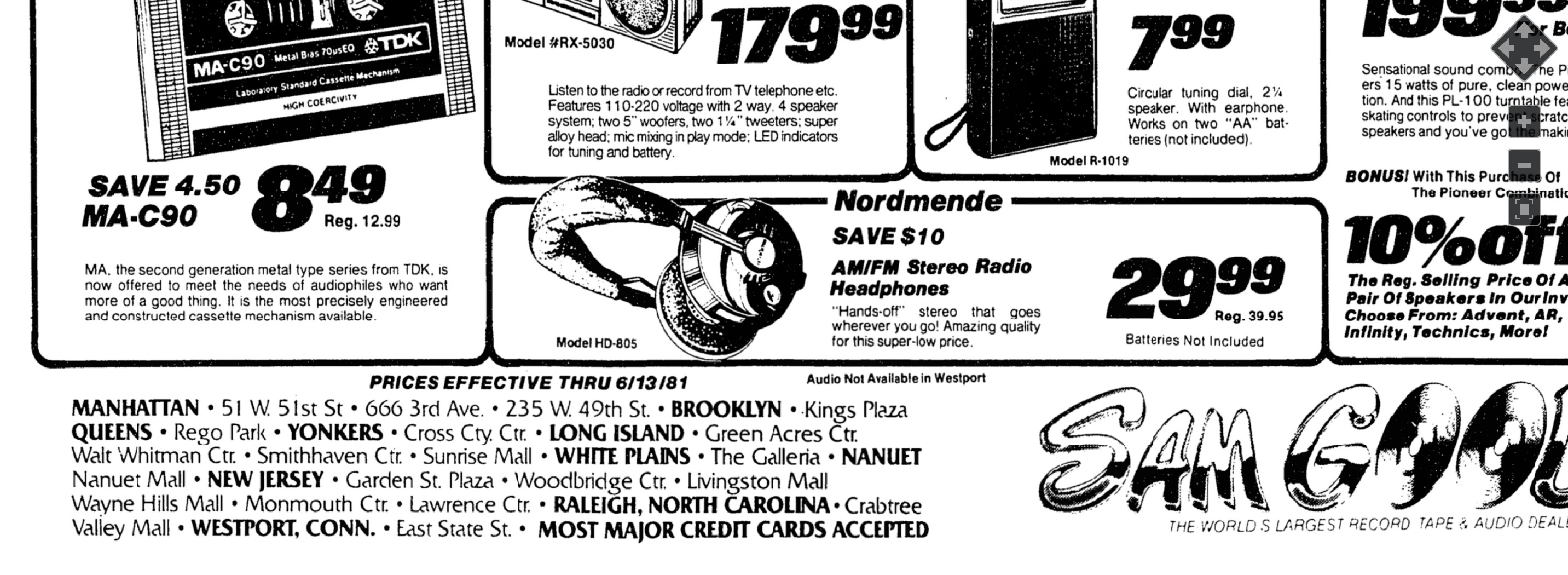
Using an ad I found in a 1981 New York Times, Blakeslee and I investigated each address listed. In the end, the only one that made any sense was the one at 235 W 49th Street. Although, at first, we had a little trouble finding any definitive visual proof to confirm it.
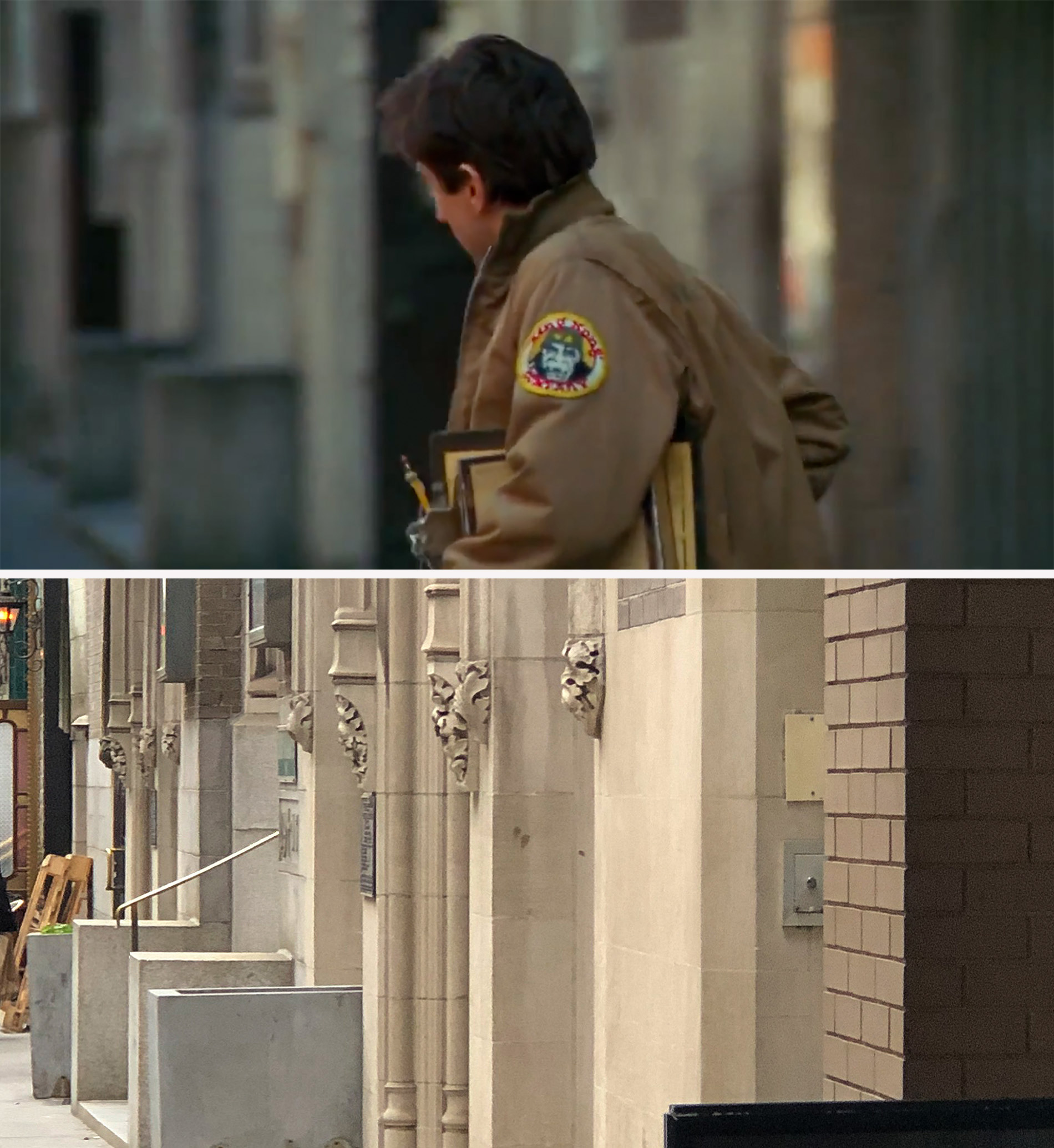
Eventually, after studying the scene and Google Street Views, Blakeslee and I were able to spot a few things from the church on 49th Street that seemed to line up with the movie (seen in the second “then/now” image). We then gleaned several items across the street that also seemed to line up.
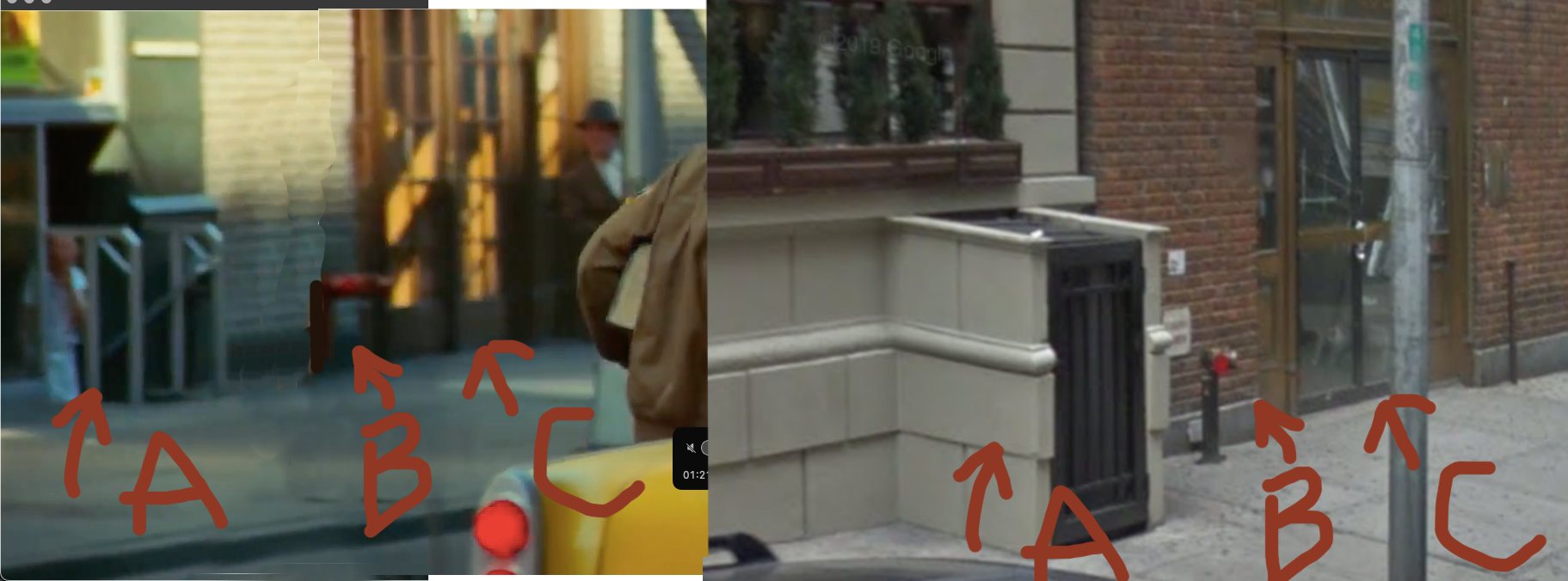
Granted, things had been greatly updated since 1975, but the basic layout was still there, including a descending stairwell next to a standpipe. Unfortunately, the brick building with the standpipe got torn down right before I was able to get a proper picture of it and they’re currently constructing a new building on the site.
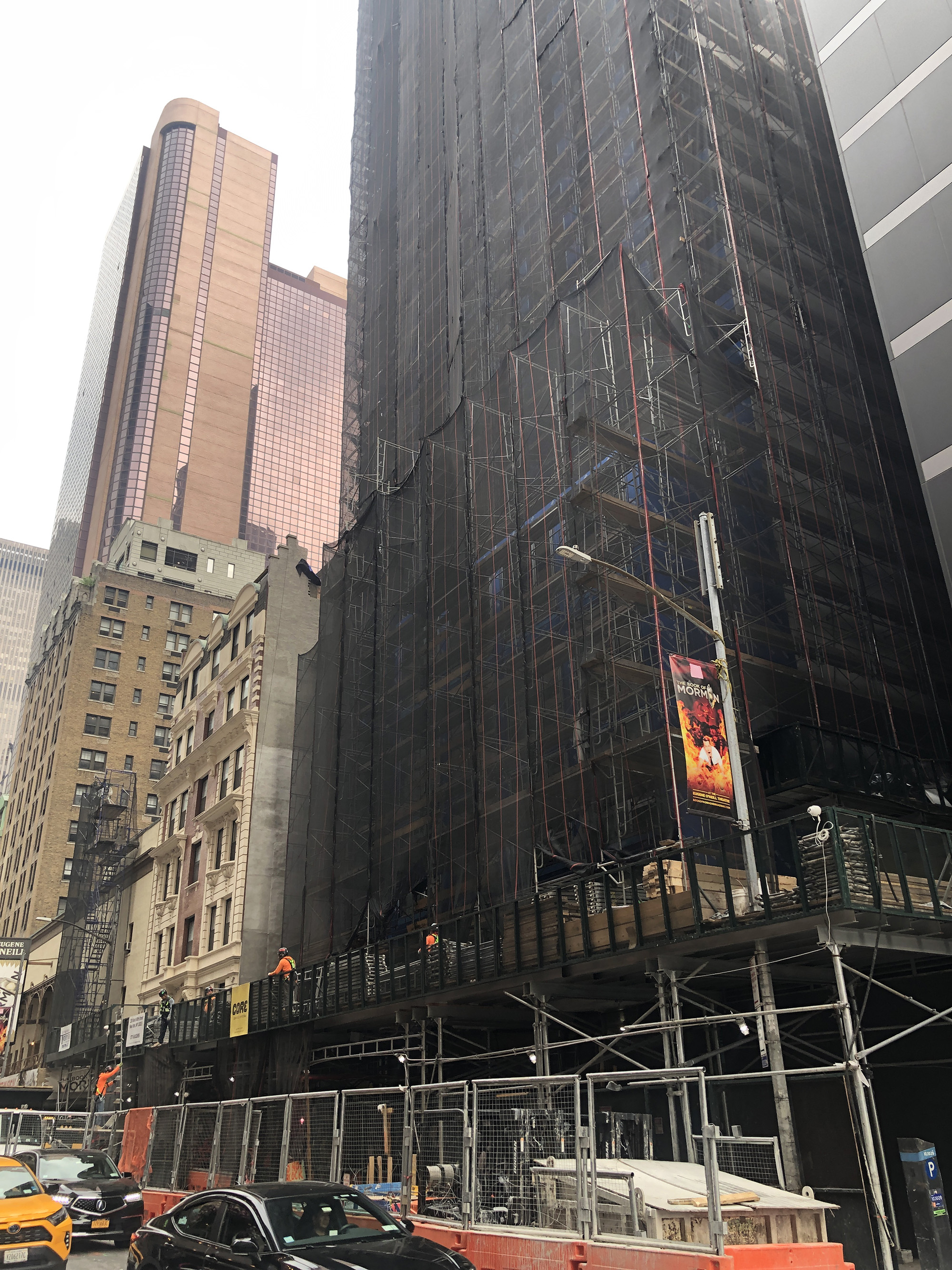
As further proof of this location, I found a tax photo from the 1980s that showed a store on the nearby Eighth Avenue whose signage matched the movie.
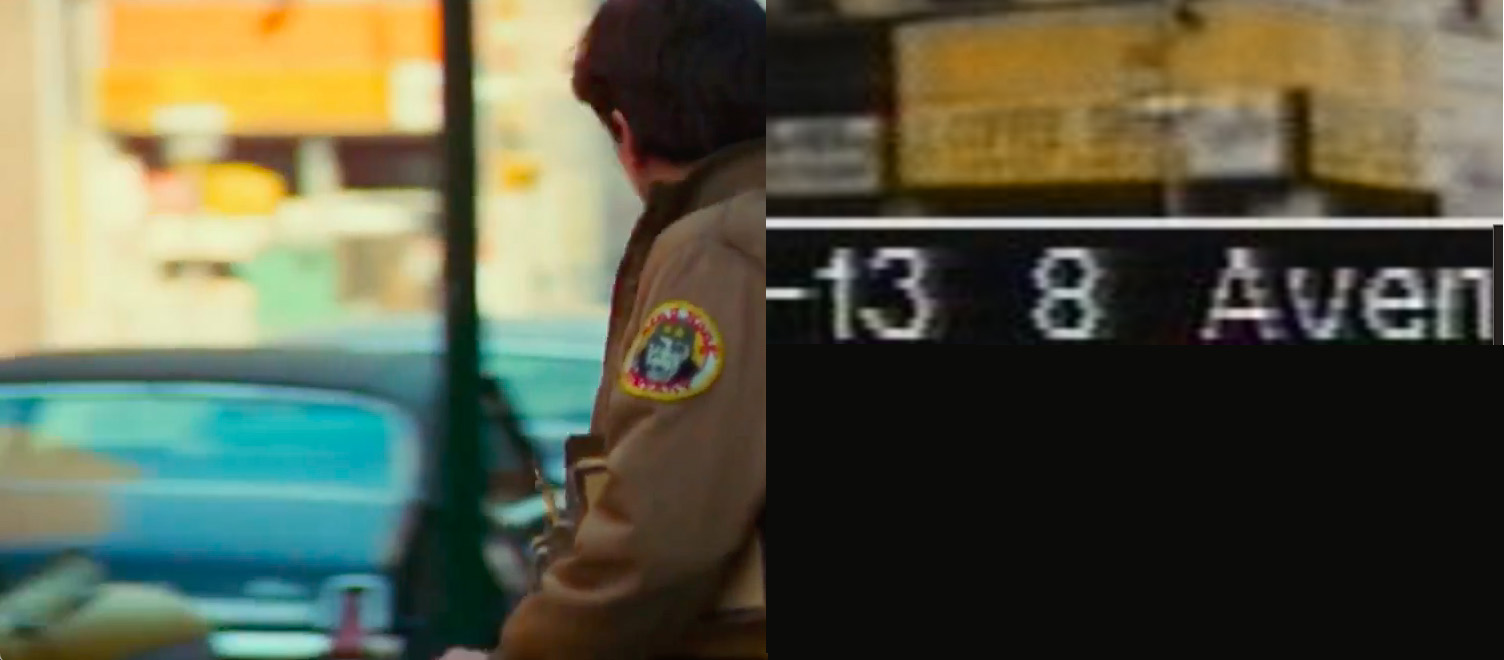
The Sam Goody space is now a steakhouse that is part of The Pearl Hotel New York. I briefly chatted with the steakhouse manager who was delighted to know his restaurant space was used in Taxi Driver.
Giving Senator Palantine a Ride
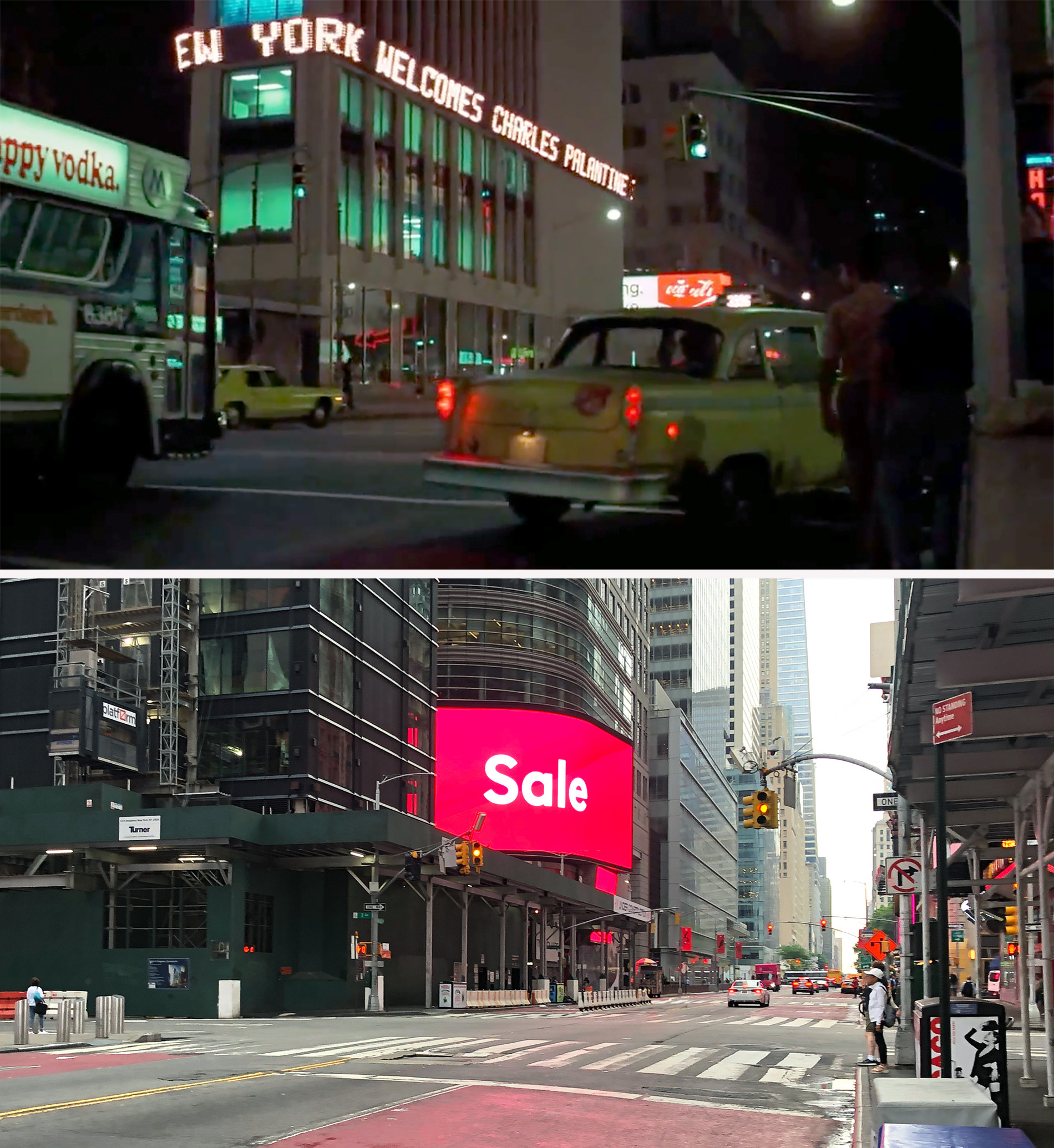
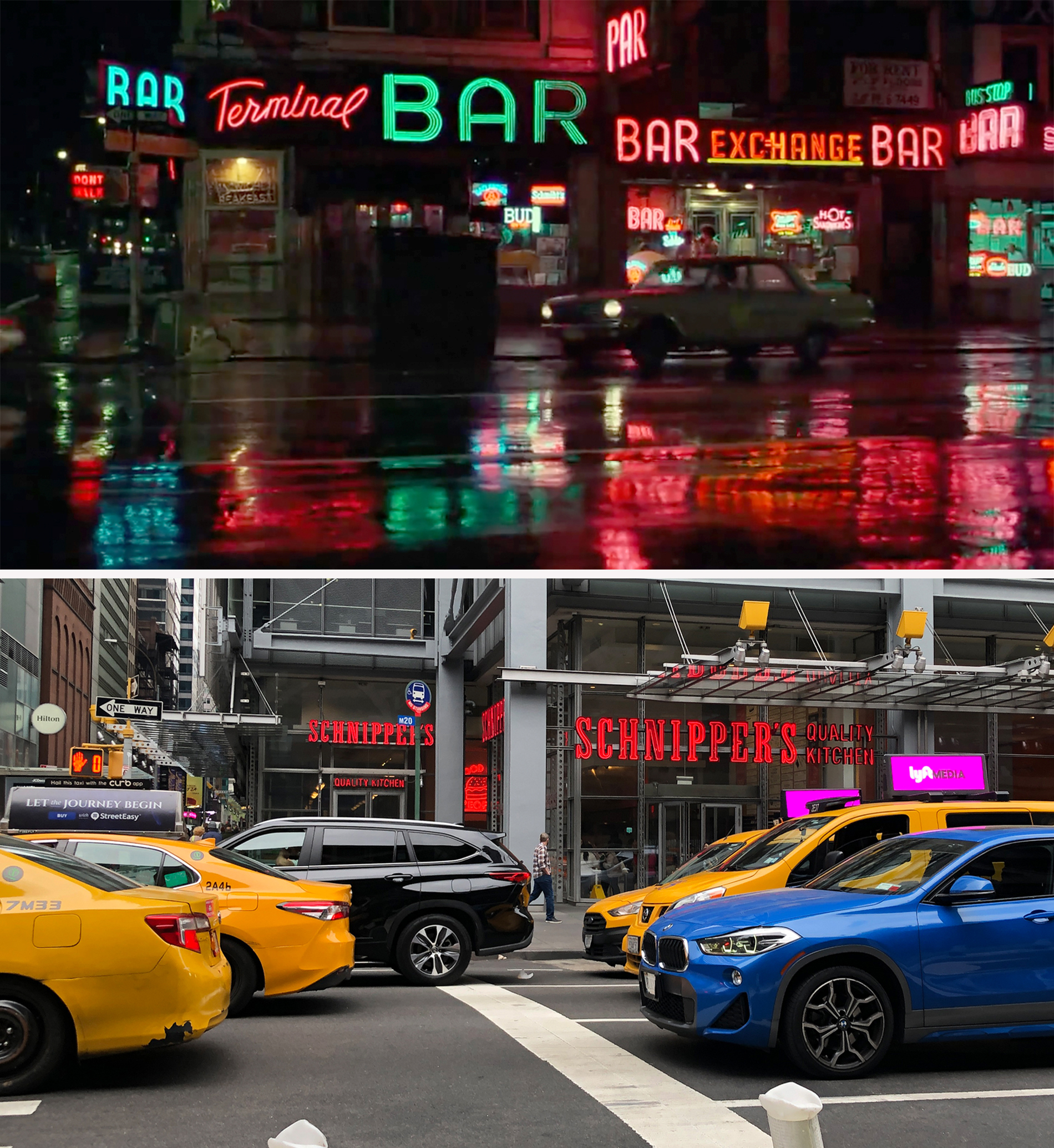
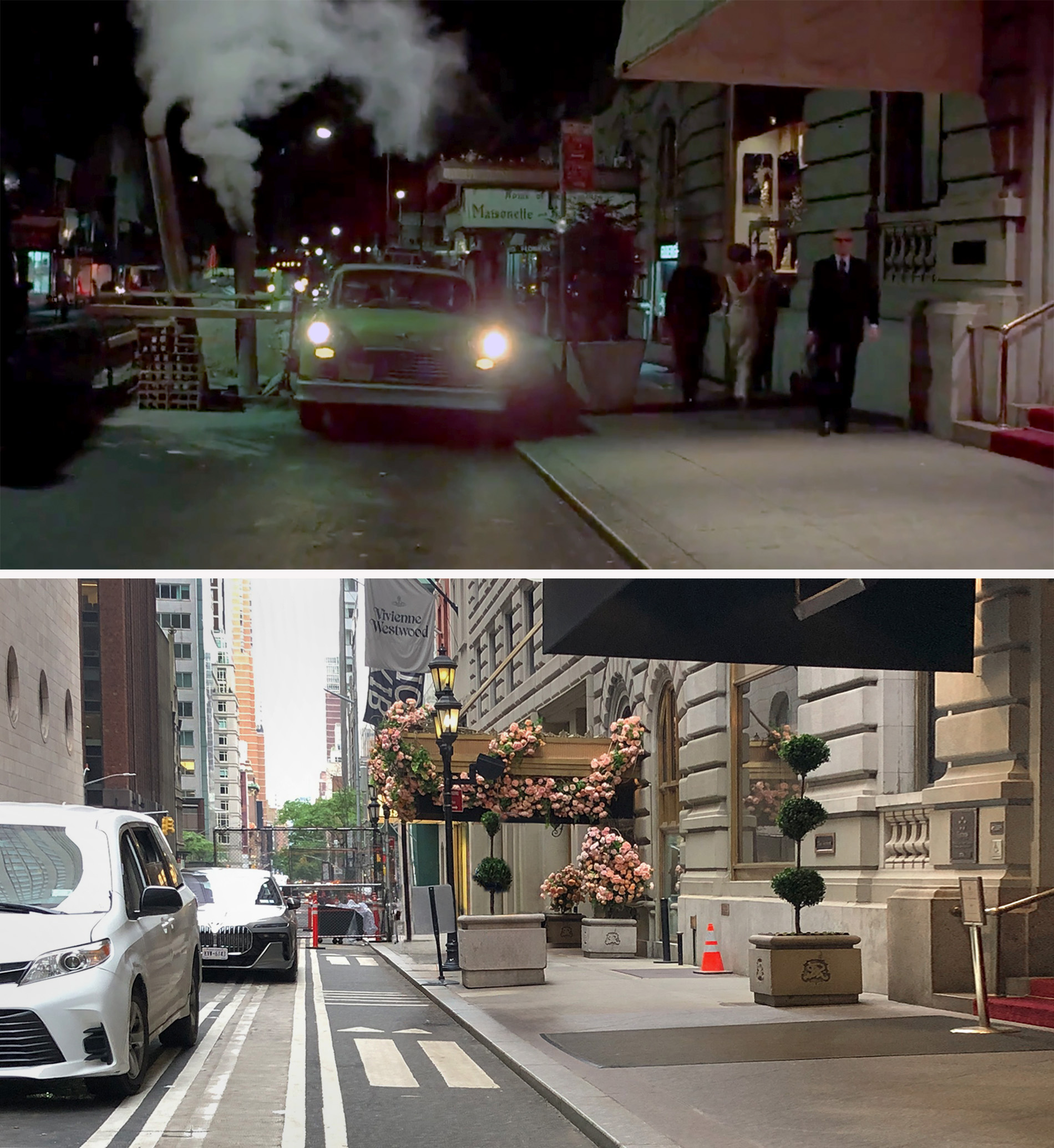
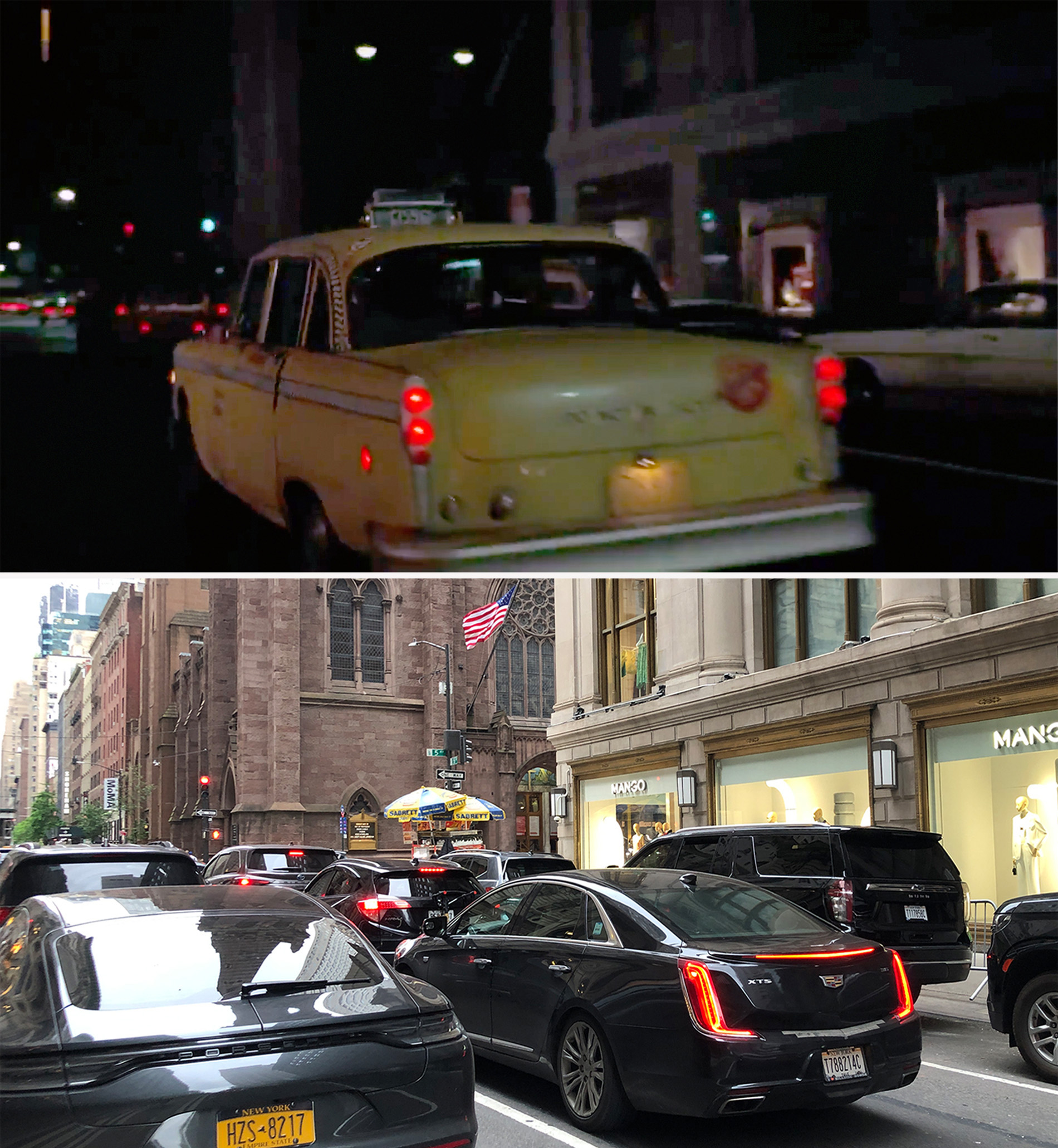
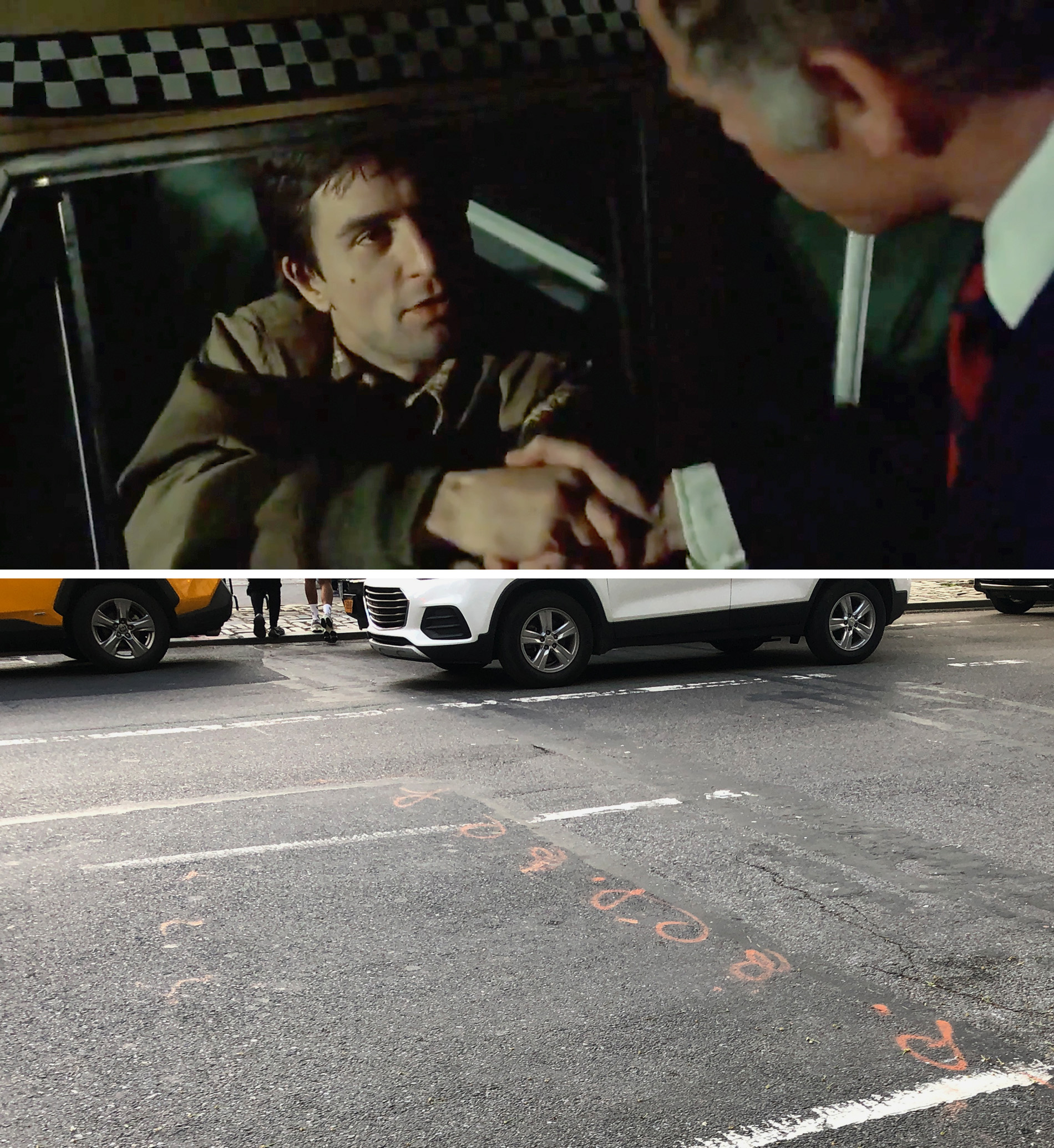
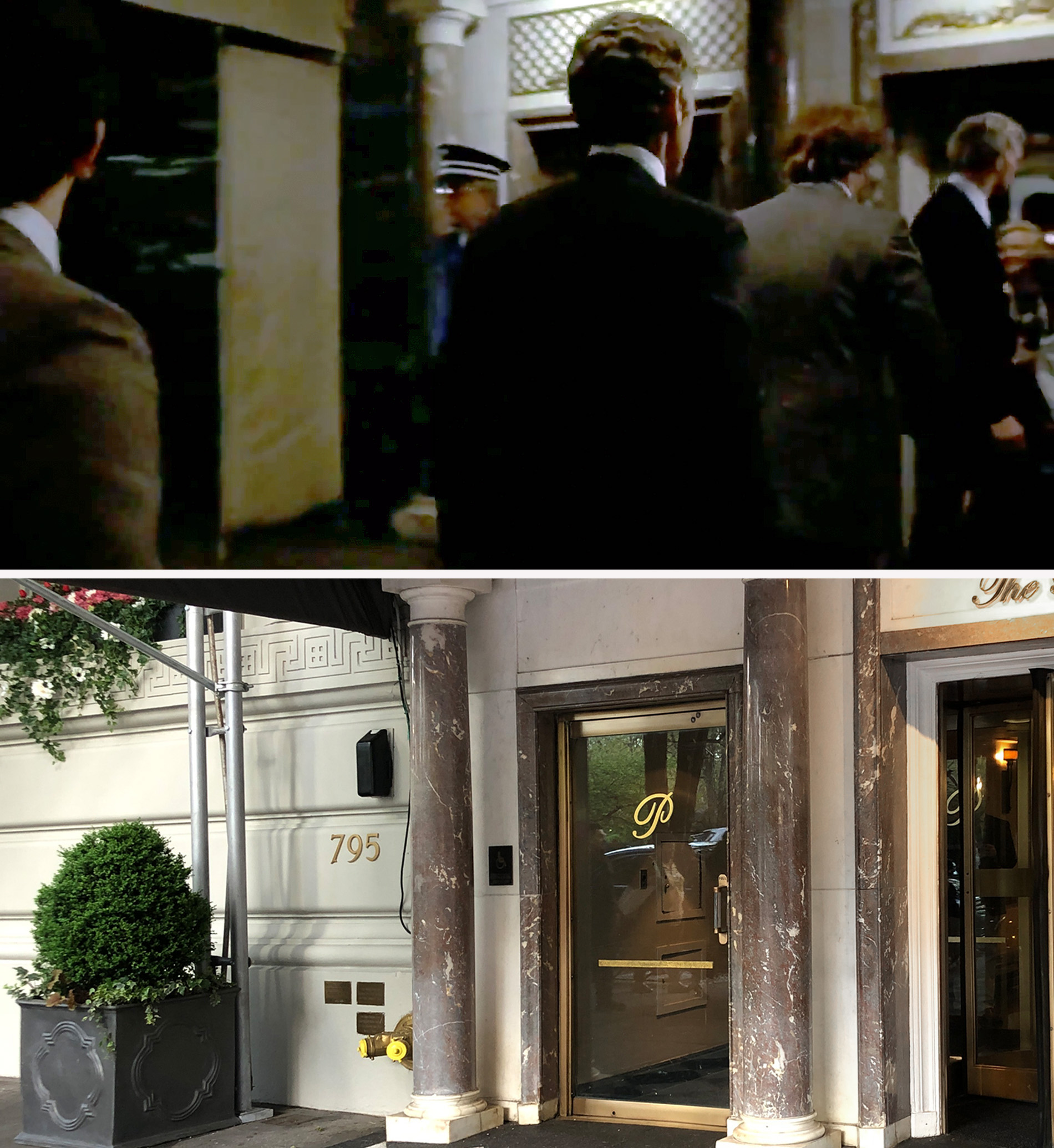
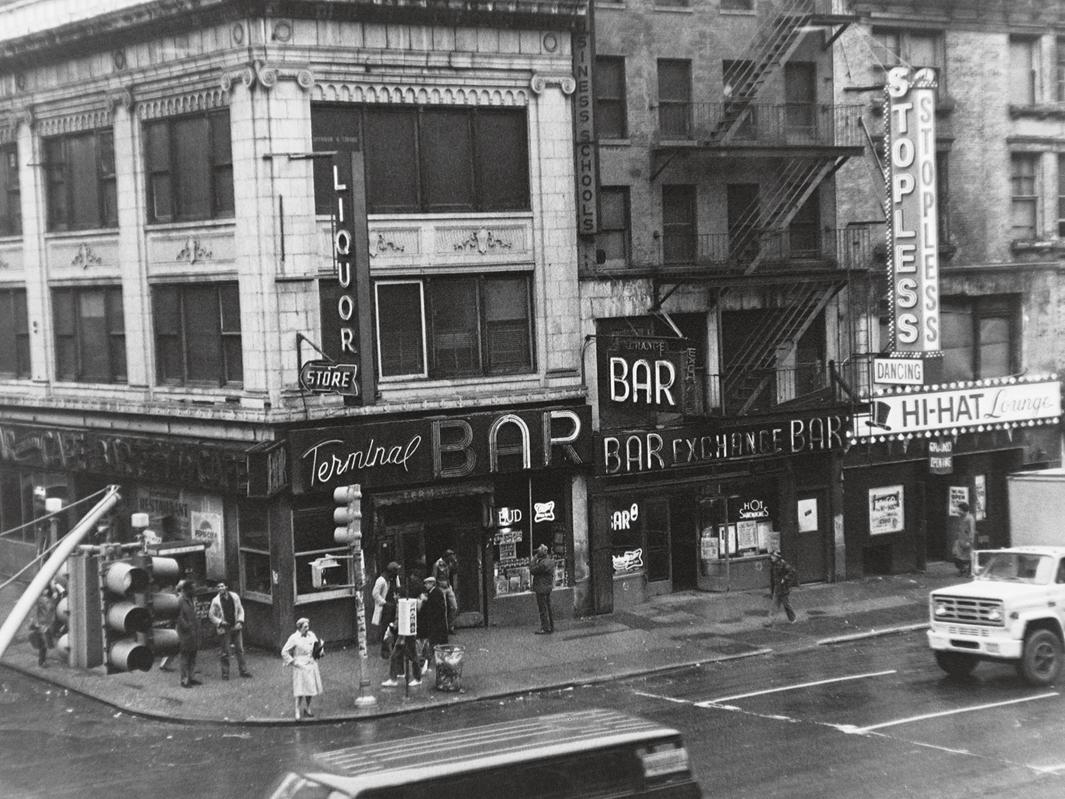
The location of the two street shots before Travis picks up the senator were pretty obvious and already identified before I began my research on Taxi Driver. Sadly, both of those locations are pretty much unrecognizable today. The building at 1 Times Square is technically the same one, but it’s been so ghastly modernized, it’s nothing like its original appearance. And as to the Terminal Bar on Eighth Avenue, the entire block is now occupied by the New York Times Building (EST 2007).
The Terminal Bar was an interesting midtown fixture. In business from the late fifties to the early eighties, this corner dive bar earned a reputation as a rough and tough place, patronized by a wide range of riffraff, often filtering in from the nearby Port Authority. (The sketchy bus terminal was presumably the inspiration for the bar’s name.)
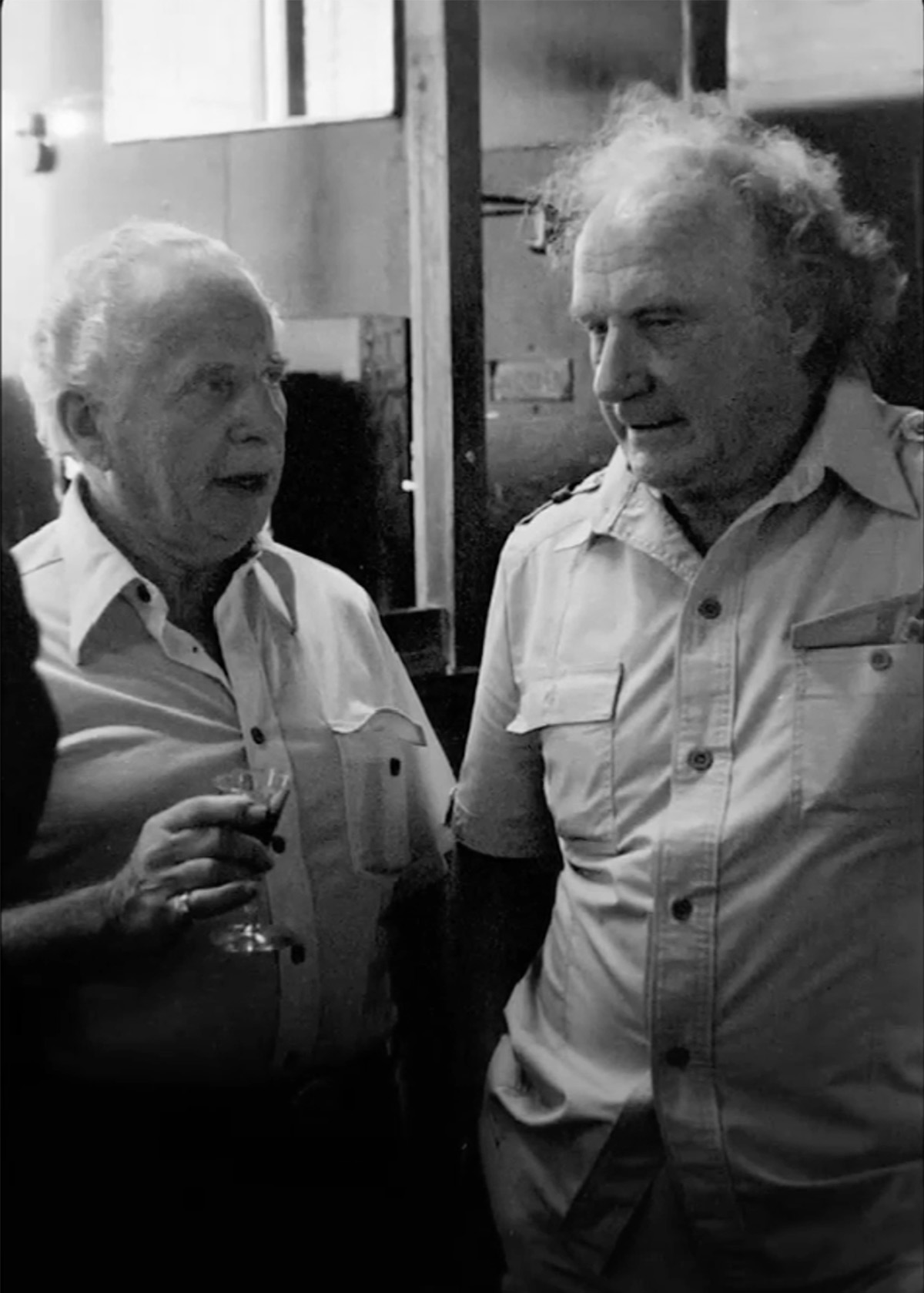
Even though the bar is long-gone, its vast mélange of customers has been immortalized through a series of black-and-white portraits taken by bartender Sheldon Nadelman, who worked at the Terminal in the seventies and eighties. Along with pimps, prostitutes, drag queens and winos, he also captured the occasional celebrity who would stop by to tip a few drinks, such as character-actor Jack Warden.
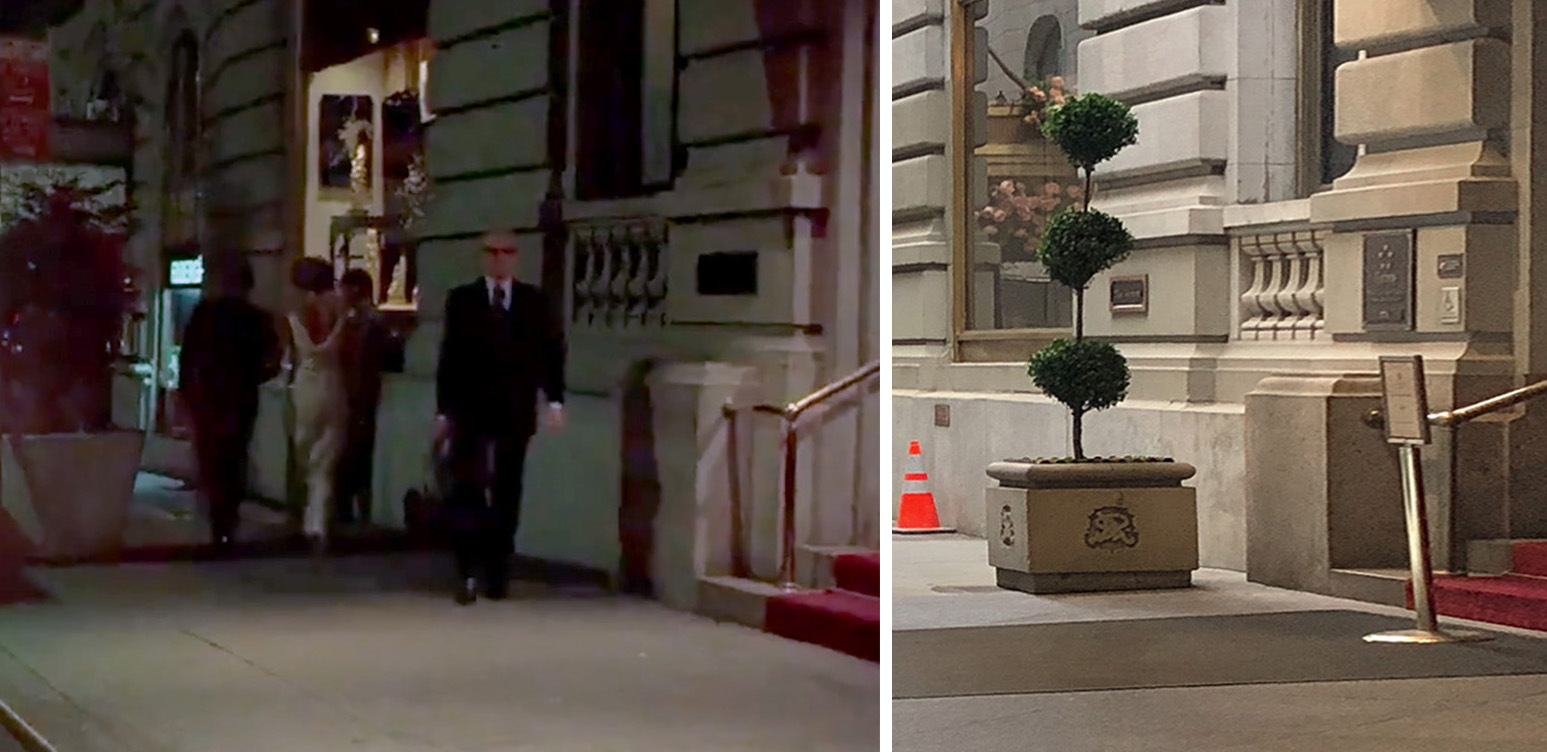
The Terminal Bar was identified as a Taxi Driver filming location on several websites, but the senator’s pick-up and drop-off points were not.
The pick-up spot wasn’t too difficult to figure out. It clearly looked like a Midtown hotel, and on a hunch, I decided to investigate the St Regis on East 55th, mainly because I knew it was used later in the film’s timeline. Then, as soon as I spotted the small window by the entrance with its distinct balustrade railing, I could tell it was a match.
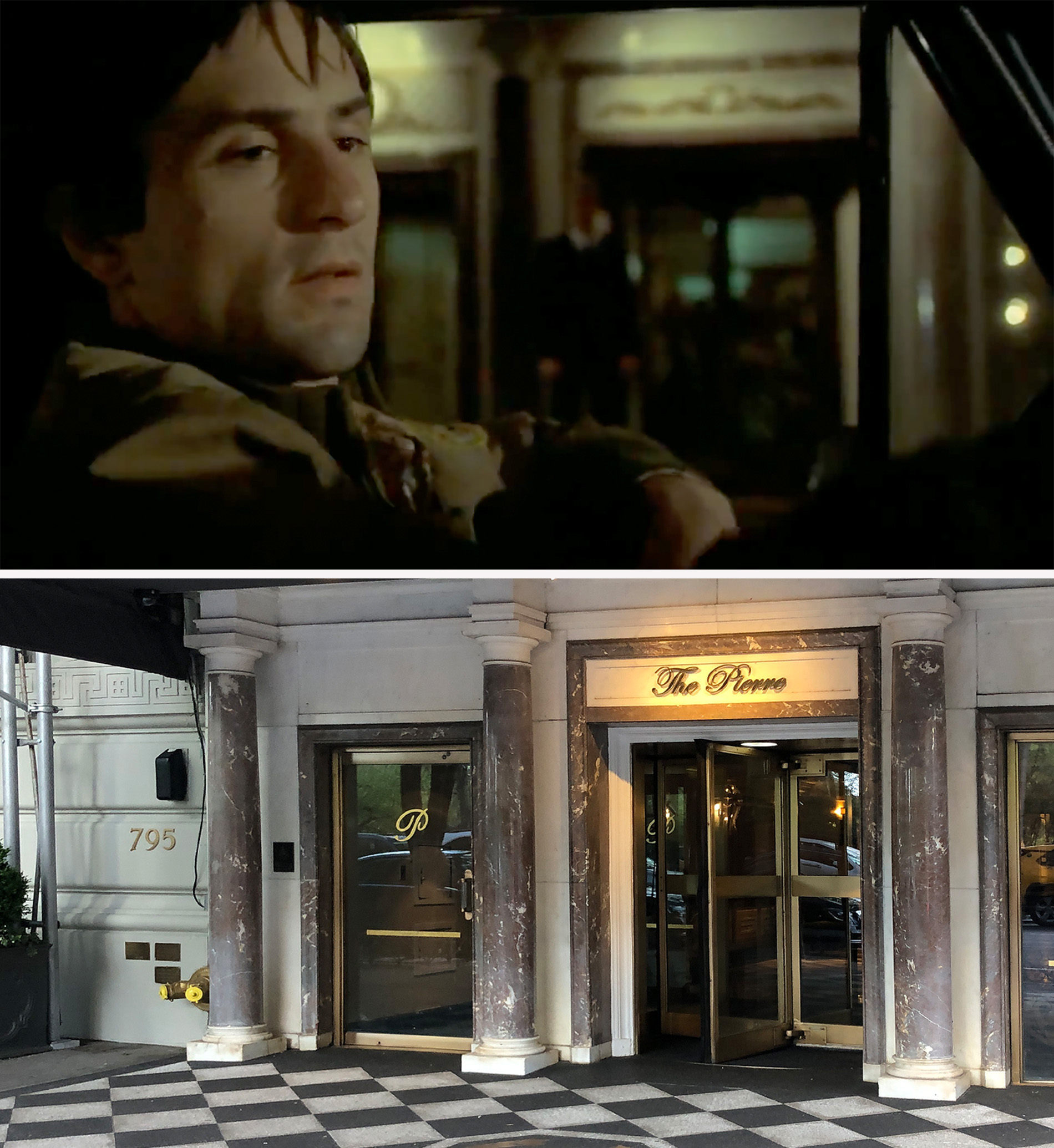
The drop-off spot was not as evident, although I suspected it was also a Midtown hotel. The ornate pattern above the entrance, flanked by marble columns, was a common look with the city’s upscale accommodations. But with not much more to go on, it was sort of a shot in the dark I’d be able to find the location.
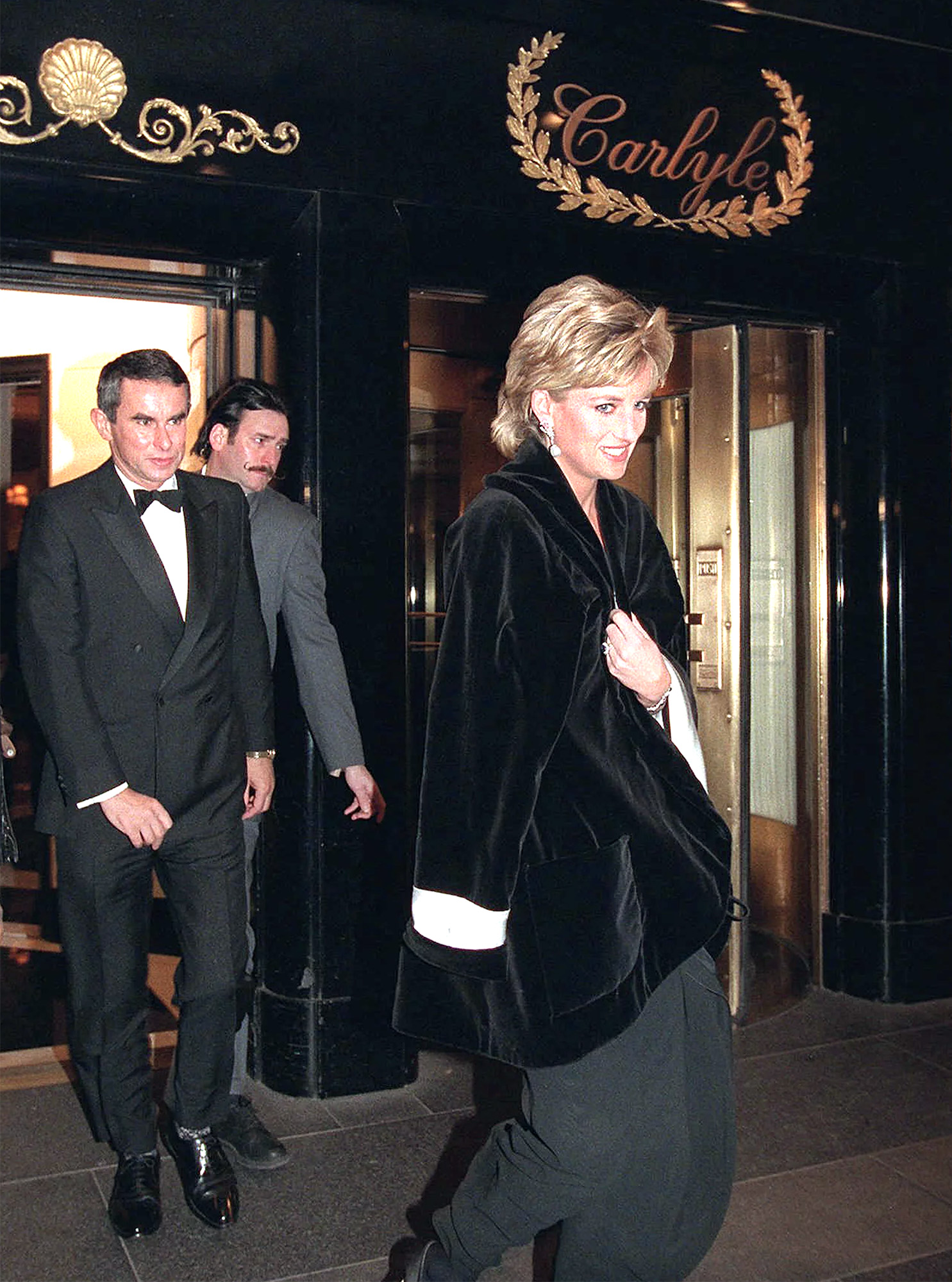
I eventually asked my research partner Blakeslee to help out, and even asked Robert Egan, creator of the extraordinary website PopSpots, if he had any ideas. At one point, he thought maybe it was the side entrance to the Carlyle Hotel on the Upper East Side. The ornamentation above the doors did look similar, but I eventually determined that it wasn’t the right place.
Then, months later, Blakeslee saw something that had escaped us before. As the senator enters the building, you can see what looks like a P insignia on one of the glass doors.
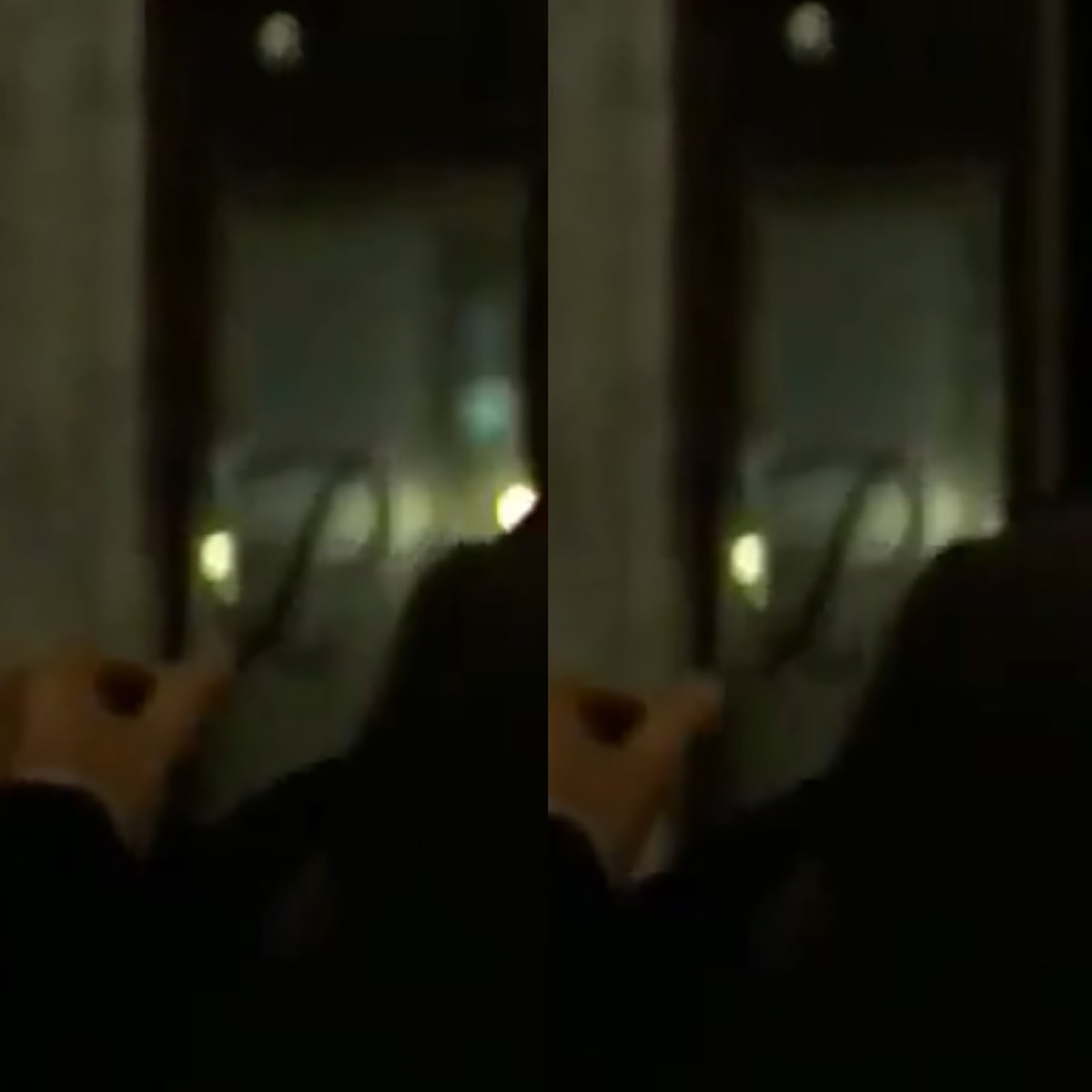
That one simple letter was enough to inspire me to seek out all upscale Manhattan hotels in the 1970s that began with P, hoping one of them would be our senator drop-off point.
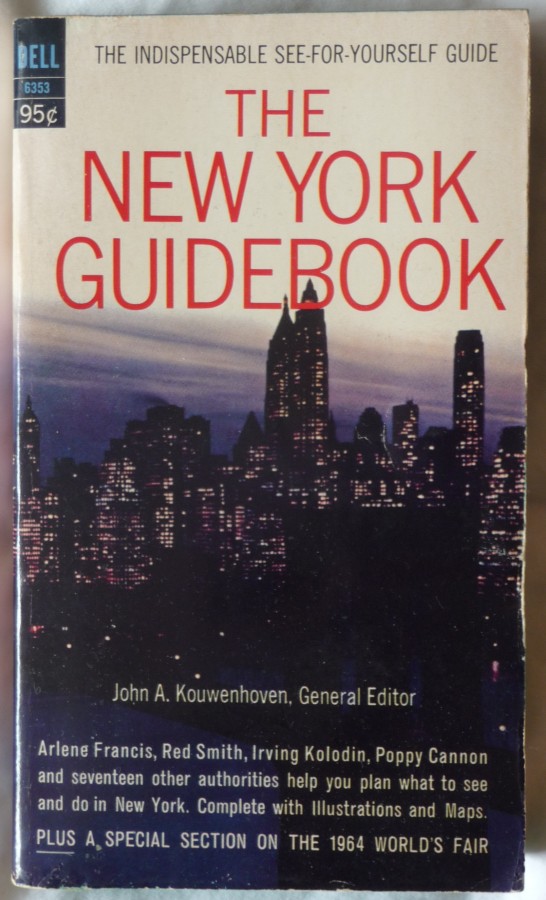
Thankfully, the website, Stuff Nobody Cares About, took the time to transcribe a list of hotels inside The New York Guidebook, which was published in 1964 to coincide with the New York World’s Fair.
All together, there were 183 hotels included in the book. And even though the list was not exhaustive, it pretty much covered every major hotel in the city at the time. So I felt confident our P would be in there.
Ignoring the places I knew wouldn’t be a match, like the Plaza and the Penn Terminal Hotel, I soon zeroed in on The Pierre on E 61st and Fifth Avenue. One reason I went to The Pierre early on is because it’s directly across from Central Park, and in the movie, it looks like they’re also possibly across from a park.
Turns out my instinct was right. As soon as I dug up a few vintage photos of the hotel, I could tell the structure and its awnings looked very much like what was in the movie.
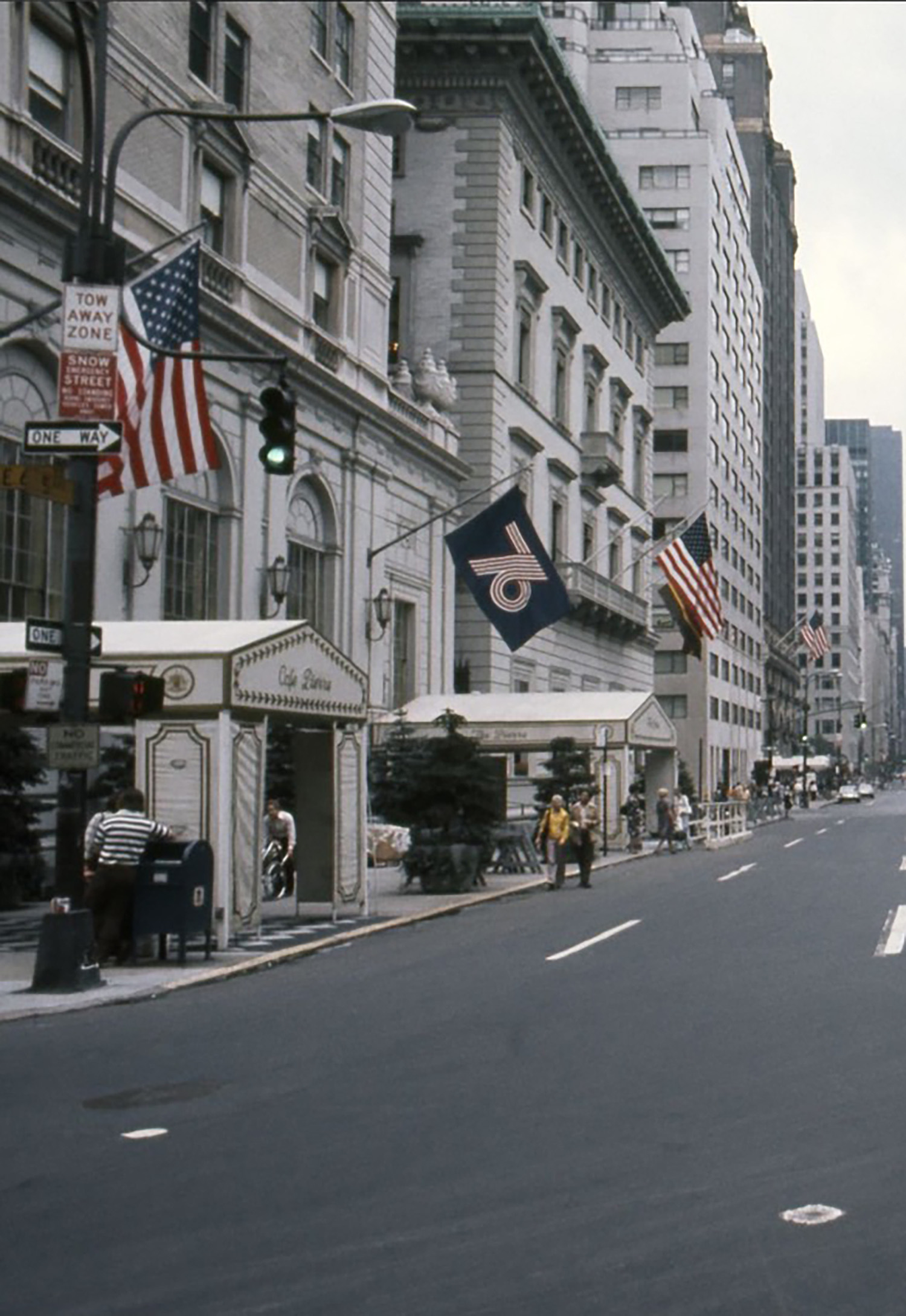
Once I visited the hotel in person, I was 100% certain I arrived at the right place. The same columns were still at the Fifth Avenue entrance and I was able to match up the white swirls in the red marble.
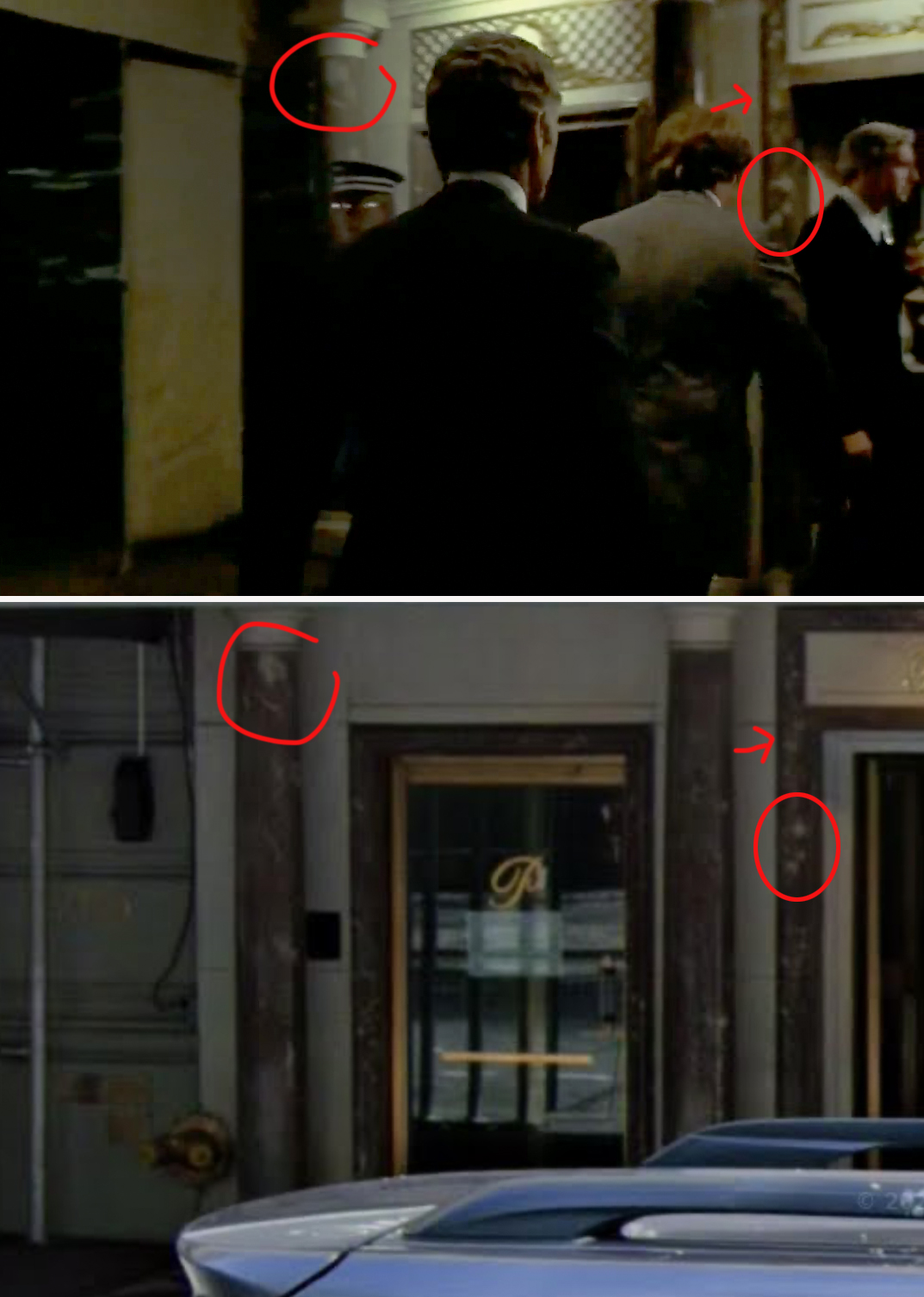
In addition to Taxi Driver, the Al Pacino movie, Scent of a Woman, filmed at the Pierre, using their ballroom for the legendary tango-dancing scene.
Travis Meets Iris
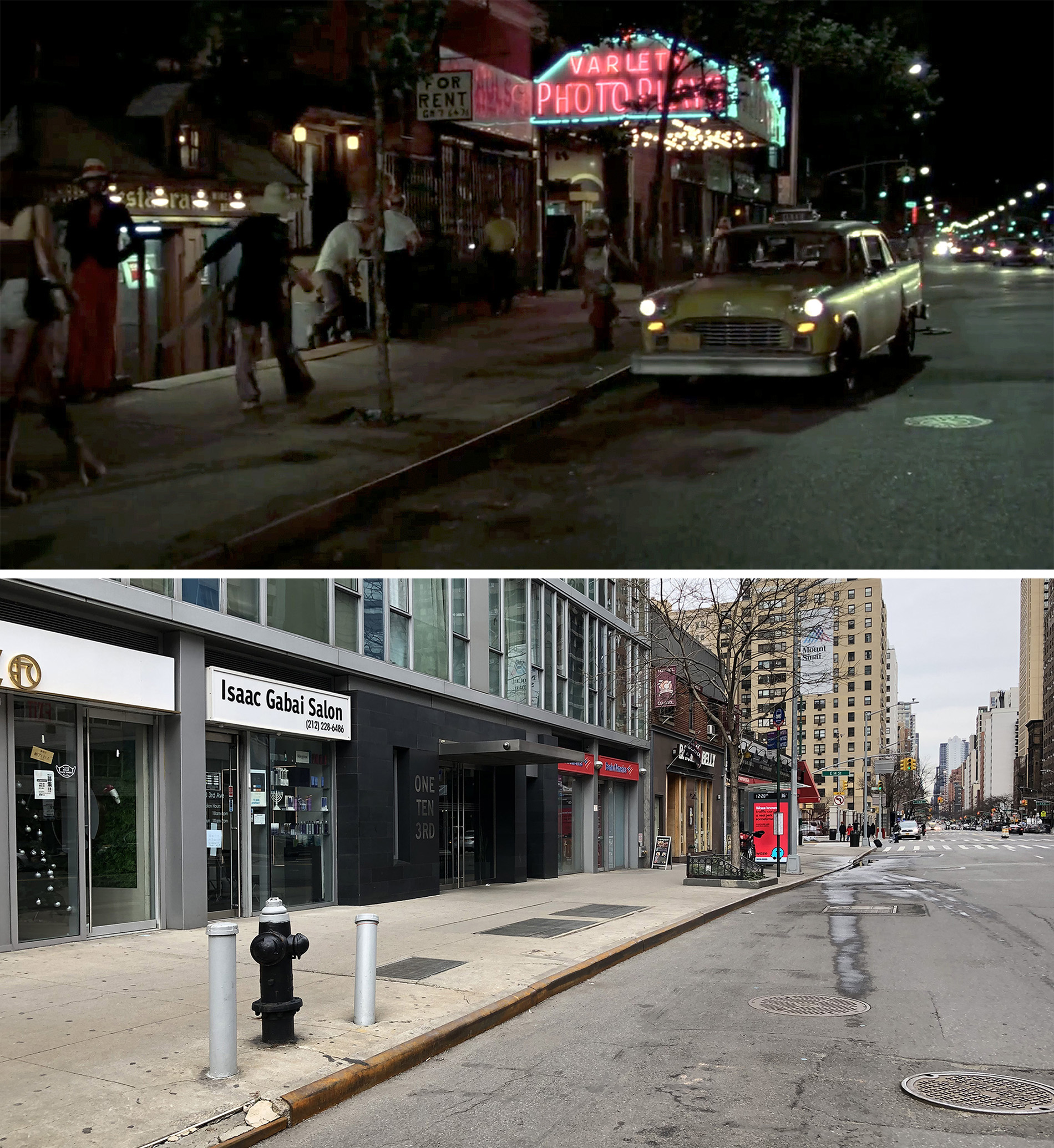
The Variety’s marquee was the unmistakable clue in finding this location. Plus, the theater was just one block from where they filmed the pimp and brothel scenes — probably the movie’s most well-known location.
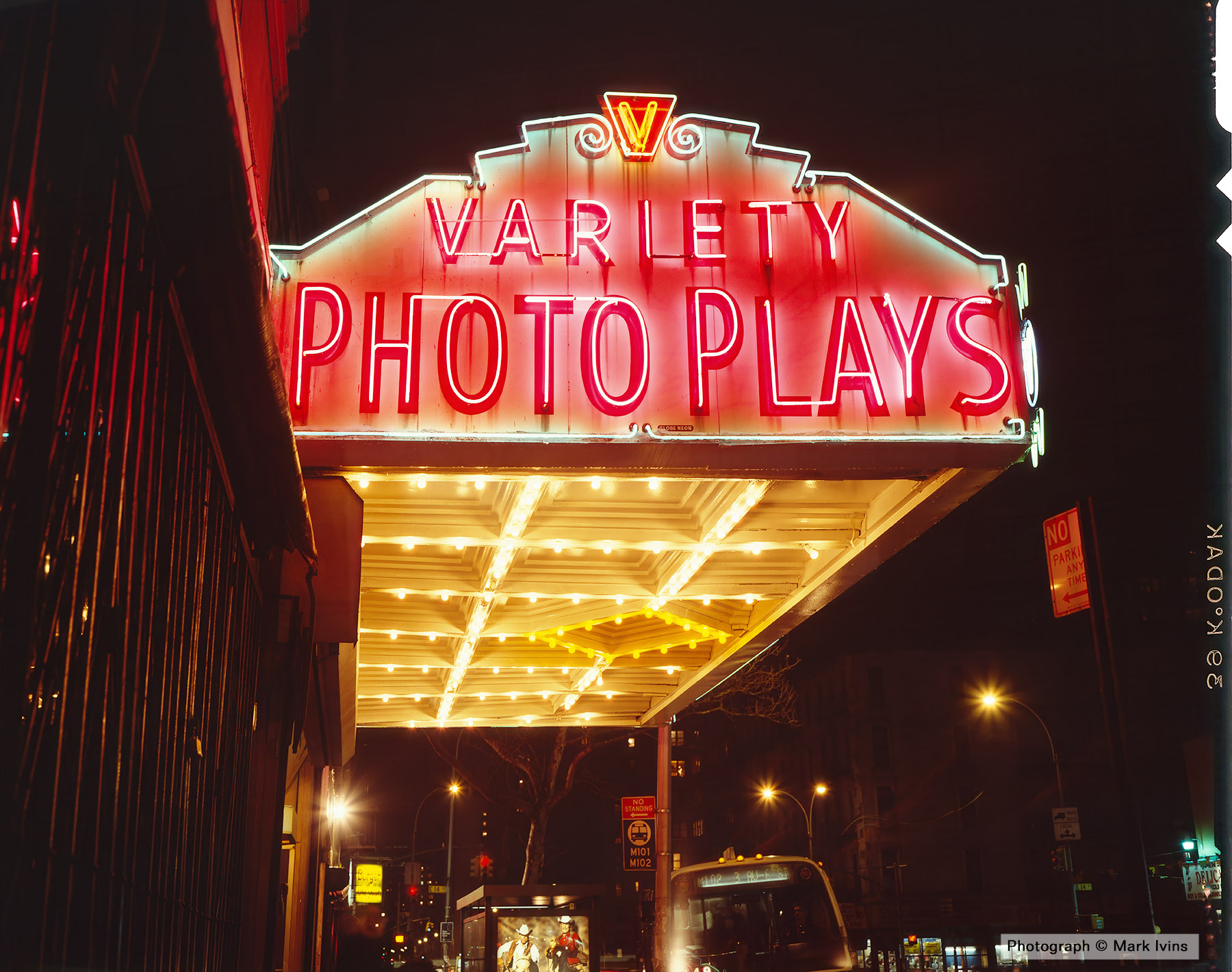
The Variety Photoplays was a mainstay of the Union Square area for nearly 90 years. The venue began as a nickelodeon around 1914, but by the 1920s, had become a more traditional cinema. And yet, because of its limited size, the Variety never attracted the best first-run features, and was considered more of a working class theater.
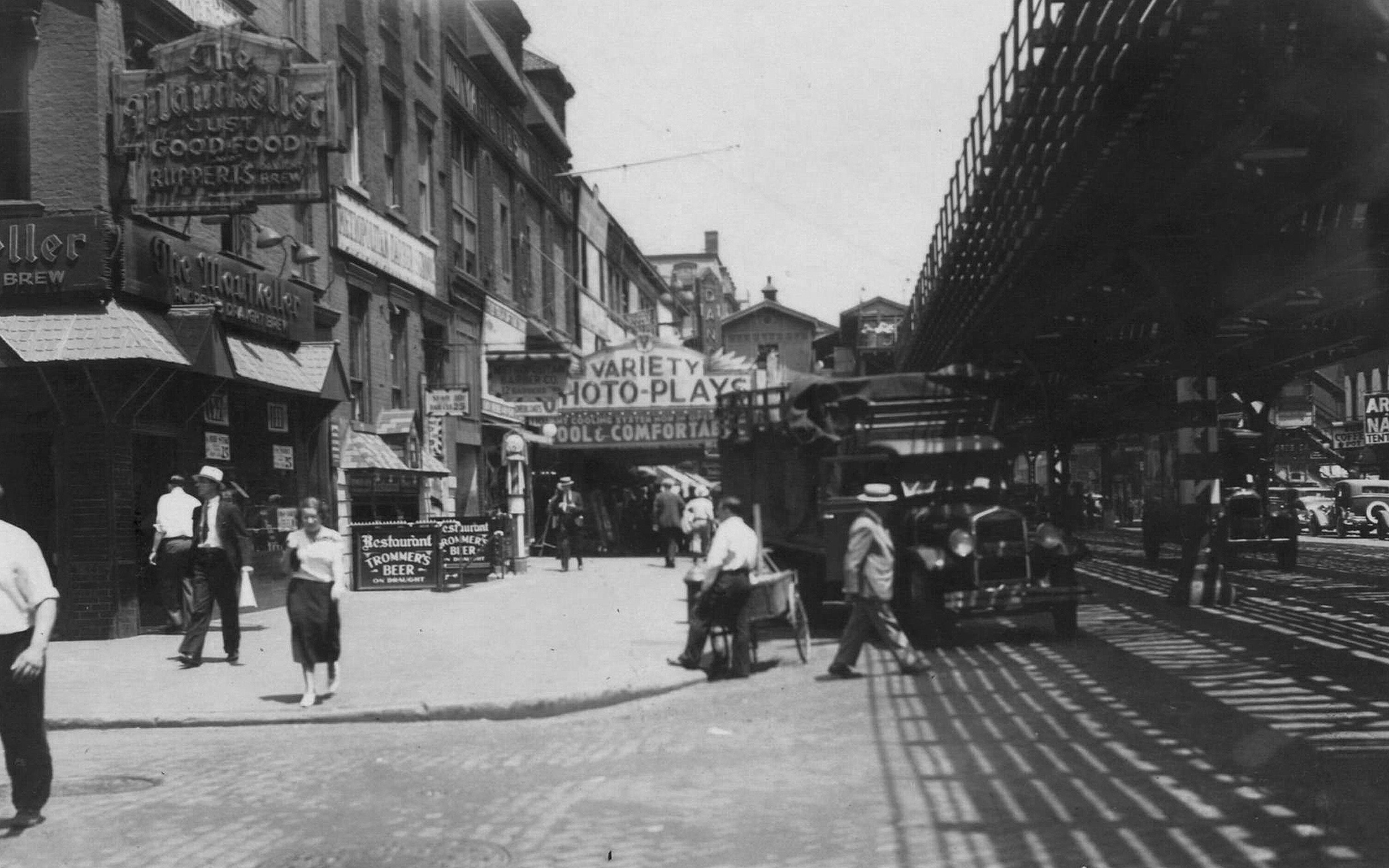
By the time Taxi Driver was filmed there, the Variety had moved into the world of adult entertainment, screening a miscellany of soft- and hardcore porno films. The theater also had a reputation as a hook-up joint for gay and straight men, often described as being in a state of “constant bustle.”
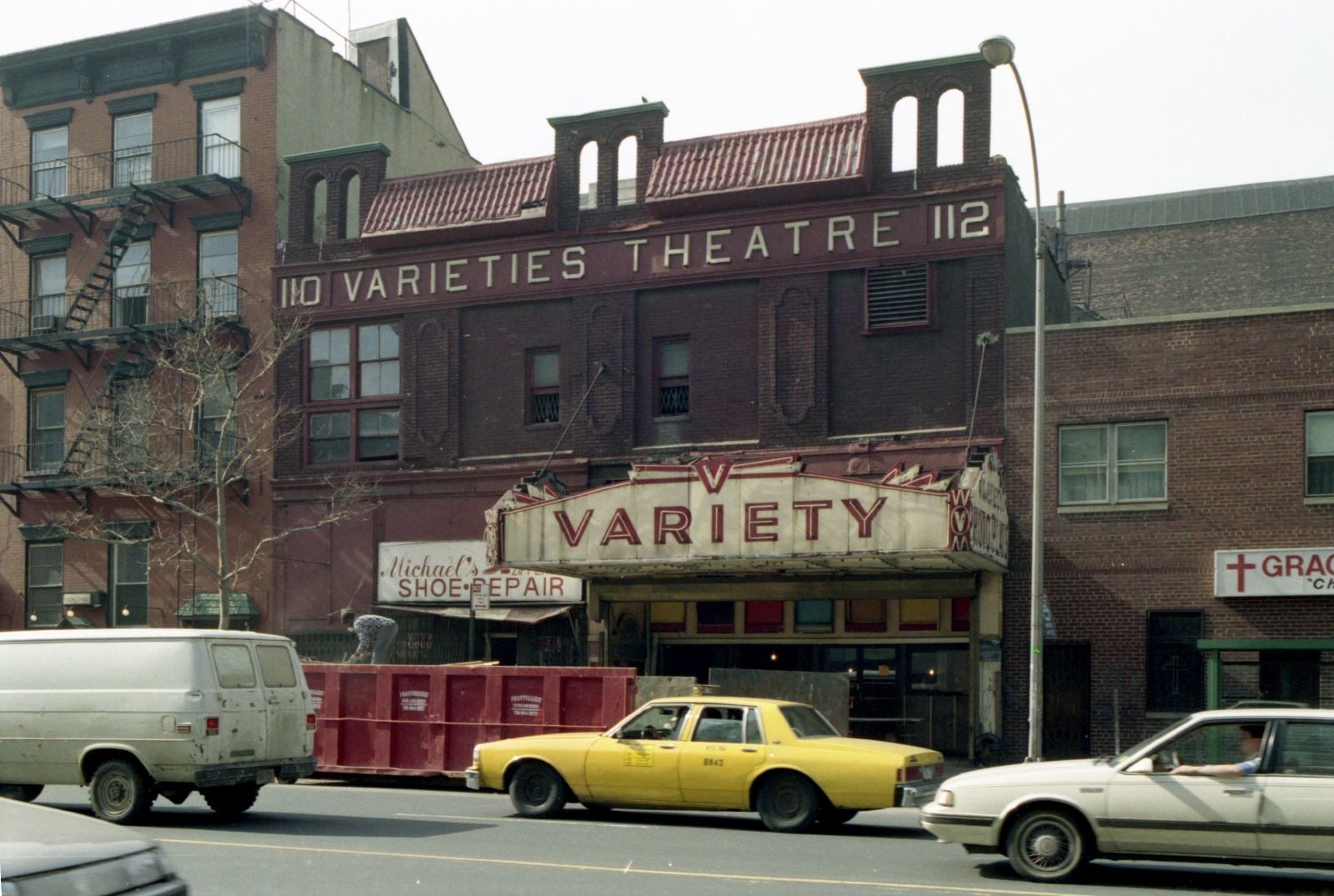
The Variety ended up being closed by the city’s health department in 1989, but reopened a couple years later as a live off-Broadway theater.
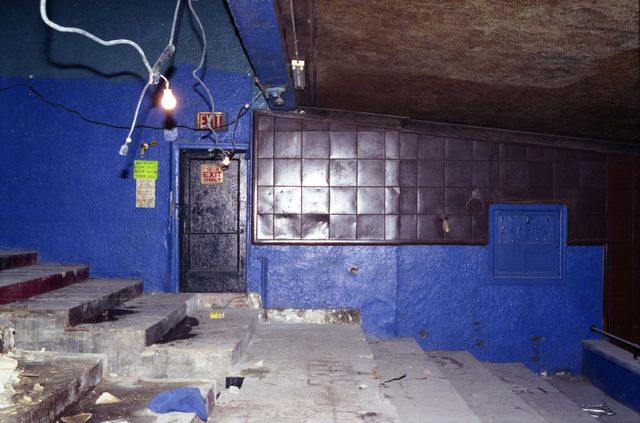
It continued as a legitimate theater for the next 12 years, finally closing its doors in 2004. And despite calls to have the building landmarked, it was demolished in 2005.
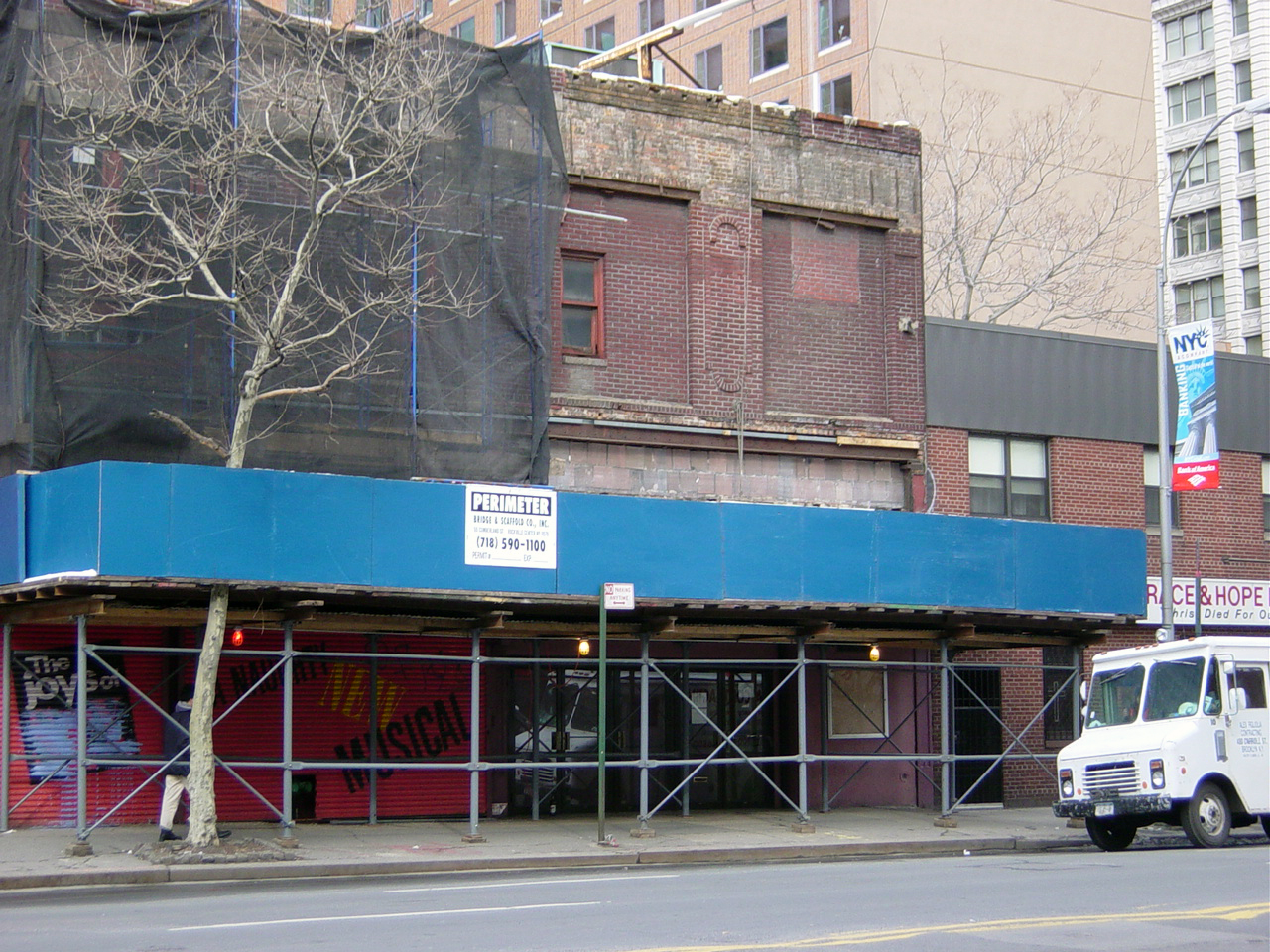
Today, a 21-story condominium tower sits in its place, making the block practically indistinguishable from an average corporate street in Midtown.
Kids Throw Eggs
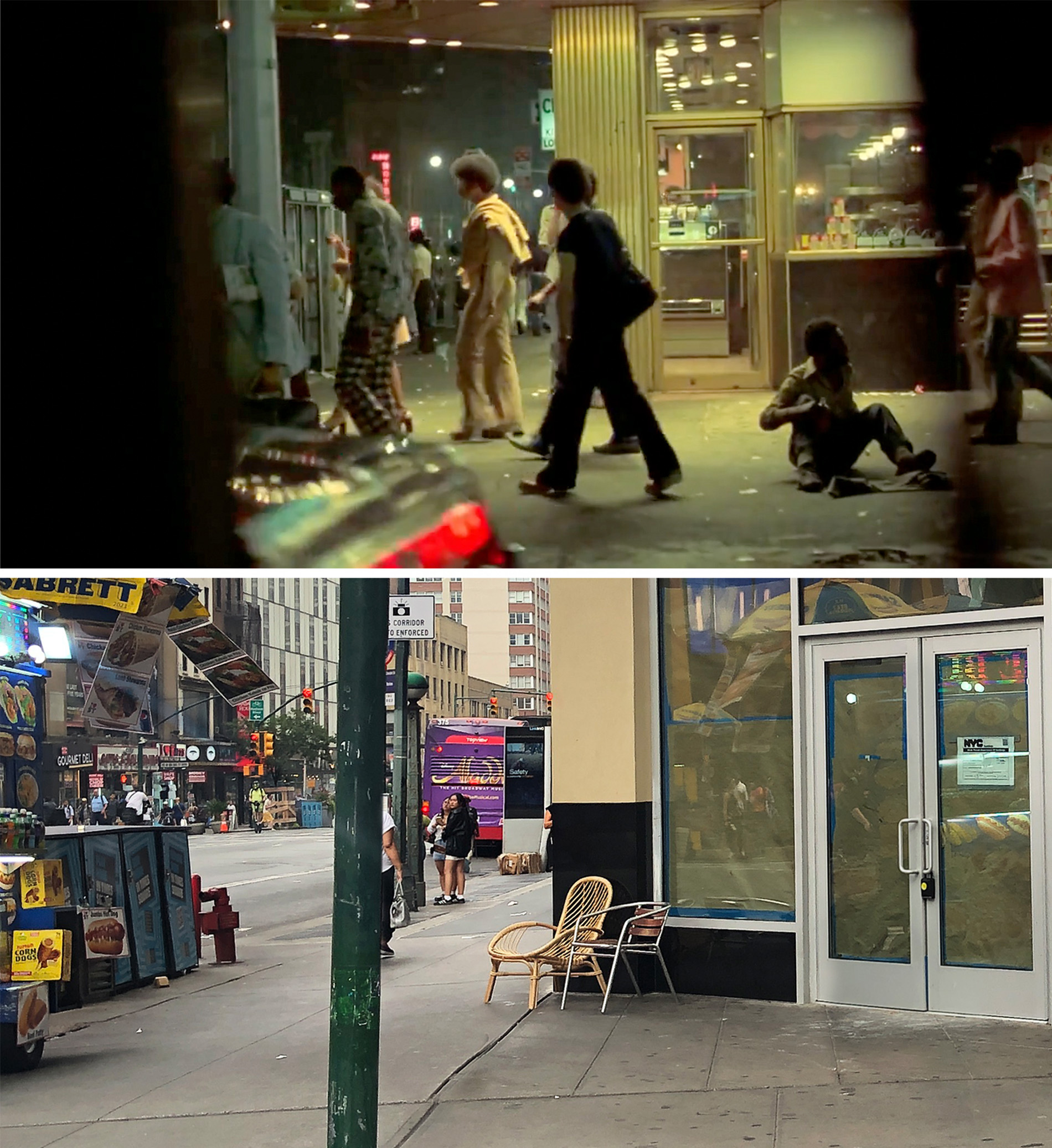
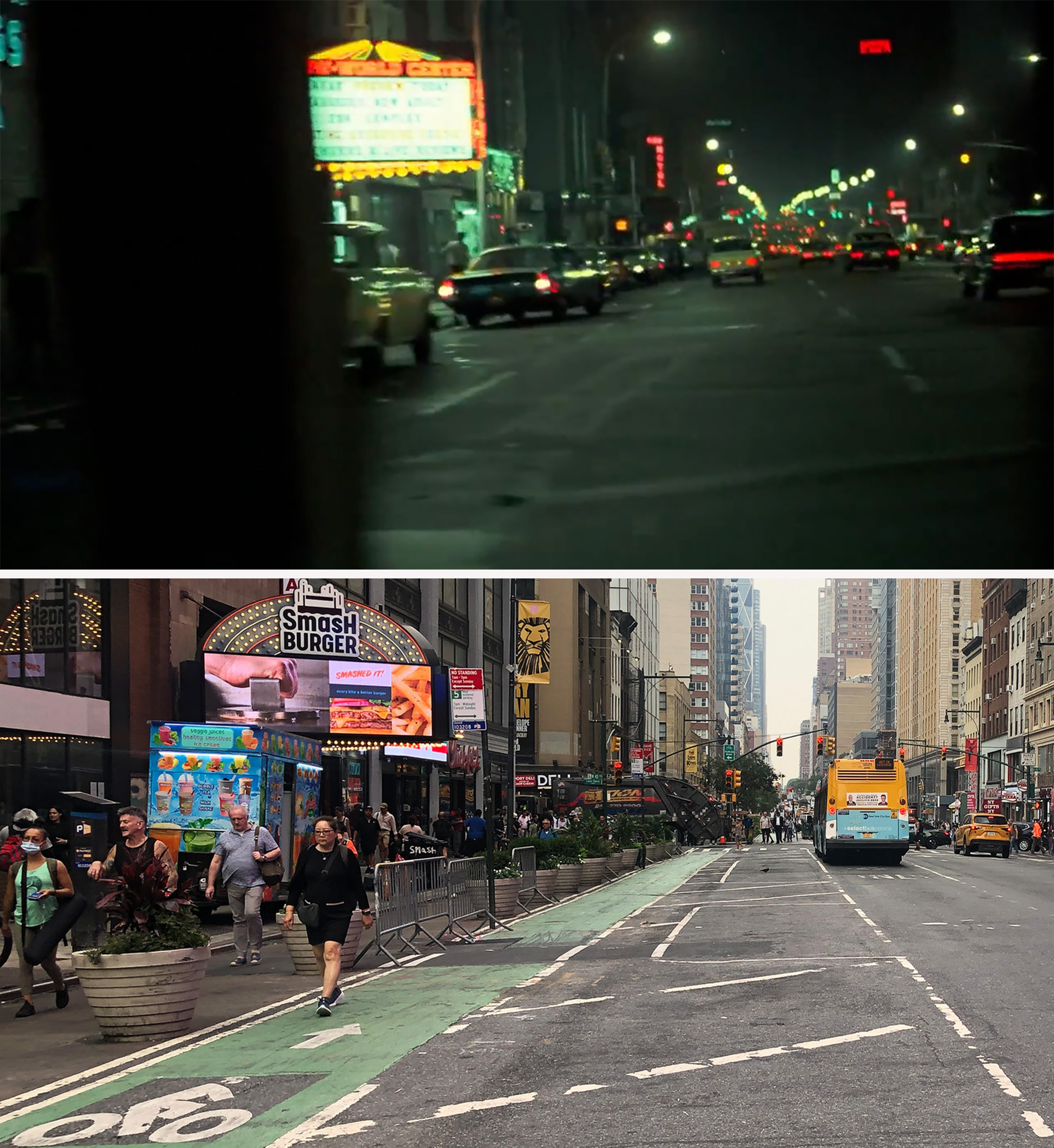
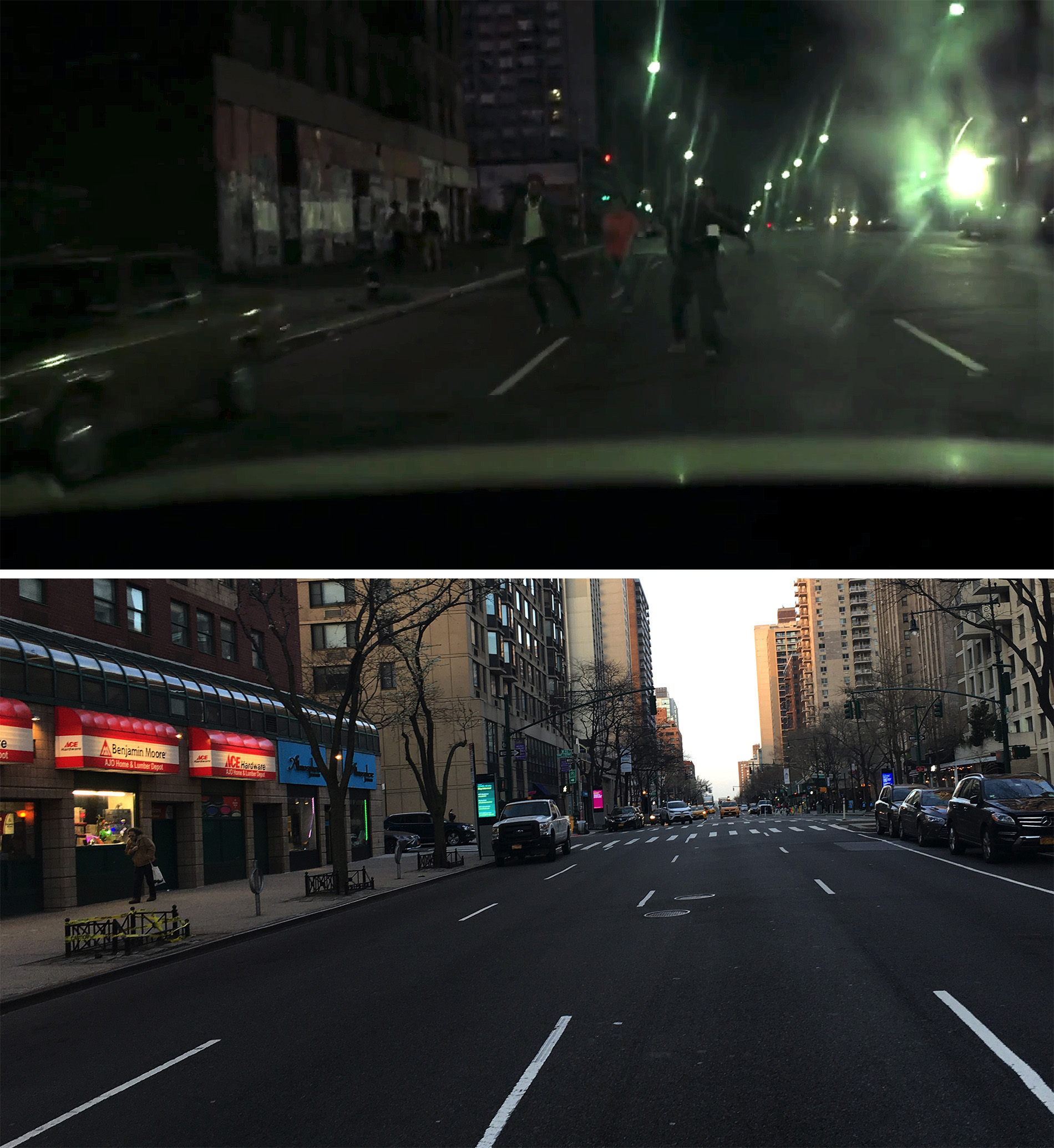
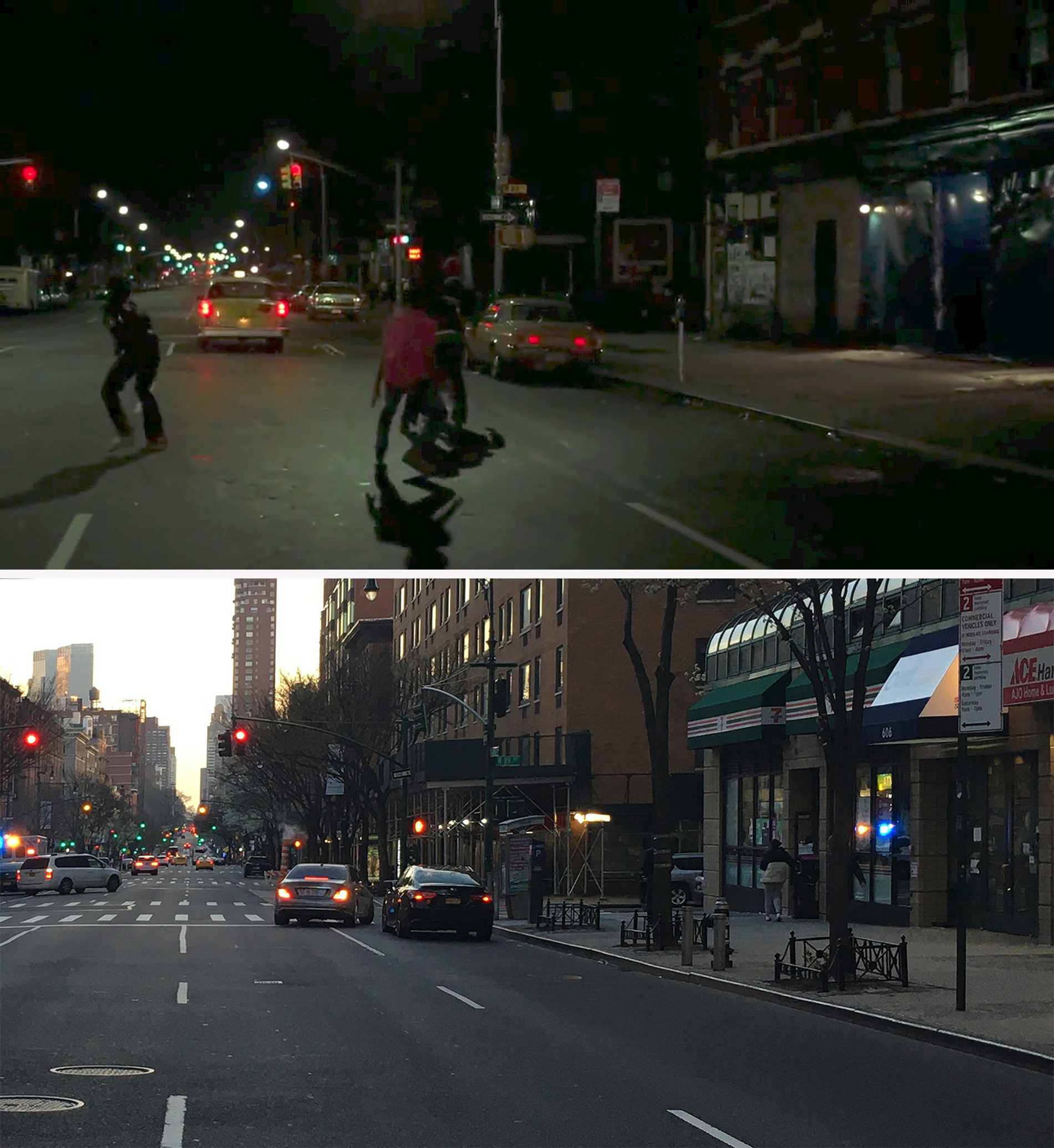
The traveling shot at 42nd and Eighth was included on the ScoutingNY website, with the Show World Center marquee probably being the thing that helped identify its location.
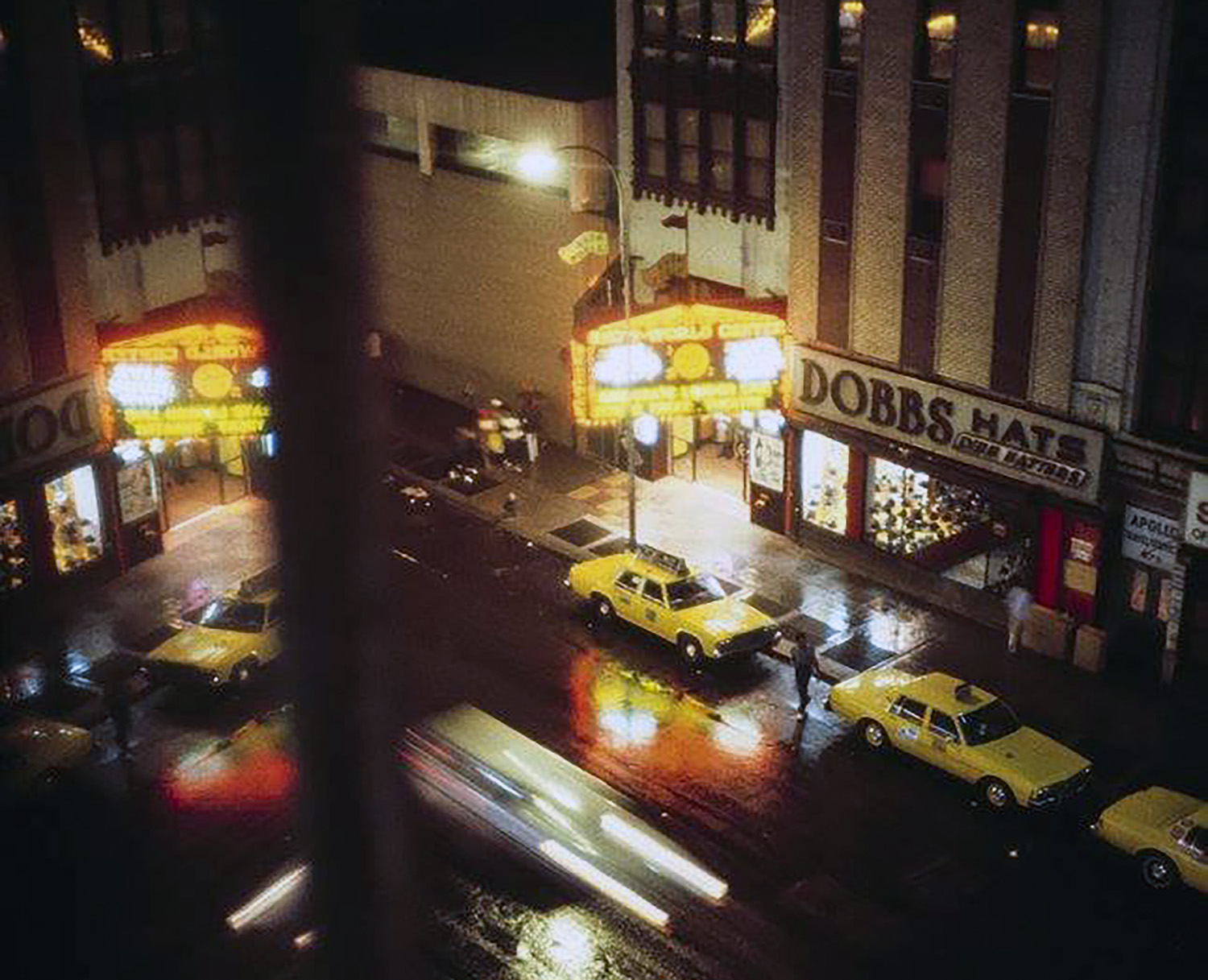
Show World was a huge, four-story sex center at 669 Eighth Avenue, offering a variety of x-rated entertainment: movies, peepshows, magazines, and live sex acts. It was one of the longest surviving entities from the sleazy bygone days of “the Forty-Deuce,” lasting until 2018. The infamous marquee is still there today, now being used by Smashburger.
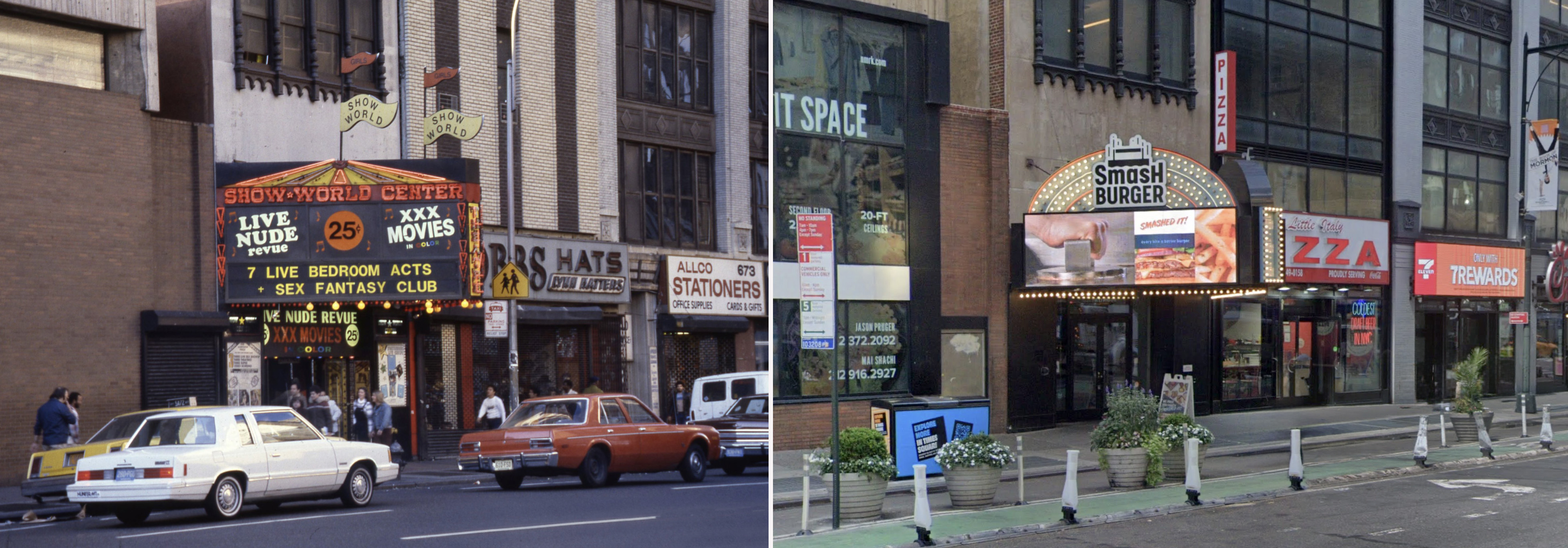
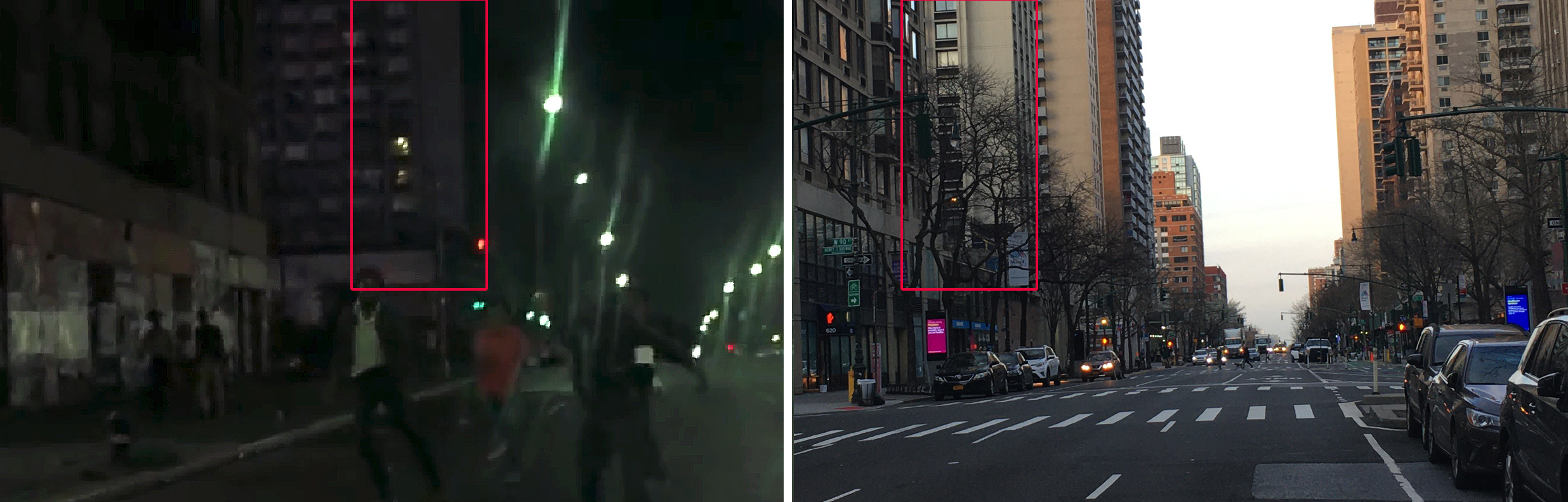
When it came to the egg pelting scene, ScoutingNY hadn’t identified it. In fact, it didn’t even mention it. But being the fanatical completist that I am, I was obsessed with finding its location.
For years, I struggled to nail it down, but when I got my hands on an HD Blu-ray of the movie, I could finally read a street sign that was previously too dark and blurry to decipher.
I could see from the sign that they were at W 89th Street, so all I had to do was check out all the cross avenues, hoping I could match up an extant structure. I eventually landed on Columbus Avenue when I spotted a modern apartment tower about one block up that matched the movie.
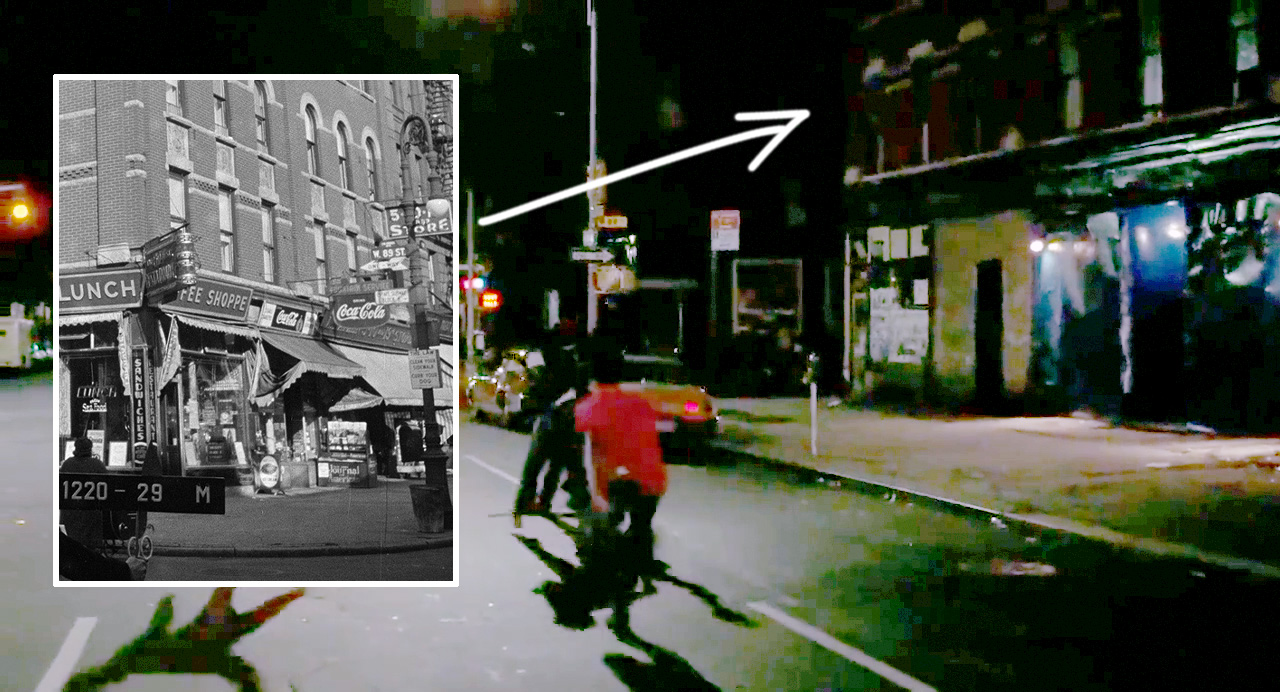
To further confirm the location, I also checked out the 1940s tax archives and found a photo of the corner building on 89th. Comparing it to the movie, I could see the tax photo building was the same one that appeared next to the egg-tossing kids.
Once this egg location was confirmed, it helped me find that open fire hydrant location in an earlier scene, which was literally just one block south.
Travis and Betsy’s Evening Date
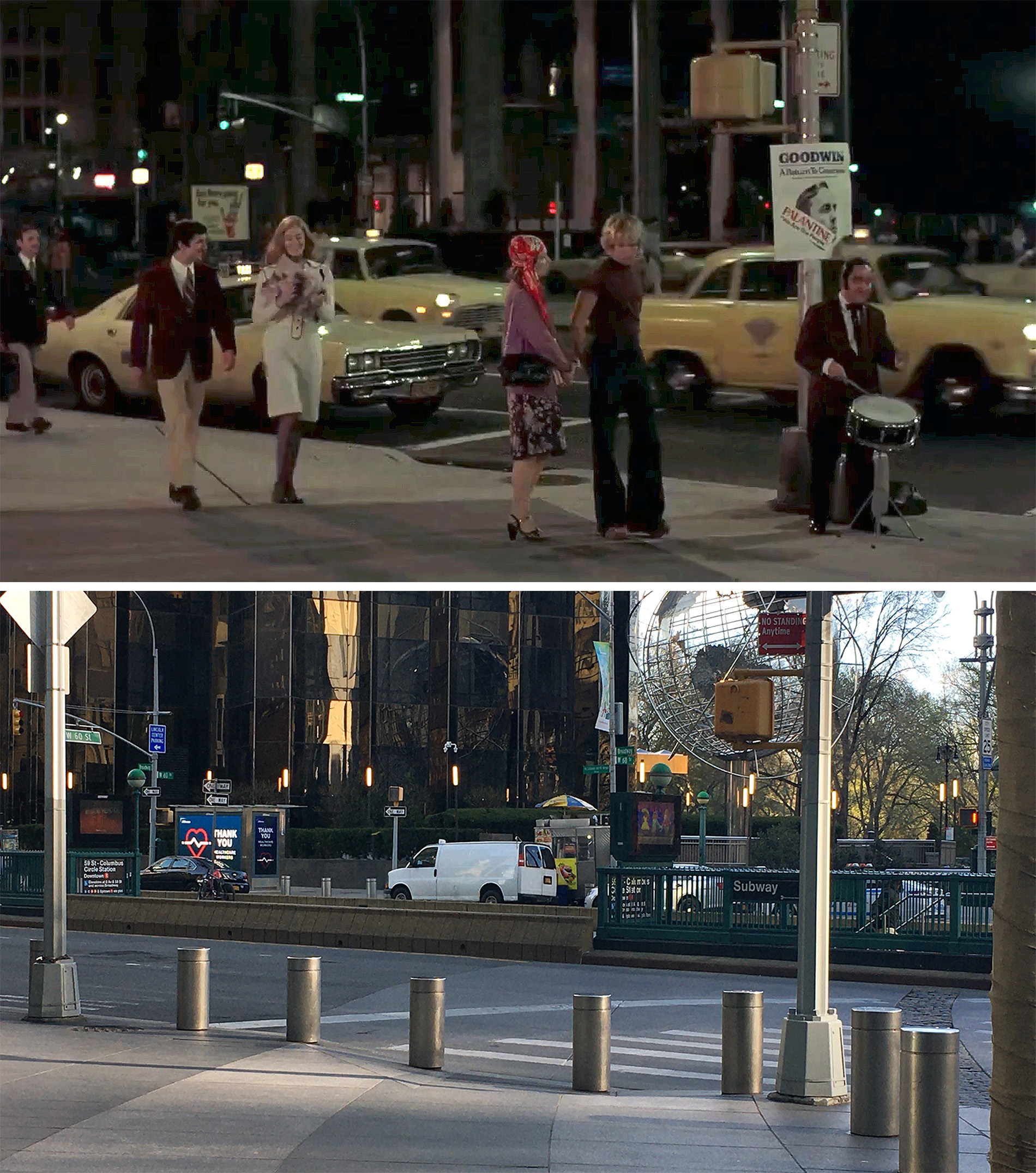
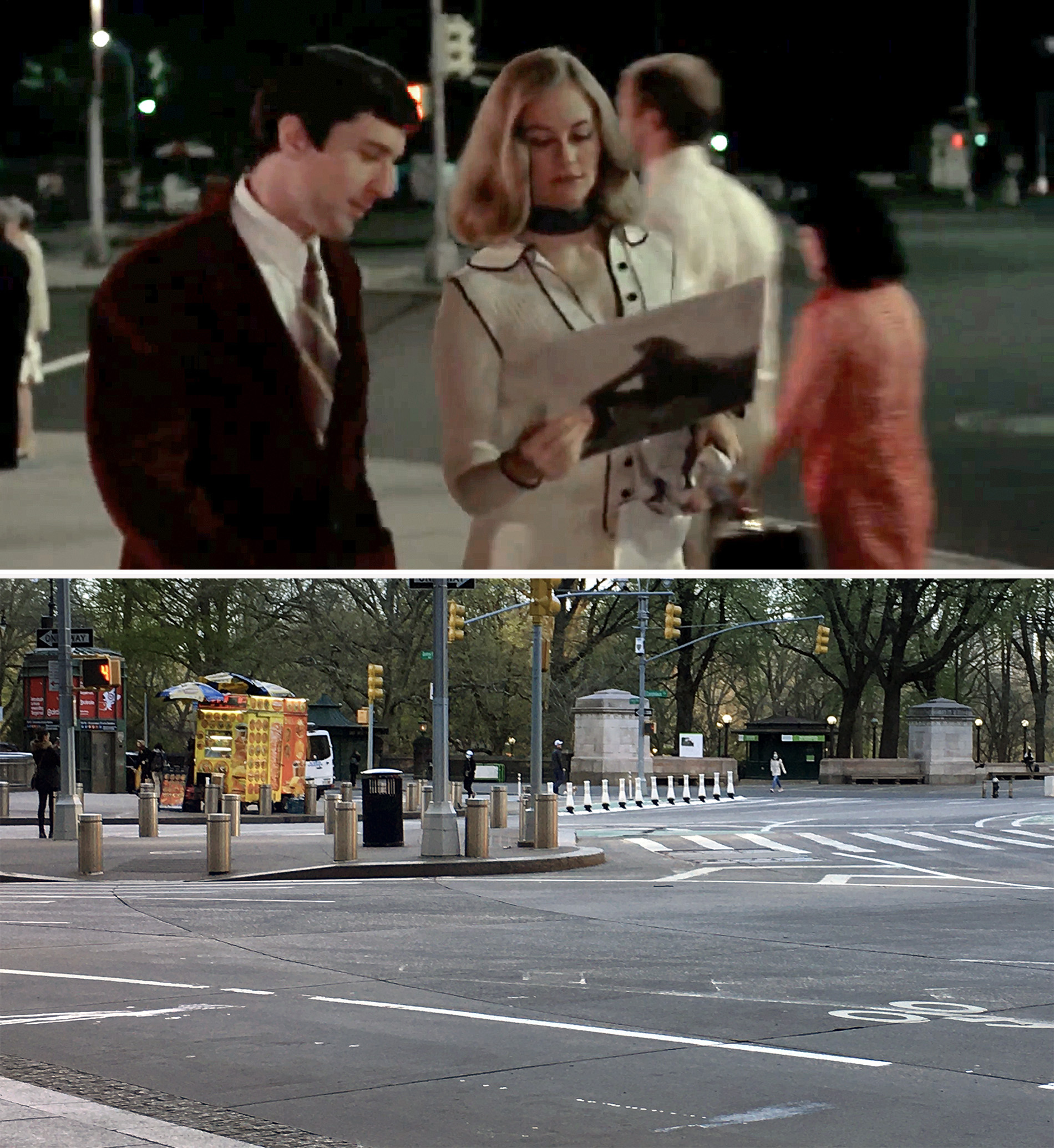
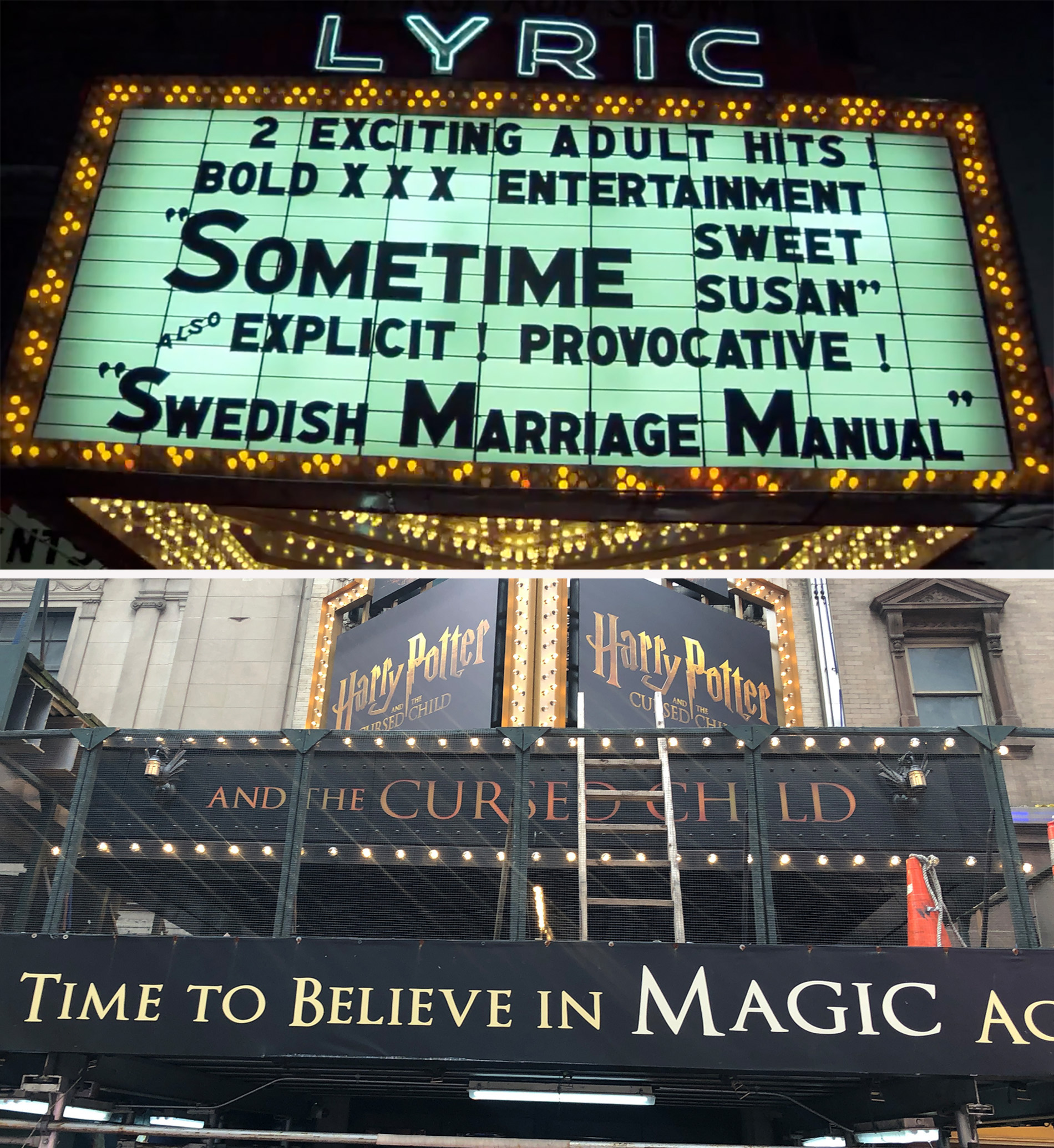

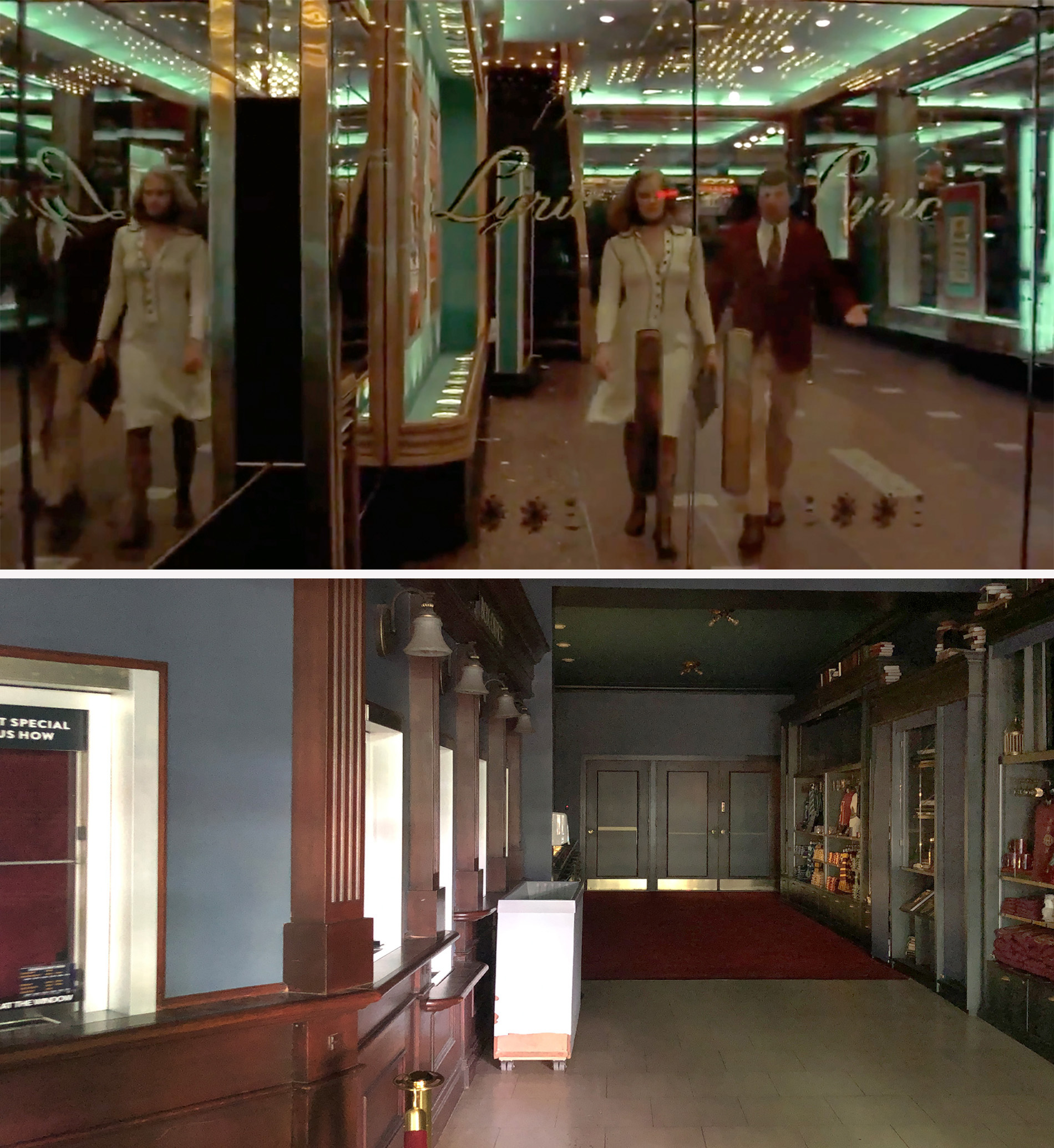

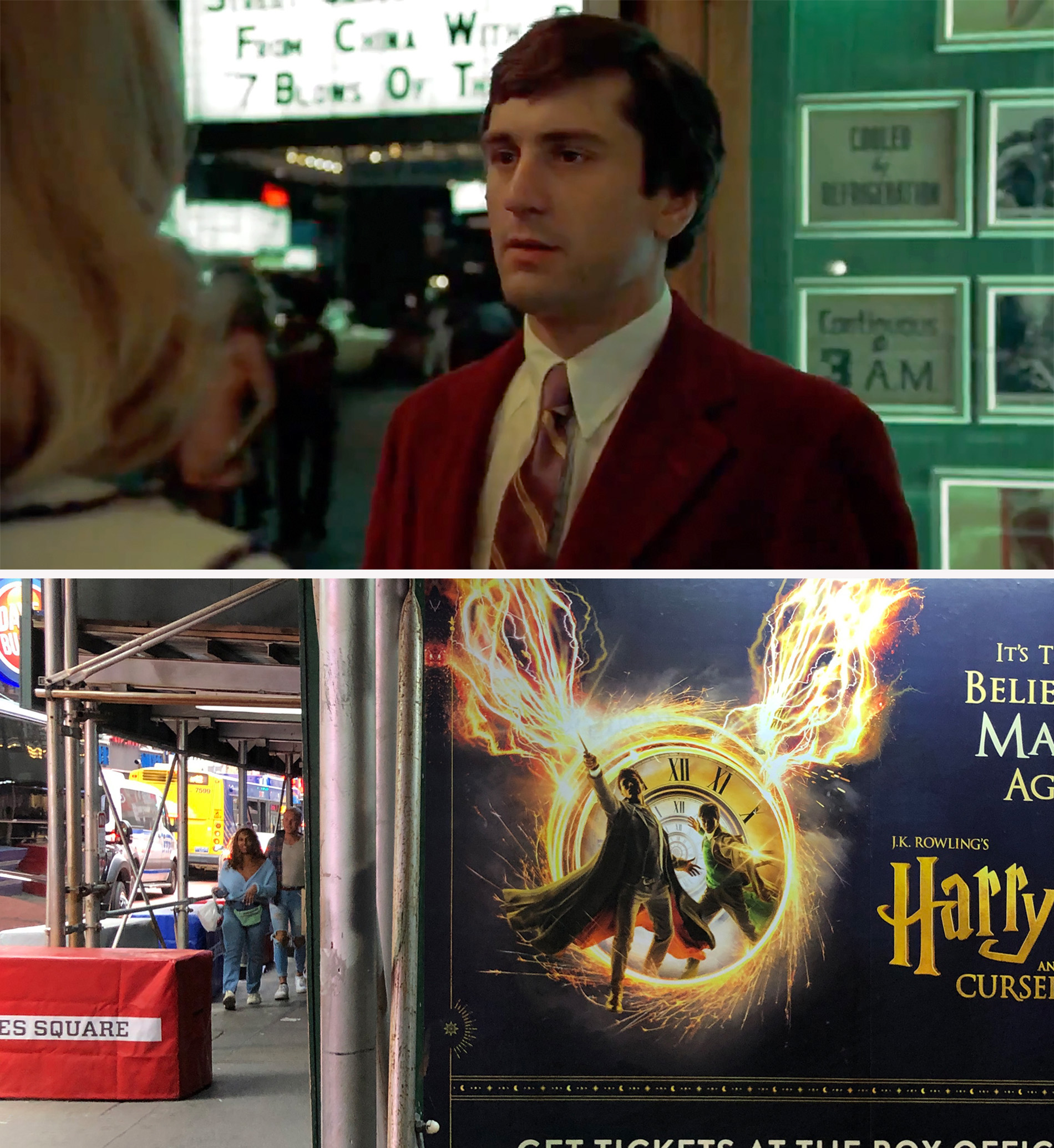
The locations to this date sequence are widely known and mentioned on several movie websites, although for some reason, the ScoutingNY website erroneous claimed the walking scene that led up to the movie theater was shot in Times Square. Not sure how that mistake could’ve been made since the scene is way too dark to be in the brightly-lit Square. Plus, you can pretty easily see the old Gulf & Western Building in the background with its distinctive white marble columns.
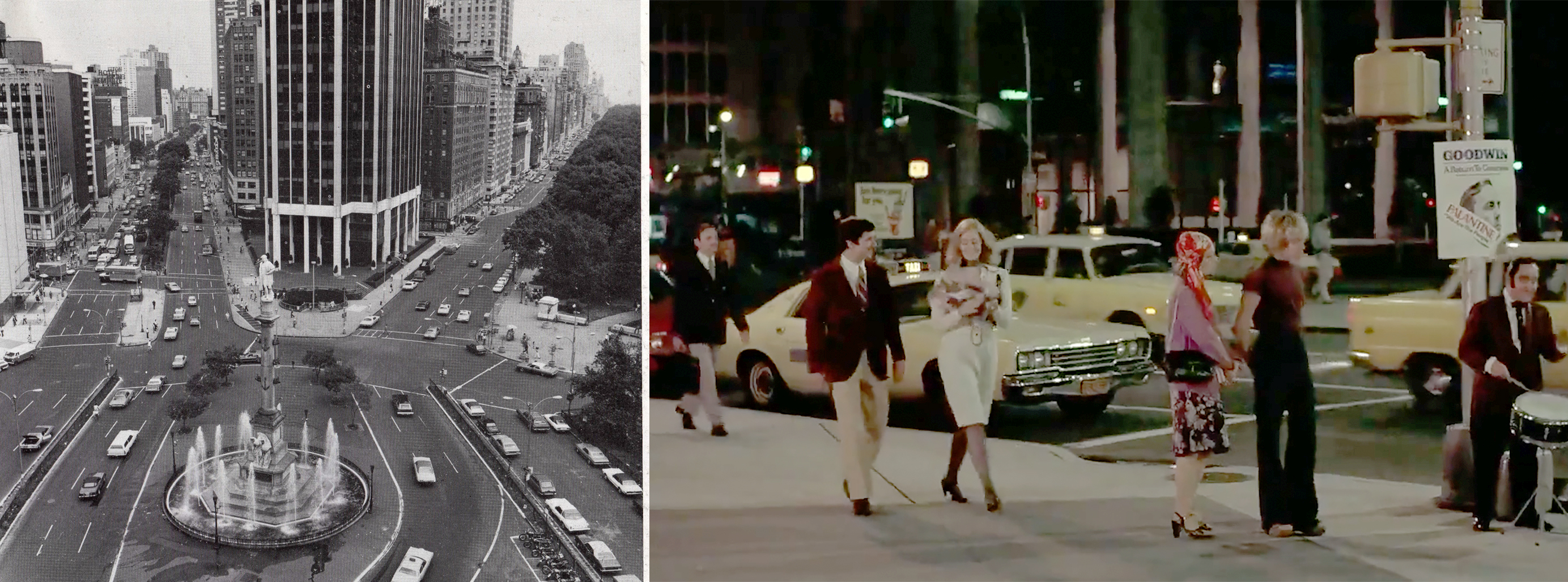
Even though Taxi Driver is known for its bloody violence, for me, one of the more disturbing images is the sweaty street drummer from this scene, with his Elvis-like sideburns and slicked-back, jet-black hair that looks more like freshly-paved tar.
The drummer was a real street performer named Gene Palma who was known for his wild percussion work, mostly in the Times Square area.
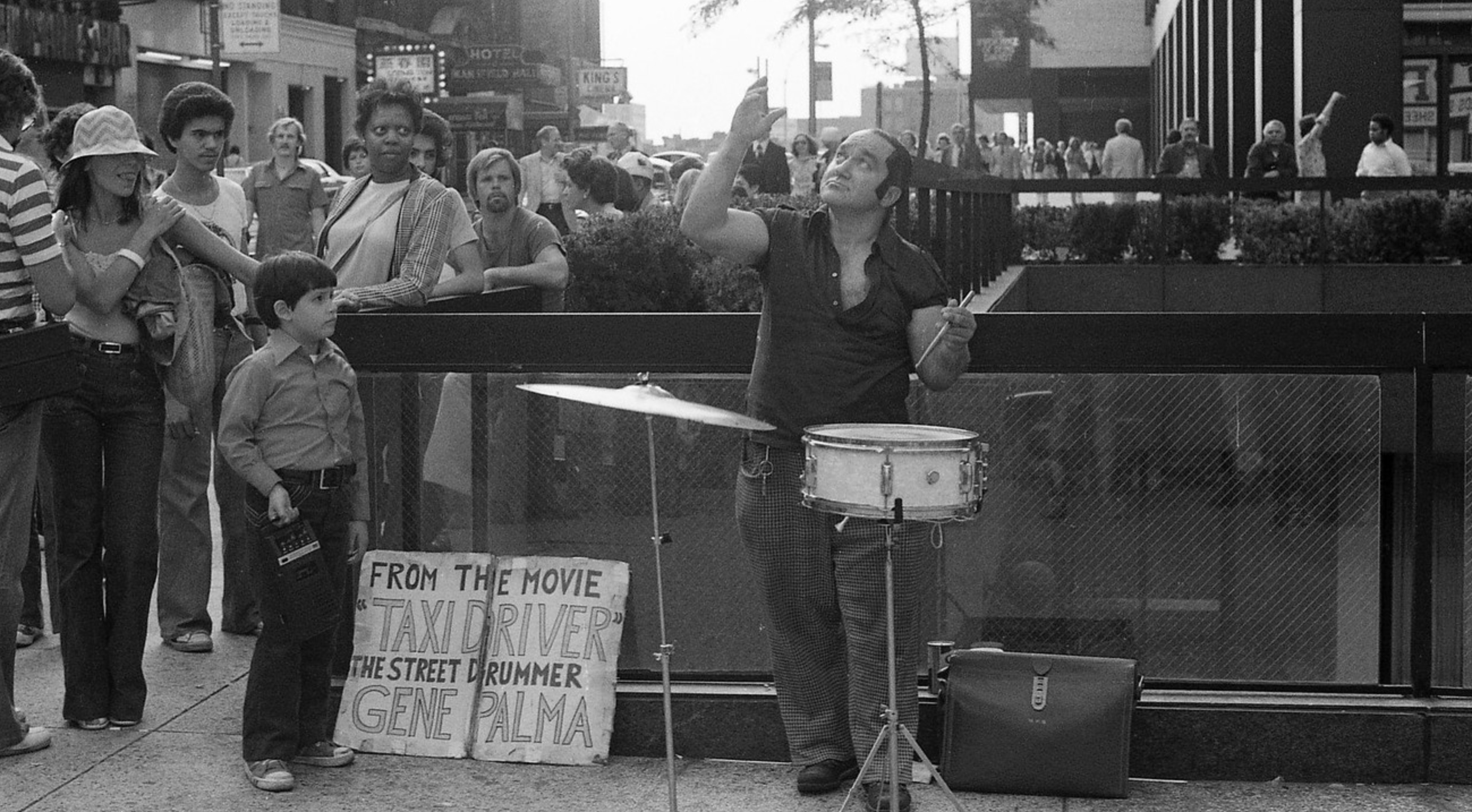
Palma reportedly got paid $172.50 for his appearance in Taxi Driver and used his minor celebrity status as a way to generate some extra donations from passersby.
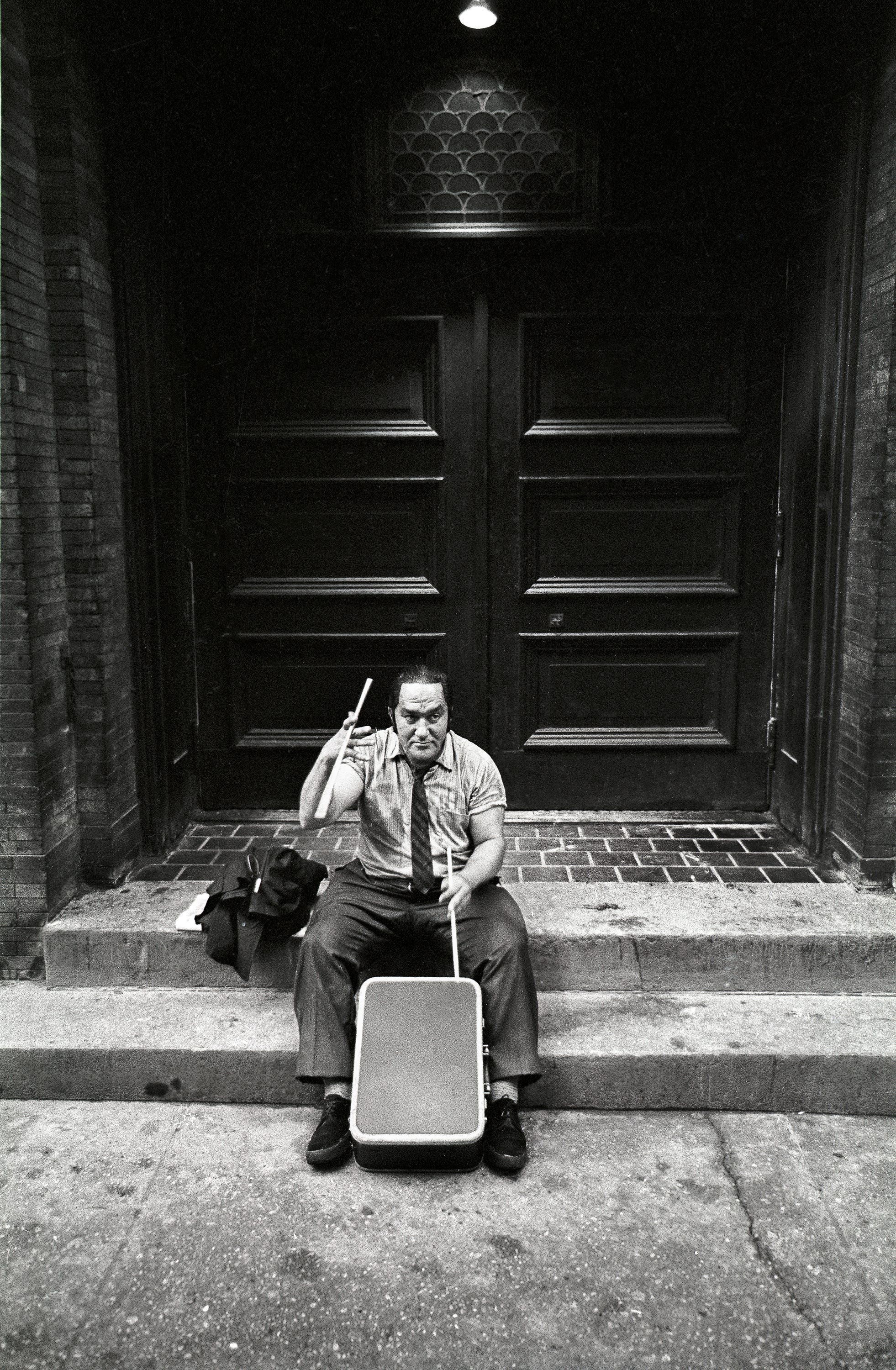
He continued working the New York City crowds for years to come, often using newsstands or an oblong suitcase as his instrument. Palma kept at it, drumming five days a week through the 1990s. He eventually retired and entered an assisted living facility, where he died in 2005 at the age of 81.
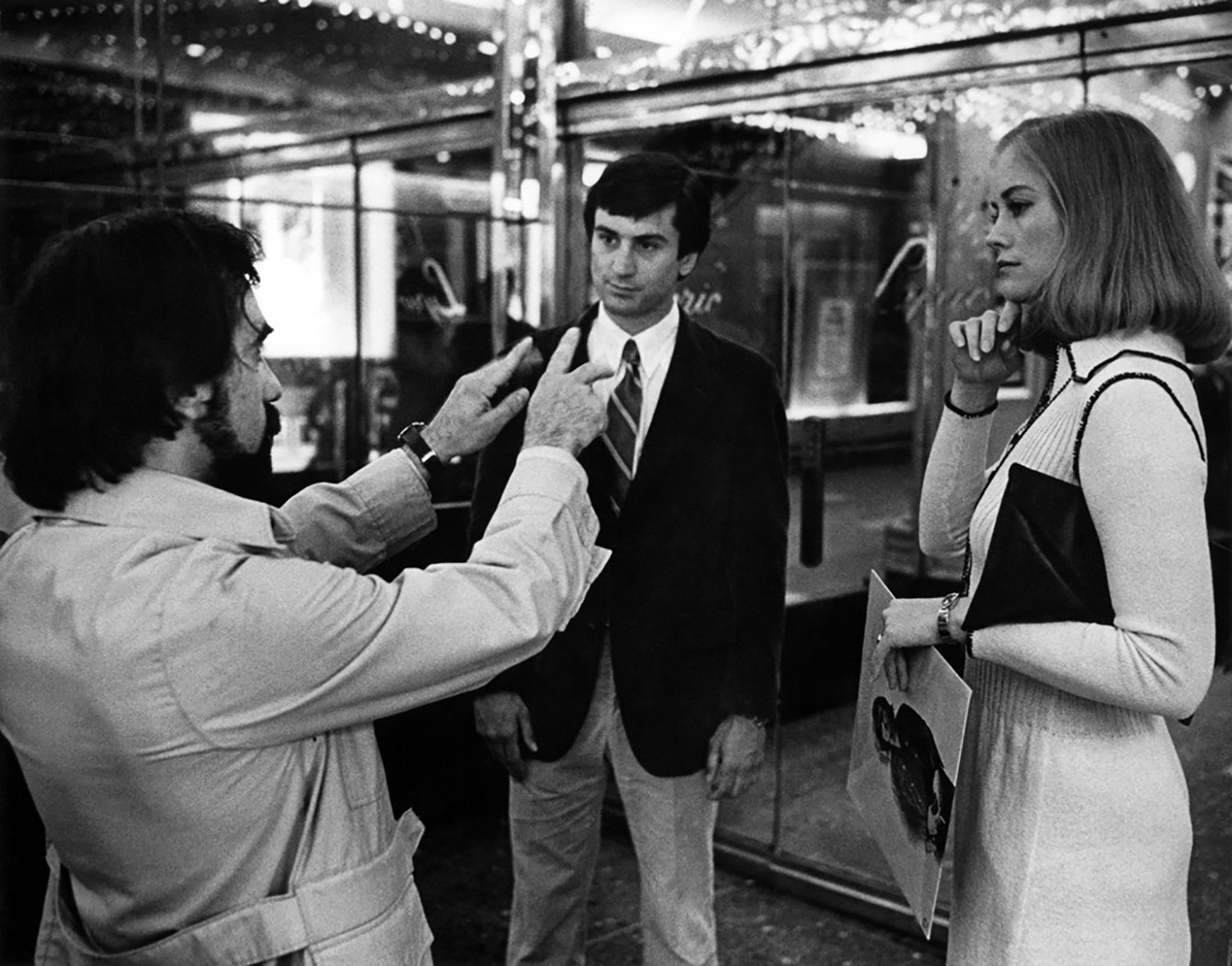
The movie theater section from the date sequence took place at the old Lyric Theatre on 42nd, whose marquee is clearly visible in the opening shot.
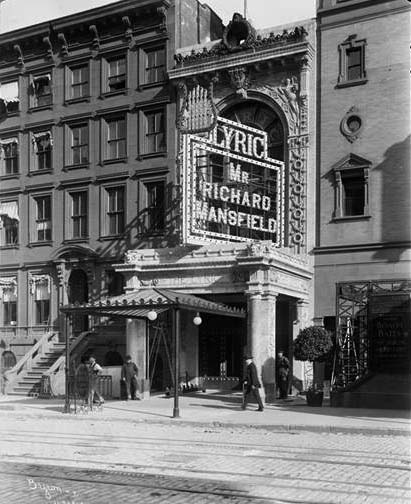
The Lyric Theatre first opened in 1903, equipped with two entrances — a larger facade on the W 43rd Street side and a smaller one on W 42nd.
It was initially used as a legitimate stage but by the 1920s, was regularly sub-leased to screen movies. In 1934, the theater became a full-time movie house, continuing as such until 1992 (at which time the building was in pretty poor shape).
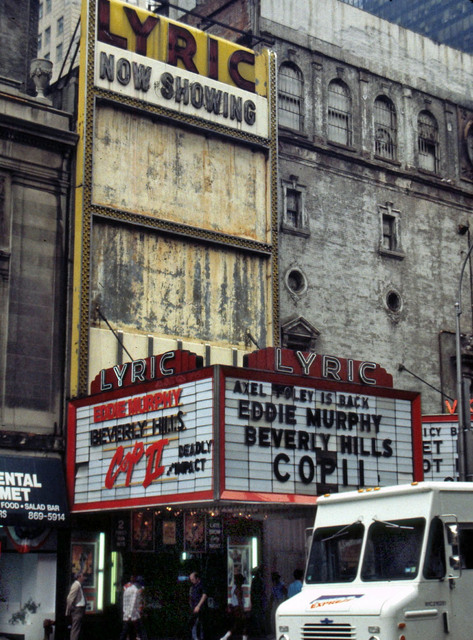
In 1996, the beleaguered Lyric and the neighboring Apollo Theatre were razed, but their facades were salvaged.
Afterwards, the Ford Center for the Performing Arts was built on the lot, using architectural fragments from the original Lyric and Apollo structures, retaining both the 42nd and 43rd Street facades. The Ford Center was later renamed the Hilton Theatre, and in 2011 became the Foxwoods Theatre, only to be renamed one more time in 2014, becoming the Lyric Theatre once again.
A Sad Phone Call
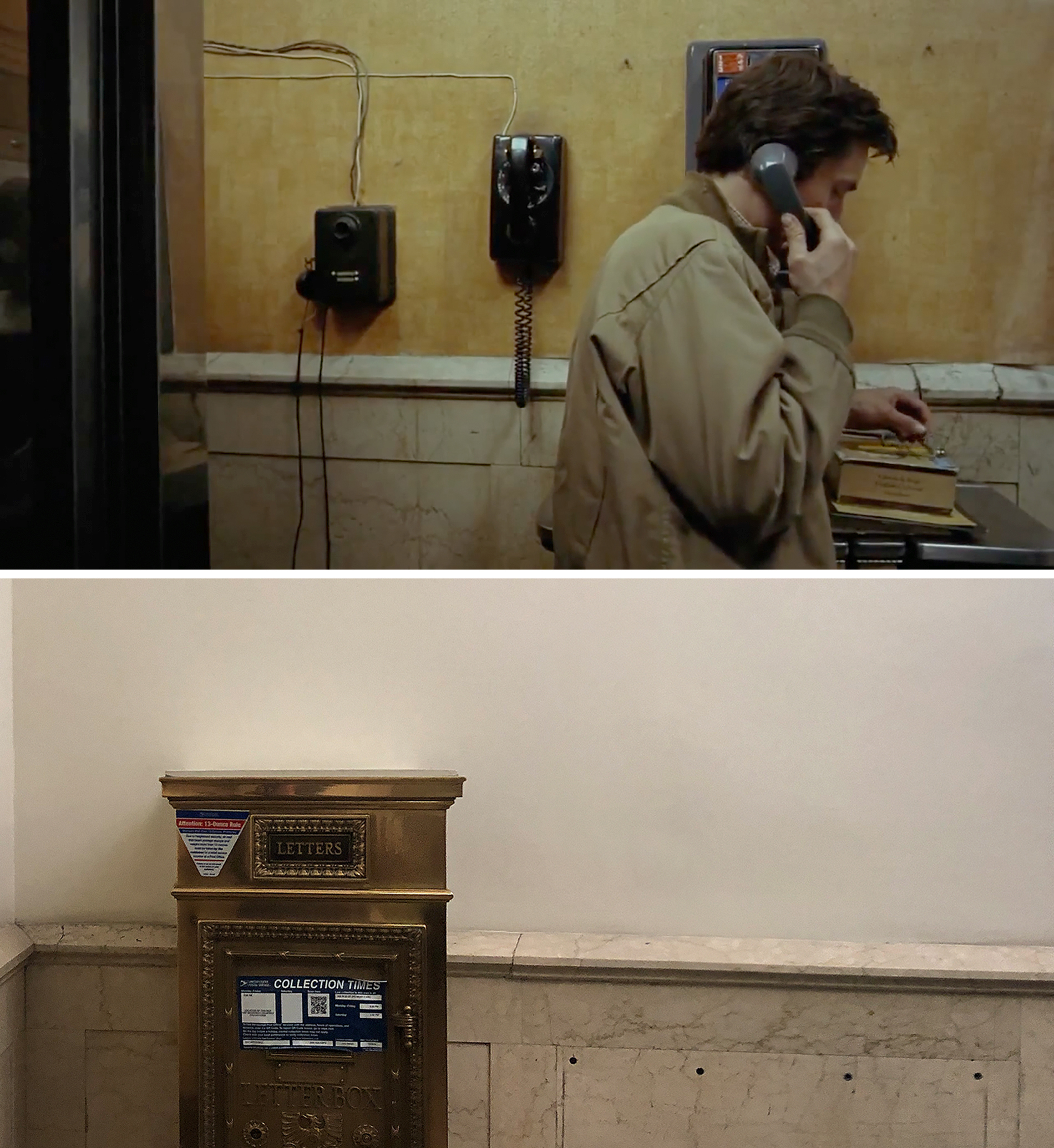
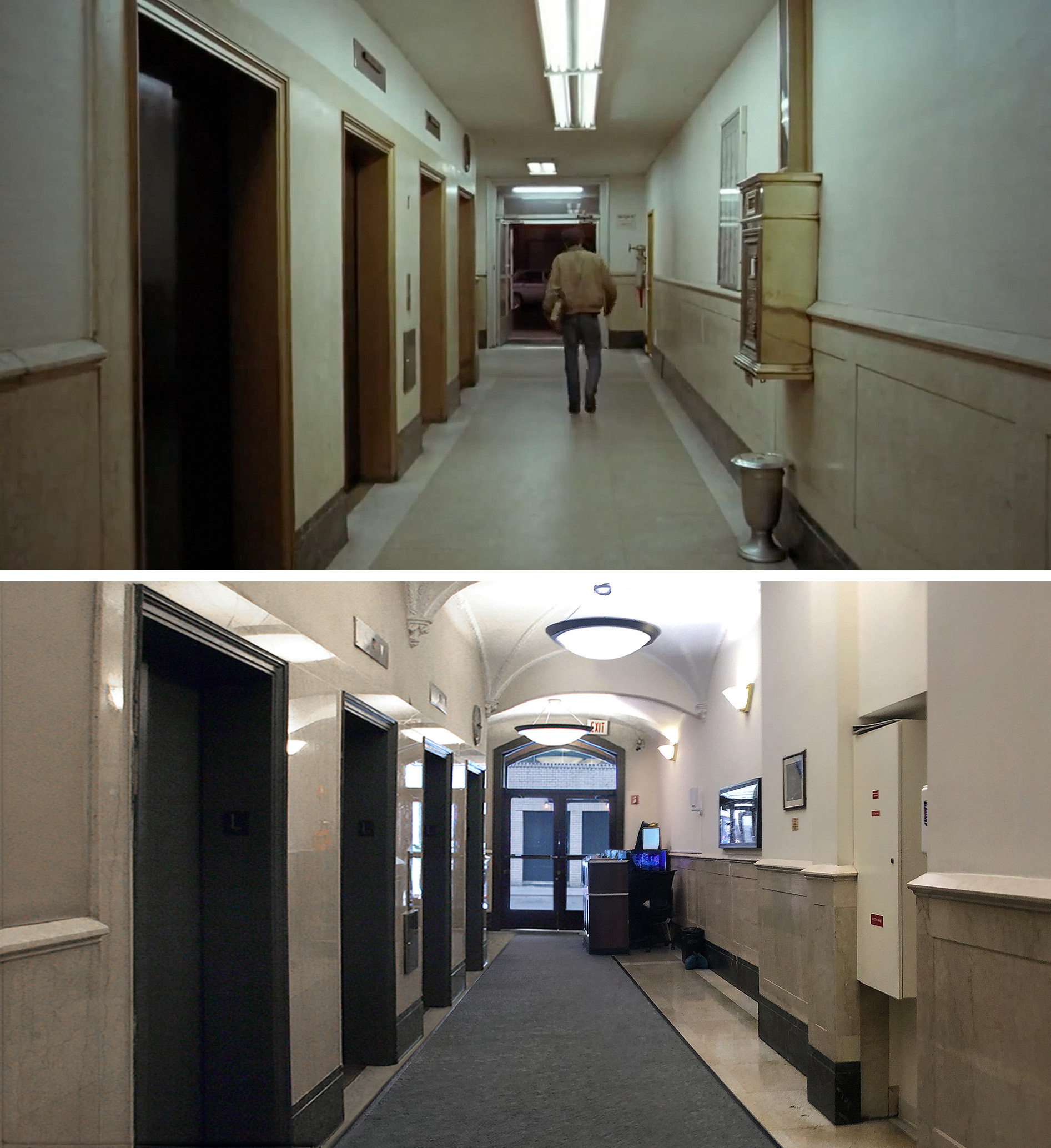
This location was identified by Carr on his ScoutingNY site, although I already knew where they filmed this scene from an appearance Scorsese made on the Late Show with David Letterman. On the show, the director mentioned the connection Taxi Driver had with the Ed Sullivan Theatre and after showing a clip from the movie, they compared it to a “live” view of the same hallway.
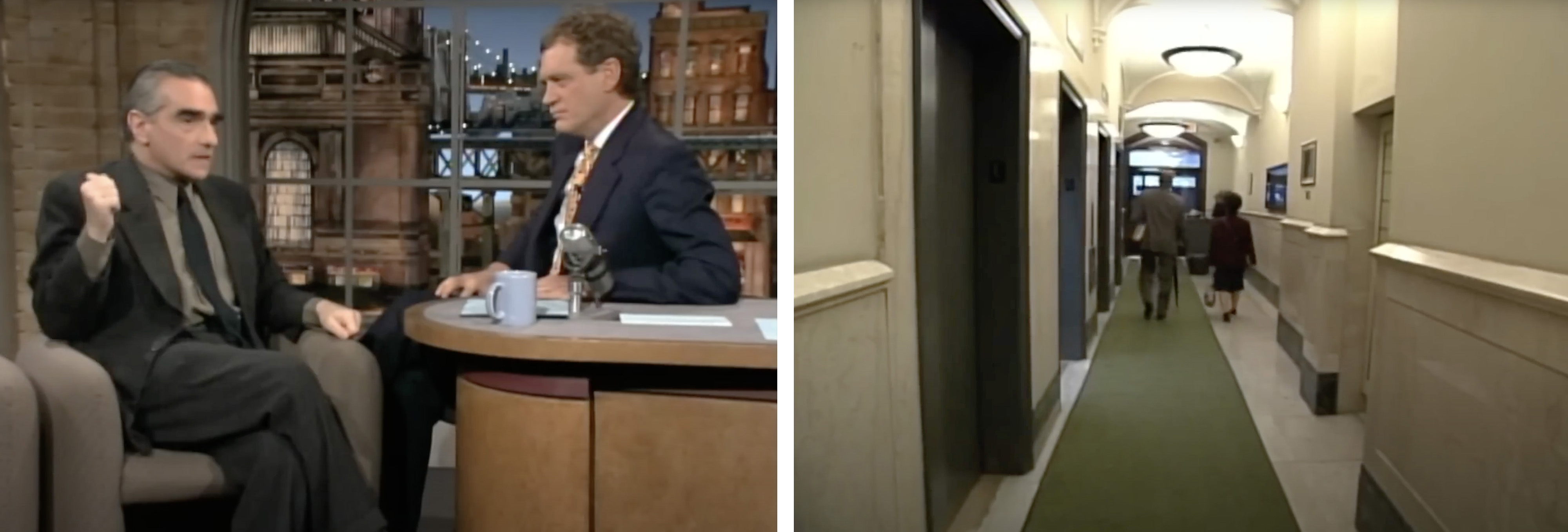
Of course, knowing where something was filmed and being able to get modern pictures of it are two different things. As with most office spaces, the one at 1697 Broadway had a security checkpoint at the entrance and a rule against unauthorized picture-taking (especially since it’s the same entrance used by host, Stephen Colbert).
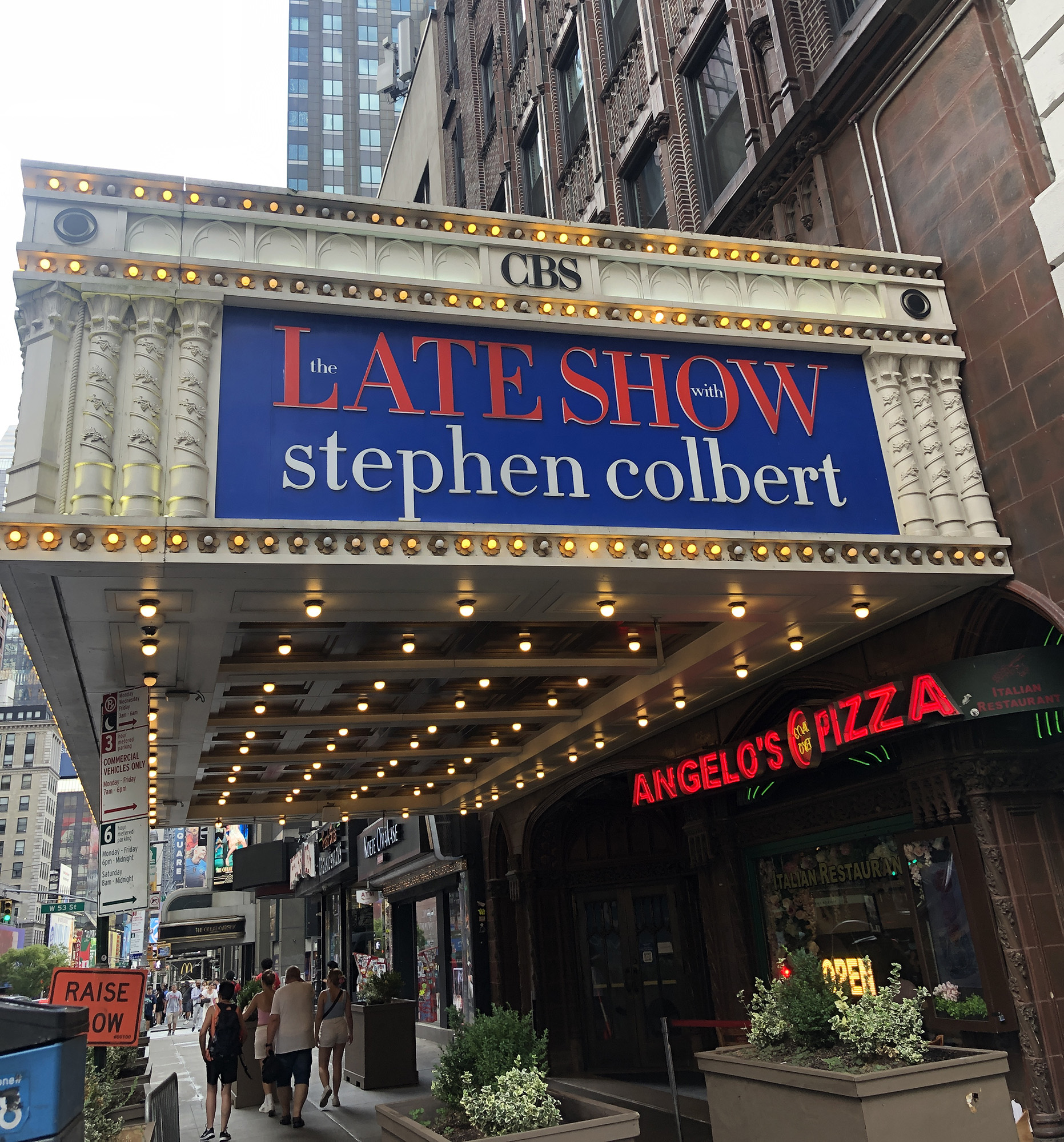
Knowing this, I concocted a story about delivering an envelope for my boss to the Mayor’s Office of Media and Entertainment which has a space on the 6th floor. However, without an official appointment, the guard couldn’t let me through. Luckily, it was a slow Friday near closing time, so the guard made the extra effort to call MOME and have an employee come down to talk to me.
As I waited, I slyly slipped past his desk and stood near the bank of elevators. About a minute later, a very nice woman from the office came down and politely listened to my whole rigmarole about wanting to conduct an interview with someone from her department. Somewhat sympathetic, the woman told me I needed to call the office on Monday to see if arrangements could be made.
After that, she went back onto an elevator to the 6th floor, and I pretended to be talking to my boss on my phone, explaining to him/her the situation. As I did this, I noticed the guard went back to watching a video on his computer, so I took the opportunity to slip to the back of the bank of elevators and quickly snap as many shots as possible — all while still pretending to talk to my boss.
A few seconds later, satisfied I got at least a couple usable pics, I headed for the 53rd Street exit, thanking the guard for his help as I walked out the door and hit the streets.
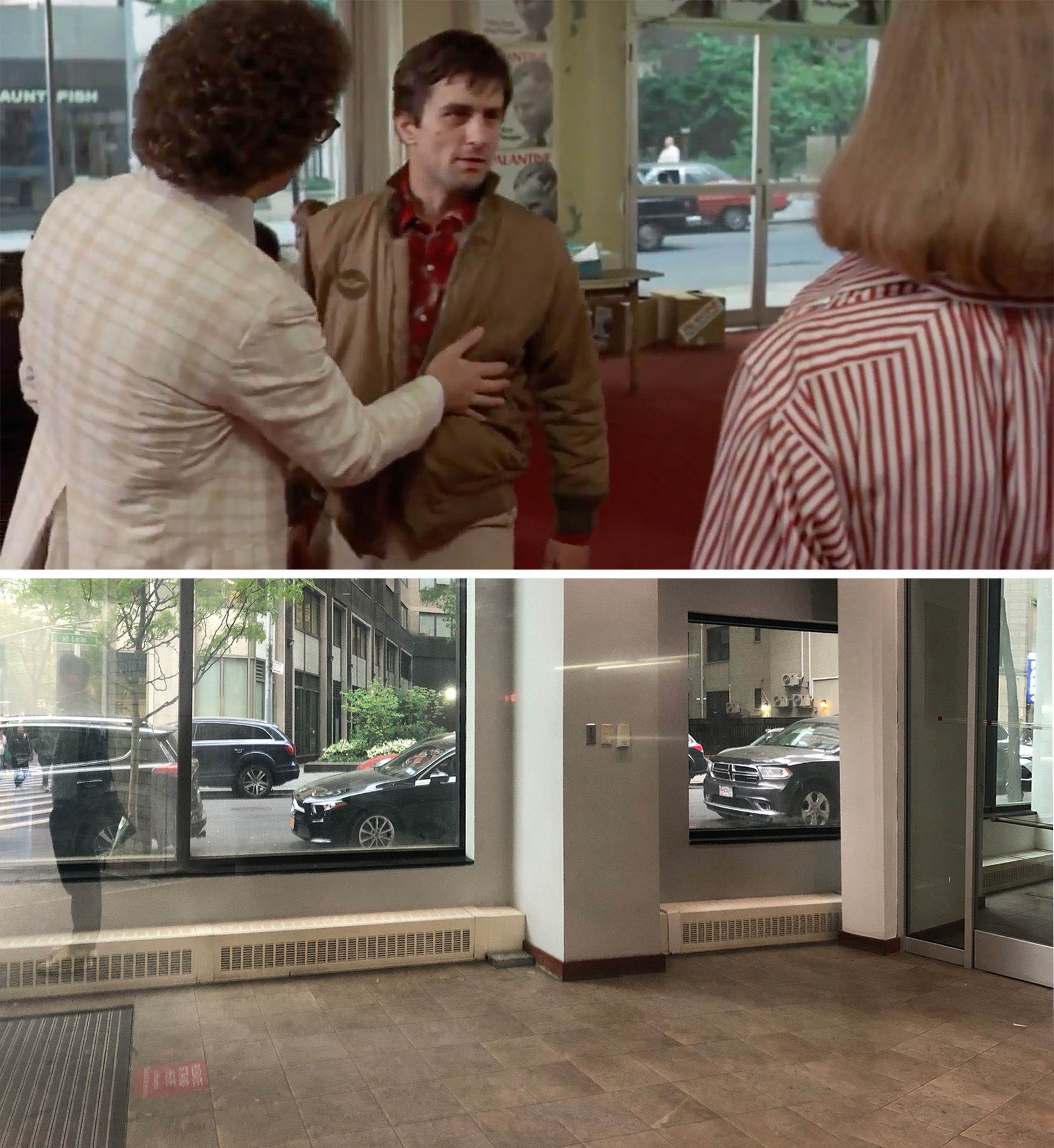
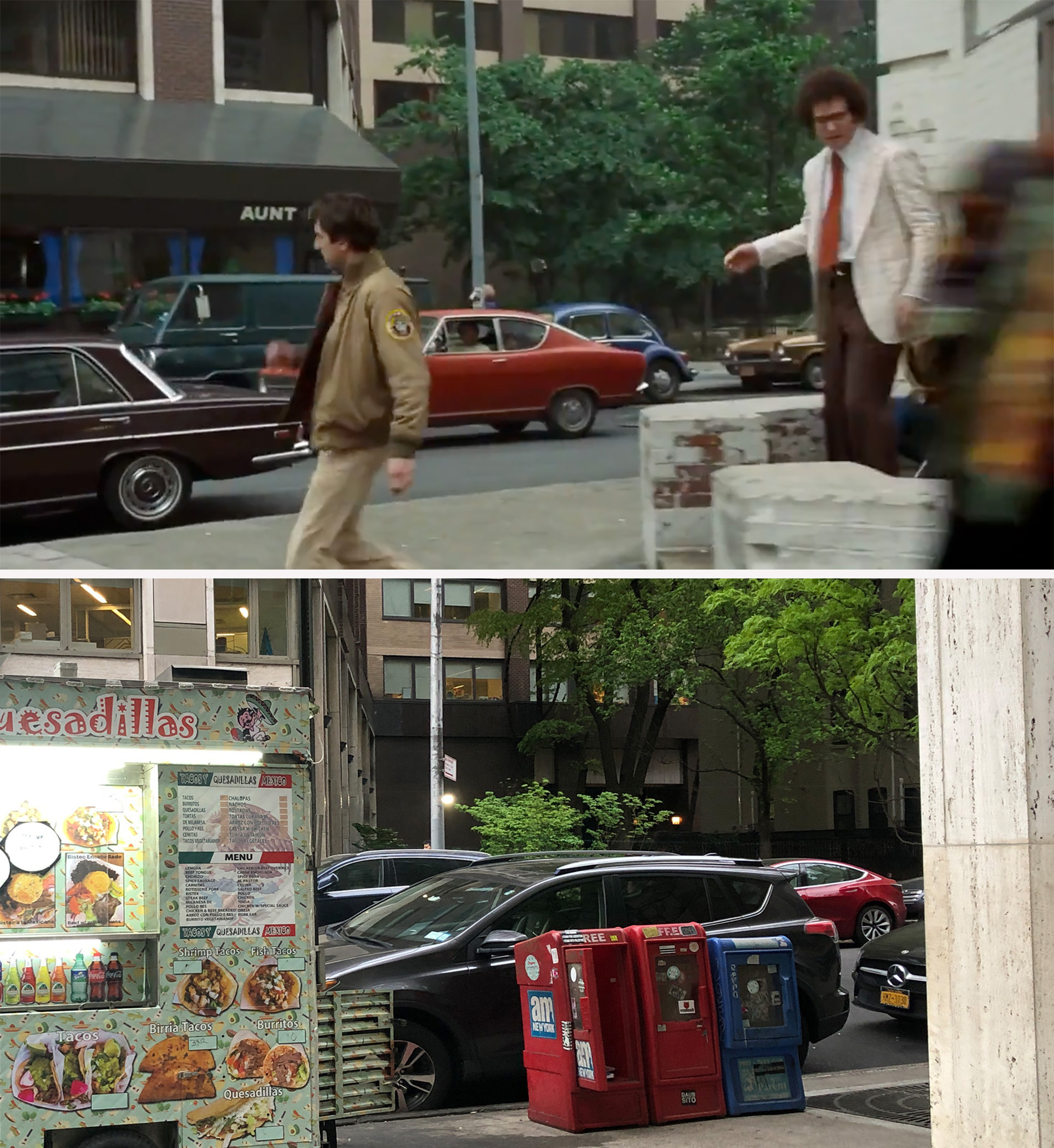
Travis Confronts Betsy
A Cheating Wife
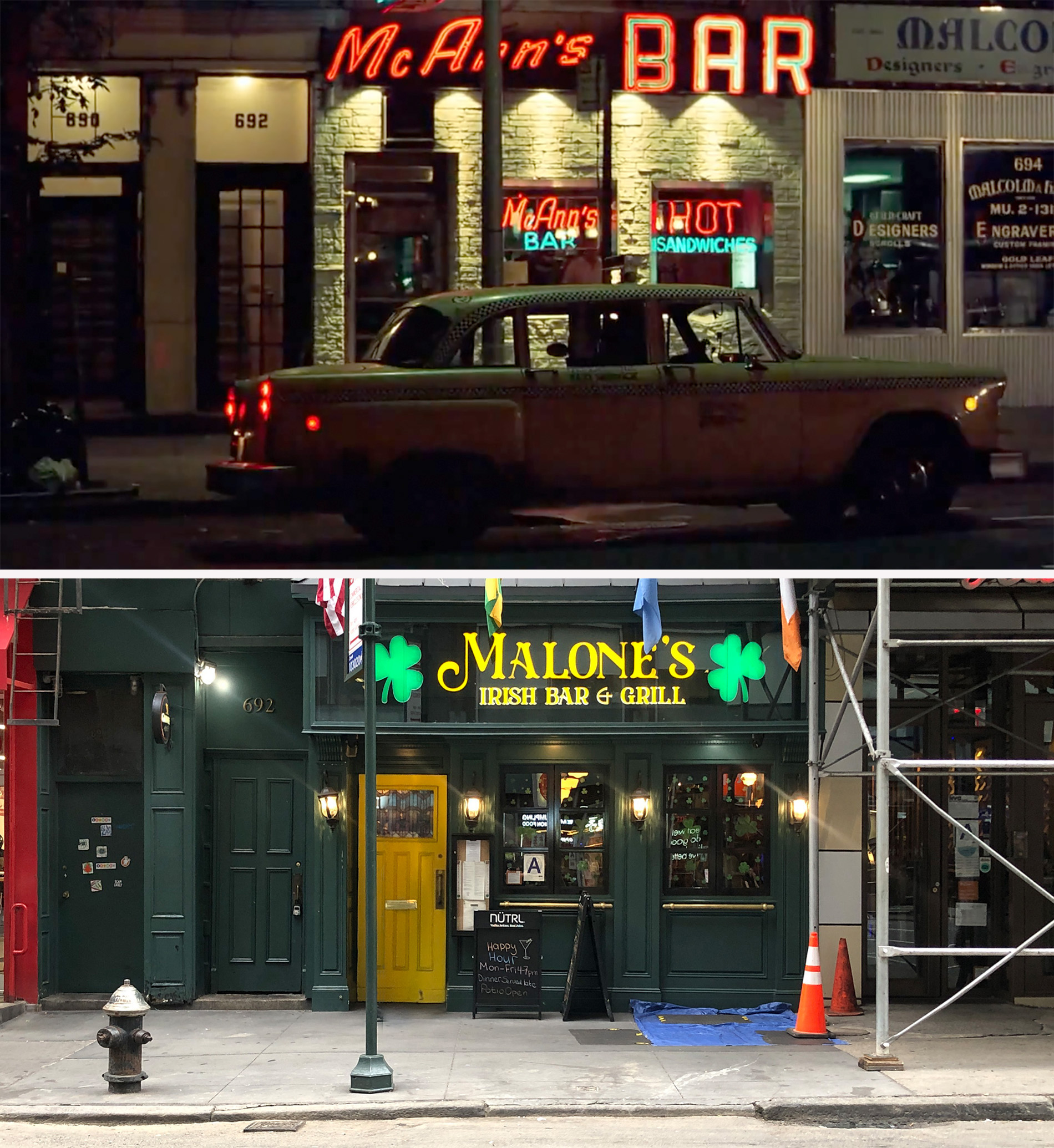
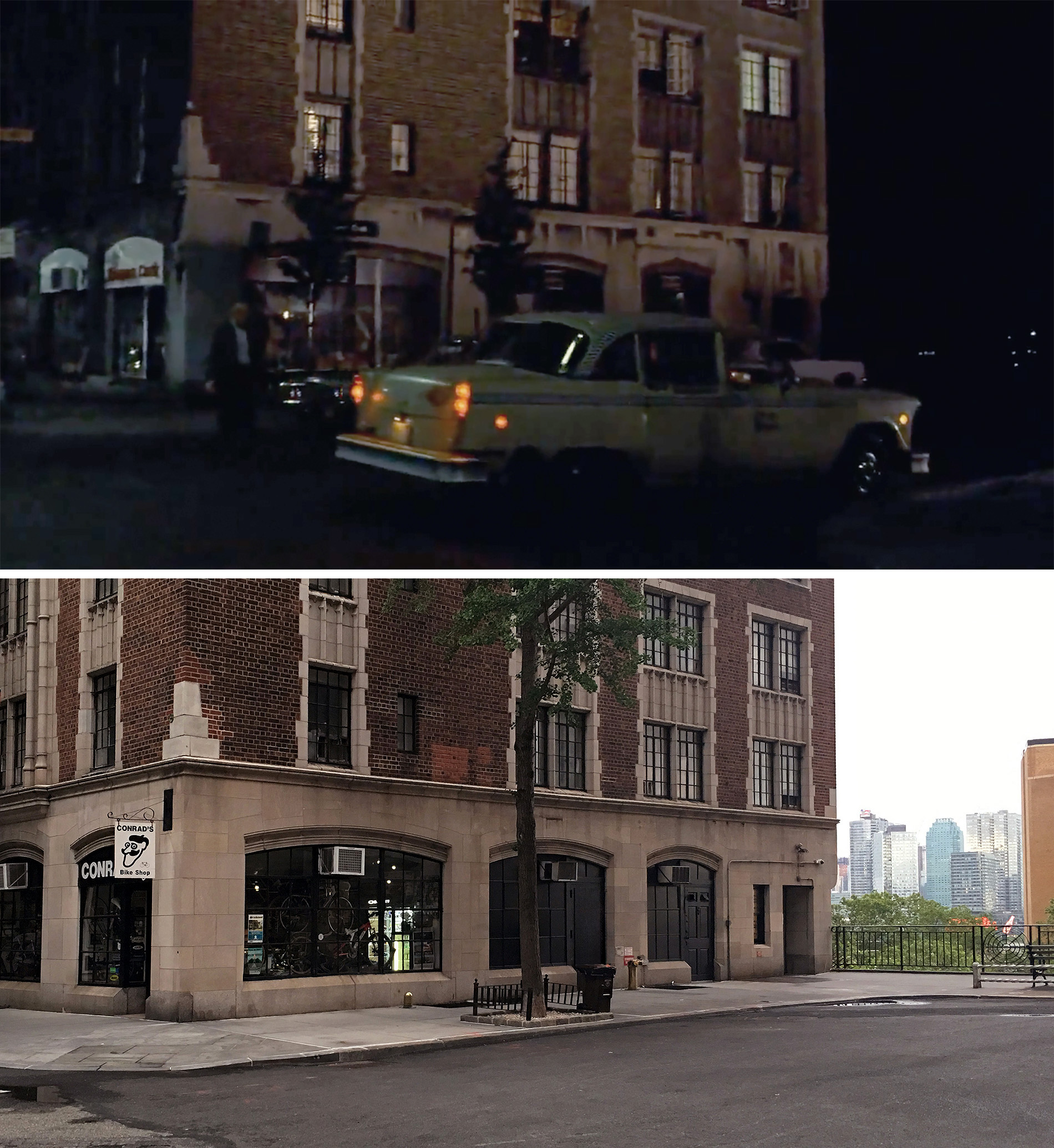
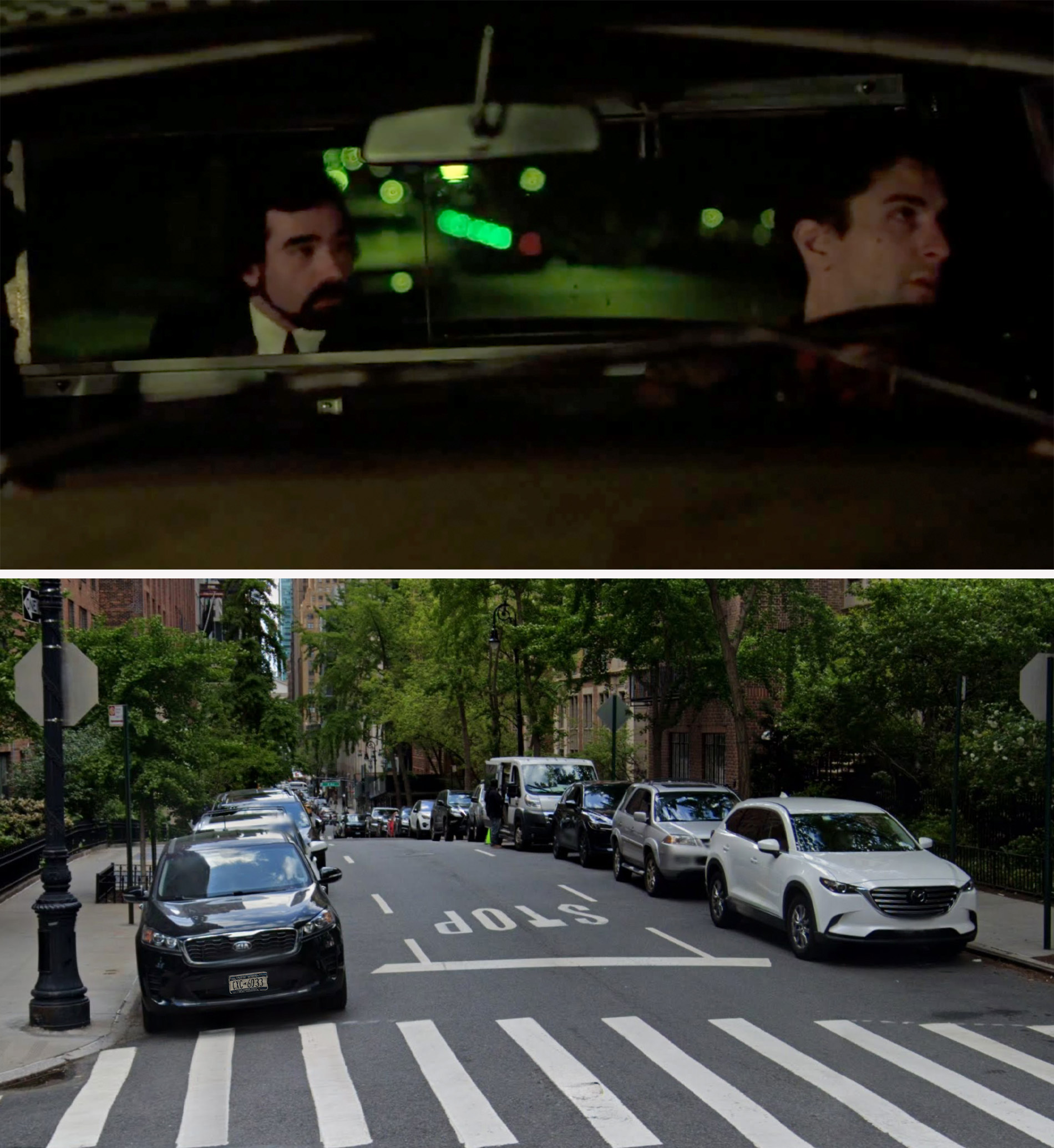
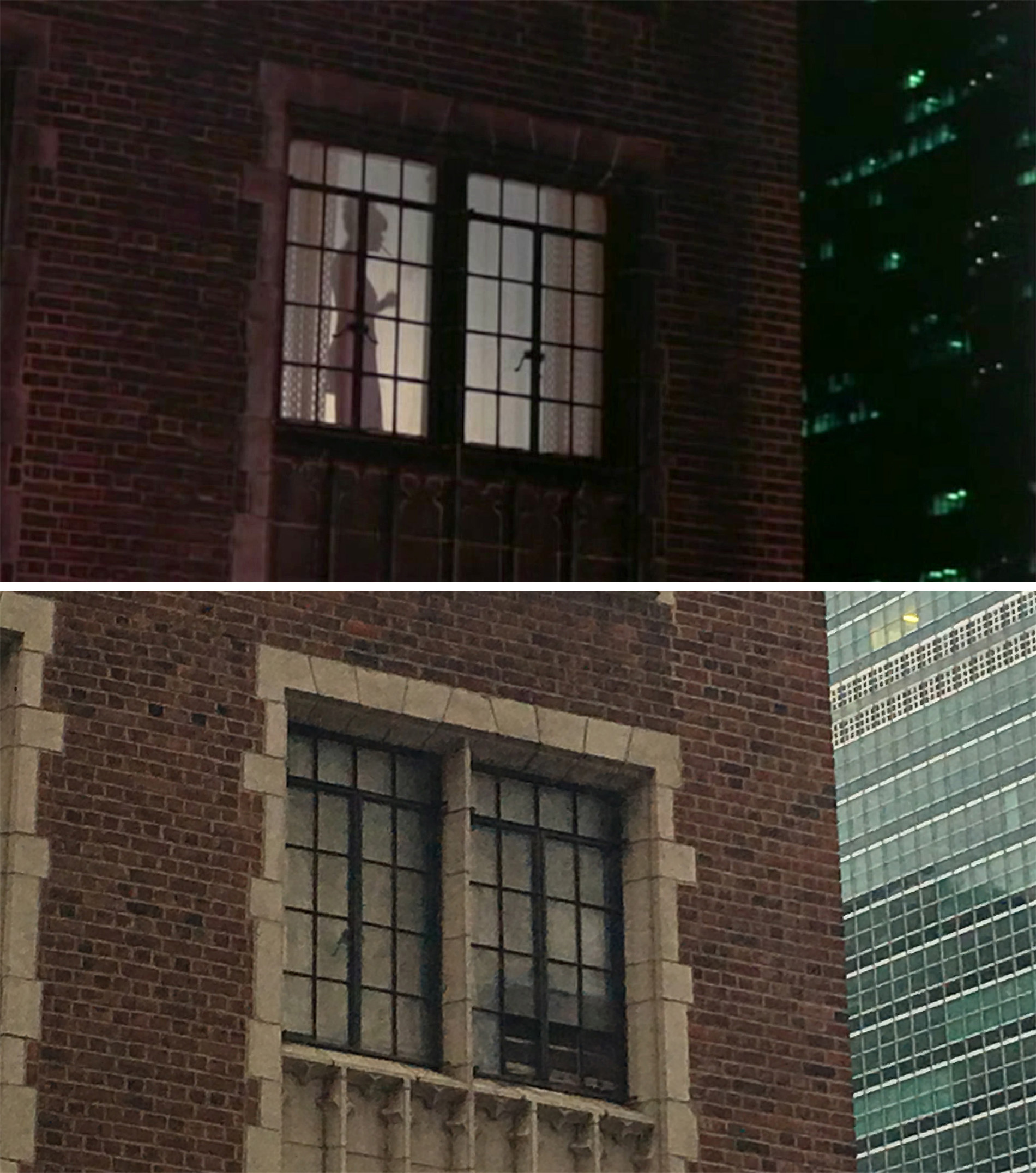
The apartment address in Tudor City was already listed on several websites when I began my research into this movie. And not much has changed in that area since 1975, so it was easy to verify.
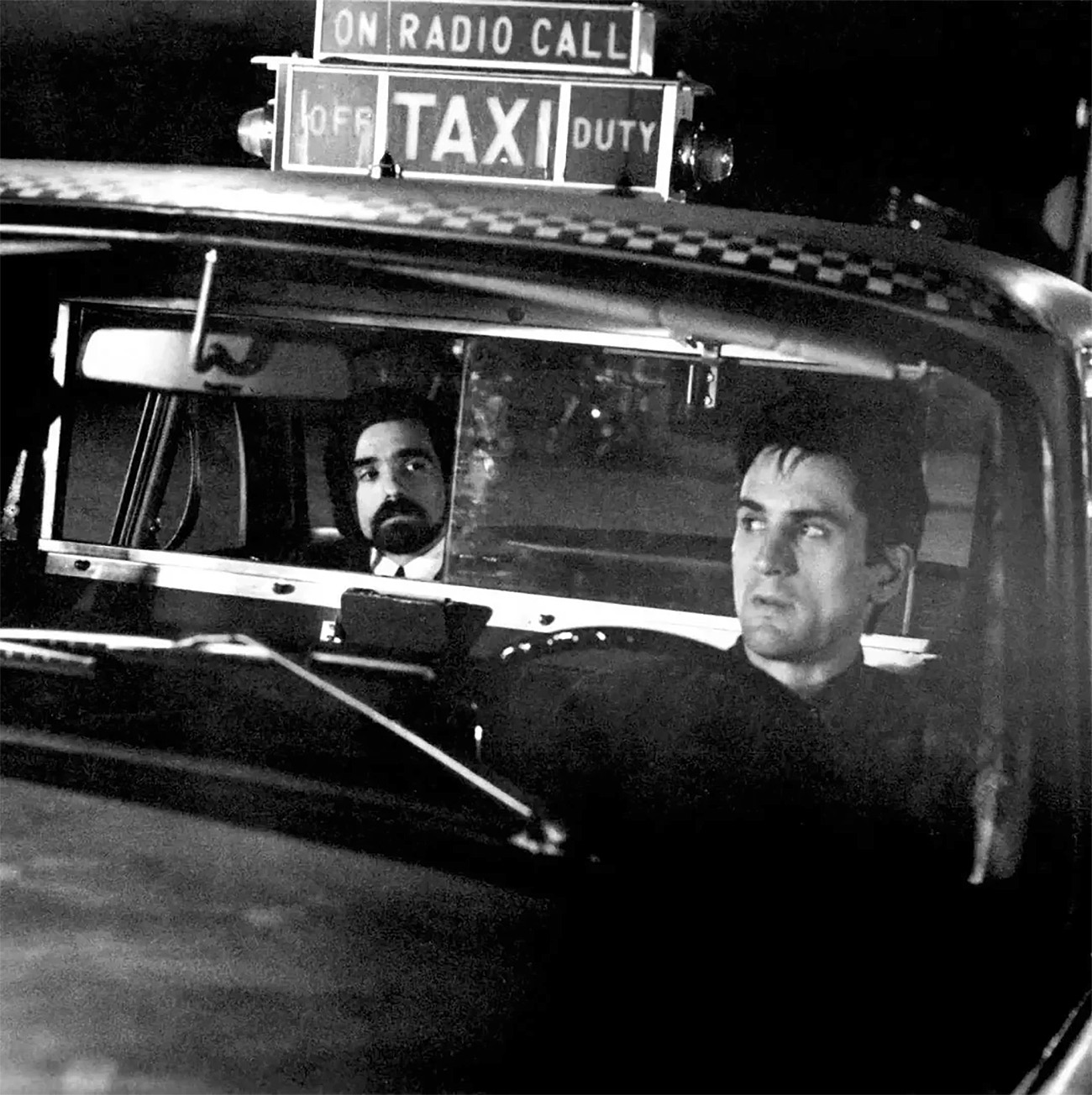
As to the pick-up location, I thought I could figure it out by looking into where McAnn’s Bar once was, which I assumed was just a basic, standalone Irish dive.
Unbeknownst to me, McAnn’s was actually a chain of Irish bars similar to the Blarney Stone that used to be all over old New York. This group of Irish pubs got its start in 1945, and during its heyday in the 1980s, had almost 30 locations across Manhattan (with most of them amassed in Midtown).
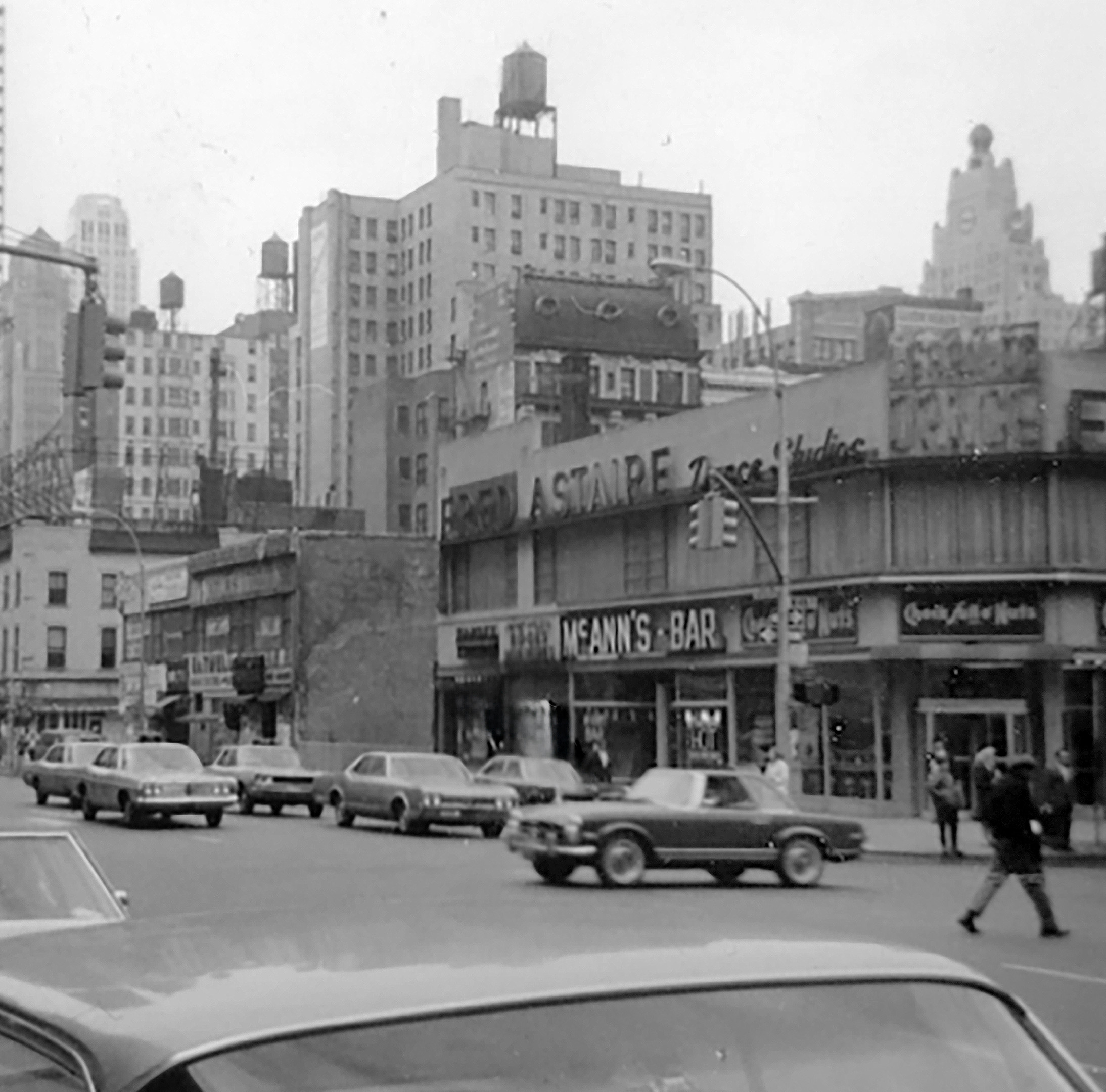
McAnn’s was renowned for its aromatic steam-table lunches serving such Irish staples as corned beef sandwiches and baked ham. They were also notorious (at least in the eighties and nineties) for allegedly watering down their beers.
With so many McAnn’s in one city, it might’ve been tough to establish which one was used in Taxi Driver. But luckily, you can see a 692 address in the shot, and after a little poking around, I discovered there was a McAnn’s at 692 Third Avenue. And even though McAnn’s is gone from that location, I was pleased to see there’s still an Irish pub in its place.
But if you still want to have an authentic McAnn’s experience, there’s one left in New York — inside Port Authority.
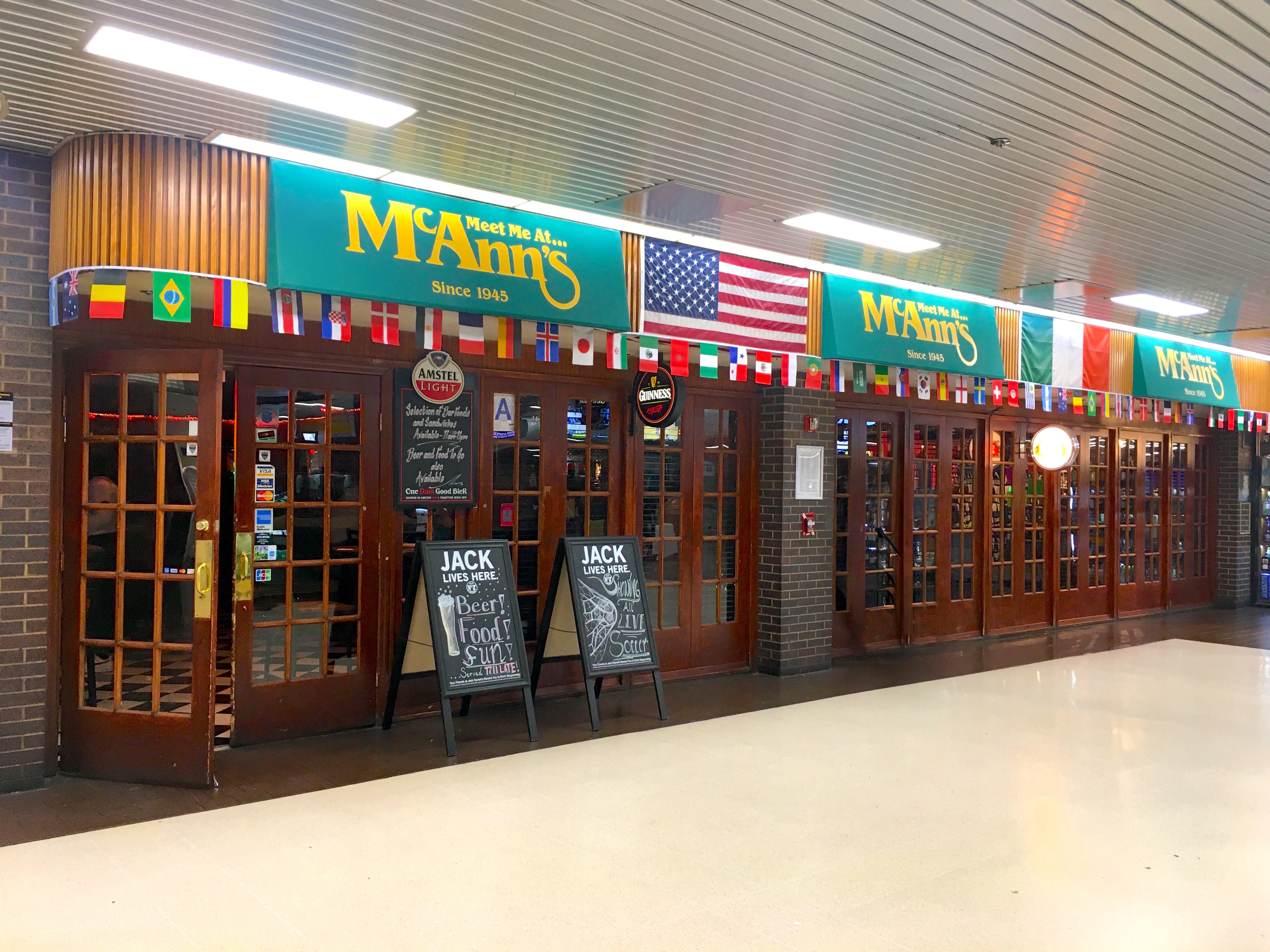
This windowless watering hole has been in the bus station since the 1990s, and continues to attract plenty of commuters wanting to grab a lager or two before being shipped home. Only one drawback — they don’t have a restroom, but luckily, most of the buses at Port Authority do.
Belmore Cafeteria
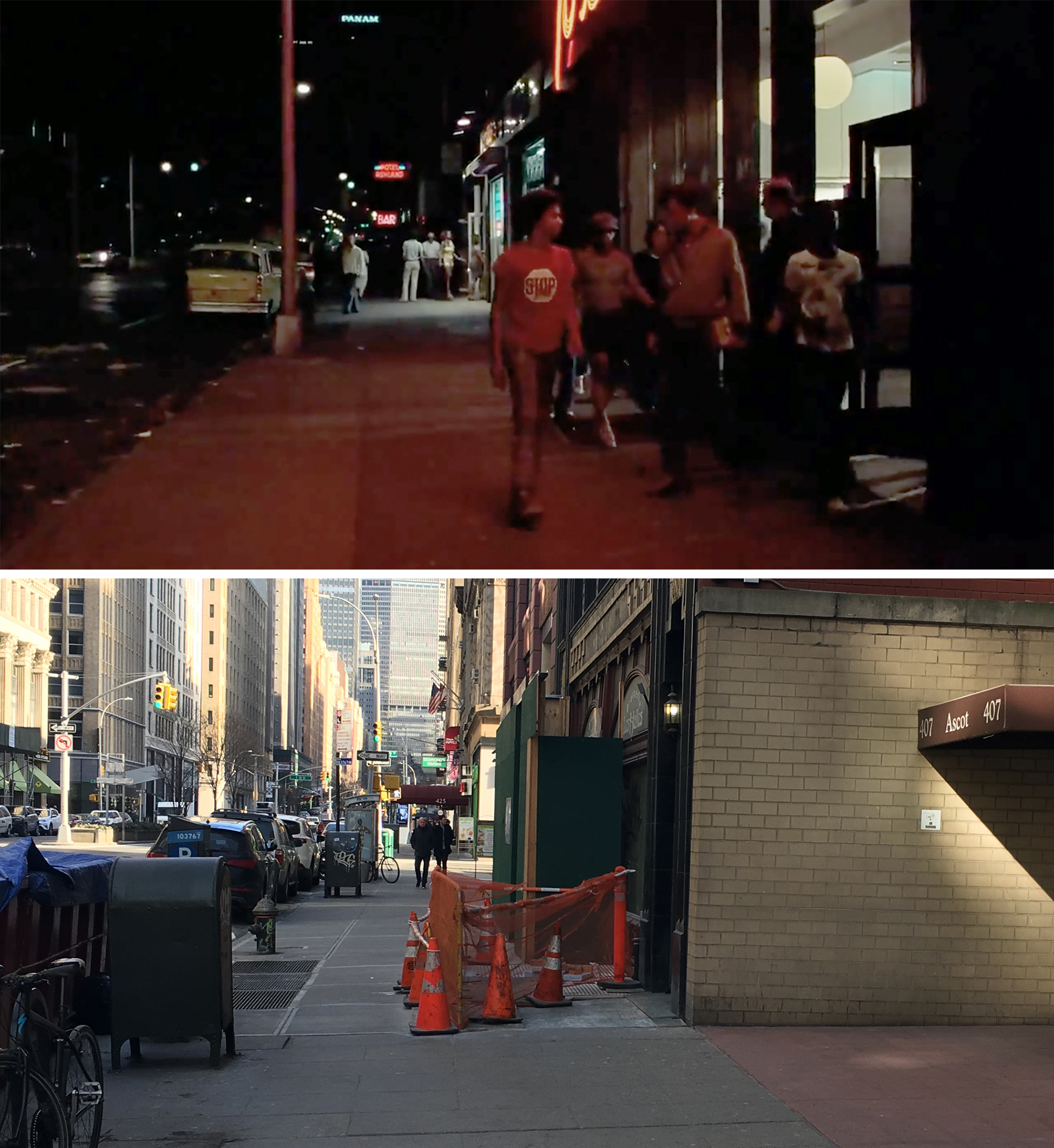
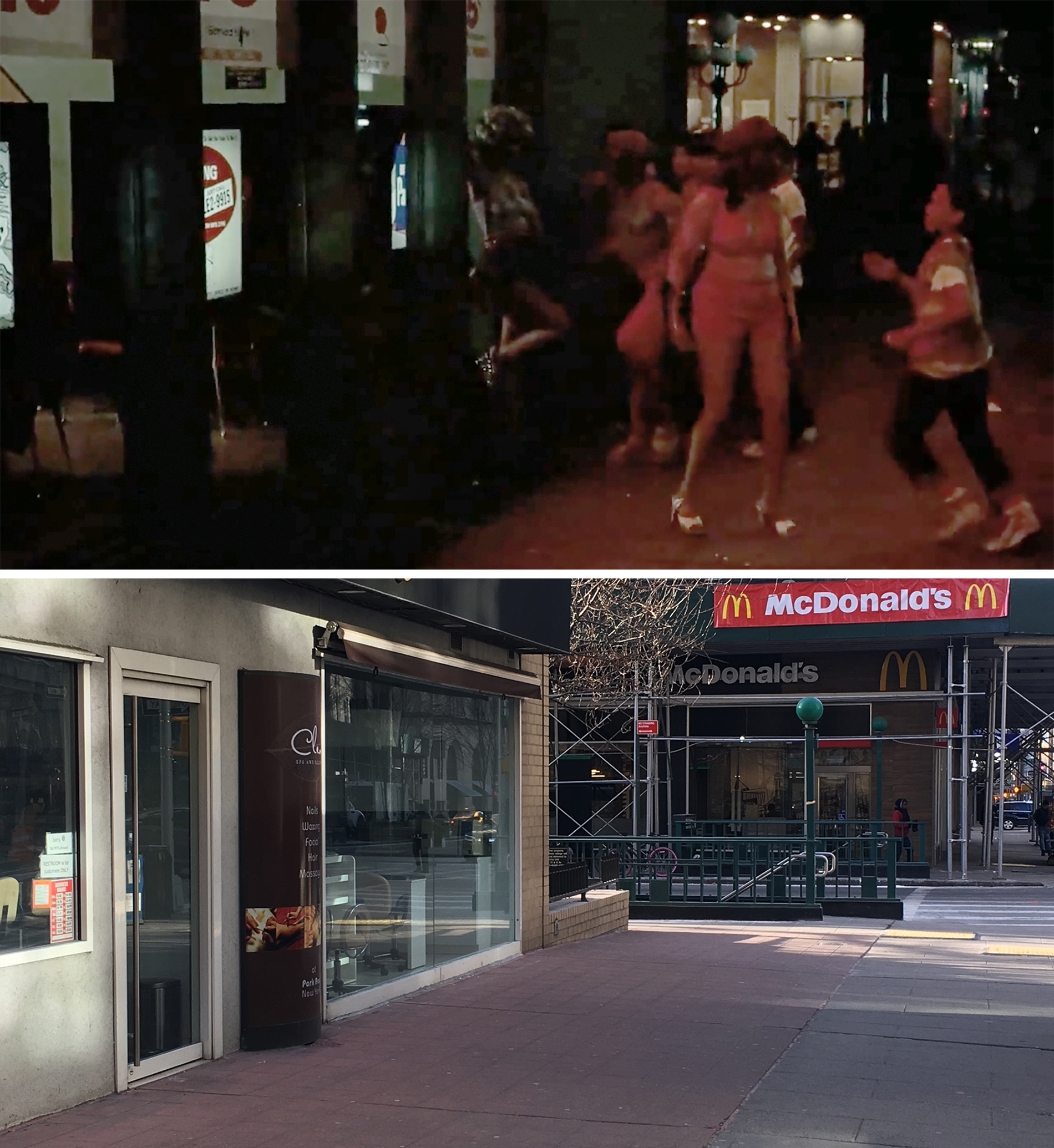
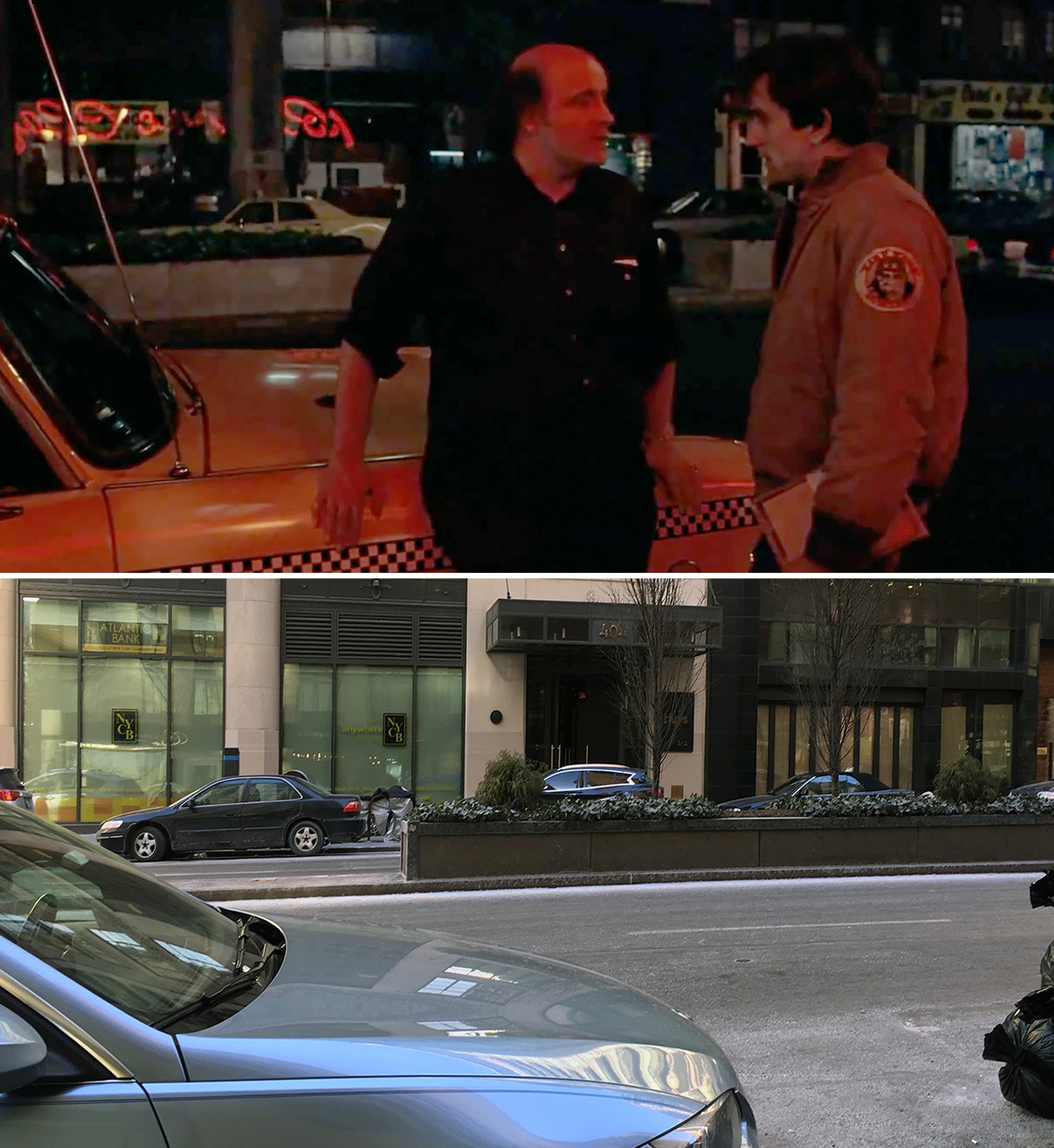
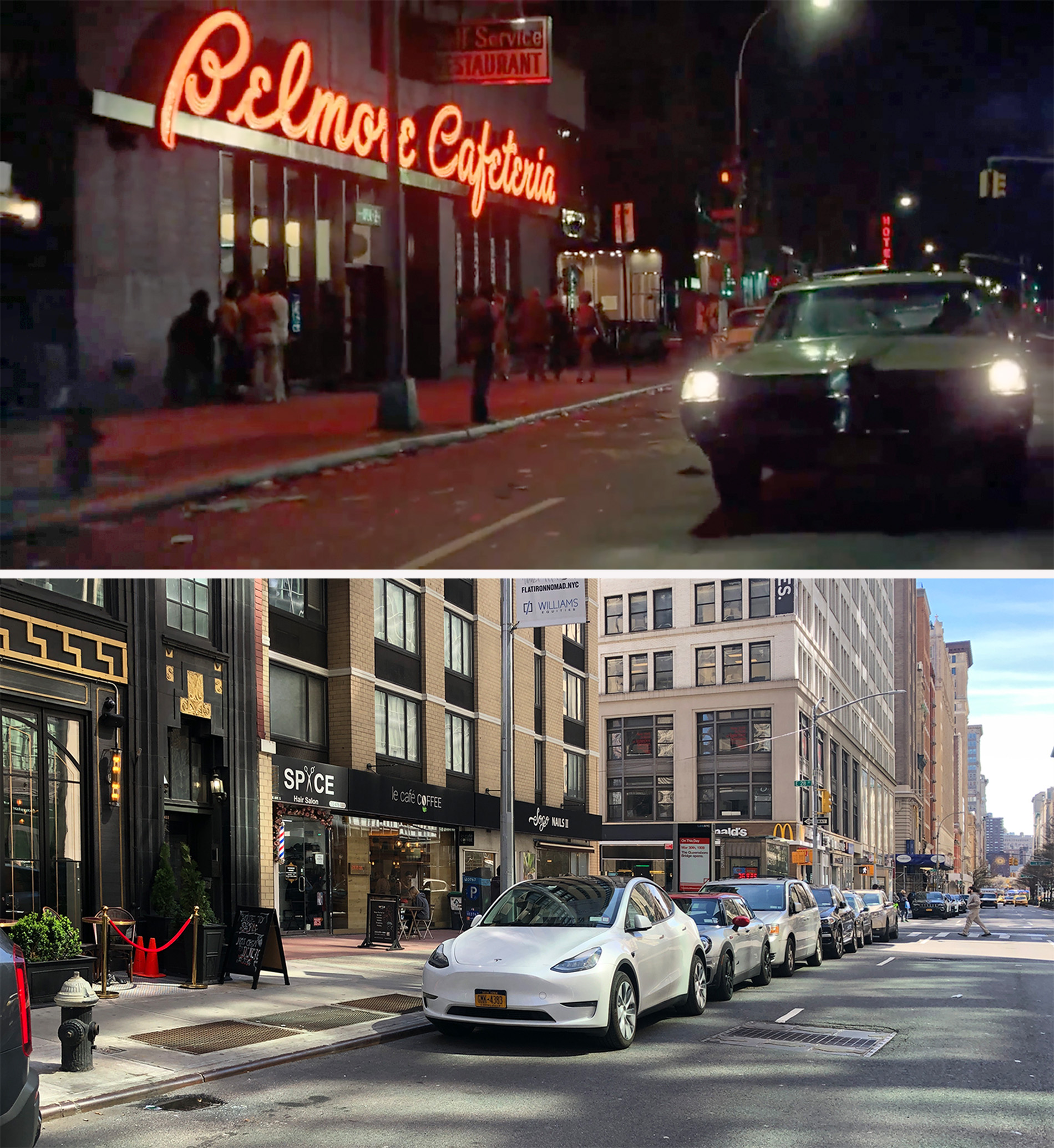
Besides the brothel, this cafeteria is, in all likelihood, the best-known location from this movie.
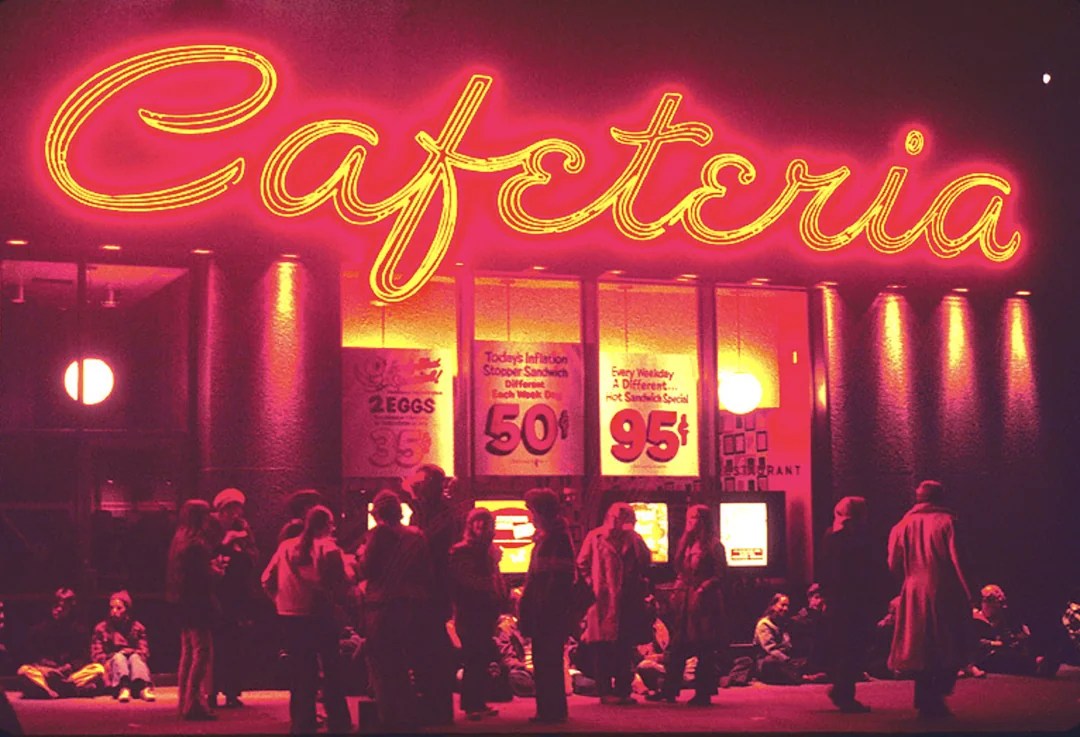
The Belmore Cafeteria first opened in 1929, where it quickly became a favorite hangout for members of the organized crime group, Murder Inc. But as the decades passed on, the self-serve eatery became more known as a late-night haunt for NYC cabdrivers, just as it’s depicted in the film.
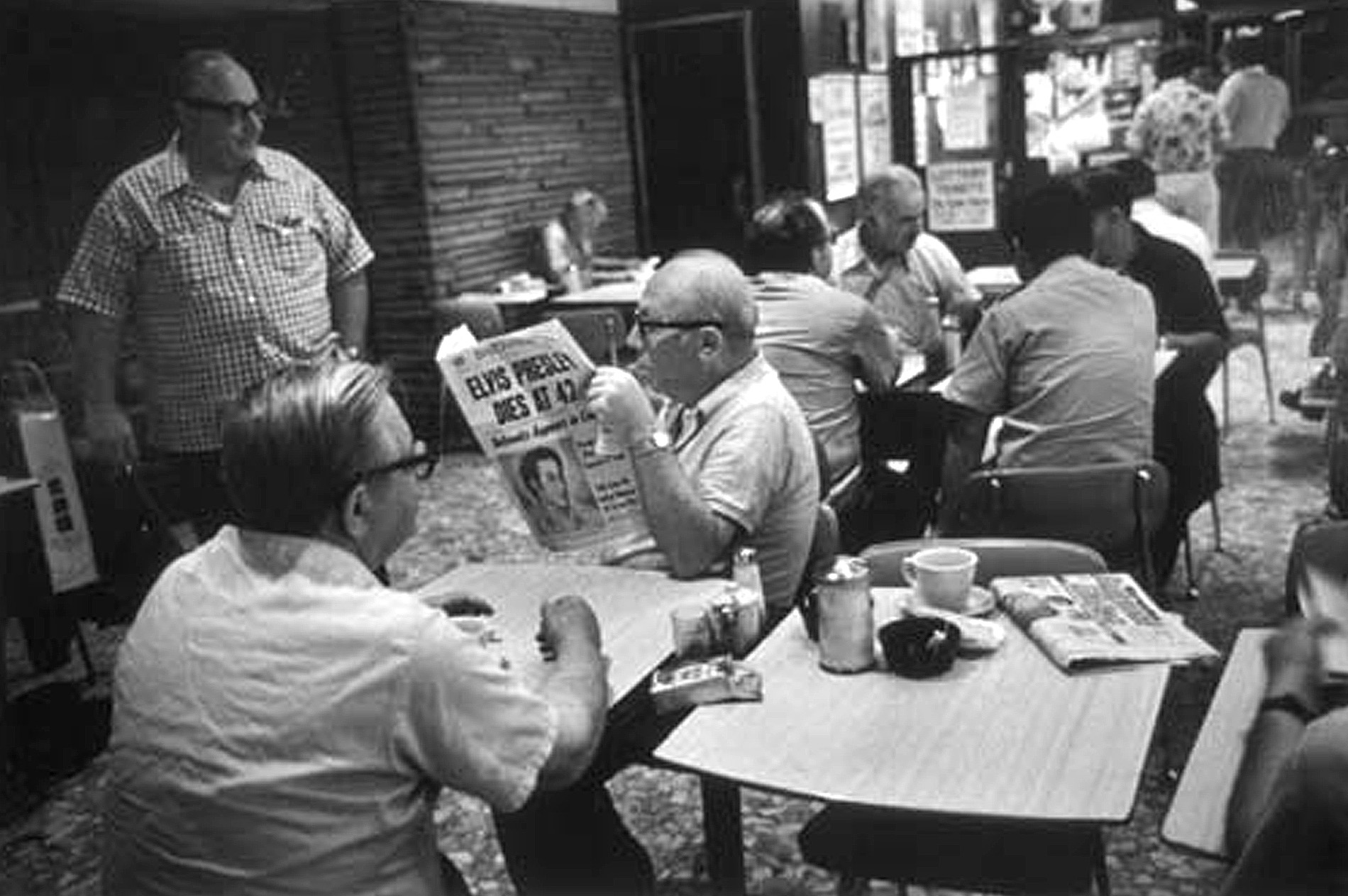
Despite being a popular pit stop for taxi drivers, their thoughts on the Belmore were as disparate as their opinions of the Yankees vs the Mets. As described in a New York Times article, some raved about the cheap food and hot coffee, while others complained that the cafeteria’s offerings were too expensive and tasted terrible.

The divided opinions continued when news of the Belmore’s closing came through in 1981. Some of the cabbies seemed unaffected, but others proclaimed it to be a travesty. In the NYT article, one of the drivers pontificated, “‘[Mayor] Koch should declare the place a city monument.” But the closure and demolition went through as planned.
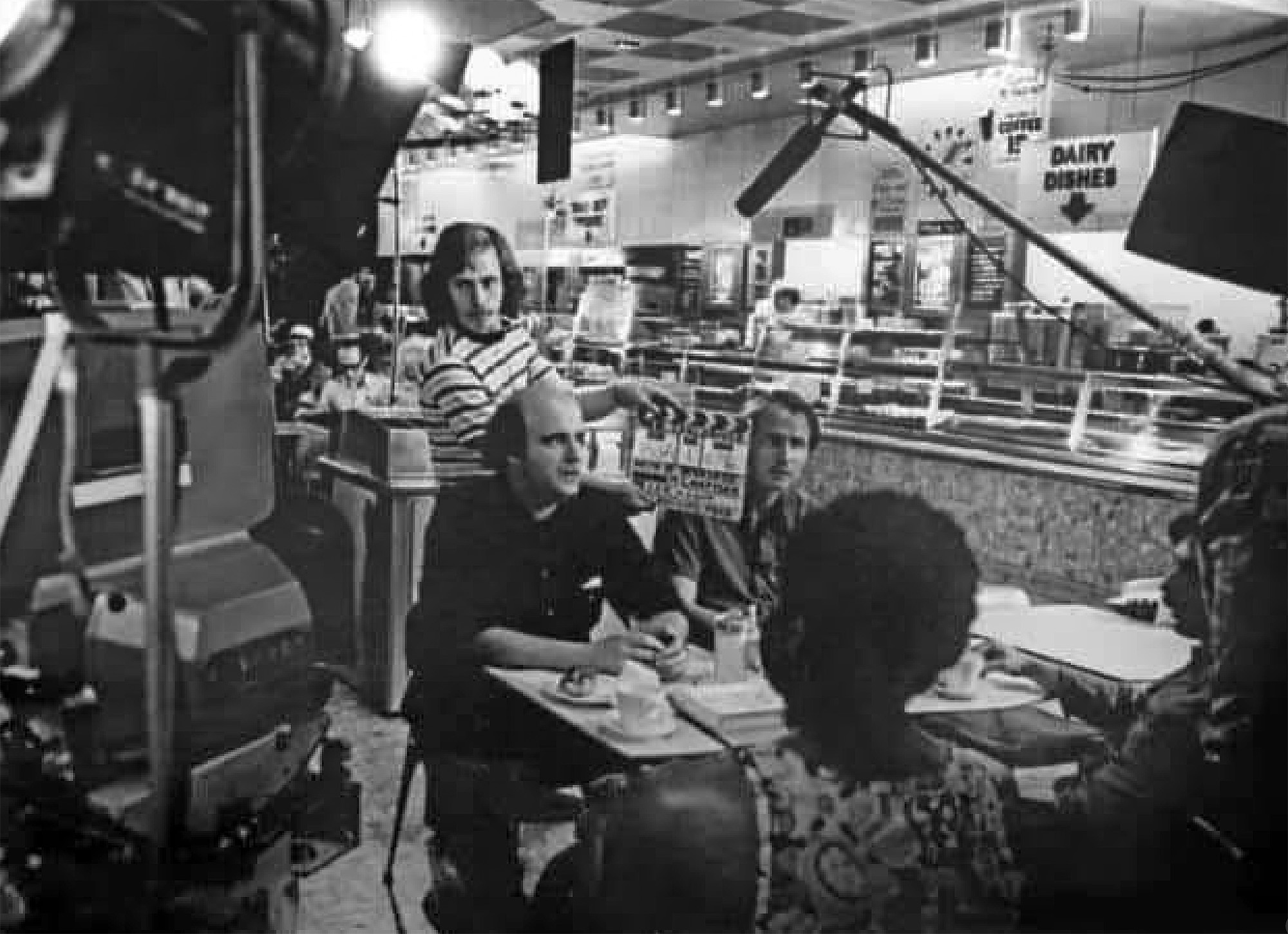
Like most of the demolished landmarks in this movie, the Belmore was replaced with a large, unimaginative apartment tower, which is undoubtedly absent of any off-duty cabbies.
Stalking Betsy
Running into Iris
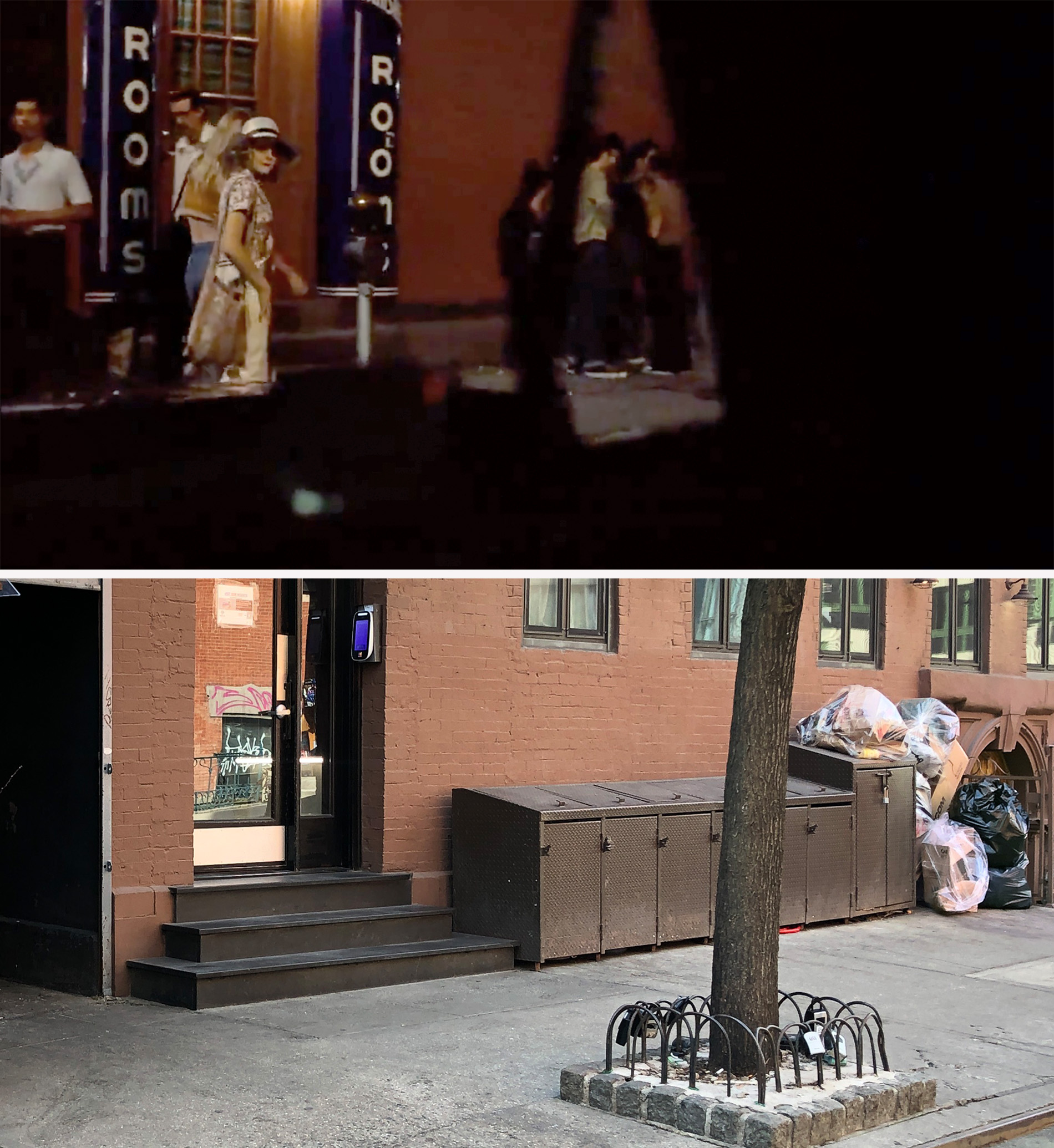
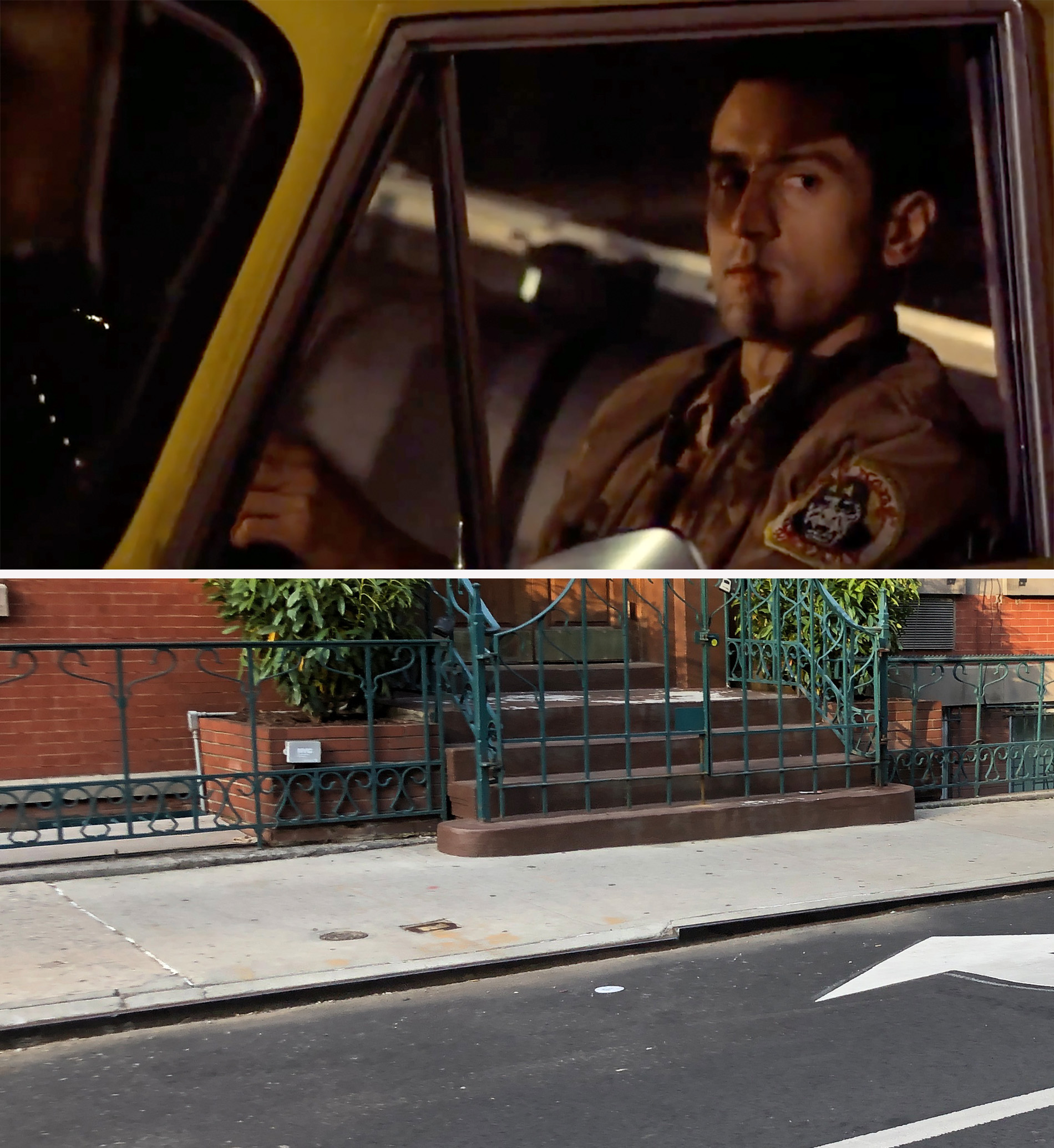
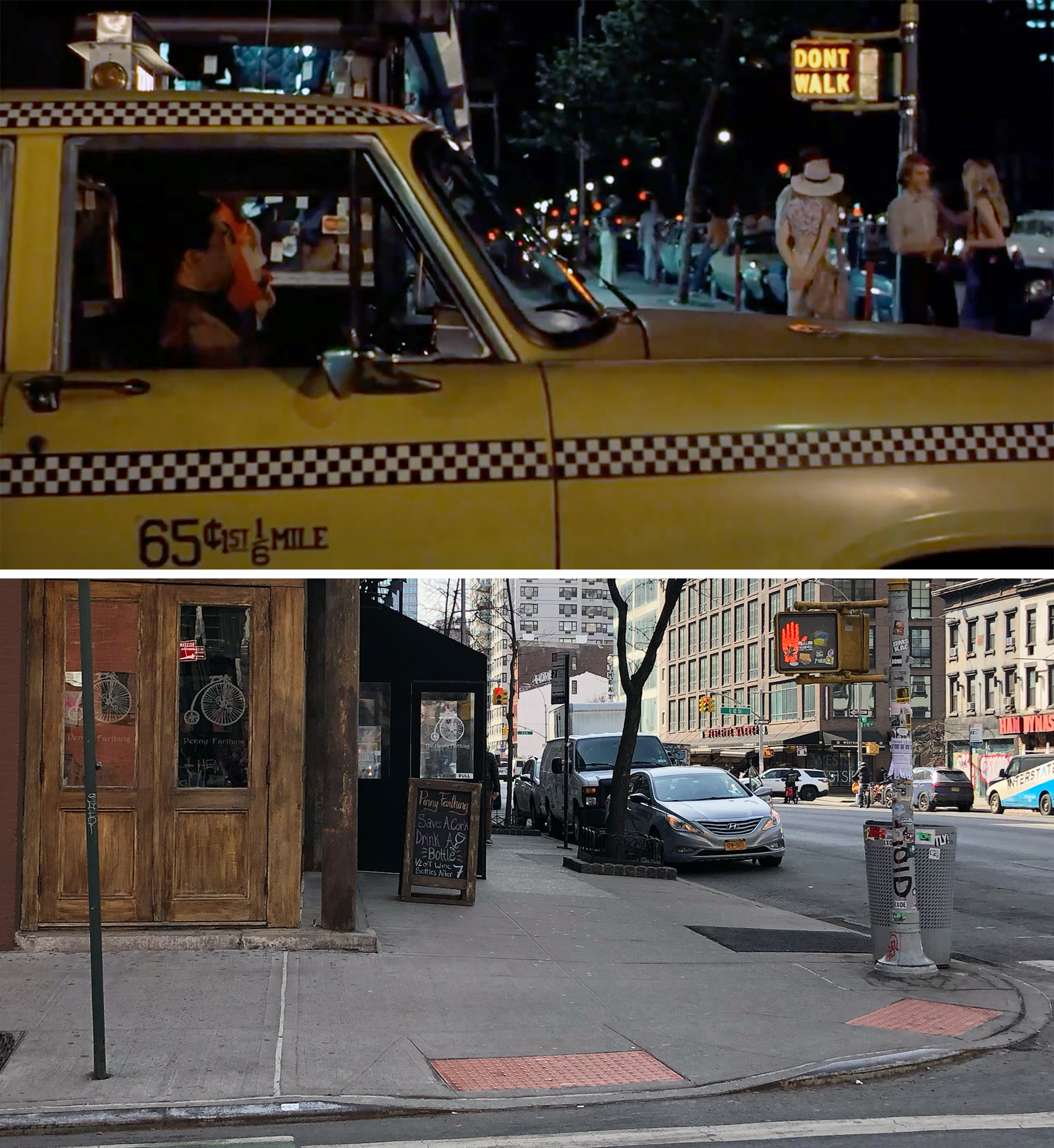
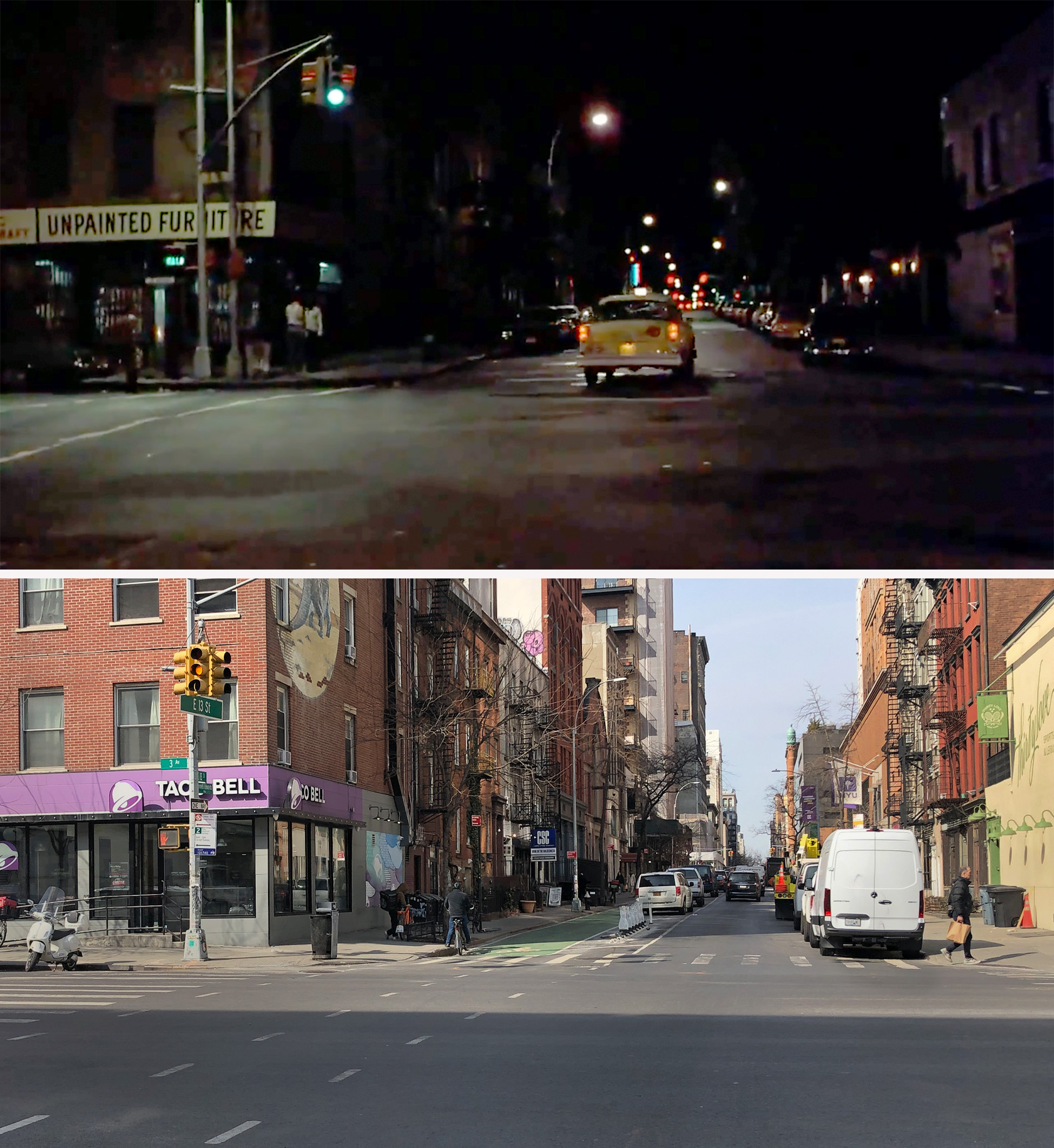
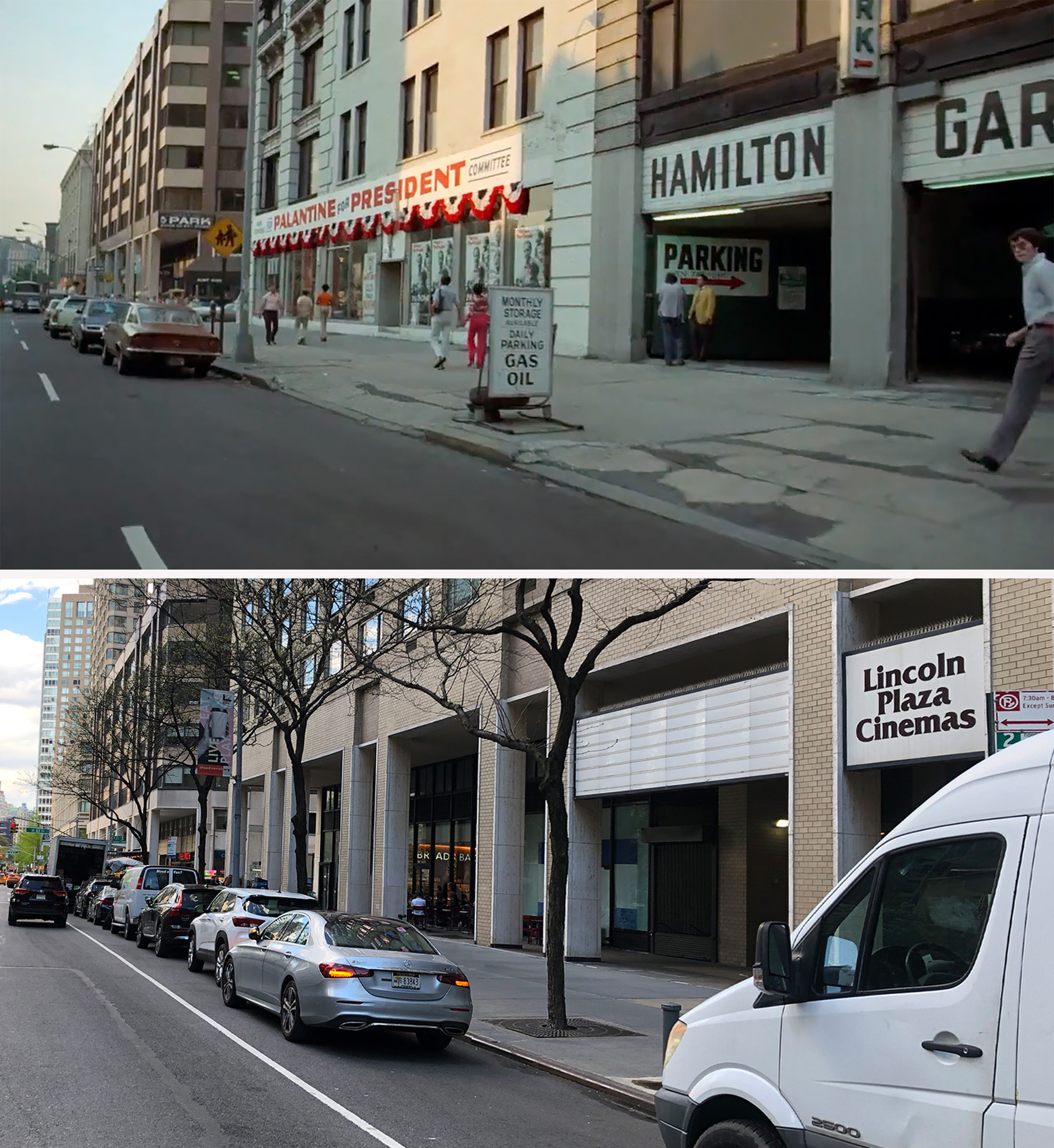
As I mentioned earlier, this area where Iris and her pimp/boyfriend work is the most documented filming location from Taxi Driver.
Incredibly, most of the buildings that appear in this East Village scene are still around today and look about the same, albeit, a bit more spruced up. The biggest difference is the addition of some trendy restaurants and the changing of venues on the southwest corner of 13th and Third — swapping a furniture store for a Taco Bell.
The furniture shop was the longtime Gothic Cabinet Craft, which actually was still on the corner of Third Avenue up until 2015.
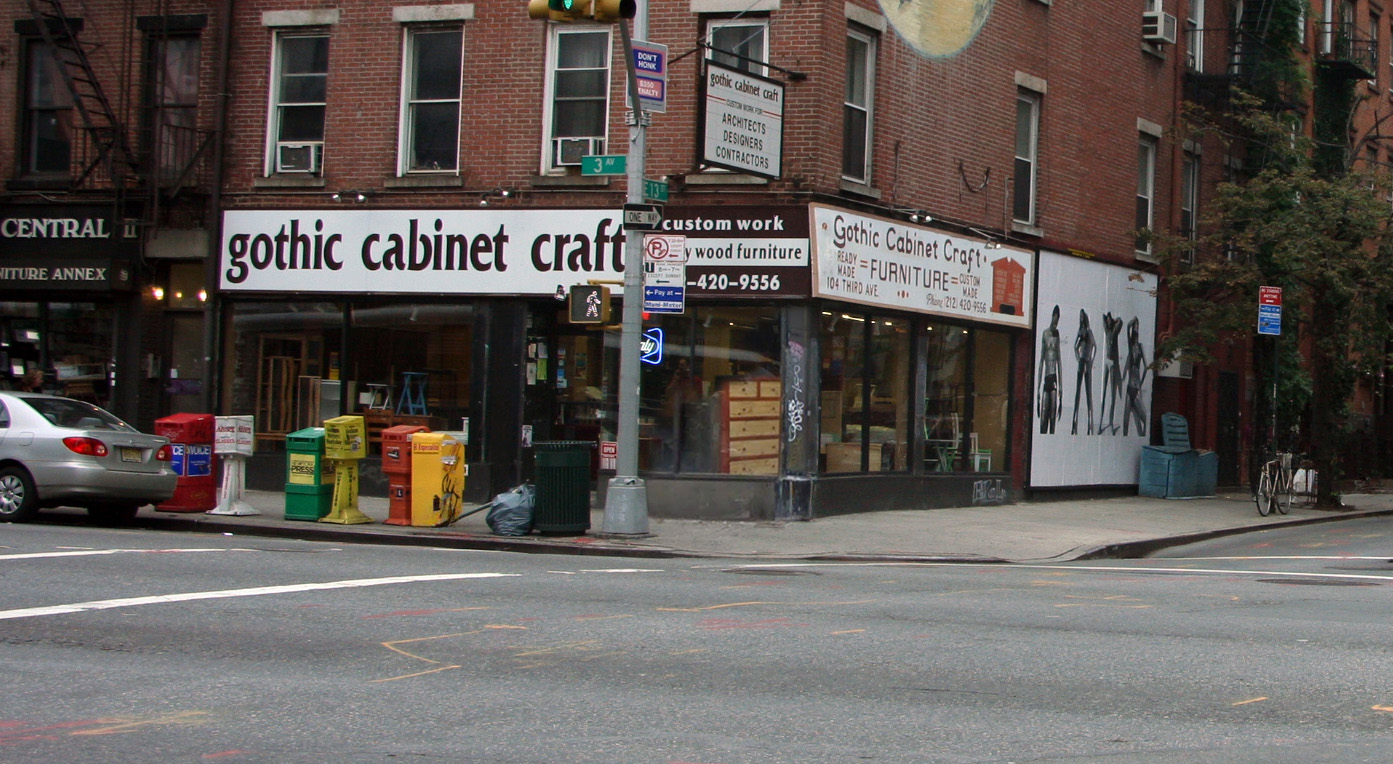
The family-owned wood furniture shop still has outlets in the NYC metropolitan area, but the East Village location is noteworthy for being its first, opening its doors in 1969. It was definitely a useful place for young New Yorkers moving into their first apartment, offering you cheap prices in exchange for having to do the finishing/painting yourself.
Now with a Taco Bell in its place, the new challenge is having to do the eating/digesting yourself.
Passing a Movie Theater
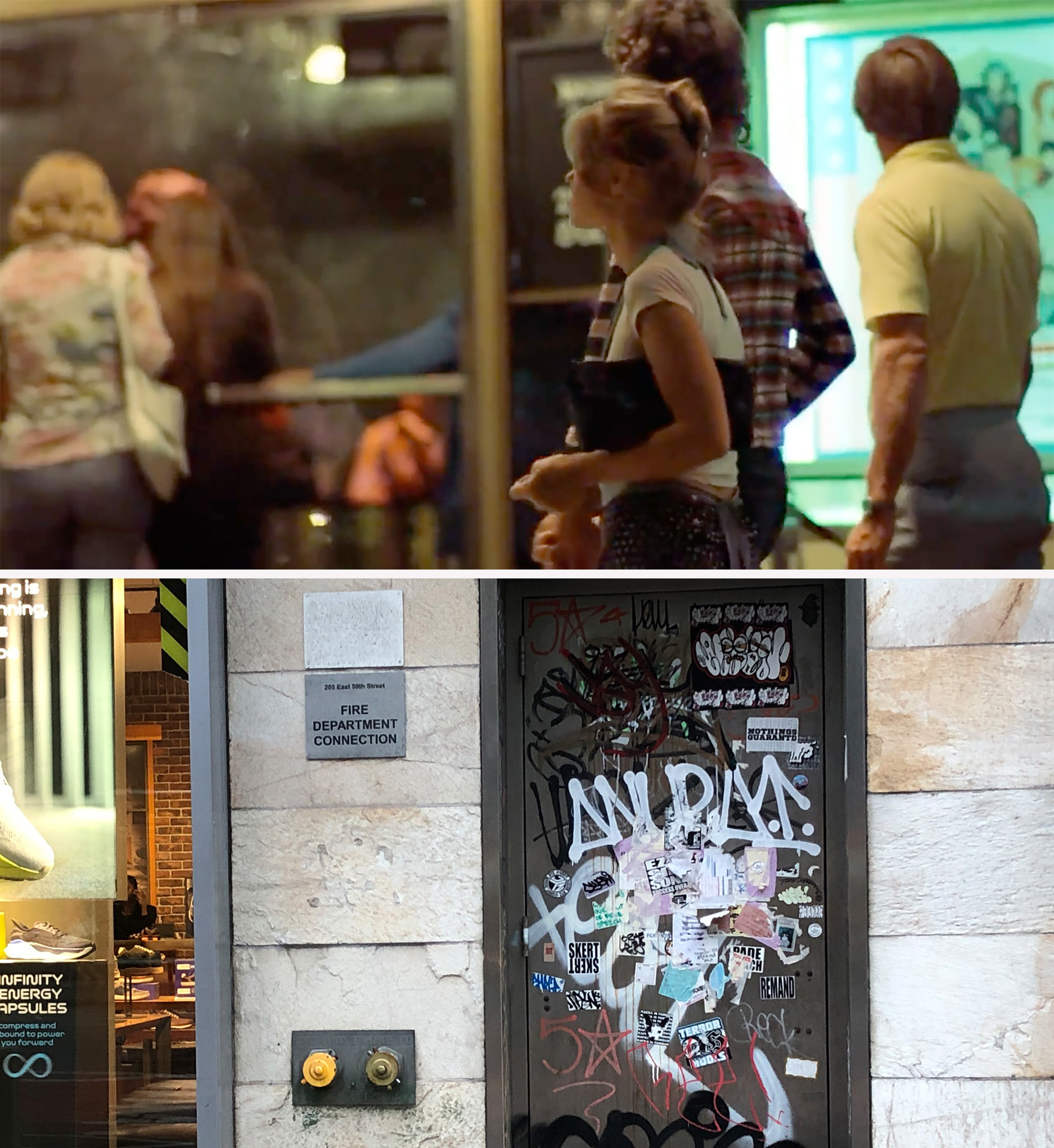
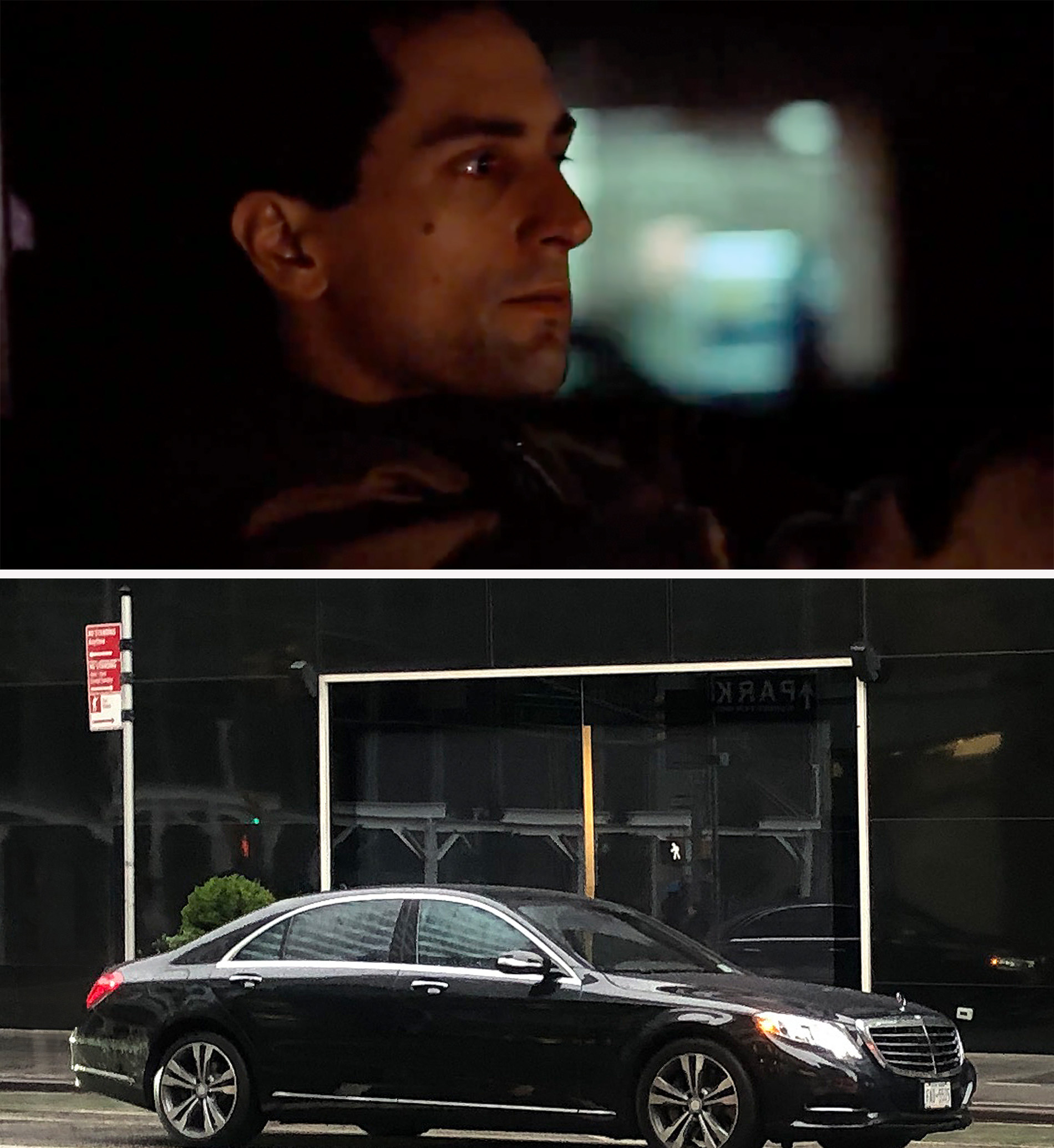
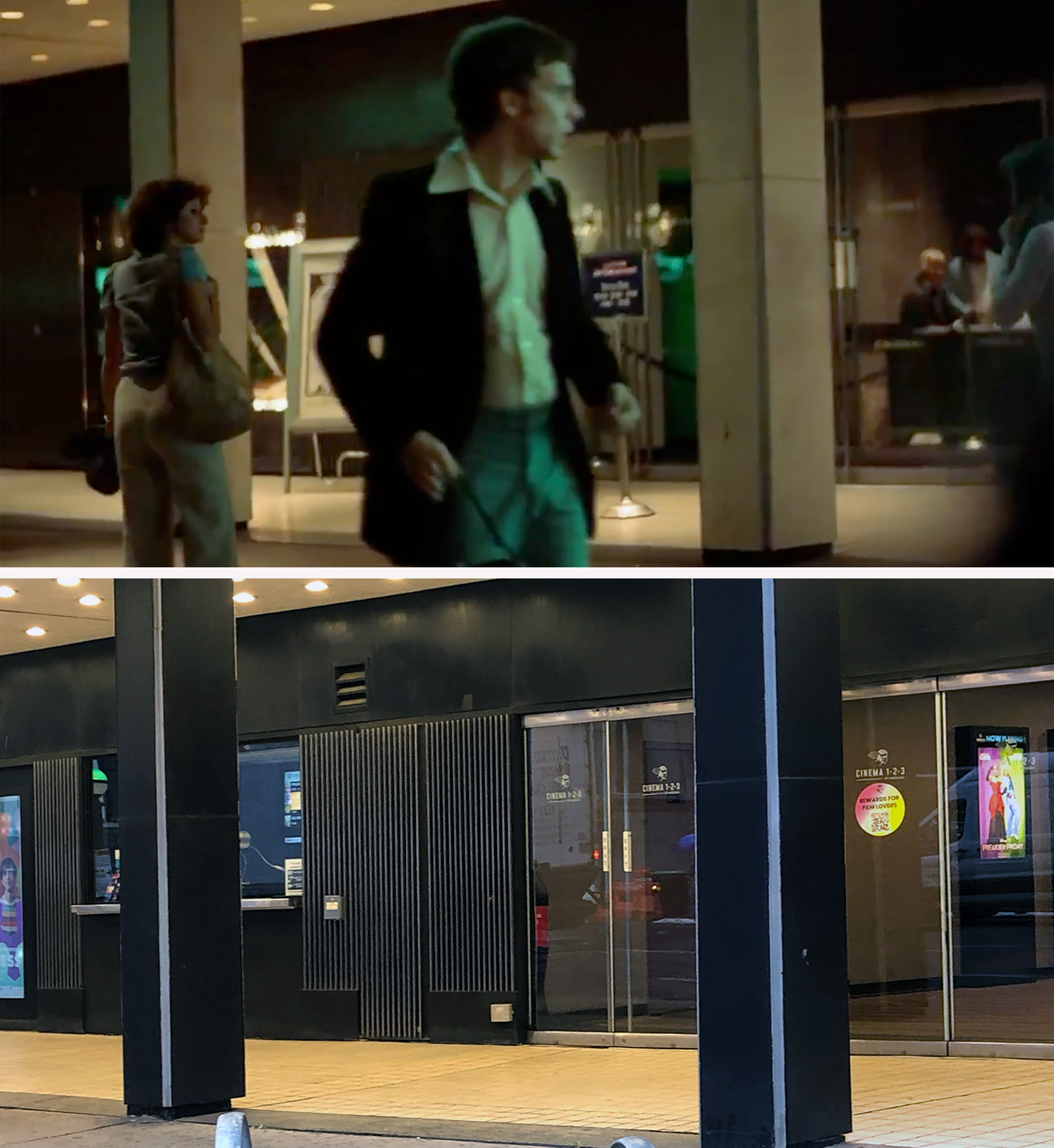
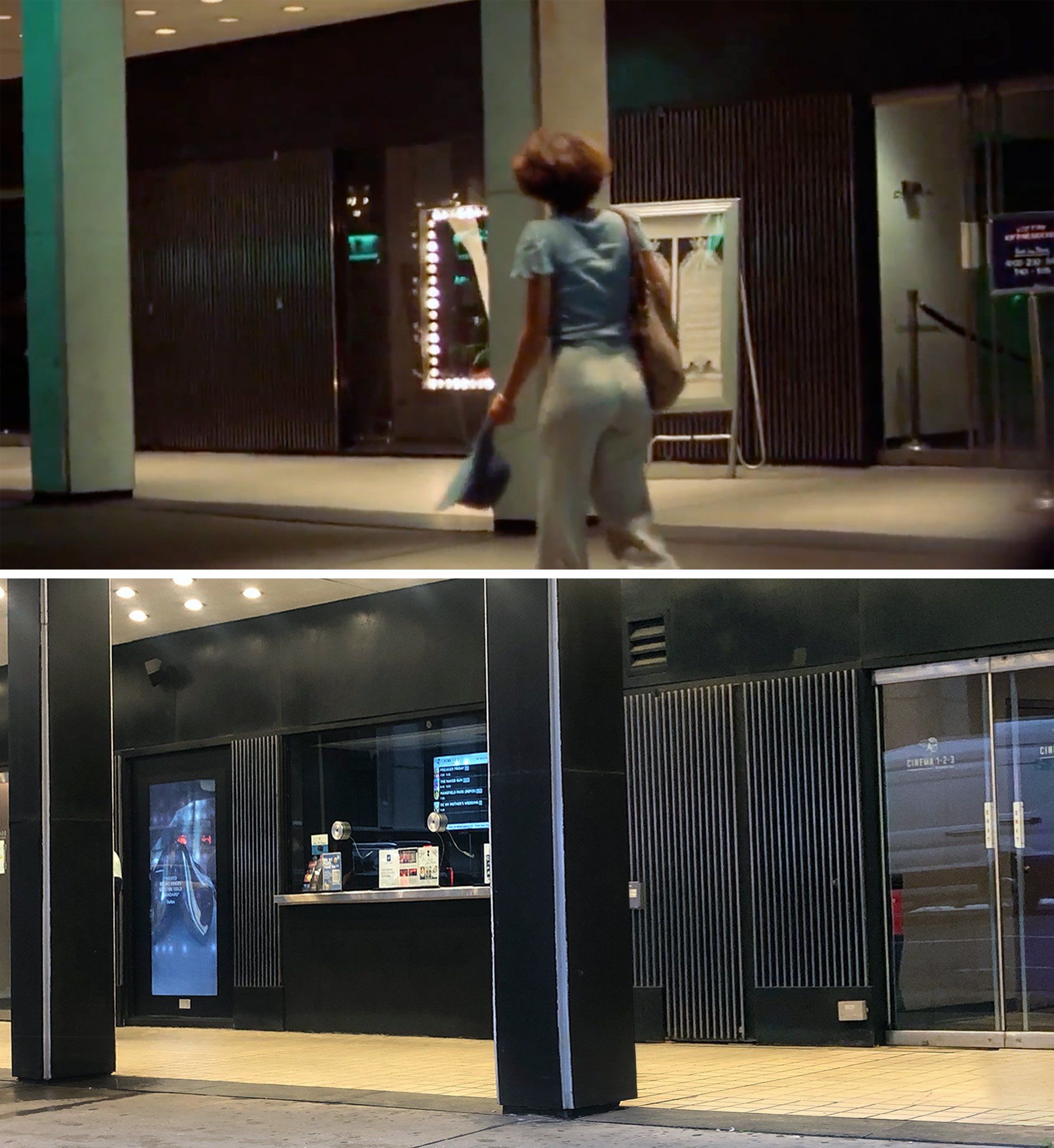
As soon as I saw this short bit of Travis driving past a movie theater, I thought it looked familiar, but couldn’t quite place it. One idea Blakeslee had was look up where Nashville was playing in New York in the summer of 1975 since its (out-of-focus) poster can be seen in one shot.
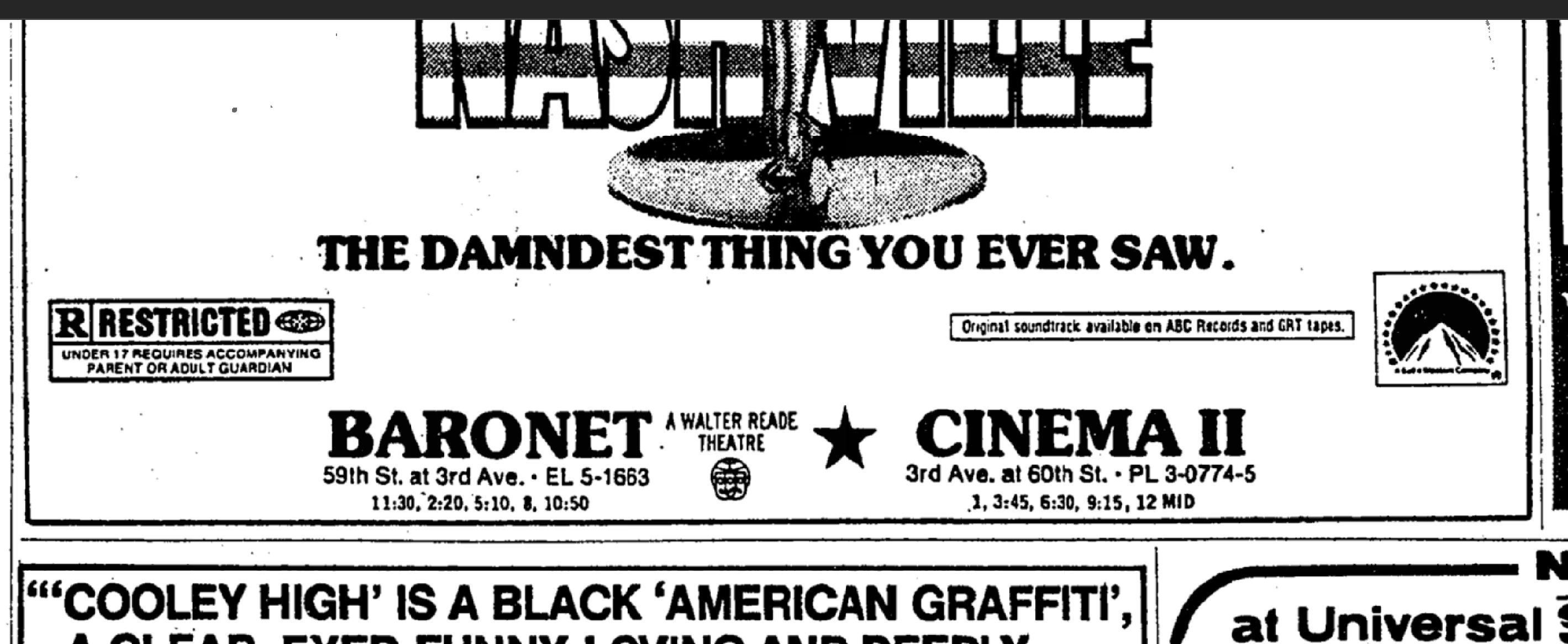
Taking his advice, I went to the New York Times archives and found an ad for the film which indicated it was playing in just two theaters — the Baronet and Cinema II, both of which were on Third Avenue between E 59th and 60th Streets.
As soon as I saw Cinema II’s address I already had a clear mental picture of the theater’s facade and knew it was a match to the one in this scene. Cinema I & II is one of the last remaining movie houses on the Upper East Side and I’ve passed it at least five or six times in the past year alone. (In retrospect, I can’t believe I didn’t recognize it right away.)
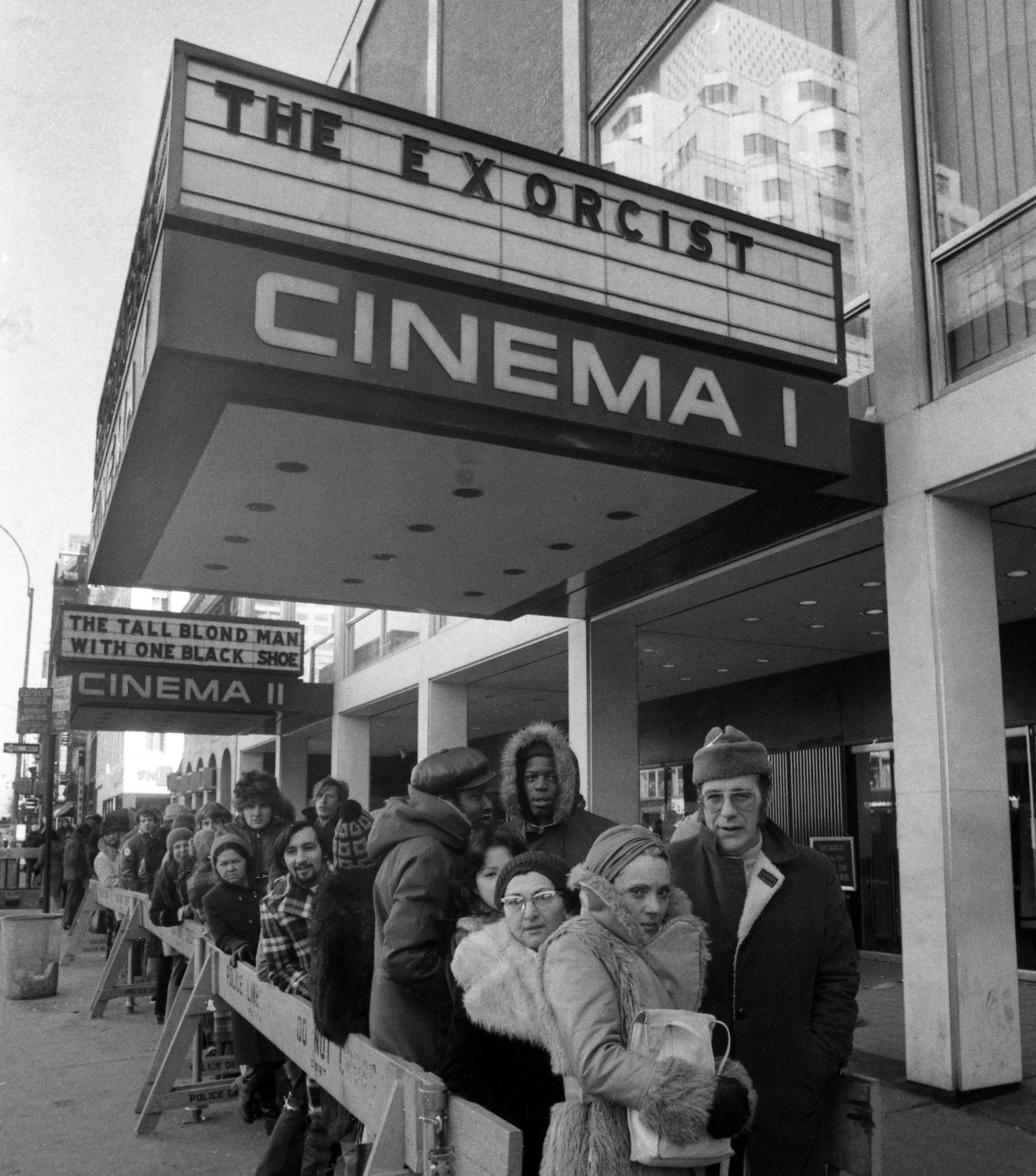
Meanwhile, Blakeslee was busy focusing on a small sign that appeared in another shot which he thought indicated showings of The Day of the Locust. After searching through some old movie listings, he was able to establish that Locust was showing at Cinema I from June to mid-August (which aligned with the Taxi Driver shooting schedule).
After that, he determined that the first shot with the Nashville poster was actually at the Baronet which was the theater directly to the south of Cinema I & II.
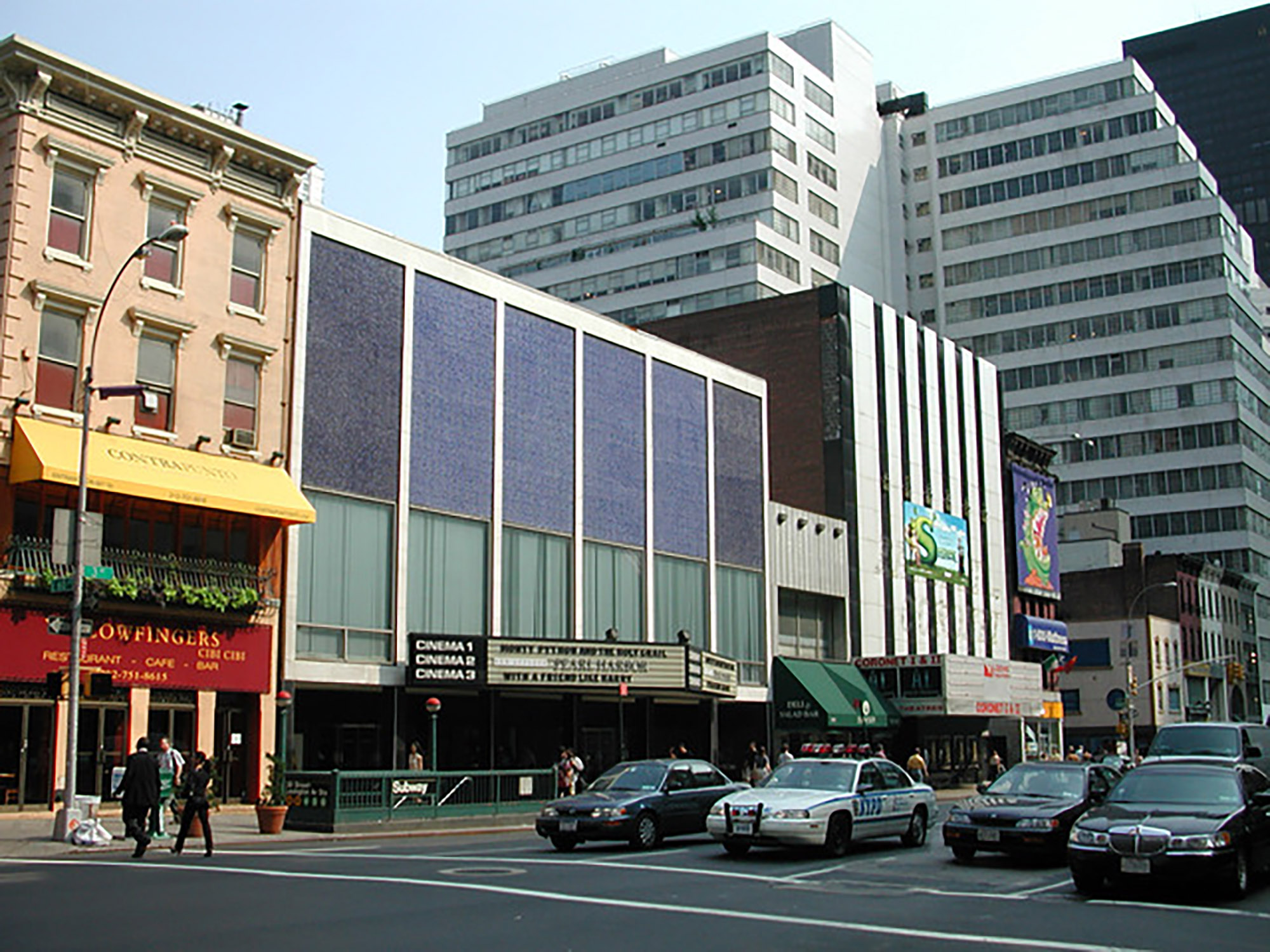
The confusion came because the street-level exteriors of both theaters looked similar but were slightly different.
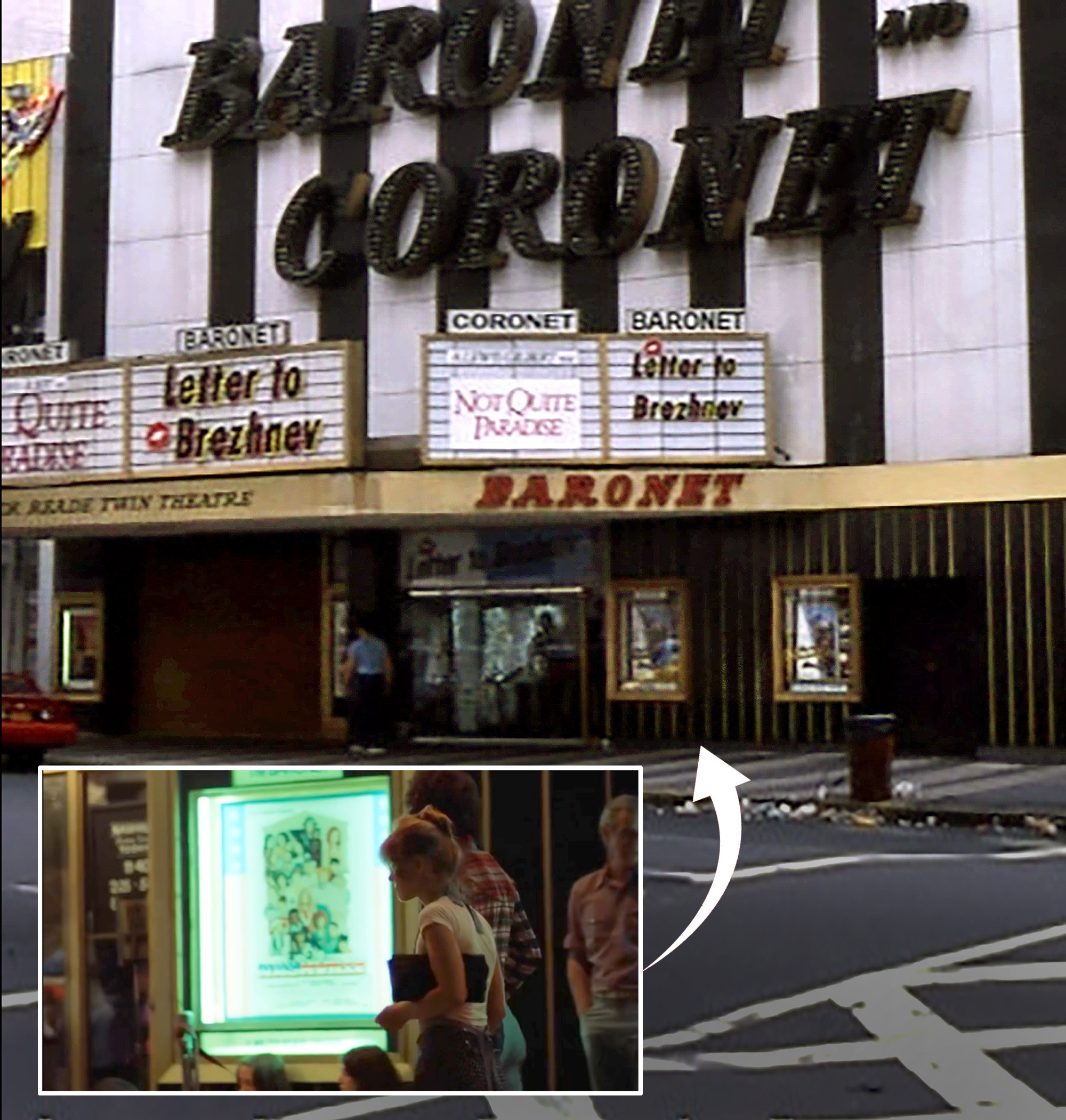
As further evidence, you can actually see part of the Baronet name on the frame surrounding the Nashville poster.
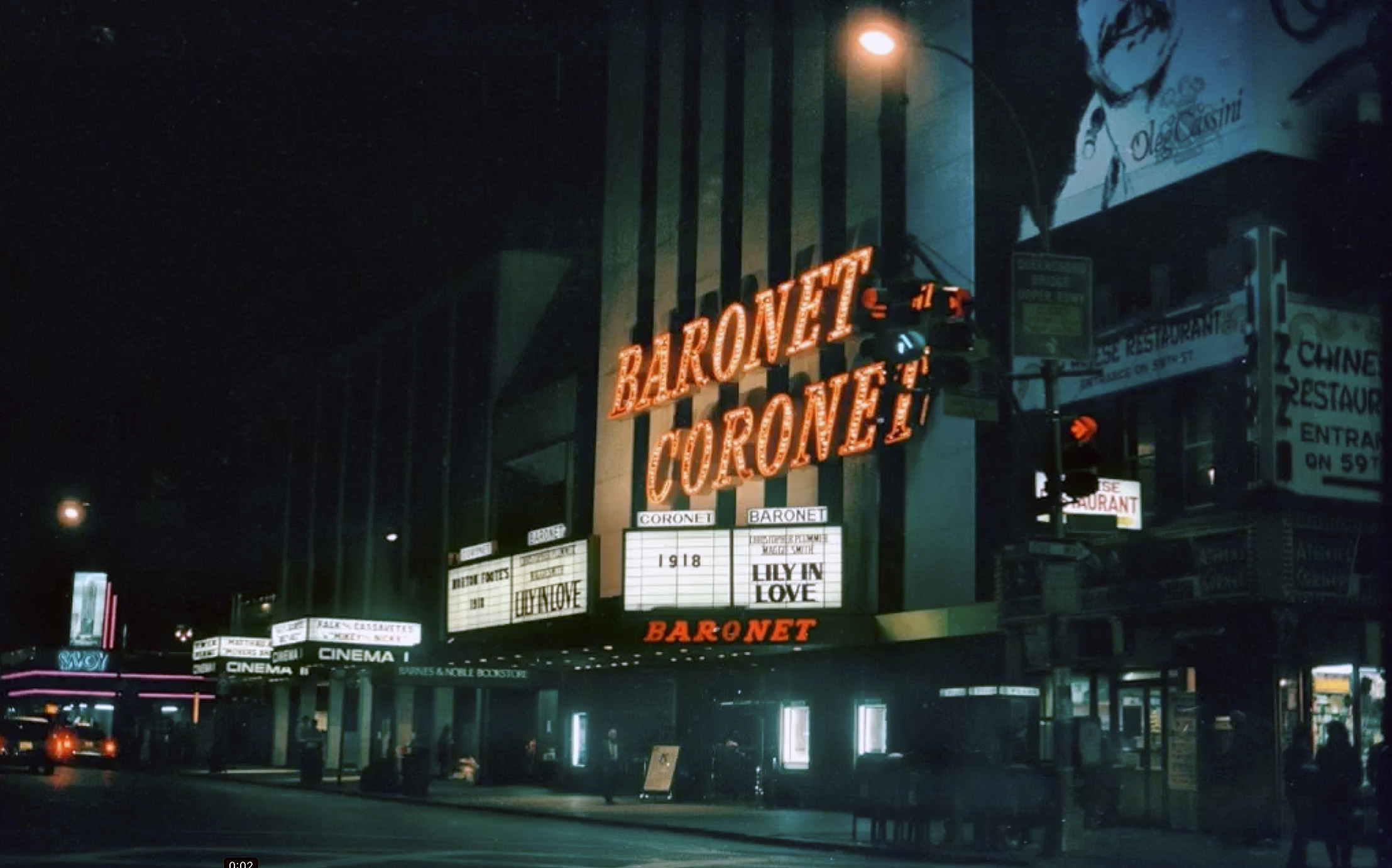
Sadly, the Baronet/Coronet’s once famous facade and reputation declined during the end of the 20th century and the duplex cinema finally closed on September 13, 2001. The old theater with its fading exterior was taken down a few years later and replaced with yet another towering apartment building. (This seems to be the recurring theme in this post.)
Buying Guns
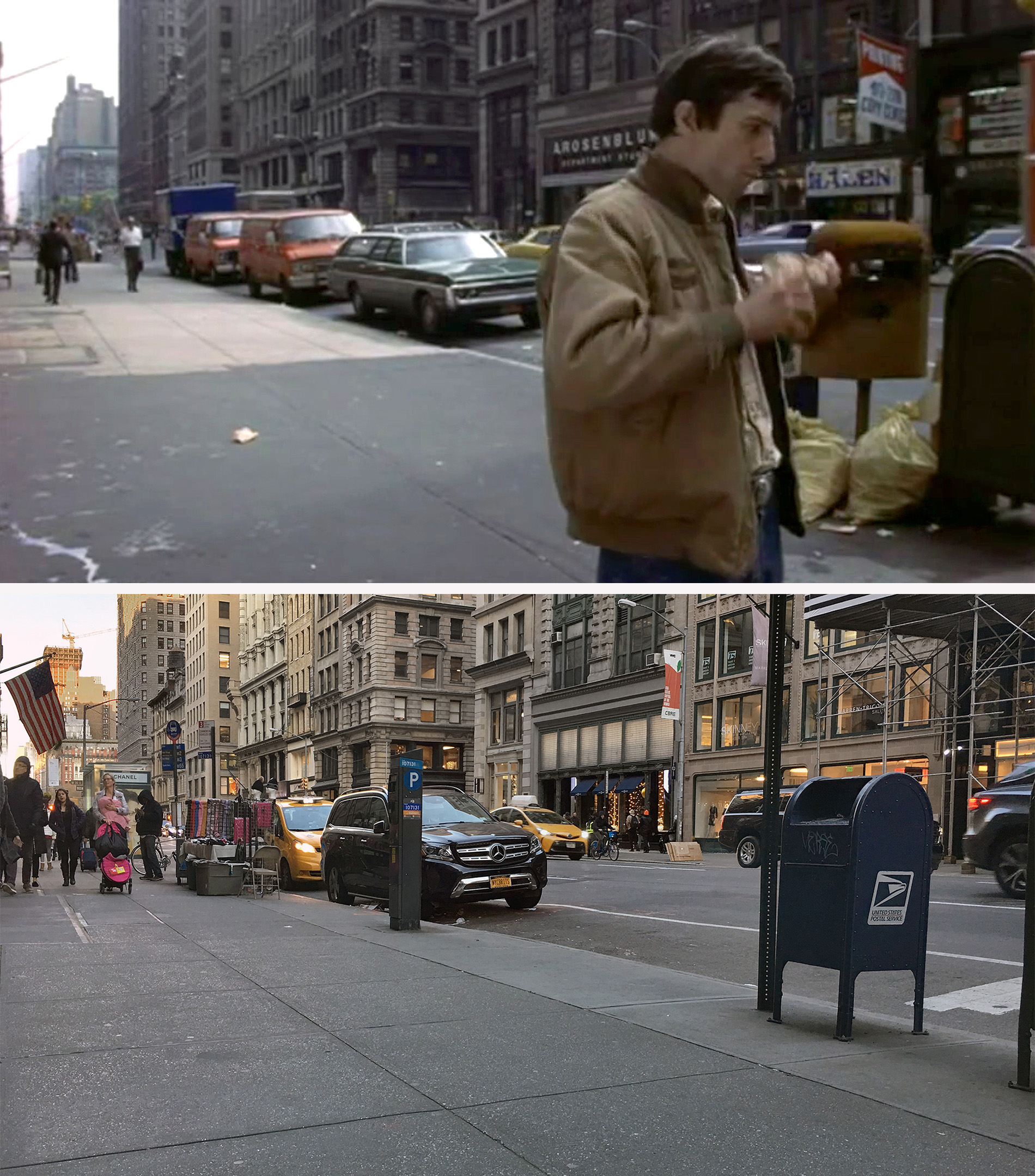
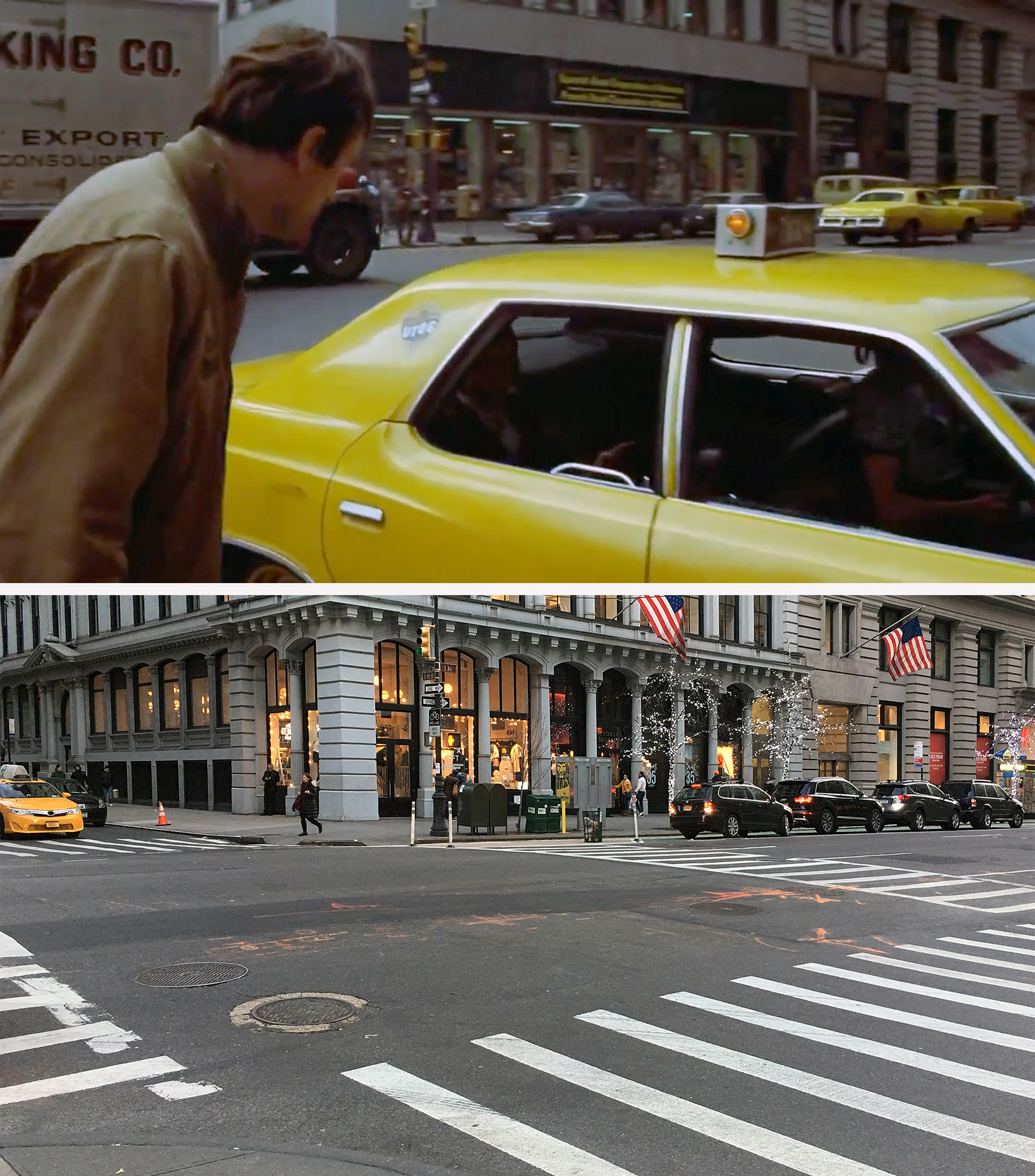
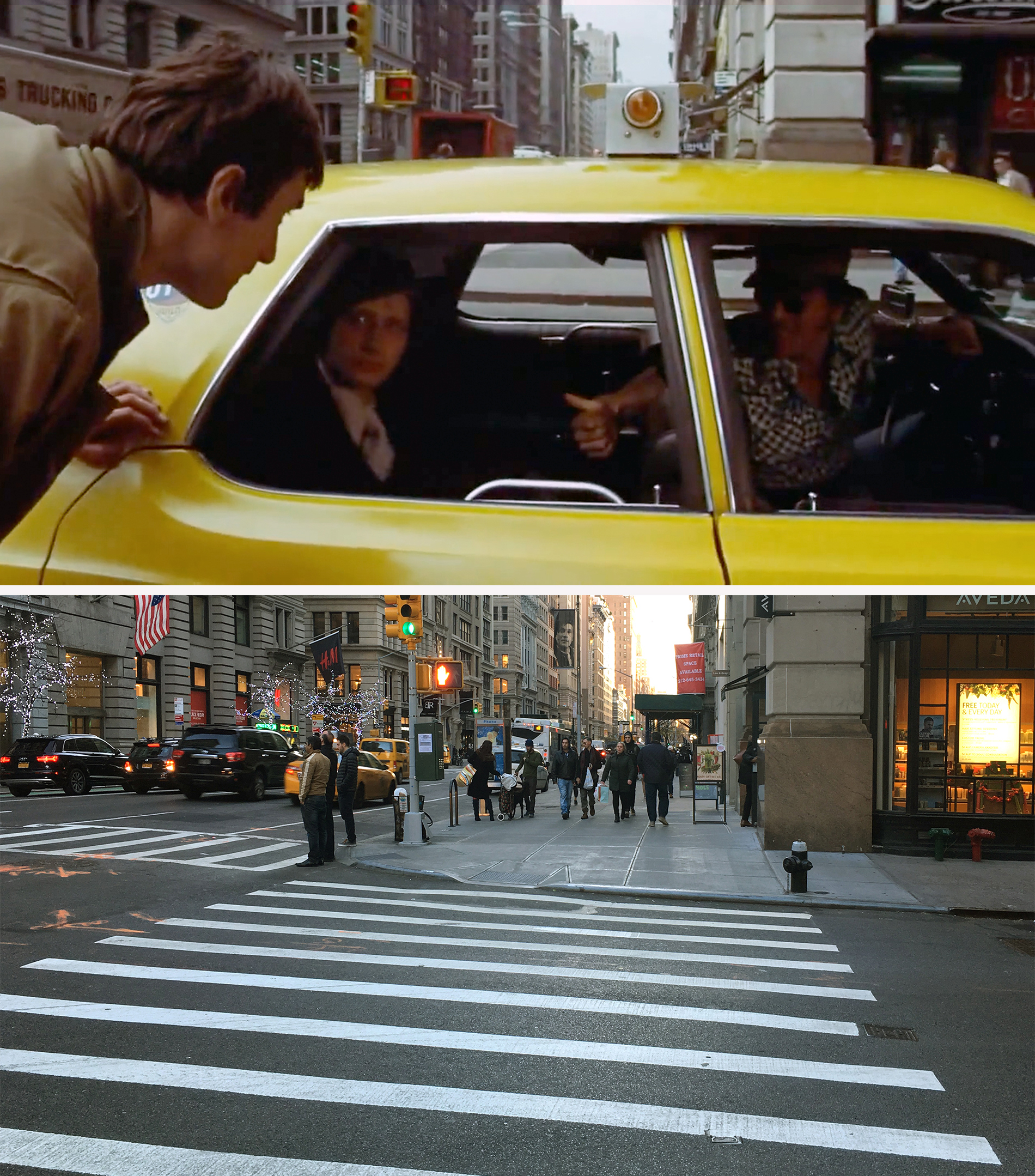
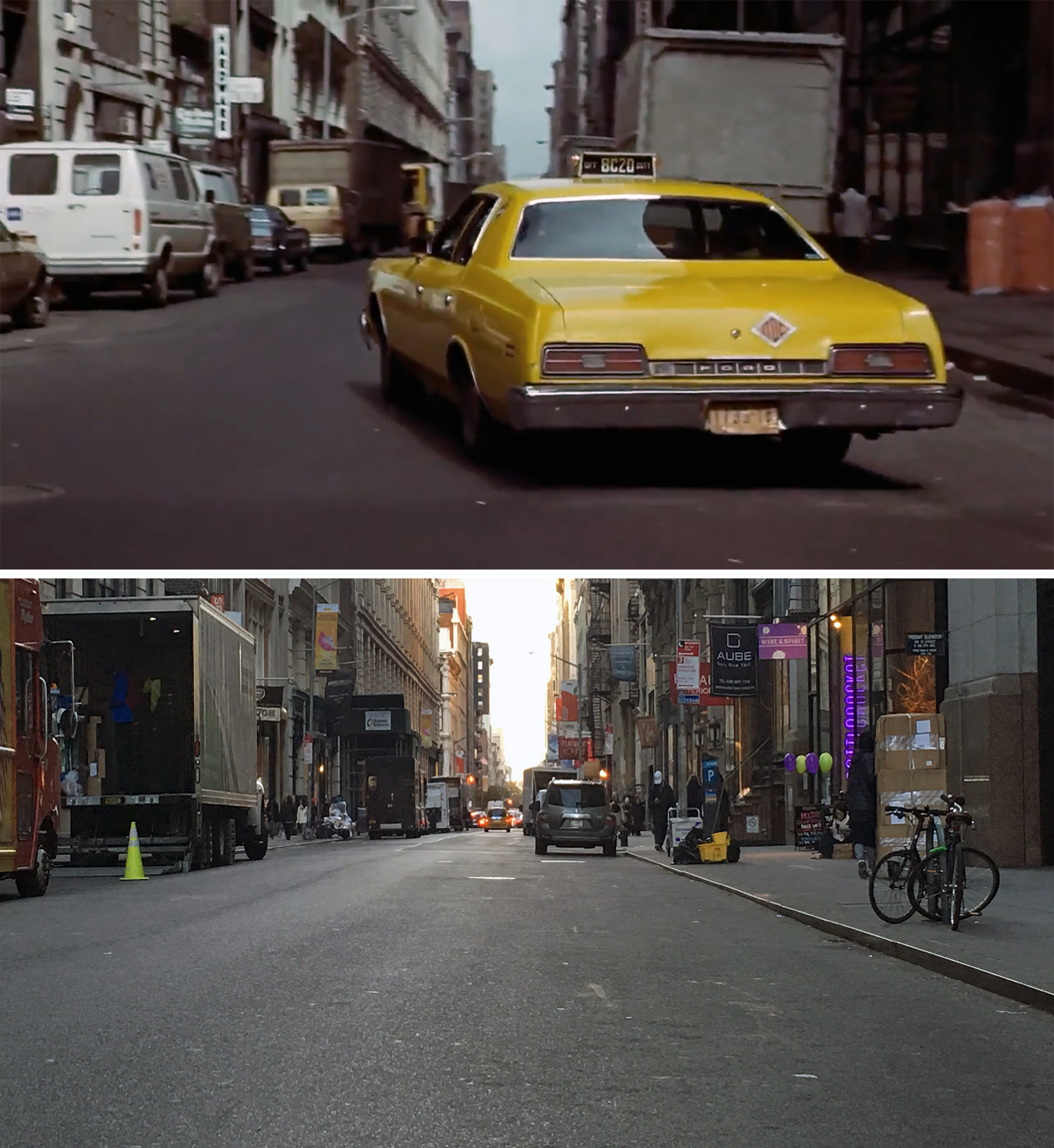
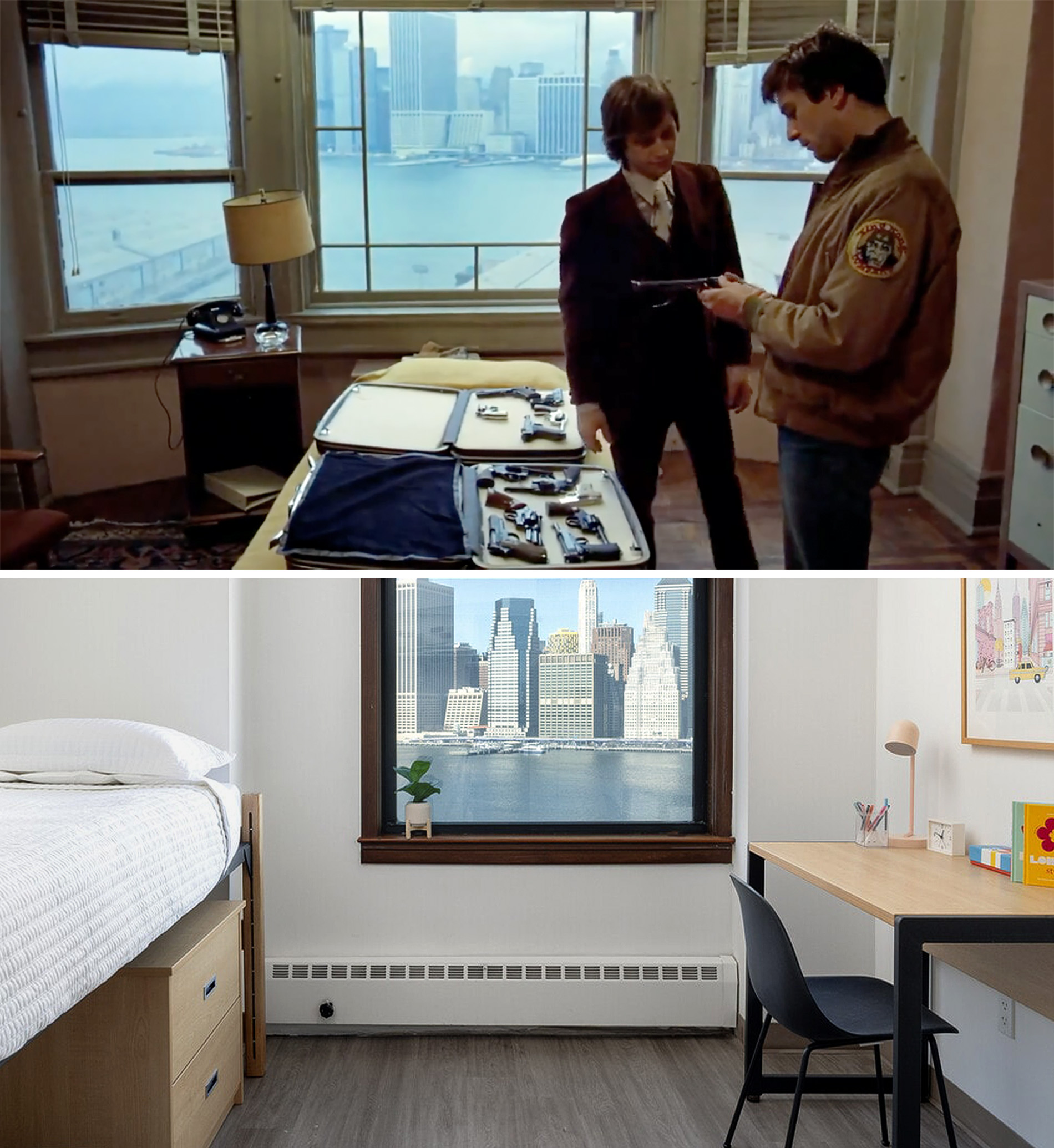
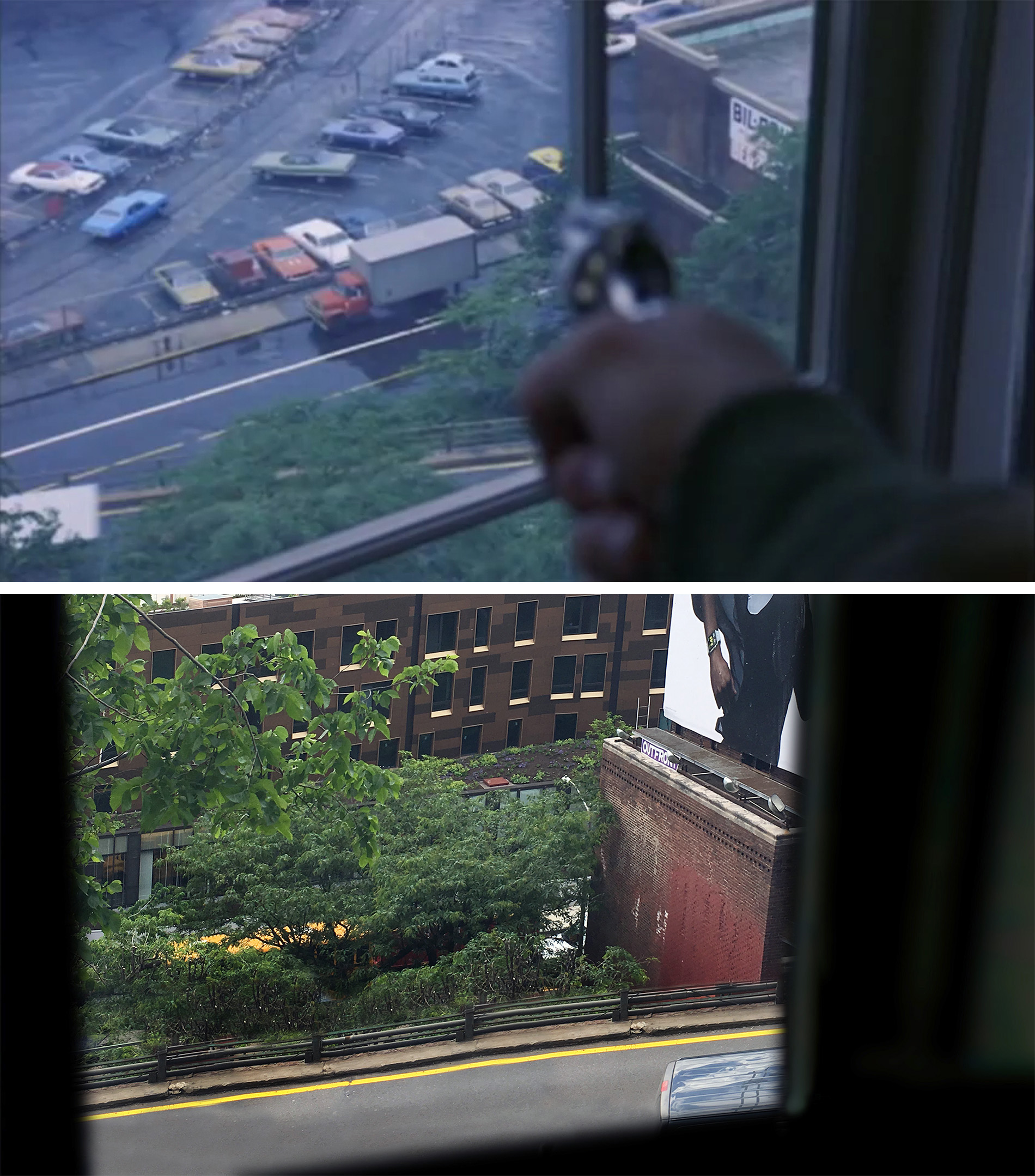
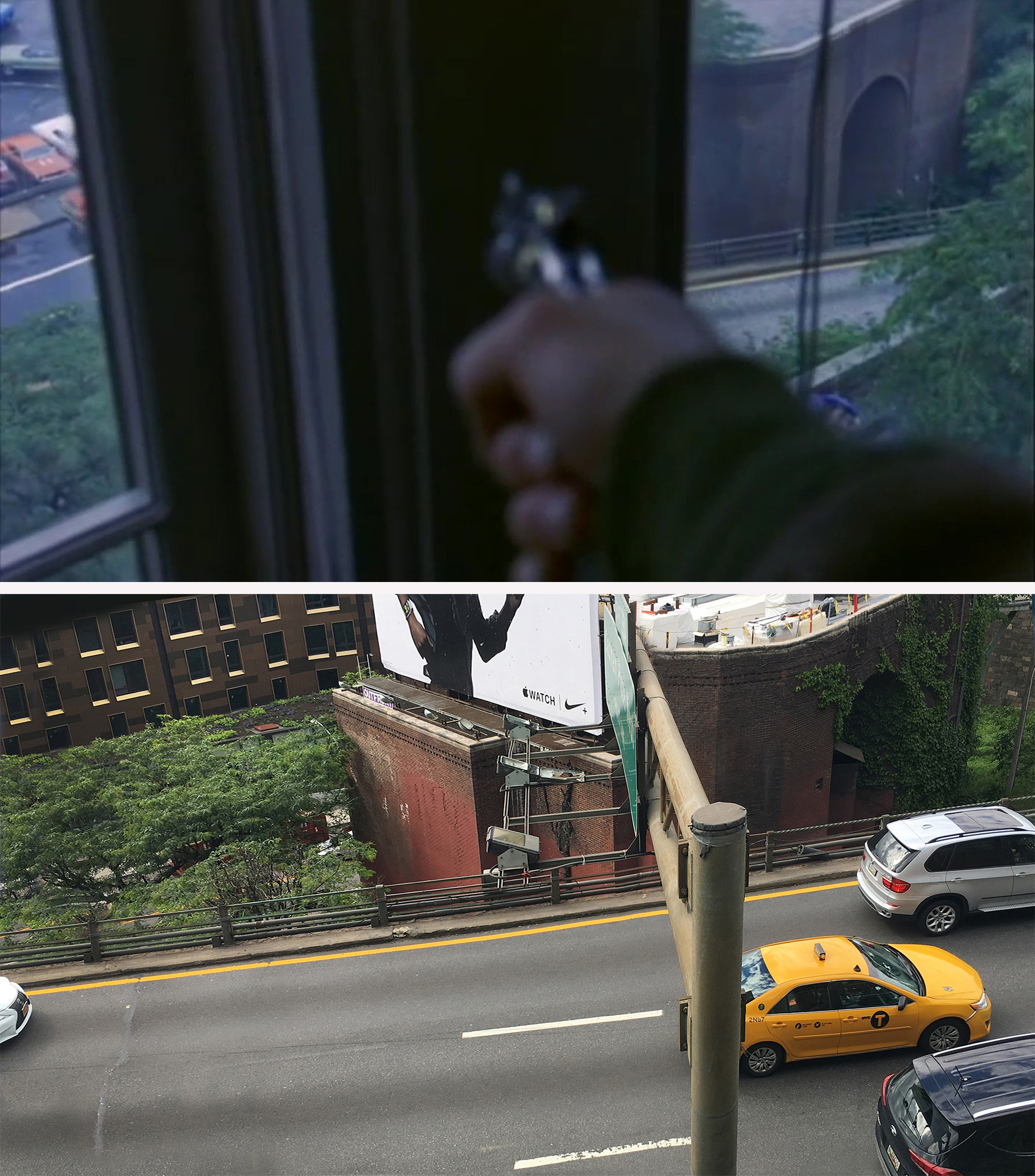
The pick-up spot on Fifth Avenue was first identified by Carr on his website in 2009, but he didn’t touch upon the location of the room where the gun sale went down.
It wasn’t too hard for me to make a rough assessment of the location, since we get a nice panoramic view of the Manhattan skyline in the scene. Using that, as well as the building next to the BQE below, I estimated they were on Columbia Heights between Orange and Cranberry Streets in Brooklyn. At first, I thought they were in no. 81, but I eventually concluded that they were in the building just south of that.
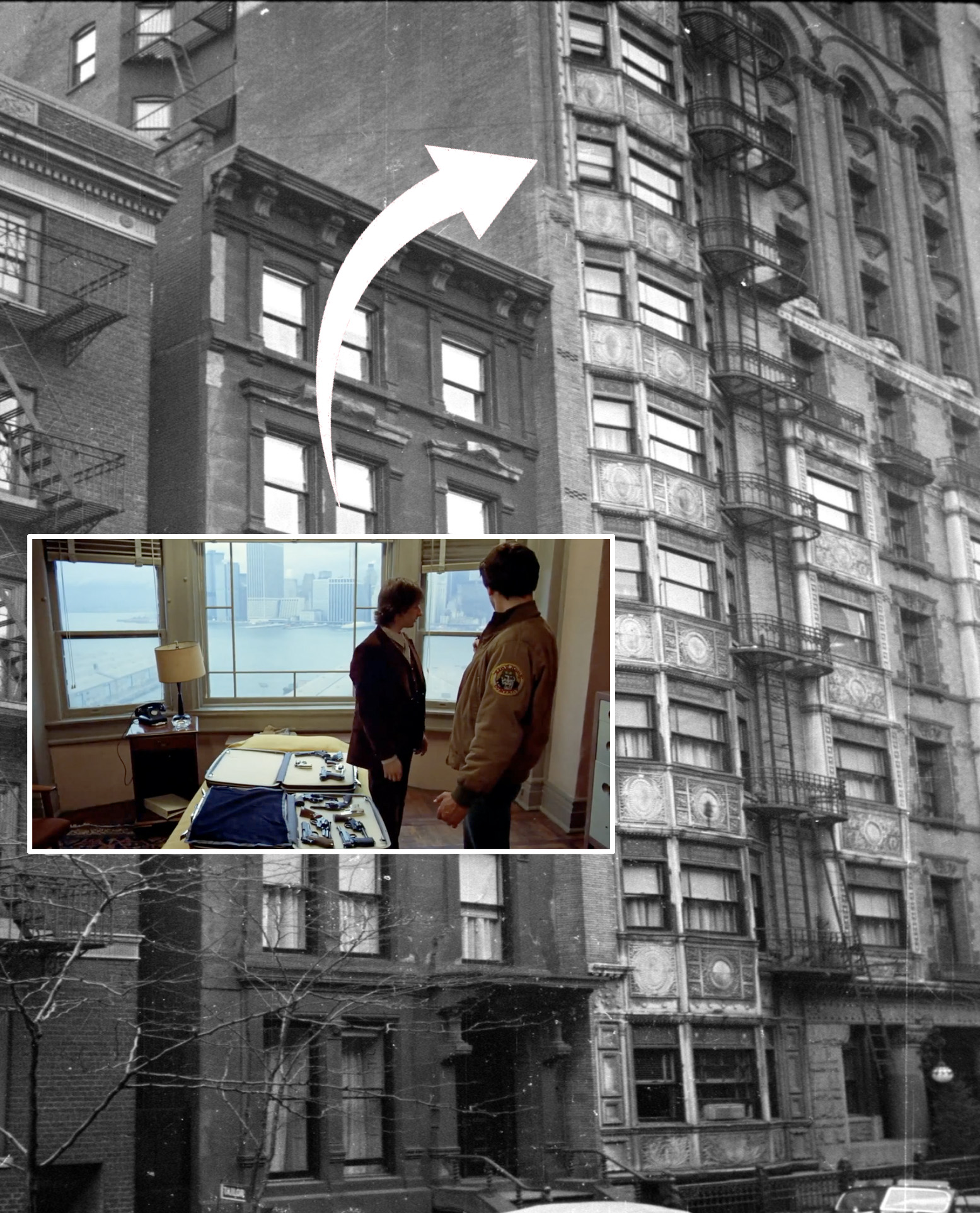
The big clue that led me to that specific address was the shape of the windows. Of course, you might’ve noticed the window in the modern pic is quite different. That’s because the old building in the movie got razed in the mid-1980s.
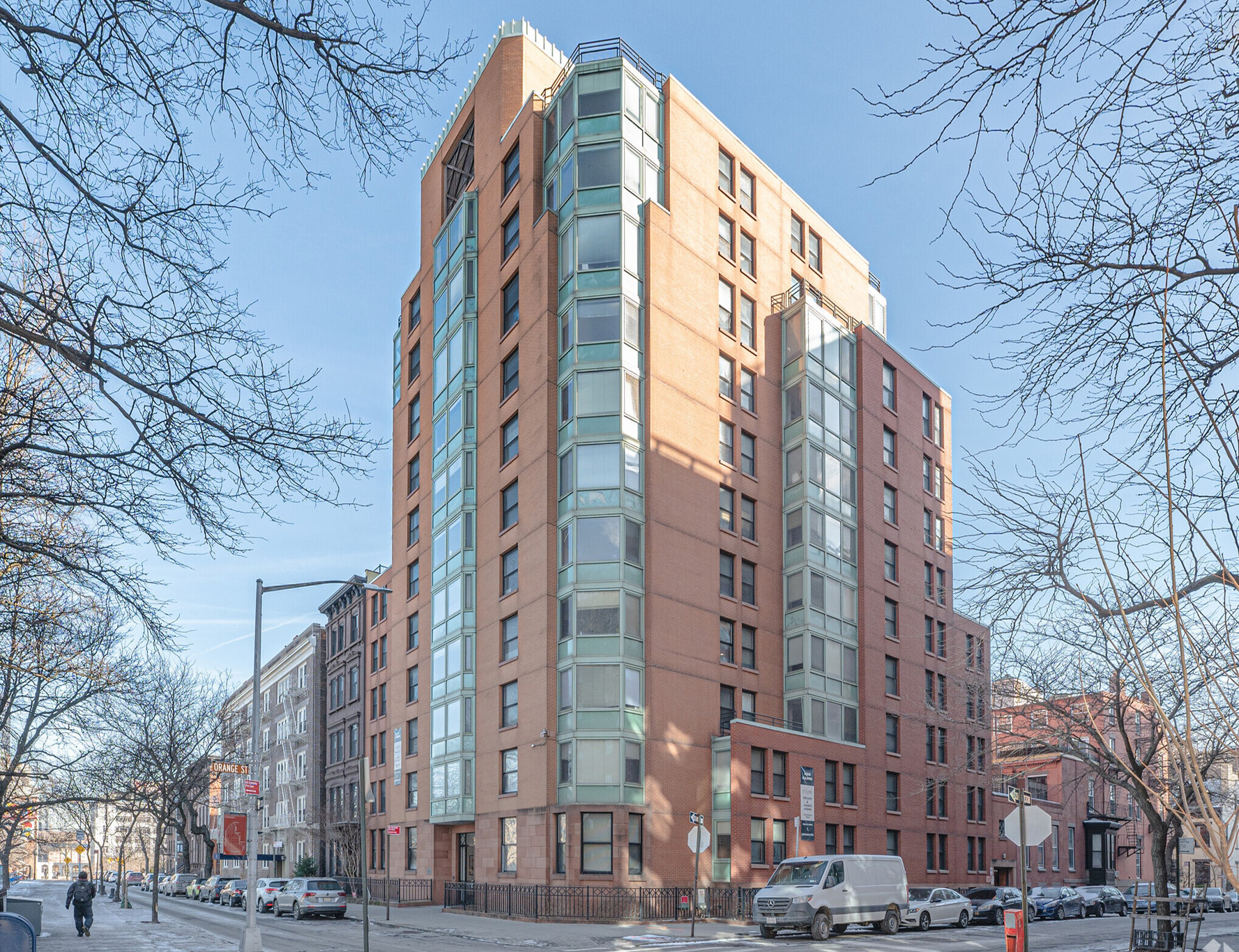
The new building operates as Affordable Student Living Spaces, offering dorm-like accommodations for college students and interns.
Firing Range
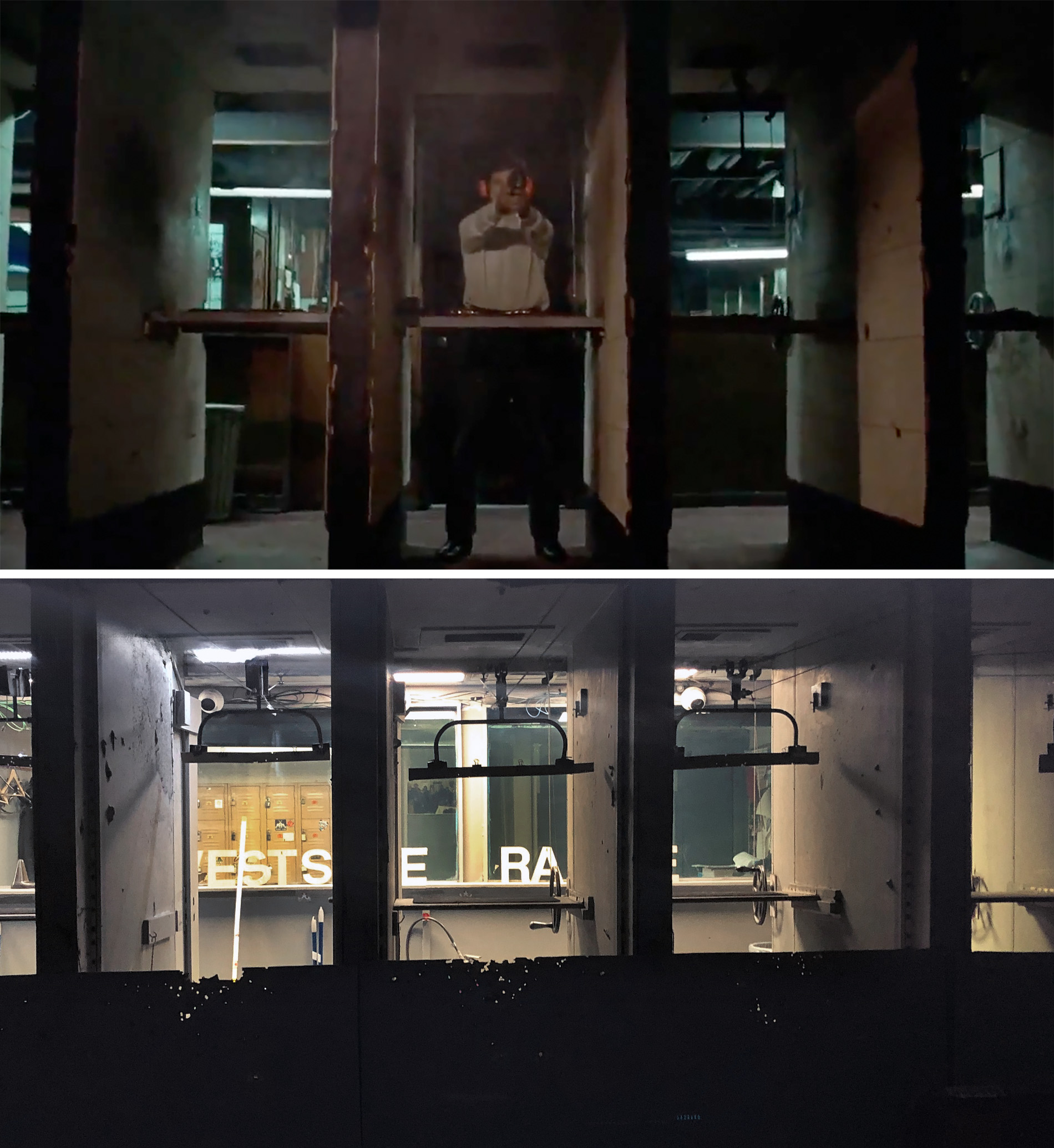
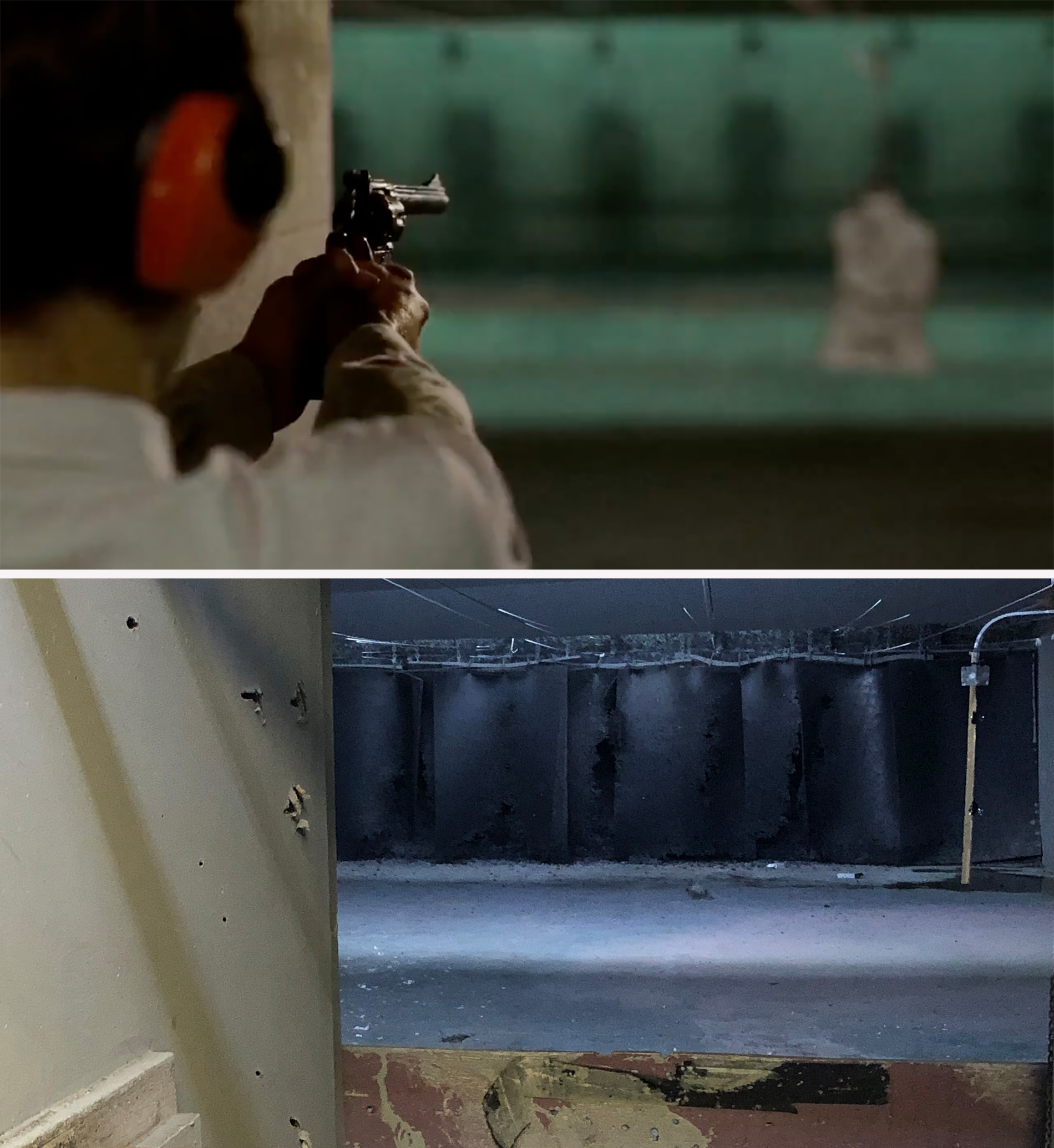
This is one of those filming locations that I discovered through an offhand comment on a movie website, which usually are quite unreliable, but in this case, was spot on. Basically, if a movie or TV show has a scene taking place at a New York City firing range, it was mostly likely filmed at West Side Rifle & Pistol Range on W 20th Street.
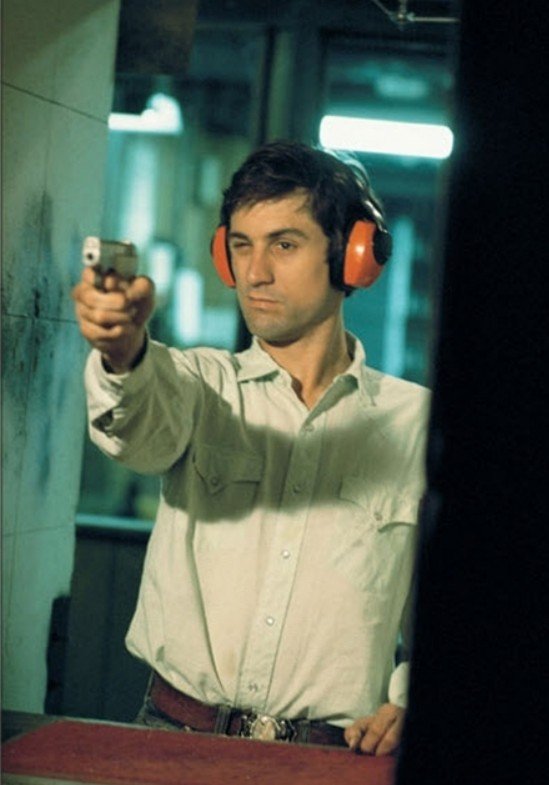
This longstanding shooting facility even displays a photo of De Niro firing a pistol when he was there in the summer of 1975.
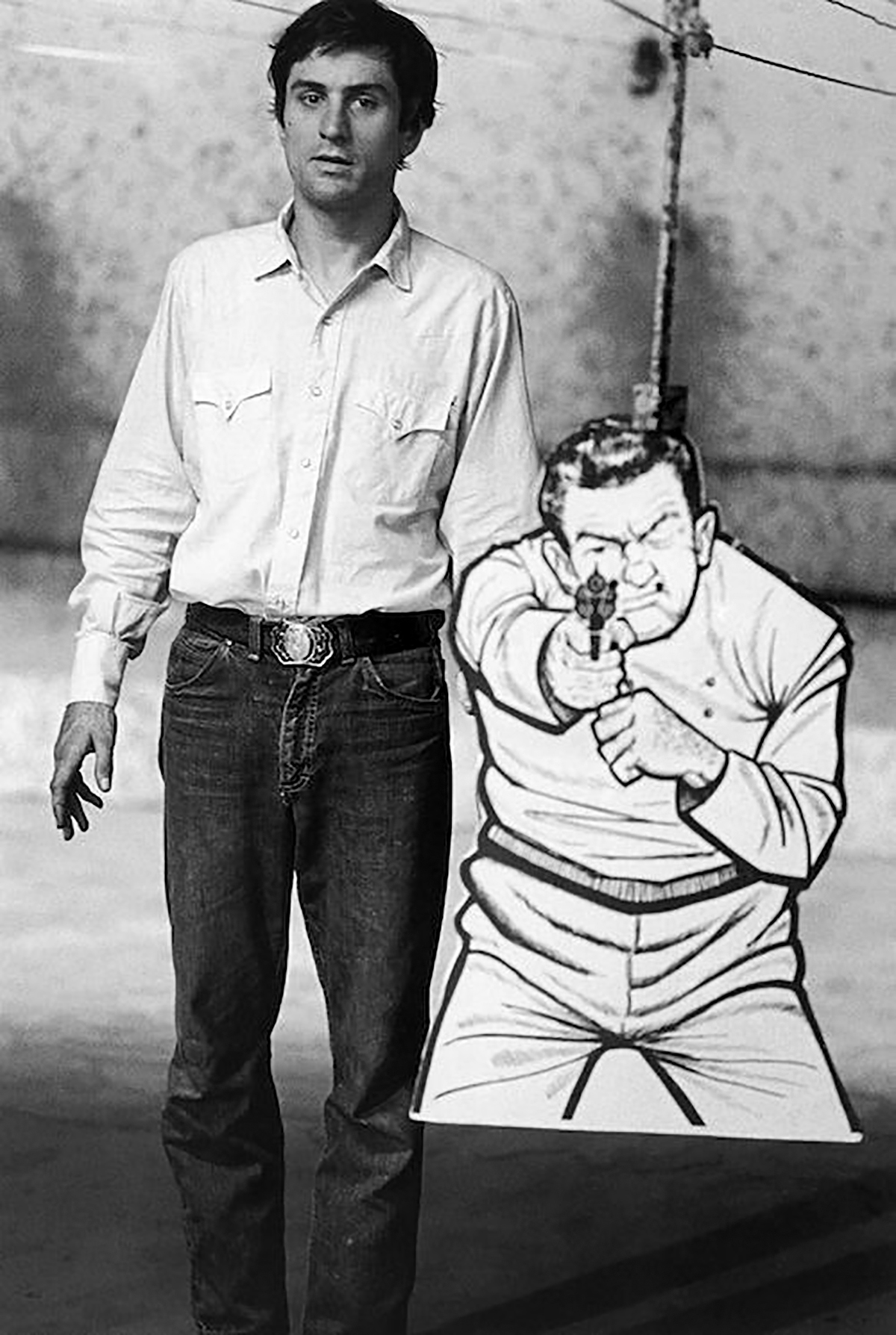
Located in the heart of the Flatiron District since 1964, Westside heralds itself as Manhattan’s only full-service shooting range, catering to a variety of loyal customers — from casual hunters to members of law enforcement.
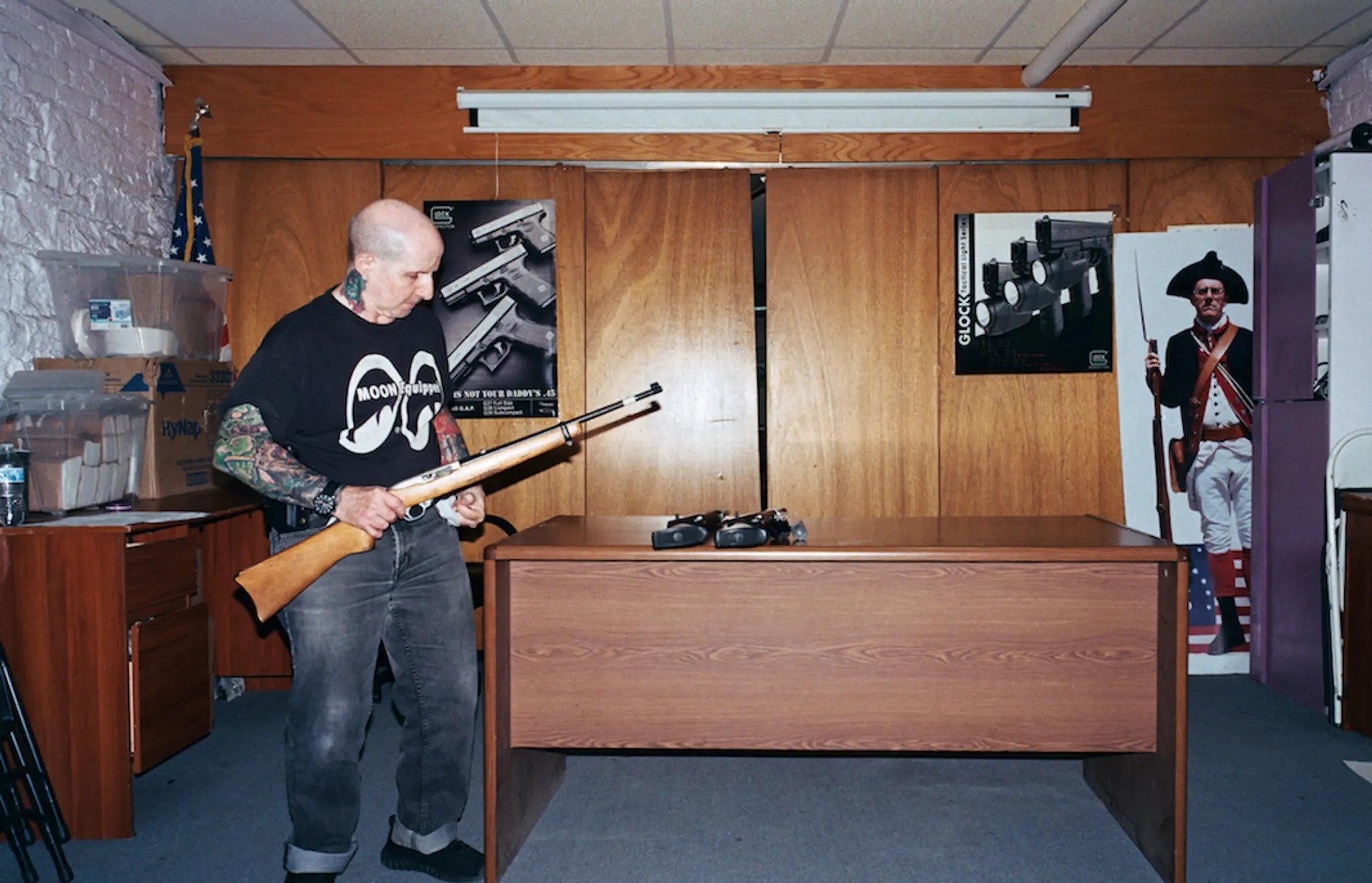
When I visited the underground shooting range last week, I immediately got a feeling of an old New York community. The staff, in particular manager John Aaron (who’s been working there since the 1990s), were very accommodating, allowing me into the range to take my photographs.
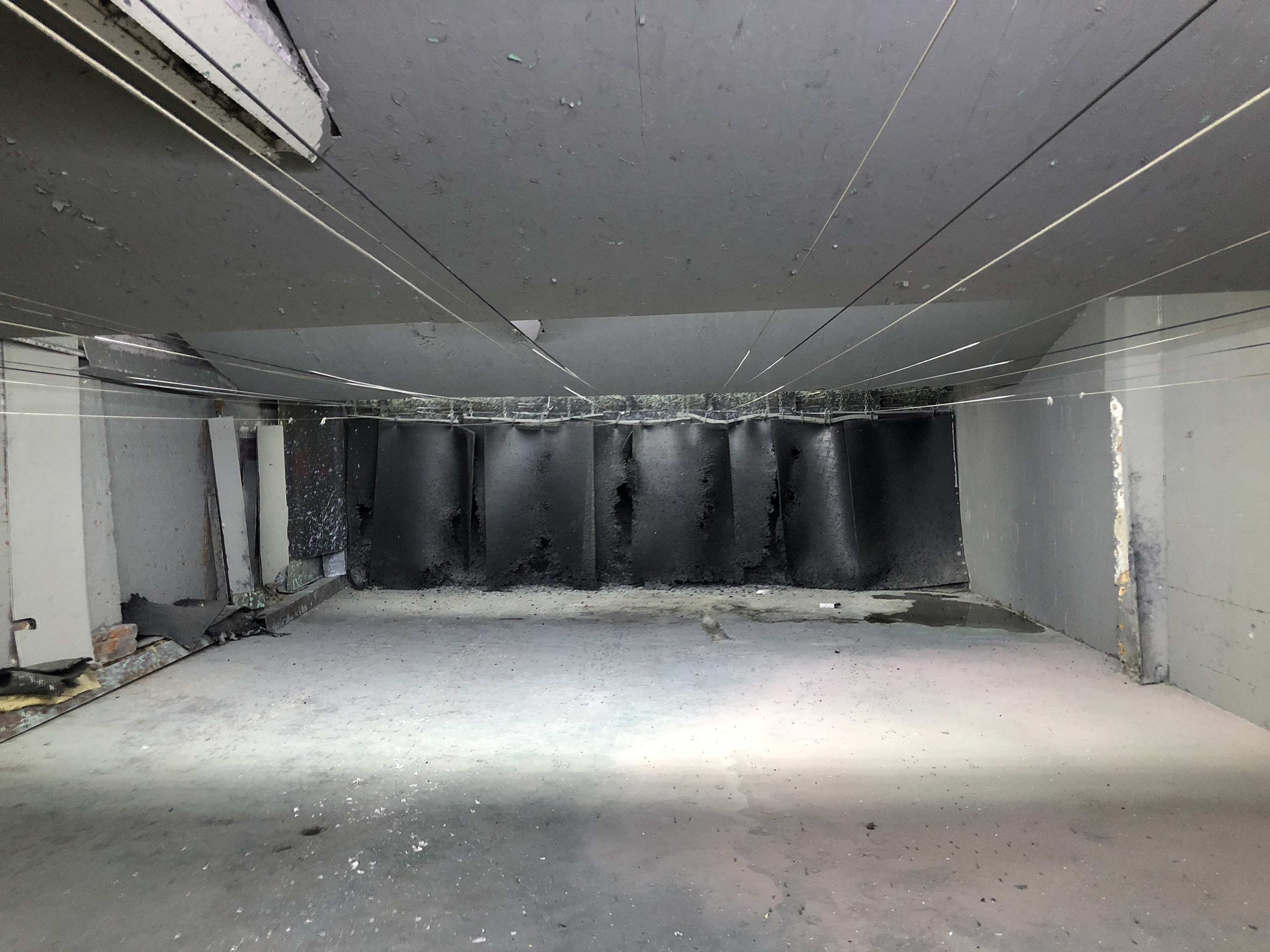
As he was showing me the stall used by De Niro, John mentioned that when he saw Taxi Driver for the first time, he immediately wanted the same oversized Magnum featured in the movie. While the long-barreled Model 29 looks cool on film, he said it’s fairly unwieldy and generally only useful for game hunting.
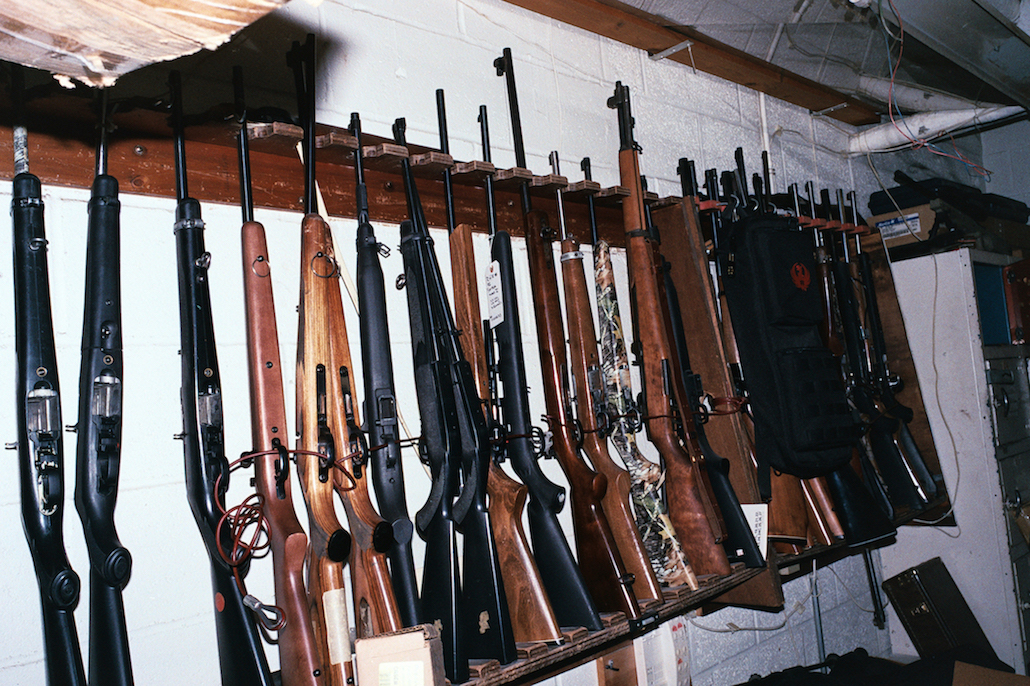
By the way, if you don’t have a gun permit but are interested in trying out the range, Westsiide offers the opportunity to legally fire off a .22 caliber rifle at their facility after taking a short in-house certification class. Definitely an unexpected but worthwhile place to check out.
First Rally

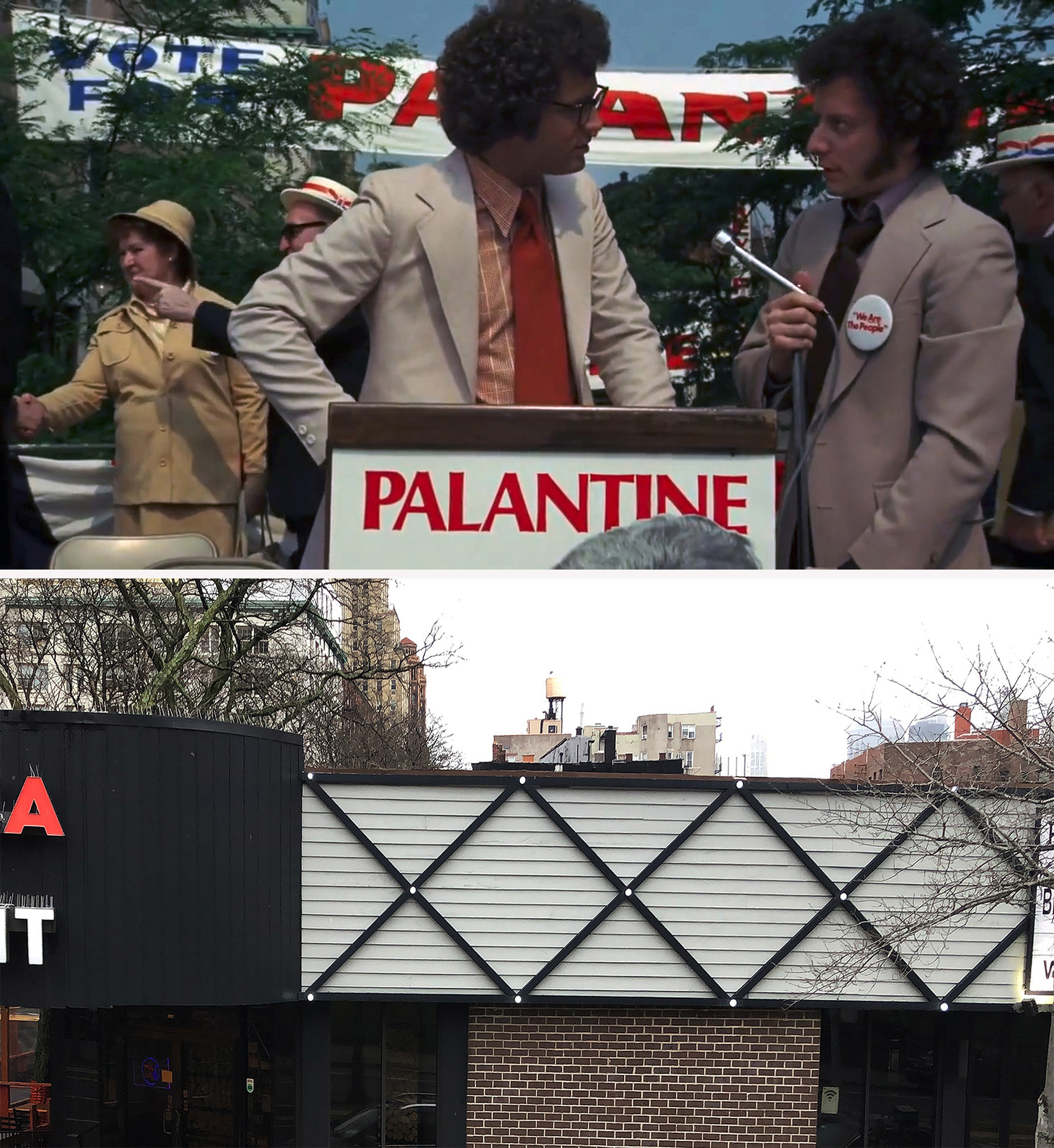
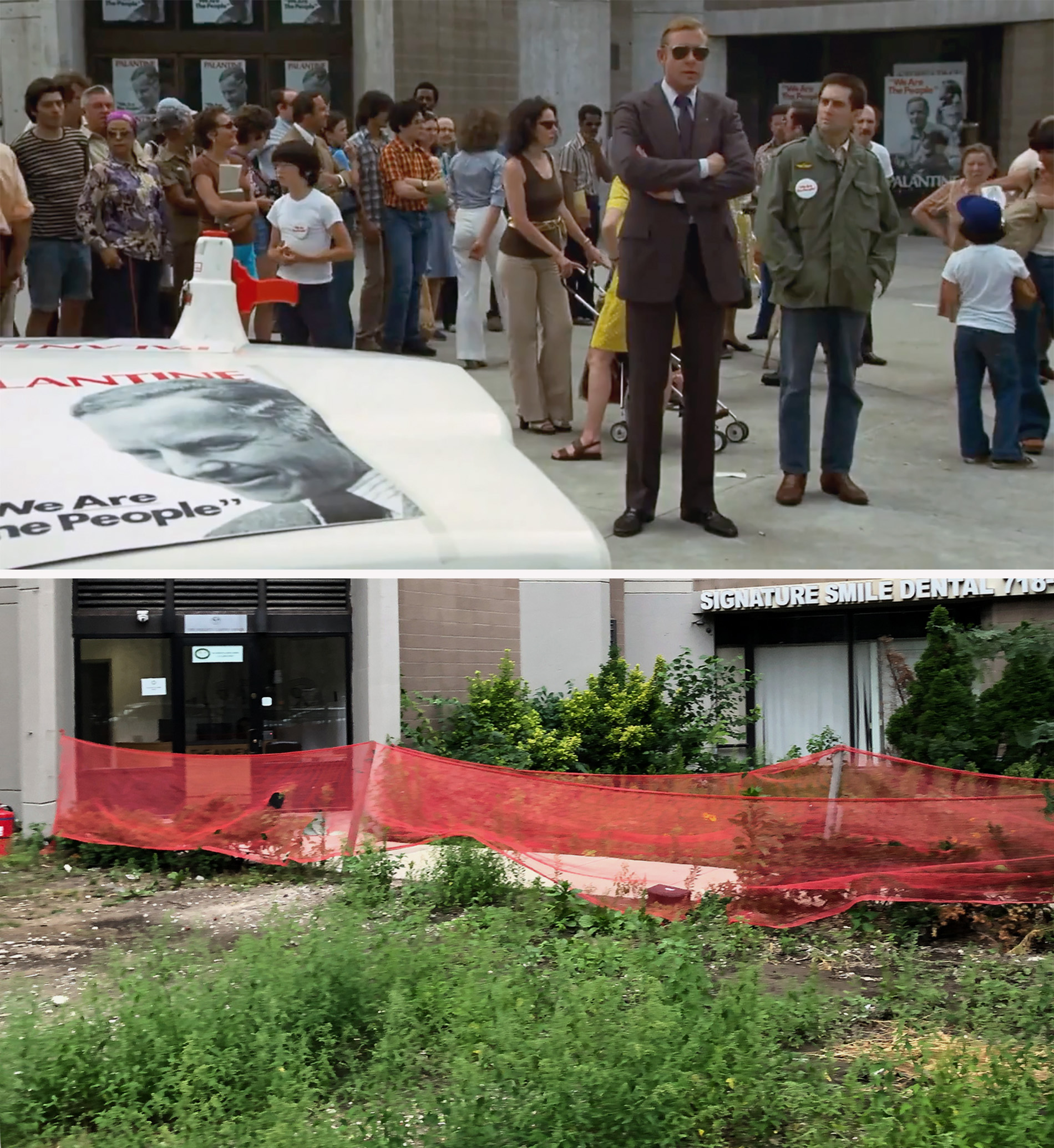

I was surprised this scene was left as a “missing location” on Carr’s website, as it always seemed like a pretty findable place. With the Manhattan Bridge appearing in the background, as well as the presence of a lot of trees, it seemed clear they were in Brooklyn. Then, using the angle of the bridge as a reference point, I just virtually backtracked from it in Google Maps, stopping at the Cadman Plaza area.

One there, I spotted several matching buildings, including an apartment building at 200 Cadman Plaza, which happened to be home to a long-time actress-friend of mine.
Market Robbery
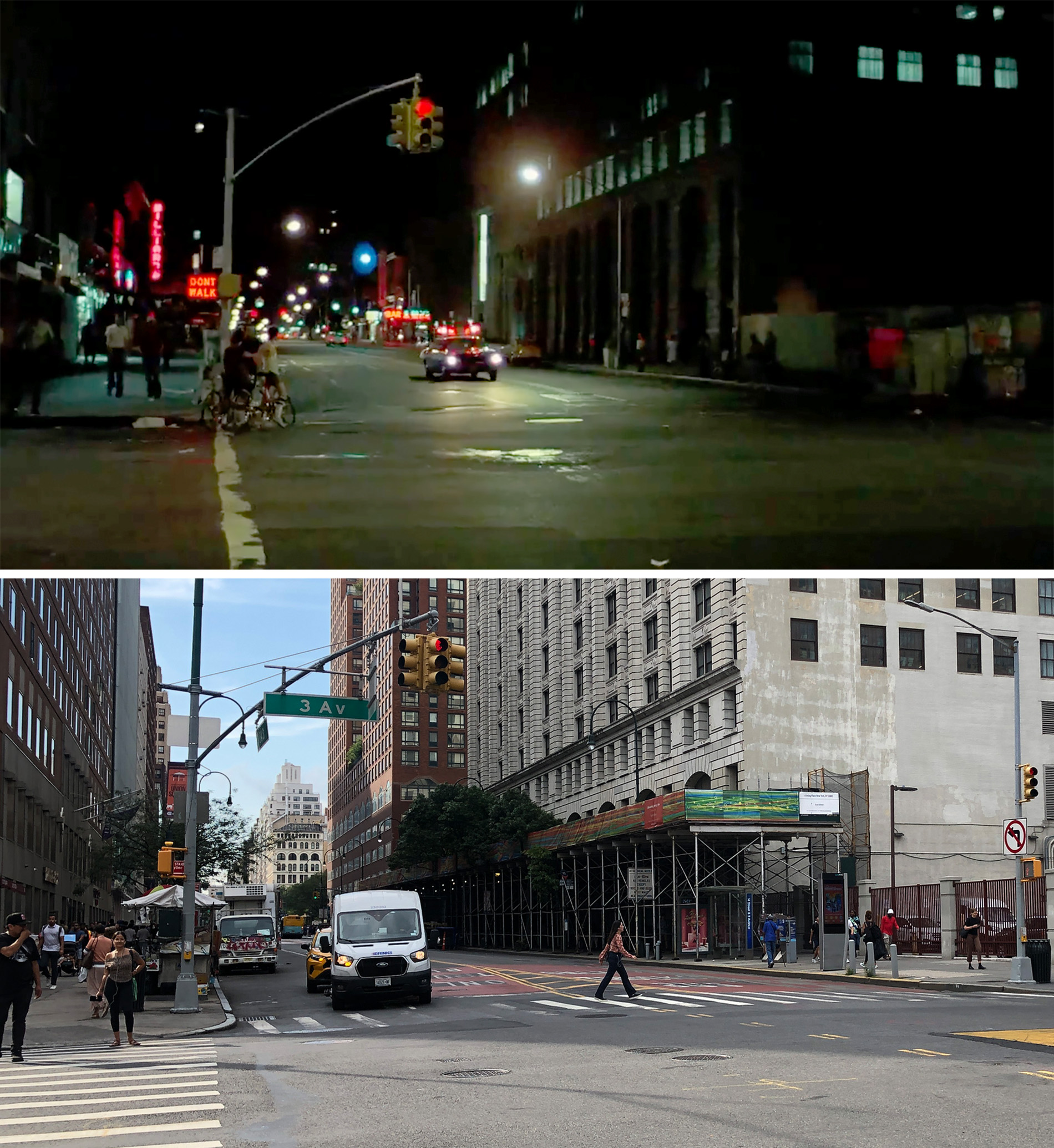
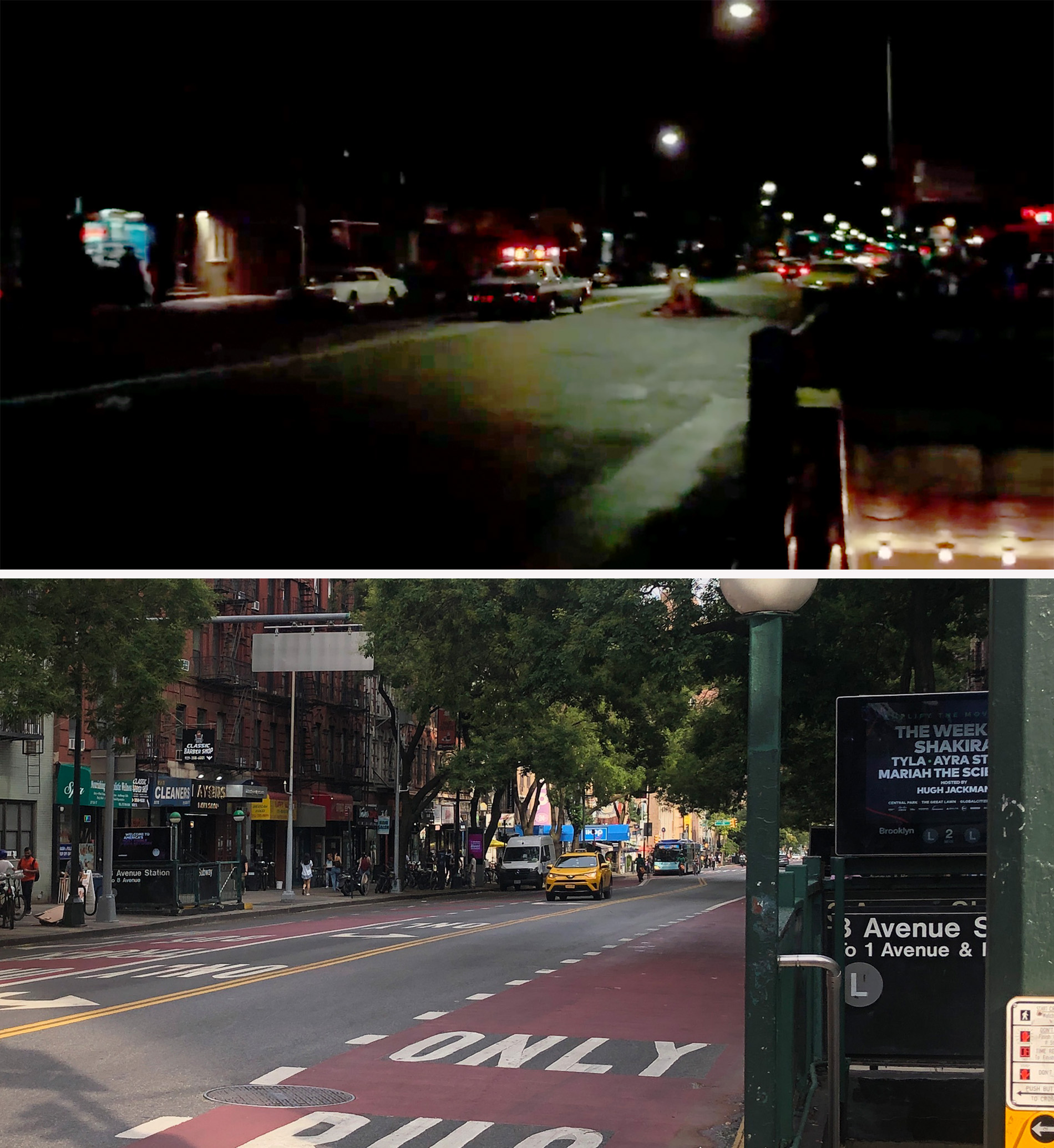
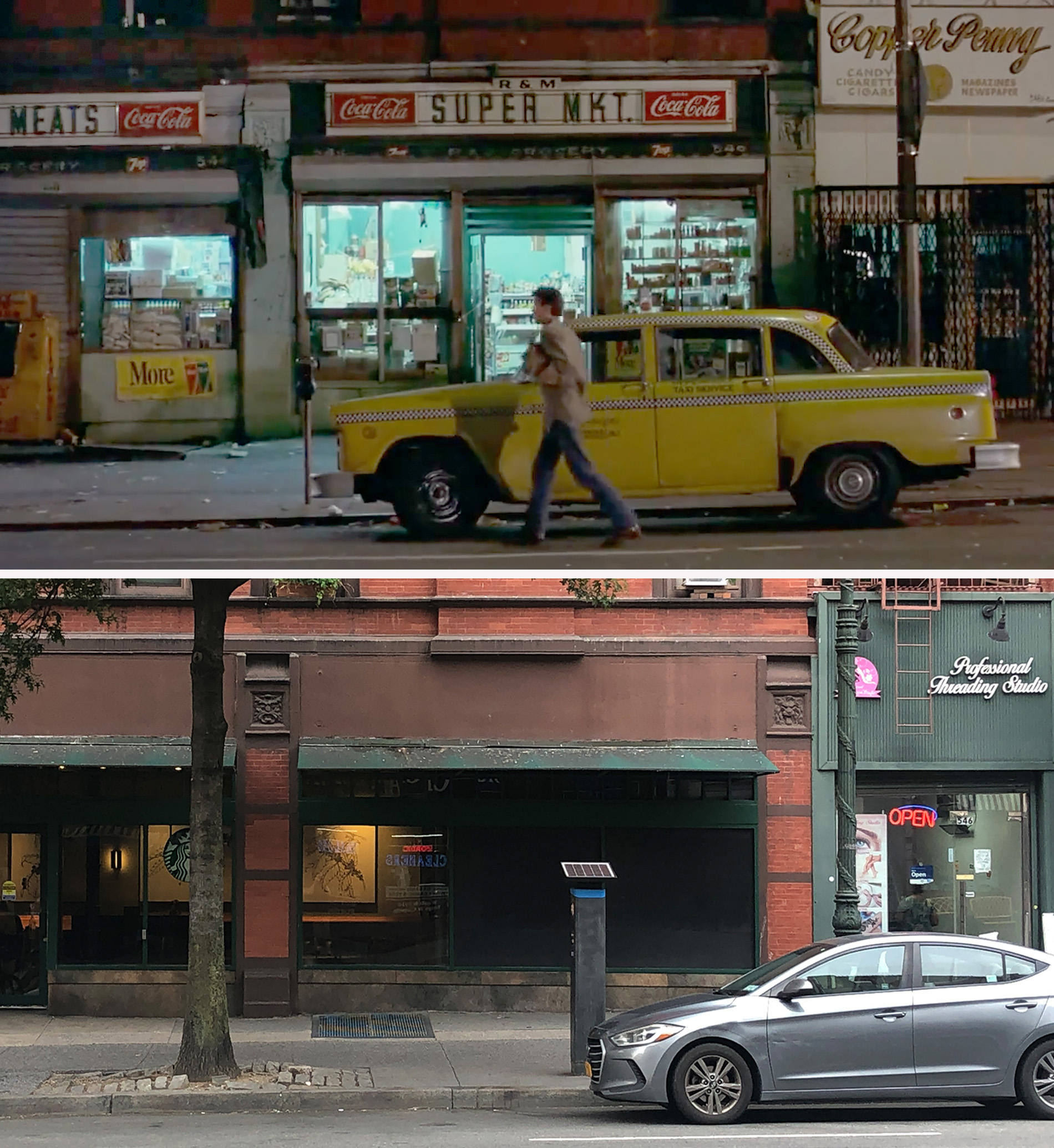
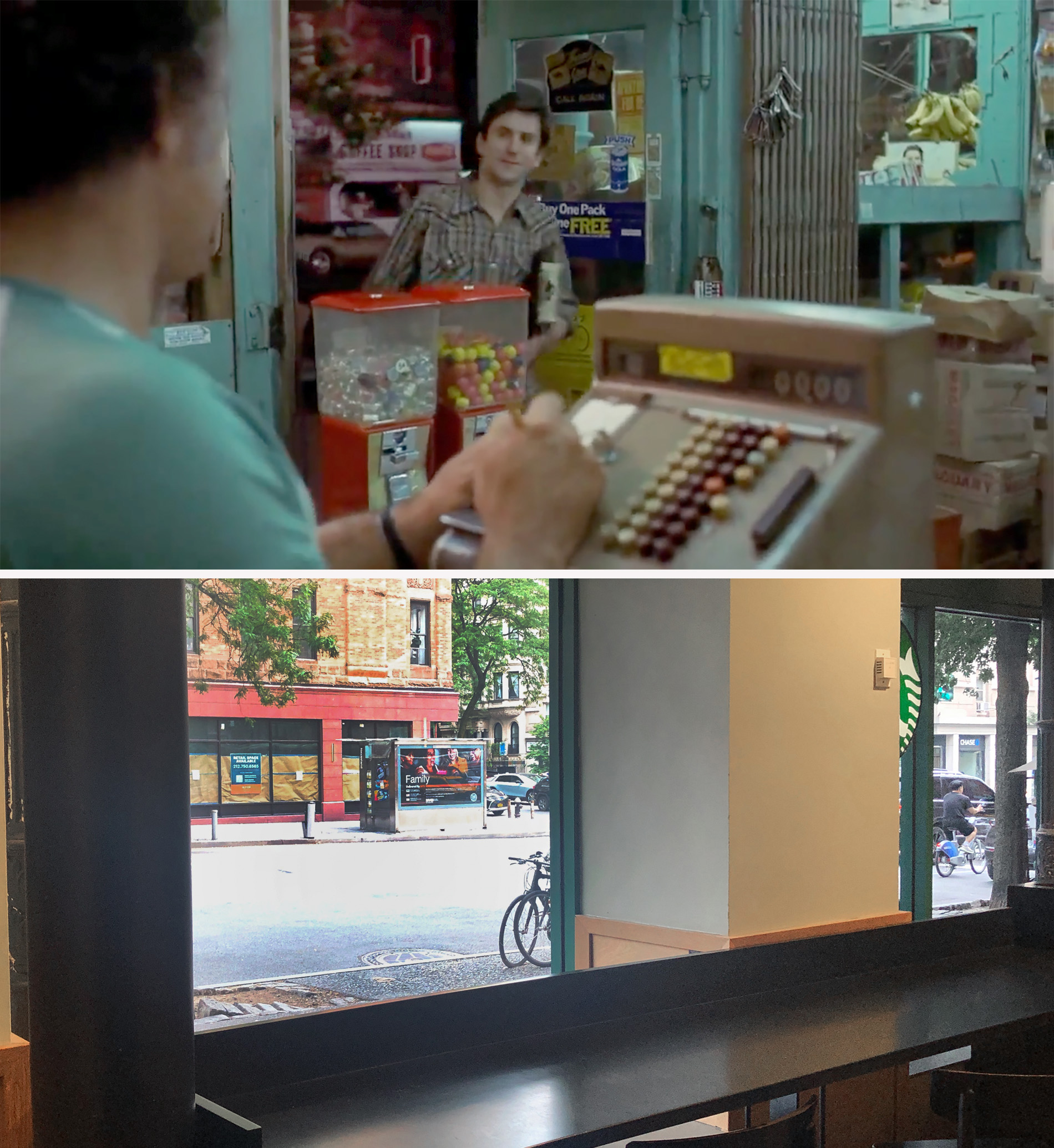
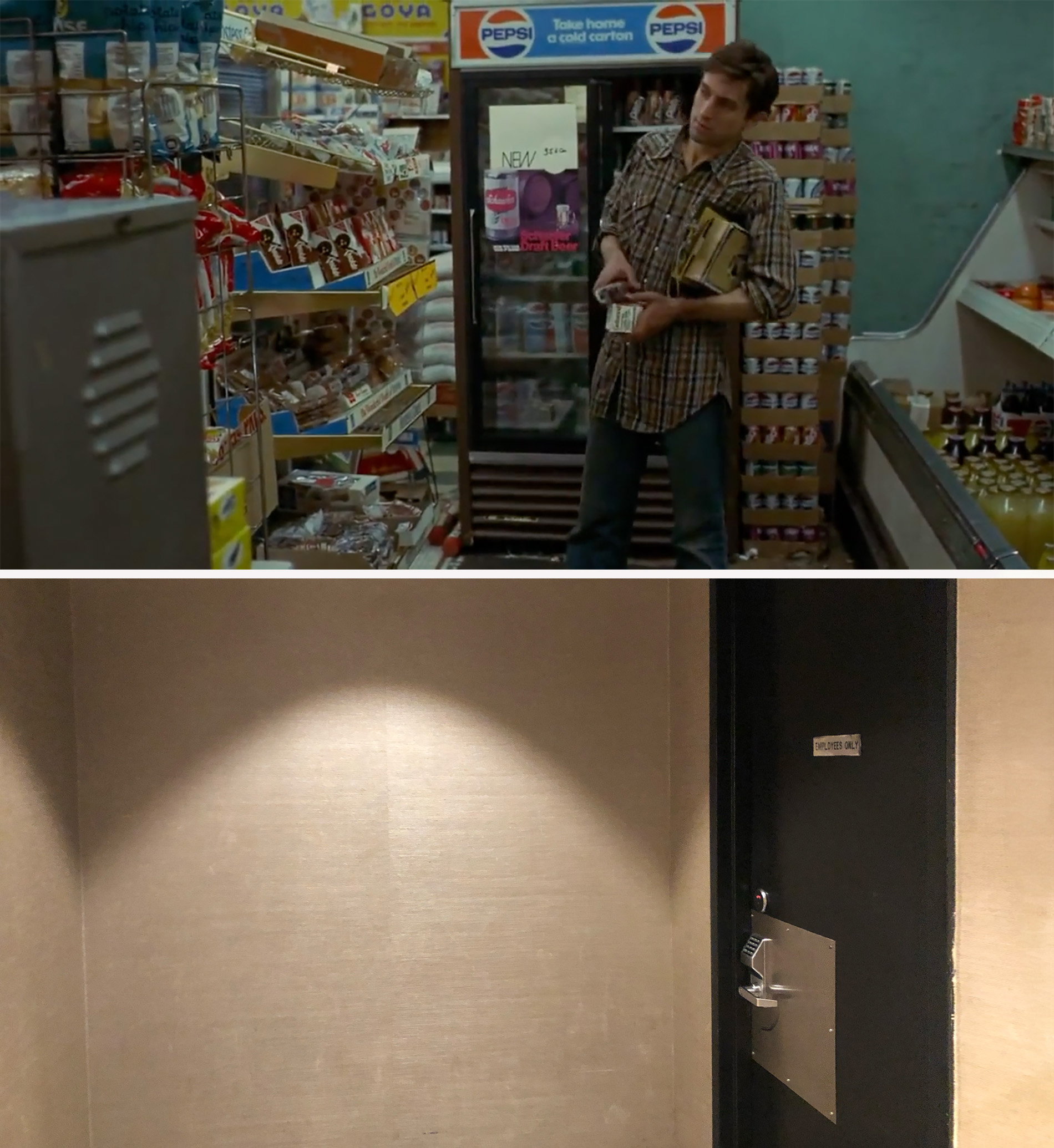
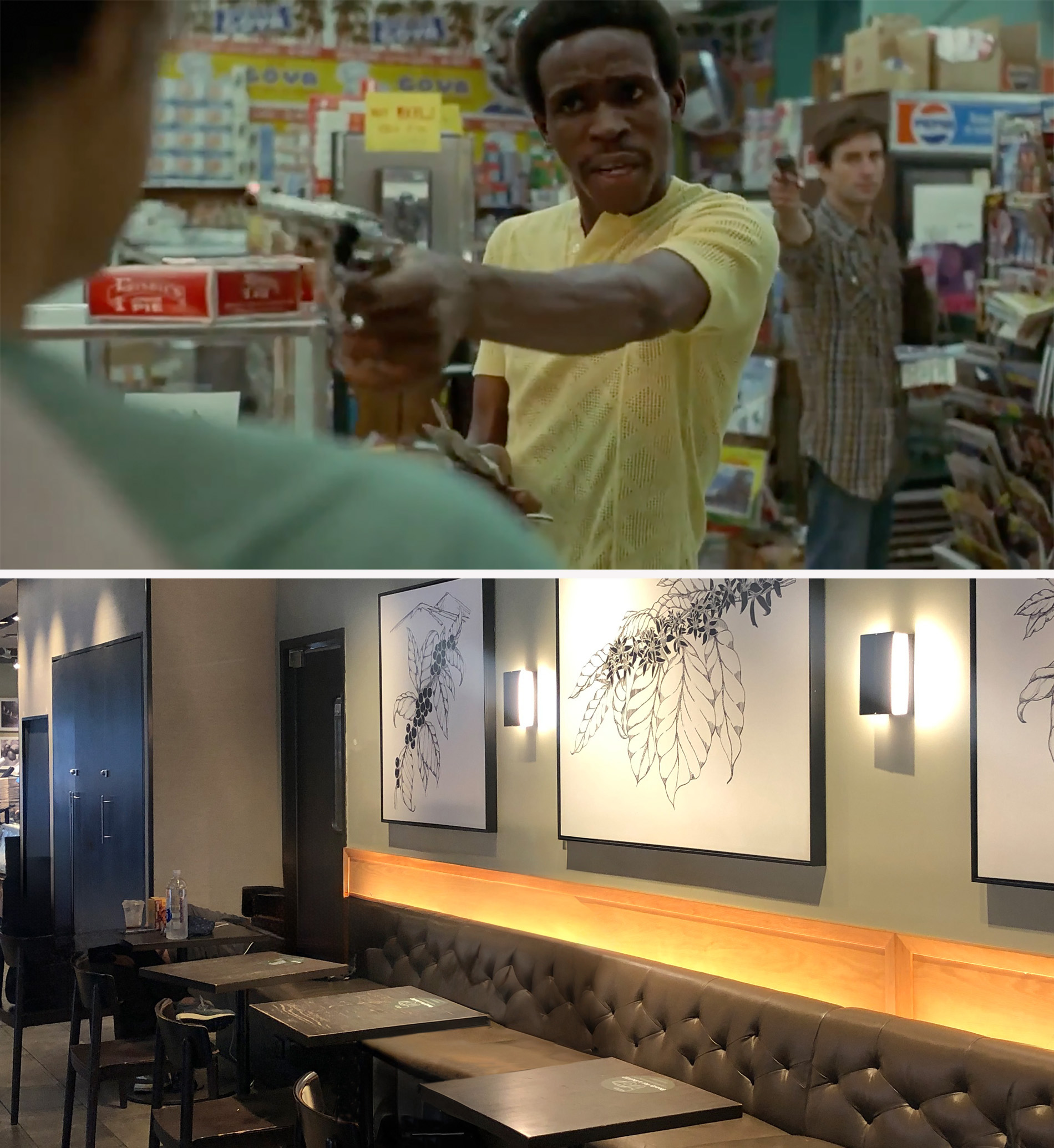
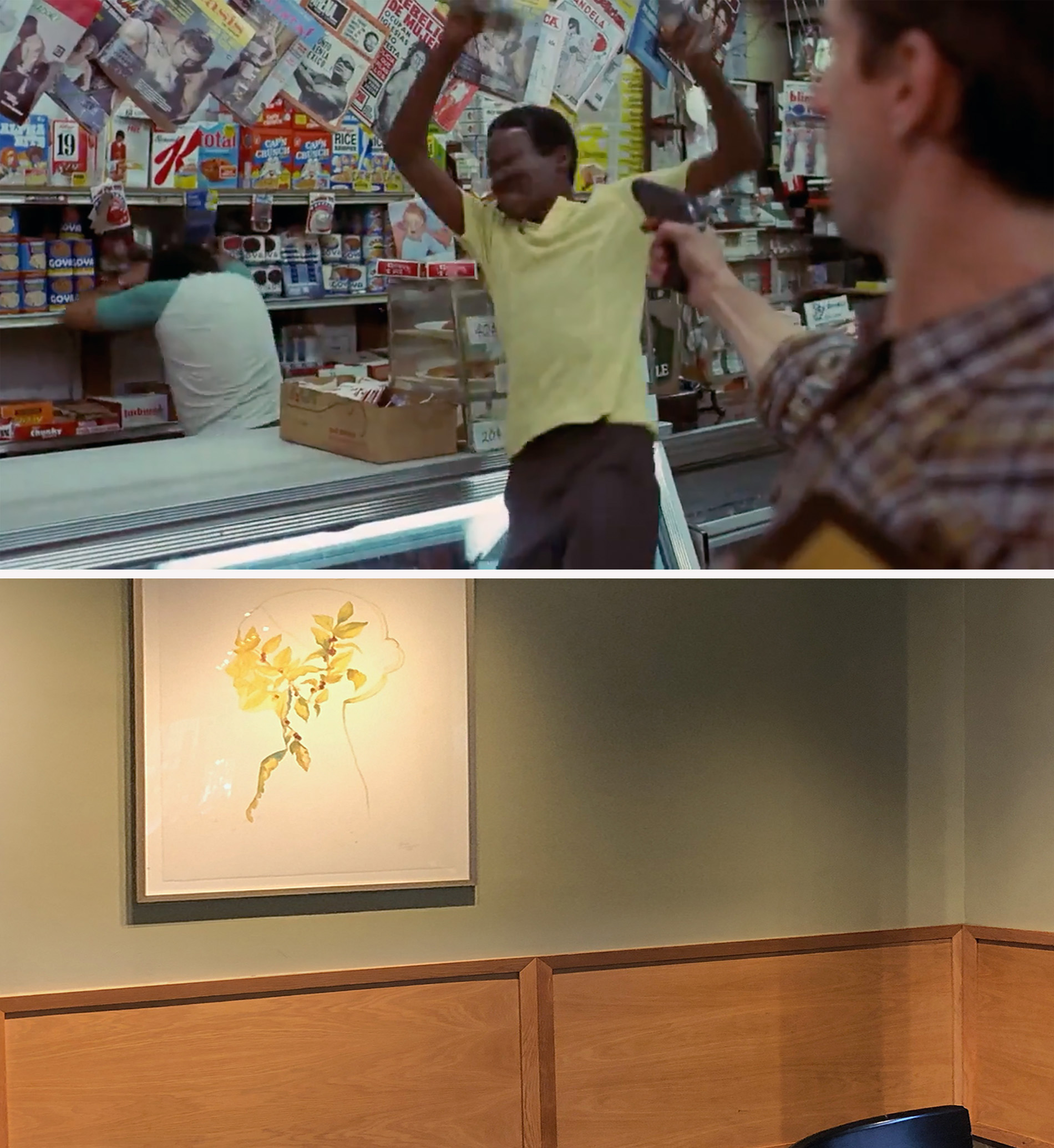
The first shot of a cop car racing down the street was one of the last locations I found, mainly because it goes by so fast, I missed it whenever I’d scan through the movie.
The two clues present in the shot (which were only visible after massively brightening up the image) were a two-way street and a subway station. Since I already knew Scorsese filmed a bunch of stuff in the East Village, I thought Third and 14th was a logical place to check out since 14 is a two-way street and there’s an L-subway entrance on the corner. One minute later, I could see I hit the nail on the head, matching up the large Con Edison building next to an open parking lot on 14th.
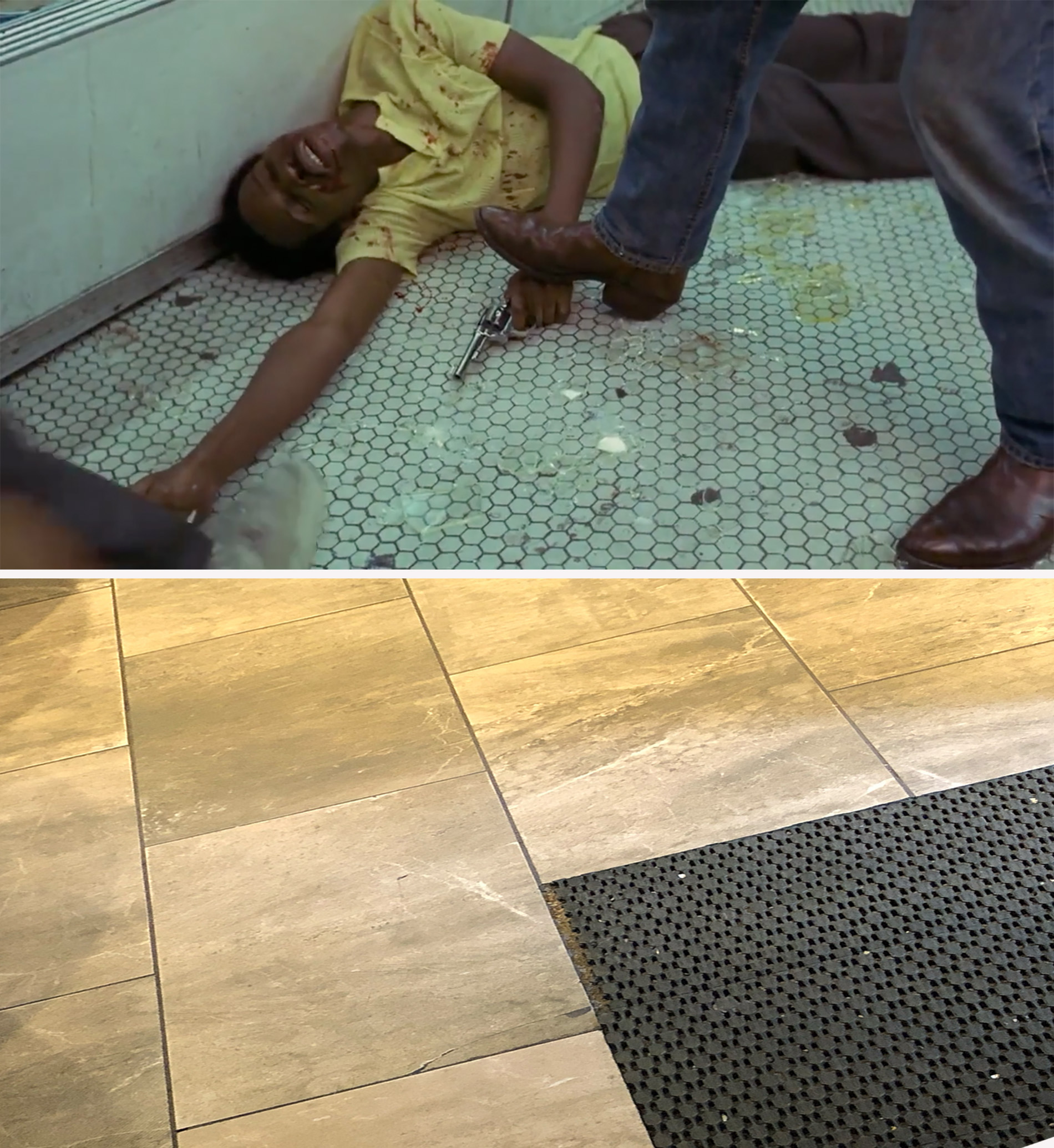
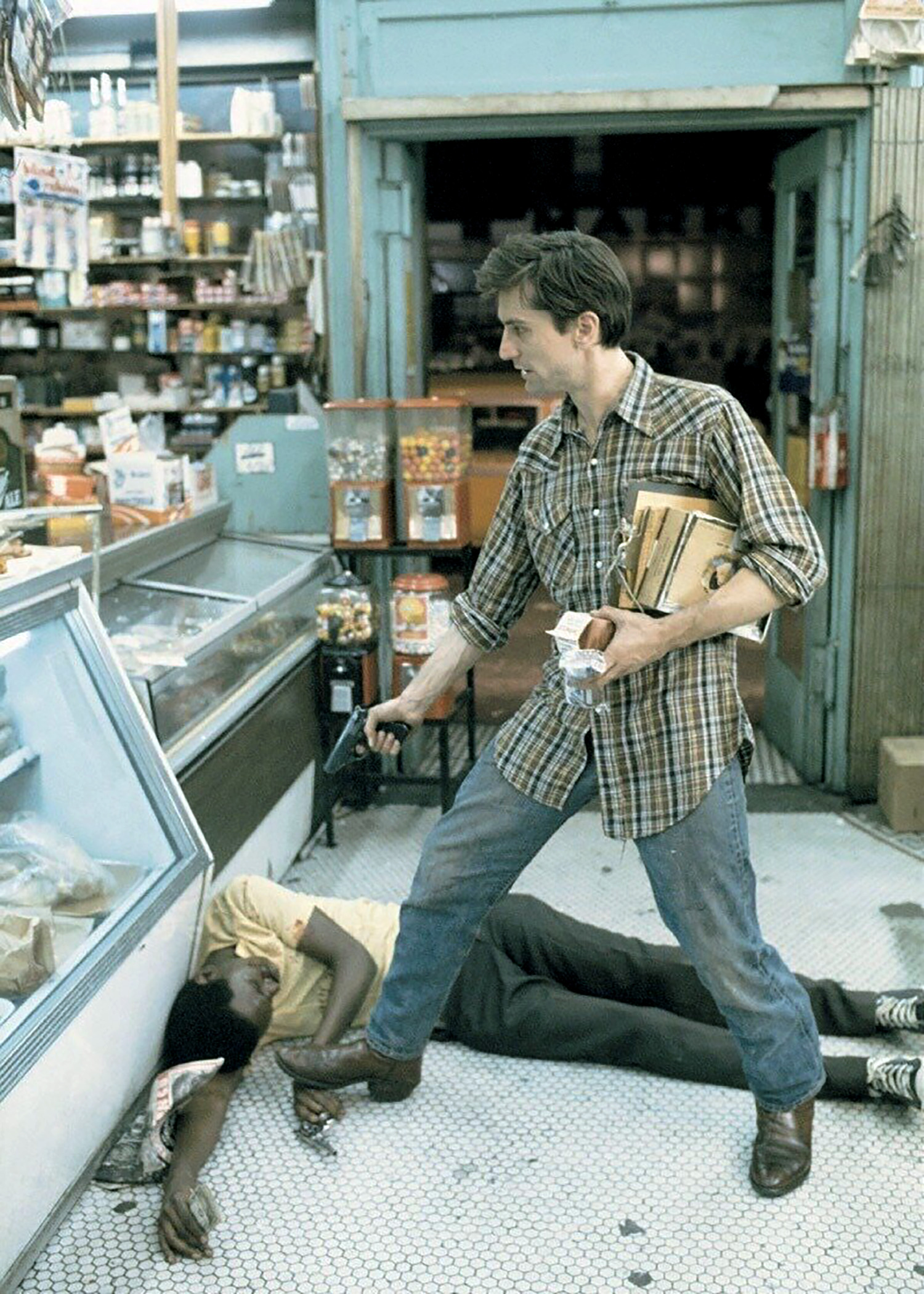
When it came to the M&R Market location, even though it wasn’t officially identified on ScoutingNY, one of its readers wrote in the comments section that it was at 540 Columbus Avenue. I was able to confirm this address by matching up the terra cotta carvings on the building’s facade. And to find exactly where the entrance to the mart used to be, I used the window placement on the second story as a guide.
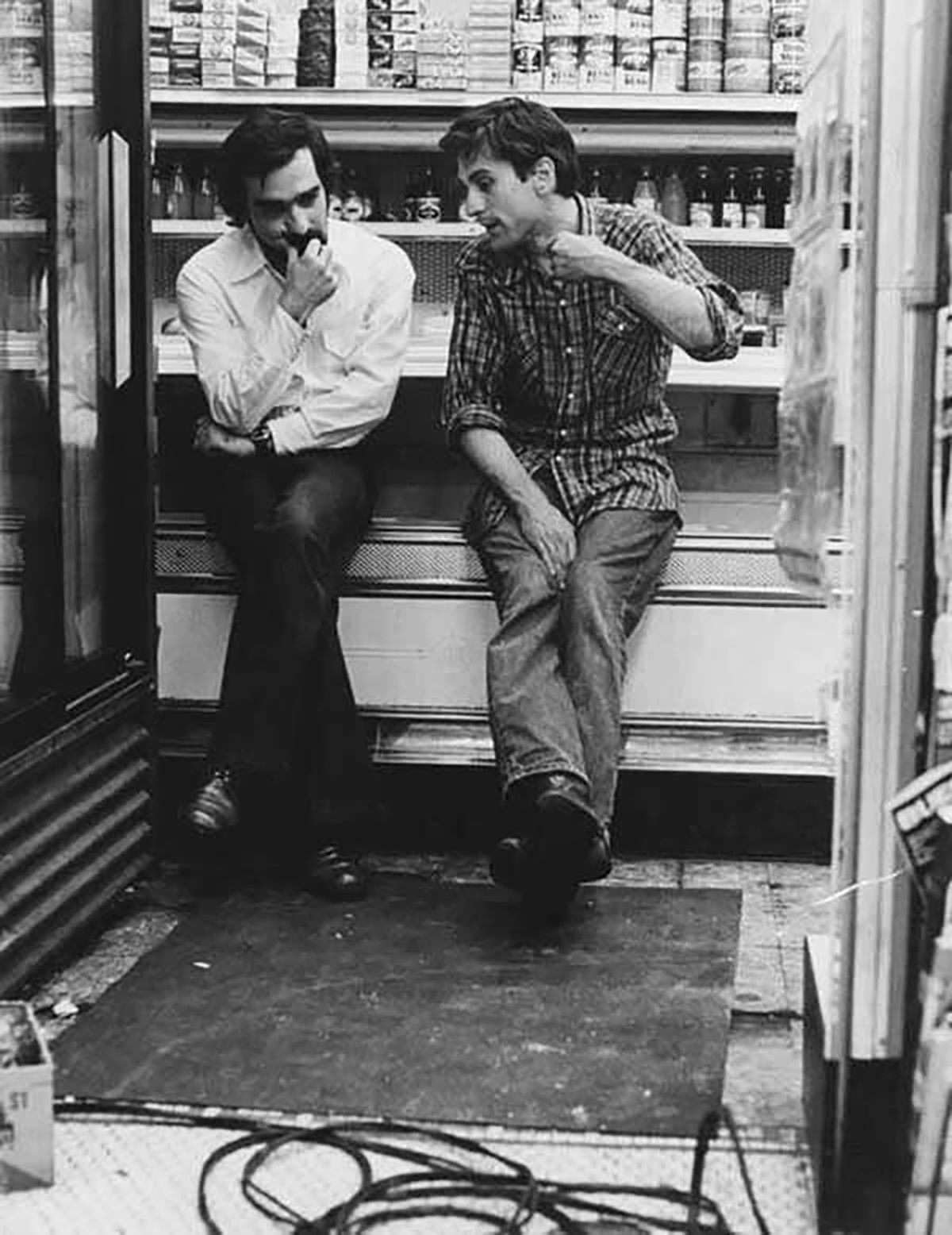
Now a Starbucks, the interior of the building looks and feels nothing like the violent, dystopian setting presented in the movie.
One cool remnant that survived for many decades afterwards was a coffee shop across the street, which can be seen out the front door in the movie.
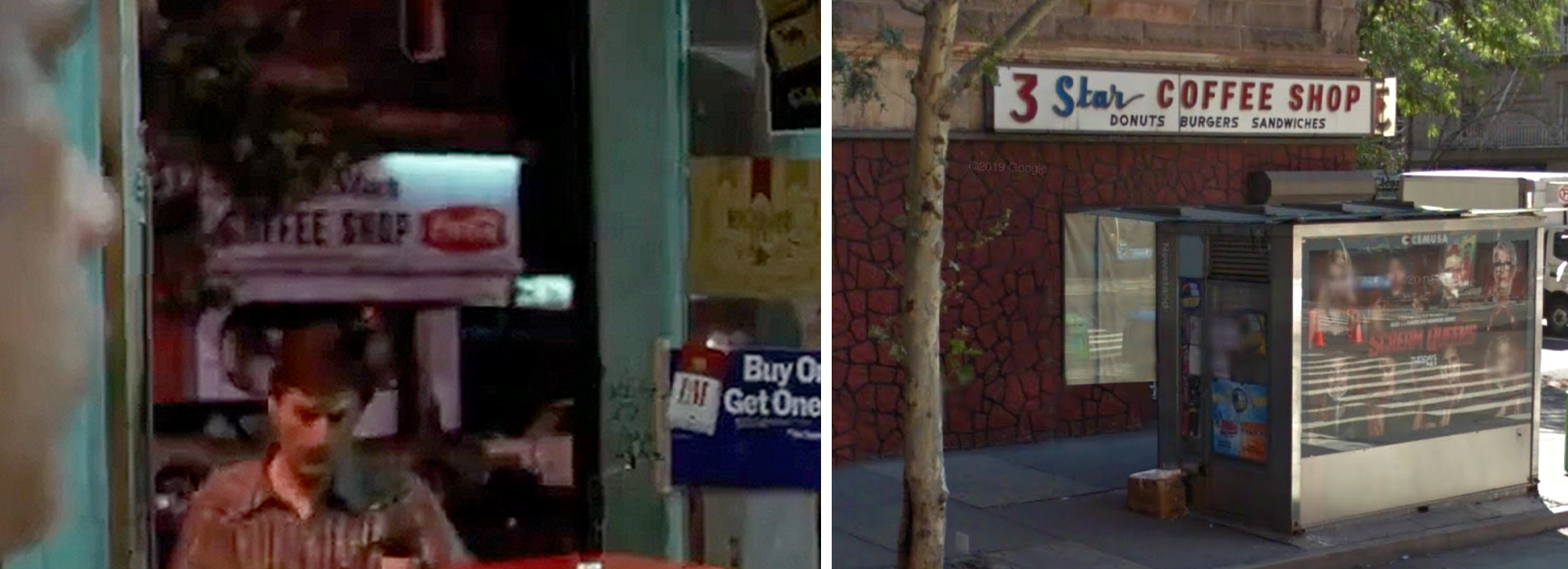
The shop lasted until 2020, still bearing the same name — 3 Star Coffee. (I guess the owners thought 5 Star would be too presumptuous.)
As a side note, the Puerto Rican cashier in this scene was played by Victor Argo, a character actor who appeared in a ton of urban thrillers throughout the latter 20th century, often playing a tough guy. He was one of several actors I’d occasionally see on the streets when I lived in the West Village in the early 2000s. In fact, I specifically remember seeing him at the Homestead Steakhouse on W 14th Street while having dinner with my mom on Christmas Eve. Like Travis Bickle, he was all alone.
Second Rally

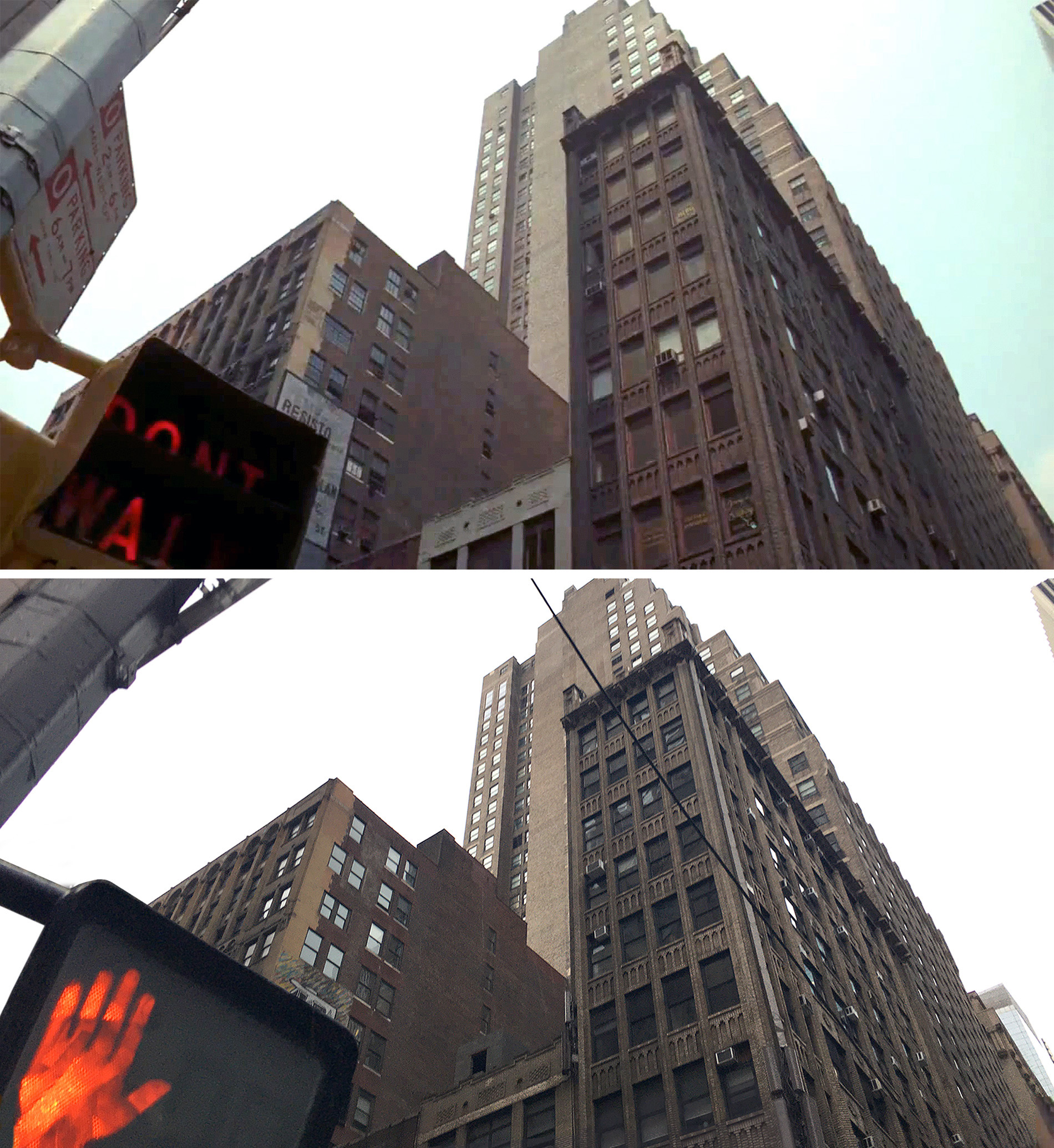
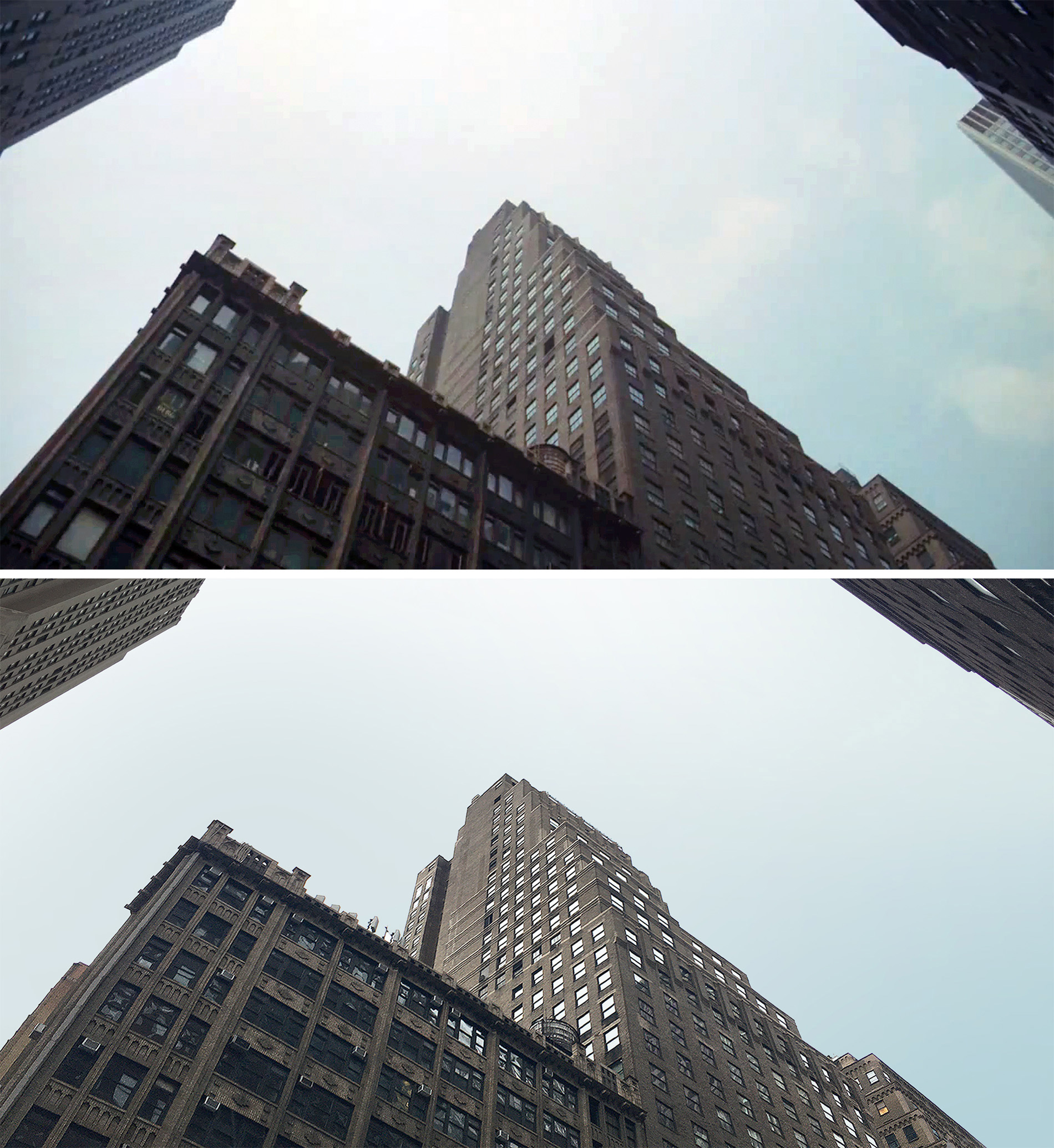
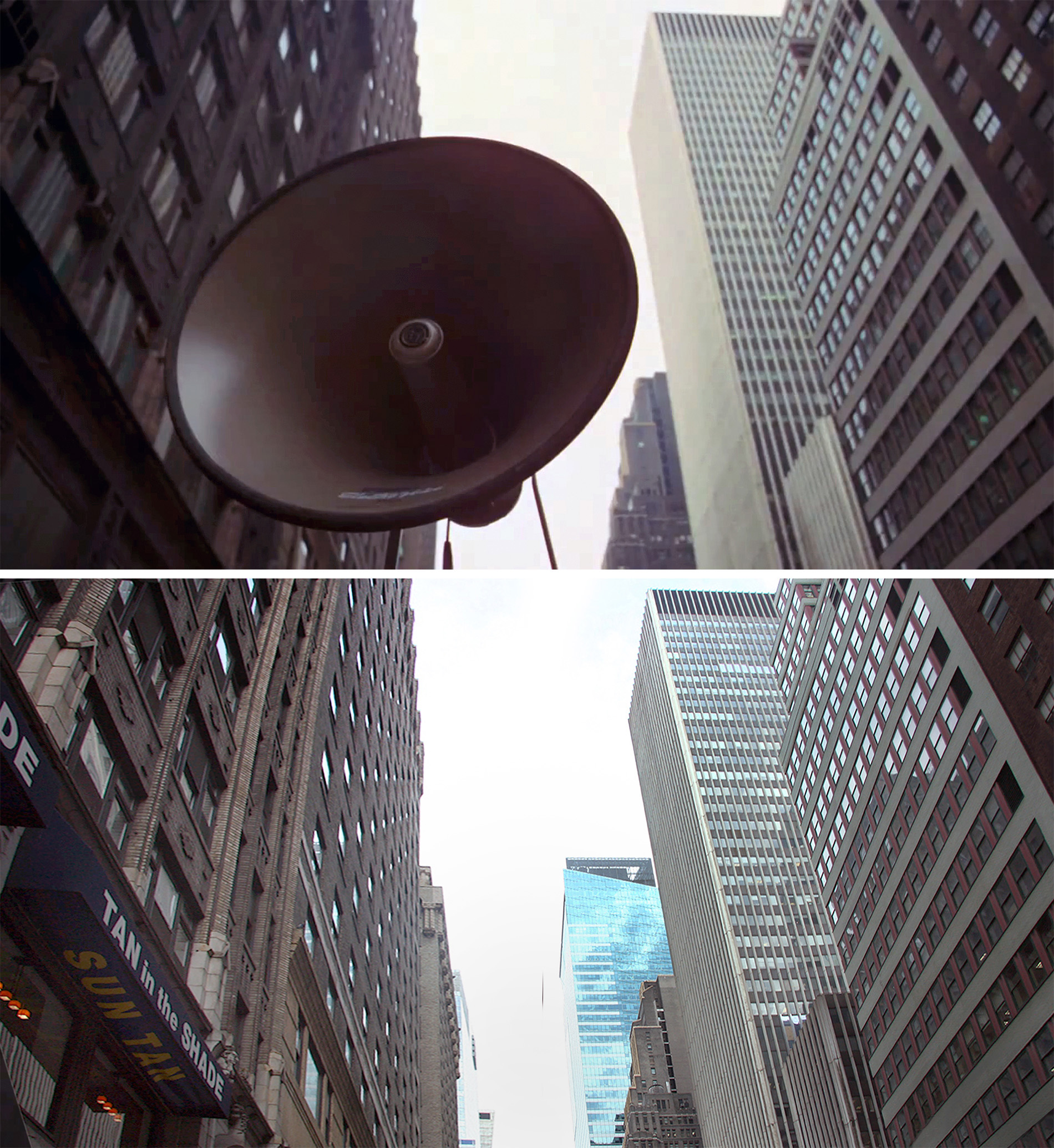
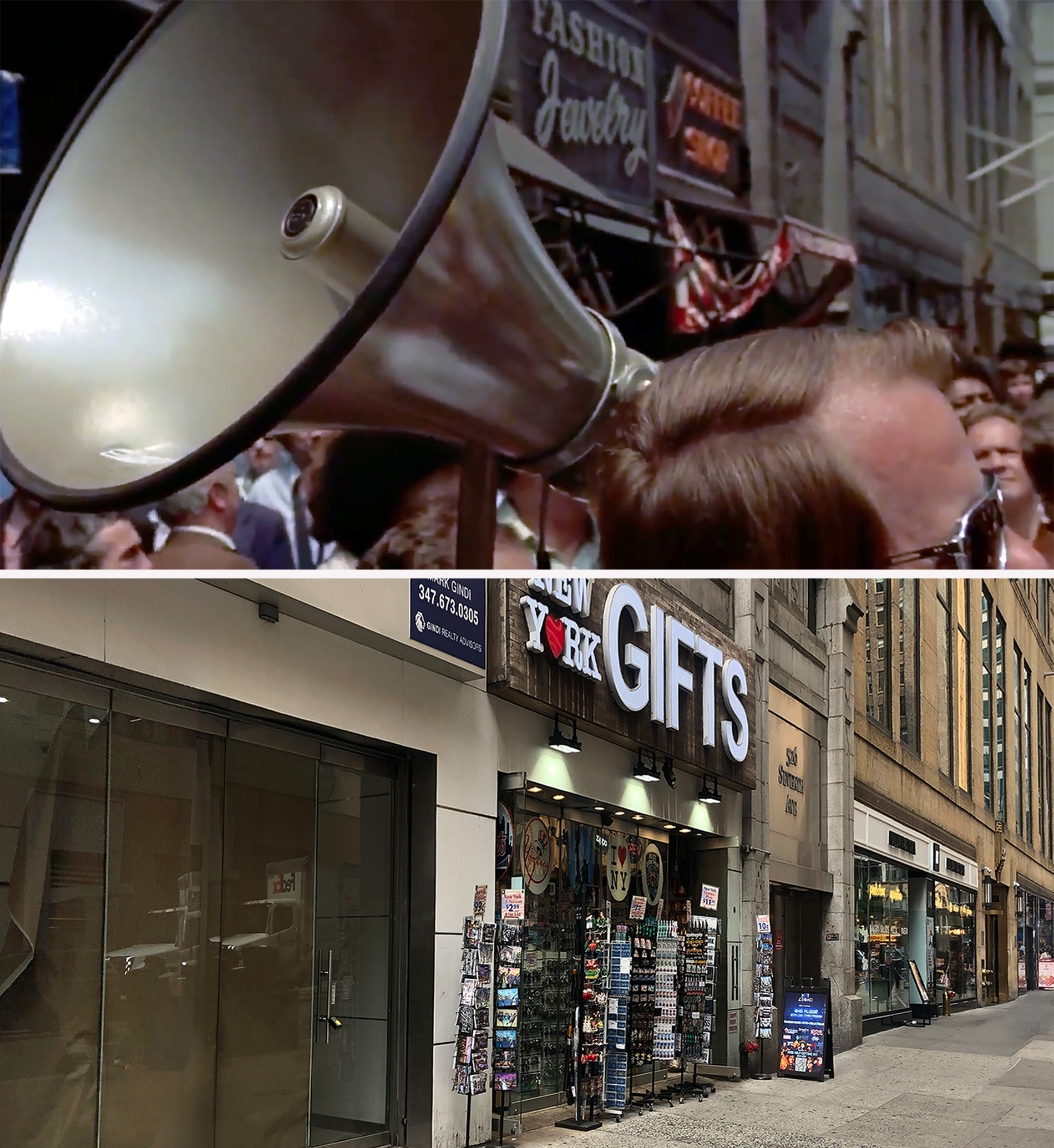
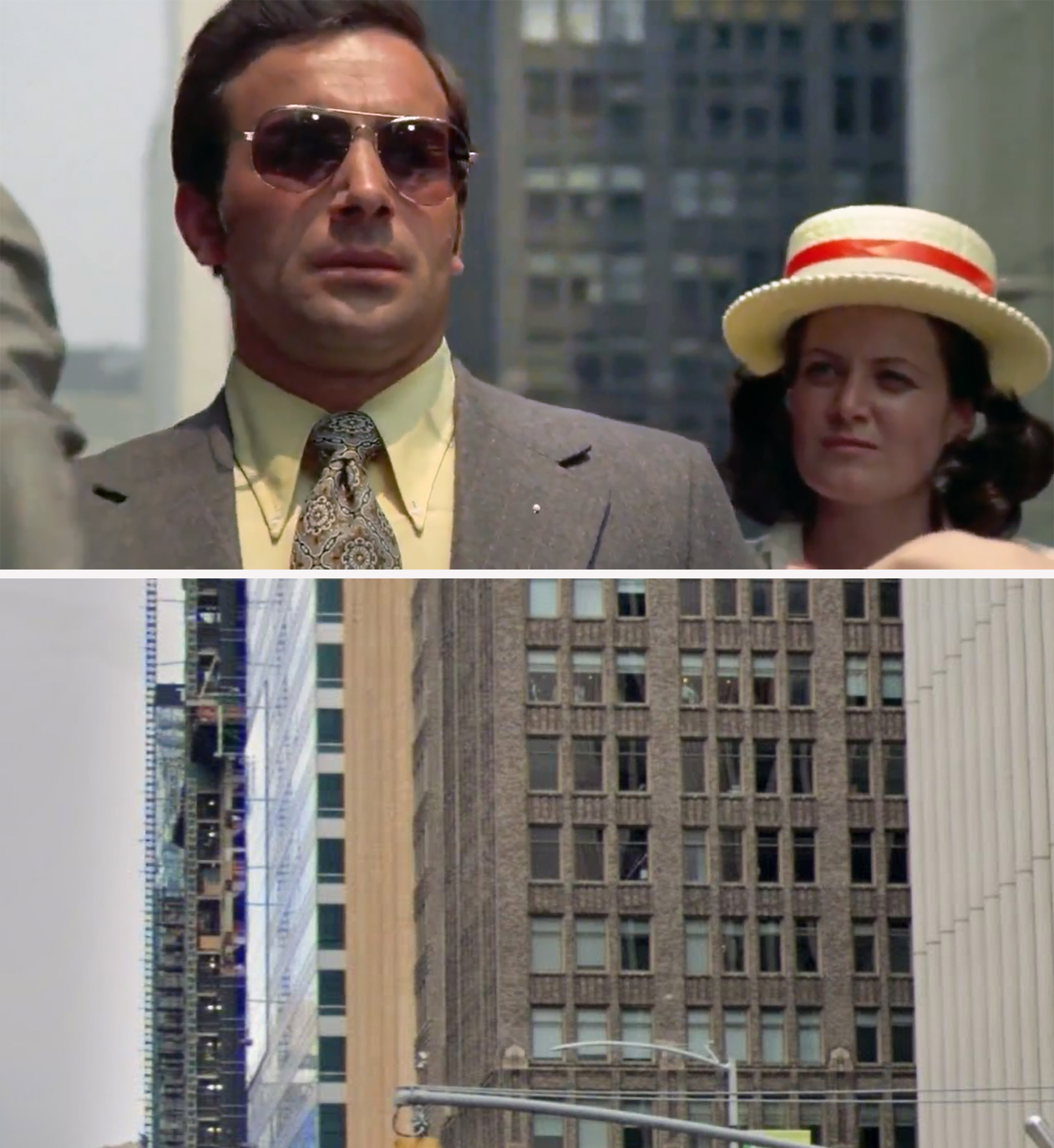
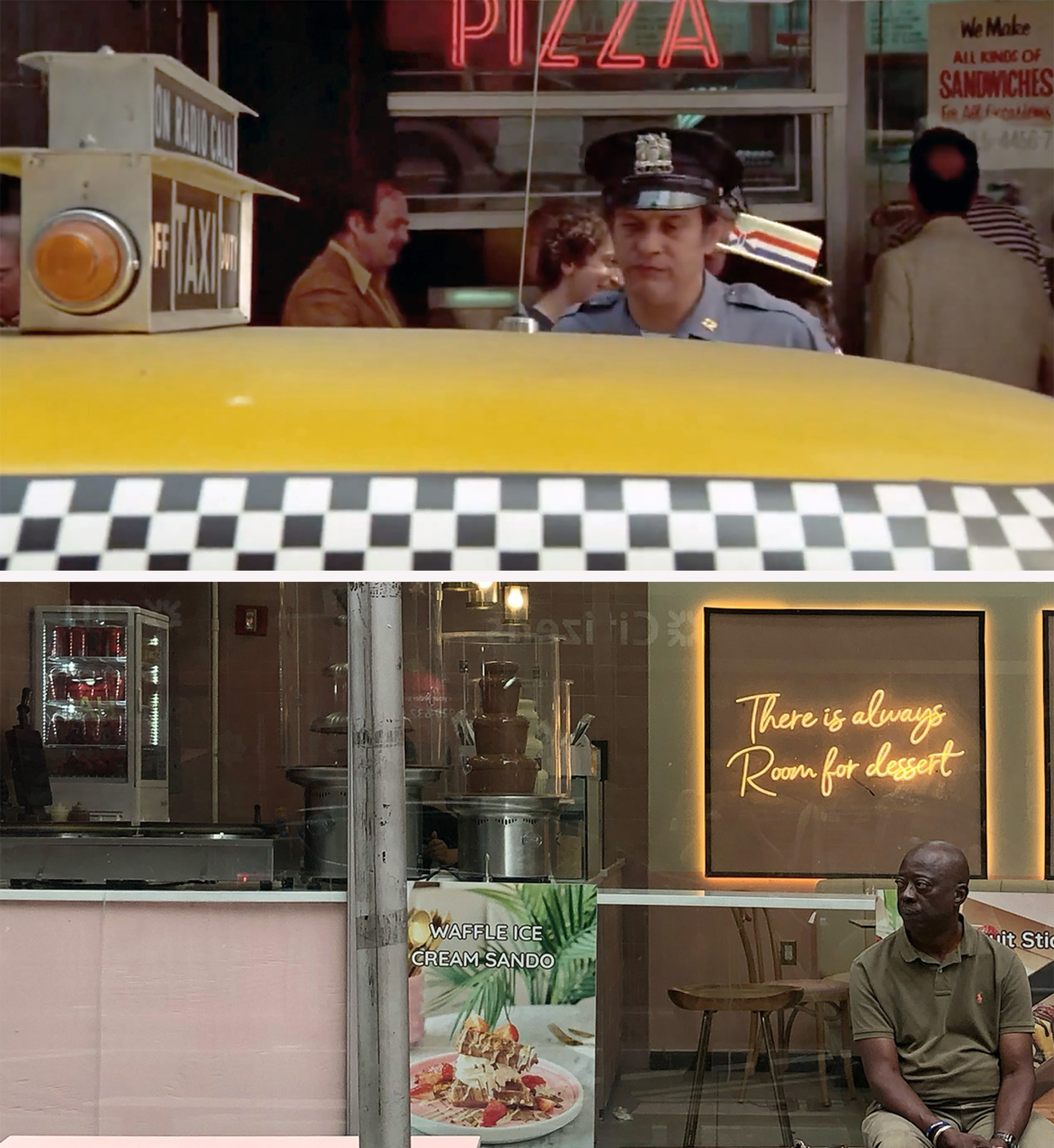
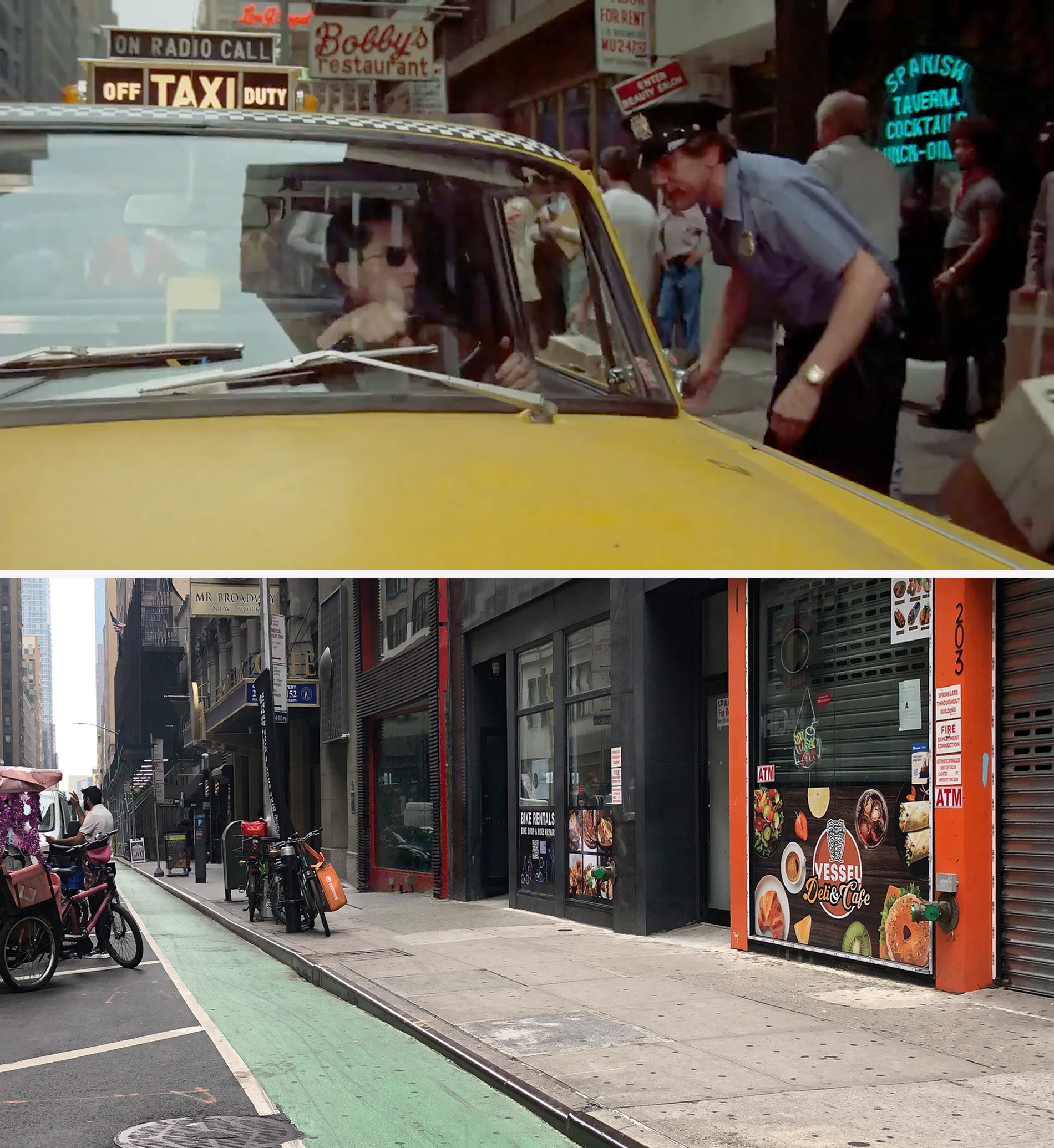

This second political rally was easy to locate, as the first shot features street signs showing us exactly where we are.
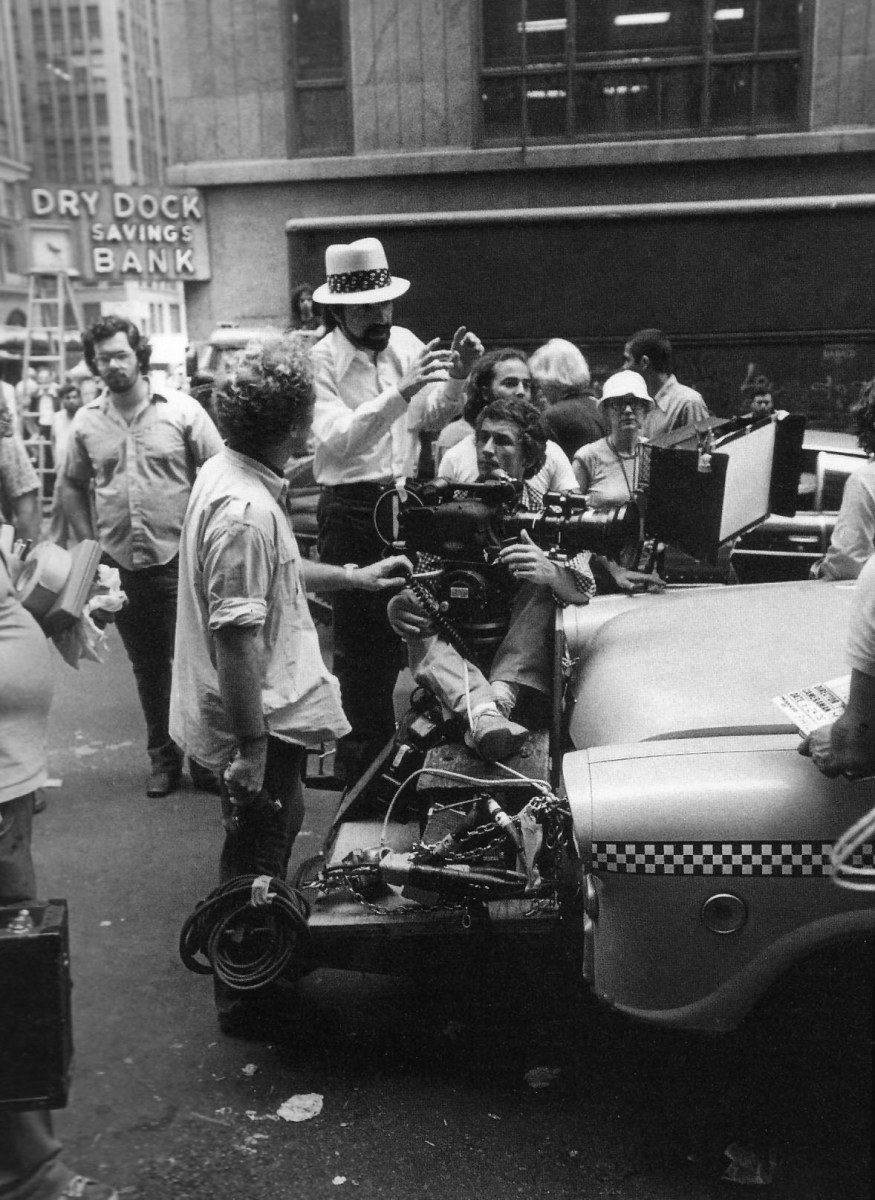
The area looks a lot the same, and even though the stores are new and modern, the intersection still has a vibe of twenty or thirty years ago.
The Brothel
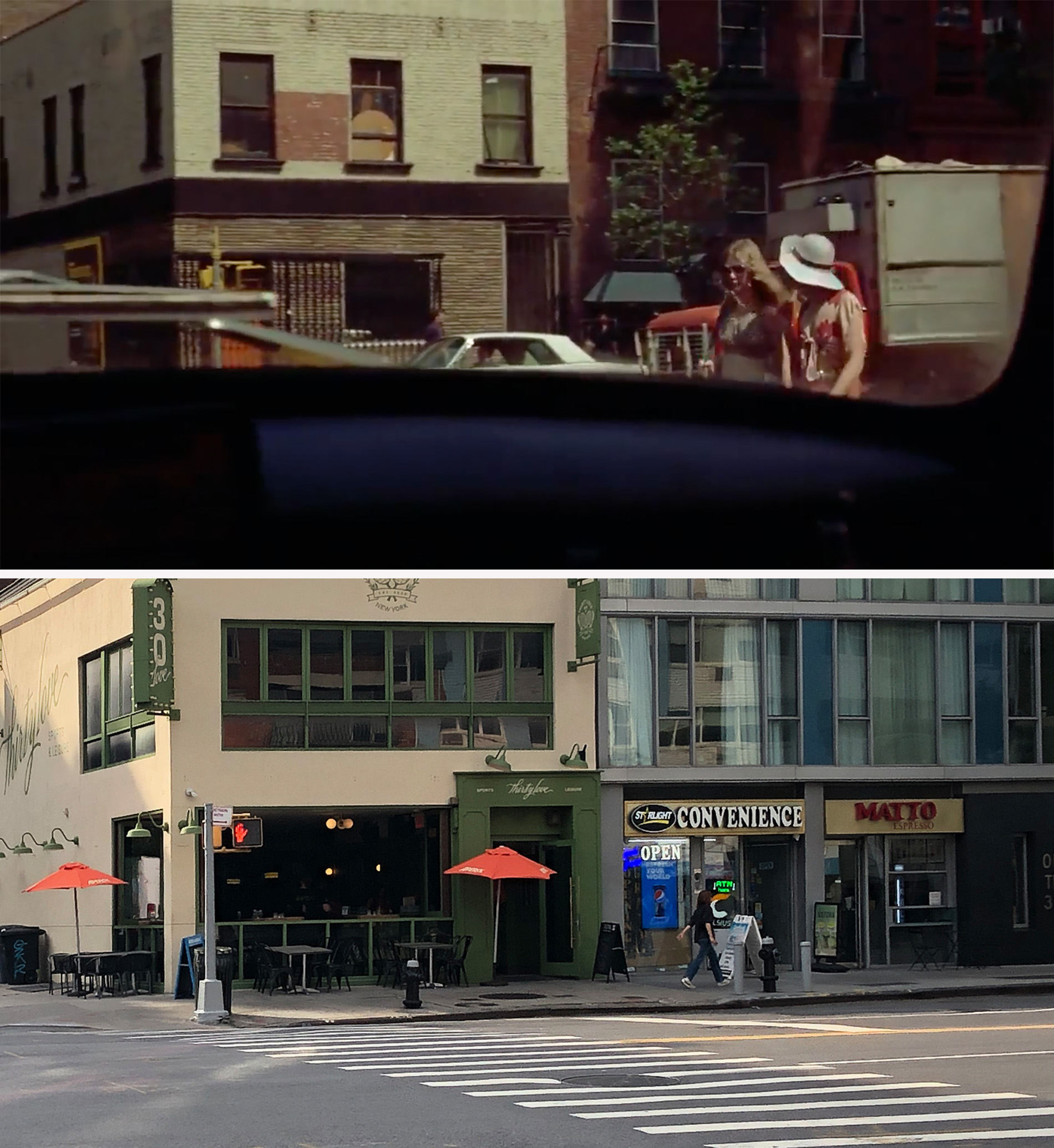
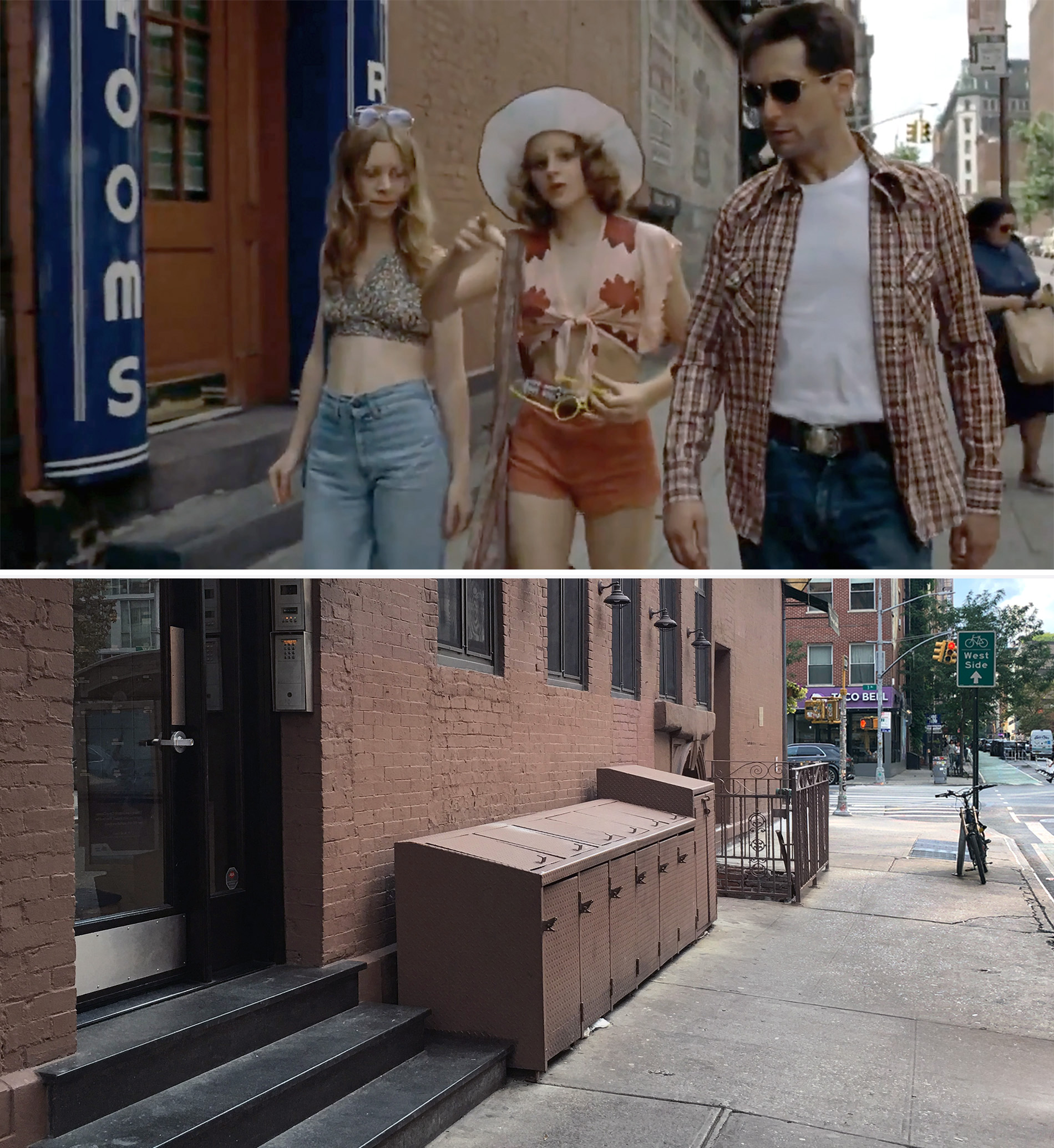
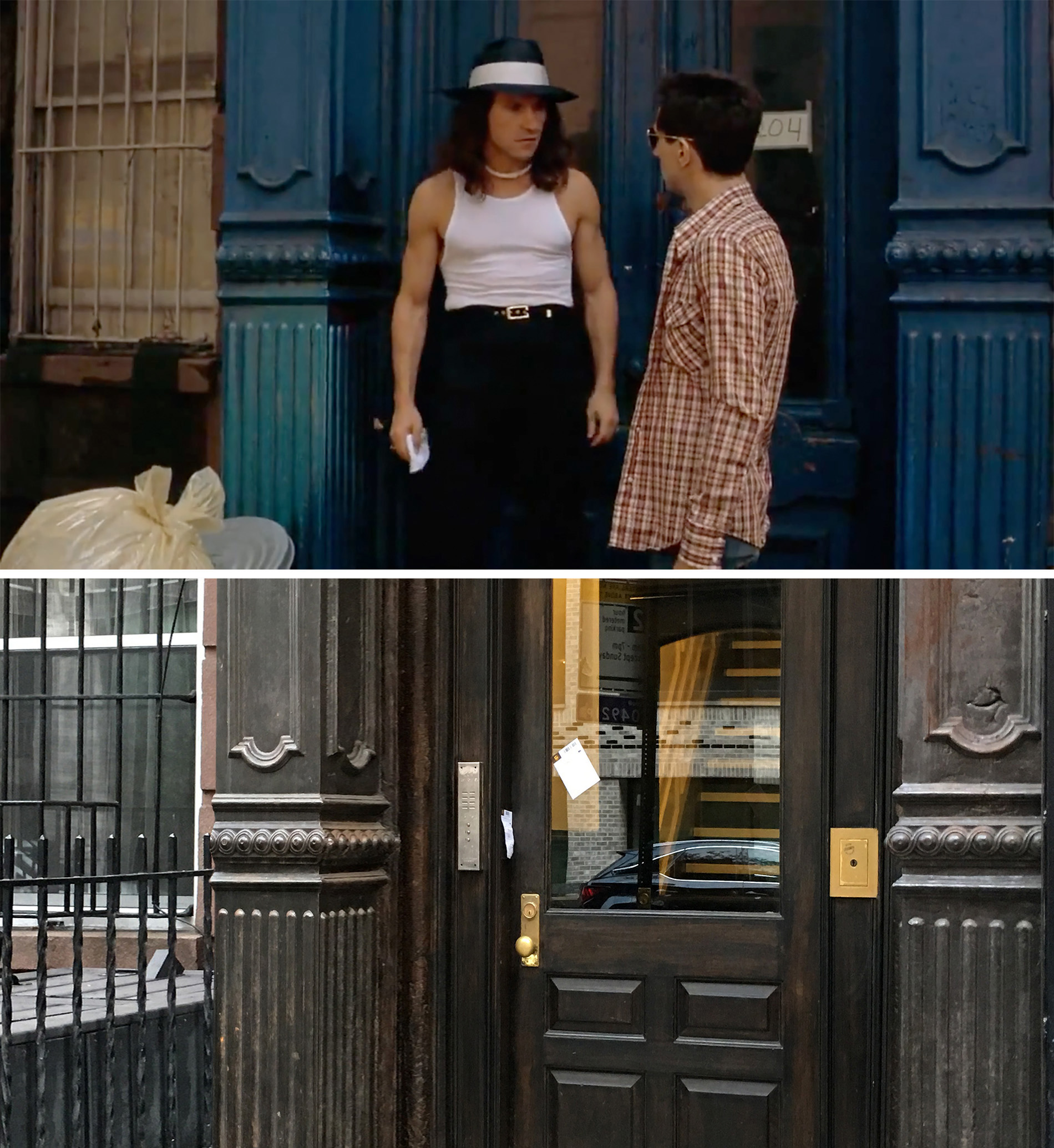
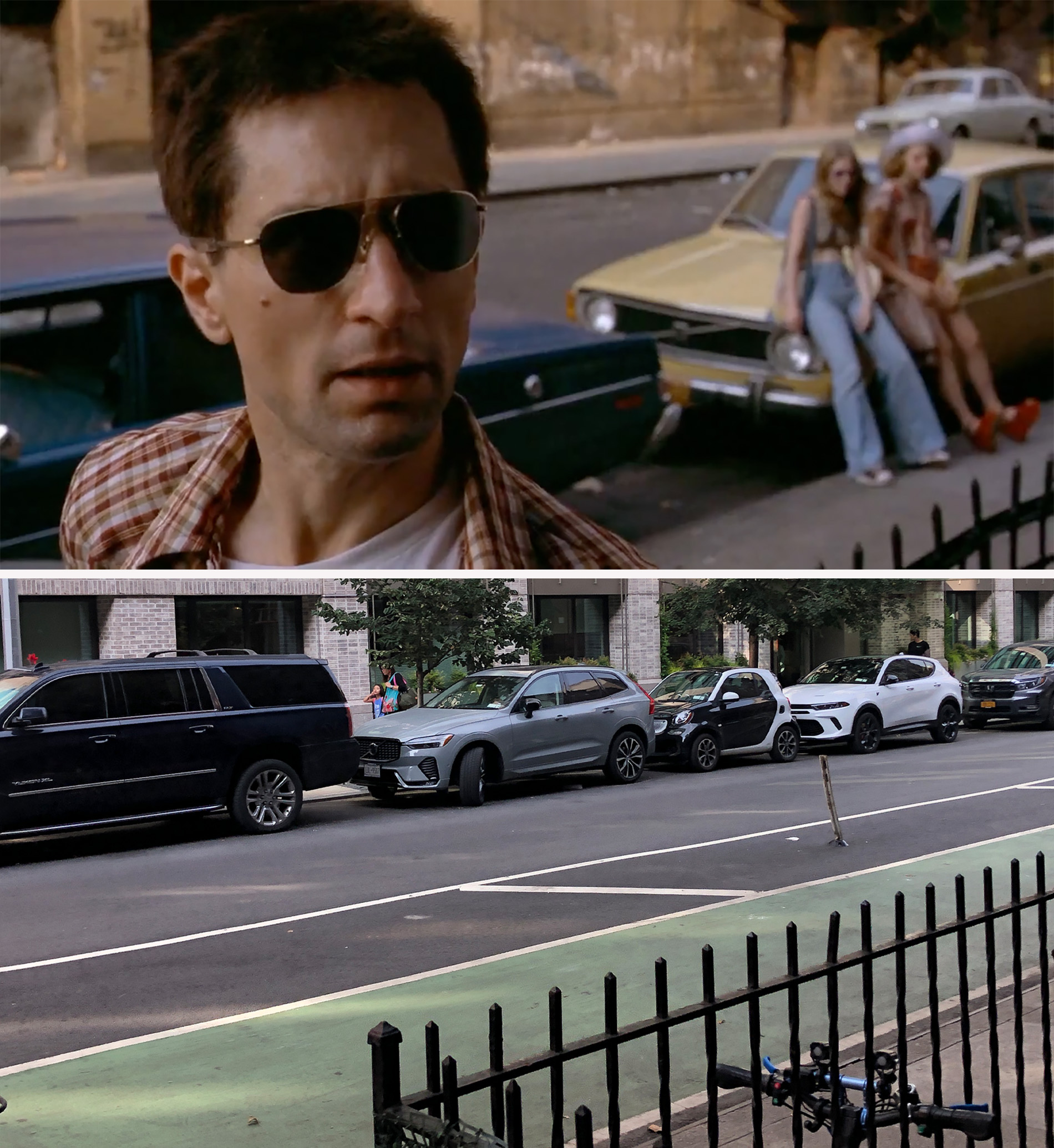
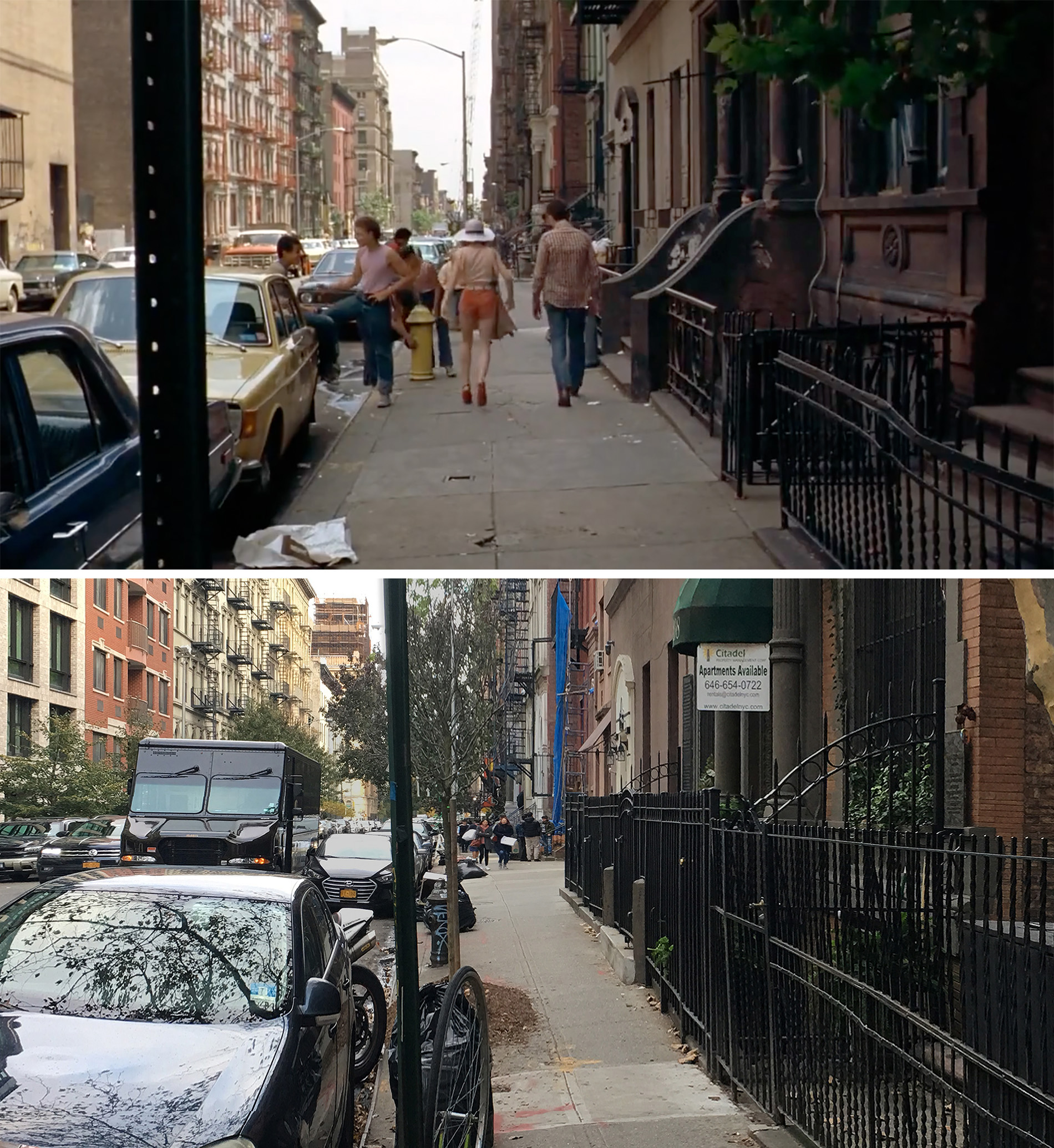
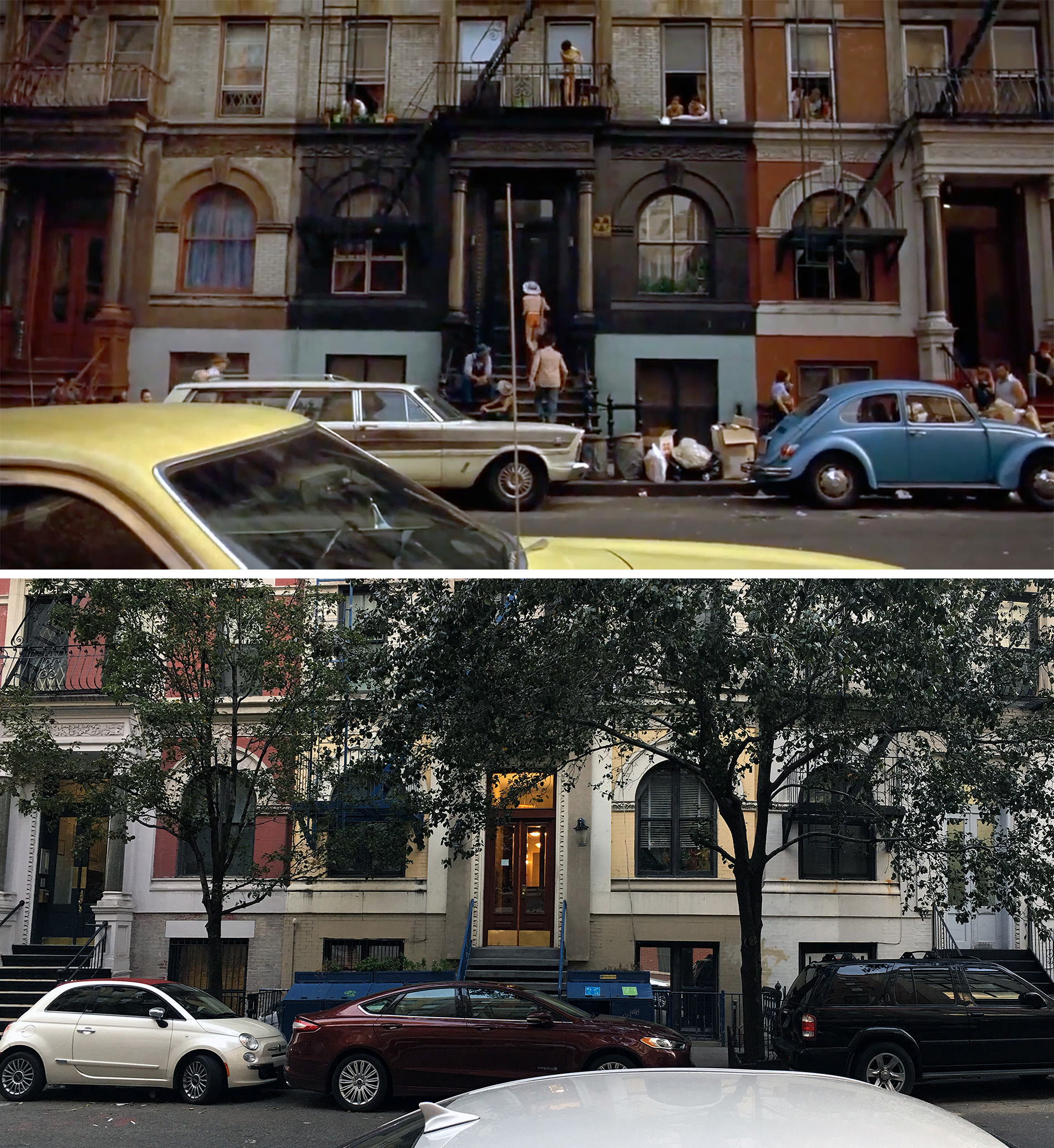
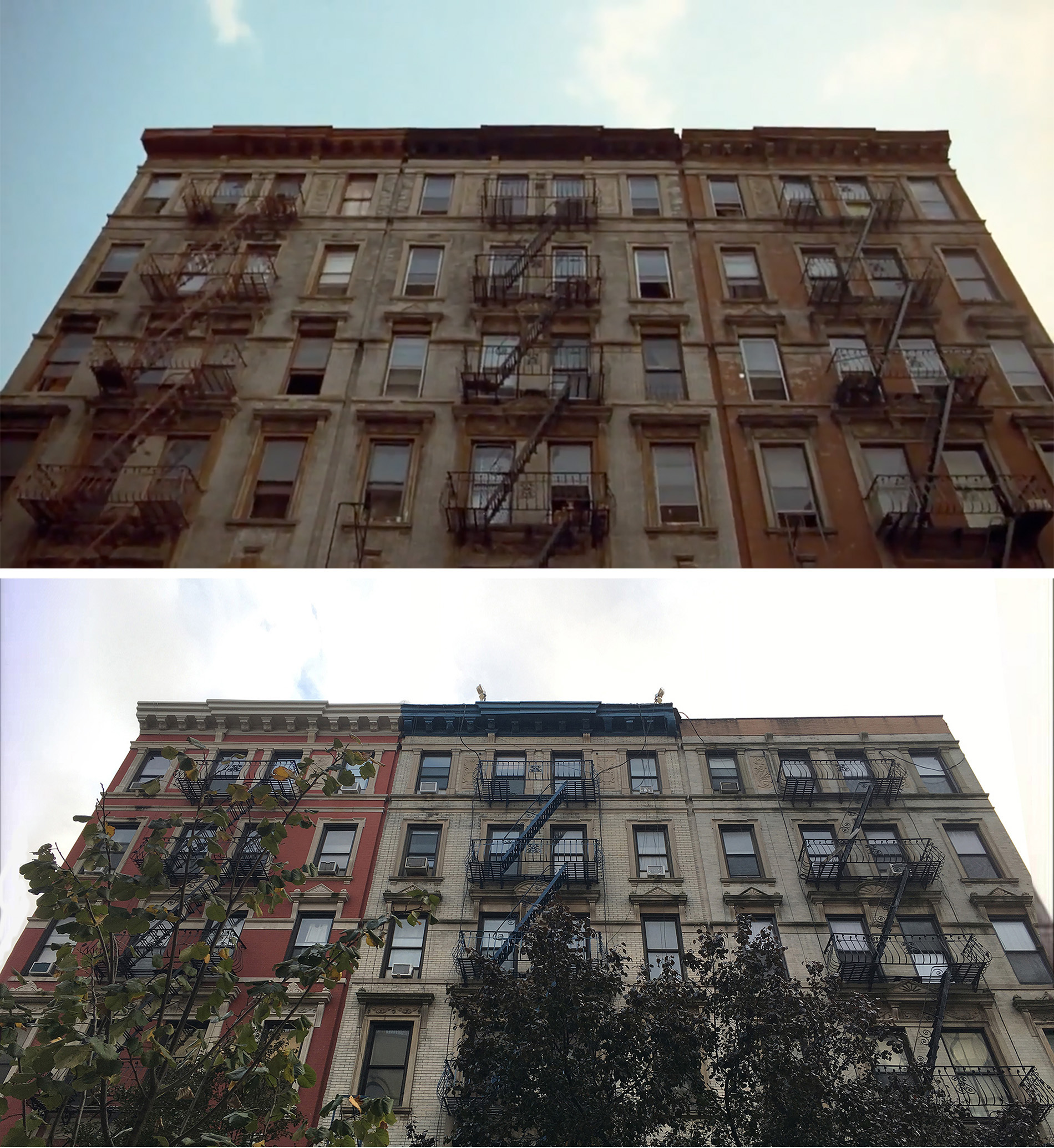
Like I mentioned earlier, all these locations along E 13th Street have been widely published and documented over the years.
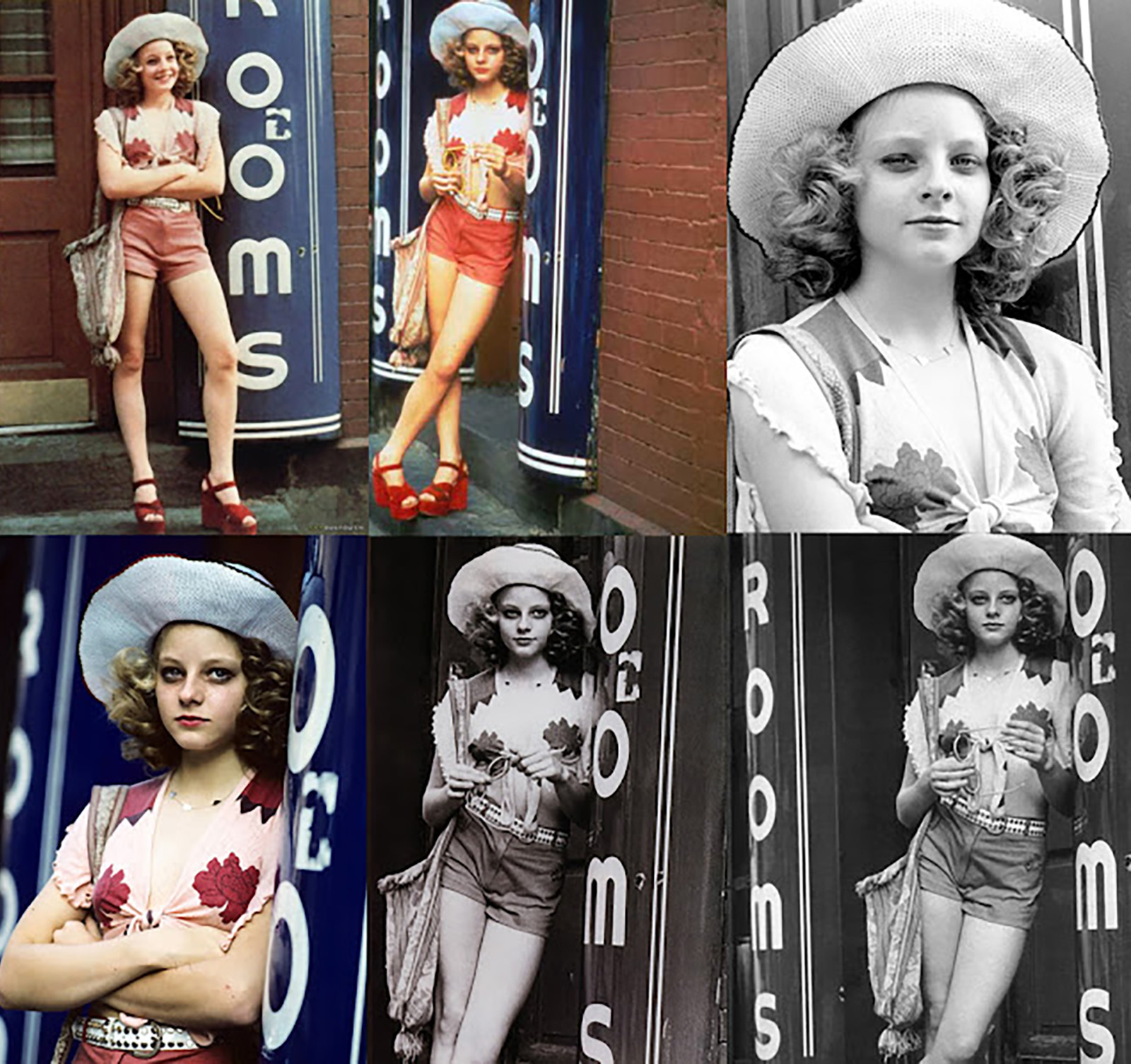
While it’s interesting to compare the differences between 1975 and today, you can even see major changes from just a few years ago.
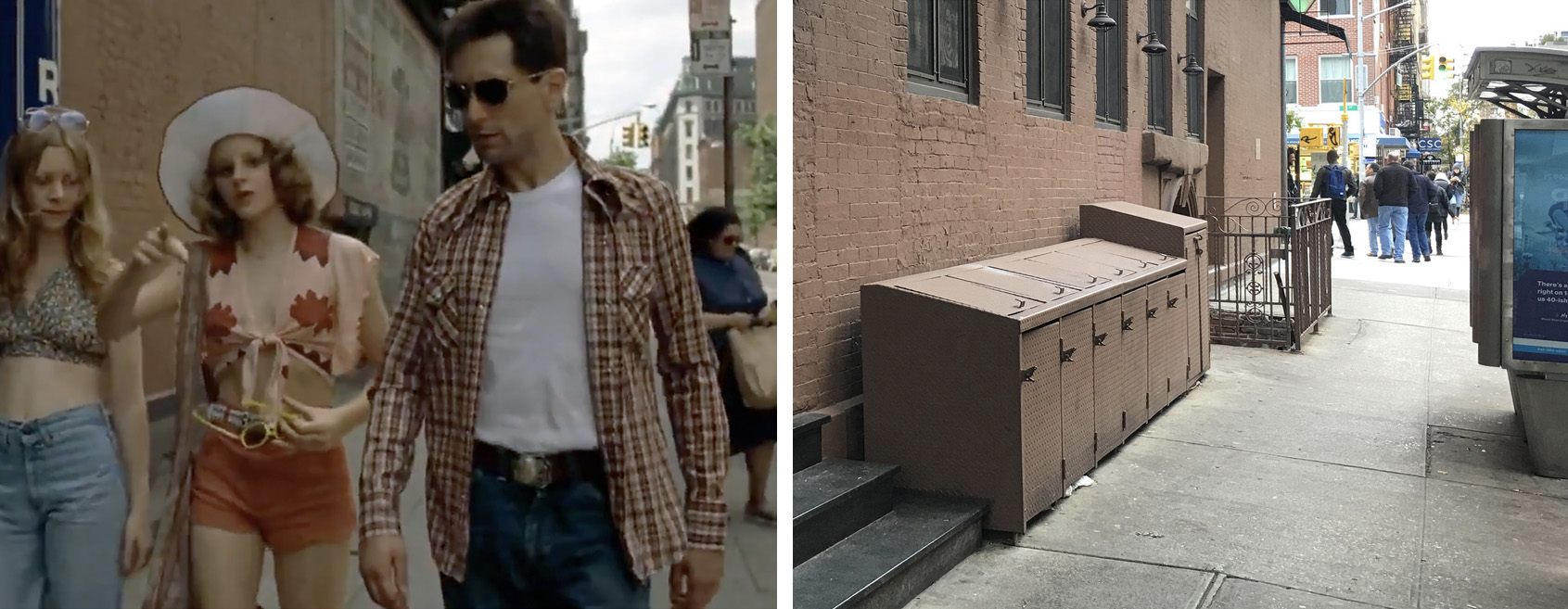
When I checked out the pics I took of this location back in 2017, the thing that stood out was a set of pay phones by the corner — something that no longer exists anywhere in Manhattan. Funny how something as innocuous a set of public phones sticks out like a sore thumb in 2025.
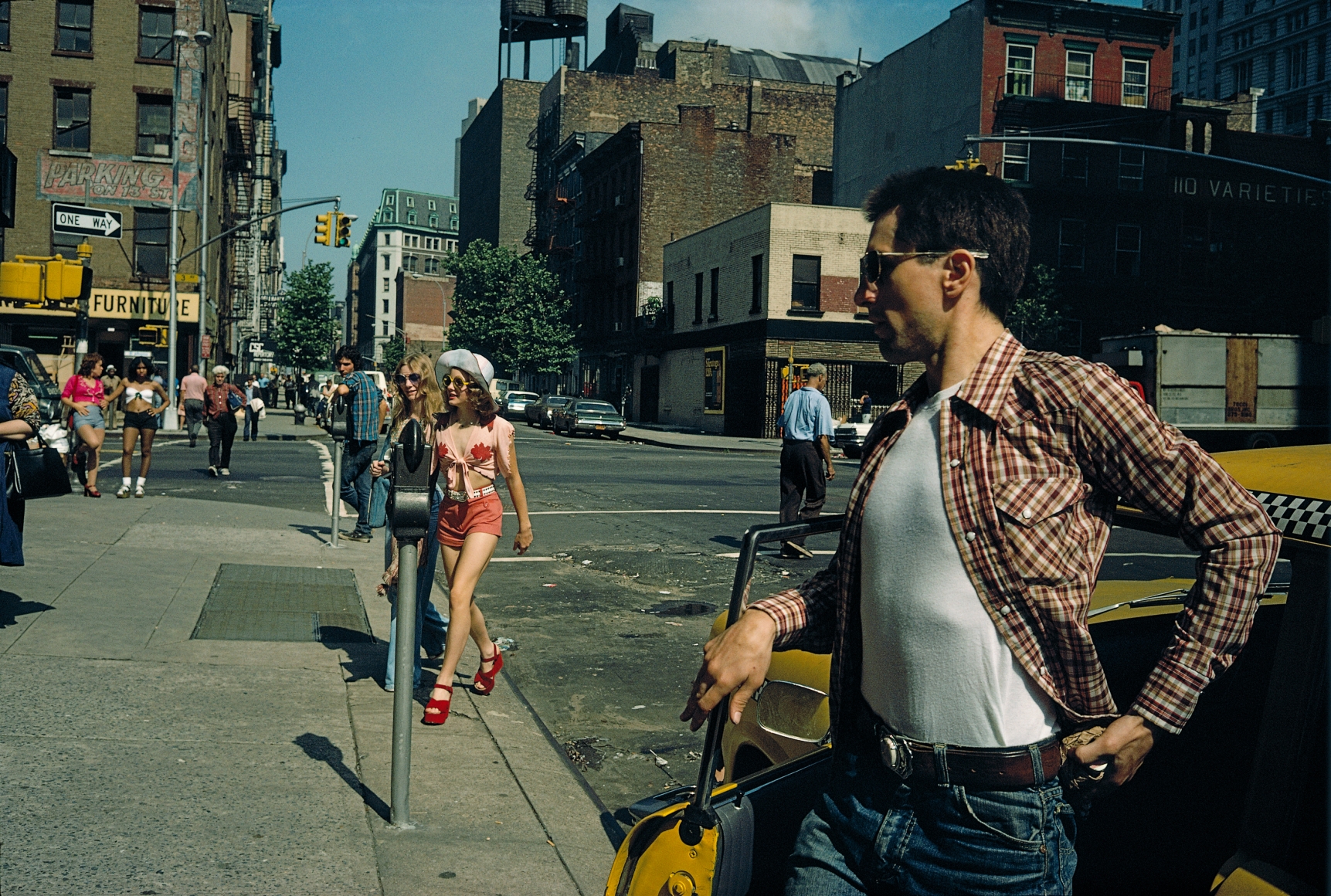
Even though the nearby Variety Theater was torn down, the corner building on 13th (seen behind De Niro’s head in the photo above) is still around today. It’s received a bit of a makeover, but remains a modest two-story structure.
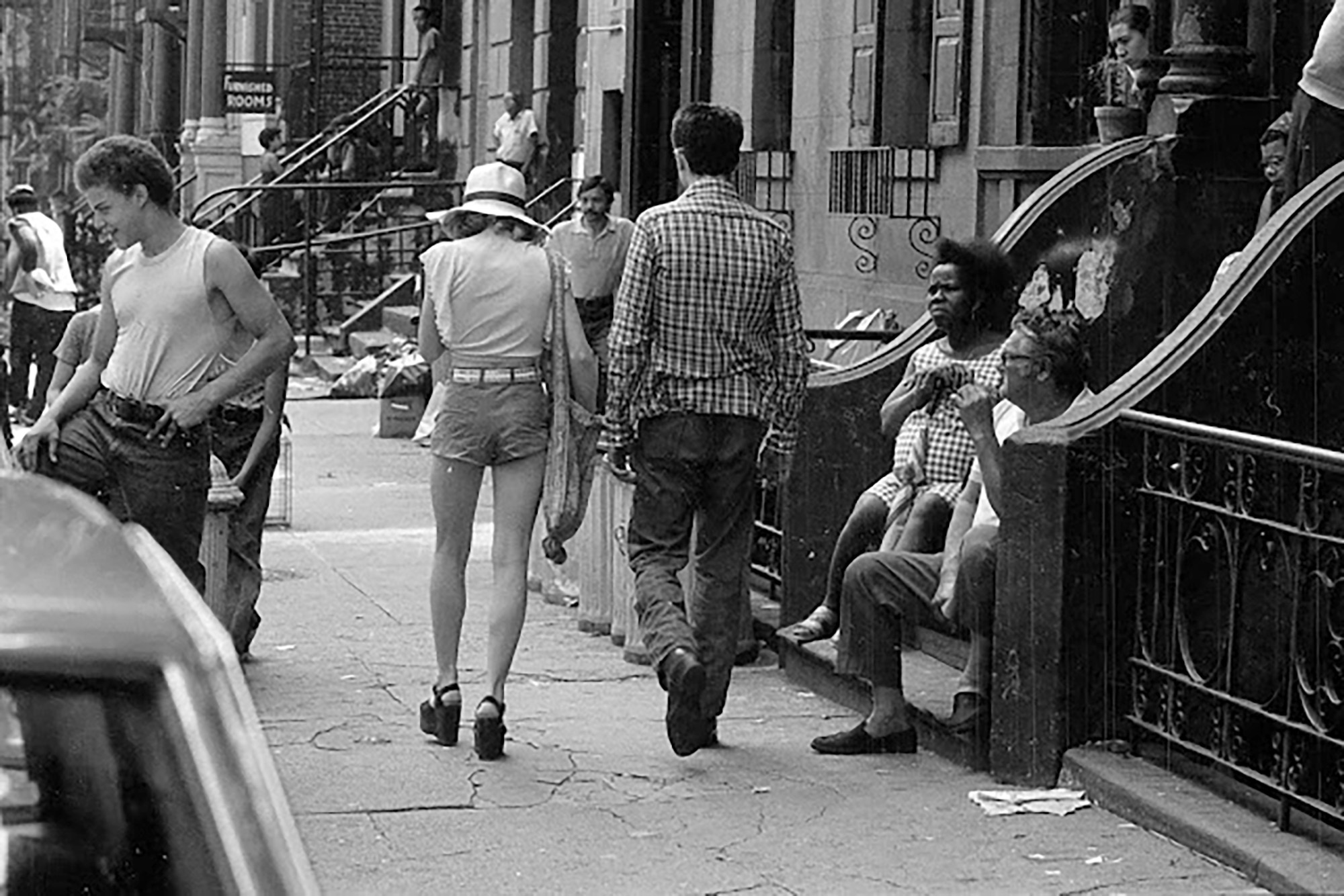
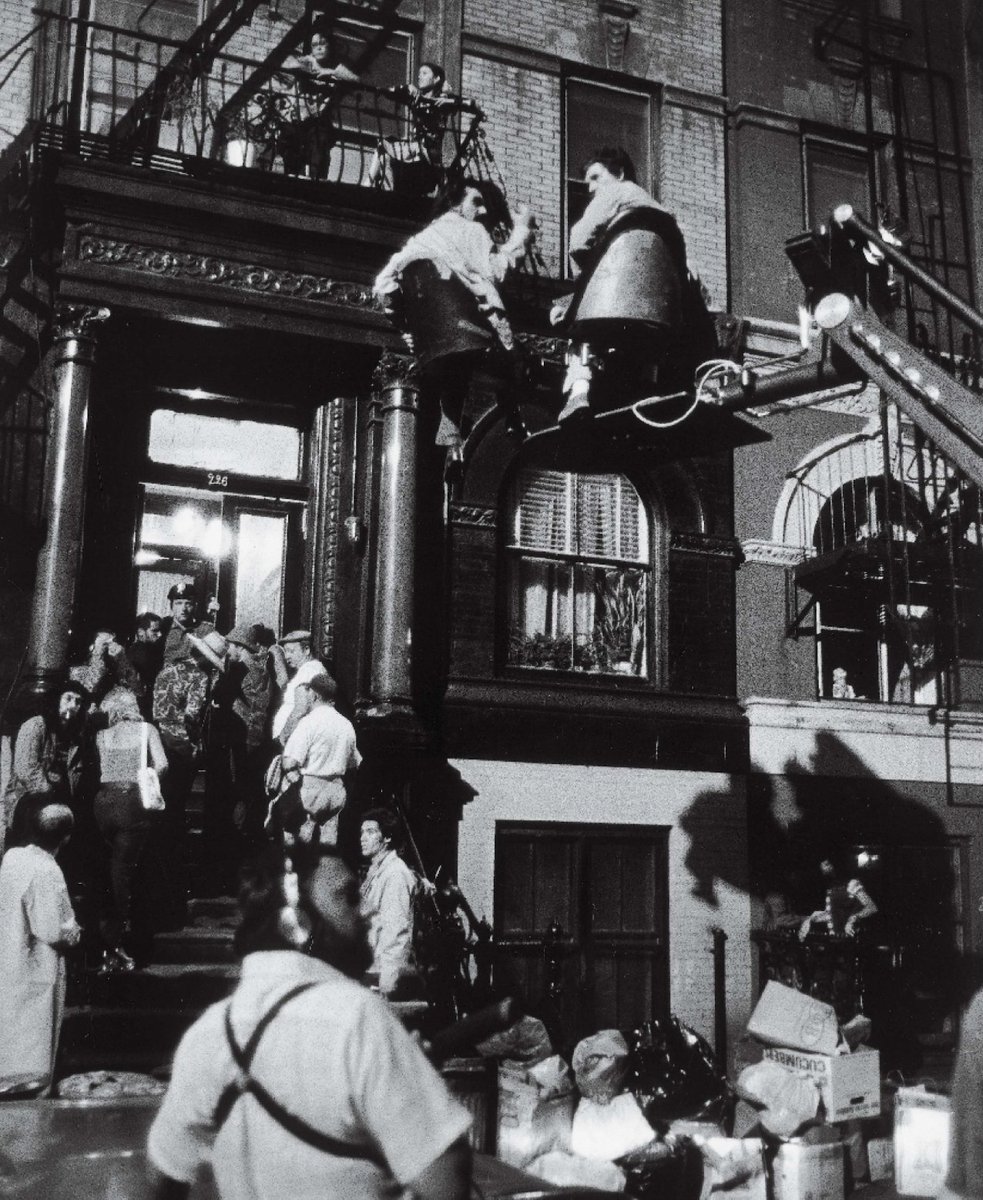
The building at 226 E 13th Street, which stood in as the “hot sheet” hotel, looks roughly the same as it did in 1975, albeit a little brighter and surrounded by more greenery. But if you’re expecting the hallway and Iris’ room to look the same, you’ll be out of luck.

That’s because all the interiors were shot at a completely different location up on Columbus Avenue. I’ll cover that location in more detail in the “Travis’ Apartment” section below.
Breakfast with Iris
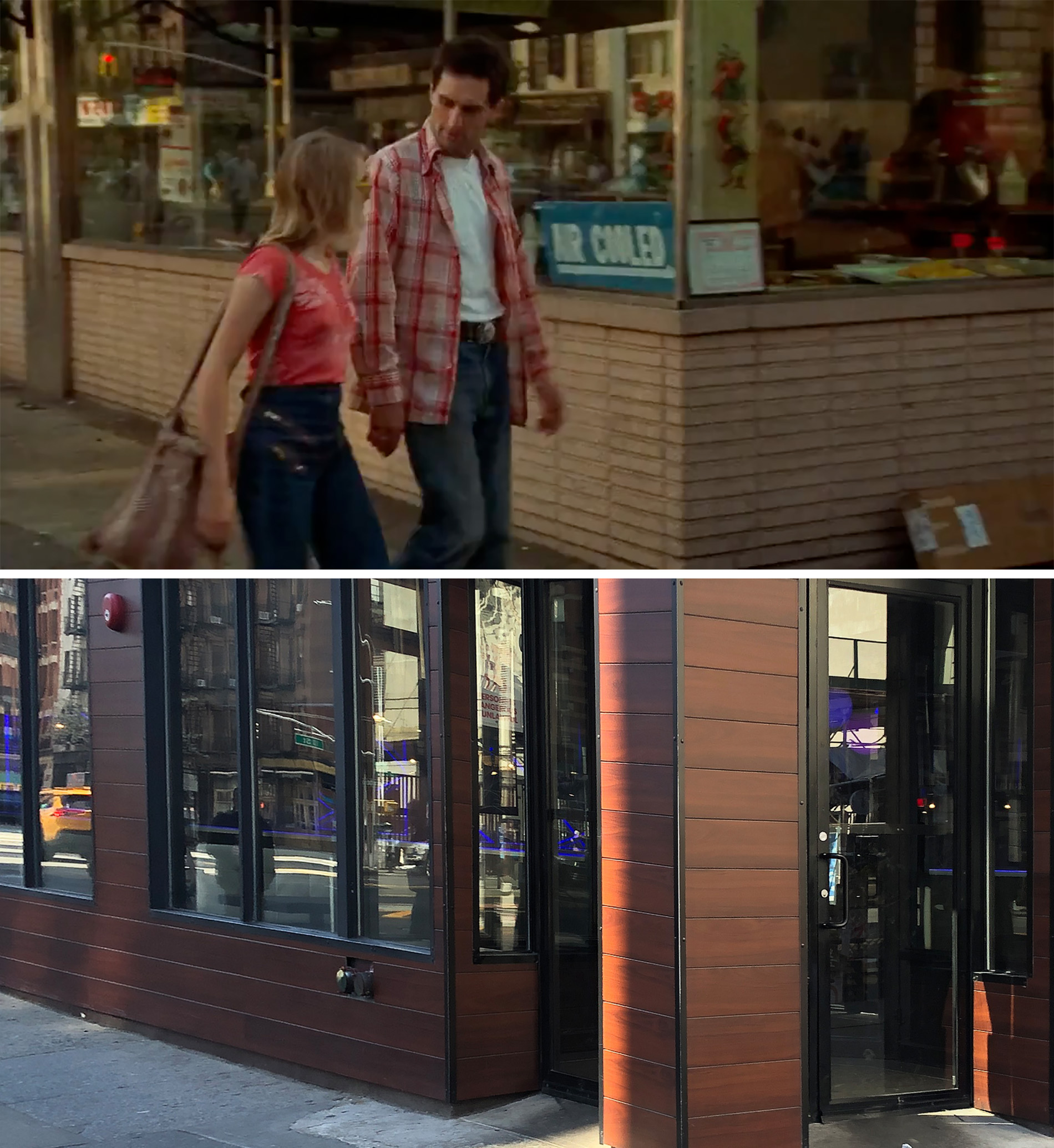
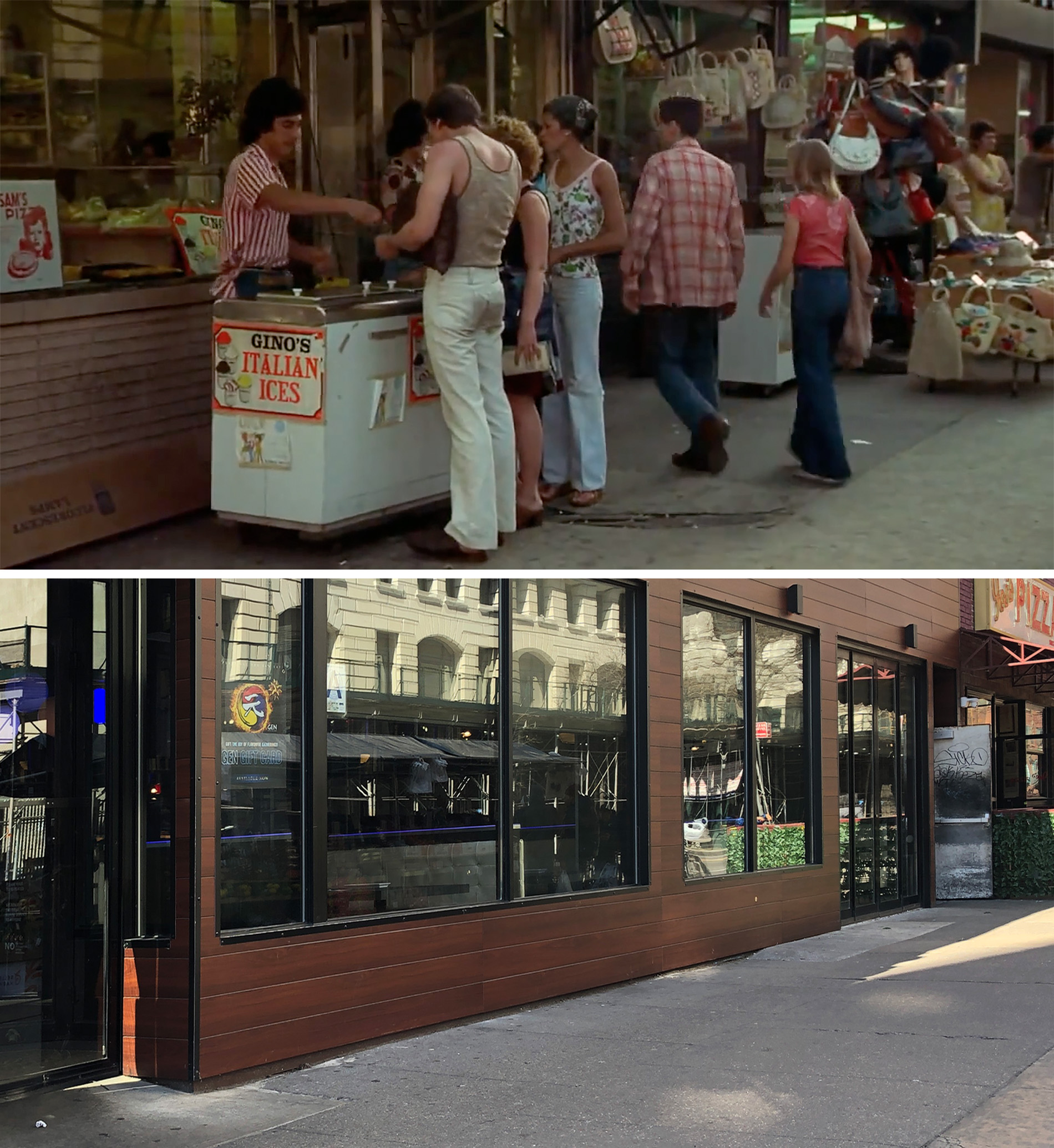
This was a location that remained a mystery for quite a while. But it turned out to be practically on top of several other already-established filming spots in the East Village.
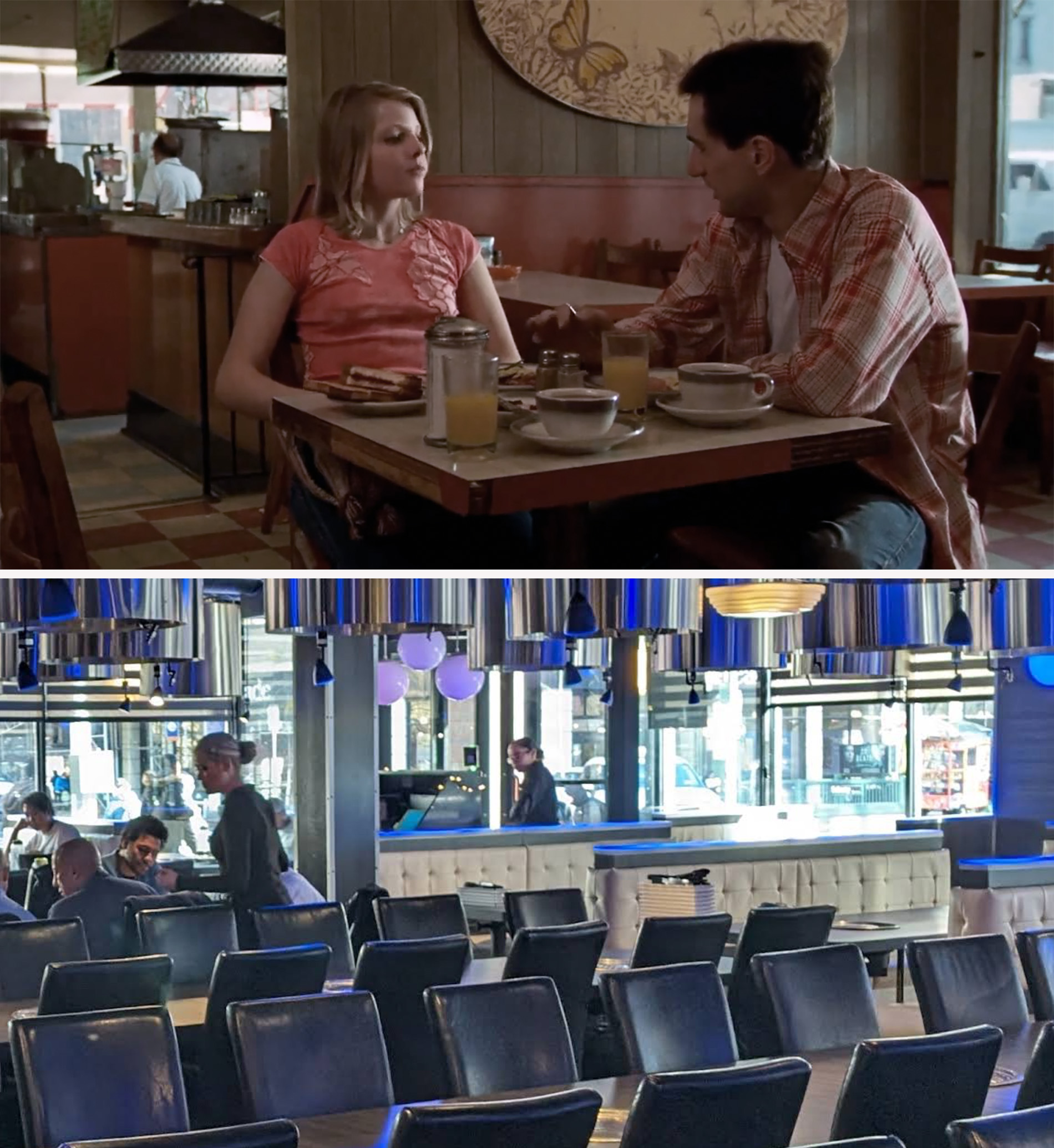
I can’t remember the exact details, but at some point over the years, I stumbled on an online discussions about Taxi Driver where a couple folks postulated that the coffee shop where Travis and Iris had breakfast was an old donut shop on E 14th and Third.
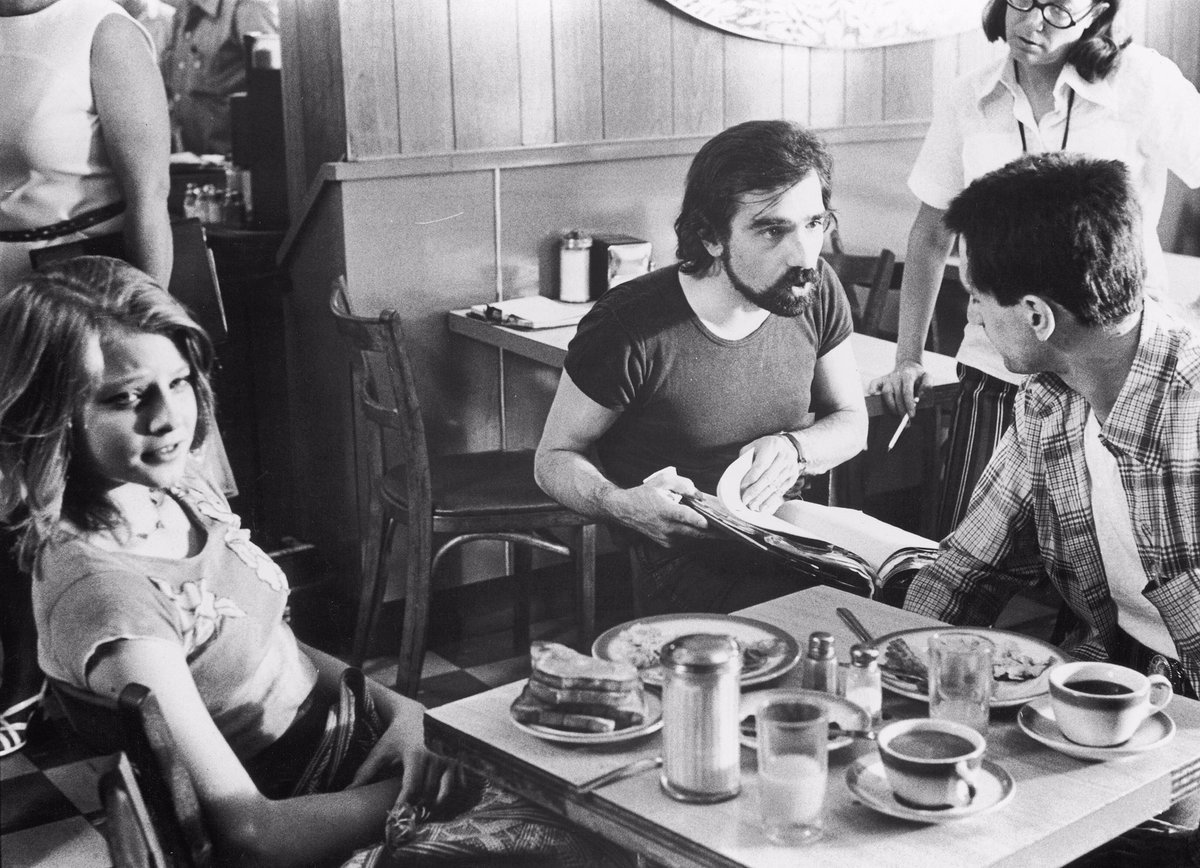
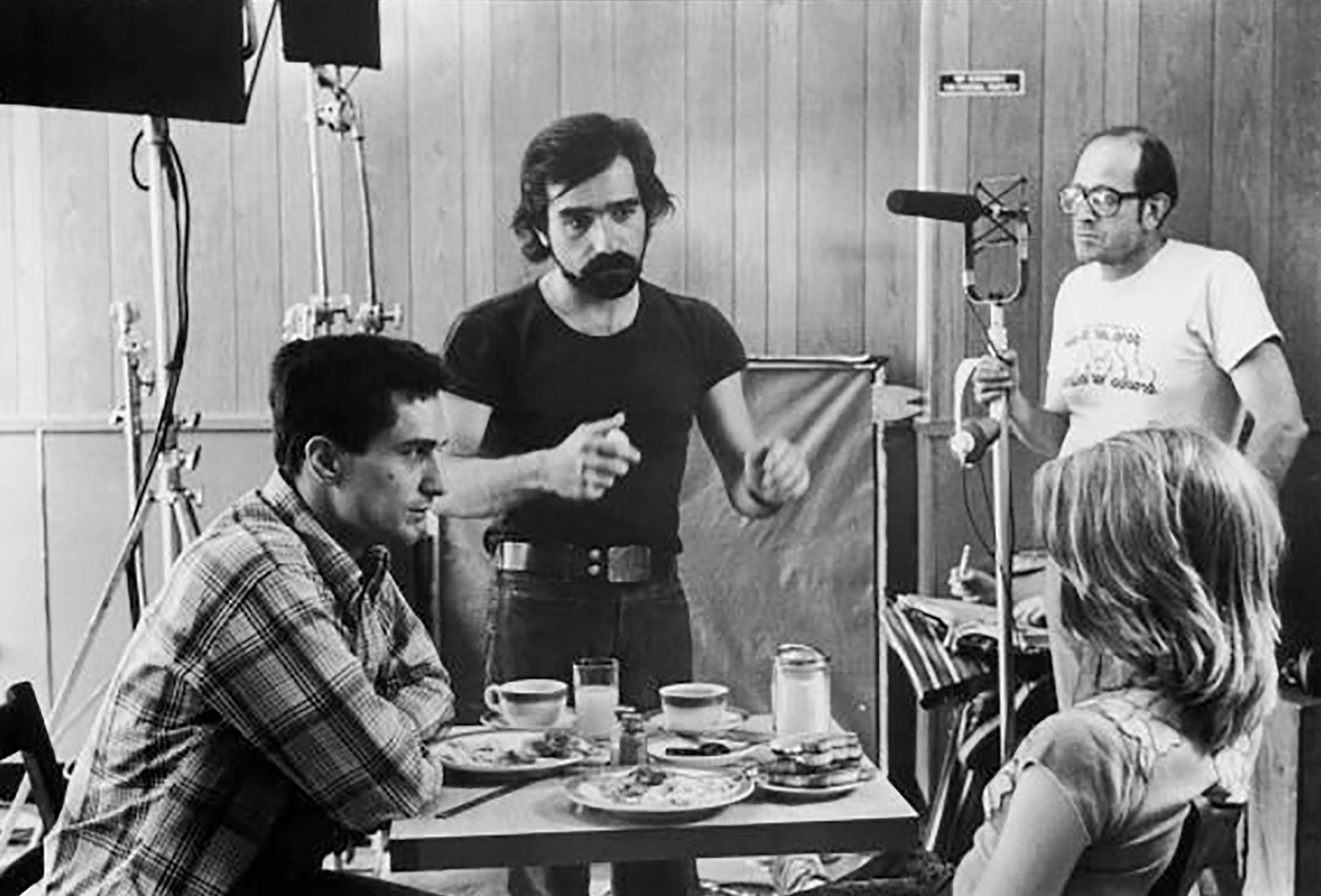
Turns out, there used to be a place called Disco Donut next to Variety Photoplays, back when the corner building was 3½ stories tall.
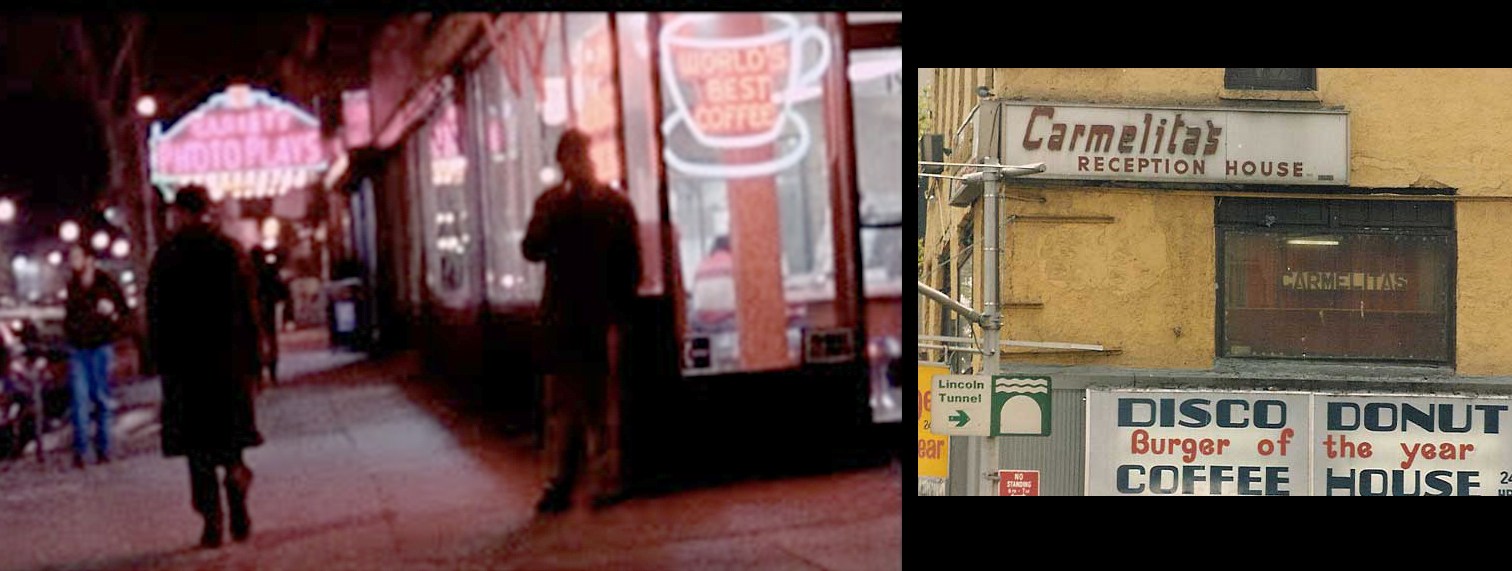
Above the donut shop was Carmelita’s Reception House, which from the outside, looked a little like a sleazy bordello, but was actually a hip after-hours club.
Operating throughout the 1970s and 80s, the private upstairs bar, filled with Christmas lights and velvet-draped tables, was a popular party spot for artists, punkers, club employees and the occasional celebrity. It was also a place struggling artists could use as a flop house. (New Wave band, the B-52s, evidently stayed there when they first came to NYC in 1979.)
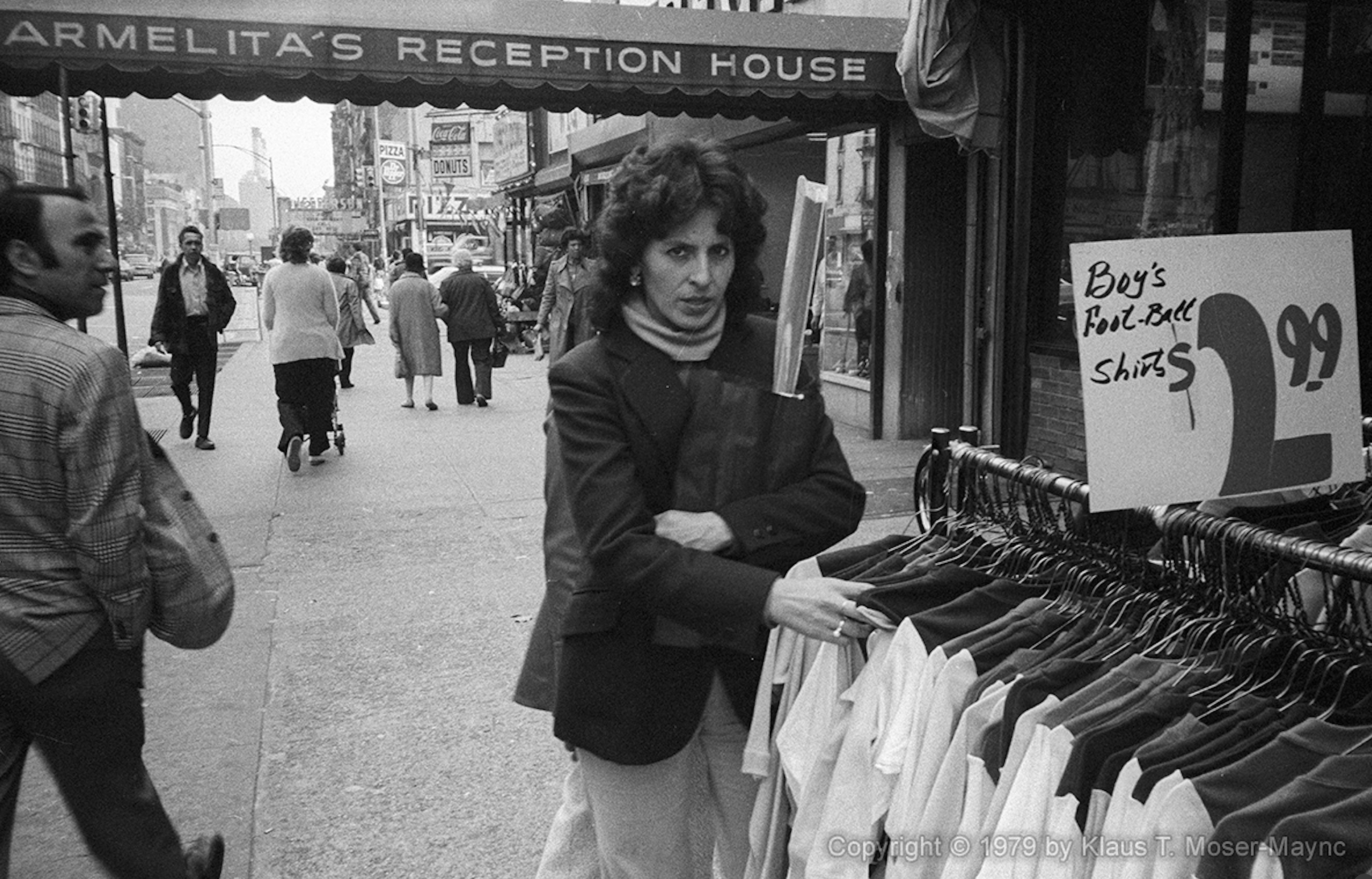
Starting in 1988, Carmelita’s was also being used as the reception hall in the audience-participation play, Tony and Tina’s Wedding. But that only lasted a couple years, as the space was shut down after the 1990 Happy Land fire in the Bronx triggered a safety-code crackdown across the city.
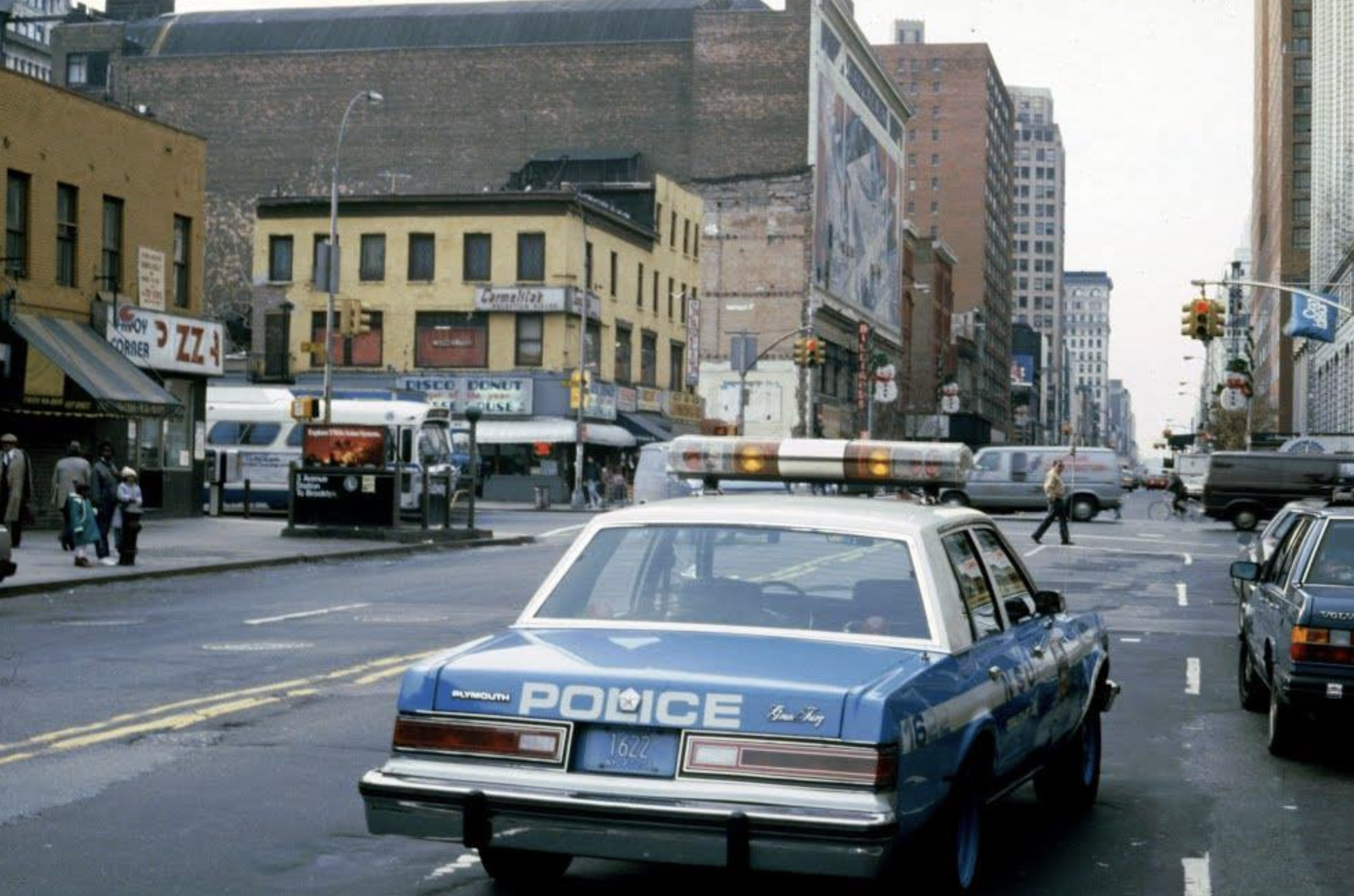
A few years after that, the upper floors of the building were removed. Today, the squat, single-story building stands out from the swath of modern glass and steel towers, and what used to be Disco Donut in now a Gen Korean BBQ House.
The best way to verify that this corner donut shop was the one used in the movie was to match up some of the buildings that appeared out the window in the scene.

Relying mostly on vintage photos, I was able to match up a couple structures, including the building that was catty-corner to Disco Donut, home to a gay book store at the time. I also compared the restaurant’s exterior in the movie to a 1984 tax photo of the corner building, which showed a similar brick base (just painted a different color).
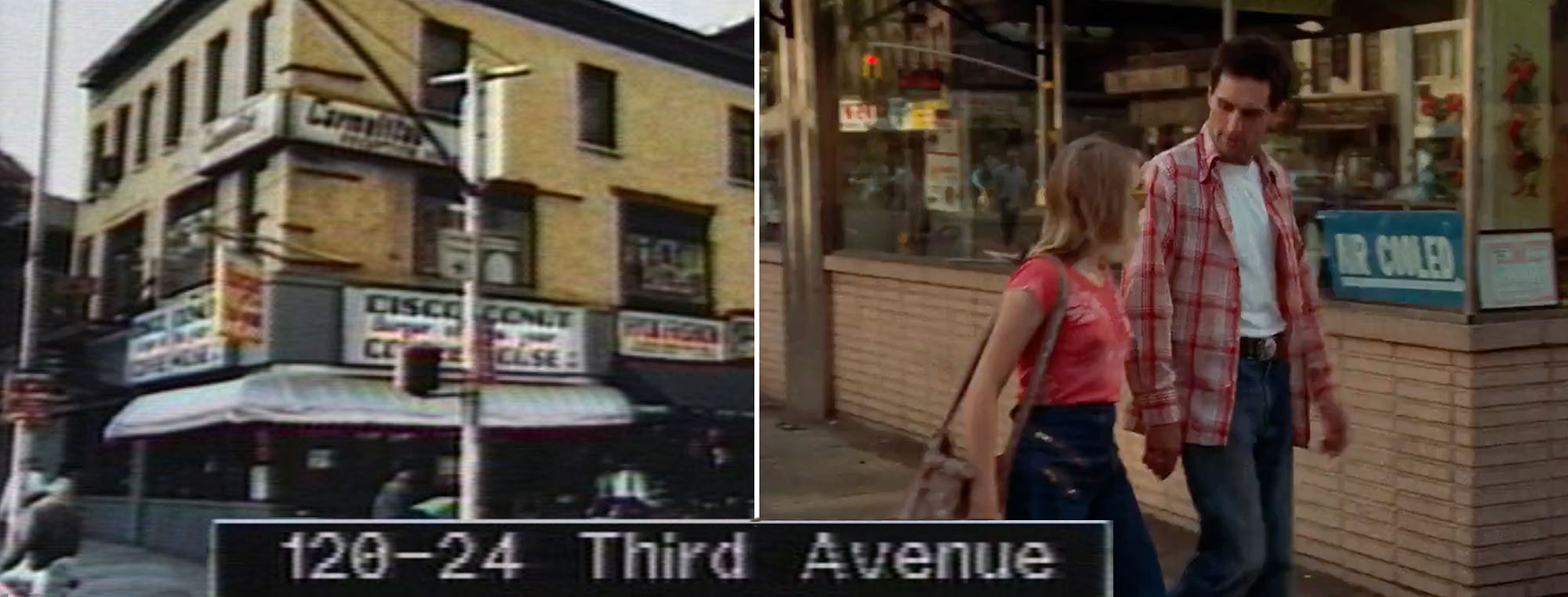
All of this, plus the fact they were mere feet from other established filming locations, convinced me that Disco Donut was where Travis and Iris had their breakfast together.
Travis’ Apartment
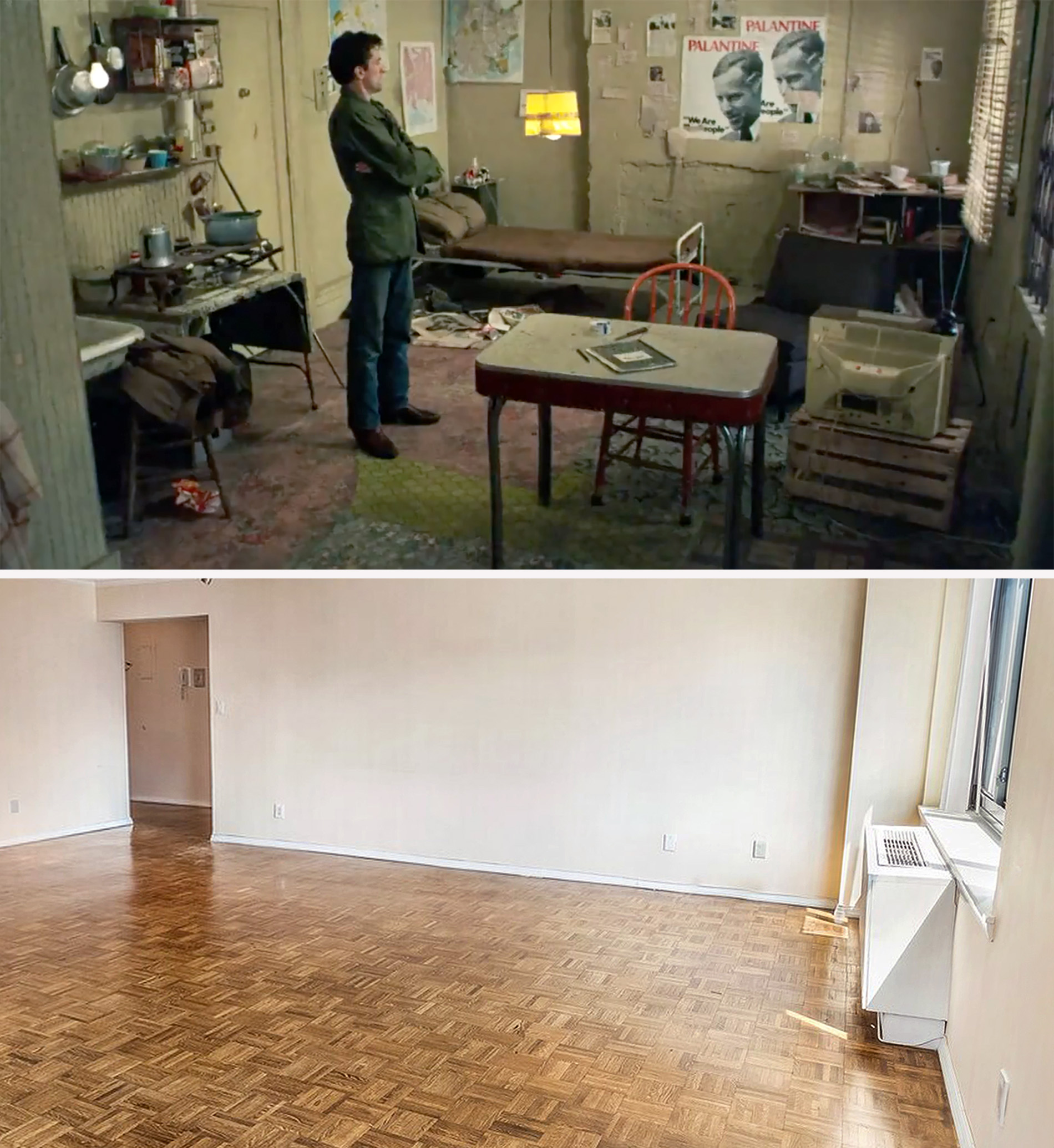
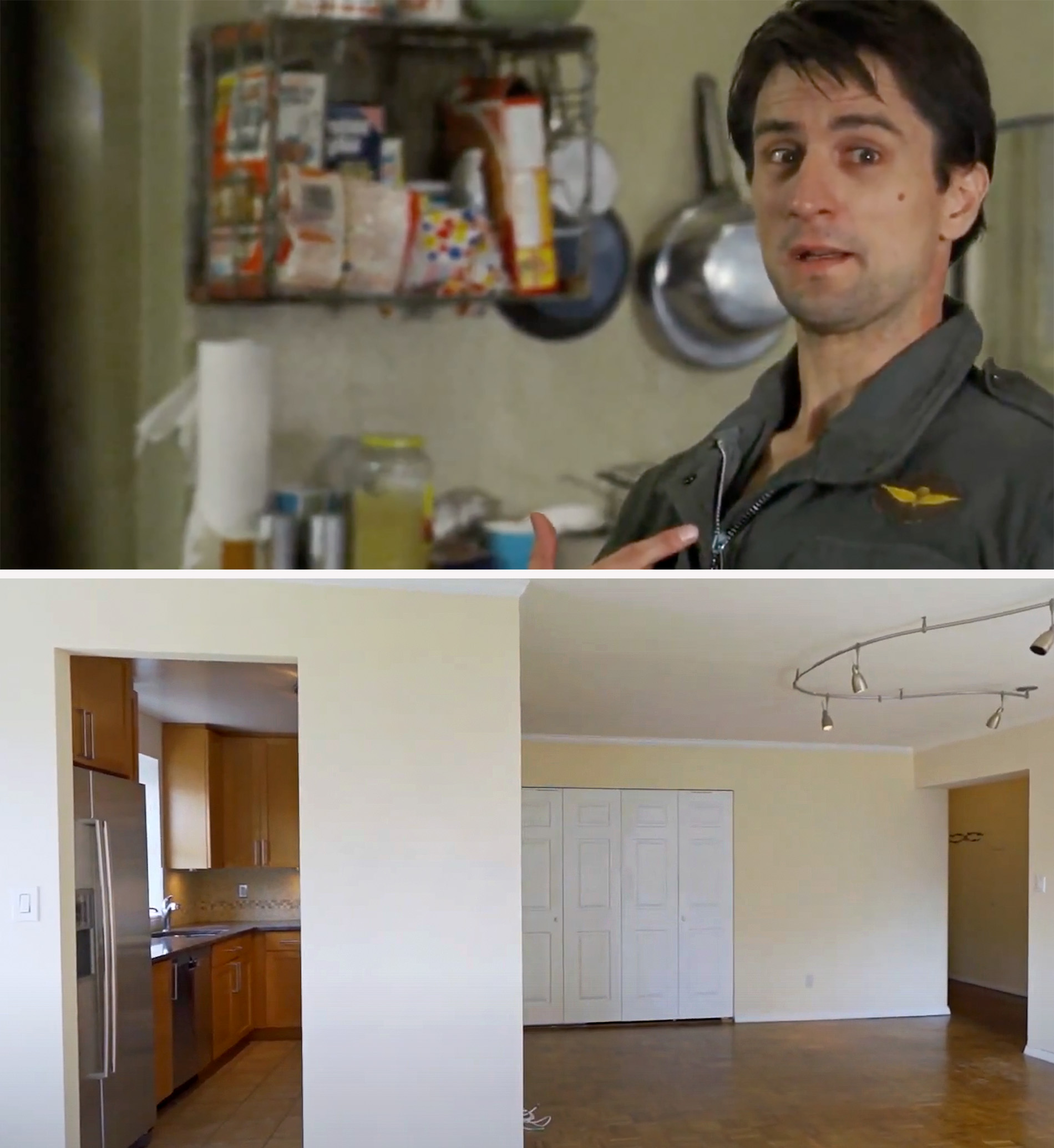
As with most interiors, the location of Travis’ apartment wasn’t easy to find. And while several clues (including Scorsese’s commentary track on the movie’s DVD) indicated the general area of the apartment, none of it was proof-positive.
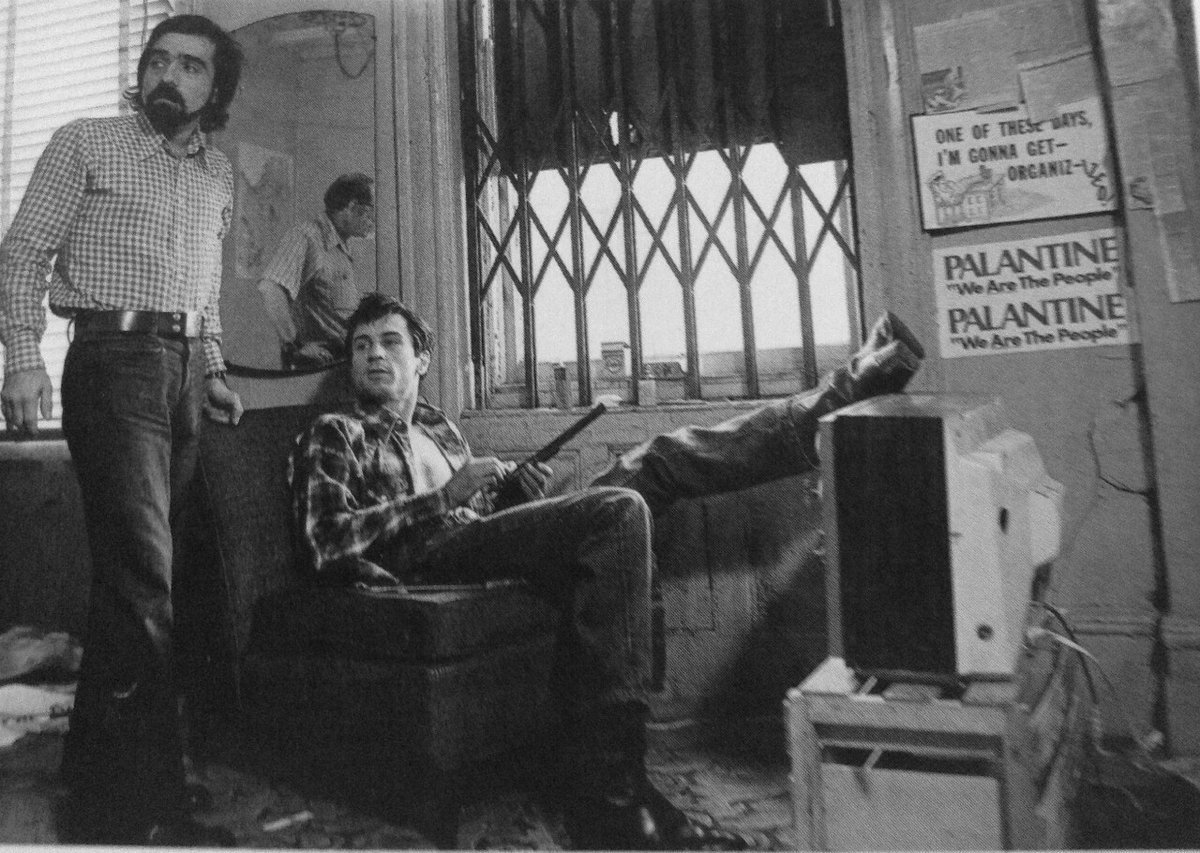
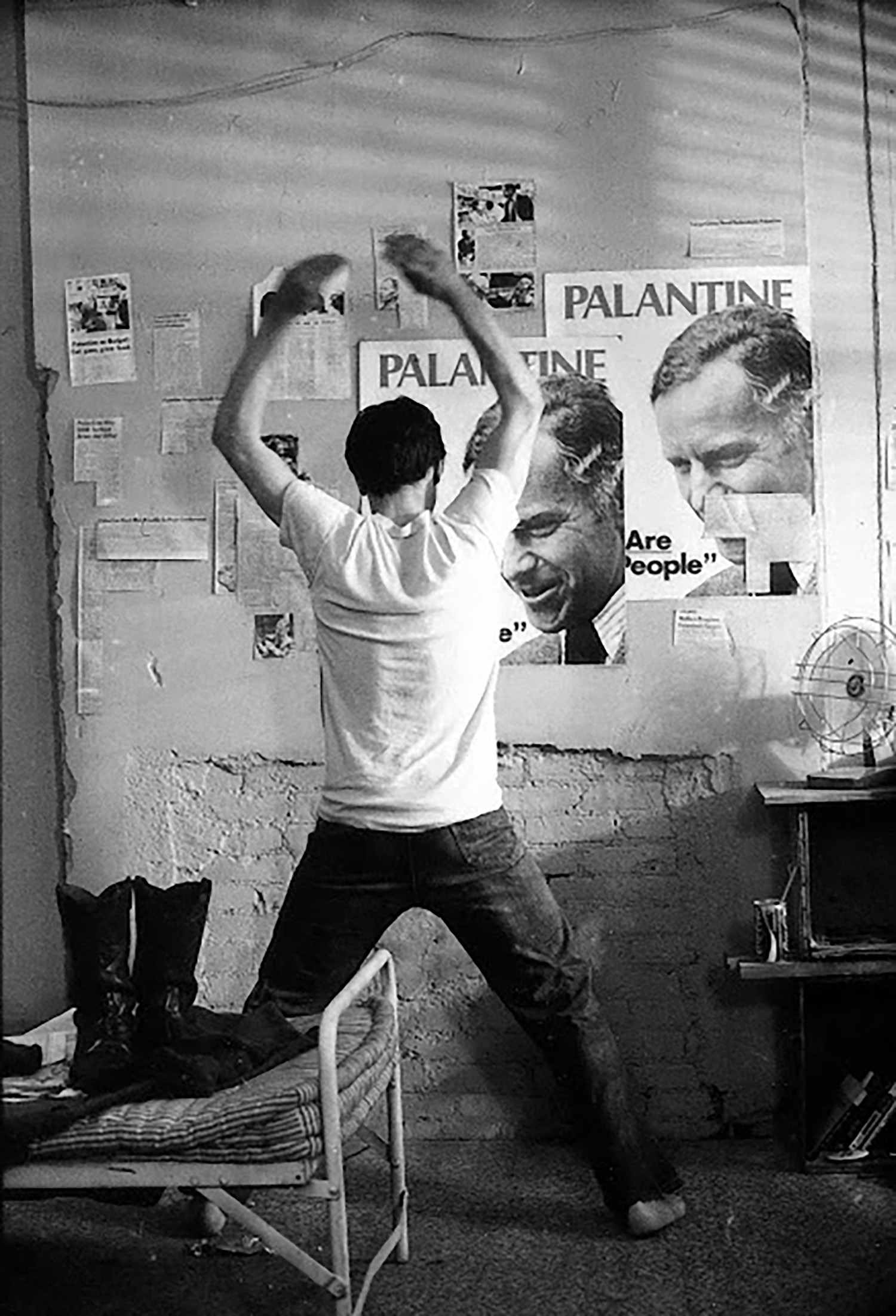
The one thing that was known was that the apartment was a set built inside an old tenement building on the Upper West Side that was slated to be demolished.
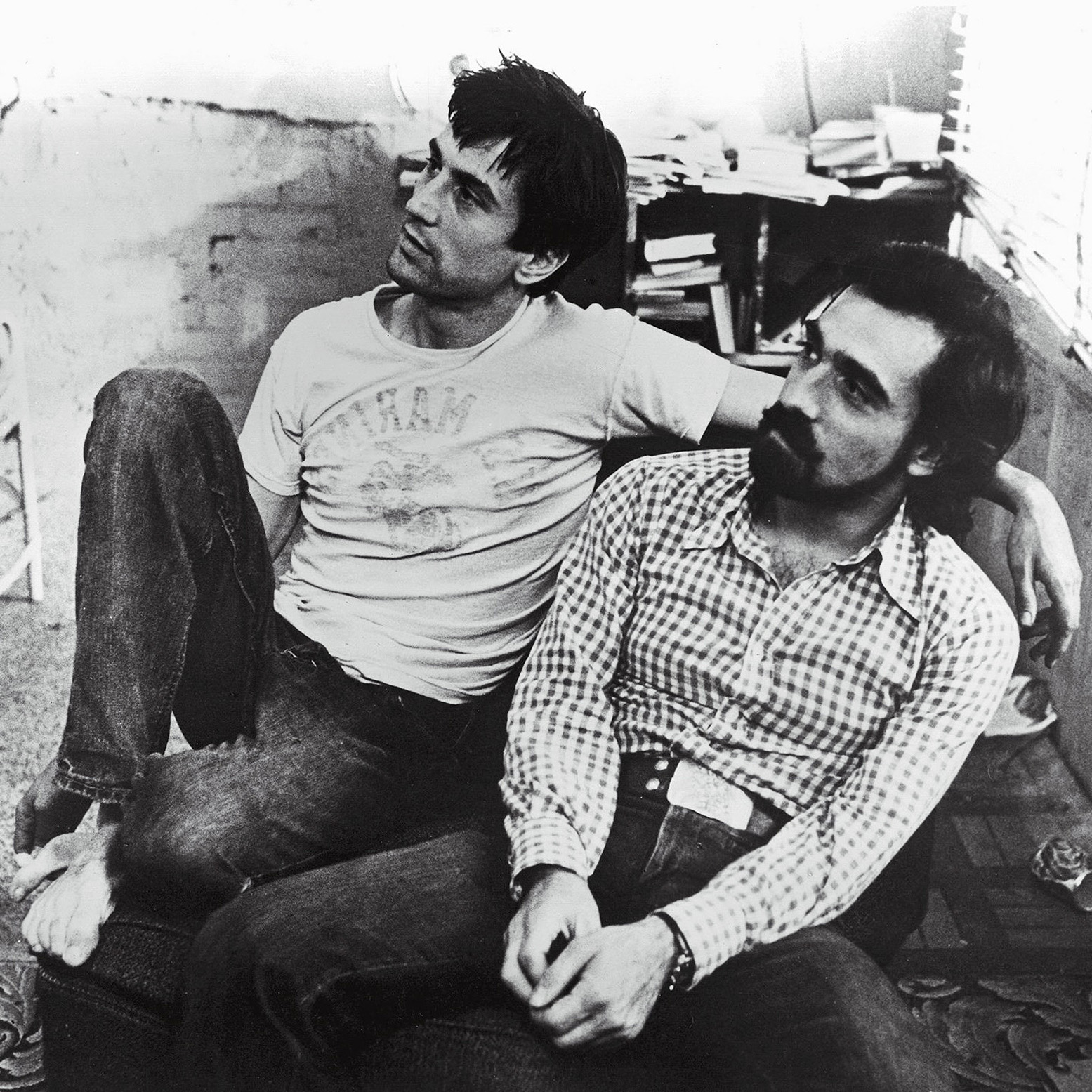
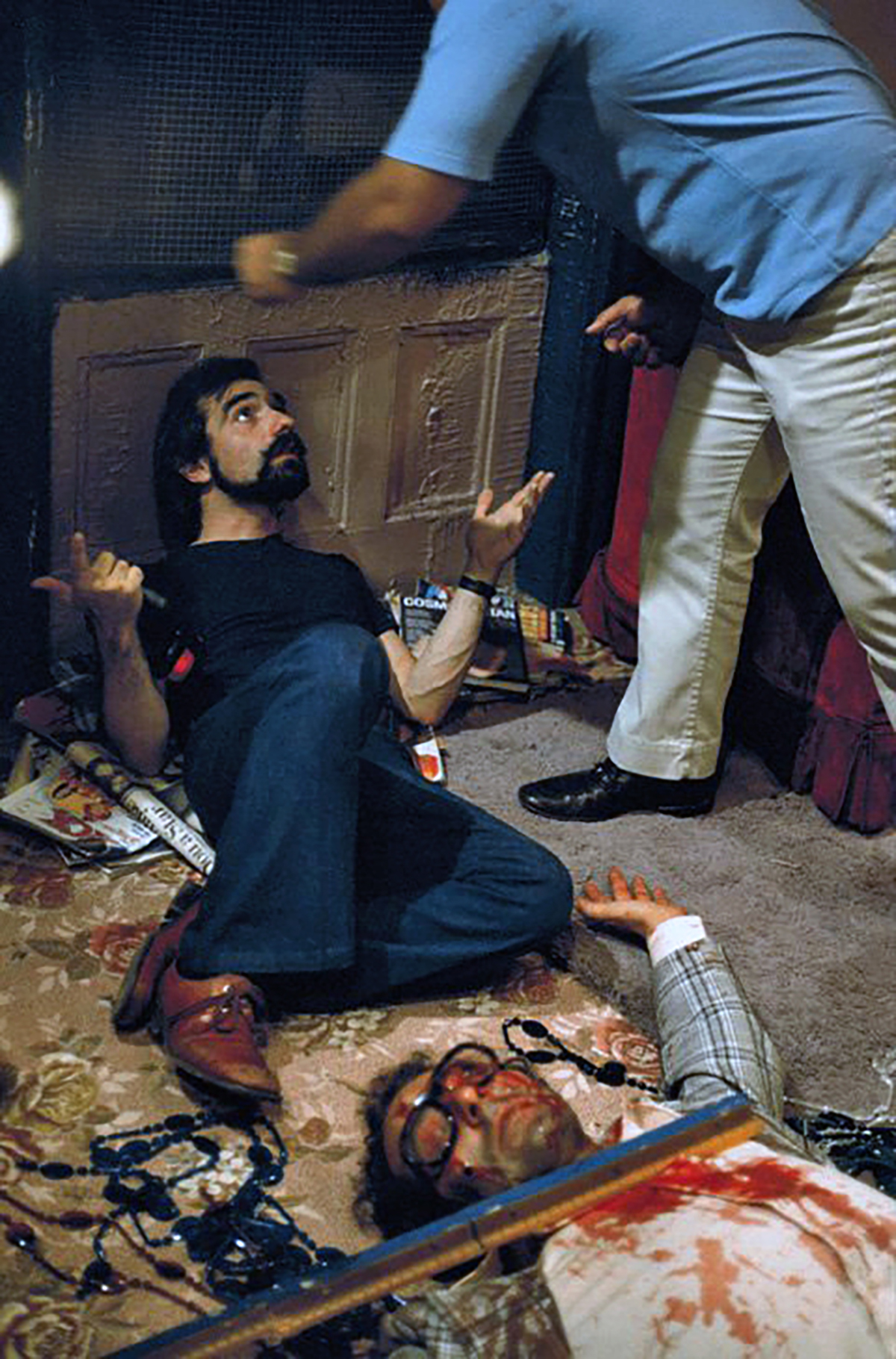
Because the space was abandoned, the crew could have free rein there — building fake walls, cutting holes in the floor, and covering the rooms in fake blood.
The blood was used in the final confrontation scene at the brothel, whose interiors were shot in the same building as Travis’ apartment.
Cultural historian Robert Egan approached this mystery location another way — by going through promotional photos that were reportedly taken outside the apartment building. This included a photo taken of Robert De Niro standing in front of his cab near a bar, which was later repurposed for the movie poster.
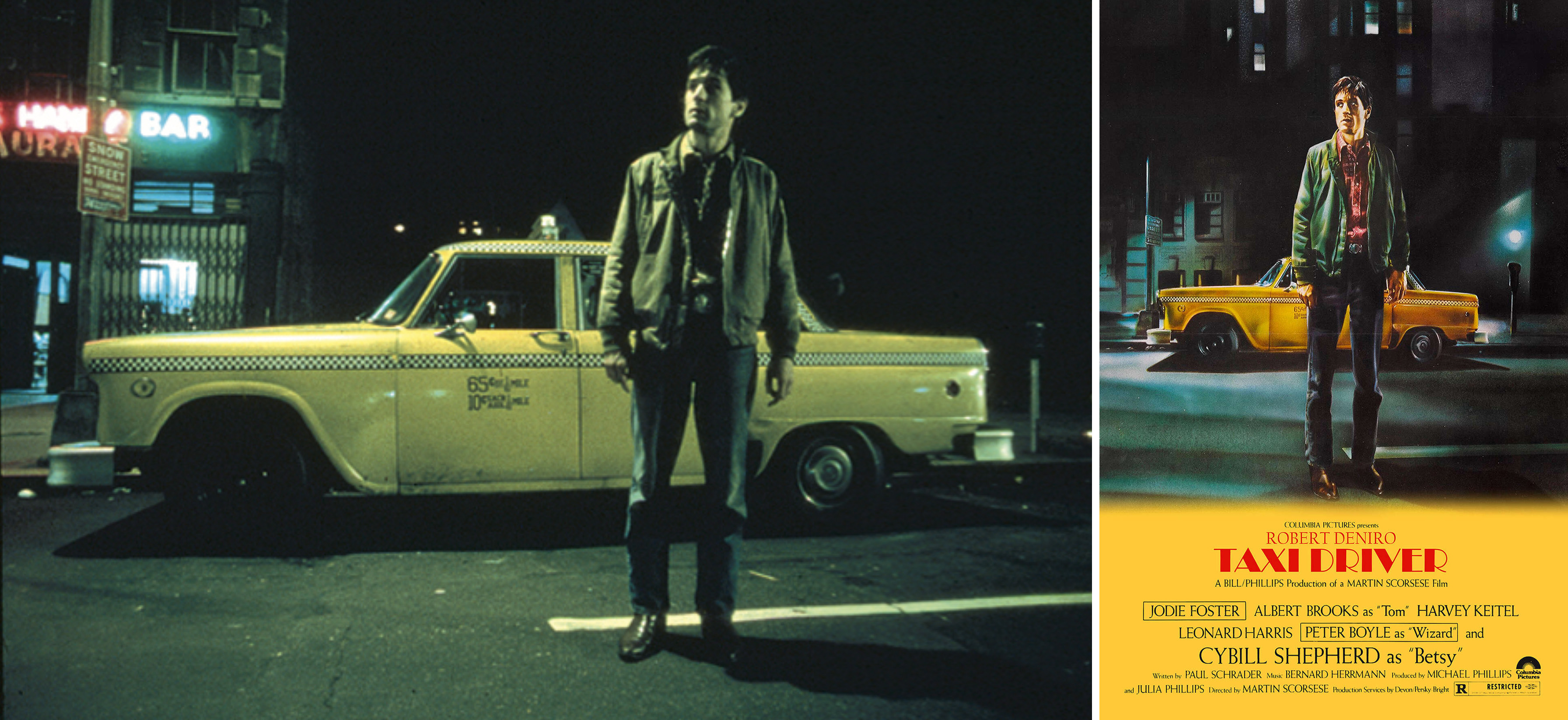
Egan was able to conclude the photo was taken on the west side of Columbus Avenue between W 88th and W 89th Streets. This was based off the Handy Bar seen in the background, whose address was found in the 1975 Manhattan Yellow Pages (archived at the 42nd Street Library).

He was also able to establish the location of another promotional photo to be across the street near the corner of W 89th Street.
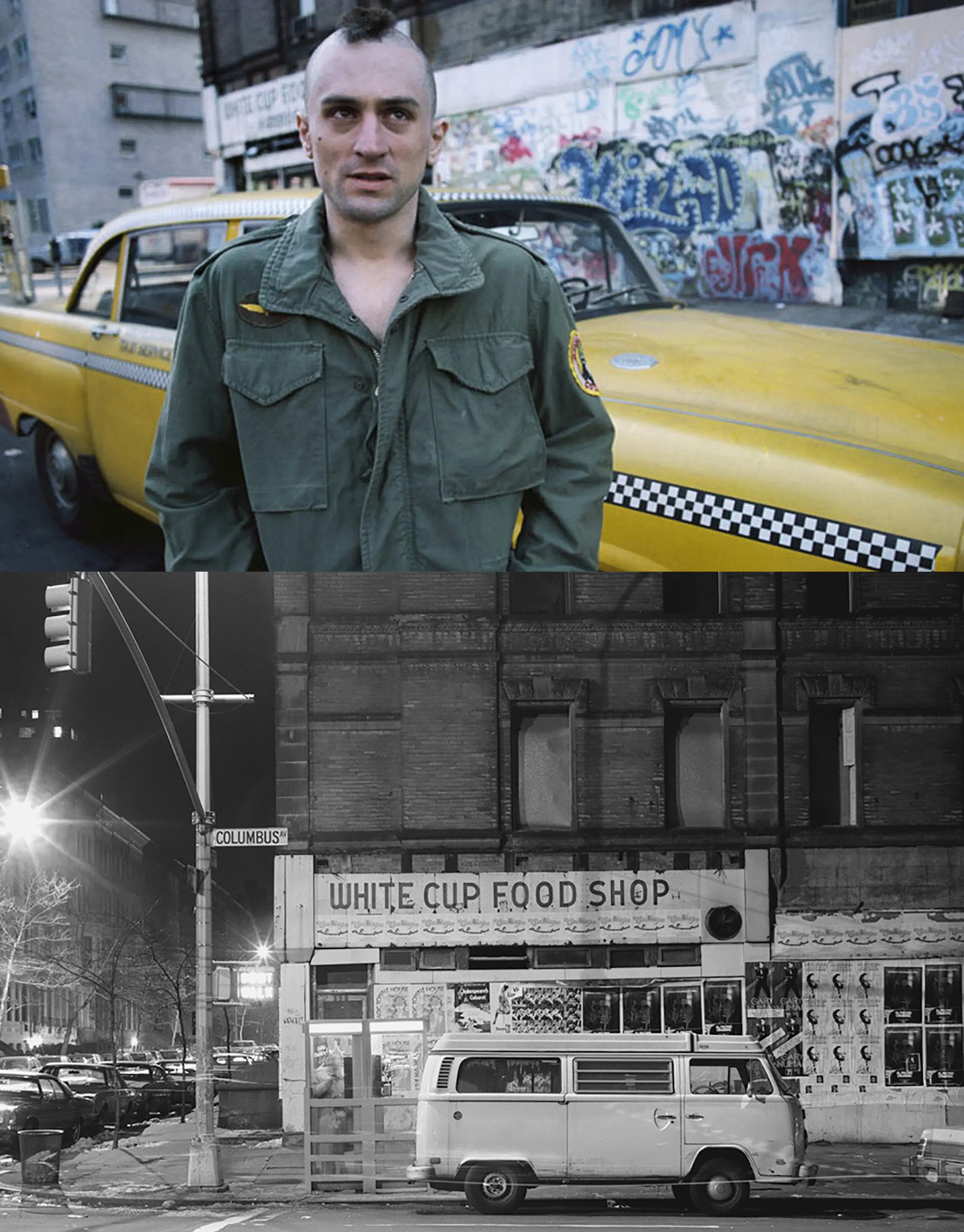
The photo showed the White Cup Food Shop in the background which closed around the same time this movie was made (after nearly 40 years of business). The corner shop was also featured in a 1976 BBC documentary, Watching My Name Go By.
All of this got us close to the apartment location, but it still didn’t offer any hard evidence as to which building was used (especially since we only get brief, partial views out the windows in the movie). The definitive proof finally came when someone was able to unearth an original call sheet from 1975, documenting the exact address of Travis’ apartment.
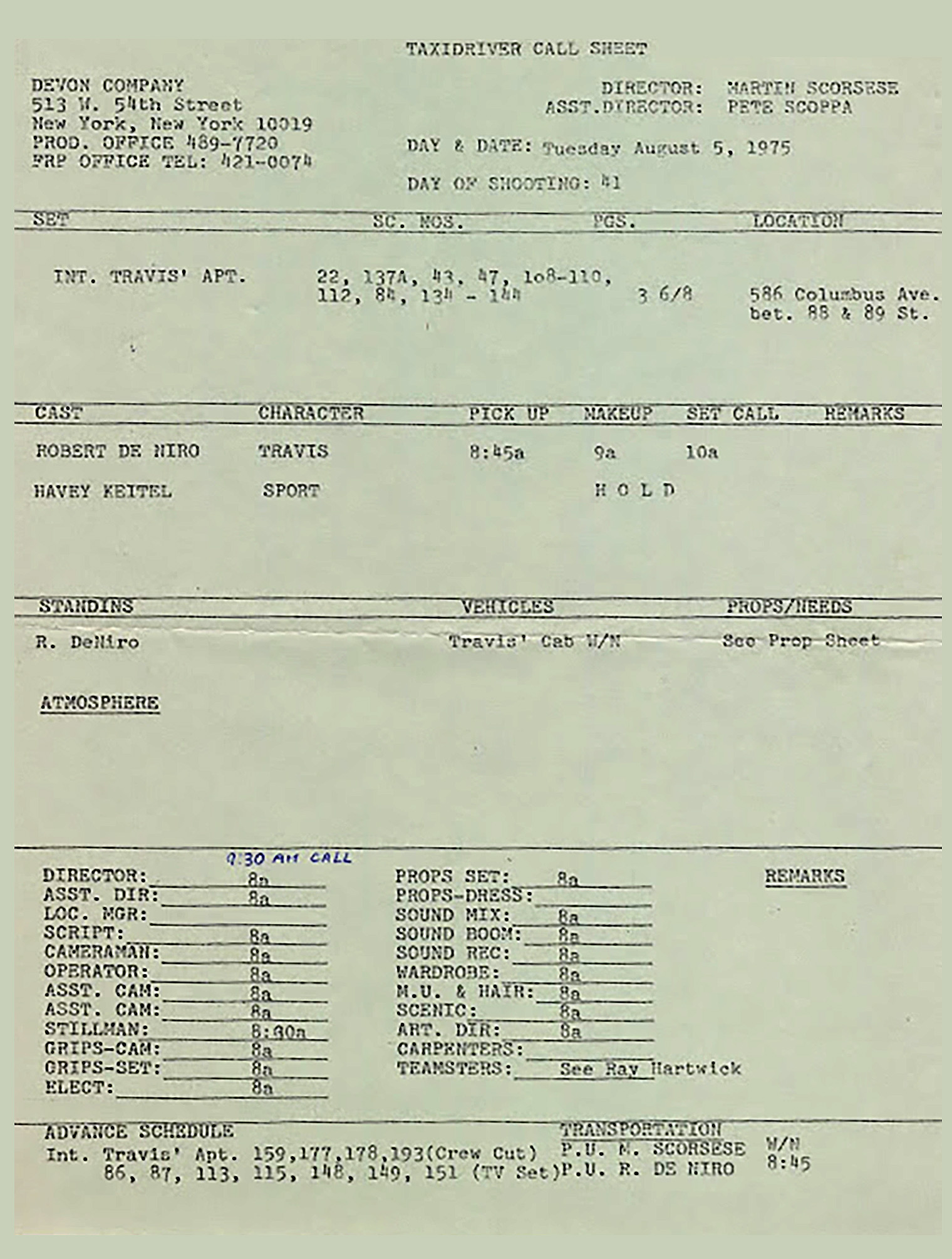
The production sheet substantiated that the address was 586 Columbus Avenue, and once I had that info, it inspired me to seek out other vintage photos of the block.
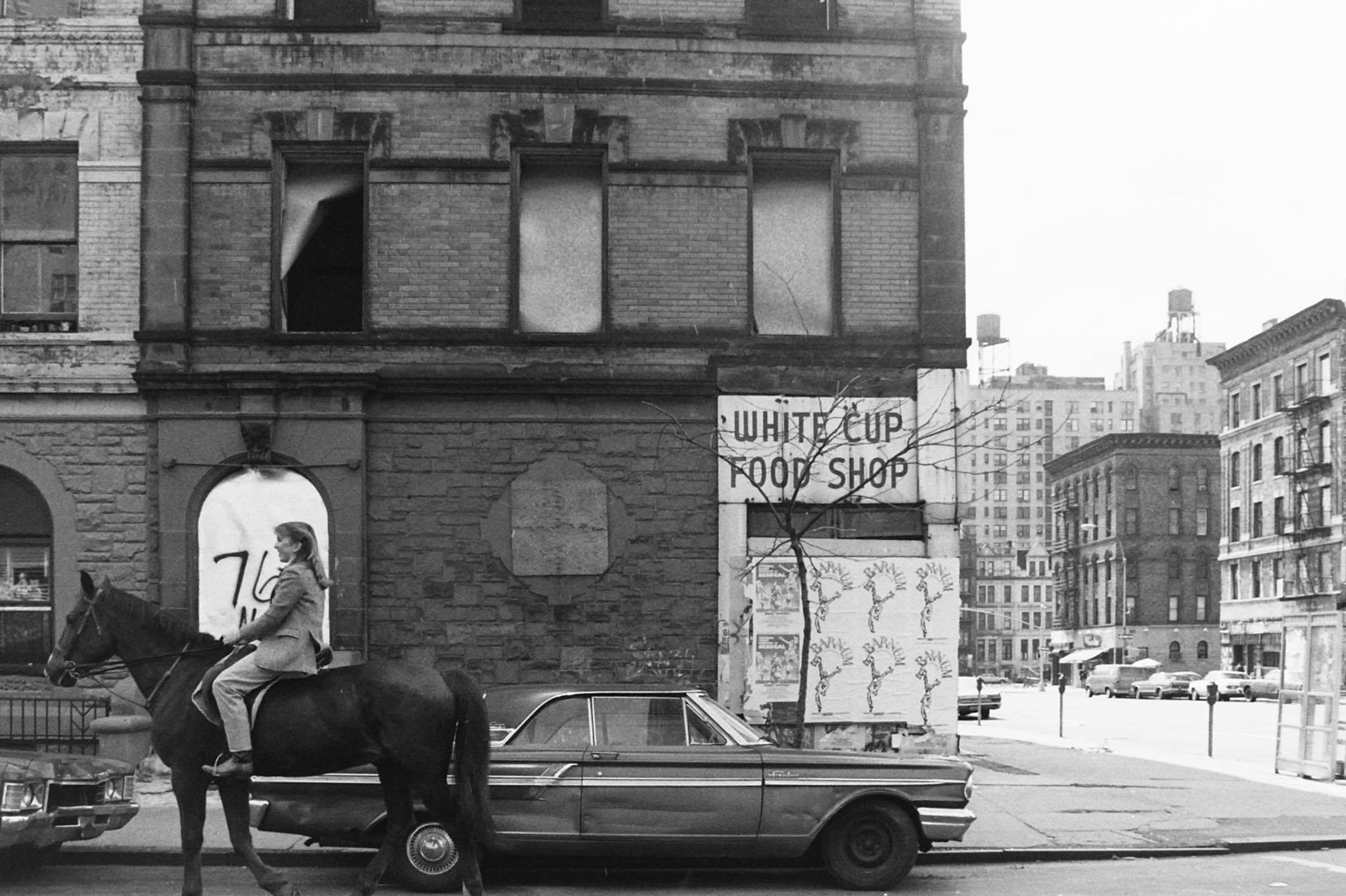
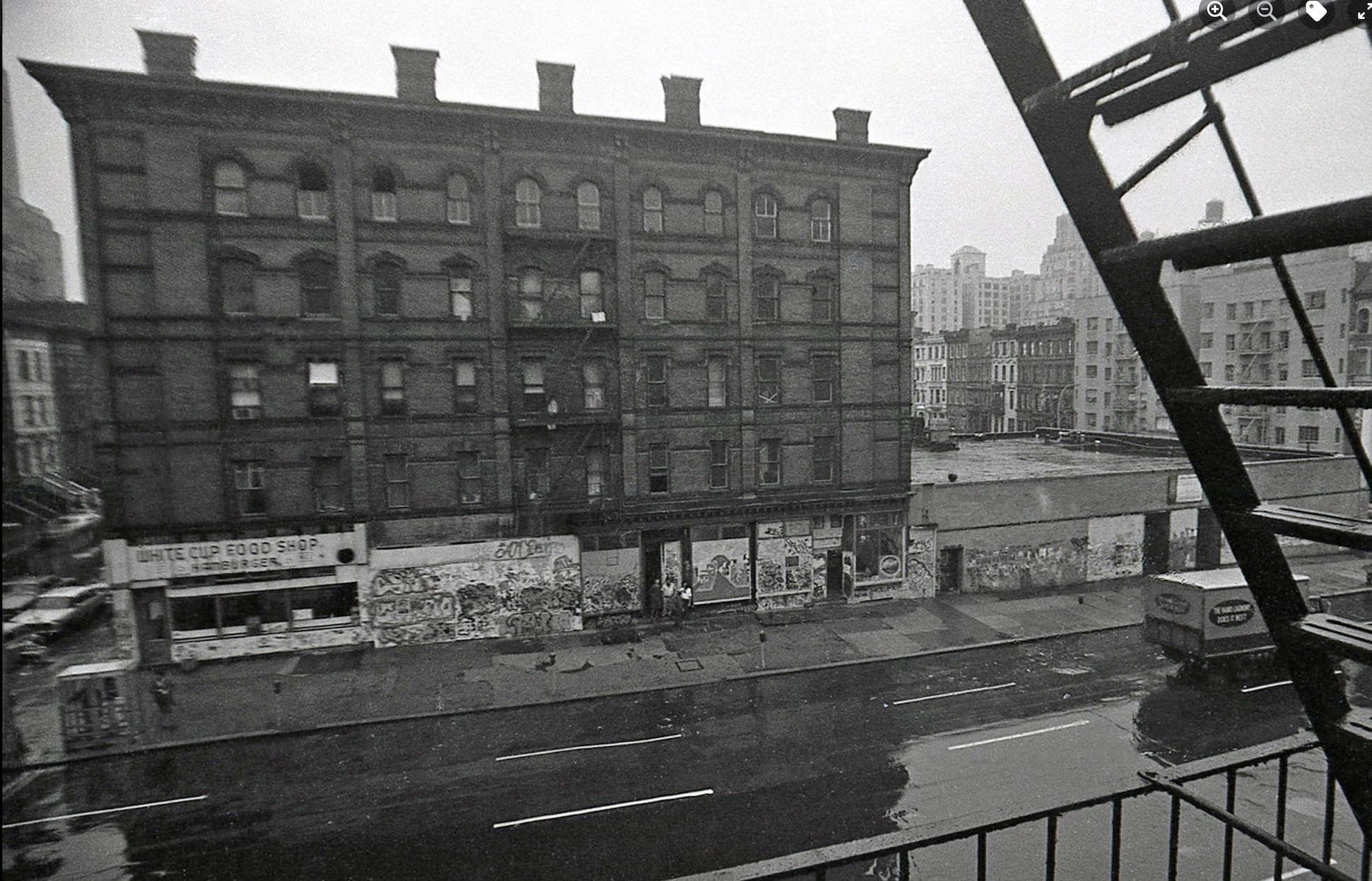
The coolest thing I found was a picture from around 1974 looking down onto Columbus Avenue, offering us a view that was pretty close to what would’ve been seen out Travis’ apartment window.
As indicated earlier, the building used for Travis’ apartment and Iris’ brothel was demolished a few years after this movie was made. A large apartment building took over the entire west side of Columbus Avenue in 1985, with no acknowledgment that it was the location of one of the most iconic movie lines in cinema history: “You talkin’ to me?”
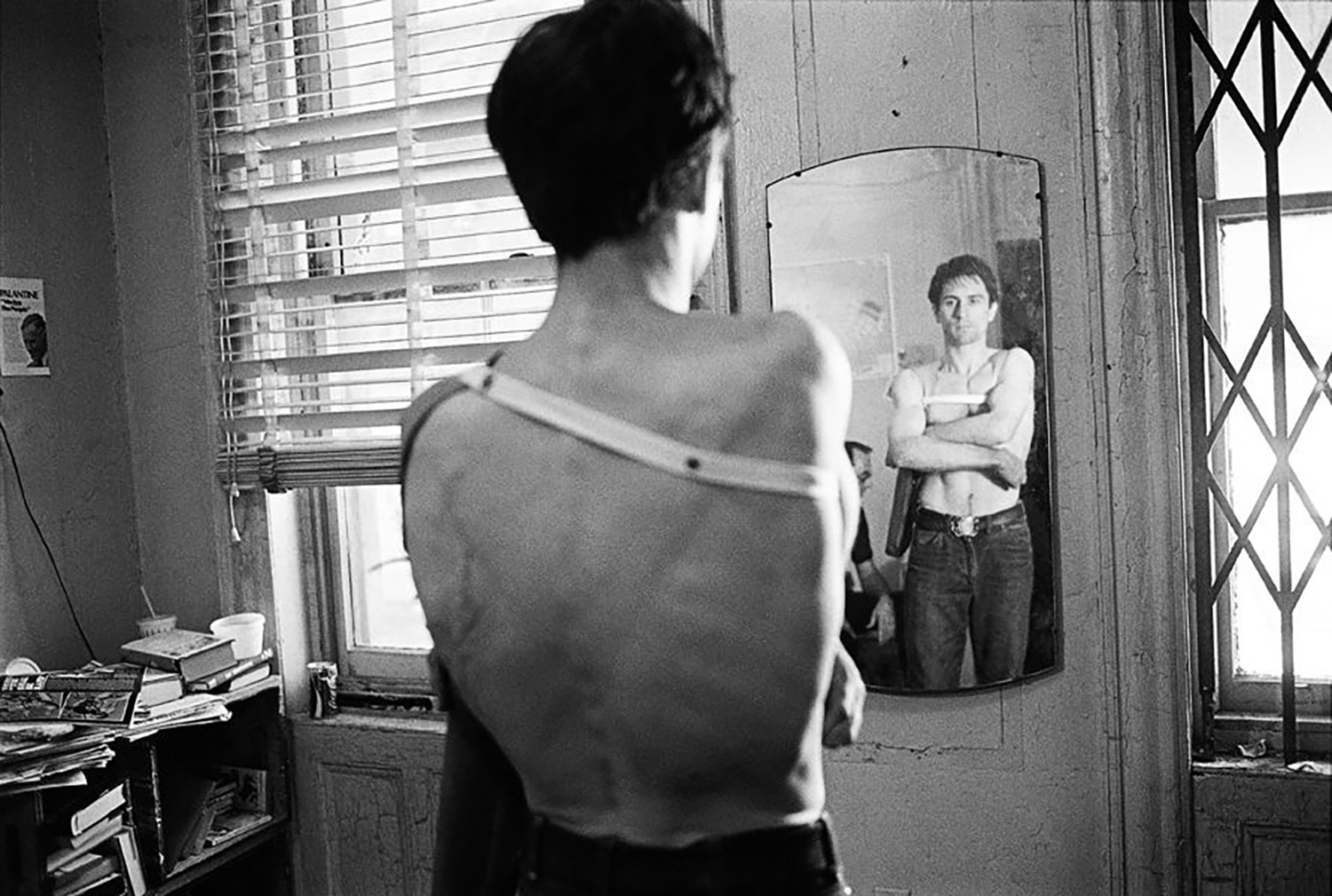
It might be noted that this immortal line was actually improvised by De Niro on the day. In Paul Schrader’s script, it just says, Travis speaks to himself in the mirror.
The Last Rally
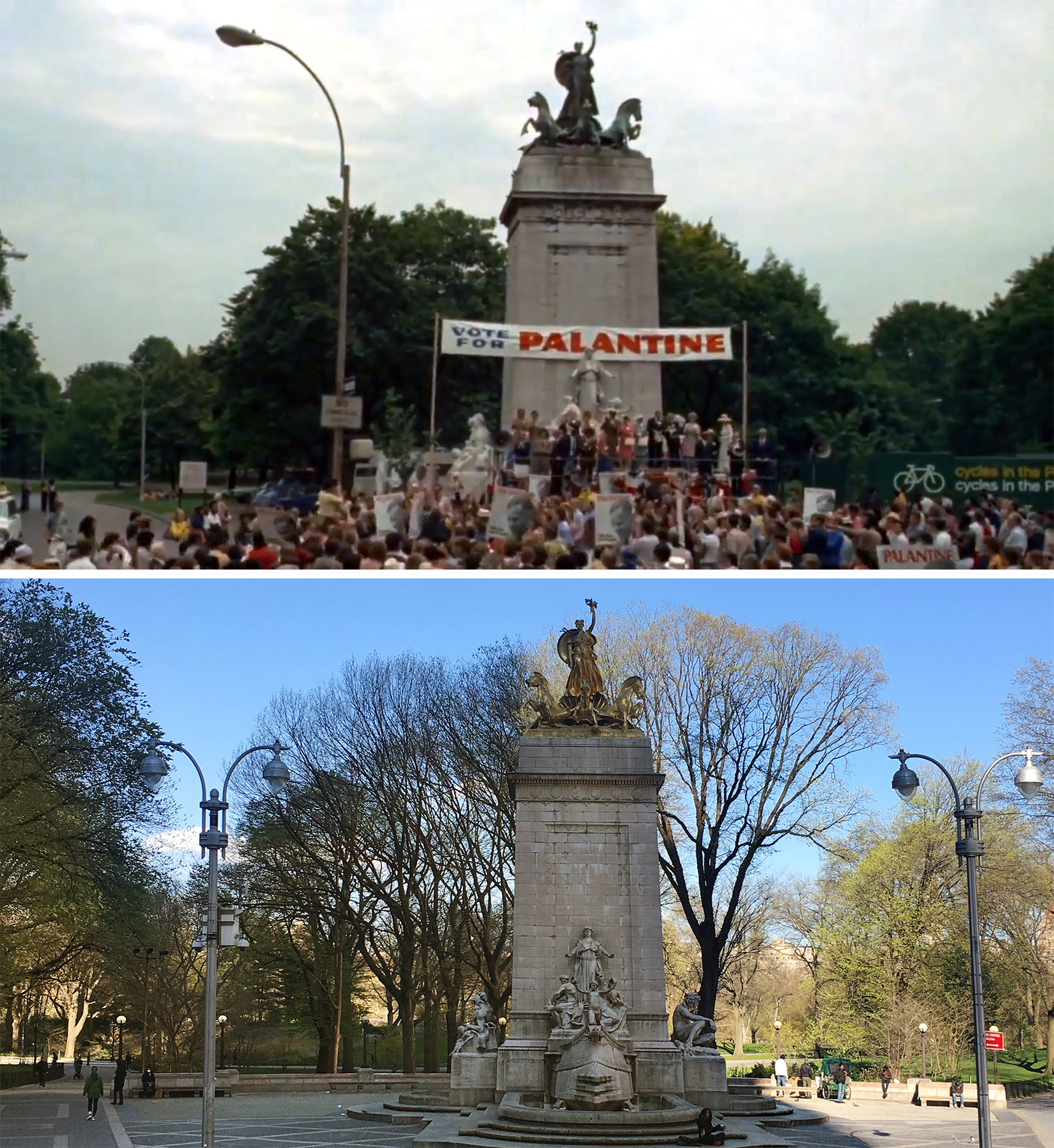
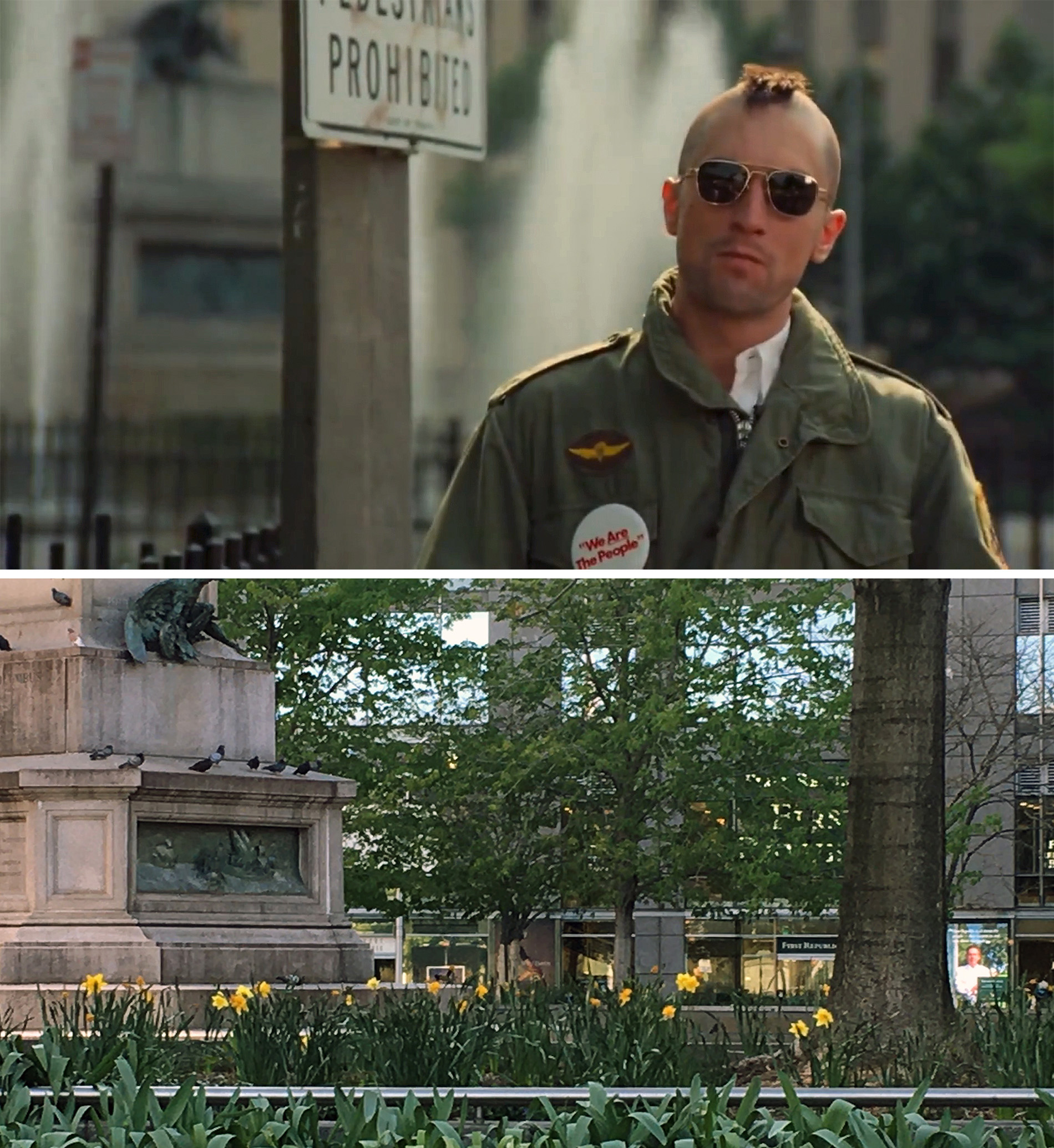
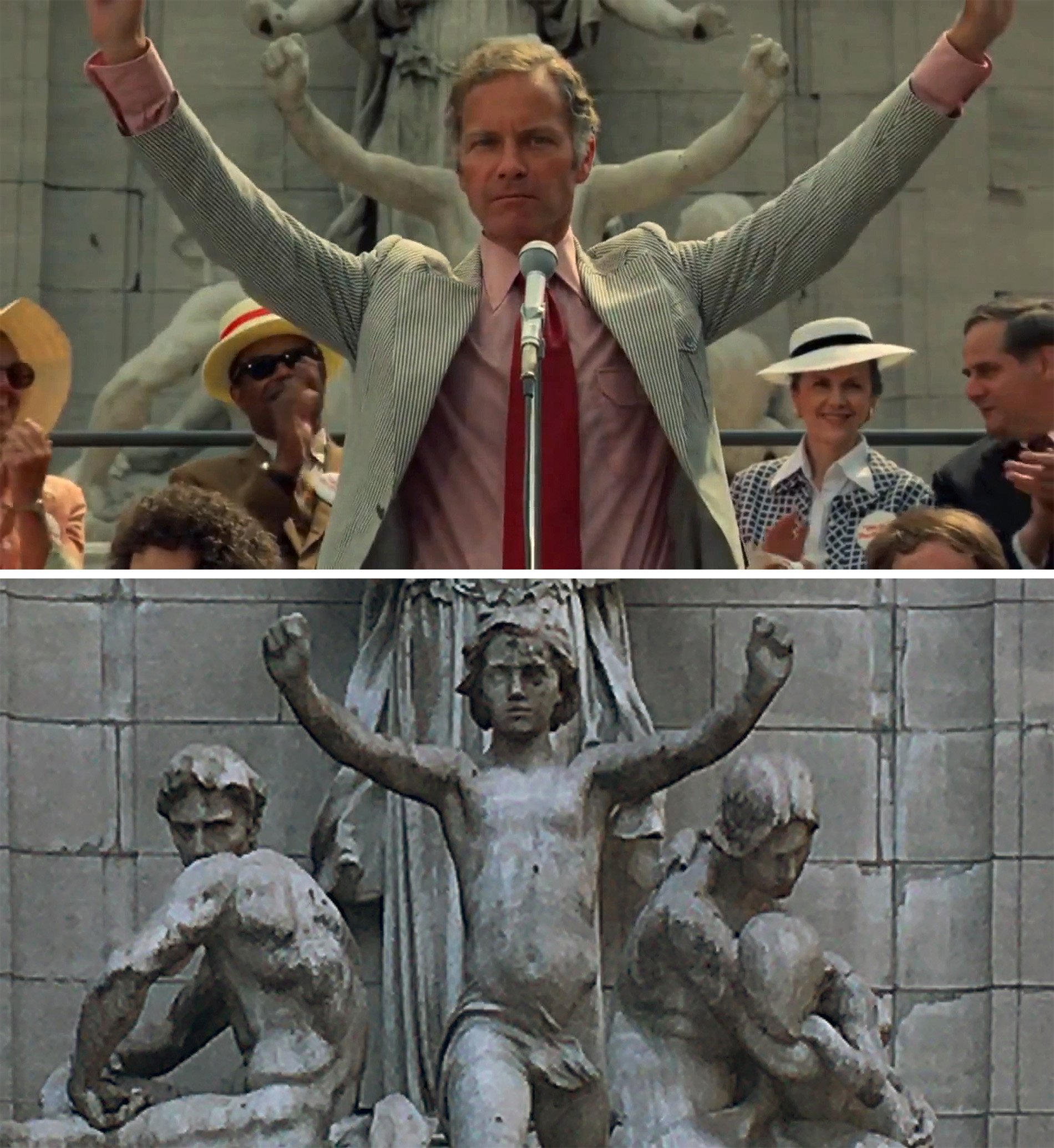
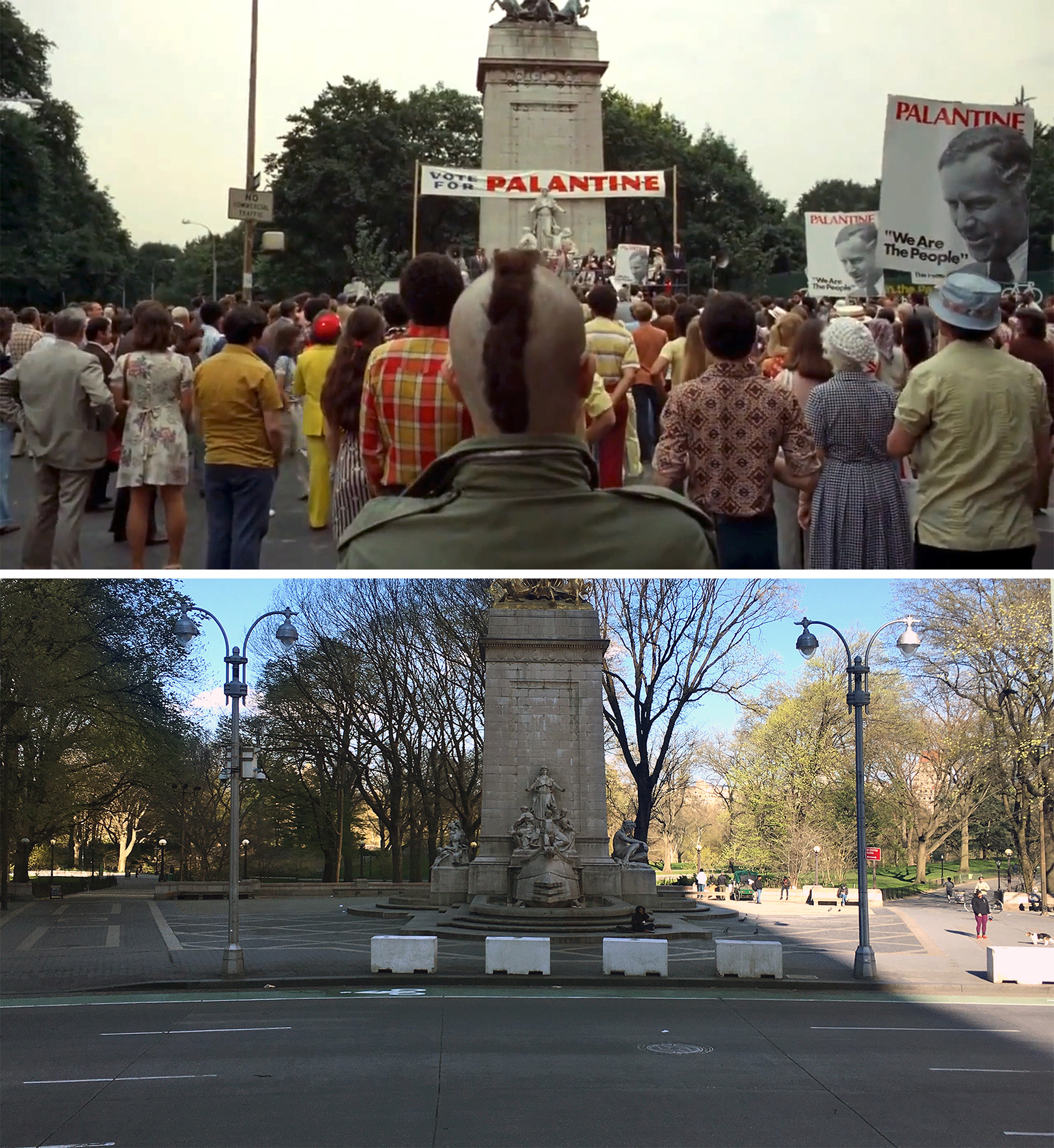

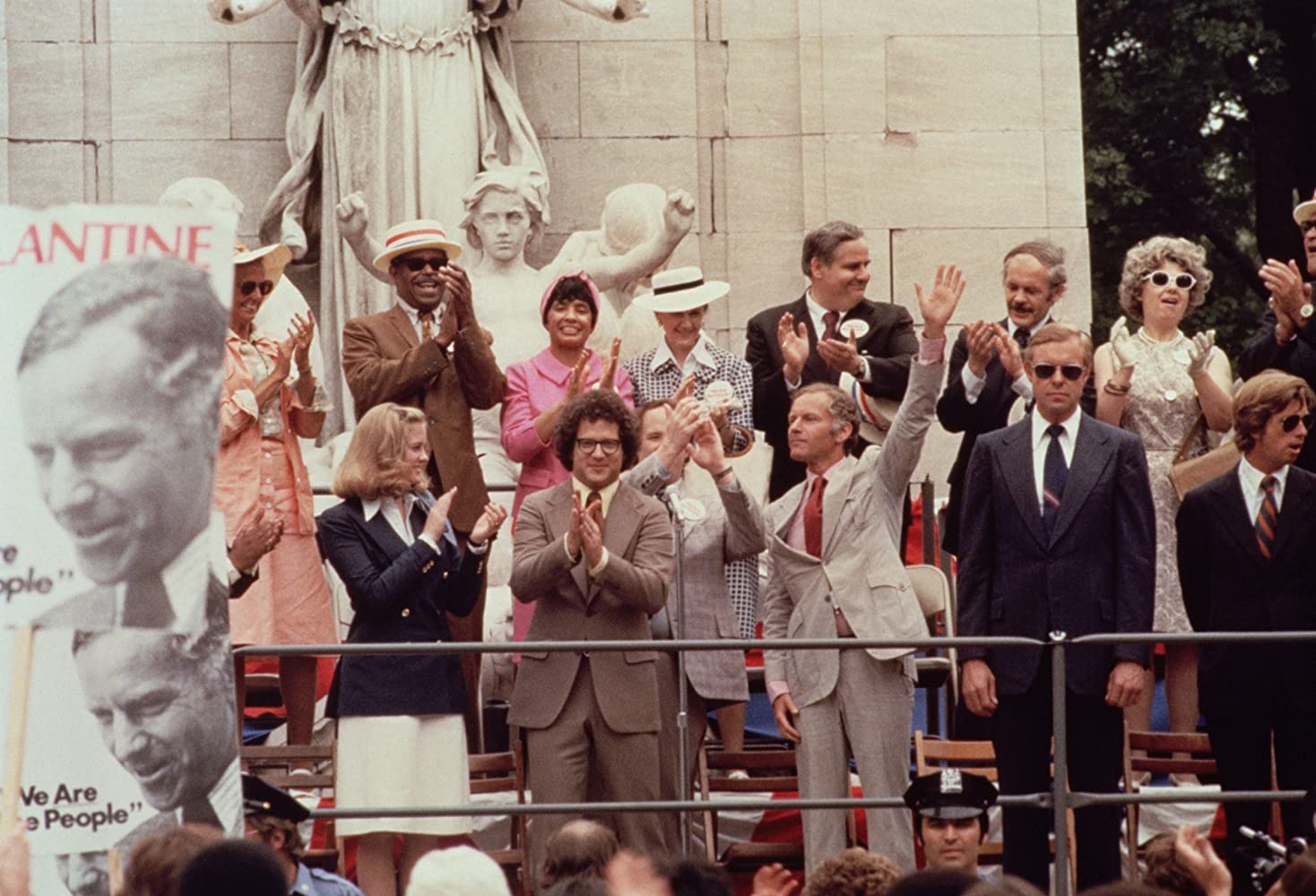
This was one of the more obvious filming locations, featuring the well-known USS Maine National Monument at Columbus Circle, dedicated to the men killed aboard the ship that sunk in 1898. The 57-foot-high monument stands at the southwestern entrance to Central Park, and has been a popular filming location over the years.
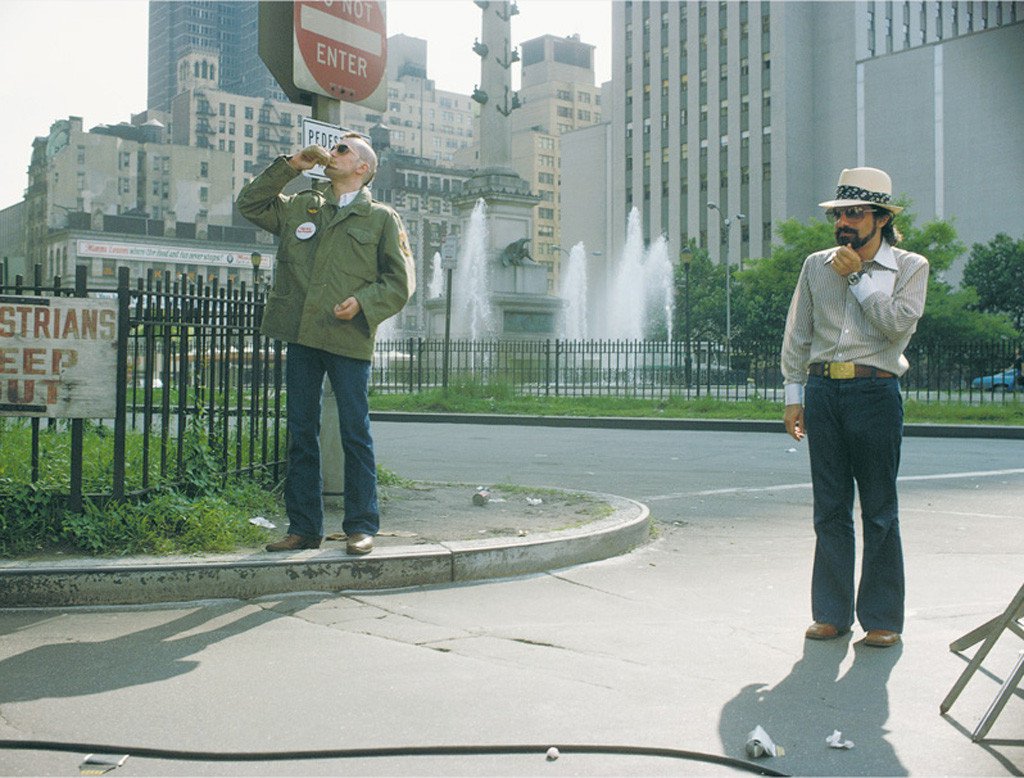
However, I’m assuming Scorsese specifically chose Columbus Circle for this assassination-attempt scene due to it being the same place where Mafia boss Joseph Colombo Sr. was shot during a rally.
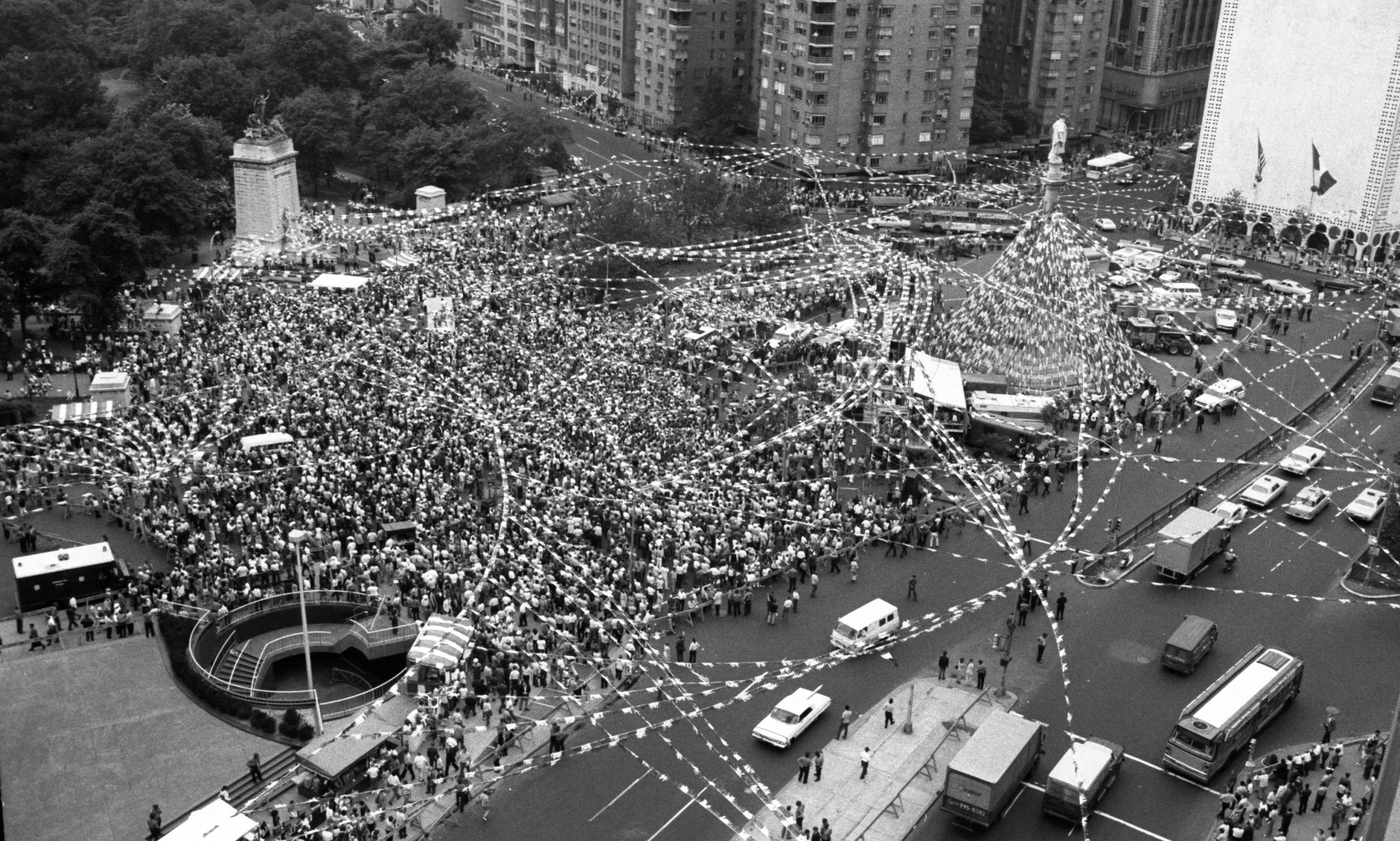
The assassination attempt occurred on June 28, 1971, so it was probably still fresh in the minds of New Yorkers when this movie was being filmed.
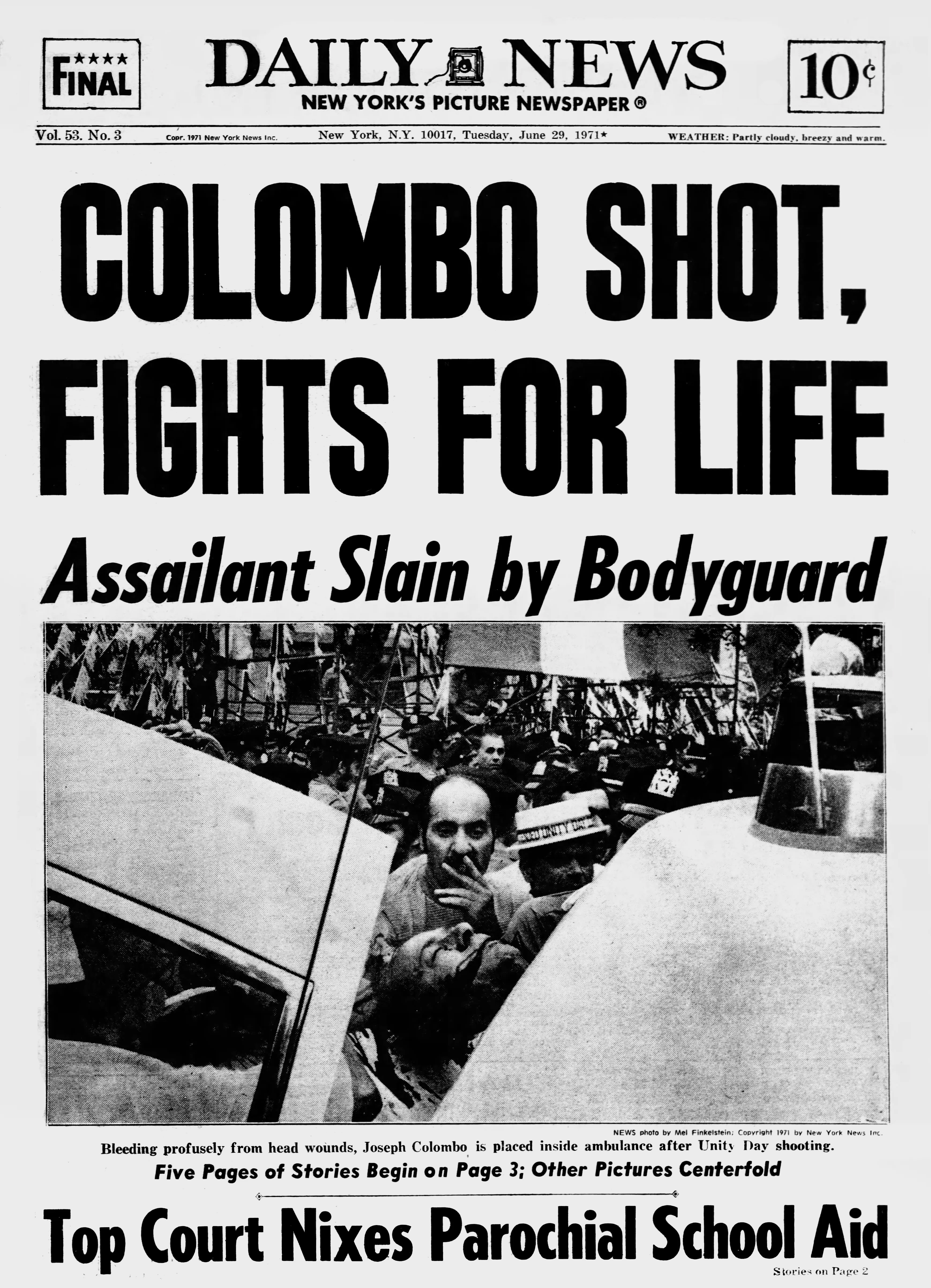
Colombo was paralyzed from the shooting and died seven years later of cardiac arrest on May 22, 1978 at St. Luke’s Hospital in Newburgh, NY.
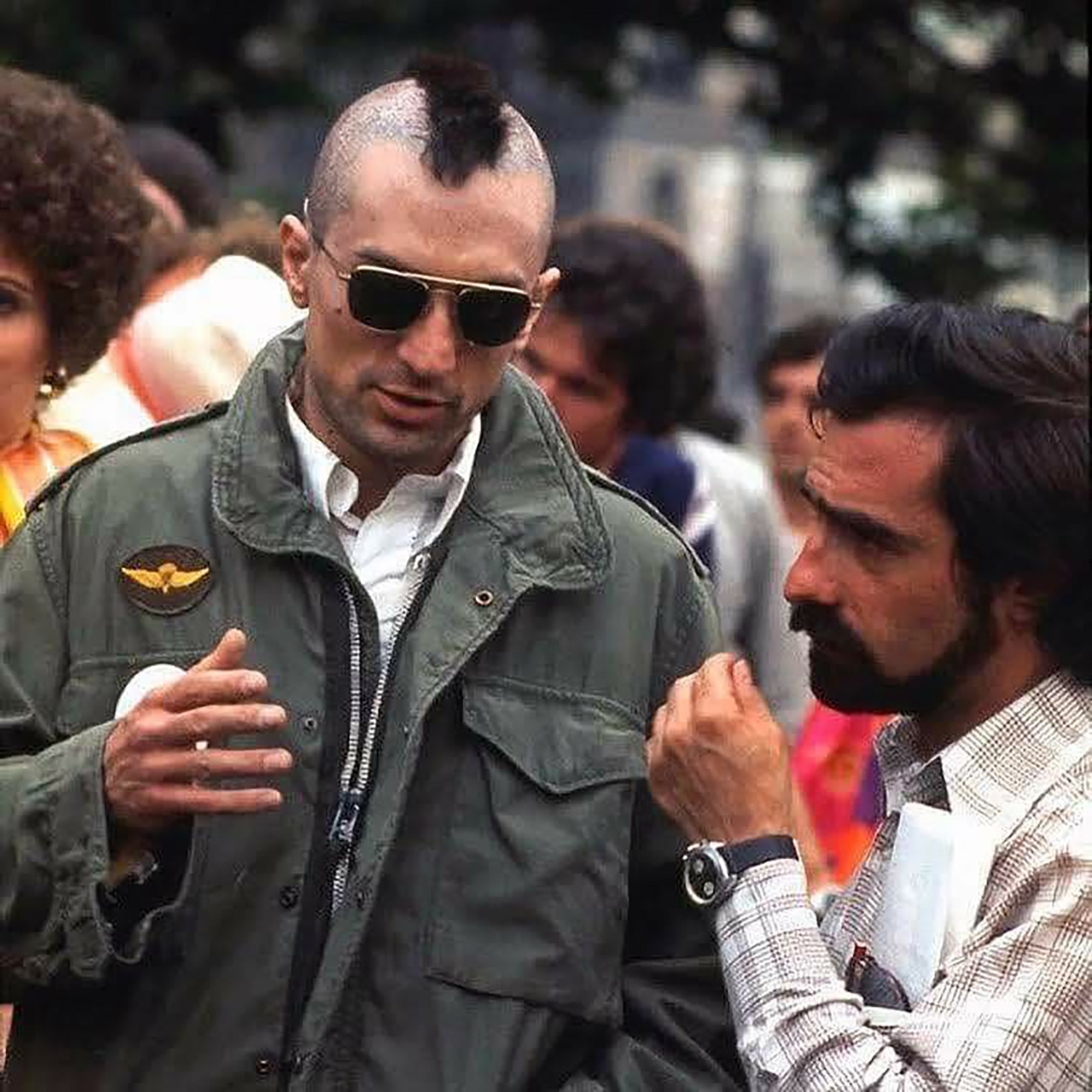
Of course, this scene is also notable for being the first to show Travis Bickle’s emblematic mohawk haircut. For a long time, I assumed De Niro had actually shaved his head, but it was in fact a latex cap, created by award-winning make-up artist Dick Smith.

According to De Niro, the latex application limited his movement, because too much motion could cause the cap to come unstuck. But it was sort of fortuitous, as this limitation added something to his character, reinforcing Travis’ rigid and unnerving demeanor.
Killing Spree
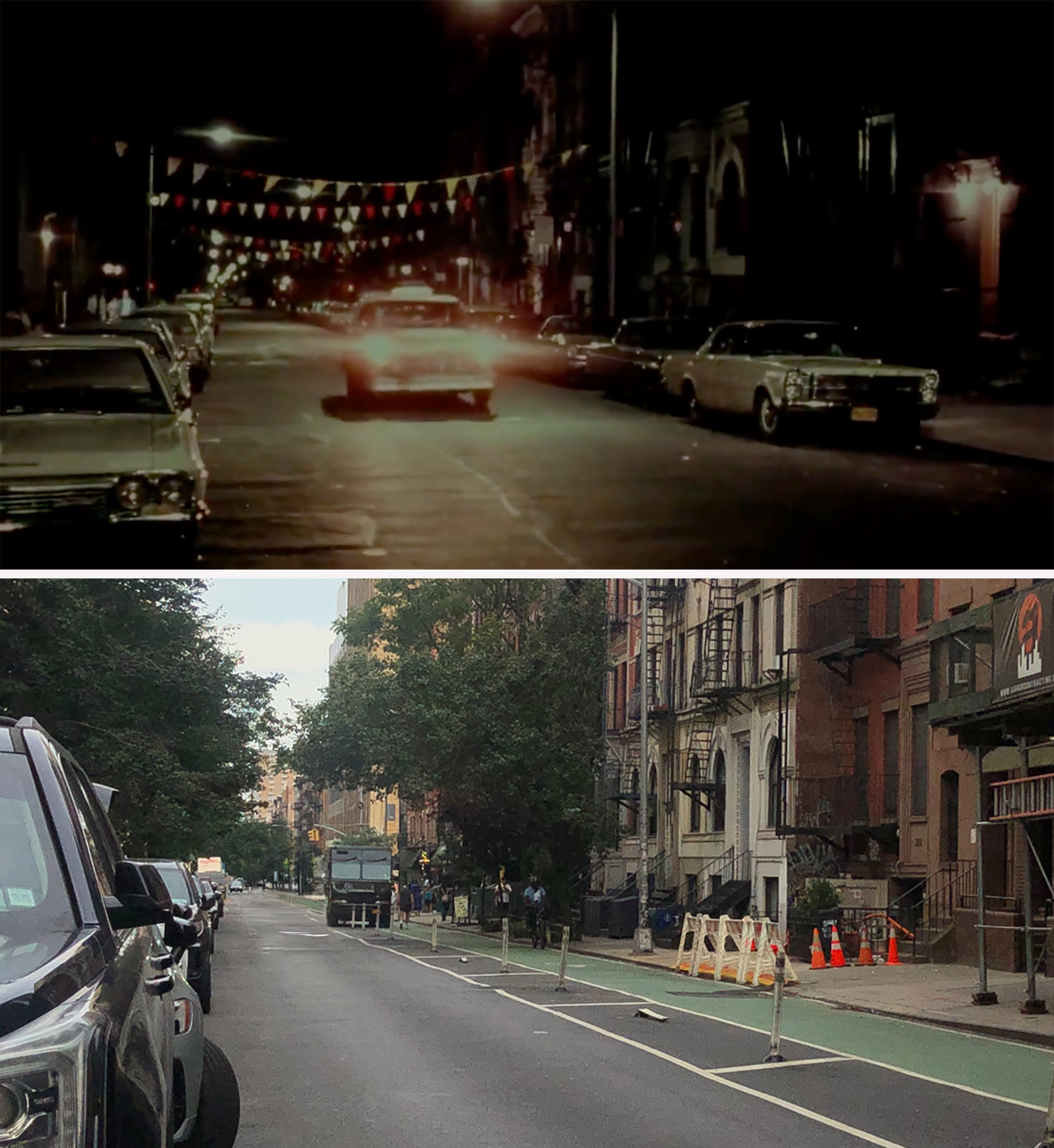
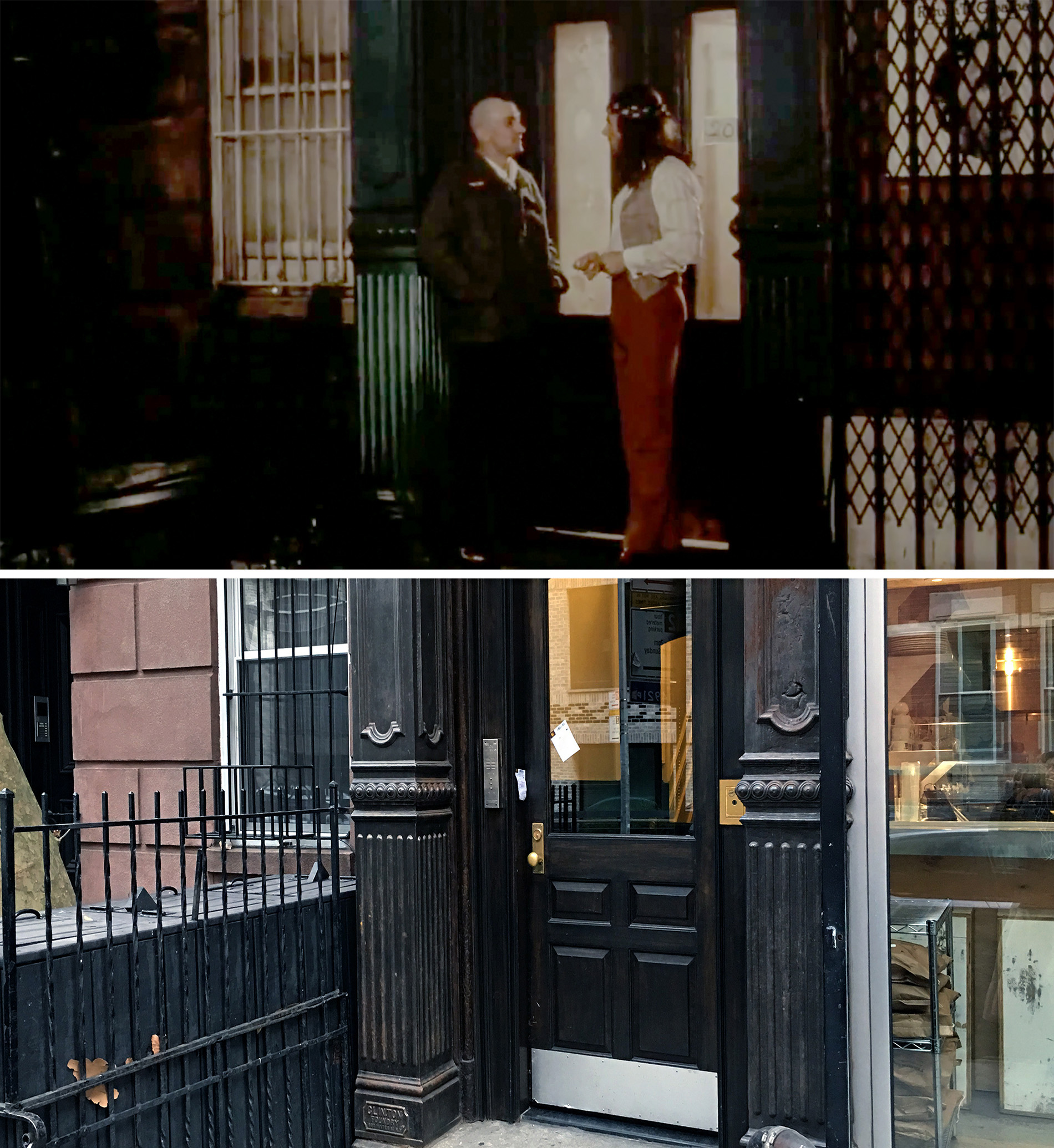
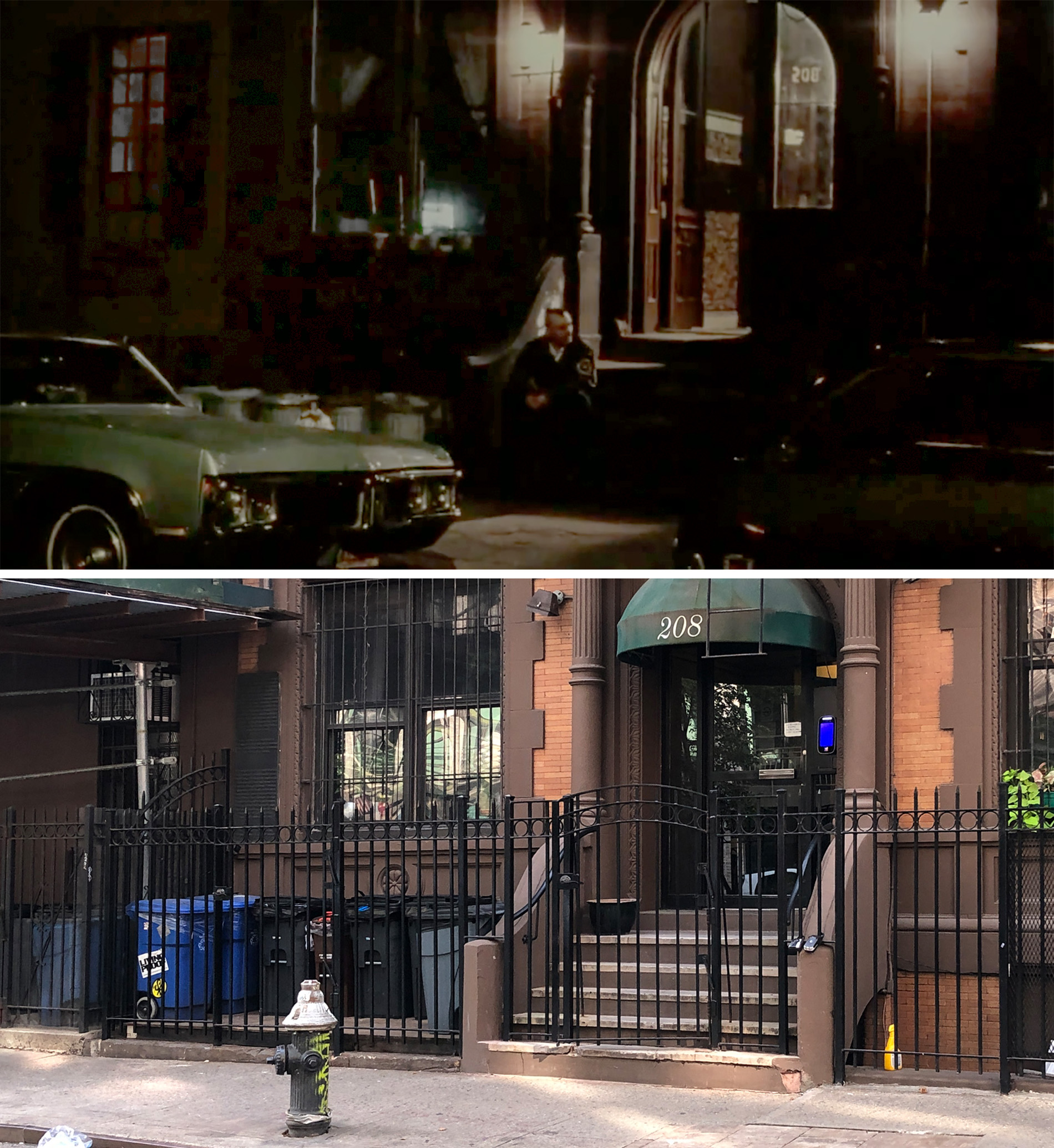
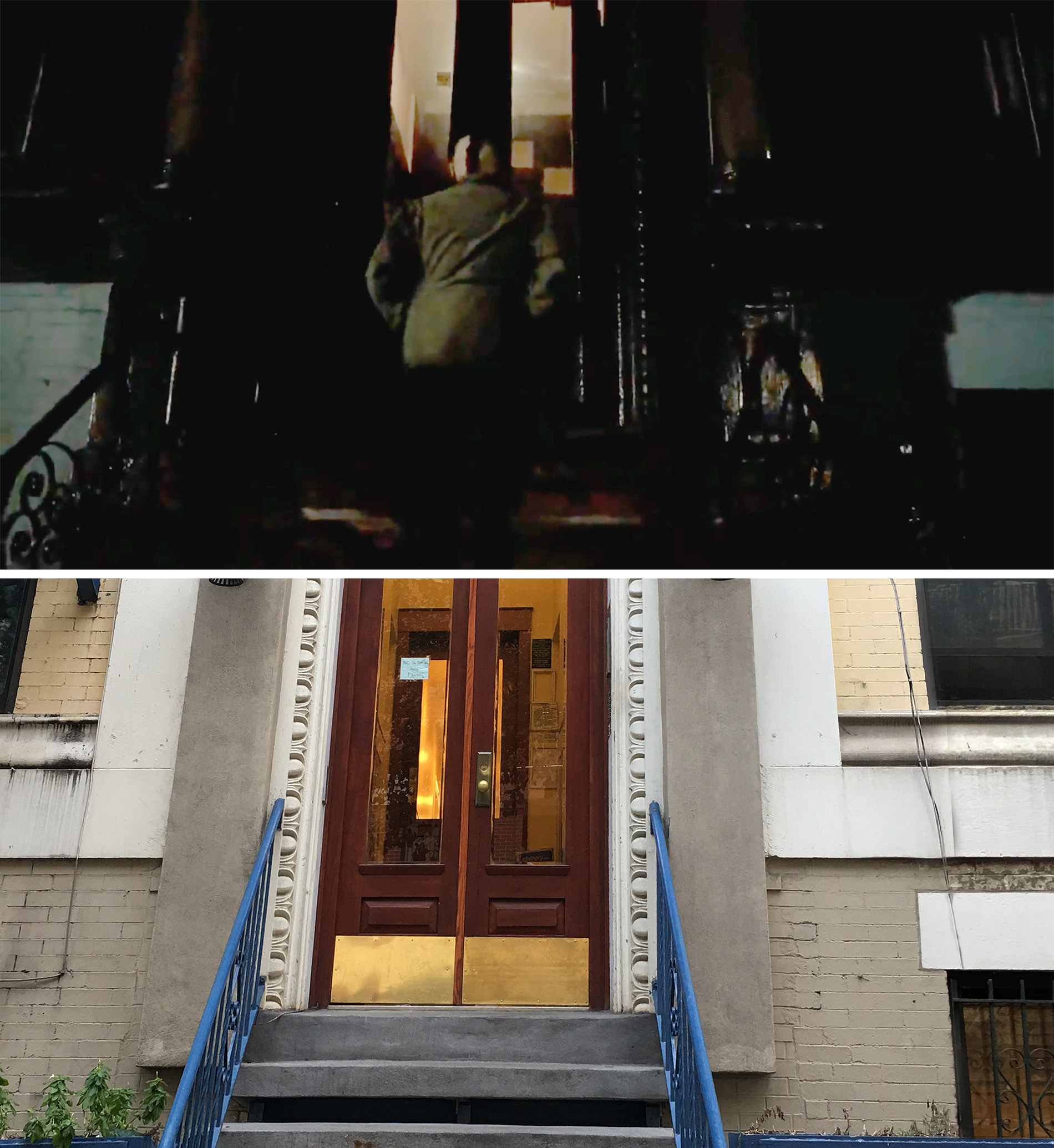
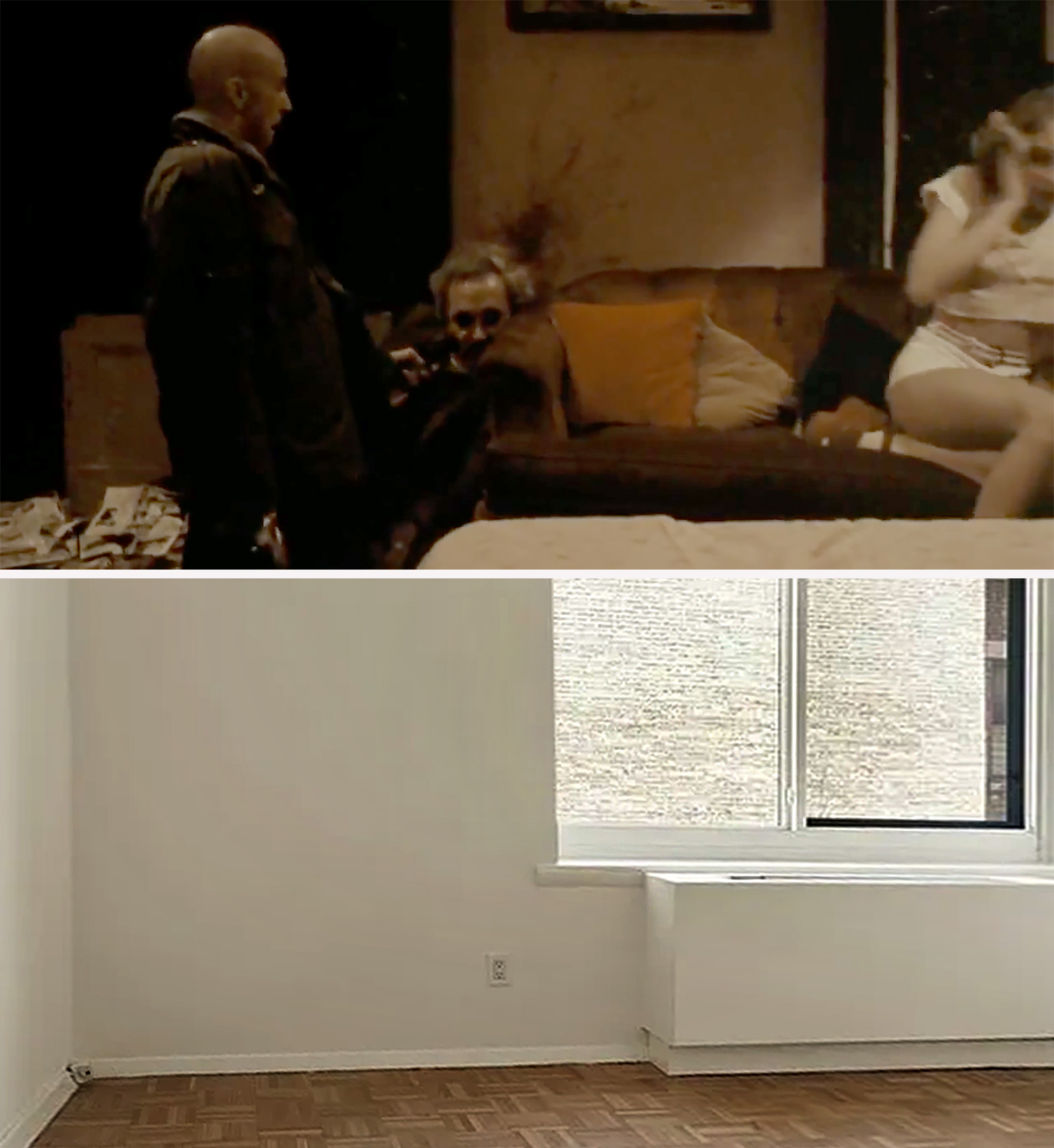
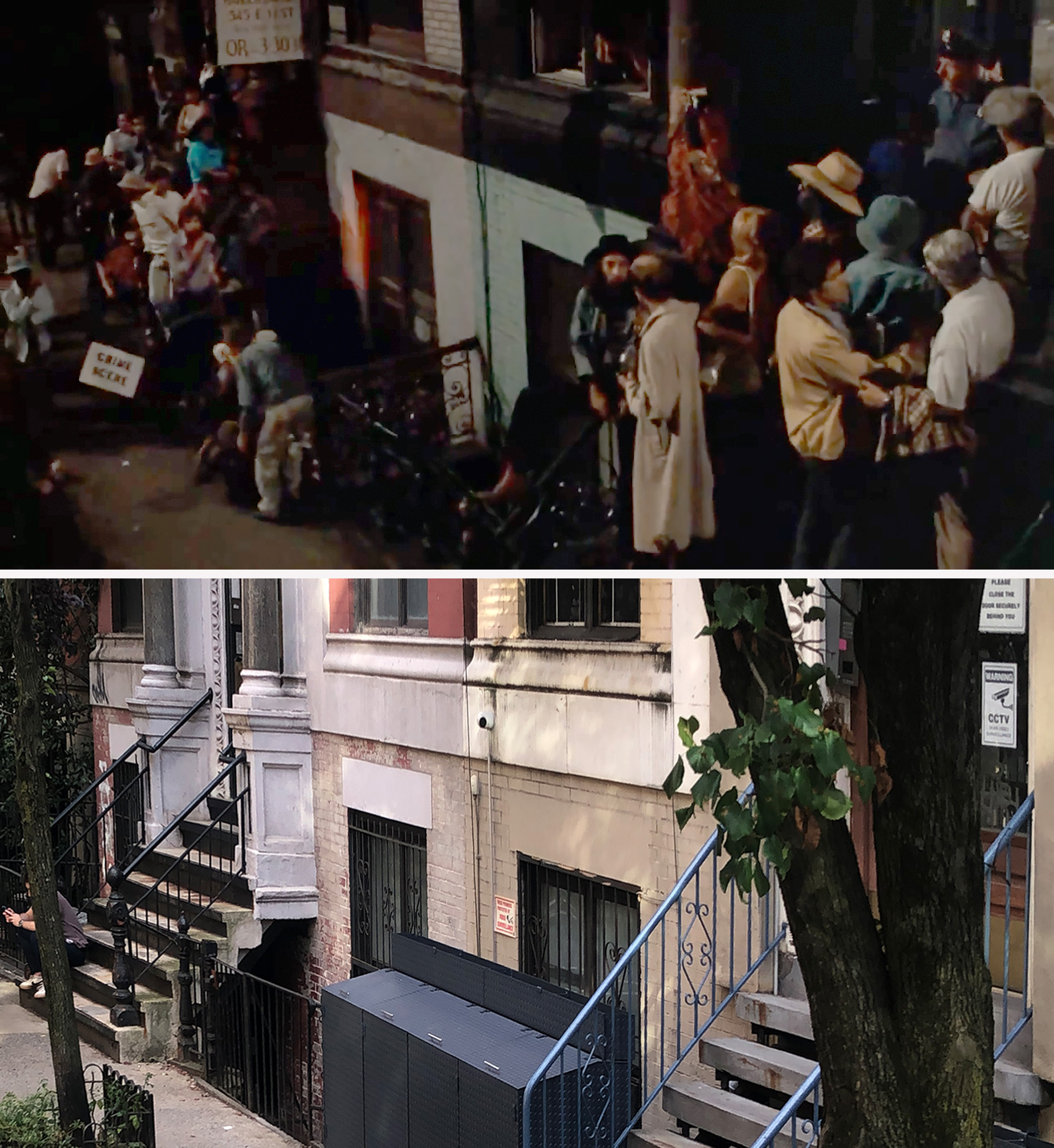
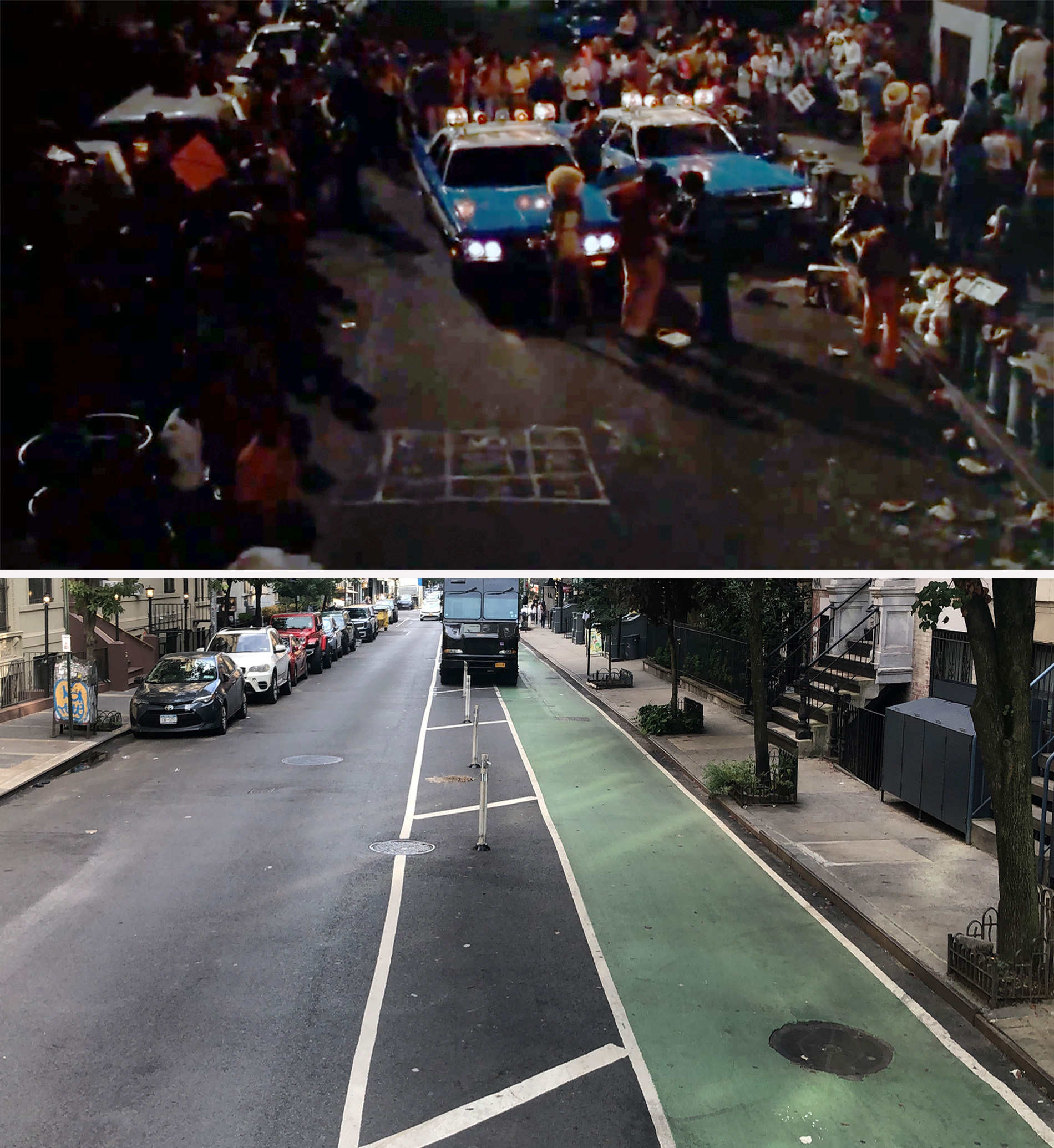
As mentioned before, the exterior of the brothel was on 13th Street, but the interiors were all filmed about six miles away inside an abandoned building at 586 Columbus Avenue.
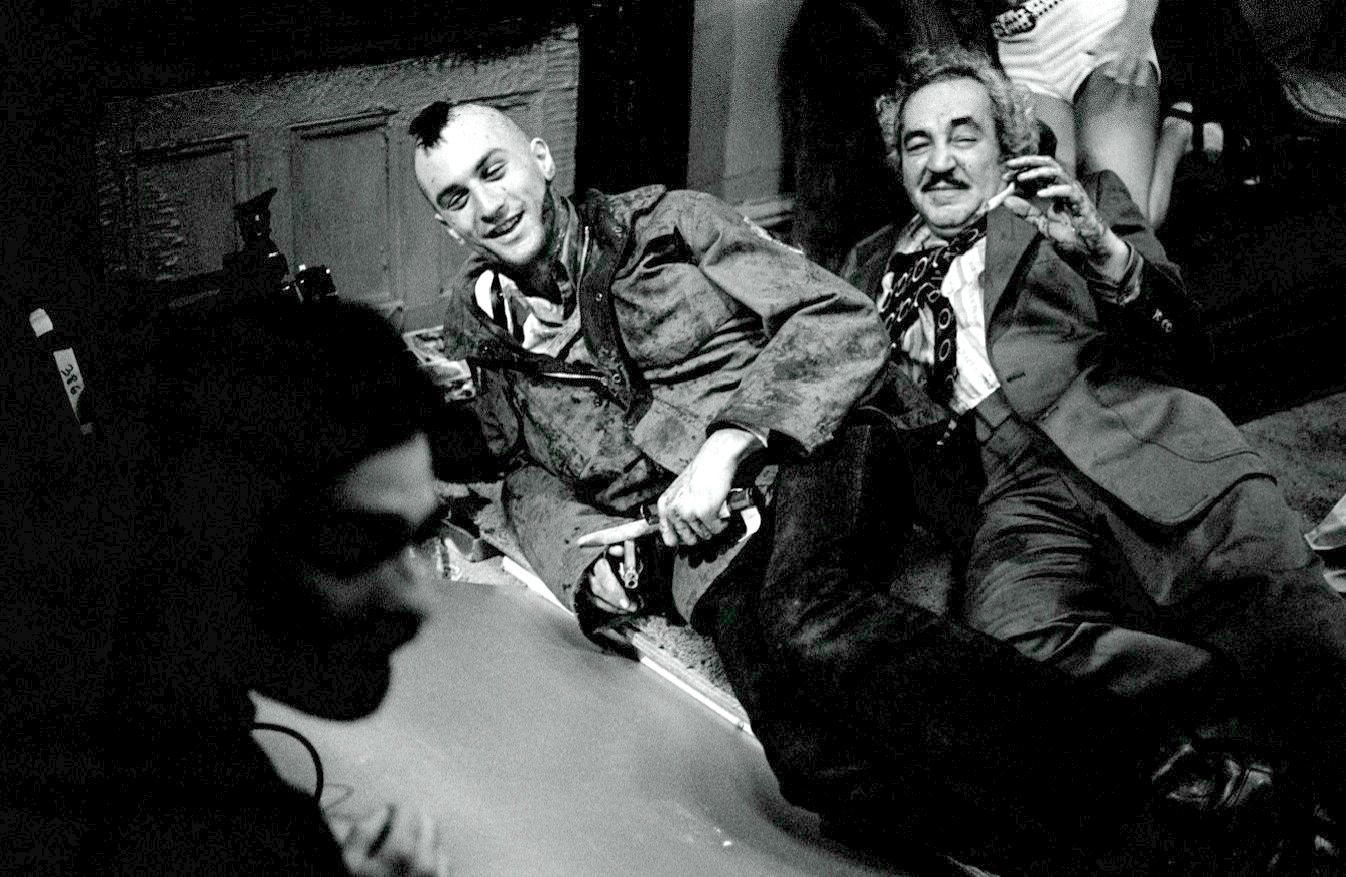

With the building being vacant, Scorsese was able to cut a 15-foot-long open channel into the ceiling of Iris’s room for the slow-motion tracking shot at the end of this shootout.
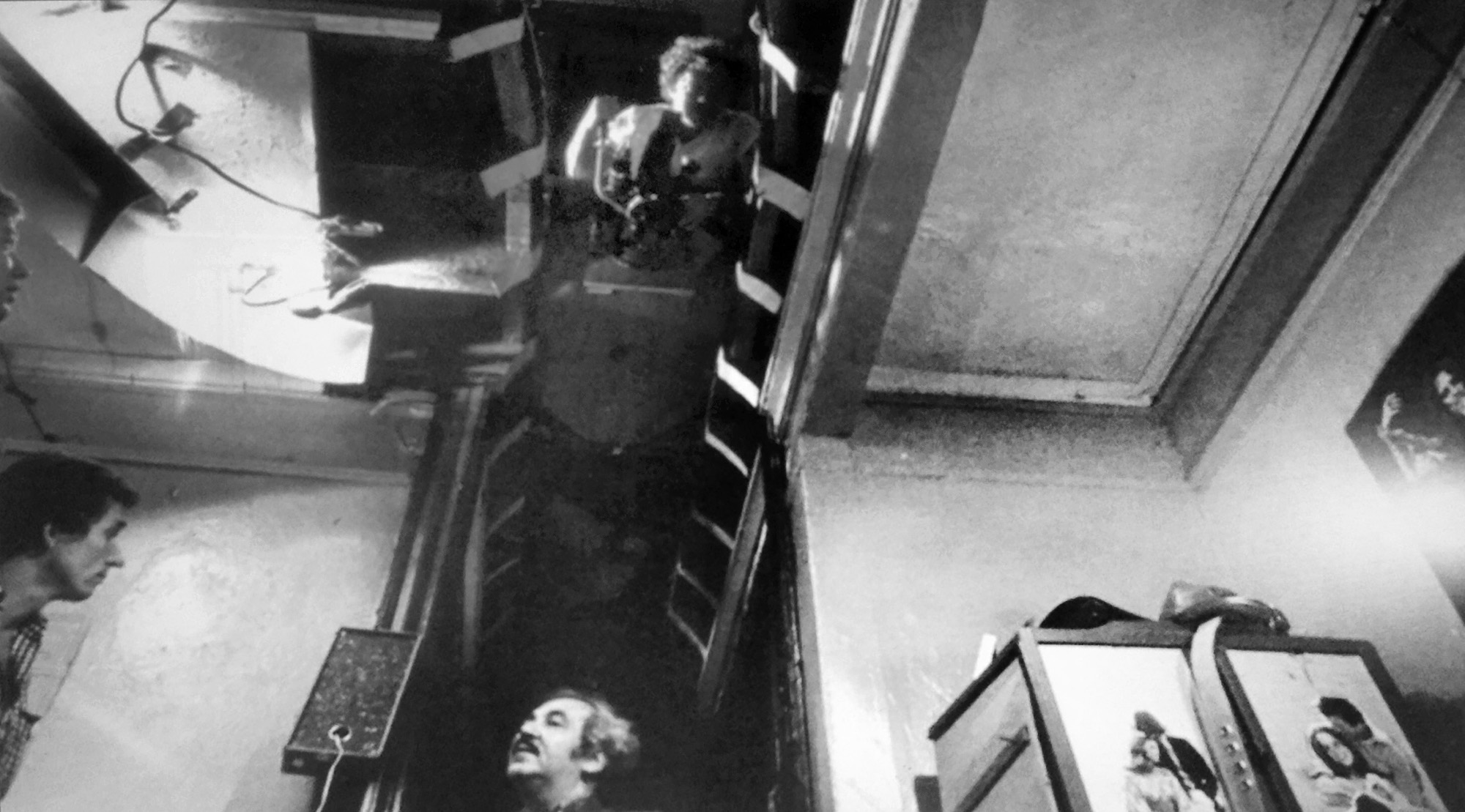
It’s this very last overhead shot that has convinced me that Travis Bickle died in the shootout and everything that follows is a hallucination as he drifts into an eternal sleep. Firstly, in the scene, he gets shot in the carotid artery, which would normally be quite fatal. Secondly, as he slowly drifts off, things switch to a floating overhead shot, which is a perspective often described by people who have had near-death experiences.
The disembodied shot continues outside as we float upwards in a slow, ethereal motion.
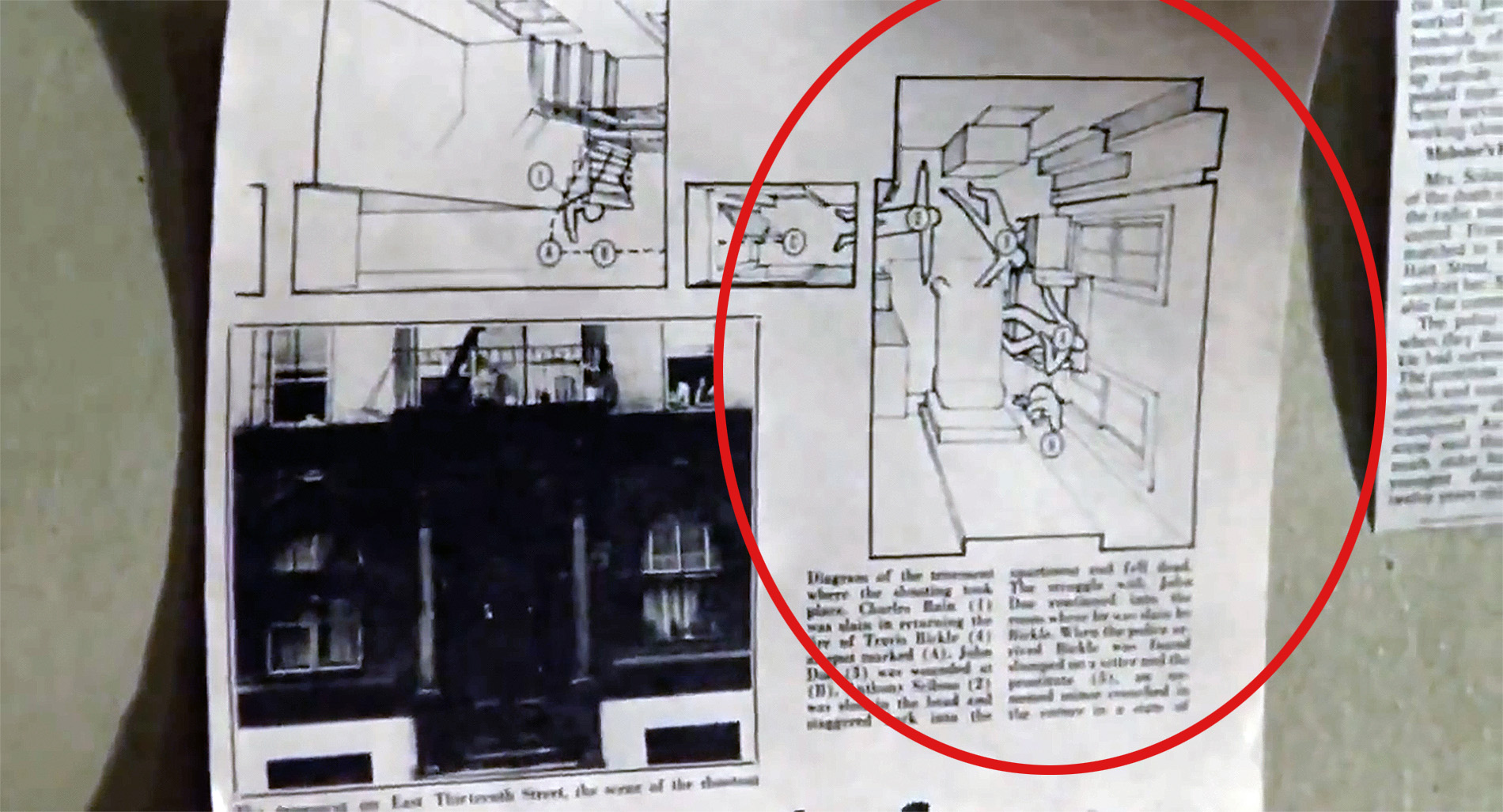
This overhead point-of-view is even present in the newspaper clipping in the next scene. A very odd perspective to be used in a news article.
This is accompanied by a voiceover of Iris’ father who gives this overly grateful response to Travis’ crazed attack. And it’s followed by an even more improbable scene where Betsy astonishingly ends up in Travis’ cab and is suddenly completely enamored with him. This, for me, all adds up to a fantasy in the head of a dying man.
I know my interpretation of the ending is in the minority, and neither Scorsese nor screenwriter Paul Schrader have indicated that Travis died at the end. However, what makes this movie so phenomenal is that one can find a different meaning to the ending, even if it wasn’t the intention of the filmmakers.
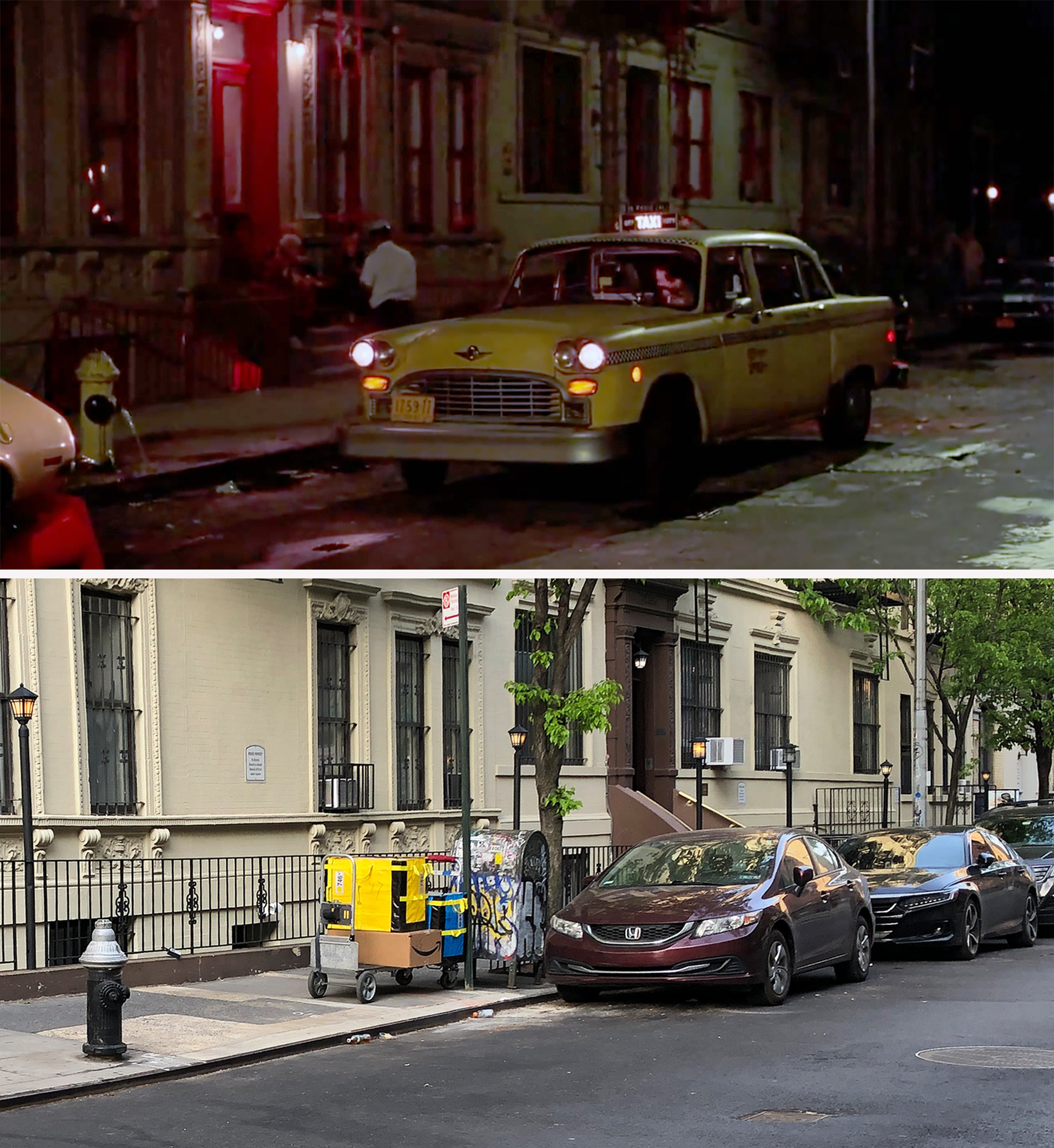
Betsy’s Apartment
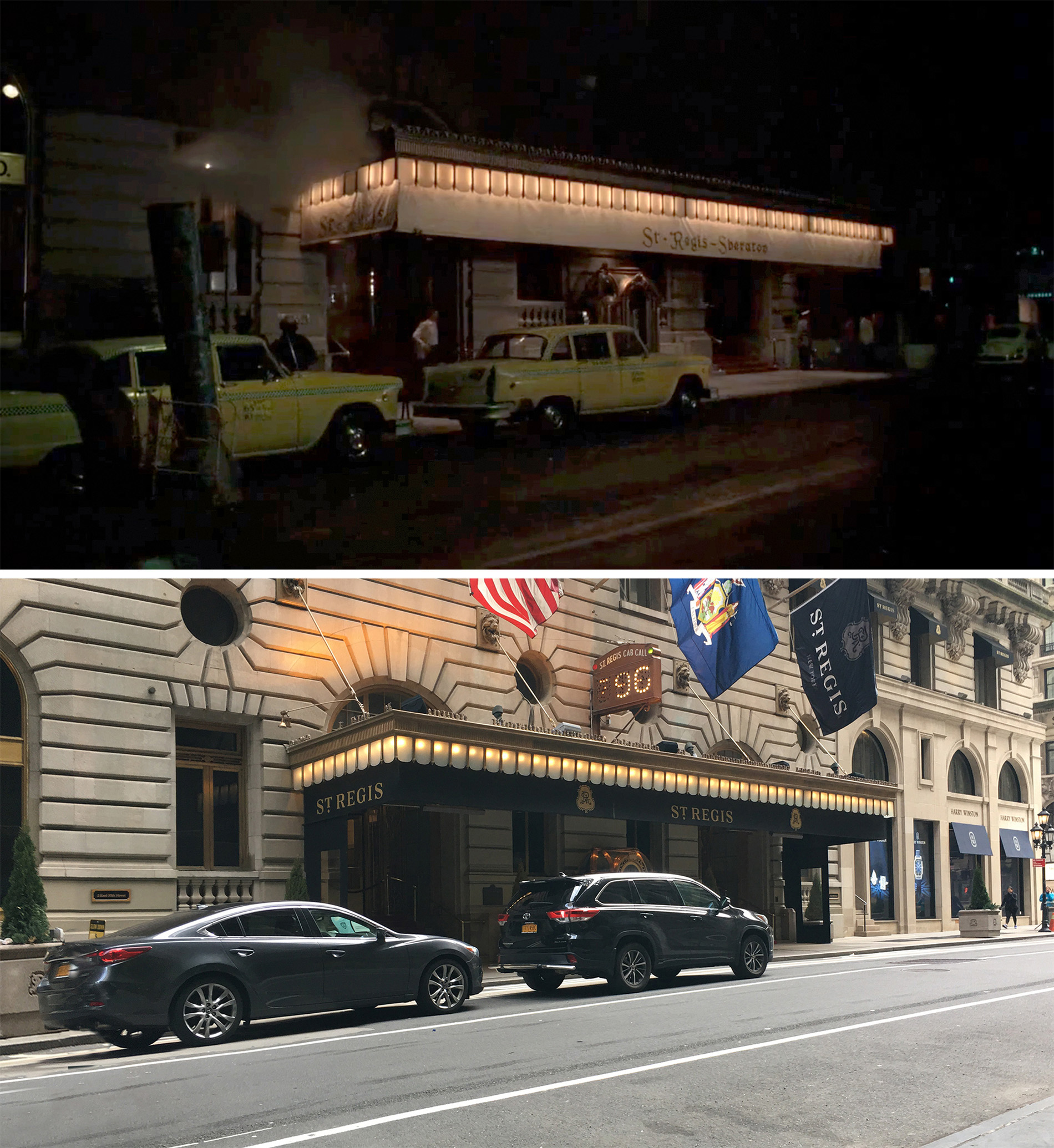
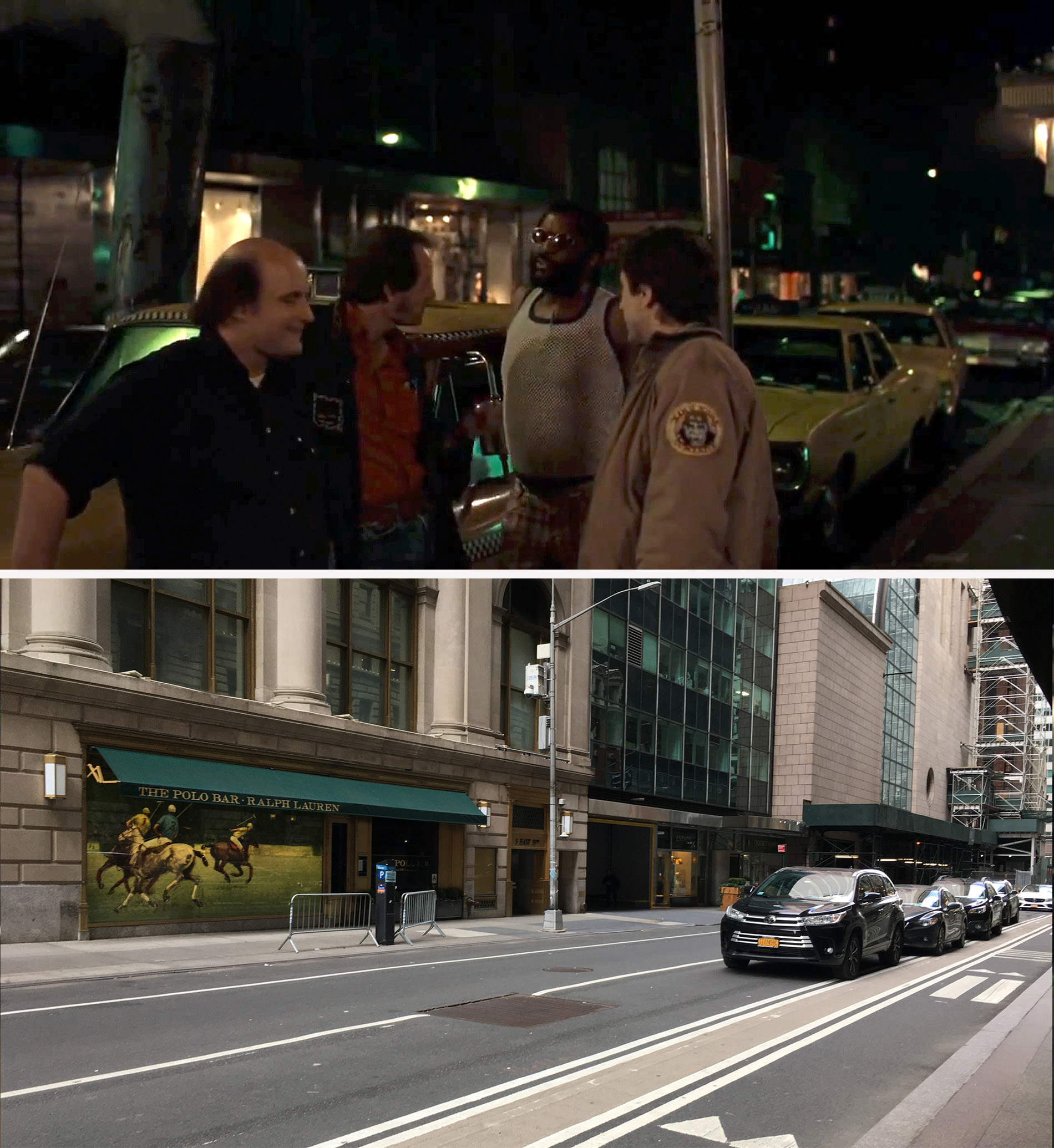
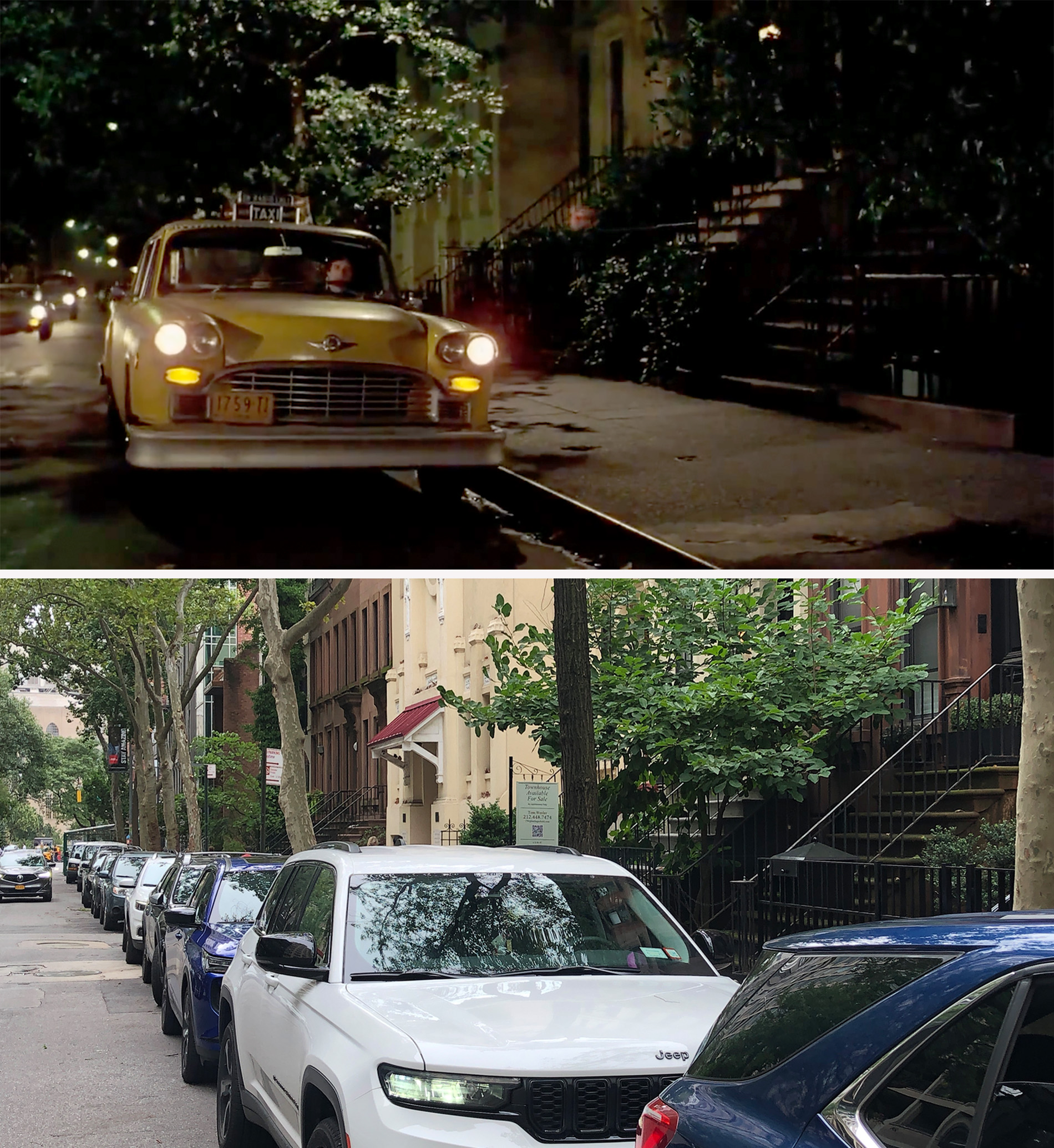
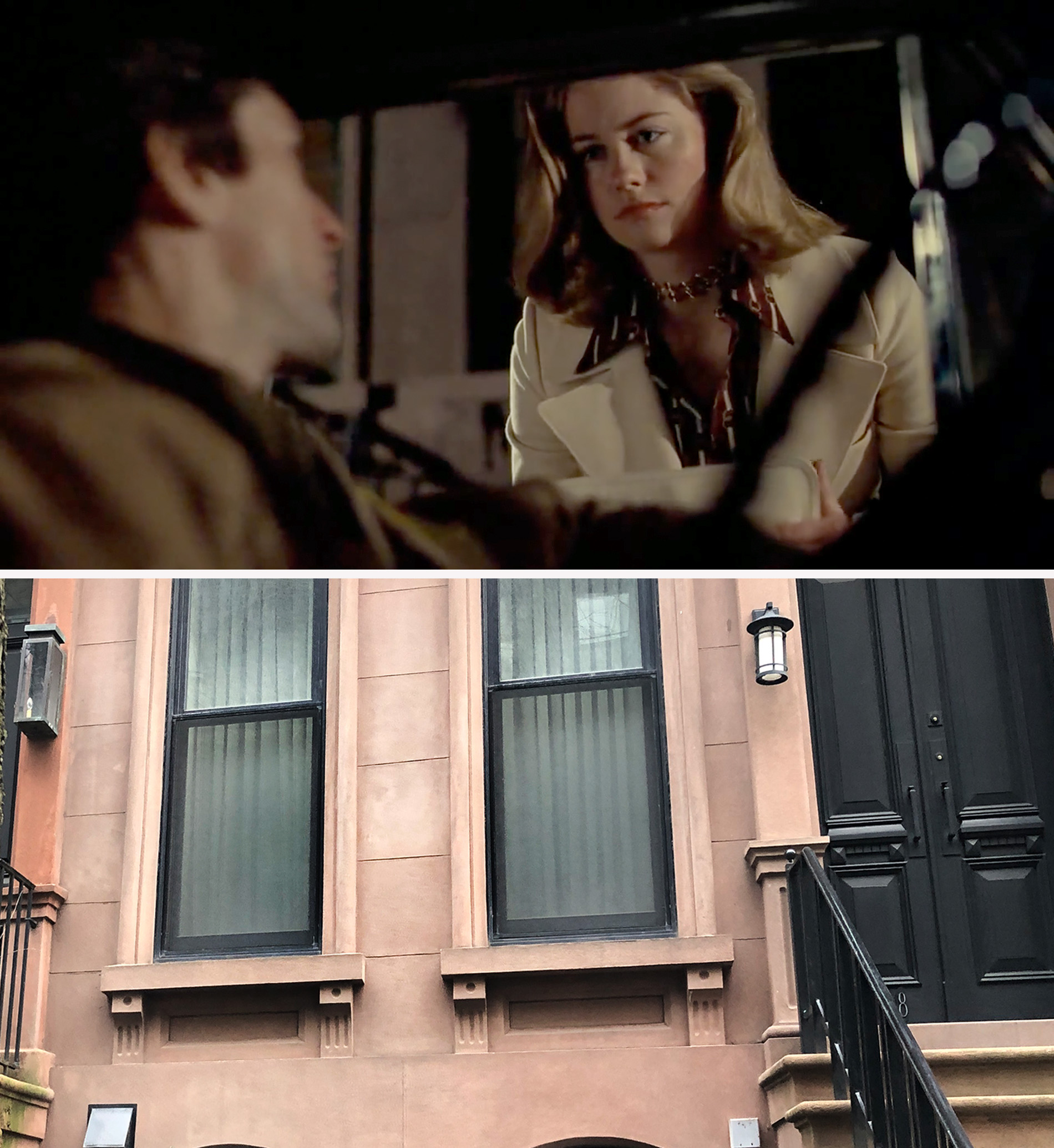
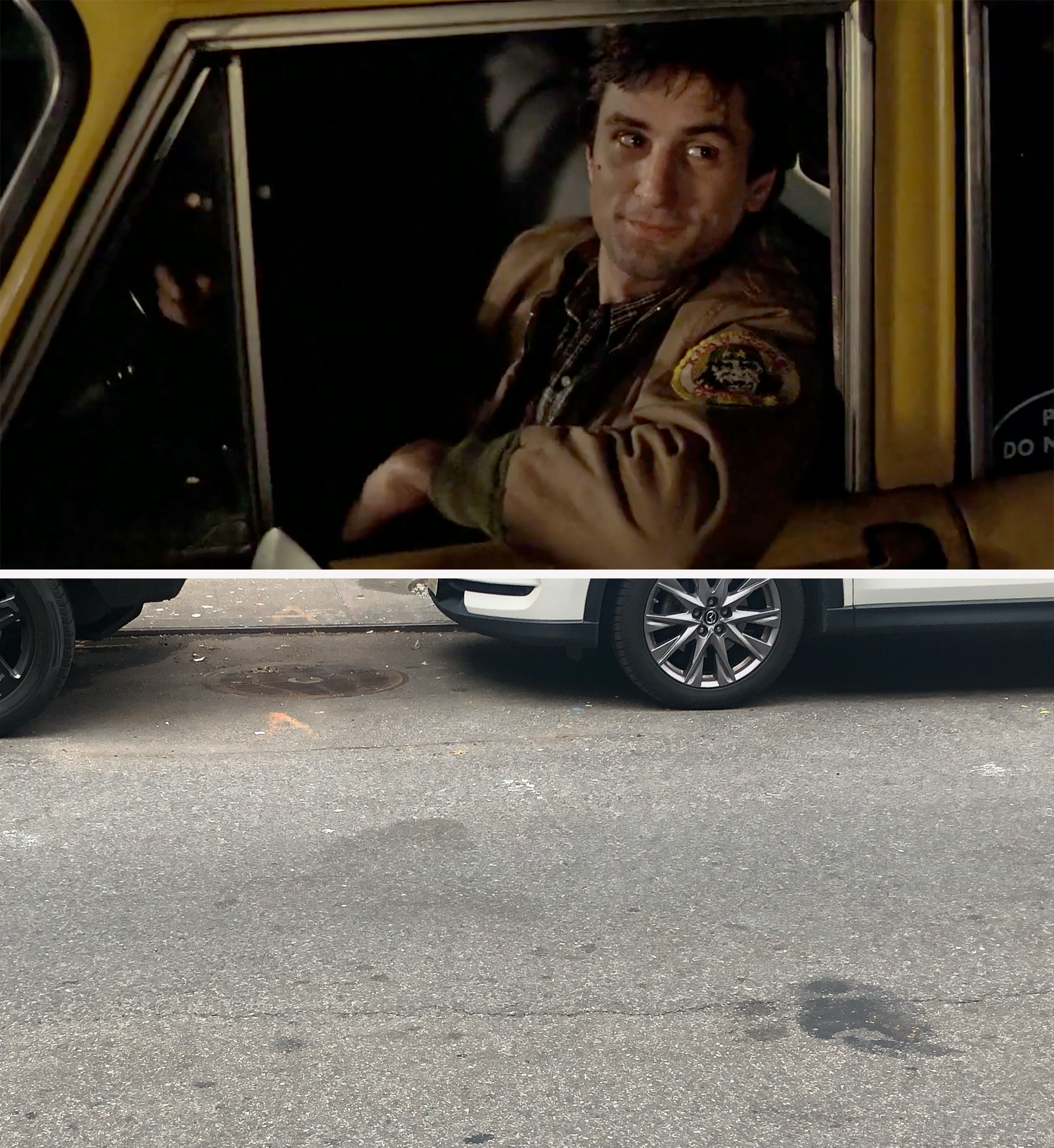
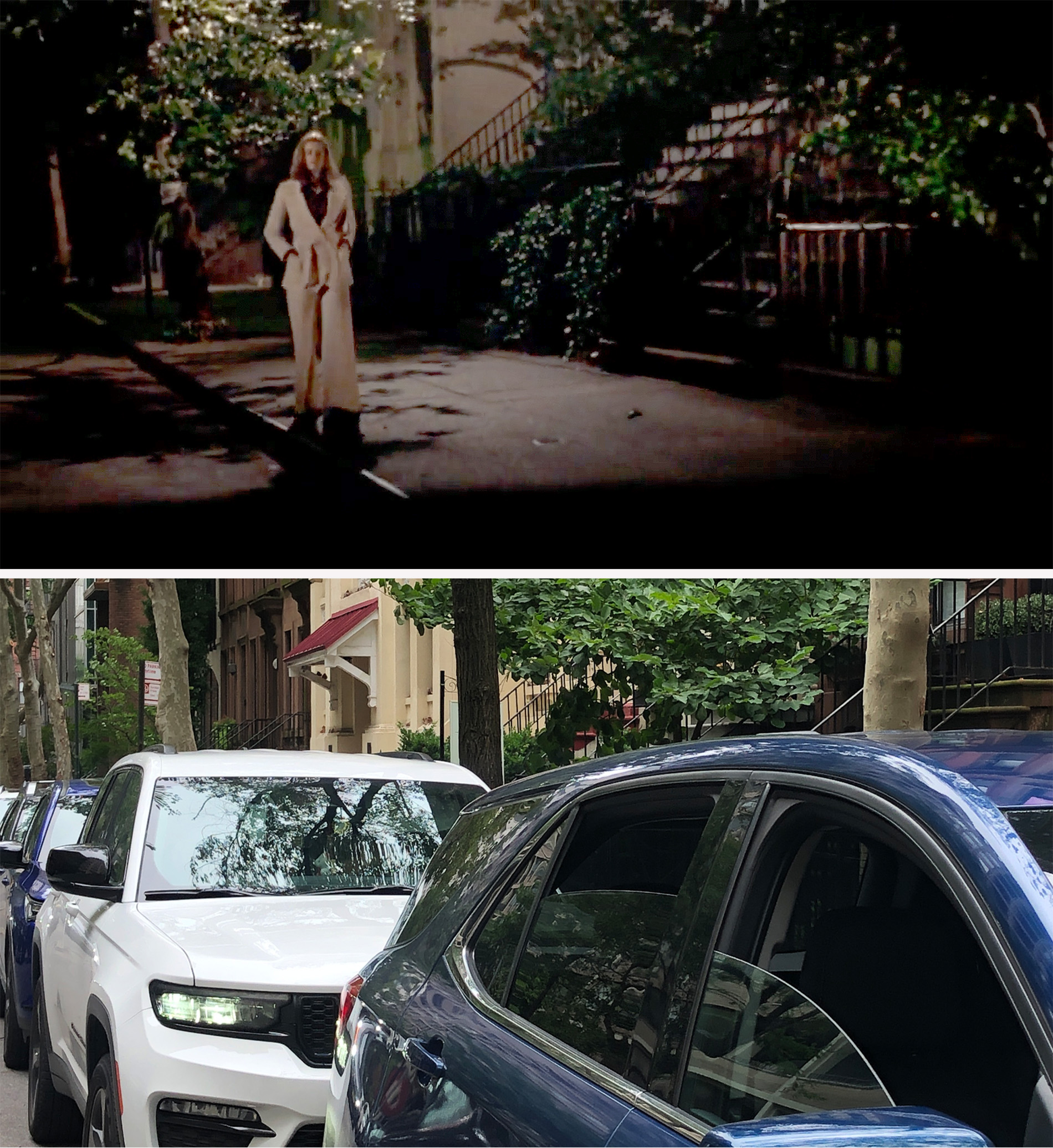
This very last location of Betsy’s apartment was a longtime mystery, but was solved thanks to the help of Robert Egan of PopSpots.
After seeing my post on Crocodile Dundee and the location of one of the character’s East Side apartment, it reminded Egan of Betsy’s apartment, and he sent me an email to pass on his previous findings.
Interested in identifying the location, the chief clue he focused on was what looked like a church next to the brownstones.
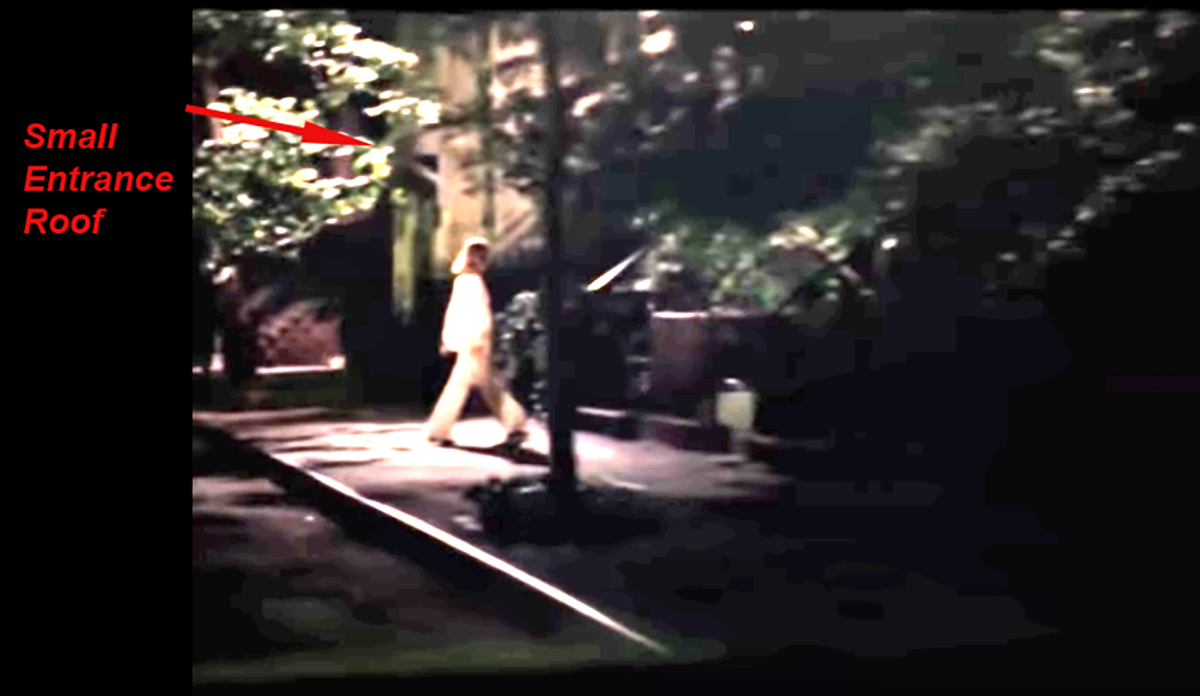
Then from time to time, Egan would troll up and down the streets of the Upper East Side in Google Street View looking for the church. But in the end, he just happened to run across the location by accident while walking around the city one day. It was one of those random, double-take moments that has only happened to me once or twice.
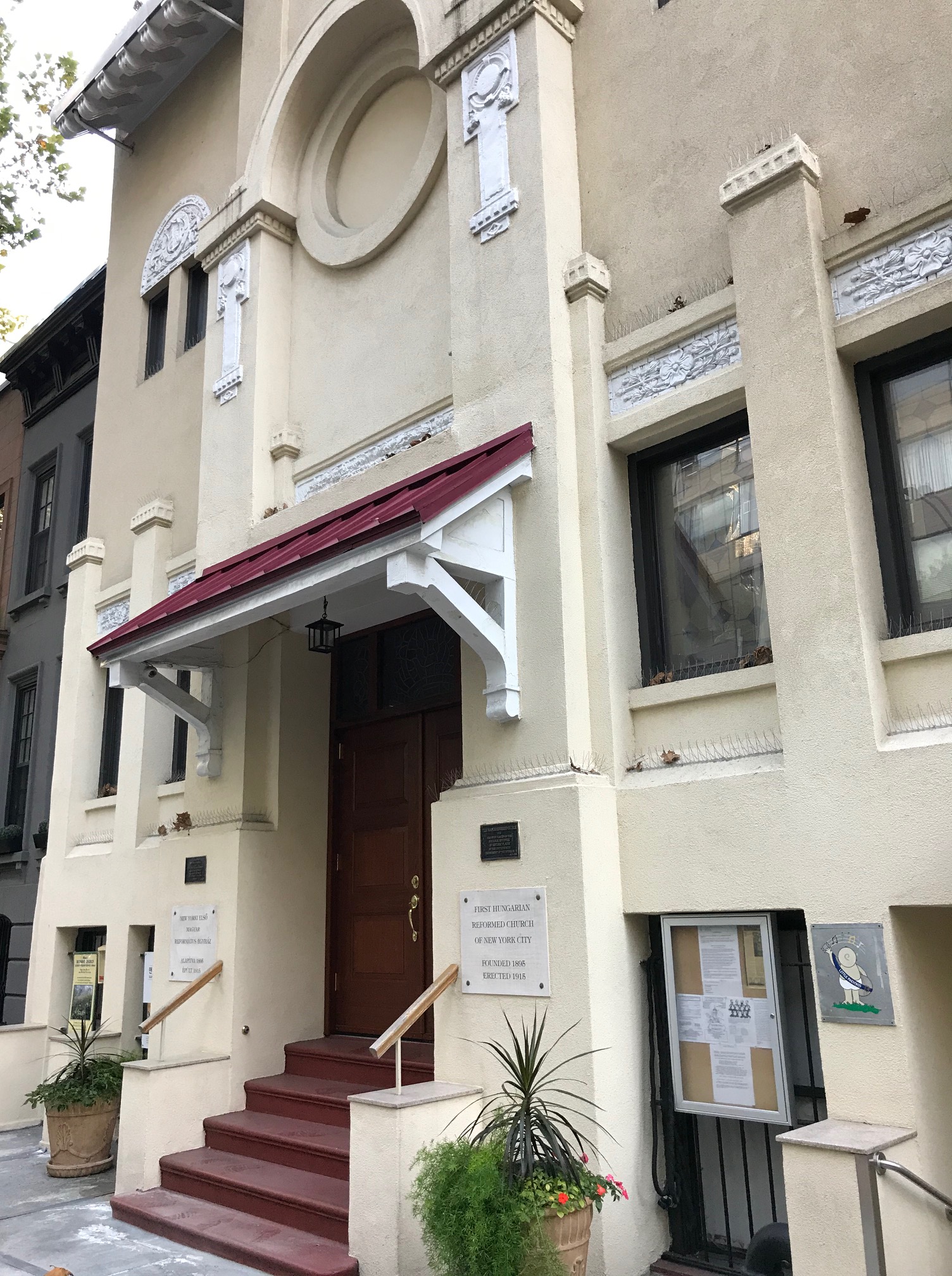
And with his help, I was able to close the case on this missing location, which in turn, helped conclude my research into Taxi Driver.
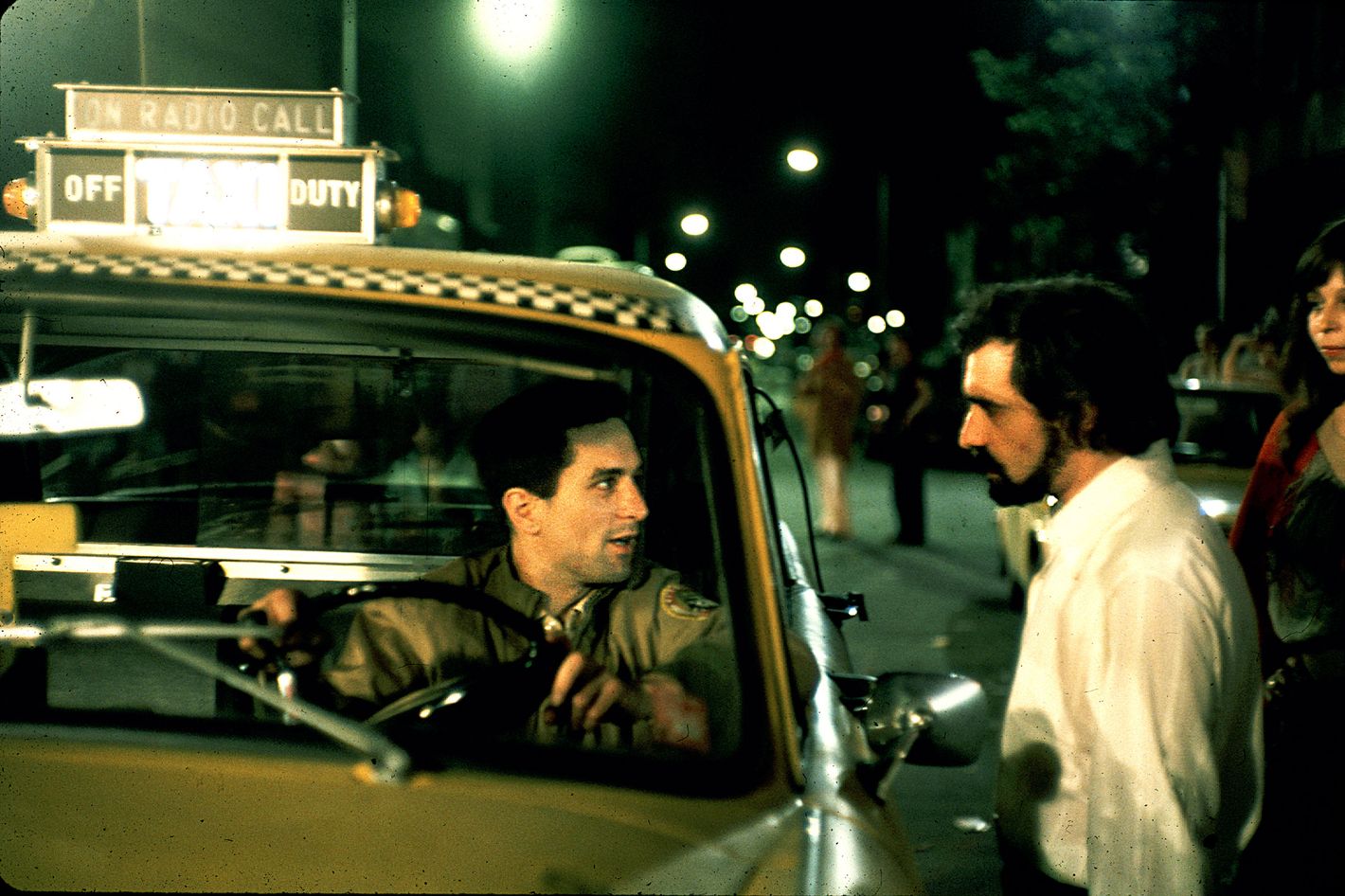
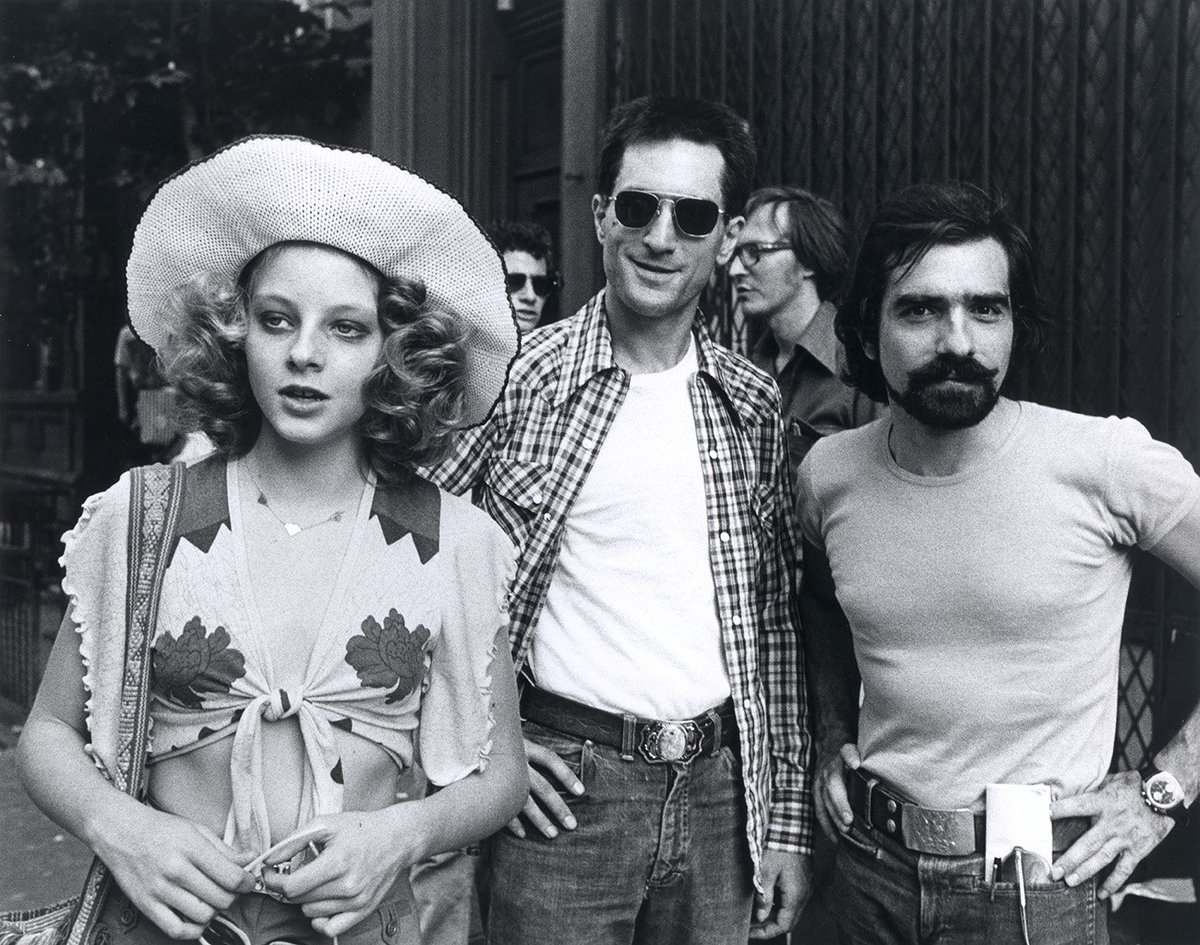
There’s not much I can say about this movie that hasn’t already been said before. Its depiction of abject loneliness, juxtaposed with a depraved city overcome with stygian darkness, creates both a heartbreaking and revolting experience for the viewer. It can also give glee to those who latch onto Scorsese’s black humor that sneaks into the peripherals of the film.
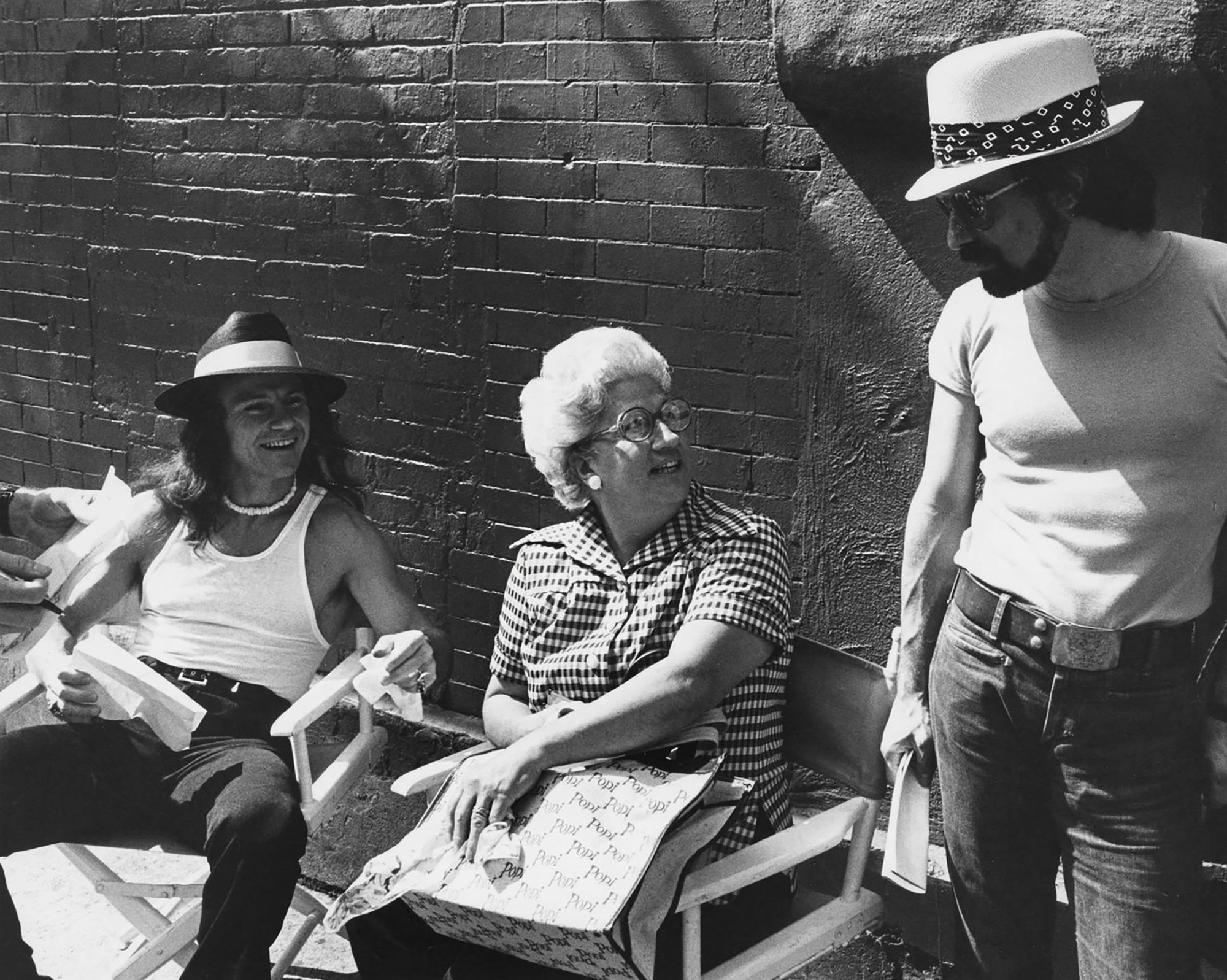
Bearing a resemblance to exploitative films of the era, Taxi Driver succeeds as an elevated piece of storytelling, thanks to a serendipitous convergence of old and new talent.
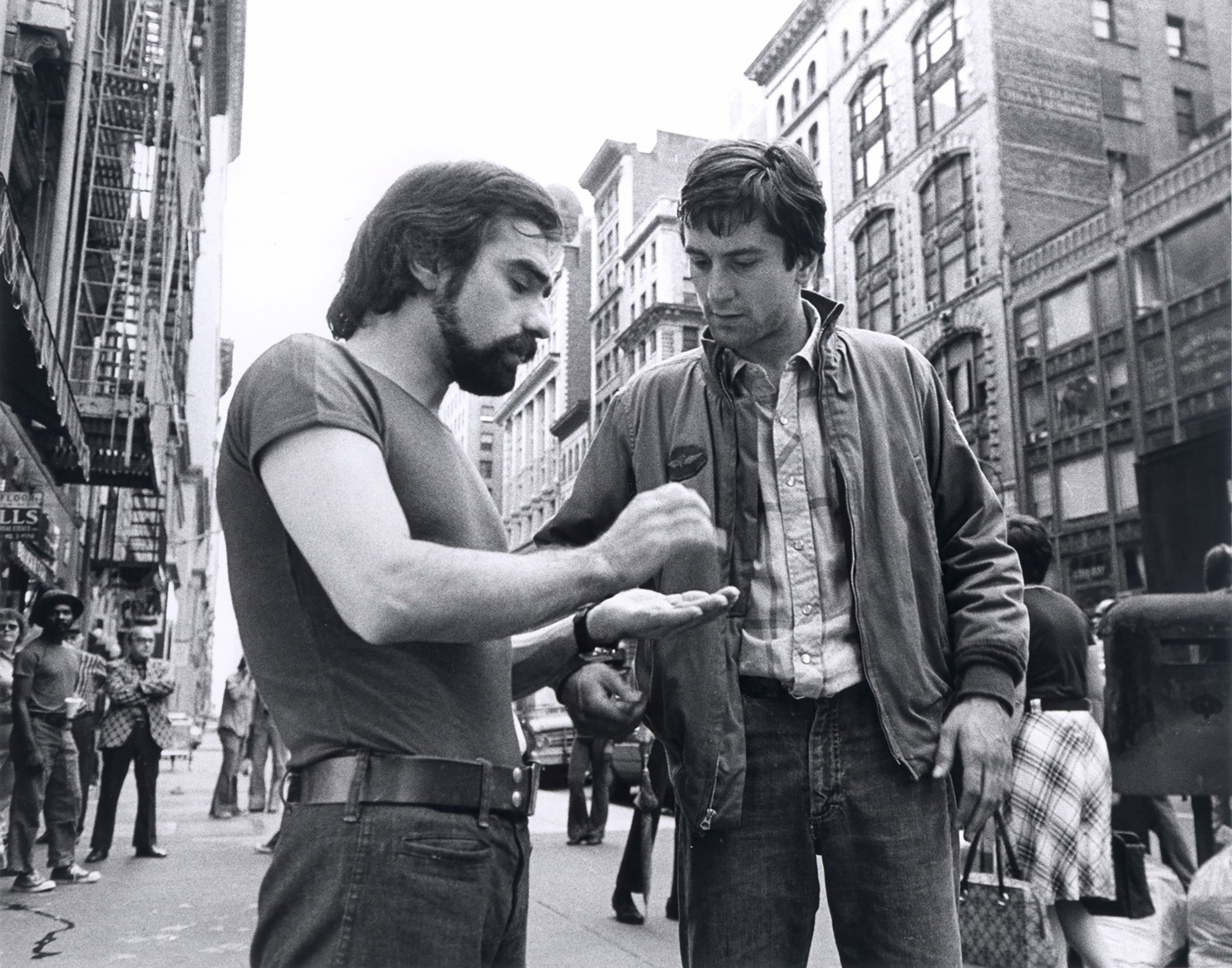
The amalgamation of skills is evident throughout the filmmaking team: from composer Bernard Herrmann’s haunting score to cinematographer Michael Chapman’s bold, dreamlike visuals. Together with a dark, audacious screenplay by Schrader and an unconventional, stylistic approach by Scorsese, helped make Taxi Driver a pioneering masterpiece in film.
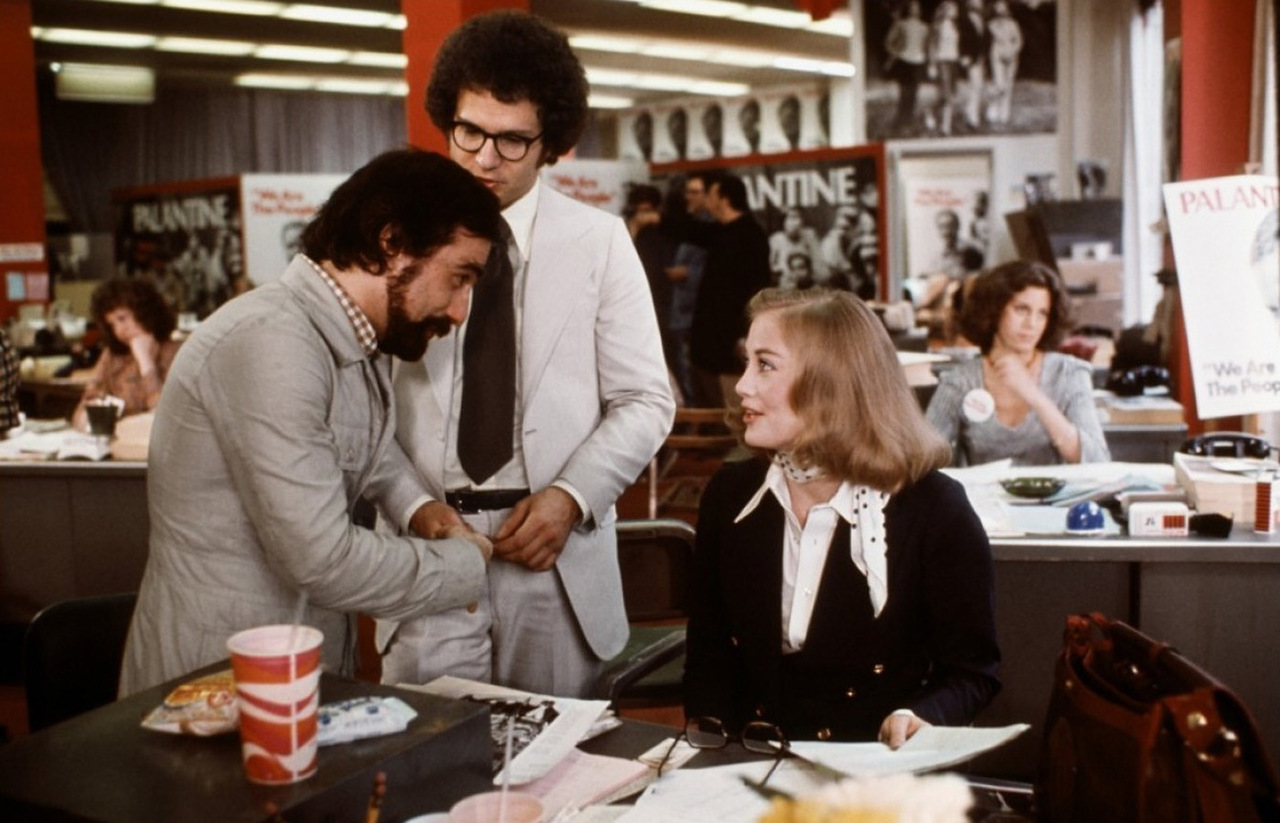
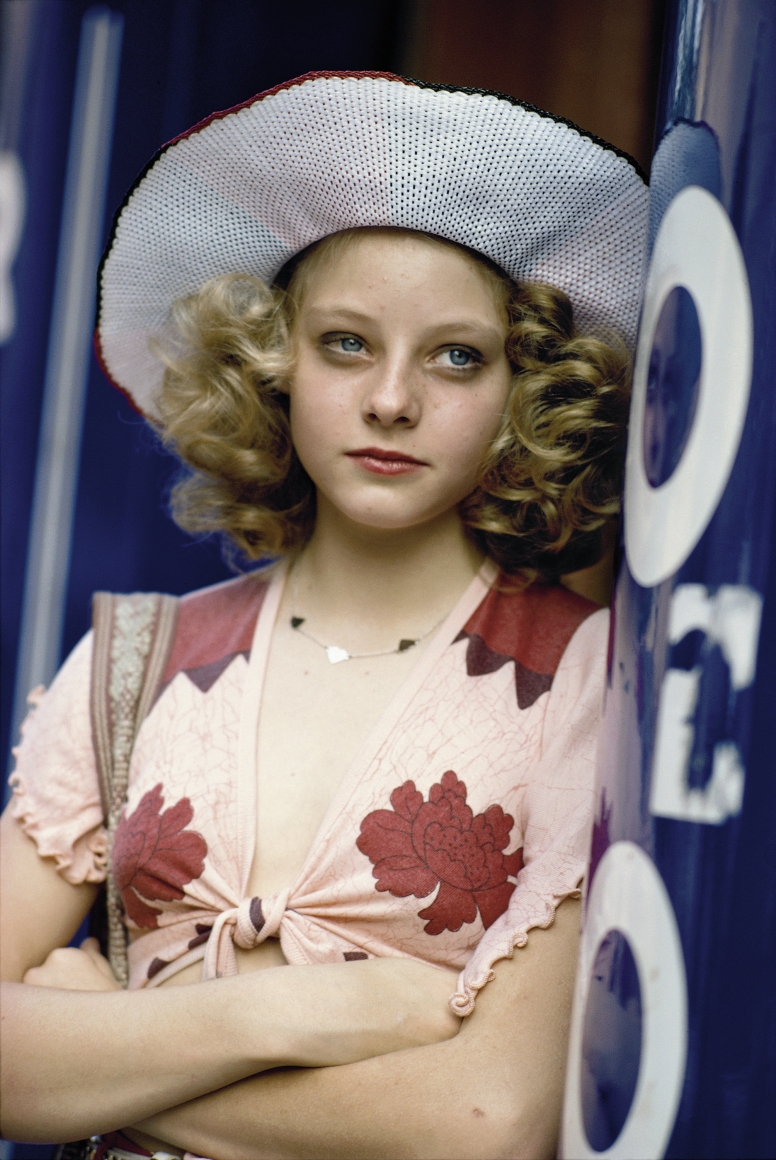
That being said, all of this wouldn’t have worked if the lead actors didn’t do their job. But they do — in particular, Robert De Niro and Jodie Foster. Their commitment to their anomalous roles is spellbinding and it’s especially impressive considering Jodie was only 12 at the time.
It’s been reported that before she was given the part, Jodie was subjected to psychological testing at UCLA to ensure she wouldn’t be emotionally scarred by her role. Additionally, production used Jodie’s 19-year-old sister, Connie, as a body double for any of the extremely explicit parts.
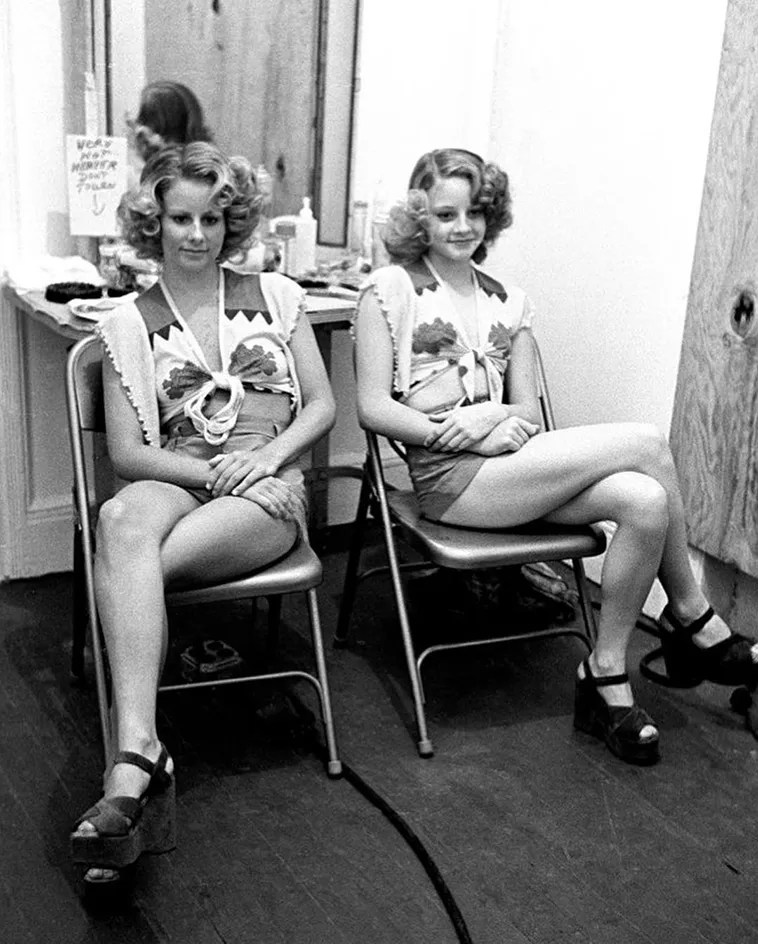
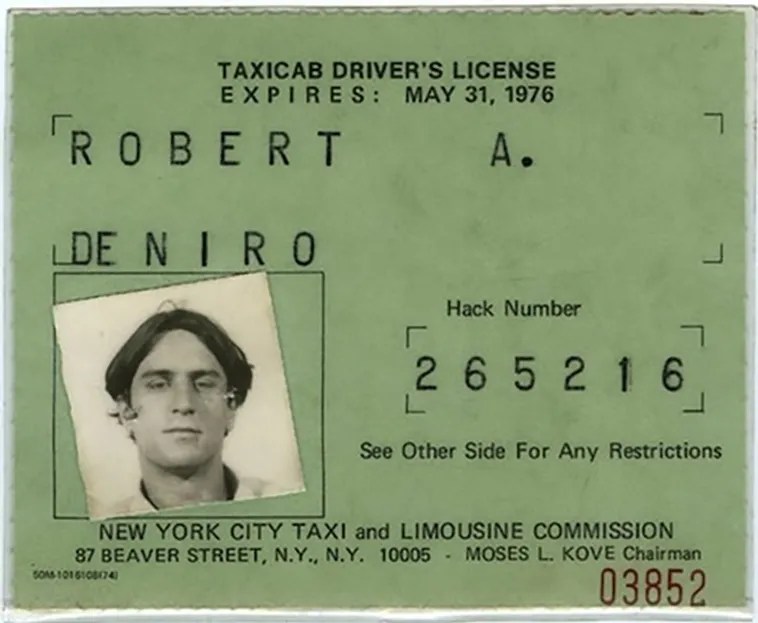
While De Niro didn’t have to go through the same sort of cautionary preparations, he did do his homework to get ready for the role. This included acquiring a hack license and driving a yellow cab for several weeks around the city.
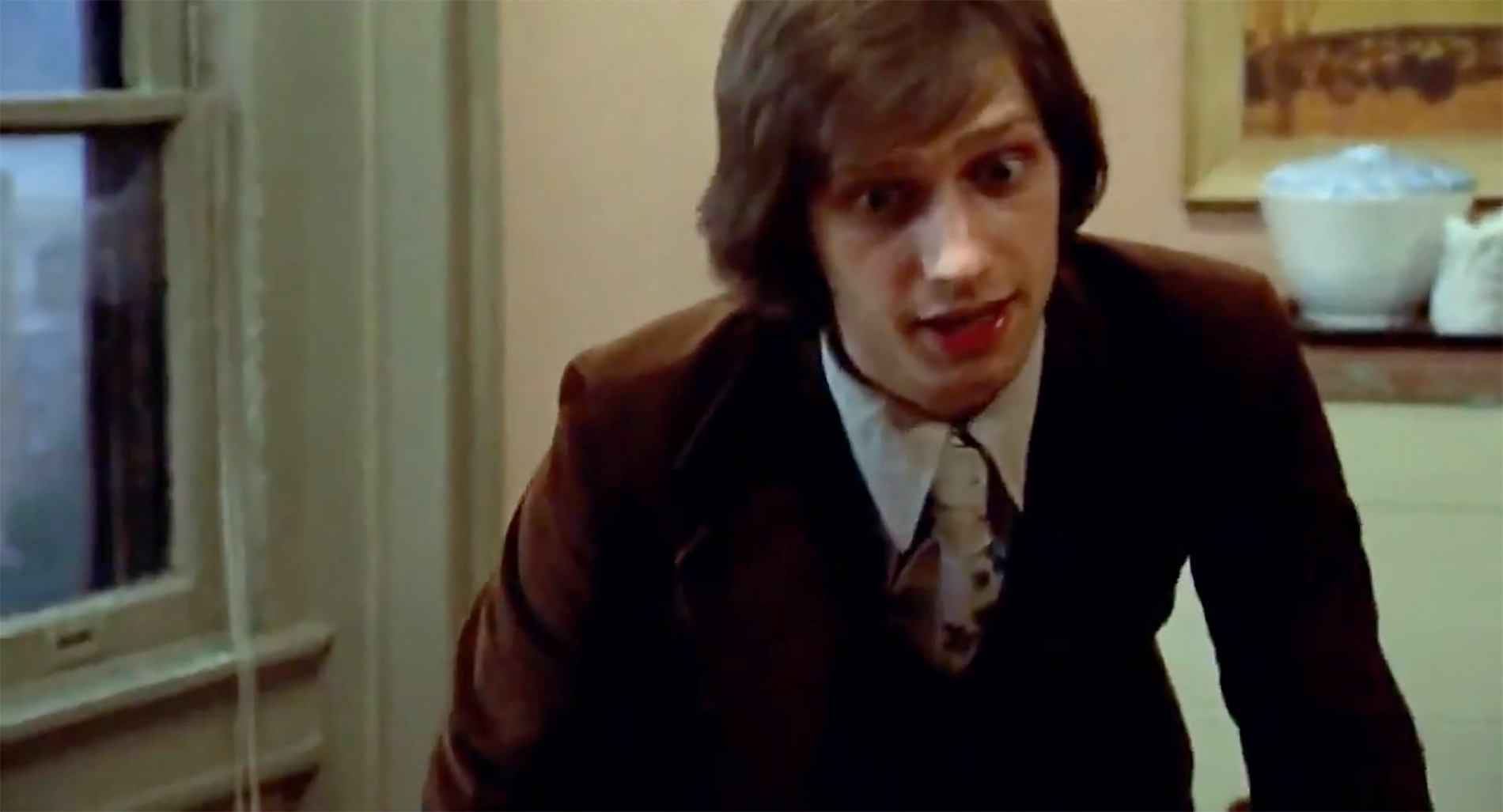
And while I didn’t talk in great length about them in this post, we also get great performances from the supporting cast — Albert Brooks, Peter Boyle and Harvey Keitel.
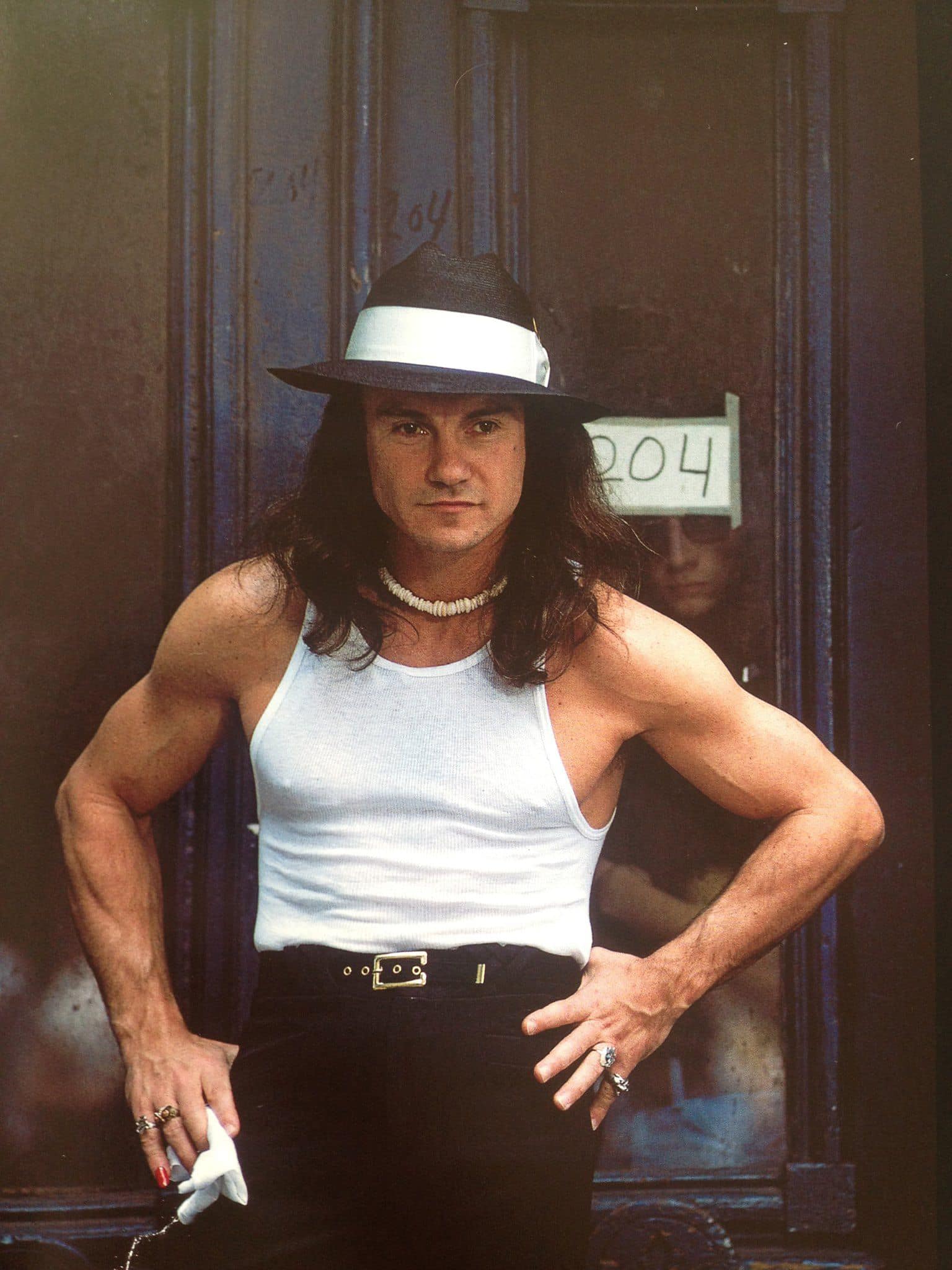
But my favorite character, outside the main cast, is Easy Andy, the black market dealer who sells Travis his guns.
He was played by Steven Prince, Martin Scorsese’s longtime friend and former bodyguard. While he didn’t have much of an acting career, according to his IMDb page, Prince did have a small part in Richard Linklater’s experimental animated film, Waking Life.
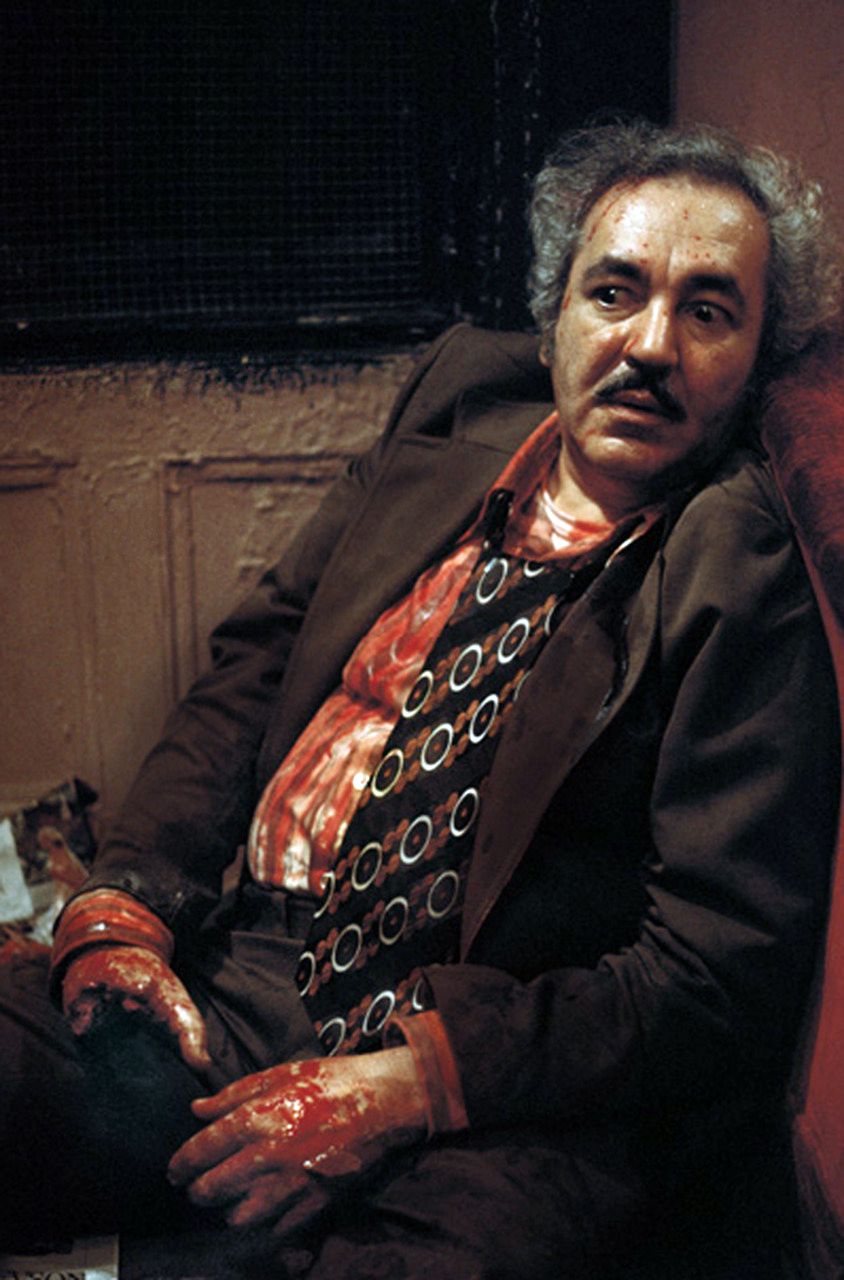
Another small but standout character is the brothel doorman played by Murray Moston. He has appeared in a bunch of Scorsese pictures, as well as Saturday Night Fever, playing the shirt salesman in the opening montage.
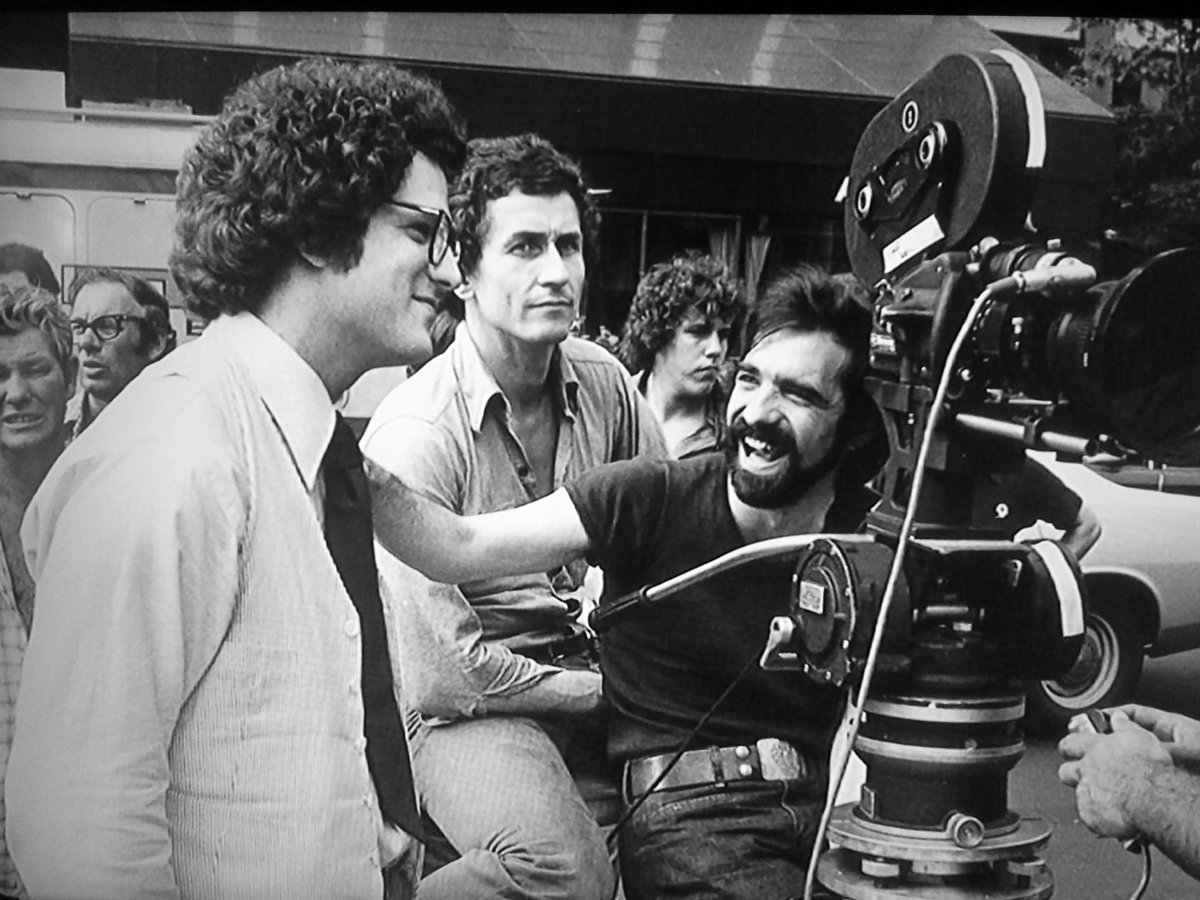
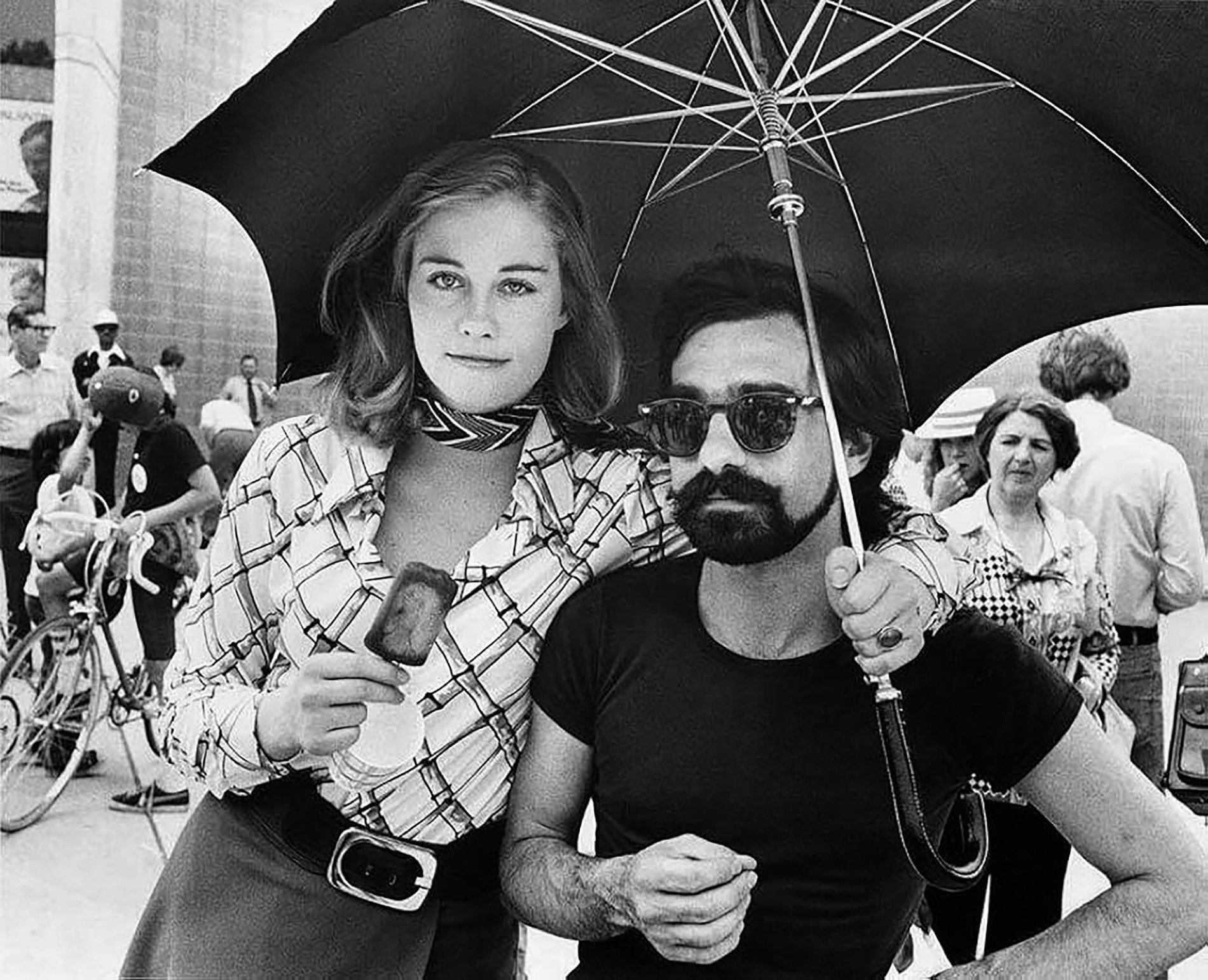
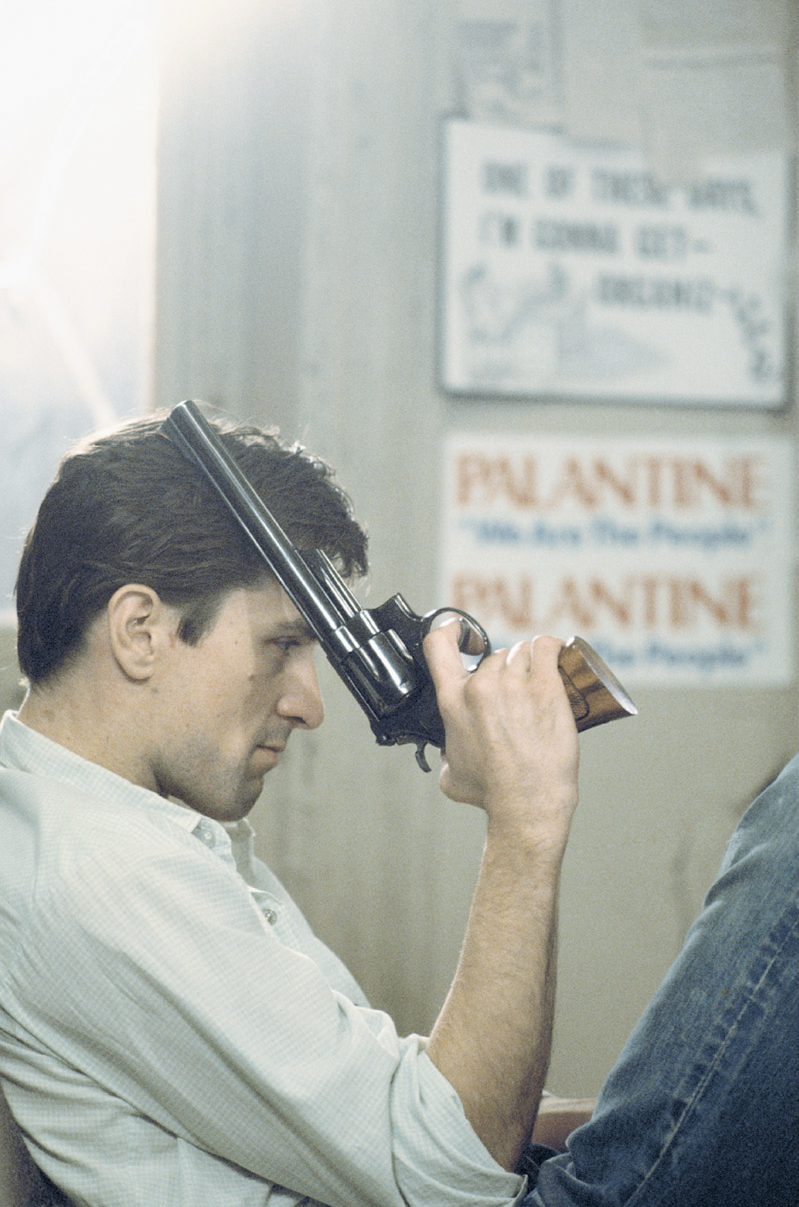
Doing a write-up on Taxi Driver on this website was a long time coming. There was a lot of ground to cover and I wanted to make sure to leave few stones unturned before publishing. (But hopefully it wasn’t overkill.)
As satisfying as it was to find nearly every location from this classic film, it was a little disheartening seeing the overall change in architecture and attitude in NYC. And what’s mind-boggling is how much of a metamorphosis has gone on even since ScoutingNY’s 2009 post.
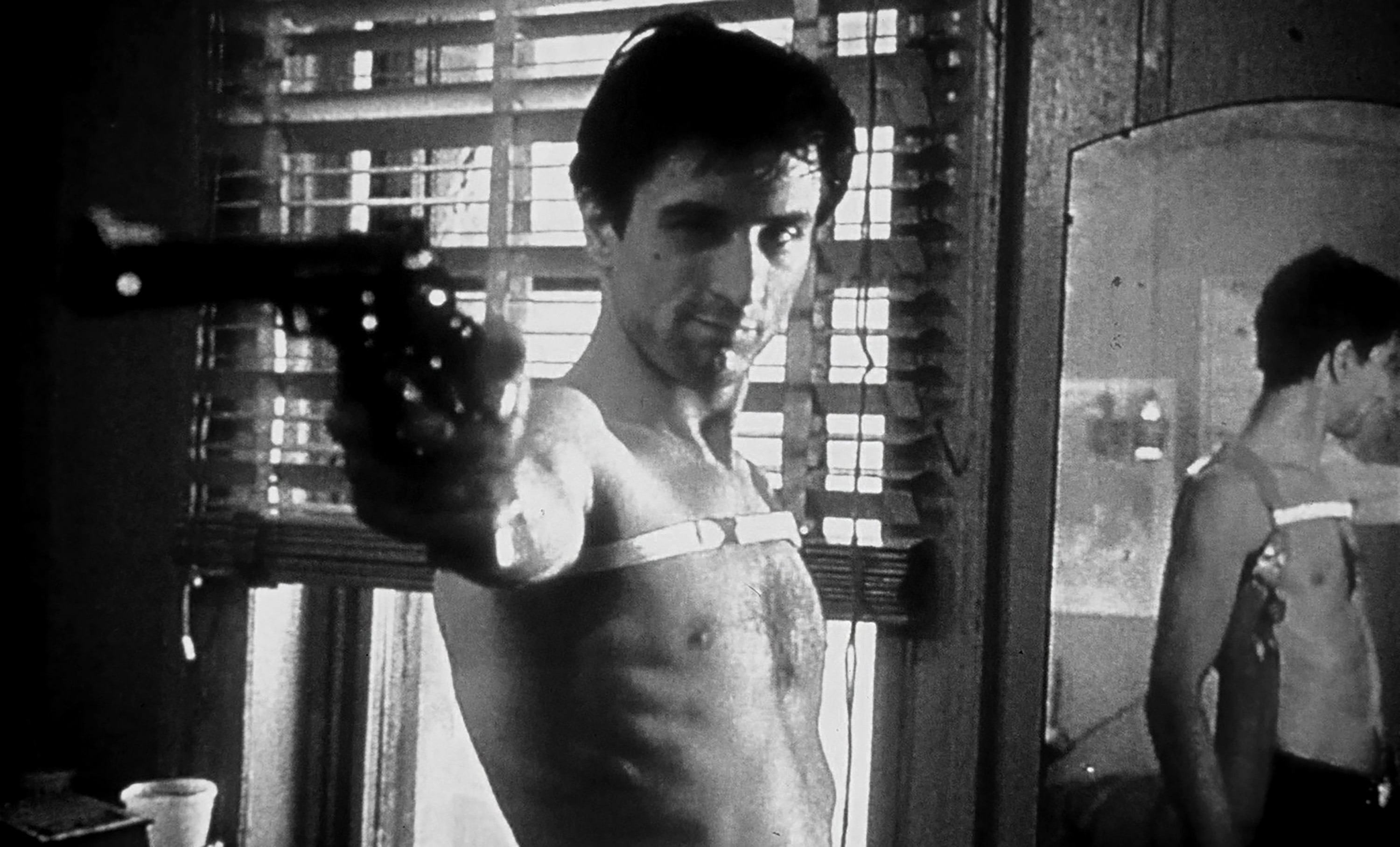
The gentrification and the commercialism continues in full force in New York, and regardless of its potentially deleterious effects, there’s not much we can do to stop it. To quote Travis Bickle: “All the king’s men cannot put it back together again.”
 NYC in Film
Excellent article! btw u mention 7th Ave and 13th Street near the end in ref. to Jodie F. & her friends, maybe I’m wrong but u establish it’s part of the East Side scenes, I think.
LikeLiked by 1 person
Good catch. Just a late-night typo. Now corrected to Third Ave.
LikeLike
I do a lot of DoorDash at night and I feel like I’m Travis Bickle here and there.
LikeLike
HI Mark,
I just did my annual watching of Taxi Driver, then immeditely went to your site to read up about the many locations that go by so fast in the film. Thanks for all the in-depth analysis – generations of film lovers in the future will continue referring to your work as NYC continues to change so fast. – Bob
LikeLike
I enjoyed this almost too much. I must have looked like one of those train “Foamers” inspecting every nook of this post for longer than I wish to admit. Goodness I enjoyed that. Thank you so much!!!!!!
LikeLike
Nice work. But what kind of store was “Mark Kayne”? Can’t find anything on it.
LikeLike
Yeah I had the same problem. Couldn’t find anything on it. Looks like it was a clothing line or something like that, but Times Square seems like an odd location for that kind of retail.
LikeLike
Big fan of Taxi Driver! – and love the comparisons. But, there’s a typo in this caption;
A still from 1976’s Taxi Driver (left) compared to a still from 1983’s King of Comedy (right), both featuring Playland, formally at 1485 Broadway.
“formally”; should be “formerly”
Thanks!
LikeLike